The world’s favorite season is the spring. All things seem possible in May.
~Edwin Way Teale
The trail cameras have been sort of slow lately, mainly capturing the usual suspects of deer, squirrels, and raccoons. They have also seen a few birds including an Ovenbird and a Wood Thrush gathering nesting material. There have been two Coyote captures including a rather rare daytime one (videos best viewed full screen).
But the stars of the trail cameras recently have been the Virginia Opossums. I put a couple of cameras at the base of a large tree that blew down in a storm a couple of years ago because it looked like something was using a hole under the root ball (a favorite type of burrow for an opossum). Indeed, I got some very quick clips of opossums coming and going (at least two different individuals), Raccoons also stopped by occasionally and sniffed around and there is a mouse and a chipmunk going in and out of some of the holes.
Another camera nearby on the now dry creek bed caught something I was hoping for – an opossum with a very large pouch, obviously carrying some babies.
I decided to move the camera at the root ball to a better location and after viewing the next two clips, I added one on the giant log on the other side of the root ball. The tree was on a slope and when it fell, it created an angled bridge about 5 feet off the ground at its highest point. These new camera positions paid off.
And a third young opossum makes an appearance above the two that are so engrossed with their find. I’m surprised there was not any additional footage of this encounter, but they may have wandered just out of the field of view of the camera.
After setting up a camera on the log on the other side of the steep root ball, I was rewarded with several clips of an adult opossum and some young opossums walking across. There was also a lot of footage of a very active mouse on the log. And one instance where a young opossum encountered the mouse.
Notice the mouse just comes up behind the opossum and moves on its way. Opossums remain in their mother’s pouch for about two months. They stay with her for another couple of months, often riding on her back. The number of babies (called joeys, by the way) an opossum has varies, but 8-10 in a litter is typical. I’m hoping the camera will capture more images of multiple young ones out and about before they disperse and are on their own.
I’ve got sunshine on a cloudy day. When it’s cold outside, I’ve got the month of May.
~Smokey Robinson
May is chasing April as my favorite month of the year…and it’s a close race. Though we have been really busy here, things are happening that keep bringing my attention back to the marvels of the natural world right here in our own backyard (we are very lucky to have such a nice “backyard”). Here is a smorgasbord of highlights from the past week.
The birds have been amazing…so many new arrivals as well as long-time residents making appearances or singing from the treetops. One of my favorites is the stunningly beautiful male Rose-breasted Grosbeak. They usually pass through for a couple of weeks every spring and fall during their migration. They were about a week late this spring, but now a few (the past couple of years we have had many more it seems) are at the sunflower feeders every day.
-Male Rose-breasted Grosbeak (click photos to enlarge)
My usual morning coffee chair looks out into the front yard and there always seems to be some activity that catches my eye. Friday morning the resident Red-shouldered Hawk landed in our Pinxter Azalea to watch over one of the water gardens, no doubt hoping for a frog breakfast. The hawk eyed the pond for about 40 minutes but never dove in to secure a meal, but at least I enjoyed watching it patiently survey the scene.
-Red-shouldered Hawk intently watching the area around one of the wildlife pools
Since our BugFest event last September, I have had a few moth pupae in a cage waiting for something to emerge months later. So far, there has been one small moth, several Tachinid flies (parasitoids of various butterflies and moths), and this jewel that emerged yesterday, a gorgeous Virginia Creeper Sphinx Moth.
-Virginia Creeper Sphinx Moth being released after it emerged yesterday
A human highlight has been the completion of a new seating arrangement for our fire ring. After going through two sets of huge tree trunk seats over the past several years, I decided to come up with another solution (when the Pileated Woodpecker starts hammering at your fire ring seats, you know its time to change them). Melissa spotted an interesting alternative online when a neighbor posted photos of their home for sale…they had used gabion cages (wire mesh cages filled with rocks) for the legs of their outdoor benches. Well, if there is one thing we have plenty of on our property, it’s rocks. A trip to the local farm store ended up with some goat fencing and hog rings and after a lot of work on some old boards found in my folks’ barn, we have some new seats (and after a lot of rock gathering of course). I must say, they are challenging my by-the-window chair as a favorite morning coffee spot. Wherever you are, be sure to get out and enjoy these beautiful days of May.
-The new fire ring benches with gabion cages for legs
I want to create red in a world that often appears black and white.
~Terry Tempest Williams
Another gray day here in the woods, but the plants I put in the ground yesterday are appreciating it. Looking out the window, I can see spots of color in the yard – the blooms of Coreopsis, some scattered Phlox that had covered much of the front yard for weeks, the cheery Green and Gold, and a Blue Flag Iris in one of the wildlife pools. Popping up here and there around the yard are a few bright spots of red of the remnant Wild Columbines (most have already gone to seed). The color red is an interesting one in nature. It’s not all that common, but when it is, you notice it. Red is considered by many to be the most powerful color in the spectrum. It is a color associated with love, with fire, and aggression. It is also a color that may warn of danger (our Stop signs and red traffic stoplights for instance). Many species that are distasteful or poisonous are marked with bright red or orange to warn would-be predators to leave them alone (or else).
This week, I encountered two of the brightest red flashes in our part of the natural world. One was the return of one of my favorite birds – the Scarlet Tanager. Our waterfall pond worked its magic again by luring in a newly arrived male Scarlet Tanager. I saw it splashing on one of the wet rocks near the small waterfall as I walked by the window. I managed a couple of quick photos before it flew off. Ironically, shorty afterward, I saw a male Summer Tanager in the same spot (no photos as it saw me and flew). What an amazing difference on the brightness scale of color between those two related birds. And though our state bird, the Northern Cardinal, is bright red, it still somehow appears pale in comparison to the vibrant red of a Scarlet Tanager.
-A male Scarlet Tanager (the first of the season for me) takes a quick bath at the waterfall on one of our wildlife pools (click photos to enlarge)
The other flashy red this week has been that of the throat feathers of a male Ruby-throated Hummingbird that has decided it likes to perch on the wire rim of a tomato cage a few feet outside our kitchen door.. These specialized feathers are called a gorget (pronounced gor-jit). They are named after the protective metallic throat collar worn in days of yore by a knight-in-armor. Unlike the brilliant red feathers of the tanager which are colored by a pigment in the feathers, the male hummingbird’s red feathers are the result of iridescence. The platelet-like structure of the feathers causes light to reflect and refract off of them creating color like what you see on an oily film on water – the color changes depending on the angle you view it. In some angles, the throat looks dark, even black. But a slight turn of the head and you see a fiery red (or sometimes orange) flash. Male hummingbirds use this flashiness to attract females (love) and to warn off potential rival males (aggression).
-When viewed from one angle, the male’s gorget appears dark…
-A slightly different angle shows the brilliant red flash of color
Here’s a quick video clip showing how quickly the color changes. The focus is a bit soft as it was shot through the glass of the kitchen door.
My favourite places on earth are the wild waterways where the forest opens its arms and a silver curve of river folds the traveller into its embrace.
~ Rory MacLean
This is the second post on our recent canoe/camping trip in eastern North Carolina (see previous post here). We departed the Cypress Cathedral camping platform on Wednesday and headed downstream on Broad Creek to the Roanoke River. Ospreys, eagles, and the sometimes surprisingly close splashes of Longnose Gar were our travel companions until we reached the wide river and sought out the Bear Run camping platform for a lunch break (we knew no one had it registered so we didn’t mind stopping at the dock to stretch our legs).
-View of the Roanoke River from the Bear Run platform dock (click photos to enlarge)
We then headed across the river to a shortcut to the Cashie River known as the Thoroughfare. Emerging into the lower Cashie, I was surprised at how wide this black water river is at that point. With virtually no current, it is an easy paddle upstream. The Cashie is about 20 miles in length and is one of the few rivers in NC to be contained in a singe county (Bertie).
One of the best-known features of life along the Cashie is the inland ferry at Sans Souci. In operation since the 1800’s, this small ferry crosses the Cashie and connects some rural roads that save drivers an estimated 20 miles. It is operated by a cable that runs across the river. We spoke to the ferry captain and he said there had been 5 cars over that morning (which is about the norm apparently). When a car wants to cross from the other side, the driver must honk their horn and the ferry will cross to get them. It has been run by the state’s Dept. of Transportation since the 1930’s and is one of three cable ferries still in operation in the state.
-The Sans Souci Ferry
Upstream of Sans Souci, the river begins to narrow and the arms of the swamp reach out to embrace paddlers in its spring green and black waters. We reached our final camping platform, Lost Boat, and set up camp. It was another quiet evening with lots of bird sounds and a Raccoon eyeing us as it climbed a tree across the creek.
-Swamp Queen rustling up some dinner at Lost Boat (a dehydrated Asian-flavored noodle dish that she came up with on a previous outing and that continues to be a favorite)
The Cashie impressed us with the relative lack of signs of human activity and the large number of immense Bald Cypress trees on its banks.
-One of many huge cypress trees that dominate the shoreline of the beautiful Cashie River. I love the way converting to black and white highlights the distinctive shapes of these ancient trees
-After our recent trip paddling the Black River with its very old cypress trees, I wonder about the age of some of these giants along the Cashie
-Many of the trunks and branches of the cypress trees are festooned with Resurrection Ferns. This fern looks brown and shriveled in dry weather, and then “resurrects” into green foliage for a few days when it rains
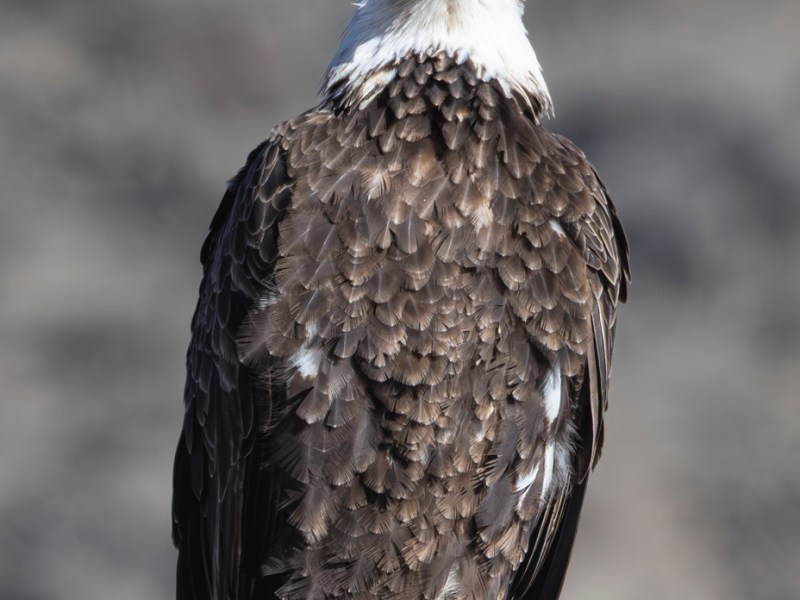
-One of the many eagles we saw along our journey. This not-yet-mature Bald Eagle (it takes about 5 years to acquire the full white head and tail feathers) was uncharacteristically patient with us and allowed us to paddle past fairly close without flying.
-Another eagle with a fully white head and tail takes flight as we approach
-I was somewhat surprised that we saw more Osprey, including this impressive nest, on the Cashie portion of our trip
An immature eagle and an adult were chasing each other ahead of us at one point along the river. It turns out they were not far from an Osprey nest. An Osprey took offense and started to chase the eagles. The adult flew off but the juvenile continued to circle above the river, much to the displeasure of the Osprey. It repeatedly dive-bombed the eagle. It was fascinating to watch this interaction and the acrobatic abilities of both birds, especially the eagle, as it barrel-rolled to face the incoming threat. These photos were taken at quite a distance and heavily cropped.
-Both birds have talons out as the Osprey closes in on the eagle
-An impressive roll-over defensive move, but the eagle finally had enough and flew off
-Crossvine was in bloom all along the river
-Prothonotary Warblers were also abundant on the Cashie
-Azaleas (maybe Pinxter?) in bloom along the upper reaches of the Cashie
-The four Cashie River Treehouses in Windsor offer a unique overnight for people wanting to experience the beauty of the Cashie River
We managed to get out the day before the big storm blew through and enjoyed incredible weather on our only slightly shortened journey of 5 days on two magical rivers. We experienced quiet beauty, amazing wildlife (birds, birds, birds), majestic trees, blue skies, and wonderful camping platforms. I can’t say enough about this place. The Swamp Queen and I will be back for sure.
The way of a canoe is the way of the wilderness, and of a freedom almost forgotten.
~Sigurd F. Olson
The Swamp Queen (aka Melissa) did it again…planned a canoe/camping adventure to our favorite swamp destination, the Roanoke River. So, last week, we headed east to spend a planned 6 days paddling over 50 miles on the Roanoke and Cashie (pronounced cash-EYE) Rivers and staying at a number of the wonderful platforms managed by the Roanoke River Partners (RRP) organization. We planned to include two platforms that neither of us had camped on – Conine and Lost Boat (there’s no need to worry about that name, right?). The timing of our trip was perfect as April is our favorite month to paddle this swamp – the bright green colors of spring and the arrival of migratory birds are a huge plus (as is the general lack of mosquitoes this early in the season). And it coincided with my article in the April issue of Walter Magazine highlighting the natural wonders of paddling this area. Check it out for more information on this region.
Weather conditions changed during our trip so we made some alterations in our plans and took out a day early before the heavy rains hit. Below is a rough map of our paddle from Williamston to Windsor. With the changes in platform destinations (we called from the river and changed our reservations as you need to reserve platforms in advance), we ended up paddling a little over 46 miles in four and a half days and stayed on four platforms – Conine, Barred Owl Roost, Cypress Cathedral, and Lost Boat.
-A rough map showing our route from Williamston to Windsor (just off the map at the top) with the names of the platforms where we camped and showing the Thoroughfare connector between the Roanoke River (in red) and the Cashie (in blue)
A satellite view shows a huge swath of green along the river corridors between Wiliamston and Windsor. Mush of this land is protected by the Nature Conservancy, the Roanoke River National Wildlife Refuge, and various hunt clubs. But some of our trip took us by through shorelines that are not protected and have been recently clear-cut, leaving only the required 30 foot buffer along the waterway. I just don’t think a 30 foot buffer is adequate to protect the integrity and beauty of these amazing habitats. Thank goodness various groups have managed to protect some large sections of the swamp forests.
-A Google Earth view of the rivers we paddled showing the vast expanse of bottomland forest
This post will cover some of the highlights of the Roanoke River portion of our trip. Next time, I’ll finish the trip up the Cashie to Windsor. I want to thank Travis, a teacher that Melissa knows through some of the museum workshops, for helping us shuttle our vehicle between our put in and take out points.
-We set off from Williamston with a fully loaded canoe
-Water levels were as low as we have seen them and when we arrived at the first camping platform, it was a big distance from the river to the newly renovated dock. The steep muddy bank made for a challenging unloading experience. After hearing of our experience, RRP plans to add a lower dock section.
-RRP is renovating many of the camping platforms. This is the refurbished Conine platform – it is really beautiful and one of the few with a screened structure. The walls on the right are the toilet enclosure (but you must bring your own private latrine for these outings – more on that later)
-The first day we were serenaded by countless warblers that had recently arrived from their wintering grounds. This Northern Parula stopped by at sunset for a buzzy song while we sat on the dock (image converted to black and white since it was in total shade)
-View across the Roanoke River from the Conine platform dock at sunset
With the low water there was relatively little current so we decided to paddle upstream on the river the next morning and then travel downstream on the waterway known as Devil’s Gut to our next campsite, Barred Owl Roost. We have paddled the lower section of the “Gut” many times over the years, but never the upper half, so this was a treat. It did not disappoint…
-Turning into the upstream portion of Devil’s Gut from the Roanoke River (note the clear-cut behind the small buffer on the right shoreline – this did not go too far down the “Gut”)
-One of our favorite camping platforms, Barred Owl Roost, is set in a gorgeous swamp.
-Bathroom with a view. This is our portable latrine – a 5-gallon bucket, a pool noodle cut for a seat (quite comfy I might add), and some toilet kit waste bags (each kit contains 1 waste bag; Poo Powder® gelling/deodorizing agent; a zip-close storage bag; toilet paper; and a hand wipe). We bring our own toilet paper and some cleaning wipes. We stash the sealed waste bags in a trash bag and dispose of it when we reach land (these kits are approved for landfill disposal)…now you know.
-There were a lot of Great Blue Herons fishing in the swamp waters and hanging out on our platform walkway
-A panoramic view from the Barred Owl Roost platform
The next morning we canoed to the juncture with the Roanoke River. Normally, we would have paddled downriver to Broad Creek and then upstream to our next site. But, with the low water and slow current, we decided to go upstream on the Roanoke for a few miles and hit the shortcut known simply as “The Cut”. We’ve paddled The Cut many times when doing a loop trip (requiring no shuttle) but always upstream (and that can be tough when the water is high). This was going to cut off a few miles of paddling and we had the plus of being in the more intimate setting of a narrow swamp waterway rather than the wide open river. That usually means more wildlife…
-Looking back upstream from our boat in the Roanoke to where it is joined by Devil’s Gut
-One of many Brown Water Snakes we saw perched up in tree limbs along the waterways
-A lunch stop along the river yields a twisted Supplejack Vine growing up into a Bald Cypress
-There was a lot of Beaver sign along The Cut and we even caught this large Beaver out cutting some saplings during the day (it quickly disappeared to the safety of the water as we passed). A few places had large scent mounds (piles of mud and debris along the shore that Beavers mark with scent to let others know this is their territory). One stretch had 17 scent mounds all in a row, the most we have ever seen in one location.
-We came across a female Wood Duck with about a dozen young. The low water made for a high bank and she was herding her ducklings downstream ahead of us. As we got near, she climbed the bank (only one duckling managed to go with her) and squawked and flopped around on the ground trying to distract us from her young. Meanwhile, the little ones were trying to get ahead of us along the shore. Melissa managed a great photo of a couple as we passed. We paddled away quickly and the ducklings turned back upstream to join their mom. (photo by Melissa Dowland)
-The duckies have more to worry about than a couple of people paddling by in a canoe. We saw this huge Snapping Turtle not far from the ducks.
The Cut joins Broad Creek a couple of miles upstream from where that aptly named creek flows into the Roanoke River. We headed upstream along Broad Creek to our next night’s destination, the idyllic Cypress Cathedral platform.
-Another favorite camping spot along the Roanoke – Cypress Cathedral, with a renovated walkway
-One of the most common birds we heard on our trip was the Blue-gray Gnatcatcher. We heard them everywhere and found a pair building a hummingbird-style nest above the walkway at this platform
All along our journey, we saw and heard an amazing number and variety of birds. These bottomland forests have got to be one of the primary refuges for migrating songbirds (and NC resident birds as well) along the East Coast. But the one we always delight in seeing is the one Melissa calls “the friendliest warbler”, the Prothonotary. Along the way, and at a couple of the platforms, they shared their persistent peet, tsweet, tsweet, tsweet song and bright yellow plumage. Their name comes from this yellow color which resembles the bright yellow robes of papal clerks (prothonotaries) in the Roman Catholic church. In addition to being the “friendliest” (they readily hang out and forage near us) they also hold the distinction of being the only eastern wood-warbler that nests in tree cavities. And Cornell’s online compendium of all things birdy, Birds of the World, shares another little known fact. The Prothonotary Warbler played a partial role in the conviction of alleged spy Alger Hiss and the eventual political rise of Richard Nixon. An ex-communist, Whittaker Chambers, accused Hiss of espionage. Chambers claimed to know a lot about Hiss as they were friends, even though Hiss denied ever knowing Chambers. To verify his claims, Chambers said that Hiss was an avid bird-watcher and he had been very excited when they had seen a Prothonotary Warbler on an outing along the Potomac River. When asked about it later, Hiss admitted he had seen the warbler. Richard Nixon, then a freshman congressman, was a member of the House Un-American Activities Committee investigating the Hiss allegations, and played a prominent role in proving that the two men knew each other and that Hiss had perjured himself. The lesson here is be careful who you tell your bird sightings to…but I feel I can trust you all.
Here are a few of the many Prothonotary portraits captured on our journey:
-Male Prothonotary letting the swamp know he is there and ready for spring
-Prothonotary investigating a tree cavity for a possible nest site
-Peeking out of the tree hole
The next post will cover the final two days of our trip from Cypress Cathedral through the Thoroughfare and up the Cashie River.
You can always find a distraction if you are looking for one.
~Tom Kite
The beautiful weather this week finds me outside starting some yard work – weed pulling, mulching, contemplating building some benches for the fire circle, etc. As is often the case, yesterday something caught my eye and pulled me away from my tasks for a few minutes. It was some rapid movement in a bed of Wild Blue Phlox (one of my favorite native spring wildflowers, Phlox divaricata). It was the blur of wing beats of a Hummingbird Clearwing moth zipping from flower to flower, gathering nectar with its long proboscis. Below is a photo I took a few years ago of one of the caterpillars. We have plenty of host plants for this species around the yard including some Viburnums and lots of Coral Honeysuckle.
– Hummingbird Clearwing Moth caterpillar (click photo to enlarge)
The spike at the tip of the abdomen helps identify this larva as one the Sphinx Moth group. Adult Sphinx Moths are all excellent flyers with many have swept back wings that resemble fighter jet profiles. We have two common species of day-flying Sphinx Moths in our area, the Hummingbird Clearwing (Hemaris thysbe) and the Snowberry Clearwing (Hemaris diffinis). In an earlier post, I detailed some of the life history of these beautiful day-flying moths.
The reddish colors on the wings and abdomen of the one that pulled me from my chores told me I was looking at a Hummingbird Clearwing, so named because they really do resemble tiny hummingbirds in both form and habits. This is an excellent example of convergent evolution where two two species develop similar features despite not sharing a common ancestor. Both the moth and the bird occupy similar ecological niches and have evolved similar characteristics to best take advantage of their lifestyle. Both have rapid wing beats that allow them to hover and move backwards. Both have physical traits that allow them to probe deep into flowers for nectar, and, surprisingly (to me anyway), both have evolved similar basic color patterns (though the moths are much more variable than the birds).
I spent a few minutes following the moth around the flower patch as it fed on the flowers of phlox (its primary focus), foamflower and one iris. Since I was supposedly working, my camera gear was safely tucked away inside, but I did have that other camera, my iPhone, in my pocket. So, I grabbed it and attempted (key word) to get some video if the buzzing insect.
Below are two clips, one showing the moth feeding at actual speed, the other at 25% of normal speed. In both, the wings are beating so fast that it is tough to get a clear view of them, but if you look closely at the slow motion video, you can see the shallow figure eight pattern of wing movement that helps with hovering like in a hummingbird’s wing beat. I have read conflicting reports on the speed of the moth’s wing beats, ranging from about 35 per second up to around 80+ per second. Either way, they are fast – so fast that you can actually hear a humming sound if you are close enough.
— Hummingbird Clearwing Moth feeding at Wild Blue Phlox
— That same footage at 25% actual speed
Note the long, curved proboscis (tongue) of the moth and how it so accurately inserts it into the center of each flower it visits. The moth uses its front two legs to help balance itself as it approaches each flower. You can also see how the proboscis, head, and legs are coated with pollen, indicating this busy insect is probably an efficient pollinator of many of our wildflowers.
After following the moth around for a bit, it zipped off across the yard and disappeared. I finally got back to my chores, but was happy to have yet another wild distraction come my way.
The way of a canoe is the way of the wilderness, and of a freedom almost forgotten.
~Sigurd F. Olson
Two weeks ago, we had a chance to paddle the Black River with our friend, Jerry, and a great group of other folks he had gathered for a planning trip for one of his upcoming museum public programs. We jumped at the chance, having been in the past and knowing what a great swamp experience the Black River has to offer. We decided to spend the night before at Jones Lake State Park to get us closer to our launch site early the next morning.
I was a bit surprised, and frankly, disappointed, when we pulled into the campground at Jones Lake. They have cleared out the campground and areas surrounding each site of all underbrush and made large drive-ins to each site that will accommodate RVs. I don’t mind the new driveways, but the clearing of all the low vegetation just makes it a wide-open campground with no privacy screening, especially on the outer loop. Luckily, there were few campers and we isolated ourselves in the far corner. Maybe this is helpful for managing the periodic prescribed burns at the park, but I miss a little privacy at our site. But, to be fair, one great addition to the campground is a new bathhouse – much needed and appreciated.
After setting up camp, we hiked the 4-mile Bay Trail that circles Jones Lake. It is an interesting hike in that it passes through some beautiful Longleaf Pine forest and then puts you into a boggy habitat dominated by Atlantic White Cedar and Loblolly Bay.
– Longleaf Pine (just past the grass stage) along the Bay Trail at Jones Lake State Park (click photos to enlarge)
-Wild Turkey track along the sandy ridge portion of the Bay Trail. We also saw fox tracks and Fox Squirrel tracks, but none of the track-makers.
-The grooved trunk of Loblolly Bay (left) and the more finely patterned trunk of a nice Atlantic White Cedar (right) along the Bay Trail
-The tannin-colored waters of Jone Lake
The boggy portion of the Bay Trail is beautiful, with many large Atlantic White Cedars, though it looks like the forest has sustained a great deal of wind damage in recent years as evidenced by the mish-mash of downed trees all along the trail. Our wildlife highlights were seeing our first Blue-gray Gnatcatcher of the year and watching some Cedar Waxwings feed on berries.
-A nice flock of Cedar Waxwings greeted us along the shoreline
– Cedar Waxwing stretching for a Smilax berry (photo by Melissa Dowland)
The next morning we were off to Henry’s Landing on the Black River. After transporting some vehicles to our take-out point downriver, our group launched a flotilla of boats (mainly kayaks) onto the dark waters and headed downstream in what looked like a promising day of sunshine (as was predicted).
-Heading downriver from Henry’s Landing
Before long, the sun disappeared and gray skies and chilly temperatures dominated the day. But, no matter, we had good company and plenty of interesting sights along the way.
-A tree trunk hammered by Pileated Woodpeckers
My photos on the river were all taken with an iPhone and I converted the cypress trees and scenes to black and white as I think it pays tribute to the stately nature of this forest.
-Gnarly trunk of a Bald Cypress along the Black River
The first couple of miles are on the main channel of the river, but you eventually get to a point where you head into the swamp known as Three Sisters. This is the home of the true stars of the Black River, the ancient Bald Cypress trees.
-Another ancient cypress in the swamp
Studies have shown there are many trees in this swamp over one thousand years old. And a few years ago, Dr. David Stahle, a scientist studying tree rings and climate change, again visited the swamp looking for trees older than those he had cored back in the 1980’s. Back then, the oldest was believed to have lived over 1600 years. On his last trip, he was guided into the Three Sisters area, and saw trees he believed were much older. A core from one was analyzed back in his lab and dated that tree at 2,624 years old! That makes that cypress the fifth oldest known tree in the world.
-Astounding knees and trees as we paddle through the swamp
Paddling amongst these ancients is humbling…what have they seen? What storms have they survived? Jerry reminded us they they probably experienced huge flocks of Carolina Parakeets feeding on their cones before those beautiful birds went extinct. Perhaps Passenger Pigeons one darkened the skies over the trees when millions of them roamed the East before disappearing forever. And what of the stories of other humans that may have paddled these tea-colored waters in the past couple of thousand years?
I have paddled and walked in many swamps in my time, but the cypress swamp along the Black River is different and magical. And the abundance, size, and diversity of shapes of the cypress knees are unlike anything I have seen elsewhere.
-Jerry called scenes like this a “knee-scape’…an appropriate name I think
The knowledge that you are paddling through one of the oldest forests on Earth makes it even more special, and really makes me want to go back very soon (and hope I can find my way through the maze of knees and trees).
…for all the motions of a squirrel, even in the most solitary recesses of the forest, imply spectators…
~Henry David Thoreau
Yesterday I posted about deer communication through scent at a community scrape. Are the other animals in our woods communicating to one another with scent? Do they have their own “social media sites”? I placed a trail camera on a very rotten log along one of the forest game trails on our property as it looked like something was actively digging or rubbing in the log debris and enhancing its conversion to fine sawdust. The camera revealed that Eastern Gray Squirrels frequently stop by this log and dig and roll around.
It appears that more than one squirrel is using this log. Is it for a dust bath (they are known to roll in dirt or sand to help rid their fur of parasites)? Is it communication through scent-marking (squirrels do leave scent marks, especially by rubbing their faces on objects and depositing scent from their oral glands)? Or could it be a combination?
I have seen similar behavior caught on a trail camera in one other location about a year ago. A squirrel (or multiple squirrels, not sure) was frequently rubbing on a patch of bare ground down by the creek. As in some of these videos, there was a lot of face rubbing, pawing, rolling around, and occasionally pausing to chew or scratch. Though ridding parasites is certainly possible, there is often some erratic behavior much like our goofy deer video from a few posts ago, with random jumping and twisting and turning. A good friend that saw the deer videos told me he also has a squirrel(s) that “goes to a spot where a gutter drainage comes out of the ground, sniffs, and then does all that leaping about in a haphazard way.” This kind of behavior may relate more to chemical cues and some sort of communication it seems.
I haven’t stuck my nose in the sawdust to see if I notice anything (squirrels also apparently urinate as a means of communication), but I am betting there is a lot of information exchanged between our squirrels at this site. More mysteries to try to solve or simply ponder and appreciate about our wild neighbors.
Every act of communication is a miracle of translation.
~Ken Liu
I recognize a buck scrape in our woods when I see one. It is a bare patch of earth with lots of hoof scrapes and deer tracks under an overhanging low limb (usually an evergreen). One or more twigs are often broken from the buck thrashing about. This behavior and the commonly seen bark rubs on tree saplings are two important ways that bucks communicate with one another. It is like a bulletin board in a storefront, one loaded with local business cards. The bucks leave their calling card through various glands on the head and through marking and urinating on the now bare ground beneath the overhanging branch. While any deer passing the area may stop to check it out, most buck scrapes appear to be created and used primarily by male deer, and mainly in the time leading up to and during the rut.
– Bare ground under a low overhanging American Holly branch is a sure sign of a buck scrape (click photos to enlarge)
– The only scrape on our property not under a holly branch. This large patch of bare ground is under an American Beech branch and comes with a bark rub on a nearby sapling.
But now I have found something that may qualify as a so-called community scrape. This is a location that has significance to all the deer in an area and is a major communication sign post – a social media bulletin board for the deer. My first connection with this site was last year when I placed a trail camera on it. It is a part of our creek that is just upstream of a huge log jam created when a large hickory fell and took a few other trees with it. I recorded what I thought was an odd phenomenon of a doe pulling on holly leaves on a low branch. During the couple of weeks the camera was there it caught a few deer doing this same thing. I was puzzled because I didn’t think anything would eat those spiny leaves.
Last month, I put another camera in that same location and started seeing both bucks and does stopping and interacting with the same holly branch. But this time, I could tell they were mainly just rubbing their heads and faces on the branch, not trying to eat the leaves. Below are a few of the videos.
It is hard to tell in these videos, but a behavior that is described in research is deer using the “licking branch”. They chew or lick a particular branch as part of the ritual. I certainly have seen a broken twig or two at these various scrapes and have seen photos of bucks using their tongue to touch branches at a scrape, but I can’t tell for sure if there is any of that going on here.
You may remember the crazy deer from an earlier post that ran around, jumping, twisting, and pawing in the creek. I think this last clip is that same deer. One reason I didn’t notice the significance of this holly branch is that it is over the creek, so there is not the usual sign of bare ground underneath (when the creek dries up it is just the dry ground line anywhere else along that stretch of stream bed). Here is that deer interacting with the holly several times and acting a bit goofy again. I wonder if part of the reason for its antics is the chemical messages at this site?
I stuck my nose into this branch to see if I can detect any odors, but it seems that I just don’t have the right receptors. It stands to reason that if I don’t understand some of my species’ social media messages, I wouldn’t understand those of our neighborhood deer. But I’ll keep watching and trying to figure out what they are saying.
The life of the wood, meadow, and lake go on without us. Flowers bloom, set seed and die back; squirrels hide nuts in the fall and scold all year long; bobcats track the snowy lake in winter; deer browse the willow shoots in spring. Humans are but intruders who have presumed the right to be observers, and who, out of observation, find understanding.
~Ann Zwinger
I am familiar with the behavior of male White-tailed deer (bucks) during the breeding season (the rut) – they don’t eat much, they are challenging (often with antler to antler struggles) other bucks in the area for dominance and the opportunity to mate with the females that come into estrus, they chase females, and they tend to lose much of their wariness. All this generally occurs in the Fall, usually peaking in early November in our woods. There is a phenomenon called the second rut that can happen when some females that did not mate successfully come into estrus 30 days or so after the first rut is complete, usually in January.
But my trail cameras picked up a spate of antler testing behavior running through the month of February. I’m not sure what is happening, but maybe it is just “boys being boys”. They have formed some bachelor groups that hang out together through much of the day and night and it seems that after dark they like to test their strength by pushing and shoving a bit. The more evenly matched they are, the better the show, but I do admire one buck that just has nubs for antlers that tries to enter the fray to show his toughness.
I have not seen any of this activity during daylight hours (though the cameras do pick up buck hanging out together) and there seems to be a preference for performing these feats of buck showmanship at the cameras located on the creek. Here are some highlights of bucks doing their thing (volume up)…
They seem to have tired of this showmanship with the onset of March. Perhaps it is related to the fact that the first week of March caught the first image of a buck that has dropped an antler.
The cameras picked up this behavior on several nights, with these bouts often lasting many minutes. There was lots of maneuvering, some pawing of the ground, and plenty of head fakes and false starts to go along with the energetic pushing and clacking of antlers. There is so much happening in our woods after dark. As of this week, the largest bucks are still holding onto their complete antler set, but it won’t be for long. Now, if only I can find some antler sheds.