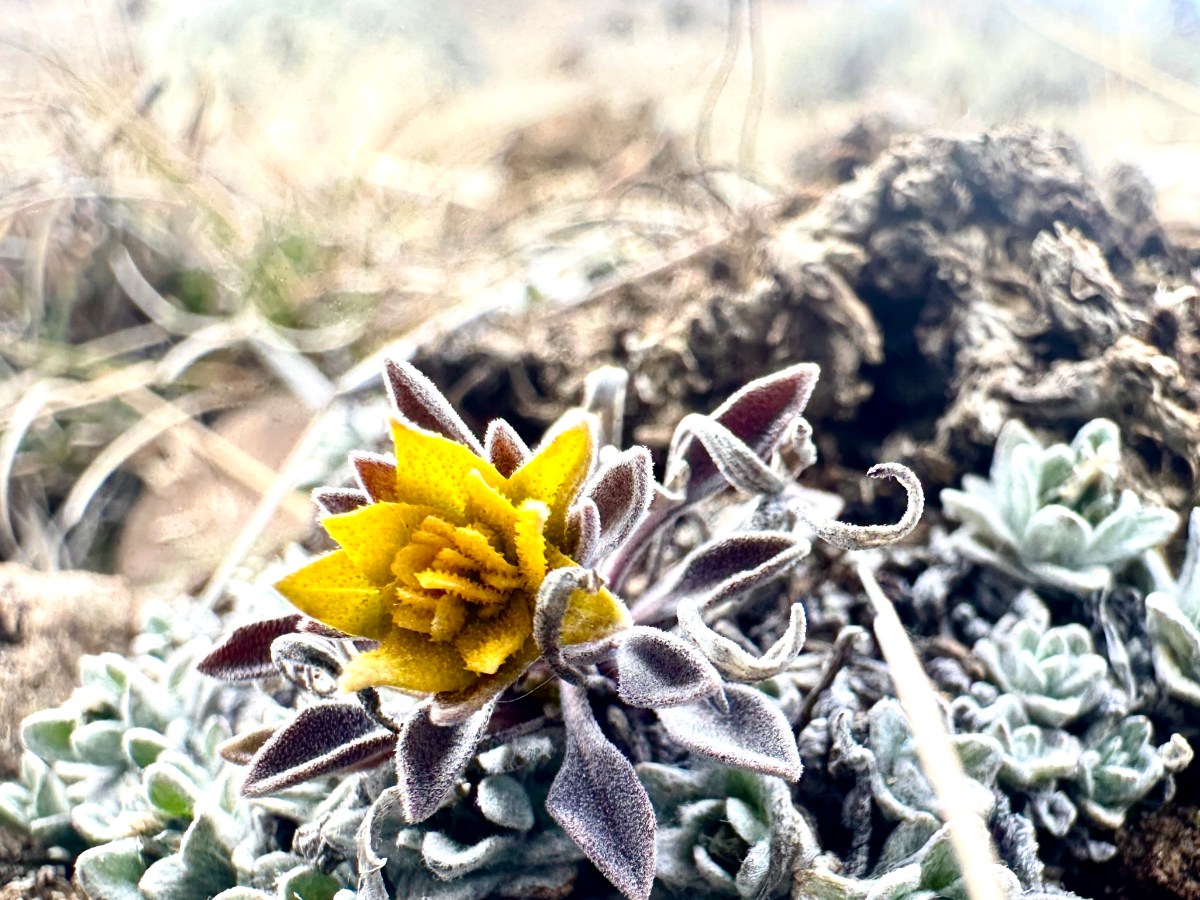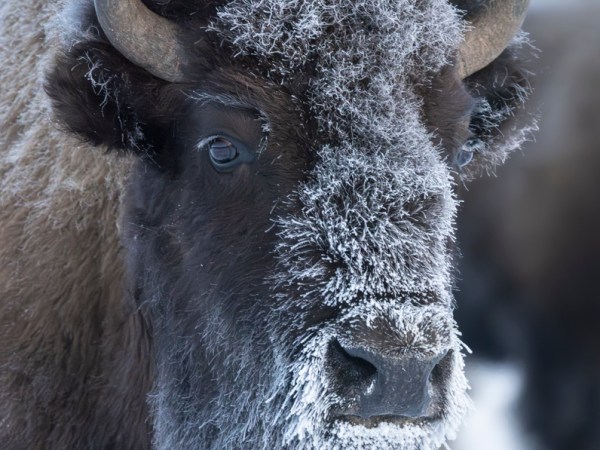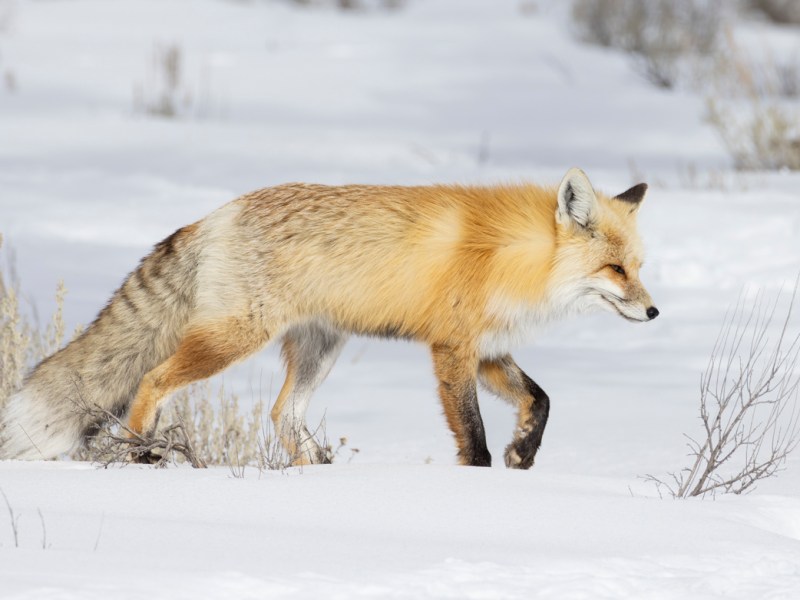
Melissa had another wonderful educator workshop to Yellowstone last month with plenty of extraordinary sightings including a Pygmy Owl, Ermine, and a Bobcat feeding on a Mule Deer carcass (jealous, me??). We planned for her to take some time off afterward and have some friends join us for a week in our favorite winter wonderland. I went out a few days before that group arrived so we could scout things out and hang out with some our friends that live near the park. I’ll post some of our highlights here and add another post on our friend’s group trip next time.
Snow amounts were a little more than in some of my previous trips. The slopes surrounding Lamar Valley were stunning under a brilliant blue sky (click photos to enlarge)
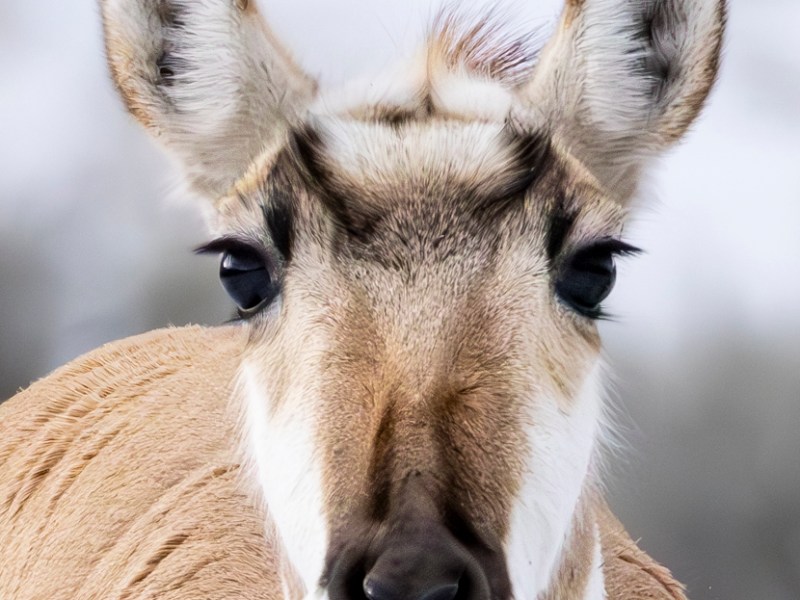
Pronghorn, and many other ungulates, migrate to lower elevations near Gardiner (the north entrance to the park) in winter. This year has seen huge numbers of Bison, Elk, Mule Deer, Rocky Mountain Bighorn Sheep, and Pronghorn congregate in the sagebrush flats along the Yellowstone River. The drive along the Old Yellowstone Trail between Corwin Springs and Gardiner yielded great views of large numbers of animals.
One of many Rocky Mountain Bighorn Sheep rams hanging out on the Old Yellowstone Trail. Though the peak of their rut is in December, this guy was pursuing a ewe in this classic pose.
A nice bull Elk has pawed through the snow to feed on grass. Melissa noticed that Elk feeding pits typically had sharper edges and little mini-cliffs to them compared to the more jumbled bulldozed appearance where Bison use their massive heads to plow through the snow.
This same Elk hung around Phantom Lake throughout the duration of our trip, seen here browsing on willow twigs just below the road. He caused several traffic jams during our stay.
A small herd of Rocky Mountain Goats on the slopes of Barronette Peak in the northeastern part of the park. This peak is the best place to find this non-native species, but snow cover can make it challenging. Photo taken with an iPhone mounted to a spotting scope.
A light snow (ice crystals really) was creating a diamond-like dusting in the sky behind us while watching the goats
Melissa had discovered a new snowshoe hike near Pebble Creek in her workshop. We snowshoed in one afternoon and were rewarded with some wonderful surprises…
An American Thee-toed Woodpecker was busy pecking away at the bark of a conifer searching for insects and seemed oblivious to our presence. This, and the Black-backed Woodpecker, differ from all other North American woodpecker species in having only three toes (instead of four) and lacking red feathers. This woodpecker is associated closely with spruce forests and nests farther north than any other North American woodpecker. I can’t recall seeing this species before so this was a treat.
The highlight of this hike for me was when we paused to watch some birds and we both heard a noise behind us. I thought it was some ice cracking on the nearby stream edge, but Melissa quickly spotted the source – a nice bull Moose.
He was feeding on aspen branches, reaching high to snap off twig tips.
He then stuck his enormous snout into the snow and pulled up some hidden vegetation.
While we watched the one bull, I spotted another coming down the hill and headed our way. This was another bull that had recently dropped its antlers (most drop them in December and January). You can see the whitish pedicel where one of the antlers was attached to the skull. We stayed still and this moose walked across the path where we were headed and wandered off into the trees. We slowly snowshoed along the trail and the first bull eventually made his way behind us to join the other moose.
Forests will always hold your secrets, for that’s what forests are for.
~Victoria Erickson
We’ve been gone for a couple of weeks (more on that adventure in the next post) and the trail cameras were busy keeping up with the goings-on back home while we were away. Lots of the same sort of behaviors we have seen before, but some heavy rains filled our ephemeral stream and that area became more attractive to many of our woodland neighbors. Here are a few highlights from the last couple of weeks that we would have not known about save for the eyes of the trail cameras.
Be as useful as a tree! Give life to others; be shelter to everyone; grant fruits to all! Be good like a tree!
~Mehmet Murat Ildan
Just beyond our deer fence is a huge old Tulip Poplar with a split at the base forming a hollow that stretches up 20 feet or so. This is the second largest tree on our property behind a giant old White Oak on the south slope across the creek bed. The Tulip Poplar is on our north slope where that species is the dominant tree. In spring, the large fragrant flowers provide an important nectar source for many types of pollinators. In autumn, the seeds are eaten by numerous bird species, especially the Purple Finches that fly south most winters from their boreal forest summer range. And the leaves are the primary food source for caterpillars of our most abundant butterfly, the Eastern Tiger Swallowtail (along with many other species like the magnificent Tuliptree Silk Moth). But this particular tree is important in another way – the hollows provide shelter and a forest touchstone for a variety of critters.
A giant Tulip Poplar on our property is home to a number of our wildlife neighbors (click photos to enlarge)
A large split at the base provides access to hollow spaces within this tree. But the Raccoons that use itr as a den tree climb higher and squeeze through a relatively small hole about 30 feet up the trunk
Unlike Raccoons at some of my favorite wildlife refuges, I rarely see ours sleeping out on limbs of this tree during the daytime. The one exception was many years ago when I spotted a young Raccoon out on one of the large outstretched arms of this forest giant.
-A young Raccoon that was sleeping out on a limb one day several years ago checks me out when I went out into the yard for a photograph. When I went back inside, it curled back up and went back to sleep.
Most of my knowledge of the importance of this tree to the woodland wildlife comes from a trail camera that has been watching it off and on for a couple of years. The tree has been home to a variety of wildlife including multiple generations of Raccoons, Eastern Gray Squirrels, and Southern Flying Squirrels. And, perhaps because of the comings and going of its permanent residents, it is also visited by many other forest dwellers. The camera has recorded several species stopping by in hopes of a meal, a sniff to see who has been there recently, or perhaps just to pay respect to this towering monarch of the woods. Visitors have included White-tailed Deer, a Gray Fox, many Virginia Opossums, a Cooper’s Hawk, and, unfortunately, my neighbor’s outdoor cats. The Ground Hog that wandered through our property for several days last year also sought shelter in its hollow base between raids on our garden while we were out of town.
Currently, there is a family of four Raccoons, a bunch of squirrels, and at least one Southern Flying Squirrel that call that tree home. Here are a few highlights of recent trail camera captures.
— The Raccoons usually use the leaning cedar snag as a ladder to their den, but occasionally climb the tree trunk. This was one night recently when it briefly snowed. Note the third raccoon appearing in the lower left at the end of the clip.
Large trees that have broken limbs, knot holes, large cracks or hollow trunks are incredibly important to a forest and its creatures. They provide food, shelter, and a place to rear young and can be a focal point of any woodland tract. I hope this one continues to be the preeminent poplar in our woods for many years to come.
Always walk through life as if you have something new to learn and you will.
~Vernon Howard
The first days of the new year have brought a few more surprises and lessons from the trail cameras scattered in our woods. Several cameras have remained in one spot for many months because they tend to record lots of activity due to their location along a game trail or creek bed. But, based on some things I have seen over time, I decided to re-position a couple of them and, in one case, slightly alter the landscape around it. Here are some highlights from the first few days (and nights) of 2023…
Departure of a year welcomes so many new memories.
~Munia Khan
Our woods offer a lot of things to us – a quiet soundscape, a canopy of huge trees that help cool our landscape in summer, majestic gray forms that stretch to the winter sky, and a source of nourishment and shelter for the countless wild neighbors that share our land. I try to observe as much as I can in my wanderings in the yard and on our forest paths, but I am not out there all the time. When I am not present, I have other eyes to record the comings and goings of the wildlife. In the final two weeks of last year, the trail cameras recorded the usual activities of the herd of deer (still munching on the abundant acorns), the scampering of squirrels, the nightly forays of the Raccoon family, and even some neighbors enjoying the woods. But there were also some nice surprises. Here are a couple of new memories from the final days and nights of 2022…
That’s a wrap for trail camera adventures for last year. Looking forward to many more glimpses into the lives of our wild neighbors. Now, if only a wandering bear would stop by…
It is a sad truth, but we have lost the faculty of giving lovely names to things.
~Oscar Wilde
I enjoy cold winter days as I tend to pay more attention to the little things in our woods like patterns, surprise colors, and living things that I sometimes pay less attention to in warmer months when birds, insects, and flowers seem to always demand my attention. Mosses, lichens, slime molds, and fungi suddenly take more prominence (although they really deserve our appreciation all year).
This has been a good season for fungi in our woods, and one group, in particular, really caught my eye. In November, I spotted several clusters of round white blobs on downed trees or the mulch in our yard. As Fall progressed, I began to recognize them as puffballs, so named for their spore dispersal mechanism. As they dry, they develop splits on the surface and any physical disturbance, such as raindrops, the tap of a finger, or an accidental footstep, will send clouds of brownish spores up in a tiny billow of “smoke”. I photographed one on a pathway in our yard back in November and again right before the holidays. Below are the photos and a short video of the spores being released.
A cluster of Wolf-fart Puffballs in our yard in early November (click photos to enlarge)
The same cluster in December
When I came across some drying puffballs in the woods a couple of weeks ago, I couldn’t resist making puffball smoke by gently poking them with my finger. Here’s a slo-mo clip of puffballs doing their thing.
Thinking I might want to post this, I decided to learn more about these unusual fungi. When I put the photo in SEEK, the all-things-natural identification app, I loved the common name that came up – Wolf-fart Puffballs. Yep, that’s what I said, wolf fart. The scientific name is Lycoperdon pyriforme. It turns out the translation of that name defines the common name – “Lyco” means wolf in Greek; “perdon” means to break wind. Together, they mean wolf fart! People understand how the word fart came to be favored given the visible puff that comes up when one is touched, but why the association of wolves? Who knows. And “pyriforme” means pear-shaped referring to the shape of some of the structures.
After laying next to a clump to get the ground level video, and having a breeze blow some of the spores my way, I thought that perhaps it is not a good idea to breathe in the spores. And with some research I discovered that I was right! If you inhale large numbers of spores you may suffer from respiratory problems. But, medical experts say it requires inhaling a large quantity of spores to show any signs of lung distress, so I suffered no ill consequences.
As always, I am amazed at the wonders just outside our door. Take some walks this winter and see what catches your eye.
Ice has a social life. Its changeability shapes the culture, language and stories of those who live near it!
~Robert Macfarlane
I went for a walk in our cold woods on Monday and came across some remnant ice patterns left from a combination of heavy rain followed by frigid temperatures while we were away for the holiday. Our little creek is a wet weather stream, usually only flowing after abundant rain in winter when most of the trees lining the creek bed are dormant.
Our now dry stream bed held onto some beautiful ice sculptures for a few days after the rains (click photos to enlarge)
It looked a bit odd to see ice art in a dry stream bed. There was even a perched ice shelf over a depression that had held a foot of water only a few days before. With the warming temperatures, the intricate ice patterns are retreating, leaving only memories of the ephemeral beauty they added to our woods. I’m glad I was able to enjoy them for a day at least…
Ice columns on rootlets where a small waterfall forms after heavy rains
A shelf of ice suspended almost a foot above a now dry pool
I held the phone underneath the ice shelf and took a photo up through the ice to capture the tree outlines above
Self portrait from below the ice shelf (the least glamorous photo of the day)
Many people think of winter as bereft of birds after autumn migrations, but in fact this can be a bountiful season for bird-watchers.
~Val Cunningham
It is the time of year when I yearn to be with the birds of Pungo. There is something magical about their abundance, their flight, and their sounds. And the cast of characters that accompany them is pretty great too. So, this past week, I headed east early one morning to eventually meet up with some friends of a friend to show them some of the wonders of our coastal refuges in winter.
I arrived early on Monday and spotted some activity on the far side of the crop fields at the entrance to the Pungo Unit of Pocosin Lakes National Wildlife Refuge. Snow Geese! I drove over and pulled in slowly so as to not spook the feeding flock. To my delight, I was the only human present (a true rarity these days).
I stayed in my vehicle (most wildlife seem to prefer that behavior from us humans, but few of us abide their wishes). The sounds of a feeding flock of Snow Geese are raucous and somewhat mechanical, like a feathered combine moving through a field. The flock jumped up a time or two as they always seem to do (I am amazed at how they manage their energy budget with all this jumping up, flying in circles, landing, repeat).
A wall of wings as part of the flock circles the field (click photos to enlarge)
I sat alone with the birds for a good 15 minutes before another vehicle pulled up. The driver got out and set up his tripod and camera and the birds started moving away.
A diminutive Ross’ Goose at the edge of the flock
Suddenly, a large portion of the flock blasted off, filling the sky with wing beats and a “chorus” of their nasal honks, one of the loudest sounds you encounter in winter bird watching. The flock headed back to the safety of the lake, and just like that, the scene was quiet, with only a handful of American Robins flitting across the field.
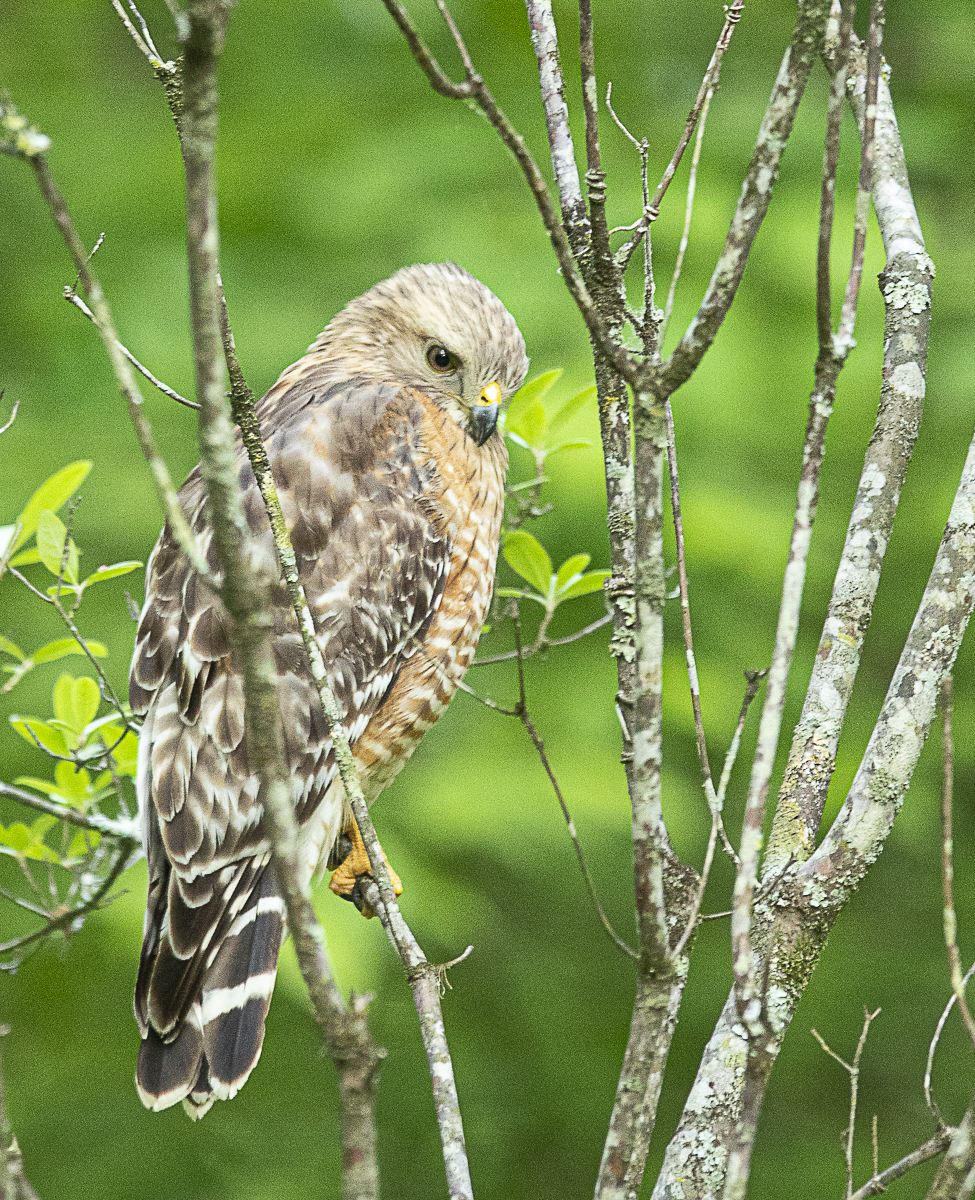
This happens often it seems, I arrive before friends, and Pungo puts on a show, and I have to say, you should’ve been here… For the next two hours, I drove the refuge roads, shared by only two other cars. Perhaps because of that, I managed a couple of nice wildlife photography opportunities of often secretive birds – a Red-shouldered Hawk and the ever-elusive Belted Kingfisher.
An adult Red-shouldered Hawk perched along one the roadside canals, searching the edges for a meal
A female (note the rust-colored breast band, males lack this) Belted Kingfisher cooperated for several quick images before darting off and scolding me with her rattling call.
My crew arrived before lunch and we set off to see what we could see. Along the edge of D-canal was a lone Tundra Swan, sitting on the bank. It had not moved all morning so is undoubtedly injured or sick (it was in the same spot the next day as well). Its fate is most likely to serve as food for the likes of the two Bald Eagles I had seen nearby at first light.
A sick or injured Tundra Swan along a roadside canal
Driving toward Marsh A to view the swans, I spotted something out of the corner of my eye and backed up to see a huge ball of gray fur on a snag in the swamp. I was very light-colored and had its head and tail hidden, so I opened my car door and got out to get a better view. A very fat Raccoon raised its head, gave me that look, and disappeared into a hollow below its perch. I apologized for disturbing its sleep and we moved on.
A sleepy Raccoon awakes from its bed atop a tree snag and crawls into a hole on the side of the tree
The afternoon was spent on “Bear Road”. I was surprised to find only one car parked at the gate, an increasingly unusual occurrence these days.
Searching the fields for bears
Another beautiful sky at Pungo
We walked past two photographers standing near the corn, waiting for bears to come out. We moved down toward the “tree tunnel” and suddenly, out pops a bear. She came out of the woods, slowly walked across the grassy road and headed into the field, a ritual she has no doubt done countless times in her life. Seconds later, two cautious cubs followed. One had an unusual injury to its left flank, something I had seen posted earlier on social media. That one moved a bit awkwardly but managed to keep up with its bigger sibling. I hope the little guy recovers
A large sow bear comes out of the woods, crosses Bear Road, and heads into the adjacent corn field for dinner, giving our group a glance before disappearing into the cornstalks
Two cubs followed their mother into the corn field. The smaller one has an injured hind quarter.
It turned out to be a very beary afternoon and when it was over, we had counted 13 bears! On the way out, I saw the Snow Geese feeding in the same field as that morning, so we pulled over and watched and listened to them for a few minutes before they blasted off, circled, and flew off toward the lake for the evening.
After a great afternoon of wildlife watching, we headed to the nearby town of Belhaven for a wonderful dinner at Spoon River. Check it out if you are in the area. The next morning, we were back at Pungo for sunrise. The developing pink sky and the soft coos (plus a few loud calls) of a few thousand Tundra Swans is a great way to start your day.
The Snow Geese flew off the lake about 7:30 a.m. so we headed out to the front fields in hopes of witnessing the show. But, they fooled me and apparently had flown elsewhere, off the refuge, for their morning meal.
Next stop was Mattamuskeet NWR, where we saw thousands of ducks (mainly Northern Pintails) in the impoundment. It was a duck hunt day on the refuge, so a portion of Wildlife Drive across the canal was closed until early afternoon, so we spent some time in the wonderful Visitor Center and drove the open portion of the road, searching for birds. A highlight was a pair of Anhinga resting on a fallen tree in the canal. It is becoming more commonplace to spot a few of these impressive birds on this refuge every winter. The Cornell website, All About Birds, shares that the name, Anhinga, comes from the Tupi Indians in Brazil, meaning “devil bird” or “evil spirit of the woods.” But, I find them to be elegant as opposed to devilish, and very adept at hunting fish with their dagger-like bills.
One of two Anhinga we spotted perched on a downed tree in a roadside canal at Mattamuskeet
Driving on Hwy 94 north of Mattamuskeet, we spotted two more bears, bringing our total for the trip to 15. Our last stop was going to be Pettigrew State Park. On the way we passed through the small town of Creswell, and, to my surprise, there was a new coffee shop in town, Big Blue 252. I made a quick stop and we went in for some delicious coffee and pastries. This will definitely change my itinerary on future trips as good coffee is important on long days in the field (and is hard to come by in these parts). I normally don’t promote businesses in my blog, but, this is an exciting find and the owner, Alfreda, is great. Check it out if you are in the area.
My new go-to place when in the vicinity of Pettigrew State Park
And I was so excited by this find, that I didn’t even see a new small restaurant that has opened up across the street until we pulled away. These new businesses will make my stays in bear and bird country all the more enjoyable.
All in all, a great couple of days in my favorite public lands in North Carolina. Great birds, lots of bears, and good friends (and coffee!!). Wishing you all a wonderful holiday and hoping you have a chance to get outside and enjoy the beauty of a winter day, wherever you may find yourself this week.
Wild is the music of the autumnal winds amongst the faded woods.
~William Wordsworth
I’m trying to get into our woods every few days to see the changes that are occurring as autumn transitions to the bones of winter. The big change this week was the sudden accumulation of oak leaves on the forest floor. It seems they all fell at once, carpeting the ground in a crunchy brown rug. Meanwhile, the trail cameras are still getting lots of deer videos, but the rut has quieted and things are not as frantic as a few weeks ago. Here are a couple of forest vignettes from this past week…
I’ve noticed a lot of variation in the antler size and shape in our deer herd. White-tailed Deer typically have fairly symmetrical antlers with an equal size, spacing, and number of points on both sides. But, so-called atypical antlers, are not uncommon. The young buck in the video shows a strange bend on one side and some waviness in the point of its antler. I can’t tell from the video if a point was broken or it is just an odd shape. Antler deformities can occur in three major ways: injuries to the pedicel (the antler growing base attached to the skull); injuries to the antler when it is in velvet (the soft, hair-like membrane rich in blood that covers the antlers during their growth phase in spring and summer); or leg injuries. This last one caught me by surprise when I read it. Apparently, the mechanism for the relationship between leg injuries and antler deformation is not well known, but scientists think it may be the result of reallocation of nutrients from antler growth to healing the bone in a leg injury. Oddly, an injury (such as a car collision) to a front left leg can cause a deformity in the left antler, but an injury to a left rear leg may result in the right antler being misshapen. Observing our wild neighbors always seems to bring up more questions and the resulting online searches usually reveal many surprises.
The trees will tell their secrets to those who tune in.
~Steven Magee
I check the trail cameras once a week or so and am always anxious to see what secrets they uncover in our woods. The past few weeks it has mainly been squirrels chasing each other around and deer, lots of deer. November is the peak of the mating season (aka rut) for deer in our area and they have been busy. The abundant acorn crop is giving them plenty of food so they all look in their prime. There is a herd of about nine does that I see regularly on the cameras. Several bucks (at least four or five that are 6-pointers or larger) are making the rounds, chasing does and challenging each other and nearby tree saplings. Here are a few of the highlights from this month.