From east of the East-est to west of the West-est we’ve searched the whole world just to bring you the best-est.
~Dr. Seuss
This past week, I helped Melissa prepare for the largest museum event of the year – BugFest. As always, we headed up the Caterpillarology booth showcasing the incredible variety of larvae we have in this area. She and a few other staff at the museum started looking on Tuesday and I joined the effort on Wednesday through Friday. We searched numerous wild locations and a couple of native plant nurseries and ended up with over 50 species. We didn’t collect everything we found for a variety of reasons and here are some of the critters that didn’t make it to the big show.
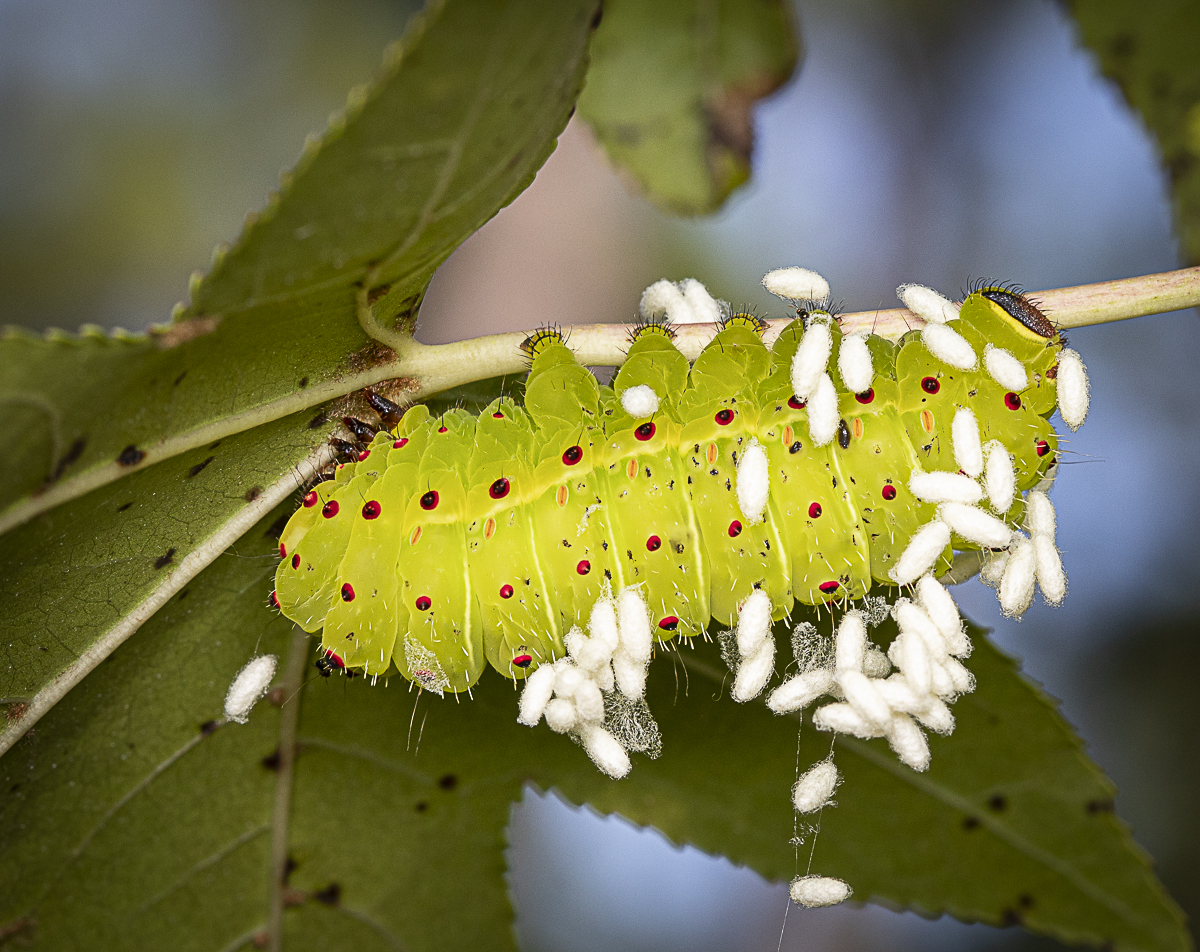
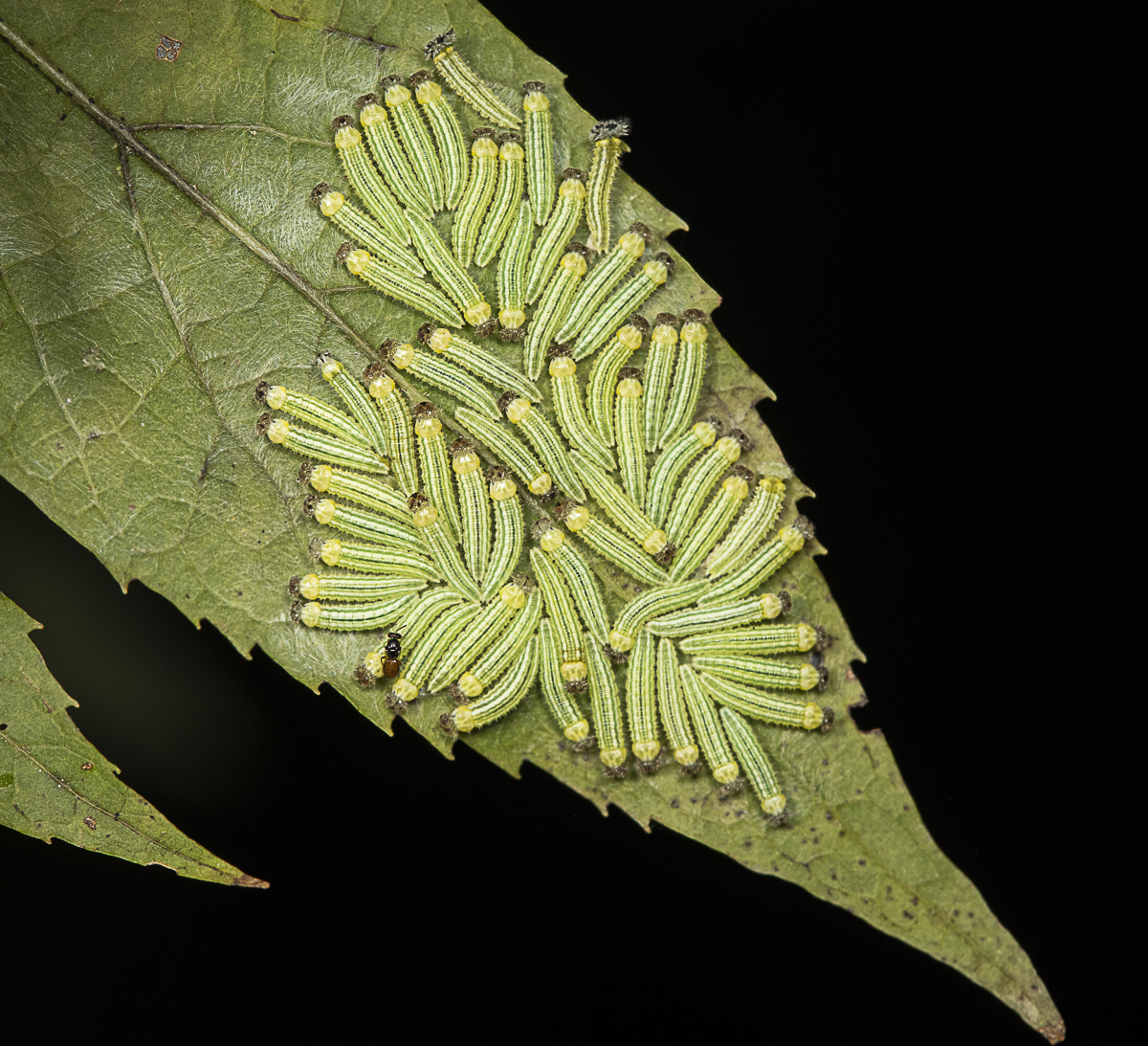
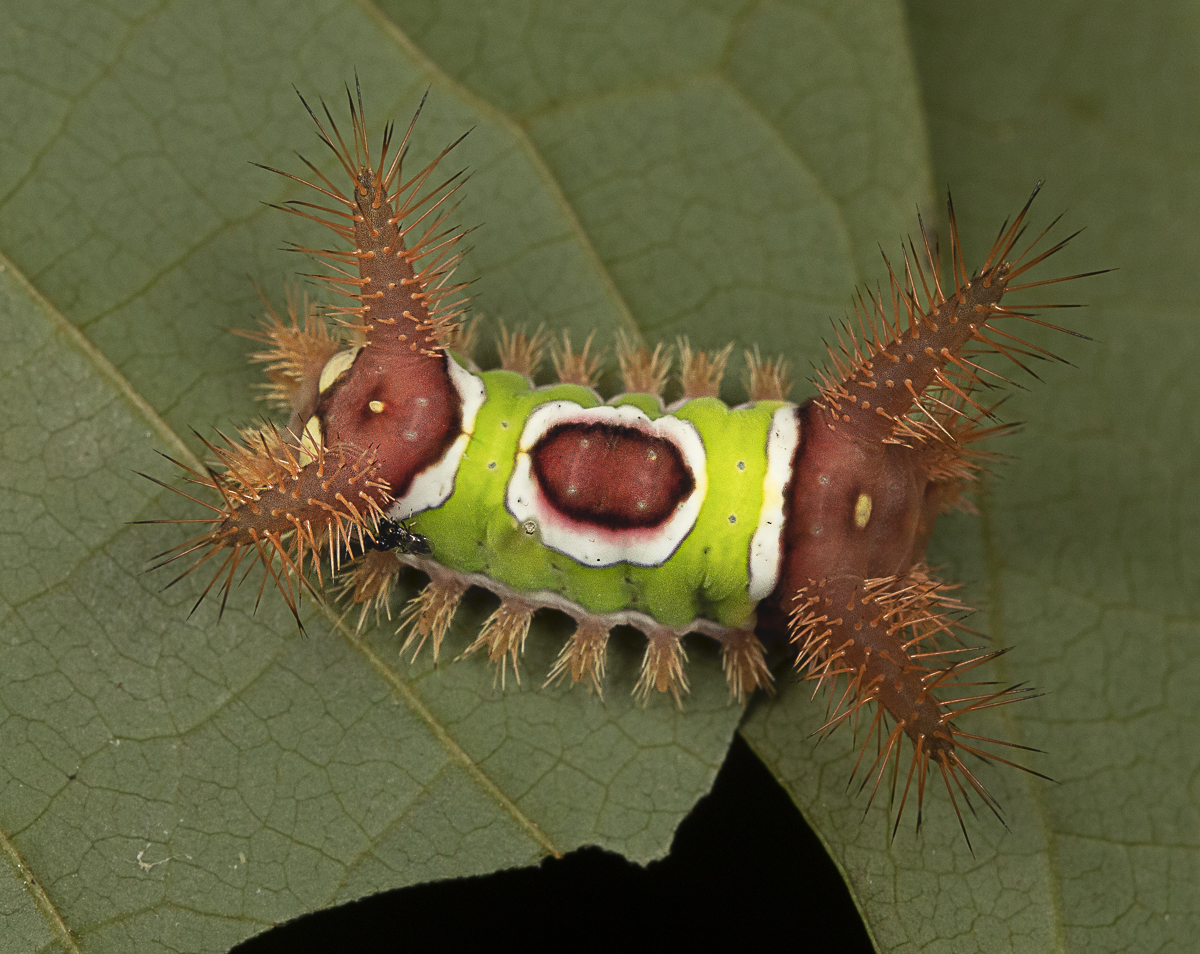
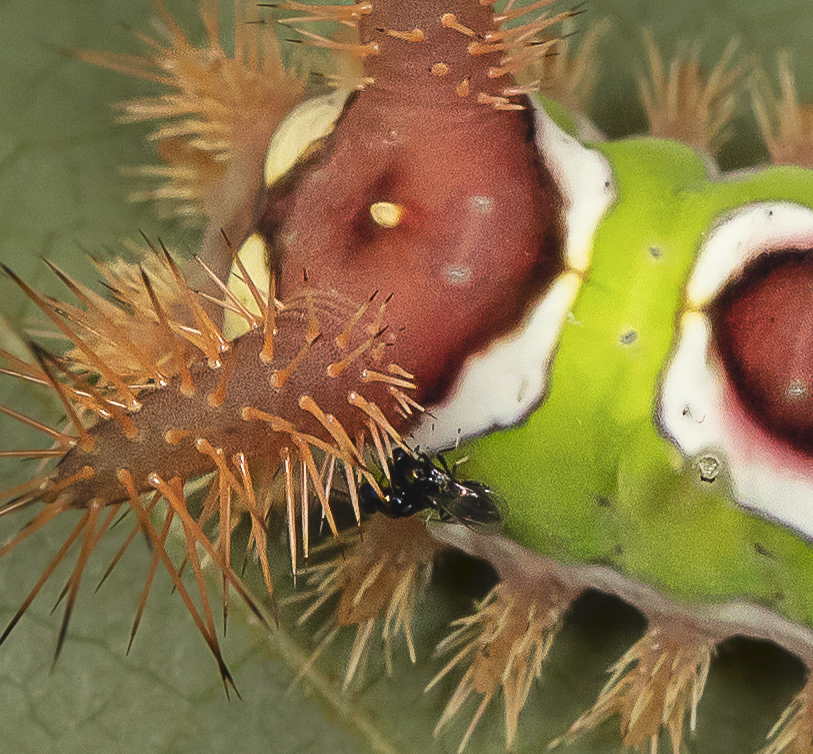
Walnut Caterpillars, Datana integerrima. We found these in a natural area in the Sandhills, but decided to leave them be since they are what we call “droppers”. The least bit of disturbance and they fall to the ground. as a defense. This is not a good characteristic for a species to have for a day-long public event with lots of human feet trampling all around.This beautiful larva is (we think) a Pink Prominent, Hyparpax aurora, found on a Turkey Oak in the Sandhills. Since we don’t have a food source near us, we reluctantly left it in its home turf.A Luna Moth (Actias luna) larva that has succumbed to a wasp parasitoid. The tiny white q-tip looking things are the cocoons of the wasp larvae that have emerged from the caterpillar’s body after feeding on it from the inside for a few weeks. This caterpillar is doomed, so we left it in the Sandhills. An amazing percentage of the larvae we find have been attacked by various parasitoid wasps and flies.Purple-crested Slug, Adoneta spinuloides. The so-called slug caterpillars lack the normal legs and pro-legs of most other caterpillars and move slug-like across leaf surfaces. August and September are the best times to find the various slug caterpillars, but this one was so tiny (less than 1/2 inch) that we left it on its host plant.We found these early instar caterpillars (not sure what species) on our night hunt at a nearby natural area (with permission from the manager). It was a cluster of newly hatched larvae so we decided to leave them alone.It wasn’t until I looked at the photo on the computer that I saw the parasitoid wasp looking, no doubt, for a victim on which to lay her eggs.Always excited to find a Saddleback larvae, Archaria stimulea. This one was on a Pawpaw in our yard over a week ago so I was hoping it would make it to BugFest. I checked on it twice and the second time it was missing, so I figured it had gone off to pupate (as so many of the ones we find do just before BugFest!!). But when I looked at the photo this weekend I saw the probable cause for its disappearance……yet another parasitoid wasp (or is it two?) laying eggs in the little guy. It amazes me any caterpillars make it to pupate given all the predators and parasitoids that are out there.
Look for the stars that did make to to BugFest in the next post.
Lake George is without comparison, the most beautiful water I ever saw; formed by a contour of mountains into a basin… finely interspersed with islands, its water limpid as crystal, and the mountain sides covered with rich groves…
~Thomas Jefferson, 1791
Melissa’s family has a long tradition of summer vacations on Lake George in upstate New York. I can see why as it is one of the clearest lakes I have visited and is surrounded by forested mountains, so the views are great. It is also a large lake – 32 miles long, up to 2.5 miles wide, and almost 200 feet deep. In early August, the entire family was able to get together at a beautiful old house surrounded by state-owned land for a week of relaxation and fun. A bonus for me was the abundance of wildlife (big and small) on the property and that is the primary focus of this post.
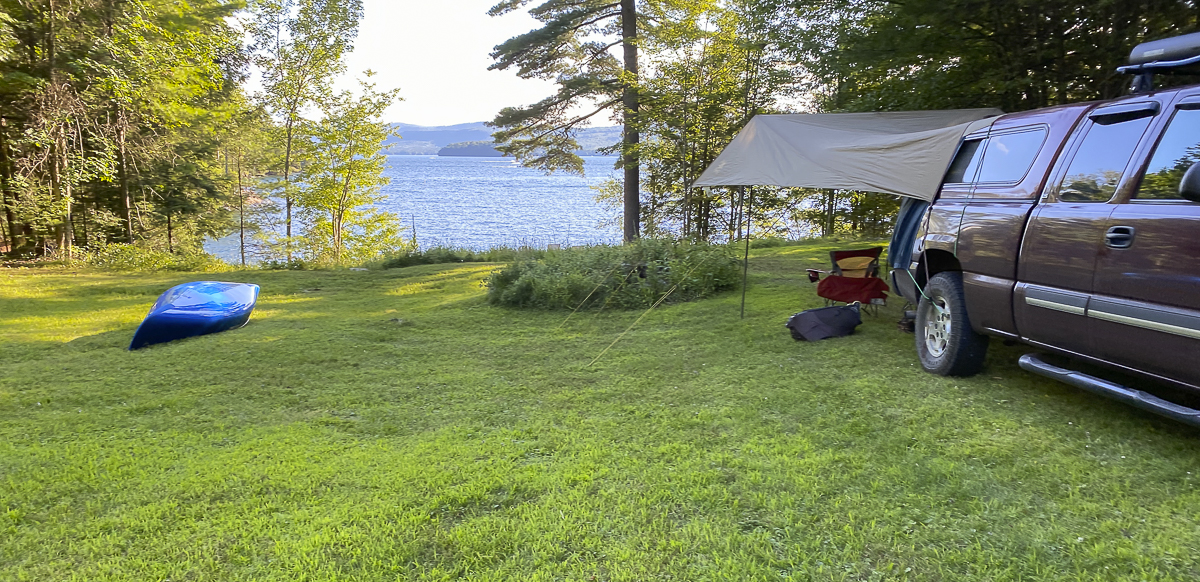
Our rental home for the week. Built in the early 1900’s, this was a caretaker’s house for a large estate, the bulk of which was sold to the state as part of Adirondack Park (click photos to enlarge)Melissa and I spent nights in our truck down by the lake to free up some bedroom space in the house (not a bad trade at all given the view and the almost constant breeze)View of the dock and the lake
The owner told us to expect some wildlife, especially out by the mulberry tree in front of the house. The first morning, Melissa’s dad saw some turkeys and a Red Fox out under the tree. Dang, we were down by the lake so we missed all of the excitement.
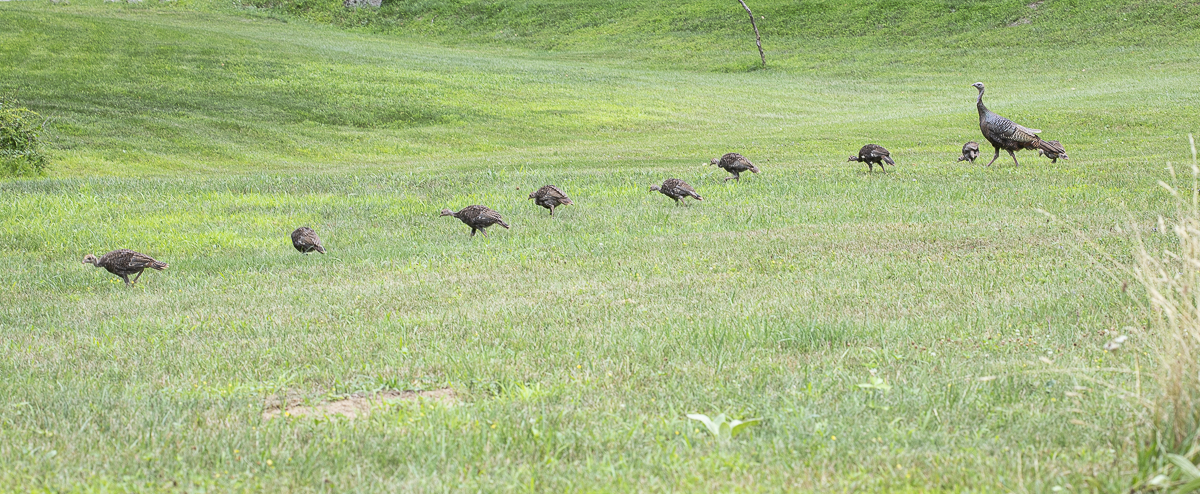
A flock of Wild Turkeys (two hens and nine young ones (poults) visited us daily
Then he showed me a phone video he had taken of a critter I have only seen once in the wild (In Grand Teton National Park) – a North American Porcupine! Porcupines range in the West from Canada down to northern Mexico, but are found only as far south as Pennsylvania in the Eastern United States. The next morning we were talking about the “wildlife tree” and I look out and there are two porcupines strolling towards it. They provided entertainment for the family for the next hour or so as they slowly climbed into the mulberry tree and, to my surprise, seemed to feed mainly on the leaves rather than the berries (they did consume a few berries as well).
Young North American Porcupine in mulberry tree
Porcupines spend most of their time in trees, foraging on leaves, fruit, and bark (especially in winter). They have several adaptations that make them excellent tree climbers – long claws, wrinkled pads on their feet that give them extra grip, and stiff bristles on the underside of their tail that acts much like a woodpecker’s tail spines to brace them as they climb. They do spend time in dens (rock crevices, hollow logs, abandoned buildings) in cold snaps or when giving birth.
A look at the formidable claws that help porcupines climb
The word porcupine is derived from Latin and means thorn pig. They are not related to pigs, but are, in fact, the second largest rodent in North America (behind American Beavers), attaining weights of up to 20 pounds. But it is their quills that make porcupines so distinctive.
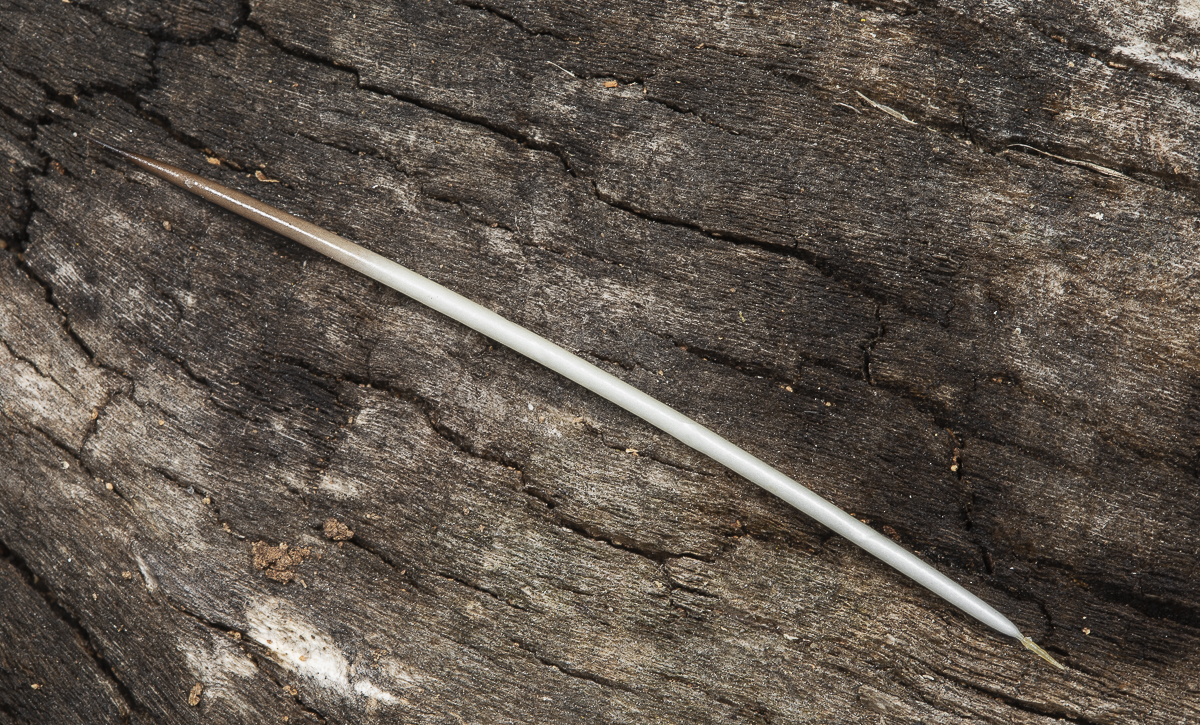
We found several shed porcupine quills under the mulberry tree. The quill is attached to muscles below the skin that control its movements. The microscopic barbs are at the tip (in this photo, the left side of the quill)
Quills are modified guard hairs filled with a spongy matrix and can be up to 4 inches in length. They have microscopic barbs at the tip that are angled such that, if not removed, the quill digs deeper and deeper into an animal as it moves. They can work their way into vital organs of the victim or, over time, go entirely through and come out the other side of the animal if they avoid bones and organs. They are an effective protection against most predators, with the weasel-relative Fisher, being the primary exception in New England. There may be as many as 30,000 quills on one porcupine! it is a myth that they can throw their quills, but they do release easily when they come in contact with a predator (and are easily shed as they move about).
One porcupine came down one branch to climb another and I approached for a clearer view. It raised its quills along the back side and tail in a defensive posture that gave a clear message – don’t come any closer. The bold black and white pattern on the back and tail resembles that of a skunk, and is believed to serve as a similar warning to would-be predators
The quills are covered with a mild antibiotic greasy compound that is believed to provide some protection to the animal should it fall from a tree or otherwise manage to get punctured by its own spines.
The larger porcupine finally came down out of the tree and slowly ambled into the forest, the quills on its back side erect, letting us know we should leave it alone. The younger porcupine spent its days sprawled across a limb high in a tree about a hundred feet from the mulberry tree
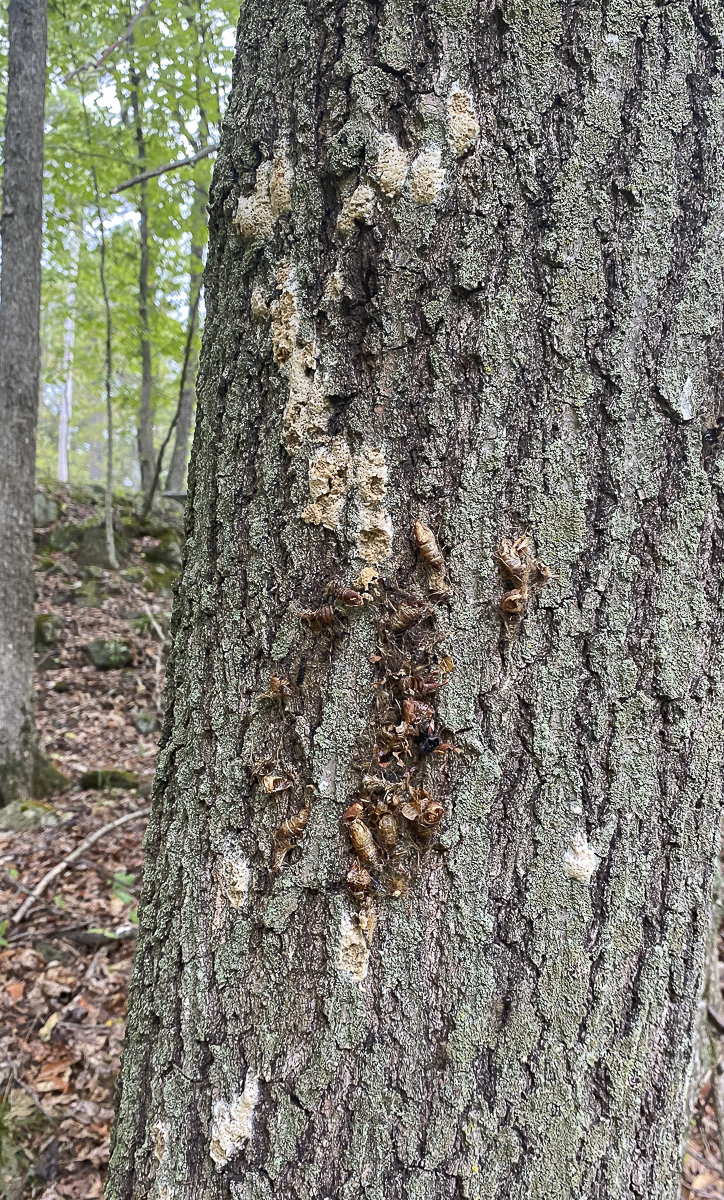
We also had a lot of smaller wildlife to keep me fascinated during our stay. I had never seen evidence of the introduced Spongy Moths before, but there were egg masses, shed caterpillar skins, and pupae on many tree trunks around the property. Spongy Moth is the new common name of Lymantria dispar dispar, formerly known as the Gypsy Moth. The name was changed by The Entomological Society of America as part of their Better Common Names Project. These destructive insects were accidentally introduced to North America from Europe in 1869 in an effort to create a silk industry. Caterpillars are generalist feeders and can defoliate large swaths of forest in eruptive years.
Spongy Moth egg masses and pupae on a tree trunk
Under some of the protective eaves and open barns on the property were lots of tiny funnels in the sandy soil, a sure sign of the presence of one of my favorite insects – Antlions.
A patch of ground under a shed roof is covered by Antlion funnels. Larval Antlions dig these and lie in wait at the bottom of the pit for ants and other crawling insects to tumble down into their waiting jaws.I scooped out an Antlion larva for this pic, showing the formidable jaws and spines on its legs and body that help the ant lion hold its position in the bottom of the pit when subduing a struggling ant. Antlions pupate in the soil and then emerge as a nocturnal flying adult that somewhat resembles a damselfly.
One day, I grabbed the camera and just wandered around the yard (which included some nice mini-meadows) and photographed some of the abundant charismatic micro-fauna. Here is a sampler.
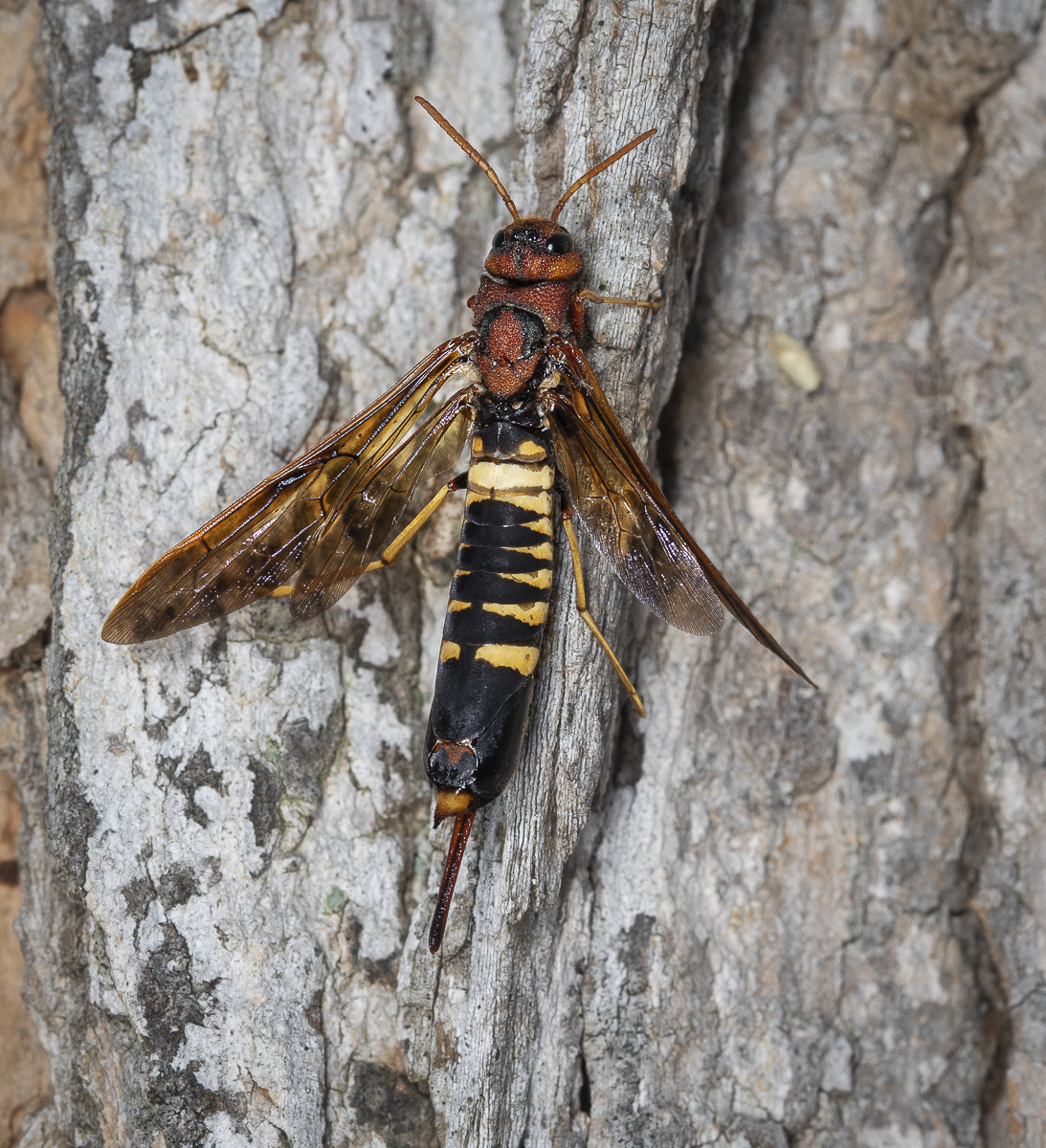
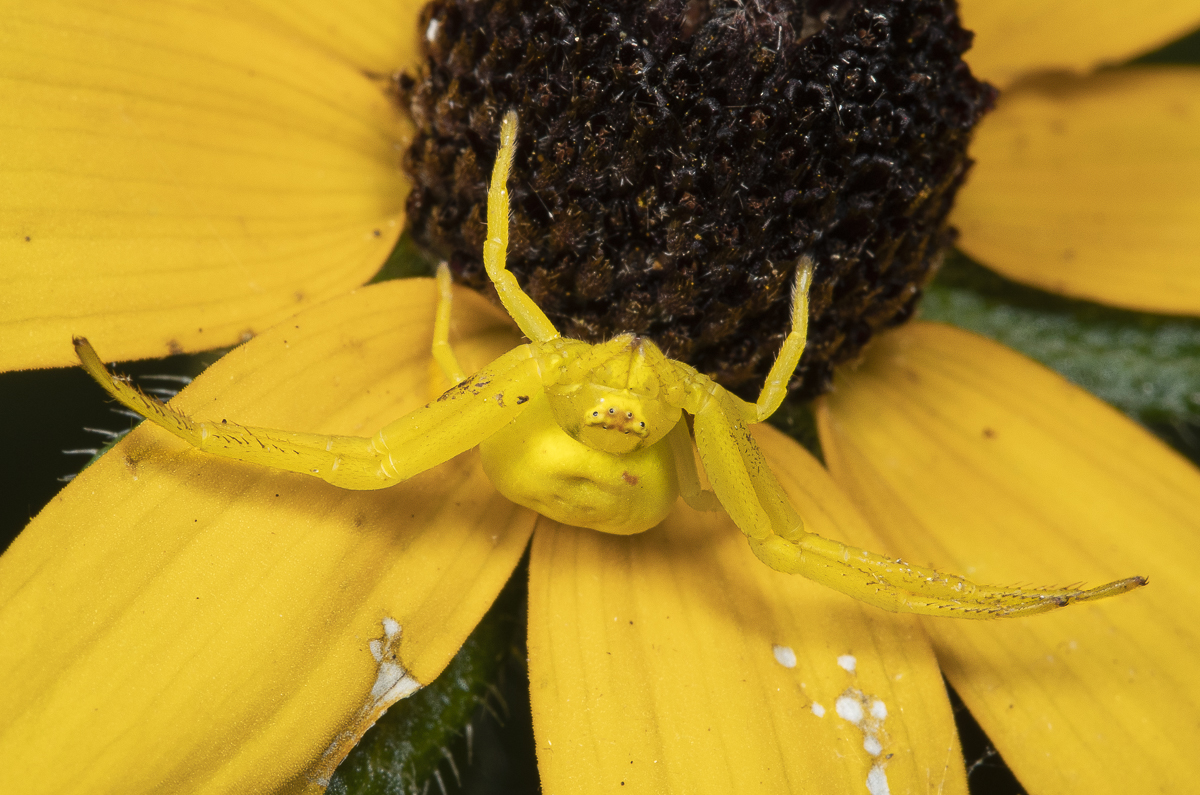
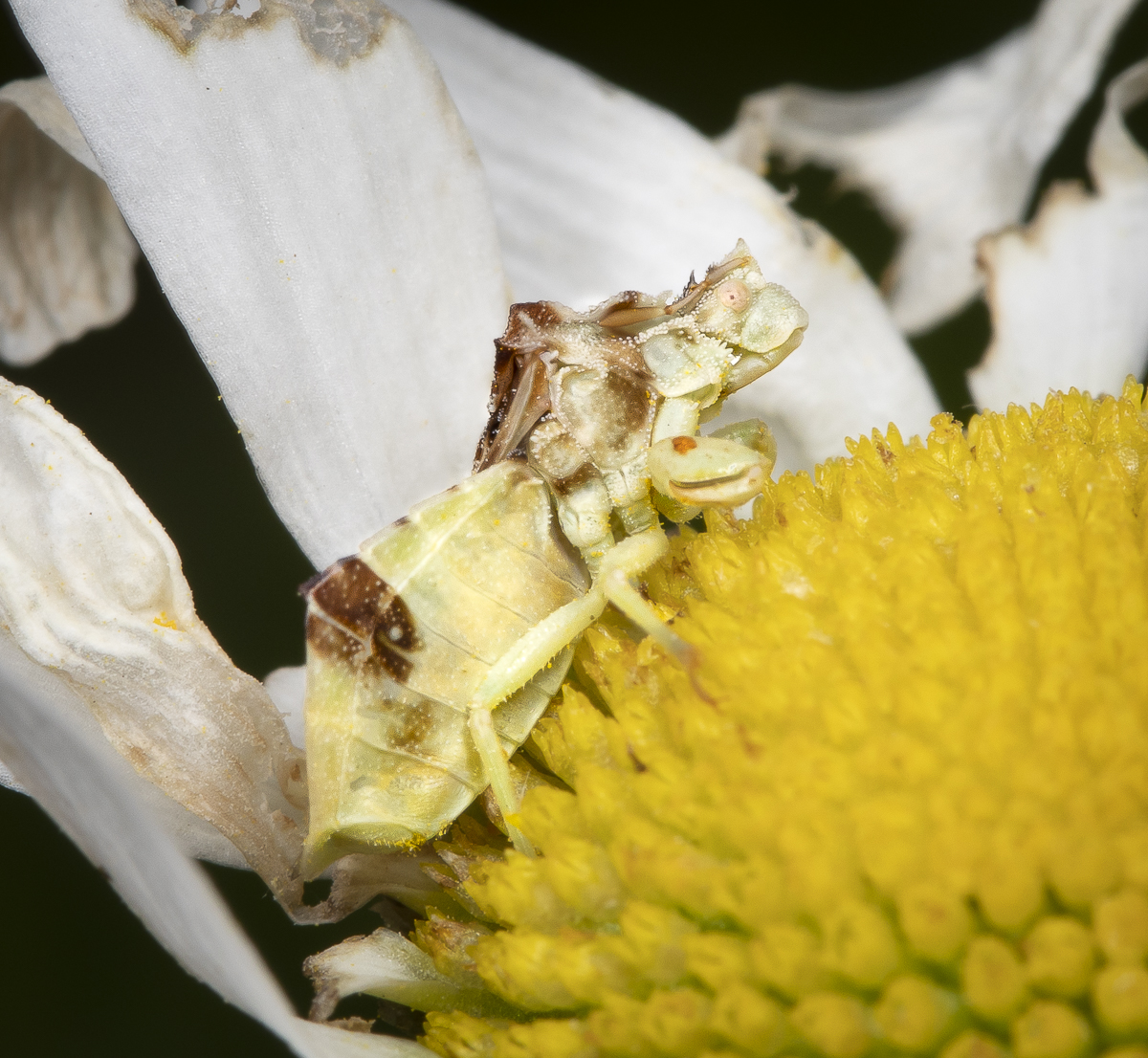
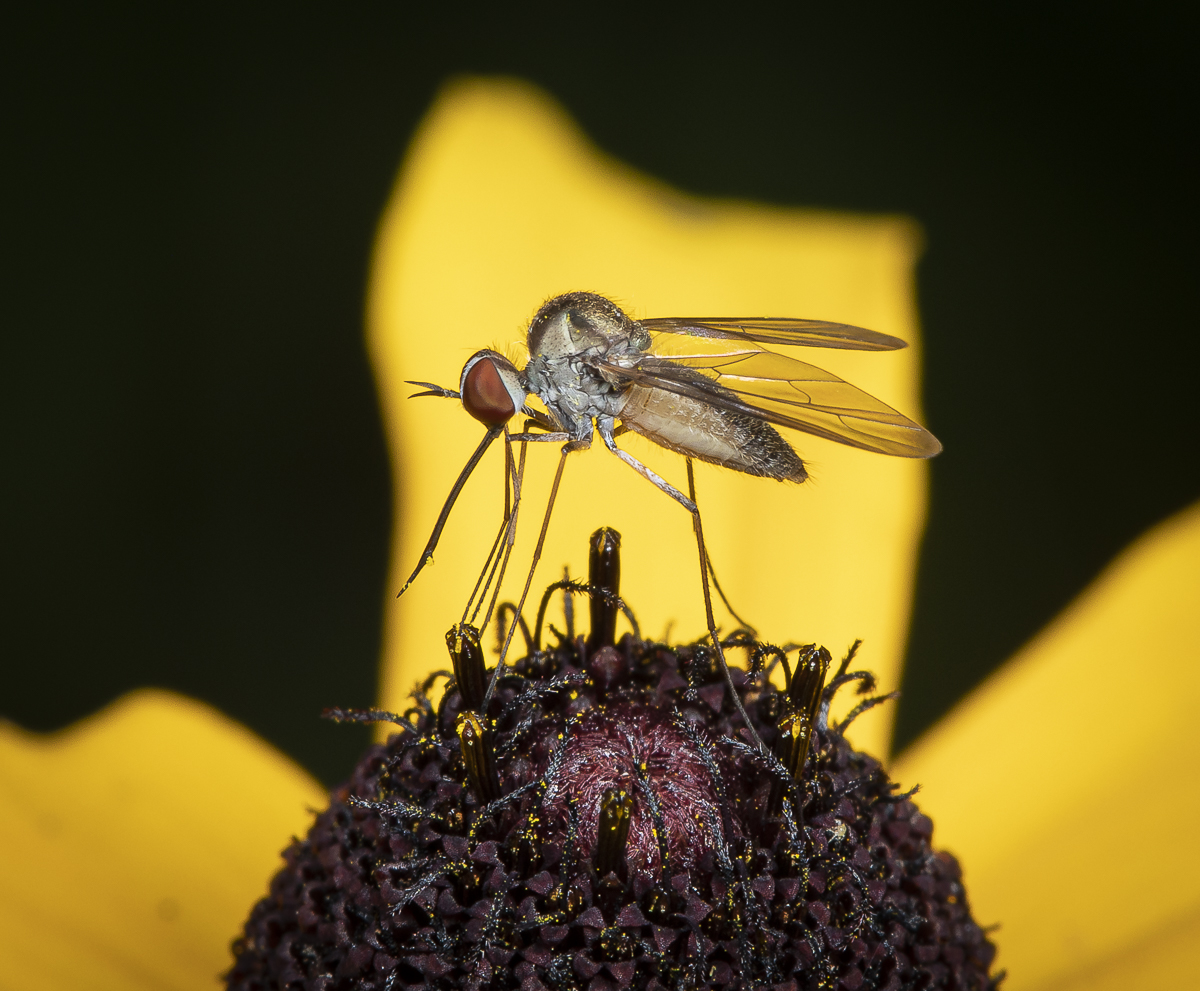
A Pigeon Horntail adult female, Tremex columba. These are large insects in the wasp family, but they do not sting. Females insert that ovipositer into dead or decaying wood, lay eggs, and deposit fungal spores with the eggs that germinate to enhance the wood decomposition. She carries these fungal spores with her in a special abdominal pouch. After hatching, the larva then eats the decaying wood and the fungus.There were several Crab Spiders hanging out on the wildflowers in the unmowed areas. Some species are capable of changing their color to better match the background color of the flower where they wait for incoming preyThe last thing a small pollinator may see as it approaches a Black-eyed SusanAnother ambush specialist is the aptly named Ambush Bug. Like some Crab Spiders, some species of Ambush Bug are thought to change color to match their surroundings. These guys look like a small tank had a baby with a praying mantis, since their bodies appear heavily armored with huge raptorial front legs.Here is a yellow one on a Black-eyed Susan. When an insect lands nearby, they grab it with those front legs and inject a fluid that immobilizes the prey and starts to digest it. They then suck up the innards of the prey’s body through a beak-like proboscis.A mating pair of Ambush Bugs on Queen-Anne’s-Lace. Males are often darker than females.A new group of insect for me – tiny bee flies in the genus Geron (means old man, in this photo, imagine a hump-backed old man with a cane). These hunch-backed little insects were common on many flower heads, sipping nectar. Larvae of this group are parasitic on many moth larvae.
All in all, a spectacular week of scenery, fun, food, family, and the wild creatures that make Lake George so special.
It’s not just moths that I have been seeing out in the yard after dark. The new flash system has been out on a few nights with me as I wander the premises (carefully in case there are any Copperheads out and about) looking for what’s happening on the night shift. Here are some of the highlights of the late night crowd.
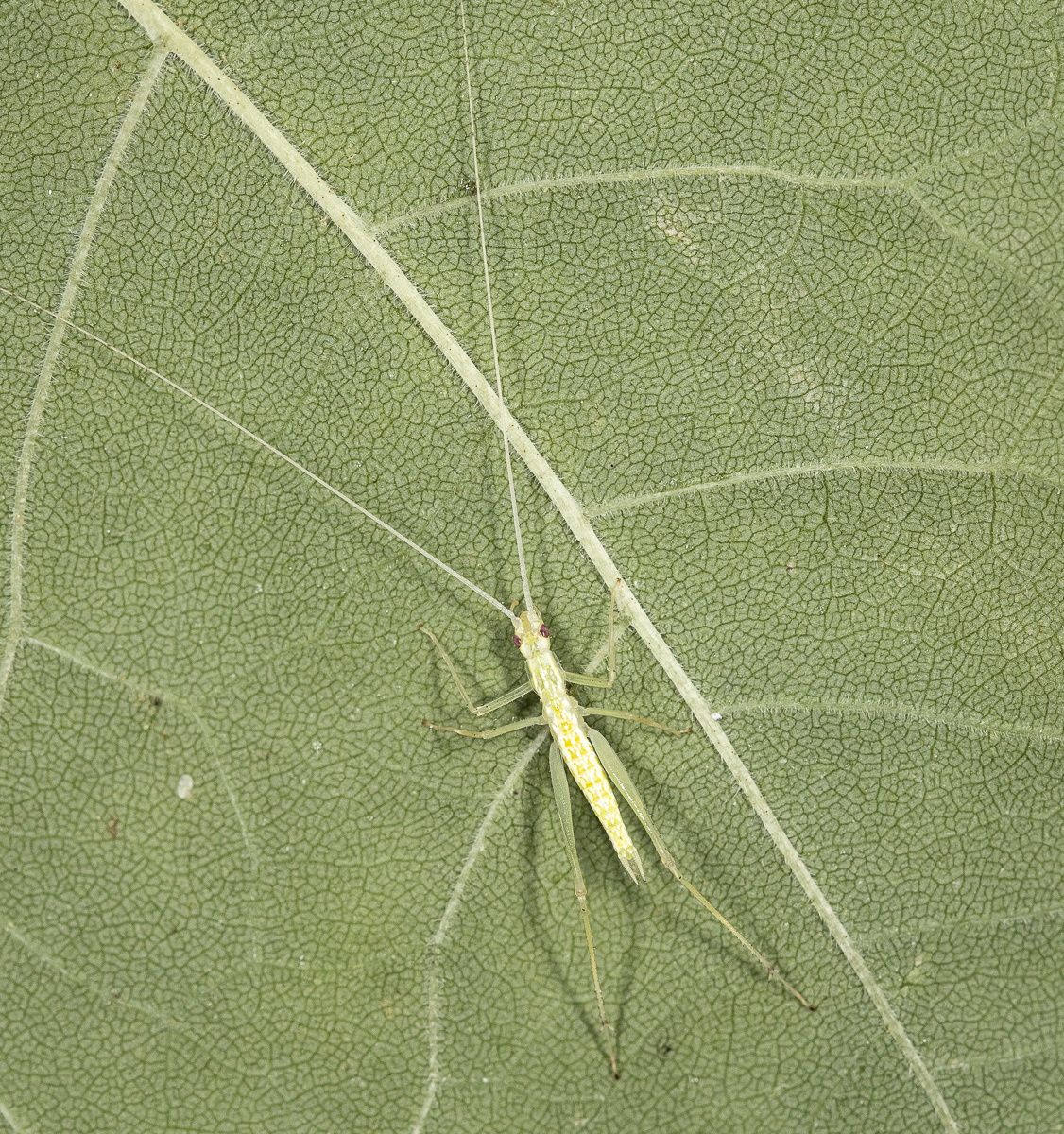
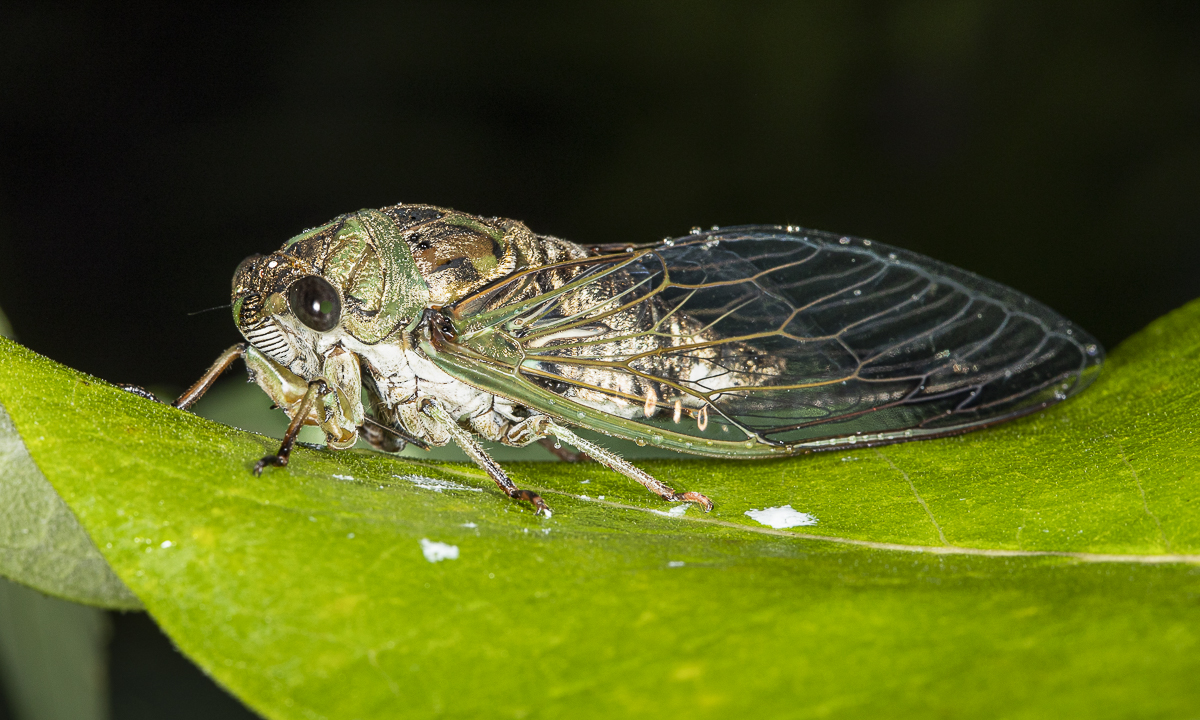
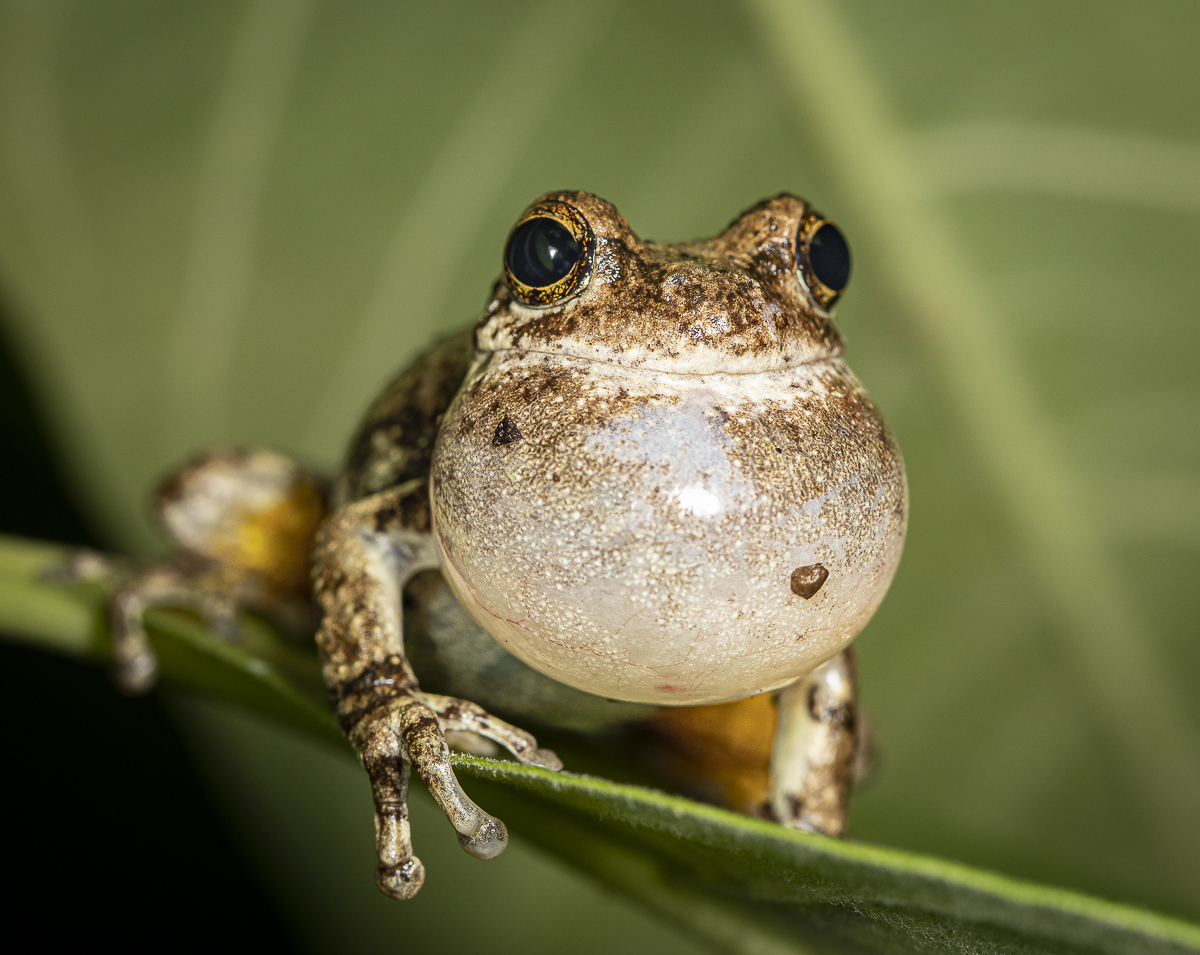
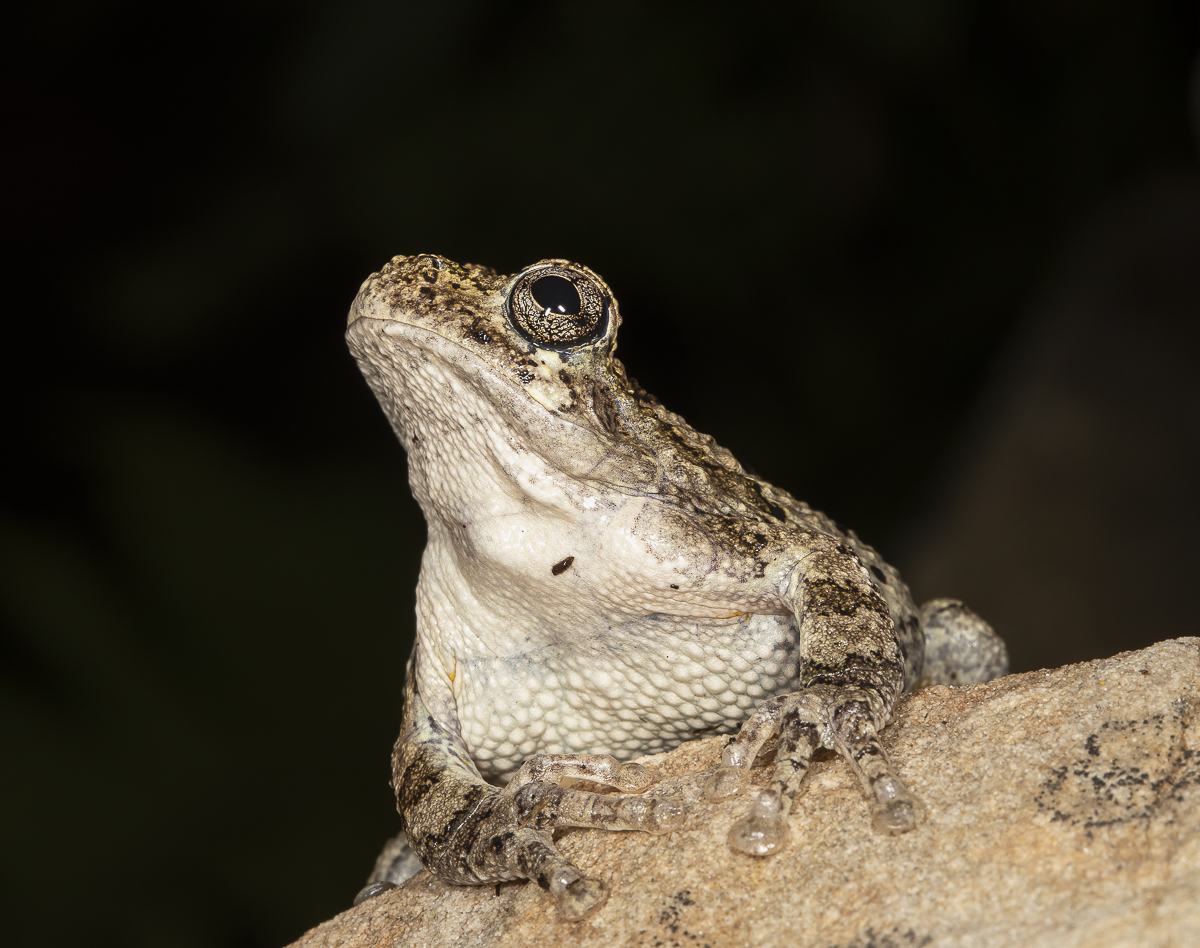
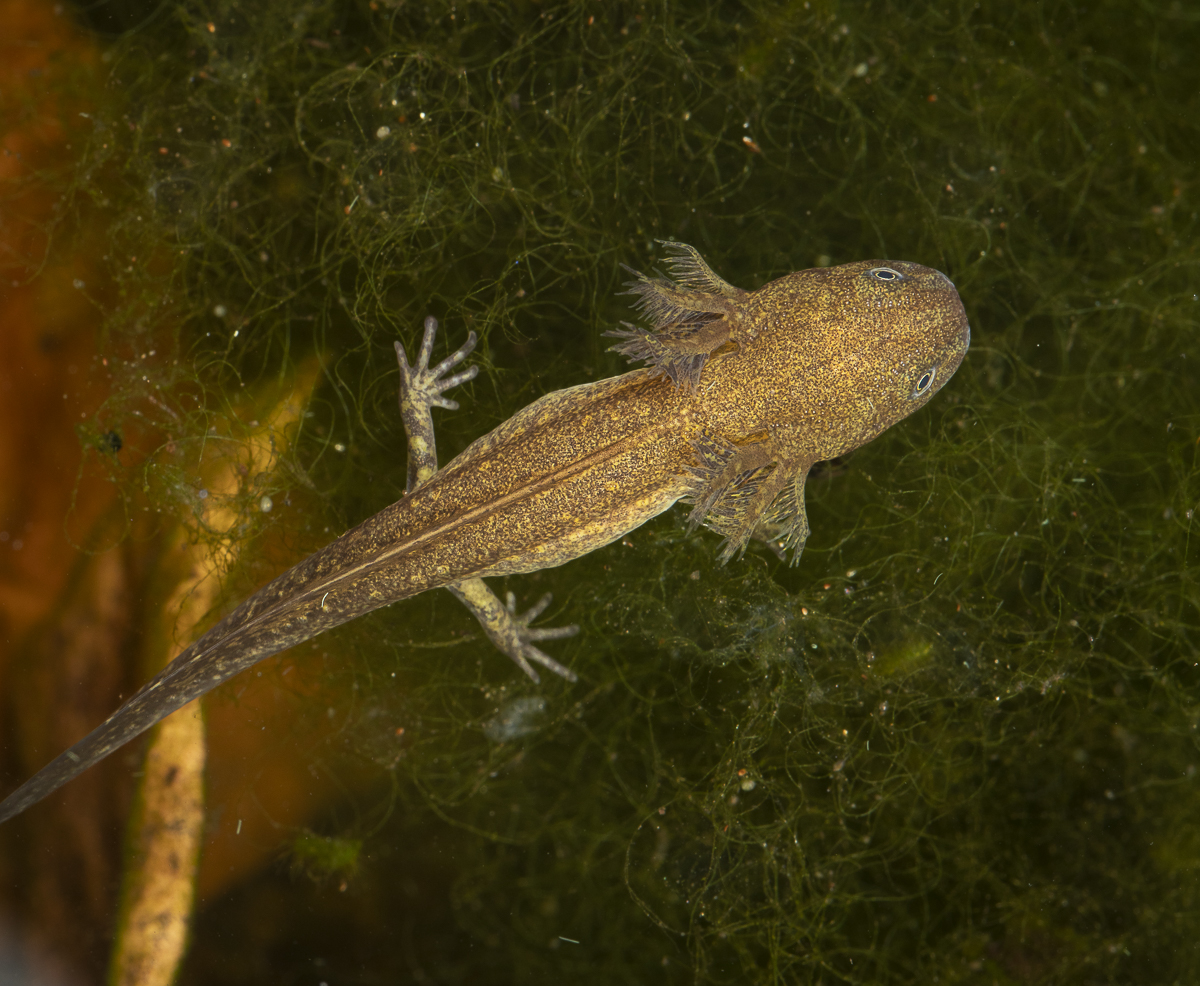
The sculptor of leaves, a May Beetle chewing its way through the foliage of trees and shrubs after dark (click photos to enlarge)An Oblong-winged Katydid, Amblycorypha oblongifolia. Summer is the time for the katydids to come out and sing their chorus in the darkness. This is one of the katydid species that can occur in different colors other than the dominant green – orange, tan, yellow, or even pink.A nymph of the Common Tree Cricket, Oecanthus sp., hiding on the underside of a leaf. An adult male tree cricket calls by rubbing the ridges of their wings together.A common spider in our woods, this Spined Micrathena, Micrathena gracilis, is armored with stiff spines to deter predation. This is a female as they are much larger than males and are the ones that build the webs. Males probably use silk only during the mating ritual.Annual or Dogday Cicada, Neotibicen sp. Although called “annual” cicadas, they actually have two to five year life cycles with some adults emerging every summer. Males produce loud high-pitched sounds by vibrating specialized round abdominal membranes called tympanums. Sounds can be as high as 100dB The stars of my night-time strolls are the Cope’s Gray Treefrogs, Hyla chrysoscelis. This is prime mating season for these beautiful amphibians and we can hear their harsh trills from inside the house almost every night now. This one was shy when I approached and quit calling (his vocal sac is enlarged, but he is not inflating it for calling) This one was not shy. Perched on a plant a few feet from one of our amphibian ponds, he was cranking out his calls trying to attract a mate. You can see the bright yellow on the inner thighs, usually visible only when the frog is moving.Note the huge toe pads on this species, allowing them to expertly climb almost any surface.I believe this is a female (because of the white throat). She was on the edge of one of our ponds, no doubt trying to decide which caller she liked the best. Once she chooses, she will approach the male and often touch him, and he will then grab her and, together, they will move to the water.A small, loose cluster of eggs is laid at the surface of the water. They will hatch in a few days, with tadpoles developing into froglets in about 45 days.Another pond dweller is easier to see at night – a Backswimmer, Notonecta sp. Note the long hind legs used like oars for locomotion and the upside down resting position at the water surface. Backswimmers are predators that capture prey with their front legs, and stab them with their strong beak-like mouthpart. They then suck out the hemolymph (insect “blood”) of the victim. They breathe by capturing air in a fine layer of “hairs” that cover their body.Here is one of many larval Spotted Salamanders (Ambystoma maculatum) still living in our ponds. Eggs were laid in February and early March and the largest larvae now look to be about 2 inches long. They will soon absorb those feathery gils and leave the pond to find a home in the woods nearby.
There are moths outside, ready to die for a light they crave but which is denied to them, … Sometimes, in the midst of all I have been given, I watch the moths in us all. Everybody has a light which they think they cannot live without.
~Alma Alexander
A bit of a deep starting quote perhaps, but, with all that is happening right now in our world, I realize even more now that, for both Melissa and I, nature is the light that we cannot live without. So, we did find the time and energy to have a few friends over this past weekend for our annual moth night. This week is National Moth Week, where thousands of people around the world are out looking at our nocturnal neighbors. It is a simple thing that anyone can do, and it opens up a new world of biodiversity and beauty right in your own backyard.
Moths are insects, related to butterflies, but they differ from their better-known cousins in many respects. Most moths fly at night (we do have some common day-flying moths in our area, like the Hummingbird Clearwing). Moth antennae are either tapered or feathered in shape whereas butterflies have knobs or hooks at the tips of theirs. And many moths have a “hairy” looking body, whereas a butterfly’s body tends to be leaner and smoother.
In North Carolina, 177 species of butterflies have been recorded. Compare that to the 2962 species (and counting) of moths we have. Though they can often be challenging to identify to species, there are now several great resources for moth enthusiasts. Some of my favorites include: Peterson Feld Guide to Moths of Southeastern North America; BugGuide (https://bugguide.net); North Carolina Biodiversity Project (https://nc-biodiversity.com/); and two free apps – Leps by Fieldguide and Seek by iNaturalist. And, don’t forget, you can still enjoy the beauty and wonder of these members of the neighborhood night shift even if you can’t find them in a field guide.
We have a couple of inexpensive black lights that project light in the ultraviolet (UV) spectrum. We set them outside, next to a suspended white sheet, one on the front porch, one on the back deck. then we go out periodically to see what has been attracted to the light. This set-up brings in many species of moths as well as other night-flying insects. Many species tend to come in and just sit on the sheet, making them easy to observe. A few tend to fly in and bounce around, never settling for very long as you desperately try to get a photo for identification.
Here is a sampling of our tally for the night. Most are fairly small (except where noted) and photos are taken with a 100mm macro lens. I have done my best to identify using the two apps I mentioned, plus corroborating with various field guides. As always, if you see an error, please let me know in the comments.
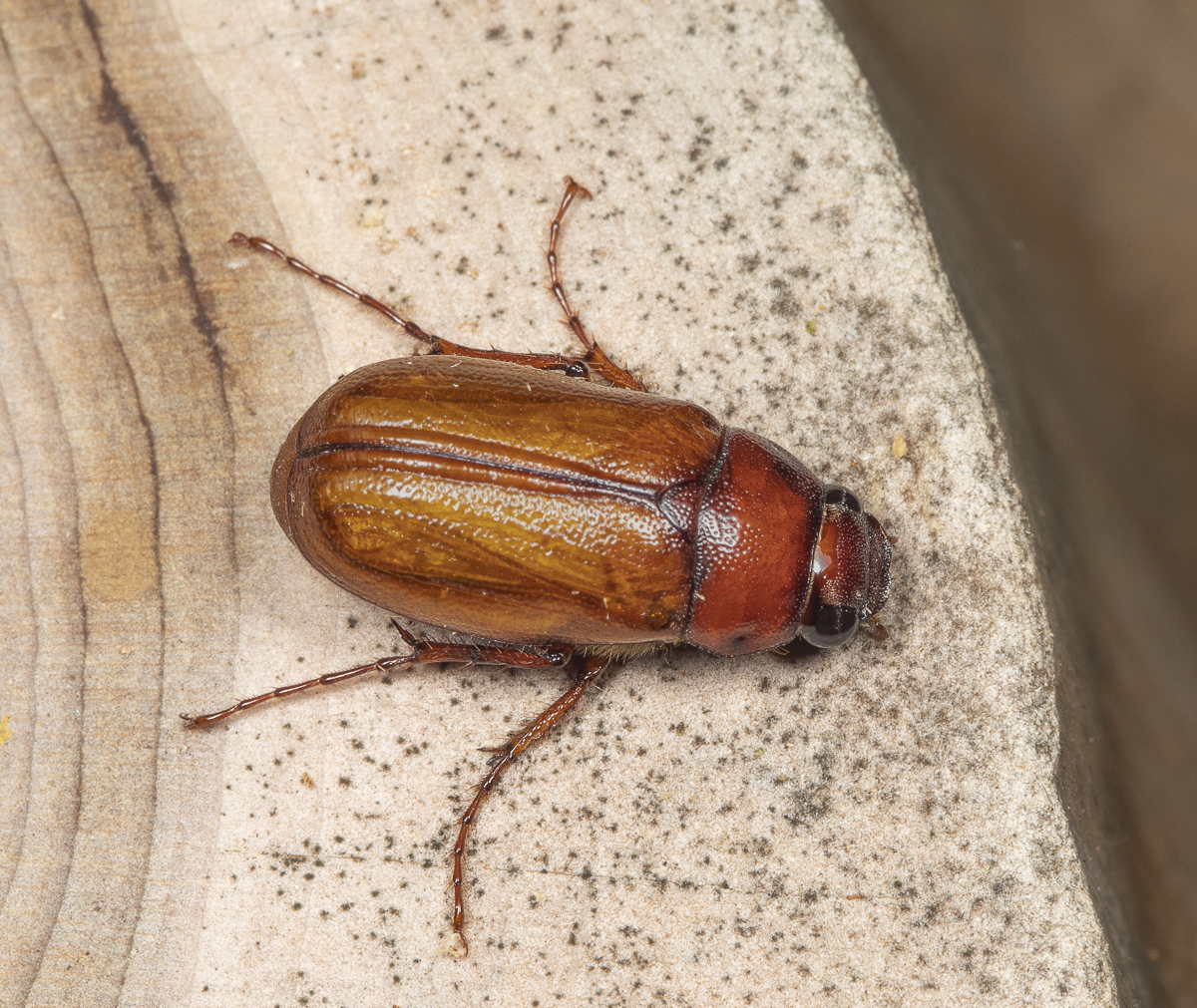
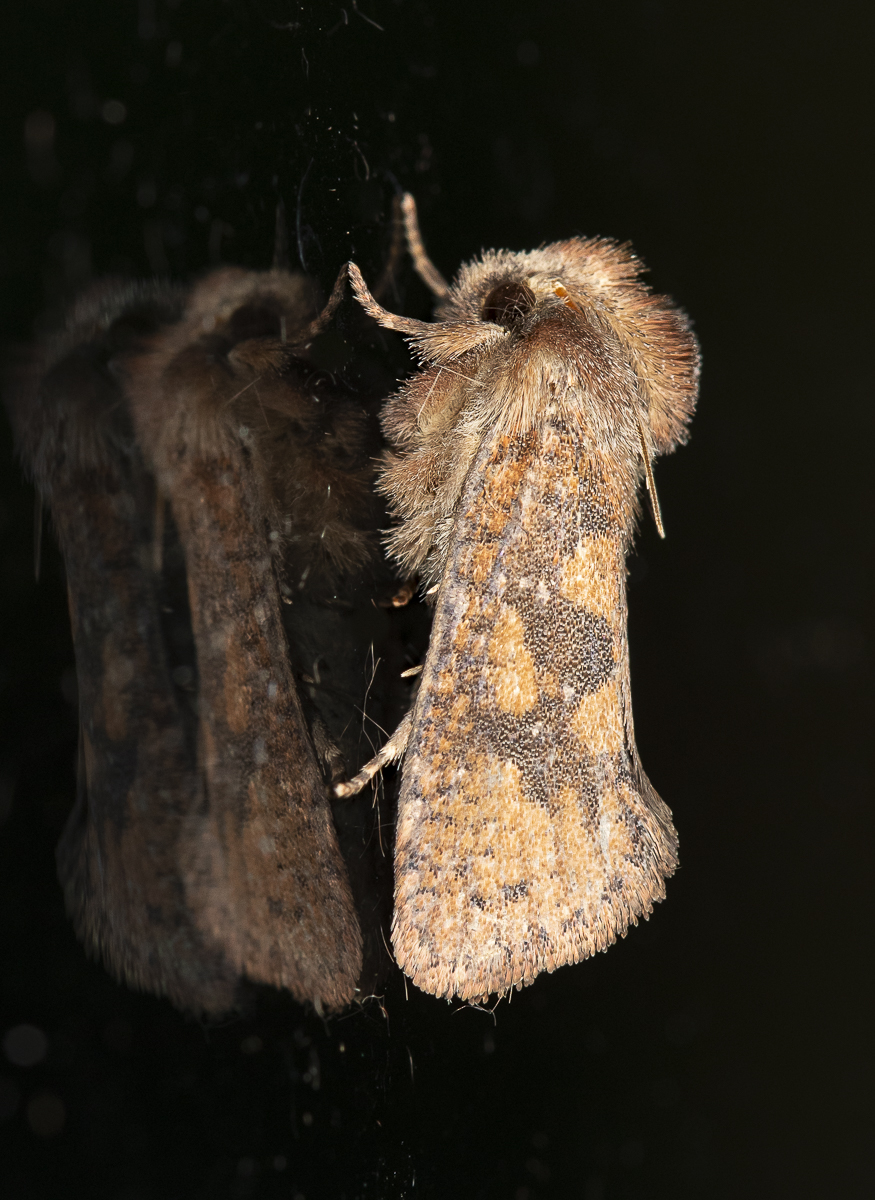
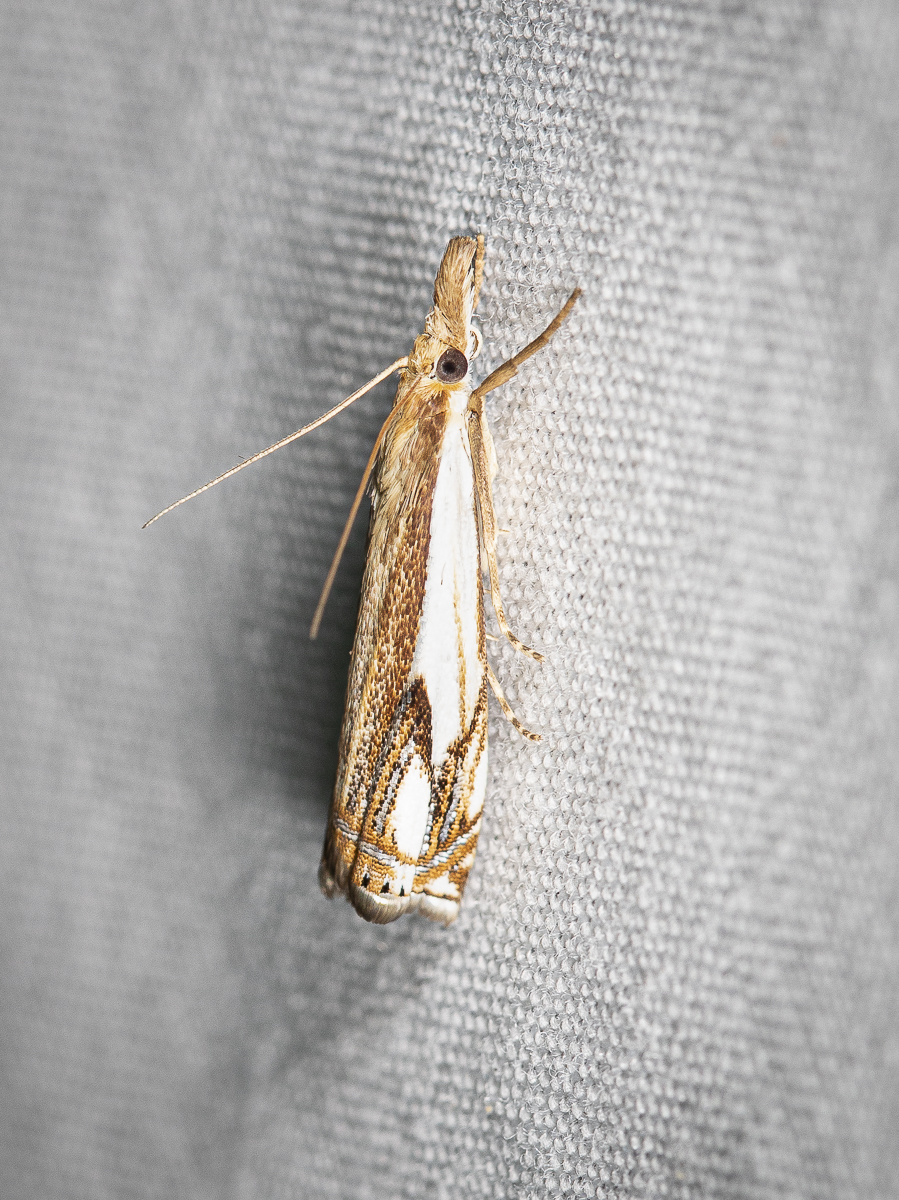
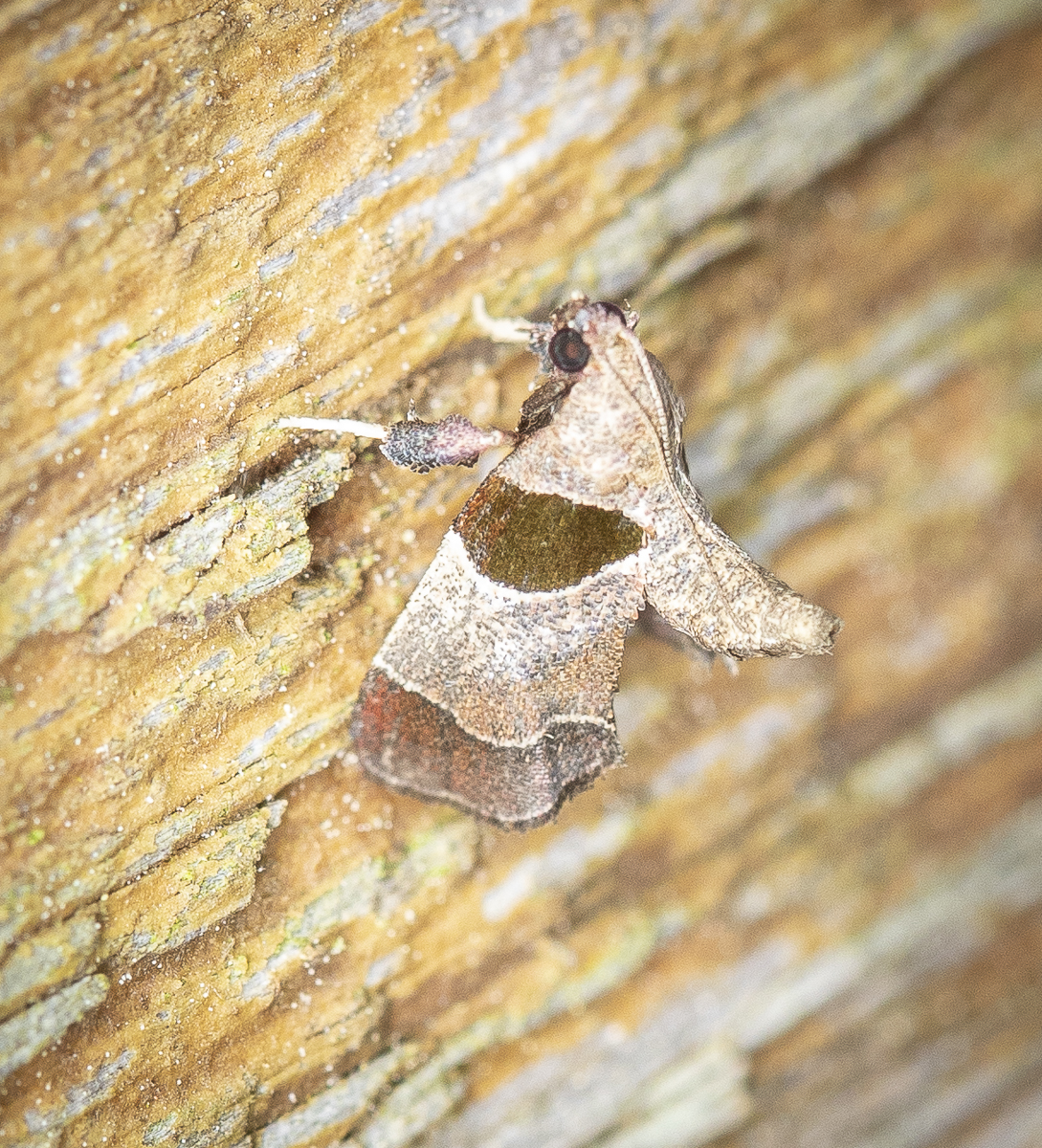
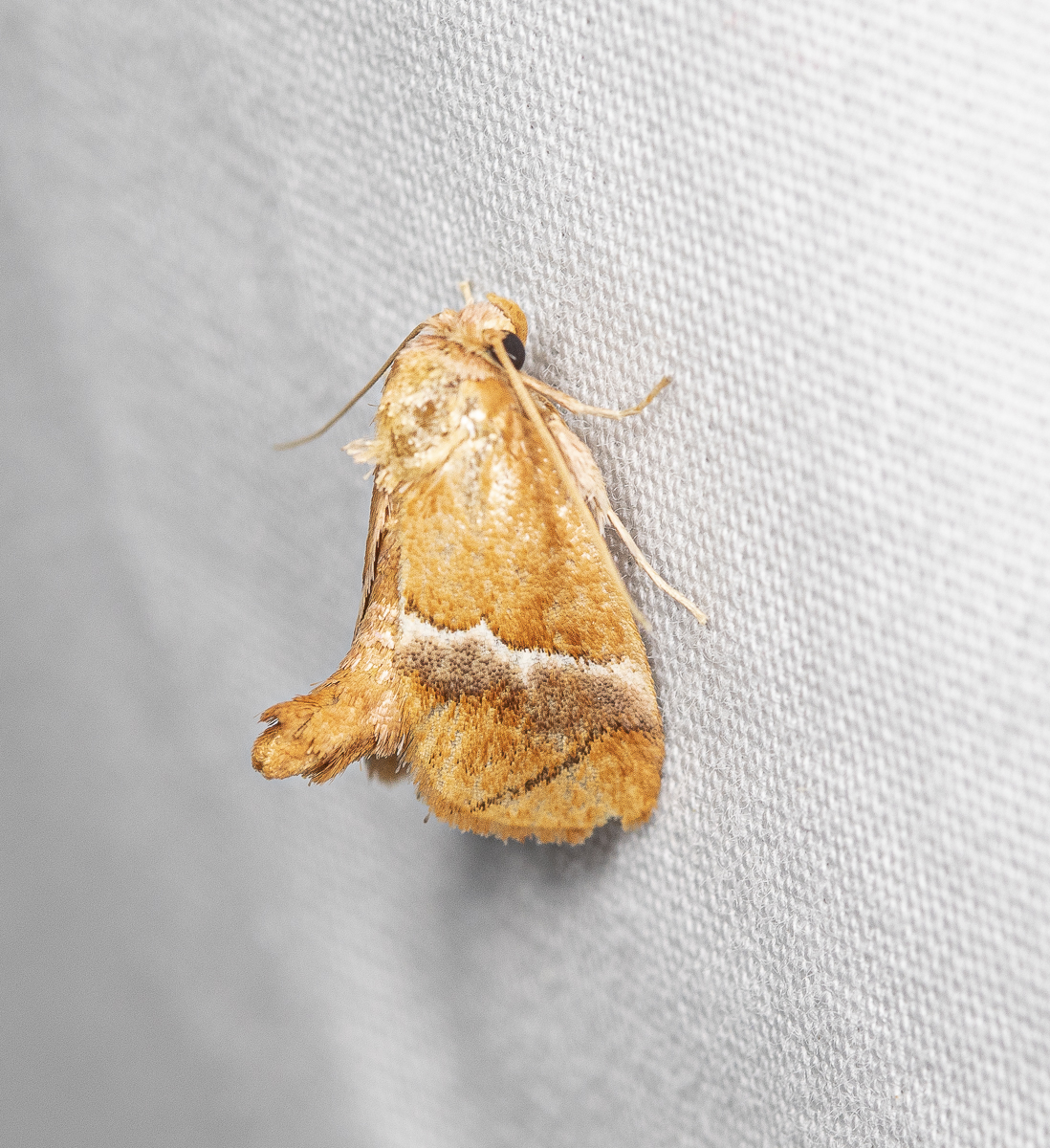
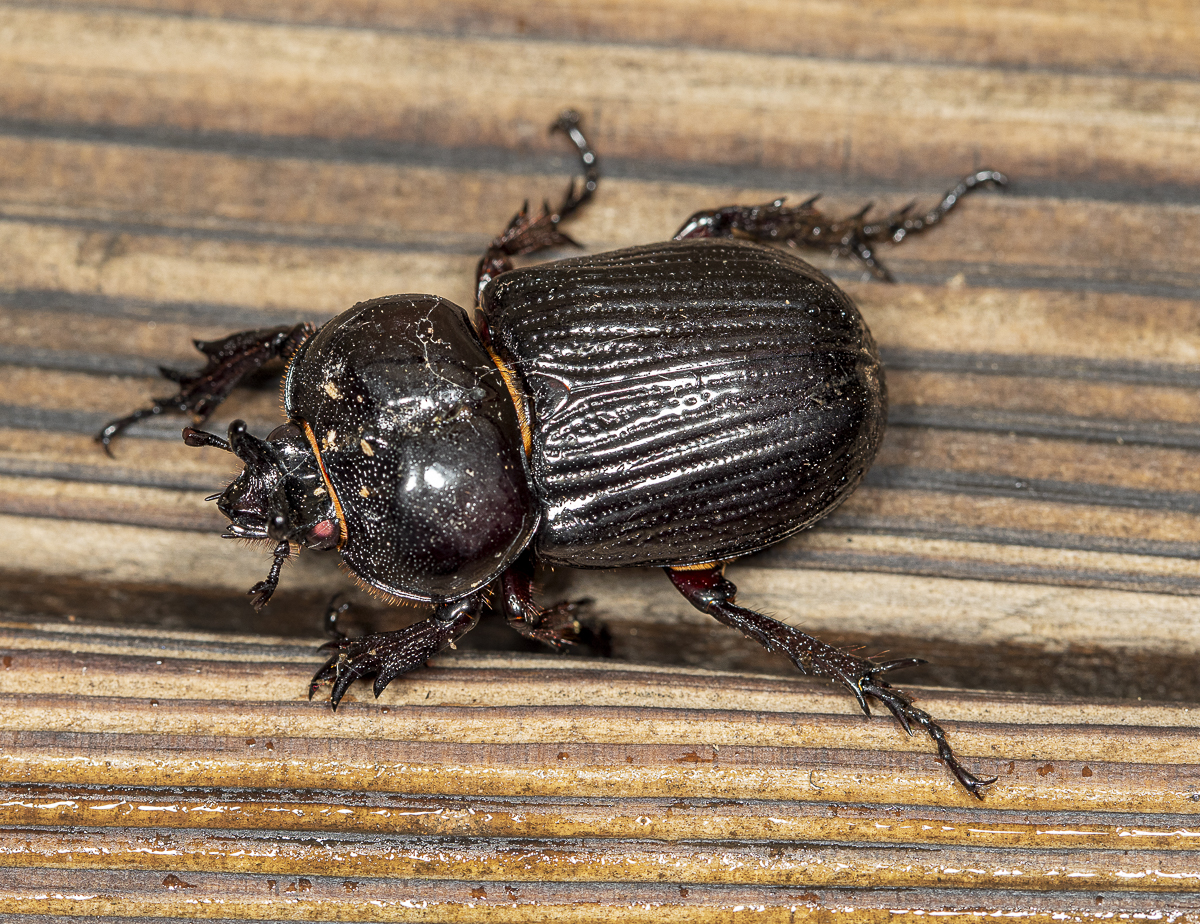
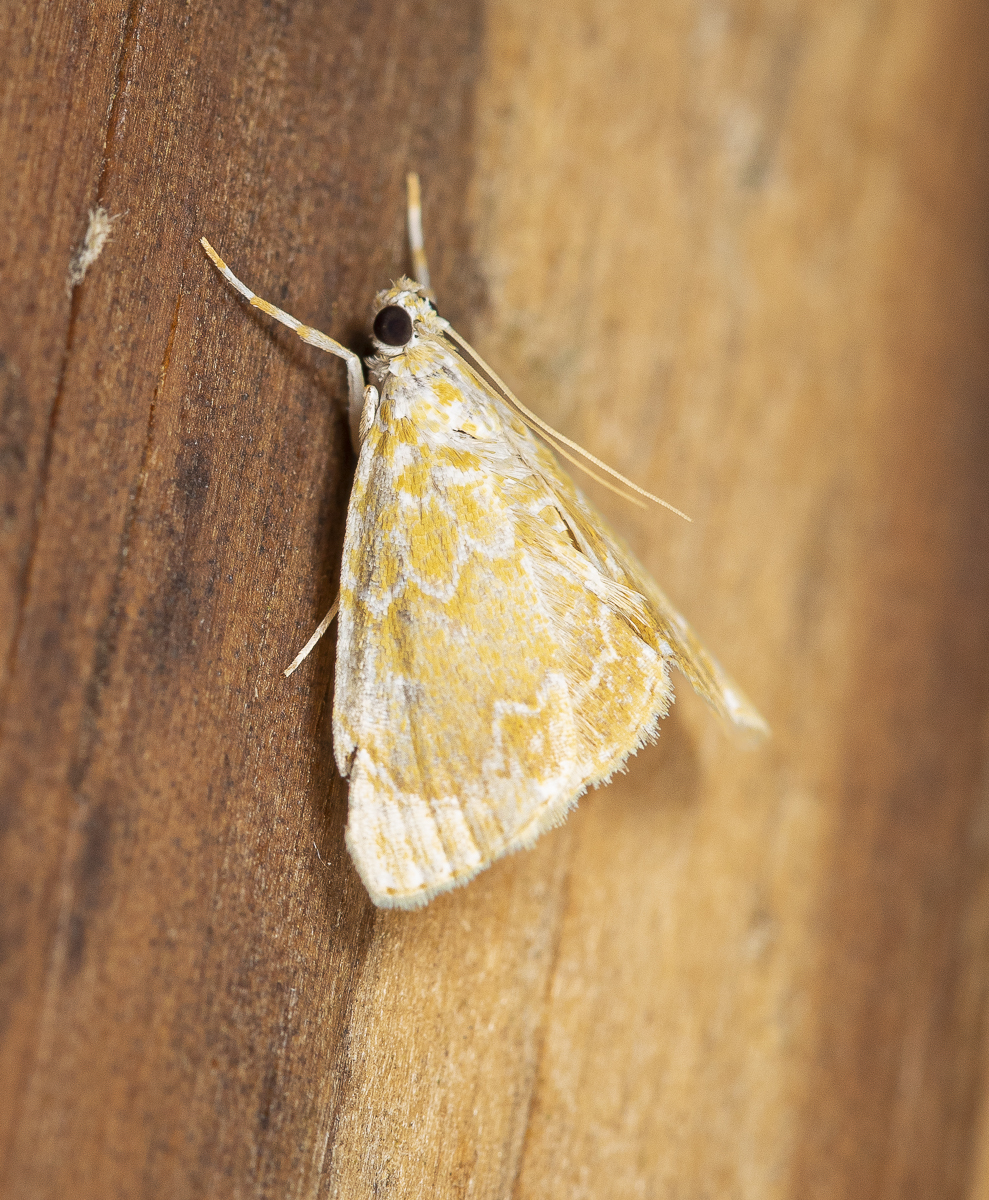
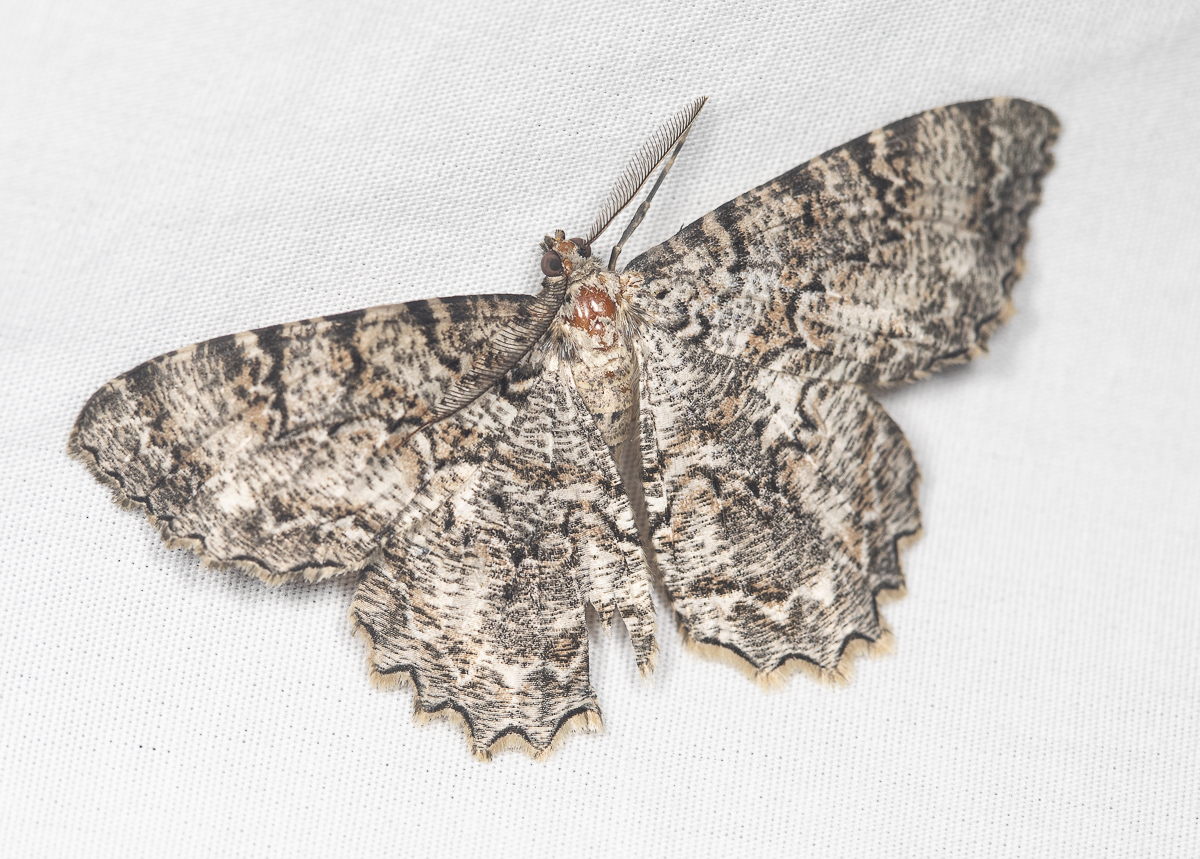
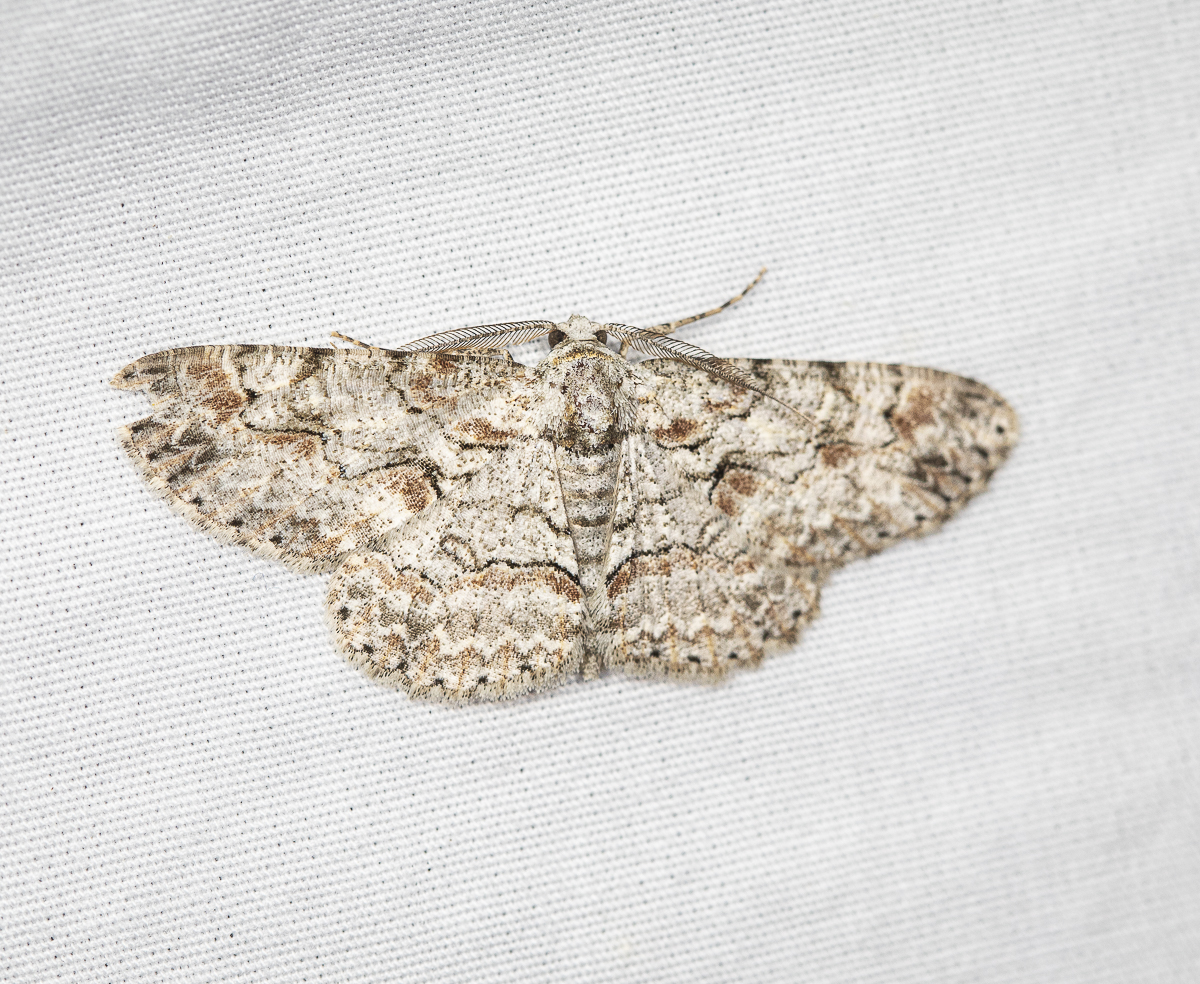
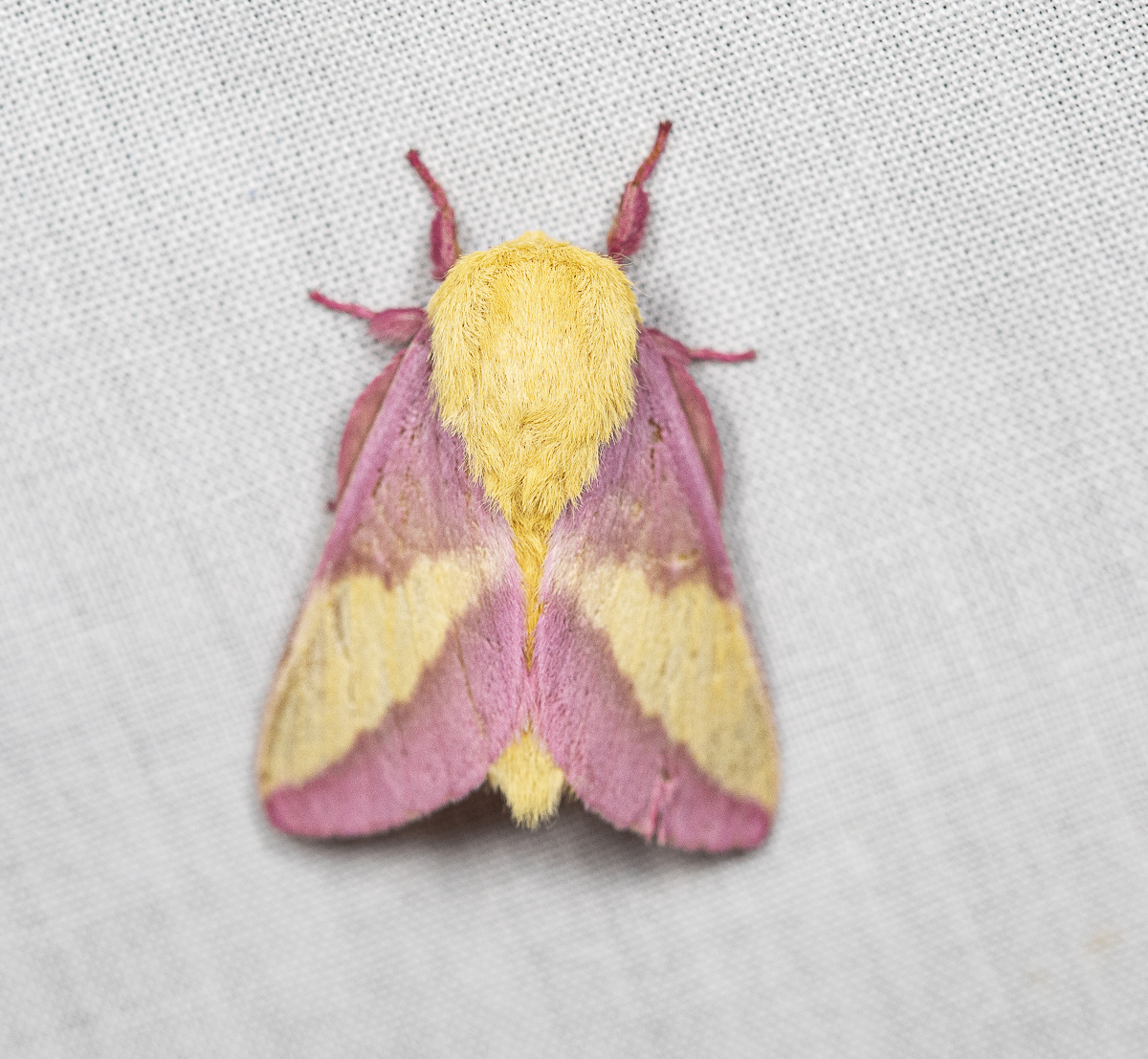
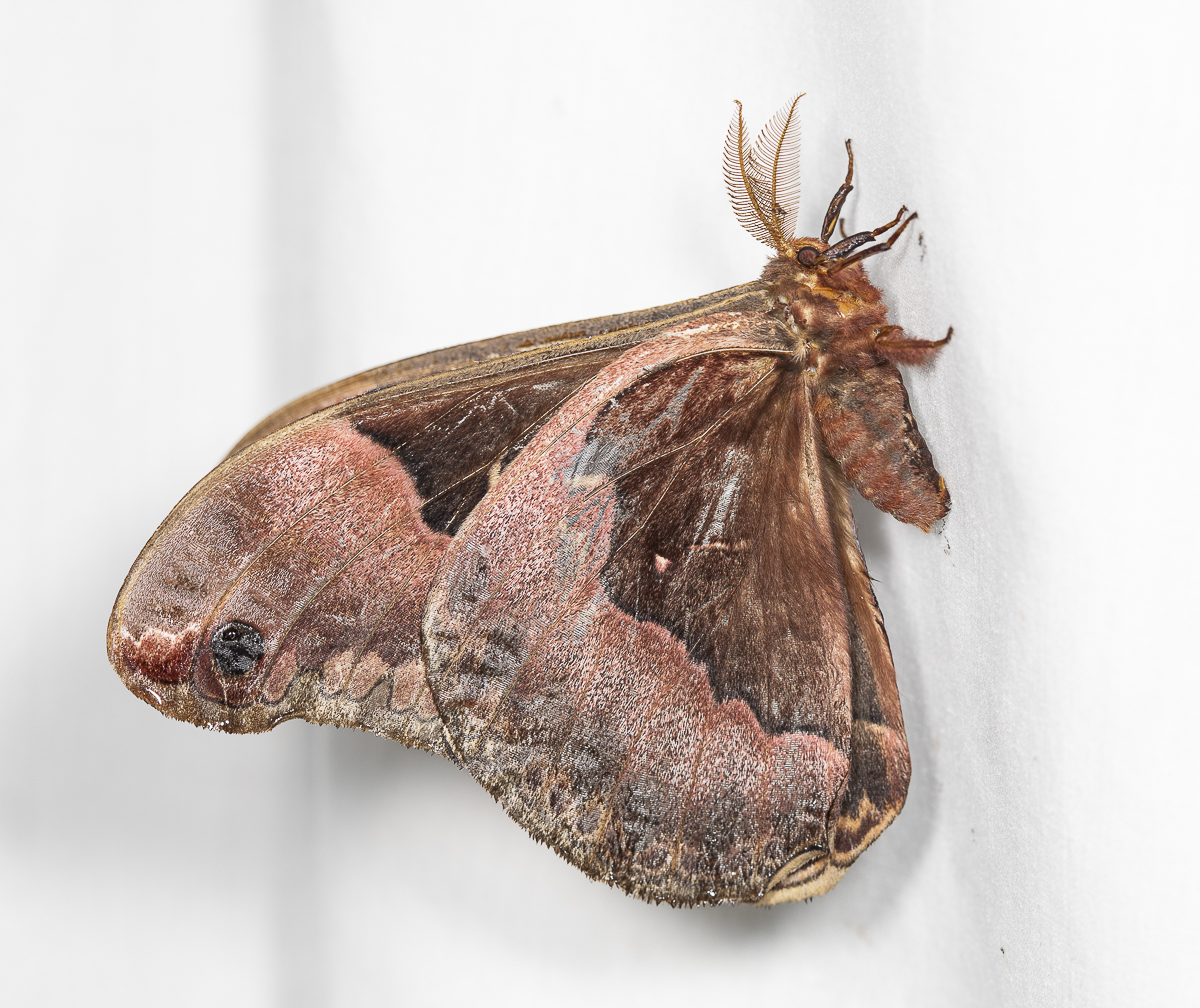
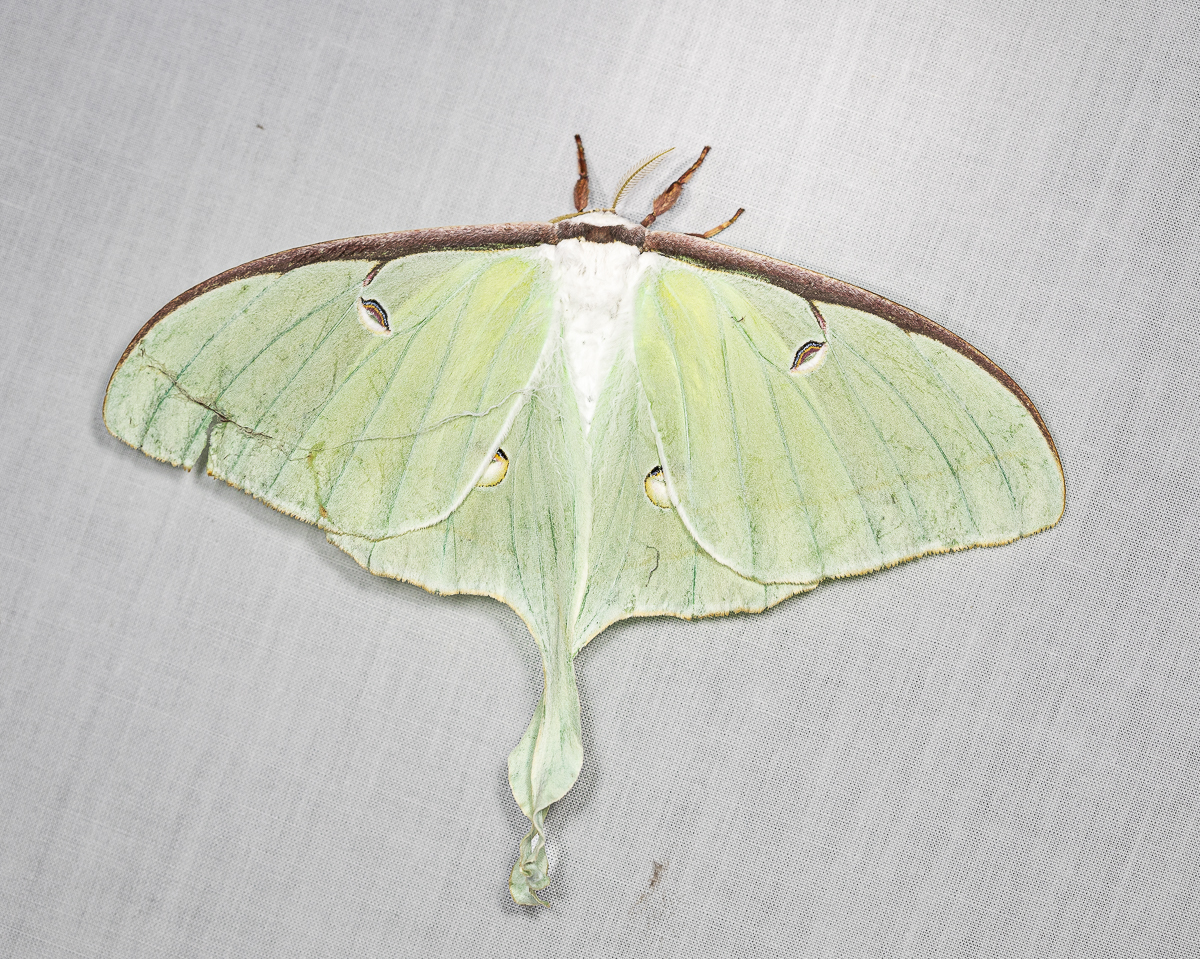
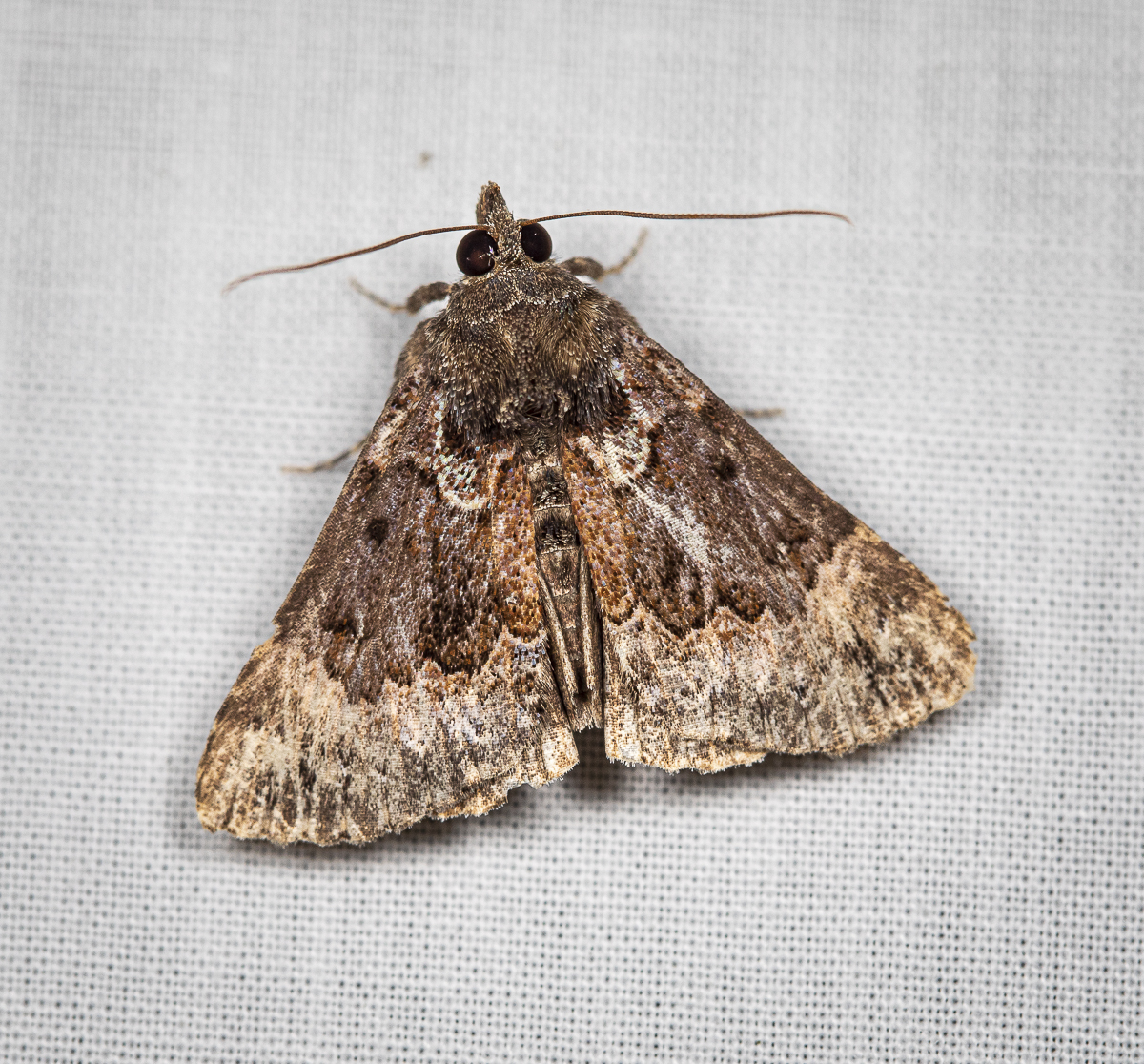
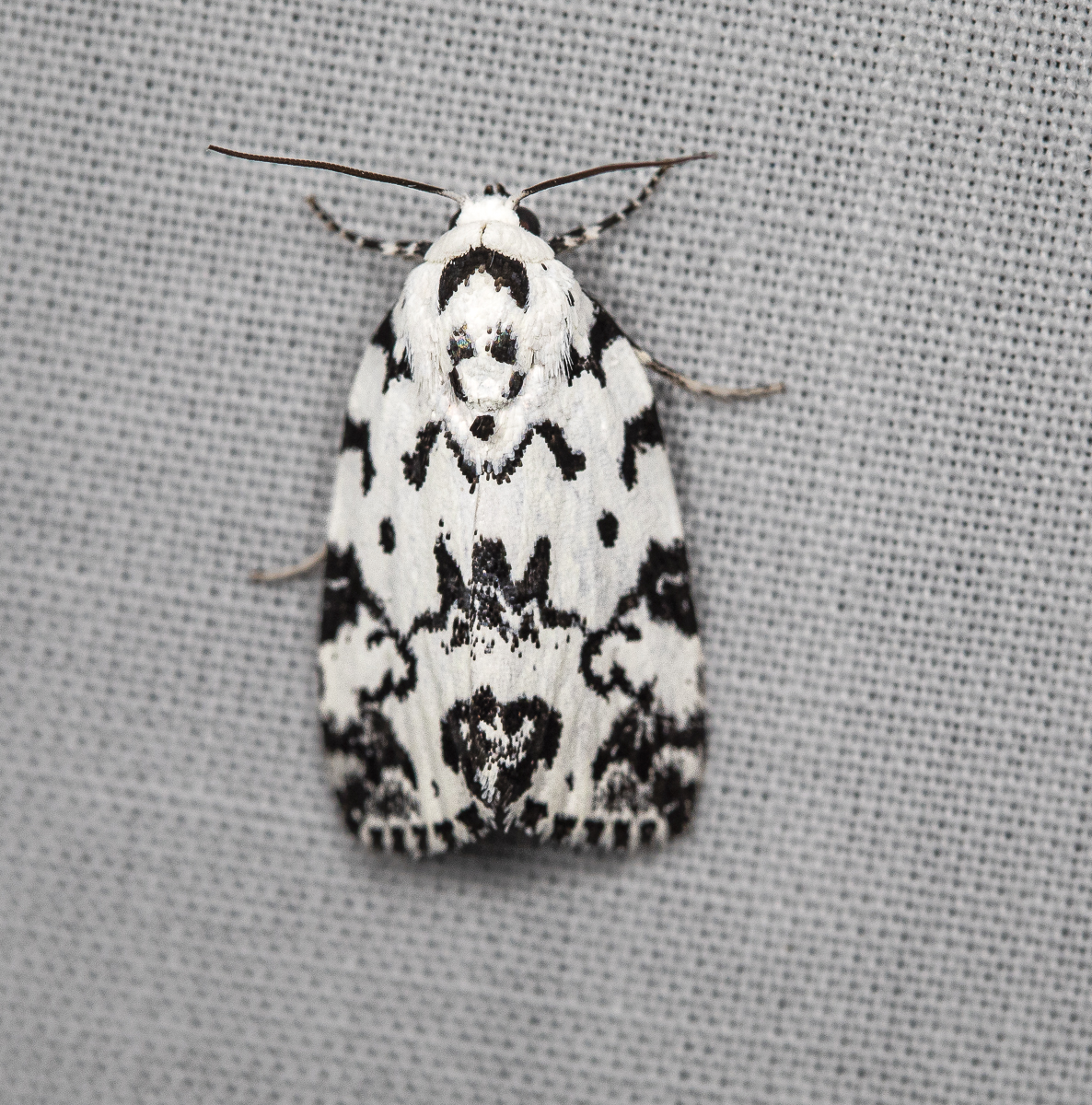
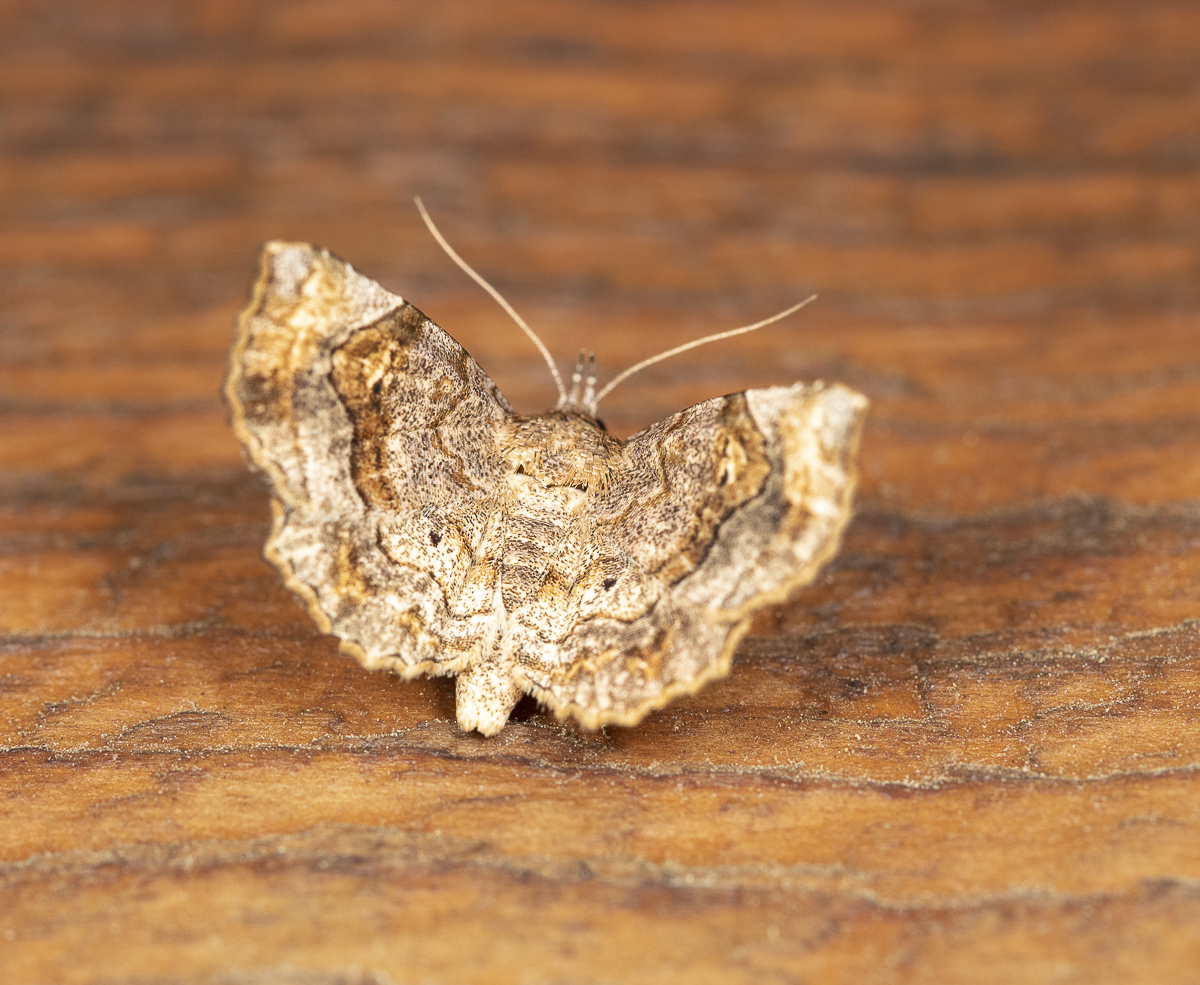
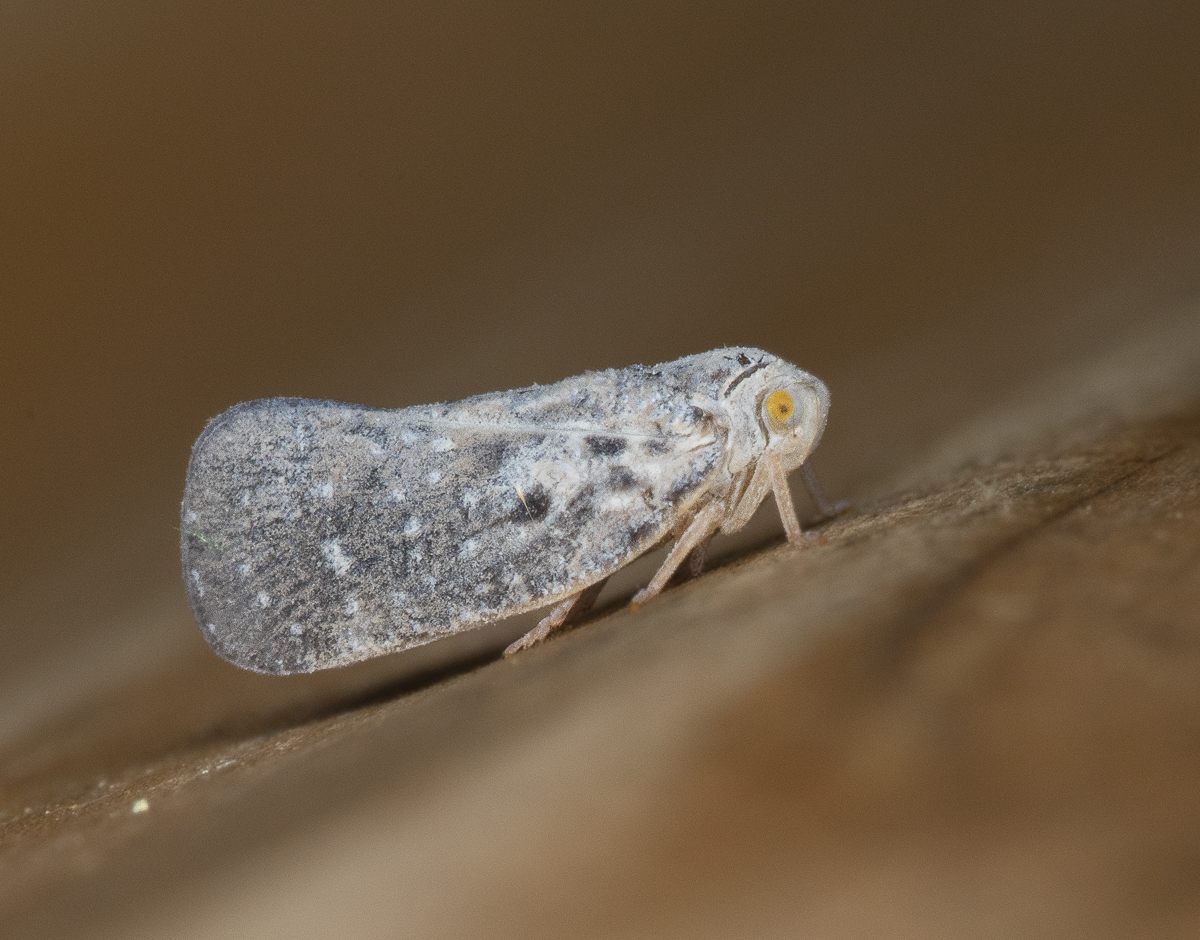
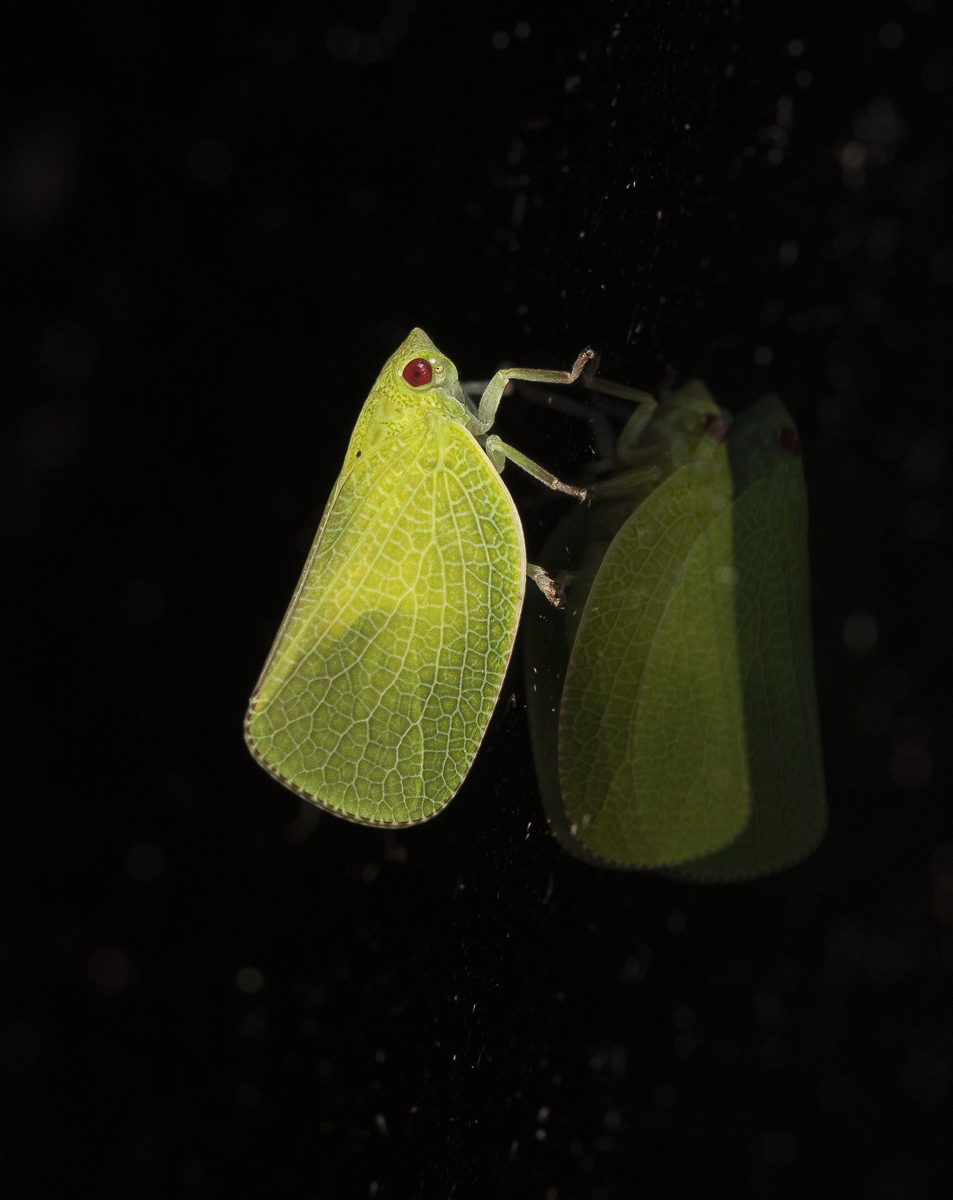
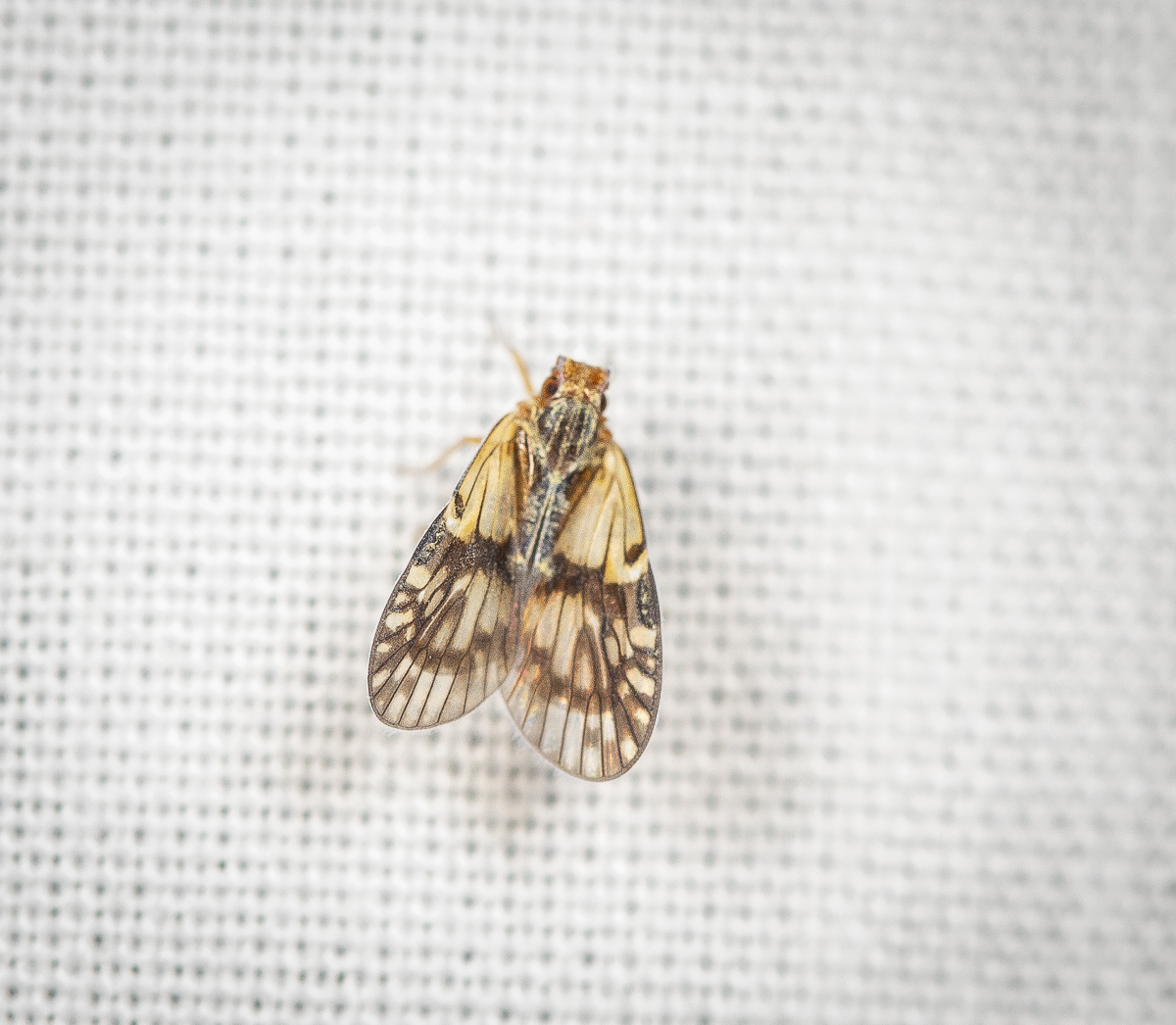
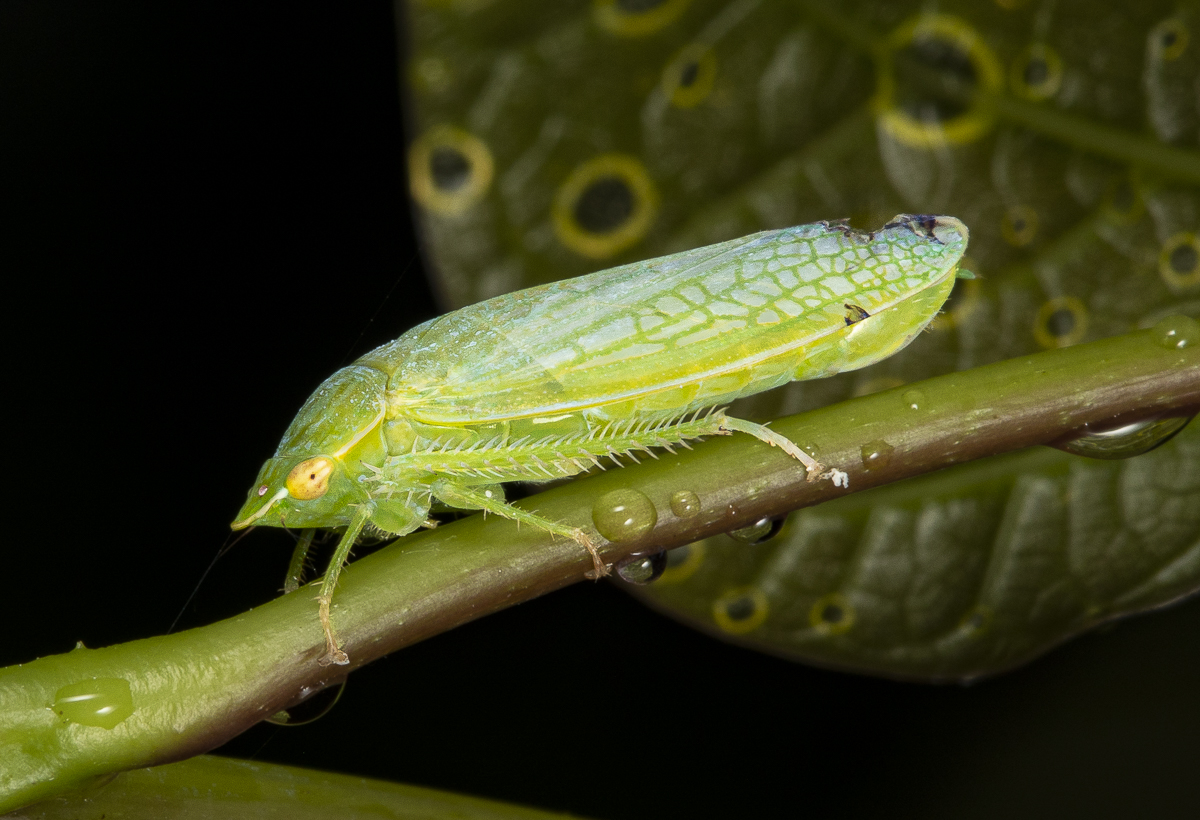
By far, the most abundant creature of the night – a May Beetle, Diplotaxis sp. These are the beetles that keep banging on our windows every night during the summer until we turn off our inside lights. (click photos to enlarge)The first moth of the evening, this mohawk-adorned species is an Eastern Grass Tubeworm Moth, Acrolophus plumifrontella. I’m guessing this is a male since the description says the mohawk is actually a pair of elongated, recurved labial palps that the male moth holds over its head. Labial palps are paired mouthparts that act as sensory organs.A Double-banded Grass Veneer, Crambus agitatellus. I love the scale details toward the rear of the wings.A tiny Dimorphic Tosale Moth, Tosale oviplagalis. The posture (tip of abdomen up, wings down) is distinctive for this species.Yellow-shouldered Slug Moth, Lithacodes fasciola. Another small moth with a distinctive posture. The larvae of this species have “stinging hairs” though I doubt they are painful as the caterpillars are pretty small.Another non-moth visitor, this enormous (1.5 inches) Triceratops Beetle, Phileurus truncatus. Males and females have horns on their head. Larvae are believed to feed on decaying wood and the adults may be predatory on other beetle grubs.White-roped Glaphyria Moth, Glaphyria sesquistrialis. Not many details online about this species other than it has a long flight period from February to November.Walnut Caterpillar Moth, Datana integerrima. One of five similar-looking species of Datana moths in our state, the caterpillars of this one are gregarious feeders on walnut and various hickories.Variable Reddish Pyrausta Moth, Pyrausta rubricalis. Named in 1796, but I could not find much at all on this species online.One of the most common moths in our woods, the Tulip-tree Beauty, Epimecis hortaria. These are fairly large moths that hide in plain sight on tree trunks by day.Another of the very cryptic moths, a Brown-shaded Gray, Iridopsis defectaria. This is another common species on our property. The larvae feed on a variety of hardwood tree leaves.It is always a delight to see a beautiful Rosy Maple Moth, Dryocampa rubicunda. This is one of the smaller members of the Giant Silk Moth family, Saturniidae. The larvae feed on maple leaves. A much larger (about a 4-inch wing span) Saturnid moth, a Tulip-tree Silkmoth, Callosamia angulifera. This guy rarely sits till for a photo, but instead flaps wildly as it bangs around on the sheet or flies into your head (it landed momentarily on one of our friends’ nose). A showstopper at any moth event, a Luna Moth, Actias luna. Unfortunately, the two Luna Moths arrived after everyone had left for the evening. Larvae feed mainly on Sweetgum in our area.A much smaller (about 1-inch wingspan) lime green moth, a Red-bordered Emerald, Nemoria lixaria. Larvae feed on oak leaves, one of the most important food plants for the larvae of many moth species.Mottled Snout, Hypena palparia. Larvae feed on American Hornbeam and American Hop-hornbeam, both of which are found in our woods.A Hebrew Moth, Polygrammate hebraeicum. The common and species name likely refer to resemblance of the pattern to characters in the Hebrew alphabet.Decorated Owlet, Pangrapta decoralis. Often seen perched with wings spread. Larvae feed on blueberry plants and Sourwood.Citrus Flatid Planthopper, Metcalfa pruinosa. The most common of the planthoppers found in our yard during the day, it is also attracted to lights at night.Green Cone-headed Planthopper, Acanalonia conica. Another common species that feeds on a variety of herbs, shrubs, and trees.I wasn’t sure what type of insect this was when I first saw it, but enlarging the photo on the computer and using the Seek app, it appears to be one of the Cixiid Planthoppers, Bothriocera sp.
A nice sampling of the nocturnal critters in our back (and front) yard and an enjoyable evening spent oohing and aahing with friends. I highly recommend it.
There is an unreasonable joy to be had from the observation of small birds going about their bright, oblivious business.
~Grant Hutchison
I was out pulling some weeds in our yard jungle one day this week when I suddenly realized there was a high-pitched peeping sound coming from the stand of Common Milkweed a few feet away. It didn’t sound like any insect or frog I recognized, so I eased around the milkweed stems and was surprised to see what I assume was a young Ruby-throated Hummingbird perched on a plant support. It was incessantly squeaking (or peeping, not sure which best describes the noise it was making). I stepped a little closer, wondering if the bird was okay, and it just turned its head, looked at me, and continued squeaking. So, I went inside, grabbed my camera and phone, and came back out. Yup, still squeaking.
A Ruby-throated Hummingbird (possibly a young one) sitting on a metal plant support in my yard (click photo to enlarge)
I took a few pictures with my DSLR and a macro lens and then decided to do a quick iPhone video to share.
A few seconds after I finished the video clip, the bird lifted off and flew to a nearby tree branch, at least confirming that it could fly. I went about my yard work and encountered this little hummingbird a few more times, usually down low near or, on one occasion, sitting on one of the hummingbird feeders. It was perched a bit awkwardly, up on top of the feeding port instead of on the foothold in front of the hole. I watched it feed for a minute or more (a long time for a hummingbird to feed). I was standing only a couple of feet away and I guess I was too close for the other hummingbirds to swoop in and chase the little guy off. I’m not sure if this was a young fledgling bird begging for food or what it was doing sitting there squeaking so much. We have four feeders out and a bunch of summer blooms right now and the yard has at least 6 or 7 hummingbirds that are constantly doing battle for supremacy at the feeders. I wonder if this little guy has just been intimidated to the point that it is difficult for it to feed. If anyone has any experience with this type of behavior in hummingbirds or any other thoughts, please post them in the comments.
When you are where wild bears live you learn to pay attention to the rhythm of the land and yourself.
~Linda Jo Hunter
This summer seems to be racing by and it hit me last week that I have not made a pilgrimage to our coastal wildlife refuges for my fix of summer bears. So, Sunday I loaded up the truck and headed east, arriving at the Pungo Unit of Pocosin Lakes National Wildlife Refuge about mid-afternoon. Storm clouds were moving in and, sure enough, just as I stopped to get my camera gear out, it started sprinkling. As I shuffled through my gear, I looked down the road and there was my first bear of the day and it was a big one.
A good start to my trip, a large male bear coming out of a corn field within two minutes of my arrival at the refuge (click photos to enlarge)
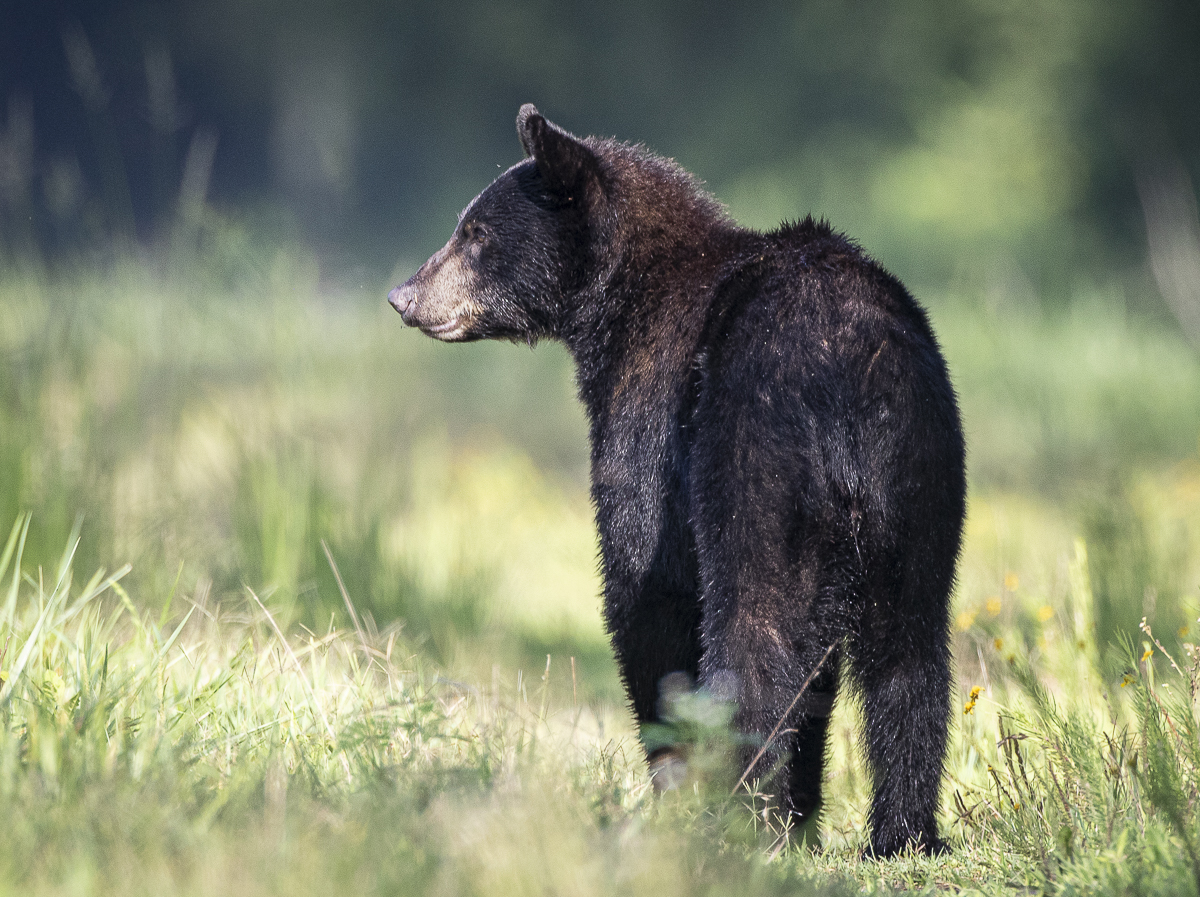
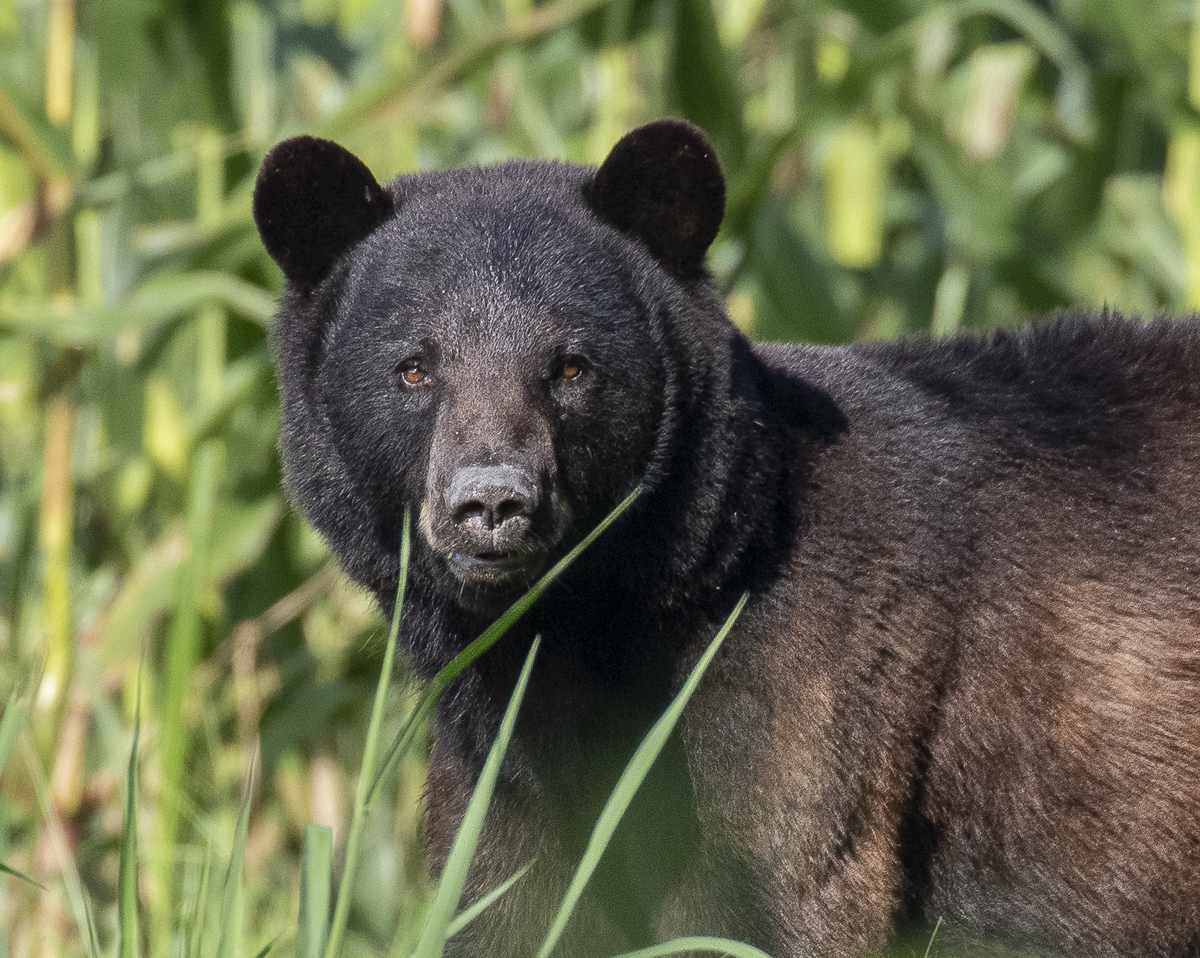
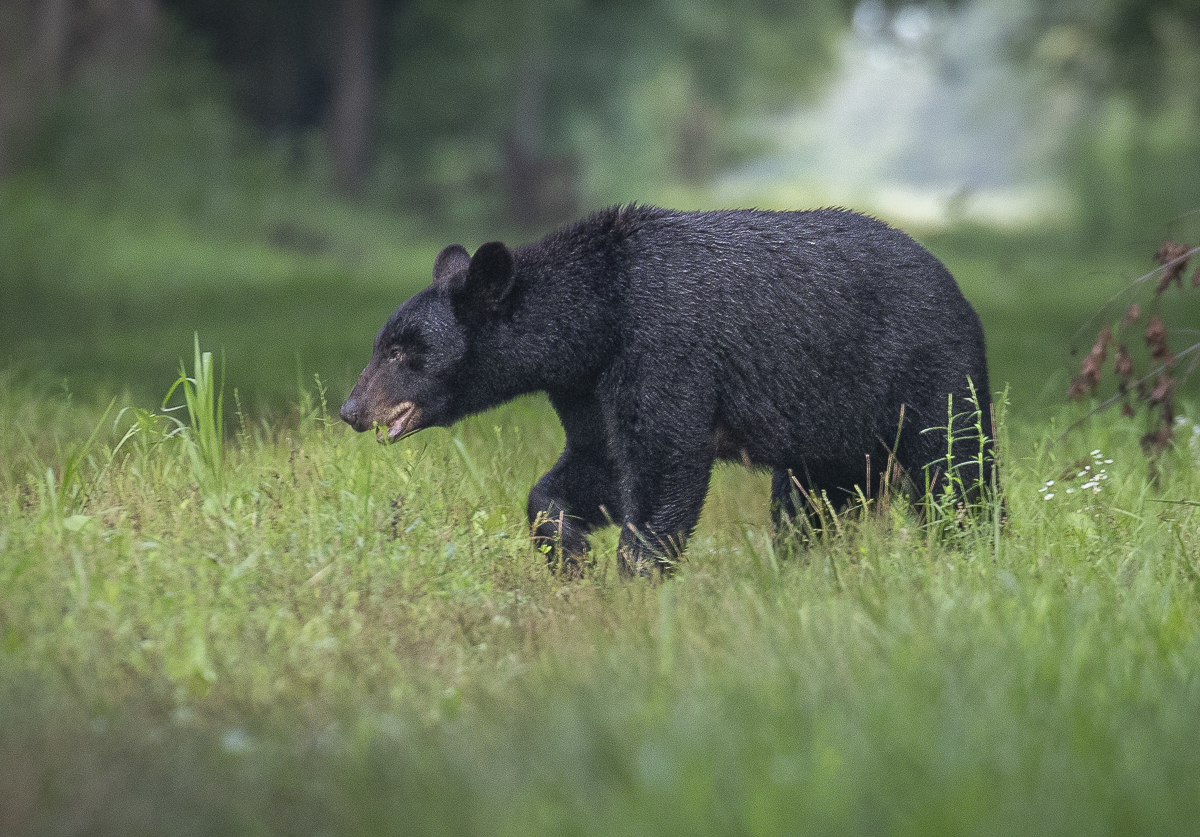
You can tell this a huge bear by the obvious belly and how small its ears look in relation to the head. I am guessing it is in the 400 – 500 pound range, but am willing to hear other opinions. This seems a pretty typical size in this region for mature males, with some exceeding 700 and even 800 pounds occasionally. We do, in fact, have the largest Black Bears in the world here in coastal North Carolina due to the mild climate (they don’t hibernate long, if at all, and continue feeding through much of the winter) plus the ready availability of both natural foods and crops.
It rained for about 15 minutes, and I ducked back into the truck and watched as this behemoth sat next to the corn and soaked in the cooling rain drops (it was brutally hot on Sunday, and humid). Just before the rain eased up the bear got up, shook off, and walked back into the corn for another round of feeding. I suppose this is how you maintain that desired ursine figure.
As I drove along the refuge roads (many of which had large swaths of standing water in them from previous rains), I spotted several more bears that quickly disappeared into the brush with the approach of my vehicle. I had hoped to walk on some gated refuge “roads” (actually they are not much more than grassy paths with tire tracks) but some of my favorites have new signage that ask visitors to not enter due to sensitive wildlife habitat. I am assuming this is to protect areas from human disturbance that are being used by recently reintroduced endangered Red Wolves. Of course, that does mean more human pressure on the one main area where people go to see bears, the area I have always called Bear Road. In recent years, that gravel road has become so crowded (this is a relative term, with there often being 4 or 5 carloads of people walking on this road) that I have avoided going there. I was spoiled in my early years of visiting the refuge when I often would see only 1or 2 people the entire day (some days, no one else) on the refuge and usually had Bear Road to myself. Sunday was a pleasant surprise and I guess the rain kept some people away as I saw only a couple of other cars all afternoon. And there were no other cars parked at the entrance to Bear Road when I arrived, so I got out, grabbed my gear and headed down the road toward the corn at the far end.
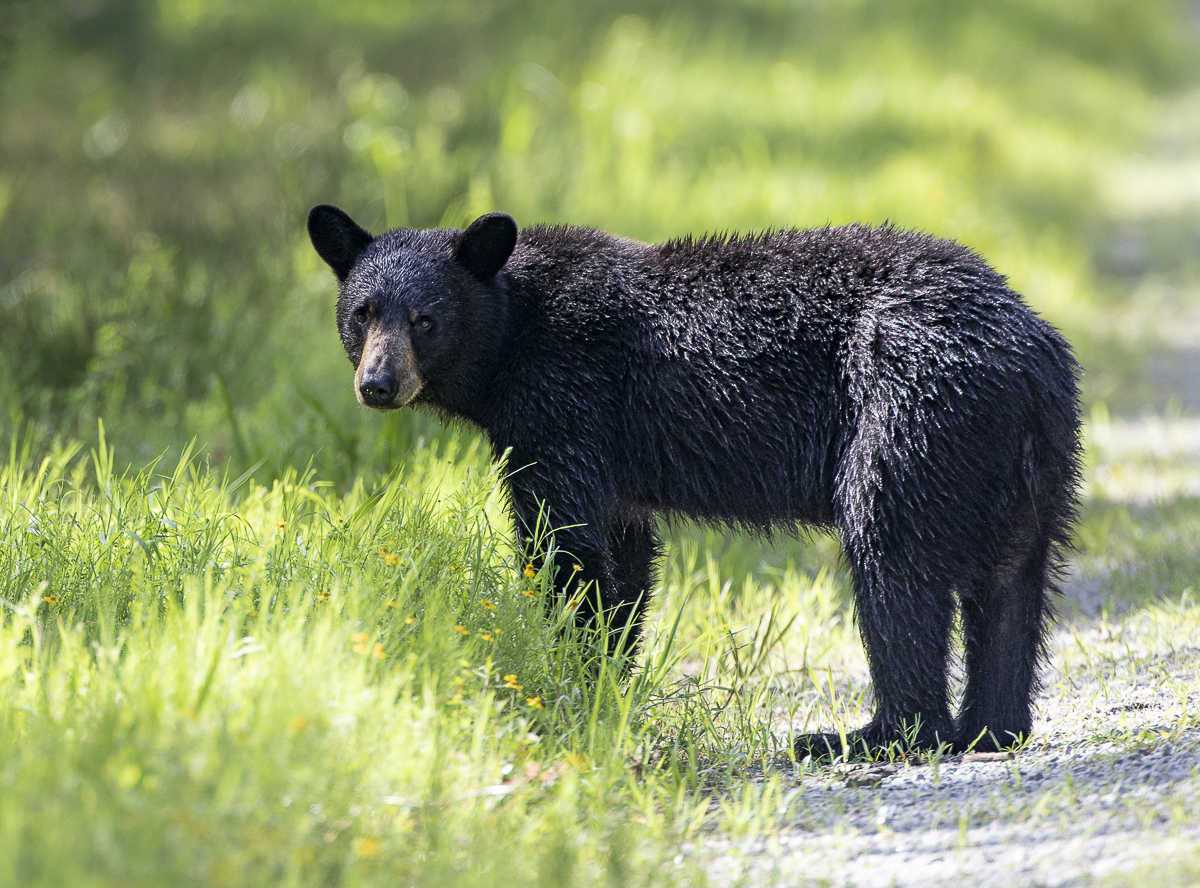
I walked just a short distance down the road when a bear came out of the woods and started walking toward the corn ahead of me. The sun was out now and it was hot, no, very hot. I am still amazed that these large black fur-covered animals are active in the hot parts of the day as I was already sweating like crazy and had just been out of the truck for a few minutes. This looked like a young bear, maybe two or three years old, and it wasn’t paying any attention to me following some distance behind. It stopped and grazed on some vegetation every now and then, meandered from side to side along the road, but kept heading toward the corn. It finally sat down and groomed itself a bit and then turned and looked my way.
Young bear finally looks my way as it wandered down Bear Road
I squatted down as it started to turn so as to reduce my human form and the bear didn’t seem to notice, got up, and started walking toward the corn again.
The bear notices something in the field across the canal
The bear suddenly turned toward the canal and trotted into the thick vegetation. Four deer bounded away through the soybeans on the other side. The bear came back out after a few seconds and continued on to the corn, finally crossing the canal and disappearing into the tall corn stalks. The vegetation along the canals and roads is so tall that I couldn’t get a clear view of its crossing, so I continued on up the road now that the bruin leading the way had crossed over.
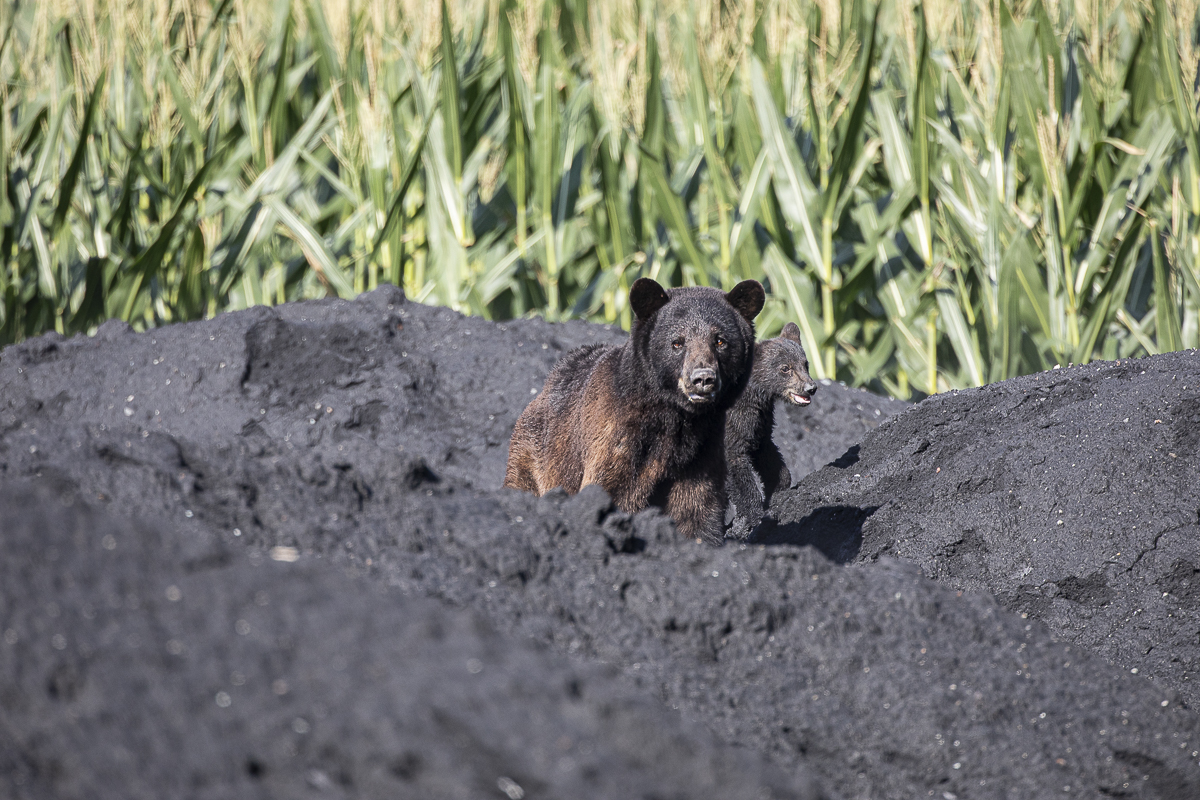
There are a few giant piles of rich black soil at the edge of these managed crop fields now. They don’t look like dredge spoil from cleaning out the canals as they are not full of debris and vegetation, so I guess they trucked it in and it will be spread over the fields once the crops are harvested this Fall. As I walked I wondered whether the bears were using these big dirt piles as playgrounds. Bears are so much like us in so many ways – curious, playful, always inspecting something new in their environment. About then, I looked up at the last dirt pile and there was a bear looking back at me!
Sow with one of her three cubs on top of a dirt pile
I immediately sat down and swung my camera around and started snapping photos. It was a strange backdrop for these beautiful animals – a big dark pile of dirt with corn towering skyward behind them.
A cub paws at mom’s face as she tolerates its antics
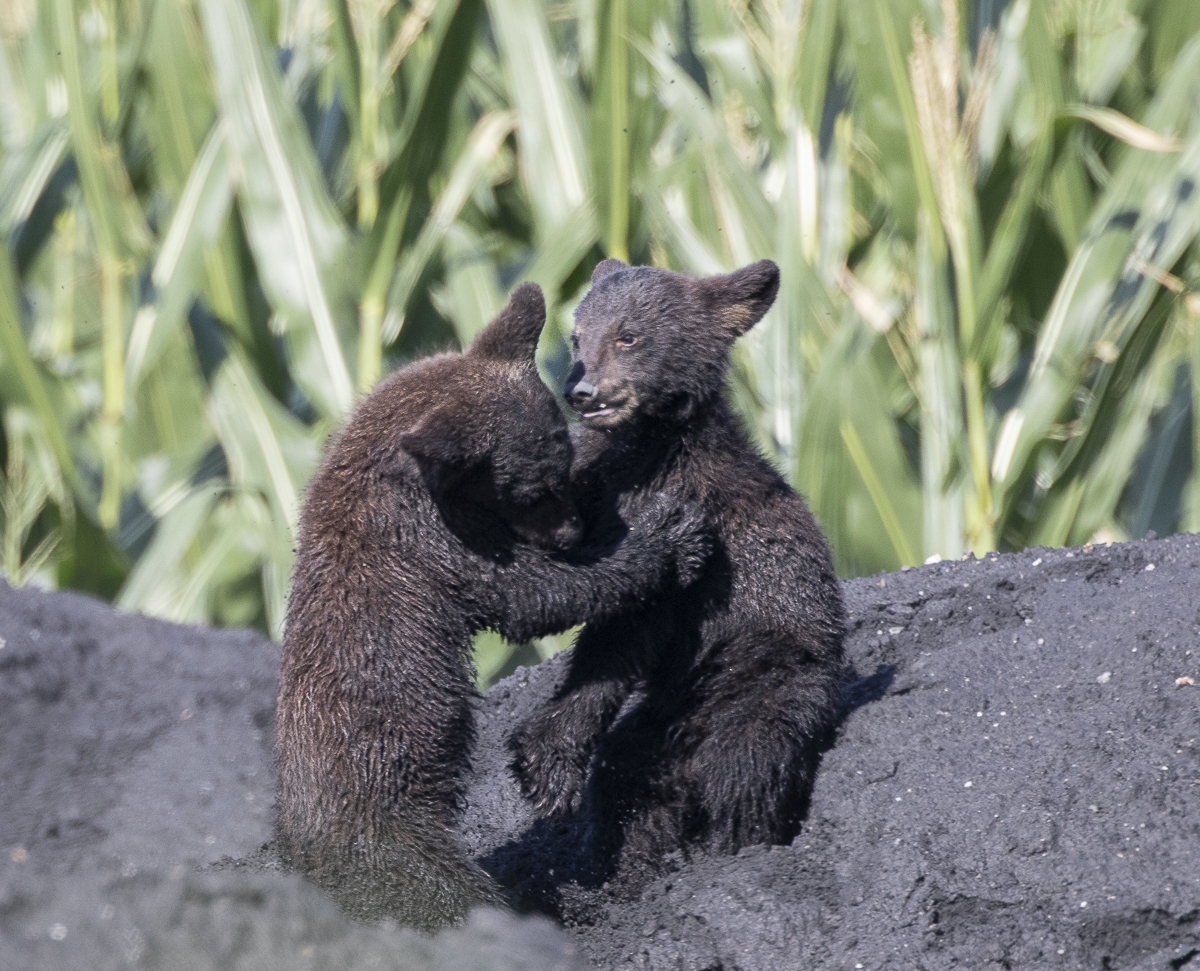
The piles of dirt had a lot of mounds and swales and I soon saw two other cubs frolicking in the dirt.
Two cubs wrestling
The problem was the cubs would run and disappear down in a swale and, in my seated position, the tall vegetation blocked my view of some areas of the giant dirt pile. But, I didn’t want to disturb them, so I continued to sit and watch, happy to share this special moment with these bears. I used my 500 mm telephoto plus a 1.4X teleconverter and these images are heavily cropped, and I was glad I was far enough away that she seemingly felt okay about my presence. The sow finally got up and ambled down to the ground, the cubs right behind her.
The sow checks on me as she grazed the vegetation along the canal
She started eating various plants along the top edge of the canal as she slowly walked away. I stood up to get a better view (they were down in the thick stuff and I could hardly see the cubs at all) and she paused and looked my way, then turned and started grazing again. Just checking, I guess, to make sure I stayed put (which I did). She moved to where there is a land bridge from Bear Road to the corn field and walked across to the woods, her cubs following closely behind. I had stopped before that land bridge to allow them to pass undisturbed if they came out that way. It is important to not block potential pathways of these (or any other) animals so they have freedom to move without getting stressed.
As mom strolled over to the trees, the cubs were following close behind herThe straggler
After the bear family passed, I continued on down the road toward the distant corn field and almost immediately had another bear come out of the woods, so back down on the ground I went. By the way, I soon noticed that I was squatting and laying in grass that had poison ivy scattered throughout so I will undoubtedly pay the price for that any day now.
Another bear comes out of the forest
And I was pleased to then see two more tiny cubs trailing behind her.
Two more cubs following their mom out of the woods (note another bear coming out of the woods on the left side of the road way beyond the cubs)
These guys were a little smaller than the ones playing on the dirt pile and seemed a bit more cautious. They would come out, turn, and then go back in the woods, and then come out again. Mom had gone on across to the field occasionally giving a glance back to see where her cubs were. They came out again and made it almost across the road, then paused, looking intently for their mother.
Where did she go?
They finally scurried into the field and disappeared in the tall corn although I could hear their grunts from across the canal. The mosquitoes started to get annoying and I was drenched in sweat, so I decided to head back to the car. I jumped a rabbit and almost stepped on a Bobwhite Quail on the way back, both things causing my heart to jump up in my throat. I finally saw another person walking my way and realized I had been lucky enough to have Bear Road to myself for over two hours! I saw a couple more bears on the drive out of the refuge and ended the day with 18 sightings, not a bad way to spend a day in spite of the heat.
After spending the night truck camping at Pettigrew State Park, I headed to Alligator River National Wildlife Refuge early the next morning. Right away, I saw a few bears out in the soybean fields (the fields on this refuge are mainly soybean this year it seems, making it much easier to spot feeding bears than in tall corn). I also wanted to check out the fields where I thought people have been seeing the Red Wolf family. I drove to the east side of the refuge near the landfill and spotted a few cars pulled over with people standing around, a good sign. When I got out and asked, sure enough, they had a Red Wolf far out in the soybean field. It was sitting, backlit by the rising sun, its ears flopped to either side. The people said it had been hunting, jumping on unseen prey every now and then. I believe there are four pups with the pair of adult wolves, making this a very important part of the reintroduction efforts for this critically endangered species. The wolf eventually got up, wandered down the field and disappeared in a low spot. We waited around, swapping stories of wolves and bears, but the wolf did not reappear, so I eventually wandered off in search of more bears. I spotted one a ways down one of the dirt roads and turned to get a closer look. The bear was strolling down the road away from me, casually stopping to graze on plants, never looking back as I slowly drove toward it. I took my foot off the accelerator and very slowly drifted toward the bear until it finally turned, gave me a glance, and then continued on.
The bear finally turned around to see what was following him, and then continued on down the road, grazing as it went
I held back at that point and it continued on another 50 yards or so before turning and walking into the thick pocosin vegetation. I always try to stay at a distance to where the bears are not changing their behavior. If they stop, I stop. If they look my way for very long, I sit and let them continue without following. Using a big telephoto allows me to photograph and observe them without stressing them out, which is especially important in this kind of weather.
After lunch, I went back to the fields where we had seen the wolf, and there were the same folks, plus another car, gathered a few hundred yards away from the first sighting. This appeared to be a different wolf, but it was way out (too far for a photo) in a soybean field hunting. When it stopped moving, it was really tough to see even wth binoculars. Even though it was so far away (several hundred yards), I took a few photos and when i enlarged them on the back of the camera, I could just make out the orange collar biologists have placed on the adult wolves. Black collars have been put on some resident coyotes that have been sterilized and left on the refuge to be placeholders and help prevent other coyotes from entering the range of the wolves. This helps reduce the chances of the wolves and coyotes breeding.
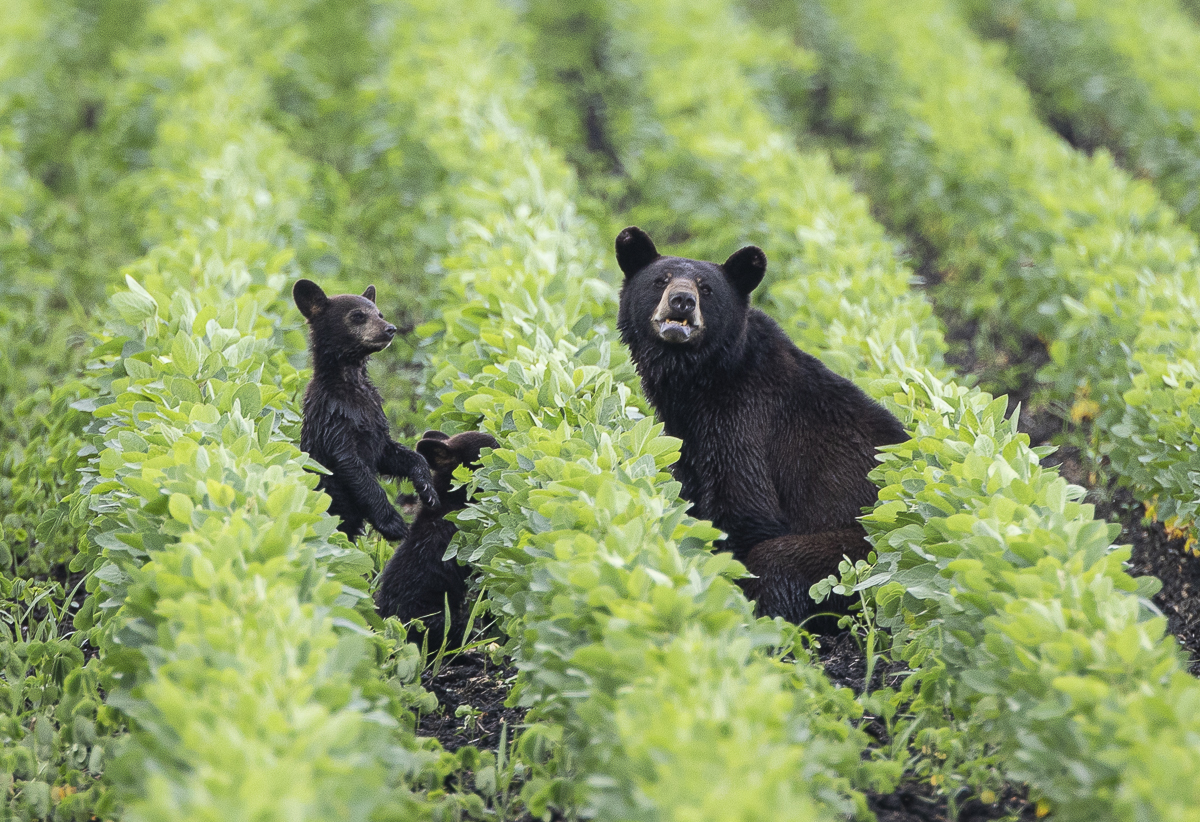
It was easy to spot bears out in the soybean fields and I soon spotted another sow with two tiny cubs. I parked along the main road and waited as she gradually walked toward my end of the field, teaching her cubs about the delicacies of these refuge croplands. She finally stopped and sat down and was feeding when she seemed to notice my vehicle. She looked my way and raised her head to sniff and see what was up. She apparently sensed no danger and continued feeding and eventually sauntered back the other direction. I drove off, happy to have seen 12 bears on this refuge, for a total of 30 bears in the one and a half days down east. Before leaving this refuge I also had encounters with Wild Turkey, two river Otter, and a young Barred Owl screeching constantly to be fed. It was right next to the road but in thick vegetation so I could not see it. I finally got a glimpse when one of the adults flew in with something and the youngster took flight to follow it for a meal.
A mother bear teaching her two cubs the fine art of soybean cuisine
Alligator River NWR is an easier place to view wildlife as the roads are in better shape than at Pungo (a different soil type I suppose, and they are mostly well-graveled). You have longer vistas to spot wildlife (plus the roadsides look like they are more frequently mowed). Being closer to the tourist hot spot of the Outer Banks no doubt helps justify more staff and expense for the education side of the refuge mission. The small group that gathered to watch the wolf hailed from 4 states – Maryland, Virginia, Pennsylvania, and North Carolina. All had been to this refuge in years past, and all had recently been over to the Pungo Unit as well (some for their first time). Obviously, word has gotten out about the wildlife here in our state. I hope we can continue to improve the visitor services on the refuges to make it easier for tourists to appreciate our pubic lands. This will also provide additional incentives for land managers and public officials to prioritize the protection of the incredible diversity of wildlife that people care about and are willing to spend their money to come see. This benefits the wildlife, the habitats, the people, and the local businesses, a definite win-win.
I believe alien life is quite common in the universe, although intelligent life is less so. Some say it has yet to appear on planet Earth.
~Stephen Hawking
I returned Friday from a few days helping out my mom in the mountains of Virginia and have been slugging around the house and yard trying to avoid the heat and humidity, It’s tough when you sweat through a tee shirt just walking around the wildflower jungle with a camera. Here are a few more macro subjects with the new flash set-up.
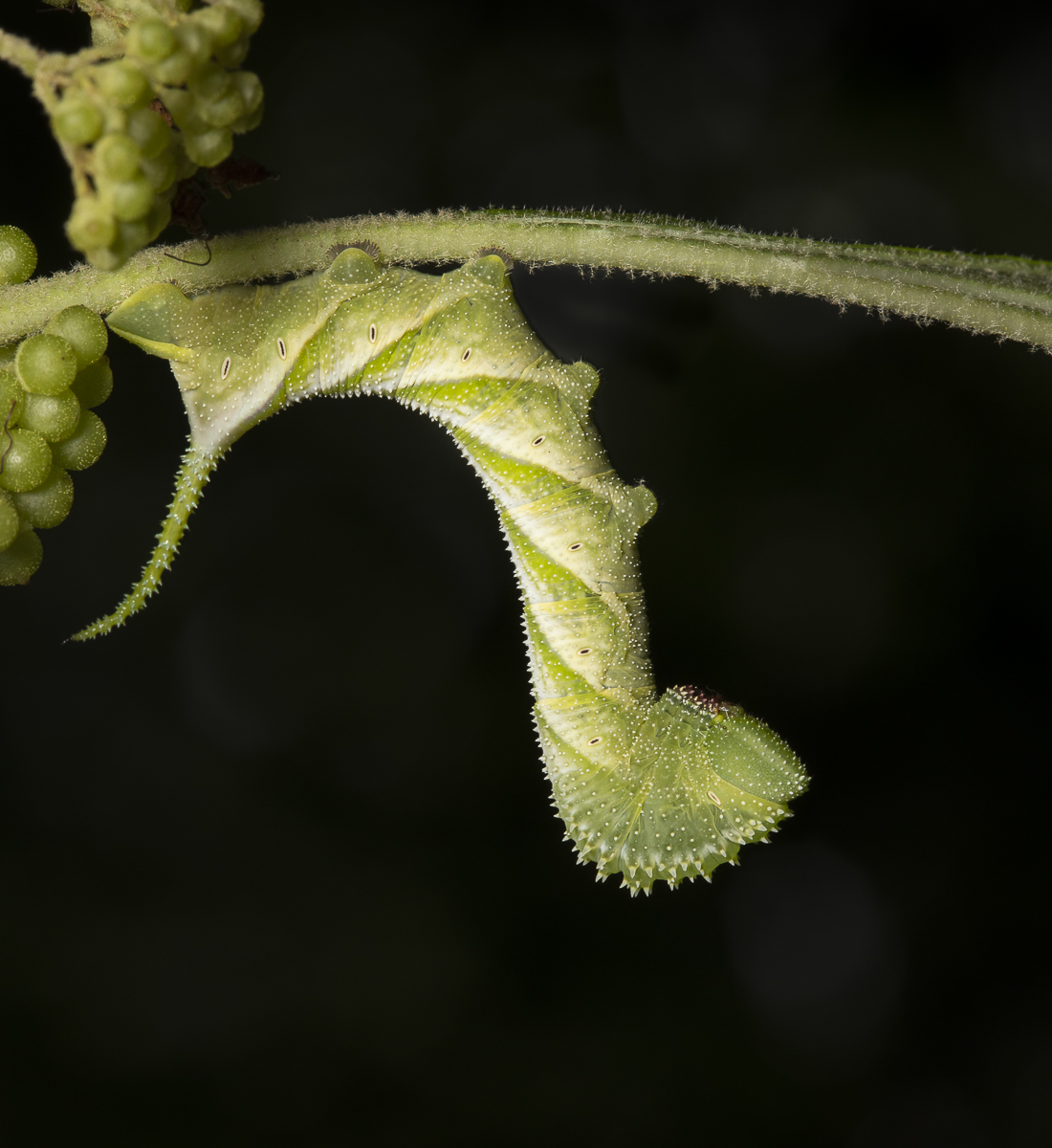
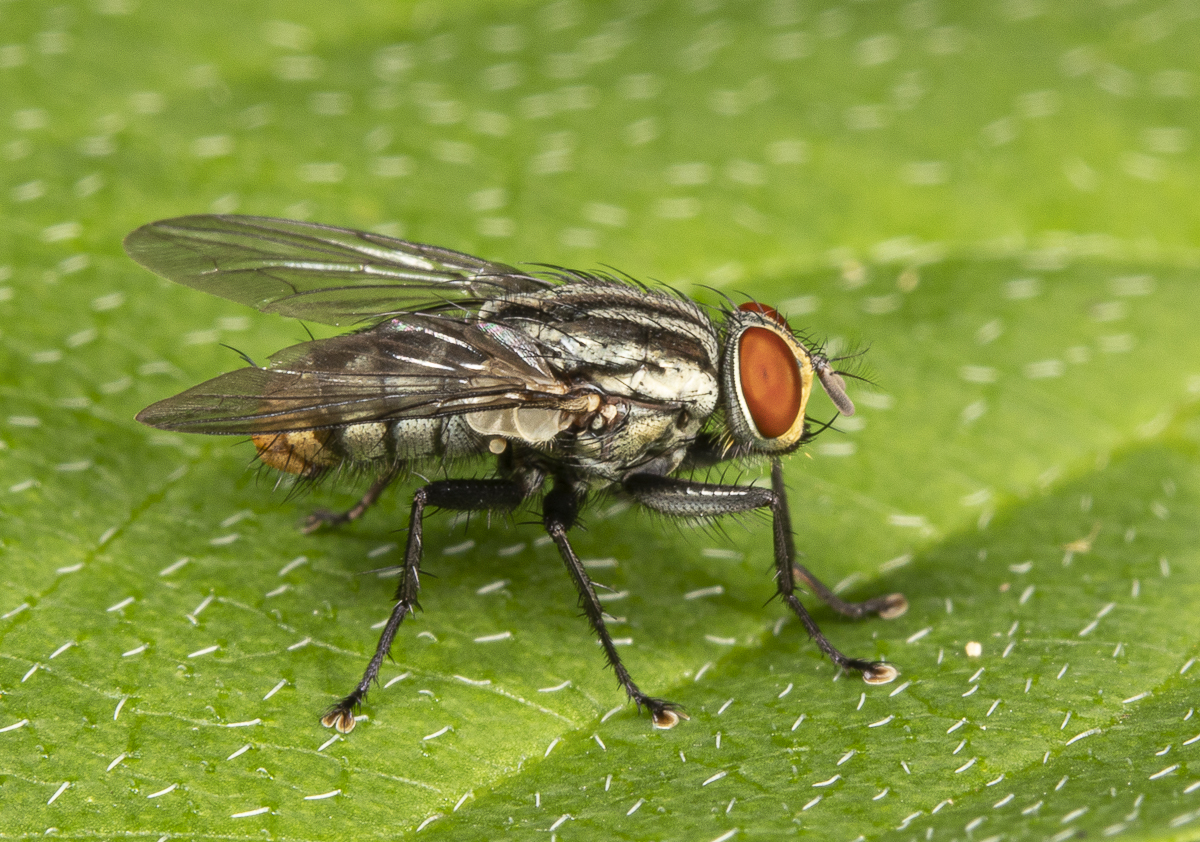
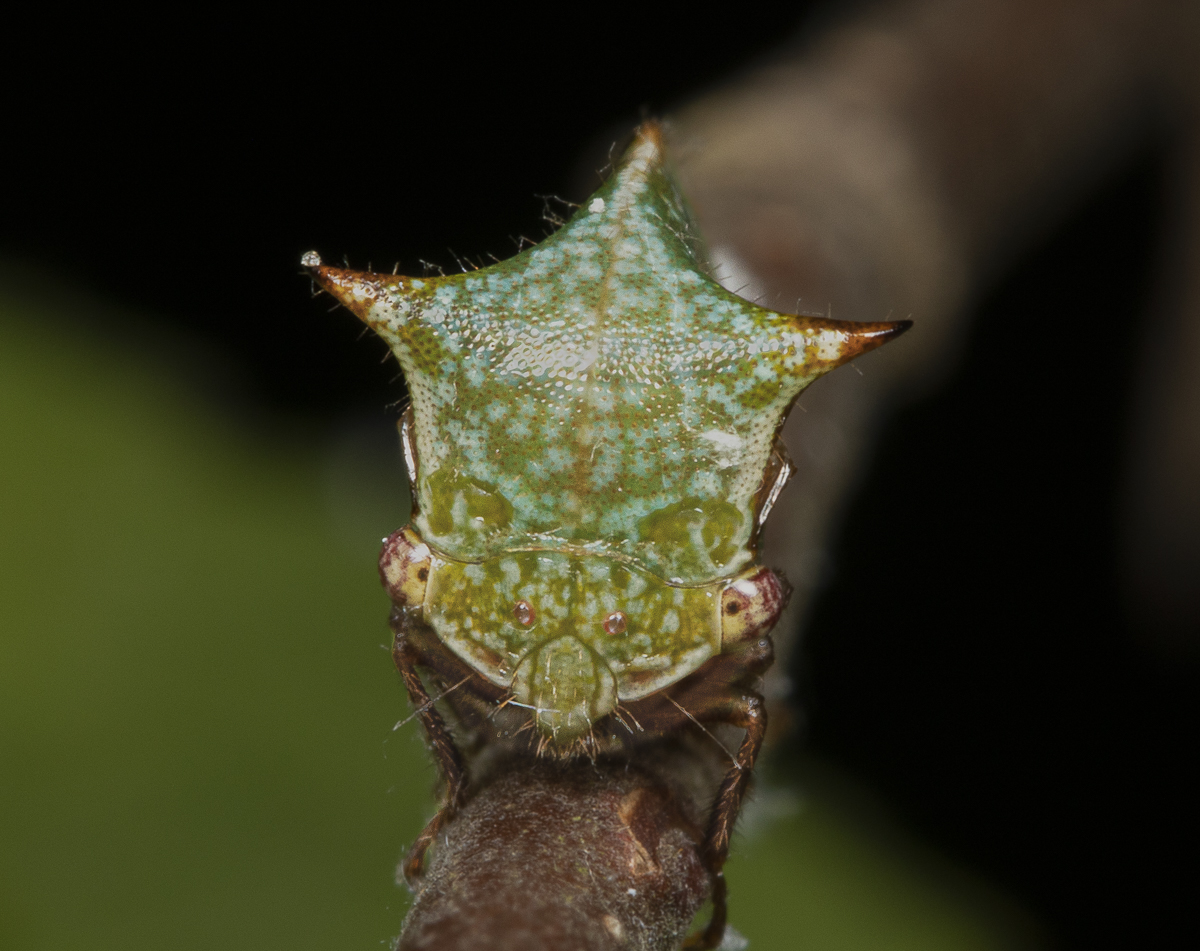
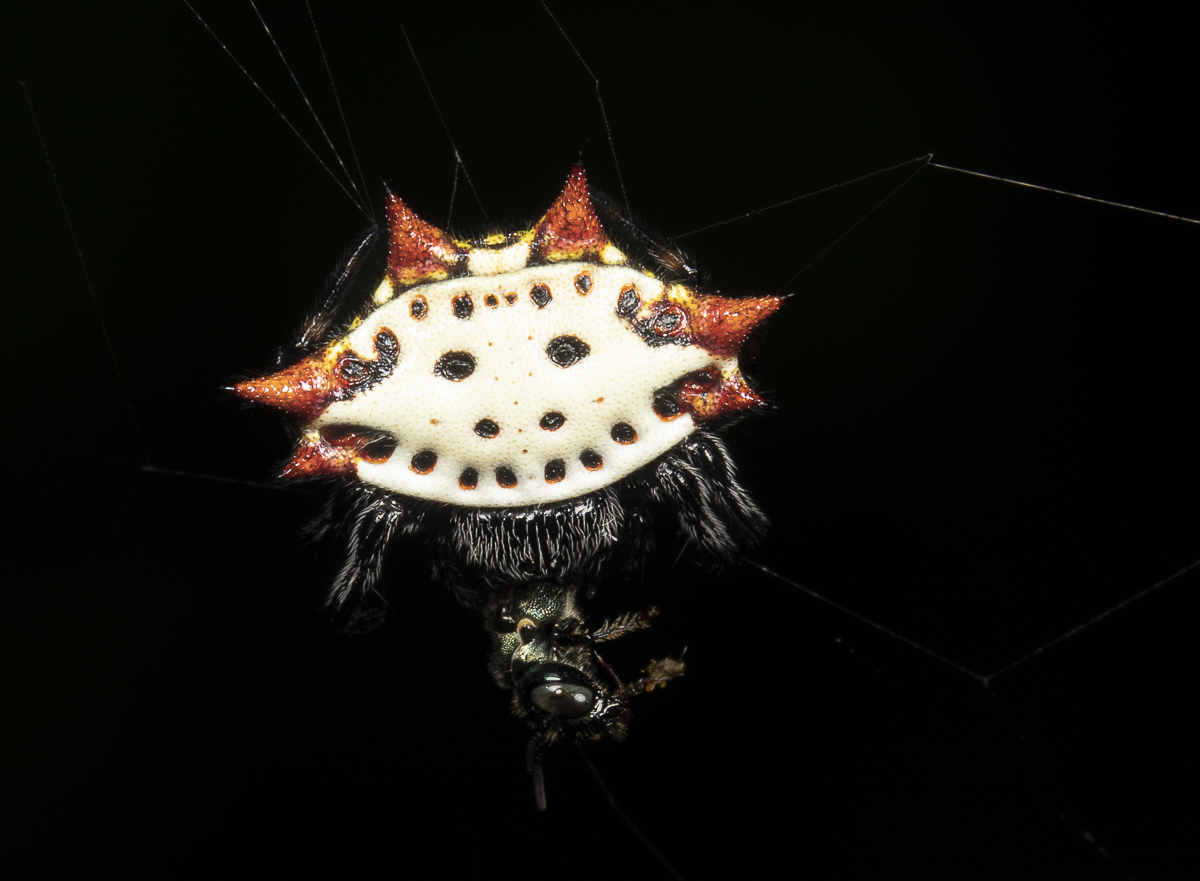
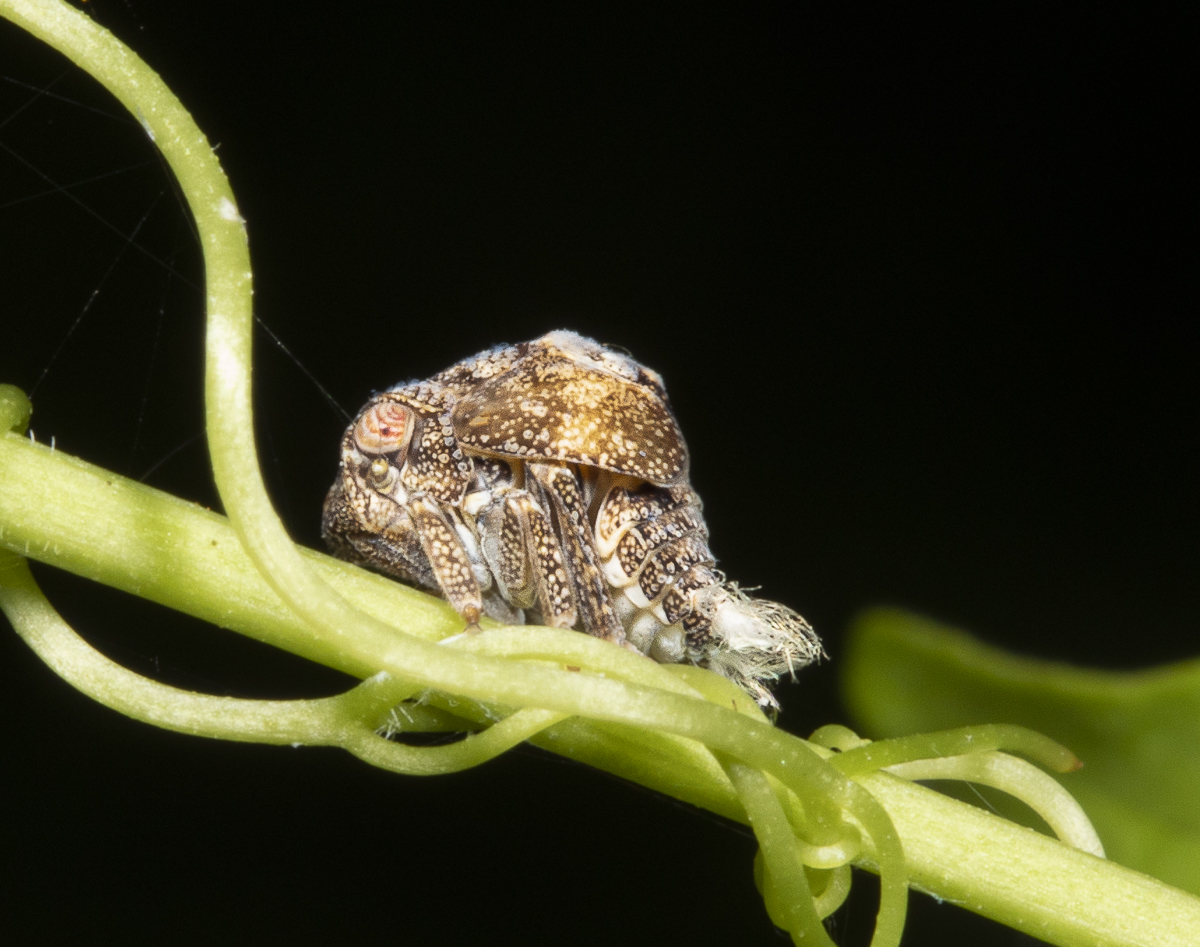
I posted some pics of the Red Aphids last time, a few of which were being eaten by Syrphid Fly larvae. These two have been killed by a tiny wasp parasitoid that devours their insides, pupates inside their empty husk, and then exits through the hole you see on their sides. These empty shells are called Mummy Aphids (click photos to enlarge)Some hatched insect eggs (maybe Stink Bug eggs) on an iris leafAn unidentified winged ant. I saw a few others one morning…perhaps a mating flight?An unidentified sharpshooter (a type of leafhopper), possibly in the genus Draeculacephala, which means Dracula-headed.An early instar of one of my favorite caterpillars, a Spicebush Swallowtail (Papilio troilus). I spotted the tell-tale folded leaf on a Northern Spicebush (Lindera benzoin) out front. I gently opened the fold to reveal this snake mimic larva with incredibly life-like fake eyes. You can see the silk that the caterpillar spun on the leaf to fold it (silk contracts as it dries, pulling the two sides of the leaf together).A large Rustic Sphinx Moth (Manduca rustica) caterpillar feeding on American Beautyberry (Callicarpa americana)A new insect (for me anyway) in the yard, a White-fringed Weevil, Naupactus leucoloma – one of the so-called broad-nosed weevils. Originally from South America, this beetle is now considered an agricultural pest throughout the southern United States. Males are unknown for this species. Oddly, I saw several of these one afternoon and when I went out the next day to look again, I couldn’t find any.Another new species for me was this tiny (less than 1/4 inch) Saddled Leafhopper, Colladonus clitellarius.Some of the hopper nymphs are just comical looking. I think this is a Coppery Leafhopper, Jikradia olitoria. The upturned abdomen is diagnostic.Here is an adult Coppery Leafhopper. This species is quite variable in color as an adult. Many leaf- and planthopper species can be difficult to photograph since they tend to move under a leaf when approached with a macro lens. This one obliged me by perching in one spot while I took several photos.I found several of these tiny predators throughout the yard. This spiky little guy looks like it just woke up from a hard night of partying. This is a Spiny Assassin Bug nymph, Sinea sp.Unidentified fly. Note the toe pads and the fact that it has only two wings which makes it a member of the fly family, Diptera (translates to two wings).One of my favorite summer yard critters, a Two-marked Treehopper, Enchenopa binotata. Treehoppers are known for their often bizarre shapes due to enlarged pronotums (the prominent plate-like structure that covers all or part of the thorax of some insects). This species is a thorn mimic.Here is another type of treehopper in the Buffalo treehopper group. This one may be Hadrophallus bubalus (no common name, although something like triceratops treehopper seems appropriate). This is another new species for the yard. As a by-product of their feeding on copious quantities of plant sap, treehoppers often secrete a sugary substance called honeydew, which can serve as a food source for bees, wasps, and ants. You can see this one was accompanied by an ant. Ants often provide protection from predators in exchange for the honeydew.A head-on view of the above treehopper. Interestingly, treehoppers communicate with one another by vibrating the stems and leaves of their host plants creating sounds too high-pitched for the human ear.It seems as though spikiness is a thing in the yard right now. Here is a Spiny-backed Orbweaver, Gasteracantha cancriformis. This one is feeding on a large black ant. The rigid spines are believed to help protect them from predators like birds. This one was about 10mm across and is a female. Like many spider species, the males are smaller than females, in this case much smaller (only 2 – 3mm). There has been an emergence in the yard of these flying tigers this week. This is a robber fly known as the False Bee-killer, Promaschus bastardii. I’m guessing the scientific name was coined by a bee ecologist. Every year, about this time, I see several of these large (a little over an inch long) robber flies snagging flying insects out of the air. Their loud buzzing is a give-away as they fly off when I am walking through the yard. I saw two this day, each with a species of bee (this one, a Honeybee, the other had a native bee of some sort).
Though the far reaches of the universe have been in the news a lot recently because of the amazing images from the James Webb Space Telescope, I continue to see aliens right outside my front door. Take a look and I think you will be amazed at what you can find as well.
What makes photography an strange invention is that its primary raw materials are light and time.
~John Berger
My macro light has been giving me trouble for a while now and we finally put in an order for a new one last year. It has been on backorder ever since. I started looking at reviews online and found another option at about a third of the price of the one I was replacing and decided to take the plunge and bought a Godox MF12 twin flash and wireless trigger. It is definitely fancier and seemingly has some advantages, but it is a bit more complicated and I am still learning how to use it after a couple of days. It does great during the daytime, but I am having some trouble with night photography (when you really need a flash) but I am pretty sure it is user error and I hope to conquer that soon. In the meantime, I’m afraid you may be subjected to a slew of pics of bugs here in the yard and the woods for a bit (my apologies to the squeamish amongst you that prefer flower pics….you know who I am talking about). Next step is to create some diffusion to soften the harsh light a bit. Here is a sampler of some macro subjects from the past couple of days.
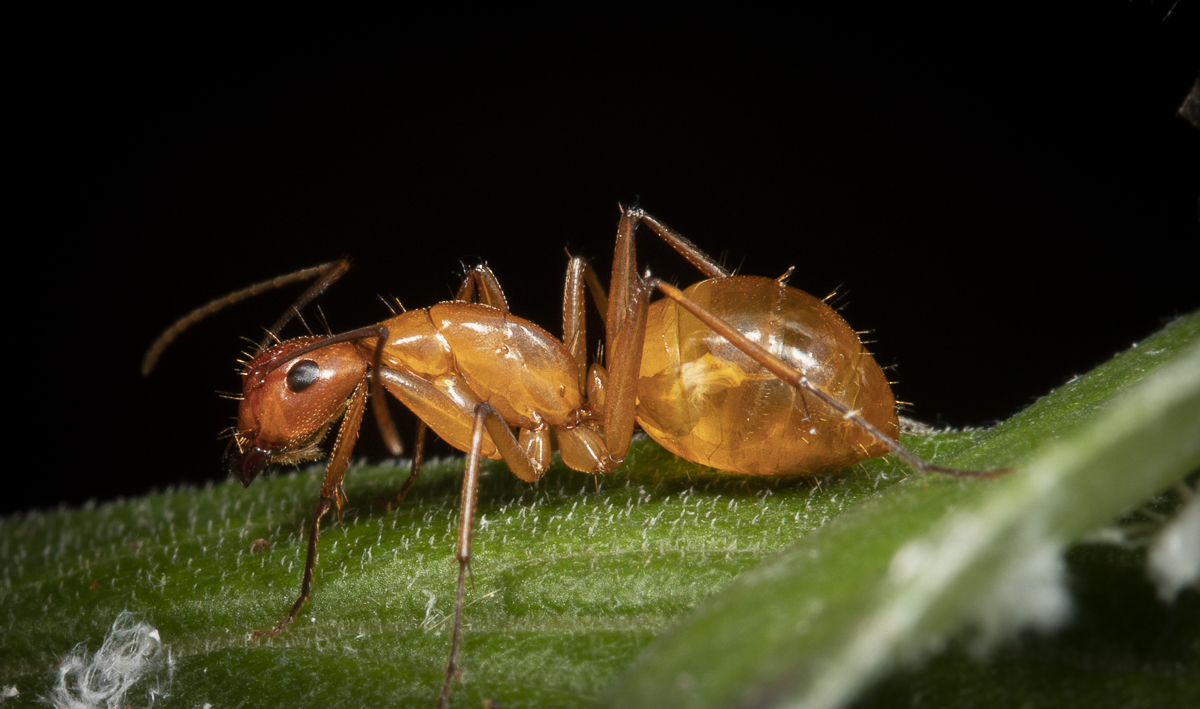
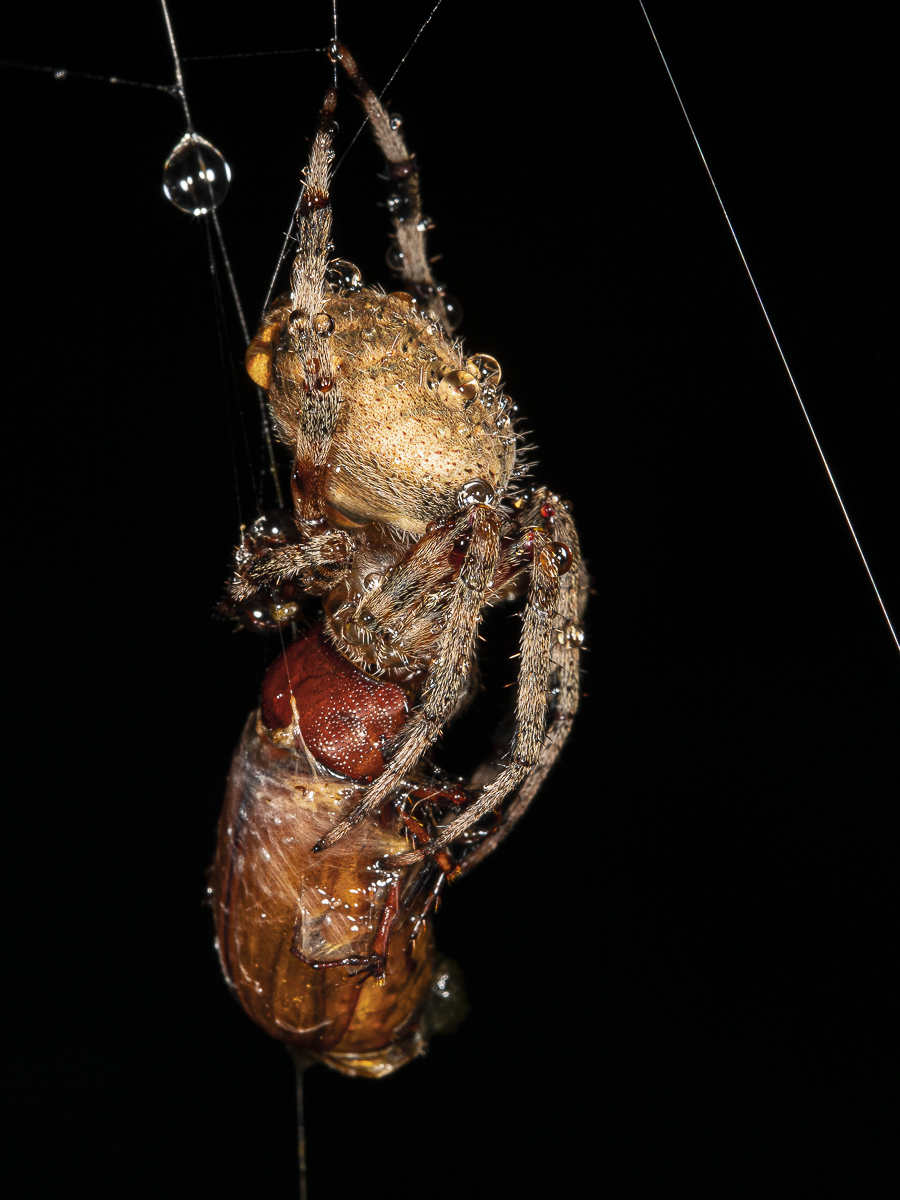
One of our striking day-time moths, the Ailanthus Webworm Moth, (Atteva aurea) on Queen Anne’s Lace (Daucus carota) – click on photos to enlargeChestnut Carpenter Ant, Camponotus castaneus. This large (up to 10mm) ant is found throughout our woods nesting in rotting logs or under rocks.One of my favorite insects, a nymph of the Red-headed Bush Cricket (aka Handsome Trig), Phyllopalpus pulchellus. This beetle-like cricket has large palps (finger-like mouthparts) that are usually in motion as it explores a leaf surface in search of food.Two-striped Planthopper nymph, Acanalonia bivittata. Adults are green (occasionally pink) with dark stripes along the top edge of the wings. On the back end of this nymph you can see some of the waxy filaments produced by an abdominal gland to supposedly help protect them from predators. Adults and nymphs pierce plant stems and suck up the sap.Northern Flatid Planthopper, Flatormenis proxima. I love the venation in the wings of this common species.One of the most abundant insects in our yard, the beautiful (and tiny) Red-banded Leafhopper, Graphocephala coccinea. Yellow-striped Leafhopper, Sibovia occatoria, a species I rarely see here in the yard jungle. This little beauty is about the size of a small grain of rice.Red aphids, Uroleucon sp., on the stem of a Green-headed coneflower, Rudbeckia laciniata. There are aphids predators on the prowl as well. The black-colored aphid has been parasitized (most likely by a tiny wasp parasitoid) and has died with the wasp larva or pupa inside. But what about those other things?What I believe is a Syrphid fly (Hover Fly) larvae eating a Red AphidThis morning along our walkway – a Spotted Orbweaver (Neoscona crucifera) with prey (I think it is a type of May Beetle, Phyllophaga sp.)
Against a dark sky, all flowers look like fireworks.
~Gilbert K. Chesterton
It is a strange Fourth of July this year for me. I have mixed emotions about the things I see happening in our country (and our world). And, while I have enjoyed watching the big firework displays offered in many communities, I am not a huge fan of the many noisy backyard fireworks sounds we hear for several nights each year around the holiday. I worry about pets, wildlife, and people with PTSD or other conditions that might suffer when hearing all this noise (and the potential for accidental fires near homes). So, this year, we opted to hang here in the woods (plus, one of us is under the weather). As I walked around the yard this morning, I realized that our flowers offer a hint of a fireworks display of their own in their varied shapes and colors. Here are a few of those blooming in our yard today (along with a couple of critters found lurking in the plants)…perhaps best viewed with the sounds of the 1812 Overture in the background…
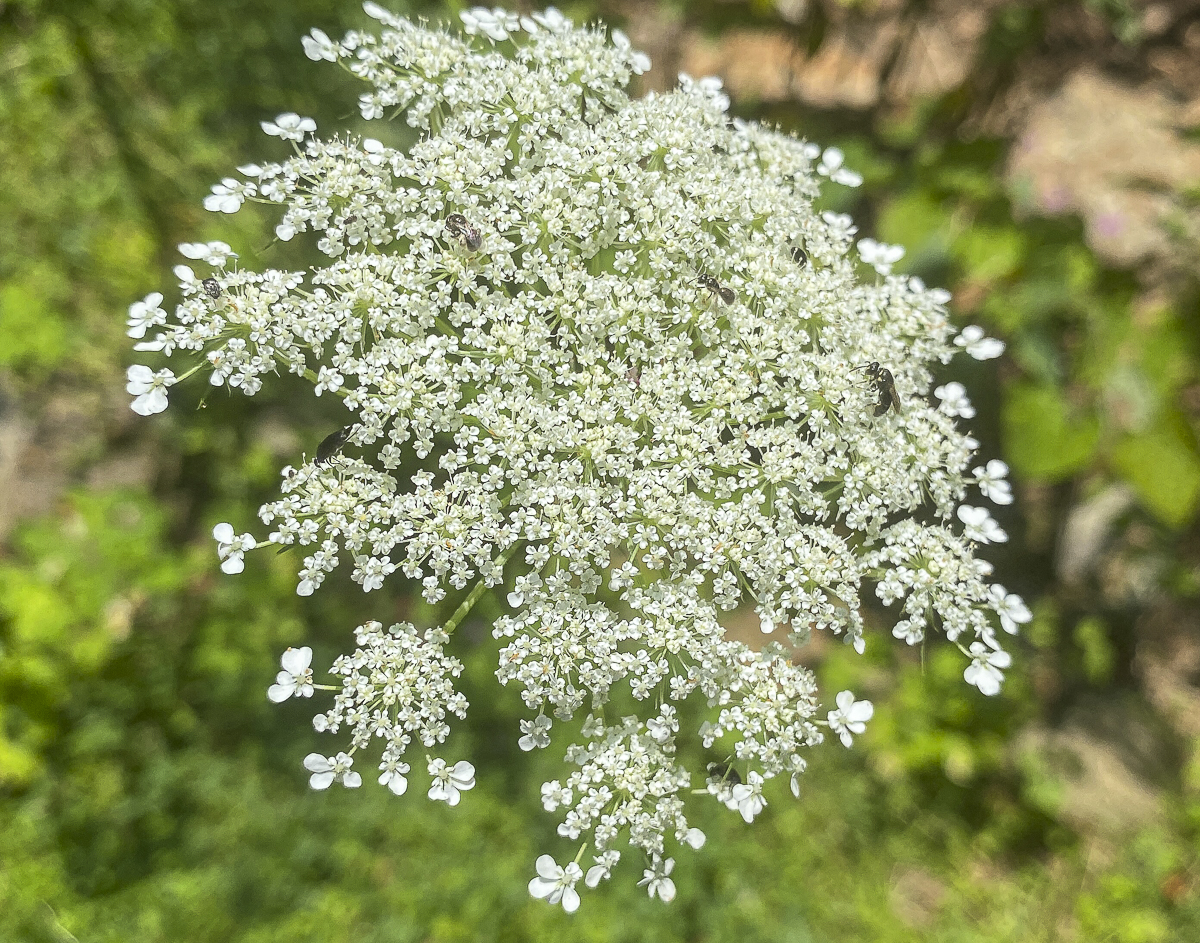
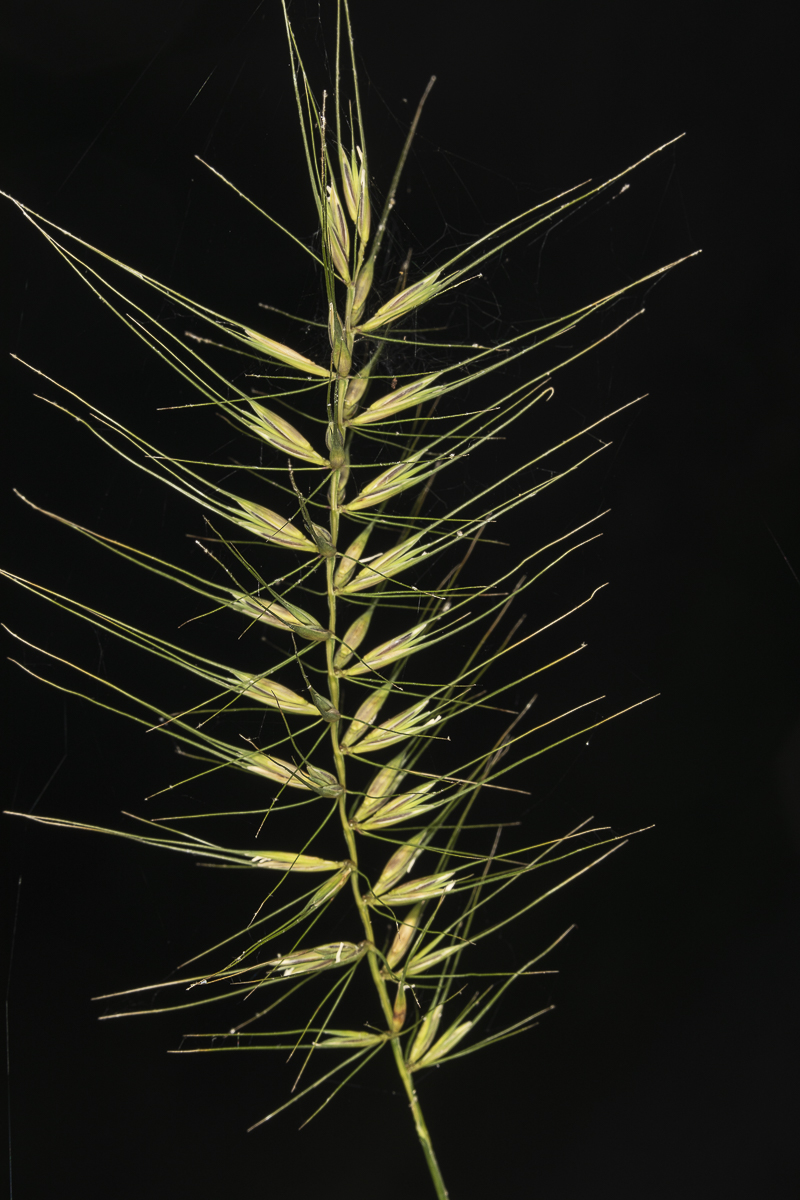
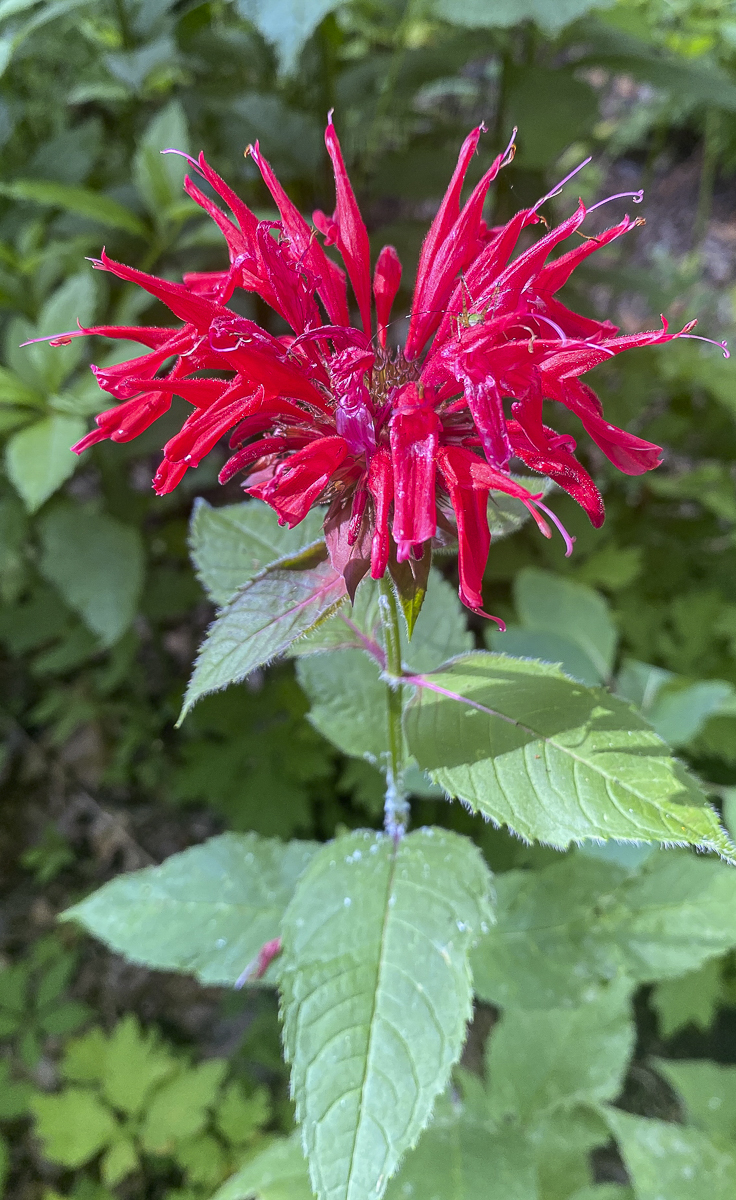
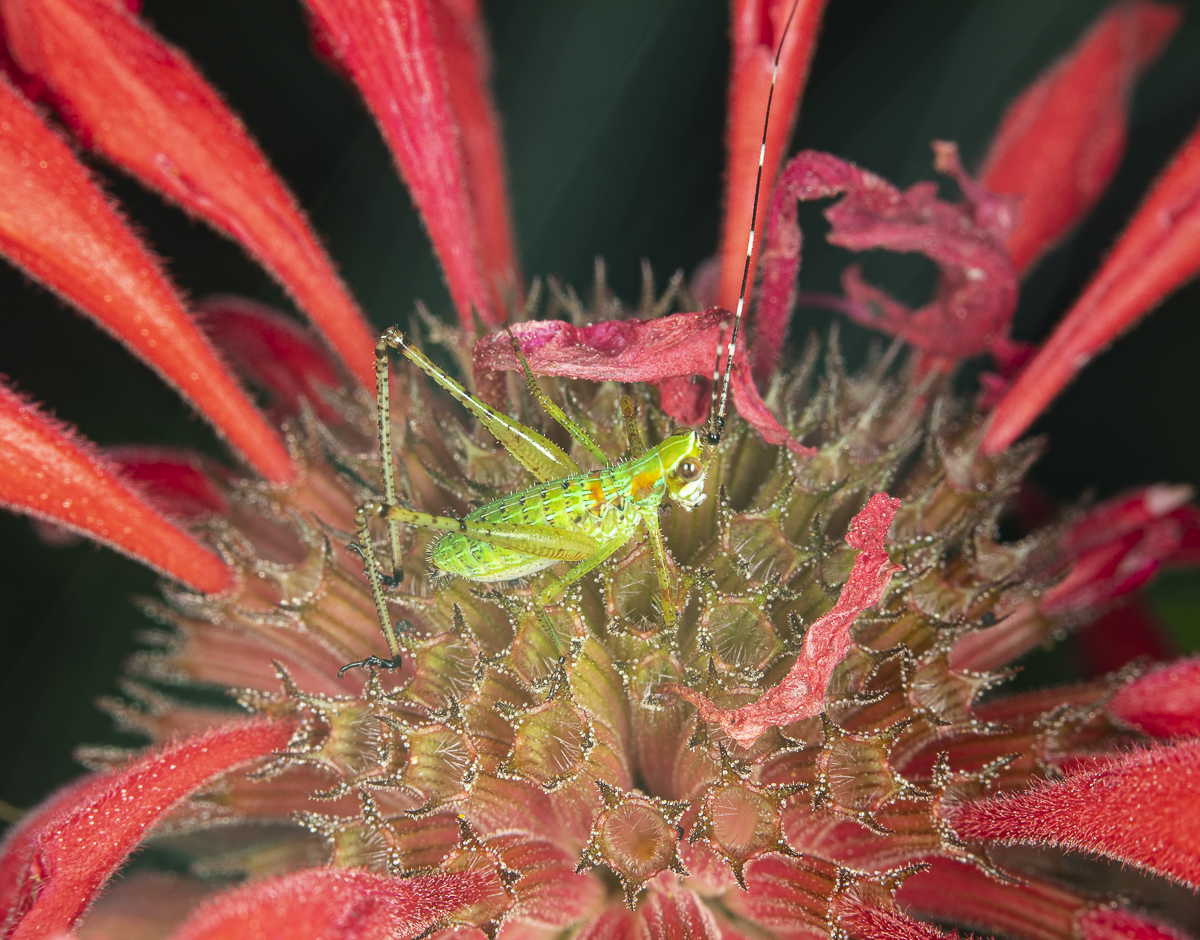
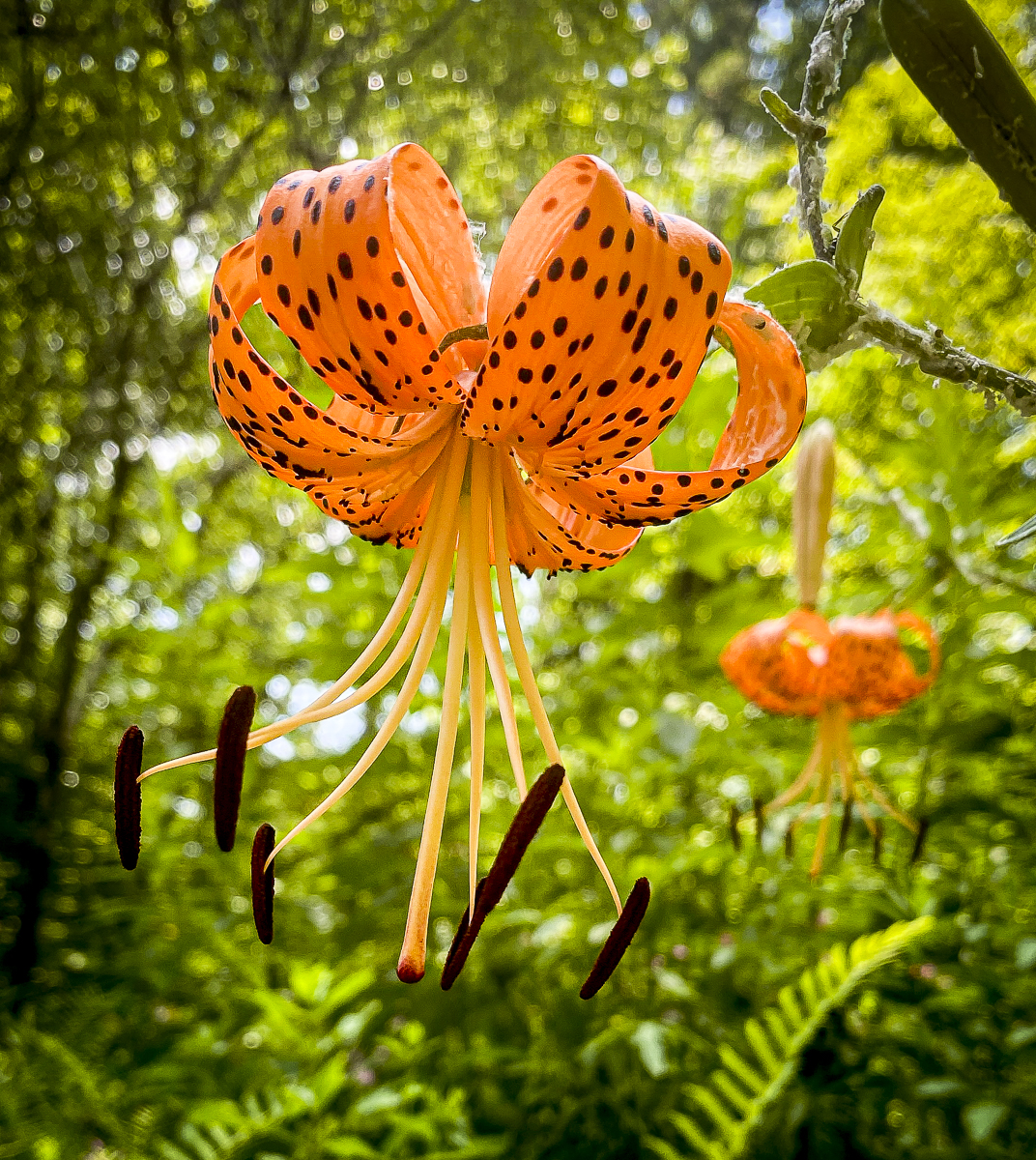
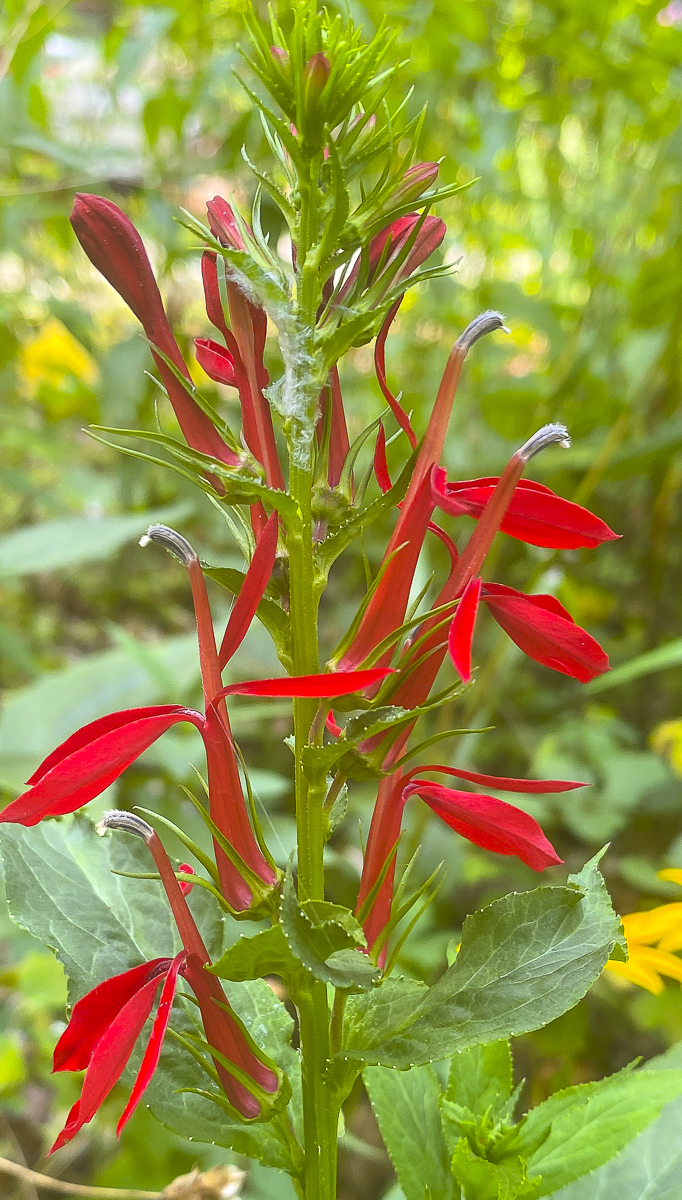
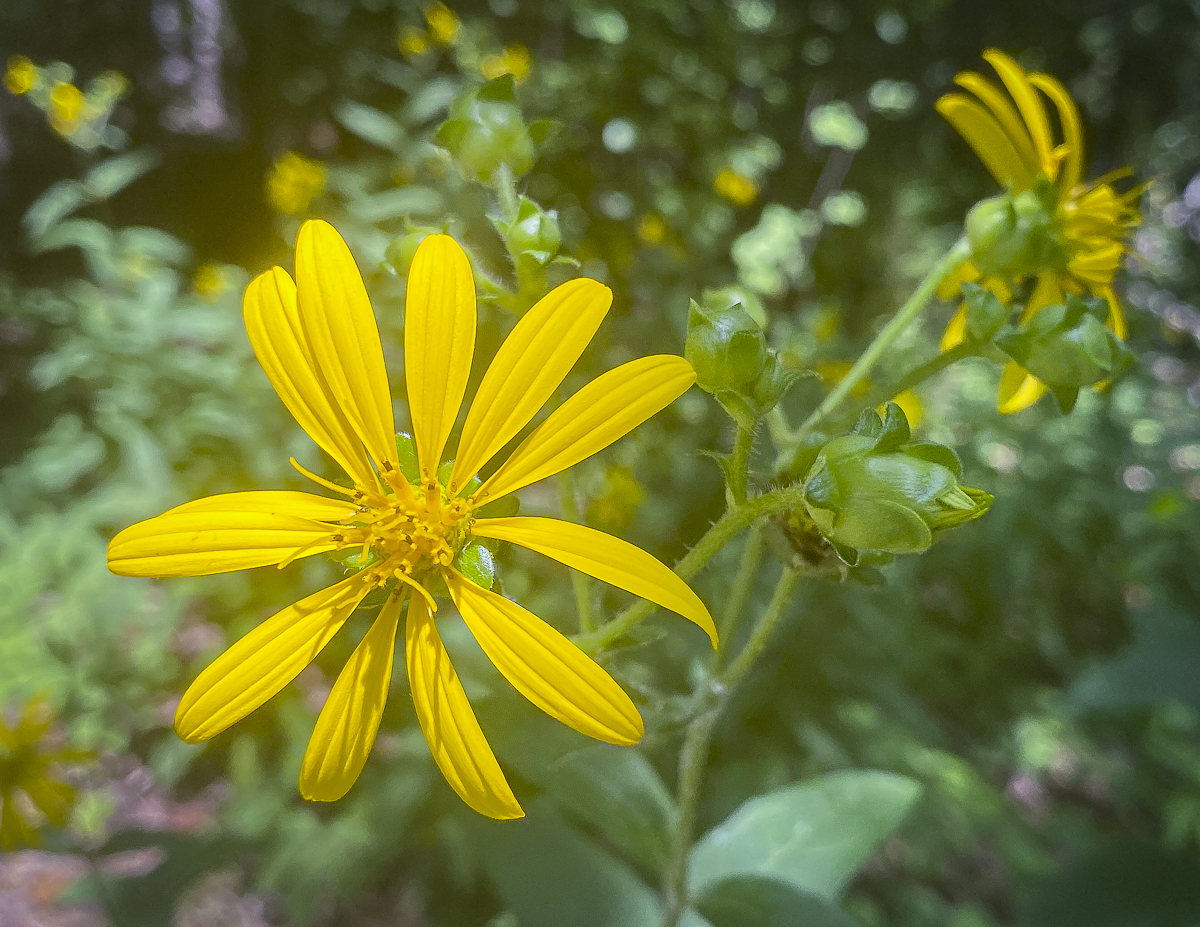
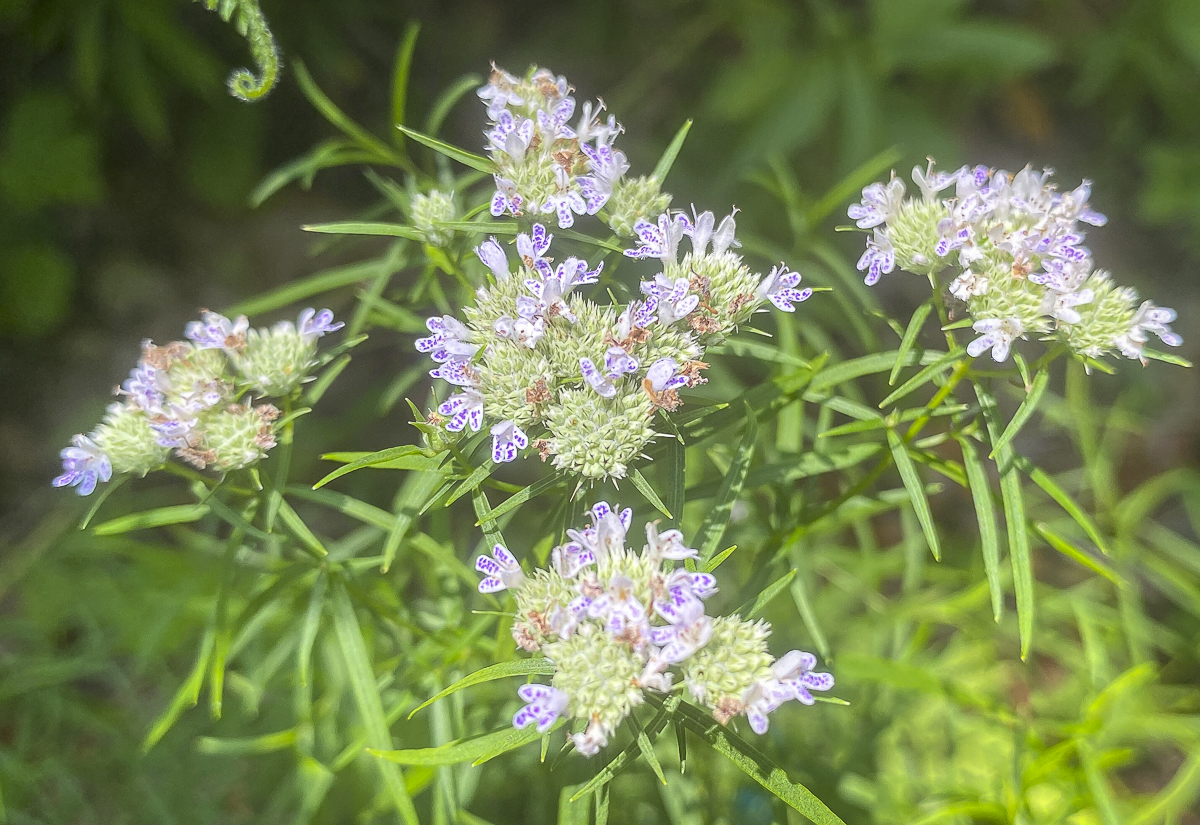
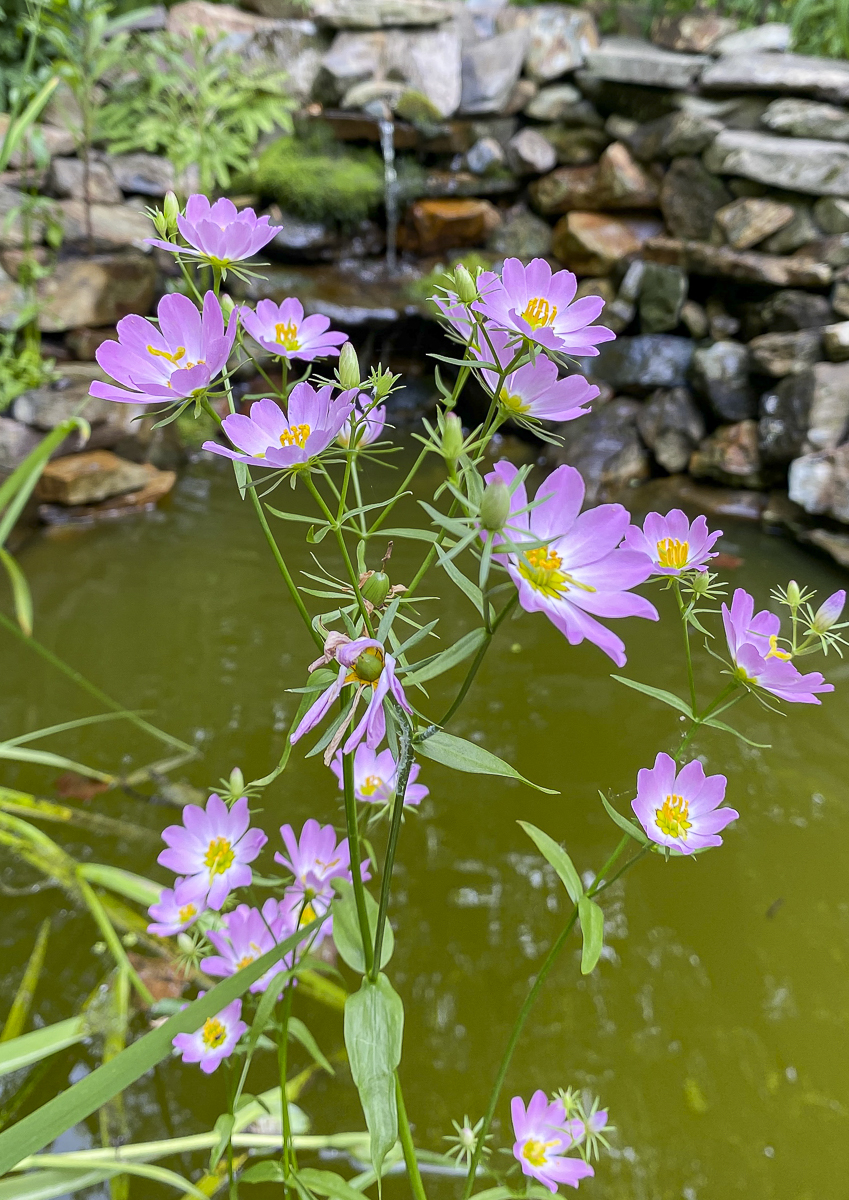
Queen Anne’s Lace (click photos to enlarge)Bottlebrush Grass Bee BalmScudder’s Bush Katydid nymph on Bee Balm. These little guys are all over the yard flowers now.Garden Phlox – the swallowtail butterflies and bees are frequently seen feeding on these flowers.Tiger Lily. These majestic flowers are not native, but have taken up a section of our yard, much to the liking of swallowtail butterflies and the hummingbirds.This small jumping spider grabbed a planthopper nymph off a Tiger Lily leaf and was taking a lunch break when I saw it.This is one of the few Cardinal Flowers that is not caged to protect it from the ravenous rabbit that unfortunately seems to prefer cutting this wildflower species over all the others in our yard. We’ll see how long it lasts.One of the best pollinator plants in our yard, the long-blooming Starry Rosinweed.The Smooth Oxeye plants are often defoliated by Silvery Checkerspot butterfly caterpillars, but not this year (so far)Narrowleaf Mountain MintMy new favorite wildflower, the rare Plymouth Gentian. I bought two of these at a native plant sale this summer and put them along the edge of one of the water gardens (they grow naturally along riverbanks that experience drawdown in the summer).Plymouth Gentian close-up.
Hope you can see some of your favorite firework shapes in these beauties. And I hope you all have a wonderful holiday. May we all work to make our country a more inclusive home for all of us and the wild places we share it with in the coming year.
It was as if all the world might be composed of nothing but valley and ridge.
~Charles Frazier, Cold Mountain
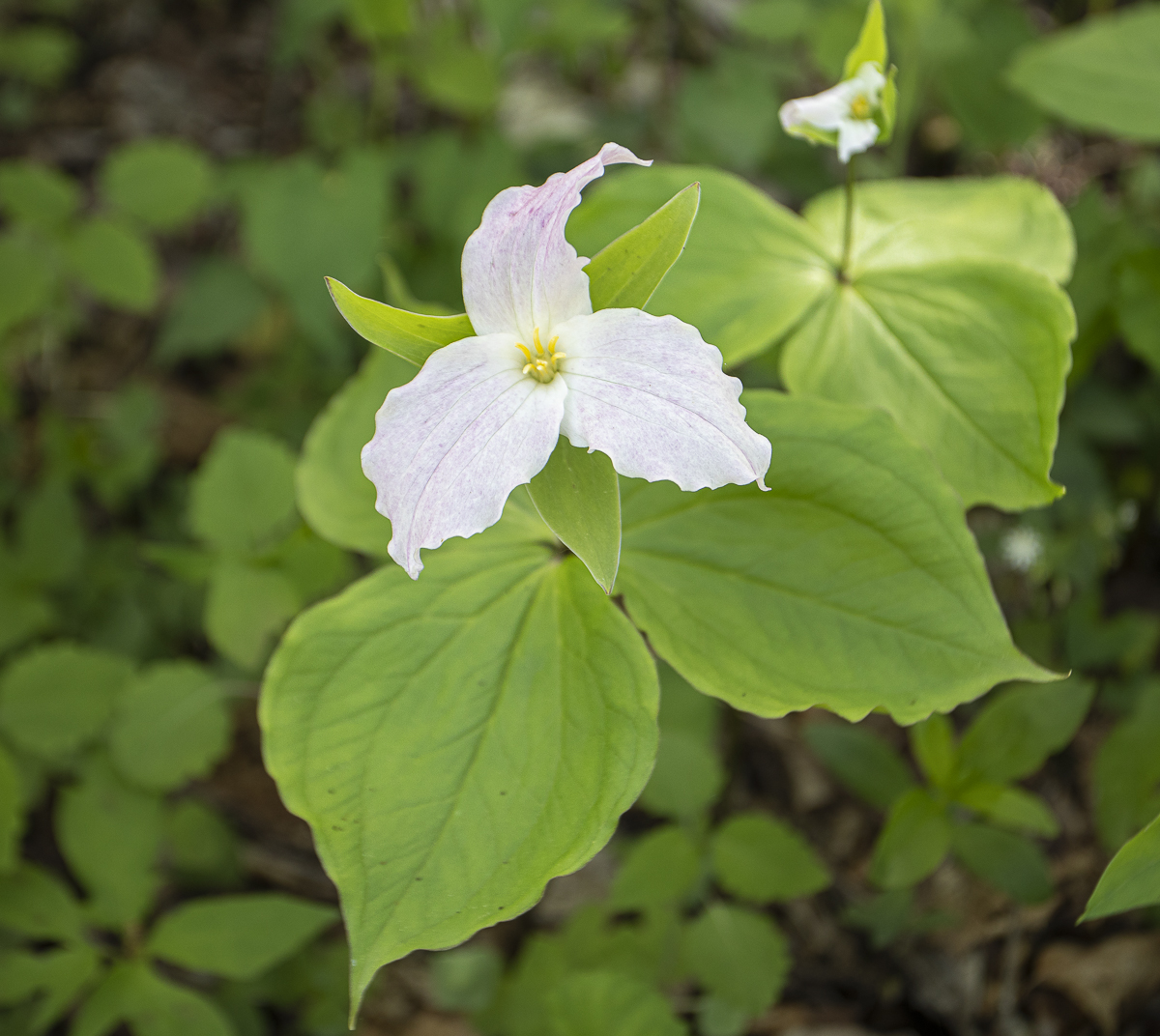
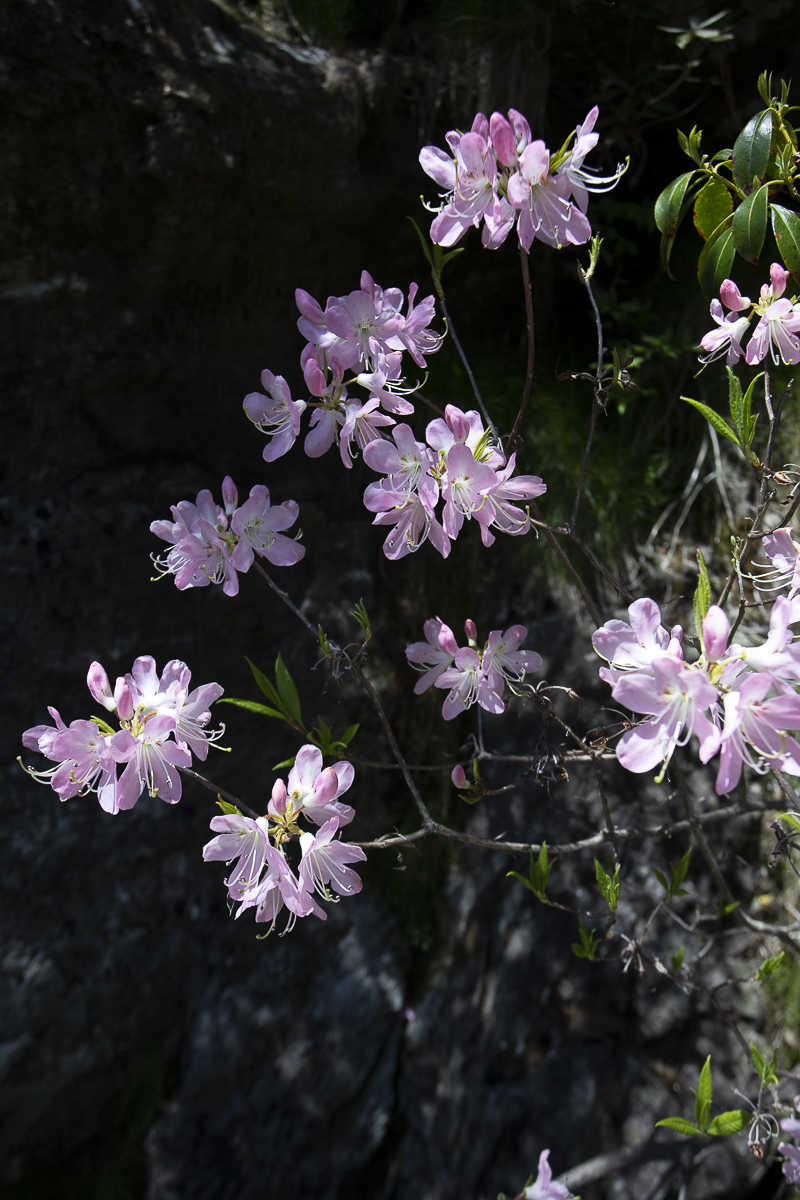
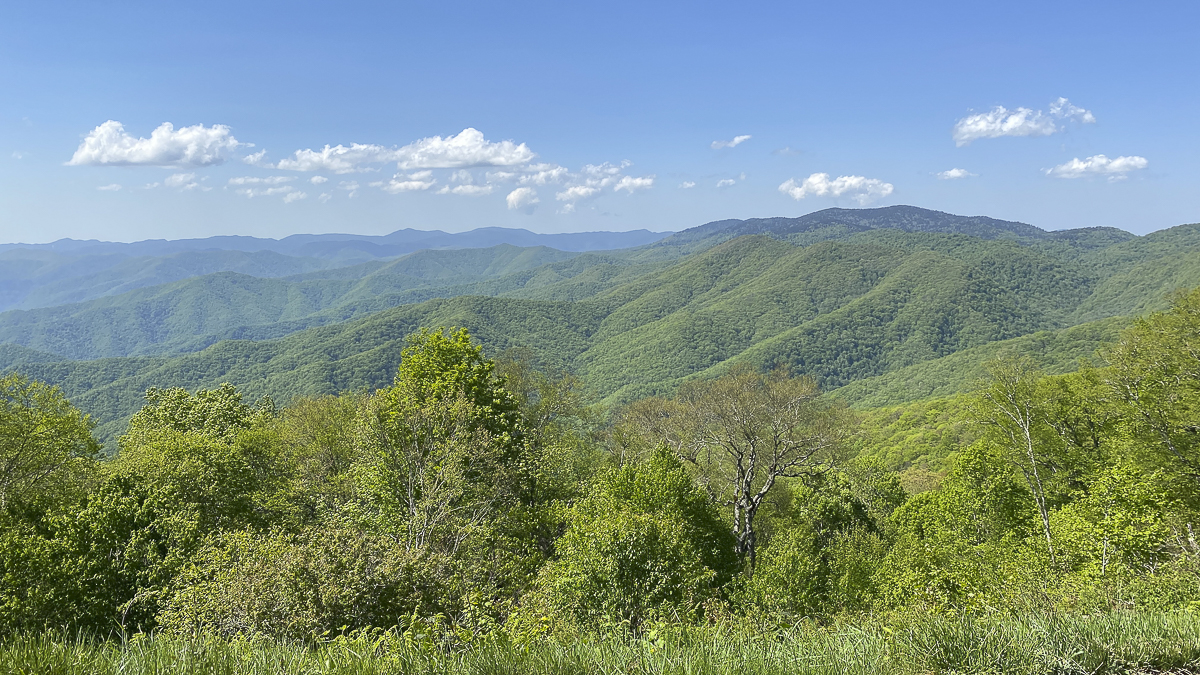
This is part two of our trip last month down the Blue Ridge Parkway. After the crazy weather at Mount Mitchell, we headed to our next destination, a somewhat out of the way campground, Balsam Mountain Campground, near the end of the parkway. Along the way, we experienced various timelines of spring as we changed elevation, moving back into early spring (with barely any leaf out on the trees) when we climbed higher, and then getting into a more summer-like forest cover down near Asheville. I love that about Spring in the mountains – if you miss something you can change elevation and experience a different part of the season all over again. There were impressive displays of azalea and trillium as we drove south so we pulled over at several spots to admire them.
Large-flowered Trillium along parkway (click photos to enlarge)Pinkshell Azalea was in bloom in the higher elevationsView along the road to Balsam Mountain Campground
We settled into our next campsite at Balsam Mountain Campground and were pleased that the nearby RVs all had solar panels, so we heard only one small generator and only for a short while (there are no hookups at this campground). Having camped here before, we knew the highlight of any stay is to walk (via a half-mile nature trail through some beautiful trees) or drive over to the picnic area for sunset. And it did not disappoint!
The thing to do when at the Balsam Mountain Campground is walk to the picnic area for the amazing view of the sunset
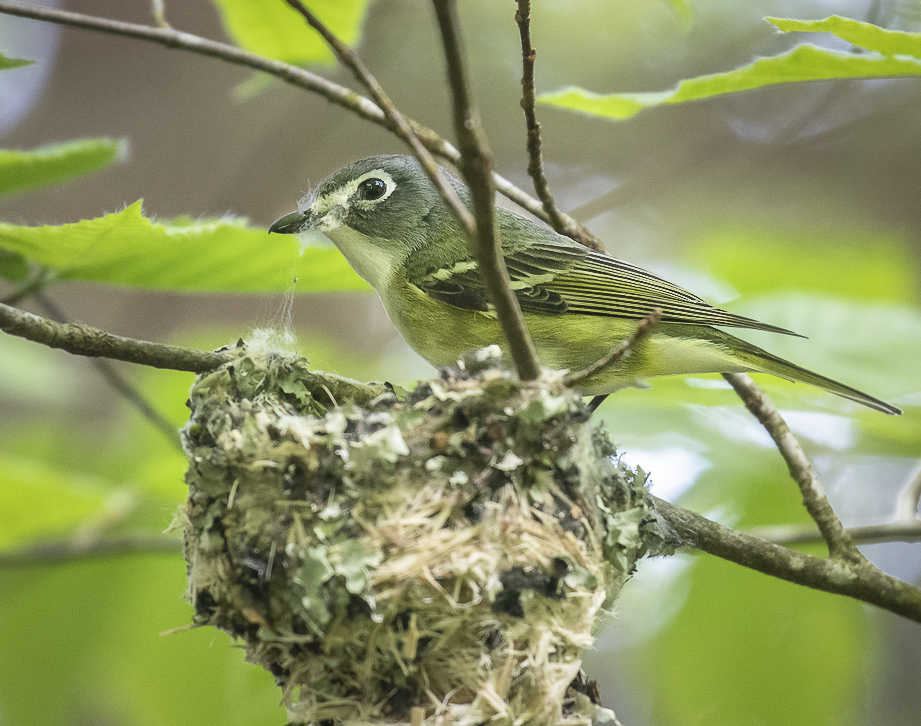
Blue-headed Vireos were constantly calling around our campsite. Our second morning we saw one gathering nesting material off the ground and then Melissa saw it go to a nest right next to the nature trail. We walked over, she positioned herself near the tree, and I walked away. The birds came back, bringing some plant fibers (and maybe spider web?) and molded the nest. Melissa took a few shots and then we left them alone to their business.
Blue-headed Vireo adding to its nest (photo by Melissa Dowland)
After breaking camp our second morning, we decided to drive the one way gravel road from the nearby picnic area all the way down to Cherokee, a distance of about 23 miles. It passes through gorgeous forest with multiple seeps and springs and plenty of wildflowers, birds, and bugs. It’s a really pleasant drive where you can go at your own pace and stop to look and listen with relatively few other travelers along the way.
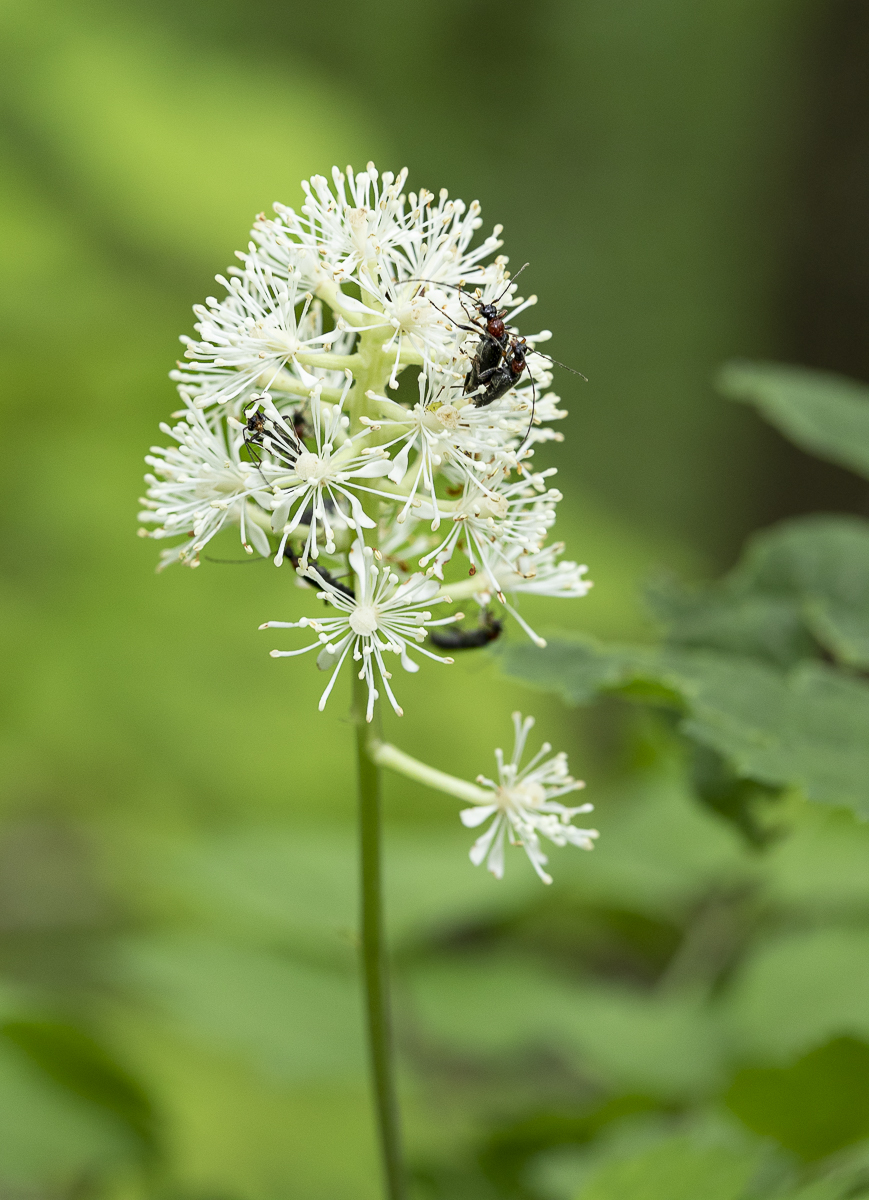
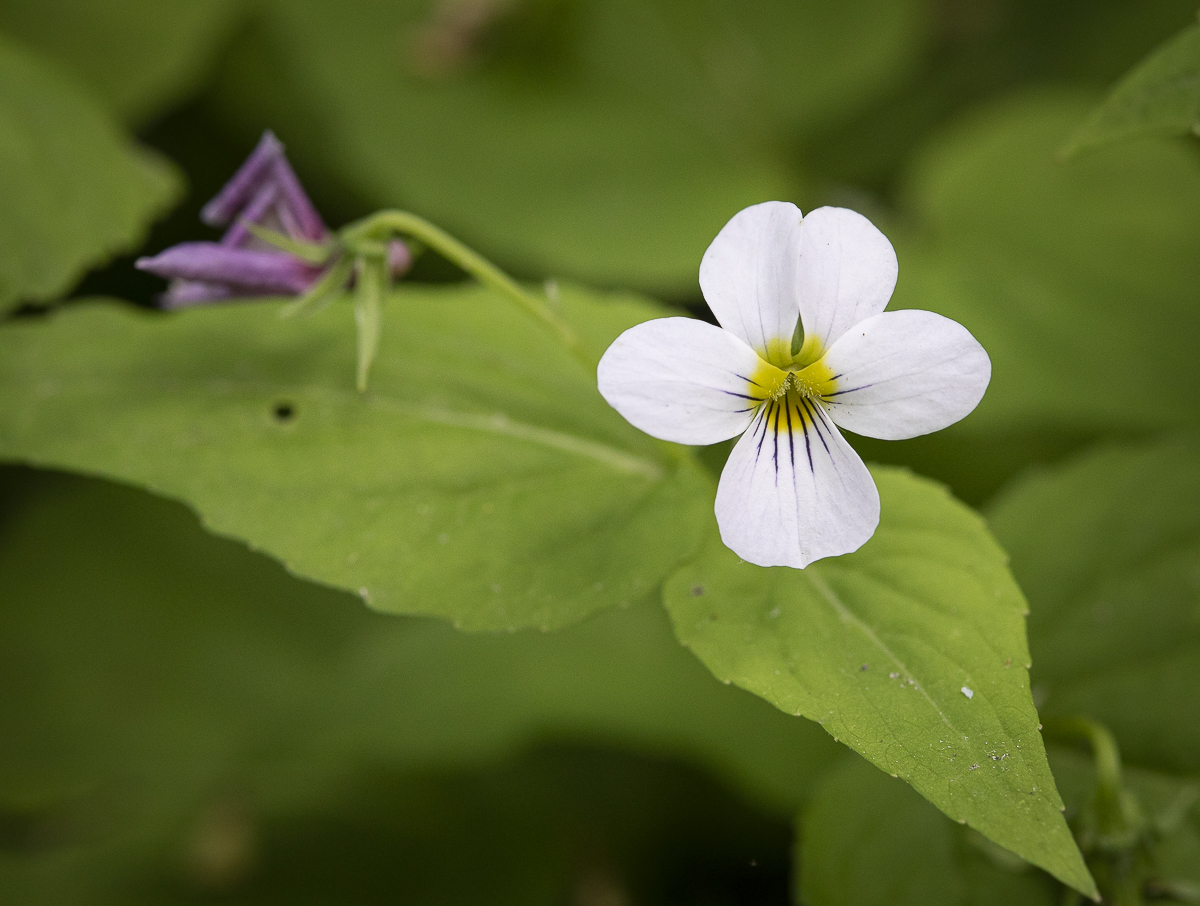
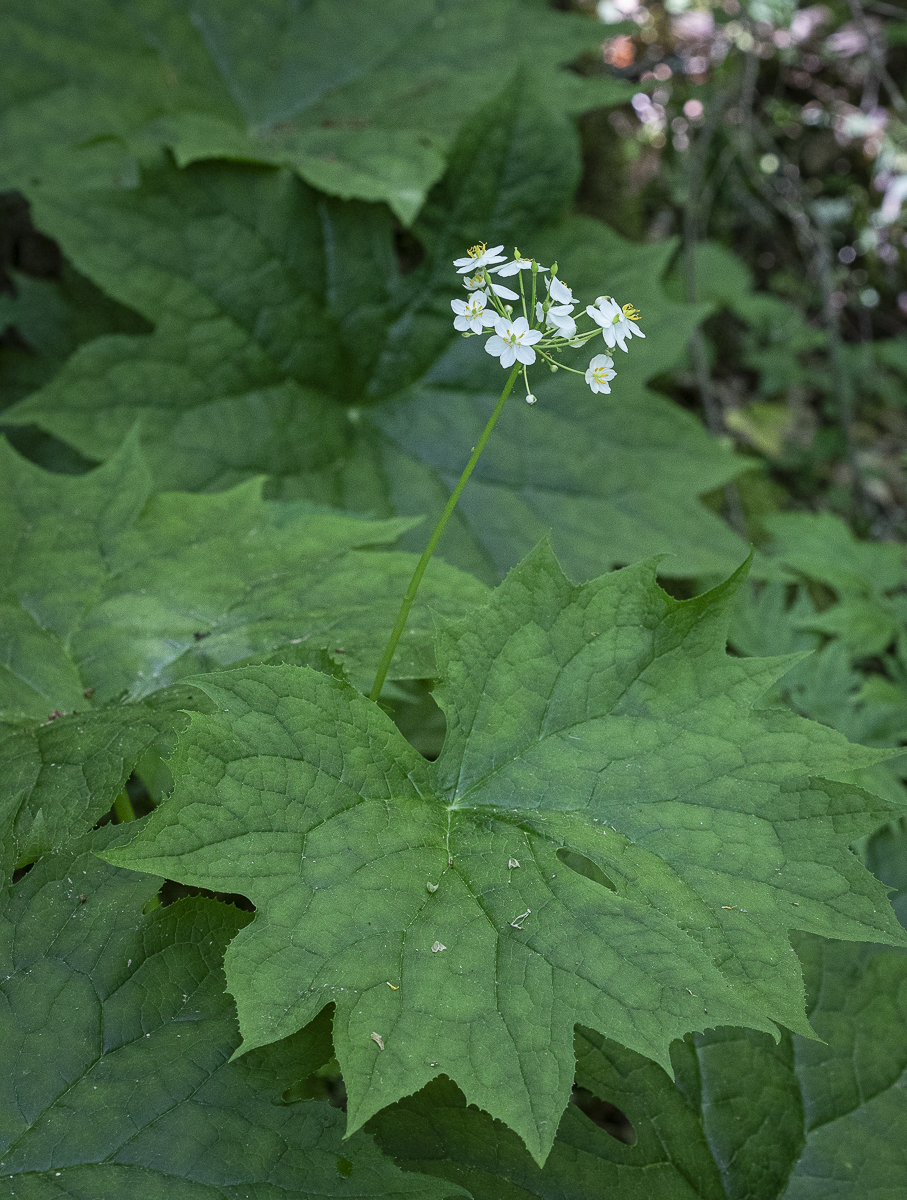
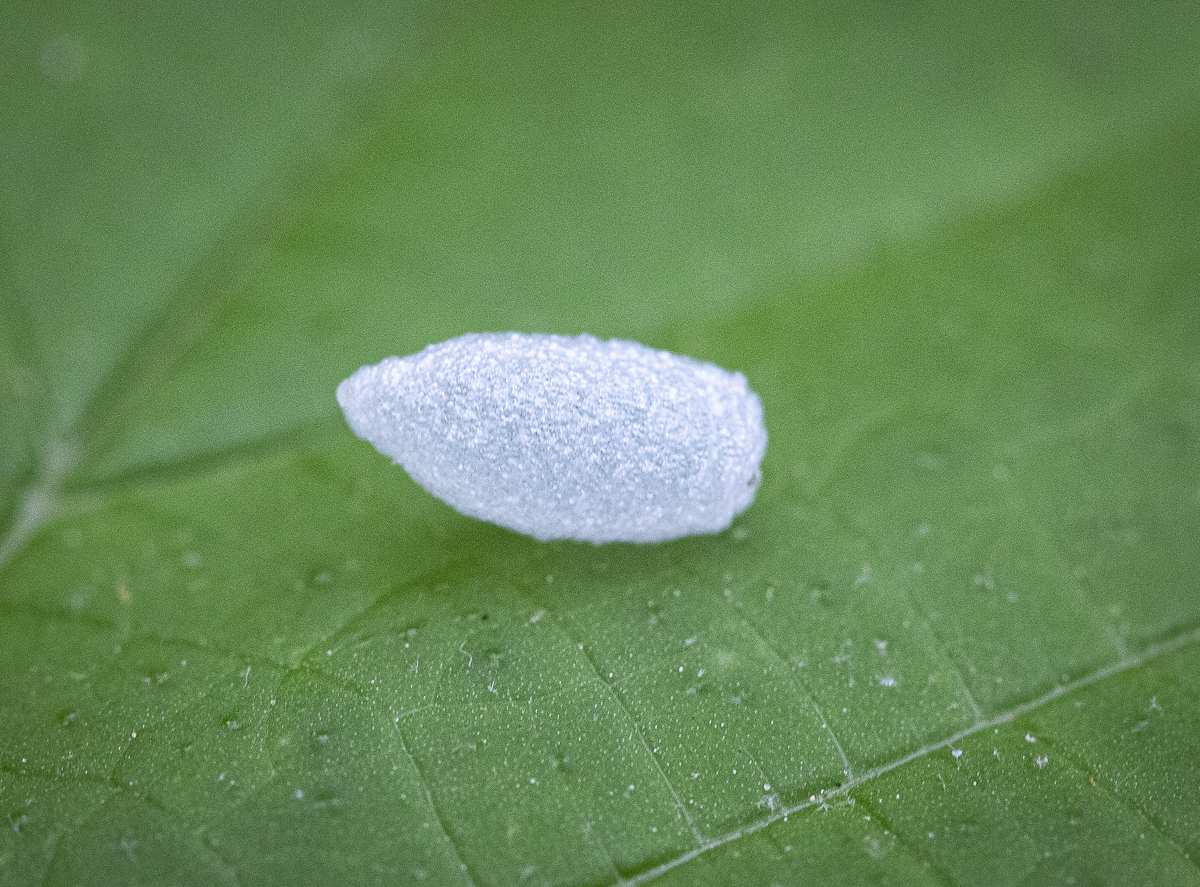
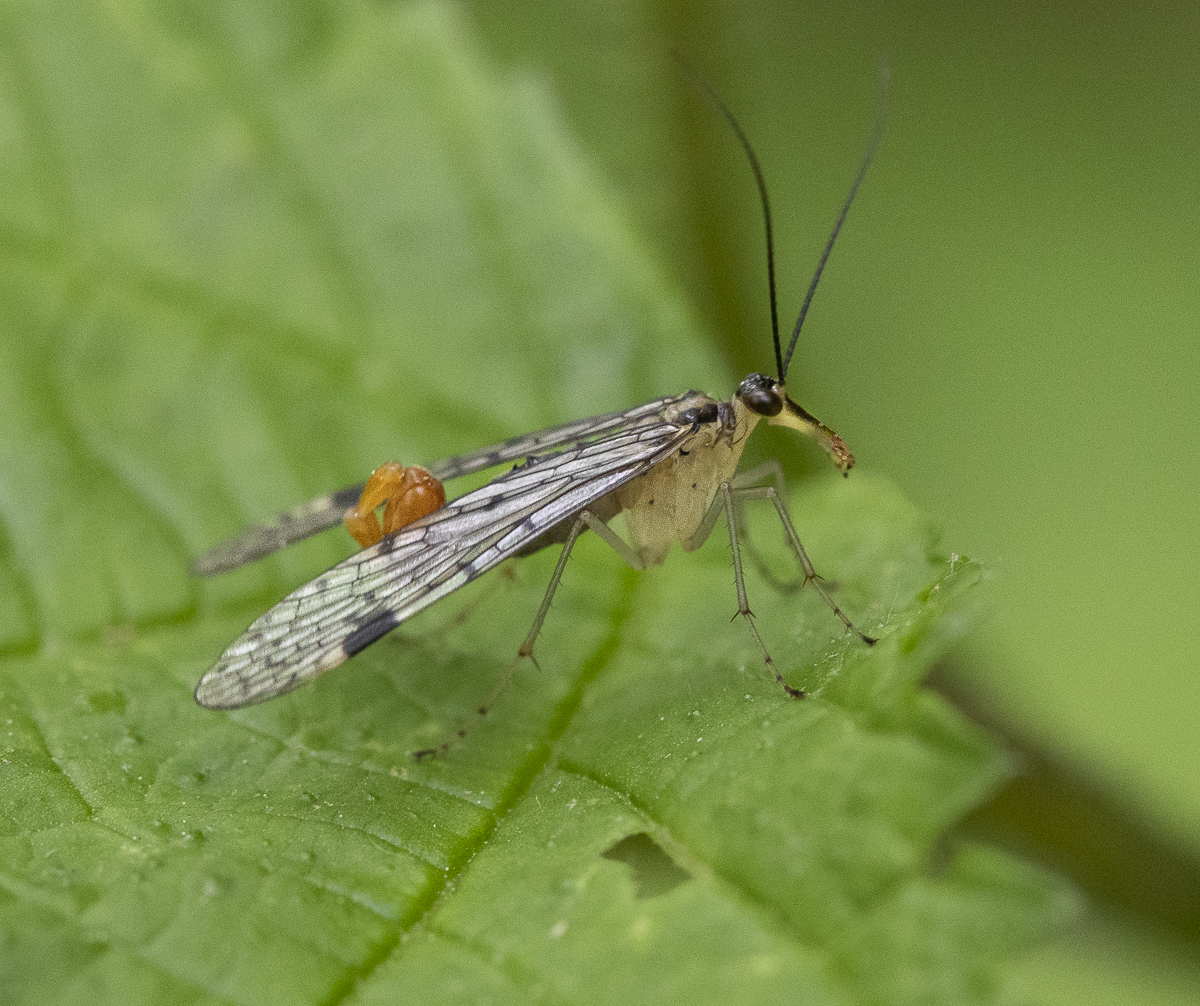
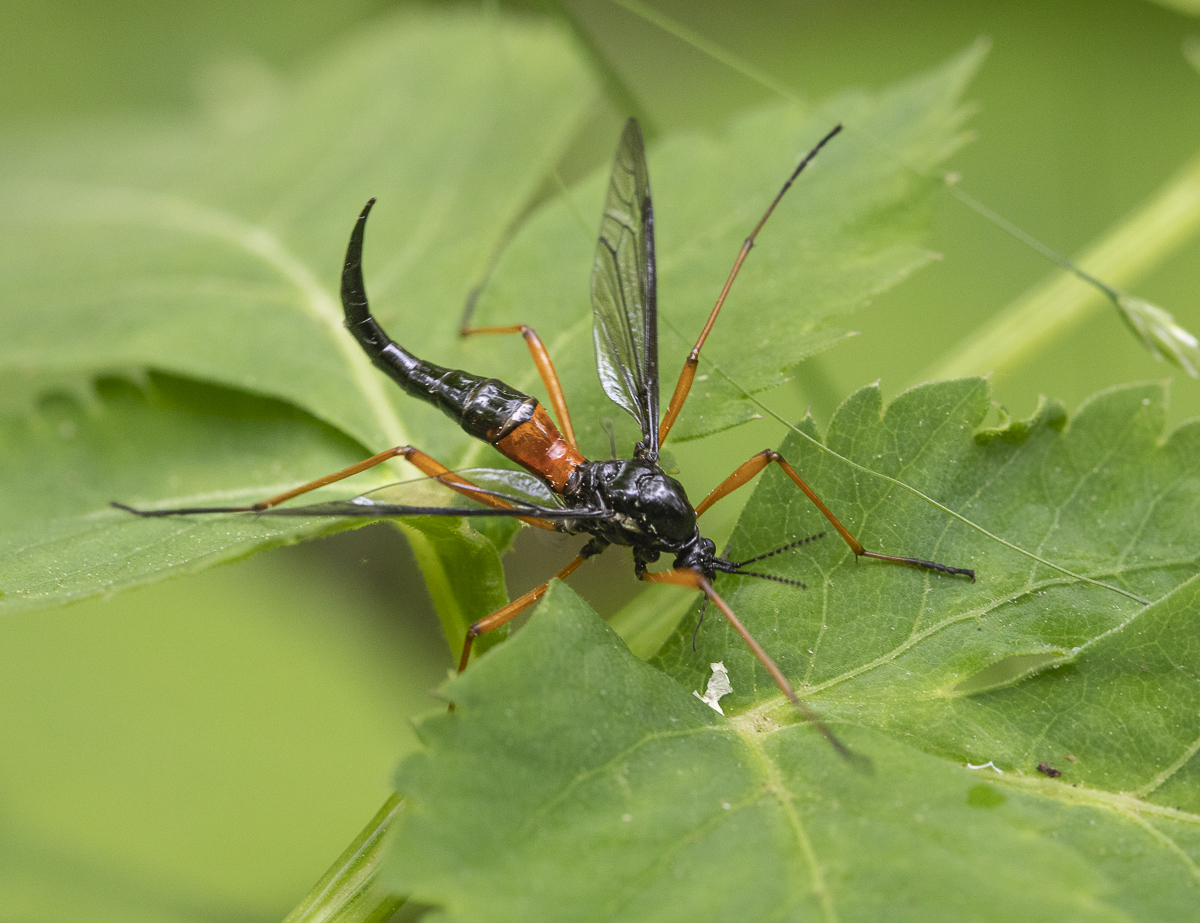
Doll’s Eyes flower with some beetle pollinatorsCanada Violet was abundant along the gravel road Umbrella-leaf in flower – note the huge leaf that gives this mountain plant its common nameI have seen these before and have not yet been able to identify them. I think they are a cocoon of some sort (most have a hole in one end where something probably emerged), and are about 1/4 inch long. They are laying on the surface of leaves or on the ground. If anyone knows what this is, drop me a note in the comments section.A male Scorpion Fly. These were very common along this road. They feed on decaying vegetation and corpses of invertebrates (occasionally vertebrates). The curved abdomen tip of the male is not a stinger, but is used in reproduction.This critter caught my eye (probably an inch+ in length and looking very Ichneumon wasp-like). Never seen one before – it turns out to be an Antlered Crane Fly (Tanyptera dorsalis).
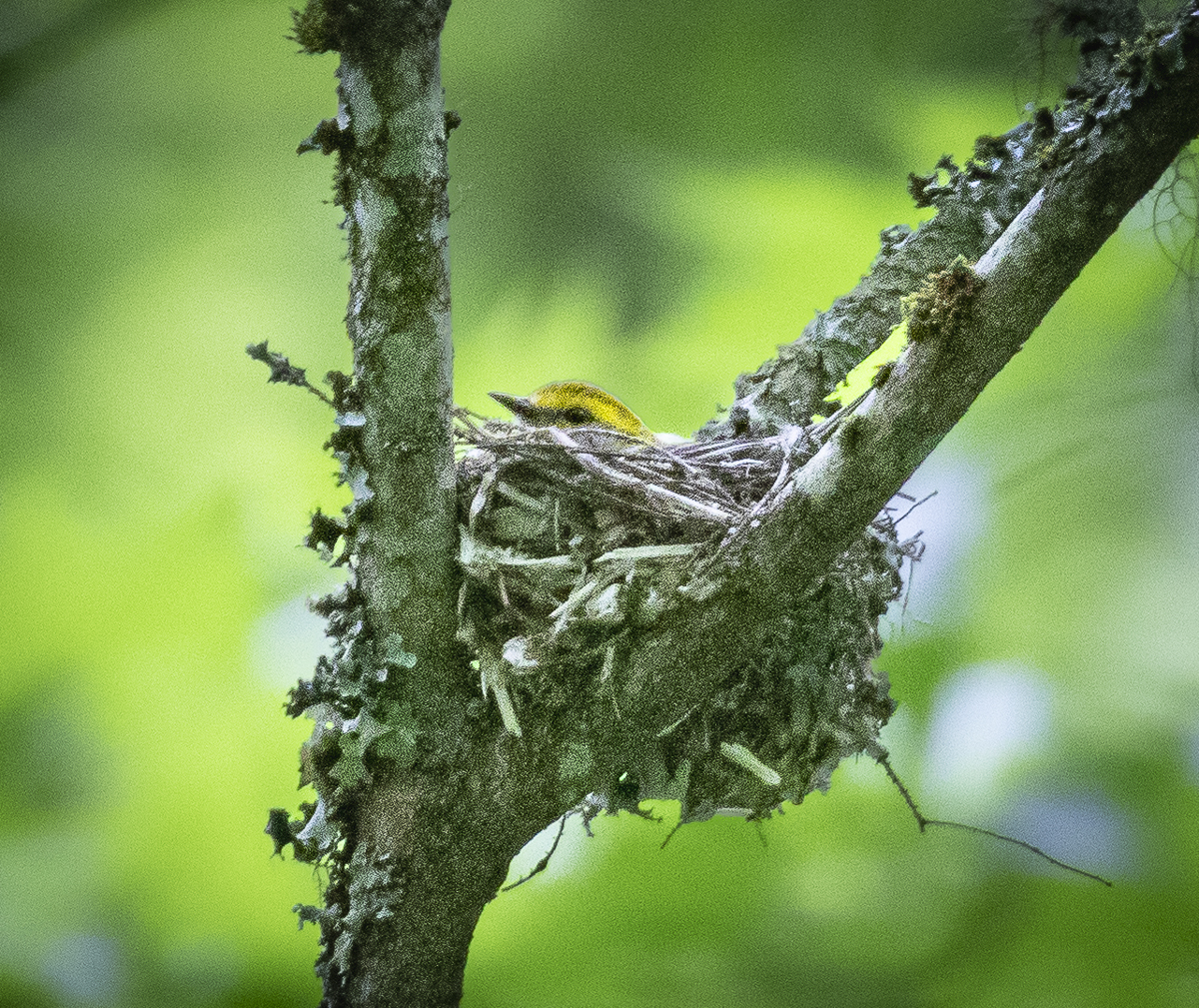
We stopped several times along the road to get out and look at plants, insects, and listen for birds. There were lots of warblers singing (Blackburnian, Black-throated Greens, and Black-throated Blues especially). At one point, I was looking at some cool insects and I noticed Melissa looking off in the trees at something. She had found a Black-throated Green Warbler nest! It was some distance off the road but clearly visible in a gap in the leaves if you were standing in just the right place.
Black-throated Green Warbler sitting on her nest
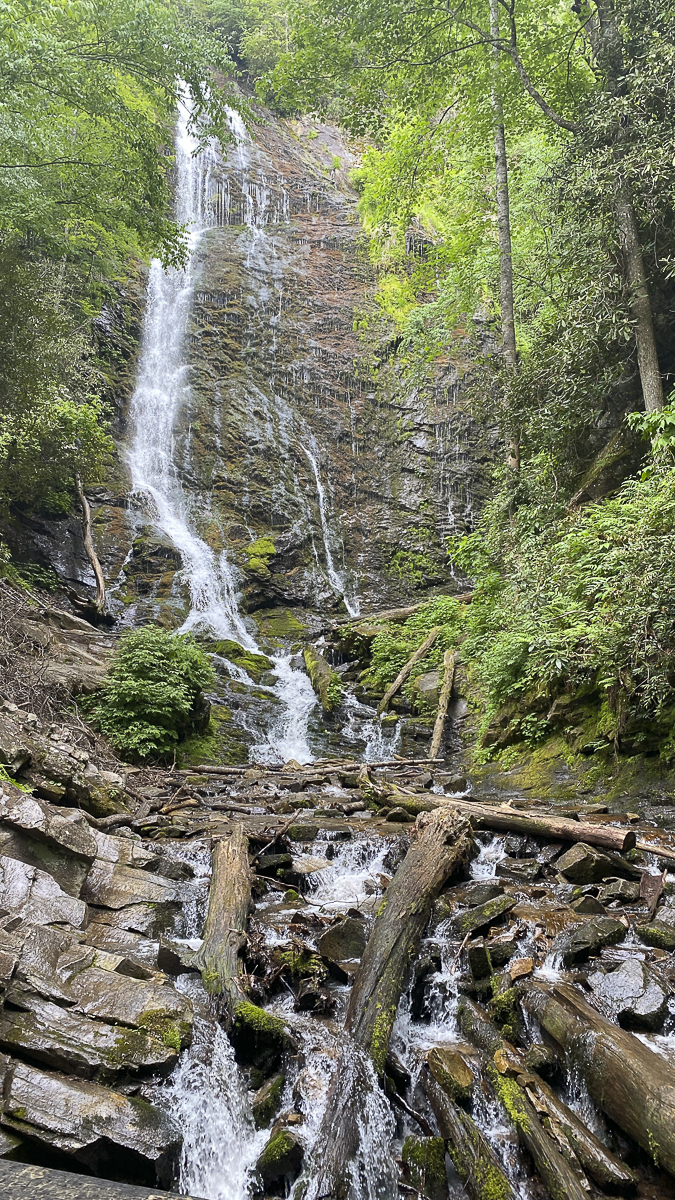
We mosied on down to where the road becomes two-way and eventually intersects a paved road. We turned and headed to Cherokee, passing by a parking lot for a waterfall, so we decided, what the heck. After a short but steep walk, we were both blown away by the beautiful Mingo Falls. Looks like a popular tourist spot and I can see why.
Mingo Falls in Cherokee, a truly beautiful waterfall visible after a short walk on a well-maintained trail
Thunder chased us back to the car and we headed to our next overnight destination, Sky Ridge Yurts. Melissa has taken her teacher workshops to this location the past two summers but I had never been. I had signed us up for one of the two cabins (the yurts were booked) for the last two nights of our trip. The plan was to go backpacking after our stay at Balsam Mountain but the weather was looking foreboding and my aching knee was not cooperating (Melissa swears it starts hurting as soon as she utters the word, backpack). Luckily, the cabin I had reserved was available earlier in the week and they allowed us to switch our dates, and we are so glad they did. The next day it rained, and rained, and rained some more – all day in fact. We would have been soaked and my knee would have been like, “I told you so…”.
Our oasis for the full day of heavy rain – this is the calm before the storm
We had a wonderful two night stay in the cabin and then headed out for some more camping and hiking before being chased back home a day early with another significant storm front. More on this last part of our trip in the next post.





















































 Roads End Naturalist