Welcome to our new website! We hope you like it. Please let us know if you notice something missing or that needs a correction. ~Mike & Melissa

  • Long-tailed Skipper

    Happiness is a butterfly, which when pursued, is always just beyond your grasp, but which, if you will sit down quietly, may alight upon you.

    ~Nathaniel Hawthorne

    Went wandering in the yard this weekend and I caught a glimpse of an infrequent visitor to these parts – a Long-tailed Skipper, Urbanus proteus. Long-tailed Skippers are more common on our Coastal Plain and sometimes undergo northward and westward migrations (one-way, I presume) in late summer and fall. This is when we typically see them here in the Piedmont. I have seen them in our county once or twice every few years over the last decade or so.

    Long-tailed Skipper in the yard this weekend (click photos to enlarge)

    This one was a very fresh-looking individual with tails intact and a bright blue-green color on the dorsal surface of its wings.

    Long-tailed Skipper on Ironweed

    It was nectaring on the many Ironweed plants out front so I grabbed the camera and went out to follow it around the yard. It was mainly staying on one or two plants, but then suddenly wandered off, flitting around and alighting briefly on a variety of leaves. I recognized this as the flight of a female looking for suitable host plants on which to deposit her eggs. She will fly a lilting flight, touching down briefly to “taste” the plant with her feet (the location of some sensory cells that can detect plant chemicals). If it is not the right plant, she moves on. I wasn’t sure what the host plant was for this species so I continued to follow her as she searched. Finally, she stopped on a legume of some sort (Desmodium sp. perhaps?), tucked her abdomen for a few seconds, and flew off.

    Female lays an egg on underside of leaf

    I moved over, flipped the leaf, and there it was, an egg! I am admittedly surprised to find an egg of this species this far inland, but maybe it is not as uncommon as I assume. The eggs are yellow and have some slight raised ribs coming upward from the base.

    Long-tailed Skipper egg

    The freshness of this particular butterfly made me wonder if she had hatched from an egg here in the yard. I started looking at all the legumes I could find. I did find a couple of hatched eggs, but I am not 100% sure which species they are from, although they do resemble the general shape of those of the Long-tailed Skipper.

    Hatched butterfly egg

    Seeing a couple of hatched eggs gave me hope that I might find a caterpillar for this species, one I have never seen. Spotting a leaf nest got me excited (I had googled the larval form of this species and saw that they form leaf nests by stitching a couple of leaves of their host pant together). I gently pulled it apart to reveal…a larva of a relative, the Silver-spotted Skipper.

    Leaf nest of caterpillar
    A Silver-spotted Skipper caterpillar inside

    Even though I was disappointed at not finding a new species of caterpillar, I must admit I always enjoy seeing the chunky little Silver-spotted Skipper larvae with those bright yellow fake eyes.

    Long-tailed Skipper sunning with open wings

    Though she stopped at a few other legume leaves, I could not find any other eggs. But, there is a good chance she laid some more so I will keep an eye out over the next few weeks to see if I can discover one of her fascinating larvae. Just before she disappeared, she stopped momentarily on a leaf in the sun, spread her wings, and soaked up a little warmth, giving me one last glimpse of this beautiful butterfly.

  • Woods Wandering

    Forests are places where we can get back in touch with our inner selves, where we can walk on soft ground, breathe in natural cents, taste berries, listen to the leaves crackling – all the senses are awakened in the subdued light…

    ~Pierre Lieutaghi

    I decided to wander away from the house one morning and stroll through the “back 14”. The bulk of our 14 acres of forest is on some steep terrain, with a ravine and an intermittent stream “valley” making up the lowlands. Earlier this spring I spent a lot of mornings down slope from the house cutting and painting Eleagnus shrubs to try to kill off some of this terrible invasive. I have let up on those pursuits with the onset of the sweltering heat and humidity of summer, but I thought it was time for a leisurely stroll to see what I might find. Spiders and snails dominated the scene and I found myself picking up a branch to wave in front as I walked (although I tried to step around any webs that I saw).

    Arrowhead orbweaver, Verrucosa arenata
    Arrowhead Orbweaver, Verrucosa arenata (click photos to enlarge)
    Red-femured spotted orbweaver, Neoscona domiciliorum wrapping be
    Red-femured Spotted Orbweaver, Neoscona domiciliorum, wrapping beetle in silk

    Two spider species seemed to be the most abundant – the unusually-shaped (but accurately named) Arrowhead Orbweaver and various sizes of the more common Red-femured Spotted Orbweaver. The largest specimen I encountered was busy wrapping its overnight catch of a large May Beetle in silk.

    Red-femured spotted orbweaver, Neoscona domiciliorum 1
    The spider stopped spinning its prey and settled in for a meal

    As I walked, I started paying more attention to tree leaves and what I might find on them. If I saw chewing, I flipped it over to see if I could discover the chewer. On one hickory tree, I found a cluster of neat little eggs underneath a leaf. I think these may be moth eggs of some sort, although a species of true bug eggs is also a possibility (stink bugs, etc.). But, they seem to lack the usual lid associated with eggs of the latter group.

    eggs an parasitoid wasps
    A cluster of insect eggs under a hickory leaf

    I also noticed some other insects associated with this egg mass – tiny parasitoid wasps of some sort diligently laying their eggs. They were purposeful in their movements and spent some time with each egg they parasitized. I saw six of the wasps, so I wonder how many of these insect eggs will actually hatch out the species that originally laid the cluster.

    eggs and parasitoid wasps
    Parasitoid wasps laying eggs in the insect eggs

    A Spicebush leaf yielded a member of one of my favorite groups of mini-creatures, a treehopper. These tiny jumpers are often adorned with strange appendages that help them mimic thorns or other features of their background, giving them both some armor-like protection and camouflage. As usual, I went to my go-to resource for this type of insect, Hoppers of North Carolina. There I learned that this is probably a female based on the long length of its horn (males have short horns). There are apparently several species in this group that look alike and may be separated primarily by host plant. Though Spicebush is not listed as a host plant, this one was next to a small Redbud tree, which is a known host plant. Right after I snapped this photo, this one leaped onto the Redbud. Another interesting tidbit is that these little hoppers can communicate by vibrating the substrate they are on. Research has shown that they communicate mating calls, food sources, and danger from predators using these vibrations (inaudible to the human ear).

    Two-marked Treehopper, Enchenopa binotata complex
    Two-marked Treehopper, Enchenopa binotata complex

    Chewed leaves on a maple branch caused me to stop and look, leading to this discovery – one of the twig mimic caterpillars. This fairly large larva is distinguished by the dark stripes on the head capsule, the dark line on the slight hump near the far end, and the first two pair of prolegs that are noticeably reduced in size. It is the caterpillar of a really cool-looking moth, the Maple Looper.

    Maple looper caterpillar 1
    Caterpillar of the Maple Looper Moth, Parallelia bistriaris

    As always, there were plenty of other macro surprises and delights along the way…

    land snail
    These small land snails were everywhere on my walk
    maple seed embedded in pawpaw leaf
    A maple seed has pierced a Pawpaw leaf

    As I neared the house, I spotted something new to me in a patch of Microstegium – a dark-colored stink bug with prominent spines. I leaned in and saw it was missing most of one antenna. Online information said little is known about the life history of this species although it appears to eat both plants and other insects, but is not an agricultural pest like some of its relatives. What struck me most was the stark beauty of this species and its textured exoskeleton. Once again, a close look at our surroundings yields many surprises.

    Black Stink Bug, Proxys punctulatus

  • Walking Small, Part 2

    Look slowly and hard at something subtle and small.

    ~Philip Pearlstein

    Some more finds while wandering in the heat in our yard jungle. The first one was a challenge. I noticed missing leaves at the tip of a Virginia Creeper vine (Parthenocissus quinquefolia). Only the curved stems of the leaves remained. I looked closely, and gently pulled the vine up from the sapling it was climbing for a closer look. At first, nothing. Then, something I touched moved. I stared at it and realized it was not a leaf petiole…it was a caterpillar.

    geometer moth larva
    Tentative identification is the caterpillar of the Lesser Grapevine Looper moth, Eulithis diversilineata (click photo to enlarge)

    geometer moth larva close up
    A close up helps to find the well-camouflaged caterpillar

    These petiole-mimic larvae often rest underneath a leaf (of wild grape or Virginia Creeper) in a curved position where they really do like like a leaf petiole!

    Lacewing larva
    Lacewing larva with fuzz from flatid planthopper nymphs (probable prey items) stuck to its back

    I always stop to look at the fuzzy little blobs that crawl along the trees in the yard. They are usually the larvae of lacewings, armed with sickle-shaped jaws that pierce aphids and planthopper nymphs. These tiny predators then place the discarded remains on spines on the back to complete their wolf-in-sheeps-clothing disguise.

    Large Milkweed Bug
    A Large Milkweed Bug, Oncopeltus fasciatus, probing a milkweed seed pod

    The milkweed patch continues to provide some nice finds. I spotted a Large Milkweed Bug in the typical dress of orange and black for a critter that is distasteful to potential predators due its toxic diet of milkweed. These are primarily seed feeders, piercing through a seed pod into developing milkweed seeds with their sharp proboscis. They then inject digestive enzymes which dissolve the nutrients within the seed, allowing the bug to suck it up through that long beak. One interesting tidbit about these bugs is that they undergo migrations every year with overwintering southern populations migrating northward in spring to colonize milkweed patches as far north as Canada. As day length shortens with accompanying cooler temperatures, they migrate back to warmer climes.

    As always, any slow stroll around the yard leads to a variety of tiny discoveries that are part of the complex matrix that helps a system function. Here are a few more of the pieces that make the machine that is our yard’s machinery work. Be sure to get outside and check your yard’s or neighborhood’s engine and see what makes it click. If you have a variety of native plants, you’ll be amazed at all the parts.

    Banded Longhorn Beetle, Typocerus velutinus
    Banded Longhorn Beetle, Typocerus velutinus

    Handsome trig nymph
    Nymph of a Handsome Trig, Phyllopalpus pulchellus (missing one leg)

    Preying mantis nymph
    Nymph of a Praying Mantis

    Scudder's bush katydid nymph on black-eyed Susan
    Another colorful nymph of a Scudder’s Bush Katydid, Scudderia sp.

    Leaf-footed bug nymph with parasitoid egg on  it
    A more ominous-looking nymph of a Leaf-footed Bug, Acanthocephala sp. (notice the lwhite blob, a ikely parasitoid egg, on its thorax)

    Wheelbug nymoh
    A definitely ominous-looking nymph of an Assassin Bug (aka Wheel Bug), Arilus cristatus

    Colonus (puerperus)? jumping spider
    Dorsal view of a tiny jumper – most likely Colonus puerperus

    Colonus (puerperus)? jumping spider side view
    Nice eyes

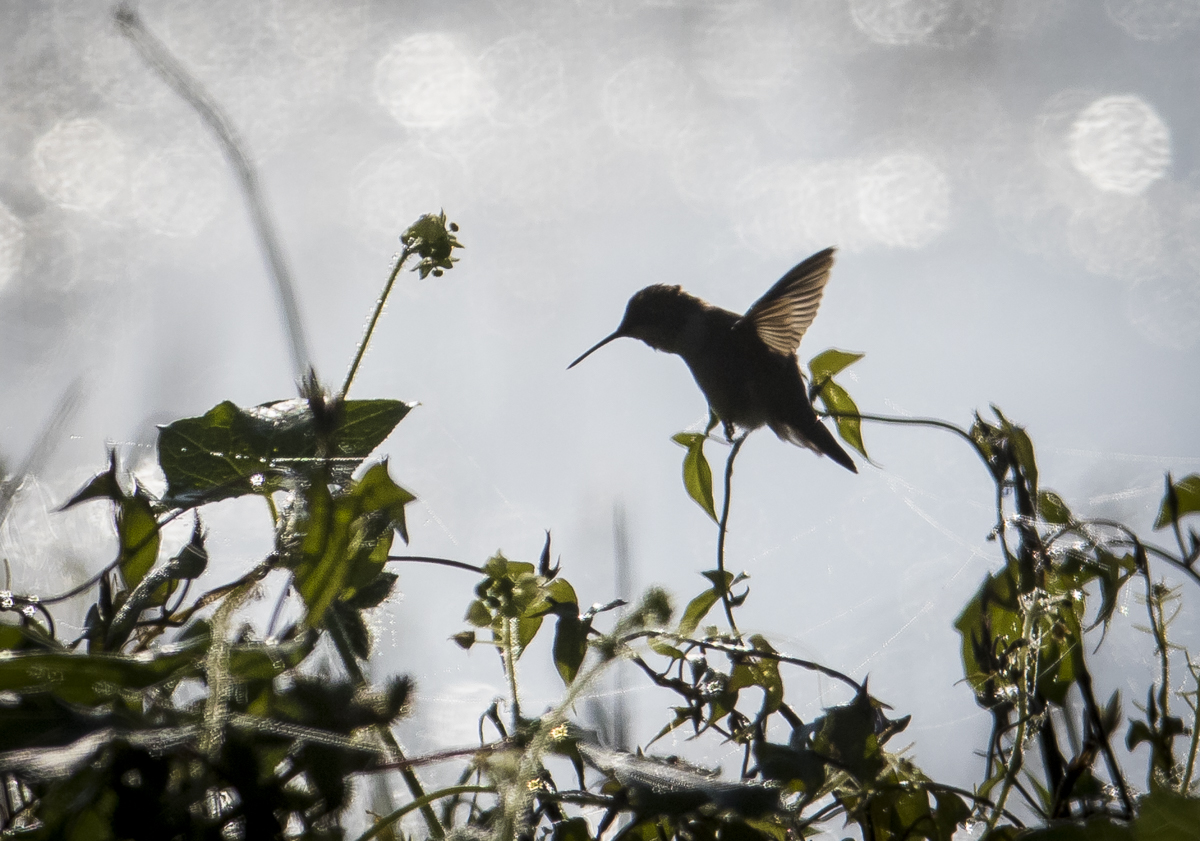
    hummingbird at bee balm
    I cheated a little on this one – a Ruby-throated Hummingbird (Archilochus colubris) feeding on Bee Balm (Monarda didyma), shot through the glass in our sun room window

  • Frog Friday

    You can’t tell by the look of a frog how far they’ll jump.

    ~Paul Doiron

    Took a stroll around the property yesterday, camera in hand, looking for the tiny creatures who share these woods. One thing really impressed me – the amazing number of spider webs that seemed to block my way at every turn. When I spotted one, I tried to side step it so as to not ruin a night’s work, but I still managed a head full of silk strands (luckily, it blends in well). While focusing on the tiny subjects without backbones, I caught a quick movement over by the wet weather stream in our ravine. I looked, and saw nothing, but I suspected I knew what it had been. I turned, and stepped in that direction, and off it went, a Northern Cricket Frog. I leaned in for a photo but it leapt into the creek and disappeared.

    northern crickrt frog
    A more cooperative Northern Cricket Frog, Acris crepitans (click photos to enlarge)

    Just a few steps more, and I encountered another, this one resting at the base of large tree. This is a common species here and I find them down along the creek and in our yard in the vicinity of our two water gardens (although they often wander far from standing water). Their calls sound like clicking two pebbles or pennies together. They are excellent jumpers for their size, often leaping more than 3 feet to escape danger (or silk-covered giants).


    northern crickrt frog from above
    Cricket frogs blend in with their surroundings

    They are small frogs, reaching a little over an inch in length. They can be identified by the backward-pointing triangle between the eyes (the color can be quite variable, but usually either brown or green). They often have a contrasting color, Y-shaped stripe, going from that triangle down the back (in this one it is a very faint cream color, but is often much more noticeable). This species is replaced by the Southern Cricket Frog as you move toward the coast.

    green treefrog dorsal view
    A Green Treefrog, Hyla cinerea, outside our window

    When I got back home, I was watching the butterflies and hummingbirds feeding just outside the sun room window when I noticed a green lump on one of the Jewelweed stalks. It was one of my favorite frogs, a Green Treefrog. We are at the western range of this beautiful species, but we have had one every year for the past several years (I’ve never found more than one and never heard them call here). Online resources say this species can live up to 6 years in captivity, but that would surprise me if this is the same individual, year after year, but who knows.

    green treefrog side view
    The diagnostic white racing stripe down the side

    One of the things I love about this species is their Buddha-like presence, as if they are serenely contemplating the world around them while maintaining a stoic position of deep reflection (have I been self-isolating too long?).

    green treefrog ready to move
    The frog finally tired of my presence and camera flashes, and moved as if to jump, so I departed to leave it in peace

    Plus, they are just a beautiful creature – the colors, those eyes, the enlarged toe-pads, all an incredible design that helps them blend into and function in their green world. After a few shots, the frog started to move, so I stepped away and let it return to its composed demeanor. Perhaps I can learn something about our current condition from these frogs…stay calm, or leap like crazy when it gets to be too much. Be like a frog…

  • Baby Saddlebacks

    Relative to other caterpillars, slug caterpillars seem more fantasy than reality.

    ~David Wagner

    It is getting to be that time of year – caterpillar time! As summer draws to a creeping close, one of the things that lifts my spirits above the stifling heat waves is the increasing abundance of larval Lepidoptera. And one of our favorite groups, the slug caterpillars, is starting to show up in greater numbers in our woods and yard. Earlier this week, Melissa was out in the garden and harvested some of our collards, since it was obvious they were becoming riddled by insect chewing. When she pulled one leaf she saw two tiny Saddleback caterpillars, Acharia stimulea. The female moth tends to lay clusters of eggs and the young feed gregariously at first. They are extremely variable in their choice of host plants. We have found them on tomatoes, various tree leaves, iris leaves, and now, collards. This may be why so may people recognize this as one of our most common so-called, stinging caterpillars as you can find them almost anywhere. You may accidentally brush up against one while weeding your garden and you won’t soon forget that encounter as they pack a powerful punch resembling the pain associated with a wasp sting. You can read more about them in an earlier blog post here.

    Saddlebacks on collards
    Two tiny Saddleback Caterpillars feeding on a collard leaf (click photos to enlarge)

    Saddleback on collards
    They are already sporting the pattern that gives them their name – the distinctive brown saddle outlined in white in the middle of their back

    Saddleback with ballpoint pen for scale
    Ballpoint pen tip for scale

    Though these guys are extremely small (the tiniest Saddlebacks either of us has ever seen), I think they have probably molted at least once already. Online descriptions say that the earliest instars lack the prominent tubercles on either end.

    Saddleback day 2
    After one day, the caterpillars’ colors had already darkened and taken on more of the pattern of later instars

    One scientific study I found said it was extremely difficult to accurately determine how many times this species molts during its larval development since the head capsule is hidden beneath the body and they almost always eat their shed skin. It is certainly more than the usual five molts of many butterfly and moth species, and may be as many as eleven or more and may require several months before pupation. Once again, I’m afraid we have taken on more than we bargained for in raising some caterpillars (we still have a few Cecropia larvae that hatched on June 10!). But, Saddlebacks will eat a variety of leaves are are not nearly as voracious in their feeding habits as most other species. I’ll try to keep you posted as they mature.

    Saddleback caterpllar side view 1
    What they will look like in a month or two


  • Itsy Bitsy Spiderlings

    When we’re distracted, we are still paying attention—just not to the task that was the previous still point of our intentional neural processing.

    ~Dale Keiger

    I’m afraid I have a long history of being “distracted” by the natural world. I remember a time as a young teenager when I was helping my father nail shingles on the roof of our soon-to-be new home in Stafford County, Virginia. The property was on a freshwater tidal tributary to the Potomac River and was set in a forested landscape with large trees. It was spring, and warblers were moving through the trees, and now I was up at eye level with them. My Dad noticed a lack of hammering in my direction and looked over to see me trying to figure out what bird that was without my binoculars. I believe there was some quote like, quit watching them $%$^ birds and get back to nailing. Years later, when I started work as a naturalist for NC State Parks, he remarked how he was amazed I was actually being paid to watch birds (a bit of an oversimplification, but, yes, I did get to observe all sorts of nature on my job).

    In retirement, I’m not sure I can really call it being distracted. In fact, maybe the tasks and chores I do are the actual distractions and the nature observation is my primary duty. Well, a couple of days ago I was on task to weed eat some of the dreaded invasive, Microstegium, along the roadside outside our deer fence. I try to cut it a few times every year as it nears seed set to reduce the amount of seed released back onto the landscape. I had finished one patch and was walking up toward another. Just as I revved the motor, I was “distracted” by a slight movement on the ground. I stopped and stared, but saw nothing at first. Then, a tiny movement and something pushing under a piece of dead leaf on the ground. I leaned in and was surprised to see this staring up at me.

    wolf spider in burrow
    A large wolf spider retreats backwards down into its burrow (click photo to enlarge)

    It was a large wolf spider retreating into a burrow. I couldn’t tell which species for sure, but it reminded me of common one in this area, the Rabid Wolf Spider, Rabidosa rabida. The unfortunate name comes from their quick and somewhat erratic movements, not that are carrying rabies. As I watched, I saw something move just outside the burrow. It was tiny spiderling that crawled toward the large spider and then pulled itself onto her back. It had apparently been dislodged when she backed down into the hole. Many species of wolf spiders carry their egg sacs around attached to their spinnerets at the tip of the abdomen. When the young hatch, they cling to their mother’s back for a short while until they disperse and fend for themselves (usually after their first molt).

    wolf spider with young on back top view
    When the spider came back out, I could see she was a mom carrying a full load of babies on her back

    I sat still for several minutes and the large spider finally crept out of the hole and allowed me a closer look and the chance to grab a few photos. Now I could see the jumble of babies clinging to her. It looked a little like a pandemic hair style for spiders, but upon closer inspection, I could see a tangle of patterned bodies and legs. It’s hard to tell how many layers of spiderlings  there are, but it appears there is likely more than one. Studies have shown that egg sacs for wolf spiders contain on average 200-300 eggs.

    wolf spider with young on back side view
    The spiderlings will stay with their mother until their first molt

    If you enlarge the image and start counting, you can easily imagine there being over 100 spider babies with what looks like more partially hidden underneath. This spider stagecoach is for the benefit of the young until they are a little more mobile. This group of spiders does not build a web to ensnare prey, but rather stalks and pounces on its victims, so carrying the young around for too long would undoubtedly be a hindrance to the adult spider.

    One of my favorite nighttime activities is looking for spider eyes. You hold a flashlight on your forehead or nose and shine it out into the woods onto the ground. Wolf spiders (and other nocturnal non-web building spiders that depend more on eyesight for capturing their prey) have reflective chemicals in their eyes causing a tiny bit of light to be reflected back to your light (which is why you need to hold it near your eyes). This is similar to the phenomenon of eye-shine in nocturnal mammals like deer. It is a real treat when you find a mother spider like this one carrying her young as you get the reflection from multiple sets of eyes, giving the spider a sparkly look like a tiny jewel on the forest floor. Give it a try. Even if you don’t see a mama with her baby cargo, you’ll be amazed at how many spider eyes are out there!

  • Anybody Home?

    Every night in the woods, when most humans are safely indoors, strange creatures emerge from their lairs and leap into the air, swooping silently among the trees.~Michael Farquhar

    I was strolling the yard yesterday, looking for whatever small critters caught my eye, when I walked over to the front of the house where we have some shade-loving wildflowers planted. A couple of years ago I put up a new hollow log nest box in that bed, but have had no takers, so I assumed there was a design flaw of some sort or that perhaps bees or wasps had taken over.

    IMG_9318
    Hollow log nest box in the yard. The PVC pipe surrounding the pole is to help prevent snakes from climbing into the box (click photos to enlarge)

    I periodically check all our boxes by gently tapping on the sides or looking inside (on the bluebird boxes with opening fronts) but had never seen anything in this particular nest cavity. So, as I walked by yesterday, I gently tapped the sides, but didn’t bother to look at the box as my gaze was on a fallen log just beyond where I thought I saw something move. After a few seconds, I turned and was pleasantly surprised to see something quietly staring back at me.

    Southern flying squirrel at nest box
    A calm Southern Flying Squirrel wondering why I woke it up

    I was only about two feet away, so I slowly turned, pulled my phone out and snapped a pic. The little guy didn’t budge, so I stepped out in front of the box to get a more straight-on view. Again, I snapped a few images, and it just quietly stared back, not twitching even a whisker.

    Southern flying squirrel at nest box front view
    After snapping a few photos, I stepped away to let this cute little fur ball return to its afternoon nap

    I didn’t want to startle the squirrel, so I walked away without looking back until I was about 20 feet from the pole. When I glanced back, the flying squirrel had pulled back into the hole but was still keeping an eye on the bipedal interloper.

    I have reported before on the flying squirrels that visit our bird feeder out back and, though I have not seen them lately, I suspected they were back at it as the sunflower seed seems to be disappearing quicker than usual. Last night, I turned the porch lights on just before heading to bed, and there was a flying squirrel hanging on the tube feeder, stuffing itself. I guess I show my bias when I am happy to share with these smallest of NC’s tree squirrels and much less tolerant of their gray daytime cousins.

  • Rain Man (and Woman)

    A rainy day is a perfect time for a walk in the woods.

    ~Rachel Carson

    I am finally getting around to posting about our trip to one of our favorite backpacking spots, Mount Rogers, VA. My backpacking and camping queen (you know who I am talking about) has been chomping at the bit to get out on the trail since the pandemic has caused us to hole up at home. So, after spending a few days helping my mom in her home in southwest VA, we planned to do an overnight to the nearby high country of Mt. Rogers. Since it was a weekday (and there was a less than ideal forecast), we were able to secure a spot in the overnight backpackers lot at Grayson Highlands State Park without having made online advance reservations (definitely required for weekend trips). We hit the trail after lunch and planned to do a short 2.7 mile hike to an area just off the Appalachian Trail on Forest Service lands. The cool temperatures made for a pleasant hike, and the overcast skies enriched the colors of the woodland details. As is usually the case on our backpacking trips, I did not carry my camera gear, so all accompanying images were taken with an iPhone.

    _-2
    Frequent rains make for a lush forest floor in the highlands (click photos to enlarge)

    _
    Rosebay Rhododendron (Rhododendron maximum)

    _-5
    A huge mushroom with a world of invertebrates in its gills

    _-10
    The highlands are home to numerous fruit-producing trees and shrubs like blueberries, blackberries, hawthorn, and mountain ash

    It started raining about halfway on our journey, lightly at first, but then hard enough that we sought shelter under a spruce tree for a few minutes before marching on. Fortunately, we arrived at our campsite during a lull in the precipitation, so we were able to get the tent set up without much problem. But, as we started to put up the all-important tarp, the skies opened and our spirits dampened (along with everything we owned).

    _-6
    That look you get when you have been waiting to backpack for sooooo long, and it rains on your parade

    _-7
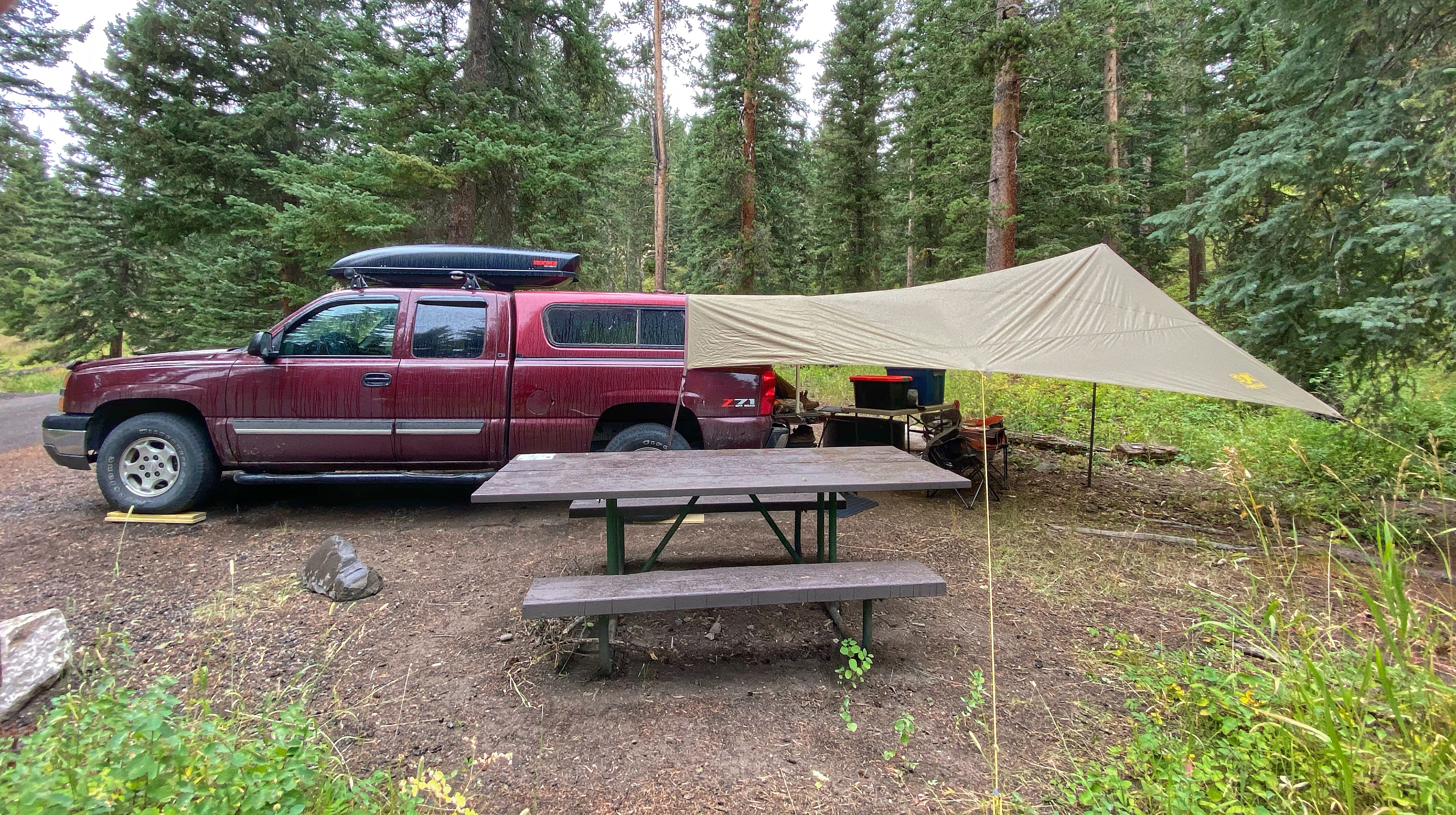
    The tarp is a life-saver on this kind of trip (once you manage to get it set up)

    We finally got the tarp up and ate dinner, but dove into the tent as the torrential downpour began. It rained most of the night and continued past first light the next morning. It eventually eased up enough to encourage us out of our still dry tent and into the wet world. With the normally expansive vistas shrouded in low clouds, it encouraged us to focus more on the small beauties along the way. All in all, not a bad way to spend a rainy couple of days.

    Maple looper, Parallelia bistriaris
    A Maple Looper, Parallelia bistriaris

    _-11
    The wild ponies help keep the meadows open

    _-14
    The highlands are home to amazing textures and colors of lichens…

    _-13
    …you just need to pause and look closely

    _-22
    The green colors of ferns, mosses, and lichens were richly saturated in the gray skies

    _-8
    Patterns and textures everywhere

    _-15
    The upright fertile shoots of the Fan Clubmoss contain the spores. In prehistoric times, some clubmosses reached the height of trees and often dominated the landscape.

    Turk's Cap Lily
    We spotted a single Turk’s Cap Lily ((Lillium superbum) on our hike

    _-21
    Heal-all (Prunella vulgaris), as the name implies,  has been used to treat a variety of ailments in the past

    _-20
    St. John’s Wort (Hypericum sp.) were found scattered across the high balds

    _-19
    A view as the cloud bank started to lift (barely)

    _-16
    We lifted a few rocks in a tiny rivulet along the trail and found three salamanders

    _-23
    The highlands are home to an incredible variety of fungi. I believe this is a Pigskin Earthball, Scleroderma citrinum

    Upright Coral Fungus, Ramaria stricta
    This beauty was growing on a fallen log…probably the Upright Coral Fungus, Ramaria stricta

    Eyelash Cup, Scutellinia scutellata
    I love the names of this one – Eyelash Cup (Scutellinia scutellata) – also called the Molly Eye-winker, the Scarlet Elf Cap, and the Scarlet Pixie Cup. Look closely and you can see the fine fringe of filaments resembling eyelashes along the edge of each cup.

    Ponies at Grayson Higlands SP
    As we left the park, the weekend crowds were starting to arrive, the clouds were lifting, and the ponies were doing what they do, adding a touch of glamour to the most beautiful mountains in Virginia


  • National Moth Week Ends

    I think that engaging with natural history – learning the identity and phenology of your neighbors by reading about their stories, and studying their lives alongside your own can give anyone a sense of rootedness.

    ~Henry Hershey

    One reason I like National Moth Week so much is that it reminds me to make the effort to learn more about our little-known (and certainly under-appreciated) nocturnal neighbors. We were absent for much of this years’ event (plus evening thunderstorms hindered efforts) but we managed to set out a moth sheet and black light again last night. Visitors included several moth species new to me and a host of other night-flying insects, especially members of the beetle clan. Below are some highlights (as always, any species ID corrections are welcome)…

    Common Spragueia Moth, Spragueia leo
    Common Spragueia Moth, Spragueia leo, a small bird-dropping moth (click photos to enlarge)

    Double-banded Grass-veneer, Crambus agitatellus
    Another tiny moth, a Double-banded Grass-veneer, Crambus agitatellus

    Crowned Slug Moth, Isa textula
    The adult form of one of our favorite caterpillars, the Crowned Slug Moth, Isa textula

    Common Pinkband, Ogdoconta cinereola
    Common Pinkband, Ogdoconta cinereola

    Sooty Lipocosmodes, Lipocosmodes fuliginosalis
    A very small, but beautiful, Sooty Lipocosmodes, Lipocosmodes fuliginosalis

    Striped Oak Webworm, Pococera expandens
    A snappy dresser, a Striped Oak Webworm, Pococera expandens

    Large Paectes Moth, paectes abrostoloides
    Neutral colors are in this year – Large Paectes Moth, Paectes abrostoloides

    Dusky Groundling, Condica vecors
    Dusky Groundling, Condica vecors

    Terrenella Bee Moth, Aphomia terrenella
    Terrenella Bee Moth, Aphomia terrenella – not much is known about this species but larvae may feed on the honeycomb and/or larvae of bees

    Bicolored Angle, Macaria bicolorata?
    Though simialr in appearance to others in its group, I think this is a Bicolored Angle, Macaria bicolorata

    Large Mossy Glyph, Prododeltote muscosula
    Large Mossy Glyph, Protodeltote muscosula

    Dimorphic Macalla Moth, Epipaschia superatalis
    Dimorphic Macalla Moth, Epipaschia superatalis

    Virginia Creeper Sphinx, Darapsa myron
    The prize-winning moth of the night, a Virginia Creeper Sphinx, Darapsa myron (we both really love the sphinx moths for their beauty, patterns, and sleek design)

    In addition to some cool moths, the light attracted many other critters. The most abundant (and smallest of the lot) were various species of caddisflies and the ubiquitous May Beetles (the ones that constantly pound on our windows at night). Here are some of the larger non-moth neighbors….

    Cicada, Neotibicen sp
    Several noisy cicadas (Neotibicen sp.) showed up last night

    Grapevine Beetle, Pelidnota punctata
    Grapevine Beetle, Pelidnota punctata

    Brown Prionid Beetle, Orthosoma brunneum
    The formidable-looking Brown Prionid Beetle, Orthosoma brunneum

    Carolina Pine sawyer, Monochamus carolinensis
    Several species of longhorned beetles showed up, including this Carolina Pine Sawyer, Monochamus carolinensis

    White Oak Borer, Goes tiginus
    A large White Oak Borer, Goes tigrinus

    Eastern Hercules Beetle
    Another huge Eastern Hercules Beetle, Dynastes tityus, male made an appearance. These guys are like small tanks!

    Fiery Searcher Beetle, Calosoma scrutator
    The fastest (and second largest) beetle of the night was this Fiery Searcher Beetle, Calosoma scrutator. These are in the caterpillar hunter group of beetles and can produce a strong musky odor and a painful bite if mishandled. Adults can live up to three years and can consume hundreds of caterpillars (including tent caterpillars and gypsy moth larvae) in their lifetime

    Just because National Moth Week is over, don’t let that stop you from turning on a porch light or setting out a moth sheet to learn more about some of our amazing nocturnal neighbors.


  • Baby Bluebirds

    Be like the bluebird who never is blue, for he knows from his upbringing what singing can do.

    ~Cole Porter

    I checked on the bluebird box out in the yard yesterday to see if any of the four eggs I saw about a week ago had hatched. As always, I approached noisily, then knocked on the side of the house to give any sitting adult ample warning and time to fly out. I gently opened the box, pulled out the nest cup and saw this…

    IMG_9216
    Newly hatched Eastern Bluebird nestlings (click photos to enlarge)

    Three of the four eggs have hatched today. It amazes me they can even hold up their giant heads with oversized closed eyes to beg for food. It will take another 17+ days for these little ones to fledge and be seen following their busy parents around the yard. Wishing them well as they enter the world.

Search the Archives

Due to our site update, photos on older posts may not display correctly. Sorry for any inconvenience.


Recent Posts