Relative to other caterpillars, slug caterpillars seem more fantasy than reality.
~David Wagner
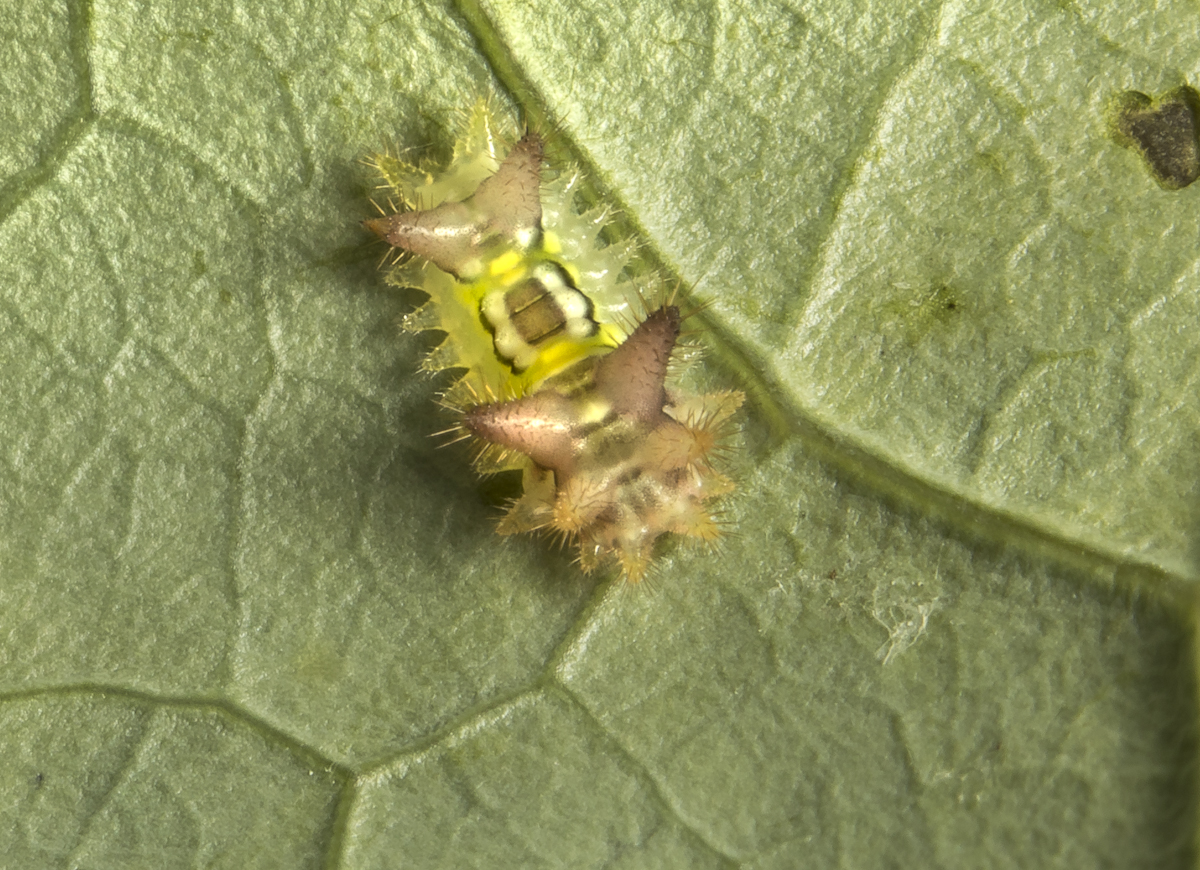
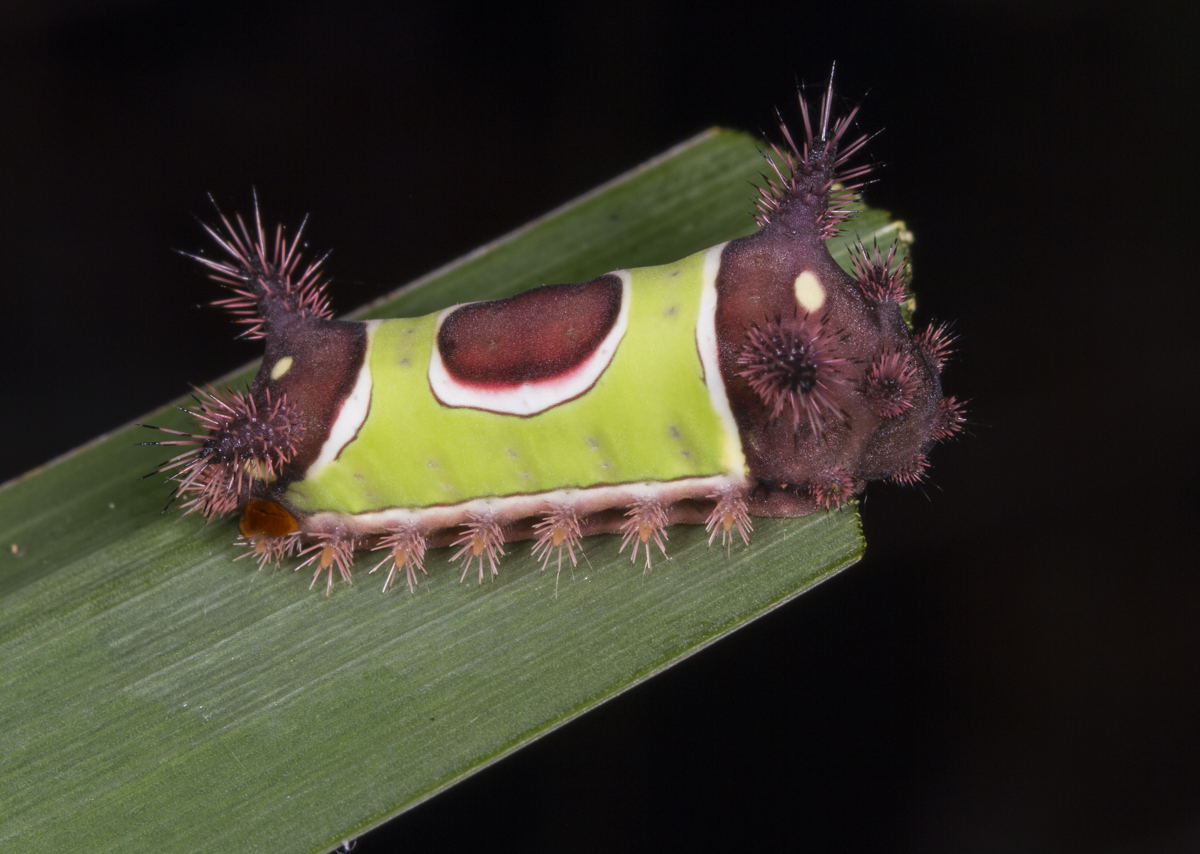
It is getting to be that time of year – caterpillar time! As summer draws to a creeping close, one of the things that lifts my spirits above the stifling heat waves is the increasing abundance of larval Lepidoptera. And one of our favorite groups, the slug caterpillars, is starting to show up in greater numbers in our woods and yard. Earlier this week, Melissa was out in the garden and harvested some of our collards, since it was obvious they were becoming riddled by insect chewing. When she pulled one leaf she saw two tiny Saddleback caterpillars, Acharia stimulea. The female moth tends to lay clusters of eggs and the young feed gregariously at first. They are extremely variable in their choice of host plants. We have found them on tomatoes, various tree leaves, iris leaves, and now, collards. This may be why so may people recognize this as one of our most common so-called, stinging caterpillars as you can find them almost anywhere. You may accidentally brush up against one while weeding your garden and you won’t soon forget that encounter as they pack a powerful punch resembling the pain associated with a wasp sting. You can read more about them in an earlier blog post here.
Two tiny Saddleback Caterpillars feeding on a collard leaf (click photos to enlarge)They are already sporting the pattern that gives them their name – the distinctive brown saddle outlined in white in the middle of their backBallpoint pen tip for scale
Though these guys are extremely small (the tiniest Saddlebacks either of us has ever seen), I think they have probably molted at least once already. Online descriptions say that the earliest instars lack the prominent tubercles on either end.
After one day, the caterpillars’ colors had already darkened and taken on more of the pattern of later instars
One scientific study I found said it was extremely difficult to accurately determine how many times this species molts during its larval development since the head capsule is hidden beneath the body and they almost always eat their shed skin. It is certainly more than the usual five molts of many butterfly and moth species, and may be as many as eleven or more and may require several months before pupation. Once again, I’m afraid we have taken on more than we bargained for in raising some caterpillars (we still have a few Cecropia larvae that hatched on June 10!). But, Saddlebacks will eat a variety of leaves are are not nearly as voracious in their feeding habits as most other species. I’ll try to keep you posted as they mature.
When we’re distracted, we are still paying attention—just not to the task that was the previous still point of our intentional neural processing.
~Dale Keiger
I’m afraid I have a long history of being “distracted” by the natural world. I remember a time as a young teenager when I was helping my father nail shingles on the roof of our soon-to-be new home in Stafford County, Virginia. The property was on a freshwater tidal tributary to the Potomac River and was set in a forested landscape with large trees. It was spring, and warblers were moving through the trees, and now I was up at eye level with them. My Dad noticed a lack of hammering in my direction and looked over to see me trying to figure out what bird that was without my binoculars. I believe there was some quote like, quit watching them $%$^ birds and get back to nailing. Years later, when I started work as a naturalist for NC State Parks, he remarked how he was amazed I was actually being paid to watch birds (a bit of an oversimplification, but, yes, I did get to observe all sorts of nature on my job).
In retirement, I’m not sure I can really call it being distracted. In fact, maybe the tasks and chores I do are the actual distractions and the nature observation is my primary duty. Well, a couple of days ago I was on task to weed eat some of the dreaded invasive, Microstegium, along the roadside outside our deer fence. I try to cut it a few times every year as it nears seed set to reduce the amount of seed released back onto the landscape. I had finished one patch and was walking up toward another. Just as I revved the motor, I was “distracted” by a slight movement on the ground. I stopped and stared, but saw nothing at first. Then, a tiny movement and something pushing under a piece of dead leaf on the ground. I leaned in and was surprised to see this staring up at me.
A large wolf spider retreats backwards down into its burrow (click photo to enlarge)
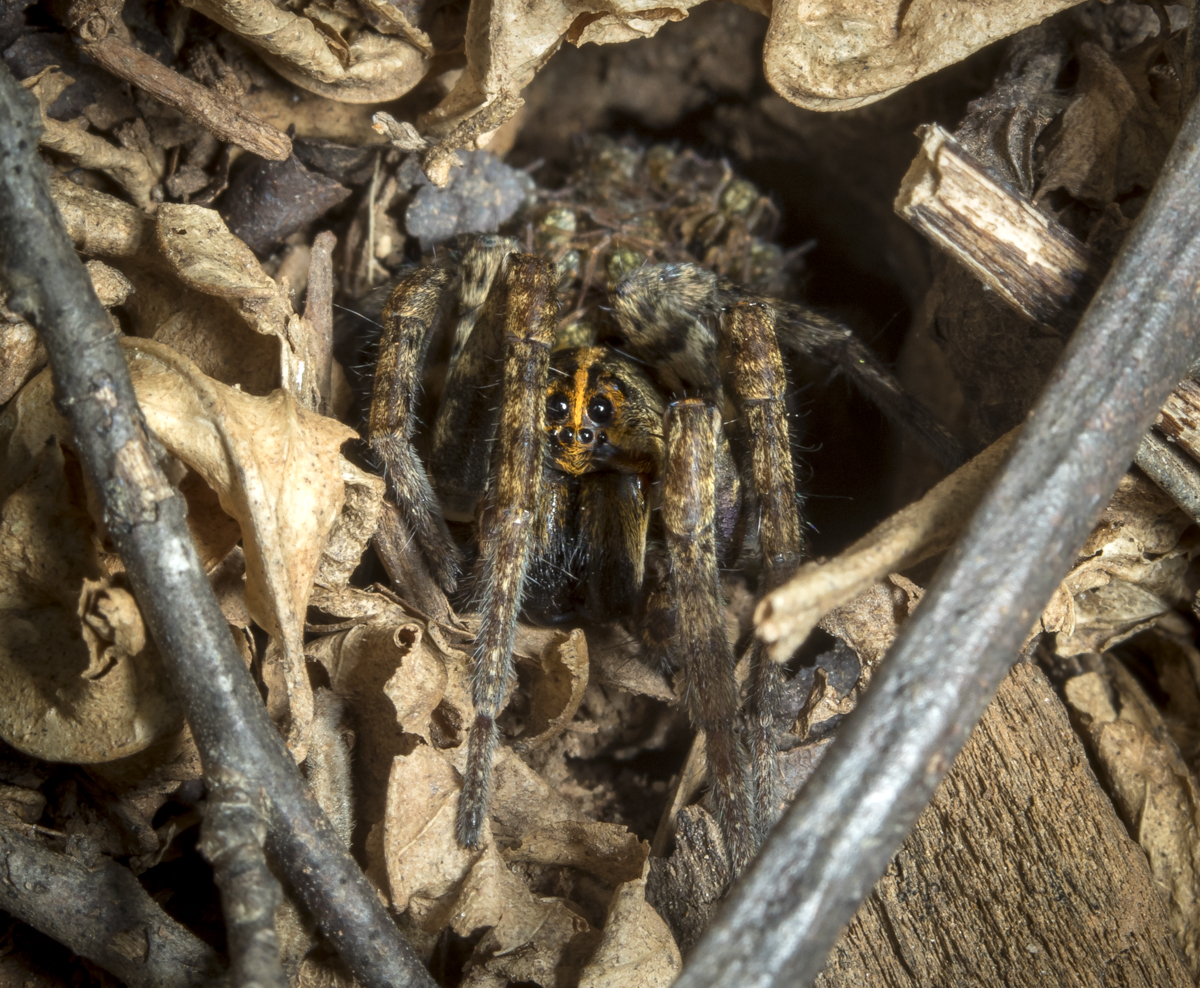
It was a large wolf spider retreating into a burrow. I couldn’t tell which species for sure, but it reminded me of common one in this area, the Rabid Wolf Spider, Rabidosa rabida. The unfortunate name comes from their quick and somewhat erratic movements, not that are carrying rabies. As I watched, I saw something move just outside the burrow. It was tiny spiderling that crawled toward the large spider and then pulled itself onto her back. It had apparently been dislodged when she backed down into the hole. Many species of wolf spiders carry their egg sacs around attached to their spinnerets at the tip of the abdomen. When the young hatch, they cling to their mother’s back for a short while until they disperse and fend for themselves (usually after their first molt).
When the spider came back out, I could see she was a mom carrying a full load of babies on her back
I sat still for several minutes and the large spider finally crept out of the hole and allowed me a closer look and the chance to grab a few photos. Now I could see the jumble of babies clinging to her. It looked a little like a pandemic hair style for spiders, but upon closer inspection, I could see a tangle of patterned bodies and legs. It’s hard to tell how many layers of spiderlings there are, but it appears there is likely more than one. Studies have shown that egg sacs for wolf spiders contain on average 200-300 eggs.
The spiderlings will stay with their mother until their first molt
If you enlarge the image and start counting, you can easily imagine there being over 100 spider babies with what looks like more partially hidden underneath. This spider stagecoach is for the benefit of the young until they are a little more mobile. This group of spiders does not build a web to ensnare prey, but rather stalks and pounces on its victims, so carrying the young around for too long would undoubtedly be a hindrance to the adult spider.
One of my favorite nighttime activities is looking for spider eyes. You hold a flashlight on your forehead or nose and shine it out into the woods onto the ground. Wolf spiders (and other nocturnal non-web building spiders that depend more on eyesight for capturing their prey) have reflective chemicals in their eyes causing a tiny bit of light to be reflected back to your light (which is why you need to hold it near your eyes). This is similar to the phenomenon of eye-shine in nocturnal mammals like deer. It is a real treat when you find a mother spider like this one carrying her young as you get the reflection from multiple sets of eyes, giving the spider a sparkly look like a tiny jewel on the forest floor. Give it a try. Even if you don’t see a mama with her baby cargo, you’ll be amazed at how many spider eyes are out there!
Every night in the woods, when most humans are safely indoors, strange creatures emerge from their lairs and leap into the air, swooping silently among the trees.~Michael Farquhar
I was strolling the yard yesterday, looking for whatever small critters caught my eye, when I walked over to the front of the house where we have some shade-loving wildflowers planted. A couple of years ago I put up a new hollow log nest box in that bed, but have had no takers, so I assumed there was a design flaw of some sort or that perhaps bees or wasps had taken over.
Hollow log nest box in the yard. The PVC pipe surrounding the pole is to help prevent snakes from climbing into the box (click photos to enlarge)
I periodically check all our boxes by gently tapping on the sides or looking inside (on the bluebird boxes with opening fronts) but had never seen anything in this particular nest cavity. So, as I walked by yesterday, I gently tapped the sides, but didn’t bother to look at the box as my gaze was on a fallen log just beyond where I thought I saw something move. After a few seconds, I turned and was pleasantly surprised to see something quietly staring back at me.
A calm Southern Flying Squirrel wondering why I woke it up
I was only about two feet away, so I slowly turned, pulled my phone out and snapped a pic. The little guy didn’t budge, so I stepped out in front of the box to get a more straight-on view. Again, I snapped a few images, and it just quietly stared back, not twitching even a whisker.
After snapping a few photos, I stepped away to let this cute little fur ball return to its afternoon nap
I didn’t want to startle the squirrel, so I walked away without looking back until I was about 20 feet from the pole. When I glanced back, the flying squirrel had pulled back into the hole but was still keeping an eye on the bipedal interloper.
I have reported before on the flying squirrels that visit our bird feeder out back and, though I have not seen them lately, I suspected they were back at it as the sunflower seed seems to be disappearing quicker than usual. Last night, I turned the porch lights on just before heading to bed, and there was a flying squirrel hanging on the tube feeder, stuffing itself. I guess I show my bias when I am happy to share with these smallest of NC’s tree squirrels and much less tolerant of their gray daytime cousins.
A rainy day is a perfect time for a walk in the woods.
~Rachel Carson
I am finally getting around to posting about our trip to one of our favorite backpacking spots, Mount Rogers, VA. My backpacking and camping queen (you know who I am talking about) has been chomping at the bit to get out on the trail since the pandemic has caused us to hole up at home. So, after spending a few days helping my mom in her home in southwest VA, we planned to do an overnight to the nearby high country of Mt. Rogers. Since it was a weekday (and there was a less than ideal forecast), we were able to secure a spot in the overnight backpackers lot at Grayson Highlands State Park without having made online advance reservations (definitely required for weekend trips). We hit the trail after lunch and planned to do a short 2.7 mile hike to an area just off the Appalachian Trail on Forest Service lands. The cool temperatures made for a pleasant hike, and the overcast skies enriched the colors of the woodland details. As is usually the case on our backpacking trips, I did not carry my camera gear, so all accompanying images were taken with an iPhone.
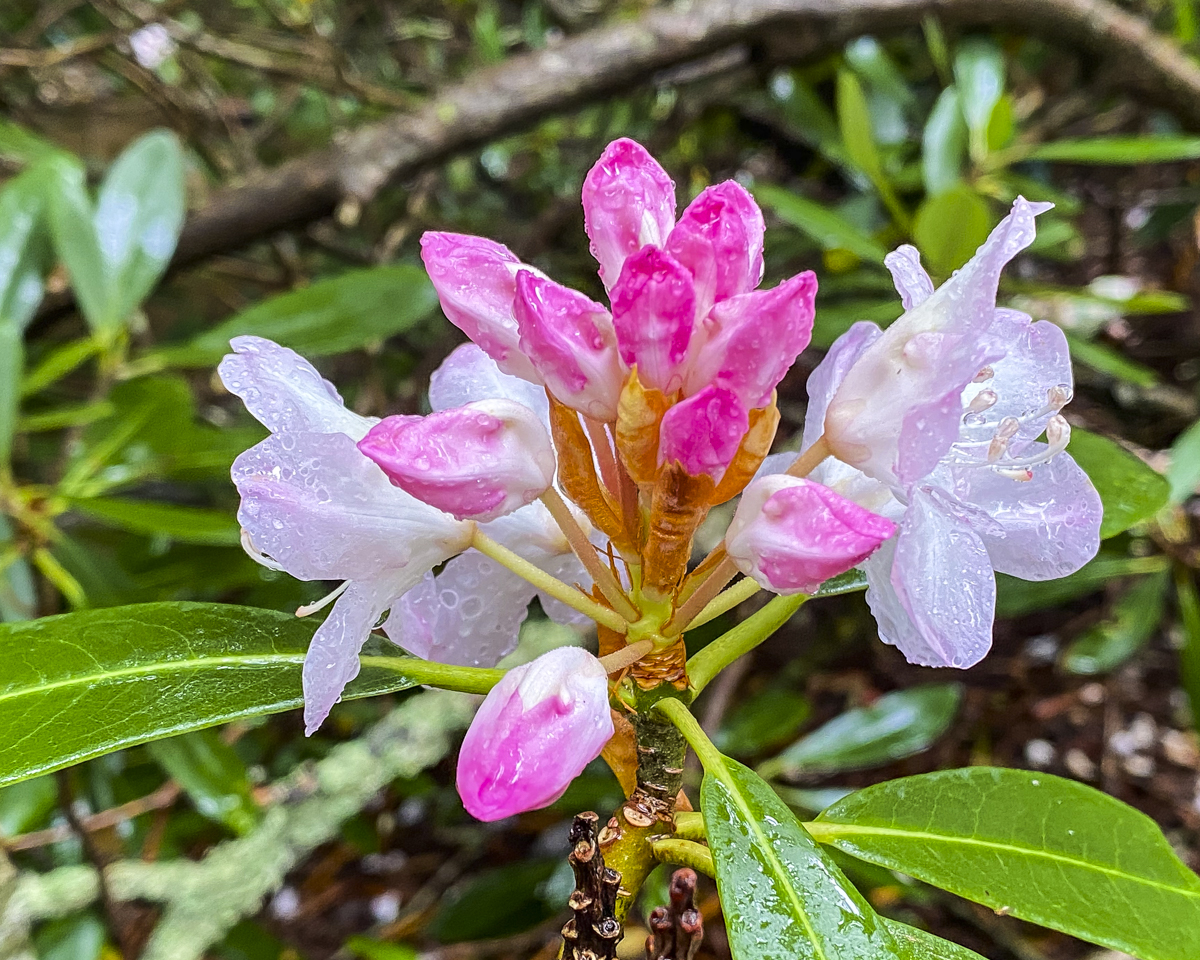
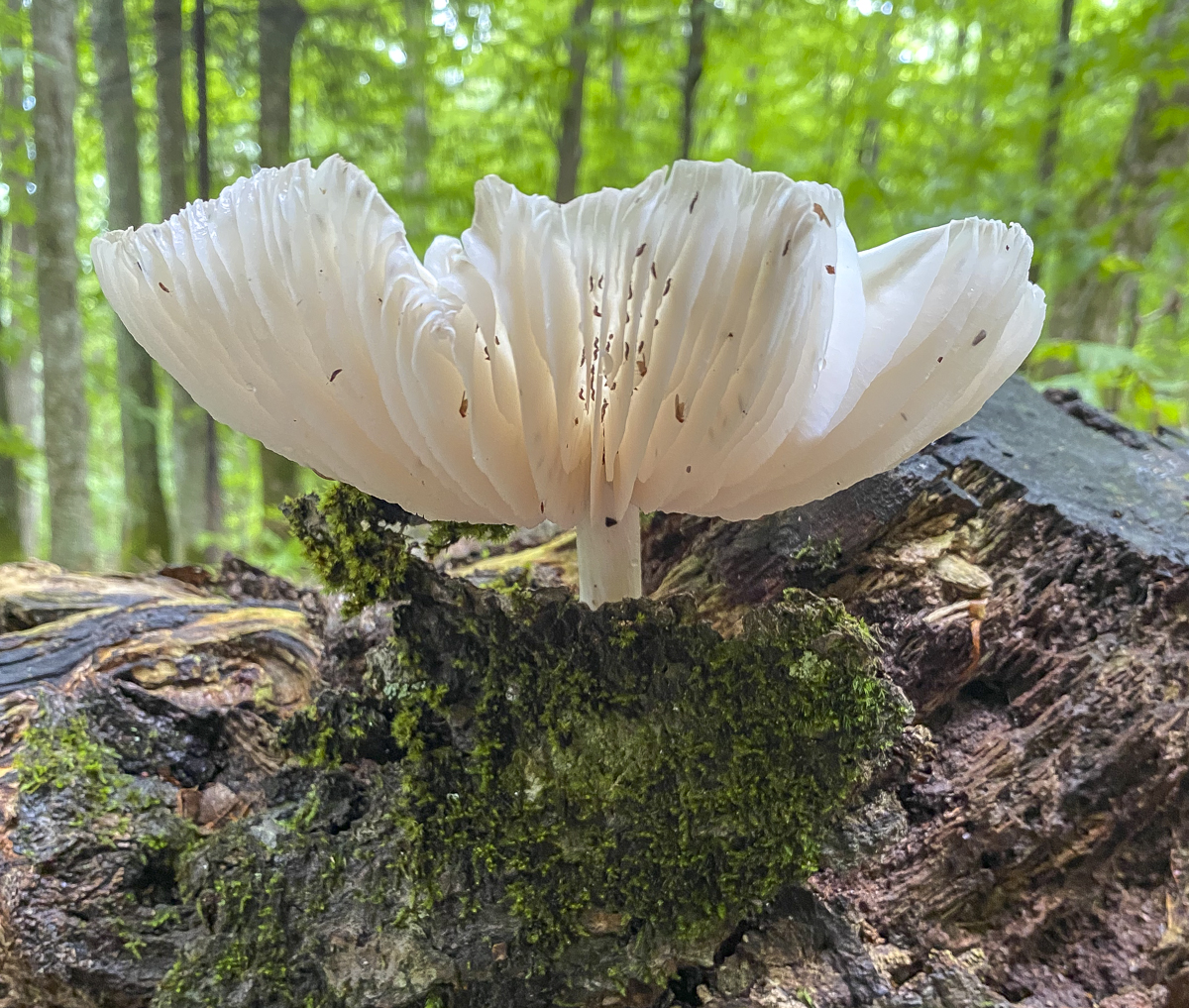
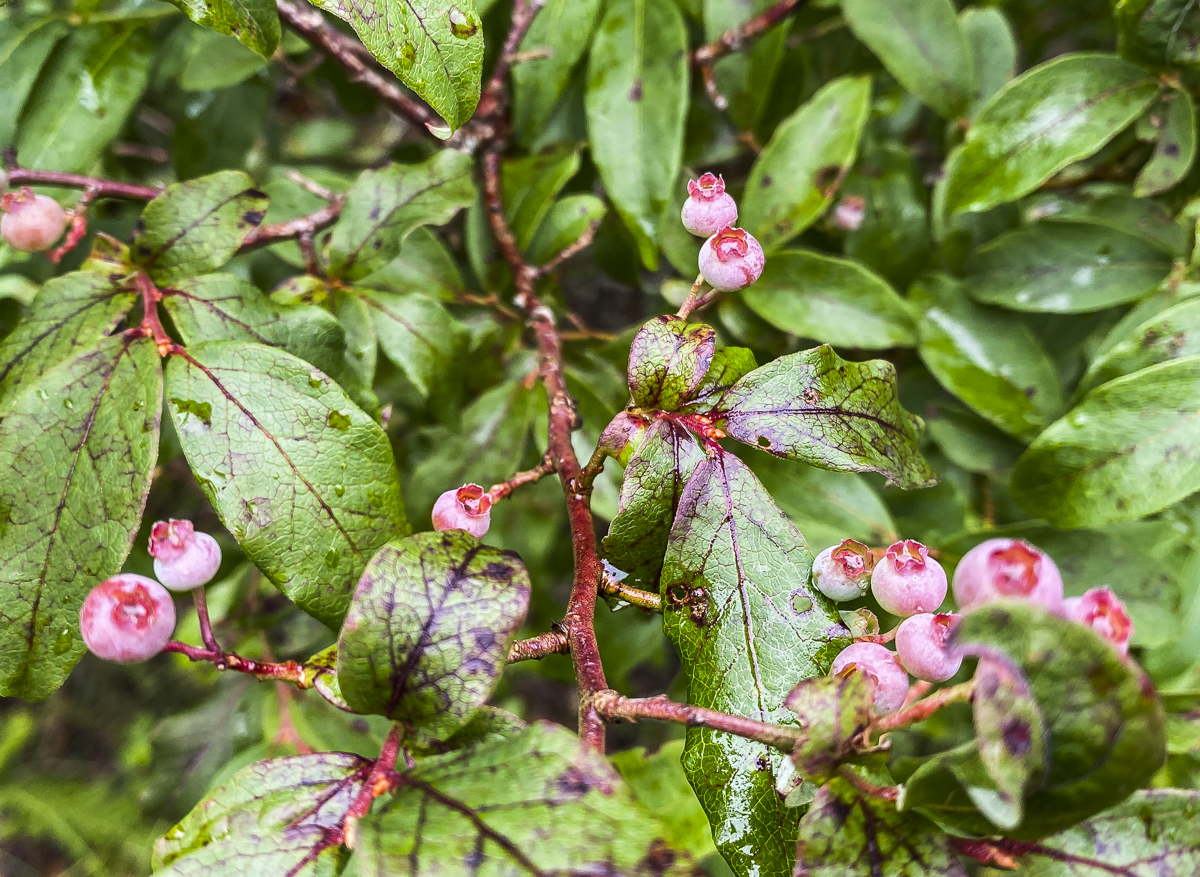
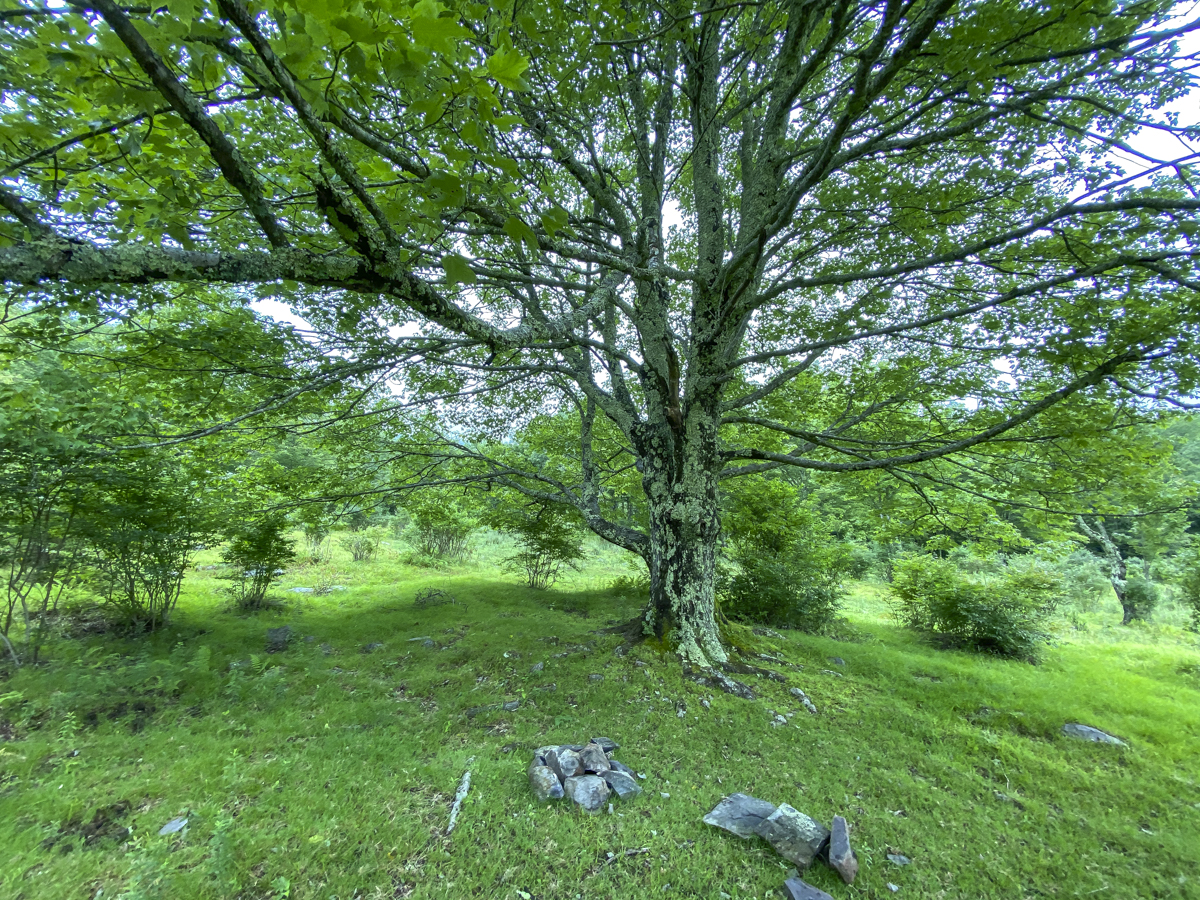
Frequent rains make for a lush forest floor in the highlands (click photos to enlarge)Rosebay Rhododendron (Rhododendron maximum)A huge mushroom with a world of invertebrates in its gillsThe highlands are home to numerous fruit-producing trees and shrubs like blueberries, blackberries, hawthorn, and mountain ash
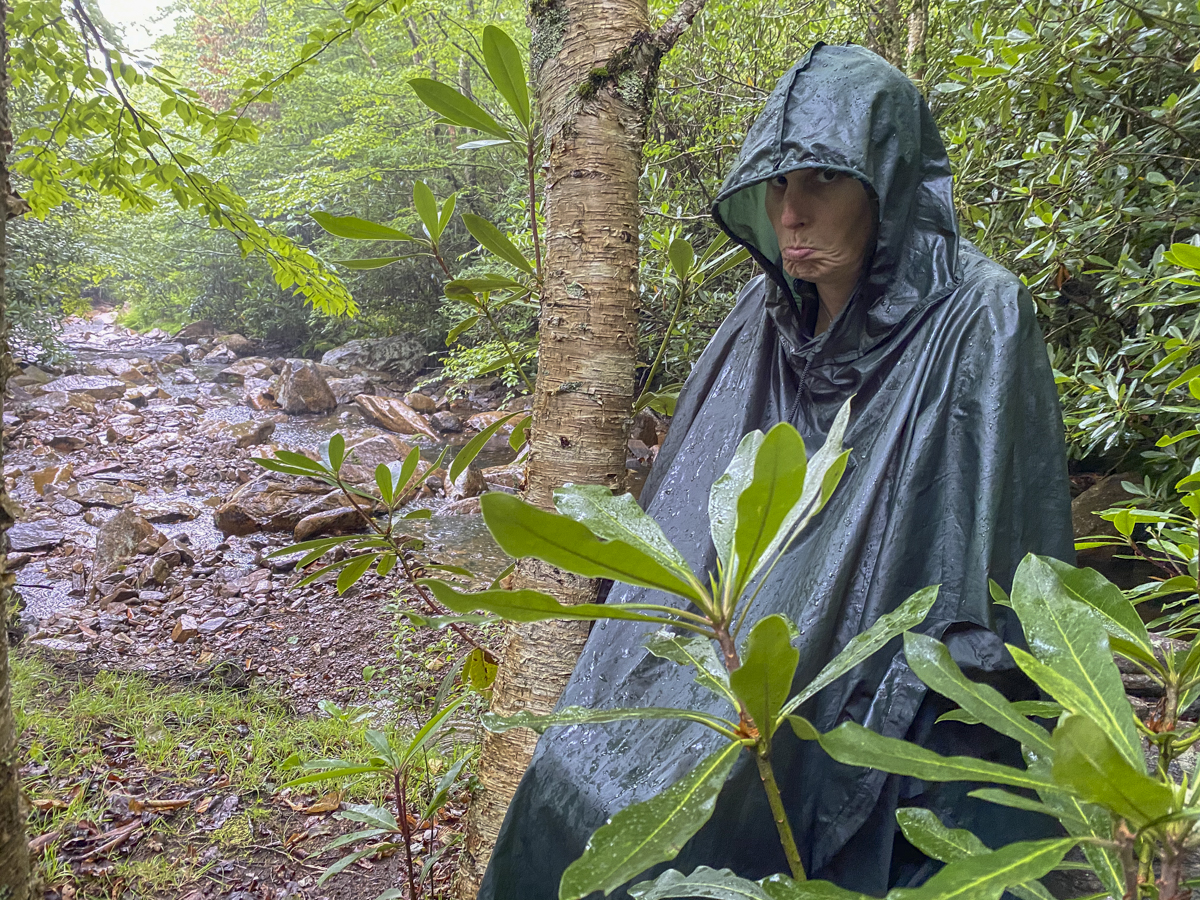
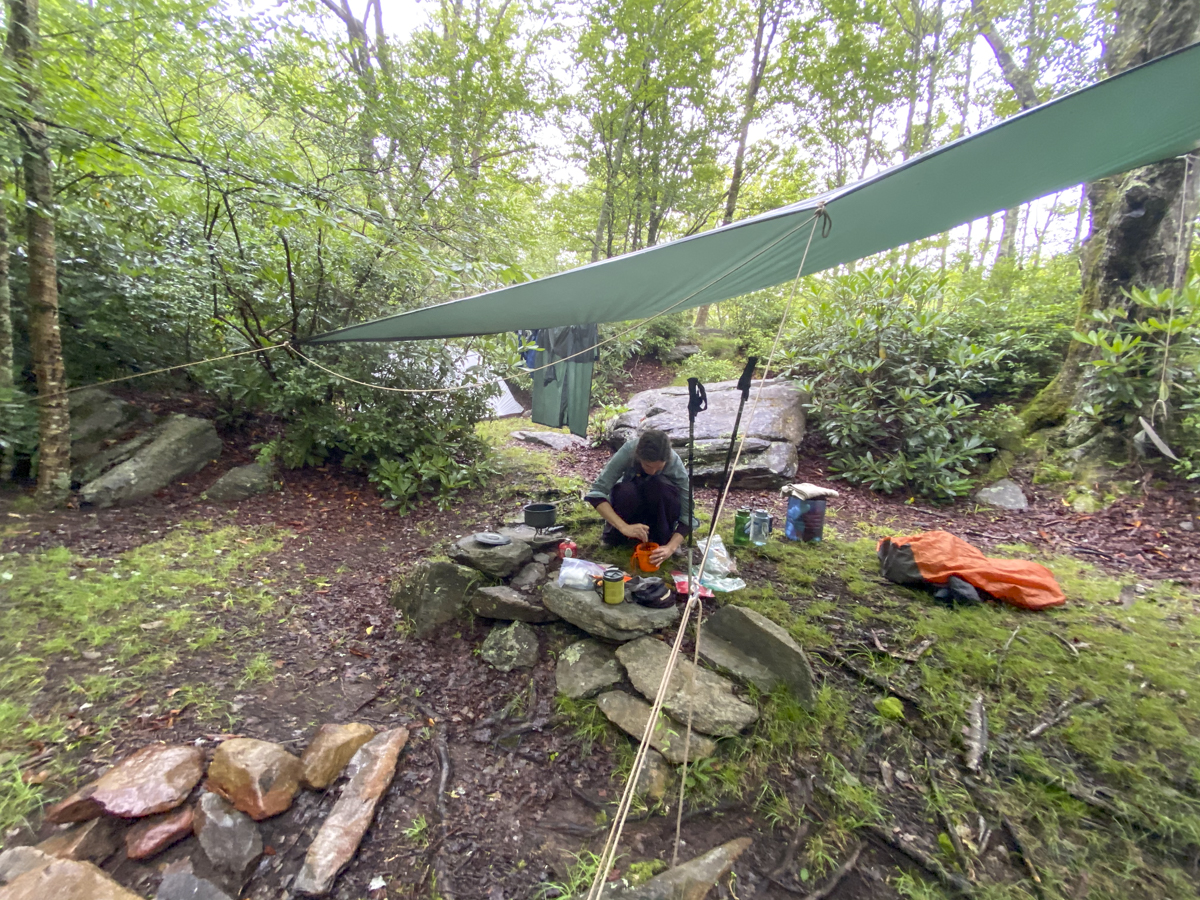
It started raining about halfway on our journey, lightly at first, but then hard enough that we sought shelter under a spruce tree for a few minutes before marching on. Fortunately, we arrived at our campsite during a lull in the precipitation, so we were able to get the tent set up without much problem. But, as we started to put up the all-important tarp, the skies opened and our spirits dampened (along with everything we owned).
That look you get when you have been waiting to backpack for sooooo long, and it rains on your paradeThe tarp is a life-saver on this kind of trip (once you manage to get it set up)
We finally got the tarp up and ate dinner, but dove into the tent as the torrential downpour began. It rained most of the night and continued past first light the next morning. It eventually eased up enough to encourage us out of our still dry tent and into the wet world. With the normally expansive vistas shrouded in low clouds, it encouraged us to focus more on the small beauties along the way. All in all, not a bad way to spend a rainy couple of days.
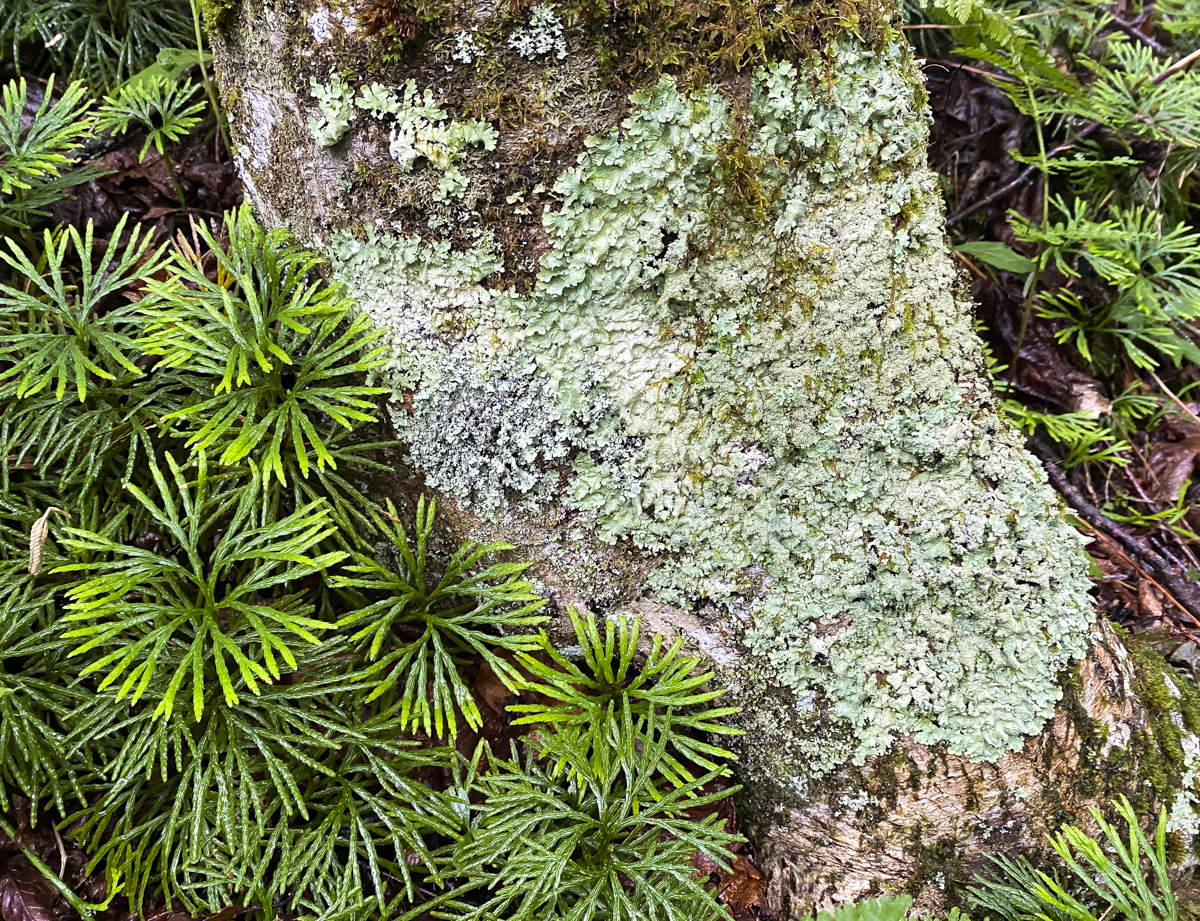
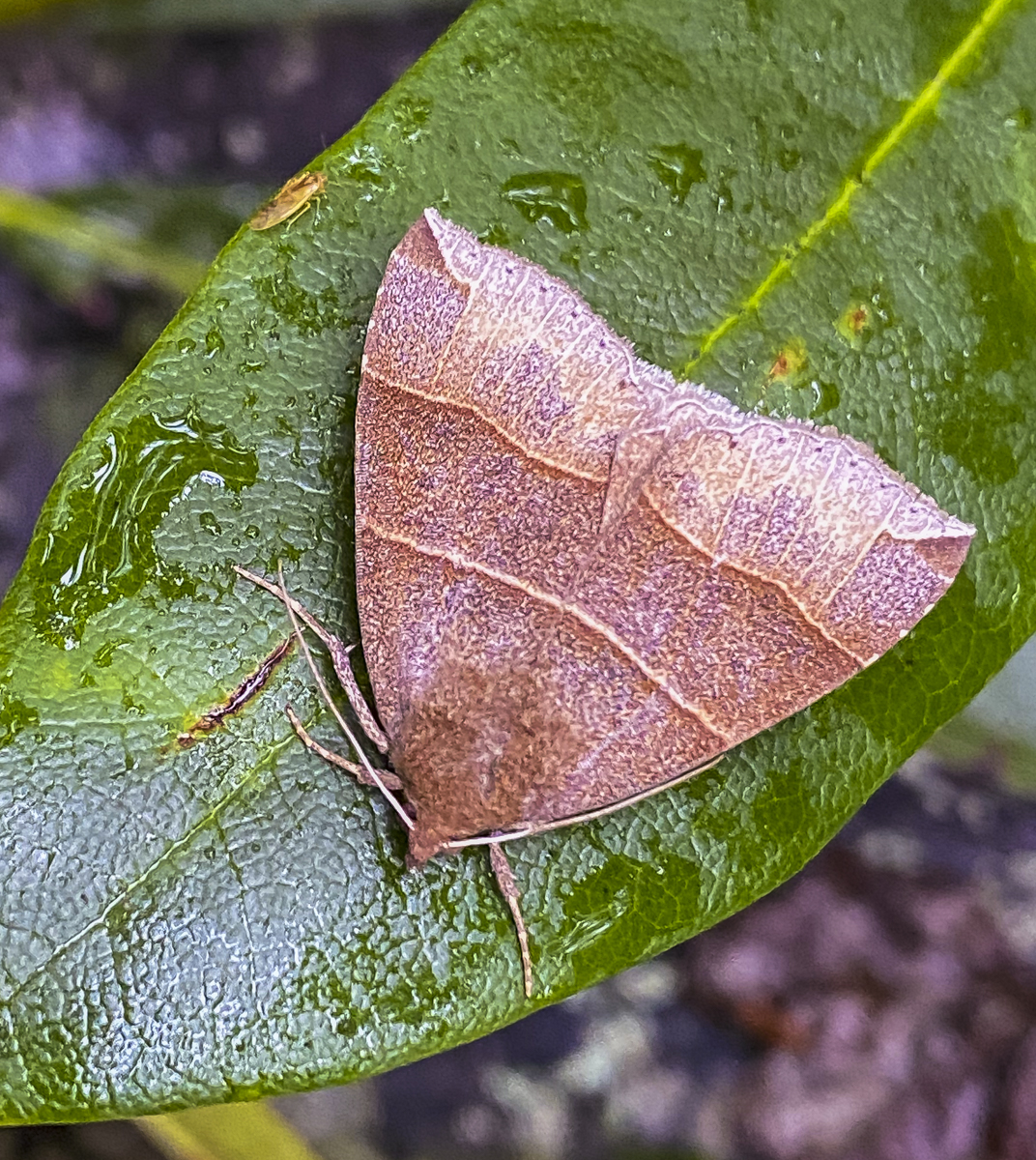
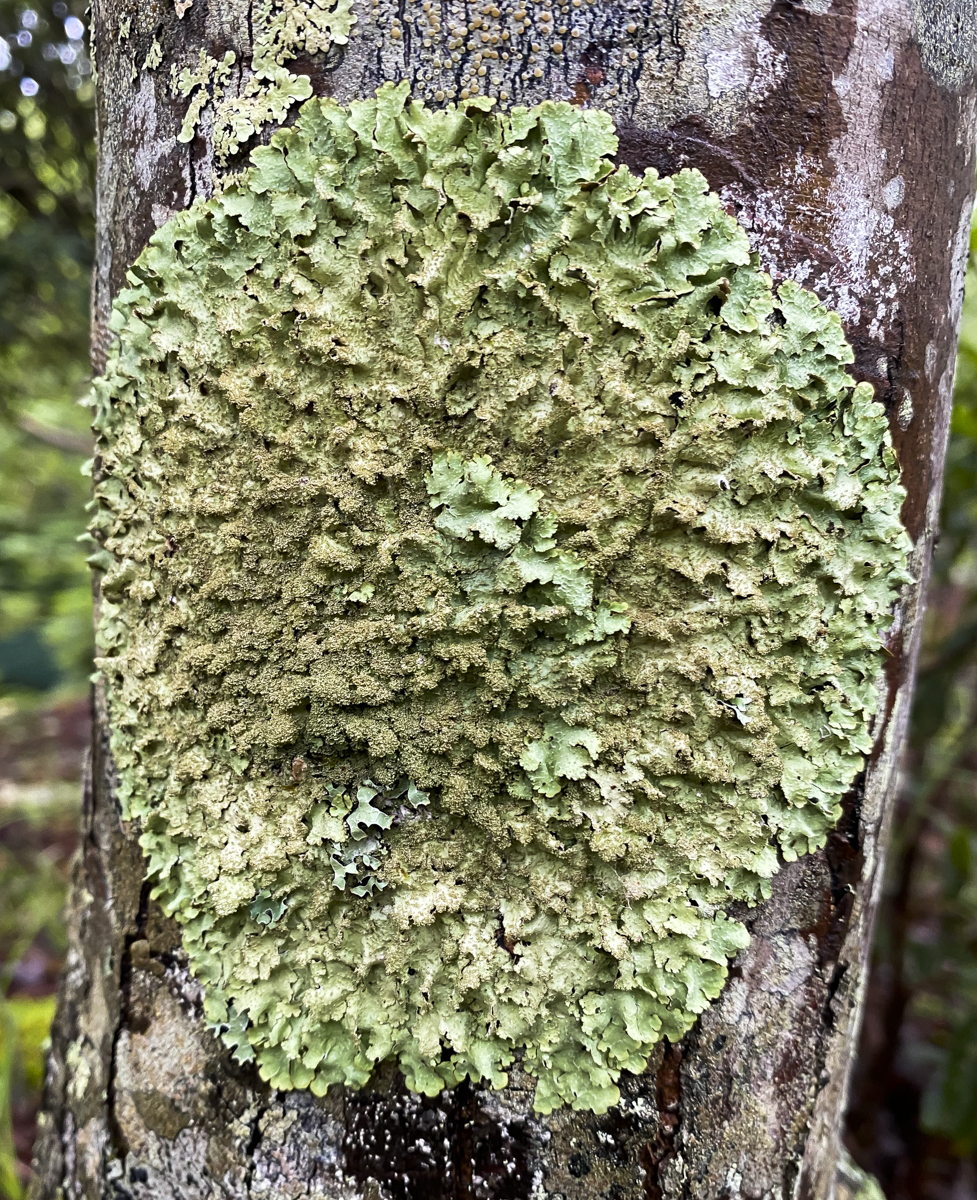
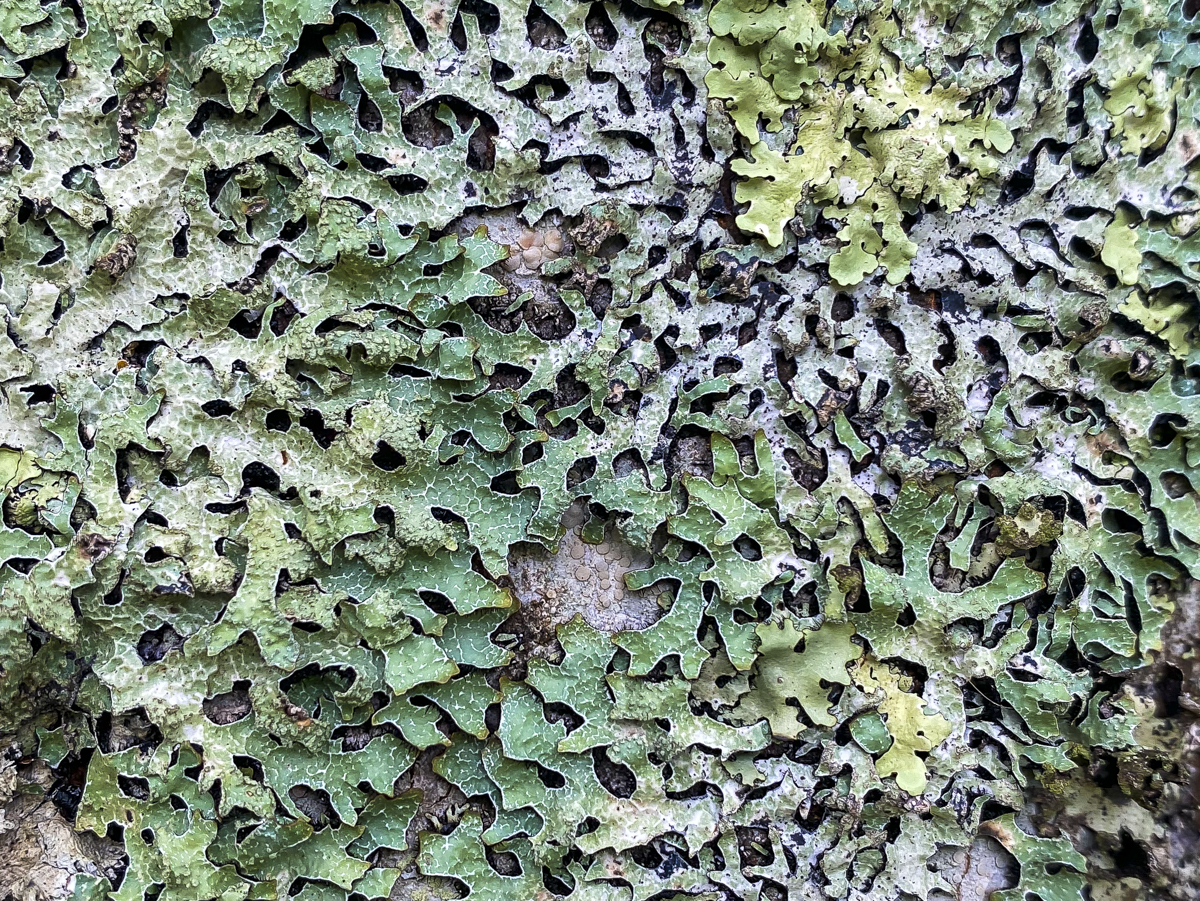
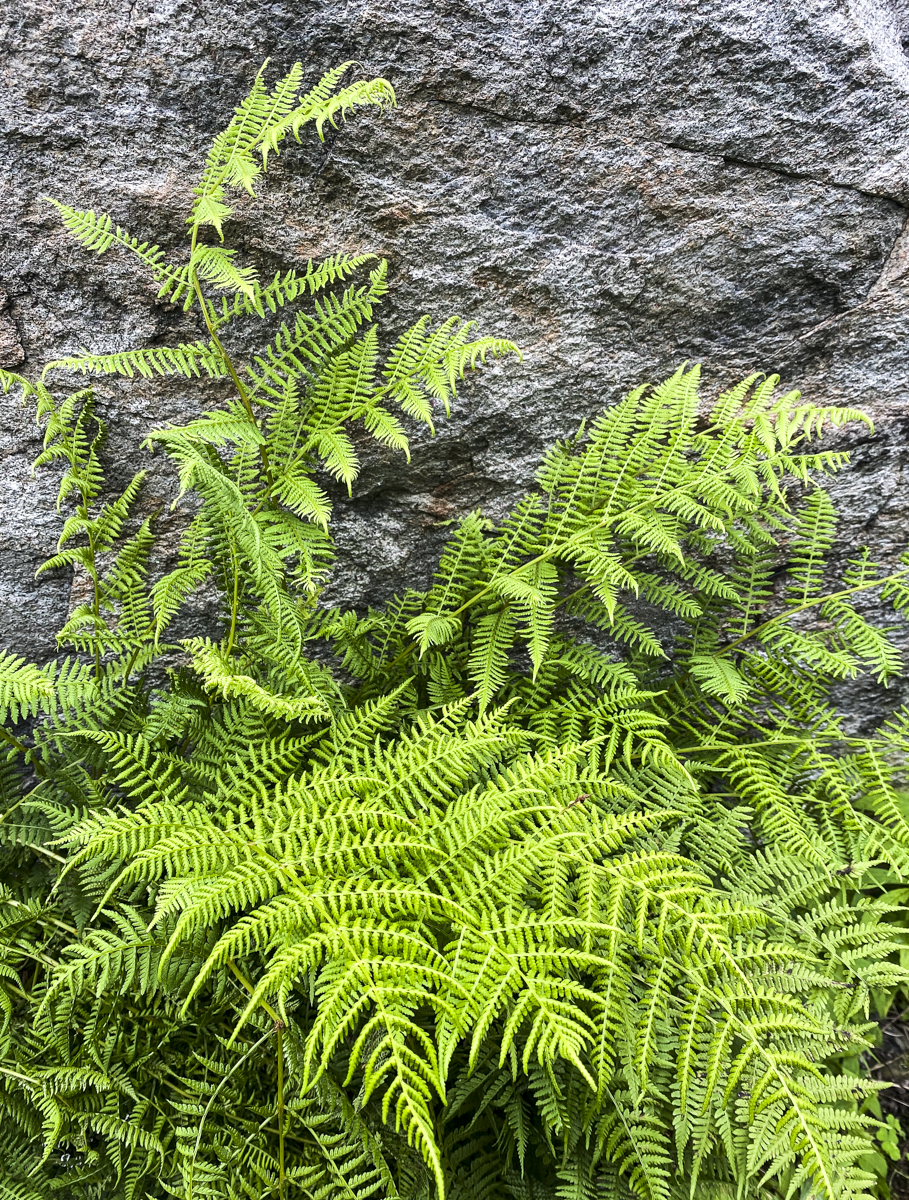
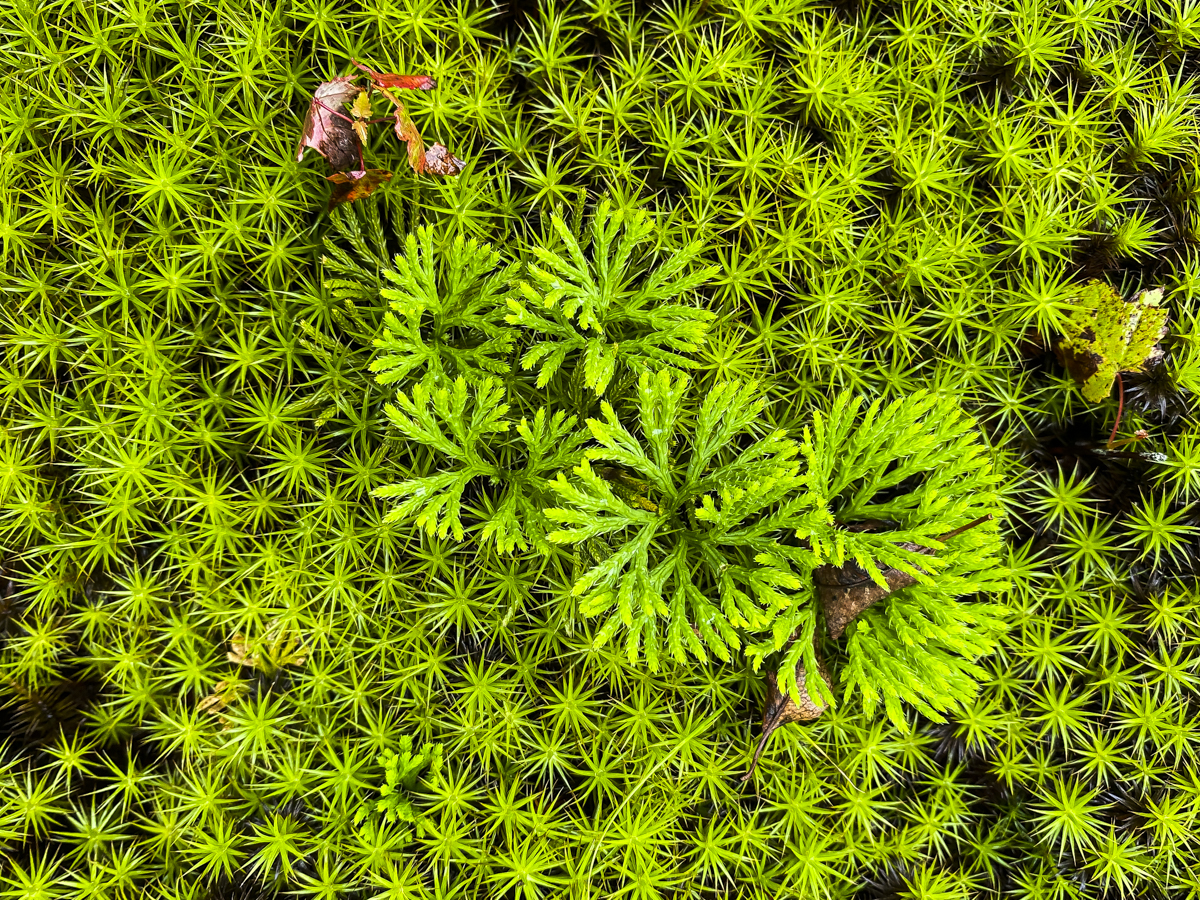
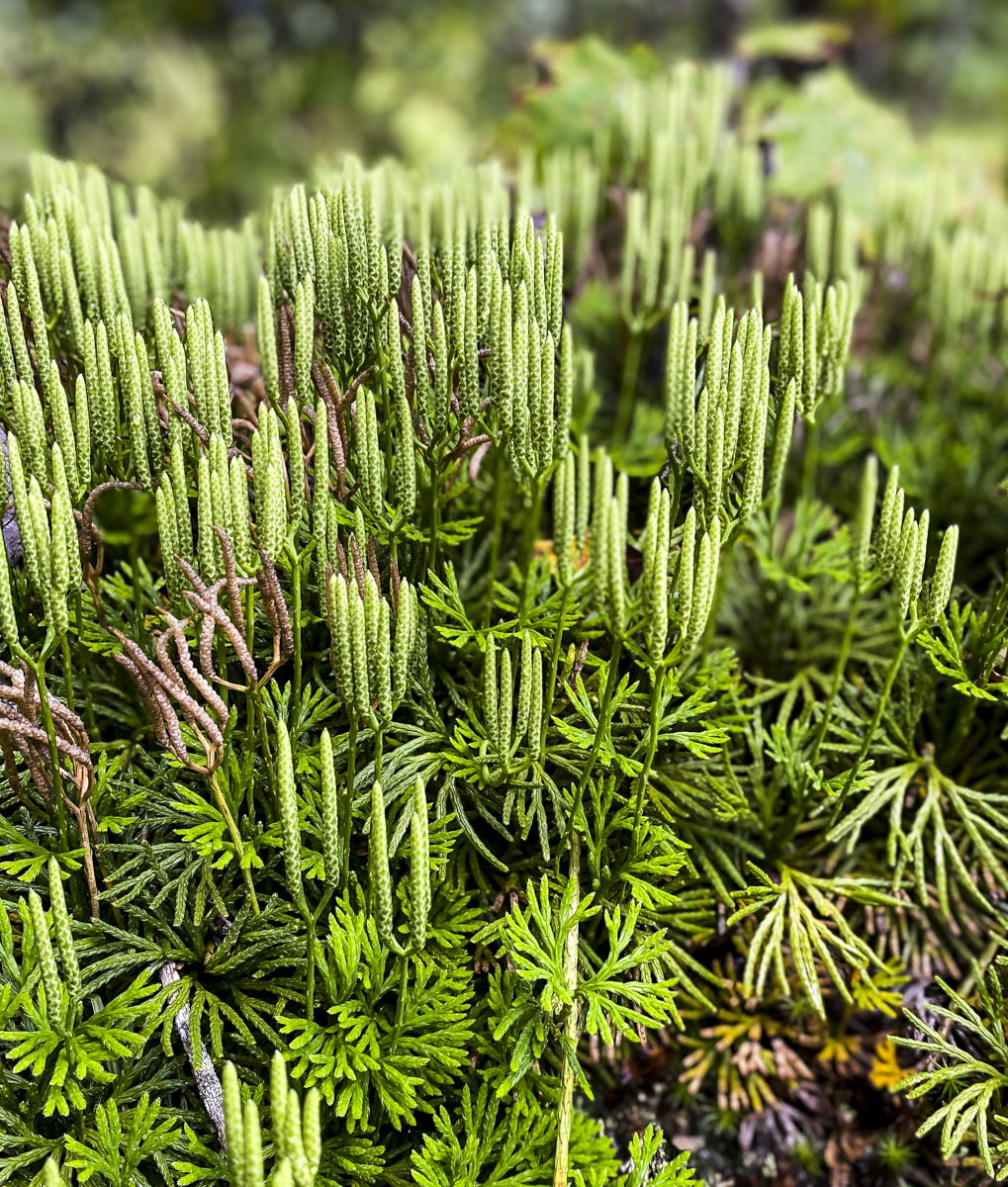
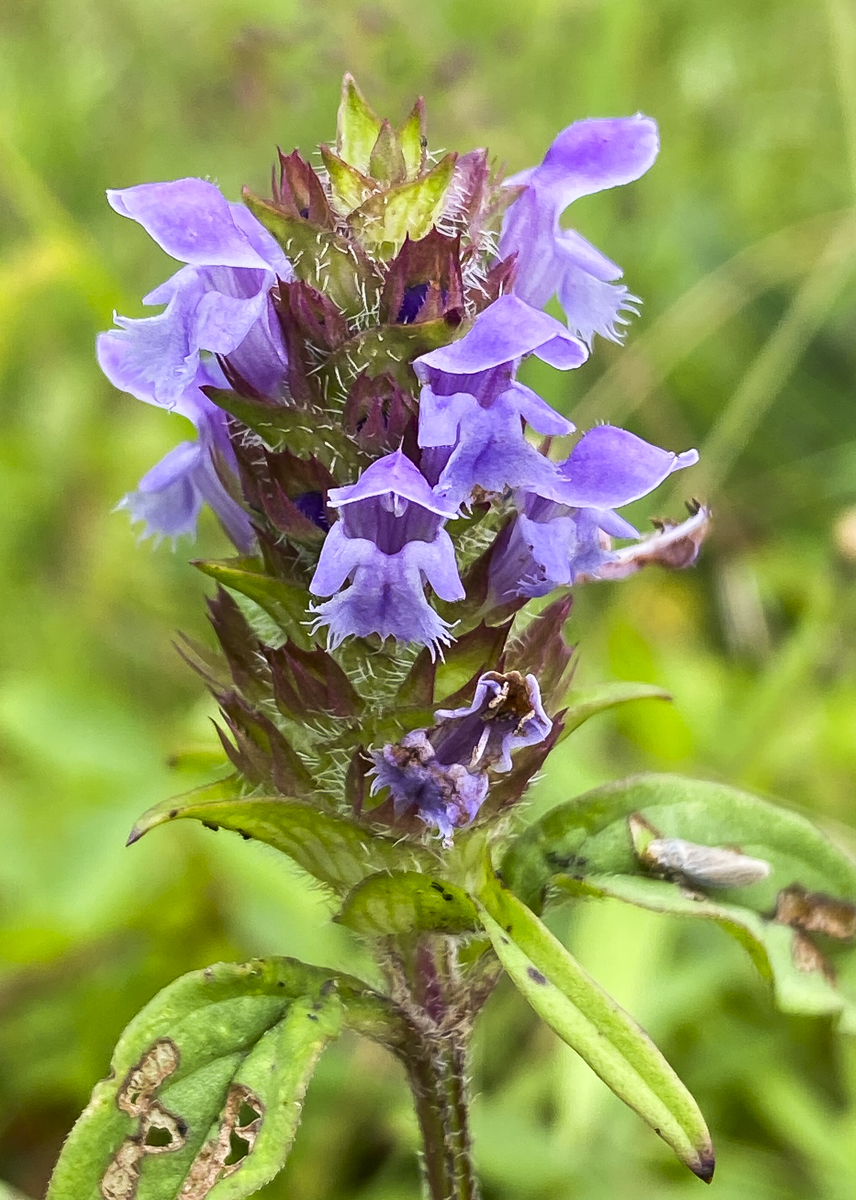
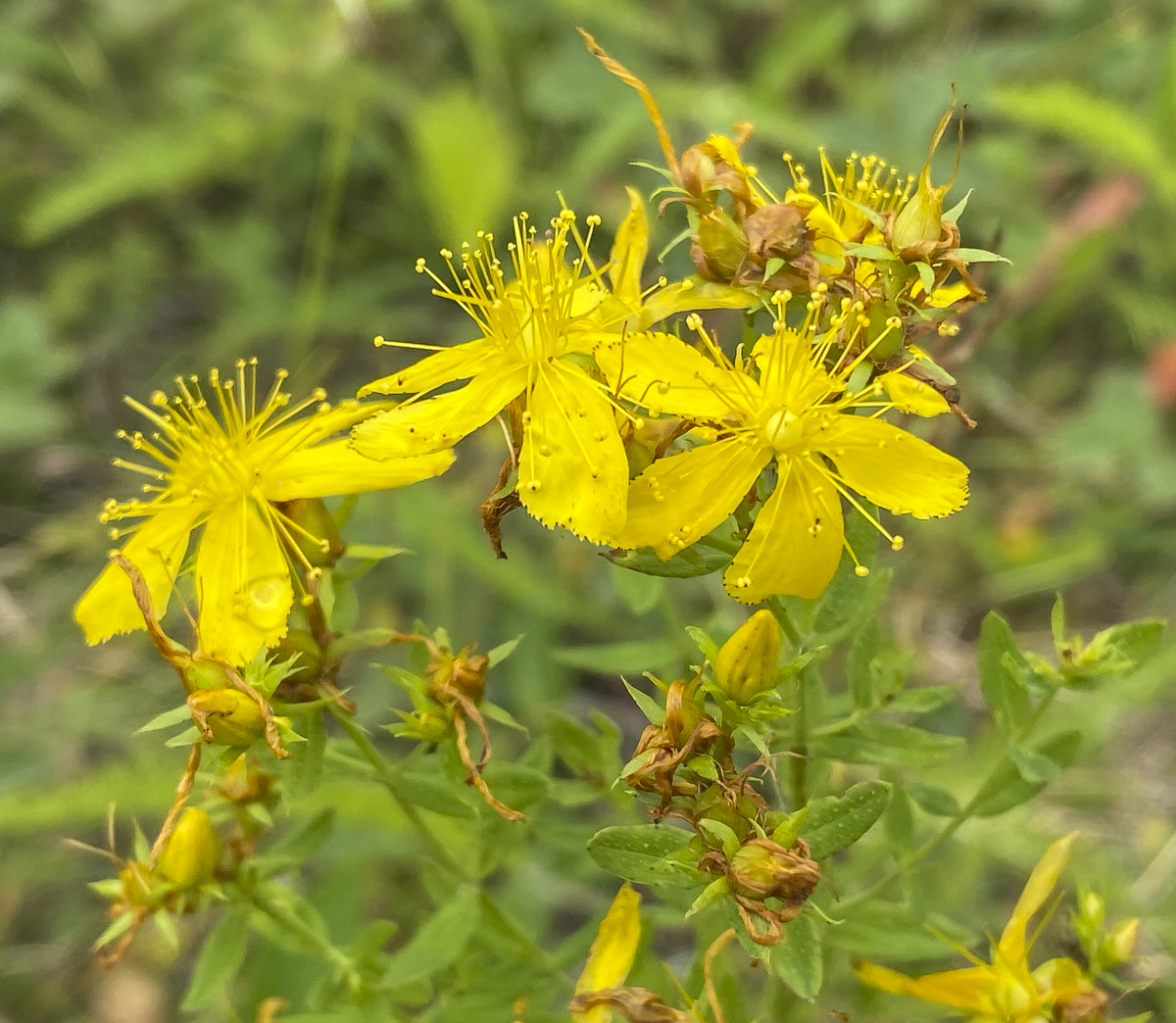
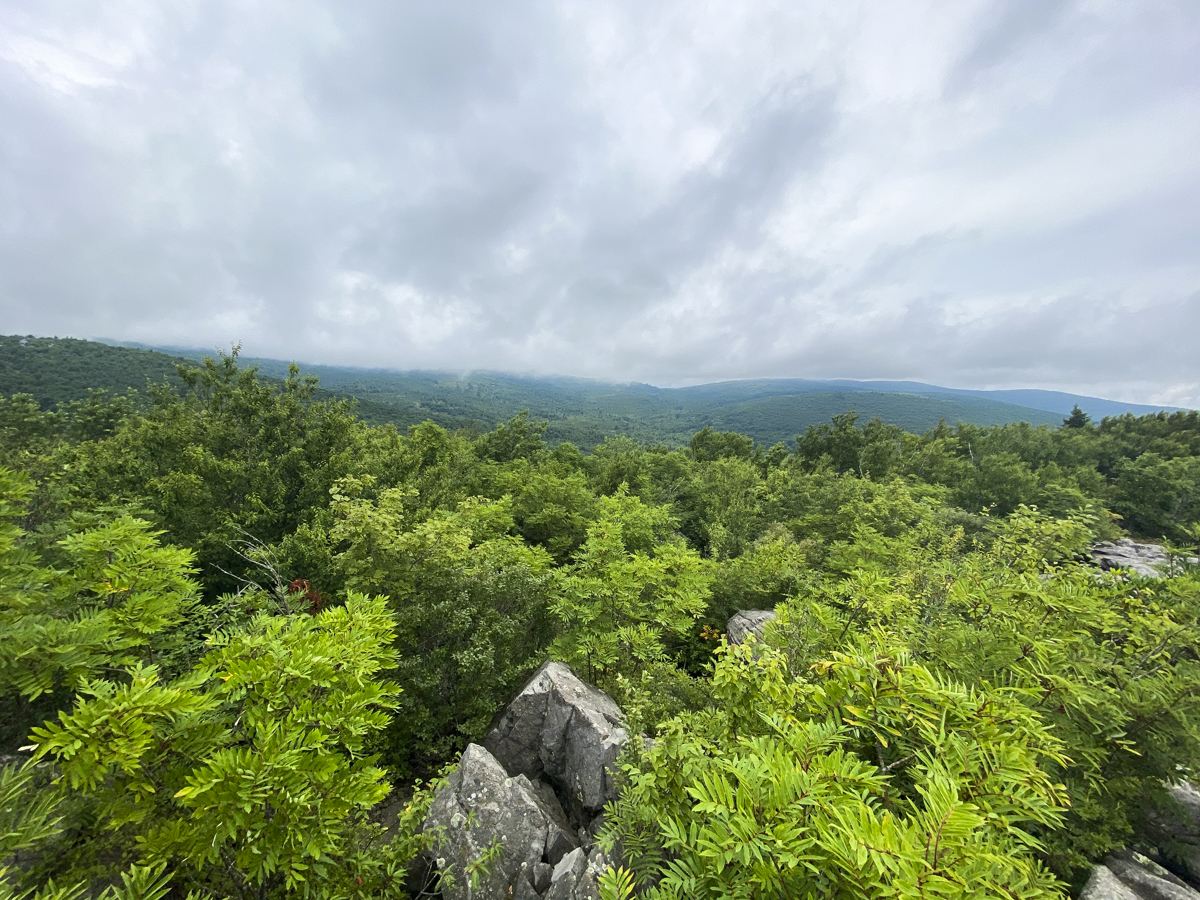
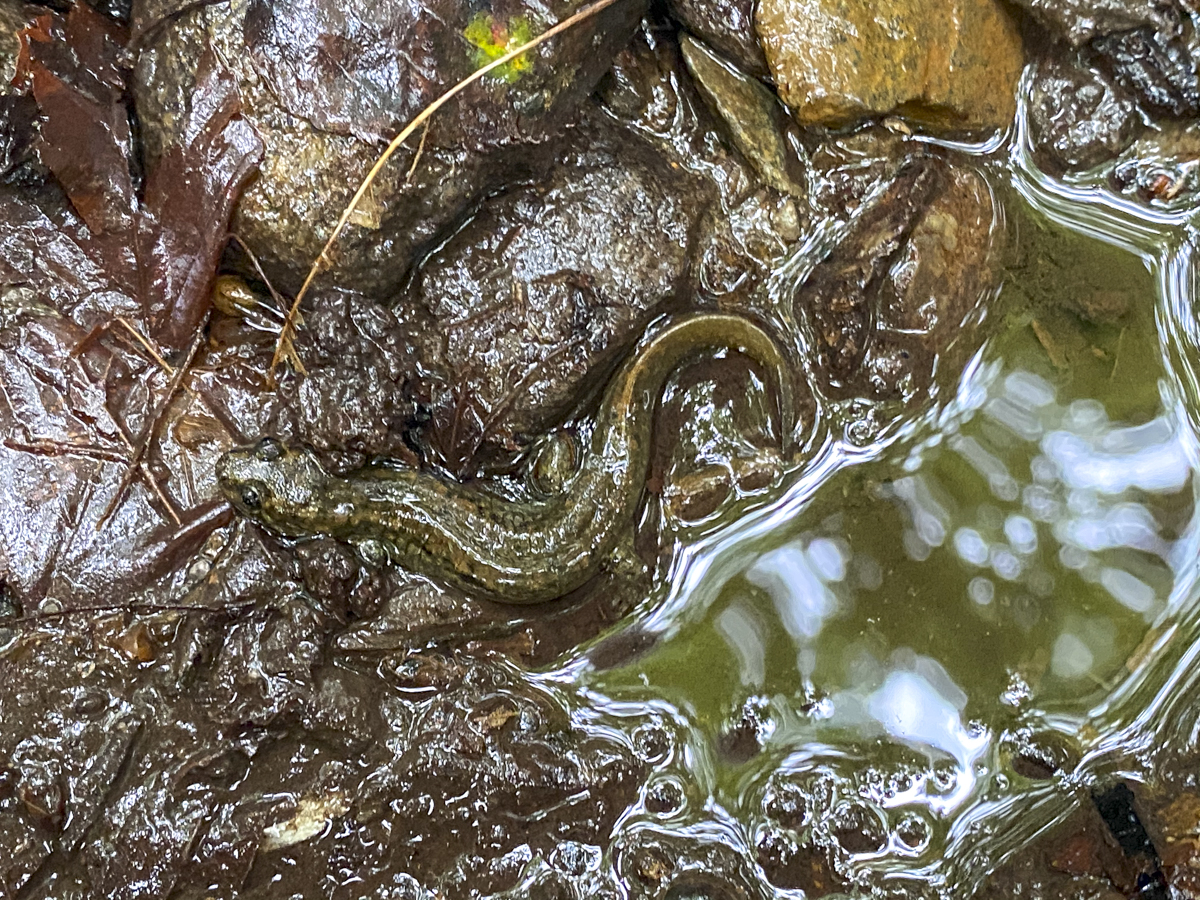
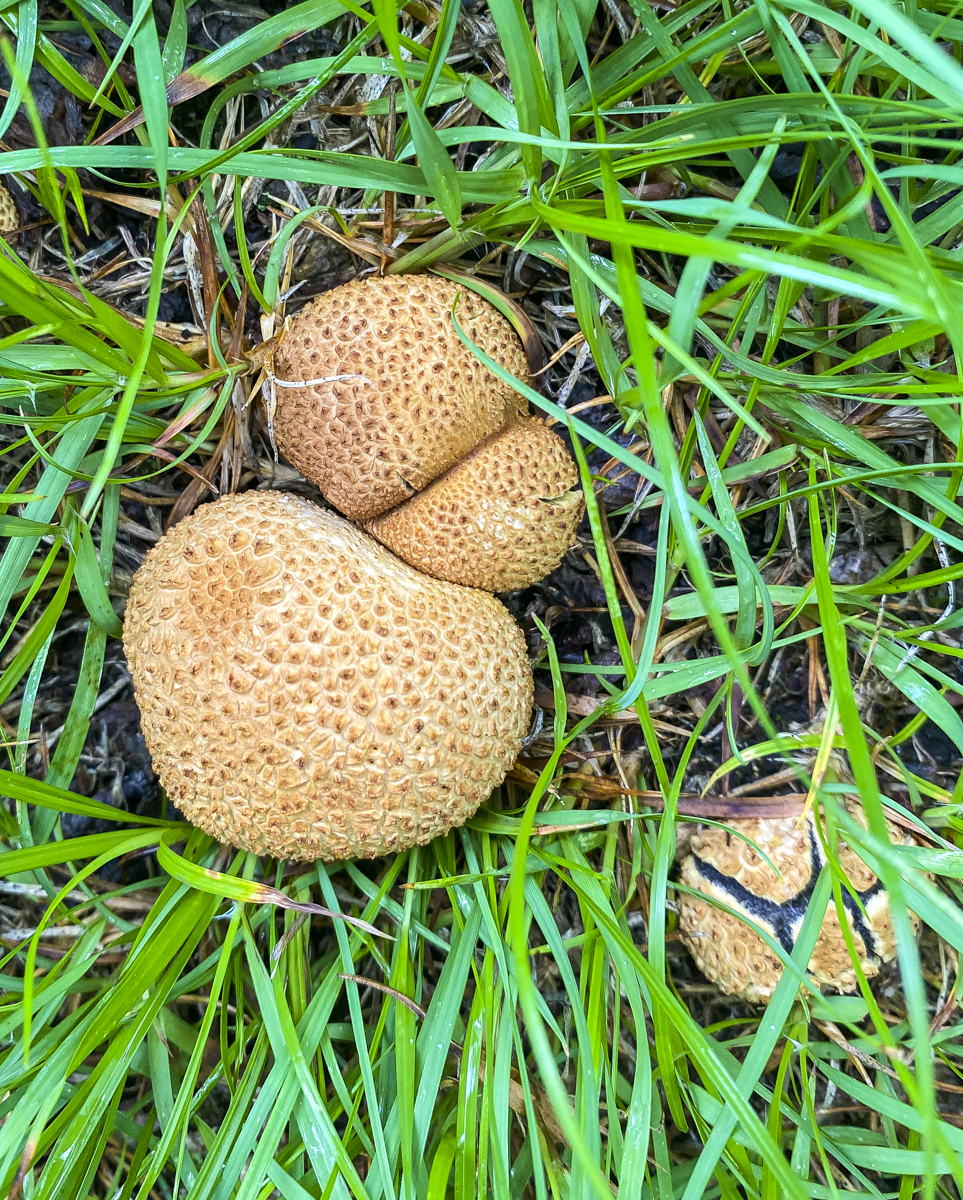
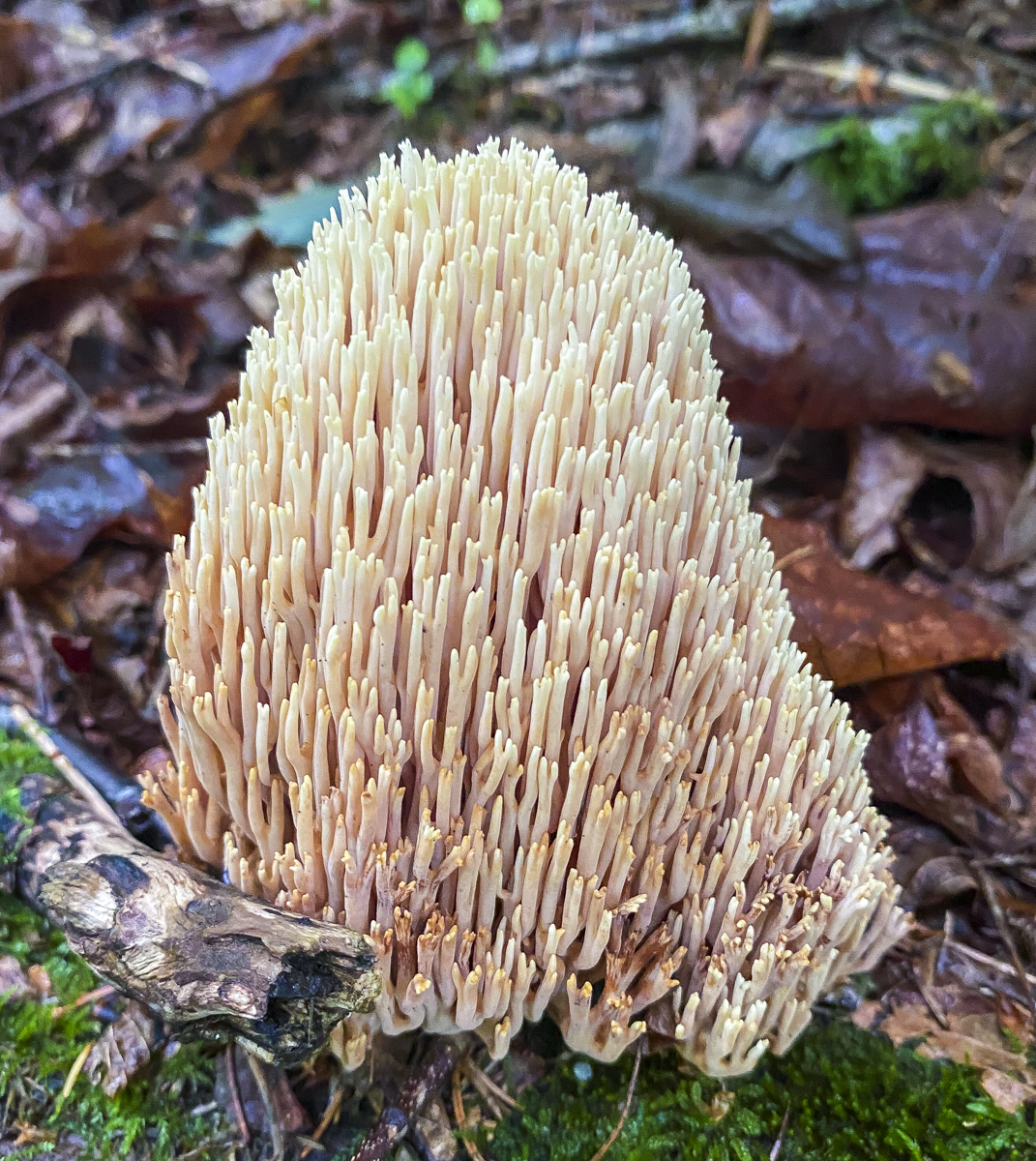
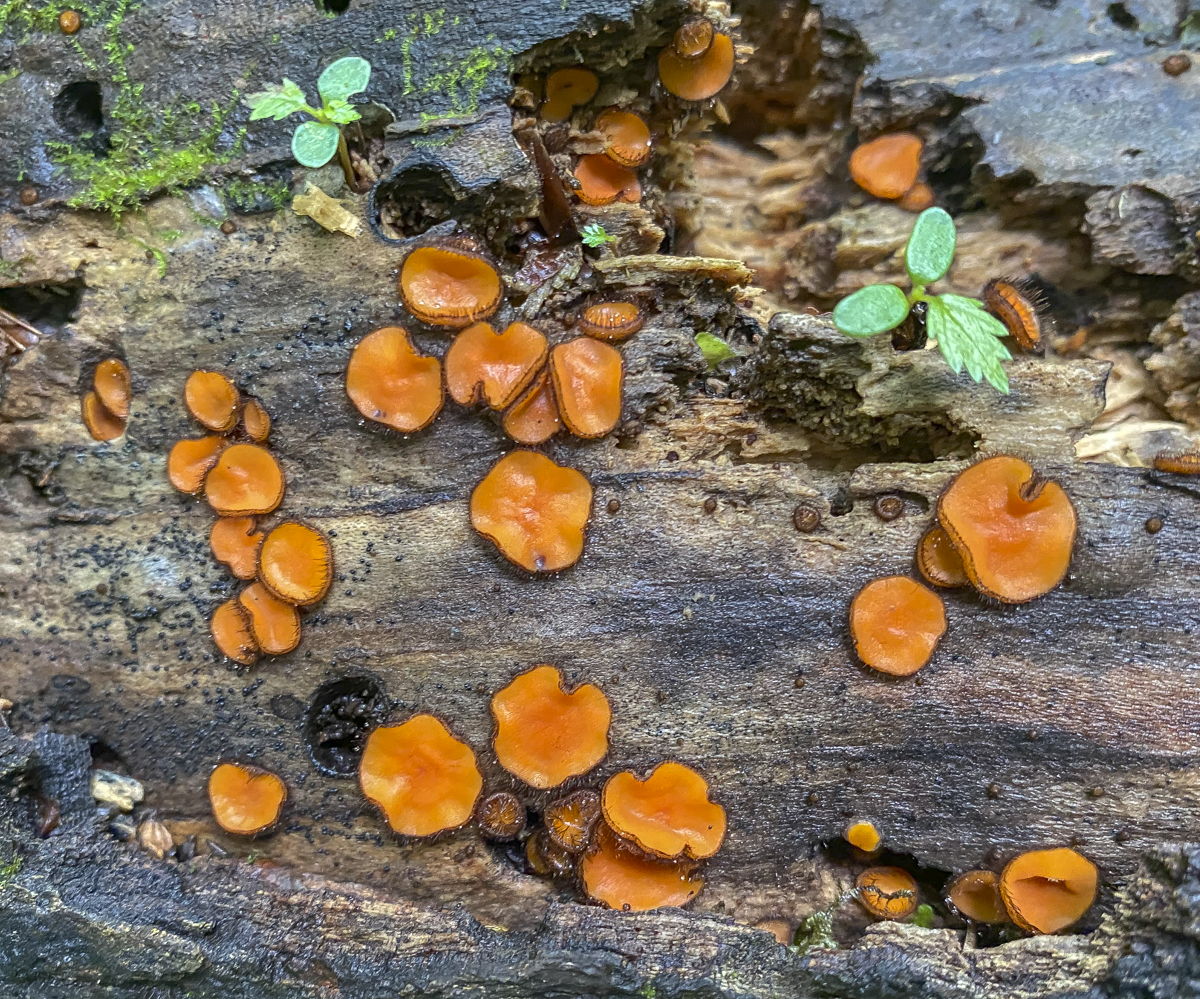
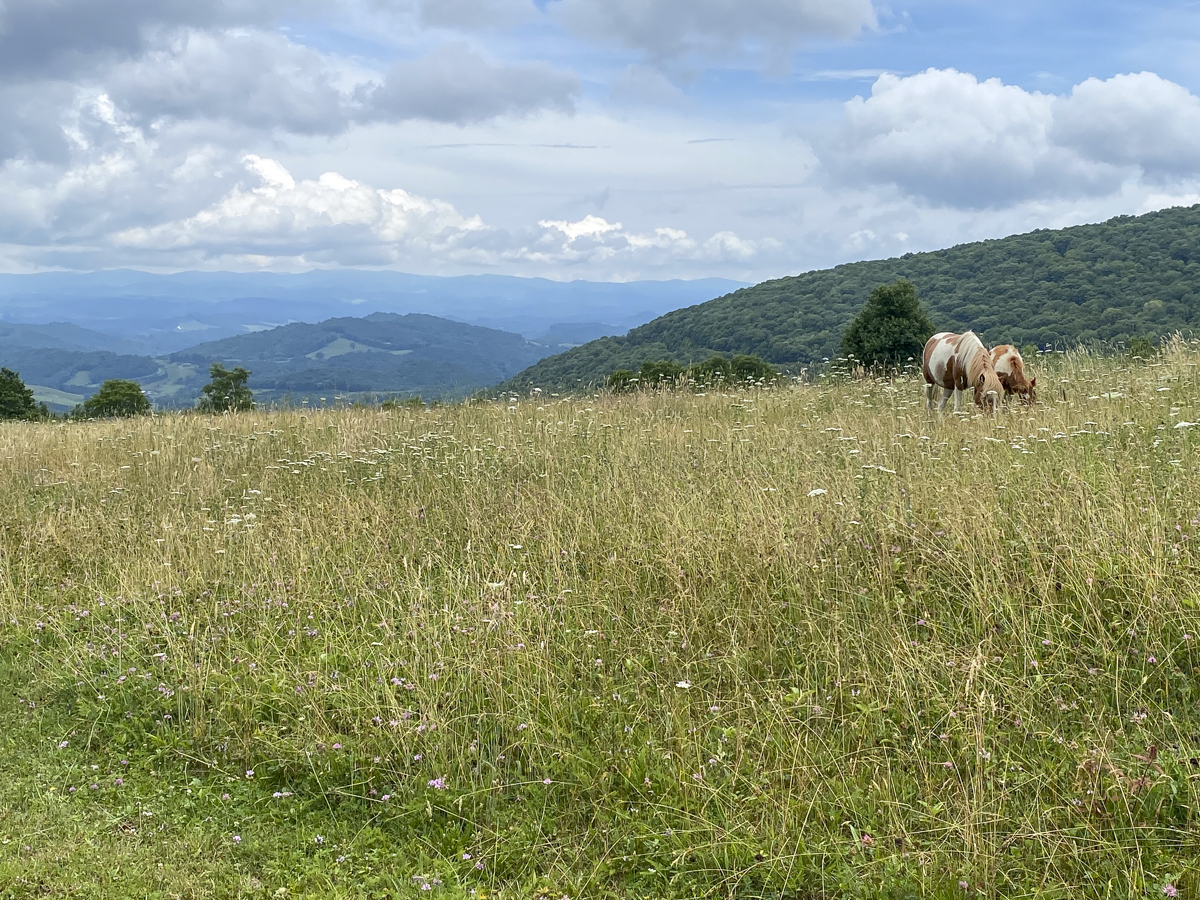
A Maple Looper, Parallelia bistriarisThe wild ponies help keep the meadows openThe highlands are home to amazing textures and colors of lichens……you just need to pause and look closelyThe green colors of ferns, mosses, and lichens were richly saturated in the gray skiesPatterns and textures everywhereThe upright fertile shoots of the Fan Clubmoss contain the spores. In prehistoric times, some clubmosses reached the height of trees and often dominated the landscape.We spotted a single Turk’s Cap Lily ((Lillium superbum) on our hikeHeal-all (Prunella vulgaris), as the name implies, has been used to treat a variety of ailments in the pastSt. John’s Wort (Hypericum sp.) were found scattered across the high baldsA view as the cloud bank started to lift (barely)We lifted a few rocks in a tiny rivulet along the trail and found three salamandersThe highlands are home to an incredible variety of fungi. I believe this is a Pigskin Earthball, Scleroderma citrinumThis beauty was growing on a fallen log…probably the Upright Coral Fungus, Ramaria strictaI love the names of this one – Eyelash Cup (Scutellinia scutellata) – also called the Molly Eye-winker, the Scarlet Elf Cap, and the Scarlet Pixie Cup. Look closely and you can see the fine fringe of filaments resembling eyelashes along the edge of each cup.As we left the park, the weekend crowds were starting to arrive, the clouds were lifting, and the ponies were doing what they do, adding a touch of glamour to the most beautiful mountains in Virginia
I think that engaging with natural history – learning the identity and phenology of your neighbors by reading about their stories, and studying their lives alongside your own can give anyone a sense of rootedness.
~Henry Hershey
One reason I like National Moth Week so much is that it reminds me to make the effort to learn more about our little-known (and certainly under-appreciated) nocturnal neighbors. We were absent for much of this years’ event (plus evening thunderstorms hindered efforts) but we managed to set out a moth sheet and black light again last night. Visitors included several moth species new to me and a host of other night-flying insects, especially members of the beetle clan. Below are some highlights (as always, any species ID corrections are welcome)…
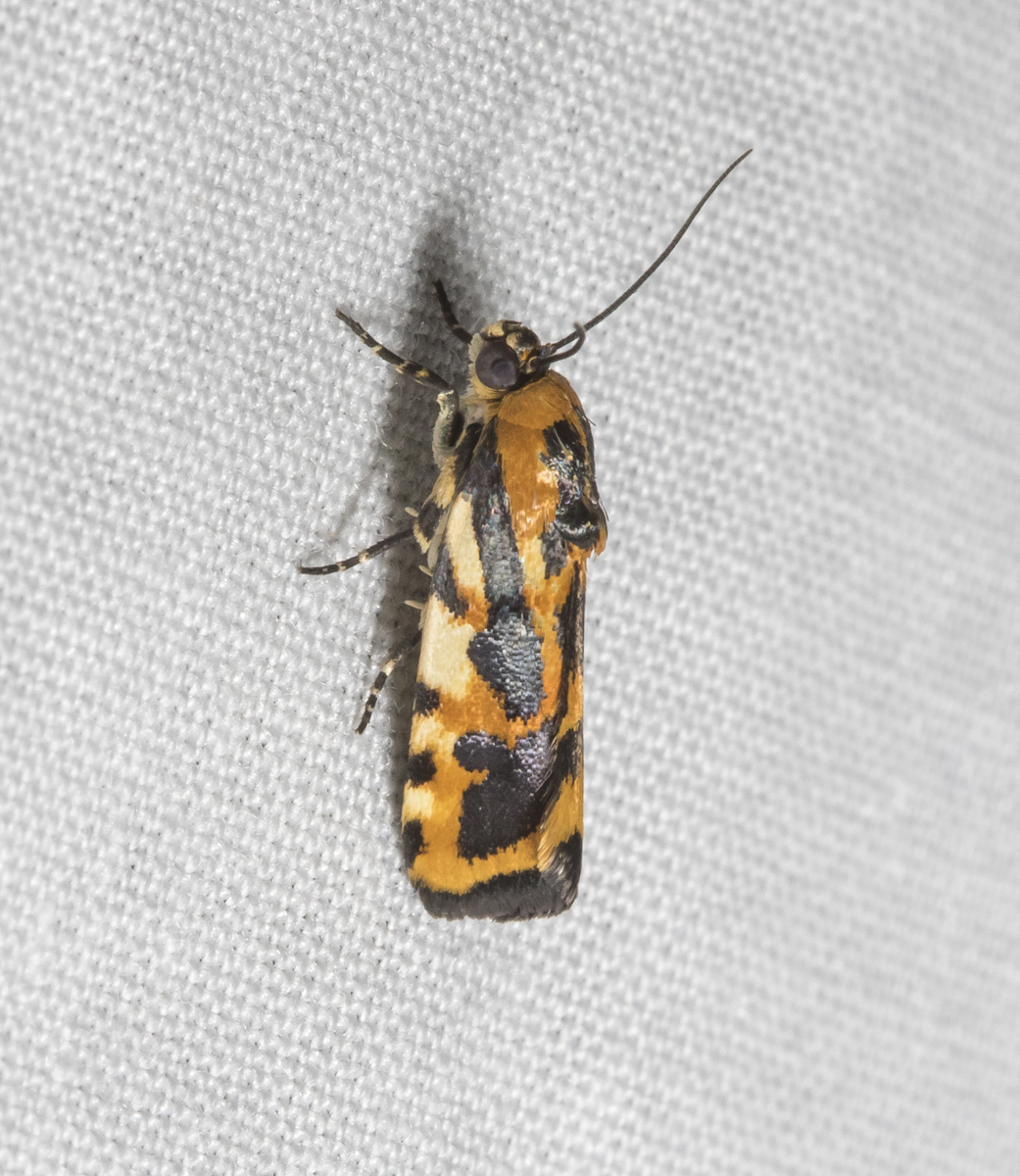
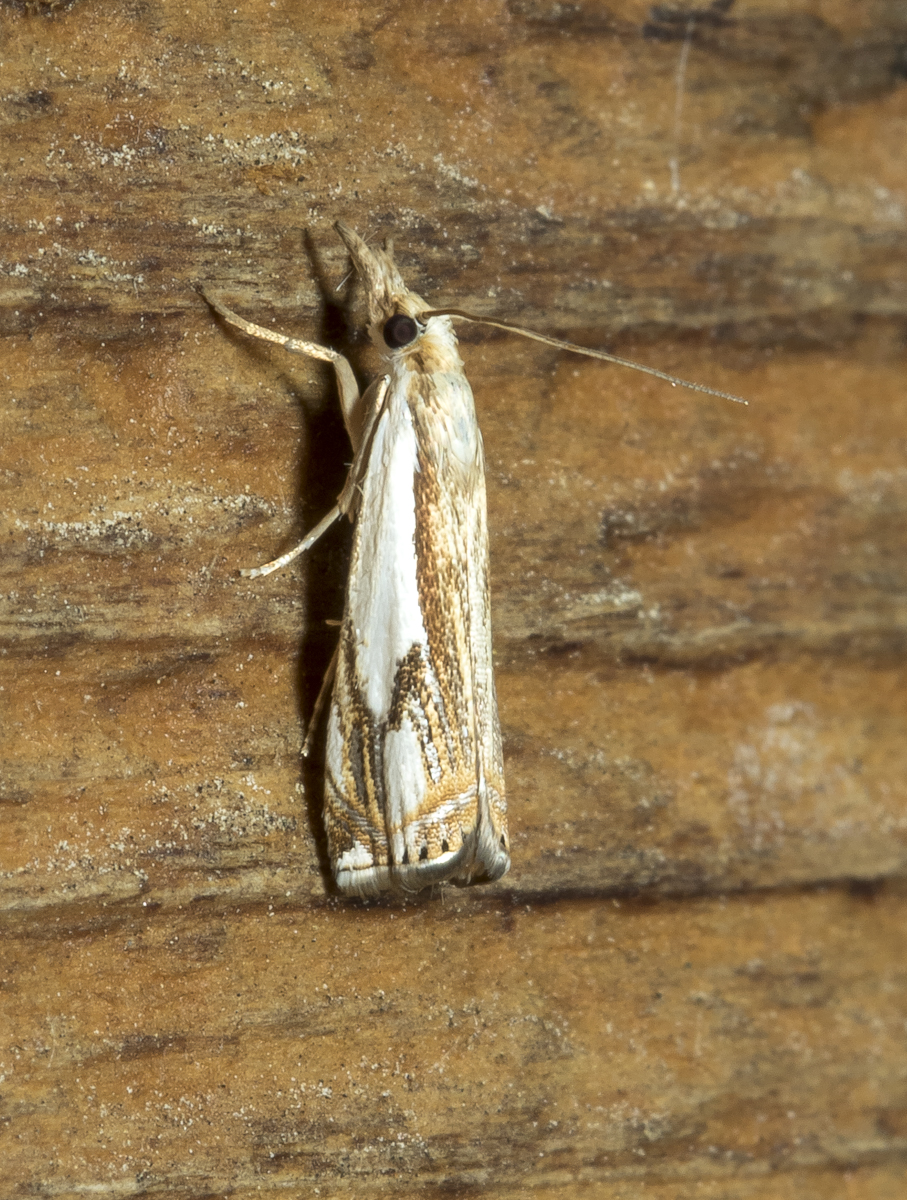
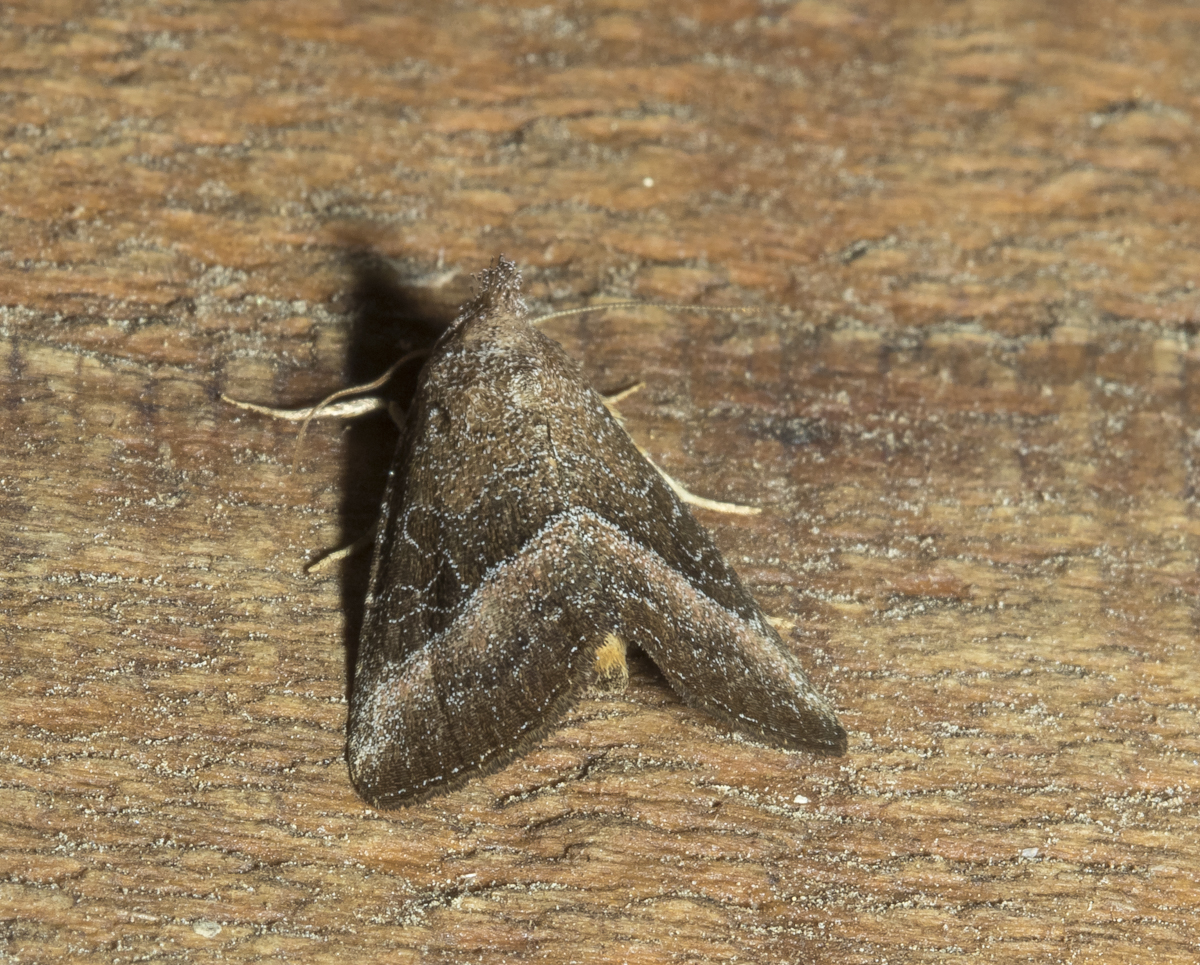
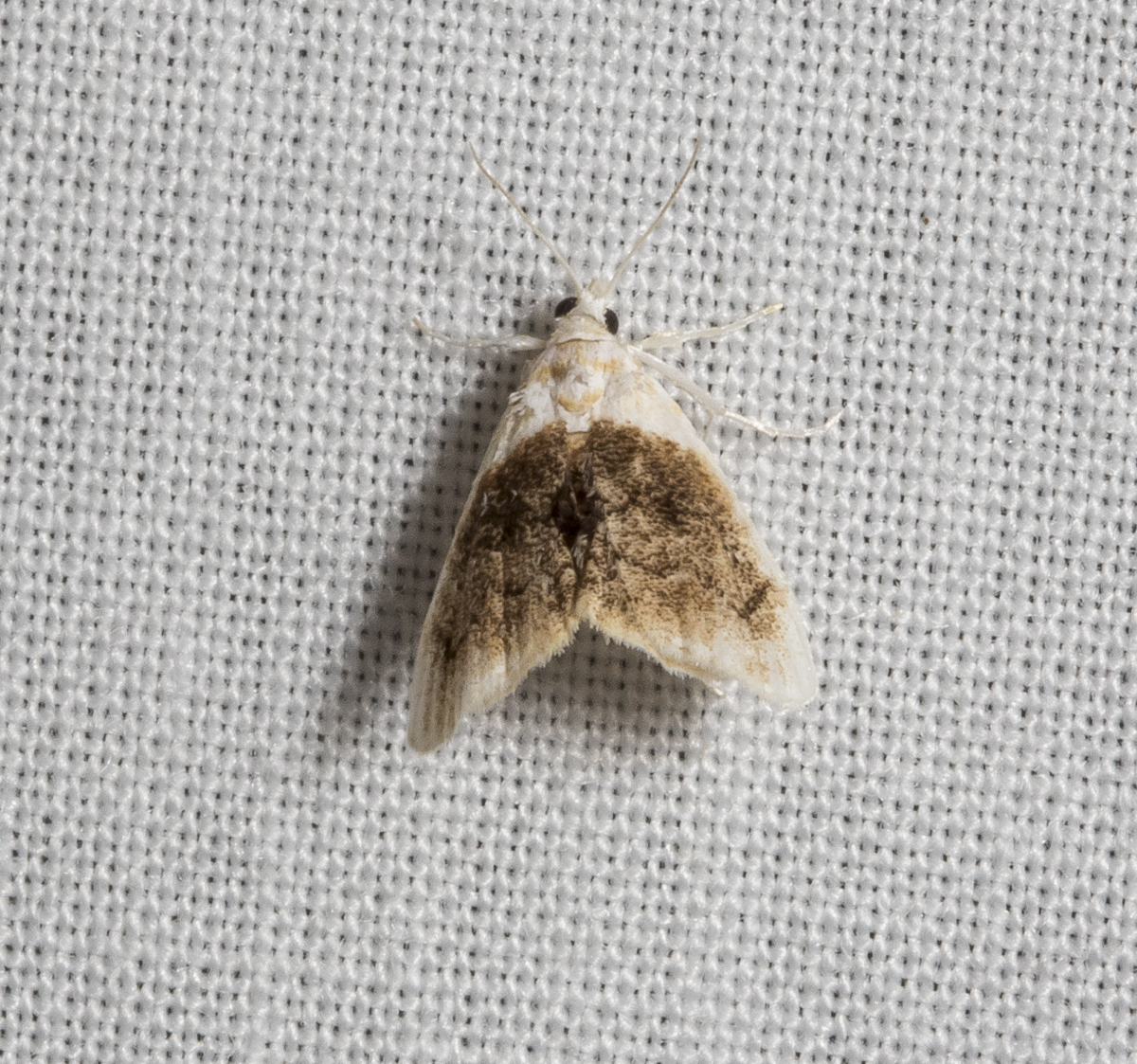
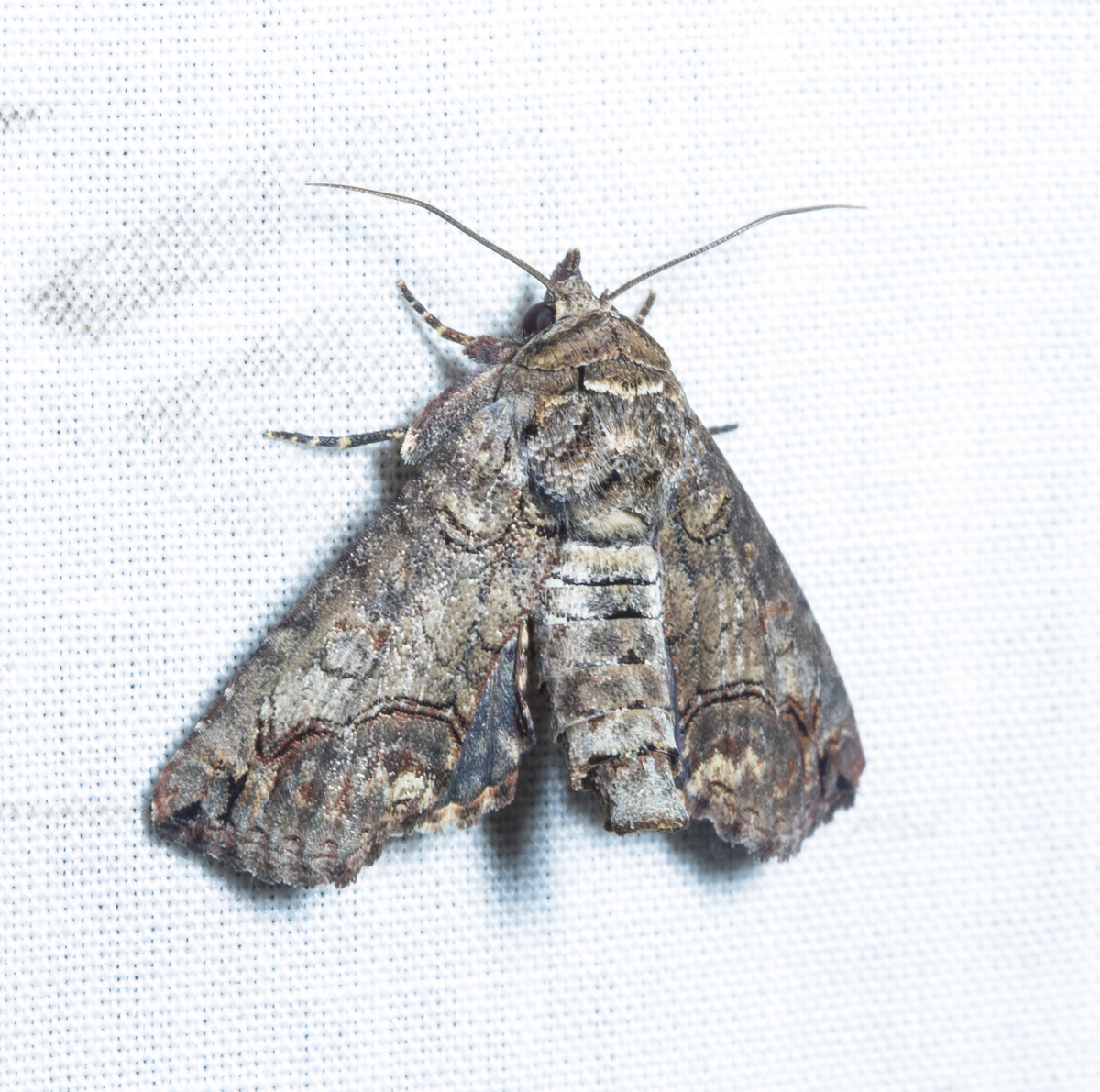
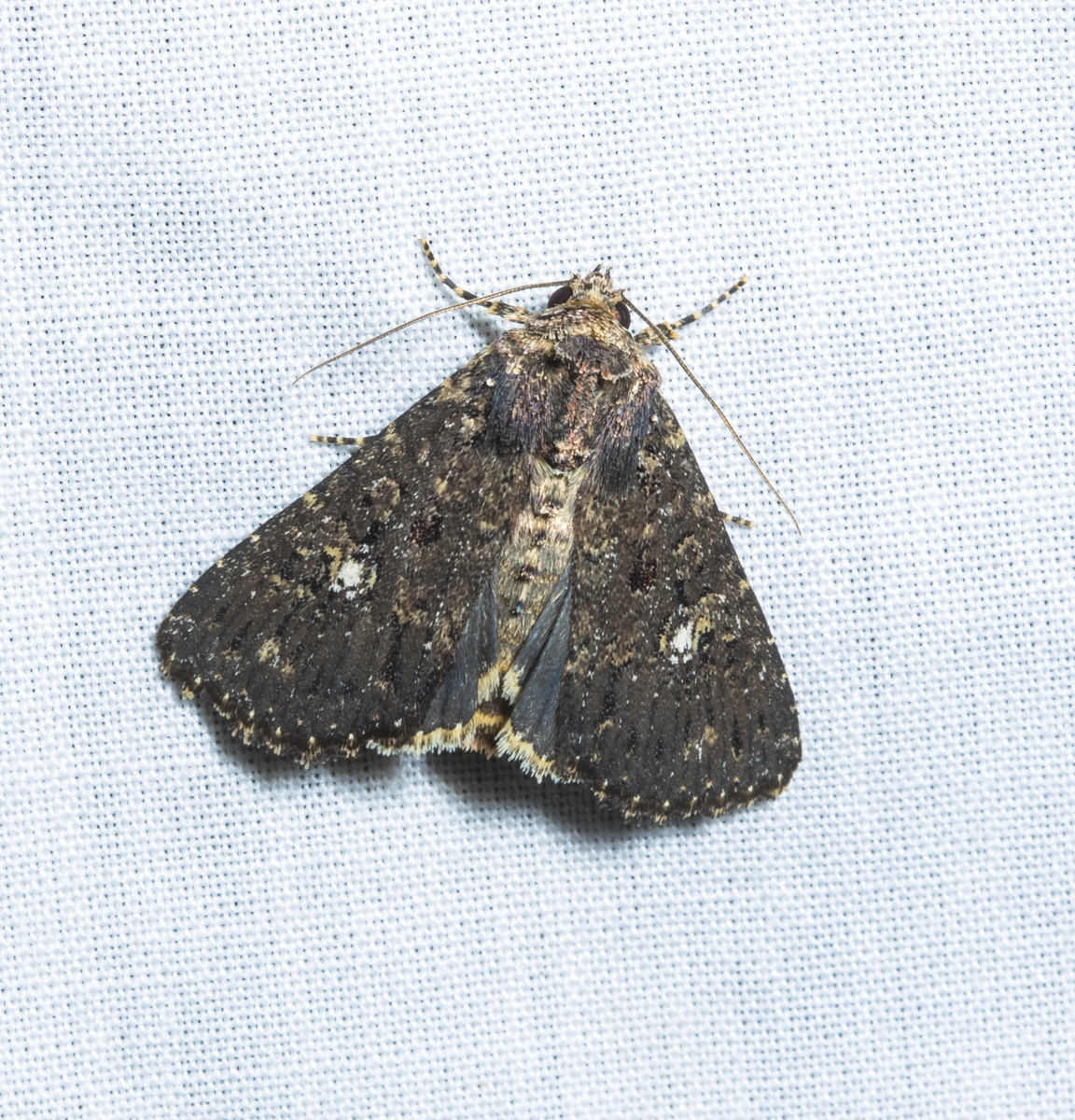
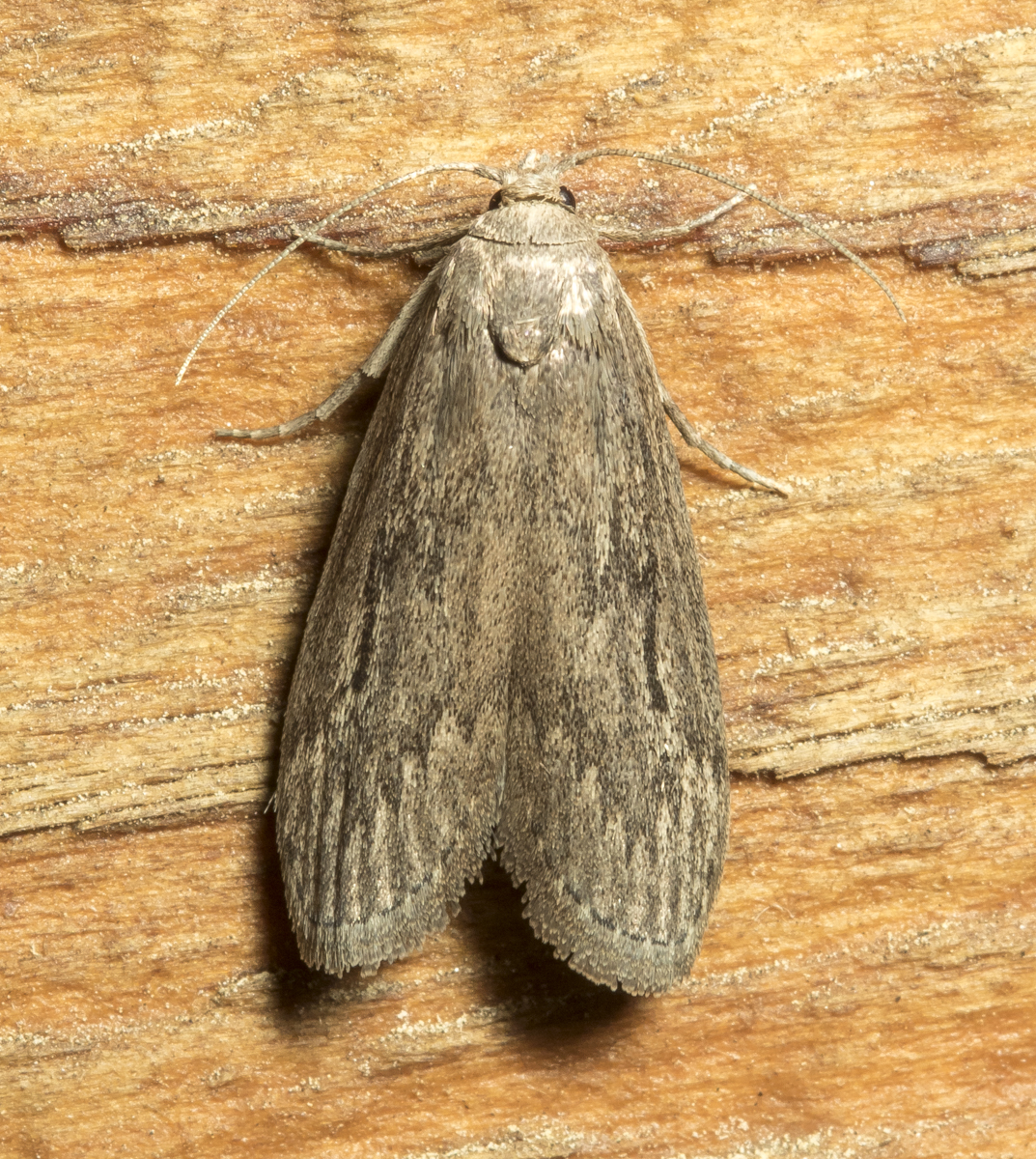
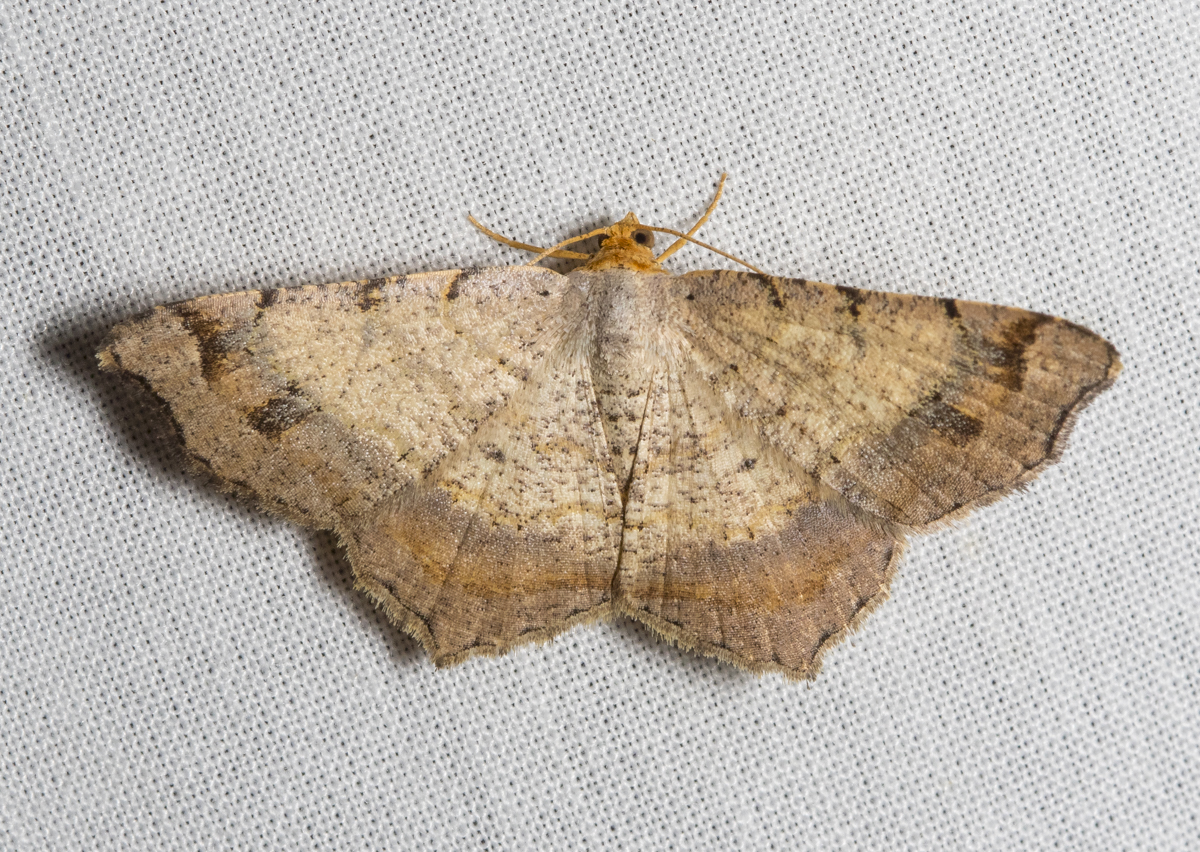
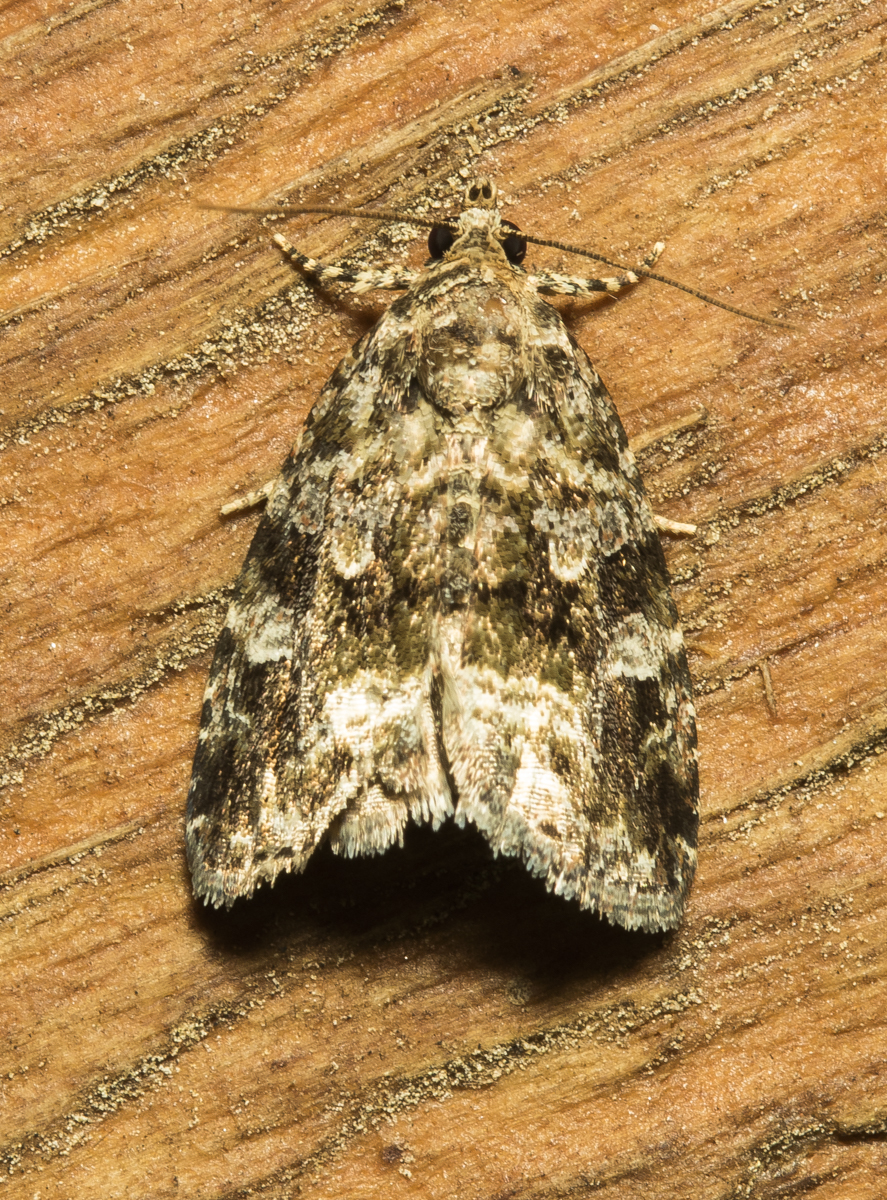
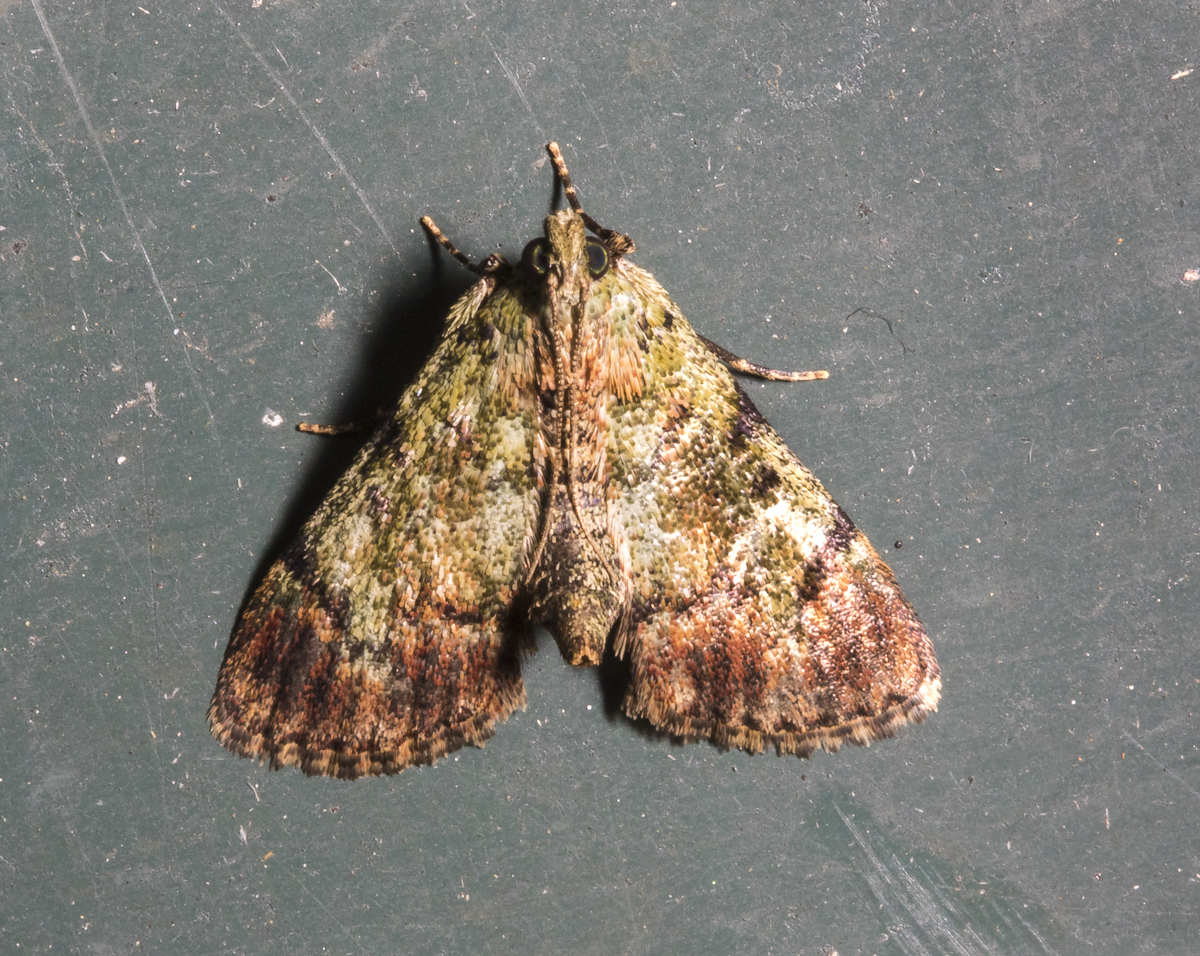
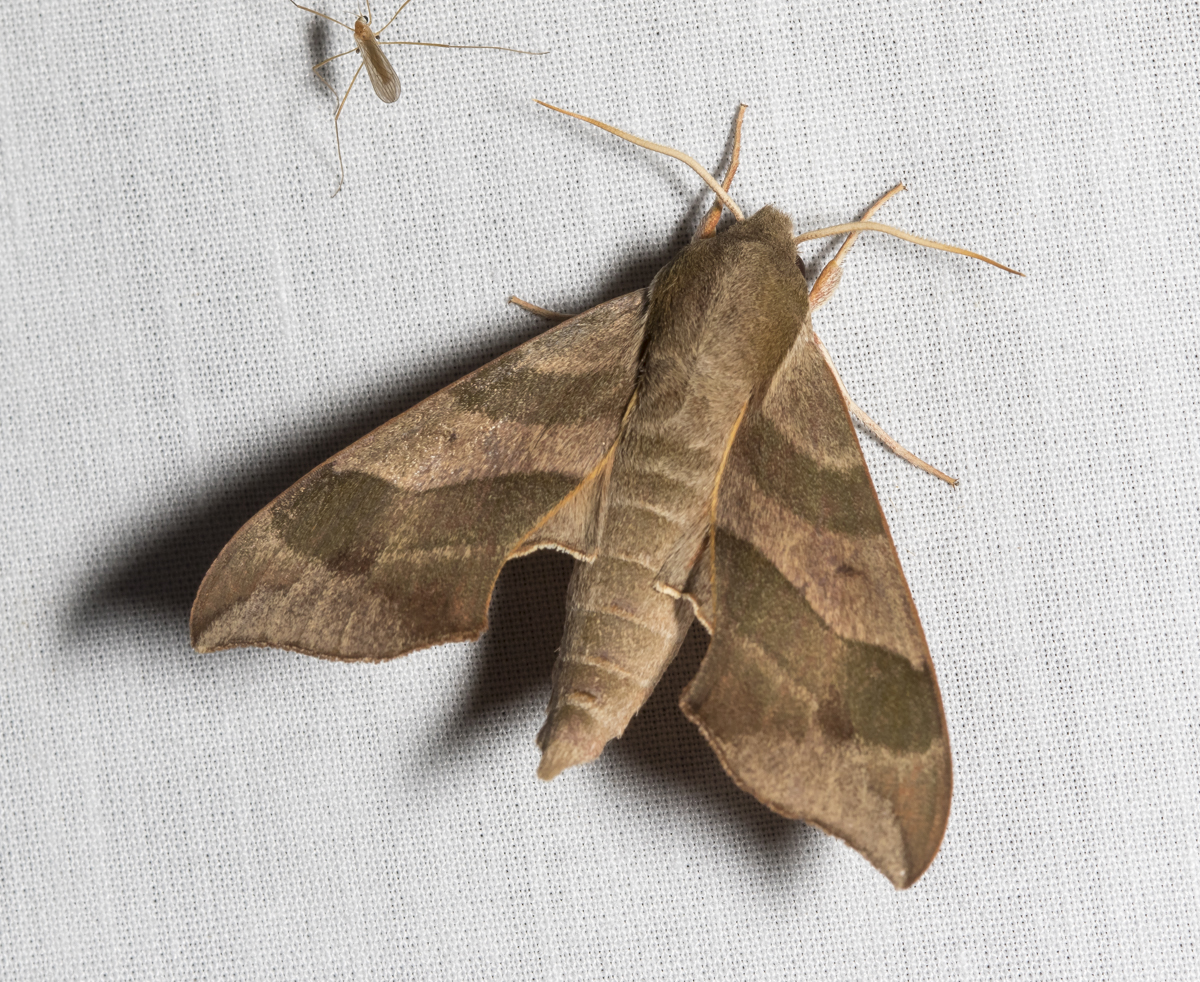
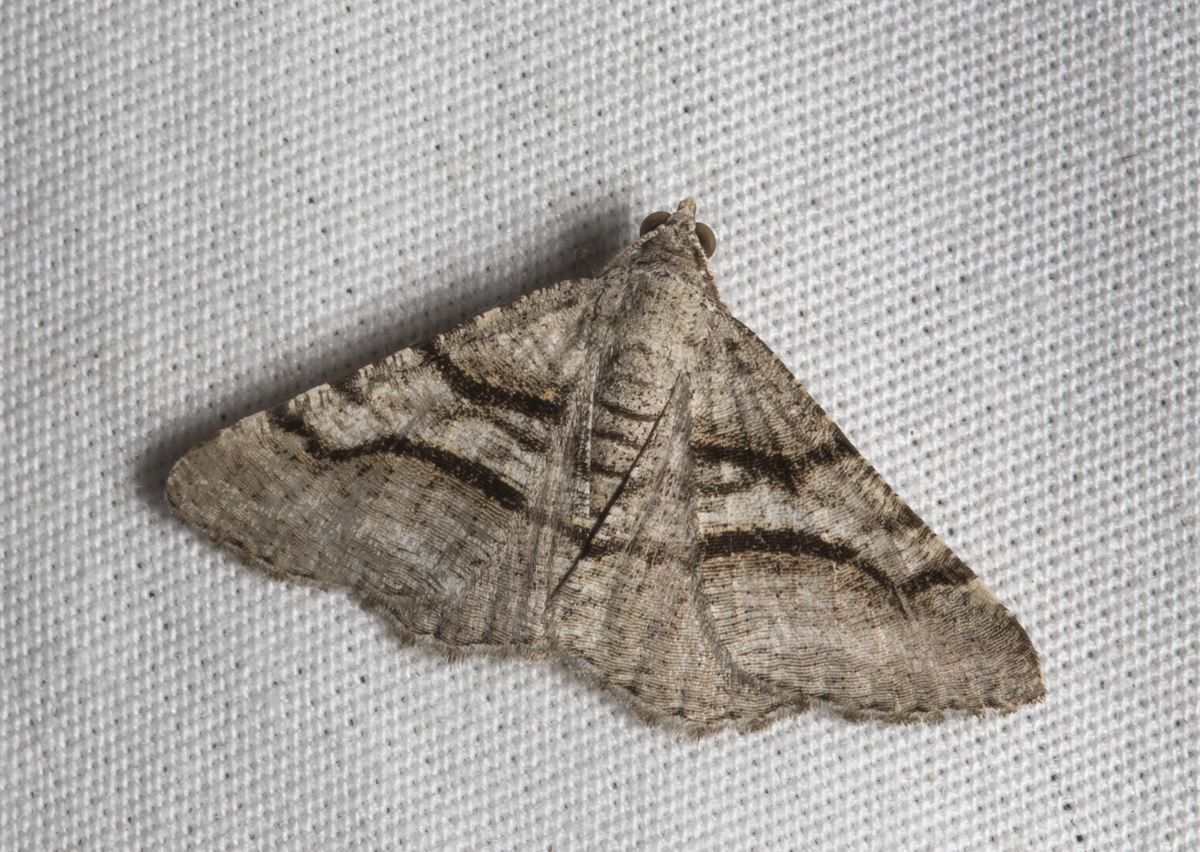
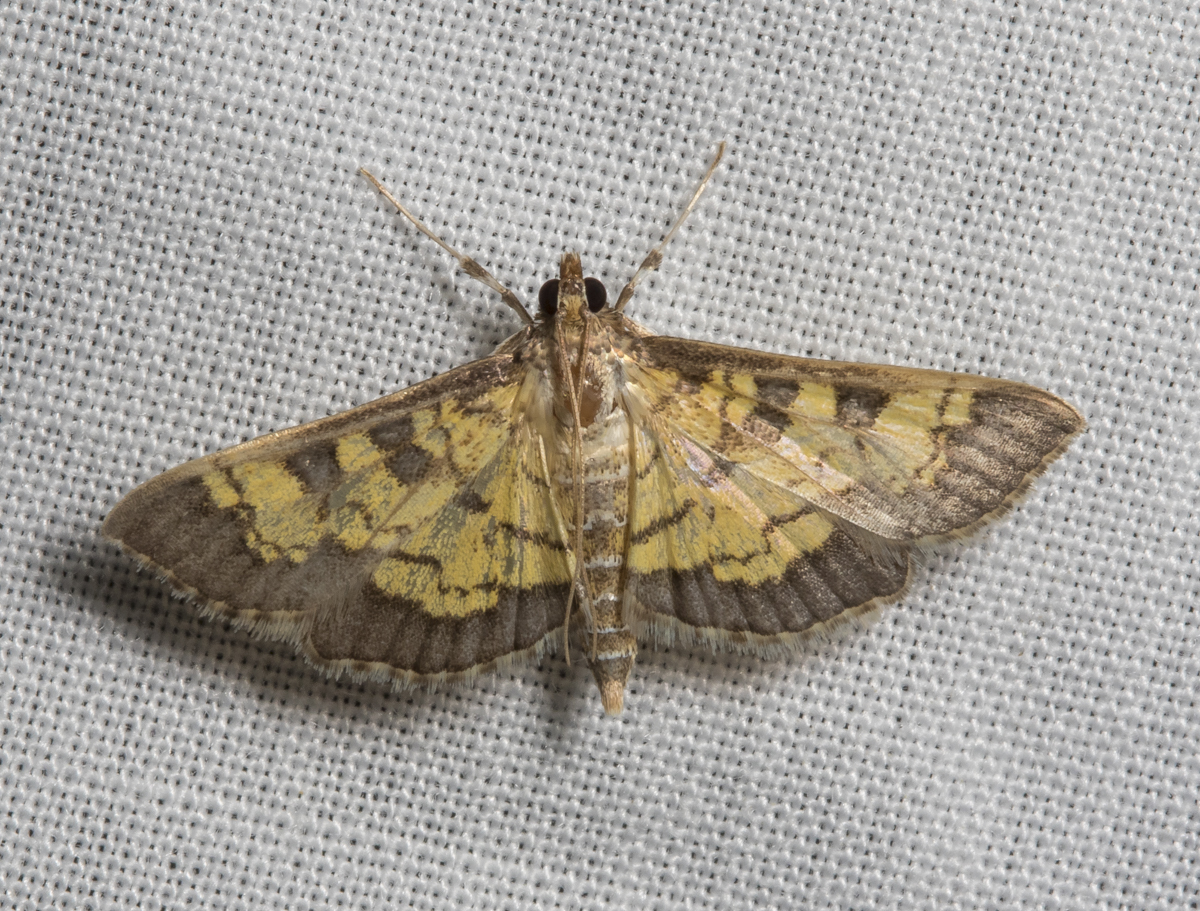
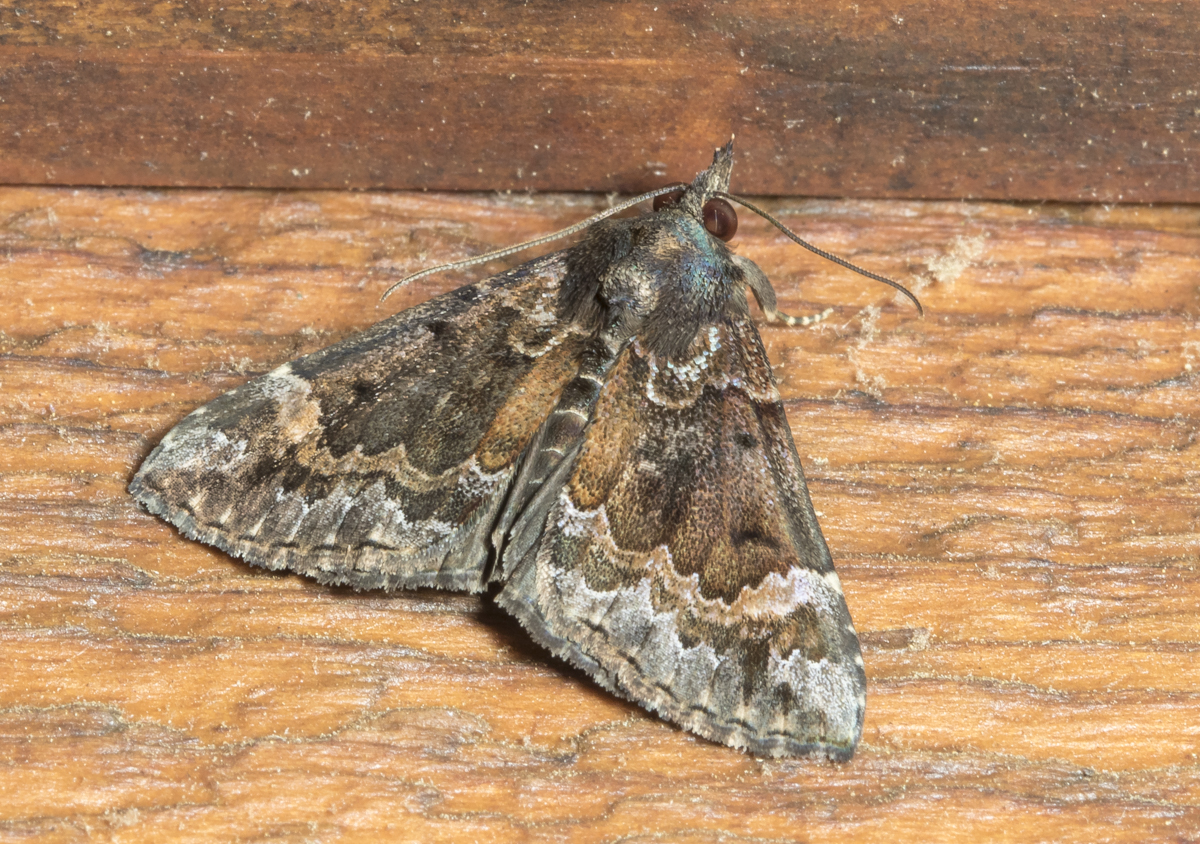
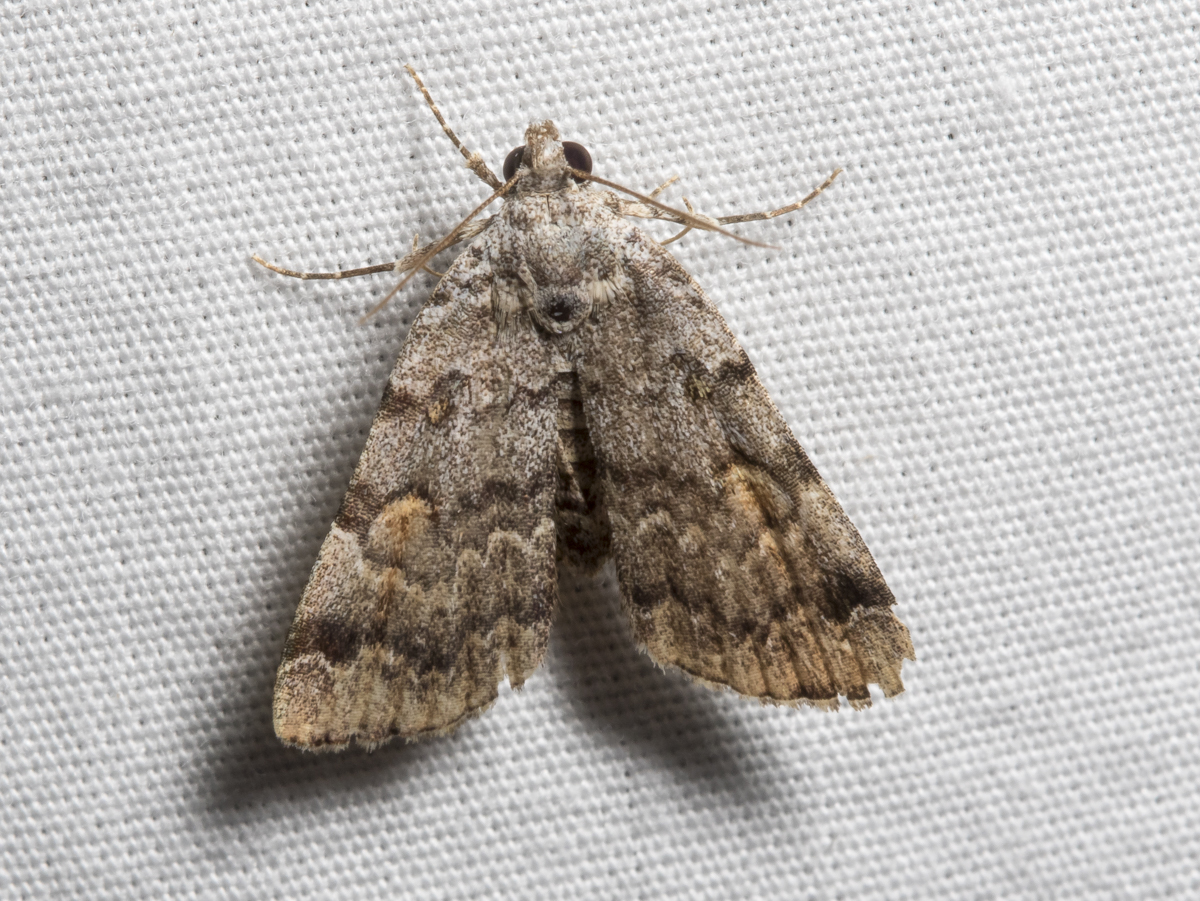
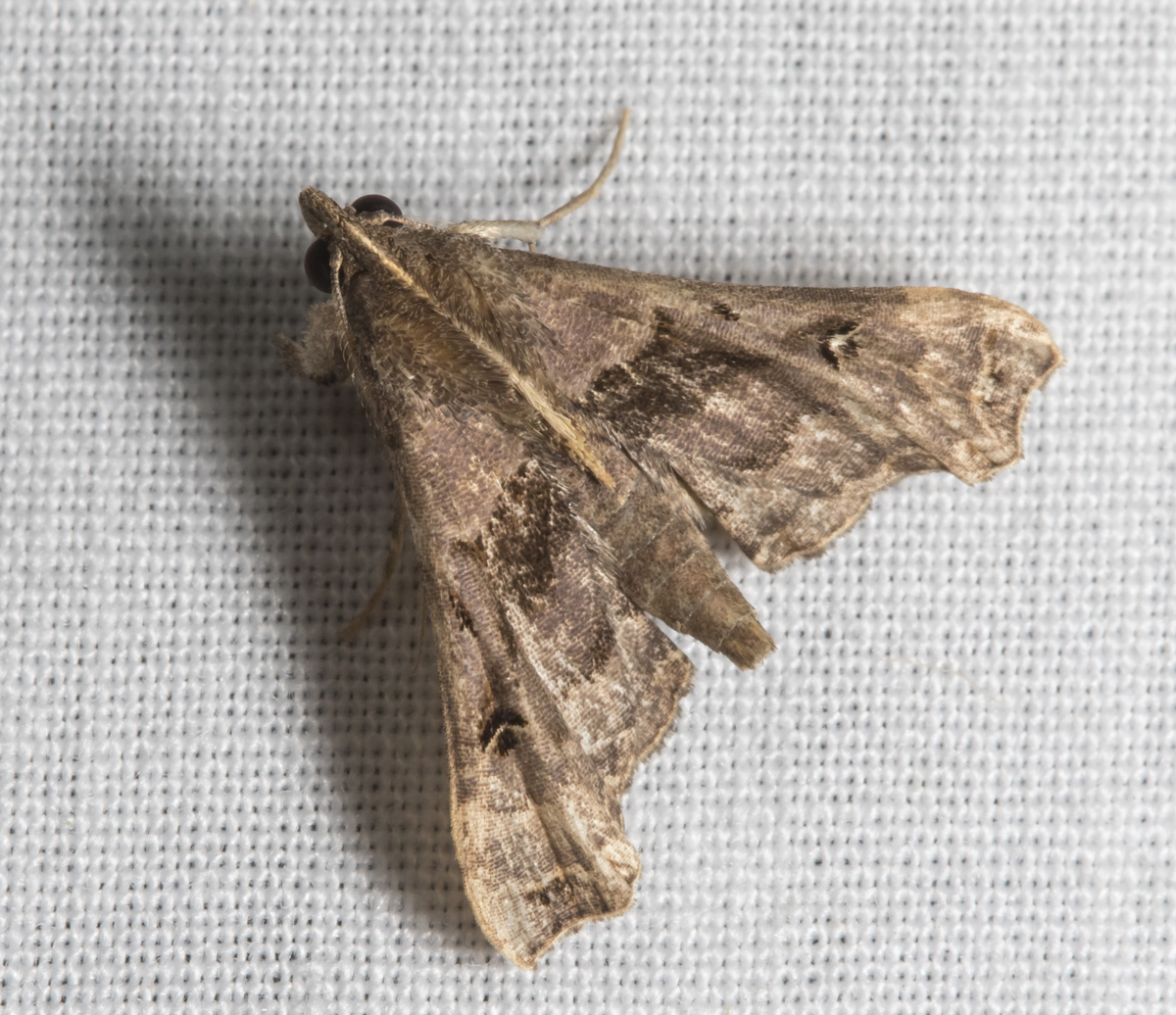
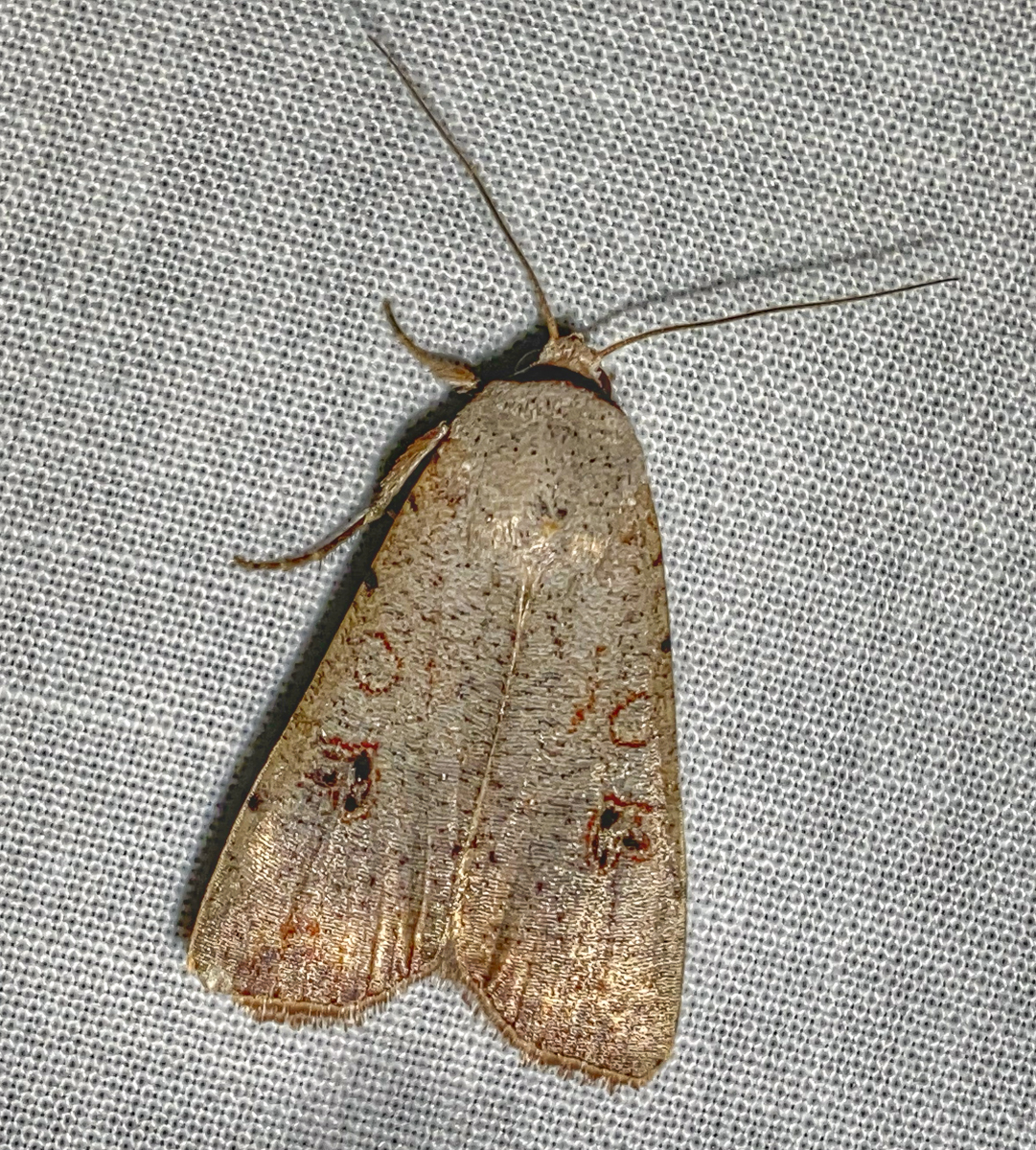
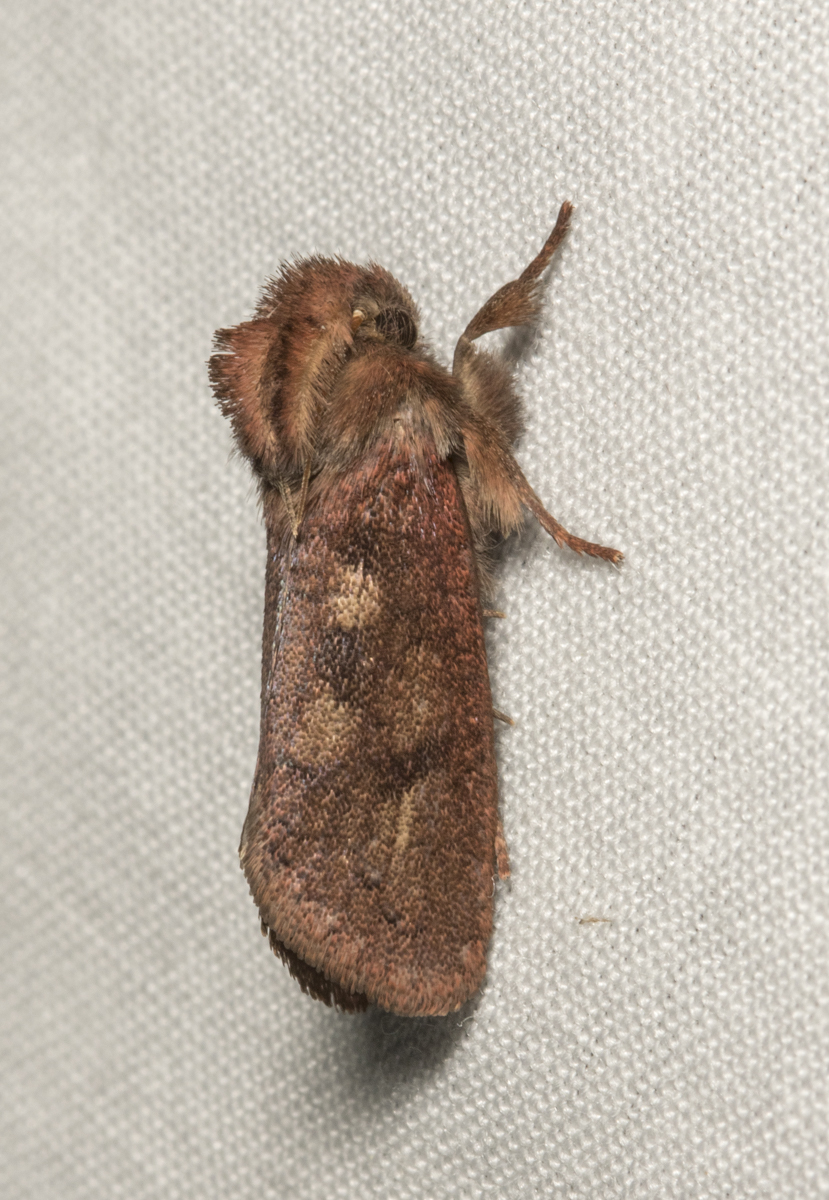
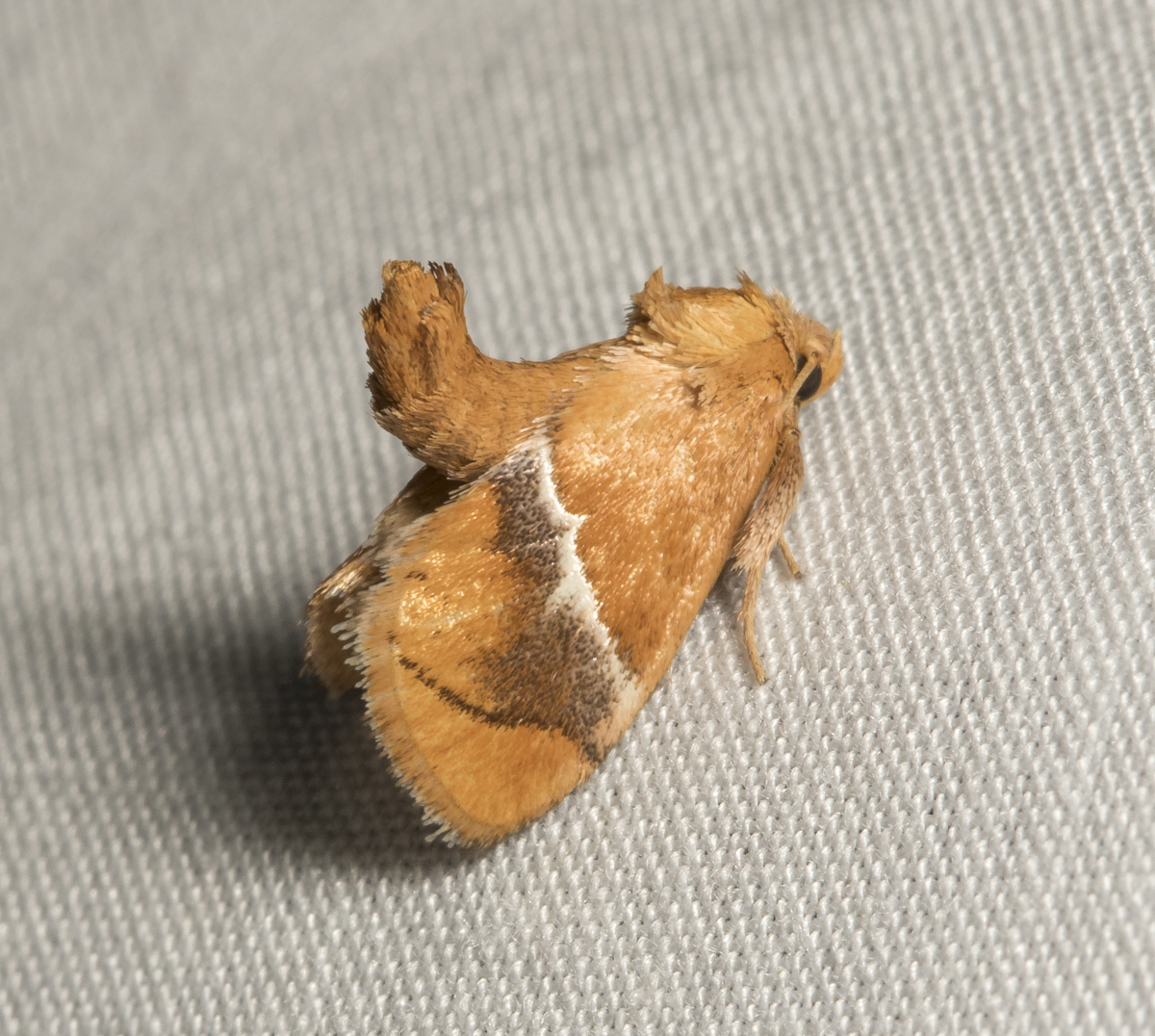
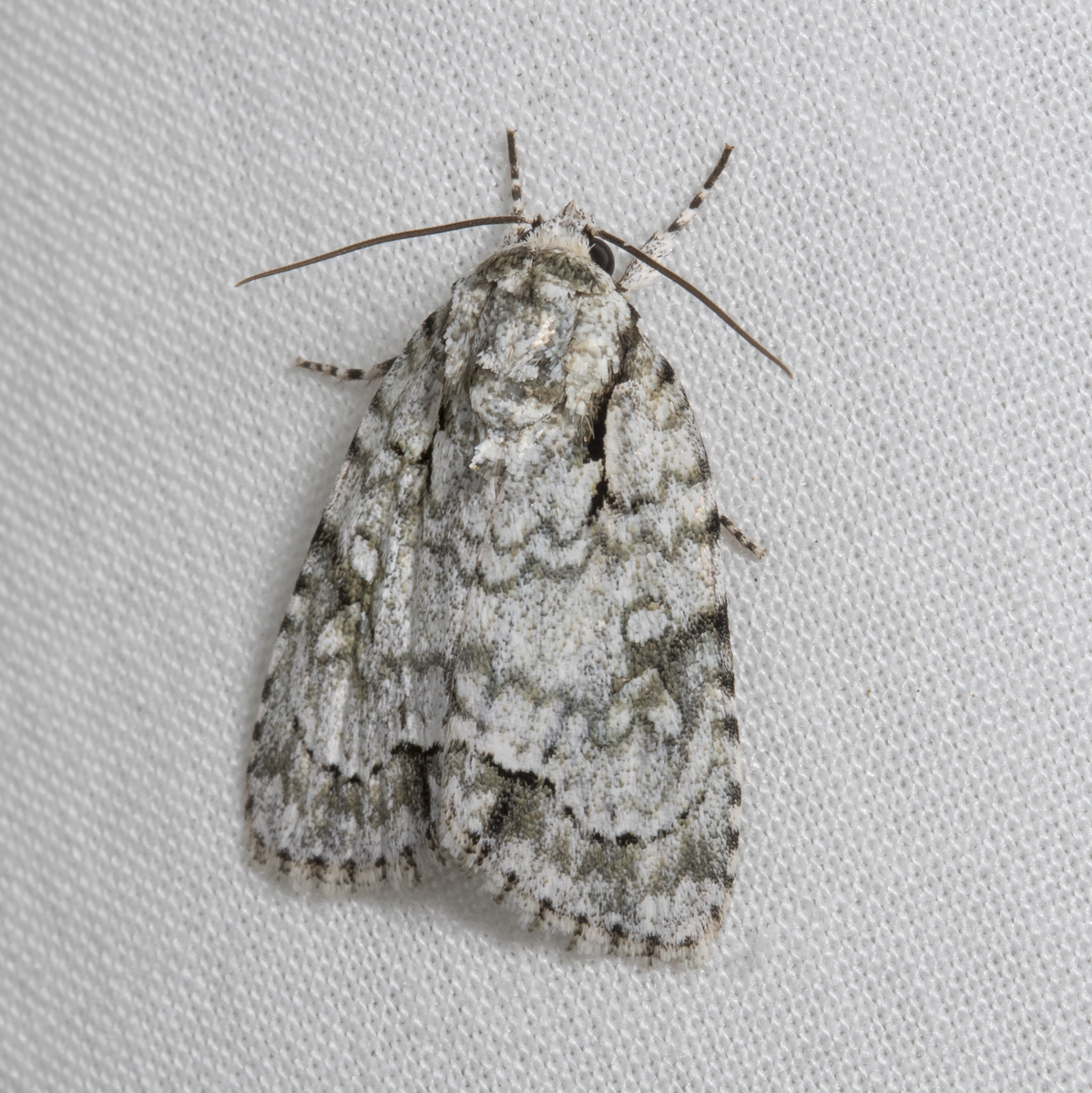
Common Spragueia Moth, Spragueia leo, a small bird-dropping moth (click photos to enlarge)Another tiny moth, a Double-banded Grass-veneer, Crambus agitatellusThe adult form of one of our favorite caterpillars, the Crowned Slug Moth, Isa textulaCommon Pinkband, Ogdoconta cinereolaA very small, but beautiful, Sooty Lipocosmodes, Lipocosmodes fuliginosalisA snappy dresser, a Striped Oak Webworm, Pococera expandensNeutral colors are in this year – Large Paectes Moth, Paectes abrostoloidesDusky Groundling, Condica vecorsTerrenella Bee Moth, Aphomia terrenella – not much is known about this species but larvae may feed on the honeycomb and/or larvae of beesThough simialr in appearance to others in its group, I think this is a Bicolored Angle, Macaria bicolorataLarge Mossy Glyph, Protodeltote muscosulaDimorphic Macalla Moth, Epipaschia superatalisThe prize-winning moth of the night, a Virginia Creeper Sphinx, Darapsa myron (we both really love the sphinx moths for their beauty, patterns, and sleek design)
In addition to some cool moths, the light attracted many other critters. The most abundant (and smallest of the lot) were various species of caddisflies and the ubiquitous May Beetles (the ones that constantly pound on our windows at night). Here are some of the larger non-moth neighbors….
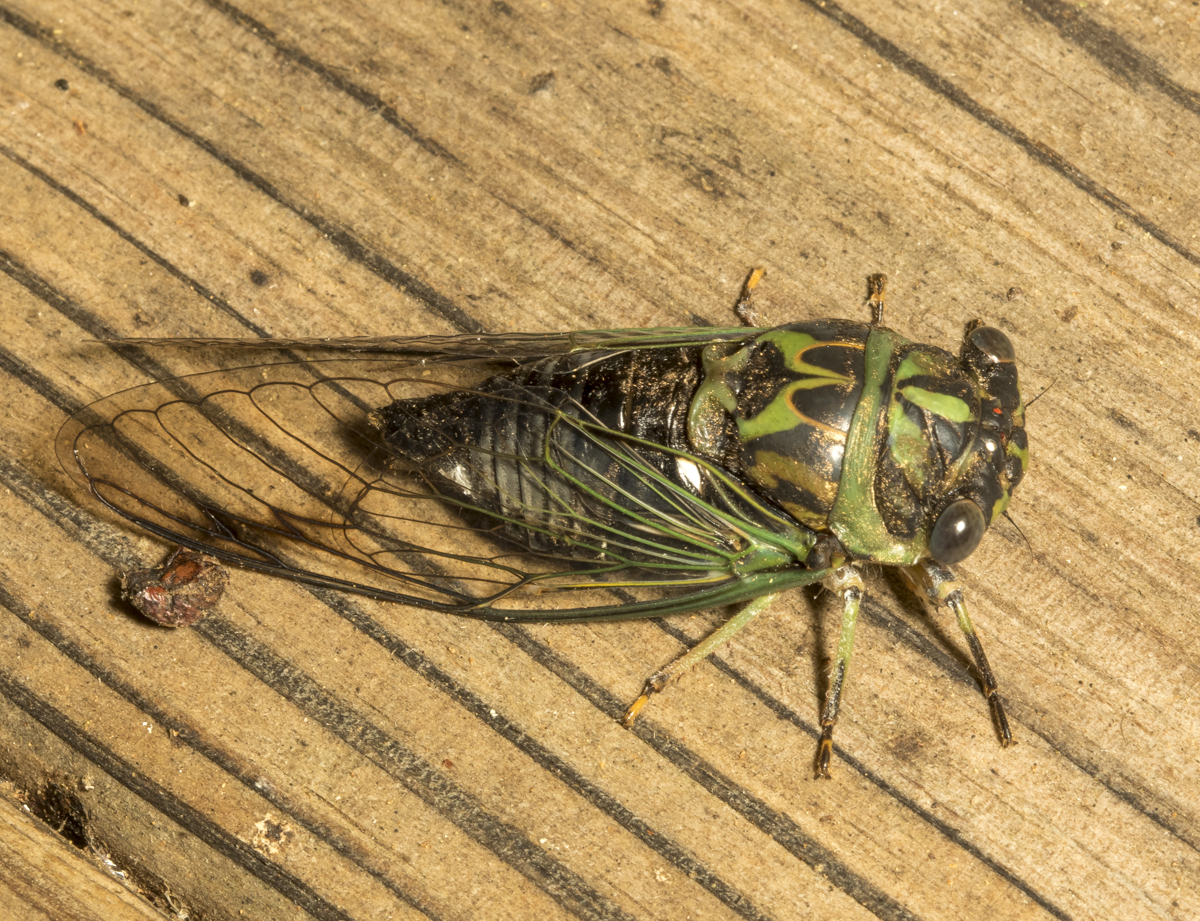
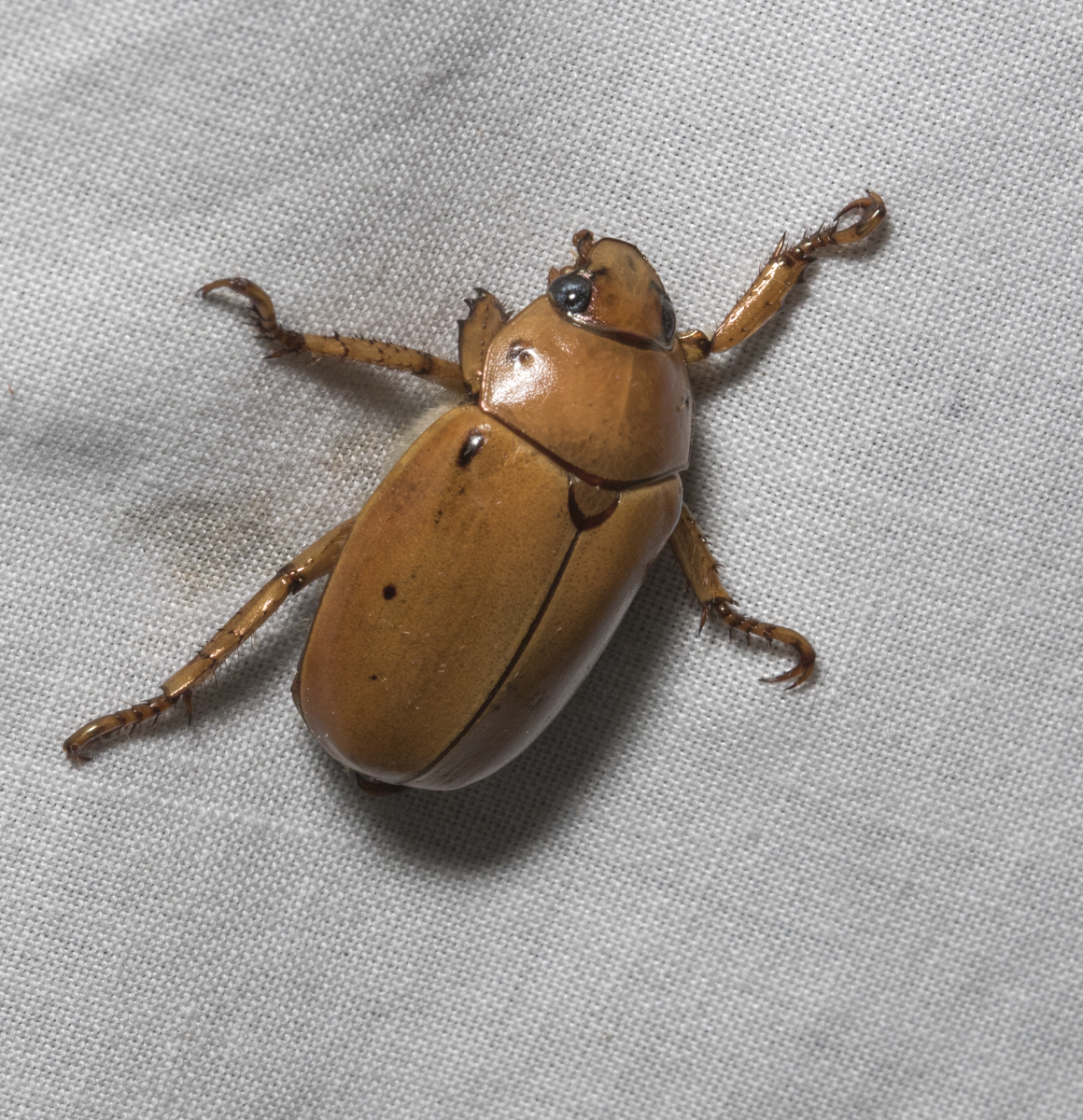
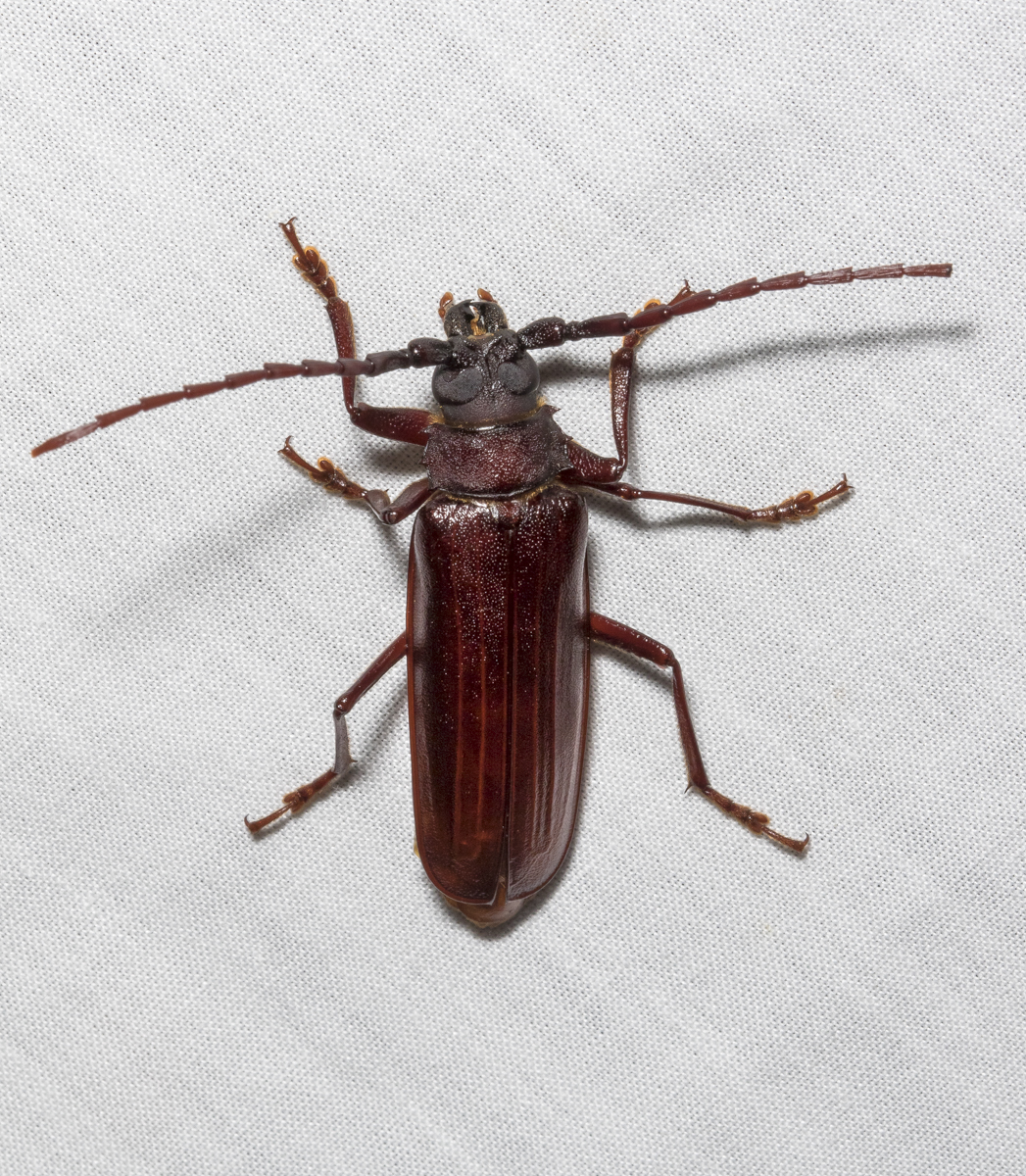
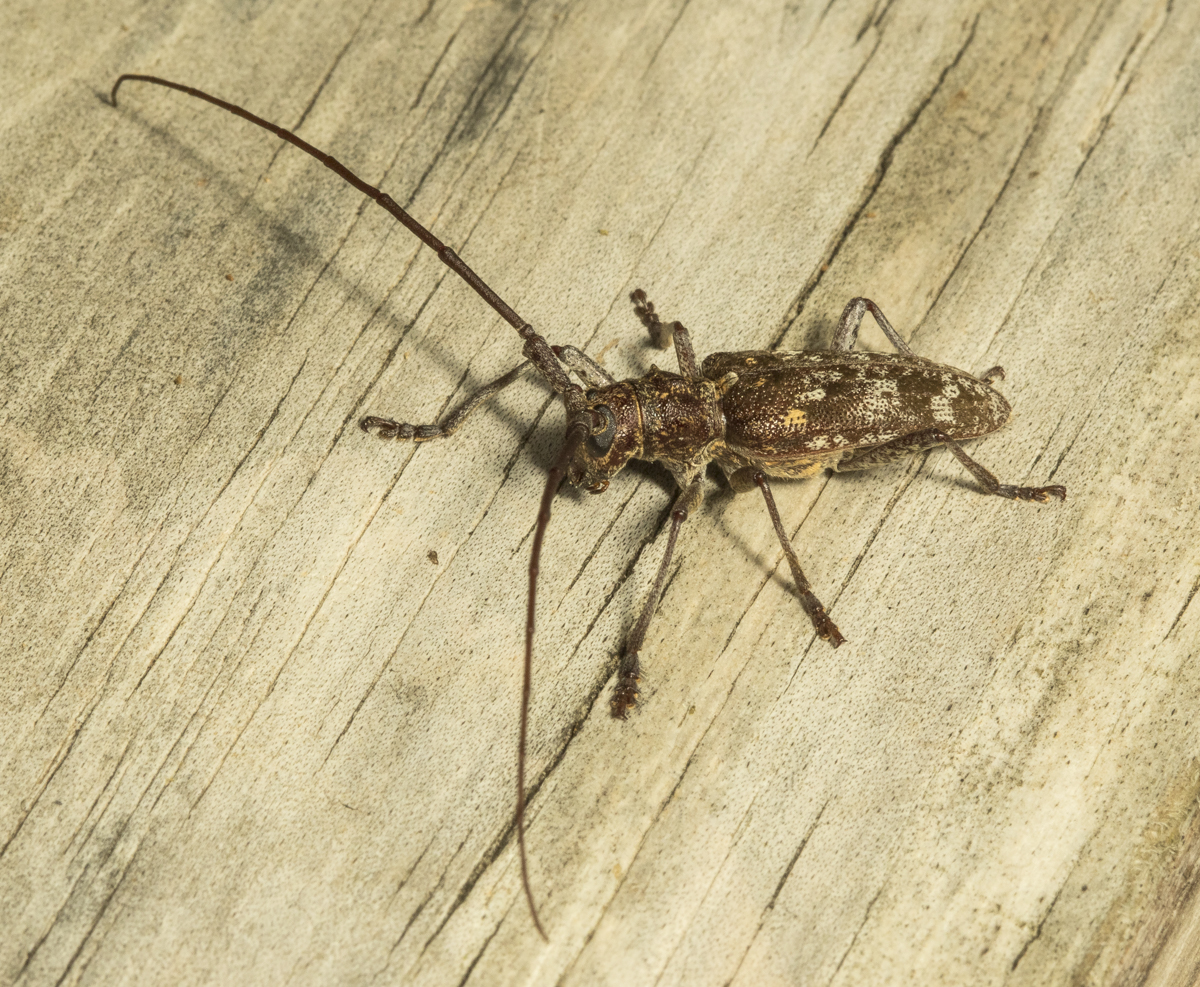
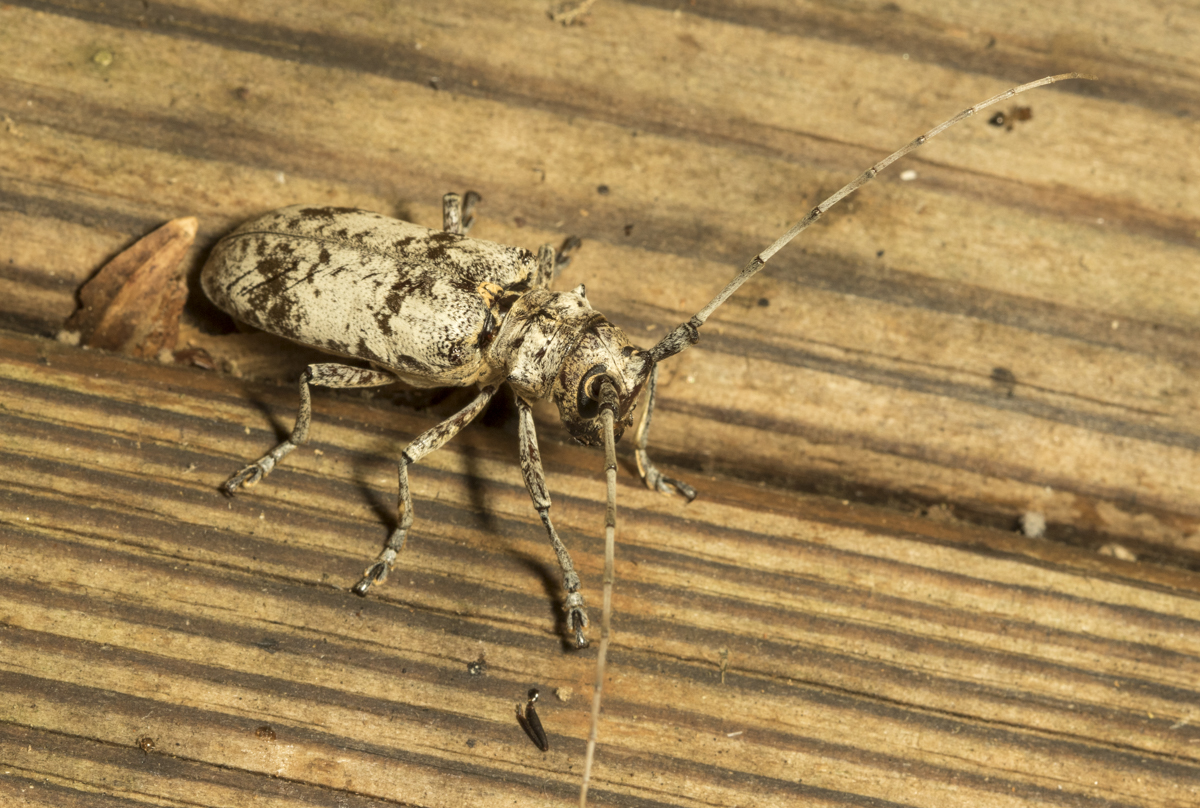
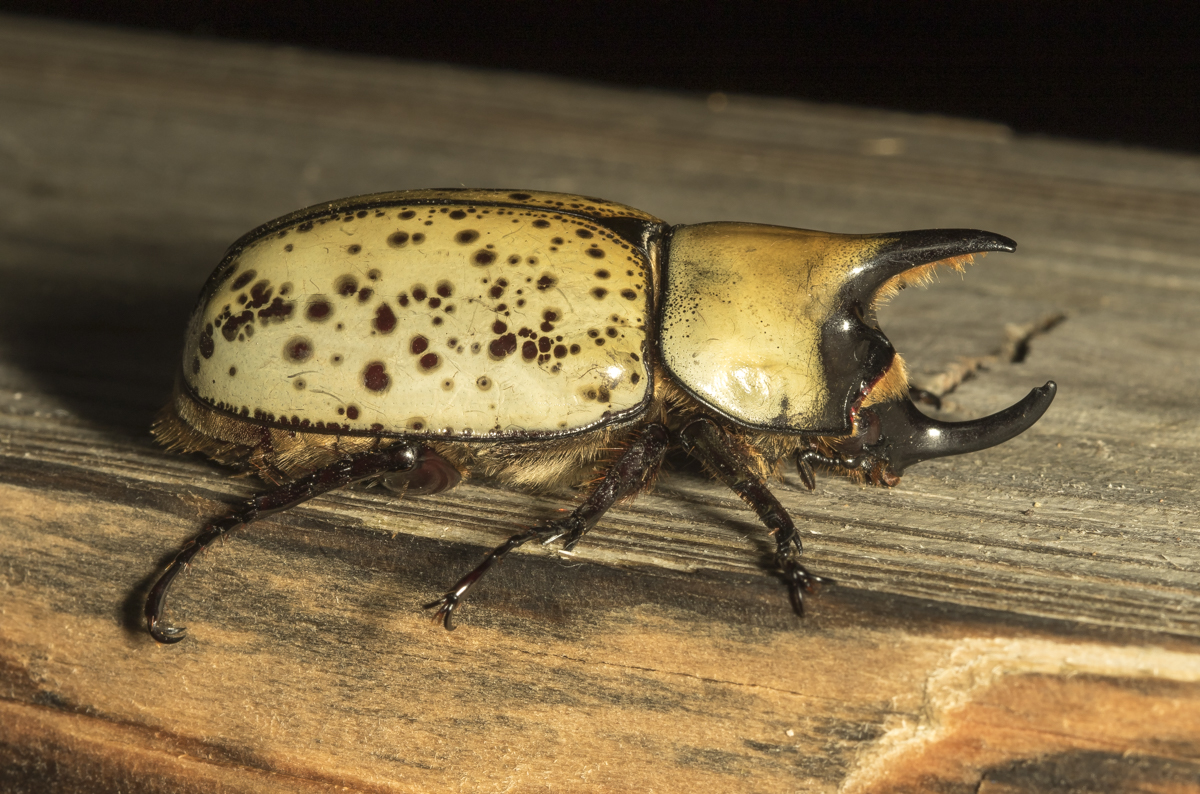
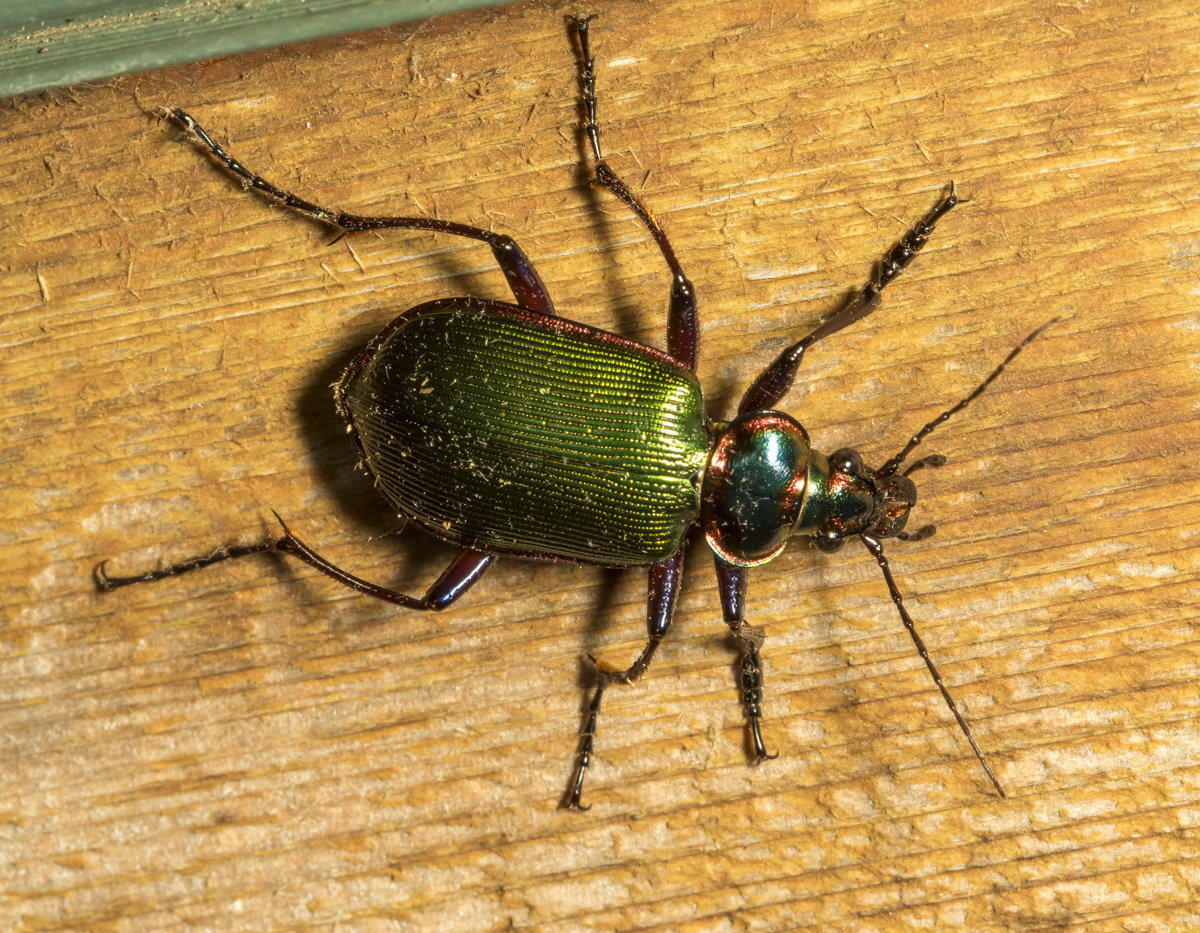
Several noisy cicadas (Neotibicen sp.) showed up last nightGrapevine Beetle, Pelidnota punctataThe formidable-looking Brown Prionid Beetle, Orthosoma brunneumSeveral species of longhorned beetles showed up, including this Carolina Pine Sawyer, Monochamus carolinensisA large White Oak Borer, Goes tigrinusAnother huge Eastern Hercules Beetle, Dynastes tityus, male made an appearance. These guys are like small tanks!The fastest (and second largest) beetle of the night was this Fiery Searcher Beetle, Calosoma scrutator. These are in the caterpillar hunter group of beetles and can produce a strong musky odor and a painful bite if mishandled. Adults can live up to three years and can consume hundreds of caterpillars (including tent caterpillars and gypsy moth larvae) in their lifetime
Just because National Moth Week is over, don’t let that stop you from turning on a porch light or setting out a moth sheet to learn more about some of our amazing nocturnal neighbors.
Be like the bluebird who never is blue, for he knows from his upbringing what singing can do.
~Cole Porter
I checked on the bluebird box out in the yard yesterday to see if any of the four eggs I saw about a week ago had hatched. As always, I approached noisily, then knocked on the side of the house to give any sitting adult ample warning and time to fly out. I gently opened the box, pulled out the nest cup and saw this…
Newly hatched Eastern Bluebird nestlings (click photos to enlarge)
Three of the four eggs have hatched today. It amazes me they can even hold up their giant heads with oversized closed eyes to beg for food. It will take another 17+ days for these little ones to fledge and be seen following their busy parents around the yard. Wishing them well as they enter the world.
The poets say some moths will do anything out of love for a flame…
~Mohsin Hamid
Last night we participated in the NC Museum of Natural Sciences’ National Moth Week live event (well, Melissa worked it and I just rambled around taking pictures through my fogged glasses). It was a great start to National Moth Week and we shared lots of moth (and other nocturnal creatures) observations with participants from all over the state. After the fact, we discovered that, unfortunately, our really crummy internet diminished the viewing quality of Melissa’s live streaming of the many cool critters we have out here in our woods. But, I hope it was still fun for people to see some of the great diversity of moths and other insects attracted to our moth lights (we set up two white sheets and two UV lights to draw them in). Our friends, Deb and Keith, were here helping us monitor the sheets and identifying what we could using field guides and apps such as SEEK and LEPS. This is a great outdoor activity for sharing while physical distancing.
The live program was from 9 p.m. until 11 p.m.. We had to wait until just before the start time to set up the sheets due to a thunderstorm, but then the weather cooperated (if you call sweltering humidity and heat cooperating). But our Chatham County moths didn’t seem to mind. Below is a roster of the some of the amazing nocturnal visitors we entertained last night…
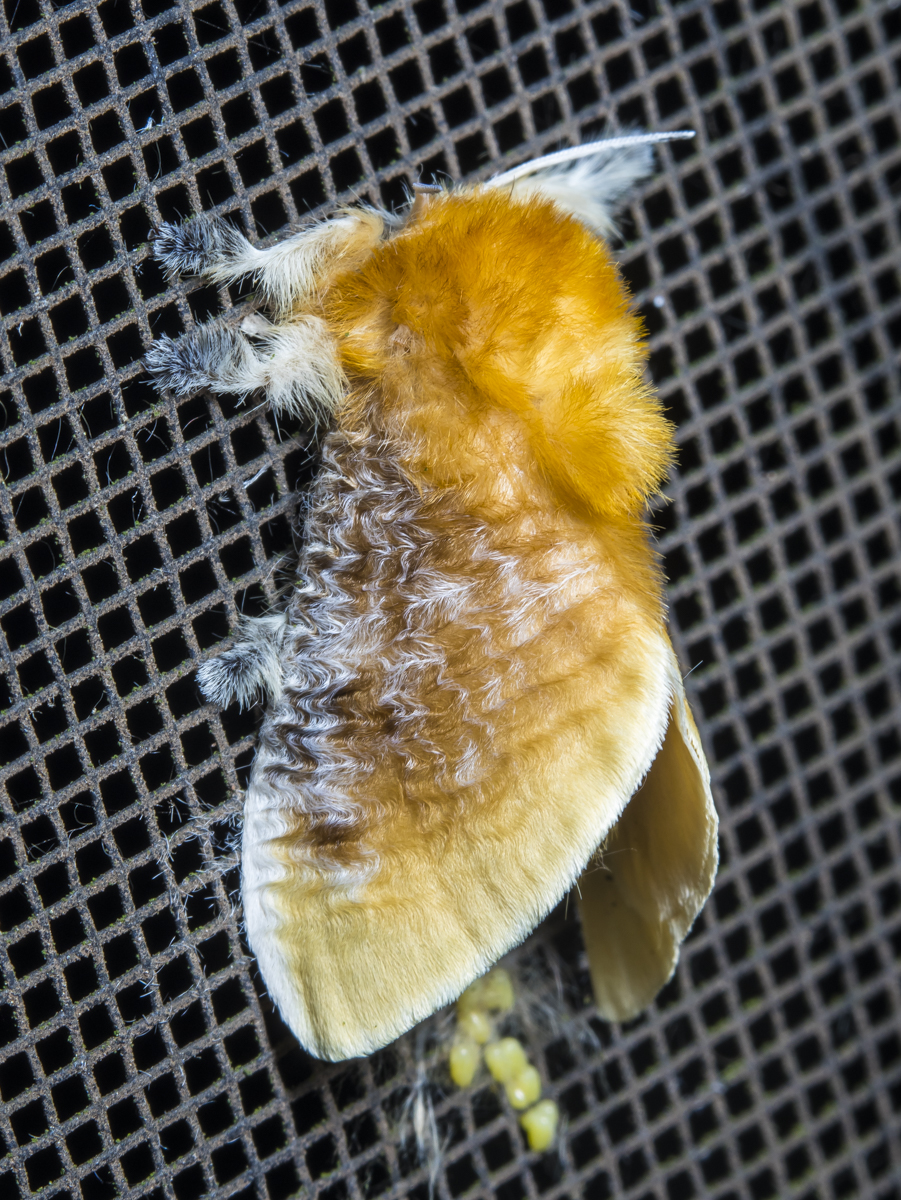
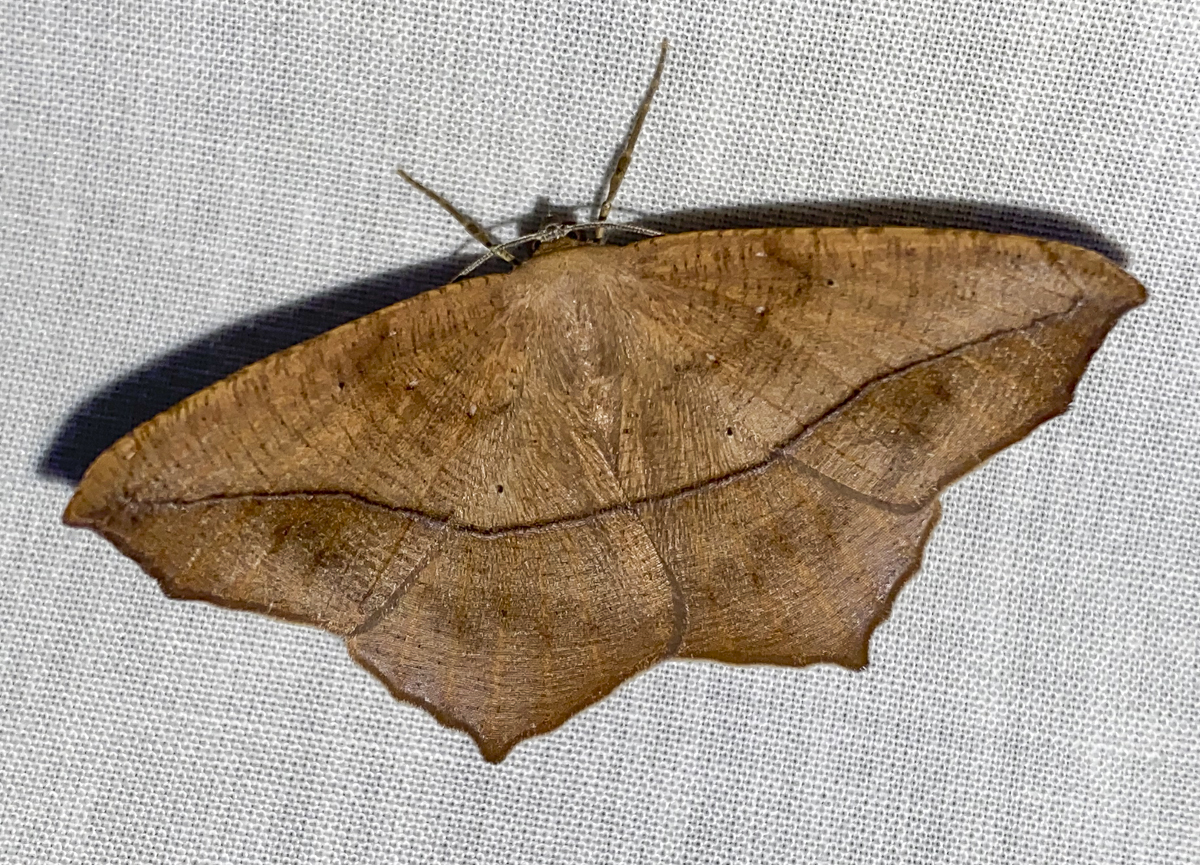
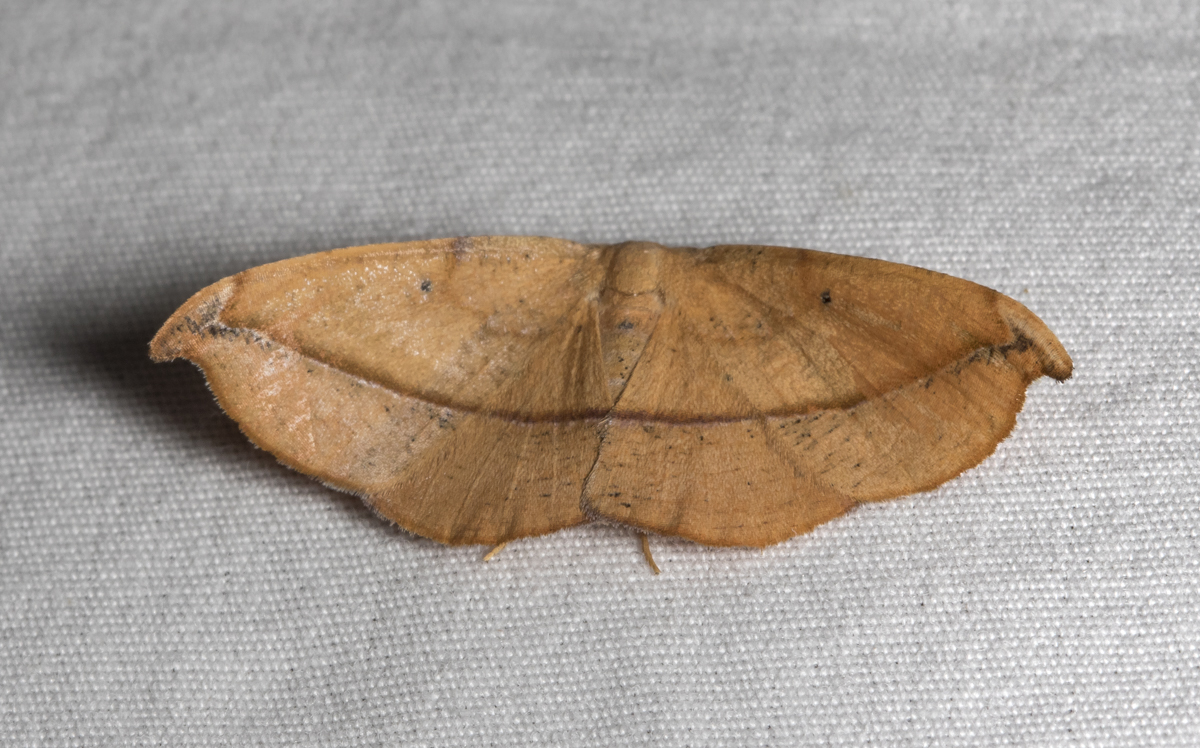
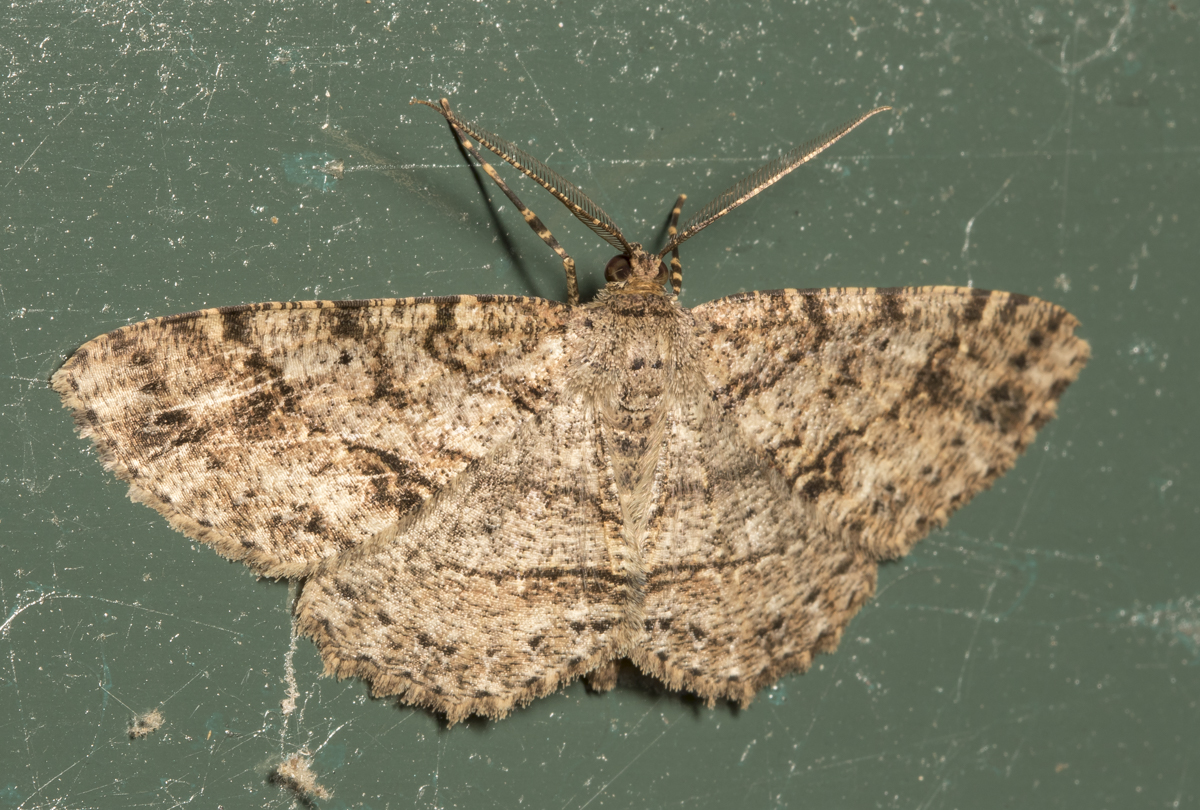
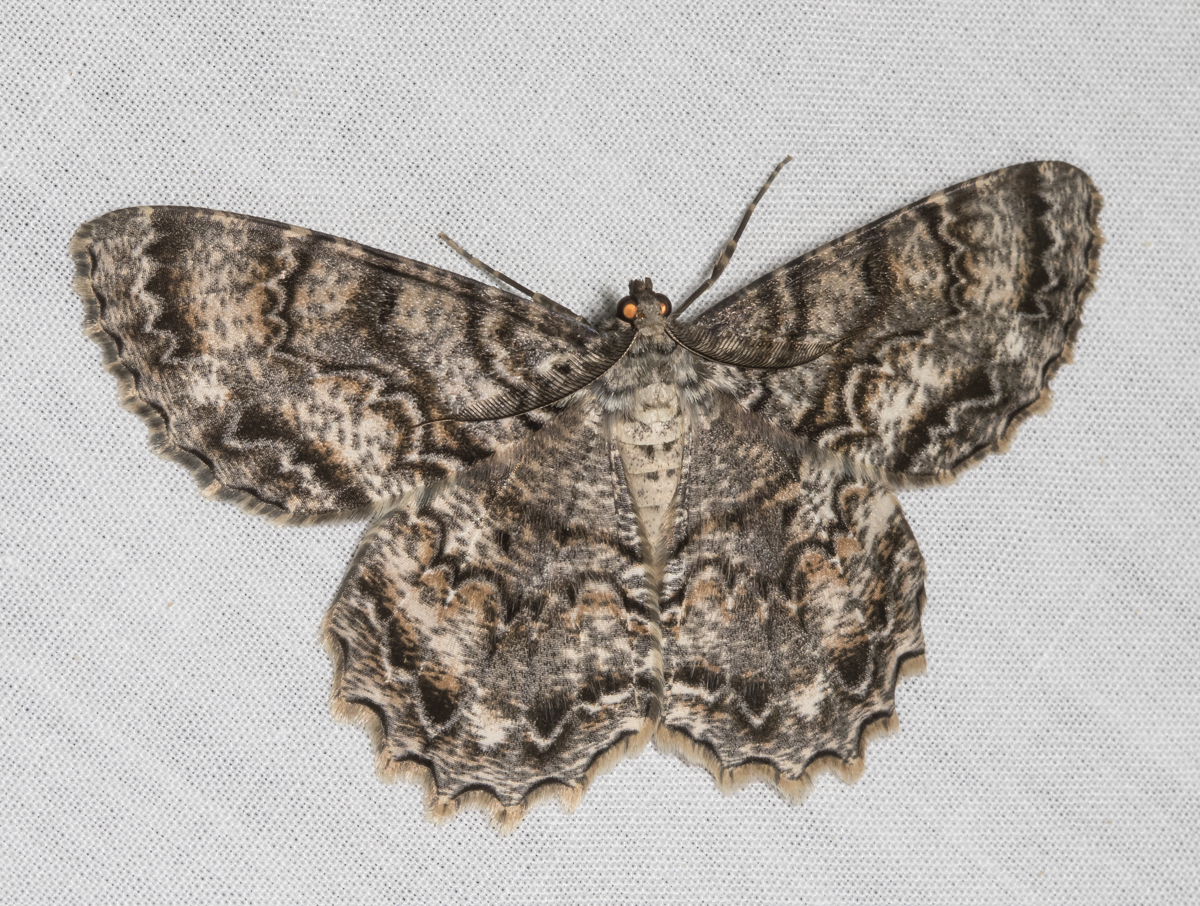
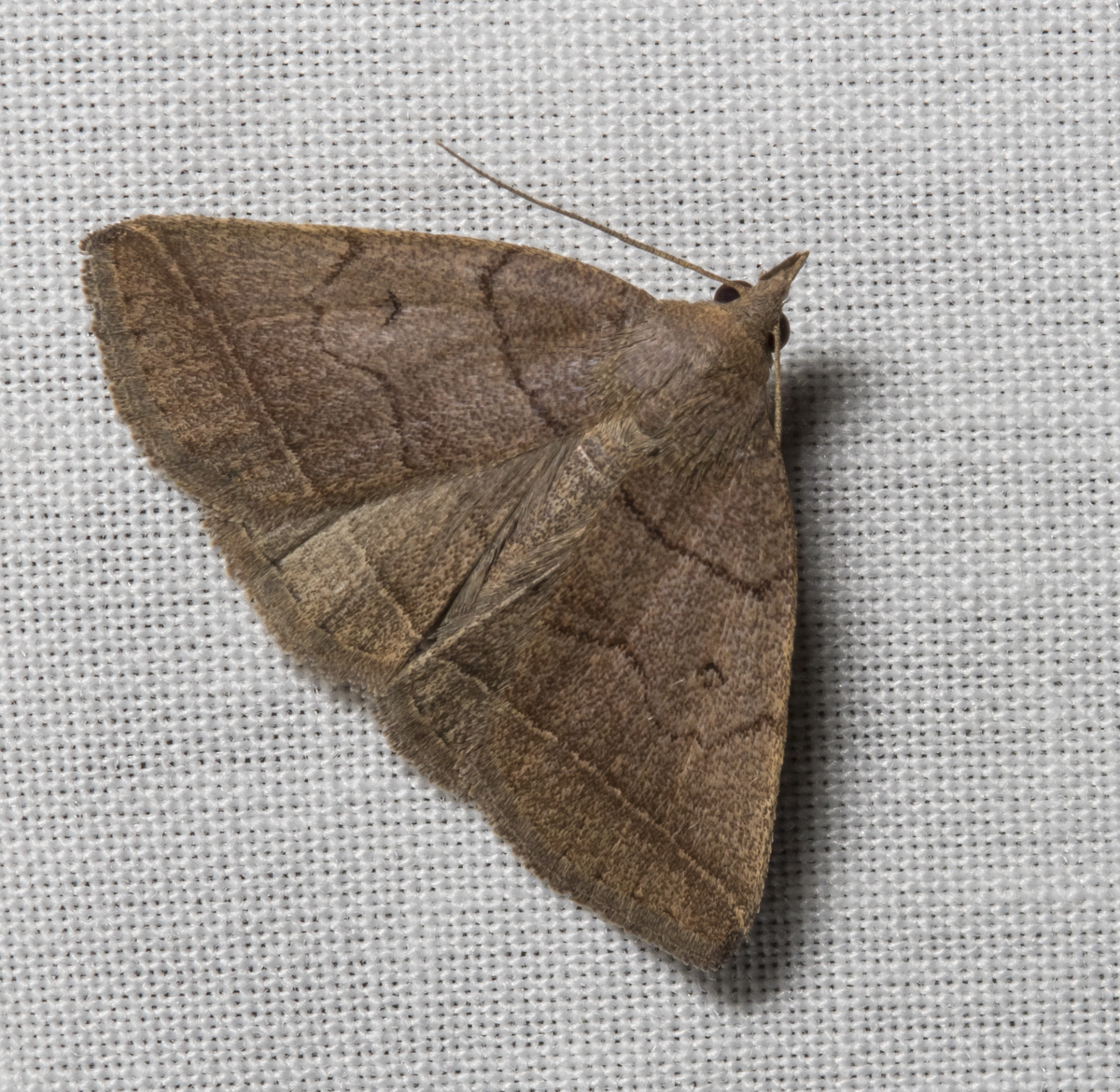
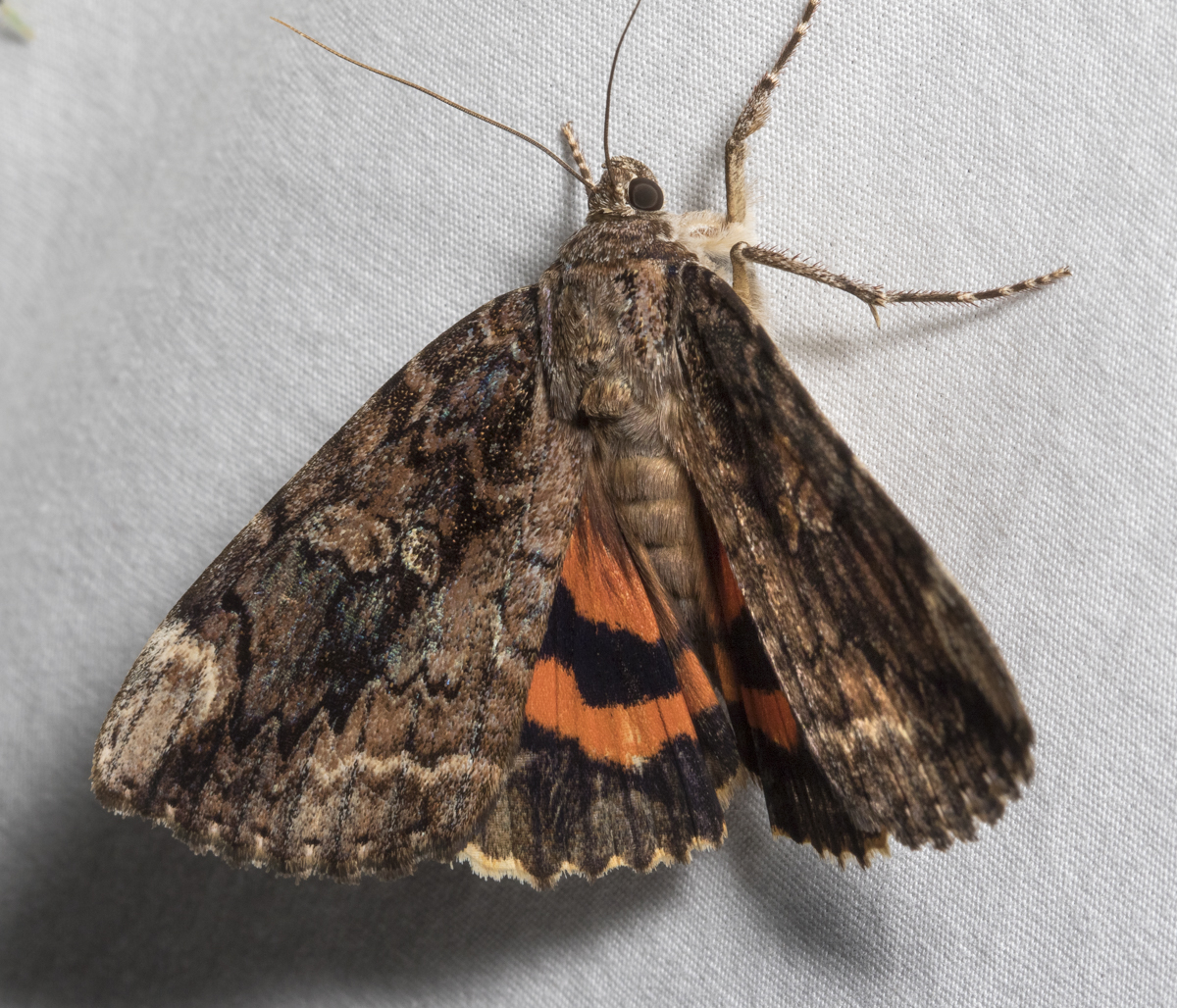
This female Southern Flannel Moth (Megalopyge opercularis) actually emerged yesterday from a cocoon we have kept since last year’s BugFest event at the Museum (in September)…perfect timing. This is the adult moth of one our favorite caterpillars, commonly called the Puss Moth caterpillar (click photos to enlarge)Our first moth of the evening was a Datana sp. (aka cigarette butt moth – several species look very similar) (photo by Melissa Dowland)One of the more unusual shapes from last night, a Deep Yellow Euchlaena, Euchlaena amoenariaContinuing with the odd-shaped, presumably leaf-mimic, moths is the Large Maple Spanworm, Prochoerodes lineolaThe bizarre Juniper-twig Geometer, Patalene olyzonariaOne of several bark mimics, a Canadian Melanolophia Moth, Melanolophia canadariaOne of the most common moths in our woods is the Tulip-tree Beauty, Epimecis hortariaCurved-line Angle, Digrammia continuataDarker Diacme Moth, Diacme adipaloidesEarly Fan-foot, Zanclognatha cruralisBetrothed Underwing, Catocala innubrensMottled Snout, Hypena palparia
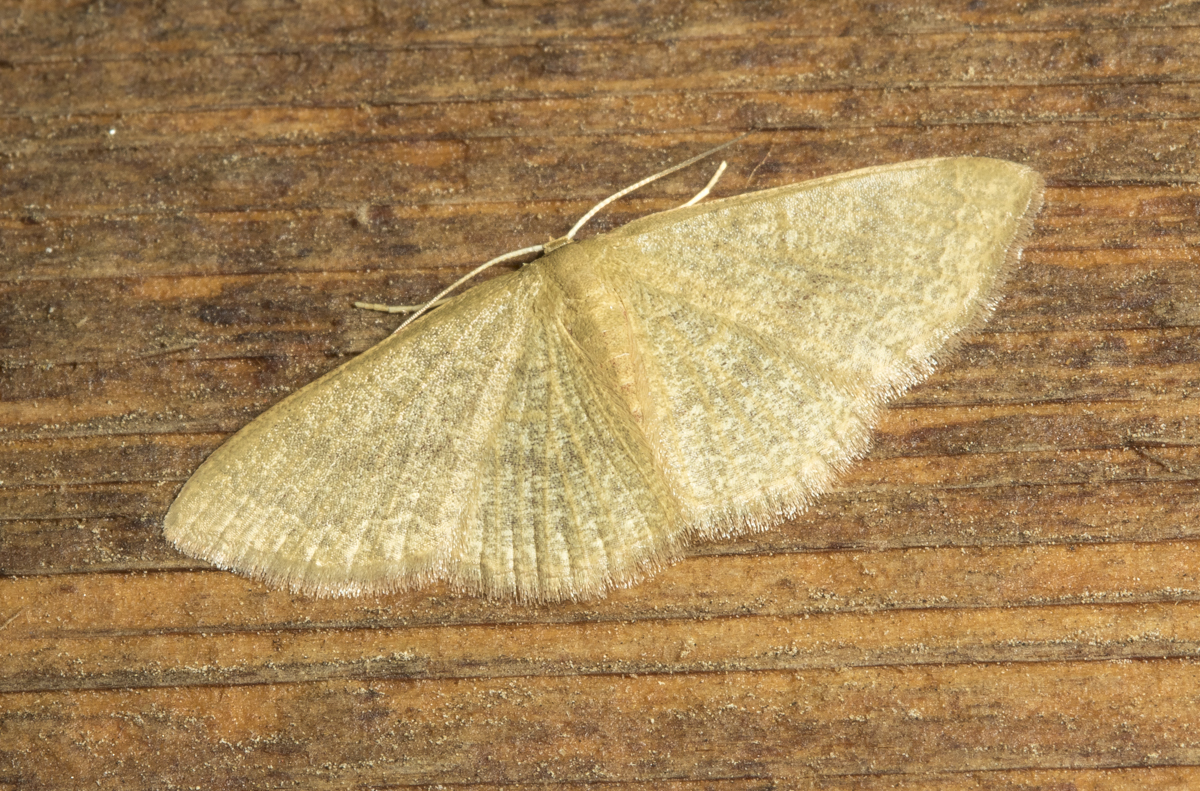
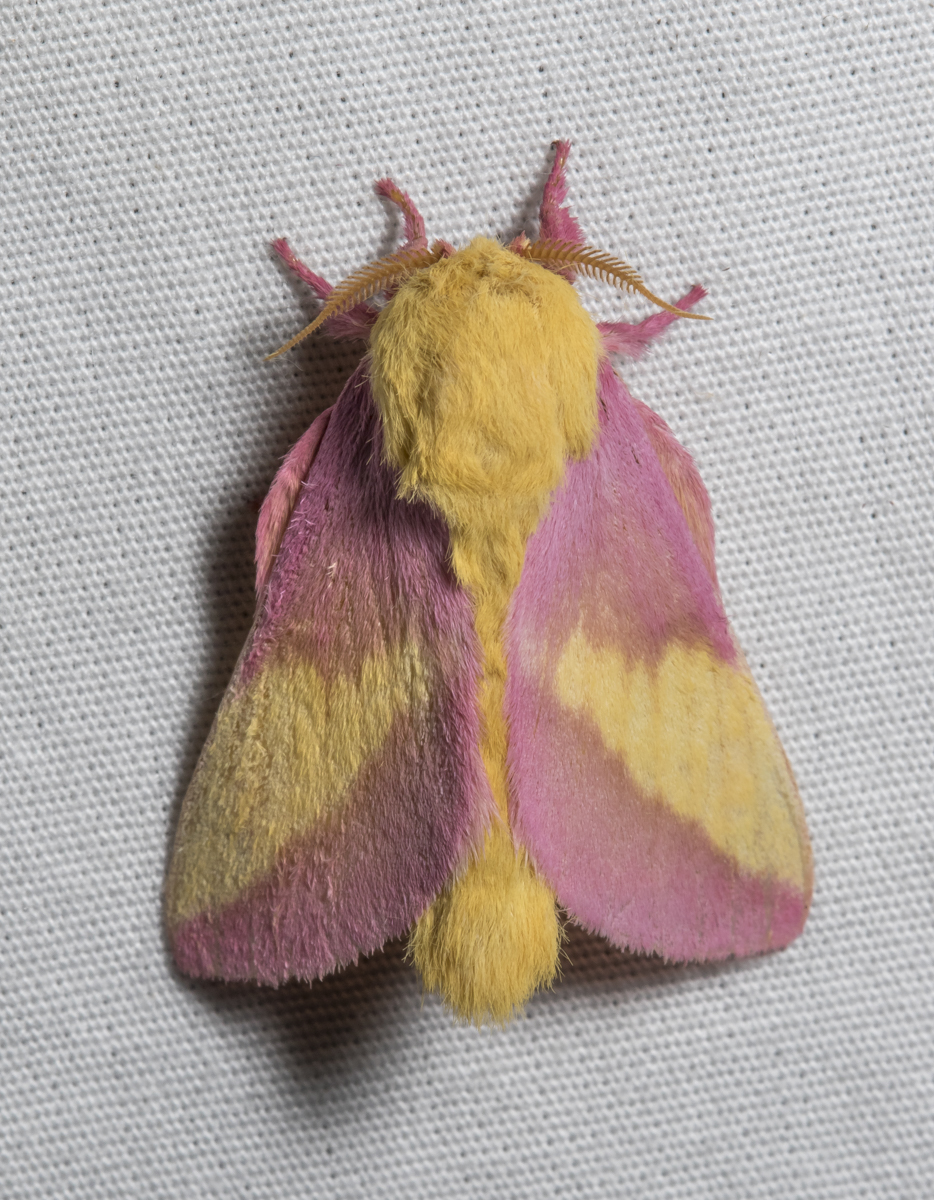
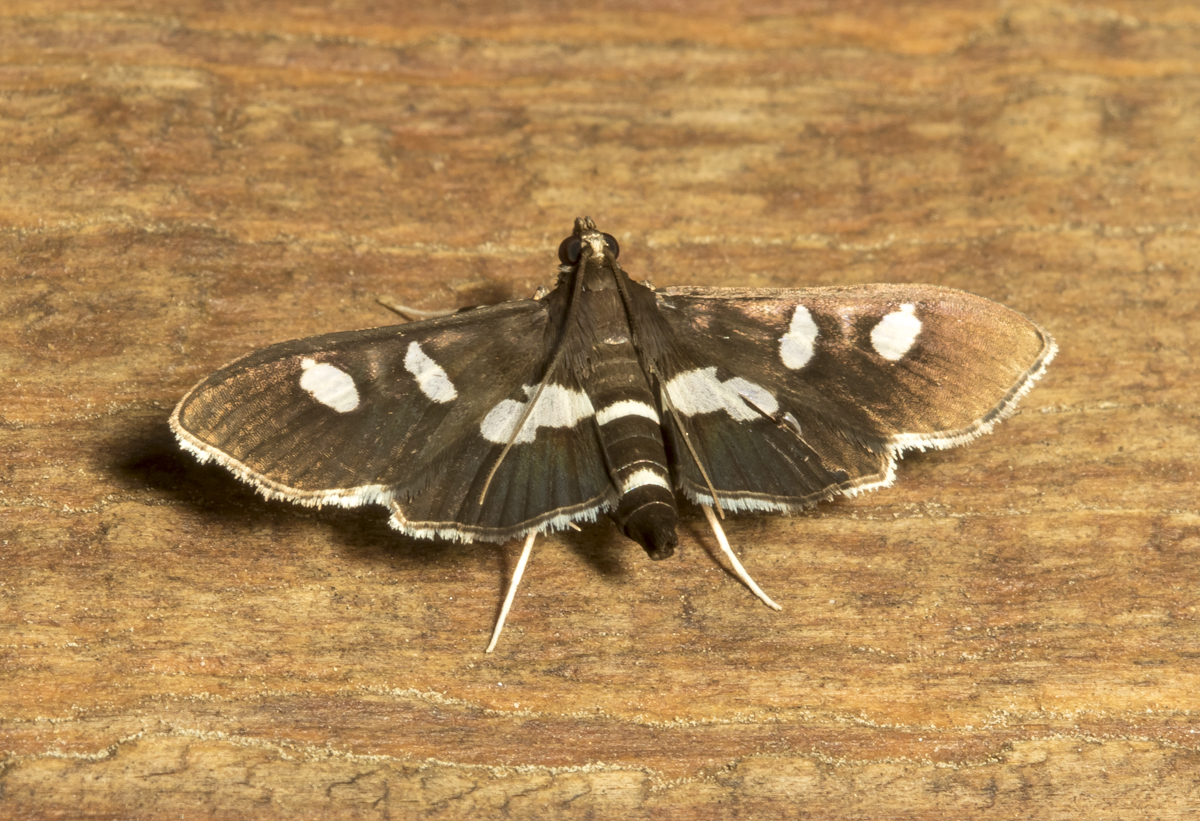
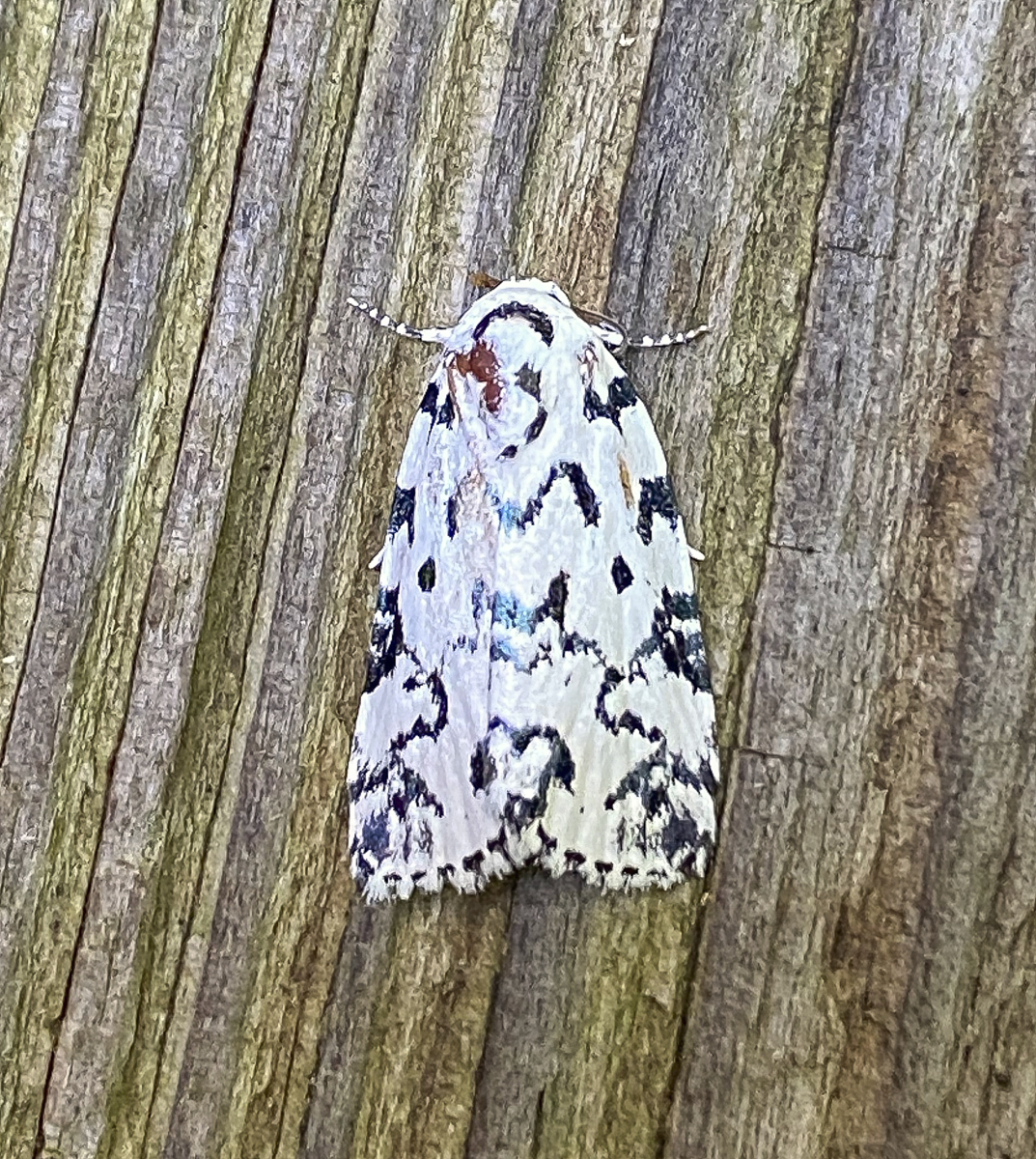
American Idia Moth, Idia americalisFaint-spotted Palthis Moth, Palthis asopialisCommon Tan Wave, Pleuroprucha insulsariaGreen Cutworm Moth, Anicla infectaOne of our favorite slug caterpillars turns into the Skiff Moth, Prolimacodes badiaOne of the mohawk moths, the Eastern Grass Tubeworm, Acrolophus plumifrontellaA common small moth here in the woods, the Yellow-shouldered Slug Moth, Lithacodes, fasciolaOne of several small, lime green moths we see here, a Red-bordered Emerald, Nemoria lixariaA Delightful Dagger, Acronicta vinnulaOne of our smaller Royal Silkworm Moths, a Rosy Maple Moth, Dryocampa rubicundaDesmia sp., one of the Grape Leaffolder Moths, best identified to species by looking at its underside apparentlyA moth that was waiting for me the morning after, The Hebrew, Polygrammate hebraeicum
There were a few non-moth finds as well…
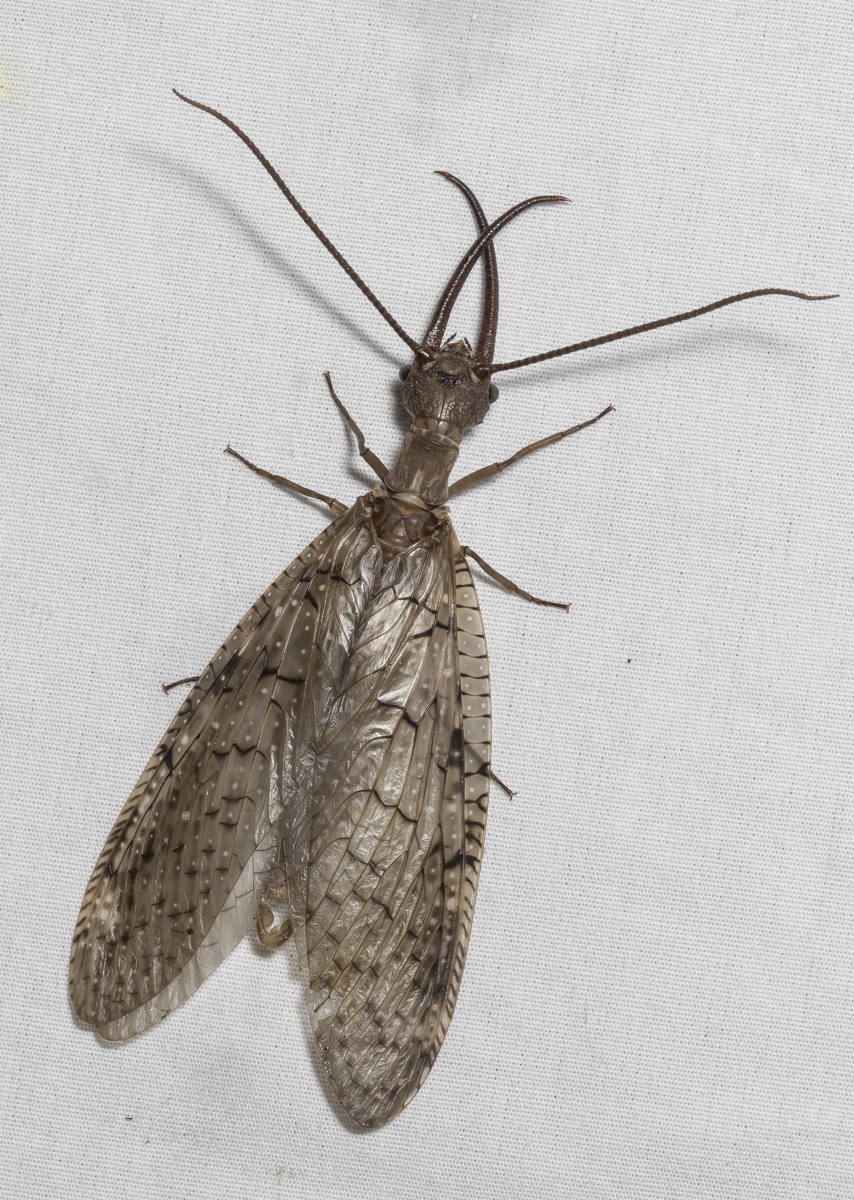
A large female Dobsonfly, Corydalus cornutus (note its tiny moth neighbor, among others, a White Stripe-backed Moth, Arogalea cristifasciella)An impressive male Dobsonfly showed up right after the live program ended
All in all, a great evening of mothing and sharing. National Moth Week lasts all this week, so get outside and observe some of your night-time neighbors (the winged kind) at your window, porch light, or even in your wildflower garden (especially on white, fragrant flowers).
One of the cooler finds of the evening, a male Eastern Hercules Beetle, Dynastes tityus (photo by Melissa Dowland)
Nature will bear the closest inspection; she inspires us to lay our eye level with the smallest leaf, and take an insect view of its plain.
~Henry David Thoreau
The heat of summer is not my friend. It slows me down, saps me of energy, and makes me a little complacent I’m afraid. But, there is one saving grace – the abundance of minute life forms taking advantage of the green world that exists (in abundance I might add) outside our door. And, lucky for me, it doesn’t requite much effort to saunter around the yard, poking through the greenery, perusing the native plants, and looking for our tiny neighbors. I’ll most likely have several posts in the coming weeks that result from such forays into our yard jungle. Here are some recent discoveries…
Skeletonized leaves of a mulberry are the handiwork of Fall Webworms (click photos to enlarge)The craftsmen (larvae of Fall Webworm, Hyphantria cunea) at work on a mulberry leaf
Fall Webworms are a widespread moth caterpillar easily recognized by their often large silken tents covering leaves and the branches of many species of hardwood trees in late summer and Fall. In contrast, the Eastern Tent Caterpillar makes its silken hideaways in the forks of branches (of mainly wild cherry trees around here) in the spring. Females lay clusters of several hundred eggs on a leaf and the young larvae construct silk tents and feed on the leaves underneath, moving to new branches when they skeletonize one food source. When disturbed, they do a group fling and jerk dance to attempt to drive away any predators or parasitoids.
Close up of a group of Fall Webworm larvaeAn adult Northern Flatid Planthopper, Flatormenis proxima
We often find these distinctive planthoppers along the stems of many of our native wildflowers. This is probably the most common planthopper in our yard and is easily identified by its pale green coloration and the right angle of the rear corner of the wings.
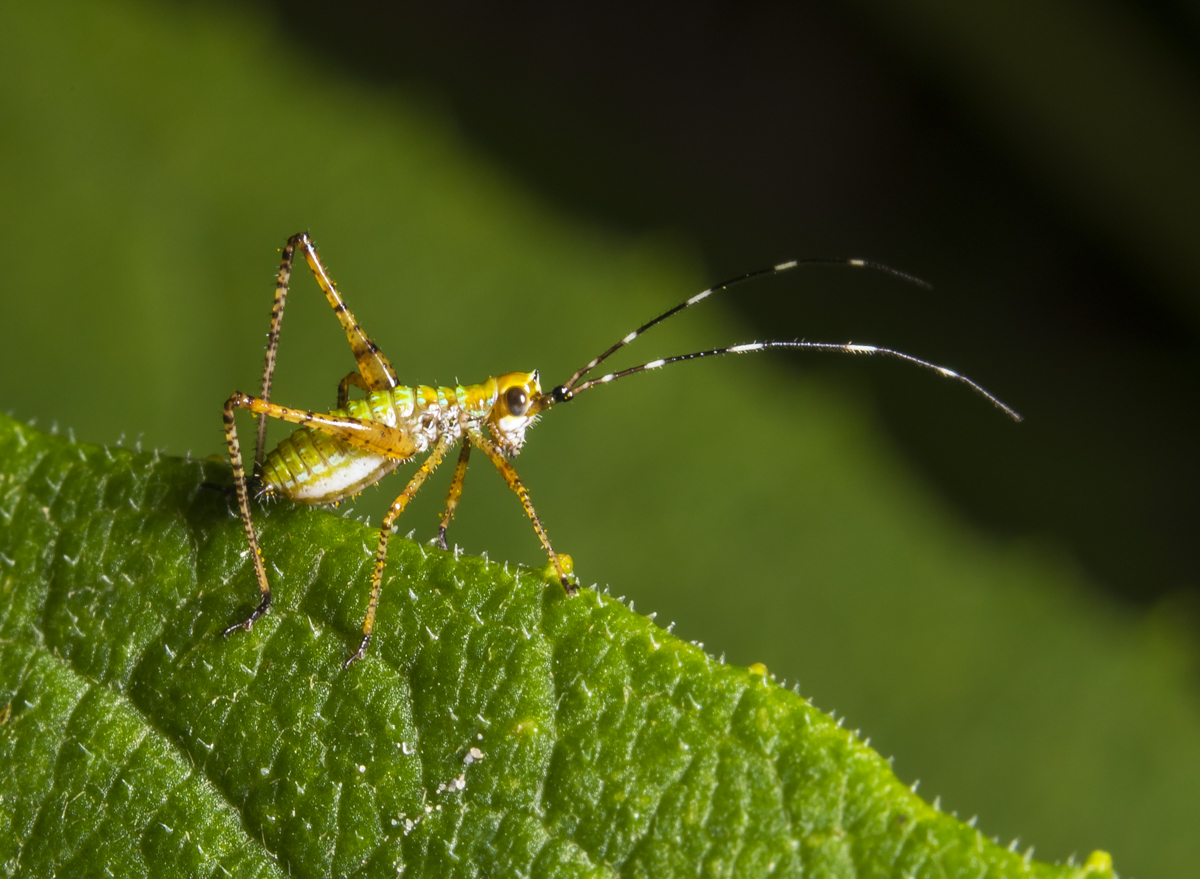
Scudder’s Bush Katydid nymph, Scudderia sp.
One of my favorite tiny neighbors is the nymph stage of Scudder’s Bush Katydid. They are both gangly and bold in their appearance, with banded antennae to top off their comical look.
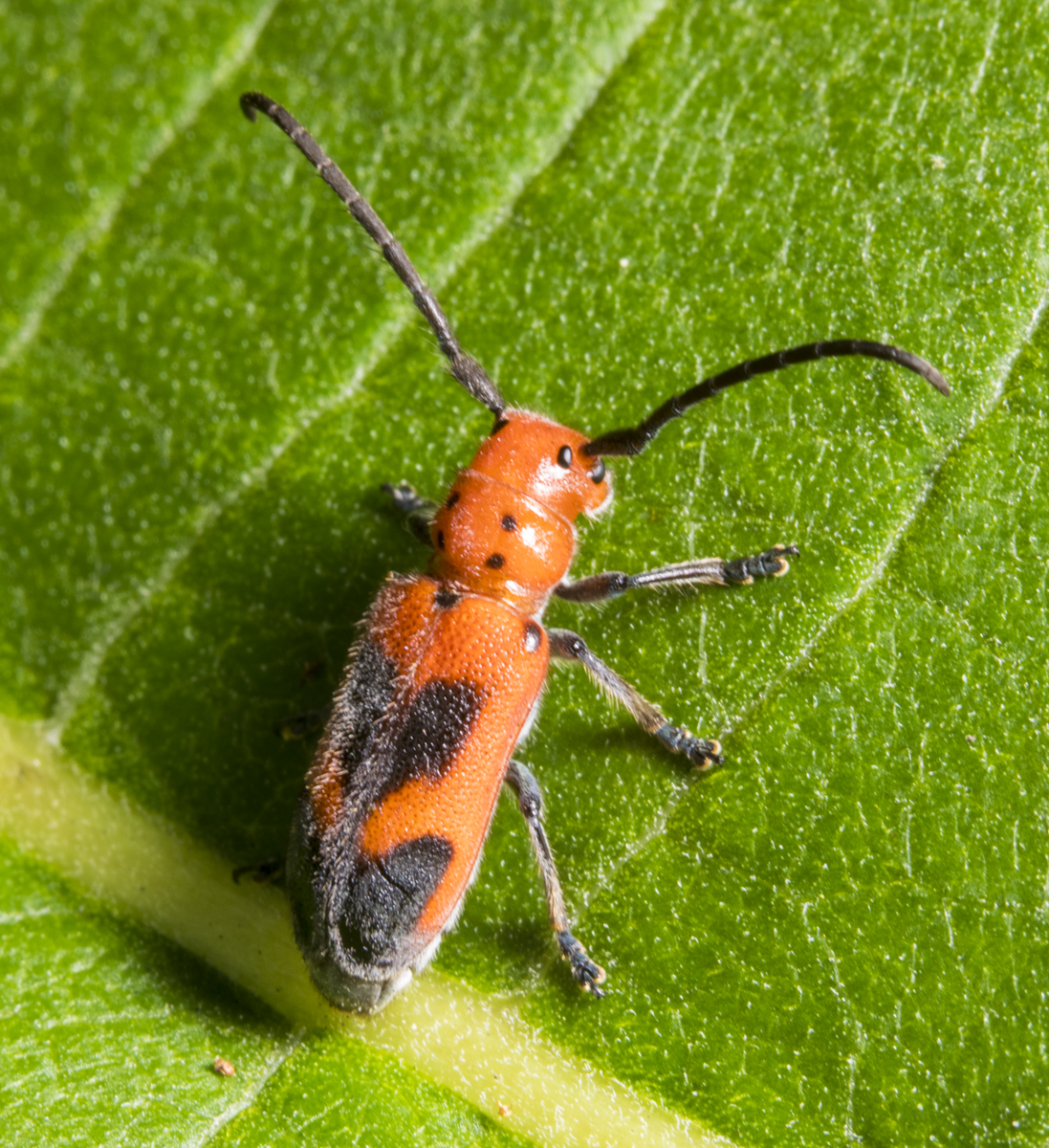
Blackened Milkweed Beetle, Tetraopes melanurus
While checking out the milkweed patch, I spotted one of the many boldly marked insects that feed on this plant. It was a beetle with the bright warning coloration typical of insects that can feed on the toxins in milkweeds. This one had large, heart-shaped dark markings on its elytra (outer wings), identifying it as a Blackened Milkweed Beetle. When I looked up the scientific name, I discovered that the genus name, Tetraopes, means four eyes. This, and other members of the group of longhorn milkweed beetles, have compound eyes that are bisected by the base of their antennae (I could not find any explanation as to the possible benefits of this unusual eye arrangement). Every time I look closely at my little neighbors, I discover something new. Give it a try in your own nature neighborhood.
Various longhorn milkweed beetles have divided compound eyes
Even though you’re growing up, you should never stop having fun.
~Nina Dobrev
A quick update on the Cecropia caterpillars we are raising…you may remember an earlier post where the eggs from a Cecropia Moth began hatching. That was on June 10. We are almost a month out and they are growing and changing as they feed on wild Black Cherry leaves. Below are pictures of how they have changed over the past few weeks. The remaining time period of their last two instars (a phase between two periods of molting) will be busy ones as we try to scrounge enough cherry leaves to keep these guys happy. If you enjoy learning about giant silk moth caterpillars and their different instars, check out Sam Jaffe’s incredible photographs on The Caterpillar Lab’s web site.
The hatched eggs on June 10 (click photos to enlarge)First instar Cecropia Moth caterpillarsSecond instar larvaeA third instar Cecropia Moth caterpillarFourth instar larva (one more to go!)A close up of the tubercles on a fourth instar larva…I shared this picture on July 4 as an entomological fireworks display
Its flowers are very flagrant and when in season, they fill the woods with their sweet exhalations and make it agreeable to travel in them, especially in the evening.
~Peter Kalm, Swedish scientist, on Common Milkweed, 1750’s
I don’t really remember how long ago it was that I spread some Common Milkweed (Asclepias syriaca) seeds around the yard. I think I did it a couple of years in a row, and finally, one spring, there were some shoots that popped up. Not where I had put the seeds, of course (and that should have prepared me for how this plant “behaves” in garden), but I was excited nevertheless. Years went by, and the milkweed would appear and send up new shoots well beyond where I had intended it to grow. But no flowers…I figured it was due to our wooded setting and these normally field habitat plants just could not get enough sunlight to send energy into flower production. Then, a few years back, the first flowers appeared. At first, on only a couple of the taller stems. But last year and this one have been spectacular showings of the sweet-scented floral globes.
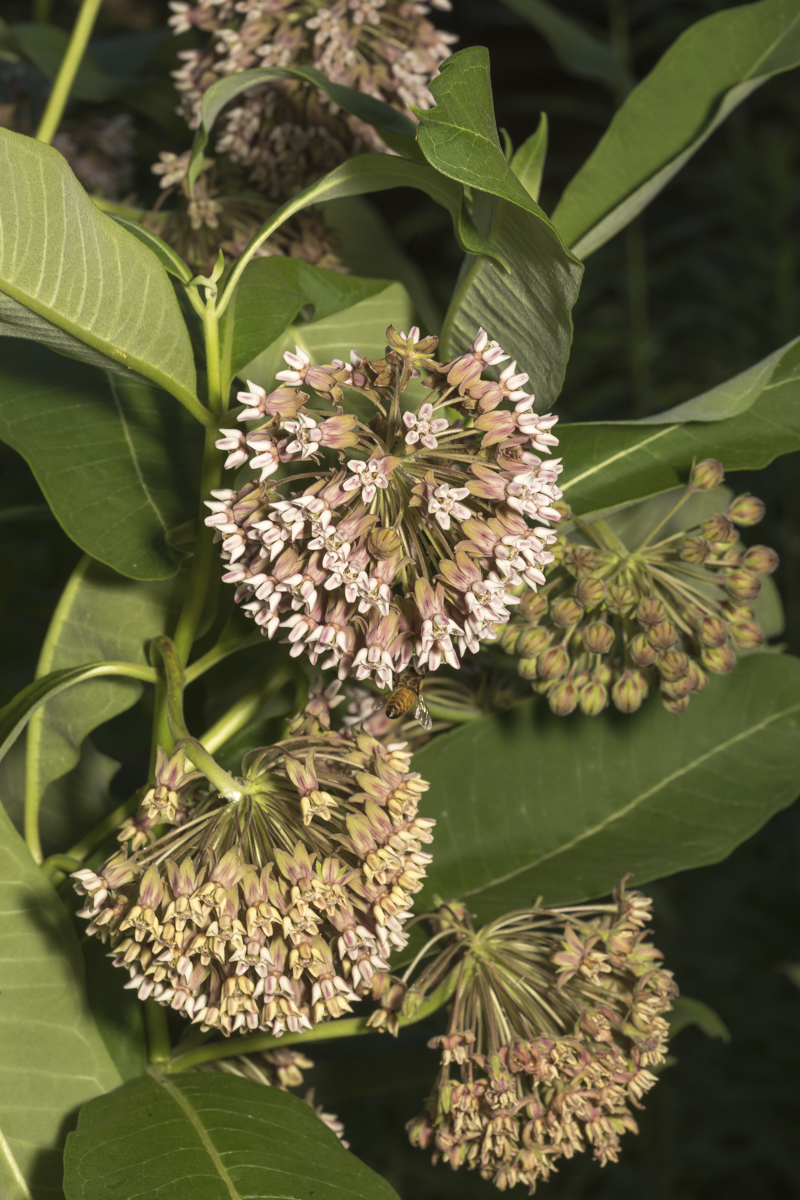
Common Milkweed flowers blooming in the yard (click photos to enlarge)
The patch of twenty or so milkweeds has been abuzz with activity since the flowers opened with honeybees, bumblebees, and large butterflies being the most frequent visitors.
The flowers are centers of pollinator activity, especially bumblebees and honeybeesI have seen three species of swallowtails visit the milkweed patch
Besides their wonderful fragrance and obvious benefit to pollinators, milkweed flowers have something else going for them…their unusual structure. In addition to a whorl of sepals and petals (the petals are reflexed downward), milkweed flowers have a third whorl of five hoods (seen here as the upward facing openings) each of which encloses a horn (the modified filaments of the anthers).
Close up of flowers – look for the orange-ish pollinia in the gaps between the five open hoods of each milkweed floret
Instead of the loose, powdery pollen grains most of us are familiar with, milkweed pollen grains are packed into two connected sacs (pollinia). Together they are called a pollinarium and are shaped like a tiny saddlebag.
Large Milkweed Bug with a pollinarium attached to its leg
When an insect lands on the flower, its leg slips into the crevice between the hoods and can pick up a pollinarium. When it visits another flower, the waxy pollen sacs can be deposited if the leg slips into a vacant crevice. These slits can occasionally capture some insects if their leg gets stuck.
Close up of a milkweed pollinarium
I have seen a few bumblebees that have several of these pollen structures stuck to their legs so I think large (and strong) insects like bees and butterflies make the best milkweed pollinators.





















 Roads End Naturalist