Twenty years from now you will be more disappointed by the things that you didn’t do than by the ones you did do… Explore. Dream. Discover.
~Mark Twain
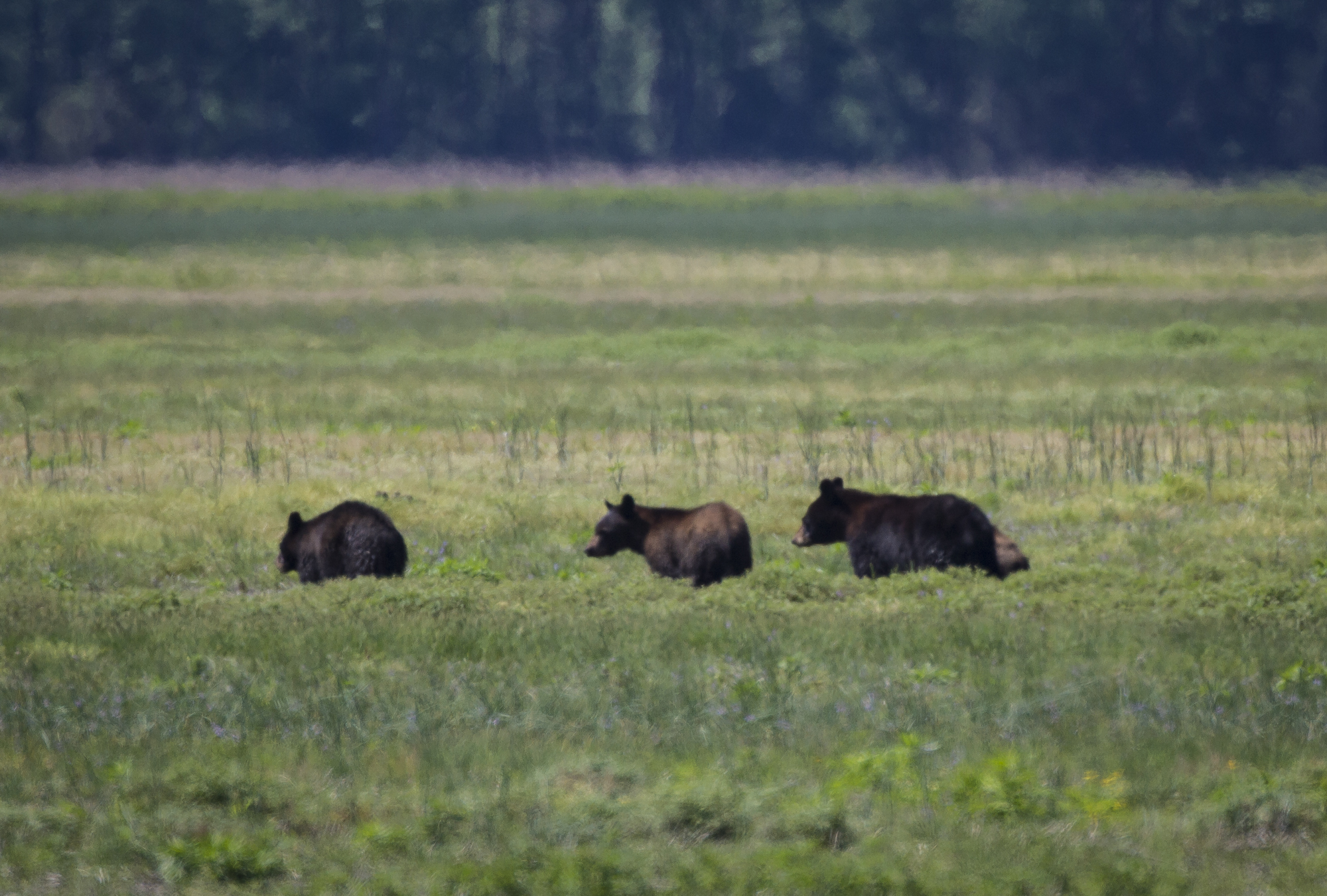
I think that sentiment is one of Melissa’s primary views of how to live a life. But, even she was a bit reluctant to head out early Saturday morning for a day trip to Pungo. We have both had full schedules at work these past few months with no let up in sight. We had planned this trip as a weekend get-away to meet our friend, Petra, and a couple from the Netherlands that had been clients a few years ago. Plans changed, and we decided not to camp and just do a day trip. We left about 7 a.m., arriving a little after 10 a.m., and found our friends alongside the road after having seen one large bear out in a field. But, they anticipated more now that the ‘bear whisperers” were here (no pressure there). So, off we went, and, luckily, there they were – a family of four bears just down the road.
Family of black bears in one of the fields at Pungo (click photos to enlarge)
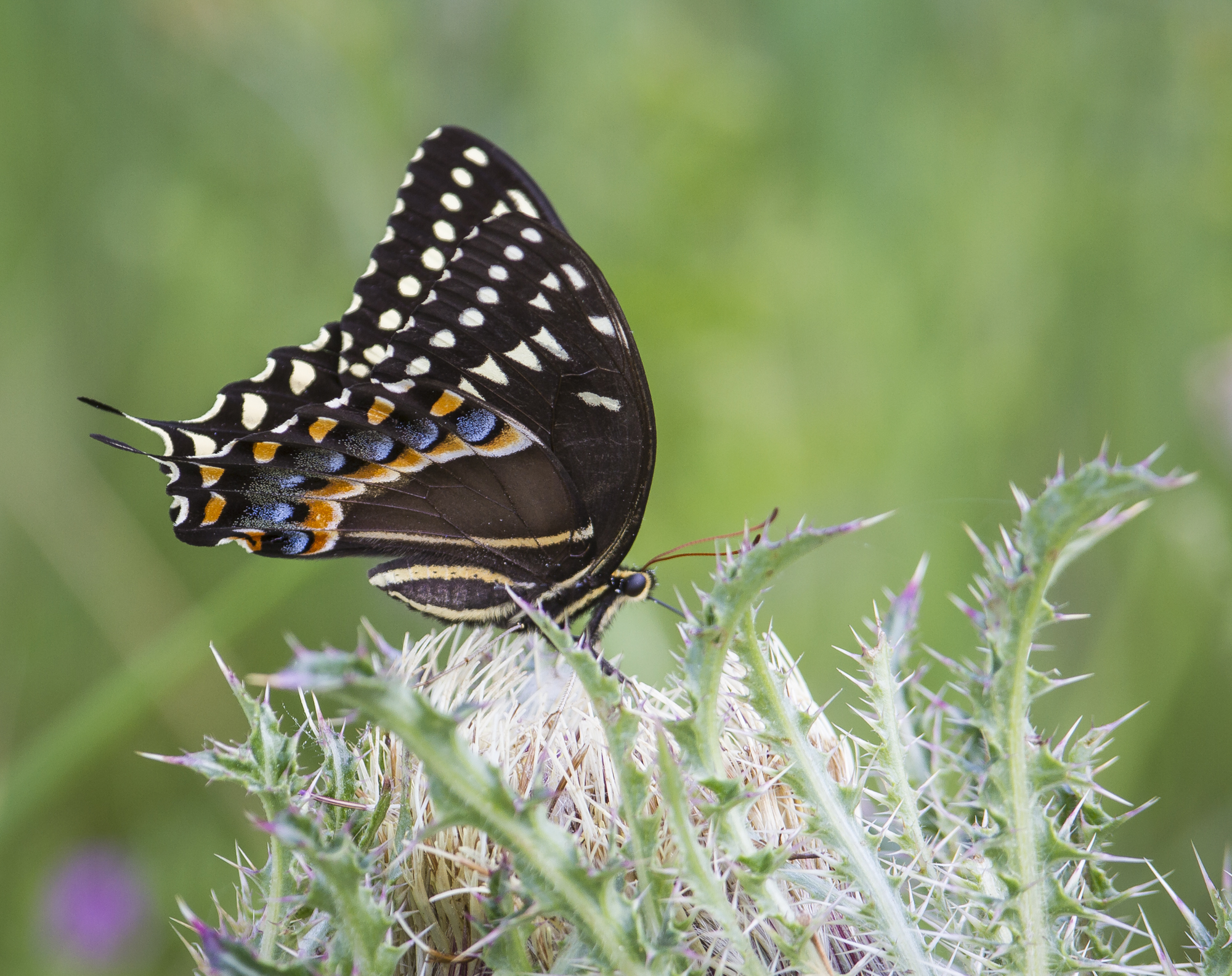
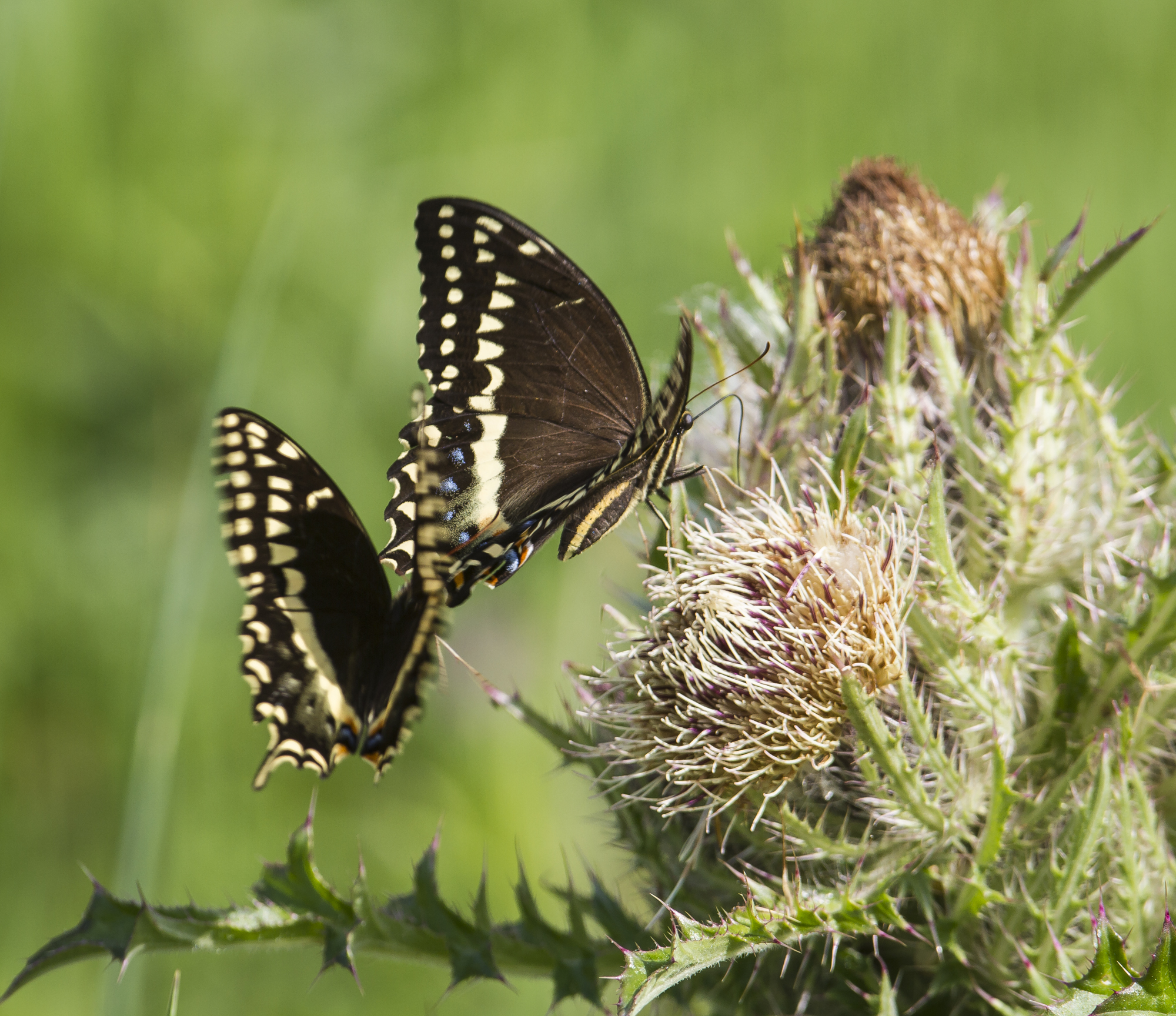
It turned out to be a rather slow day at Pungo, but we had a great time in absolutely beautiful weather – walking, talking, laughing with friends, discussing the state of the world from another country’s perspective, and getting glimpses of nature. Butterflies were very active, especially the palamedes swallowtails and zebra swallowtails.
Palamedes swallowtail feeding on a roadside thistlePalamedes swallowtail mating danceMonarch foraging on vetch
We even had two monarchs nectaring on small wildflowers along Bear Road. Birds were abundant as well – a pair of adult bald eagles, wild turkeys, a green heron, and lots of warblers (prairie, black-throated blue, black and white, prothonotary).
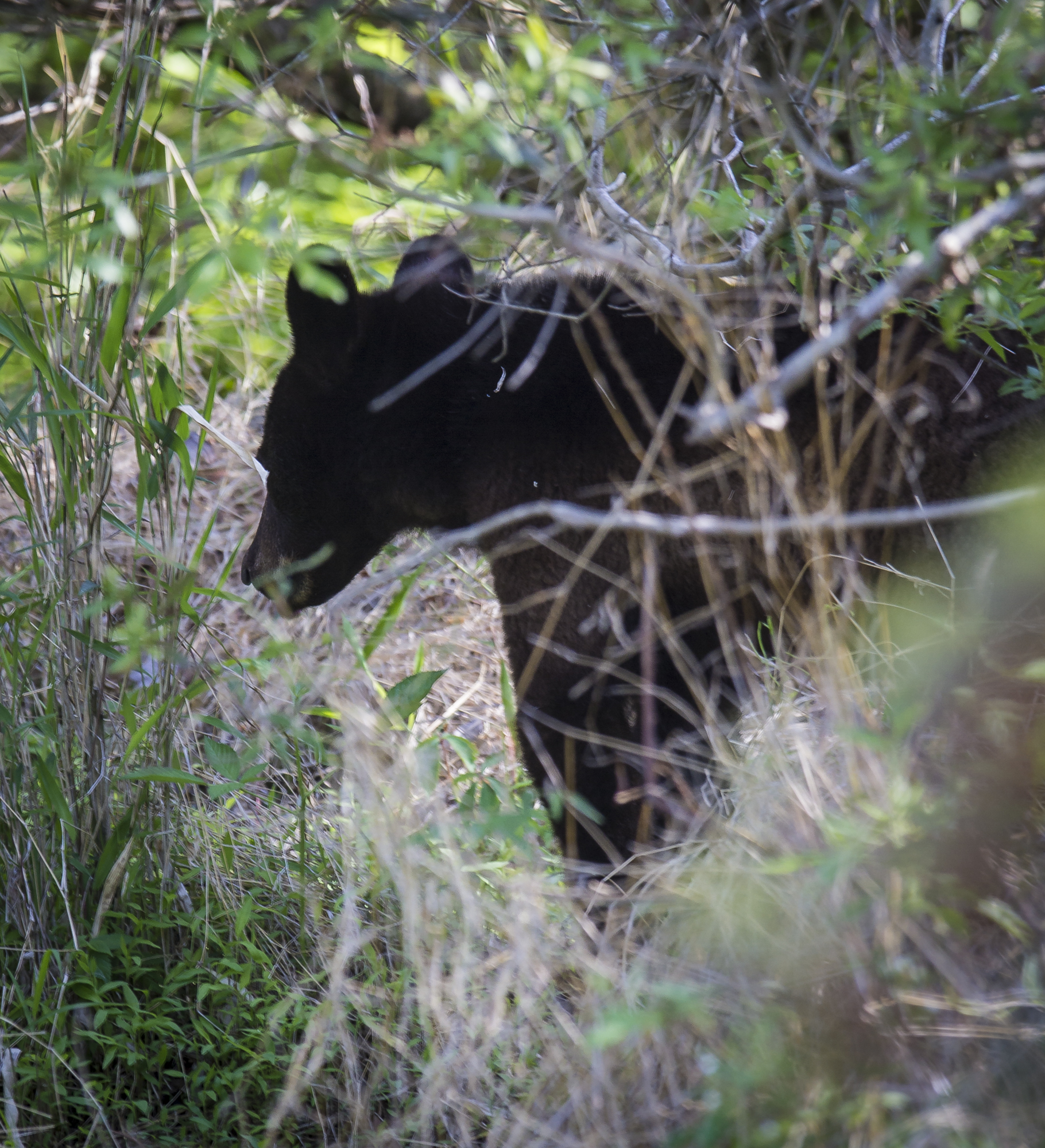
Our last bear of the day
But the day belonged to the bears, 14 in all. The last one was the closest, just across a roadside canal, low in the brush, nibbling on various leaves. It was a glorious day that ended with a wonderful dinner in Belhaven, and a late night return for us. But it was all worth it – seeing our Dutch friends, being outside on a beautiful day, watching those bears – and I’m glad we did it. Next….
The distinctive roar of the longleaf was the sound the evening breeze made, and the odor of pine resin was the smell of the countryside…It was so much a part of their lives, so wound up with everything it meant to be southern, that it was as impossible to discern its influence as it was to imagine a world without it. Only when it was reduced, almost entirely, to a sea of stumps could we begin to get our arms around it.
~~Bill Finch in Longleaf, Far as the Eye Can See
These past few weeks have flown by with so much happening both at work and home. Highlights have included a couple of trips to a region of North Carolina that is quickly becoming a favorite, and is home to extensive longleaf pine savannas and their associated diversity of plants. The place is southeastern North Carolina, and the destinations are the Green Swamp Preserve and Holly Shelter Game Lands. One trip was with some of our trained volunteers from the NC Botanical Garden. The other was an educator trek highlighting the carnivorous plants of the region. Both were in collaboration with the NC Museum of Natural Sciences. Compared to our home here in the Piedmont, this land of longleaf really is a different world in the way it looks, feels, and sounds.Here are a few highlights from those trips (spoiler alert…more to come in future posts)…
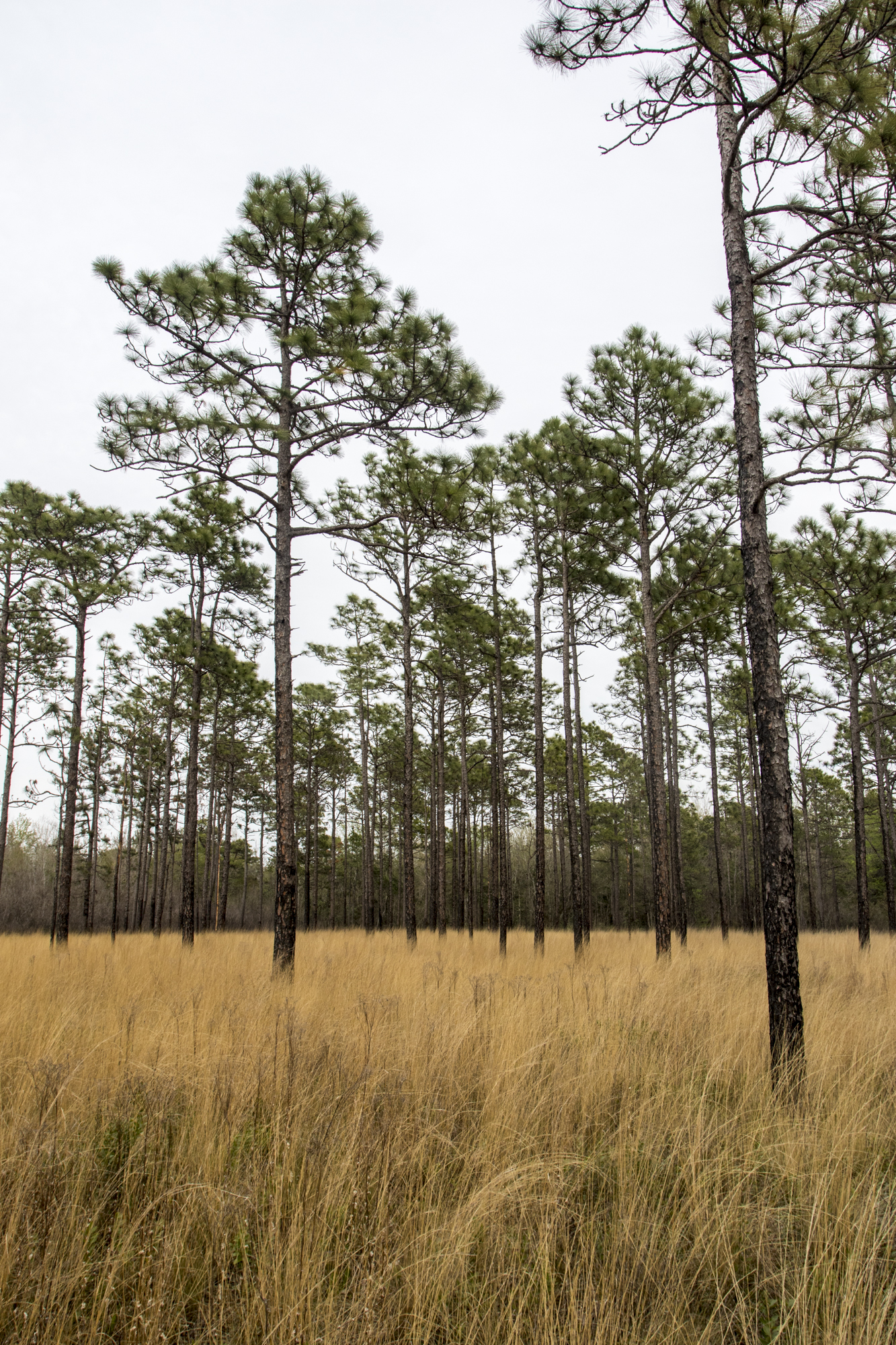
Longleaf pine and wiregrass along a road in Holly Shelter Game Lands (click photos to enlarge)
The classic longleaf savanna has a dense understory of wiregrass and a host of other herbaceous species under a canopy of tall longleaf pines. Variations of this conifer-dominated community once covered 90 million acres along the Atlantic and Gulf Coasts. Logging, the naval stores industry, land conversion, and fire suppression have reduced this once dominant plant community by 97%. Land managers are working to restore this treasure by using a tool that helped shape this diverse landscape – fire.
Grass stage of longleaf pine following a prescribed burn
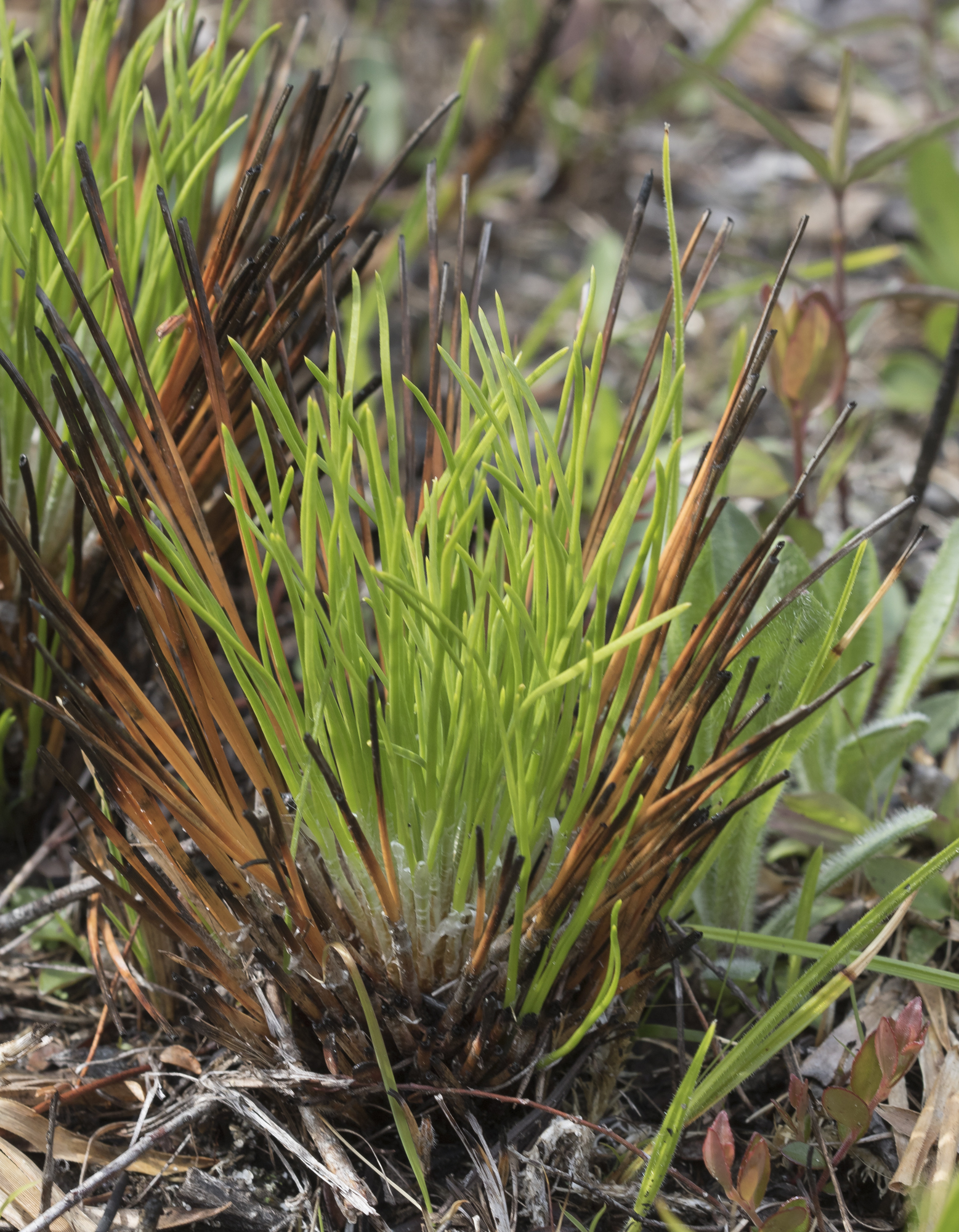
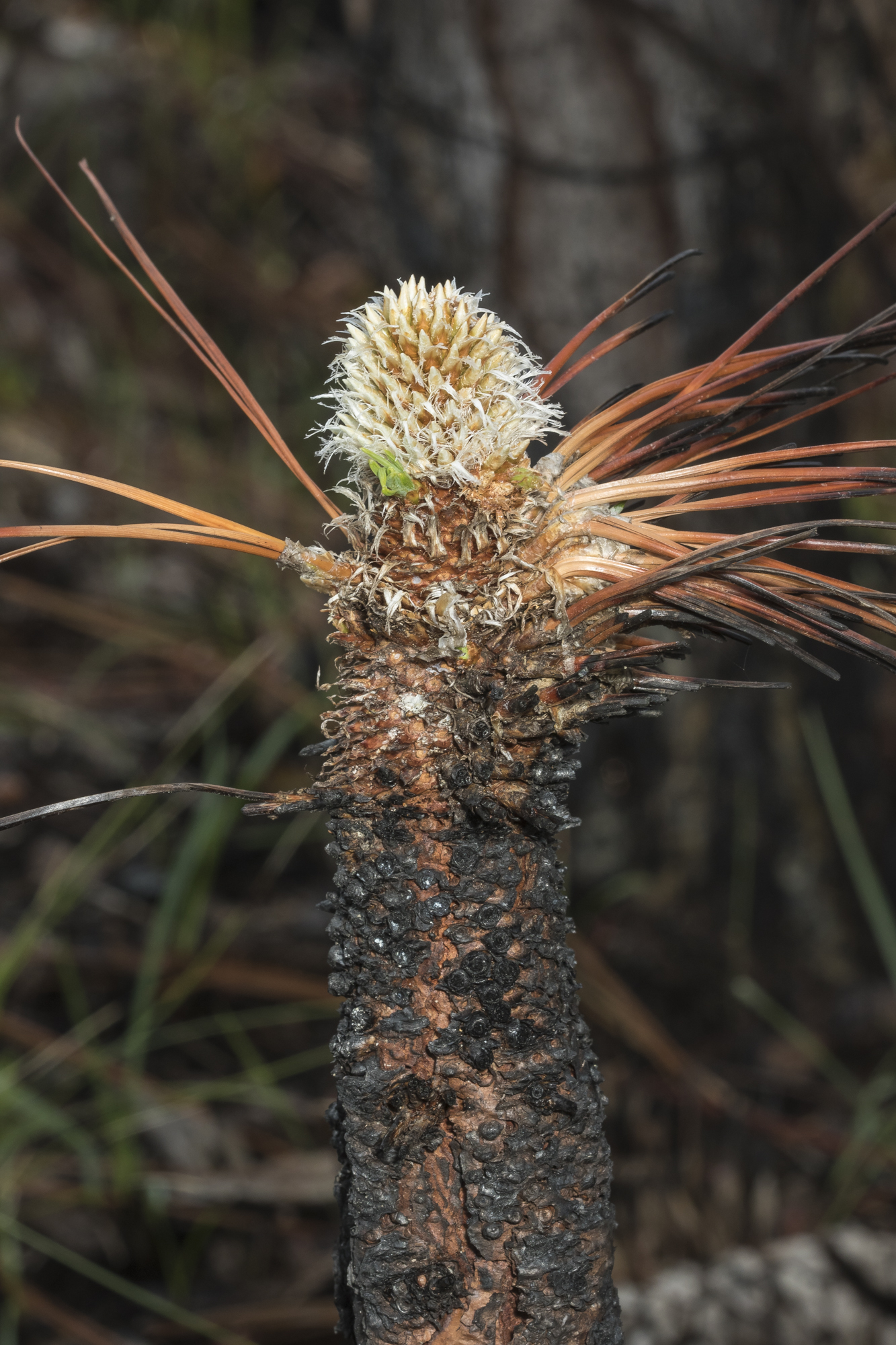
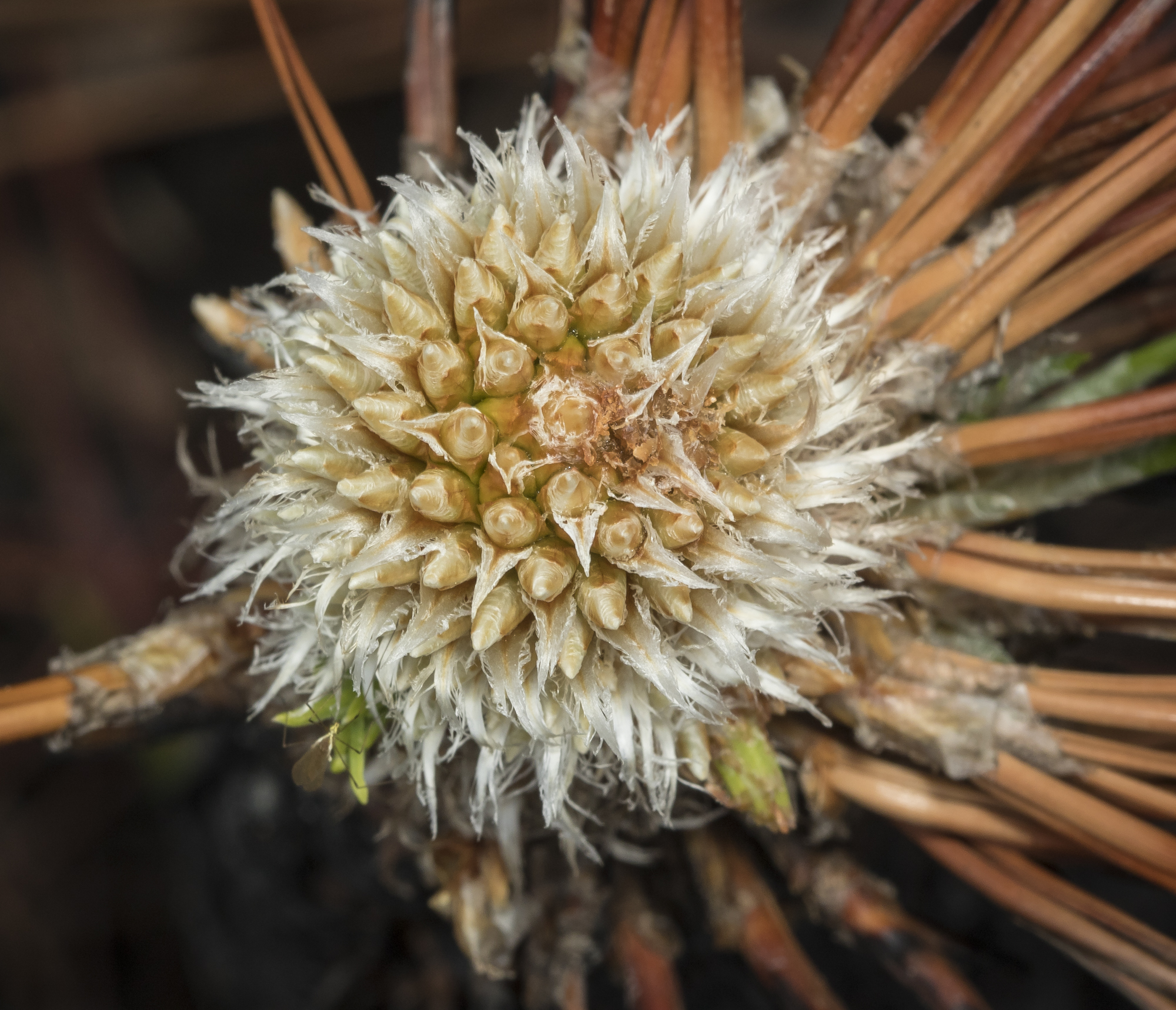
Scientists estimate natural lightning-caused fires once occurred on average every 3 to 7 years in much of the Coastal Plain. Years of fire suppression shifted the balance in plant communities to favor more deciduous species like turkey oaks at the expense of longleaf pines and the associated savanna species. Regular burns are helping turn this around, allowing the fire-adapted species to once again thrive. At both sites, we saw evidence of the adaptability of the many growth stages of longleaf to the effects of fire (see Melissa’s post from last year on longleaf). Plenty of singed needles, but the majority of growth tips survived, helping create a patchwork of green in the charred landscape.
Bottlebrsush stage after a fireGrowth tip of a longleaf pine in the bottlebrush stage
Bring the plants back and you start to bring back the animals as well.
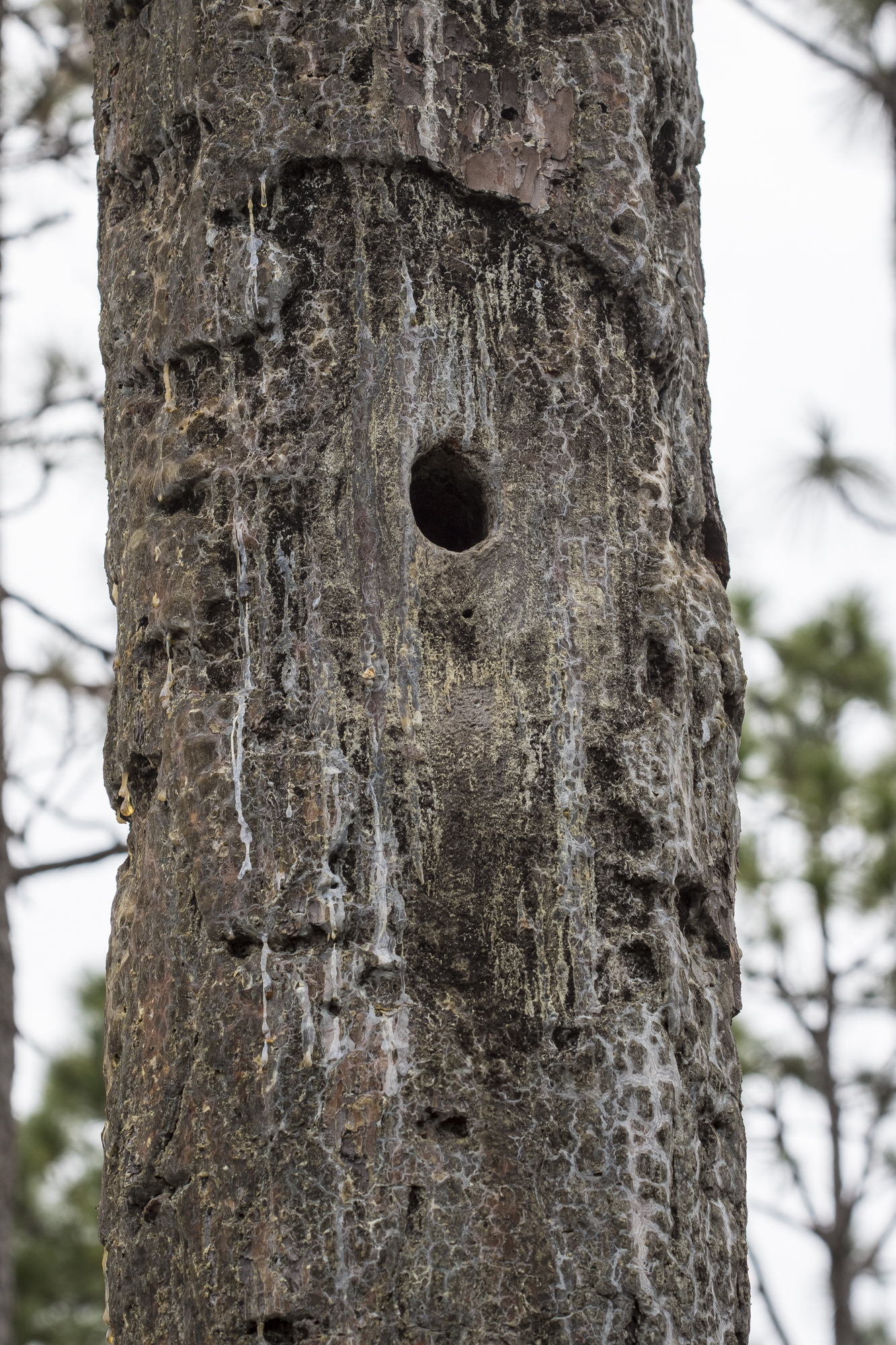
Red-cockaded woodpecker nest cavity surrounded by sap flow
The federally endangered red-cockaded woodpecker depends on mature longleaf pine forests for its nesting cavities. They are the only woodpecker that regularly excavates cavities in living trees. As such, they are considered a ‘keystone’ species, because use of their cavities (either for roosting or nesting) by at least 27 other species of vertebrates contributes to the species richness of the pine forest. We saw numerous cavity trees scattered about the savannas. Most are marked in two ways – one human, one avian. Researchers monitoring the birds’ population regularly mark nest trees with two bands of white paint around the trunk of the tree. The birds drill numerous holes above and below the nest entrance, creating a sap flow that dries a whitish color and is visible at considerable distances. The sap is believed to help reduce the threat to eggs and nestlings from predators such as rat snakes.
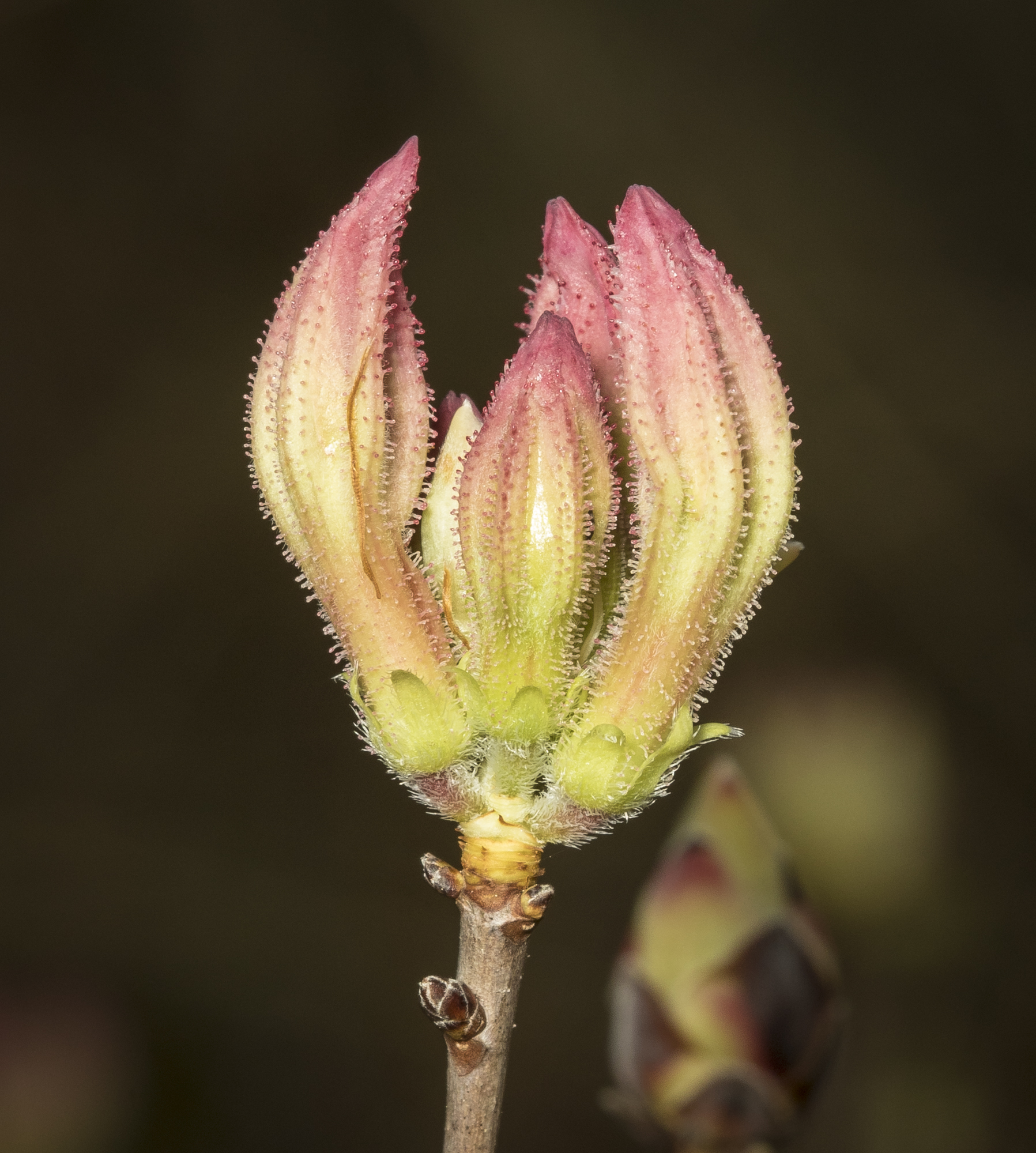
Dwarf azalea in pine savannaDwarf azalea flower budsDwarf azalea blossom
At our last stop in Holly Shelter, we enjoyed the beauty and fragrance of dwarf azaleas, Rhododendron atlanticum. This low-growing shrub makes an eye-popping display in the sea of wiregrass. A closer look revealed some other striking flowers under the pines.
Dwarf iris, Iris verna, in the Green SwampGrass pink orchid
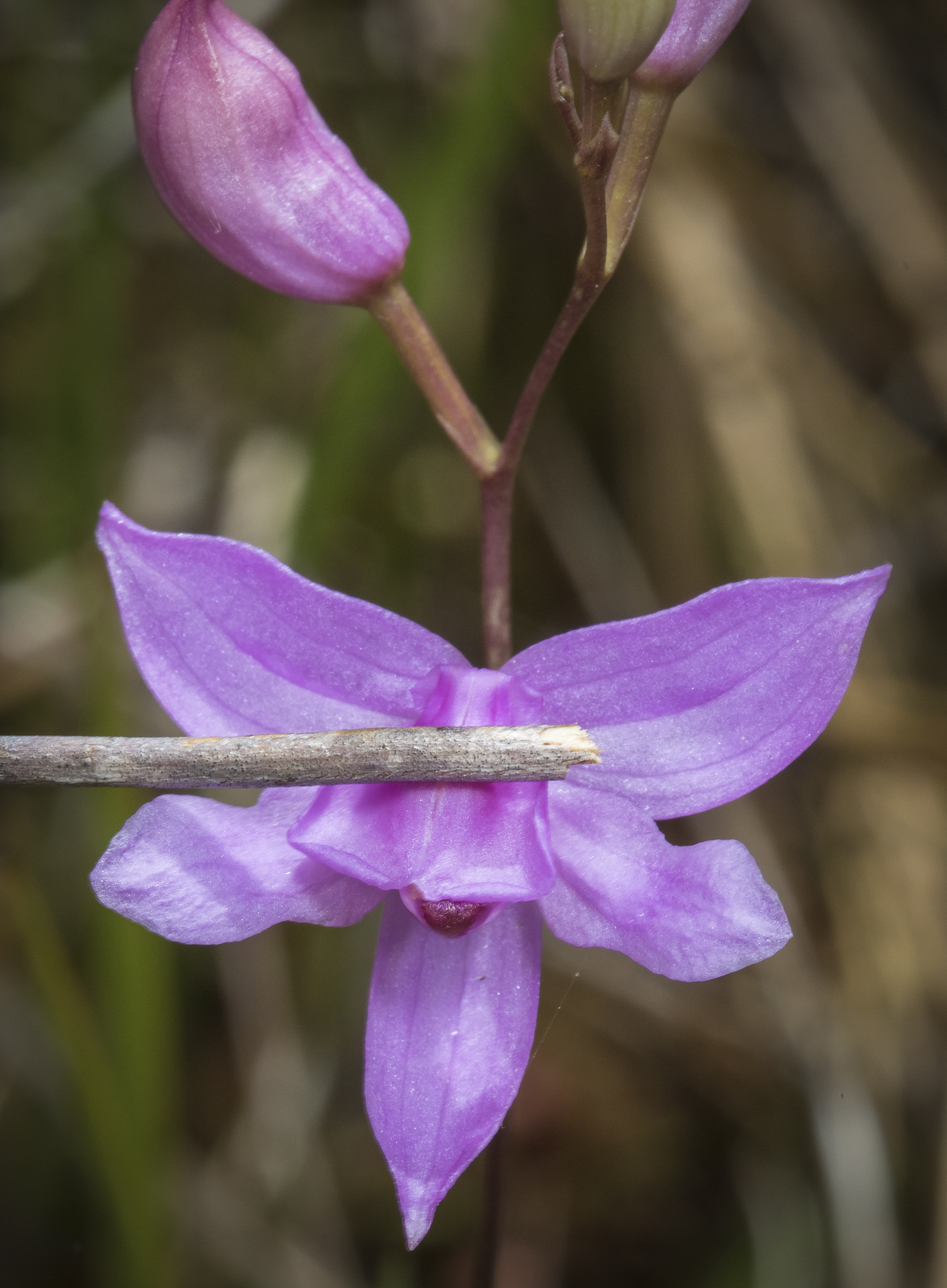
The pine savannas are known for their unusual plants, including a host of native orchids. Early in the season, the grass pink orchids, Calopogon sp., dominate. The genus name is Greek for “beautiful beard”, referring to the cluster of yellowish hairs on the upper lip of the flower. This flower produces no nectar, but the bushy hairs resemble the pollen-bearing anthers of other flowers, thus fooling insects to land for a snack.
What happens when a bee lands on the fake anthers of a grass pink orchid flower
The upper lip of the orchid is hinged at the base. When an insect lands on it, the lip drops, flopping the insect onto the reproductive parts of the flower (called a column) hopefully leading to pollination. In the photo above, the twig pushing down on the lip shows what happens when an insect, such as a bumblebee, lands on the yellow hairs – it is dropped down onto the column.
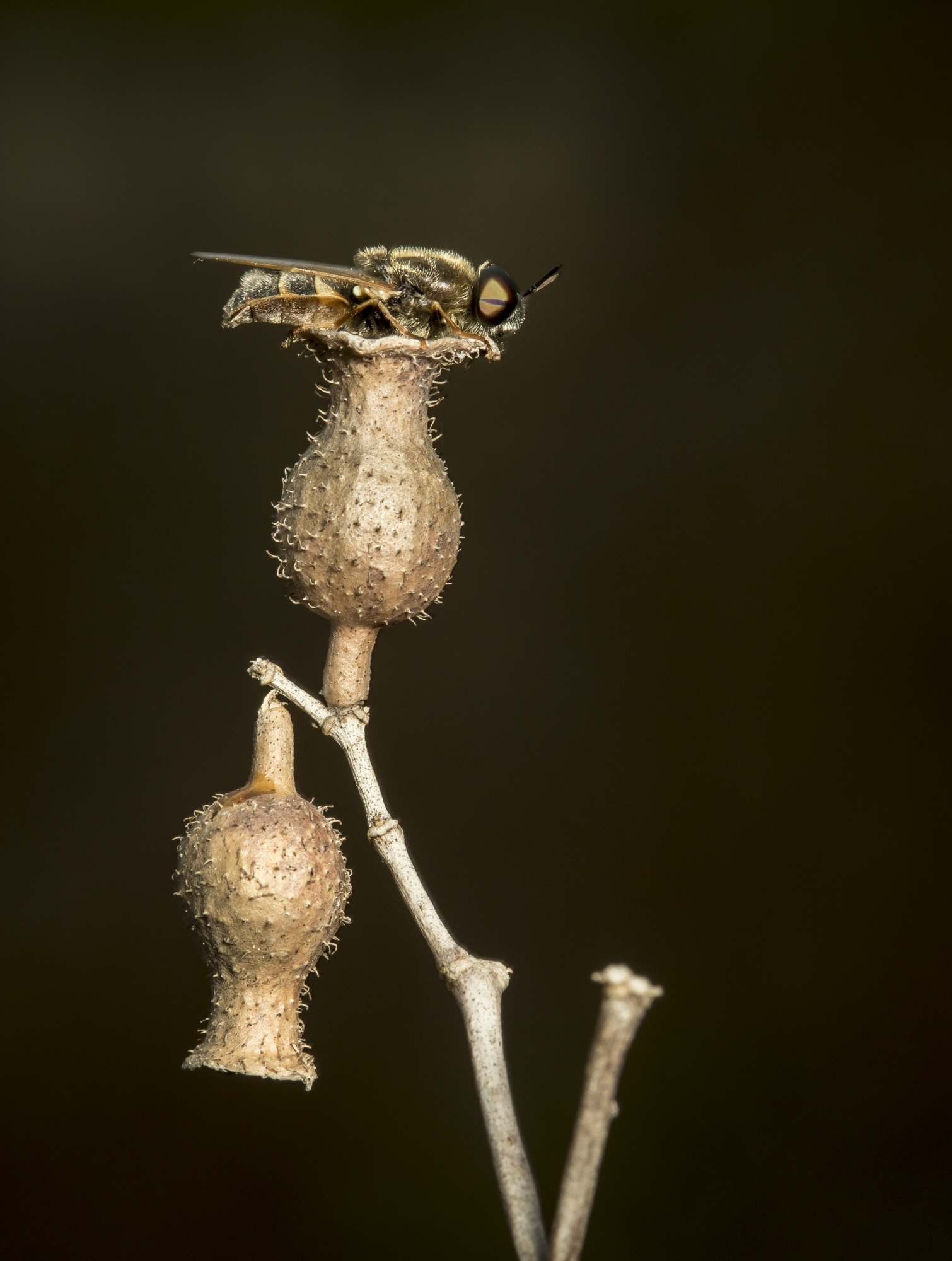
Fly resting on old seed pod of meadow beauty
We also saw a lot of other insects in the savanna including many Palamedes swallowtail butterflies. And where there are insects, there will be spiders, waiting…
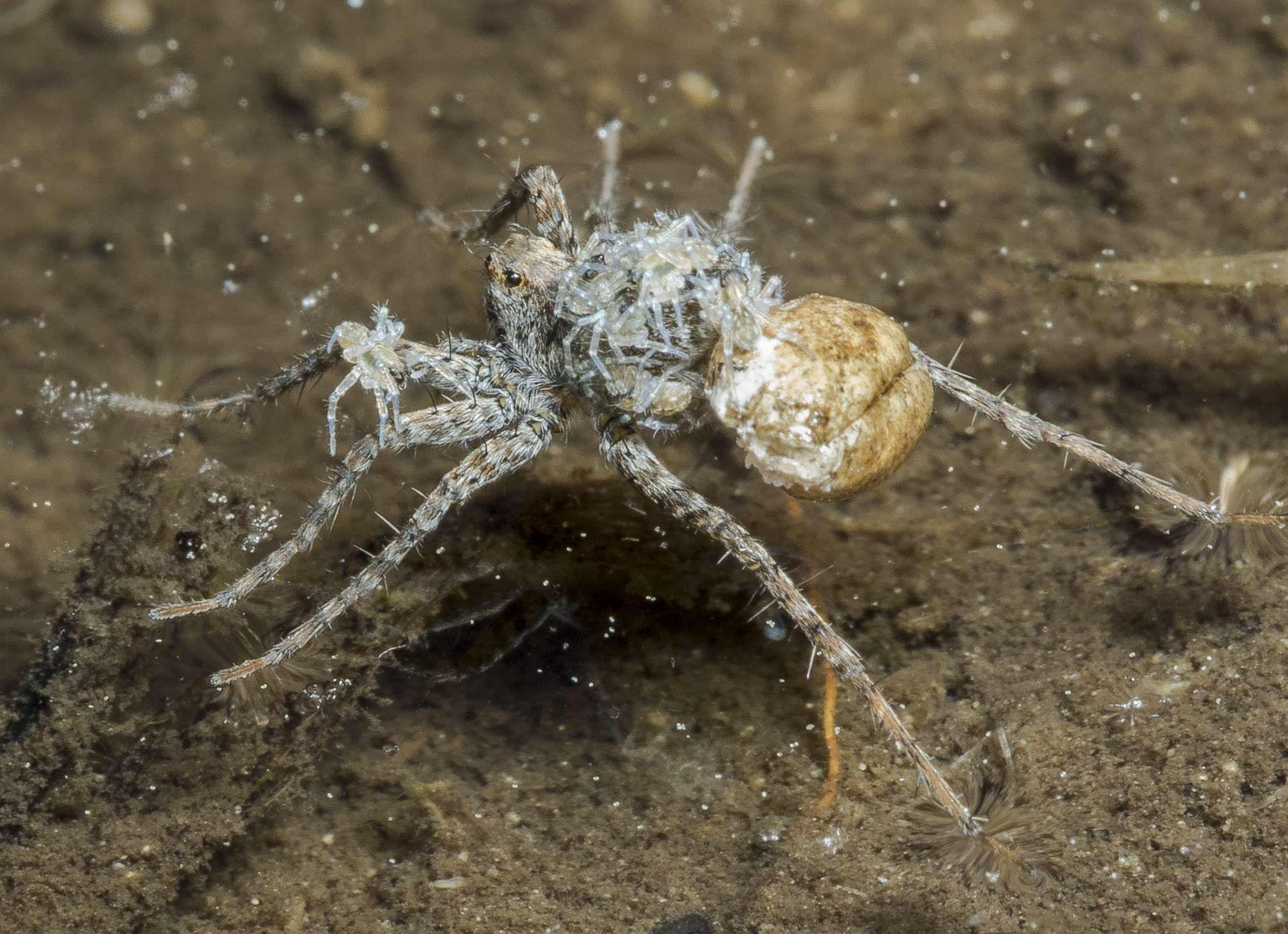
Crab spider awaiting its next mealWolf spider with babies and egg sac
This mother wolf spider is carrying her egg sac on the tip of her abdomen while the spiderlings hatch and crawl onto her back. They will cling to her for a few days until their first molt.
Hitching a ride with mom
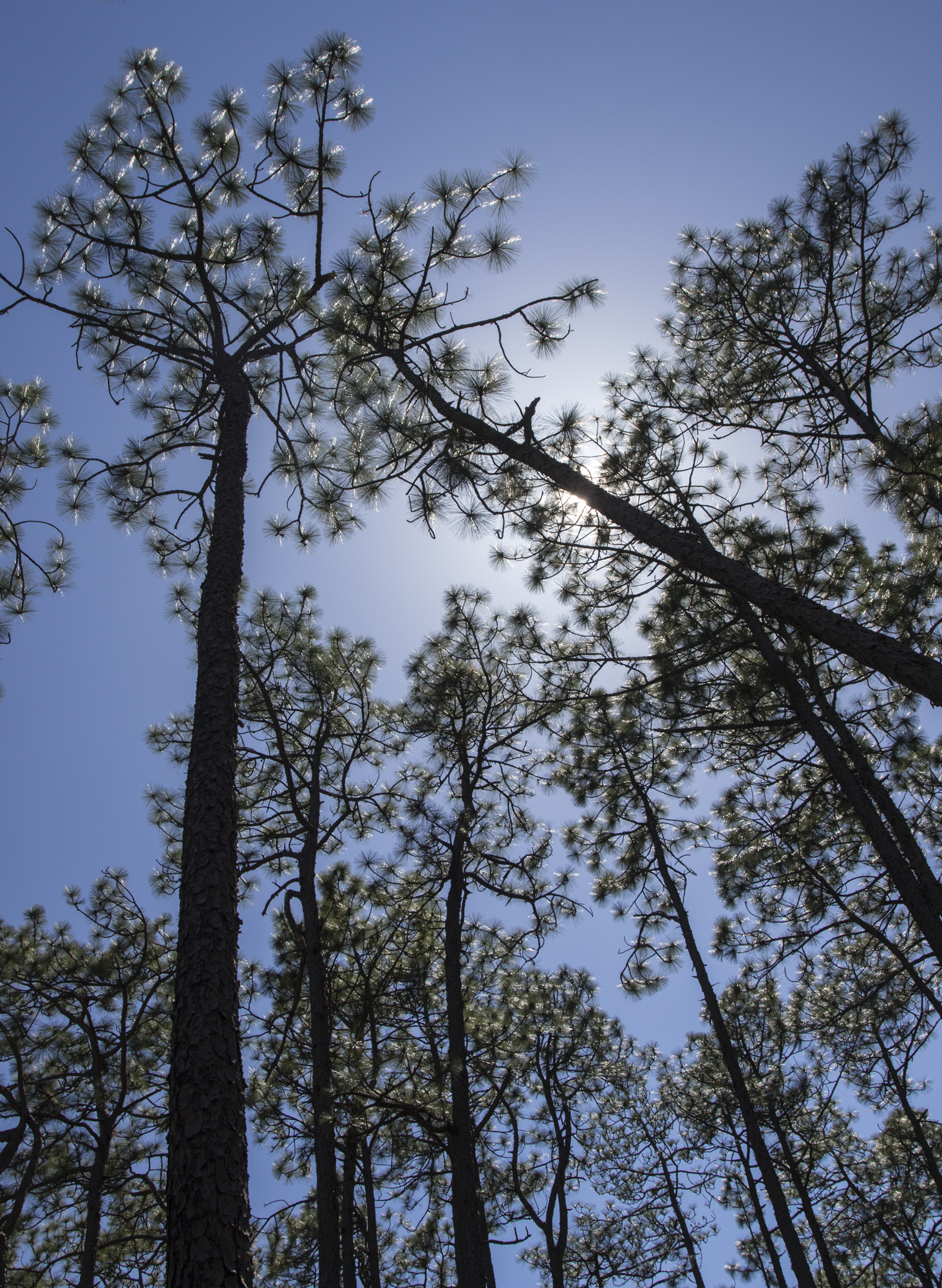
Our savanna time was well spent and we all came away with a new appreciation of the magic of this habitat. The gentle roar of the wind in the pines is definitely a soothing sound.
Longleaf pine canopy in the Green Swamp Preserve
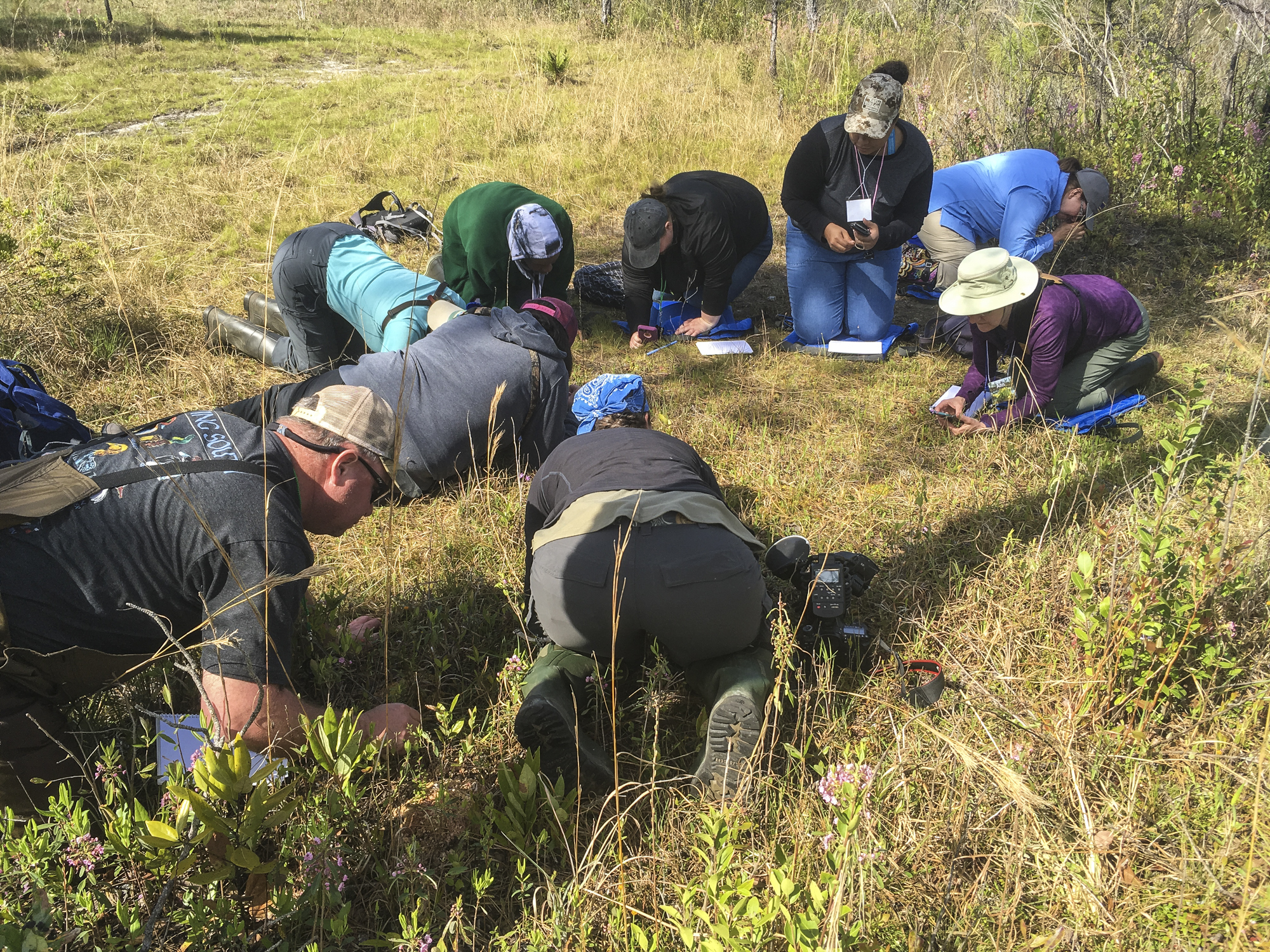
And, if you take the time to stoop down and look closely, there are many marvels to see…
Let us turn elsewhere, to the wasps and bees, who unquestionably come first in the laying up of a heritage for their offspring.
~Jean-Henri Fabre, entomologist, 1823-1915
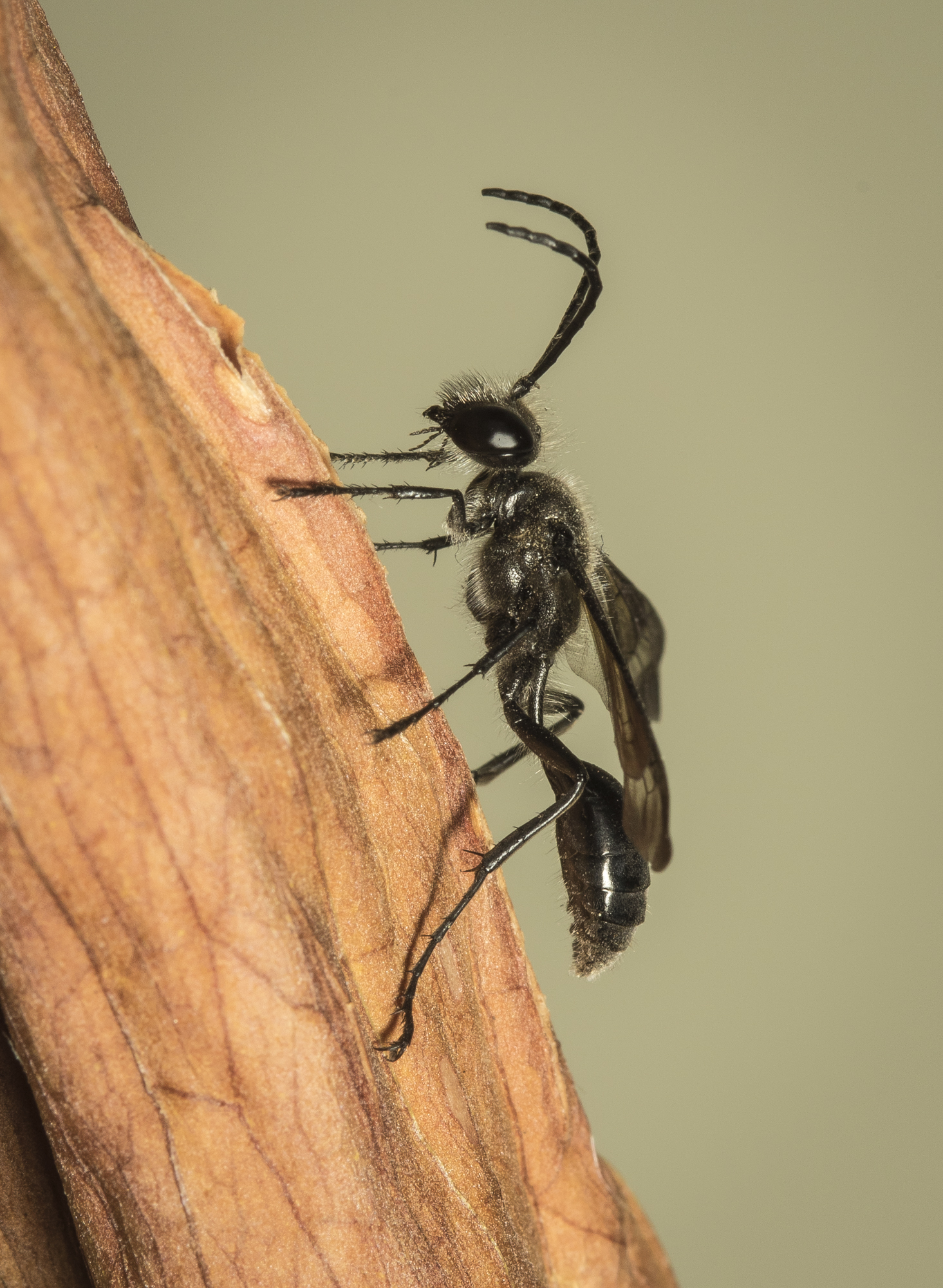
They’re back…the wasps flying inside my office window like they did last year about this time. Except now, I knew to expect them and why they are there. Last year, I was puzzled when one, then two, then several small black wasps appeared in my office over a few days in April. After catching and releasing them, I noticed they were all alike, and not the typical paper wasp that occasionally gets inside to overwinter. These wasps had an extended thread-like waist. I soon guessed they must be coming from the dried pitcher plant leaves (pitchers) I had stored in my office. Garden staff collect these old leaves every winter and we use them in educational programming. When you cut open an old pitcher, you can observe the variety of insects that the pitcher plant consumed by examining the dried remains of their exoskeletons (the soft parts are dissolved by digestive enzymes from the plant, leaving behind the hard parts of the bugs like legs and wings). Of course, as has always been the case in my work life, storage is an issue, so I naturally have several bags of these pitchers sitting on a shelf in my office. And that is where the wasps are coming from.
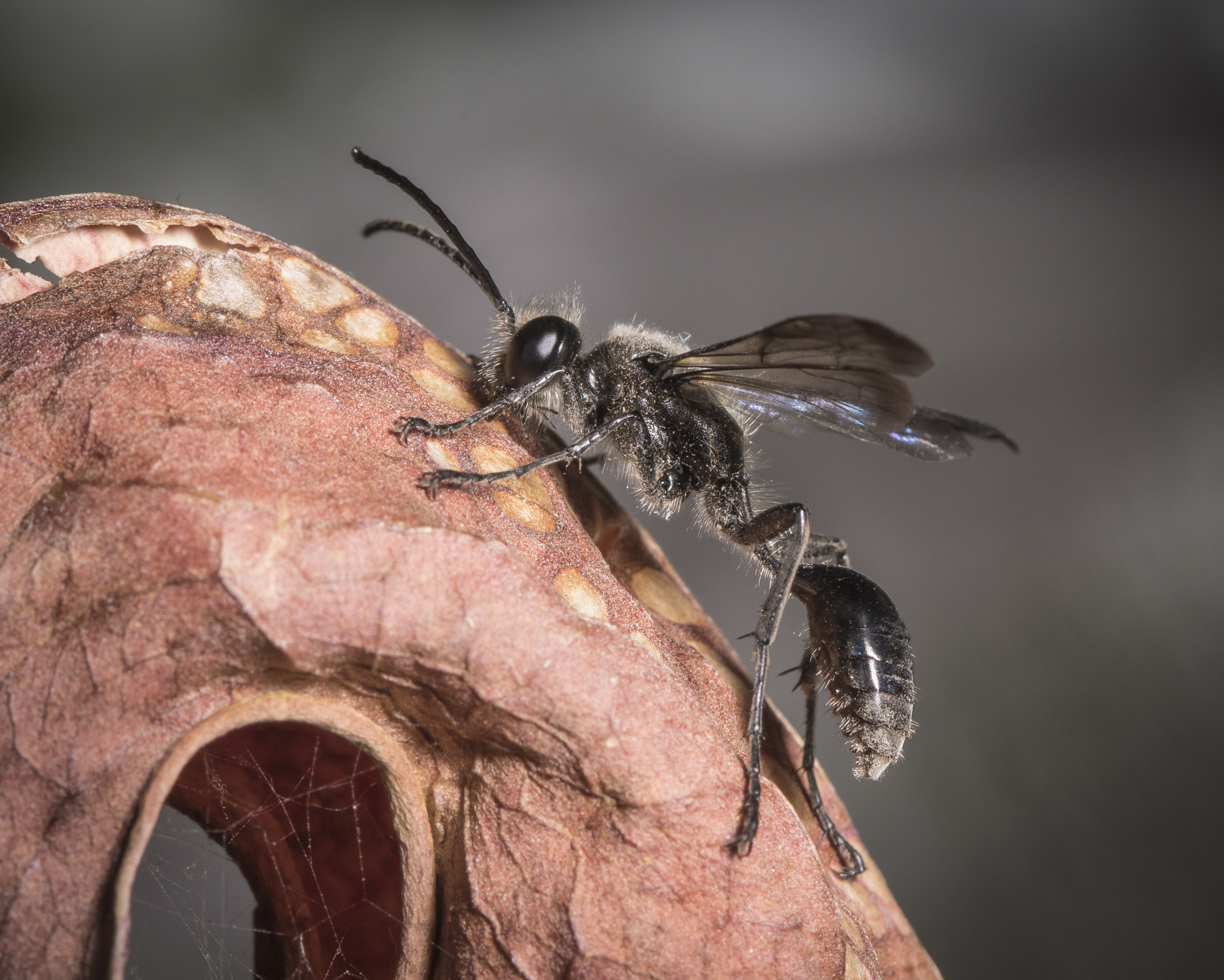
Grass-carrying wasp, Isodontia sp., in my office (click photos to enlarge)
After finding the wasps last year, I did a little research and found out my office mates belong to a group of wasps, known as grass-carrying wasps, that use hollow spaces (like the tubes of pitcher plants) for building their nests. They are members of the wasp family, Sphecidae, the thread-waisted hunting wasps, which provision their nests with prey ranging from spiders to caterpillars (depending on the wasp species). The familiar mud daubers are a relative of the grass-carriers.
Grass-carrying wasp on outside of dried pitcher plant in my office
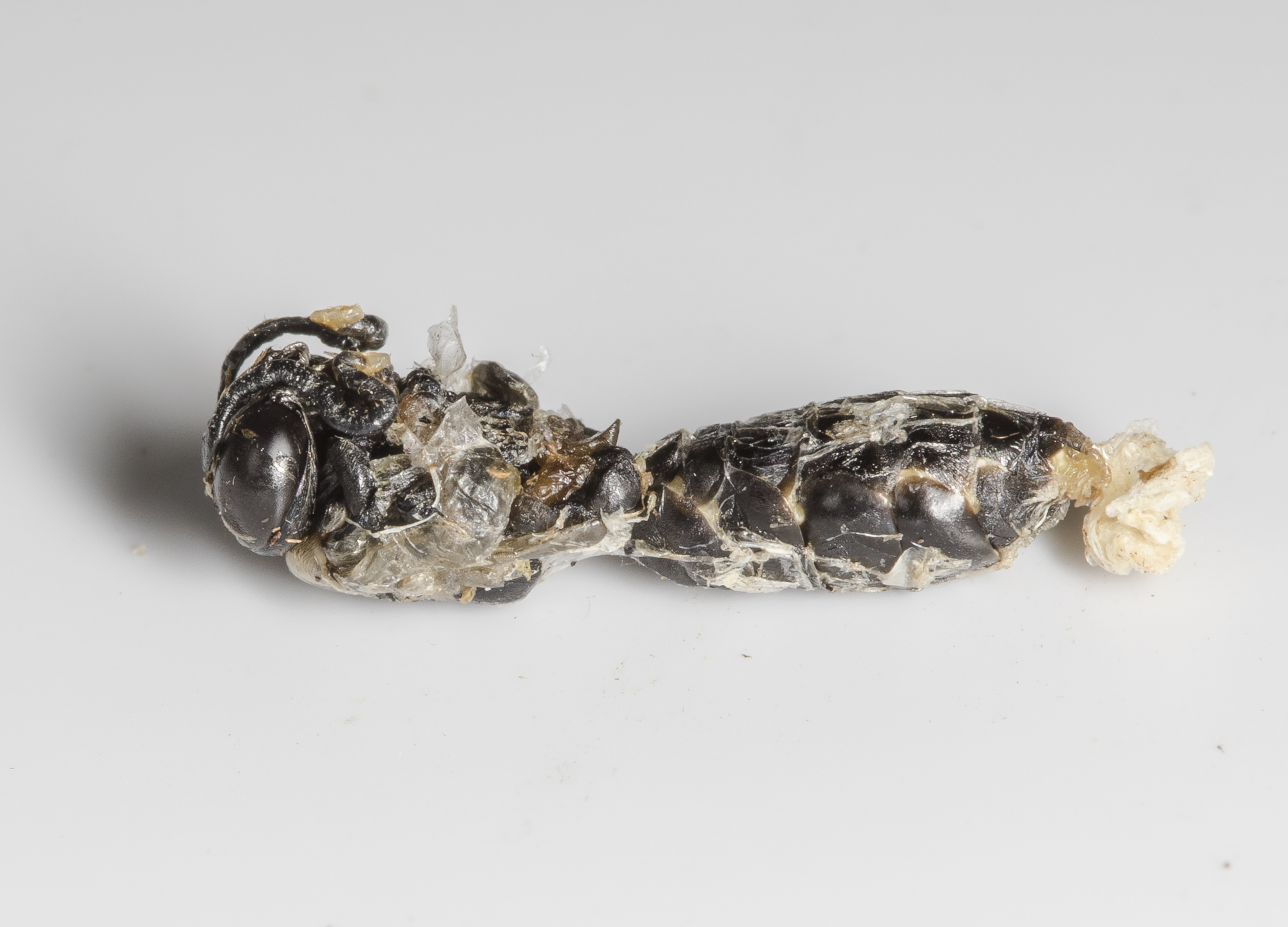
In one of our school field trips this spring, a student showed me what she found when dissecting one of the dried pitcher plants – a wad of grass and a little “mummy”.
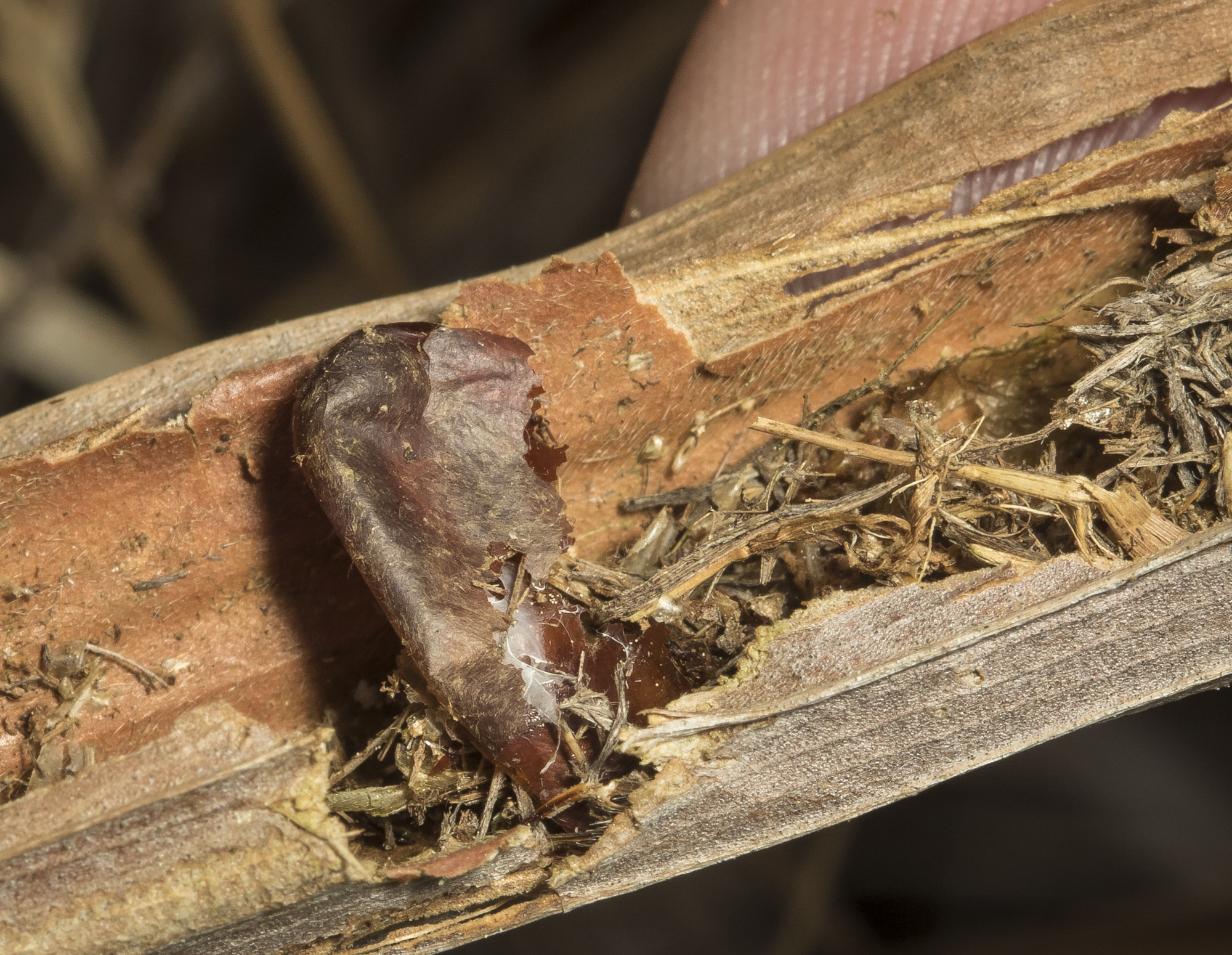
Wasp pupa with pupal case removed
I think she had accidentally pulled the wasp pupa out of its case as she tugged at the debris inside the pitcher plant. The grass is what these wasps use to construct their nest. The females collect grass stems and stuff them inside hollow spaces (pitcher plant leaves, old carpenter bee holes, or even the tracks of storm windows), creating a nest chamber. She then hunts for a prey item, usually a tree cricket, stings it in just the right spot to paralyze it, and brings it back to the nest. After securing it in the grass chamber, she lays one egg on the cricket, then seals off the nest with more grass. After the egg hatches, the wasp larvae eats the cricket and forms a pupa in the grass chamber. The adult wasp emerges and chews its way out of the nest (there are probably two generations per year in our area). They spend the winter as a pupa, emerging in spring (often, inside my office it seems). Not to worry, this species is non-aggressive, and would not sting unless you grab it, so they are easy to catch in a jar and release.
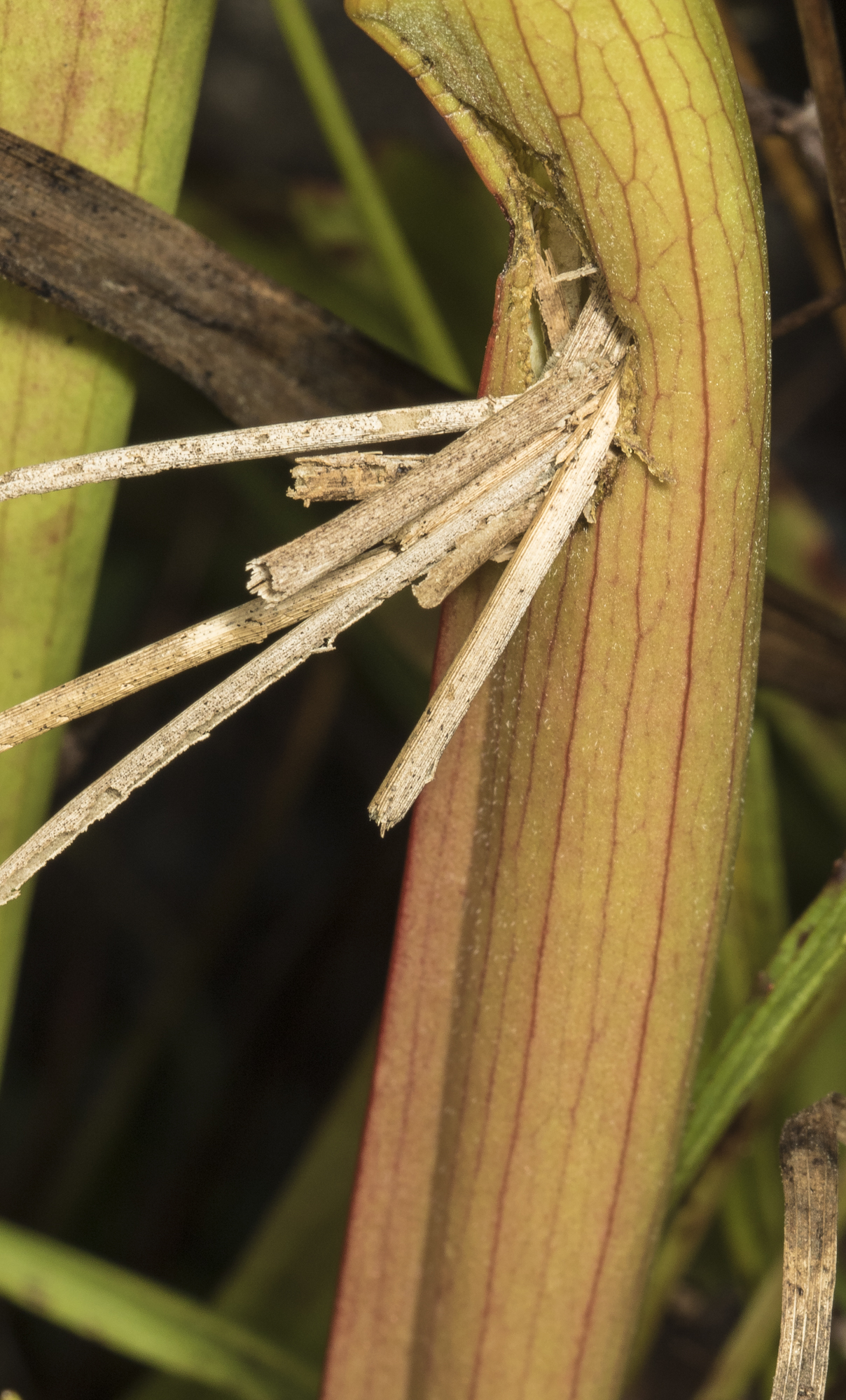
Grass plug sticking out of hole chewed in pitcher plant by a grass-carrying wasp
Last fall, I was leading a program when I spotted a blade of grass flying through the garden in the carnivorous plant collection. It was a female wasp carrying a 6-inch piece of dried grass to her nest. We watched as she landed on a pitcher plant and dragged the grass into it through a hole on the side. The next day I went back and photographed her handiwork, with several strands of grass poking out the side of the plant. A goal for this year is to get lucky and grab a photo of a wasp carrying a long strand of grass back to her nest.
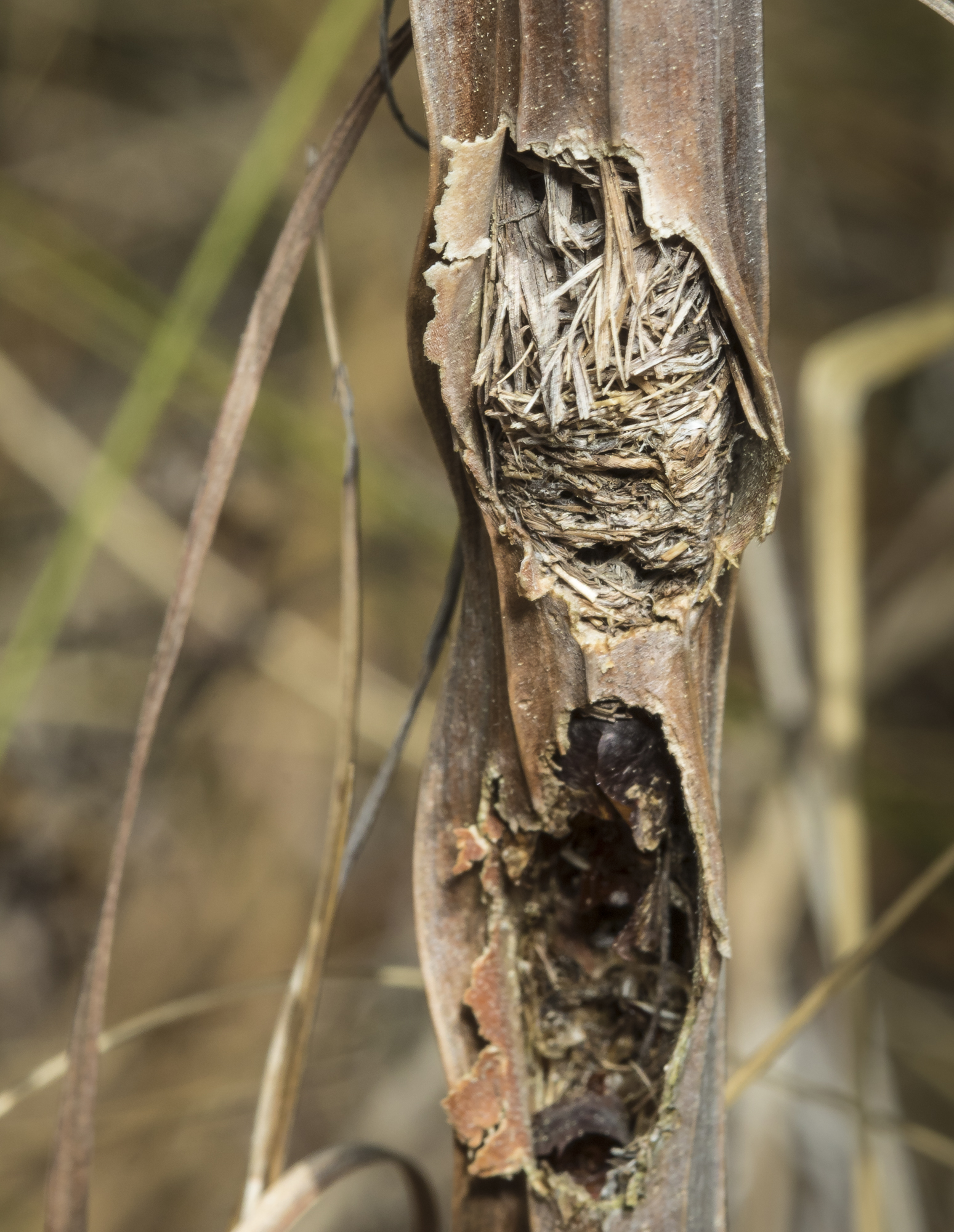
Grass plug in an old pitcher plant tube in the Green Swamp
On a recent trip to the Nature Conservancy’s Green Swamp, I found an old yellow pitcher plant tube with a grass plug exposed where the pitcher had split. I gently pulled it out, hoping to find a pupa.
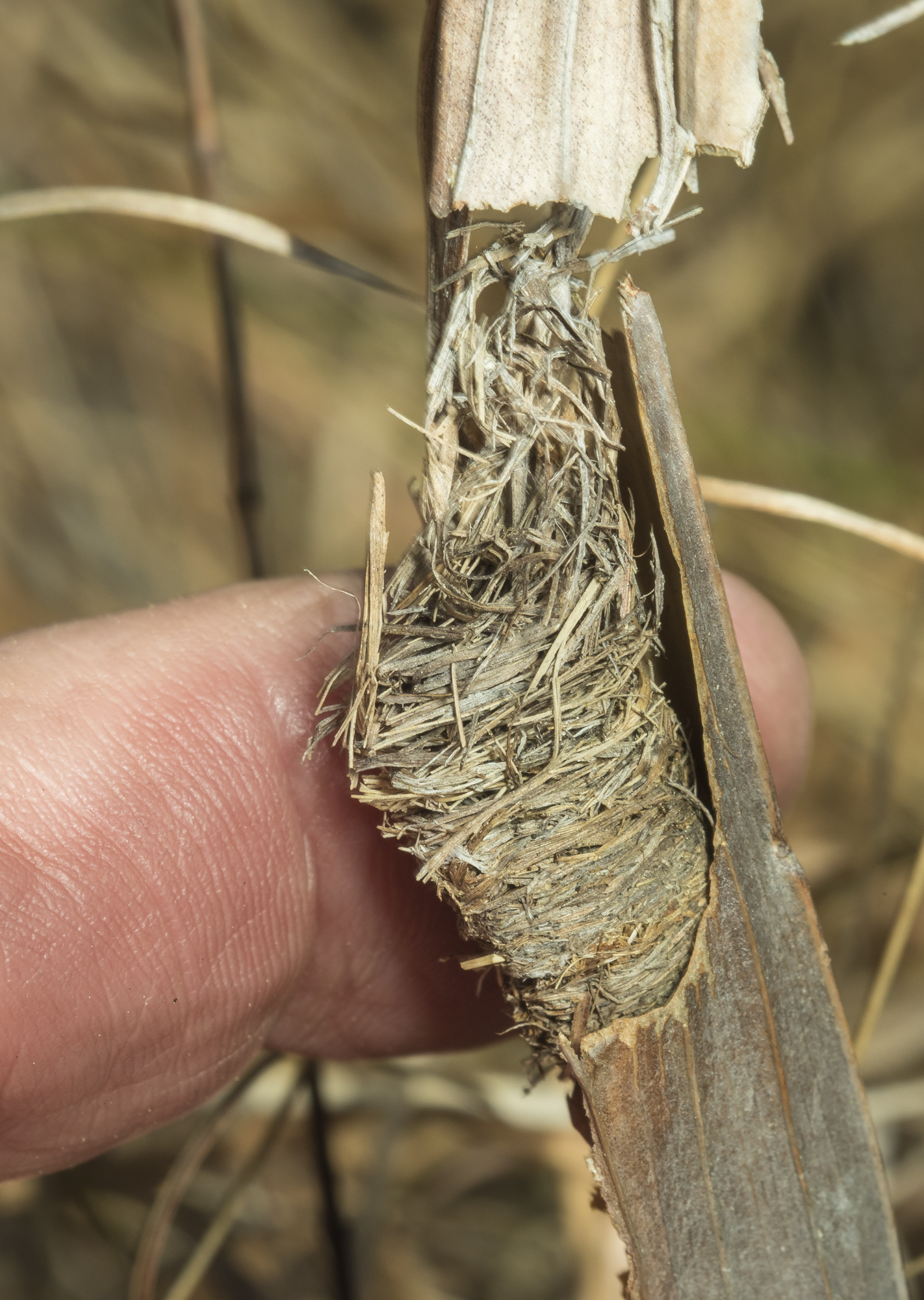
The plug was densely packed into the tubeGrass plug in hand
I teased the grass plug apart, but found it empty.
What looks like an old pupal case below the grass plug
Just below the plug, I found what looks like an open pupal case. Perhaps the wasp had already emerged. As I read more about these wasps, I learned that they will create a dense plug of grass in the hollow space as a plug to seal off their nest chamber and protect the developing young. I suppose that is what I found as the tight wad of grass. But, based on the presence of a couple of small flies at my office window last week, it appears that the grass-carrying wasp is itself occasionally parasitized by other species, much like its cousin, the mud dauber. I imagine it happens during the nest construction, with a parasitic fly sneaking in and laying her egg in the chamber while the female wasp is out gathering more grass or her tree cricket prey.
Hoping to photograph more of the life story of this beautiful wasp this year
Once again, a closer look at some odd incident has revealed a fascinating story of behavior and interconnections in the invertebrate world just outside my door (and inside my window). Hoping to see and photograph more aspects of this interesting insect thus coming year…stay tuned.
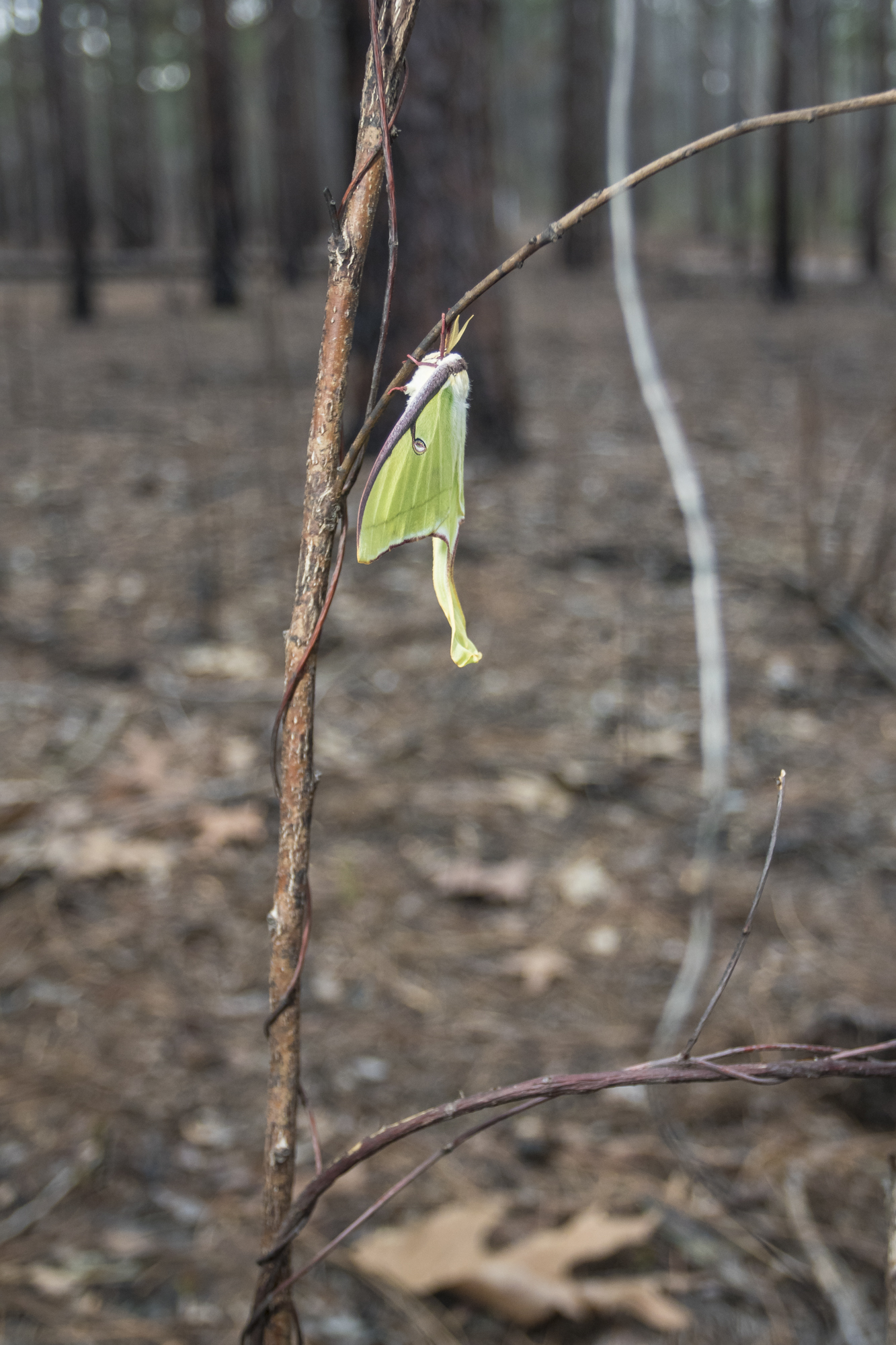
Last weekend we once again camped at Jones Lake State Park as part of an exploratory trip to the Green Swamp and surroundings. As we drove in, the campground looked quite different from last year at this time – it had been burned. The park staff do periodic prescribed burns to mimic the natural occurrence of lightning-caused fire in these habitats. After setting up camp we walked over to the canoe access area to check out the lake. On our way back, I noticed a speck of bright green in the brown and black landscape resulting from a January prescribed burn.
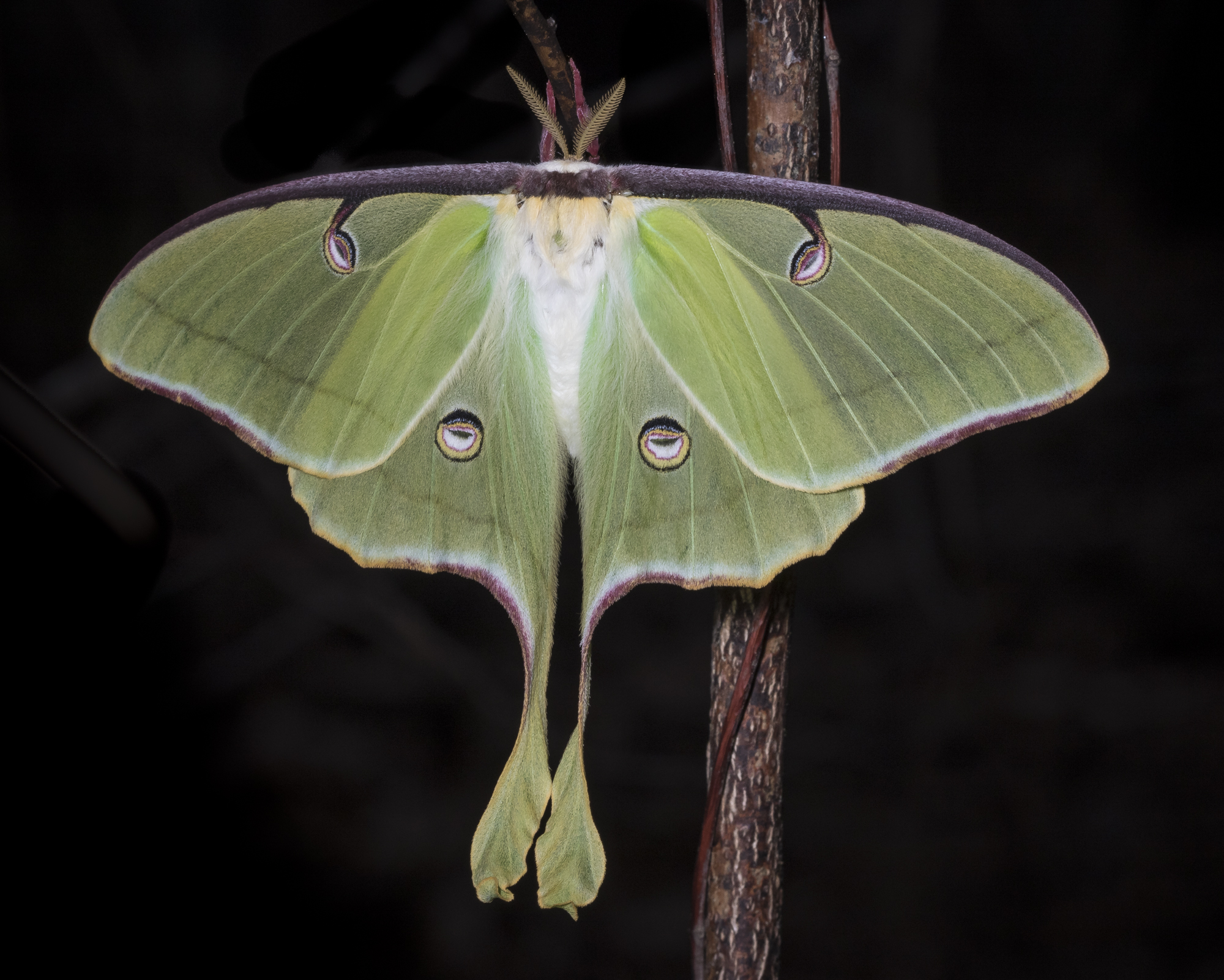
Luna moth, Actias luna, that has just emerged (click photos to enlarge)
A freshly emerged luna moth! Our first sighting of this beautiful moth of this season. It was hanging still, no doubt getting ready for its first flight.
Side view of the luna moth
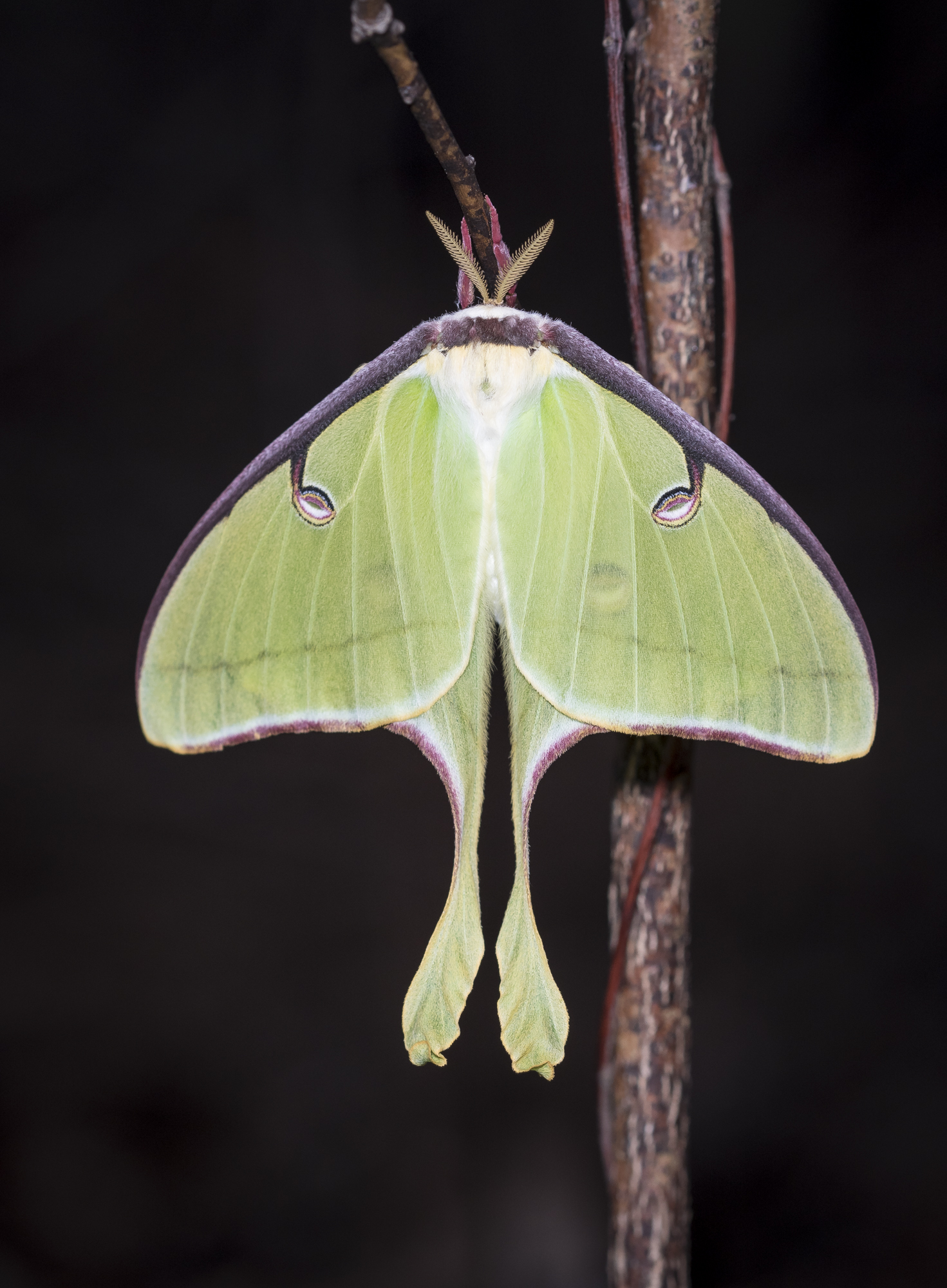
I ran to get our cameras and we spent the next 30 minutes observing and photographing this beautiful creature. The long tails are a gorgeous and diagnostic feature of this species. And, according to recent research, they serve a potentially life-saving function for these giant silk moths. When flying, the fluttering tails appear to create an acoustic signal that causes hungry bats to zero in on the moths’ tails, missing the vital body parts, and allowing many moths to escape.
Close-up of the front of a luna moth
When you only live a week or so as an adult, every miss from a predator seems to have added importance for your reproductive success. Female luna moths scatter their couple of hundred eggs on host plants such as sweetgum (the dominant in our area), persimmon, and hickories over the few nights of their active flight. There are generally at least two generations per year in our area with the Fall generation overwintering as a cocoon. The Fall caterpillars wrap themselves in leaves and silk and are usually hidden in the leaf litter until they emerge in spring. And that is what piqued our curiosity with this particular moth. How had it survived the ground fire just a couple of months ago?
The moth’s cocoon
I started searching the area around the moth, figuring it had climbed the first vertical object it encountered after emergence. They climb in order to fully expand their wings by pumping fluid from their abdomen through the veins of their wings. Moths that don’t hang from something (like those placed in a glass container as cocoons) may develop deformed wings and cannot fly. After just a minute of looking, I found the cocoon laying on the now almost bare ground about 3 feet from the sapling the adult had climbed.
Half of the cocoon was missing
When I picked up the cocoon, I was stunned to find that half of it was missing, presumably consumed by the fire (note the seared edge). We can only guess that the pupa inside the cocoon somehow managed to escape the fire that consumed half of its covering. It then lay there for a couple of months, lucky to escape foraging insects, mice, and other pupa predators. Truly amazing. An equally amazing thing is how an adult luna moth normally escapes its silken cocoon. You usually find a spent cocoon with a single hole in one end. The adult moth wriggles out using a secreted enzyme (called cocoonase) that helps dissolve the glue (called sericin) binding the silk in the cocoon. The moths also have shortened spurs along the base of the fore-wing that are used to help tear through the cocoon covering.
Top view of adult luna moth
As we moved around it taking pictures, I accidentally touched the sapling, causing the moth to raise its wings, exposing the stunning eye spots on the hind wings. It also started to quiver slightly.
Luna moth with outstretched wings
These shivering motions are generally a precursor to flight, but it quickly settled back to a resting position and we moved on. When we checked the next morning, the moth was gone, hopefully to live long enough to ensure a new generation of these magnificent insects.
…even the insects in my path are not loafers, but have their special errands.
~Henry David Thoreau
About two weeks ago, we took a hike at one of our favorite springtime destinations, Johnston Mill Nature Preserve, one of the many wonderful properties owned and managed by the Triangle Land Conservancy. We have been impressed and amazed by the variety and abundance of spring wildflowers that carpet the ground here and were hoping to catch the flowers at their peak. This year, we were lucky, and hit the trout lilies at their height of bloom. While Melissa and her sister went off for some exercise with a brisk hike along the trail, I did my usual snails pace walk/crawl, camera in hand, looking for anything interesting along the way.
Windflower, Thalictrum thalictroides (click photos to enlarge)
Many flowers (especially the spring beauties and trout lilies) were still closed due to the chilly temperatures and overcast skies. But the windflowers were doing their thing, quivering in the slightest breeze, flowers (with their white sepals, no petals) facing skyward.
I found a few hepatica, Anemone americana, with their newly emerging fuzzy leavesSpring beauties, Claytonia virginica, opened up as the day warmedTrout lilies, Erythronium umbilicatum, with their dappled leaves (resembling the pattern of a trout)
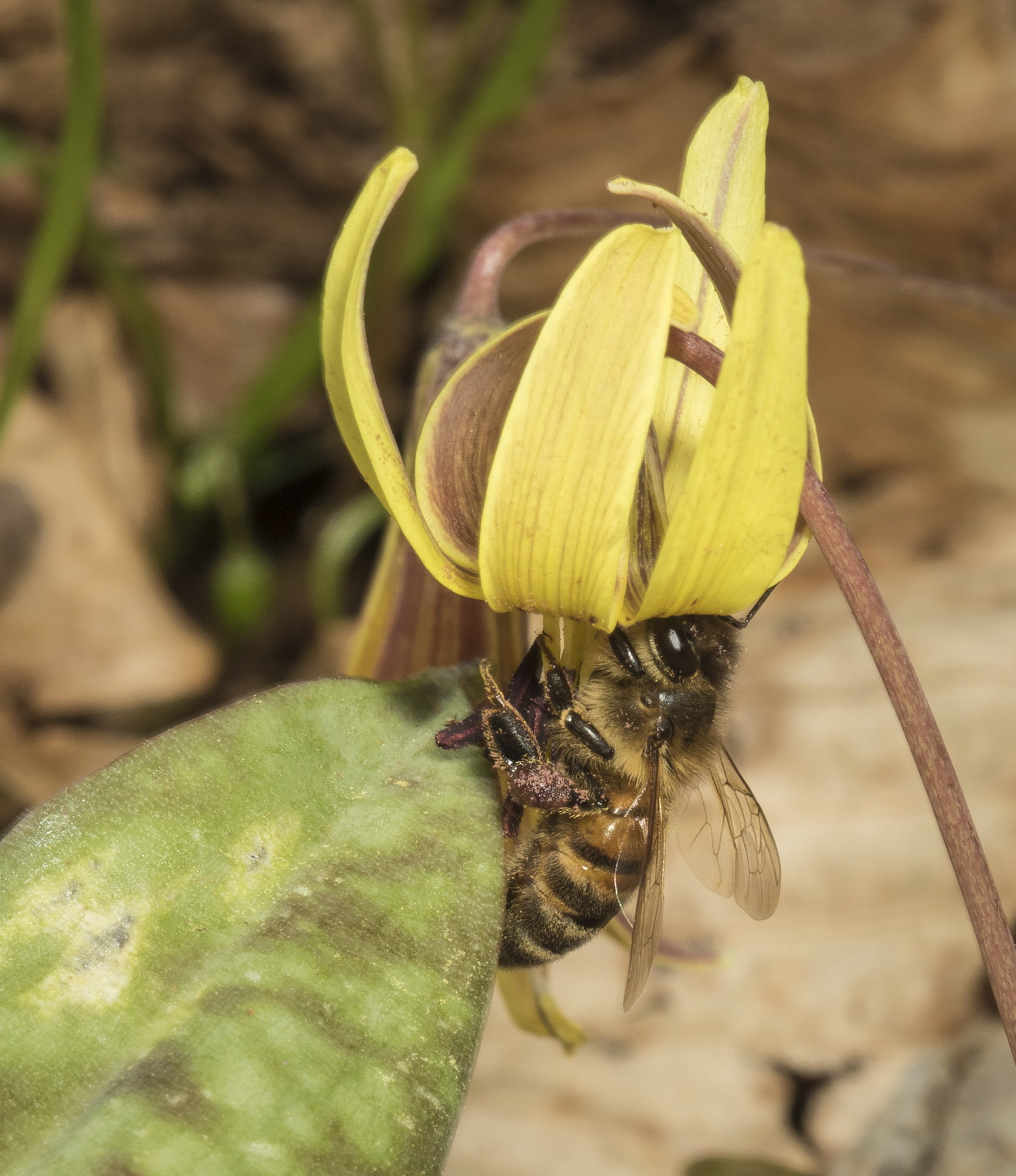
After an hour or so, the sun started to shine and the flowers opened, beckoning the early season pollinators.
Honeybee visiting a trout lily
I was hoping to observe and photograph some of the elusive pollinators, so I was alert for any movement near the open blossoms as I eased along the trail.
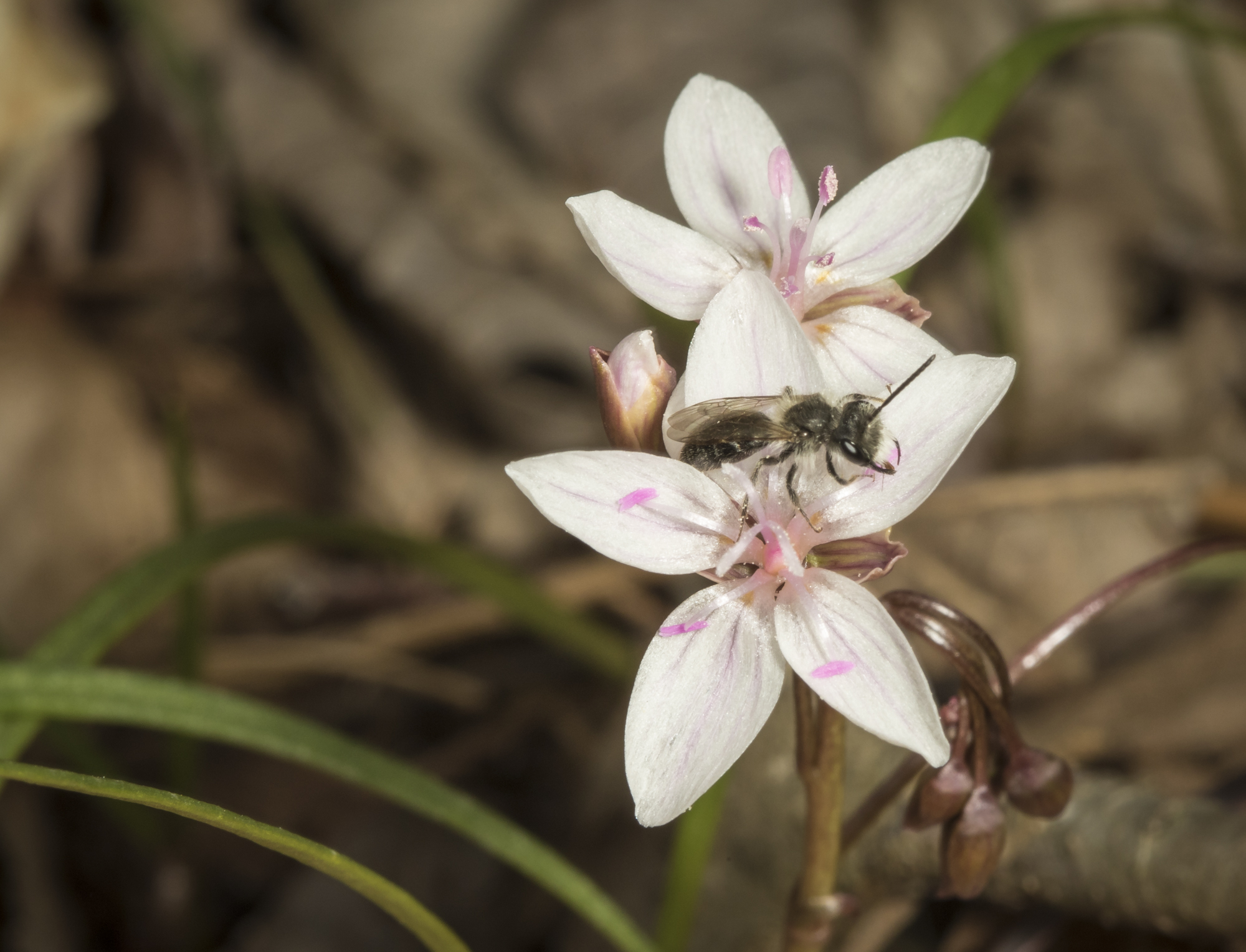
Small native bee on spring beauty
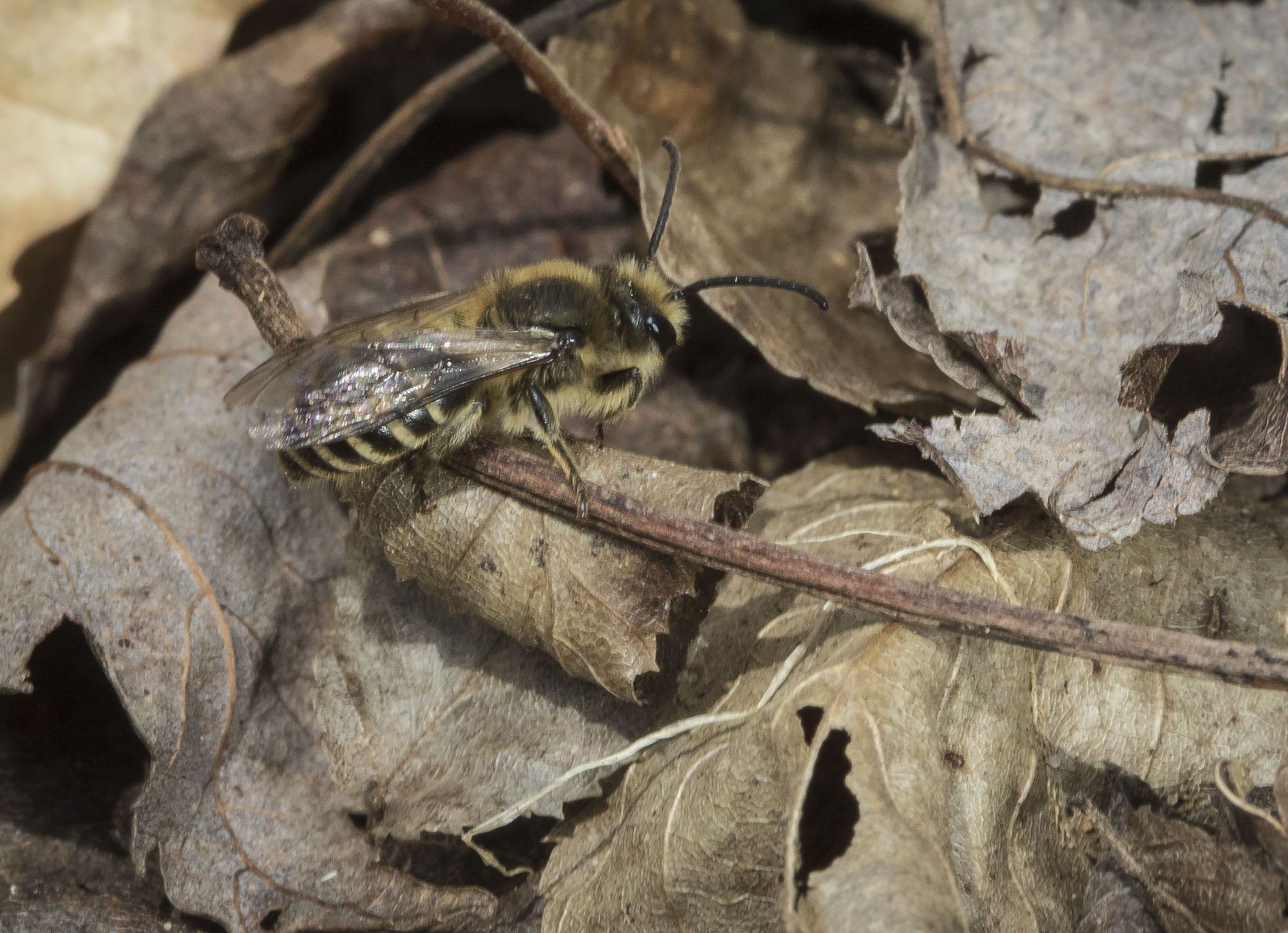
I searched for spring beauty bees, a specialist on their namesake spring ephemerals with pink pollen. I did capture one photo of what I think is a spring beauty bee (see the first photo of spring beauty above), but the bee on this plant looked different.
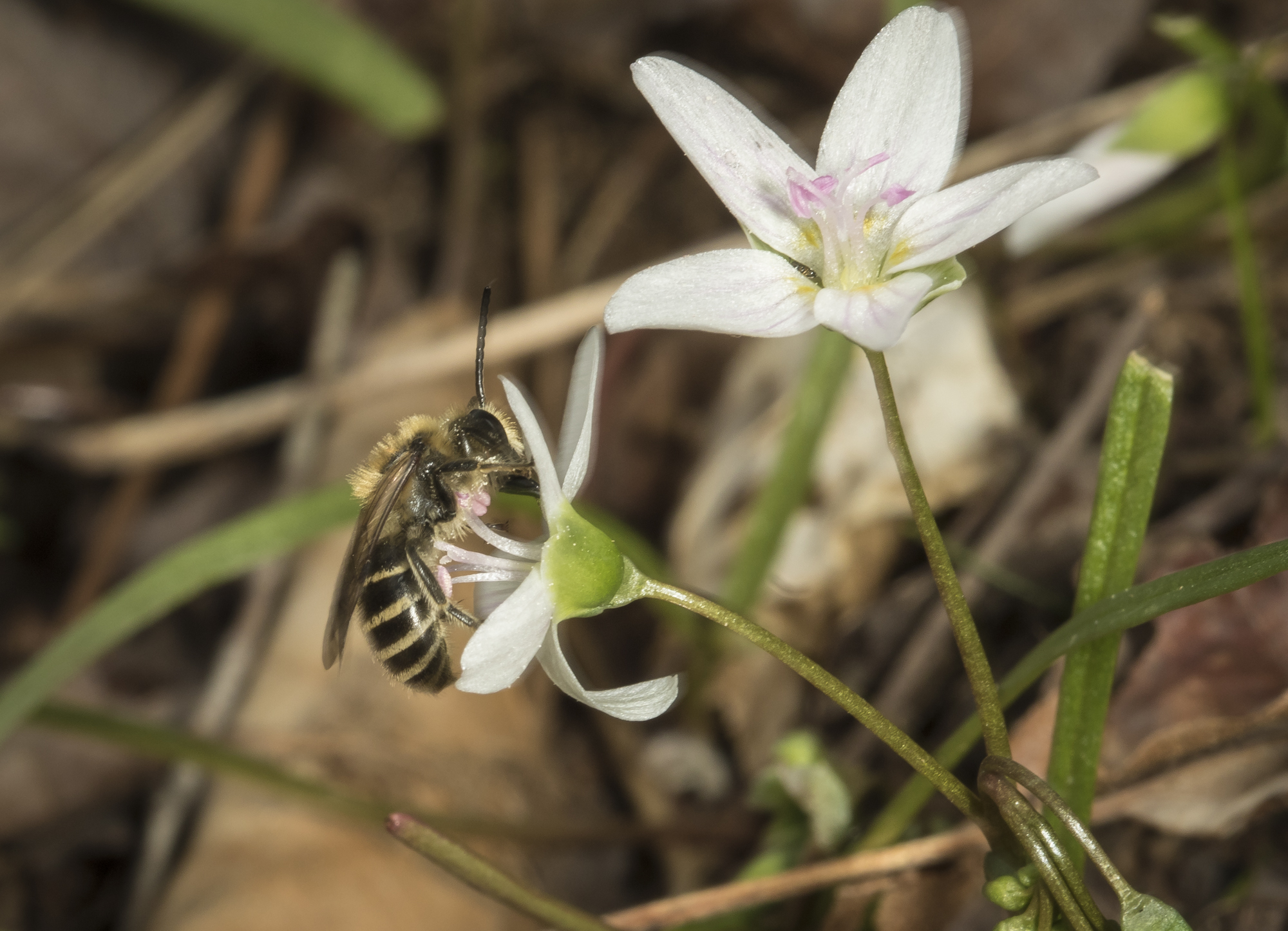
A small native bee with a full pollen load
I started seeing this bee on many plants, especially the abundant trout lilies.
We found a group of bees flying low over the ground near the trail juncture
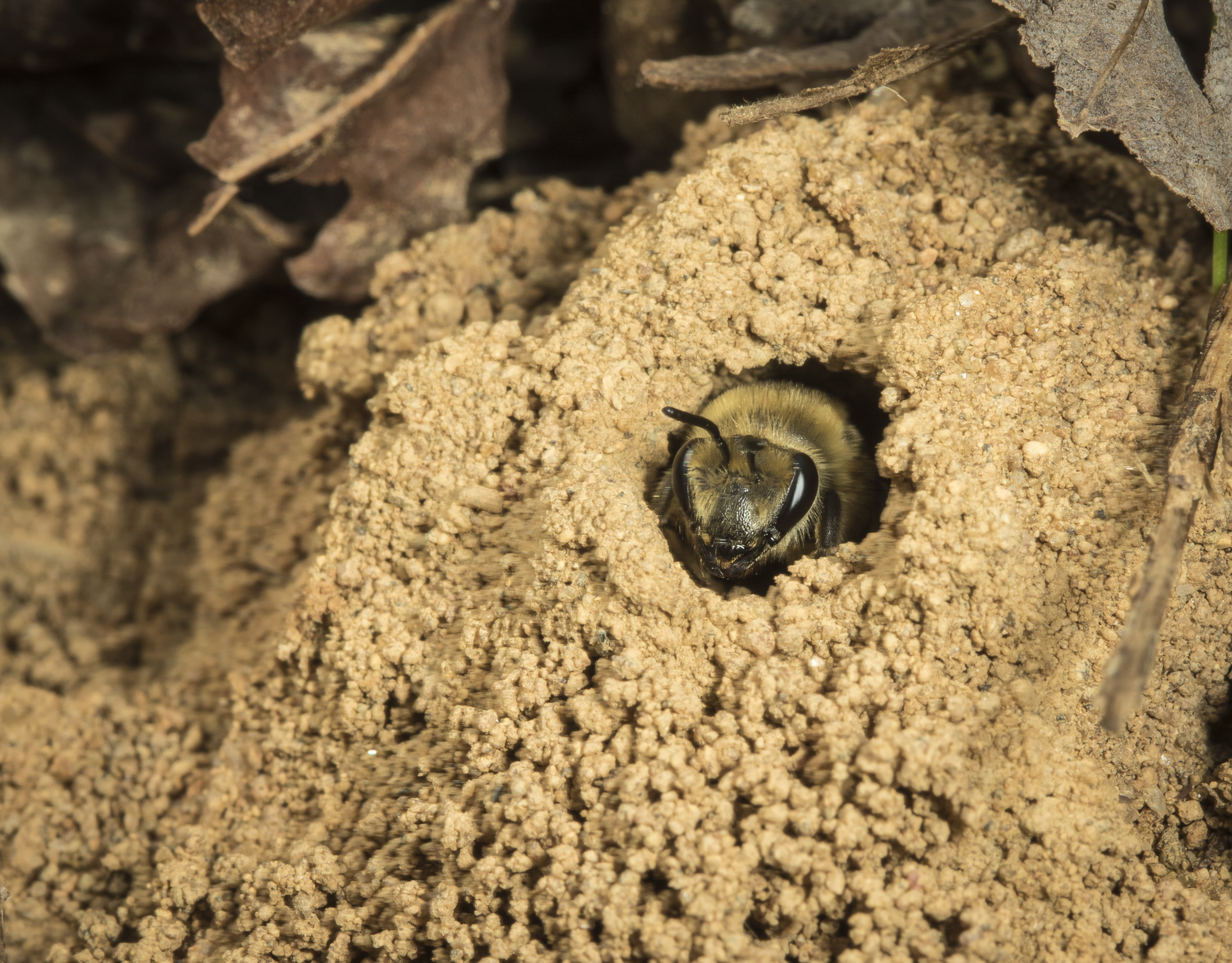
At one point along the trail, we noticed a concentration of these bees flying low over the ground. I knelt down to photograph one on the leaf litter, and as I focused for another shot, it disappeared into the leaves. That’s when I noticed a nearby mound of soil with a pencil-sized hole and a pair of large eyes peering out at me.
Bee looking out of its burrow entrance
And this is where my photos of this amazing creature end, but its fascinating story begins. We watched these bees for quite awhile and discovered what looked like a colony scattered over a large swath of ground in the floodplain of the creek. Many of the entrance mounds to their burrows were partially hidden in the leaf litter, but all were about the size of a golf ball with one hole near the top. The bees appeared to be going in laden with pollen and then exiting free of that cargo, presumably having stored it for their soon to be developing young. That night, after trying to identify the bees with various online resources, I uploaded a few images to Bug Guide and heard back the next day from a couple of their helpful experts. These are a type of plasterer bee (also called cellophane bees) – the experts best guess is this one is Colletes inaequalis, the unequal cellophane bee. The reason for their groups’ unusual common name is that females produce a secretion from their abdomen that is a type of polyester which becomes the brood cell for their young. Though these bees are solitary (a female digs her own burrow and tends it herself), they tend to nest in aggregations (sometimes in groups of hundreds or more nests), especially in sandy soil on south-facing slopes. She creates several brood cells that resemble small plastic bags in side chambers of her one-foot deep tunnel, stocks them with a liquid pollen and nectar mix, and then suspends one egg above the food larder in each cell. The more I learned about this species, the more fascinating it became. Some researchers are studying the brood cell material to see if it can be synthesized for a biodegradable plastic! To learn more about the biology of this fascinating bee (and to see some amazing photos of an excavated nest chamber and brood cell) visit these two links – Polyester bees: Born in a Plastic bag and Nature Posts: Bees That Dig Holes in the Ground.
Closer view of a docile cellophane bee
There were quite a few references to people being alarmed at finding aggregations of these bees in their yards, but there is no need to be concerned about them as they tend to be quite docile. They are among the earliest bees to be(e) active and then only for a few weeks before the entire colony is reduced to the developing larvae and pupae being underground until the following spring. Plus, they are important pollinators of early spring wildflowers, so let them be(e). One other interesting note, and an indicator of how climate change is impacting species large and small – researchers using historical museum datasets and more recent bee-monitoring data looked at the timing of spring emergence of this (and several others) species of native bees. Over the past 130 years there has been a significant shift toward earlier spring time emergence with an average ten days earlier now than in the late 1800s. That trend has been most pronounced in the last 40 years. With all these bees are doing for us (pollination services), telling us about our changing climate, and the possibility of synthesizing their unique polyester secretions, we should appreciate these fascinating master burrowers and protect them and their kin.
Nature does not hurry, yet everything is accomplished.
~Lao Tzu
Nature may not hurry, but this past year sure seems to have flown by. My personal life has been a blur these past many months, and the blogging has slowed a bit (you may have noticed). I blame it on that thing called work. I have been back at work a little over a year now and time for writing and photography has dropped off a bit. In spite of that, I have reached another milestone in the history of this effort to educate myself about nature – my last post was the 500th since I started just after retirement in 2013. Although it took a little longer to pass this last one hundred posts, in looking back, it looks as though things have been far from dull with the return to work. In fact, being at the NC Botanical Garden has created a lot of new opportunities for learning about the natural world, especially with regards to plants. Here is a short series of highlights from this past one hundred posts of Roads End Naturalist…
Campsite, Boundary Waters Canoe Area, 2016 (click photos to enlarge)
Before returning to work, we had a great week-long camping trip (with beautiful weather) in the Boundary Waters Canoe Area of Minnesota in the Fall of 2016. What an experience! And camping seems to have been a theme these past many months (I am with the “camping queen” after all)…
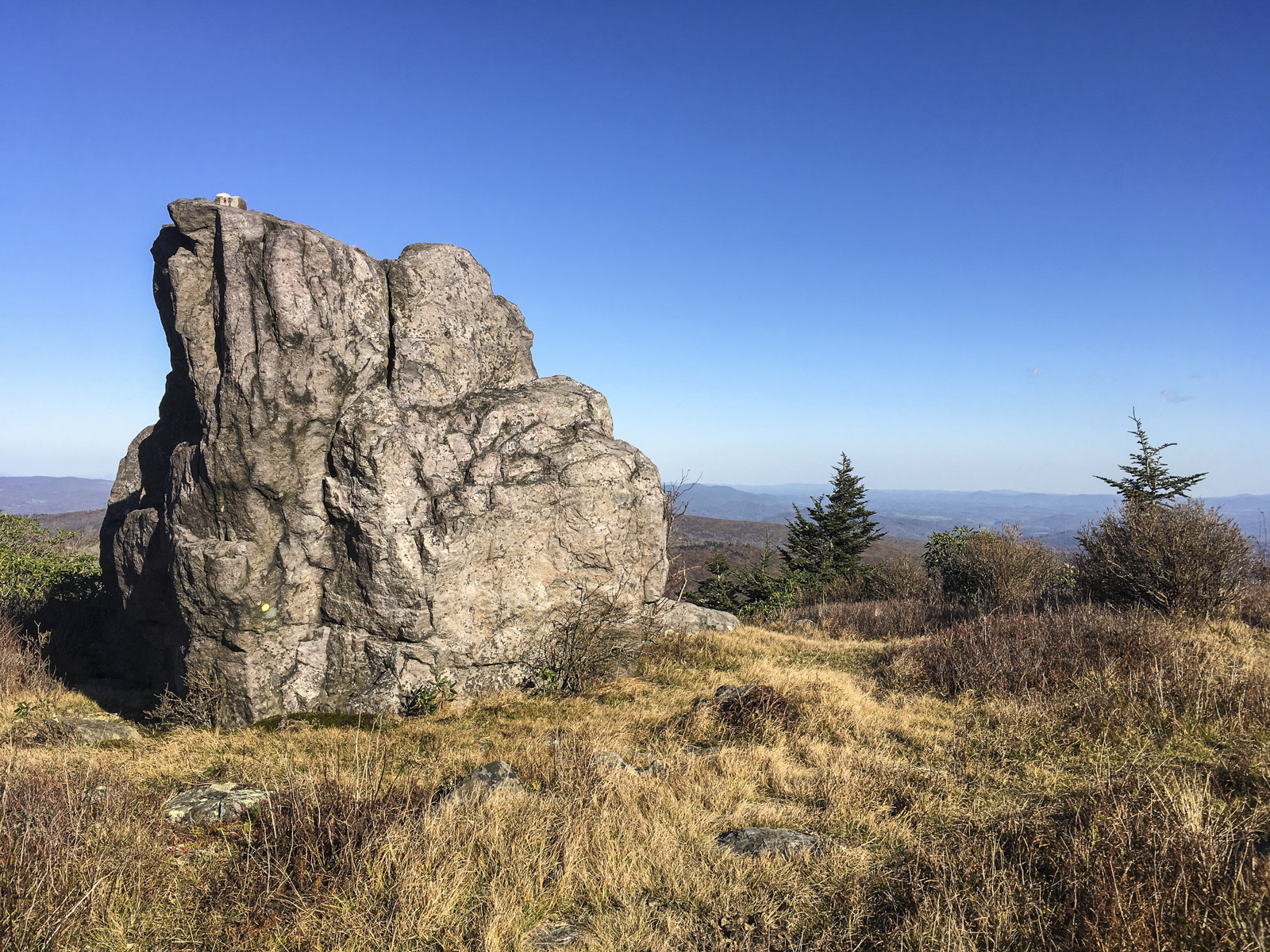
Hiking and camping in Grayson Highlands State Park, VACamping on a platform in the swamp along the Roanoke River
Looking back, it seems that even after starting back to work, camping kept us busy, and in some beautiful places…
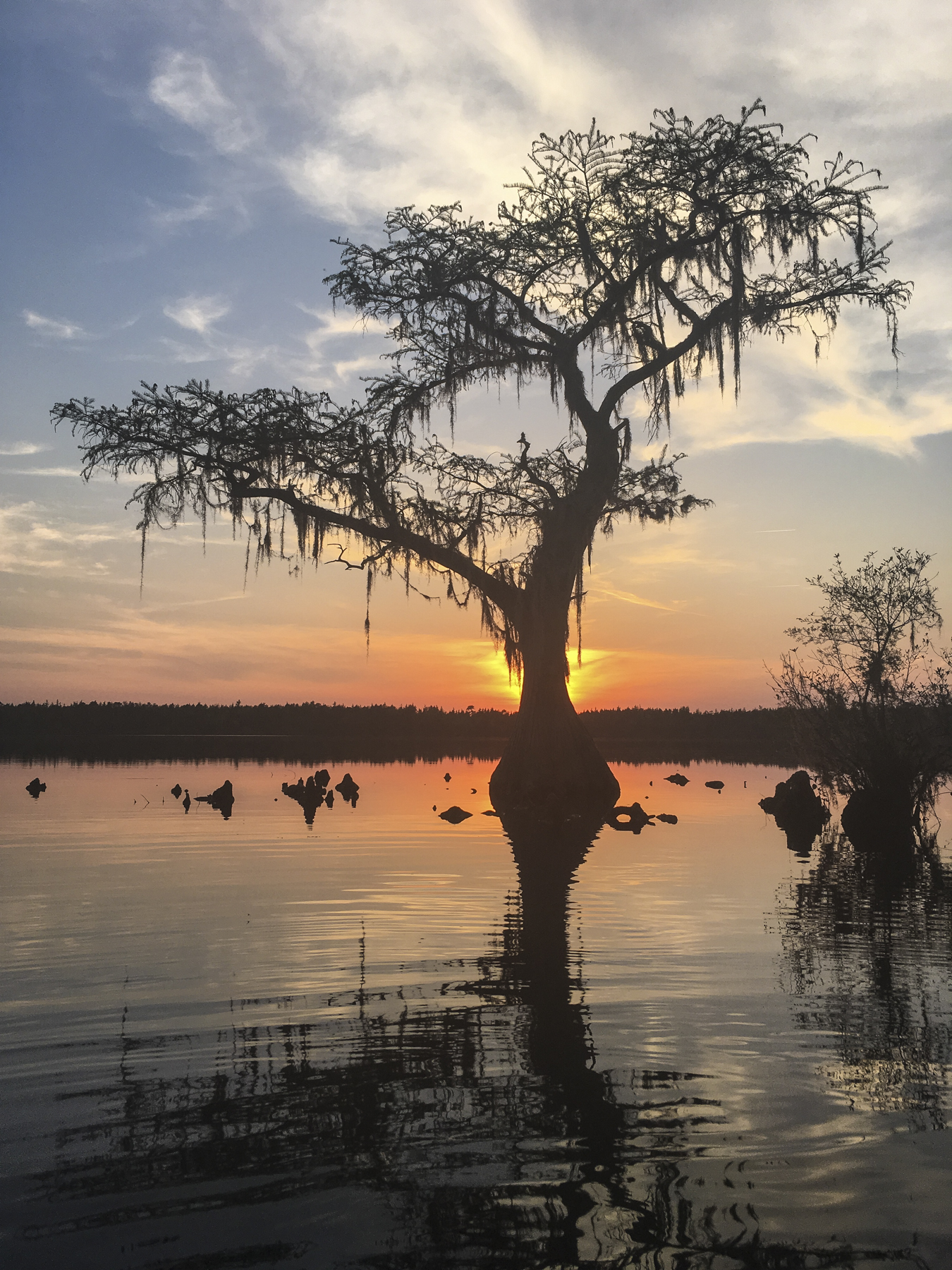
Jones Lake State Park at sunsetYellow pitcher plants galore at Holly Shelter Game Lands
We even finally made it to the other Y park…
Cathedral Peak, Yosemite National ParkGiant sequoia, Kings Canyon National Park
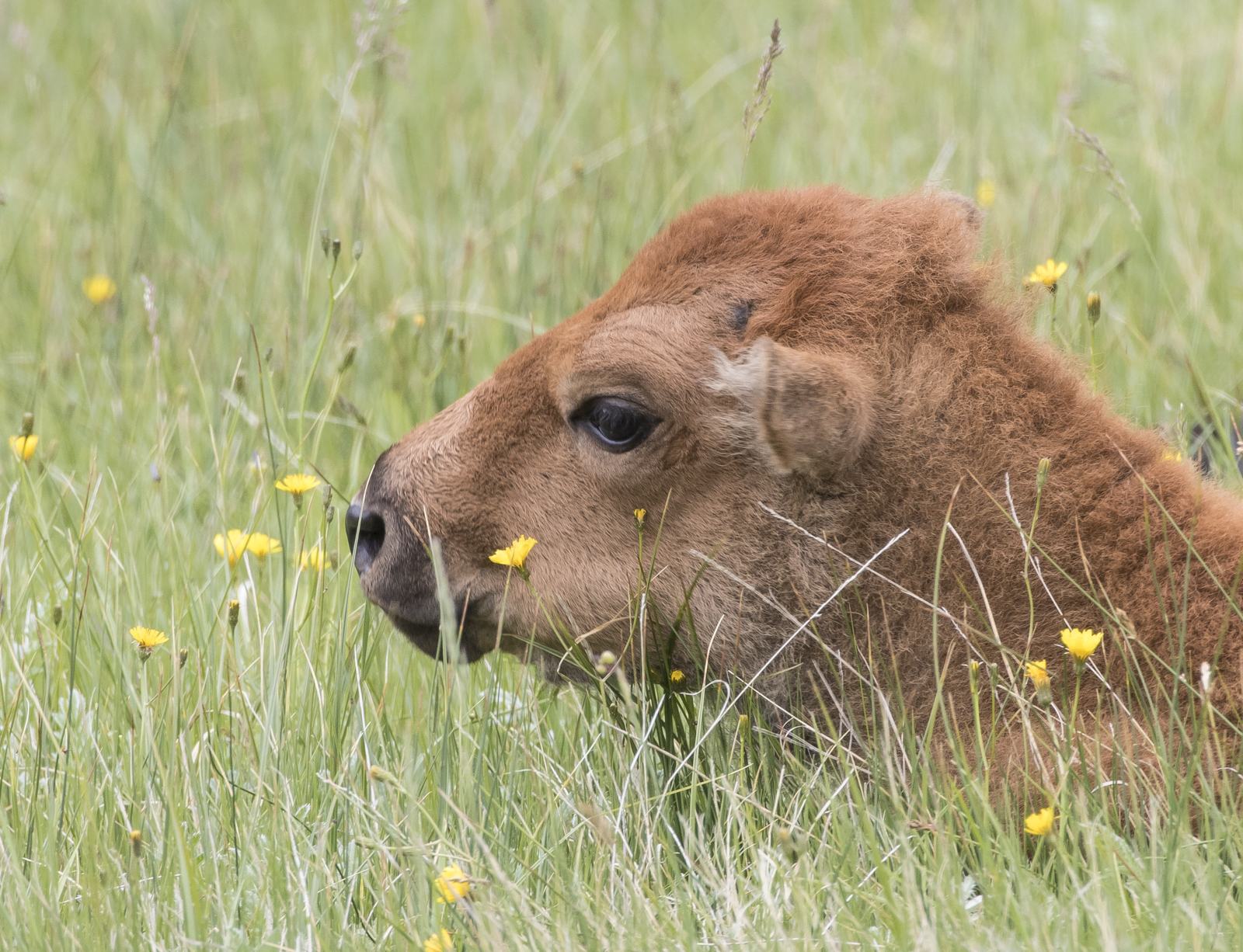
Luckily, I managed another trip to Yellowstone, always a highlight.
Bison calf, Yellowstone National Park
Of course, I had many trips to my favorite home state destination, Pocosin Lakes National Wildlife Refuge. I even managed to finally visit the Black Bear Festival that is now a regular thing in June in nearby Plymouth, N.C.
Black bear at sunrise, Pocosin Lakes National Wildlife Refuge
Winter is still my favorite season at this amazing wild place…
Tundra swan putting on a show at Pungo
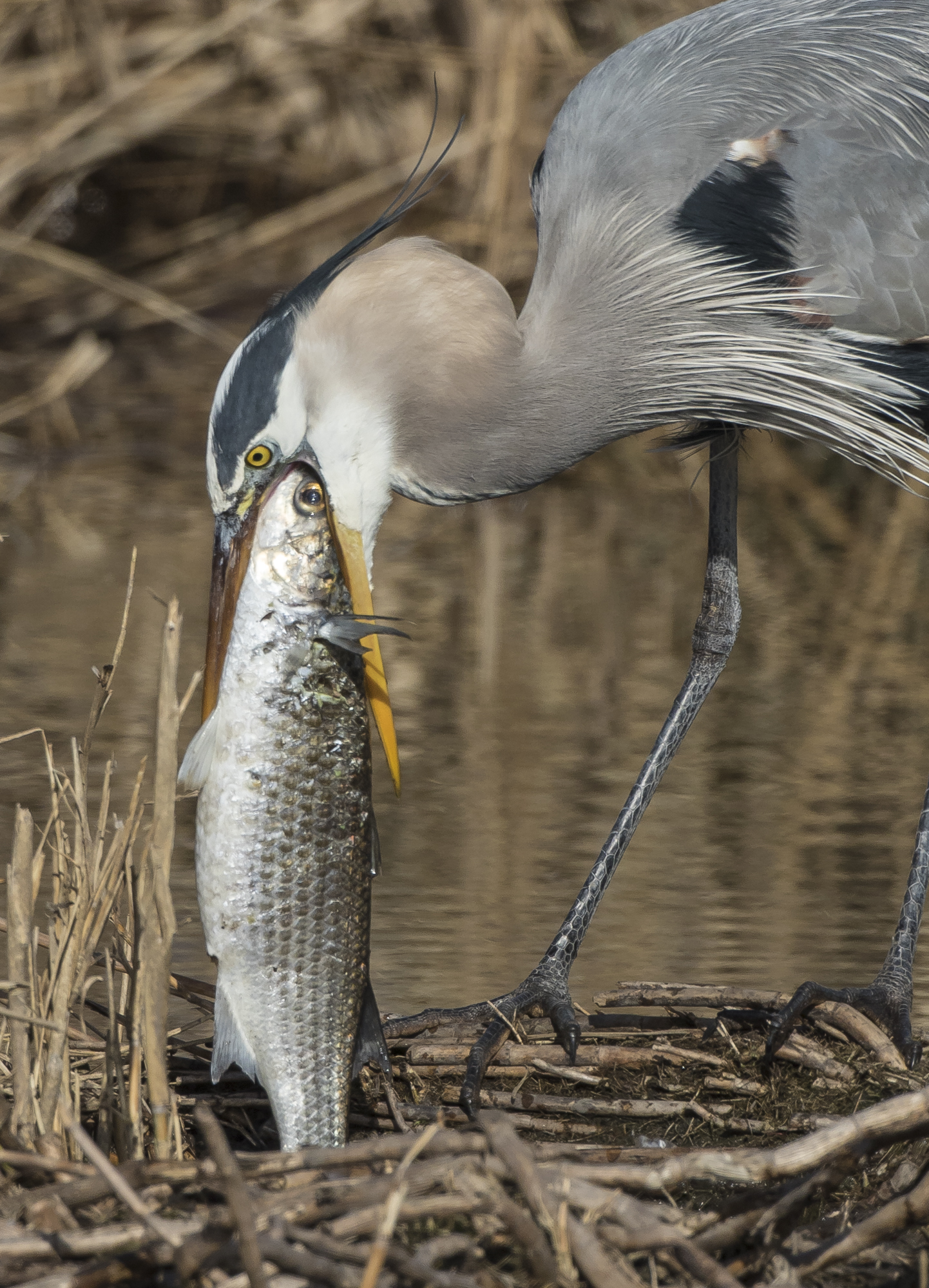
And that nearby refuge, Mattamuskeet, offered some nice surprises, as always.
Fish dinner (almost) at Mattamuskeet
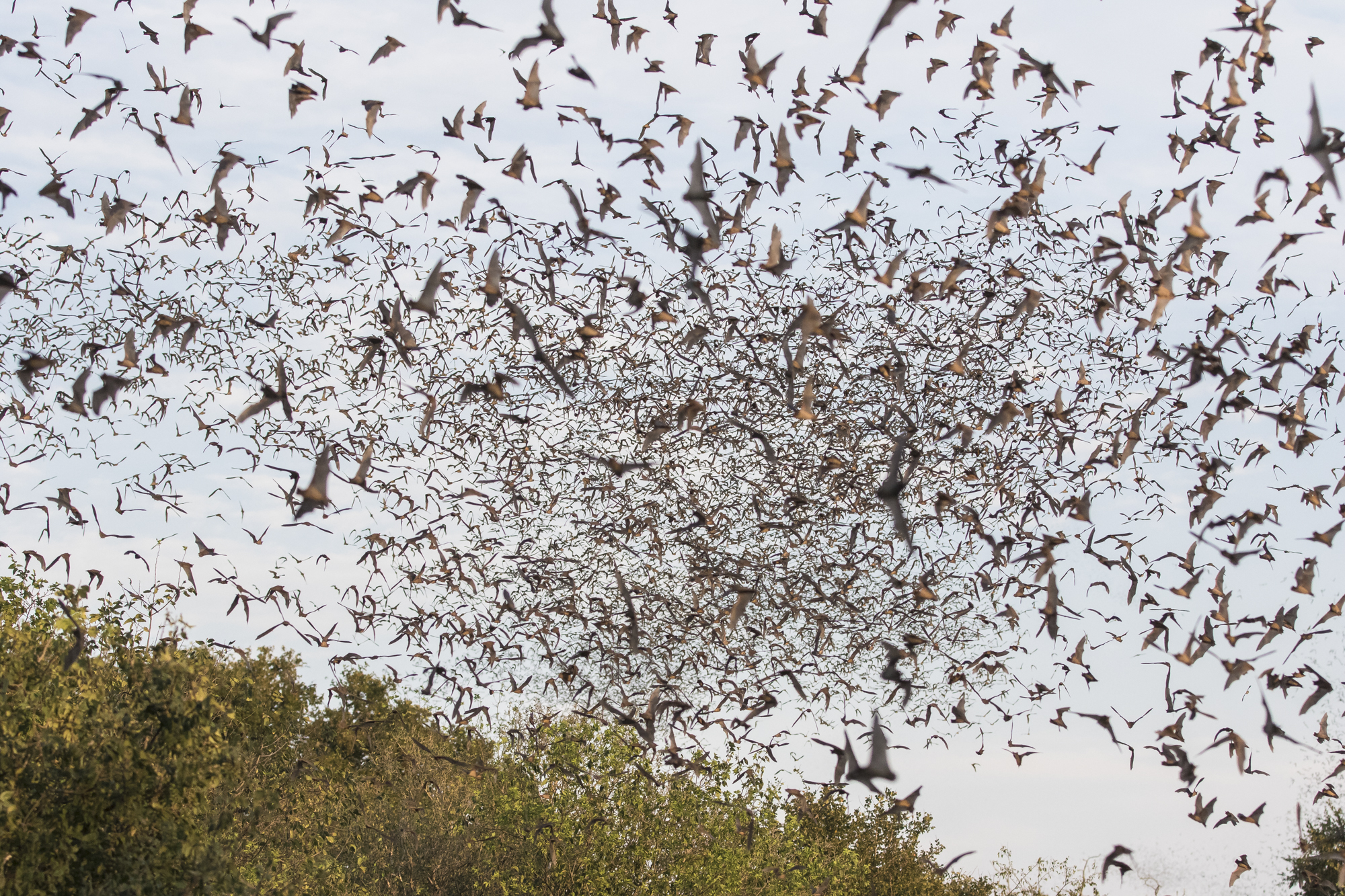
We had a wonderful experience of culture, food, and wildlife in Austin last summer. That experience was capped by one of the great wildlife spectacles in North America – 20 million+ Mexican free-tailed bats exiting Bracken Cave at sunset.
Bats streaming away from the entrance to Bracken Cave for a night of foraging
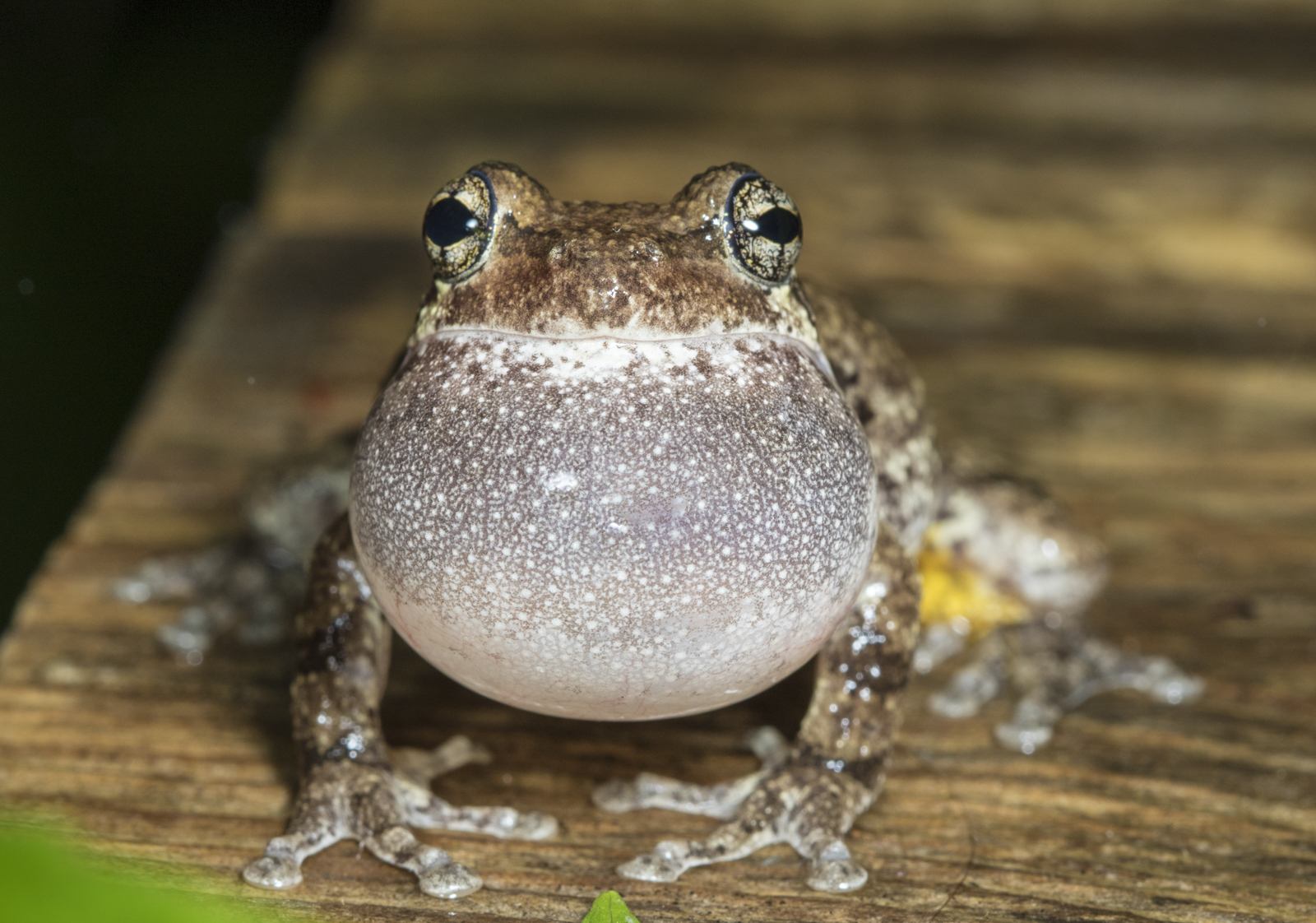
But, as is almost always the case, most of my posts were about those miracles of nature close to home, either in our own woodland yard or the beautiful native plant habitats at work. Here are just a few of those highlights:
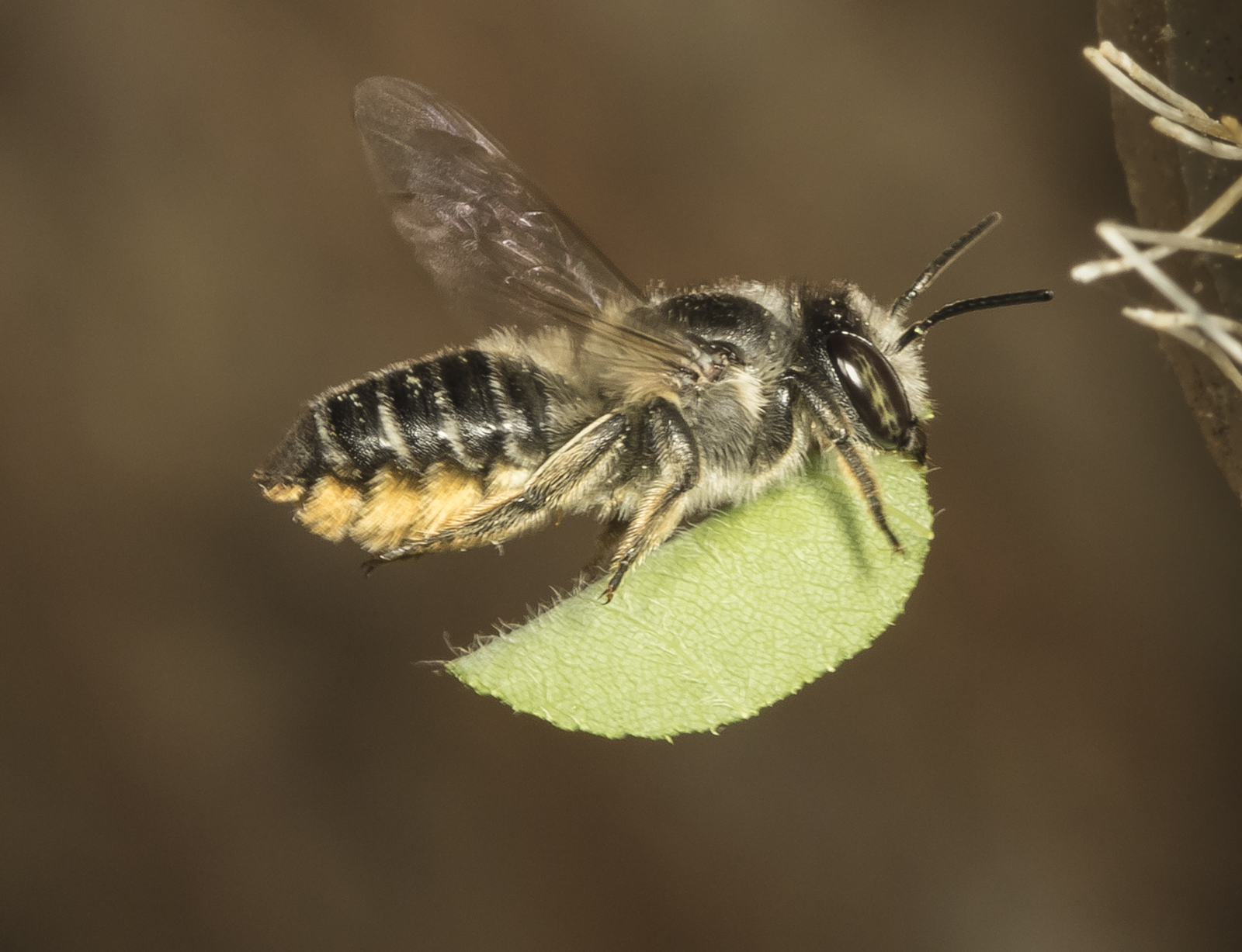
A frosty morning at the carnivorous plant collection at the NC Botanical GardenCope’s gray treefrog calling on our walkwayLeafcutter bee carrying a slice of redbud leaf back to her nest chamber
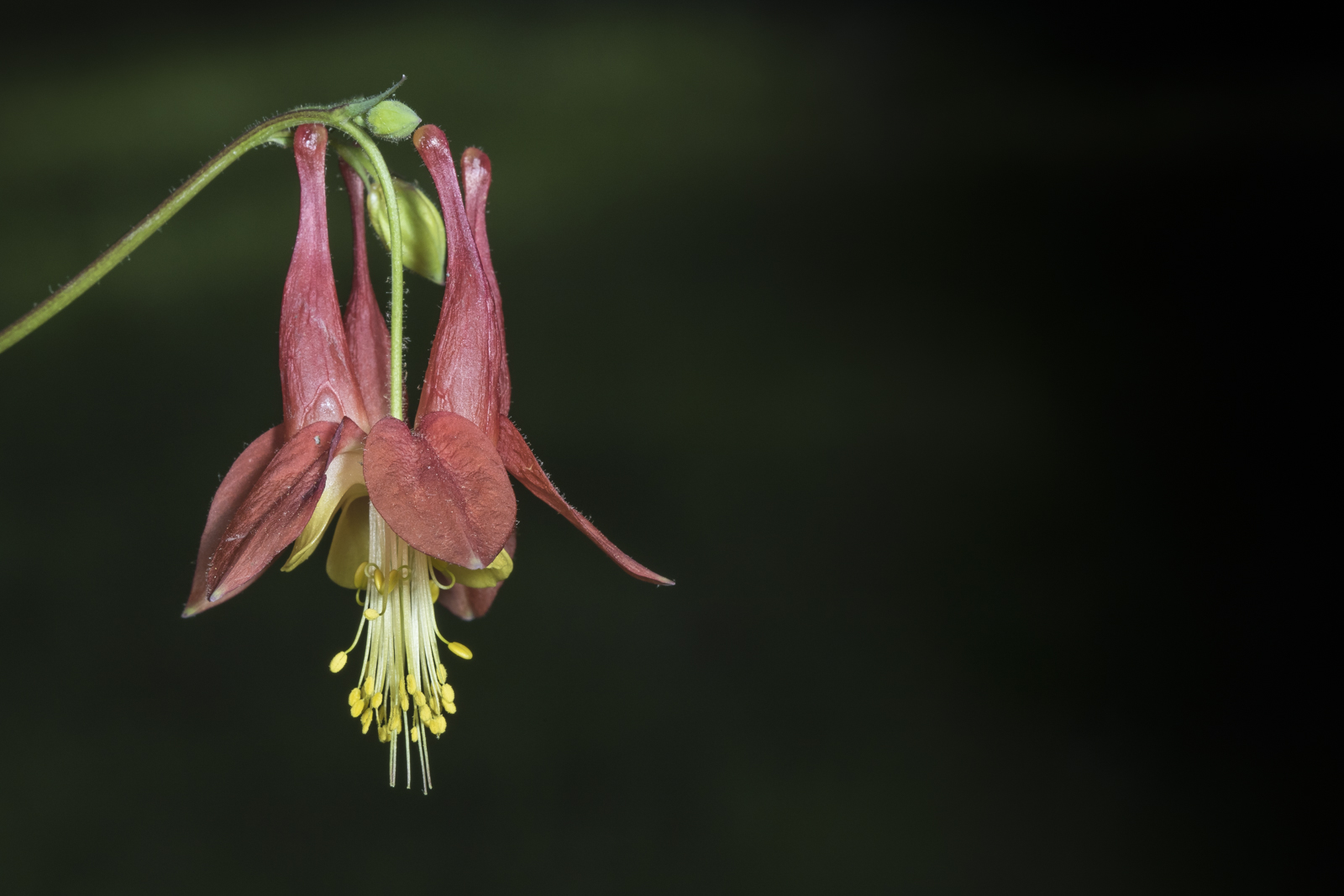
Nature, close to home, had a lot of beautiful things to see…
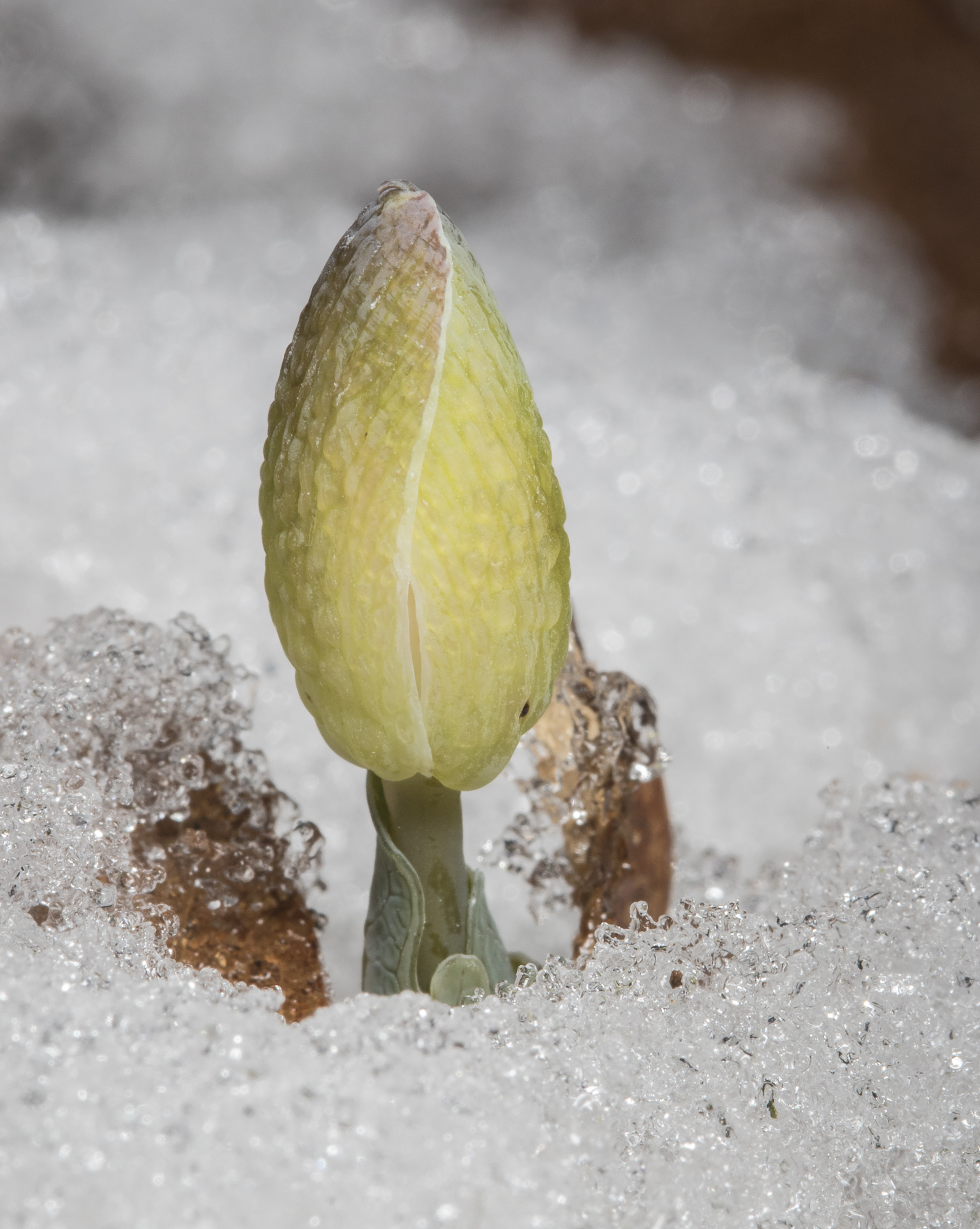
Wild columbine flower in the yardBloodroot flower bud poking up through a recent March snow
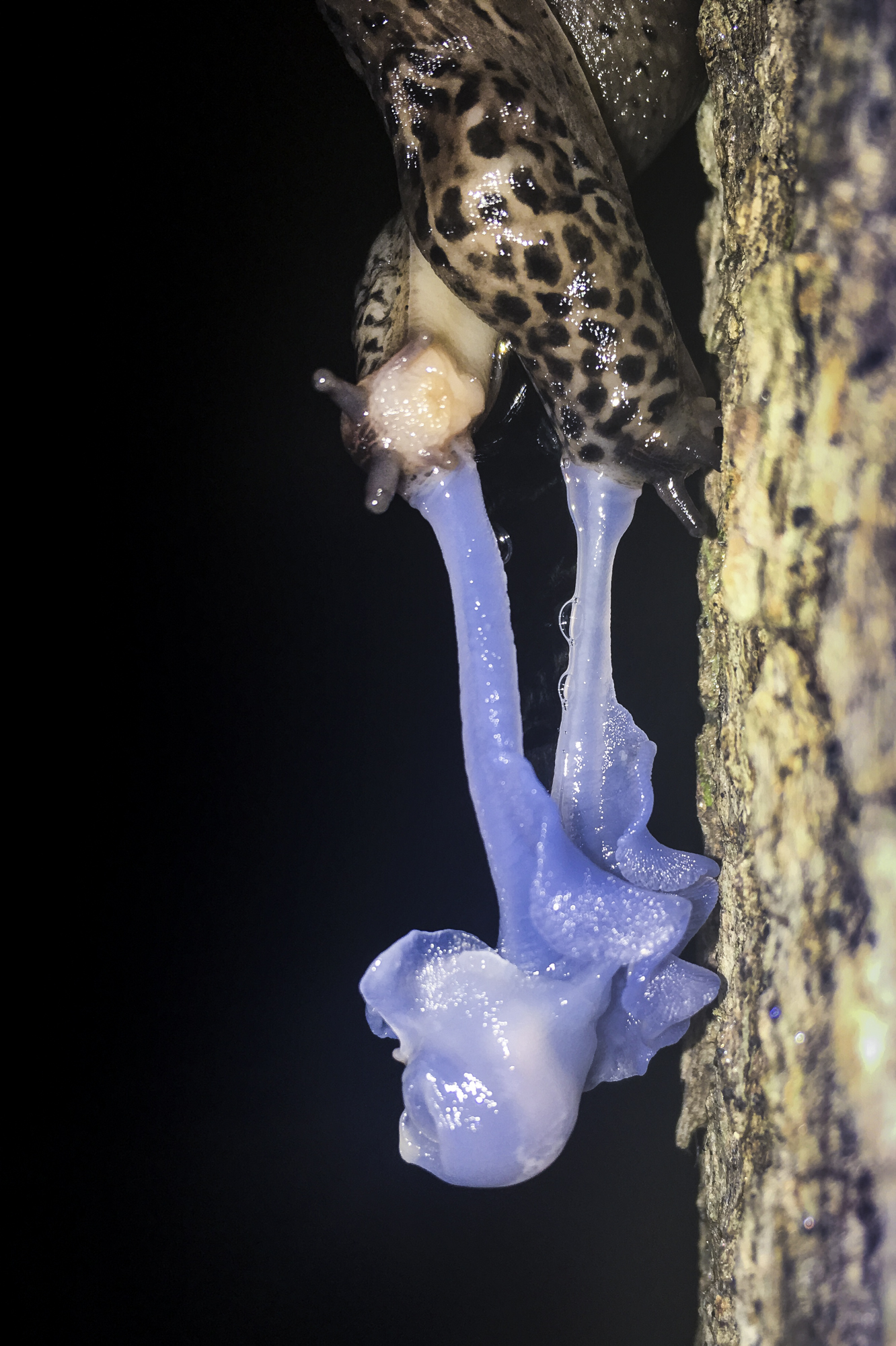
And, as usual, there was a bit (sometimes more) of the bizarre that nature has to offer…
Leopard slugs mating
Anytime you think beautiful and bizarre, you should also think about one of my favorite photographic subjects – caterpillars!
Crowned slug caterpillar
I just checked on some of last Fall’s crop of caterpillars that pupated during the museum’s BugFest event last Spetember. They are all doing fine, and will be ready to emerge over the next few months. Maybe that will elicit a few pictures and words when they do. Hope you will stick around with me to find out.
A variety of moth pupae from caterpillars we showcased at BugFest last year
We discover a new world every time we see the earth again after it has been covered for a season with snow.
~Henry David Thoreau
This past week started with one of those North Carolina spring conundrums – a snow storm! I have been working on some fact sheets on spring ephemerals, those spring wildflowers that have a very short growth period (less than 2 months usually) in the spring. These are forest dwellers that must take advantage of the short period of year when temperatures are warm enough and sunlight sufficient enough on the forest floor to grow, reproduce, and store enough food in their root systems for next year’s growth.
One of the plants usually listed in this category (although, technically, it probably isn’t a true spring ephemeral since its leaves linger for a few months) is one of my favorites – bloodroot, Sanguinaria canadensis.
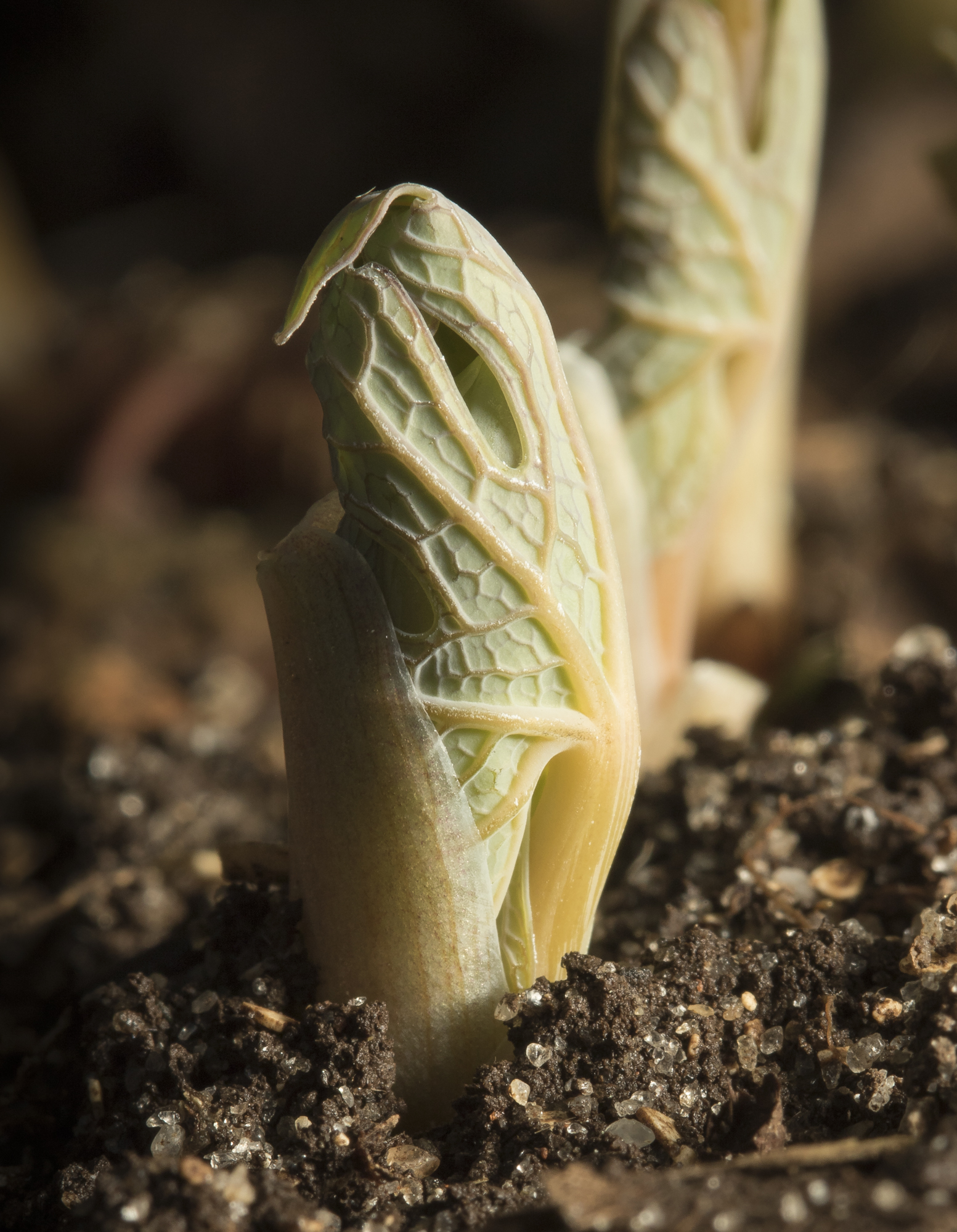
Bloodroot leaf curled around the flower bud to protect it (click on photos to enlarge)
Like many other early spring wildflowers, bloodroot has adaptations to protect its delicate parts from the vagaries of a temperate forest spring. The tough leaf embraces the more delicate flower bud and petiole as it emerges from the ground, undoubtedly providing some protection from the cold.
Flowers quickly extend beyond the protective leaf sheath
The leaves clasp the extending petiole like a hand holding a bouquet.
A bloodroot flower bud peeking above the recent snow
I enjoy following the progress of emerging flowers on my short yard tours before or after work, but last Monday, the whole scene changed in an instant. A March snow covered them all in an icy blanket. Some were buried, others poked their flowers above the crust of snow. You can see the leaf curled around the petiole in the photo above.
That same flower, almost a week later
And then, true to the whims of March in North Carolina, the snow melted. The typical spring storm – here one day, gone the next. The flowers responded quickly, opening up within a day or two.
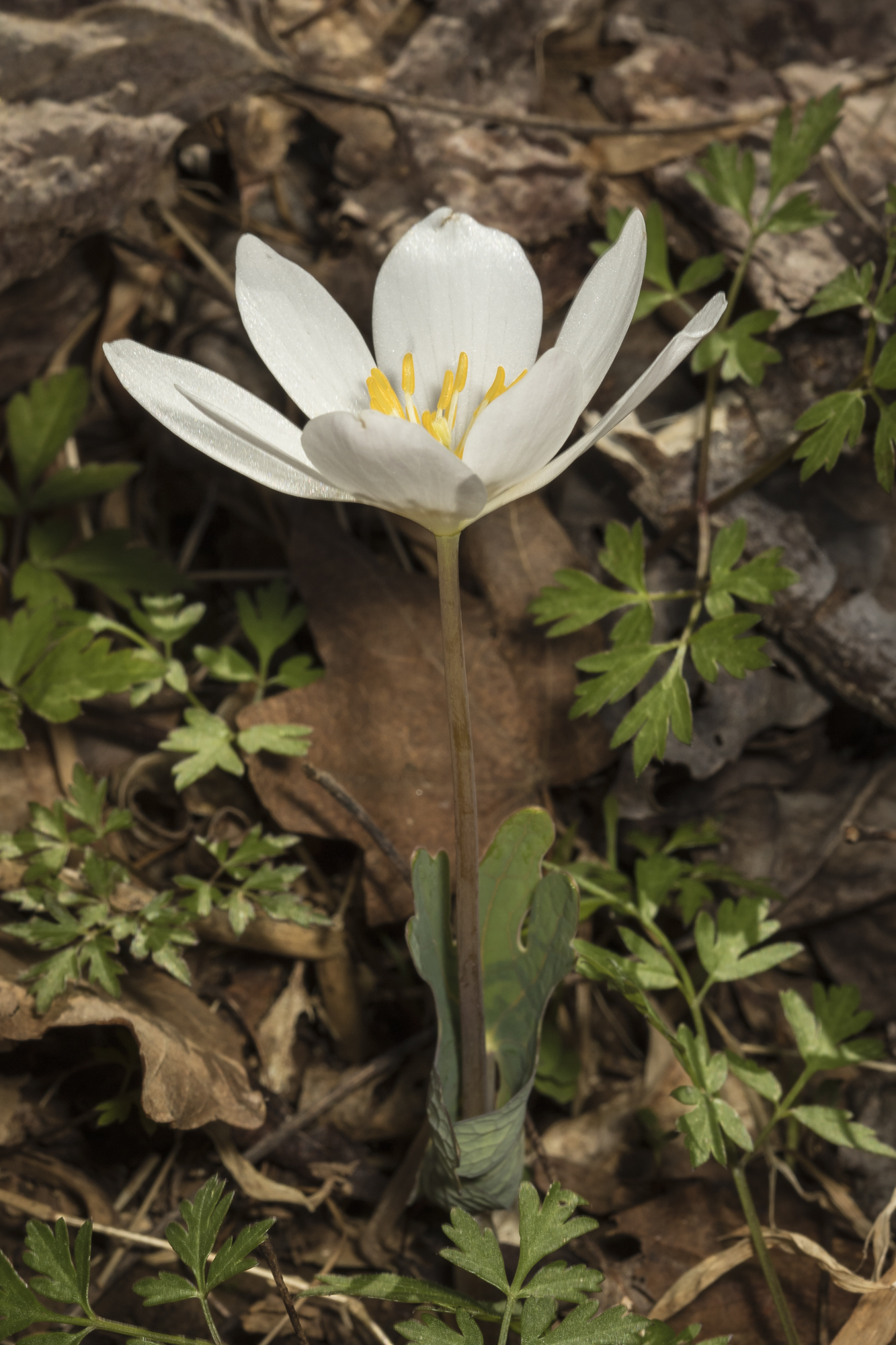
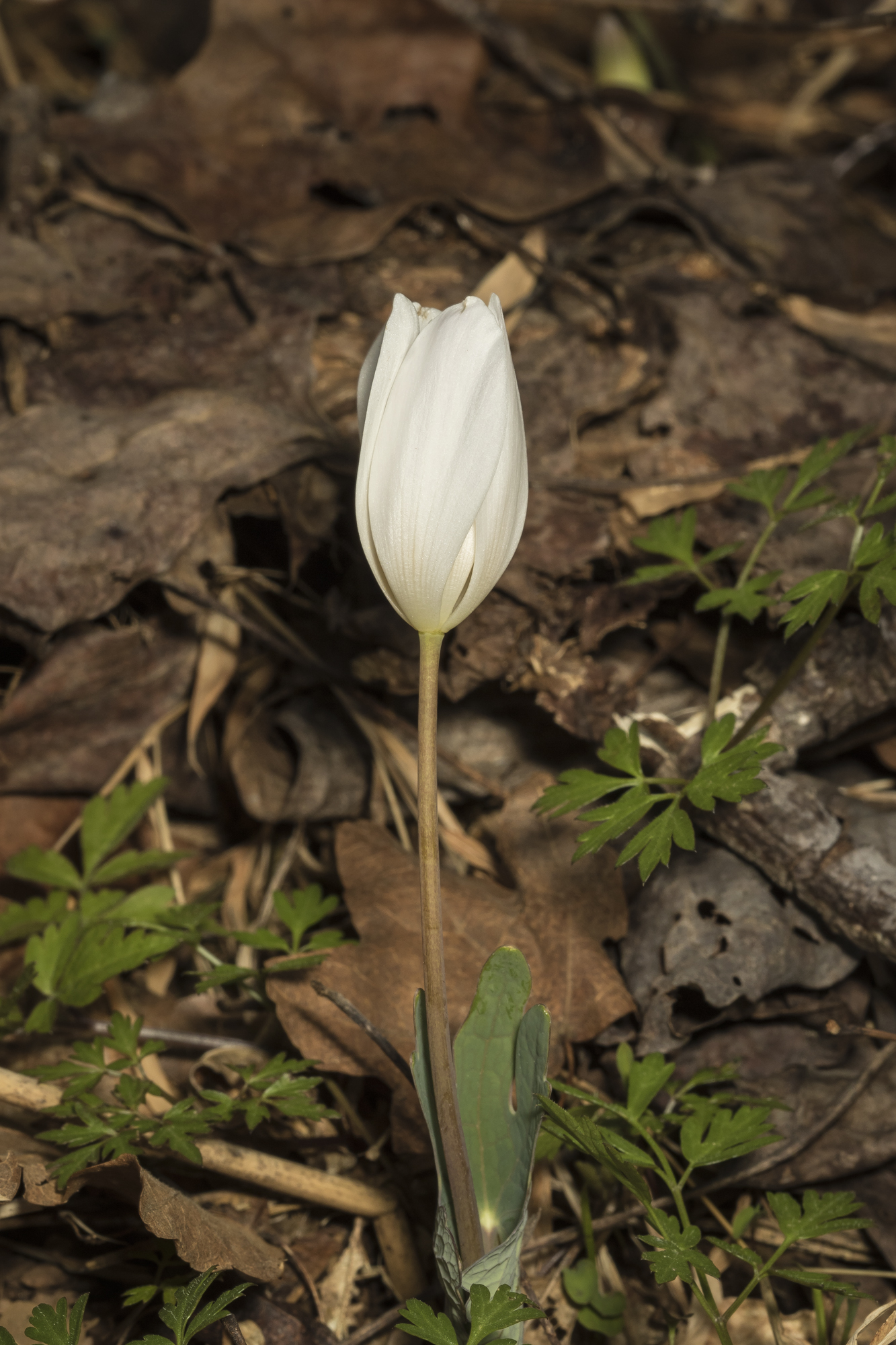
The flowers close for the evening
And now, they are in their brief, but predictable, routine…the flowers close each evening and on cloudy days to protect their pollen when bees and flies are not active. The leaf will unfurl as the flower stalk extends upward, and the flower will be open for just a few days, before the petals fall off and the seed pod begins to grow. You really have to make time for these short-lived plants to appreciate them. It all comes and goes so fast…and I hear there may be more snow on the way later this week. I better go out and admire them this afternoon, just in case.
Every child should have mud pies, grasshoppers, water bugs, tadpoles, frogs, mud turtles, elderberries, wild strawberries, acorns , chestnuts, trees to climb…and any child who has been deprived of these has been deprived of the best part of education.
~Luther Burbank
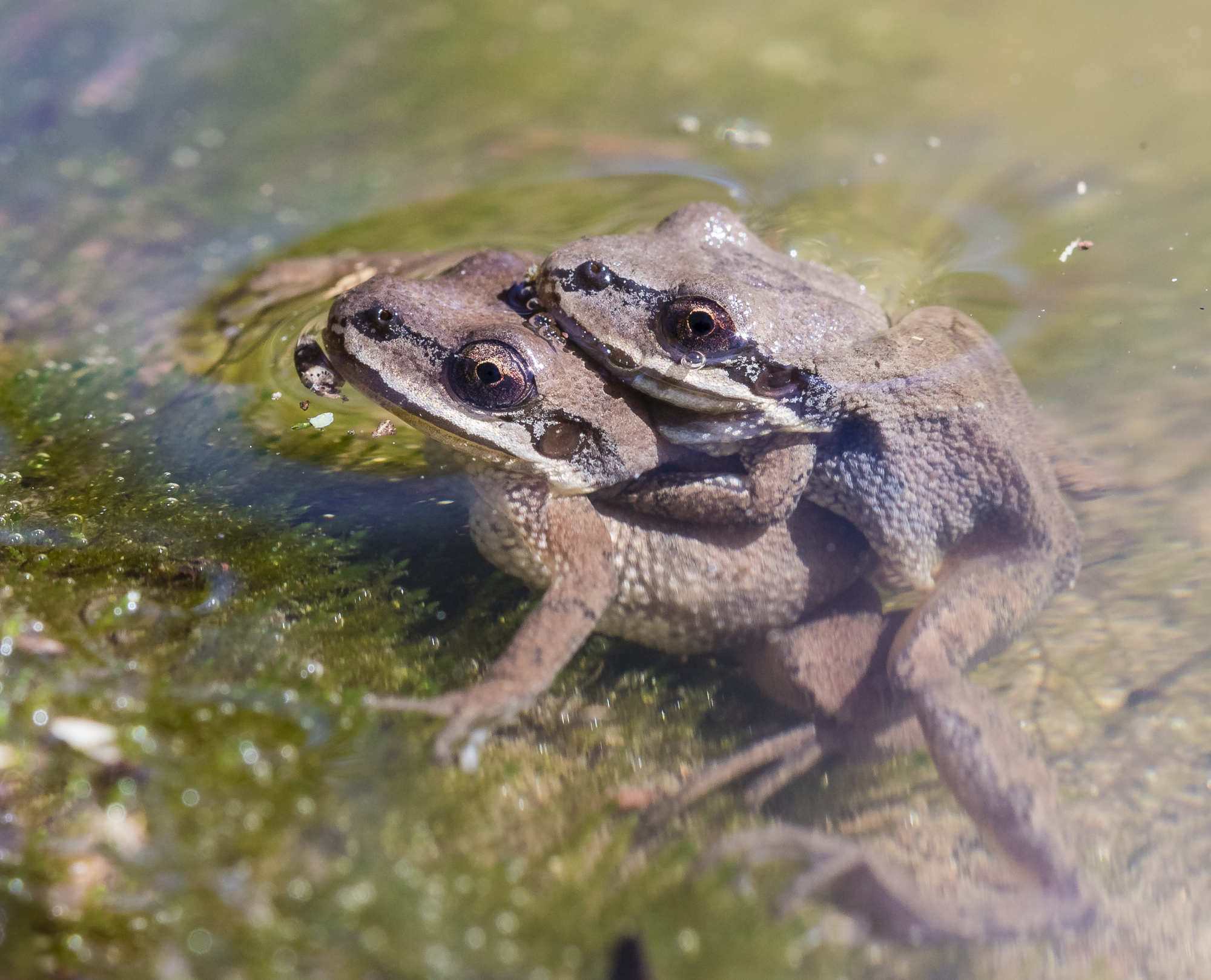
The arrival of spring is a stop and go affair here in central North Carolina. Warm, sunny days, rain, then a windy cold front, and back again. But, the early harbingers of spring (spring wildflowers, the first pollinators, lusty amphibians, etc.) have a duty, and so they persist. Among the most dutiful are the upland chorus frogs, Pseudacris feriarum. I shared an intimate froggy moment of amplexus in an earlier post a few weeks ago. In case you missed it, here it is again…
Upland chorus frogs in amplexus in mid-February (click photos to enlarge)
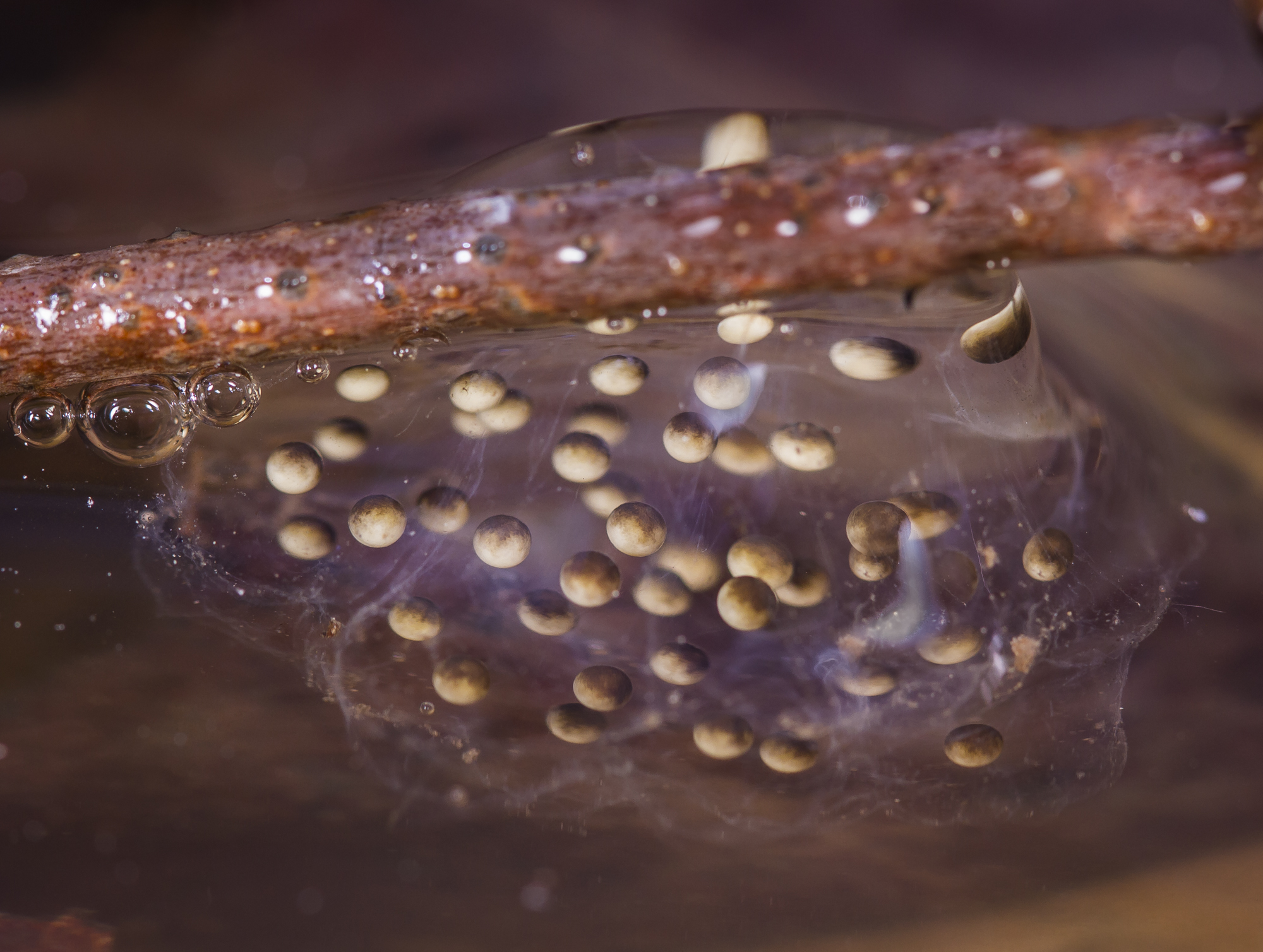
These tiny songsters have been calling and courting since early February in various pools at work (NC Botanical Garden). They normally prefer temporary (vernal) pools that often dry up in summer, making them unsuitable for fish. This year they are also breeding in our Turtle Pond, a permanent small pond that is loaded with tadpole predators, especially mosquitofish. So, I pulled one of the egg masses out and brought it inside to photograph, with plans to release them in one of the nearby vernal pools before they transform into frogs.
Upland chorus frog egg mass
This species utilizes a wide variety of breeding sites, from natural vernal pools to water-filled tire ruts and roadside ditches. Females lay several small egg masses, each containing 50-100 eggs on average (this can vary greatly) for a total of about 1000 eggs each season. She usually attaches them to vegetation or a twig under the water.
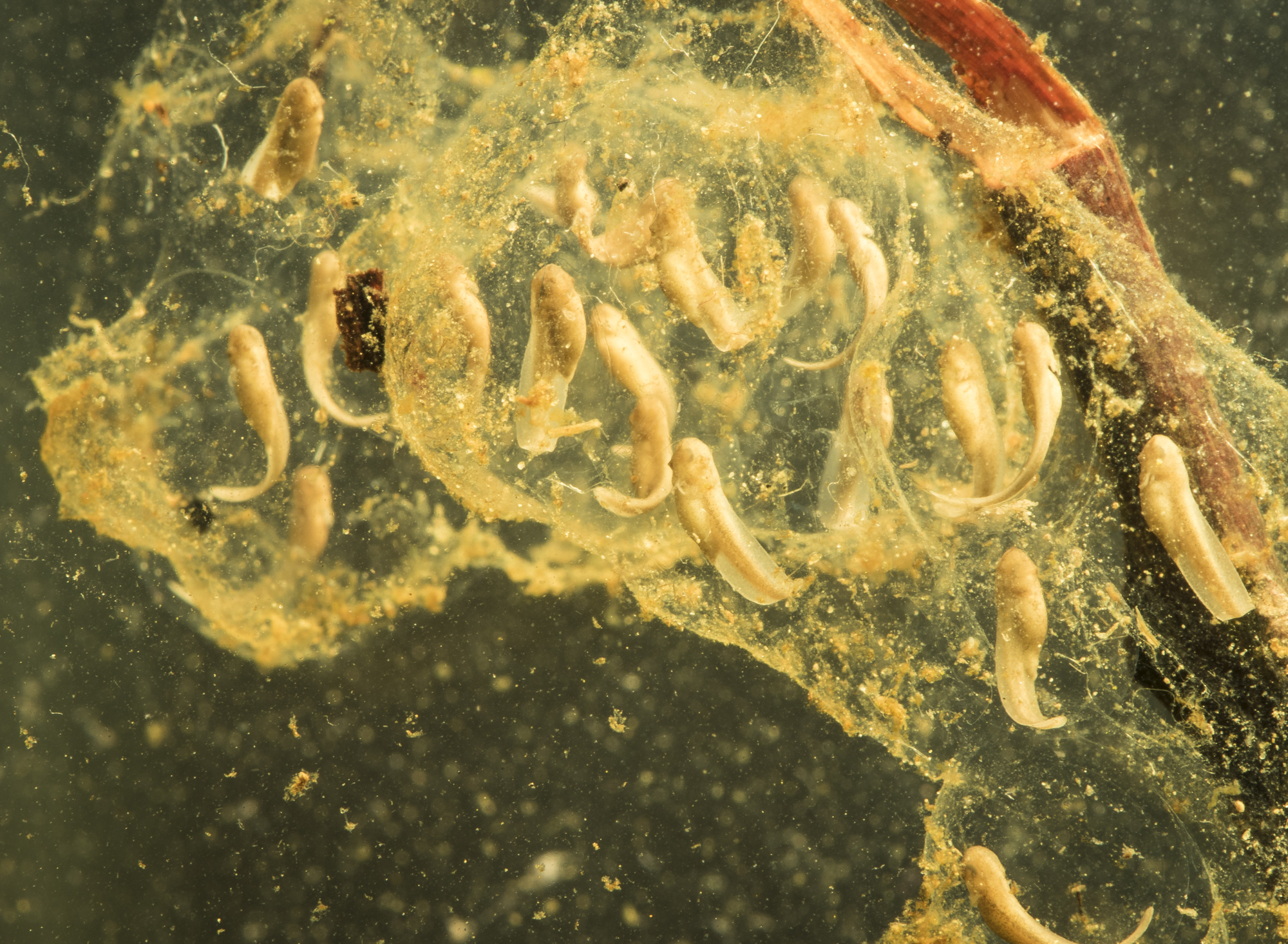
Tadpoles almost ready to emerge
The eggs hatch within about a week, with the embryos transforming rapidly from a round blob to elongate stylized tadpoles. The ones in my office window started hatching on a Friday afternoon.
Hanging out after hatching
When I went in that Saturday, most were hanging vertically in the small aquarium like tiny cream-colored mummies. Look closely and you can see some tiny filaments off one side of the lower edge of the head region. I assume these are the external gills, which only last a few days after hatching in most tadpoles.
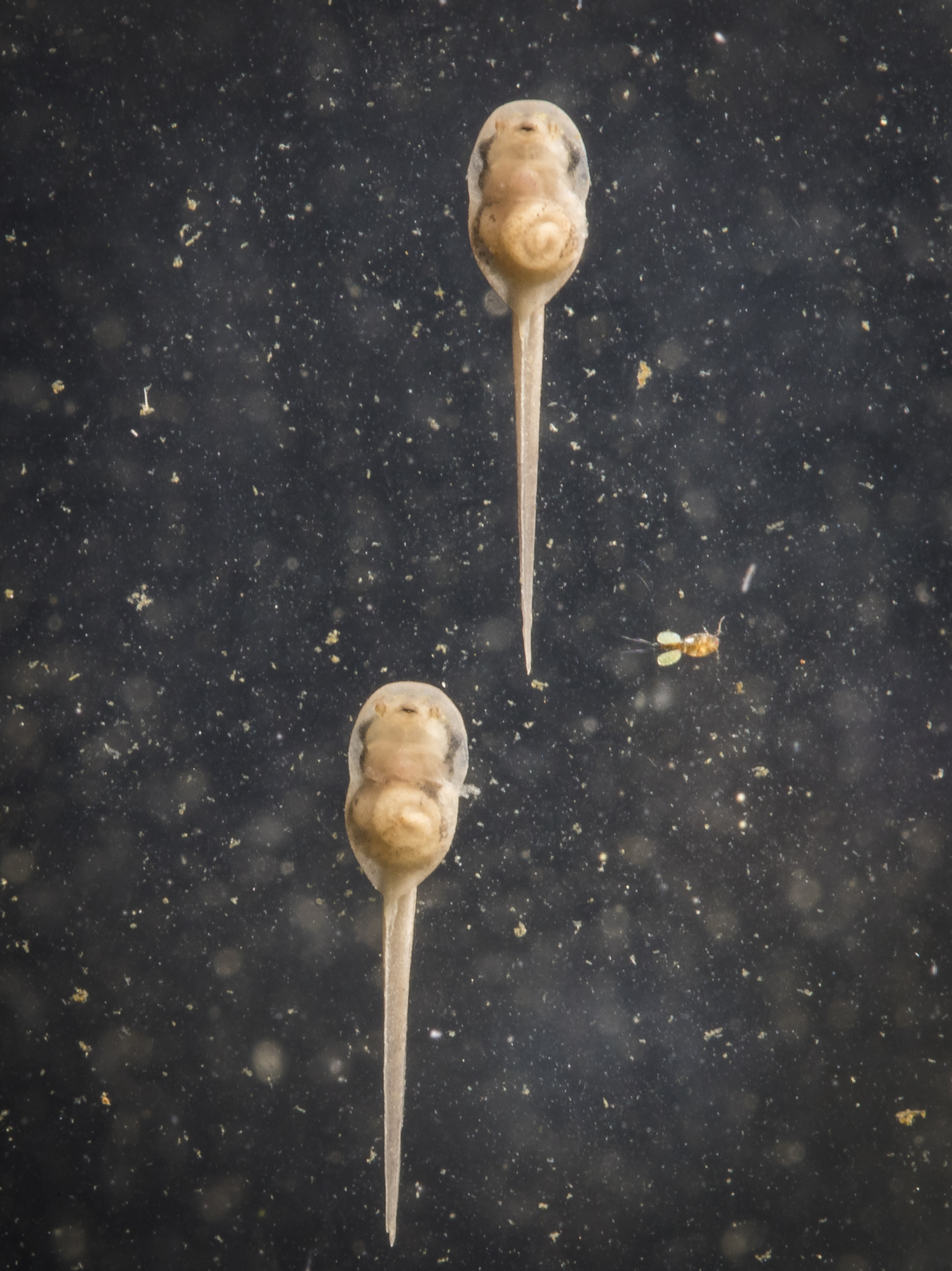
Two days old
On Monday, the now two-day old critters were changing color and looked a lot more like tiny tadpoles. Note how the head region has enlarged, and how you can now clearly see their insides, darkening eyes, and mouth (the photo above is of their ventral side). Also note the tiny zooplankton (a copepod with egg sacs) swimming just to the right of the upper tadpoles’ tail tip. I am amazed at how much tiny life I collected when I dipped up a small bucket of water from Turtle Pond.
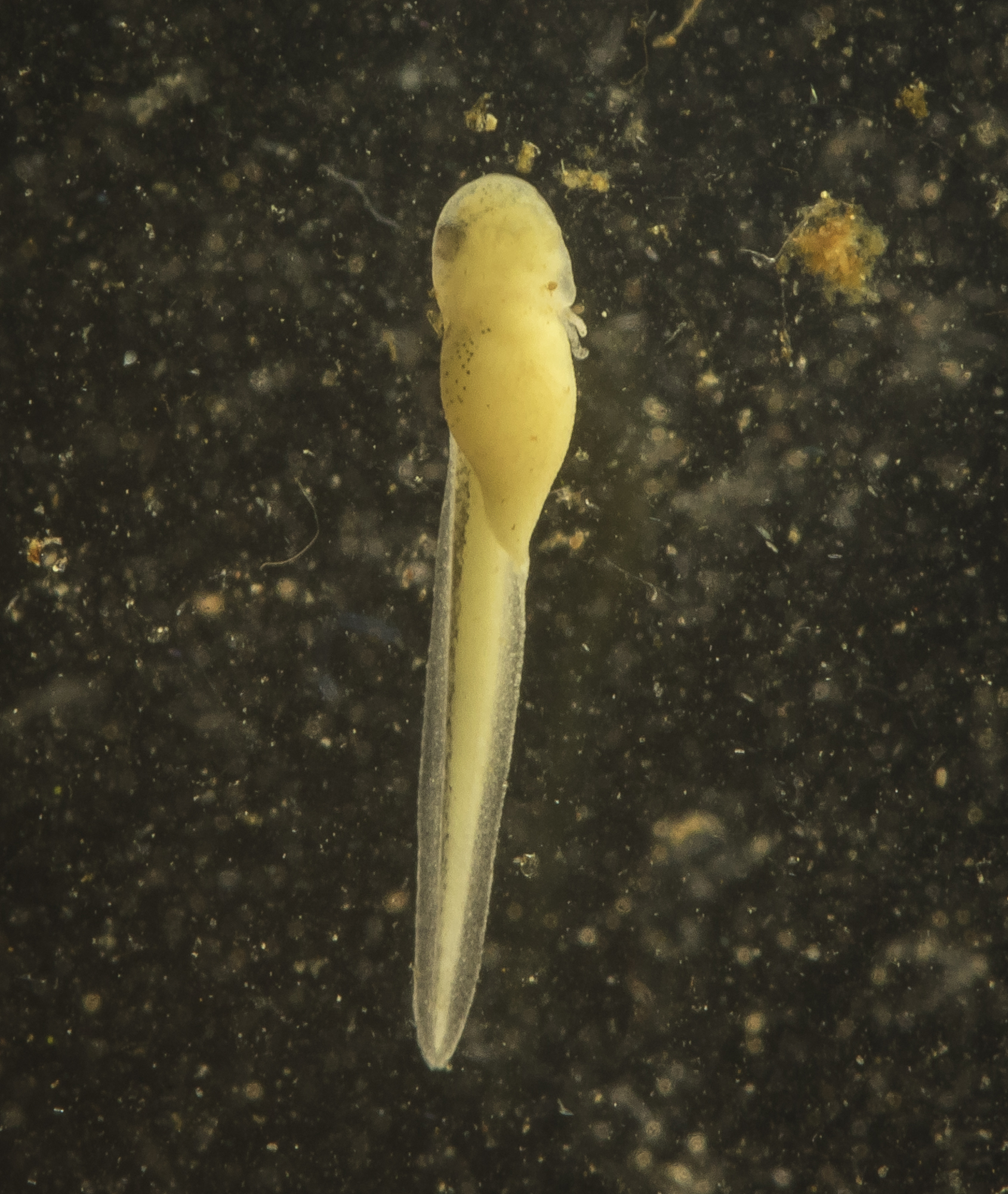
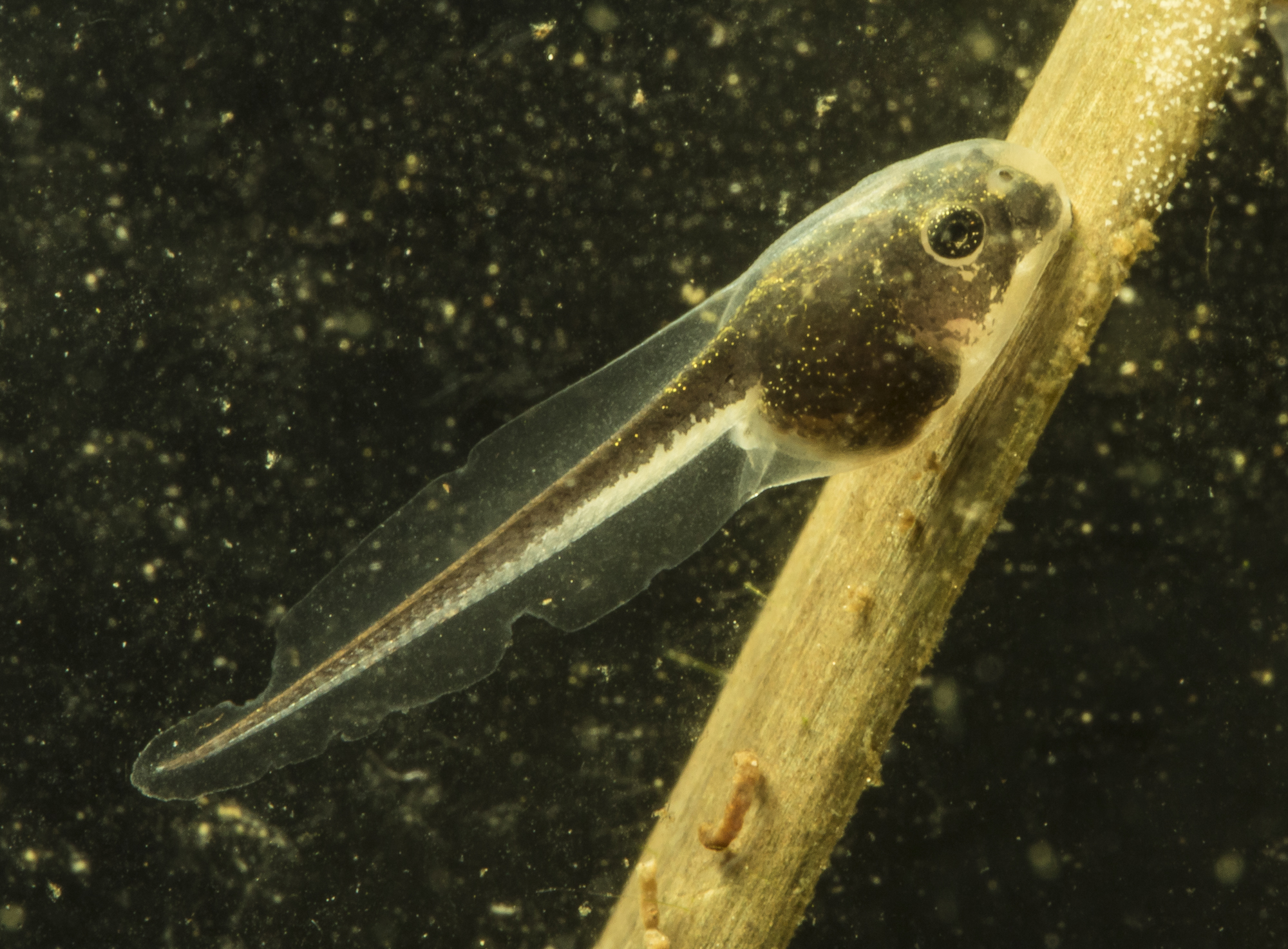
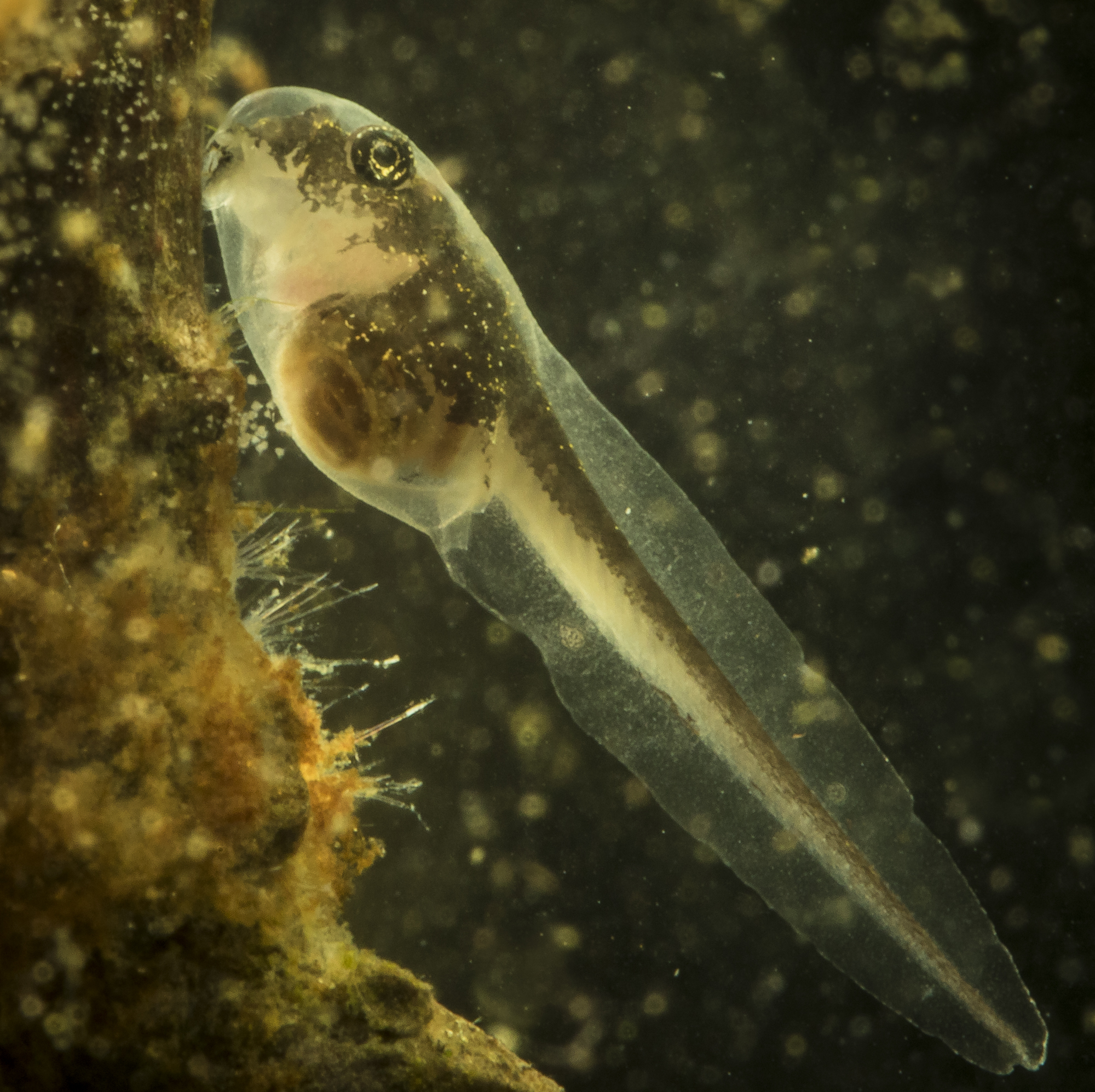
Four days old and growing
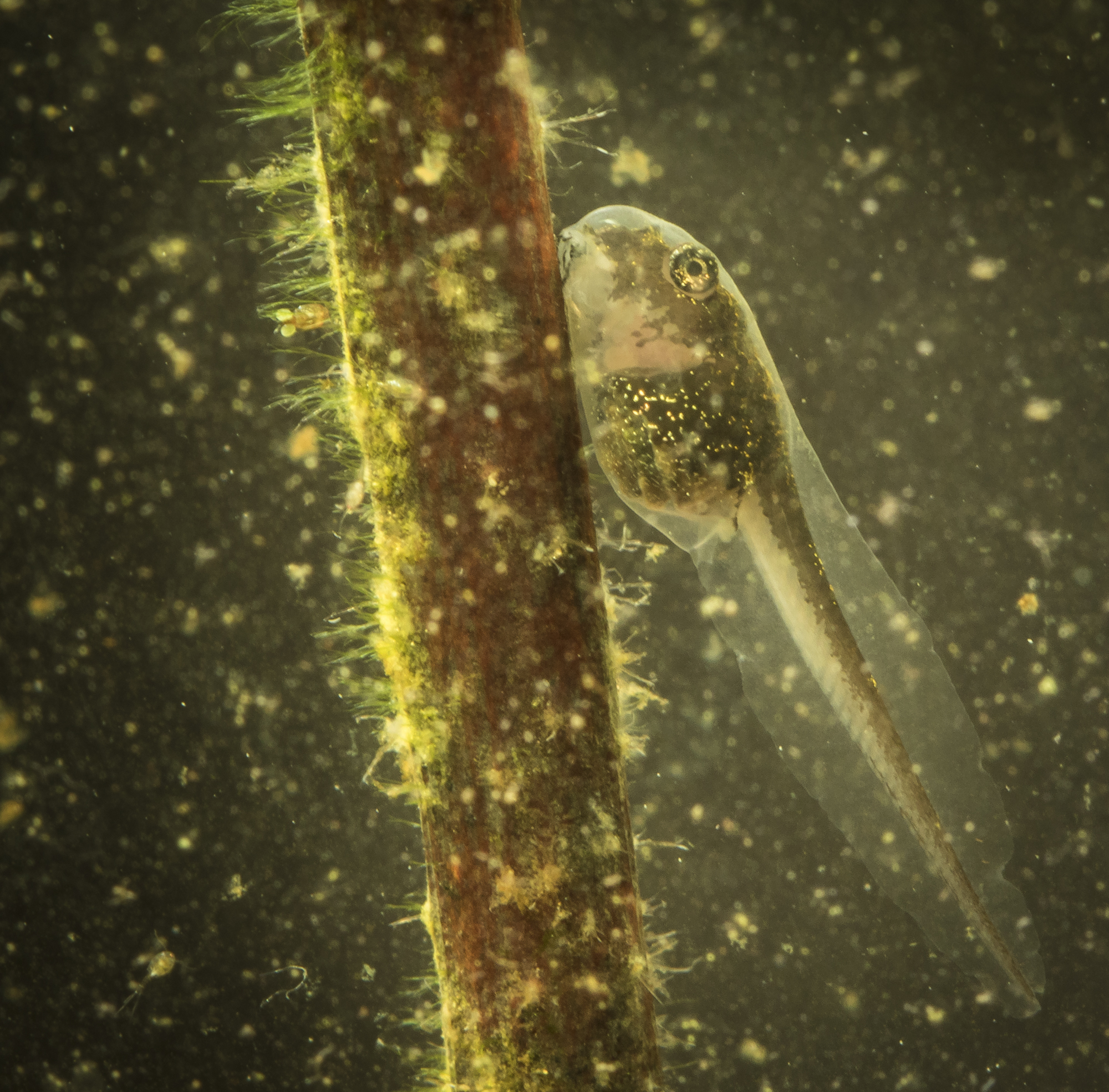
Another couple of days go by and they are changing rapidly – darkening in color, adding subtle gold flecking, getting larger, and swimming more vigorously. These tadpoles should transform into juvenile frogs in 6 to 8 weeks, depending on temperature and food availability.
Grazing on algae
I will probably let most of them go this coming week, and hang onto just a couple in hopes of watching the rest of this amazing metamorphosis.
~Jane Griner in the song “Sing Me to Heaven” by Daniel E. Gawthrop
Given the title of this blog, you might think it’s going to be about all the riotous birdsong that is happening out in our woods right now as temperatures warm and spring seems to be slinking up the south-facing slope across the road and into our north-facing yard. But that’s not the love song Mike and I heard last weekend when we took our hammocks out to the ravine behind our house (another south-facing slope).
A perfect day for hammock-lounging
As I was laying in my hammock soaking up the sun like a lizard, I noticed a repetitive sound like two very short, quiet snare drum rolls followed by four to six slower beats that almost sounded like an extra-rapid secondhand on a clock. At first I thought it was just the straps of my hammock rubbing on the tree. But as I paid attention to the rhythm of the hammock’s movement, I realized the timing wasn’t right. I started looking around to try to pinpoint the source, and I noticed a wolf spider moving through the dry leaves on the forest floor. Amazingly, the sounds corresponded exactly to its movements – the snare drum rolls when it was paused, the tick-tock of the clock while it was moving. Whenever the breeze was still, I could hear it… first in one place, then another, and another. At one point, there were three wolf spiders moving around me, all making the same sound sequence. I’d heard that you’re never further than 4 feet from a spider – even while indoors – but it seemed more real as I realized just how many spiders there were surrounding my hammock!
Wolf spider paused on leaves – click to enlarge
I watched the spiders for a long time trying to figure out just what was going on. Finally, two of them, one after the other, walked right below the edge of my hammock and I got a good view. Whenever they stopped and made the snare drum sound, they were moving their pedipalps (two front appendages, shorter than legs) up and down, vibrating on the dry leaves. It was incredibly fast, but when one of the spiders was close, I could actually see the movement. I was amazed! And as it walked through the leaves, I noticed it tapping its abdomen, which seemed to be producing the tick-tock sound. After that, I was hooked and probably spent more than an hour stalking these spiders with my iPhone, trying to capture their behavior.
I enhanced the volume on this video so that you can clearly hear the sounds the spider is making. I promise it’s the spider and not me shifting around in the leaf litter! But I still wasn’t satisfied that I understood what was going on… so I switched my phone over to slo-mo mode and tried to catch the movement of the spider again…
It’s subtle, and the sound is different because it’s slowed down, but you can definitely see the pedipalps moving as the faster rhythm is played. And you can hear the louder, more separated beats as it taps its abdomen.
Here’s another slow motion video. In this one, you can see how the presence of dry leaves amplifies the sound – when the spider is on the log, there isn’t much sound produced at all. But if you watch closely, you can still see its body vibrating as it makes the sound.
Knowing a little bit about spider mating rituals, I figured that the sounds I was hearing had something to do with that. In fact, just a week ago, on Valentine’s Day, I attended a talk on “spider love” put on the NC Office of Environmental Education. Dr. Eleanor Spicer Rice, author of Dr. Eleanor’s Book of Common Spiders, came to talk about the fascinating stories of spider mating. She was quite funny – her categories for male spiders interested in mating with a (almost always larger) female were: “how not to get eaten” and “well, let’s just make the most of it.” This is because it’s not uncommon for a male spider to be attacked and eaten by a female when he comes seeking something entirely different. For many orb-weaving spider species, the male will pluck the strands of the female’s web in a particular way to indicate that he is a potential mate and not just a fly that’s stuck in the web (aka, dinner). Other species like the green magnolia jumping spider will wave their legs around in something like a dance to show off for a female. A few species know it’s a lost cause and just go for it… and some even die in the act of copulation so as to leave their carcass attached to the female, effectively blocking access for other suitors. The world of spider courtship is dangerous!
Spider sex is fairly complicated as well. The female’s epigynum is located on the bottom of her abdomen, so rather than try to arrange himself upside-down underneath her, males go through a bit of preparation for mating. They produce sperm in their abdomen (from a gonopore about midway down on the bottom side, as you might expect), but they have to transfer it to the specialized “boxing glove” (cymbium) at the end of their pedipalps (via what’s called a sperm web) in order to mate. At least that way he has a chance to keep his many eyes on her chelicerae (jaws) while in the act.
So, back to my drum-playing spiders in the woods… a quick Google search turned up a bunch of articles about the so-called “purring wolf spider” or Gladiclosa gulosa. Apparently, wolf spiders are known for producing vibrations to attract a mate, and most early naturalists thought the sounds were caused by exactly the same thing I did – the spider tapping its pedipalps on a surface like a leaf. But in 1975 a researcher used high speed video to check this out in detail – and it turns out that spiders actually have what’s called a “stridulatory organ” on their pedipalps. Basically, this means that they are able to rub one part of their body against another to create a sound. Other insects are known to do this: the sounds made by grasshoppers and crickets are stridulations, and Mike included information about stridulation in horned passalus beetles in a previous post. But spiders don’t have ears… so it’s long been assumed that the vibrations are what is really important in communicating with a potential mate. However, researchers at the University of Cincinnati have been studying vibration- and sound-making in spiders, and for Gladicosa gulosa they discovered that not only does a female spider respond to the vibration produced by the male, she also responds to the sound (but males only respond to the vibrations).
Most of the studies that I could find describe spider behaviors when males are in the presence of females. And most of those on the sounds of wolf spiders focus on the snare drum rattle of the pedipalps and not the abdomen tapping. No one described the behavior we saw in the woods – namely, that a bunch of spiders were wandering around making sounds without another spider nearby. I’m not sure what was going on, but my assumption is that they were literally trying to drum up a mate!
I’m also not sure what species Mike and I spent time observing in our woods, though I’m fairly certain it is a species of wolf spider (family Lycosidae). I’m not even entirely sure that they were males, because it’s hard to tell in my iPhone pics if the pedipalps have those distinctive “boxing gloves,” though their behavior makes me think they are males. After an exhaustive search of Bugguide.net and the 4 spider field guides in our house (yes, we have 4 spider field guides), I’m still not sure, though it’s possible these are Gladicosa gulosa – please let me know if you can identify them!
Wolf spider – can you help ID? – click to enlarge
Whatever species they are, they exhibit an incredibly fascinating behavior, so if you’re a super nature nerd, it’s time to head out into the woods with a hammock on a warm, still spring day and listen for some spiders!
The flowers of late winter and early spring occupy places in our hearts well out of proportion to their size.
~Gertrude S. Wister
It is one of those plants I had seen a few times in the wild, but didn’t know much about, other than the nuts are quite tasty – small, but good. I am speaking of American hazelnut, Corylus americana, a native shrub of Eastern North America. There are a couple of patches of it along the Piedmont Nature Trail at work, so I have a chance now to watch it across the seasons. Even though it tends to form a dense clump of many-branched stems, it is easy to overlook. But, as with most plants, if you stop and look closely, it has some fascinating features.
Staminate flowers of American hazelnut (click photos to enlarge)
Male flowers (staminate) occur in the form of catkins. Immature male flowers appear on catkins in the fall and persist through the winter. A couple of weeks ago, I noticed they had elongated, and just last week, started to bloom.
The tiny female flowers are easy to miss (my fingertip for scale)
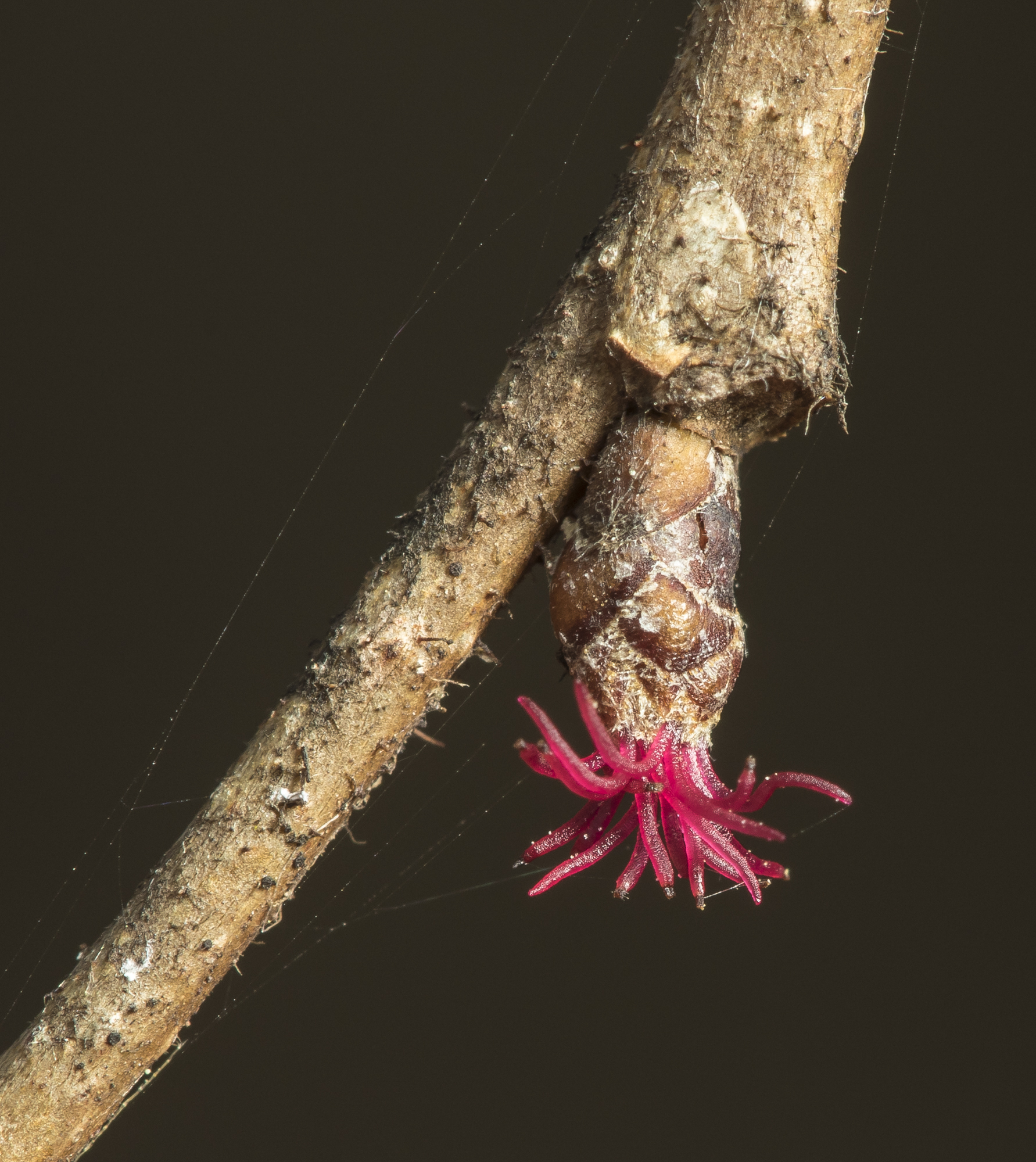
Last year was the first time I had tried to see the tiny pistillate (female) flowers, but I missed them. I have been checking one of the shrub clumps the past couple of weeks and, last Thursday, found a few of the bright red specks on the bare twigs. I think they are only open for a short period (though I will continue to check and confirm this) and are wind-pollinated.
Small, but beautiful
You really have to be right next to the shrub in order to see them. If successfully pollinated, they begin to form one of the more unusual fruiting structures I have seen.
Developing nuts have a green husk (photo from last July)
The genus name comes from the Greek word korylos, meaning a helmet, in reference to the husk on the nut.
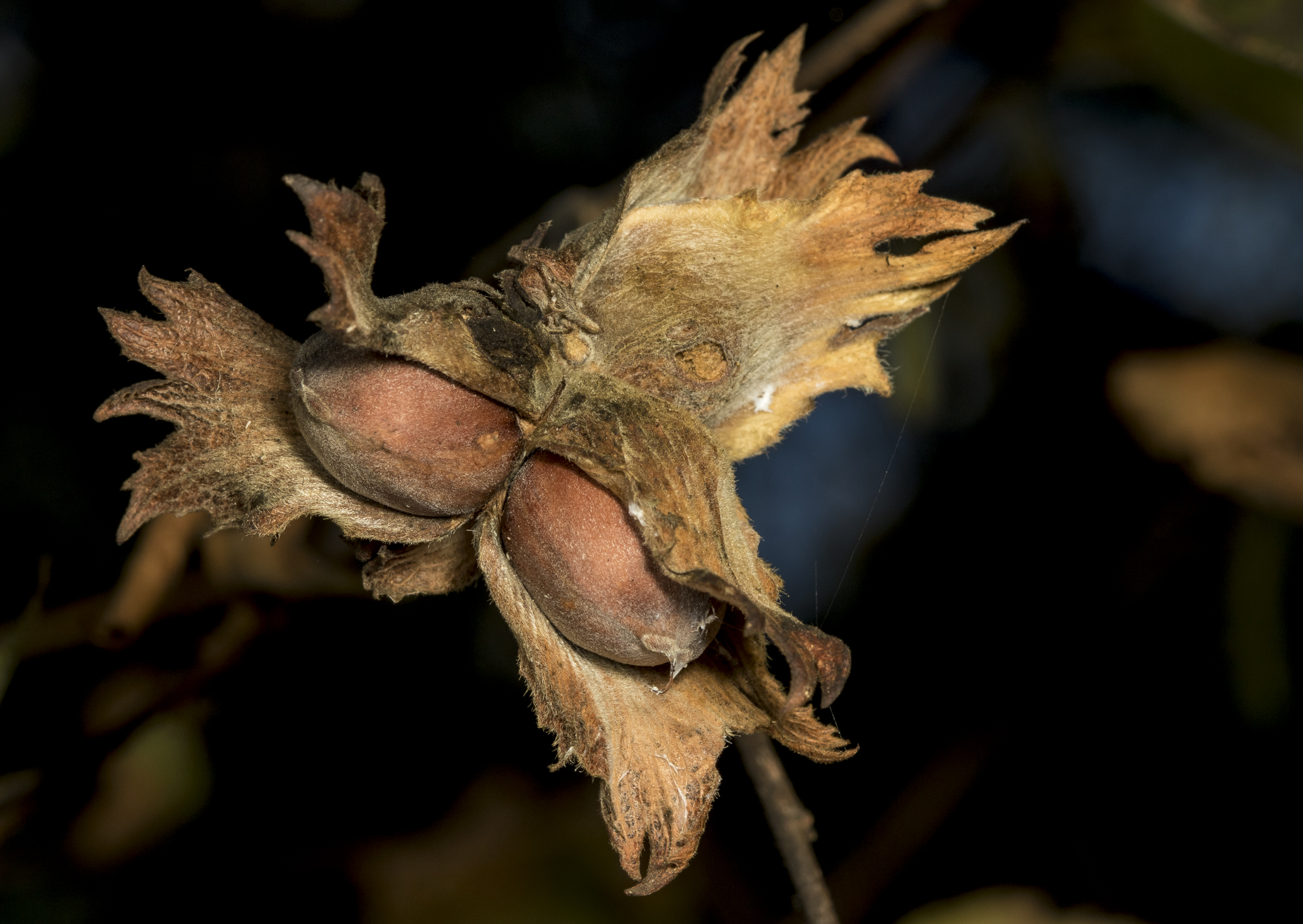
Mature nuts inside the husk (photo from October last year)
The nuts mature in fall and are an important food source for a variety of wildlife from chipmunks and squirrels to blue jays (and a tasty treat for humans as well). The other common name, filbert, may have a couple of origins according to resources I found online. Some speculate the name originated from “full beard,” which refers to the husk (or “beard”) that entirely covers the nut in some varieties. The German word for “full beard” is vollbart. Others believe the name was derived from St. Philibert, a French monk. The feast day honoring him is in late August, when the first filberts in England begin to ripen. A related species, Corylus avellana, is the official state nut of Oregon, which produces 99% of the U.S. crop of commercially raised hazelnuts.






























 Roads End Naturalist