• Dewy

    You are an ocean of knowledge hidden in a dew drop.

    ~Rumi

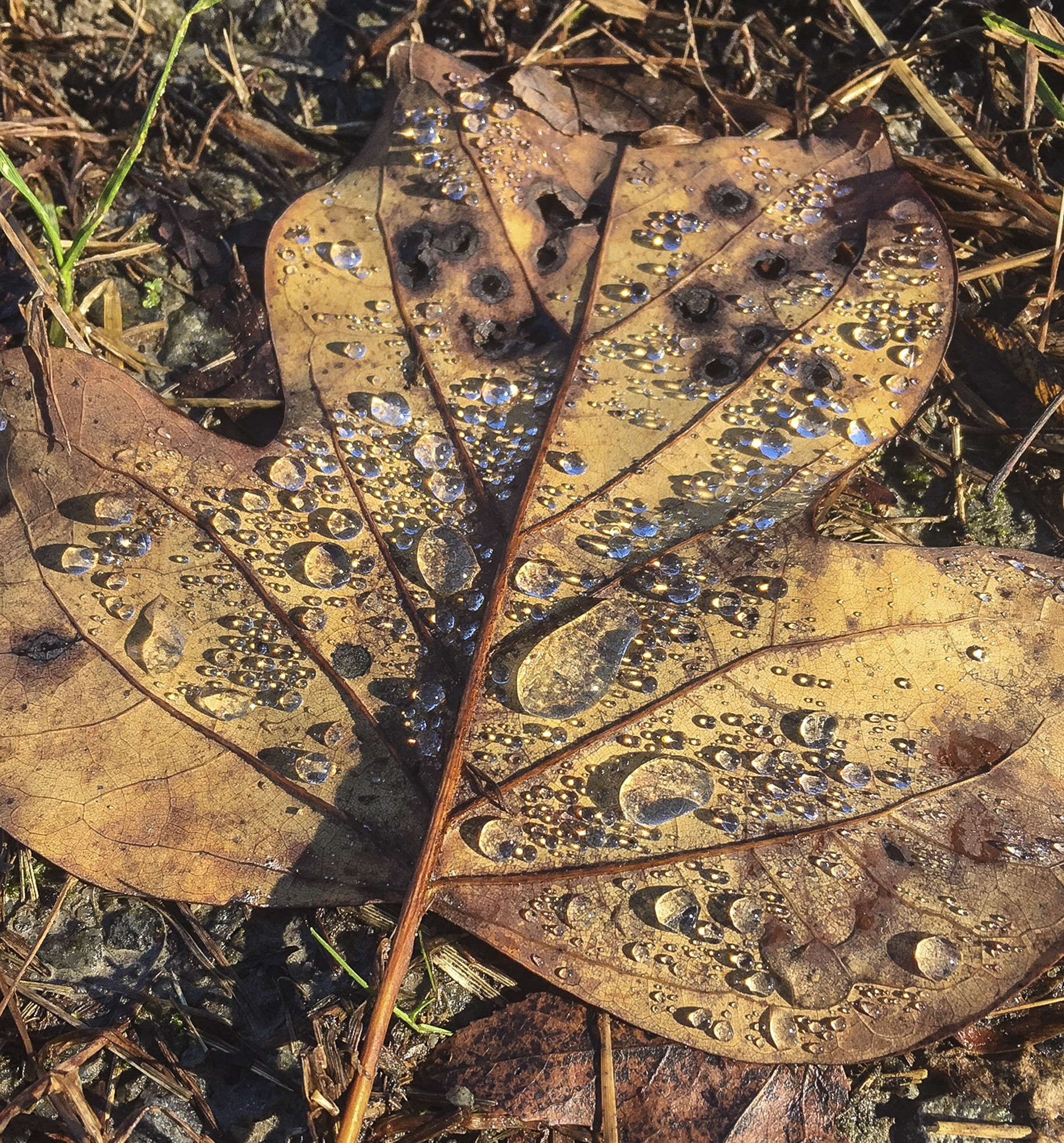
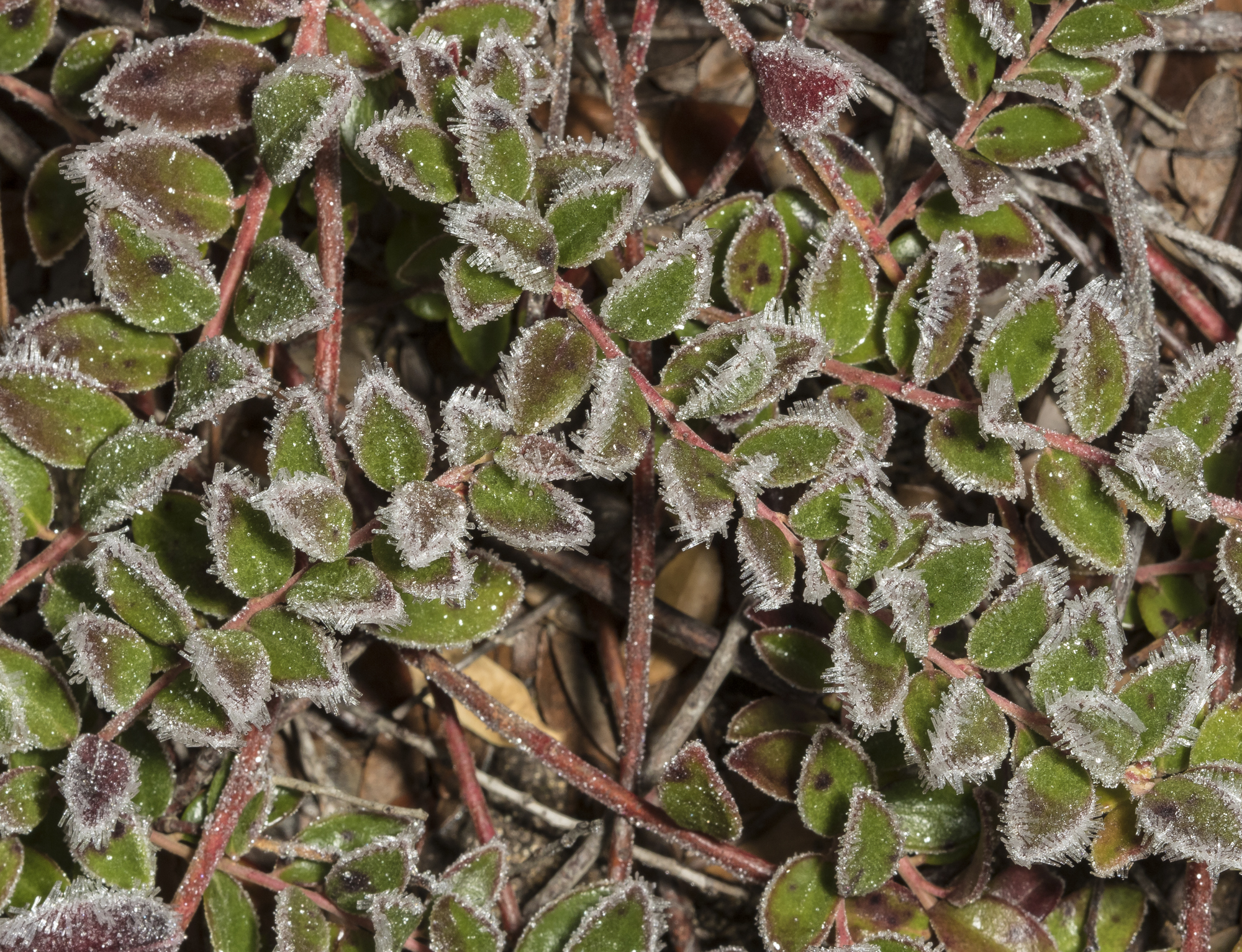
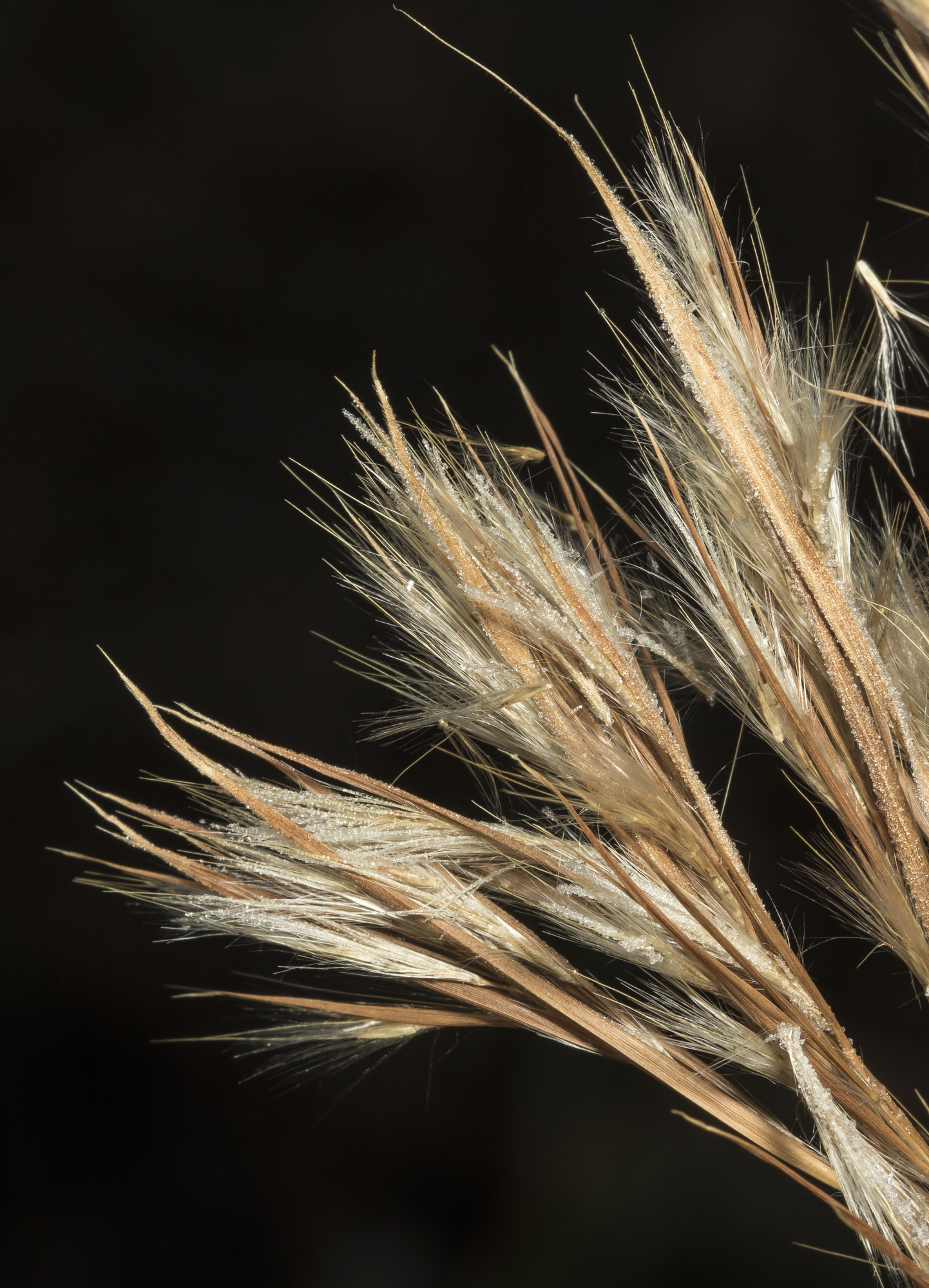
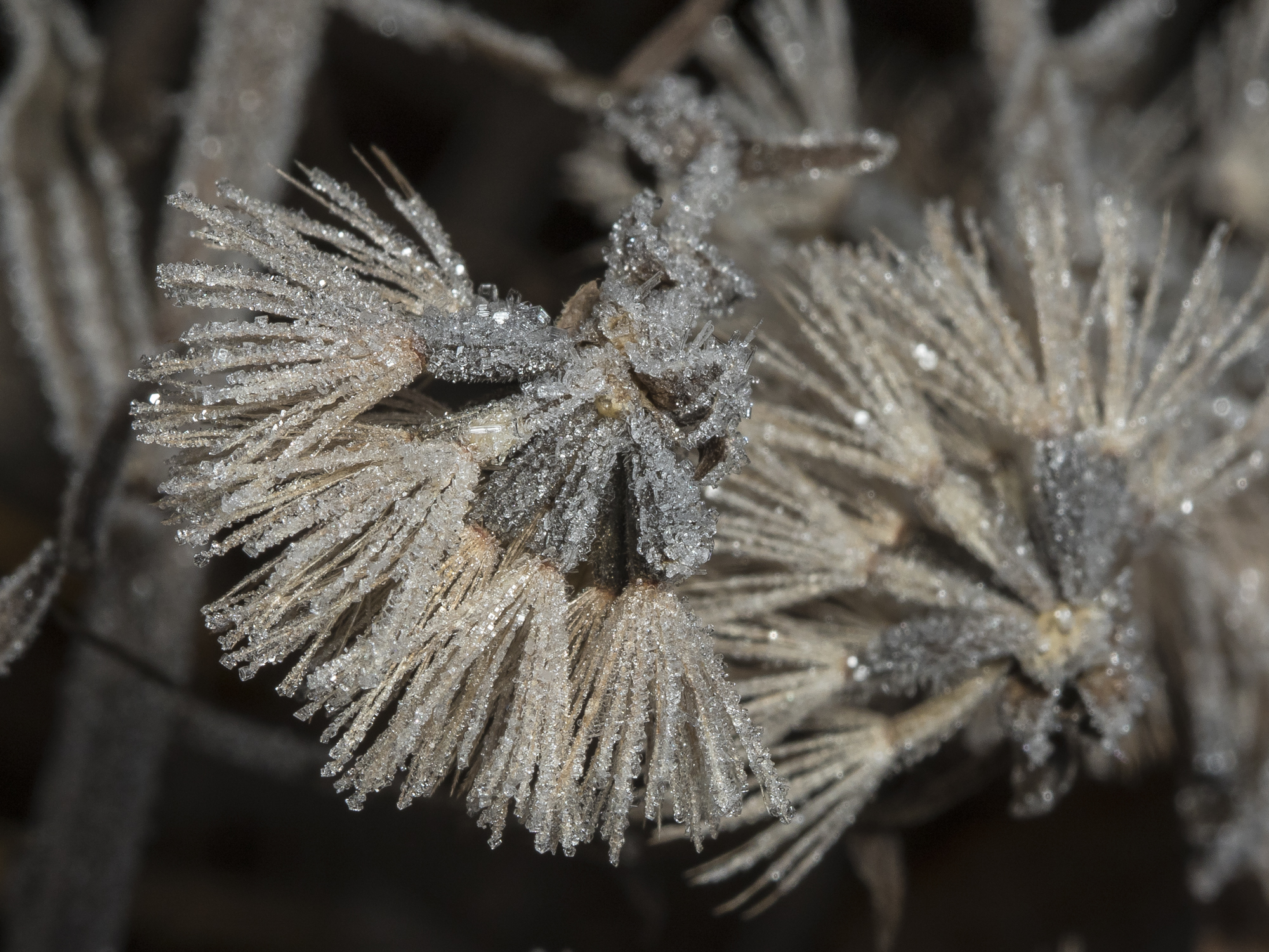
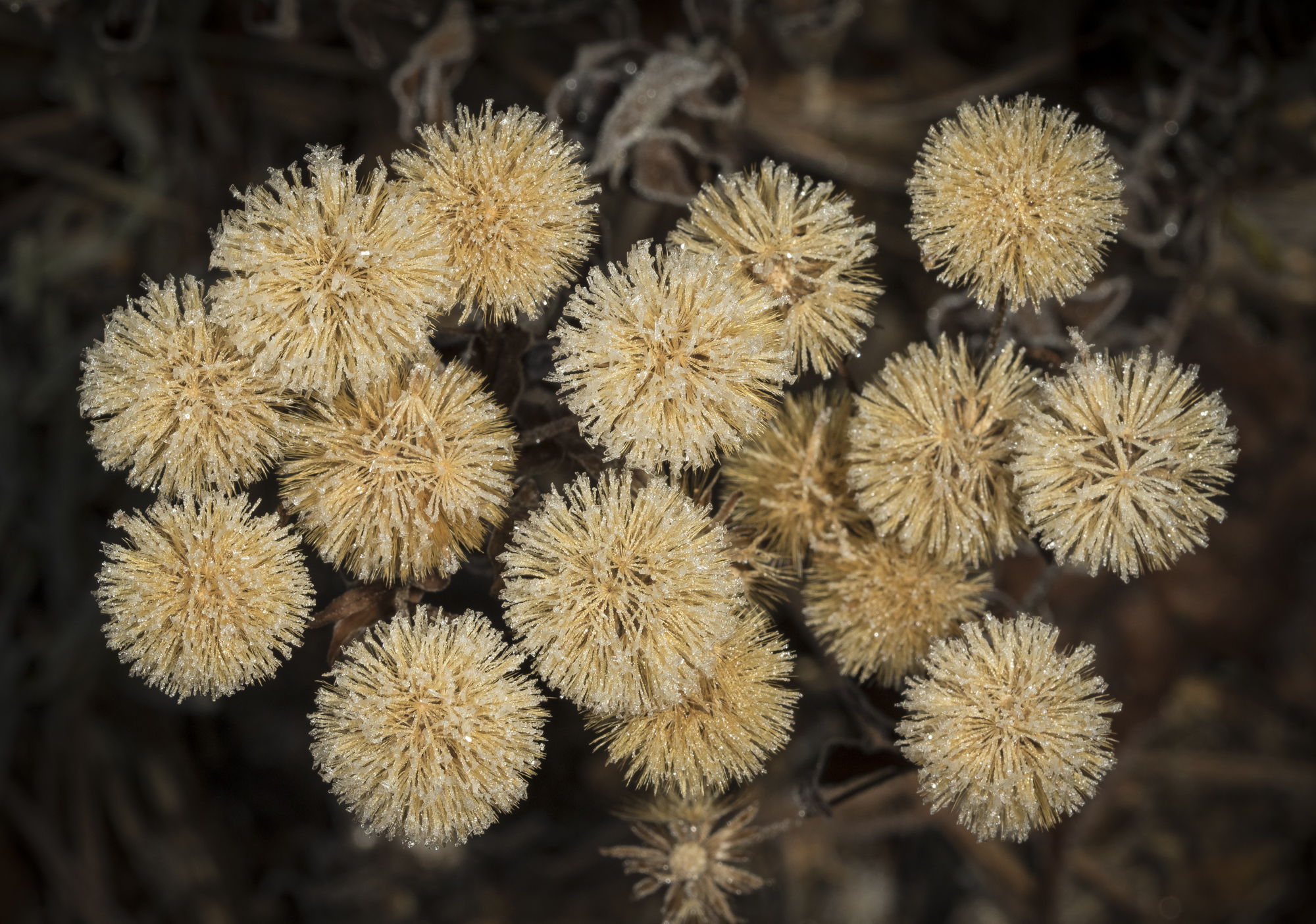
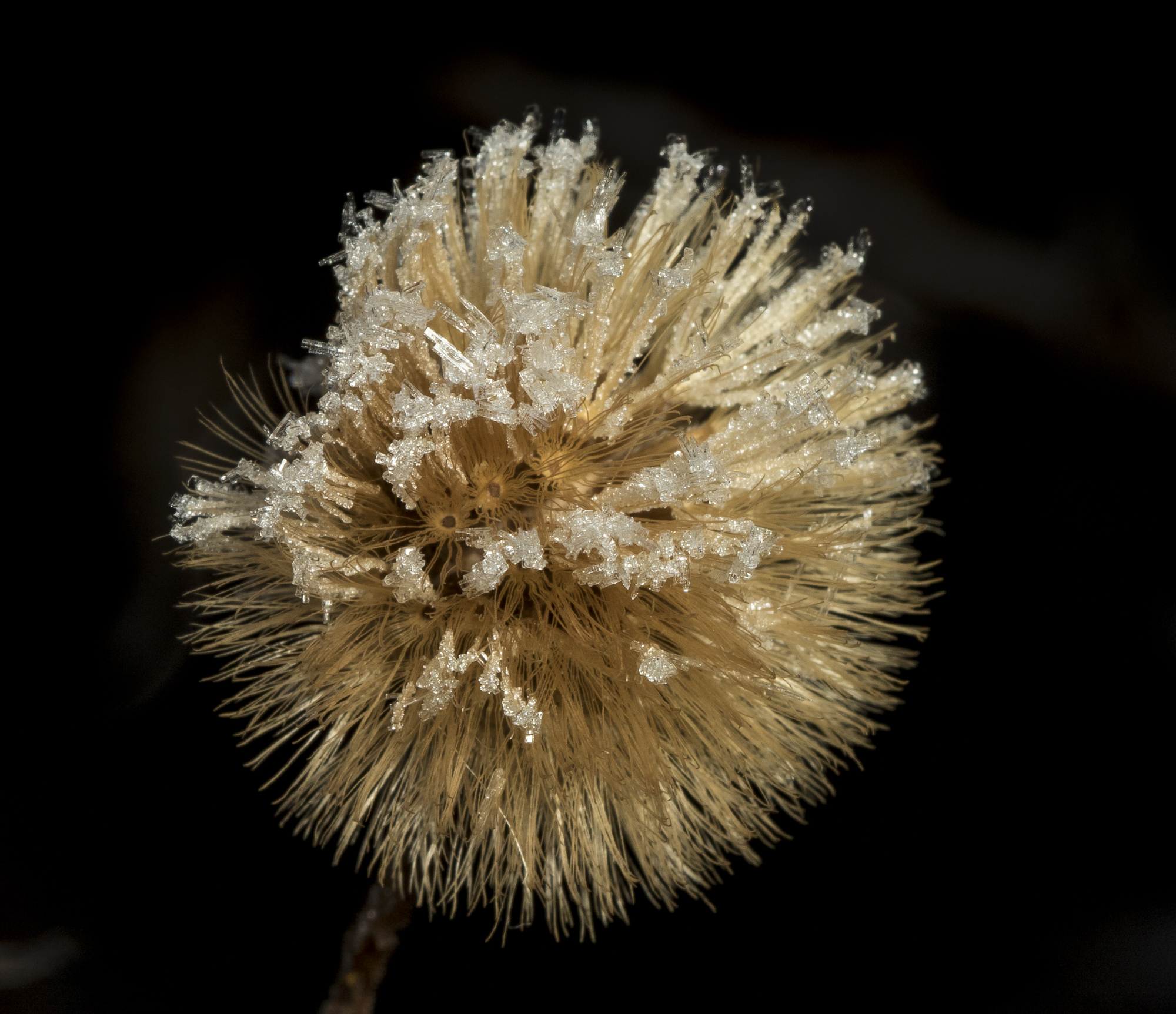
    The chilly nights this time of year lead to dewy mornings, and the world is decorated for a time each day with droplets of glass pearls. One morning last week I took a short stroll through the gardens at work searching for jewels. Here are a few of my finds…

    seashore mallow seed pod with dew
    Seashore mallow seed pod (click photos to enlarge)
    Maidenhair fern with dew
    Maidenhair ferns
    Unid seed head 1
    Wildflower seed head
    aster with dew
    Asters
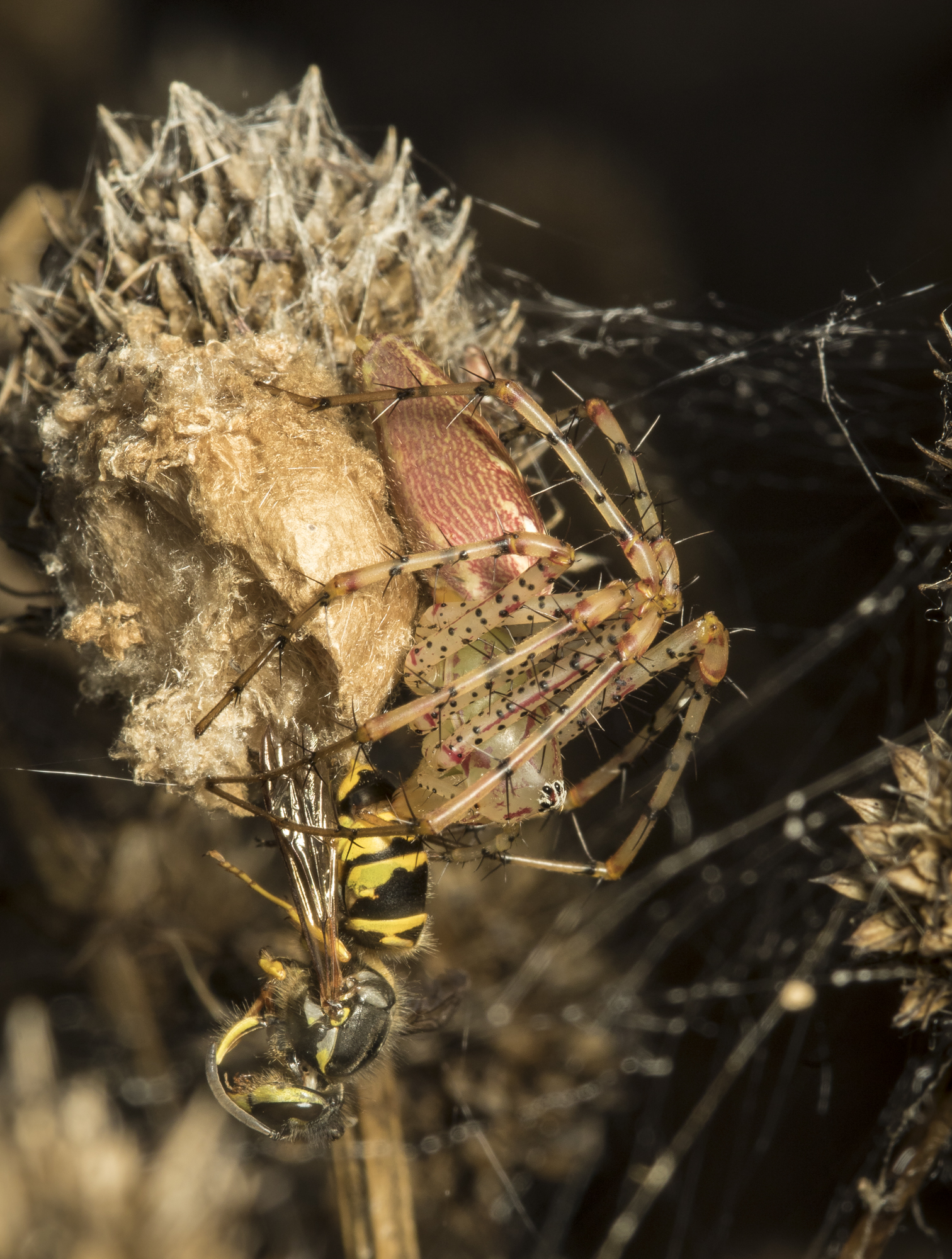
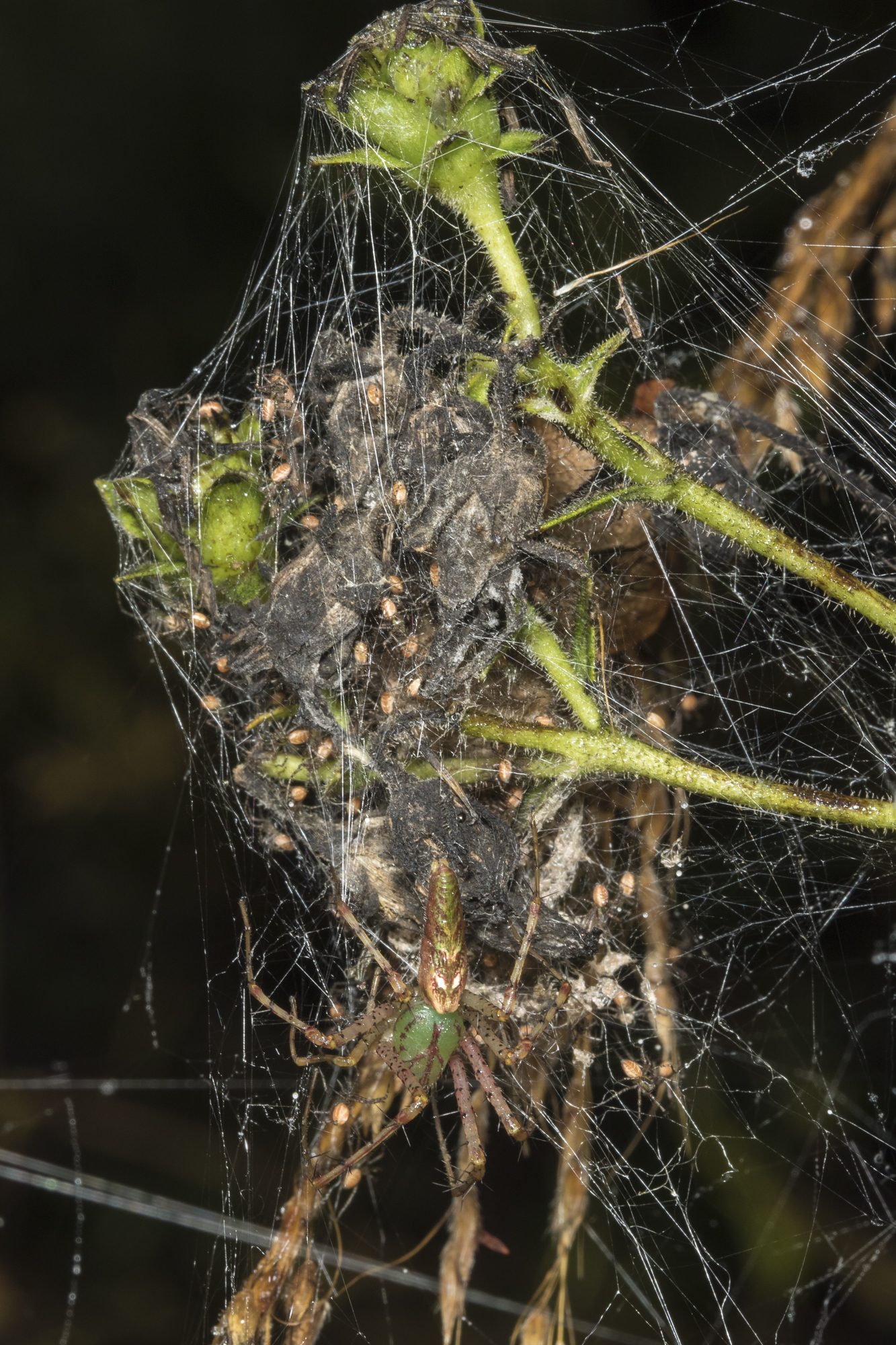
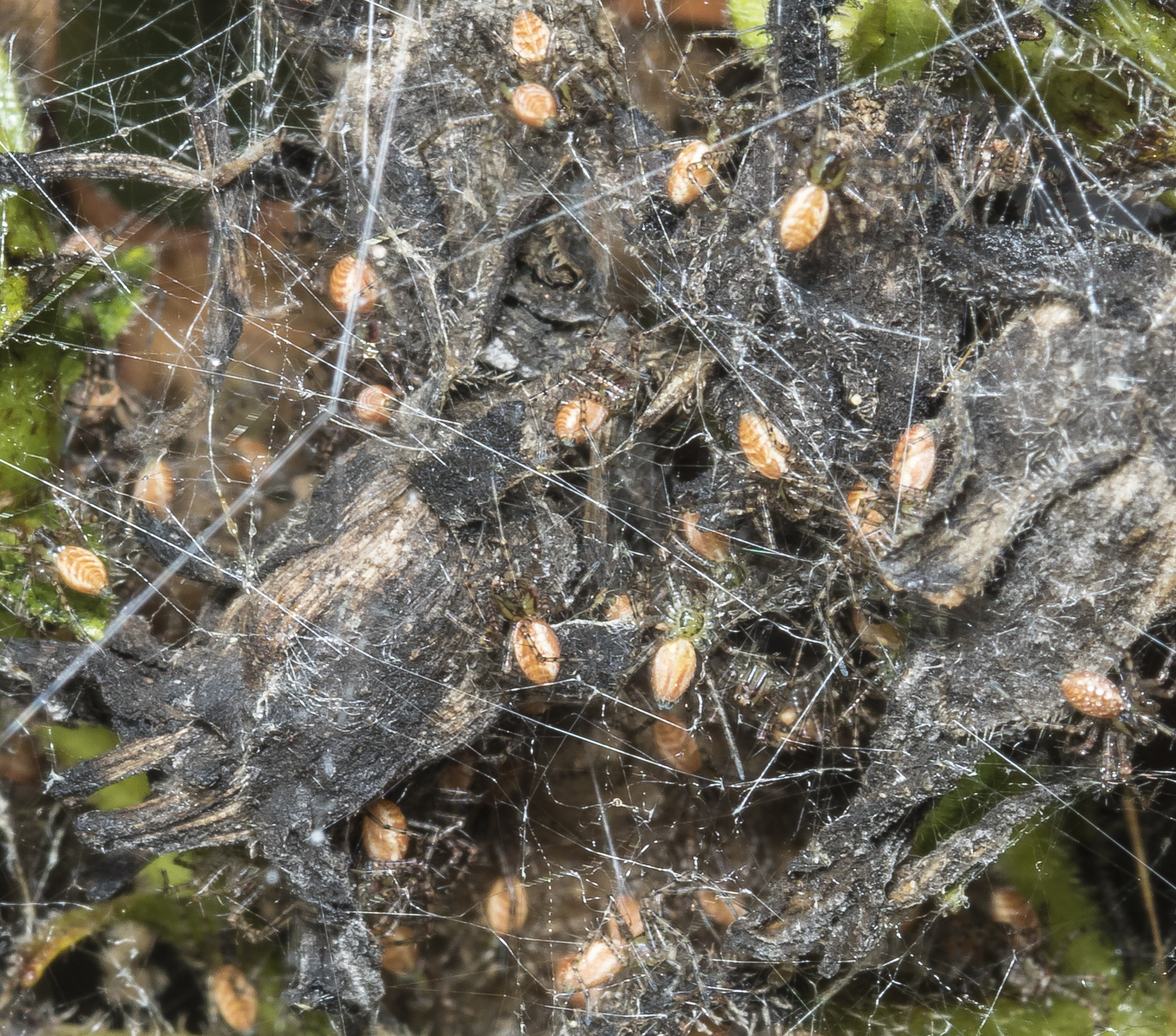
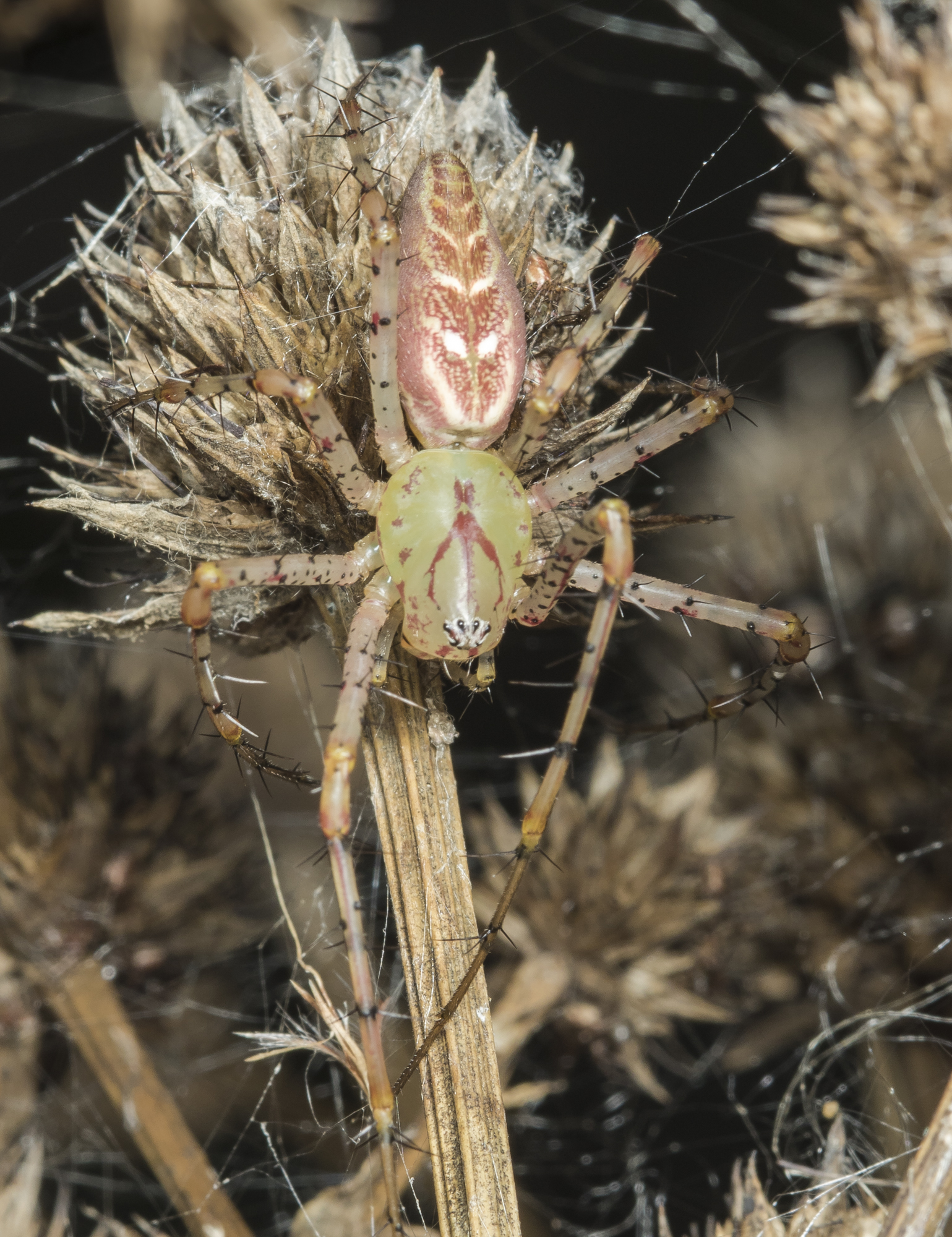
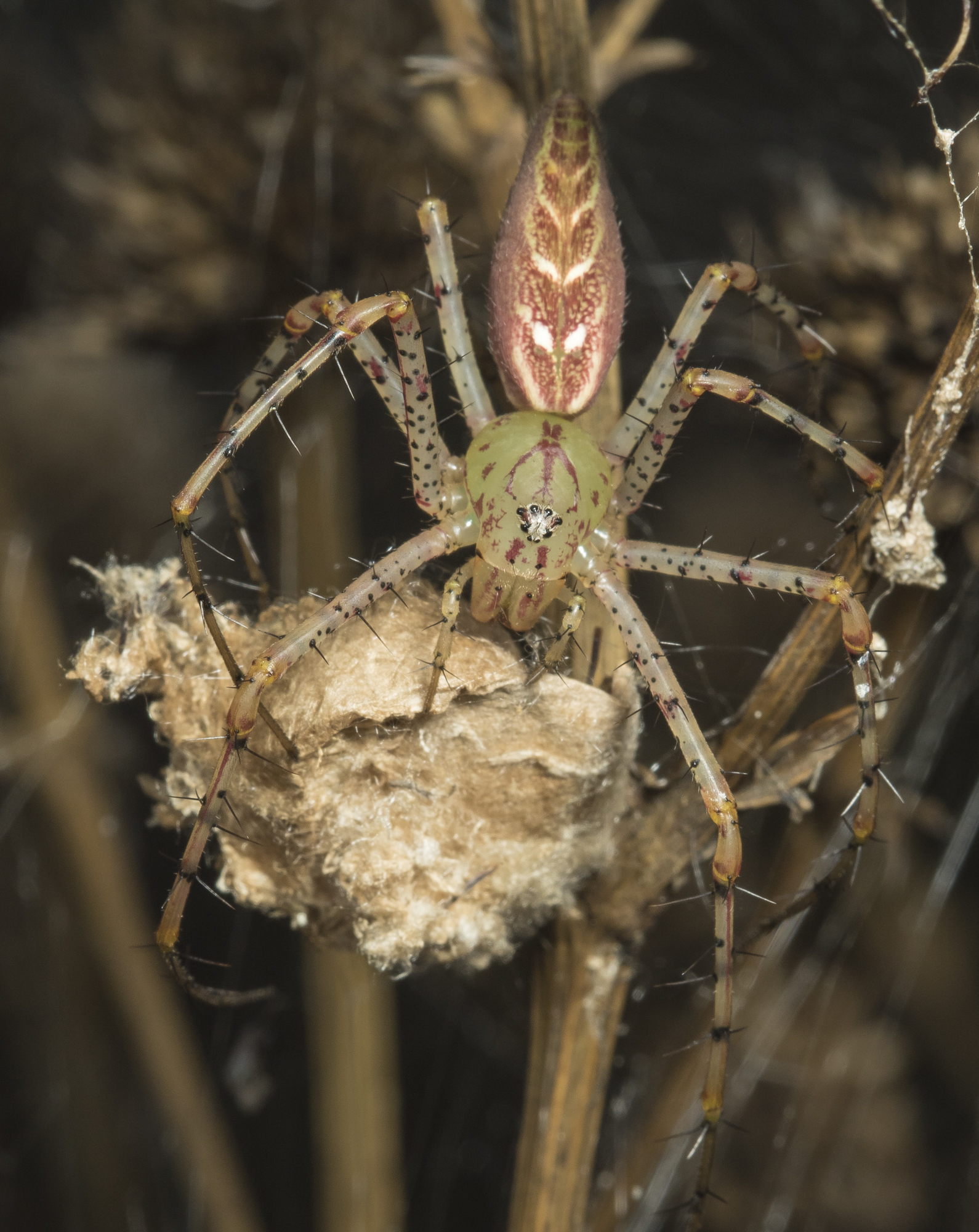
    Lynx spider with hatchlings
    Female green lynx spider with recently hatched young
    Unid seed head
    Wildflower seed head
    Male carpenter bee on a cold morning
    Male carpenter bee hanging onto phlox flower
    Male carpenter bee on a cold morning close up of head
    Closeup of carpenter bee head covered in dew
  • Whistle While You Eat

    Forget your trouble
    Try to be
    Just like the cheerful chickadee
    And whistle while you work

    ~Alternative lyrics to the Disney song from Snow White and the Seven Dwarfs

    Walnut sphinx  caterpillar 1

    A brief post today to share a remarkable scientific study on an unusual caterpillar behavior. In an earlier blog, I mentioned the unique sound-producing capabilities of the beautiful walnut sphinx caterpillar. What I had read is that the sound was produced to startle would-be predators. New research has refined this explanation. As reported in The Scientist (check it out to hear the caterpillar), a new study has shown the loud sound, created by the forcible expulsion of air from specialized holes along the side of the larva, is now believed to mimic the alarm call of birds. Some birds, such as black-capped chickadees, make special vocalizations when they see a potential predator. Other birds react by diving for cover. When this caterpillar is threatened, it emits a similar sound that can fool a hungry bird into thinking there is danger nearby, thus breaking off the birds’ attack on the larva. Amazing!

  • Sexy Slugs

    The mating of the leopard slug is one of the most sensuous film sequences you’ll ever see in your life.

    ~ Sir David Attenborough

    The bizarre happenings just outside our door continue to astonish me. As is often the case, this discovery came while I was out on a completely different mission. I had several programs in a row last month on one of my favorite topics, caterpillars, and was out hunting at one of the best times for spotting these masters of camouflage – after dark. I was sweeping my UV flashlight back and forth among the tree saplings in the yard, hoping to catch the glow of a sphinx moth larva or one of the so-called slug caterpillars, when I saw something strange on a tree trunk. Not a slug caterpillar, but verbally close – two leopard slugs caught in the act of their bizarre mating ritual.

    Slug sex
    Early stages of leopard slug sex (click photos to enlarge)

    First, a little background on these slimy stars. Leopard slugs, Limax maximus,  have been accidentally introduced into many parts of the world from their native Europe. They are large (up to 8 inches) slugs which have a small rudimentary shell hidden under the skin on their back. They are loathed by most homeowners since they may feast on garden vegetables, although much of their diet is decaying organic material and fungi. They are also carnivores, racing after and devouring other slugs at the break-neck speed of up to 6 inches per minute. You will also never forget them if you are unlucky enough to step outside one evening without shoes and suddenly feel a slimy blob underfoot. In addition to locomotion and protection, that slime serves another function – communicating readiness to mate. And this is what this species is  most famous for – its very unusual reproductive habits. Leopard slugs are hermaphrodites – they possess both male and female reproductive organs. They can self-fertilize, but what’s the fun in that?

    Long before I saw them that evening, these two slugs were already engaged in their unorthodox breeding sequence.  When the time is right (it takes two years for this species to reach sexual maturity), one slug leaves a chemical trail in its slime signaling its readiness. Another slug may pick up that trail, following the first. There is then a long bout of slug foreplay involving circling one another, nibbling, and whispering sweet nothings. At some point they both climb a nearby vertical surface and entwine their bodies, dropping down on a mucus string they create just for this strange mating dance. They slowly rotate and extend their bright blue male organs out the right side of their heads (from a hole called a gonopore, just behind the tentacles). This is when I first encountered them. The photo above shows their male organs being extruded.

    Slug sex 1
    Their bodies and their male organs intertwine as they mate

    The blue organs entwine and change shape into a translucent cerulean chandelier over the next hour or so and exchange sperm. There is even a scientific treatise (Taylor, J.W., 1894, Monograph of the land and freshwater Mollusca of the British Isles) that details how these blue extensions change shape through the mating sequence…

    Limax_maximus_mating

    I found myself transfixed by this strange behavior, and sat out there watching it for over an hour (I know what you’re thinking…). My only regret was that I had left my camera at work and so was only able to record this otherworldly occasion with my iPhone.

    Slug sex 2
    Changing shape as they exchange sperm
    Slug sex 4
    Nearing the end of their romantic encounter (you can see the mucus string in this photo)

    When they finished, they slowly became untangled, one slug crawling off on the tree trunk (one often just drops to the ground), and the other slowly climbed the mucus love rope, consuming it as it went. Both presumably wandered off to lay a couple of hundred gelatinous eggs. I don’t know about them, but I was exhausted after all that. If you are up to it, you can google David Attenborough Leopard Slug Mating and find several YouTube clips online from his BBC series, Life in the Undergrowth. Hearing Sir David explain it all adds a certain elegance, lacking in my prose, to this most unusual backyard event.


  • Fall Herps

    One of the most beneficial and valuable gifts we can give to ourselves in this life: is allowing ourselves to be surprised! It is okay if life surprises you. It’s a good thing!

    ~ C. JoyBell C.

    The busy schedule at home and work have left little time for getting out and about these past few weeks. But, in preparing for recent programs, I managed a couple of short walks at work searching for some educational props. One night, while out looking for caterpillars, my flashlight beam came across a sleeping reptile…

    sleeping Carolina anole
    Sleeping Carolina anole (click photos to enlarge)

    … a Carolina anole clinging to a leaf along the edge of the meadow. I took a photo and observed it for a moment, pondering how it managed to hang onto a leaf while in that upside down position. I left it alone without disturbing its beauty rest, somewhat amazed that it didn’t budge.

    A week or so later, a couple of us at work strolled through the Garden searching for some last minute additions for a weekend program. We spotted a couple of cool reptiles and amphibians along the way, perhaps getting in some of their last days of sun before cooler weather sends them seeking shelter for their long sleep.

    Spring peeper and dead leaf
    Camouflaged spring peeper

    We (actually, she, my boss) spotted a spring peeper clinging to a fringe tree, trying its best to mimic a nearby dead leaf.

    Spring peeper 1
    Peeper portrait

    With a gentle prod, we managed a peeper portrait that included a look at their incredibly long toes equipped with pads that allow them to perform their amazing arboreal acrobatics. A few minutes later, she spotted another tree-hugger…

    Juvenile black rat snake in tree
    Juvenile black rat snake resting in fork of a tree

    … a small black rat snake resting about 6 feet up in the tight fork of a tree along the trail.

    Juvenile black rat snake in tree  close up
    Not sure he wanted his picture taken

    That weekend, we had a successful public program that included our caterpillar table, and several other family-friendly topics. One station was all about our incredible carnivorous plant collection, showcasing a variety of insect-eating species found in North Carolina. The table included a few dissected pitcher plants to show visitors what the plants had captured and digested (a popular activity in one of our school programs). As they cut open one of the pitchers, the educators discovered a very interesting dietary supplement. One of the plants had caught something slightly larger than the usual bug…

    Dead anole from pitcher plant 9/23/17
    Digested juvenile Carolina anole from inside a pitcher plant

    …a juvenile Carolina anole! Its shrunken countenance hinted at a somewhat horrifying tale of picking the wrong spot to take a nap or search for a meal. Though not unheard of, it is pretty rare for a pitcher plant to capture and digest a vertebrate.

    While setting up for this program, another co-worker said she had seen a dead rough green snake at another location in the Garden. When I asked her if it had started turning blue, she gave me a quizzical look and rushed off to see if she could find it. She returned in a few minutes with snake in hand.

    Rough green snake dead and blue
    Dead rough green snake

    It turns out that the usual beautiful green color of a rough green snake is created by a combination of yellow and blue pigments.

    Rough Green Snake
    The usual color (although there seems to be a blue spot down on the body, perhaps from a damaged scale)

    Shortly after death, the yellow pigments break down quickly, leaving the dead snake a brilliant blue color. The world is full of surprises if you take the time to look for them.

    Dead rough green snake turning blue
    Turning blue
  • A Fondness for Caterpillars

    And what’s a butterfly? At best, He’s but a caterpillar, drest.

    ~John Grey

    Another season of caterpillar finds and larval programs is winding down. We have been searching high and low for larvae and, consequently, caring for a menagerie of crawling critters for several weeks now. My caterpillar programs have ended, and Melissa’s will be finished later this week. Our charges have been oohed and aahed over by hundreds of wide-eyed learners at a series of events at the North Carolina Botanical Garden, the museum’s BugFest, and a well-attended (and well-run) Master Gardener’s conference in Greensboro. These little guys have really earned their keep this past month. Many have pupated in preparation for their long winter’s nap, others have been (or will be) released back into the wild, and, sadly, many have succumbed to a variety of parasitoid wasps. It is somewhat shocking how many caterpillars meet this fate, but I suppose it is one of the main reasons we are all not knee-deep in frass (caterpillar poop) by the end of the summer.

    So, this post is to say thank you to all the marvelous Lepidoptera larvae that have graced us with their beauty and fascinating behaviors these past few weeks. Their variety of “attire” and striking forms are just one of the reasons that I have developed such a fondness for caterpillars over the years. Here are a few of the stars of this caterpillar season…

    Hog sphinx green
    Hog sphinx on wild grape (click photos to enlarge)
    Hog sphinx 1
    Same hog sphinx, later instar
    Waved sphinx?
    Waved sphinx on ash
    Rustic sphinx
    Rustic sphinx on beautyberry
    pawpaw sphinx
    Pawpaw sphinx deciduous holly
    Hummingbird sphinx larva
    Hummingbird clearwing on possum haw
    Four-horned sphinx
    Four-horned sphinx on river birch
    Yellow-haired dagger
    Yellow-haired dagger, early instar
    Hoary alder dagger
    Hoary alder dagger moth on tag alder
    Retarded dagger moth
    Bantam maple dagger on maple
    Salt marsh caterpillar?
    Salt marsh caterpillar
    unid parasitoid pupal mass from salt martsh caterpillar
    Strange, communal pupal case of parasitoid wasps that emerged from the salt march caterpillar
    Black-etched prominent whipping tails
    Black-etched prominent “whipping its tails” as a defense
    unid early instar prominent
    Mottled prominent, early instar, on oak
    White-barred emerald
    White-barred emerald, a wonderful twig mimic, on oak
    Purplish brown looper larva - twig mimicg
    Purplish-brown looper, a huge twig mimic with a head capsule that resembles a leaf bud, on sweetgum
    Imperial green
    Imperial moth on sourwood
    Smaller parasa
    Wavy-lined heterocampa just after a molt (you can see the thoracic antlers of the early instar on the shed skin), on wax myrtle
    Stinging Rose Caterpillar and shed skin
    Stinging rose caterpillar about to eat its shed skin (I accidentally touched this guy at BugFest and felt a mild bee sting sensation for about 45 minutes), on persimmon
    Puss Moth caterpillar shedding its skin
    Puss moth caterpillar shedding its skin (note color change), on wild cherry
    Spiny oak slug
    Spiny oak slug on witch hazel
    Smaller parasa 1
    Smaller parasa on ironwood
    Nason's slug
    Nason’s slug on oak
    Io moth caterpillar
    Io moth on hickory
    Black-waved flannel moth early instar
    Black-waved flannel moth, early instar
    Black-waved flannel moth later instar
    Same black-waved flannel moth, later instar
    Skiff moth larva on cherry
    Skiff moth, last instar, on wild cherry
    Skiff moth larva approaching pupation
    Same skiff moth, getting ready to pupate
    Viceroy chrysalis
    Viceroy butterfly chrysalis
    Monarch chrysalis
    Monarch butterfly chrysalis


  • Muir’s Mountains

    Climb the mountains and get their good tidings. Nature’s peace will flow into you as sunshine flows into trees. The winds will blow their own freshness into you, and the storms their energy, while cares will drop off like autumn leaves.

    ~John Muir

    It is appropriate to start this post on Muir’s beloved mountains, with one of his most famous quotes. We use it often when referring to what happens when you enter that other famous Y park, Yellowstone…”while cares will drop off like autumn leaves”. A long-time friend who is a ranger in Yellowstone teased us about perhaps changing our favorite Y park to this one, Yosemite. But I assured her that while it is spectacular, it can never replace the special place that Yellowstone has in our hearts.

    Bridal Veil Falls
    A rainbow atop Bridal Veil Falls in Yosemite Valley (click photos to enlarge)

    We headed to Yosemite after the relative quiet of Kings Canyon/Sequoia, expecting large crowds and uncertain of our destination, but hoping to get lucky with a campsite outside the park and then a back-country permit the next day. Unfortunately, we could see smoke from a nearby new forest fire as we approached, so we once again feared obscured views of the famous valley.

    sunset Yosemite Valley
    El Capitan

    But as we drove in, the sheer granite walls surrounding Yosemite Valley towered above us in sharp detail, with the smoke merely adding color to the background. I can’t imagine what this valley must have been like in Muir’s time, without all the roads, construction, and people. Even now, Muir’s mountains are breathtaking and you feel you should just stand there in silence and stare at the various peaks.

    sunset Yosemite Valley 2
    Sentinel Rock at sunset

    But we needed to find a place to lay our heads. The Forest Service campgrounds on the way in had all been small and full (although an interesting guy had offered to allow us to share his site at one of them as we drove in). As we drove through the valley, to our surprise, we spotted a vacancy sign at one of the valley lodging facilities with the odd name of Housekeeping Camp.

    Housekeeping Camp 1
    The tent cabins at Housekeeping Camp seem quiet early in the day

    We stopped and snagged one of three remaining units for two nights and thought ourselves lucky to get a place while having no reservations. When we drove into our site, you suddenly start to wonder what your stay might be like…crowds of people, often with large groups gathered around a campfire, music booming from various electronic devices, kids riding bicycles through the camp, dogs, cars jammed into every nook and cranny, and facilities that look a bit…rustic (that may be too nice a word).

    Housekeeping Camp
    Our little “home” (thankfully, for only one night)

    The units are two back to back rooms with three thin walls. The fourth “wall” is a  large shower curtain-looking partition, which also serves as an entrance. Each room has a bunk bed, a double bed, one small shelf and one light bulb. There is a picnic table inside a small privacy fence area that separates you from the next block of two camp units about 5 feet away. Togetherness is the phrase that comes to mind (if you are of a positive mindset). I was feeling some other thoughts, although people around us seemed to be enjoying themselves and ignoring the cramped feeling I was getting. The room cost $98, plus, for a few dollars more, you rent sheets and pillows if you don’t have them. The restroom was nearby along with a shared shower house. Signs warning of the potential for Hanta virus and plague (from fleas of the many rodents in the region) added to the surreal nature of this camp experience.  I compared this to my many times staying at the aptly named Rough Rider cabins in Yellowstone, and suddenly they seemed like luxury accommodations. I guess many people enjoy this closeness and the imagined step-up from tent camping, but I felt sorry for these visitors, for Muir’s legacy, and for the stunning landscape of the valley, that this is the way so many people experience this sacred spot. We debated the pros and cons of this type of lodging – the number of units, their price (seemed high for what you get), the crowded conditions, etc.  These are difficult choices – allowing affordable access for the masses to this incredible valley versus providing a lodging experience that might be more in tune with the sense of reverence that such a landscape evokes, a choice that would likely be more exclusive. Is that an “elitist approach”? I don’t know. People certainly seemed to be having a good time, but, is it in tune with the spirit of the place, its history, its majesty? I guess I came away disappointed that the National Park Service has not done a better job of providing clean, comfortable, and site-appropriate facilities in one the gems of the park system.
    sunrise Yosemite Valley with Black-eyed Susan's
    Sunrise in Yosemite Valley

    The next morning we headed out before sunrise to watch the valley come alive in the morning sun. The usual colors of the morning sky had an assist from waves of smoke from the wildfire just outside the park boundary.

    sunrise Yosemite Valley
    Smoke moving into the valley at sunrise

    This is the huge advantage of lodging in the valley – the ability to be there at sunrise and sunset and still be able to access your lodging without a long drive. The sky turned orange red as the sun peeked over the famous peaks. We were alone in the meadow, another advantage of viewing the world at sunrise.

    smoke toward half-dome
    Smoke blocks the distant view of Yosemite Valley from Olmsted Point

    For reasons mentioned above, and the added smoke we saw at sunrise, we decided to forfeit our second night at Housekeeping Camp (with only the loss of a $10 handling fee). We packed up and headed to the back-country office to get a permit for hiking the high country. Being third in line when they opened helped us secure a permit for an area near the famed Tuolumne Meadows. As we drove high into the Sierras, we realized the smoke was following us, which would make hiking less than ideal at these elevations (9000 ft+). We made the difficult decision to forego our back-country permit (we turned it in at another back-country permit office so someone else could use it) and to try to find a campsite in one of the campgrounds just outside the park boundary. Again, we got lucky and ended up with a lakeside campsite in a Forest Service campground less than a mile outside the park.

    campsite outside park
    Our campsite on Tioga Lake in Inyo National Forest

    It was on a beautiful lake with 13 primitive campsites and very convenient to the park’s high country. Once we set up the tents, we drove back into the park with our stove and freeze-dried food for a dinner with a view.

    Lembert Dome
    The view from Lembert Dome

    As luck would have it, the veil of smoke seemed to stop before reaching all of the high peaks, so we had an amazing view after our hike up Lembert Dome, a popular destination, but one devoid of fellow hikers this time of day.

    Lembert Dome at sunset
    Sunset from Lembert Dome

    We ended up having one family from Belgium pass us on the mountain, but, aside from hundreds of migrating yellow-rumped warblers, we ate our dinner with nothing but the spectacular scenery and each other as company. To me , this is the best way to experience this majestic park.

    Olmsted Point
    The view toward Yosemite Valley from Olmsted Point, minus the smoke

    The next day, our last in this whirlwind tour of three parks, we wanted to hike up to one of the classic mountain lakes. We started by driving out to Olmsted Point where we heated up water for coffee, tea, and oatmeal. The view was what we had hoped for the previous morning – looking out toward Half Dome. The skies had cleared up in the high country, but we heard all day from people coming from the valley that it was still shrouded with thick smoke.

    Leichtlin's Mariposa Lily
    Leichtlin’s mariposa lily along a trail

    The area around Tuolumne Meadows is not as crowded as Yosemite Valley, but is still a place where it can be tough to find a parking spot at a trail head. We opted for the trail to Cathedral Lakes. One guidebook said “if you only do one hike in the high country, do this one”.

    alpine lily
    Alpine lily

    The trail starts at about 8500 ft and winds upward to the lower lake at an elevation of 9200 ft. It is about a 7 mile round trip hike. We saw plenty of other hikers along the route and on the eastern shore of the lake which is a wide, flat, granite outcrop.

    Cathedral Peak with reflection in granite
    A reflected view of Cathedral Peak, elevation 10,912 ft

    There are many places to capture a beautiful reflection of nearby Cathedral Peak in a pool on the rock or in the adjoining marsh. We decided to hike around to the other side of the lake for lunch since we did not see anyone on the far shore.

    bathtub with a view
    Pool with a view

    Melissa never misses a chance to take a dip in mountain water, no matter how cold, so, once again I was convinced to cool off in a gorgeous pool at the far end of the lake. This particular pool probably had the best view of any spot we have ever dipped our toes in. Not far beyond our swimming hole (well, really just a splashing hole due to temperatures and water depth) the lake water left its calm existence and plunged down a waterfall, exposing a view off to the mountains and valleys beyond. Megan managed snap the shutter at just the right moment to capture that quintessential expression we often have when first squatting down in a mountain stream.

    Cathedral Peak 1
    View of Cathedral Peak on the Lower Lake

    After a relaxing lunch, we headed back down the trail and off to our campsite to pack up. It had been an amazing trip, full of quiet beauty, crowded tourist spots, cold water, smoky skies, and majestic scenery. These mountains are truly spectacular. Muir wrote “It is by far the grandest of all the special temples of Nature I was ever permitted to enter.” I can only imagine what it was like to have tromped over these granite domes before the crowds descended on the now iconic places of Yosemite. Melissa and I are thrilled to have finally made it, and we hope to return and hike the backcountry without the threat of clouds of smoke obscuring the peaks. The “other Y park” is definitely special.

  • Hiking Among Giants

    Walk in the Sequoia woods at any time of the year and you will say they are the most beautiful and majestic on earth.

    ~John Muir

    I am far behind in posting about recent events, sightings and travels. But I guess that is a good problem to have – doing and seeing so much that I don’t have time to write about it! So, here is the first of several  posts on our travels this past month. We finally made it to see the giant sequoias and the incredible high country of the Sierras. Melissa was awarded a trip for an interpretive training session in California, and I flew out to join her and Megan for a rather unplanned camping trip afterward. Our first planned trip had been postponed a few years ago when wildfires blanketed the area with smoke, so we made some last minute changes and hiked the Lost Coast Trail instead. Now we had the time, but little in the way of concrete plans (no reservations for campsites, since they fill up months in advance and this trip had been planned on much shorter notice). I flew into Reno, Nevada, and we drove several hours into the Central Valley of California, home to what looks like our country’s largest source of fruits, nuts, and vegetables, with mile after mile of irrigated farmland. After an overnight near Fresno, we were up early and headed into Kings Canyon National Park. We lucked out and got a back-country permit for a 10-mile hike in Redwood Canyon, home to some large groves of giant sequoias. Since we only planned to hike a couple of miles before pitching camp our first evening, we decided to first take in a few of the iconic sites accessible by road.

    deep canyon over 8000 ft deep
    Junction View looking into Kings Canyon (click photos to enlarge)

    Kings Canyon is considered one of, if not the, deepest canyons in North America. Just outside the park boundary, the canyon is almost 8200 feet deep from the Kings River to the top of an adjacent mountain peak. It is incredibly rugged and dry. The latter was the big surprise to me. No wonder forest fires are such a part of this landscape.

    Zumwalt meadow Kings Canyon NP
    Zumwalt meadow

    The wettest habitats are, of course, along the waterways. We stopped at one of the classic Sierra landscapes, Zumwalt meadow, and arrived just in time for a ranger-led walk. The ranger was a young seasonal who had an amiable style and almost immediately shared a new learning.

    Ranger next to incense cedar
    A huge incense cedar was one of the first stops on the guided walk

    What I at first assumed was a young, yet still substantial, giant sequoia, turned out to be an incense cedar, a common species in these habitats. There are several notable features that distinguish the two species, so it was a good lesson for our hikes to come.

    Lorquin's admiral wings open
    Lorquin’s admiral butterfly

    At the meadow proper, we saw several butterflies – a few monarchs flitting about some milkweed out in the meadow, add a striking Lorquin’s admiral along the trail. We continued around the loop after the ranger finished his talk, but not before he gave us a good tip on a feature to look for on our drive out of the canyon.

    chevron folds Kings Canyon
    The famous geologic fold in Kings Canyon

    A geologic highlight no less (those that know me know how unusual this is for me). The ranger (who had a degree in geology) told us about a distinctive fold on the highway which I now know is famous as the Kings Canyon Fold. He said it was the textbook example of how rocks can be deformed at high temperatures and pressures. Sure enough, it is not only on textbooks, but is also an exhibit at the American Museum of Natural History. The canyon does provide incredible views of a landscape shaped by glaciers, rivers, and huge geologic forces that have occurred over the millennia. But what I most wanted to see were the living things that have survived the millennia – the giant sequoias.

    General Grant Tree
    General Grant tree

    A must stop for anyone in Kings Canyon is the General Grant tree, the second largest tree  (by volume) on Earth. Coastal redwoods are the tallest living organisms, but giant sequoias are the most massive. Giant sequoias (Sequoiadendron giganteum) grow naturally only on the west slope of California’s Sierra Nevada range. Redwoods (Sequoia sempervirens) grow naturally only in a narrow strip along the Pacific Coast.

    A few facts about the General Grant tree

    • It is the widest sequoia known, being 40 ft across at its base ( with a circumference of 107 ft, it would take 20 people holding hands to completely encircle its massive trunk)
    • 268 ft tall
    • Estimated age – 1700 years (a full 1500 years younger than the oldest known sequoia)
    • First branch is 129 ft above the ground
    Ranger hat with sequoia cone
    Giant sequoia cones as symbols on National Park Service hat

    The cones of these massive giants are a little larger than a chicken egg, and the seeds are like oak flakes. The ranger pointed out that the giant sequoia cone is one of the symbols on every National Park Service ranger’s uniform – on the band of their iconic wide brim hats.

    Huge sequoia
    A forest of giants

    Late that afternoon, we finally made it to the trail head into Redwood Canyon (Giant sequoias are sometimes called Sierra redwoods). We started our climb and immediately passed through groves of huge trees that included giant sequoias, sugar pines (with the largest pine cones in the world), and Douglas firs.

    Sugar Pine cone
    Sugar pine cone
    Grasses on ex[posed slope in Redwood Canyon
    Grasses along a dry ridge in Redwood Canyon
    Dead shrub twig pattern
    Patterns of twigs

    Late in the day we reached a rocky ridge line overlooking a small canyon. A few open areas provided great views and some interesting patterns in the growth form of plants.

    campsite in Redwood Canyon
    Our first campsite in Redwood Canyon

    We finally settled on a spot near the edge of the ridge with a panorama on one side and a grove of giant sequoias on the other. The forest was incredibly quiet, a fitting silence in such a place of reverence.

    Giant sequoias at sunset silhouette
    Sunset among the giants
    View from campsite B&W
    The view at sunrise from our camp

    Megan initially planned to sleep in the hollow base of one of the giants, but ended up setting up her tent in the middle of the night when the scurrying sounds of small mammals, and the more worrisome sound of some larger species, interrupted her sleep (we found what we assumed were three bear day beds on the slope above our campsite).

    Sasquatch shadow
    Origin of Sasquatch?

    On a morning walk I discovered a surreal figure on one of the sequoia trunks – a burn scar that had an eerie resemblance to a human form, especially when viewed at a distance.

    Sugar Bowl trees 1
    We spent a lot of time looking up at the canopy in awe
    Tunnel tree from far end
    A tunnel tree
    Tunnel tree with hiker
    Walking through the downed giant with our backpacks and room to spare
    Giant sequoia with Megan for scale
    Megan standing at one of the giants in Redwood Canyon

    Our second day was a longer hike ( about 7 miles) through incredibly beautiful terrain that included dry ridges, clear mountain streams, and more giant sequoias. Along the way we spotted a variety of birds, some deer, and an array of wildflowers.

    Columbine flower 1
    Crimson columbine against a backdrop of a small waterfall along the trail
    Indian paintbrush
    Indian paintbrush was a common splash of red on our hike
    Whisker brush
    The beautiful flowers of whisker brush in a sunny spot
    Sequoia stump
    Our camp the second night was in the vicinity of an old logging camp dotted with massive stumps

    We camped the second night along a stream surrounded by the weathered stumps of sequoias cut long ago in the age of loggers in these mountains. I can’t imagine cutting down one of these giants – both the physical effort and time required (it often took a couple of days just to cut through the trunk), and the process of getting the wood out of this steep terrain. We hiked out the next morning and headed to the adjoining Sequoia National Park (our second oldest national park) with the goal of seeing the General Sherman tree.

    General Sherman tree outline
    Melissa stands in the “footprint” display of the General Sherman tree

    The largest tree (by volume) on Earth, the General Sherman tree is in a forest of behemoths, appropriately known as the Giant Forest. Described by John Muir when he entered this grove in 1873 – A magnificent growth of giants…one naturally walked softly and awe-stricken among them. I wandered on, meeting nobler trees where all are noble…this part of the Sequoia belt seemed to me to be the finest, and I then named it “the Giant Forest”.

    General Sherman tree
    The General Sherman tree from a distance

    We all are thankful for the efforts of Muir and the many others who saw the majesty in these trees and fought for their preservation. There is something magical and humbling about walking among them, and it is a feeling you cannot find anywhere else. As Muir noted after walking the ridges of this area …it seemed impossible that any other forest picture in the world could rival it. I will have to agree with him, there is no place like the sequoia woods.


  • Sweeping Grass and Rolling Logs

    The art of teaching is the art of assisting discovery.

    ~Mark Van Doren

    We had an adventure on one of the last weeks of summer camp at the Garden. It was all about discoveries – trees, dragonflies, aquatic macroinvertebrates, field and forest insects and animal tracks and signs. A highlight for me was sharing the incredible diversity of Mason Farm Biological Reserve with those budding naturalists. We sampled both field habitats and forest edges using various techniques from sweep nets (swinging a mesh net back and forth through tall grasses and examining your catch) to log rolling (gently turning over downed logs to check for decomposers and other critters).

    Phidippus clarus, Brilliant Jumper, good eye view
    Brilliant jumper, Phidippus clarus, in a sweep net (click photos to enlarge)

    The kids were excited about their finds as they swept the nets back and forth along the edge of the meadows. I was so busy helping them catch and identify things I didn’t have much time to photograph anything, but when one camper saw a tiny jumping spider in his net, I had to grab the camera. I have a weakness for jumping spiders and their bold colors, huge eyes, and “inquisitive personalities”.

    Phidippus clarus, Brilliant Jumper, looking up
    Brilliant jumper right before it did just that (up onto my lens)

    I later identified it as a brilliant jumper based on the green chelicerae and the orange pattern on the abdomen. I shot several images as it crawled about the edge of the net, pausing frequently to stare up at my camera gear looming overhead. It finally did what they often do, and leapt up onto my lens, ending its photo session.

    Rabid wolf spider, Rapidosa rapida?
    Rabid wolf spider, Rabidosa rabida

    As we walked along the forest edge, someone spotted a huge wolf spider. I bent over for a closer look and a quick picture of its enormous (and numerous) eyes. I’m not sure how the common and scientific names came about (rabidus is Latin for wild, crazy, raging), but maybe some early arachnologist laid down and looked into the face of one of these huge spiders and felt a slight twinge just as I did.

    We showed the campers the proper technique for rolling a log (gently roll it toward you so that any larger critters can escape away from you instead of coming at you).

    Psallis beetle in gallery in log
    Passalus beetle, Odontotaenius disjunctus, in one of their tunnels in a log

    One log revealed a treasure trove of beetles – some adult passalus beetles (in the family Passalidae), and several large beetle grubs. These common large beetles are also called patent leather beetles, horned beetles, horned passalus beetles, bess beetles, and many other common names,

    unid beetle grub;  not a psallis 1
    Large beetle grub under log

    The first two grubs were huge, curled in a C shape under the log. I did a quick glance and told the excited kids those were probably the larvae of the passalus beetles and bent down to pick one up. I then noticed another larva crawling nearby. It was slightly slimmer and was actively moving instead of being curled up.

    Psallis beetle grub on finger for scale
    Another, more slender, beetle grub

    At first, I assumed they were just different ages of passalus beetle grubs. I remembered reading that their larvae have a reduced pair of legs used for stridulation (making sound by rubbing one body part against another, in this case, the reduced leg against the adjacent larger leg).

    Unid beetle grub; probbly not a psallis
    A closer look at the first grub shows 3 pairs of legs with the first pair slightly reduced

    I always had wanted a photo of the reduced pair of legs (it’s what we nature photographer types do) so I flipped over one of the larger grubs and took a couple of quick shots. Sure enough, the first pair of legs was smaller then the other two pair. We gently replaced that log to its original position and rolled another. More beetles! And something else…

    Psallis beetle pupa
    Beetle pupa

    There were a couple of beetle pupae under the log (I assumed they were passalus beetles). This was really cool as I had never seen large beetle pupae before. One was attached to the underside of the log in what looked like a chamber made of wood debris and maybe beetle frass.

    Immature psallis beetle
    Juvenile passalus beetle is brown in color

    There was also a brown-colored passalus beetle. These are juveniles and they will gradually darken to black as they mature (I wasn’t able to find how long this takes).

    Adult psallis beetle
    Adult passalus beetle is black

    Passalus beetles are fascinating critters and a frequent live animal used for environmental education demonstrations. They are one of the few beetles that are social and tend their young. They feed by chewing galleries through the soft wood of downed trees and then re-ingesting their frass after it has been colonized by bacteria and fungi. They also feed this mixture to their larvae. One way they maintain this social structure is through a complex communication system created by stridulation. Adults stridulate by rubbing rows of spines on the undersides of the soft, flying wings (the membranous wings hidden under their hard outer wing structures – the elytra) against a hardened textured area on the top of their abdomen. As I mentioned earlier, the larvae can also make sounds, and these are believed to be important not only for social communication, but also defense against predators. Pick a beetle up and hold it close to your ear, and you are likely to hear some squeaks (click this link to hear passalus beetle stridulation). This same reference states that passalus beetles have 17 known audio signals for both adults and larvae, making it the most elaborate sound communication system known for any arthropod.

    I was all set to write up a blog post when I double-checked my information on the life cycle using various online resources. Then it happened…I began to think I had made a mistake in my identification of the large grubs. I found a reference that stated passalus grubs have a reduced pair of legs, but it is the third pair, not the first, as I had seen on the large grubs. Plus, it said these small legs were so reduced as to be difficult to see. Dang, I had to go back and check out those grubs again. Well, as luck would have it, it rained a lot the next day and the creek rose making it tough to drive across to Mason Farm. Things were busy at work that week, but as I was walking on our nature trail one afternoon preparing for a program, I saw a log off the side of the path. I walked over and flipped it, hoping to find…

    Psallis beetle grub and adult
    Passalus beetle adult and larva

    There was an adult passalus beetle and a large slender grub! There were actually a couple of grubs under that log, so I gently grabbed one and flipped it over to look at its legs.

    Psallis beetle grub showing reduced leg
    The third pair of legs is greatly reduced on this grub

    Yes, indeed, that third pair of legs is reduced and very difficult to even see on a passalus beetle larva! So, I had been wrong in my ID on that first quick glance. Those large grubs are most likely the larvae of some other beetle, perhaps a stag beetle. Not only did they not have the greatly reduced third pair of legs, but they were all curled into a C shape. Passalus grubs are usually straighter in posture and more slender. I’m not sure about the pupae, as I didn’t manipulate them to see all sides, but I think they still may have been passalus pupae. It was a good reminder that I need to make careful observations and to double-check my information. Of course, now I want to go back and check on the pupae and see if they are still there, and, if so, maybe keep one to see what emerges. It also showed me that there is always something more to learn about even the common creatures we share our world with, and that learning truly is a life-long endeavor.

  • Garden Ramblings

    A garden must combine the poetic and the mysterious with a feeling of serenity and joy.

    ~Luis Barragan

    If I am going to be working, it may as well be in a beautiful place like the North Carolina Botanical Garden! Just walking to and from my car offers glimpses of beauty and wonder every day. But, my favorite time is after the gates close and everyone has gone home…a stroll through the quiet garden habitats can be magical. Here is some of that magic from the last few weeks.

    Bumblebee on Great Blue Lobelia
    Bumblebee gathering pollen and nectar from a great blue lobelia (click photos to enlarge)
    Green frog juvenile
    Green frog resting on a floating leaf as it transforms from a tadpole to a frog
    Pitcher plants
    The symmetry of some Okefenokee hooded pitcher plants
    Young snapping turtle
    A young snapping turtle in our Coastal Plain habitat
    Yellow Fringed Orghid
    The delicate flowers of yellow-fringed orchid
    Meadow beauty seed "pod"
    The urn-shaped seed vessel of meadow beauty
    Aphids
    Aphids gathering for a picnic
    Jack in the Pulpit seeds
    Jack-in-the-pulpit seeds ripening to their striking red color
    Baby box turtle
    A young (maybe 2 years old) Eastern box turtle on the path
    Silver-spotted skipper on pickerel weed
    Silver-spotted skipper on pickerelweed
    American lotus seed head close up
    Close up of the seed head of an American lotus
    American lotus seeds close up
    After the seeds of an American lotus mature
    Green Lynxx Spider
    A green lynx spider awaiting a meal
  • Backyard Rambles

    The world is full of magic things, patiently waiting for our senses to grow sharper.

    ~William Butler Yeats

    There are times in this blog when I don’t seek to tell a detailed story of the life of some natural creature, but simply to share the awe-inspiring scenes that surrounds us, in this case our backyard here in the woods. It doesn’t take long to find exquisite beauty if you look, listen, and move at a slow pace. This is our refuge, our special place. I hope you can find one near you.

    Here are a few of the small wonders found one evening this week on a slow ramble around the yard…

    Imperial moth
    A tattered female Imperial Moth (click photos to enlarge)
    Red-humped caterpillars 1
    Red-humped caterpillars feeding on Redbud
    Acanaloniid Planthopper
    Acanaloniid Planthopper
    Red-spotted purple egg
    The sculptured egg of a Red-spotted Purple Butterfly on Wild Cherry
    unid katydid nymph
    Katydid nymph
    Citrus Flatid Planthopper
    Citrus Flatid Planthopper
    Double-lined prominent ?
    Double-lined Prominent caterpillar
    Carolina anole young
    Young Carolina Anole
    Blue dasher dragonfly close up
    Blue Dasher dragonfly
    Blue dasher head shot
    A closer look at the marvelous eyes of a dragonfly

Search the Archives

Due to our site update, photos on older posts may not display correctly. Sorry for any inconvenience.


Recent Posts