Sunshine is delicious, rain is refreshing, wind braces us up, snow is exhilarating; there is really no such thing as bad weather, only different kinds of good weather.
~John Ruskin
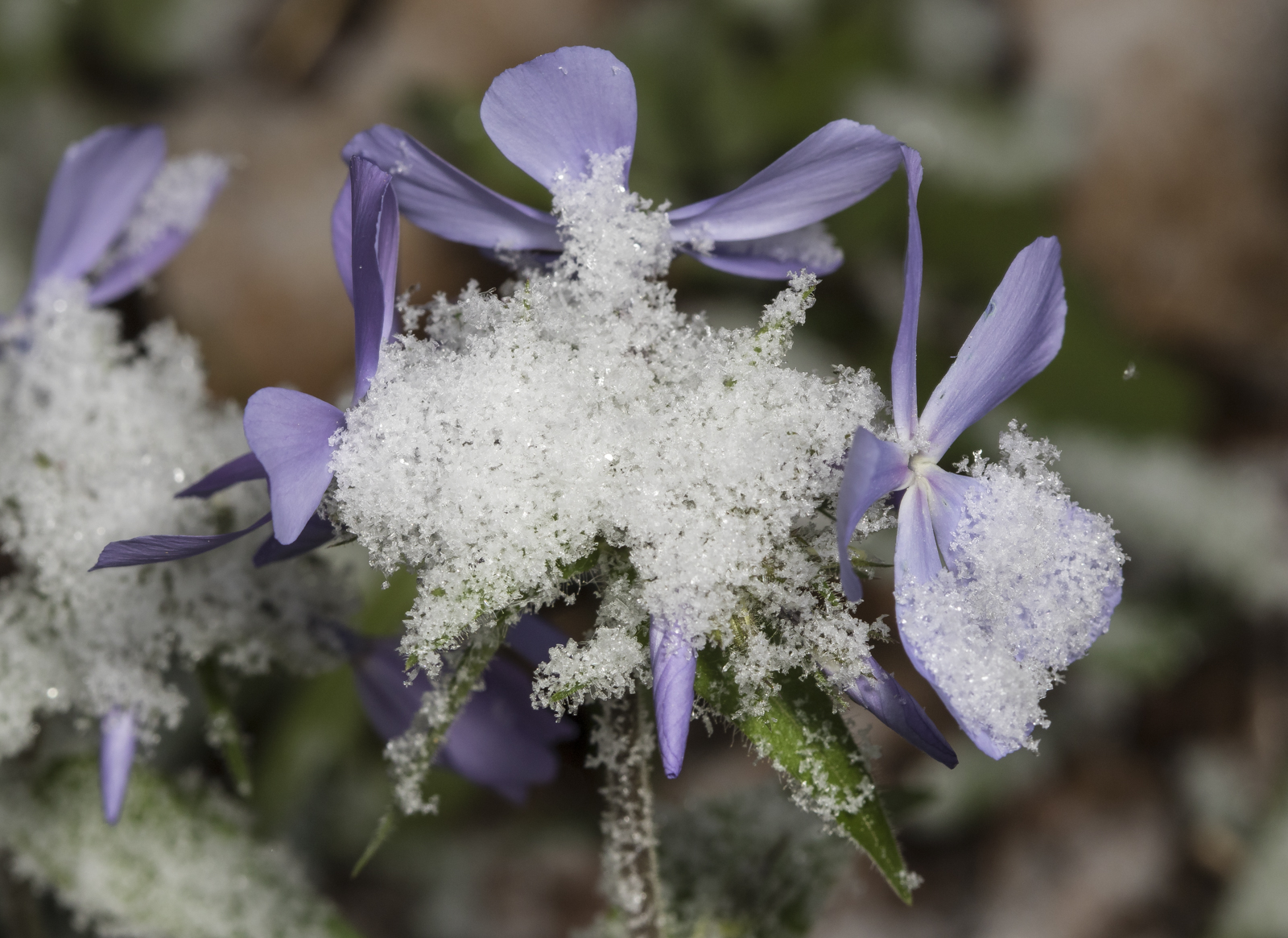
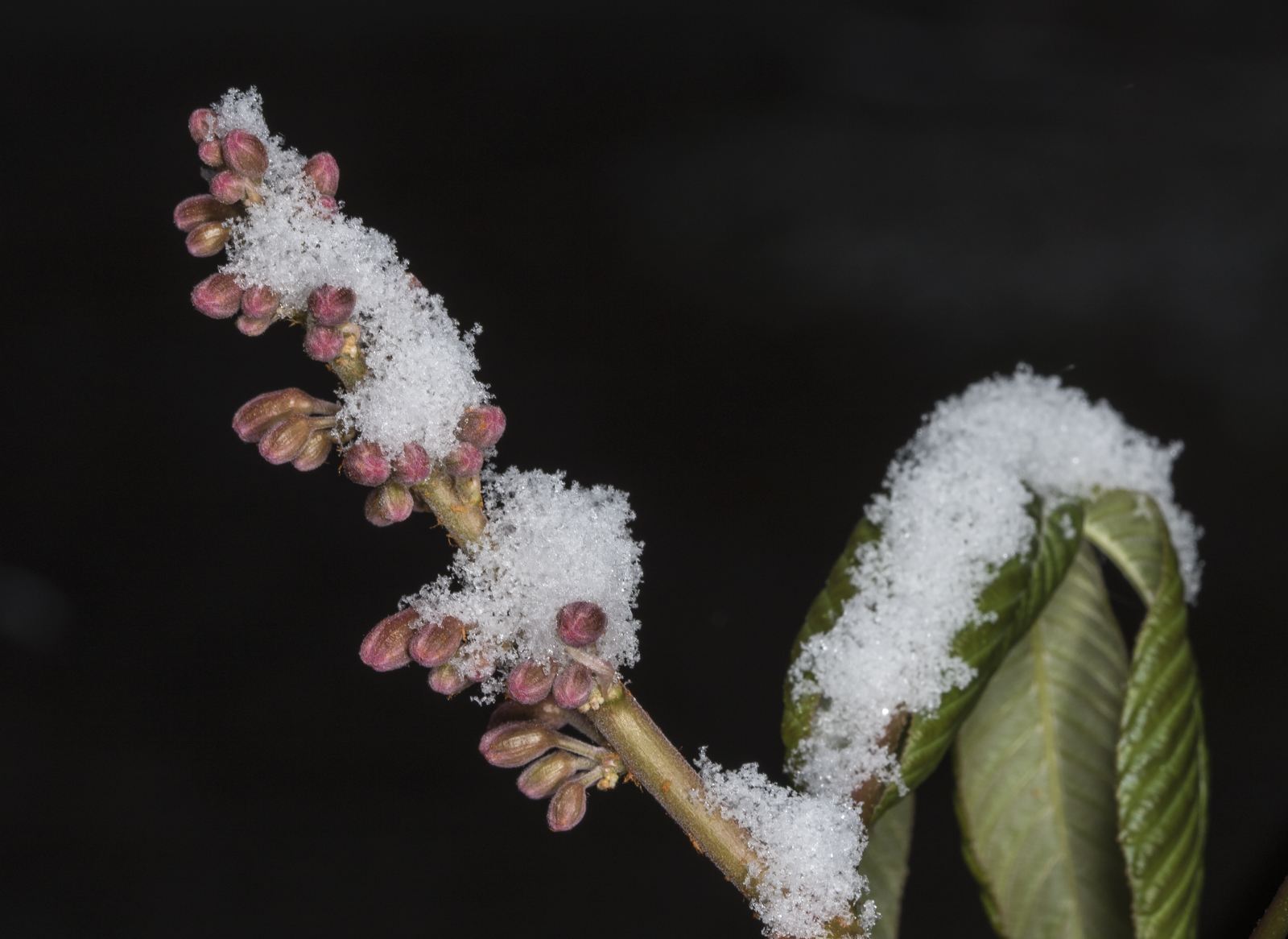
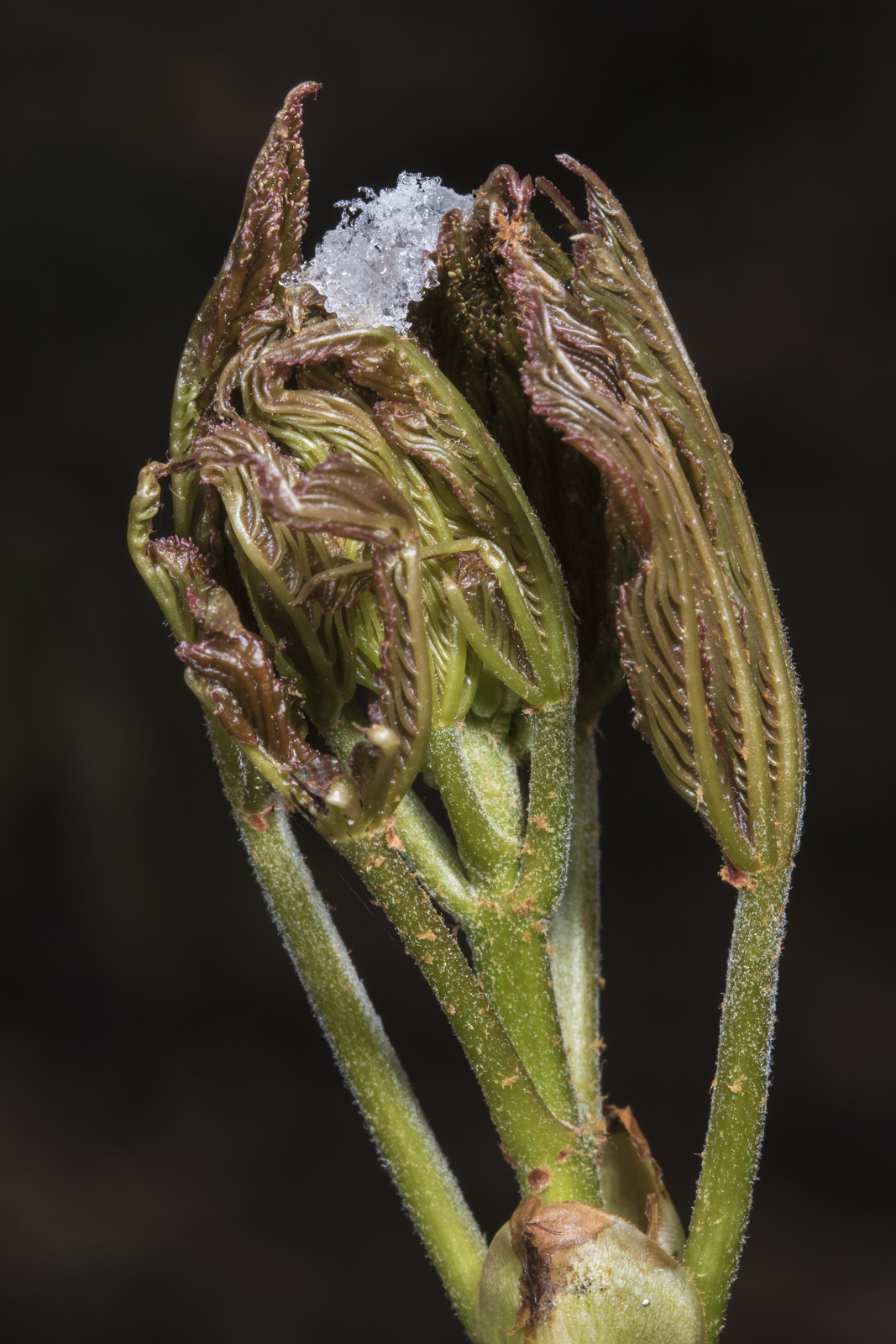
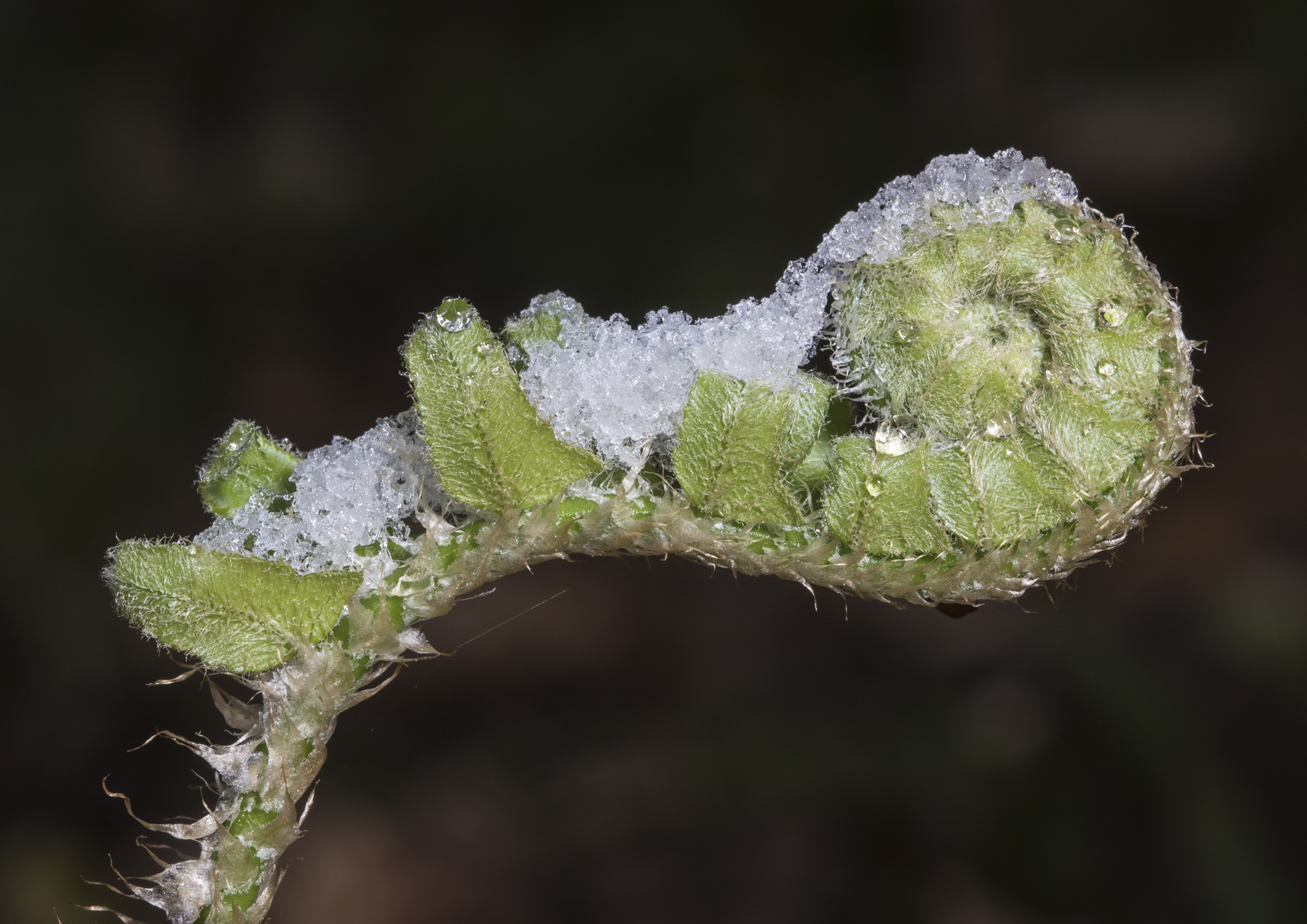
We have had a variety of “good weather” lately, including a brief return to winter white yesterday morning. It had been predicted for several days, but when I awoke, it was just cloudy and cold. As I sat sipping some coffee, I noticed the first few tiny flakes. There was soon a dusting covering everything but the stone steps and gravel driveway, which must have retained enough heat to prevent the snow from sticking.
The view across the road after the “snow” (click photos to enlarge)
Spring has arrived a few weeks early this year so many flowers are in full bloom that would normally just be flirting with opening. It made for some odd sights as we walked the property. But, by the time we finished the walk about an hour later, the skies had cleared and almost all of the snow had melted. March in North Carolina…
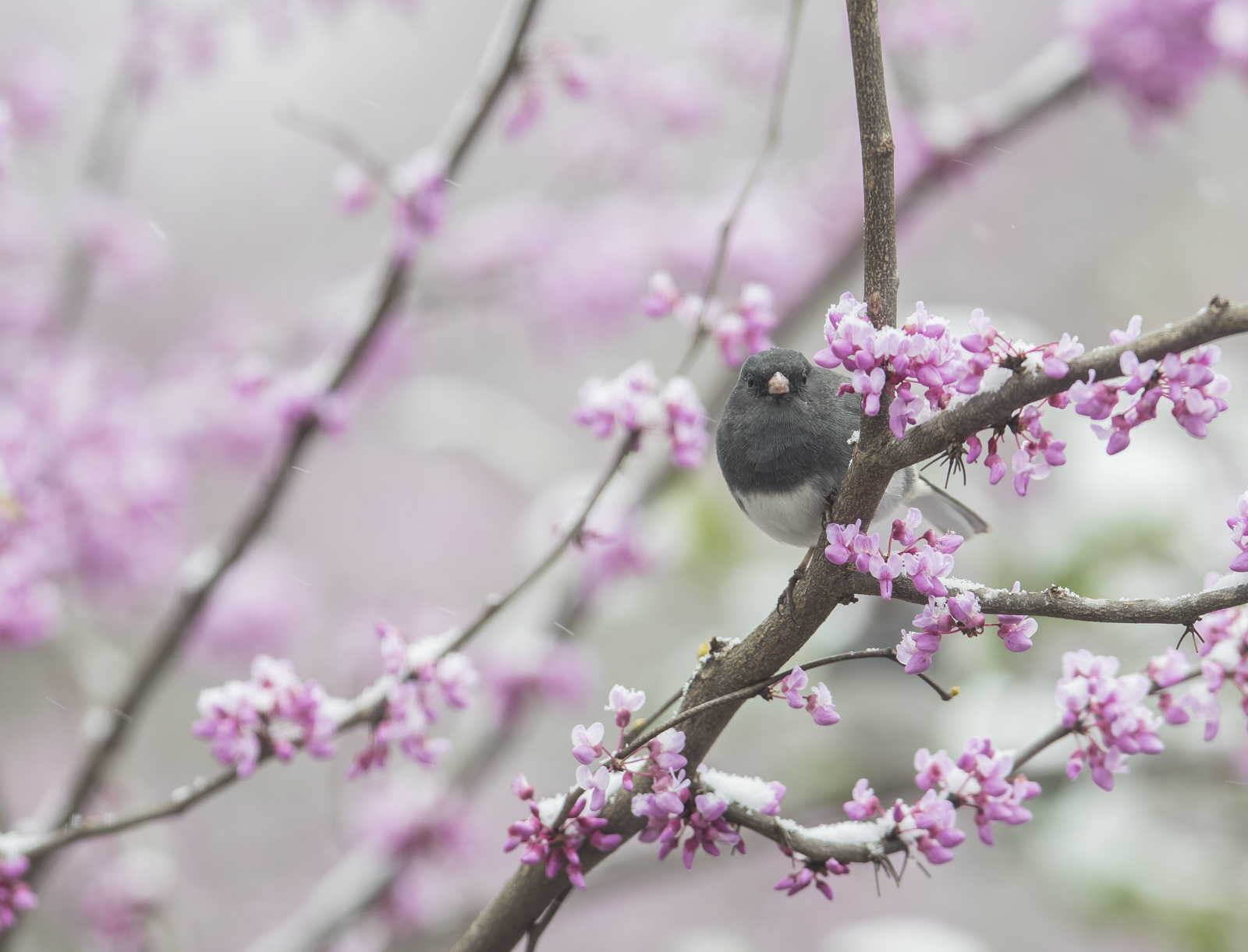
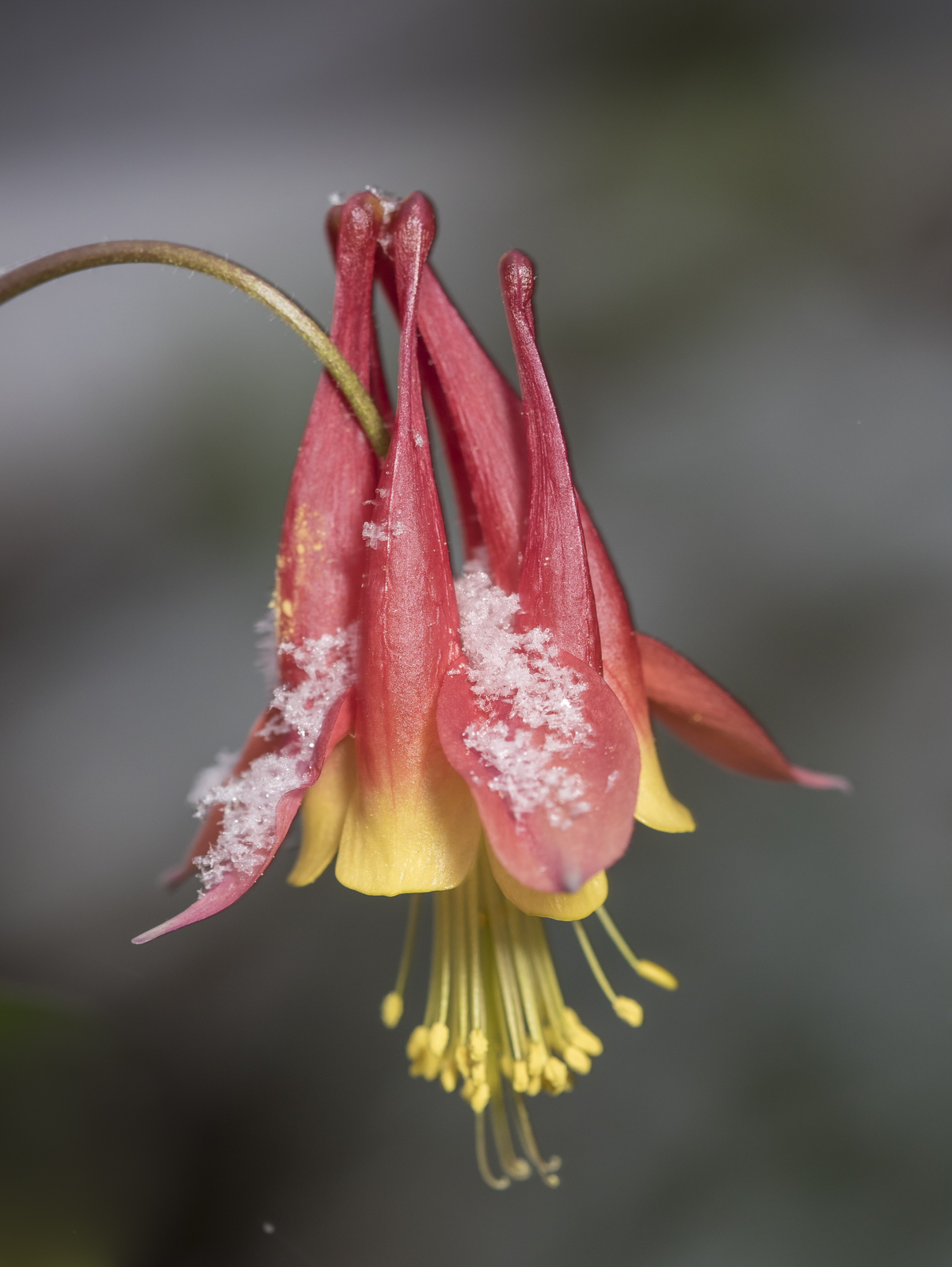
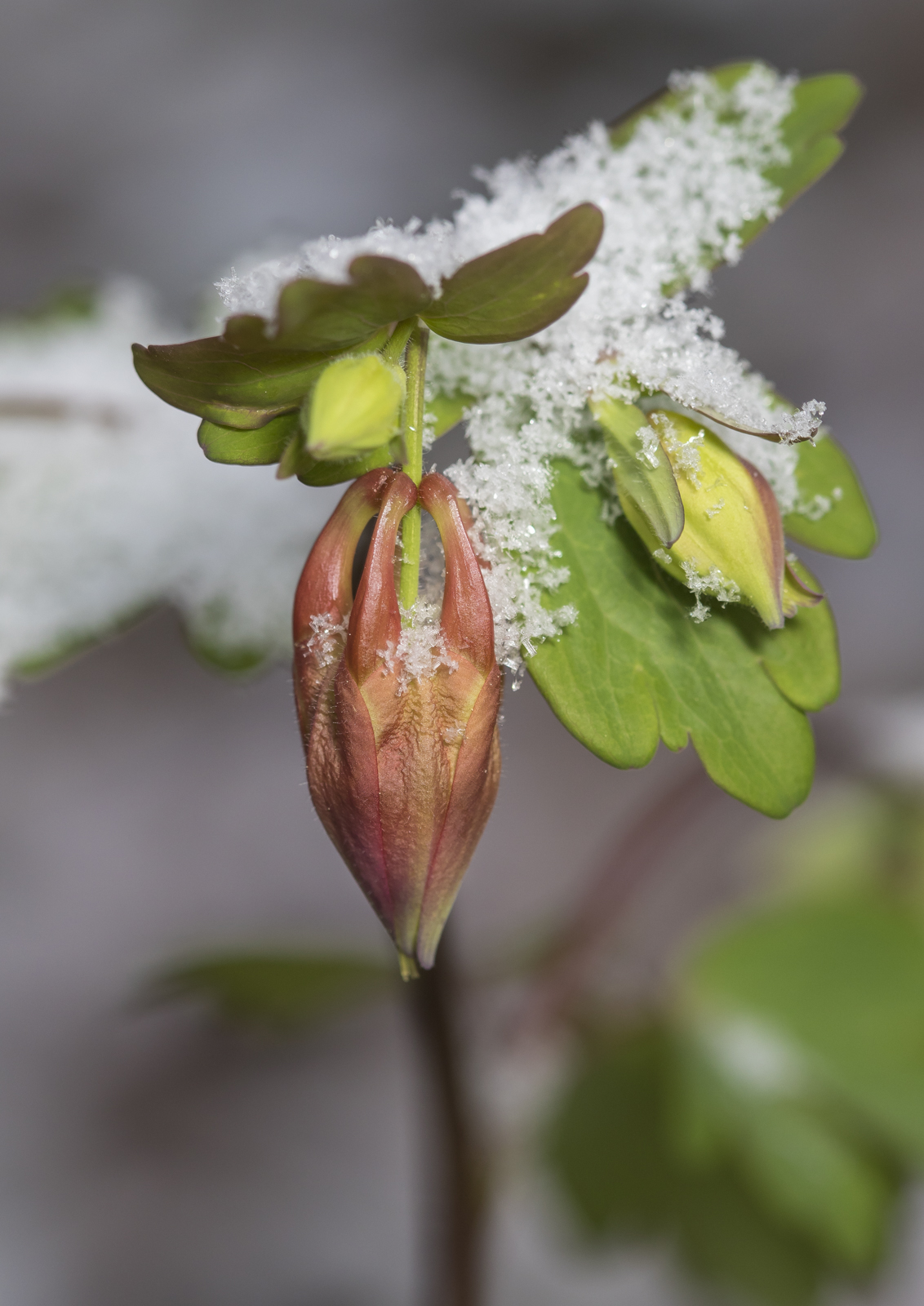
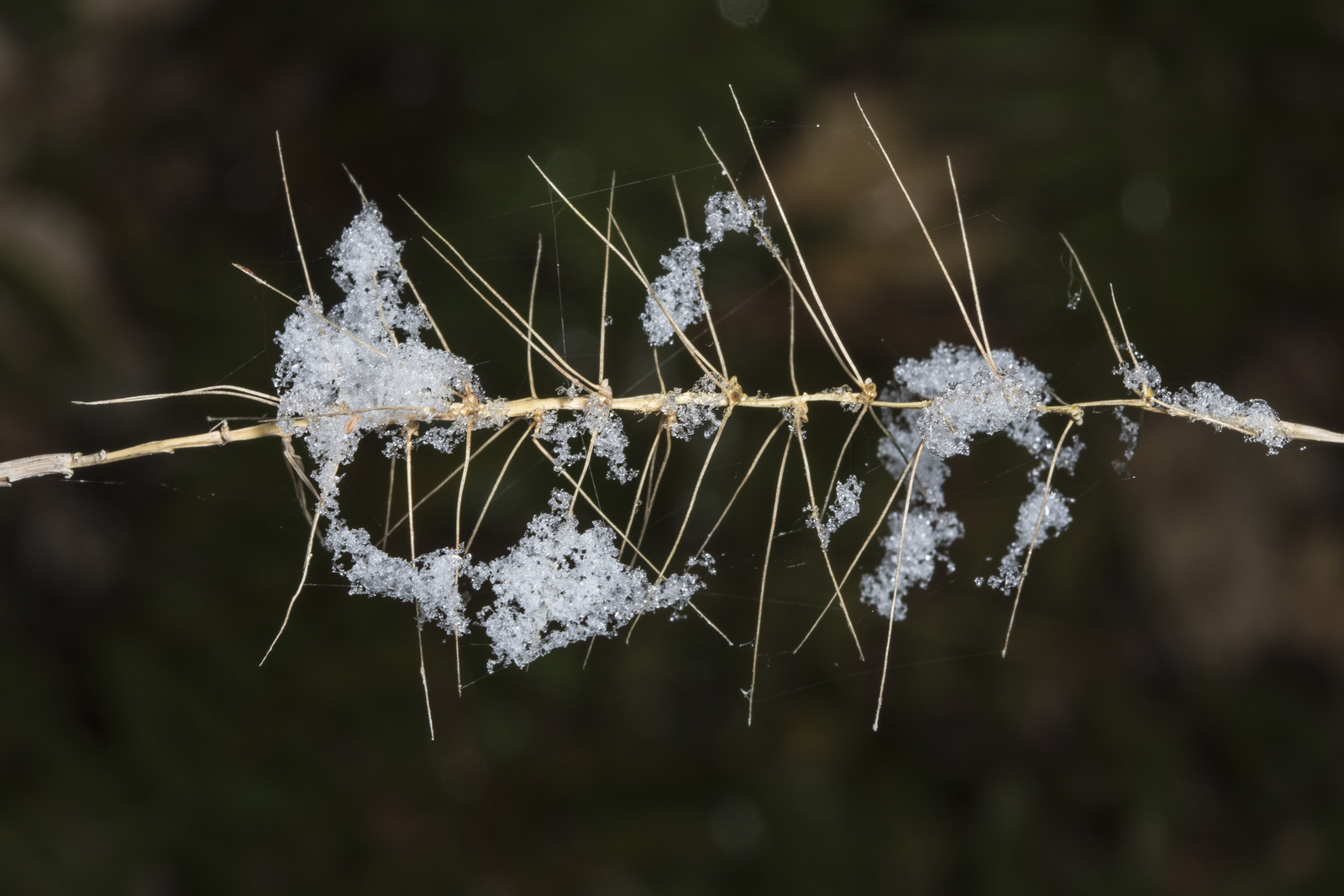
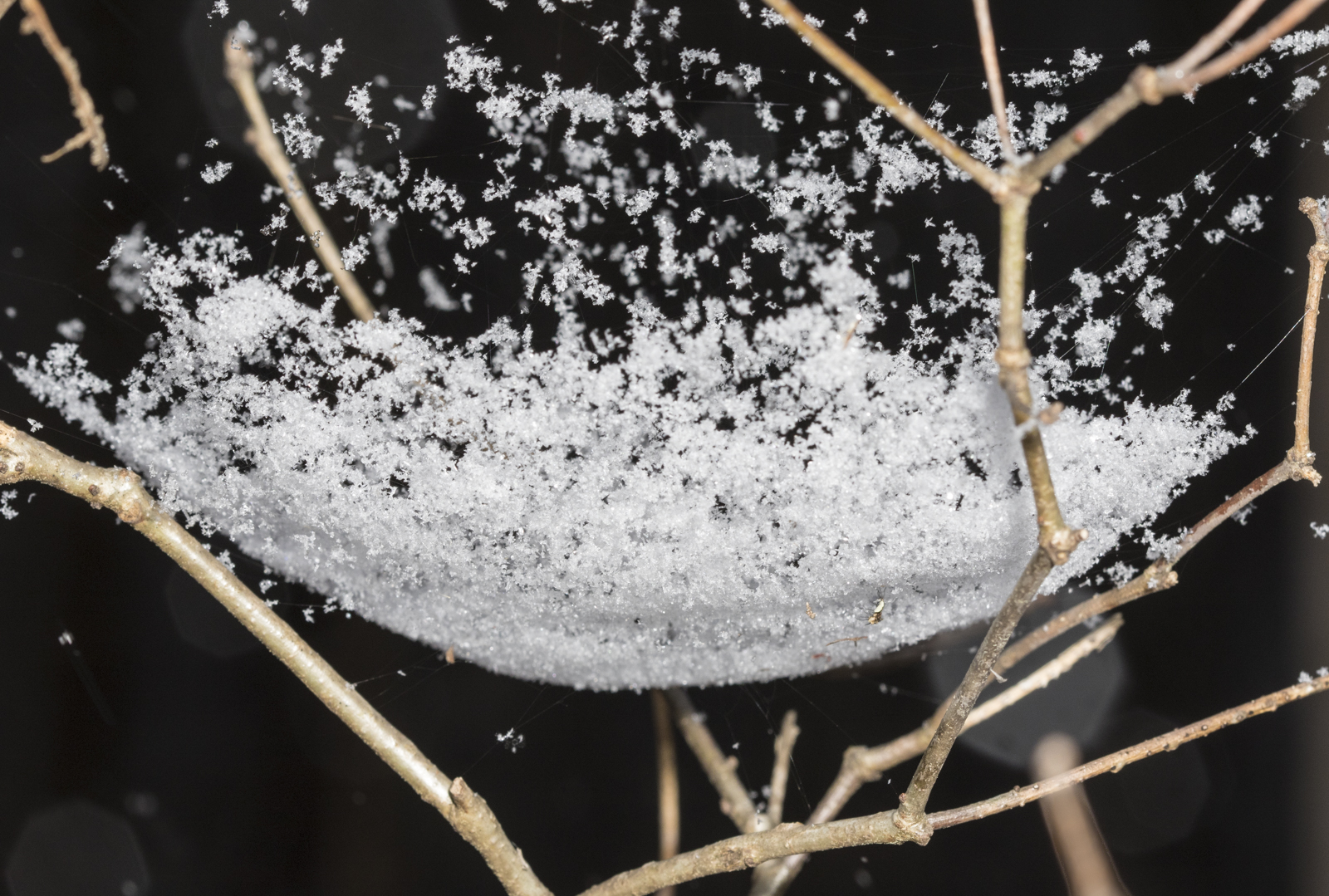
Strange photo partners – a dark-eyed junco and redbud flowers, with a dusting of snowA ruby-crowned kinglet was busy at the suet feederWild columbine with snow crystalsMaybe I should stay closedThe first phlox are rethinking their openingRed buckeye about to openPainted buckeye bud beginning to openChristmas fern fiddleheadUnfurling with a blanket of snowBottlebrush grass seed head from last season bent over with the weight of some snowBowl and doily spider web with snow. These were the last places the snow melted and as we returned, the woods looked like someone had dropped white rags everywhere in the low branches. Perhaps having the cold air swirl all around these little snow platforms allowed them to retain their wintry prize a little longer.
I put 100 hickory nuts on my bureau at dusk one fall evening…by midnight, she had stored them all. At midnight…counted another 100 hickory nuts and spread them. The next morning, every nut was gone. She had picked up and stored 200 in one night.
~John Terres, on how many nuts his captive flying squirrel could store in one night
We had a gathering of friends at the house this past weekend, complete with campfires, and basic outdoor foods like hot dogs, beans, and coleslaw (did I mention S’mores?). It was a beautiful, crisp evening and good conversations and laughter were heard in our woods for several hours. Natural history highlights included seeing a couple of spotted salamanders laying eggs in one of our pools, and listening to the resident screech owl wailing across the ravine. But, the event that drew the biggest gasps and sounds of joy was a surprise sighting I had out back after several guests had already called it a night. I took some bottles and cans out onto the back deck where we had put our recycle bins and the bottles clanked loudly as I dropped them in. A few feet away, some people were laughing just inside the screened porch. I turned to join them, when something caught my eye…
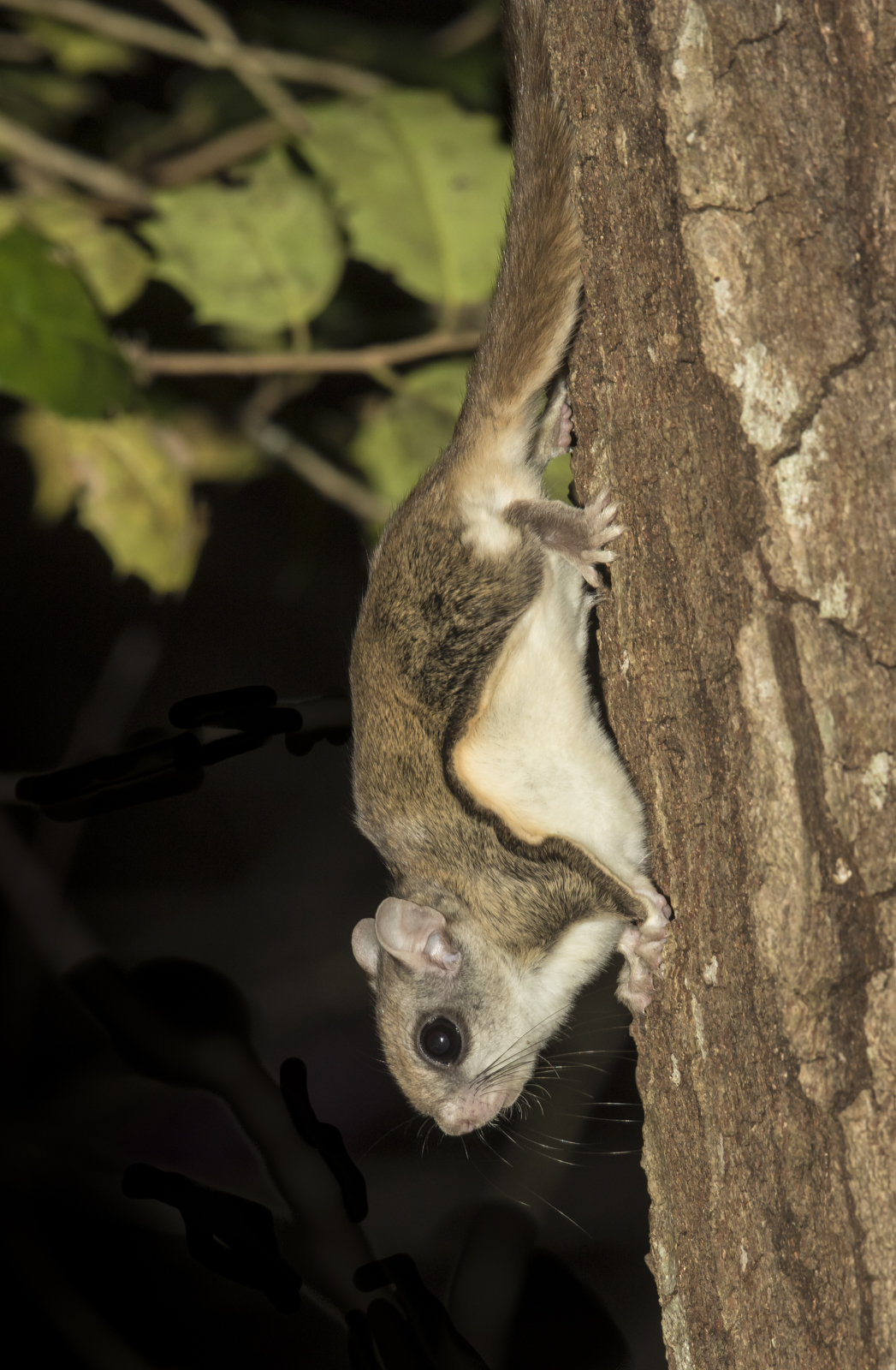
Southern flying squirrel in my bird feeder (click photos to enlarge)
I noticed a shape sitting in the bird feeder that hangs suspended between the house and a nearby tree. A bird this time of night???…nope, a flying squirrel! I have seen and heard them (they make high-pitched chirps that sound like birds at night) in these woods before, but never seen one on the feeder (probably because I rarely turn on the lights on the deck). This little guy didn’t seem to care that I was only a few feet away staring at him. I whispered to the folks on the porch and they came out…the noise level increased, but still no sign of stress. I went out to the campfire circle and told folks about my find, and soon there were close to a dozen people gathered on the deck excitedly watching this beautiful little creature.
Close up of flying squirrel
In spite of the increased noise, and a flashlight beam shining on it, the squirrel continued to chow down on sunflower seeds and glance back at us with those large dark eyes. Of course, those big eyes are an adaptation for their nocturnal lifestyle. Combined with a keen sense of hearing, flying squirrels use their oversized eyes to help find their way in the darkness and avoid dangers like owls and terrestrial mammals. I was surprised to read that these abundant little squirrels actually spend a fair amount of time foraging on the ground at night, where they are much more vulnerable to predators.
The fold of skin that allows a flying squirrel to glide
As you probably know, flying squirrels don’t really fly, they glide. The special adaptation that gives them this unique ability is a fold of furred skin (patagia,; singular patagium) that stretches on either side from the wrist to the ankle. The photo above shows the edge of one of these folds. When a flying squirrel leaps off of a tree, it stretches its legs wide, and the the patagia form a wing-like structure that enables the squirrel to glide downward. Using small movements of the feet and tail, they have remarkable skill in directing their glides and can make sharp turns and precisely hit targets (like a suspended bird feeder). Though usually from tree to neighboring tree, their glides can cover much larger distances (well over 100 feet).
Flying squirrels have wide, flattened tails
Another useful body trait for a gliding mammal is a long (about half their total body length) flattened tail that can act as a rudder in flight. Right before landing on a tree trunk, flying squirrels assume a vertical position, legs spread and tail down, which helps serve as a brake in their glide.
Hickory nuts in flying squirrel “nest”
So where are they going with this special talent? Usually in search of food (or to escape predators). Flying squirrels are omnivores, eating a wide range of vegetable and animal materials. They are especially fond of nuts and seeds, but will also dine on insects and birds eggs and young. Most people don’t realize how common our flying squirrels are, even in urban settings (they are often as common as the more noticeable Eastern gray squirrels). A sure-fire clue is the presence of nuts that have a hole chewed in them like the ones pictured above. A recent visitor to the Garden brought in this “nest” from a bluebird box in her yard that she had cleaned out. The nest contained four hickory nuts and she wondered what was using the box. Flying squirrels use tree cavities, nest boxes, attics, and my storage shed, among other places, as nesting spots and retreats. This nest was lined with shredded cedar bark (a favorite of flying squirrels) and contained the tell-tale evidence of nuts with a hole chewed in them.
A Southern flying squirrel, one of our cutest mammals
We have two species of flying squirrels here in North Carolina – northern and southern. The latter is what we have here in the Piedmont and throughout much of the region. Northern flying squirrels are slightly larger and are restricted to higher elevations in our mountains and habitats further north. Our party squirrel finally decided it had had enough of the gawkers, and nimbly darted up onto the wire and glided over to the nearby oak tree, dashing around to the side of the trunk when it landed. It paused there and stared at the crowd before retiring into the darkness, giving us all a fantastic look at one of our most endearing mammals and a lasting memory of a gathering in the woods.
Here are the answers to yesterday’s tree trunk quiz. How did you do?
American sycamore, Platanus occidentalis
One of the largest trees in Eastern North America. The white, mottled upper trunks and branches make it one of the most recognizable of our trees, especially in winter.
American hornbeam, Carpinus caroliniana
I have always called this distinctive tree, ironwood, due to its dense, hard wood. The fluted trunk does look muscular, hence the name musclewood. Blue beech is another name I have heard for this generally small understory tree.
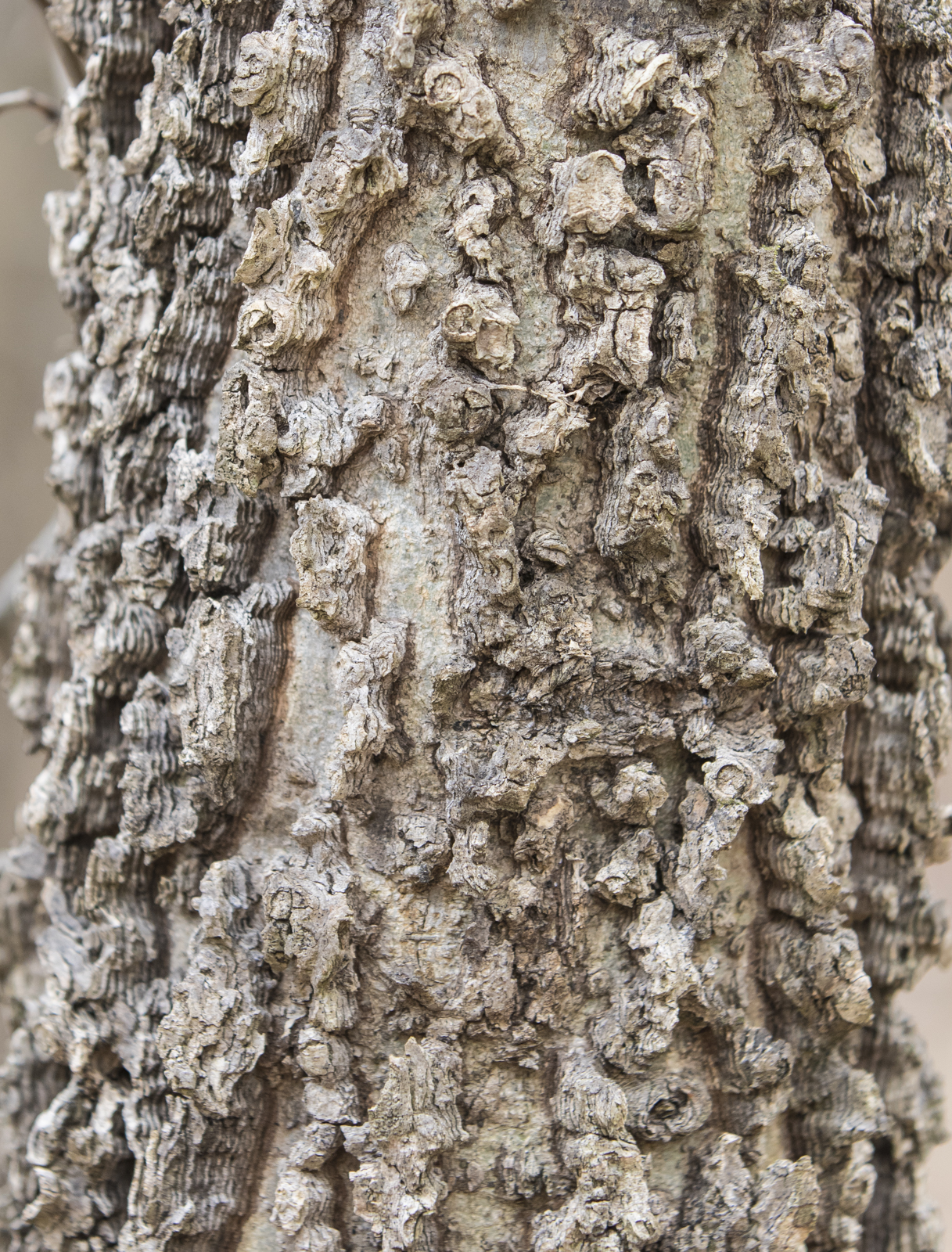
Hackberry, Celtis species
This one caused some of you some trouble. And, truth be told, I am not sure which of the two common species of this tree I photographed. The two found along this trail are C. laevigata and C. occidentalis, now known as Southern and Northern Hackberry, or Sugaberry. I think they are best told apart buy their leaves (and, those aren’t available right now). Both are characterized by warty knobs on the trunk, which can be sparse or dense (like this one). This one was in the floodplain, so I think it might be C. laevigata.
Flowering dogwood, Cornus florida
Our state flower (and the state tree of Virginia and Missouri), the flowering dogwood is a favorite, especially in spring. The red berries are a very important food source for many species of wildlife from bluebirds and turkeys to squirrels. As one person commented, she had learned that the bark looks like alligator skin. A co-worker said she learned the pattern looks like Kibbles ‘n Bits dog food.
Sourwood, Oxydendrum arboreum
The bark is deeply furrowed, and the tree trunk almost always leans, supposedly toward a former light gap in the tree canopy. The white spikes of flowers at the tips of the branches and the sour taste of the leaves are distinctive.
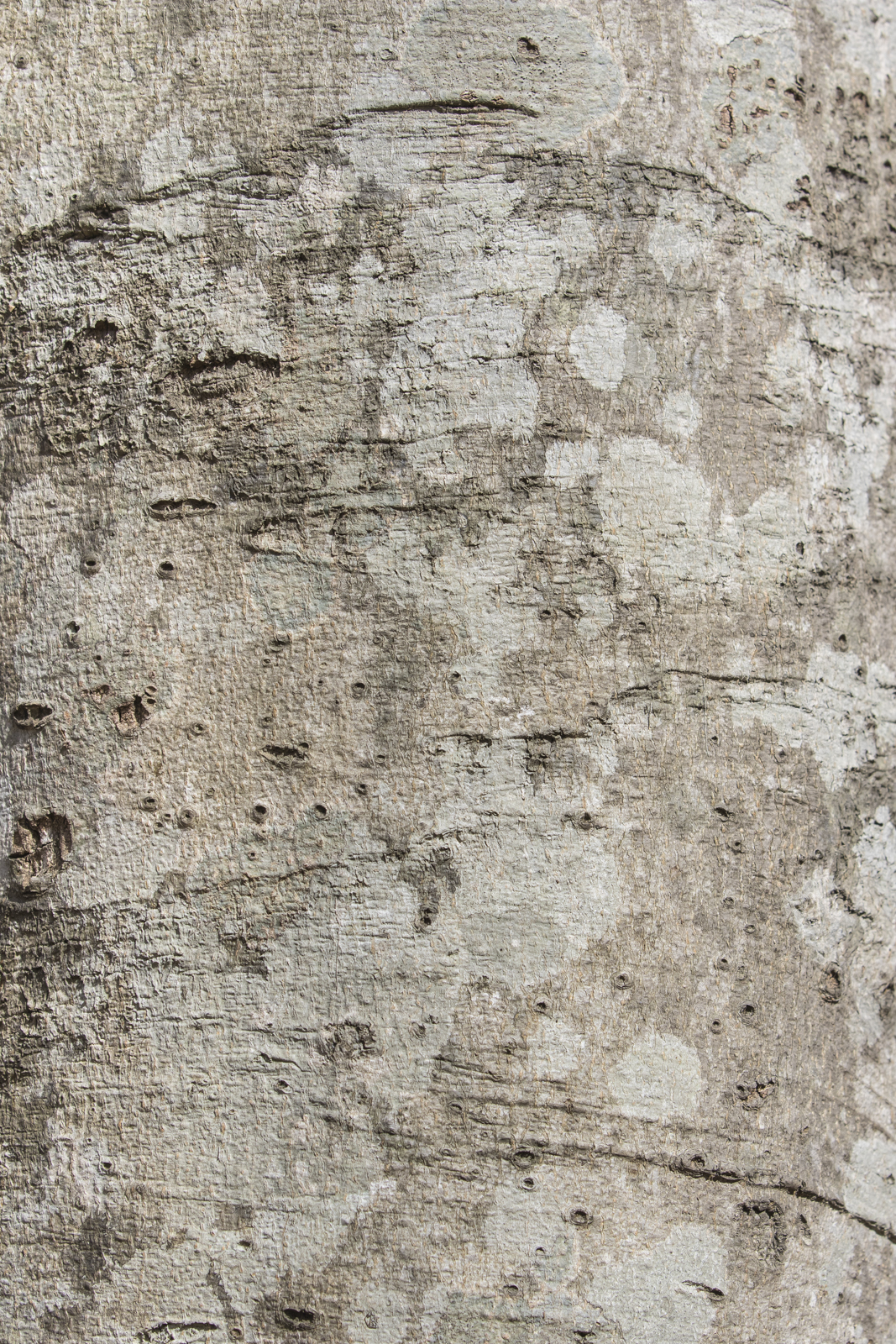
American beech, Fagus grandifolia
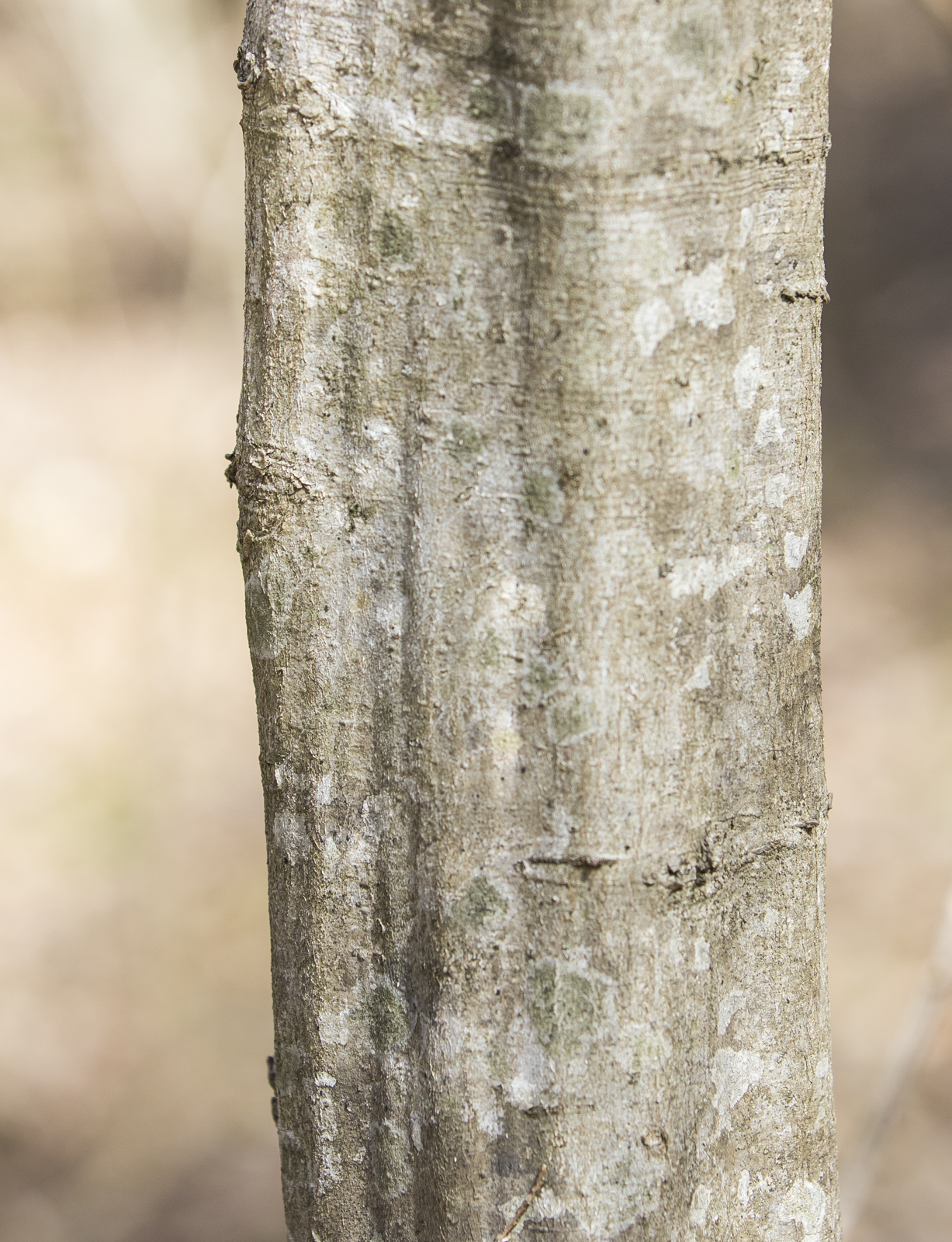
One of my favorite trees, the American beech has smooth, gray bark, usually dotted with lichen patches. It often has a root parasite, beech drops, growing on the ground around it. This time of year, the dried leaves clinging to the branches and the elongate terminal buds are also distinctive.
Loblolly pine, Pinus taeda
Our most common local pine, the loblolly can grow to be quite large. It’s longish needles and cones are characteristic. The clouds of yellow pollen from this, and other pines, will soon be covering our woods (and cars, and…).
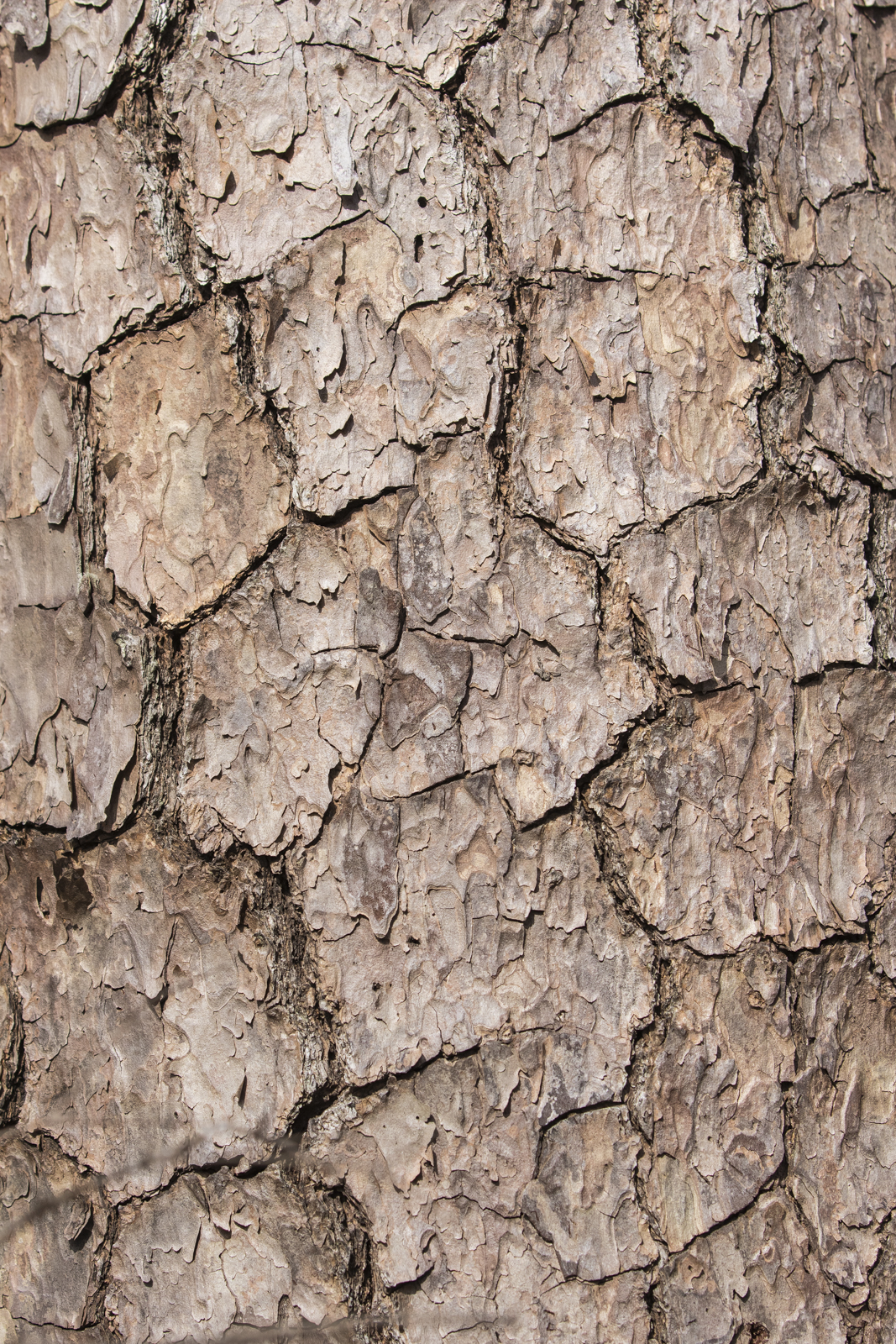
Shortleaf pine, Pinus echinata
The other common pine in our local woods, the shortleaf can be distinguished from loblolly by its shorter needles, smaller cones, curved or contorted branches (when looking up, compared to the straighter branches of loblolly), and the flat, scaly bark. The bark also has tiny resin dots.
Now, practice identifying trees just by looking at eye level on your next stroll in the woods. An advanced tree trunk quiz will be coming soon.
Knowing trees, I understand the meaning of patience.
~Hal Borland
Melissa and I try to test each other as we walk any trail this time of year with a tree trunk quiz – we try to identify trees by just looking at the trunk at eye level…no fair looking up, unless we are stumped. I thought I would give that a try as an interpretive challenge for one of the nature trails at work. For now, I just have a few images of trees along the trail with answers on the back. Think you can identify trees just by their bark? Give it a try. I gave a hint for each with the photo caption. Answers will be provided in the next post.
Upper trunk and branches have peeling, mottled bark (looks like camouflage)Small to medium tree with hard wood; trunk looks muscularBark with warty knobs; fruit is an important food source for birds and squirrelsSmall tree with dense, hard wood; berries are an important food for wildlifeSmall to medium tree; trunks often lean instead of growing straight upLarge tree with smooth gray bark; dried leaves remain on branches through winterLarge pine with needles about 7 inches longLarge pine; needles about 3.5 inches long; small resin pits in bark
“And Adam named his wife Eve, because she was the mother of all living.”
Genesis 3:20
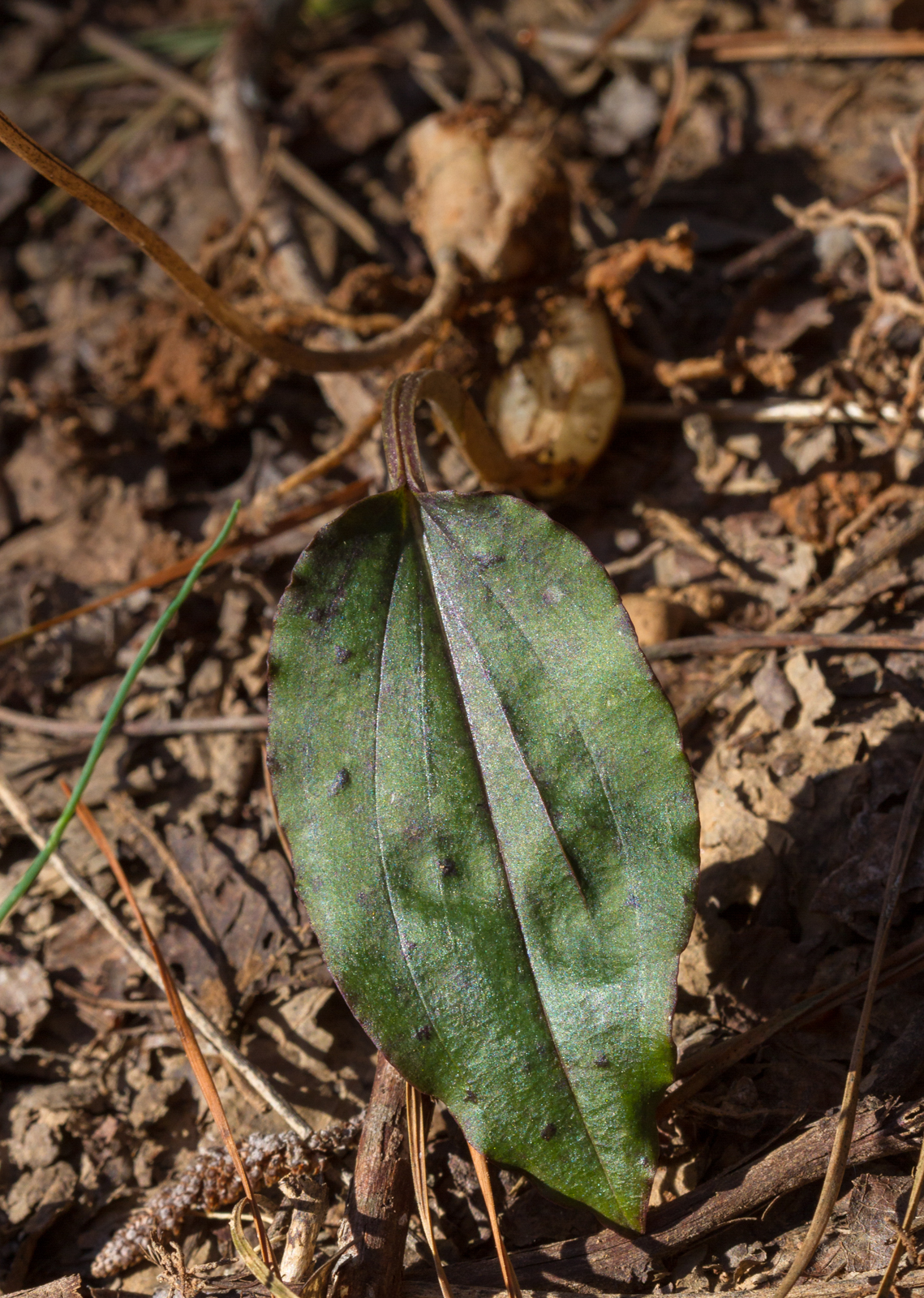
With Mike back at work, I’m going to try to contribute to the blog occasionally. I came upon the perfect topic while out on a “field day” with a coworker, Megan, last week. One of the things I never fail to notice in winter has always been the few small, ground-hugging plants that provide a flash of green in winter. One of the my favorites is cranefly orchid, Tipularia discolor.
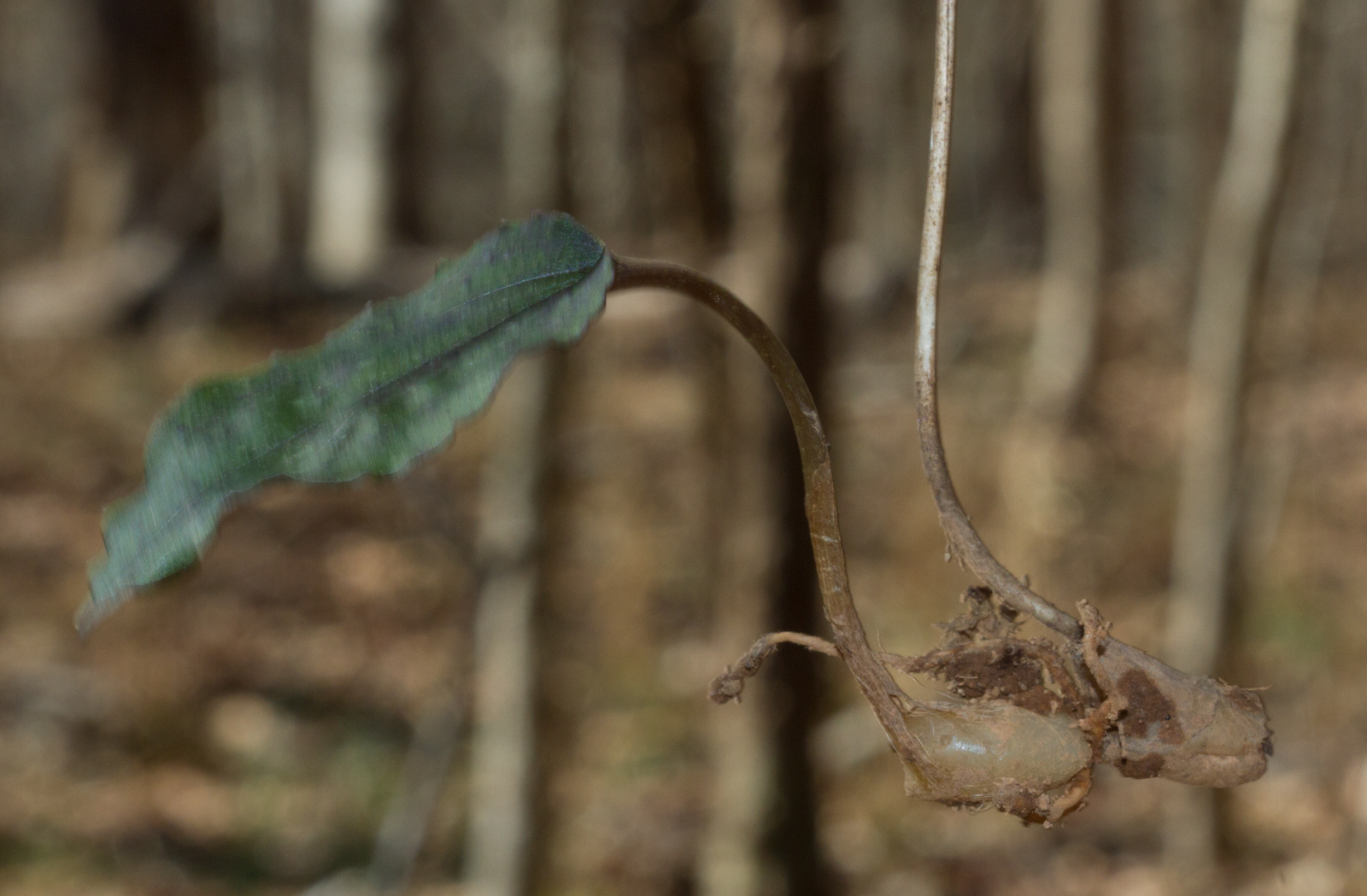
The cranefly orchid has a noticeable, single green leaf in winter. This one is dug up – more on that in a moment.
Just the other day Megan and I were at a school for a workshop. I was off by the creek, and she had the group of teachers in tow. All of a sudden, I heard a “wow” echo through the woods. Megan had just pointed out the somewhat-innocuous, green leaf of the cranefly orchid – and then flipped it over to show them the startling purple color of the backside of the leaf.
I’m not in good practice taking pictures with a blog in mind, so this is the best shot I have of the back of the cranefly leaf – hopefully, you can notice the brilliant purple color, even if the details are a little fuzzy…!
I’ve heard a couple different theories to explain the purple color of the leaf’s underside. One idea is that it may help reflect light back into the leaf. This makes sense given that it is photosynthesizing in winter when sunlight hits the earth at a shallower angle, and therefore with less energy per unit area than in the summer.
Another theory is that the purple color acts kind of like sunscreen to protect the chloroplasts from too much sun – which also makes sense because with no leaves on trees in winter, there is certainly more sunlight! I’ve heard of something similar in Yellowstone in the microorganisms that thrive in the hot springs – in summer many are orange in color due to “sunscreen” carotenoids; in winter, the same microorganisms have a much more greenish cast (you can also see this in summer by carefully peering underneath the boardwalk where the shaded bacterial mats are much less orange-colored).
A final idea about the purple coloration in cranefly orchid is that perhaps the underside of the leaf is darker-colored to help it absorb more of the heat radiating from the ground to keep it just a little bit warmer in winter. I’m not sure why the leaves are purple underneath, maybe it’s a combination of factors, but it is certainly a beautiful color and a wonderful surprise in the winter woods.
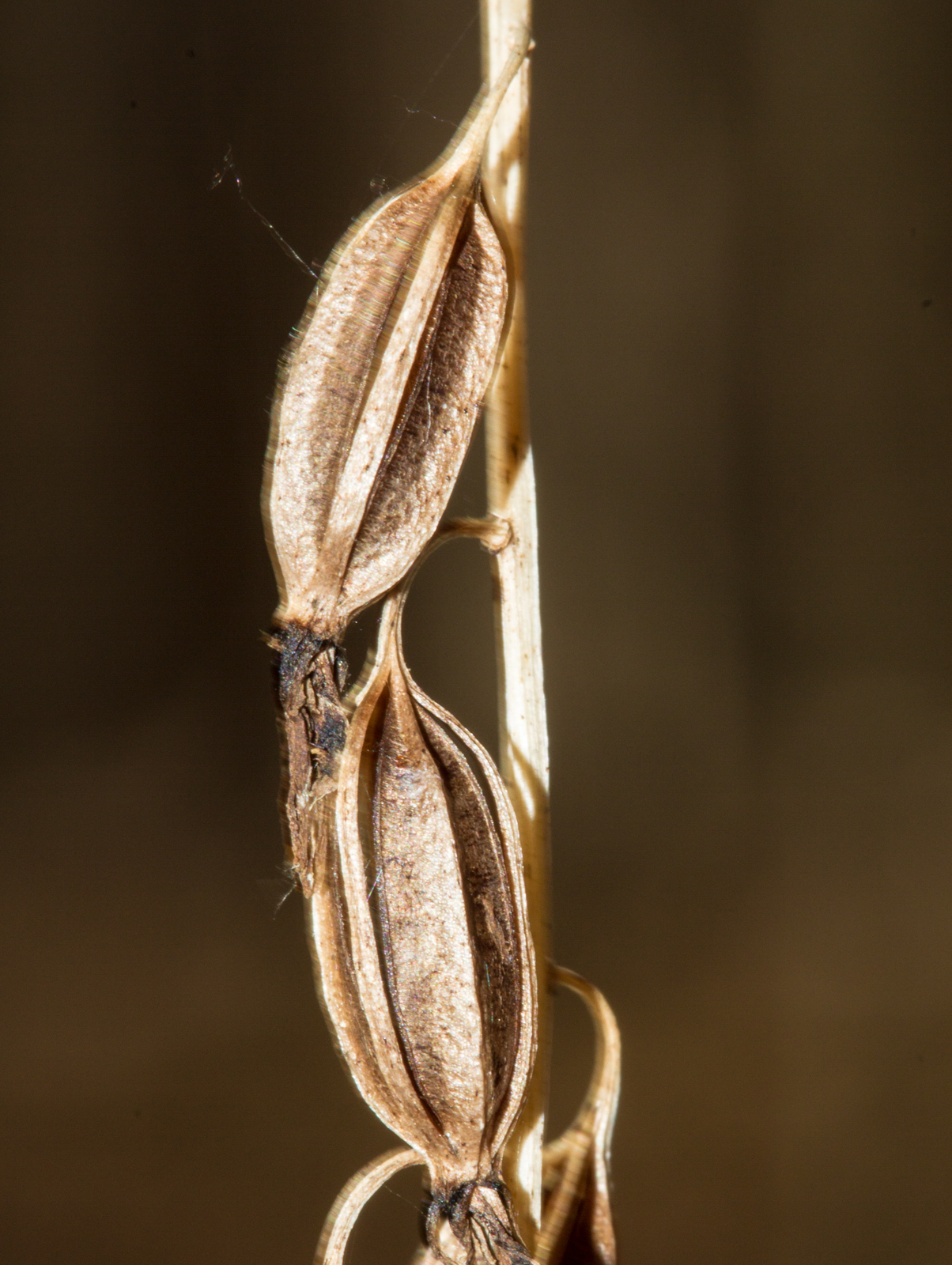
Cranefly orchid has an interesting habit of producing a leaf in the fall that persists through winter, and producing a flower in the summer. The flower is not particularly showy (unless you take a very close look), and can even be hard to spot – especially because the bright green leaf is absent while the flower is in bloom. In fall, after the flower is done blooming, a single leaf grows. Typically in winter you will see only the leaves, but occasionally you may spot a plant that still has the flower stalk with seed capsules attached like a few we found on our walk. The seeds are beautiful small pods and worth a look with a magnifier.
Close-up of cranefly orchid seed capsules
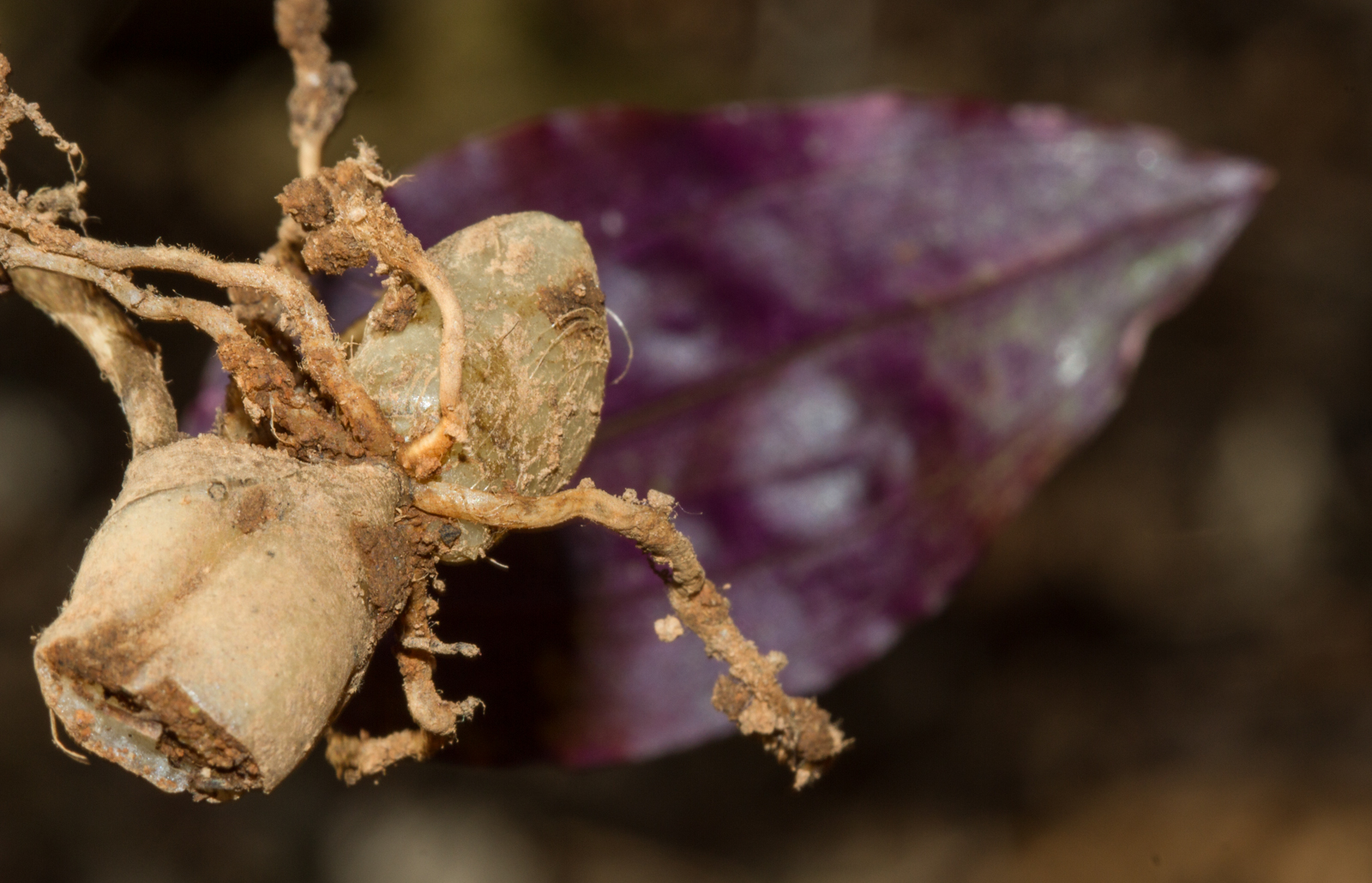
I remembered learning something interesting from Doug Elliot, a renowned naturalist in the mountains of NC, about the roots of this plant, so Megan and I decided to dig up one of the plants that still had its flower stalk and take a closer look (hence the earlier pictures of an unearthed plant).
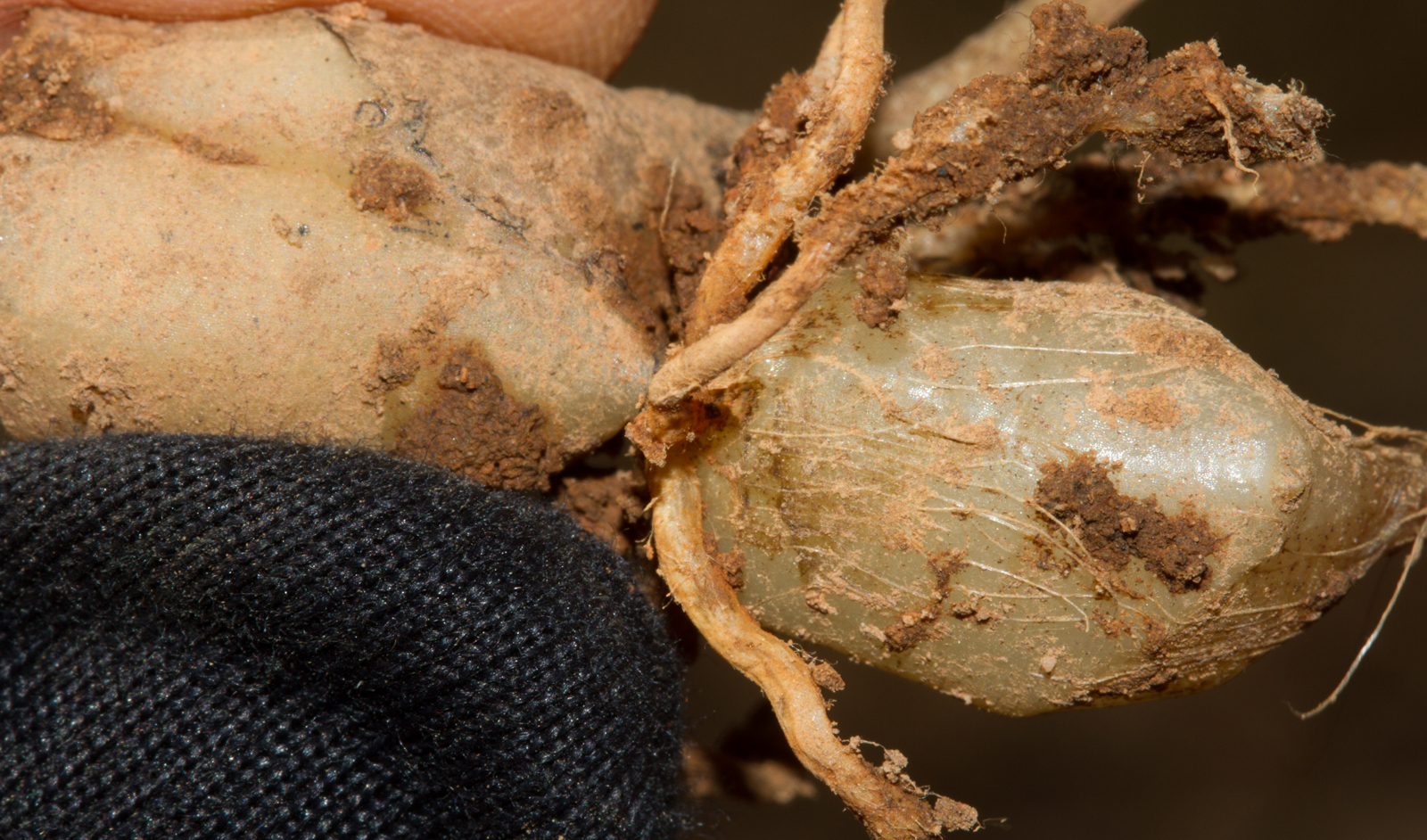
Two corms on root of cranefly orchid; the stalk on the right is last summer’s flower stalk
After some careful digging, we gently pulled the plant from the soil and cleaned off the roots and corms. As I suspected, we found two corms. Out of one sprouted the flower stalk; out of the other sprouted the leaf. Here’s how I think it goes: the leaf photosynthesizes through the winter and stores energy in the corm (the one it’s attached to in this picture). Come spring, the leaf will die and that same corm will sprout a flower stalk, using the energy stored from the winter sun. Sometime during or after blooming in summer/fall (guess I’ll need to dig up another plant at that time to figure out exactly when!), the plant produces a new corm from which another leaf will grow. Seems like a pretty smart strategy to take advantage of the open canopy in winter, when sunlight will hit its home on the forest floor much more so than in summer!
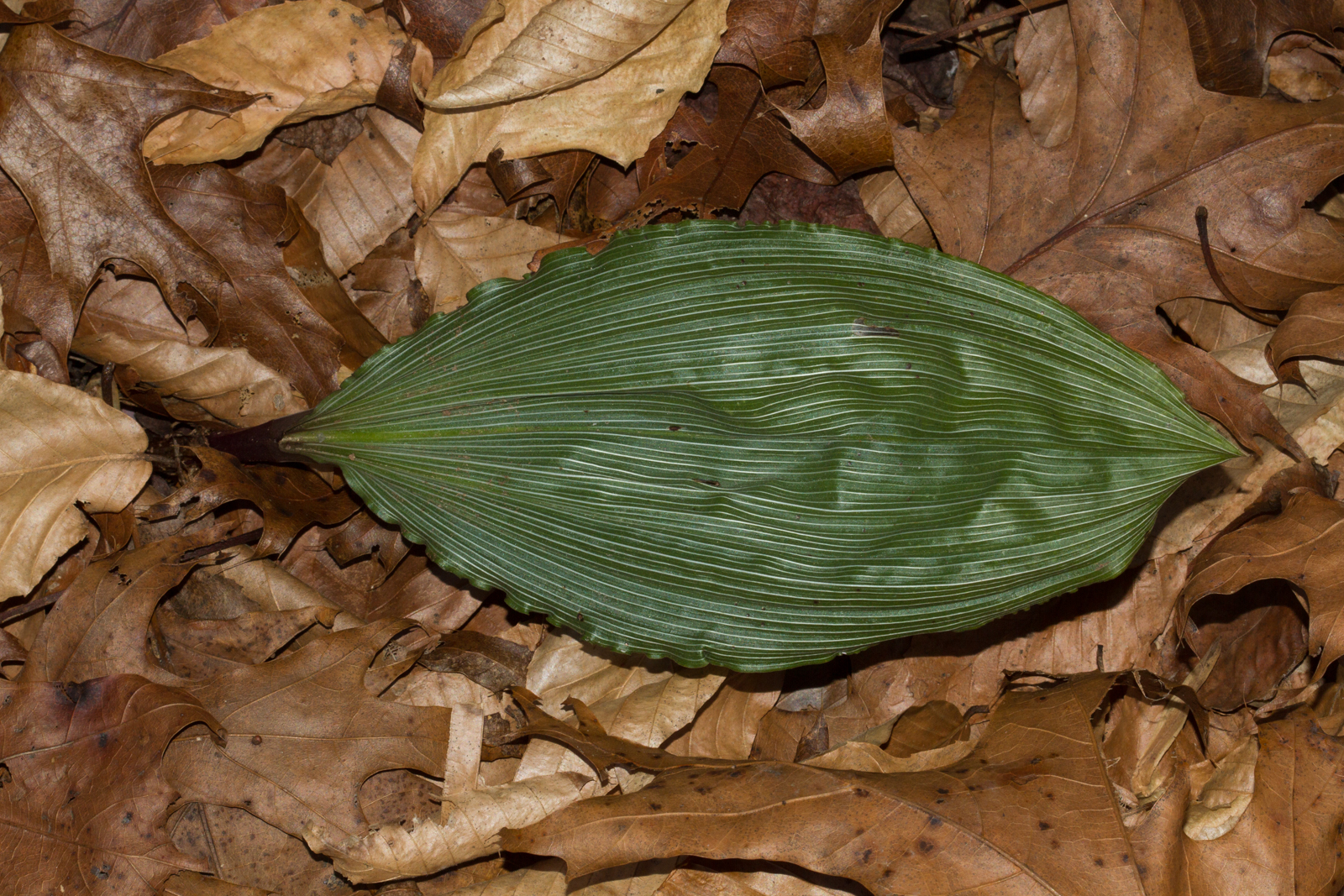
Cranefly orchid is related to another plant called putty-root, Aplectrum hyemale. It has a larger leaf with thin white stripes running longitudinally down it. It’s another hint of green in winter, though much rarer than cranefly orchid, at least around here. The underside of putty-root can be purplish, but sometimes it is green; if purple, it is typically not as vibrant in color as cranefly orchid. Putty-root is known to be found in woods with sugar maple and American beech, and indeed, this plant was located in a beautiful beech grove.
Puttyroot leaf
Another common name for putty-root is Adam-and-Eve root, in reference to the fact that it has paired corms like the cranefly orchid, though I’m not entirely sure which one is Adam and which one is Eve! A quick internet search on this turns up a wide variety of results – apparently, this plant is known for its ability to bring love your way, keep your lover true (the man carries the Adam root and woman the Eve root), and even encourage a marriage proposal. With a little wading through some interesting websites, I now suspect that the corm from which the leaf is growing is the Eve root: she will “give birth” to the new flower stalk in spring. That means the older corm with last year’s flower stalk is for Adam, poor guy.
Whether or not putty-root or cranefly orchid bring you love, they can at least bring you a moment of joy on your winter woods walk and remind you that the green of spring is never far away!
Poor indeed is the garden in which birds find no homes.
~ Abram L. Urban
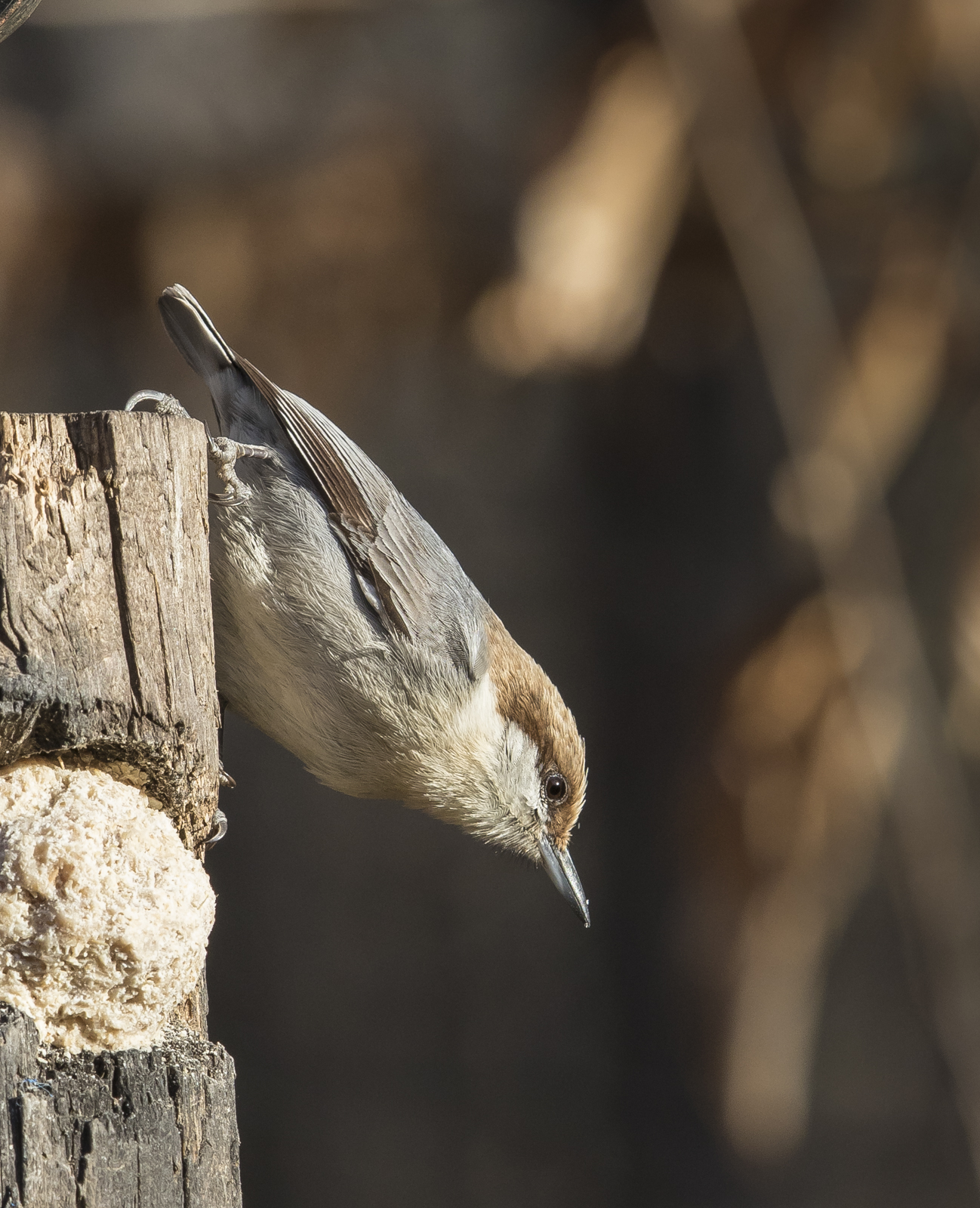
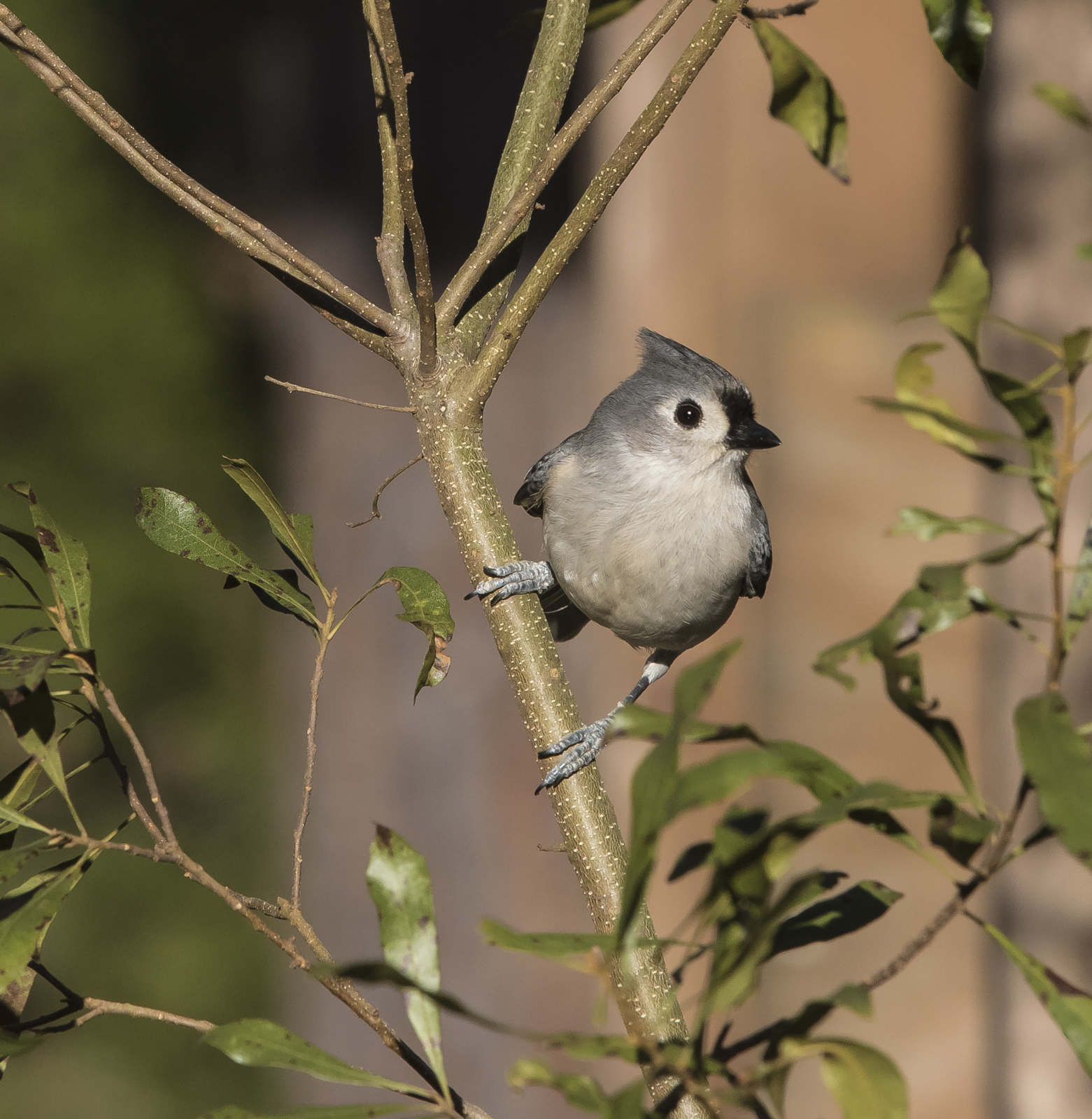
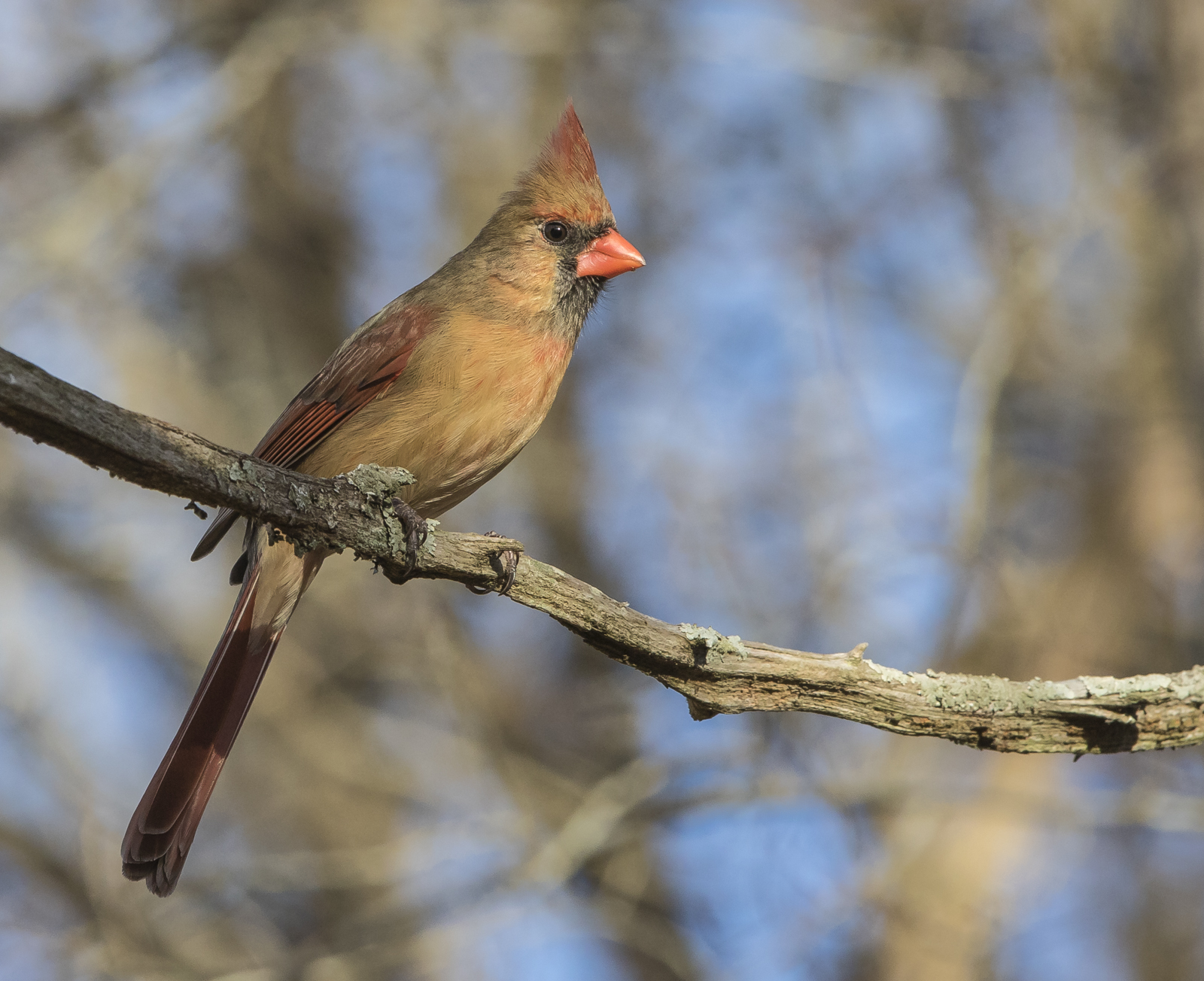
This garden (NC Botanical Garden) is anything but poor if the birds are any indication. Bird activity seems to have increased dramatically the past few weeks. Many seem to be thinking of the coming nesting season…bluebirds singing from atop nest boxes, a house finch gathering nest materials, and a brown-headed nuthatch checking out a cavity in a snag. And bird activity in the feeding station near the bird blind has really picked up. We moved the feeders closer to the blind this week and I went down yesterday for about 15 minutes to see what was happening. The late afternoon light is not conducive to photography from the blind itself, so I was just standing out near the feeders with the light coming in over my shoulder. It didn’t take long for things to get busy, very busy. In 15 minute I saw 16 species, with some great views of most. I’m hoping to create some interpretive information so I grabbed a few photos while standing in the midst of the avian mess hall.
It’s not every day you see these two species at the same feeder (click photos to enlarge)
Brown-headed nuthatch on suet log
Tufted titmouse
White-breasted nuthatch
Northern cardinal female
Downy woodpecker
Pine warbler
Here is a list of species seen yesterday in the bird observation area (not bad for 15 minutes):
Native plants give us a sense of where we are in this great land of ours.
~Lady Bird Johnson
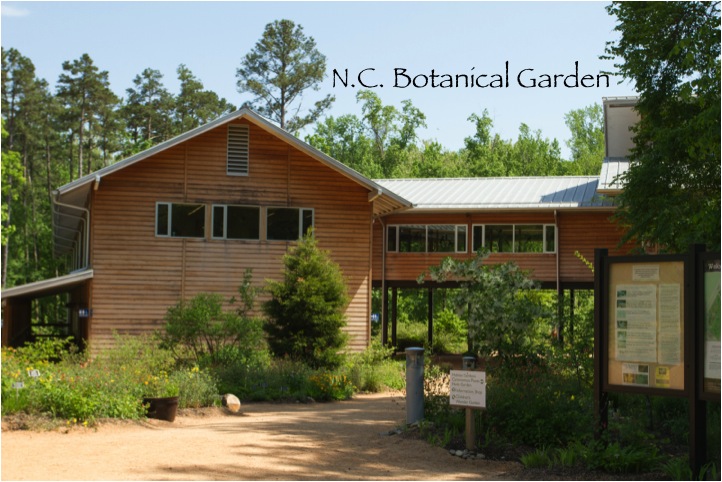
You may have noticed a slight reduction in the number of posts the last few weeks. A major reason is that I have been busy with a new chapter in my life, a new adventure. It is a long story, but I am returning to full-time employment as an educator at the North Carolina Botanical Garden (NCBG) in Chapel Hill. NCBG is part of the University of North Carolina, and is a 1,000+ acre assemblage of display gardens and natural areas. It is nationally known as a conservation garden with strong programs in research, education, native plant propagation, and habitat conservation.
The entrance to the North Carolina Botanical Garden last year (click photos to enlarge)
I have had a long history with the Garden, having purchased thousands of native plants there that were propagated by their excellent horticulture staff. Those plants ended up in school grounds across North Carolina as butterfly gardens, bird observation areas, and water gardens, as part of the hundreds of workshops I did during my career at the NC Museum of Natural Sciences. When I think of native plants in our state, I think of this place. So, it is a natural fit for me to be an educator here, a place I know, with many people that I know and admire, and a mission I can relate to – toinspire understanding, appreciation, and conservation of plants and to advance a sustainable relationship between people and nature.
The first three weeks have been busy, with a lot of time spent inside working on the computer (in the nicest office I have ever had it turns out – great view and a window that actually opens!). But, I have had a chance to see a few things in a more natural setting right outside my office door…
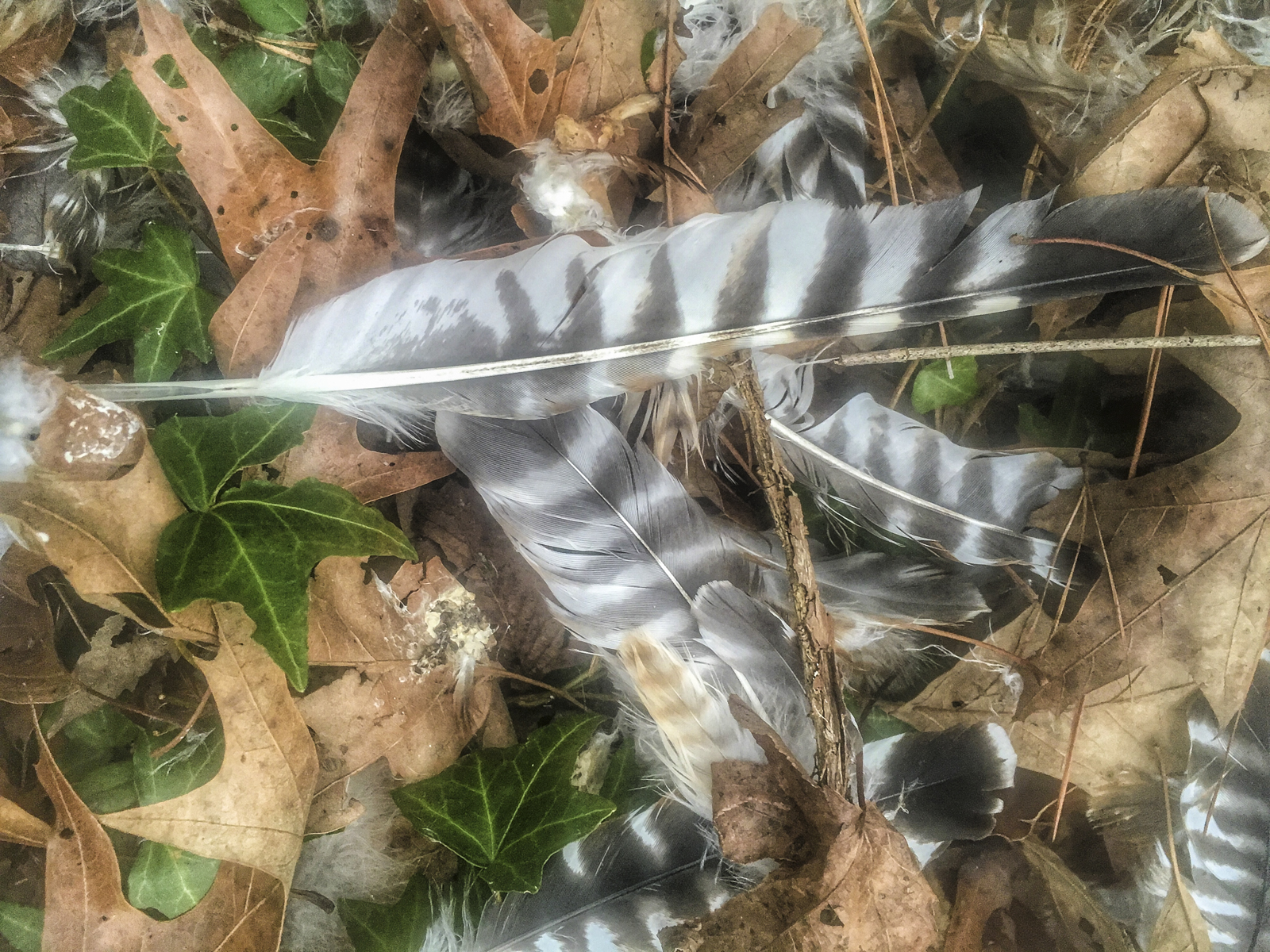
A feather mystery on my first day
One of the staff found me on my first day and relayed a feather mystery they had discovered while pulling ivy outside one the display gardens. It was a large pile of red-shouldered hawk feathers. We discussed the possibilities and figured the most likely scenario was that a great horned owl had taken a roosting hawk as prey during the night.
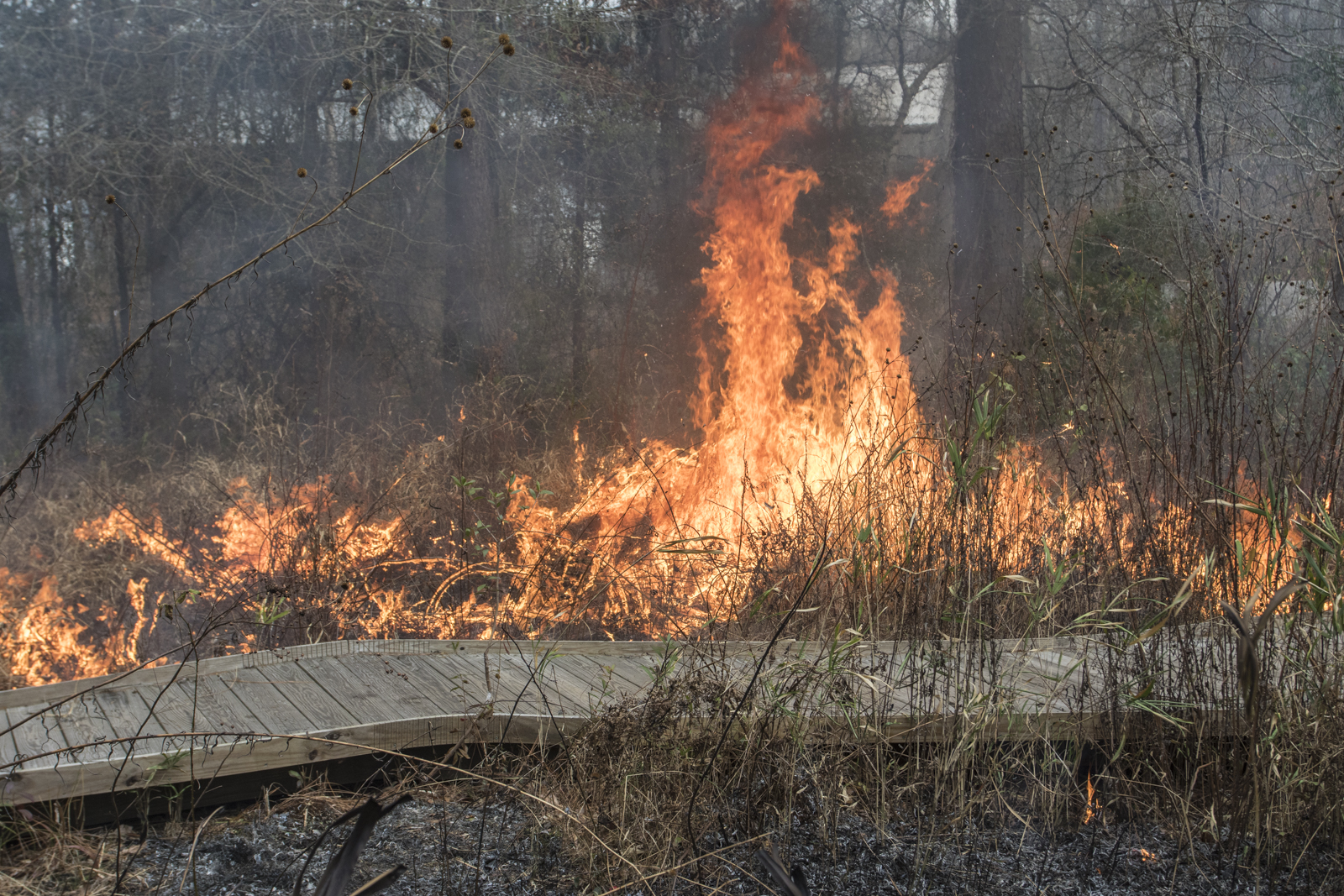
Prescribed burns in the Coastal Plain Habitat Garden
The staff has been busy the past couple of weeks doing prescribed burns both here at the main garden site and at some of the other properties managed by NCBG. It was a flashback to my state park days when I helped with many burns at various parks in the east.
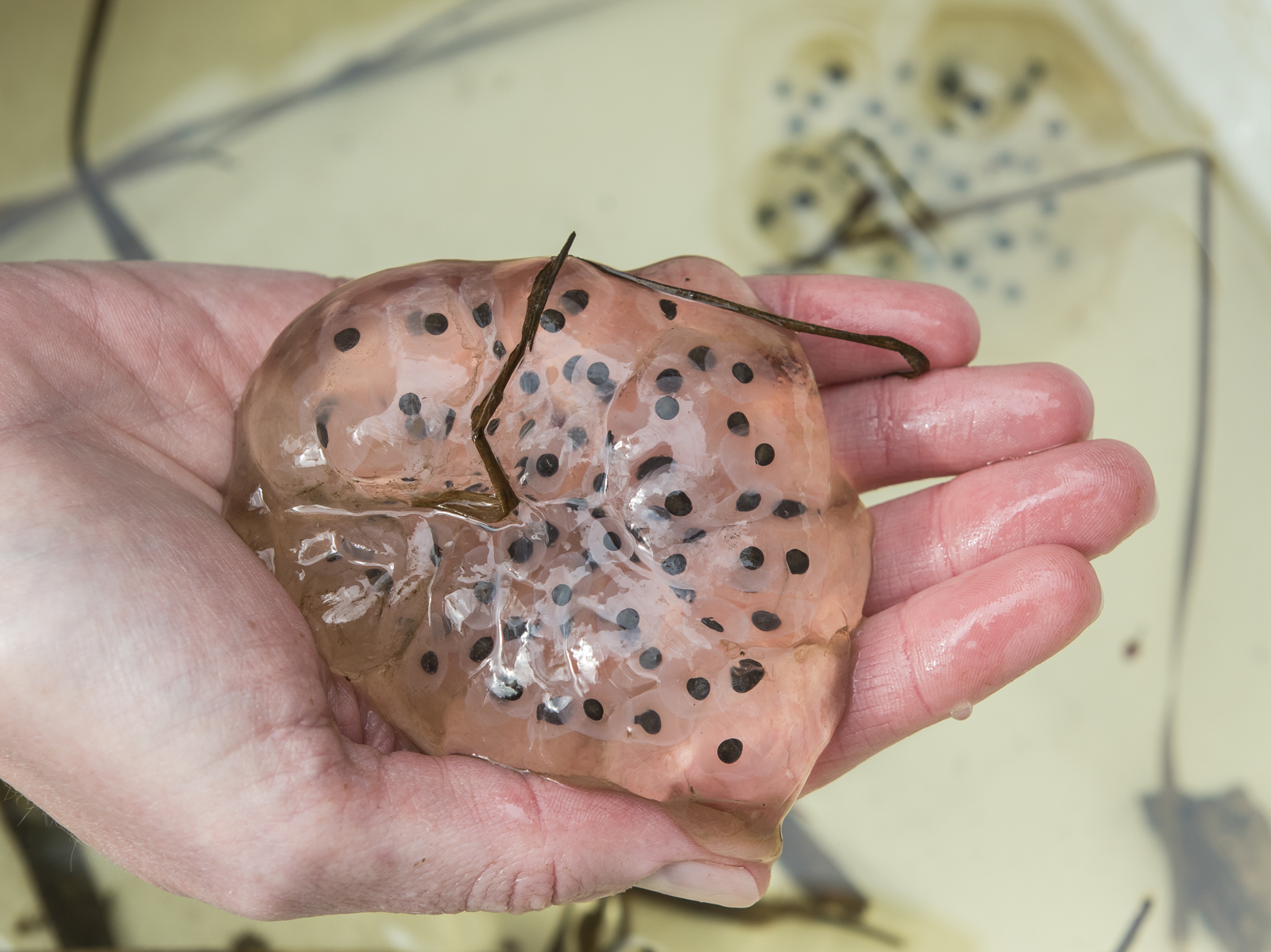
Spotted salamander egg mass
After a heavy rain one night, I was anxious to check the pools in the habitat gardens, which usually produce good numbers of salamander egg masses. Sure enough, there were a lot of spermatophores covering the bottom of the pools. A couple of days later we went over and saw the first egg masses of the season, always a magical moment, and one that I reported on in a blog post a couple of years ago.
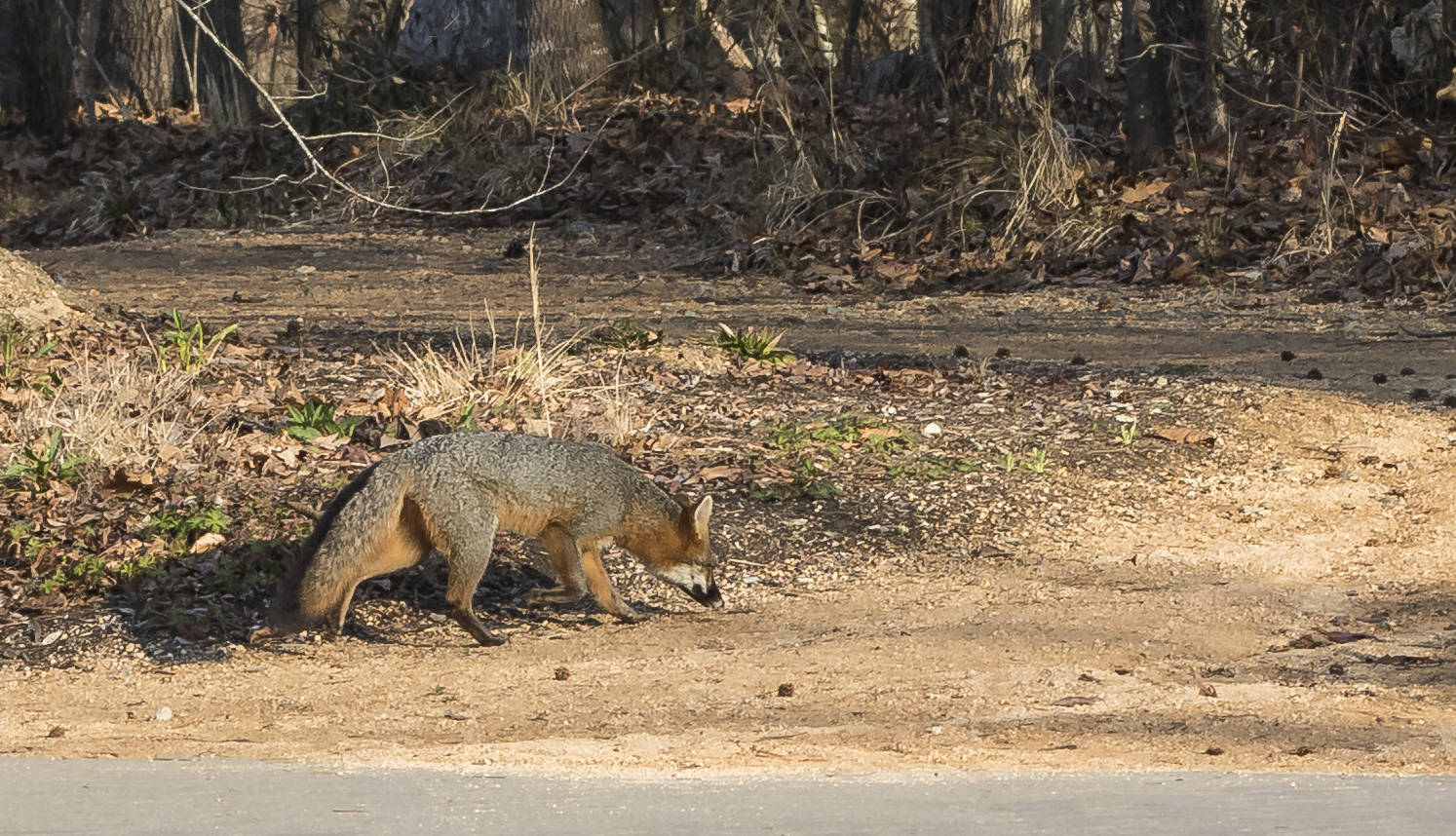
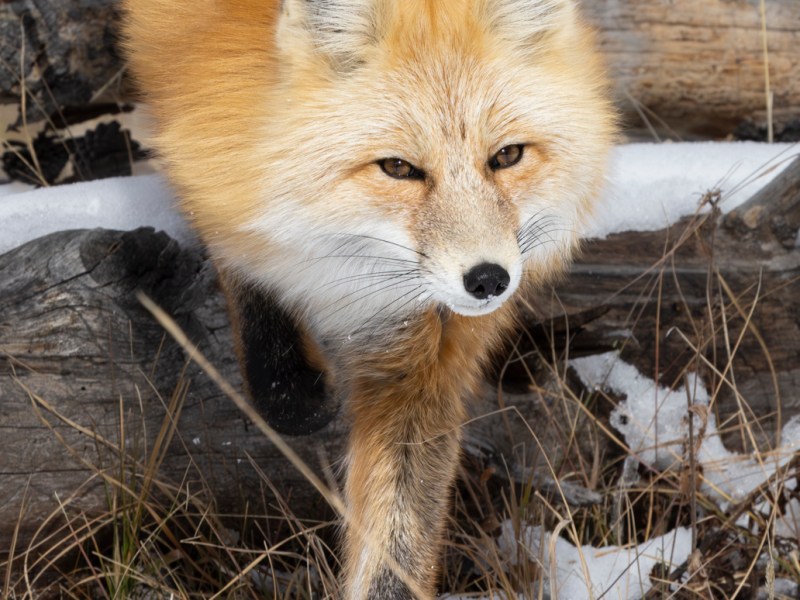
Gray fox greeting one morning
I suppose my favorite experience thus far happened last week as I was walking into the building from my car. A gray fox, nose to the ground, came out of nowhere and crossed in front of me. A quick glance my way was all the notice I received, then it was back to trotting and sniffing. The fox disappeared, but I could hear some other people across the grounds exclaiming they had just seen it. Suddenly, it crossed my path even closer as I approached the building, and once again vanished.
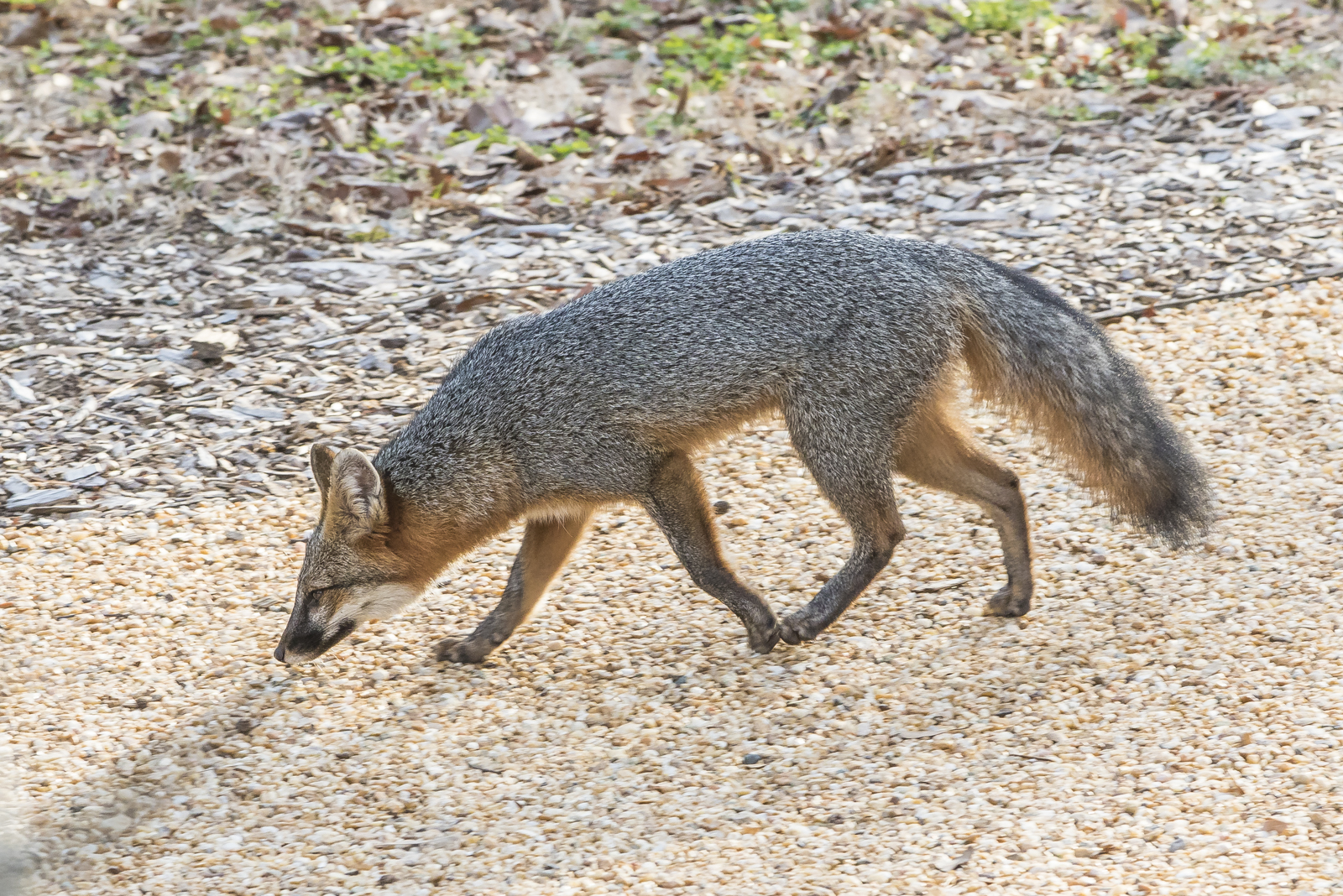
Gray fox
I went upstairs and grabbed my camera and came back down on the side deck, hoping to see it again. Just when I was about to go back inside, it suddenly appeared on the path in front of me, sniffing the ground as if intent on finding something. I later heard people saw at least two foxes out there, so maybe this one was looking for the other one. I think we re approaching their breeding season, so this may explain this intense searching behavior.
Not a bad way to start a day. If this is any indication of what’s to come, I look forward to being at this beautiful place, and learning and sharing about the natural world in a new setting. Stay tuned…
We are not the only species who lives and dreams on our planet. There is something enduring that circulates in the heart of nature that deserves our respect and attention.
~Terry Tempest Williams
Snow geese flying high (click photos to enlarge)
I ended my winter tour season last weekend, a little earlier than usual, but it finished on a spectacular note. I had two groups of wonderful people; one all day Saturday, and one Sunday. It was beautiful weather, and both mornings started out cold, just the way it is supposed to feel in winter at Pungo and Mattamuskeet. There continued to be a couple of things this season that baffle me. I am still seeing the fewest number of bears of any winter since I started visiting this wildlife-rich region. And the snow geese are still acting strange, coming and going at a very high altitude, and I never saw them feeding in any of the refuge fields all winter. If the few remaining stands of corn are knocked down before they head back north, perhaps the snow geese will make a late appearance.
A pawpaw tree that has been climbed and clawed by bears
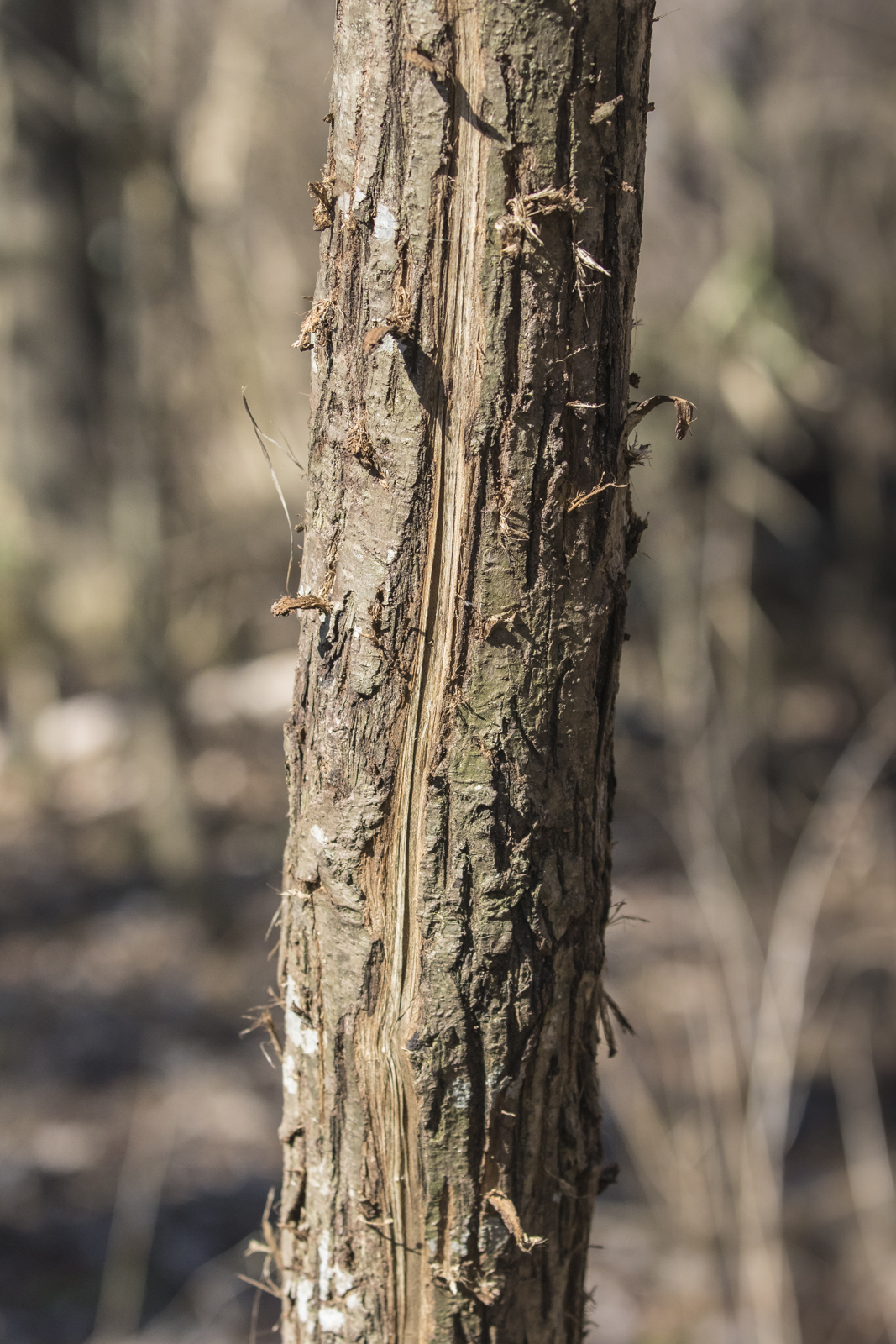
We did finally see six bears on Sunday, five of them the first thing as we drove in past one of the few remaining fields with standing corn. The last was seen after sunset on another field along D-Canal Road at Pungo. Still, no bears the past few weeks along the one-time sure spot, North Lakeshore Drive, aka Bear Road. There is still plenty of sign in the woods, but some of it may be from a month or two ago, before the bear hunting season on adjacent private lands. Almost every pawpaw tree in the woods along that road has been climbed, clawed, or snapped in half by the bears. They must really like pawpaws, and, who knows, maybe there is something in the bark they like as well, because many of the mid-sized trees have had their bark pulled off in strips.
Great egret coming to roost in the trees near the lodge at Mattamuskeet NWR
On Saturday, we saw plenty of birds at the Pungo Unit of Pocosin Lakes NWR, in spite of the closure of the entire road along the south shore of Pungo Lake. The past few weeks have had heavy rains and some vehicles apparently got stuck in the mud, causing the closure. My advice to visitors is, if the roads look too bad to go through in your minivan or sedan, then don’t attempt it (you may be right). The refuge tries to repair the really bad spots if and when they dry out enough to allow their heavy equipment to get in to do the work. Mid-day we ran over to Mattamuskeet NWR where we found high water again limiting the number of birds in the usual spots. But, there was a good diversity of ducks that cooperated with our efforts to view them through a scope, and we were rewarded late in the day with the first wave of great egrets coming to roost in the trees across the canal from the lodge. That is quite a sight to see them sailing in on cupped wings, squawking as they juggle for space in the soon-to-be-crowded branches.
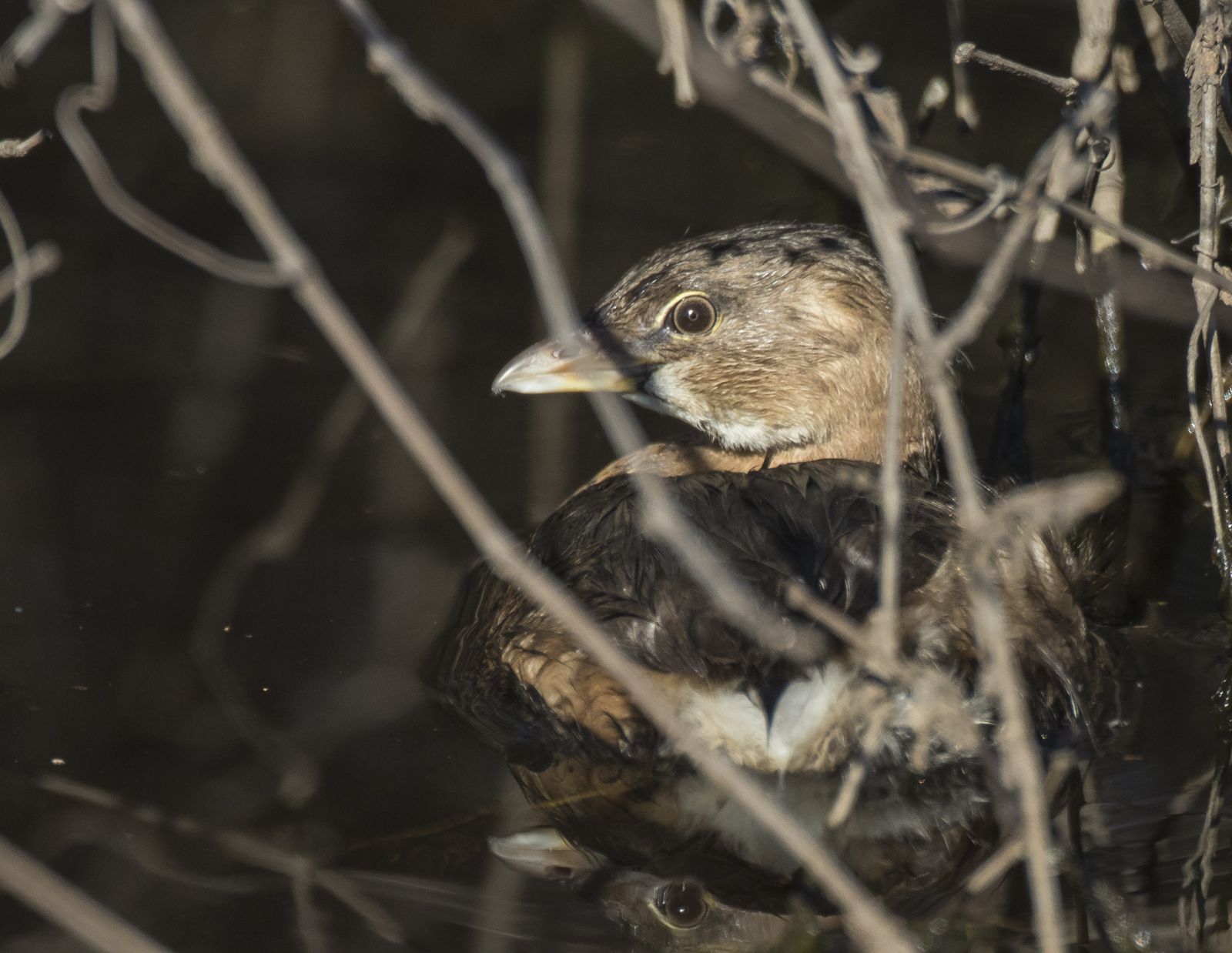
Pied-billed grebe peeking out from under some low branches along a canal
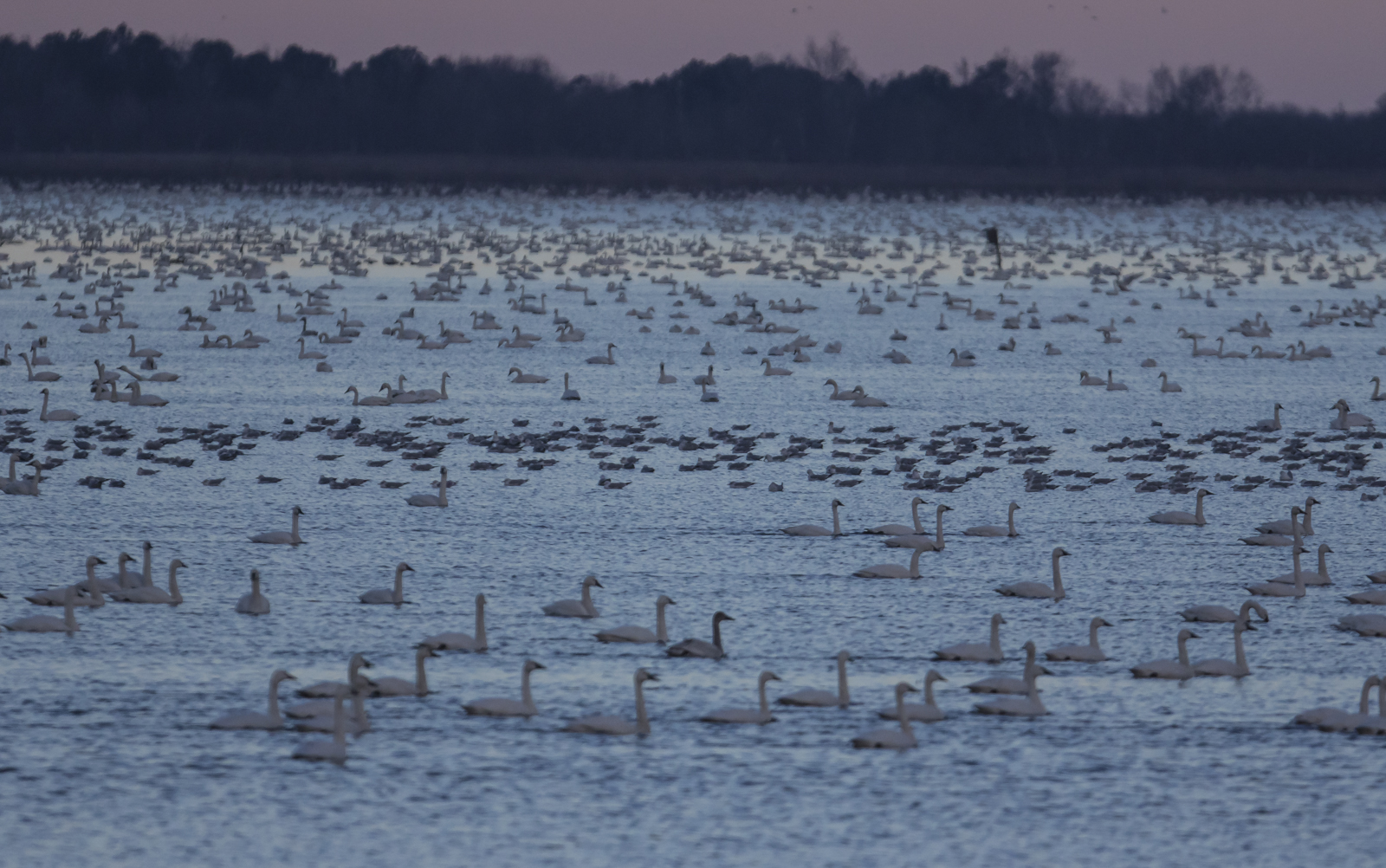
Both days were full of interesting sightings ranging from bald eagles near a swan carcass, to pied-billed grebes hiding in the brush along the canals. We had a nutria with 3 young in one canal, plus a very unusual blonde-colored nutria at sunset. Finally, back at Pungo late in the day, we witnessed an incredible sunset show of tundra swans flying in and out of the lake. The strange thing was that as we drove in about 4:30 p.m., there were thousands of swans leaving the lake, which seemed late for so many to be headed out. But, they all returned (plus thousands more it seems) as the sky turned orange-red at sunset…spectacular.
Pungo Lake covered in birds in the pre-dawn light
After the sun rose above the horizon, the lake looked like a sea of white
Amazing what a difference a day makes…Saturday morning was windy, causing the birds (numerous ducks, snow geese, and tundra swans) to seek shelter on the lee side of the west shore, which left the area in front of the observation platform a void, without any waterfowl readily visible. Sunday morning was calm, and our arrival at the platform before sunrise was greeted by thousands of birds just beyond the lake shore in front of us, seemingly filling almost every square foot of the lake’s surface. As the sun climbed higher, the dark shapes became a sea of brilliant white objects that filled the air with their sounds.
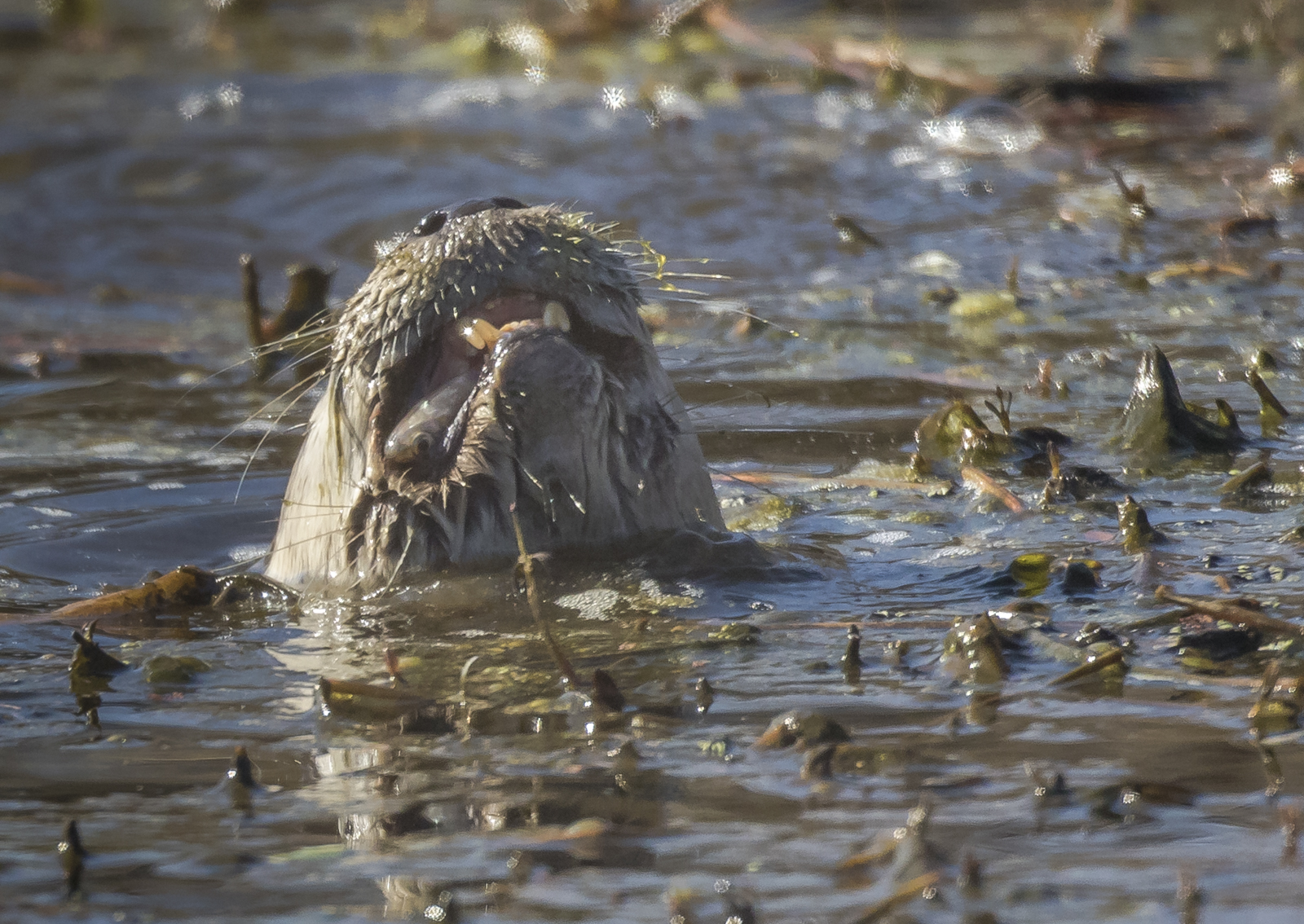
River otter crunching a small fish
After the sunrise show at the platform, we headed over to “Bear Road” for a walk. Along the way, I spotted a pair of river otter in the roadside canal. They tend to raise up and snort a time or two when they first spot you, and then often disappear beneath the waters with a distinct kerplunk, only to reappear near or far, depending on how much they feel like tolerating your presence. These two were busy searching for fish in the thick mats of vegetation in the canals, and by the looks (and sounds) of things, they were quite successful. One guy caught several small fish while we watched, tossing his head back and crunching them in his jaws, the hapless fish seemingly gazing at us asking for help. But each fish disappeared rather quickly, with the otter then glancing our way before disappearing into the floating green mat.
One last glace at us before disappearing under the surface
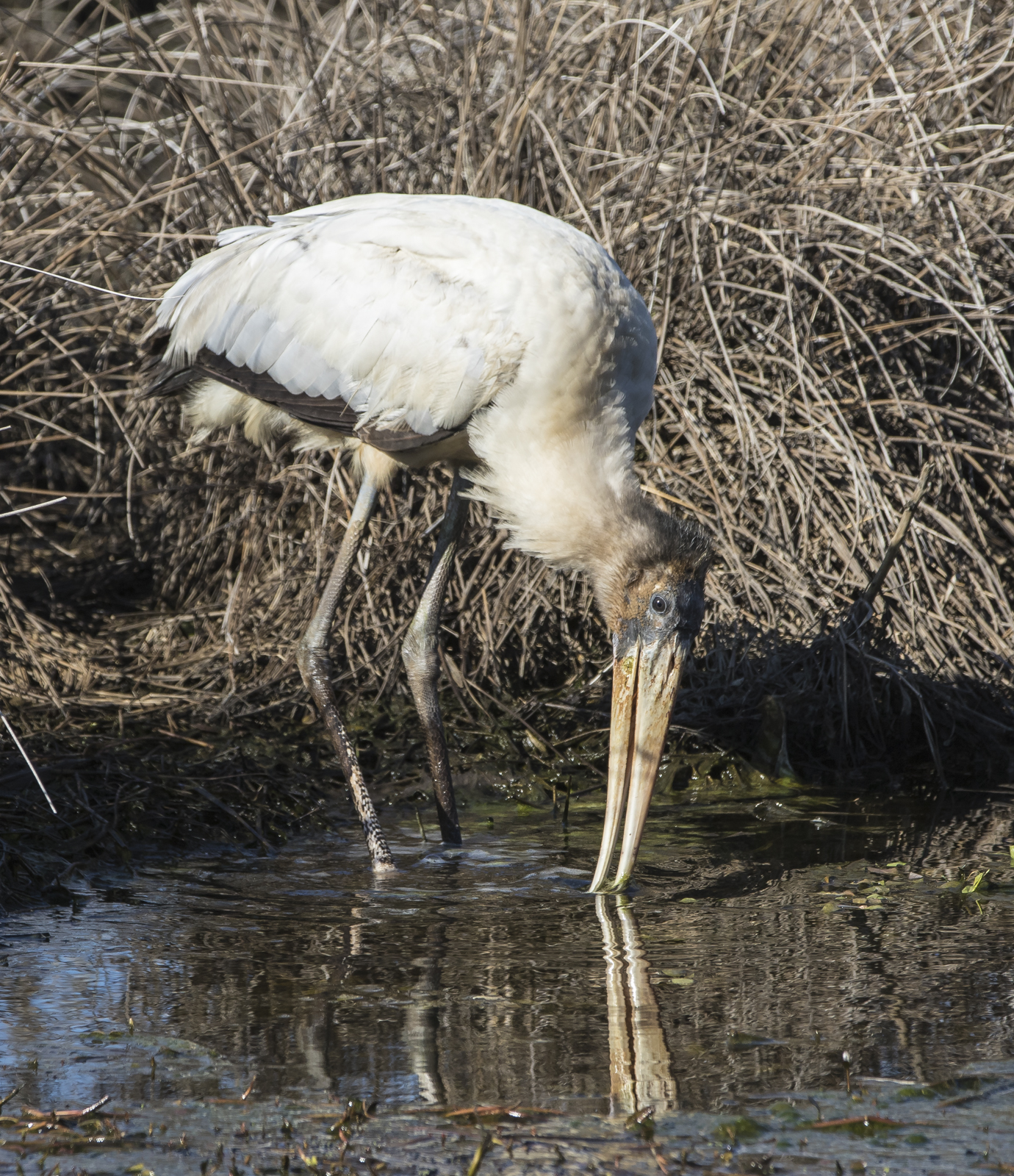
After the otter, we walked down Bear Road, but didn’t see much other than lots of bear sign, and a couple of groups of red-winged blackbirds. Once back at the car, we were starting to grab a bite to eat when a car pulled up with folks I knew from Christmas Bird Counts at Goose Creek State Park years ago. They said they had just seen a wood stork feeding in a canal around the corner. I must admit, a thought raced through my mind…I responded, awood stork?, as if questioning their ID of this somewhat unmistakable bird…but a bird I have never seen anywhere near this part of the state in over 30 years of birding. Wait, I told myself, these are people that used to come to the Christmas Bird Count, and they should know a wood stork if they see one. Yes, they said, a wood stork, and they had stayed with it so long that they got tired of taking pictures. They drove off, and I interrupted our lunch break and said, Sorry, but we have to check this out.
Juvenile wood stork, a first for me at Pungo
We quickly loaded up and drove around the corner and could see a car stopped down the road. As we approached, I saw it, and indeed, it was a wood stork! It was a juvenile, distinguished by its straw-colored beak (instead of black of an adult) and it fuzzy feathers on the head and upper neck. It totally ignored us as it went about its business of feeding along the canal edge.
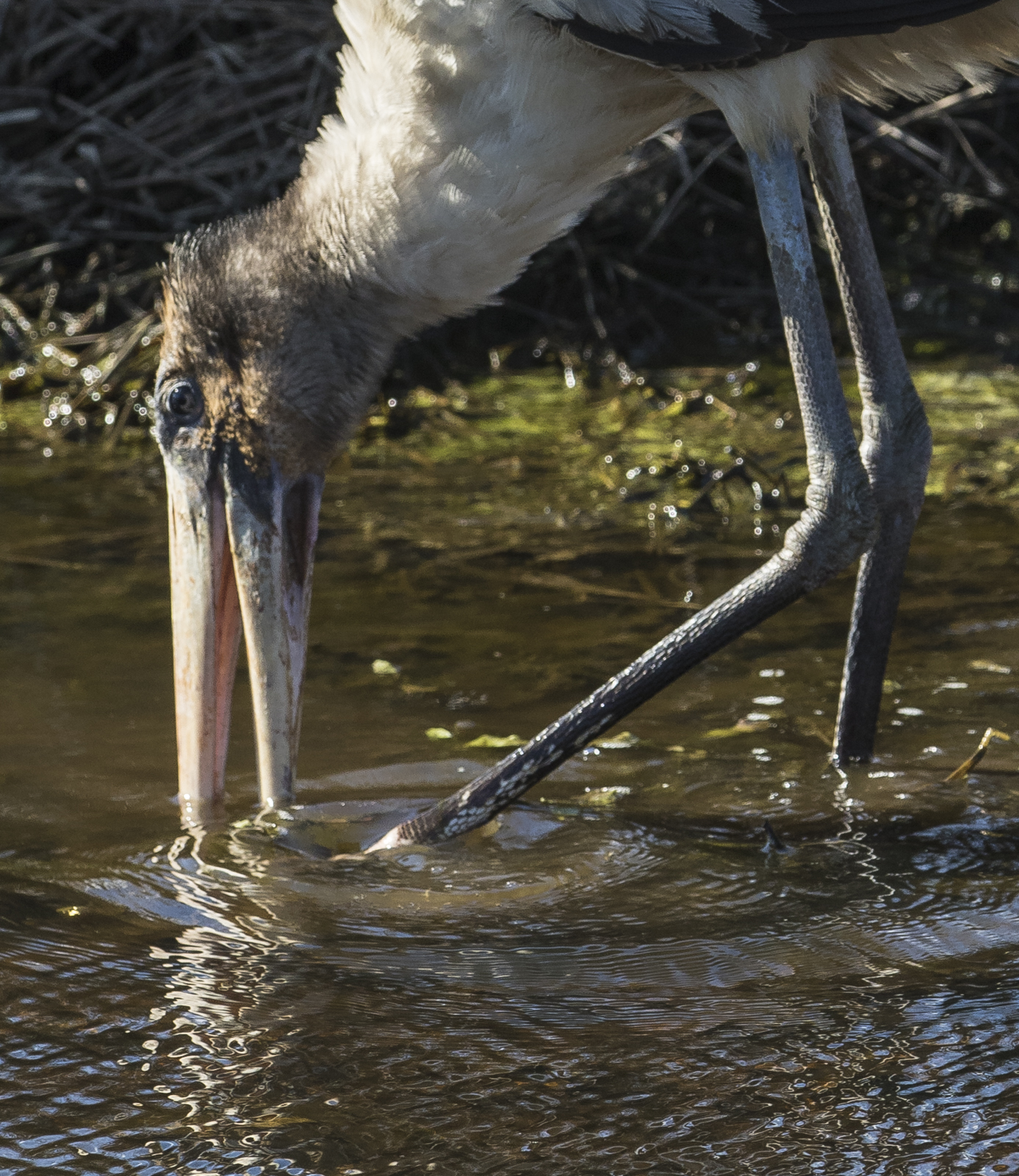
Tactile feeding strategy involved shuffling of feet near the open bill
I have watched storks feeding in a group in Florida and South Carolina, but this one was doing something I had not seen – slowly walking, shuffling one foot, then the other, beak agape. The strategy is to startle a prey item by kicking the substrate with your feet, and if a fish, crayfish, or whatever hits the beak, it snaps shut.
The bird would occasionally spread one wing out, and then turn, bill still in the water
The really odd thing it did was once a minute or so, it would extend one wing (almost always the right wing) and pivot, without pulling its beak out of the water. Some waders will spread a wing to supposedly startle prey, so maybe that is what was happening, or maybe it was to help balance the bird as it did a tight spin.
Here is a quick video clip showing this behavior, although the extended wing here is not as prominent as in most of the spins we witnessed. And my friends were right, we stayed with this bird until we got tired of taking photos…what a treat.
Another trip over to Mattamuskeet with similar results to the day before, although there was one highlight that made me think this trip might go into the record books for unusual sightings. As we drove in the back entrance of the refuge, a mink ran across the road in front of us. Wow, a mink, one of the most elusive mammals in our state, out in the middle of the day.
We headed back to Pungo later than usual and, once again, thousands of swans were flying out of the lake around 5 p.m., much later than in past winters. But this time, some were landing in a cut-over corn field right next to the refuge road. We stopped, got out, and stood in awe of the sights and sounds.
This short video gives you some idea of the spectacle, but imagine this going on all around you, the sky full of birds. As it grew darker, thousands of ducks came out of the swamps and circled a field of standing corn next to the swan field in what one young guest the evening before had called a “ducknado”. Birds everywhere in the sky…amazing.
A spectacular sunset
To top it all off, the sunset was painting the sky with broad brush strokes of orange, gray, and pink, with long lines of the black silhouettes of wings, most still heading west, away from the lake.
A beautiful end to another winter season
As the fire in the sky smoldered, preparing for darkness, we looked out on the horizon with our binoculars and could see the lines of swans returning. Who knows why they flew out so late, only to turn back a short while later, filling the sky with their wing beats and whoops. Whatever the reason, it made for an amazing finish to another winter season at my favorite place, and I was so glad to be able to share the experience with others. Until next year…
Here is a species list total for our weekend outings:
Birds (56 species):
Double-crested Cormorant, Canada Goose, Snow Goose, Tundra Swan, Mallard, Black Duck, American Wigeon, Northern Shoveler, Northern Pintail, Ring-necked Duck, Gadwall, Green-winged Teal, Blue-winged Teal, Hooded Merganser, American Coot, Pied-billed Grebe, Great Blue Heron, Wood Stork, Great Egret, Cattle Egret, Black-crowned Night Heron, Turkey Vulture, Red-tailed Hawk, Red-shouldered Hawk, Bald Eagle, Northern Harrier, American Kestrel, Merlin, Ring-billed Gull, Great Black-backed Gull, Mourning Dove, Belted Kingfisher, Northern Flicker, Red-bellied Woodpecker, Downy Woodpecker, Pileated Woodpecker, American Woodcock, Wilson’s Snipe, Wild Turkey, American Crow, Eastern Phoebe, American Robin, Northern Mockingbird, Carolina Wren, White-throated Sparrow, Swamp Sparrow, Savannah Sparrow, Song Sparrow, Dark-eyed Junco, Red-winged Blackbird, Rusty Blackbird, Common Grackle, Northern Cardinal, Carolina Chickadee, Tufted Titmouse, Yellow-rumped Warbler
Mammals:
Black Bear, Gray Squirrel, White-tailed Deer, Nutria, Mink, River Otter, Gray Fox
Our public lands – whether a national park or monument, wildlife refuge, forest or prairie – make each one of us land-rich. It is our inheritance as citizens of a country called America.
~Terry Tempest Williams
Sometimes you just need to spend time in a wild place, in your special place. This weekend was such a time. Luckily, I had a magical trip to two of my favorite public lands this weekend – Pocosin Lakes and Mattamuskeet National Wildlife Refuges. My friend, Art, and several of his friends, were supposed to go with me the weekend of the snow/ice storm, but we had to reschedule because of road conditions. Once again, the weather did not look promising (rain this time), but we managed to dodge most of the storms, and enjoyed the subtle light and saturated colors of the overcast skies. Oddly, even though I had my gear with me, I only took about 20 images for the entire weekend, all with my phone. This weekend was for reflecting, for taking it in, for renewal. I wanted to experience the place, to feel land-rich.
Duck feathers along the bear trail (click photos to enlarge)
The swans are still putting on quite a show at Pungo and their sounds define this place. Gray skies and the occasional mist made the surroundings more intimate. The snow geese continue to be unpredictable and the low cloud ceiling made it even harder to see them. Several flocks went over us during our first day and we could hear them, but not see them, which I found both frustrating and somehow peaceful. We spent a lot of time with the swans, and all found a way to be in the moment as they returned to the lake by the thousands at sunset.
Bear claw marks on a tree
A walk in the woods revealed plenty of bear sign, but no bears (we finally saw one moving into a corn field after sunset). I am concerned about the lack of bear sightings this winter, but hope they are just spooked from the hunting season and so many people on the refuge, and things will return to normal later this spring.
Cattail marsh along the boardwalk at Mattamuskeet NWR
This was a very visual group of people, with eyes trained by careers in design and time spent surveying scenes of the world. I enjoy being with folks like that, it encourages a slow pace, the pace of discovery and wonder. Lichens on tree trunks, the disheveled appearance of a cattail marsh after ice and snow, and the track patterns of a deer highway through the woods are all cause for quiet celebration and contemplation.
Rain drops on tree reflections along the boardwalk
Water levels are still quite high at Mattamuskeet, so bird numbers seem low, at least in the areas accessible to the public. The variety of ducks did provide some excellent views, along with couple of sleeping raccoons in a small tree, and a few white-tailed deer in the marsh. A gentle rain started falling as we walked the boardwalk, adding another pattern to the already elegant design of tree trunk reflections in the dark waters.
Reflections along the north shore
Gray skies and thick, low clouds helped us decide to bring our trip to a close. One last stop imprinted the message of the wildness in our minds – the stillness, the reflections, the stark beauty of the places we had witnessed. The abundance and proximity of life found here is to be cherished. I am thankful for these places and the opportunity to experience and share them. I have probably used this quote before, but it seems appropriate after a good weekend with good people in two of my favorite places…
Cherish sunsets, wild creatures and wild places. Have a love affair with the wonder and beauty of the earth.






















 Roads End Naturalist