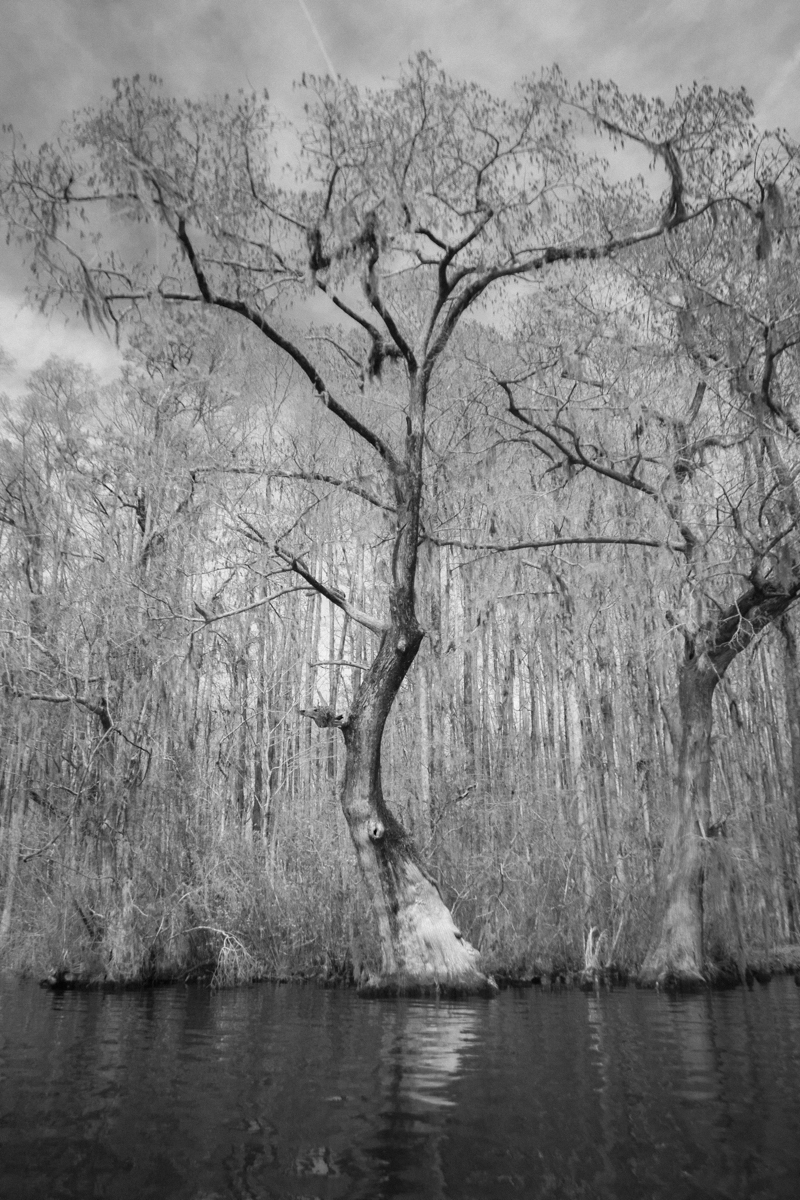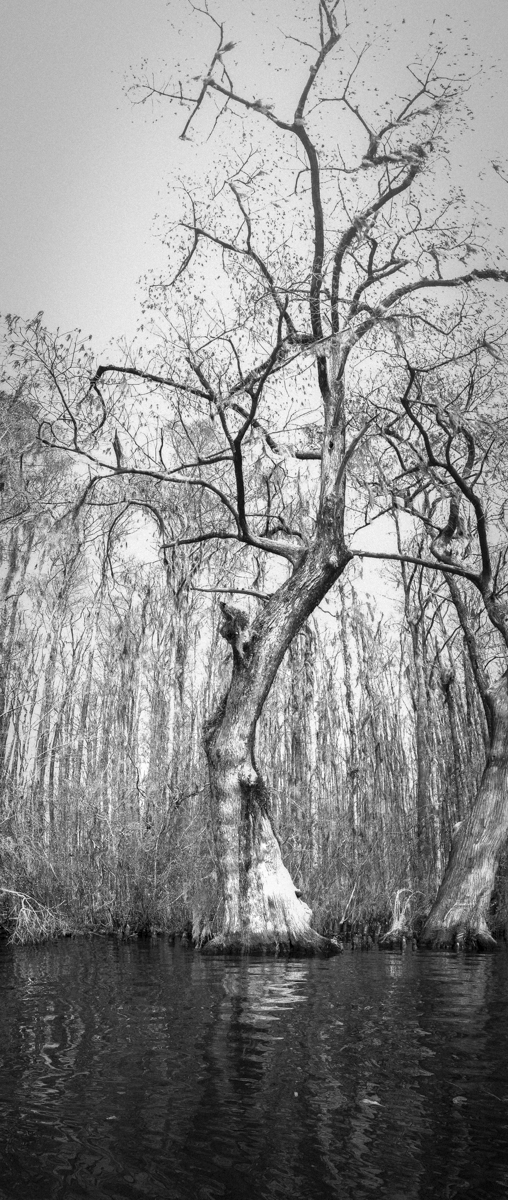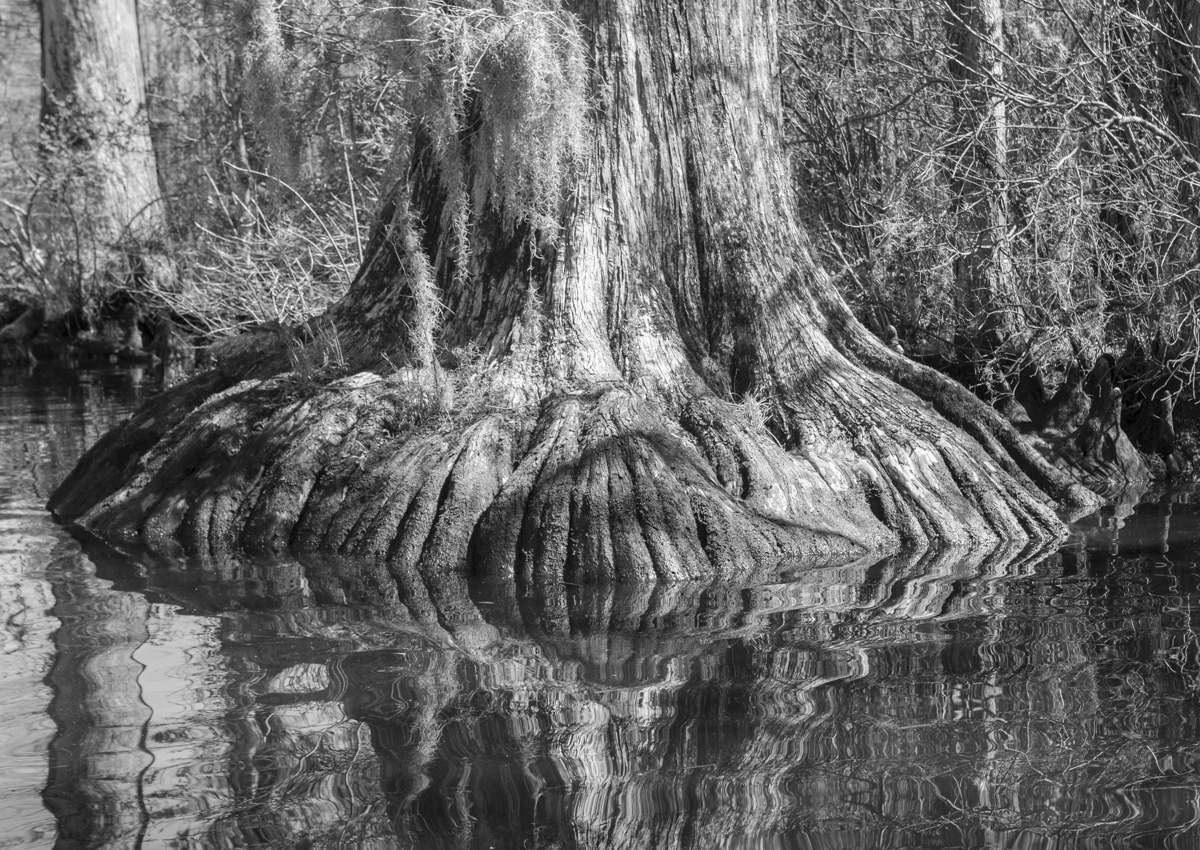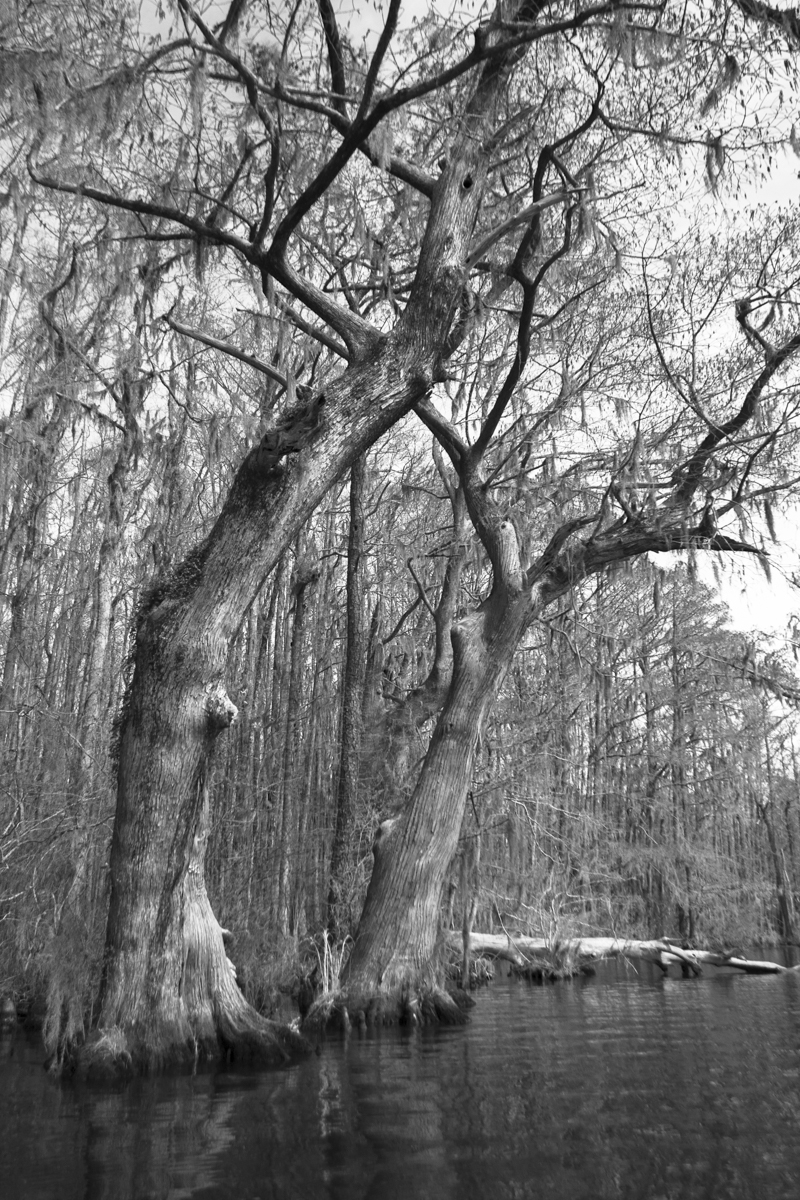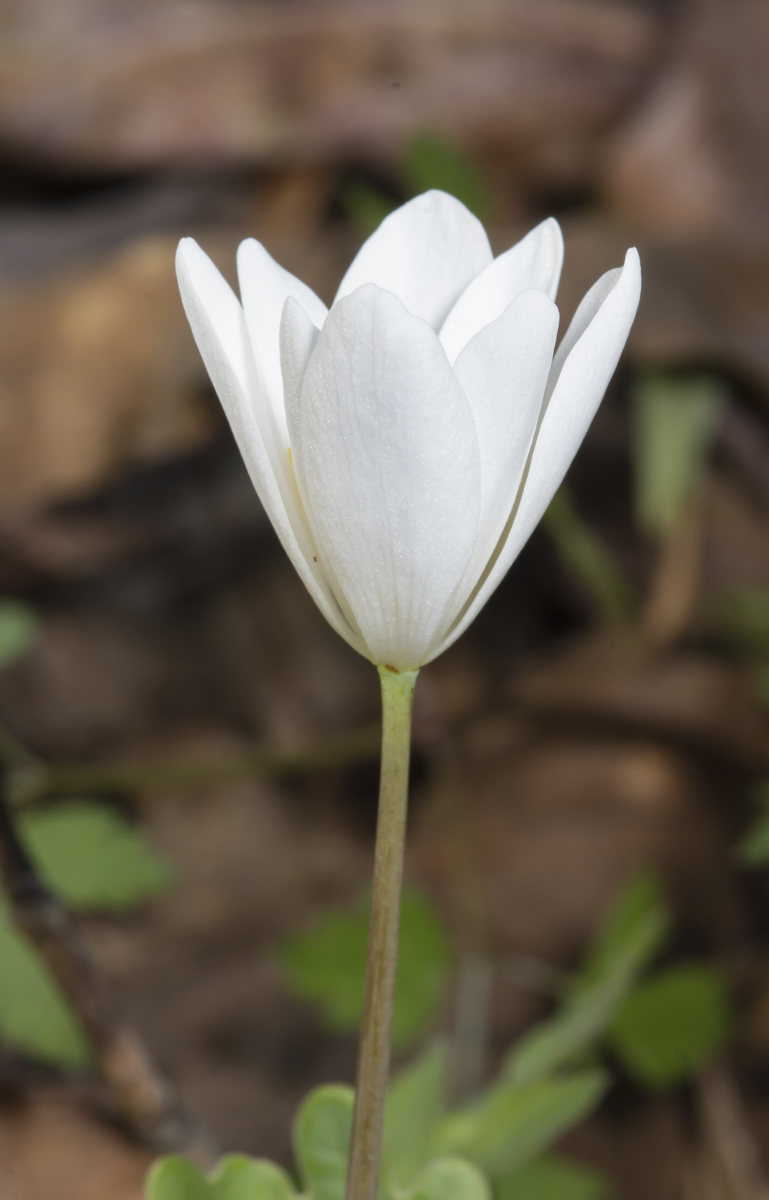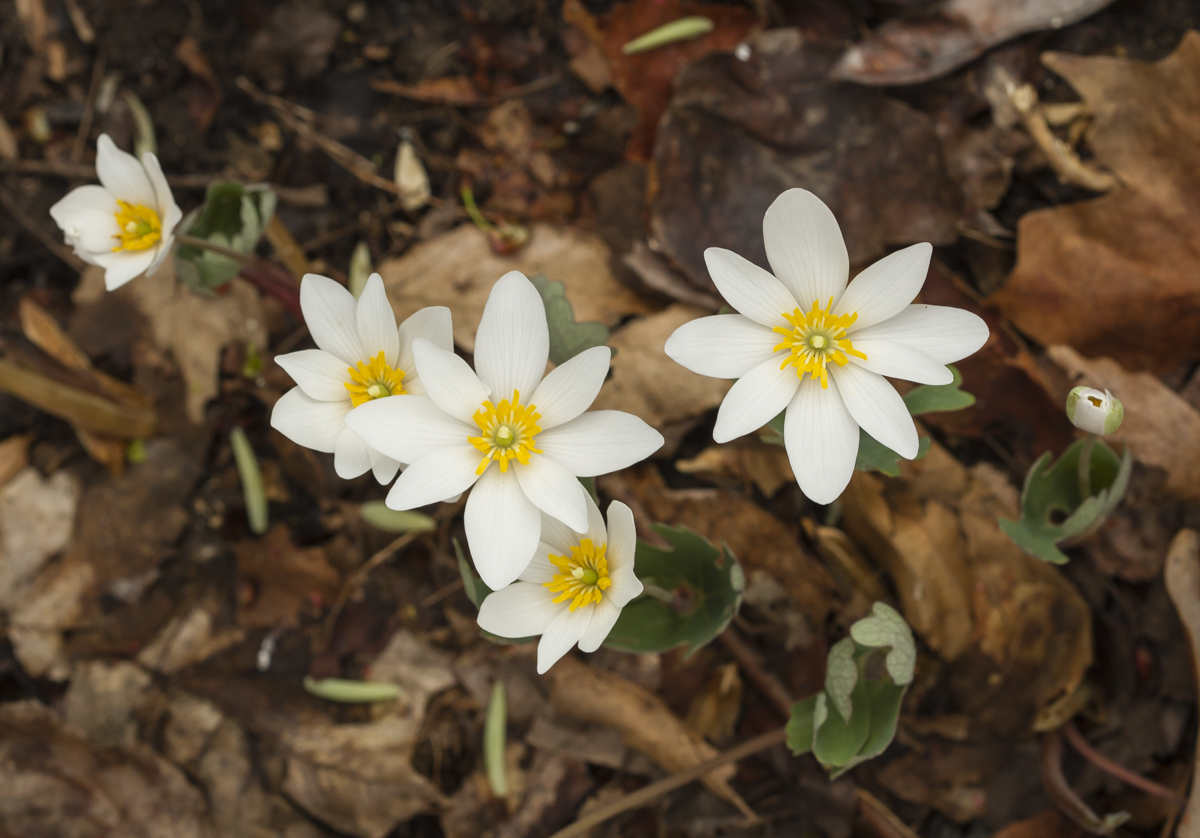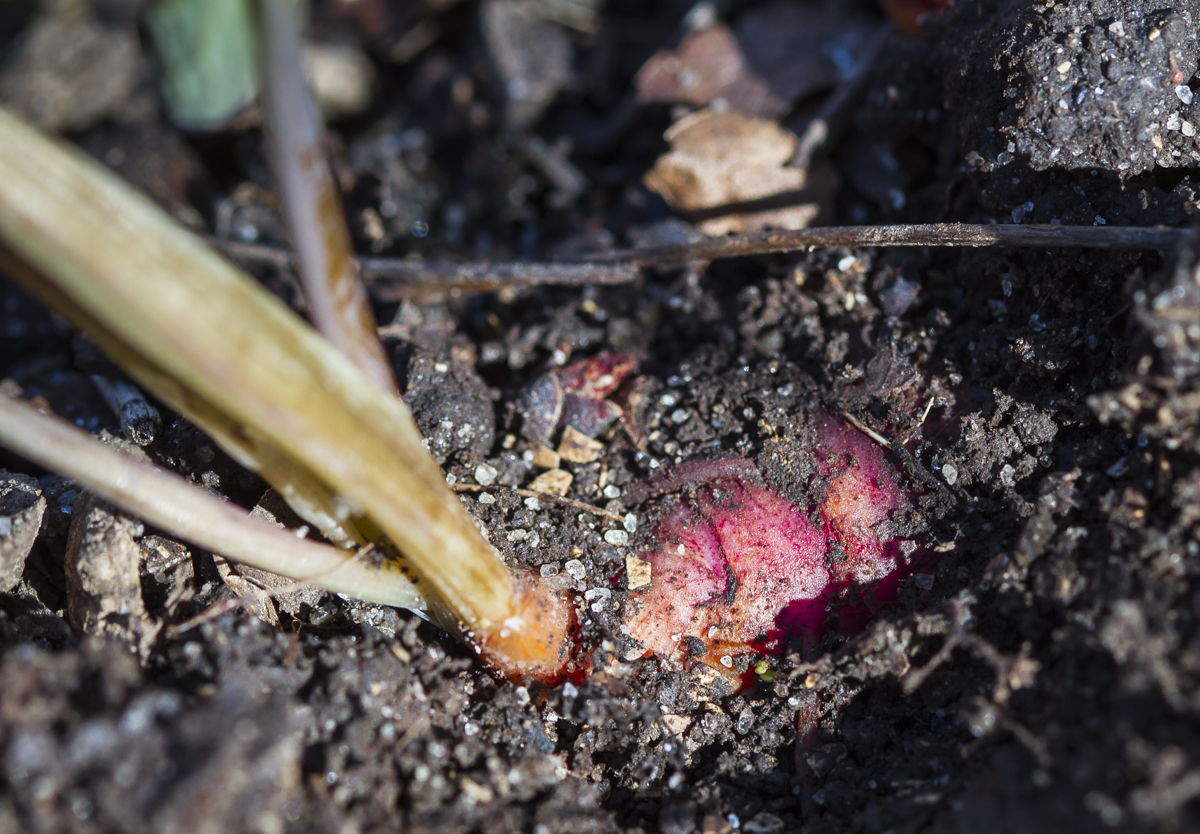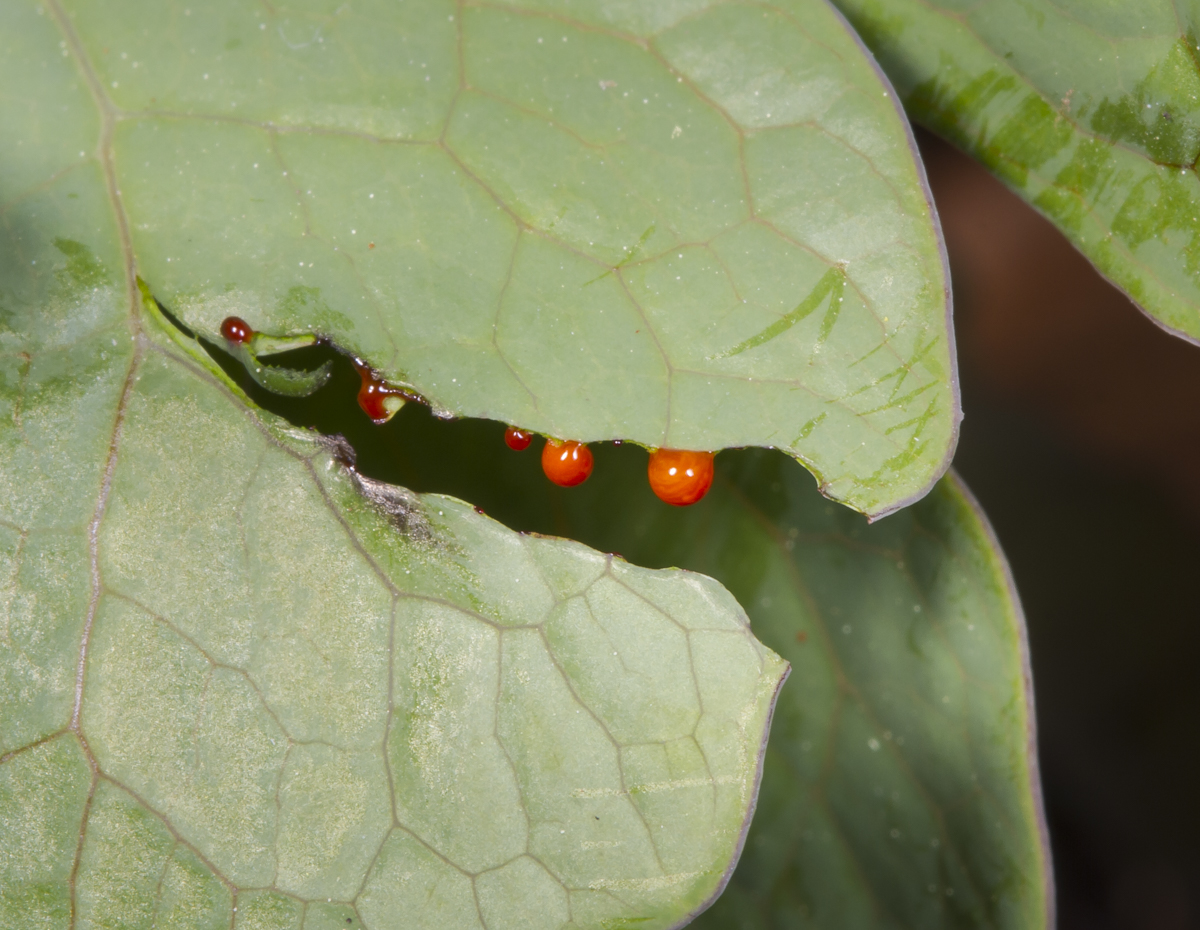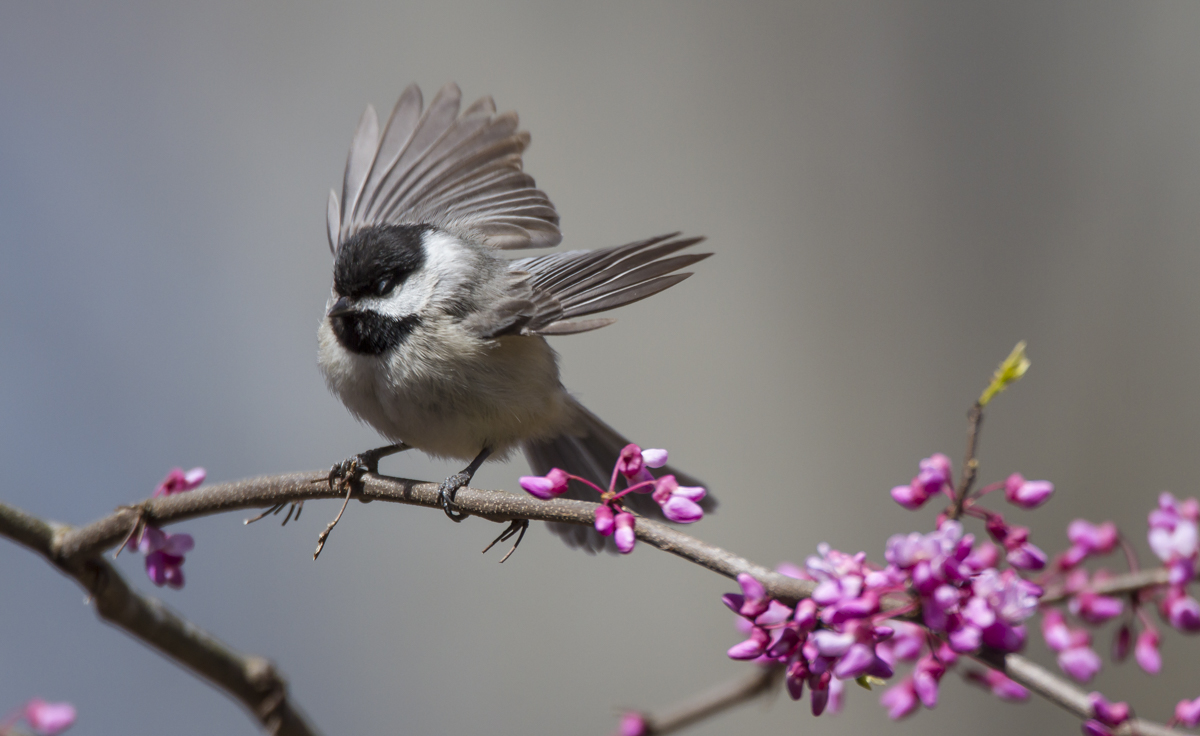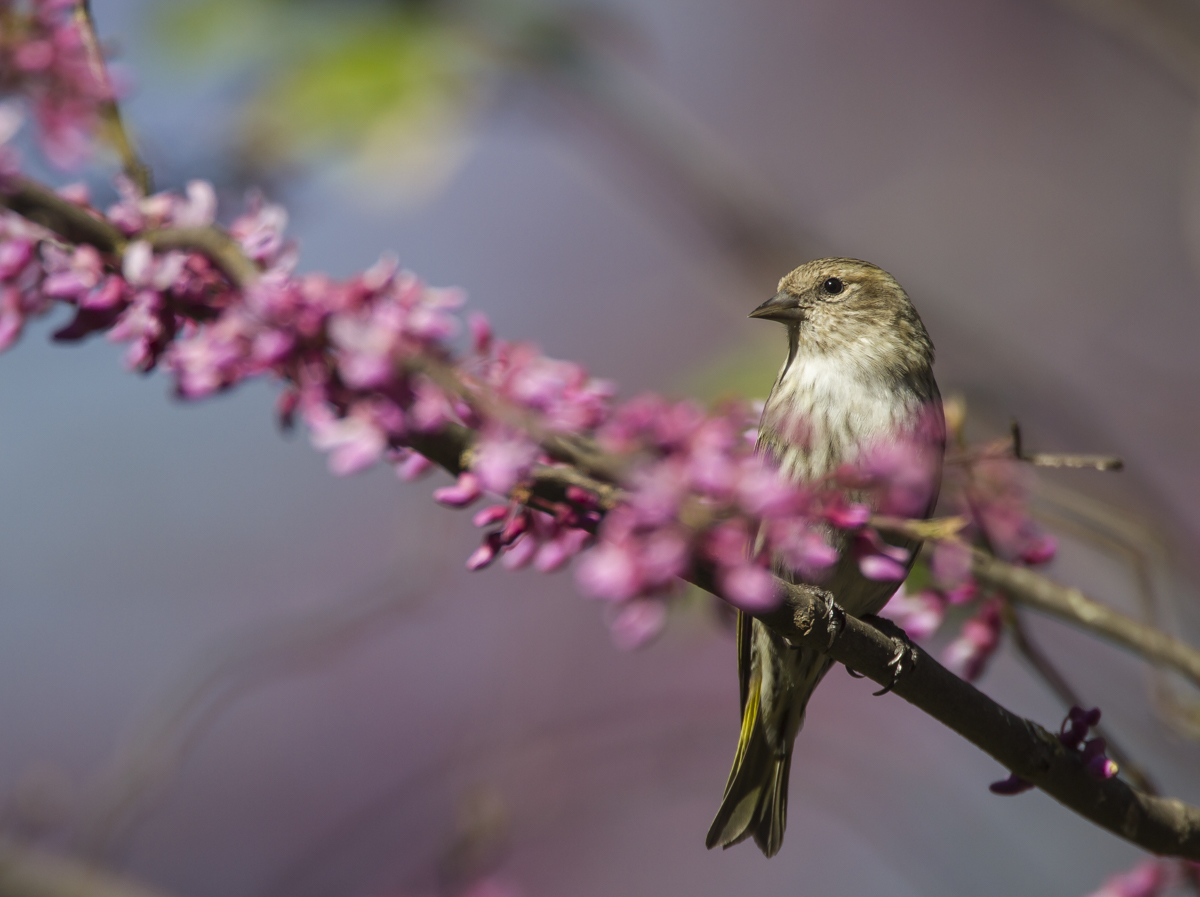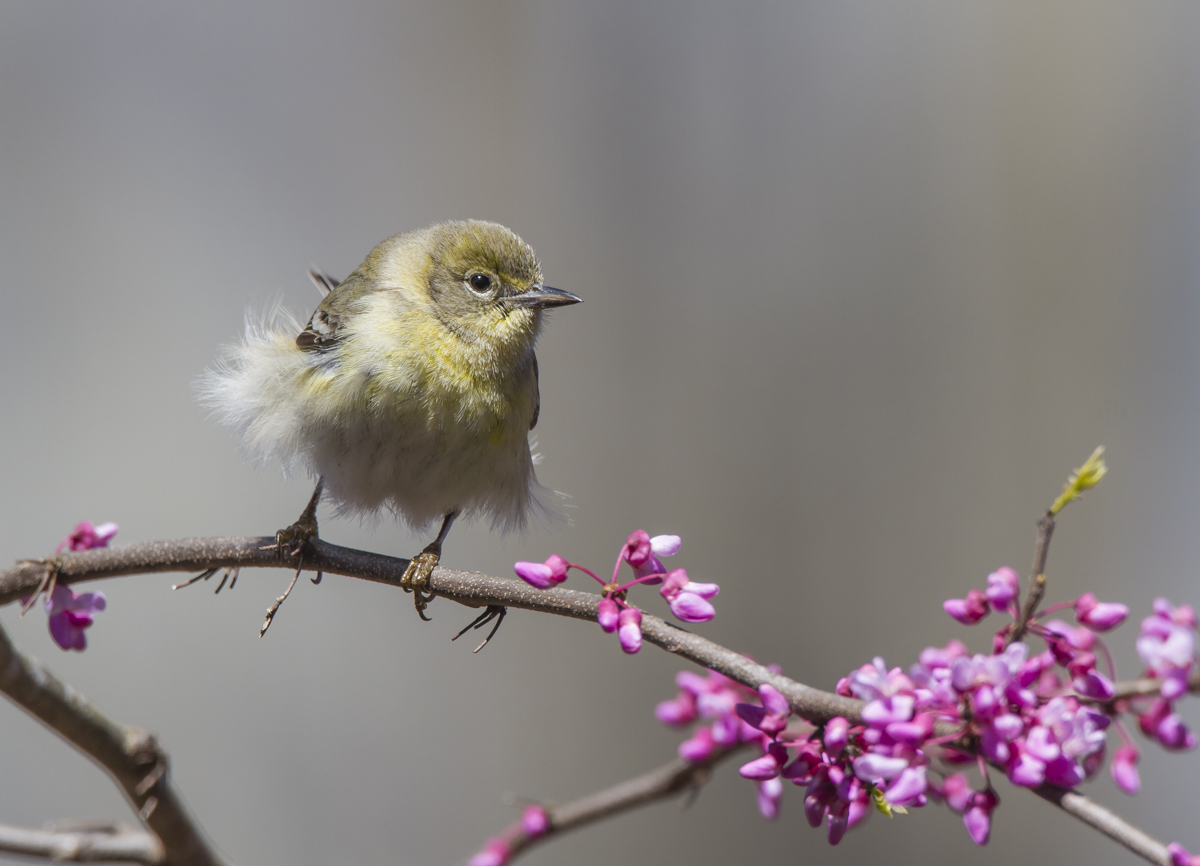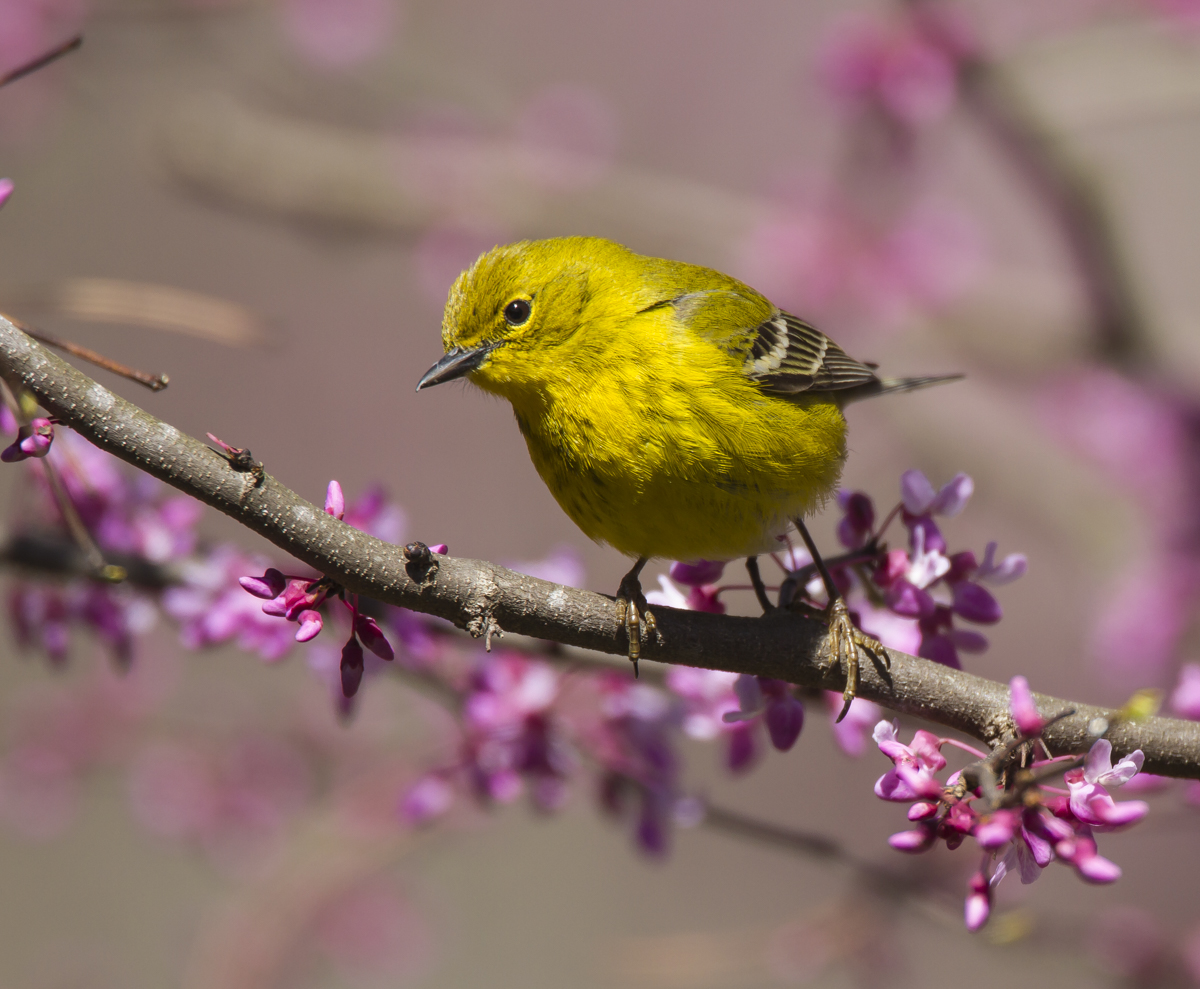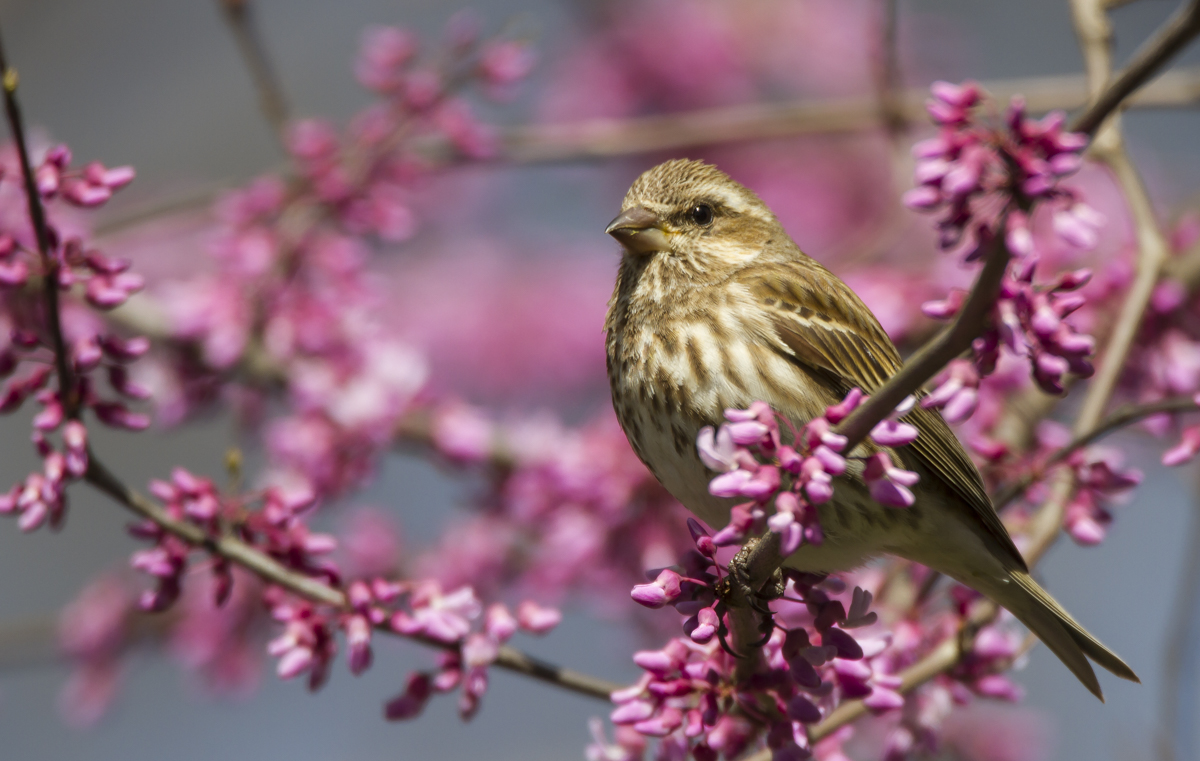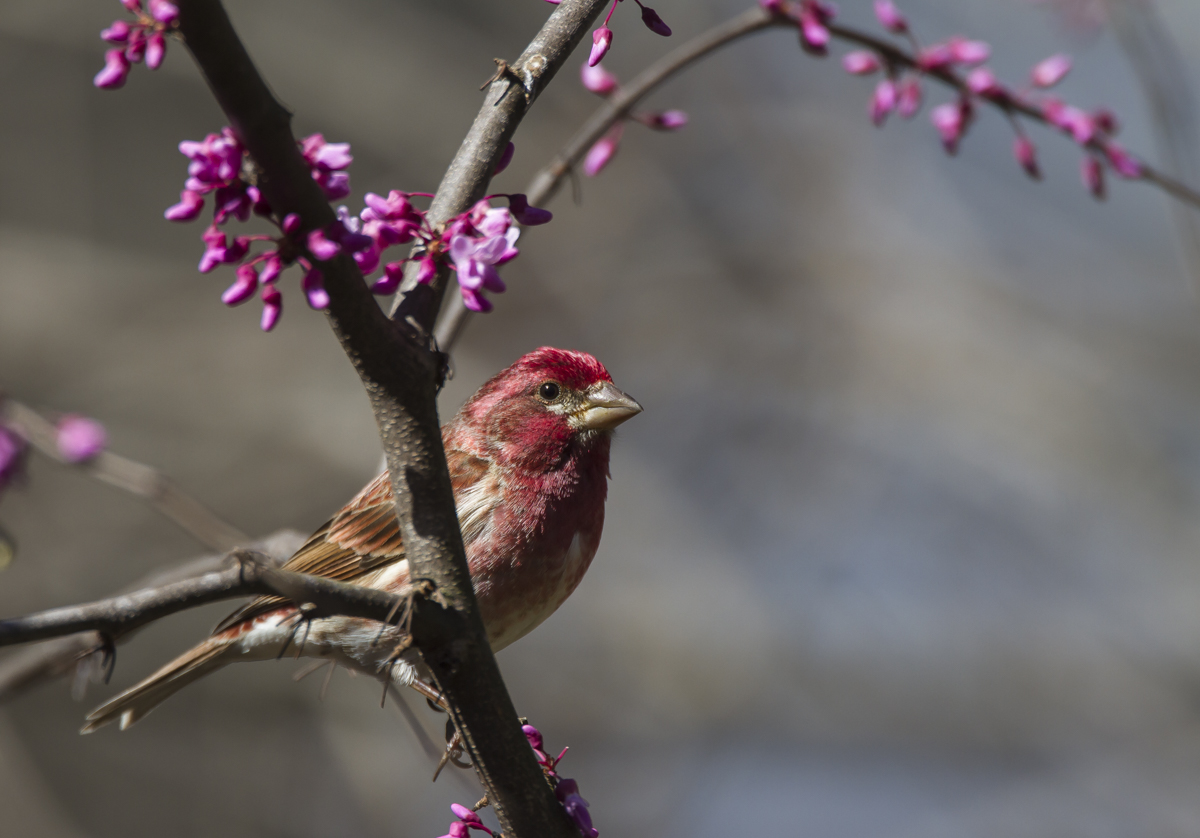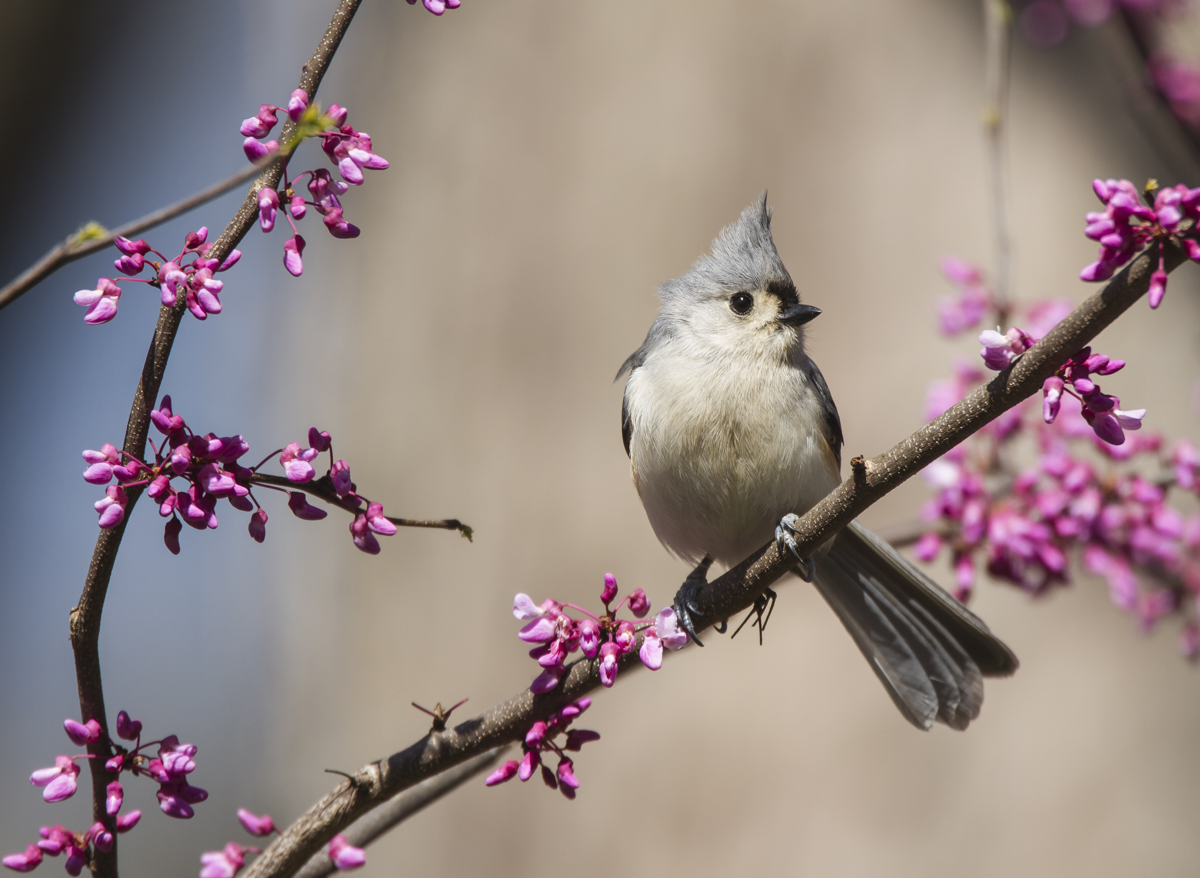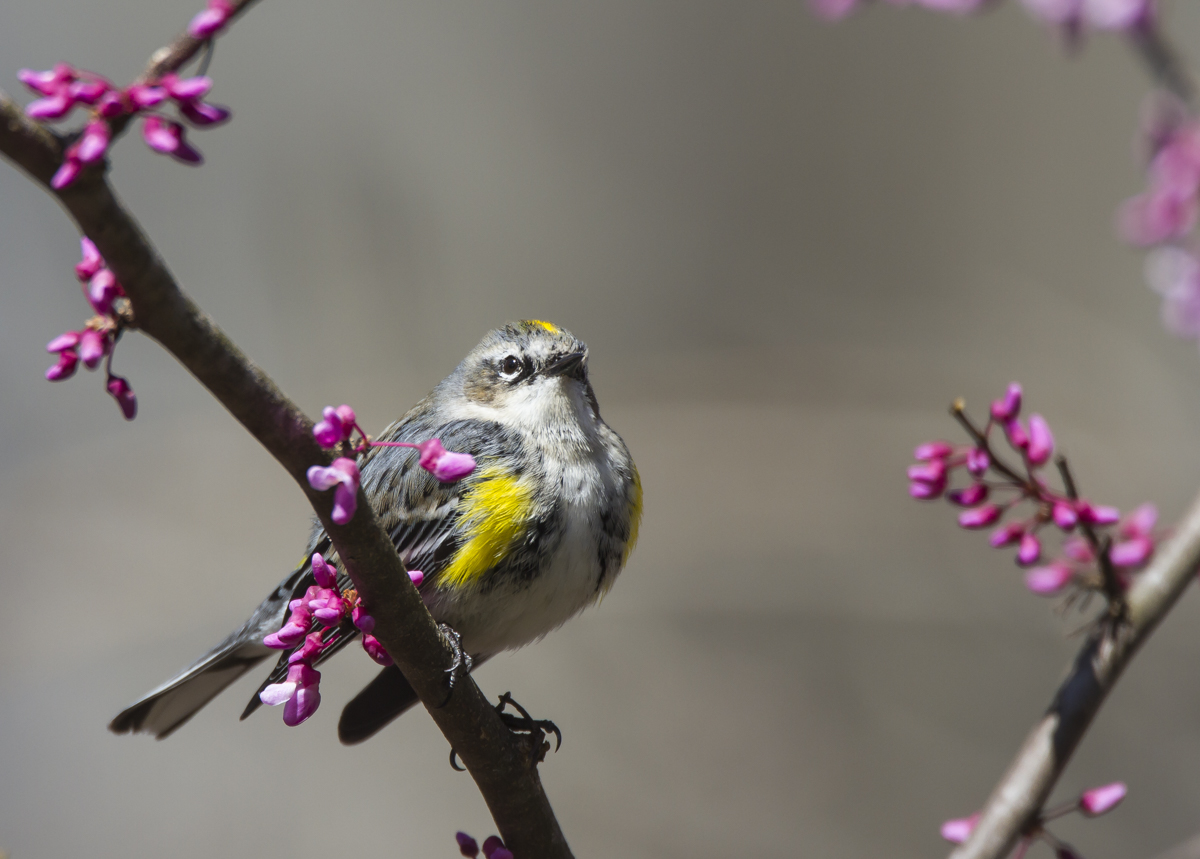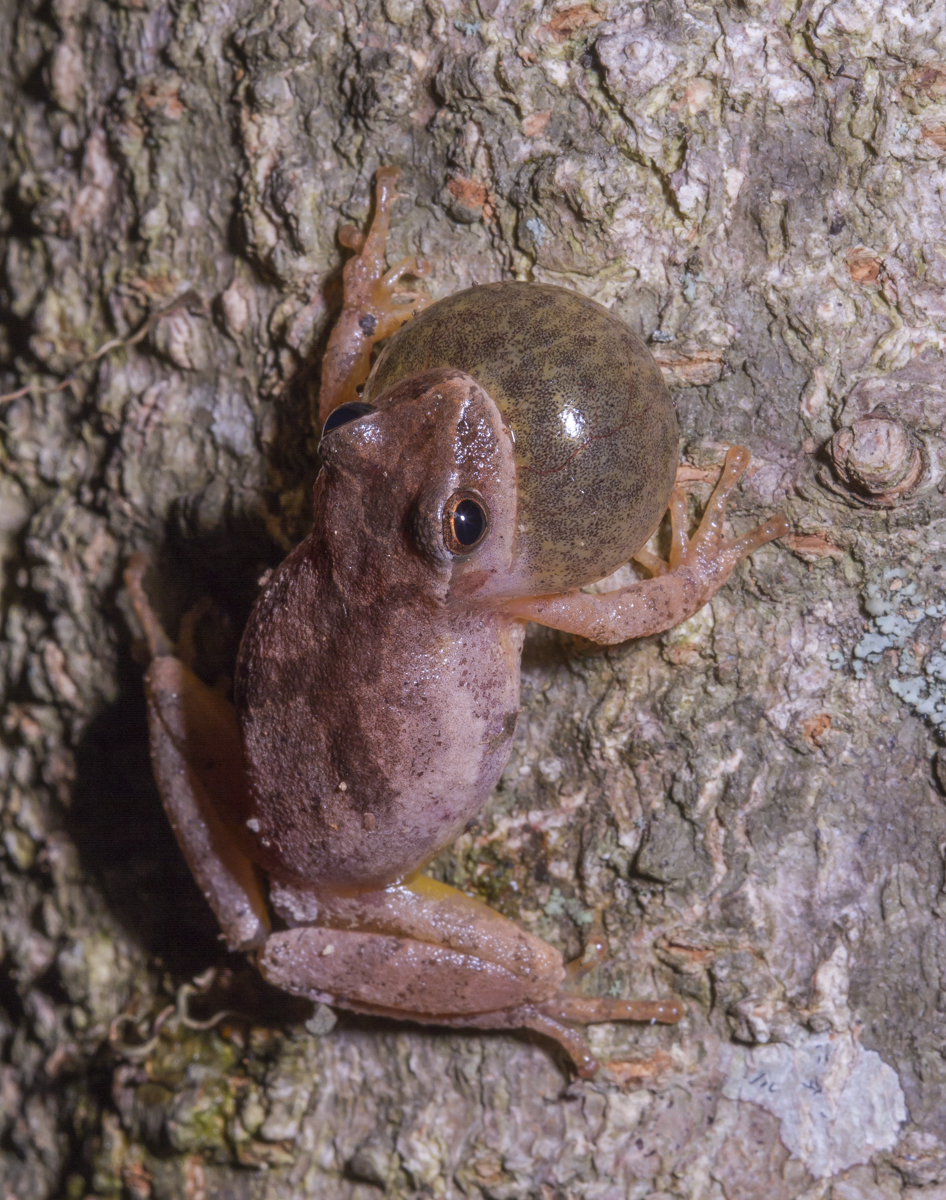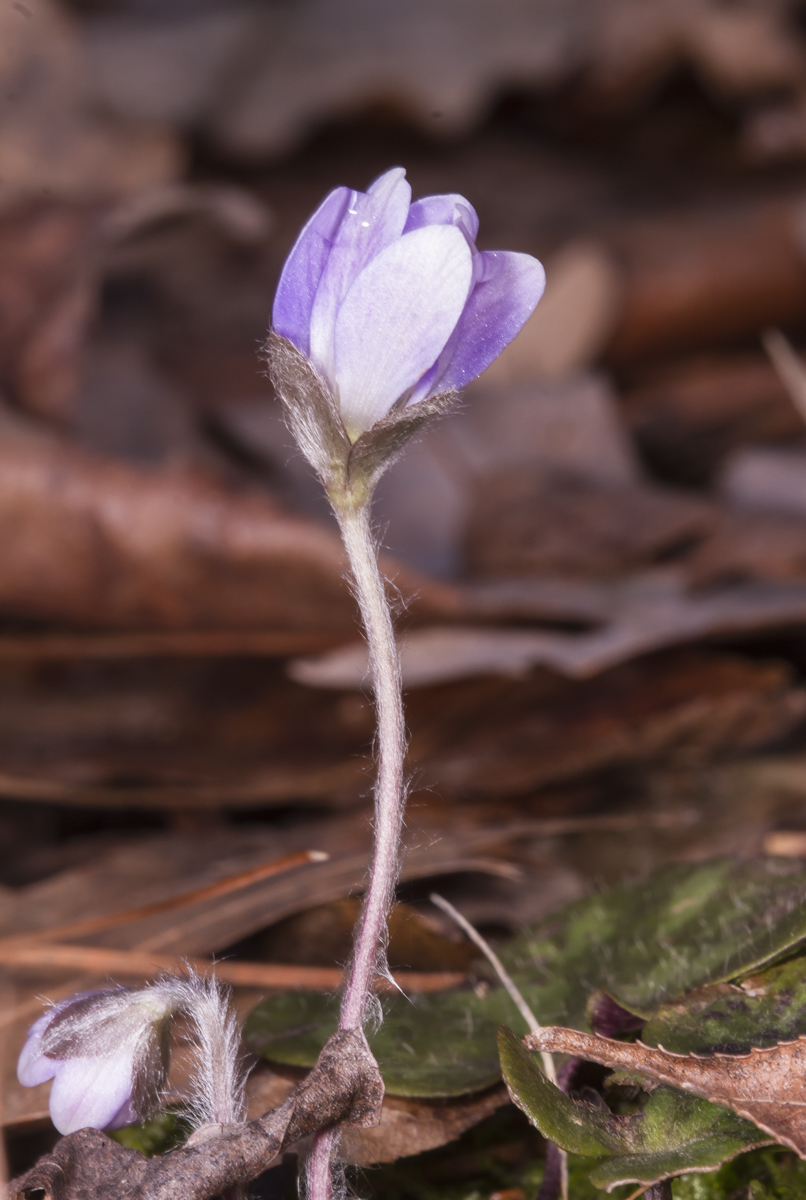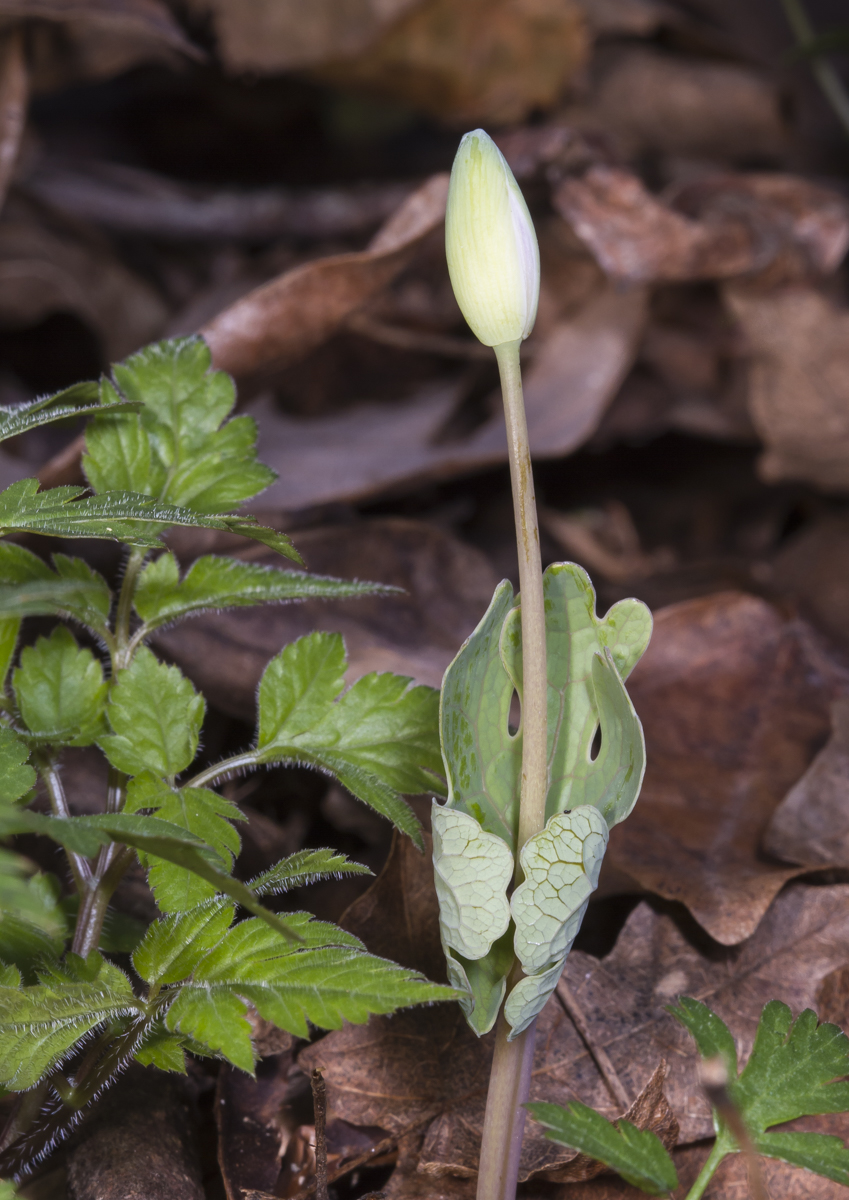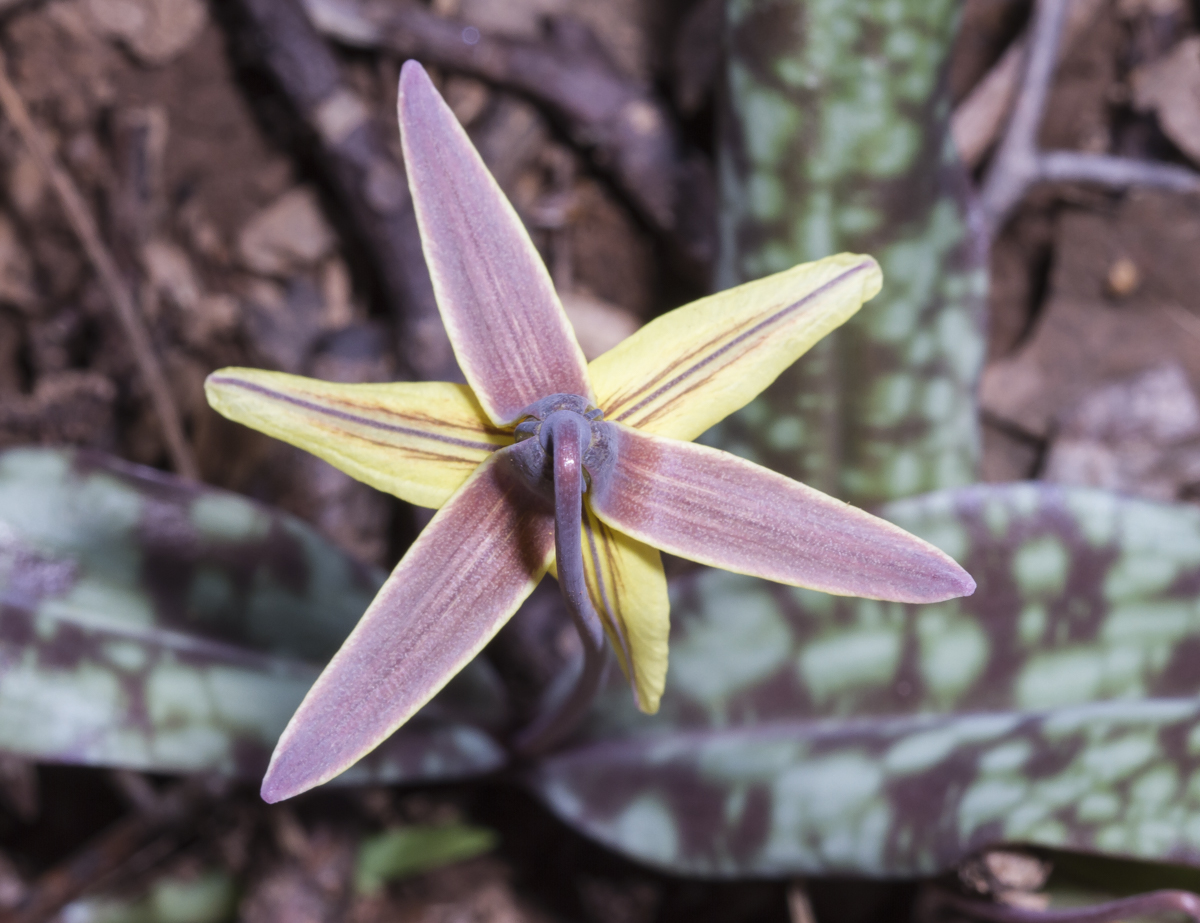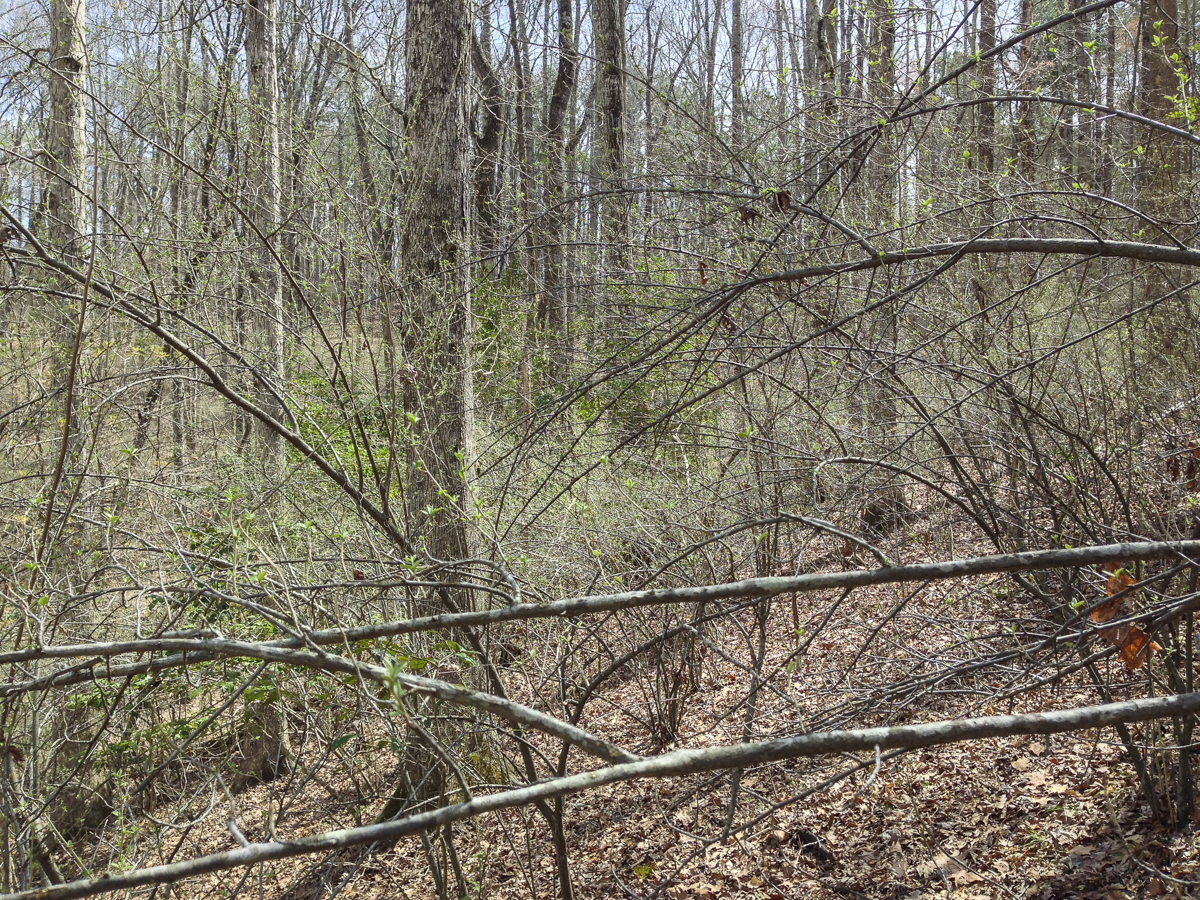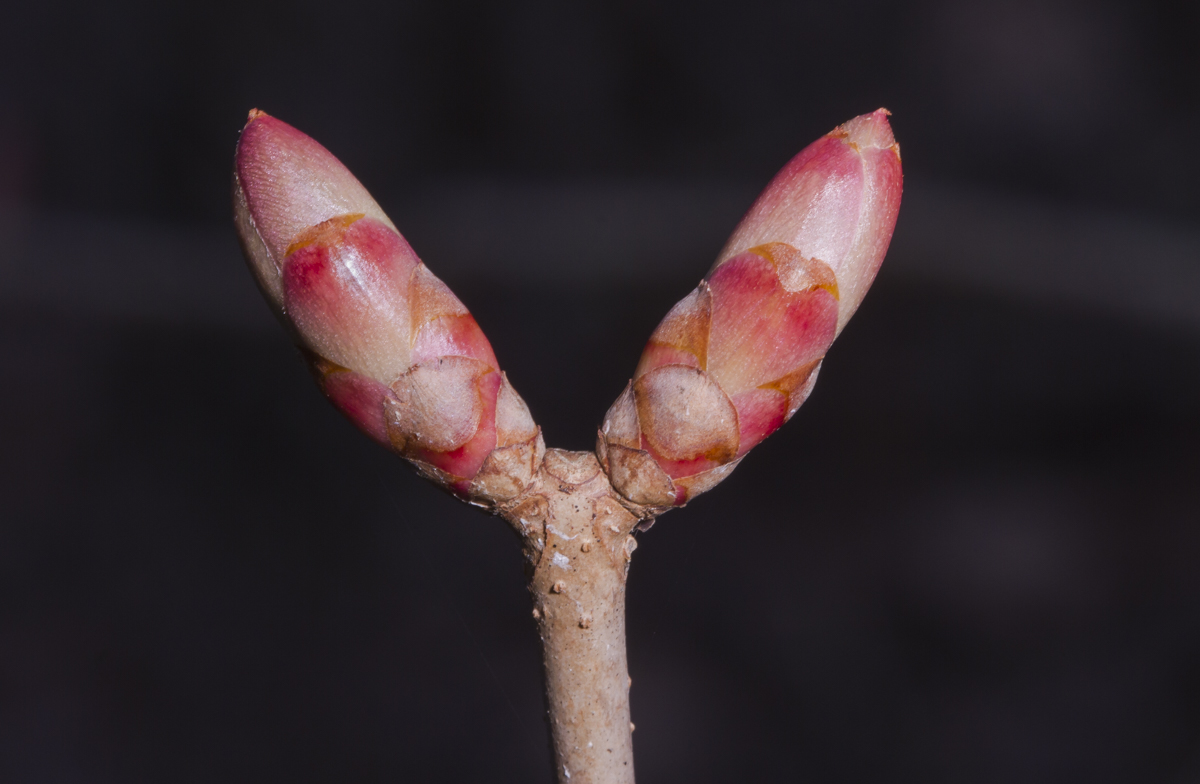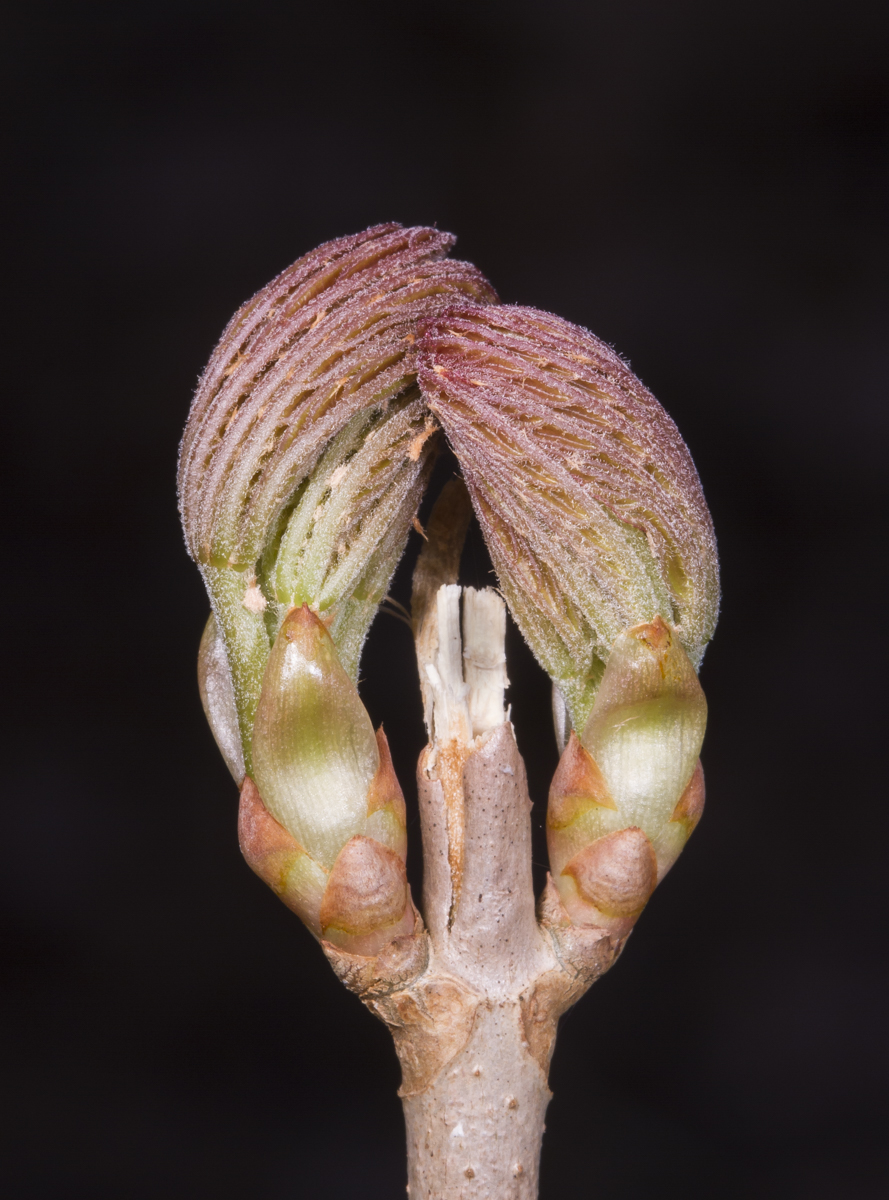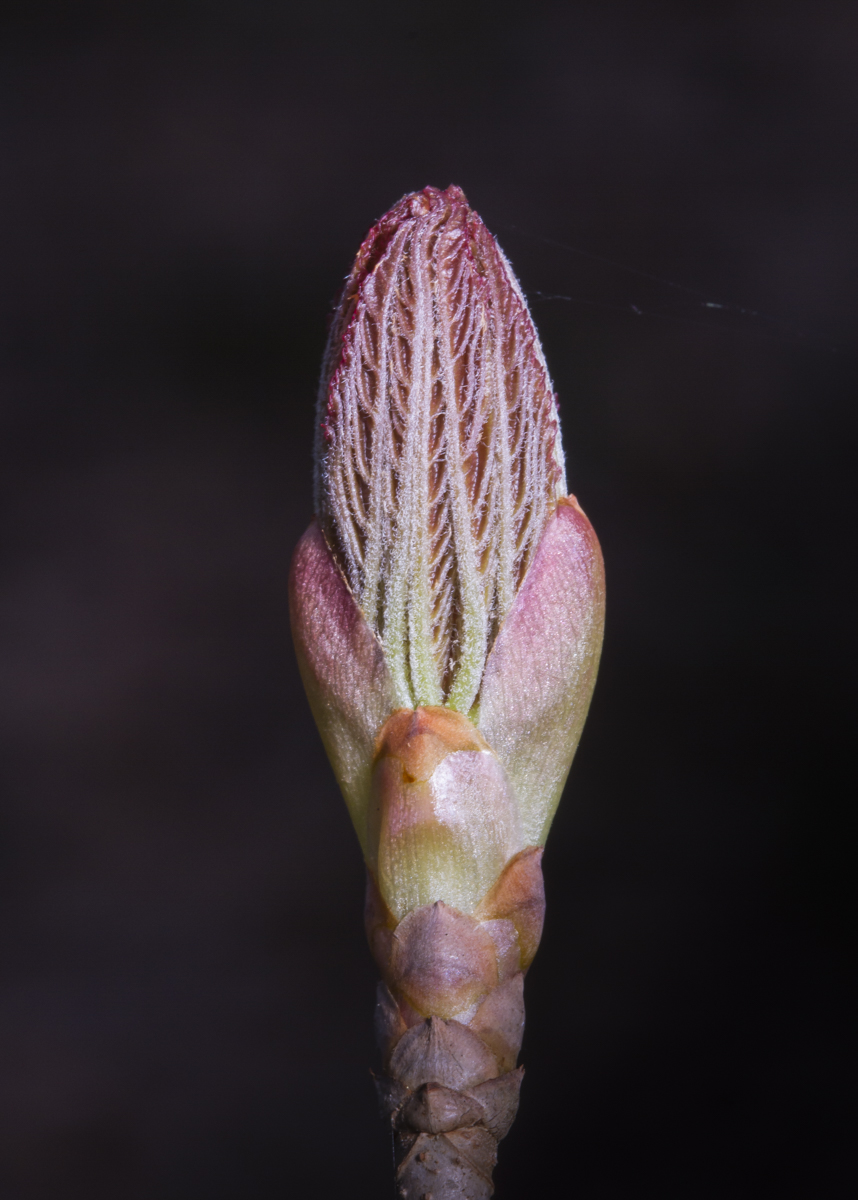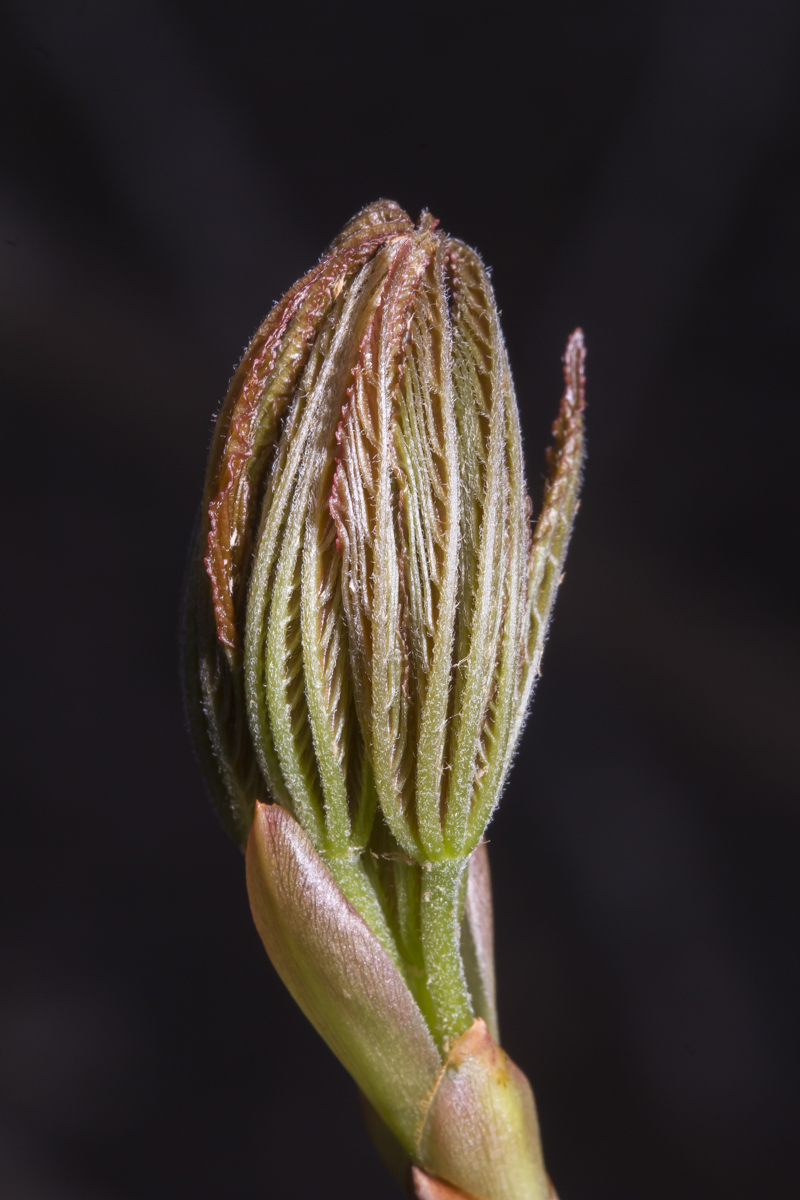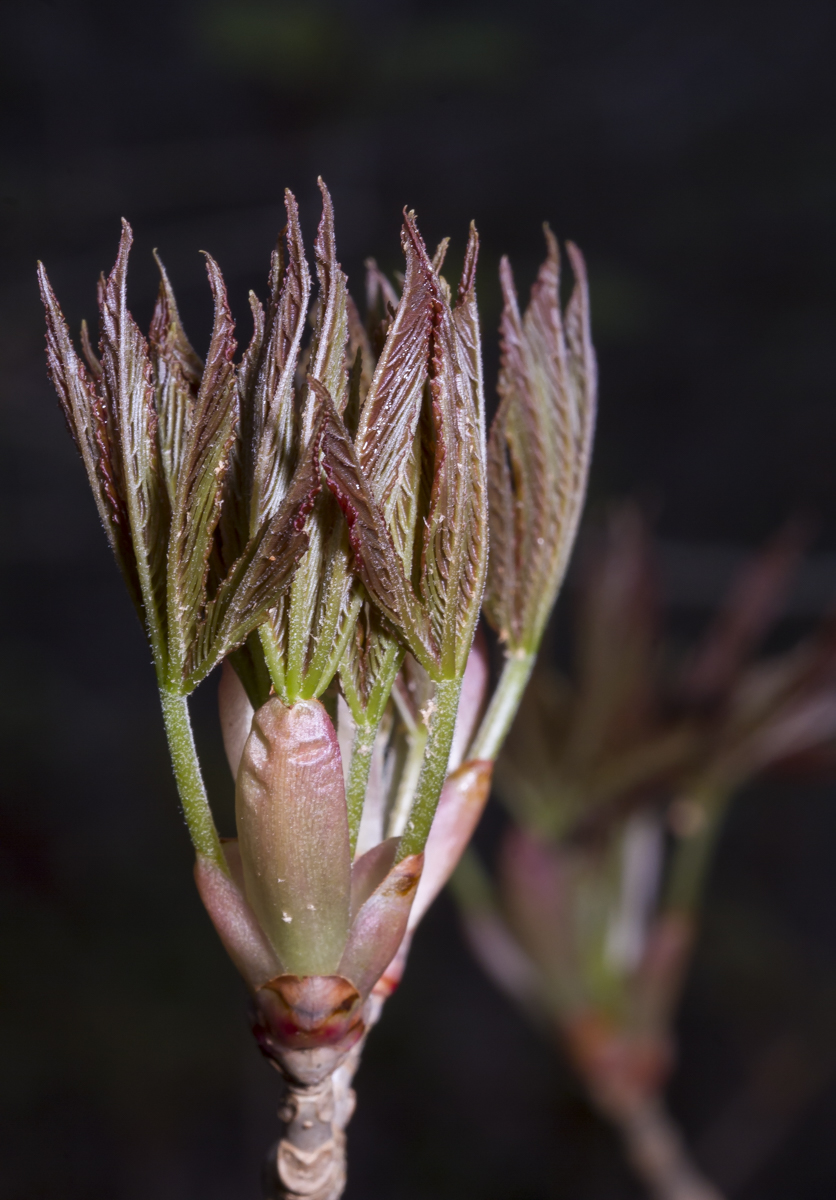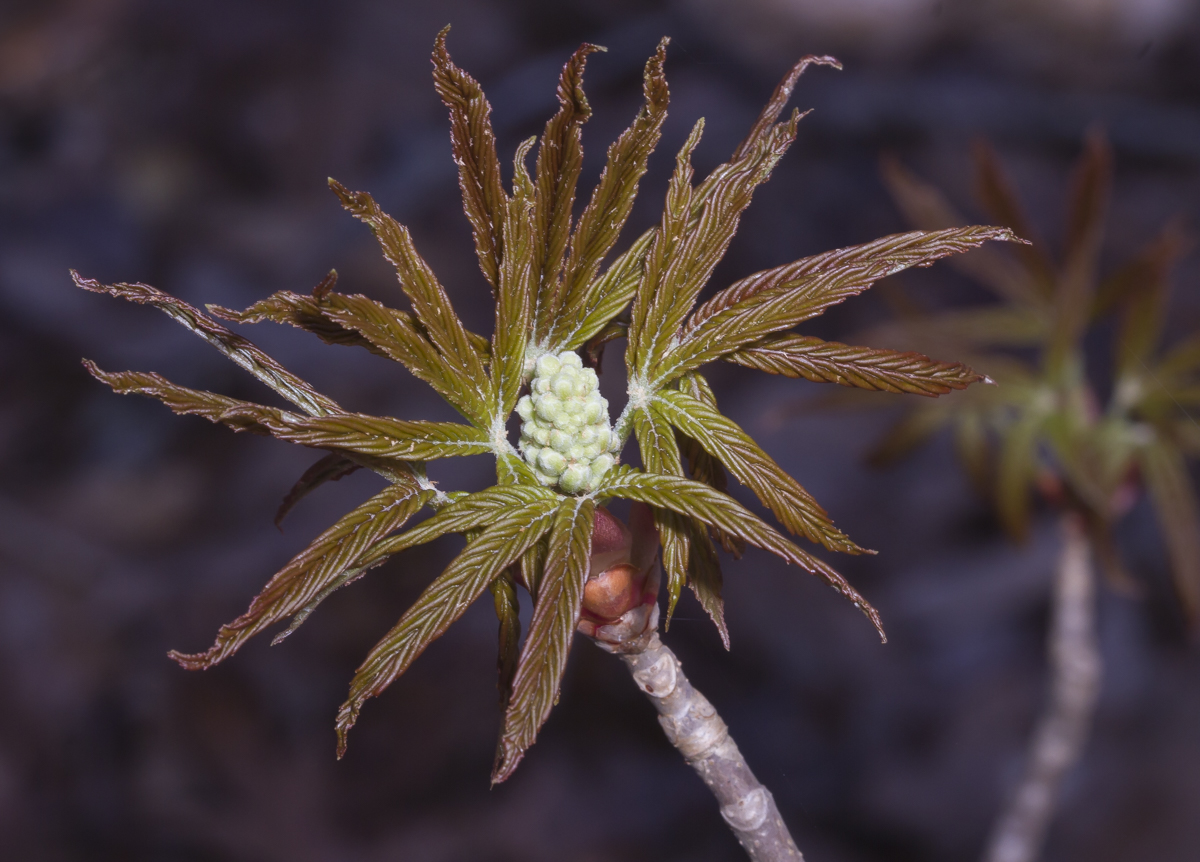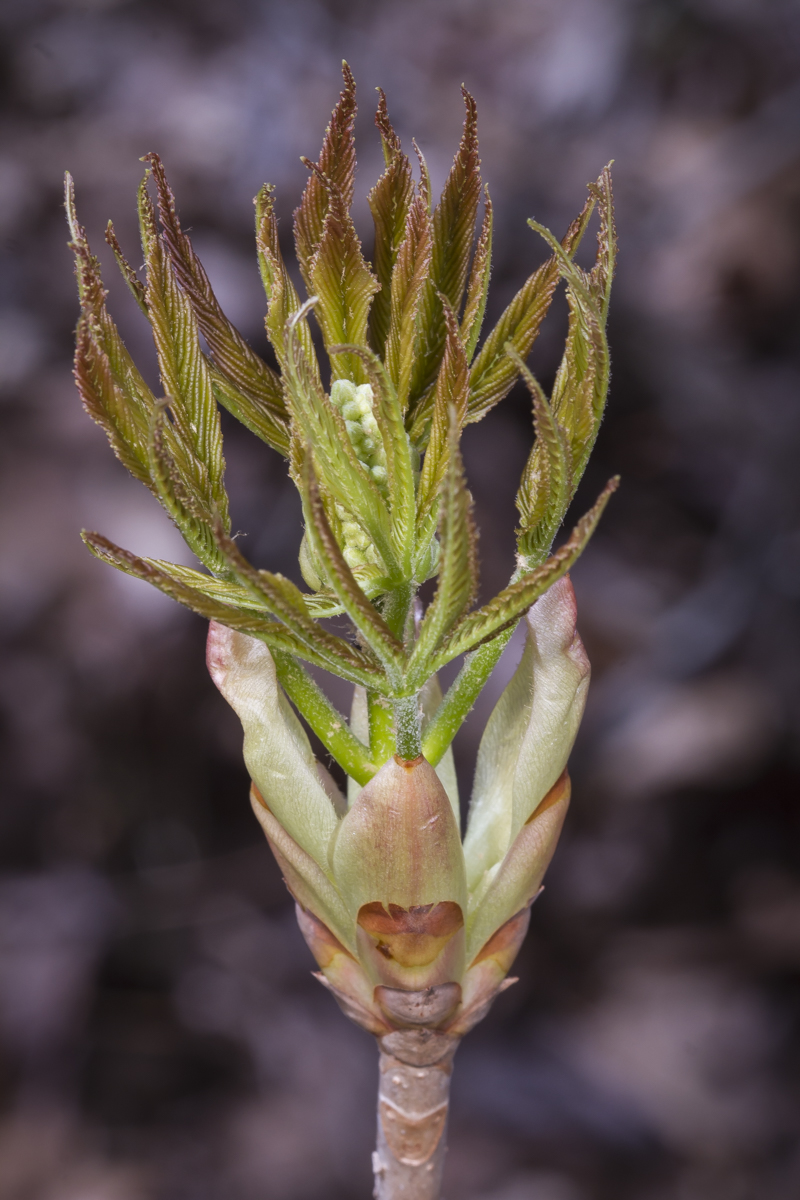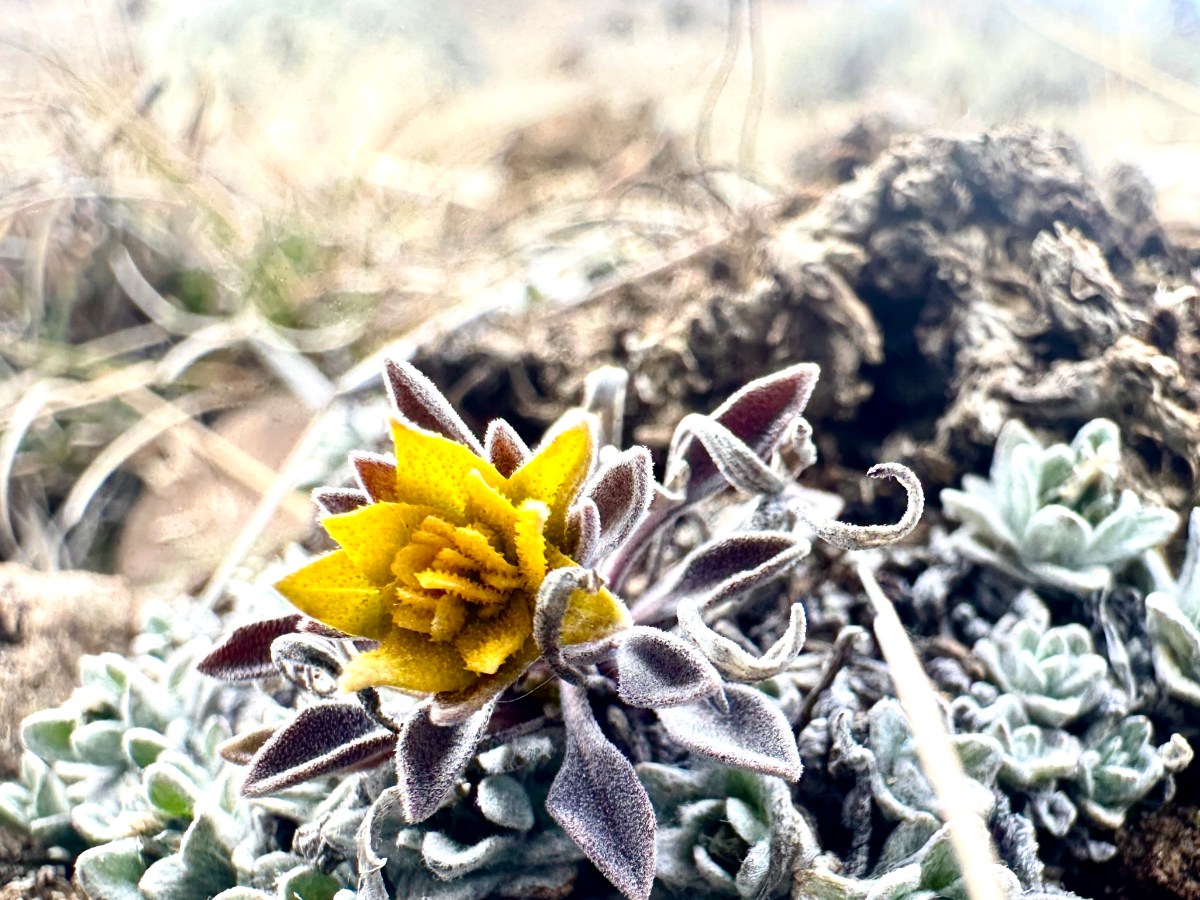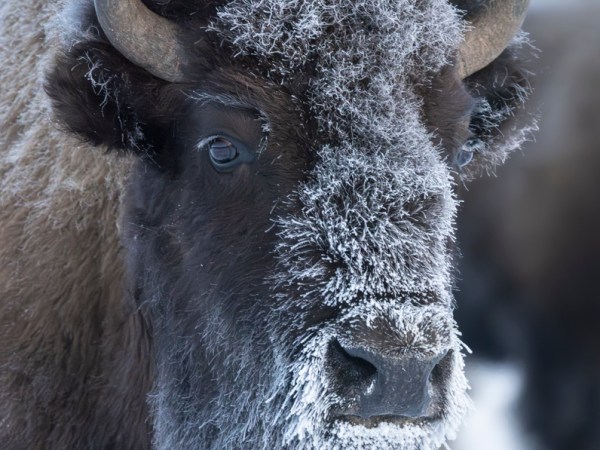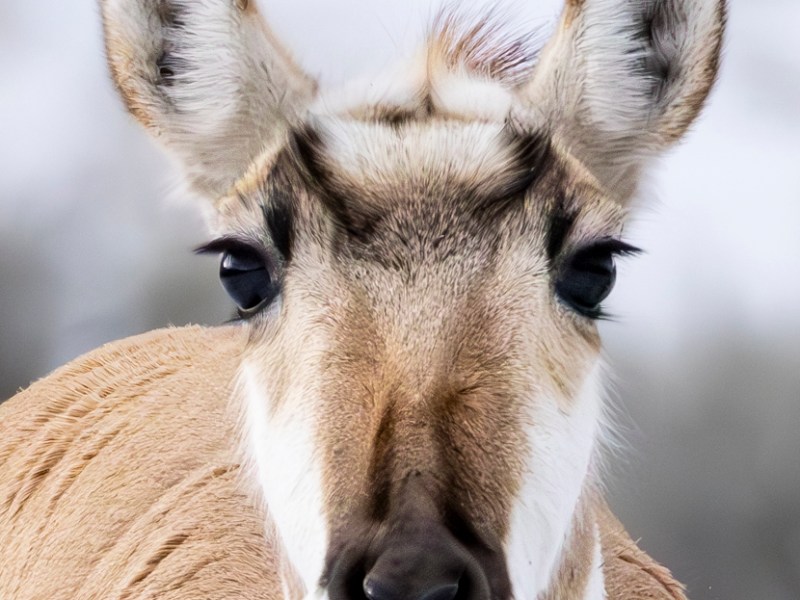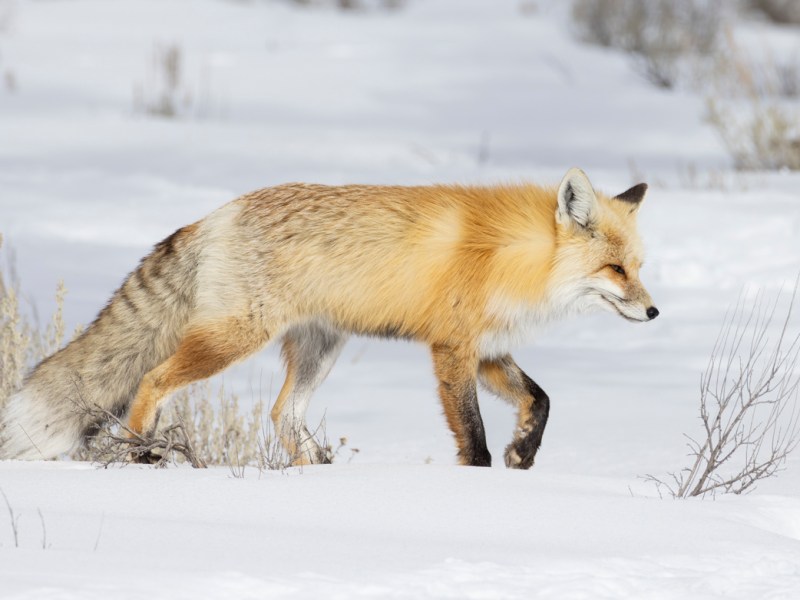
The flowers of late winter and early spring occupy places in our hearts well out of proportion to their size.
~Gertrude S. Wister
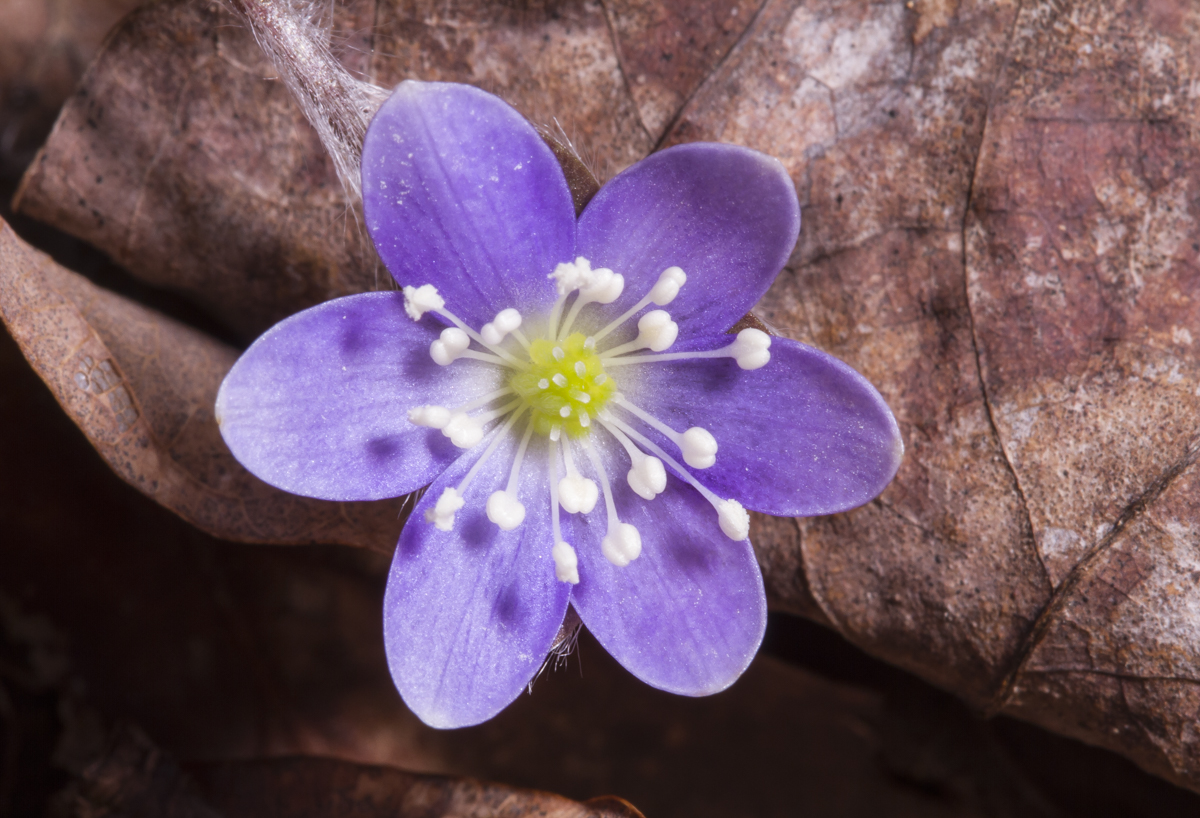
The change in our clocks this past weekend is one of the ways most of us know that spring is on the way in spite of the cold the past few weeks. Another are the first truly warm days like we are now having. But, for me, I know it is spring when I discover the first wildflowers of the season in our woods. One of the earliest is one of my favorites, the diminutive Spring Beauty, Claytonia virginica.
Spring Beauty (click photos to enlarge)
I saw this one yesterday afternoon, just barely poking its flower head above the leaf litter as I was walking through the yard. I immediately stopped and thought, it really is Spring! I got down on my hands and knees to take a closer look at the delicate beauty of the plants’ five petals. The petals can be quite variable, ranging in color from white to pink, but almost all have pinkish lines which appear to converge on the center of the flower. My flower has very faint lines, the so-called “bee guides”, which pollinators can see better than us. Research has shown that these lines on flower petals are used to guide the pollinators to the nectar when they visit a flower. A small ground-nesting bee collects the pollen from this plant and feeds it to its larvae. The aptly-named Spring Beauty Bee, and a few other species of small insects (especially a species of Bee Fly around here) are the primary pollinators.
And the pollen is quite noticeable on this species of flower – it is pink. You can see the pink pollen in the pollen baskets on the legs of the Spring Beauty Bee as it goes from plant to plant on warm, sunny days. The flowers tend to open mid-morning and close by late afternoon, and may remain closed all day on cloudy or rainy days. This helps preserve the pollen to increase the chances that a bee will visit on a sunny day and cross pollinate the plant.
Spring Beauty is one of the earliest of our spring wildflowers
In addition to the beauty and complexity of the flowers of Spring Beauty, it also has an edible small tuber which is quite tasty to us, and a variety of wildlife. It is a great small plant for your home garden as it is deer-resistant. It can add a splash of color to your woodland garden for a few weeks each spring, before the whole plant goes dormant. It then remains most of the year as only an underground tuber until you need another pick-me-up glimpse of a delicate spring flower after next year’s long winter. This tiny, often overlooked flower, is a perfect example of why we all need to become more aware of our native species and why we should try to plant local natives whenever possible. In today’s New York Times, there is a great op-ed by native plant guru, Doug Tallamy, on why natives are important, Take a look, it is a good read. Then get outside and learn more about native plants in your area, and consider planting some for yourself, and for your local wildlife.
There is something that can be found in one place. It is a great treasure which may be called the fulfillment of existence. The place where this treasure can be found is the place where one stands.
~Martin Buber
Indeed, there are beauties all around us, so it really doesn’t matter where you stand, or live. I have not posted as much lately as I would have liked, and one of the reasons is that I have changed that place where I will stand and live. It is not far from my beloved Roads End (yes, I really did live at the end of Roads End, hence the name of this blog) and it, too, is a place of beauty, but without quite as much habitat diversity as the power line corridor at Roads End provided. The woods are older here, comprised mainly of towering Tulip Poplars, White Oaks, and various hickories. One added natural feature is that there is a little water here – some woodland pools and an intermittent wet-weather stream. With that, and the appropriate upland habitat, comes a special group of animals.
Spotted Salamander egg mass (click photo to enlarge)
I had seen a few Spotted Salamander egg masses in the pool right before all the cold weather hit and was anxious to see how they would fare after their home was frozen for the past 2+ weeks. Since the female salamander had attached most of the egg masses to twigs well below the water surface, almost all of the eggs seem to have survived quite well. I lifted one of the twigs to show the egg mass for the photo above. This is a great sign of things to come here in these woods.
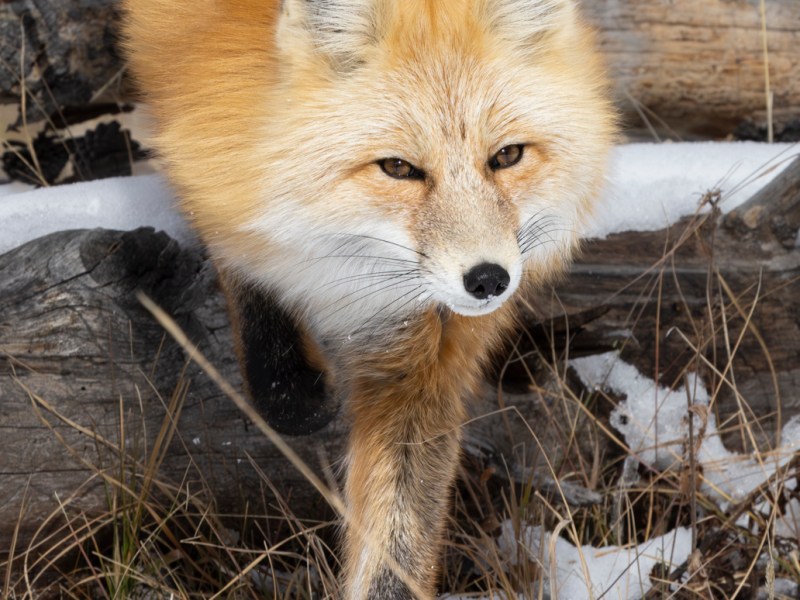
And, as if to help in the transition, there have been a few other special wildlife moments – a Red Fox trotted through the woods behind the house during the snow; a Barred Owl was hunting one morning in some trees near the porch; and this morning when I drove in, an adult Red-shouldered Hawk flew from a perch above the salamander pool. The hawk was surveying this mini-wetland for a possible amphibian meal, no doubt. All good signs indeed of the treasures to come. Now to capture some with my camera. Stay tuned…
But if one steps off the road, even a few hundred feet, and listens, there is a calm to the land, a certain wild rhythm that is closer to the surface than in most places.
~Renee Askins, speaking of Yellowstone
My favorite place had a birthday this week. On Sunday, March 1, Yellowstone turned 143 years old. Looking pretty good for that age, I must say. It was the beginning of what Ken Burns called, America’s Best Idea, the National Park System. Help me celebrate this grand idea by joining me on an unforgettable outing this June in Yellowstone National Park. Details are available on my Trips page. There are still spaces in both trips, but I will need to finalize details soon. Please contact me for additional information or to request a registration form. And please share this with others you think might be interested. Join me, step off the road a ways and listen, feel that calm and wild rhythm for yourself.
Here are a few more images to whet your appetite…
Foggy sunrise in Hayden Valley (click photos to enlarge)Yellow-headed BlackbirdGray Wolf departing Elk carcass with a scrapCastle GeyserBison in Little AmericaGray Wolf at Soda Butte CreekMountain Bluebird at nest cavityElk skull and antlersBull Moose browsing on aspen saplingsHarlequin Ducks at LeHardy RapidsGreat Gray OwlPine MartenDouble rainbow near Mammoth
Only with winter-patience can we bring the deep-desired, long-awaited spring.
~ Anne Morrow Lindbergh
I think I should have been more precise in my wishes in my last post, Until Next Winter….what I meant to say was I can’t wait until next winter at Pungo. I think I have had enough of whatever is happening out there right now here in the Piedmont and many of us are getting thin on our winter-patience. The snow this week was nice, although it prevented travel for many in this neighborhood because of icy roads, especially on the shady hills. But the freezing rain this morning, and now the cold rain, well, I could use a break from this as I am sure most of you could.
Cavity in maple tree (click photos to enlarge)
Yesterday afternoon I went out looking for a photo opportunity and ran across this cavity in a maple tree out front. I have seen squirrels running in and out on occasion, so I decided to wait awhile and see what might happen.
Gray Squirrel peeking out of tree cavity
After about 20 minutes, a tiny head popped out of the hole and stared blankly at the outside world. A young Gray Squirrel surveyed the scene, probably thinking the same thing I was…boy, it’s cold out here.
Squirrel glances at me
The squirrel then turned and faced me for a few seconds, no doubt wondering what I was doing out in these conditions.
Squirrel retreats inside nest cavity
The youngster quickly retreated back into the warmth of its shredded bark-lined domicile inside the safety of the tree trunk. I then heard that raspy chirring tone they use when upset. I’m not sure, but I think it was saying, enough already…I am guessing it had heard the forecast for today.
Bird migration is the one truly unifying phenomenon in the world…
~Scott Weidensaul
Snow Geese landing in a corn field on their wintering ground at Pocosin Lakes NWR (click photos to enlarge)
Having been stuck in the Piedmont the last two weeks with other priorities, I imagine the Snow Geese have left their winter home at Pocosin Lakes NWR and started their long journey north. The Tundra Swans have probably started as well, but my guess is that some are still hanging around with all this cold weather we have had lately. But, soon, they will all be gone, not to return until next winter. On a recent trip, some of the local weather experts, the trees, were telling me it was almost time for the birds to leave.
Red Maple flowers
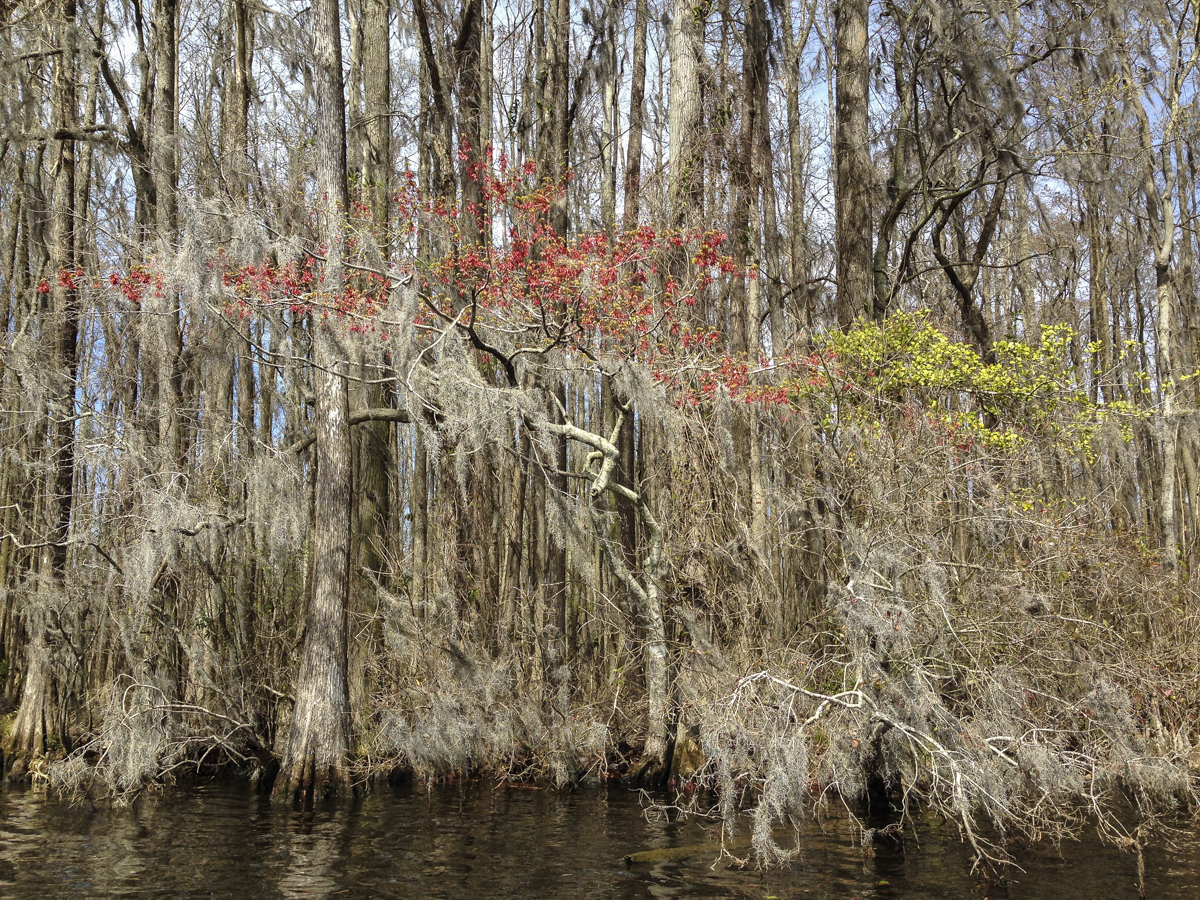
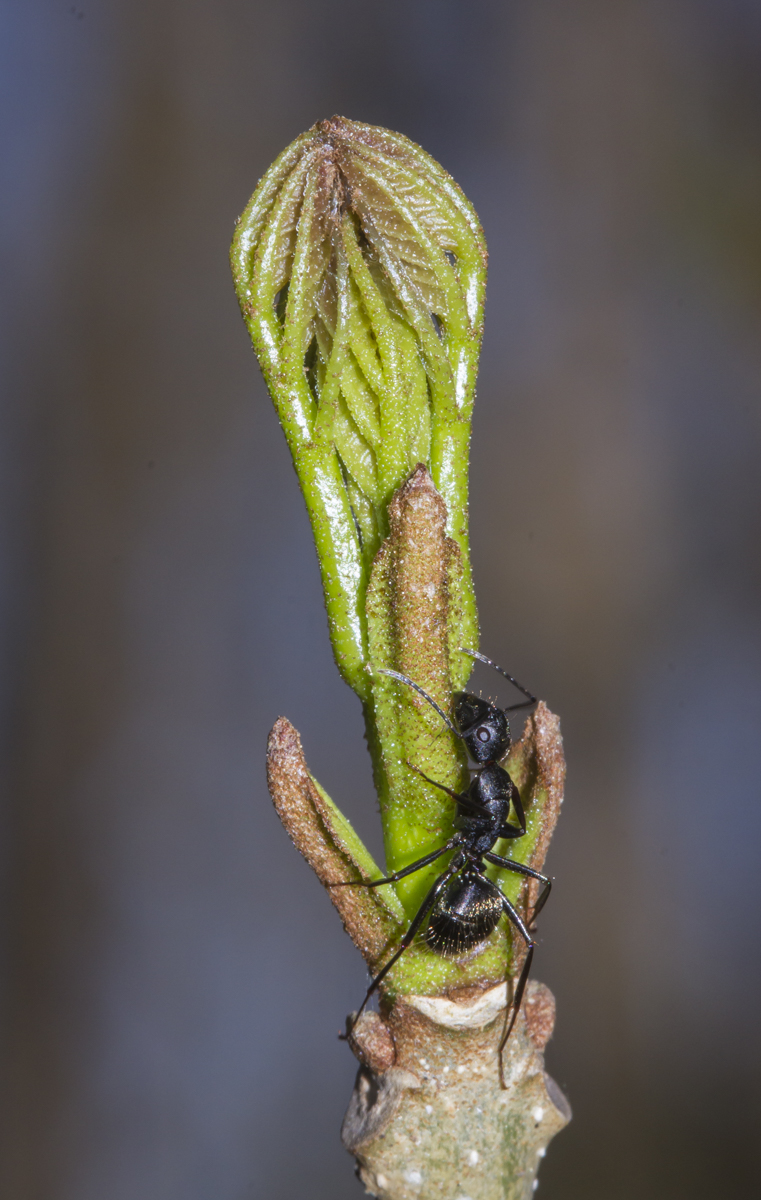
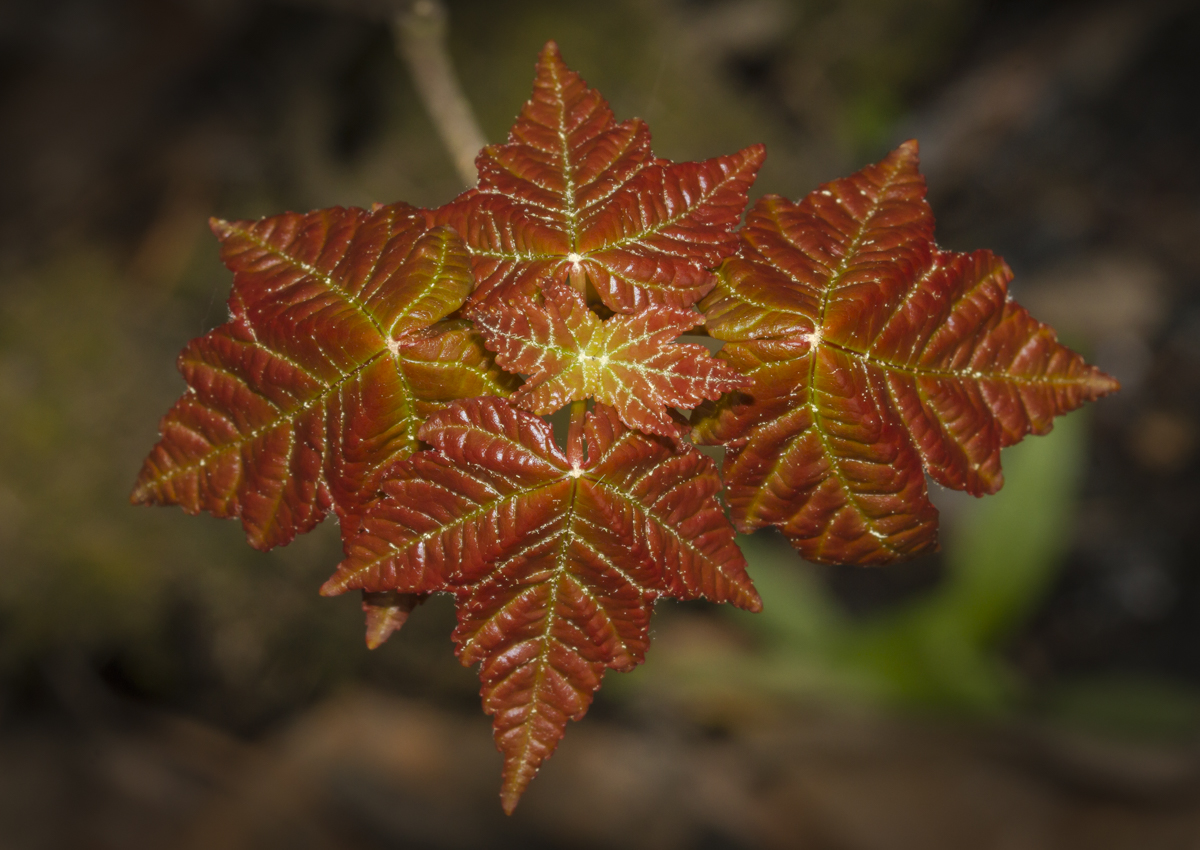
And when the Red Maple flowers start to bloom, it won’t be long until the frogs are calling (actually, we heard some back in January) and the winter waterfowl start winging their way to the breeding grounds. So, as I sit here in the Piedmont on a snowy day when others are wishing for the sixty degree days of early Spring, I am thinking of the first cold blasts of air in November and December next year that will bring with them the amazing birds of winter.
Here is a short video of the last flock of Snow Geese I saw this winter, shot on my last trip two weeks ago, They remind me of animated snow flakes falling into the corn field…I hope those of you that are sick of the cold, ice, and snow can forgive me, but I can’t wait until next winter.
The sky is that beautiful old parchment in which the sun and moon keep their diary.
~ Alfred Kreymborg
Sunrise at Pungo Lake (click photos to enlarge)
One of my favorite things about eastern North Carolina is the big sky (maybe that’s why I like Montana so much as well). And I have seen some wonderful big skies at Pungo this year, especially at sunrise…
Snow Geese in front of the moon in the golden light of sunset
…and sunset. And so it was on my last trip. The morning had been spectacular at the swan impoundment. I wasn’t paying much attention at first to the goings on in the sky as I was so focused on the swan silhouettes on the water in the orange-gold glow of sunrise.
Tundra Swan in early morning light
After photographing the swans swimming and preening, I finally turned my attention to those starting to fly out of an adjacent area. The last bits of golden light soon faded, but not before I caught an image or two with it bathing the undersides of a passing swan.
Swans coming in for a landing
High clouds soon moved in and the light changed dramatically. Now a few small groups of swans were starting to land in the impoundment to join the hundreds of others already enjoying the swan spa. I love to watch them as they prepare for a graceful touch down.
Snow Geese circling the field
I left to head towards a favorite area and was surprised to see no cars in spite of it being a beautiful (albeit cold) Saturday morning. The Snow Geese had already flown off the lake by the time I arrived and were circling the fields in their usual erratic attempt at settling down. I took a few shots as they circled far across the corn and then started walking down the road.
Snow Geese blasting off from corn field
Suddenly, they all blasted off with the distinctive whoosh sound of thousands of wings. I stopped, hoping to see what might have spooked them. It can be anything, or seemingly nothing at all. I scanned the field edge for bears and the sky for any sign of a predator.
It was hard to tell what had flushed the flock at firstThe Bald Eagle finally came out into clear view
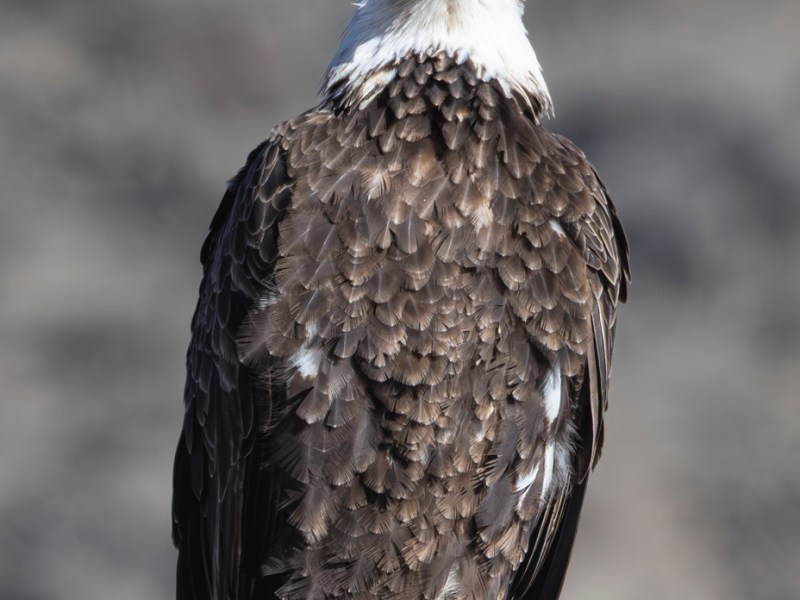
One thing that will always flush the flock is an eagle. Finally, from behind the cloud of flapping white and black, a flapping black and white appeared – a Bald Eagle.
Bald Eagle lowering its landing gear
The eagle cruised past the scattering Snow Geese and seemed intent on a particular spot on the ground in between the rows of standing corn. I had seen a few vultures in that area when I had walked by, and the eagle dropped down in the same area and disappeared behind the corn. Undoubtedly, the vultures and eagle had found a carcass of some sort.
Red-winged Blackbirds in dense flockSnow Geese and Red-winged Blackbirds
Now a new flock was added to the aerial commotion – Red-winged Blackbirds. The sky was soon a swirl of tiny black spots and noisy white blobs.
Red-winged Blackbirds showing their flashy sideRed-winged tornado
These huge flocks of Red-winged Blackbirds (and usually some other species mixed in) are one of my favorite things about Pungo in winter. There were probably close to ten thousand birds sweeping across the corn, and flying to and from the trees. The sound was incredible. And every now and then a tornado of red wings erupted from the field. As with the Snow Geese, this was usually caused by an aerial predator.
Northern Harrier and potential prey
In the case of the blackbirds, it is often a Northern Harrier cruising the fields looking for a meal. I could see two of them canvassing the corn so I set up my tripod and waited, hoping for a passing shot, especially of the male I could see on the far side. I have tried to get an image of one of the ghostly gray adult males for several years but they have always eluded me.
Male Northern Harrier looking for a meal
The male Northern Harrier finally sailed by my side of the field, gliding on his large wings, head down, looking for a bird or small mammal.
Male Northern HarrierA close pass by a male Northern Harrier
He swung by close enough for a few good shots, the sunlight catching his contrasting feathers and highlighting his bright yellow eyes.
Immature Bald Eagle
I soon encountered the Black Bear and Raccoon from my previous post and spent a couple of hours watching things in the trees instead of the sky. But I finally I headed back out to the fields to see what was going on. There were several eagles perched in trees around the field edges. A couple of people were now walking on the road, and they spooked a couple of the eagles, one of which flew close by me for a nice look. It was an immature Bald Eagle, recognized by the mottled whitish “arm pits” as it flew over my head.
Snow Geese in golden light
The light was getting beautiful, a golden glow from the low angle of the sun. I soon heard the loud, low whoosh made by the wings of the Snow Geese lifting off the lake. The show was about to begin. I could hear them coming and then the first of the birds flew over the tree tops, headed out to the corn. The light was gorgeous, turning the flock into a gilded swarm. The people on the road stopped to watch the birds fly overhead and then headed back down the path once the flock was across the field. I knew there were a couple of more eagles ahead of them and I figured these birds would soon fly, so I stepped up against a tree trunk to help hide my outline and waited, hoping one of the adult birds would fly by me.
Bald Eagle in late afternoon light
Sure enough, I saw the remaining two eagles head out over the field and one banked and headed my way. Then I heard more Snow Geese flying in from the lake. If only….
Bald Eagle and Snow Geese sharing the golden light
As luck would have it, the eagle circled back just in time for the Snow Geese to fly behind it, giving me a rare opportunity to see and photograph this spectacle three times in one day, predator and prey sharing the sky. But this light was by far the best of the day. The eagle spotted me and flew out over the tree tops, leaving me to watch in awe as thousands of Snow Geese flew into the field for one last feeding before nightfall.
Snow Geese returning to lake
Thirty minutes passed with the flock in a feeding frenzy on the far side of the field. Another eagle flew out near the restless birds and they once again exploded into the now pinkish-purple sky. Thousands of birds circled and then headed back to the lake for the night. It had been an amazing day of colors and sounds, with my focus on the water, forest, and sky of Pungo. While this is not a wilderness, it is a very special wild place to me. And I think it is important for us all that these wild places exist. Spending time in them helps us understand ourselves, and gives us insights into the workings of the world and our place in it. I found this quote by former Supreme Court Justice William O. Douglas that does a good job of putting into words what a day like this means to me…
Wilderness helps us preserve our capacity for wonder
the power to feel, if not so see,
the miracles of life, of beauty,
and of harmony around us.
I will carry this sense of harmony for a long time to come.
Each of us needs to withdraw from the cares that will not withdraw from us. We need hours of aimless wandering…observing the mysterious world of ants and the canopy of treetops.
~Maya Angelou
Looking up through the trees at Pungo (click photos to enlarge)
It was certainly too cold for ants on my last trip, but not for enjoying the treetops. On my trips with clients I often feel the pressure to keep moving, to cover as much of the refuge as possible to increase our chances of seeing wildlife. When I have my own Pungo Time, I tend to wander and linger in an area for longer, just observing. I enjoy being a woods-watcher, looking closely at the details of a place, listening, sitting quietly and letting nature come to me. The forests of Pungo are challenging – there are relatively few places you can walk in them during the winter waterfowl season as many areas are closed to minimize human disturbance to wildlife. Other areas are so dense or so wet as to make walking next to impossible. But, there are a few paths where you can stroll along a dirt road next to the woods and peek in and see what is, or has been, going on in the forest.
Bald Eagle in dead tree at swan impoundment at sunrise
Of course, I also survey the edges of the forest as I am driving the refuge roads, and these trees, especially dead snags, are often quite productive. Bald Eagles like to perch in large trees at the edges of impoundments or fields where waterfowl congregate. Here, they can survey the scene in the hopes of spotting a weakling in the flock that might make an easy meal.
Turkey Vulture in early morning light
One section of forest edge has also been good for vultures early and late in the day, so I assume they have been roosting in this spot this winter. Even at some distance, their silhouettes can be distinguished from those of eagles because of their somewhat hunched appearance and the way they tend to hold their heads at a downward angle. If you can get a beak profile in your binoculars you can definitely discern the difference between the two species since an eagles’ beak appears much stronger and more massive.
Bears must love the sap and cambium of Sweet Gum trees
After an early morning drive through the refuge, I decided to head down one of my favorite paths and spend some time along the edge of the forest. This area is well known for the population of Black Bears that frequent the corn fields and associated woodland borders. There is so much bear sign here – almost every large tree has claw marks from scratching or climbing. Large Sweet Gum trees are particularly susceptible to bear activity and many show scars where bears have torn off sections of bark near the base. There are usually vertical teeth marks and often some horizontal claw marks. I think the bears must be going after the sweet sap and perhaps the cambium layer of these trees. It looks like this past year (I assume it happens mainly in spring when the sap is rising) has been a particularly busy one for bears with a sweet tooth. Surprisingly, I see most of these trees surviving years after this happens.
Young Black Bear standing next to tree
On a recent trip, I encountered a young bear as he was standing up against a large tree near the forest edge. I have seen this same young Black Bear several times this season in this same general area. But here he was apparently hugging a tree as if he wanted to climb it but was hesitant. He really paid me little mind but rather seemed more interested in something on the tree.
Bear puling at vine on tree
As I watched, I could see him sniff, then start mouthing something just out of my view around the trunk of the tree. It really wasn’t until I put down the camera and looked with binoculars that I could tell what it was – he was pulling at a Crossvine, a common semi-evergreen native vine of this area, and one I blogged about in 2013.
Bear puling at Crossvine
The bear walked part-way around the tree trunk, yanking and pulling the vine.
Bear eating Crossvine leaf
Once he got some of it down, he pulled it back around and stood up and appeared to eat a few of the leaves. Seems like a lot of effort for little reward to me, and, while I have heard deer will eat the leaves, I had not heard of bears eating them. But, young bears are particularly curious, so, even though there was a field of corn less than 200 feet away, this was perhaps a more pleasant way to spend some time while trying new things. On my next visit, I took my clients to this area, hoping to see the young bear again. Instead, we were privileged to spend some quality time quietly observing a mother bear with her two young cubs. The next day I went back to this area with high hopes for bears.
A young Black Bear sleeping in a tree
After walking a short distance I caught something out of the corner of my eye up in a large Tulip Poplar tree along the edge. Sure enough, it was the same young Black Bear I had seen on a few previous trips. This time, he seemed to be sound asleep high in a tree.
Looking back at me
When I walked around the tree for a closer look, the bear gave me one as well, peering down to see what was rustling leaves beneath its bed.
The young bear finally turned around and was in the sun
Not wanting to disturb its sleep, I went back around to the sunny side of the tree and waited. After about twenty minutes, the bear moved a bit, stood up, turned so its head was on my side of the tree, and laid back down.
Waking up
Another ten minutes went by as I watched the bear doze off and then open one eye to glance around. Finally, it raised up, checked on my whereabouts, and began to groom.
Time to groom
It apparently doesn’t take too long to ready yourself for an afternoon out in the forest (about 8 minutes for this bear after waking up). The short video below shows a few of the bear’s primping techniques.
During that time, the bear raised up, laid down, chewed its paws and belly, scratched a few times, and looked pretty relaxed while accomplishing all of this about 40 feet off the ground. The screechy sounds you hear in the video are from thousands of Red-winged Blackbirds that were sitting in nearby treetops. How did that bear sleep through all that?
Coming down
Finally, about 40 minutes after I first spotted the bear sleeping in a tree, it decided to climb down to spend time foraging on the forest floor below. That was my signal for me to move on and let the bear go about its business. I don’t want this young bear to become too comfortable around people, so I thought it better to let it be.
Another tree napper
I walked less than a hundred yards and noticed a well-camouflaged blob in a tree- this time a young Raccoon. I frequently advise clients to keep an eye out for sleeping Raccoons on our winter walks. I have found two others this winter, but they were both crammed into what seemed like uncomfortable positions in cracks and crevices of hollow trees. This one was out in the open, resting in the fork of a large tree trunk. I have noticed over the years that Raccoons like to sleep out in the open more on cold days with lots of sunshine and little wind.
Looking down at me
Like the bear, this little guy also had its best side toward me, so I walked around to look up and, once again, the tree-napper looked down the trunk at me.
The Raccoon turns around and faces the sun after being awakened
The young Raccoon slowly turned around and then began the same pattern of afternoon preparations that the nearby bear had done – a sequence of grooming. But, apparently, it takes a Raccoon a lot longer than a bear to get ready to head out.
This little guy had a lot of itchesYou sometimes really have to reach to get that itch
I sat and watched the Raccoon take care of business for 45 minutes.
The big yawn
After all that, we were both a little tired, so I decided to continue on. I could hear the Tundra Swans and Snow Geese out on the lake starting to stir, so I headed back out into the open where I could more clearly view another component of this amazing habitat – the sky.
And the sky did not disappoint (more on that in the next post). The pink sky directed me to my car after what had been an incredible day at Pungo. A lone pine provided a stark silhouette to guide me back. It reminded me of a quote I found some time ago by an unknown author…
The young pine knows the secrets of the ground, the old pine knows the stars.
The old trees also know the habits of many of the forests’ wild creatures, and at least one woods-watcher on this day, one who is very grateful for the presence of these stately trees, and for the company they keep.
Live in the sunshine, swim in the sea, drink the wild air.
~Ralph Waldo Emerson
Due to a crazy schedule at home this month, my last refuge tour of this winter waterfowl season was the first weekend of February. I had a great group of three clients that all had experience with our national wildlife refuge system and were excited to spend a day at the Pungo Unit of Pocosin Lakes NWR. We had a fabulous day of woods walking, blue skies, birds, and bears (which was one thing these folks really wanted to see). As usual, when leading a trip, I don’t take many photos. But, since it had been such a great trip, I stayed an extra day for some Pungo Time for myself…and I am glad I did! I had an entire day, with surprisingly few other people around, to enjoy the sights and sounds of my favorite refuge. As I looked back on the images, the day seemed divided between observations of three components of this incredible wildlife habitat – the water, the forest, and the sky. So, I decided to present them to you in that order – first, the waters of Pungo…
Sunrise over Pungo Lake from Duck Pen observation area (click photos to enlarge)
The centerpiece of this portion of Pocosin Lakes NWR is Pungo Lake. it is approximately 2800 acres, making it much smaller than nearby Lake Phelps (~16,600 acres) and Lake Mattamuskeet (~40,000 acres). All are shallow with average depths of no more than 5 feet, but Pungo Lake is very different in one important aspect. Unlike the other two, which have sandy bottoms, Pungo Lake has a peat base. This makes these waters very dark due to both suspended particulate matter and the tannic acids associated with peat. Very little sunlight penetrates these waters which means little or no aquatic vegetation grows in the lake. This, coupled with the acidity of Pungo Lake, means that there are few fish to be found in its waters. All of this dictates that this lake is used primarily as a resting and roosting area by the winter waterfowl, whereas Lake Mattamuskeet and Lake Phelps are also used as feeding areas. This also explains why you rarely see diving ducks, like Canvasbacks or Bufleheads, or fish-eating species, like Common Loons, on Pungo Lake.
Swan splash down on one of the managed impoundments at Pungo
In addition to the open waters of the lake, there are over 400 acres of so-called Moist Soil Units (MSU’s) and over 500 acres of forested wetlands in the Pungo Unit. The MSU’s usually harbor thousands of waterfowl each winter as they provide an ideal combination of available food (in the form of aquatic vegetation, fish, and aquatic invertebrates) and shallow water. This winter, one of the MSU’s that is alongside a refuge road has been a great place for observing and photographing Tundra Swans. I have shared many photos from this particular spot in previous posts but was looking for something different.
Sunrise from the observation platform on Pungo Lake
I usually start my days with clients at the observation platform on the south shore of the lake. It is a great place to watch the changing light and get some perspective of the lake and the surrounding landscape. As the sun starts to rise above the horizon there is often a parade of Red-winged Blackbirds flying out to the fields, along with the occasional Northern Harrier flying westward. This means I rarely see other areas of the refuge at that moment of the magic light of sunrise. But I started this day in a different spot, the impoundment known as Marsh A, a location I hoped would provide some striking silhouettes of Tundra Swans. The key is to get to your site well before the sun comes up. So, I positioned my car where the sun would come up behind a large flock of swans on the impoundment. Some of the swans were slowly swimming about, perhaps claiming their favorite spots. The changes in light start out slowly at first with the scene initially dominated by a blue-gray palette having only a hint of gold.
American Coot at sunrise
As an American Coot swims by in front of the swans, the golden hues start to cover more of the water surface.
Tundra Swan claiming some territory
The glow soon begins to flood the sky and the water below, giving the swans a more perfect shadow of themselves. They seem to respond with an increase in activity and interaction.
Swan preening just before sunrise
As I scan the flock, a few are preening, readying their feathers for the start of a new day.
Swan dipping its beak into the water with the sun just below the horizon
As increasing tones of orange signal the approach of the sun, I swing the camera back and forth looking for a subject before the bright beam of morning light breaks above the thin dark line of marsh bordering the far edge of the marsh.
A pair of Tundra Swans swim together as the sun rises
Before I can fully capture the fleeting radiance of the rapidly adjusting scene, the first rays of sunlight pierce through the trees lining the edge of the lake.
Swan silhouettes highlighted by the glow of the rising sun
Suddenly, there is a dazzling golden-orange stripe on the water. Swans swimming near the reflected beam now appear extra black. Their curved necks seem even more elegant in this light and their movements even more graceful.
Tundra Swans at the same location about an hour after sunrise
In less than fifteen minutes after the first orange beams struck the surface, the golden glow of a spectacular sunrise had faded. I decided to move on, looking elsewhere for some of the many species that tend to move about at this time of day. When I drove back by the impoundment about an hour later, the swans had settled into their morning routine of napping, preening, and discussing their plans for the day. And now the light was totally different.
A classic winter sunrise scene at Pungo
Their fleeting nature is one of the things that make sunrises so special. Each one different, each scene memorable, but brief. And on this morning, as is often the case, I had it to myself. While I love sharing these moments with others, there is also something special about being the lone witness to the start of another day in a wild place like Pungo.
Join me for an unforgettable experience in the world’s first national park, Yellowstone! I am offering two trips this summer – both in June. One includes an extra night in the park’s Northern Range plus an overnight to Grand Teton National Park. Both trips offer small group (4 to 6 participants) field experiences. We will spend our days exploring the unique thermal areas of the park and the wildlife-rich landscape of the famed Northern Range of Yellowstone, home to many of the park’s large herds of Elk, Pronghorn, and Bison. And where there are prey, there are also predators such as Coyotes, Grizzly Bears, and Gray Wolves. Visit my Trips page for more information and to request a registration form. Hurry, space is limited.
Here are a few images from previous trips…
Steam at Grand GeyserShooting Star in bloomRed Fox snacking on a rodentGrizzly Bear checking out the surroundingsThermal feature known as mud potsBaby BisonGrand Prismatic SpringBison silhouetteSunset in Lamar Valley after a brief thunderstormBarrow’s GoldeneyeBadgerGray WolfOld Faithful