I am back in Yellowstone leading a group, so posts will be limited for a few days. Great to be here so early, the brief season between winter and summer…absolutely beautiful. Look for more when I return.



Roads End Naturalist
Exploring the natural world as we wander at the end of the road
Posted by
I am back in Yellowstone leading a group, so posts will be limited for a few days. Great to be here so early, the brief season between winter and summer…absolutely beautiful. Look for more when I return.
Posted by
Each May for the past several years, I have made a pilgrimage to my parent’s home in Damascus, Virginia. It is my Dad’s birthday and, of course, Mother’s Day, so a perfect time to visit. It is also a perfect time to visit for the spectacle of spring in the mountains. We almost always manage a day trip up to Elk Garden, part of the Mt. Rogers National Recreation Area. Named for the elk that once roamed these mountains, Elk Garden lies between the two tallest mountains peaks in Virgina – Whitetop and Mount Rogers. The elevation at the roadside parking lot at this saddle between the peaks is about 4500 feet. And this year, I made it to the Mt. Rogers Naturalist Rally, an annual gathering of over 100 people that come to learn about the flora, fauna, geology, and history of this unique area. I joined the morning salamander walk and learned a lot about that often difficult to identify group of mountain salamanders (we found eleven species and well over a hundred individual specimens). Unfortunately, it was raining (although the area needs the rain), so I was not able to do much photography until after that hike.

This is probably the richest display of wildflowers I have ever seen, so it is a delight to visit each spring and see what is at peak bloom. This year was simply spectacular in spite of the dreary weather.
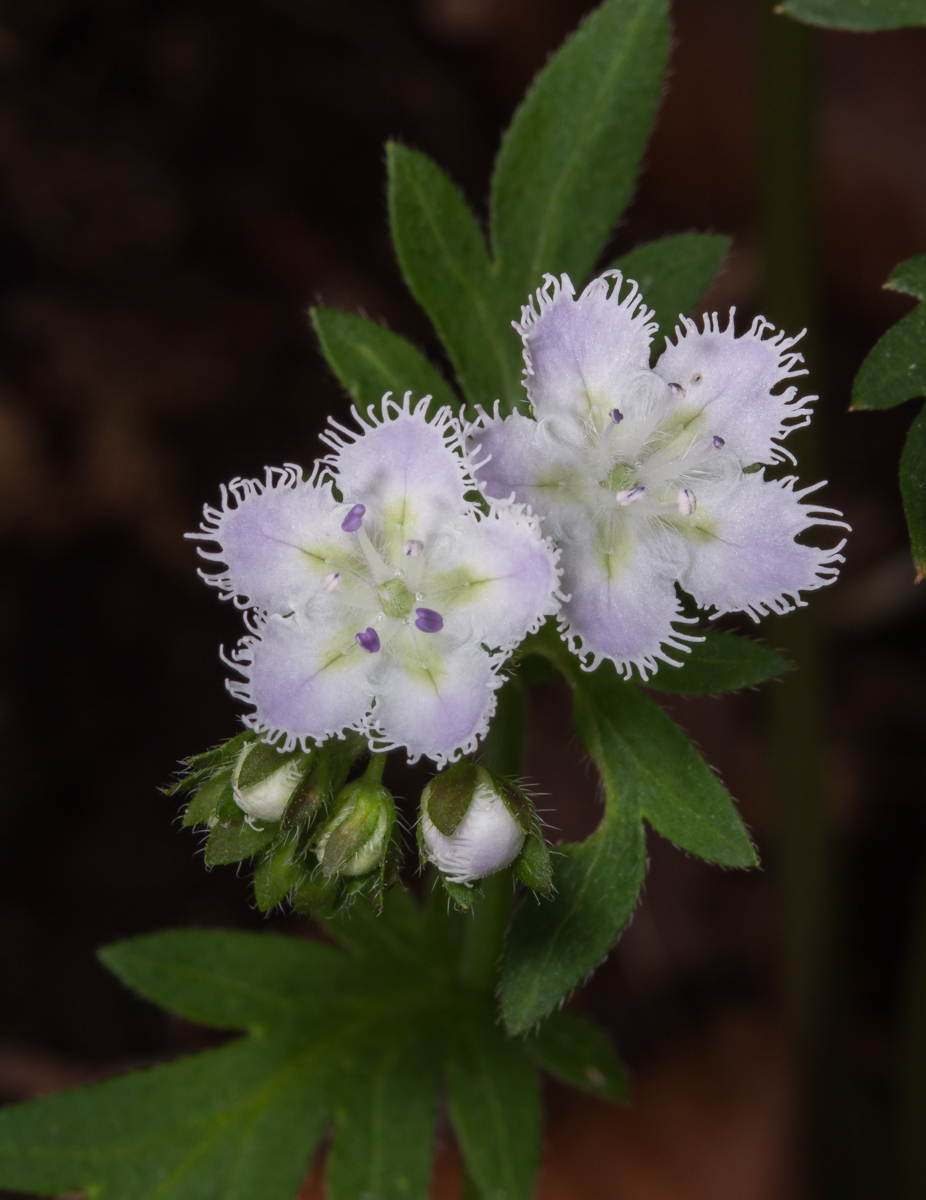
The forest floor at Elk Garden is carpeted with the deeply fringed petals of this beautiful wildflower. As the petals begin to age, they become tinged with purple. This is an unusual species in that it is one of the few winter annuals to be found amongst the many perennials in these rich woodlands.
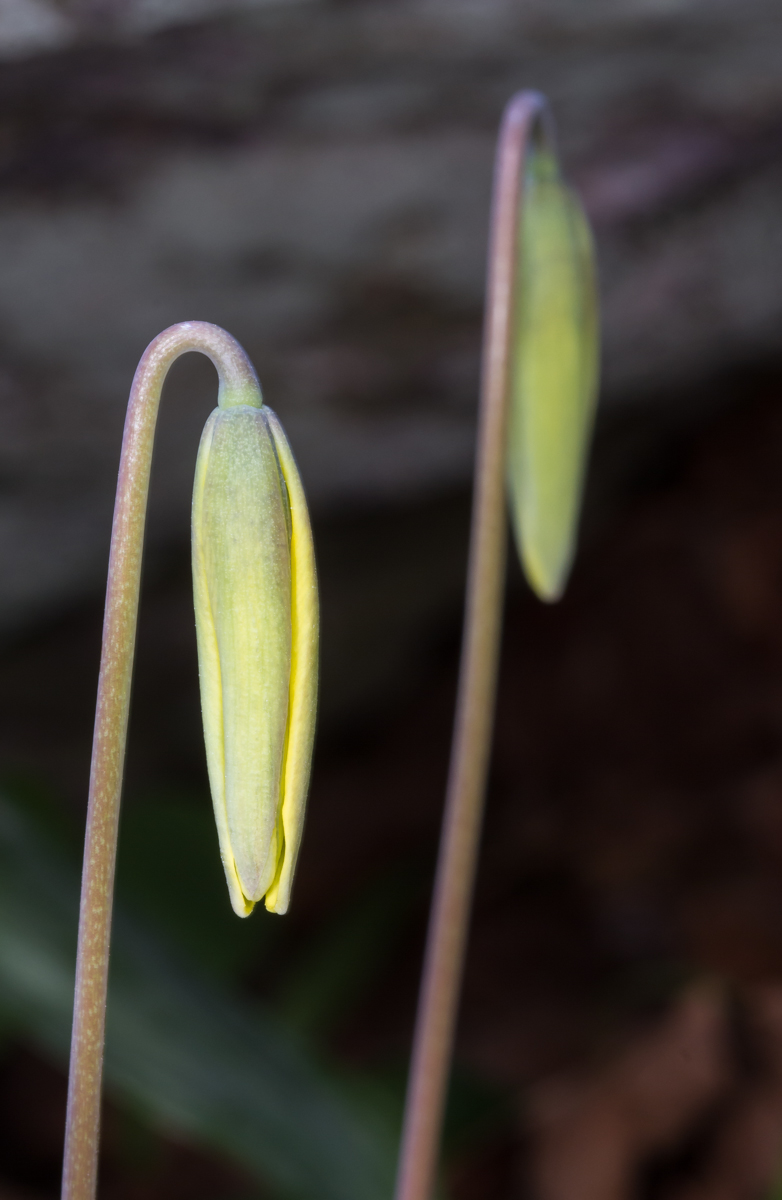

There are also huge populations of Trout Lily on these slopes. And this year, there were all stages of these flowers, from unopened buds, to waning yellow blossoms.

Splashes of maroon and pale yellow were found everywhere you looked. These stately flowers are a type of trillium, specifically a species known as Wake Robin. This common name supposedly refers to the time of year when it blooms – spring can officially begin when this species flowers, as its appearance is supposed to wake up the robins.
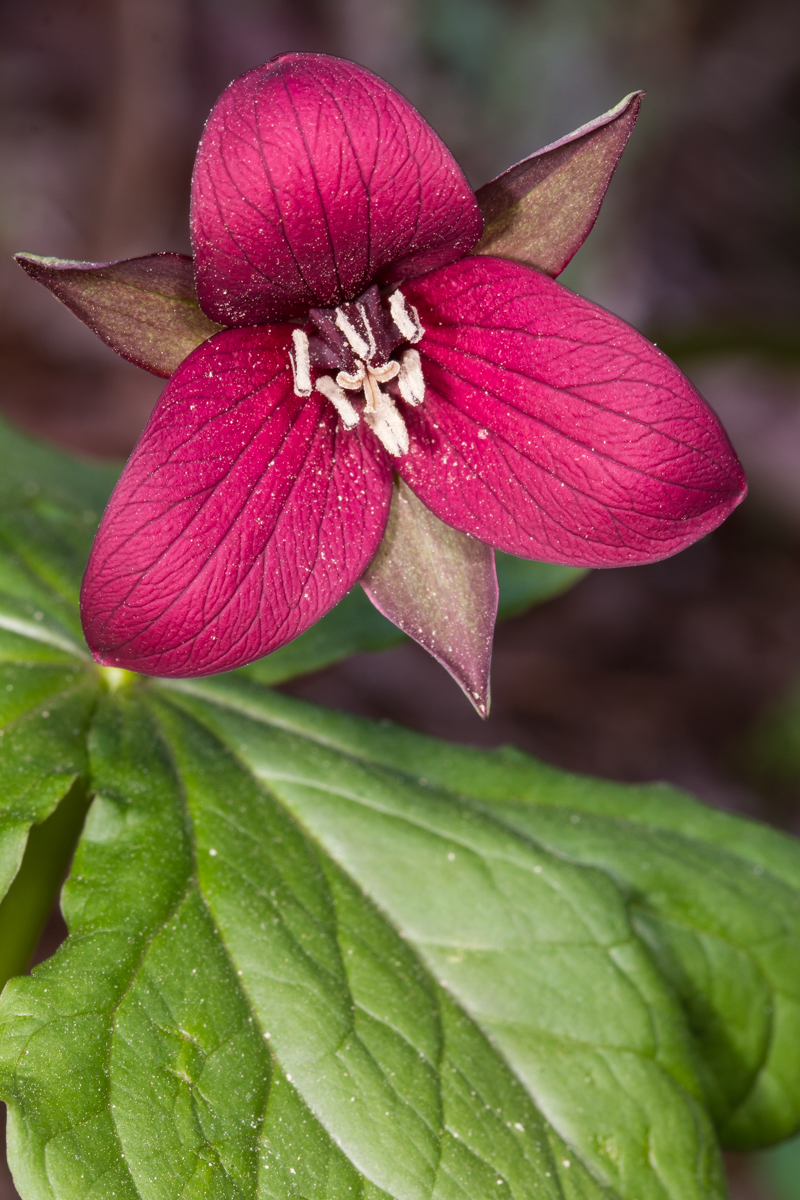
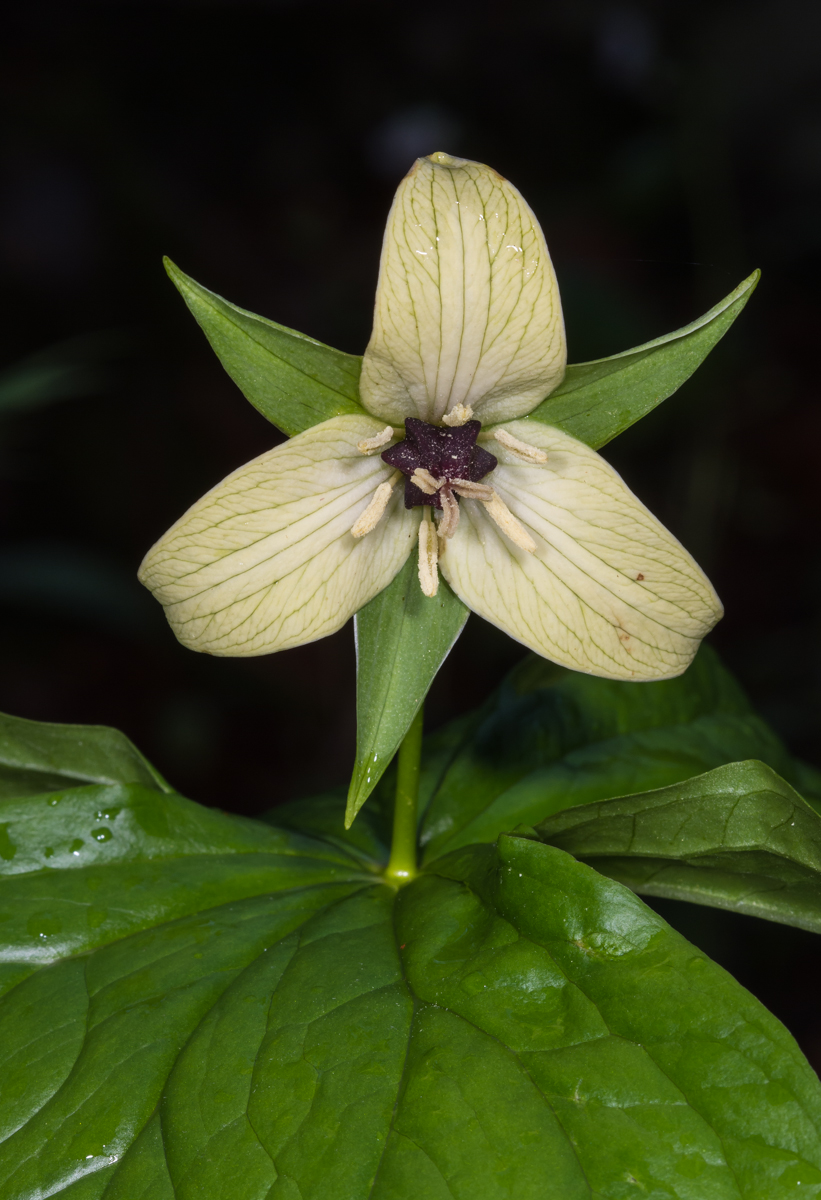
This species can be highly variable in color with maroon and white being fairly common elsewhere in its range. But here, I saw no white flowers, just lots of maroon and some pale yellow and cream-colored ones.
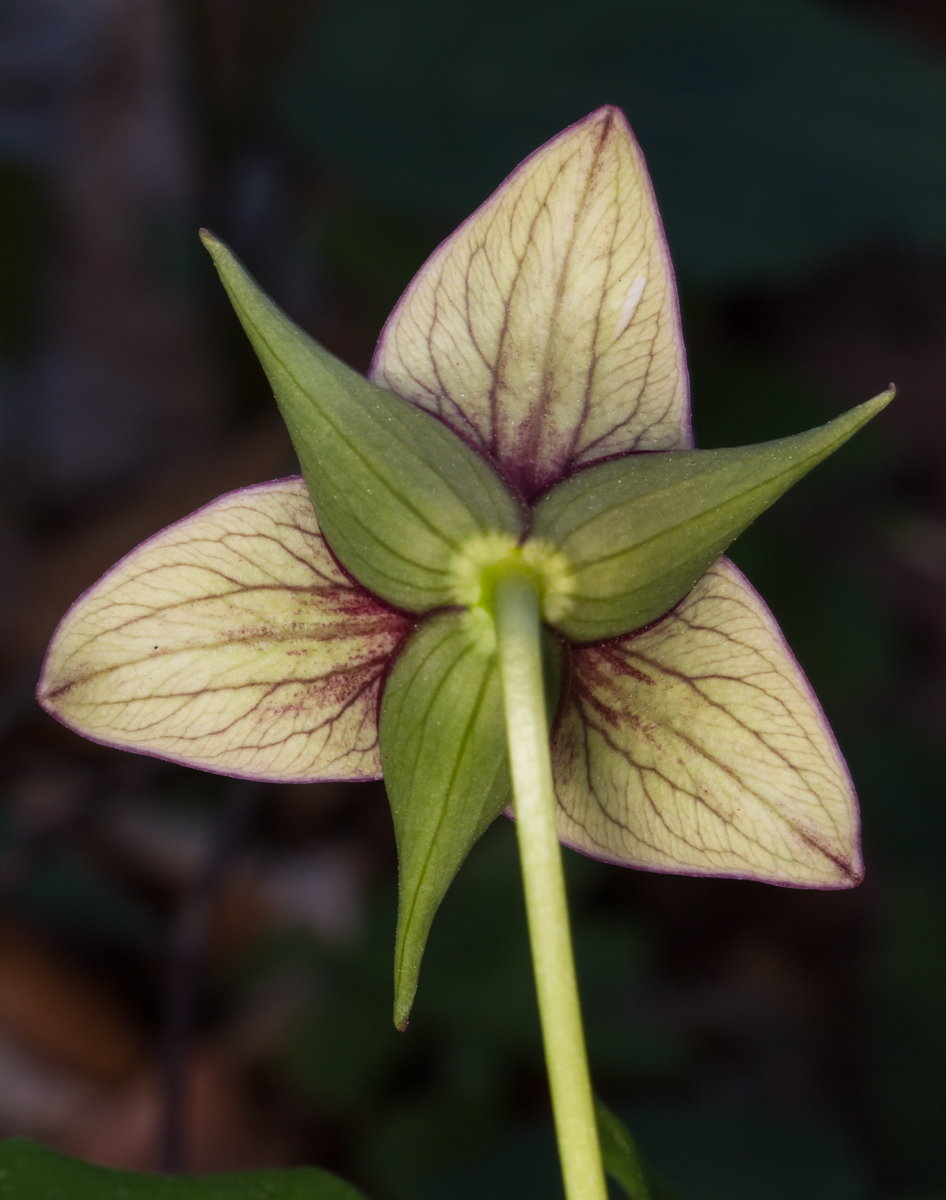
I saw several people attempting to get “the shot” of these often slightly nodding flowers, which usually requires some contortions. But, the reverse side is worthy of a look as well (and not nearly as tough to get).


Scattered in patches across the several slopes I visited were patches of two small flowers that are true harbingers of spring – Spring Beauty and Wood Anemone. Spring Beauties can be almost all white or have some intense pinkish purple lines on the petals. Wood Anemone looks like a delicate 5-petaled flower, but, it actually lacks petals altogether. The five white floral parts are the sepals.
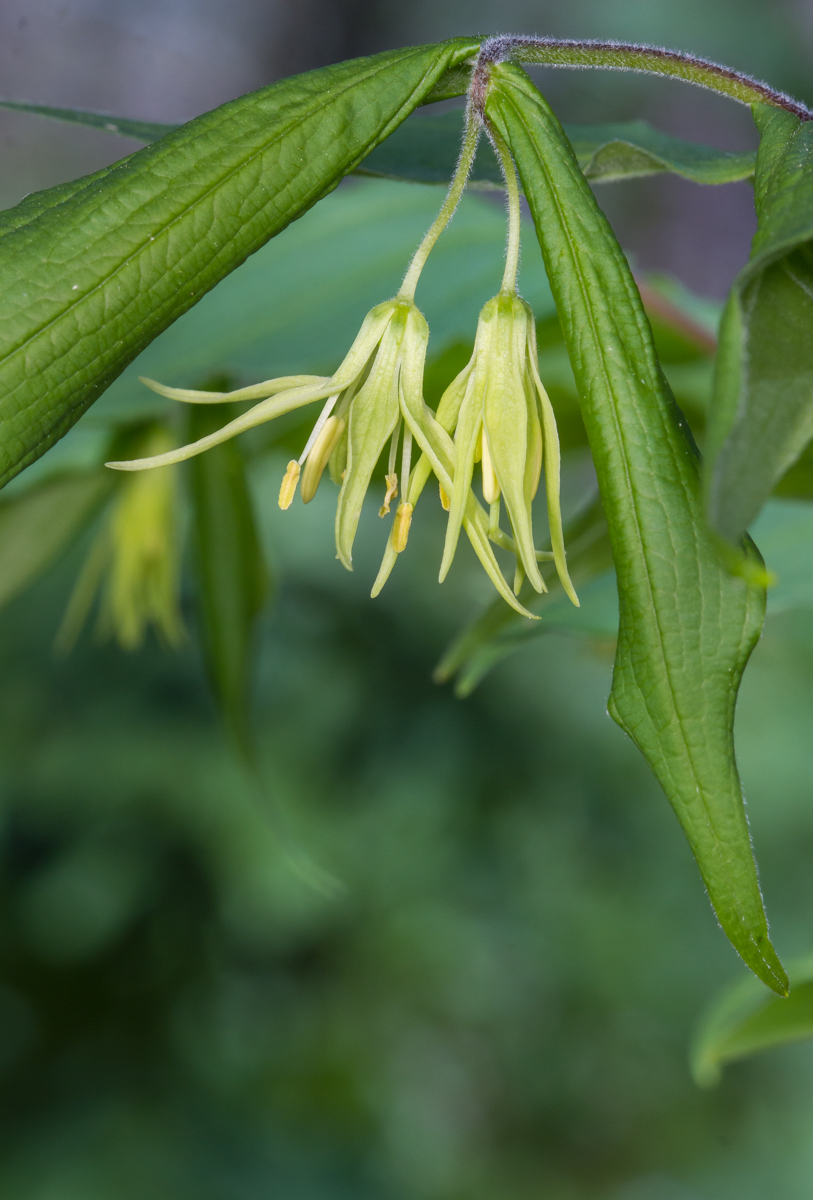
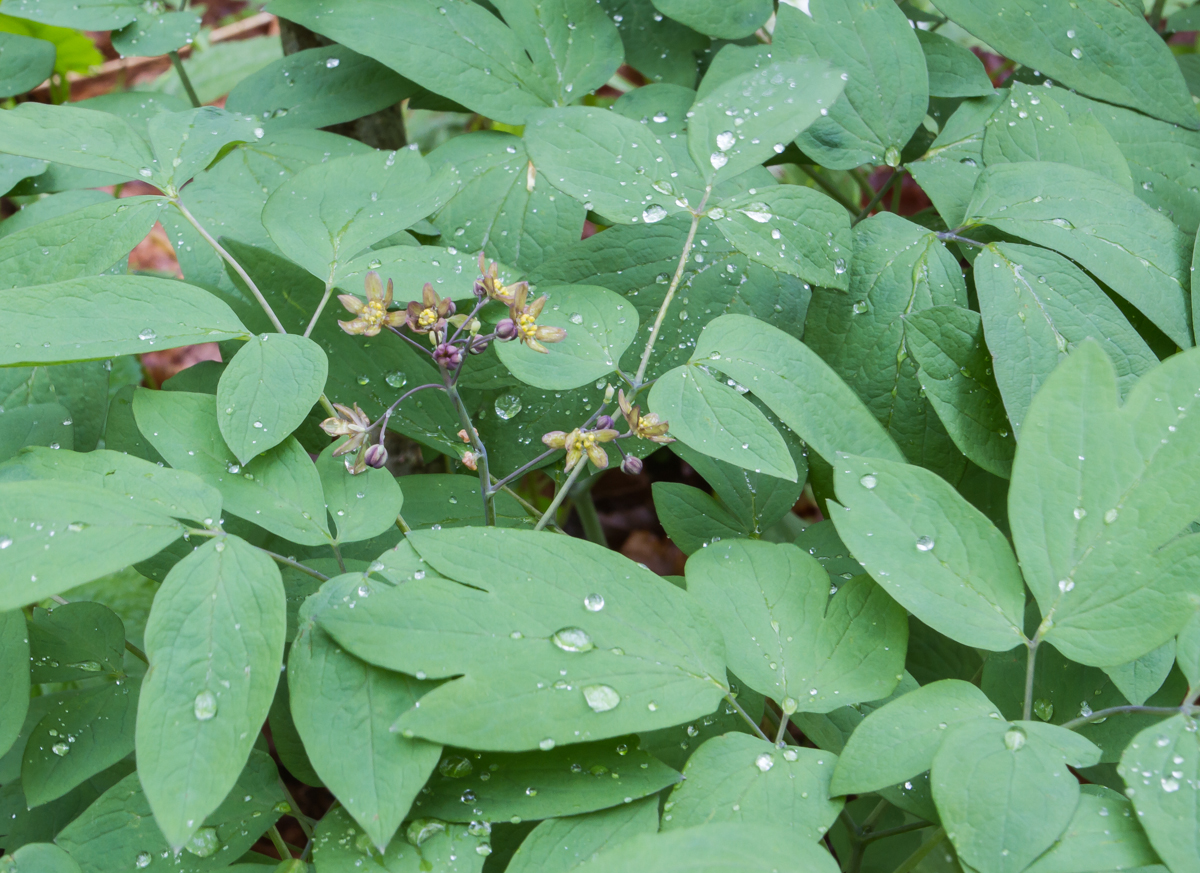
Two less common species offer a more subdued floral display. Yellow Mandarin tends to hide its flowers under its leaves. Blue Cohosh has beautiful, blueish-green foliage, and flower clusters that require close inspection to appreciate.
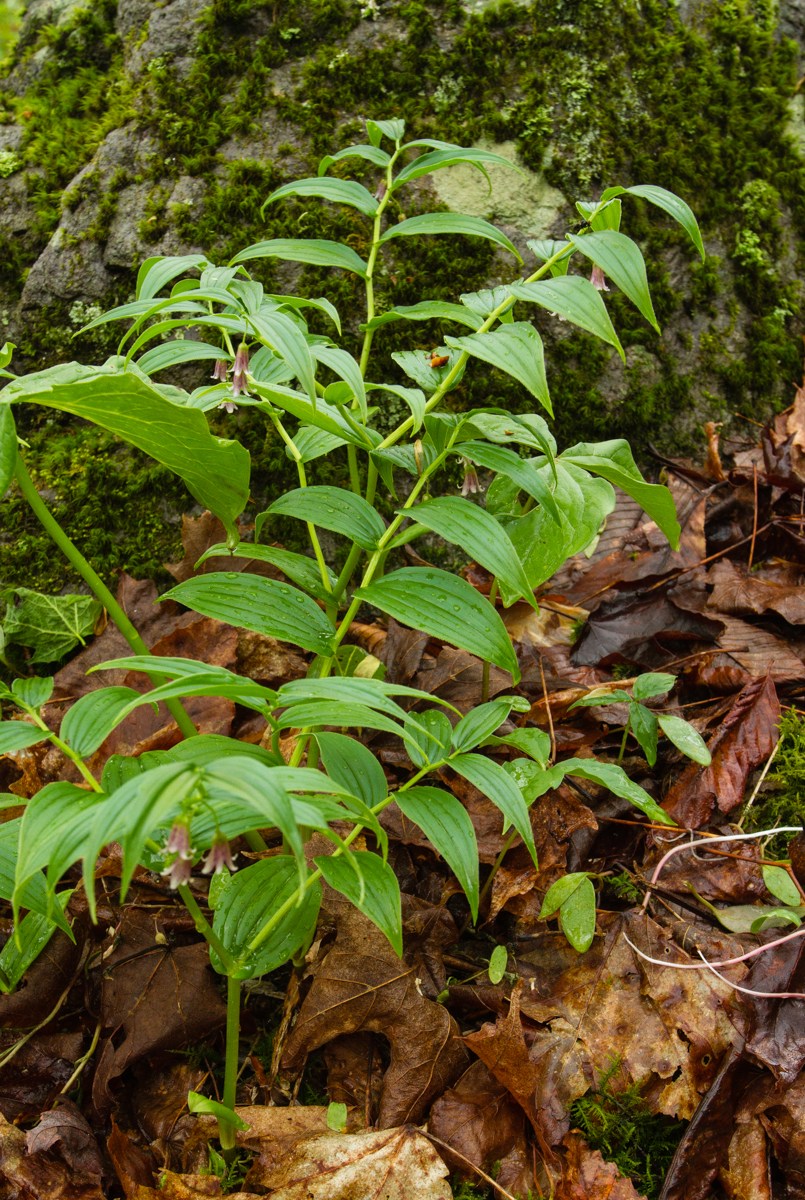

Rose Twisted Stalk is shy wildflower in spite of its heavy metal band sounding name. It occurs in a few patches along the main trail up the slope from the parking lot. The small rose-colored flowers hide beneath the lance-shaped leaves. And the plant does have a stalk that is branched and twisted, giving it a distinctive zigzag appearance.

I always look for the unusual flowers of Squirrel Corn along the trail. Many of the flowers were in poor condition, either because they were past their prime, or because of what looks like a dry spring in this area.
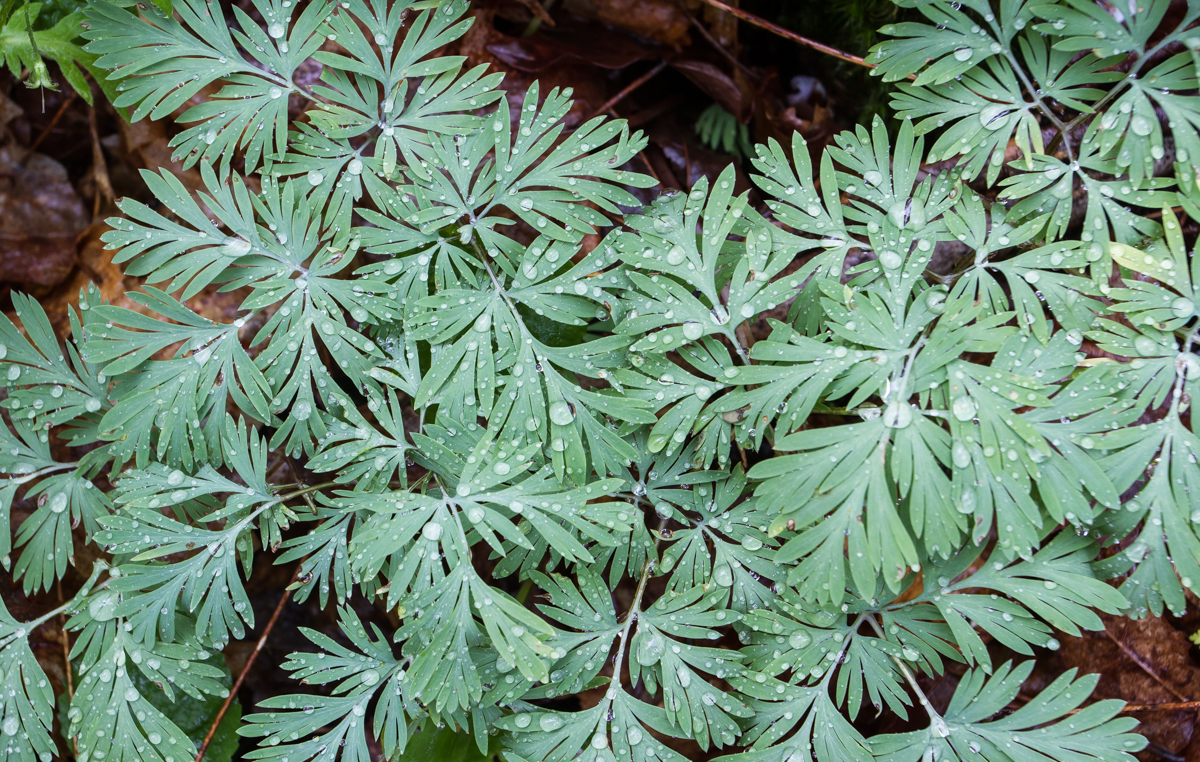

The lacy leaves of Squirrel Corn are almost as attractive as the unusual flowers, especially when covered with rain drops. I always like black and white versions of these images that have so much pattern to them.
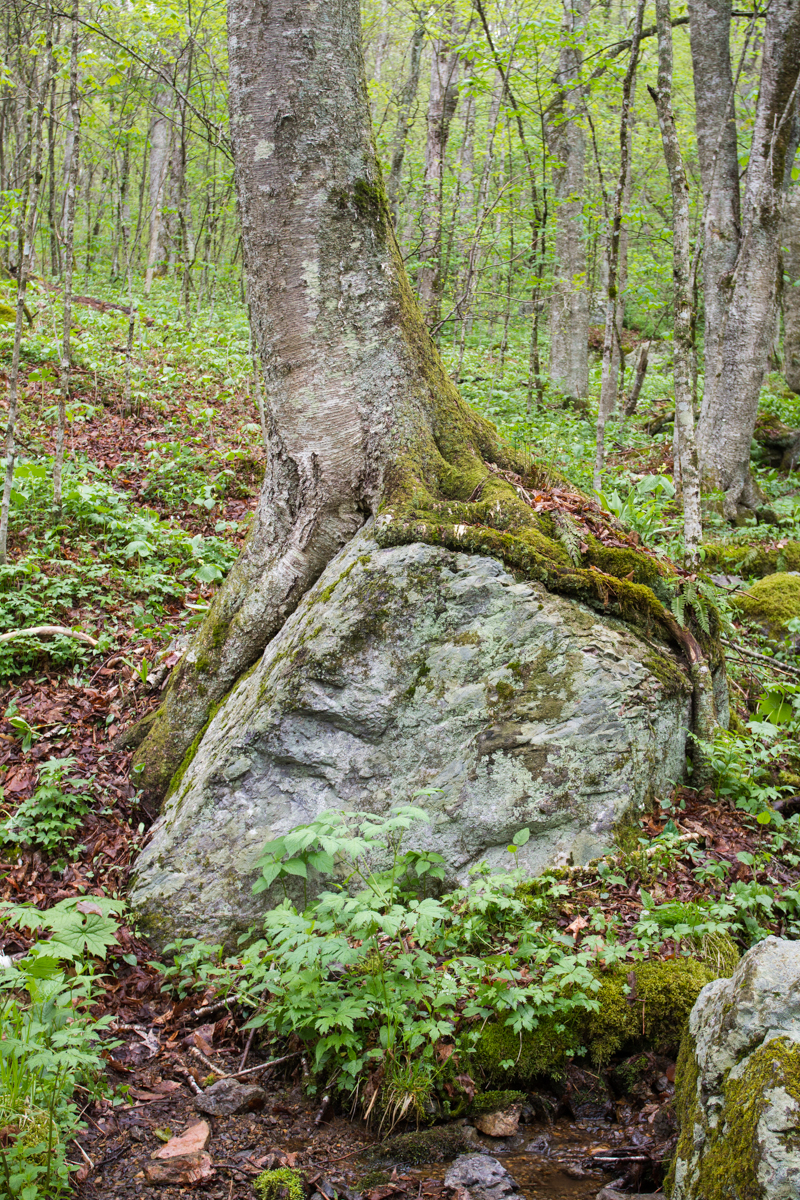
This unique area has always drawn me to it and I have visited often over the years. The wildflowers are definitely worth a spring trek, so I will be back again next year to celebrate the beauty of the wild garden of the elk.
Posted by
Its pleasing song and engaging appearance have made the [blue} grosbeak a favorite cage-bird among the southern [people], who know it as the “blue pop”.
~ In Biological Survey Bulletin, 1907
Though many wild birds were often kept as cage-birds decades ago (and still are in some areas of the world), I am glad the Blue Grosbeaks I am seeing are free and on the wing. They prefer shrubby and open habitat like those found along the power line right of way, so I see a few every summer. But I was very pleased with how many I saw last week as I staked out the garden area for migrating birds.
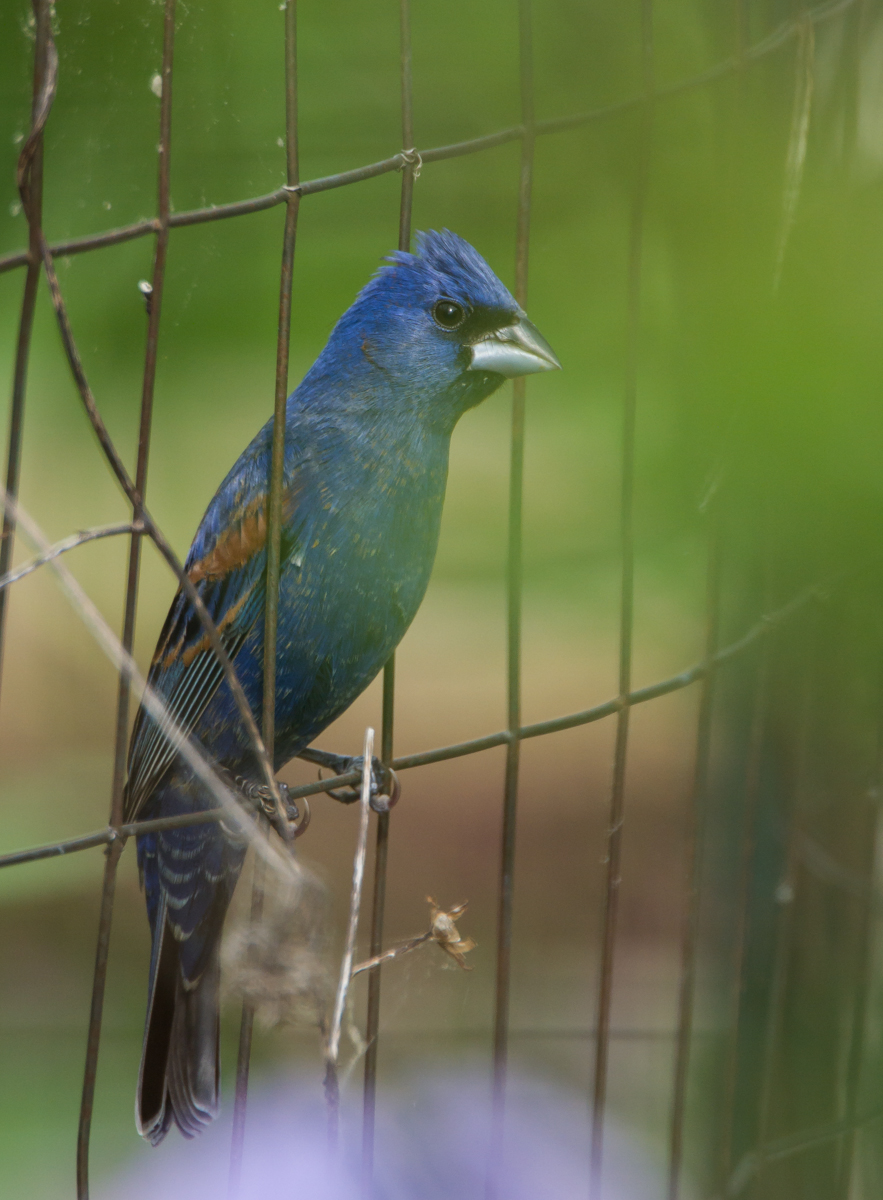
The only problem was they were less than cooperative about having their picture taken. A couple of males visited the garden and spent time on the ground, foraging for insects. I believe they were also eating some of the seed heads of the wheat straw I put down to help control weeds. But, until a few days ago, they always managed to keep hidden amongst garden plants or the grape vine.

One female (who is brown in color) showed up for about 20 seconds one morning and then flew off down the power line. But, that was enough to get two males going and one finally landed in the small Black Cherry tree I have allowed to grow alongside one of the garden beds (as a host plant for various caterpillars). He still was partially blocked from my camera’s view by the top of the fence and some leafy branches in the foreground, but you could tell what he was at least.

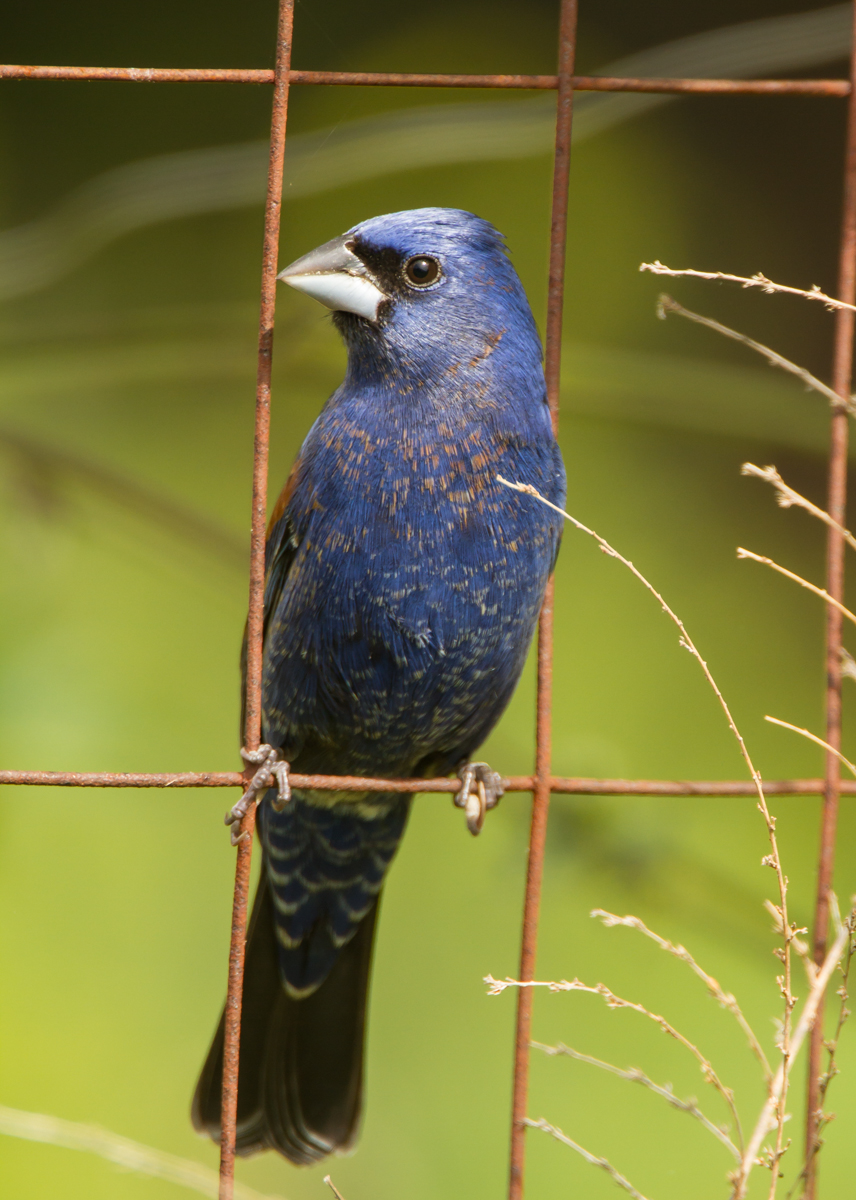
After a couple of minutes, the brilliant blue male flew up to a branch tip and was in full view. They are beautiful birds, with an intense blue color all over, except for some rusty brown on their wings, and black at the base of the beak. And that beak is impressive – large and silvery in color, making for a striking contrast to the black and blue of their head.

Their coloration and similar habitat make male Blue Grosbeaks easy to misidentify as Indigo Buntings, but Blue Grosbeaks are larger (especially the head in proportion to overall body size), have a much larger beak, and have the chestnut wing bars. The all brown female Blue Grosbeaks are even more similar to female Indigo Buntings, but, again, the beak and presence of chestnut wing bars can help differentiate the two species.
I will keep my eyes open for nesting behavior as I walk the power line in coming weeks. Blue Grosbeaks build a compact nest low to the ground in shrubs, vine tangles and small trees. I have found nests at the Museum’s field station at Prairie Ridge, but hope to see one or more close to home, so I can learn more about the behavior and food habits of these striking birds. If I could only get the male Blue Grosbeaks, Eastern Bluebirds, and Indigo Buntings to perch on the same snag…now that would be a picture.
Posted by
The summer red bird arrives sometimes in the latter part of April, and all through the summer his scarlet form enlivens and presents a beautiful contrast to the green foliage.
~J.W.P. Smithwick, The Birds of Bertie County, NC, In The Wisconsin Naturalist (a monthly magazine), 1890
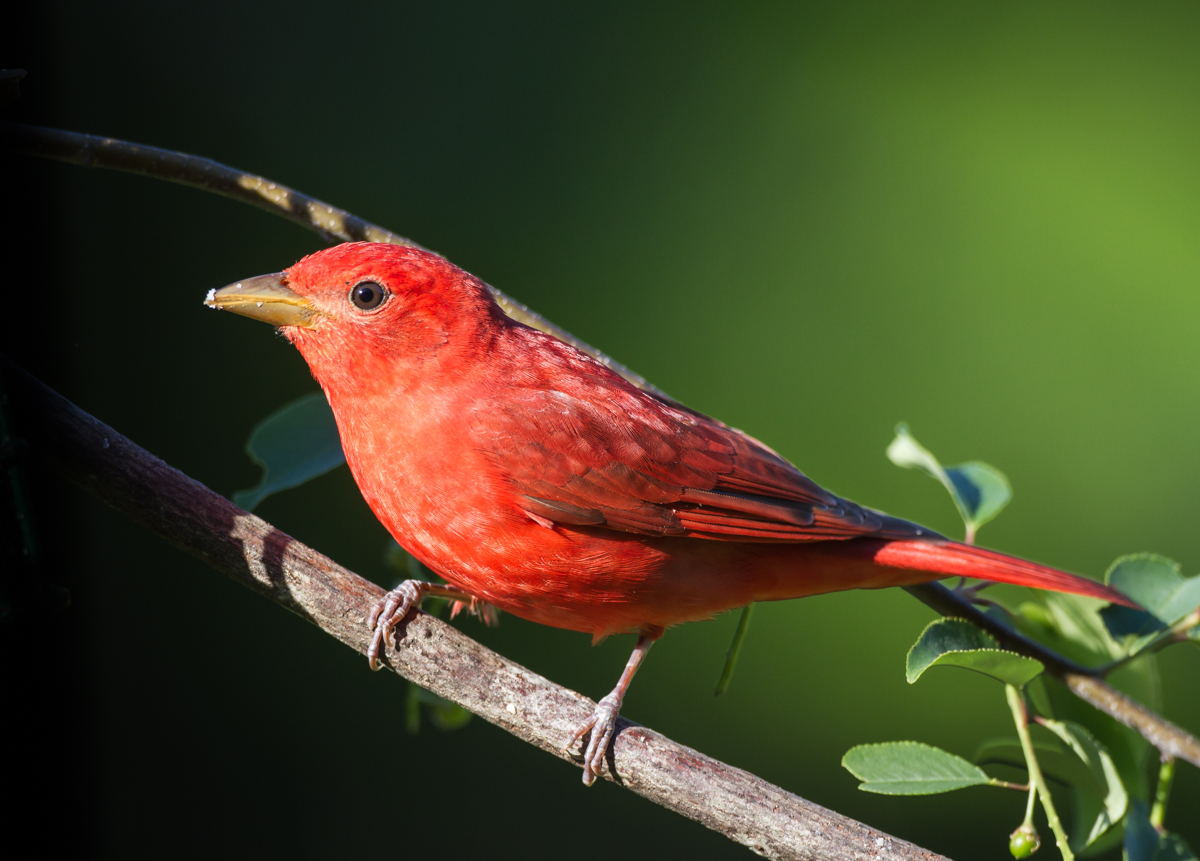
The tanagers are back! I wonder if Northern Cardinals migrated, would I get as excited about them as I do the return of the tanagers? Here in my woods, there are both of the usual eastern species – Scarlet and Summer Tanagers, but the latter are more common. And it is always a thrill to hear and see the first ones.
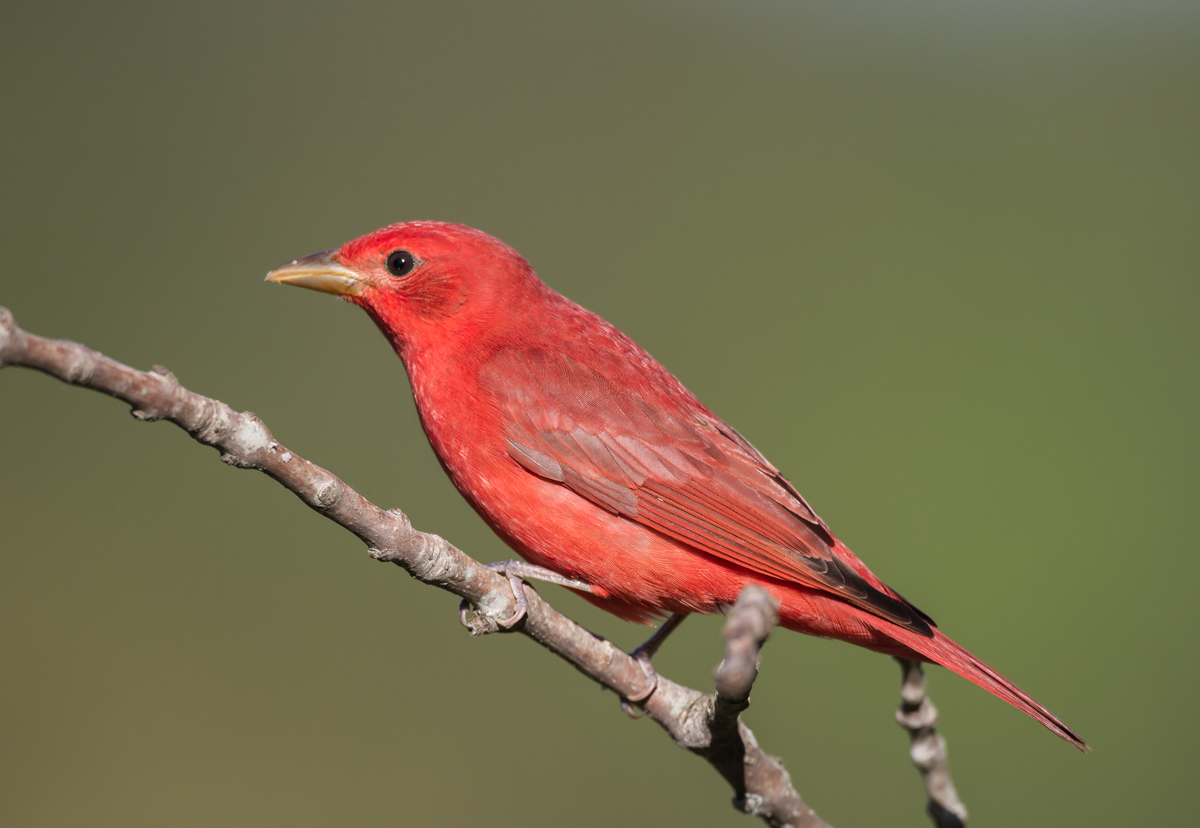
Summer Tanager males are considered our only all red bird. But, in looking at my photos, I can see that, while they are almost all red, many have varying traces of darkness in their wing tips. By comparison, the wings (and tail) of the Scarlet Tanager male are all black. While I see the Scarlet Tanagers in the trees near the house, they have yet to come down to the garden or the suet feeders, so I still don’t have any photos.
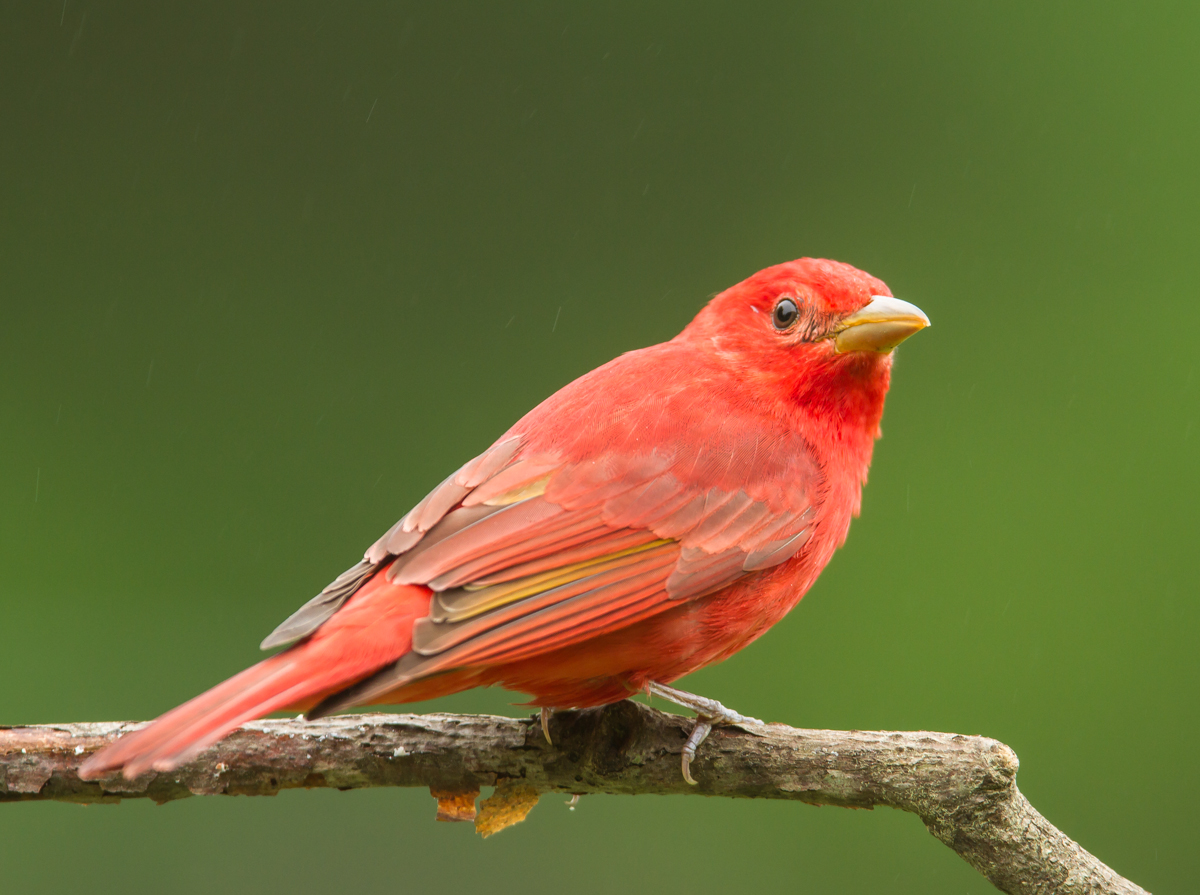
Molting young male Summer Tanagers may have patches or hints of yellowish-green in their feathers since they resemble females in coloration during their first year.

Female Summer Tanagers are much more difficult to see in the forest as they are yellow-green with some hints of darkness in their wings. I have yet to photograph a female Summer Tanager out by the garden this spring, so my only images are from two years ago, when one regularly visited my suet feeder outside a window. My camera schedule never seemed to mesh with her comings and goings, so my results were limited.
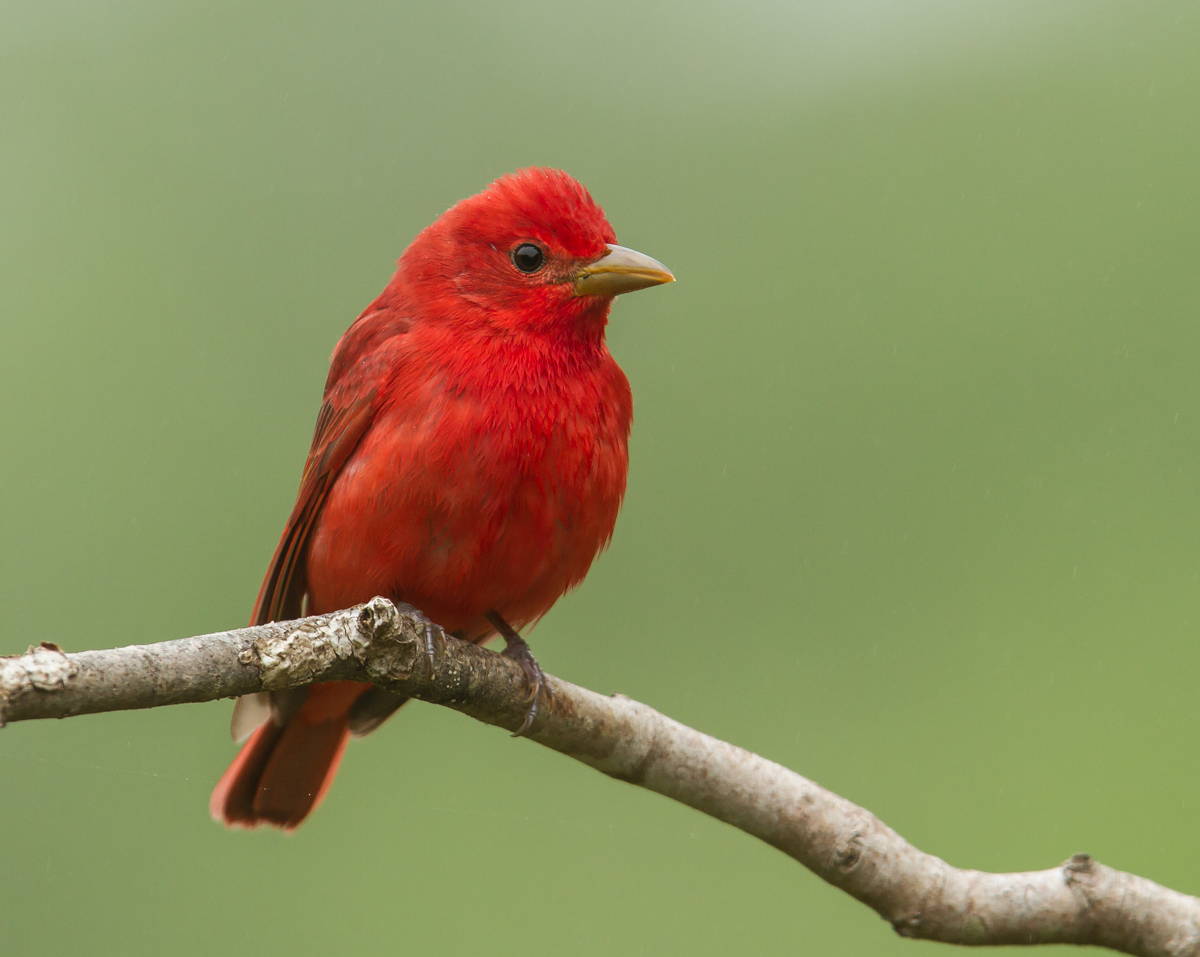
There have been a couple of male Summer Tanagers visiting the suet feeders this past week so I managed a few shots on nearby perches.
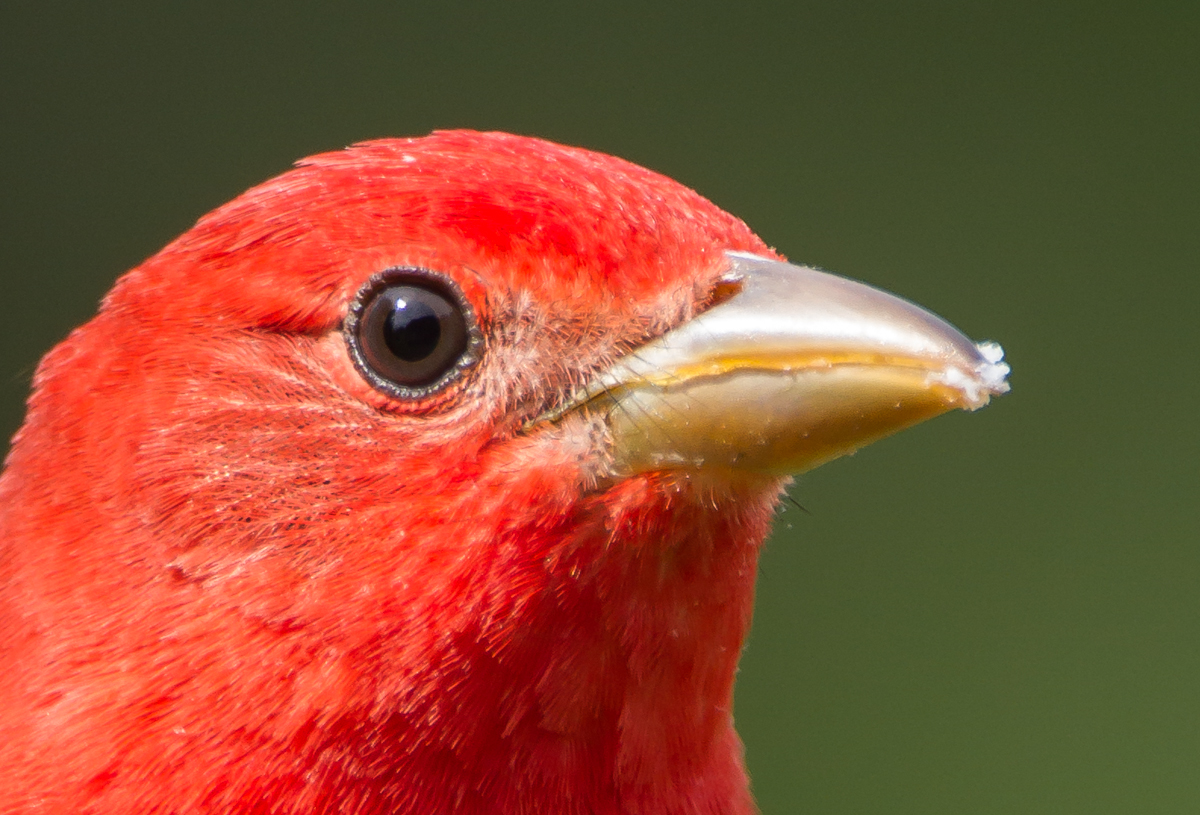
They typically come in fast, stay for just a minute or two, and then fly off. This is especially true of the feeder out by the garden, where it is much more open, and the birds probably are a bit more nervous.

Tanagers feed on a variety of fruits and insects, often snagging flying insects in the air. Summer Tanagers are often called “beebirds” for their habit of catching bees and wasps and for raiding wasp nests (often under the eaves of houses). I have seen “my” birds snag several small bees in mid-air.
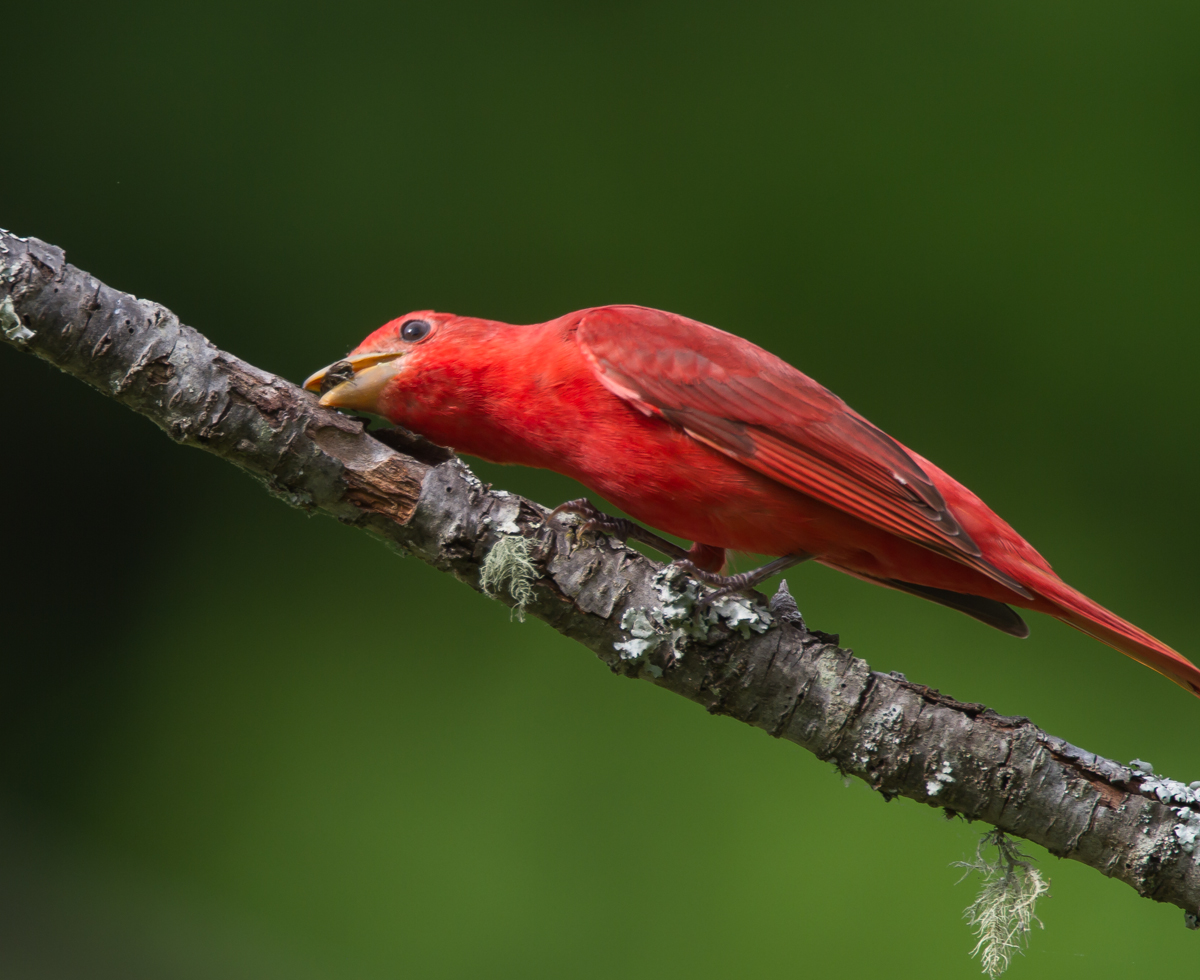
They then typically fly to a branch and rub the bee against it to subdue it before swallowing.
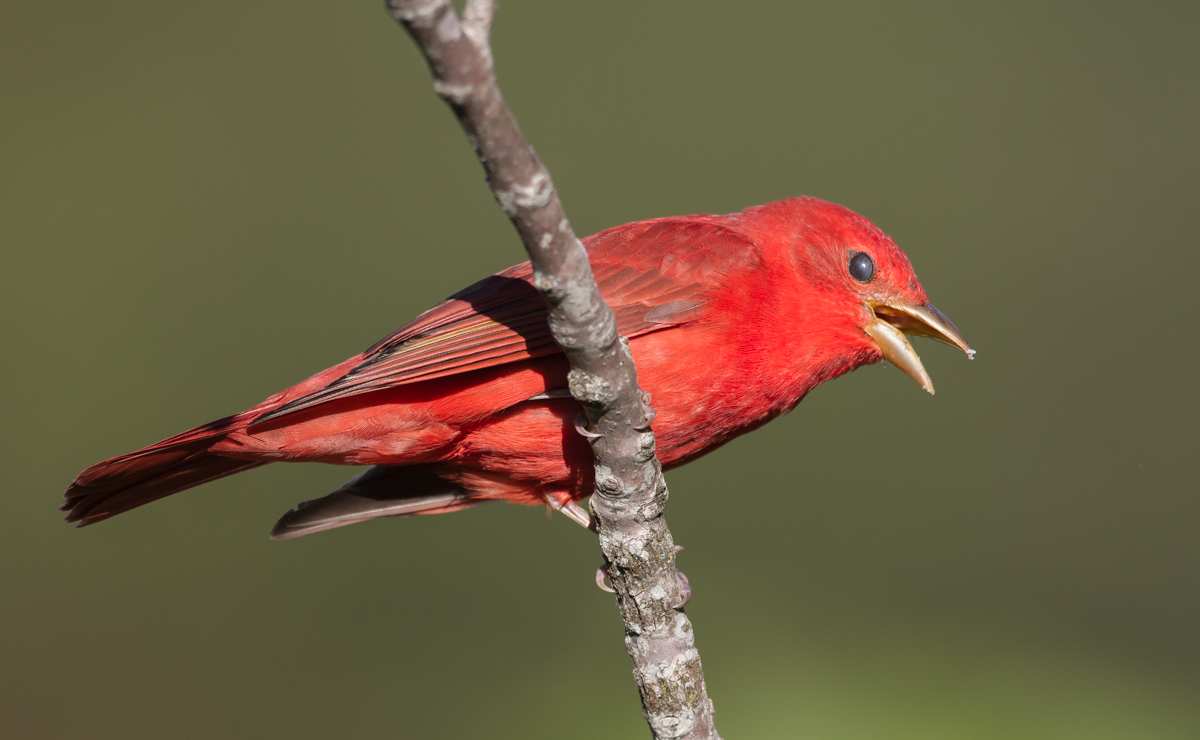
I usually hear the distinctive sounds of the tanagers before I catch a glimpse of them. The Summer Tanager’s song has been compared to that of an American Robin (but usually shorter and bit slurred). Males and females give a distinctive call sounding like pit-ti-tuck, often adding extra syllables, and repeated many times.
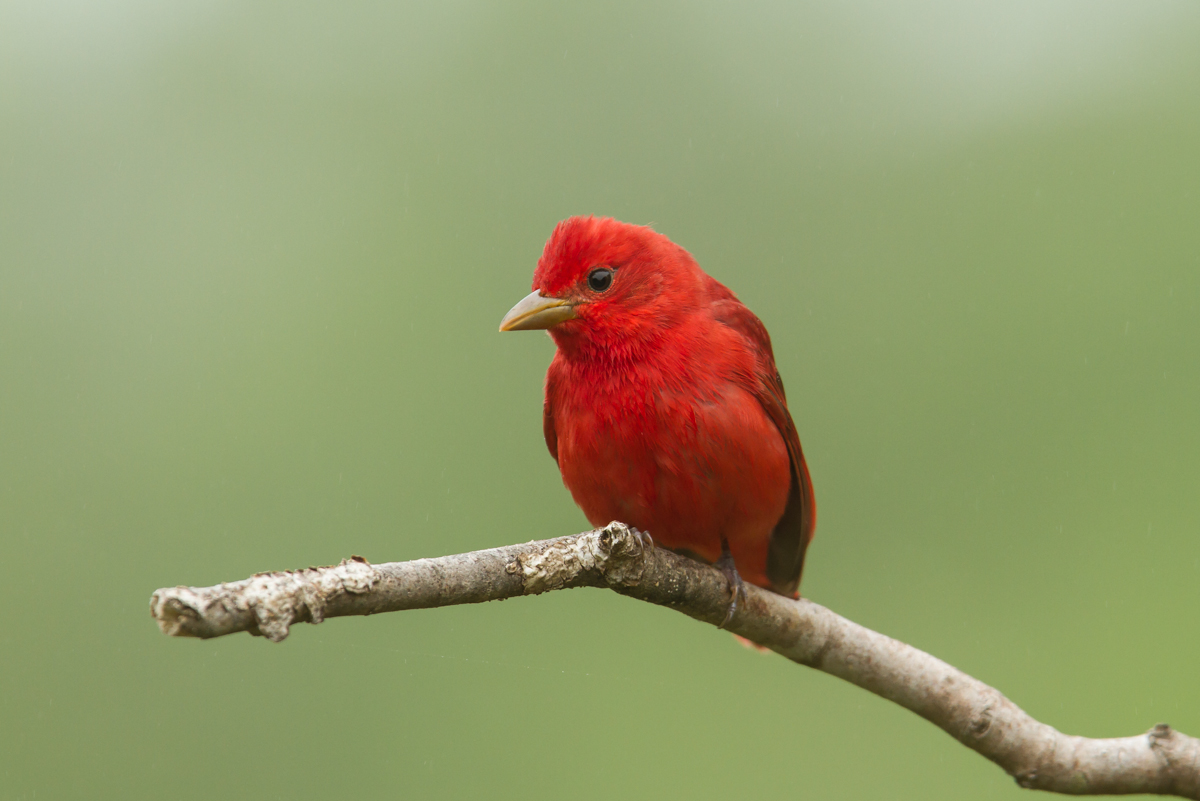
I hope to see and photograph these spectacular birds frequently throughout the summer, until they head back to their winter home in South America next autumn. In the meantime, if my day has a tanager in it, it will be a good day.
Posted by
Perhaps, if we had more neglected brush heaps and tangles of unkempt shrubbery and vines about our grounds, we might tempt the thrasher to be
more sociable and nest near our homes.
~Dr. W.G. Erwin in Bent’s Life Histories of North American Birds

I see Brown Thrashers all year in North Carolina, but, in winter, I find them more often in the Coastal Plain, rather than around my home. But, a few weeks ago, a male Brown Thrasher appeared in the garden and began singing from near the top of a nearby ash tree. His is a beautiful, varied song, befitting a member of the Mimic Thrush family, which also includes the Gray Catbird and Northern Mockingbird. Of the three, I think the song of the Brown Thrasher is the most pleasant to the ear – clear, and often, melodious. They are said to have a songbook of over 1,000 song types. Brown Thrashers repeat their song phrases twice, while Gray Catbirds only once, and a Northern Mockingbird, three or more times in a row.

In addition to their paired song phrases, Brown Thrashers are easily identified by their large size (up to 12 inches), long tail, rufous-colored back and wings, and a speckled breast.

They have two whitish wing bars and a long, powerful, slightly down-curved beak.

But what I notice most, and love to see in low-angle light, is that intense yellow, glaring eye. A friend came over recently and as we sat and watched birds out by the garden fence, he commented on the Brown Thrasher feeding nearby. If they were 12 feet long instead of 12 inches, we would all be very afraid of them as they go running about, thrashing the earth with that giant beak, and staring with that intense yellow eye. He said they remind him of some sort of small predatory dinosaur.

When not feeding, the Brown Thrasher at my garden is either singing from a prominent perch, or skulking in a thicket or the tangle of vines on the fence. It comes to my suet feeder, but forages mainly on or near the ground, eating primarily insects this time of year, supplemented with fruit of various sorts, with an occasional small lizard or other large prey thrown in. One early observer described their feeding behavior in this way…
It apparently seldom scratches for its food, as do the fox sparrow and the towhee, but uses its long, strong bill much as a haymaker uses a pitchfork in spreading hay; thus, with powerful sidewise strokes, it sends the leaves flying in all directions, and then stops to pick up what desirable morsels it finds beneath them.
The common name, thrasher, most likely is derived from this feeding behavior, although others have suggested it may be from the way a bird will often thrash a large grub or other insect on the ground to subdue it. And one writer noted that he had been thrashed by one of these formidable songbirds when he approached its nest. In fact, I saw several descriptions of how some Brown Thrashers will valiantly defend a nest against humans, dogs, and predators such as snakes, often drawing blood with jabs of that sturdy bill.

I have not experienced this aggression even though a pair nested in the grape vines on the garden fence two years ago. When I was out working in the garden, often only a couple of feet away, the bird on the nest would simply stay put, perhaps knowing they were safe in an impenetrable mesh of sinuous stems. But, I don’t think I will be reaching in there to test their resolve should they nest again this year. I can’t get that image of a small glaring dinosaur out of my head.
Posted by
When invading its haunts one is impressed with the vigorous personality of the male. He nervously raises his alarm with a variety of scolding, interrogative chirps and chattering notes and his dark inquisitive eyes sparkle with excitement through the black masks. He darts with nervous animation from place to place, then disappears in the dense cover only to appear again to denounce the intrusion.
~Alfred Otto Gross, in Life Histories of Familiar North American Birds

Just last weekend, I mentioned to a friend that I have yet to get a decent image of a Common Yellowthroat, despite seeing them frequently on birding outings. While I will keep trying for a better photo, I am happy that at least one of these beautiful warblers has decided to come by the garden while I was prepared with appropriate camera gear. I say one, but it is possible there have been a few different individuals cruising through the neighborhood, based on what appear to be some subtle differences in the distinctive black masks of the males I have photographed the past few days. I have seen only one of the much more drab-colored female Common Yellowthroats in that time, and only for a few seconds, before she darted off, portrait-less.

That black mask and their nervous, fidgety behavior, make me think these little guys are always up to something. At the garden, I usually see them hopping from twig to twig in some of the bushes bordering the fence.

They often move down the fence row, going back and forth through the mesh, and end up in the tangle of grape vines at the corner, before flying off.

On average, they are probably only with me for one or two minutes in any one visit. If I am out there long enough, one might make another appearance a couple of hours later.

They are a bird of the tangled grasses, twigs and vines of brushy habitats, often near wetlands. Their distinctive witchety-witchety-witchety call is often heard before the birds are seen. They will readily pop up for a quick look if you pish or squeak on the back of your hand in appropriate habitat.

Common Yellowthroats are believed to be one of the most widespread breeding warblers in the United States and probably occur in all 100 counties in North Carolina. Their nests are usually low to the ground in the fork of blackberry bramble or some other tangled location.

I usually see them in the garden area most often in the spring. Once the nesting season is in full swing, I think they spend more time further down the power line, where the creek crosses through a huge patch of tree saplings, grasses and blackberries. A tough place to penetrate for we humans, but I hope to spend some time down there this summer, watching for the witchety bird as it goes about its daily routine.
Posted by
I once knew a [beginner} bird-watcher who, not aware that altricial species attain full body size before leaving the nest, spoke seriously of the gnatcatcher as a tiny mockingbird.
~Francis Marion Weston
Indeed, I often describe these active birds as looking and behaving like a tiny mockingbird. They are always fun to watch as they hop through the branches, or hover beneath one, snatching an insect meal. And their small size, white eye ring, blue-gray coloration, and exaggerated tail, make them easy to identify.

They seem to be in constant motion, especially that noticeably long tail. In the writings on this bird in Bent’s Life Histories, Francis Marion Weston describes it like this…Certainly the most expressive feature of the gnatcatcher: as of its larger counterpart, the mockingbird: is its long, ever-active tail; now up and down, now from side to side, it is never for an instant at rest.
This is a fairly common species throughout much of North Carolina in spring and summer, with occasional winter stragglers in this area. You usually have a better chance of seeing a few in winter in the Coastal Plain. But most migrate to Mexico or Central America for the colder months before returning in March and April.
A pair has been active for a week or more in the garden area, gathering nesting material, including fine grasses and some dog hair I placed in a hanging basket on a tree branch for use by local nesters Their nests are beautiful examples of avian architecture, resembling a larger version of the delicate lichen and spider silk construction of the Ruby-throated Hummingbird.
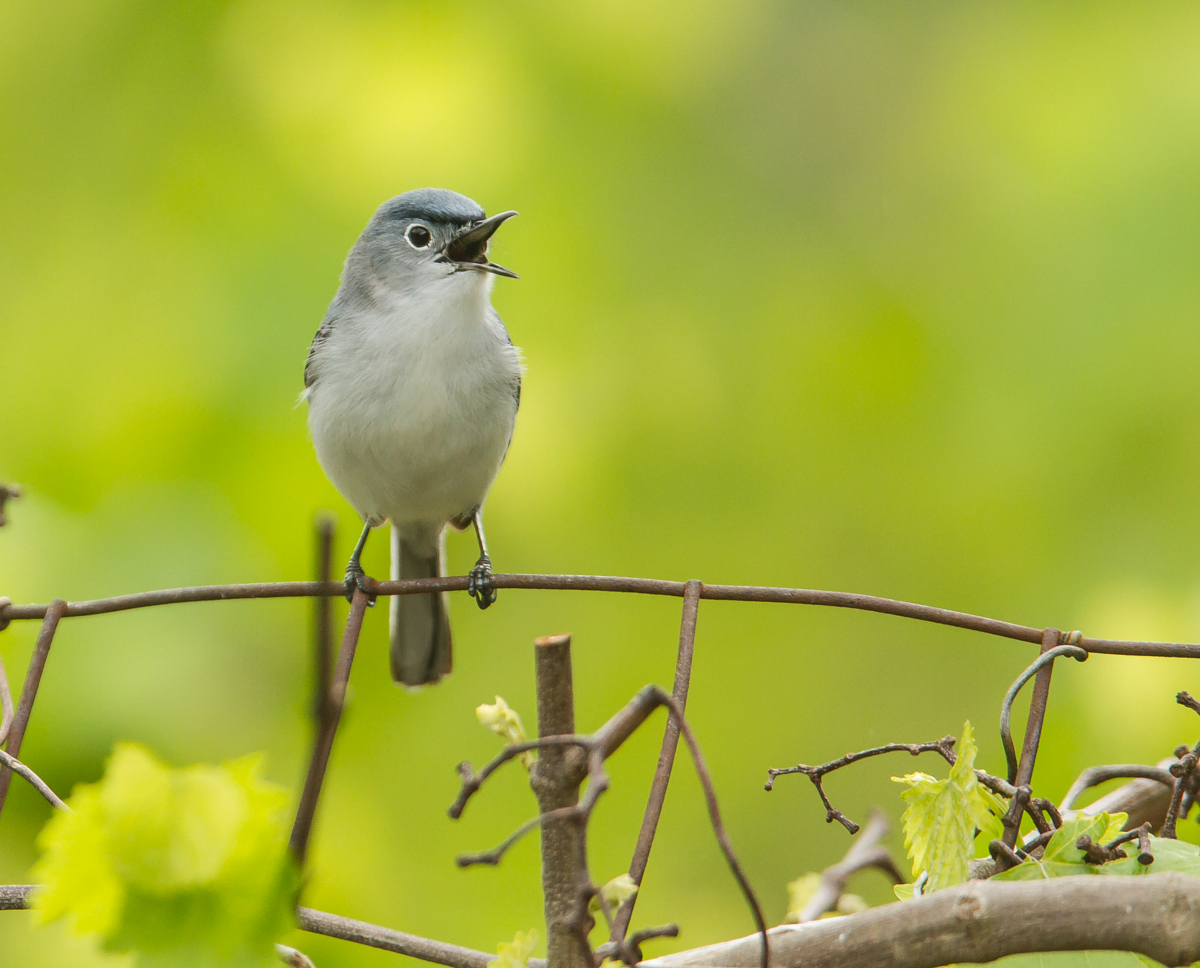
And I agree with Weston’s assessment of the field marks used to separate the sexes on this diminutive songster… The distinguishing mark of the male gnatcatcher in breeding plumage: the black forehead and line over the eye : is useful as a field mark only at very short distances. Luckily, this guy perched along the fence for a couple of minutes so I could study him in detail as he sang his heart out. I’ll be on the lookout for their comings and goings in the garden the next couple of weeks, hoping to spot their beautiful nest somewhere in my woods.
Note – the last two mornings have added a few new birds to the species list posted on Monday for the garden area:
Black Vulture, Red-tailed Hawk (both seen flying over the power line)
Ovenbird, Northern Parula Warbler, Great Crested Flycatcher (heard in adjacent woods)
White-crowned Sparrow, Blue Grosbeak, Blue-gray Gnatcatcher, Prairie Warbler seen in the garden area
Posted by
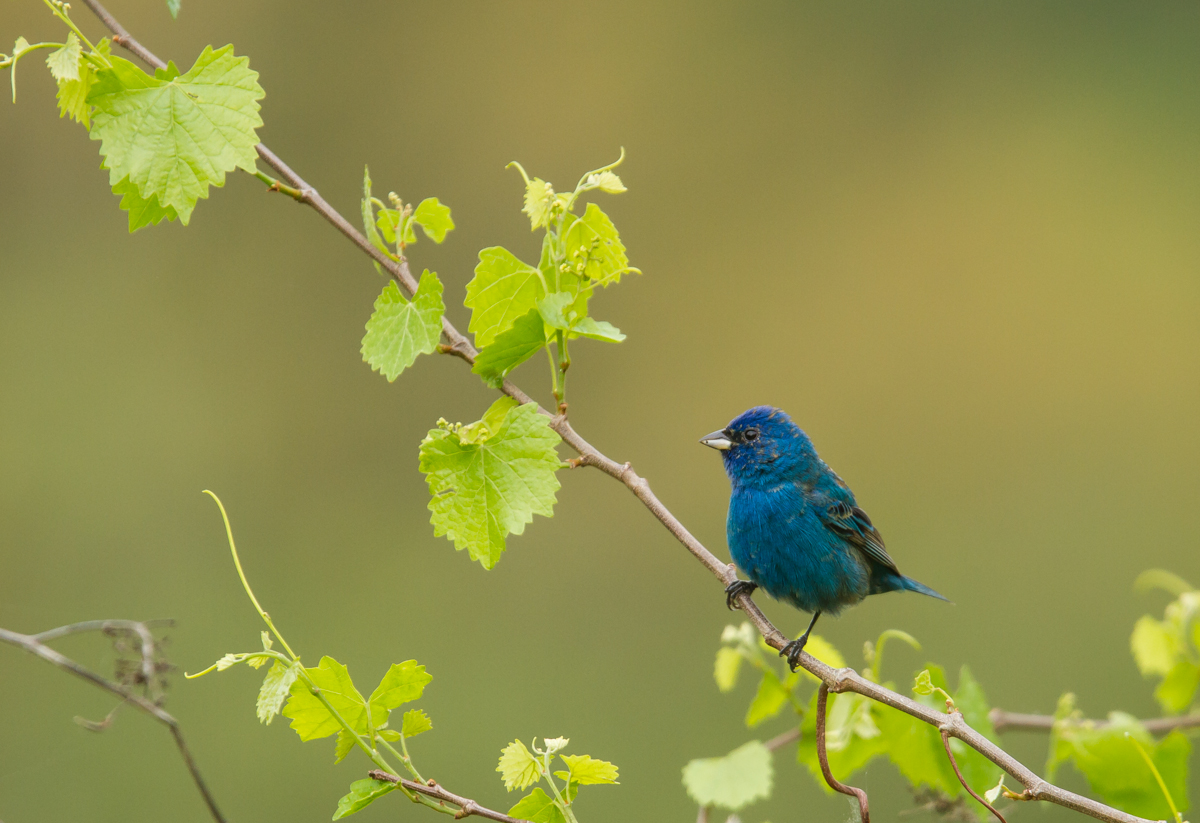
If, as Thoreau says, the bluebird carries the sky on its back, the Indigo Bunting may sometimes be carrying storm clouds. These common open space birds are now arriving back in NC from their tropical winter homes and the males have dressed for the occasion. During the winter, both males and females are primarily brown, nondescript birds. But for their spring breeding season, males molt into our only all blue-colored bird. But, the blue we see in feathers is not from a pigment, like, say, the red in a Northern Cardinal. Rather, blue in birds is a structural color – the blue we see is caused by the way light is refracted and reflected in the structure of the feather itself. And, especially for the Indigo Bunting, it needs sunlight hitting it at the right angle for us to see that brilliant blue color. Otherwise, it looks brown or even black, much like a storm cloud on the horizon.
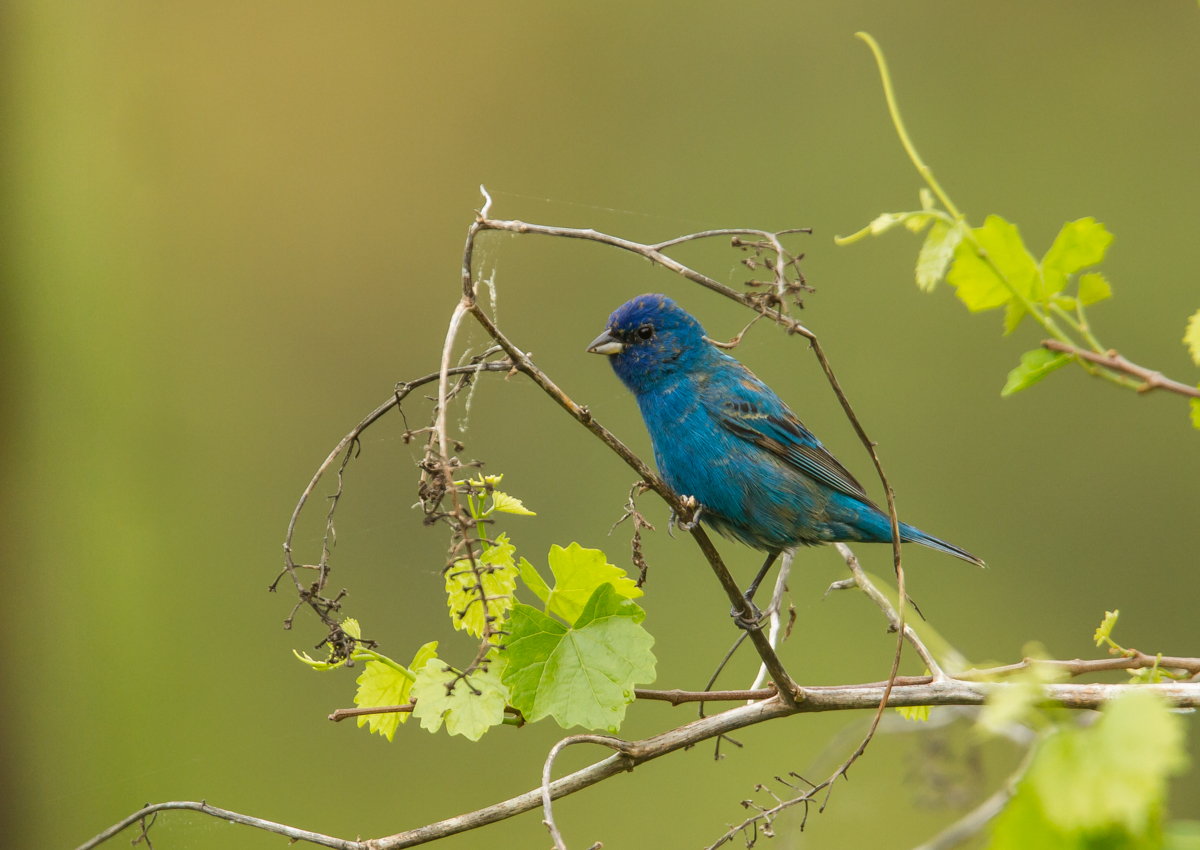
These are said to be one of the most abundant songbirds in the East since their preferred habitat, brushy edges like in power line right-of-ways, etc., are often created and maintained by human activity. I see them every year along the power line corridor, but I hope to spend a little more time this summer listening for their distinctive calls (the male sings all day, even in the heat of summer) and enjoying their brilliant blue attire.
Posted by
One attraction in coming to the woods to live was that I should have leisure and opportunity to see the spring come in.
~Henry David Thoreau
Perhaps he meant to say… one attraction in retiring was that I should have leisure and opportunity to see the spring come in. I have lived in the woods for many years and always marveled at the arrival of spring, but it has always flown by into the heat and dark greens of summer too quickly. It seems I have never had the time to really watch it, to see its daily, sometime hourly, subtle shifts. I am cherishing it this year. The early spring wildflowers have peaked here in the Piedmont, but now is the time for the birds. I spent a couple of hours Sunday morning with friends walking the trail at Mason Farm Biological Preserve in Chapel Hill where we totaled over 50 species, including some great warbler sightings (even a nesting Northern Parula).
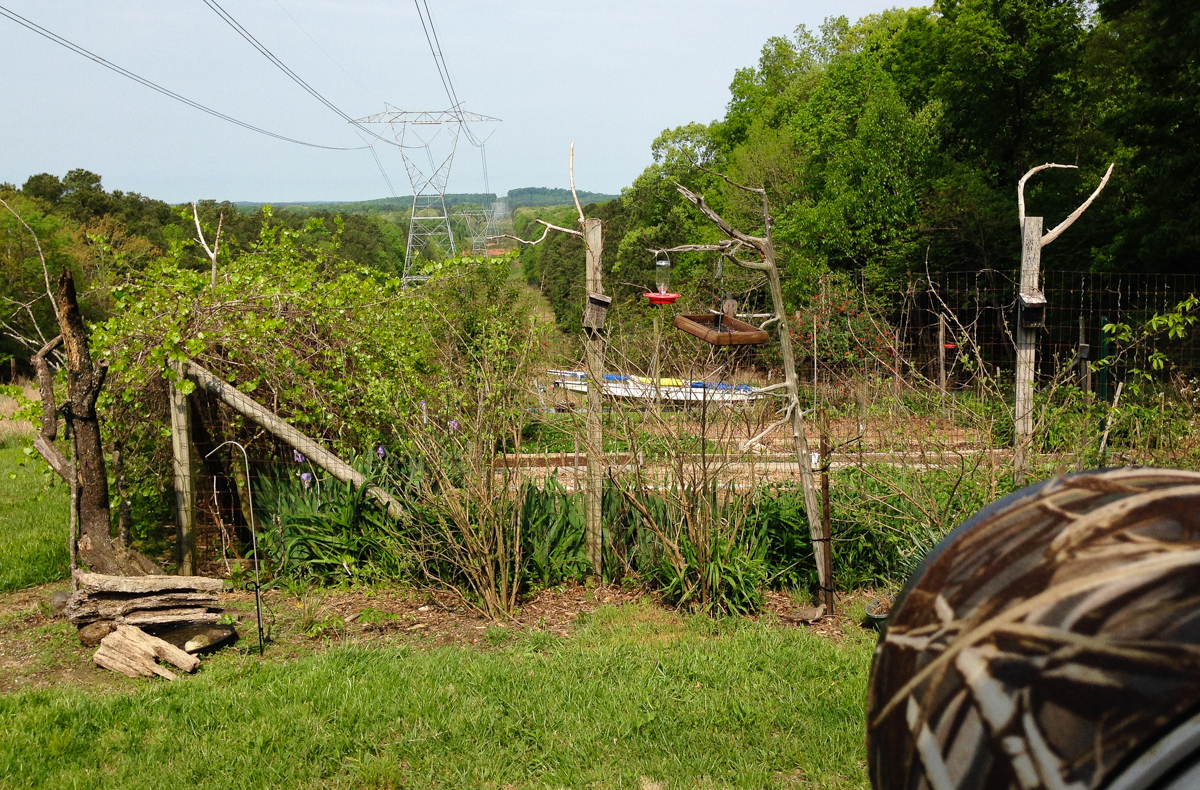
So, I am now spending time at home, watching the tree tops, and checking the feeders and garden area frequently for new arrivals. If I am in the mood for some photography, I will pull the car out to the garden and sit, window down, bean bag on the door panel, and watch. I placed some dead snags around the fence for perches and just added a water feature. The diversity of plants, the cover provided by the grape vine growing along one fence, and the fact that this is an edge habitat, make the garden an attractive place for any passing bird to stop and check out.

There is also a feeding station between the garden and a large plum tree (a favorite of the local birds due to its thick branching pattern and good cover). On most days, it is like a busy airport in this area with flights coming and going between the garden fence, the nearby woods, the plum tree, and the feeders. And this time of year you tend to get some international flights. Yesterday was a very good morning. The total for the day was 34 species, with 30 of those being seen in, or flying over, the garden in two hours in the morning. A complete list is at the end of this post. Over the next few days, I will post a few pictures of some of my favorite visitors.

It all started when I got distracted from some household chore by a flash of color at the feeder outside the living room window – a male Rose-breasted Grosbeak. Certainly one of our most striking birds, Rose-breasted Grosbeaks nest in our mountains and hardwood forest further north, but pass through much of the rest of the state in fall and spring migrations to and from their winter homes in the tropics. They have been regular visitors at my platform sunflower feeders for many years for a couple of weeks in late April and early May. They are deliberate in their behavior and will often stay at a feeding station for a considerable period of time before disappearing into the tree tops. Then, it may be a couple of hours before they reappear, so I keep one eye on the feeders this time of year and hope to catch a glimpse of one. They are definitely one of those birds that cause you to stop whatever you are doing and pay attention.
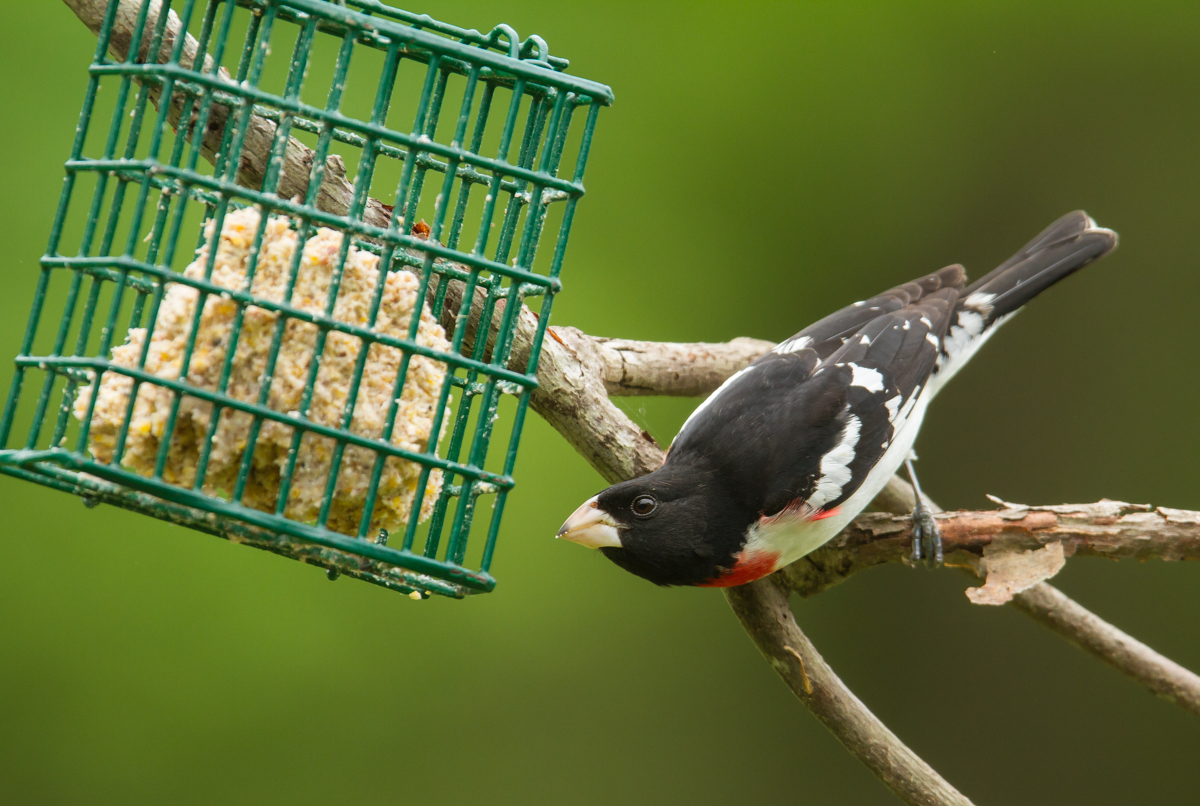
Their huge beak is well designed for crunching hard seeds (and bird banders’ fingers) so I was surprised to see one at my suet feeder near the garden. With the migration in full swing, I recently lashed a dead branch onto the feeder pole to provide a more natural perch for photography of any visitors. The grosbeaks took full advantage of it to chip away at the suet.
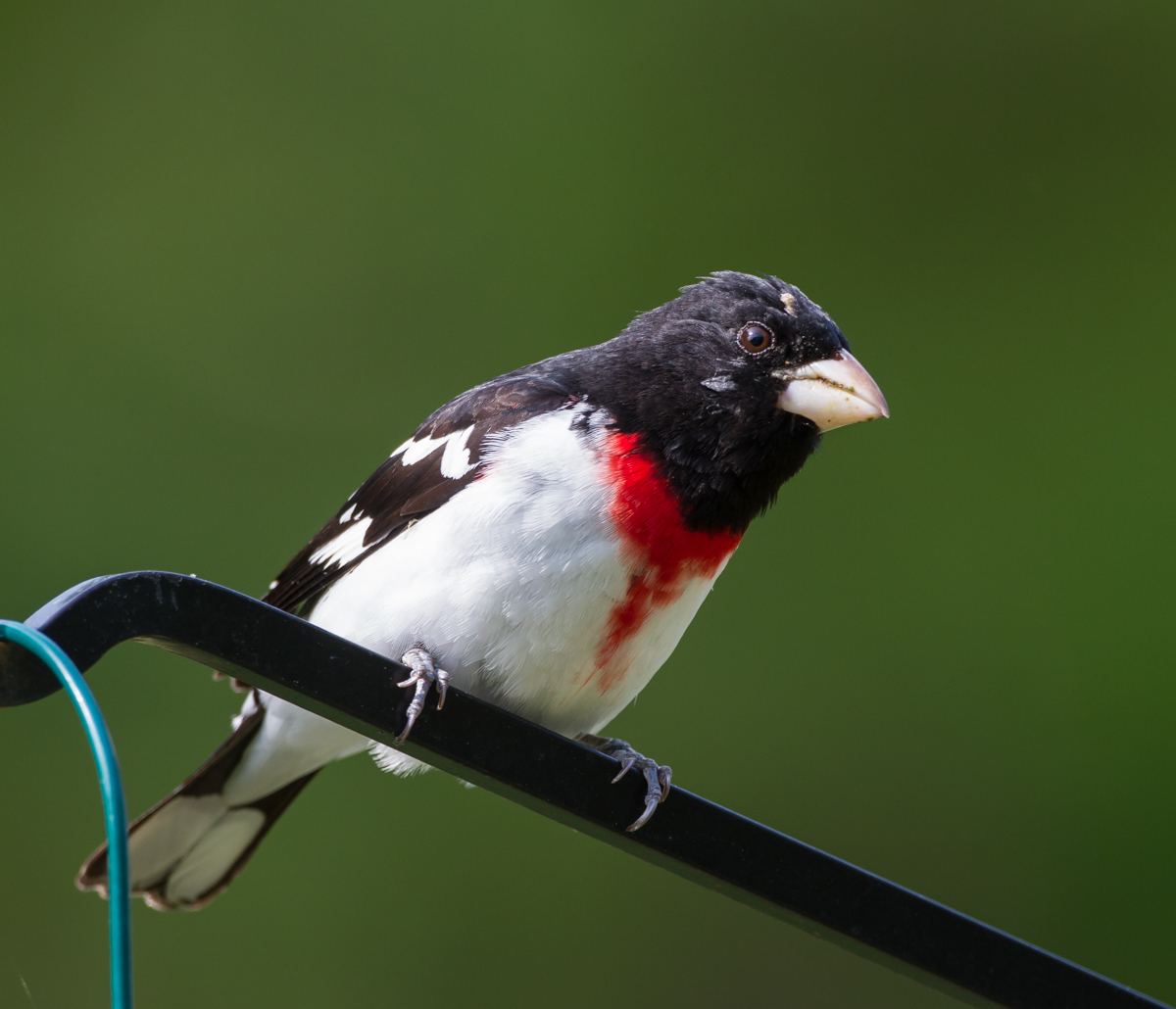
While I was observing the one at the suet cage, another male landed and started feeding on an adjacent tube feeder with suet nuggets. You can see some differences in the plumage between the two birds – you can supposedly distinguish individual males by subtle differences in the shape and extent of their rose-colored breast and shoulder patches. After looking at the images I think I may have three different males – compare the first image at the platform feeder with the one above and below and look at the rose shoulder patches (or lack thereof) and the heads.
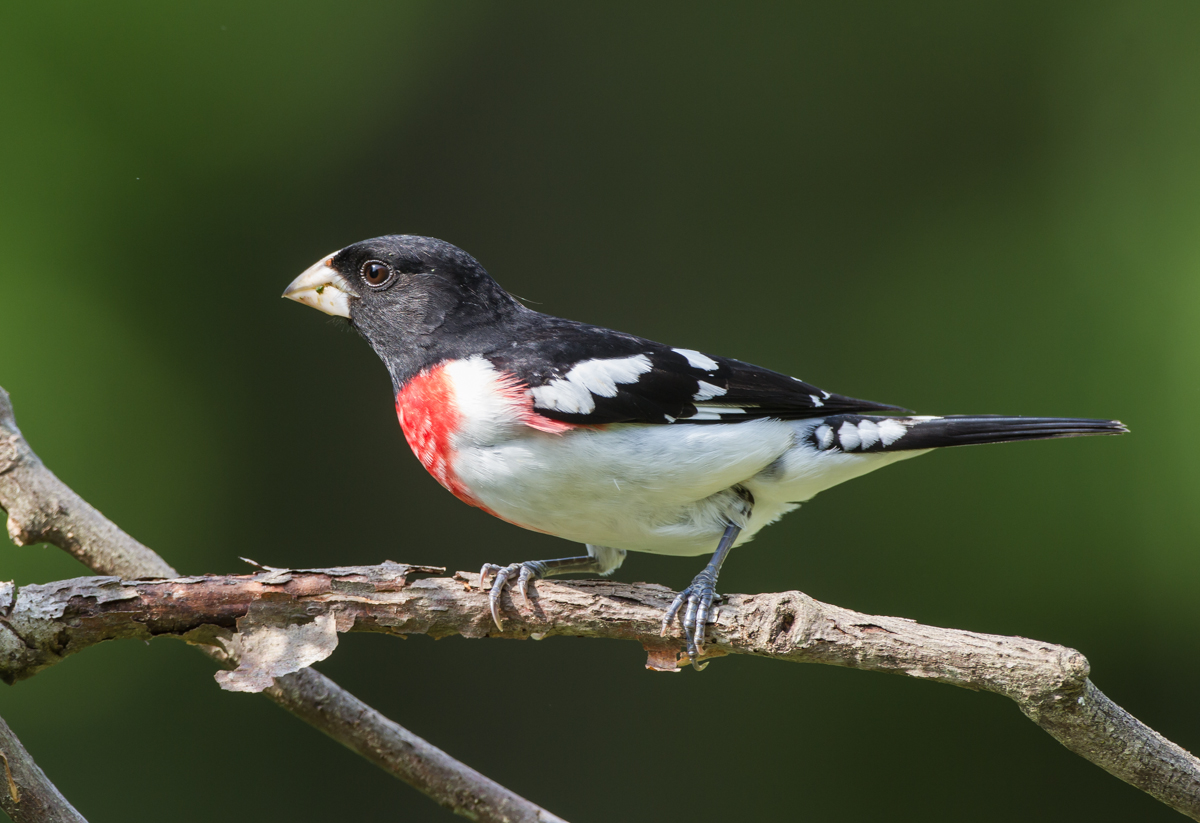
The two males stayed with me for 20 minutes or so, feeding, and then both flew up into the trees. The grosbeaks did not reappear at this feeding station until much later in the day. But, I did hear their melodious song a few times from my woods off and on during the day. The song is somewhat like that of an American Robin, but richer in tone. Thoreau stated that the Rose-breasted Grosbeak is our richest singer, perhaps, after the Wood Thrush (which was also calling from these woods early and late in the day).
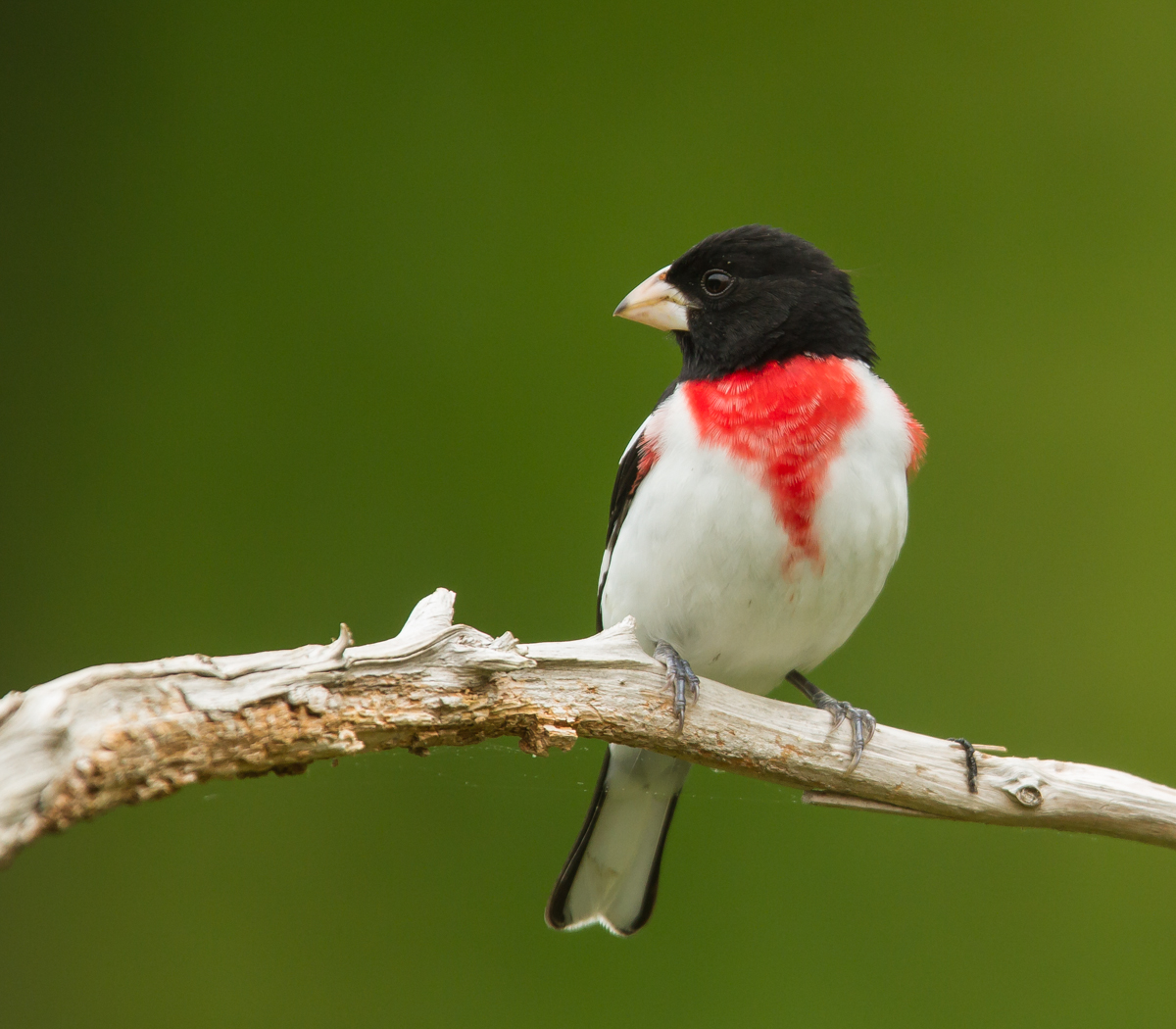

At one point, one of the males landed on a snag along the garden fence. He perched there for a couple of minutes, surveying his world, and helping me appreciate the beauty of mine. Make some time for yourself these next few weeks and get outside and catch some of the surprises of the season – it will be well worth it.
Species list for 2 hours of garden watching on 4/28/14:
Northern Cardinal, Eastern Bluebird, Brown-headed Cowbird, Northern Mockingbird, Catbird, Brown Thrasher, Summer Tanager, Red-bellied Woodpecker, Downy Woodpecker, White-throated Sparrow, Chipping Sparrow, Field Sparrow, House Finch, Indigo Bunting, Rose-breasted Grosbeak, American Goldfinch, Tufted Titmouse, Carolina Chickadee, Ruby-throated Hummingbird, Eastern Kingbird, Eastern Phoebe, Yellow-rumped Warbler, Common Yellowthroat, Mourning Dove, Carolina Wren, White-breasted Nuthatch, Eastern Towhee
American Crow, Blue Jay, Turkey Vulture (these three species flew over the garden)
Scarlet Tanager, Black-and-white Warbler, Red-eyed Vireo, Wood Thrush (heard and/or seen in the woods near the garden)
Posted by
The Bluebird Carries the Sky on His Back.
~Henry David Thoreau

I probably have used that famous HDT quote before in a post, but it is so apt. Although the color of a male is so intense this time of year that it exceeds even a perfect Carolina blue sky. Bluebirds are among the most beloved of our songbirds. They are beautiful, they have a pleasing song (and are one of the first birds to sing every morning here), and are readily attracted to be our neighbors if we put up an appropriate nest box.

They are also pretty tolerant of our presence, so it is fun to spend time observing them and photographing their behavior. Such was the case a few days ago when I hosted some clients (and friends) from the Netherlands out to the house to photograph some our North Carolina songbirds. There’s nothing like the reaction of visitors from another land to help you appreciate the uncommon beauty of our everyday species such as Northern Cardinals, Ruby-throated Hummingbirds, and Eastern Bluebirds. I put out some lawn chairs where we could observe the nest box without disturbing the birds and we managed to spend over an hour watching the comings and goings of the busy parents.

The reason for all this activity was the five hungry bellies inside the nest box. My friends got some great images of the parents as they ferried a variety of meals to their fuzzy young. I had loaned a lens so I was just watching the procession, but was also making mental notes on where the birds landed on their approaches and what they were catching for food. I spent the next couple of days sitting near the box for an hour or two each day to photograph the dynamic duo as they practiced the art of bird parenting. So, Thoreau told me what the Bluebird carries on its back and now I have a better idea of what they put in their belly.
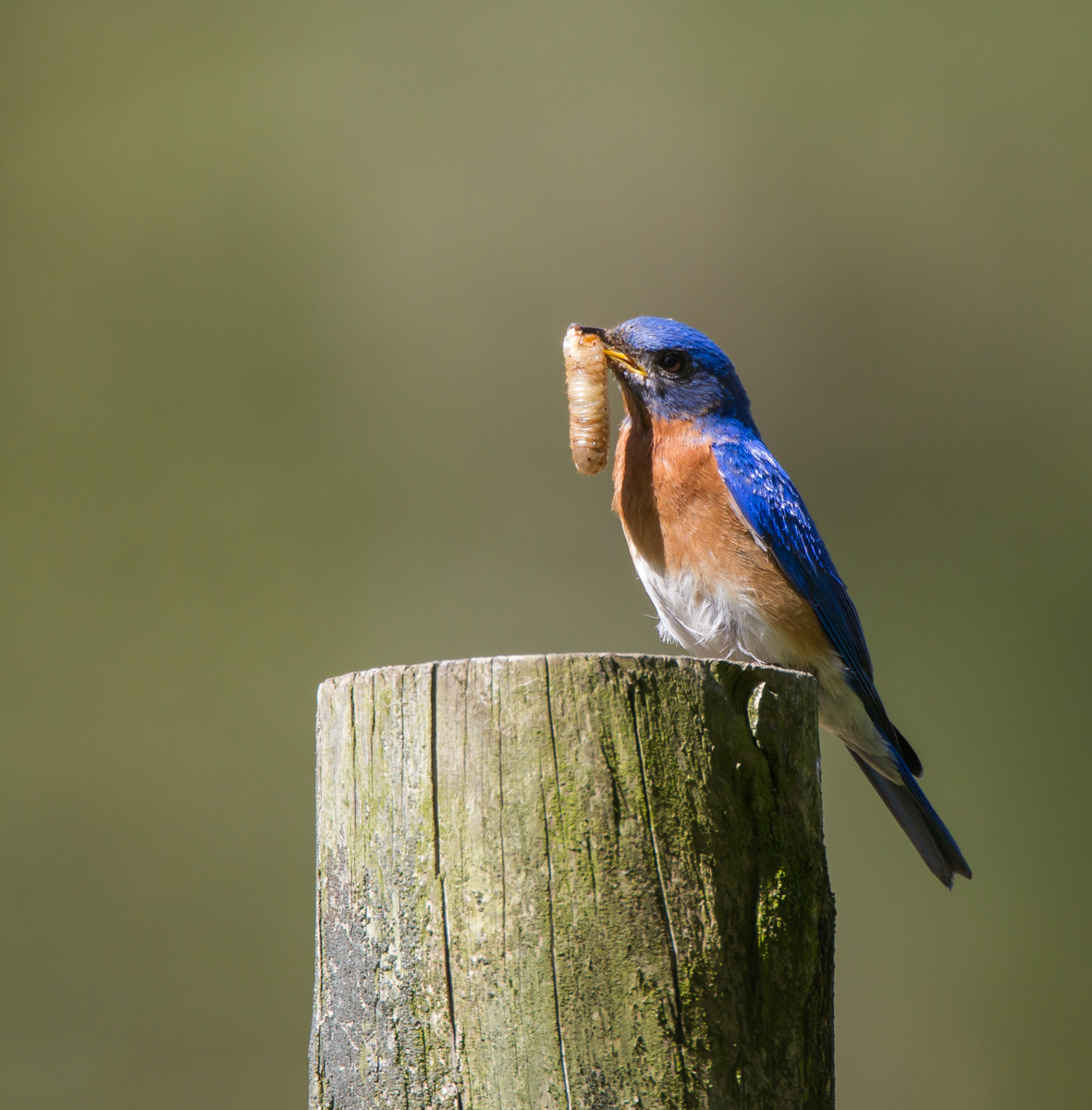
One of their favorite perches near the nest box is a fence post. In fact, there are several fence posts scattered under the power line that they regularly use as perches for scouting the grasses for food. Two larger diameter fence posts are also favorite places for the male to subdue some of the large prey he regularly brings to the young. He is particularly adept at spotting and catching the apparently abundant large grubs of Green June Beetles. I wrote about these unusual grubs in one of my early posts (see Crawling on Your Back – Doing the Grub). Once he grabs one of these behemoths, the male Bluebird will fly to a post and begin to slam the grub onto the wood using quick up and down and side to side motions of his head while dangling the grub from his beak.

When the grub is sufficiently dazed, the male carries it to the nest box. I am amazed that any of the current babies can actually swallow one of these things, but swallow they must, as this seems to be one of the primary food items that the male captures.

In my observations these past few days, the second most common food brought in by the male is worms.
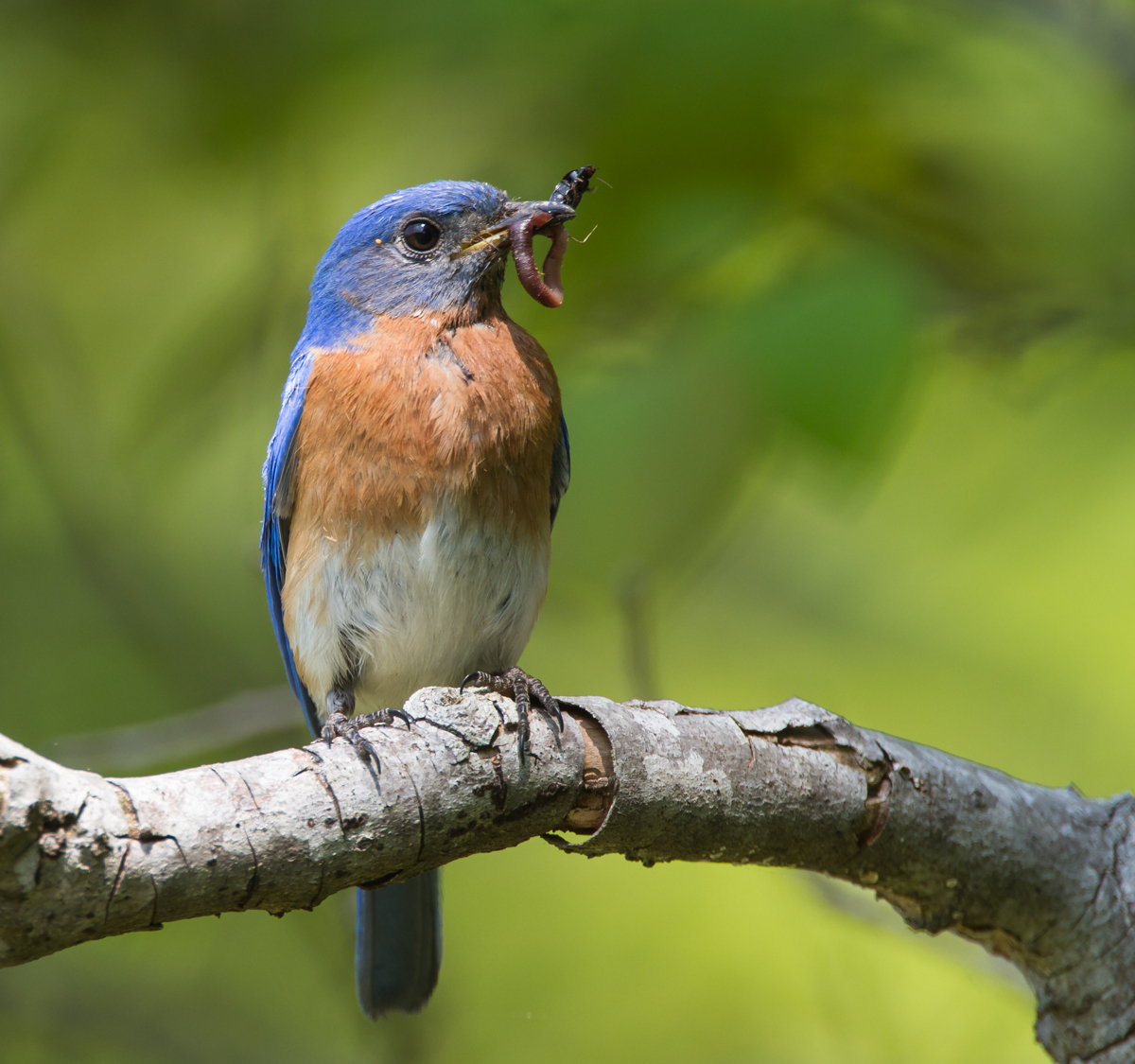
Often, he will have more than one crammed in his beak, and, occasionally, will add a condiment of a beetle or other insect.
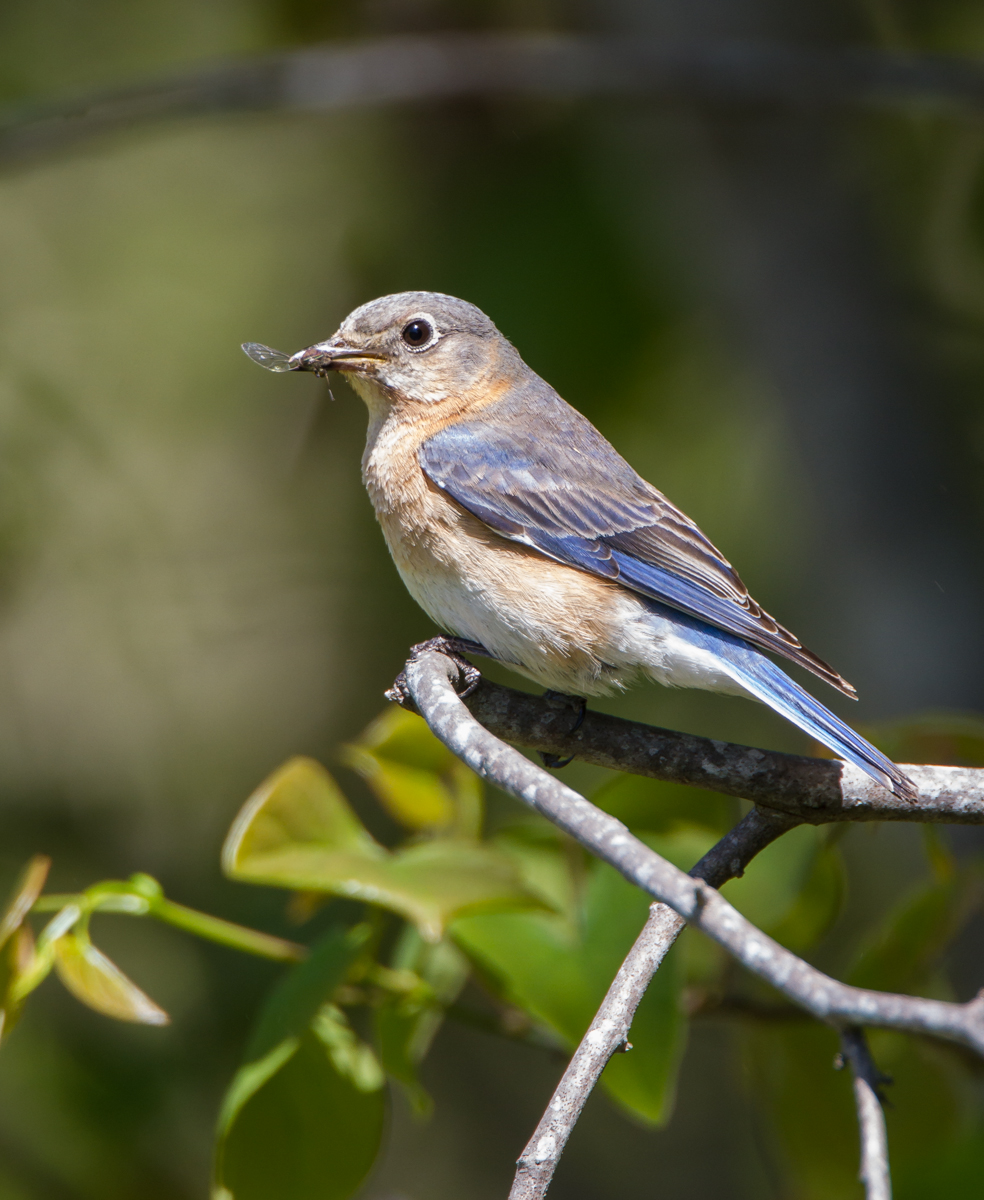
The female tends to bring smaller items – spiders, flies, and small insects (although she did bring in a small lizard, a Ground Skink, on the day I was just observing). She is much more cautious than the male and approaches the nest box slowly when I am out in the chair. She often flies behind the box and perches in a tree where it can be tough to get an image without a lot of background busyness.

To help with the backgrounds, I often put out natural perches near areas I want to photograph birds. In this case, I tapped a metal fence post into the ground and fastened a dead branch to it with cable ties. This allows quick a set up and I can easily change the branch for a different look.

The female seems to like this particular perch more than the male and often lands on it as she approaches. Here she has two food items in her beak – what looks like some sort of grasshopper and a glow worm (lightning bug larva).

On two of her trips, she brought a food item which I have yet to identify. It is an amorphous blob, perhaps a cocoon or egg mass of some sort?

On one side, there is some faint striping.
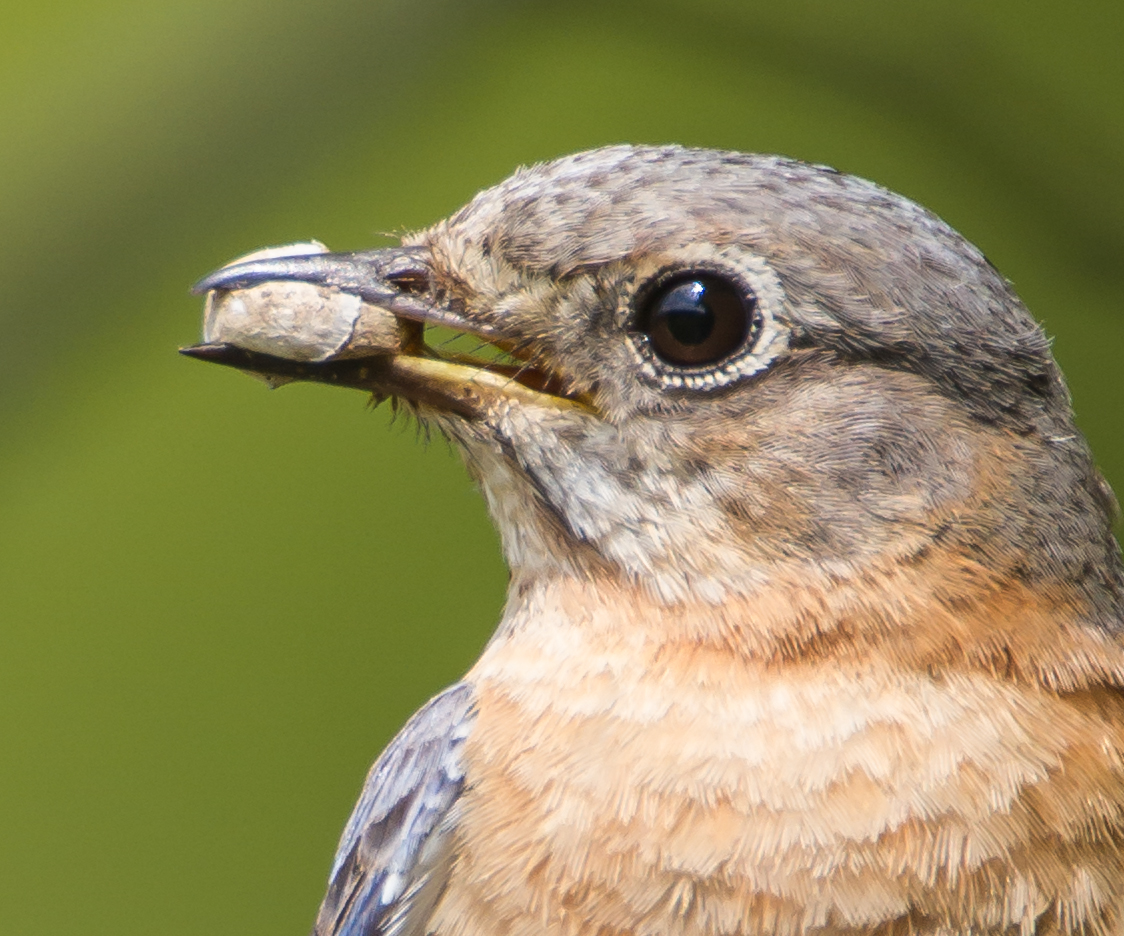
When she turned her head, it looks almost like there is a thin veil-like cover on part of it. If anyone has any ideas as to what this may be, please drop me a note. I have seen her bring two items like this over the past two days.
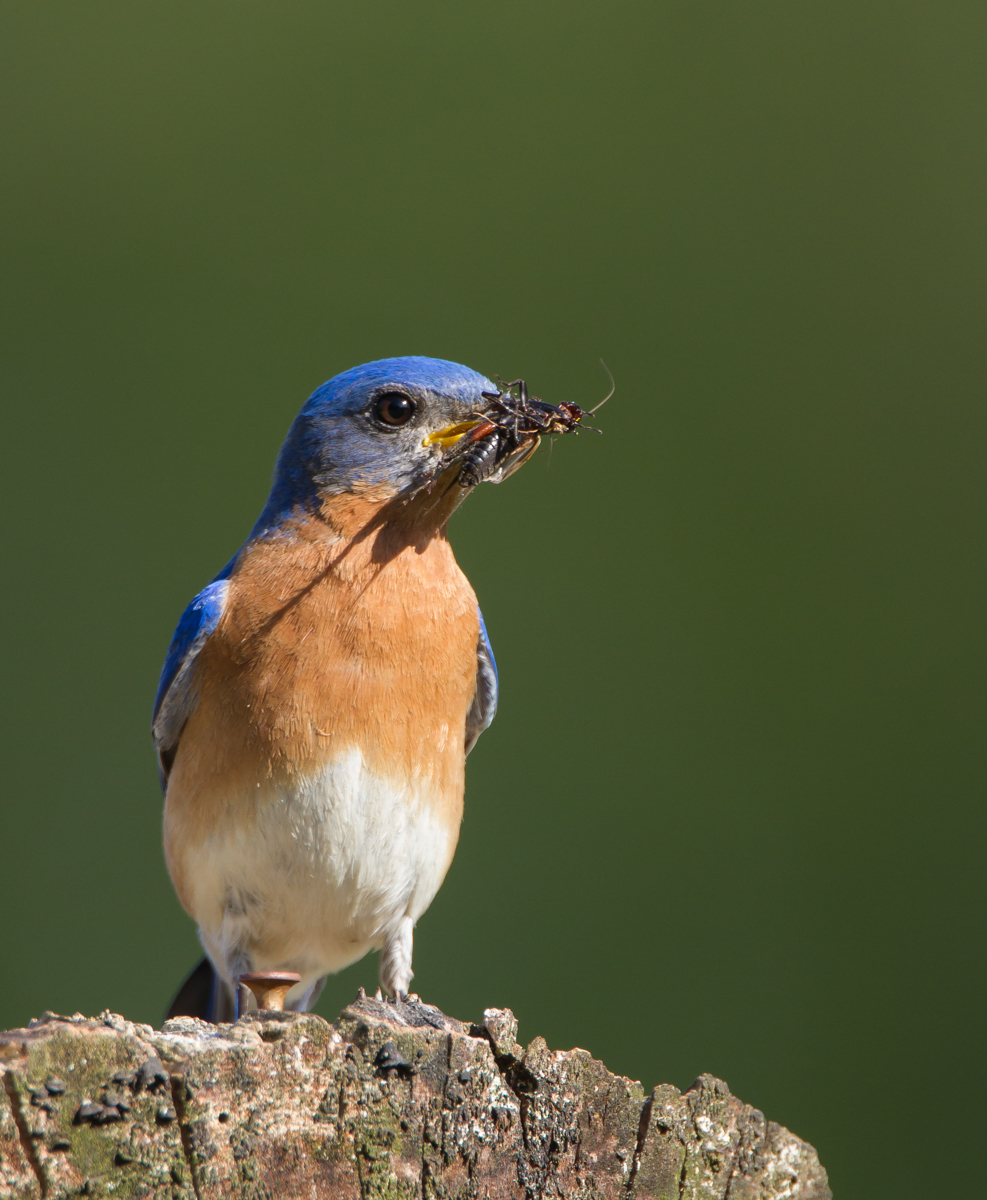
In addition to these busy parents, there is another pair of bluebirds raising young in one of my hollow log nest boxes a few hundred feet up the power line. I haven’t spent as much time with them, but they are also bringing food to their young. I saw the female with a fly of some sort and the male brought in a few crickets and worms. It is impressive to see the quantity and variety of prey these birds capture. It is also important to understand how it can be so harmful to these, and so many other species, if the areas they forage in contain significant amounts of harmful pesticides or herbicides.
I may have another few days worth of watching until the nestlings fledge. But, I am anticipating at least one more nest from each of these parental pairs before summer’s end. Another reason that Bluebirds are a favorite of so many bird lovers.
Due to our site update, photos on older posts may not display correctly. Sorry for any inconvenience.
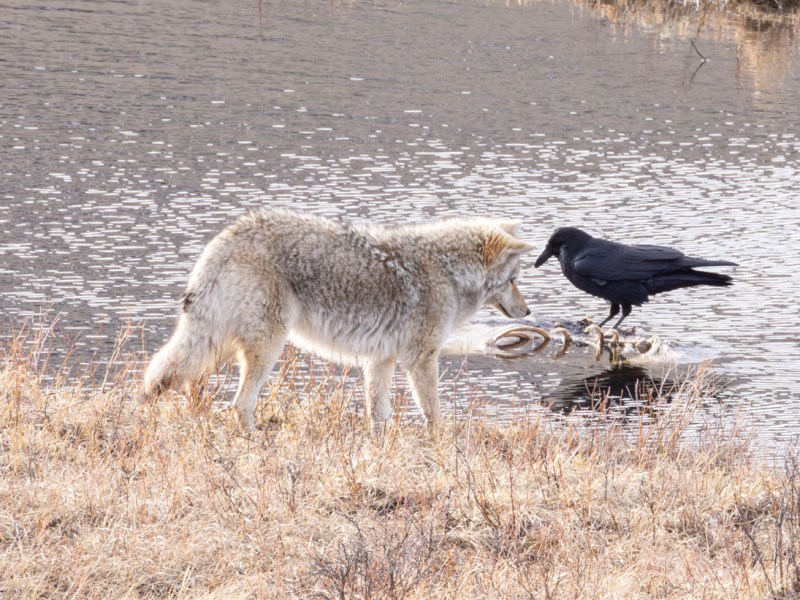
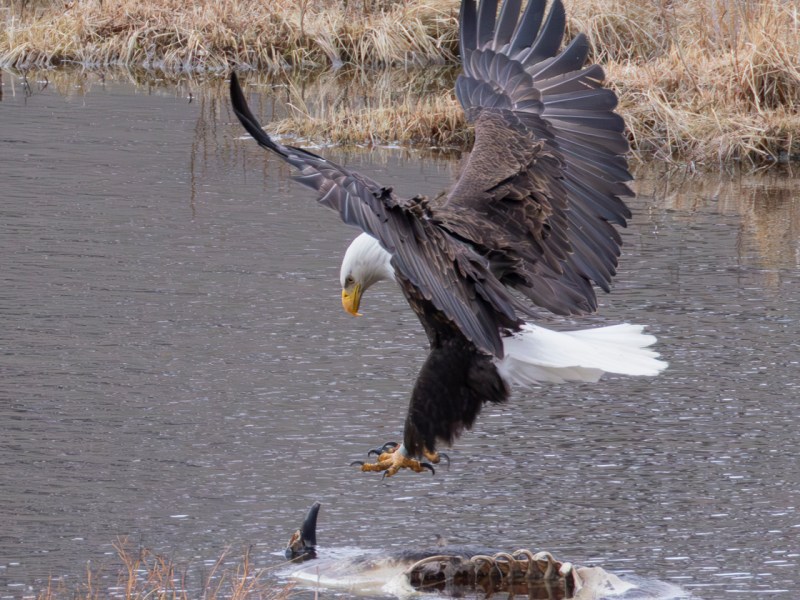
I’ve been checking the bison carcasses at Blacktail Ponds in…
Read the post…
 Roads End Naturalist