To see in color is a delight for the eye but to see in black and white is a delight for the soul. ~Andri Cauldwell
Last Wednesday, I headed to the Pungo Unit of Pocosin Lakes National Wildlife Refuge to scout the area for an outing later that week. I’ll report on the outing in the next post, but wanted to share a few highlights of the scouting trip. If only the critters would realize they need to show up when I schedule them so I don’t have to tell people…”well, yesterday…”
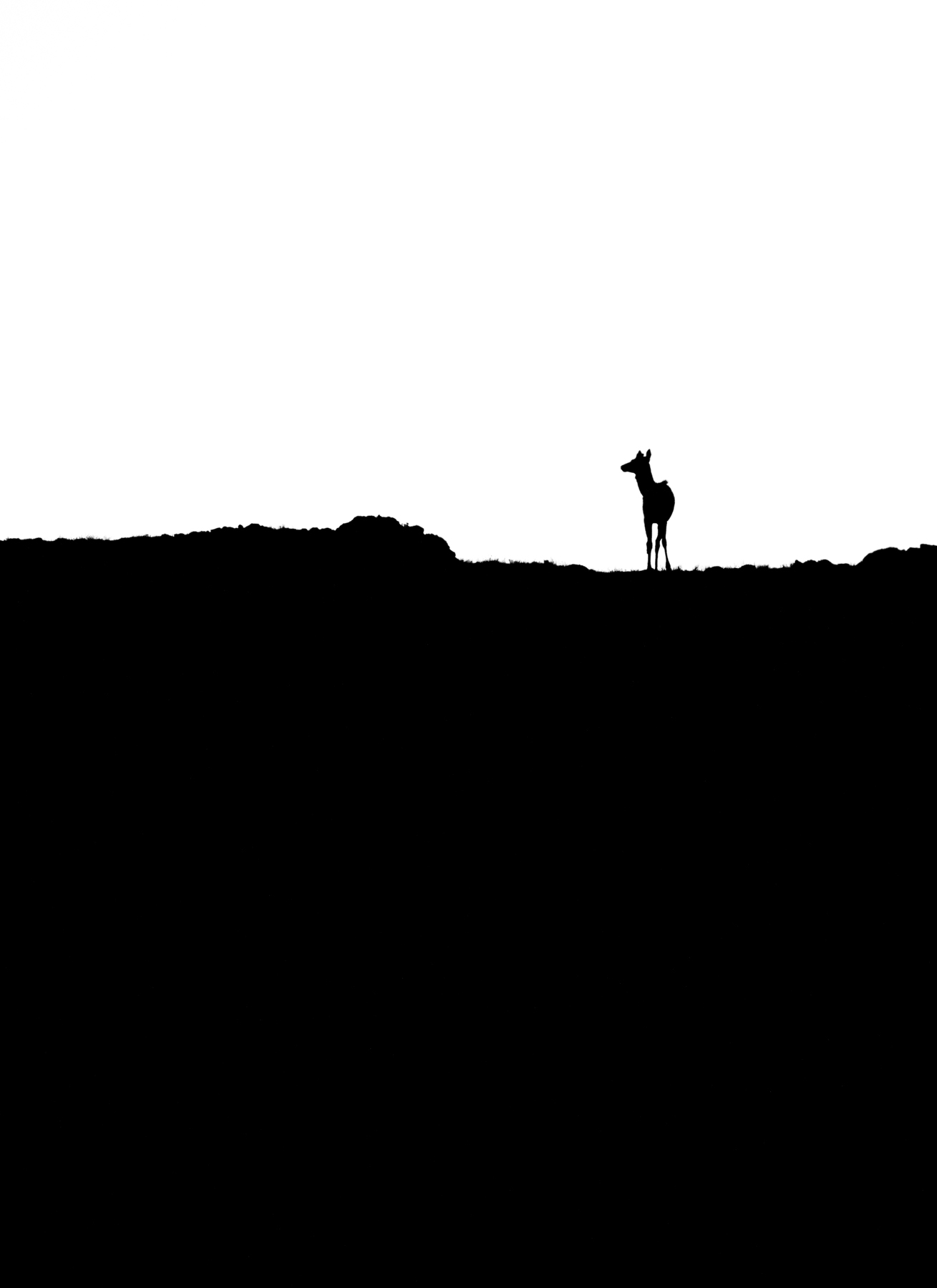
There seemed to be a somewhat monochromatic theme to the critters last week, so here are a few of my favorite shots:
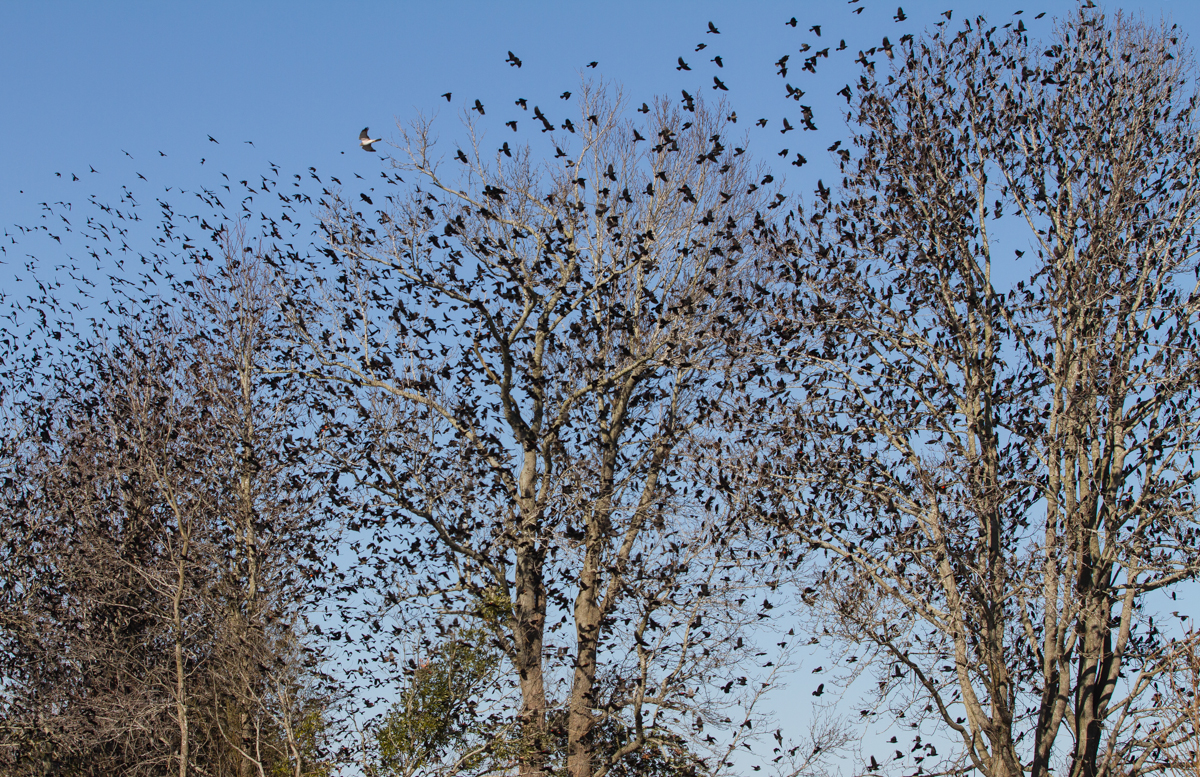
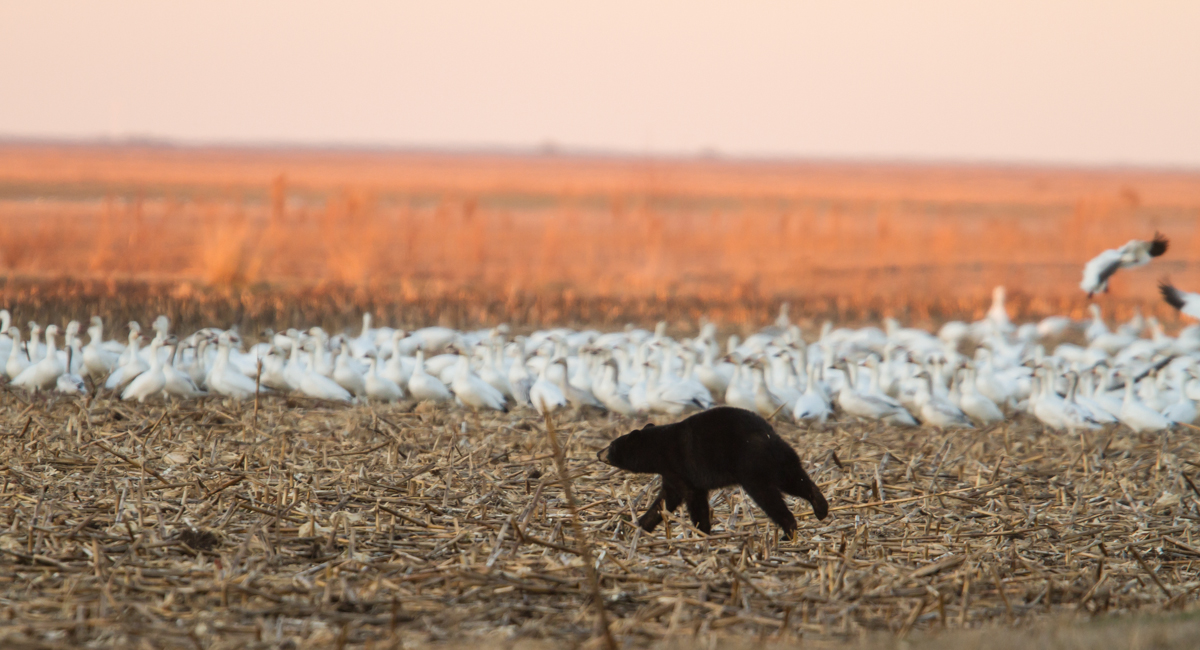
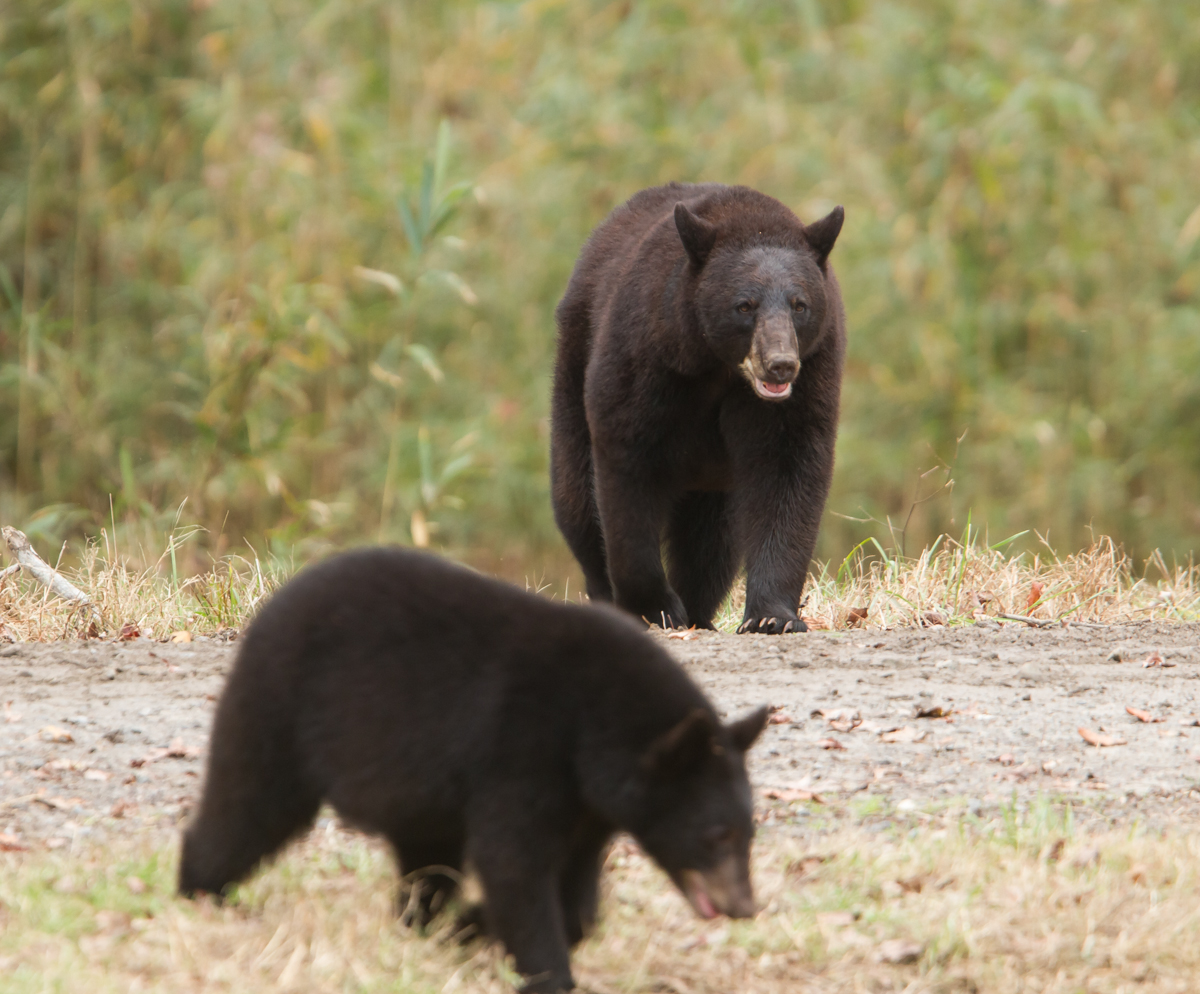
Red-winged Blackbirds in trees at Pungo – note male Northern Harrier streaking by the treetop (click photos to enlarge)Tundra Swan flyoverAmerican Coot feeding on submerged aquatic vegetationBlack Bear sow
When my participants arrived, we again saw all of this wildlife, and more. Unfortunately, I was treated to one spectacle that afternoon that eluded my group during their stay…but such are the vagaries of wildlife watching. They never behave on cue.
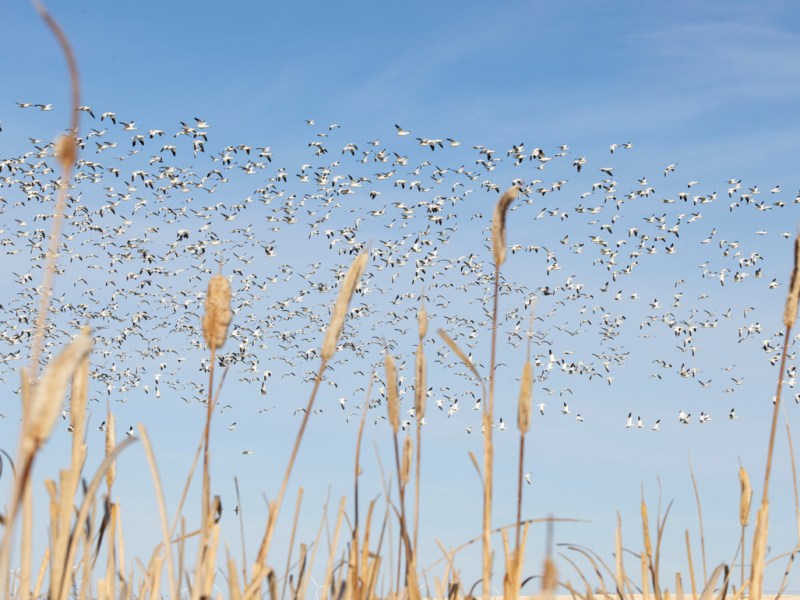
Blackbird flock in front of Snow Goose flock
I was waiting at a favorite location for bears when thousands of Snow Geese came out of the lake and started circling the field as if wanting to land. In the foreground, hundreds of Red-winged Blackbirds drifted across the corn stubble in dark clouds. The geese landed about a mile away and I started walking in their direction.
Snow Geese circling field where bear was feeding
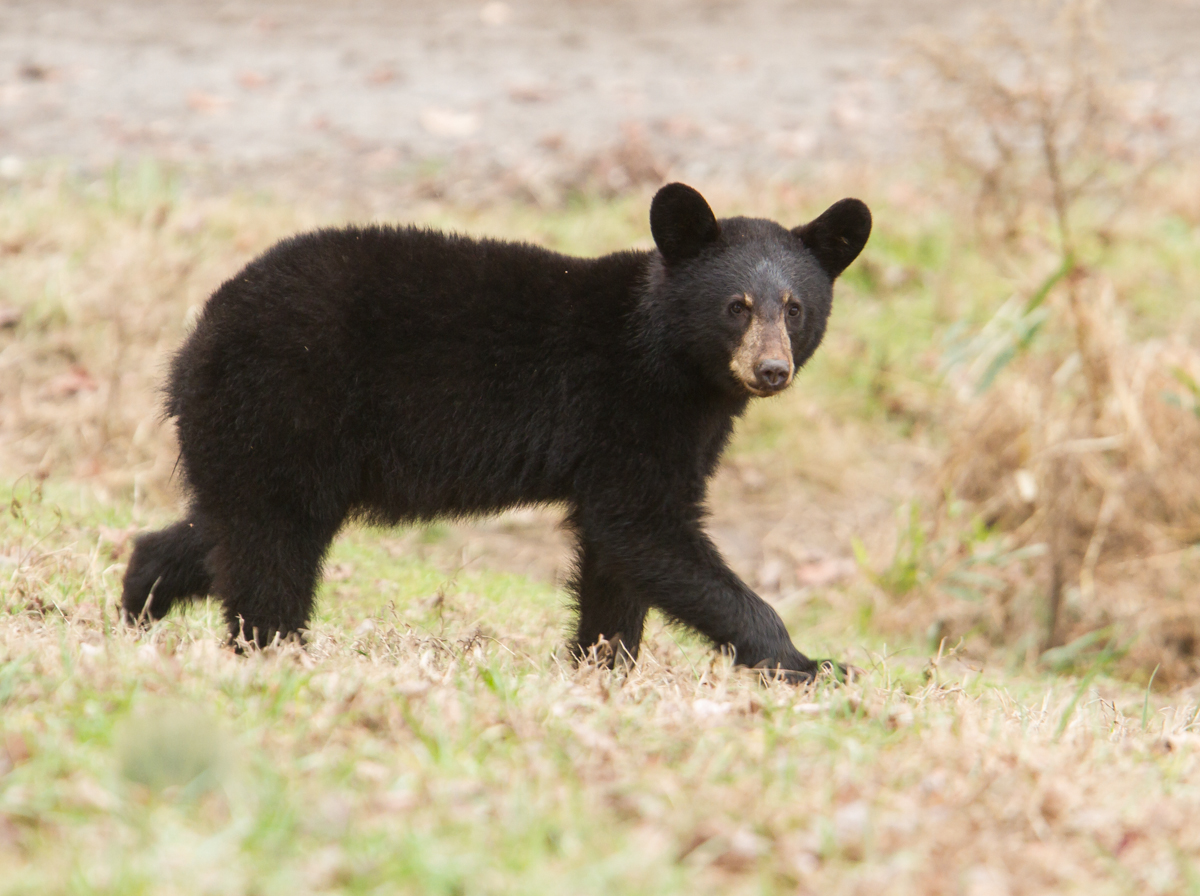
A young Black Bear had been out in the field when the flock started to circle, and many of the loud birds started landing near the bear. The young bear retreated into cover and the then reappeared a short while later. It fed for a few minutes and then retreated once more, while the flock on the ground grew larger and was moving toward both me and the bear.
Young bear approaching flock of Snow Geese
On its next appearance in the field with the geese, the bear must have decided to try to reclaim the corn supply. The next few images show the bear running toward the flock.
Young bear running at flockThey just won’t leave…Bear standing, looking at Snow Geese as they circle and land nearby
A few birds spooked and flew, but more were landing all the time. The bear stood up as more Snow Geese began to circle and land nearby. If only I could read a bear’s mind…The bear then walked off the field, leaving the corn to the growing, noisy flock.
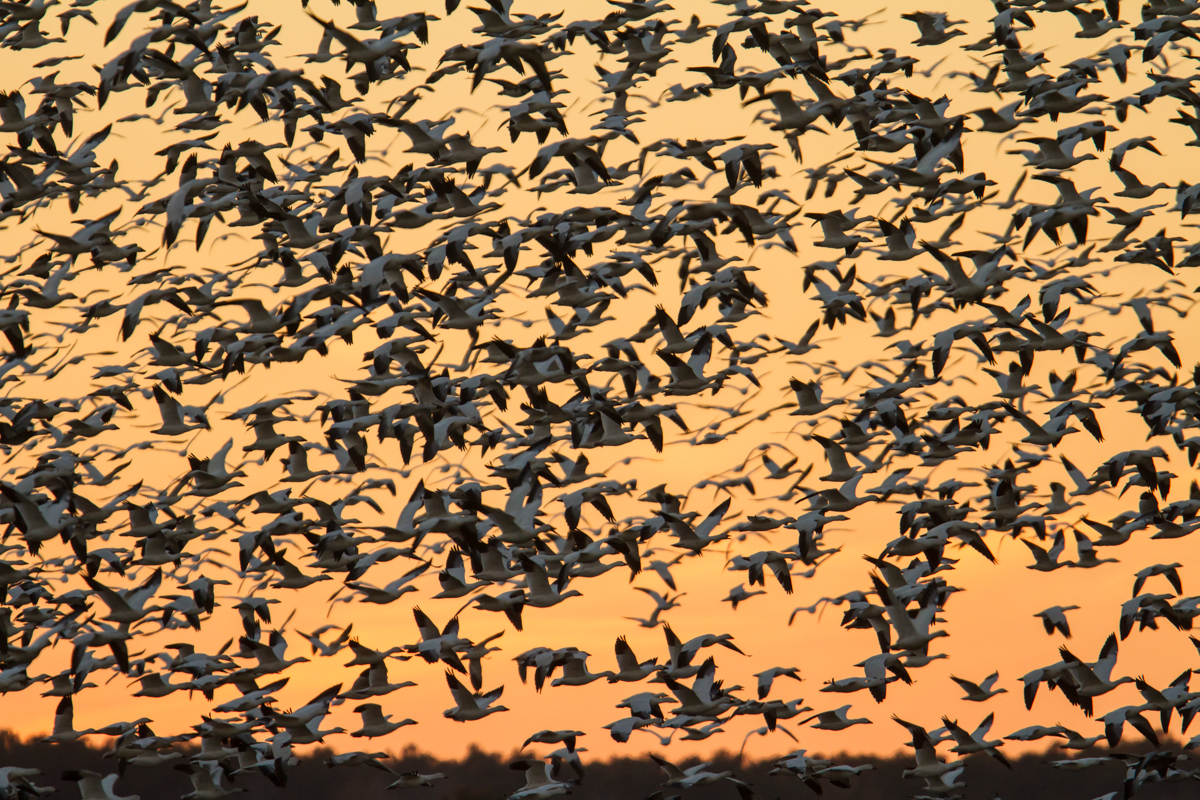
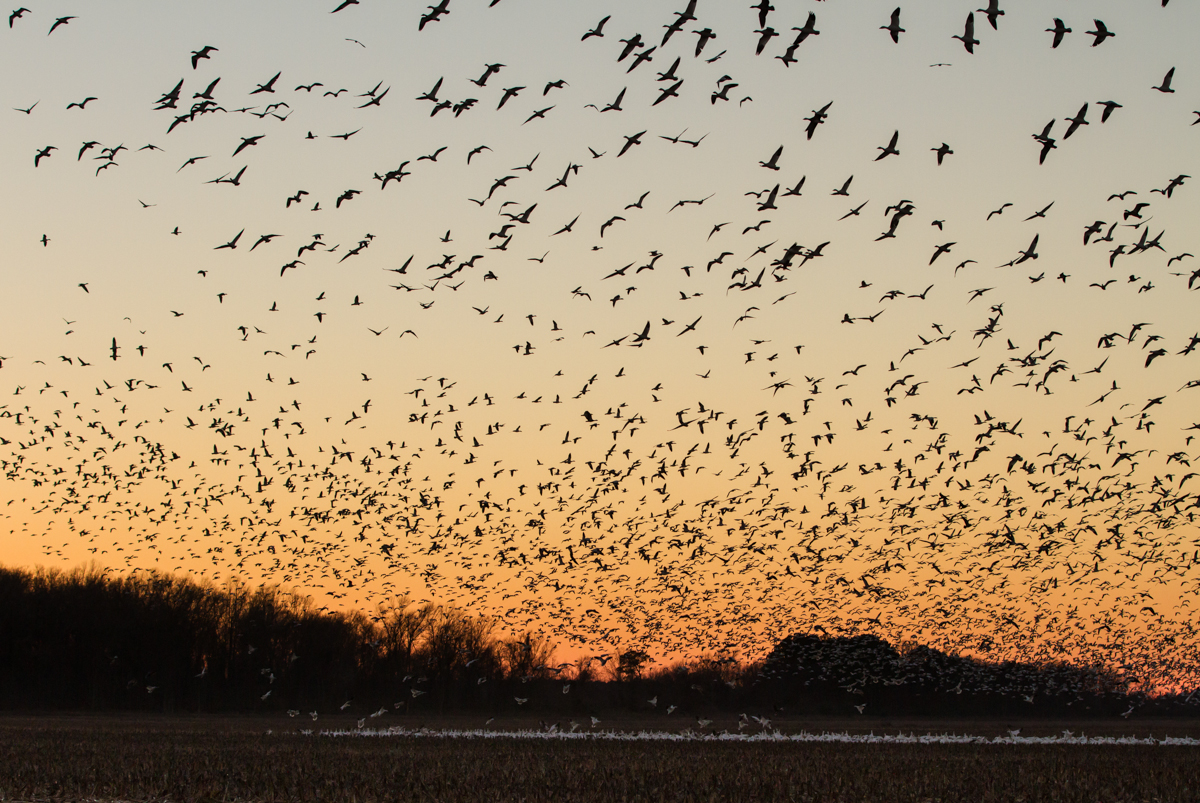
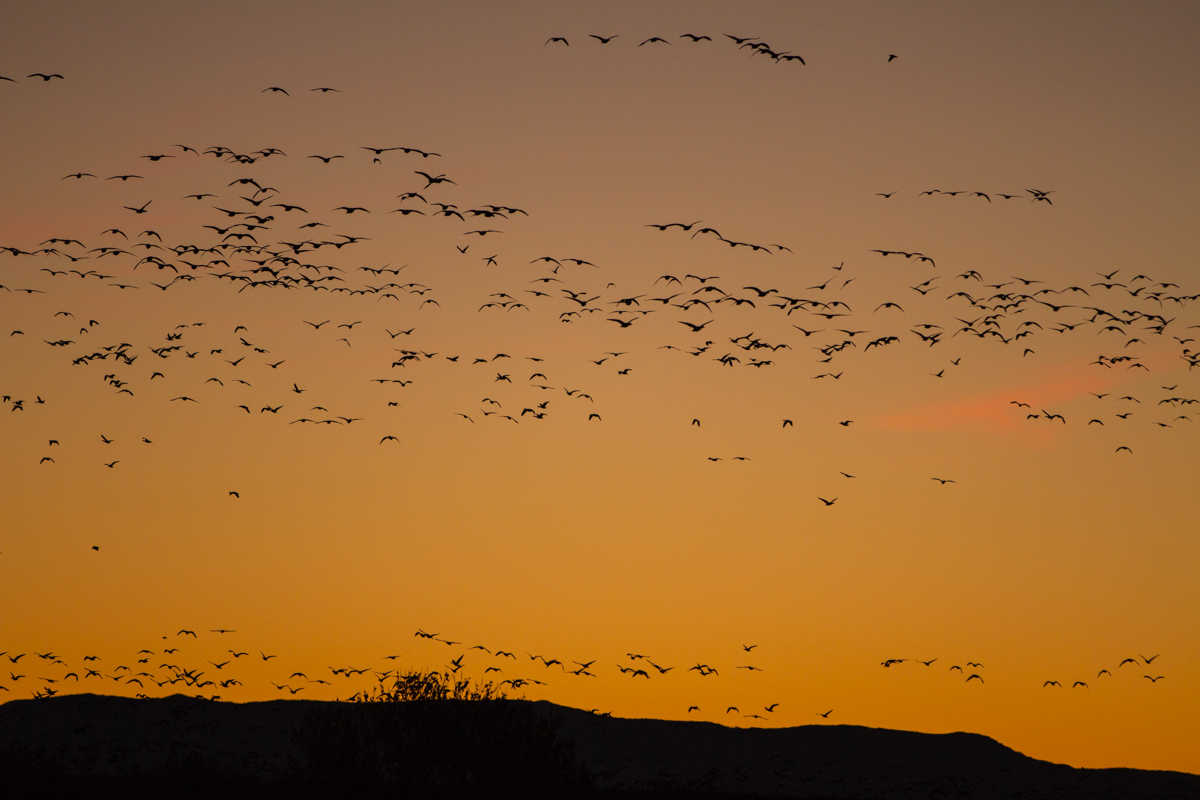
As the sun neared the horizon, the Snow Geese all decided it was time to return to the safety of the lake for the evening. The flock was white against the dark tree line and then appeared black as it crossed the open sky.
Snow Geese at sunsetSnow Geese flying over field at sunset
I wish they had waited for my group, but knowing that there is always a chance to witness such a spectacle is what keeps me going back. If interested in scheduling a guided trip to this amazing area, please contact me at roadsendnaturalist@gmail.com.
When Nature made the bluebird she wished to propitiate both the sky and the earth, so she gave him the color of the one on his back and the hue of the other on his breast…He is the peace-harbinger; in him the celestial and terrestrial strike hands and are fast friends.
~John Burroughs, The Bluebird, 1867
Eastern Bluebird male
They are a favorite bird of so many people. This one made a brief appearance the other morning while I was photographing birds out near the feeding station. He warbled a couple of notes from a high perch, then dropped down to look at some berries along the fence, and quickly returned to the sky.
Eastern Bluebird
I learned a lot about these beautiful birds from an amazing man, ironically named Jack Finch, for whom these birds were a passion. He started a business that built thousands of bluebird boxes and was instrumental in helping restore populations throughout North Carolina. He truly left a mark in the world of Bluebird conservation before he left us. This one is for you, Jack.
What really makes my day is to get up early in the morning, just as the sun comes up, and hear bluebirds….
~ Jack Finch
The Snow Goose need not bathe to make itself white. Neither need you do anything but be yourself.
~Lao Tzu
On one of my first Christmas Bird Counts over 25 years ago, at what was then Pungo National Wildlife Refuge (now the expanded Pocosin Lakes NWR), I ran into a well-known birder who was scoping a huge flock of Snow Geese. He asked if I had seen the Ross’s Geese mixed in with the thousands of Snow Geese. I had heard of Ross’s Geese, but never seen one. The flock suddenly erupted, and as the mass of birds circled us, he exclaimed, “There…there they are, three of them”.
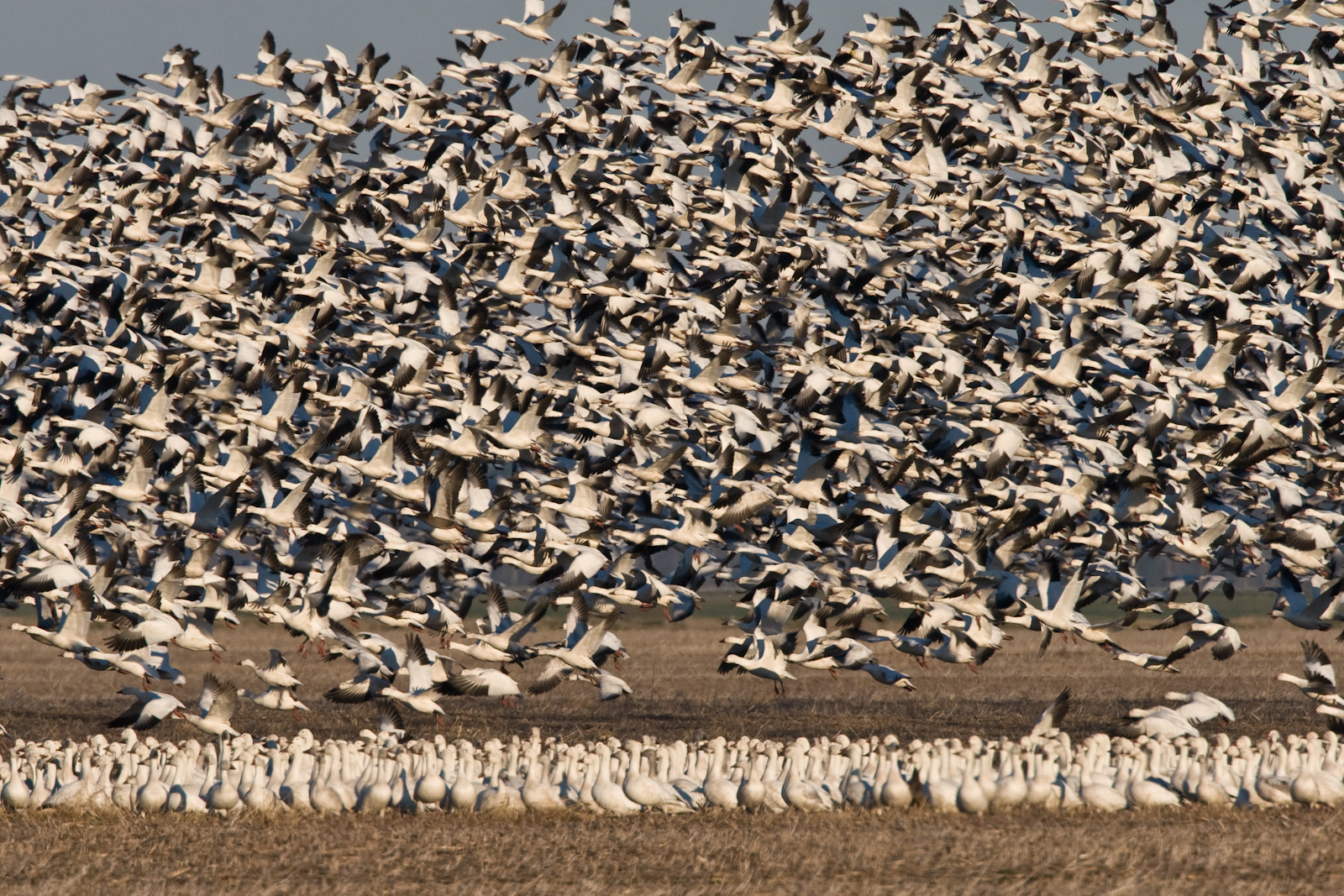
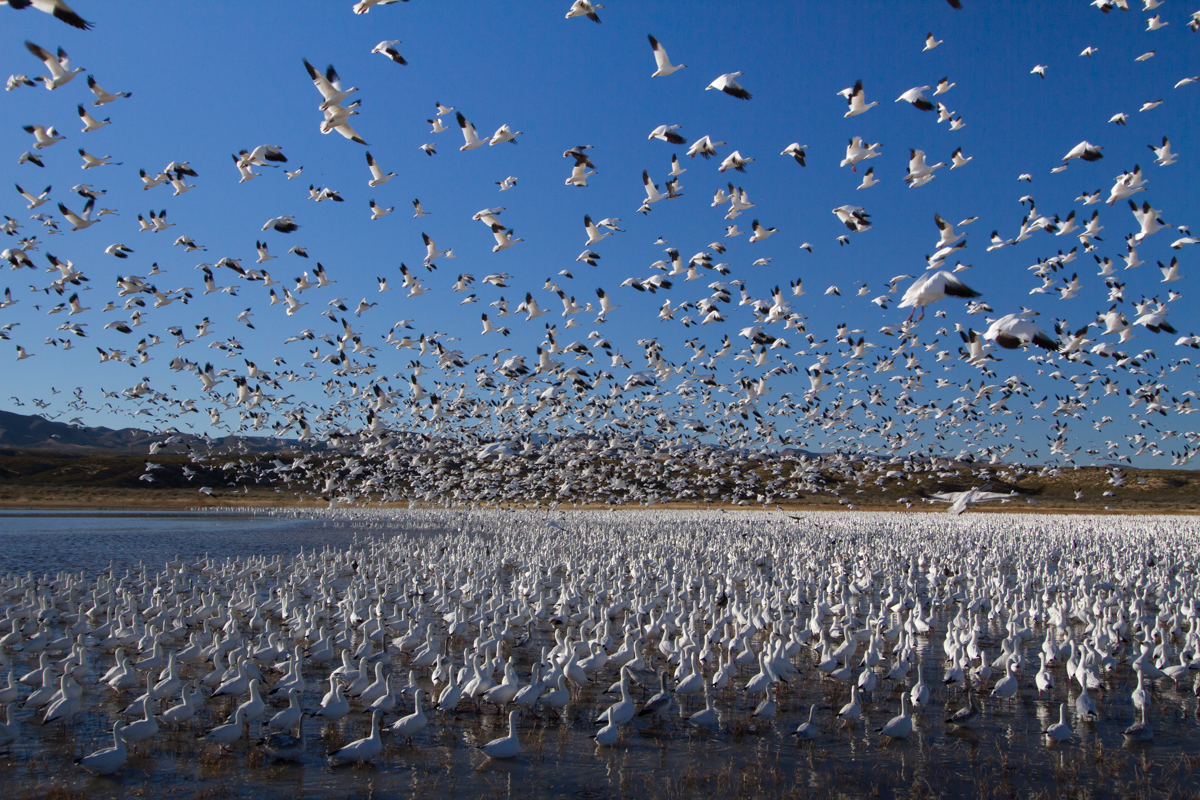
Blast off at Pungo (click photos to enlarge)
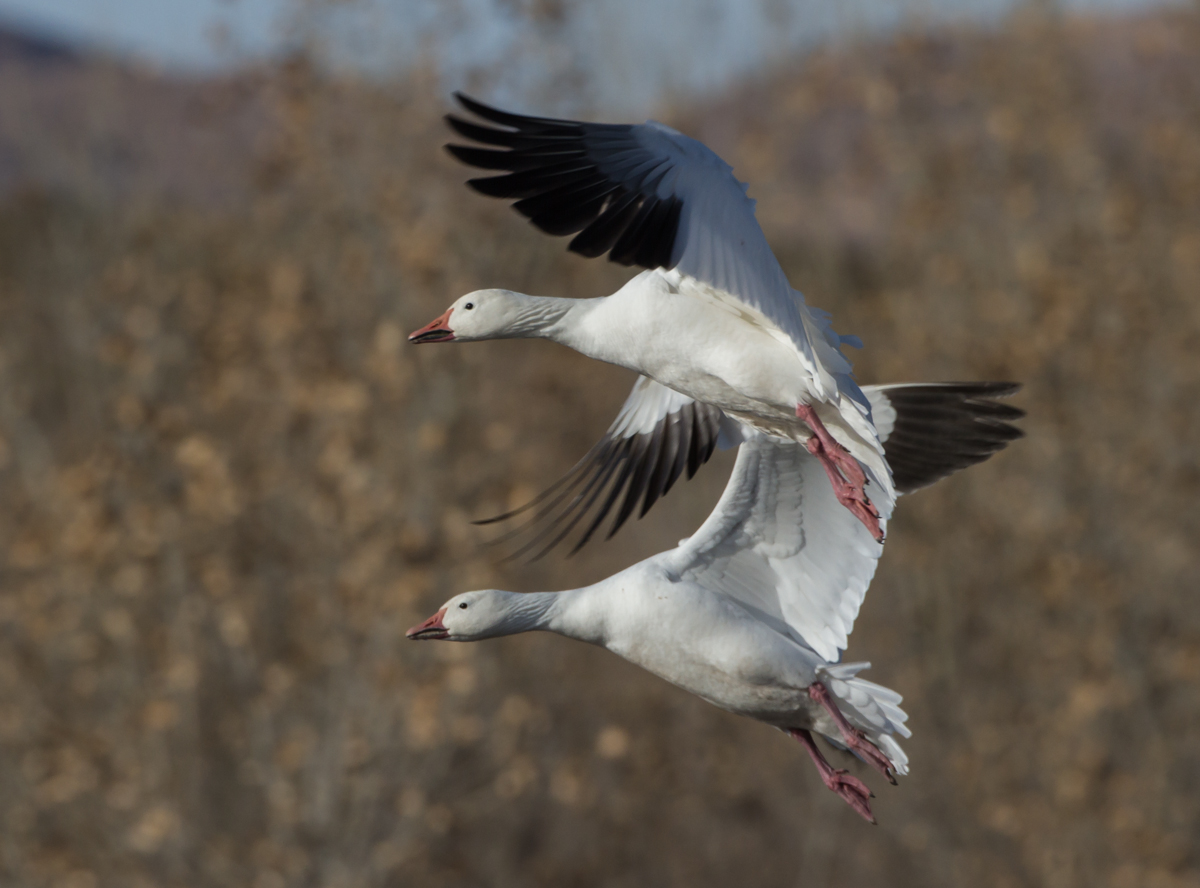
I looked, but really couldn’t see a different bird in the flapping sea of white and black wings. That was my introduction to the subtleties of goose identification. Together, Snow Geese and Ross’s Geese are often referred to as light geese. Light goose populations are increasing nationwide and Snow Geese are now believed to be one of the most abundant waterfowl in the continental U.S. My recent trip to Bosque del Apache in New Mexico provided great opportunities for observation and comparison. In NC, if you see even a single Ross’s Goose mixed with thousands of Snow Geese, it is a good day (most Ross’s Geese overwinter in California and other western states). At Bosque, the Ross’s Geese are much more common, with small flocks easily spotted along the edges of the large flocks of Snow Geese.
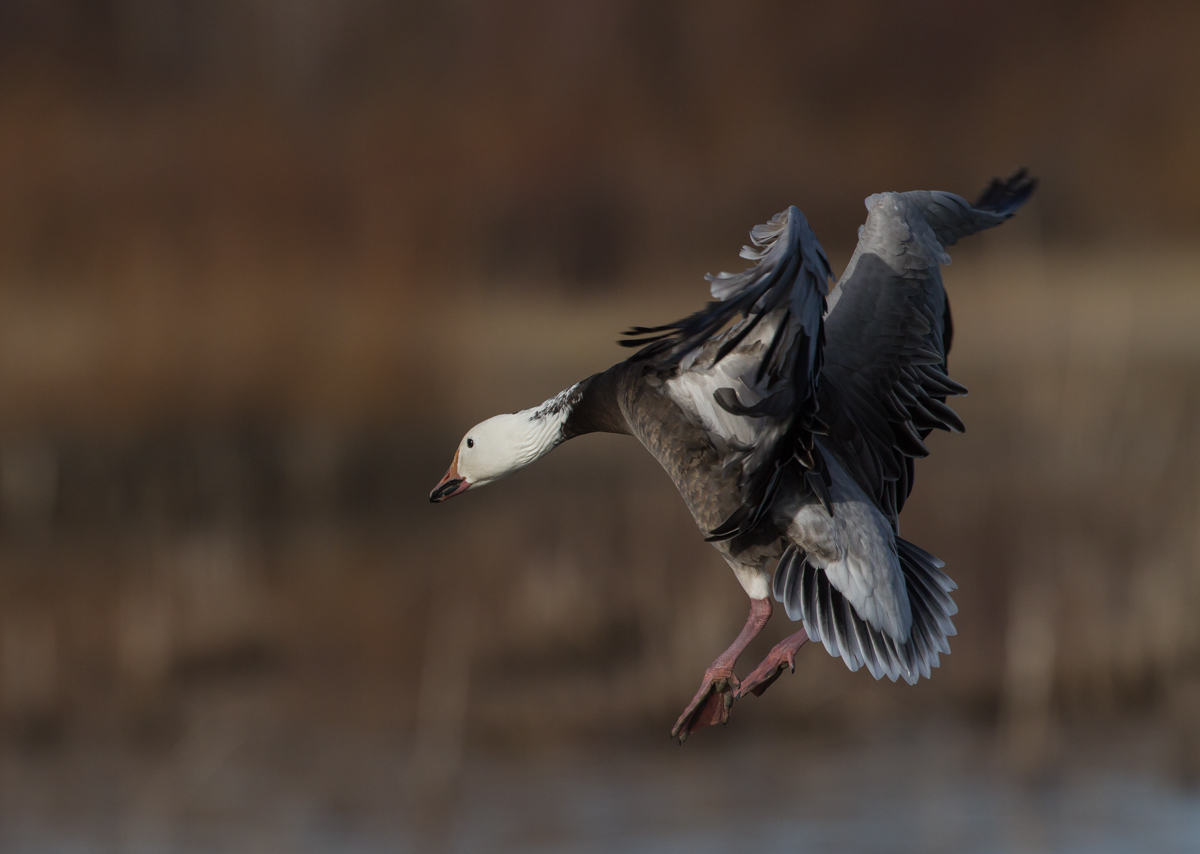
Snow Geese are dimorphic, meaning they occur in two color morphs – one light, and one dark. Until 1973, the two were considered separate species. The field guide I learned to bird with listed the dark-morph as the Blue Goose. The dark-morph is estimated to make up less than 5% of the Snow Goose population that winters here in NC.
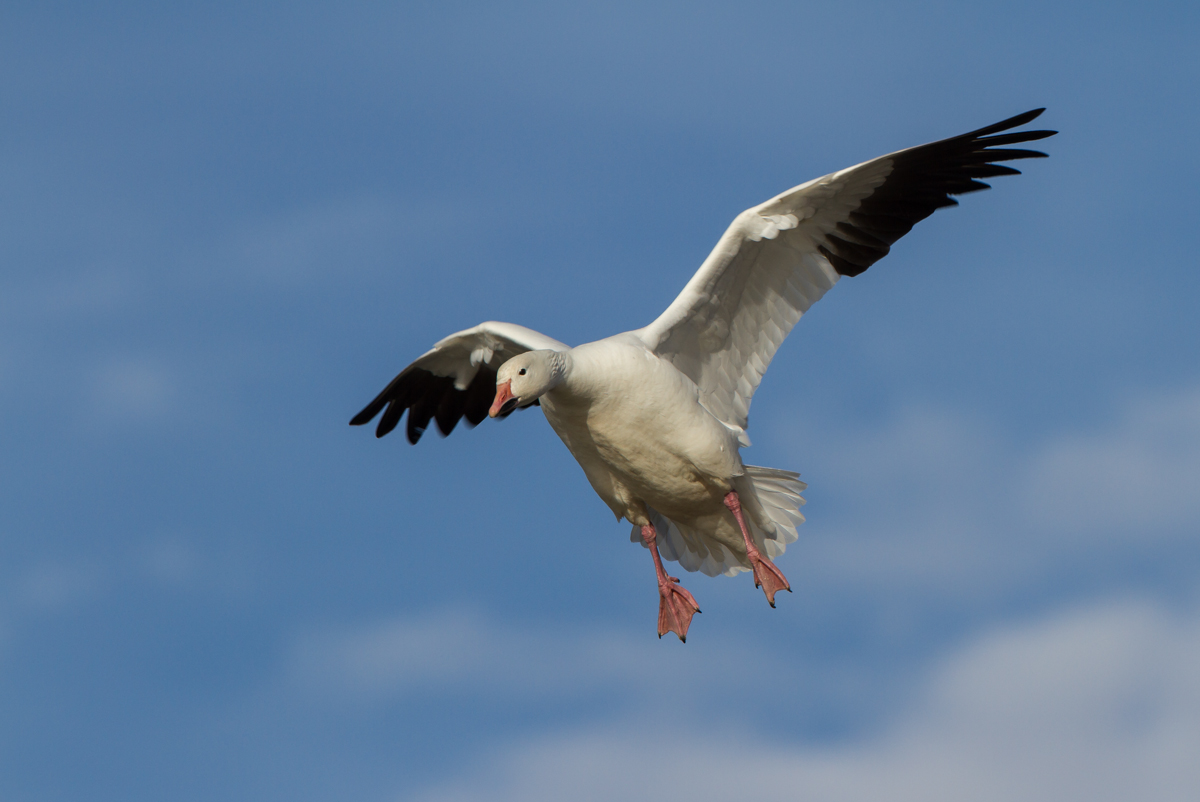
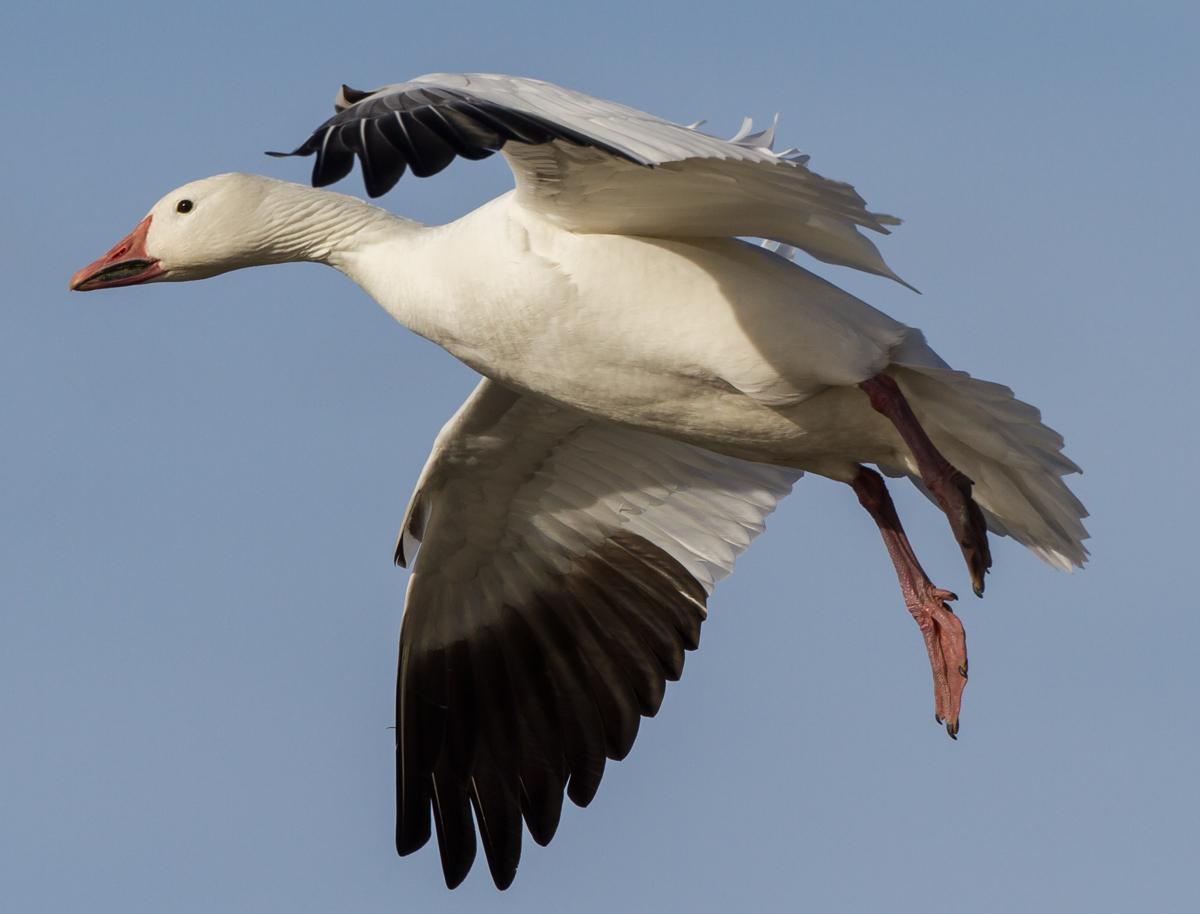
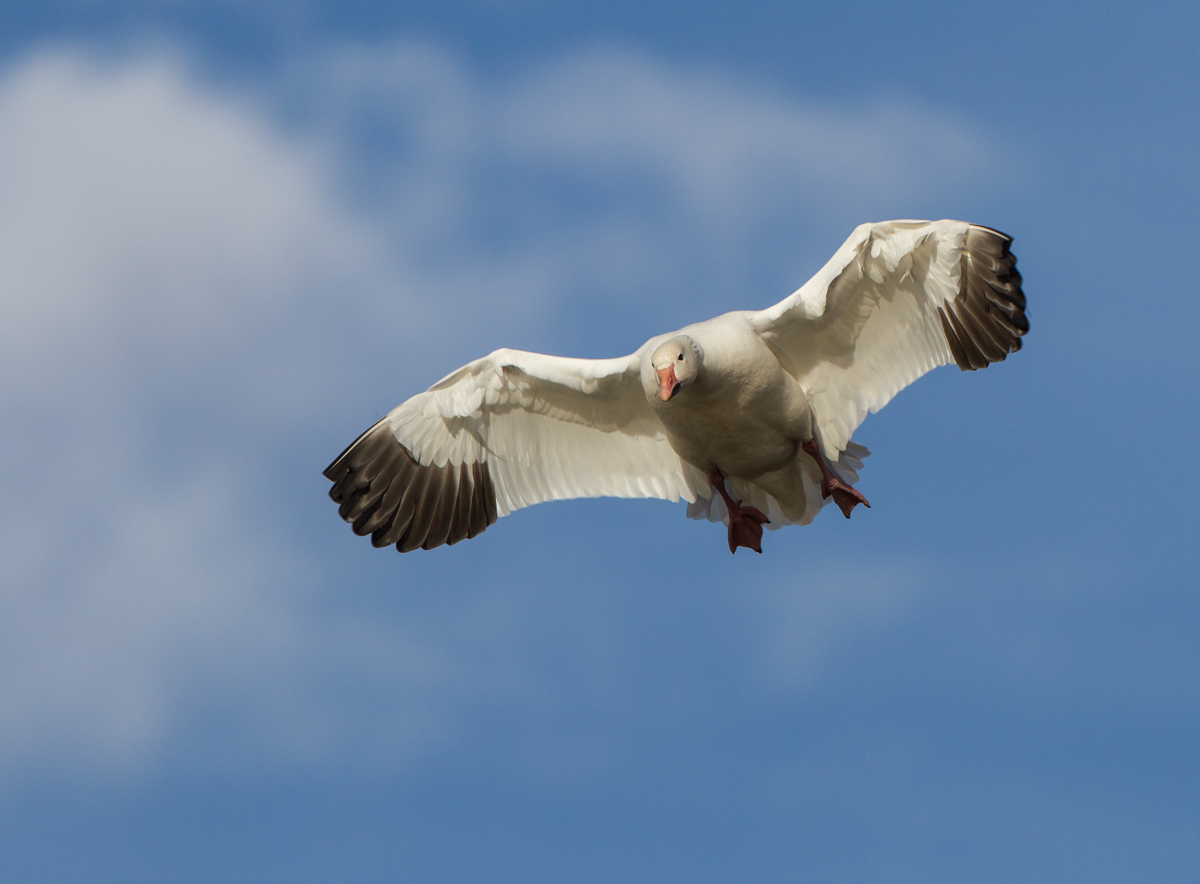
Landing light-morph Snow Goose
Adult light-morphs are white with black primaries, which appear as black wing tips when seen from below.
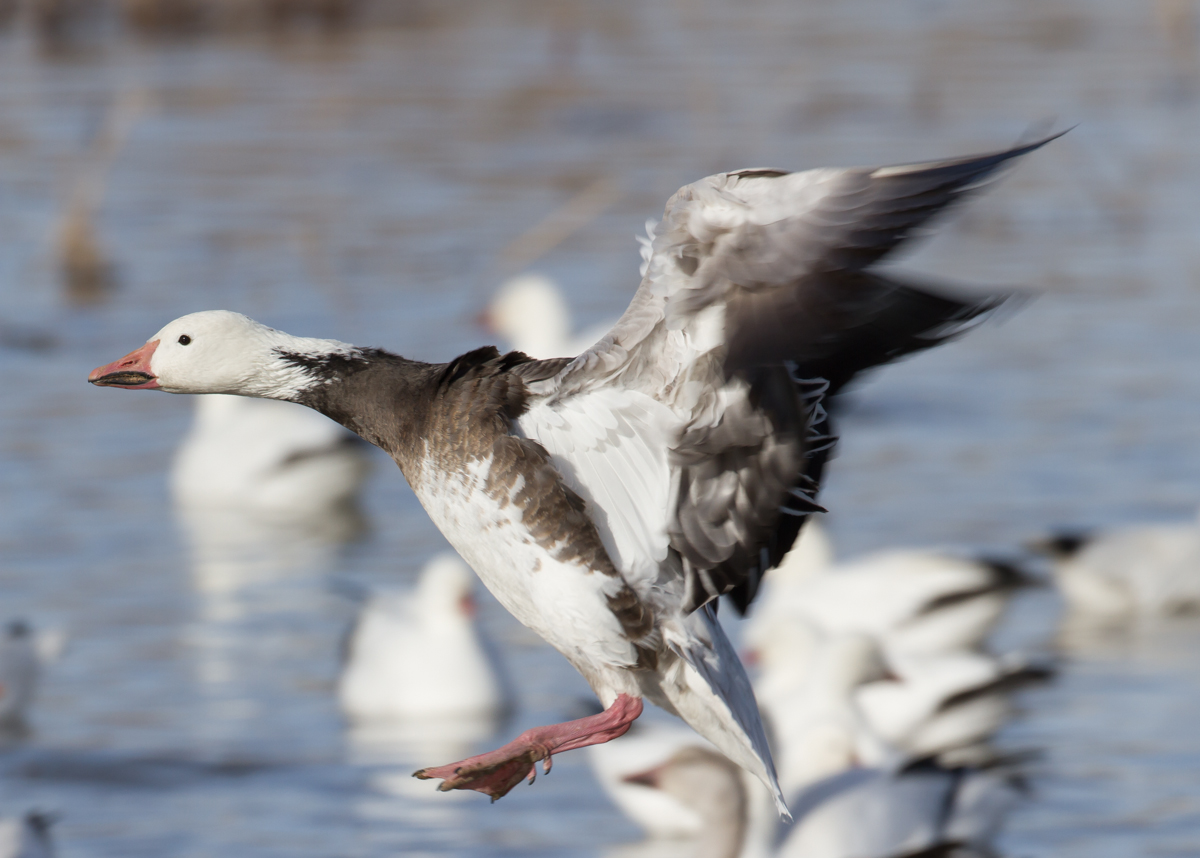
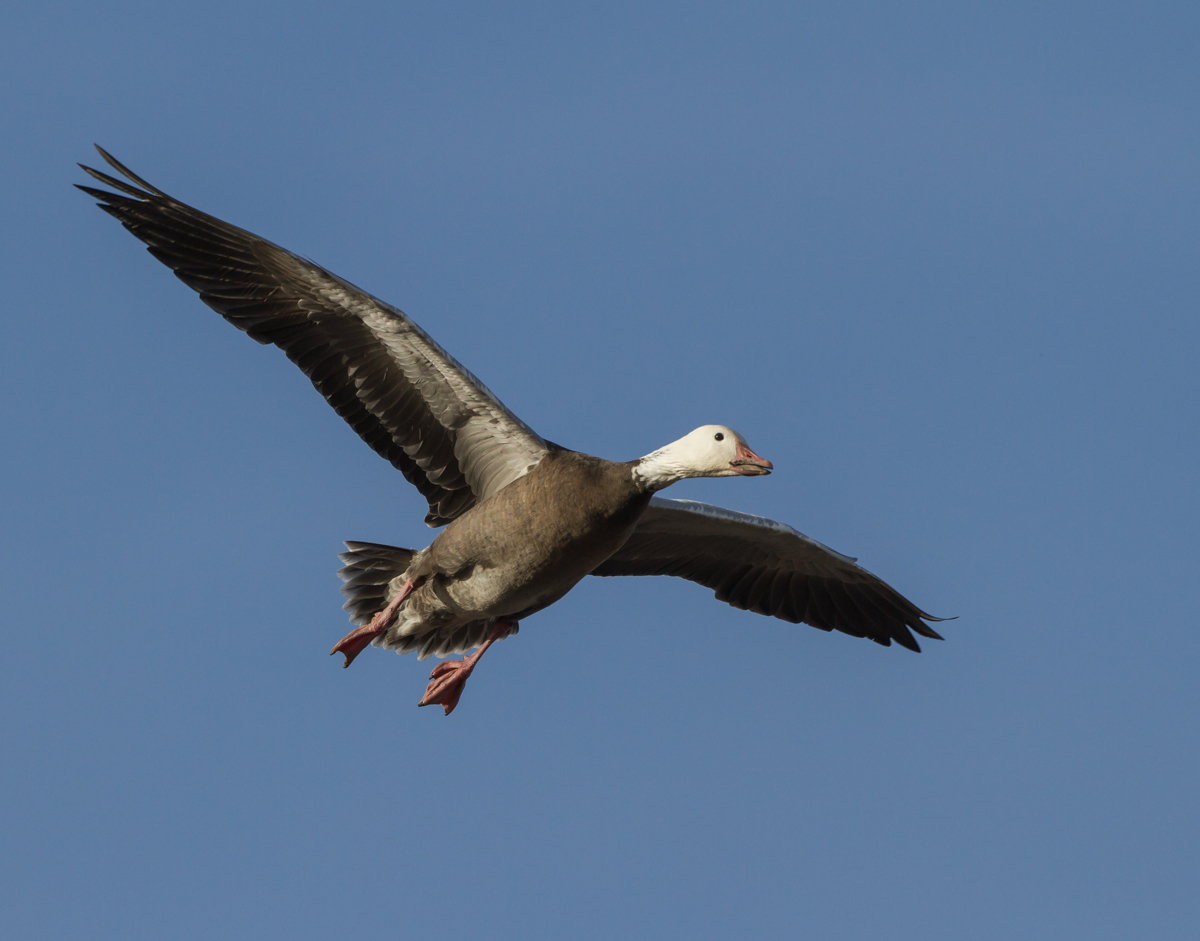
Landing dark-morph Snow Goose
Adult dark-morph Snow Geese have dark gray-brown bodies with white heads and upper necks. A range of intermediate color forms occurs between the light and dark morphs.
Immature Snow Goose
Immature birds of both morphs are grayer overall.
Adult light-morph Snow Goose showing black “lips” and pink feet
Both color morphs have a distinctive black “grin patch”, or “lip line” on their bills. They also have pink legs and feet.
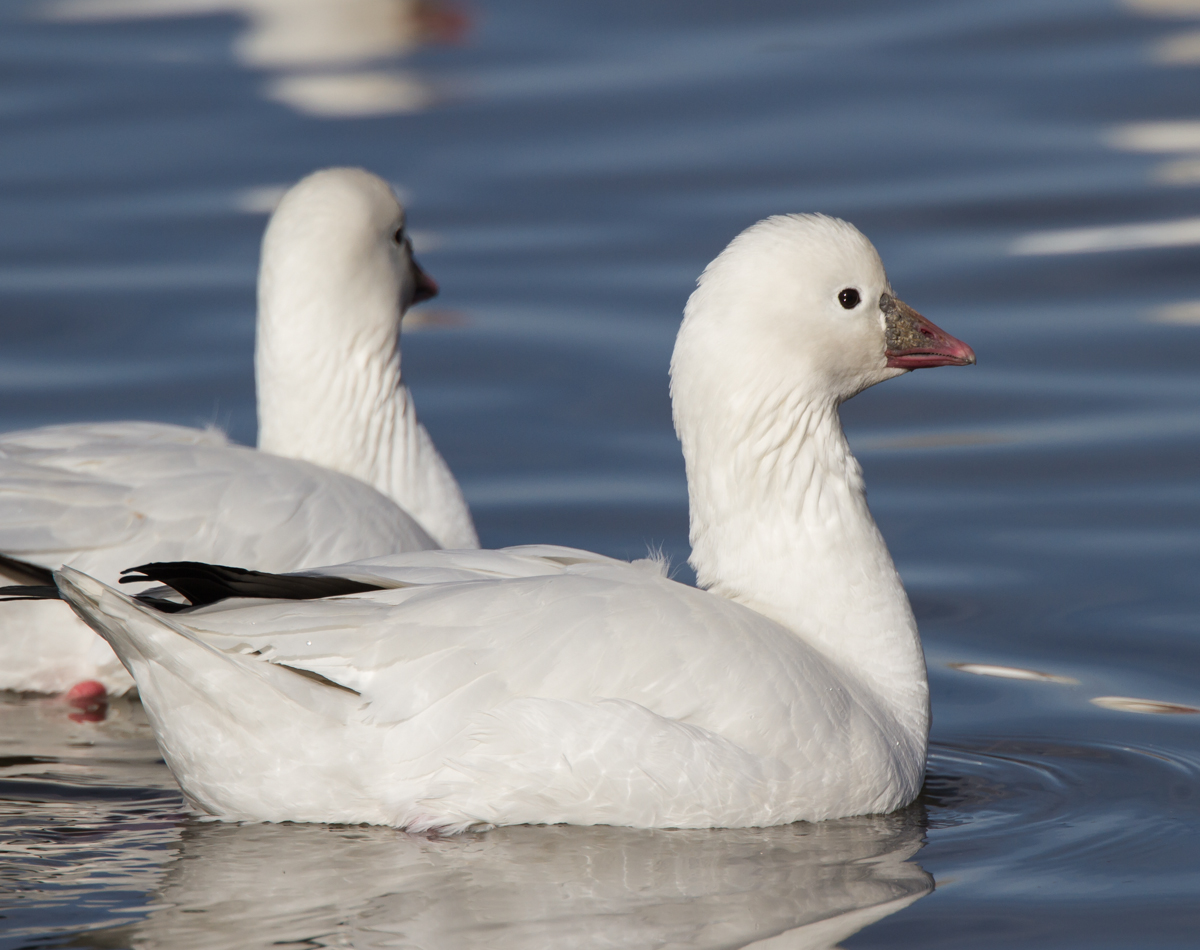
Ross’s Goose
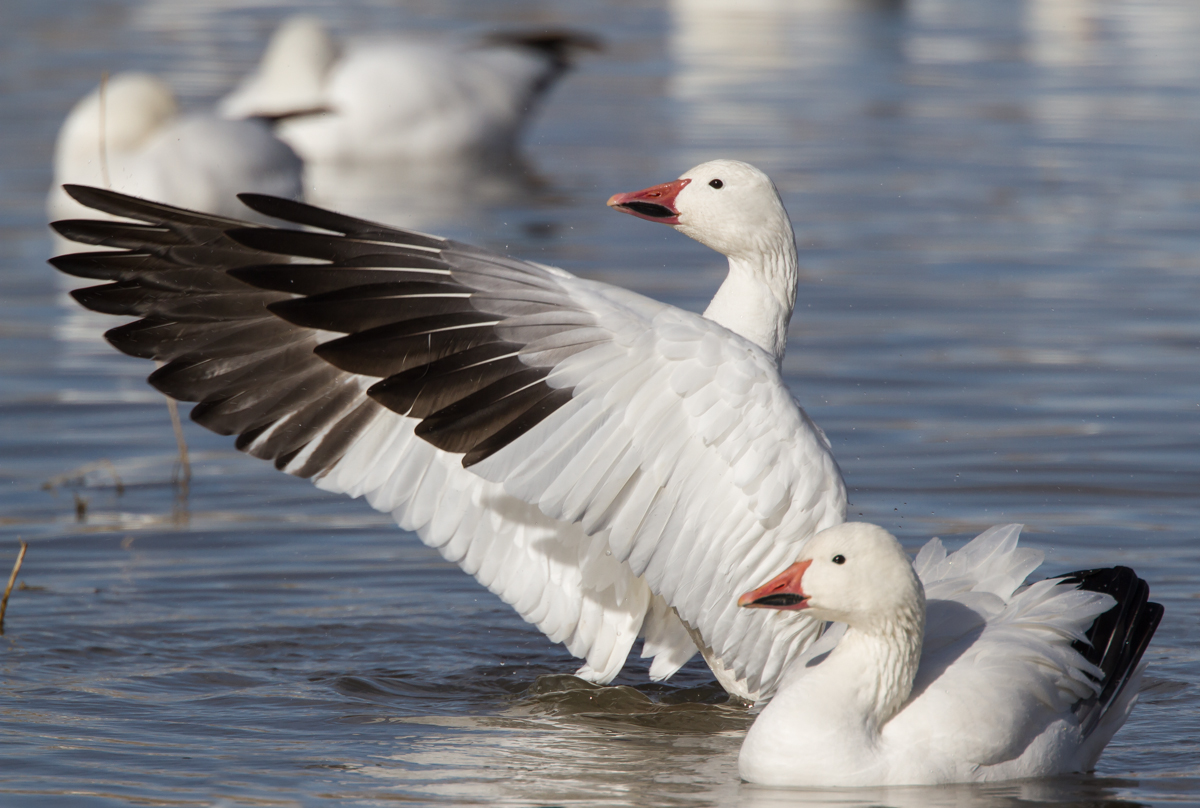
An adult Ross’s Goose looks like a miniature Snow Goose (a little more than half the size of an adult Snow Goose). Other distinguishing features to separate them from Snow Geese are the lack of the prominent black “lip line” on the shorter, stubbier bill, and a more rounded head. They also have a grayish/bluish base on their upper mandible with caruncles (warty bumps) developing with age. The back edge of the bill-feather line on a Ross’s Goose is straight, whereas that on a Snow Goose, is curved. They also have a more rapid wing beat and a higher pitched call than Snow Geese. Dark-morphs are rare in Ross’s Geese. Immature Ross’s Geese are grayish. Hybrids do occur, with the best distinguishing features being an intermediate size, bill length, and a slight curvature to the back of the bill line.
Comparison of Ross’s Goose (right foreground) and Snow GooseSnow Goose (foreground) compared to Ross’s Goose
The comparison is best seen when the two species are next to one another. They are also easy to tell apart if they occur in the same line of a flying group of light geese, with the noticeable size difference being easy to spot with practice.
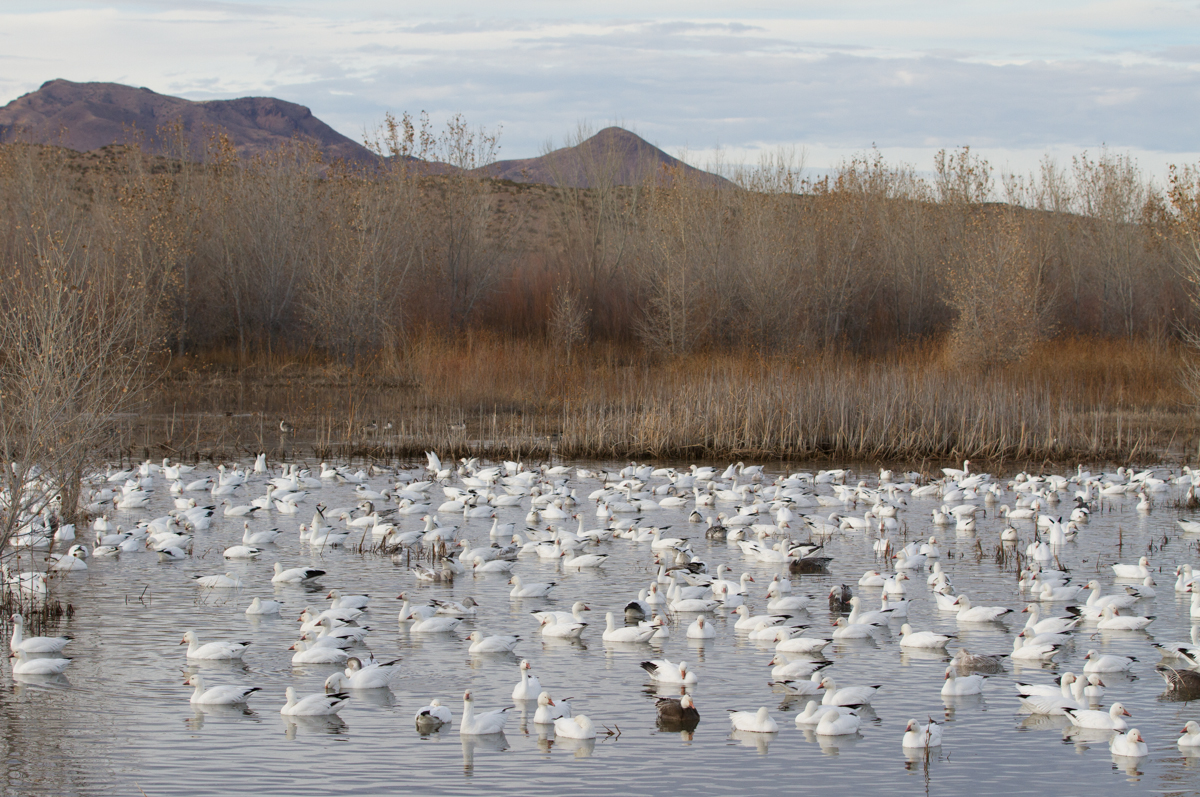
Pond along South Loop
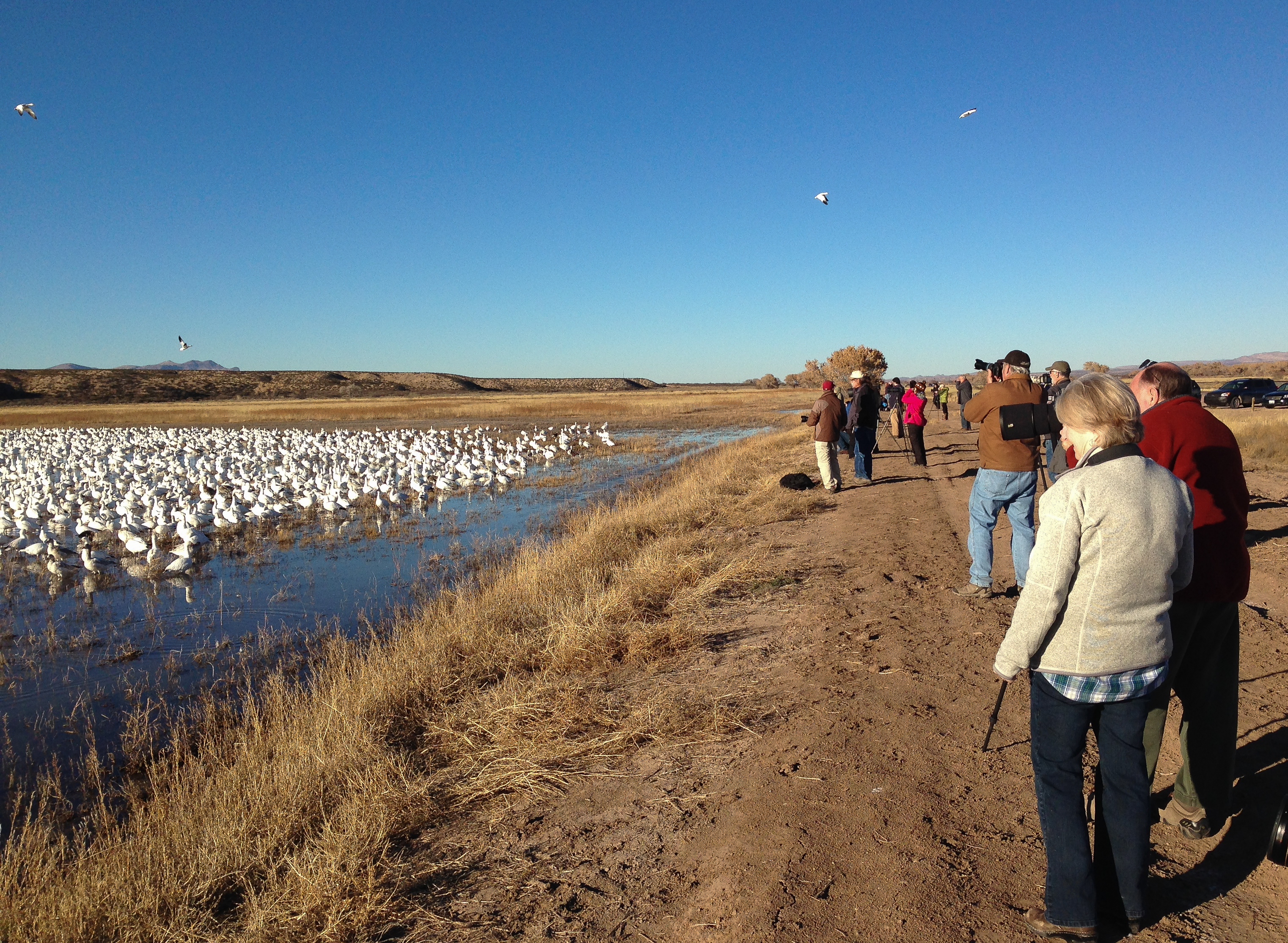
On the last afternoon, a drive along the south loop at Bosque put me in close proximity to several hundred light geese lounging, bathing, and conversing. The birds settled into a routine and, for about an hour, a small group of us sat and watched as the geese went about their business.
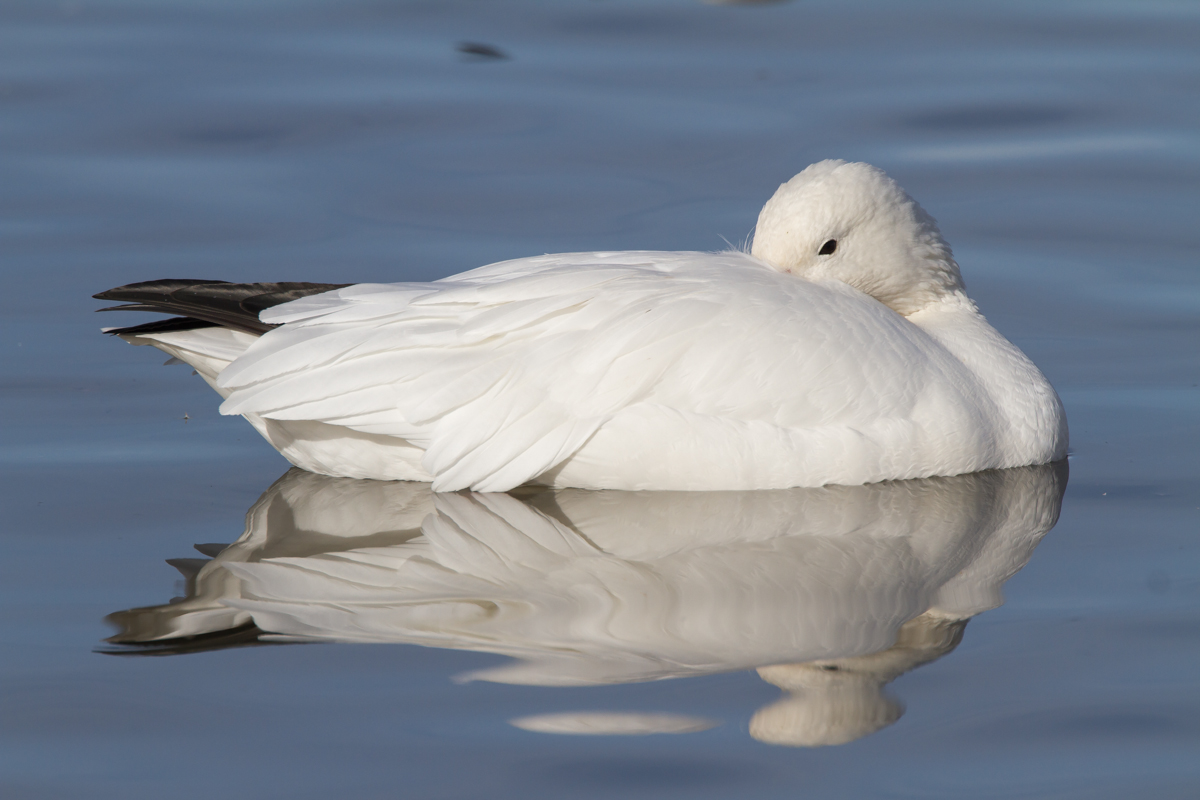
Snow Goose napping with one eye on meSnow Goose slowly spinning in a circle as it naps
Many of the birds rested, head tucked into their back feathers. They seemed to keep tabs on me with one open eye even as they “slept”. Interestingly, several of the napping birds would slowly rotate in a tight circle, perhaps as a way to survey the scene as they rested.
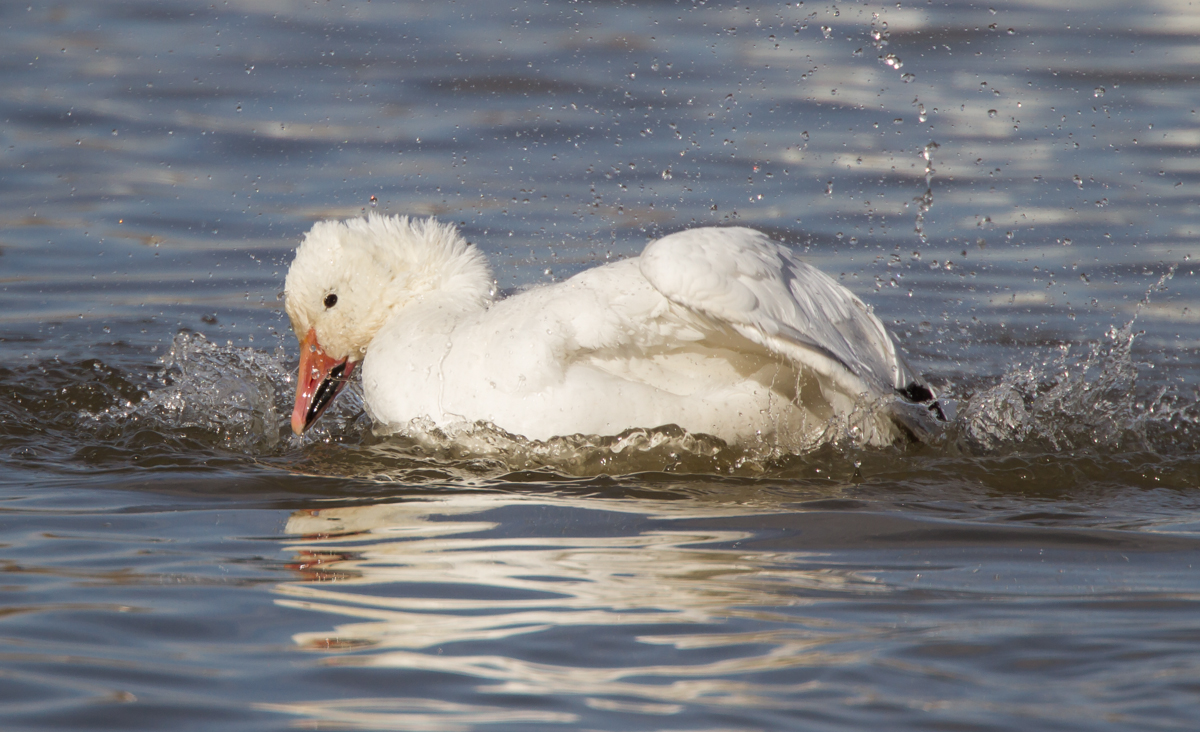
When not resting, the birds in this flock were preening, stretching, bathing, and discussing unknown subjects with their neighbors. Several bathing styles were evident varying between awkward splashing to vigorous head dipping. One additional method was new to me – the bathing flip. It involves a head dunk that turns into a complete body flip in the water accompanied by some vigorous splashing. The short video below includes a few examples (see if you can distinguish the Snow Geese from the Ross’s Geese swimming about)…
Often, the bathing sequence concludes with a prominent wing flap where the bird rises up on the water surface and flaps its wings a couple of times before settling back down to resume preening or simply rest.
More geese joined our group from time to time in flocks varying in size from a five or ten to larger flocks of fifty or more. And, since it was a small pond, we observers all had front row seats to some beautiful landings.
Dark-morph Snow GoosePair of Snow GeeseSnow Goose coming in from straight aboveHead-on view of Snow GooseRoss’s GooseSnow Goose splash-down
After about an hour, something changed and the flock’s behavior and calling became more fidgety.
Mixed flock of light geese taking flight
Soon, a few birds took off – at first groups of ten to twenty, then a few more, until, finally, about half the remaining flock lifted off and flew directly over our heads. That was followed shortly by the lift-off of the remaining geese and the once noisy pond was empty. Most of the birds flew out into an adjoining cornfield and started to feed. Less than an hour later, most will have flown off to their evening roost in some shallow water found throughout this section of the refuge, safe from most predators.
Such is the daily routine of the light goose brigade: rise before sun up and dazzle the onlookers; move out to another shallow roosting spot for perhaps an hour, then gradually fly off to fields for awhile; fly back to a pond, then back to a field, and so on, until late in the day when they return to roost together in huge flocks to squabble and jostle the night away; start the whole thing all over again the next morning. I marvel at how these birds manage their energy budget since they never seem to truly rest (perhaps at night?) and are always on edge, waiting for some unseen cue to send them skyward.
But having spent some quality time with them, I now have a better appreciation of their beauty, and of how to more easily distinguish between the species. Raucous or not, they are still magical to see and hear as they fill the sky at Bosque or here at home in North Carolina.
The silence of nature is very real. It surrounds you, you can feel it. -Ted Trueblood
A couple of hours east of Bosque is another naturalist and photographer destination – White Sands National Monument. The original plan was to drive down one afternoon, hike the dunes at sunset, spend the night in the nearby town of Alamogordo, and then return at sunrise to photograph the dunes in morning light. That plan came apart when the chosen morning date was accompanied by one of the periodic closings of the monument due to missile tests at the adjacent White Sands Missile Range. So, only one afternoon was spent away from the birds at Bosque, but what an afternoon it was.
Valley of Fires Recreation Area (click photos to enlarge)
On the drive to Alamogordo you pass through miles of high desert bounded by mountains. The landscape changes little until suddenly you pass through what looks like a charred moonscape known as the Valley of Fires. Highway 380 cuts across a huge lava flow four to six miles wide, 160 feet thick and covering 125 square miles. The lava flow dates back about 5,000 years and is considered to be one of the youngest lava flows in the continental United States.
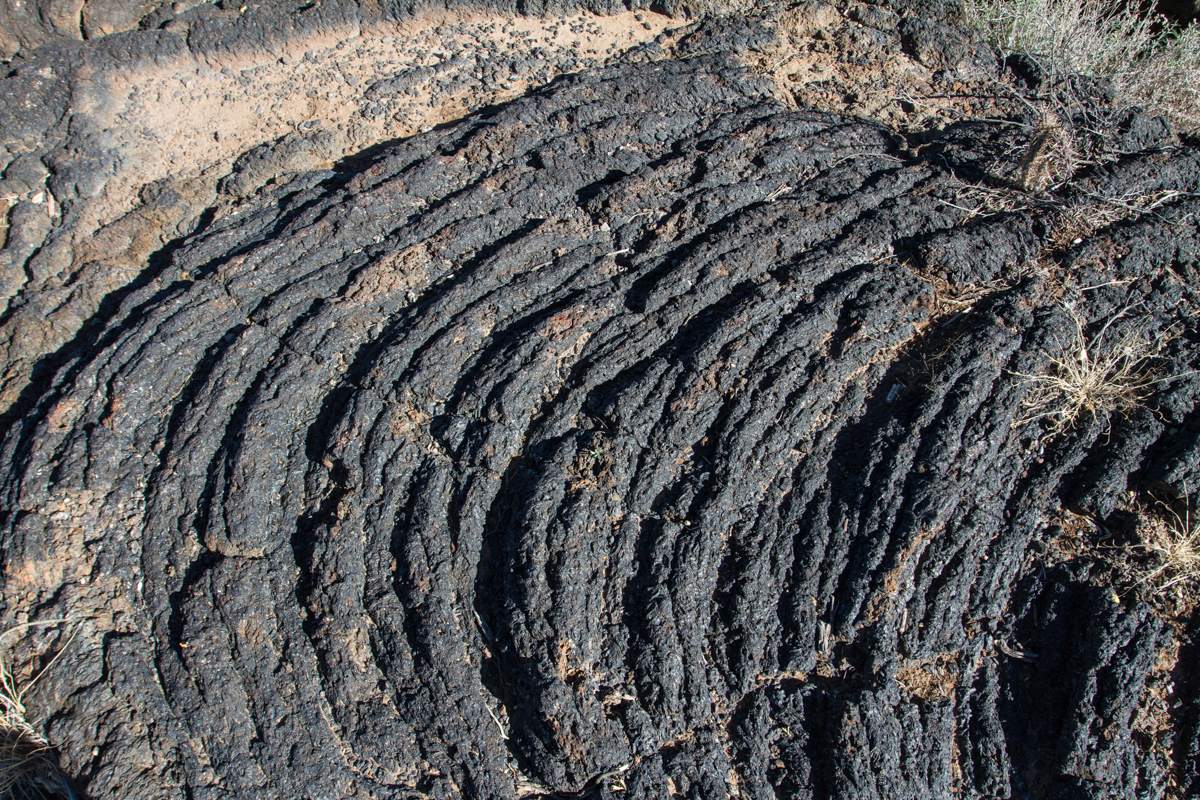
Pahoehoe in the Valley of Fires
Walk cautiously out onto the flow and you can see the structure of the lava which includes many features that are more often seen in fresh Hawaiian lava flows. One of the most apparent is the pahoehoe texture of the surface of the flow. The texture forms when the surface of the flowing lava begins to cool, and the underlying, hotter lava is still flowing. The cooler surface is dragged along by the flowing lava underneath, and forms the wrinkled or coiled rope appearance.
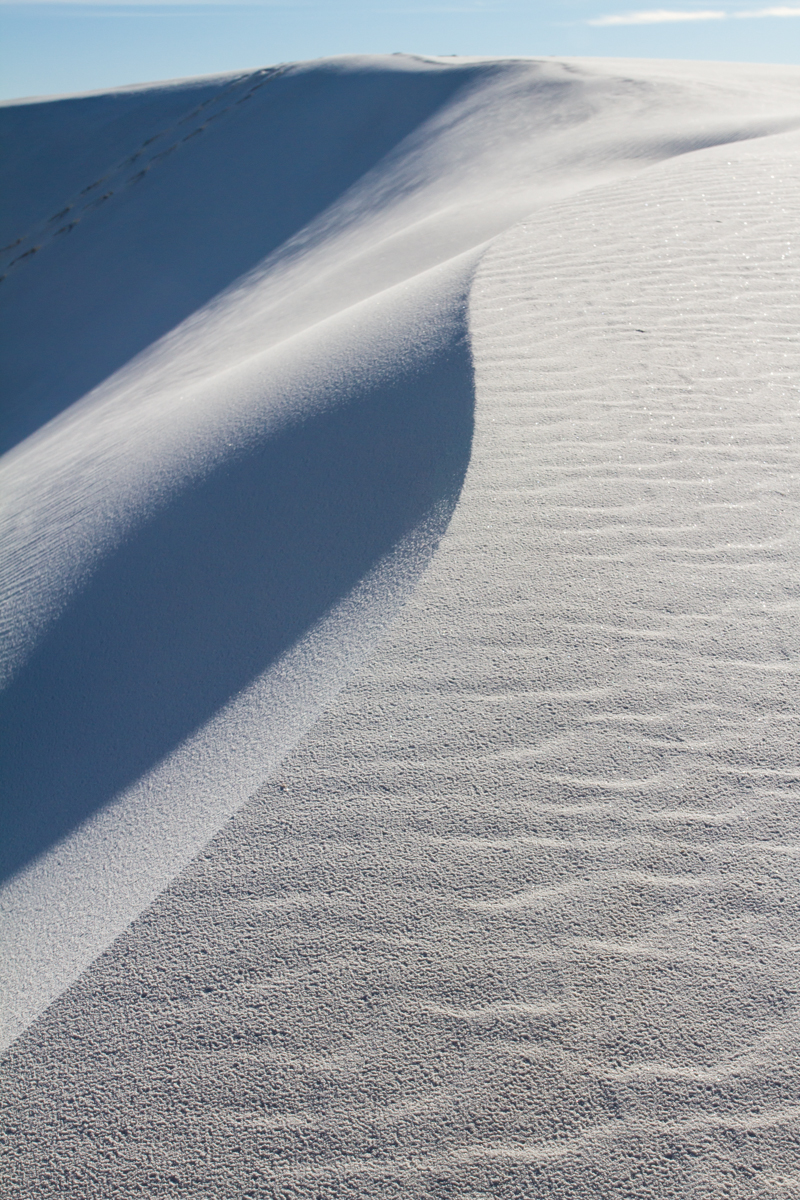
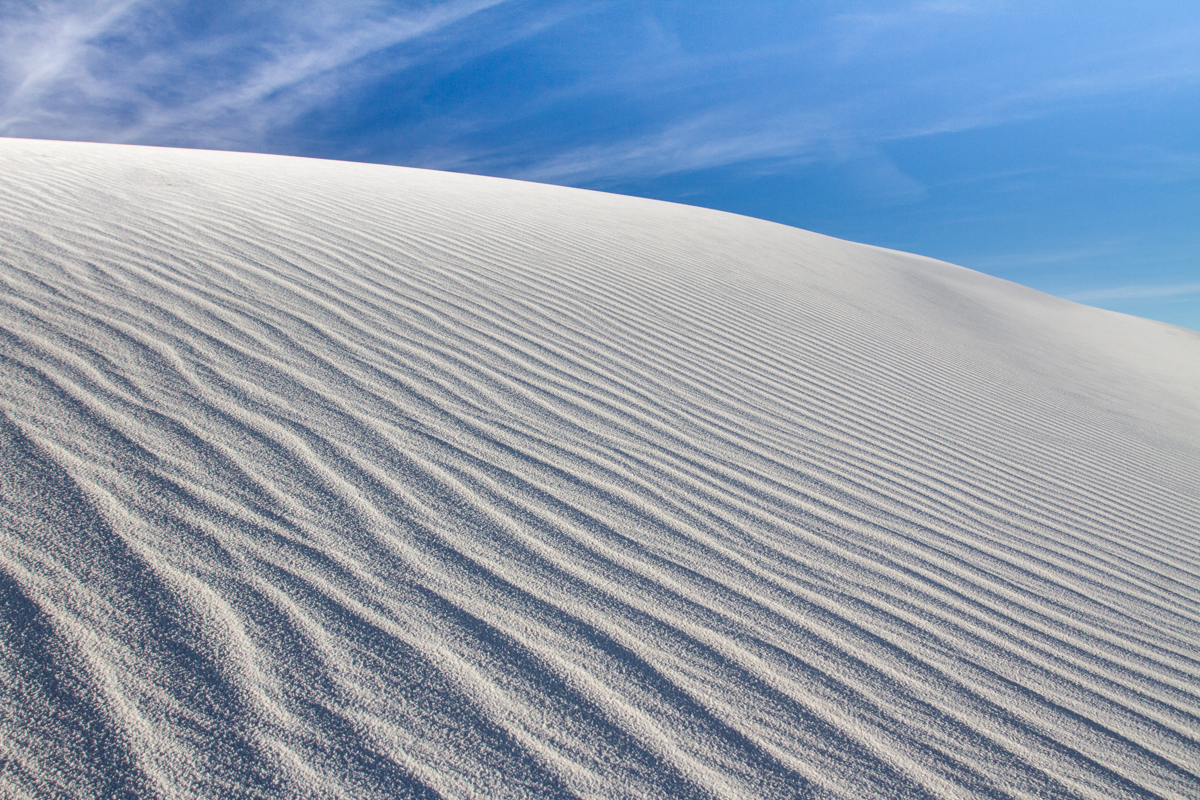
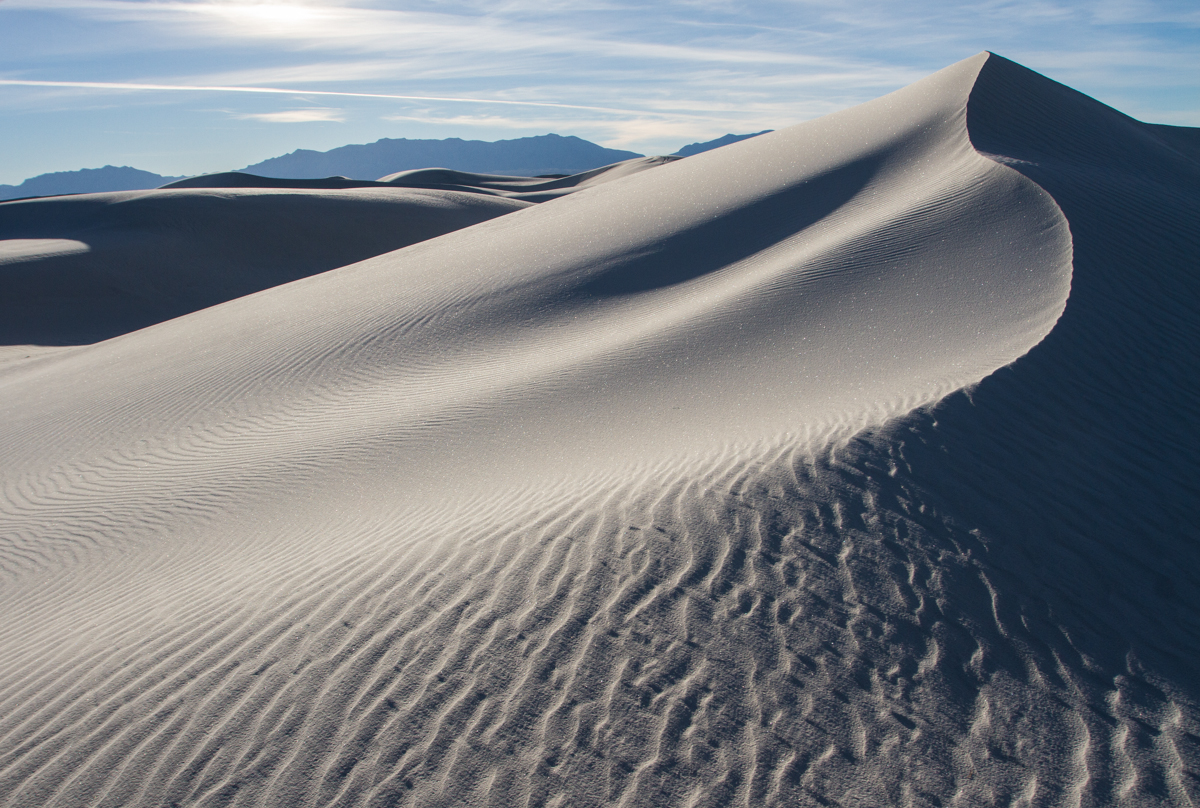
Peak of a dune at White Sands National Monument
After passing through more desert (oddly sprinkled with some groves of Pecan and Pistachio trees) you arrive at White Sands National Monument. From the Visitor Center, the view reminded me of the tallest sand dune on the East Coast, North Carolina’s Jockey’s Ridge, only with mountains in the background instead of a sound or ocean. But when I drove through the auto loop, it became apparent that this place was Jockey’s Ridge on steroids. And instead of the tan sands I am accustomed to, these sands are snow white.
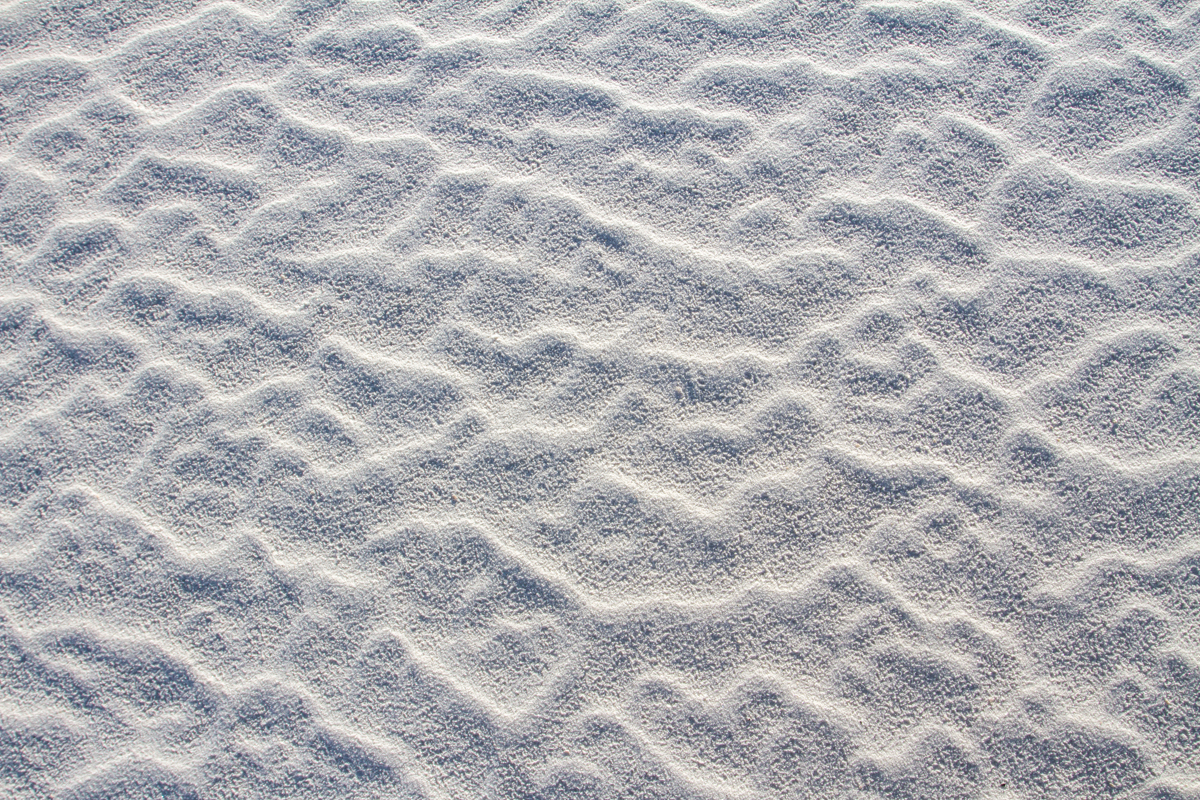
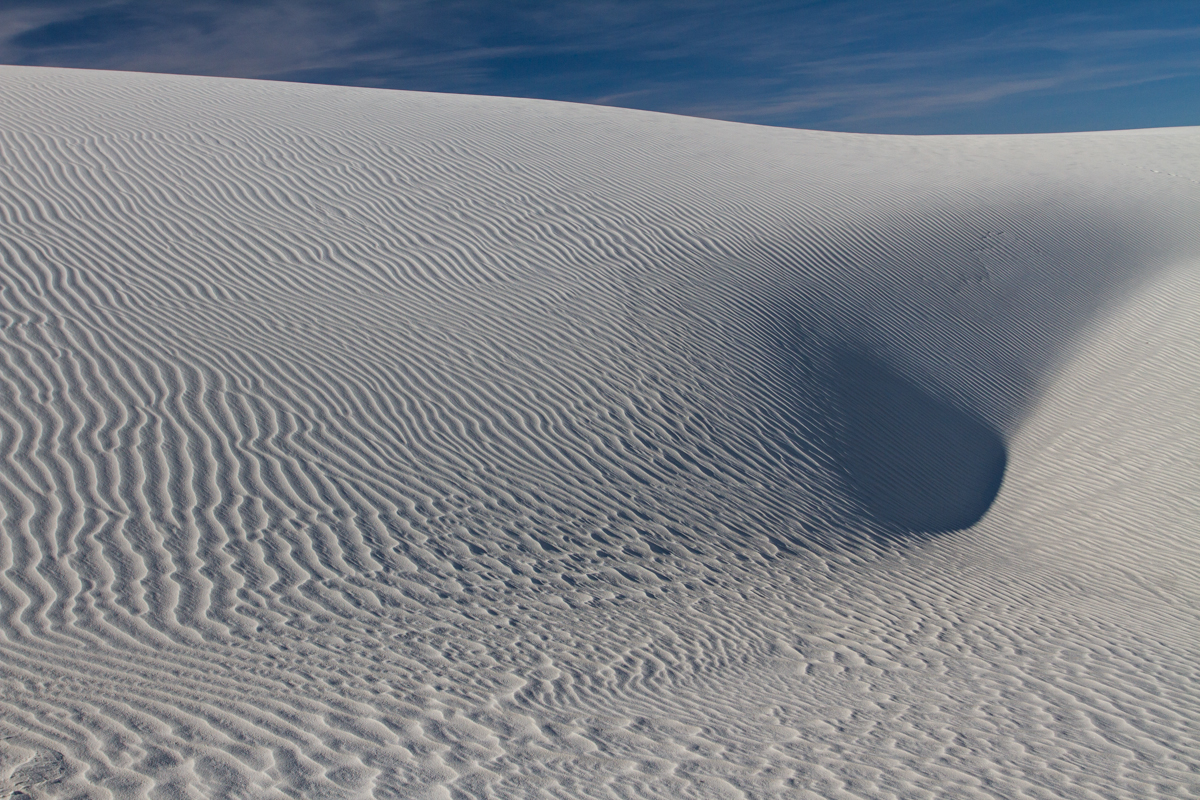
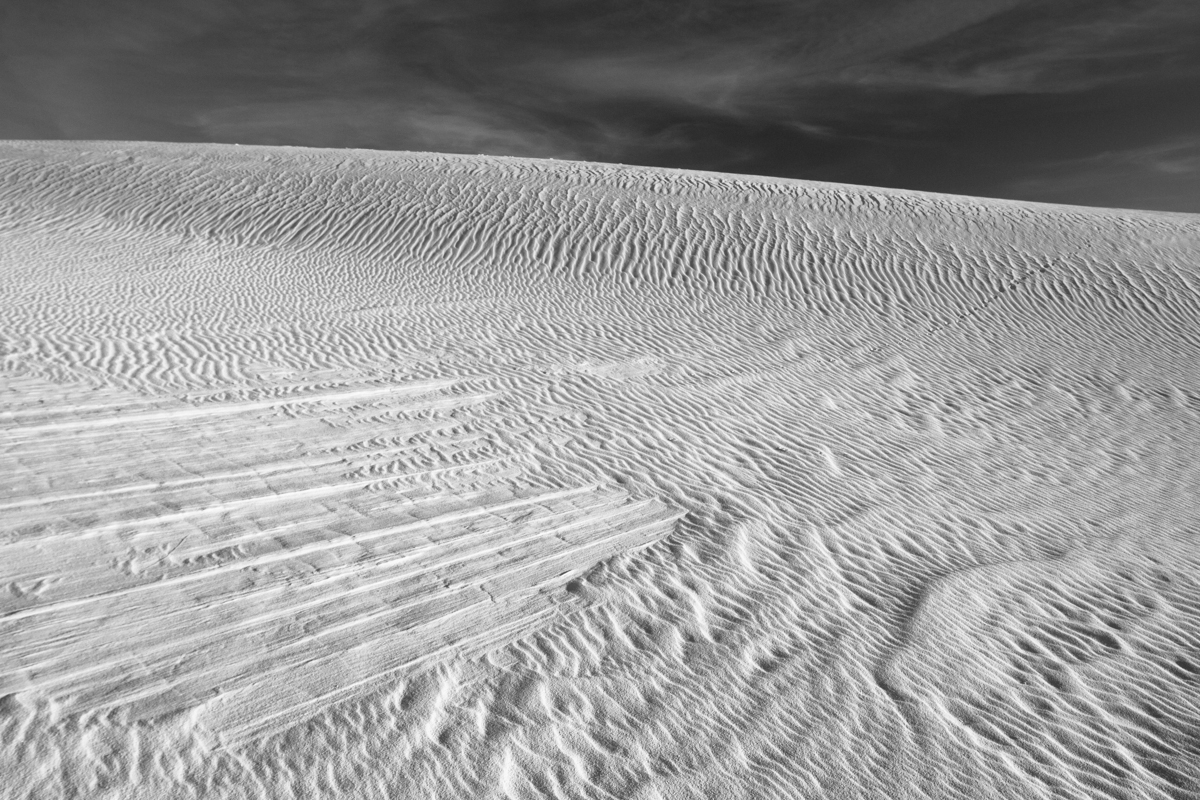
Sand patterns
The dunes at White Sands are derived from gypsum-bearing marine deposits laid down in a shallow sea over two hundred million years ago. With the subsequent rise and fall of the surrounding region, the present day Tularosa Basin was created, nestled between the San Andres and Sacramento mountain ranges. Since no rivers drain the basin, runoff from the surrounding mountains, laden with gypsum and other sediments, is trapped in the basin. This water then pools in low spots, often forming huge shallow lakes. When that water evaporates in the windy, dry environment, it deposits gypsum in the form of selenite crystals, which eventually break down from weathering into sand-sized particles. The white sands can now be moved by the winds and shaped into the dunes that cover 275 miles of desert, creating the largest gypsum dune field in the world.
A short hike leads to an untouched dune landscape
A hike in the dunes is eye opening and ear challenging. Without the birds of Bosque, the scene is eerily quiet. A Kit Fox had left tracks across one dune face and that, along with two beetles, were the only signs of animal life in the dunes other than scattered human and dog tracks. You take to heart the signs warning you to be cautious, have enough water, and to not get disoriented in the vastness of the dunes.
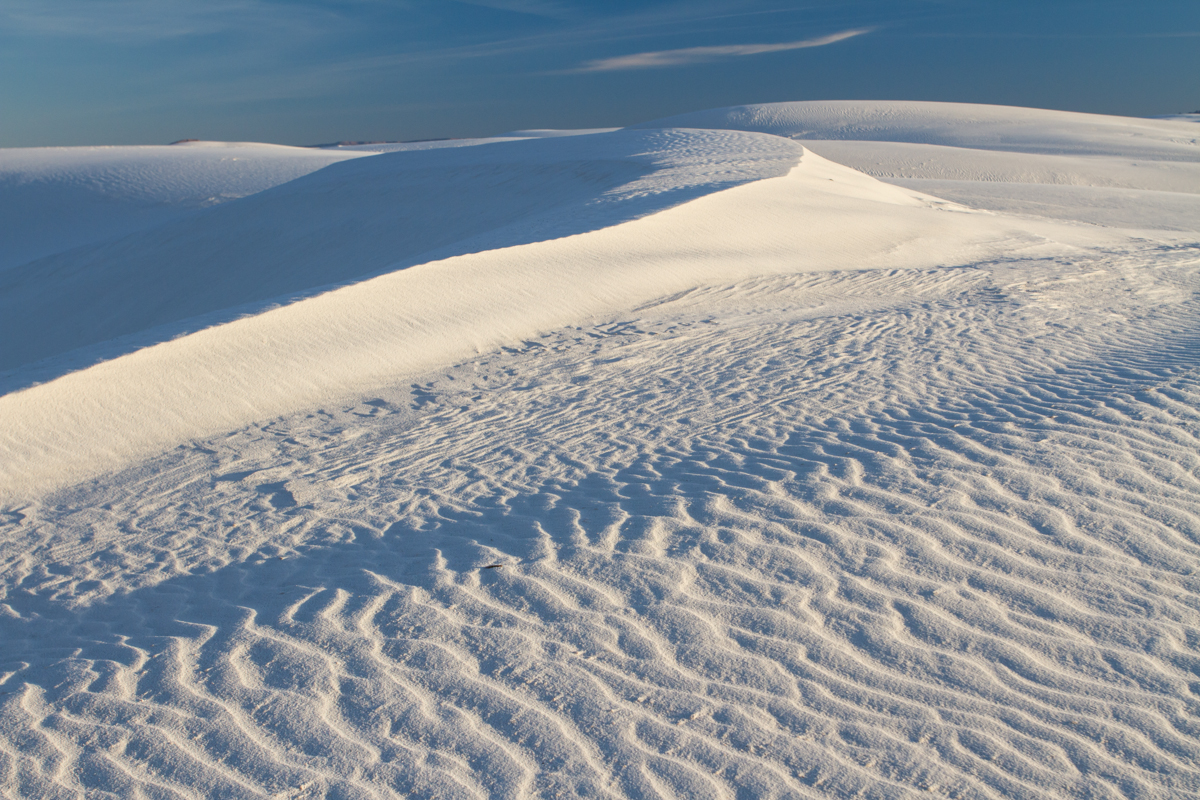
Late afternoon light at White Sands NM
As the sun sinks toward the mountains ringing the horizon, the light changes and the dunes begin to transform. Their delicate hidden details begin to emerge, outlined by artistic shadows thrown by the low angle light.
The golden glow from low angle sun changes the dunes
Everywhere you look, the sand is a rapidly changing palette. I see how people can get lost – the tension of the desire to walk over to that dune ridge for a photo fights the desire to find a sure route back through the dunes to a vehicle…a dune dilemma for sure. But since the gate closes promptly at 6 pm this time of year, the choice becomes clear at last and I seek the direction of the car.
Yucca in evening light
But on the drive out, the light intensifies and a new dimension is added to the landscape – plants clinging at the edge of the dune field. Who could resist? Just a few more images…
Some other scenes from the day away from Bosque…
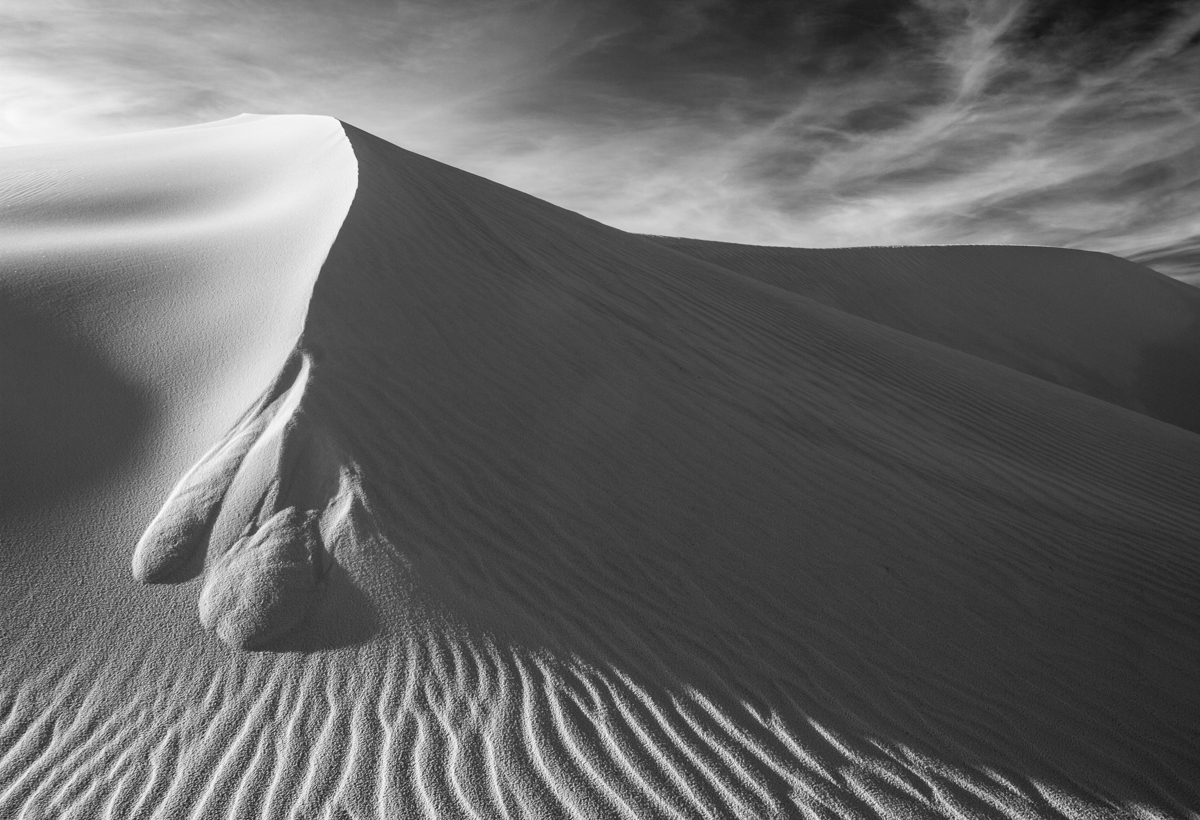
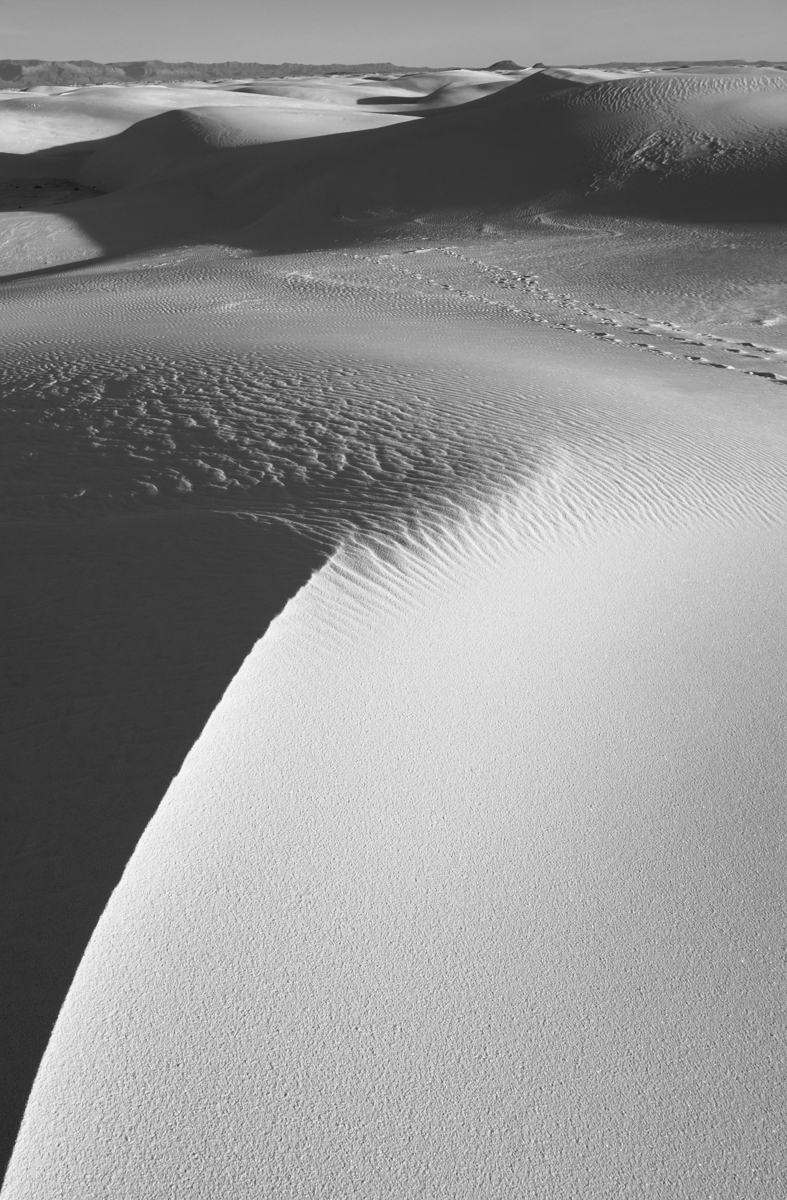
Cactus spines in the Valley of FiresValley of Fires cactus shadowDune crestLooking out across dune field late in the dayDune movement in black and whiteDune texturesFlow of lines in a dune fieldLow angle sun highlights textures in black and whiteThe belly button duneAlmost an endless landscape of sandKit Fox tracks on duneDune patterns in black and whiteExpansive views surround you at White Sands
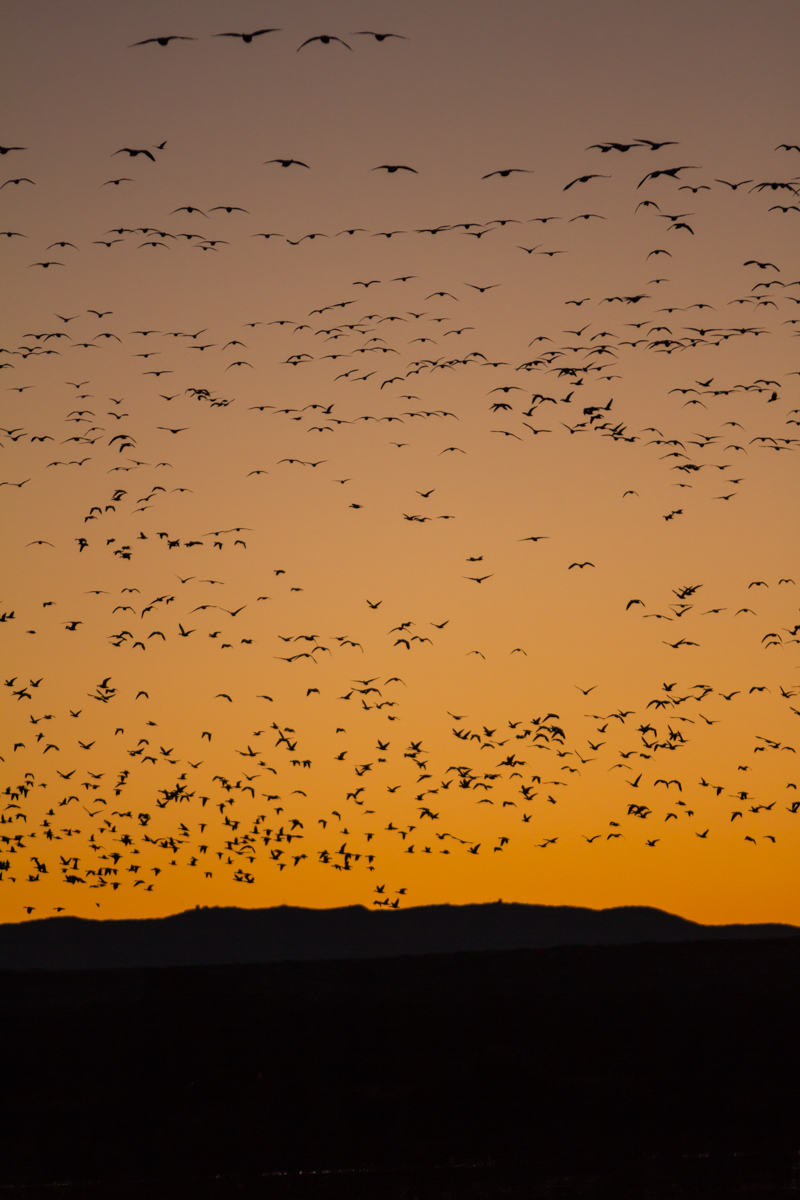
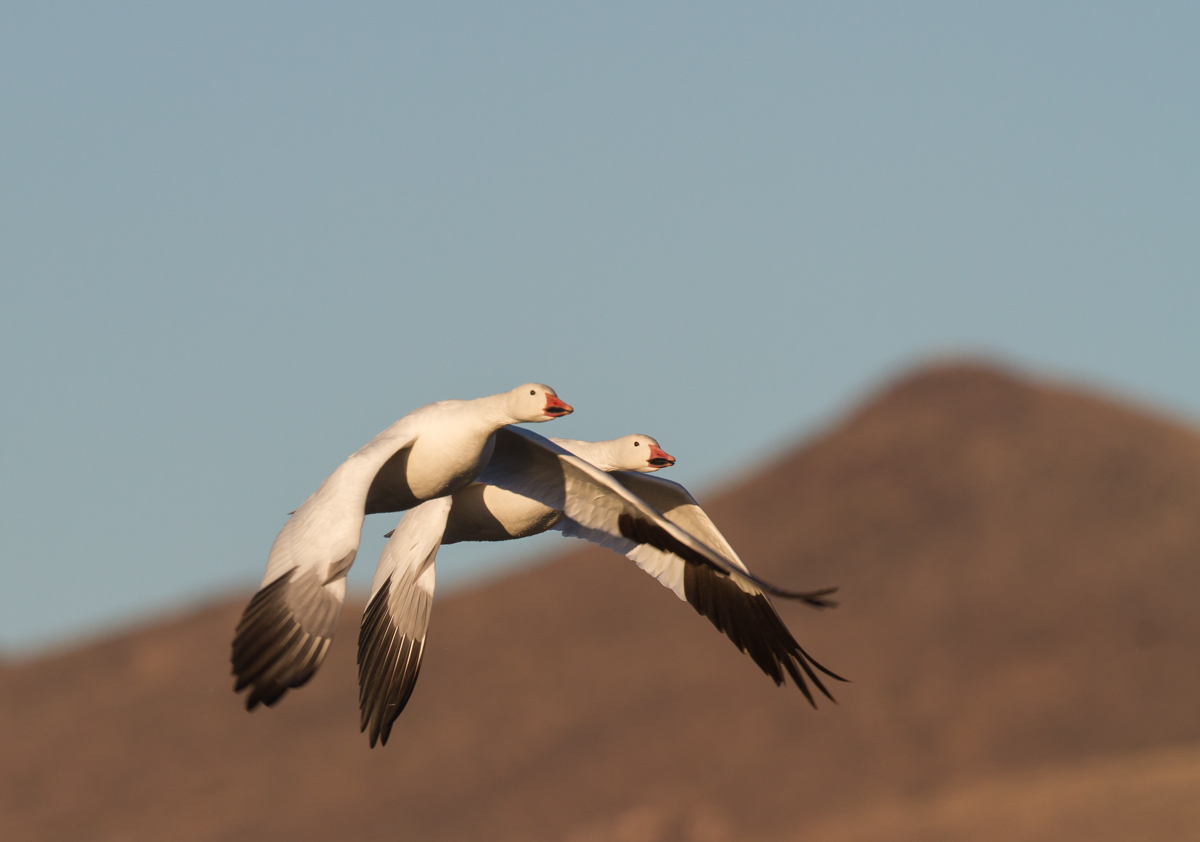
Snow Geese taking flight at Bosque del Apache (click on photos to enlarge)
Bosque – say that to any birder or wildlife photographer, and they immediately know of what you speak. There is only one place that comes to mind – Bosque del Apache National Wildlife Refuge in New Mexico. It has been on my bucket list since I first saw images of the birds there more than 20 years ago. And just before Christmas I was there…and it did not disappoint.
Bosque del Apache is Spanish for “woods of the Apache”, referring to a time when Spanish explorers would be surprised by Apaches coming out of the forests of Cottonwood trees growing along the Rio Grande River. The refuge was created in 1939 to preserve important wintering habitats along the river for waterfowl and a dwindling Sandhill Crane population. Today, it is widely considered one of the finest wildlife viewing areas in the world, especially for the thousands of waterfowl and cranes that winter here.
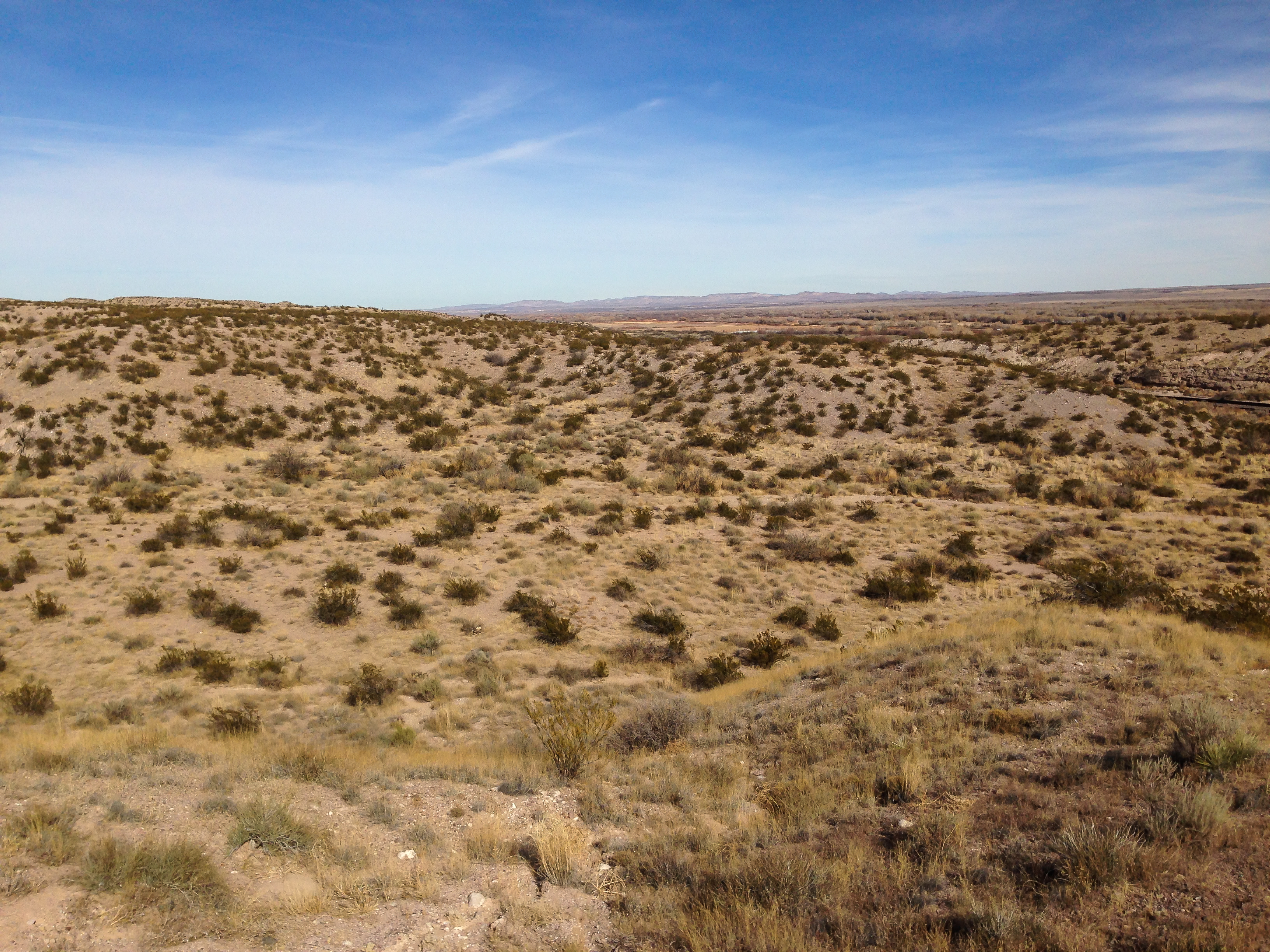
High desert habitat in the area near Bosque del Apache, New Mexico
The drive down from Albuquerque yielded no clue to the abundance to come – it is high desert covered in shrubs with odd-sounding names like Creosote Bush and Screwbean Mesquite. As you near the refuge, trees begin to appear – beautiful, majestic trunks of Cottonwoods. The flat landscape changes dramatically as you near the river, the true lifeblood of the 57,000+ acre refuge.
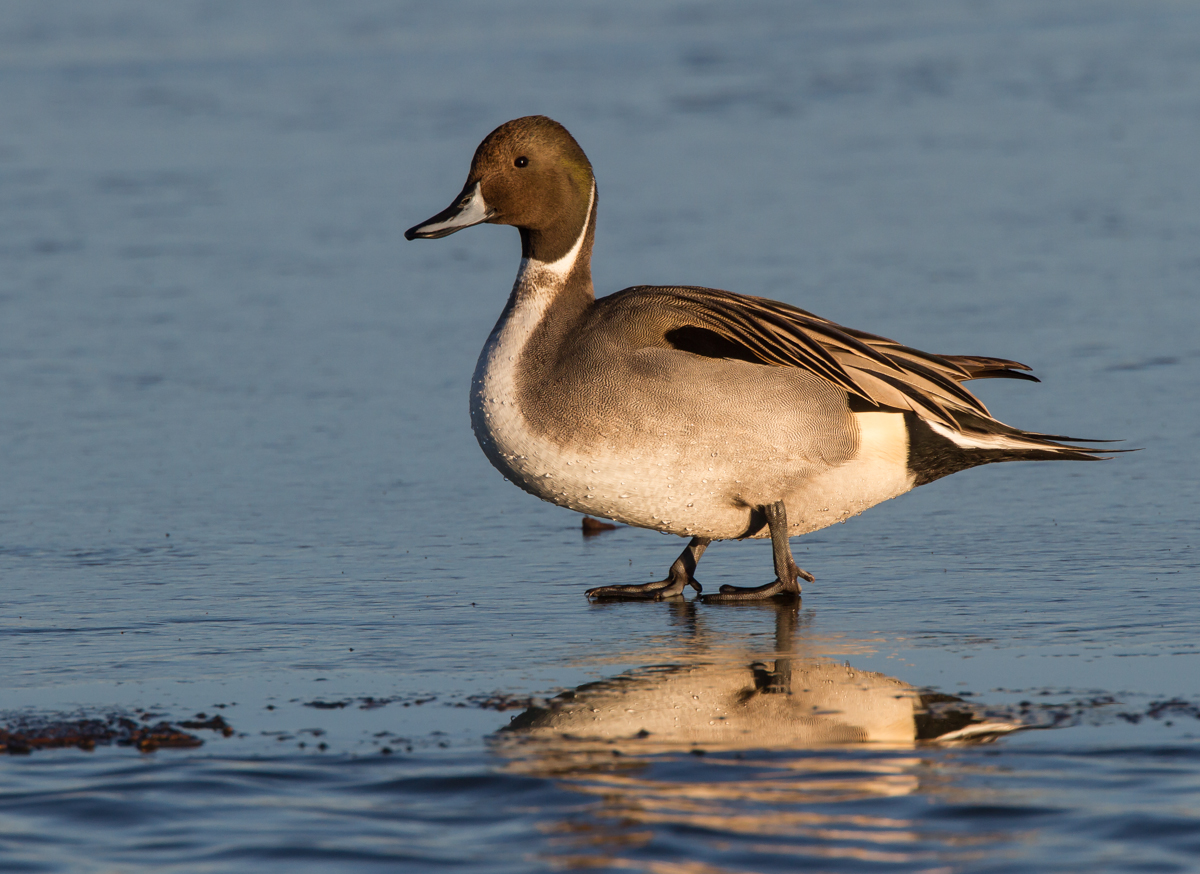
Northern Pintail on morning ice
But there were birds to see, so after a quick stop at the visitor center (staffed by a cadre of helpful volunteers) time was spent watching a large flock of Northern Pintails (probably the most abundant duck seen) in a pool bordered by ice.
The sky was soon full of birds, mainly Snow Geese and Sandhill Cranes, flying in from the fields to roost for the evening. Staff told me the cranes were coming into some pools along the main road known as the Crane Ponds, so that is where I wanted to be as the sun set.
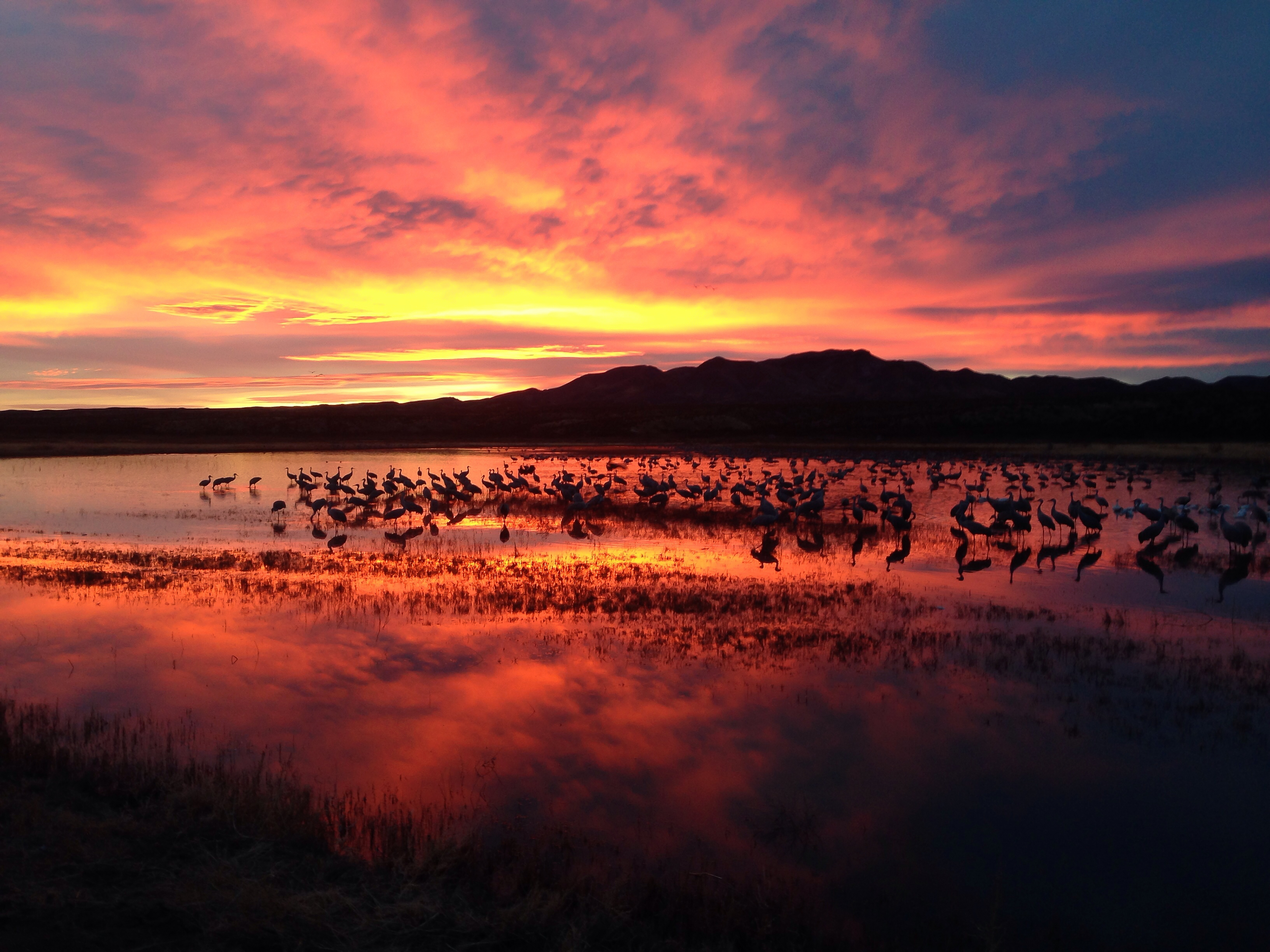
Crane Ponds at sunset the first evening in Bosque
The sky was clear, not a cloud in sight. Cranes drifted into the ponds for about an hour as the sun set behind the Chupadera Mountains. Their ancient calls filled the air and a group of us stood in silence (except for the camera shutters:) as the pond filled with the stately forms. Quite an introduction to Bosque.
Sunrise at the Flight DeckCranes dropping into pond at sunset
The next few days were a sequence of incredible sunrises and sunsets, with the sights and sounds of thousands of flying and calling birds filling the skies.
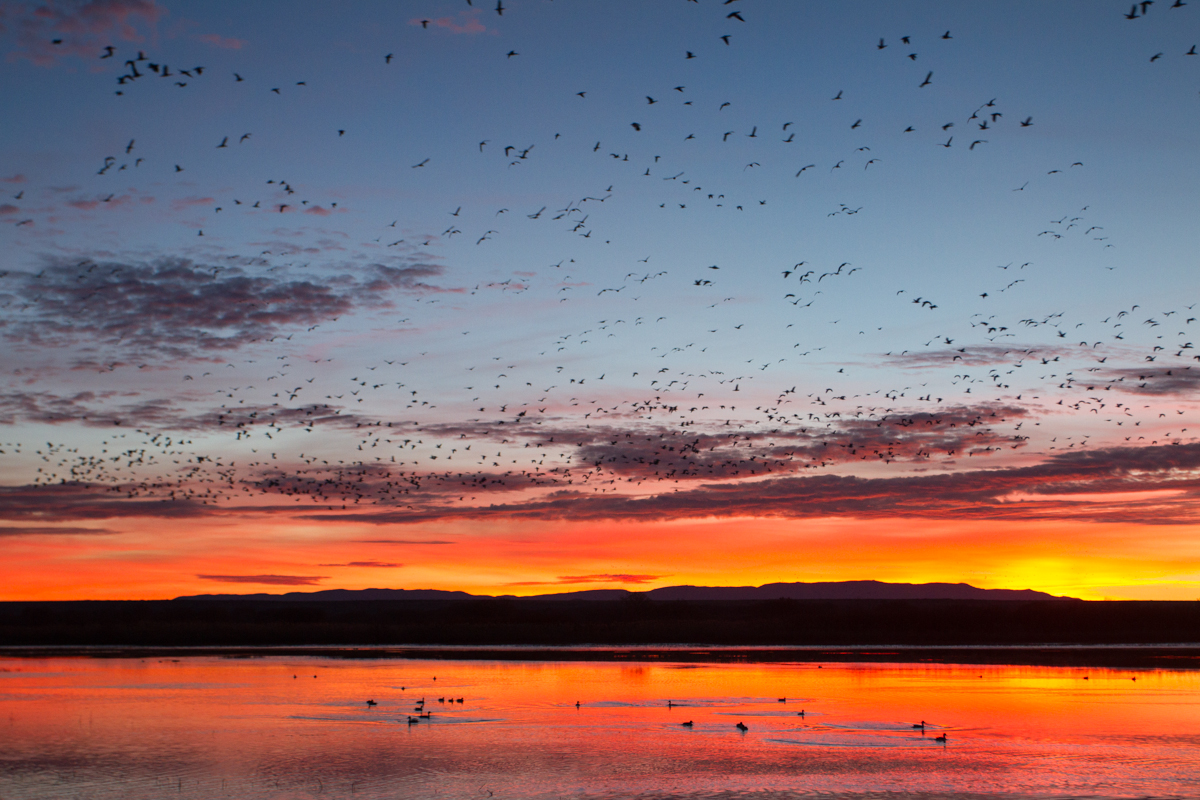
Sunrise from Flight Deck with Snow Geese in flightLast sunset at Bosque
The final day brought this sky painting sequence to a glorious finale – a lingering sunrise at the area known as The Flight Deck and a slow starting sunset at the Crane Ponds that turned into one of the most intense fire-laden skies I have ever seen.
Sandhill Crane lifting off over marshEarly morning on Crane Ponds
I learned I have a compulsion to photograph birds in flight and ended up with a total of over 8000 images over the five days of shooting. On the return flight I deleted over 1000 and quickly trashed another few hundred once I started reviewing at home. How many images of flying cranes and crowded scenes of birds on the water do you need?
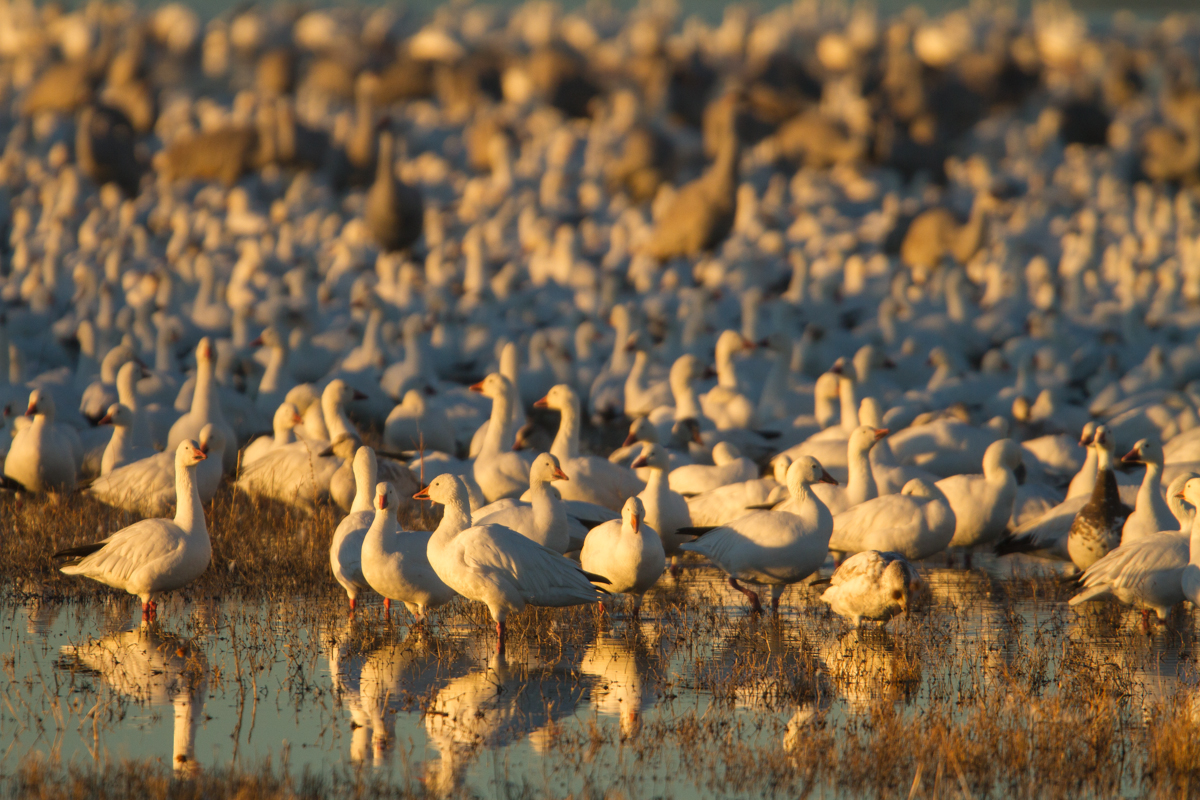
Snow Geese flock on Crane Ponds
Snow geese are raucous, always busy and noisy, kind of a rough crowd in the bird world, or so it seems at first glance (I actually got hit 6 times by snow goose “bombs” as they blasted off over my head one afternoon).
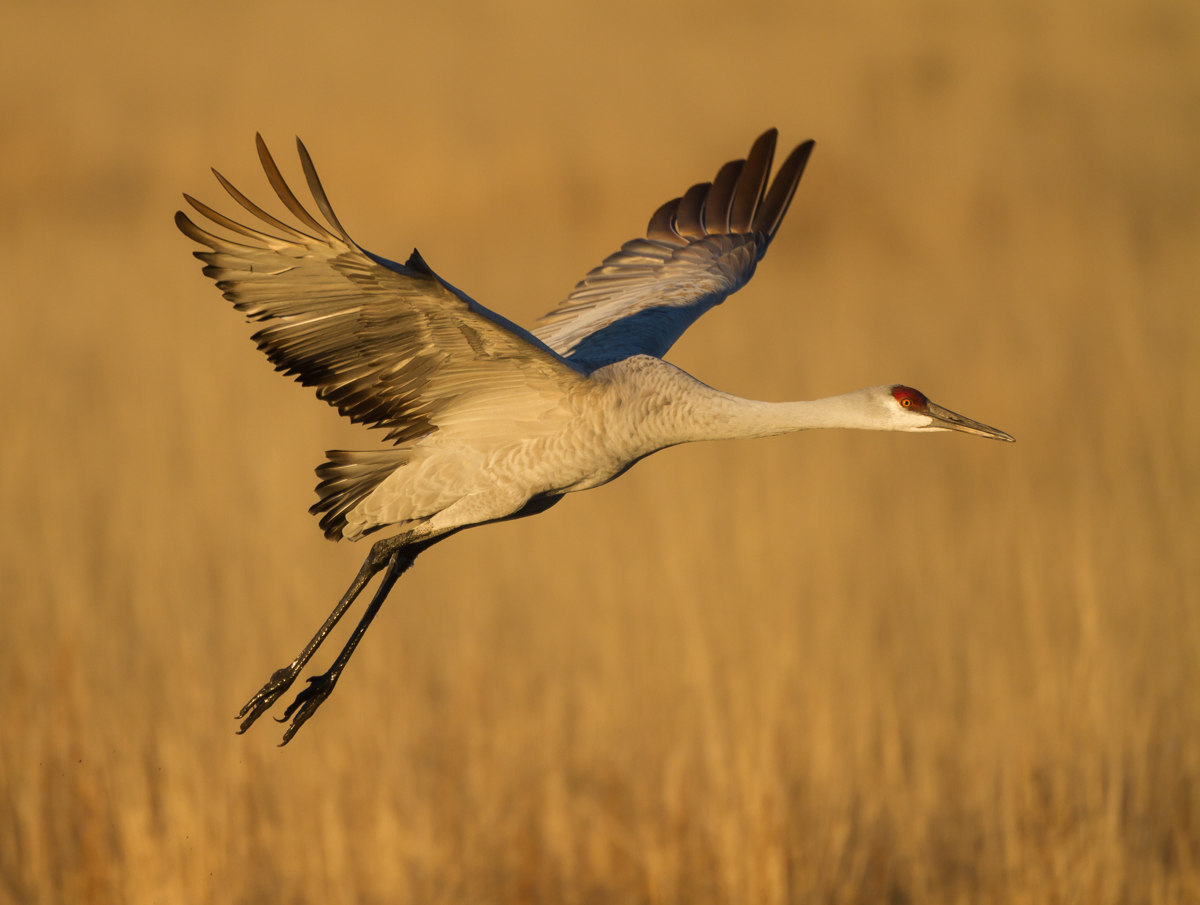
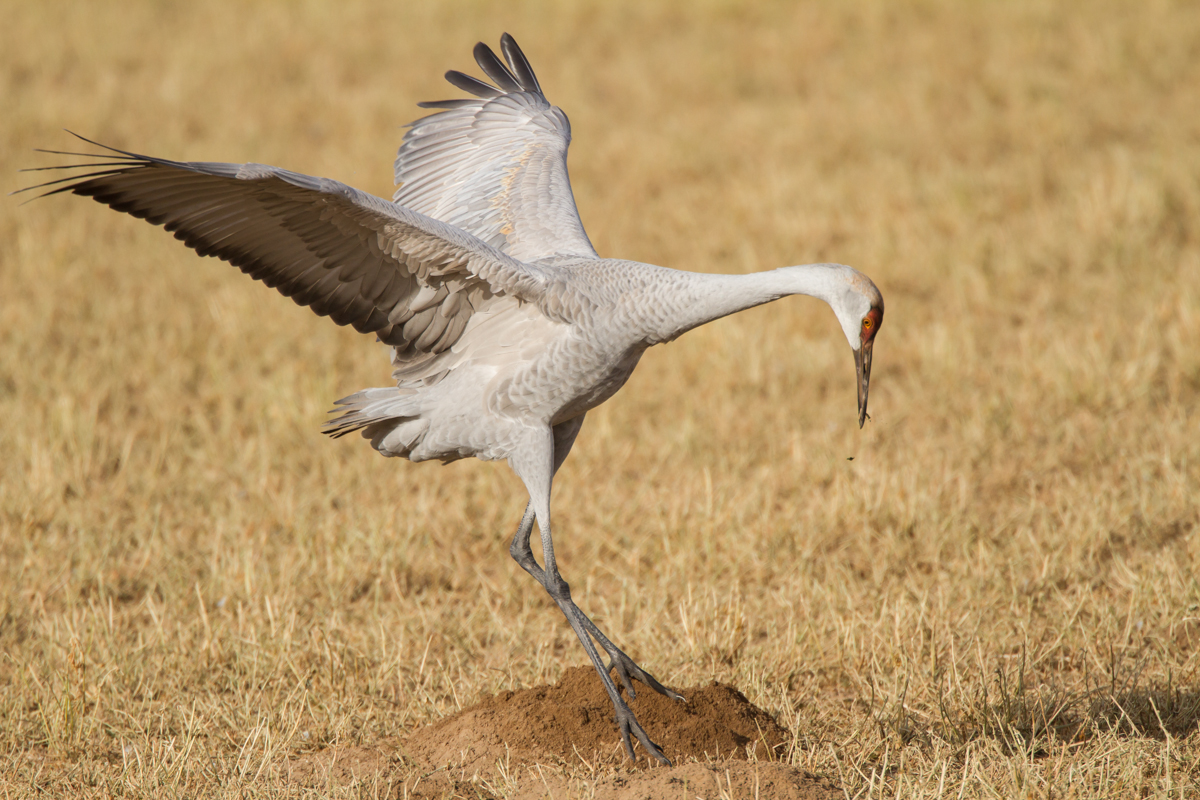
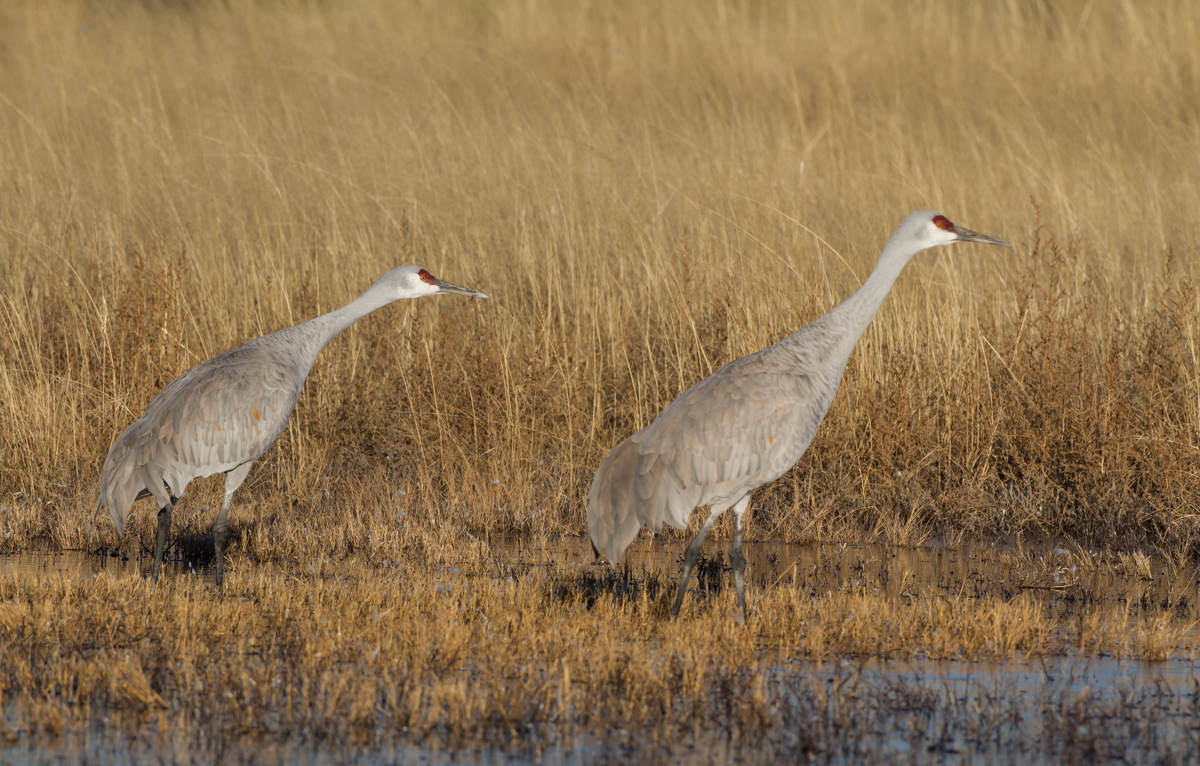
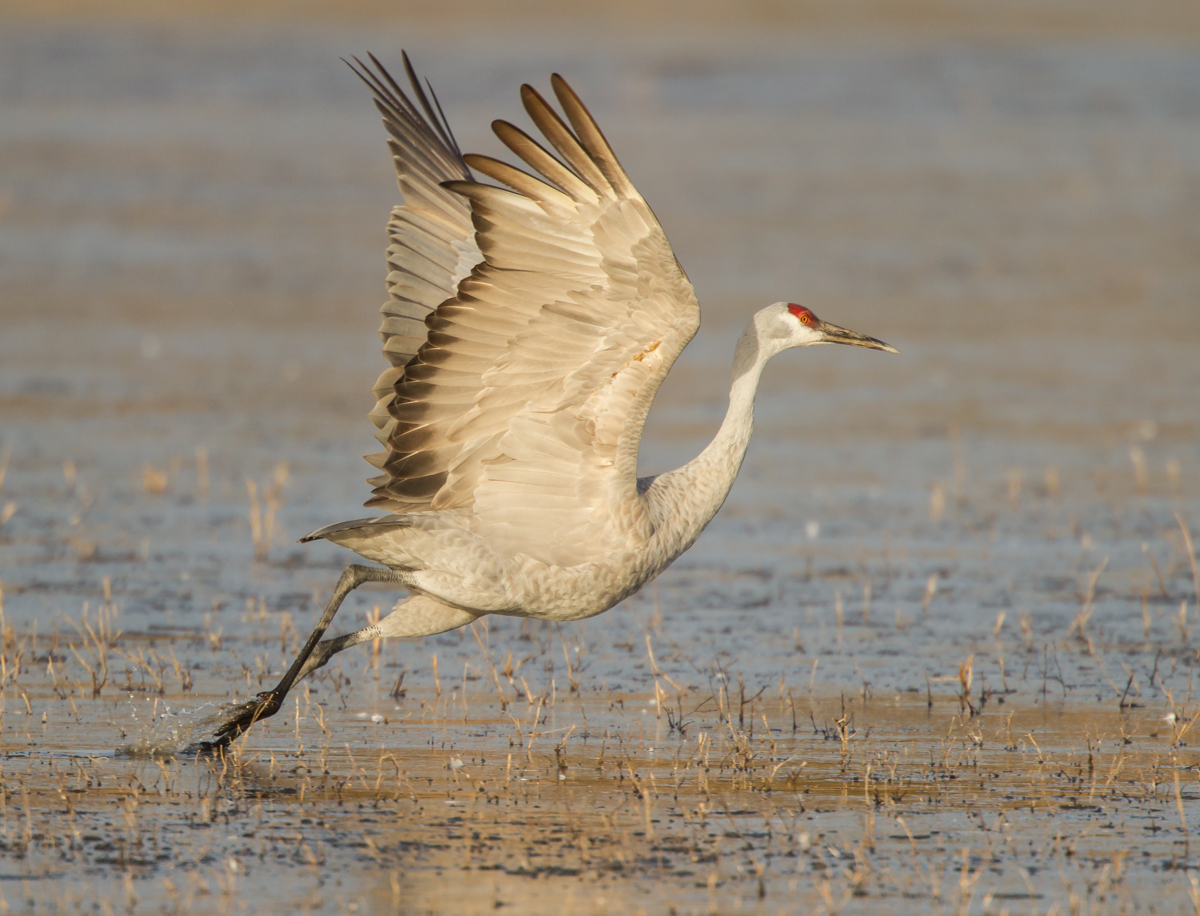
Cranes tend to be more elegant with a call that is one of the most memorable utterances in the bird world. They stand an impressive 4.5-5 feet in height and are stately in their flight, dances, and strides. To offset that noble air, they sometimes do border on the comical with some of their jumps and in a behavior appropriately labeled the intend-to-fly. I called it “the lean”.
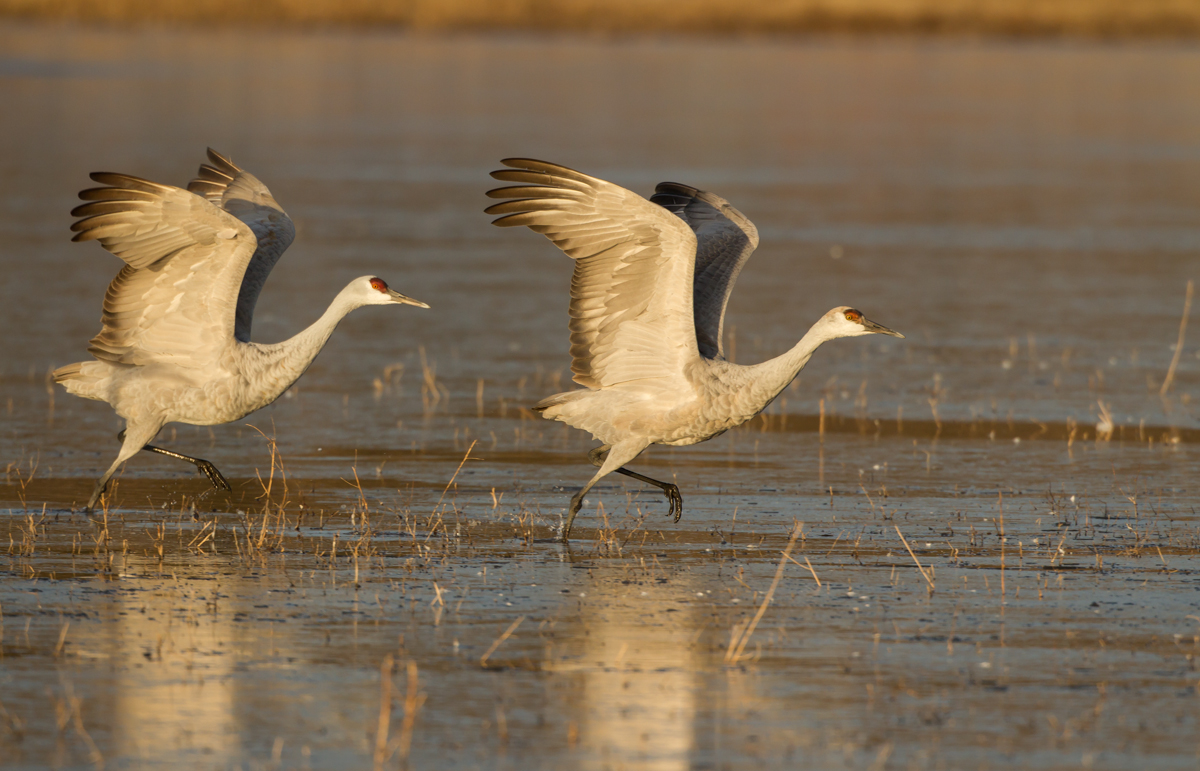
Crane jumping on and probing dirt moundCranes often lean in the direction of flight prior to take-offCranes running for take-off
Prior to take-off, cranes tend to lean in the direction of their impending flight. It gets funny when several adjacent birds all start to lean, and then hold that position for what seems like an unnecessary length of time before one bird will finally start the run-and-flap sequence that leads to lift-off.
Snow Geese flying between feeding areas mid-daySandhill Crane portrait
The middle of the day has notoriously harsh light, but is still a great time to search the refuge for other species or to watch interesting behaviors of the stars, the Snow Geese and Sandhill Cranes.
When you take time to look elsewhere there is even more to see at Bosque. One of the biggest surprises was one morning when three large bull Elk came out from the shrub thickets, paused, and turned back and disappeared while my mouth fell open and my camera lay untouched on the seat.
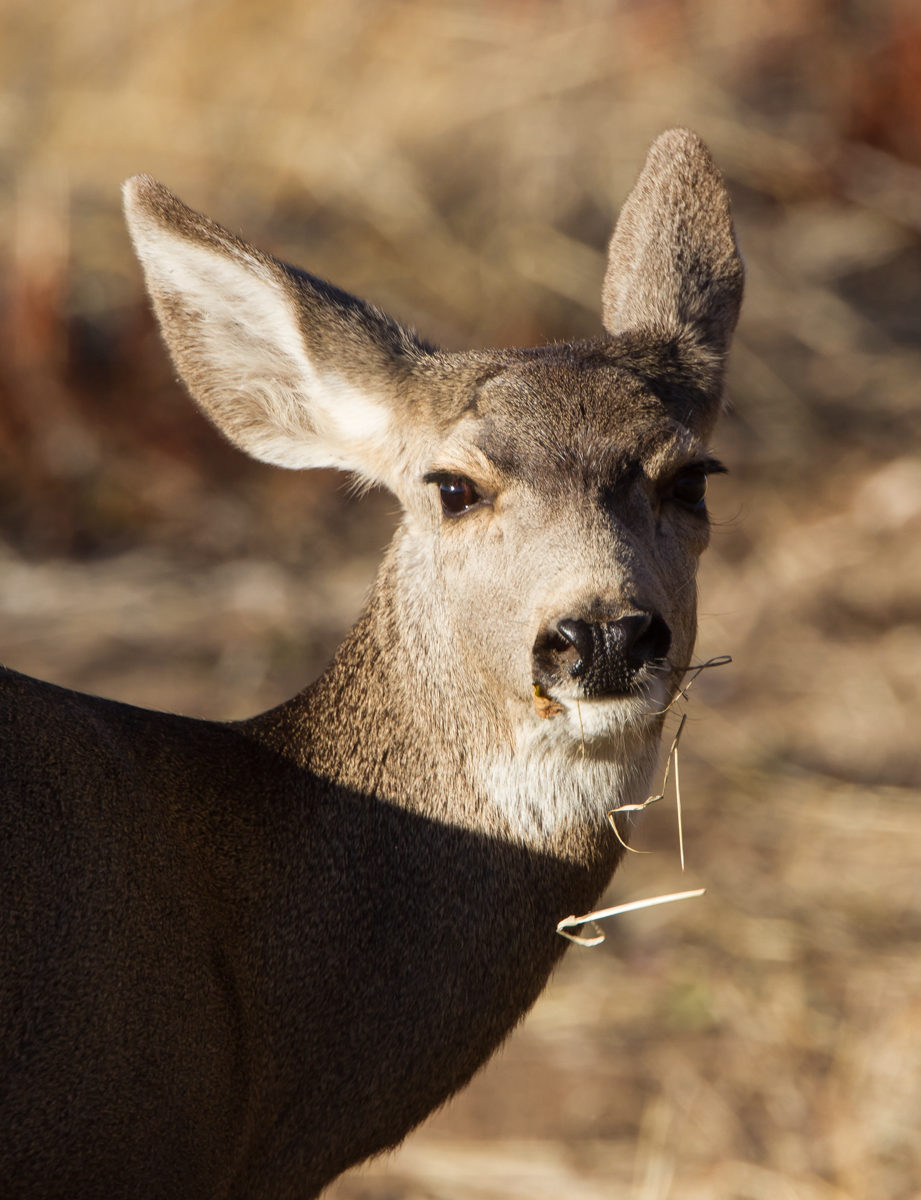
Mule Deer
Other mammals spotted during the stay included Coyotes, Desert Cottontails, Collared Peccaries, a Rock Squirrel, and the very common Mule Deer.
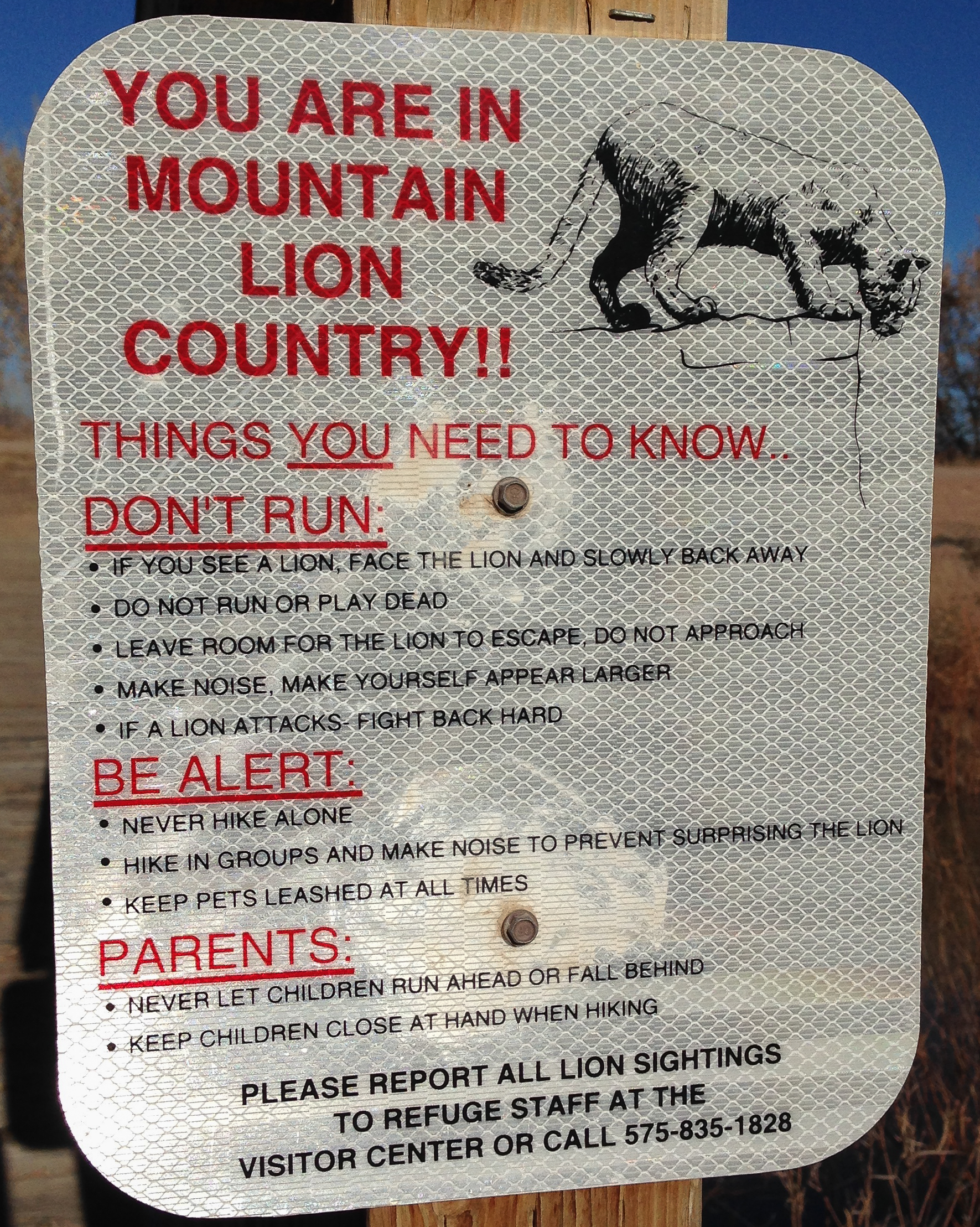
Mountain Lion signage – there have been sightings at Bosque
Unfortunately, I once again failed to add one particularly elusive mammal to my life list but did get some hope from these scattered signs.
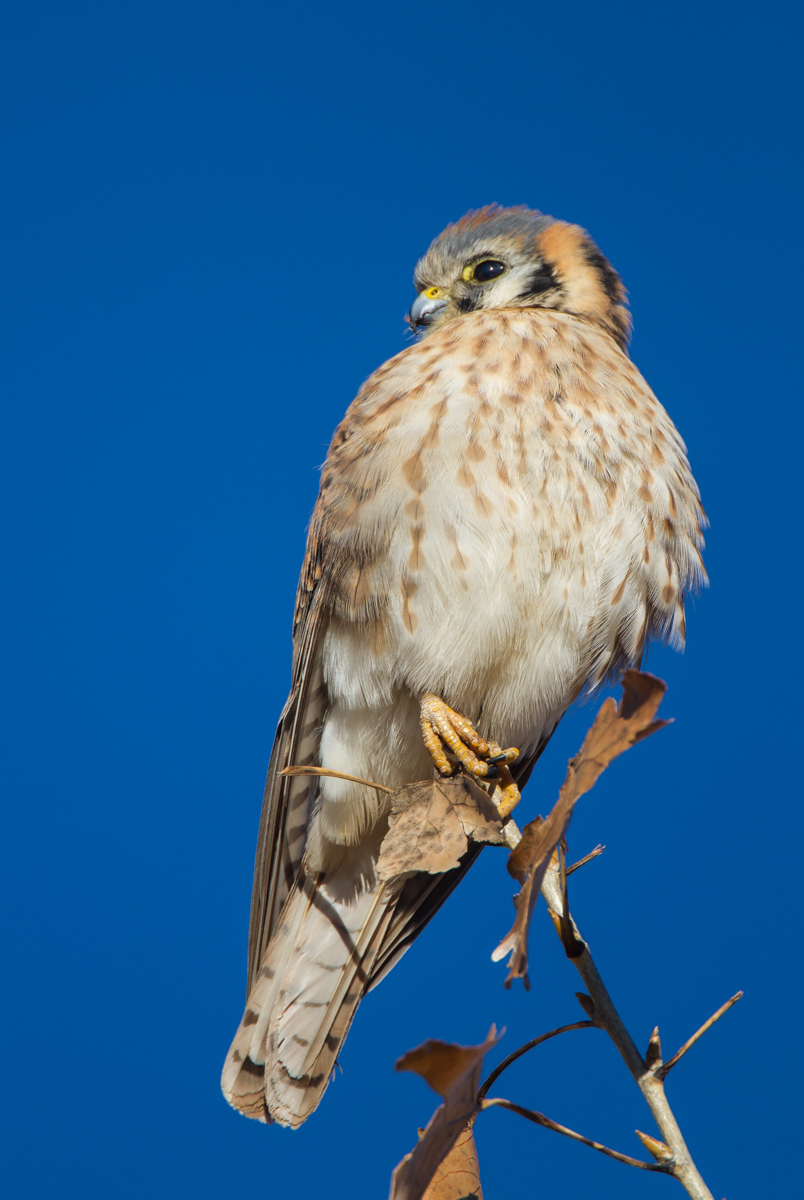
American Kestrel
Once you get past the masses of geese and cranes, there are plenty of other birds to see. My last post covered one of the several Great Horned Owls seen, but several other raptor species patrolled the skies including Bald Eagles, Red-tailed Hawks (many of which are various dark color morphs), Northern Harriers, Cooper’s Hawks, and American Kestrels.
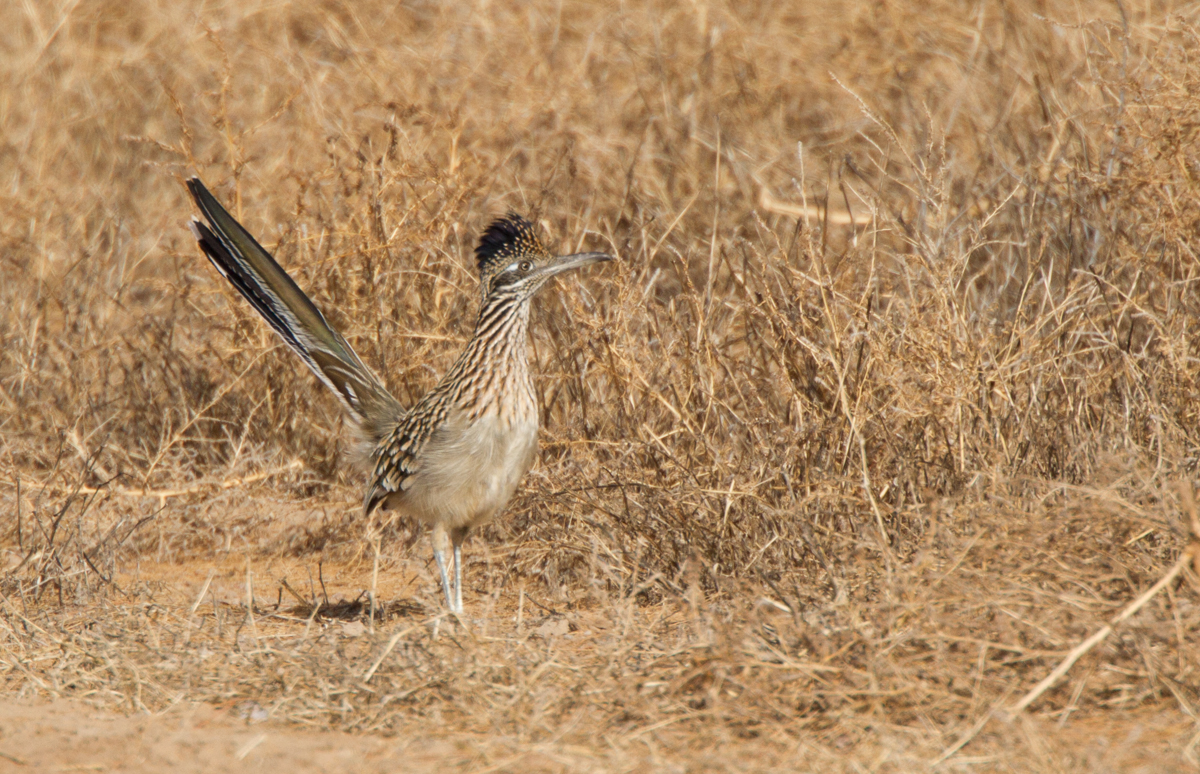
Greater Roadrunner
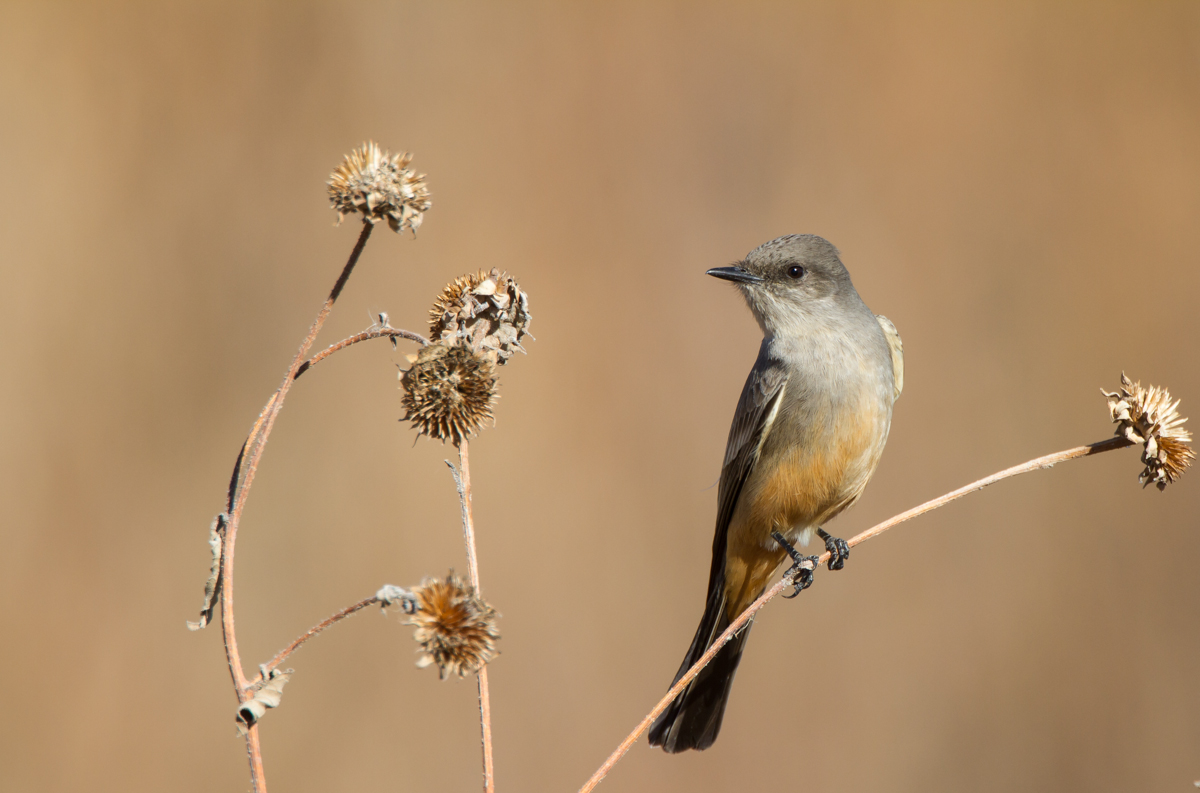
Other species of note included a few lifers for me – Gambel’s Quail, Say’s Phoebe, Lesser Goldfinch, and a much sought-after species observed late in the trip – a couple of Greater Roadrunners. The first Roadrunner was a real skulker alongside a roadway and the second was noticed because of an unusual behavior. Roadrunners fluff up their feathers as they turn their back toward the sun to soak up warmth – they look like a dark gray puffball with a brown neck as they sit in the open for up to several minutes.
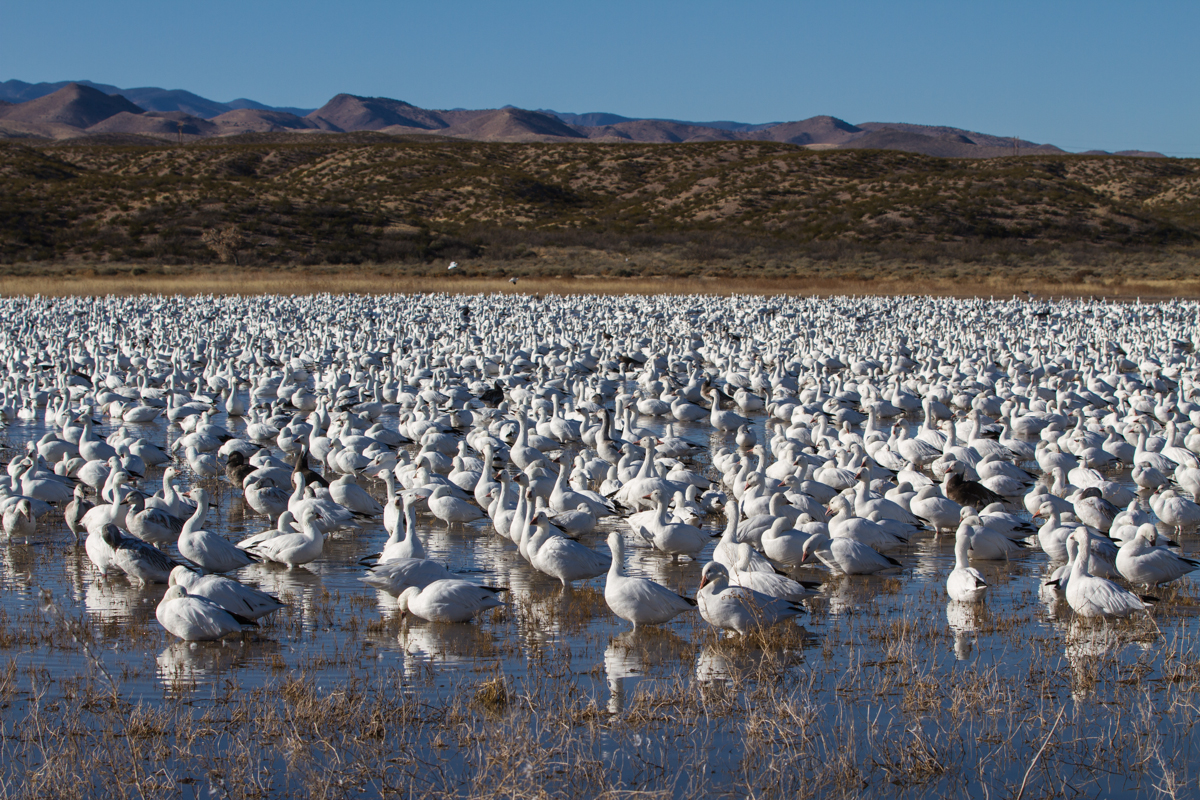
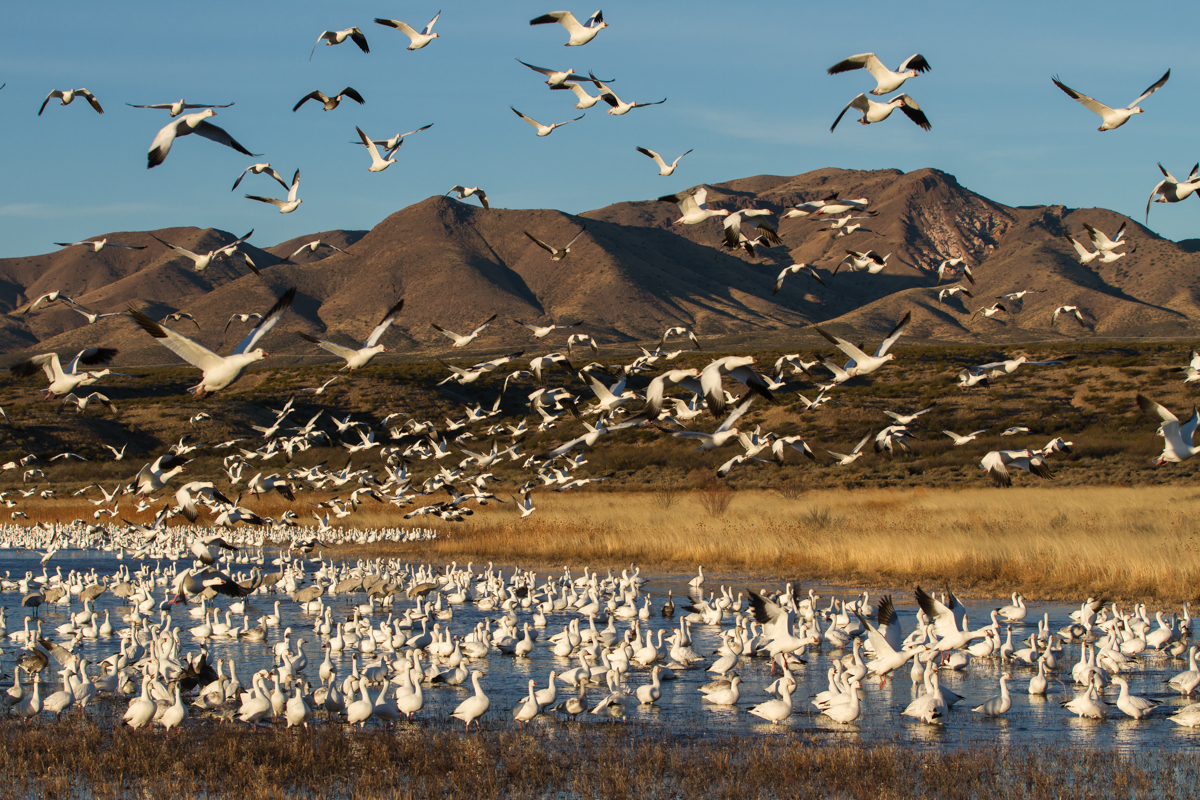
Snow Geese at Crane Ponds with mountains as a backdrop
But Bosque is about the spectacle of thousands of birds in a stunning setting. There’s a feeling I get when I have these experiences that I have trouble putting into words. It’s a connection to the larger world, to something much bigger than me. A calmness comes over me. It is powerful, peaceful, and it gives me hope…hope for better things, hope for a world more in tune with natural cycles and events. It also always makes me thankful for those people that had the foresight to set these areas aside as protected lands, and to the people that have been, and are now, the caretakers of these public treasures.
A trip to Bosque is a dream come true for any naturalist or photographer. But while the numbers of the different species on the refuge are impressive (that week according to volunteers – 92,000 ducks, 46,000 Snow Geese, 8,900 Sandhill Cranes, 9 eagles), it did remind me of some special places back home – Mattamuskeet and Pocosin Lakes National Wildlife Refuges. And I think I will appreciate them even more now – while a Sandhill Crane is a rare sighting in NC, we do have more Snow Geese (estimated 85,000 last year at Pocosin Lakes alone), tens of thousands of ducks and Tundra Swans, many more eagles, and all those Black Bears I find so fascinating. I hope that one day the funding may exist to allow some additional development of visitor services facilities at our refuges, but for now, I am looking forward to my next trip down east in the next few days. I’ll be sure to pause and reflect how lucky we are to have these special places here in NC where we can be inspired by the spectacle of abundant wildlife.
A national wildlife restoration program is based on the premise that wildlife is not only worth our efforts to restore it, but that its restoration is absolutely and vitally essential to the welfare of our citizens. ~Jay Norwood (“Ding”) Darling, former Chief of the U.S. Biological Survey
I’ll leave you with some more images of the abundance and beauty at Bosque…
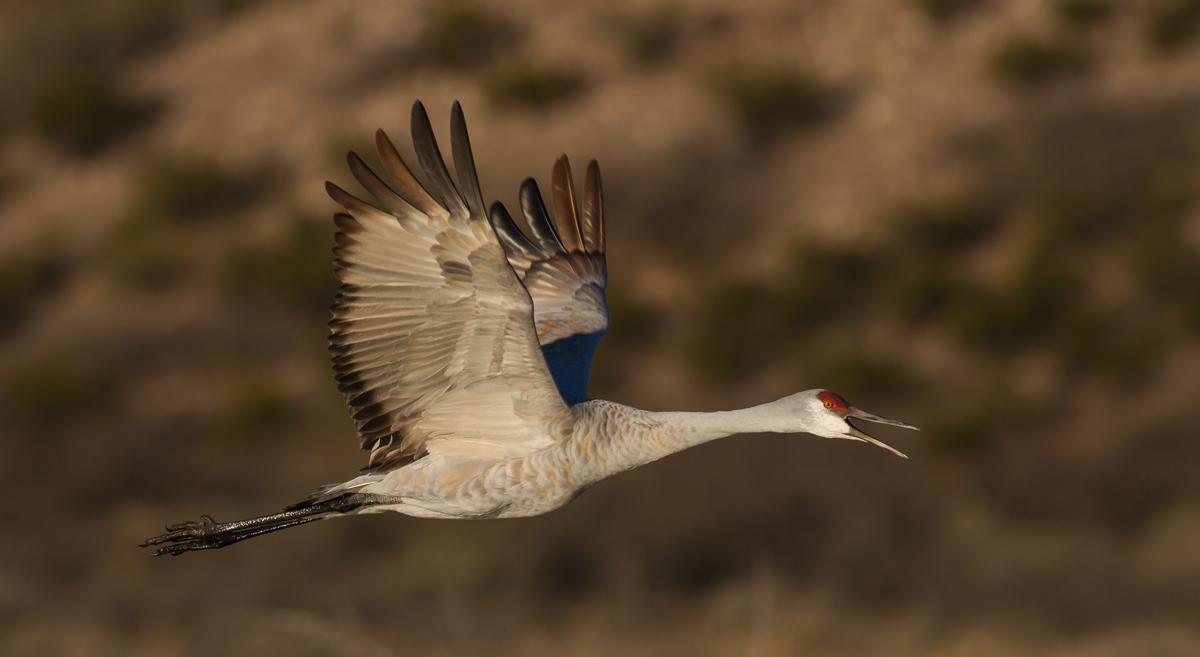
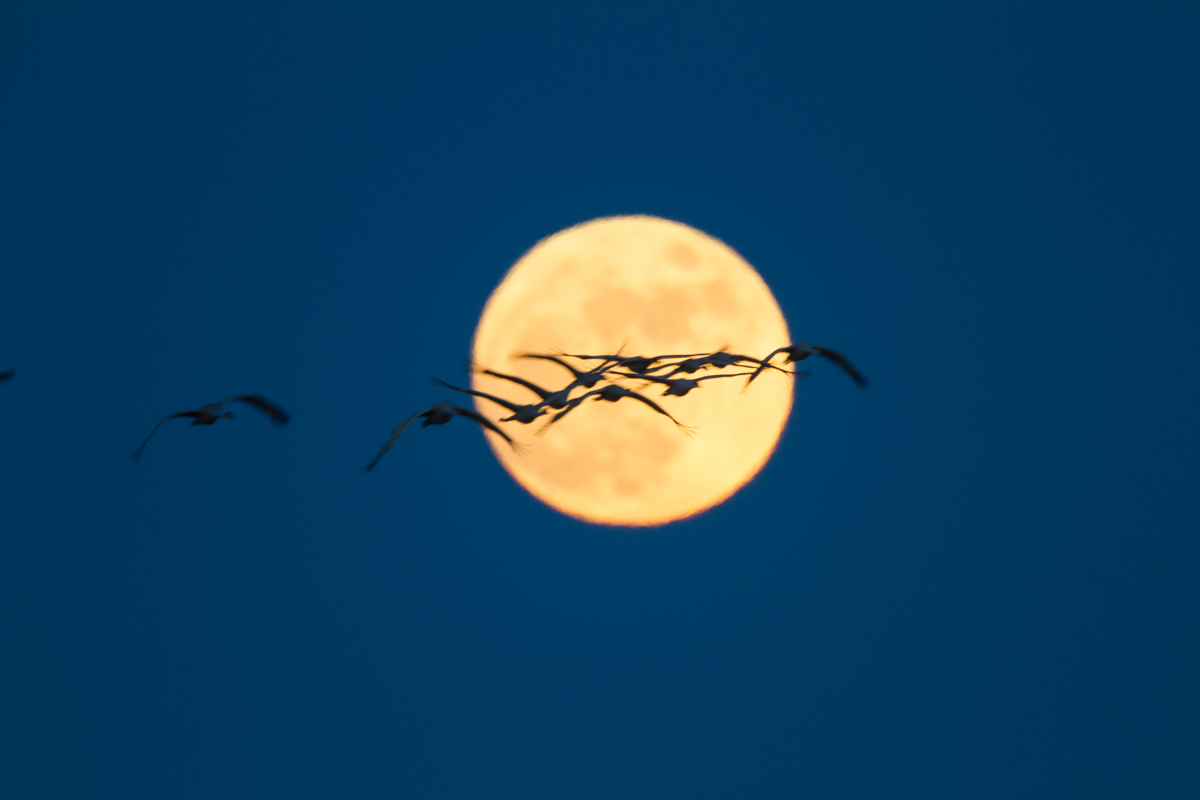
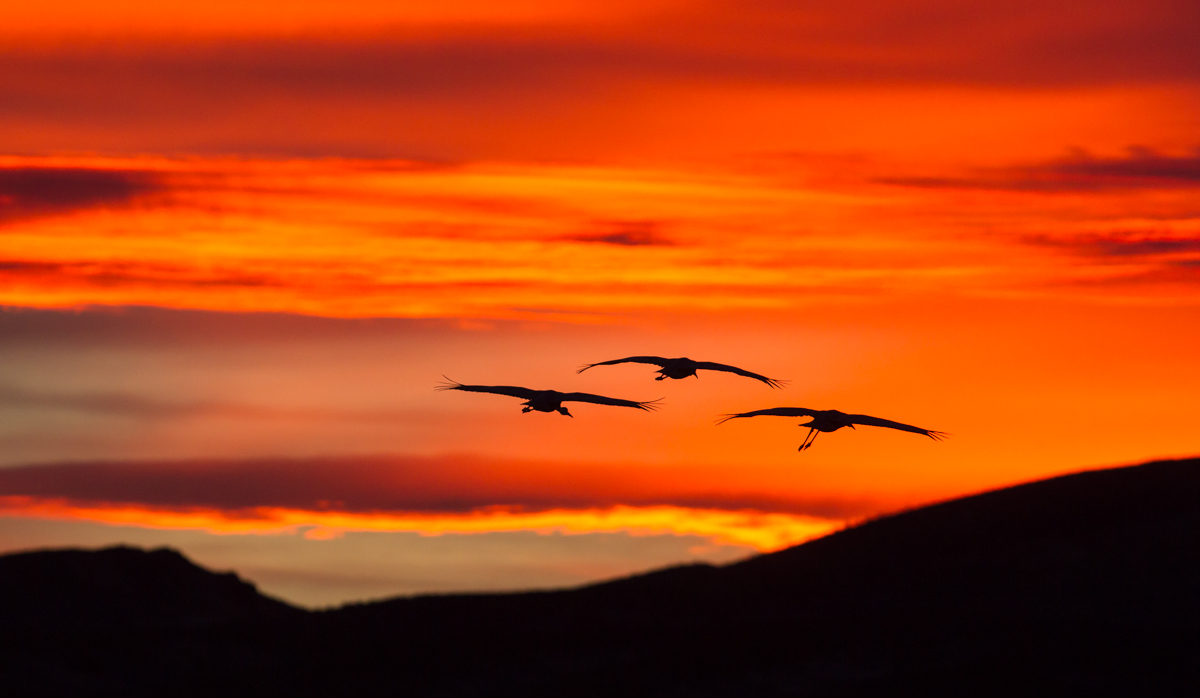
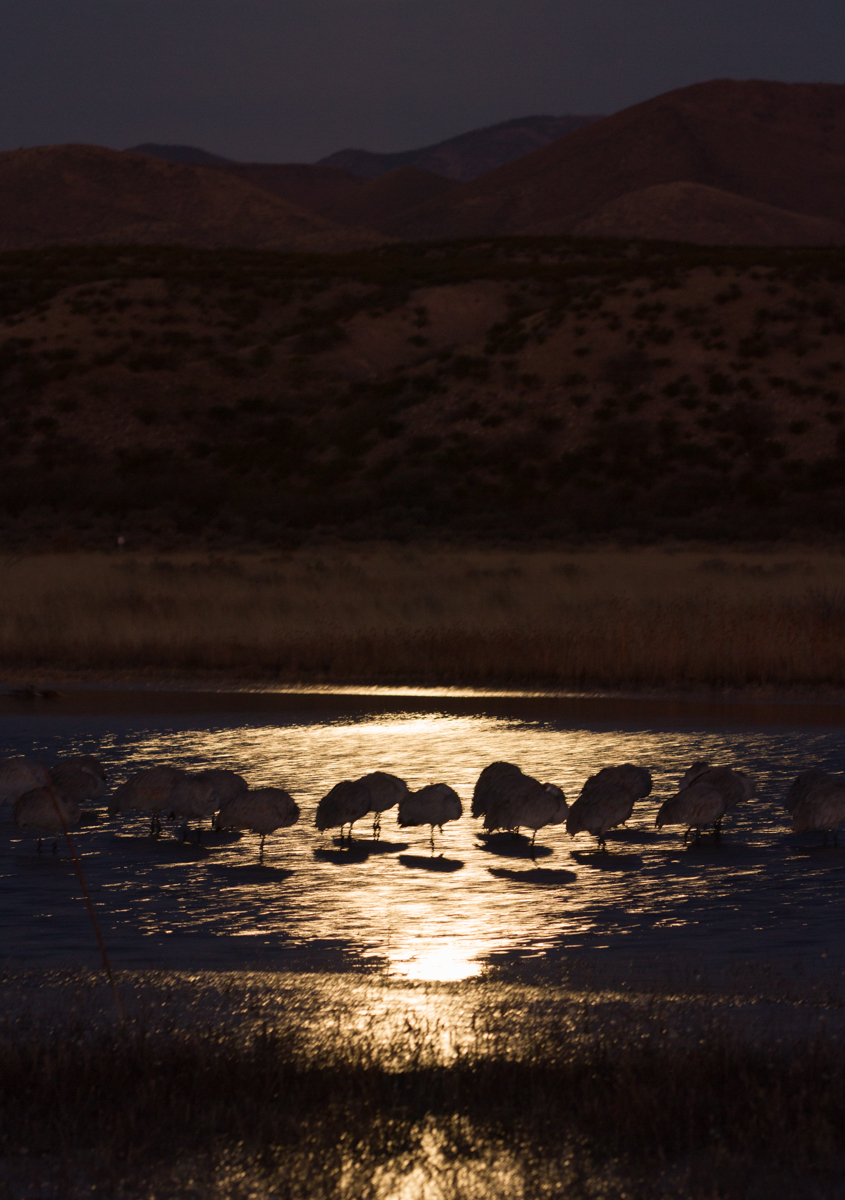
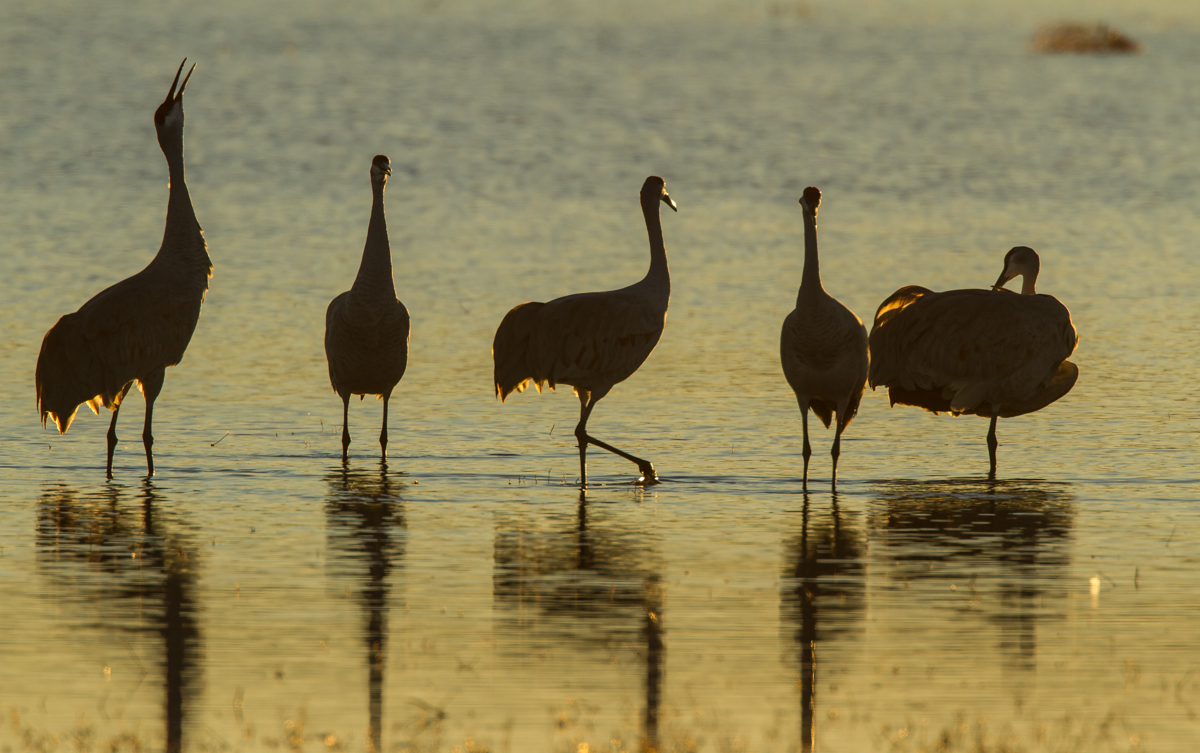
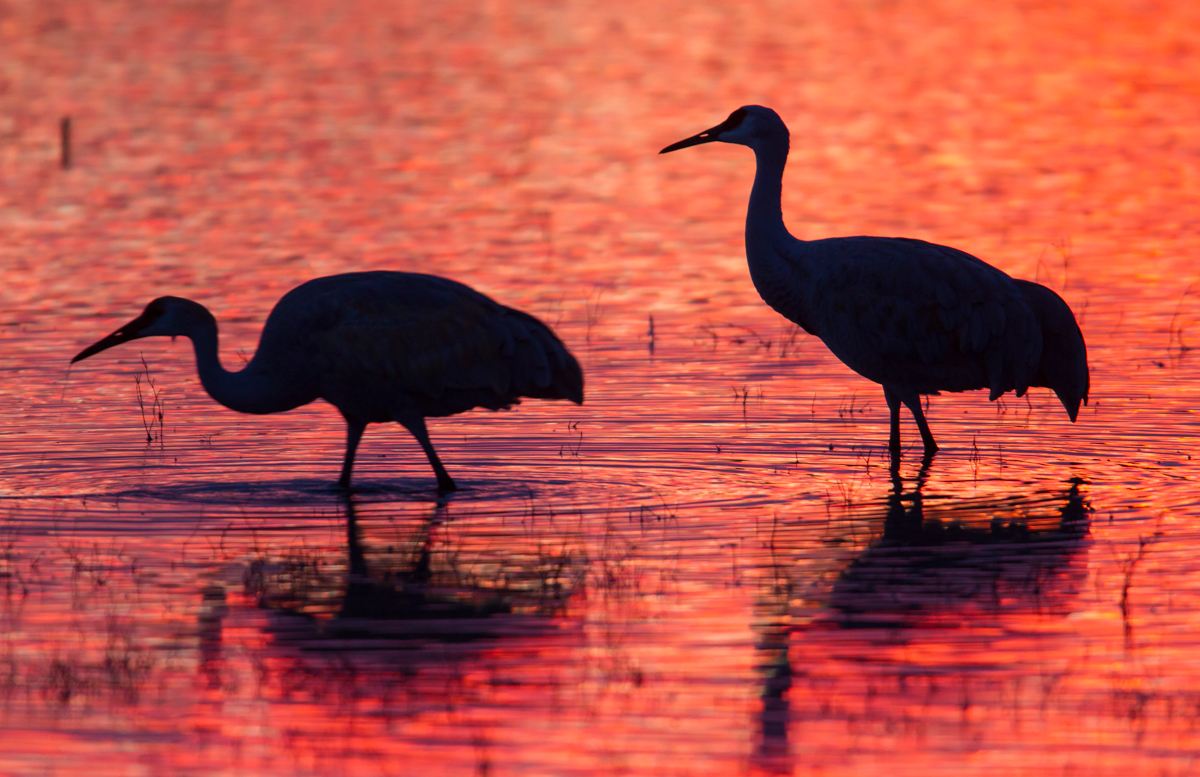
Sandhill Crane calling as it takes offCranes flying across rising full moonCranes flying into Crane Ponds in fiery sunsetJuvenile Red-tailed HawkCrane silhouettes in setting full moon at dawnPhotographers at Crane PondsSandhill Crane takes flightSay’s PhoebeSandhill Cranes at sunsetSandhill Cranes flying out to feed in nearby fieldsSandhill Cranes settling in for the night
When we hear his call we hear no mere bird. We hear the trumpet in the orchestra of evolution. He is the symbol of our untamable past, of that incredible sweep of millennia which underlies and conditions the daily affairs of birds and men. Our ability to perceive quality in nature begins, as in art, with the pretty. It expands through successive stages of the beautiful to values as yet uncaptured by language. The quality of cranes lies, I think, in this higher gamut, as yet beyond the reach of words.
~Aldo Leopold
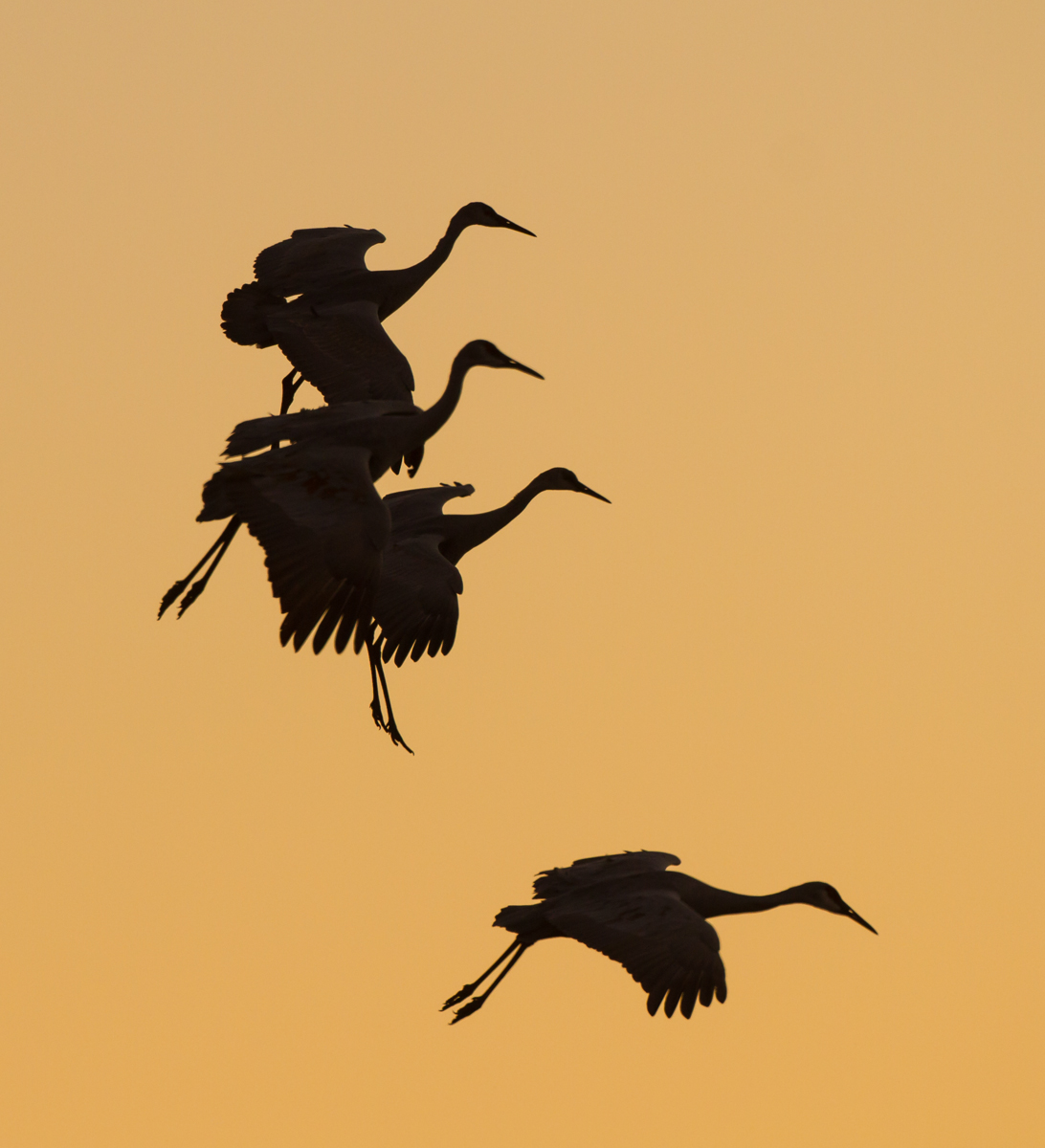
Sandhill Cranes landing at sunset in Crane Ponds at Bosque del Apache National Wildlife Refuge, NM (click photo to enlarge)
A short video clip with cranes calling at sunset at Bosque del Apache.
I just returned from a very special place – Bosque del Apache National Wildlife Refuge in New Mexico. I came away with several thousand images, mostly of Snow Geese and Sandhill Cranes, the “stars” of Bosque. But in the predawn light and in the twilight after sunset each day, I looked for something special in a certain area along the road. It was a silhouette, a powerful shadow of the night sky – a Great Horned Owl.
Great Horned Owl at sunrise (click photos to enlarge)
Over five days, I probably saw the owl five or six times, all within a quarter mile stretch of road inside the refuge. It was always perched on a prominent object, surveying its domain, looking and listening for a potential meal amongst the grasses and shrubs. There are relatively few trees here so I imagine the owl may have a nest site in one of the groves of Cottownwoods near the highway. The image above was taken on the first morning in the refuge, a good omen I thought.
Great Horned Owl by the light of a full moon
One of the many highlights of the trip was the full moon rising with cranes flying into one of the ponds along the road near the owl’s territory. As I drove out that night, there was the owl, sitting in the bare branches of a small tree along the railroad tracks. As I had stayed with the cranes until the moon was well up off the horizon, it was tough to get into position for a photo of the owl against the moon. I took a few images of it in the glow of the full moon before tying to get closer.
Great Horned Owl silhouette against full moon
I now know my body wasn’t designed to crouch so low while messing with a camera and tripod trying to frame an owl against a brightening moon. But, the owl did not seem to mind, and I managed a few shots before it glided down on some unsuspecting rodent and then disappeared into the trees.
A shadow can a powerful thing, and this one gave me an experience I will not forget.
…The “need to hold still” is a skill that both scientists and non-scientists need to cultivate, a vital way to pay attention to the world. Through observation, it is possible to develop a richness of texture and nuance, substance and form, in our understanding of the animate and inanimate residents of this world – and our place in it. It is how we become informed.
~Christopher Norment
I can hardly believe it, but this is my 100th post since I wrote the first blog back on March 22, a mere ten months ago. After officially being retired for three weeks, I posted that first report. I think I was hoping for a vehicle to continue my work as an educator and naturalist. Throughout my career, I was fortunate to have worked with a cadre of dedicated and inquisitive people that were constantly sharing new discoveries and challenging me with questions about nature. I now realize that the blog is a way for me to challenge myself and to continue learning about the natural world that I love.
I recently took a look back at the topics I have covered and realized it really has been quite an eventful ten months of retirement. I traveled to some of my favorite places and did some serious woods-watching here at home. So, in honor of the milestone of making it through one hundred of these monologues, I now revisit a few of my favorite memories of the past few months.
Large spider shed from the first blog post on March 22, 2013 (click photos to enlarge)
It all started with a trip out to my shed last March and the discovery of a different sort of shed – the cast skin of a huge spider. It turned out to be from one of our largest spiders, a Dark Fishing Spider, Dolomedes tenebrosus. The intricate details of the shed are incredible.
Dark Fishing Spider
Then, just a few weeks ago, I had an encounter with a live, albeit sluggish, Dolomedes spider. It was in a tree trunk I was cutting for firewood. After just missing the spiders’ hiding place with my chain saw, it slowly crawled out and allowed me some quality observation time.
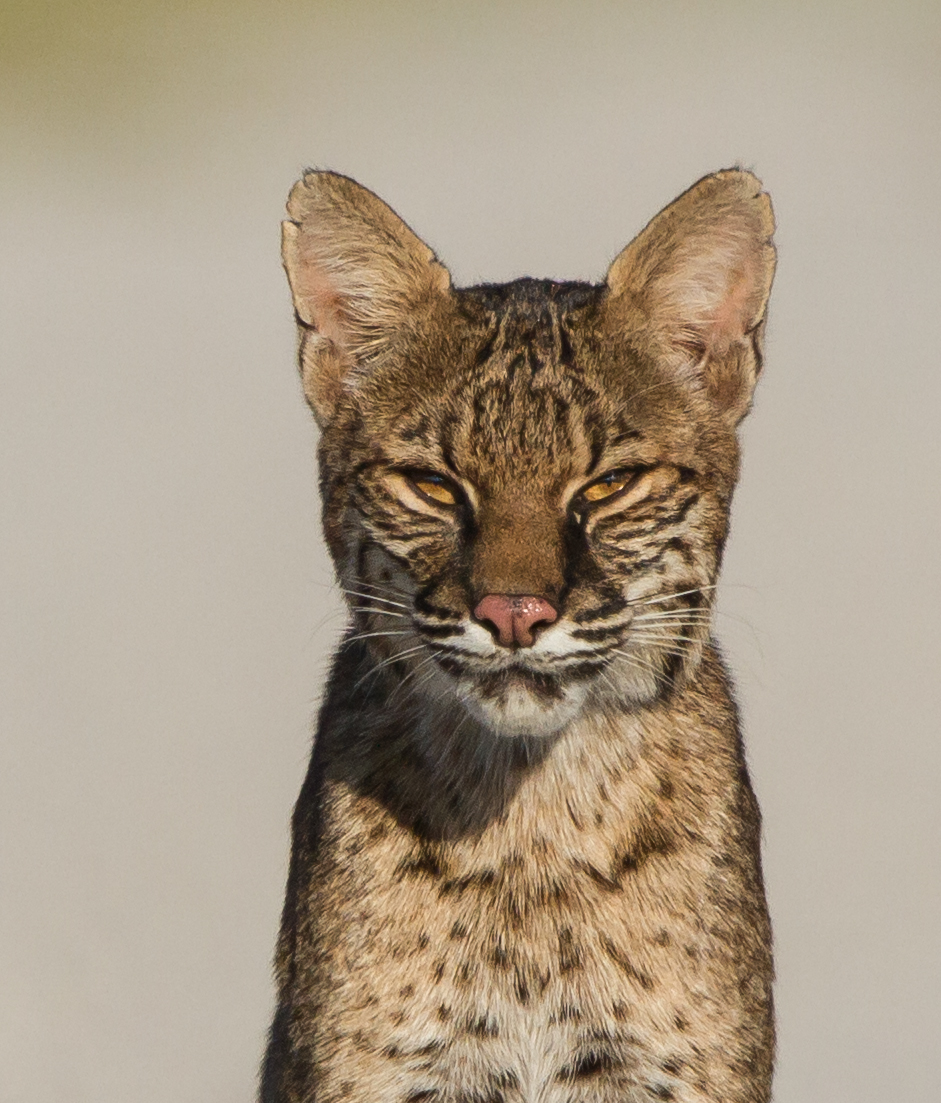
Bobcat at Pocosin Lakes
Speaking of encounters, one of the most amazing things I experienced these past few months (actually…ever) was a close encounter with one of our state’s most elusive animals, a Bobcat. After seeing one cross a dirt road at Pocosin Lakes National Wildlife Refuge, a friend and I parked the car in the only available shade and got out to wait. The next 20 minutes were some of the most exciting I have had with any wild creature. The majestic cat ended up strolling toward us and then just sitting and looking around for a couple of minutes, before vanishing into the brush.
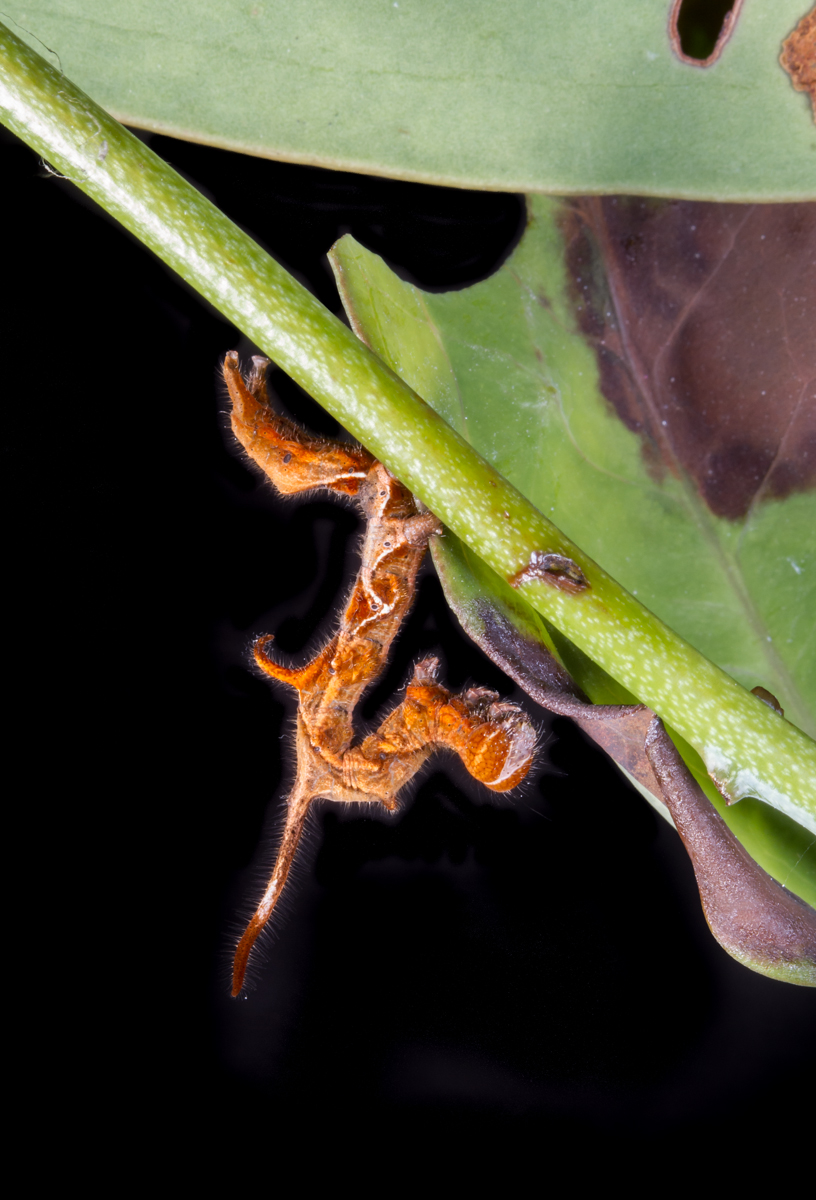
Curve-lined Owlet is a dead leaf mimic
Pocosin Lakes also provided a glimpse at something I have always wanted to see – a Curve-lined Owlet caterpillar. This unusual larva feeds on Greenbriar and is considered a dead leaf mimic.
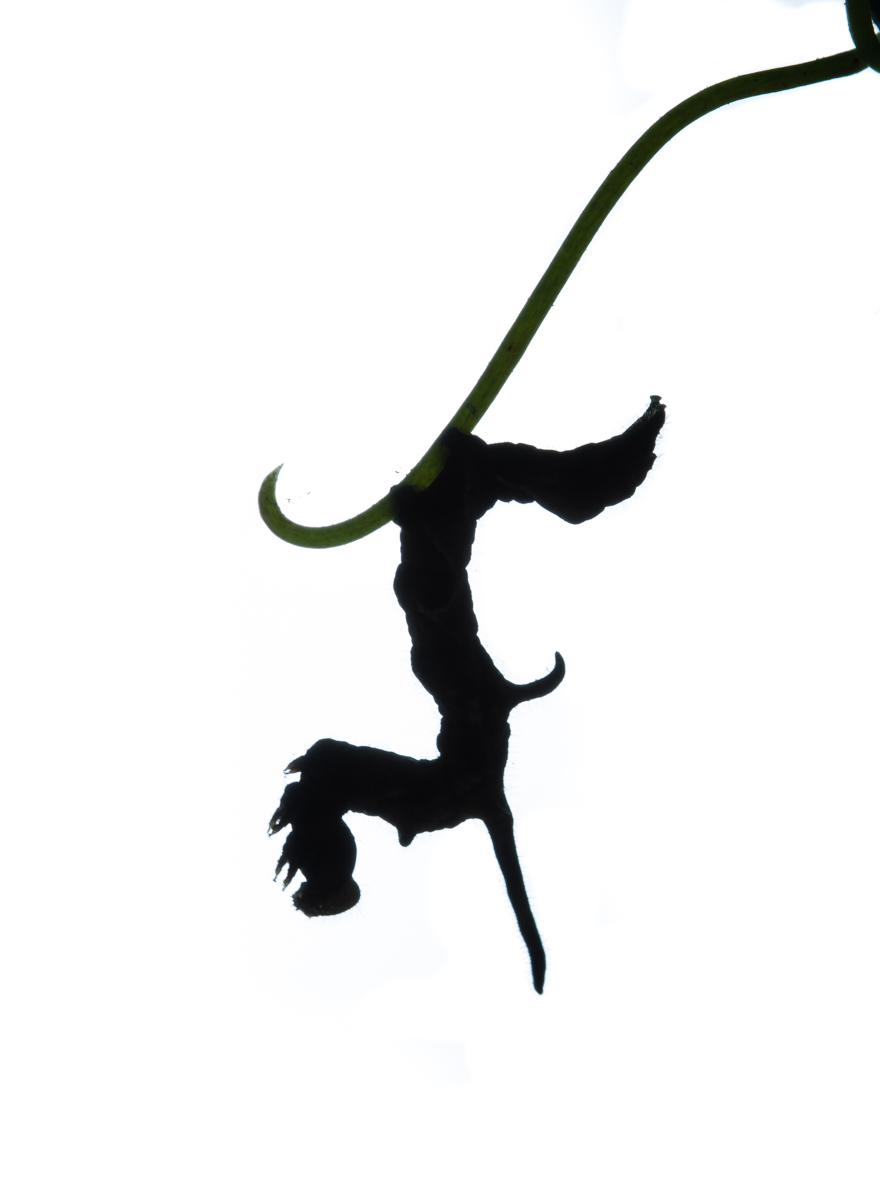
Curve-lined Owlet caterpillar silhouette
I consider it simply bizarre and beautiful.
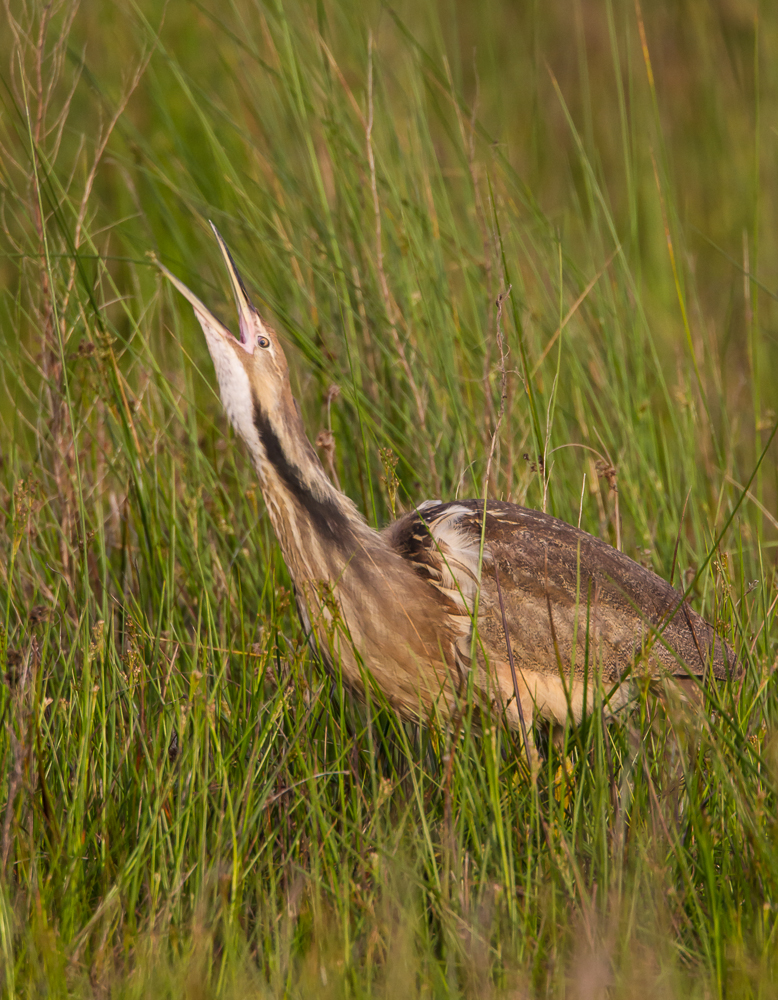
American Bittern calling
Another magical experience from Pocosin Lakes was last spring when I happened to stop at a marsh to scan for birds, and heard the unmistakable sound of an American Bittern. Their call is described by The Cornell Lab of Ornithology as a deep pumping oong-ka-choonk. Listen for yourself at http://www.allaboutbirds.org/guide/American_Bittern/sounds.
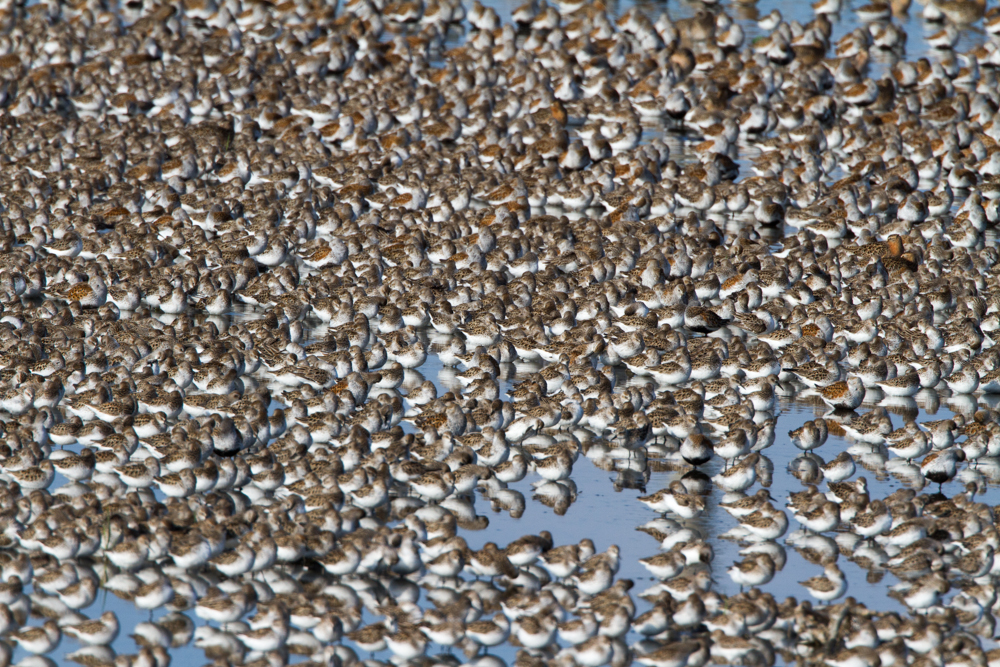
Horseshoe Crabs coming ashore to mateShorebirds in New Jersey
A trip to New Jersey and Delaware last spring provided an experience with one of the great wildlife spectacles on the East Coast – thousands of Horseshoe Crabs coming into the shallows to mate. Coinciding with this event is the arrival of tens of thousands of shorebirds that stop in the Delaware Bay region to take advantage of abundant food resources (including the Horseshoe Crab eggs) as they migrate north for the nesting season.
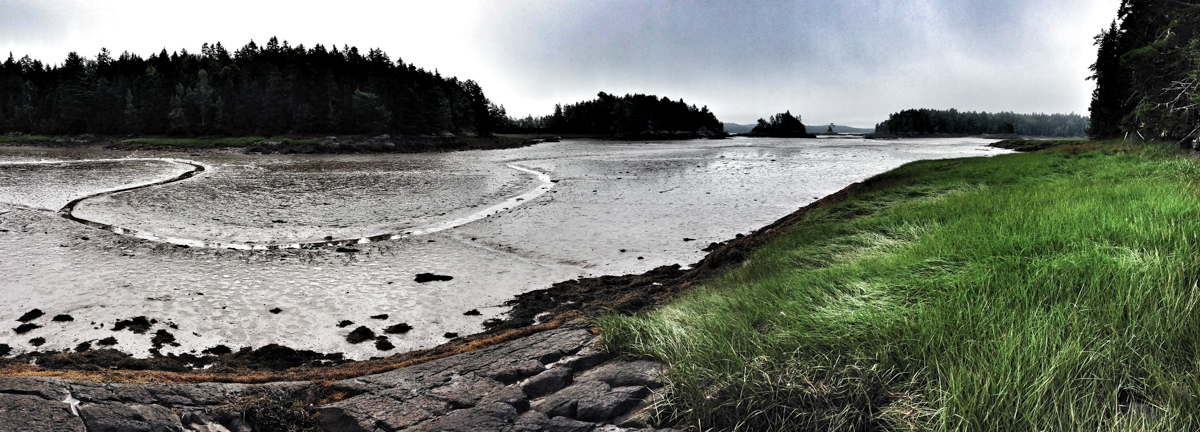
Bison silhouette in Lamar ValleyLow tide, Cobscook Bay, Maine – iPhone imageDolly Sods Wilderness, WV – iPhone image
Other adventures afield have taken me to Yellowstone (always a favorite), Maine, and the Dolly Sods Wilderness in the highlands of West Virgina. In each location, I am reminded how lucky we are to have these stunning landscapes preserved for the good of the ecological communities, and the human spirits, they sustain.
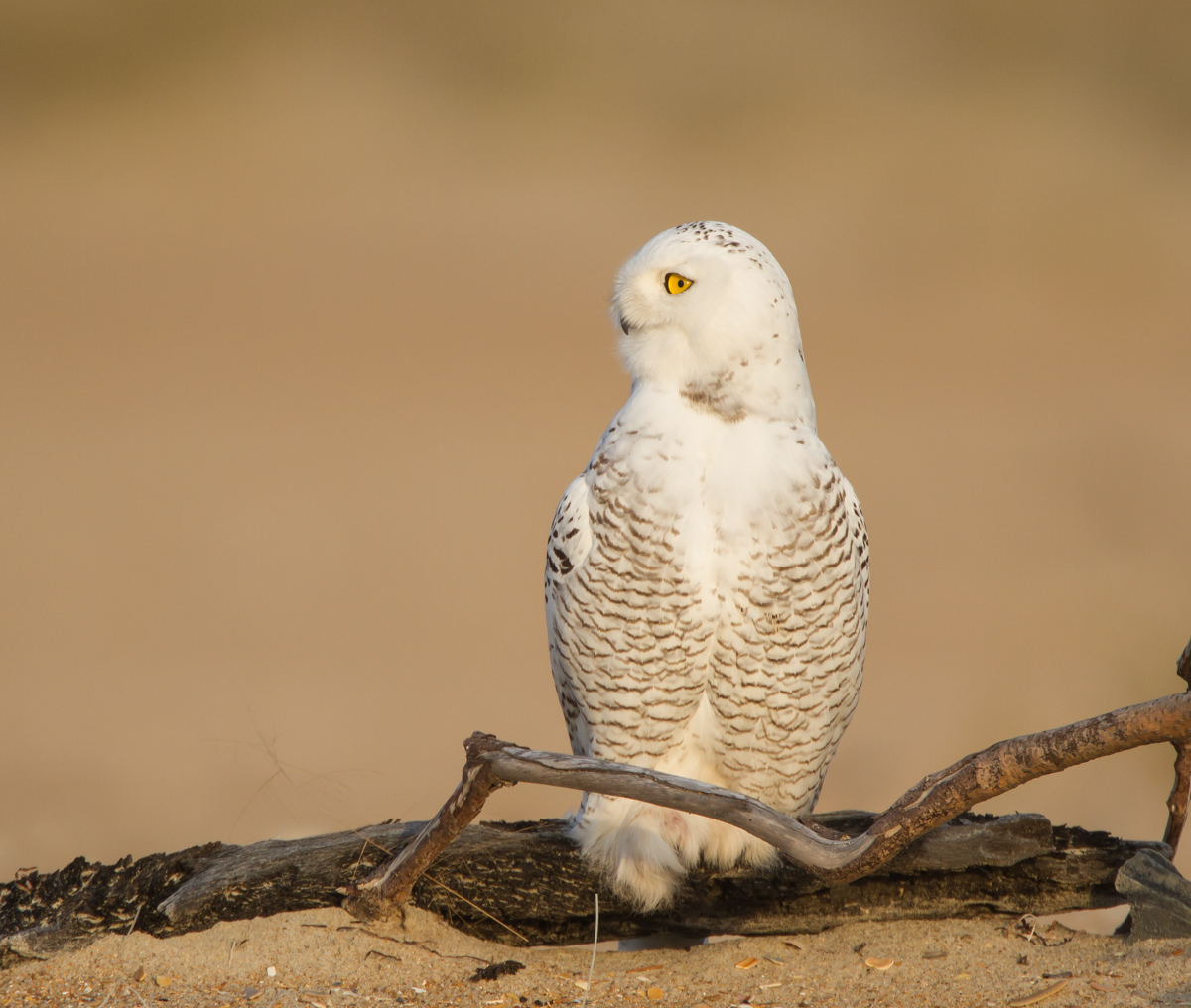
Snowy Owl at Cape Hatteras
A traveler from the far north visited my home state a few weeks ago, providing a rare opportunity to sit in awe in the presence of an almost mystical creature, a Snowy Owl. My time spent alone with this beautiful bird was certainly one of the highlights of the past year.
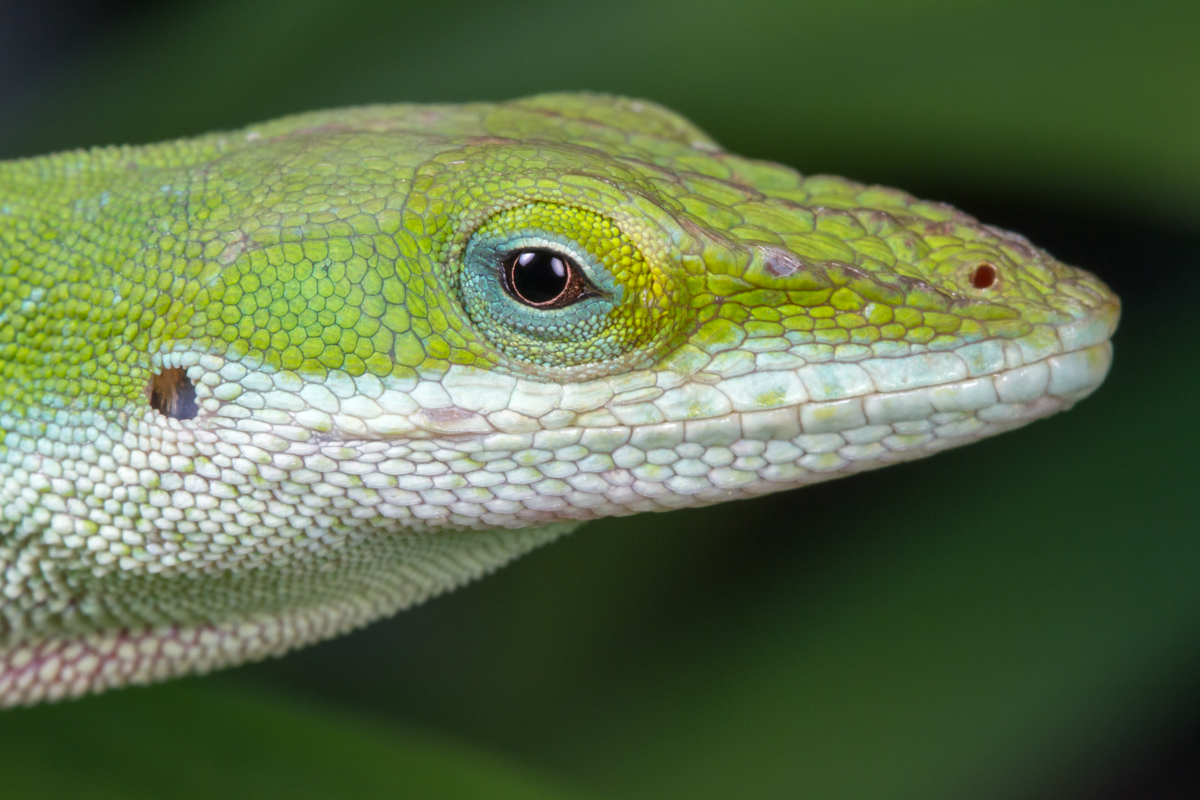
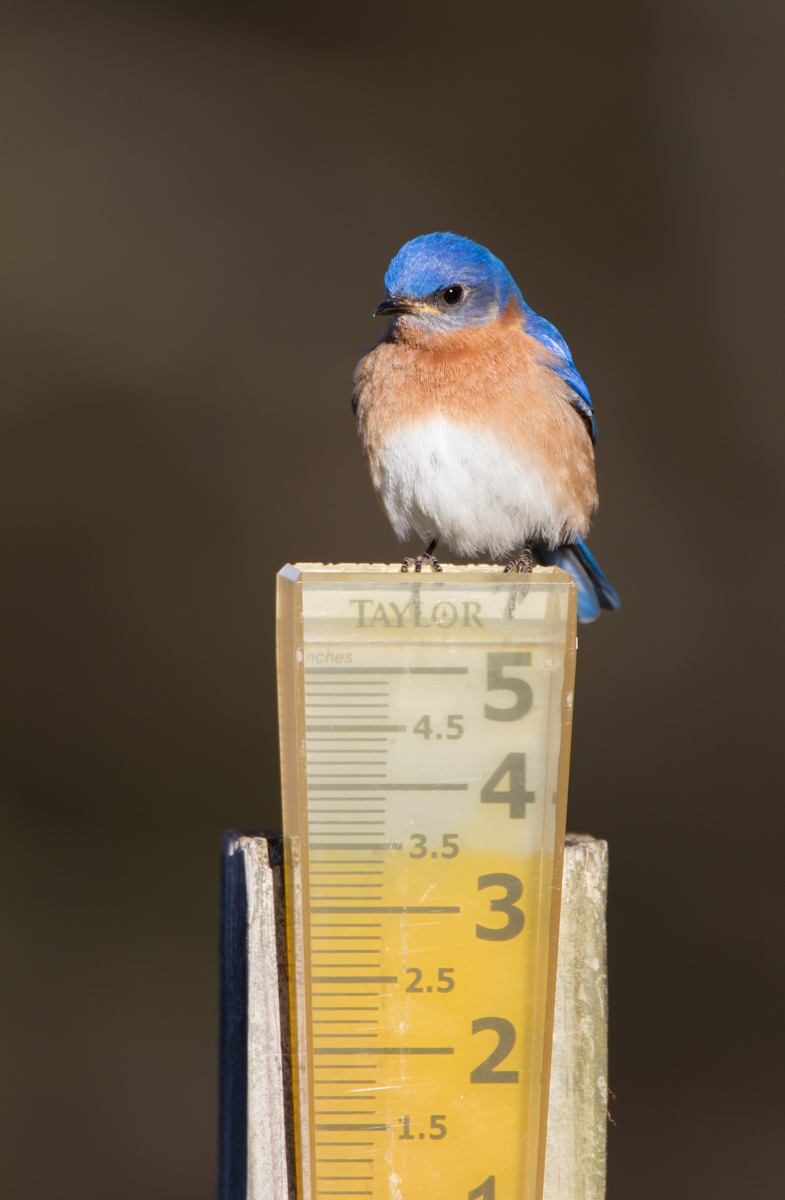
Parasitic wasp grub on spider hostBloodroot leaf backlit by morning sunCarolina Anole head close upEastern Bluebird male
I also was reminded how much there is to learn, and be amazed by, in our own backyards. From behavior-altering parasitic wasps, to the delicate beauty of native plants, to the fascinating behaviors of some of the local wildlife, there is always something to experience and appreciate. We need only to get outside, and have the patience to observe, and we will be rewarded with glimpses of beauty that can still help connect us to the natural world.
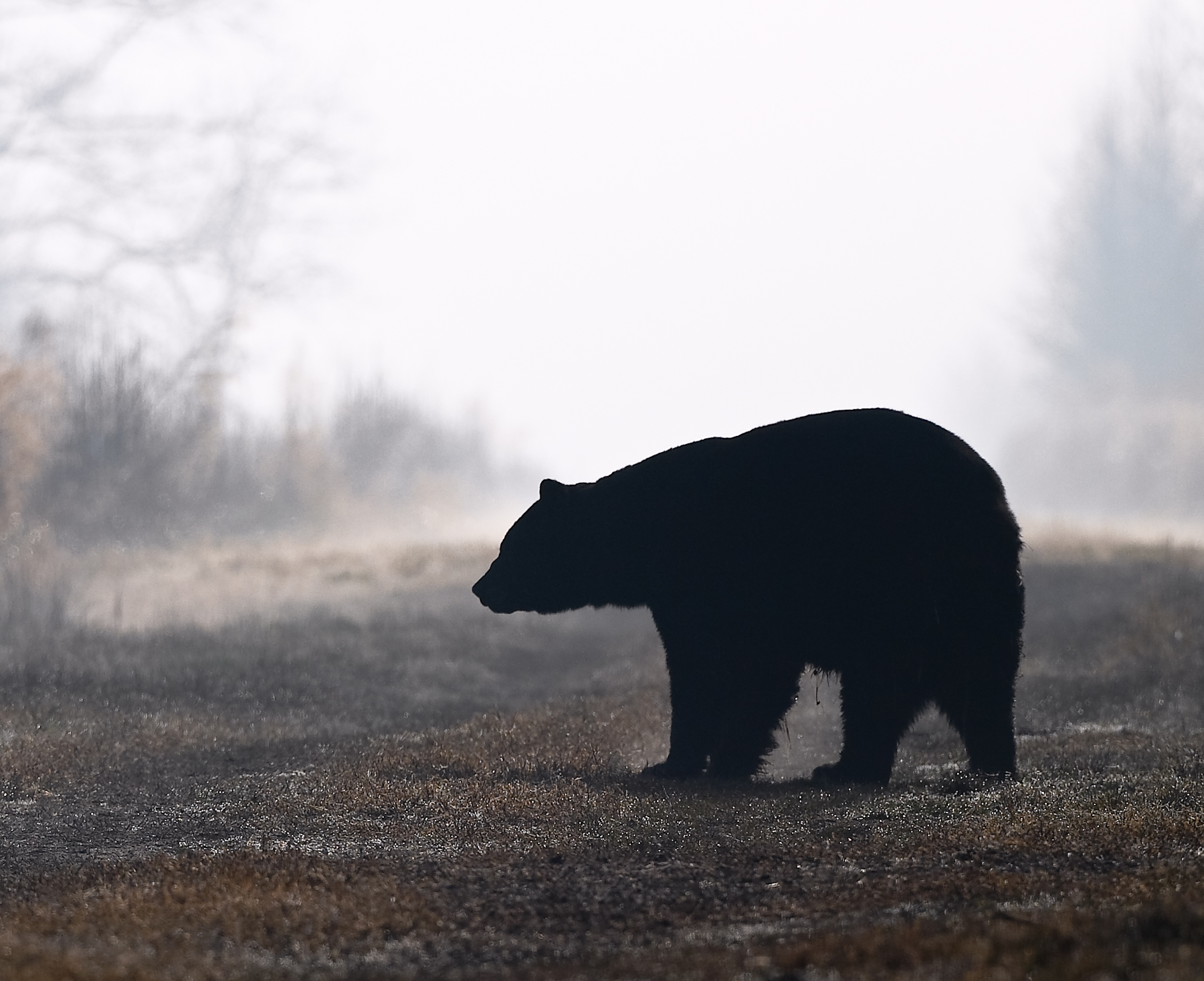
Black Bear at sunrise
All in all, it has been a “beary” good ten months of woods-watching and blogging. I hope the next one hundred posts are as much fun for me, and, hopefully, you. But after the first one hundred, I think I’ll take a few days off…
One who reviews pleasant experiences and puts them on record increases the value of them to himself; he gathers up his own feelings and reflections, and is thereby better able to understand and to measure the fullness of what he has enjoyed.
I like to remember that it is wild country that gives rise to wild animals; and that the marvelous specificity of wild animals reminds us to wake up, to let our senses be inflamed by every scent and sound and sight and taste and touch of the world. I like to remember that we are not here forever, and not here alone, and that the respect with which we behold the wild world matters, if anything does.
~Rick Bass
By the time I got over to the Pungo Unit of Pocosin Lakes, it was mid-afternoon. I did a quick drive through, checking an area where my museum friends said they saw a bobcat the day before. Unfortunately, no bobcat for me, so I drove on, looking for bears. I parked and walked down the gated dirt road to an area where bears have been active. With overcast skies and a long walk, I took only my tripod, 300mm lens, a 1.4x teleconverter, and my Kwik Camo photography blind. This is a handy camouflaged cover with slots for your hands, lens, and flash units. It comes in a camo fanny pack and is very light, so it is no problem on a long walk. I wanted to try standing for awhile along the tree line under the blind, just to see what I could see, even if there were no photo ops.
Kwik Camo blind selfie – in case you weren’t already worried about me:)… (click to enlarge photos)
I picked a spot near where bears were obviously crossing the dirt road from the woods to the bounty of the corn field.
Bear crossing
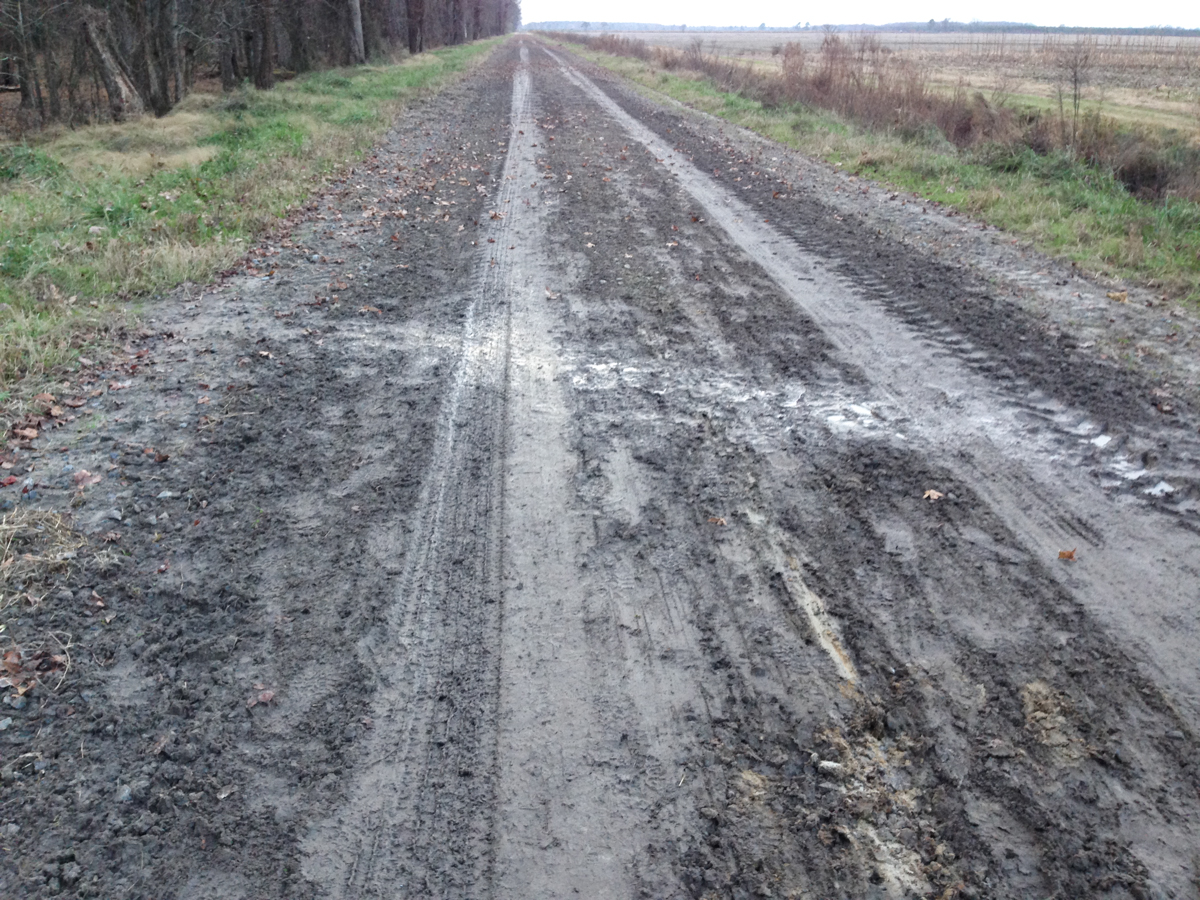
There were three such bear highways along the path – easily noticed by the trail of wet soil that could be seen from quite a distance.
Track highway…can you see tracks of at least three mammal species?
When I got to the last crossing, it looked as though every animal on the refuge had walked through the mud that day. I am always impressed by the amount of wildlife sign I see here…certainly one of the best places I have ever been to learn about wildlife tracks and signs. So, as if often the case on such outings, once I was situated, I waited. And waited. One thing about the use of the blind is that it is a little tough to see behind you, so I found myself turning my head frequently to scan for wildlife (something I do more often in bear country:)
Bears coming out of woods
There is usually plenty to observe while waiting in a blind. To my right, I watched a hawk hunting over the field and when I turned back to my left, this is what I saw – an adult female and a young bear coming out of the woods, headed toward the field. There was almost no wind, so I don’t think she sensed me, as she cautiously came out and went down into the canal for a drink. I swung the lens around and pointed it toward where the pair had disappeared along the canal bank when a slight motion to my left caught my eye…another young bear was walking down the tree line I was in and suddenly realized that the bush next to the tree (that’s me) moved .
Young Black Bear keeping an eye on the moving bush (me)
It stared at me for a second and then ambled off toward its mother and sibling, glancing back from time to time to see if the bush moved again (I didn’t). I always try to not disturb the wildlife I am watching. But this young bear had seen me (and perhaps heard the camera shutter – boy, it seems so loud at times like this).
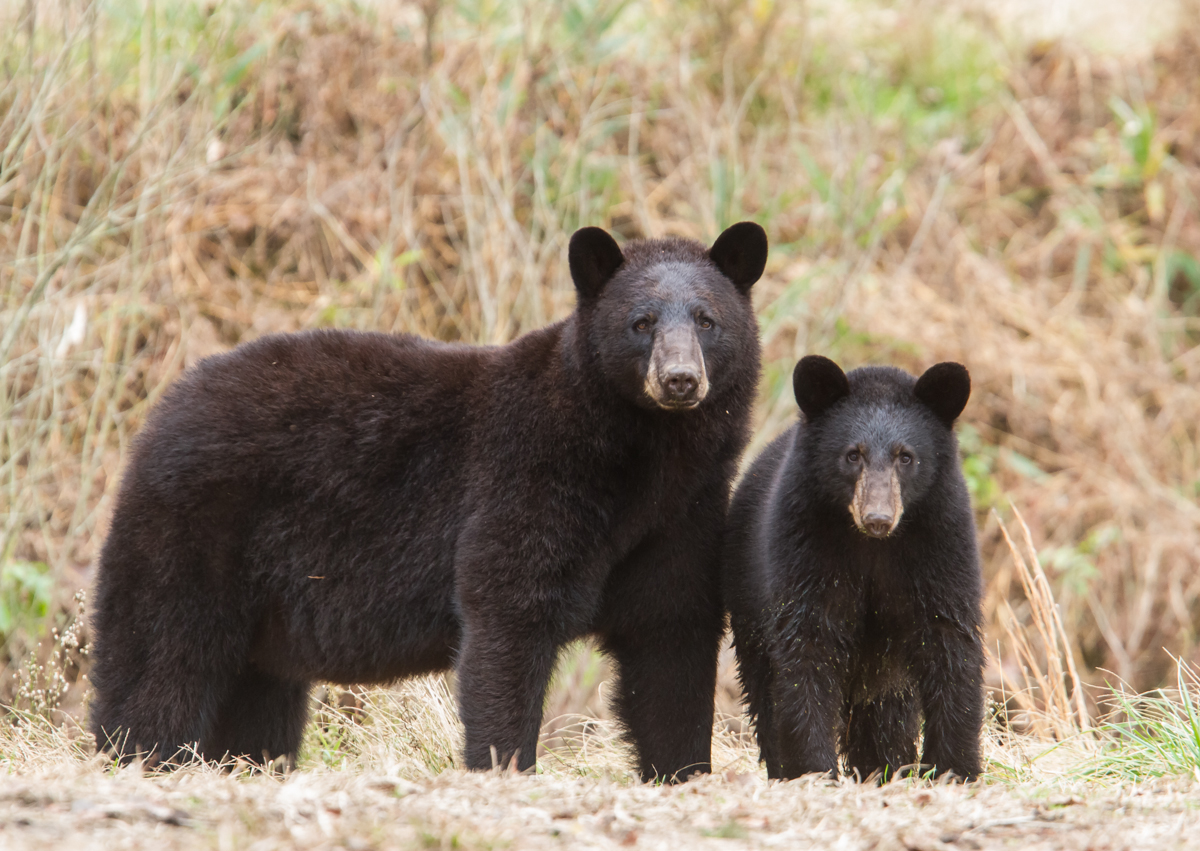
Mother and young bear
When the other two bears came up out of the ditch, the sibling ambled off toward the dinner table (corn field), while the mother looked at her other youngster staring at me and then looked around, before finally fixing her gaze in my direction. I shot two images and then remained silent. She continued to look around, sniffed a few times, and apparently did not sense anything to worry about, so they both headed off toward the corn. I watched them for another thirty minutes as they fed far down the field from me, and then I headed out toward the car about a mile away. It is always a special feeling when I am able to observe wildlife doing what they do without them becoming alarmed at my presence.
The day had been a great one, although strangely warm for early December. I saw two species of butterflies out earlier in the day, and as I walked back, a few bats came out for an early hunt. Five other bears came out of the woods as I walked, most a great distance from me. A Great Horned Owl started hooting as the sun was reaching the horizon. A Corn Snake crossed the road. And then I heard them coming…the birds returning to the lake for the evening. I paused as the first wave of Snow Geese flew overhead. Smaller groupings of Tundra Swans were flying in long V’s underneath. I was alone in this magical place and I felt incredibly lucky. I shot a short video with my phone hoping to capture a little of that magic. But, there is no substitute for being out there and taking it all in, realizing that these special places are essential for both the wildlife and the human spirit.
Listen for the differences in the calls of the returning flocks – the high-pitched, somewhat nasal quality of the Snow Geese honks, and the lower-pitched hooting of the Tundra Swans.
NOTE: I am offering trips in this extraordinary region the first two weekends in January and possibly another in February. Contact me at roadsendnaturalist@gmail.com for details.
After the incredible experience with the Snowy Owl at Hatteras last week, I waited in line for an hour and a half for the emergency ferry to get off the island. Bright and early the next day, I headed to Lake Mattamuskeet, always an incredible place to experience the first light of a new day. But this morning was going to prove difficult for a sun-over-the-lake image as the fog was as thick as the proverbial pea soup. I drove at a cautious pace on my way down from Columbia since this is prime deer and bear habitat, and I wanted neither to become acquainted with the front of my car. I decided to bypass the usual spot for greeting the morning sun on the causeway that stretches across the lake, and looked, instead, for something close to shore that I might actually be able to see in the fog.
Foggy sunrise on Lake Mattamuskeet (click photos to enlarge)
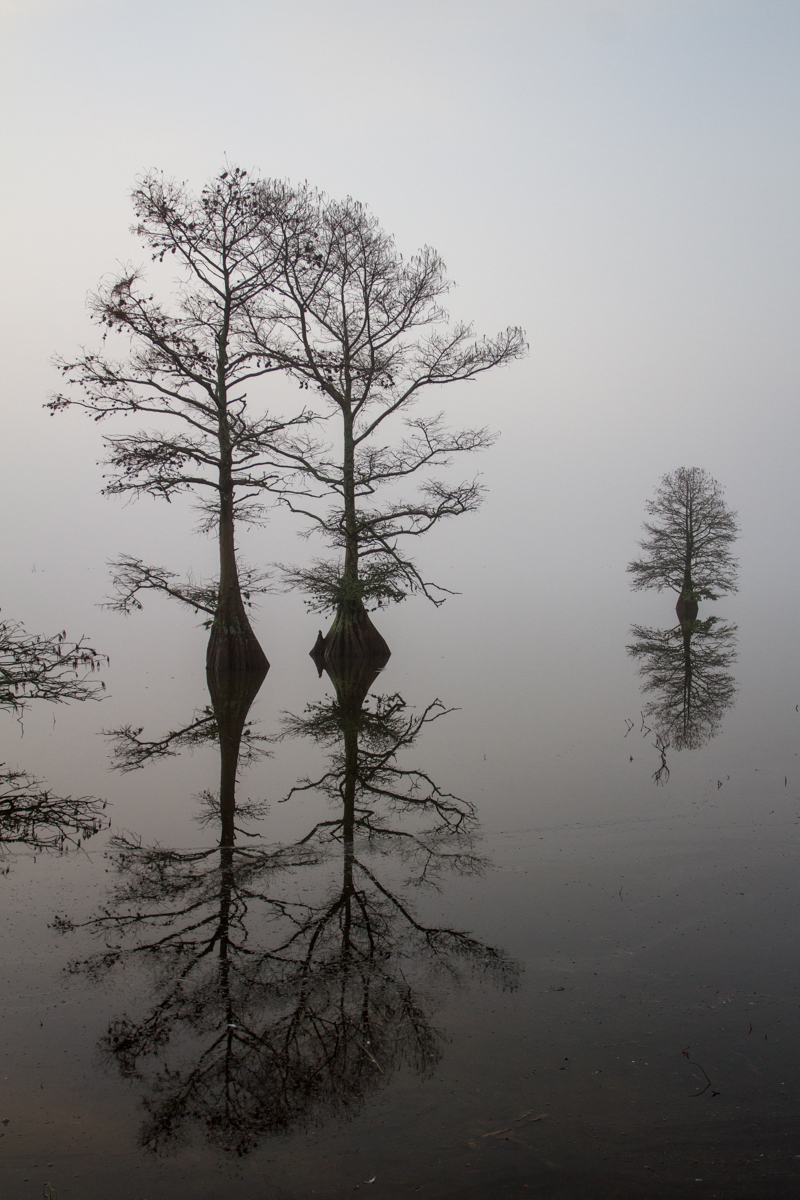
What I found was a surreal scene as the pale light of the rising sun tried in vain to penetrate the gray curtain laying across the lake. A few skeletons of cypress trees in the foreground provided the only depth in the scene.
Great Blue Heron on cypress trunk
Then, a Great Blue Heron flew out of the mist and landed with a squawk, and became frozen in the gray painting.
Great Blue Heron in fog
I took several shots but I’m not sure which one I like the best – a tight view of the lone cypress and heron, or a wide view that includes some other tree silhouettes.
Tundra Swan in fog
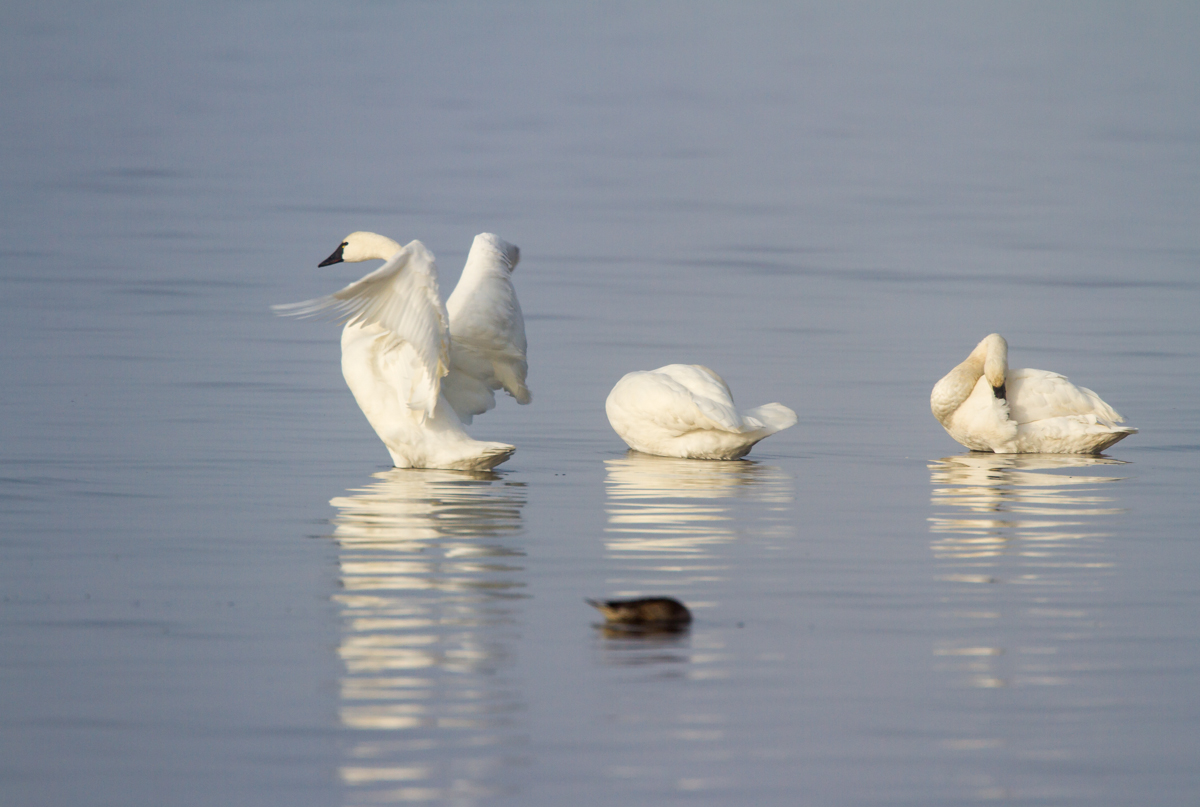
The sun was starting to win the battle as I drove across the lake. A few Tundra Swans fed silently near the road, making glints in the water as they probed the lake bottom for some breakfast of aquatic vegetation.
Swans in early morning light
A few minutes later, and the sun claimed victory as it glowed on a group of waterfowl farther down the road. This area is thick with Tundra Swans and Northern Pintails right now, with a variety of other waterfowl in smaller numbers (American Wigeon, Green and Blue-winged Teal, Northern Shovelers, Ruddy Ducks, Buffleheads, American Black Ducks, etc.). I shared some of these excellent views with some of my former co-workers from the Museum, who happened to be leading a group of folks that same morning. It was, indeed, a great day for sharing this incredible place with good people.
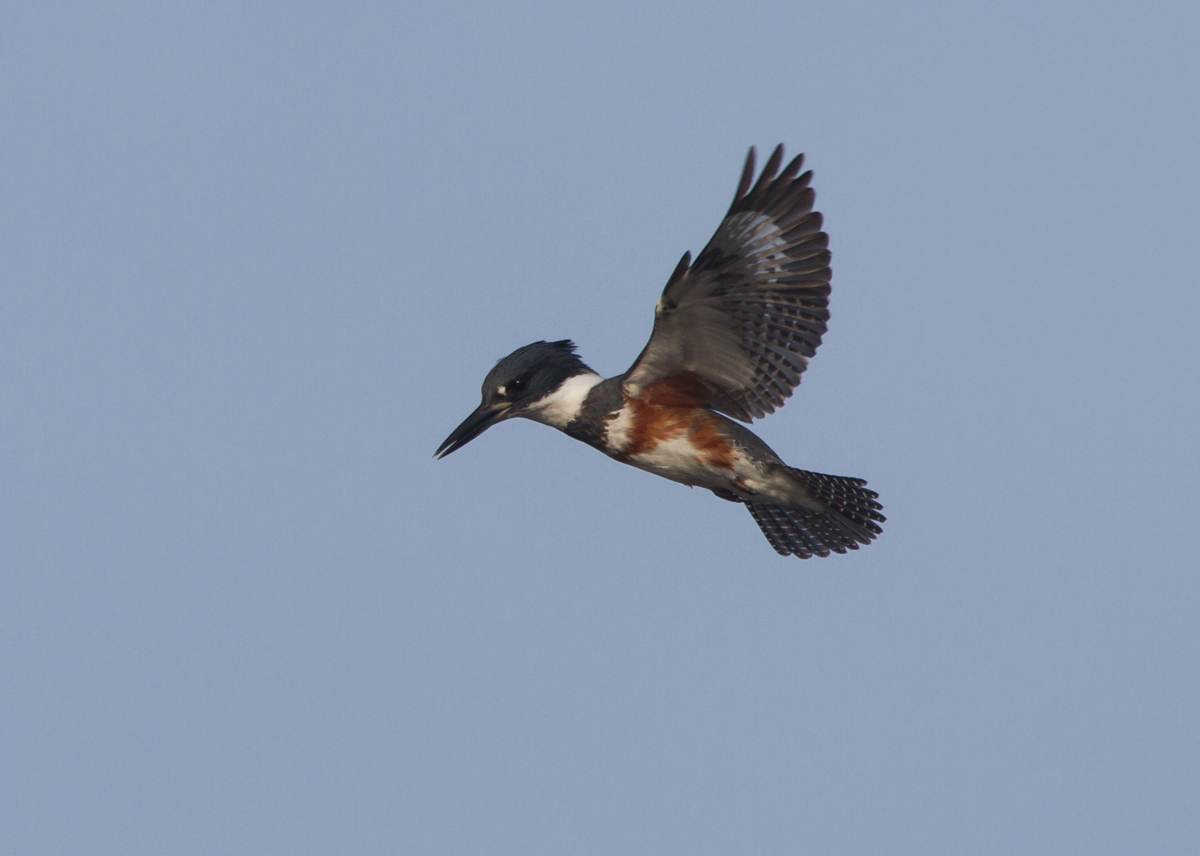
Belted Kingfisher hovering
While sitting alone with the swans, I was entertained by a couple of Belted Kingfishers as they hunted. They would swoop in, hover for a what seemed like a minute or two, and then either swoop to a new spot, or, if they spotted something, plunge headfirst into the water. After several failed attempts, I saw one finally catch a small fish and fly off to eat its meal in peace.
Double-crested Cormorant drying its wings
Along the canals on Wildlife Drive is always a good place to find water birds of various sorts. That morning had a crowd of Double-crested Cormorants perched on a fallen tree in the canal. Cormorants are relatively primitive birds, and, unlike most other waterfowl, their feathers are not water repellant. This necessitates their spread-wing poses throughout the day as they must dry their feathers after repeated dives in the water while searching for fish. The light-colored breast and neck indicate this is a first-year bird (adults have dark plumage throughout).
With some remnant patches of fog drifting along the canal, the short video below shows a “mistical” scene and allows you to hear a few of their grunts as they maneuver for position on the branches.
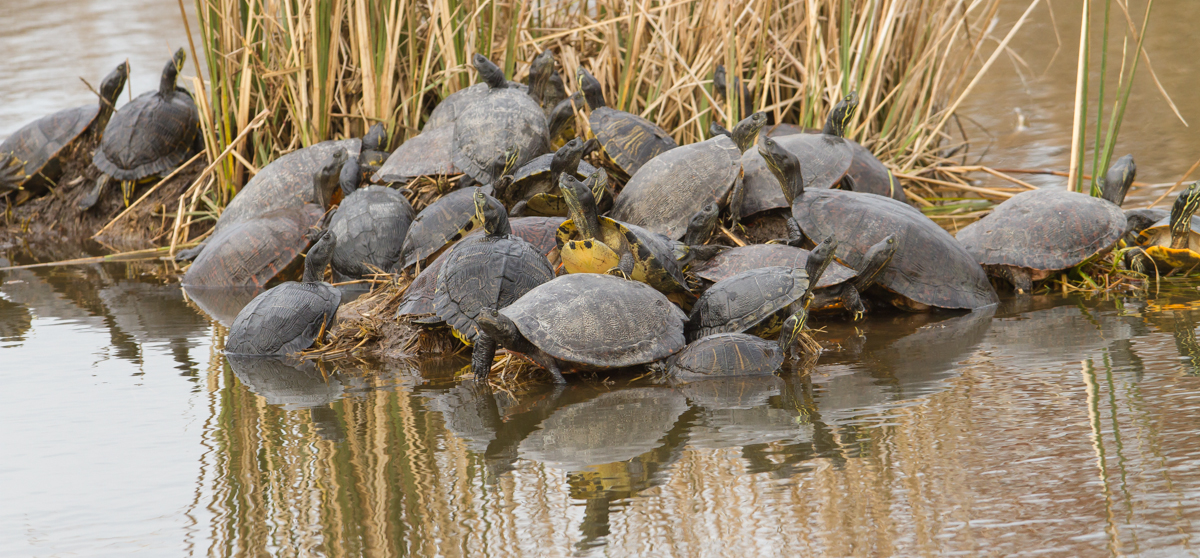
A herd of turtles
The foggy morning was warm enough for turtles to be out in force. For a reason known only to those with shells, one small island of grass in a canal seemed particularly appealing to a group of what appear to be Yellow-bellied Sliders. They had climbed over one another in a jumble, perhaps in hopes of being closer to the emerging sunlight.
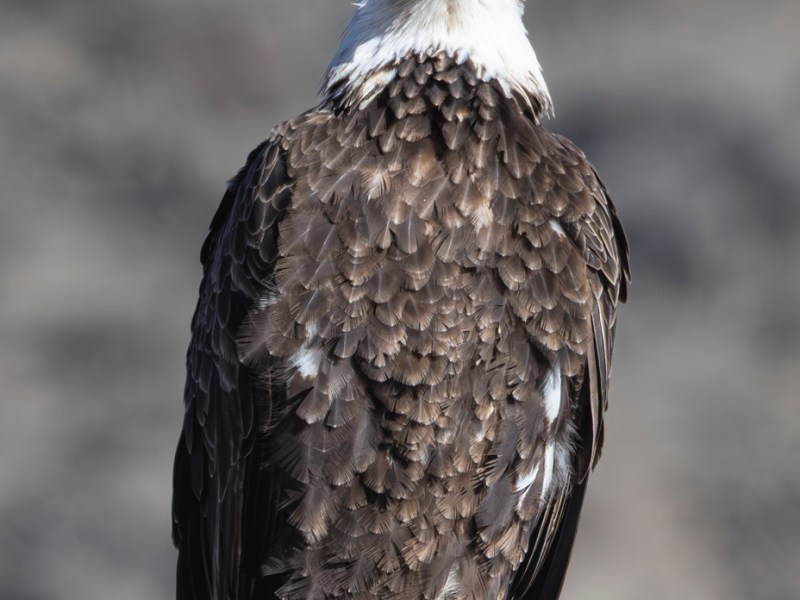
Immature Bald Eagle
Lake Mattamuskeet is one of the best places in NC to view Bald Eagles, especially in winter, when the large concentrations of waterfowl provide a reliable food source. Bald Eagles are particularly fond of American Coot, which tend to occur in higher numbers on the lake a little later in the winter. This immature (it usually takes 4 or 5 years for a Bald Eagle to acquire its fully white head and tail feathers) was very cooperative as it scanned the marshes from a high perch.
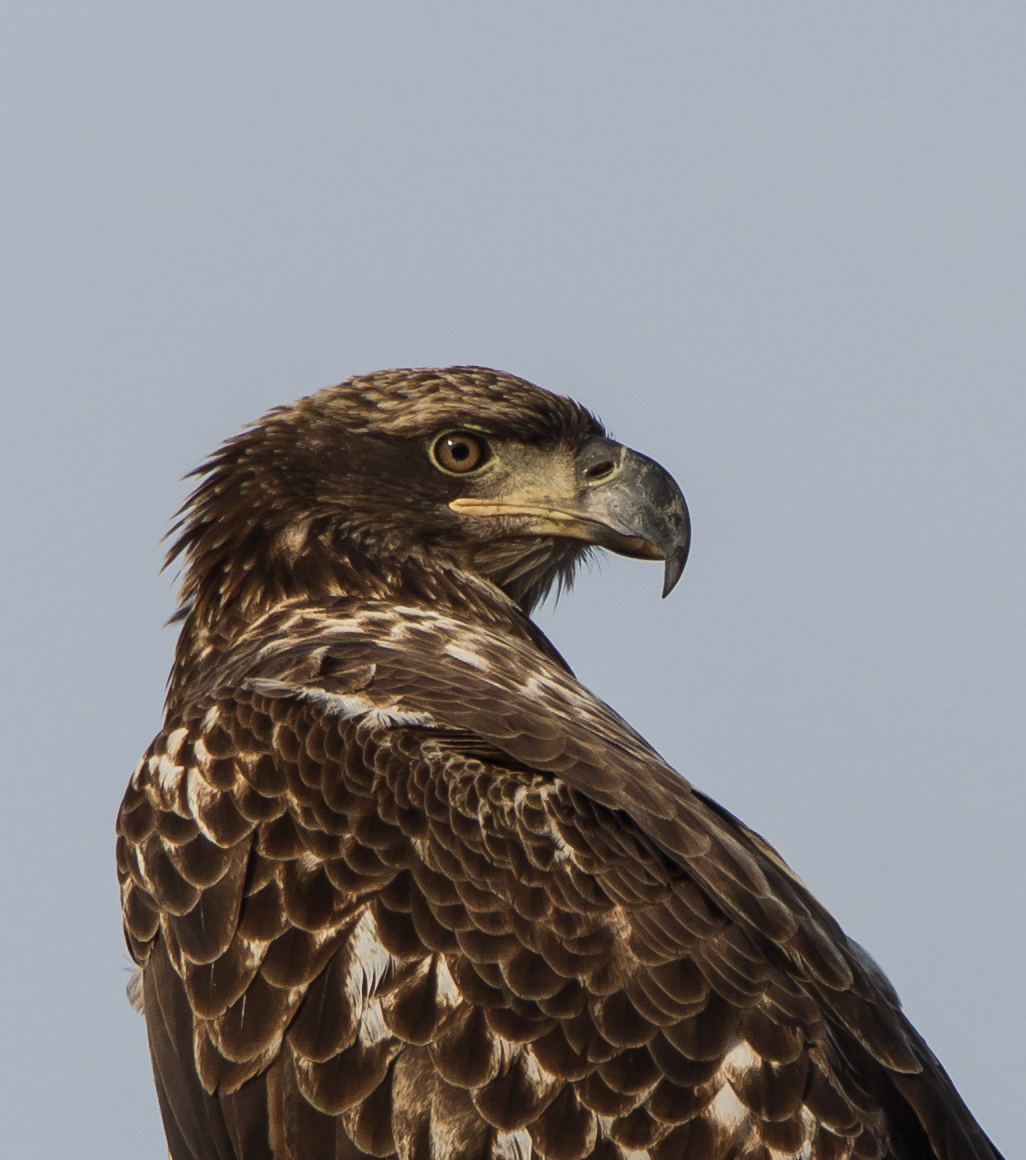
Immature Bald Eagle close up
I always marvel at the size of their beak and the intensity seen in their eyes. Based on what I have read online (a nice photographic summary of aging Bald Eagles is at http://www.featheredphotography.com/blog/2013/01/27/a-guide-to-aging-bald-eagles/), I am guessing this is a first year bird, due to the dark iris and fairly dark beak.
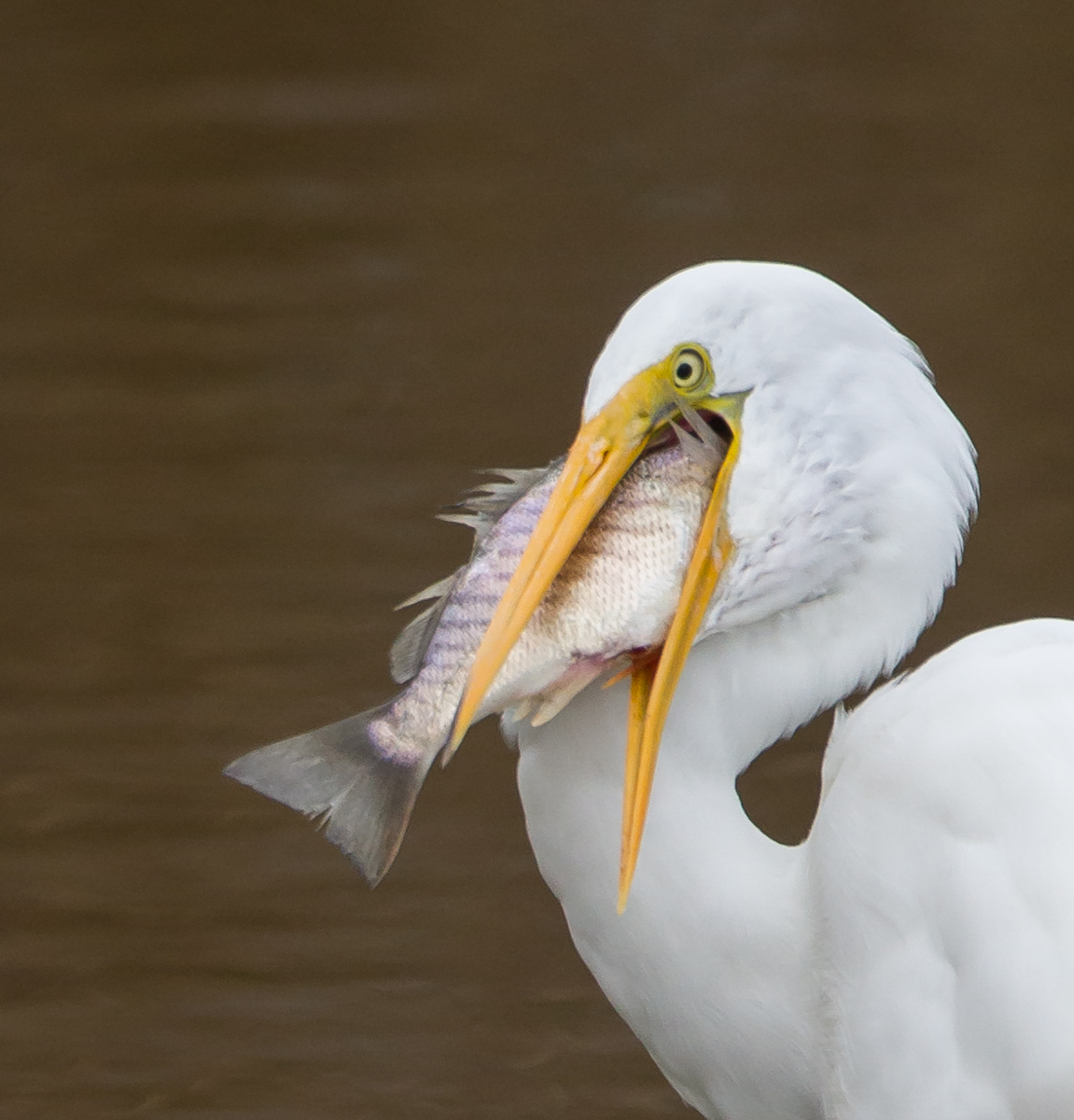
Great Egret with fish
As I drove out Wildlife Drive on my way over to Pocosin Lakes, I saw something I had always wanted to photograph. Great Egrets on this refuge generally eat small fish which are abundant in the shallow waters. But here was one with a beak full of fins! And it apparently did not want to risk losing its meal, as it started to walk away as soon as I slowed down for a look.
A big meal
I am not quite sure what species of fish this is, although it resembles a Spot…if you know, please comment on the blog. Luckily, the egret paused long enough for a few quick images before getting behind some brush on the shore of the canal. Although partially hidden, I could see the fish did finally get swallowed, appearing as a large, squirming lump as it passed down the long neck of the bird. Made my PB&J seem easy.
Tomorrow, I’ll post how my day ended when I made my way to Pocosin Lakes for the rest of the afternoon.
NOTE: I am offering weekend trips on the first and second weekend of January and another trip (exact date to be determined) in February. We will visit both Mattamuskeet and Pocosin Lakes National Wildlife Refuges. Contact me at roadsendnaturalist@gmail.com for details if interested.








































 Roads End Naturalist