Even the genus name says it, Stellaria, star. But the usual common name, Giant Chickweed, doesn’t do it justice. In fact, it does it a slight injustice because many of us associate the name, chickweed, with an introduced common yard weed. But this delicate beauty is one to seek out and appreciate, not yank from the flower bed or garden.
The petals of Giant Chickweed are deeply divided
The scientific name is Stellaria pubera. The genus name refers to the star-shaped arrangement of the petals. At first glance, the flower looks like it has ten petals. A closer look shows that there are actually only five, but each of them is deeply divided. The species name refers to the tiny hairs (pubescence) that cover the stems and other parts of the plant. The common name, chickweed, is in reference to the seeds which are eaten by birds.
Giant Chickweed’s delicate flowers occur in rich woodland soils in much of the eastern Unite States. I spotted several plants a few days ago when I returned the Marbled Salamander larvae to their pool. It is growing alongside Spring Beauty and Windflower (Rue Anemone), making for eye-catching splashes of white amongst the leaf litter and greening forest floor.
Giant Chickweed is a showy addition to our rich woodlands in spring
The simple pleasures of seeing wild flowers such as these or of catching a glimpse of a migrating warbler are among the many reasons we should all take a walk in the woods this time of year. Each time I am out, I see something new, and I am reminded of all that spring has to offer us if only we take the time to appreciate it.
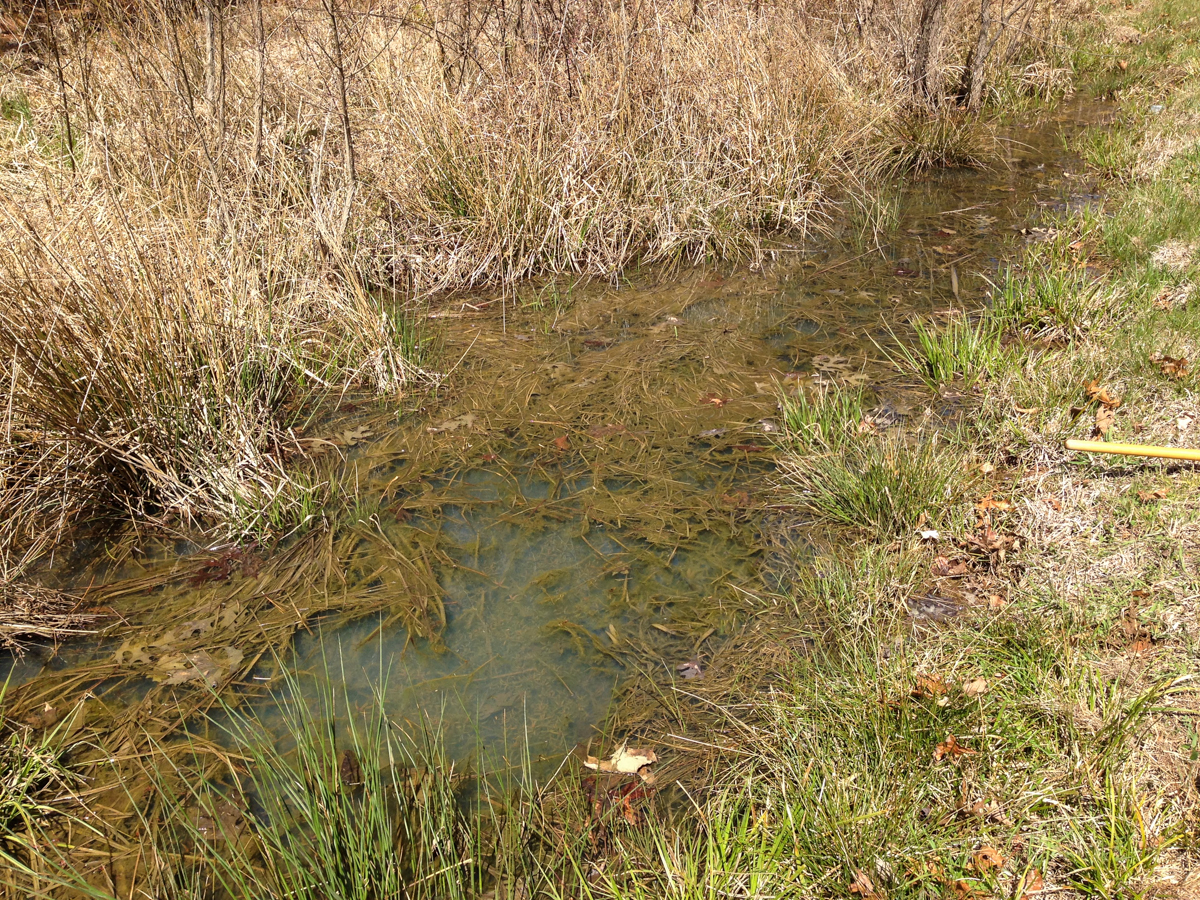
In a recent post, I mentioned that I sampled the woodland pool near the house earlier in the week. The Marbled Salamander larvae have grown considerably since my last visit. Almost every dip of the net brought up one or more of the large, squirming pool predators. When first caught, they were very dark, which is typical of these larvae. But, after being in a bucket overnight, the few I brought to the house turned a much lighter color than normal. I placed them in my small photo tank for a few shots the next morning before taking them back to the pool to set them free.
Marbled Salamander larva (click photos to enlarge)
Marbled Salamander larvae are easily distinguished by being the largest salamander larvae in area woodland pools this time of year. This is because, unlike the rest of our pool-dwelling species, they hatch in the fall, rather than the spring. The row of light spots along their sides is another diagnostic feature. The ones I caught this week were all large, between 2 and 3 inches in length. In this area, they usually transform and leave the pools in April or May, so these guys are just about ready to become full-time land-dwellers.
Spotted Salamander larva just after hatching
When they hatch, Marbled larvae feed on zooplankton and small macroinvertebrates. By the time spring arrives, they are large enough to gulp down much larger prey, including the hatching larvae of a common pool neighbor, the Spotted Salamander. The photo above shows a newly hatched Spotted larva caught in the pool this week. It is less than an inch long and still has the balancers, the two fleshy appendages under the head that help them maintain an upright position in the water. These are present for only the first week or so after hatching. Look closely at the image and you can see one pointing downward between the eye and the gill of the larva.
Marbled Salamander larva
With the number of Spotted egg masses that are just now hatching, there is a buffet of small prey available to the Marbled Salamander larvae. They patrol the pool and use a lunge and gulp feeding strategy to capture a variety of other organisms as well, including small tadpoles, aquatic insects, and even terrestrial insects that fall into the pool. If food is scarce they are also known to nibble on their cousins, so it is not uncommon to see Marbled larvae missing portions of their tail or limbs.
Close up of head showing external gills
I plan to visit the pool again over the next few weeks and look for transforming juveniles around the edges. They will lose the bushy external gills and crawl out of the water to begin a terrestrial life, returning to this, or another low-lying spot, only to mate and lay eggs in the fall. Marbled Salamanders are among the many interesting and beautiful creatures that require these fish-less woodland pools to survive. But I worry about the future of many of these pools. I worry that fewer and fewer people know about the beauty and wonder that lies just beneath the surface of such shallow water habitats, and see them, instead, as just a mosquito hole or a place to drain and tidy up. It doesn’t take much disturbance to the landscape to alter the hydrology of a wetland area and leave it high and dry, eliminating this critical habitat for so many of our fascinating neighbors. If you, or someone you know, has such a pool on your property, I encourage you to sit by it, dip a net in it, get to know it and the inhabitants, and protect it. Our world will be a better place if you do.
The feeling of respect for all species will help us recognize the noblest nature in ourselves.
~Thich Nhat Hanh
I visited the nearby woodland pool yesterday to check on the Spotted Salamander egg masses I photographed a couple of weeks ago. After a couple of dips with the net, I was astonished at how large the abundant Marbled Salamander larvae have grown and wondered if any of the Spotted larvae will survive. A couple of more dips revealed a creature that requires a bit of studying before most folks could appreciate it – yet another efficient predator of the pool, a Giant Water Bug.
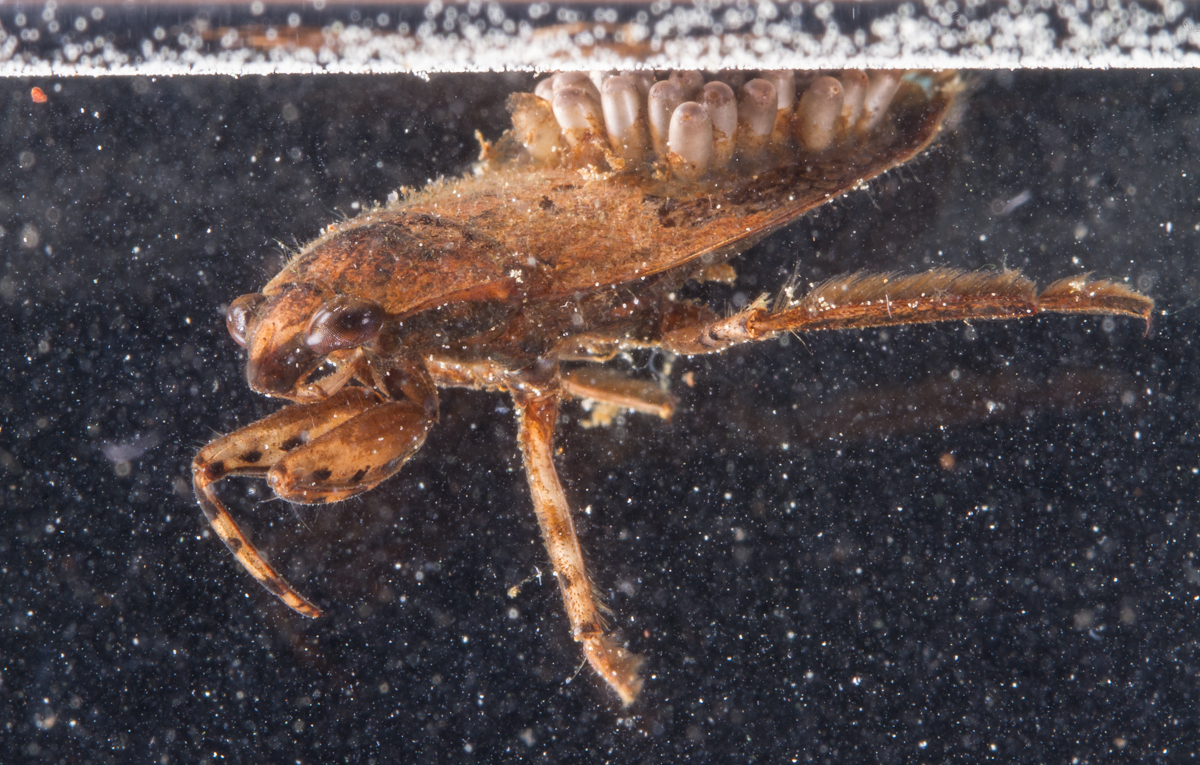
Giant Water Bug hanging at water surface (click photos to enlarge)
Belonging to the insect order, Hemiptera, these are medium to large aquatic bugs that live in quiet pools and ponds. This particular species is one of the smaller ones, perhaps an inch long. They all have piercing-sucking mouth parts, seen in the photo above as a backward curving beak coming out from under the “nose” of the bug. They breathe by positioning themselves at the surface of the water and poking their breathing tubes (located on the rear of the abdomen) into the air. They pull in an air bubble and hold it under the wings as the dive and breathe.
Giant Water Bug
Giant Water Bugs are voracious predators on all things pond-dwelling (I placed one in a bucket and when I got it out it had grabbed and was feeding on a small tadpole). They can inflict a bite if handled carelessly (hence one of the common names, Toe-Biter). When they grab prey, they inject it with paralyzing fluids and digestive enzymes. Their front legs are modified as raptorial legs for grabbing their victims (much like a Praying Mantis) and the last two pair are adapted for swimming.
Giant Water Bug – male with eggs on back
One of the more unusual aspects of their ecology is that in some species, female Giant Water Bugs cement their eggs to the back of a male. The male carries the eggs until they hatch ( a couple of weeks), presumably protecting them from predators, and aerating them by fanning them with his hind legs underwater.
Close up of eggs
A former co-worker at the museum, Chris Goforth, did extensive research on this group of organisms for her dissertation, and recorded many of their fascinating behaviors in a series of blog posts ( a sample can be found here – http://thedragonflywoman.com/?s=giant+water+bug+fun+facts).
I hope you all have a Happy Earth Week. Be sure to get outside and look for these or some of the other amazing creatures we share the planet with that may be living in s woodland near you.
I spent a couple of days late last week with some clients from the Netherlands and a Dutch friend of theirs that now lives in North Carolina. They had been with me for a couple of days last Fall, but arrived a day before the Federal Government shutdown and had to totally reschedule their plans which had been to visit many of our national wildlife refuges, parks, and seashores. They really wanted to experience some of the wildlife of eastern North Carolina, so decided to come back for a short visit to Pocosin Lakes and Mattamuskeet National Wildlife Refuges this past week. And I think they are glad they did.
Black Bear in field (click photos to enlarge)
I arrived at our meeting place a little before they did, and out in the field was a young Black Bear foraging for food. My group had just texted that they were close, but the bear, of course, started to meander toward the nearby woods. Luckily, it found enough of something to keep it interested in the field until they arrived for a look. Not an especially close look, but a good way to start our trip.
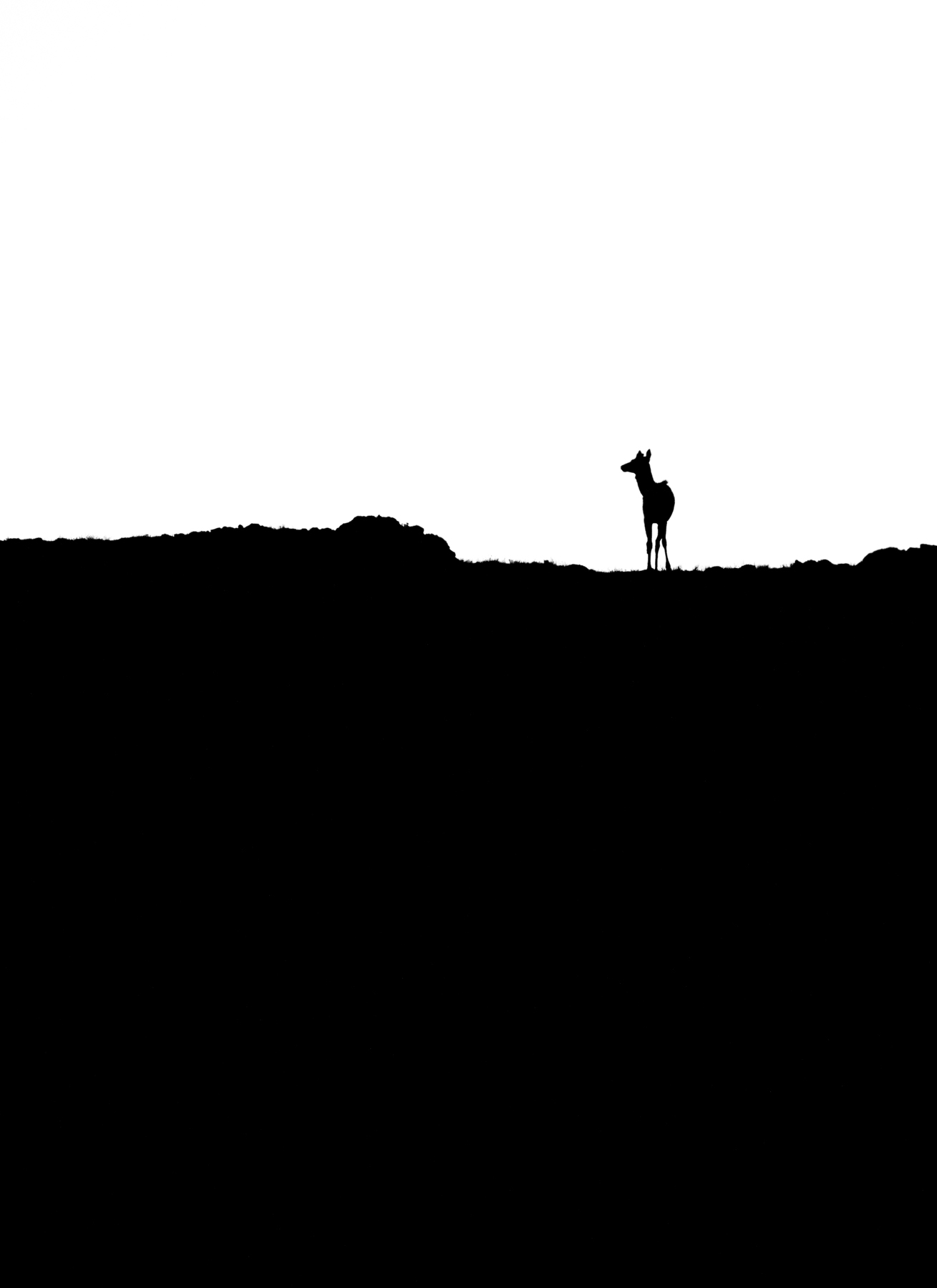
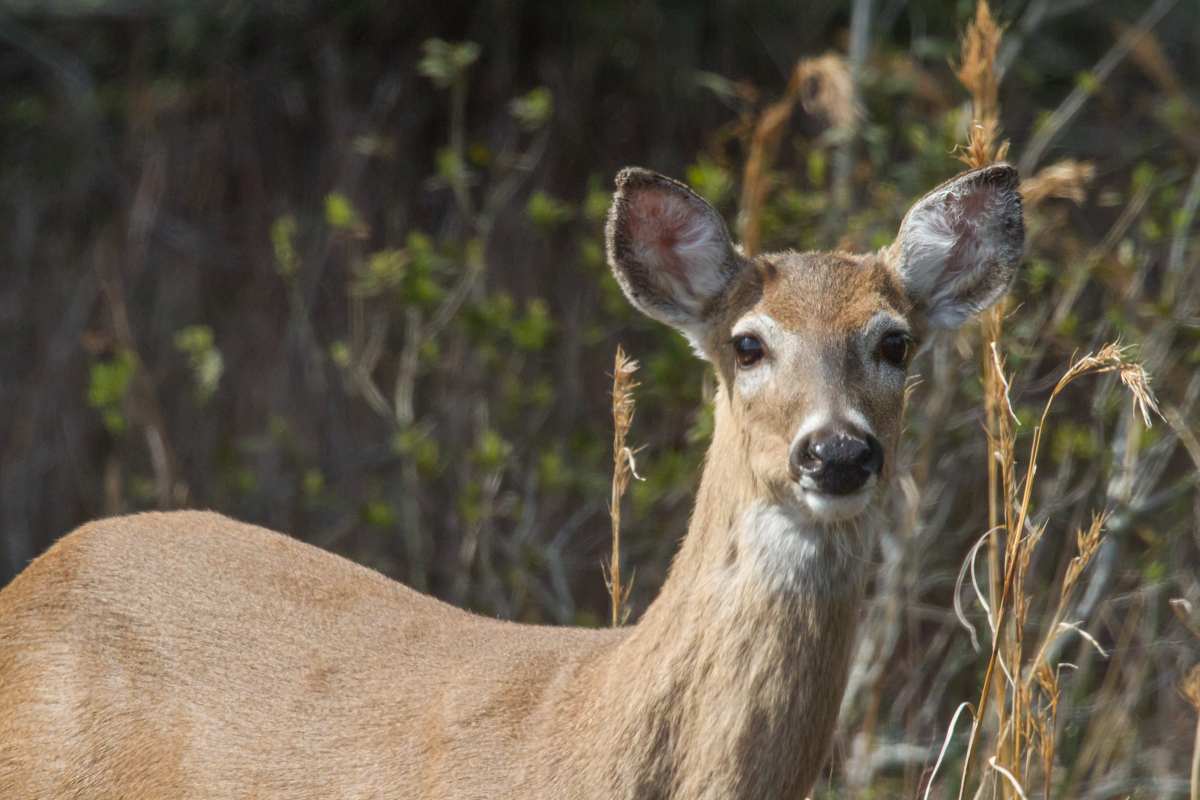
White-tailed Deer
We encountered several deer over the course of our stay along with a variety of birds from Wild Turkey displaying along the roadsides, to American Coot and Pied-billed Grebes feeding in the impoundments. While watching the latter that first afternoon, we spotted some dark objects in a tree on the far side.
Black Bear and cub in tree
It was a mother bear and her new cub. I am so accustomed to seeing bears with two and three cubs here at Pocosin Lakes, that it was unusual to just see just a single cub up in the tree. This little guy seemed to be hanging on for dear life, while mom was moving around, apparently feeding on some of the newly emerging leaves. I suppose there might have been a less adventurous sibling or two down below out of our sight.
Immature Bald Eagle with Turkey Vulture flying in the distance
After driving through the refuge until sunset, we spotted another bear, making four for our first afternoon, along with more deer, an eagle, and some of the usual small bird life.
The next morning was overcast, windy, and much colder than it normally is for mid-April. I must admit, I was a bit worried that we might not see much wildlife under those conditions, especially the abundant frogs, warblers, and butterflies I had seen a few days earlier. After a slow start, I decided we should go for a walk down one of the dirt roads and explore the nearby patch of woods. If nothing else, they could see lots of wildlife tracks and sign, especially of the bears that use this area. The wind was blowing steady from the north making for a cold hike, more like some of my mid-winter outings. At least everyone would appreciate the car after this. After a few minutes, we headed into the woods to get out of the wind. The first thing that struck me was the refuge had done a controlled burn in the woods since I had visited in February – I’m not sure I have ever been in these woods after a burn.
Poison Ivy was everywhere
The second thing I noticed was the incredible abundance of Poison Ivy. The new growth was thick with it – on some of the paths we walked, covering large patches of ground along the roadsides and in the woods, climbing tree trunks – everywhere. I warned the group to watch out for it, but getting it on our shoes and pant legs was inevitable. A recent study in Duke Forest, where researchers pumped increased levels of carbon dioxide into forest enclosures to mimic increased greenhouse gases in the environment, showed that Poison Ivy rwas one of the species that esponded with vigorous growth. Perhaps this is a sign of things to come (or perhaps it is in response to the burn, or it has always been this way and I just have not been in these woods this time of year). Whatever the cause, it makes you think twice about every move you make. As usual, there was abundant bear sign, and as I was showing some to my guests, one spotted a bear (Marja turned out to be an excellent wildlife spotter). We watched it slowly amble away into the thickets bordering the lake. Shortly afterwards, she spotted another bear nearby. A quick look showed it to be a different one, slightly larger and much blacker than the first. This is what I always hope will happen – to be able to observe bears in the woods, doing what most wild bears do, rather than out along a road or in a crop field.
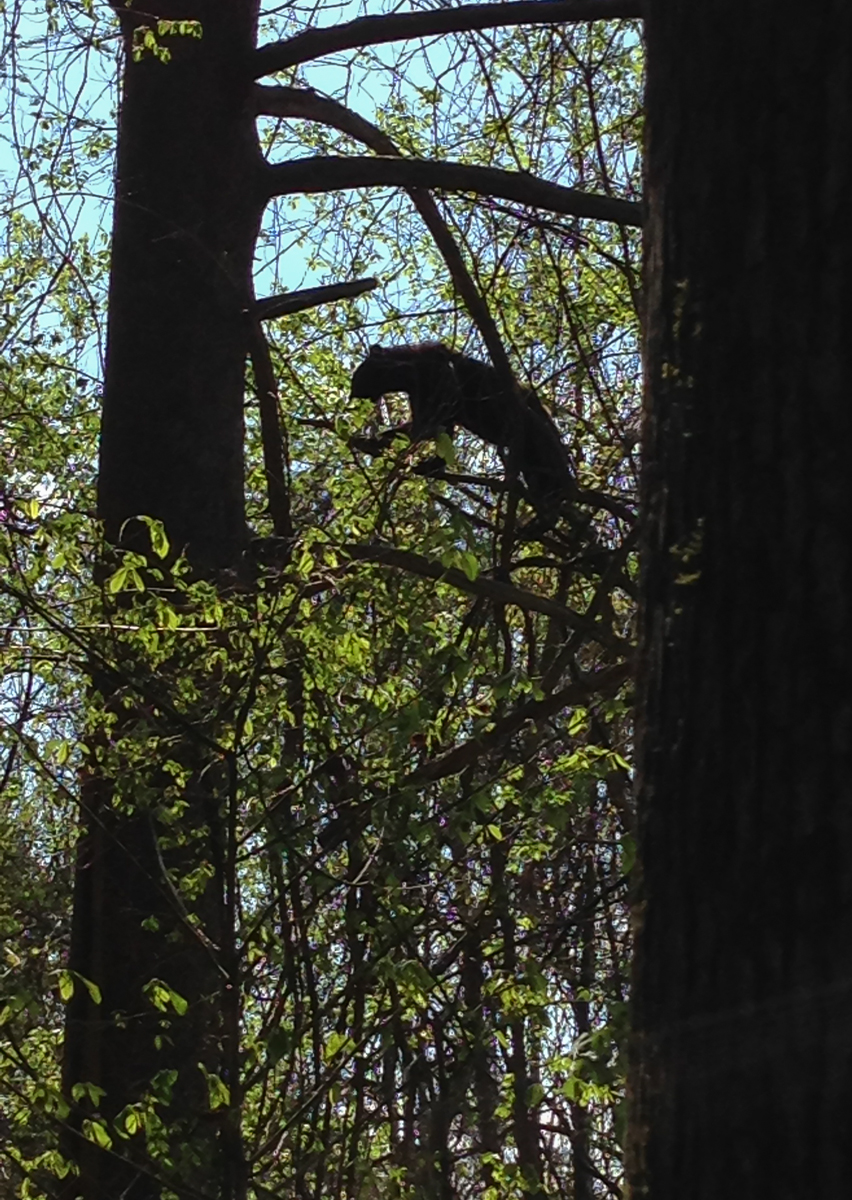
Young Black Bear in tree
We had walked only a few feet when I heard something and stopped. Then I saw a bear coming down out of a small tree. After being on the ground a short time, it climbed back up, using a couple of small trees and vines to work its way about 20 feet off the ground. Then it began feeding. After looking at it through the scope, I could see it was eating the emerging leaves of a vine common to these woods – Supplejack (Berchemia scandens). We watched as the bear pulled vines toward it and munched the leaves. It repositioned itself and turned its attention to other nearby leaves, balancing on small limbs and the tangle of vines as if it were a circus performer on a high wire. The bear fed this way for 15 minutes or more as we watched. I think it had an idea we were there, but, since we were quiet and still, it seemed unconcerned. Finally, it started to climb down and I whispered to the group that it looked like the most likely path out of the tangle of vines was towards us. Indeed, the bear turned and ambled out in our direction. It glanced our way, and started walking off away from us.
The sun had come out after we got into the woods, but I had left my camera in the car in order to carry a scope, so the images and short video clip of this incredible encounter are from my phone. The bear still seemed oddly unconcerned about us but I decided to have everyone walk in the opposite direction. The bear climbed out on a suspended tree trunk, then dropped off and glanced in our direction. There is something magical about being able to watch an animal like this as it goes about its daily routine. It helps me understand some of what they face, how we share some similarities in what we do, and yet how amazingly adapted to their surroundings they are. I think we were all on a “bear high” the rest of the afternoon.
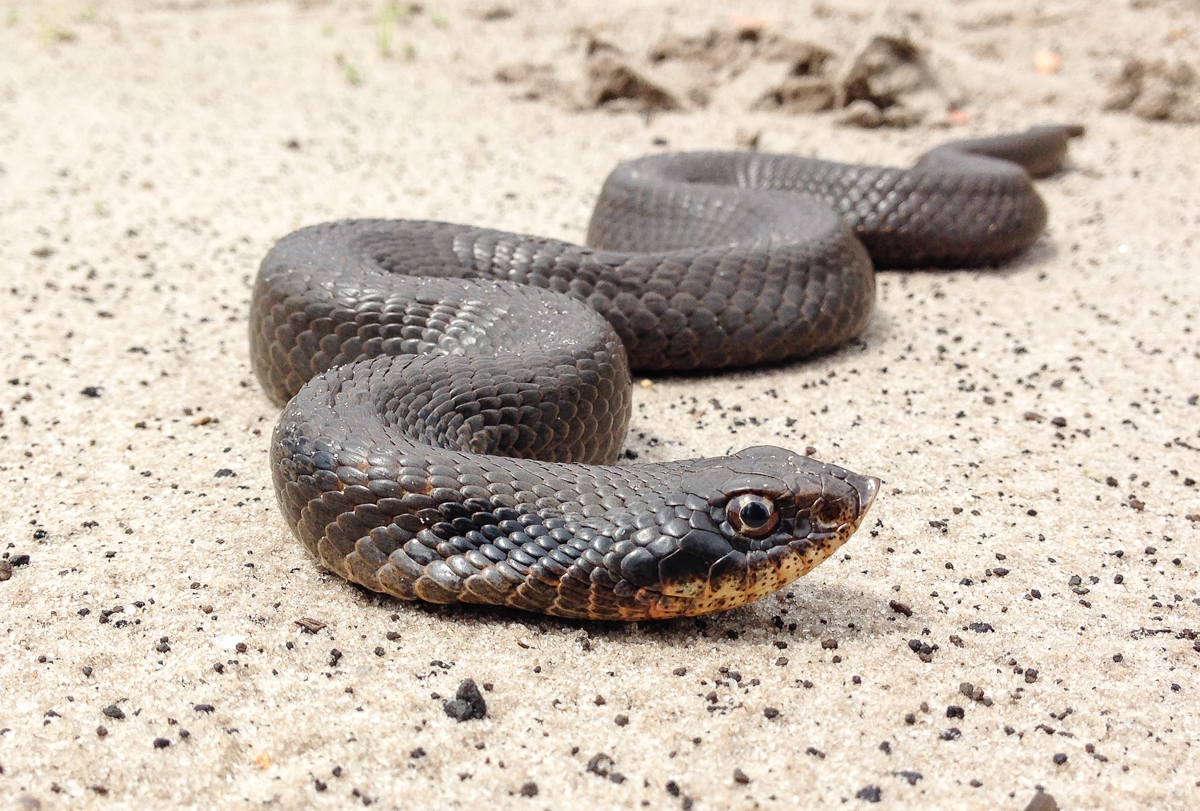
Eastern Hognose Snake
As we headed out of the Pungo Unit toward Lake Mattamuskeet, we came across a small Eastern Hognose Snalke crossing the road.
Eastern Hognose Snake defensive posture
I got close, hoping it would display some of this species’ unusual behavior of playing dead, but, after it spread its neck, hissed, and sprayed some musk without feigning death, we left it alone.
New Holland Trail swamp at Lake Mattamuskeet
The day ended with another incredible wildlife moment which I, unfortunately, have no record of, as my camera was buried under some gear in the back of the car. A Gray Fox came out alongside our vehicle far down Wildlife Drive at Mattamuskeet National Wildlife Refuge. It hunted alongside the road for several minutes as we watched, passing only a few feet from our car, catching many small insects or perhaps frogs, and licking it lips several times in apparent satisfaction. Another incredible moment with wildlife.
Reflections in swamp at Lake Mattamuskeet
It was an amazing day and a half with up-close and personal time spent with some interesting wildlife. The bear and fox were behaving as if we were not around, a rare treat when out in the woods with a group of people. And while I did not get any great images of the experience, I am so happy to have shared it with such a great group of folks.
The Dutch camera brigade stalking a dragonfly
We had a lot of fun. They are all excellent wildlife spotters and appreciate learning about our North Carolina wildlife, both large and small. It is a privilege to be able to share the places I love with people like this group of folks I now call friends.
…it seems to vanish mysteriously, skulking in some sheltered nook, with only its bill above water, well deserving its common name of “water witch”.
~Arthur Cleveland Bent
Dabchick, Hell-diver, Water Witch, Podilymbus podiceps – all names for a diminutive water bird now known as the Pied-billed Grebe, or simply PBG. These are the the most widespread and common of our grebe species. They prefer freshwater habitats and are most likely seen in North Carolina in the cooler months.
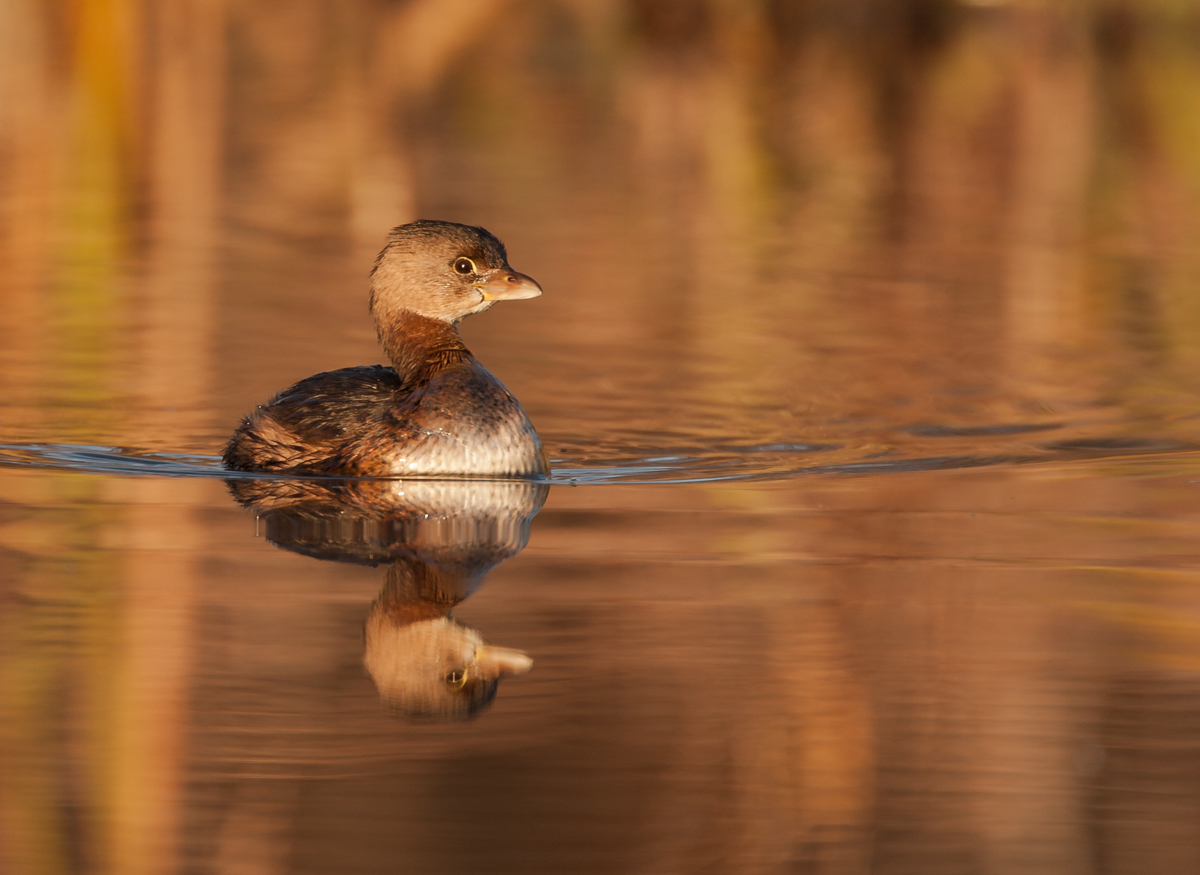
Pied-billed Grebe in winter plumage (click photos to enlarge)
Their winter dress is pretty drab – brown back with a lighter belly, indistinct eye ring, a whitish throat, and a short, tan, chicken-like bill, usually with no stripe.
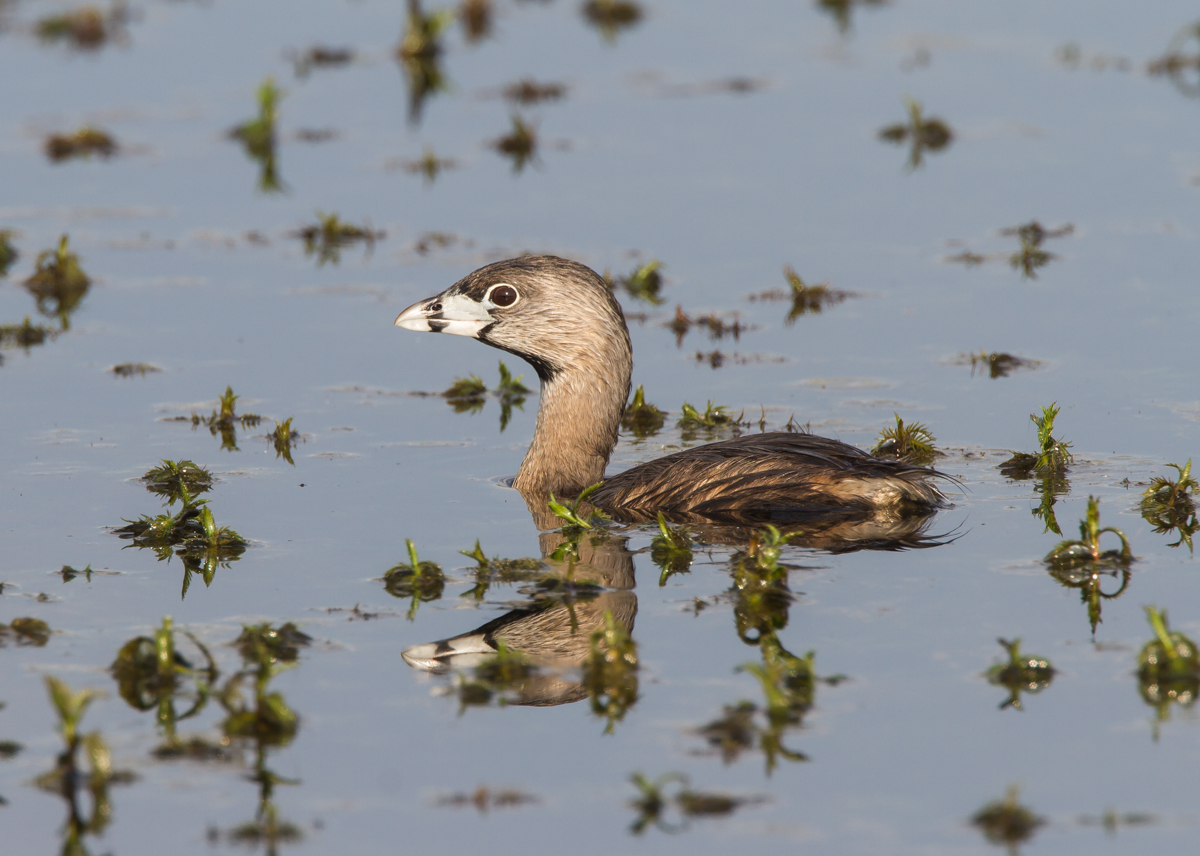
Pied-billed Grebe in winter
Occasionally, I see winter birds with hints of their breeding plumage, in this case a faint bill stripe, and a darkened throat patch.
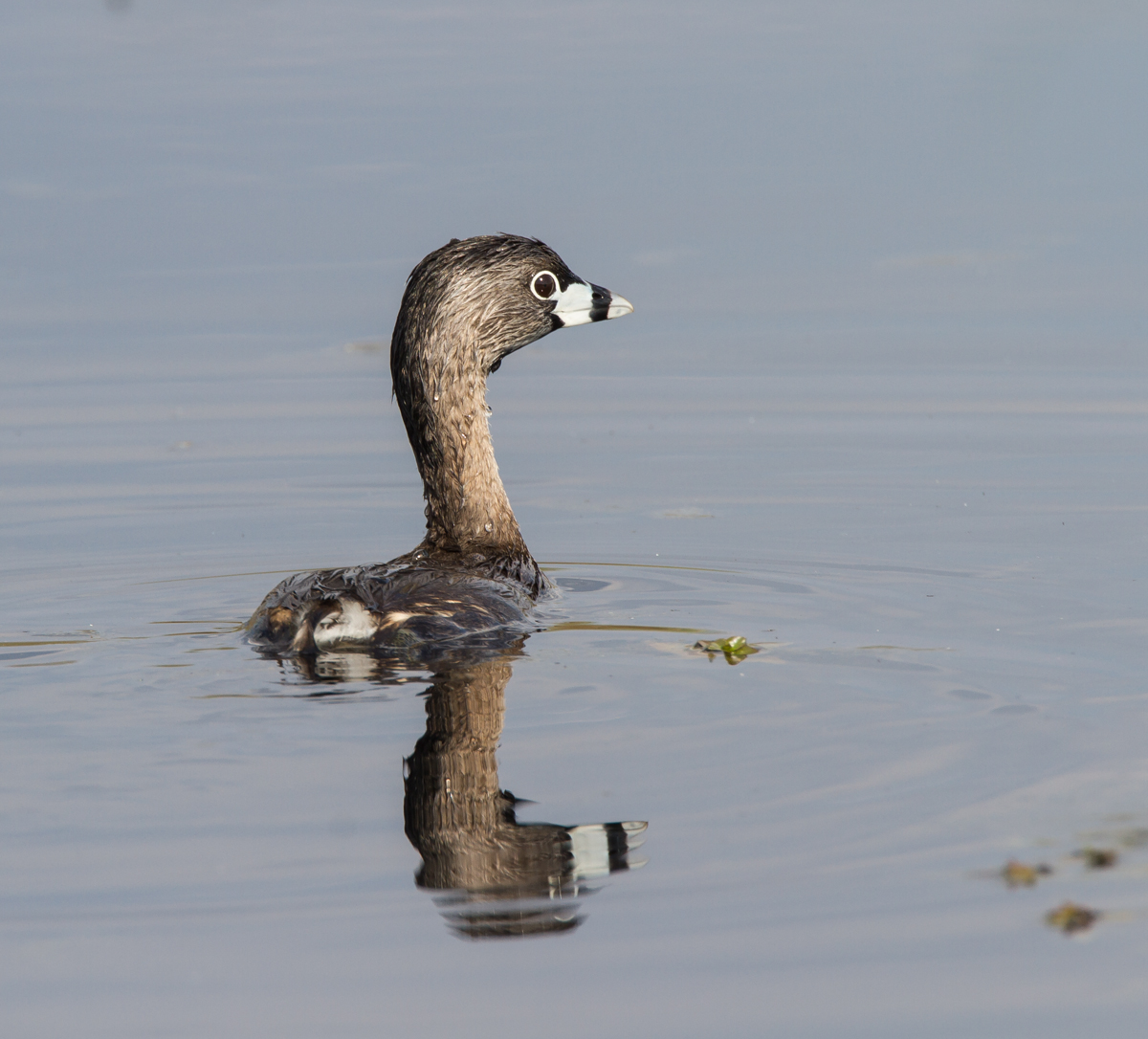
Pied-billed Grebe in breeding plumage
This weekend at Pungo, I saw a couple of PBG’s in their breeding plumage – bluish-white bill with a dark vertical stripe, a bold white eye ring, dark forehead and a very dark throat. They were in one of the marsh impoundments managed by the refuge for waterfowl.
Pied-billed Grebe and American Coot
There were several American Coot feeding on aquatic vegetation (they will also eat aquatic invertebrates and small vertebrates such as tadpoles and small fish). Mixed in amongst them were a couple of Pied-billed Grebes. They feed on almost any small aquatic organism they can catch including fish, crayfish, tadpoles, and large aquatic insects. I have watched PBG’s dive and surface with a decent-sized fish and they sometimes struggle to subdue and swallow it. Their diving behavior when feeding is pretty typical – a head-first surface dive.
Pied-billed Grebe skulking away when disturbed
But when disturbed by a potential predator (or guy with a camera), they rarely fly, and often skulk away, slowly sinking into the water, instead of a using a more vigorous dive.
Pied-billed Grebe starting to submergePied-billed Grebe slowly sinking
Both of the birds I saw this weekend exhibited that behavior, and in an expert manner. Noted ornithologist, David Allen Sibley, describes this behavior – “by contracting their abdominal muscles and thereby compressing their plumage, while at the same time exhaling, small grebes can submerge themselves from a resting posture on the water’s surface without diving. In this manner they can adjust their buoyancy, for hunting or concealment from predators; small grebes are often seen with only the head or bill above the surface.”
Pied-billed Grebe with only its head above the water
I had seen the submarine behavior in winter, but have never witnessed them with just their head above the water surface until this trip. After sinking once, one bird surfaced with just its head showing. This individual was well out in the water a fair distance from me. It gradually moved slowly away from me in this partially submerged mode.
Later, two different birds showed me their amazing ability to disappear. I was looking at some frogs from my car when I noticed a slight motion in the water near the road edge. It was a PBG head staring at me from less than ten feet away – just the head above the water. Before I could get the camera on it, it sank. I waited, hoping to get a closer image similar to the one above. Nothing. I waited. Nothing. I was watching the nearby aquatic vegetation, assuming I could see the escape route of the PBG by movement of the vegetation. But nothing moved. I waited about five minutes and moved on, figuring I had just missed its escape somehow. A few minutes later, I saw another one close to the road edge. It, too, sank before I could get the camera in position, and again, I waited. To my amazement, even after 10 minutes, I could not find any trace of the water witch. Perhaps, as I have read since returning, they both surfaced next to some piece of emergent aquatic vegetation, with just the tip of their bill showing, allowing them to breathe while remaining hidden. I must admit to being frustrated by being fooled by something with a name like hell-diver. If they are still around later this week when I am with a client group (this species is on record as occasionally nesting in NC), you can bet we will spend some time with several sets of eyes looking for that bill tip poking out of the water.
Being aware of the splendor of the seasons, of the natural world, makes us understand man’s critical need for wild places. Living with familiar things and moving in the seasons can fulfill that profound need common to us all: a sense of place.
~Jo Northrop
It was time. Time for another trip to that place I find so special – Pocosin Lakes National Wildlife Refuge. It has been over two months since my last visit and I was getting antsy, so this past weekend’s nice weather prompted me to get in the car and go. Of course, I was hoping for bears or bobcats, but would take whatever nature would give me, as spring was starting to explode across the state.
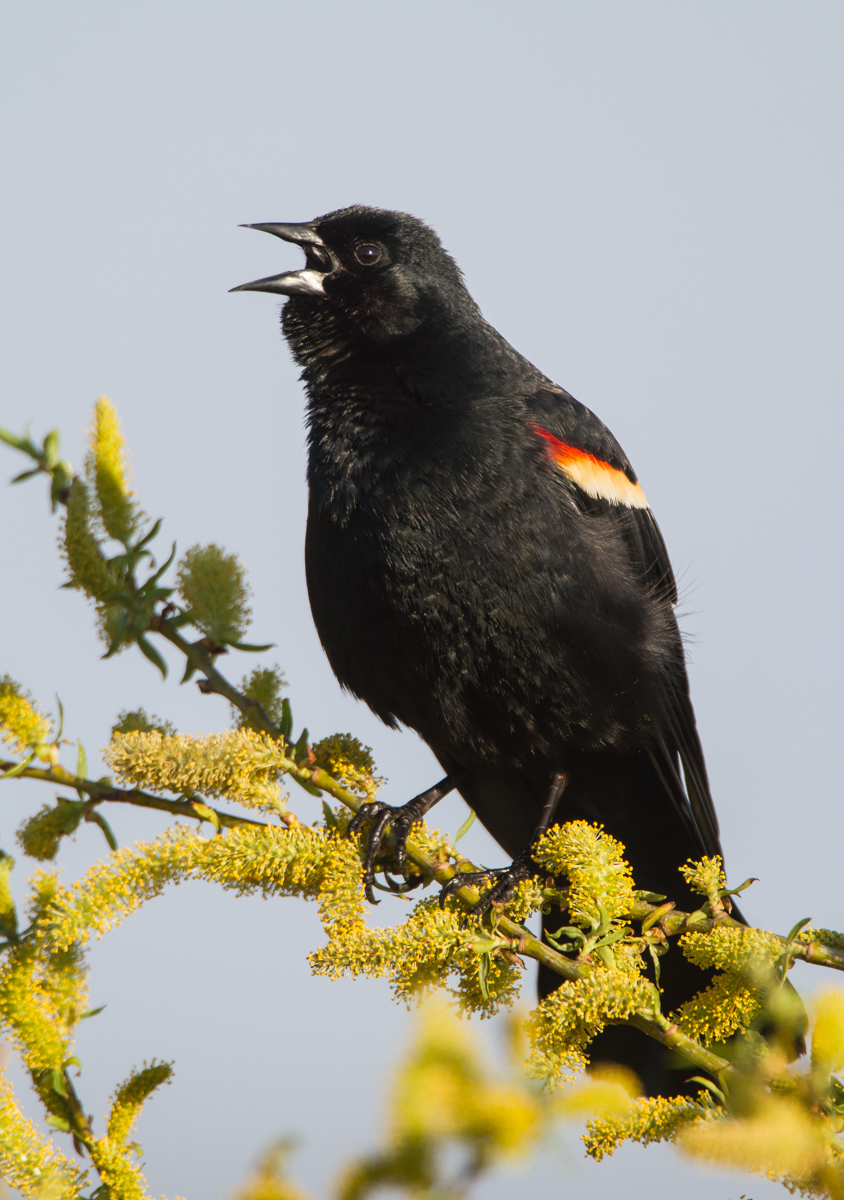
Red-winged Blackbird male singing (click photos to enlarge)
One of the first sounds I heard as I drove in was the distinctive, konk-la-ree call of the Red-winged Blackbird. Back in February, there had been tens of thousands of Red-winged Blackbirds foraging in the fields. Now, only a few males are singing from prominent perches, defending a territory, attracting a mate, luring a naturalist with a camera a bit closer.
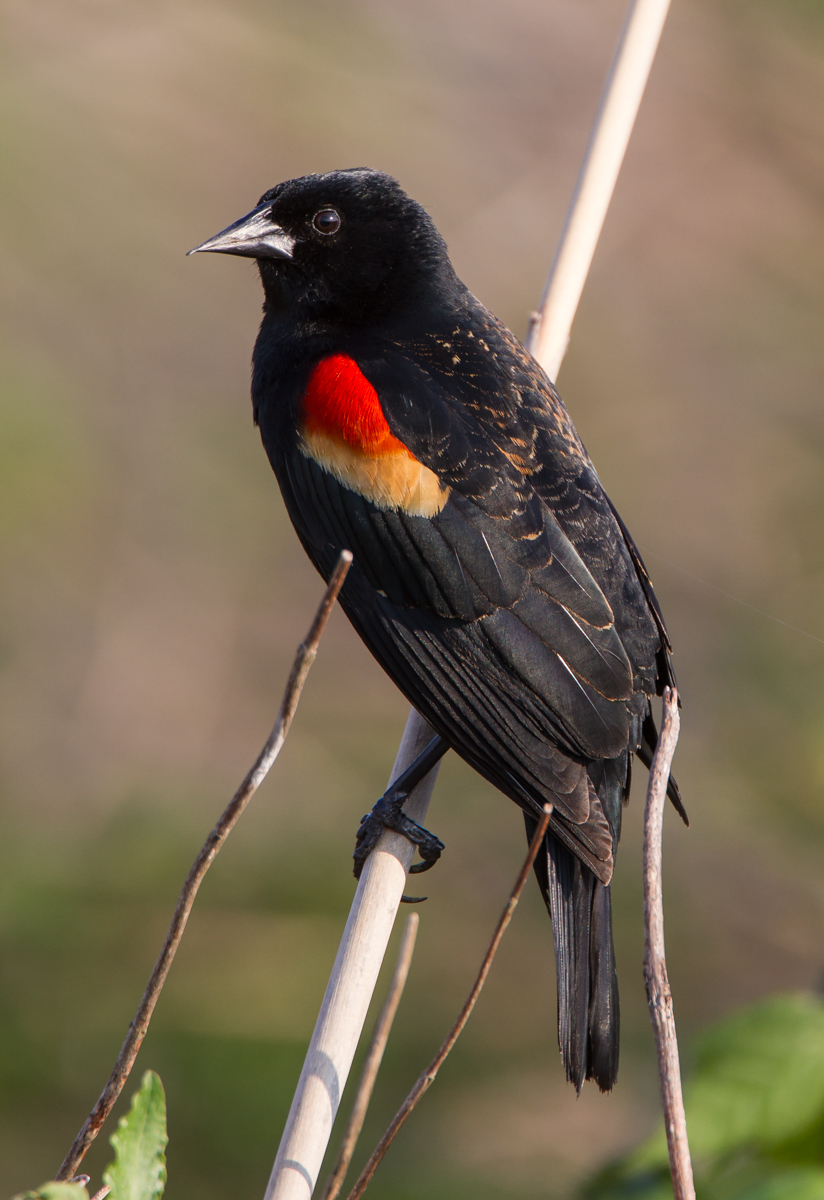
Red-winged Blackbird male
Males prominently display their red shoulder patches during the breeding season and respond to any nearby male that sings. I watched two going at it, calling back and forth, for several minutes. This one, perhaps a younger male (due to the brownish edges to its feathers) was always on a lower perch relative to the other, all black-feathered, male. These close-up views always make me appreciate the beauty of these birds and the sharpness of their bill.
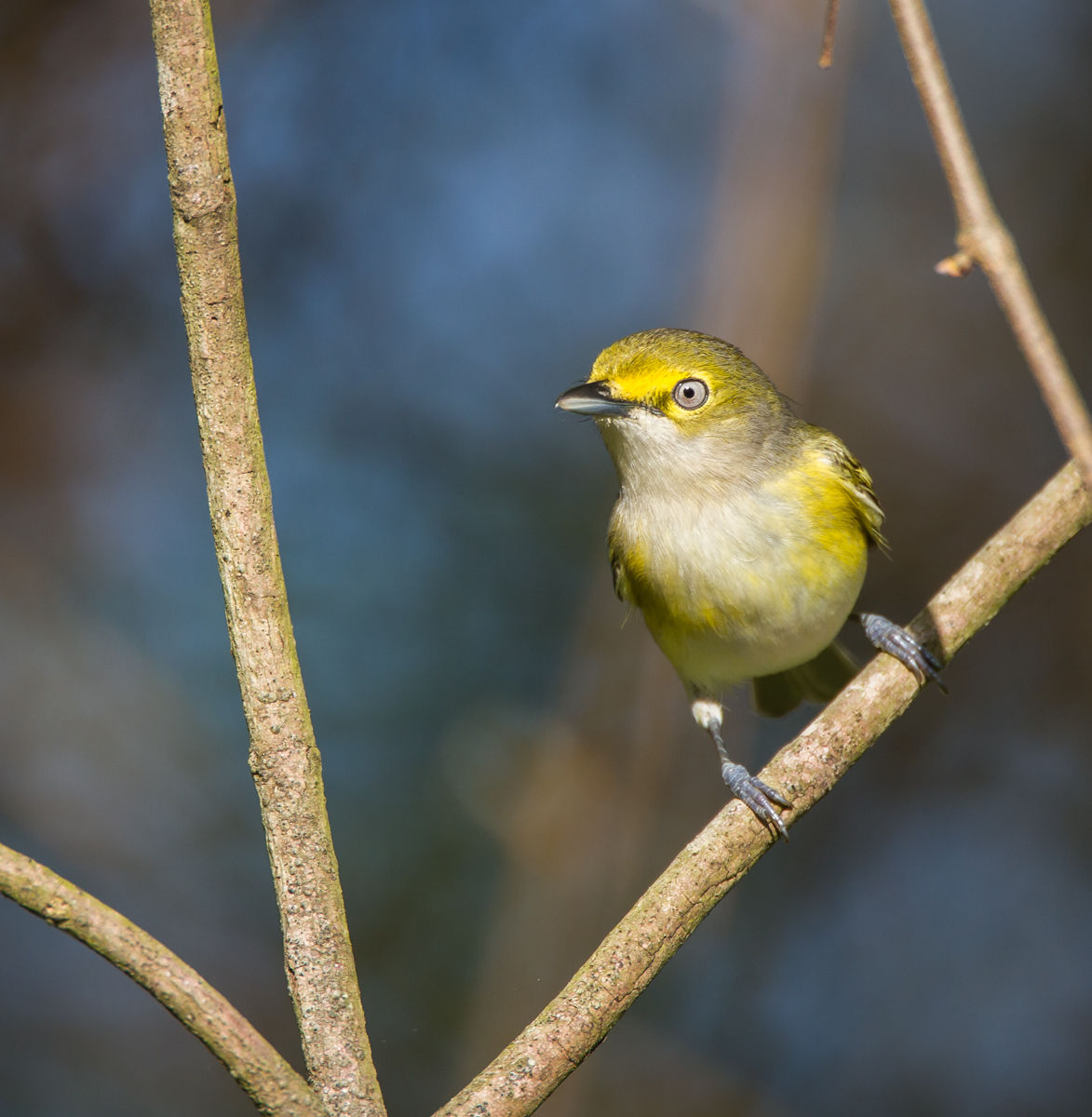
White-eyed Vireo
I was hoping to see some early spring arrivals and did manage a few such species in my day and a half – my first Blue-gray Gnatcatchers, Northern Parula Warblers and Purple Martins of the season. Then, while driving slowly down one of the refuge roads, I heard the unmistakable call of a White-eyed Vireo, and stopped to search. In a few seconds, the pale-eyed gaze of this beautiful thicket-loving bird greeted me. The call is described in most guides as CHICK-a-per-weeoo-CHICK, but I prefer QUICK, take me to the railroad, QUICK. The distinctive white iris’ are found in the adult birds – immatures have dark eyes.
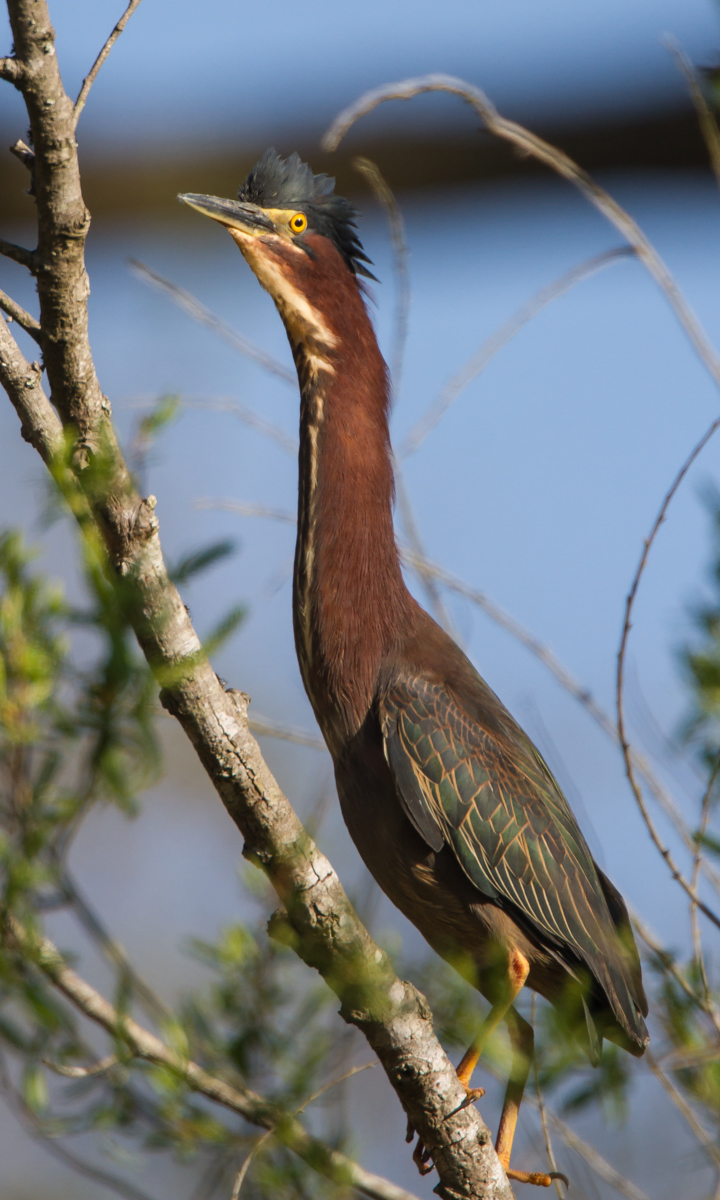
Green Heron
I also got quick glimpses of several Green Herons in roadside canals, but one bird went “out on a limb” for me as I drove past. I stopped and watched it raise its crest and stare at me with those intense heron eyes, before it flew off into the dense shrubs below.
Horned Lark
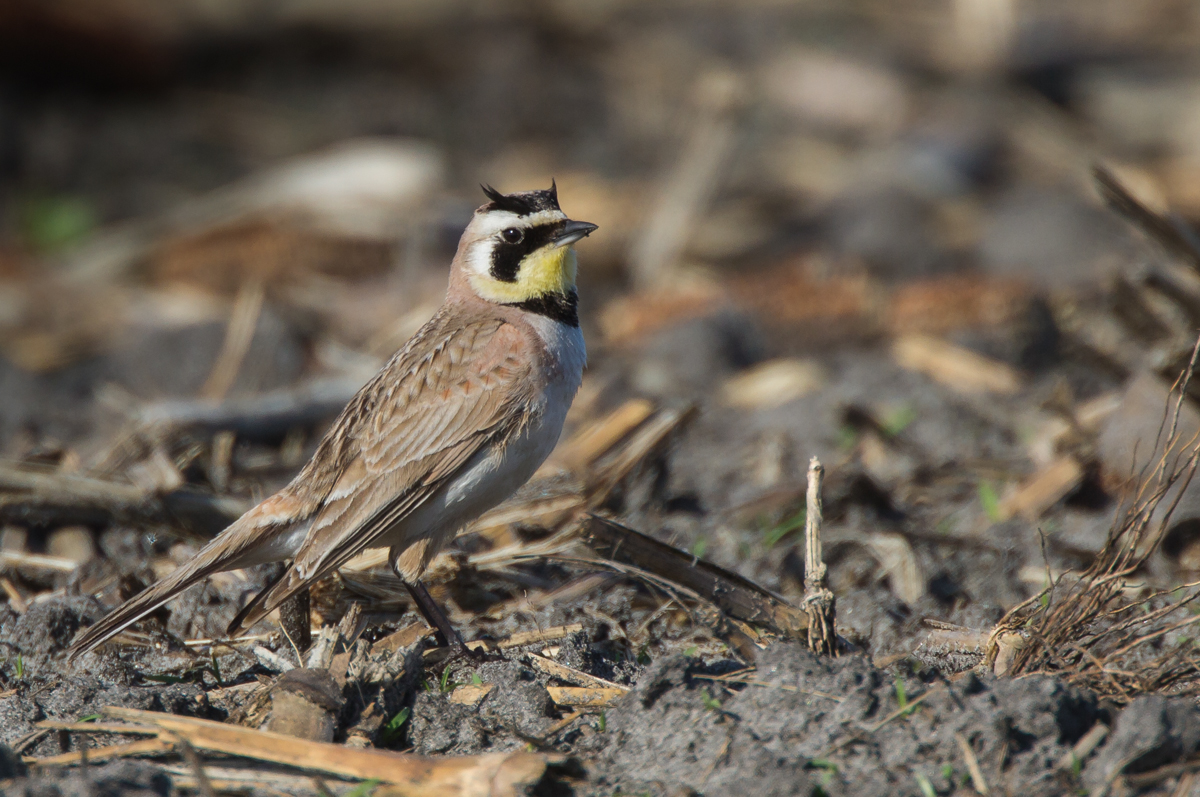
Another species that I have found here mainly in early spring is the Horned Lark. This is a bird of open habitats, and I usually spot them in barren fields before the crops have been planted. Their dorsal coloration looks like the bare dirt habitat they prefer, so I usually notice them while I am driving slowly and see what looks like a dirt clod moving. But a closer look reveals their subtle beauty and the unusual “horns” (tufts of feathers) of the adults. These birds do nest in NC (they are ground nesters), so perhaps this one already has a nest somewhere in the acres of open fields on and near the refuge.
American Coot
There were also some leftover “winter” birds, including several small flocks of American Coot, a lone Ruddy Duck, and a few scattered Blue-winged Teal. Although there are scattered records of all of these nesting in NC, I believe it is a fairly rare event, and I anticipate they will all be gone in a few weeks.
Bullfrog male
I spent some time surveying one of the marshy areas looking for some American Bittern, as it was about this time last year that I heard them calling in an impoundment. Though one finally flushed out of the marsh while I was watching some Pied-billed Grebes, there was none of the unusual bittern calling to be heard. But there was the deep bass sounds of Bullfrogs coming from the marsh, especially on the first afternoon. The second day was much windier and this may have inhibited their calling. At first, I was trying to locate the callers along the edges of the marsh grasses. But, then I started spotting Bullfrog heads poking up out of the open water, mixed in with patches of emergent vegetation.
Bullfrog head showing large tympanum of male
The ones I saw were all males. In male Bullfrogs, the tympanic membrane (external ear drum) is considerably larger then their eye (in females it is about the same size as the eye). The deep resonating calls have been likened to sounds made by cattle and have also been described by the phrase, jug-o-rum, jug-o-rum.
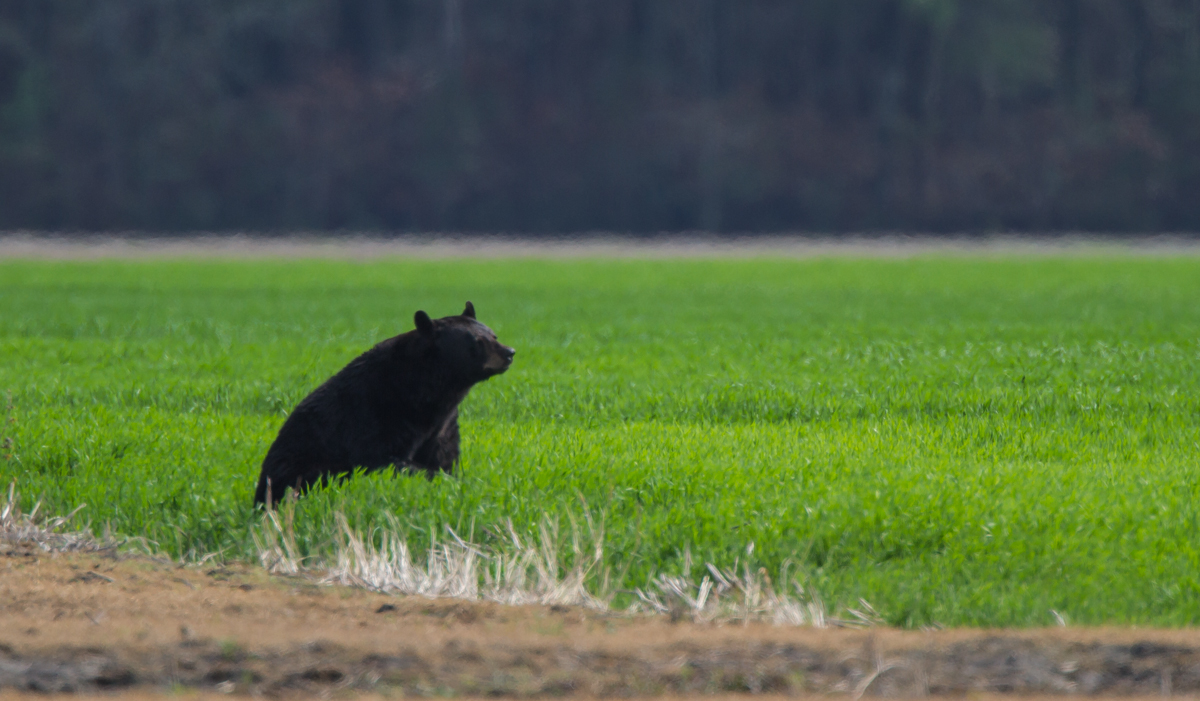
Large Black Bear far off in a wheat field
Overall, the trip produced fewer wildlife sightings than I had hoped. While I did get plenty of views of Wild Turkeys, some Muskrats, Nutria, and even a couple of Gray Foxes, it wasn’t until late the second day that I spotted my first Black Bear, a youngster along the road edge on the south shore of Lake Phelps. As I drove into the Pungo Unit for my final few hours of daylight, I finally saw a large adult Black Bear lying in a field of winter wheat. It was chowing down on the lush greenery and raised up to a sitting position when I stopped to look. After watching it for several minutes I drove on, leaving it to its dinner. I am a bit surprised I didn’t see more bears, but will look for them again later this week when I have a client group down that way. In spite of few bears on this trip, I look forward to whatever this special place cares to offer on my next visit.
Always be on the Lookout for the Presence of Wonder
~E.B. White
I saw my first one yesterday. I glanced out the window and a streak went by the flowers I had just bought for the window box. I went to the door and I saw it hovering, checking out the red taillight on my car, then it zipped away. I went out to the garden and I heard the unmistakable hum of its wings as it checked out the feeder I had put up last week in anticipation of its return.
Male Ruby-throated Hummingbird
The male’s are first to arrive, to find a territory, to feed and defend. It won’t be long now before a half dozen or more are buzzing over the garden, zipping by my head, squabbling with each other at the Coral Honeysuckle blooms. Even though there are still Juncos at the feeding stations, the signs are irrefutable – the Eastern Bluebirds are on eggs, the Redbud is blooming, and the first hummingbird is back….spring is here.
…I hear the dream frog at a distance…My dream frog turns out to be a toad.
~Henry David Thoreau
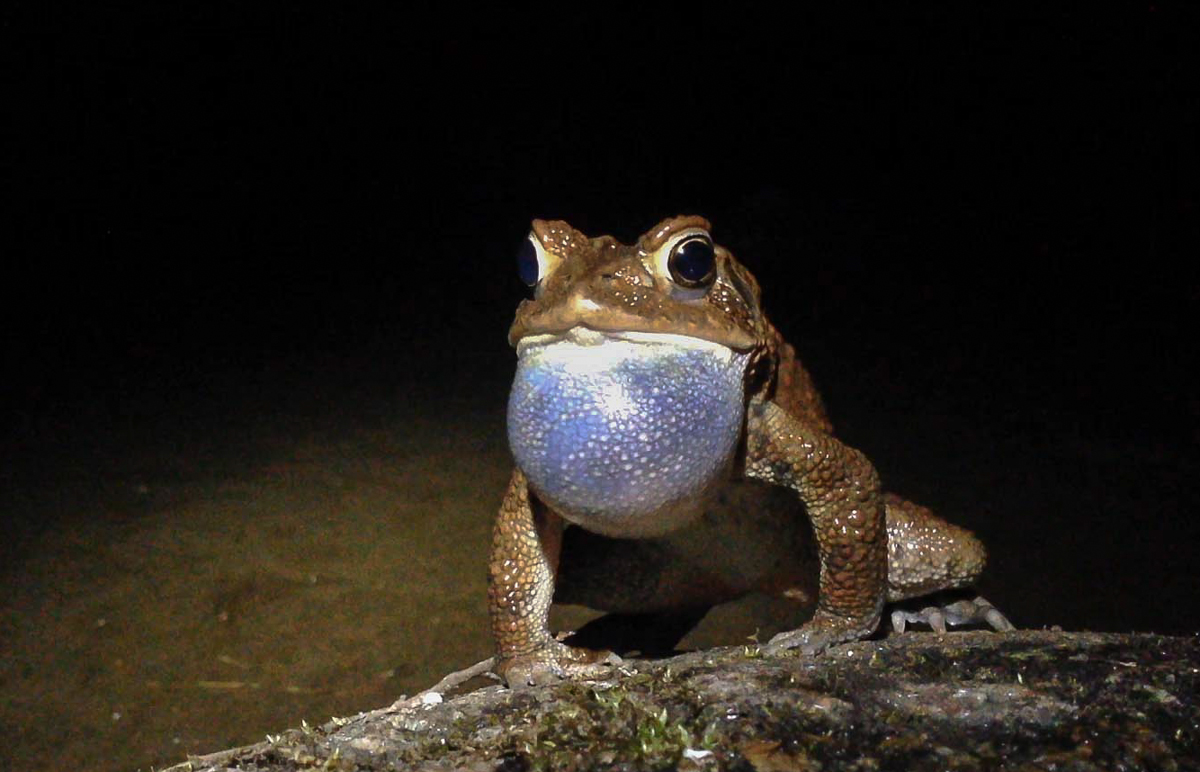
In a post in late February I discussed the vocalizations of a variety of frogs and toads I have photographed in North Carolina. Last week I had the opportunity to spend some time with one of my favorite spring-time songsters, the American Toad. All I had with me was my iPhone, so the image quality is a bit limited, but it was an amazing sight. It was in a seemingly unlikely place, a rocky Piedmont stream. I usually find these toads along sandy or muddy shores of pools, ponds, lakes, or even water-filled tire ruts in a field, but here they were trilling along what could almost pass for a mountain stream. As I mentioned in the other post, the far-off trill of American Toads reminds me of some alien spaceship sounds in a cheap sci-fi thriller. To Thoreau, they were his dream frogs.
American Toad calling
He described it as a trembling note, some higher, some lower, along the edge of the earth, an all-pervading sound. Nearer, it is a blubbering or rather bubbling sound, such as children, who stand nearer to nature, can and do often make. Indeed, the call is easily imitated by one of two methods – the lip flap, or the tongue flutter (some people are apparently capable of only one of these methods). Go ahead, practice it – probably best done when no one else is around….purse your lips and blow air out of them while making a high-pitched humming sound (the lip flap); or let out a high-pitched hum while vibrating the tip of your tongue on the roof of your mouth (the tongue flutter). Now, doesn’t that feel good? Let’s see how you compare to the real thing…
Thoreau is correct in saying that the closer you are to the calling toad, the less dream-like the quality, but it is still an amazing sound. His comments on the visual aspect of a group of toads that were froggily lusting are also worth noting…
After an interval of silence, one appeared to be gulping the wind into his belly, inflating himself so that we was considerably expanded; then he discharged it all into his throat while his body or belly collapsed suddenly, expanding his throat to a remarkable size. It was a ludicrous sight, with their so serious prominent eyes peering over it; and a deafening sound, when several were frogging at once, as I was leaning over them.
Deafening indeed. And last week it came in waves. First one, then another of the suitors would trill, often with four or five all at once. And all of this sound was for the sake of one large female toad in a stream side pool. But she was already preoccupied with one of the lucky fellows in a behavior known as amplexus (Latin for “embrace”).
In amplexus, a male toad grabs the larger female under her armpits with his front legs and holds on. As the female deposits eggs, the male releases sperm into the water and fertilizes them. I have seen anuran amplexus many times, but had never witnessed the actual egg-laying until last week.
As I tried to get some video of calling males, the coupled pair maneuvered over to a quiet pool and began to deposit eggs. The female crawled into slightly deeper water, submerging the pair. The male moved his hind feet and it appears as though he was catching the eggs as they were being released, presumably to ensure fertilization.
This went on for several minutes until he finally moved his feet onto her back and she started crawling around leaving a string of eggs behind. At that point, I turned my attention to the bevy of trilling toads still trying for a chance. At times like these, male toads will often skirmish with one another or mistakenly grab anything that moves. One of my all-time favorite museum workshop quotes occurred one night while leading an amphibian program. We were watching a group of American Toads as they were froggily lusting and my co-lead, Alvin, showed us all something that only esteemed herpetologists know. As a male toad was swimming toward us, Alvin told the group that these guys will often grab onto anything that moves during these breeding bouts. As he spoke, he placed two fingers in the water and wriggled them, making a ripple that the toad immediately picked up on. The toad swam quickly toward the moving fingers and clasped them in its best amplexus move. Alvin pulled it gently out of the water, the toad still hanging on. One teacher exclaimed, “Oh My God, he’s a frog whisperer”…a high honor indeed. When the grabbee is another male toad, instead of a pair of herpetologist fingers, something else happens.
Male American Toads give something called a release call when they are grabbed in an amplexus-style manner (in the armpits). The short clip above ends with one male grabbing another, followed by a quick chirping release call.
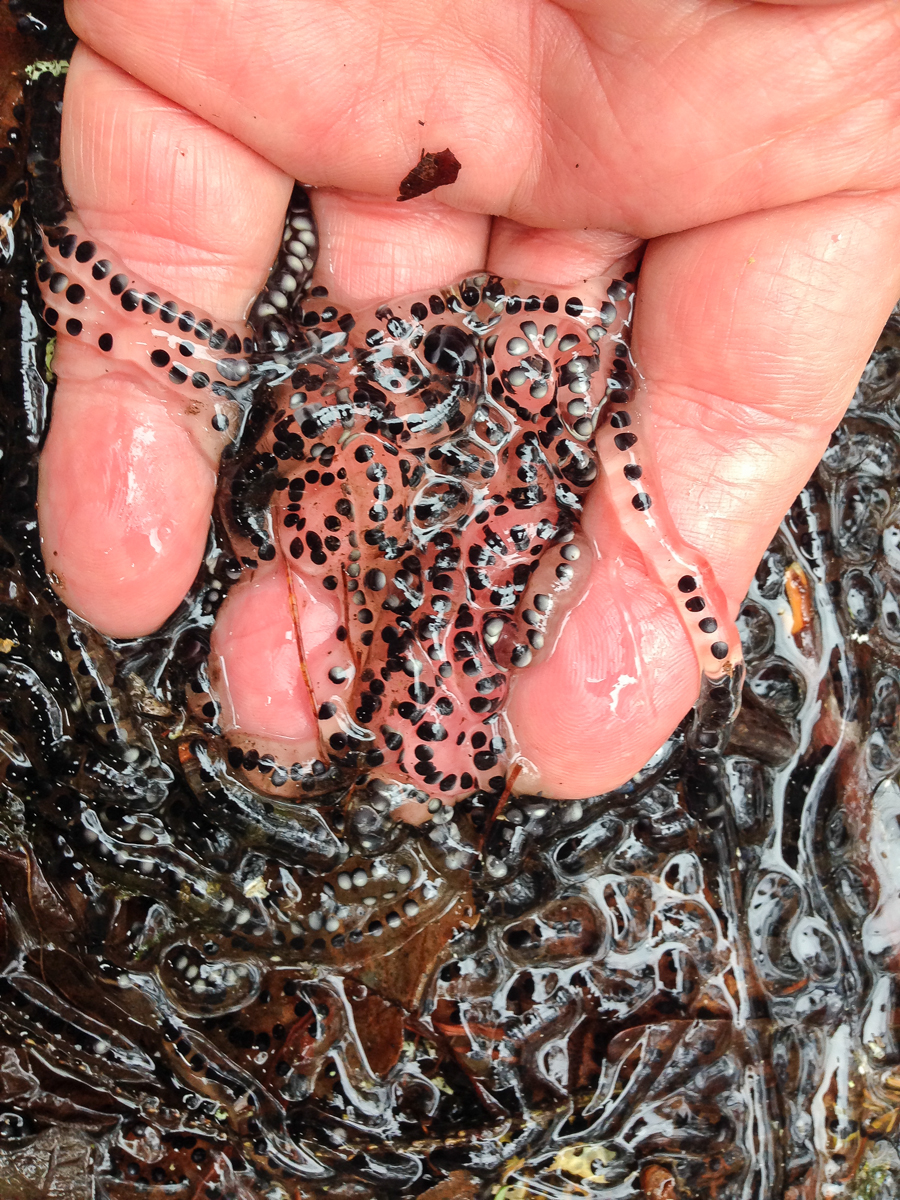
Strands of American Toad eggsA mass of American Toad eggs in a stream side pool
The result of this frenzy of activity is, of course, a new generation of toads. Females lay a double strand of eggs that may be several feet long (she may lay several thousand eggs each season). Tiny black tadpoles hatch within a week or so. While this rocky stream breeding habitat may have an advantage over certain shallow pools that might dry up in hot weather, I bet there is a high probability that the eggs or tadpoles can be washed downstream in heavy rains. But something must be working as there certainly were a sufficient number of toads attending the breeding session that night.
I laid on the rocks and watched and listened to the toads for over an hour. It was a mesmerizing scene and one that they did not seem to mind sharing with an observer. I’ll leave you with more of Thoreau’s observations on his dream frogs…
You would hardly believe that toads could be so excited and active. It is a sound as crowded with protuberant bubbles as the rind of an orange. A clear ringing note with a bubbling trill. It takes complete possession of you, for you vibrate to it, and can hear nothing else.
The toads completely fill the air with their dreamy snore; so that I wonder that everybody does not remark upon it and, the first time they hear it, do not rush to the riverside and the pools…
I shared an early sign of spring about a month ago when I posted some images of Spotted Salamander spermatophores (Salamander Candy) in a woodland pool near my home. Last week I checked out that pool, and a few others, looking for the next step in the recipe for creating a full-baked Spotted Salamander – the egg masses.
Recently deposited egg mass of a Spotted Salamander (click photos to enlarge)
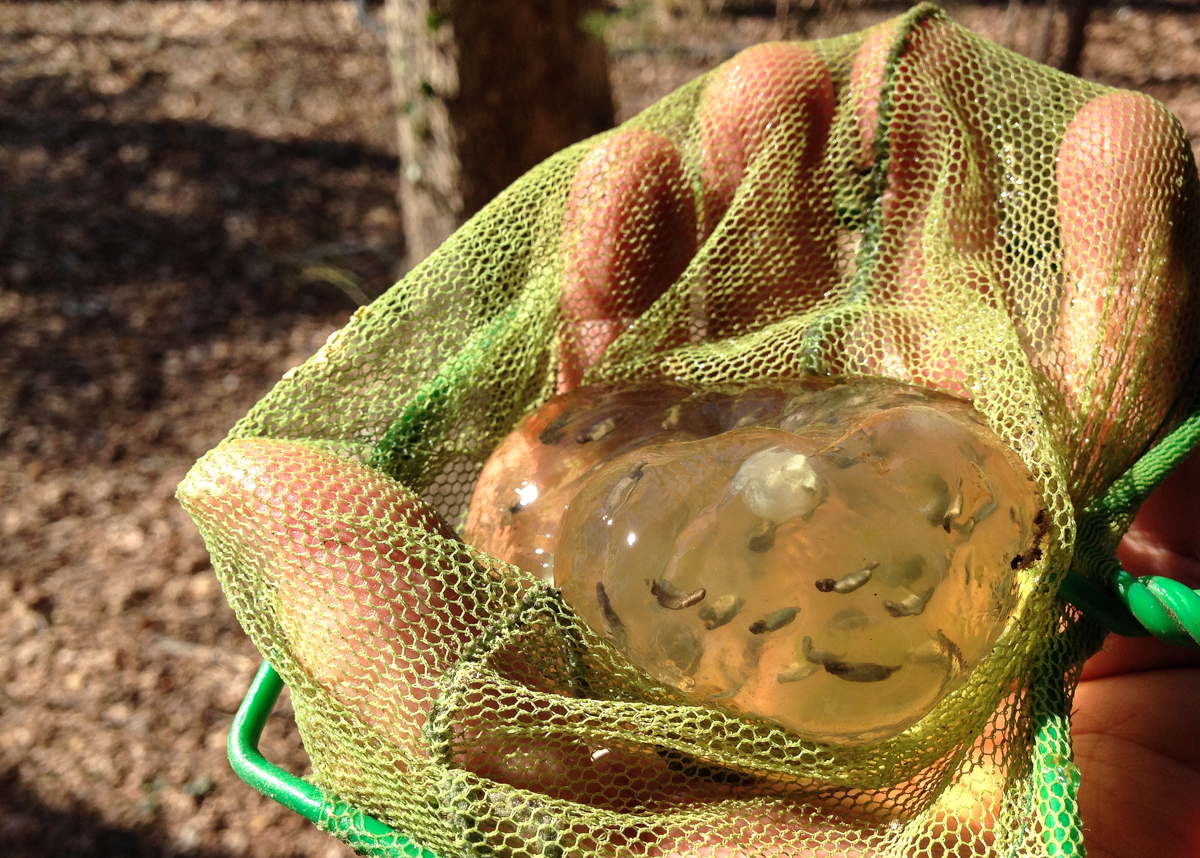
These jelly-like blobs usually contain 50 to 200+ individual eggs. When first deposited, they are about the size of a golf ball. Over the next few days, the gelatinous mass absorbs water and grows much larger, often almost attaining the size of a somewhat elongate softball.
Early development of embryos from shady woodland pool
Most of the egg masses I saw in the shady woodland pool were still in the “nub” stage – the developing embryos are not yet recognizable as salamander larvae.
Macro shot of egg mass using twin flash
The amount of detail you see depends greatly on the light used to illuminate the egg mass. It will probably take another week or two of warm weather before these hatch.
Roadside ditch containing salamander larvae and eggs
That same day, I traveled to an open roadside site near Jordan Lake where I found salamander eggs in the past during my amphibian workshops for the museum. The site has been altered since I last visited and is smaller now due to some bulldozing nearby.
Egg mass from roadside ditch
To my delight, there are still salamanders hanging on at this site.
These are much further along in their development. They may have been deposited at an earlier date than those from the other location, but since this site receives full sun most of the day, these eggs probably develop faster than those from the shady woodland pool.
Egg mass using flash
Again, the angle and type of lighting gives a much different look to the art of the egg mass.
Here are a few close ups of the developing larvae…
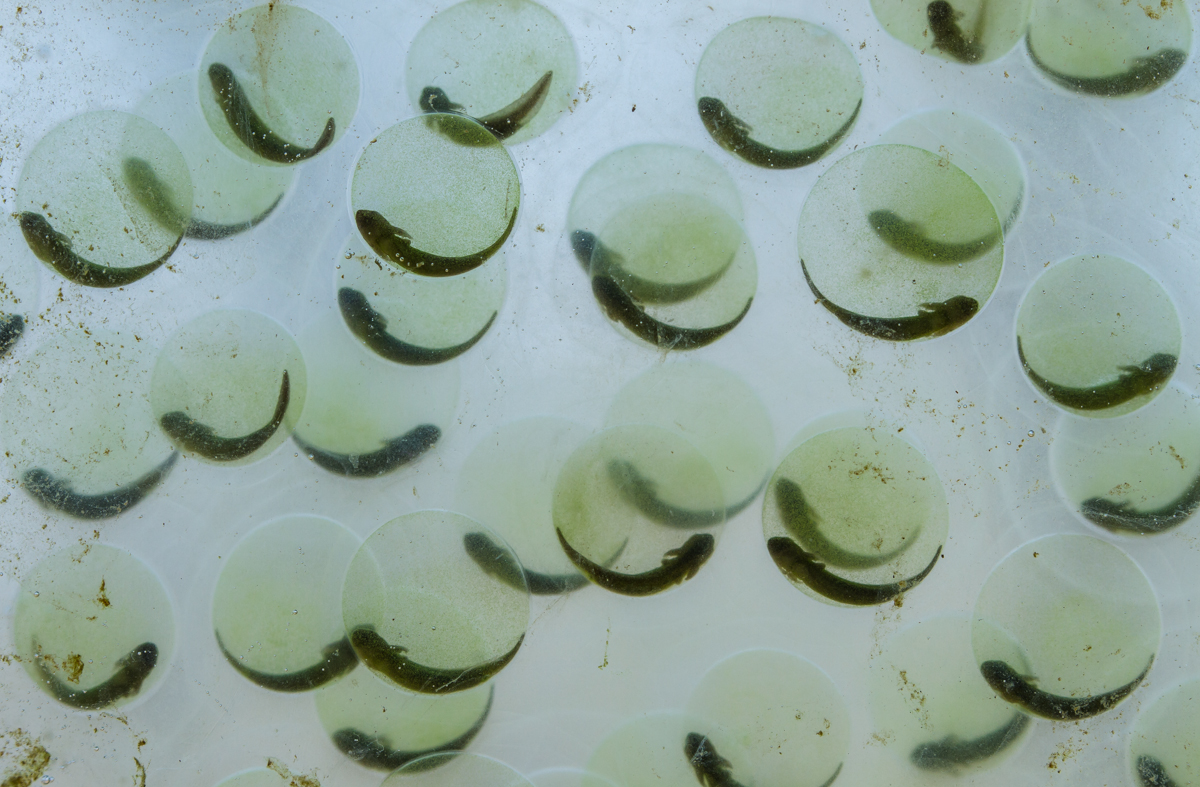
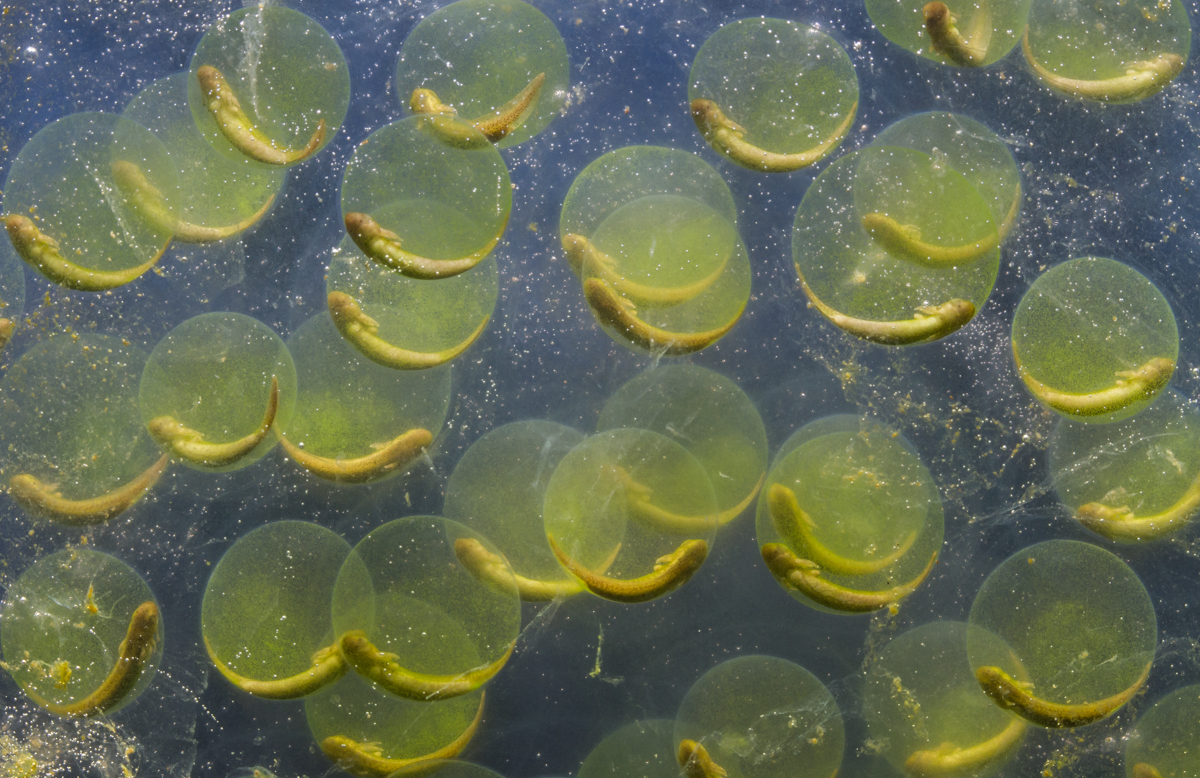
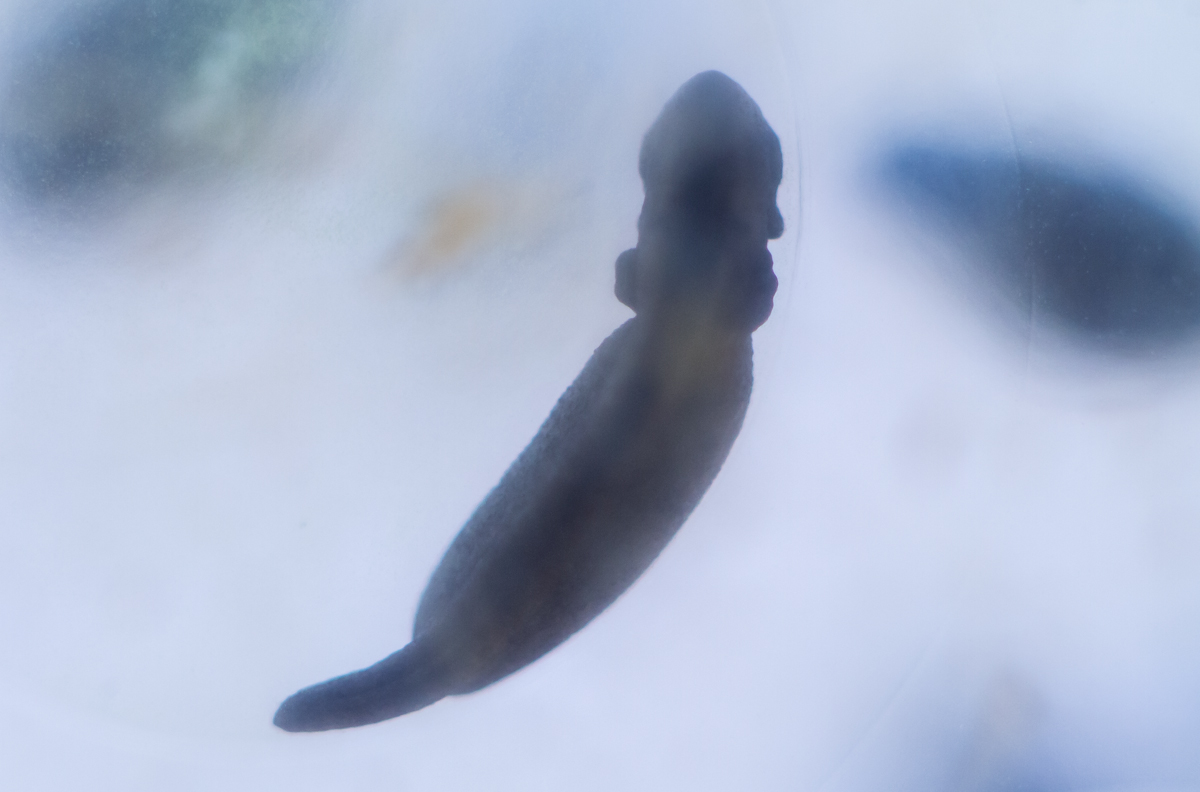
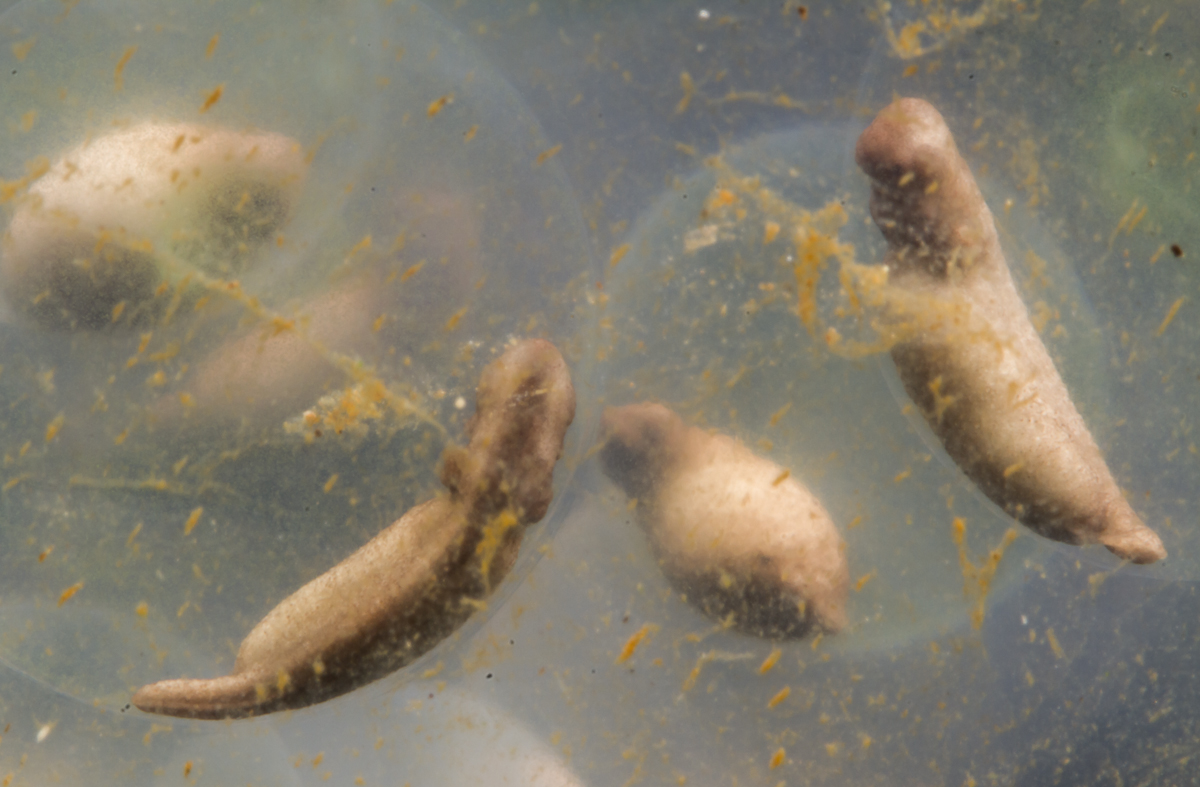
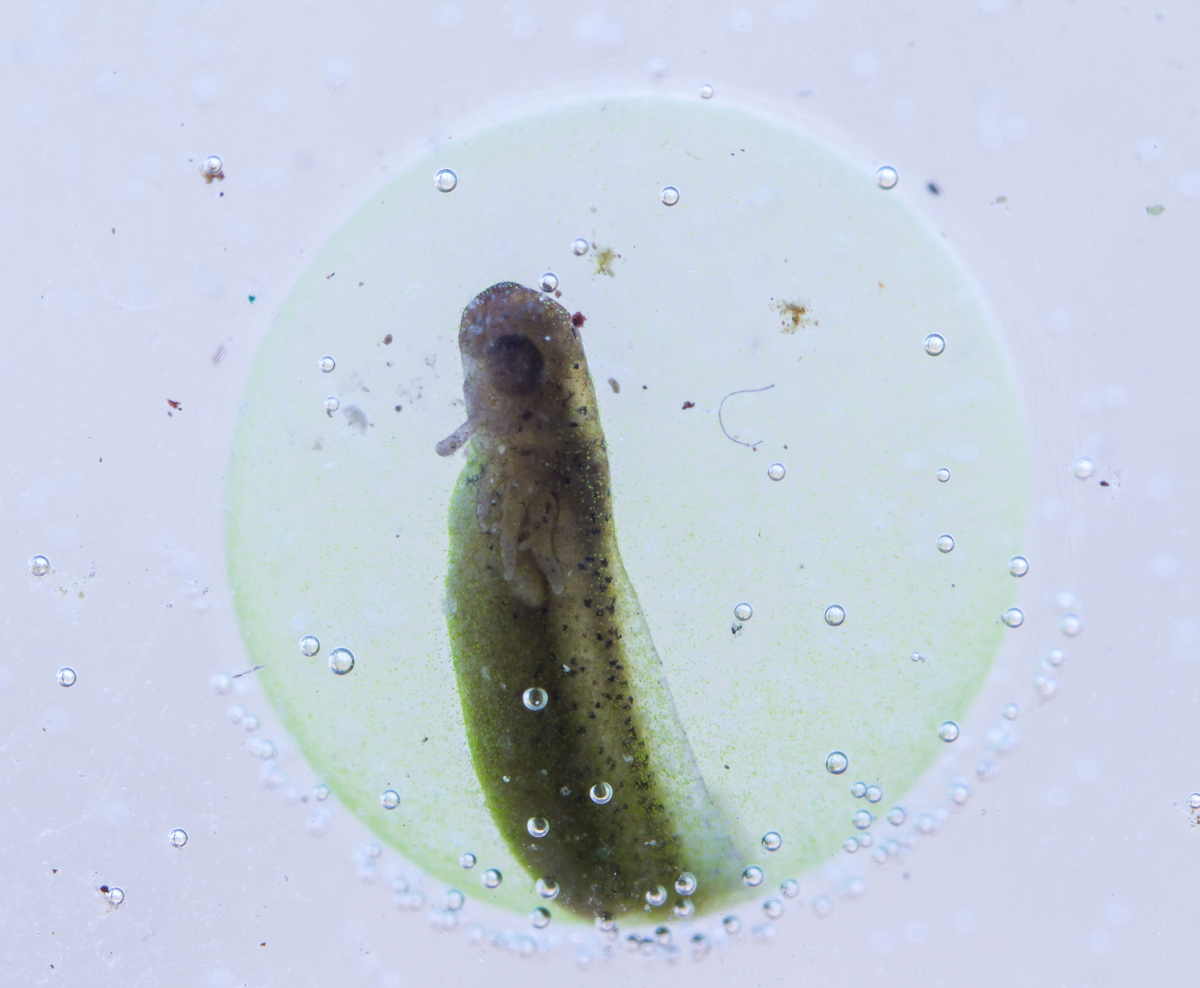
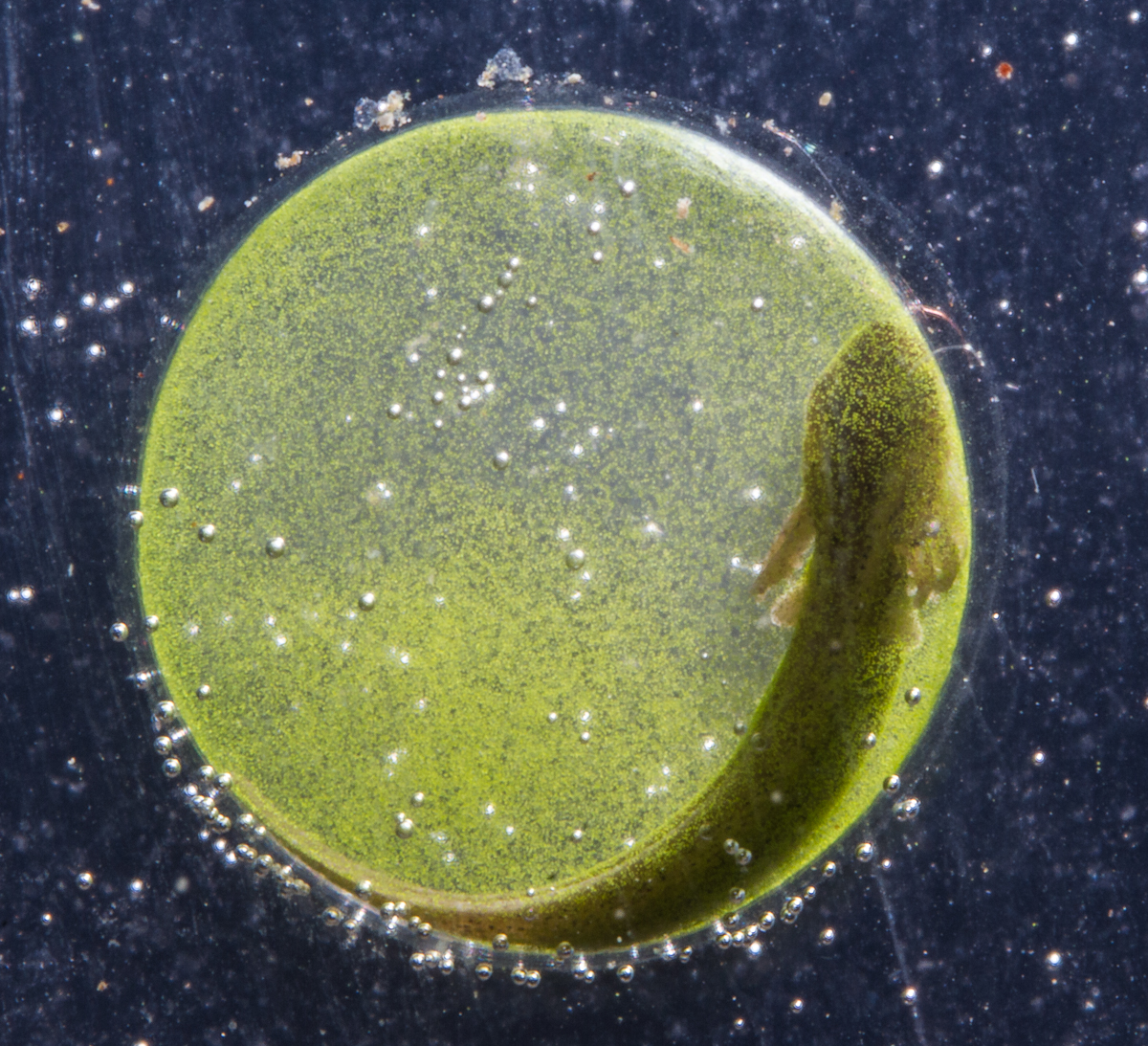
The embryo lengthens after the “bud” stageAt this stage they remind me of tiny whales or manatees encased in glass bubblesYou can see a larval form now including the “balancer” under the chin – one of two fleshy appendages the larva has for a few days after hatching that help it maintain position in the water columnThe last stage before hatching. Note the two layers to the egg (all of which is also embedded in a gelatinous matrix with the other eggs). You can also see the symbiotic green algae in the egg layer.
The gelatinous matrix begins to deteriorate right before the larvae start hatching so you get these individual, greenish salamander globes in the water. I think this may be my favorite part of the recipe.
…and there where the pale April sunlight filters through the leafless branches, nod myriads of these lilies, each one guarded by a pair of mottled, erect, sentinel-like leaves.
~ Mrs. William Starr Dana in How to Know the Wild Flowers, 1917
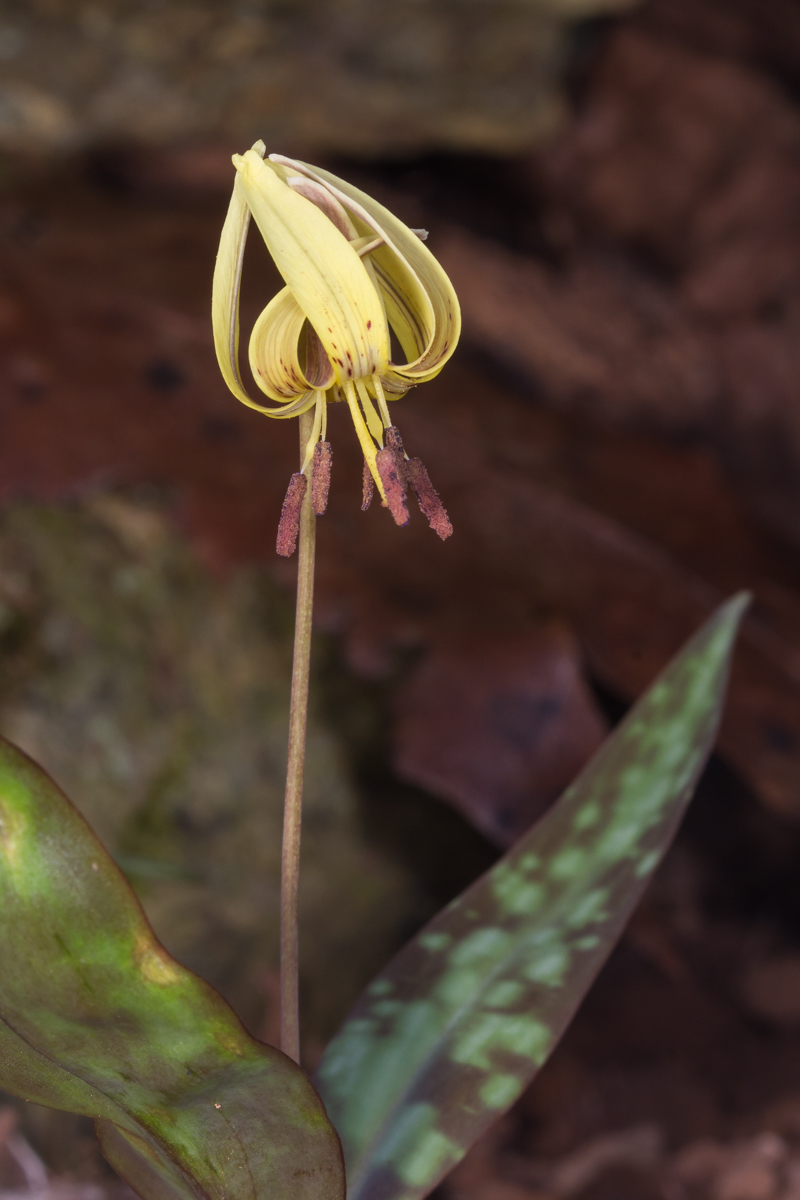
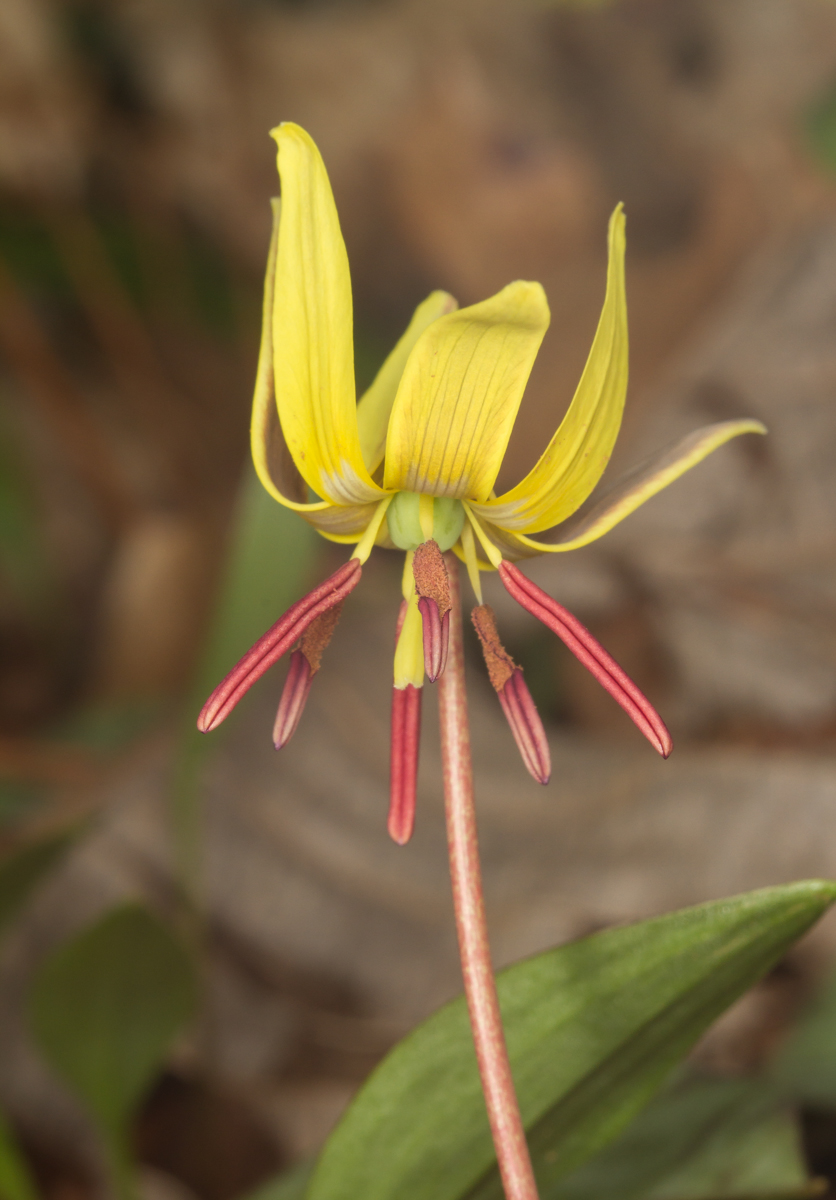
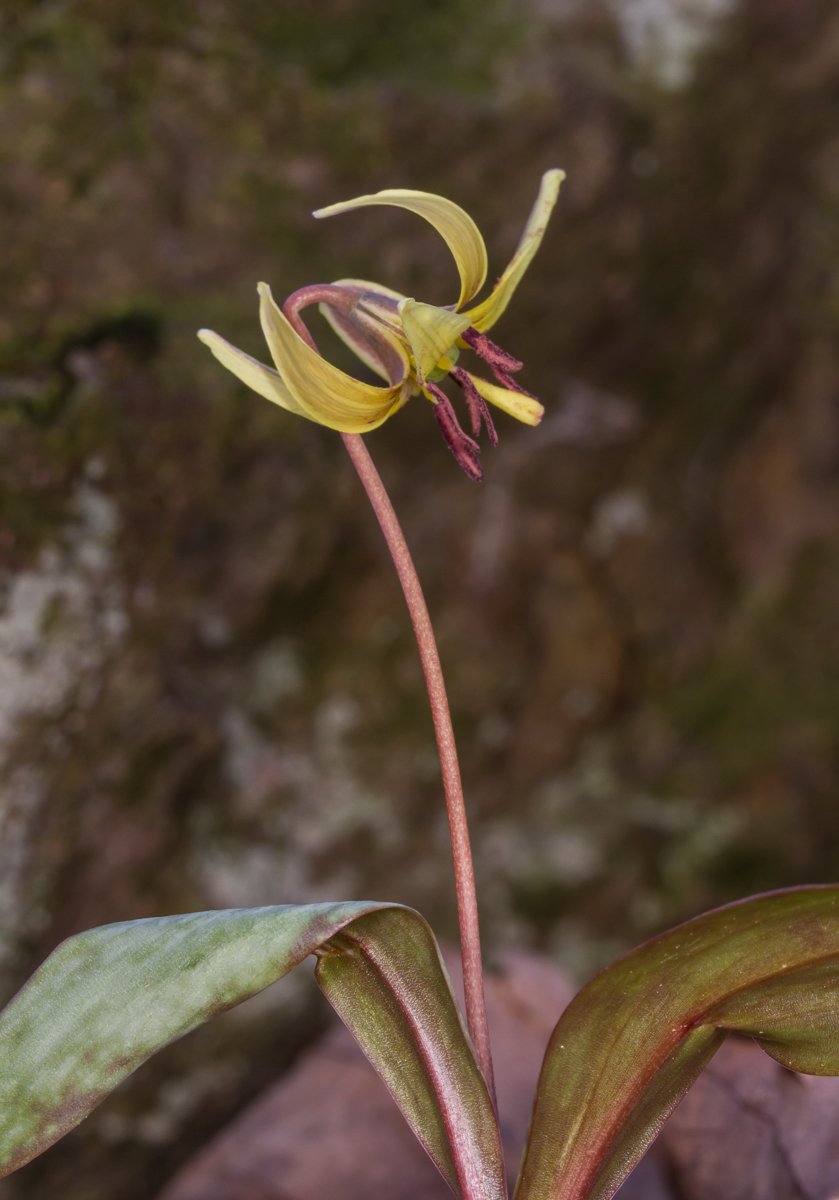
Few spring woodland flowers put on a show like Erythronium americanum (although I am wondering if it is now called E. umbilicatum according to recent botanical references). The yellow flowers and mottled leaves often form expansive carpets in the leaf litter of rich woodlands in the Piedmont and Mountains.
Trout Lilies are one of our more striking spring woodland wildflowers (click photos to enlarge)
Most of us know it by a variety of other names, most commonly Trout Lily. But others have called it a variety of names including Fawn Lily, Yellow Adder’s Tongue, and Dog Tooth Violet. When I first started my career as a naturalist with state parks, I found myself racing to learn as much about the plants and animals of North Carolina as possible so I could train rangers and develop programs for the public. I was weak in plants, especially wild flowers, and I found myself trying to find interesting information to share with people about the plants once I identified them. One reference I stumbled upon was How to Know the Wild Flowers, A Guide to the Names Haunts and Habits of our Common Wild Flowers by Mrs. William Starr Dana (online at https://archive.org/stream/howtoknowwildflo00staruoft#page/n9/mode/2up).
This yellow flower is known by many names
Her insights into plant names and uses provided some welcome tidbits to pass along in programs and helped me to better appreciate the abundant wild flowers of our state. Here is what she said about the many common names of Erythronium (which she listed as Yellow Adder’s Tongue and Dog’s Tooth Violet)…
The two English names of this plant are unsatisfactory and inappropriate. If the marking of its leaves resembles the skin of an adder why name it after its tongue? And there is equally little reason for calling a lily a violet. Mr. Burroughs (John Burroughs, a famous naturalist and writer) has suggested two pretty and significant names. Fawn Lily, he thinks, would be appropriate, because a fawn is also mottled, and because the two leaves stand up with the alert, startled look of a fawn’s ears. The speckled foliage and perhaps its flowering season are indicated in the title, trout lily, which has a spring-like flavor not without charm.
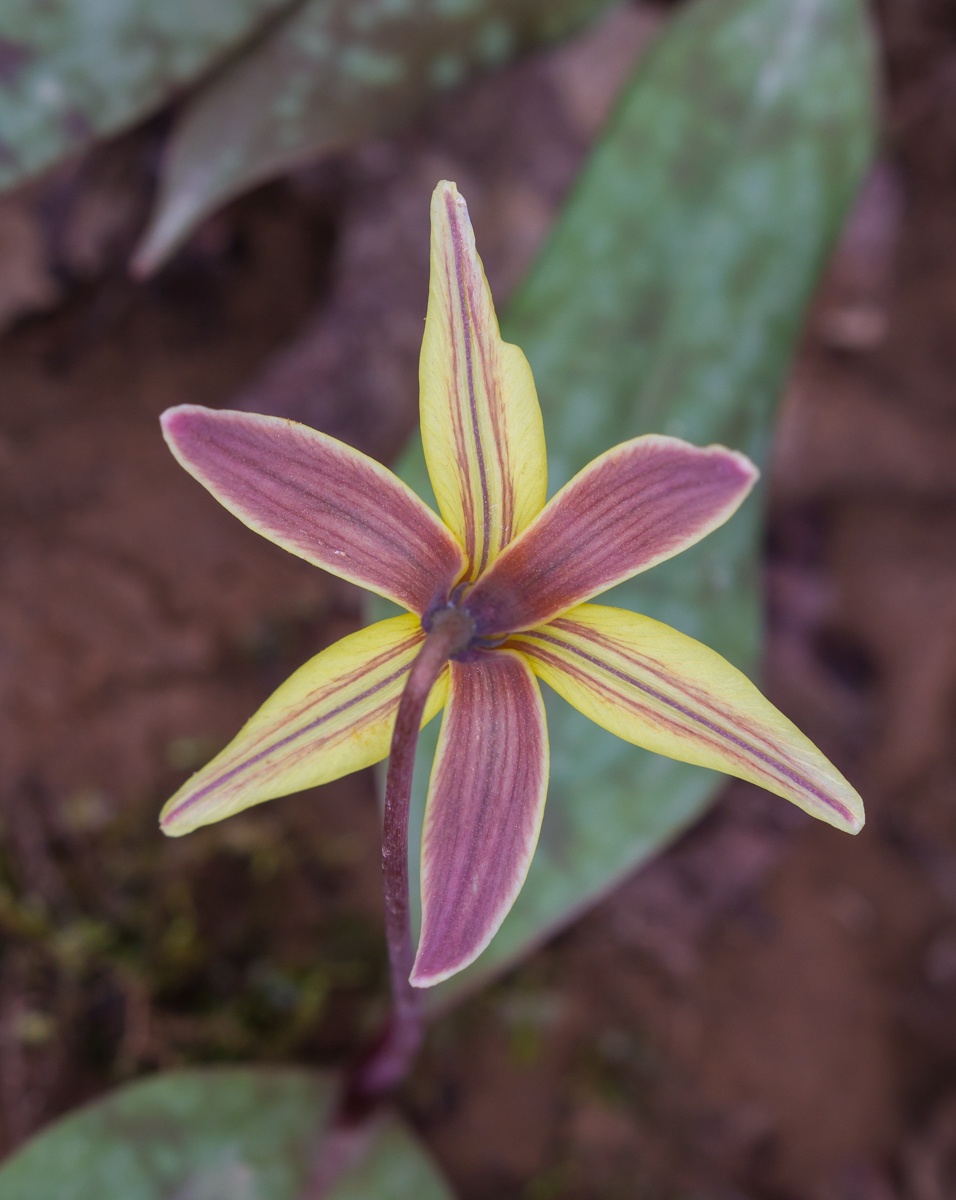
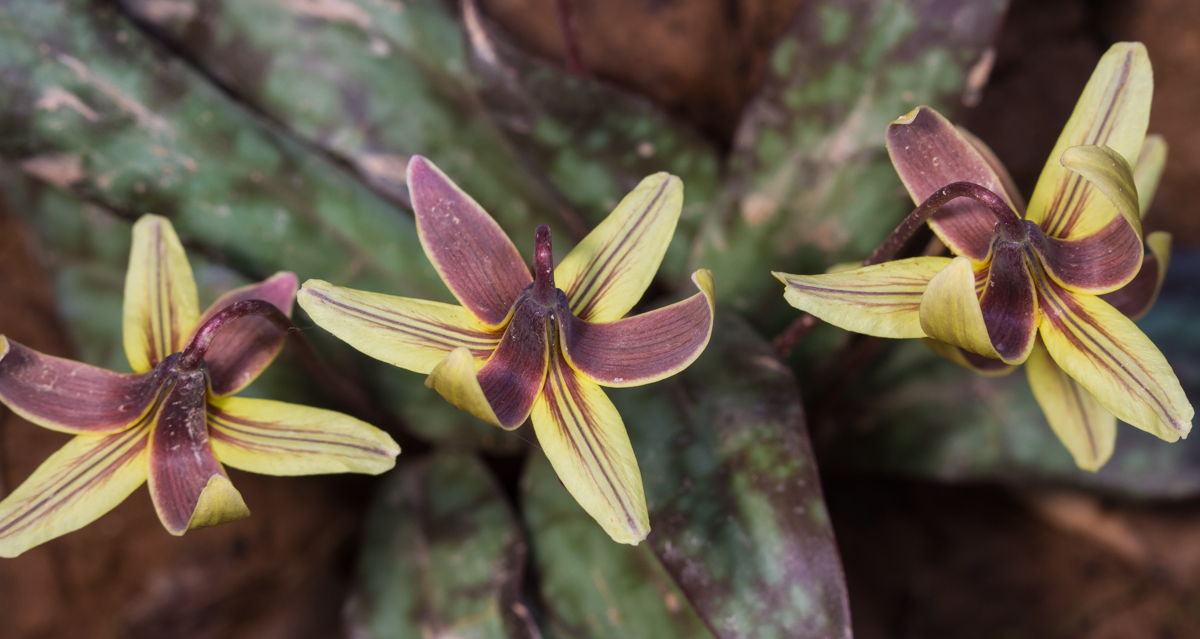
Looking down on a Trout Lily flower with the mottled leaves of several plants in the backgroundFrom above, you can see the sepals have much more maroon color on top than do the petals
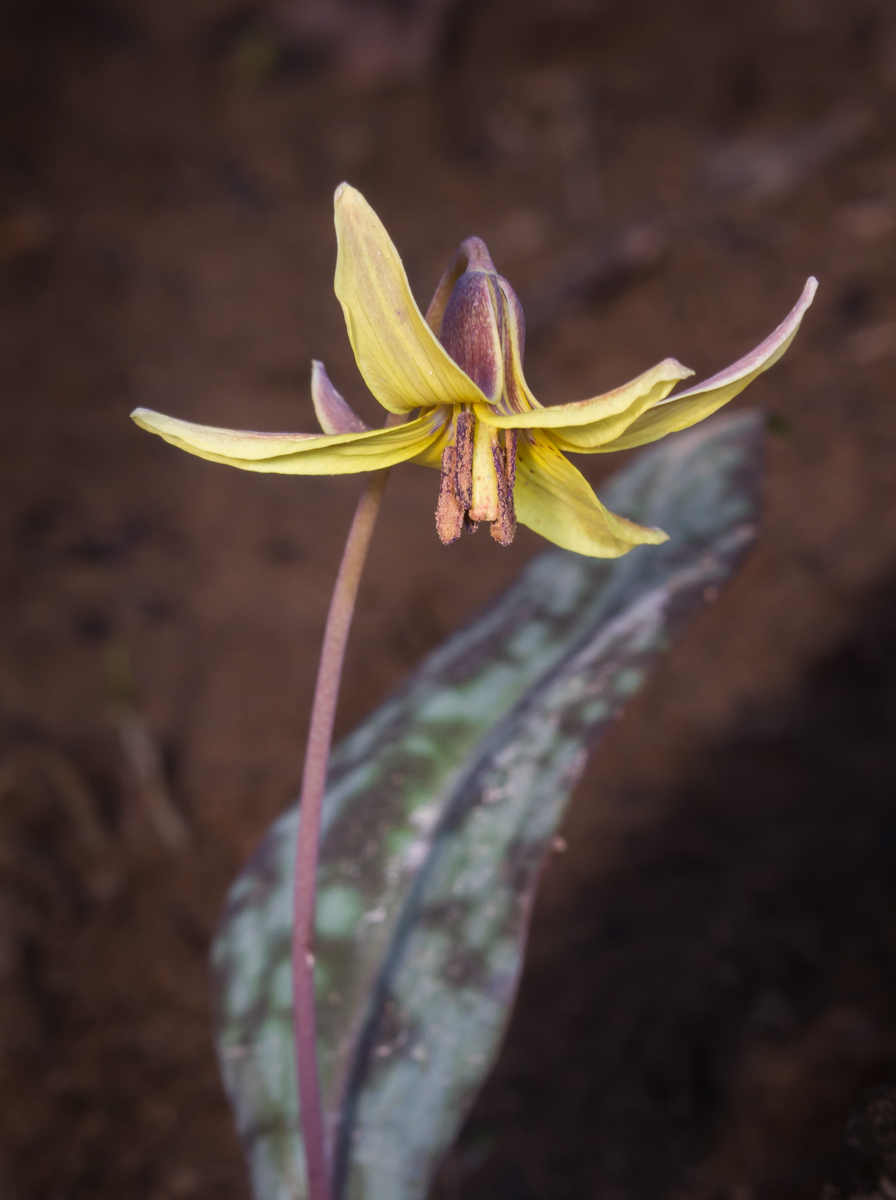
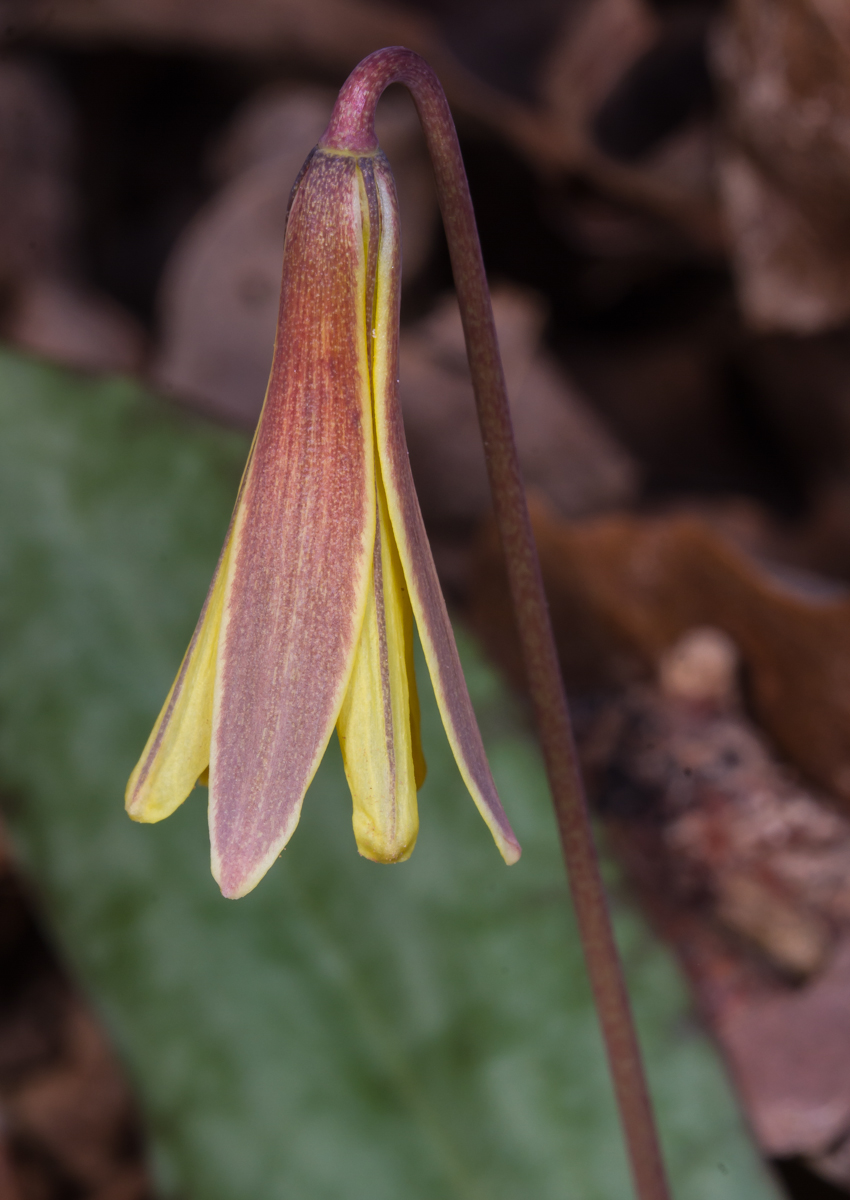
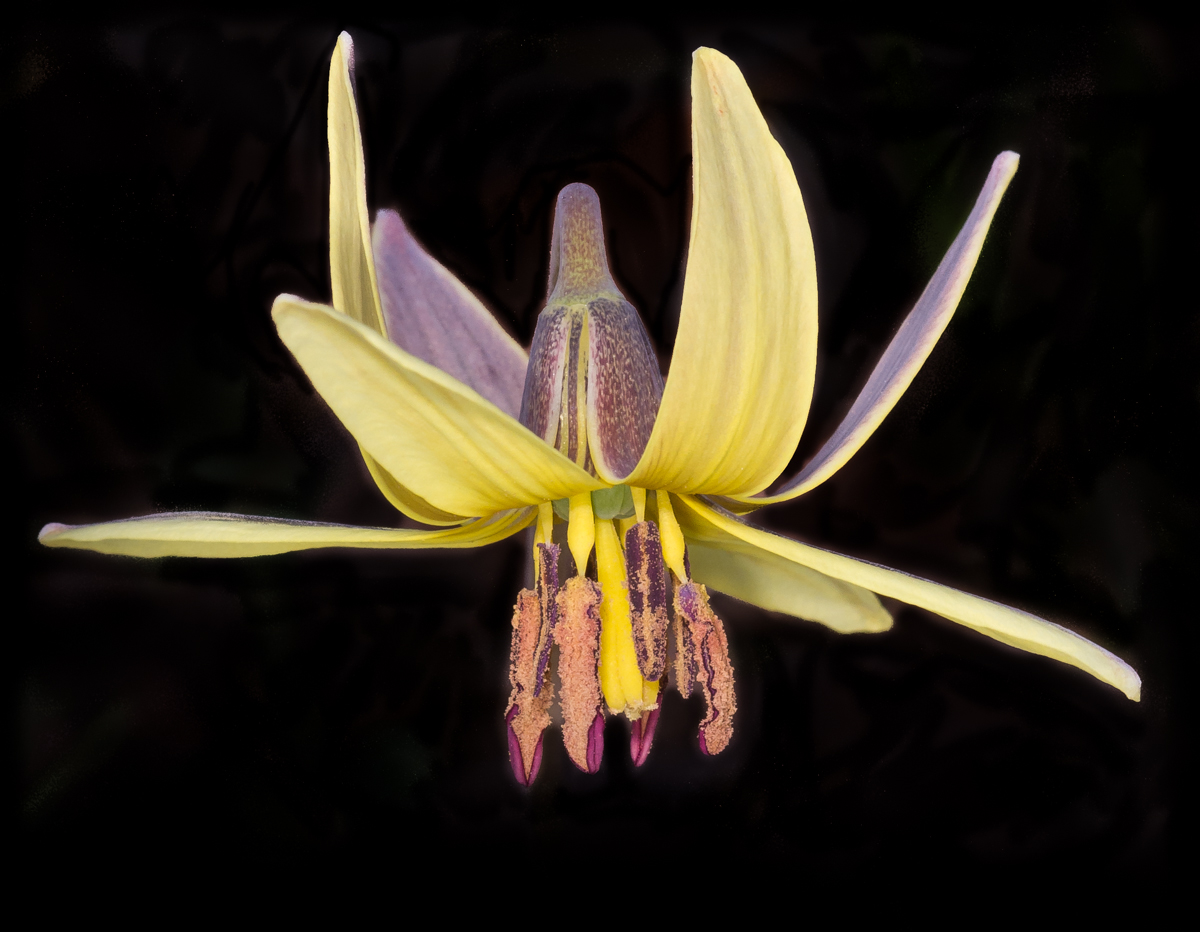
The flowers have three petals which are yellow on both sides (with a band of purple along the top midrib) and three sepals (that are yellow underneath and purplish-maroon on top). Together, when of a similar shape and color, they are often called tepals.
Flowers close each evening
They join at the base forming a somewhat tubular structure when closed. Flowers close each night and usually open by mid-morning on sunny days, but may remain partially closed on particularly cloudy or rainy days.
The petals and sepals curve upward when the flower opens
When they do open, it can be a remarkable change, from a purplish-maroon drooping tube to a dancing yellow flower, almost as if a strong puff of air has blown up from underneath. Now the tepals all reflex upward and inward, exposing the reddish stamens below.
Flowering Trout Lily plants have two leaves
A Trout Lily that flowers always has two leaves. Since only a small portion of each colony of plants produces a flower in any given season, the vast majority of plants only produce one leaf. The extra leaf may be for the added energy required to produce a flower and seed.
Trout Lilies often occur in dense colonies
Colonies of this beautiful flowering plant form more by vegetative reproduction than sexual means. Plants have deep corms which are bulb-like underground stems that store food. These corms produce additional corms which helps create colonies of cloned plants which can be decades old. One reference said the mottled pattern in cloned plants is similar, so you can look at the leaves of a large patch of the plants and determine how many colonies are present, and how far each colony has spread. These dense colonies also help stabilize the soil with their network of underground connections. In addition, it has been shown that the leaves accumulate phosphorus from rain water and runoff at a level higher than most plants. This critical nutrient is then returned to the forest soil in a form more available to plants when the Trout Lily leaves decay.
The abundant, early-blooming flowers also serve as an important source of pollen for queen bumblebees when they emerge and begin construction of their nests. So, this plant of multiple names also has multiple benefits for the forest and for the woods-watchers who enjoy its brief appearance each spring. The naturalist, John Burroughs, described a feeling many of us have had when he wrote…
In my spring rambles I have sometimes come upon a solitary specimen of this yellow lily growing beside a mossy stone where the sunshine fell full upon it, and have thought it one of the most beautiful of our wild flowers.