• Hidden Beauty in a Crazy World

    Think of all the beauty still left around you and be happy.

    ~Anne Frank

    This past weekend, I drove down to Myrtle Beach State Park (yes, there is such a thing) to visit our good friends Scott and Ann. Ann is a ranger at the park and they both are superb naturalists. The park was the first SC State Park, opening in 1936. It is 312 acres of green and 1 mile of ocean beach in an otherwise sea of human-dominated terrain, the Grand Strand of Myrtle Beach. Look up and down the beach front beyond the park boundary and you see buildings, lots of them. The traffic on a summer weekend is insane and the pace of development throughout the region is incredible. The airport runway is just a little way from the park so plane noise and tourist-filled helicopter flyovers are frequent. And yet, that park and the nearby Huntington Beach State Park are some of the best places I know to see and photograph a huge variety of wildlife from birds to alligators to denizens of the ocean. I arrived mid-afternoon and we headed for a late lunch/early dinner before the crowds descended on all the local eateries. It was apparently a good omen when a Roseate Spoonbill landed along the marsh creek off the deck of the restaurant and gave us a good view.

    After lunch, we headed over to Huntington Beach SP. This park is unique in that there are 3 large bodies of water inland of the ocean – a freshwater marsh and swamp, a brackish pond and marsh complex, and a tidal salt marsh. The entrance road is on a causeway that cuts between the salt marsh and brackish pond. We headed to the path locals call the Straight Road as there were not a lot of birds in the salt marsh as yet, but the tide was dropping so the action should pick up later.

    -A nest of baby Green Herons in the trees along the walkway (click photos to enlarge)

    There is a line of shrubs and trees on both sides of the walkway that provide nesting habitat for a variety of birds including night herons, Green Herons, and Anhingas. You might also find yourself sharing the path with an American Alligator as it crosses between the fresh and brackish ponds

    -One of several alligators that crossed the path while we were there. This is about a 5-footer. It’s a treat to see them walking on land since most of the time you just see their head and back in the water.

    -They often come out of the water and then lay on the path for a few minutes before crossing.

    It seems that most people are looking for alligators when they visit this part of the park and we enjoyed helping folks spot them. At one point, a very nice family from France stopped us and asked about where to see the gators. We showed them a couple and several species of birds, They were very interested in nature so we had a great time chatting with them. One of the boys spotted something on the ground and asked us what it was…none of us knew. The father thought it might be a leech, but we naturalists thought it was probably the larva of an insect. It vaguely resembled a Rat-tailed Maggot, the larva of a type of hoverfly, but it was more armored-looking and it was crawling around on the ground next to the freshwater pond. Even our SEEK app just said “Insects”. I took a few photos and we promised we would email them if we found out.

    -I posted the photo on iNaturalist which gave the best possible ID as a larva of a type of Soldier Fly, most likely in the genus, Stratiomys. The larvae are aquatic (that “tail” is a breathing tube) but they occasionally do crawl on land, which is where this one was found.

    After ending our time on the Straight Road, we headed over to the causeway to see what might be happening at peak low tide, a favorite time for various birds to hunt for food on the salt marsh channel right next to the road. There was a flock of ancient-looking Wood Storks standing along the marsh edge. Some were preening, some feeding, but most just hanging out…what strange-looking creatures with that scaly neck and huge bill.

    -A large flock of Wood Stork in the marsh along the causeway

    -A face a mother could love (I suppose)

    Wood Storks are one of the largest breeding wading birds in North America and our only stork. Their unusual appearance has given rise to some other colorful common names such as Ironhead and Flinthead. Sexes look alike and young birds are similar but usually have some downy feathers on their neck. They have expanded their breeding range northward since the 1970’s when habitat conditions in South Florida started declining. They feed primarily on fish which they capture by slowly walking in shallow water, gently swinging their head with an open beak in the water. They are tactile feeders rather than visual, relying on their sensitive beak to snap shut before an encountered fish or other aquatic organism can escape. They often use foot-stirring to startle fish into their beak as they walk along.

    –Wood storks feeding by slowly walking and shuffling their feet with an open beak half-submerged in the water

    I had really hoped to photograph some of the 20+ Roseate Spoonbills that have been seen this summer along the causeway. Low tide was a great time for them to be feeding but the only ones we could find were in the brackish pond or far out in the marsh, both too far for photos. Finally, a lone spoonbill came flying in.

    -Roseate Spoonbills are one of 6 species of spoonbills worldwide and the only one in the New World. Their distinctive pink color and spatulate bill make them easy to identify.

    Huntington Beach SP is one of the best places I know that you can reliably see spoonbills without driving much farther south. They are seen here in summer and into the fall months. The pink color can be variable depending on their diet (this one wasn’t as pink as most I have seen in the past). The color comes from carotenoid pigments formed by various algae. Shrimp and other crustaceans eat the algae and the spoonbills eat them. Adult birds tend to be darker pink.

    -The spoonbill used its strange bill to gently preen under its wings. There is a slight hooked tip to both the upper and lower bill. This probably helps grab prey items but it must also make it easier to preen feathers.

    We had hoped for some late afternoon sunlight to provide that golden hour glow for some photos, but an incoming thunderstorm had different plans. As the light decreased, the spoonbill seemed to get even more energetic in its feeding. I took a few short videos of its feeding style – an intense head swing back and forth while moving swiftly though the shallow water. Video was far more forgiving than trying to take stills of all this motion in the low light.

    –A Roseate Spoonbill exhibits an energetic feeding style by quickly walking through the water swinging its bill back and forth

    A Tri-colored Heron came in near the spoonbill and exhibited yet another feeding style – the low crouch and wait. When a fish swam near, the bird snagged it with one quick jab.

    -A Tri-colored Heron patiently waits for a fish to swim near…

    -A quick jab and the bird speared a nice evening snack of a small mullet

    Next morning I woke up to find that Ann had already left (about 6 a.m. I think) to relocate a sea turtle nest. She, and a team of trained volunteers, are on call to relocate sea turtle nests from the heavily impacted beaches of the city to a more protected stretch of sand at the dune line in the park. Scott and I were about ready to head out when she came back and took the Loggerhead Sea Turtle eggs over to the beach to be re-buried. Ann has been doing this for many years and is a real pro at the protocols and instruction training for the volunteers. A couple of young park visitors had joined the group to observe by the time we arrived and listened intently as Ann explained what was happening. The nest had 106 eggs which volunteers carefully placed into a new nest hole they had dug. The nest is covered with sand and then a protective sheet of plastic screening is staked over it to keep out predators like raccoons and foxes. The final step is adding a sign identifying it as a protected spot and explaining how we all can help turtles (and other coastal wildlife) by reducing the impact of our visits to these beautiful shores. It reminded me of my time as a park naturalist and working with sea turtle nests at Hammocks Beach State Park many years ago. Some of the techniques are similar, but we know so much more about sea turtles now and have made great progress in getting the message out about their protection.

    -The nest was relocated and protected with screening and information for park visitors

    After that, we headed back over to Huntington Beach to look for more birds and other wildlife. Since the tide was high and still coming in, we headed to the north end of the beach to walk out to the jetty at Murrells Inlet. We beat a lot of the crowd out to the beach but it was already pretty hot with little breeze, and my bum knee made the 1.3 mile walk seem a bit longer. As we neared the jetty a couple said they had just seen a mink between the rocks, supposedly a rather common site these days on the jetty. We didn’t manage to find a mink, but the ocean water was exceptionally clear and Ann knew to be on the lookout for juvenile Green Sea Turtles. They are regular visitors to the jetty, having a somewhat more omnivorous diet when young. Sure enough we hadn’t walked far when she spotted one. Now, getting a photo of one, even with the clear water, isn’t easy. They are fast swimmers and usually just poke their head above water once for air and are gone.

    -A juvenile Green Sea Turtle pops up for a breath of air

    We continued walking and came across a Snowy Egret fishing off the jetty’s boulders.

    -A nice snack for the Snowy Egret. Scott thought it might be a blenny of some sort based on the body shape and the fact they are an abundant fish species on the jetty.

    Walking back, we saw a second juvenile sea turtle. Notice the barnacles on this one that are lacking on the one in the previous photo. Loggerhead Sea Turtles are the dominant breeder on these beaches with only an occasional Green (or Kemp’s Ridley or Leatherback) laying eggs in this region. But juvenile Greens are frequently seen at the jetty or off the fishing pier from April to November.

    -Another juvenile Green Sea Turtle off the jetty…check out those chompers!

    As someone said, the walk to the jetty is 2 miles out and 5 miles back. It certainly seems that way on a hot day. We escaped to the nature center to eat lunch in the breezy shade under the deck. The park maintains a bird feeding station and some much sought-after bird diners regularly appear. Painted Buntings are a favorite species for many park visitors and this is a place where you are almost guaranteed to see them. There were two males regularly visiting the feeder along with a Red-bellied Woodpecker, some finches, and, eventually, a stunning Red-headed Woodpecker. It was the middle of the day, the light was harsh, and it seemed neither bird nor photographer wanted to be out in the sun. But it was still fun to see these wildly colorful male birds, considered by many to be the most beautiful bird in North America.

    -A male Painted Bunting waits his turn in the deep shade before flying out to the feeder.

    -A Red-headed Woodpecker shows off his colors after opening a seed

    I headed home before a line of storms reached the beach area, driving through the dense developments, car wash places, and seemingly endless sea of t-shirt shops that characterize this beach town environment. Hard to believe you can find such natural beauty hidden in some remaining pockets of habitat and that so many species are able to co-exist with the crowds, noise, and lights. We should all appreciate folks like my friends that help manage these lands and the wildlife for the rest of us to enjoy…thank you all.

  • Refuge Run

    From wonder to wonder, existence unfolds.

    ~Lao Tzu

    Last month, I dropped Melissa off at the airport at a ridiculous hour (4 a.m.) for her Yellowstone workshop. The upside was that I could make it to my favorite place, Pungo, by sunrise. So, off I went on what was to be a hot sunny day, arriving at Pungo about 6:15 a.m. I headed over to “Bear Road” and discovered 2 vehicles already there. Bummer…it is getting next to impossible to have it like it was in the “good ol’ days” when I could go anywhere on the refuge and have some alone time with the wildlife (who told all these people about this place anyway?:). I decided to drive around in hopes of seeing some critters. My first stop was along a canal to watch an Eastern Kingbird, supreme ruler of its domain. With a scientific name like Tyrannus tyrannus, you know this is one tough bird. I have seen them attack raptors of all sizes that dared to cross the airspace of their territory (even landing on the back of and pecking away at a Bald Eagle once!).

    -An Eastern Kingbird scoping its territory and perhaps thinking “I could take you down, you know!” (click photos to enlarge)

    But, as always, I was hoping to have some quiet time watching one of my favorite animals, the Black Bears. My first one of the day came out of the edge of a corn field and headed down a grassy road as I drove up. I stopped and watched as it ambled away. The large boar finally stood up to survey the scene, and then slowly sauntered off into the woods.

    -A large bear stands up to look around before heading into the woods

    I decided to look around for a place to walk (sadly, this is getting more difficult on my favorite refuge as more and more roads are being closed off even during the non-waterfowl season). I slowly headed down a grassy road with no closed signage just to get out and hear the soundscape that Pungo offers. It is a rarity these days to be able to just hear nature without human background noises and it is just one of the many reasons I love this place. After going only a couple of hundred feet, a large bear stepped out of the underbrush and looked my way.

    -This large boar bear steps out down the road and checks me out.

    -I stood still as it made its way across the road, occasionally grazing on some vegetation. One last look to make sure I hadn’t moved, and it was off into the trees

    I drove bck over to Bear Road and saw even more cars so I decided to head to other wild places for the middle part of the day. I drove through Mattamuskeet and got out to walk a short trail, but really didn’t see anything photo-worthy. Unfortunately, the Phragmites grass has blocked much of the viewing areas on the north side of Wildlife Drive and along the causeway. On to Alligator River NWR. Arriving after lunch in the heat of summer lessens your chances of seeing anything and that was the case that day. The one really noticeable critter was an overabundance of horse flies. I don’t think I have ever seen as many, so my time outside of the car was limited. Driving slowly along they were constantly banging against the car windows apparently daring me to get out. I felt sorry for any wildlife or humans that might be out on this day.

    At one point, I saw someone standing next to a vehicle holding a camera. I stopped and waited, not wanting to disturb anything he was photographing. I didn’t see anything and he started to get back in his car. As I pulled up, he kindly pointed out a small American Alligator lurking under some vegetation at the edge of the canal.

    -A small American Alligator in one of the roadside canals at Alligator River NWR. This is the first time I have see one in the refuge canals ((I usually see them in Milltail Creek or in the canals along Hwy 64)

    The horse flies helped make my decision to head back over to Pungo earlier than planned. When I arrived, I saw a young bear out in the road. It kept going around and returning to one spot sniffing. Perhaps someone had dropped some food? When it went back into the brush, I drove on and pulled onto Bear Road. Only two cars (the same ones that had been there that morning I believe). I could see two people on E-bikes headed toward me. I thought they might be leaving which encouraged me to get out and head down the road.

    -A young bear out in the road sniffing around. This little guy might be on its own for the first time this summer.

    Walking down the road, I spotted a male Blue Grosbeak through the vegetation.

    -A Blue Grosbeak partially hidden behind some tall grasses along the edge of Bear Road

    It turns out the E-bike riders were just cruising instead of leaving. They continued to go back and forth along Bear Road for the entire time I was there, pausing in one location for many minutes and then moving again. I have to admit, I have really mixed feelings about E-Bikes on this refuge. While they do allow people easy access to dirt roads where vehicles aren’t allowed (especially people that might have difficulty walking considerable distances), I imagine the wildlife (and people like me) feel a bit disturbed by their presence. This is particularly true if they are just cruising back and forth. When someone walking goes down a dirt road, wildlife will often wait in hiding until that person passes and then sneak across the road. It seems all that movement along this well-used bear habitat has the potential to create more disturbance. Anyway, I have a feeling public land managers may need to look at the E-bike use and develop some guidelines in the near future. I am seeing more and more of them at Pungo, especially for people looking to photograph bears. And the fact that so many other dirt roads have restricted access is tending to concentrate more and more visitors in this one area.

    -A typical view of a Black Bear feeding in a crop field (this is a soybean field). At this distance, the bears do not seem disturbed by people along the road observing them

    After being passed a couple of times by the folks on the E-bikes, I decided to head elsewhere for some alone time. I went back to the grassy road I had walked earlier. I quickly spotted a Wild Turkey and then saw some sort of canid far down the road heading the other way. I think it was a Red Wolf, but I can’t be sure (could have been a Coyote) due to the distance and the tall grasses. Soon, another bear comes out of the woods.

    -This is what you see when a bear eases out of the trees into tall grass

    I saw it well before it noticed me. I knelt down and watched as the bear sampled some vegetation and moved slowly back and forth along the opening. Suddenly, it stopped and stood up. It was turning its head slightly from side to side so I am guessing it had caught my scent (which might have been significant in that heat and humidity!).

    -The bear stood up, sniffing the breeze.

    He finally looked my way and probably saw my blob of a form down the road. He dropped down and slowly eased into the woods in the direction he had been going.

    After my walk, I decided to end the day by just cruising the roads to see what I might encounter. I got out along D-canal Road to scan the fields for bears and suddenly a Killdeer came zipping by. I think there might have been a nest nearby as every time I drove by this area I would see a pair of Killdeer running around and then flying. I got back in the car and headed out to give them a little peace.

    -A Killdeer flies by

    My final bear of the day came as I drove along the now one-way section of road south of Pungo Lake. I pulled in to the trailhead parking at Duck Pen Observation Area and soon spotted a large male bear slowly walking toward me almost 1/4 mile away. I got out and sat near the car and waited and watched as the big bear slowly plodded down the road, swinging its huge head from side to side and occasionally sniffing something along the road edge.

    -My final bear of the day lumbering down the road toward me

    -The bear finally spotted me and the car and paused.. he walked a few more steps and then sidled over into the grass along the road edge before disappearing into the woods

    These photos were all taken with a 700mm equivalent lens and cropped, so I am not as close to these bears as it looks. But, being there and being able to watch their behaviors without a crowd of folks was a real treat. When this big guy waked into the woods, I got back in my car and drove off. As I drove past where he had entered the trees I looked but couldn’t see anything in the dense vegetation. Just before I reached the curve at the far end I looked back in my rear view mirror and saw the bear come back out onto the road and continue plodding along.

    I ended the day with 15 bear sightings, all at Pungo. Black Bear mating season will be winding down soon and the big males will probably become less visible. I was a bit disappointed that I didn’t see any cubs, but with all the big boys wandering around, the mother bears were probably keeping their young ones out of the open areas. The bears of Eastern North Carolina are very special to me. I hope we can continue to coexist with them and preserve these public lands as places we can spend time observing them. To ensure that is the case, we must all take precautions to try to minimize our influence on their daily lives when we are in their habitat. Use binoculars, spotting scopes, and telephoto lenses when watching or photographing bears. Don’t pursue them for a photo, let them go where they want to go. Bears are creatures of habit and often use the same path to cross into the crop fields to feed. Give them space to do that and don’t sit for long periods at those crossover points. And certainly don’t feed any wildlife. If you eat food out on the refuge, don’t leave any scraps behind. I realize that by just being there, we are probably altering their movements and behaviors. But, we can all try to limit our impacts while still having the privilege of witnessing these amazing creatures. Observing bears in the wild is a thrill that I hope future generations of visitors will continue to enjoy…it is truly something that can inspire awe and wonder in anyone lucky enough to experience it.

  • The Youth of Summer

    And so with the sunshine and the great bursts of leaves growing on the trees, just as things grow in fast movies, I had that familiar conviction that life was beginning over again with the summer.

    ~F. Scott Fitzgerald, The Great Gatsby

    Things have been relatively quiet on the trail cameras the past month. No coyote sightings in several weeks, and even the squirrels seem to be taking a vacation in our woods (though not the ones learning to get to our hanging bird feeder). But one thing has been showing up – young animals. June and July are the months when many young critters start to get out and follow their moms around to learn the ways of the woods. At our place that means White-tailed Deer fawns and Raccoon kits.

    Here are a few clips of forest cuteness from our property…

    –This mama Raccoon and her two young kits appeared on several cameras recently, but this one has the best audio (turn sound up).

    The most common baby animal footage was of deer fawns. The well-known spots on baby deer help them blend into the sun-dappled forest floor. This is especially important when their mom leaves them in one place as she goes off to feed. Lying on the ground motionless, and virtually scentless, they are difficult for predators to find. Fawns typically lose their spots after 3 to 4 months. One online resource said the average number of spots on a fawn’s coat ranges from 272-342. And each spot is between about 1/4 to 1/2 inches in diameter…now you know.

    –A fawn hanging out near the Raccoon den tree while mom browses in the distance

    –The fawn tries to nurse but mom seems like she has things to do or places to go

    –Some clips showed a doe with one fawn, typical of young mothers. Others had a doe with twins which is not unusual for older deer.

    –A couple of clips showed two adult deer waking together, one with twins and one with one fawn. Then this clip had one doe with three fawns. At first, I assumed the other doe was somewhere near and these three fawns were just hanging out together. But I have seen two other clips with a single doe and three fawns. Research shows that somewhere around 10% of female deer will have triplets under favorable environmental conditions. And last year was a mast year for the oaks in our woods, so maybe these are indeed triplets.

    In addition to the mammal babies, there are lots of insect and spider youngsters in our wildflower beds and the bluebirds have just laid another set of eggs. You gotta love the abundance of summer!

    -This is the third bluebird nest this season in the box in our yard

  • The Long Road Home

    I only achieve simplicity with enormous effort.

    ~Clarice Lispector

    This is the final post about our trip in May. After leaving South Dakota, we headed for another favorite – the Sandhills of Nebraska and the Samuel R. McKelvie National Forest (still seems surprising to find a national forest in the sandhills!). We had camped in this area before and decided to take a couple of side “roads” (sandy two-rutted trails through the grasslands) to check them out for a possible new camping spot. After driving a bit, we decided we preferred the scenery at our previous campsite and headed that way.

    -A type of beardtongue (Penstemon sp.) growing in the grasslands of the Sandhills (click photos to enlarge)

    -One of the prairie wildflowers known as puccoon (Lithospermum sp.). The common name comes from the Powhatan word, poughkone, which refers to the dye produced from the roots. The genus names translates to “rock seed” and refers to the very hard seeds of this plant.

    As always, we heard and saw a lot of birds as we traversed the open grasslands, especially Grasshopper Sparrows. They were seemingly everywhere, singing their buzzy songs.

    -A Grasshopper Sparrow putting what seems like a lot of effort into its song which is more like an insect-like buzz than a bird sound

    -A new bird for us was the Upland Sandpiper. When we looked it up in our online field guide it said… “A distinctive sandpiper found in areas with short grass, frequently seen perched on fence posts”. Yup, that’s it. Melissa wrote in her journal that these birds “have the best song, like Prairie Warblers, but more musical and with a scream at the end!”. Listen here…one reference says the song ends in a “wolf whistle” (photo by Melissa Dowland)

    -A panorama from our campsite in the Sandhills. A highlight was the next morning, I looked out and saw three Pronghorn staring at us from several hundred yards away. It was great to see such an iconic open grasslands animal in this habitat. Now, if only Bison could return…

    -Not your typical national forest dispersed campsite

    -Looking back at camp from our hike into the grasslands that surrounded us

    -A windmill and stock tank for providing water for cattle grazing on the public lands. We walked over to take a look and found a surprise…

    -This beautiful Ornate Box Turtle had somehow climbed into the stock tank (from the overhanging shrub?), but had no chance of getting out and was floating in the water. I gently placed it on the ground and it scurried away through the grass. Populations are declining in its range due to habitat loss and fragmentation. We helped another as it was crossing a road the next day.

    From McKelvie, we traveled a short distance to re-visit another wildlife refuge, Valentine NWR. The wind was gusting so many of the birds were sheltering in the many roadside thickets. Yellow Warblers and Orchard Orioles were abundant, but tough to photograph in the shrubs. I was standing near some willow trees trying to get a photograph of an oriole when I saw a Common Nighthawk swirling in the wind and dropping into the tree next to me.

    -A Common Nighthawk with its distinctive white patches on the wings. This is probably an adult male due to the white tail band and white throat patch, both of which are usually lacking or indistinct on adult females

    The name is a bit misleading, as it seems, due to population declines, this species is no longer that common over much of its range (although we did see and hear them feeding on aerial insects at sunset at a couple of our campsites). And it is most active at dawn and dusk (not at night) and is not related to hawks, but rather is a type of nightjar related to birds such as Whip-poor-wills and Chucks-will’s-widows.

    -The Common Nighthawk landed on a tree branch, aligning itself with the length of the branch (most birds sit perpendicular to a branch). Its cryptic coloration really helps it blend in.

    On our last visit to this refuge we had seen some Sharp-tailed Grouse scooting across one of the dirt roads. They had quickly vanished into the grasses and brush as we had approached. On this trip, refuge staff had recently conducted prescribed burns, and as we drove along we spotted a grouse hiding at the base of some burned shrubs right next to the road. These birds are a bit larger than our Ruffed Grouse that we have here in the East.

    -A Sharp-tailed Grouse trying to hide in habitat recently burned

    After Nebraska, we pointed the truck to familiar sites on our long drive home – Brickyard Hill Conservation Area in Missouri and Shawnee National Forest in Illinois. These areas have been reliable spots for us on each trip out west, so no need to change now.

    -Our campsite at Brickyard Hill Conservation Area. One big plus is that it is near Loess Bluffs NWR, which we visited the next morning on our way south.

    Loess Bluffs NWR is a favorite stop on our westward trips as it is conveniently located along I-29 in Missouri, a route we often take coming or going on these truck adventures. The refuge has an excellent auto tour road that passes through numerous habitat types. Unfortunately, on this visit about half of the road was closed for repairs, so we had a shortened stay. Still, birds were numerous (but most were not very cooperative for images).

    -An Eastern Wood-peewee was one of the few birds that posed for us (photo by Melissa Dowland)

    -A male Dickcissel singing. Males do not assist with the care of young but rather spend the breeding season vigorously defending their territories. Dickcissels are somewhat solitary on the breeding grounds but gather in huge flocks (sometimes numbering in the millions) on their wintering grounds in Venezuela.

    Our final night was spent dispersed camping near Jackson Falls in Shawnee NF. Lots of bird activity at sunrise with the sounds of Great-crested Flycatchers, Wood Thrushes, Kentucky Warblers, and Ovenbirds floating through the trees. We made a stop in Asheville for dinner at 7 Clans Brewing and had dinner from the best food truck I have ever sampled – The Garden. We highly recommend both venues.

    That last day is always a long one – about 11 hours plus the dinner stop. We got home well after dark but still could see the adequate rains in our absence had transformed our yard into a jungle. It was another glorious adventure, covering 5656 miles in 18 days. The bird life was incredible as was the scenery. And Melissa worked her navigating magic again finding us wonderful remote dispersed sites and snagging some excellent campground locations. Until next time, I’ll leave you with a map of our travels…(ignore the letter codes).

    -Our route from May 9 – May 26, 2023 (the lower leg was on the way out) – 5656 miles

  • South Dakota, a New Favorite

    It looks a bit like the inside of a cave that has been turned inside out and warmed by the sun.

    ~Stefanie Payne

    After our quiet stay in Medicine Bow NF, we were going to drive to the Badlands of South Dakota, but a new brown sign made us do a slight detour. Melissa charted a course for Wind Cave National Park (a new one for us) and the adjacent Custer State Park. She found us a campsite in the NPS campground and we were set. One thing to mention here – the smoke from the Canadian wildfires you have seen and read about was intense for this portion of our trip and finally started lifting a bit as we got to the Badlands a couple of days later.

    Driving into Custer State Park, we were reminded of our favorite brown sign destination, Yellowstone. We took one of the dirt side roads and were rewarded with a Bison herd blocking the road, just like old times in Yellowstone!

    -Bison jam, South Dakota style. Note the very hazy sun. (click photos to enlarge)

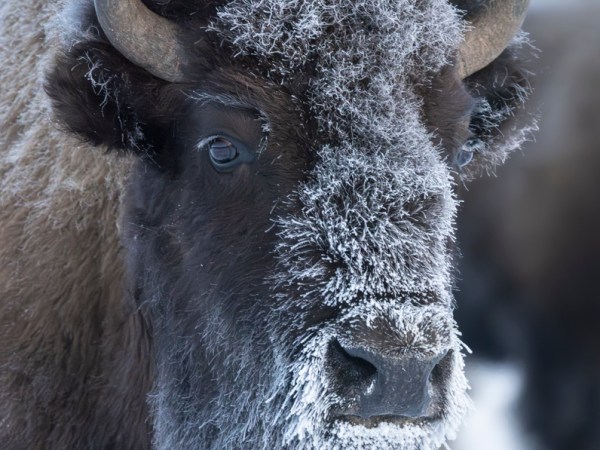
    Though Melissa would be going to Yellowstone on her Museum trip in June and have plenty of chances to see the cute “red dogs”, as baby Bison are often called, I would not, so this was a treat. And there were no crowds. A big difference is that these Bison (and most of the other large critters) are confined to these areas by fences and roadway cattle guards surrounding both parks. And, sadly, there are no bears (Grizzly or Black) or wolves.

    -A baby bison nosing some seed heads in a meadow

    That first afternoon, we drove several roads trying to get the lay of the land. The state park and the national park are adjacent to one another and it’s easy to go fro one to the other with connecting roads. Along our drive, we spotted numerous small herds of Bison, some Mule Deer, an Elk, and lots of birds, including my photo-nemesis-bird, the Western Meadowlark. Though they were a common species seen and heard on our trip, I had never managed to get close enough for a decent shot. That changed as we were driving slowly on a park road, hearing their loud songs in several spots along the route. Suddenly, I saw one on a fence post on the other side of the road. I pulled off the road across from the bird and fired a few shots as it sang away. Finally!

    -A Western Meadowlark finally is close enough for a photo (they usually manage to fly off before we can get close)

    We spent the night at the Wind Cave NP campground, nothing fancy, but quite pleasant and very quiet. Next morning we had a Mule Deer and a Wild Turkey walk through camp and then we were off to the visitor center to get in line for tickets for a cave tour. We had heard you need to be there before they open to make sure you get tickets. Indeed, I was about 15th in line about 20 minutes before they opened. Another visitor told us people line up hours before the door opens in the busy summer season. Our tour wasn’t until 11 a.m. so we decided to drive around and find a hiking trail for a morning walk. We picked the Cold Brook Canyon Trail as the brochure mentioned you hike through a prairie dog town…what’s not to like!

    -We quickly came across a large bull Bison near the trail. We gave him a wide berth and noticed he had a couple of hitchhikers, a pair of Brown-headed Cowbirds.

    Shorty after our encounter with the Bison, we started walking through a prairie dog town inhabited by lots of curious Black-tailed Prairie Dogs.

    -The prairie dogs didn’t seem to mind us walking through their town, although I am sure they are used to these tall two-legged critters passing by.

    Below is a short clip of a Black-tailed Prairie Dog going about its business as we pass through town

    –A Black-tailed Prairie Dog having breakfast pauses to check out the strangers in town

    -We paused for a rest at one of the cliffs along our hike and as I scanned the rock face I found yet another Great Horned Owl nest, this one with an adult and a chick just barely visible.

    After the hike we headed over to the Visitor Center for our cave tour. There were about 40 people on the tour and we had an excellent young park ranger as our guide. She did a great job of engaging people and managing the herd, which gets a bit more complicated when you enter a cave. Our first stop was at the original entrance to the cave, a small hole barely big enough to crawl through. She explained the significance of the cave to the indigenous peoples, especially the Lakota, who believe this is the place whee their nation was born.

    -The small hole on the lower left was the original entrance to Wind Cave. Now, you enter through a nice doorway and start a long climb down into the massive cave complex. It is believed to be the sixth longest cave in the world, with over 150 miles now surveyed. Its known depth is 643 feet. Studies of air flow through the entrances indicate that potentially only about 10% of the cave has been discovered. One other oddity about this cave is that there are six underground lakes where unique microbes have been discovered.

    -Wind Cave is best known for this unusual formation called boxwork (found in few other places on Earth).. This honeycomb pattern is caused by thin blades of calcite projecting from the walls and ceilings of Wind Cave. The calcite fins intersect one another at various angles creating these box-like shapes. The fins were formed when dissolved calcium carbonate crystallized in cracks in the surrounding rock. The surrounding rock then eroded away leaving the boxlike calcite crystals.

    After the cave tour, we decided to drive through both Wind Cave NP and Custer SP one more time in the hopes of seeing some Burrowing Owls and other wildlife (we did see 2 Burrowing Owls but they were too far off for pics).

    -It was very windy and this Bison was having a good hair day nevertheless

    -We stopped to watch a Bison calf and its mom interact

    -Melissa caught some great shots of the calf with mom’s tail blowing in the wind (photos by Melissa Dowland)

    -While scouring the landscape for Burrowing Owls, we came across several huge prairie dog towns. These cute little guys are baby Black-tailed Prairie Dogs. An extended family unit of prairie dogs is called a coterie and usually consists of 1 to 6 genetically related females, their yearling and juvenile offspring, and one adult male that sires all the offspring while he is in charge of that group (males move around it seems).

    -We really enjoyed watching these cute little rodents and listening to their many vocalizations. Research on prairie dogs has shown they have the most advanced vocabulary of any animal yet studied. Prairie dogs can alert one another, for example, that there is not just a human approaching their burrows, but a tall human wearing the color blue. Here is an article on this amazing research.

    We headed for the Black Hills NF via the Needles Highway in Custer SP. The Needles Highway is about a 14-mile drive (with a speed limit of about 25 mph due to the curves and steepness) through forests and meadows highlighted by needle-like granite spires.

    -The spectacular granite towers along the Needles Highway look like a miniature Patagonia skyline

    -To get to these spectacular viewpoints you must drive through the Needles Eye Tunnel – not for everyone (or every vehicle) as it is only 8’0″ wide and 9’9″ high)

    -Our campsite in the Black Hills NF had its own version of the Needles – a jagged rock wall spanning a ridge line

    On our way into Badlands NP the next day we stopped at an overlook and saw a few Rocky Mountain Bighorn Sheep. They were a fairly common sight on our first visit in 2020. We later learned (from a friend of Melissa’s who had worked at the museum, but is now a seasonal ranger at Badlands NP) that there had been a precipitous drop in the sheep population due to a disease. Things are just beginning to finally turn around and some surviving ewes are giving birth.

    -We didn’t realize when we saw this young lamb that this was a very important birth in the park

    Our last extended stay in Badlands NP was in late summer 2020. A major difference was that the landscape was then mainly brown, whereas this time, the prairie grasses were bright green providing a nice contrast to the rugged eroded landscape.

    -The green of spring adds a nice contrast to the earth tones of the rugged hills and ravines of the park

    -The name, Badlands , came from the Lakota people who called this region “mako sica” or “land bad.” Extreme temperatures, lack of water, and the exposed rugged terrain led to this name.

    We thought about camping in some of the BLM lands adjacent to the park, but the Lakota were right, this is a tough place and the temperatures were rising, so we headed for another favorite, the Sandhills of Nebraska. That will be part of the next post as we make it back home.

  • A Ribbon of Green in the Desert

    If the earth is a mother, then rivers are her veins.

    ~Amit Kalantri

    After Bear River, we knew it was time to point the truck eastward and start the long trek home (but with plenty of stops still). We charted a course for Medicine Bow National Forest in Wyoming where we had camped on previous trips. We stopped at a great visitor center in the town of Green River to ask some questions about the area. In addition to some good tips on camping and a new (for us) wildlife refuge, we learned that this area is considered the “trona capital of the world”. I had to have it explained to me…trona is a mineral that is processed into soda ash or bicarbonate of soda (baking soda). It is also used to make baking powder and a whole range of other products from glass to detergents. It may also be important for the future of electric vehicle batteries and solar panels. Wyoming has the world’s largest deposit of trona, supplying about 90% of the nation’s soda ash. This mineral is Wyoming’s top export and is shipped to markets worldwide.

    We learned about Seedskadee NWR, just a short drive from the town. The name is from the Crow tribe and means “river of the prairie hen” (which is another name for the Sage Grouse). We drove 20+ miles out to the refuge on a straight road passing through nothing but sagebrush steppe – a dry, flat landscape that dominates much of Wyoming. We finally came to the refuge and sptted a winding green ribbon – the corridor of the Green River (the same river we had camped next to in Dinosaur NM). The Green River courses 730 miles as it flows through Wyoming, Utah, and part of Colorado before joining the Colorado River (and it is that river’s major tributary).

    -The view of a distant Green River from a rise in the sagebrush country of Seedskadee NWR (click photos to enlarge)

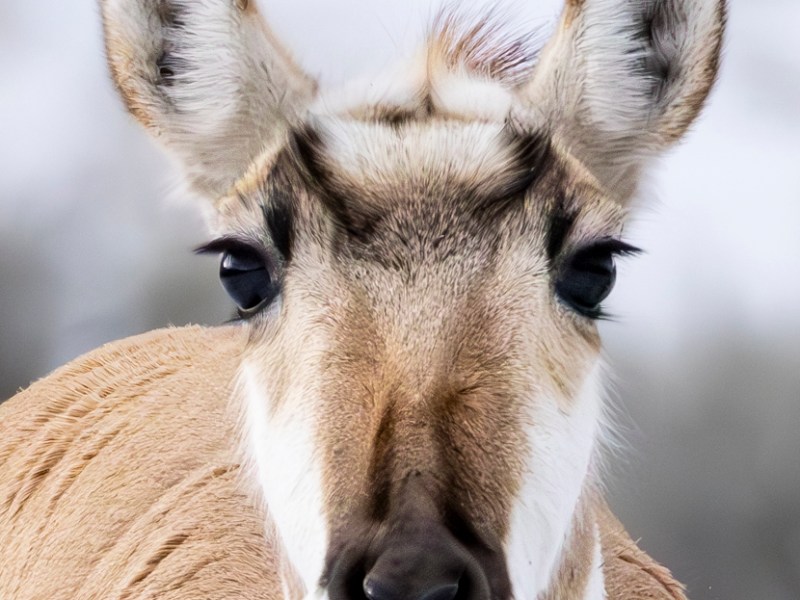
    -A stop at the amazing visitor center and a productive chat with the helpful refuge manager set us up to expect some of our first western megafauna of the trip including this Pronghorn buck. Unusually deep snow and frigid temperatures this past winter and early spring had killed many animals, especially the Pronghorn. We also saw a dead Porcupine in a tree when we first drove into the refuge. A big surprise was the number of Moose that called this refuge home.

    -Another big surprise was seeing this – a Canada Goose nest high in a tree along the river. The refuge manage said it was not uncommon to see geese nesting in trees out here – a first for both of us.

    After a short drive on the auto tour road we decided to look for our campsite in one of a few Bureau of Land Management (BLM) campgrounds along the river upstream of the refuge. We could have camped anywhere on the BLM lands, but we thought a campsite at a campground along the river might be preferable to a dispersed site in the sagebrush flats…and we were right it turns out. We opted for the Weeping Rocks campground along the river opposite a long high bluff. The cliffs were alive with Cliff Swallows beginning to nest.

    -A smattering of Cliff Swallow nests on the cliff across the river from our campsite

    -The view of the cliff. I sat at our site watching the swallows and the occasional Common Merganser that swam or flew by, when suddenly, I noticed something in a shallow hollow on the cliff face. Do you see it, just to the left of center in this picture?

    -A Great Horned Owl resting on the edge of a small overhang on the cliff! I quickly grabbed the big telephoto and walked out on the beach for a better view. Another camper with a telephoto lens came out and said his wife had somehow spotted the owl earlier in the day

    -As the sun lowered in the west, the golden light flooded the area with the owl. Notice the Cliff Swallow nest just below. These images were shot with an equivalent 700mm lens and heavily cropped.

    -The owl was pretty relaxed but did watch things down below. I assumed it was looking at the many swallows flying to their nests nearby.

    -Then I noticed something with my binoculars down below the perched owl, right along the river. At first, I thought it was an owl chick, maybe a dead one. Click on the photo and see what you think…(my thoughts below)

    -As I was studying the blob on the rock, a fledgling Great Horned Owl suddenly jumped up on the rock next to it, and by the time I got the camera up, it flew a short distance down to a flat area just above the river. I looked up at the adult, and it was looking down at its chick. Maybe it had been watching it all along. After studying the blob some more at high magnification, I think it might be the remains of a prey item or some mammal that washed ashore after drowning because it looks more like fur than feathers.

    -The owl chick did what fledgling owls are supposed to do when they leave the nest – it found a “leaner” and climbed it, in this case some boulders. This behavior helps get them off the ground a bit and safer from potential predators.

    -The young owl continued hopping and climbing until it got to the highest point along its route, where it sheltered in place for the rest of the evening, glaring at anything that dared to move in our campground. I must admit, we both spent a couple of hours watching every move the two owls made. It was an incredibly beautiful scene in this picturesque landscape. I had hoped to see the adult leave for its evening hunt, but it did it as I was at the truck getting dinner (naturally). We did hear it hoot a couple of times, but only the one owl, so we wondered what had happened to its mate.

    -The next morning I scanned the cliff face and down by the river. Neither the adult nor the fledgling were in sight in the same area. I scanned all along the cliff and was delighted to find a pair of adult owls on another ledge about a hundred yards from the one the previous night. Though we never did see the young bird again, we hope its parents were able to care for it (and maybe any siblings that might still be alive). It looked like a very hazardous place to be an inexperienced owl chick though as the river was fairly wide and very swift at this cliff face.

    -We drove back through the refuge after leaving the campground in hopes of seeing Moose. No luck on that, but we did see lots of birds, like this Swainson’s Hawk, one of many we saw on our trip.

    -A nice Bald Eagle nest along the river

    -And yet another Great Horned Owl nest, this one very far off with three chicks in it. The river corridor seems like a good place to raise a family here in the sage steppe country.

    -A male Red-winged Blackbird proclaiming his ownership of this territory

    -Another Yellow Warbler. After way too many pictures with twigs blocking part of my photo, the bird finally came out in the clear for a couple of shots and the early morning light was fantastic.

    -A Horned Lark alongside the road showing off his tiny “horns”. The “horns” are actually small tufts of black feathers (more prominent on males). During the breeding season, he can raise and lower them to attract females…Melissa, did it work? (photo by Melissa Dowland).

    After leaving the refuge, we headed to Medicine Bow NF, looking for the high mountain landscape that appeals to us a bit more (although the sagebrush country is beginning to grow on us, especially after listening to an excellent podcast series called Grouse about the Greater Sage-grouse and the people and the land that make it the most controversial bird in the west- check it out).

    -Melissa worked her magic again and found a forest service road with multiple options for scenic camping. We finally picked a site just off the road with a great view of distant mountains and some wonderful rock outcrops nearby (and a Black Bear track and lots of Elk scat right in our site).

    -The sunset was amazing, and after dark we heard an unusual call,. It turned out to be a Common Poorwill, the western cousin of the Eastern Whip-poor-will and Chuck-will’s-widow. It was accompanied by the constant tooting of a nearby Northern Saw-whet Owl.

    It had been a spectacular evening high in the mountains with patches of snow and beautiful wildflowers beginning to bloom. Next stop – South Dakota – we were headed for the Badlands (coming in the next post).

  • Dinosaurs and Birds

    Birds are the last of the dinosaurs. Tiny velociraptors with wings. Devouring defenseless wiggly things and, and nuts, and fish, and, and other birds.

    ~Neil Gaiman

    Picking up again on our May road trip…after Denver, we headed to Dinosaur National Monument in Colorado and Utah, a huge national monument at over 210,000 acres (and a new brown sign destination for us). I have never been much of a dinosaur guy, but the natural history descriptions were attractive and they had some camping available, so we headed there. To say I was impressed is a bit of an understatement. Not only was there plenty to see in terms of present-day flora and fauna (and geologic formations), but the recent and distant history of the place is fascinating.

    -Melissa’s research as we drove snagged us the best site in this campground at Dinosaur NM (she’s really good at that). We were at a site (on the left side of this high view of the campground) screened by a shrub and tree border right next to the Green River. The huge patch of green on the right is a private in-holding in the monument (click photos to enlarge)

    -One of the highlights is the unique building at what is called the Quarry Exhibit Hall. It sounds like it is primarily due to the incredible vision of the paleontologist who first discovered dinosaur bones at the site back in 1909. Many important fossils have been removed and placed in museums around the country, but he envisioned an exhibit of some of the bones in place in the rock formations in which they were found. To that end, NPS constructed a building adjacent to a slope of rock with 1500 dinosaur bones in it so visitors can view them (and even touch some). It really is one of the most unique exhibit halls I have ever seen. There is also a great visitor center not far from the quarry.

    You can also immerse yourself into more recent history at the monument. There are several outstanding examples of petroglyphs that can be easily seen along some trails. These are believed to be handiwork of the Fremont people that lived in the area from about 200 AD to 1300 AD. Human figures in stone typically have trapezoidal bodies decorated with head dresses, earrings, and other adornments. Animal figures we saw included bighorn sheep, lizards, and birds.

    -Petroglyphs of the Fremont people. Some of these figures are quite large and a few were high on the rock wall making me admire the artists even more

    -Even more recent history is represented by the preserved cabin of Josie Bassett Morris who moved to the area alone in 1914 at the age of 40. She stayed here without electricity, plumbing, or neighbors for 50 years, living off the land, growing crops, and herding a few farm animals. I can see someone I know doing this…

    -We hiked a short way up Box Canyon adjacent to Josie’s cabin. There were so many Yellow Warblers and White-throated Swifts here.

    -Wildflowers like this Desert Paintbrush added splashes of color to the dry landscape

    After leaving the monument and camping one night in a Forest Service Campground (what’s with all these campgrounds this trip?, but we were the only ones in it) Melissa charted a path into the Uinta Mountains where we had dispersed camped on a previous trip. But the heavy snows this winter altered our plans. As we drove along this nice 4-lane road I noticed a rather non-descript road sign saying “Road Closed 5 miles Ahead”. We thought, surely not this road…but, it turns out, they do not do winter road maintenance on this mountain pass. At about 8000 feet in elevation we ran into a snow-covered road, and we still had another 1000 feet in elevation to go to get across the pass. Change of plans…

    -Several inches of snow greeted us on the road and, as we had another 1000 feet in elevation to go to get over the mountain, we figured the snow might get a bit deep, so we turned around.

    Melissa soon found another option not far down the road and we drove up a beautiful Forest Service road for two nights of camping surrounded by mountains, a roaring stream, and grassy meadows full of Spring Beauties, Uinta Ground Squirrels, and Pocket Gophers.

    -Our dispersed campsite the second night in this location (we moved about a hundred yards uphill to be in the aspens) turned out to have more mosquitoes than we needed (weird that short a distance was so different). But a highlight was actually laying eyes on a Pocket Gopher, a critter we had never seen before (have seen plenty of their sign, but not the actual animal). Melissa said she would want to be a Pocket Gopher if she lived here (she really doesn’t like mosquitoes). There were also a lot of great birds up in this aspen grove including Mountain Chickadees, a Green-tailed Towhee, a Golden Eagle, a Black-headed Grosbeak, and a Broad-tailed Hummingbird that came face-to-face with both of us one morning.

    -We followed this Black-headed Grosbeak for a bit as it went for one clump of trees to another before finally getting a decent look and photo.

    Our next stop was a gift to me for our anniversary – two nights in an Airbnb near a fabulous national wildlife refuge we had visited on a previous trip – Bear River Migratory Bird Refuge, north of Salt Lake City (SLC). On the way, we made a stop at the Uinta Brewery in SLC (we also try to hit breweries on our route when it fits our schedule).

    -Taking a break from the truck at the Uinta Brewery

    Our Airbnb was a short drive from the refuge so we headed out early the next morning with the intention of spending the day observing and photographing birds. Recent rains and snow melt had water flowing across the main entrance road, but it didn’t seem to bother the birds.

    -As we entered the refuge, we spotted a few Long-billed Curlews, Numenius americanus. This is America’s largest shorebird and with an incredibly long curved bill. The genus name comes from a Greek word meaning “of the new moon”, since the bills were thought to resemble a new moon crescent. It is adapted for probing sand and soft mud for worms, crabs, and other invertebrates, especially on their wintering grounds.

    -In their summer breeding grounds of western grasslands, they feed more on insects, spiders, and the occasional nestling bird or other small vertebrate. Here, Melissa caught one grabbing a large sphinx moth. (photo by Melissa Dowland)

    -A quick gulp and it was gone (photo by Melissa Dowland)

    -There was one interesting addition to the refuge’s fauna – incredible clouds of midges in places (along with way fewer mosquitoes in a few spots) seen here swarming on our windshield. You could actually see columns of midges doing their aerial mating displays far down the road – they looked like smoke columns rising up from the marsh edges. Melissa was not a fan, but several species of birds were snagging them while in the air (Barn and Cliff Swallows) or perched (the blackbirds) or when on the ground (a bunch of gulls snatching at them while standing along the road).

    -Once on the Auto Tour Road, we saw countless Red-winged and Yellow-headed Blackbirds vying for territory in the marsh grasses. Here, a male Red-winged Blackbird proclaims this section of marsh as his own.

    -Always a delight to see Yellow-headed Blackbirds (even it is on that darned Phragmites grass)

    -The real stars of the refuge are two of my favorites (as I mentioned in the last post) – American Avocets and Black-necked Stilts…elegance in avian form.

    -In avocets, you can distinguish males from females by looking at their incredible bills – the male bill (on the left) is less curved than that of a female (right photo)

    -One of the great things about this refuge is that we saw both species on nests. I only wish we could be there when the young hatch, as they are amazingly cute

    -In many places along the Auto Tour Road, there were several individuals quite close, allowing us great views to watch their behavior and get some nice photos

    -Occasional squabbles erupted over feeding or nest territory. Melissa caught this pair of stilts having a bit of a disagreement (photo by Melissa Dowland)

    -American White Pelicans were also a highlight. The strange protrusion on the bill (some call it a caruncle, we call it the potato chip) occurs on both sexes during the breeding season. It may serve as an attractant to find a suitable mate. It drops off after mating and the eggs are laid.

    -These are really big birds – they stand about 4 feet tall, weigh up to 30 pounds, and their 10-foot wingspan is second only to one other North American bird, the California Condor. Melissa got this shot of a pelican in flight with the distant mountains in the background (photo by Melissa Dowland)

    -The most common duck we saw on the refuge was the Cinnamon Teal (as you can see, the males are absolutely gorgeous)

    -Western Grebes are also abundant on the refuge and gave us good shows all along the roadway as they dove for fish and occasionally squabbled over a good spot. These two looked like they may have had something else in mind.

    -Clark’s Grebes also occur here and are similar in appearance to Westerns, although they seem to have a bit more of an air of gracefulness than the Westerns in my opinion. You can separate them by looking at the placement of the eye – the red eye is below the black on top of the head in a Clark’s Grebe (left) and inside the larger black area on the head of a Western Grebe (right)

    -Here is the eye trait I felt at the end of the day…after a long, amazing day at Bear River, we headed back to our Airbnb for a good night’s rest.

    Next time, some more new brown signs and, you guessed it, more birds (and maybe some charismatic megafauna as well).

  • Brown Signs and Birds

    Wherever you meet this sign, respect it. It means that the land behind the sign has been dedicated by the American people to preserving, for themselves and their children, as much of our native wildlife as can be retained along with our modern civilization.

    ~Rachel Carson on our national wildlife refuges (referring to their logo and welcome sign)

    As Melissa mentioned in her introductory post about our May road trip, we do try to visit as many brown signs (national and state parks, national wildlife refuges, etc.) as possible along our route. Her post got us to Kansas on day 3 of our trip so I’ll pick it up from there. Leaving our Chase Lake campsite on day 4, we headed to Quivira National Wildlife Refuge (NWR), a spot in south central Kansas we had visited on a road trip in 2020. As is typical of many of the refuges that were established primarily for waterfowl, a visit during non-migration periods often does not have the hordes of birds (Quivira is host to around 800,000 waterfowl during migration) that the refuge may be famous for. But, any place that has water, wild lands, and is protected offers glimpses into the wildlife of a region. What makes Quivira unique is its combination of inland salt marshes and prairie habitat. The salty surface water and salt marshes are fed by groundwater moving to the surface through halite-containing subsurface layers. The water is 20-40 times saltier than drinking water but only about a quarter to a half as salty as sea water. And the birds along the Central Flyway appear to love it.

    Our first stop was a small pond that had several wading birds working the shallows including two of my favorites – Black-necked Stilts and American Avocets.

    -The comical-looking long legs of a Black-necked Stilt when seen on land remind you that this bird has the second longest legs in proportion to body size of any other bird (only flamingos beat them out in legginess) (click photos to enlarge)

    -One of our most graceful and elegant-looking birds, the American Avocet, in its glorious breeding plumage

    Away from the water, we spotted a Grasshopper Sparrow singing into the wind.

    -A Grasshopper Sparrow singing its insect-sounding buzzy song (one I can finally hear now with my hearing aids!)

    -We came across this Garter Snake feasting (or at least trying to) on a reptilian version of a pancake – a roadkill-flattened toad

    -An abundant shorebird in the major salt pond was the Wilson’s Phalarope. These birds have some interesting traits – they spin in tight circles to feed when in deeper water; the females are slightly more colorful than the males (I think this is a female); and the female abandons her nest once the eggs are laid and the male takes over for care and feeding of the young, while she goes out and looks for other males!

    -Every time I see a small shorebird, I am reminded of the definition of the term peep – small shorebirds that are notoriously hard to tell apart. I think this one is a Baird’s Sandpiper.

    -The primary waterfowl we saw were Mallards and Blue-winged Teal, like this beautiful male

    After driving much of the Auto Tour at Quivira, we hit the road across the seemingly never-ending flat lands of the plains and made a stop at another brown sign along the way – Little Jerusalem Badlands State Park.

    -Looking out the windshield across Kansas

    -And then a brown sign leads you to this surprise

    -Little Jerusalem Badlands State Park is a gem of a state park and, indeed, resembles the better known badlands of South Dakota (we stop there later on this trip). The Nature Conservancy (TNC) acquired this tract and turned it over to the state for management. The interpretive signs were among the best I have seen (thank you, TNC). The name, Little Jerusalem, may have come form people that said, from a distance, the geologic formations look like the ancient walled city of Jerusalem.

    -The bird stars of this park were a few Horned Larks. You gotta love those facial masks. The ‘horns” are laid flat in this individual while it scopes us out along the trail.

    I had suggested a trip to Denver see another wildlife refuge ( a new one for us) – Rocky Mountain Arsenal NWR. Since it can be tough to find good camping spots on Friday and Saturday nights, we opted for a Denver hotel to give as an early start on the refuge the next morning. This refuge sits only 10 minutes from downtown Denver. During WWII, the Army bought thousands of acres of farmland outside Denver and opened a chemical weapons plant. Years later, Shell acquired the site and manufactured agricultural chemicals up until the mid-1980’s. All those years of industrial use, many during times when we had little environmental regulations, resulted in toxins in the soil and groundwater. But, a large tract of undeveloped land and water had attracted wildlife over the years. The discovery of large numbers of Bald Eagles using the area created an effort by locals to clean up the site and turn it into the wildlife refuge it is today, one of the premier urban national wildlife refuges n the country. It now includes re-introduced Bison, Elk, and many other species of wildlife, including the federally endangered Black-footed Ferret.

    -View of the Denver skyline from the refuge.

    -Recent heavy rains had closed most of the Auto Tour Road so we weren’t able to get close to some wildlife (like the small Bison herd that lives on the fenced refuge), but the birds were plentiful. Yellow warblers were far and away the most abundant warbler species we saw on our trip.

    -This Spotted Sandpiper was doing shorebird yoga on a log by one of the ponds.

    -The highlight of our wildlife sightings at the refuge happened as we were leaving the visitor center (which is beautiful, by the way). An American Kestrel carrying a prey item flew across the parking lot and landed on a roof edge. Another car drove past and it flew and landed on the ground at the edge of the parking area. We eased over and got a few pictures. It looks like it had captured a baby bird, perhaps a Killdeer.

    From Denver, we hit the road again, trying to avoid the rain that seemed to be popping up all over this part of the world. Melissa worked her magic on the computer, planning alternative routes and seeking out brown signs and beautiful campsites. Next time – Dinosaur National Monument and the Uinta Mountains.

  • Trail Cam Tales

    I am the hawk and there’s blood in my feathers, but time is still turning they soon will be dry. And all those who see me and all who believe in me, share in the freedom I feel when I fly.

    ~John Denver

    Melissa and I were gone on another truck camping adventure for a couple of weeks in May (more about that in the next few posts) and on our return I was anxious to see what the trail cameras captured in our absence. I was hoping to see several video clips on the antics of the young opossums (I posted about them last time, right before we left on vacation). Imagine my surprise when I looked at the footage from the two cameras near the opossum den – no footage at all of the young ones! There was plenty of two adult opossums around the hole and on the log and on nearby cameras, but nothing from the youngsters. Who knows what happened, or did they just move on? I’m not sure how long young opossums stay with their mother, but I would have thought longer than this.

    –An adult Virginia Opossum near the den at the tree root ball. It grabs something small right at the end of this clip and eats it. Bonus points if you can tell what it eats (I can’t)

    As I said, there are several clips of two different adult opossums around the den and the tree from the root ball. Another camera adjacent to the large tree from the root ball site caught this action of two opossums chasing each other. The place they pause is a spot that both opossums and raccoons showed a lot of interest in while we were away. Both species were caught digging at the spot and one opossum carried something away and ate it, but I can’t tell what it was in the video. I thought maybe a yellow-jacket’s nest was dug up, but I can’t find any evidence on the ground.

    –Opossum chase and a standoff near the place that they and raccoons had been digging

    The cameras caught some unusual behavior in our absence – coyotes out during the daylight. In fact, coyotes appeared 5 days in a row during the day on two different cameras (and have appeared again since we have returned – the second clip). I guess they may have young that need feeding and so they are abandoning their usual caution and venturing forth during the day to find food.

    –A rare daytime appearance by a coyote

    –Coyote pair out in daylight

    In addition to some quick clips of the first fawn of the season, the big highlight from the trail cams involved a long series of clips of an immature Red-tailed Hawk that landed on the tree coming from the opossums root ball den site.

    –An immature Red-tailed Hawk lands on the log, much to the dismay of local squirrels barking in the background

    –The hawk seems content to sit and preen in spite of the concerned local residents

    But one squirrel isn’t having it and seemingly decides to challenge the hawk. There are a few clips where the squirrel approaches the predator on the tree, but maybe it realizes a standing hawk is no threat compared to one in the air.

    –A brave (or stupid) squirrel comes toward the hawk, who seems puzzled at the intrusion

    Finally, after several minutes of footage, the hawk walks off. Check out the blood stain on its feathers. I am hoping that is from a prey item (perhaps a brave, or stupid, squirrel) and not an injury.
    –The hawk strides by the camera, taking a nice selfie in the process

    The next few posts will give some of the highlights of our recent road trip out west (and surprisingly, this time the road did not lead to Yellowstone!).

  • Across the Plains… Again!

    Caminente, son tus huellas
    el camino y nada más;
    Caminente, no hoy camino
    se hace camino el andar.
    Al andar se hace el camino,
    y al volver la vista atrás
    se ve la senda que nunca
    se ha de volver a pisar.
    Caminent, no hay camino
    sino estelas en la mar.

    Traveler, your footprints
    are the only road, nothing else.
    Traveler, there is no road;
    you make your own path as you walk.
    As you walk, you make your own road,
    and when you look back
    you see the path
    you will never travel again.
    Traveler, there is no road;
    only a ship’s wake on the sea.

    ~Antonio Machado, translated by Mary G. Berg and Dennis Maloney

    It’s that time of year, where, in my job working with teachers, there’s a bit of a gap in the schedule. It’s getting close to the end of the school year, final exams, and grades; so professional development workshops aren’t the highest priority for teachers. That means it’s time for me to use some of the many hours of comp time I’ve banked. So, on May 9, after 22 days of work with only 1 day off, we hit the road in the good ole pickup truck to head west. That was the only plan. Head west. Since we’ve done this before, we felt confident that we could figure things out on the fly. Perhaps not the best idea, but that meant we could change plans at the drop of the hat. If it was going to rain or blow, we’d just head in another direction, right? Right…
    Since I hadn’t had a day off in 8 days (and only one at that point), we were definitely not ready to leave early in the morning to make some progress out west. The morning of May 9 came, and we still had a lot of packing to do. But my truck camping and dehydrated food lists from previous trips camp in handy, and we were able to get everything together and hit the road by early afternoon. That meant our first stop would be in the North Carolina mountains (because, not sure if Mike’s mentioned this before, but we pretty much despise Tennessee – the only place we’ve found to camp is state parks, and… let’s just say that we much prefer North Carolina state parks).

    Folks, if you want to camp without people around, the Forest Service is your friend. Their website is terrible… but once you figure out the maze, it’s pretty consistent from forest to forest; and Motor Vehicle Use Maps are your best friend (especially in the west… in the east, it’s much trickier to figure out where dispersed camping is allowed and where it’s not… I sometimes think they’re opaque on purpose to try to limit the amount of use some of these areas get… I might be ok with that!). I mean, they don’t show topography, and they hardly show roads outside of the national forest (like, roads that show up on other maps and might help you figure out where the heck you are), but hey, at least they show you the forest service roads!

    So, after much consultation with the USFS website for Pisgah National Forest, we hit up a dispersed camping area off I-40 before the Tennessee border (on a whim, at the last minute, of course). It didn’t disappoint. We found a spot next to a stream, slightly off the road, with lots of wild geranium in bloom and spring peepers and American toads calling in a few ditches created by previous campers in a much muddier season (the ruts were so deep I was a bit surprised not to find a rusting vehicle at the end of the track). Not a bad way to start the trip.

    Our first campsite in Pisgah NF
    Cold Springs Creek just above our campsite – a perfect mountain stream

    The next day was another story, however. We hit the road early trying to cover some middle-of-the-country miles. Or really, trying to get across Tennessee. Don’t get me wrong, it’s a beautiful state with more brown signs along the interstate than almost anywhere else. But every campground we’ve been to has been… mediocre… generously (which is only 3, so someone please tell me where the good ones are, if you know!). We’d thought to head towards the Ozarks in Arkansas or southern Missouri, home to our favorite river, the Current. But rain was forecast for that area (thank you, National Weather Service, for the nationwide graphical forecast tool), so we decided to steer a bit further north.

    We knew that in Missouri we could camp at one of their many state-run Conservation Areas, which are often quite remote and lovely, so as Mike drove the interstate, I perused the Missouri Department of Conservation website and landed on a conservation area along the Mississippi River called Magnolia Hollow. Camping? Check. Scenery? Perhaps. Close to the highway? Relatively. So we headed down some single lane roads, past a bunch of farm fields, then up onto the bluffs above the river. A visit to the trailhead at the end of the road and a stroll out to the viewpoint showed the might Mississippi in the distance (after huge floodplain fields in cultivation). And the birds were great – we saw Kentucky warblers close-up! That’s not one we often see in North Carolina! (Sorry, no picture, but google them – they’re beautiful birds!). Plus, it was singing consistently, so we got to know the call a bit – it sounds like a tired ovenbird, a species we hear regularly in our woods at home.)

    Mississippi River in the distance with a wide cultivated floodplain in the foreground

    The camping area was fine – a few concrete picnic tables and fire rings in the trees. But a peaceful night’s sleep was not to be… because well after dark, a man drove into the camping area quickly, stopped his car, and got out with a large dog. They went for a walk down the road, and there was much yelling. Then, he came back to the campground, messed in his vehicle very briefly, and proceeded to lie down on the concrete picnic table next to our site and curse at his dog to be quiet and lay with him, perhaps to keep him warm. I couldn’t hear all of his words… but I heard enough to know that he wasn’t entirely in his right mind for one reason or another. To be quite honest, it was scary. He wasn’t threatening, but I worried that if he woke up and needed something and approached our truck with his dog… well, I didn’t know what that might look like. I woke Mike up and we remained awake for most of the night. At dawn, we quickly packed up and got out of there, thankfully with no interaction with the man, other than him yelling at his dog to stop barking at us. We were glad to get away safe and sound (and to find a wonderful local coffee shop for some caffeine and breakfast treats)!

    After that fun evening, we were happy to cross and then depart from Missouri. Next stop: Kansas. We had decided to head towards Colorado by this point in the hopes that, it being slightly farther south than our favorite places in Wyoming (yes, Yellowstone, you knew that, didn’t you?), there might be a bit less snowpack after this incredibly snowy western winter. Given that Colorado is known for its very tall peaks, you may be questioning this rationale a bit. You would be right. More on that later. But head that way, we did. Kansas was not our favorite state when we had crossed it previously; though it has the Flint Hills, we’re bigger fans of the Loess Bluffs of western Iowa and northwestern Missouri and the Sandhills of Nebraska. But, we knew it has some nice National Wildlife Refuges, and Mike loves nothing better than to stop at a National Wildlife Refuge. Previously, we crossed Kansas in the fall, so we figured we might see some different species this time of year.

    Plus, Kansas has some lovely State Fishing Lakes, many of which allow camping at somewhat dispersed sites. With the goal of visiting Quivira National Wildlife Refuge in the morning, we headed to Chase State Fishing Lake just south of the Tallgrass Prairie National Reserve. We’d camped here on a previous trip, and the open landscape and slightly more developed camping area were just the respite we needed after our Missouri fiasco. The area had been recently burned and the wild indigo (Baptisia sp.) was in beautiful bloom. A short walk along the road also introduced us to green antelopehorn milkweed, which is a new favorite plant name for me.

    Wild indigo in bloom by Chase State Fishing Lake
    Green antelopehorn milkweed flowers

    After dinner, we took a short walk below the dam for the lake, as I’d seen something that made me think there might be a waterfall there. Yup, a Kansas waterfall. It was surprisingly impressive! There wasn’t much water as this part of the world has been in a drought. The main part of the falls was dry, but a bit downstream was a smaller falls with some water flowing over it. It’s all thinly bedded sedimentary rock, which makes for a picturesque waterfall; it would be quite impressive with more water. Flipping a couple rocks, I spotted numerous mayflies, which indicated to me that the water quality was at least pretty decent and, it being a warm night with no shower in the near future, I took the opportunity for a favorite activity, a head dunk!

    Waterfall below Chase Lake

    We ended the evening watching a lovely sunset over Chase Lake before retiring quite early to the truck for a well-deserved hard night’s sleep.

    As this blog is getting a bit lengthy, I’ll leave you here. Mike will pick up the tale in future posts.

    PS – Many thanks to my Mom for a beautiful little journal she picked up in Patagonia for me. It’s bound in leather (guanaco, perhaps) and features a line from the Antonio Machado poem quoted at the beginning of this post on its cover. It was a lovely companion to record details and sketches as we traveled. Thanks, Mom!

Search the Archives

Due to our site update, photos on older posts may not display correctly. Sorry for any inconvenience.


Recent Posts