
All nature is but art unknown to thee.
~Alexander Pope
Earlier this week, I accompanied some friends on a stroll through one of my favorite local natural areas – Johnston Mill Nature Preserve in Orange County. This area is managed by the Triangle Land Conservancy and is one of their more popular sites. I love exploring this beautiful tract, especially in early spring when sections are carpeted with wildflowers like trout lilies and spring beauties. But, this time of year, a stroll through the bare forest allows you to notice and appreciate other details of the landscape – tree bark, fungi, textures, shapes, and, on a warm day like last Monday, the early stirrings of insects, amphibians, and other animal life.
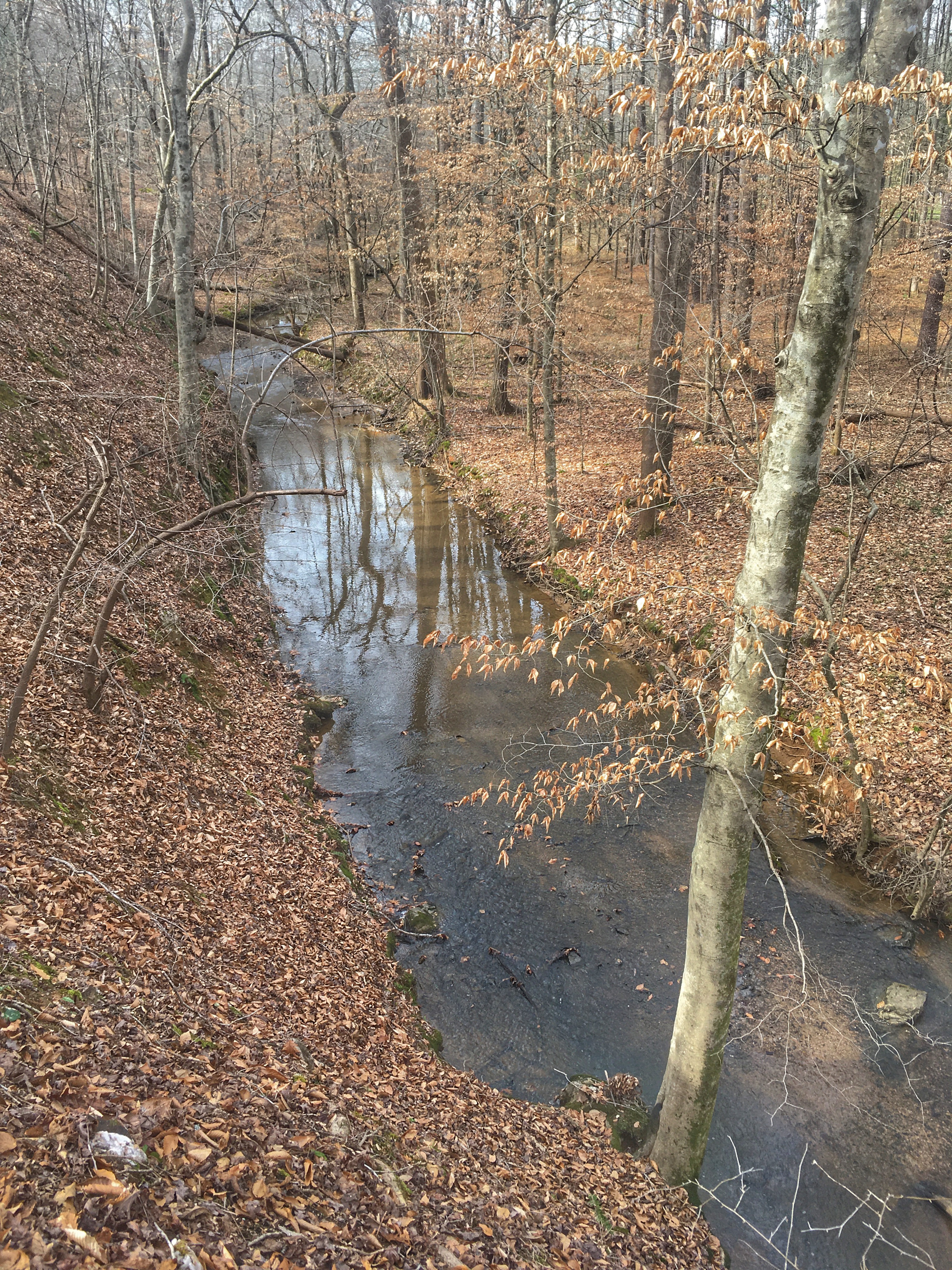
I appreciate the winter woods for their openness and the ability to see the bones of the landscape – the trees, vines, and boulders that give character to a forest. The trails at Johnston Mill are well-marked and pass through a variety of habitats from bottomlands to beech bluffs to open meadows along a power line. My favorites were the new Aphid Alley Trail (not yet marked on the kiosk maps but available on their maps online) and the Beech Loop. They highlight beautiful American beech trees and some steep slopes along creeks with wonderful vistas.

Beech trees often provide a perfect canvas for a variety of interesting lichens. These flattened colonies of symbiotic algae and fungi are known as crustose lichens. I learned a new word when looking for information on lichen competition online – corticolous. This refers to lichen communities that grow on tree bark (those on rocks are known as saxicolous). Melissa mentioned she had learned in a lichen course that the distinct lines that you can see between some colonies could mark sort of a DMZ between warring lichens and that lichens may use chemical warfare to guard their boundaries. My online search shows some evidence for this but it still seems a bit controversial. It is a bit mind-boggling that these slow-growing assemblages set up zones of defense to ward off intrusions by their neighbors.

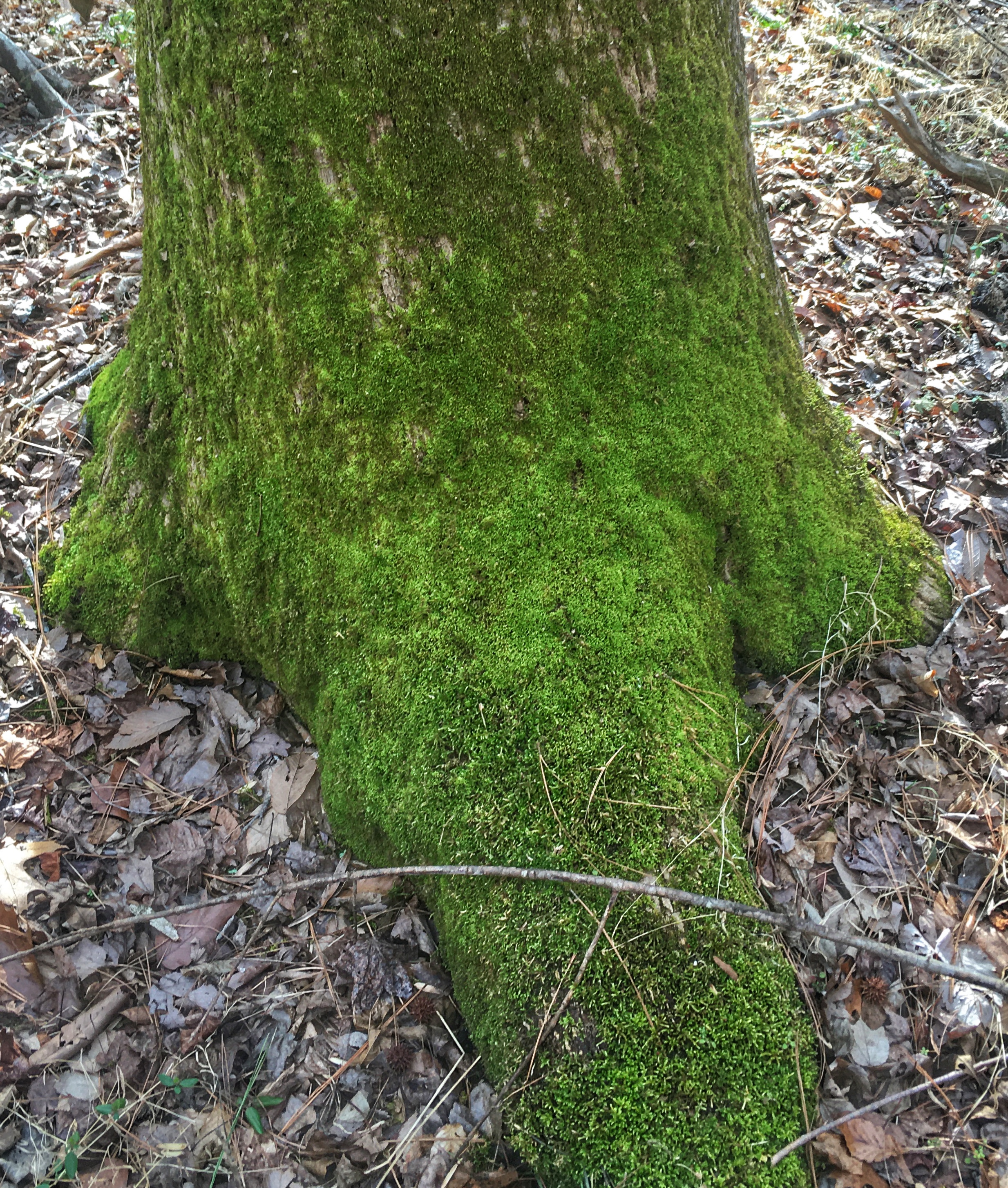
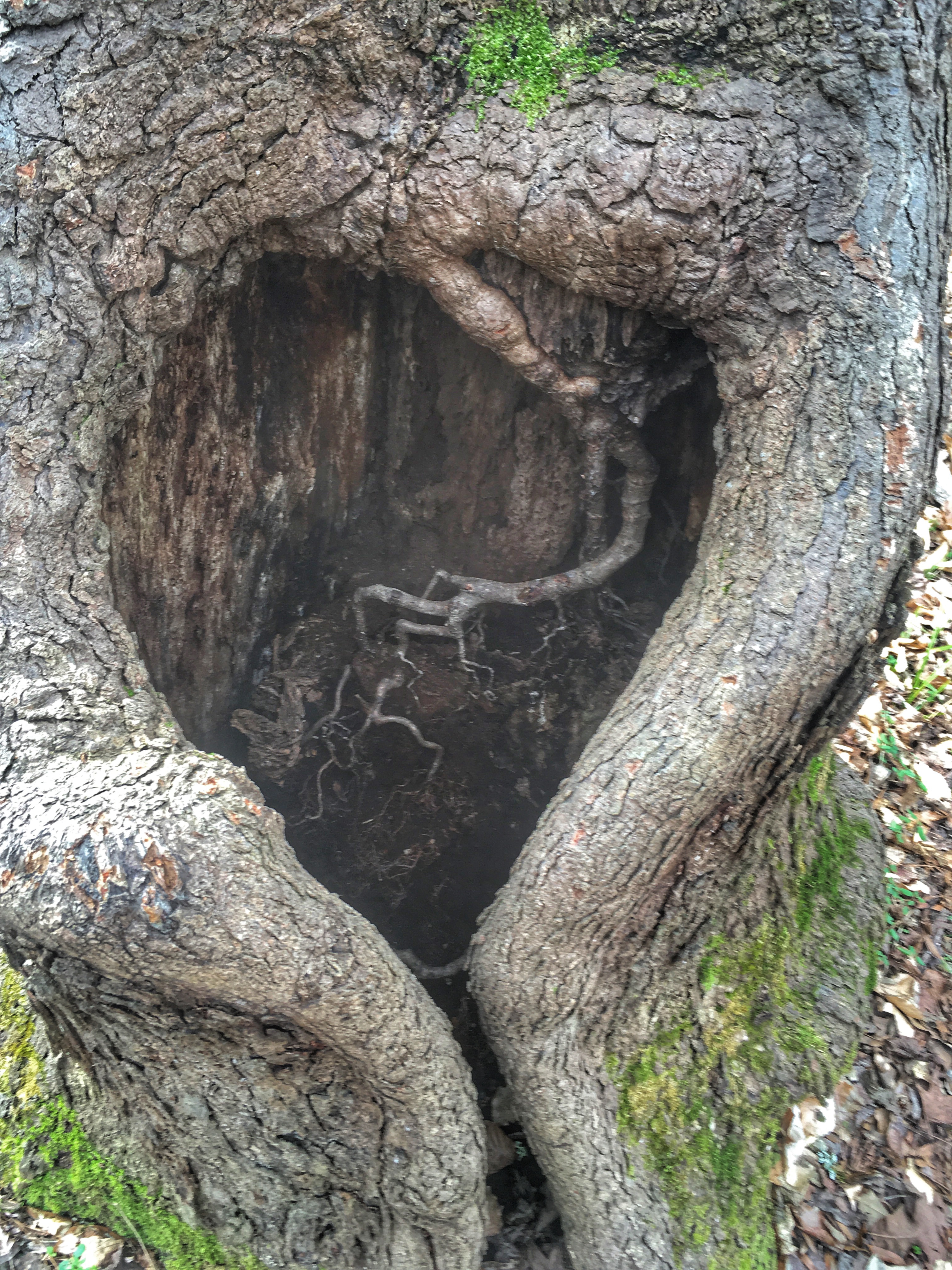
Tree trunks rarely get their due outside of winter, and even then, few hikers probably pay them much attention. But I find them fascinating, especially when covered in moss and lichen or when sporting unusual growths like the numerous burls we spotted on a few maples.

Burls are a bit mysterious in origin with common causes believed to be infection by bacteria, virus, fungi, and perhaps certain insects.
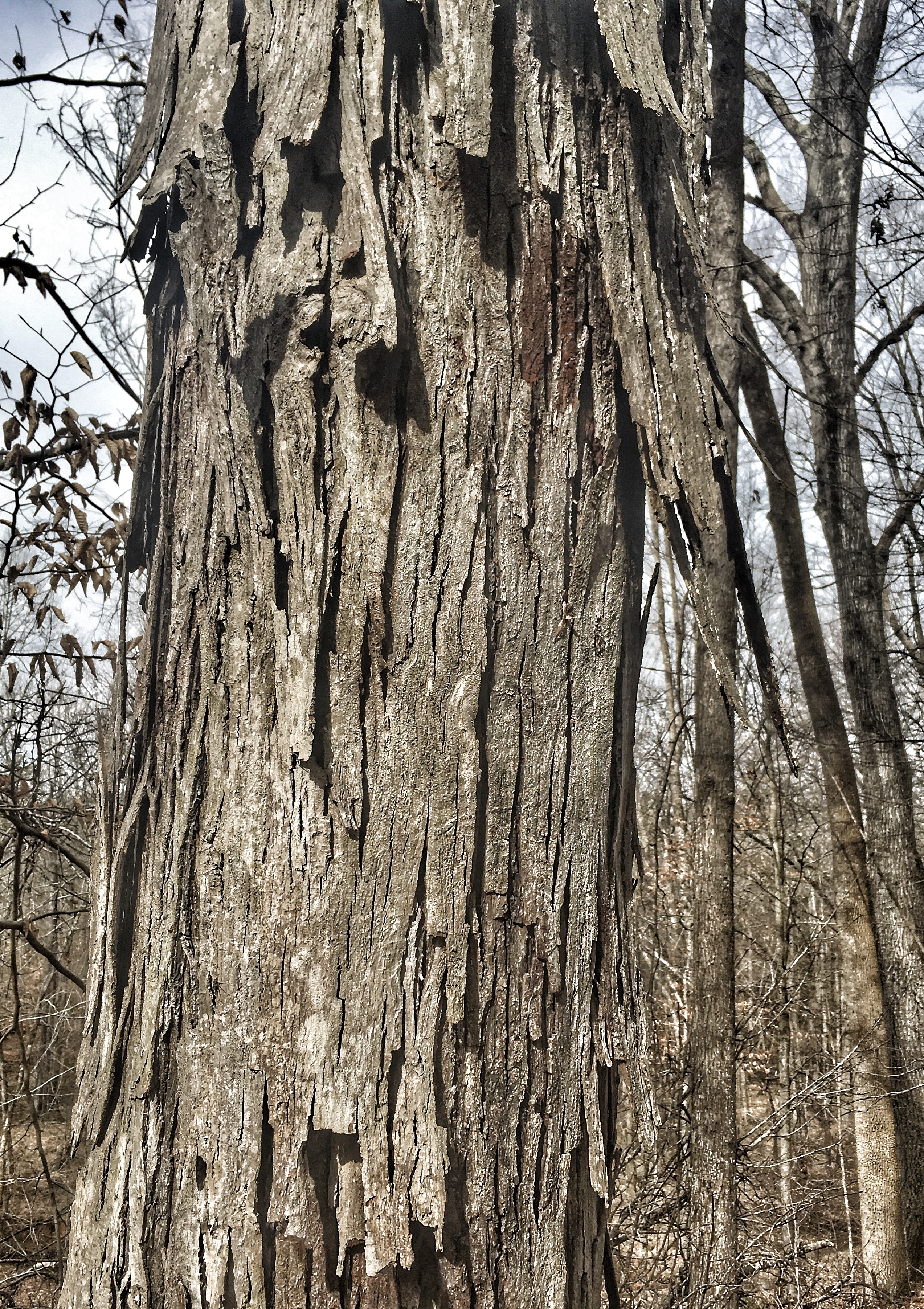
The peeling bark of American sycamore and shagbark hickories are another tree trunk treasure easily observed in the winter woods. Once again, the reasons for this phenomenon are not clear cut. Some trees may exfoliate (the term that describes shedding of bark) to rid the trunk of parasites, others to increase gas exchange or photosynthesis of bark tissue, but I’m mystified as to the ecological advantage of peeling plates of bark on a shagbark. Undoubtedly, it makes for good habitat for a host of associated organisms from insects to bats, but I’m not sure what the advantage is to this species of hardwood (I welcome your thoughts or references).


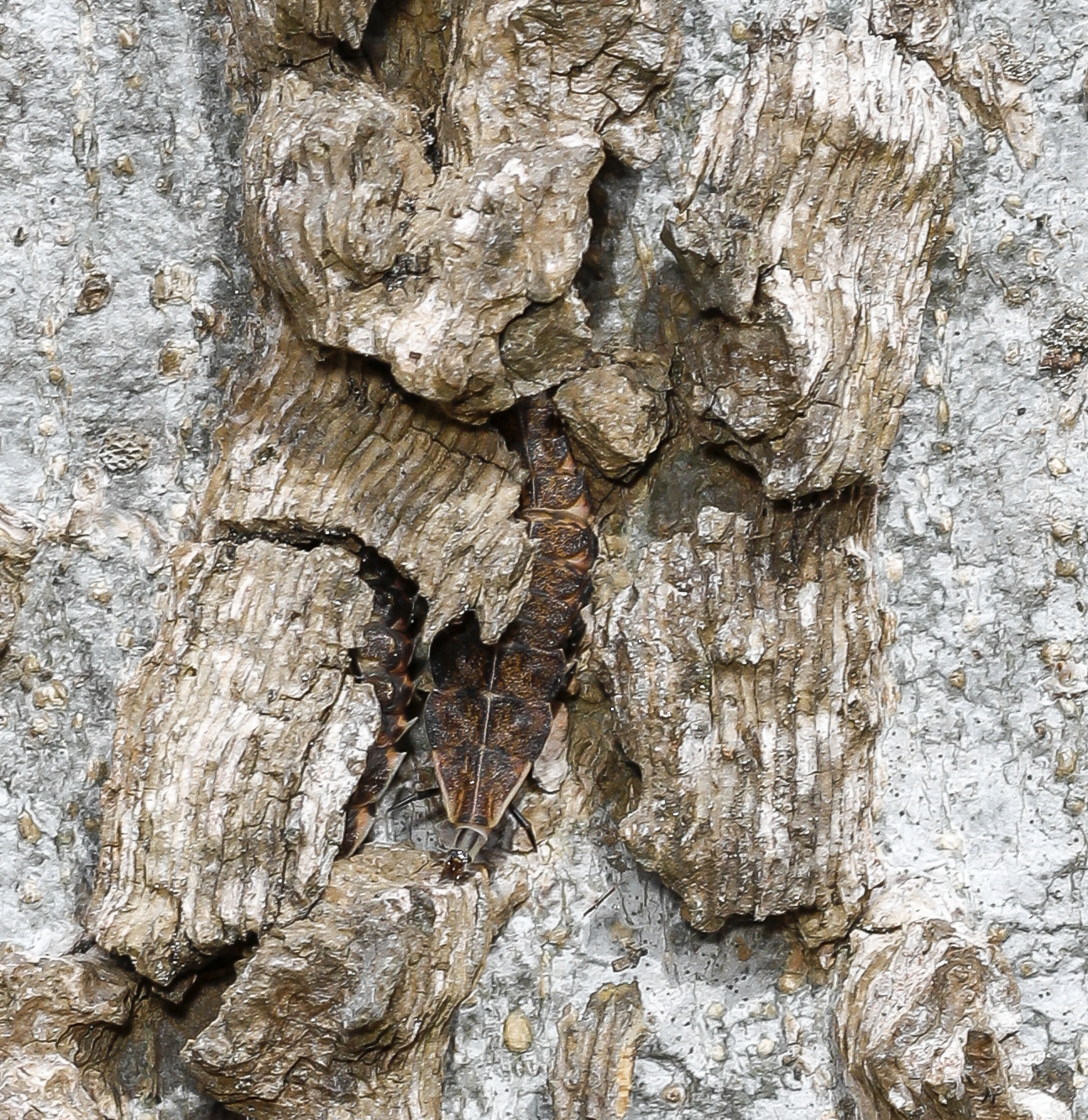
I have hard time passing by the knobby bark of a hackberry without pausing to look closely, or rub my fingers across it. I took a few quick images of the layered bark bits and moved on. As often happens, when I was reviewing images and adding some sharpness (I usually magnify the image for this), I saw something I had missed earlier. Even with magnification, I was lucky to notice these ragged shapes hidden among the stacked hackberry bark pillars. After searching online I believe they are larvae of fireflies in the genus Pyractomena. Their distinctive head shape and the fact that they were out this time of year is pretty diagnostic. Larvae from this group are known to climb tree trunks to pupate in late winter or early spring and emerge as the first firefly adults of the season. They apparently hunt snails and other soft-bodied critters.
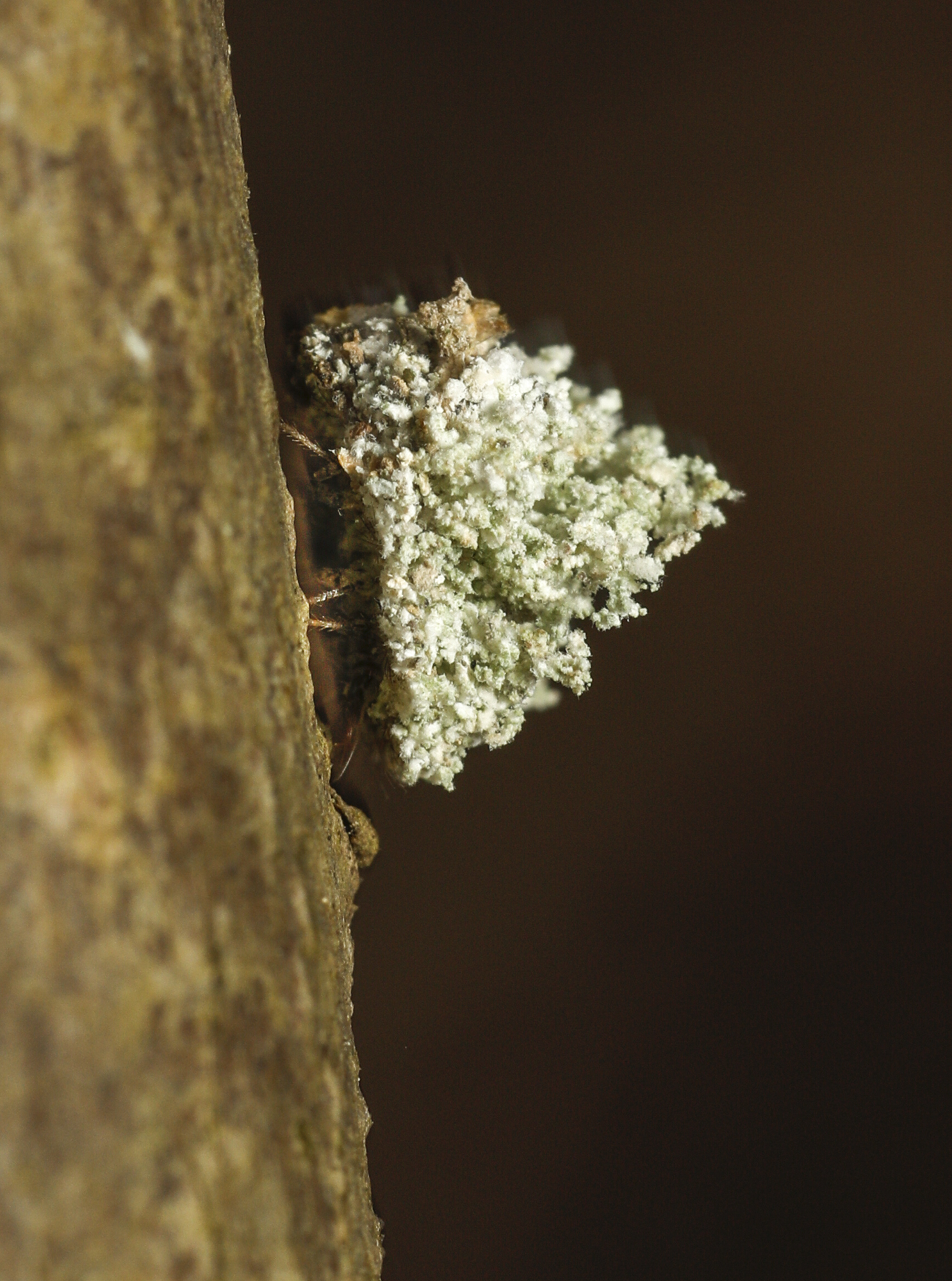
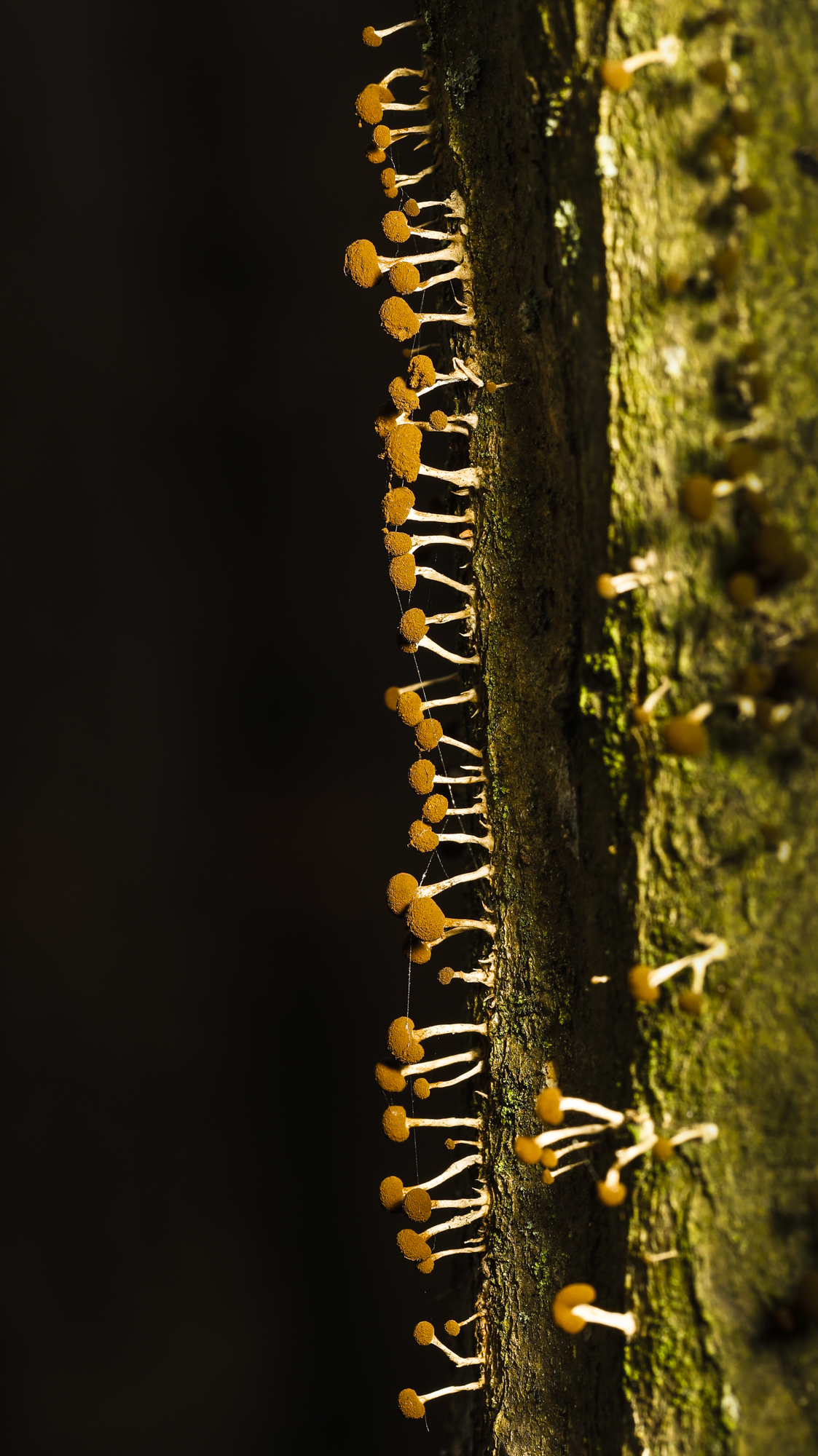
During a brief pause, I glanced down and saw a line of tiny mushroom-like structures on a nearby tree trunk. Our first thought was slime mold fruiting bodies. My friend, Jerry, submitted some pictures to his local fungi expert who thinks it is probably a fungus, maybe Phleogena faginea. One common name I saw for this species is Fenugreek stalkball. When warmed, the fruiting bodies apparently smell like fenugreek (another new word for me), a curry-like powder derived from a plant of that name.

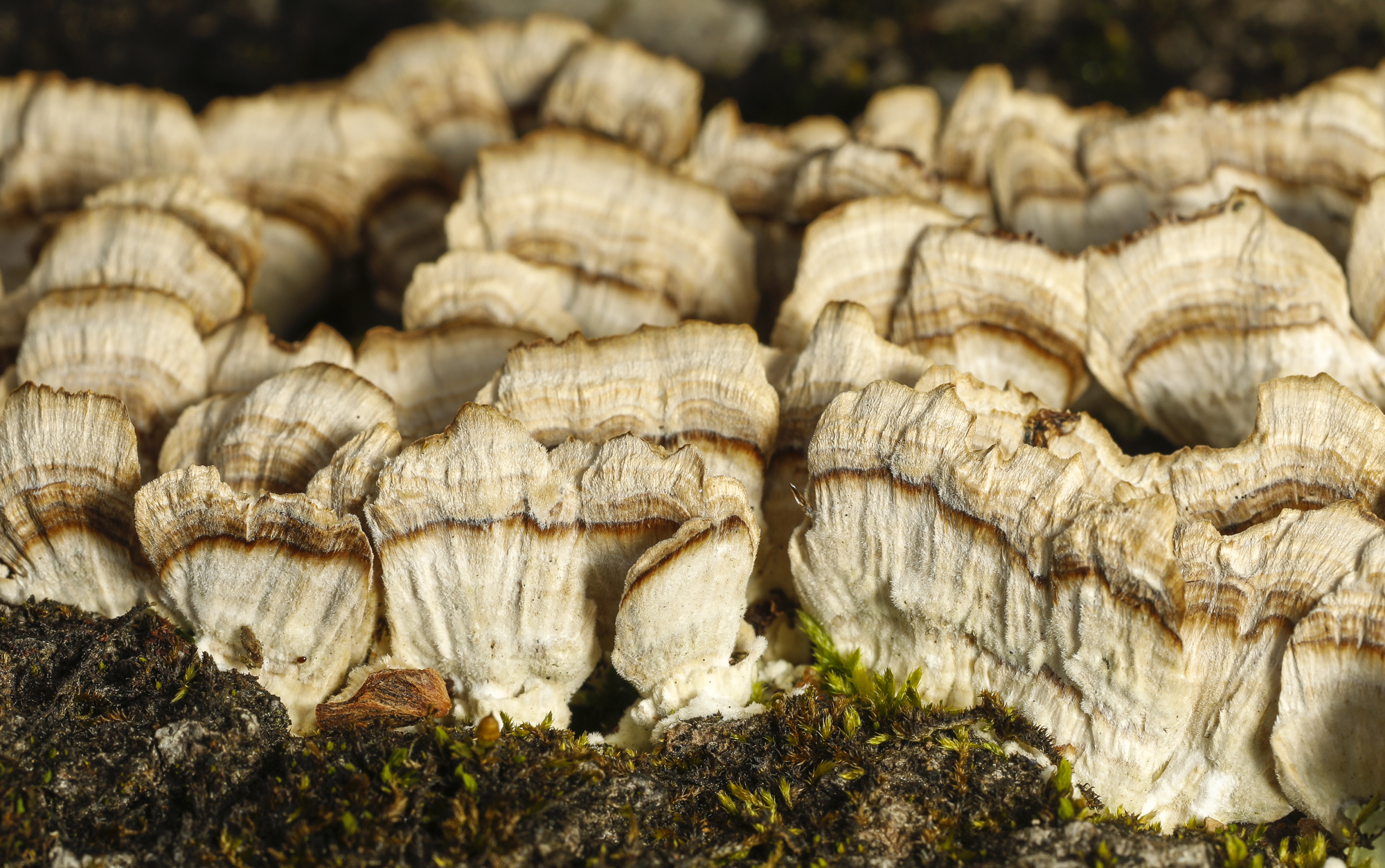

It’s not only upright, living tree trunks, that are adorned with interesting garb, but also fallen logs in various states of returning to the soil. One large log had a variety of mosses, lichens, fungi, and a mysterious orange blob that we thought might be a slime mold. It turns out to be a fungus in the genus, Phlebia (thanks, Van Cotter, for the fungi ID assistance). Once again, when I looked at the image on my laptop in higher magnification, my eye caught something I had missed in my quick field photo. Along the upper edge of the picture are some dark elongate “mini-bugs”. They look like springtails of some sort.
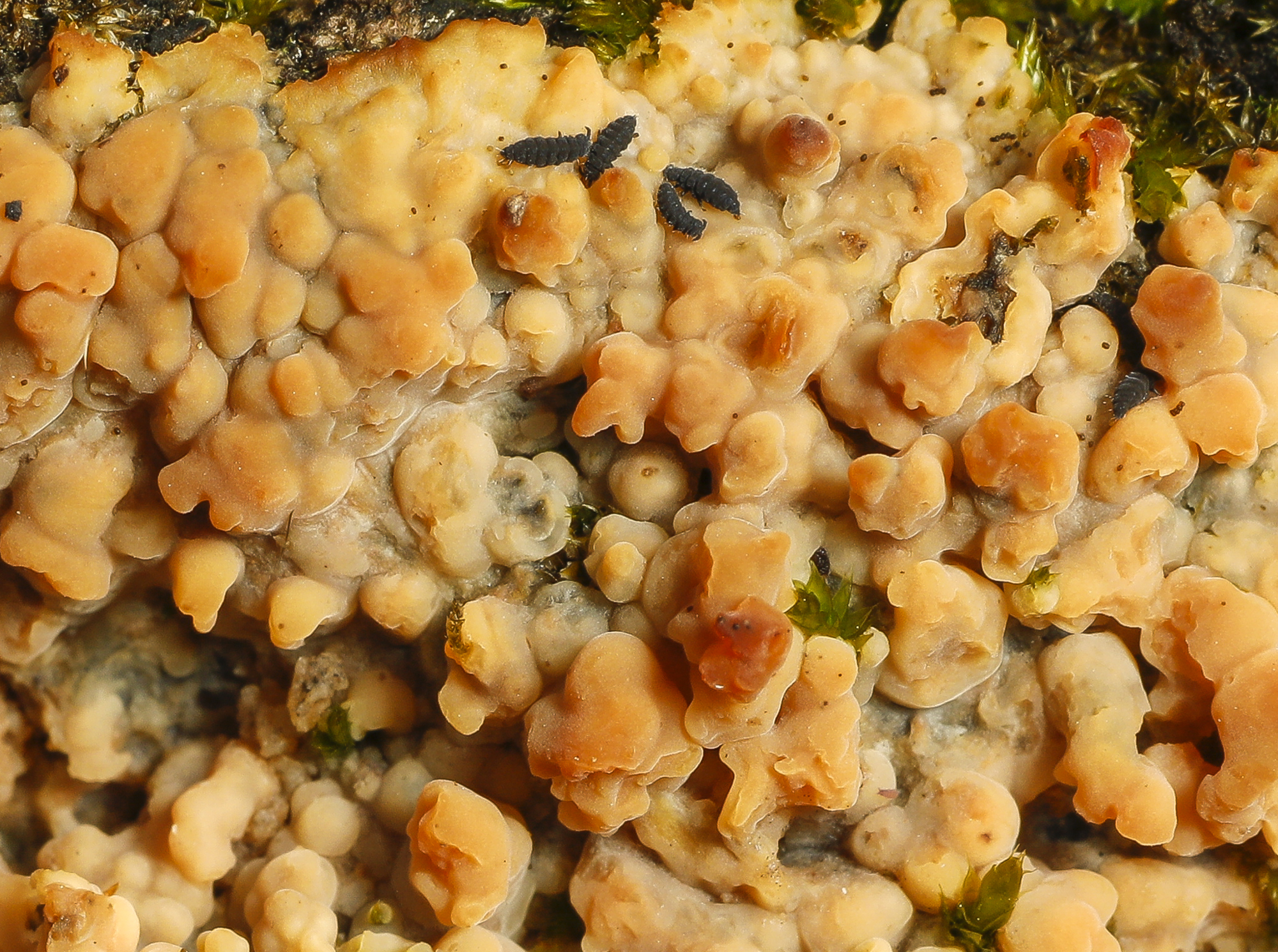
Springtails are members of the Class Collembola and most are defined by an usual forked appendage called a furcula. The furcula is tucked up under their abdomen and acts like a spring to propel these tiny beasts many times their body length (not all Collembola can spring). These are abundant creatures and play an important role in decomposition and may also graze on molds and mildews. Many species are aquatic and some are active in the dead of winter where they aggregate on the surface of snow (snow fleas).
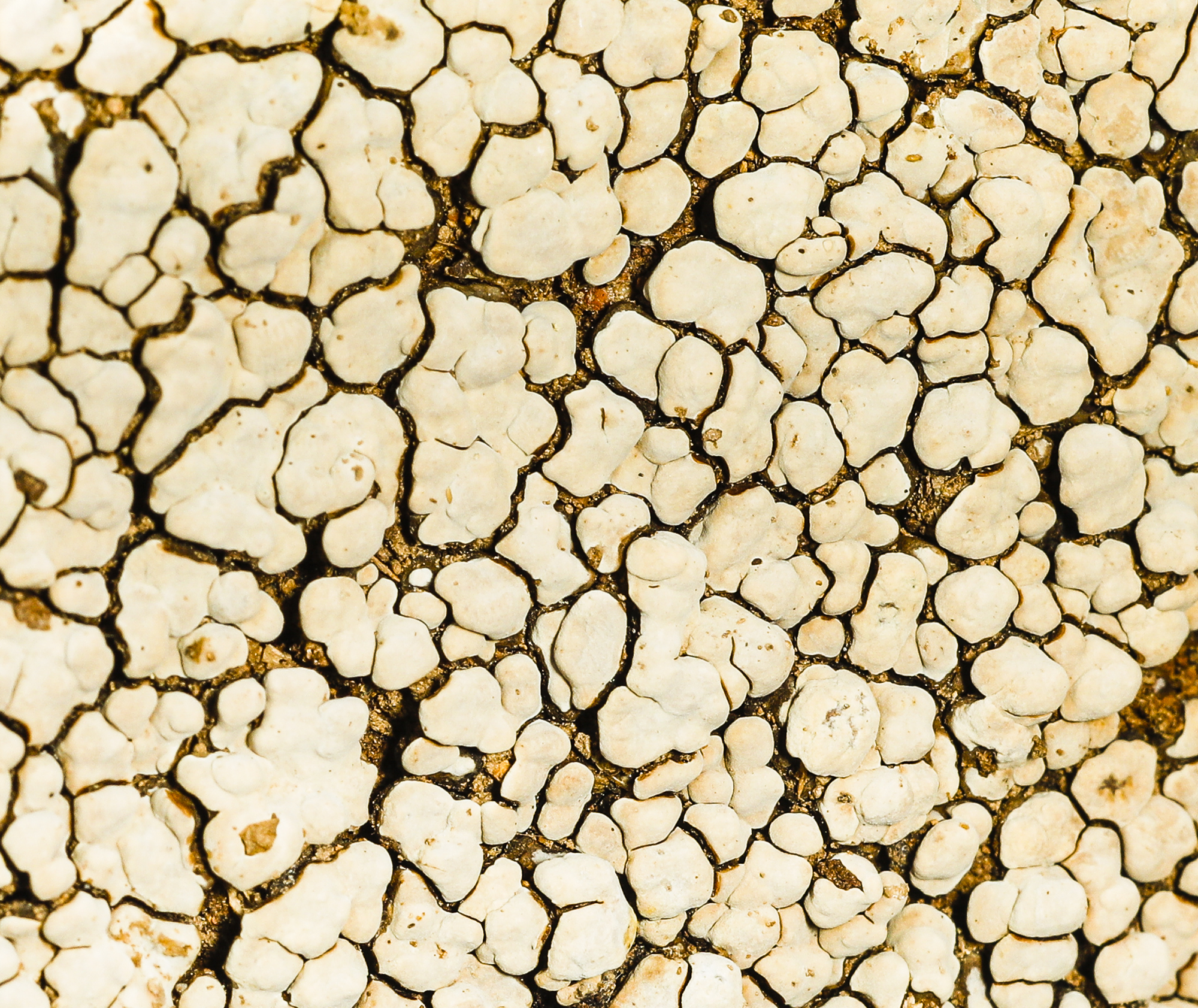


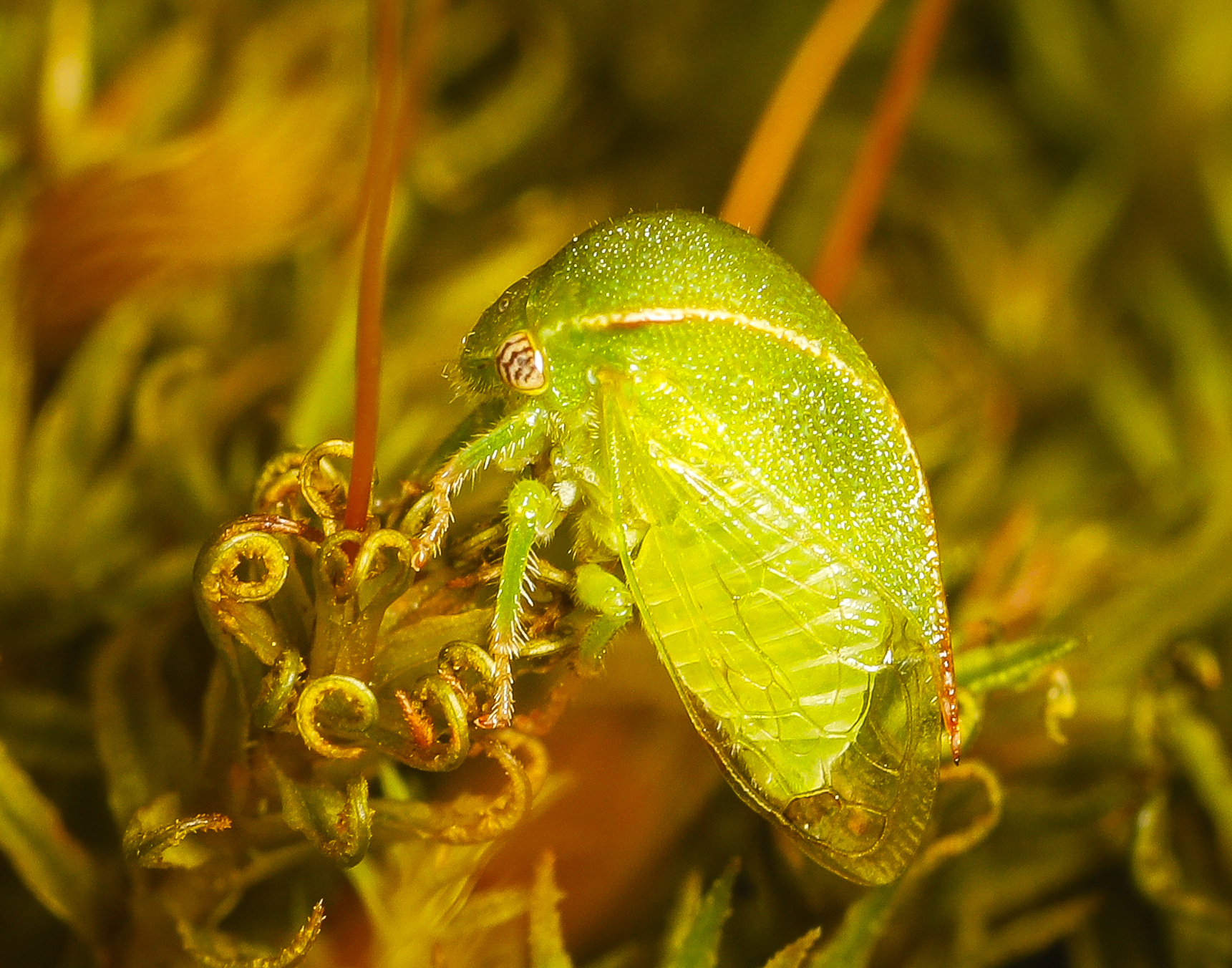
We ended up spending a few hours hiking a little over 4 miles (a naturalists’ pace) and found several mysteries, natural sculptures, and other natural art to provide a memorable sensory experience on a warm winter walk.


 Roads End Naturalist
Leave a reply to Ed Harrison Cancel reply