
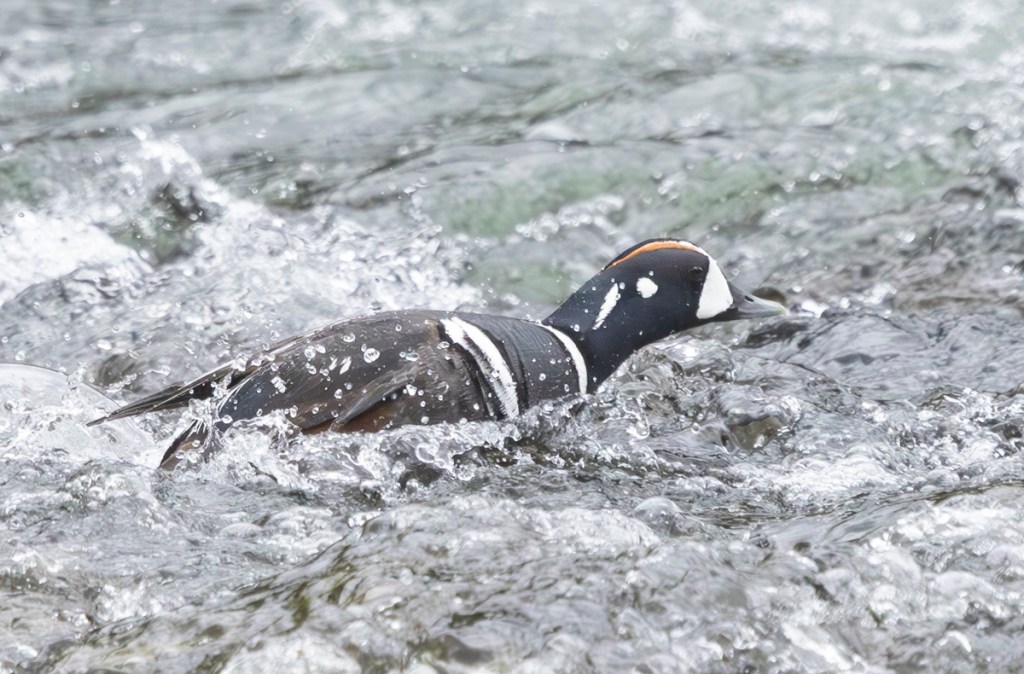
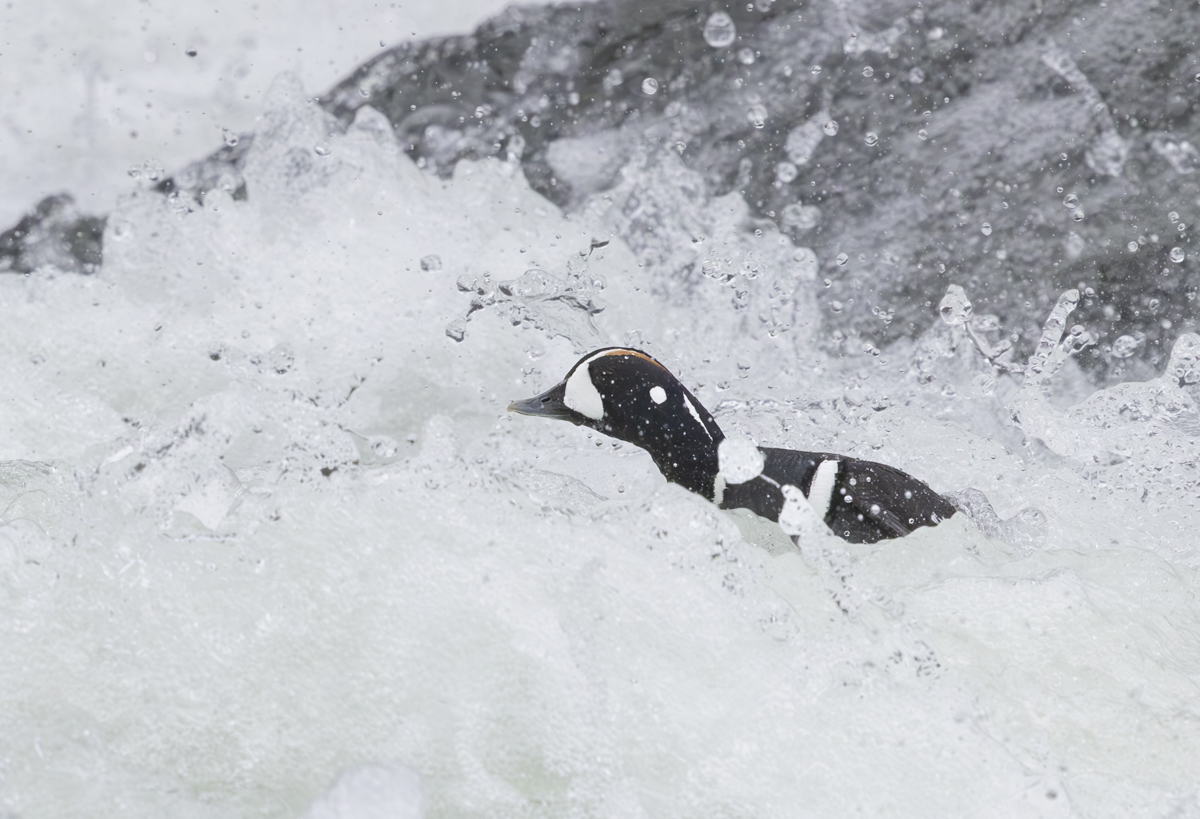
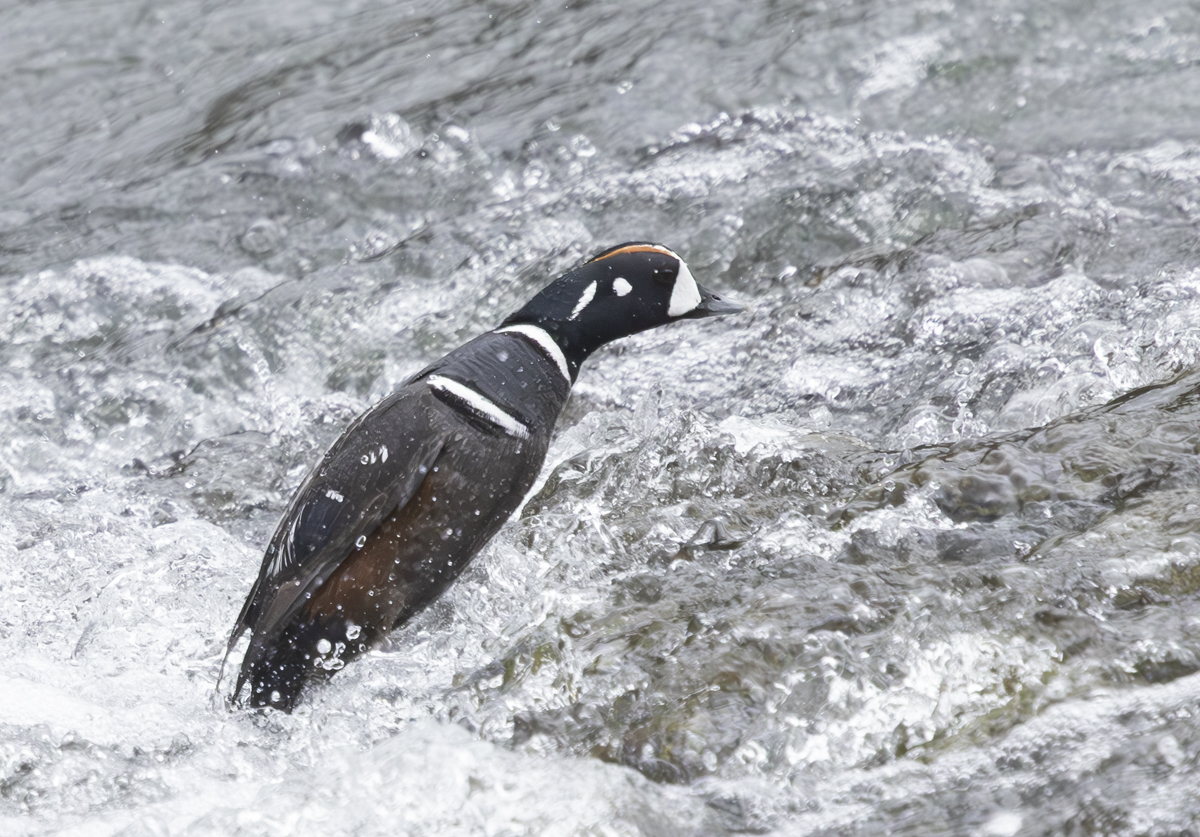
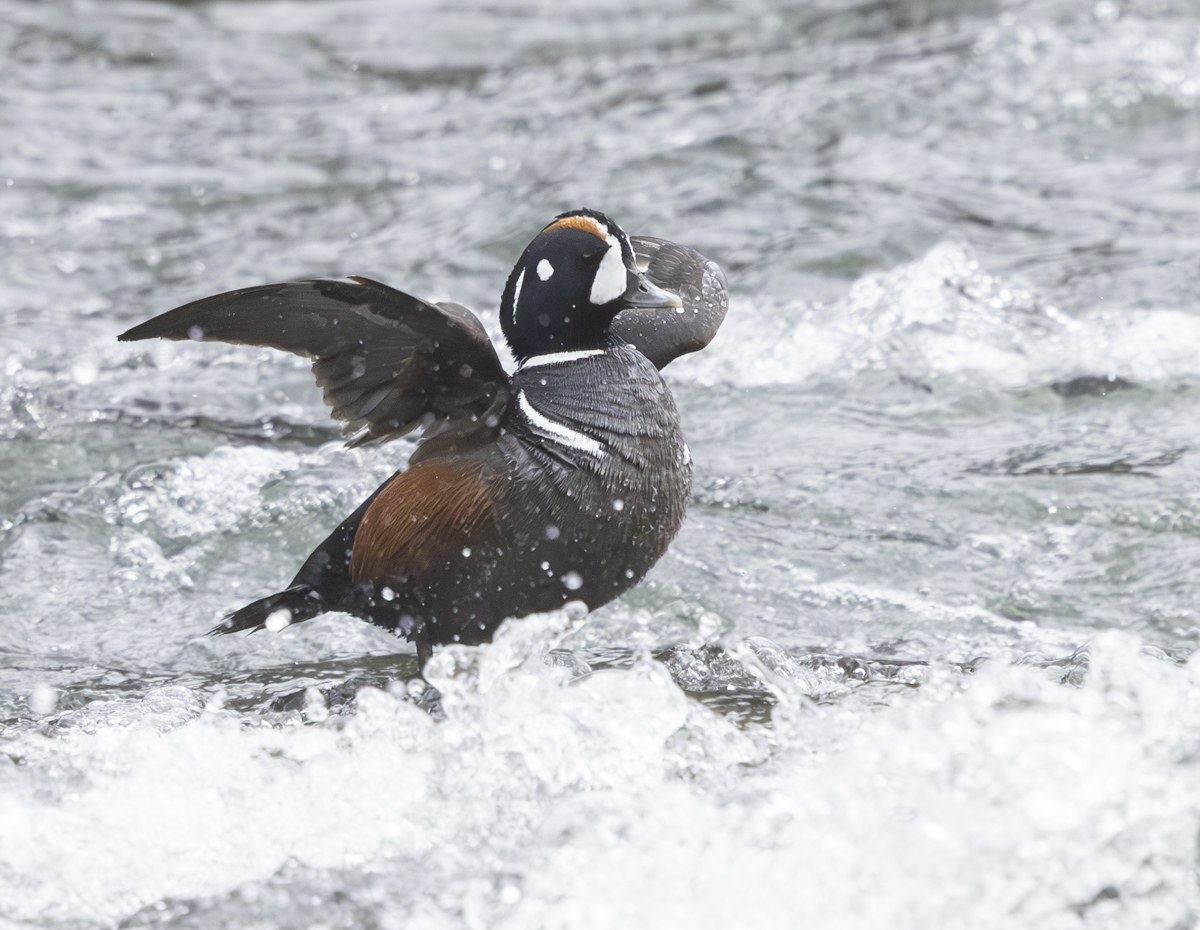
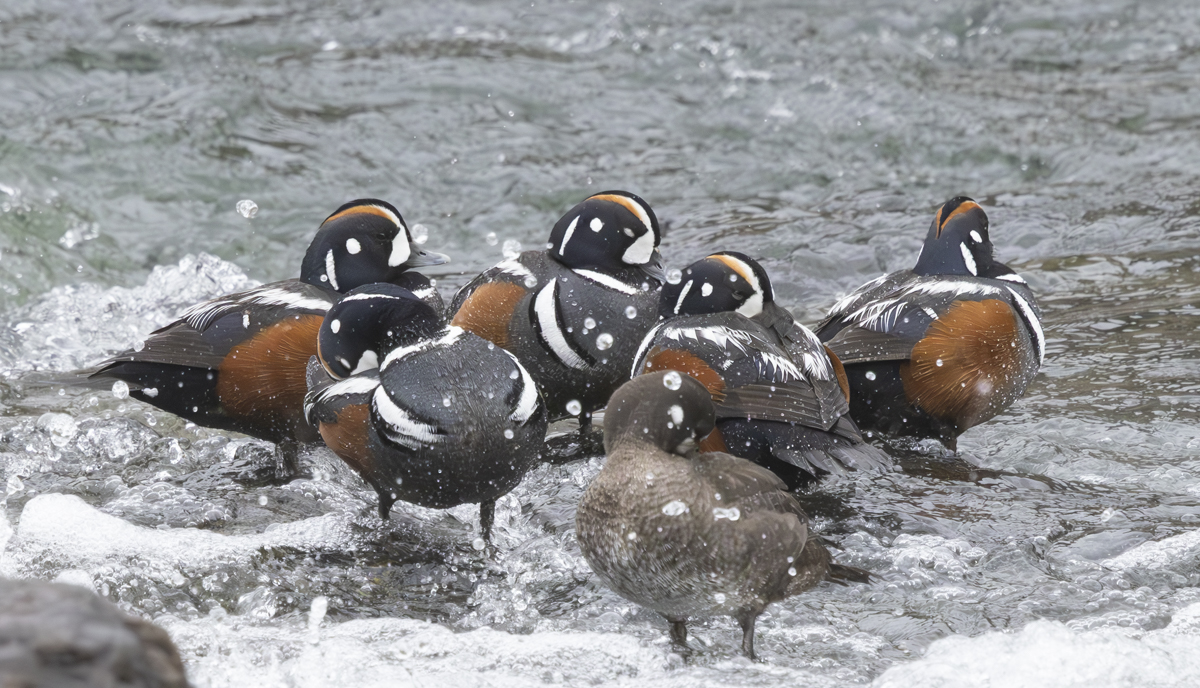
The male in breeding plumage is one of the more visually chaotic birds in North America.
~Aaron Bailey, Owner, Teton Excursions
On most of museum educator workshops in years past, we would stop at LeHardy Rapids to look for a particular species, the harlequin ducks. This stretch of fast-flowing waters is considered by some to be the boundary between Yellowstone Lake and where it becomes the Yellowstone River. The rapids are spectacular in spring and the colorful ducks that spend several weeks here are equally impressive.
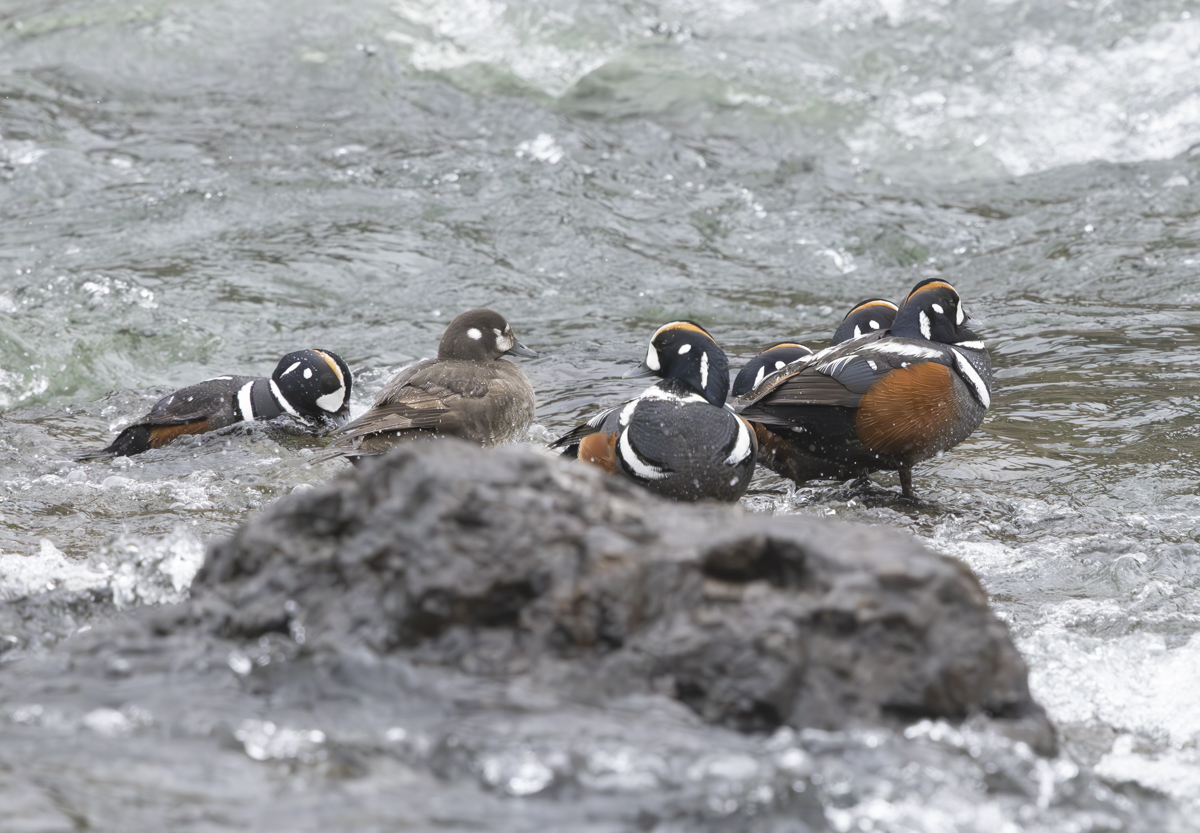
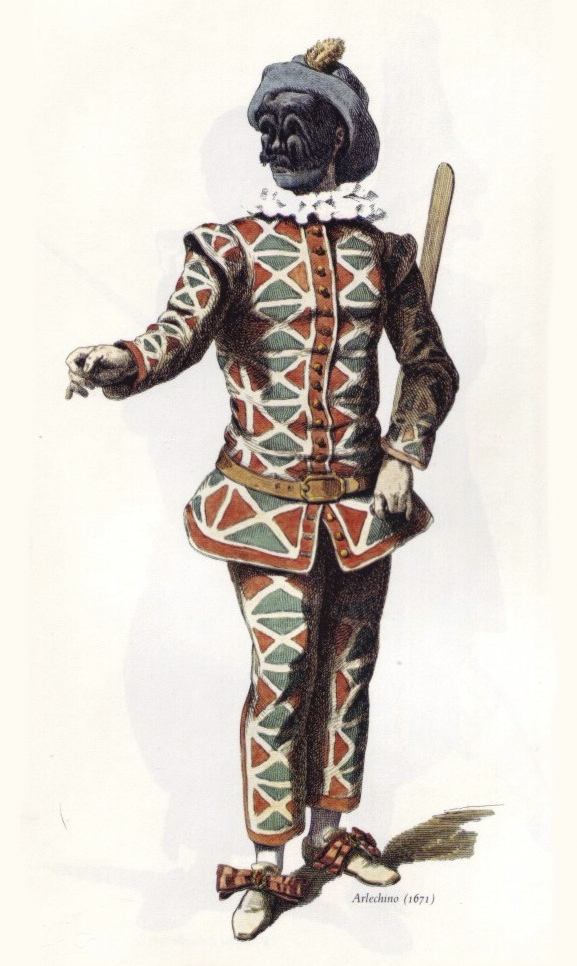
Most years, we see only the boldly patterned males hanging out on a few rocks in the rapids. This year, Melissa and I saw a female who is mainly grayish brown with a noticeable white spot on the side of the head. The common name, harlequin, comes from colorful characters in theatrical productions of Italian comedy in the 16th to 18th centuries that were popular in much of Europe. The character’s costume was quite garish with bold colors and patterns and in the late 1700’s these ducks were given the name because of the male’s colors. Even the scientific name, Histrionicus histrionicus, is from Latin meaning “theatrical”.
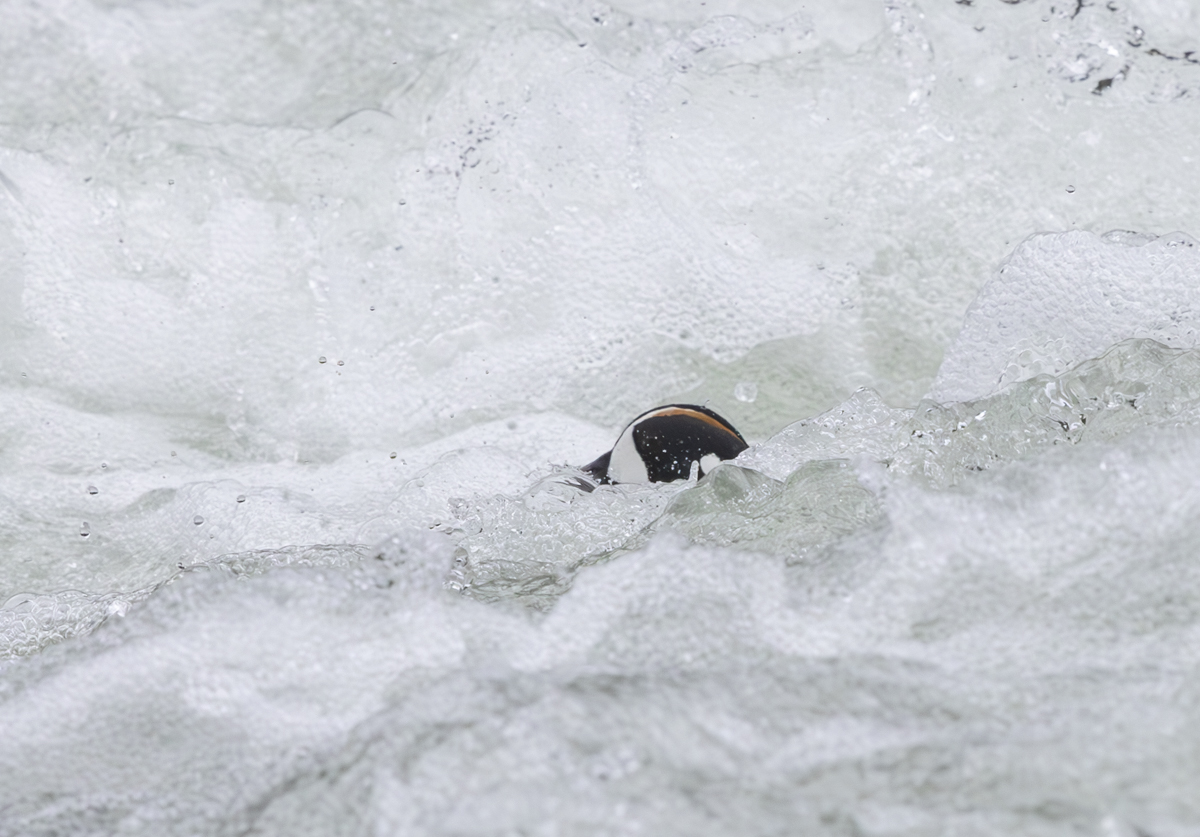
It was amazing to watch these birds navigate the rapids. They are well-adapted to live in these harsh conditions: they have powerful legs and webbed feet for propulsion against the current; they use their wings, held slightly open, to help steer in the waves; and they have densely packed feathers that trap air providing both insulation and buoyancy after diving to feed on aquatic insects and small fish. Even that flashy color is believed to help camouflage them in the waves. Studies of museum specimens have provided data suggesting these ducks suffer more broken bones than any other species, not surprising given their habitat of rushing waters and boulders.
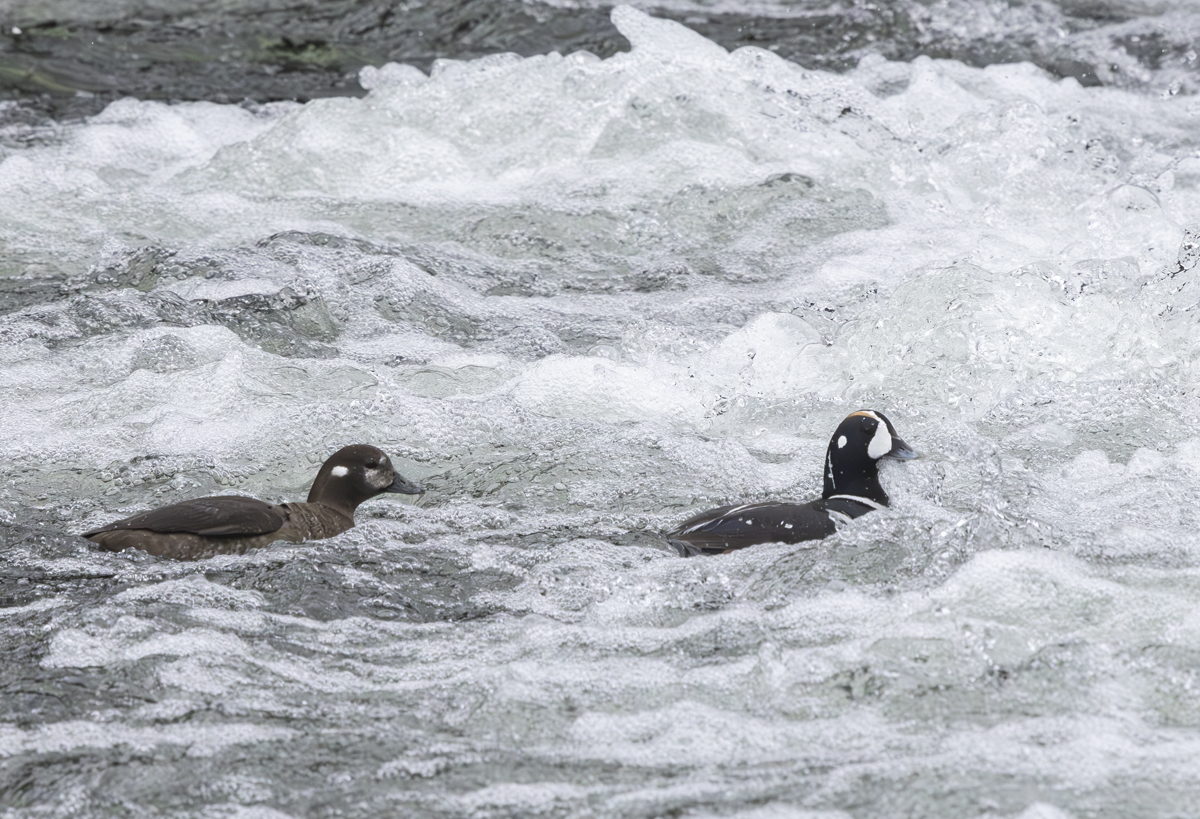
–A pair of harlequin ducks riding the waves
They tend to be at LeHardy Rapids for several weeks with females then departing to nest on smaller tributaries that are not quite as fast-flowing. They migrate to coastal waters for the winter were they feed on a variety of tidal marine invertebrates. Due to their remote habitat preferences, little is known about overall population trends although their wintering population in the northeastern United States has been declining.
LeHardy Rapids provides birdwatchers with an excellent chance to see these beautiful birds every spring and we always look forward to spending time with these elegant “clowns of the waves”.


Leave a Reply