
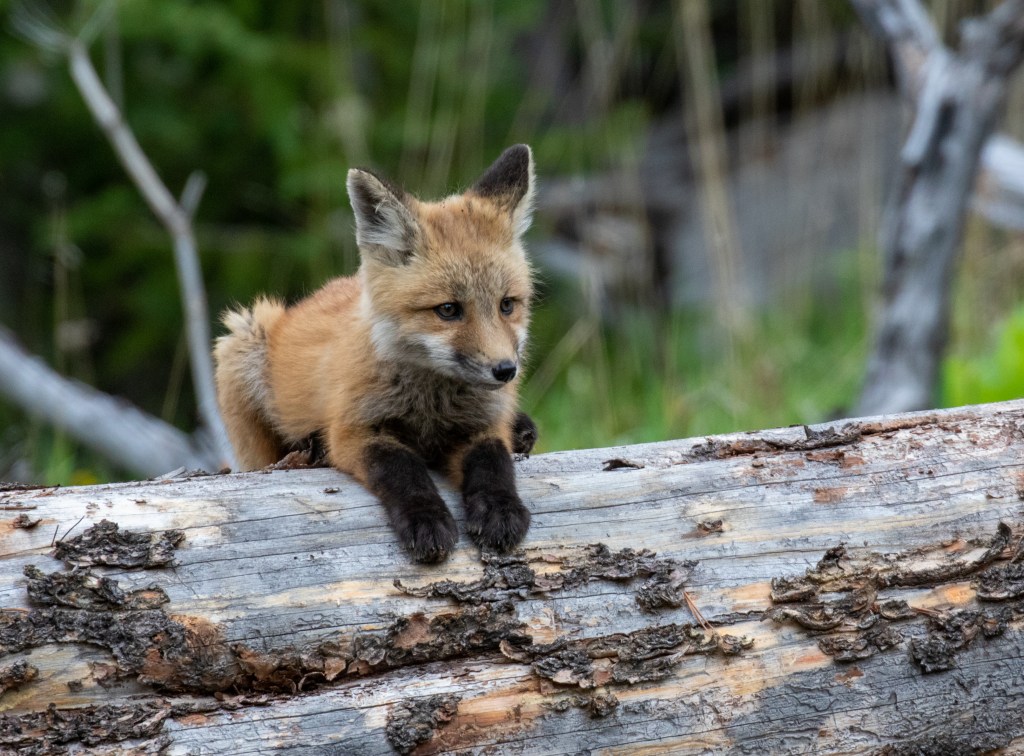
My third book is out! I introduced the first two and wrote about how this whole project came about back in May. The third volume includes thirty more nature stories with photos and illustrations on topics ranging from the white ash tree that was in my yard growing up to finding ant lions in your backyard to snorkeling with colorful fish in mountain streams to seeing wild canids in Yellowstone. Check it out here:

Here’s a sneak peak at one of the stories from Volume 3…
Dipper Dinner
One of my favorite birds to watch in Yellowstone is the American dipper. Dippers are small gray birds about the size of a robin. That might not sound exciting. But dippers are special birds. They are the only songbirds that are aquatic! That means they only live in and around the water.
It seems that whenever I spend time near a rushing stream in Yellowstone, I see an American dipper. The dipper is almost always sitting on a small rock at the edge of the stream. It bobs its body up and down nonstop, like it is dancing to the music of the water. That’s why it’s called a dipper! Dippers particularly like riffles, where the water is shallow and rocky and fast-flowing.
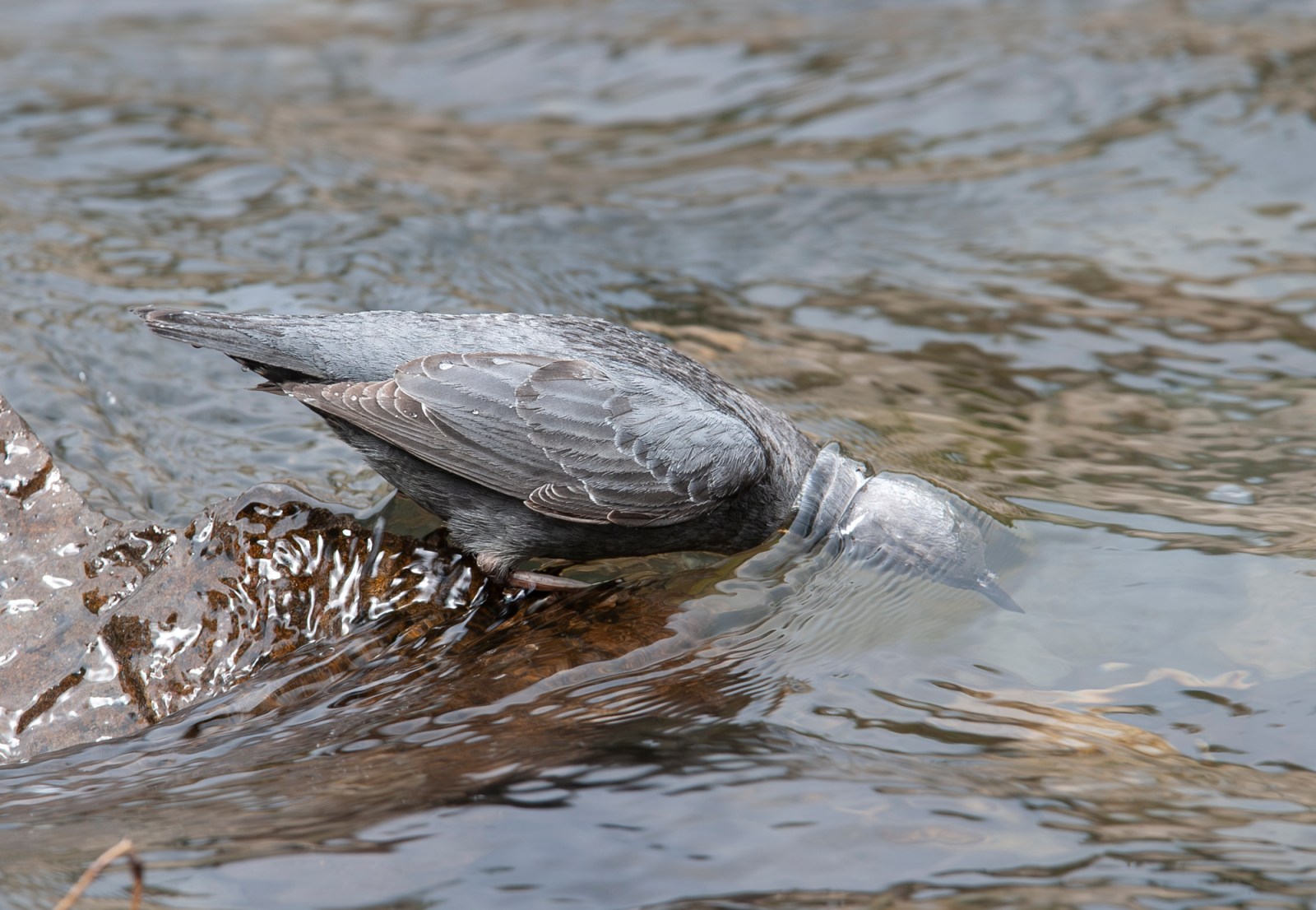
As I watch the dipper, it jumps off the rock and into the water. The dipper can swim! Sometimes, its head and neck bob above the surface as it uses its big feet to walk across the slippery river rocks. Sometimes it goes completely underwater and uses its wings to swim!
After about ten seconds in the water, the dipper jumps back up onto its rock. I can see a small insect in its beak. It shakes the insect a few times. Then it gulps the insect down. It happens so fast! I watch the dipper through my binoculars as it catches more insects. I want to figure out what kind of food it is eating.
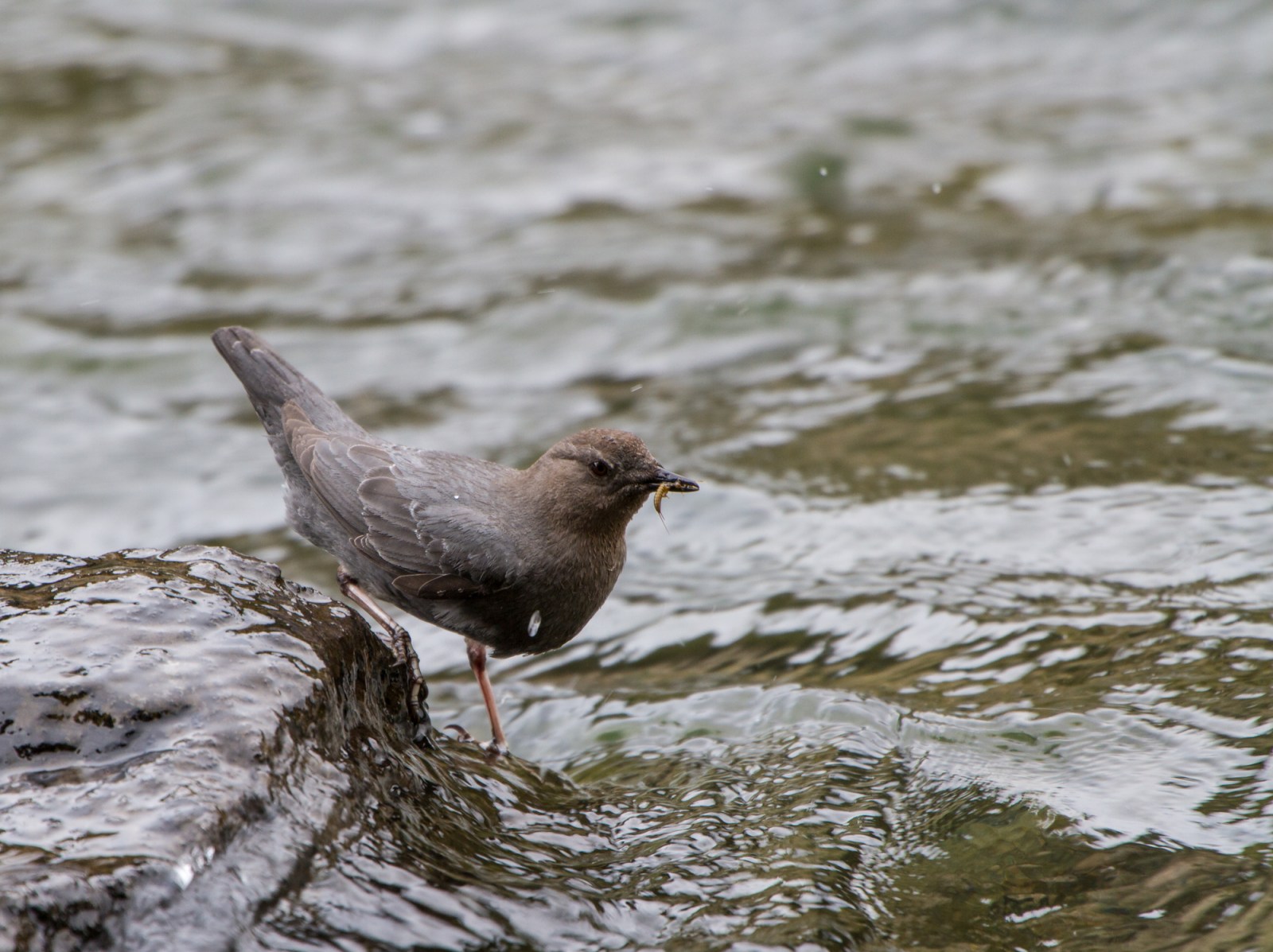
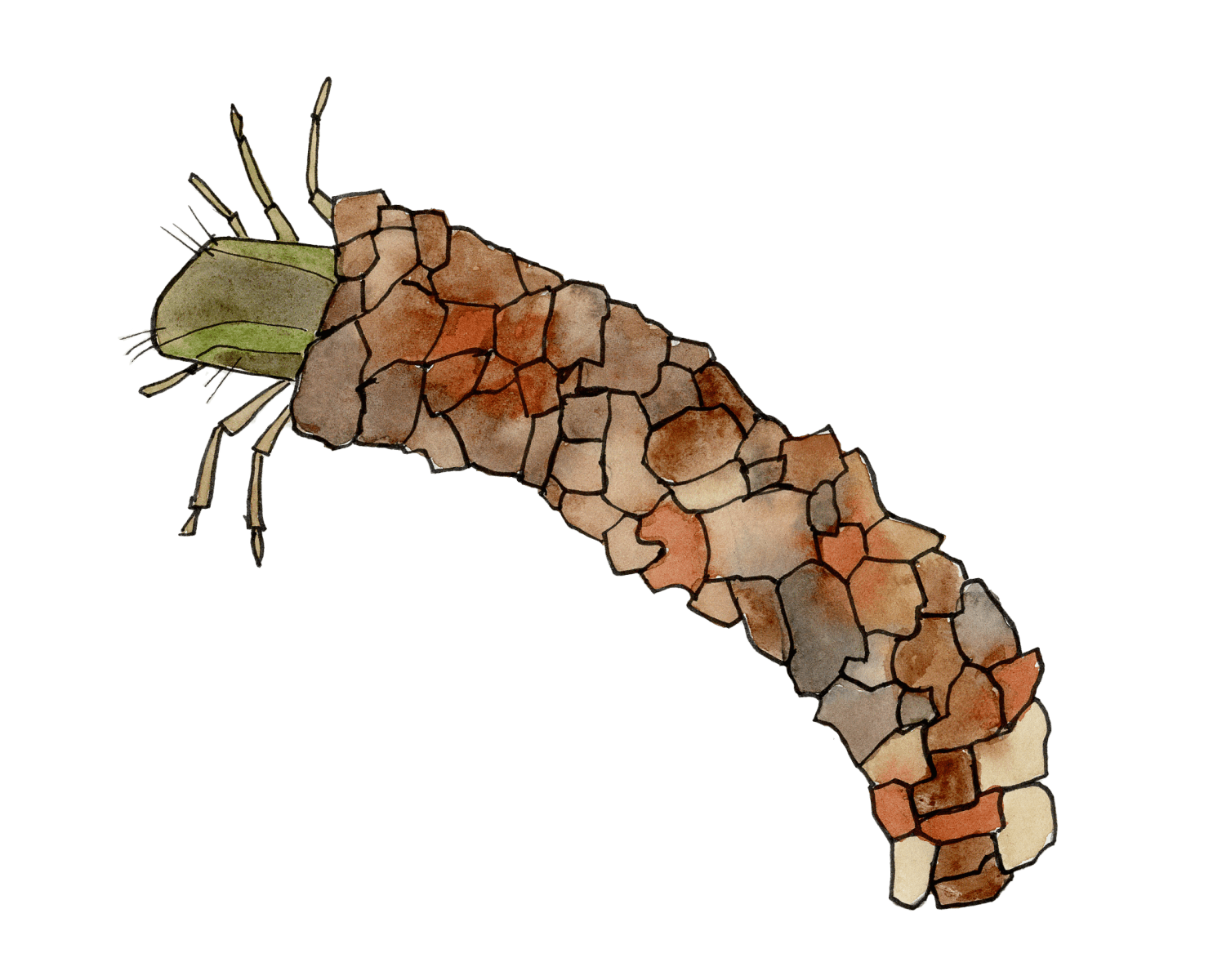
When the dipper first hops out of the water onto the rock, I can see something brown in its beak. But after it shakes its prey, I see some green color on it. I suspect that the dipper is catching caddisfly larvae. Caddisfly larvae have dark head capsules, six legs, and a long, segmented abdomen. On some species of caddisfly larvae, the abdomen is green, like the dipper’s prey.
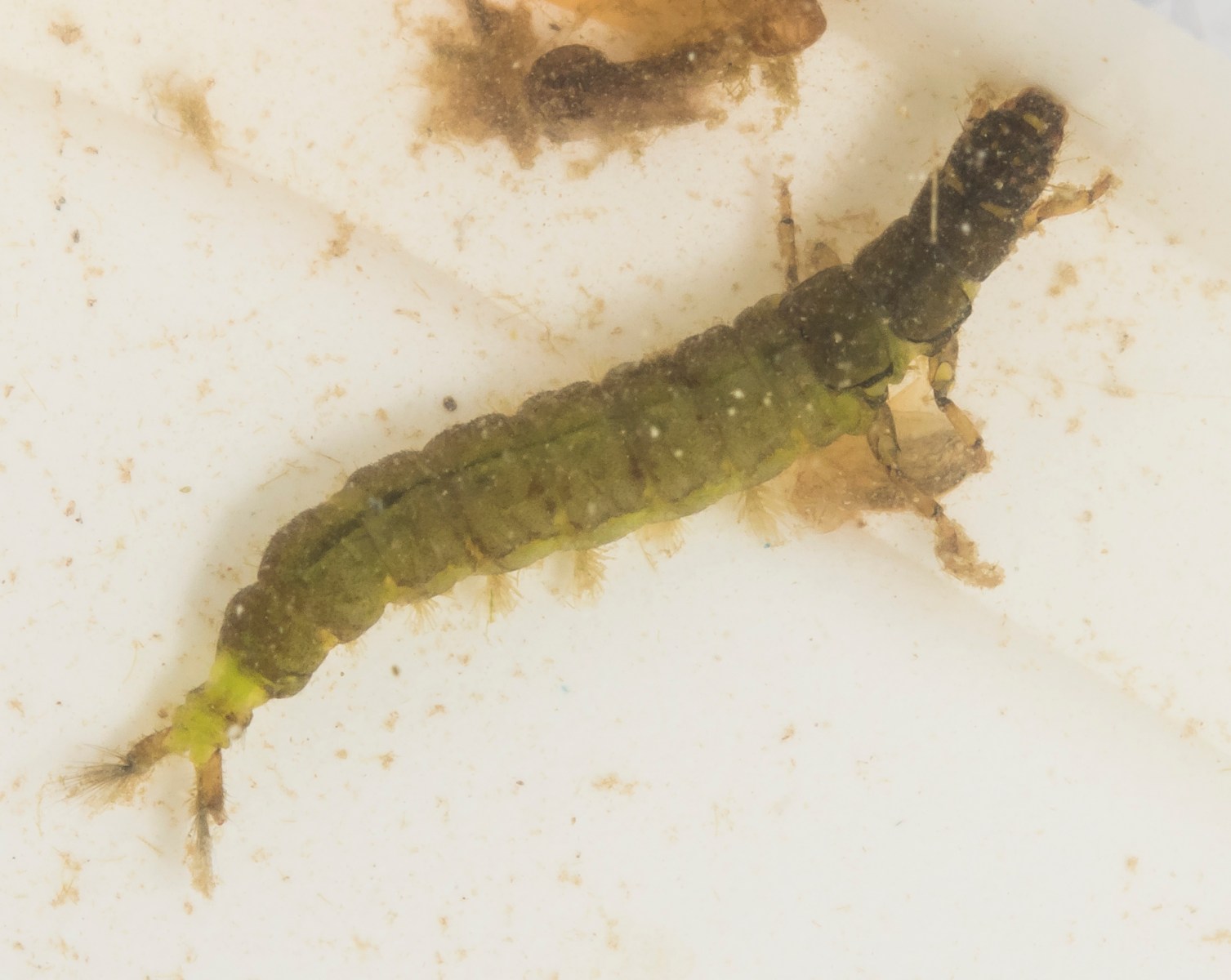
Caddisfly larvae live in streams and ponds. They hide out in shelters they build from leaves or sticks or rocks. Their shelters help them stay hidden and protect them from predators. But not from the American dipper! The dipper easily spots a caddisfly larva, grabs it in its beak, carries it to a rock, shakes off its brown case, and gulps down the tasty green insect inside.
American dippers like to eat all sorts of other things they can find in streams. Once, Mike and I even watched a dipper catch and eat a small fish! Even in the middle of winter, dippers find prey in places along a stream where the water is flowing too fast to freeze. Brr! It’s a good thing the dipper has lots more feathers than most other birds the same size.
What are the favorite foods of birds that live near you? Do you have birds that like to eat insects? Can you figure out what kinds of insects they are eating?
Aquatic: An aquatic animal is one that lives in the water.
To take this story a little bit further, here’s some video I shot through our spotting scope of an American dipper catching a caddisfly (I think) back in February. This moment is actually what inspired the story for my book!
American dipper catching a caddisfly
Pretty much all of the stories are based on real events like this one, though I did elaborate in a few cases (like when I claimed to be interested in cicadas as a teenager… that didn’t really happen until much later in life!).
If you pick up a copy of Walks with a Naturalist, I’d love to hear what you think!


Leave a comment