All nature’s creatures join to express nature’s purpose. Somewhere in their mounting and mating, rutting and butting is the very secret of nature itself.
~Graham Swift
Rainy nights in January and February bring out the lust in our neighborhood…salamander lust that is. My last post highlighted the first major mating migration of the year for our neighborhood Spotted Salamanders (there had been a small one a couple of weeks before that). I had been on the road in Virginia two nights after that migration incident and missed most of the egg-laying activity that followed. But, Melissa was home and went out got a nice pic of a female “sallie” clinging to one of the branches I had placed in the water just for this purpose. The salamander was laying eggs!
Spotted Salamander laying eggs two nights after a big salamander migration (photo by Melissa Dowland) (click photos to enlarge)
Melissa and I were watching tv last night when I heard heavy rain hitting our metal roof…time to put on rain gear and head out to our two wildlife pools to see what might be happening. We walked out the front door and up to the driveway and started seeing salamanders on the move, headed to one of our pools.
-Spotted Salamander crossing our driveway to get to a breeding pool
They can move pretty fast and so we were careful as we walked, trying not to accidentally step on one. We saw 4 salamanders heading toward the pools and one small one headed away. That one had probably been in there from the earlier migrations and was done with its breeding (or maybe just intimidated by the larger size of all the others).
-One of four salamanders we saw on the move in our yard in just a few minutes during the rain
It really is a miracle to me that these critters can find their way back to a small pool of water to breed after spending months in burrows in the surrounding forest. Some have been shown to follow the same path back to their breeding pool year after year, even entering the pool in the same spot. How they do this is unknown, but chemical cues about the environment through taste and smell may be involved.
The highlight was seeing the “salamander swarm” (aka breeding congress). We went to our pool without the small waterfall first and could see lots of eggs masses from the last time they were feeling lusty along with numerous salamanders congregated and squirming about on the pool bottom. Occasionally, one would swim to the surface, break through to presumably gulp some air, and head back down. But visibility was limited due to vegetation in this pool so we went over to the other one that tends to be much clearer.
It was quite a sight with 15 or more salamanders bumping and nudging each other in one big writhing blob of black and yellow. Here’s a video clip of the action (the sounds are the pump for the waterfall and us occasionally gasping at what we saw).
It is incredible to witness this behavior (and right outside our front door). I think some of the female salamanders may be pulling spermatophores (those white blobs on the bottom) into their cloaca using their hind legs. Not sure if that is how it happens, but check out a couple of the salamanders toward the end of the clip with their hind legs cupped up underneath their bellies. I think that may be what is going on. Now, two nights from the rain (this Wednesday) should be more egg-laying (if only I can get home in time to witness it). Will let you know.
The way I see it, if you want the rainbow, you gotta put up with the rain.
~Dolly Parton
Melissa and I traveled to Damascus, VA, yesterday for a funeral service for one of my aunts. It was a lovely tribute to a wonderful woman. Even though it is about a 4-hour drive, we decided to head back home after the funeral because it is a busy week ahead for us both. The weather was less than ideal for a long drive with heavy rains for much of the return trip. When I looked at the forecast earlier in the week and saw the prediction for warm temperatures and over an inch of rain at night, I knew we would probably have our first big salamander run of the season (a couple of weeks ago I found a few salamander spermatphores on the bottom of our wildlife pools after a good night-time rain).
So, as we approached our community, we slowed down to look for salamanders crossing the road. There is a small pool in the woods a couple of miles from our house that has always been a favored breeding spot for Marbled and Spotted Salamanders. Indeed, we saw several out in the road (that we stopped and helped cross safely), along with some dead ones that had been hit by cars
-A dead Spotted Salamander on the road near a breeding pond (click photos to enlarge)
We stopped a few times on the way in to get some more out of the road and finally got to our house. After getting some stuff out of the car, I went back out to one of our wildlife pools to see what might be happening here. It was a major breeding congress (I still chuckle every time I say that) in action!
I ran back in and got Melissa and we watched in awe for a few minutes and then decided to contact some friends that might want to come over to witness this spectacle. After texting several fellow nature nerds, we had one local teacher take us up on the offer.
We were going to meet her out at the spot a couple of miles from our house where we had seen the salamanders crossing the paved road in order to try to help more of the love-struck amphibians get safely across. The heavy rain had stopped, and that usually means the salamanders slow down their movements. But, on the way out the door we did find a large female on our moss/stone walkway, slowly headed to one of our pools.
-A Spotted Salamander on our walkway headed to a breeding pool in our yard
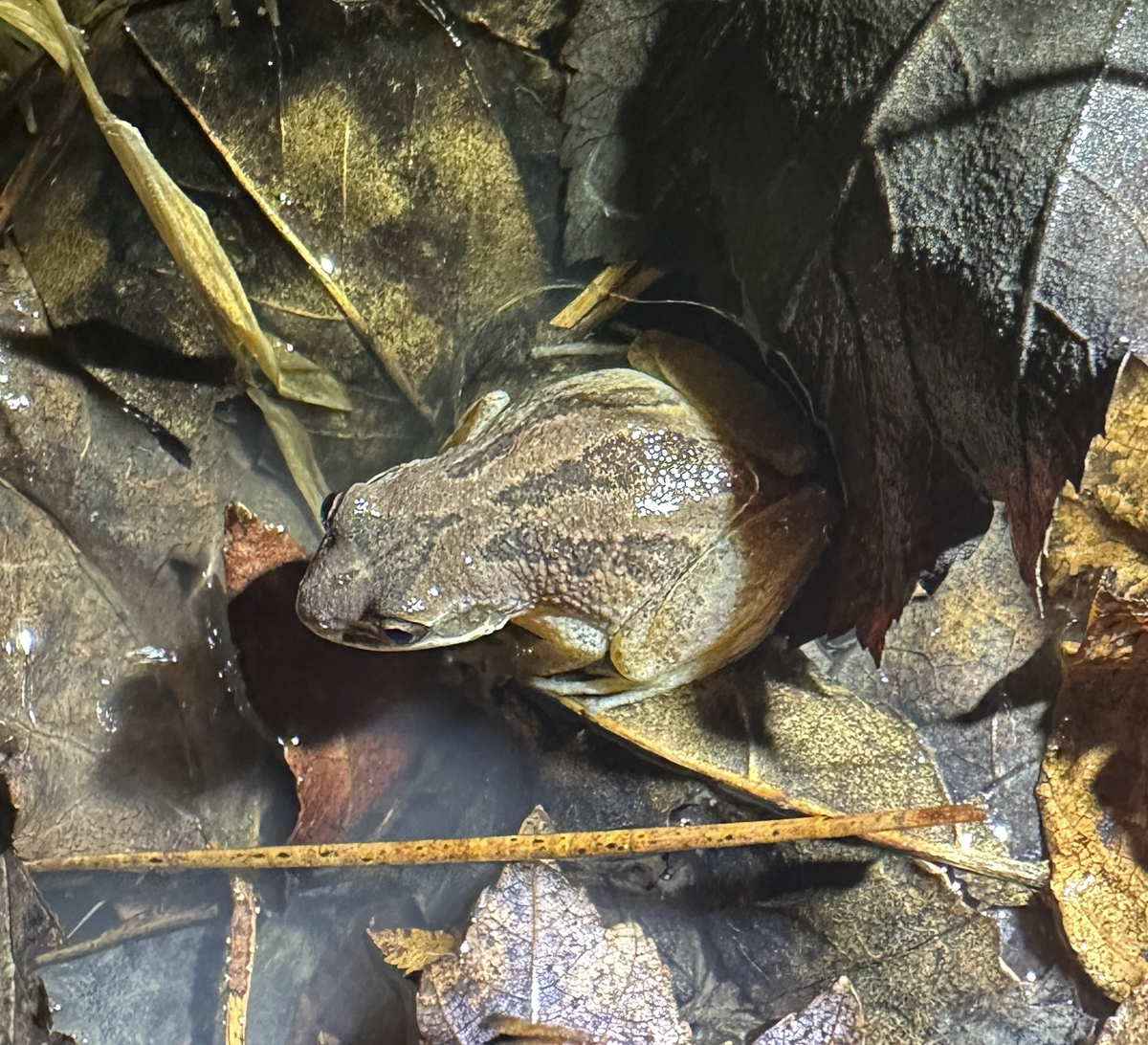
When we met up with our friend, we checked the large roadside pool and were surprised to not see any adults, though there were lots of Marbled Salamander larvae (that species breeds earlier in the Fall and these larvae will feast on the newly hatched Spotted Salamander larvae later this spring). Unfortunately we did find several more dead Spotted Salamanders in the road. There is a another pool across the road, but the water was so cloudy we couldn’t see anything. I did spot an Upland Chorus Frog headed to the pool to join the gang that was already filling the night air with their loud calls (their call sounds like the sound made by running your thumbnail across the teeth of a comb).
-An Upland Chorus Frog about the join a roadside pool that was full of calling frogs
Back at home, we all oohed and aahed at the salamander extravaganza. But, without the rain, the activity had slowed considerably. Interestingly, the ones in our pool with a waterfall were doing more of the swimming up and down to the water surface than those in the other pool. I wonder if the water droplets flung into the pool from the small waterfall may mimic rainfall enough to stimulate this behavior?
The next thing to watch for will be the females laying egg masses the next night or two (I will be out of town in two nights and may miss the bulk of this behavior). We really aren’t sure how many Spotted Salamanders are in our two small pools, but a fair guess is at least 25-30 in each. This amazing migration and congregation of these beautiful amphibians occurs on rainy nights from January through early March in fish-less pools throughout much of our state. It is always exciting to witness this abundance of wildness, especially when it is so close to home. As our friend Andy put it after Melissa sent him the text about the circumstance surrounding this particular event…”Nice to go from a celebration of life to another celebration of life”. I don’t think my aunt would have minded what some might think is an unusual comparison. She knew about our nature nerdiness, and she loved life and wanted others to enjoy it in all its glory.
I suppose I really don’t have to worry about this particular quote. I think I do a pretty good job of taking the time to do the things I enjoy. With Melissa leading a museum winter workshop in Yellowstone, I decided to get out and see a few wild things myself. By the way, if you haven’t followed her trip on the museum’s website, check it out at this link. It sounds like it has been one of the best trips ever (and certainly the coldest!).
So, last week I headed east for an overnight trip to visit four of our wildlife refuges – Pocosin Lakes, Mattamuskeet, Alligator River, and Pea Island. I first stopped by to chat with my friend, Wendy Stanton, refuge manager for Pocosin Lakes. We had a good conversation about visitor issues, closures, volunteer needs, and future plans. I also met two wonderful education/refuge staff that are being funded through the NC Wildlife Federation. They are providing programming at the refuge and the Red Wolf Center in Columbia, helping to manage volunteers, providing outreach programming in schools, and many other duties. It sounds like they have been a great addition to the limited staff at the refuge. After the meeting, I headed down to Alligator River NWR in hopes of seeing some bears, wolves, and birds. It turned out to be a very quiet wildlife day – lots of birds, but no mammals.
-A backlit adult Bald Eagle perched along Wildlife Drive at Alligator River NWR (click photos to enlarge)-The day ended with a spectacular sunset at the refuge
I spent the night in Kill Devil Hills and was out before sunrise, headed to Pea Island. After passing an American Bittern out along Hwy 12 at at the edge of a marsh (no room to safely stop), I stopped at the parking lot on the south end of the Oregon Inlet Bridge to see if there was anything happening there. A few dolphins were fishing the shallows and some Sanderlings were chasing each other around the exposed sandy beach, often coming within a few feet of where I stood.
-A Sanderling takes a short pause in its usual frantic pace to probe the sand in a puddle-A Willet posing in beautiful morning light
Driving down to the Pea Island Visitor Center, i was surprised to see relatively few birds on North Pond, but I hung out for a bit and managed a couple of captures.
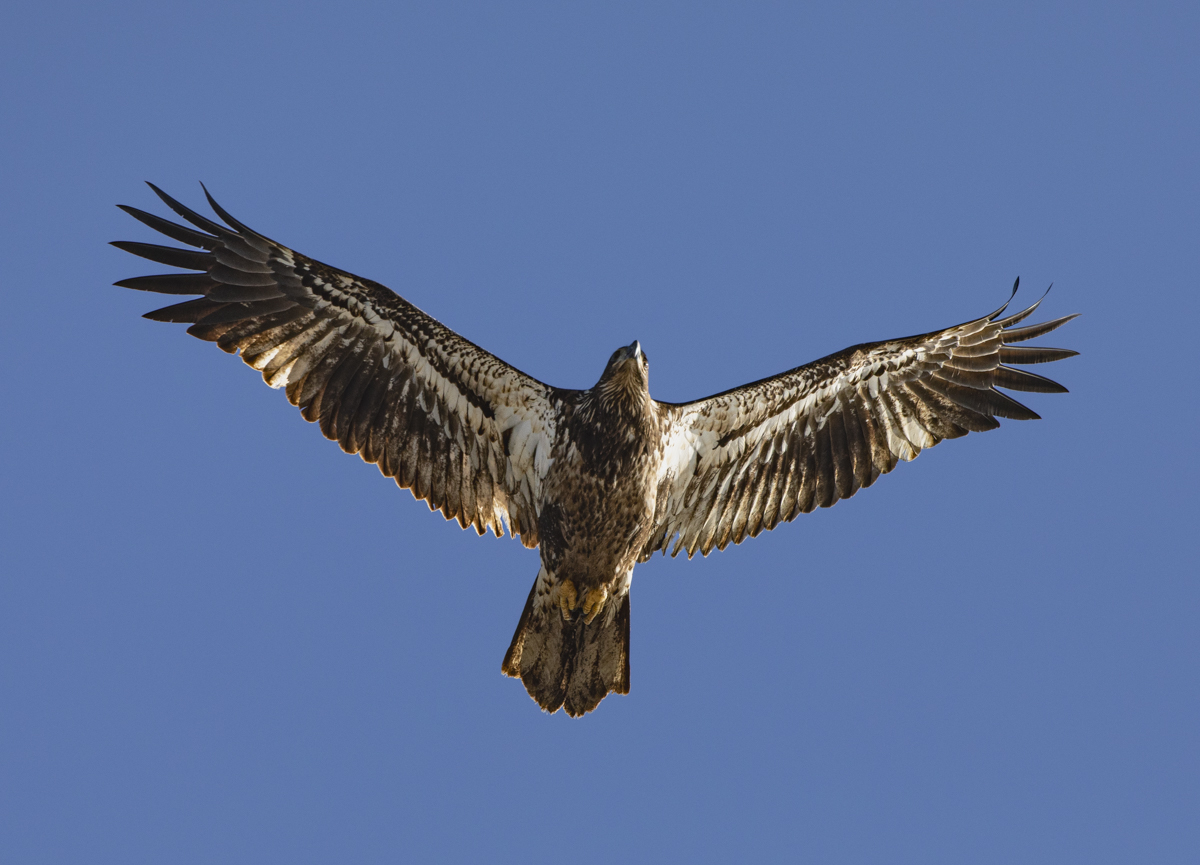
-Pied-billed Grebe at Pea island NWR-A Great Egret flies by just after sunrise-A juvenile Bald Eagle flies directly overhead
I asked at the Visitor C=enter where I might see the huge flock of Redhead ducks and the Snow Buntings I had seen on social media posts recently. The ducks were no problem they told me but they had no idea where I could find the buntings. So, off I went and soon saw a solid raft of ducks not far off the highway. The flock stretched for a hundred yards or so and was so densely packed I couldn’t see how any others could land in there, but some still managed. It was amazing seeing such a large concentration of birds.
-A small portion of the huge flock of Redhead ducks at Pea Island NWR
I soon headed to Alligator River for one more pass through the refuge to see what I could see before heading in the direction of home. I scanned the large flocks of waterfowl in the flooded fields near the road and enjoyed some time with a flock of both Greater and Lesser Yellowlegs (I feel sorry for the ones named “Lesser”). One of the birds grabbed what looked like a huge grub and scurried off to gulp it down before others nearby could steal it.
-A Greater Yellowlegs in the marsh at Alligator River NWR
While I was watching the shorebirds, a Downy Woodpecker flew into a nearby sapling and began hammering away. I didn’t pay it much attention at first assuming it was looking for bugs in a dead branch. But then I looked with my binoculars and saw it was on a mantid egg case. I’ve seen the results of this feeding behavior many times but never had managed a photo of it, so I spent a few minutes watching and taking pics. After it finished with this one, the hungry bird moved to a nearby branch and started working on another egg case. If you zoom in on the bird’s beak, you can see a mantid baby stuck to the woodpecker’s maxilla (upper beak)
A Downy Woodpecker tearing into a Carolina Mantid egg case -Part of a huge flock of Pintails at Alligator River NWR
On the way home, I stopped at Mattamuskeet and the Pungo Unit without seeing too much other wildlife. I did see the Snow Geese finally leave Pungo Lake, but they flew off the refuge to the west. I also saw some more folks behind the closed area signs. I spoke with one group asking them to come back, but they ignored me. It is a tough balancing act to manage for the welfare of the wildlife and to allow people to experience the grandeur of the animals so that they will care for the birds and the place.
Two days after that coast trip, I joined a group of folks participating in the quarterly Jordan Lake eagle count. I wrote an article on the eagles that can be found at the B. Everett Jordan dam in winter for the upcoming February issue of Walter magazine. In my research, I contacted a ranger, Steve McMurray, about the eagles at Jordan Lake. He mentioned the quarterly count and invited me to join so, there I was, shivering a bit at 7 a.m., looking out over a vast expanse of the lake. We spotted 8 eagles in the allotted count time (1.5 hours) and I enjoyed meeting and talking with some fellow bird lovers. After the count, I drove over to the dam to see what was happening. When I walked down the trail along the tailrace, I counted 12 eagles on the opposite shoreline waiting their turn at a fish meal. A photographer walked down the opposite shore where all the eagles were perched and flushed the closest one. It flew across the channel and allowed me a few quick images before disappearing over the trees.
-A fl-by of an adult Bald Eagle at B. Everett Jordan dam on Jordan Lake
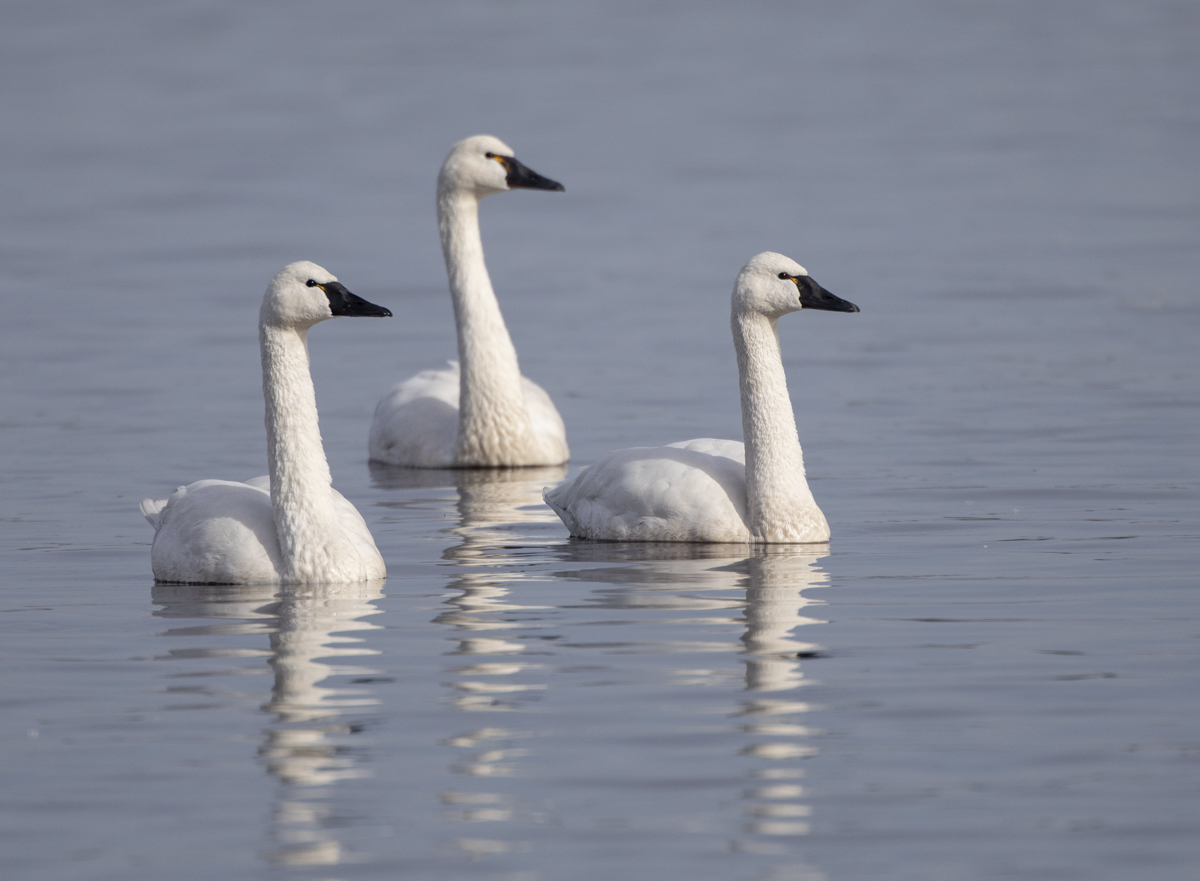
Two days later, at 5 a.m., I was driving back to Pungo with some good friends to enjoy some more wildlife watching. It was a slow morning but the lake was full of swans and their calls are one of the most beautiful natural sounds I know. After driving through the refuge, we hiked out to the Duck Pen Observation Blind. I had been out there recently and saw how the area around the blind had been damaged by bears and careless humans over the past couple of years. Even though vegetation has grown up around the blind, blocking much of the view, we had a nice look at some of the many Tundra Swans resting on the calm lake waters. The low angle light was really nice and we spent a lot of time looking and listening.
-Some Tundra Swans from the Duck Pen blind on a calm afternoon at Pungo Lake-Swan synchrony
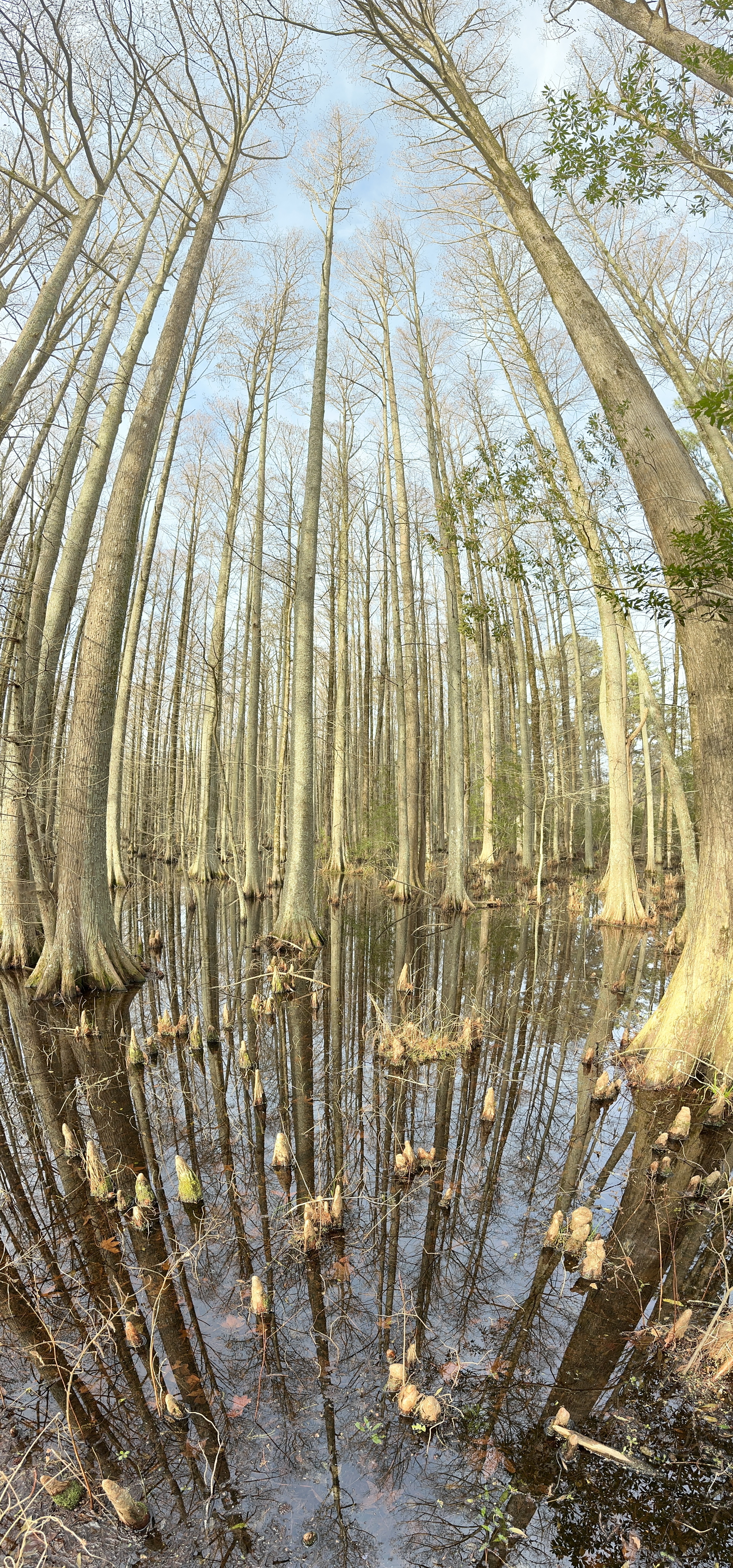
After eating some lunch back at the road, we made a trip over to Mattamuskeet. A highlight was walking the boardwalk of the New Holland Trail that meanders through a picturesque cypress swamp.
-A vertical pano of the swamp forest along the New Holland Trail boardwalk at Mattamuskeet NWR
On our way out we stopped at the photo blind on the impoundment. This is really a nice little blind and the birds are pretty tolerant of your approach if you are quiet, move slowly, and use the surrounding trees as cover as you approach.
Our plan was to return to Pungo in hopes of seeing birds in the field or some fly-overs and then head home. When we arrived, we saw plenty of swans but they were all headed off the refuge to the west to feed with few visible at close range on any of accessible impoundments. I saw a friend hiking along the road and, as we were talking, a huge flock of Snow Geese lifted off the lake and flew directly over us. This group was much larger than what we saw a couple of weeks ago on the bird count. We all stared skyward, mesmerized by the sounds and undulating waves of birds.
Just as the last of the flock appeared, we heard the distinctive calls of Sandhill Cranes! I had looked for them on the bird count and my trip last week but they were nowhere to be found. And, as we approached sundown, twenty two of these amazing birds flew into view, circling over the fields before landing in the impoundment behind the trees. This is the largest group of sandhills I have seen on the refuge.
-At last, the Sandhill Cranes reveal themselves at Pungo! (with a portion of the flyover of thousands of Snow Geese above them)
After that extraordinary experience, we drove down to “Bear Road” and peered down the now closed road. After several minutes, we finally saw the small bear that has been coming out most evenings to feed. To close the day, a large group of blackbirds was swirling in a cloud of wings on the horizon.
-A murmuration of Red-winged Blackbirds at dusk
I think we all left with a happy soul after a wonderful day on some of North Carolina’s public lands. Thank you to all the people working tirelessly to help make these places so special for the wildlife and all of us.
Christmas Bird Count data helps us better understand birds so we can better protect them!
~US Fish & Wildlife Service
Here’s a quick report on our annual trip to Pungo for the Pettigrew Christmas Bird Count that was held last weekend. For a change, we had nice weather – chilly and windy, but sunny most of the day. The count circle is centered on Lake Phelps and Melissa and I cover the Pungo Unit of Pocosin Lakes National Wildlife Refuge. We camped at Goose Creek State Park and were at Pungo around 6:30 a.m. as the sky was turning light. We headed straight for one of the flooded impoundments on the refuge to catch the sunrise and were surprised to see only a few swans on the water (this area usually has hundreds all winter). We were also hoping to see the Sandhill Cranes that had been reported from a week before, but no luck. The water levels were very high due to recent heavy rains and we wondered if that might be an issue but I later learned from refuge staff that there had been someone illegally hunting on the refuge in that spot the day before.
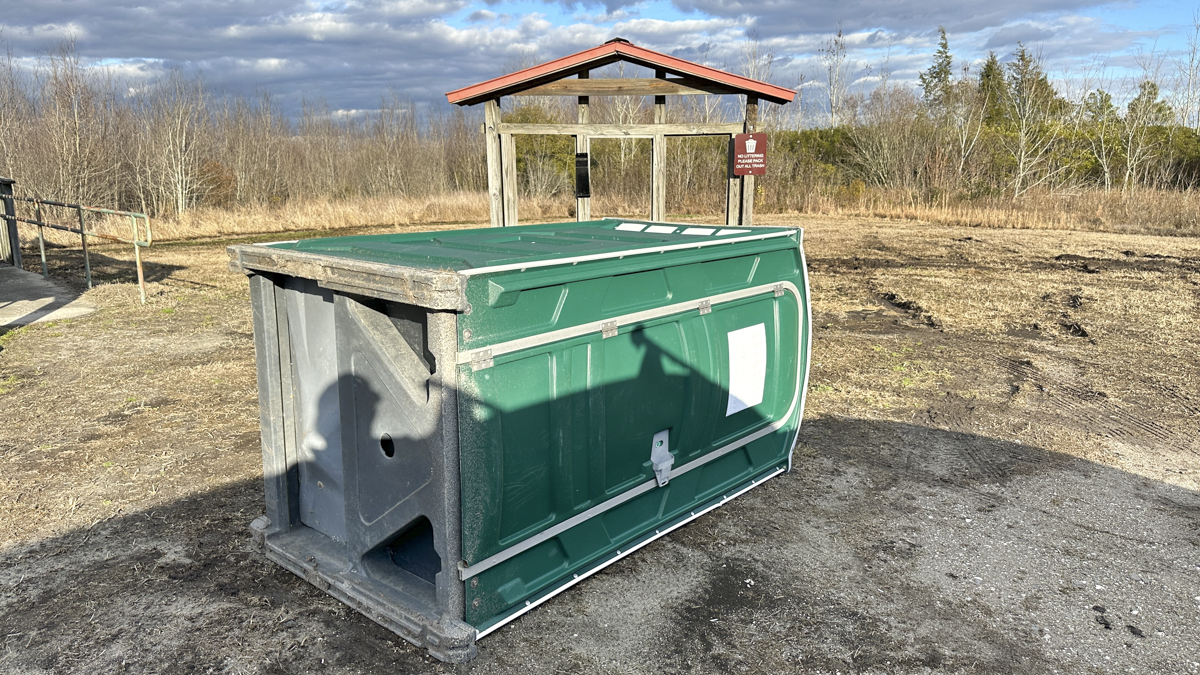
It seems as though the increased visitation at this refuge since the pandemic has bought with it some bad visitor behavior and several areas of the refuge have restricted access, When we arrived at the observation platform we found the port-a-john lying on its side. We wondered if a bear or a lousy human had been the culprit.
-Was this bear or human mischief? (click photos to enlarge)
I later learned from staff that, unfortunately, it had been a human pushing it over with his truck (the person has not yet been caught). Surprisingly, it was in its proper position the next day when we returned (set up and cleaned by the company that supplies these I was told).
In spite of my concerns about the issues facing the refuge, the wildlife was able to remind me of why I love this place so much. I didn’t take a lot of photos but here are a few highlights from our day in the field at Pungo.
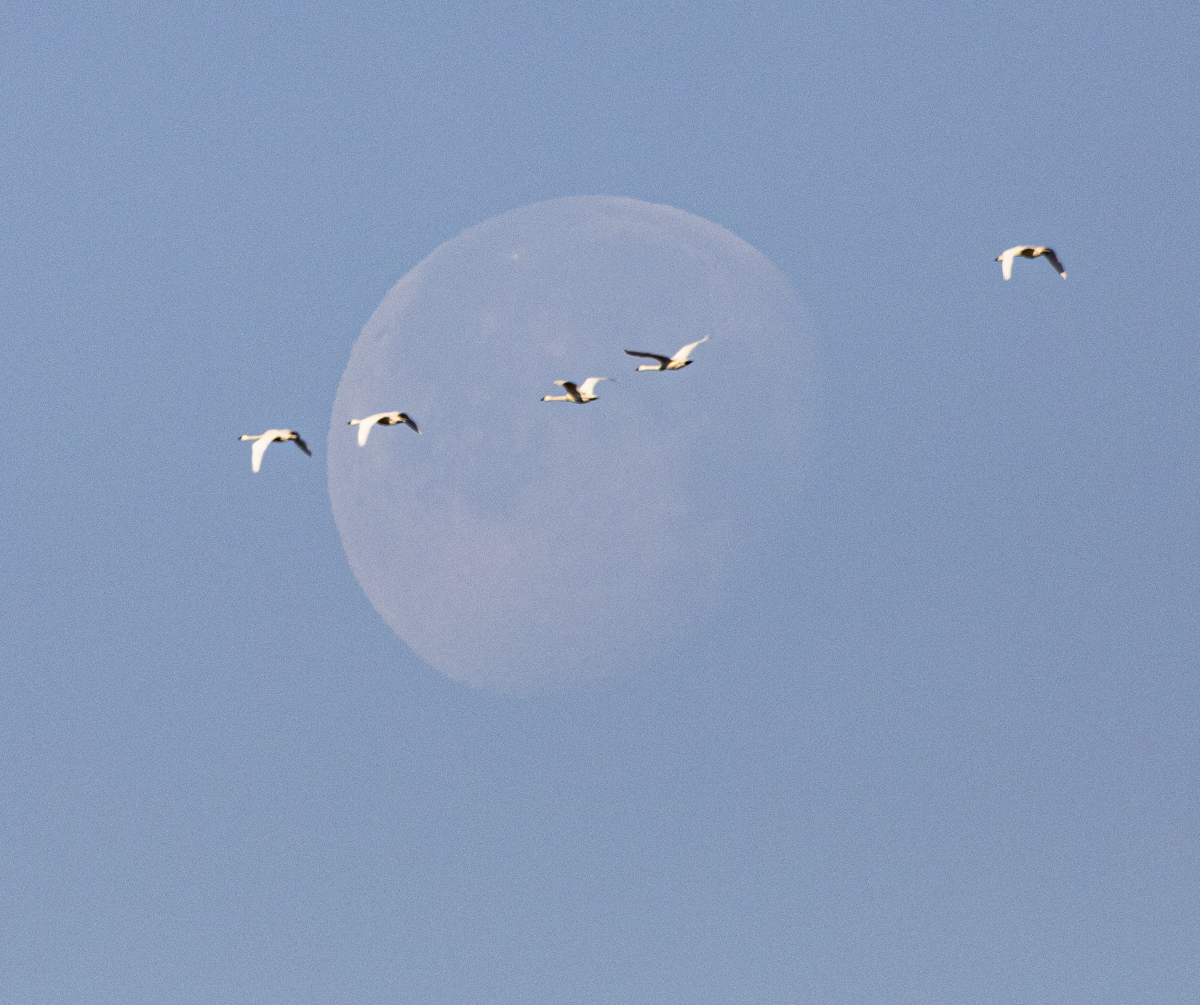
-Tundra Swans flying off the refuge to feed as the moon sets Saturday morning
-Tundra Swans on Pungo Lake. The strong south wind had them piling up on the south shore where it was more protected.
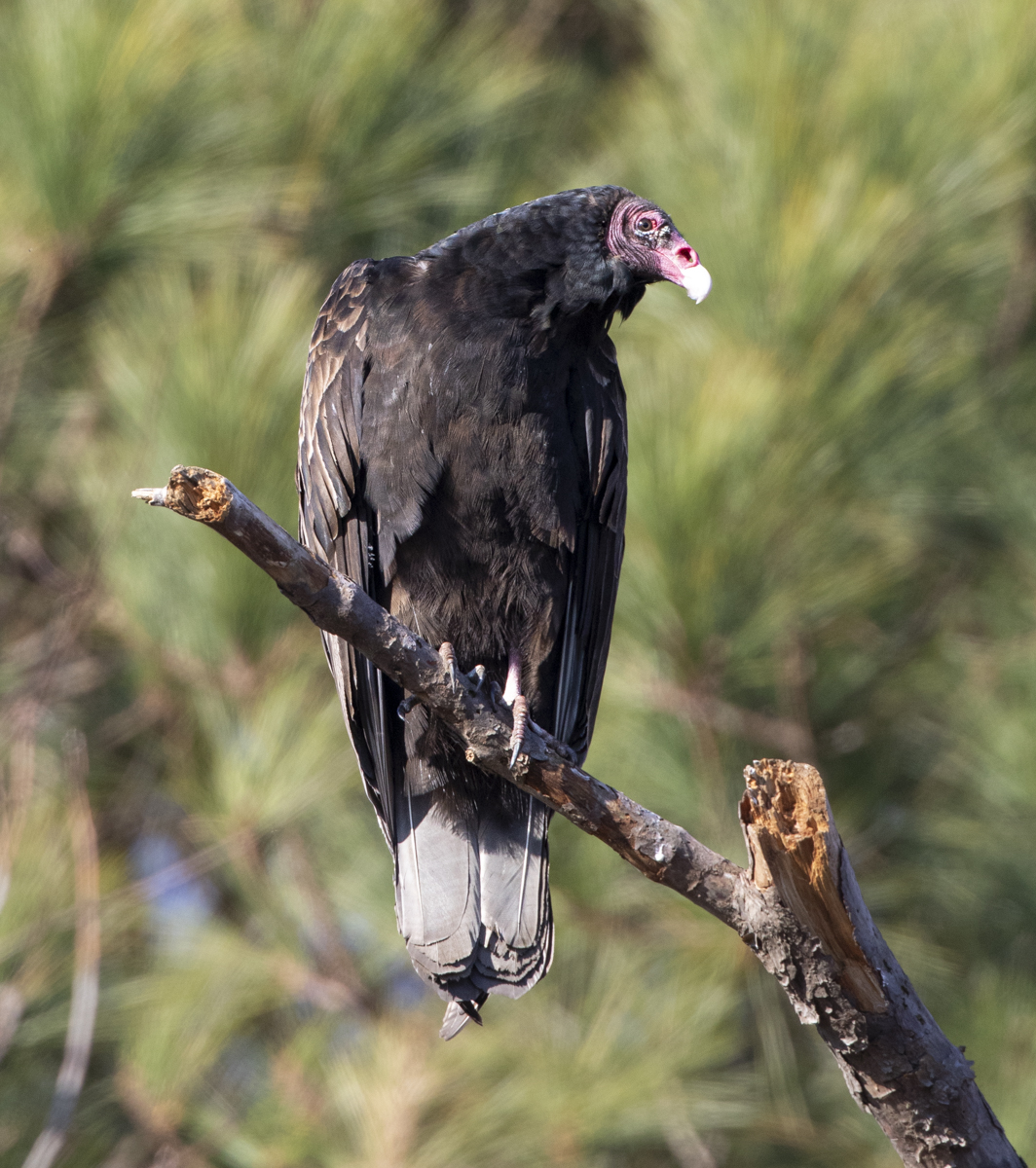
-A Turkey Vulture peers at me as I walked along “pishing” for birds in the thick roadside vegetation (making a repeated pish noise that imitates the alarm call of several songbirds – this often causes nearby birds to reveal themselves as they try to see what is going on).
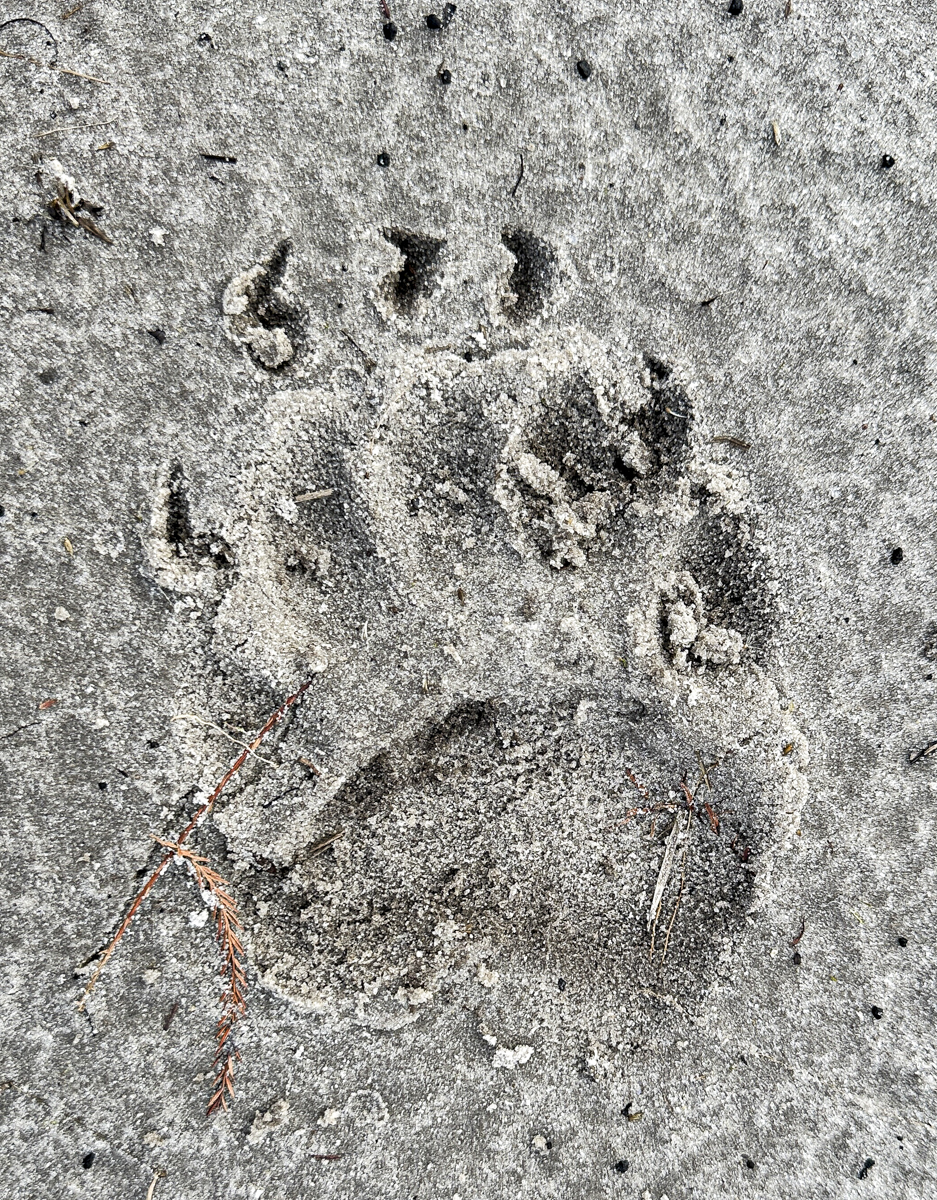
-We found some great tracks in the sandy and muddy soils along the roads – bear, otter, bobcat, raccoon, canid (red wolf or coyote), and plenty of deer tracks. This is a nice front paw print of a black bear
-Although it is a bird count, I always stop to enjoy the other critters we come across (we saw three bears, one otter, and several deer). Melissa spotted this young black bear trotting toward us along one of the roads. I stopped the truck and it kept coming until, finally, it saw us and slowly turned around. Then another car came from the opposite direction and the little guy decided to head into the swamp. We watched as it swam across two open bodies of water and finally disappeared into the flooded forest.
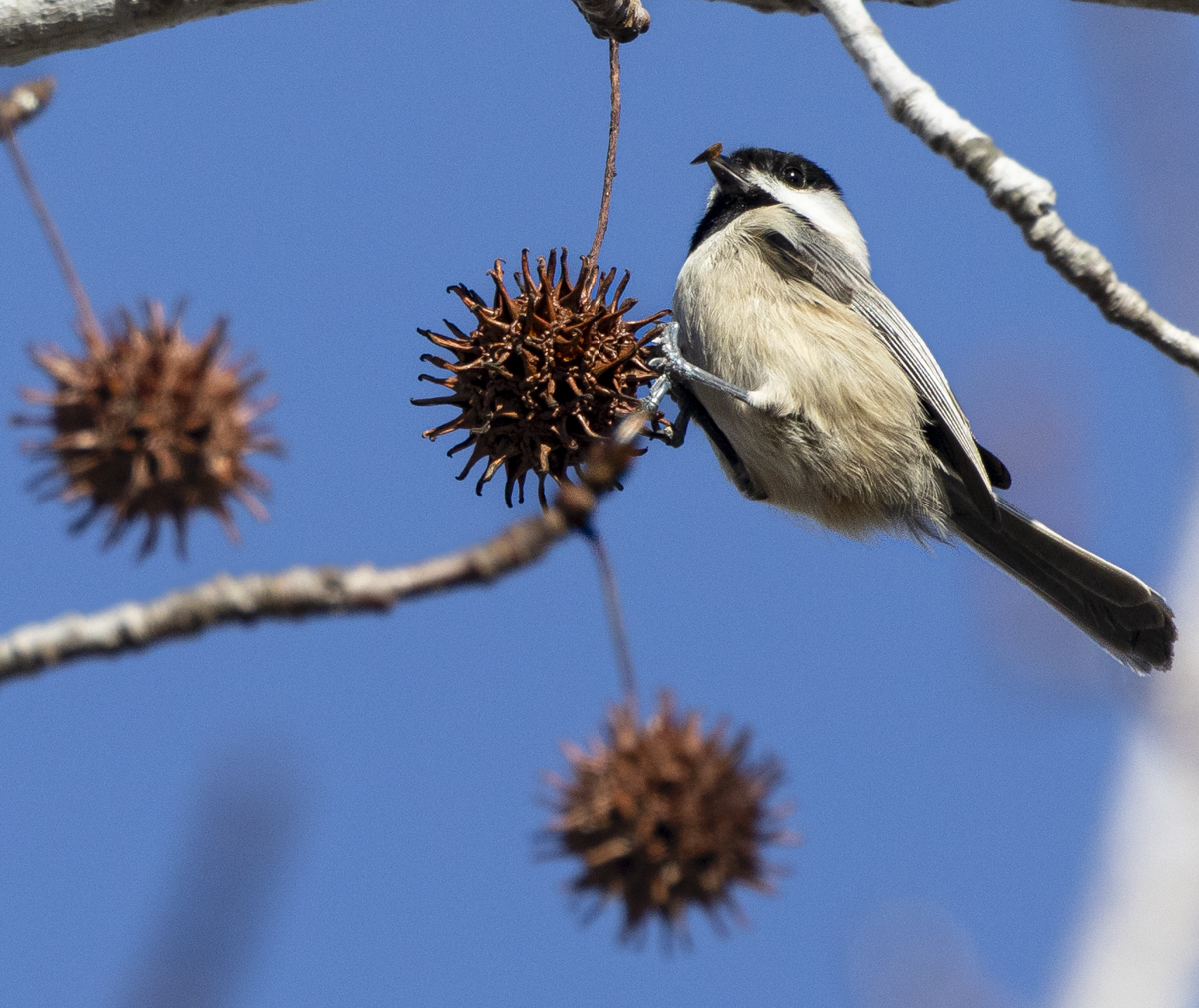
-While driving slowly along in the afternoon, I heard some chickadees calling (hearing aids are a wonderful thing). We stopped and got out as they were feeding on the seeds of Sweet Gum (as were some Red-winged and a few Rusty Blackbirds). There are one or two small seeds in every hole in a Sweet Gum ball and several species of birds utilize these as a winter food source. I have always wanted a photo of this behavior so we started following these busy birds around as they flitted from branch to branch extracting seeds and picking at them to eat. You can see a seed in this one’s beak.
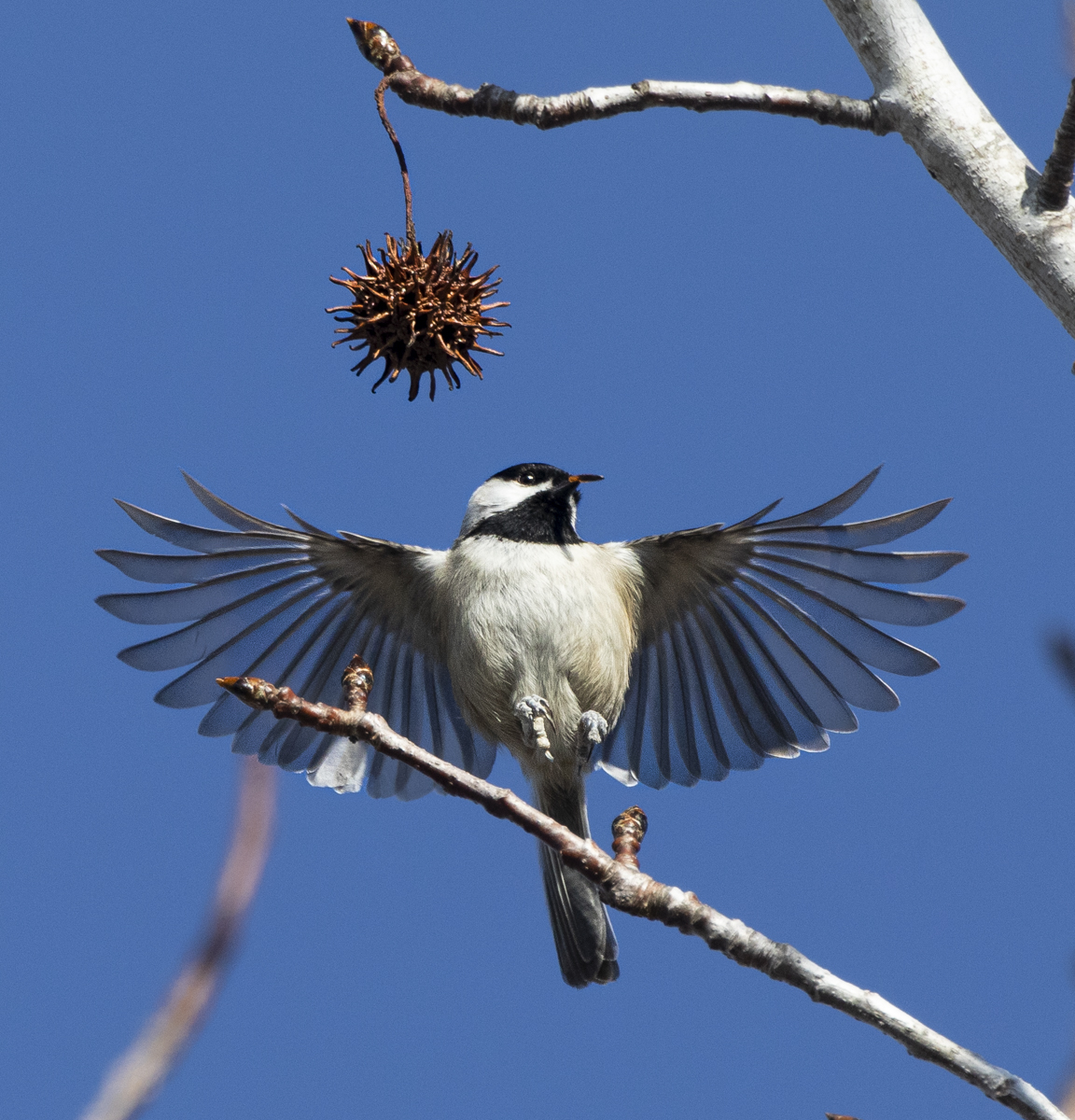
-They often grabbed a seed while hanging on one of the gum balls and then would fly to a nearby branch to feed on it.
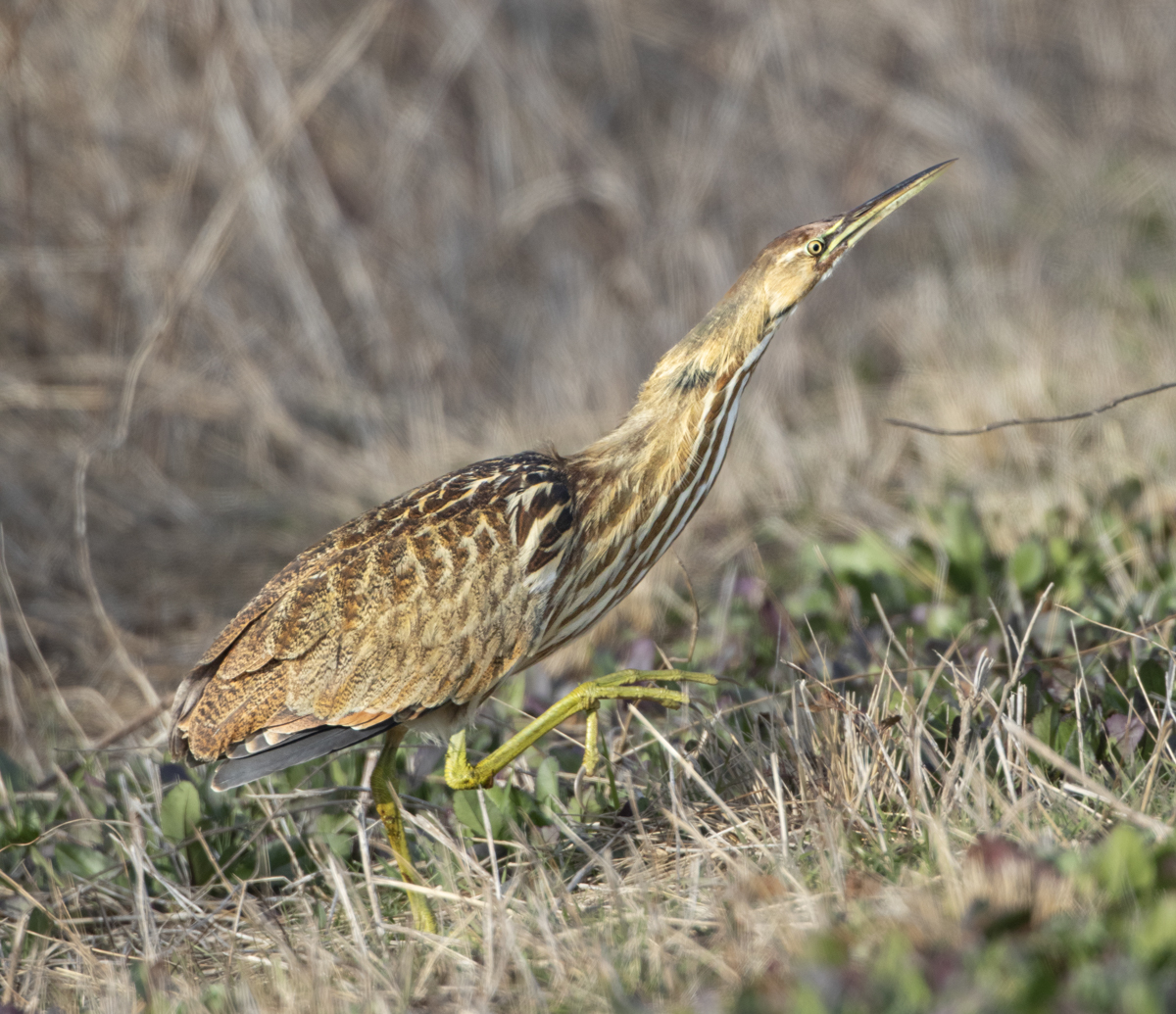
The wildlife highlight of the day was when Melissa spotted (yes, she spots more things now than I do) an American Bittern in a roadside canal. It was on her side of the vehicle (she claims this a rarity and that I always have the wildlife on my side to photograph:). She took lots of photos and several video clips as it patiently made its way along the shoreline.
– Finally, the bittern flew to a closer side of the canal and started walking across the road where I managed this pic.
-It disappeared into the tall grass and then came back out, looking much like the dried vegetation that surrounded it. These birds are simply beautiful, and those eyes!!
All in all, a wonderful day. Here are our results for the Pungo Unit portion of the count as reported on eBird:
2500 Snow Goose — This is actually few snow geese for this count! There was one flock on Pungo Lake. 100 Canada Goose 10000 Tundra Swan — This is typical to low for this location at this count. 80 Wood Duck 20 Northern Shoveler 212 Gadwall — Large mixed flock on the Pungo Lake with scope 803 American Wigeon — Large mixed flock on Pungo Lake 25 Mallard 21 American Black Duck 840 Northern Pintail — Large mixed flock on Pungo Lake 1520 Green-winged Teal — Large flock on Pungo Lake both sitting and then in flight. 2 Bufflehead 12 Hooded Merganser 1 Pied-billed Grebe 73 Mourning Dove 65 Killdeer 3 Bonaparte’s Gull 500 Ring-billed Gull 1 Double-crested Cormorant 1 American Bittern 3 Great Blue Heron 25 Turkey Vulture 9 Northern Harrier 1 Cooper’s Hawk 6 Bald Eagle 2 Great Horned Owl 3 Red-bellied Woodpecker 2 Downy Woodpecker 5 Northern Flicker 1 American Kestrel 5 Eastern Phoebe 1 Blue-headed Vireo 9 Blue Jay 8 American Crow 3 Carolina Chickadee 3 Tufted Titmouse 4 Ruby-crowned Kinglet 3 Golden-crowned Kinglet 1 Winter Wren 4 Carolina Wren 12 European Starling 1 Brown Thrasher 1 Northern Mockingbird 252 American Robin 20 American Pipit 50 White-throated Sparrow 4 Savannah Sparrow 43 Song Sparrow 60 Swamp Sparrow 8 Eastern Towhee 19 Eastern Meadowlark 1600 Red-winged Blackbird 1 Brown-headed Cowbird 2 Rusty Blackbird 20 Common Grackle 20 Yellow-rumped Warbler 3 Northern Cardinal
Total number of species – 57.
Results for the entire count circle included a total of 106 species, which is about average for this count.
I’ll get back to blogging about our Africa trip next time.
~The slogan formerly found on the logo of Kruger National Park, South Africa
Last summer, a friend and former coworker, Andrew Torlage, asked me out for a beer to discuss an idea. Andrew was born in South Africa and moved to North Carolina less than a decade ago. He is starting a tour company (named Vakasha – which means to visit) where he hopes to share the beauty of his homeland with others. He was asking for some feedback on his plans and some assistance with getting together the inaugural group. Though not on my bucket list of places to travel anytime soon, Melissa and I jumped at the chance. So, in November, we headed to Johannesburg with a group of eight plus Andrew. The trip was sensational, full of natural beauty, extraordinary wildlife, cultural highlights, laughter with friends, and good food (and wine!). I’m going to put together a few of the many, many highlights in the next blog or two. It was truly quite a trip!
We flew on Delta in what is their longest flight (and the 13th longest flight of any commercial airline) – approximately 16 hours from Atlanta to Johannesburg. We stayed in a beautiful Airbnb in J’burg a full day and a half before meeting up with Andrew, our guide. The people, the city, the power of visiting Soweto and learning more about the incredible Nelson Mandela, made for an amazing beginning to our trip.
-A Gray Go-Away-Bird. It’s common name is based on its unusual call – a nasal “gwaay”. These were common at our Airbnb in Johannesburg
-Andrew picked us up in our transportation for the next several days and we were off
After getting ourselves and our gear into the van and trailer, we headed to Kruger National Park, our home for the next 4 days. We proved our nature nerdiness to everyone right away when we stopped at the entrance gate and discovered a dung beetle doing its thing. With screams of delight we gathered everyone around to witness the spectacle.
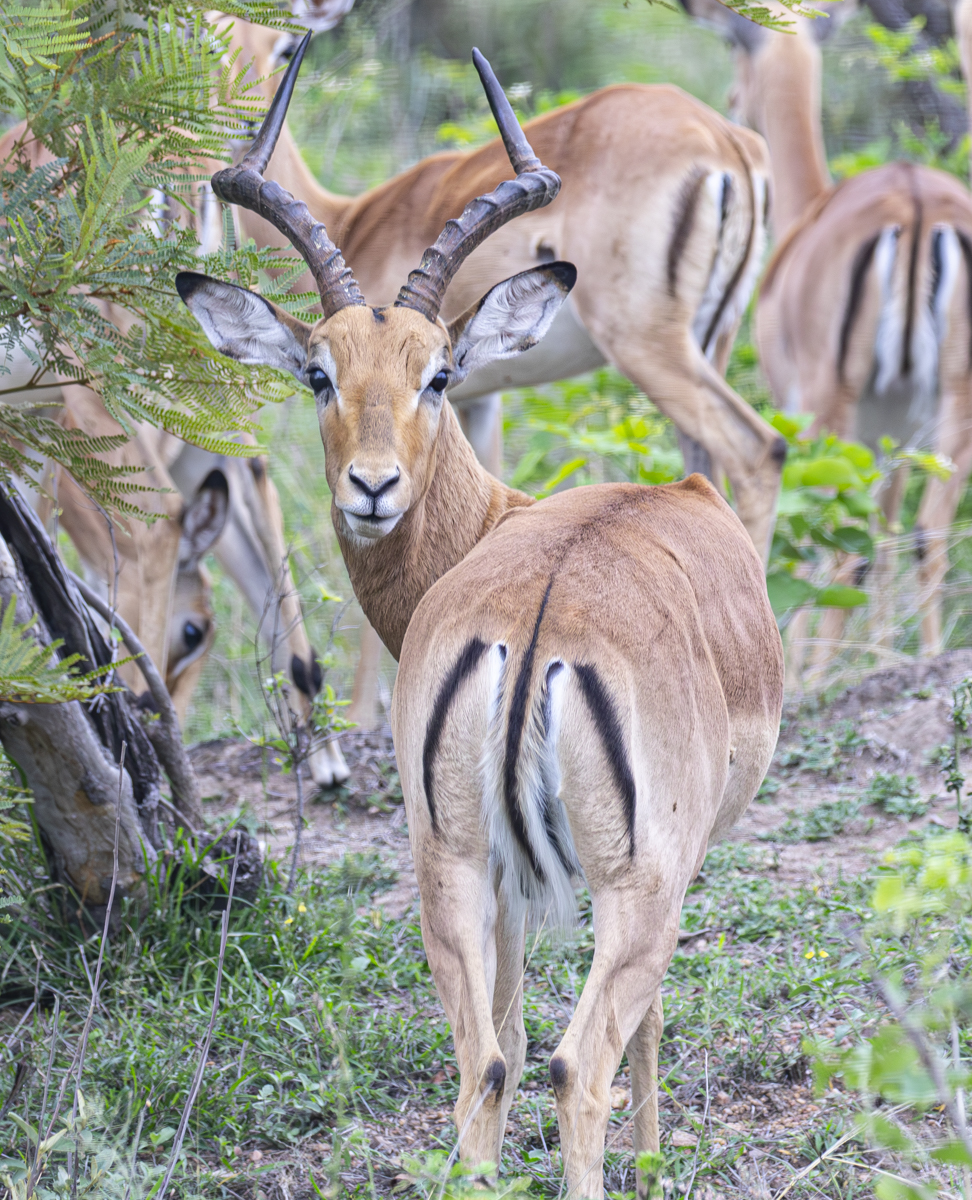
-Perhaps the most common prey animal for several of the park’s larger predators is the Impala (this one is a buck). Andrew told us the locals called this the “McDonald’s of the bush” due to the M-shape they all have on their rear and the fact they are on the menu of so many other animals. We preferred the “M&M animal” because when you saw one, you saw several.
-A Southern Ground Hornbill, the largest of the hornbills. This is a species of concern in Kruger, but we were lucky enough to see several.
-I’m used to bear jams in Yellowstone, but this is the scene at a Leopard jam in Kruger. You are not allowed to get out of a vehicle in Kruger so people jockey for position in their cars or safari vehicles. My position in our van did not allow me a pic without a stick blocking part of the animal’s face. But, that wasn’t the last one we saw that day…
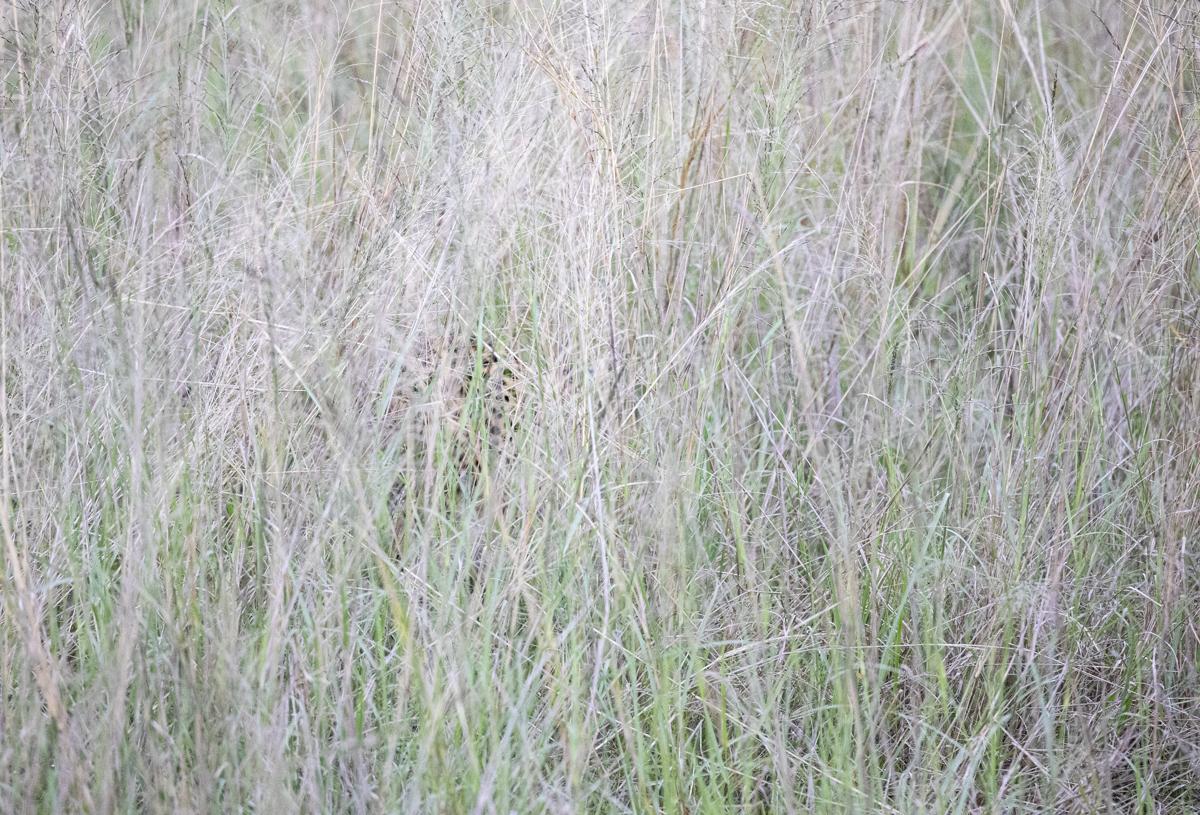
-On our afternoon game drive with a ranger, we came across another traffic jam. An adjacent car said there was a Leopard lying in the grass next to the road. After several minutes of staring and moving around a bit in the safari vehicle (a large open bus) a woman next to me spotted it (this is all we could see). It amazed all of us that it was so hidden and only about 20 feet from us.
-Driving back toward our camp, we came across another Leopard (probably the same one we had seen earlier that had now moved across the road). Leopards are solitary animals and are expert stalkers. They use the element of surprise and their power to overcome prey. They spend the hotter parts of most days resting.
-We spent several minutes with this beautiful animal and it finally turned its face toward us for a few seconds, allowing this nice portrait. Leopards often carry their prey up a tree trunk and feast in relative safety from other predators such as Lions and Hyenas.
-While watching the Leopard, we spotted this Magpie Shrike perched in a nearby shrub. We saw several species of African birds that have extremely long tails. This may be an adaptation to mate choice (aerial displays) and/or the ability to perform abrupt maneuvers in flight for foraging.
-A bit later that day we drove back by the spot where the Leopard had been hiding in the grass and it was up and moving. It slowly began stalking a large herd of Impala on the other side of the road. The vehicles in the traffic jam gave cover to the approaching Leopard and we all braced for an exciting predator-prey moment. But as the big cat tried to cross the road, there were just too many people and cars and it apparently gave up the hunt and moved off the road and sat down.
-Each of the major camps in Kruger are surrounded by an electric fence and electrified cattle guard with a gate manned by a ranger to keep out the potentially dangerous animals like Leopards, Elephants, and Lions.
-A personal highlight was seeing the Giraffes. What amazing adaptations! They are the tallest land mammal on Earth with big males coming in at over 15 feet at the shoulder and able to reach leaves a full 24 feet above the ground. They can also tilt their heads vertically due to special bone articulations at the base of the skull and that, along with their height and long tongues (up to 18 inches) gives them extra reach for their feeding.
-You can identify males from females from a distance by looking at their “horns” (more accurately called ossicones). Male horns are usually bare at the tips from their head/neck butting for mating rights, whereas female horns have tufts of dark hair. I believe this one is a male.
-We soon saw a small herd of Elephants alongside the road. it was a mixed-age group including a few very young ones. More on these magnificent creatures in the next post.
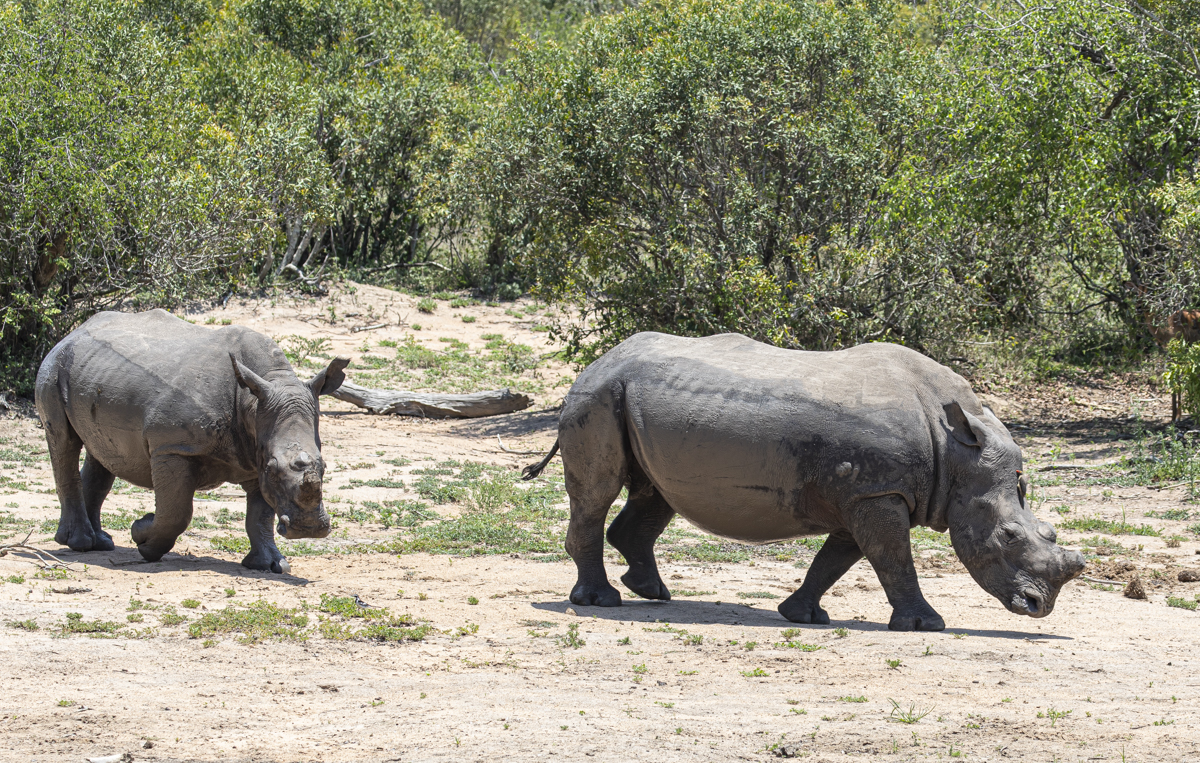
-We visited a hide (we call the blinds) on a watering hole mid-day and saw a herd of impala and some birds. Suddenly, two huge White Rhinos ambled into view and the rest of the wildlife gave them a wide berth. Due to excessive poaching in recent years, park managers dart every rhinoceros in the park and cut off their horns, which are highly valued on the black market. I must admit to being saddened to not see the diagnostic horn but thankful if it helps keep these giant beasts alive. The horn continues to grow throughout the animals’ life so rangers must cut off the horns again every few years. The record length for a White Rhino horn was 5.1 feet! White Rhinos are the second largest land mammal on Earth (big males can weigh over 5000 pounds) and are part of the so-called “Big 5” of Africa (much sought-after by tourists ) – Elephants, Rhinos, Cape Buffalo, Lions, and Leopards. And we were lucky to observe all five on this trip!
-A diminutive Steenbok (standing only 20 inches at the shoulder) is one of the smallest antelope. The name is derived from the Afrikaans word, steen, which means brick – because of its color).
-Lions are Africa’s largest land carnivore (big males are between 400 and 500 pounds). They hunt cooperatively and can take down large prey from Giraffes to Cape Buffalo and Zebra (even Elephants). They spend much of their day resting as this group of 3 (one off-camera) was doing, sleeping right in the road. The rangers knew that this group had recently taken down a Cape Buffalo and were feeling well fed.
-A Lion wakes up as our big open safari van passes. I imagined it was thinking, “you know I could jump up there and take you guys if I wanted”. Hence the reason for not getting out of your vehicle in Kruger!
-On our way back to camp we stopped for a second to look at some wildlife and when it came time to crank up the safari van again, there was nothing. Turns out the very bumpy road had caused something to become disconnected in the wiring and it took some time to figure out the problem and get it fixed. We all cheered as the engine cranked (a lot of the predators were starting their nightly hunt) and we finally headed back. Along the way we enjoyed a spectacular Kruger sunset. The next post will highlight the remaining two days in Kruger and travel to our next destination.
We do not see nature with our eyes, but with our understandings and our hearts.
~William Hazlitt
And in some cases, we see nature with our trail cameras…
This season seems to have fewer large buck deer than I have seen the past few years, but recently, a beautiful 8-pointer kindly walked in front of one of our cameras. A week before, the same buck was caught on camera (those videos are not included here) trailing a doe that had been filmed running on the same route two minutes before the buck appeared. And just yesterday, while I was changing out the camera cards, this same buck was closely following a doe through the forest. The rut continues and some of the ladies just don’t seem all that interested
The other hot spot for activity in recent weeks has been the ‘possum hole at the base of a fallen tree. I’ve had a camera on this spot for a year now and have seen all sorts of animals coming and going including several different opossums, raccoons, deer, gray and flying squirrels, chipmunks, and a few species of birds. Once again, an opossum has been gathering leaves in its tail and carrying them into the hole. The camera recorded this activity 4 times in the past month. Below is one of those scenes…
A few days later, the camera recorded a raccoon stopping by the hole and peeking inside. Two hours after that, the camera saw a coyote at the entrance to the opossum den. When the coyote walks away, you can see that the hole entrance has been dug out a bit. I’m assuming this coyote did that, but it had to have been a very quick dig to not capture it on the video (there is a slight delay of just a second or two between the time the camera is triggered by motion and when it starts recording).
Five days later, a coyote visits the area 4 more times over a span of several minutes (here is the longest visit). The opossum has not been seen at the hole since the first coyote visit.
Cameras caught coyotes several more times in the past week (on one recording, two different coyotes pass by the camera in quick succession). Two nights ago, as we were lying in bed, we heard a cacophony of coyote yips very close to the back fence. So, yesterday, I changed out the camera cards again and was rewarded with three separate coyote videos, all at the same camera. The first was just of one trotting away from the camera at 7:11 a.m. At 7:45 a.m, the coyote below comes toward the camera carrying something.
We can’t quite tell what it has in its mouth even after cropping and slowing it down in the next video. Could it be part of a deer carcass? Let me know if you have any thoughts.
Unfortunately, the time of day that this occurred is the toughest time for the camera’s resolution. Near dawn and sunset, the cameras I have tend to struggle a bit with clarity compared to scenes in full daylight or darkness.
Nine minutes after the coyote trots by carrying what presumably is a hefty chunk of food, a second coyote wanders by the same camera, stops, and whimpers. Not sure what to make of that unless it is just feeling left out of a meal. I guess we can all relate when someone else at the table gets the last cookie.
The time to relax is when you don’t have time for it.
~Sydney Harris
You may have noticed a lack of posts on this blog the past month. We have been dealing with my mother’s declining health as well as plenty of long-scheduled things here at home. Traditionally, we take a trip somewhere for our birthdays which fall a week apart, but this year had other plans. After another visit to mom’s, I decided we needed a break for ourselves and scheduled a couple of days last week at one of our favorite mountain destinations, the Celo Inn, near Burnsville, NC. The weather was forecast to be perfect – cool and clear (though it turned out that was not the case every day).
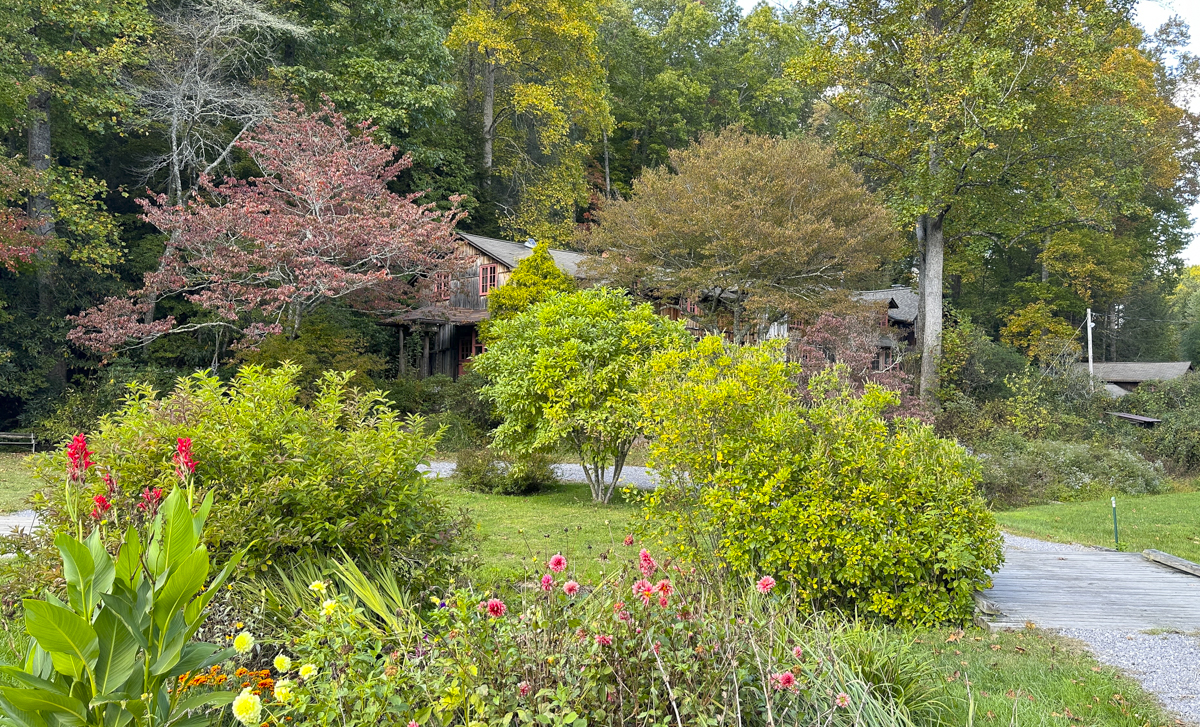
–The Celo Inn – one of our favorite places for respite in our mountains (click photos to enlarge)
After a wonderful breakfast at the Inn, we headed to our friend’s place in Burnsville. They are restoring an old cabin that will soon be an idyllic mountain retreat. We had a great time talking and marveling at the work they have done and then headed for lunch and a hike. The weather was changing with clouds and cold air starting to dominate. But up to Carver’s Gap we drove for what turned out to be a very brisk hike on the open balds of the Roan Mountain trail.
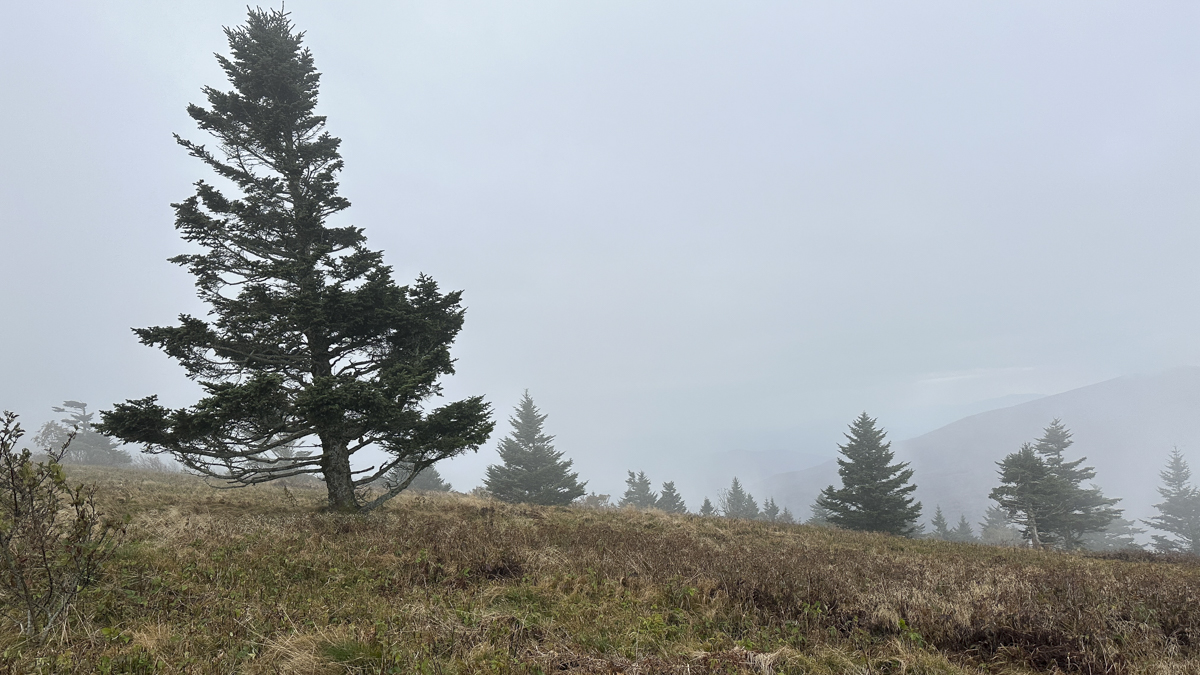
–Clouds and windy conditions dominated our hike through the balds
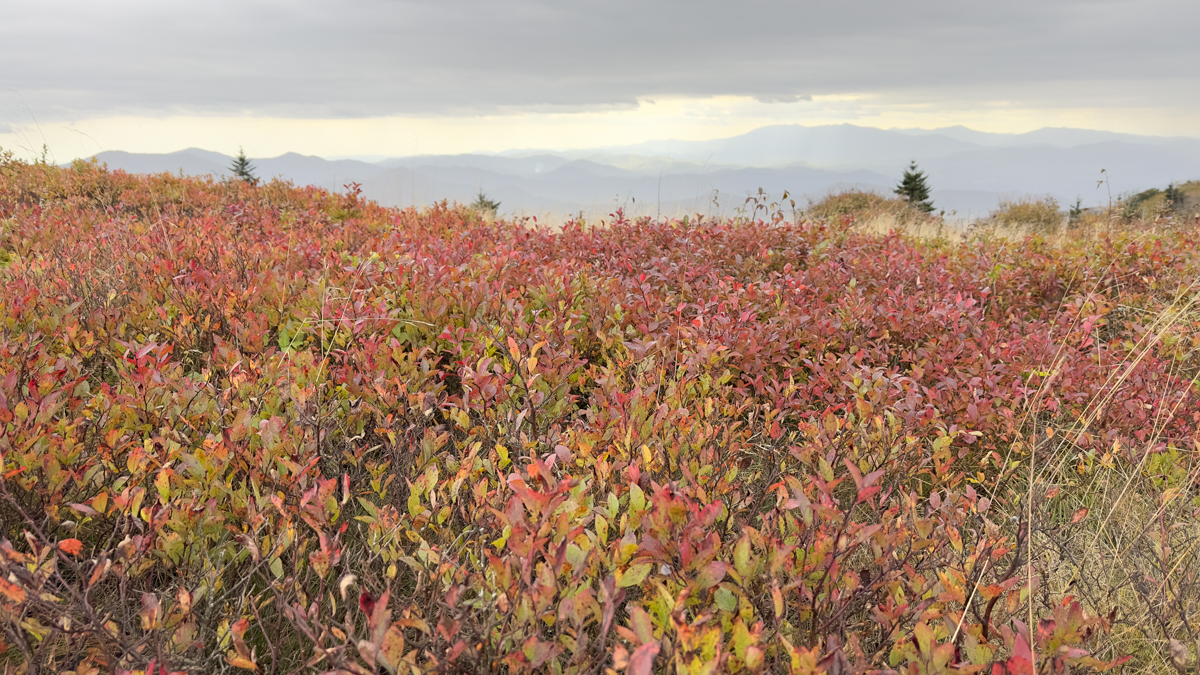
–Fall colors were starting to peak at the higher elevations, but here it is mainly in the shrubs
–Clouds moved in, clinging to the balds and spitting rain (and a little sleet) at us. We took shelter in a spruce grove for a bit during the heaviest rain.
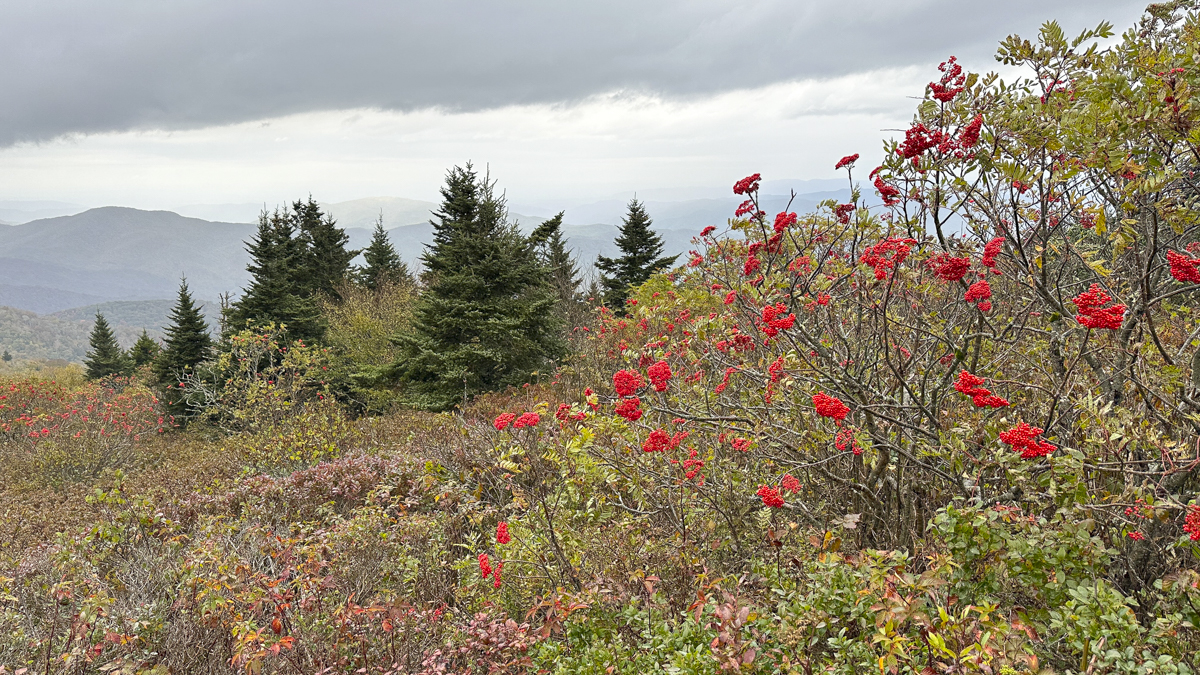
–The Mountain Ash berries are brilliantly colored and really stand out on a cloudy day
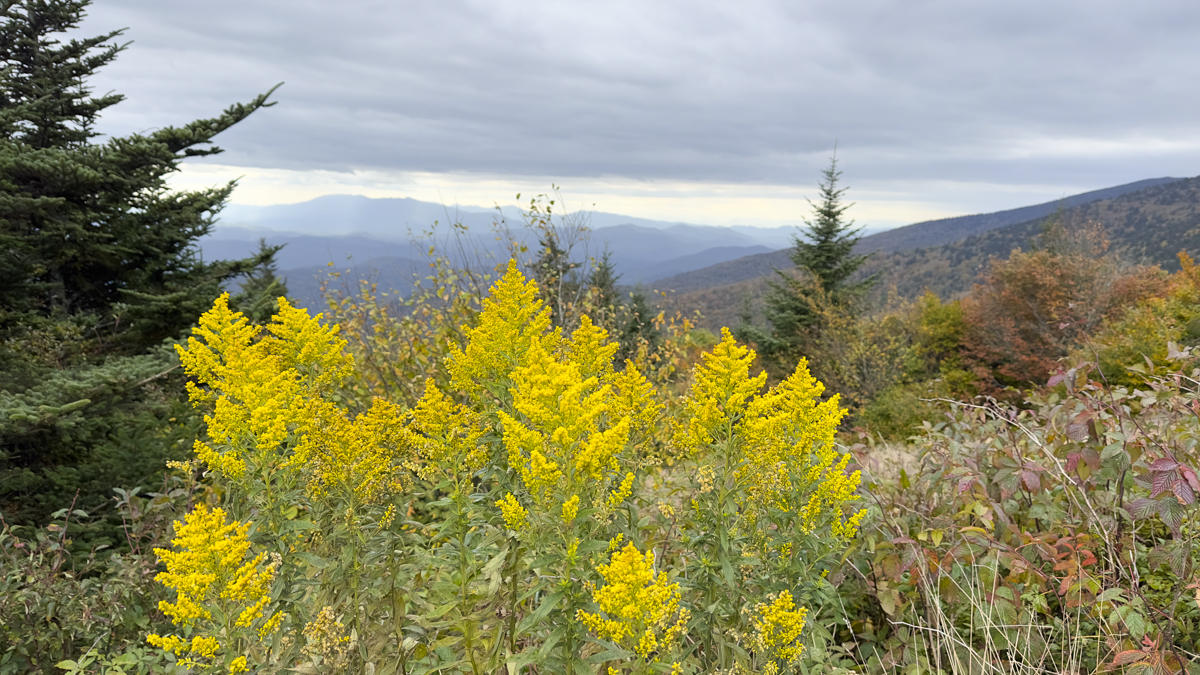
–Goldenrod adds a splash of color to the bald. Most flowers had already gone to seed.
–Not the weather we had expected, but a beautiful place nonetheless.
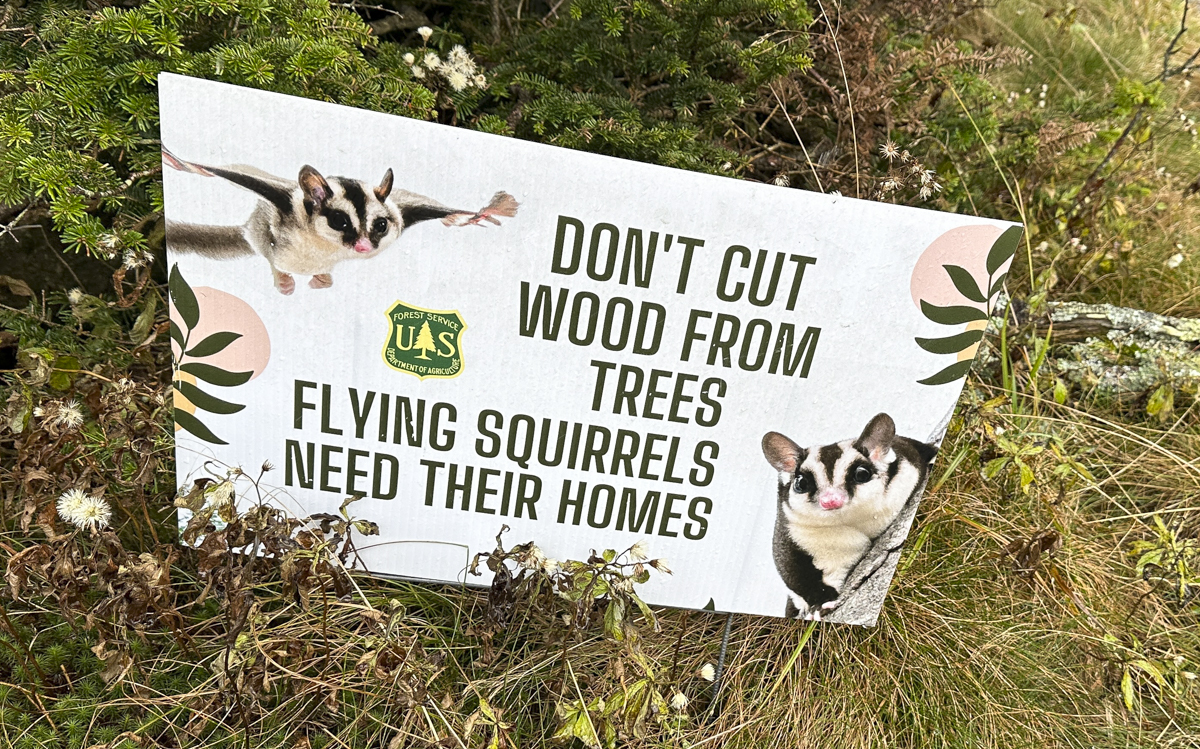
–I like the message but I think someone pulled a photo off the internet (the source of all things accurate – not). I believe these are Sugar Gliders and definitely not one of our species of flying squirrels.
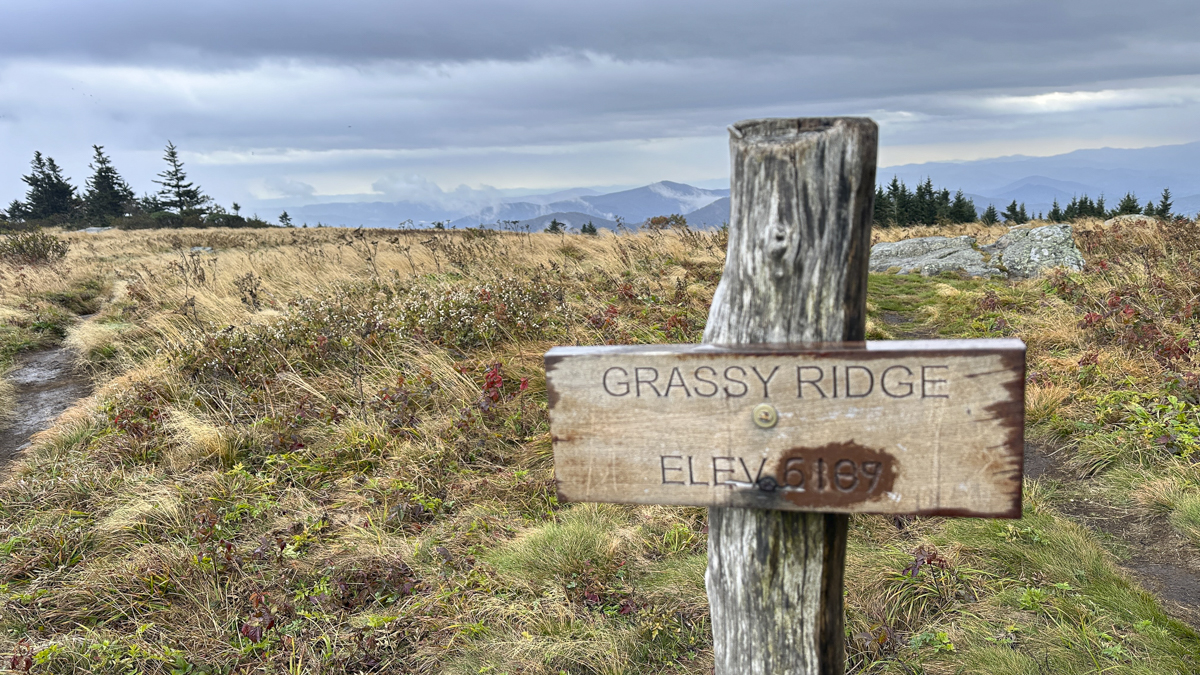
–This was the goal – about 2+ miles out from the parking area – elevation 6169ft.
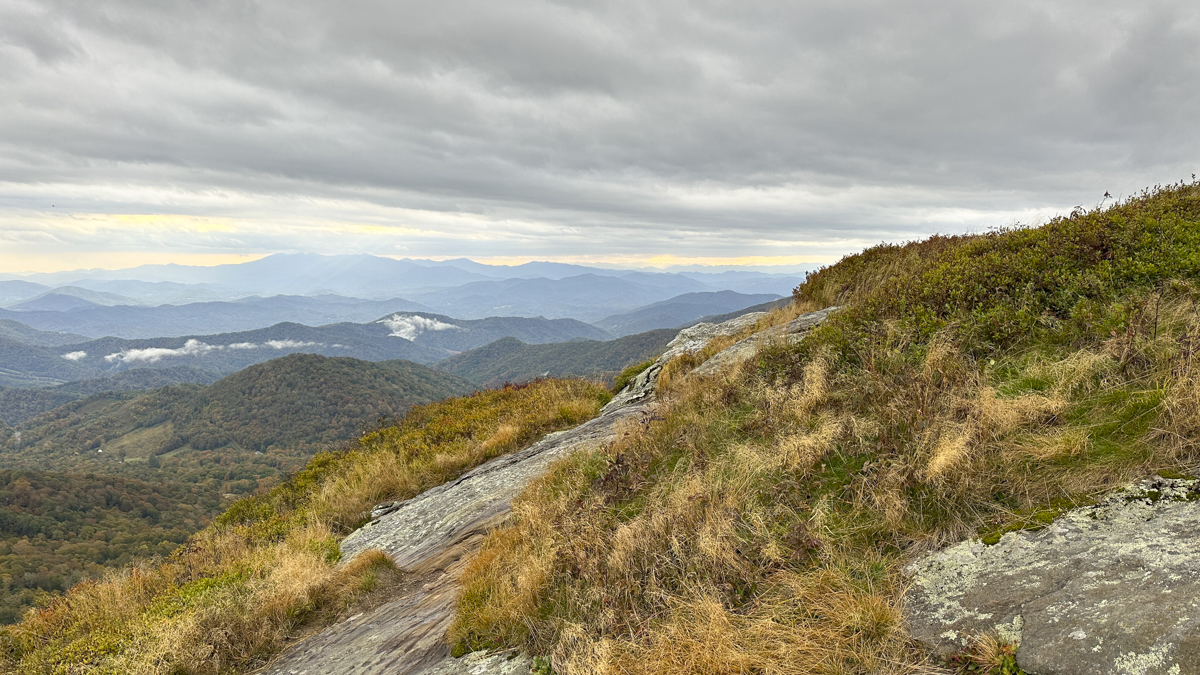
–On our way back, the clouds started lifting and we even had a few shafts of sunlight in the distance (but not on us, unfortunately). So it was windy and COLD!!
–We ate dinner at a rustic little place in Spruce Pine. Melissa got a cup of hot water (her usual thing for hot tea that she normally brings). She didn’t have her tea bags, but instead cuddled the warm cup and drank some hot water to warm herself…it was that cold!
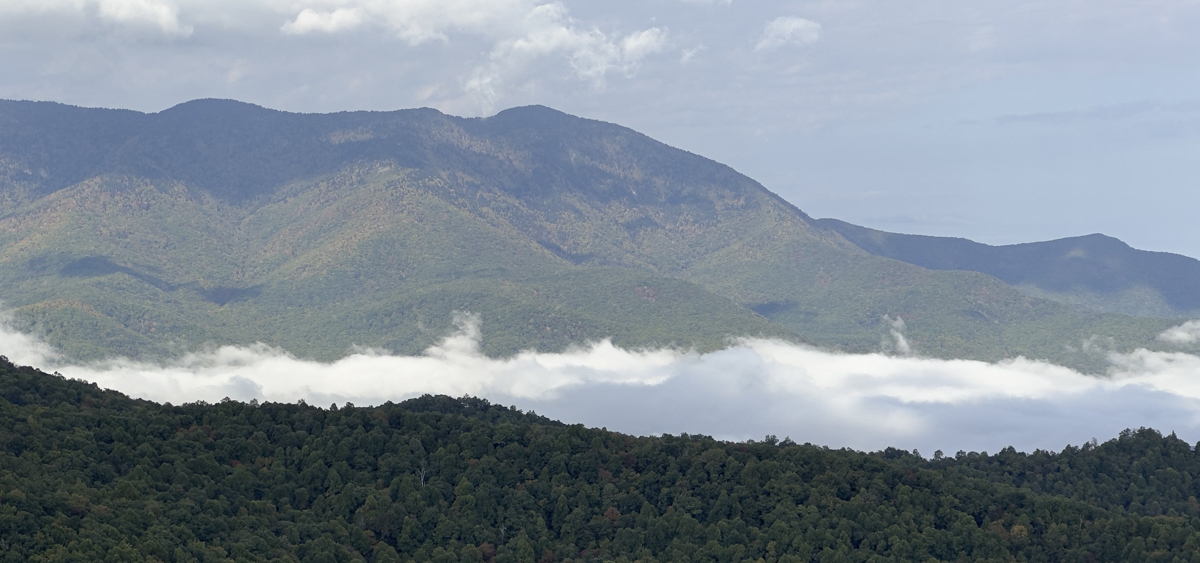
–The next morning was more favorable in terms of the weather. A view from the Parkway as we headed to the trailhead for Hawksbill.
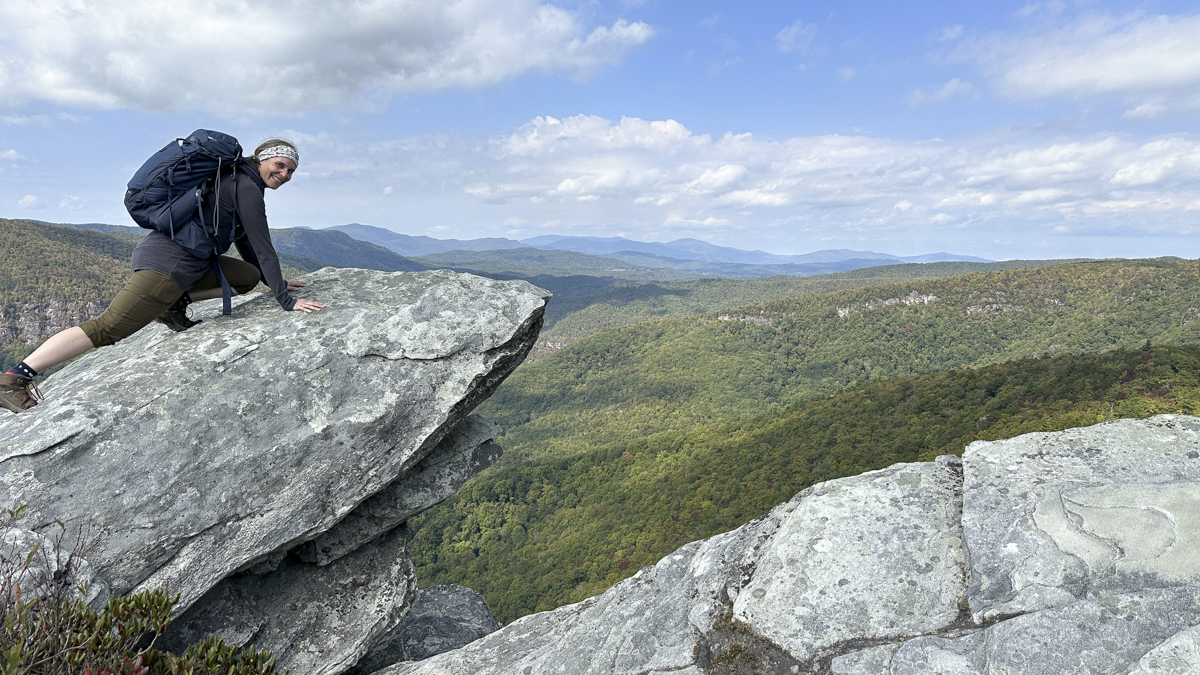
–Sort of amazing that neither of us had ever been up to Hawksbill. Definitely worth the hike!
–A view of Table Rock from Hawksbill. This was our next hiking destination (another first for us).
–Ruh Roh…as we started the drive to Table Rock, the tire pressure monitor told us something was amiss. A quick look showed this large screw embedded in the tire.
The gravel road was narrow and steep so we decided to drive out rather than change the tire there. We luckily found a “garage” (actually a place that makes bear boxes) that had a compressor and could give us some air until we got to a tire place in Newland. They were efficient and got us out in about 20 minutes with a good patch. But now we had to alter our plans as we didn’t think we had time to drive back to Table Rock and hike the trail. We were close to Linville Falls so Melissa decided we should go there and hike the trail on the opposite side of the river from where most people go to view the falls. It was crowded, but we opted to hit the trail for the plunge basin overlook. Signage for the trail indicated it was strenuous…it wasn’t too bad as there were steps in the particularly steep parts.
–View of Linville Falls from the plunge basin overlook
We still had some time so someone I know wanted to hike the difficult trail down to the river below the falls. In spite of my knee issues, I agreed. We passed a young man hiking back and I asked what the trail was like. He paused and said it is almost vertical and tough, but worth it. Going down was slow as it is very rocky and steep (no steps on this trail), both things somewhat difficult for an old guy with a bum knee. But it was worth it – a truly different perspective on a feature I had seen many times before from a high overlook on the opposite side of the river.
It turns out, going back up the trail was much easier than coming down. We headed into Burnsville for another dinner with friends – a great end to a much needed escape to the mountains.
The responsibilities of life seem to rest lightly on the Goldfinch’s sunny shoulders.
~Roger Tory Peterson
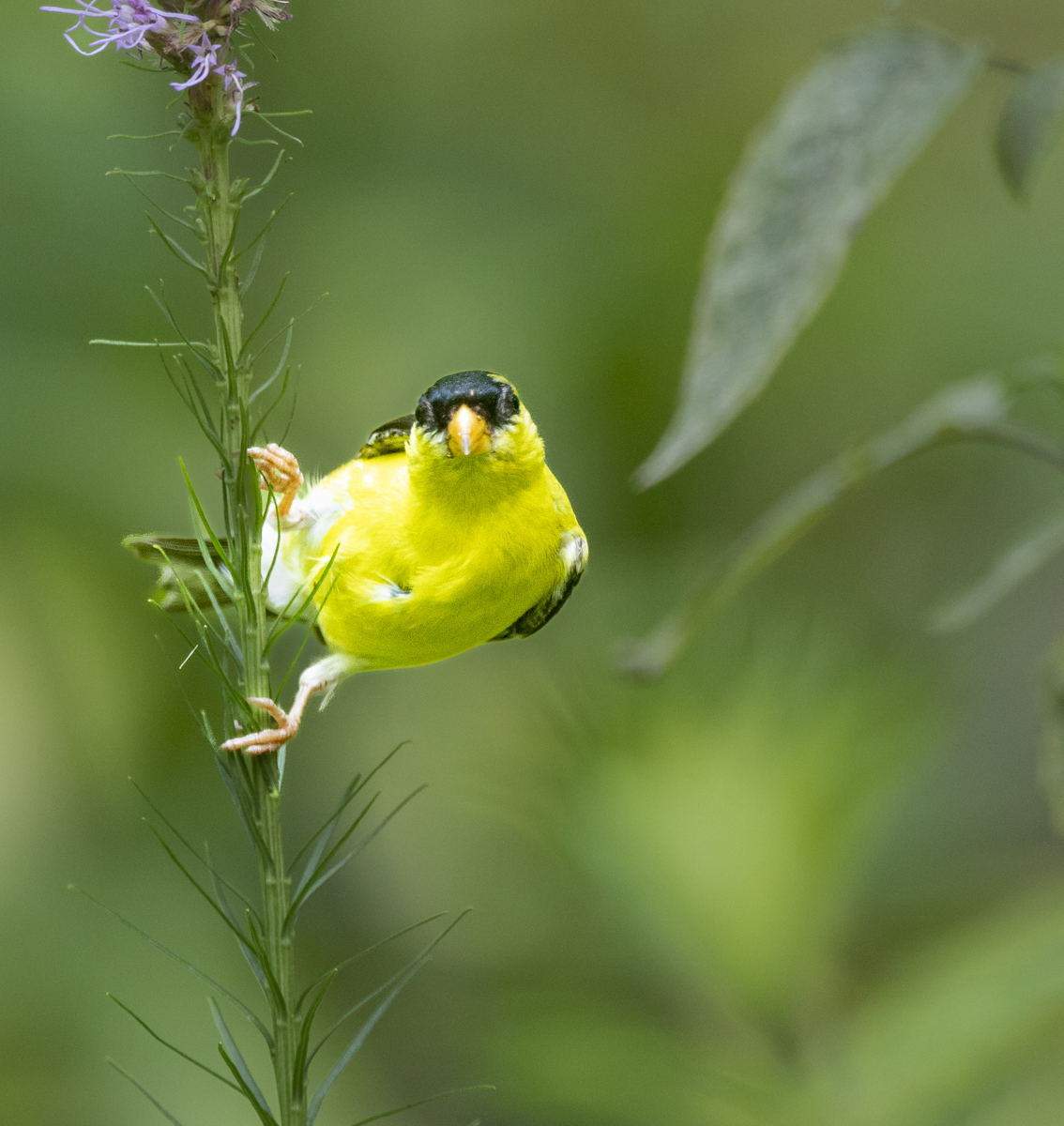
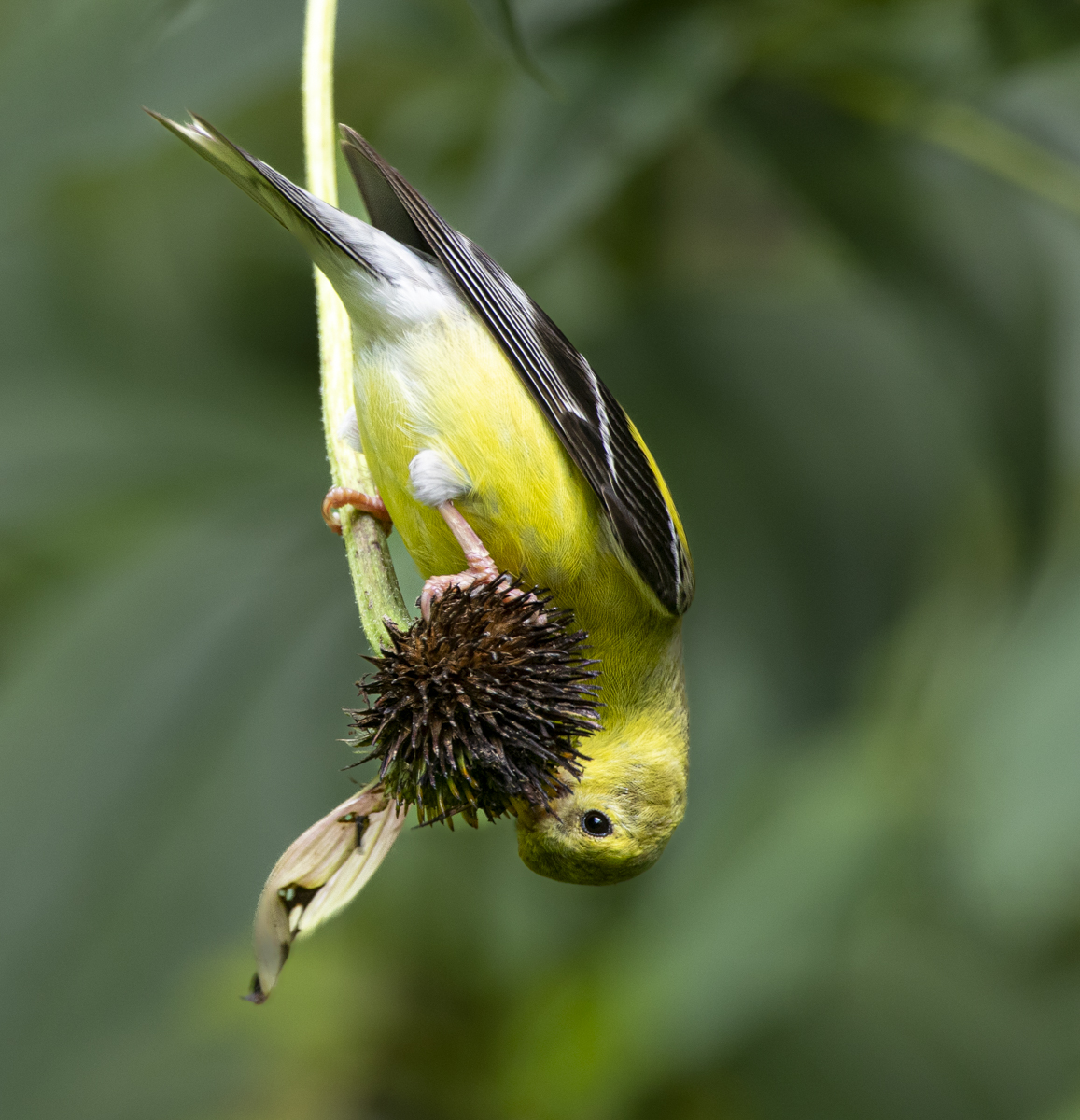
It’s been a very good year for the American Goldfinches in our yard. I haven’t put out thistle seeds this year but the goldfinches seem quite content with the sunflower seeds in the other feeders and, more recently, with the seed heads of various wildflowers scattered around our yard. In late July, they made regular visits to the few Blazing Star (Liatris sp.) plants near the front of the house. Those are planted near one of our water gardens and I have left a screen off of one window so I can open that window to photograph birds coming to the area. Here are a few images from their feeding forays.
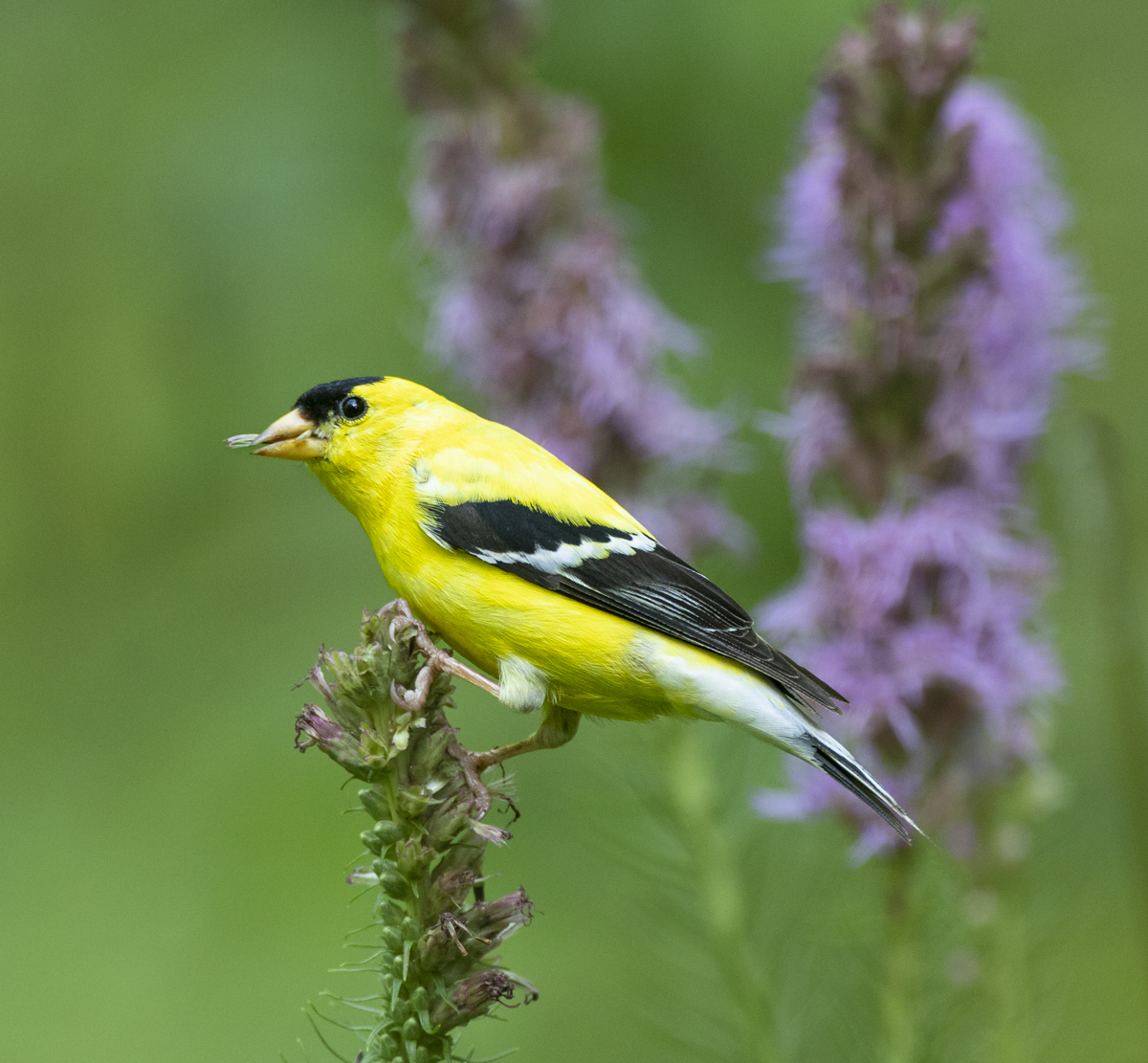
-A female American Goldfinch plucks a seed from a Liatris flower stalk while a male does the same in the background. Liatris spikes mature from the top to the bottom, unlike many other species of flower stalks which usually mature from the bottom up (click photos to enlarge)
– American Goldfinches are almost exclusively seed eaters. They are one of our latest nesting songbirds with nesting activity usually starting as late as July or even August in our area
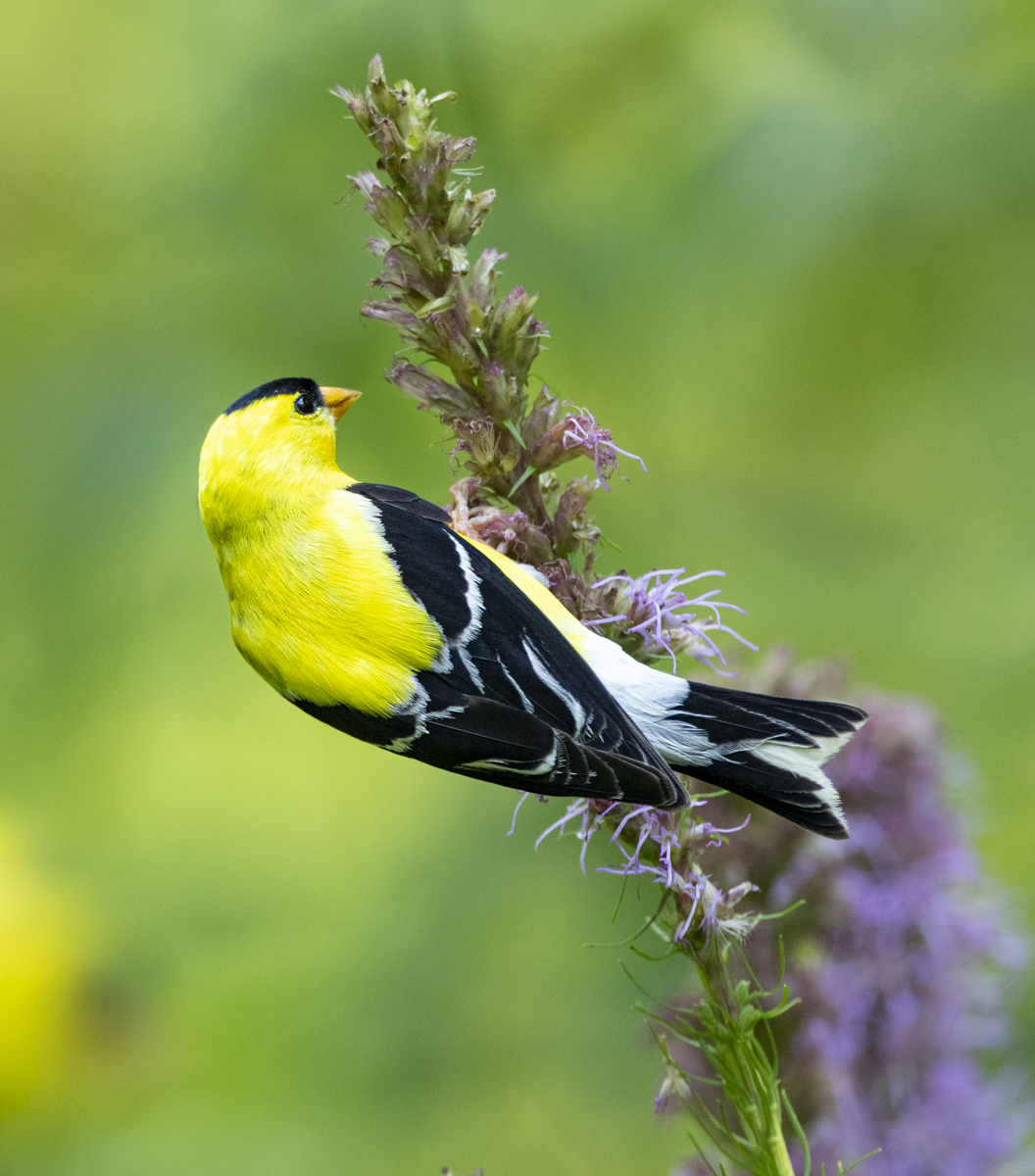
-Male American Goldfinches are brilliant yellow and black in their breeding plumage in spring and summer. Winter birds of both sexes are similar, being a drab olive brown with blackish wings and pale wingbars.
-The jet black wings, cap, and tail of a summer American Goldfinch helps make the bright yellow of its back and belly even more brilliant as it flies across the landscape
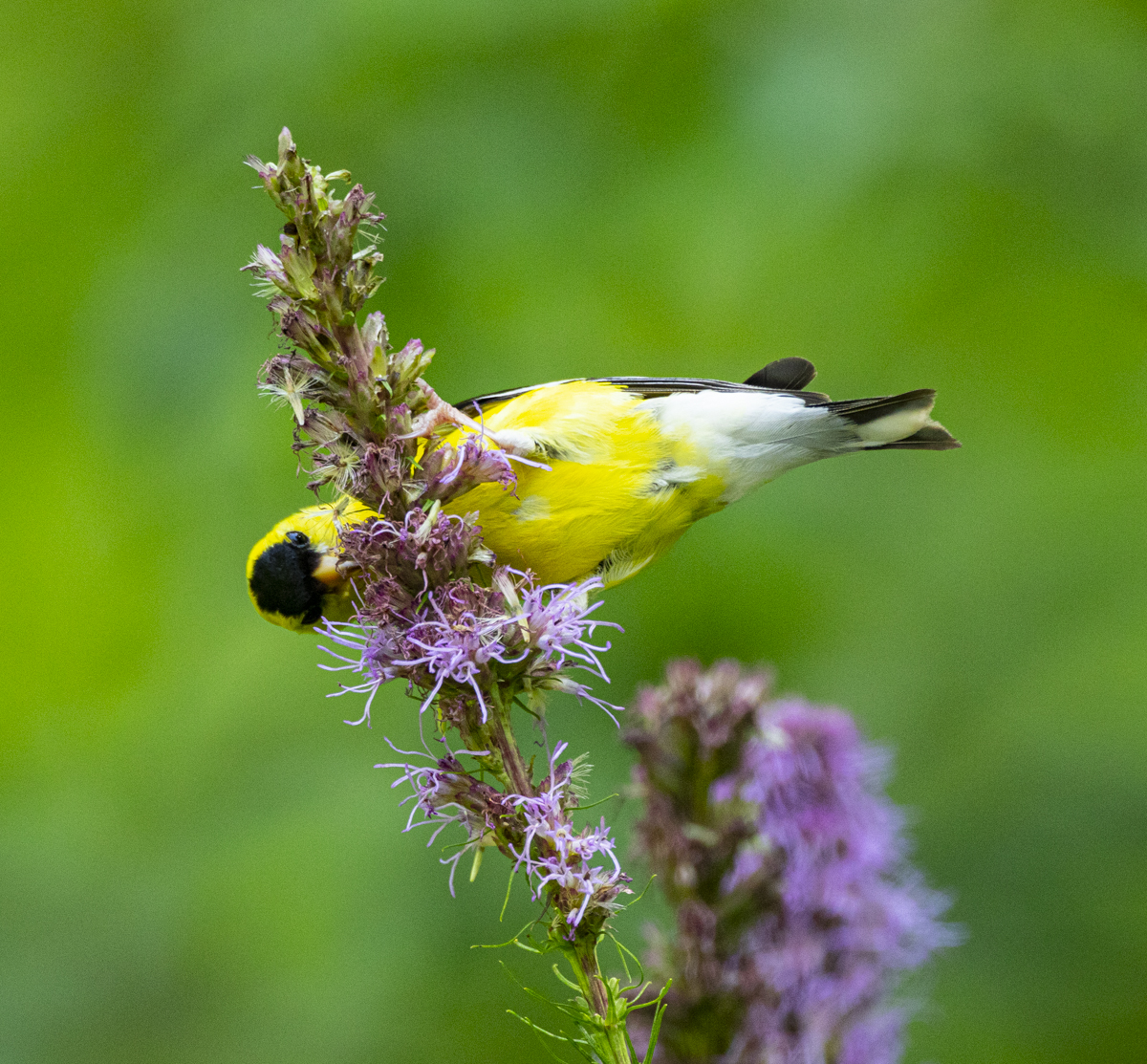
–Goldfinches are well`adapted for their seed-eating lifestyle. They have strong, conical beaks for cracking seeds and their legs and feet are extremely strong and agile to aid in climbing on and clinging to plant stems as they forage.
-As the Purple Coneflowers matured, the birds switched their attention to these large seed heads. Almost every afternoon, around 5 o’clock, they descend on that section of the yard and start pulling at the seeds.
-The birds now have a cornucopia of seed types to choose – Purple and Green-headed Coneflowers, Starry Rosinweed, New York Ironweed, and New York Aster, just to name a few.
American Goldfinches are definitely one of the highlights of the bird life outside our windows. Their bright colors, cheery songs, and undulating flight are all another great reason to surround yourself with native wildflowers.
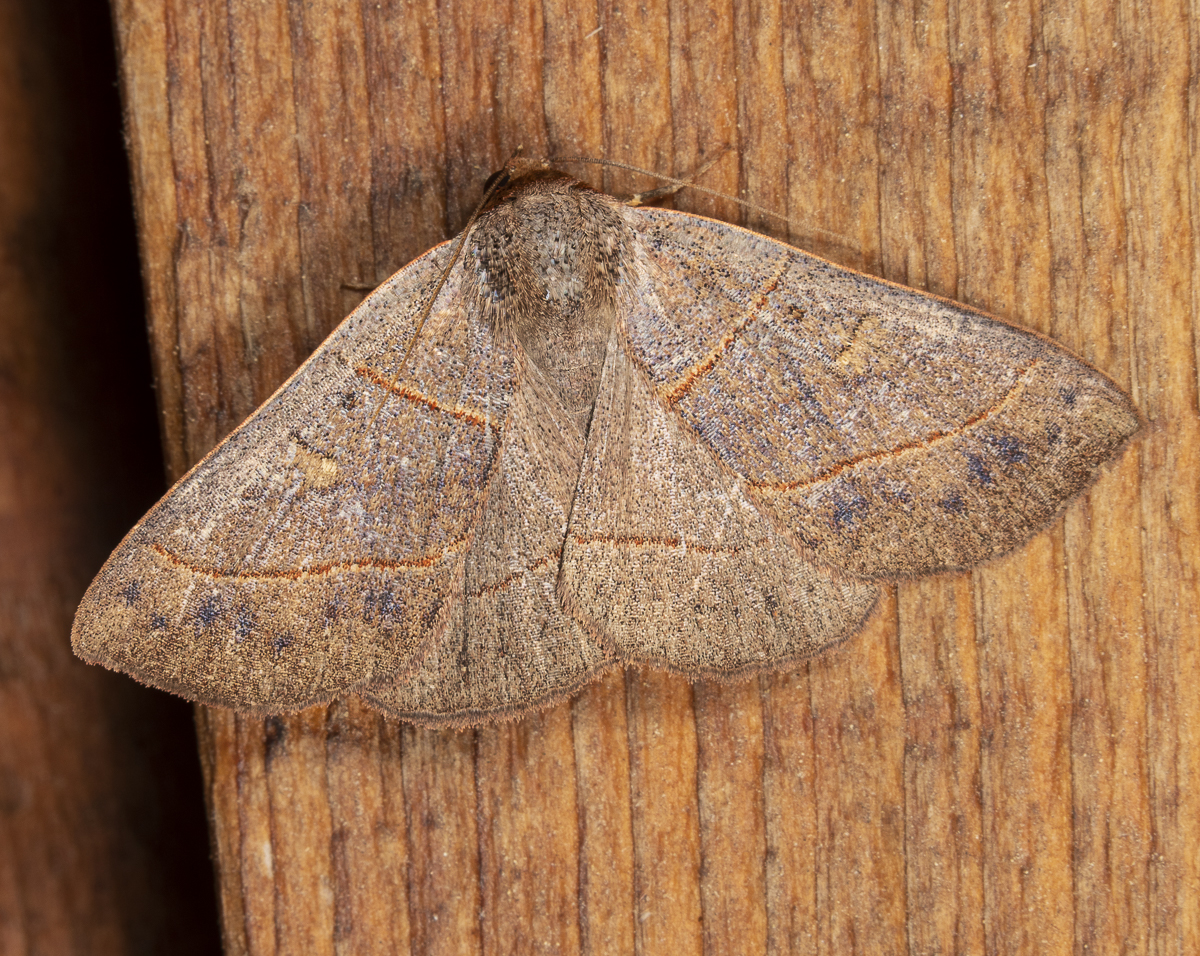
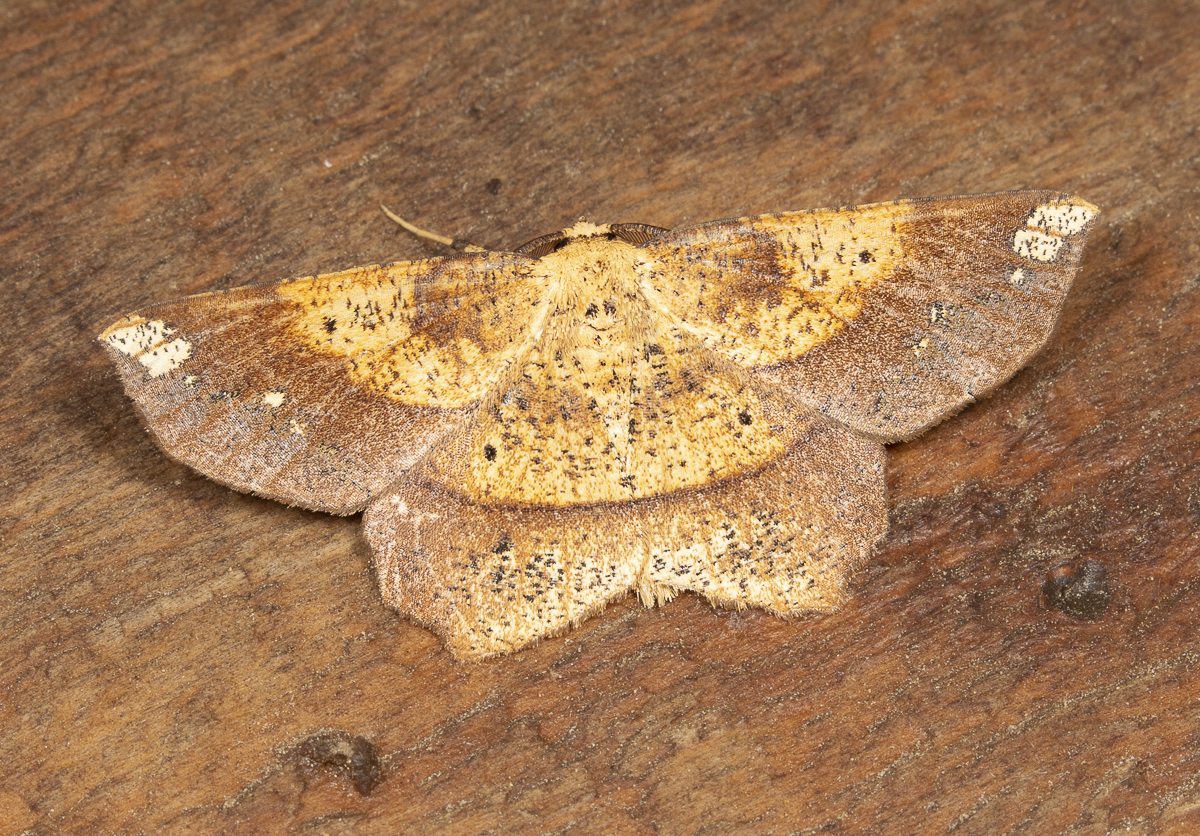
After our moth party last month during National Moth Week, we have put out the moth lights and sheet a few more times to see what new species we might attract to our deck here in the woods. It has been pretty productive and we have recorded many new species for my iNaturalist project where I am documenting all the species of invertebrates we see on our property (more on that in a future post). Here are some of the highlights from our moth nights this month (these species are different from the ones reported in my July post on National Moth Week). I have made identifications based on a variety of sources, including iNaturalist. As always, if you think I made an error, please drop me a note in the comments.
I’m starting with a group of moths that I think would make great models for jackets for British university professors.
-Tephra Tussock Moth – I particularly like the fuzzy leggings in this outfit. Adults do not feed; larvae are on oaks (click photos to enlarge)
-Red-lined Panopoda Moth – nice stripes. Larvae on beech and oaks.
-White Furcula Moth – a nice salt and pepper look with a hint of metallic blue and orange. Larvae often found on cherry.
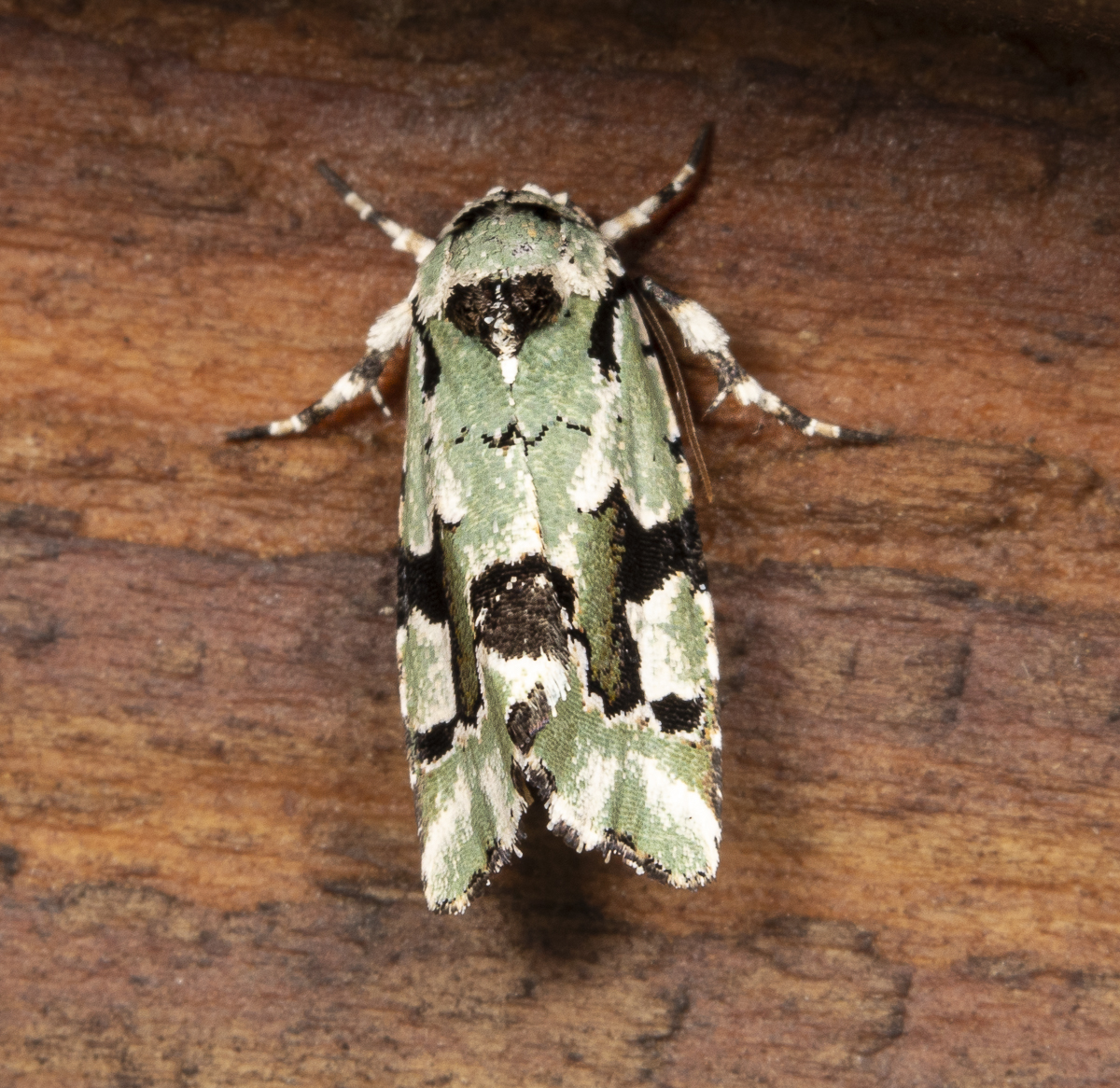
-White-blotched Prominent – nice greenish cast (and the accessory works with this outfit). Larvae feed on oaks.
-Brown Panopda Moth – distinctive accent in this outfit (one reference described the dark wing marks as looking like a body-less person sitting in a chair). Larvae usually on hickory.
-White-headed Prominent -love those striped socks. Larvae on oaks.
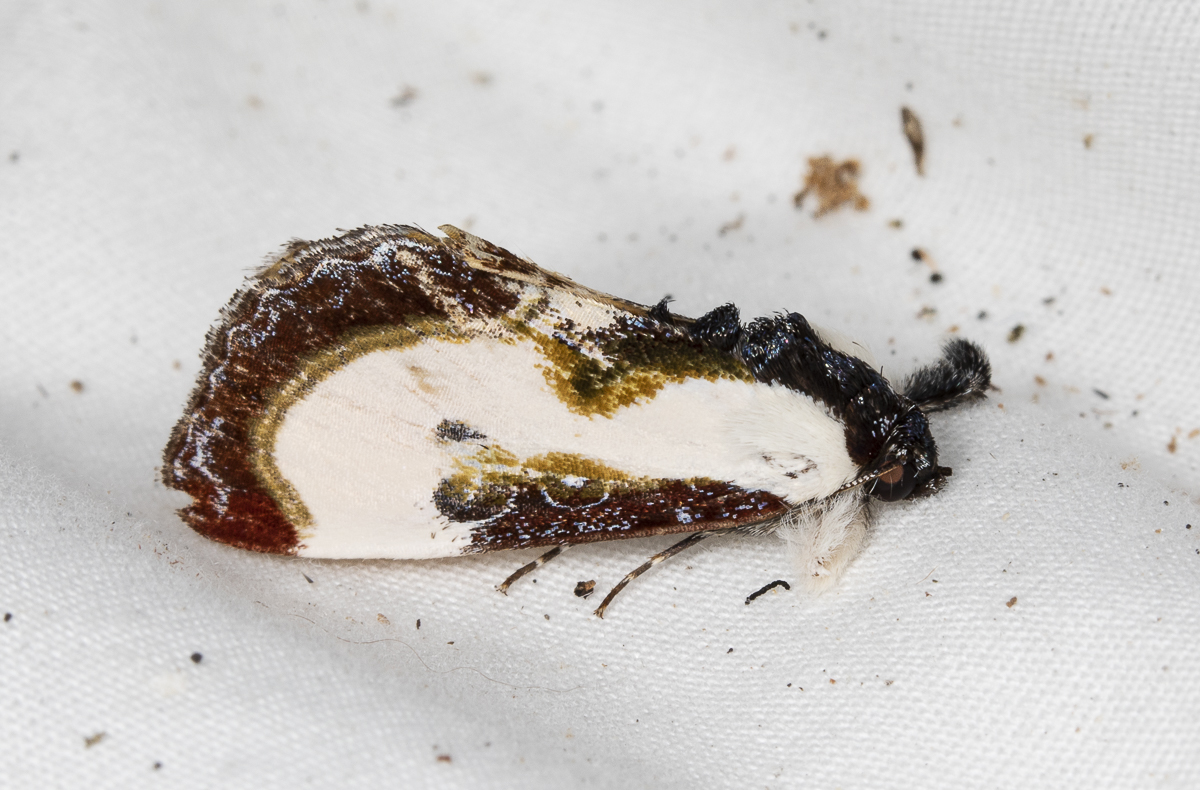
-Orange-tufted Oneida Moth – described s having a “woodsy color scheme”. Larvae feed on oaks and oak galls apparently.
-Oval-based Prominent – for the bold professor – nice shoulder patches. Larval food unknown
-Wavy-lined Heterocampa – a nice greenish tint allows you to blend in with a moss-covered tree trunk on campus – larvae feed on a variety of hardwood trees.
These next moths are a bit bolder in their fashion statements…
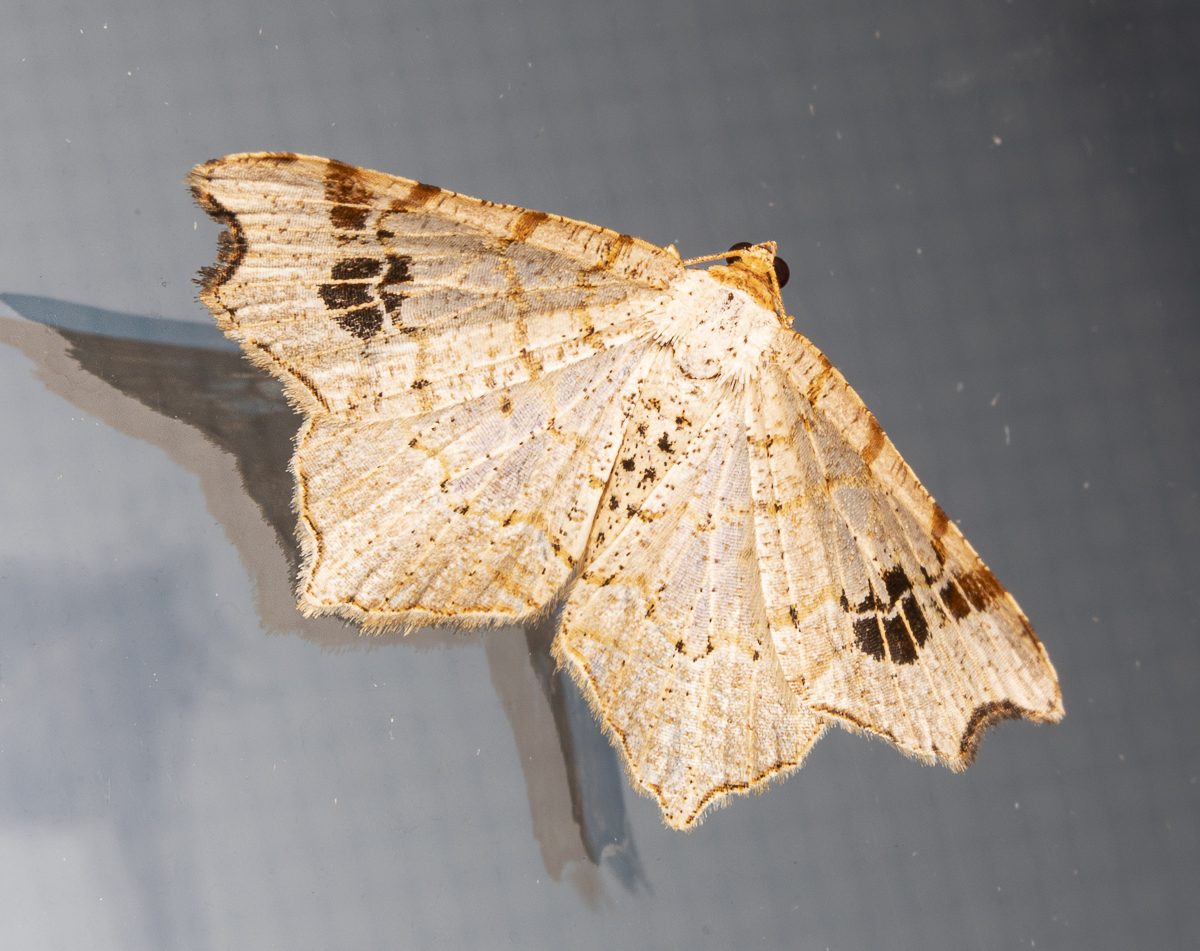
-Common Angle – dark, paw-print-looking marks on outer wings. Larvae feed n maples.
-Beautiful Wood-nymph – gotta love moth names – often seen resting with front legs outstretched. This is a bird-dropping mimic. Larvae on Virginia Creeper and grape.
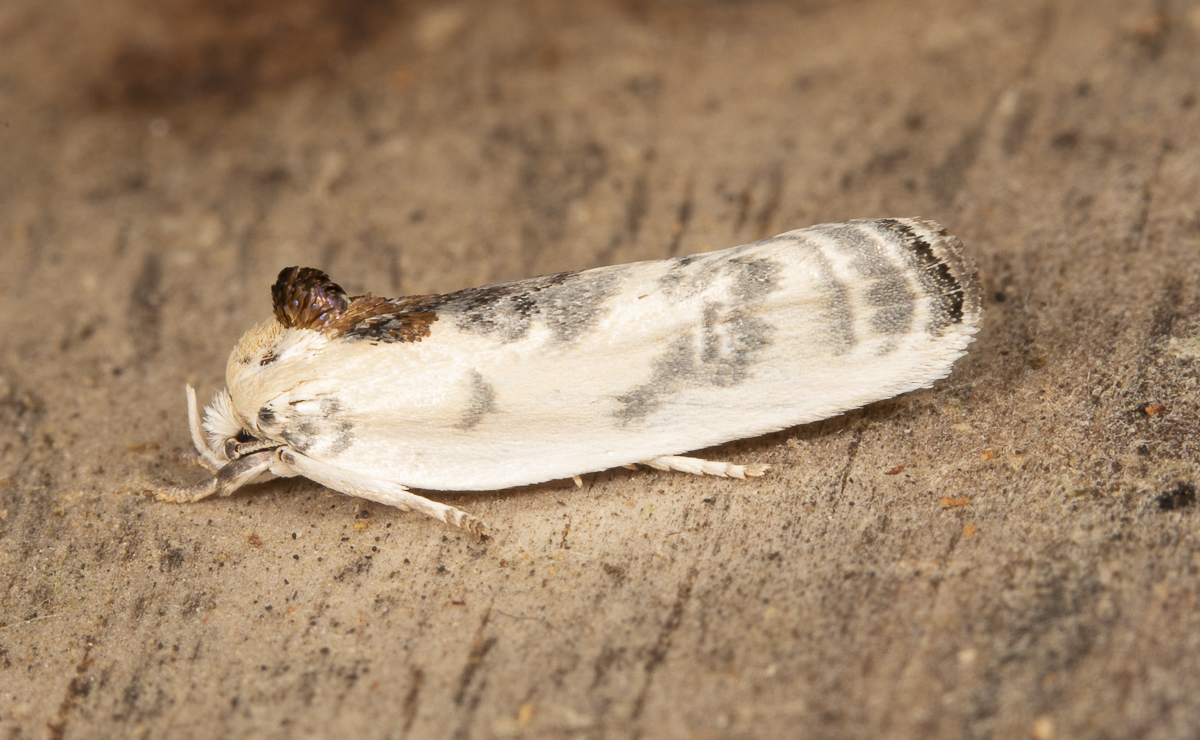
-Genus Antaeotricha – one of the so-called bird-dropping moths. Makes it easy to hide in plain sight. Consider this strategy when venturing in tough neighborhoods. Larvae on oaks.
-Beloved Emarginea Moth – built to camouflage perfectly on a lichen-studded tree branch. The equally-camouflaged caterpillars feed on mistletoe!
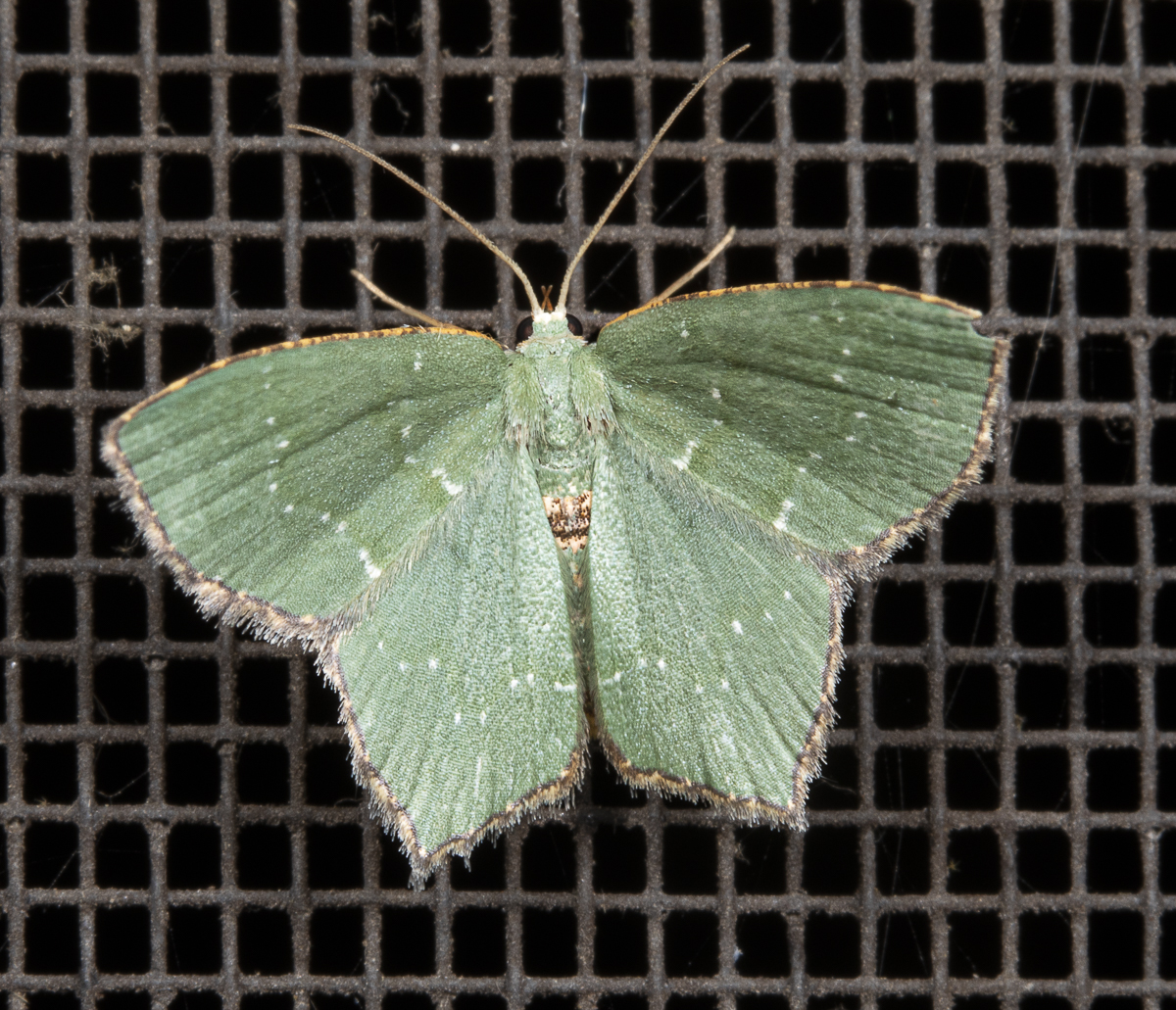
-Angle-winged Emerald – another mystery moth. Caterpillars believed to feed on Bald Cypress, but have been raised on fir and hemlock. Some think Winged Sumac is also a host.
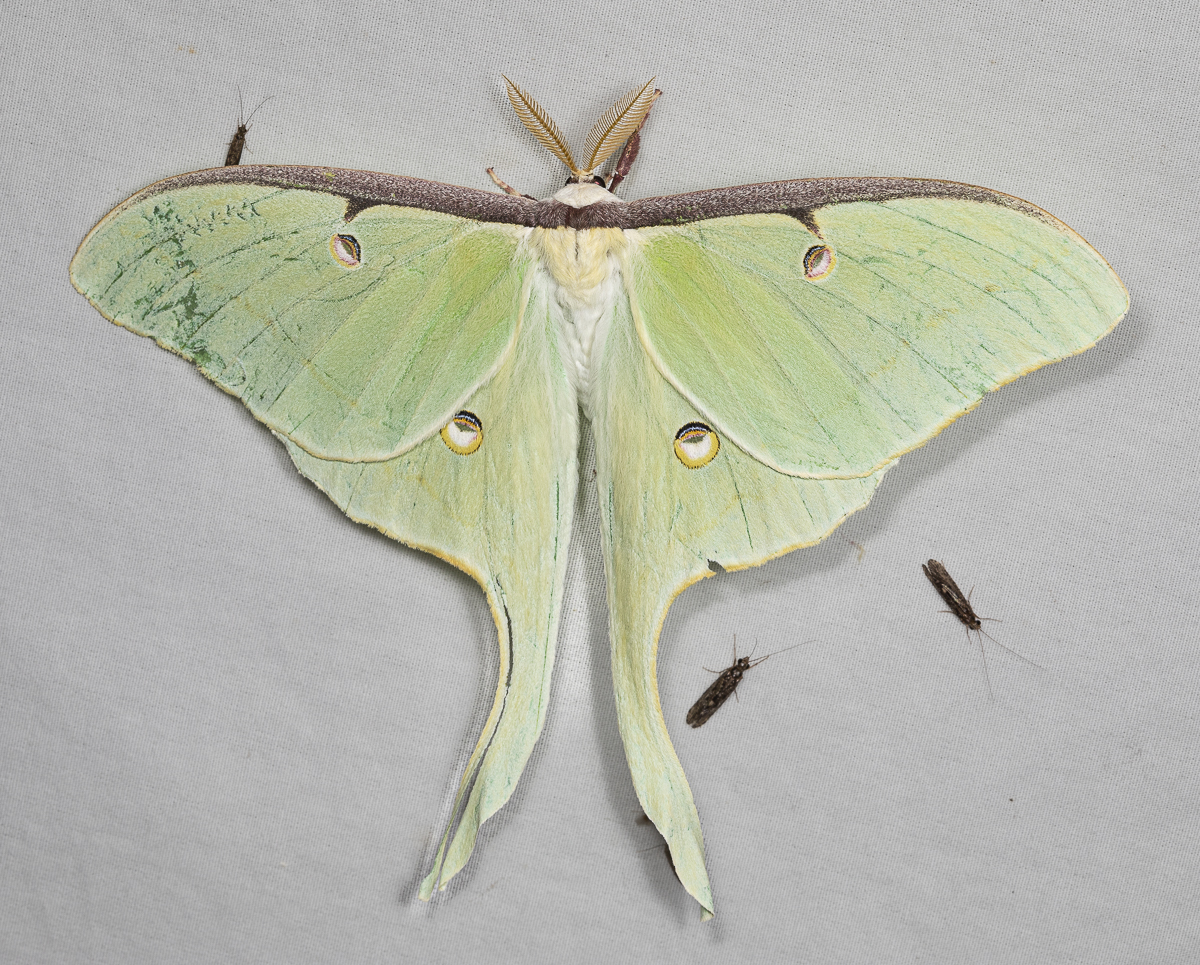
-Luna Moth – each time we have put out the moth lights, the large silk moths like this Luna and several Imperials (photographed in an earlier post) usually appear late (after midnight). It is worth the wait.
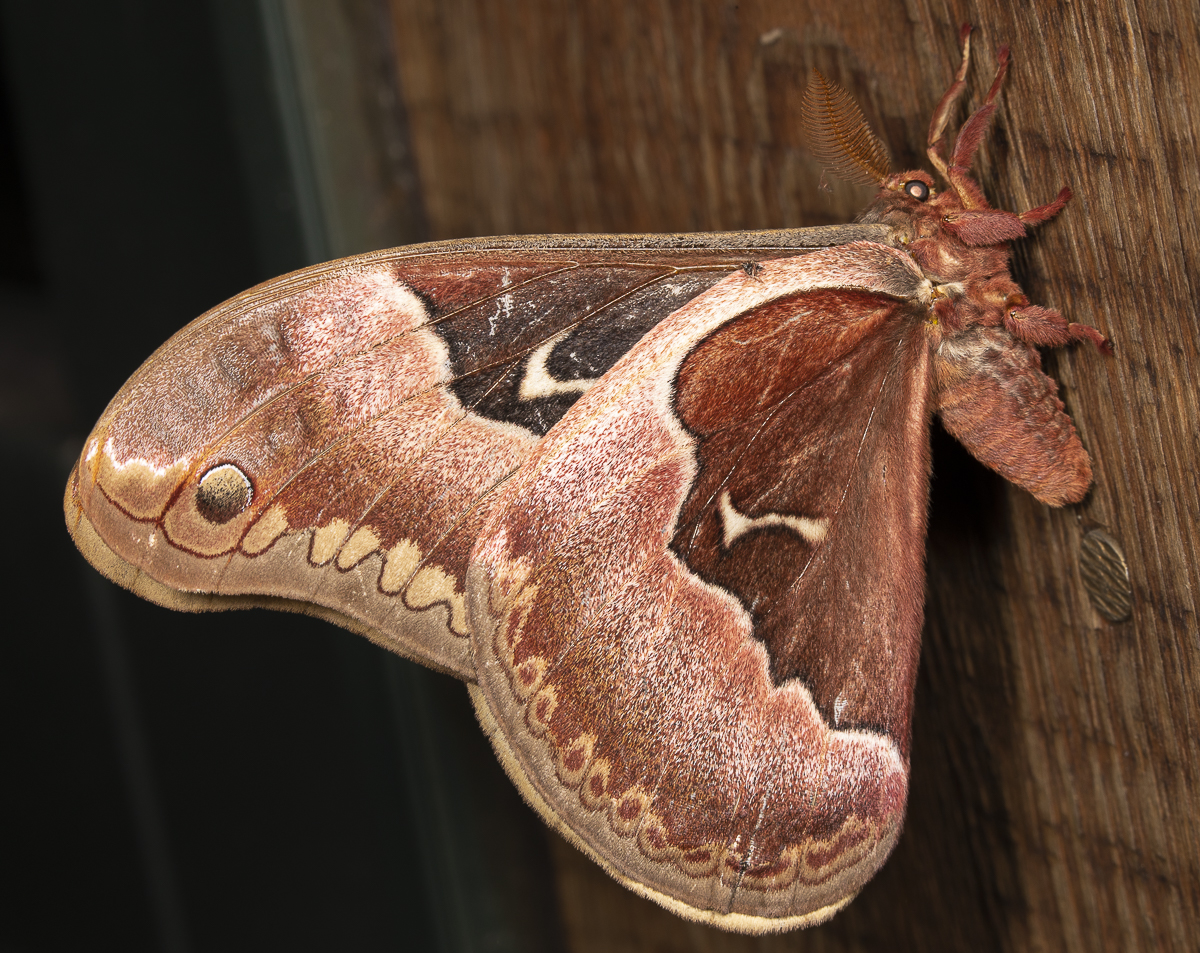
-Tulip-tree Silkmoth – this species is the exception to the late arrival rule for the big moths. These have been showing up early and usually sitting tight once they land (until the lights are turned off and then they disappear).
As always, there are many non-moths that come to the moth party lights. Here are a few highlights…
-Genus Phytocoris (a member of the Plant Bug family) – this tiny (compare to the size of the weave on the sheet) beauty is a first for me.
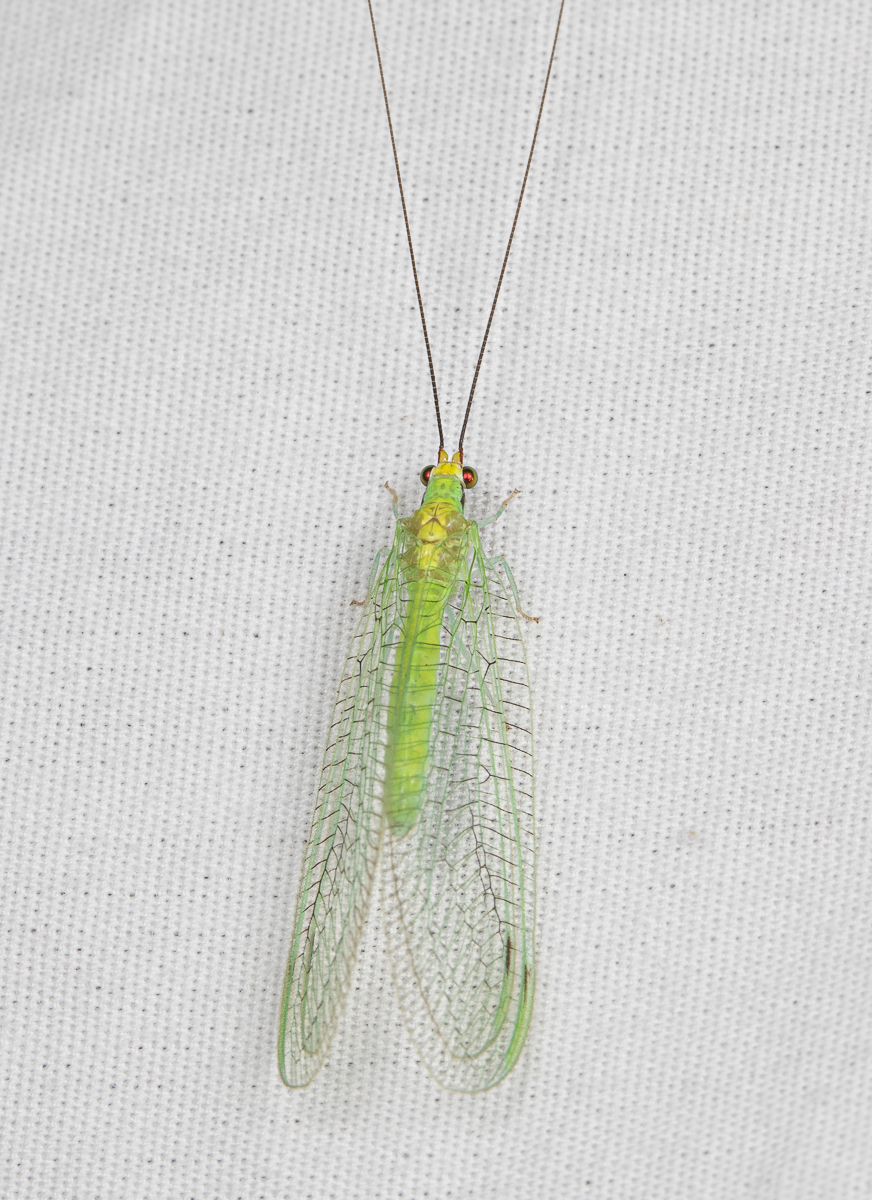
-Green Lacewing – a delicate-looking lacy-winged insect with a fluttery flight. Larvae are voracious predators of aphids and often camouflage their backs with lichens or the dead bodies of their prey. Zoom in and check out those golden orb eyes.
-Green Mantidfly – looks like a cross between a lacewing (back portion) and a praying mantis (front). And check out these eyes! Larvae are parasitoids in spider egg sacs.
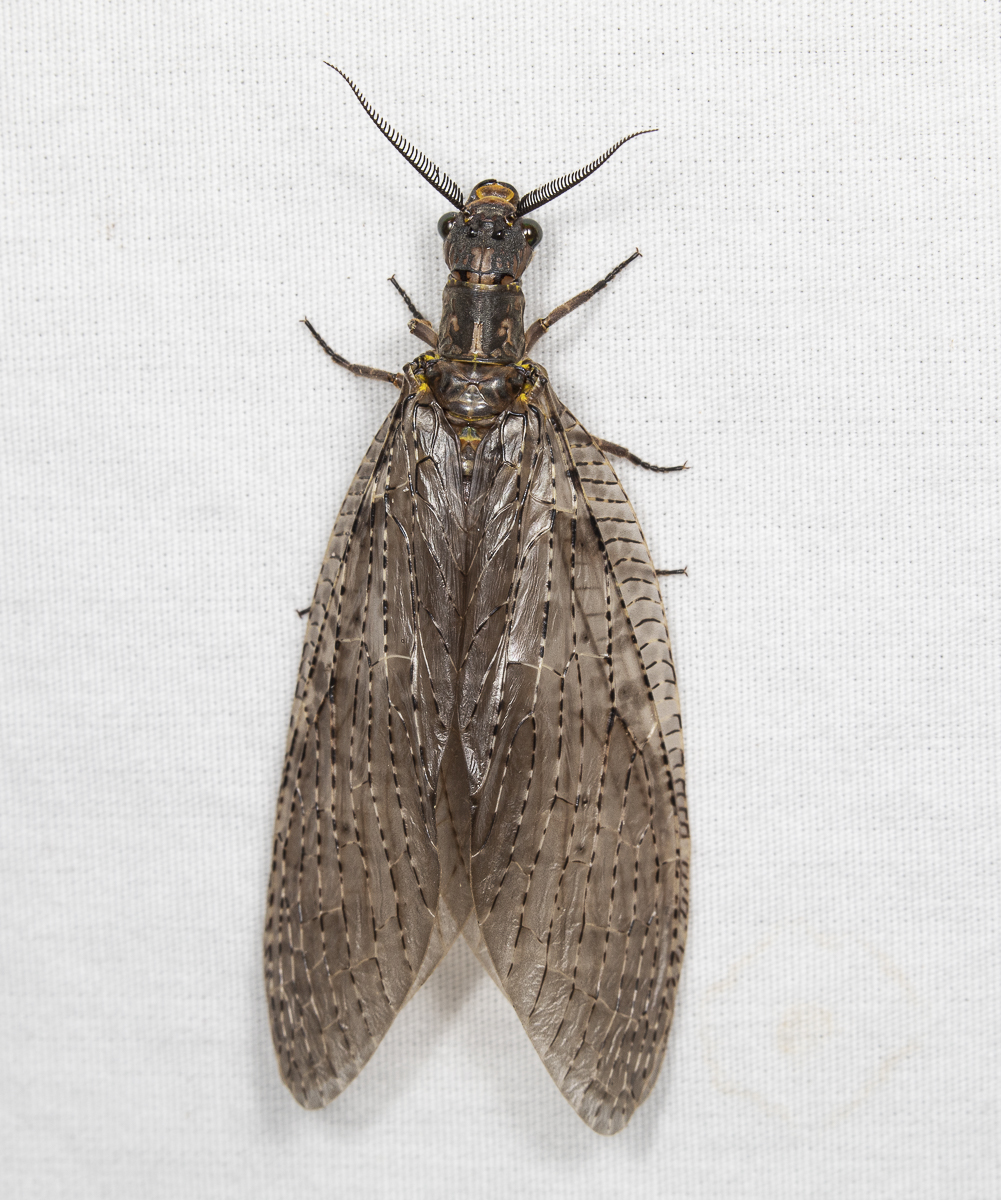
-Summer Fishfly – related to the larger Dobsonflies, but males lack the tusk-like mandibles of male Dobsonflies. This is a female, as her antennae only have the cob-like teeth on one side (males have feathery antennae).
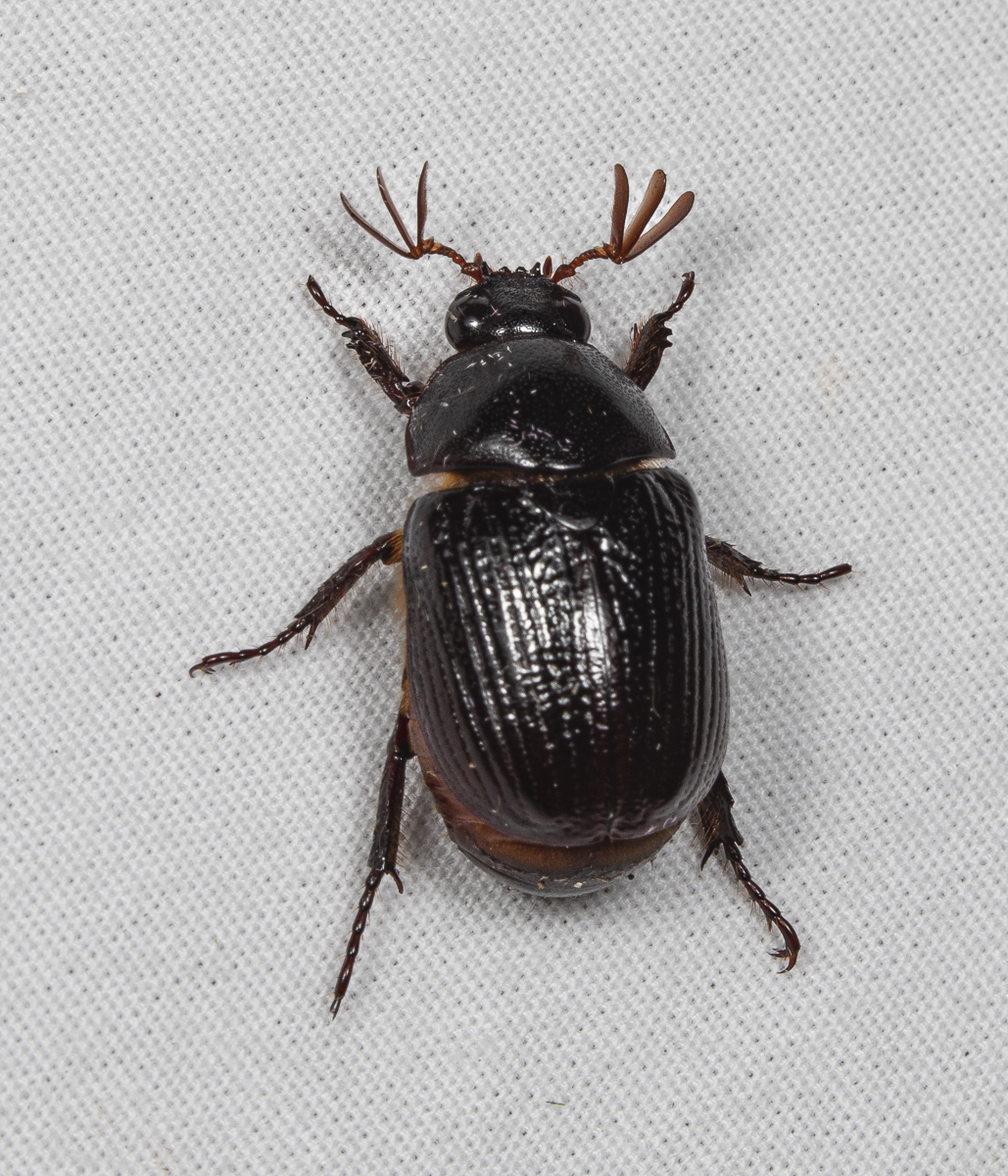
-Eastern Rhinoceros Beetle – Xyloryctes jamaicensis. A large robust beetle. Three females came to the light on one night. They supposedly feed on ash leaves as adults. Larvae feed on the roots of ash trees and on decaying organic matter. Males have a single horn.
-Genus Parastasia (a member of the Shining Leaf Chafer Beetles). – winner of the cool antennae award. Tthis beetle feeds on leaves as an adult .
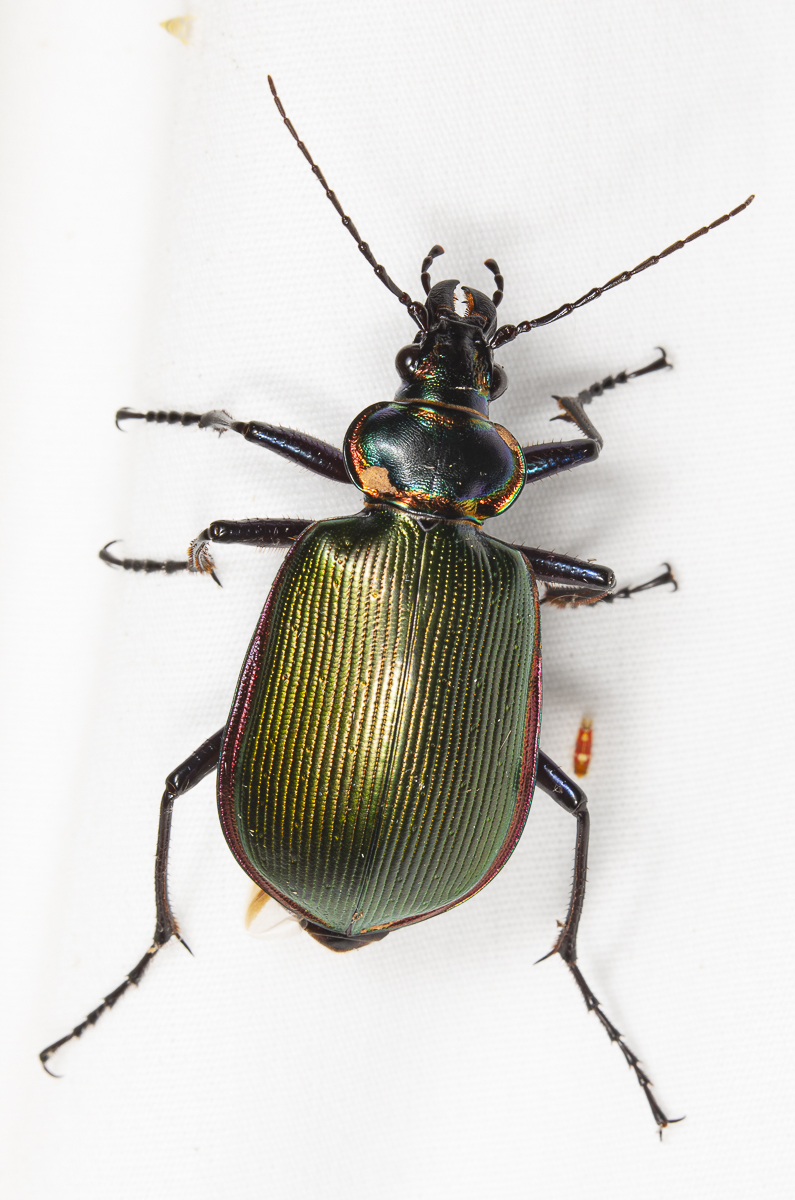
-Fiery Searcher – This large (1.25 inches) beetle is an active hunter. In fact, it is a member of the caterpillar hunter group of ground beetles. It can give you a powerful bite, so look, but don’t touch. The metallic colors can be stunning.
-While I was photographing something high on the moth sheet, the Fiery Searcher was busy doing what it does, seeking prey. It grabbed one of the several Rosy Maple Moths that had come to the light. By the time I saw it, it was too late to help the moth. The beetle fed on it the rest of the evening.
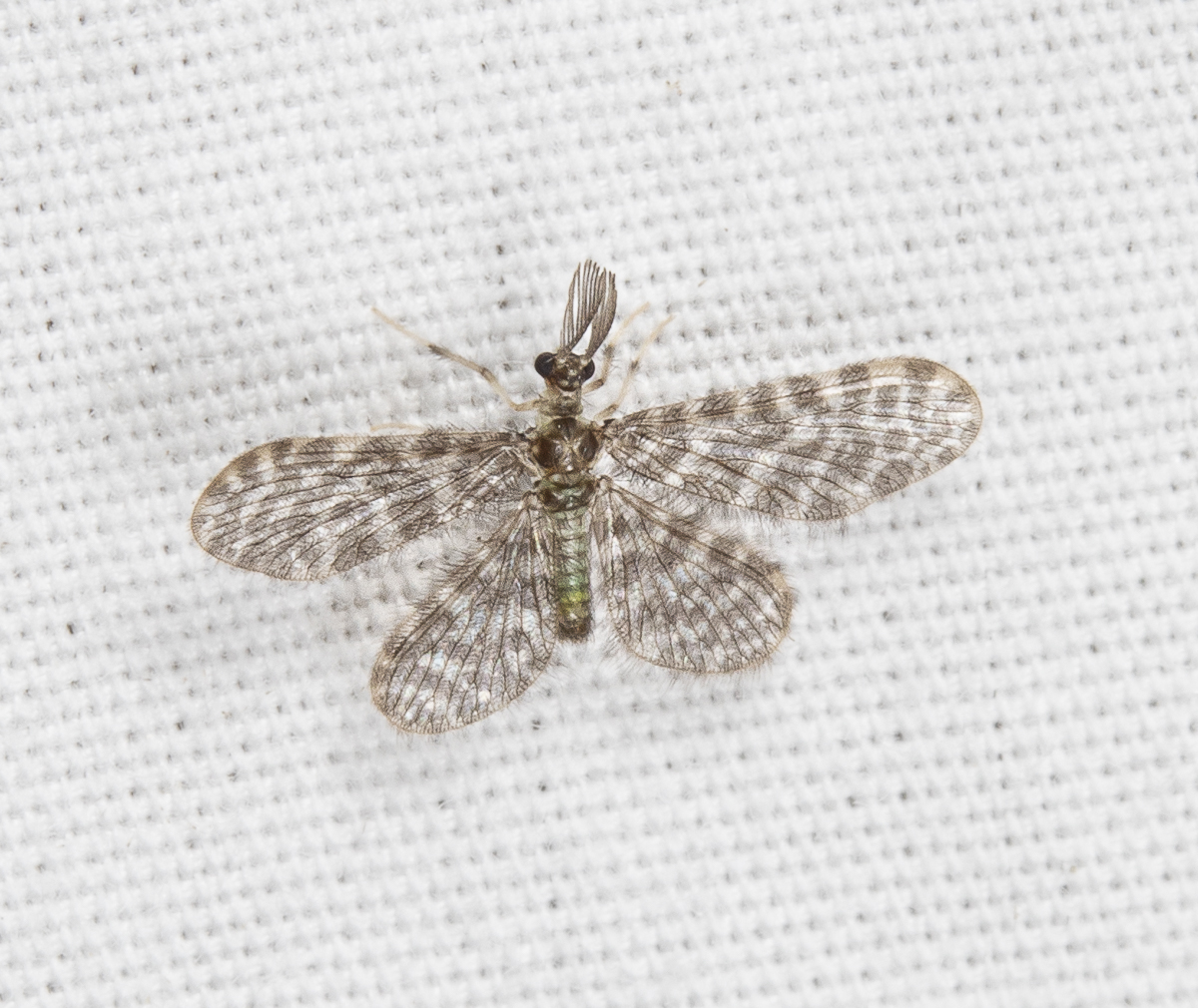
-I saved the coolest critter until last. Our friend and Museum scientist, Chris Goforth, had recently posted about this unusual insect when one came to her moth light. It is a tiny moth-like insect known as a Pleasing Lacewing, Nallachius americanus. It is related to antlions. This one is a male as indicated by the very feathery antennae (females’ are more filiform). Not much is known about these minuscule bugs, but the larvae are believed to feed on beetles and ants (especially eggs and larvae) under tree bark.
I have learned from nature that all is equal… all is equal and in balance. I see everything as fitting together.
~Joseph Raffael
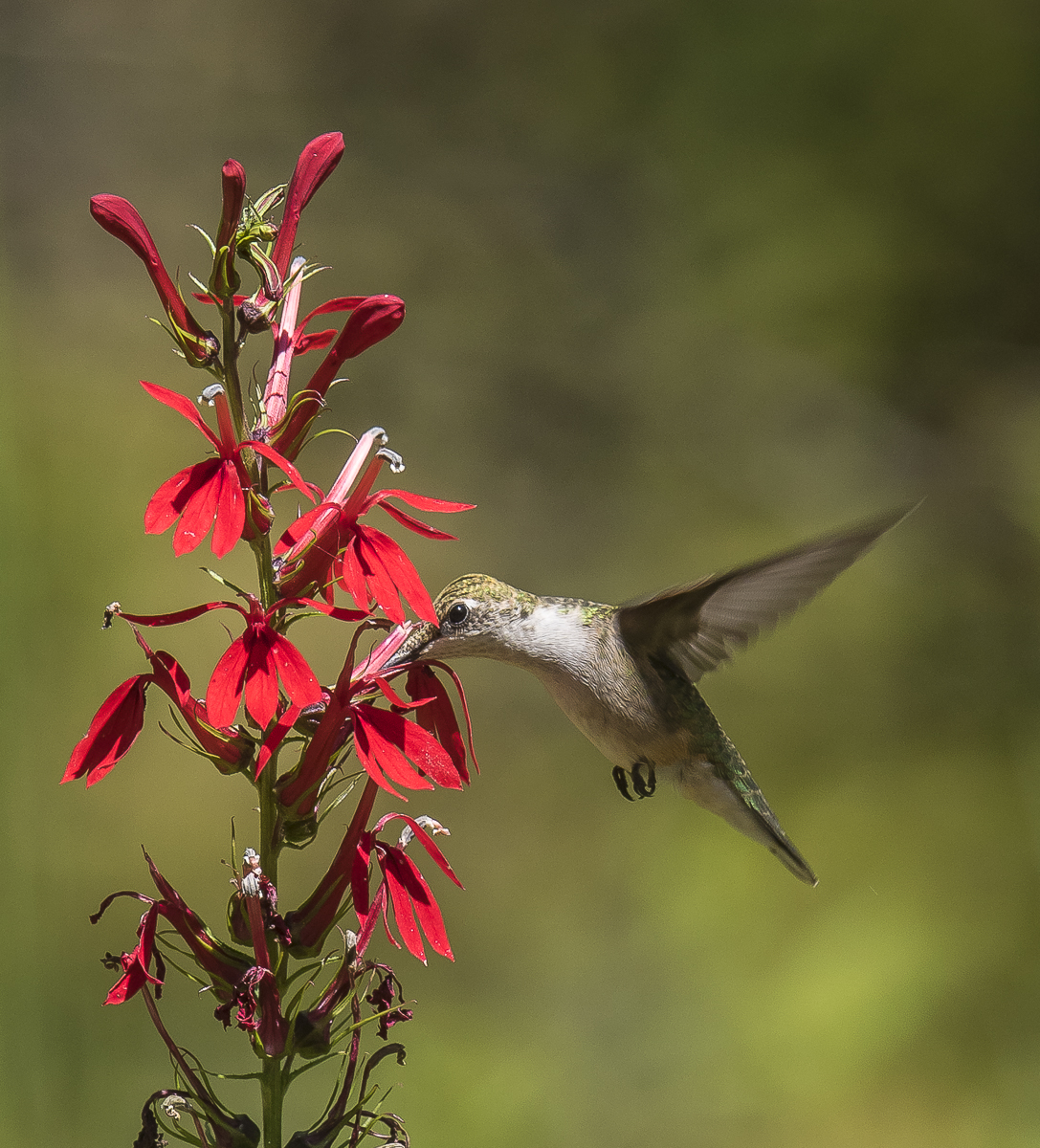
Here in our home in the woods, I can look out our windows and see all sorts of interconnections – butterflies on Ironweed and Joe-Pye-Weed, American Goldfinches eating coneflower seeds, and birds searching for insects in the trees. There is another connection that seems to be one of the purest- like two puzzle pieces that fit perfectly together. That is the link between one of my favorite native wildflowers and one of my favorite summer birds – Cardinal Flowers and Ruby-throated Hummingbirds. If you look at their range maps, they overlap to a great degree, owing, no doubt, to the dependence of the flower on the pollination compatibility of these hummingbirds.
-A Ruby-throated Hummingbird at a Cardinal Flower (click photos to enlarge)
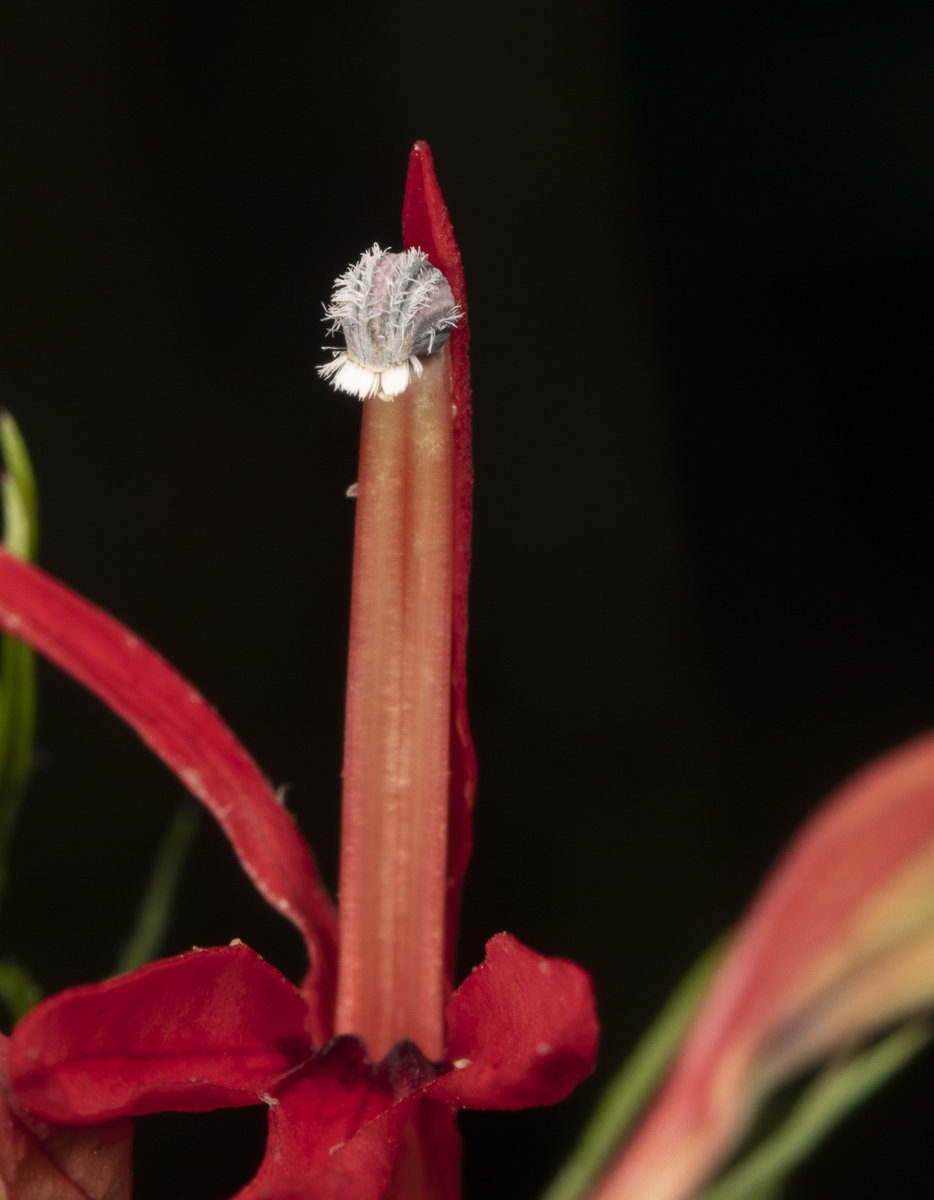
Cardinal Flower (Lobelia cardinalis) is a brilliant red flower named after the red robes worn by Roman Catholic cardinals. It grows naturally in damp soil, often along stream banks throughout much of our state. It is adaptable and grows well in any area with good soil, sun or part shade. The impressive flower stalk can bloom from July into September, with flowers opening from the bottom up. The plants are protandrous, meaning the male parts (stamens and anthers) mature before the female flower parts (style and stigma). The stamens form a tube around the immature female style. When the flower first opens, the style expands and pushes the anthers with the pollen out the top of the tube like a plunger. Thus, when a flower first opens, it has pollen dangling from the tip of that tube, ready to be deposited on the head of a visiting hummingbird. As the flower matures, the style continues to grow, and extends beyond the flower tube, the anthers wither, and the stigma becomes receptive to pollen. On any one flower stalk, you will likely have flowers near the top still releasing pollen while those below have receptive stigmas ready to receive pollen. As a hummingbird visits various flowers, it will pick up pollen on top of its head from some and deposit pollen grains on the receptive stigmas of others.
-Five stamens are joined to form a tube around the style and are topped with a mustache-looking brush when the flower is releasing pollen. The brush-like “hairs” may help disperse the pollen more effectively.
-As the flower matures, the style pushes the now receptive stigma out the top of the tube. When a hummingbird sticks its beak into the flower to get the nectar, pollen grains on its head can be transferred to the stigma.
Due to the shape of the flower, the nectar is too deep for most pollinators to reach. Some bees will cut holes in the flower to “rob” nectar. Several large specie of butterflies can reach it with their long proboscis, but they rarely make contact with the reproductive parts of the flower and therefore don’t transfer pollen. But hummingbirds are a perfect fit. As they push their bill into the flower for nectar, the fused tube with either pollen or a receptive stigma, bends down to make contact with their head. Two slow motion video clips below show a hummingbird visiting a cardinal flower outside our window,
Cardinal flowers apparently produce copious amounts of nectar as hummingbirds make regular visits to each flower stalk in between bouts at the various feeders and other nectar-producing wildflowers (they also really like the Jewelweed blooming right now) scattered around the yard.
As much as the hummingbirds and I love these plants, it seems a couple of other denizens of our wildlife-friendly yard do as well, and that creates some conflicts (at least in my mind). Whenever a rabbit sets up territory within our deer fence, it never fails to seek out and cut down any cardinal flower it comes across. I have helped that situation by placing some green wire cages around certain vulnerable plants.
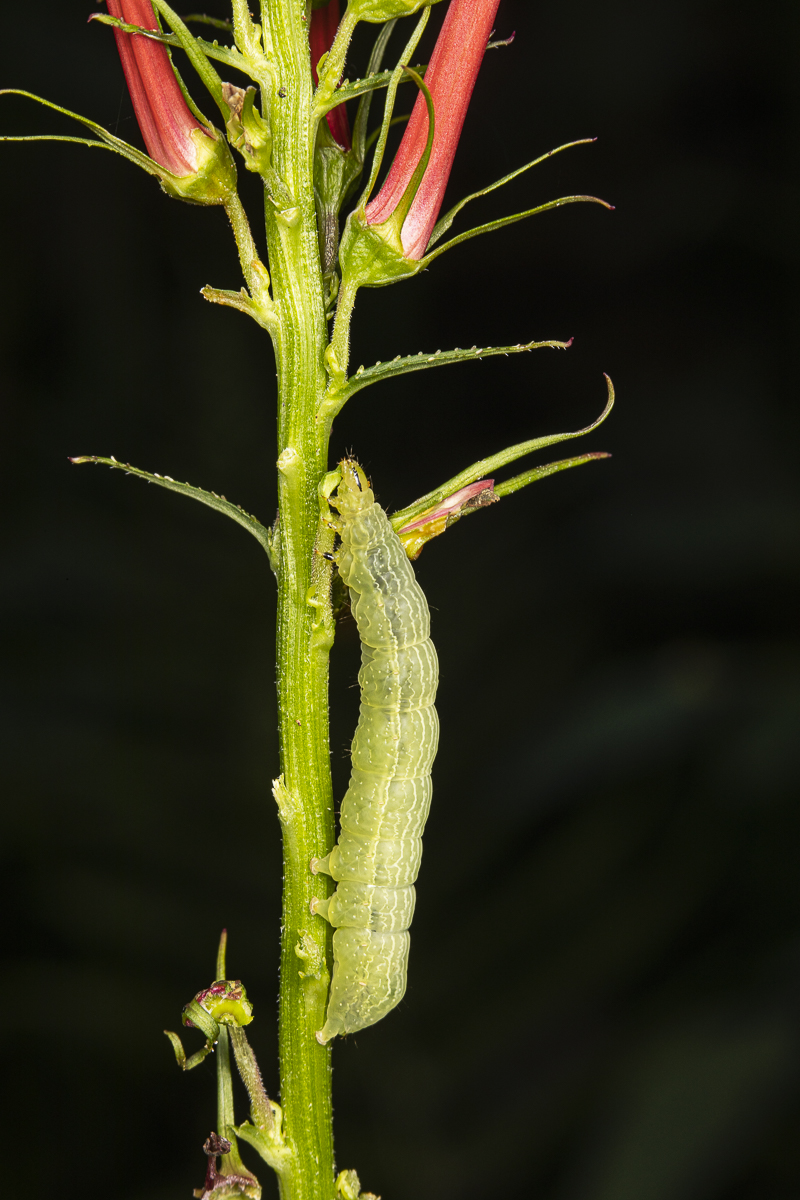
The other critter is more problematic. A few years ago, I started seeing heavy chewing on the leaves of my cardinal flowers. I finally found the culprit after some careful searching – a small green caterpillar the blends perfectly with the stem and leaf petioles as it voraciously consumes all parts of the plant.
-When we go away for a few days, this is often what many of our Cardinal Flowers look like when we return – everything chewed to the nub, including the flowers and seed capsules
The defoliator is a sort of plain green caterpillar, one of these that can be tough to identify because of all the look-alikes. After a lot of searching, I think I finally know what is eating all my Cardinal Flowers…
-The culprit – I believe it is the caterpillar of the Pink-washed Looper Moth, Enigmogramma basigera
If you know anything about me, you know I am very fond of caterpillars. But this one is testing my limits of tolerance. I am amazed that there will often be several different sizes of this caterpillar on one plant, as if a moth is laying an egg every day or two. They are quite difficult to see, especially the smaller ones, as they blend in very well and often hide underneath the leaves. I have also found several of the pupae under the few remaining leaf pieces on a particularly hard hit plant. I have started hand-picking them and tossing them, hopefully to end up as a tasty snack for the many species of birds that scour our yard jungle for food.
-A hummingbird enjoying nectar from one of the remaining Cardinal Flowers in our yard
These moths must have a spotty distribution as I have local friends with plenty of Cardinal Flowers in their gardens that have no issues. But, someone in a local native plant group recently posted a photo of their defoliated plants (both Cardinal Flower and Great Blue Lobelia – these larvae are apparently Lobelia specialists) asking people to help figure out what was happening. They had a rabbit fence around their garden but still suspected some sort of mammal. Various comments suggested deer or a rabbit somehow evading the fence. I commented on their post and suggested they look closely for these little green caterpillars. They quickly responded that my theory was “spot on” and their plants had several of the voracious little larvae.
Ah, the trials and tribulations of “gardening for wildlife”. Guess I’ll just need to keep buying Cardinal Flower plants so that there hopefully will be enough for both birds and bugs.




































 Roads End Naturalist