The life of the wood, meadow, and lake go on without us. Flowers bloom, set seed and die back; squirrels hide nuts in the fall and scold all year long; bobcats track the snowy lake in winter; deer browse the willow shoots in spring. Humans are but intruders who have presumed the right to be observers, and who, out of observation, find understanding.
~Ann Zwinger
I am familiar with the behavior of male White-tailed deer (bucks) during the breeding season (the rut) – they don’t eat much, they are challenging (often with antler to antler struggles) other bucks in the area for dominance and the opportunity to mate with the females that come into estrus, they chase females, and they tend to lose much of their wariness. All this generally occurs in the Fall, usually peaking in early November in our woods. There is a phenomenon called the second rut that can happen when some females that did not mate successfully come into estrus 30 days or so after the first rut is complete, usually in January.
But my trail cameras picked up a spate of antler testing behavior running through the month of February. I’m not sure what is happening, but maybe it is just “boys being boys”. They have formed some bachelor groups that hang out together through much of the day and night and it seems that after dark they like to test their strength by pushing and shoving a bit. The more evenly matched they are, the better the show, but I do admire one buck that just has nubs for antlers that tries to enter the fray to show his toughness.
I have not seen any of this activity during daylight hours (though the cameras do pick up buck hanging out together) and there seems to be a preference for performing these feats of buck showmanship at the cameras located on the creek. Here are some highlights of bucks doing their thing (volume up)…
They seem to have tired of this showmanship with the onset of March. Perhaps it is related to the fact that the first week of March caught the first image of a buck that has dropped an antler.
The cameras picked up this behavior on several nights, with these bouts often lasting many minutes. There was lots of maneuvering, some pawing of the ground, and plenty of head fakes and false starts to go along with the energetic pushing and clacking of antlers. There is so much happening in our woods after dark. As of this week, the largest bucks are still holding onto their complete antler set, but it won’t be for long. Now, if only I can find some antler sheds.
White-tailed deer were observed throughout 1,711 hours on the Welder Wildlife Refuge, Texas. Only 11 events considered to be forms of play were witnessed, seven by fawns and four by adults. It is concluded that white-tailed deer are not typically playful animals.
~Edwin D. Michael, 1968 publication
I did some research online after looking at some recent trail camera footage to try to explain what I was seeing. The quote above is the abstract from a paper published in 1968 in The American Midland Naturalist. Maybe Texas deer are more serious than ours, or maybe the deer you about to see has been eating some funny mushrooms…you be the judge (turn volume up and view full screen).
I first thought that the pool of water was the big attraction since most of the creek is very shallow and narrow. But a few days later when the creek bed dried up again, the buck was back (I think it is the same deer anyway). Note the attention paid to the overhanging American Holly branch from time to time (you can also see this to a lesser degree in the other videos). My next post will have some more clues to this mystery.
Maybe deer are more playful than we think, but only act up when we aren’t around. The lesson here may be to live life to the fullest and splash in every puddle, and keep on playing even when things dry up.
I know he’d be a poorer man if he never saw an eagle fly.
~John Denver
A couple of weeks ago I made a trip over to the B. Everett Jordan Dam about 25 minutes from our house. I had seen a lot of images recently on social media of the Bald Eagles that tend to congregate there every winter and thought it was worth a visit. From what I have heard, you generally can observe at least a few eagles, but photography opportunities can be quite variable depending on the number of eagles present and how far down the waterway below the dam they are hanging out and fishing. My plan was to go fairly early, stay a couple of hours, and then head home before lunch to attend to the many chores that awaited.
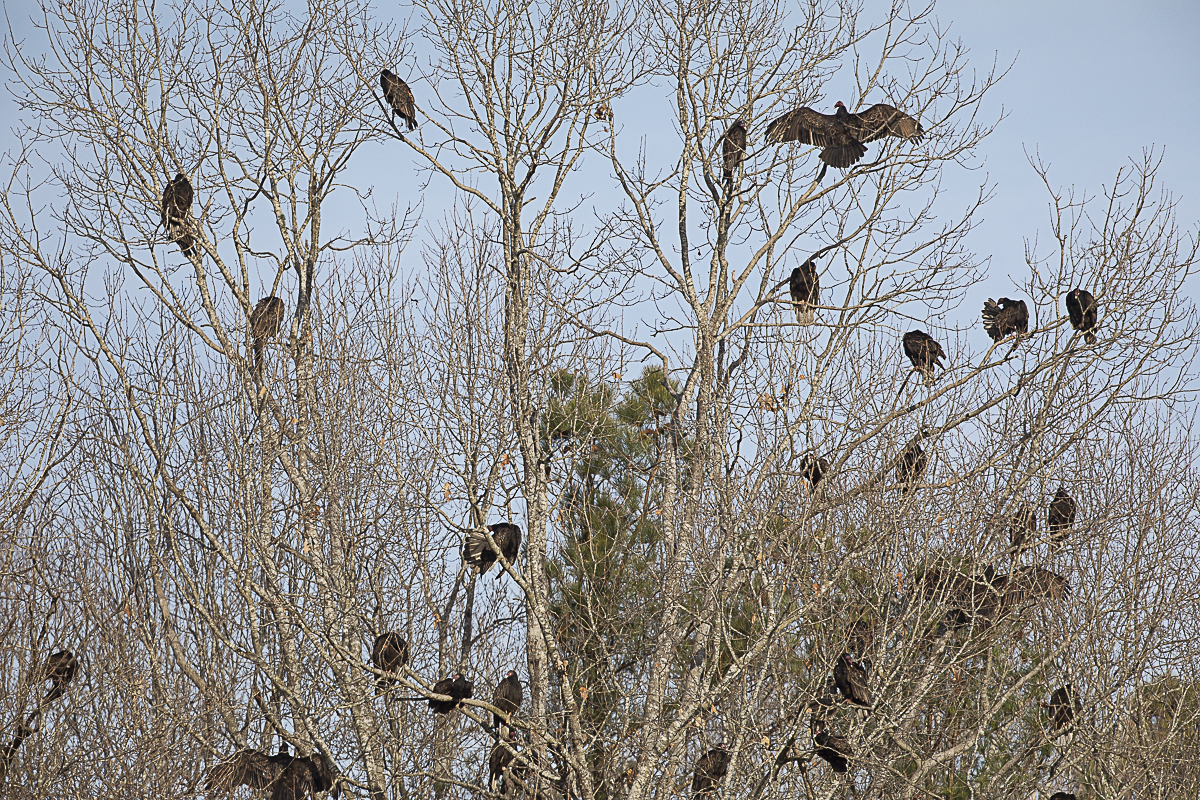
When I arrived, there were already a handful of photographers strung out along the bank and a couple of fishermen. A tree near the office was decorated with numerous vultures of both local species.
When I arrived at about 8:30 a.m., there were probably 50+ vultures hanging out in trees near the dam, awaiting the warmth of the sun to create some thermals so they could become airborne (click photos to enlarge)
Looking downstream, I could see (and hear) a large number of Bald Eagles roosting in trees on both sides of the tailrace. I counted over 40, many more than were there last year when I visited.
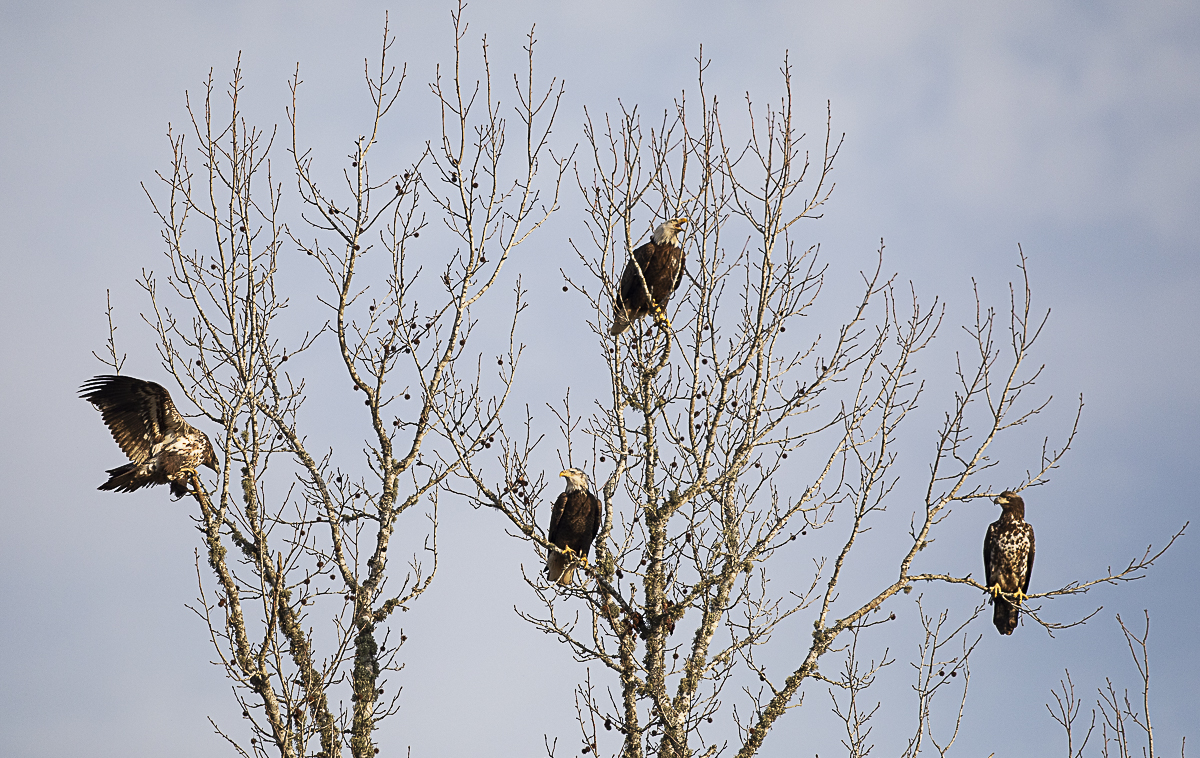
Several trees downstream had multiple eagles perched in them
What really thrilled me were the sounds – so many eagles calling! Here is a short clip of a pair with others calling nearby (turn volume up).
It wasn’t long before eagles starting flying up and down the tailrace, and the morning light was spectacular.
The intensity in an eagle’s eye says it all
There was a mix of juvenile and adult eagles, along with lots of flying Turkey and Black Vultures, the latter species sometimes making you look twice at it to make sure it wasn’t an eagle (similar flat-wing profile at a distance).
Juvenile Bald Eagle showing its darkish head and splotchy underside. Adult plumage (white head and tail) usually occurs by year 5 of a Bald Eagle’s life. A one-year old eagle has a dark head and beak. Two- and three-old eagles are a little tougher to distinguish and can overlap in their plumage patterns. I think this might be a 2-year old bird – a lot of white on its belly, very splotchy underside of wings, and some feathers sticking out of line in the trailing edge of its wings resulting from a combination of older feathers and new shorter wing feathers. However, the little lighter coloration on top of its head shows how variable these plumage patterns can be at this age.
I am guessing this is probably a 2- or 3-year old eagle since it is has some yellow on the beak and some white patches on the underside. Notice here that the trailing edge of the wings is fairly uniform, unlike the previous photo.
Most likely a 4-year old Bald Eagle – mainly white head but with dark splotches, still a trace of dark on the tail feather tips, much more yellow on the beak, and less white on the underwings
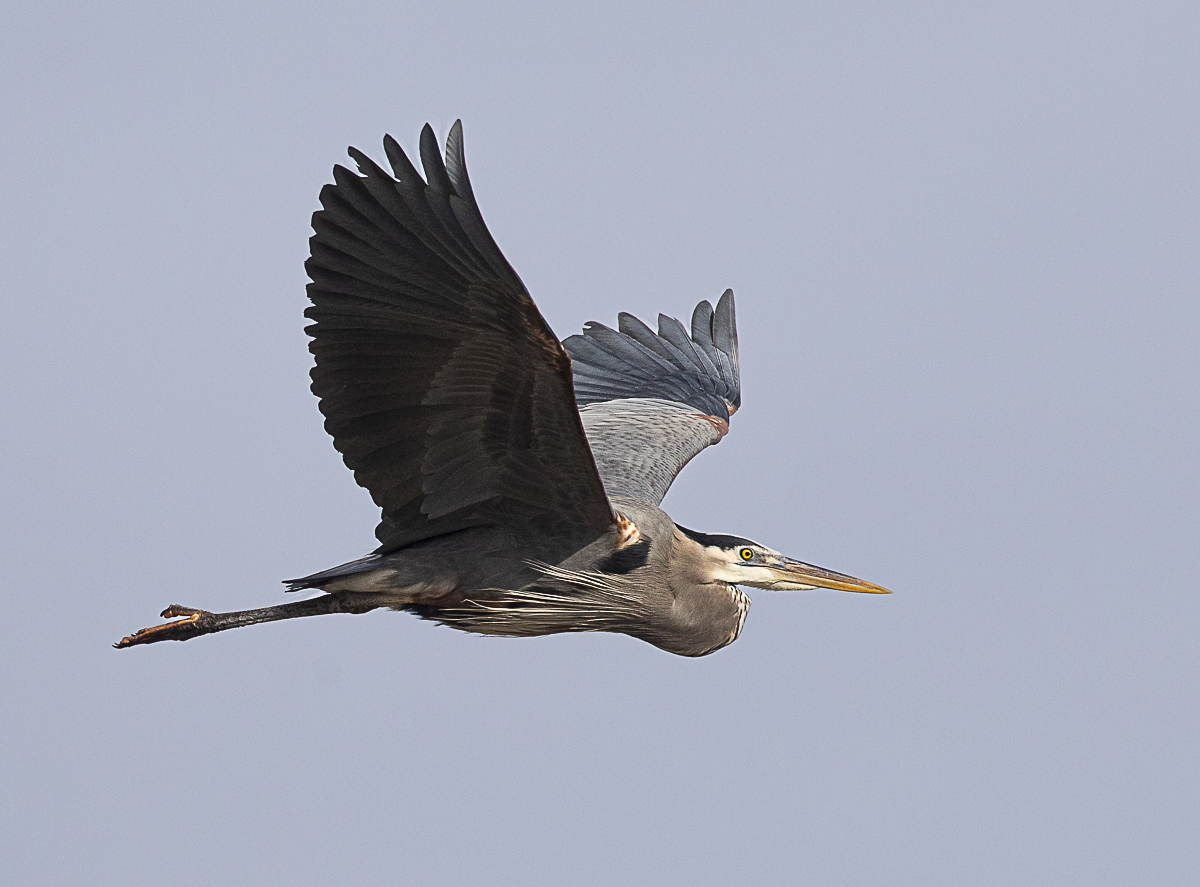
During lulls in the eagle action, there were plenty of other birds to observe and photograph. Vultures, of course, and a bunch of Great Blue Herons along the banks and in nearby trees.
A Great Blue Heron provides a nice photo target as it flies by
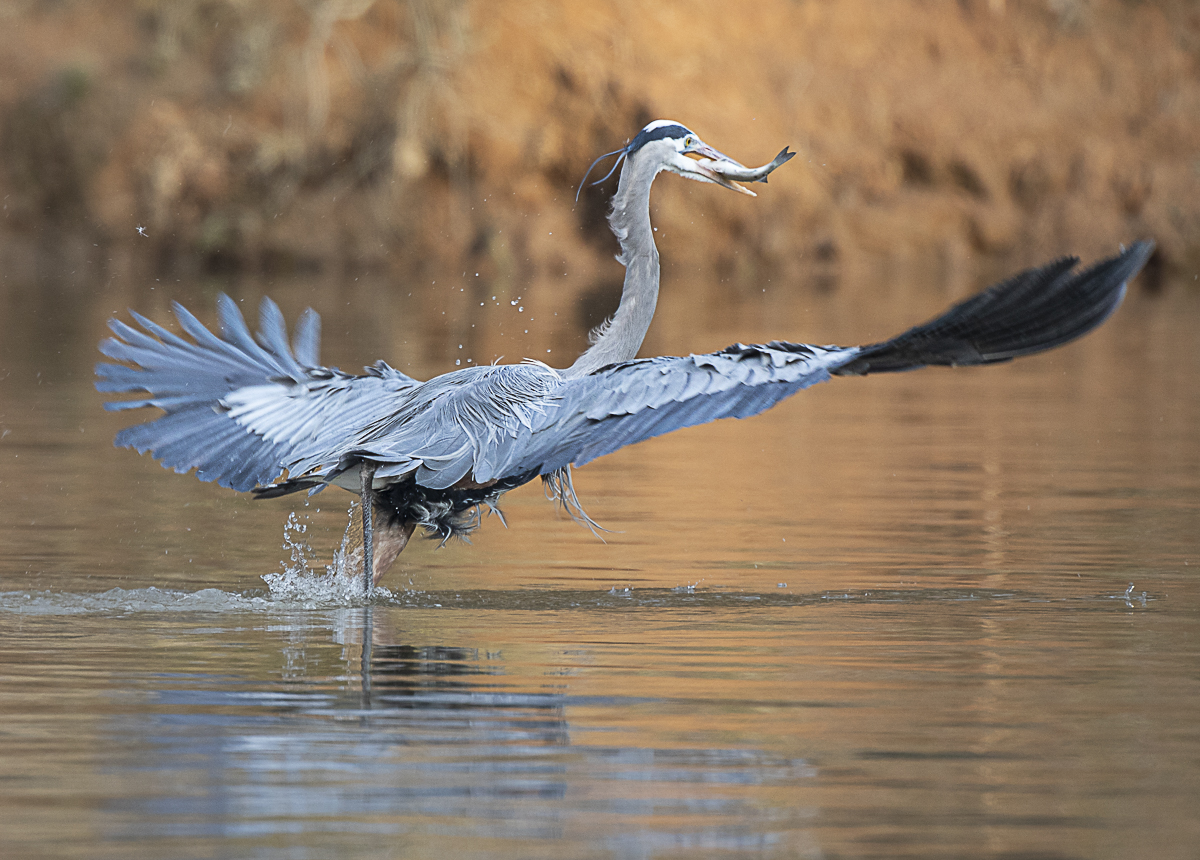
I was impressed that the herons here have added a new tactic in their fishing repertoire. In addition to the usual stalk and strike, I saw them frequently fly out and snag a fish off the water surface, sometimes landing out in the deep water and then seemingly struggling a bit as they took off with their prize.
A Great Blue Heron flies out and grabs a fish that has passed through the dam
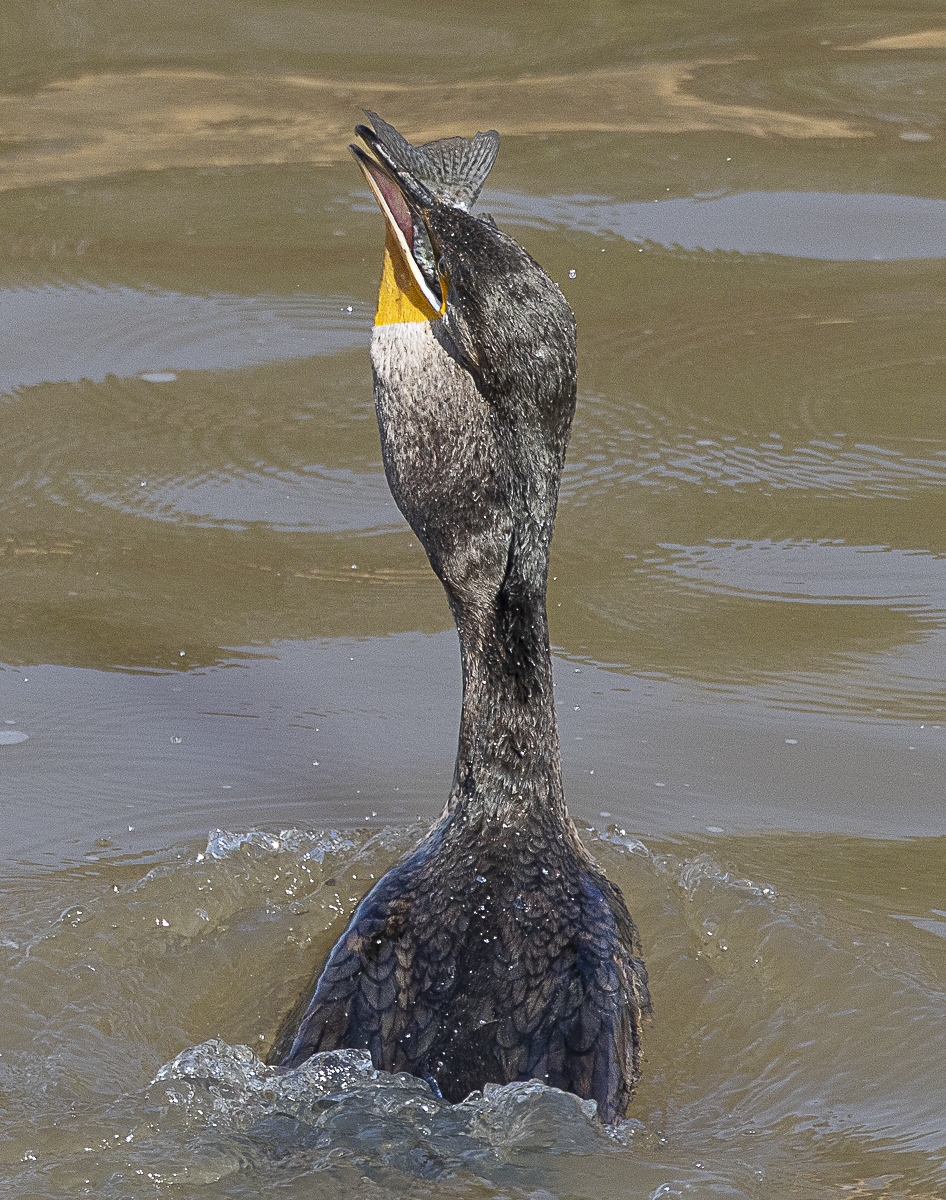
The other fisher-birds on the scene were several Double-crested Cormorants. Though often diving to catch a fish, they were also taking advantage of injured fish that passed through the dam that could be seen floating at the surface. A patrolling cormorant would spot one and rush over and grab it, often with several other cormorants ready to do the same if the first one missed.
A Double-crested Cormorant grabs a fish
If it can, the cormorant will manipulate the fish and gulp it down headfirst, with a visible downward-moving swelling in its neck as the meal is swallowed
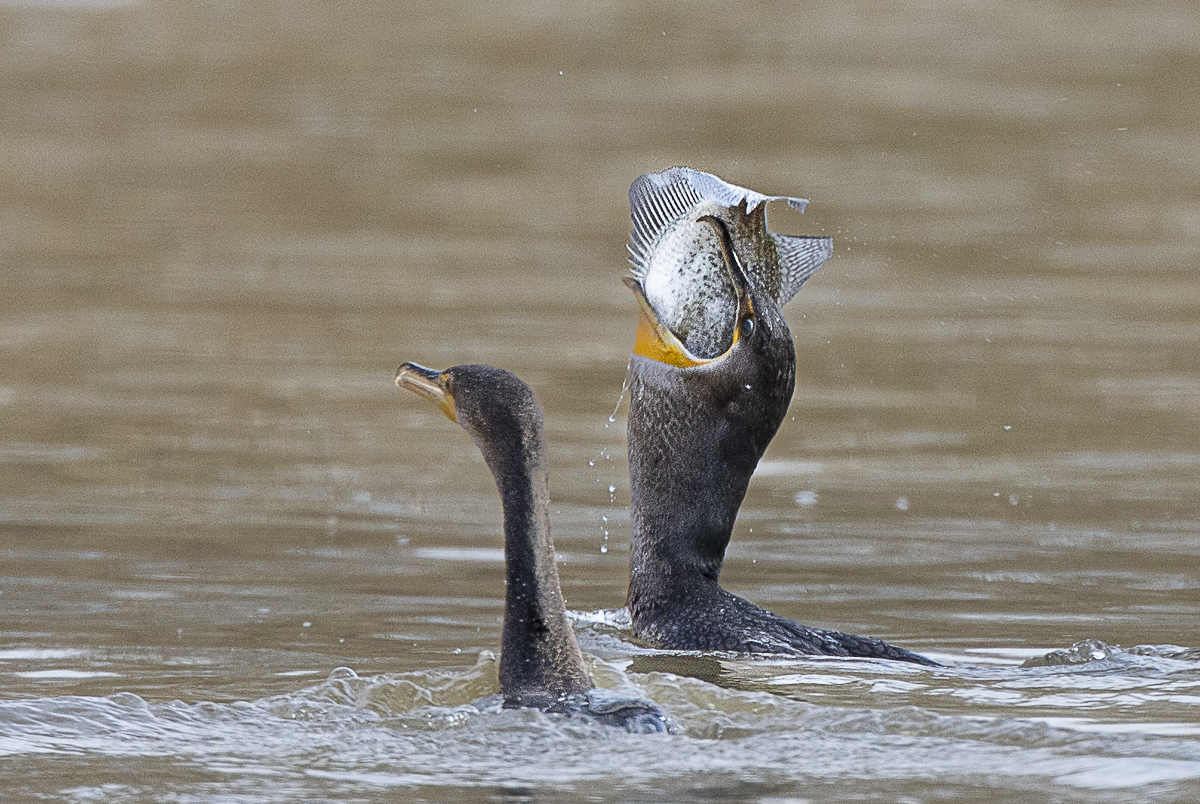
On many occasions, however, the fish is just too big to swallow. Crappie (the dominant species I saw floating by) are fairly deep-bodied so it can be tough for a cormorant to get the whole fish down.
A cormorant has grabbed a crappie, but is struggling to swallow it as another cormorant lurks nearby
Oh so close…
I saw this many times, the bird tries to swallow a fish and finally has to drop it
If the cormorants don’t swallow the fish right away, the eagles perched nearby or soaring overhead take notice.
This adult Bald Eagle does a quick turn and heads toward a group of cormorants trying to secure a fish meal.
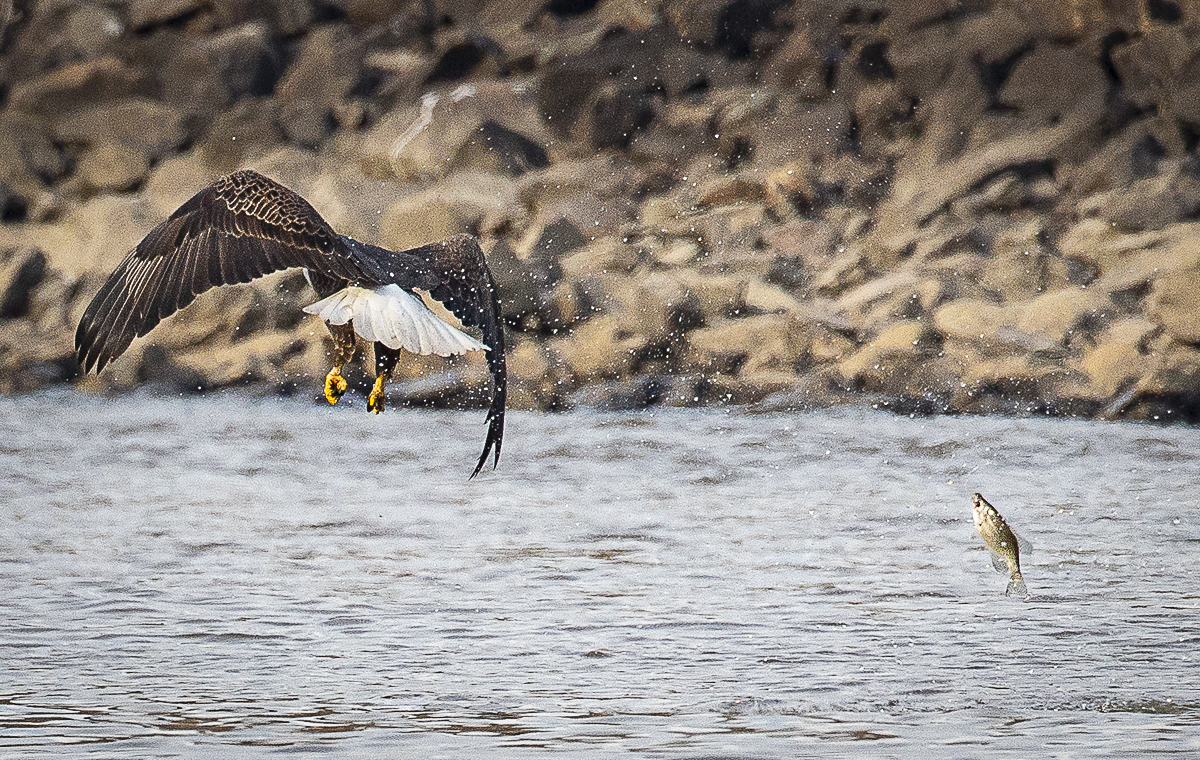
As the eagle closes in, the cormorants scatter with water drops flying through the air. The eagle flies just above the surface, talons lowered and ready to grab the cormorant’s would-be dinner.
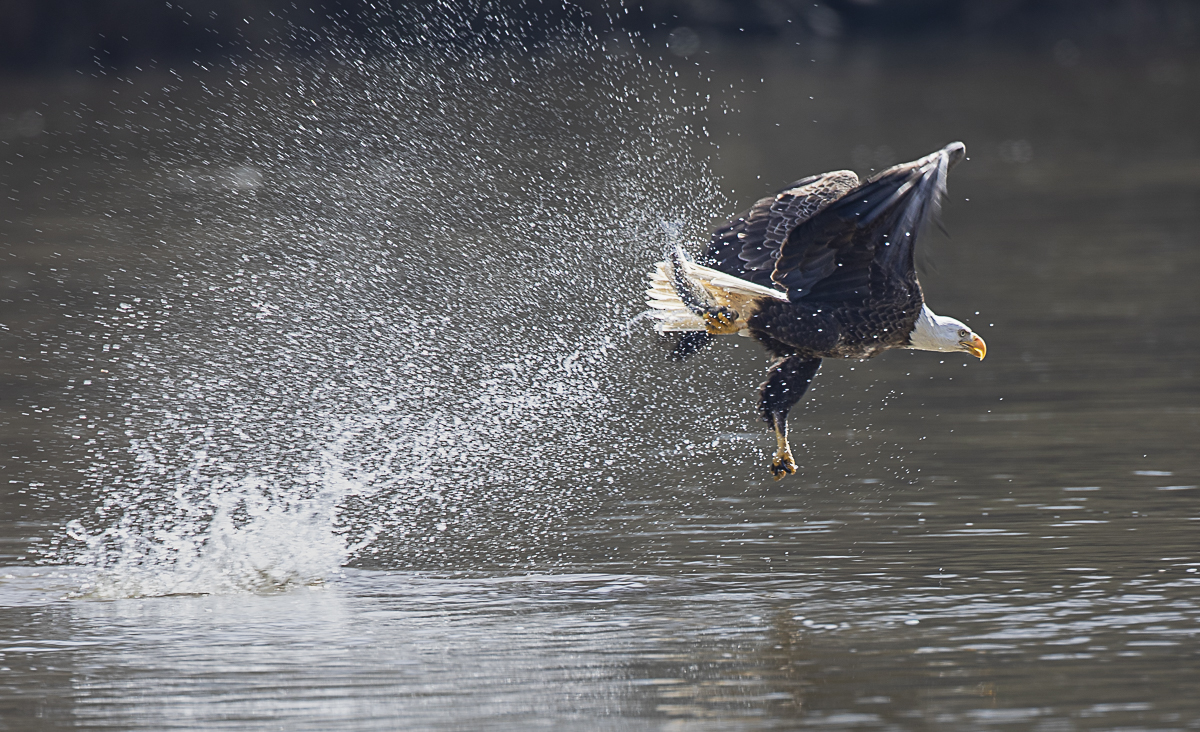
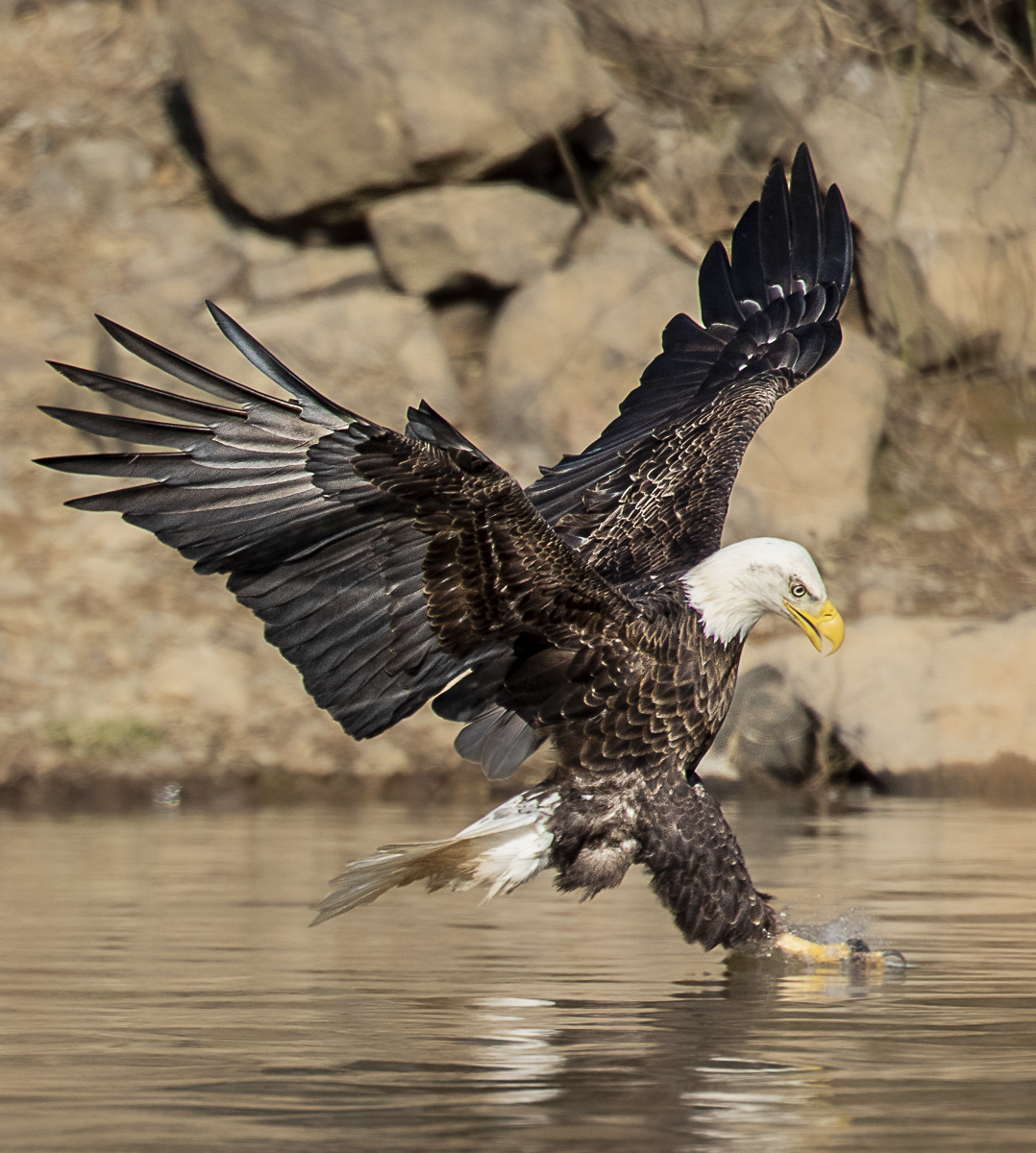
Eagles are excellent fishermen and can grab a fish in full flight mode (which I found very challenging to capture).
I kept missing the shot of the moment an eagle grabs the fish but managed a few just after the capture. Often they were pretty far away so these pictures are heavily cropped (taken with my 500mm and a 1.4x teleconverter)
I moved around during the day and found my best shots were when I was down by the water surface
The moment right before an eagle’s talons hit the prey. Look at that concentration!
The eagle’s rarely missed, but when they did, I often saw the fish go flying through the air
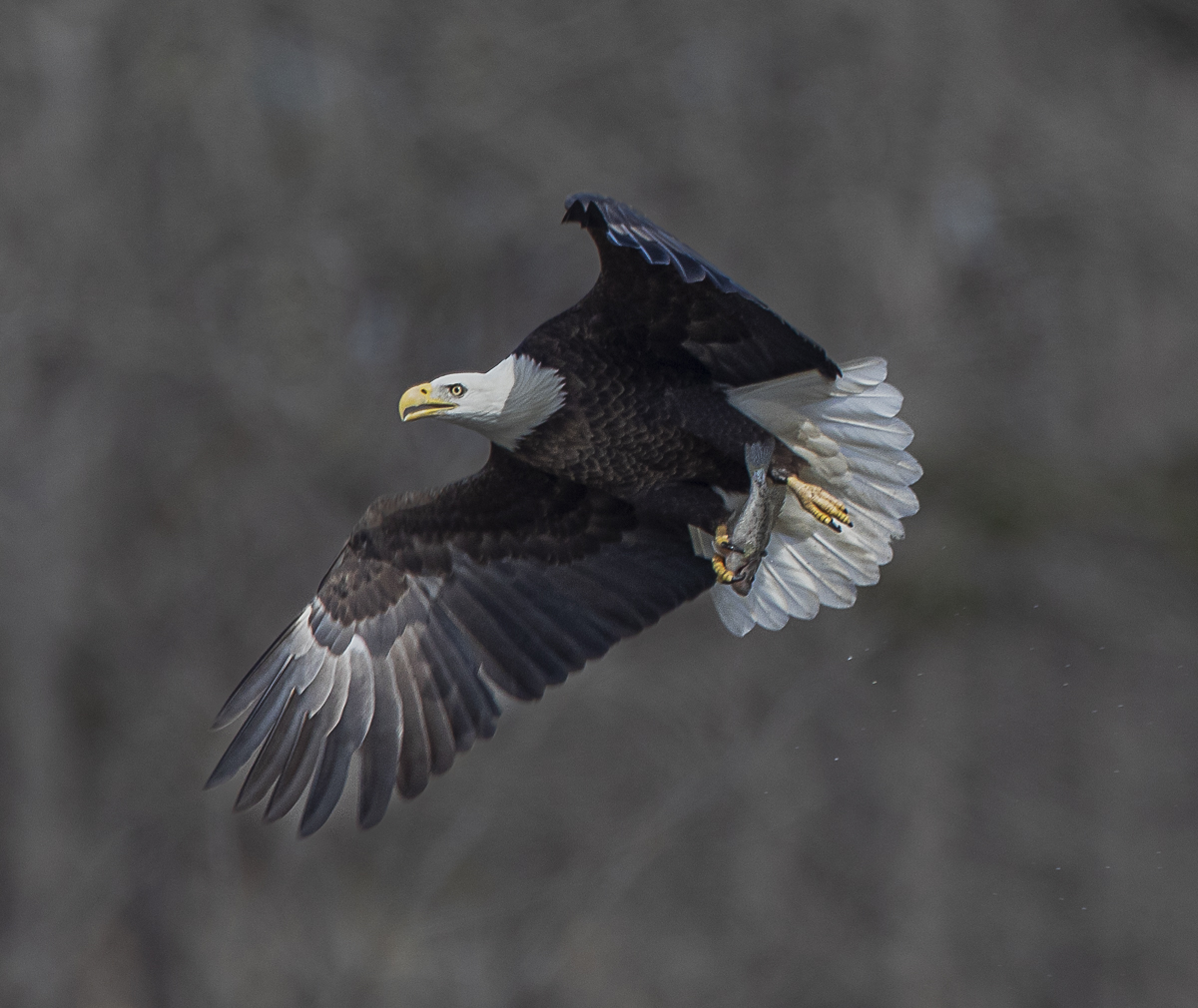
A Bald Eagle is well-adapted to grab slippery prey like fish – the talons are strongly curved and the bottom of their feet have rough projections that help hold the prey firmly
After securing its catch, the eagle turns and quickly flies up to a tree branch to eat its meal
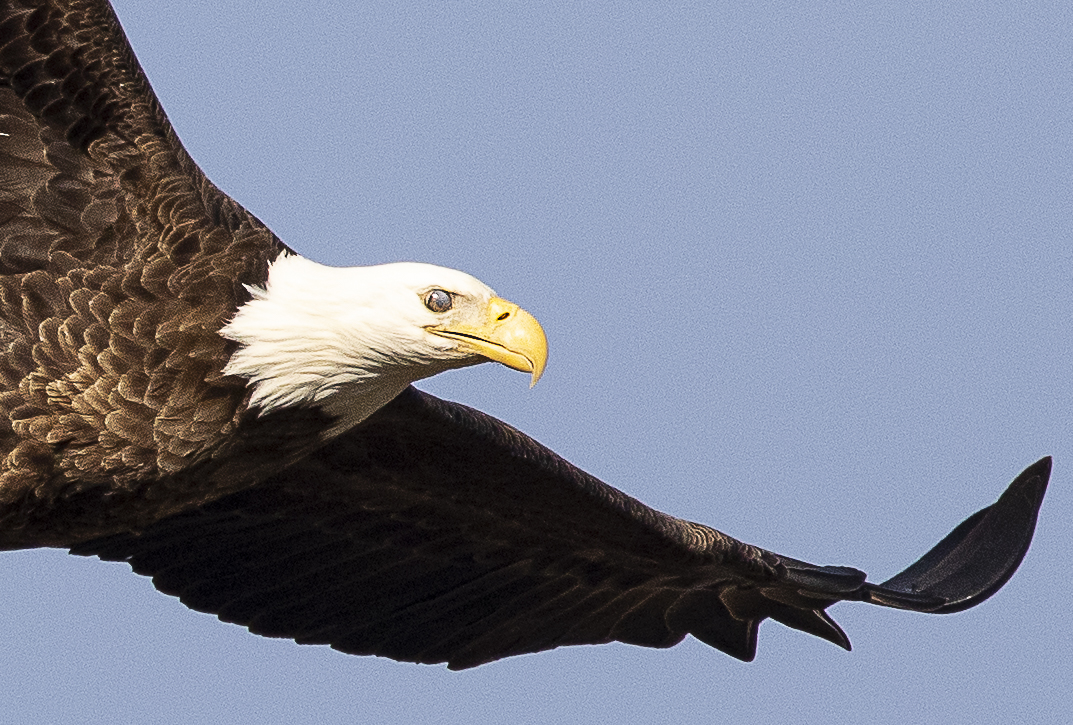
Bald Eagles can see 4 to 5 times better than a human. That somewhat angry look is due to a bone (the supraorbital ridge) that juts out over the eye. It probably helps shield their eyes from sunlight. Here you can see the transparent nictitating membrane which sweeps across the eye from the side and helps protect the eyes
What started out as a planned two hour photo trip to see eagles turned into an all day event that had me twisting and turning at times to try to catch the action as eagles flew by and swooped down to snag a fish. It was a thrilling day of observing some of the large concentration of Bald Eagles that call Jordan Lake their winter home. I made another trip a week later with friends, but there were far fewer birds below the dam. The water depth in the tailrace was much higher as more water was being released through the dam, so maybe that had something to do with it or maybe it is the approaching warm weather. As spring arrives, the eagle numbers dwindle, but there will still be quite a few that nest in the area, so get out around the lake and see if you can observe some of these majestic birds in action. And when the Ospreys return next month, watch for eagles trying to steal fish from their raptor cousins, always an aerial display worth seeing. Just remember to not pressure these birds (or any wildlife) so much as to cause them to get stressed and move on.
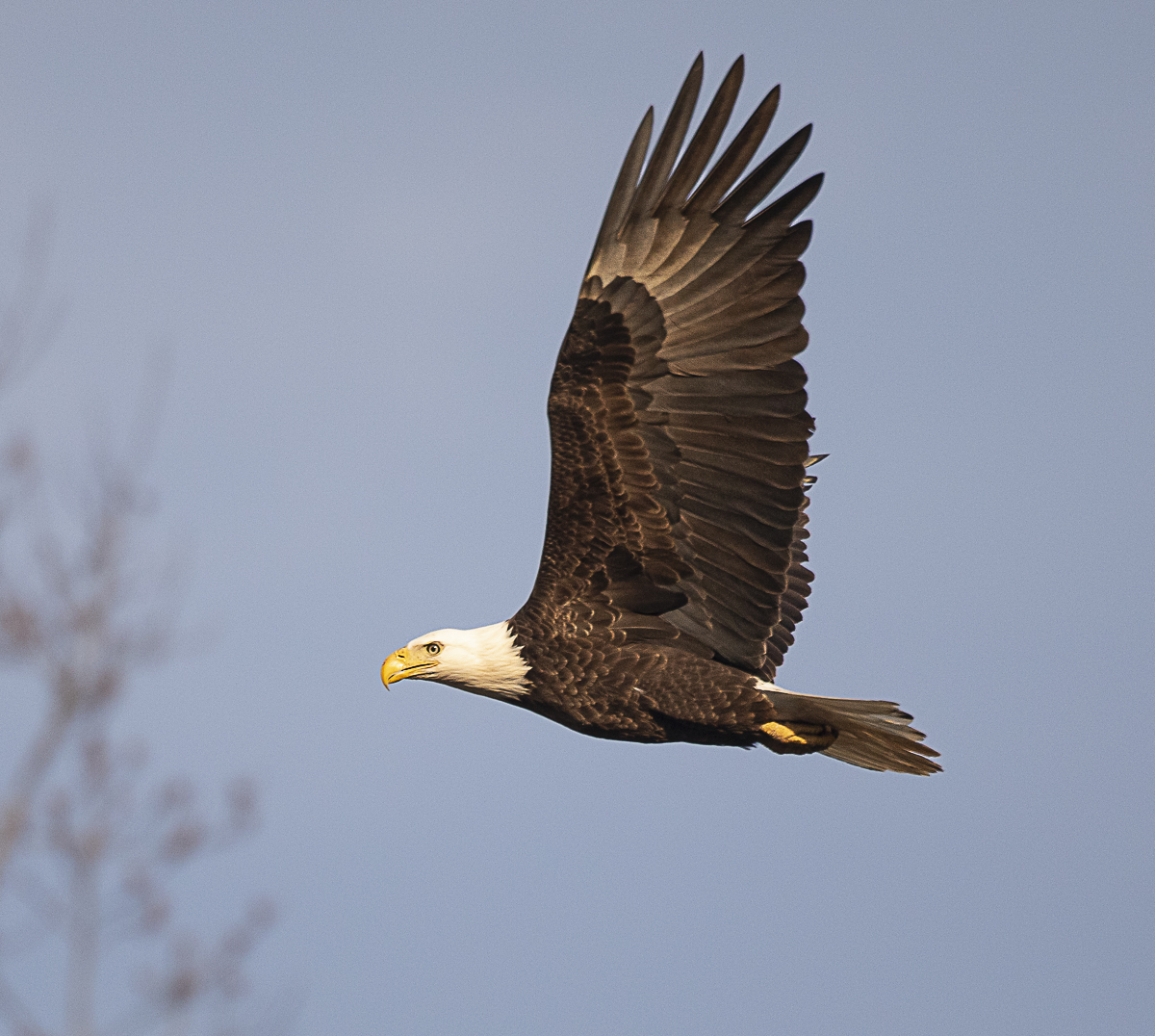
A majestic adult Bald Eagle in beautiful late afternoon light at Jordan Lake
Life and death are one thread, the same line viewed from different sides.
~Lao Tzu
One day earlier this month I discovered a recently deceased Virginia Opossum out by one of the wood piles. No idea what might have happened to it though it was not long after some severely cold weather. I decided to take it down into our woods and place it in front of one of the trail cameras to see what might come along. I waited several days before checking the camera and discovered a lot of the woodland creatures had stopped by to investigate, dine, or perhaps pay their respects. Here are some of the highlights (best viewed full screen with volume up)::
The first animal caught by the camera coming to the opossum scene was another opossum. Wonder if they had met? I am guessing they had.
First on the scene on the day after I put out the carcass was a Turkey Vulture (not surprising, really). Turkey Vultures have an excellent sense of smell and can locate carrion from great distances and heights (unlike Black Vultures, which rely mostly on vision). Turkey Vultures have an extremely large olfactory bulb (the area of the brain responsible for processing odors). Recent research has shown that they also have more mitral cells than any other bird that has been studied. Mitral cells, found in all animals, help transmit information about smell to the brain.
Thirty minutes after the first vulture arrived, another one landed and some threat displays ensued. The second bird took off shorty afterward. It reappeared off camera a couple of hours later in the afternoon. Soon there was a scuffle…
Turkey Vultures appeared on camera for 3 days from February 5-8, although the carcass had been pulled slightly out of view on the other two days. Other visitors in those first couple of days seemed mainly driven by curiosity rather than hunger and included a Raccoon and three deer.
All three deer that have stopped at the carcass have gingerly sniffed the area near the dead opossum and then walked away.
This next clip is a very short one – a screech owl flying off with something from a couple of feet away from the carcass. Was it a piece of meat from the dead animal, or did it catch something like a mouse that was investigating the site?
Nine days after I placed the dead opossum on the hillside, a Red-tailed Hawk shows up and picks at it. Raptors are frequent visitors at carrion, though few are as efficient in our region as the Turkey Vulture.
If you looked and listened closely, some of the video clips had flies buzzing through near the carcass, probably one of the first things to arrive at any dead animal when temperatures are much above freezing. Nothing is wasted in the forest, death brings life, and other animals either take advantage of the new food source or seem curious or at least interested in the passing of a fellow woodland creature. It will be interesting to see what else visits the opossum as the days go on.
We need the tonic of wildness, — to wade sometimes in marshes where the bittern and the meadow-hen lurk, and hear the booming of the snipe; to smell the whispering sedge where only some wilder and more solitary fowl builds her nest, and the mink crawls with its belly close to the ground.
~Henry David Thoreau
I had the pleasure of spending a couple of days earlier this month with some friends visiting some of our wonderful wildlife refuges. We had originally planned to go to the Pungo Unit of Pocosin Lakes National Wildlife Refuge, but due to heavy rains, the roads became impassable and the decision was made to temporarily close the area. So, we decided to visit two other refuge units – Mattamuskeet and Alligator River.
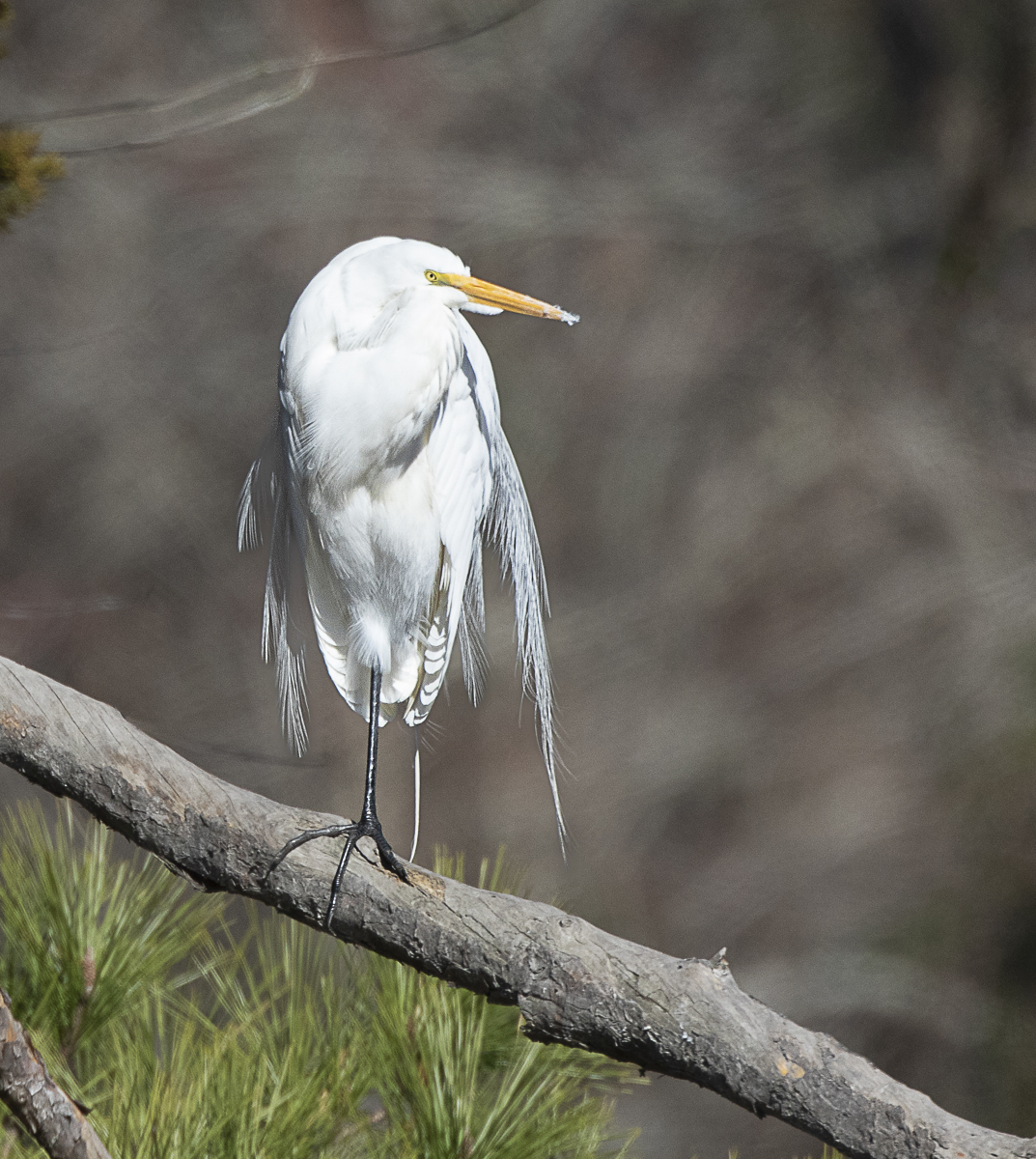
We spent the first afternoon at Mattamuskeet, scoping the impoundment on Wildlife Drive where hundreds of ducks, geese and swans were resting and feeding. Lunch by the lodge gave us time to appreciate the elegance of a Great Egret perched in a tree across the canal.
Great Egret assumes an elegant pose (as always) (click photos to enlarge)
One of my favorite things to do at Mattamuskeet is spend some time on the New Holland Trail boardwalk. It passes through a cypress swamp with beautiful lichen-covered trunks, abundant cypress knees, and mind-bending reflections.
A thin layer of ice added to the swamp scene along the boardwalk
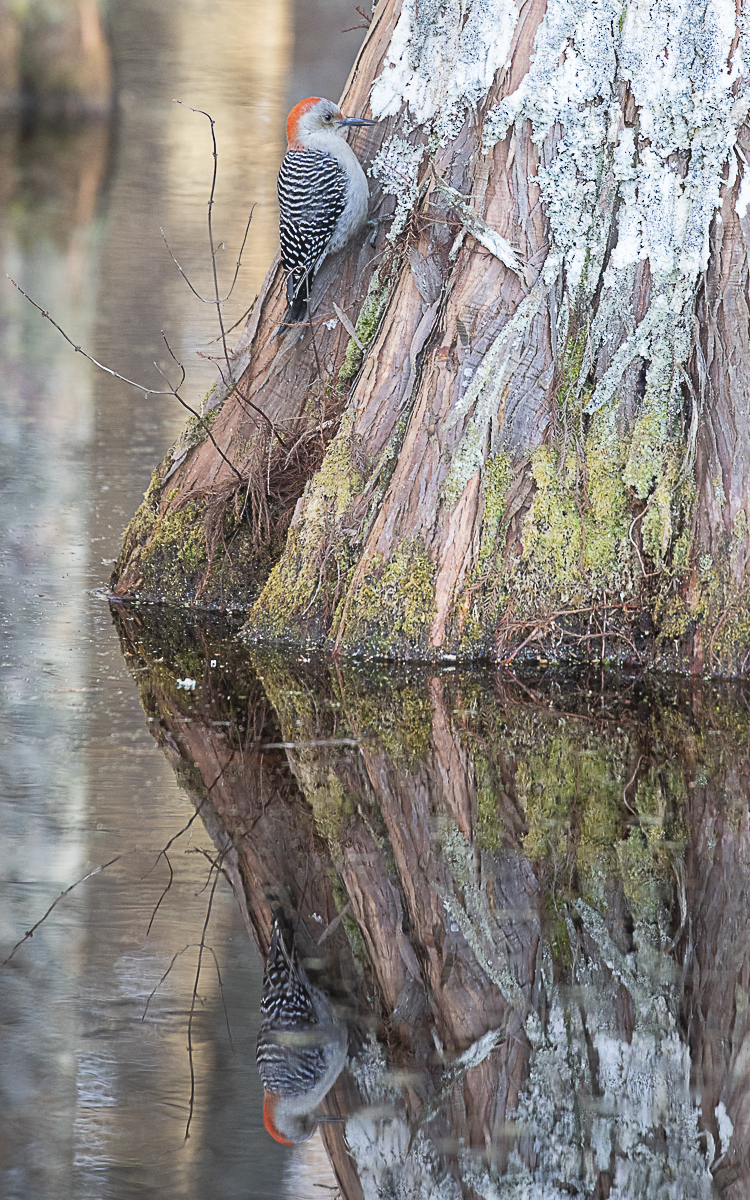
A Red-bellied Woodpecker adds her reflection to the swamp’s black water mirror
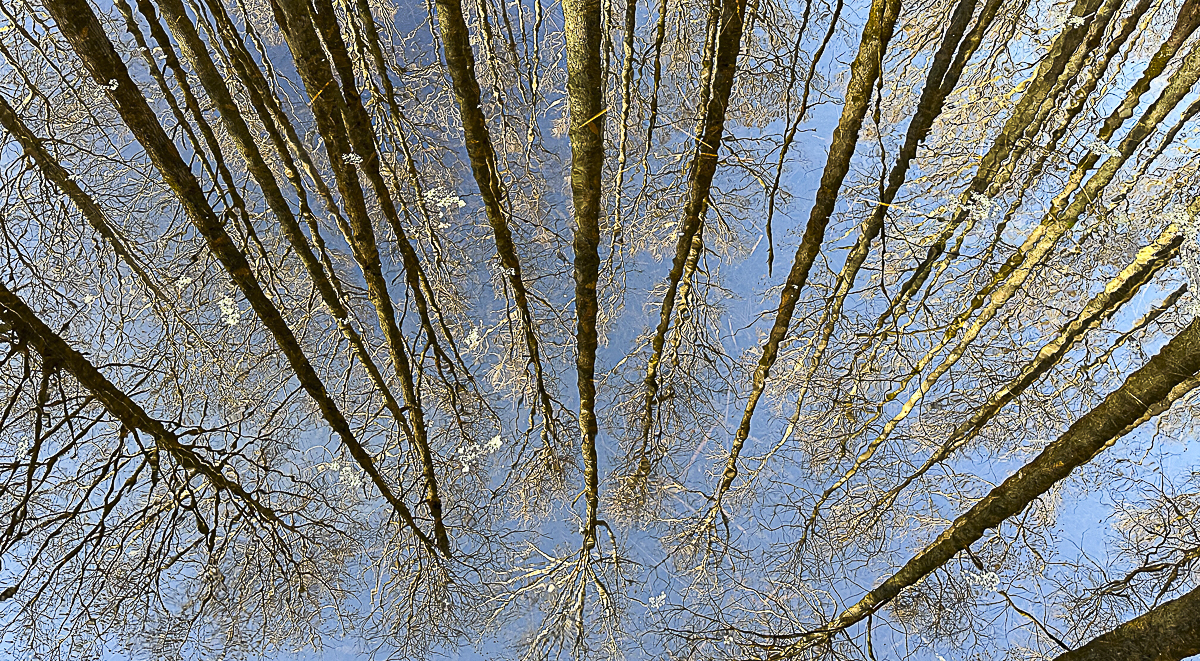
Which way is up? I can’t help but take some reflection photos every time I visit this trail
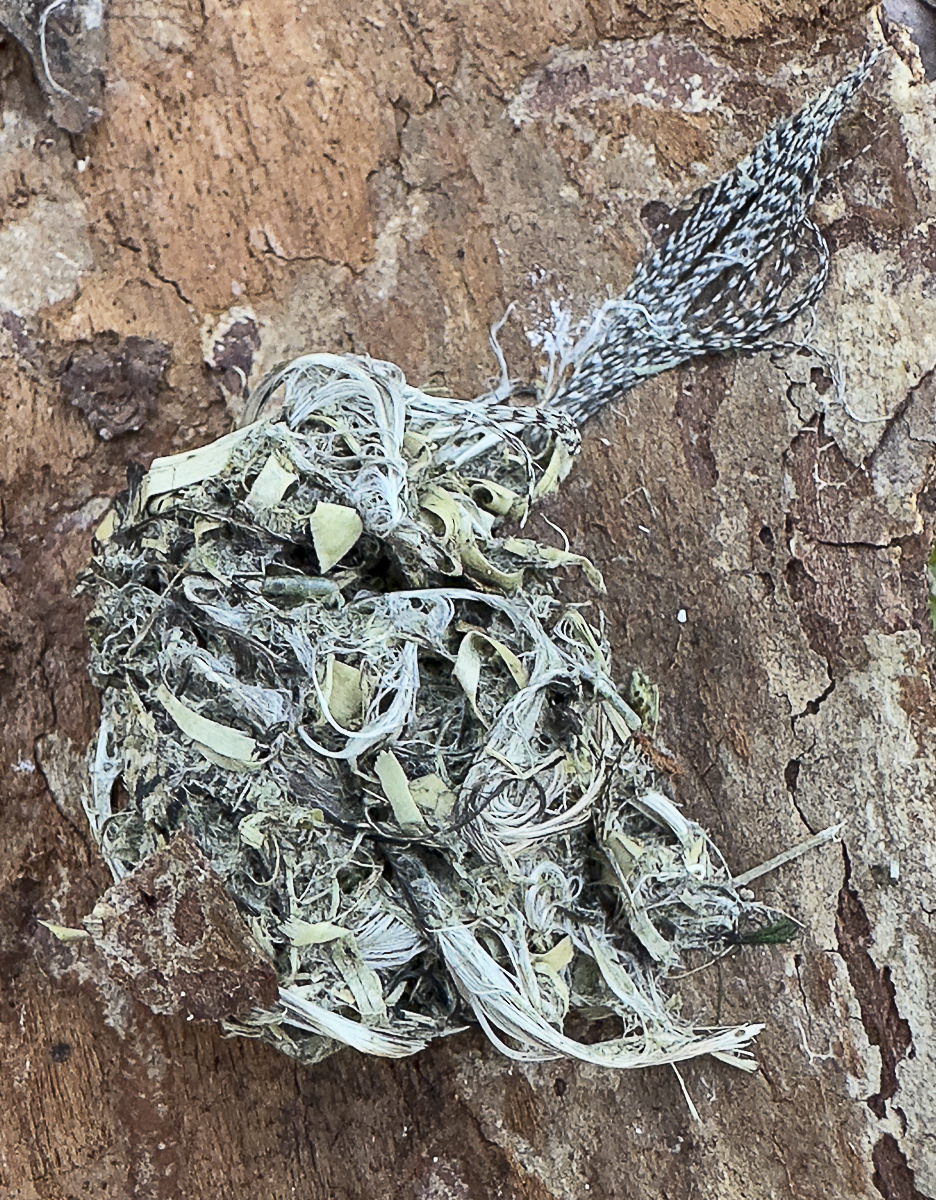
As we walked back to the car we spotted what looked like a raptor pellet on the ground. It was smaller than most Great Horned Owl pellets I have seen. and contained some feathers, but of what type of bird? A duck perhaps?
A raptor pellet with some mystery items…any guesses?
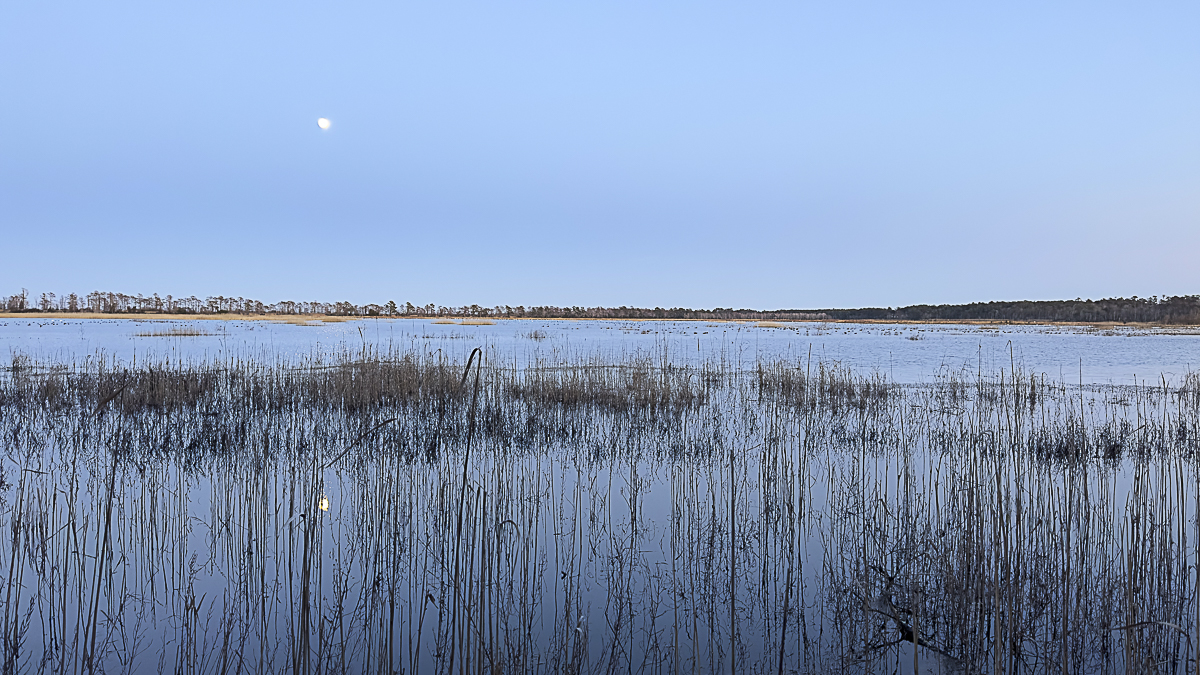
I always try to find American Bitterns at Mattamuskeet, and though there were none in sight on this afternoon, the weather and sky provided a beautiful backdrop for a great afternoon of wildlife observation
.Moonrise along Wildlife Drive
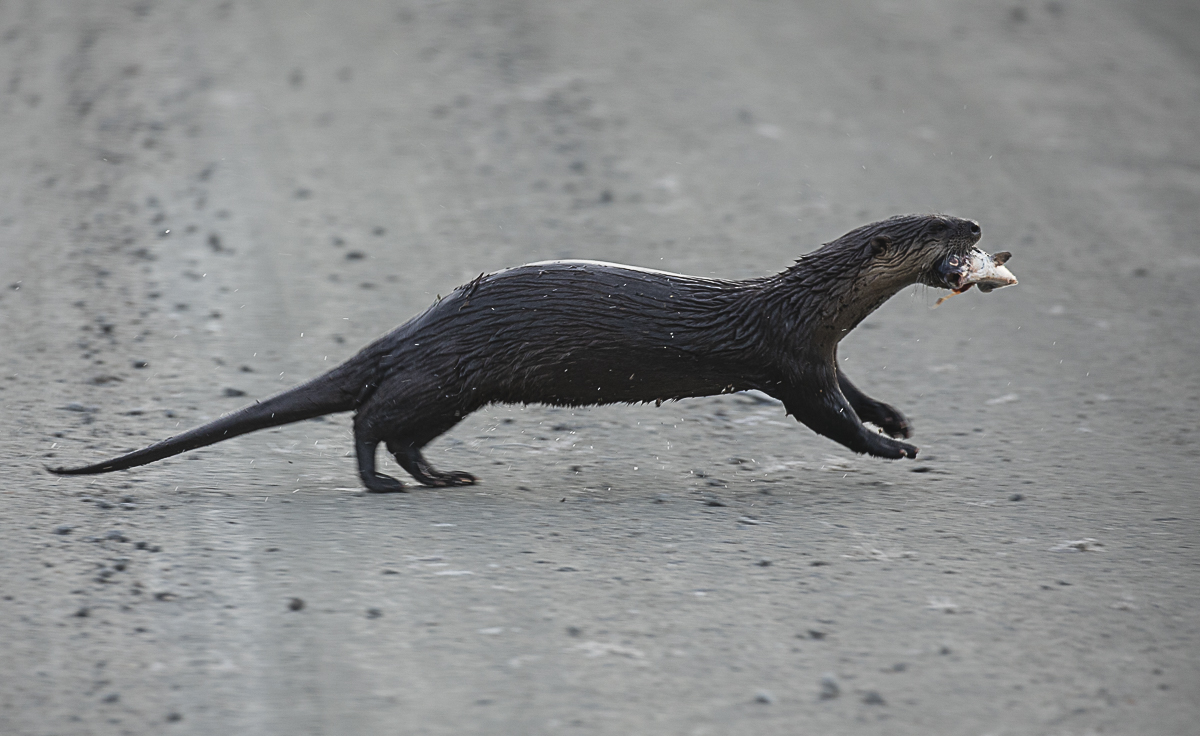
Early the next morning we were off to Alligator River NWR, hoping to see a variety of wildlife, though a special request had been put in for otters. It didn’t take long to fulfill that wish…
A River Otter runs across the road ahead of us, lugging its breakfast
Though there were not as many waterfowl as we had seen at Mattamuskeet, we did get some great looks at several species.
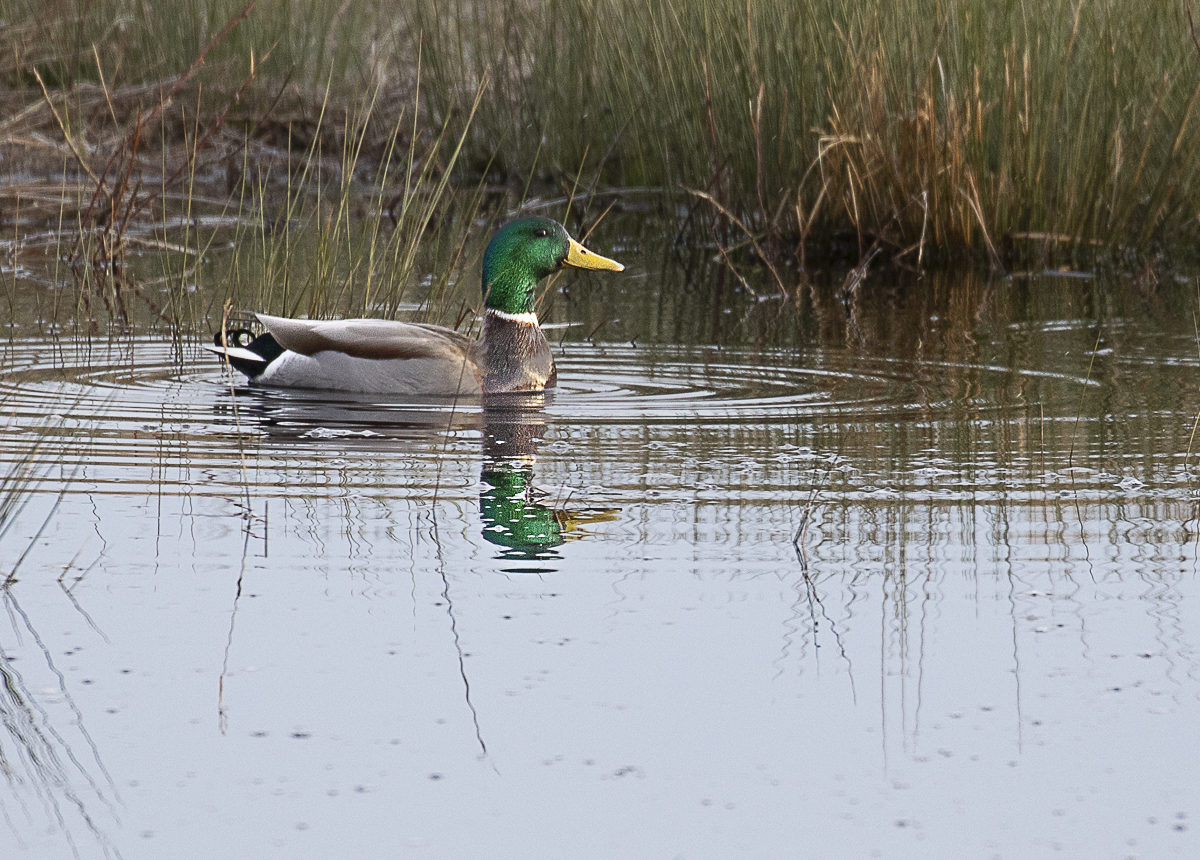
Mallard drake showing off that stunning green head
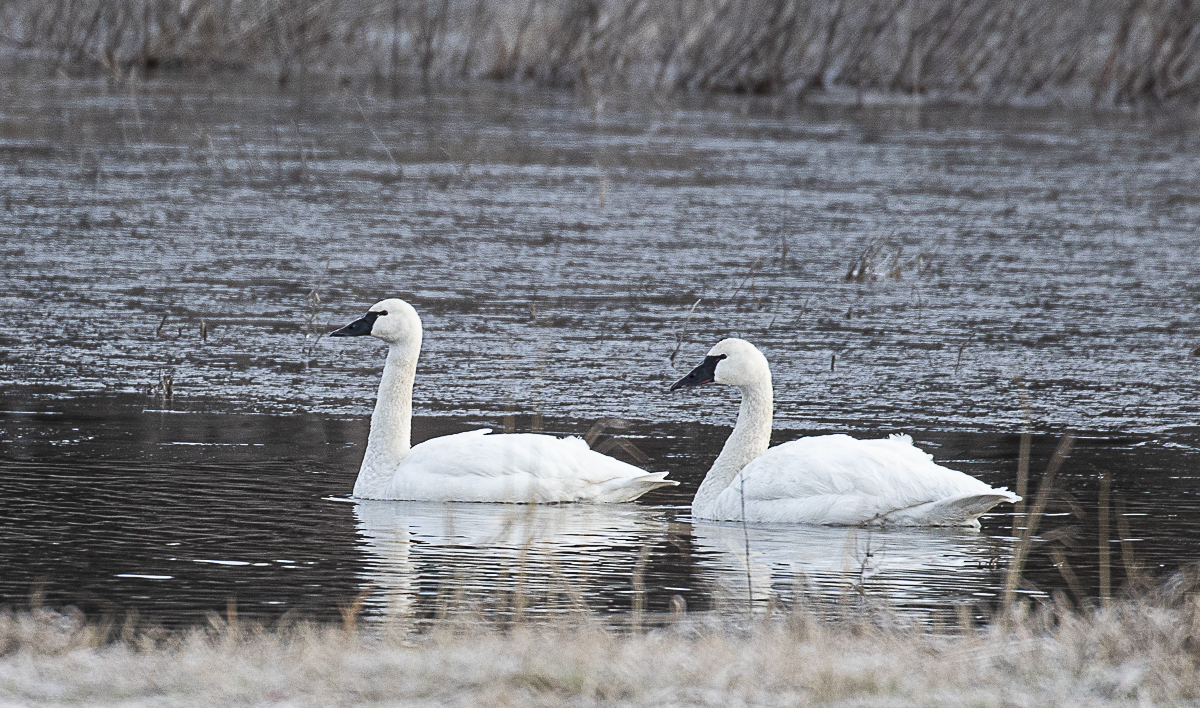
A pair of Tundra Swans cruising one of the flooded fields along the road
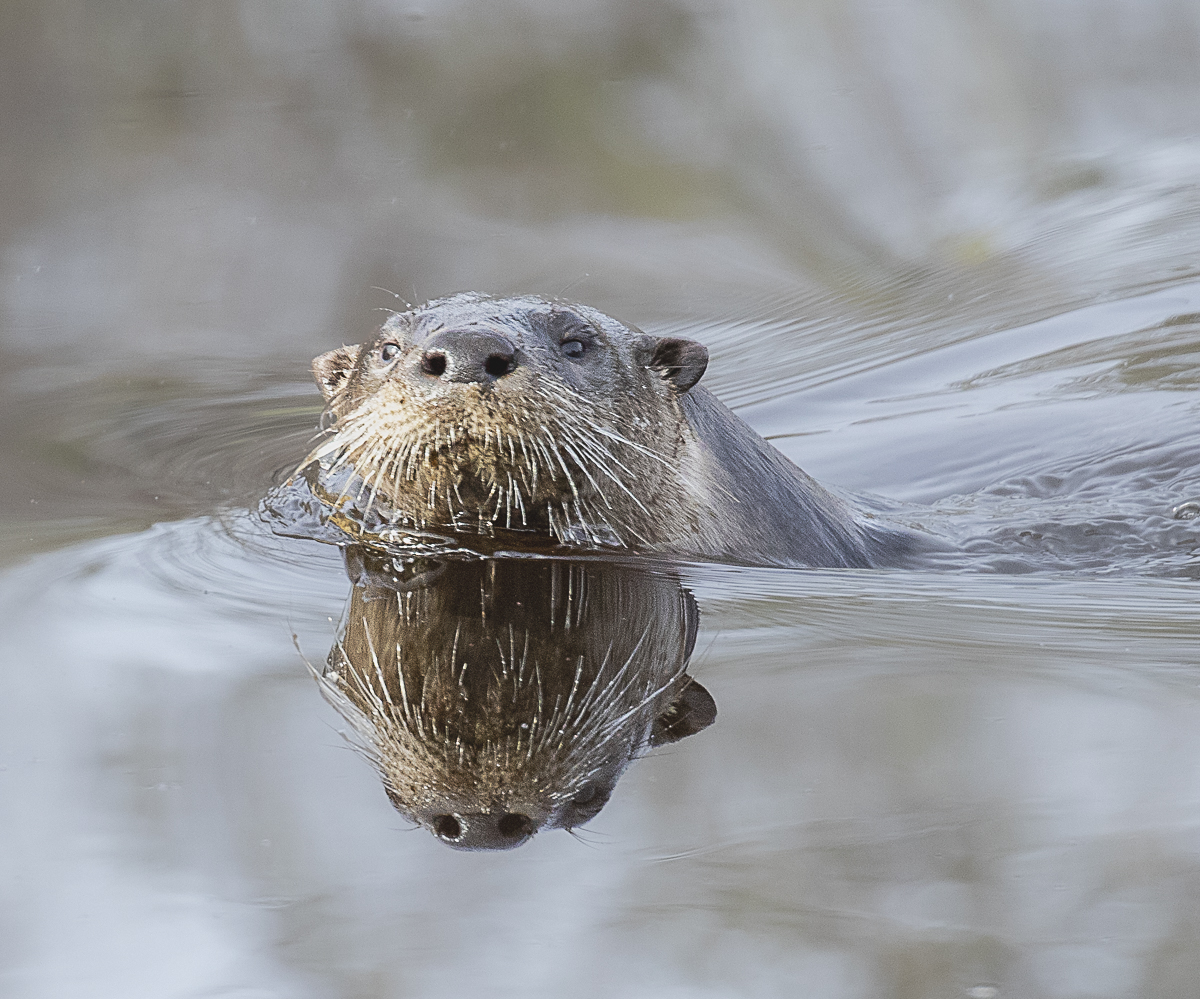
We soon spotted a pair of otter swimming toward us in a roadside canal. We got out and sat alongside the canal and watched as these two swam and dove together, one catching a fish, and then one swimming close by giving us the eye. We spent several minutes enjoying the antics of this pair before they finally tired of us and swam out of sight.
A River Otter swims by giving us the eye (and a great reflection)
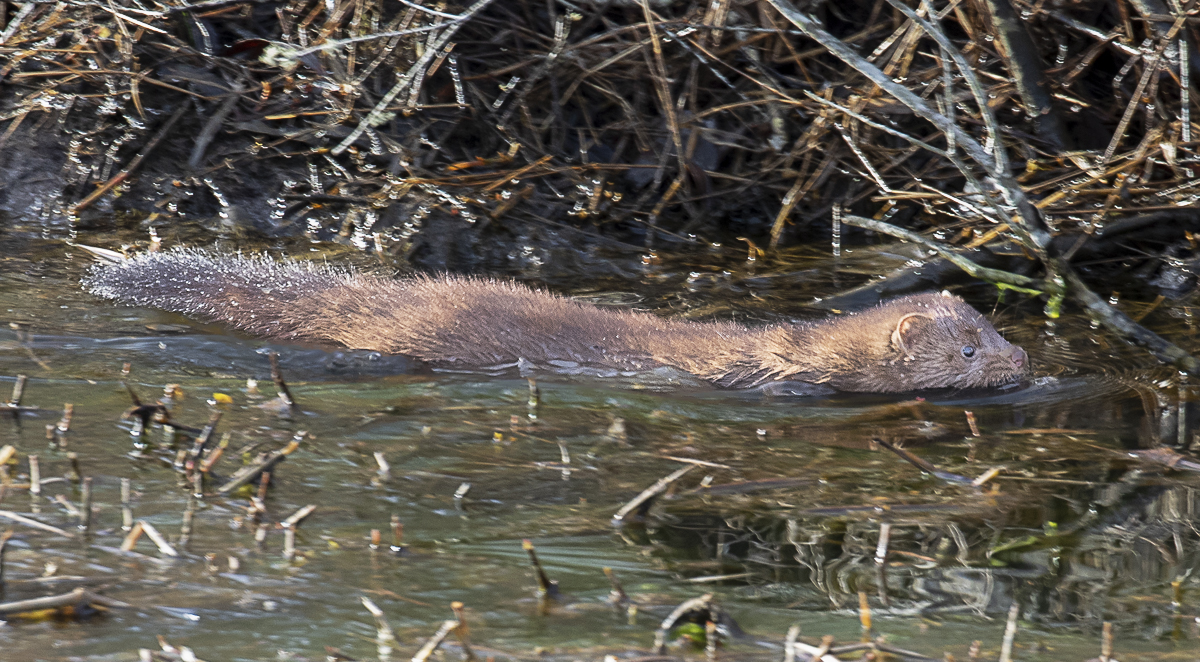
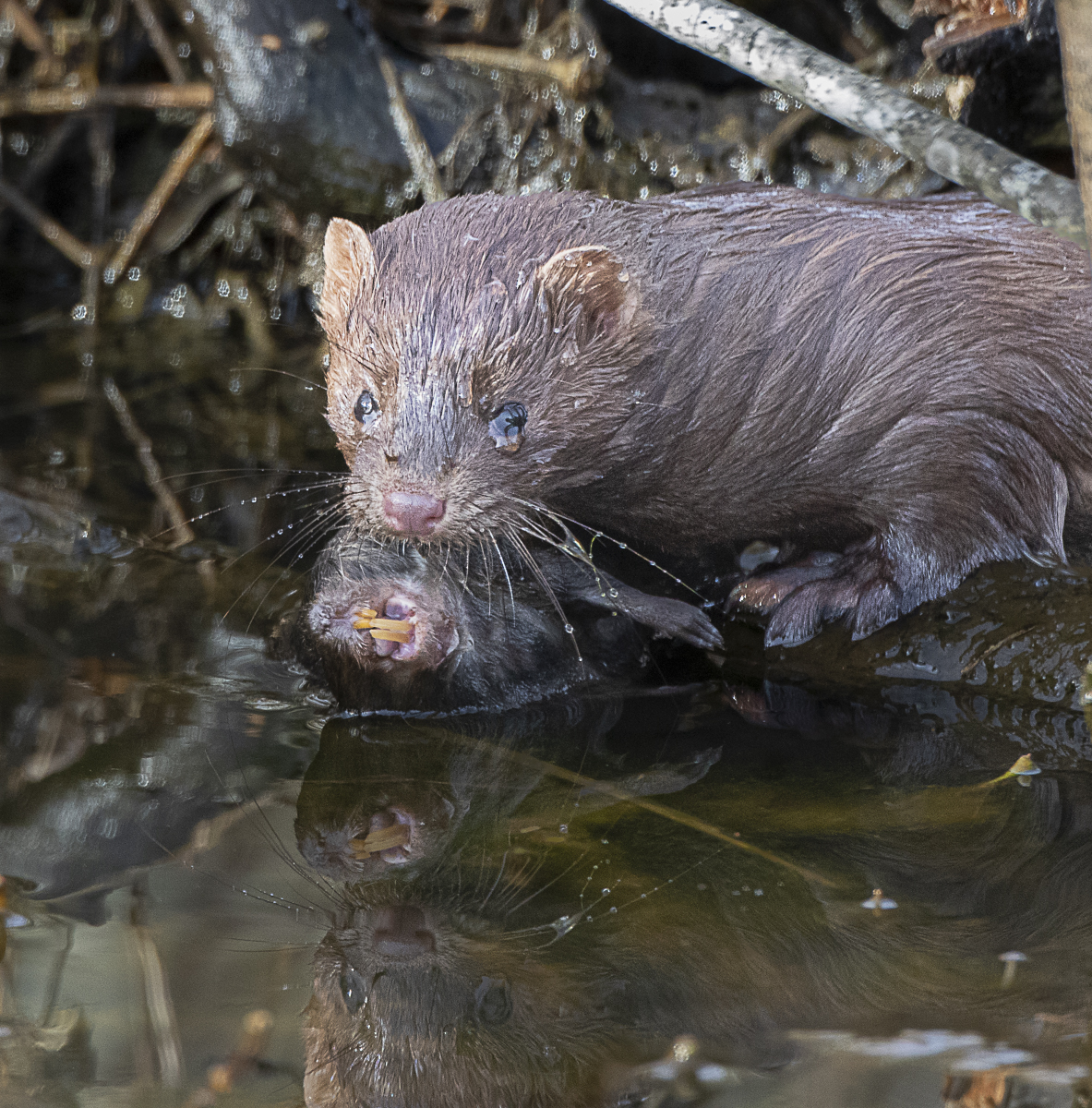
We drove slowly along the fields, hoping to see a Red Wolf or Black Bear, but we were rewarded instead with numerous raptors, Great Blue Herons, and a truly unexpected treat – a Mink! We were out of the car looking at something out in the field when a car passed by and slowed to a stop just beyond us. I looked up and saw something run from the field and cross the road just in front of that car. It resembled a small otter but had a bushier tail, and it was carrying something. My brain said Mink as it disappeared into the canal, but I wasn’t sure. We drove down and looked, seeing nothing at first. Then there was a ripple and out swam a Mink, carrying what looked like a small rodent.
A large Mink swimming along the canal edge
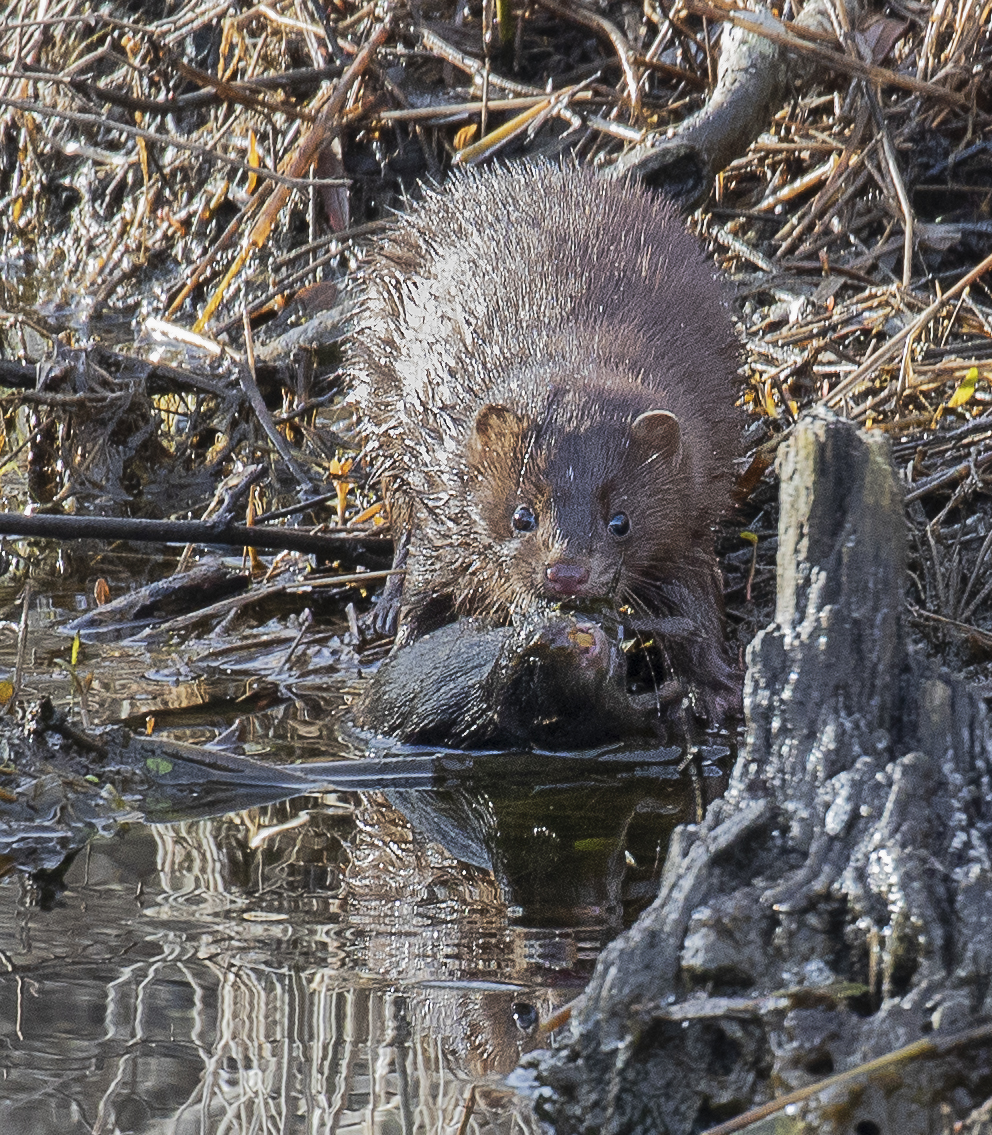
We watched and followed along as the Mink swam a few feet, darted back into the vegetation along the canal edge, and then would reappear. It repeated this for a couple of minutes until finally vanishing into some thick brush. Before it disappeared it paused nicely and stared at us while holding its future meal. I had brought two cameras and two telephoto lenses on the trip. I let Daniel use the 500 mm telephoto lens while I was using Melissa’s 100-400 zoom. We both managed a couple of quick shots when the Mink looked straight at us. I must admit, Daniel did a great job hand-holding that big lens and getting a fine shot (once again, me jealous??).
The Mink pauses for a few seconds and I get this shot as it stares right at us
Daniel gets a superb photo of the Mink and its prey. We are guessing it is a Hispid Cotton Rat but welcome any other thoughts (photo by Daniel Tregeagle)
Over the years, I’ve seen fewer than a dozen Mink in the wild, and this was by far the best sighting of one, and it had a prey item!
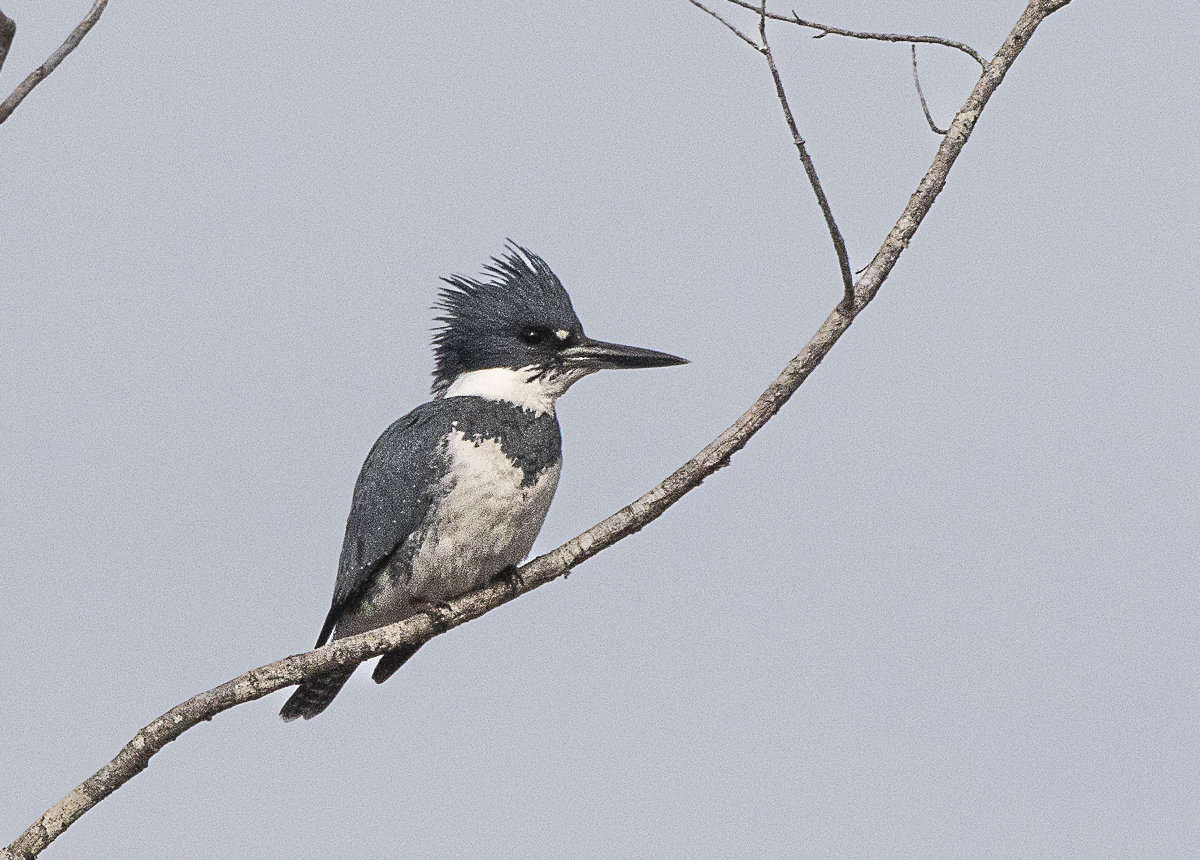
At one stop we played cat and mouse with an elusive Belted Kingfisher. These birds are notoriously difficult to photograph as they tend to fly well before you are in decent camera range. This male (lacking the rust-colored breast band of females of the species) kept flying back and forth from in front of the car to behind as we traveled one section of road, finally allowing each of us to get a few images.
Belted Kingfisher male
A Pileated Woodpecker playing hide and seek on a tree trunk
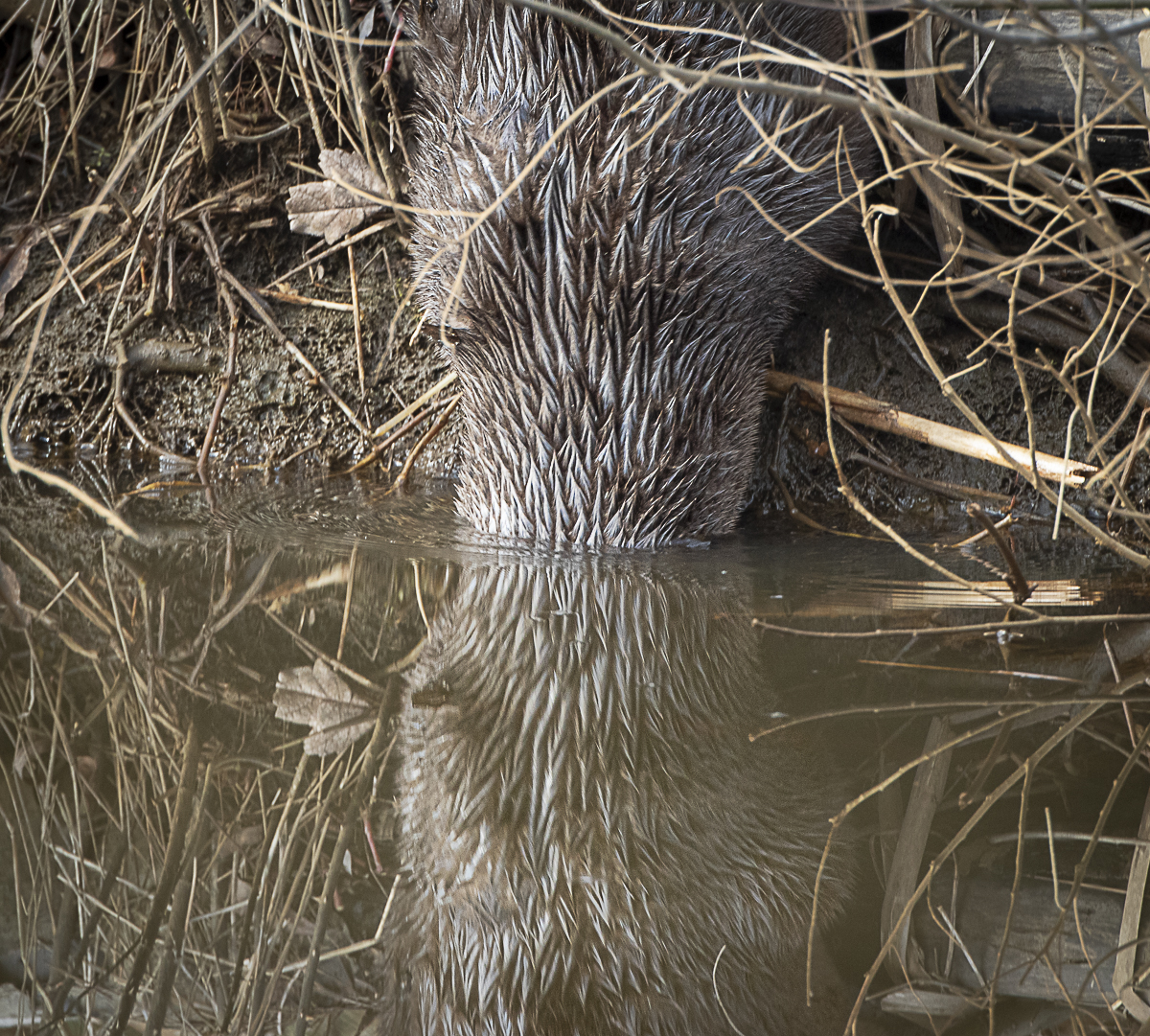
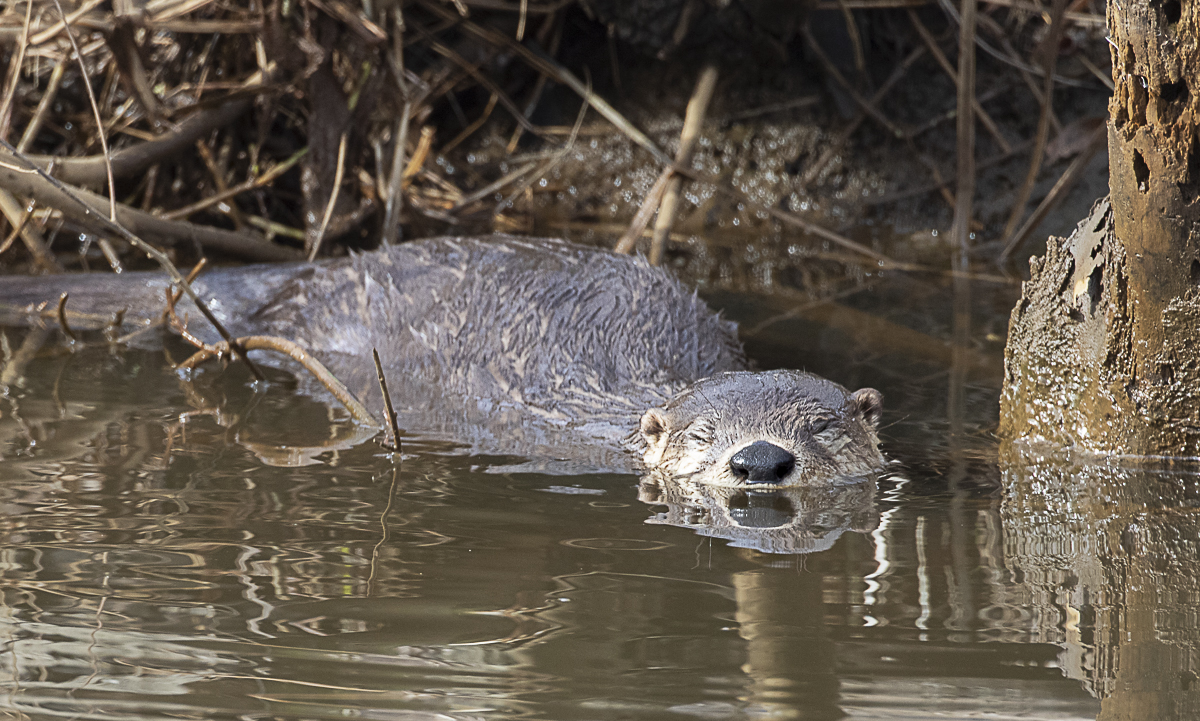
We ended the day with eight River Otter, a very good day of sightings for this fun-loving species. Our last otter was a sleepy one. It slid off the bank where it had been napping and then lazily lounged in the water, eyes half-closed. We watched it for several minutes as it slowly moved along the bank and then let it be.
River Otter sliding off the bank into the water with barely a ripple
The otter seemed very sleepy as it drifted in the water, eyes closed
We missed seeing a bear or wolf but were lucky to enjoy plenty of otter and an amazing view of a Mink after a successful hunt. This is why you visit these public lands and do so as often as you can…you just never know what amazing sights you may see.
To appreciate the beauty of a snowflake it is necessary to stand inthe cold.
~Aristotle
This is the second post from our January trip to Yellowstone. After spending a few days scouting the northern range of the park and hanging out with some Montana friends, a group of eight NC friends flew out to Bozeman for the start of a winter adventure. We picked everyone up in our two 4wd rentals and were off to the park and our wonderful lodging at Elk River Art in Gardiner.
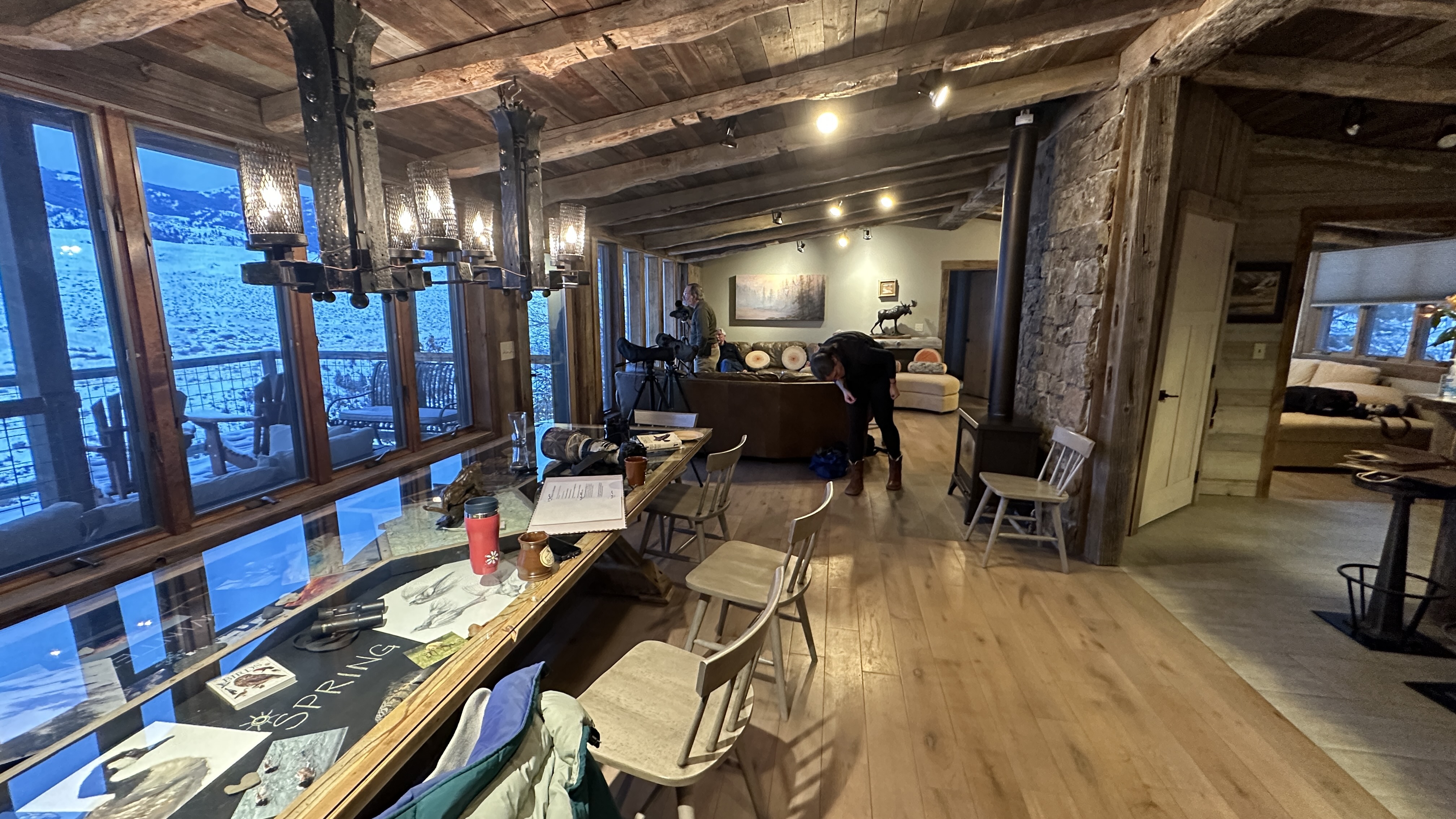
The dining room and living space at Elk River Art lodge. The place is spectacular and overlooks the Yellowstone River (click photos to enlarge)
After settling in, we drove the Old Yellowstone Trail to see the hundreds of ungulates gathered in the lower elevation sagebrush and grassland flats along the river.
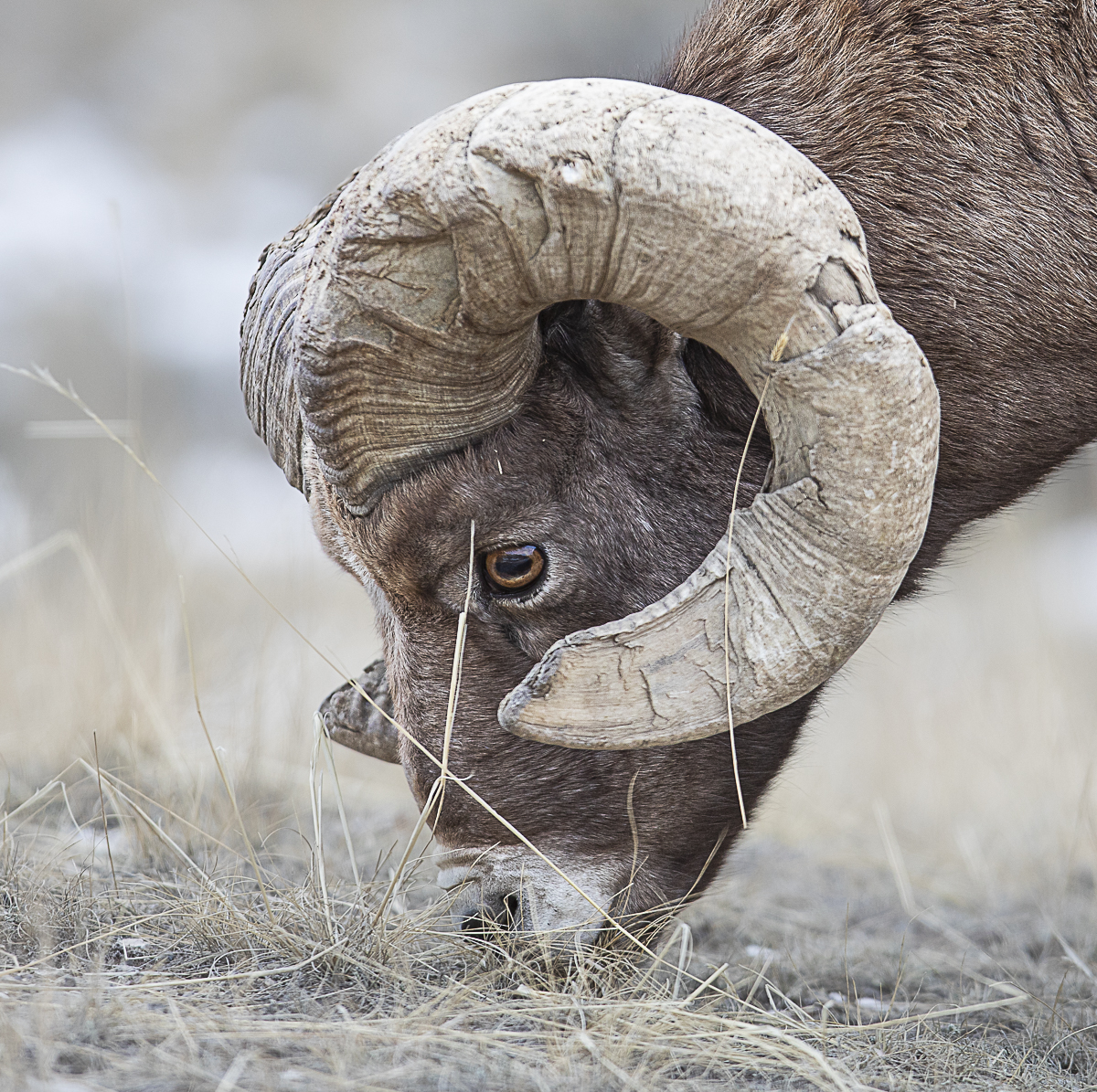
A Rocky Mountain Bighorn Sheep ram that has seen some battles over the years. This guy had the most banged up set of horns I have seen on a ram in the park, the result of many head butts with rivals during the rut.
The next morning we headed into the park early, with temperatures below 10°F (I believe the coldest we experienced with our friends was -13°F and the highest up near 20°F). Though snow was predicted, we were thrilled to have some sunshine on our first full day in the park.
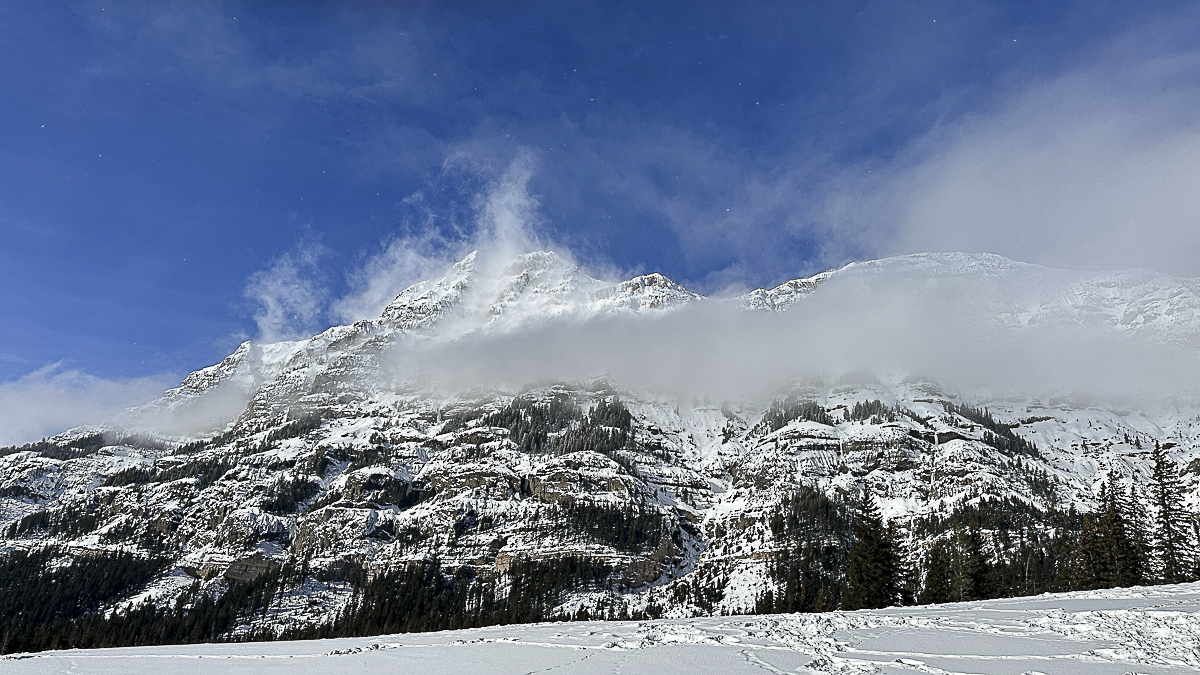
Barronette Peak in all its winter glory
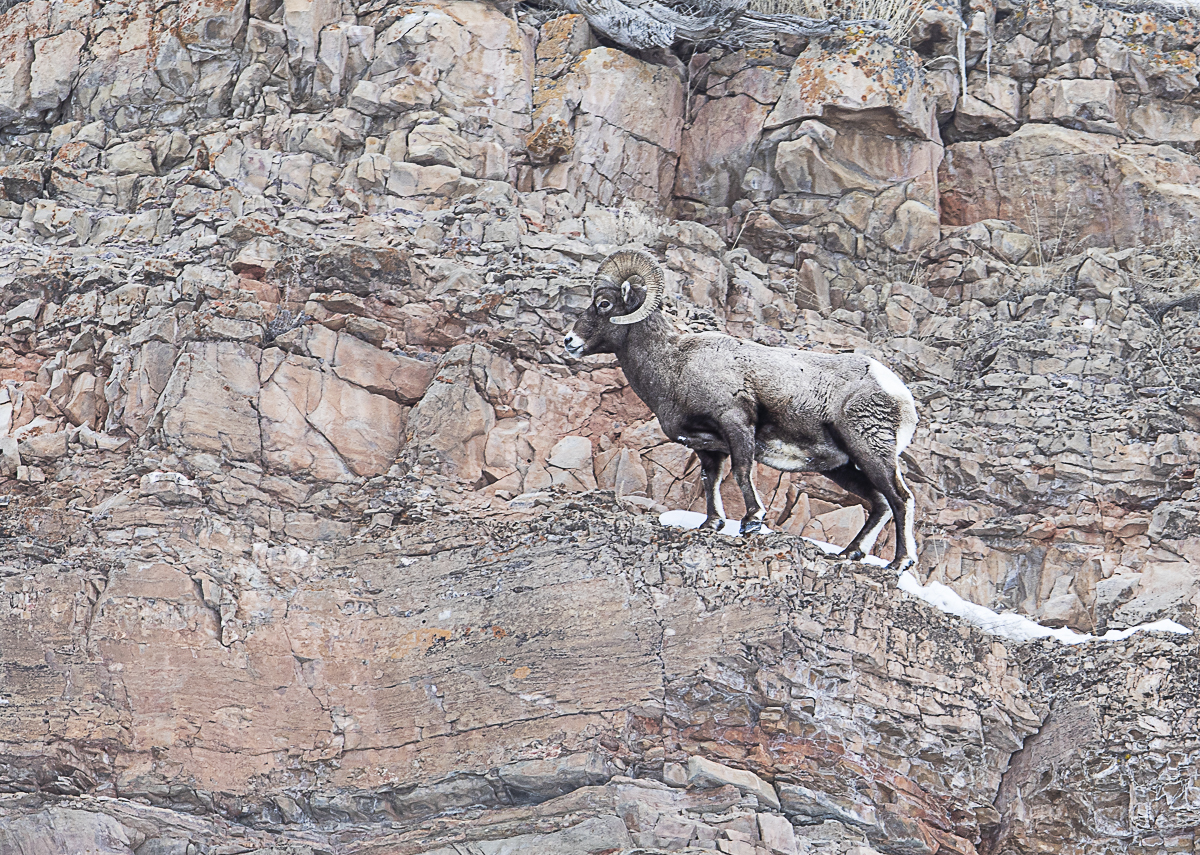
Bighorn ram on the cliff above the road at the Confluence (where Soda Butte Creek flows into the Lamar River)
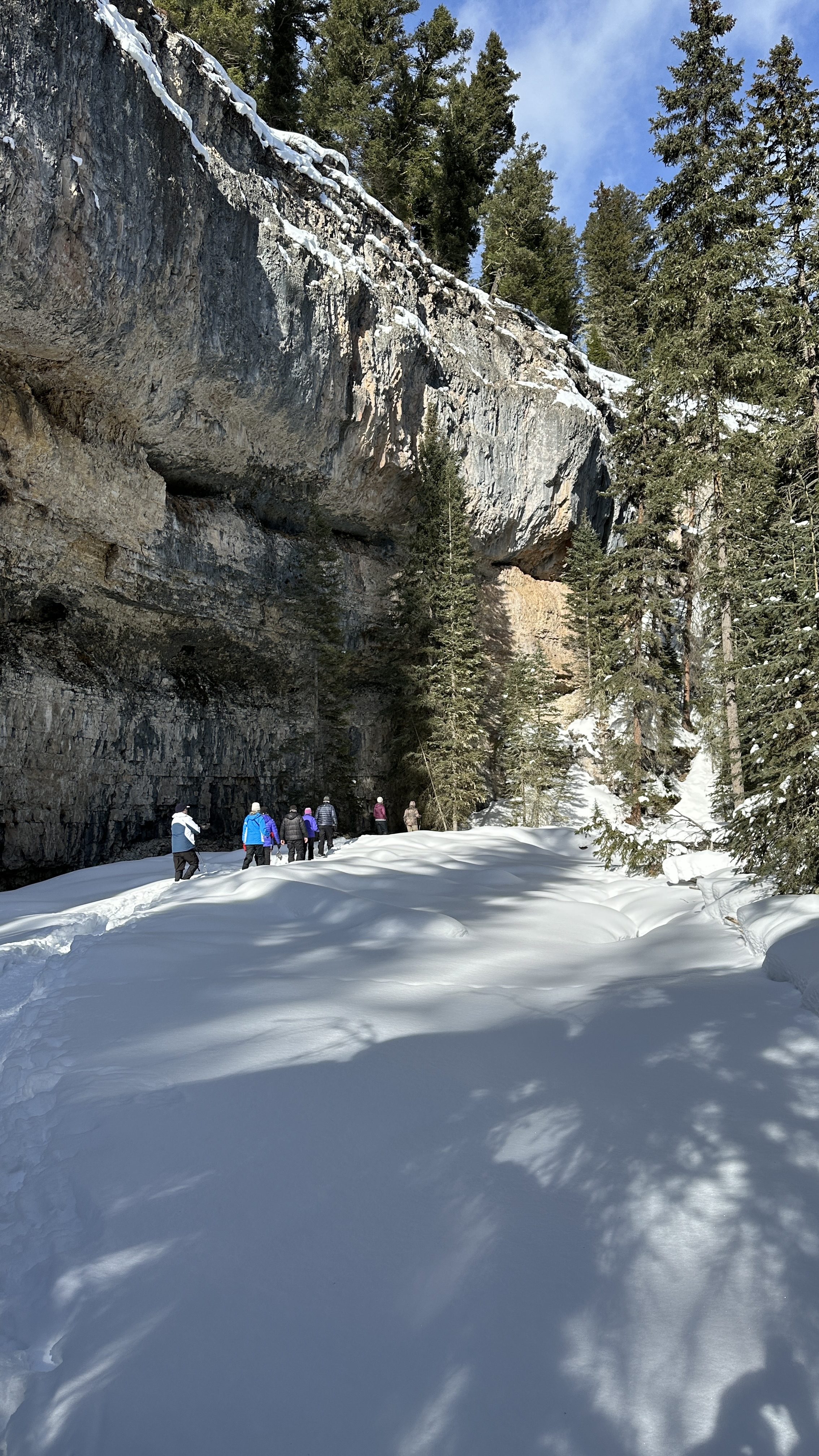
Our first snowshoe hike was at the place Melissa and I had encountered the two bull Moose a few days before. No Moose this time, but the scenery (and tracks of so many animals) was amazing
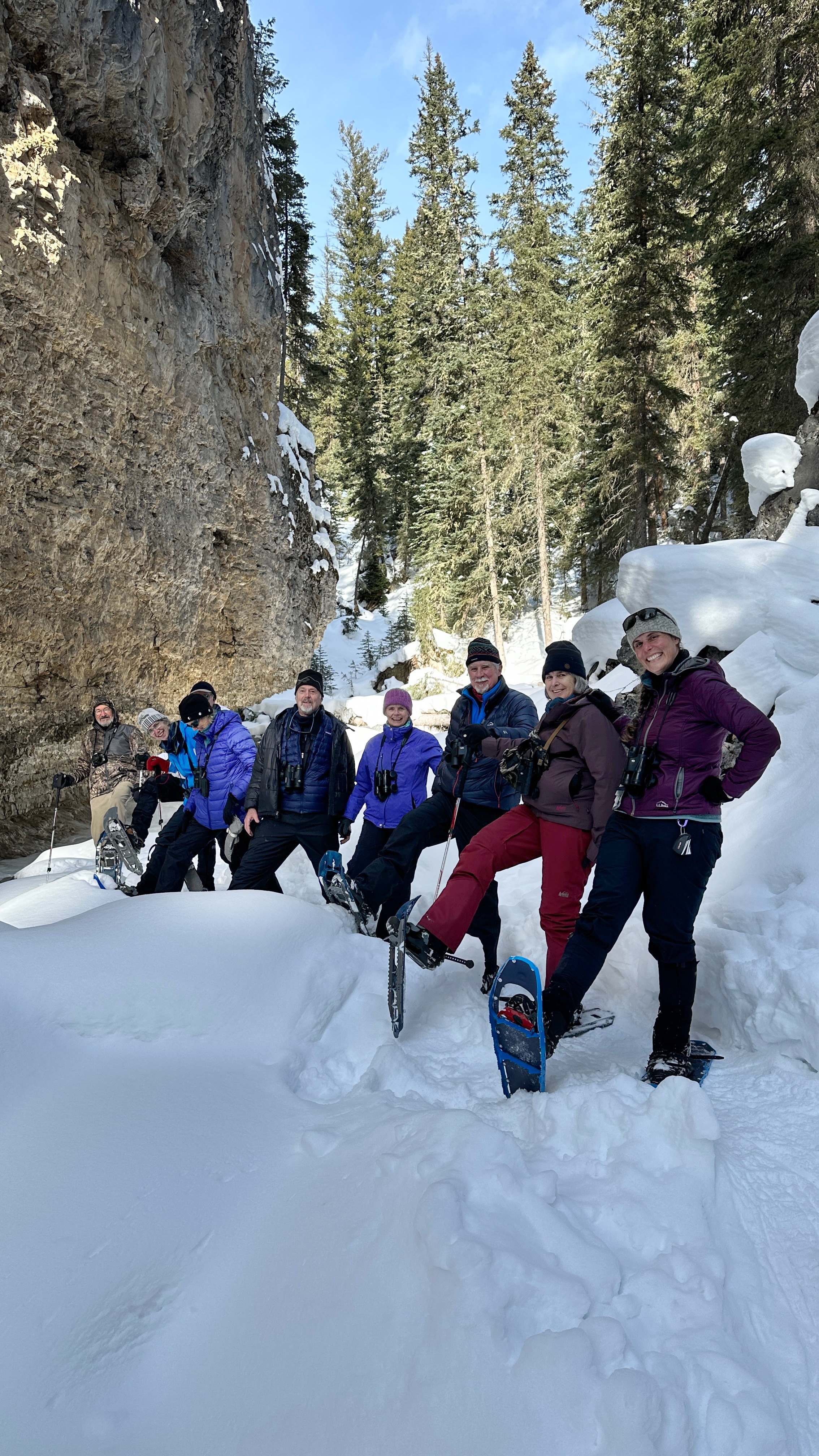
Everyone doing great on snowshoes (those in the know say if you can walk, you can snowshoe)
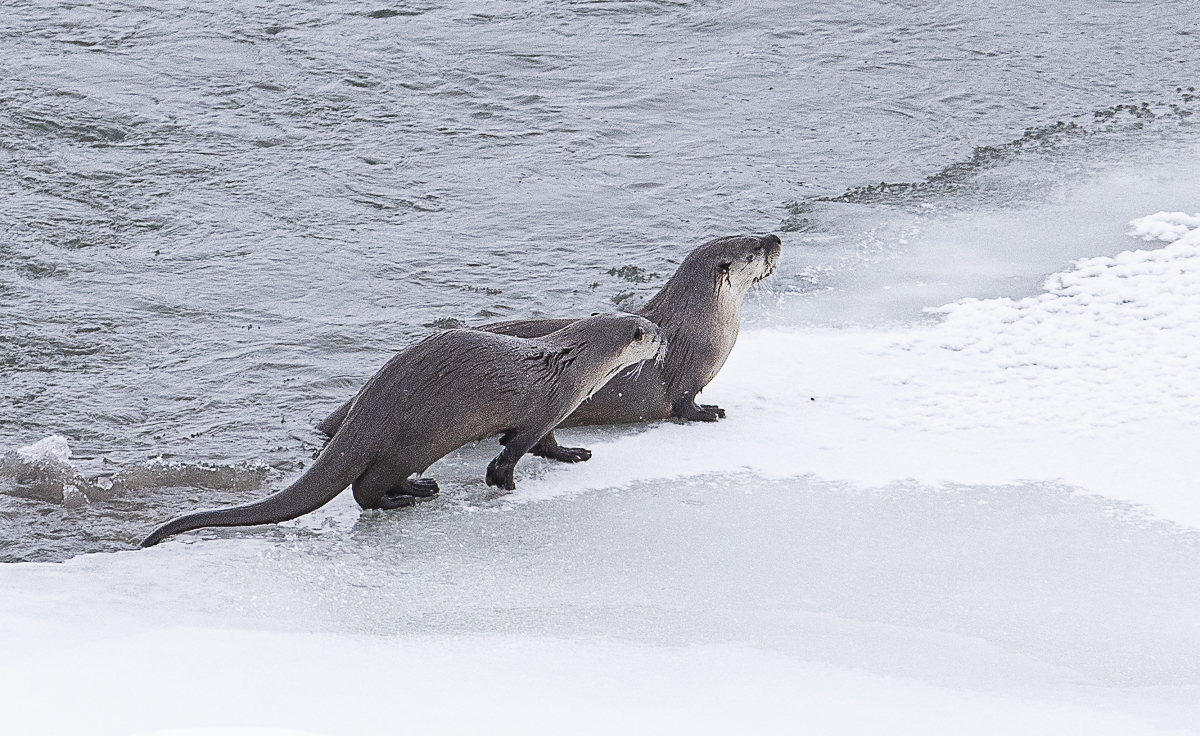
The day proved to be a wildlife bonanza with lots of Elk, snowy Bison, and a threesome of River Otter fishing below the Lamar River bridge in Little America, where a crowd had gathered to enjoy the antics.
Two of the three otters popped up on the ice for a photo
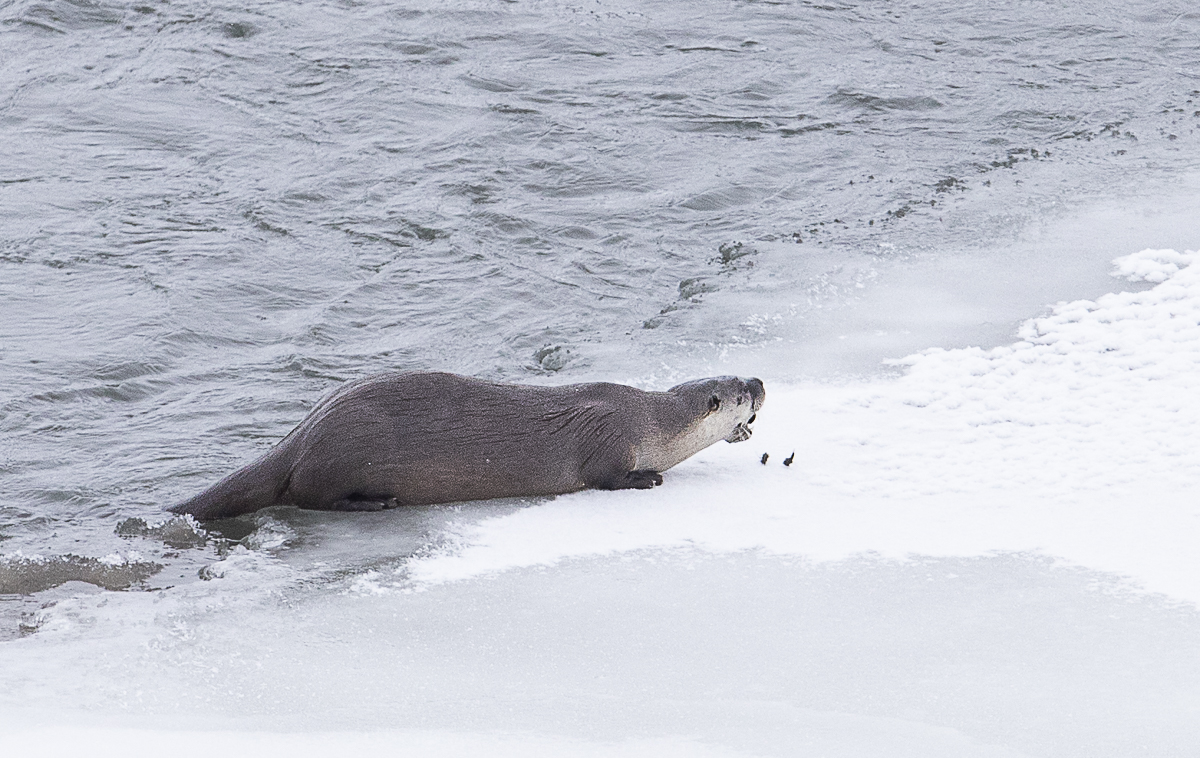
The otters were very adept at catching small fish and making quick snacks of them
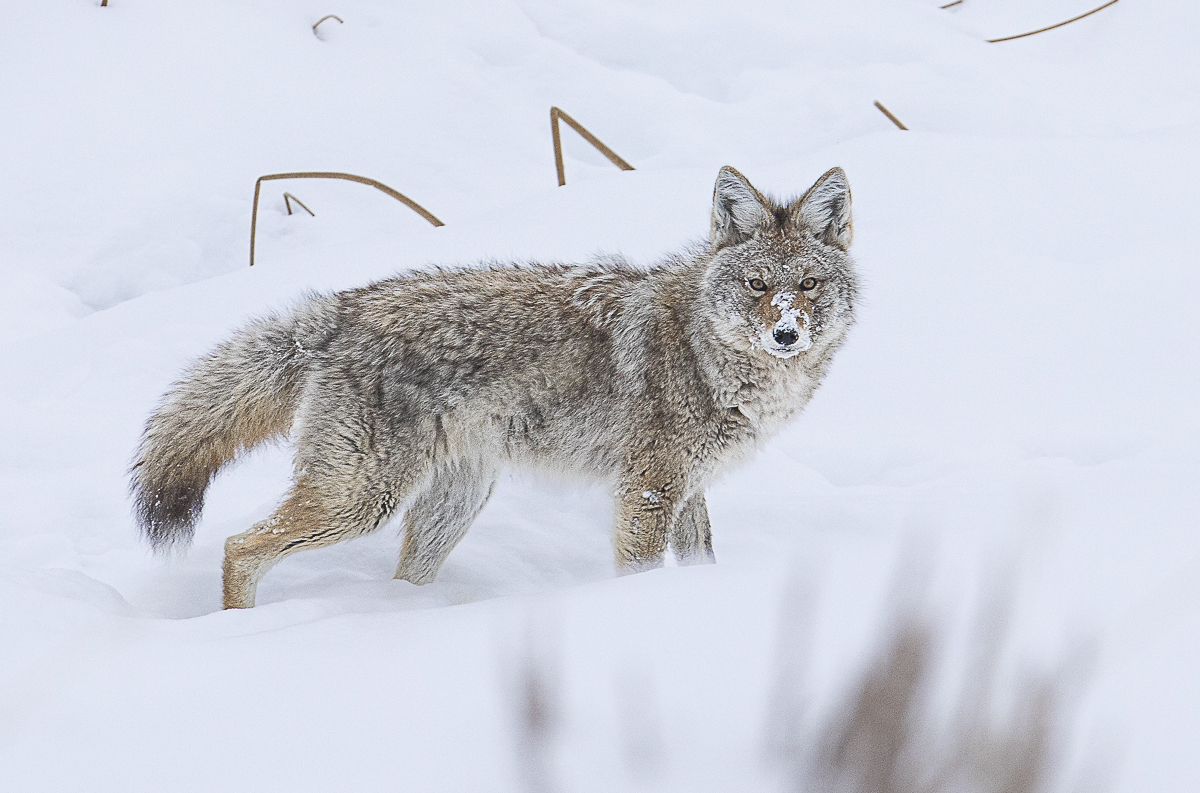
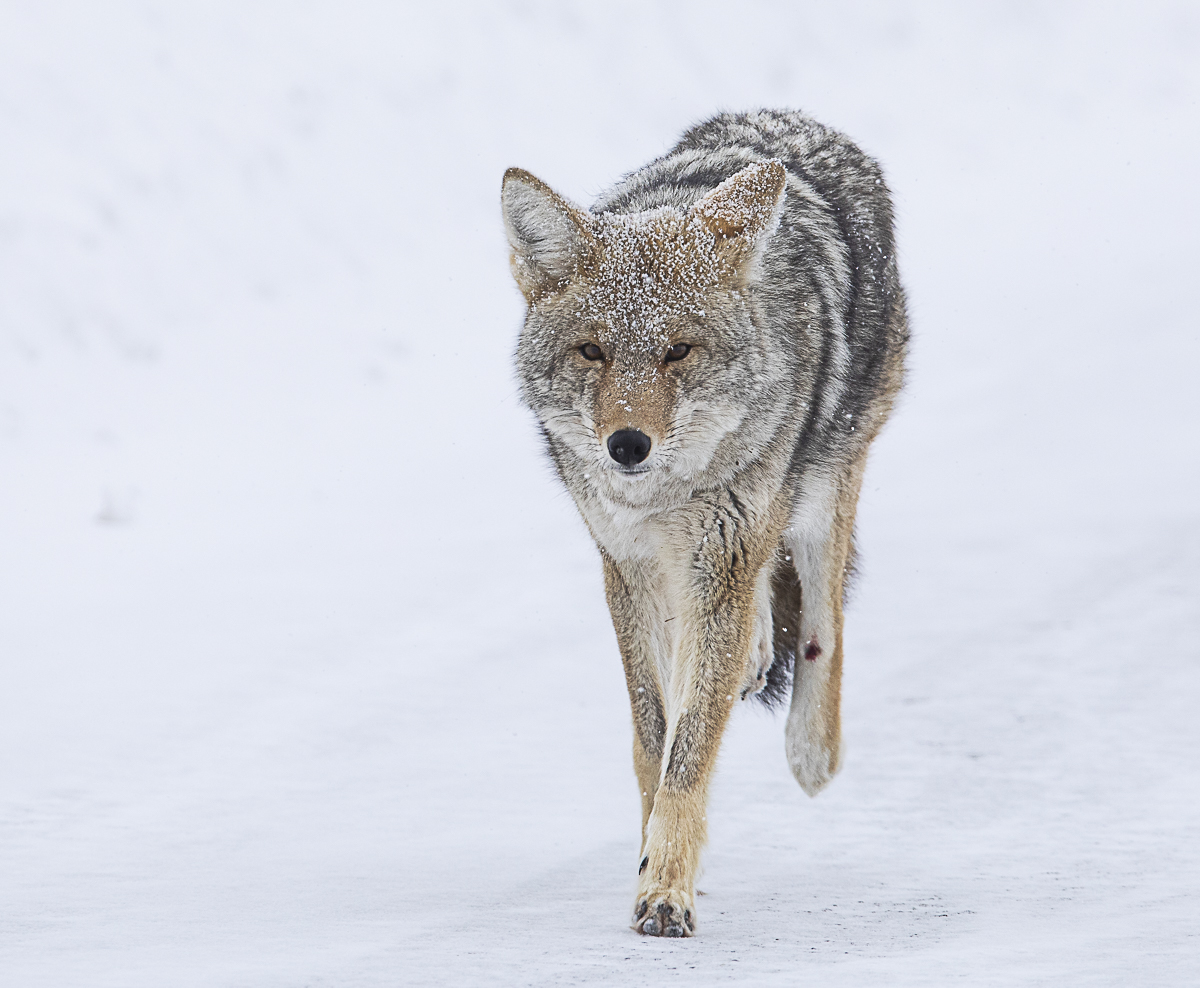
A gorgeous Coyote paused to check us out as it traveled toward the road in Little America
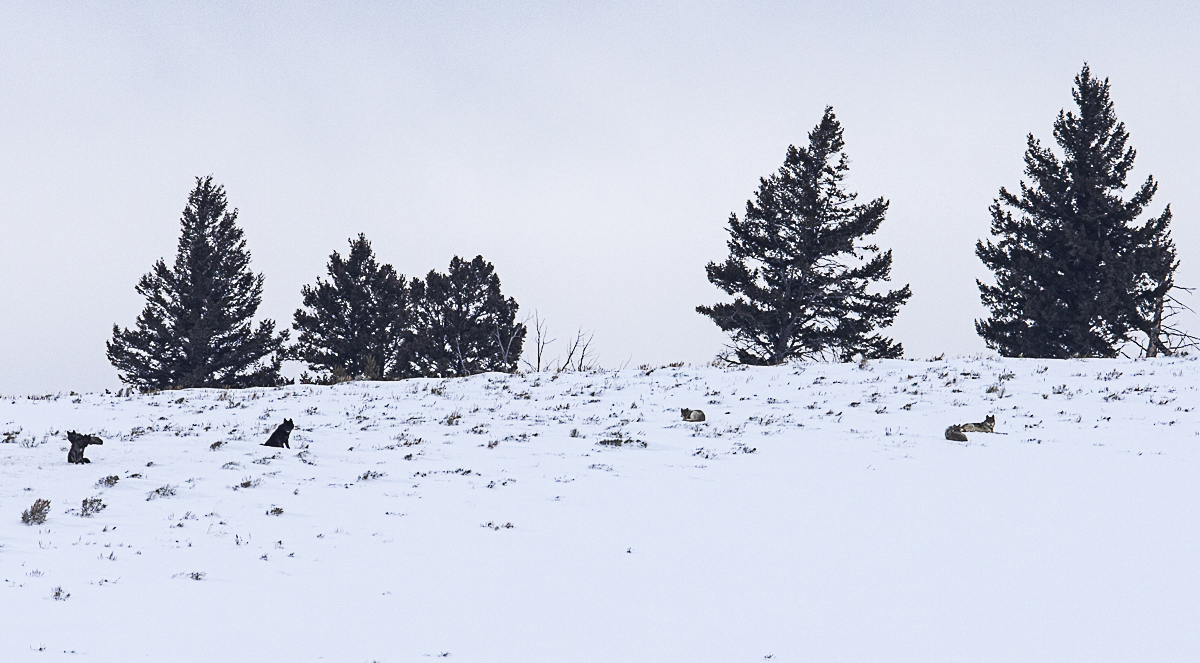
The next day brought snowy conditions and more wildlife sightings, including what for many was the highlight of the trip. We were hoping for wolves and went up to the Nature Trail parking lot where Melissa and I had seen some of the Rescue Creek pack a few day earlier, but no luck. We then saw some cars stopped near Blacktail Creek, and rumors were that wolves had been heard. We drove down to the pullout at Wraith Falls on a hunch that Melissa had and as we pulled in, the one person there motioned for us to be quiet and listen…howling! And it was close!
The six wolves of the Lupine Pack on a ridge across from Wraith Falls
We stayed with these wolves for a couple of hours, watching them interact and howl, probably the best howling I have ever heard. The pullout is small so we were with a relatively small group of wolf-watchers. Rick McIntyre (the “wolf guy”) stopped in and Melissa went over and got the scoop on who was who in the pack. It was wolf watching at its finest.
Heavily cropped image of four of the Lupine Pack running across the hillside
I put my phone on a spotting scope and was able to get a few images and some video of the wolves howling…
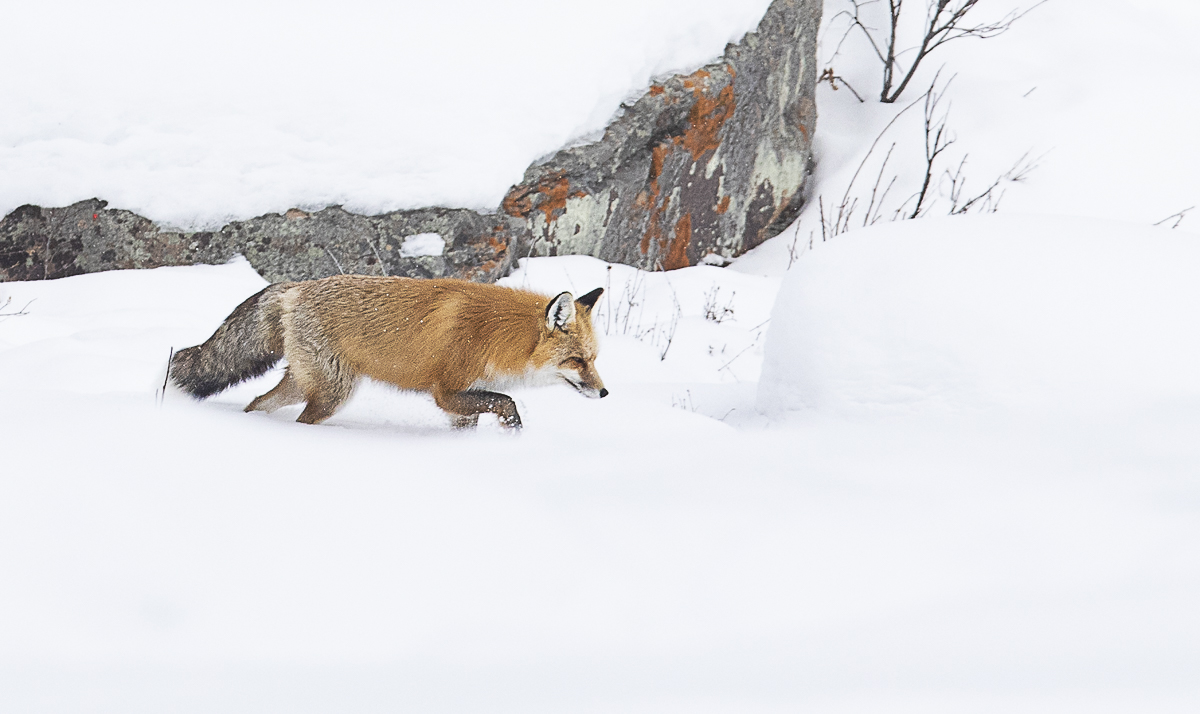
After some quality time with the wolves, we headed toward Silver Gate at the northeast entrance for a talk with our friends Dan and Cindy Hartman. Dan shared some of his amazing stories and films of local wildlife, focusing on the incredible diversity found in the nearby Beartooth Mountains. On our way, Melissa spotted a Red Fox near a group of bison, so we parked and got out hoping for a better look. It went in and out of view along a ravine edge and briefly appeared in the open for a photo.
Red Fox on the Blacktail Plateau
After spending some time in Silver Gate, we headed back toward Gardiner with a steady snow falling.
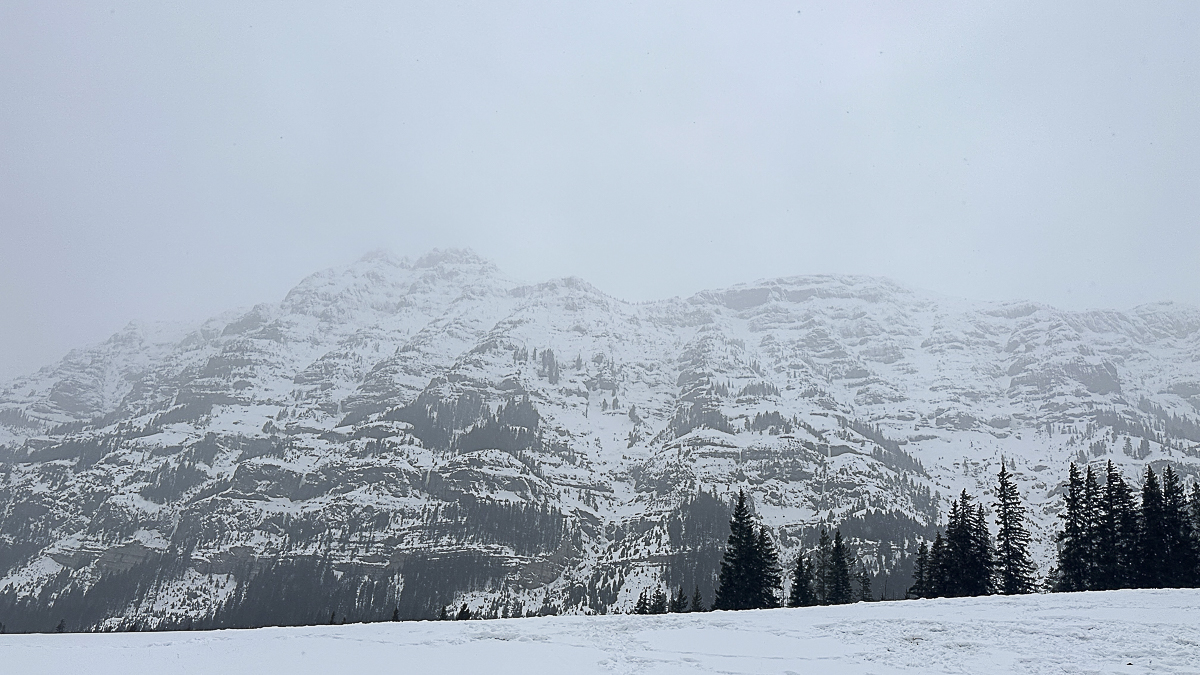
Barronette Peak has a different look during a snow event
These conditions make you realize what a bottleneck the winter is for all the wildlife in the park – they must all find ways to persevere through these difficult months.
This Coyote has a leg injury and has been nicknamed Limpy on social media from photographers in the park. It is probably becoming acclimated to humans and may, unfortunately, be begging for food from passing vehicles as it patrols the road.
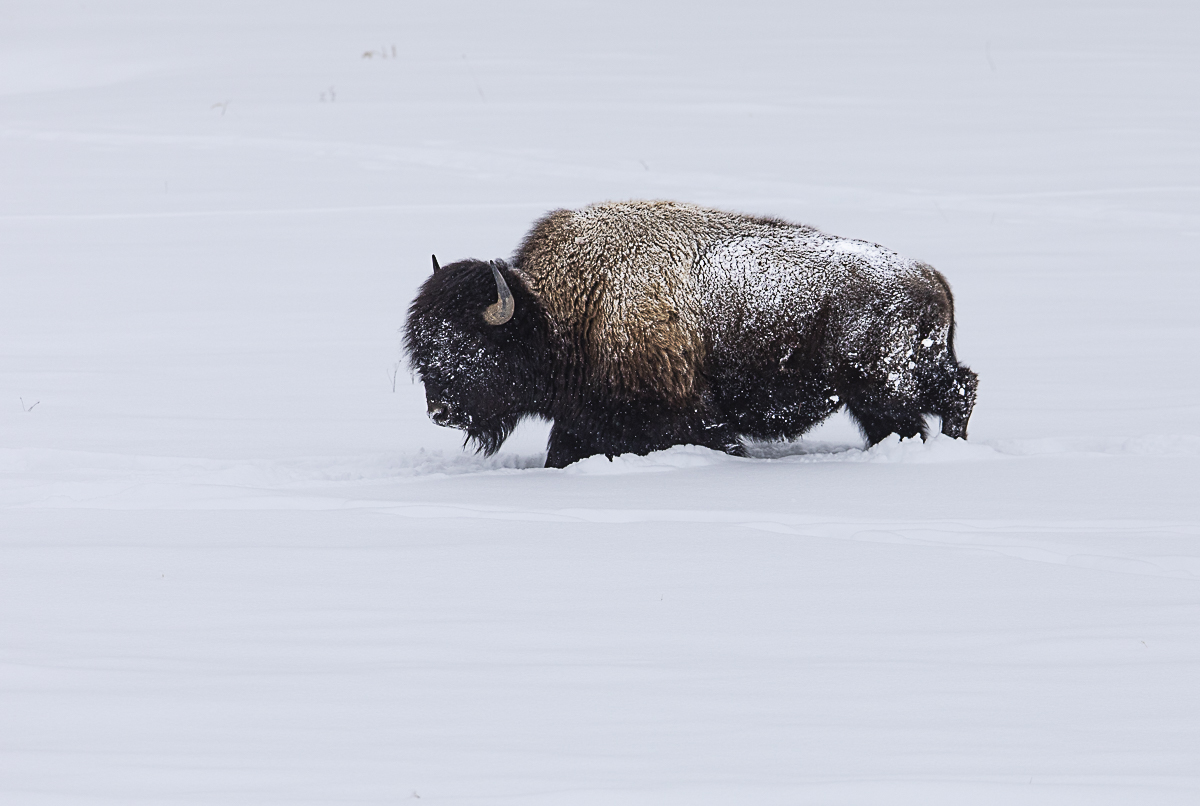
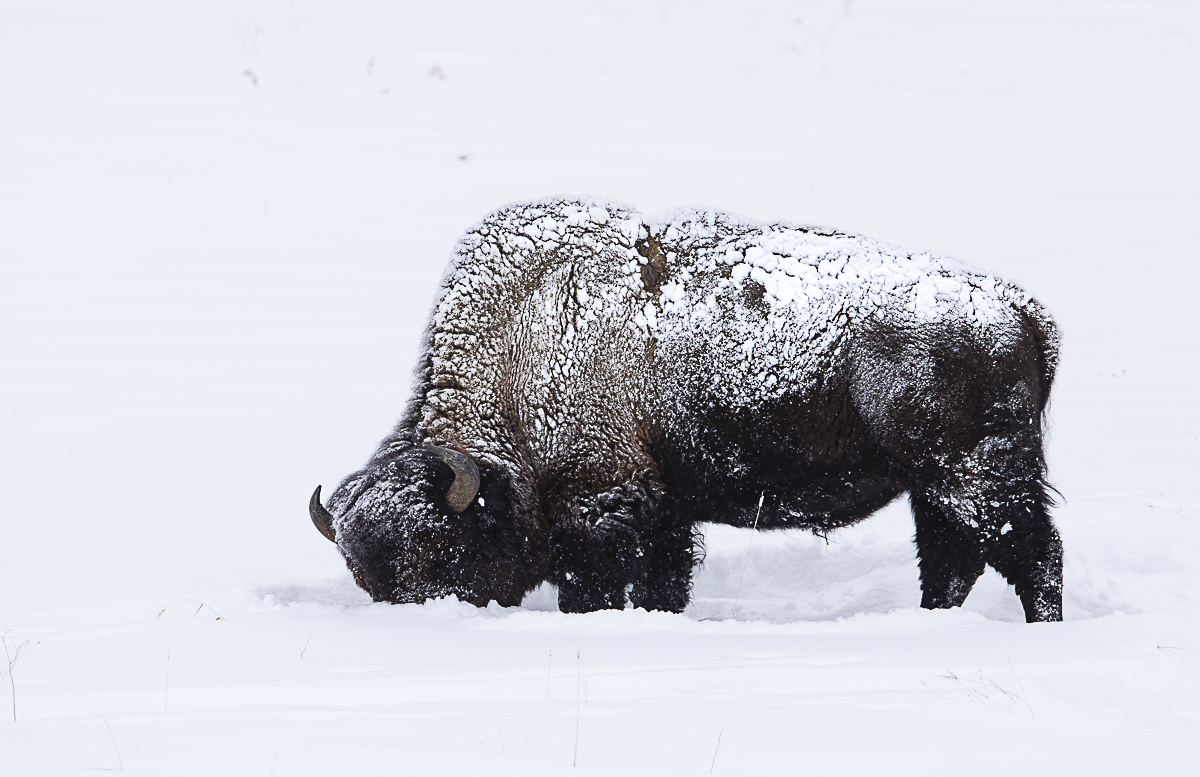
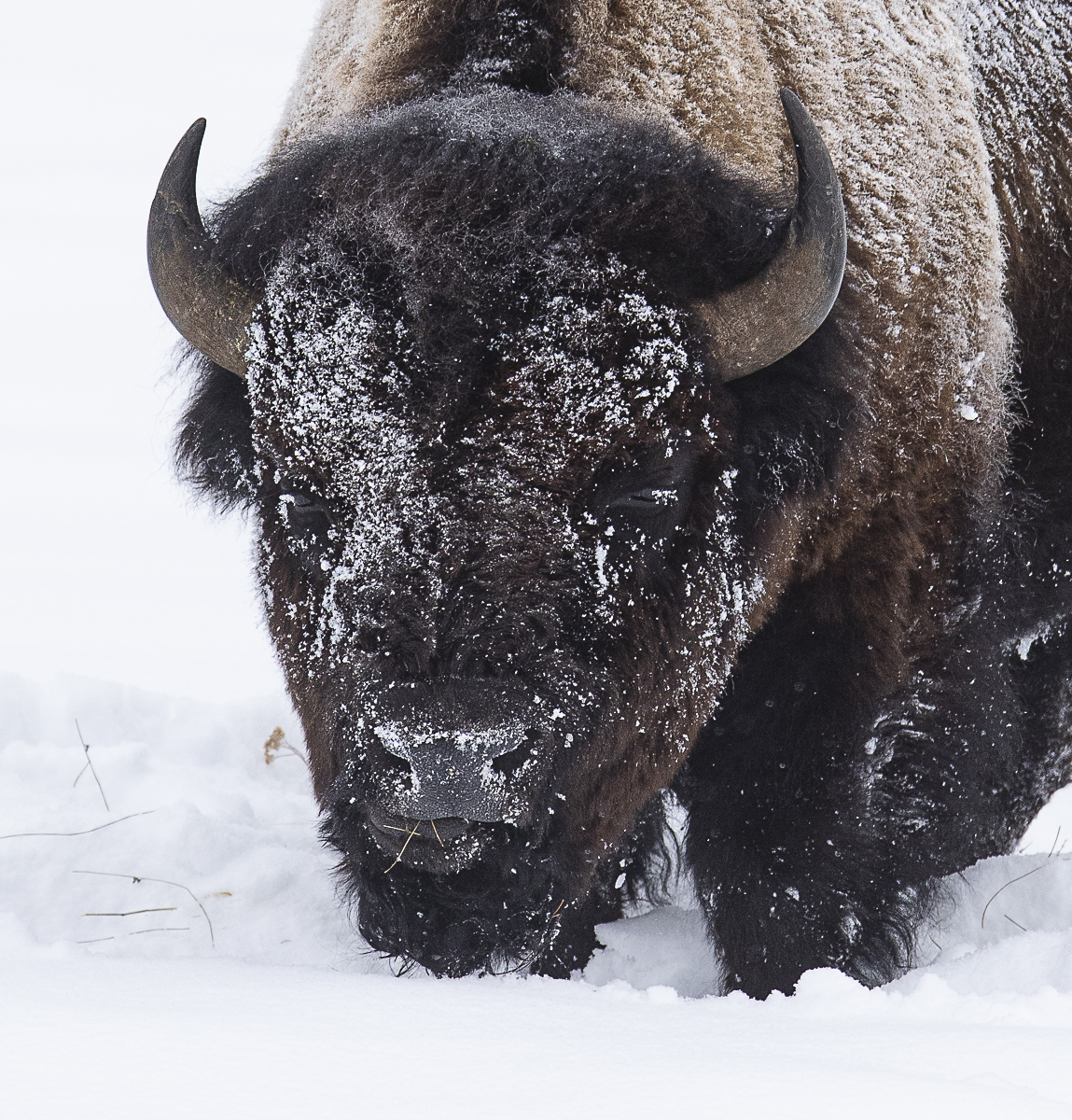
We were pleased that our friends seemed to enjoy watching bison as much as we do, so we spent time every chance we had to just sit and watch these amazing animals as they plowed their heads through the snow seeking the buried grasses.
A Bison near Soda Butte wading through snow up to its belly
Bison use muscles from that huge hump to their necks to swing their massive heads back and forth through snow to get food underneath
A lot of effort for a meager mouthful of dried grass
We did another snowshoe hike at Junction Butte where the Yellowstone and Lamar Rivers meet. Our trail had fresh Coyote and Bighorn Sheep tracks leading the way. Toward the end of the trail it looked as though the sheep had bounded away through the snow, perhaps as we approached.
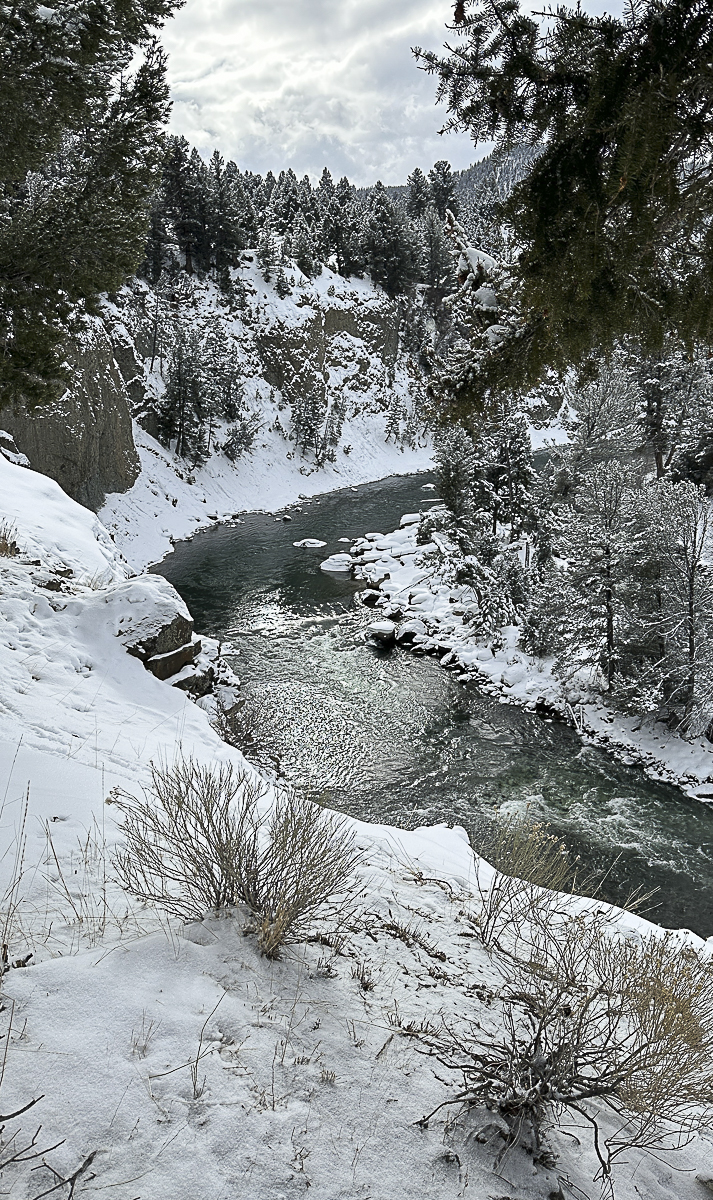
The Yellowstone River at Junction Butte
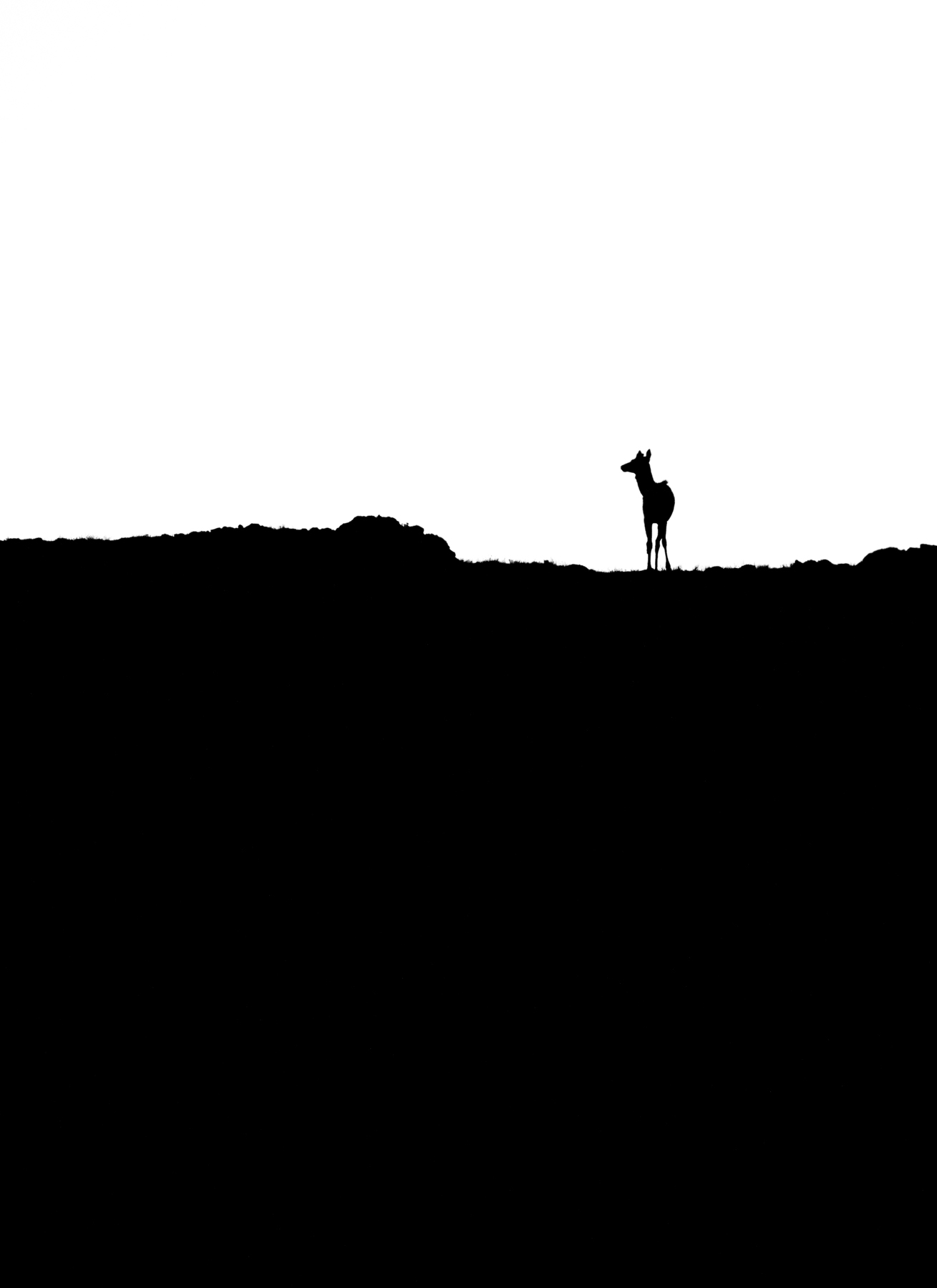
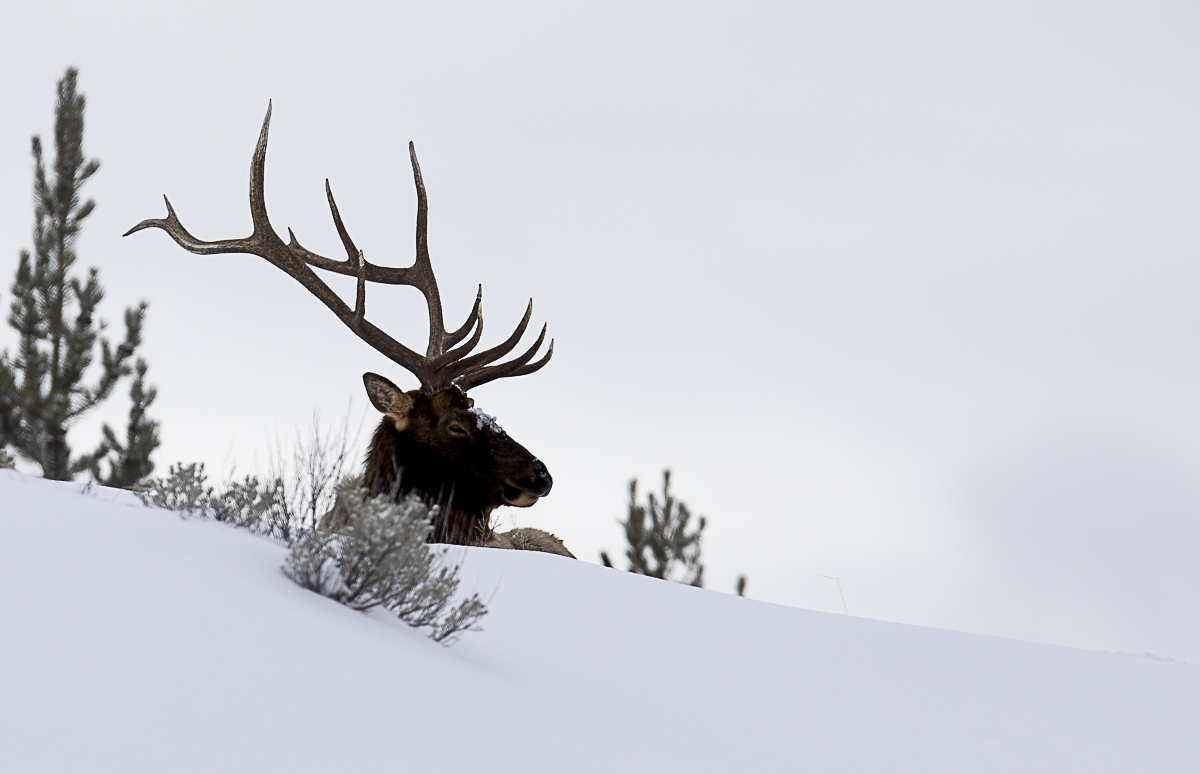
On our last day of driving the northern range (the only road kept open for regular vehicles in winter in the park), we saw a crowd of tripods and big lenses pointed to a ridge line near the road. I had to pause because of stopped cars and managed a couple of photos of what was causing the traffic jam – two magnificent bull Elk had bedded down not far from the road were silhouetted against the gray sky.
One of two nice bulls bedded down just above the road
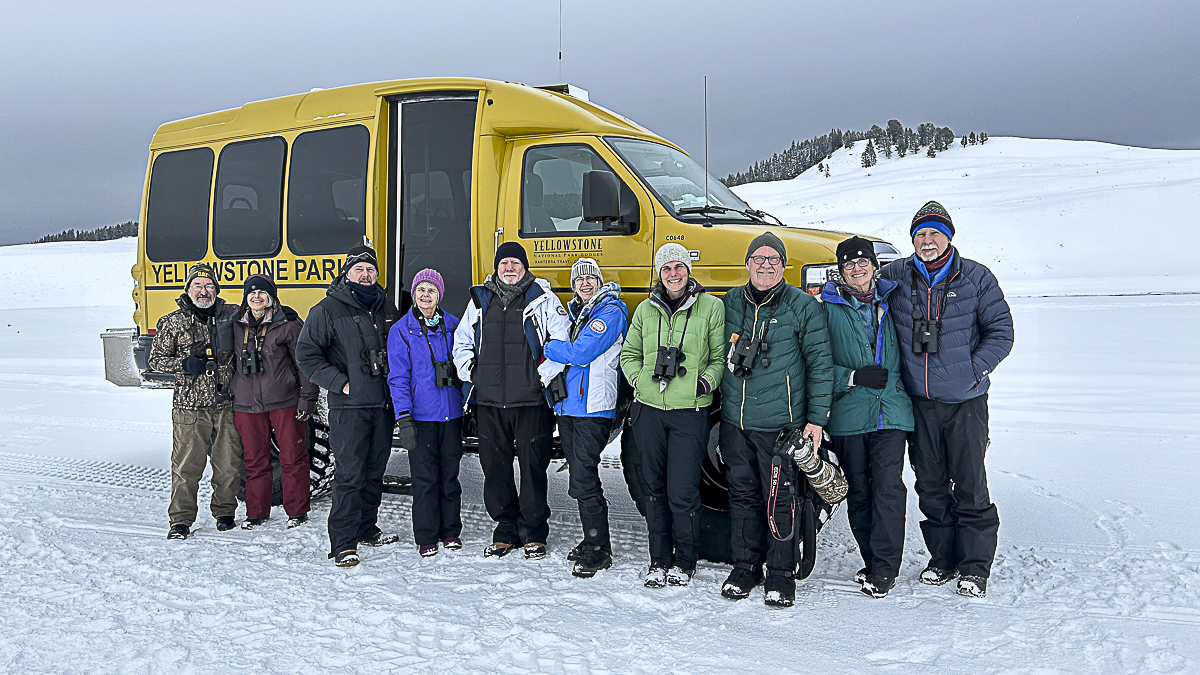
The next day was our trip to the interior on a snowcoach, always a highlight of any winter trip.
Standing in Hayden Valley with our transportation to the interior, a Xanterra-operated snowcoach
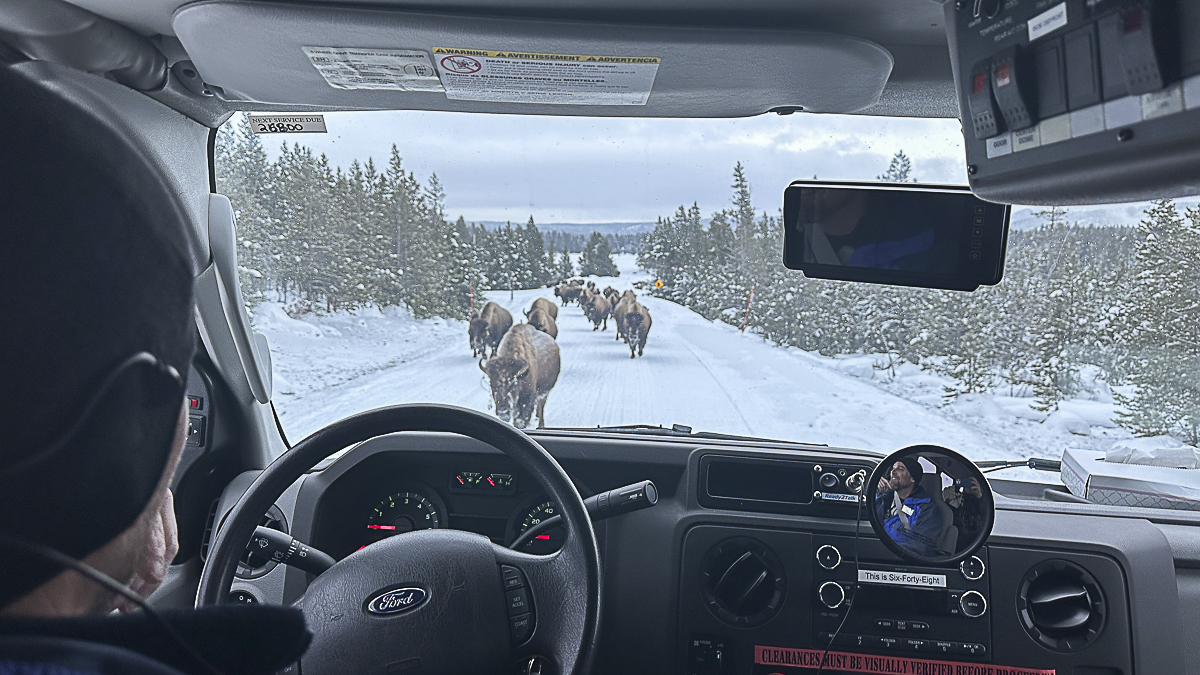
A common sight in winter – Bison using the road for easy travel, requiring your car or a snowcoach to pause and let them pass
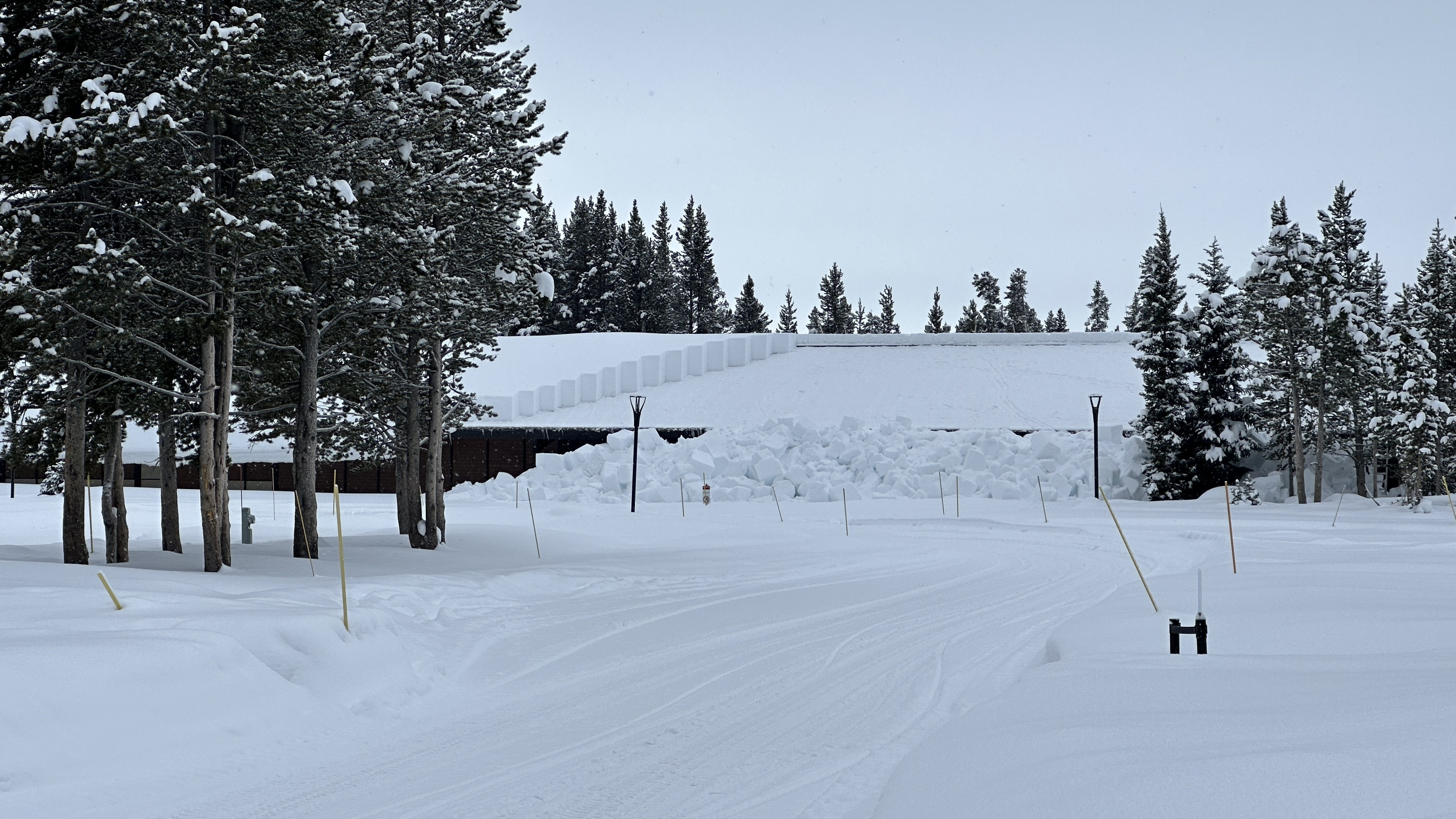
The task of the winterkeepers in the interior is to cut huge blocks of snow and push them off the roofs of buildings to prevent collapse under the weight of the several feet of snow that falls each winter. At Canyon, we saw a work in progress – note the clean edge of the cut snow on the roof and the huge pile of snow blocks tn front of the building.
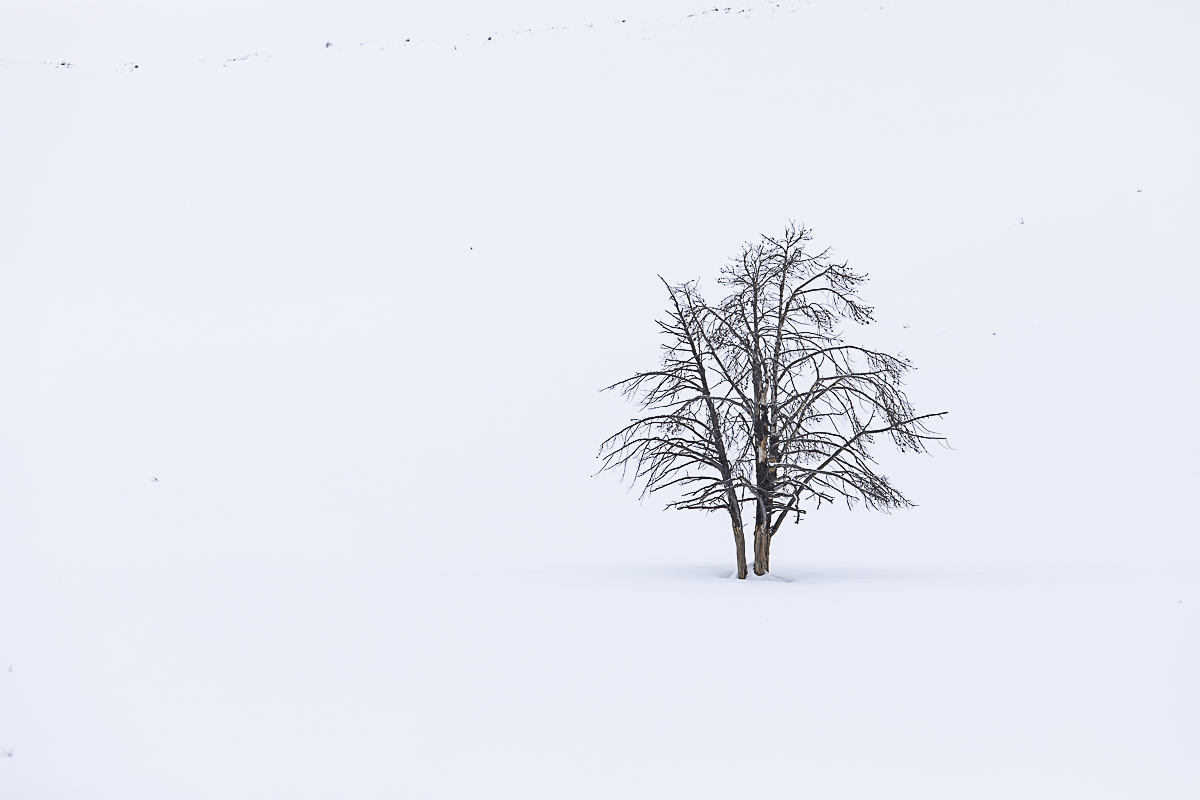
The so-called “Murphy tree” (I assume named for renowned Yellowstone photographer, Tom Murphy) stands against a sea of white in Hayden Valley
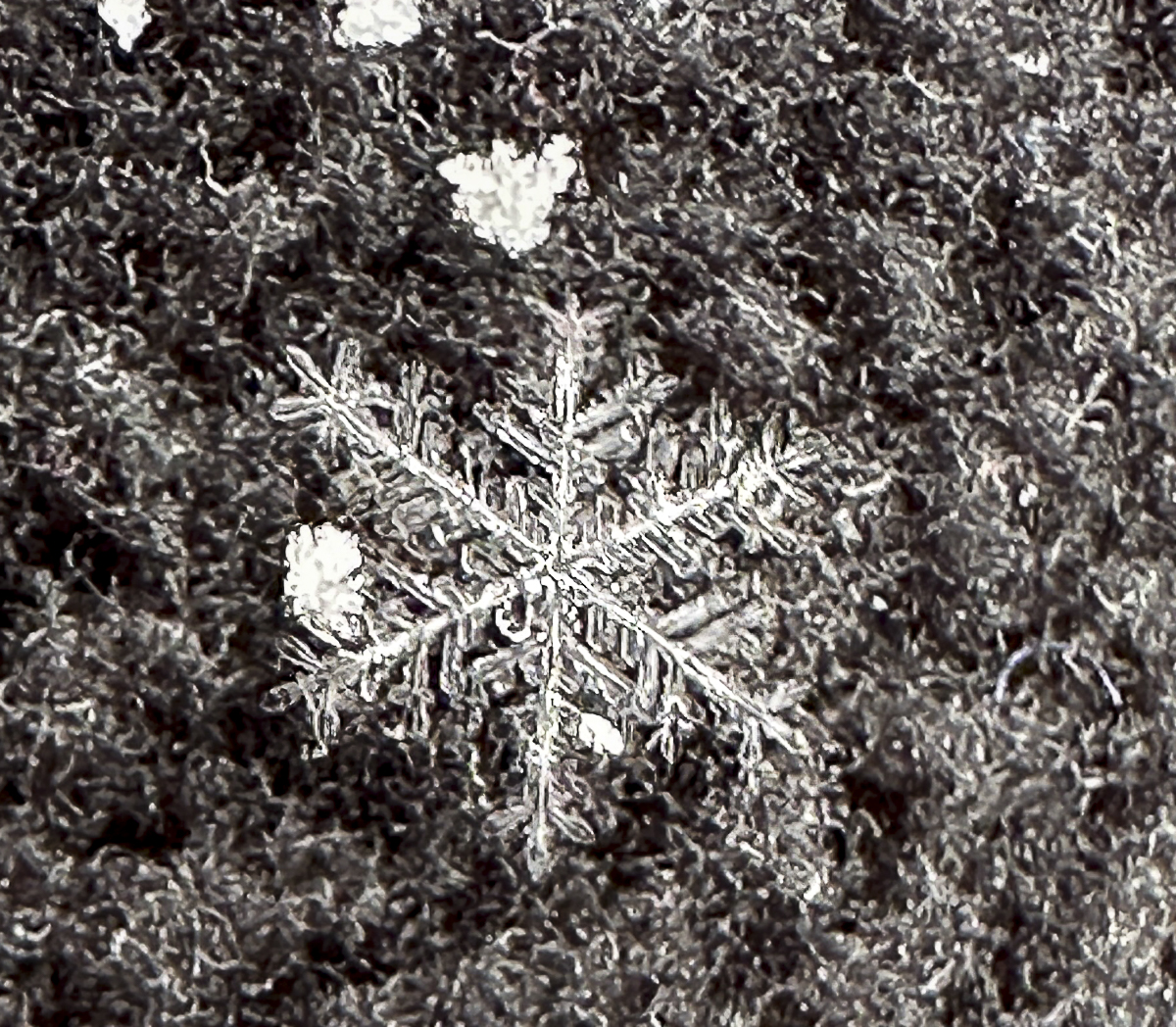
We all were awestruck by the delicate beauty of snowflakes falling on our jackets and gloves
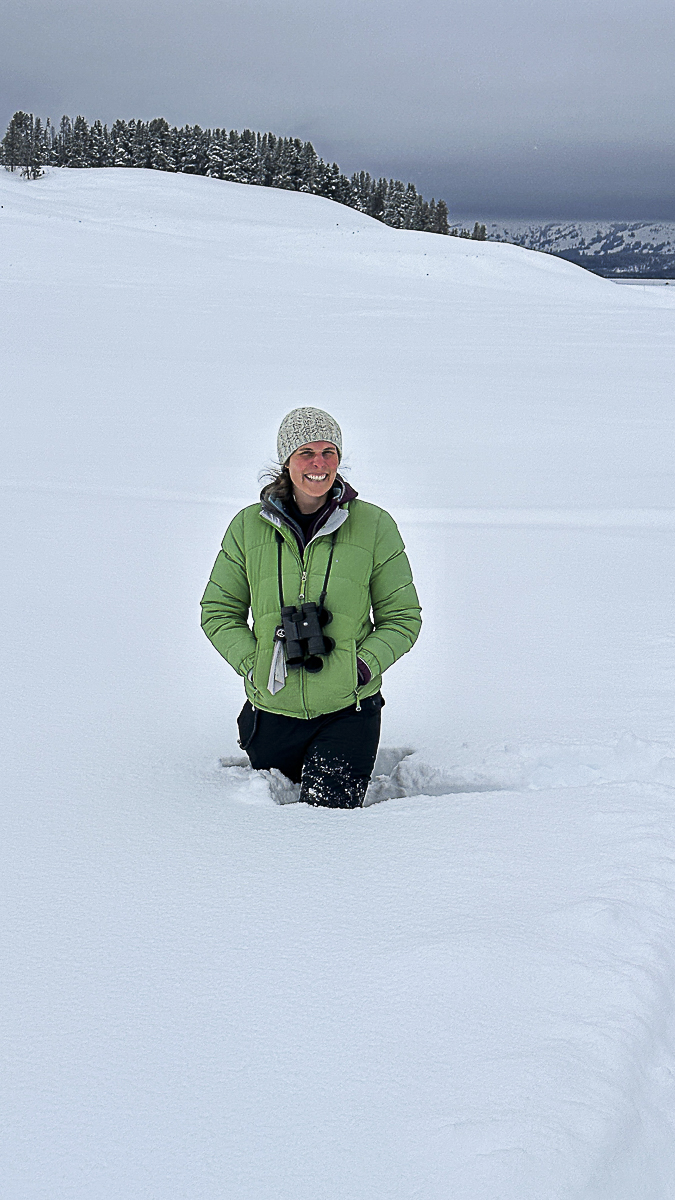
Tons of delicate crystals add up to impressive snow depths (and she is tall!)
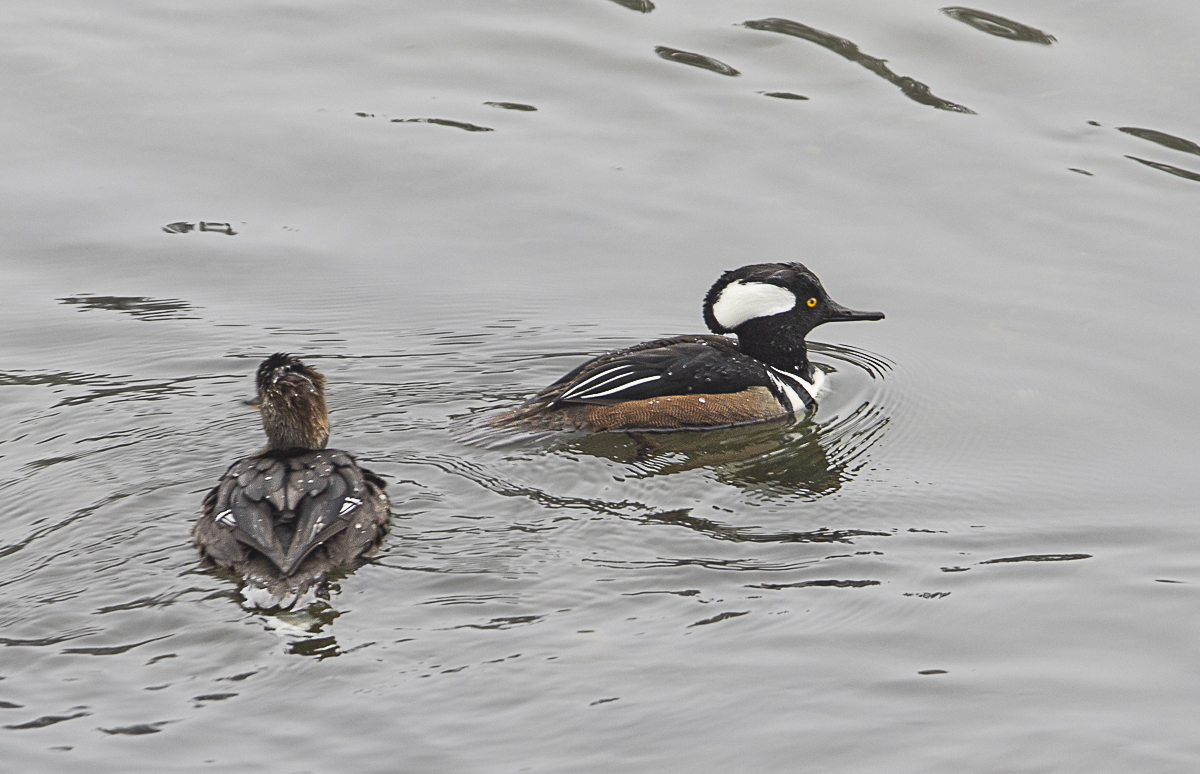
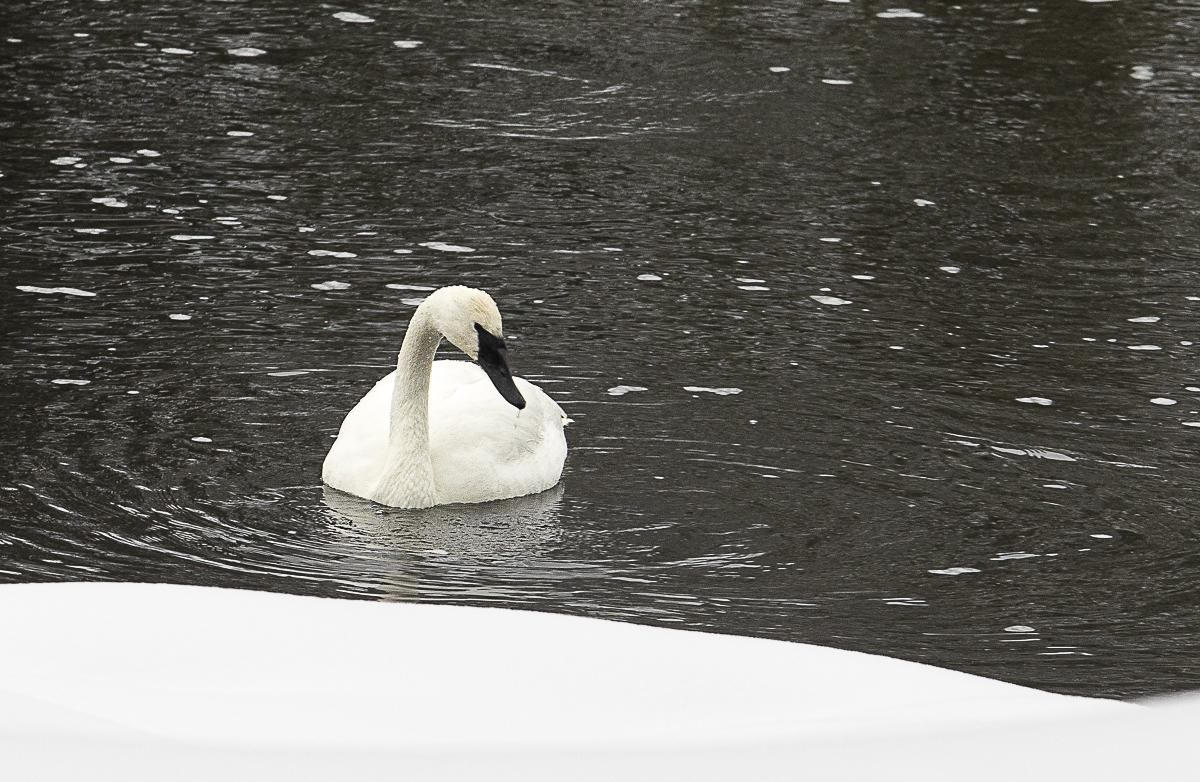
Along the rivers we saw several species of birds including Bald Eagles, American Dippers, Buffleheads, Mallards, Ring-Necked Ducks, Hooded Mergansers, Canada Geese, and the elegant Trumpeter Swans.
A pair of Hooded Mergansers photographed through the snowcoach window
Trumpeter Swan along the Firehole River
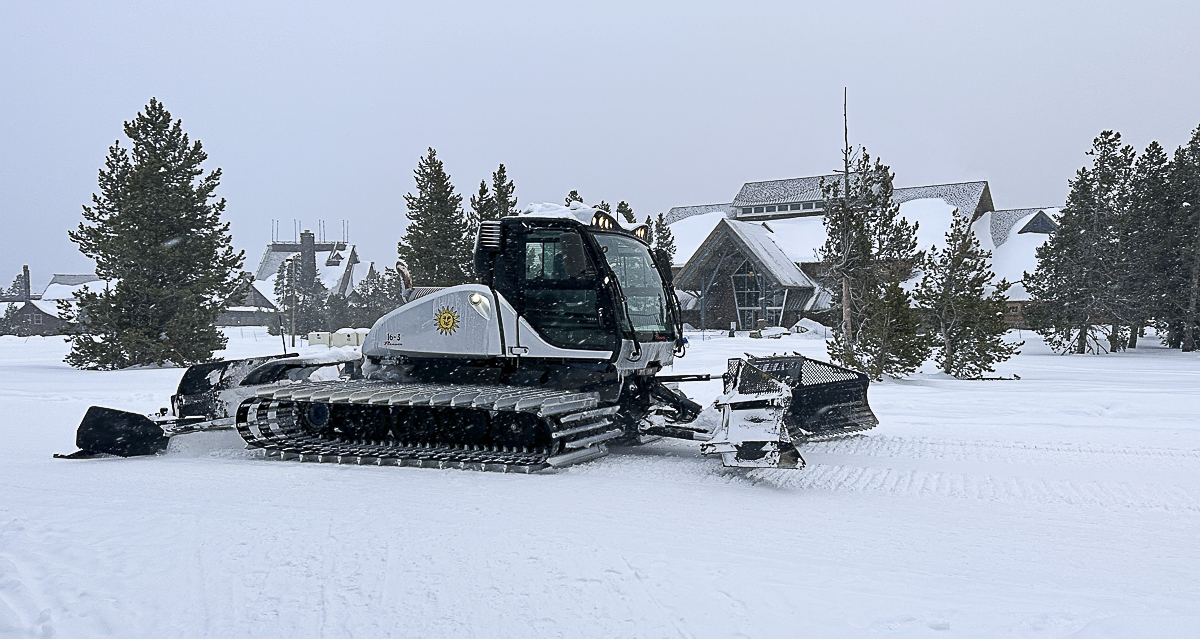
The groomer is what keeps the interior roads passable for snowcoaches, snowmobiles, and even Bison. Behind and to the right of it is the Visitor Center at Old Faithful and to the left is the historic Old Faithful Inn (which is closed in the winter)
Our time in the interior was filled with cold temperatures, fresh snow, wildlife, and the incredible thermal features for which our first national park was established back in 1872. I enjoy the thermal basins more in winter because the crowds are non-existent, and you can hear the features hissing, splashing, and plopping amidst the increased steam.
A ranger once told our group that no matter what you came to see in Yellowstone, you really came to see geology (since it determines everything else we see on the landscape). I think people may come to Yellowstone for many reasons. The fantastical thermal features, the amazing abundance and diversity of wildlife, and the simplicity, beauty, and quiet of a snowy scene are some of the many wonders we all shared and came to appreciate in this magical place called Yellowstone. I can’t wait to return…
Melissa had another wonderful educator workshop to Yellowstone last month with plenty of extraordinary sightings including a Pygmy Owl, Ermine, and a Bobcat feeding on a Mule Deer carcass (jealous, me??). We planned for her to take some time off afterward and have some friends join us for a week in our favorite winter wonderland. I went out a few days before that group arrived so we could scout things out and hang out with some our friends that live near the park. I’ll post some of our highlights here and add another post on our friend’s group trip next time.
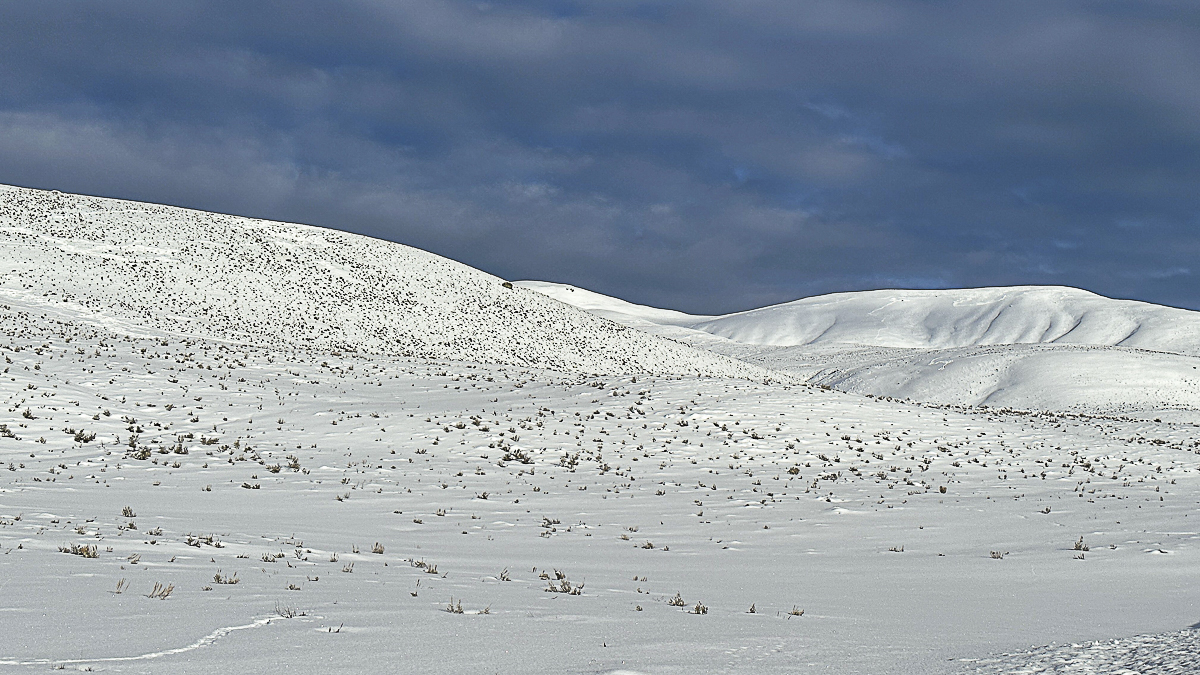
Snow amounts were a little more than in some of my previous trips. The slopes surrounding Lamar Valley were stunning under a brilliant blue sky (click photos to enlarge)
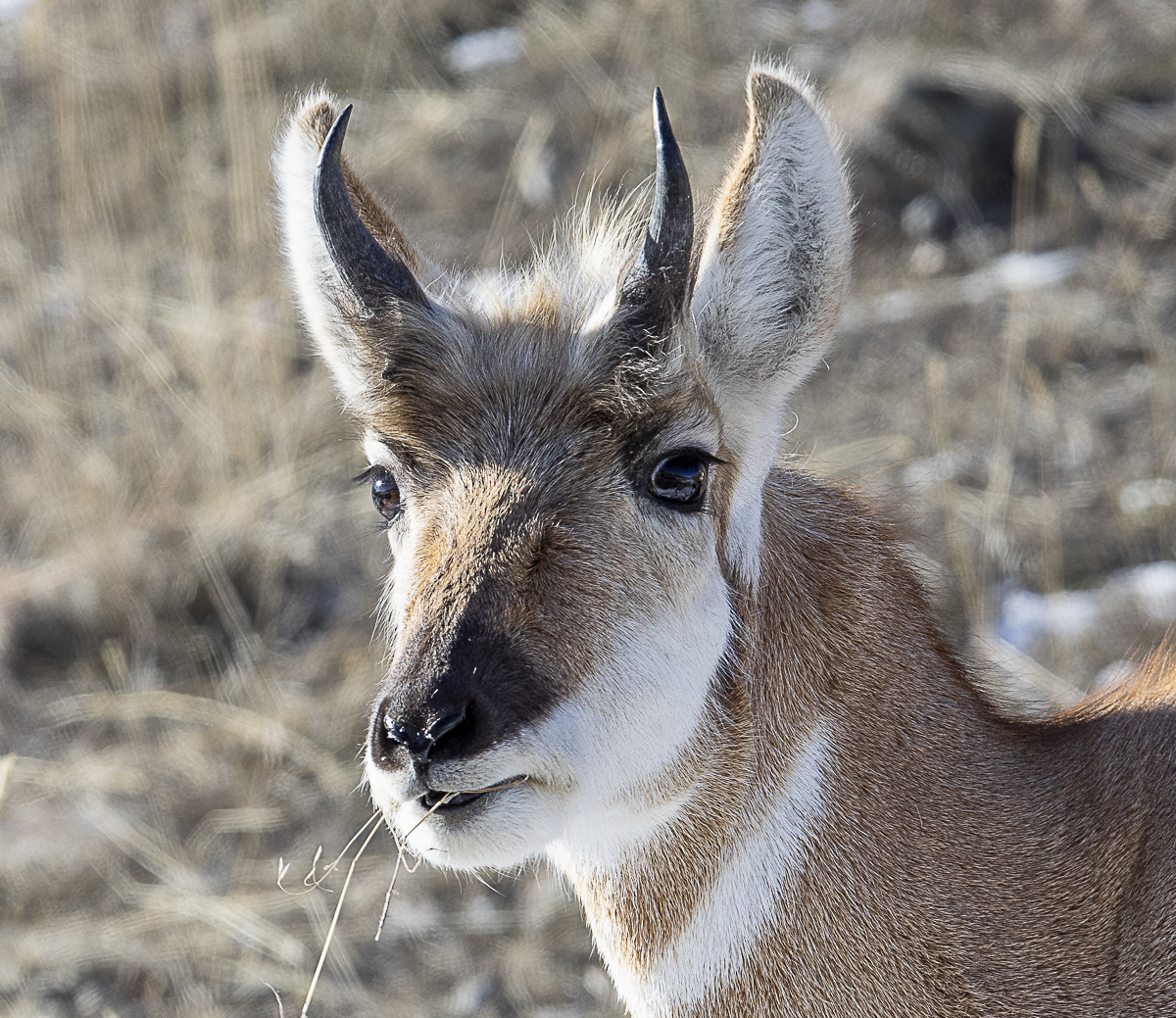
Pronghorn, and many other ungulates, migrate to lower elevations near Gardiner (the north entrance to the park) in winter. This year has seen huge numbers of Bison, Elk, Mule Deer, Rocky Mountain Bighorn Sheep, and Pronghorn congregate in the sagebrush flats along the Yellowstone River. The drive along the Old Yellowstone Trail between Corwin Springs and Gardiner yielded great views of large numbers of animals.
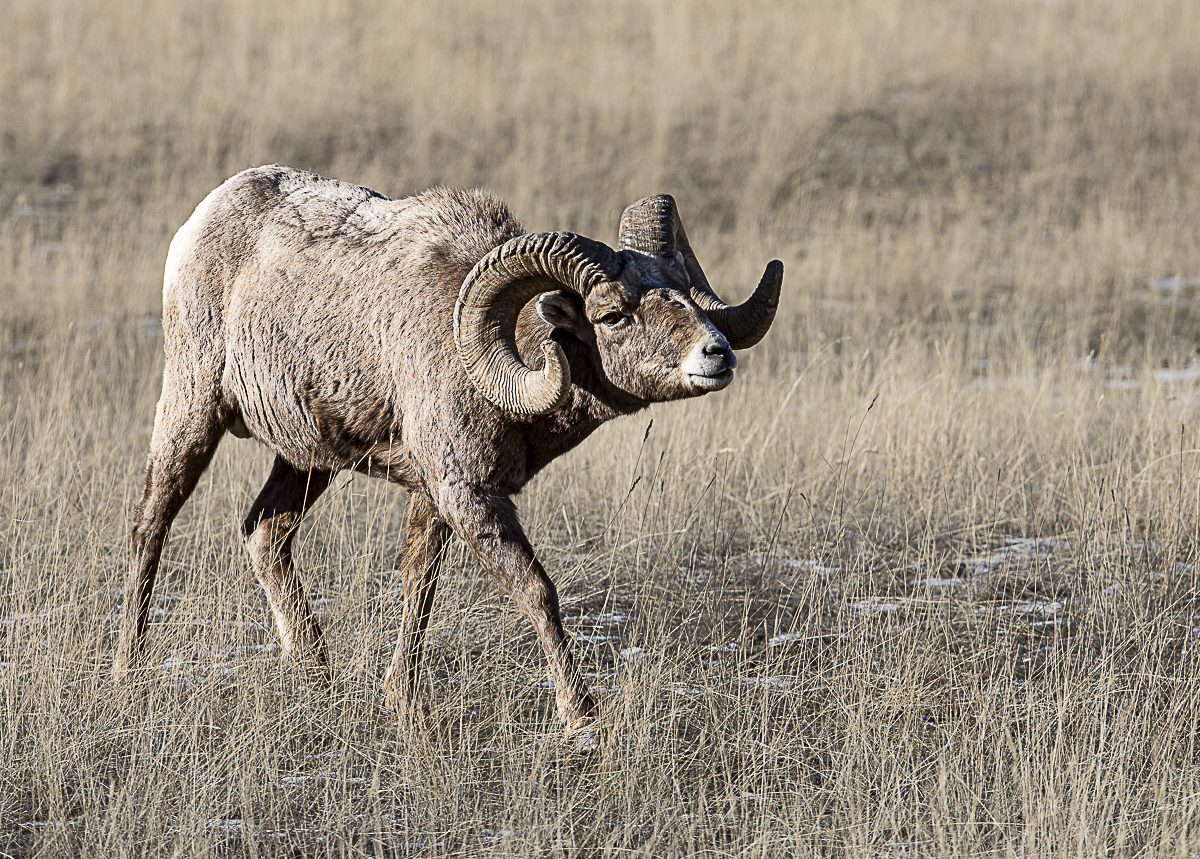
One of many Rocky Mountain Bighorn Sheep rams hanging out on the Old Yellowstone Trail. Though the peak of their rut is in December, this guy was pursuing a ewe in this classic pose.
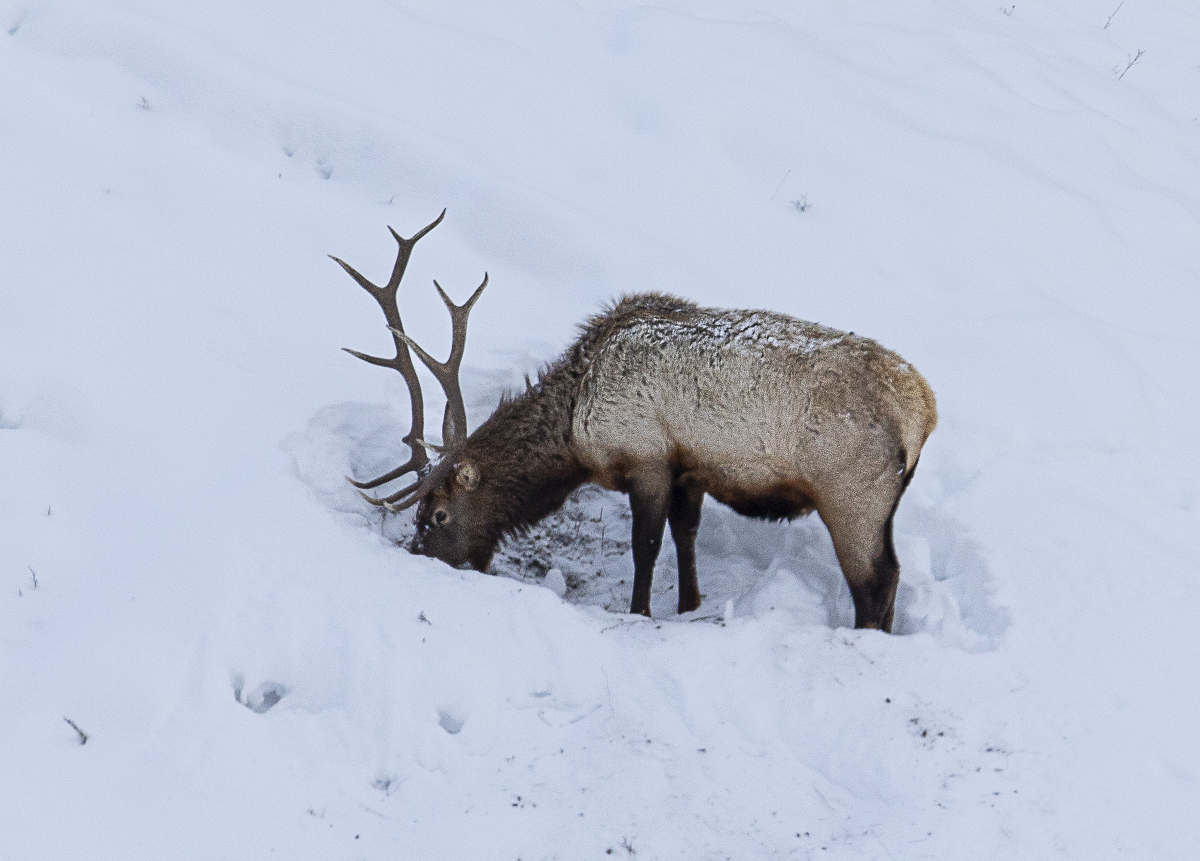
A nice bull Elk has pawed through the snow to feed on grass. Melissa noticed that Elk feeding pits typically had sharper edges and little mini-cliffs to them compared to the more jumbled bulldozed appearance where Bison use their massive heads to plow through the snow.
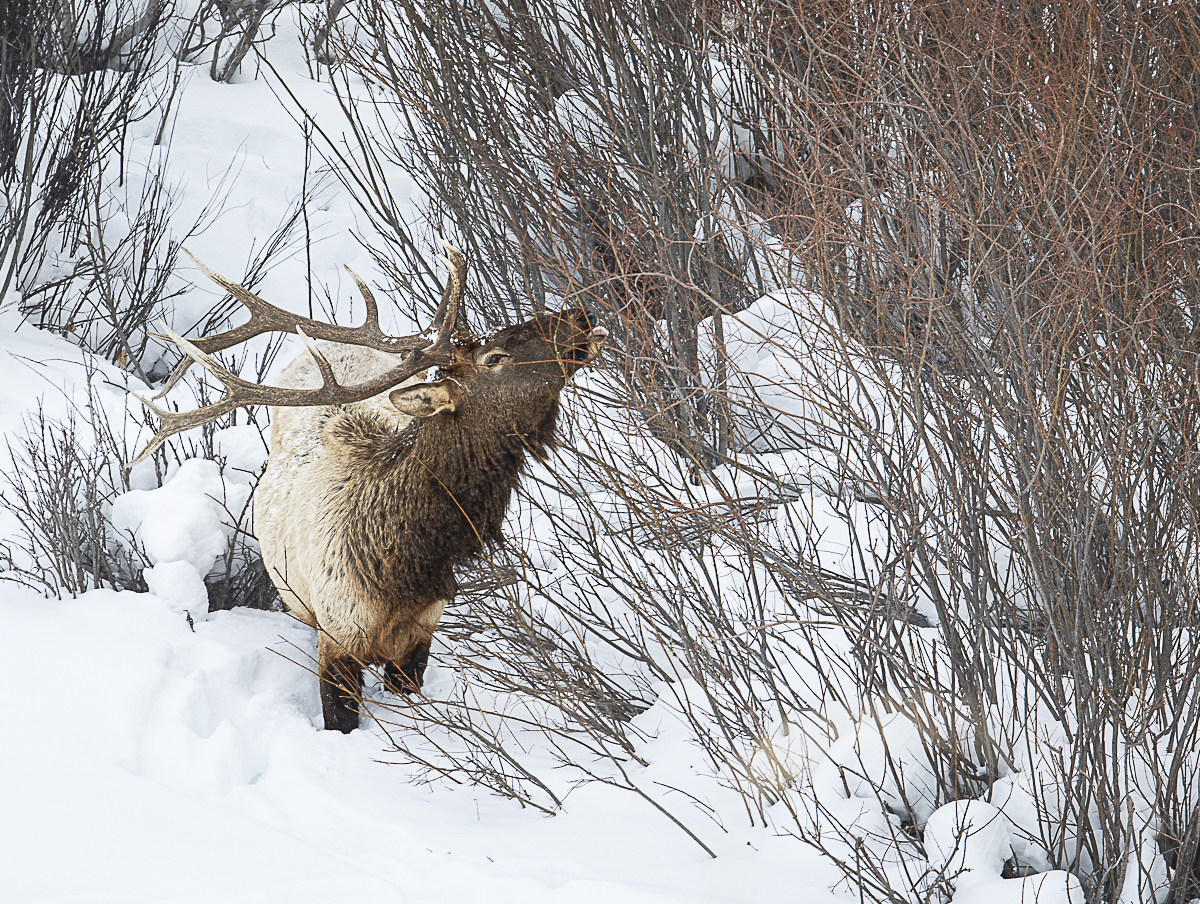
This same Elk hung around Phantom Lake throughout the duration of our trip, seen here browsing on willow twigs just below the road. He caused several traffic jams during our stay.
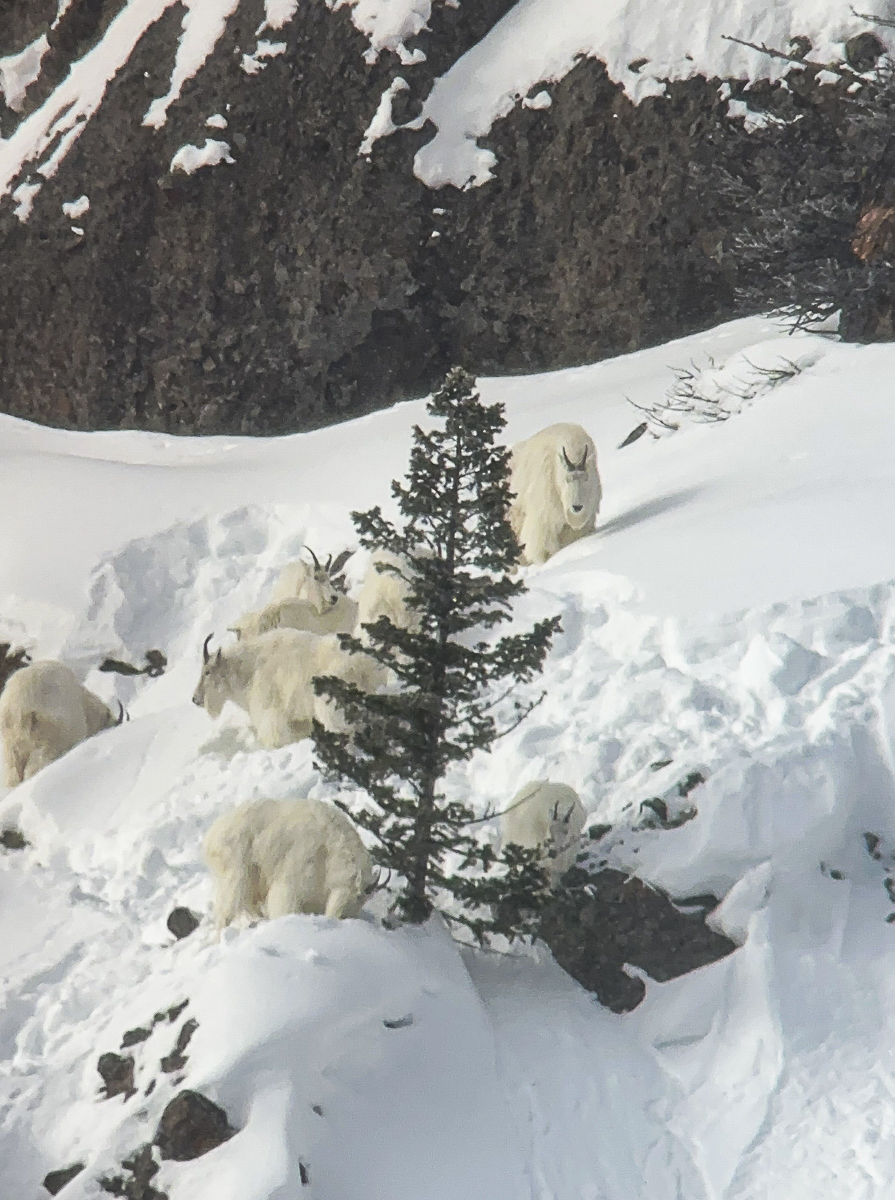
A small herd of Rocky Mountain Goats on the slopes of Barronette Peak in the northeastern part of the park. This peak is the best place to find this non-native species, but snow cover can make it challenging. Photo taken with an iPhone mounted to a spotting scope.
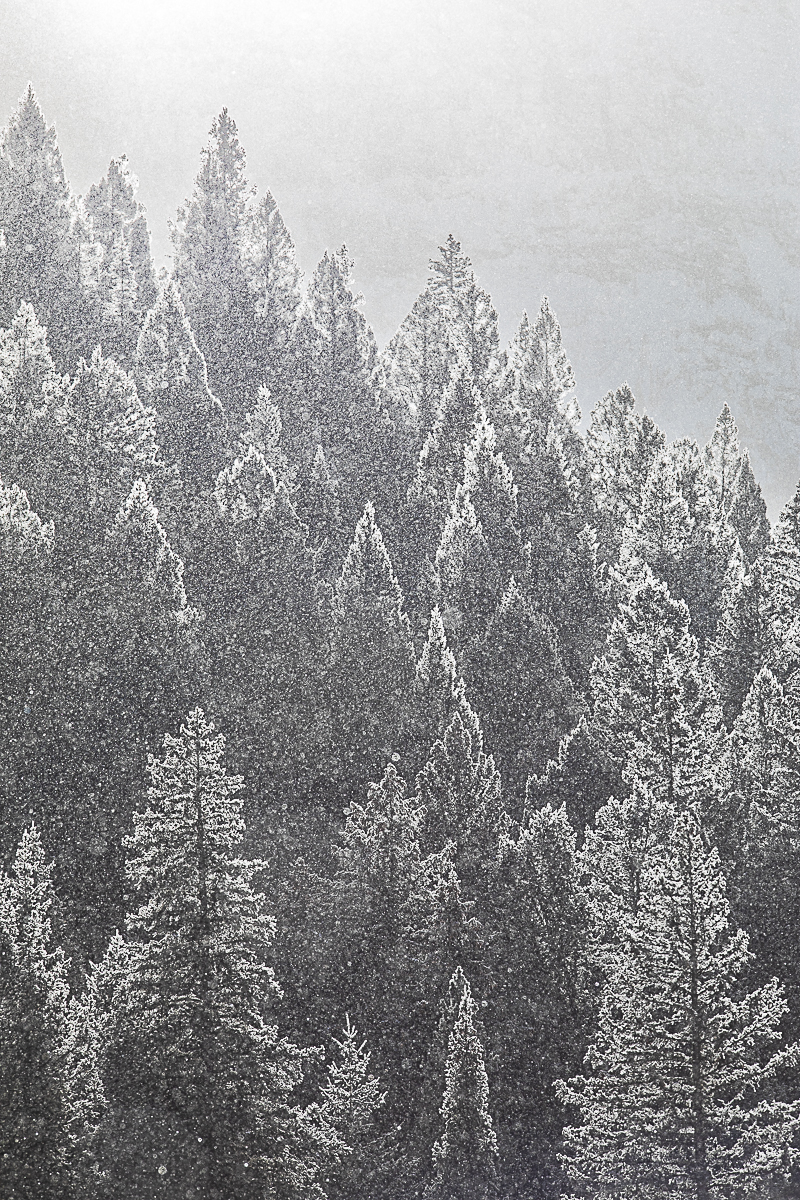
A light snow (ice crystals really) was creating a diamond-like dusting in the sky behind us while watching the goats
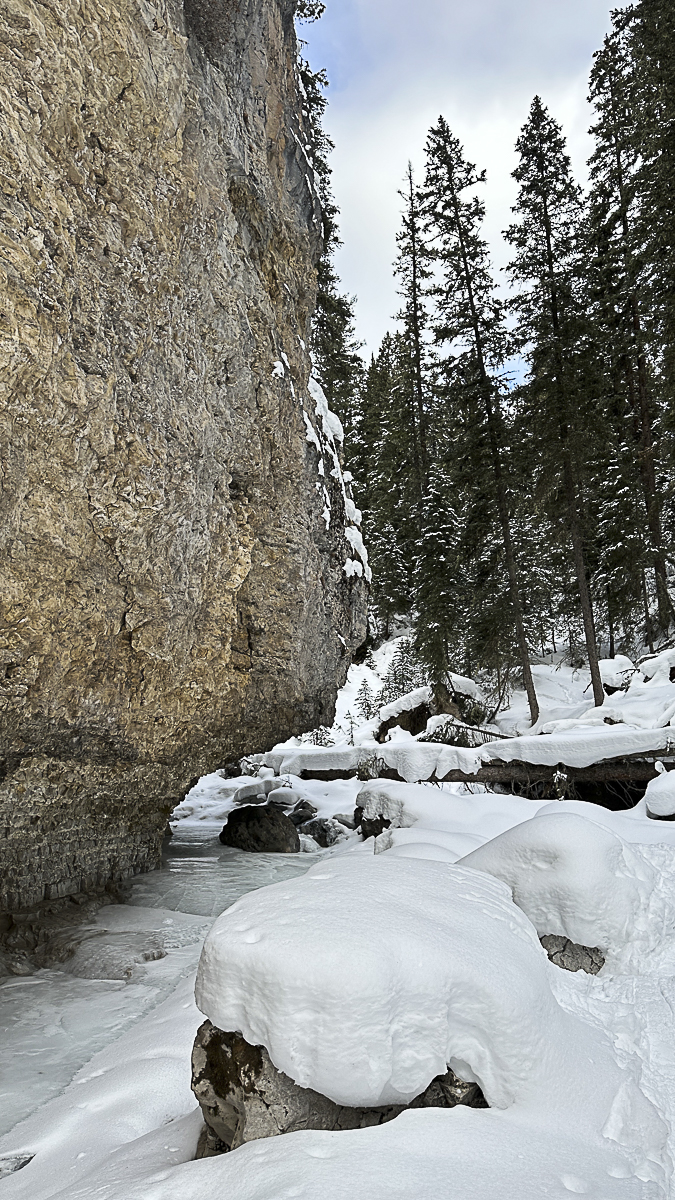
Melissa had discovered a new snowshoe hike near Pebble Creek in her workshop. We snowshoed in one afternoon and were rewarded with some wonderful surprises…
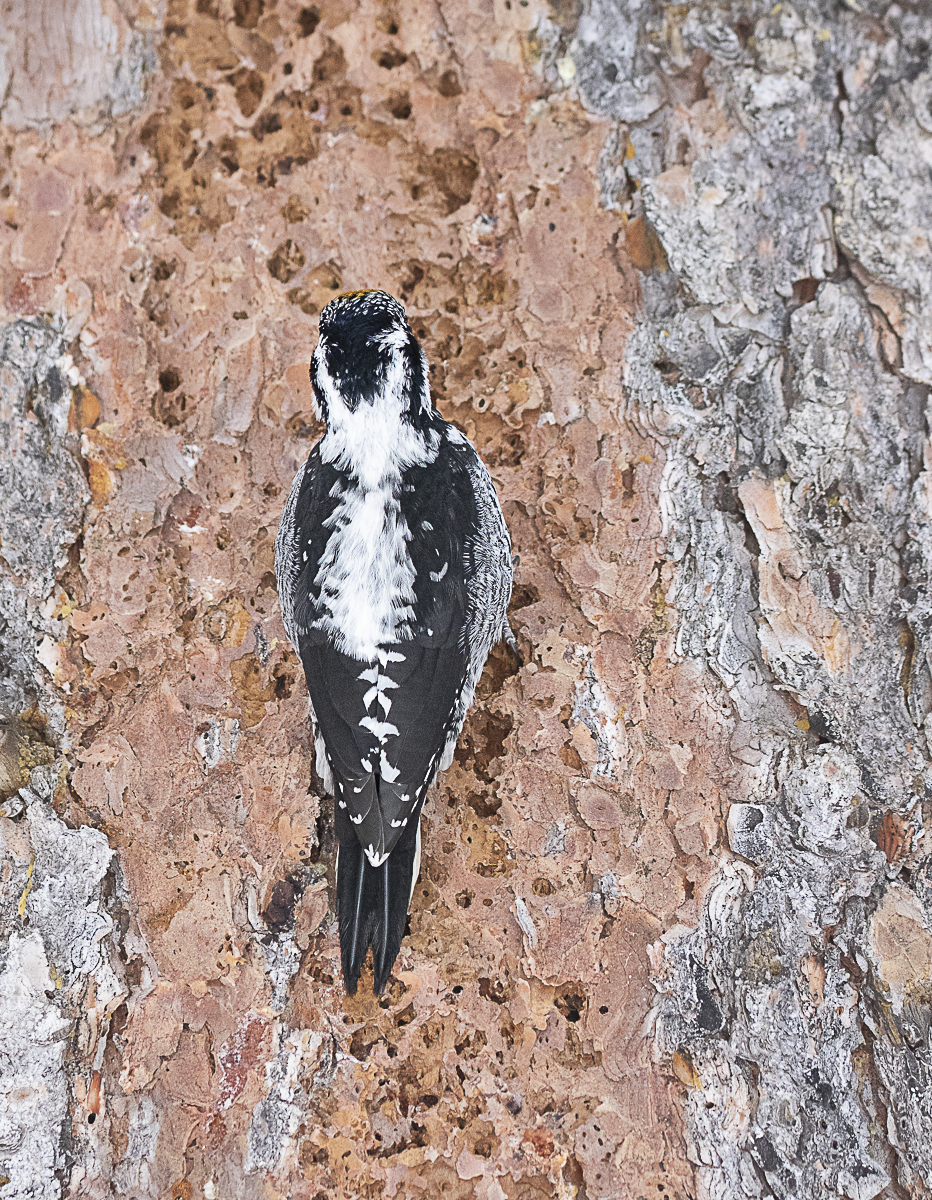
An American Thee-toed Woodpecker was busy pecking away at the bark of a conifer searching for insects and seemed oblivious to our presence. This, and the Black-backed Woodpecker, differ from all other North American woodpecker species in having only three toes (instead of four) and lacking red feathers. This woodpecker is associated closely with spruce forests and nests farther north than any other North American woodpecker. I can’t recall seeing this species before so this was a treat.
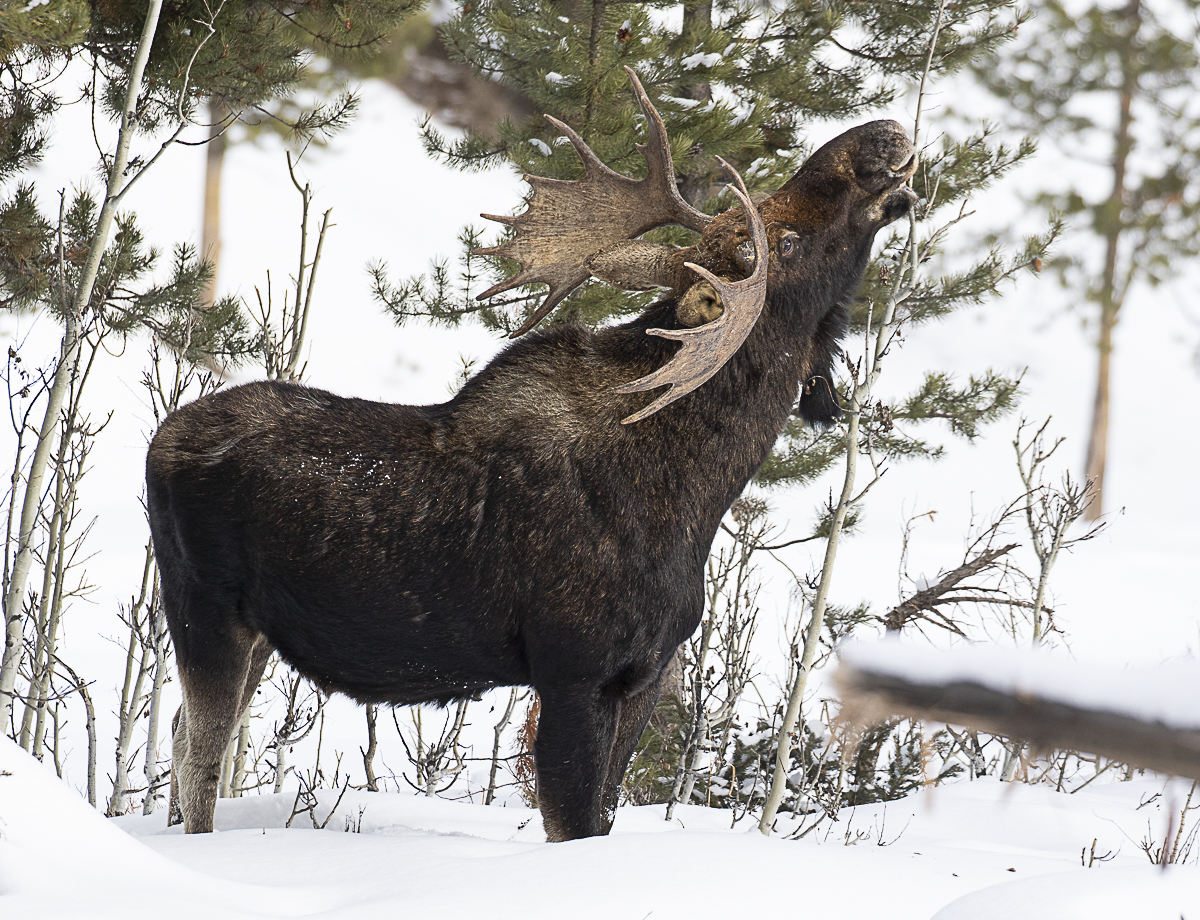
The highlight of this hike for me was when we paused to watch some birds and we both heard a noise behind us. I thought it was some ice cracking on the nearby stream edge, but Melissa quickly spotted the source – a nice bull Moose.
He was feeding on aspen branches, reaching high to snap off twig tips.
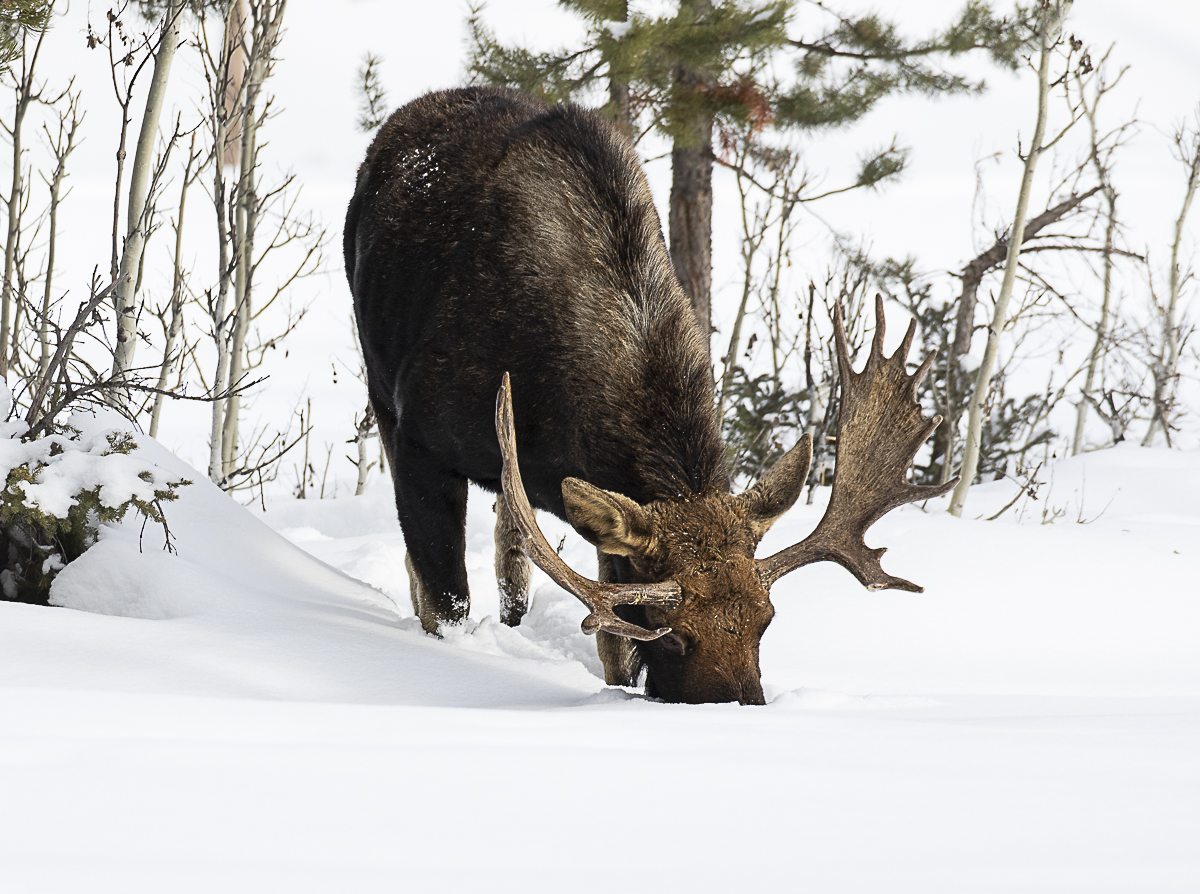
He then stuck his enormous snout into the snow and pulled up some hidden vegetation.
While we watched the one bull, I spotted another coming down the hill and headed our way. This was another bull that had recently dropped its antlers (most drop them in December and January). You can see the whitish pedicel where one of the antlers was attached to the skull. We stayed still and this moose walked across the path where we were headed and wandered off into the trees. We slowly snowshoed along the trail and the first bull eventually made his way behind us to join the other moose.
Forests will always hold your secrets, for that’s what forests are for.
~Victoria Erickson
We’ve been gone for a couple of weeks (more on that adventure in the next post) and the trail cameras were busy keeping up with the goings-on back home while we were away. Lots of the same sort of behaviors we have seen before, but some heavy rains filled our ephemeral stream and that area became more attractive to many of our woodland neighbors. Here are a few highlights from the last couple of weeks that we would have not known about save for the eyes of the trail cameras.
Be as useful as a tree! Give life to others; be shelter to everyone; grant fruits to all! Be good like a tree!
~Mehmet Murat Ildan
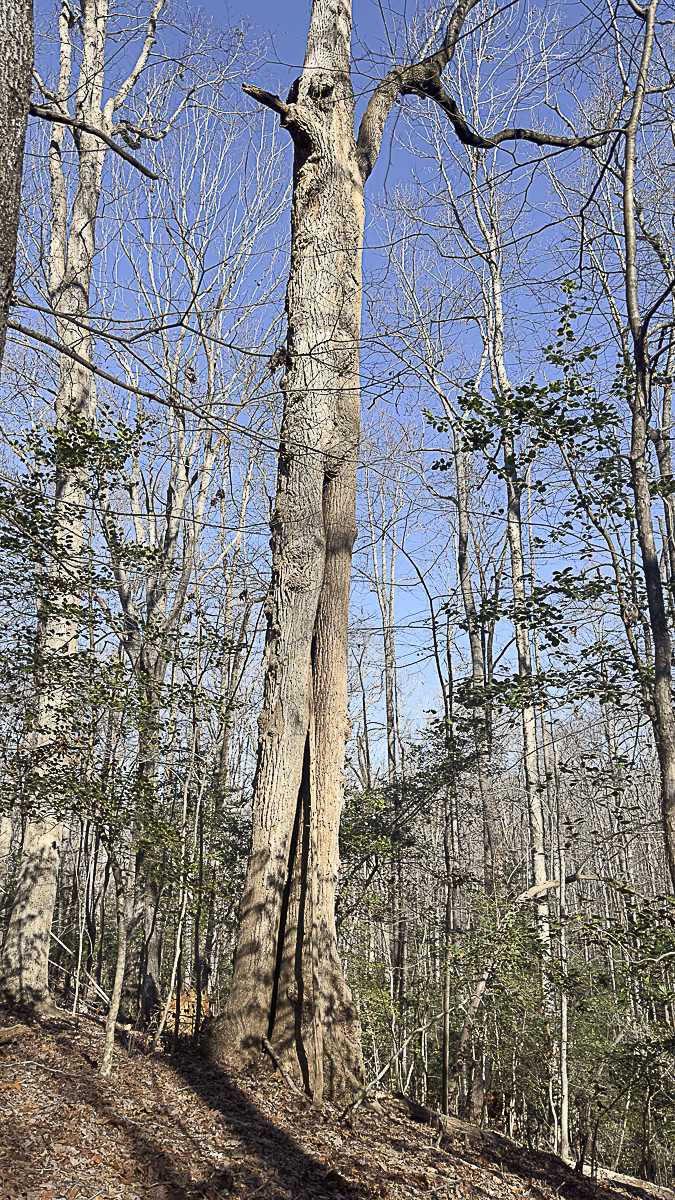
Just beyond our deer fence is a huge old Tulip Poplar with a split at the base forming a hollow that stretches up 20 feet or so. This is the second largest tree on our property behind a giant old White Oak on the south slope across the creek bed. The Tulip Poplar is on our north slope where that species is the dominant tree. In spring, the large fragrant flowers provide an important nectar source for many types of pollinators. In autumn, the seeds are eaten by numerous bird species, especially the Purple Finches that fly south most winters from their boreal forest summer range. And the leaves are the primary food source for caterpillars of our most abundant butterfly, the Eastern Tiger Swallowtail (along with many other species like the magnificent Tuliptree Silk Moth). But this particular tree is important in another way – the hollows provide shelter and a forest touchstone for a variety of critters.
A giant Tulip Poplar on our property is home to a number of our wildlife neighbors (click photos to enlarge)
A large split at the base provides access to hollow spaces within this tree. But the Raccoons that use itr as a den tree climb higher and squeeze through a relatively small hole about 30 feet up the trunk
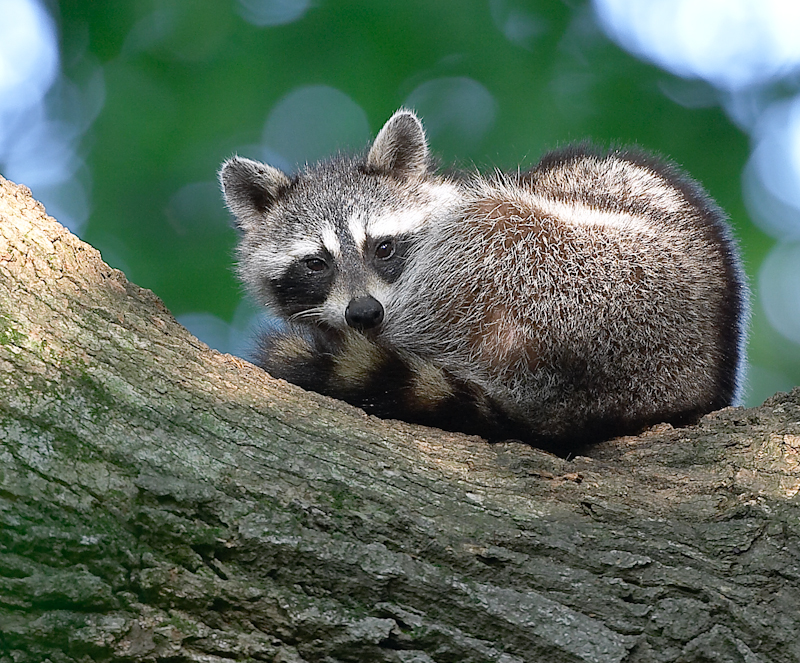
Unlike Raccoons at some of my favorite wildlife refuges, I rarely see ours sleeping out on limbs of this tree during the daytime. The one exception was many years ago when I spotted a young Raccoon out on one of the large outstretched arms of this forest giant.
-A young Raccoon that was sleeping out on a limb one day several years ago checks me out when I went out into the yard for a photograph. When I went back inside, it curled back up and went back to sleep.
Most of my knowledge of the importance of this tree to the woodland wildlife comes from a trail camera that has been watching it off and on for a couple of years. The tree has been home to a variety of wildlife including multiple generations of Raccoons, Eastern Gray Squirrels, and Southern Flying Squirrels. And, perhaps because of the comings and going of its permanent residents, it is also visited by many other forest dwellers. The camera has recorded several species stopping by in hopes of a meal, a sniff to see who has been there recently, or perhaps just to pay respect to this towering monarch of the woods. Visitors have included White-tailed Deer, a Gray Fox, many Virginia Opossums, a Cooper’s Hawk, and, unfortunately, my neighbor’s outdoor cats. The Ground Hog that wandered through our property for several days last year also sought shelter in its hollow base between raids on our garden while we were out of town.
Currently, there is a family of four Raccoons, a bunch of squirrels, and at least one Southern Flying Squirrel that call that tree home. Here are a few highlights of recent trail camera captures.
— The Raccoons usually use the leaning cedar snag as a ladder to their den, but occasionally climb the tree trunk. This was one night recently when it briefly snowed. Note the third raccoon appearing in the lower left at the end of the clip.
Large trees that have broken limbs, knot holes, large cracks or hollow trunks are incredibly important to a forest and its creatures. They provide food, shelter, and a place to rear young and can be a focal point of any woodland tract. I hope this one continues to be the preeminent poplar in our woods for many years to come.
Always walk through life as if you have something new to learn and you will.
~Vernon Howard
The first days of the new year have brought a few more surprises and lessons from the trail cameras scattered in our woods. Several cameras have remained in one spot for many months because they tend to record lots of activity due to their location along a game trail or creek bed. But, based on some things I have seen over time, I decided to re-position a couple of them and, in one case, slightly alter the landscape around it. Here are some highlights from the first few days (and nights) of 2023…














 Roads End Naturalist