Spend time every day looking and listening without any ulterior motive whatsoever. Look not as a writer, or as a philosopher, not even as a scientist or artist—look and listen, simply, like a child, for enjoyment, because the world is interesting and beautiful. Let in nature without the vast and complicated apparatus of duty, ambition, habit, morals, profession—look and listen like a child to the robin in the tree.
~David Grayson
Much of my time outdoors is spent wandering, not for something in particular, but just wandering and being open to whatever I discover. Even in a place like Yellowstone, known to wildlife-watchers as one of the premier places in North America to observe charismatic megafauna like bison, bears elk, and wolves, there are many treasures that await those who are open to them.
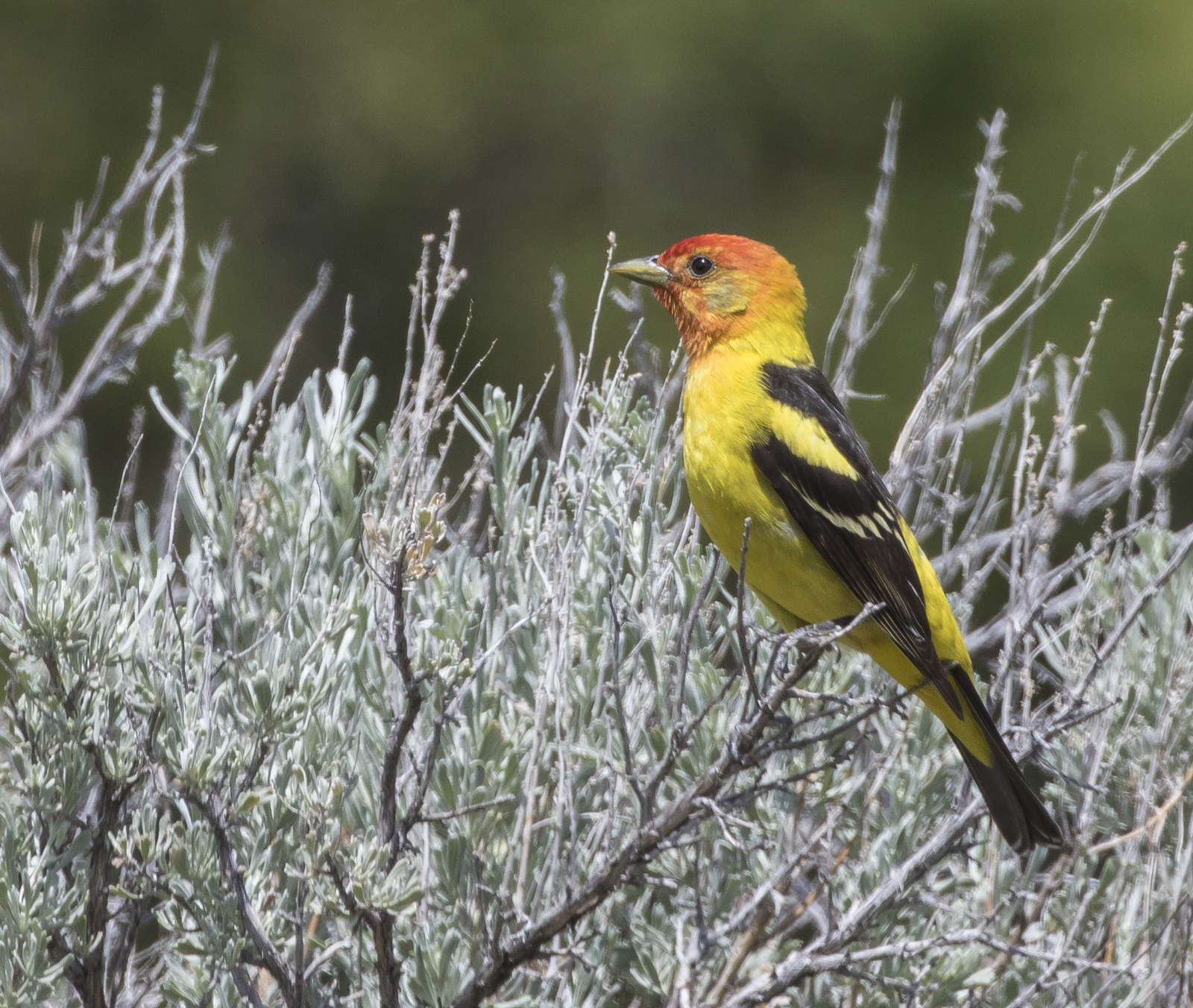
Western tanager male (click photos to enlarge)
Before my guests arrived, I stopped at a pullout in Lamar Canyon to scan the far ridges for some of those magafauna I mentioned, but what caught my eye was brilliant flash of yellow and orange in a nearby conifer. A male Western tanager, one of the most beautiful birds in Yellowstone! Suddenly, there was another, and then another. I raced over to the van for my camera, long lens, and tripod, and that caught the attention of a passing motorist. The common refrain when someone sees a spotting scope or long lens pointing at something is “Whaddya have?” or something similar. I responded with “a couple of Western tanagers”, and got that look, the one I often get when I am photographing a bird, insect, or something besides one of the big mammals. It is even sometimes accompanied by that phrase, “It’s just a bird”, and then they drive off. Well, I have had many memorable just a birdmoments over the years, too many to recall really, and that goes for birds in Yellowstone as well. And a few Western tanagers are sure to catch my attention anytime. A couple of other park visitors even came over to try to photograph them once I pointed them out.
Below are a few more of those moments from this trip.
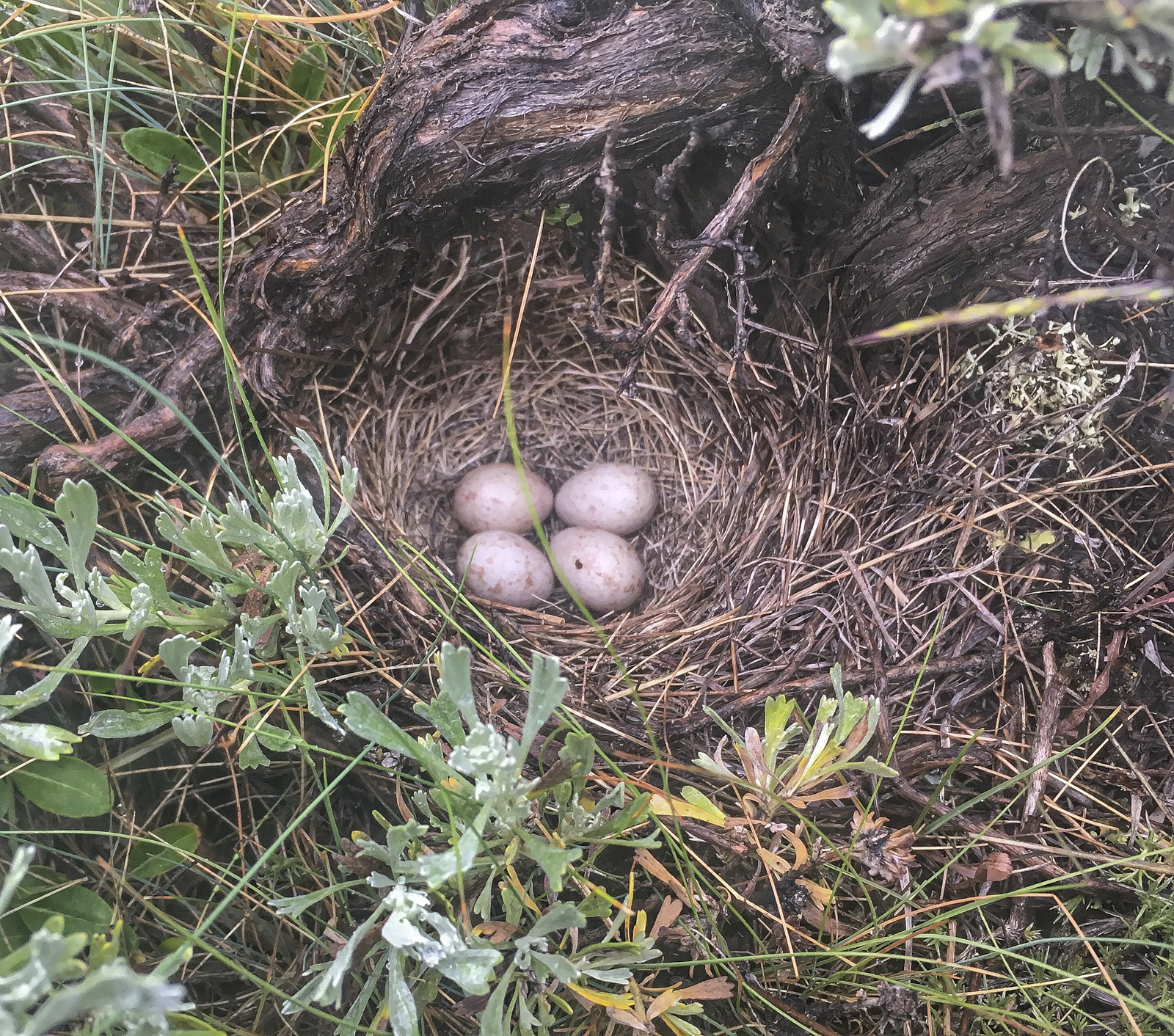
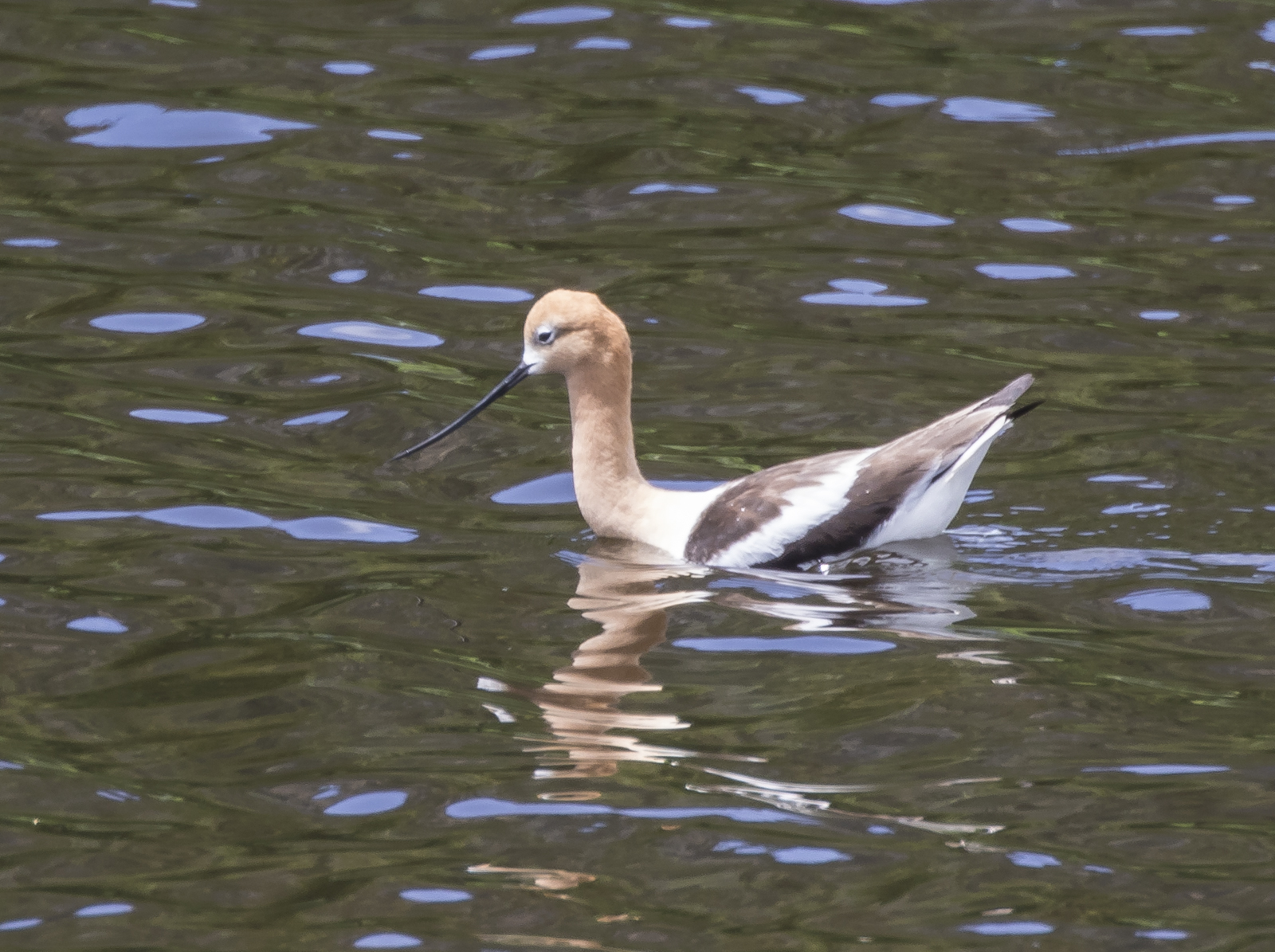
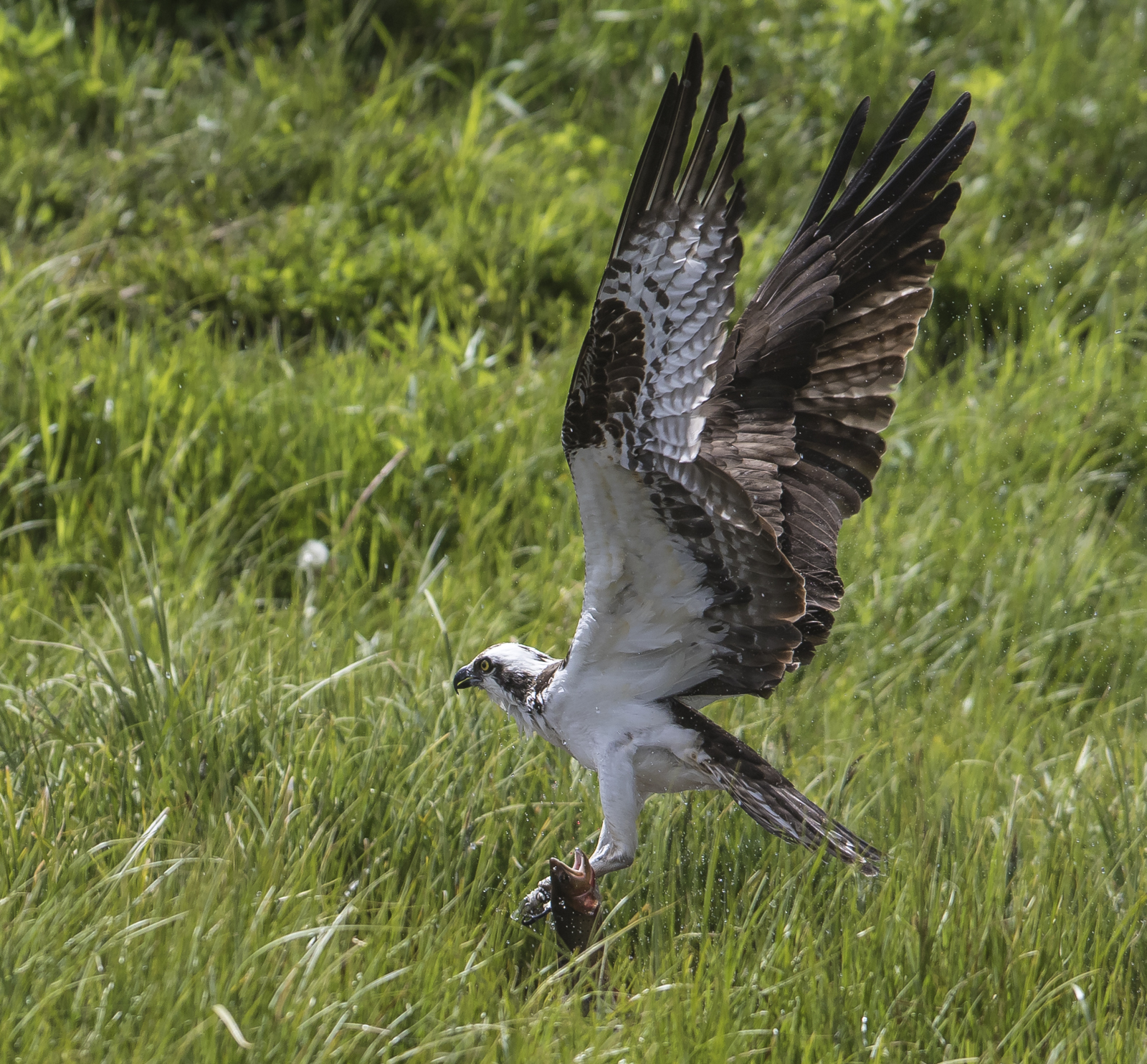
A hawk dive bombs a bald eagle that was flying too close to its nestThe ground nest of a vesper sparrow that we accidentally flushed while walking through the sagebrushA fledgling American robin near my cabin in Silver GateA red-naped sapsucker peers out of its nest cavity in an aspen treeA male Northern flicker at its nest cavity after feeding a young birdFemale Northern flicker feeding youngAmerican avocets feeding in Floating Island LakeAmerican avocetOsprey nest with one bird sitting on eggs, and the mate sitting nearbyOsprey making a strafing run on cutthroat trout spawning in the creek at Trout LakeOsprey snags a trout just behind the tall grass along the creekIt looks like the fish is caught by only one talonThe osprey tried to lift off with its struggling preyRight after this photo was taken, the trout wriggled free and fell back onto the water
Bird species observed in and around Yellowstone National Park – June 10-18, 2017
60 species:
Trumpeter Swan; Canada Goose; American Wigeon; Mallard; Cinnamon Teal; Green-winged Teal; Northern Shoveler; Ring-necked Duck; Lesser Scaup; Bufflehead; Barrow’s Goldeneye; Common Merganser; Ruddy Duck; Ruffed Grouse; Western Grebe; American White Pelican; Osprey; Bald Eagle; Red-tailed Hawk; American Coot; Sandhill Crane; Killdeer; American Avocet; Wilson’s Snipe (heard); Wilson’s Phalarope; California Gull; Rock Pigeon; Great Horned Owl; Williamson’s Sapsucker; Red-naped Sapsucker; Northern Flicker; American Kestrel; Peregrine Falcon; Gray Jay; Stellar’s Jay; Black-billed Magpie; Common Raven; Tree Swallow; Violet-green Swallow; Cliff Swallow; Barn Swallow; Mountain Chickadee; House Wren; American Dipper; Mountain Bluebird; American Robin; European Starling; Yellow-rumped Warbler; Chipping Sparrow; Vesper Sparrow; White-crowned Sparrow; Dark-eyed Junco; Western Tanager; Red-winged Blackbird; Western Meadowlark; Yellow-headed Blackbird; Brewer’s Blackbird; Brown-headed Cowbird; Cassin’s Finch; Pine Siskin
Are you there? Can you hear me? Somewhere near me? In the morning, long ago, had to hold you so close, had to never let go. Time on the river sliding on by. Hard to believe, wink of an eye.
Where’d you go, Baby Buffalo?
~James Taylor – song lyrics from Baby Buffalo
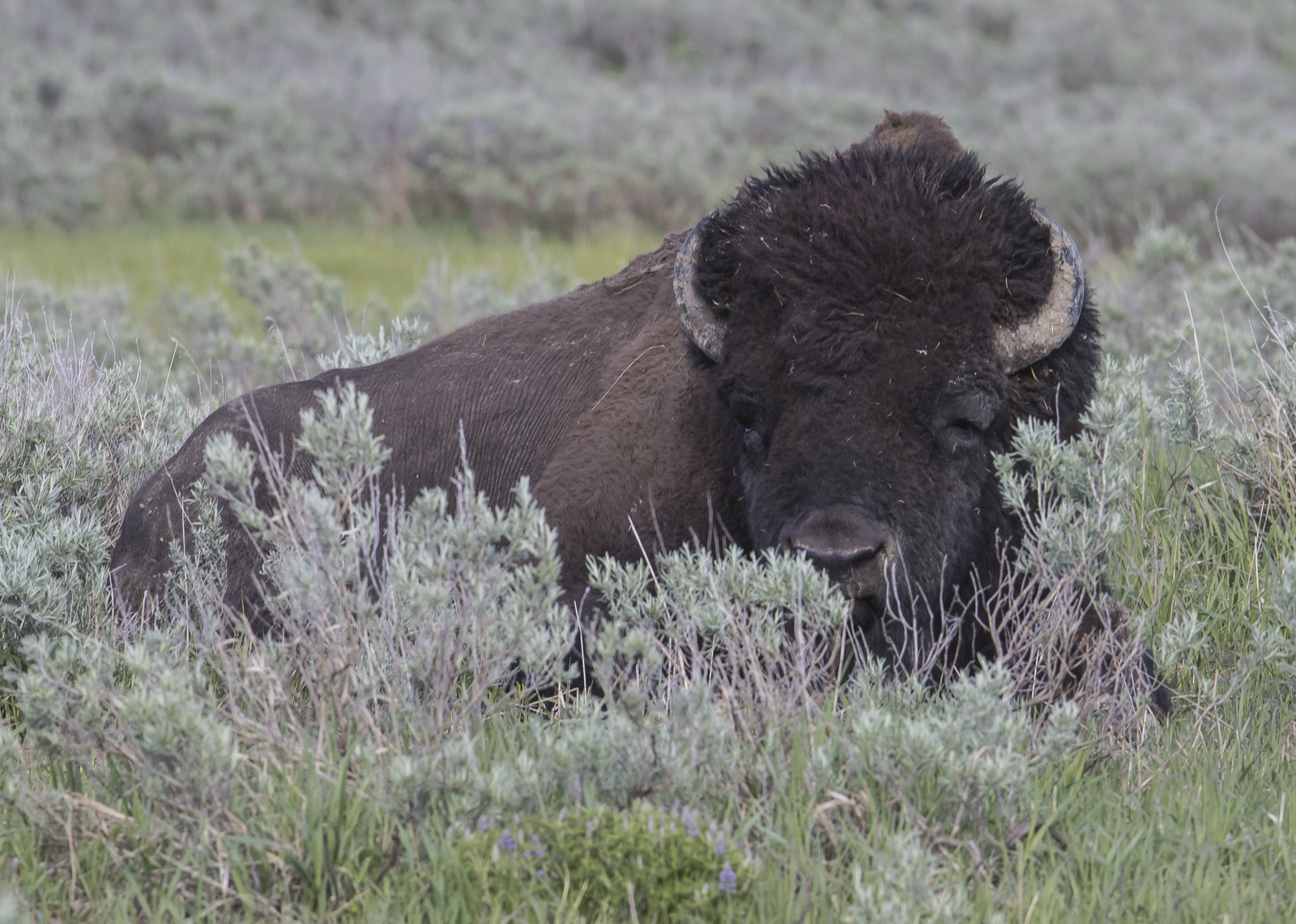
Large bull bison striking a regal pose (click photos to enlarge)
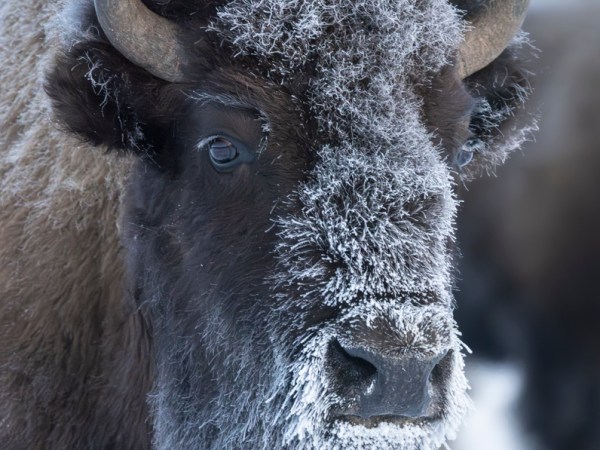
I have always been fascinated by bison – their size, power, protective instincts toward their young, and seemingly total indifference to us humans. Herd size is certainly larger now than when I first started visiting the park, so much so that there are now efforts to control the population to avoid overgrazing in their prime habitats in the park. Plus, the larger the herd, the more conflicts arise with state officials and local ranchers when bison migrate out of the park in winter to graze in areas of lower snow cover. Last winter, park officials and hunters outside the park culled more than 1200 animals from the herd. It is tough for me to accept these management decisions, but that is the agreed-upon Interagency Bison Management Plan at this point. More details on this can be found on the park web site.
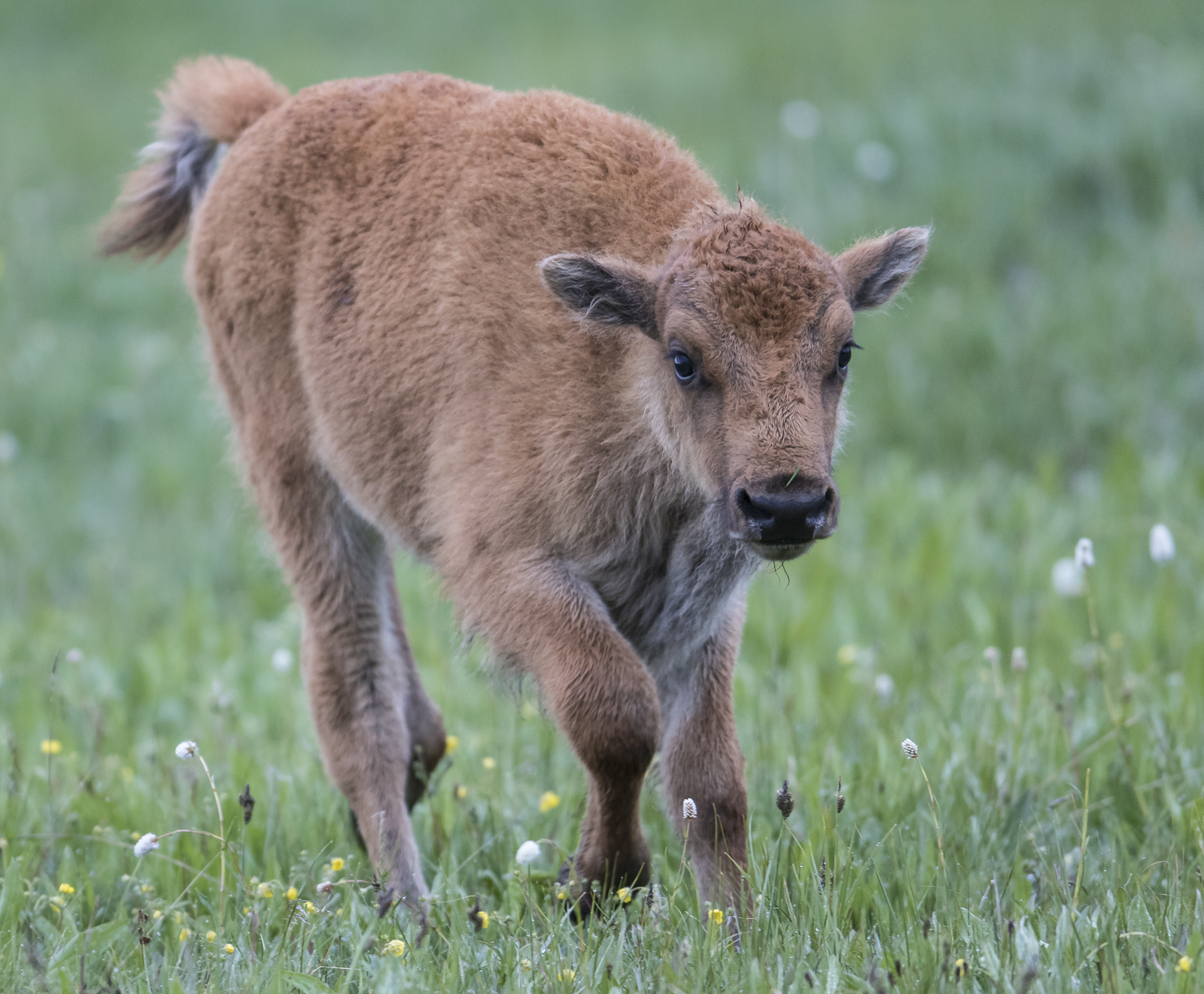
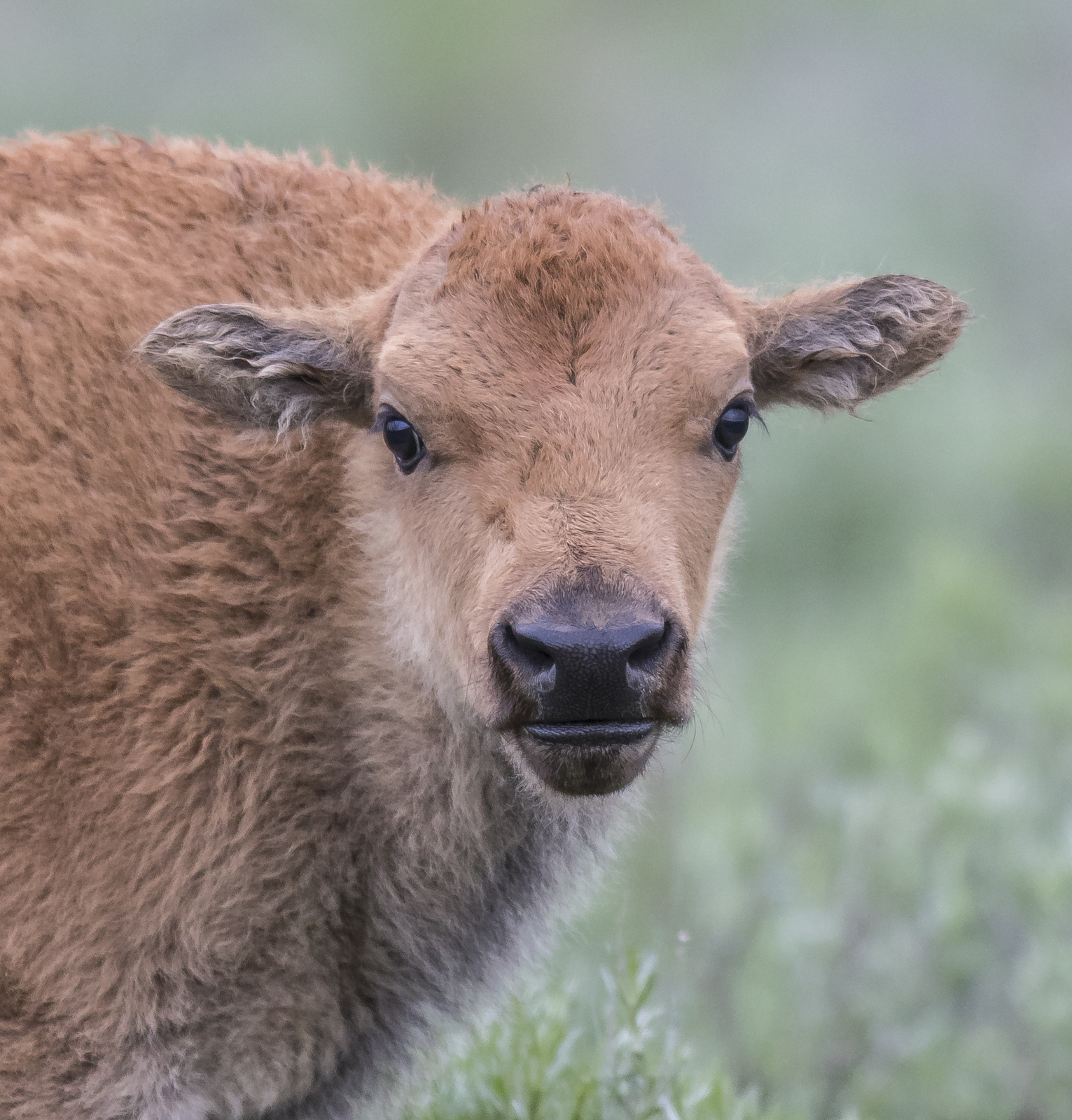
Baby buffalo frolicking in the herd
According to the park web site, “Yellowstone bison currently reproduce and survive at relatively high rates compared to many other large, wild, mammal species. The bison population increases by 10 to 17% every year.” Simply stated, bison are killed each year because there are too many animals in too small a space in the park. It is hard to state these cold statistics in the same post that I am glorifying the beauty and playfulness of baby bison, but that has been the state of bison management in Yellowstone for many years. The good news is that the herd is doing well.
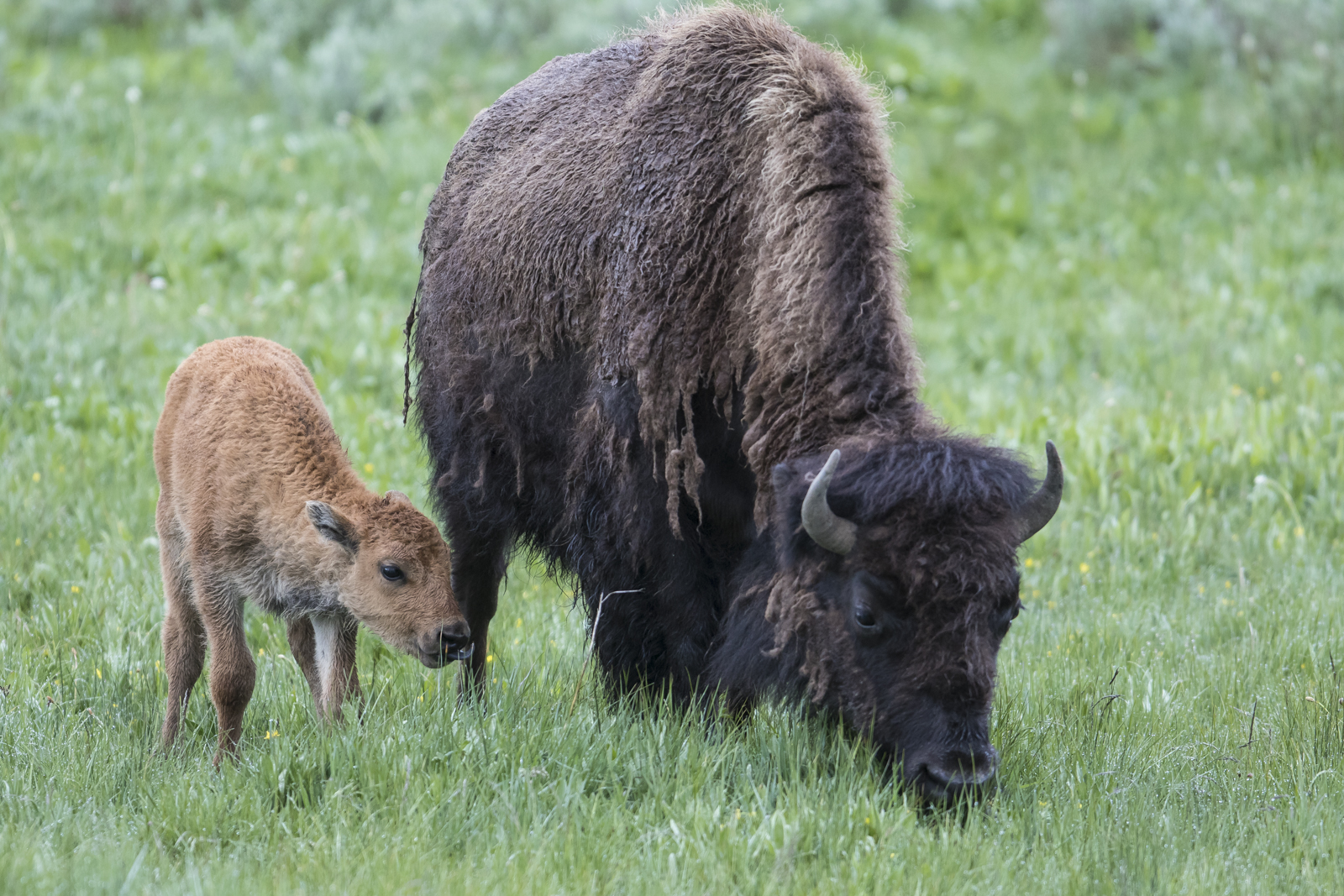
Bison calf sticking close to its mother
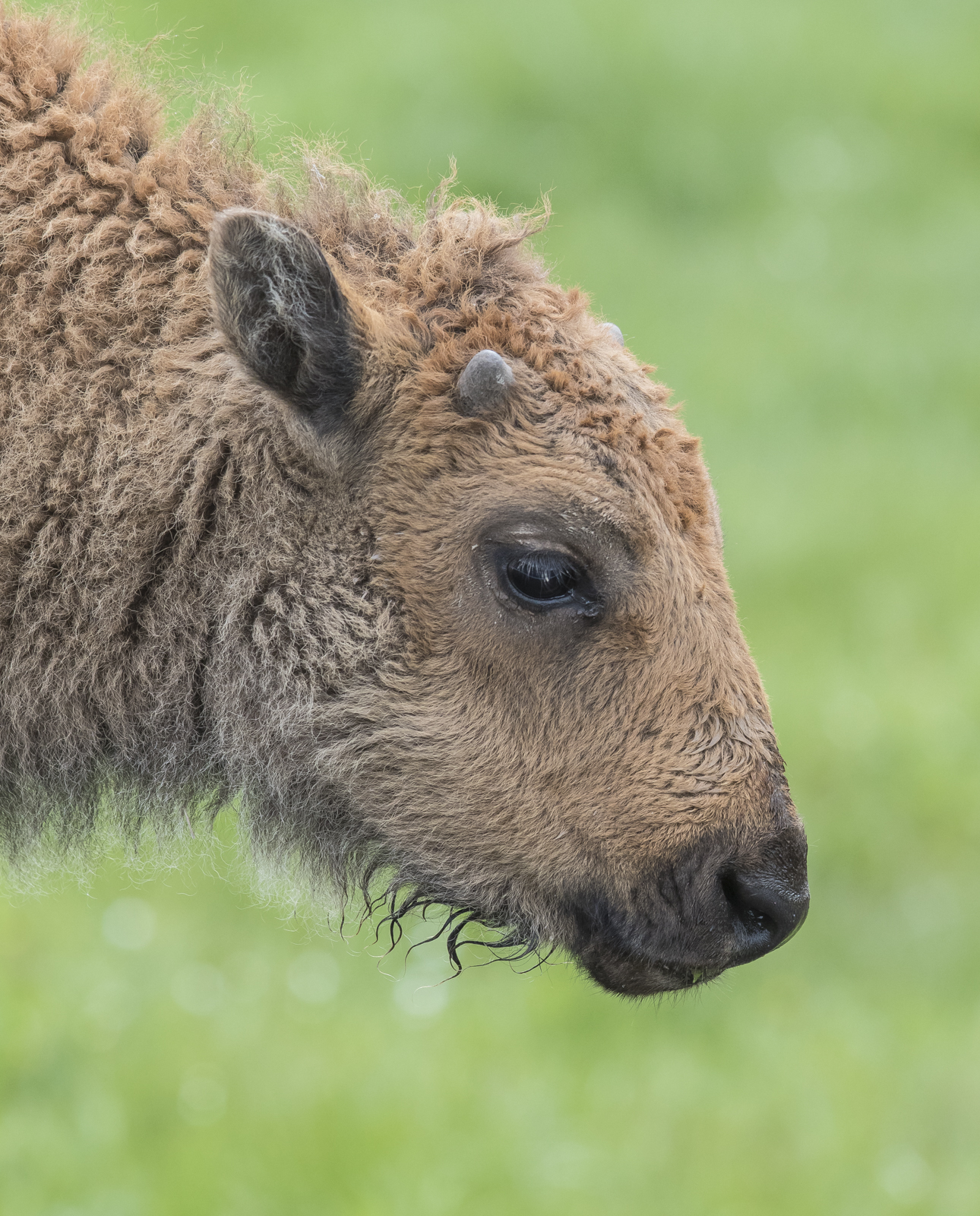
May and June are the primary birthing months for bison and I took every opportunity to watch them on this trip. Newborn bison weigh 40-50 pounds and are able to move with the herd within a few hours of being born.
Baby buffalo giving me the once over as the herd moves by my parked car
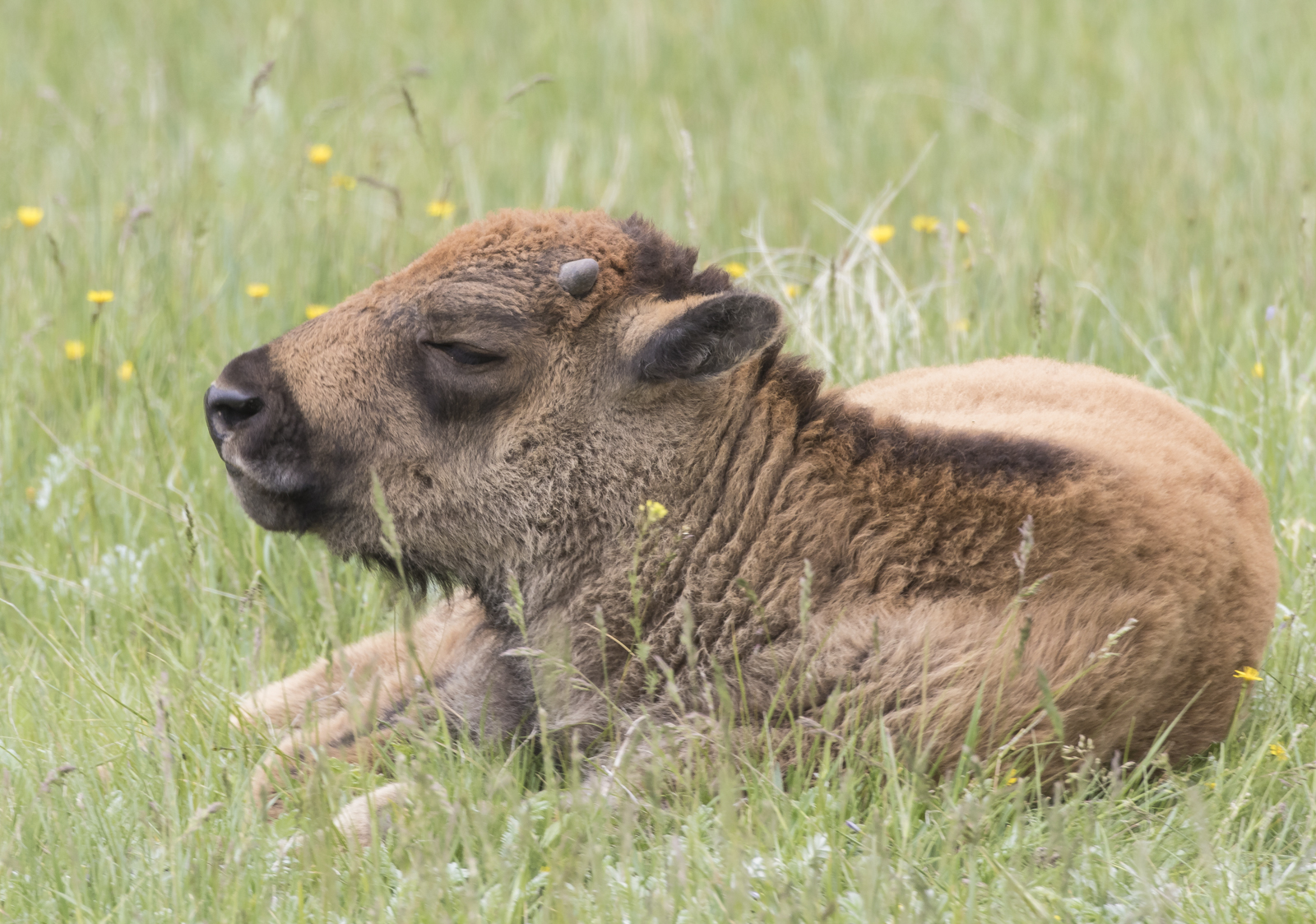
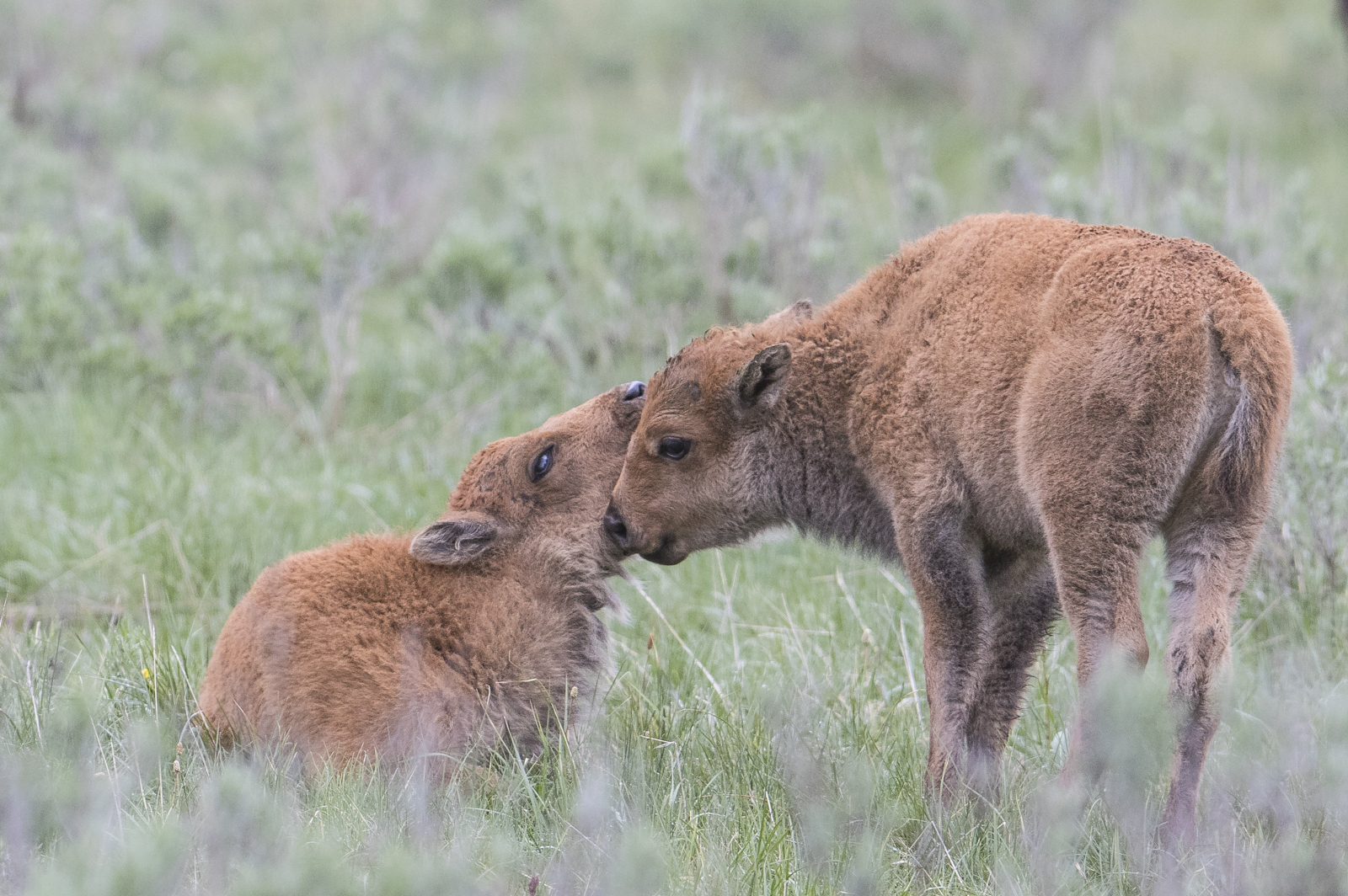
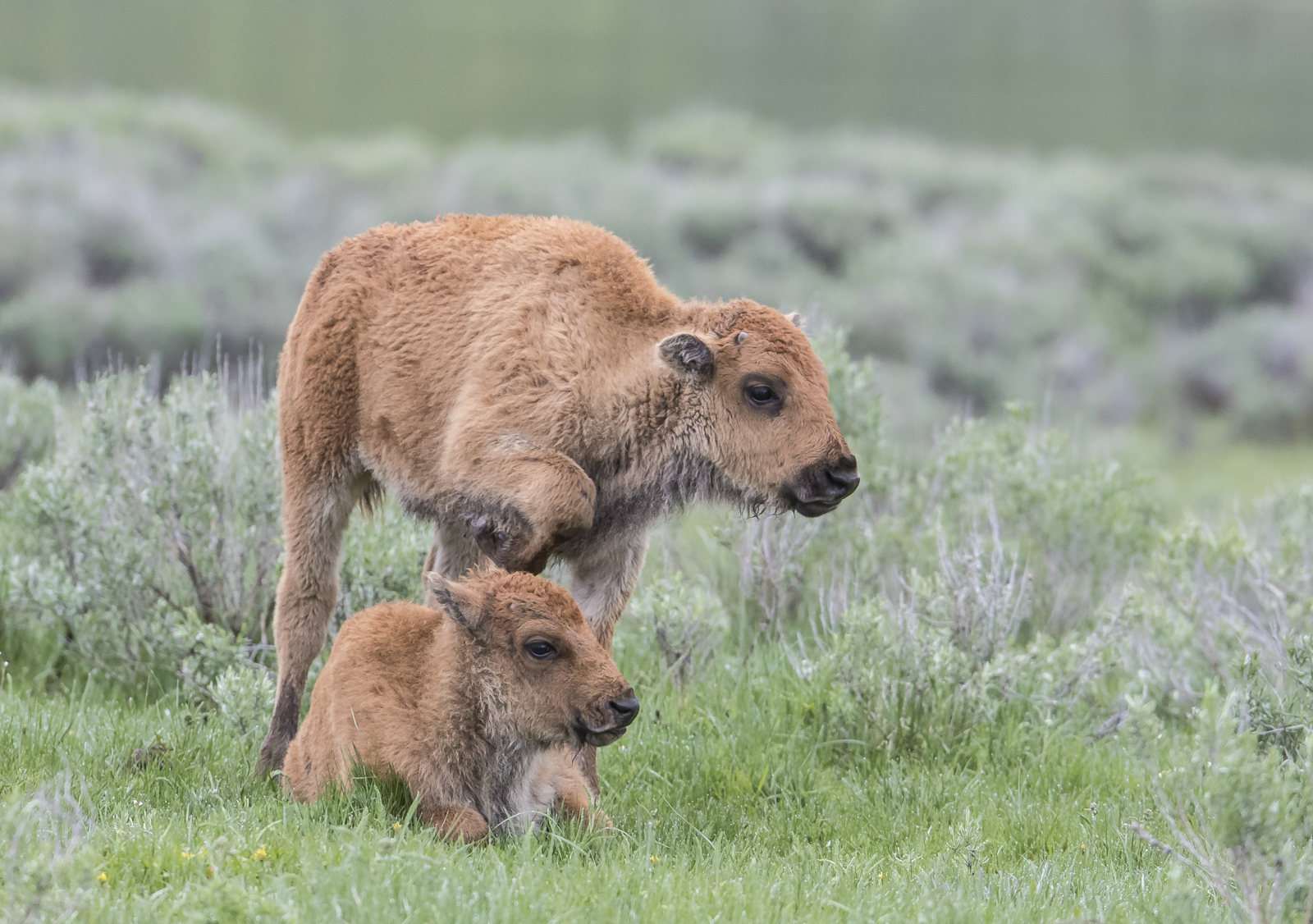
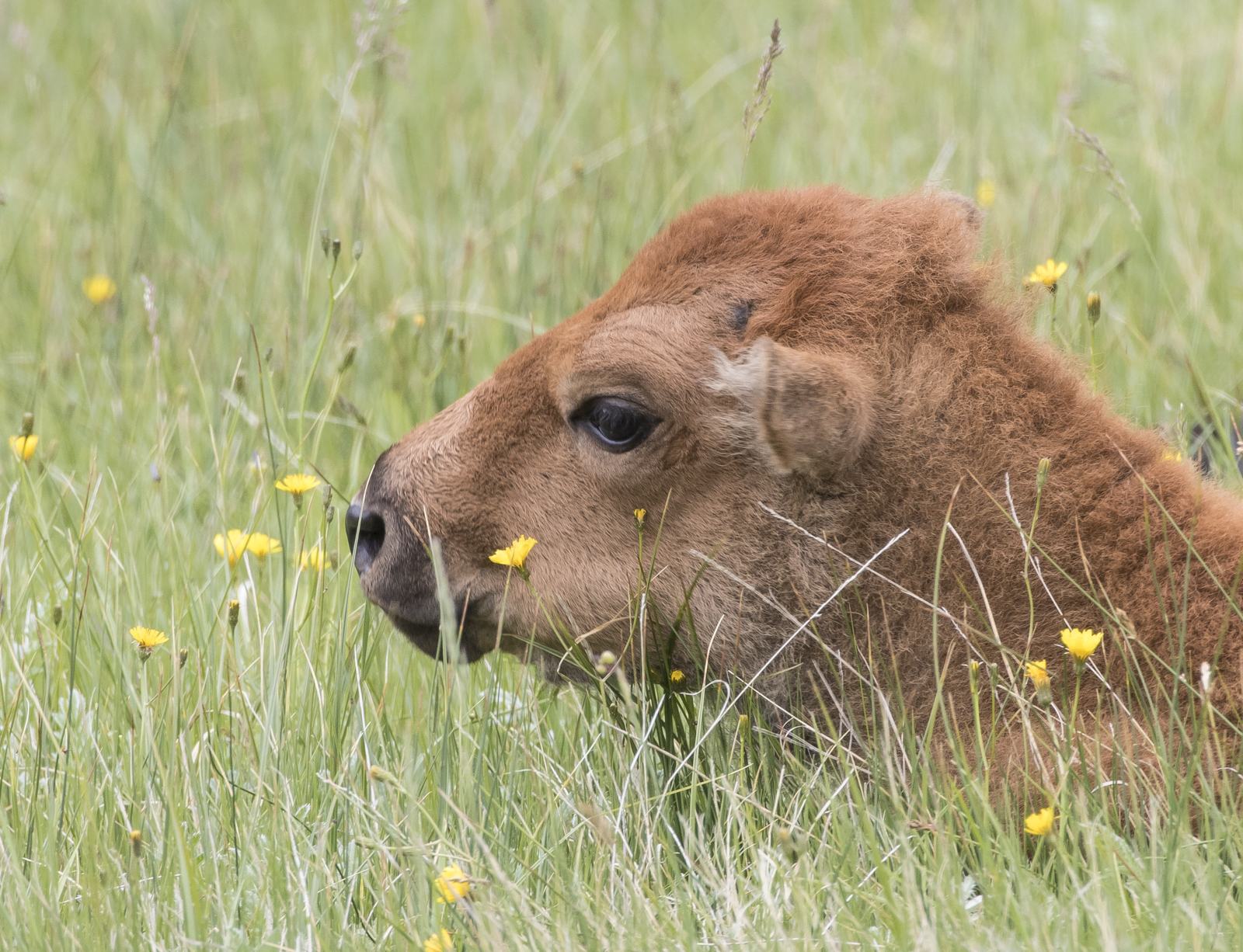
They are a reddish-orange color for the first few months of their life, changing to more brown by the end of summer. When they are active, they tend to frolic and jump or play with other calves in between bouts of nursing. Then they seem to run of gas and plop on the grass and sleep.
Laying down for a napA pair of calves nuzzling each otherIt can be tough to get some sleep when another calf wants to playThe horn buds are more prominent on male calvesCuteness bisonified
A couple of mornings I was out by myself early and enjoyed just sitting and watching (and listening) to these magnificent animals and their playful young. And it wouldn’t be a trip to Yellowstone without a bison jam – a herd moving across or along a roadway. Below is a brief video clip so you can get a feel for what is like sharing the road with these behemoths.
Most of this herd had already walked by us by the time I got my phone out for the video. It can be a bit disconcerting when these huge animals lumber by your car and look into your window as they walk past. But such is the Yellowstone experience – a connection to an iconic animal of the West and a chance to appreciate their power and beauty in their landscape. I can only hope bison managers can figure out some other solutions to these bison population and political issues.
The land retains an identity of its own, still deeper and more subtle than we can know… Our obligation toward it then becomes simple: to approach with an uncalculating mind, with an attitude of regard…To intend from the beginning to preserve some of the mystery within it as a kind of wisdom to be experienced, not questioned. And to be alert for its openings, for that moment when something sacred reveals itself within the mundane, and you know the land knows you are there.
~Barry Lopez
I just returned from eight days in my favorite place, Yellowstone National Park. If you follow this blog, you know I have a love affair with this park and its wildness. I have been to the park over 40 times in the last 30 years, in every season, and still can’t get enough of the scenery, wildlife, and the big skies of Wyoming and Montana (a small part of the park is also in Idaho). Melissa is out there right now with a group of educators on a museum trip, and I know she feels the same way.
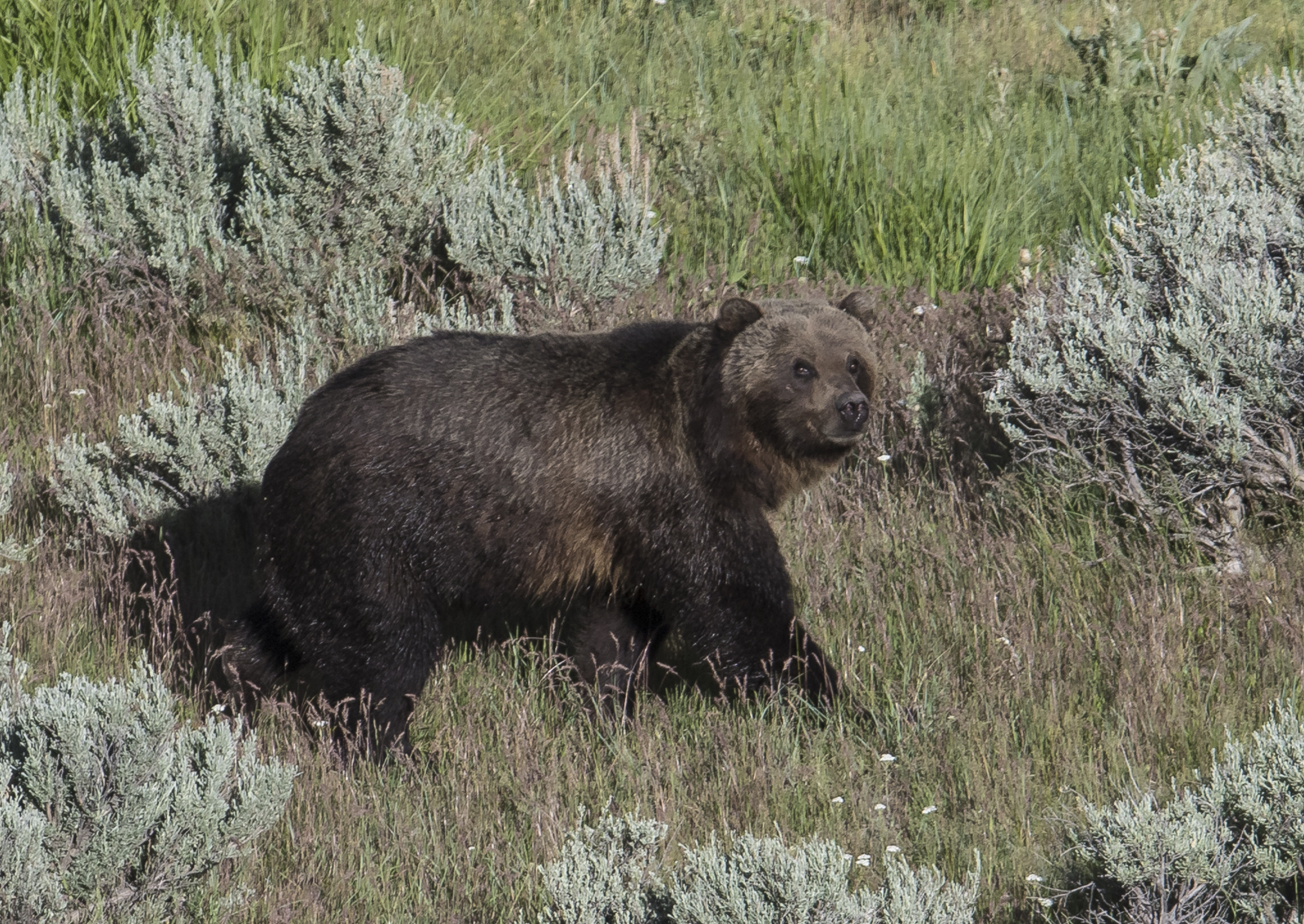
I arrived a couple of days ahead of a group of friends and their family, and we spent the first part of our trip in the wildlife-rich area of the Northern Range. My first day, I soon encountered what turned out to be a bear jam at the bridge over the Gardner River. The next morning, there was another bear jam at this same location. Now, look at the first two images and decide what type of bears I saw.
My first animal in the park- a blank bear (click photos to enlarge)My second bear – a blank bear
So, what did you decide? The first sighting was a grizzly bear. Note the shoulder hump and dished facial profile. The second bear is a cinnamon-colored black bear. The facial profile is much straighter from the forehead to the nose, and there is a lack of a shoulder hump (although that can be tricky depending on the angle you see the bear and how it is standing). Unlike here in North Carolina, black bears in Yellowstone vary quite a bit in color. The park web site states that “about 50% of black bears are black in color, others are brown, blond, and cinnamon”. Later in the week we saw a black bear sow (black in color) that had two cubs of the year that were cinnamon.
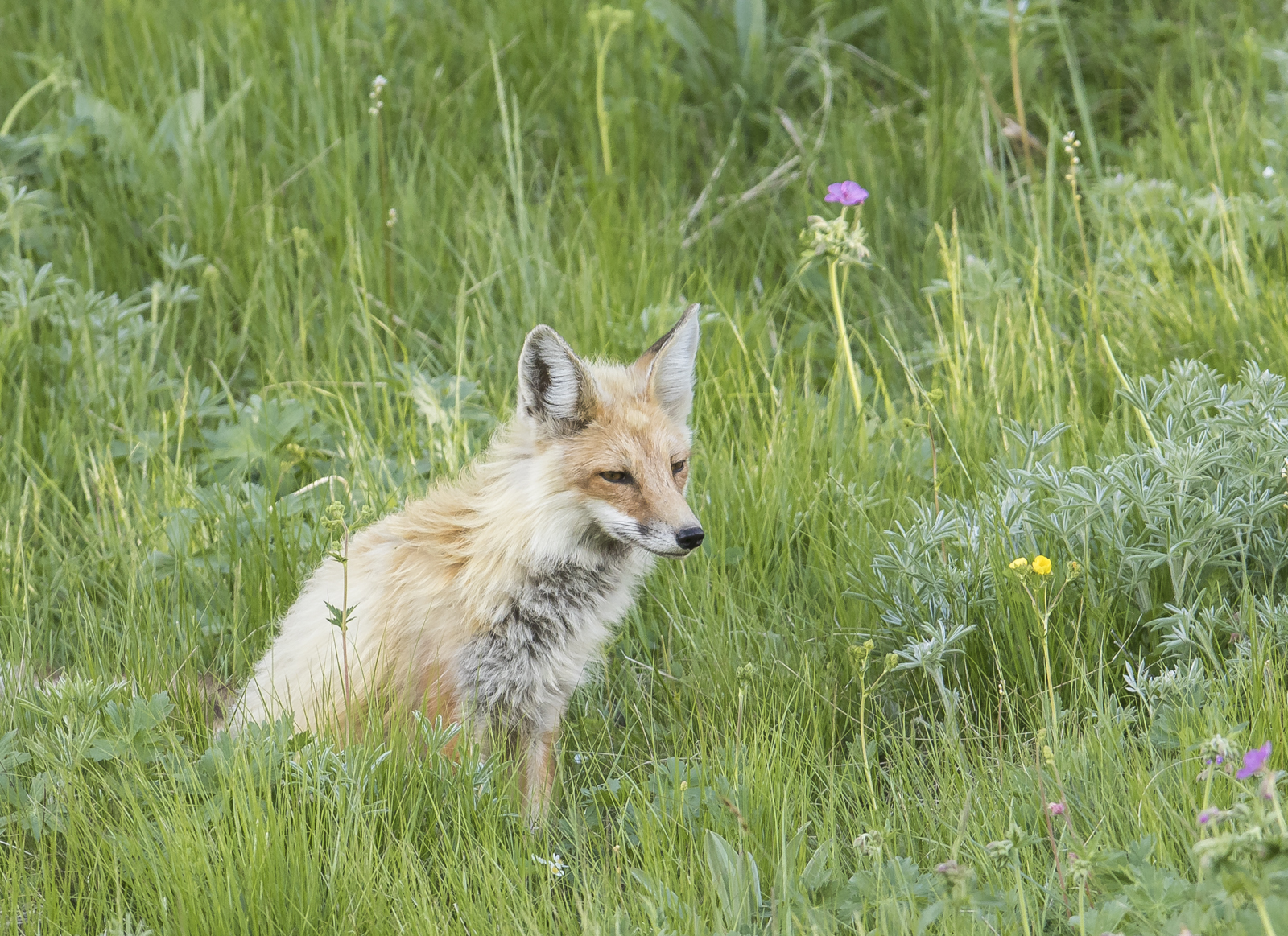
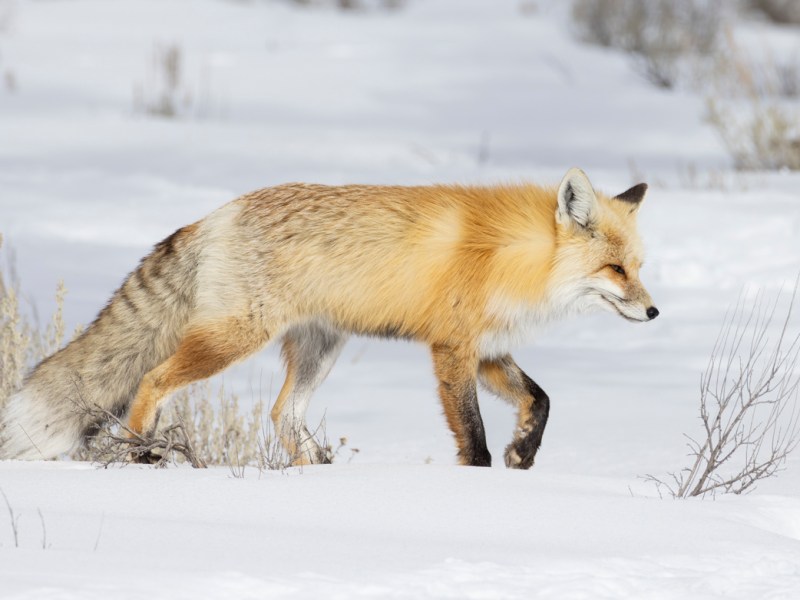
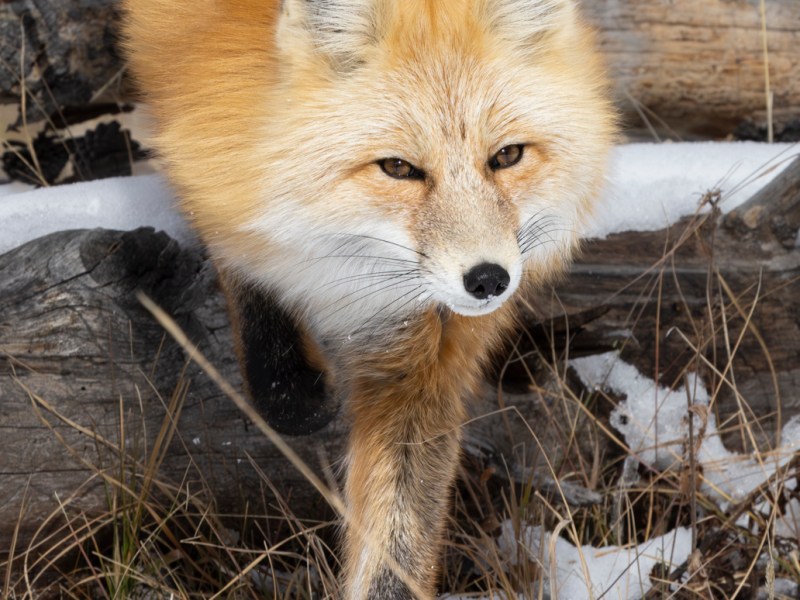
My second animal upon arrival in the park was a beautiful red fox
It turned out to be a very good week for fox sightings with a total of 8 (one or two may have been the same fox on different days). The reduction in coyotes after the reintroduction of wolves in 1995 has apparently led to an increase in the red fox population. Again, from the park web site – there are 3 native subspecies of red foxes in the western United States. Most foxes in the lower 48 states (especially in the eastern and plain states) are a subspecies of fox introduced into this country from Europe in the 1700s and 1800s for fox hunts and fur farms. As luck would have it, a couple of us had the sought-after “three dog day”, where we saw a fox, coyote, and wolf on the same day. Several of us saw the pups at the wolf den along Slough Creek, and I watched the Junction pack chase a herd of bison (but give up after failing to catch a calf twice). But all the wolves were too far away for decent photos.
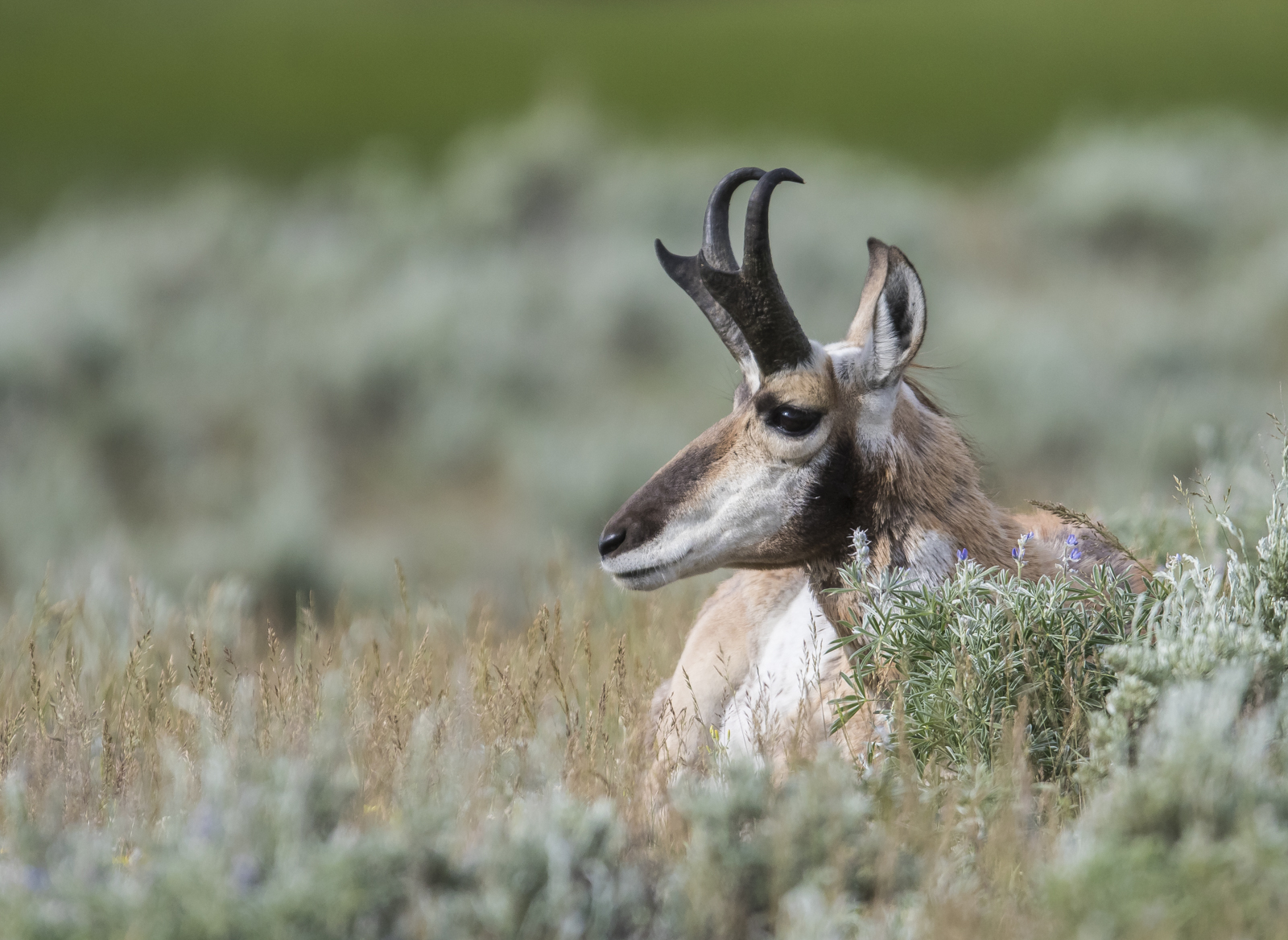
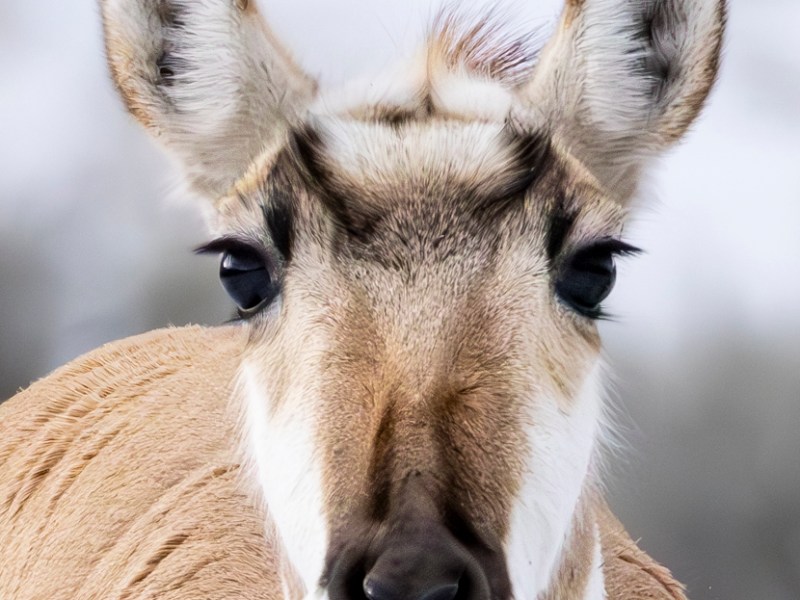
Pronghorn buck
The population of pronghorns seems to have increased in the 30 years I have been visiting the park, especially in the Lamar Valley and Little America areas. This time of year, bands of bucks tend to hang out together in small groups, often practicing their skills for future battles for females. Both sexes have horns, but bucks have longer horns, a black cheek patch, and black nose.
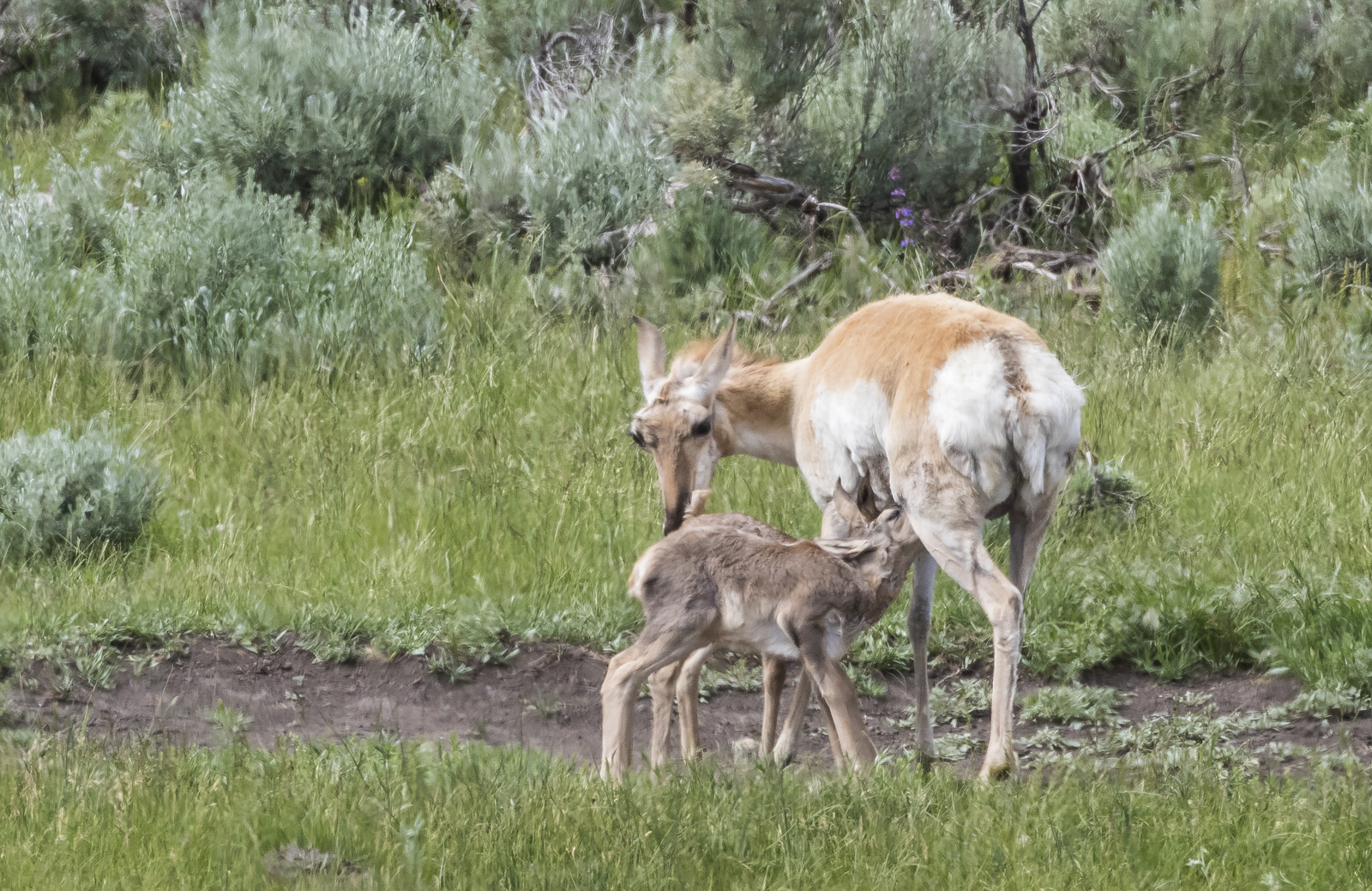
Pronghorn doe nursing her twin fawns
Pronghorn does are giving birth now and we saw a few females with fawns, most often twins. Mothers nurse their young a few times each day, then leave them laying in cover, in grass or sagebrush areas, and go off to feed, usually staying within a hundred yards or so of the young. Young pronghorn supposedly have no scent and will lay still until you almost step on them before running off. This particular doe may have lost one fawn to a predator (coyotes, wolves, and bears, among others, prey on pronghorn young) as we saw only one young with her later in the week (she was using a particular stretch of sagebrush near the road all week). Adult pronghorns use their keen eyesight and running ability (they can run up to 60 miles per hour) to escape predators.
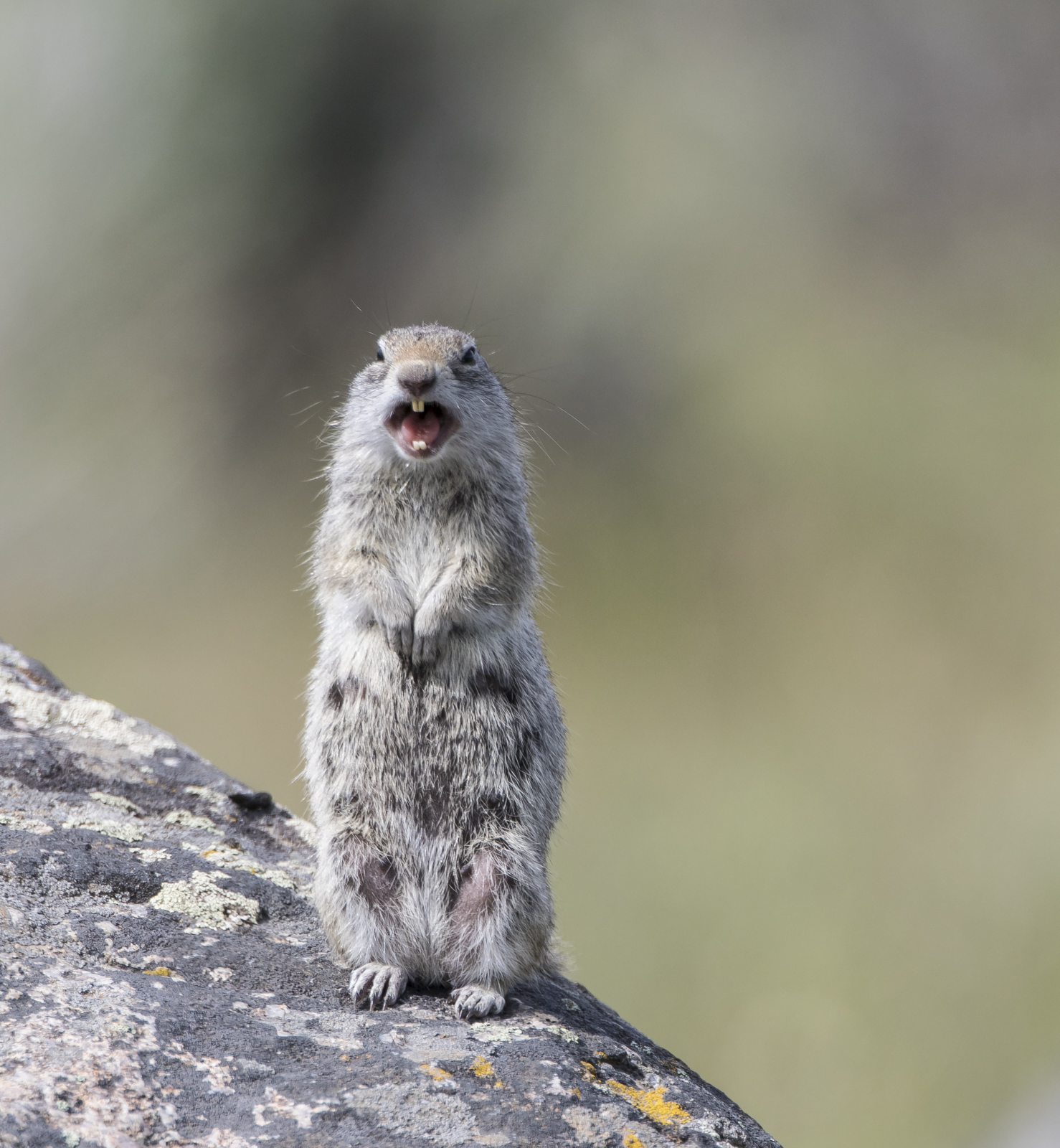
Uinta ground squirrel scolding me from the right…from head-on….and from the left.
One of the most abundant mammals in the park is the Uinta ground squirrel. These little rodents inhabit open habitats throughout the park and are particularly common in the Mammoth area and out in the sagebrush flats of Lamar. They live in burrows and you see the holes they make scattered throughout the sagebrush flats. Larger holes indicate where something, often a badger, has dug out a ground squirrel for a meal. I think everything preys on these little guys (raptors, snakes, coyotes, badgers, foxes, bears, wolves, and anything else with a taste for meat). That may be why they often perch atop a prominent rock or bush and scan for danger. When they see something, they let out a high-pitched squeak or trill. The fellow above certainly did not approve of me parking so close to his boulder, and he let me, and the rest of the world, know it.
Coyote that was being followed by…a badger.
A case in point was a coyote I spotted one afternoon near the road in Lamar Valley. When I slowed for a look, one of the teenagers in our group spotted a badger trailing close behind. These two predators will sometimes work in tandem, one taking advantage of anything scared up or missed by the other. We watched the badger for several minutes as it furiously dug a hole in the bank and disappeared. They often dig a new sleeping den every night, and can make short work of that, or digging out a ground squirrel, using their powerful shoulders and claws.
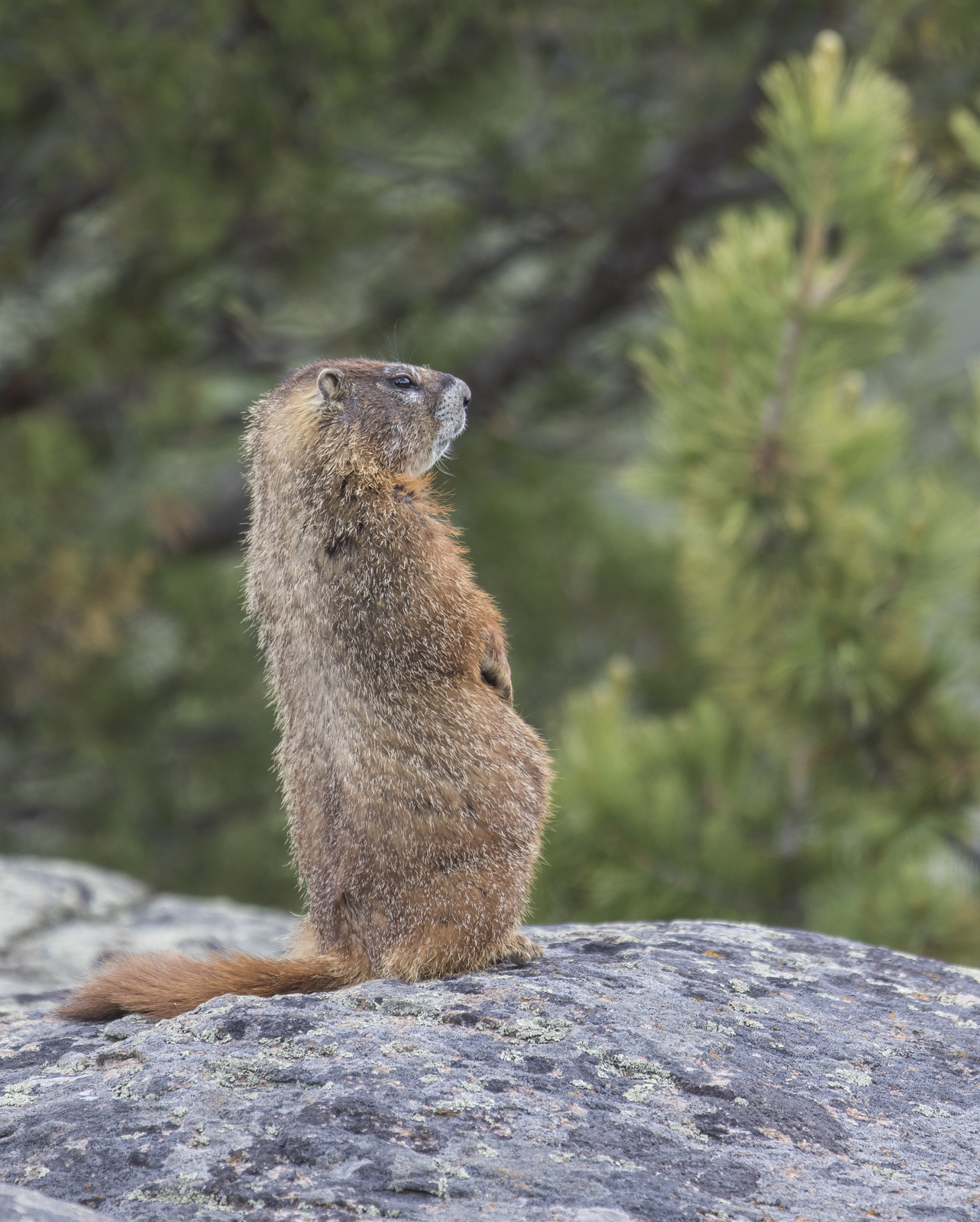
Yellow-bellied marmot assumes the pose as it watches a red fox nearby
Another, larger, rodent in the park is the yellow-bellied marmot. It looks and acts somewhat like our groundhog, but prefers rockier terrain. This one had spotted a hunting red fox and alerted the area with a sharp whistle, and this somewhat laid back pose.
This red fox just finished caching some food
This fox had caused the marmot to be on alert, but did manage to catch a small rodent (probably a ground squirrel or vole) while we watched. It gulped down its catch and then trotted off. We saw it again a few minutes later with something else in its mouth, which it proceeded to cache by burying it in the dirt. After digging a hole with its front legs and stashing the prize, it used its long nose to scoop and shovel dirt into the hole. The fox even used its nose to pound down the disturbed soil to help hide its future meal. Unfortunately, we also saw foxes that were being fed in one of the towns just outside the park. As is usually the case, this often leads to tragedy as the animals become habituated to humans.
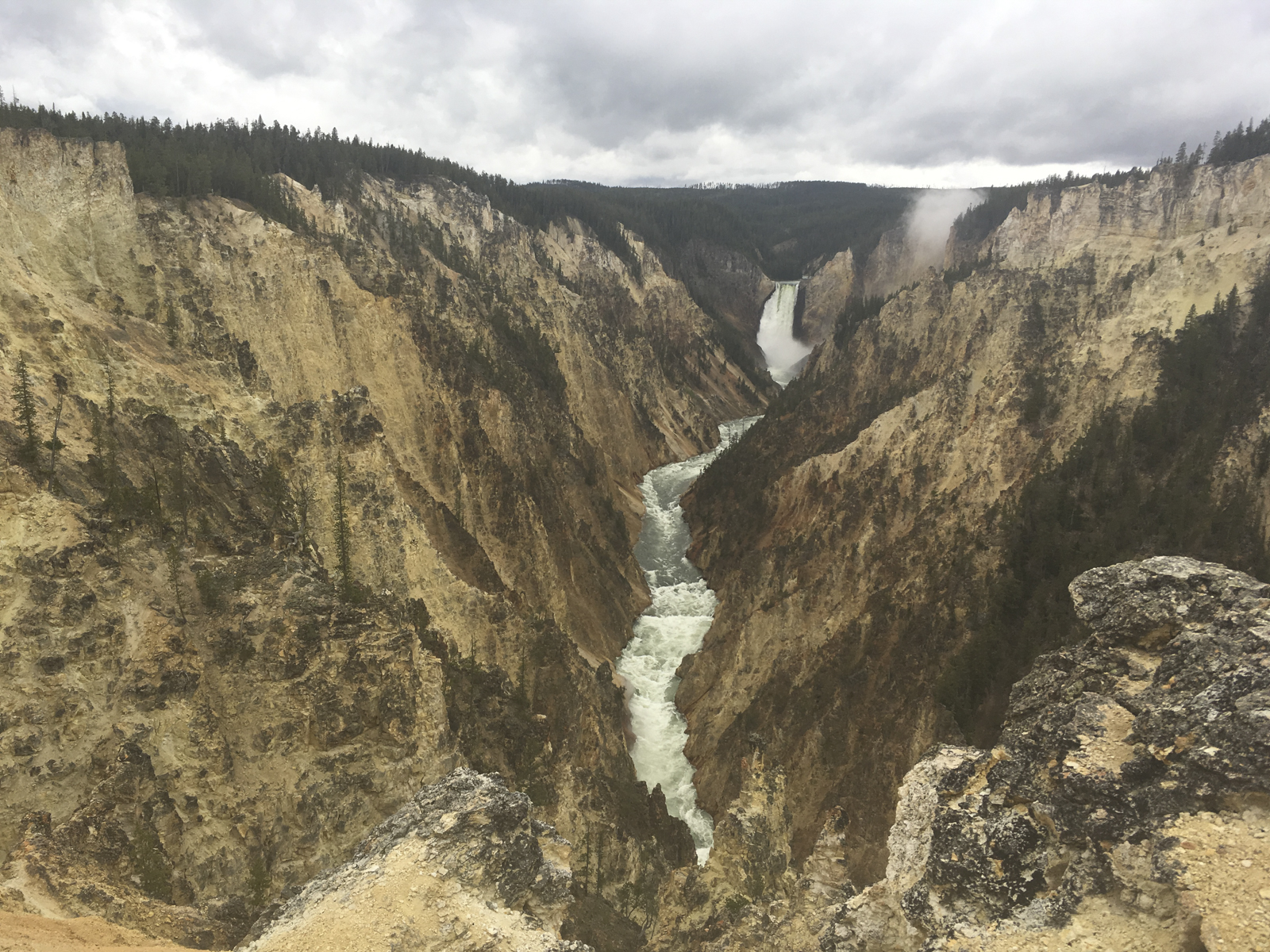
Grand Canyon of the Yellowstone on a rainy day
I admit, I have a preference for the northern part of the park and its wide open vistas, waterways, and abundant wildlife. Once you head into one of the more developed sections around the famed thermal features, life can get a bit more (actually, a lot more) hectic. But, as a ranger once told our group, no matter what you thought you came to see in Yellowstone – the wildlife, the scenery, the incredible skies – you actually came to see the geology. That’s because the incredible geologic past (and present) of this landscape is what has created all of these features and allowed them to be preserved for us to enjoy as the worlds’ first national park. As we headed south, we did, indeed, pick up more crowds, although our stop at Canyon was rather tranquil due to a light rain keeping most people away. In fact, this was probably the second wettest trip in all my years of going to the park. We even had two days with snow! I would definitely trade this NC heat for some of that cool June weather.
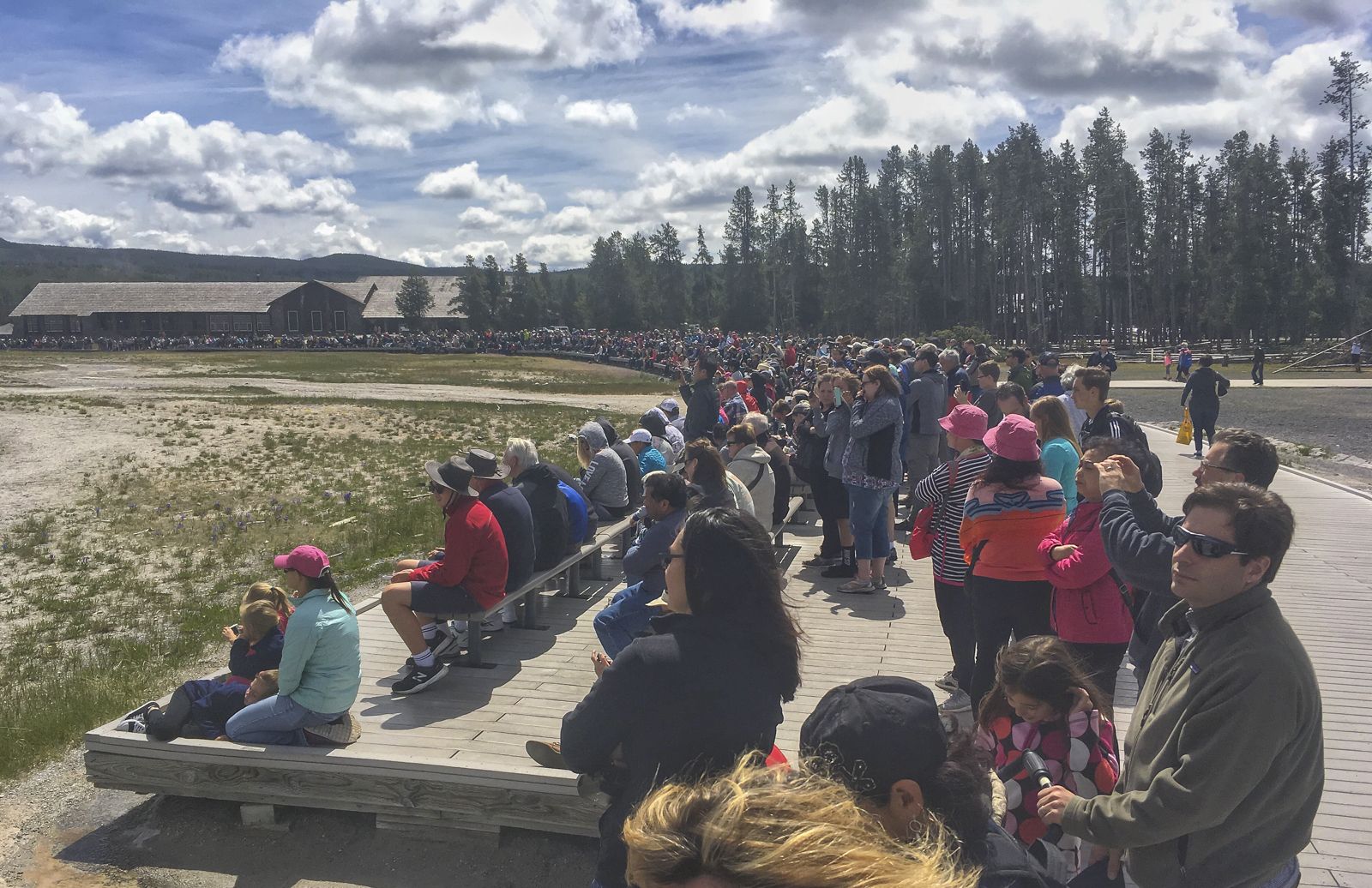
The bleachers at Old Faithful are full, waiting for “the show”
Our day in the geyser basins proved more typical of summer – large crowds, limited parking, and some not-so-great visitor behavior including walking off boardwalks in thermal areas and getting way too close to large animals for selfies.
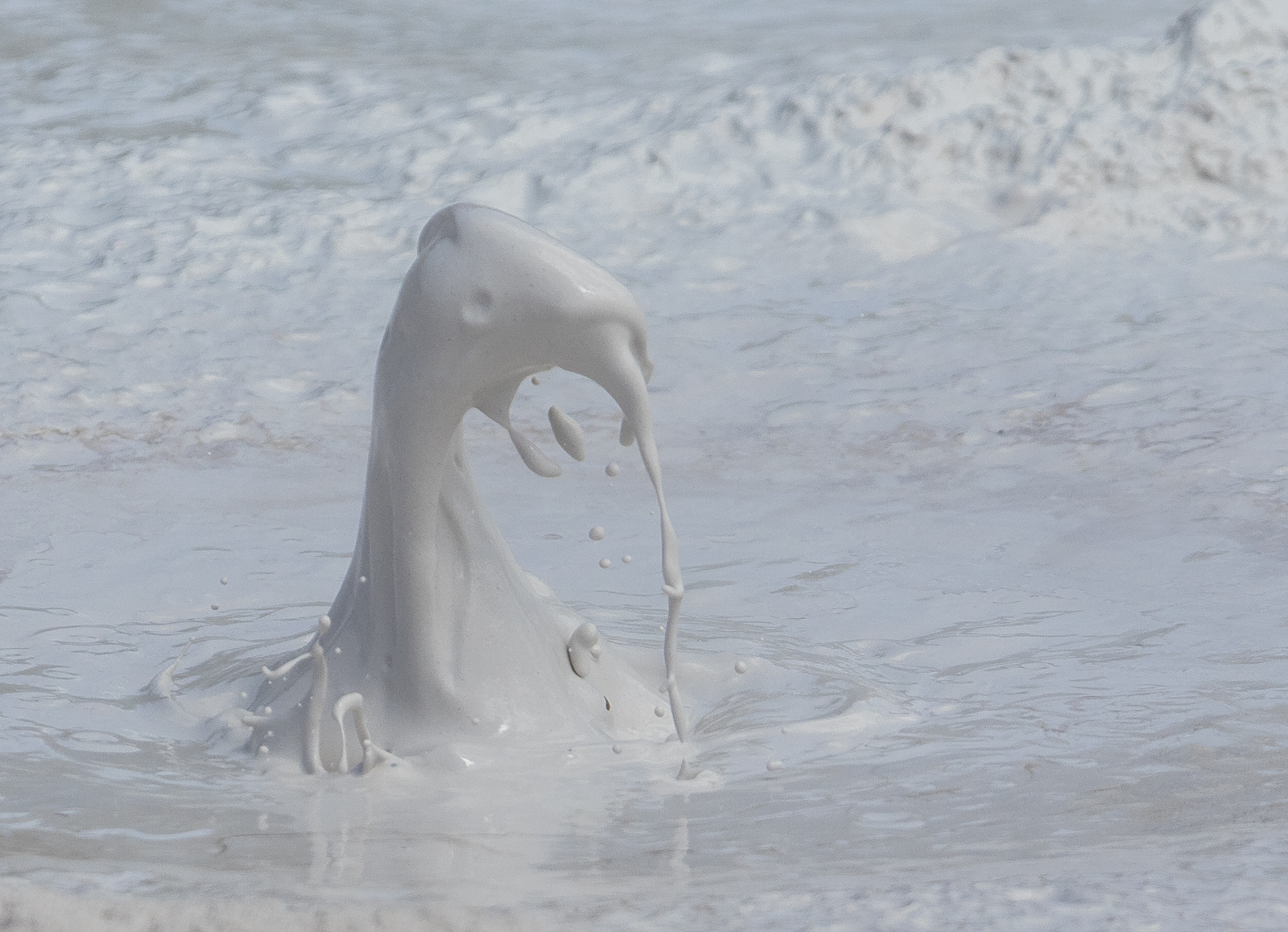
Bubbling mud at Fountain Paint PotsAliens in the mud
Fountain Paint Pots continues to impress me, partly due to my fascination with the mud pots and my obsession to photograph interesting shapes as the mud bubbles pop. I was unable to walk my favorite thermal feature, Grand Prismatic, because there was no parking, so I had to drop off my folks and let them walk while I waited down the road to return and pick them up. Still, even from several hundred yards away, the prismatic pool lives up to its name with rainbow colors rising in the dense steam above this, the largest hot spring in the park.
This is the first of a couple of posts about this trip that I will try to get to this week. Looking through the images helps me to relive those moments, to find peace in knowing that these wild creatures and wild places still exist. And, in spite of the crowds, Yellowstone is a place where we can all find something we need now more than ever – a chance to experience the best that our planet offers to those willing to just take the time to walk, watch, and listen. Below are a few of the other wild creatures we encountered last week. I’ll post something about the birds and the ubiquitous bison soon.
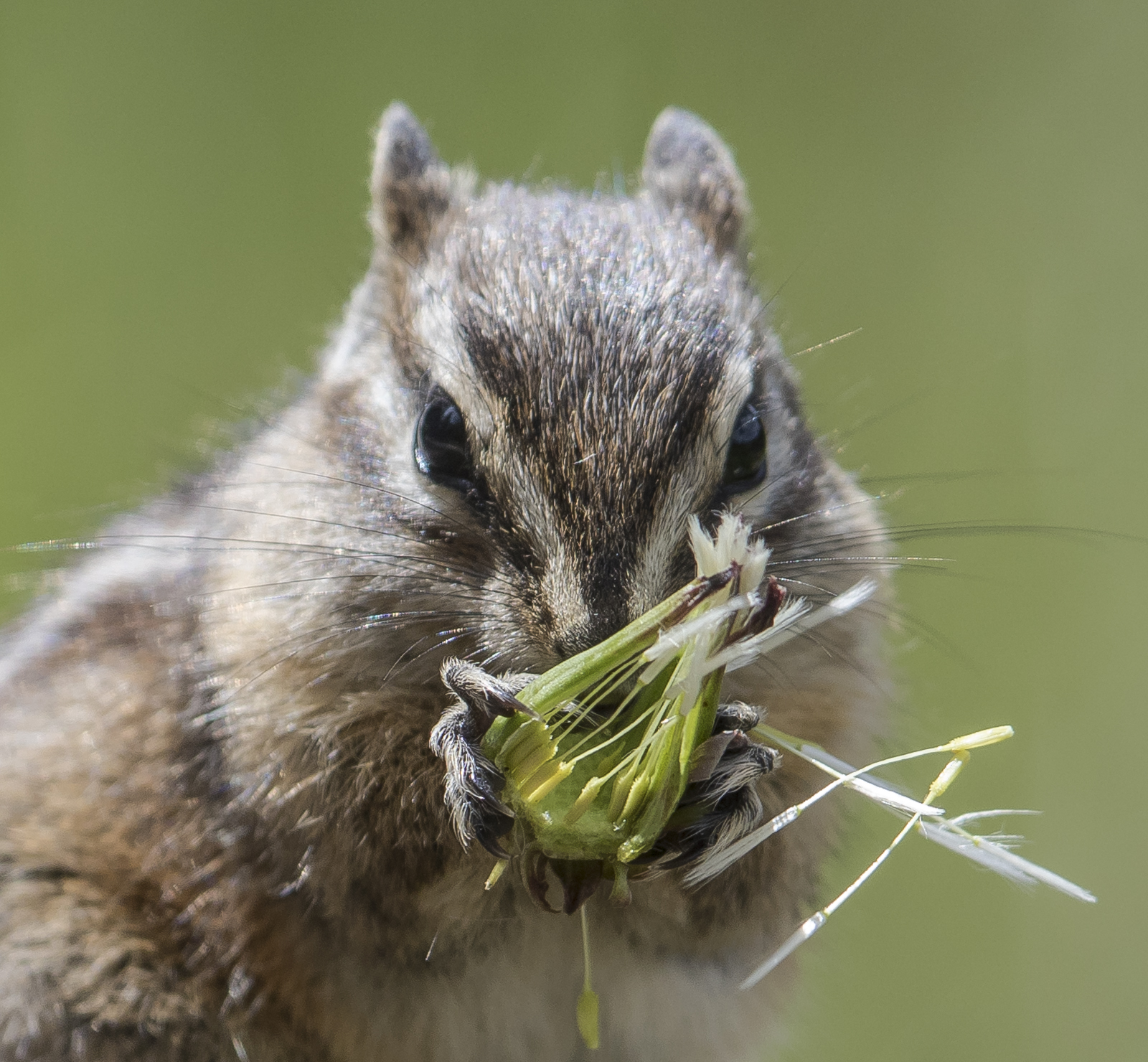
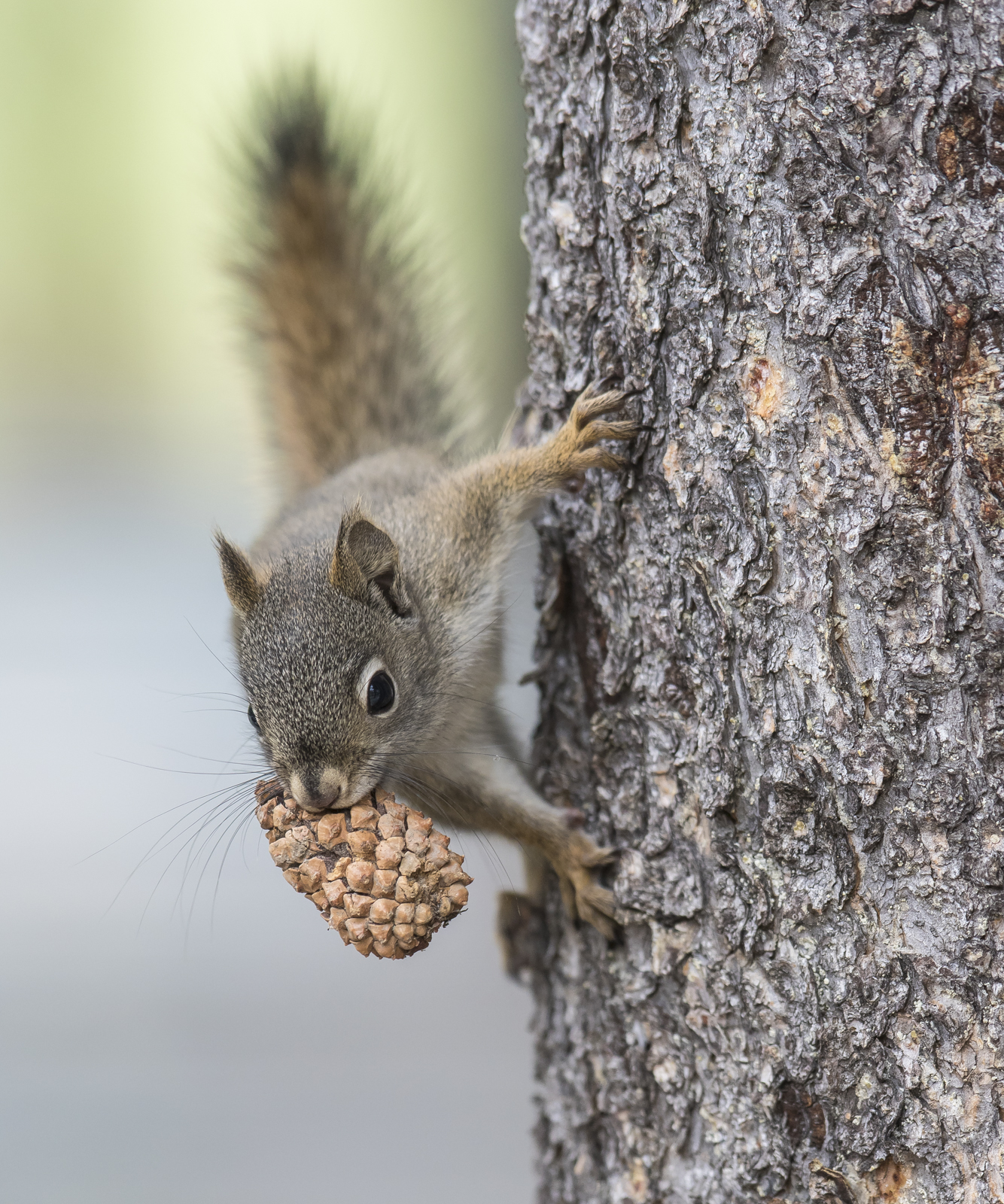
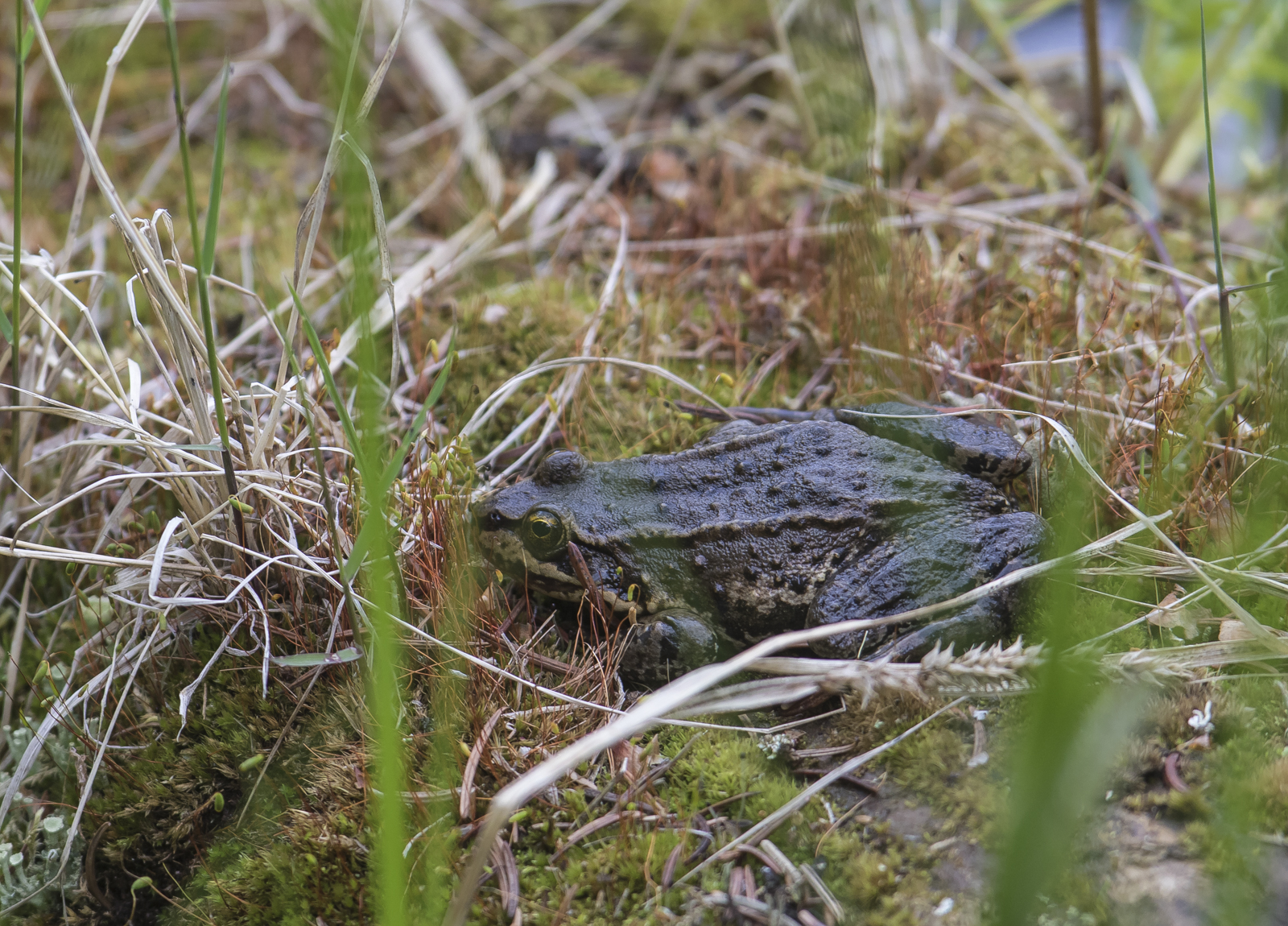
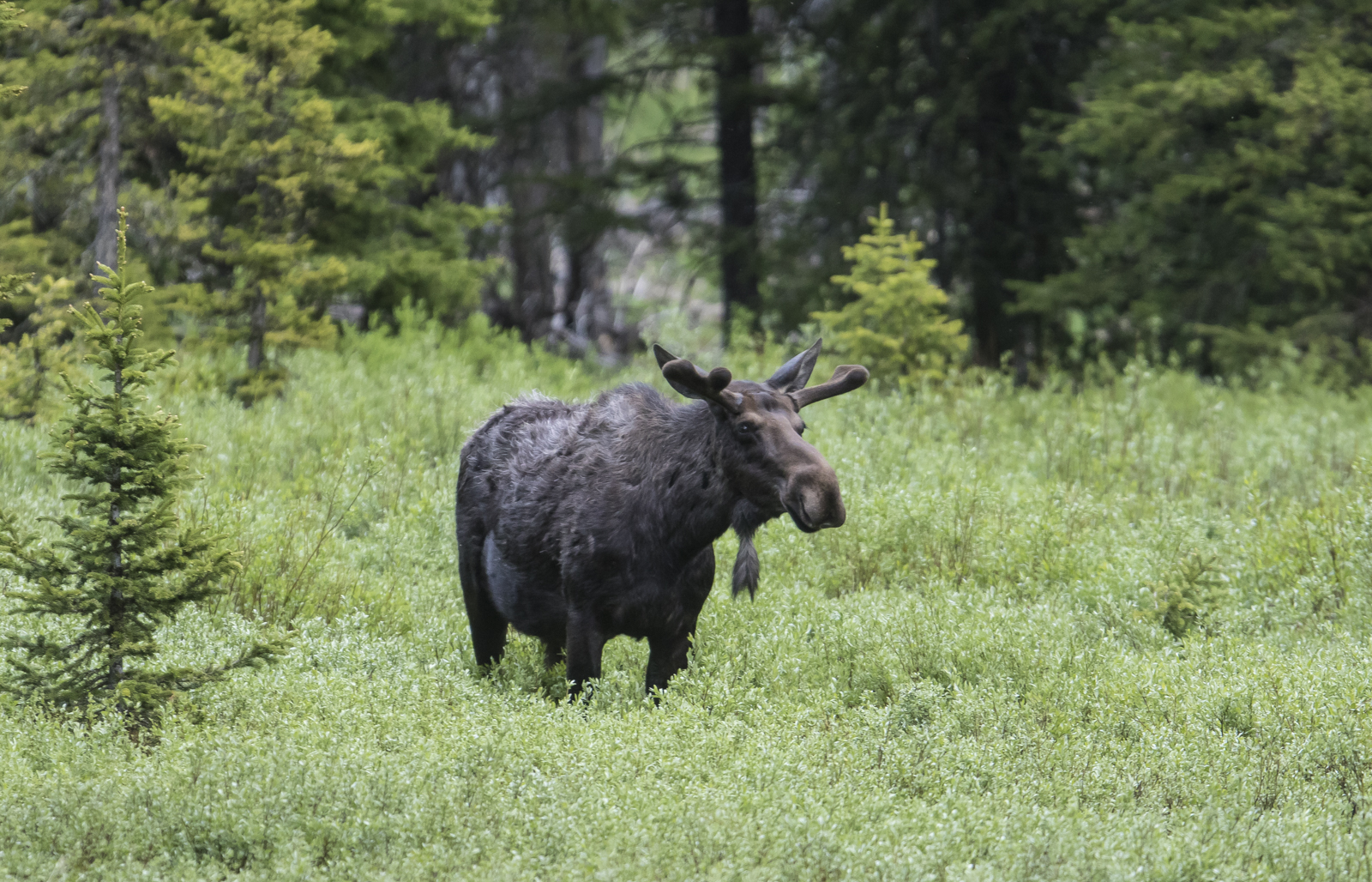
A chipmunk grazes on wildflower seedsRed squirrel with a mouthful outside my cabin in Silver GateA Columbia spotted frog, one of only 5 species of amphibians in the park (in 2014, a breeding population of Plains spadefoot toad was found in the park, raising the number to 5)Bull elk in velvet taking a siestaOne of many moose we saw in the northeast section of the park and vicinity
May this intelligent animal always have a place. We need to better understand bears.
~Mike McIntosh
Last weekend was the third annual Black Bear Festival in Plymouth, NC. I have missed the previous ones due to trips to Yellowstone, but I finally managed to visit this year. I was curious how the festival was organized and what messages might be going out to the public about one of my favorite mammal species. My old workplace, the NC Museum of Natural Sciences, had been asked to provide guided tours of nearby Pocosin Lakes National Wildlife Refuge. Luckily, I was able to join as a volunteer guide for the tours on Saturday – three 3-hours tours starting at 5:30 a.m., 1:45 p.m., and 6 p.m. A full day! Between tours on Saturday we visited some of the festivities that ranged from the usual festival goofiness to interesting information about local wildlife.
Entrance to the NC Black Bear Festival in Plymouth (click photos to enlarge)Lots of plays on words at the festivalFestival mascot taking a turn on the bronco bear. As the guy in charge of this ride said, you will not see this anywhere else.The coolest kiddie ride I have ever seen – the bear train
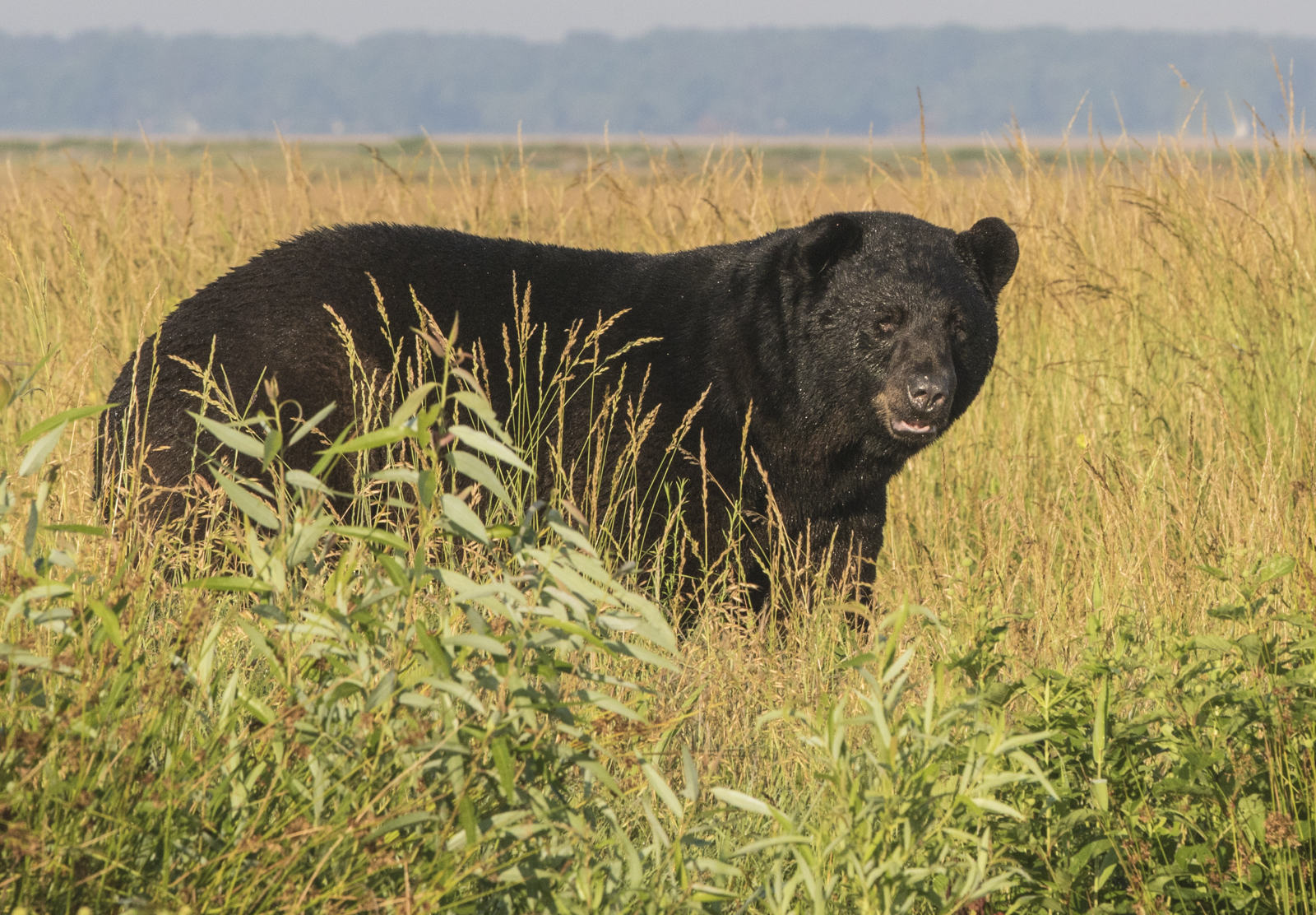
The tours themselves turned out to be a great learning experience for all involved. During the three tours on Saturday we had 34 bear sightings, only a few of which were the same bear on different tours. I didn’t take many photos during the tours, but highlights included 3 cubs of the year in a tree, and, on a later tour, an adult lounging in a tree.
Black bear lounging in willow tree
Sunday morning, I decided to head over to the refuge by myself and then head home early. I spent a few hours cruising the roads looking for bears and whatever else the refuge might offer, and I was not disappointed. I ended the day with 14 bear sightings for a personal total of 48 for the two days I was down there. The 7 tours by the museum over the three festival days yielded an impressive 71 bear sightings, including several very close to the bus.
Below are some of the highlights of my time on the refuge:
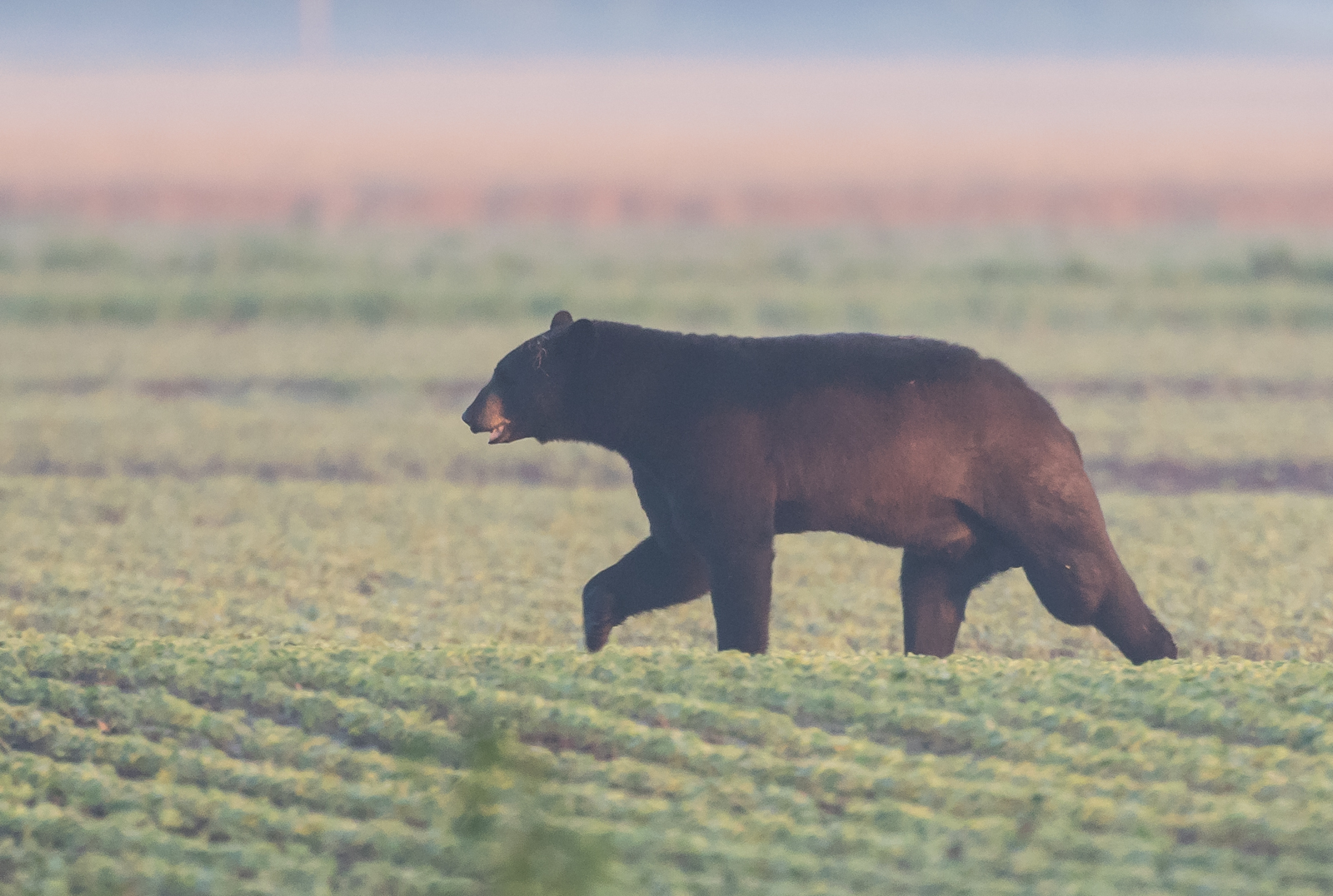
Sunrise bearSunrise bear in soybeansSunrise bear checking me out before heading into woodsSurprise bear
I was photographing a king rail (more on that in a later post) along a canal bank. A truck pulled up and stopped next to me to see what I was seeing. When they realized it was “just a bird”, they drove off. I glanced at their truck as they drove away. When I turned back to the rail, this huge bear had popped over the canal bank less than 30 feet away and was looking at me. The people in the truck never saw it.
I have seen this big fellow before
I quickly switched lenses and managed a few photos of the “surprise bear” before it lumbered off.
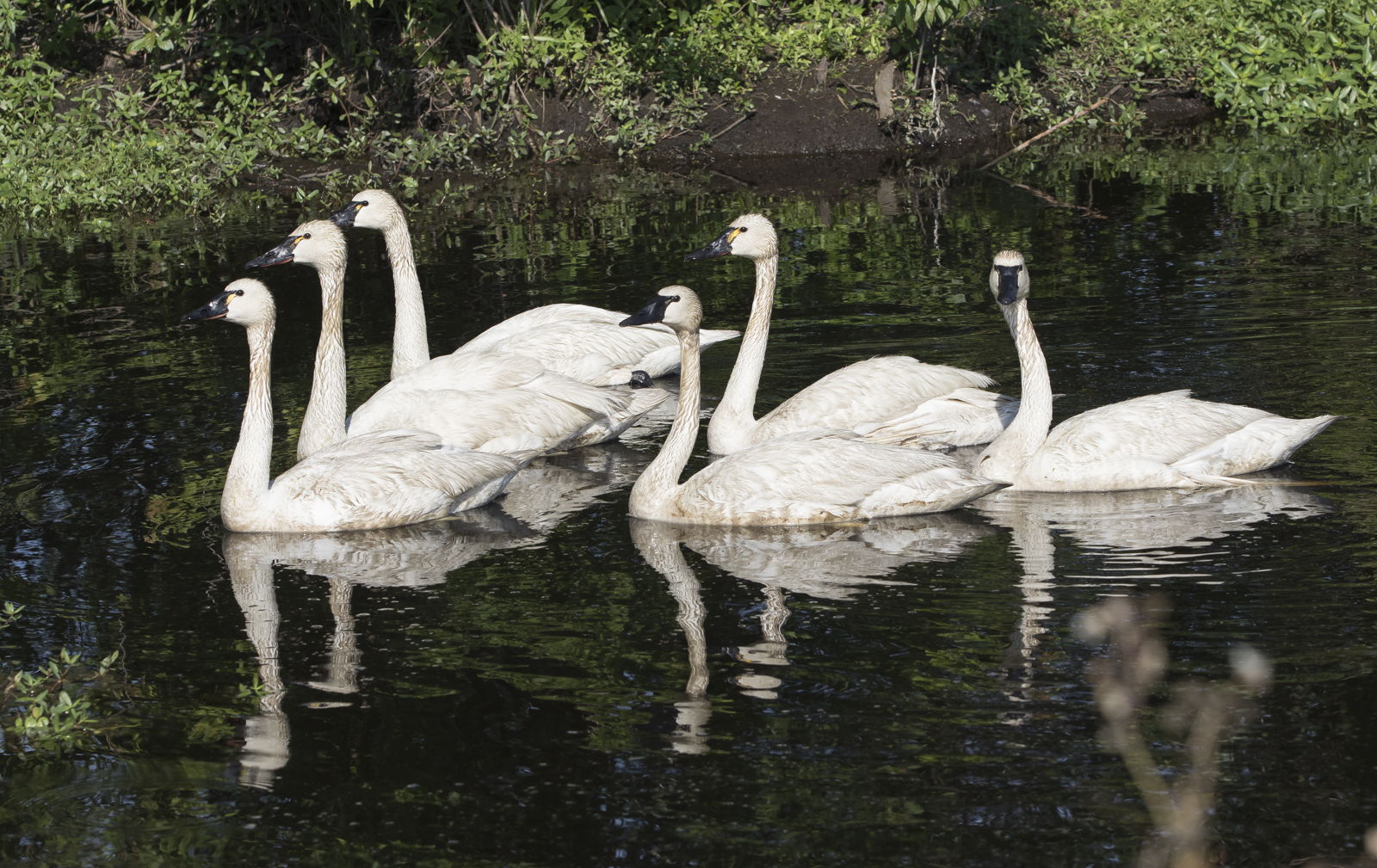
Tundra swans still hanging out at Pungo
This is the largest number of “lost swans” I have ever seen on the refuge after the migration season. Would love to know their story of why they are still here.
Northern bobwhite quailRoadside bear
My last bear of the day was a small guy feeding along the roadside. It had a slight limp caused by a crooked left hind leg. I sat in the car and watched this bear for about 30 minutes as it grazed on vegetation and pulled at a few downed logs looking for a snack. It didn’t seem too hampered by its limp. I saw a couple of other bears on this trip with leg injuries – my sunrise bear had what looked like a swollen knee (see photo early in post); I saw another large male that had probably been in a fight with another male for breeding rights and had a severe limp and gash on a hind leg. But most of the bears we saw looked quite healthy. It is always a treat to be able to watch wildlife doing what they do – living their lives, feeding, resting in the shade high up in a tree, cooling off in a canal to beat the heat, or caring for their young. I think this is the real value of the festival, giving people a chance to see wild bears as beautiful creatures that have lives and struggles in some ways not all that different from ours. I hope it helps us all learn to share our habitats with these magnificent animals. And, once again, the Pungo Unit has proven itself to be one of the best places I know to share the magic of wildlife with others. I look forward to my next visit.
Could a greater miracle take place than for us to look through each other’s eyes for an instant?
~Henry David Thoreau
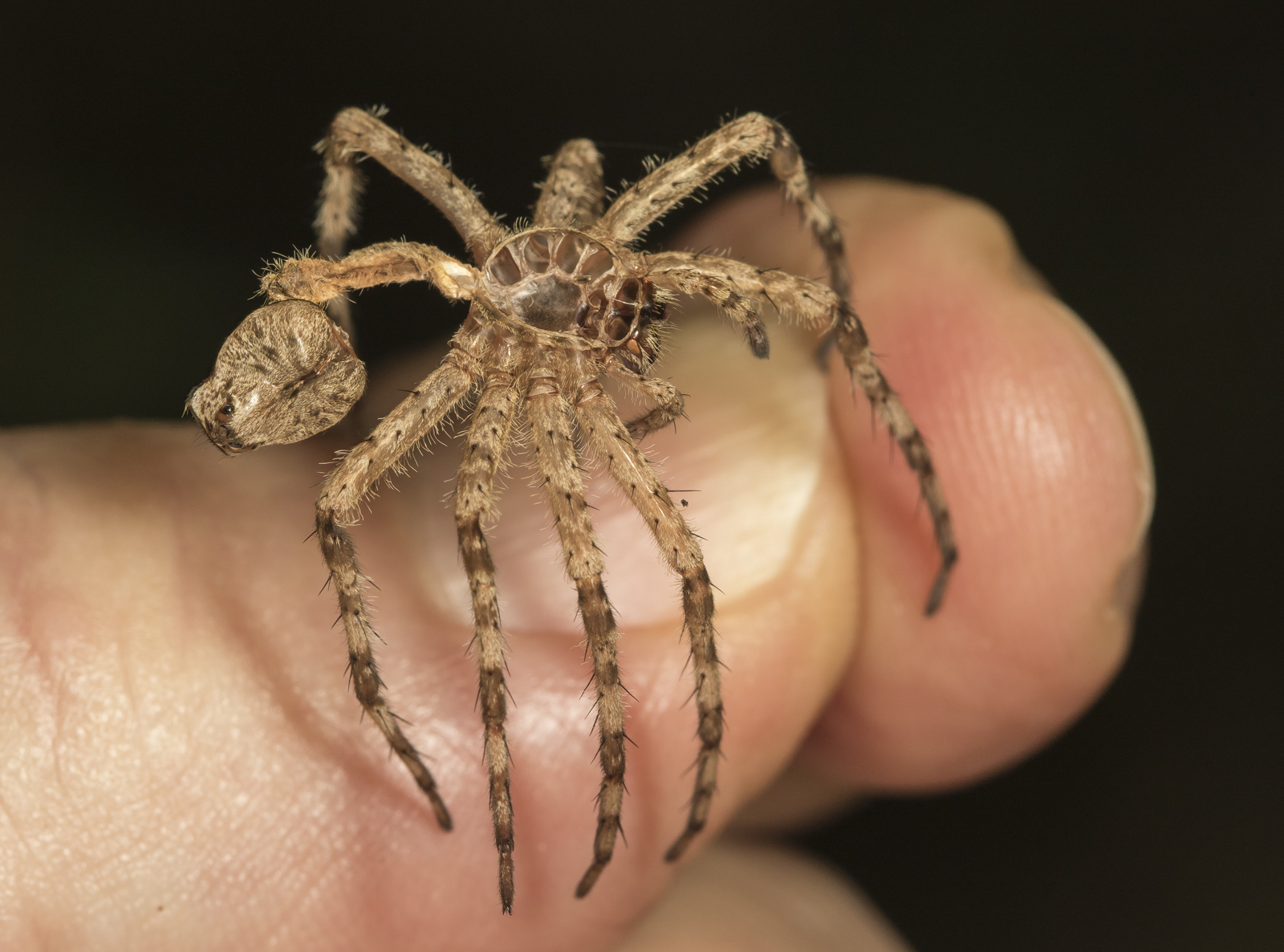
On any woodland walk in the warm months, you will run into a variety of spider silk across your path. And so it was recently on a walk in our woods. It was mostly webs of small orb web weavers strung across the trail, but at one point I found myself staring at a spider dangling at eye level. I reached for it and realized the spider was no longer there, just its last set of clothes – a shed exoskeleton.
Spider shed that was hanging by a thread along the trail (click photos to enlarge)
I am always fascinated by the remains of insect and spider sheds. The lighter-than-air remains cause them to dance in the slightest breeze, but the detail of their former inhabitants are so revealing and beautiful. In spiders, they have a pop-top shedding style so the cephalothorax is removed like a can lid so the “new” spider can pull itself out of the tangle of old leggings.
The eye coverings remain on the shed head seen on the left in photo
When I touched it for a closer look, the shed dropped to the ground and landed on a mossy rock. It looked as if the spider was ready to run off again, but with its head oddly trailing behind.
As we approached the house, I checked the small pawpaw patch out back and noticed something disappear under the broad leaves of a small sapling. I eased my hand under the leaf and a spider popped back out on the upper surface.
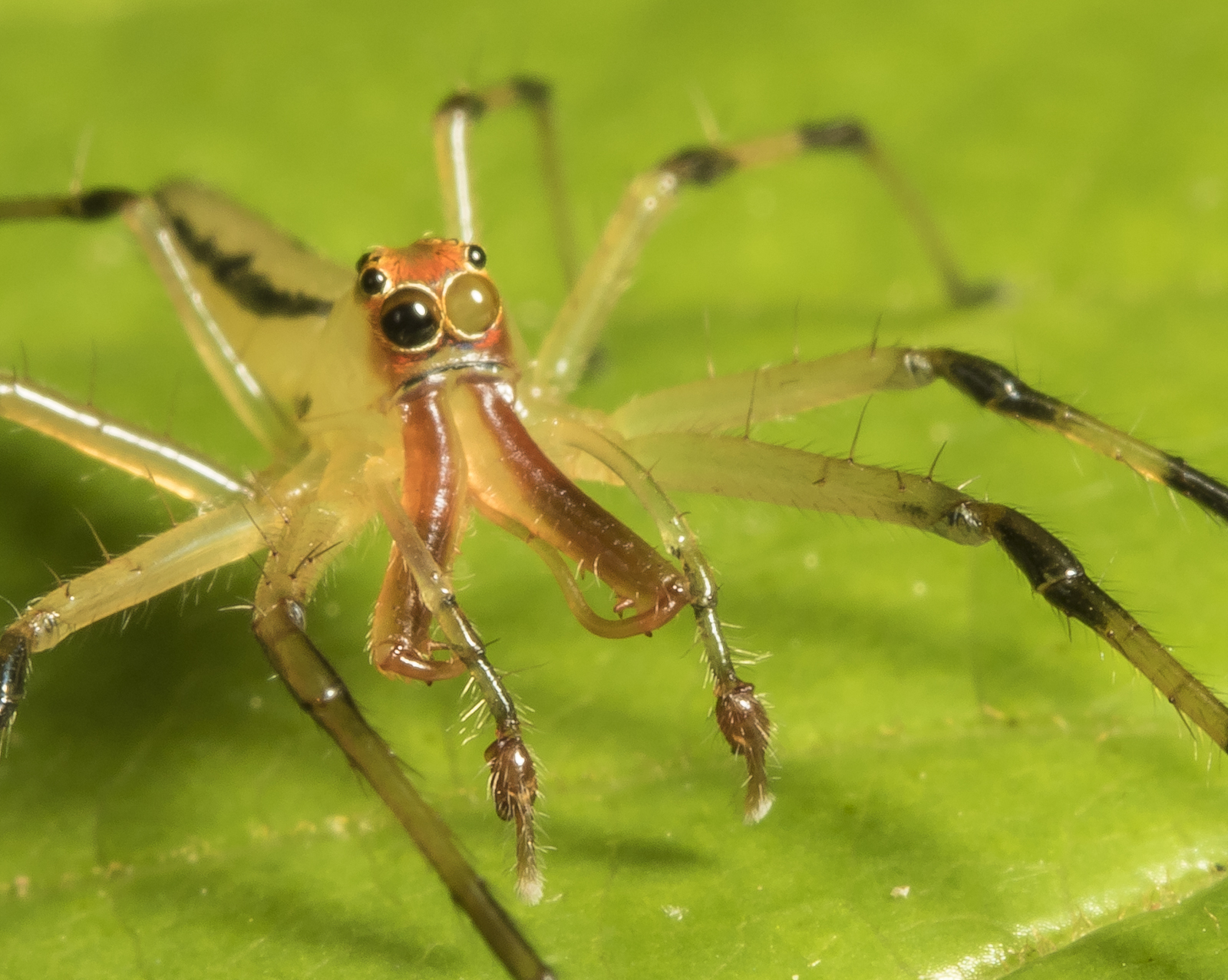
Magnolia green jumper on pawpaw leaf
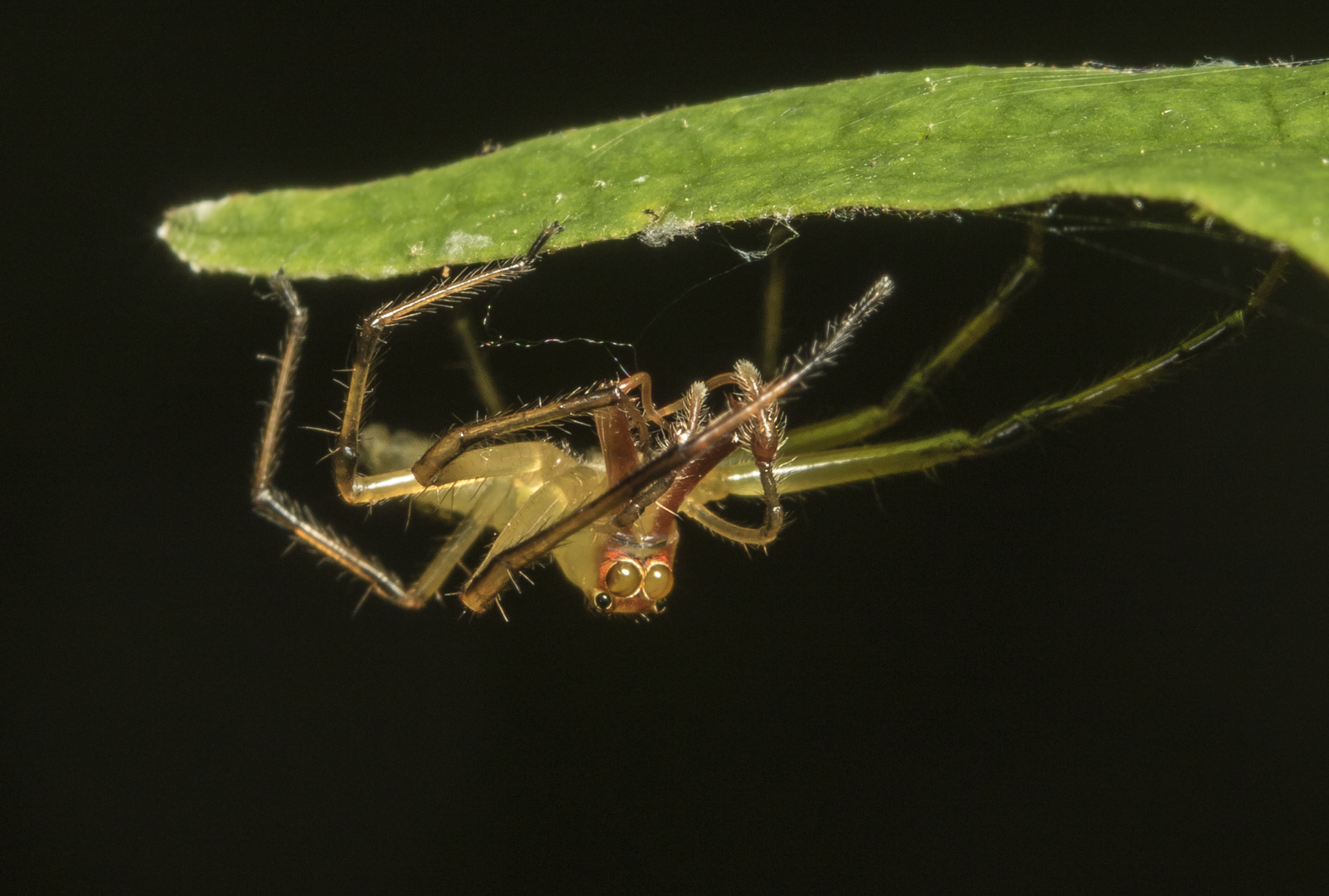
And what a spider it was! I have photographed the female of this species, a magnolia green jumper, but had never seen a male. They are characterized by the two huge eyes in front and their insanely long chelicerae.
The magnolia green jumper under the leaf
This little guy was quite active and bold. I had to coax it out from under a leaf at first, but then it tended to move toward the camera and even jumped on the lens a few times. I would then ease it back onto a leaf and start the photography dance all over again.
There are four rows of two eyes each, with the two in front being very large
Both sexes have a raised “eye mound” with 8 eyes surrounded by orange. These spiders can scan the area in front of them by moving the rear of their lens (the actual “eyeball” is fixed since it is built into the carapace). Because the rear of the lens is the darkest part of the eye and it moves around, you can often see a jumping spider’s eye changing color as in the photos below. When it is darkest, the spider is looking straight at you, because then you are looking down into its retina.
The retina sweeping side to side in the eye
This series of photos also shows the chelicerae (jaws) – the brownish orange appendages coming out beneath the eyes. Coming down on either side of those are the pedipalps (or palps).
One eye dark, one lighter
Pedipalps resemble small legs, but, in males, they serve a reproductive function.
Here’s looking at you…
The tips of male pedipalps are modified with small swellings (that look like small boxing gloves) that contain a complex copulatory organ. Males deposit sperm from under their abdomen into a small sperm web and the then suck it up into the palpal organ. When he finds a receptive female, he inserts the palpal organ into a slit on her abdomen and squeezes out the sperm. I suppose it is safer that way considering she might want to make a meal of him. Probably another reason to have a lot of eyes if you are a spider.
The present was an egg laid by the past that had the future inside its shell.
~Zora Neale Hurston
A quick update on the tulip-tree silk moth eggs from my last post – they hatched!
Close up of eggs hatching – viewed from below in clear plastic container (click photos to enlarge)
The moth laid eggs inside the container on the night of May 19. They started hatching early in the morning on May 30. They hatched as a group and within about 15 minutes, they all had emerged. I placed a leaf of their host plant, tulip poplar, in the container and they all gathered along the edge and started to feed.
Tulip-tree silk moth larvae feeding as a group
This species feeds as a group in their early stages, then separate out and feed solo as they grow. I have never seen the early instars of this species before, but references say these are often high in the treetops. My plan is to release most on tulip poplar saplings around the Garden and here at home and then raise a few for programs (the above photo represents about half of the group that hatched).
First instar tulip-tree silk moth larvae
They have a lot of eating and growing to do over the next few weeks. Mature caterpillars look very different (pale green with a few bright red and yellow bumps) and are a couple of inches in length. It turns out these were not the only eggs that hatched this week…
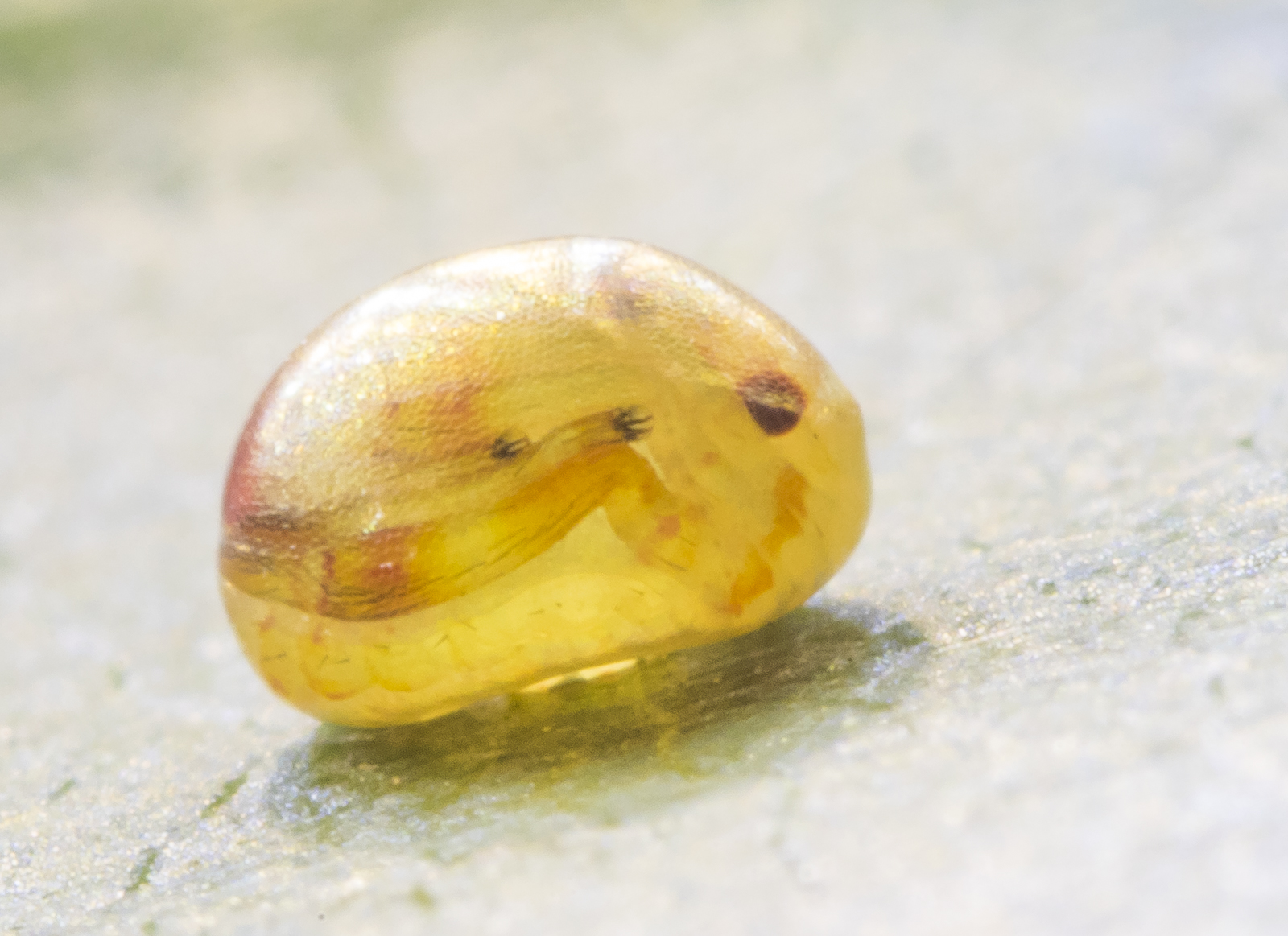
Mystery egg in yard
As I always do when walking around the yard, I was scanning the vegetation looking for anything of interest when my eye caught a small egg on top of a leaf. I leaned in and took a closer look and saw some beautiful patterns – I could see the creature inside the egg! The egg was about 2mm long and contained what looked like legs ending in tiny black claws. There were some large dark dots, that I assumed might be developing eyes.
Back-lighting the egg gave it the look of a miniature alien pod
I brought the leaf inside to photograph. The more I looked, the more it resembled a tiny alien from some sci-fi thriller. Ironically, I had found a similar egg the week prior on a hike at work as part of a citizen science program called Caterpillars Count. I had looked that one up in my go-to resource for such things, the excellent Tracks and Signs of Insects and Other Invertebrates by C. Eiseman and N. Charney. Both eggs closely resembled their photo of the egg of leaf-footed bugs. I decided to wait and see what hatched. I didn’t have to wait long. The next day, I took it to work to show a few folks, and while I was in a meeting (dang meetings!), it hatched.
Newly hatched mystery bug
It resembles assassin bug nymphs I have seen in the past, so that is what I first called it. But, I looked up leaf-footed bugs in my other go-to resource, Bug Guide, and there were photos of my same egg and nymph. So, this little guy is in the genus Acanthocephala, and will grow into a large (30mm long) true bug that feeds on plant juices, fruit, and other plant parts. It has a lot of growing to do before it will look like its picture in a field guide.
Empty egg shell of leaf-footed bug
Once again, the world outside my door has proven to be fascinating and full of mystery and beauty. Guess I will be looking for more eggs in the coming weeks to see what emerges.
From behind its head came two large “feathers” that projected forward…This butterfly has antlers, I thought in awe.
~John Cody, moth artist, describing his first childhood encounter with a giant silkmoth
Something caught me eye one morning as I approached the outside door leading upstairs to my office. It looked a bit like a dried leaf caught in one of the cracks in the decking. But when I turned to look, I could see it was one of the giant silkmoths perched on the deck, wings upright. I walked over, watched it for a few seconds, then gently picked it up and took it up to the office, safe from the many potential bird predators around the building. I placed it in a plastic container with the intention of releasing it toward sunset.
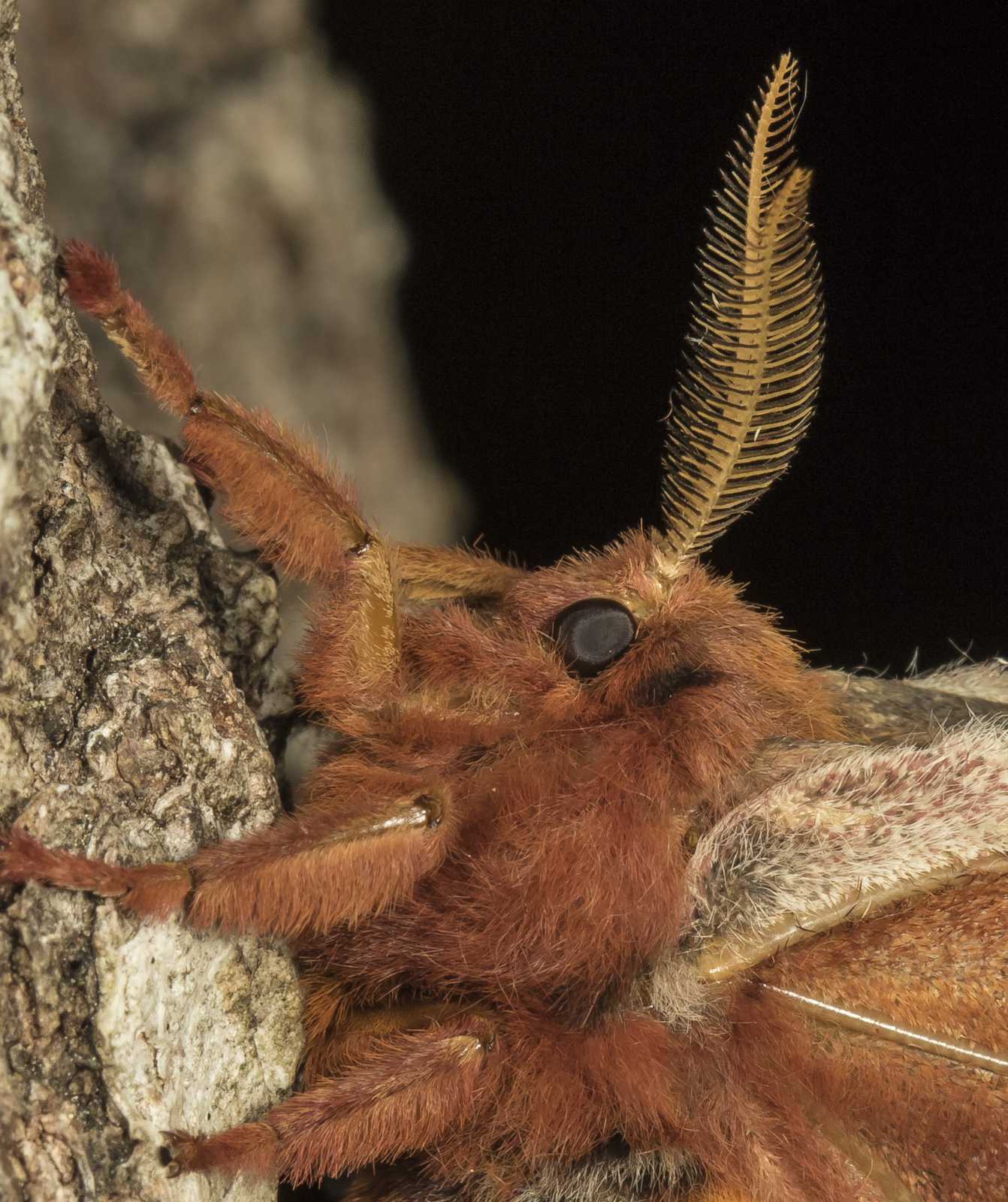
Close up of moth head (click photos to enlarge)
I had a full slate of programs that day so didn’t get back to the moth to observe or photograph it, and assumed it was a male based on a quick glance at the somewhat feathery antenna.
Moth eggs on side of container
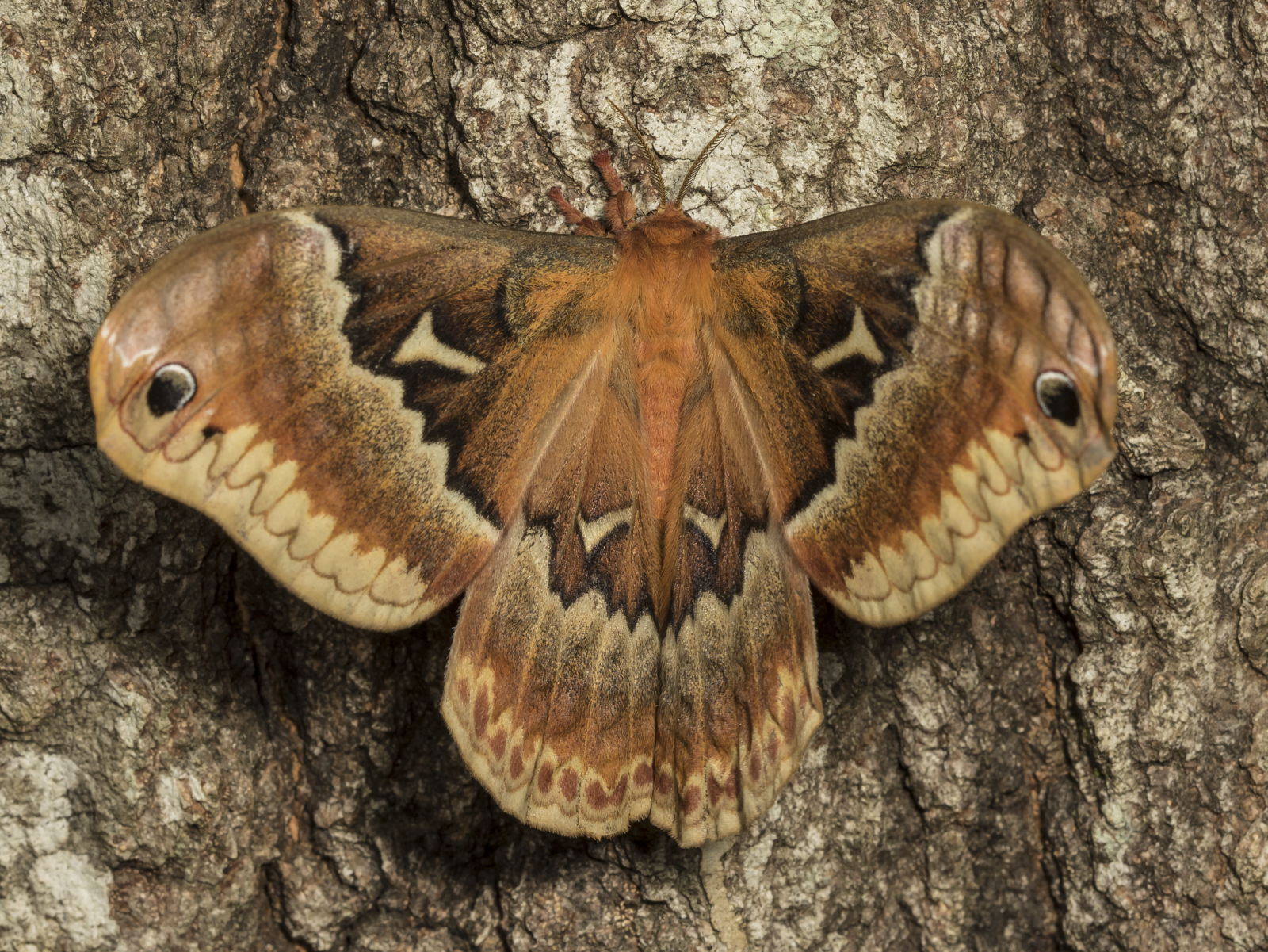
Later, I was surprised to find a cluster of eggs adhering to the walls of the container. Turns out, my moth was a female tuliptree silkmoth, Callosamia angulifera. This is one of many species of giant silkmoth in this area. The group is so-named for their large size (this one has a wingspan of 4 inches) and use of silk in their cocoons. Other local species in this family of moths, the Saturniidae, include the luna, cecropia, and polyphemus moths.
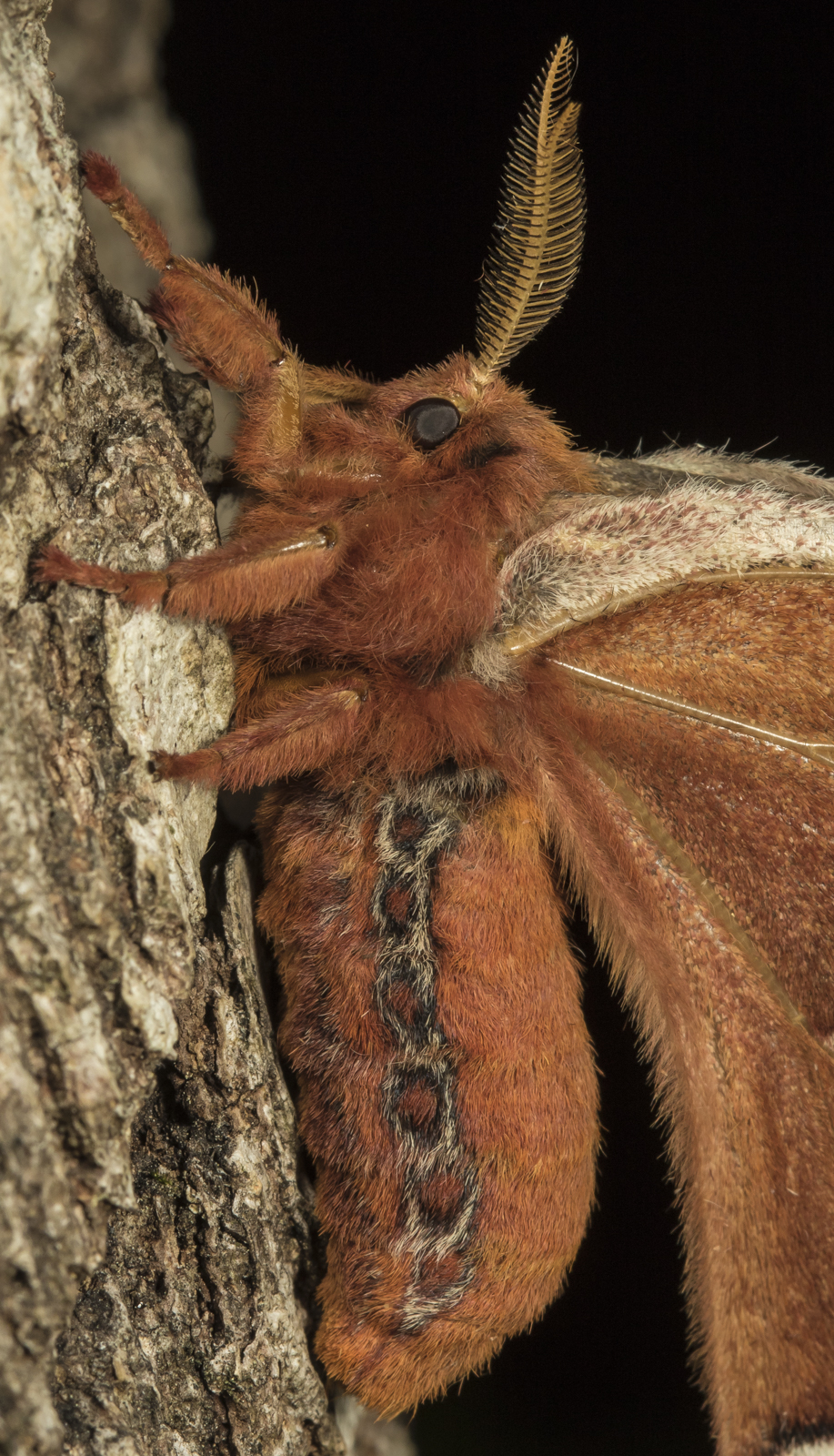
Closeup of moth body
They are all large, beautiful moths, with “furry” bodies and somewhat velvety wings. They do not feed as adults due to under-developed mouthparts, and live only a week or so as adults, with their sole purpose being to mate, lay eggs, and then die.
This species perches with wings upright
The tuliptree silk moth lays its eggs on leaves of tulip poplar, so I will transfer the eggs to some saplings when they hatch (in about a week).
The moth quivers just before take-off
This species is identified by the brown and reddish-brown colors of the adults, and the presence of the angular, T-shaped spots on the wings. Late in the day, I placed the moth on a tree trunk and watched. She began to quiver her beautiful wings, the silkmoth version of revving your engines. This is how they get their body temperature up to a sufficient internal temperature for flight. It didn’t take long before this giant of the night sailed off into the trees. I’ll keep you posted on her eggs and larvae over the coming weeks.
may my heart always be open to little birds who are the secrets of living
~ee cummings
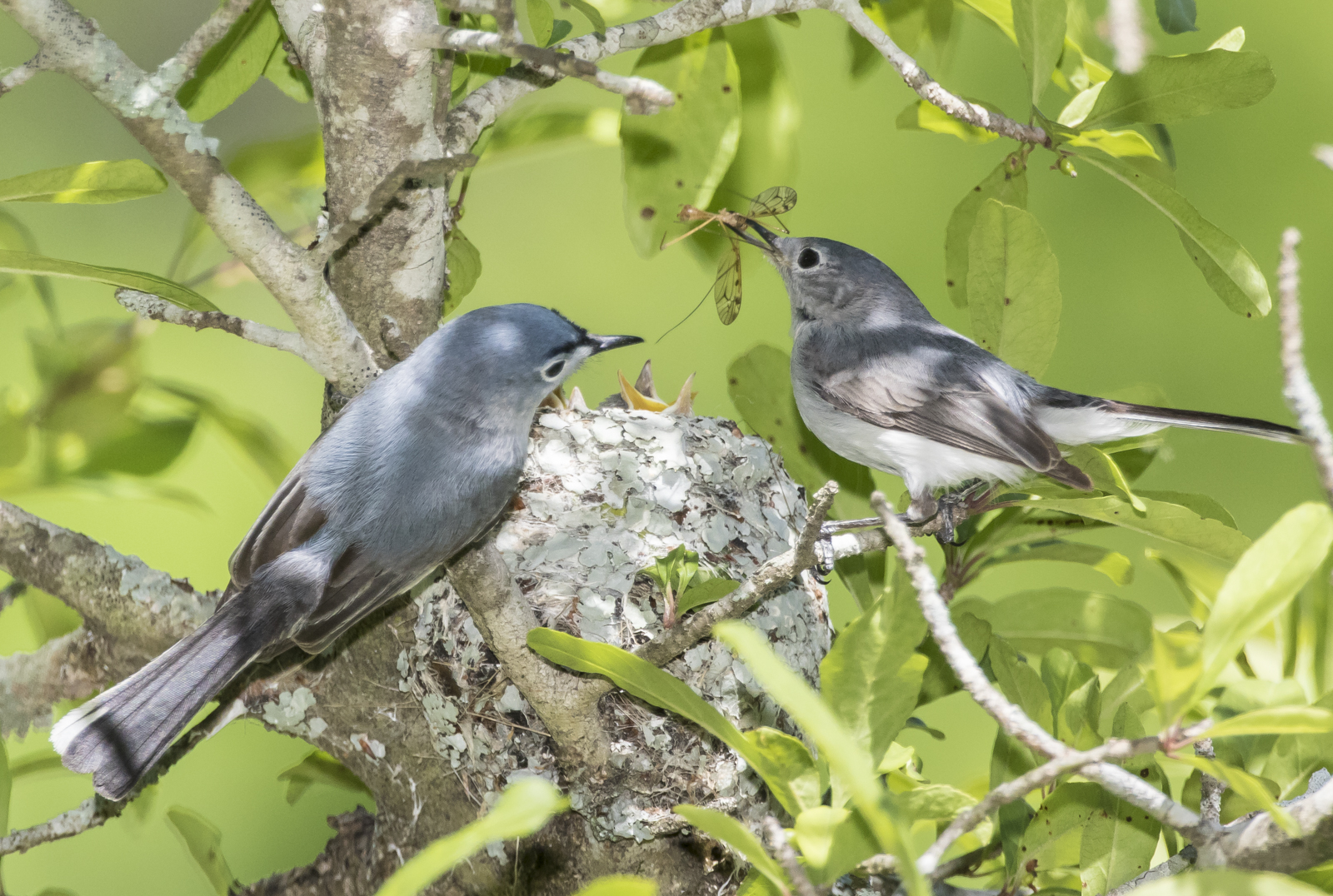
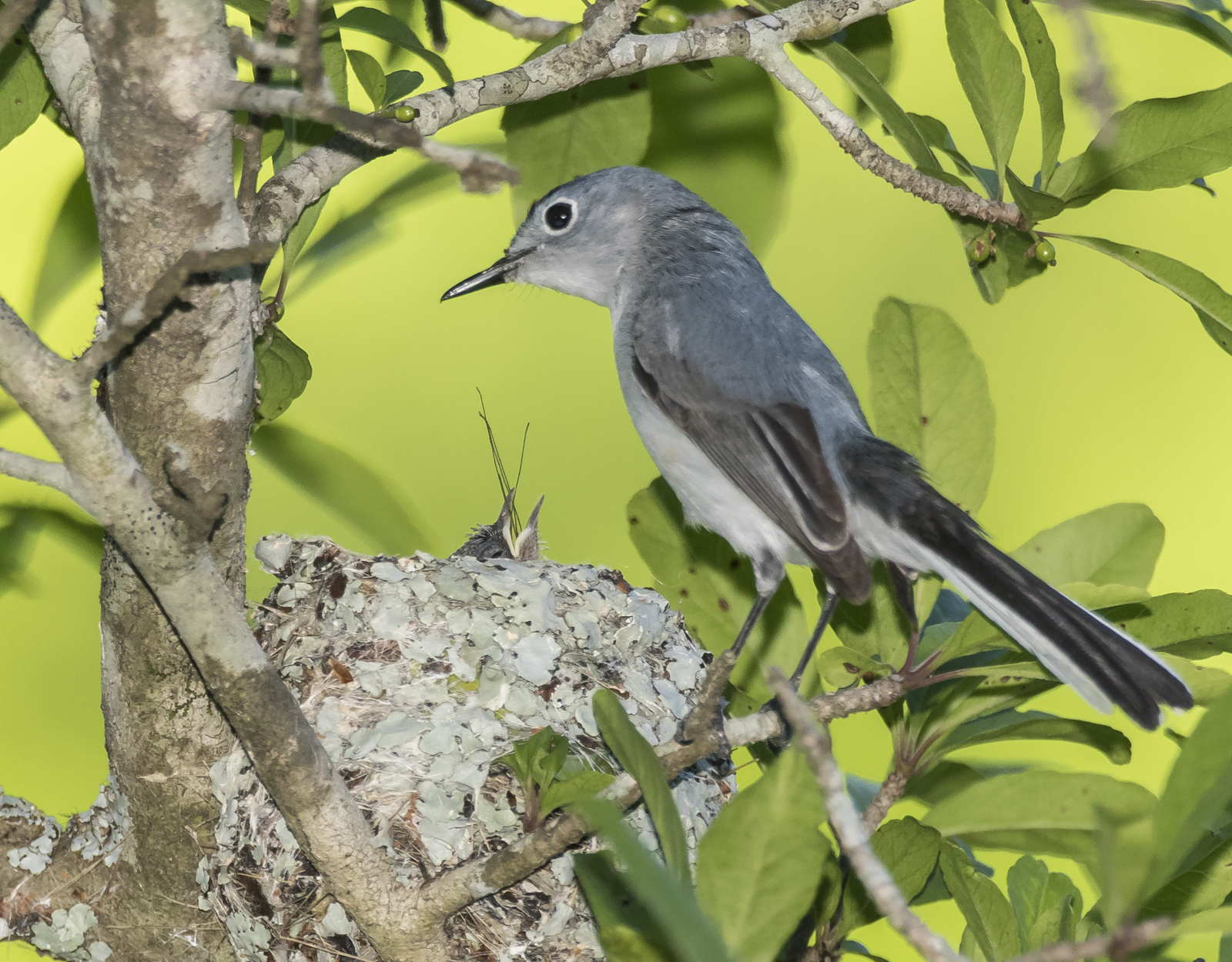
Here is a long overdue update on those little birds that nested just outside the garden driveway gate at the Botanical Garden…I am happy to report these diligent parents were apparently successful in rearing their young. You may remember my earlier post where a pair of blue-gray gnatcatchers were building the nest (they finished it around April 10). A few days after that post, I saw the female incubating the eggs, so I tried to keep an eye on her to see when they might start feeding the young. Finally, I saw her off the nest the first week of May. I wasn’t able to get out to photograph them until May 7. That was probably about 6 or 7 days after they hatched. I had trouble counting the tiny heads even after looking at my images from that first feeding day, but I could tell there were at least three young. Later, I saw the fourth beak pressing skyward on one of the feeding bouts, so the total was four.
Both parents arriving at nest together (click photos to enlarge)
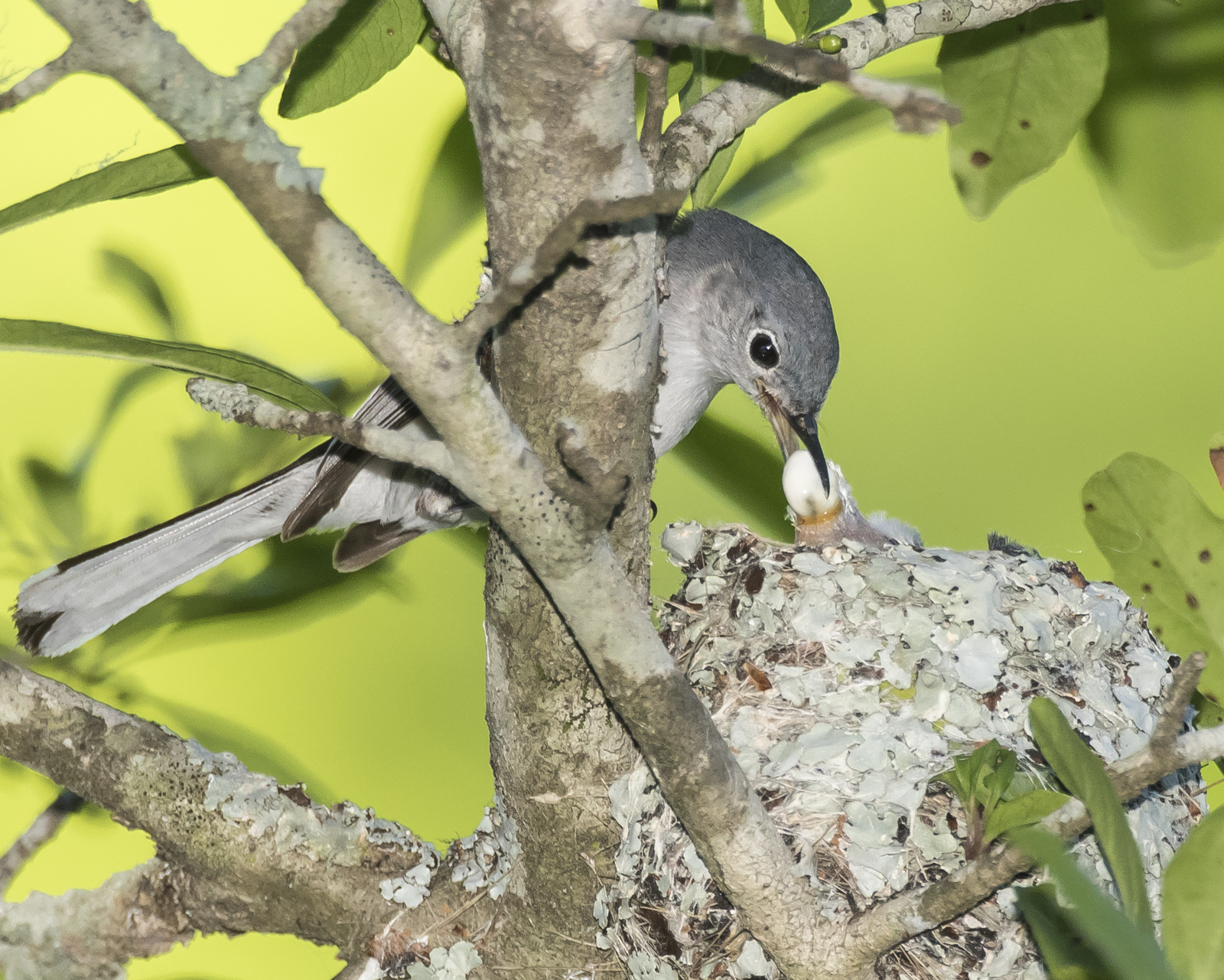
The feeding bouts were fast and furious, with adults staying just a couple of seconds on each trip. What amazed me on that first day was the large number of huge craneflies that the parent birds were bringing in.
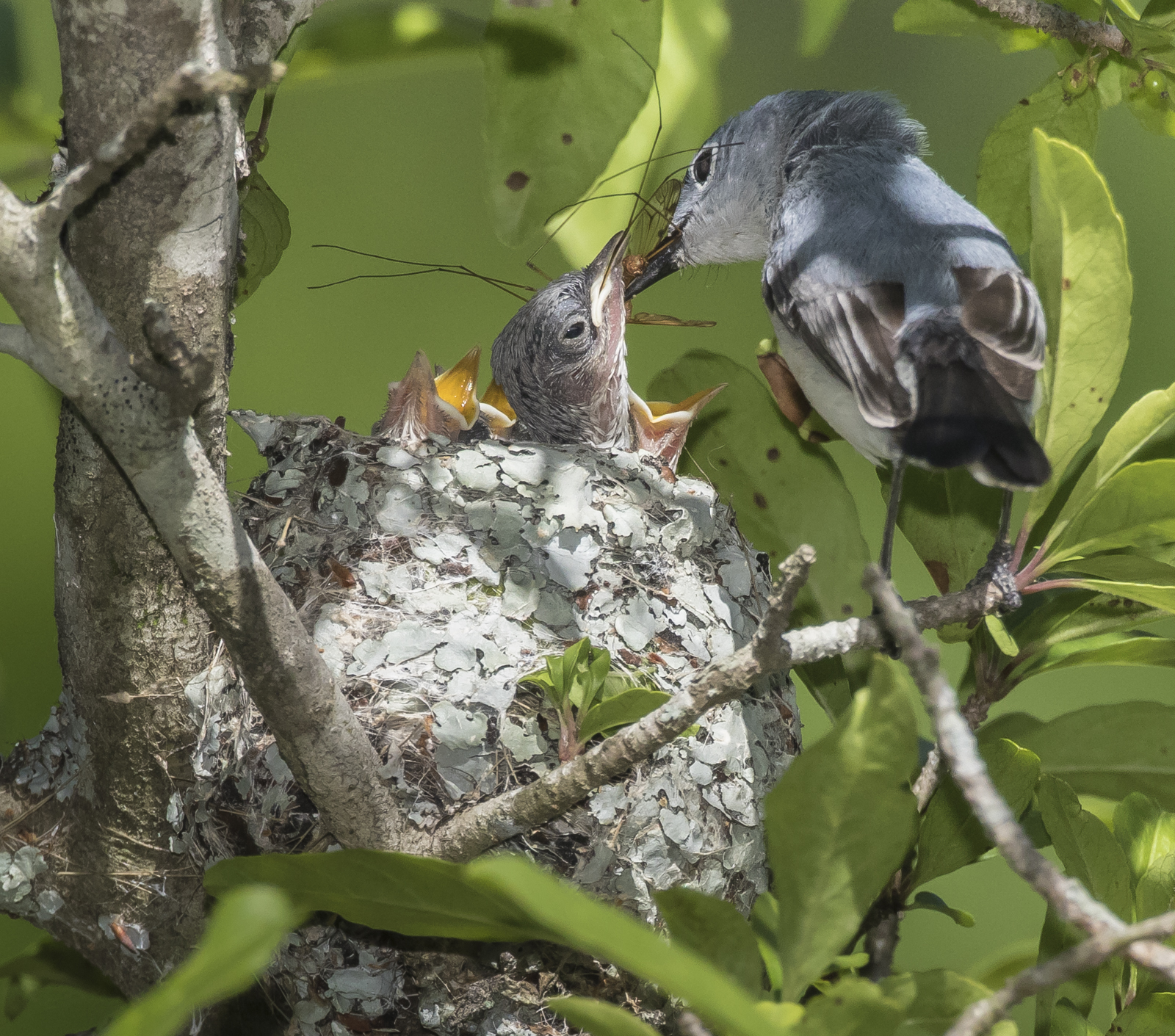
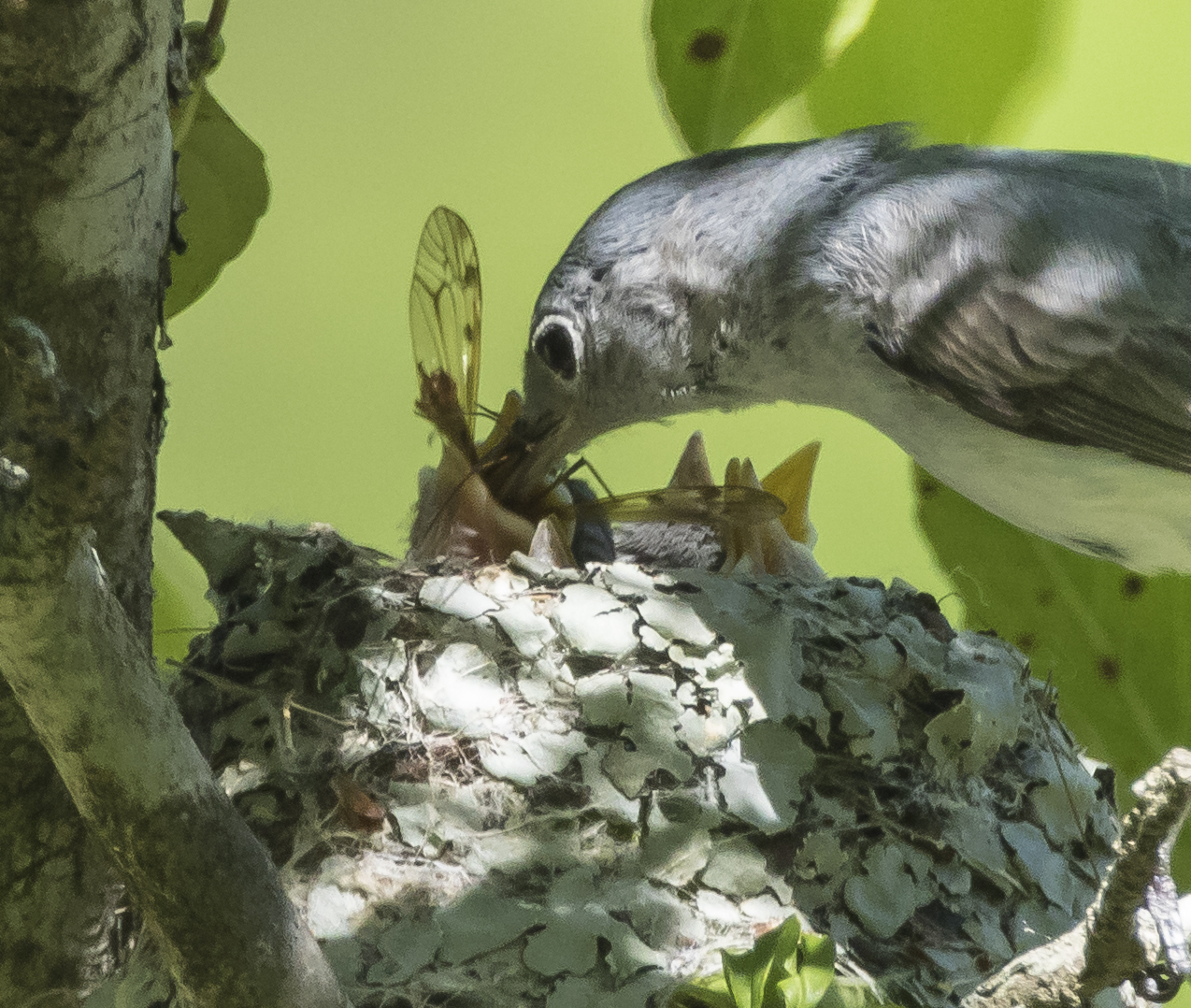
A large adult cranefly is jammed down an open mouth of one of the nestlingsThat a lot of wings and legs to swallow for such a tiny birdNestlings sometimes had to wait a bit before they could get anything else down
It seemed like about half of the food items brought on that first evening were craneflies. There is a nearby creek and large vernal pool that may be the source of so many of these huge flies (their larvae are aquatic), but I was impressed how many the adult birds were able to catch. Even more impressive was how many the tiny nestlings were able to swallow. On many occasions, a parent brought another food item, but I could still see the long legs of the previous meal sticking out of the beak of one of the recently fed young.
Female removing a fecal sac from a nestling
Of course, what comes in, must go out, so after every few feeding trips one of the young birds would raise its rear end after the adult had passed on a prey item, and the adult dutifully plucked the pre-packaged fecal sac and flew off. Data shows they usually drop it after flying 30 to 40 feet away from the nest (this helps keep the nest area clean of smelly poop that might attract predators).
Nestlings are getting more feathers on their head by May 11 (compare to earlier photo)
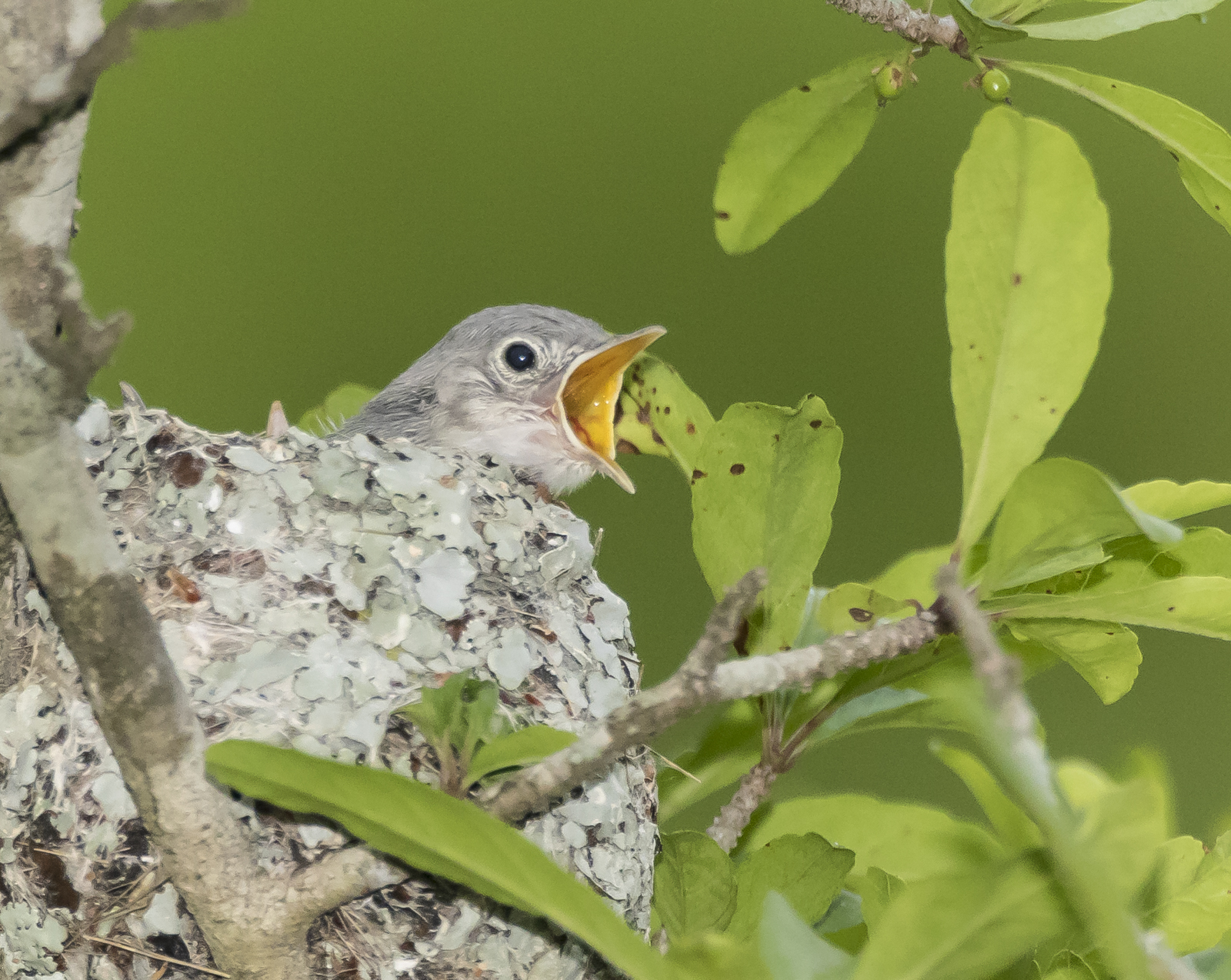
I spent some time photographing the feeding of young on three separate occasions, all after the Garden closed at 5 p.m. By the third date, May 11, the young were noticeably larger, more active in the nest between feeding bouts, and getting more feathered, especially on the head. Their huge gape and bright yellow mouth linings were hard to miss, and surely provide a great target for tired parent birds bringing in the food.
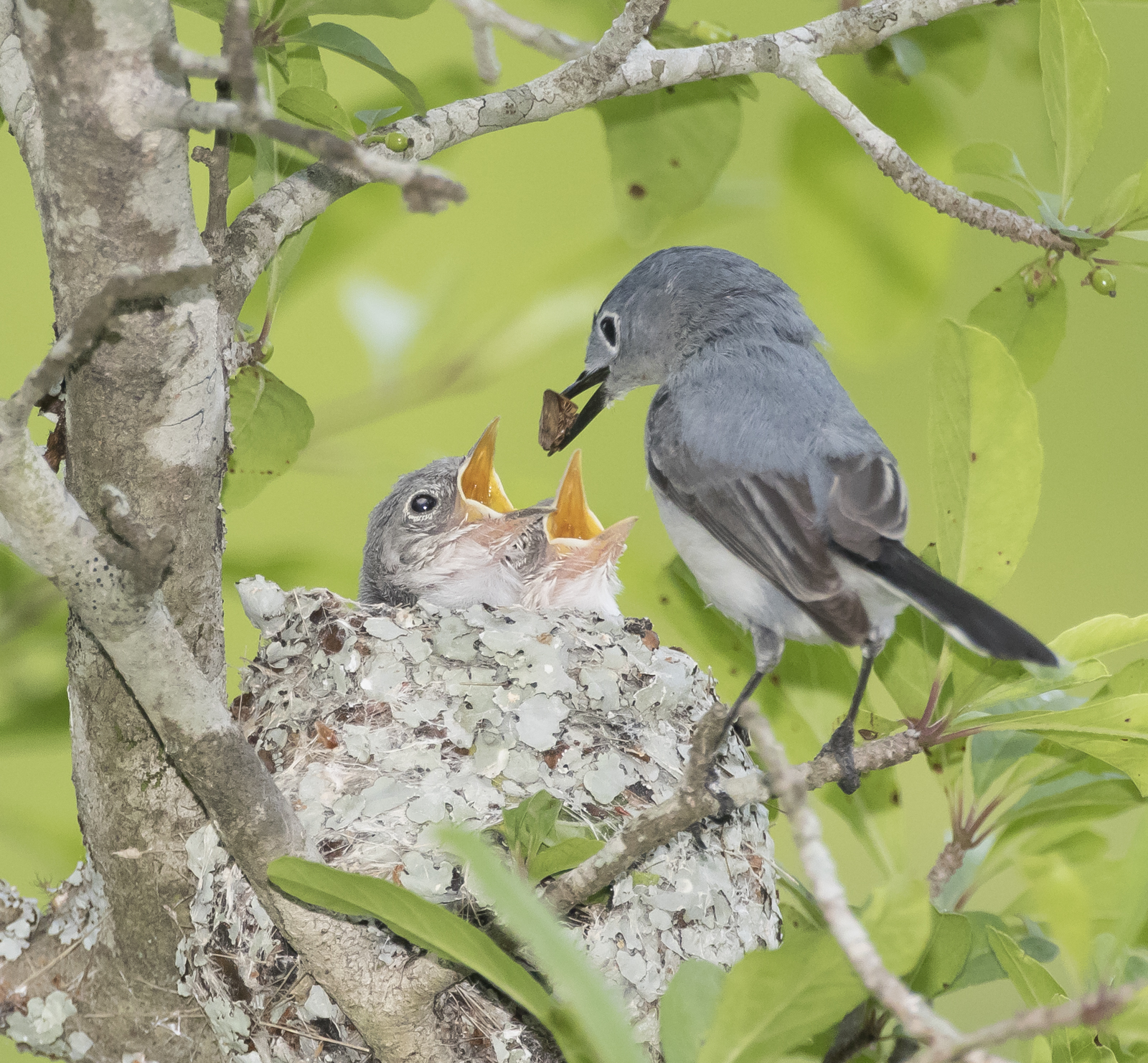
Hungry mouths begging for food
I was amazed that, after that first day of a menu heavy on craneflies, the last day I watched them, the adults brought in nary a one. Most of the food items were much smaller, and were difficult to identify even after zooming in on the images.
Bringing in what looks like a small moth
But the pace of feeding had quickened. That last day, May 11, I decided to keep track of the feedings. I stood out there for a total of 86 minutes that evening. During that time, the adult birds made a total of 51 feeding trips. The longest interval between feedings was 6 minutes. On several occasions, there were 2 or 3 feedings within the span of a minute!
The last day, a new feeding perch was used…the hang-down-from-the-branch-above technique
Although I was hoping for another day of shooting the nest, I thought they might fledge before I returned, as I was taking a long weekend. Sure enough, when I returned to work on May 16, the nest was empty. Records show the young usually leave the nest 10-15 days after hatching, so that puts these guys right on schedule. Here’s hoping they all made it and are out there learning to be on their own.
The naturalist suffers a pleasant nuisance – not being able to walk 100 yards without being tied to the spot by some new and wondrous creature.
~Charles Darwin
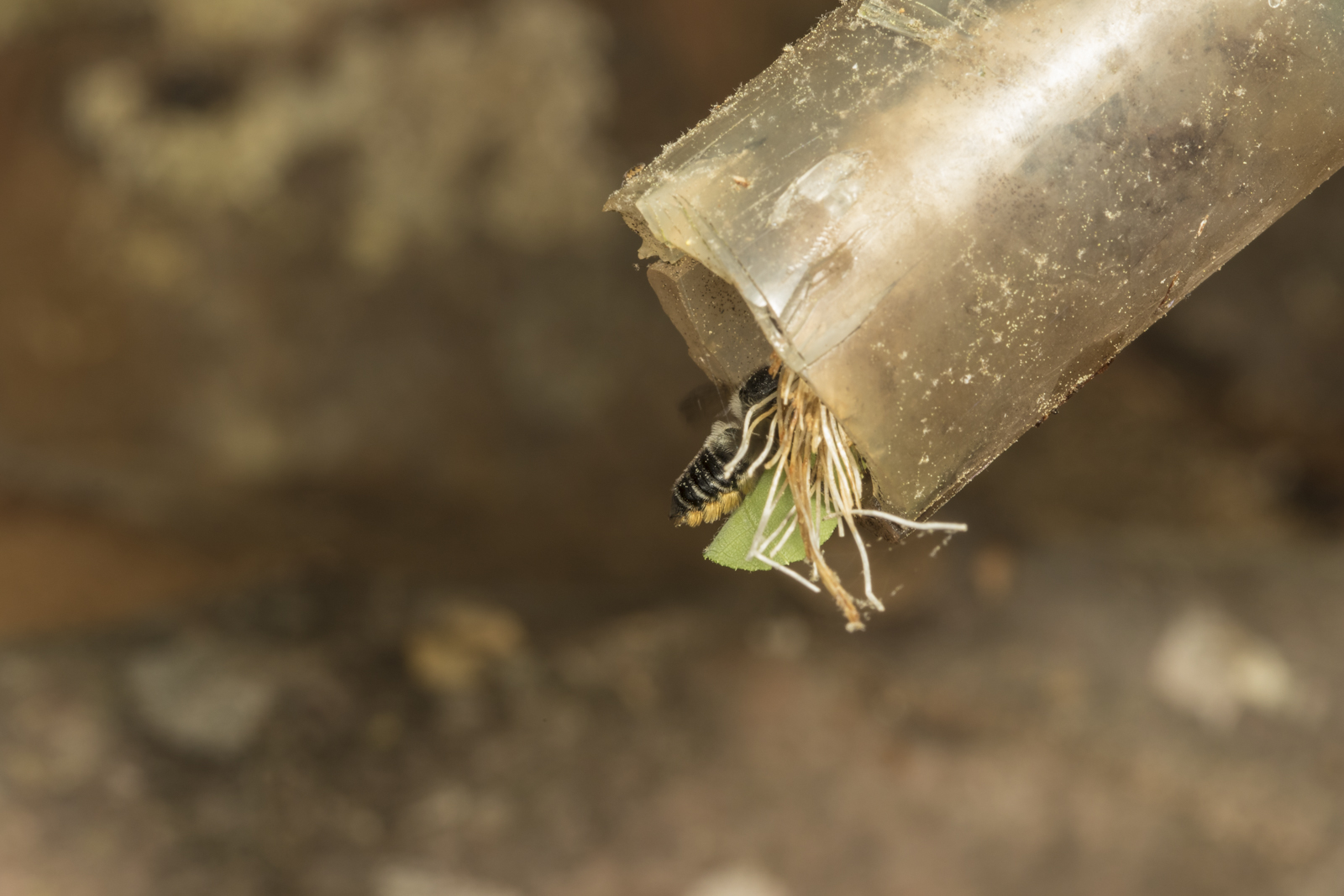
I’m afraid this applies to me and is often why it takes so long to hike (saunter is probably a better term for what I usually do) along a trail or get some task done here in the yard. And so it was last week when I was out doing some weeding and mowing. As I walked by a mulberry tree near the shed, I caught a glimpse of a green object hovering near the tree trunk. I tried to prop up this particular tree years ago using a stake and attached rope that ran through some plastic tubing. The tree had leaned over in a storm and I was hoping to help straighten it, while still protecting the bark. The rope rotted away, but the tube remained, captured by the tree bark. The green object hovered for an instant near one end of that tubing, and then disappeared inside.
Mystery green blob disappearing into tube (click photos to enlarge)
I caught just enough of a glimpse to have an idea of what was happening, and I was thrilled. It looked like the work of a leafcutter bee, a native bee whose handiwork (or should I say, jawiwork) I see every spring.
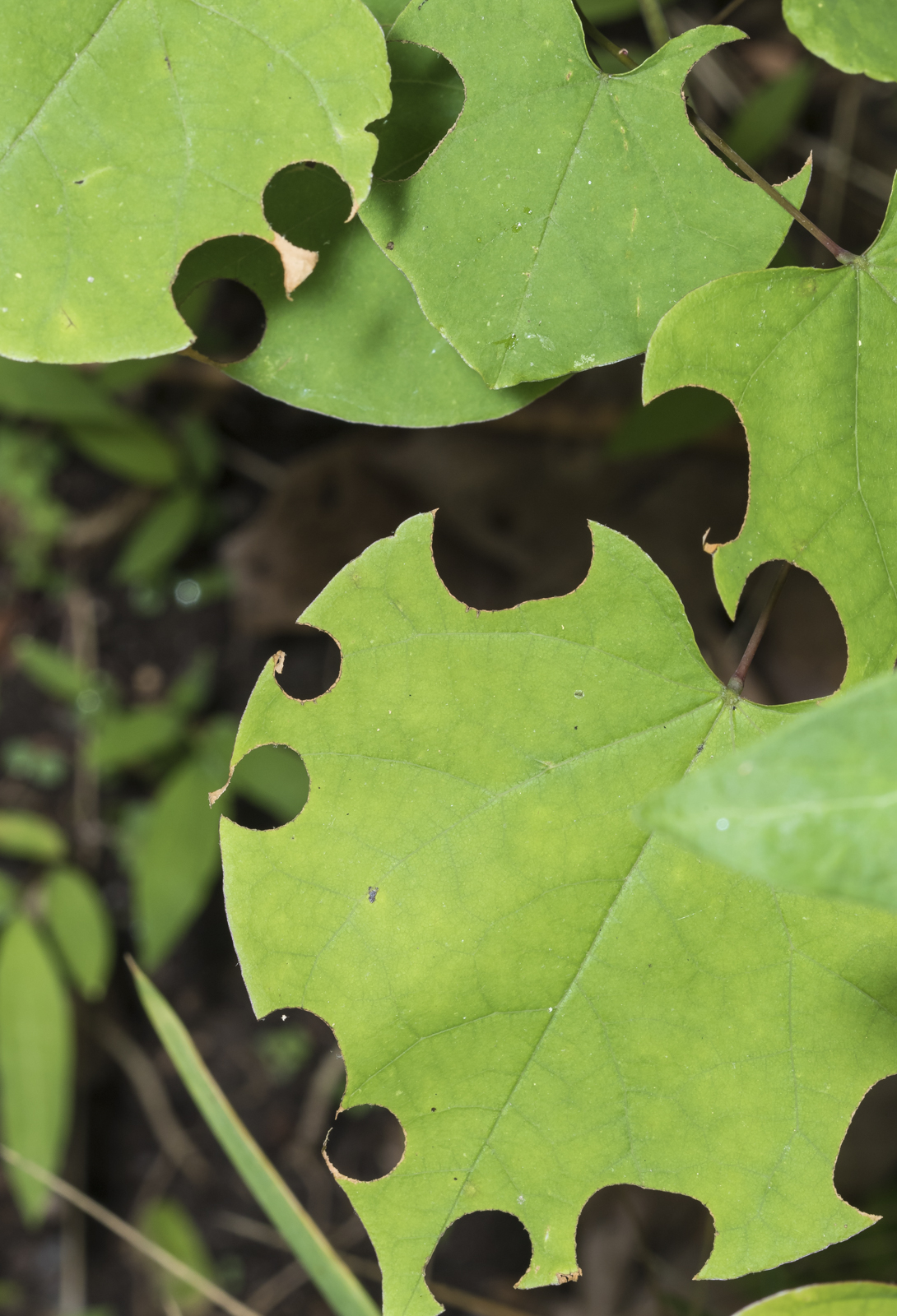
Tell-tale sign of the presence of leafcutter bees
You may have seen this where you live, small round holes in the edges of leaves. In my yard, the leafcutter bees are particularly fond of redbud leaves. It appears they favor thin leaves that lack a lot of thick venation. The result of the all this activity looks like an overly-ambitious person with a hole-punch has a grudge against your redbud trees. These bees cut circles of leaf material to use in making a nest chamber in some sort of hollow tube or in the ground (more on that in a minute).
I ran in and got my camera and was disappointed to see the bee leaving just as I got back. I had no idea how long it might be before she returned, so I squatted next to the tree and waited. Turns out, the entry into the nest chamber is quick, so I missed my photo opportunity on her next visit as I just could not focus fast enough. Her exit was equally quick, so I knew I had to come up with a plan B (or is it Plan Bee?). I set the camera up on a tripod and grabbed a twig and laid it gently into the tube entrance. I then pre-focused the lens on the twig just outside the tube, removed the twig, and waited again.
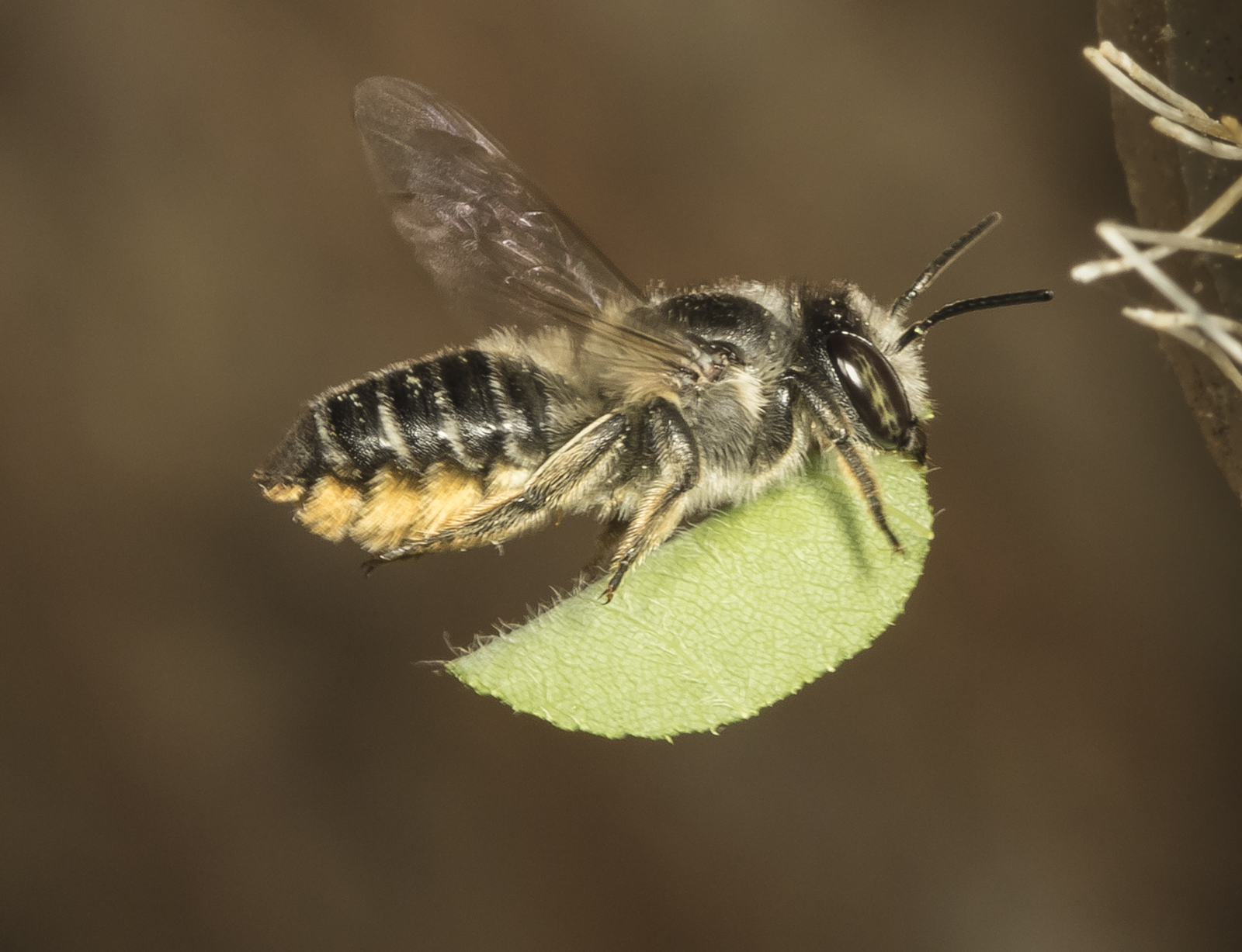
Leafcutter bee bringing in a leaf fragment to her nest chamber
It worked. I heard her buzzing toward me, and pressed the shutter just as she approached the entrance. The camera caught her carrying a folded piece of redbud leaf as she approached the entrance to the tubing. She quickly went inside (I could see her movement inside the translucent tube) and took the leaf fragment to a mass of other greenery that was visible a couple of inches inside the tube entrance. She stayed a little over a minute and quickly departed. Within two minutes, she was back with another, smaller piece of leaf and repeated the sequence. But on her next visit, she was not carrying anything green.
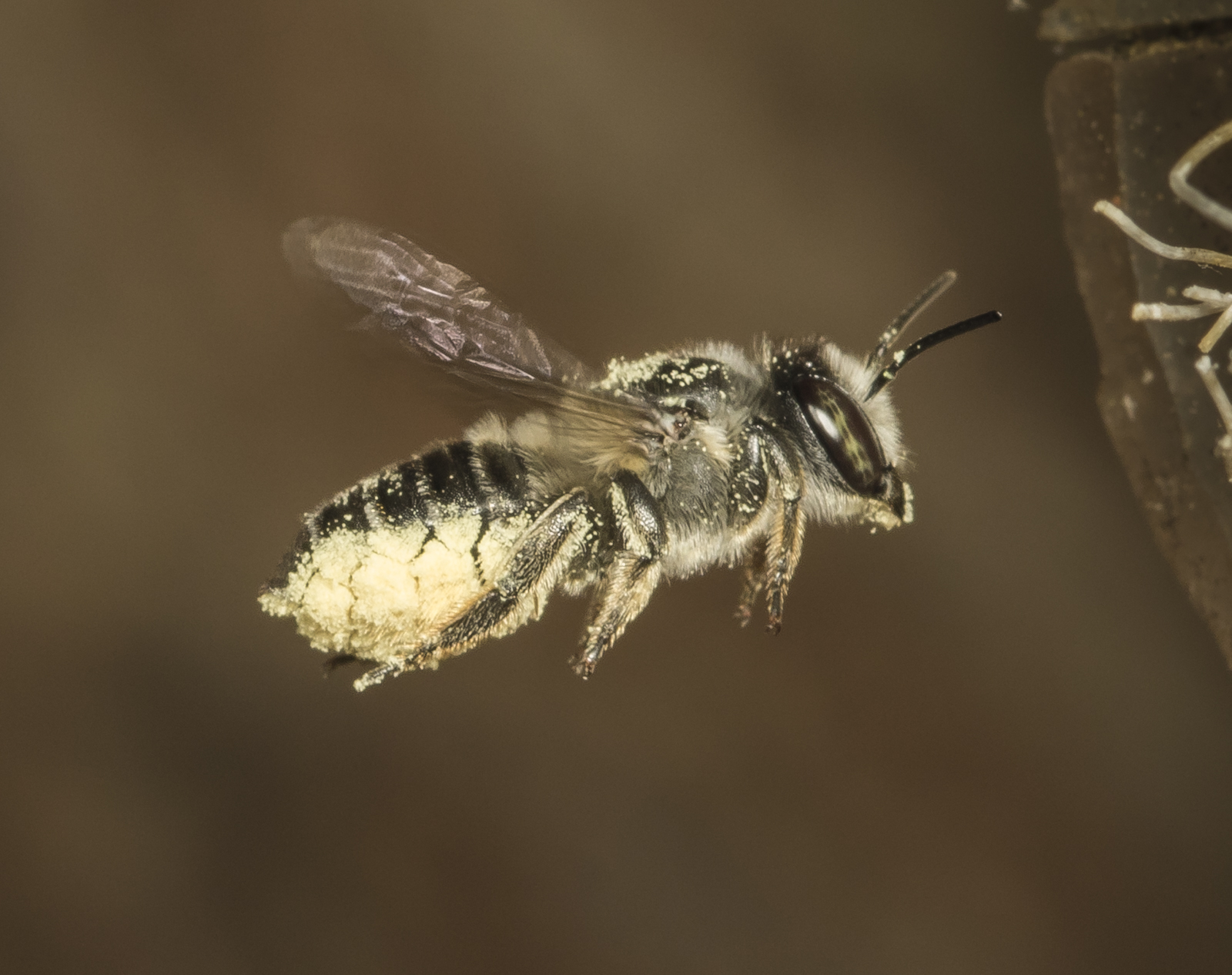
Leafcutter bee carrying pollen into nest chamber
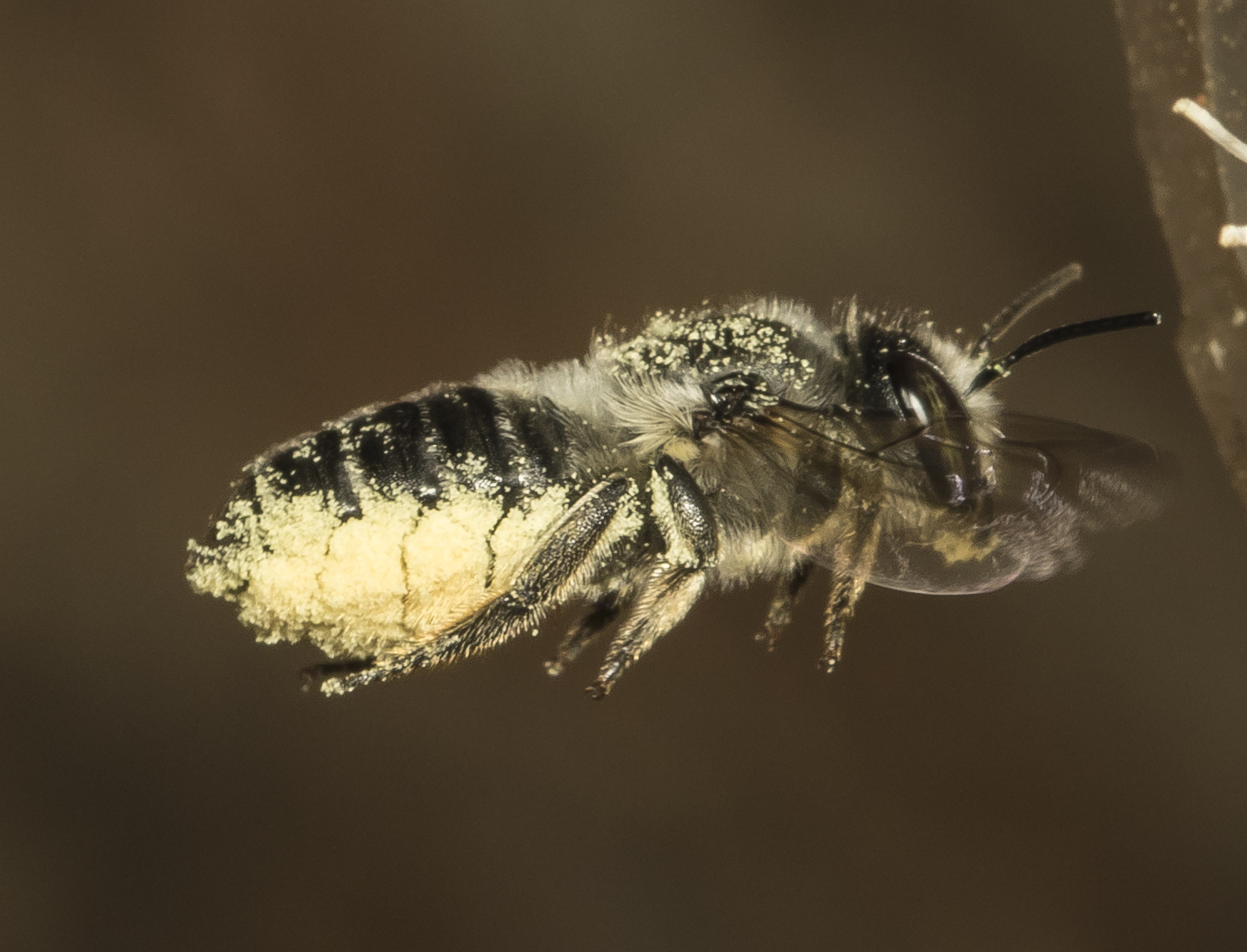
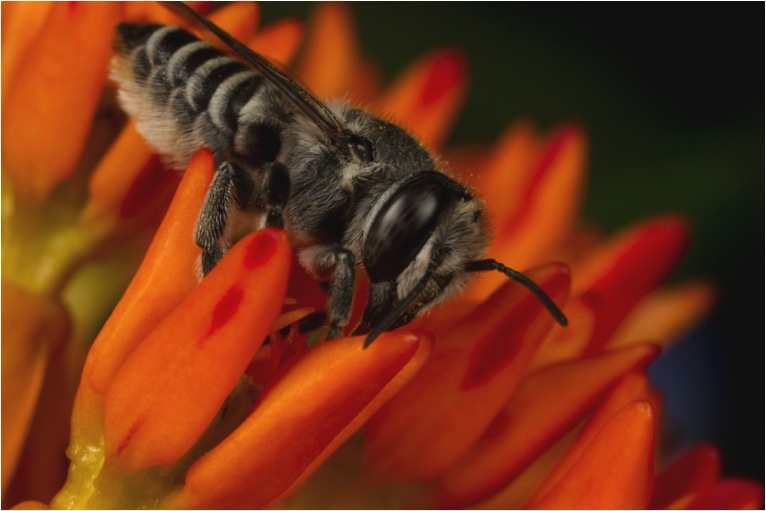
This time, it was a load of pollen. This group of bees has an unusual feature compared to most bees – they carry their pollen on specialized hairs on their abdomen.
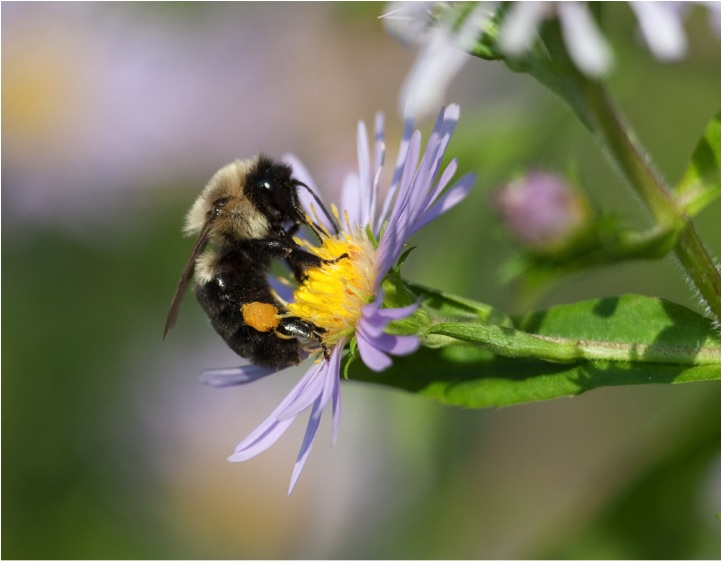
A bumblebee with a full pollen basket on the hind leg
Bumblebees and honeybees have special structures on their legs, called pollen baskets, where they carry the pollen they gather.
Pollen can be seen on underside of abdomen of this leafcutter bee
Some speculate that by carrying pollen on the hairs of their abdomen, leafcutter bees may be more effective pollinators than many other types of bees. As they crawl around on flowers, it may be easier to transfer pollen to receptive flower parts if it is carried underneath their body instead of being packed into specialized structures on their legs.
Female bee as she leaves the nest chamber, minus the pollen
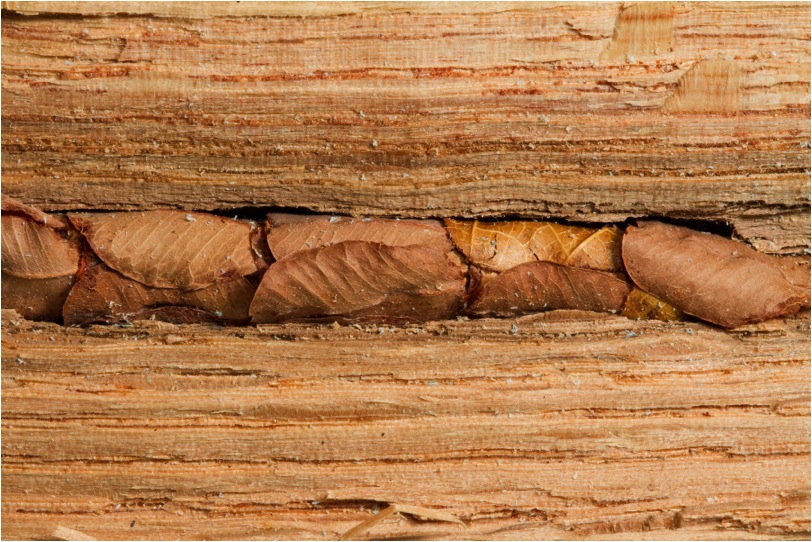
I started timing the comings and goings of this industrious female and it turns out she was very efficient at gathering and depositing pollen into the nest. It generally took about 1 to 2 minutes to gather the pollen, and then another 1 to 3 minutes to deposit it inside the tube. I could see the green nest chamber through the walls of the tubing. When I worked at the museum, I photographed a nest chamber that had been exposed in a block of wood so you could see the details of their handiwork.
Nest chamber of leafcutter bee exposed by cutting open a block of wood
They construct cigar-like nests made of wrapped together leaf fragments. Each nest contains several cells. The female stocks each cell with a ball or loaf of stored pollen and then lays a single egg in each (each cell will produce a single bee). Nests are constructed in soil, in holes (usually made by other insects) in wood, and in hollow plant stems. They will also use a variety of human-made structures and readily take to artificial bee homes containing hollow tubes.
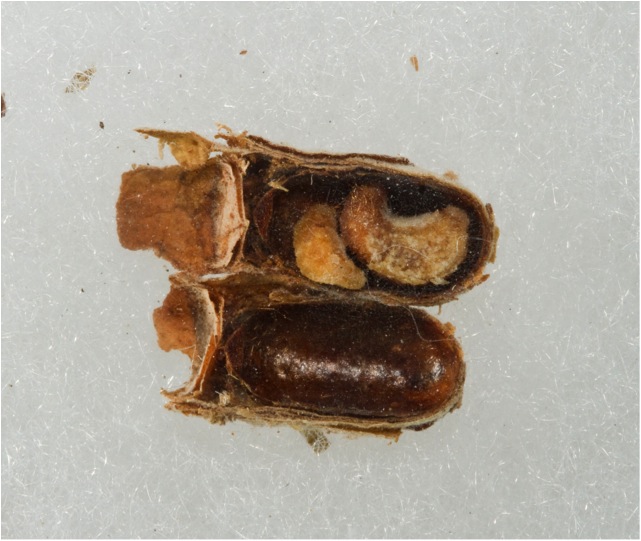
Individual cell cut open to view pupa and bee bread
The museum’s collection also had one cell that was cut open to show the pupa and the “loaf” of bee bread (a mixture of pollen and nectar) that the female stocks as provisions for the developing young. Most leafcutter bees overwinter in the nest chamber as newly formed adults and then chew their way out next spring. One source stated that the last egg laid (that one closest to the entrance of the entrance hole) is the first to hatch, and so on, down the line.
Be thankful to the “big jaws” in your yard
The activity at the nest was complete by the next day. I will now keep an eye on this tubing to see if produces some new leafcutter adults next spring. The genus name, Megachile, literally means big lip, or big jaws, in Greek. Here’s wishing these big jaws a successful birth and hatching. Now that I know more about the cause, I’m starting to like those hole-punched redbud leaves.
If we can discover the meaning in the trilling of a frog, perhaps we may understand why it is for us not merely noise but a song of poetry and emotion.
~Adrian Forsyth
My apologies for once again using this corny phrase in a post about Cope’s Gray Treefrogs (see previous post about their life cycle). The recent downpours brought us over 4 inches of rain in two days last week. It was a boost for the plants and for our local frogs. A few nights ago I arrived home to the deafening trills of Cope’s Gray Treefrogs. I went out to investigate, and was amazed at how many were calling. It also reminded me of just how loud they can be when you get close to them.
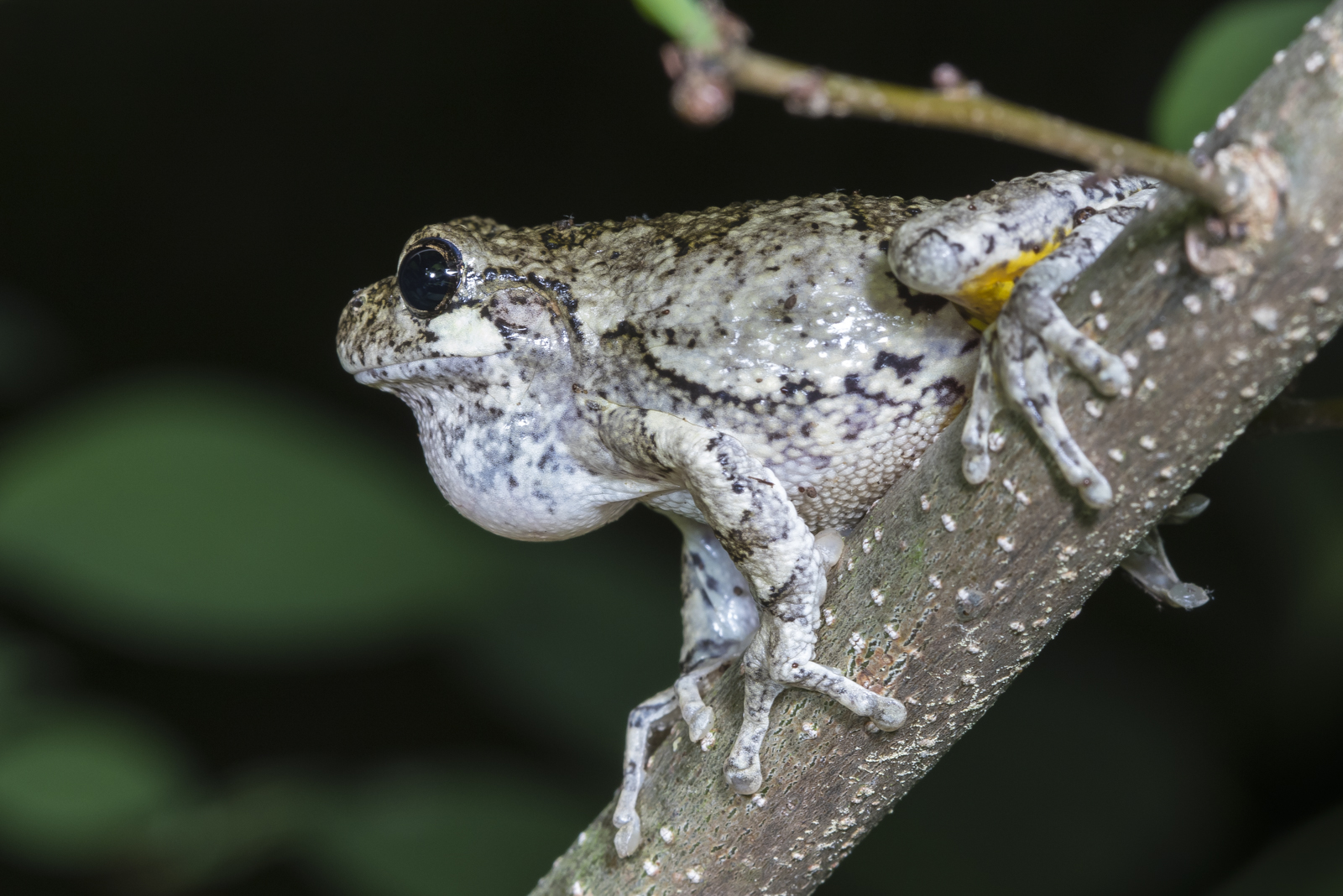
Cope’s gray treefrog on limb near water garden (click photos to enlarge)
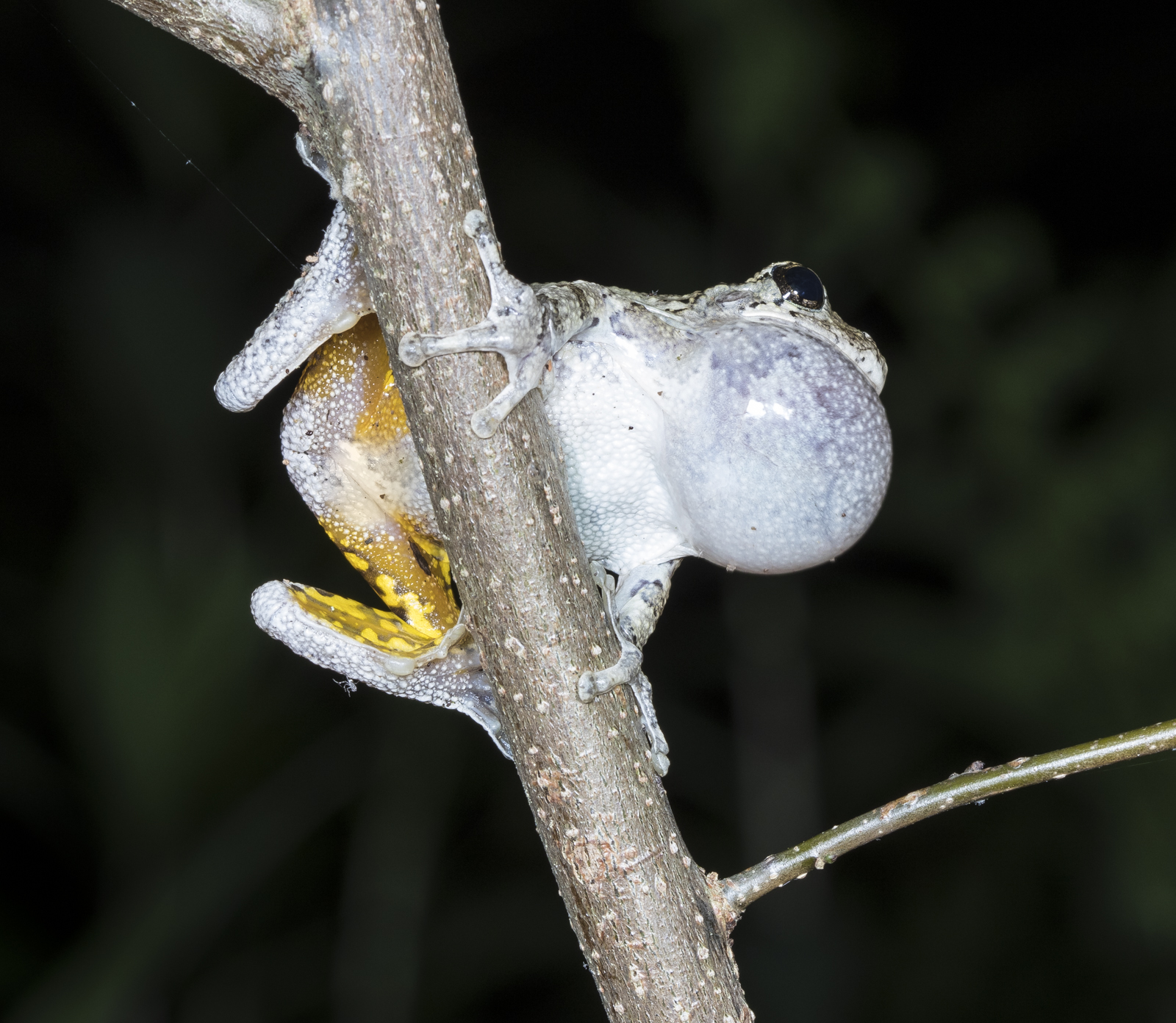
The calls were so loud and frequent that it was a little tough to tell where they were coming from, so I scanned the area near the pond with a flashlight and started seeing frogs everywhere. As is often the case, they all stopped calling when I first got close. But, it only takes one, somewhere in the yard, to start up again and they just can’t help themselves, even with a flashlight shining in their face. A spicebush a few feet from the edge of the pool had four calling frogs in it, so I took some time trying to get a decent photo.
They have long toes and bright yellow flash colors under the hind legs
It turned out to be quite challenging to photograph then in a shrub. Just when I would get close, the frogs would decide to move a couple of inches behind a nearby leaf or twig before resuming their amorous trills
Looking up at a calling treefrog
It didn’t help my case that my glasses were fogging up and I occasionally bumped a twig with my camera or tripod, silencing all the frogs for a minute or two.
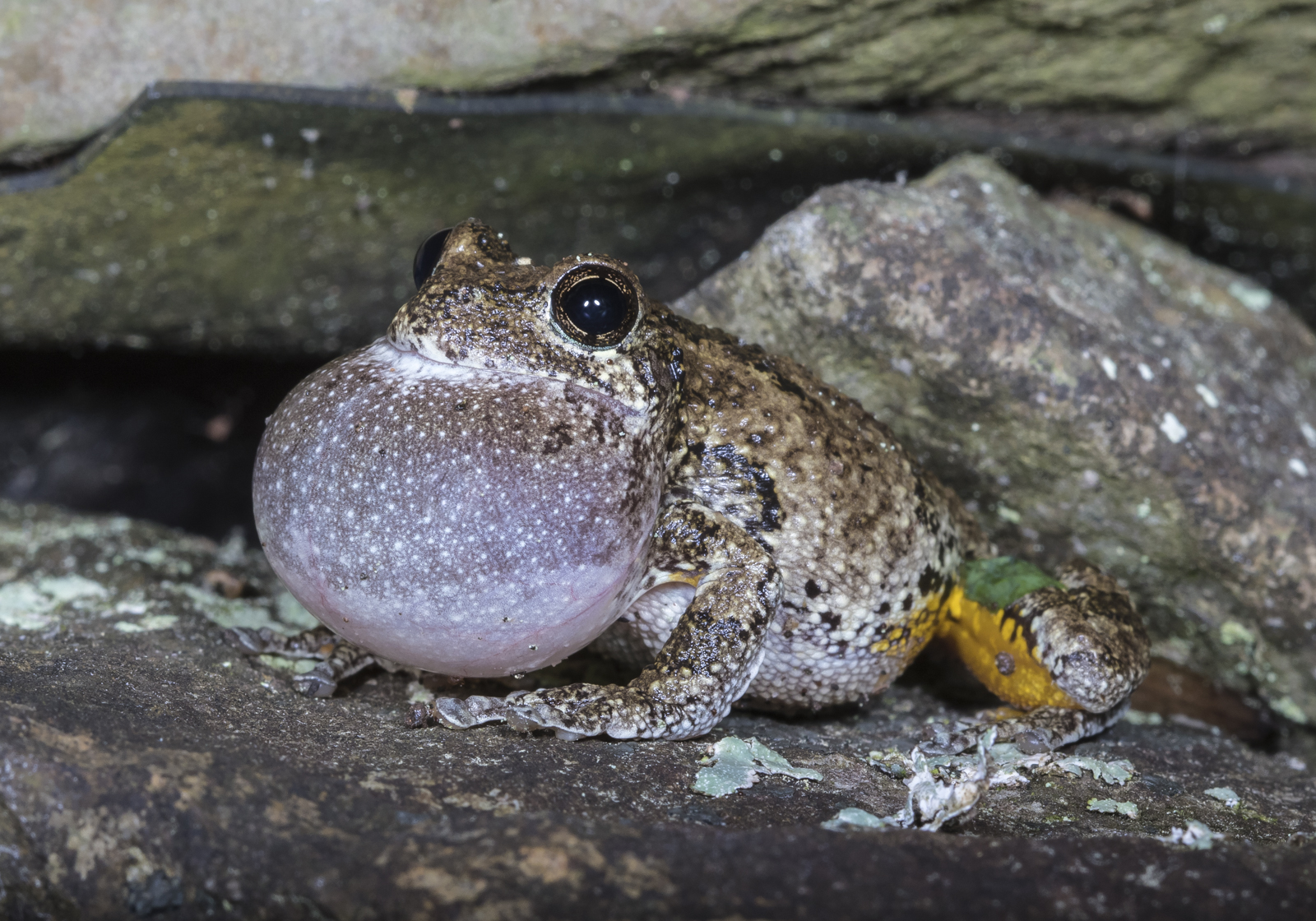
A cooperative frog on the rock wall of the pool
I finally spotted one out in the open on one of the rocks that form the edge of the pool. I slowly moved the tripod over and clicked a photo, then another, and then just sat and watched this little guy doing his best to attract a female. I shot a short video clip, but later realized that the flashlight I used to illuminate the calling frog created a flickering effect on the video. Oh well, next time I’ll do it right and go ahead and get the video light. But I still wanted to share the sounds with you…it really is incredibly loud.
As I looked around, I started to see paired frogs slowly moving toward the water. Studies have shown that female choice determines mating, and they tend to approach males with longer and more frequent calls (must be an indication of fitness).
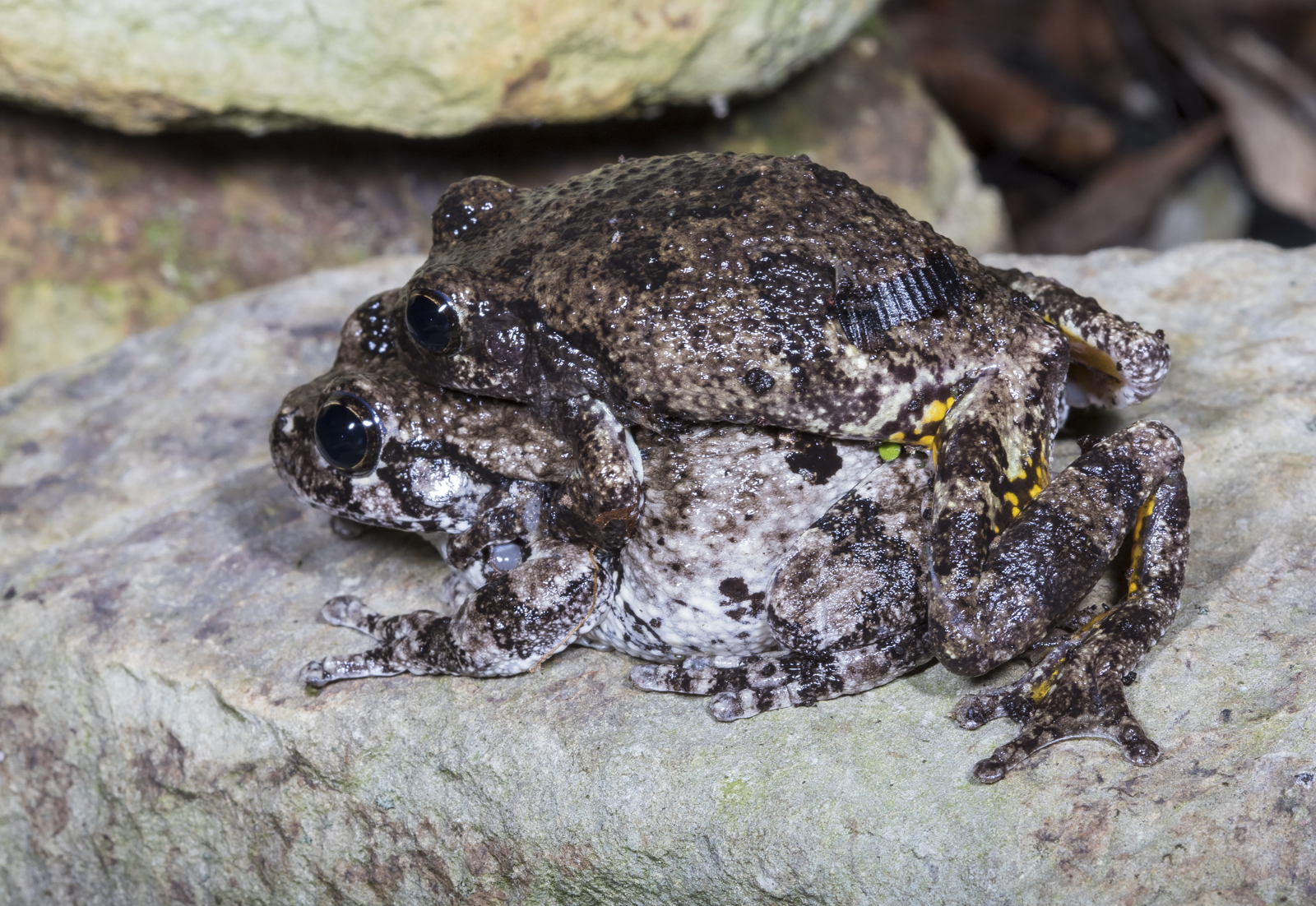
Pair of treefrogs in amplexus
A successful approach results in amplexus, where the male clings firmly to the female as she deposits eggs in the water. The egg mass is externally fertilized by the male. Eggs hatch within a few days and it usually takes 6-8 weeks for the tadpoles to transform and leave the water. The chorus was still going strong as we turned out the lights and headed to bed. I hope the night is successful for them. If so, it will be fun seeing tiny frogs all around the yard in a few weeks.



































 Roads End Naturalist