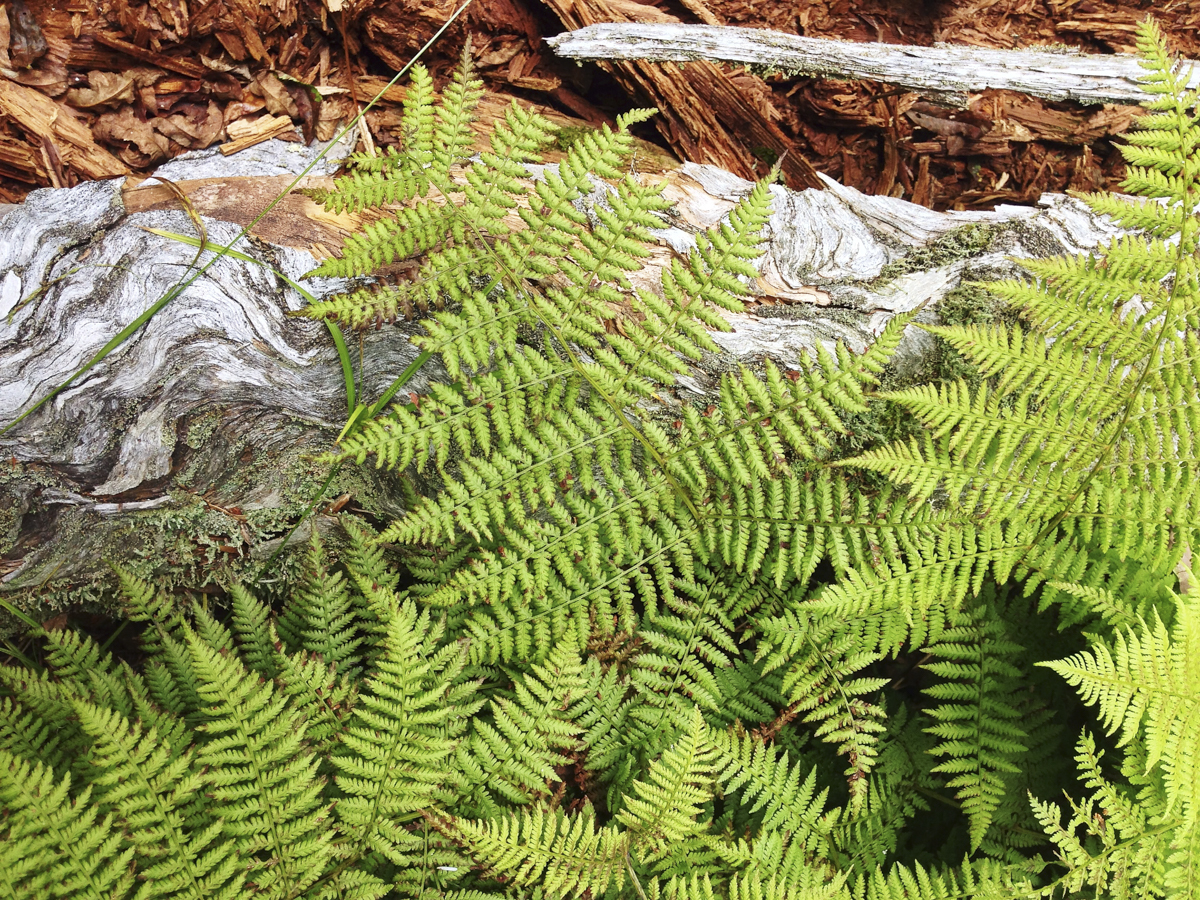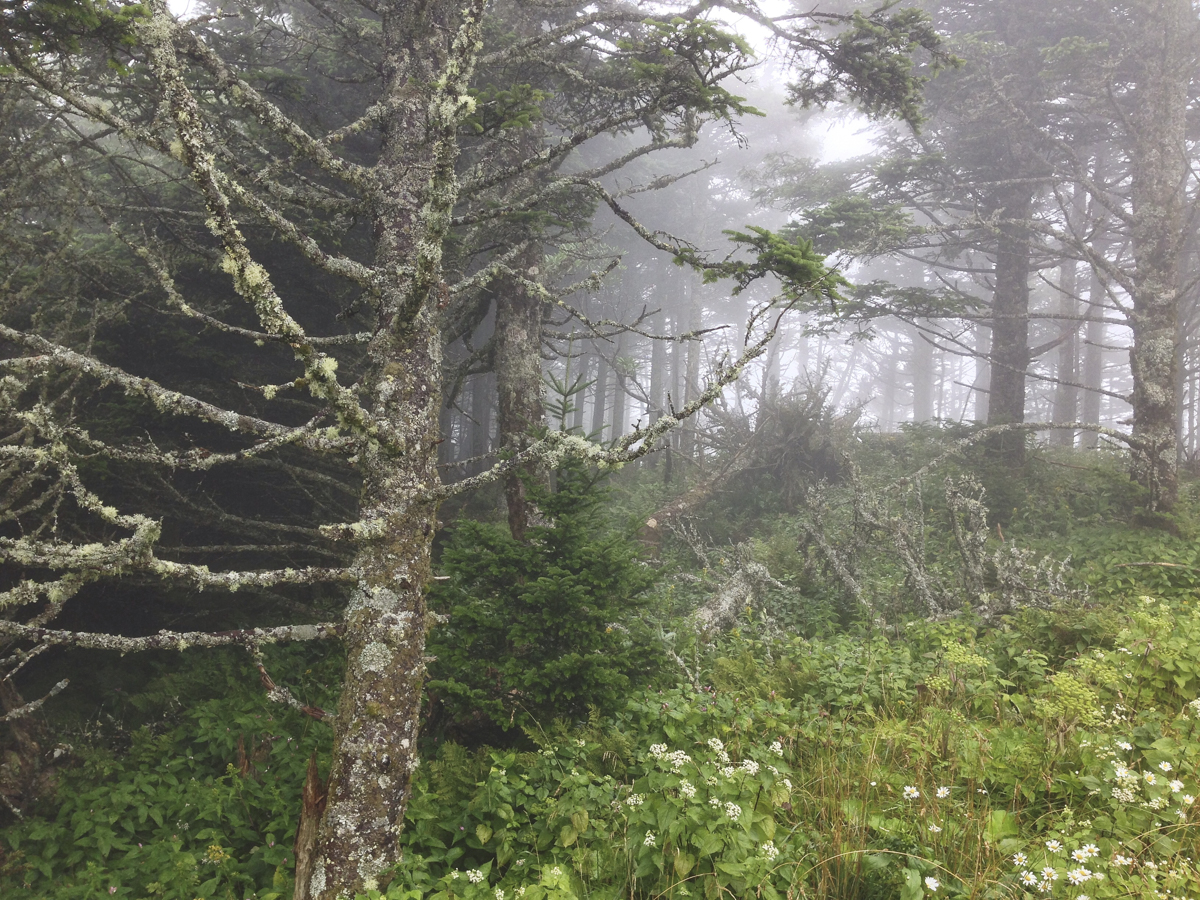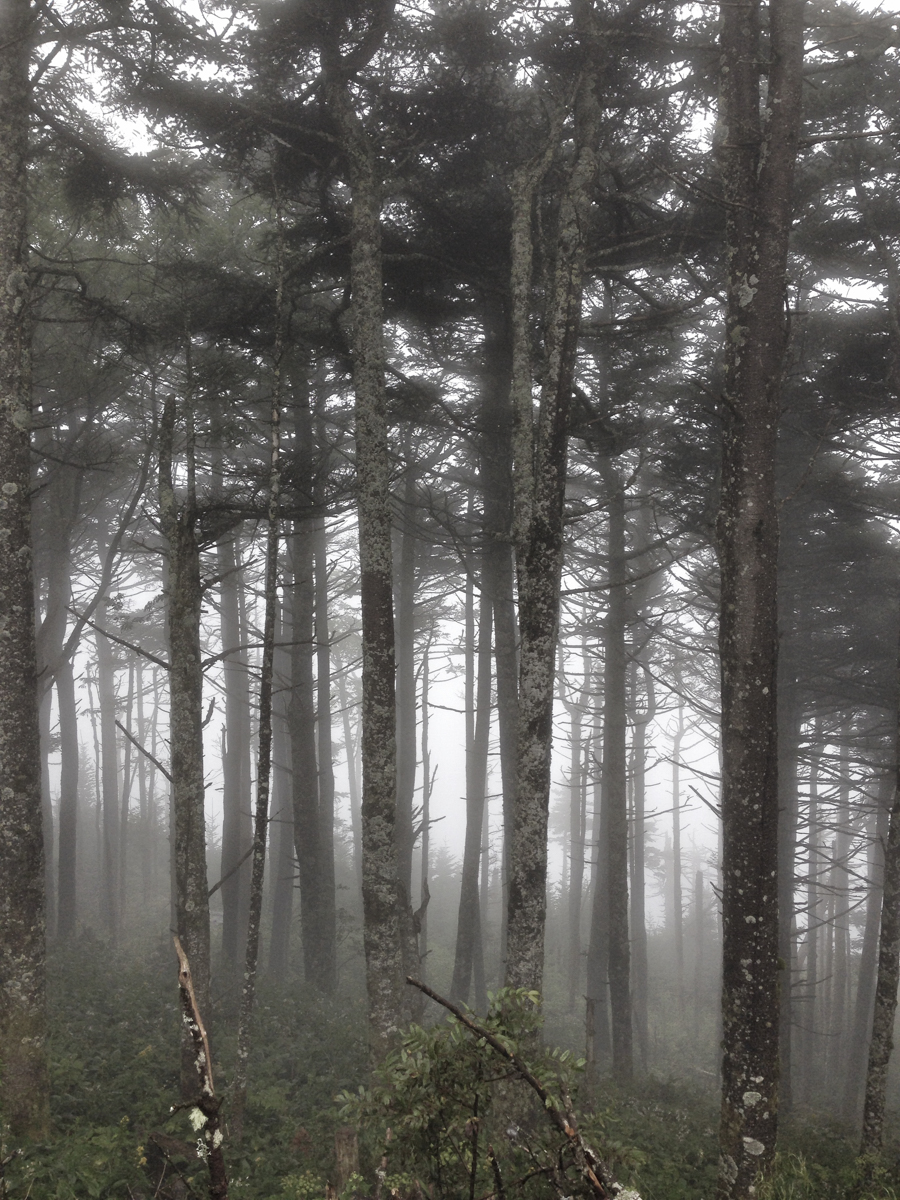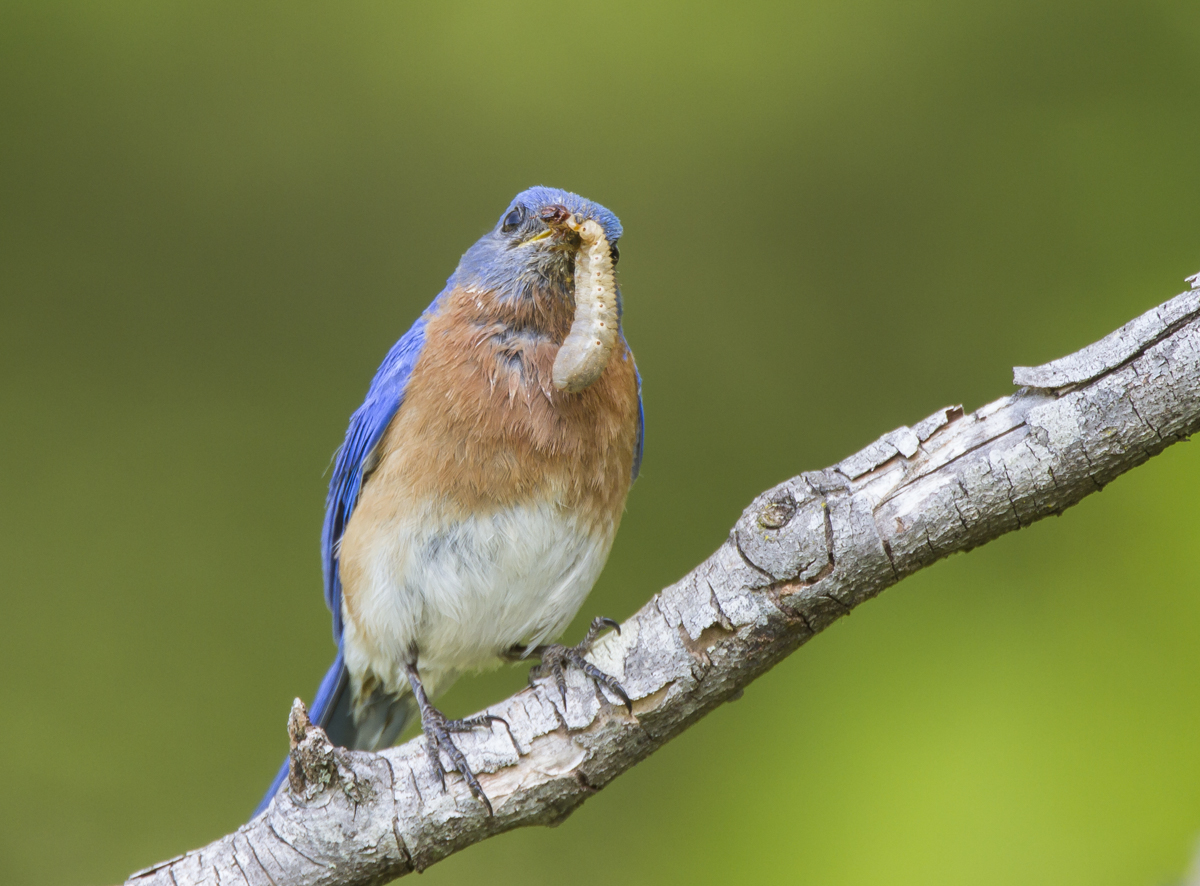
Welcome to our new website! We hope you like it. Please let us know if you notice something missing or that needs a correction. ~Mike & Melissa

  • Cicada Killer, But Not The Kind You Think

    There is no better high than discovery.

    ~E.O. Wilson

    I walked out the front door before heading to bed last night just to see what I might see. The din from form the katydids was almost deafening, punctuated by the loud throaty “gunk” calls of the Green Frogs in the nearby water garden. When I swung the flashlight beam across the walkway, I saw something that really surprised me. I ran inside and grabbed my phone to try to get a quick image, as it was moving quickly.

    Climbing Copperhead
    Climbing Copperhead (click photos to enlarge)

    What I saw was a Copperhead climbing in a stressed (almost leafless) Heart’s-a-busting shrub out front. Probably the same Copperhead we had seen the night before on the wooden walkway when we came back from a late dinner. I have seen many Copperheads in the yard, but never one climbing that far off the ground (probably 4 feet up in the shrub). It was several feet off the path, and, since I had only shorts and sandals on, I really didn’t want to venture out into the vegetation. The snake seemed purposeful in its movements, flicking its tongue and seemingly headed in a particular direction. Suddenly, my flashlight caught what I guessed was the snake’s destination – a cicada was starting to emerge out on the end of a delicate twig in that same shrub. I bolted inside to get my real camera which was, unfortunately, snugly tucked in its camera bag. These things never go as fast as you want – get camera, get macro lens and attach, grab twin flash and attach, install fresh batteries, run back outside. By the time I returned, the snake had worked its way much closer to the cicada.

    Climbing Copperhead 2
    The Copperhead was headed for something

    The transforming adult cicada was now almost all of the way out of the nymph’s exoskeleton. I wanted to get closer for a photo so I gingerly stepped out into the vegetation, carefully looking where I was placing my feet. When I looked up, the snake was almost there, and as I brought up the camera to fire a shot, the emerging adult insect dropped free of the clinging nymph’s skin..dang it (honest, that’s what I said).

    Closing in on cicada 2
    The Copperhead closing in on the now empty cicada nymph shed
    Closing in on cicada
    Checking out the cicada shed

    The hungry snake nudged the shed (the snake was also probably murmuring, dang it), and then changed direction, and, to my surprise, started heading toward the adult cicada now clinging on a small twig below.

    Closing in on cicada 1
    The Copperhead gets very close to the adult cicada, which is still unfurling its wings

    Right as it closed in on its intended victim, the snake changed direction and started climbing back up into the shrub. I can only guess that either I was creating too much commotion with my excited movements and firing of flash, or, the cicada’s twig was just too small to support the snake.

    Climbing Copperhead 1
    The Copperhead retreats

    The snake quickly descended down a larger twig, dropped to the ground, and slithered off, despite my attempt to corral it into a bucket (I usually like to move Copperheads to somewhere outside the deer fence).

    It all happened pretty fast, and I had hurried my shots as I tried to take in this incredible scenario. What a discovery…a Copperhead climbing several feet off the ground to feed on an emerging cicada. Who knew!

    Well, it turns out several people knew. This is a much more common occurrence than I realized. I immediately thought of a reference book on my shelf entitled Reptiles of North Carolina, co-authored by my former museum colleagues, Bill Palmer and Alvin Braswell. I remembered being surprised to read in this volume about Copperheads feeding on Hickory Horned Devil caterpillars, the largest caterpillar in North America, and one of my favorites. I located a table in the book listing the food items found in an analysis of the stomach contents of 41 Copperheads. Here is what the researchers could identify: 15 small mammals, 15 caterpillars (mostly large species sch as Hickory Horned Devils and Luna Moths), 5 lizards, 3 small snakes, 3 salamanders, 2 cicadas, and 1 small turtle.

    So, they do feed on cicadas, but the climbing of trees and shrubs, how common is that? I turned to the internet for some answers (how lucky naturalists are now to have the power of the internet at their fingertips when they discover something new and want to learn more). The first hit was an incredible study by someone documenting Copperheads climbing trees to eat emerging cicadas! The three things that struck me from the report were that Copperheads often aggregate in areas to climb trees to feed on emerging cicadas; that they are following the scent trails of the nymphs as they climb from their subterranean feeding area up into the trees and shrubs to emerge as adults; and that one of the scientists that helped identify the cicadas to species for this study was another former museum colleague, Bill Reynolds.

    Cicada escapes
    This cicada narrowly escaped being dinner for a Copperhead

    This really made me appreciate even more the dedicated field work, observations, and documentation being done by scientists like my former colleagues. I stumbled upon something that I have never seen before, but that is fairly well-documented. By searching my references and the internet, I was able to learn something about an amazing feeding behavior by a creature that I now appreciate much more than before. It is discoveries like these that can help us to understand and appreciate our world and that can only help us want to conserve it, even when it at first seems like something most of us might not care about protecting. And it once again made me realize how much I love discovering new things and learning about our natural world, a never-ending source of amazement.

  • Small Wonders

    Nature will bear the closest inspection. She invites us to lay our eye level with her smallest leaf, and take an insect view of its plain.

    ~Henry David Thoreau

    The heat this past week has been pretty oppressive. So, I needed to remind myself that, even though there are not groups of Black Bears feeding in my woods like I saw last weekend down east, there are still reasons to brave the temperatures and get outside. Each day, I try to spend at least a little time wandering the yard, looking for the beauties that exist all around us. It never fails that I find something new and then spend time online or in the stacks of field guides that line the shelves, trying to learn more about the world around me. Small wonders and strange worlds exist just outside your door. Take a walk, have a look…

    Bush Katydid nymph
    Bush Katydid nymph (Scudderia sp.) (click photos to enlarge)
    Graphocephala versuta leafhopper
    Leafhopper, Graphocephala versuta
    American Crow feather
    American Crow feather
    land snail
    Land snail
    Flatid Planthopper nymph in circle of waxy filaments
    Flatid Planthopper nymph in circle of waxy filaments
    Ailanthus Webworm Moth, Atteva aurea 1
    Ailanthus Webworm Moth, Atteva aurea
    planthopper nymphs
    Planthopper nymphs
    rain drop on iris leaf
    Raindrop on iris leaf
    Horace's Duskywing?
    Horace’s Duskywing, a common butterfly at my wildflowers right now
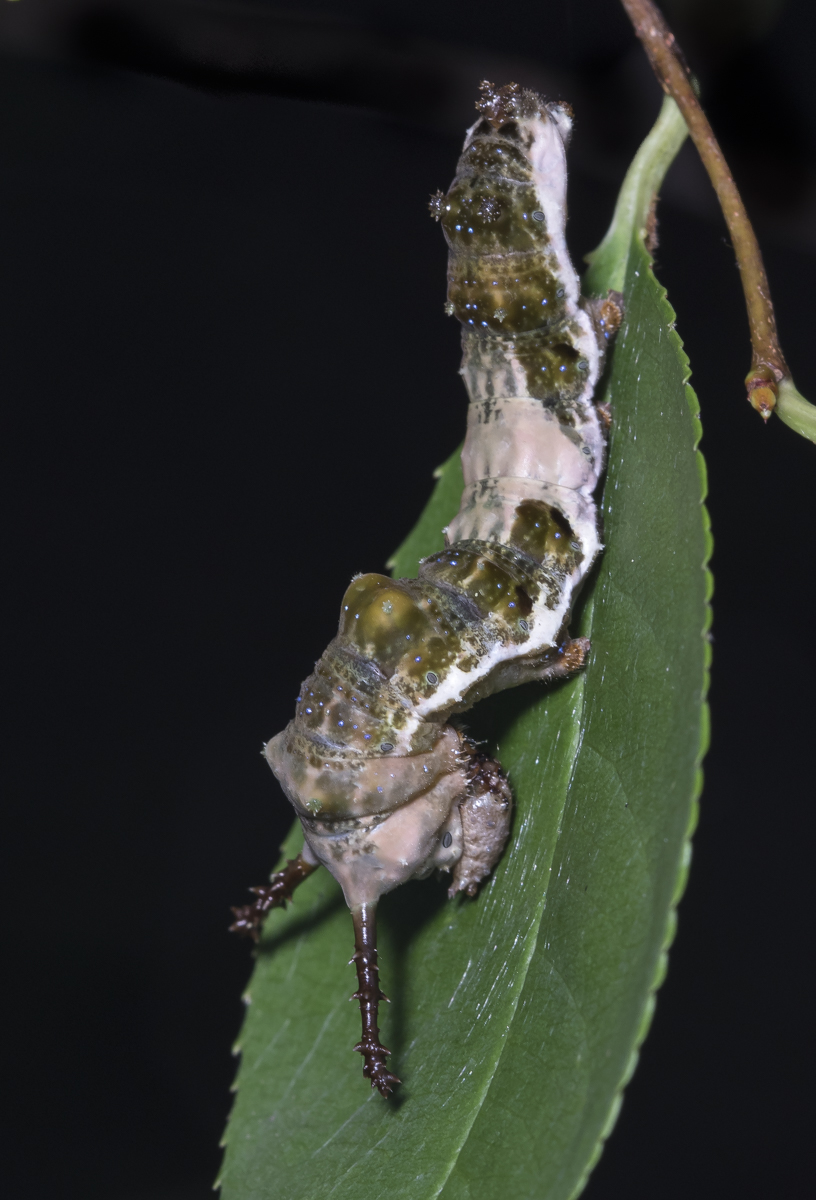
    Red-spotted Purple larva
    Early instar of a Red-spotted Purple Butterfly caterpillar. They drape over the edge of a twig when disturbed, possibly to mimic a bird dropping.
    River Oats seed after rain
    River Oats seed head after a rain
    Syrphid Fly
    Syrphid Fly, a wasp mimic
    Acanalonia conica planthopper
    Planthopper, Acanalonia conica
    Southern Shield Fern tip
    Unfurling tip of the frond of a Southern Shield Fern
    Tobacco Hornworm - Carolina Sphinx Moth larva
    Tobacco Hornworm close up. These are the common caterpillars found on your tomato plants. They are the larvae of the Carolina Sphinx Moth. The circles are spiracles, the openings to their respiratory system.
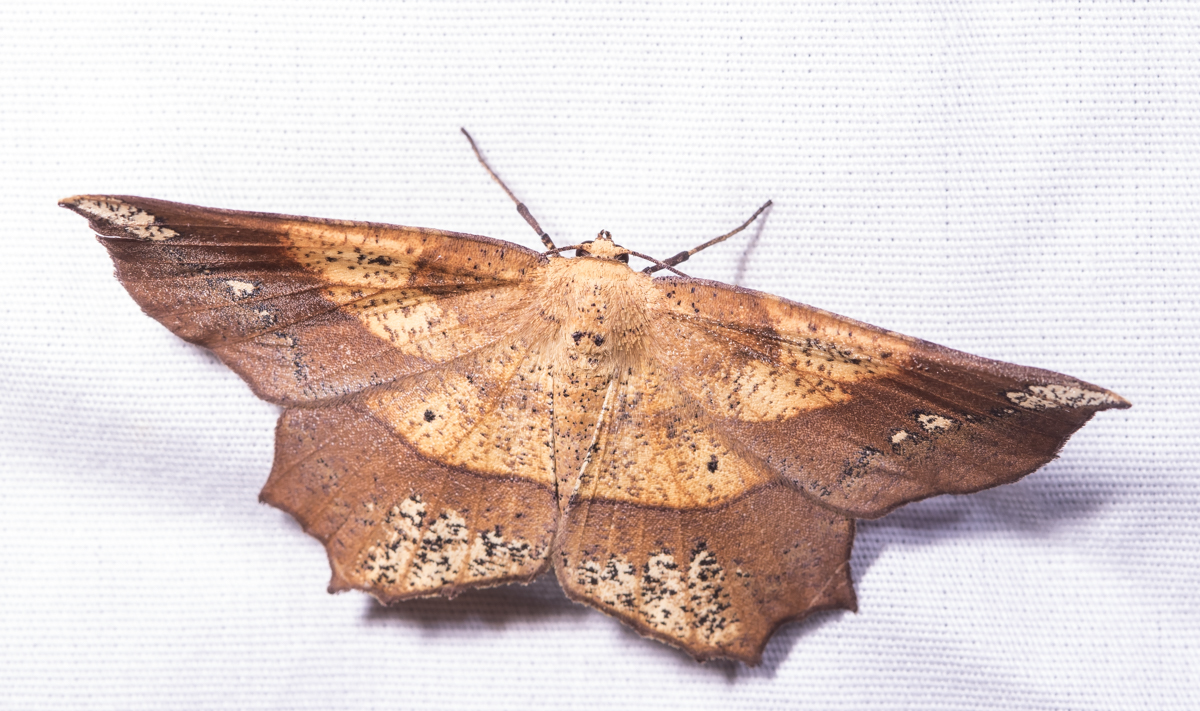
    Tylozygus geometricus leafhopper
    Leafhopper, Tylozygus geometricus.
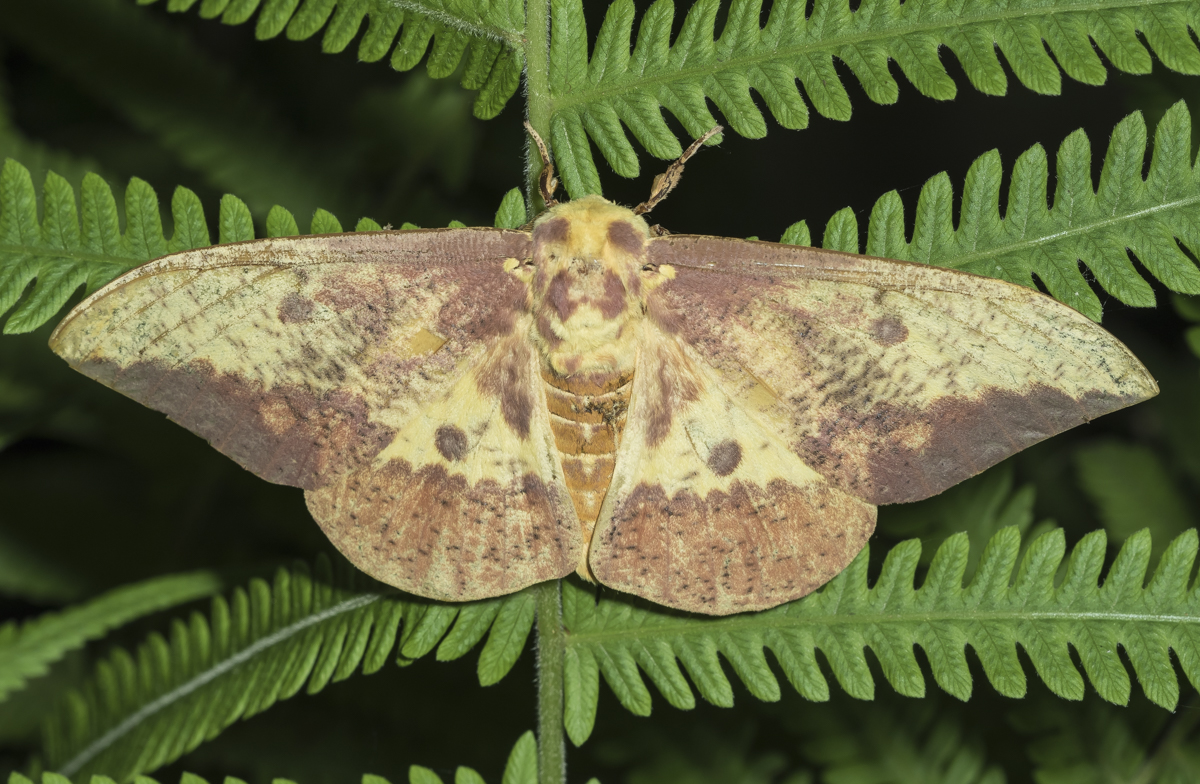
    Virginia (or Yellowjacket) Hoverfly, Milesia virginiensis
    Yellowjacket Hoverfly, Milesia virginiensis, a wasp mimic

    Camera note – photos were taken with a Canon 7D Mark II camera using a Canon 100mm macro lens. Some of the images were taken with one or two extension tubes on the macro lens. Lighting provided by a Canon Macro Twin Lite MT-24EX with diffusers.

  • Fourth of July Bearworks

    May this intelligent animal always have a place. We need to better understand bears.

    ~Mike McIntosh

    Hope you had a good holiday weekend. Mine was special in many ways – good food, good friends, and a memorable trip to my favorite place in the East, Pocosin Lakes National Wildlife Refuge. It was a long day trip on July 4th. What better way to celebrate our country than to spend time out in it, enjoying some of the spectacular wild places that we have set aside for ourselves and for wildlife. And so we hit the road, arriving at the refuge about 11 a.m. (pretty relaxed timing for one of my trips down that way). Much like the amazing victory of the U.S. Women’s Soccer Team last night, things happened fast and furious as we drove onto the refuge, and within the first five minutes we had spotted nine bears!

    first bear
    First bear of the day (click photos to enlarge)

    I photographed the first bear of the morning feeding in a soybean field on the refuge. The other eight bears in that first few minutes were farther out in this same large expanse of soybeans. I am always amazed that these large black animals are active in the middle of the day when it is 90+ degrees. We drove through the refuge roads and spotted a few more mid-day bears before leaving our air-conditioned car and walking down one of the many dirt roads that bears frequent. It was hot (no, correction, very hot), and humid, typical summertime conditions on the refuge. The bears didn’t seem to mind the heat as much as we did, because the day turned out to be the best day of bear spotting I have ever had. We walked several trails and roadsides, drove the refuge roads twice, and were chased back to the car on two occasions by intense rain storms, but it was an incredible day. Throughout the day we also saw hundreds of Zebra Swallowtail Butterflies, countless dragonflies, Indigo Buntings, Blue Grosbeaks, Northern Bobwhite, Wild Turkeys, White-tailed Deer, a Great Horned Owl, and a Bald Eagle. But, the bears stole the show and made this a most memorable holiday weekend.

    Here are a few images from the day…

    first cub looking shy
    As we walked down one of the refuge roads, a large bear suddenly came scrambling down a tree next to the road. We looked up to see one of her cubs shyly looking our way.
    first cub looking up
    The cub looked up at its sibling high above.
    second cub
    Second cub higher up in tree.
    second cub yawning
    Second cub yawning.
    bear in bean field 1
    While watching the cubs in the tree, another bear came through the field behind us.
    young bear in corn
    We had to retreat back to the car to avoid a heavy downpour. On our second walk, a young bear swam across the canal and sized us up from the safety of the corn.
    large bear standing in corn
    In another field, we saw a large boar bear standing in the corn.
    bear coming down tree
    While watching bears in a different field, we were again startled by a bear scrambling down a nearby tree (note to self, look up in all nearby trees).
    tiny cub in tree
    A tiny cub was in a nearby tree.
    bear watching other bear
    A bear walked toward us and then became distracted by something down in the canal.
    bear cooling off
    The source of the distraction – a very large boar bear cooling off in the canal.
    bears everywhere
    More bears near the canal…they just kept coming out of the woods and fields.
    huge bear
    The final bear of the day – a very large boar feeding on corn.
  • When Predators Become Prey

    If all mankind were to disappear, the world would regenerate back to the rich state of equilibrium that existed ten thousand years ago. If insects were to vanish, the environment would collapse into chaos.

    ~ E. O. Wilson

    Although my woods lack the charismatic fauna found in Yellowstone – wolves, elk, grizzlies – there is still plenty of drama to be found if you look for it. This morning I walked out the driveway and happened to notice something moving on a leaf.

    Lacewing larva
    Lacewing larva on leaf (click photos to enlarge)

    It wobbled as it moved, but, at first glance, looked more like a piece of fluff than anything alive. I recognized it as something other than fluff in the wind as I have seen many of these over the years. It is the cleverly camouflaged larva of a species of Green Lacewing. Adult Green Lacewings are common predatory insects with transparent wings, often seen flying weakly in the garden late in the day or coming to lights at night.

    Lacewing larva close up
    Lacewing larva close up

    The larvae of certain species of Green Lacewings have the unusual habit of disguising themselves with debris collected from the environment – lichens, plant fibers, and often the discarded corpses of their victims.

    Lacewing larva close up showing underside
    Lacewing larva close up showing its underside and the white waxy filaments of one of its victims

    The larvae have bristles on their body which allows them to stick the debris on their dorsal surface, making it tough to see the larval body beneath. These predatory larvae capture their prey with long sickle-shaped jaws, suck the juices from them, and then stick the drained body on their back along with the other debris.

    Planthoppers and their larvae
    Planthoppers and their larvae

    These debris-carrying critters seem particularly abundant right now, perhaps because there are large numbers of planthoppers on my wildflowers, and their larvae are a favorite prey item. The larvae of one species cover themselves in waxy filaments presumably as a defense mechanism. But, it apparently does not deter the lacewing larvae.

    Damsel Bug
    Damsel Bug

    As I watched one of the waddling trash piles, I noticed another one on a nearby leaf. But this one had company, the kind you really don’t want stopping in for a visit. It was some sort of True Bug, one of the predatory Hemipterans, and it was feasting on the other lacewing larva.

    Damsel Bug 1
    Damsel Bug with its prey

    After looking through Bug Guide, I decided it is probably one of the so-called Damsel Bugs, Family Nabidae.

    Damsel Bug
    The Damsel Bugs’ beak is piercing the lacewing larva between its sickle-shaped jaws

    Like other predatory True Bugs, this one has a long beak that pierces its victim, injects a toxin with digestive enzymes, and then proceeds to suck the juices into its own body, much like the Green Lacewing larva does to its victims. The insect world that is all around us is every bit as dramatic as the predator-prey scenarios on the Northern Range of Yellowstone. It just takes a slower pace and attention to detail to take it all in. Good hunting.

  • Cope-ing with Night Sounds

    The spring breeding chorus also provides evening entertainment to re-affirm our connection with nature.

    ~Encyclopedia of Life on one of the benefits of Gray Treefrogs

    The rains over the weekend brought out an intense display of night sounds that could be heard through the closed windows and doors. Friends came over for dinner Saturday night and they were greeted by the forceful trills of numerous Cope’s Gray Treefrogs (Hyla chrysoscelis) calling from around the water garden out front. The call can be heard here.

    Cope's Gray Treefrog
    Cope’s Gray Treefrog (click photos to enlarge)

    After the guests departed, I went out to see if I could find one of the callers. They all fell quiet as the front door opened. But conditions were perfect – it had rained up until a few minutes before I went out, it was warm, and it was well after dark. These frogs typically are high in trees much of the year, but come down toward the ground when conditions are right for breeding. I quickly found one in a shrub next to the pool, vocal sac partially inflated, as if I had interrupted him mid-trill.

    Cope's Gray Treefrog calling
    Cope’s Gray Treefrog calling

    I did an admittedly poor imitation of a treefrog love song, but it was enough to fool the lusty amphibians into starting up their chorus again. I could see four calling males but only one was easy to approach for a photo. He had chosen a prime spot – a horizontal branch with fairly open surroundings, leaning out over the pool. Some researchers have indicated this type of calling perch is likely to lead to more successful matings. Females are attracted to the strength and duration of calls and will walk toward a male they find “attractive”.

    Cope's Gray Treefrogs in amplexus
    Cope’s Gray Treefrogs in amplexus (note bright yellow “flash color” under legs)

    The female apparently nudges the smaller male and he grasps her from behind in a pose known as amplexus. I found a pair in this gripping position on a log near the water. After an hour or two in amplexus, the pair will eventually make their way to water and lay a loose aggregation of ten to forty eggs, with the male fertilizing them externally. One female may eventually lay up to 2000 eggs per season.

    Cope's Gray Treefrog egg mass
    Cope’s Gray Treefrog egg mass

    After all the calling and amplexus, eggs were laid sometime Saturday night or in the predawn hours of Sunday morning. At least some of the pairs had chosen the relative safety of some shallow water in a raised wooden barrel water garden near the main in-ground pool. The main pool is populated by a host of larger frogs {Bullfrogs, and Green Frogs} which can be potential predators, and so is a risky place to try to lay eggs from the adult treefrogs’ perspective. The above ground tub is much safer, but tends to dry out after a few days of no rain, so is more risky for the eggs and larvae.

    Cope's Gray Treefrog eggs
    Cope’s Gray Treefrog eggs

    The eggs are loosely attached to vegetation in the water and blend in pretty well with the mud and vegetation. I checked on them each day and they finally hatched sometime between Monday afternoon and Tuesday afternoon, a little over three days after they were laid.

    Cope's Gray Treefrog tadpole and mosquito larvaa
    Cope’s Gray Treefrog tadpole and a tiny mosquito larva

    Larvae are initially yellowish-tan in color and about 1/4 inch in length, and don’t look much like a tadpole. But, over the next couple of weeks, they should change dramatically and acquire a distinctive color pattern that includes a high-arching red-tipped tail. Transformation to juvenile terrestrial frogs usually occurs in six to nine weeks. I’ll be watching…

  • The Power of Yellowstone

    Mindful of different ways of being, our awareness as a species shifts –

    We recognize the soul of the land as our own.

    ~Laurence S. Rockefeller Preserve, unattributed

    Back from Yellowstone, back from paradise. Thirteen days, some alone, some with my group, some with old friends. Why is it so special? Why do I long to return when there are so many other places to explore? Is it that it was here, so many years ago, that I first knew the power of wild places? Is it that I have seen the magic of Yellowstone in the faces and thoughts of the many people I have guided over the years? I don’t know for sure, but it is an influential place for me, and always will be. There is something to knowing a wild place too, knowing its rhythms, knowing where to look to find its secrets. And there are the lucky ones, the friends that call this place home – Dan, Cindy and Kelly, Beth, Laurie, Jan and Leo. And others who love it like I do that I frequently see in my travels – Parks and his group, Melissa and Megan and the North Carolina teachers, Bill the wolf interpreter, Bob. It certainly is also the wildlife, so abundant, so different from that at home. Perhaps it is the soul of the land, a feeling I have of being connected to something grand, something far bigger and more powerful than what I experience back home, something that demands respect and awareness. I may never truly know, but that may be just fine. Maybe I should just accept that there is something special about this place…

    Whatever evaluation we finally make of a stretch of land, no matter how profound or accurate, we will find it inadequate. The land retains an identity of its own, still deeper and more subtle than we can know. Our obligation toward it then becomes simple: to approach with an uncalculating mind, with an attitude of regard. To try to sense the range and variety of its expression – its weather and color and animals. To intend from the beginning to preserve some of the mystery within it as a kind of wisdom to be experienced, not questioned. And to be alert for its openings, for that moment when something sacred reveals itself within the mundane, and you know the land knows you are there.

    ~Barry Lopez

    I do know this…every time I leave, I know I will be back. Until then, some images to remember it by….

    in the road
    Traffic control in Lamar Valley (click photos to enlarge)
    Grizzly Lodge
    Appropriately named lodging in Silver Gate
    Grizzly eating dandelion 2
    Grizzly Bear dining on Dandelion flowers
    Rocky Mountain Goat
    Rocky Mountain Goat surveying his domain
    Snake River overlook
    Snake River overlook, Grand Teton National Park
    Elk antlers
    Elk skull that has been in this same spot in Little America for at least 4 years
    sunset at Slough Creek
    Strange clouds at sunset at Slough Creek
    Bison coming out of river
    Bison emerging from a swim across the Yellowstone River
    Great Gray Owl female
    Great Gray Owl out toward the Beartooths
    Black Bear and cubs
    So many Black Bears and cubs this year
    Bull Elk in velvet 2
    A rarity to photograph these days – a mature bull Elk
    Pronghorn doe at sunrise
    Pronghorn doe at sunrise
    Uooer Geyser Basin
    View down the Upper Geyser Basin
    Western Tanager
    Western Tanager male
    Rainbow in Hayden Valley
    After the storm in Hayden Valley
    sunset at Roosevelt Arch
    Majestic sunset at Roosevelt Arch
  • Beartooth Bound

    The beauty and charm of the wilderness are his for the asking, for the edges of the wilderness lie close beside the beaten roads of the present travel.

    ~Teddy Roosevelt

    There is never enough time. Though the days are incredibly long, I still feel the pressure to move, to see more, to drive to another spot in hopes of seeing something spectacular for my group. And, of course, they must see the prime attractions of the park – Old Faithful, the Grand Canyon of the Yellowstone, the incredible thermal features. But those areas can be so crowded, so hectic. That is one of the reasons I love the northern section of the park so much…the expansive views and smaller crowds, plus the incredible wildlife, make it easier to feel connected to the park and a to gain a sense of getting away from it all. This is also true as you pass out the northeast entrance of the park and head out along the Beartooth Highway, considered by many to be America’s most scenic roadway.

    Pilot and Index
    Pilot and Index Peaks along the Beartooth Highway (click photos to enlarge)

    I had originally planned a trip to the Beartooths on the last full day of our trip, but a variety of factors caused me to move up that plan and we headed north a few days early. A quick stop for lunch at a scenic pullout gave us time to admire the view, taking in two prominent glacial-carved peaks – Pilot and Index. As we gained elevation we passed the beautiful aquatic mirror known as Beartooth Lake. But as we climbed higher, I could see the top of the mountain was shrouded in clouds. Hoping it would clear, we kept driving.

    Beartooths socked in
    Socked in at Beartooth Pass

    But it only got thicker and more gray, to the point where we could see only a few feet in any direction, not the glorious vistas or wildlife viewing I had hoped for. We turned around near the top and returned to Silver Gate.

    A couple of days later, we joined my friend, Dan Hartman, for a short hike starting part way up the road toward the Beartooths. One of his favorite wildlife areas is an aspen grove near the road that has many species of nesting birds.

    Hairy Woodpecker leaving nest
    Hairy Woodpecker leaving nest

    Quaking Aspen are not only beautiful trees, they also provide excellent habitat for cavity-nesting birds. After spending just a few minutes in this grove, we had spotted the nests of several species including Hairy Woodpecker, Northern Flicker, Red-naped Sapsucker, House Wren, and Mountain Bluebird. Although I could have spent several hours in this productive area, I decided to head back up to the Beartooths since we were part-way there and my group had not yet seen the top of the mountain. Dan agreed to go with us, so we headed up the highway following his car.

    Grizzly siblings
    Grizzly Bears along the Beartooth Highway

    We had barely gone 100 yards when he stopped, pulling off the highway, and jumping out of the car with his camera. As I pulled up I was stunned to see two young grizzlies down over the bank. I grabbed my camera, which still had my telephoto on it from the aspen grove, and jumped out next to my car. We all took photos of the bears, heads down, actively feeding. Another car pulled up and both bears paused momentarily and looked their way.

    Grizzly eating dandelion 1
    Grizzly eating Dandelion

    As I watched the bears I noticed they were mainly feeding on one of the more common roadside plants – Dandelions. Looking at the photos back home, almost every bear bite captured by my camera was a Dandelion flower or leaf. The only other food item I detected was some Horsetail, another common plant common along the roadside.

    Grizzly Bear standing up
    Grizzly Bear standing up

    These bears are probably siblings, most likely 3-year-olds, out on their own for their first season (grizzly young stay with their mother for two years). They seemed focused on feeding and basically ignored us except when another car would drive up. Being outside the park, there was not much traffic, but when a few guys on motorcycles stopped with the engines chugging, both bears took notice and stood up to check out the noisy interlopers. Finally, we decided to move on as the bears decided to ease back into the treeline, making them almost impossible to see from the road.

    Beartooths below the clouds
    View from high on the Beartooth Highway

    Climbing higher up the mountain we could see the changing landscape as trees dropped out and snow still covered large patches of the rocky terrain.

    watermelon snow
    Watermelon snow at high elevation

    The high elevation views are also interesting if you glance downward. Here and there at these heights you may find an anomaly known as watermelon snow. This pink snow is caused by a cold-loving algae that has a secondary red pigment in addition to chlorophyll. The red pigment probably plays a role in protecting the algal cells from the intense sunlight at these altitudes. It may also absorb heat and hasten the melting of the snow around the cells.

    Mountain Goats
    Rocky Mountain Goats

    The roadway gets up over 10,000 feet above sea level as you go over the pass. Gusty winds are a common companion at these heights and I always marvel at the group of animals that make this landscape their home including Yellow-bellied Marmots, Pika, Rosy Finches, and the non-native Rocky Mountain Goats. We stopped to view a band of several Rocky Mountain Goats grazing on the alpine vegetation on the wind-swept slopes. They gradually worked their way over the hill, vanishing from view. If you are ever in this part of the Yellowstone region, I highly recommend a side trip up the Beartooth Highway. I always feel as if I am in a totaly different world, a world of sky, snow, rock, and animals adapted to extremes. And it is a place where feeling the wind in your face and simply taking a breath can make you feel so vibrant. It is a wonderful tonic…perhaps we can learn something from Rocky Mountain Goats and Pikas.

  • Beyond Yellowstone

    The Greater Yellowstone Ecosystem, with Yellowstone at its core, is one of the largest nearly intact temperate-zone ecosystems on Earth.

    ~National Park Service

    Yellowstone National Park was established in 1872 primarily to protect the unique geological features of the region including almost half of the world’s active geysers. At that time, natural areas and wildlife habitat were abundant throughout the West. That is no longer the case, and the region protected by the park and adjacent federal, state, private, and tribal lands constitutes one of the largest and most important wildlife habitats in the world. Known as the Greater Yellowstone Ecosystem (GYE), it encompasses about 22 million acres and provides critical habitat for the largest free-roaming Bison herd and one of the largest Elk herds in North America, as well as one of the most important Grizzly Bear habitats in the contiguous United States.

    Teton Range
    Teton Range (click photos to enlarge)

    On this trip, we spent an afternoon and morning in the other national park within the GYE, Grand Teton National Park. It had been several years since I visited this scenic jewel, but as the Teton Range came into view, I remembered why many consider this to be one of our most spectacular park landscapes.

    Grand Teton NP
    View along Teton Park Road, Grand Teton National Park

    One thing that makes the Tetons so dramatic is their abrupt rise thousands of feet above a relatively flat valley floor. This is due in large part to a series of massive earthquakes along the Teton Fault that started an estimated 10 million years ago. These quakes caused dramatic shifts in the landscape along the fault with the mountain block lifting skyward and the valley block dropping. The average elevation of the valley floor is 6500 feet. The surrounding peaks of the Teton Range include elevations of 12,605 for the impressive Mount Moran, and up to 13,770 for Grand Teton.

    Oxbow Bend GTNP
    View of the Teton Range from Oxbow Bend

    Spending such a short amount of time here is tough….where to go, what to see, and where to spend a sunrise or sunset. One of my favorite places is the famed Oxbow Bend with a view of the mountain peaks reflected in the calm waters. It is probably better as a sunrise viewing point, but any time of day can be spectacular.

    LSR Preserve
    Visitor Center at the Laurence S. Rockefeller Preserve

    But I had one special destination in mind for this visit, something I had heard about from someone else that had visited it – the Laurence S. Rockefeller Preserve (LSR Preserve) in the southern portion of the park. It is a beautiful area of about 3000 acres, donated by Laurence S. Rockefeller, with the expressed intent of providing a unique setting for people to connect with nature. The LEED-certified building is beautiful and is a place filled with sensory exhibits – the sights and sounds of nature to be found on the trails within the preserve. The parking lot is intentionally small  (50 cars) to limit the number of visitors at any one time, providing for a more personal experience with nature. The spirit and words of Laurence S. Rockefeller and other conservationists and naturalists adorn the interior walls. Here is one of my favorites…

    In the midst of the complexities of modern life, with all its pressures, the spirit of man m=needs to refresh itself by communion with unspoiled nature. In such surroundings – occasional as our visits may be – we can achieve that kind of physical and spiritual renewal that comes alone from the wonder of the natural world.

    ~Laurence S. Rockefeller

    I must say, the brief experience in the Tetons was a bit of a relief from the huge crowds found in the more developed areas of Yellowstone like Old Faithful and Canyon. This reminded me more of my beloved Lamar Valley in its simplicity and pace. Although it made for a long drive back to our lodging in Silver Gate, it was time well spent in a phenomenally stunning setting. And I came away appreciating the dedication and foresight of the people that helped make this park possible, especially the values of Laurence S. Rockefeller. I’ll leave you with one additional quote from the LSR Preserve that I hope our society will embrace…

    How we treat our land, how we build upon it, how we act toward our air and water, will in the long run tell what kind of people we really are.

    ~Laurence S. Rockefeller

  • Yellowstone Skies

    My group was tired last night so I  dropped them off at the lodging and then went back out to just spend some time alone in my special place. We spent the day in the geyser basins, a highlight of a visit to Yellowstone for almost everyone. But, everywhere we went it was crowded, so many people. It started me wondering why other people come to this special place? What is it they take away with them when they leave?


    Sunset in Hayden Valley (click photos to enlarge)

    As I drove into Hayden Valley, the sky reminded me of one of the reasons I love this park. There is freedom here.  Freedom to be who you are, to think big, to be inspired to reach for something bigger than yourself. It is vast and wild. I truly believe that helps me put things in perspective. There is beauty in the simplicity of the cycles of life that are so evident here. There is so much to understand and appreciate.  It makes me want to learn, to try to understand how everything fits together. But most of all, it gives me a sense of peace. I want that for the other people I see, but I’m not so sure that some of them are finding it. I watch as people take selfie’s near a bison or geyser. I hear complaints about the food at the restaurants or about the traffic jams (I guess I might be guilty of that last one). But this is Yellowstone, the world’s first national Park. I want them all to appreciate it.


    Double rainbow after the storm

    A brief storm moved across Hayden Valley the other night as I contemplated all of this. The sky was soon electric with color.


    Rainbow in Hayden Valley

    I wish everybody here could take a moment and look at the sky, to take in it’s beauty. We should all look up every day and see how it changes in both bold and subtle ways. I think the skies of Yellowstone have a lot to say about why life is good and why we should make the most of it. So, wherever you are, take a moment and look up, and try to learn what the sky is trying to tell us.

    Here are some of the sky messages I have seen this week.

    Sunset in Lamar Valley


    The Beartooths peeking out of the clouds


    Sky reflection at Grand Prismatic Spring


    Brilliant sunset at the North entrance to Yellowstone


    Looking across Yellowstone Lake at sunrise to West Thumb Geyser Basin


    Pink clouds in Lamar Valley
  • Faces of Yellowstone

    There are so many people here this week. So many faces. Many are international visitors. I guess many are in Yellowstone for the first time. I realized how important faces are to us humans, how that is what we usually look at first in another person, and how it can often tell us so much. I have seen tired faces climbing the boardwalk steps at Mammoth, hot faces of people out in the intense sun this week, and surprised faces when a one ton Bison bull suddenly steps in front of someone’s car. But mostly I have seen happy faces, smiling faces. In watching the wildlife I started wondering about their faces and what they might tell us. They look wise and strong. I think I will look more closely and see what I can learn from and about them. Here are some of the faces of Yellowstone wildlife…

    Yellow-headed Blackbird (click photos to enlarge)
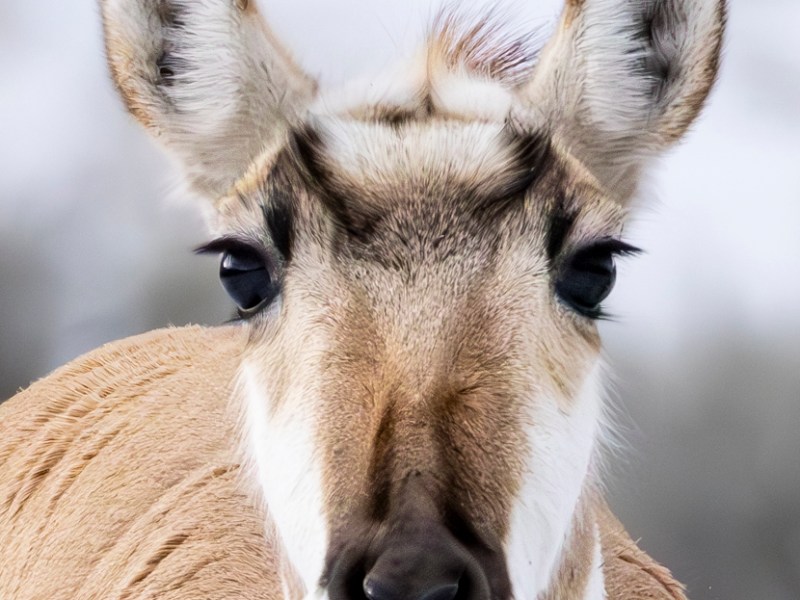
    Pronghorn doe… Check out those eyelashes
    Great Gray Owl outside the park toward Beartooths
    Western Grebe
    Lesser Scaup female with male close behind
    Bull Elk in velvet
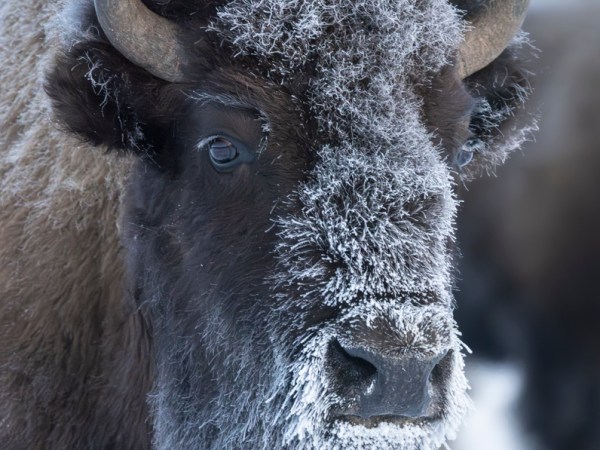
    Bison bull
    King of Lamar Valley
    Mule Deer doe
    Raven that just brought a chunk of meat to young
    Elk cow
    Elk cow
    Pronghorn buck – note black cheek patch as aid in identifying males

    Note…this may be my last post until I return due to limited cell service

Search the Archives

Due to our site update, photos on older posts may not display correctly. Sorry for any inconvenience.


Recent Posts