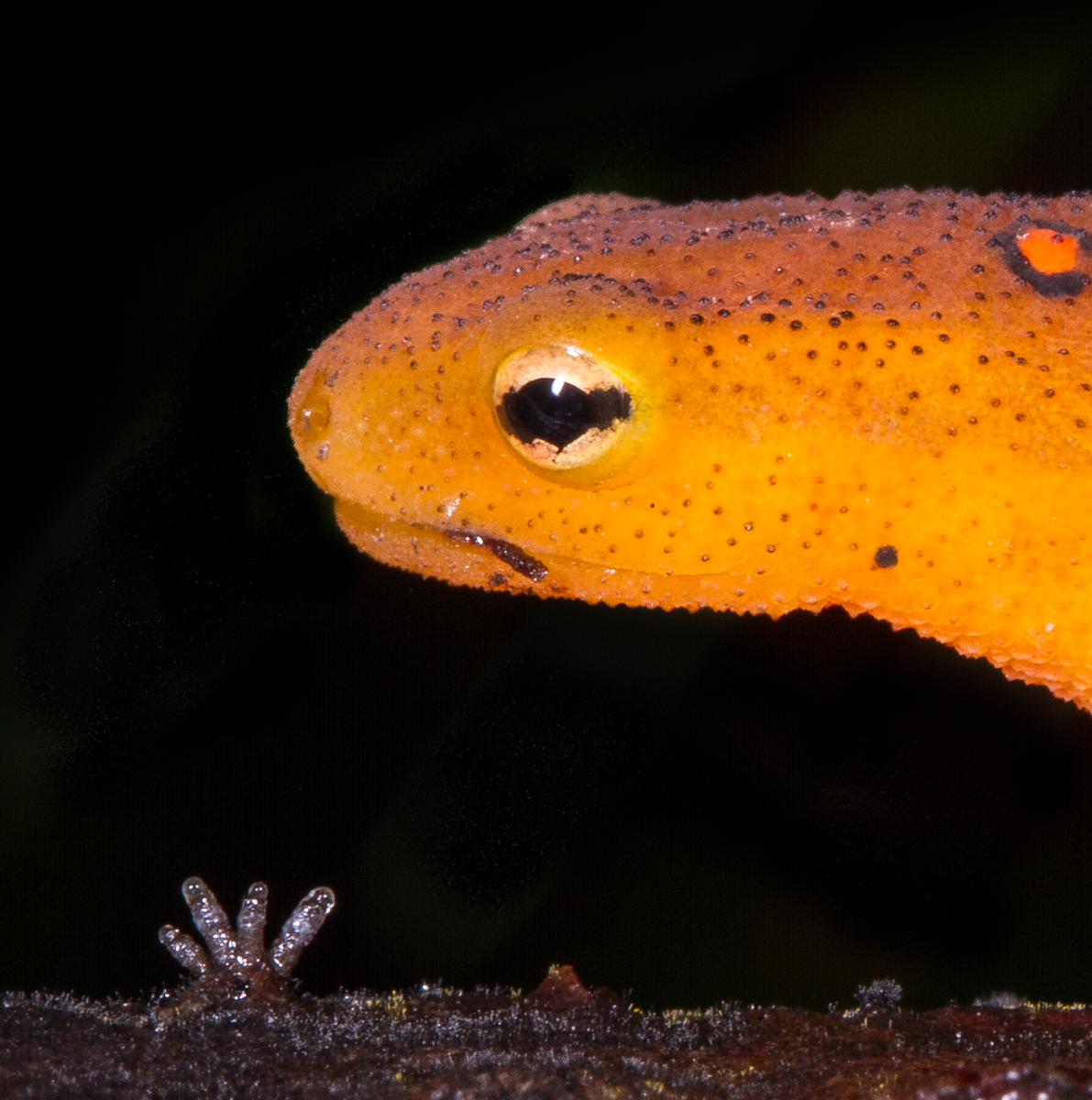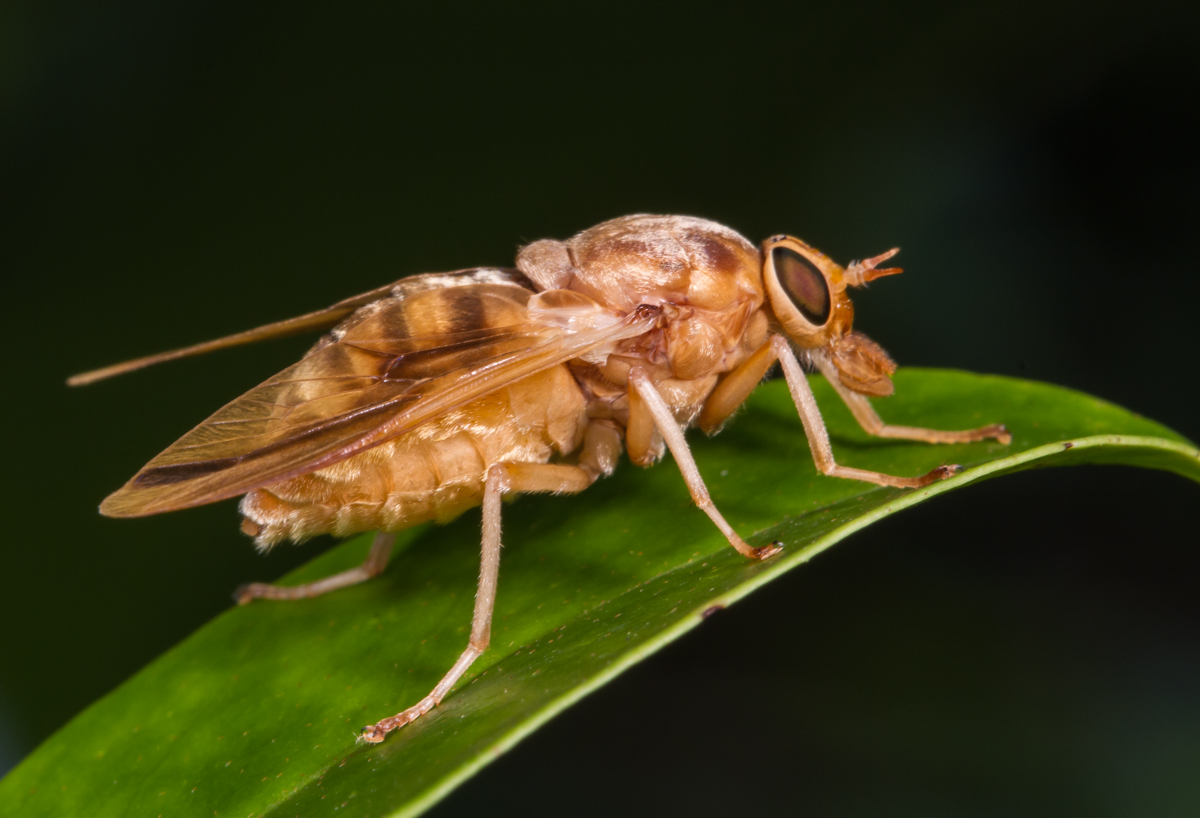
Frogs are strange creatures. One would describe them as peculiarly wary and timid, another as equally bold and imperturbable. All that is required in studying them is patience.
~Henry David Thoreau
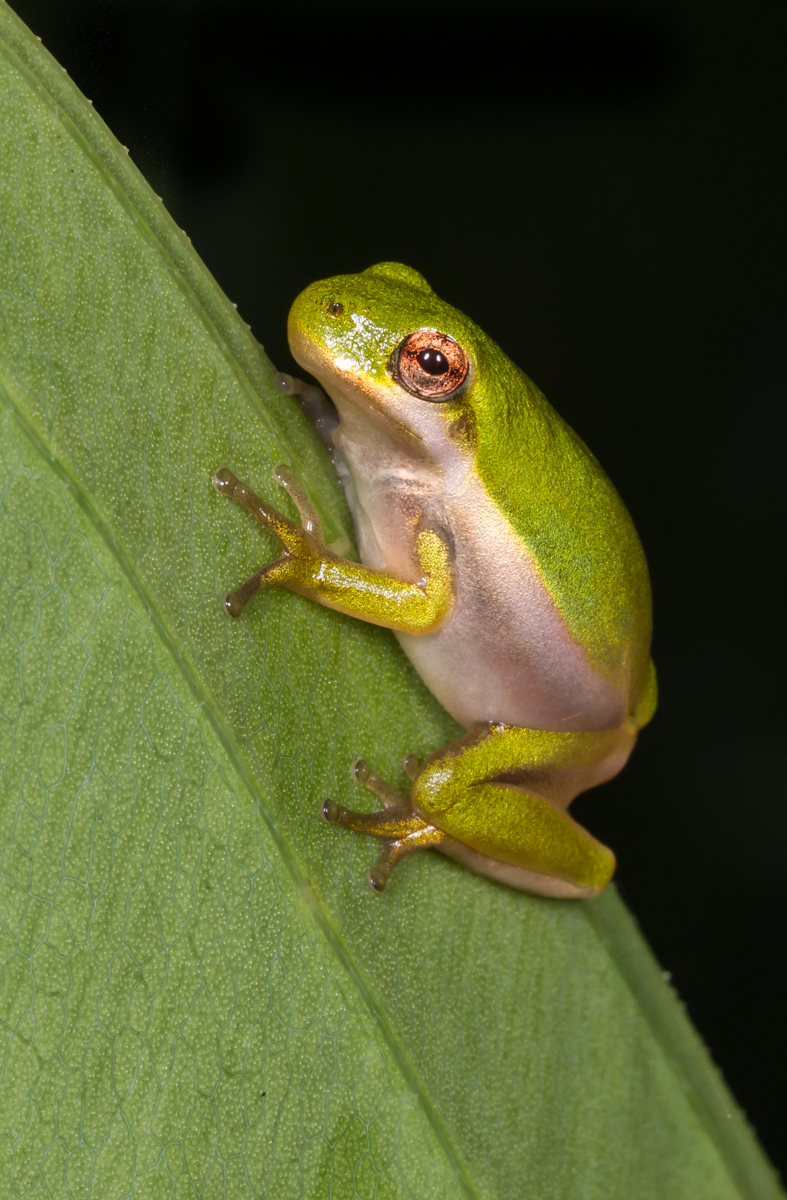
My plans to post on moths during National Moth Week have been easily waylaid – it appears as though I am easily distracted whenever I go outside. And so it was yesterday afternoon. I was taking a few images of a couple of moths clinging to the screen porch when I noticed a flower blooming on the Jewelweed near the porch. I had thrown a few seeds out two years ago in a small patch of ground out back that normally stays damp due to runoff from the slope above. I had also planted a few Netted Chain Ferns and called it my backyard wetland. In actuality it is only about 5 feet across and tends to wither during times of dry weather, but it has produced a few interesting insects and an occasional hummingbird visitor. When I walked over to check out the flower, I was surprised to see an unusual visitor perched high on a Jewelweed stem – a Green Treefrog, Hyla cinerea.
Green Treefrog clinging to a Jewelweed stem (click photos to enlarge)
By day, they often perch on vegetation in a very sedate pose, their legs folded tight against their body. They can sit like this for hours and seem to blend into their chosen plant perch.
They often look like a swelling on a plant stem, until you give them a closer look
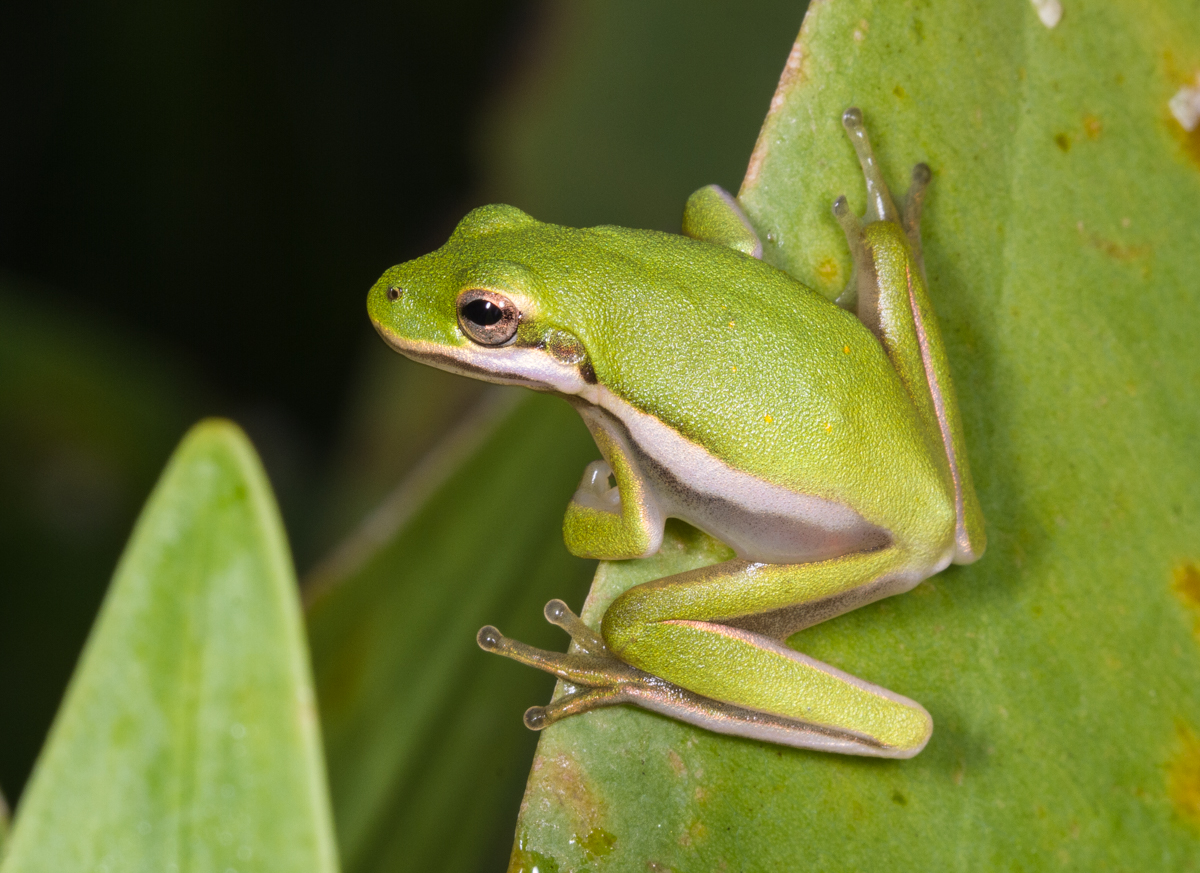
The unmistakable bright green color and the white “racing stripe” down the sides are distinctive for this species.
Green Treefrogs often have gold flecks on their backs
They frequently have small golden splotches on their dorsum, which may serve some camouflage function in a sun-dappled environment.
The eyes of frogs and toads are incredibly beautiful up close
This is the first Green Treefrog I have seen at the house. And it comes as a bit of a surprise, since there are no wetlands up here on the hill. The closest suitable habitat is about a half mile down the power line, but I have never heard their distinctive “queenk” call anywhere out here. About a decade ago, I reported this species near a water garden at the place I used to live in Chatham County. That proved to be a new county record for this species, which is much more common in our Coastal Plain than in the Piedmont, although they seem to be expanding westward.
The frog was calm as I photographed it from several angles and even got up close and personal to appreciate the details of its skin
This little guy was very calm, or, as HDT might say, imperturbable. I photographed it from several angles and it remained peaceful, thinking its froggy thoughts, or perhaps just pretending to be part of a plant. A close look revealed intricate details in the patterns of its eye and the folds of its moist skin.
This morning, my rare visitor had vanished
After about an hour, it started raining, so I reluctantly went back inside. This morning when I checked, my visitor had vanished. Whatever the reason, I am glad it paid a visit to my “wetland” and made me stop and appreciate its beauty. Now, about those moths…
Fog droplets bathed much of the vegetation yesterday (click photos to enlarge)
Yesterday morning’s fog left not only pearl-strung silk necklaces strewn across the meadow, but also vegetation, and the insects hiding amongst it, covered in shimmering beads of water. I can’t resist trying to capture images of these bejeweled beauties on such a morning. Droplets of water seem to make everything more worthy of our attention.
A cosmic galaxy on an iris leafTwo-striped Planthopper on a dewy grass stemDroplets make even a Flesh Fly (at least I think that is what this is) more appealingA Flesh Fly walks on a pathway of glass bubblesBush Katydid nymph cleans some of the water and spider silk from its legsThis nymph appears to be wearing a bead-studded suit
Take time to see the quiet miracles that seek no attention.
~John O’Donohue
I awoke this morning to a dark cast out my window. Where normally there are sunbeams streaming through the trees, there were none. As I sipped the first mug of coffee, the news warned of dense fog for those who must commute. I thought to myself…this would be a good morning to get wet on a walk…so I grabbed the camera and took a stroll in the meadows under the power line. Spiders had been busy, creating art for any to appreciate, if you only take the time.
Large web on a dead branch (click photos to enlarge)Silk encased pine tipSpider tent on a dead weedThere were many orb webs in the fogThe artist is inA hint of a nautilus designA horizontal orbAn orb with a twistSilk pearlsA silk bowlA silk explosion
~from Nature Conservancy promotional article on National Moth Week
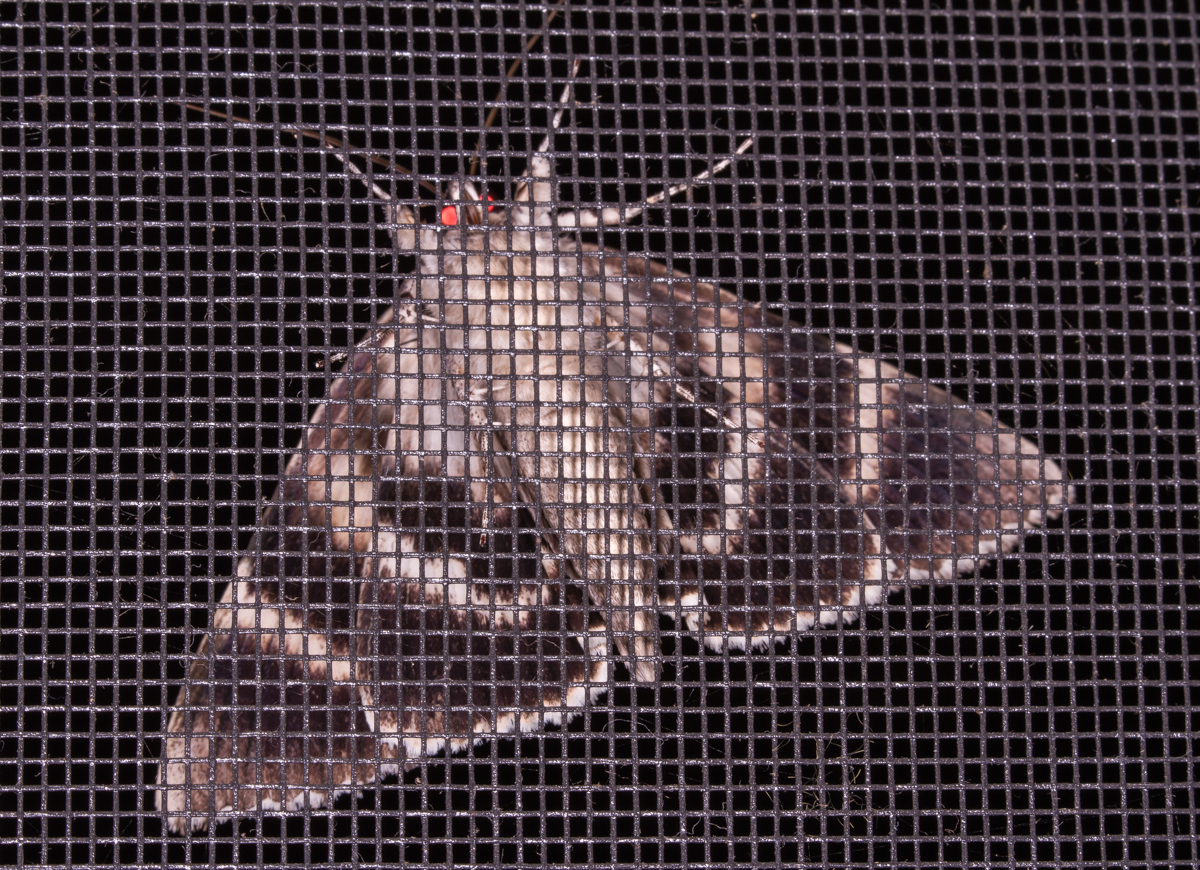
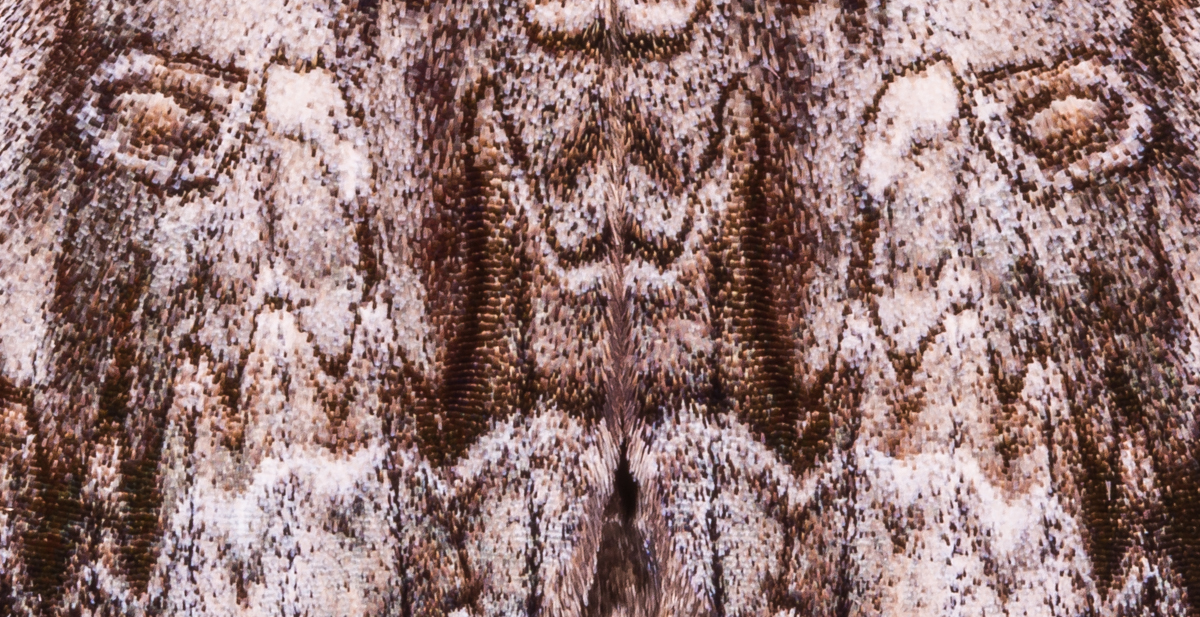
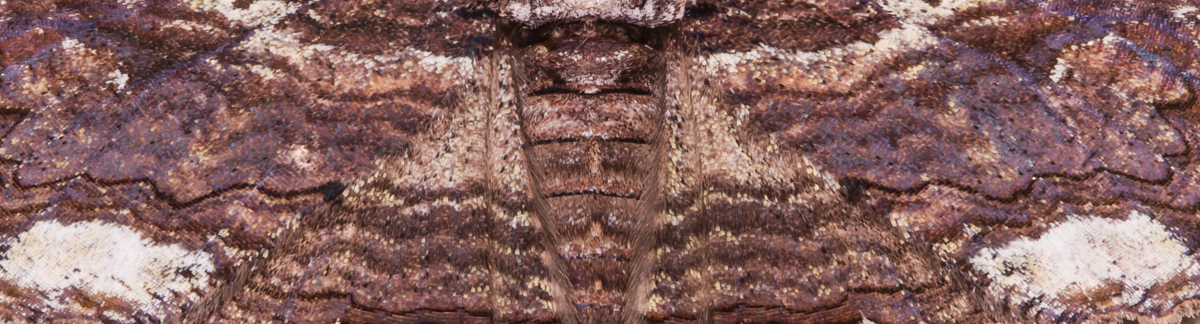
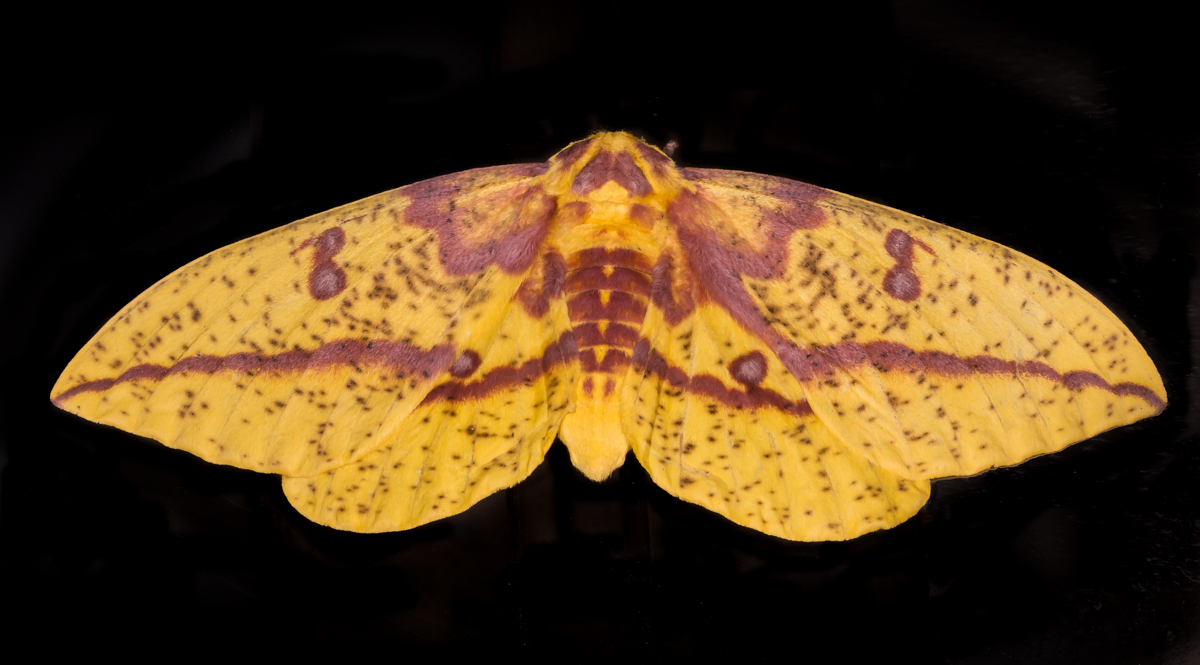
It is, indeed, the third annual National Moth Week (July 19-27, 2014). National Moth Week’s main goal is to promote awareness of moths, and to encourage people to observe and report their findings on this fascinating and little known (to most of us) group of insects. More information can be found on their web site at http://nationalmothweek.org/. So, in honor of this event, I thought I would do a couple of posts this week on moths and their caterpillars.
Carpenterworm Moth on oak stump (click photos to enlarge)
A few weeks ago, a large oak out front had to be taken down because it was showing signs of imminent death – the bark splitting off, a large dead limb hanging out over the driveway, and sap oozing from some cracks near the base. One evening as I walked by the stump, I saw a large gray moth sitting on top. I wasn’t sure what it was, but then noticed something laying on the ground below.
Carpenterworm Moth pupal skin
It was a large brown pupal skin that I recognized. I had seen these once before, but instead of lying on the ground, they were sticking out of holes at right angles to the trunk of a large oak. I had identified them then as the pupal sheds of a Carpenterworm Moth, and now I had found a live adult.
A Carpenterworm Moth blends in with the colors of tree bark
It was probably lucky that this moth had crawled up to the recently cut surface of the stump, as I might otherwise have missed it. Their camouflaged coloration helps them blend nicely with the patterns of tree bark.
Carpenterworm Moth view head on
I believe this specimen was a female – they are larger than the males and lighter gray in color overall. She was close to 2 inches in length and must have just recently emerged as she allowed me to pick her up without taking flight.
Female Carpenterworm Moth
These moths are quite large, despite being members of the so-called Micromoth family. After looking in some field guides and online, I think this one is called Robin’s Carpenterworm, Prionoxystus robiniae.
Carpenterworm Moth and pupal skin
The larvae bore into the trunks of various hardwoods, creating large tunnels. They require up to 4 years to complete their life cycle. I still have never seen a larvae, but they must be quite large given the size of the pupal case and the resulting moth.
This is just one of the thousands of fascinating species of moths you might encounter here in North Carolina. Leave a porch light on or look for National Moth Week events in your area, and get outside to learn about this amazing and beautiful group of insects.
Driving down a dirt road last week on the Pungo Unit, I spotted something up ahead. It wasn’t a critter, but rather a distinctive sign made by an animal.
River Otter scent-marking and rolling area (click photos to enlarge)
As I got closer, I could see it was a very large area that had been marked by a River Otter, although by the looks of it, undoubtedly more than one animal. River Otters are common in the canals at Pocosin Lakes National Wildlife Refuge and have regular spots they use to cross the roads from one canal to another. I had seen tracks and scat in this general location before, but never this large of an area with this much sign. There were a bunch of squiggles in the sandy substrate indicting the otters had rolled around in a patch of road measuring about 6 or 7 feet across. River Otters roll to maintain their fur. Rolling fluffs it up, cleans and dries the fur, and helps distribute the oils that are critical to maintaining its insulating and waterproofing qualities.
River Otter scat and urine at the rolling location – notice the tracks on the lower edge of wet area
Rolling also serves as a means of communication amongst otters by scent-marking as they roll. They frequently defecate and urinate in or adjacent to these areas (and regularly used haul-outs) as a means of scent-marking. To make sure other otters know they have been in the neighborhood, River Otters have scent glands on their hind feet as well as highly developed anal scent glands (the latter is typical of all members of the weasel family).
River Otter scat usually is full of fish scales
A common indicator of their presence are small mounds of vegetation and debris scraped into a pile by an otter and topped with scat in locations where they regularly haul out or have pathways to water.Their scat is usually composed of fish scales and is tubular in shape, although you often see it simply in a small pile.
River Otter scat with crayfish parts
Another common component are bits and pieces of crayfish, which usually have a reddish-pinkish tint. There is usually a distinctive musky-fishy smell associated with these locations, especially if recently used. With so many ways to scent mark, River Otters must be constantly checking on the comings and goings of friends, relatives, and potential competitors in their neighborhood.
While I did not see an otter on that day, they left ample evidence of their presence. It was fun to imagine three or four of them laying and rolling in the road, leaving their calling card for the next otter to come by. And they probably did it in that playful manner we so often associate with these beautiful animals. I have seen otter here several times and had the privilege of watching them hunt and go about their business in many other areas around the country. Whenever I see them, it always brings a smile to my face…they just seem to have that affect on people.
River Otter catching a quick nap at Lake MattamuskeetPair of River Otter at Chincoteague National Wildlife Refuge
The name “raccoon” is drawn from the Algonquian term “arakun” and roughly translates to “he who scratches with his hands”.
~Samuel I. Zevelof, in Raccoons: A Natural History
Between the Bobcat and the Black Bear cubs the other day, I had another interesting wildlife encounter. Most of the dusty miles of gravel roads at Alligator River National Wildlife Refuge are accompanied on at least one side, by many miles of canals. These dark waterways are home to a diversity of wildlife including substantial populations of aquatic turtles (mainly Yellow-bellied Sliders and Painted Turtles). Driving along on a sunny day reveals many turtles basking on the canal banks or lined up on any partially submerged log. Last Monday, there were plenty of turtles basking, plus two crossing the road, and one was even laying eggs in a shallow nest in the gravel road. I thought that was a poor choice for a nest location, but, shortly thereafter, I saw that choosing a good nest site is probably not easy in this predator-rich environment.
Raccoon crossing road (click photos to enlarge)
Driving around a curve, I spotted a female Raccoon scurrying across the road. She ended up in a grassy area near the junction of two roads and their neighboring canals. I quickly pulled over, expecting her to just disappear into the brush, but she had other things on her mind.
Raccoon sniffing in grass
She moved quickly along the back edge of the opening, swinging her head and sniffing, pausing every now and then when she smelled something interesting.
Raccoon digging
Suddenly, she stopped, spun around a couple of times with her nose to the ground, and began digging with those incredibly dexterous front paws. If you have ever seen their distinctive tracks in the mud, you know their front paws resemble tiny human hands, without an opposable thumb. One reference stated that the front paws contain four times the touch receptors as there are in their hind feet. Plus, a Raccoon’s brain supposedly has a major portion of the cerebral cortex devoted to these paws and the sense of touch.
Raccoon removing something from the hole she has just dug
After digging for about a minute, she hunched over a bit more and then gingerly lifted something out of the hole – an egg, a turtle egg. She held it between her paws, not grabbing it with the “fingers” as I expected, but holding it cupped in her paws like we would hold a tennis ball if our fingers were taped together. She gently roiled it into her mouth and began to chew.
She lifted her head as she manipulated each egg in her mouth
As she chewed, she lifted her head, and it looked as if she was moving the egg around inside her mouth to get the contents out, perhaps without swallowing the egg shell (which, in a turtle, is somewhat leathery instead of brittle like a bird egg). This routine was followed for each egg dug out of the hole.
Holding an egg to get the last drop of goodness out
She manipulated each egg for 15 to 30 seconds, then her head would drop back down, and she would pick up another egg and move it to her mouth. Her head was always low when she first got the egg, and then she would always raise it as she extracted the yolk.
Raccoon pulling out the last egg from the turtle nest
She finally ate the last egg, looked over at me, and started walking back across the road. It was as if she knew she might get a meal in that spot and had made a quick run to the store to pick up a few things and was now heading home. And I’m betting she has had success in that location the past. Favorable turtle nesting sites are hard to come by in a swamp, which is what most of the land is around that road juncture. This wide grassy patch has probably served as a turtle nesting area for years, and the local Raccoon population has learned to periodically check it for the possibility of an egg breakfast.
The Raccoon was not the only one getting a meal
When I later looked at the image of her after she ate the last egg, I saw that she was not the only one getting a meal at that moment. In fact, in almost every image I took that day, I could see one or more biting flies somewhere in the image. She has one above her left eye in the photo above. And a close look at one of the earlier photos will show a tick in her left ear. Everything needs to eat I suppose.
Raccoon-raided turtle nest
After she departed, I walked over to inspect the nest. I have seen this crime scene many times after the fact, but this was the first time I have witnessed the egg thief in action. There were 8 egg shells scattered about the hole. Sliders may lay two or three clutches per year of up to 15 or more eggs, so there are plenty of chances for a little one to at least hatch, although there are still a lot of predators to get past before becoming a fairly well-protected adult turtle in one of these canals. Meanwhile, that female Raccoon is probably returning to a tree to gather her family of babies after a good breakfast. As always, I am thankful to have been there to witness part of the cycle.
Secretive indeed. I have been lucky over the years to have seen several (about twenty five or so), mainly at Pocosin Lakes National Wildlife Refuge. A few others at Alligator River and Mattamuskeet, one in Chapel Hill at Mason Farm, one in our mountains, and one in a swamp in South Carolina. Many have been brief glimpses. One that I wrote about last September, was a long, privileged view of one casually walking toward me, and snagging a quick snack along the way. All have been special to me. So, Monday was a very good day when I saw two of them. I have had only one other day where I was lucky enough to see two. One was chasing another one when they ran out into the road in front of a friend and I at Pocosin Lakes several years ago. We saw them for less than 20 seconds but it left a lasting impression.
If it had not been for this guy, I would have probably missed a rare sighting (click photos to enlarge)
The first sighting on Monday was one of those lucky moments where things just work out. I was driving on a road south of Pungo Lake when I passed a bear in a patch of reeds across the canal. It stood up as I drove by, so I kept going and turned around to pass by again, so it would be on my side of the car for a photo. The bear stayed put for a few clicks of the shutter, but was actually a bit too close for the lens I had. It slowly turned away and walked off. I started to do another three-point turn to resume my drive through the refuge, and when I glanced in the rear view mirror, something stepped out of the brush alongside the road about 75 feet behind me.
Bobcat came out behind my car
I couldn’t believe it…a Black Bear in front of me, and a Bobcat behind me. I had to complete the turn in order to get an image, and when I started to, the Bobcat slipped back into the brush alongside the road. Having seen this before, I knew there was a good chance that, if I waited, it would come back out. I drove a little closer, pulled at an angle so I could get a shot, cut the car engine, and waited.
After waiting a few minutes, the Bobcat came back out to the road
Sure enough, the graceful cat came back out in almost the exact same spot after only a couple of minutes of waiting.
A mesmerizing gaze
It looked around, glancing my way a time or two, and then walked out into the road.
The Bobcat kept an eye on me as it walked down the road
The harsh shadows made for tough exposures, but, hey, it was a Bobcat!
Out for a morning stroll
It started walking slowly down the road, weaving from side to side. I cranked the car and started to follow at a snail’s pace. The Bobcat wandered over to the edge of the canal on the opposite side of the road twice and paused, seemingly trying to decide whether to cross. I was ready to leap out of the car if it did, as I really wanted to see it swim across the canal and get out on the other side.
It decided not to swim the canal, and then headed back toward the thick brush
But, it never did. And then it gave me an up close look at one of the signs you usually see instead of seeing the animal itself…it hunched its back and deposited an unmistakable Bobcat scat at the edge of the road. It’s not often you get to witness animal sign being made, or that you get to share such a thing with readers:).
The scat seemed large for the size of the catBobcat scat is tapered and often blunt at the tip
The cat then walked off into the brush. I waited, and waited, but it didn’t return. I got out and checked the scat and was surprised at how large it was given the size of the Bobcat (the cat I photographed last Fall was much taller than this one). Bobcat scat can be distinguished from similar-sized canine scat by being fairly segmented and often blunt at the tips. This scat contained hair, and lacked the larger chunks of bone often seen in Coyote or Red Wolf scat. And while we think of cats as always covering their scat, one of my track references (Tracking and the Art of Seeing) says that Bobcat cover their scat about half the time. I figured I would have to show pretty pictures of the animal to get yo to read this far and learn about poop:).
Later that afternoon, while watching a deer along a road at Alligator River National Wildlife Refuge, another Bobcat came out of the brush and walked toward me. It was over 300 yards away, but both the deer and I intently watched it as it walked closer. It then disappeared back into the brush before I ever took a photo. But to have two of these secretive animals in one day….I’ll take it, and be thankful for it, photo or not.
What makes a place special is the way it buries itself inside the heart, not whether it’s flat or rugged, rich or austere, wet or arid, gentle or harsh, warm or cold, wild or tame. Every place, like every person, is elevated by the love and respect shown toward it, and by the way in which the bounty is received.
~Richard Nelson
You all know by now how I feel about Yellowstone and its extraordinary wildlife. But, I have learned that every place can be special if you take the time to look closely and appreciate what the place can give you. My last post was about the wilds of my garden, a place with much in the way to offer in terms of interesting creatures, although most are admittedly a bit on the small side. So, when I want a wildlife fix back in North Carolina, I usually head to that other place you have seen me blog so much about – Pocosin Lakes National Wildlife Refuge.
A bear greeted me shortly after my arrival at Pungo (click photos to enlarge)
So, when I woke up a bit too early Monday, I decided, what the heck, I think I’ll drive down to Pungo and see what I can see. I arrived about 8:30 a.m. and spotted my first bear within a few minutes. It was a bit unusual-looking in that it was distinctly brownish in color. While brown-colored Back Bears are common in Yellowstone, they are not in the East. I have seen this coloration a couple of times at Pungo on bears in their summer coat, which is probably much thinner than the winter one, so some of the color may actually be due to their skin showing through.
Black Bear in reeds along canal bank
After passing two more bears, I drove by a bear that stood up in a patch of reeds along a canal when it saw me. Not wanting to spook it, I kept driving past and then did a three-point turn, before heading back for a photo attempt. The bear had dropped back to a sitting position and stared at me when I pulled to a stop across the canal. I snapped a couple of quick images before the bear slowly turned away and walked back into the forest. I started to make another turn as it walked away to resume my drive when I noticed something in my rear view window. But I’m going to make you wait until the next post to find out what I saw,
After driving around the refuge for a couple of more hours (and chatting with a friend that frequents Pungo even more than me), I decided to head over to Alligator River National Wildlife Refuge to check things out. The heat and the abundance oi Deer Flies had convinced me this might be a good day for a driving tour instead of a lot of hiking. So, off I went, making a detour to get access to roads leading through another section of Pocosin Lakes (budget cuts have hampered the road maintenance on the refuge so some roads are closed requiring a long drive around outside of the refuge). That part of the refuge produced another couple of bear sightings, plus two White-tailed Deer and a Raccoon.
Black Bear grazing in soybean field at Alligator River National Wildlife Refuge
As soon as I drove onto one of the dirt roads at Alligator River, I spotted a bear. It was a young one (2 or 3 year old most likely) and it was slowly walking through one of the refuge soybean fields, chowing down on the leaves as it went.
As I watched, another group of black blobs moved in to the field from the adjoining woods and walked through my view finder behind my bear. It was a sow and two young from a previous year. They slowly moved across, grazing on soybean leaves, until they reached the tree line. One stayed out in the field eating, but, it too, finally headed into the coolness of the shade. My bear count for the day was growing,
Dragonflies were constant companions on the refuge
In addition to the abundant Deer Flies, I saw plenty of other insects on both refuges. Dragonflies were everywhere, hopefully catching some of the biting flies that streamed into the car every time I opened a window or door. A particularly common species was the one shown above – I think it is a Needham’s Skimmer, since I have photographed the bright red adult males in this location in previous summers.
Roadkill rattlesnake
I was hoping to see some snakes out and about on this hot day, but, surprisingly (and sadly), the only snake I saw was a roadkill Canebrake Rattlesnake at Alligator River NWR.
Fawn running
As I came around a curve I spotted a fawn, which immediately took off running, foiling any attempt at a decent photo.
Fawn starting to come back across the road
Suddenly, the fawn stopped and walked across the road. It turned and paused, allowing a few quick pictures.
Fawn jumpingMissed opportunities
I had the 500 mm lens plus a 1.4 teleconverter to get a close image. That was fine until the fawn took off across the road, managing to jump out of my frame every single time. Less can be more I suppose.
The low angle sun was reminding me of the 3+ hour drive home, but it was soooo nice after the heat and noticeable atmospheric interference of most of the day. On the way out, I stopped where I had seen the first bears on this refuge a few hours earlier. It did not disappoint. There was a bear in one field that had bright yellow ear tags. I have seen a couple of bears on the refuge with ear tags from someone’s research in past years. When I stopped, she looked up and quickly walked over to the edge of the field into the taller vegetation. I moved on and when I came back a few minutes later, she was back in the field eating. But this time, I saw something I had missed in the first sighting.
Tagged bear with her three cubs
She had three tiny cubs in tow. They were small enough that they were pretty well hidden in the soybeans until they lifted their heads or stood up.
They stuck close to their mom as she maneuvered through the field. Finally, she gathered them and headed back toward the edge, perhaps a bit frustrated with the guy in the car across the canal.
Bear cub getting one last look at me
The day ended on a high note with the last cub in line standing “tall” and looking my way. It finally dropped and left a wake of soybean tops waving in its path as it rejoined the rest of the family. For what started as a spur of the moment trip, it had turned out to be an incredible day for wildlife – the final mammal count for both refuges was 24 Black Bears, 4 White-tailed Deer, 2 Raccoons, and…something else I will tell you about in a future blog. A good day, indeed, in the wilds of North Carolina.
Each day has its own beauty, and a mindful attitude enables us to discover the awe and wonder of each moment.
~Stephen Hatch
Wildflowers blooming in the garden (click photos to enlarge)
I’ve been back from Yellowstone about a month now. It took me a couple of weeks to go through my images and post blogs on the trip. I just finished that process last week and then took a short break from blogging. To be honest, the heat and humidity, plus the realization that I won’t be seeing bears, wolves, or large ungulates, has dampened my enthusiasm for getting out and about. I have been busy doing chores and errands here and catching up on the gardening which has required watering at least twice each day due to the aforementioned heat and lack of rain. To be fair to my North Carolina woods, I have seen a lot of birds (the usual suspects), a couple of new fawns, and a variety insects, but have just taken a break from carrying the camera. Yesterday I decided it was about time, so I carried the 100 mm macro, two extension tubes, and the twin flash out in the garden to see what I could see.
Coneflower in bloom
A large clump of some sort of coneflower (Rudbeckia sp.) has managed to survive the heat and poor soil of the area outside the raised garden beds and has been blooming for the past week.
Stamens appear first with the ripe anthers and bright yellow pollen
A close look shows how the male parts of the flower open first, moving from the bottom of the flower head toward the tip. The female parts then follow that pattern as they mature a little later.
Bee collecting pollen
The abundant bright yellow pollen attracts a host of pollinators, especially small bees. They become covered with pollen as they work the flower heads, moving in tight circles around each flower before buzzing off to another.
Bumblebee on Monarda
A nearby patch of Monarda is bringing in larger insects, especially bumblebees. I need to work on my ability to identify species of this important group of pollinators. There are now a lot of great references available so it should be much easier than in years past and there is growing concern about population declines in some species.
I spent an hour or so wandering the 300 square feet of the garden, and was rewarded with some beautiful flowers, interesting behaviors, and a few species I need to try to identify. While not quite the same as trying to grasp the wonders of the 2.2 million acres of my favorite national park, it still can be rewarding to spend some time in the wilderness outside your doorway.
An unknown species of fly, most likely one of the so-called Flesh FliesUnidentified larva drilling into one of my green beansLightning Bug
This place, this Yellowstone, comes in through the nostrils, swims into the blood, to alter your very constitution, leaving the familiar skin a sage-scented facade for the wildness running beneath.
~Liz Hinman, a teacher that participated in a Yellowstone Educators of Excellence Institute
Reflections in Lamar Valley (click on photos to enlarge)
It usually takes me awhile to readjust after returning from Yellowstone. As I sat out by the garden this morning, sipping coffee and watching birds, I thought about that magic that is always with me in Yellowstone. A feeling of freedom and peace. But what makes it so special? And why do I keep returning?
Bison herd in Little AmericaSunset in the Northern Range after a storm
Lamar Valley, Little America, the Northern Range – these are the places I think of when I think of Yellowstone. That is where my experiences in the wilds of this incredible national park first began some 30+ years ago. It is also the area I associate most with the large numbers of wildlife – the herds of Bison and Elk, the bears, the packs of wolves – and the wide open spaces and vibrant skies, that epitomize the West to me.
Sunrise through steam cloud in Upper Geyser BasinMud Pots produce fantastic shapes and sounds if you sit, and watch, and listenThermal features produce a variety of colors and patternsGhostly skeletons of trees caused by their absorption of silica in the thermal areas
But Yellowstone is so much more. It was set side as the world’s first national park, not for its expansive views and wildlife, but for its unique geology – the world’s greatest concentration of geysers and other thermal features that seem born of another planet. And they still enthrall people from all over this planet today, with over 3 million visitors coming to the park each year.
Snow squall developing over Yellowstone LakeIce breaking up on Yellowstone LakePatterns in the ice on Yellowstone Lake
It is also home to the largest high elevation (greater than 7000 feet) lake in North America – Yellowstone Lake. And on this last trip, the lake went from winter to spring in just a few days time, creating a vast sculpture of patterns and colors along the way.
Foggy morning on the banks of the Yellowstone River in Hayden ValleyLooking down over 300 feet and seeing a double rainbow in the mist at the brink of the Lower Falls in the Grand Canyon of the Yellowstone
From the lake flows the longest free-flowing (no dams) river in the continental U.S., the mighty Yellowstone River. It flows through the park and beyond for almost 700 miles before joining the Missouri River in North Dakota. Along the way, it plunges over two spectacular waterfalls in the Grand Canyon of the Yellowstone, one of the parks’ most visited tourist attractions.
The unusual flowers of Shooting Star dot the sagebrush flats in the Northern RangeThe flower is delicate and beautiful, but Prairie Smoke gets its name from the seed tufts which look like puffs of smoke
Yellowstone is home to more than 1350 species of flowering plants. A walk through the forest or sage flats in spring and summer offers a kaleidoscope of colors.
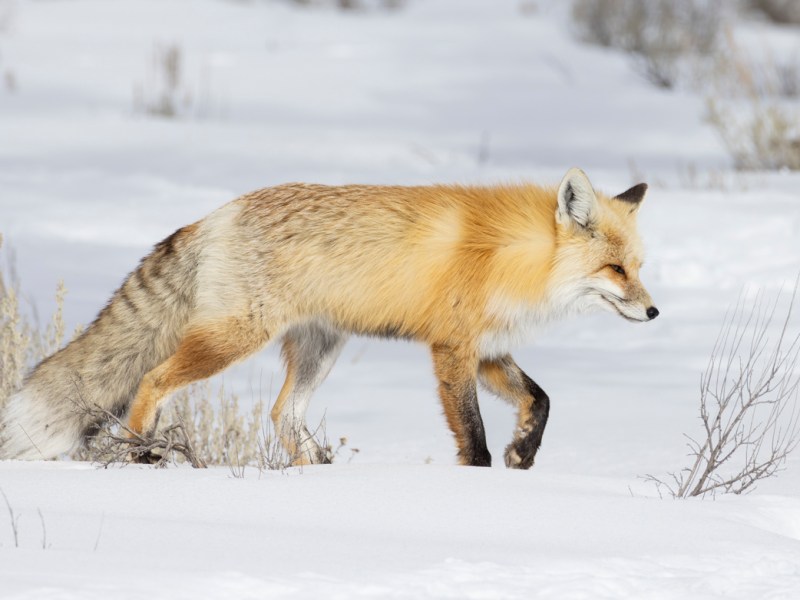
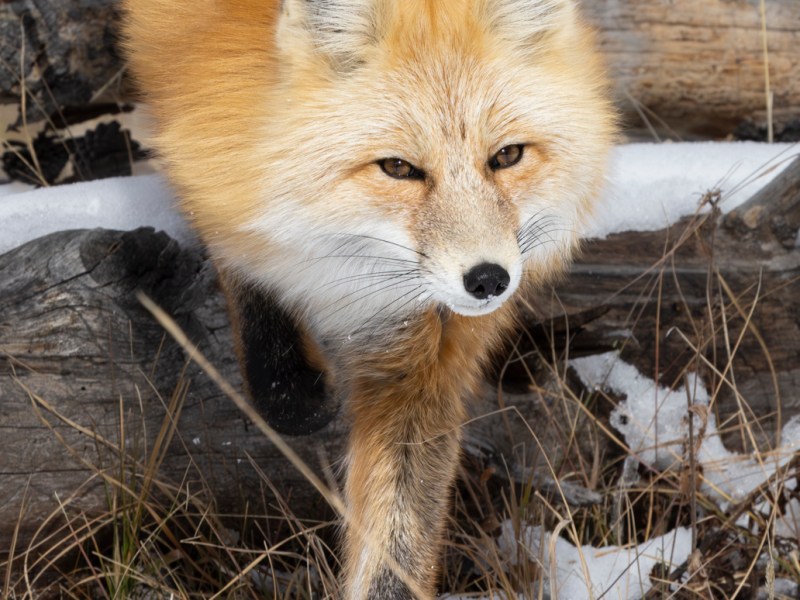
Red Fox eating a Pocket GopherA young Grizzly Bear stands for a better look at a person who has walked out on a nearby hillCow Elk panting as she crosses a hillsideThe skull of an old Bison bull in Lamar Valley
The abundant wildlife is now one of the main attractions for visitors. Yellowstone probably has the greatest concentration of large mammals of any place in the continental United States. Because of the diversity and abundance of animals, it is a place where you can witness behaviors that most people generally only read about or see on television. And seeing it first hand helps us to begin to comprehend the notion that all things are connected, a critical component to fostering a land conservation ethic.
A cow Bison silhouetted against brewing storm clouds
Yellowstone is, indeed, many things to many people. It gives me a feeling of awe and wonder better than any place else I have traveled. And it stirs something in my soul, something I do feel in many other wild places, but something that is so close to the surface in Yellowstone that it is palpable…I breathe it in, I taste it. It is that feeling of oneness with the world around me, a feeling of belonging. A feeling of peace and freedom. This is why I keep going back, and why I keep sharing it with others. And I think there is one other reason it is so special. It is protected, and should remain as it is, as long as we as a nation continue to value our parks. And that is critically important.
Grand Prismatic Spring
Looking back at the hundreds of images from this last trip brings back a flood of special memories. I believe it is the gradual accumulation of moments like these that helps create who we are, defines what we believe in, and gives us purpose. It has helped me value time spent outside learning about nature and sharing that passion with others. And while I am over 2000 miles away as I sip my morning brew, I know Yellowstone has helped shape my view of the world, and for that I am grateful.
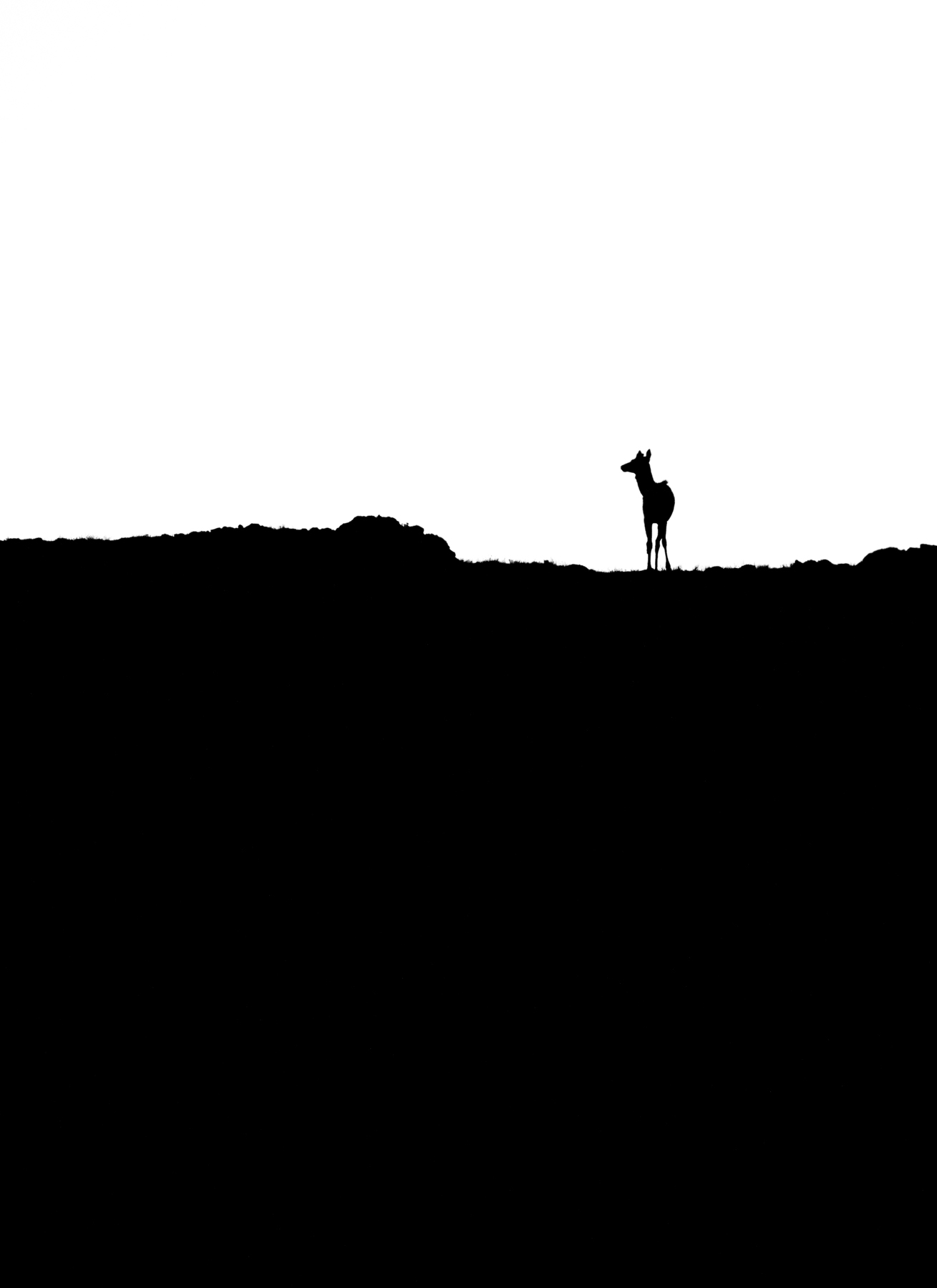
Young Moose checking on the whereabouts of its motherA Mallard lands in a quiet pool in Lamar ValleyBull bison chewing its cudMorning reflections in Lamar ValleyBison calf checks us out as it crosses the road with the herdAn elegant American Avocet in Little AmericaBison bull and its reflection in Lamar ValleyIce has broken up first along a thermally influenced shoreline in Mary Bay on Yellowstone LakeElk cow silhouetteSunset in Lamar Valley
Time and space – time to be alone, space to move about – these may well become the great scarcities of tomorrow.