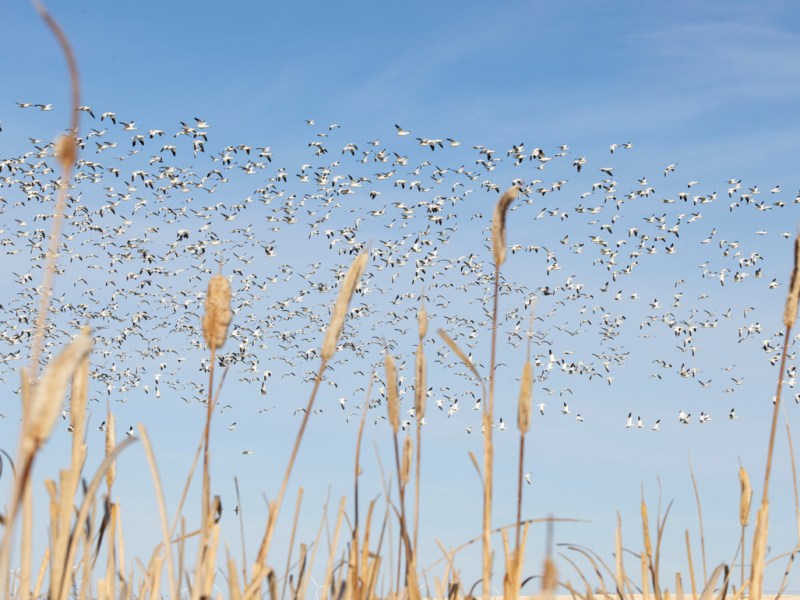
It’s always remarkable how much we each see when we slow down, cast our gaze narrowly but intently, and just watch.
~Zoe Weil
I was out walking a country gravel road the other day, hoping to find some caterpillars. I did see some signs of Luna Moth larval feeding on the ubiquitous Sweet Gums, but not much else. Fnally, I caught something out of the corner of my eye…
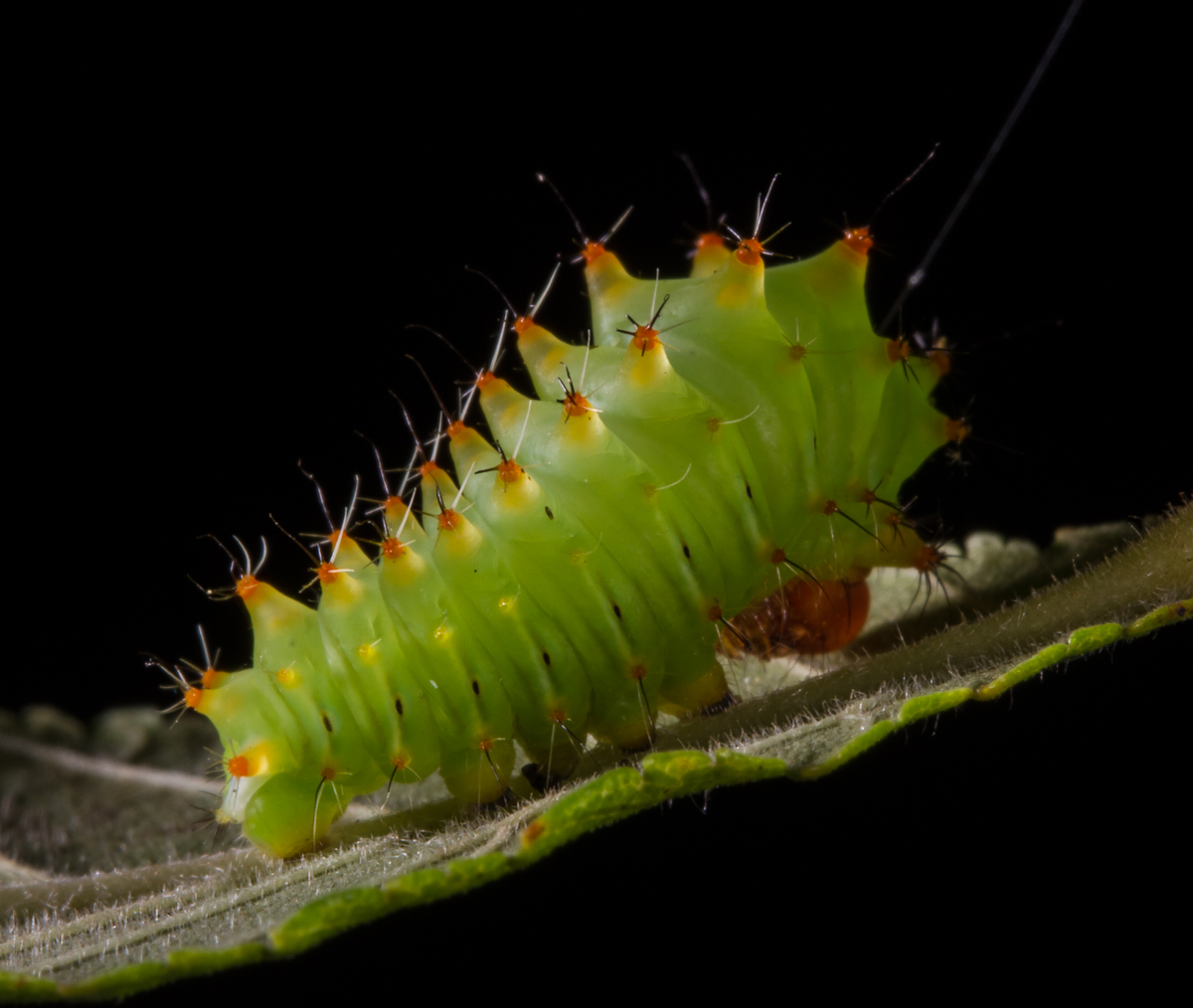
Early instar, Polyphemus Moth larva (click photos to enlarge)
A tiny green eating machine, sort of chunky, with small clusters of bristles on red-tipped tubercles. It was on a small Winged Elm tree. I had never seen a larva like this on that tree species, but it looked like an early instar of a moth species I have seen many times in the past. When I checked Bug Guide, it was, indeed, a Polyphemus Moth caterpillar, Antheraea polyphemus.
Polyphemus Moth larva, lit from side with twin flash
I am guessing it could be a late first, or early second instar, so this little fella has a few more weeks of eating and growing before it becomes the large, plump, bright green caterpillar I have seen and used in programs so many times before . They resemble the larvae of Luna Moths, but lack the long stripe that runs most of the length of the abdomen, and, instead, have a series of oblique stripes that pass through the spiracles along the abdomen. Polyphemus larvae feed on a variety of deciduous tree leaves, but I have found them most often on various oaks and River Birch. Hopefully, this little guy will still be feeding by the time BugFest rolls around on September 20.
Some of these resemblances are perfectly staggering – to me they are a source of constant wonder and thrilling delight.
Henry Walter Bates, in letter to Charles Darwin, 1861
In one of my nightly checks of the visitors at my screens, a small wasp-like creature caught my eye. But a closer look revealed some interesting details.
At first glance, it looked like some sort of wasp (click photos to enlarge)
The patterns and colors looked wasp-like, but the wings, lack of a constricted waist, feathery edges to the back of the wings, and the odd tip of the abdomen certainly did not. I decided it must be some sort of moth that was a mimic of a stinging insect. This type of mimicry, known as Batesian Mimicry, is named after English naturalist, Henry Walter Bates. It is quite common in various insect groups with various types of flies, moths, and some beetles being the leaders in the field around here of wasp and bee look-a-likes.
Many predators that attack bees or wasps suffer painful stings. This is why many have learned to avoid insects with clear wings and yellow and black bands around their bodies. By mimicking stinging insects, the clearwing moths are able to avoid many predators and thus fly even during daylight hours. But, they are also attracted to lights, as was my visitor.
Dogwood Borer Moth
Scanning the field guides I think this one is a Dogwood Borer Moth, Synanthedon scitula. It is a member of the Clearwing Moth family, Sesiidae. I have reported on another group that often are called clearwings, the Snowberry Clearwing and Hummingbird Clearwing moths. But they are members of a different family, the Sphingidae (Sphinx Moths). This species is characterized by transparent wings with some dark scales near tips, a steely blue/black body with yellow stripes on the abdomen, and a rounded anal tuft on the end of the abdomen.
Female moths lay their eggs in wounds on trees. Most of the larvae of this family of clearwings are borers in the limbs, trunks, bark, or roots of trees, shrubs, herbs and vines. The Dogwood Borer Moth’s larvae tunnel beneath the bark of a wide variety of deciduous trees such as beech, hickory, elm, dogwood, apple, and pecan. The galleries made by feeding larvae can cause a lot of damage to the host tree, plus it may give access to other potentially harmful species such as certain fungi.
Dogwood Borer Moth
One reference stated that this group of moths take their deception one step further in that some species have legs with conspicuous tufts of hairs that are tipped with yellow scales. These resemble the pollen baskets on the hind legs of honeybees. He also commented on not knowing the deception value of the prominent tufts of feathery scales at the tip of the abdomen. I was unable to find anything that gave a clear function for these so-called anal tufts, although I wonder if it has something to do with pheromone distribution since they tend to be slightly different shapes in male and females. But, in spite of the tufts, the overall impression of this beautiful mimic is one of leave me alone or else, so, mission accomplished.
I can read only a little, especially in the chapter on a new found interest, moths. They keep showing up (of course, I keep looking). I now have a routine of checking the screens before retiring for the night to see what might be out there. Usually, some small, tough to photograph, and even tougher for me to identify, specimens. But, every few nights, something really spectacular makes an appearance. One night last week, two large, and exquisitely patterned individuals found their way to my screen door.
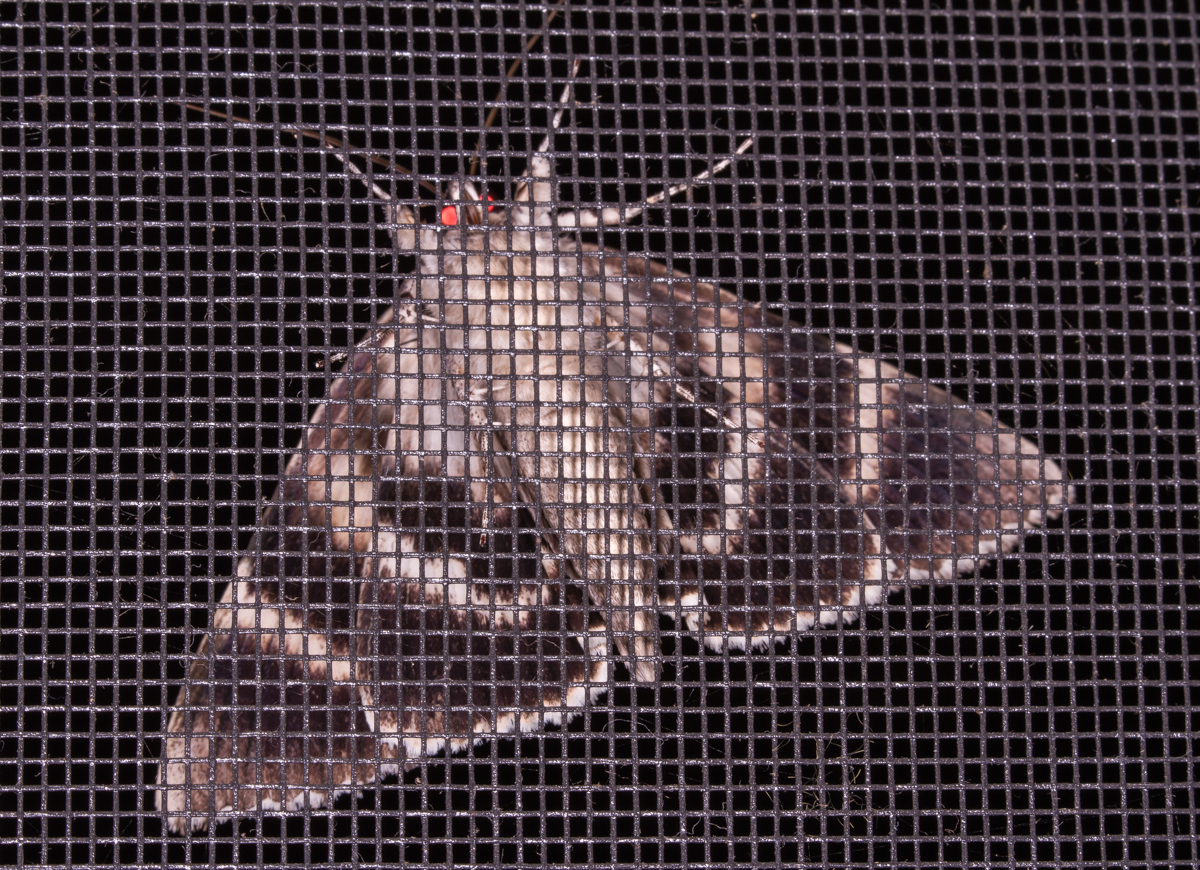
A large moth fluttering at the screen door (click photos to enlarge)
The first was hard to ignore – a large (wing span of over 3 inches) fluttering moth with bold stripes on the underside of the hind wings. I suspected one of the Underwings, but had not seen one with primarily black and white colors on the underside before.
Widow Underwing
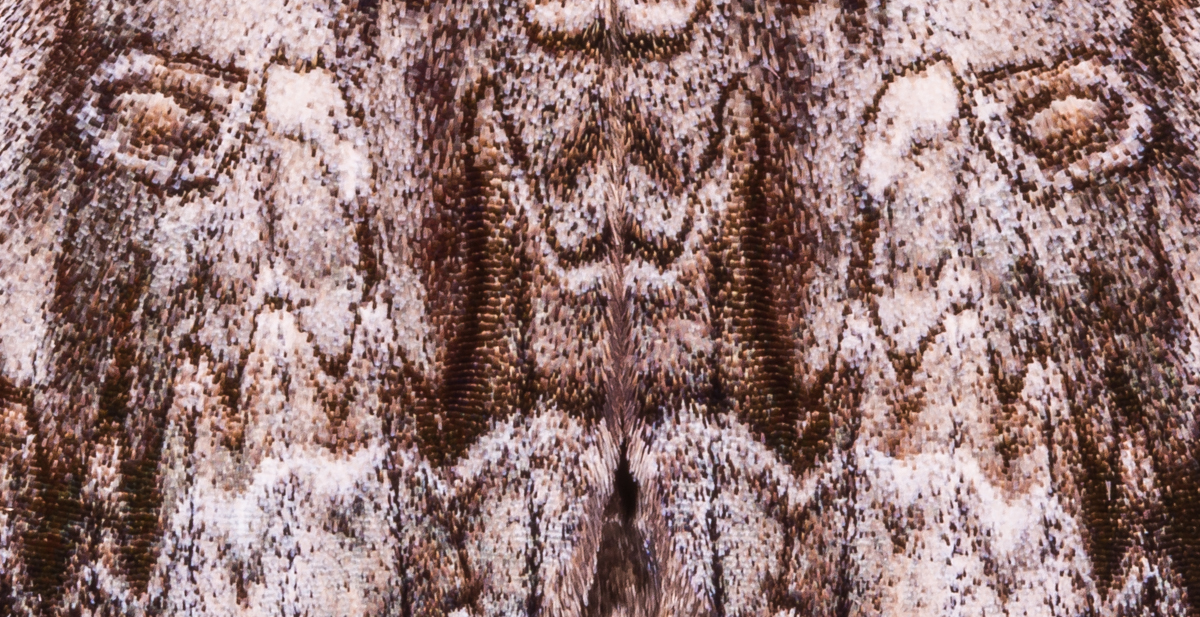
After a quick photo of the moth through the screen, I went out to find an intricately patterned beauty. It turned out to indeed, be one of the Underwings, Genus Catocala. This one is called the Widow Underwing, Catocala vidua. The group is so named because the genus name means “beautiful below” in Greek. Most have bold colors on their hind wings, which are usually only revealed when the moth is flying or startled. In this case, the hind wings are mainly black and white, but beautiful nonetheless, both above and below.
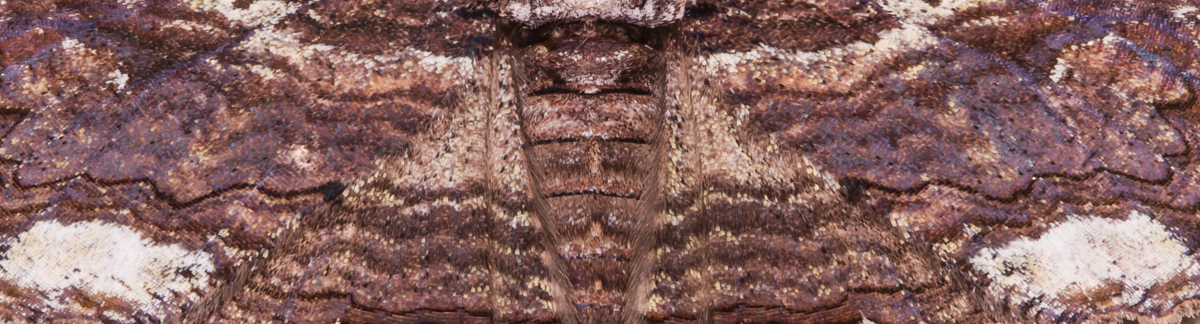
Close up of wing pattern of Widow Underwing
The muted colors and intricate pattern of the dorsal surface of the forewings most likely serves this moth well when resting on tree bark in its habitat of deciduous forests. Larvae feed on leaves of hickory, walnut, and a few other tree species.
Nearby, but much more subdued in its activity, was another beautifully patterned species.
Lunate Zale Moth
This one was also relatively easy to identify – a Lunate Zale Moth, Zale lunata. Smaller (wing span about 2 inches) than the first moth, it was equally intricate in its wing design, again mimicking tree bark, but perhaps with splotches of lichen. The lunate part of its name refers to the crescent-shaped splotches along the wing edges. But, in looking at various online sources, this species can be quite variable, so I am glad this one had prominent white splotches along the wings to make identification a bit easier. Larvae feed on a variety of shrubs and trees.
Close up of Lunate Zale Moth wings
Looking closely at the patterns of these two moths helped me realize the incredible beauty and diversity of this group of insects and just reinforces my desire to learn to read more of the pages in this chapter of Nature’s book.
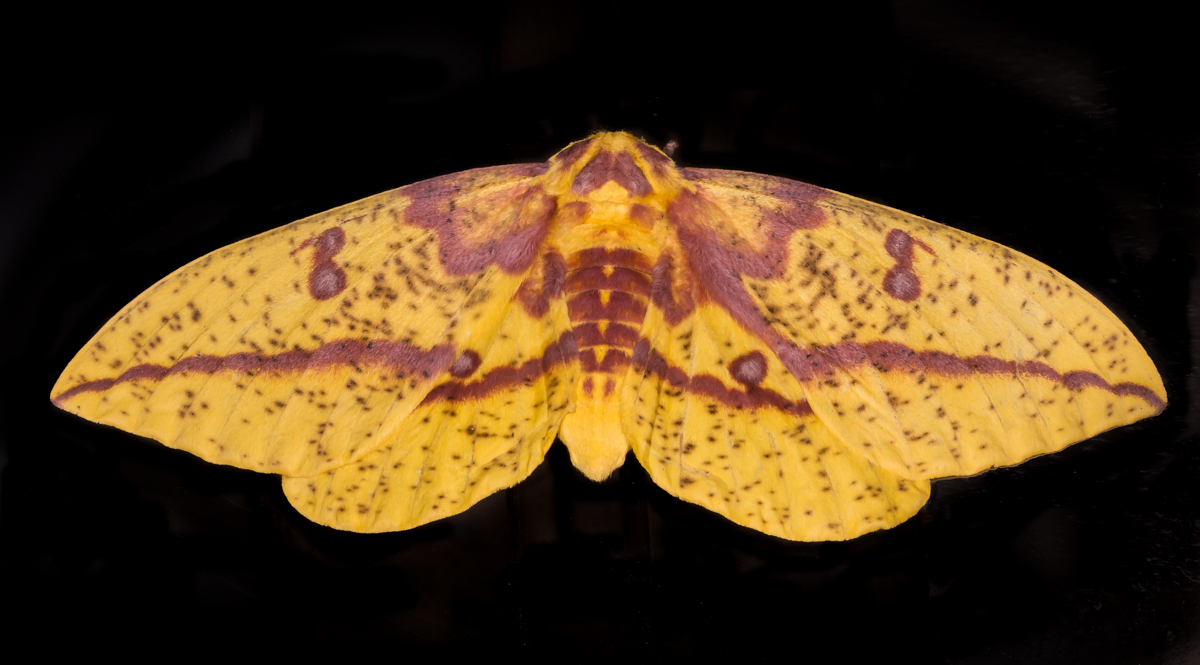
NOTE: When I finished writing this post, I went out to check the screens and was rewarded with a bonus – a large female Imperial Moth (measured wing span of 5 inches)…hoping she lays eggs on nearby trees.
My apologies to the local bluegrass group of almost the same name…this is a bit of an unusual post in that it doesn’t highlight some interesting natural phenomenon I have stumbled across in my wanderings. Instead, I just wanted to share something I found amazing that has come calling to the edge of the land I call home.
Power line adjacent to my home in Chatham County (click photos to enlarge)
If you have followed this blog for very long you have heard me mention the large power line corridor that runs at the edge of this property. It is a bit strange living near such a thing, but the habitat it provides, in contrast to the heavily forested surroundings, has helped me appreciate it. It also doesn’t hurt that it is where my garden is located, a source of a lot of good eats and interesting natural happenings. Well, as anyone who lives near any type of power line easement knows, they require periodic maintenance to keep trees from growing up and creating potential problems with the lines. And so it was a little over a week ago that a Duke Energy representative came by the house to explain what was going to be happening to all those trees that had suddenly grown a bright neon orange mark on their trunks. They would be clearing the edges of the right of way of trees that might pose a hazard to the transmission lines. This typically includes trees in the corridor that mature at a height of greater than 15 feet; and trees outside the corridor that either now, or before the next maintenance cycle, could fall or otherwise endanger structures and equipment. He explained these trees would be ground up using a large machine. After discussing with the vegetation specialist, I decided to cut the hardwood trees along the line on this property and use them for firewood (although it certainly isn’t something I like doing this time of year). That still left a number of large pines that were marked.
Clearing the line the old-fashioned way
So, after a couple of hot mornings cutting trees and limbing them up, I saw “the machine” down the power line. I could hear the grinding sound even though it was well over a half mile away. I figured it might take a couple of days to reach me.
The ProGrind at rest
Boy, was I wrong. The next morning when I looked out, there it was, parked up the hill on the power line. It had magically appeared during the evening or early morning. Two guys showed up a little while later and it was ready to go to work. They had skipped way up the line because of a creek down where I had last seen them…they decided to come up to this access and work their way back to the creek. If you look in the top photo, you can see the tracks of the machine through the edge of the right of way.
The business end of the grinder, a rotating drum on an arm
I was surprised to see no large blades on the rotating drum…it looks more like dull teeth. But the force of this tool when it hits a tree is unbelievable. They soon fired it up and, I must say, the operator was very skilled at avoiding nearby trees (in most cases). A short video clip will better explain how this tree-eating machine works.
The tree in the video was probably about a foot or a little more in diameter. When doing larger trees, he usually pulled them down into the power line and then ground up the log and limbs where they laid. I walked down the line afterwards and looked at what was left.
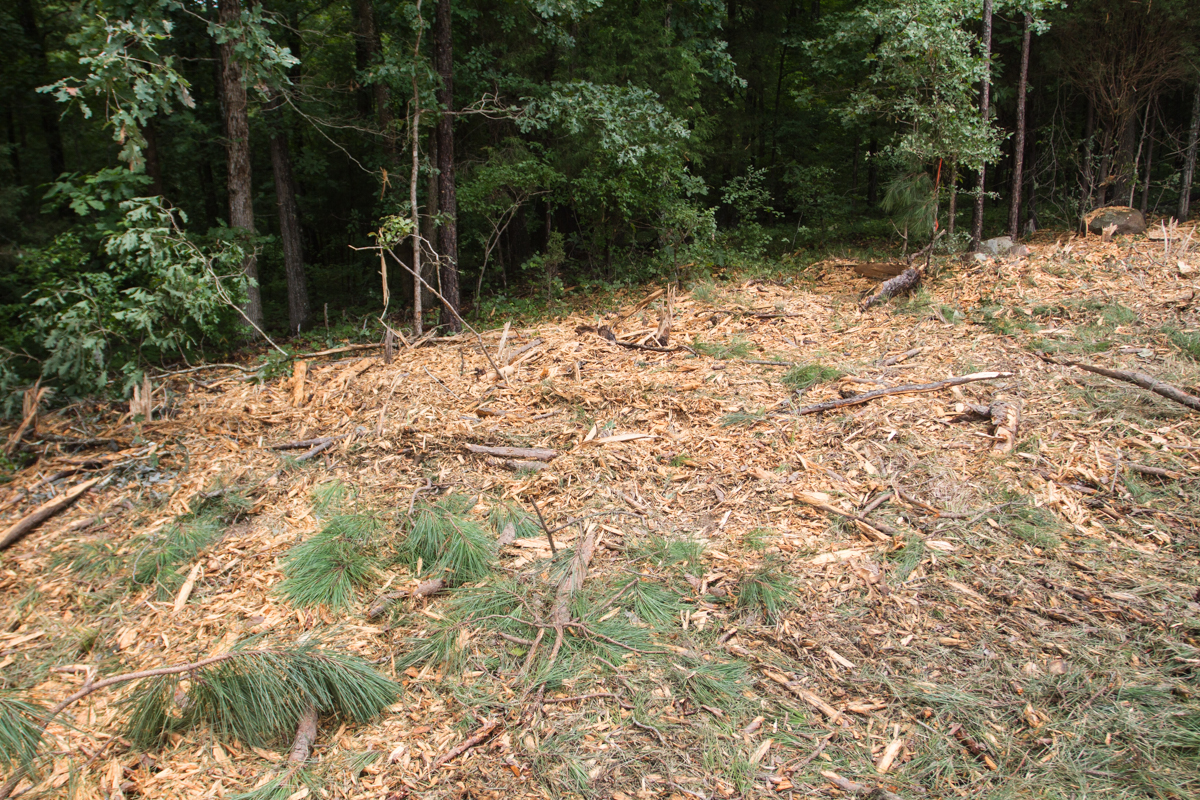
Cleared edge of right of way
The answer – not much, but a pile of chips and some branches.
Large pine stump after grinding
The machine took the stumps down to just above the ground. In talking with the workers, I discovered that another crew will follow behind to clean up and take down trees in “maintained” areas like mine, so the tree-cutting I helped with might not have been necessary after all. But, getting the firewood, leaving as little a trace as possible, and some peace of mind, was probably worth it. I must say, I am glad this was happening after most birds have finished nesting. But, I suppose it is a necessary process, and this incredible hulk of a machine certainly seems an efficient way to get the job done.
The wings came down as the only evidence that such a creature had soared.
~Henry David Thoreau, commenting on a pair of Luna Moth wings that floated down onto the ground after the moth was eaten by a bird
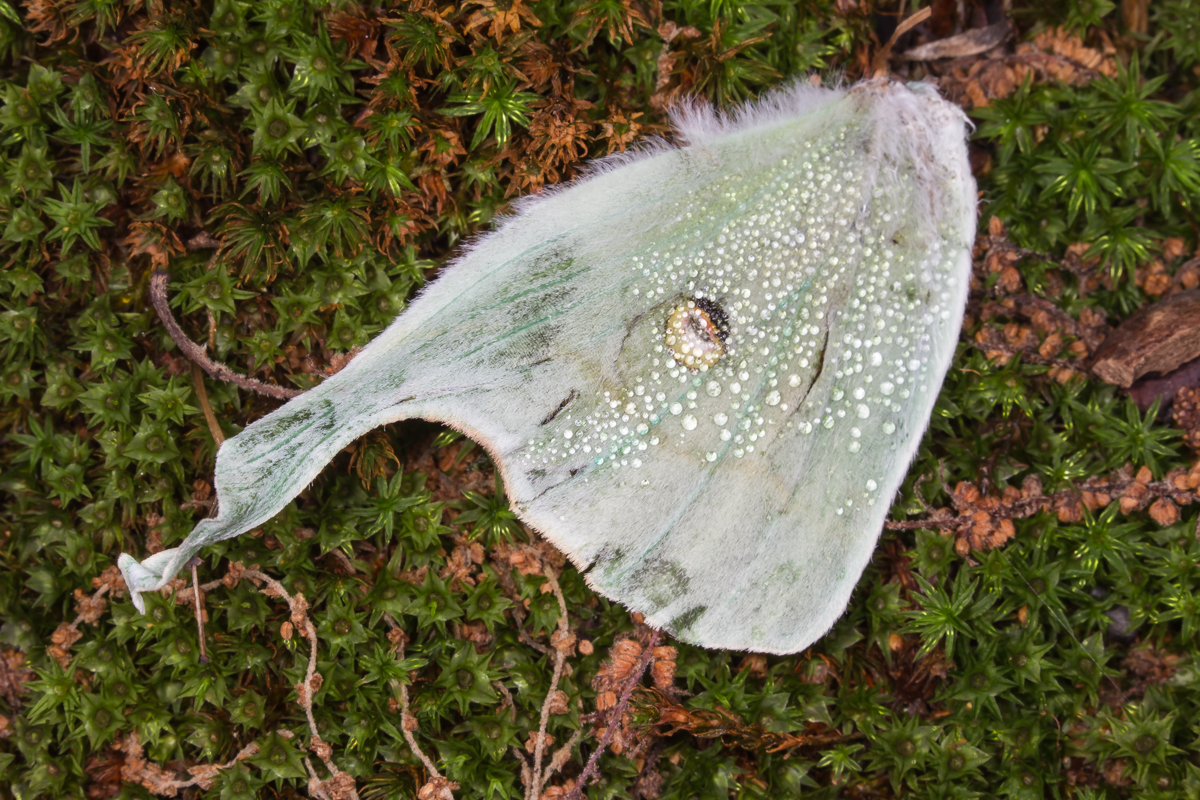
Walking back from the garden yesterday, I spotted some evidence of a passing…the passing of one of our most regal insects, a Luna Moth, Actias luna.
Hind wing of a Luna Moth on the ground near my driveway (click on photos to enlarge)
The evidence was a tattered hind wing on the ground. Although a sign of death, it also is an affirmation that these beautiful nocturnal insects are on the wing again. They typically have two (sometimes three) generations per year in this area. This moth was part of their final flight period this calendar year. Female Lunas that survive and mate will lay 200 or more eggs on numerous host plants (Sweet Gum seems to be a favorite in my area). Caterpillars hatch within a week or so, and then feed for a few weeks until they pupate in a brown silken cocoon, usually made in the leaf litter or on a twig. They will spend the winter in the cocoon and emerge next spring and start a new generation.
I don’t know whether this Luna Moth was able to successfully tend to a new generation or not. They have many predators in their short time as an adult. Nocturnal predators include bats, flying squirrels, and probably anything else that happens to come across one of these large morsels. I have seen Gray Squirrels eating them during the day, as well as many birds. As rural areas become developed, moths, in general, are susceptible to predation when lured by lights, making them vulnerable to visual predators the next morning.
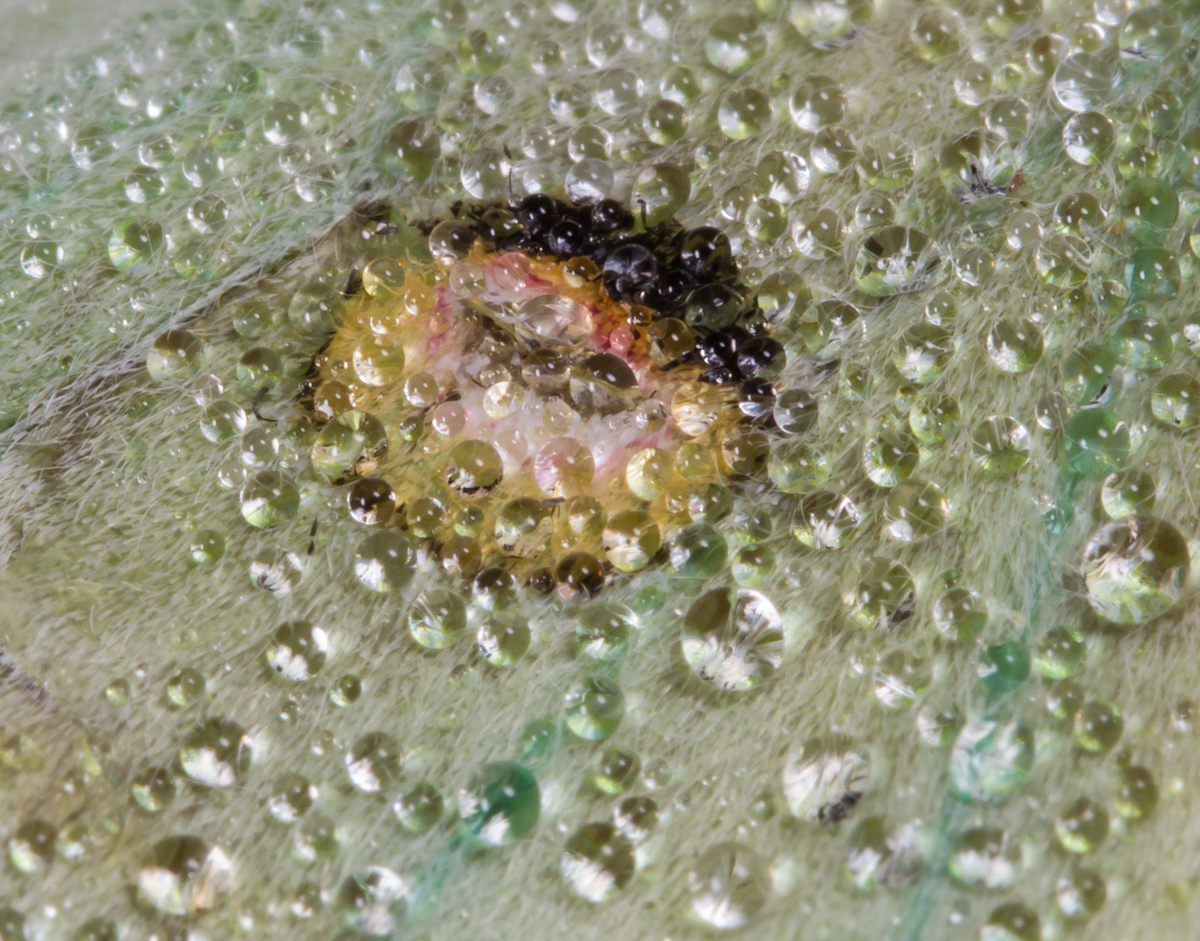
The eye on the wing
When I found the wings, there had been three laying in a pile beneath a maple tree. The next morning when I went out to photograph them, there was only one. I wondered what had made off with the remaining ones. When I bent down, I could see the dew drops covering the eye of the wing.
Beauty in the eye of the moth
The “eyes” of the Luna Moth have always fascinated me. The wing scales create a detailed pattern with such striking colors, enhanced on this day by tiny magnifiers of dew drops.
The eye from a Luna Moth wing at Alligator River National Wildlife Refuge
I had found another set of wings down in the woods last week while cutting some wood. There were also three sets of wings along a short trail at Alligator River National Wildlife Refuge last week. And, ironically, a friend on Facebook just posted some exquisite photos of wings he found in eastern North Carolina. It seems that the adult moths are, indeed, on the wing. And though they are falling prey to many woodland creatures, I am sure enough have secured the future of their kind by laying eggs which will soon hatch to start another generation. I look forward to finding their huge larvae in the next few weeks…another part of the yearly cycle that makes living in North Carolina so incredibly fascinating for those who take the time to walk in the woods.
There are two worlds; the world of sunshine, and the world of the dark. There are whole armies of living things , which, when we go to sleep, begin to awaken; and when we awaken, go to sleep.
~W.J. Holland
It happened again the other night. When I started to close the inside door for the night, there were a few moths clinging to the screen door. Most were small and dark, the LBT’s (little brown things) of the insect world that make mothing so challenging. But one was majestic, royal, magnificent.
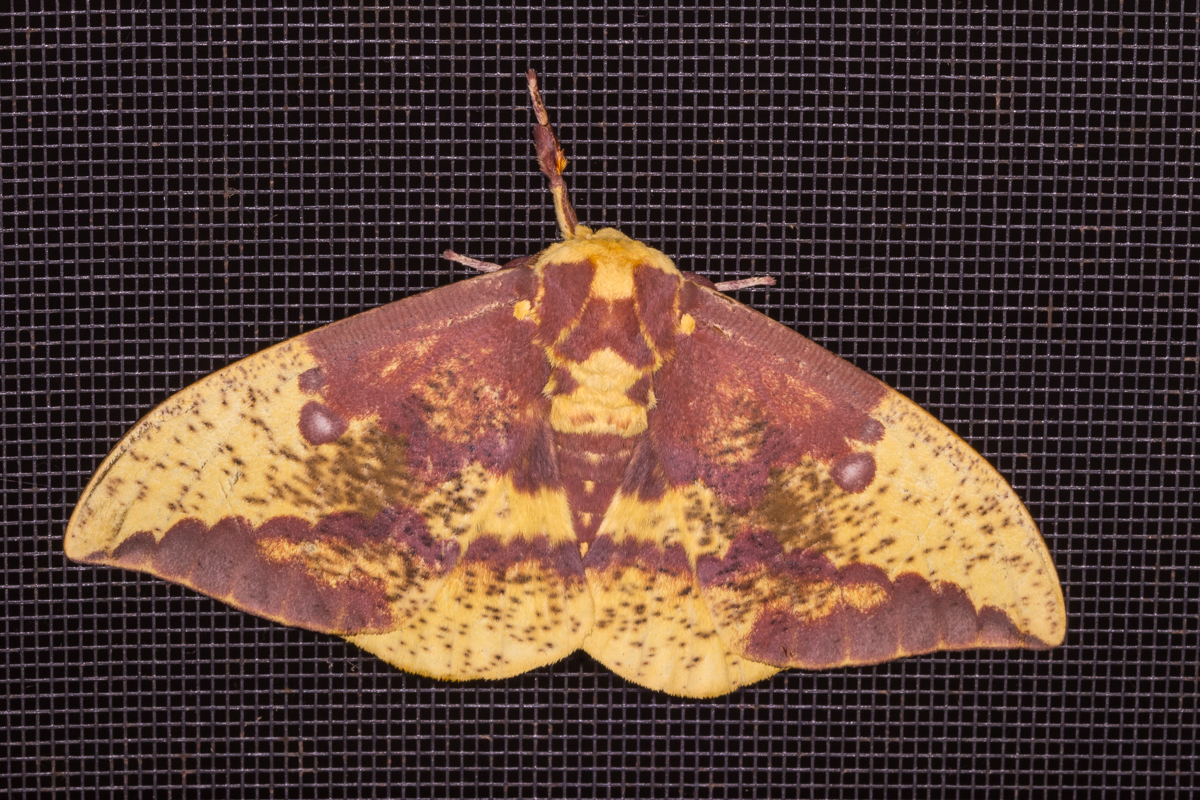
A male Imperial Moth staring at me through the screen door (click photos to enlarge)
It was one of the large silk moths, an Imperial Moth, Eacles imperialis. These beauties have wing spans of 4 to 5.5 inches, and are reported to be seen in the south from April to October, although I usually see them in mid- to late summer.
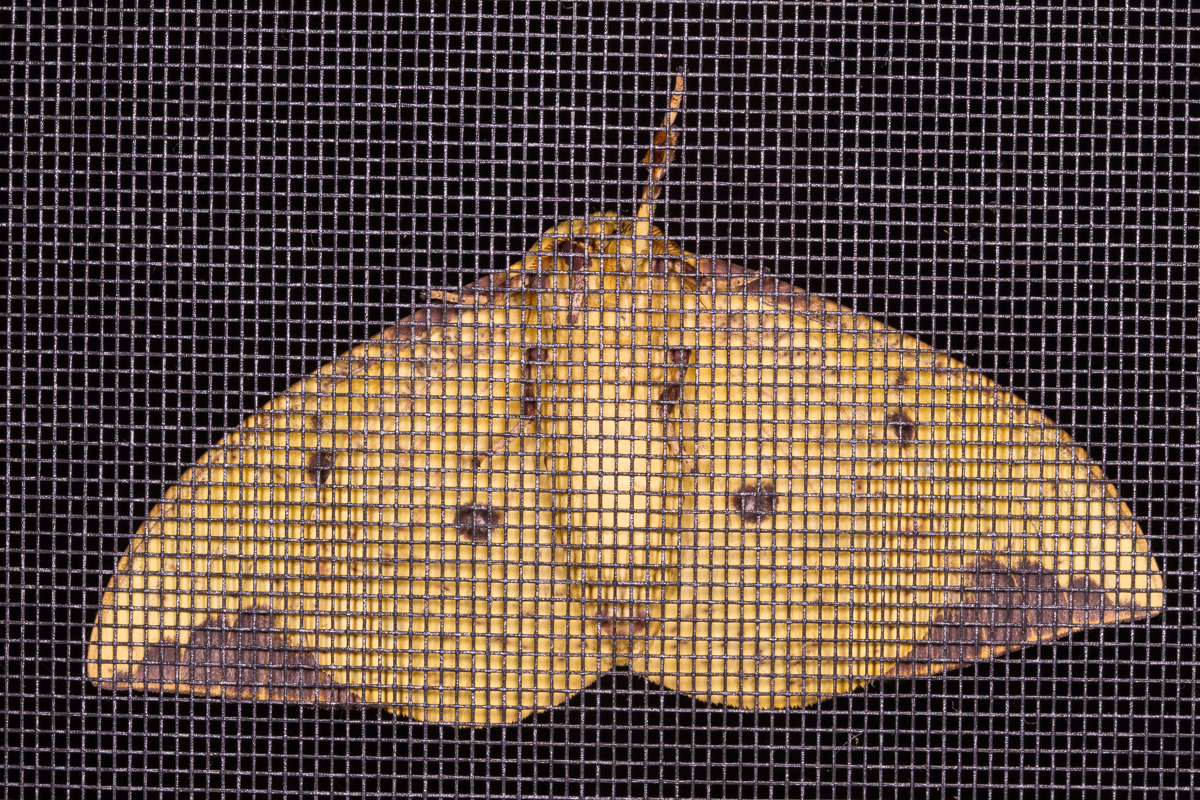
Imperial Moth, male
Females are larger and more yellow in color than males, so this one’s color pattern, with large blotches of purplish-brown on the upper wings, identified it as a male. Most references say they have but one generation per year, although Bug Guide says there may be two in the south. They overwinter as a pupa underground, emerge, and fly about for a couple of weeks (the adult moths do not feed), mate, and die.
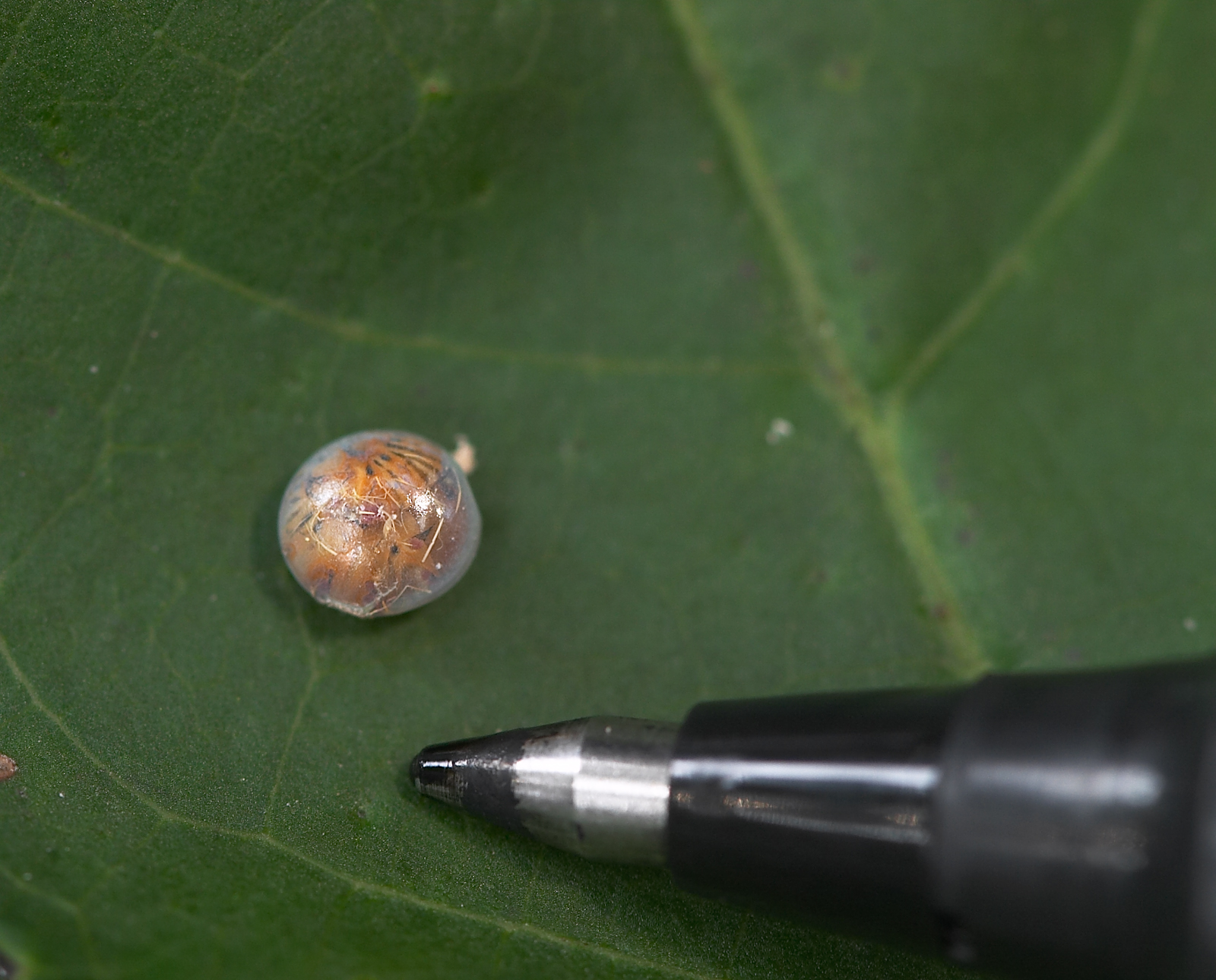
Imperial Moth egg, about to hatch
Females lay large eggs, singly, or in small groups, on a variety of trees including elm, hickory, oak, sweet gum, and pines. A couple of years ago, I had a large, gravid female, come to a light. I held her overnight in a paper grocery bag where she laid a number of eggs inside the bag. She was released the next morning. I cut out strips of the bag containing eggs and clipped them to several potential host plants in the yard and watched the caterpillars hatch and grow.
Imperial Moth caterpillar, early instar
Young larvae have prominent spikes which become less pronounced as they molt and grow.
Imperial Moth caterpillars grow to be almost 4 inches in length and can vary in color
Later instars can range in color from green to brown to orange-ish, and grow to be almost 4 inches in length. They lose the large spikes, but are covered in fine “hairs”. When finished eating and growing, they bury themselves in the soil and pupate, spending the winter underground.
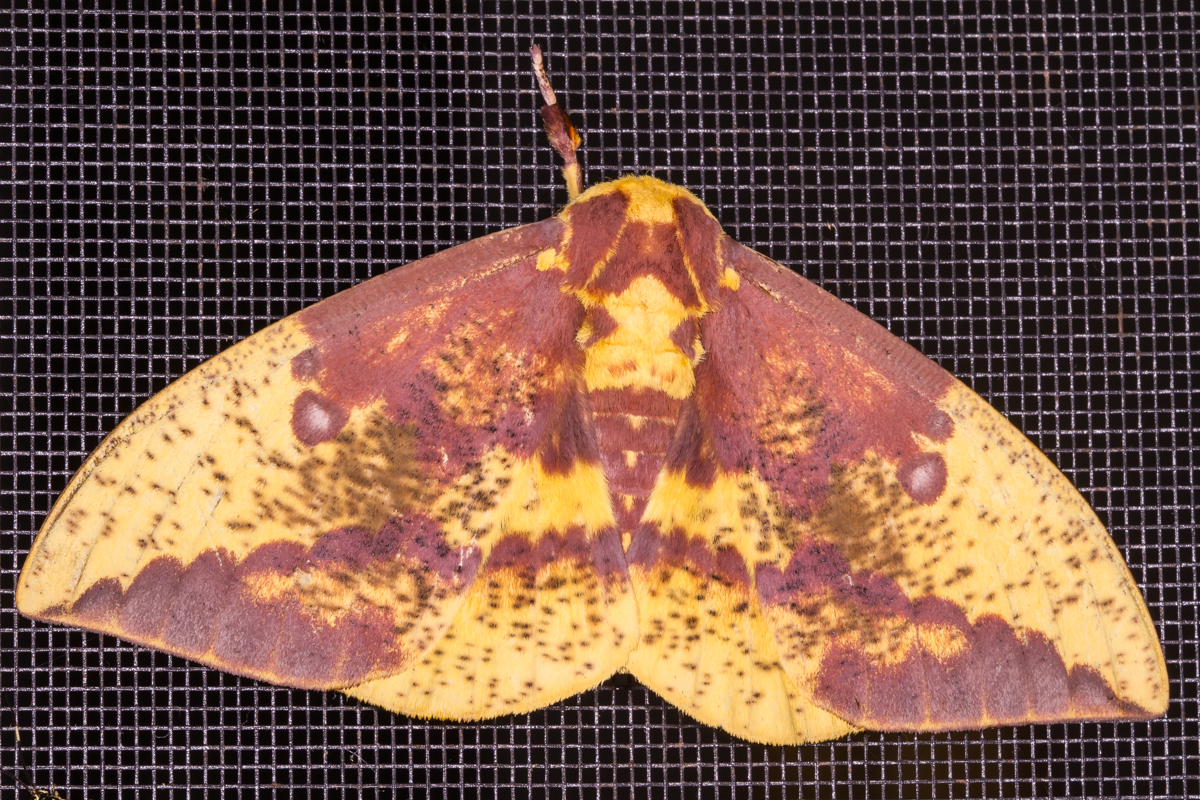
Imperial Moth in all its glory
When they finally emerge, they are one of our most beautiful moths, and bring joy to any who are lucky enough to see them in their brief time in our night sky.
What’s in a name? That which we call a rose by any other name would smell as sweet.
~William Shakespeare
These beautiful day-flying moths were common in the garden this weekend (click photos to enlarge)
I remember finding this beautiful little moth many years ago when I worked as a naturalist in state parks. When I looked it up in my field guide, I quickly discovered it was a type of Ermine Moth. Most of this group are white with small black spots, much like the winter coat of certain members of the weasel clan. But this one is quite different, looking like it is covered in a flower-patterned shawl. In fact, it is often mistaken for a beetle due to its habit of holding its wings tight against its body. Plus, unlike most moths, it is a daytime visitor to flowering plants. So, for many years, I referred to this as an Ermine Moth.
Ailanthus Webworm Moth on Joe Pye Weed
Then, a few years ago, I wanted to use an image of one in a program, and when I looked it up in a newer moth field guide, I found that it has a much less desirable (in my opinion) common name, the Ailanthus Webworm Moth (Atteva aurea). In my early field guide, this moth was native only to south Florida, where its larvae feed on a tree found primarily in Central and South America. But the moth has spread and its larvae switched diets to its new namesake plant, the Tree of Heaven, or Ailanthus altissima. Tree of Heaven is in the same family as the original host plants, but is instead native to northern China. It was introduced to North America in the late 1700’s and has more recently spread across at least thirty states where it is now considered an aggressive pest plant that pushes out many native plants. As the moth adapted to its new host, it was also able to extend its range, and is now found over much of the eastern half of the United States and southern Canada. As the name implies, the larvae feed on Ailanthus leaves in silken webs they spin as a group. Unfortunately, the caterpillars have not proven to be effective in keeping this aggressive tree species in check.
Ailanthus Webworm Moth on Rosinweed
In spite of its unglamorous name and the accompanying negative connotations, I still enjoy seeing this brightly adorned little moth. It can be quite common in late summer and early autumn, especially in fields with masses of goldenrod. The adults feed on nectar and can be seen this time of year slowly crawling along a variety of flowers along with bees, beetles, and a host of other busy pollinators.
The origin of mushrooms is the slime and souring juices of moist earth, or frequently the root of acorn-bearing trees; at first it is flimsier than froth, then it grows substantial like parchment, and then the mushroom is born.
~Pliny, Greek naturalist
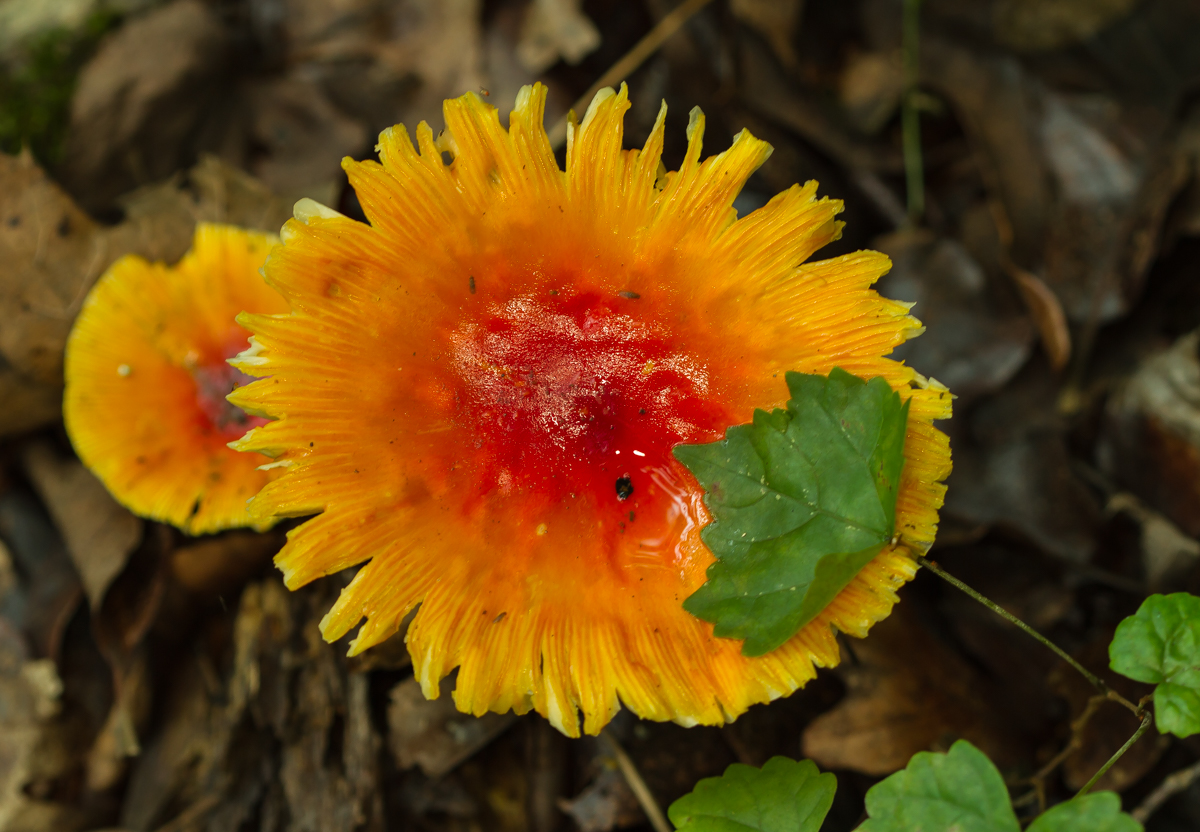
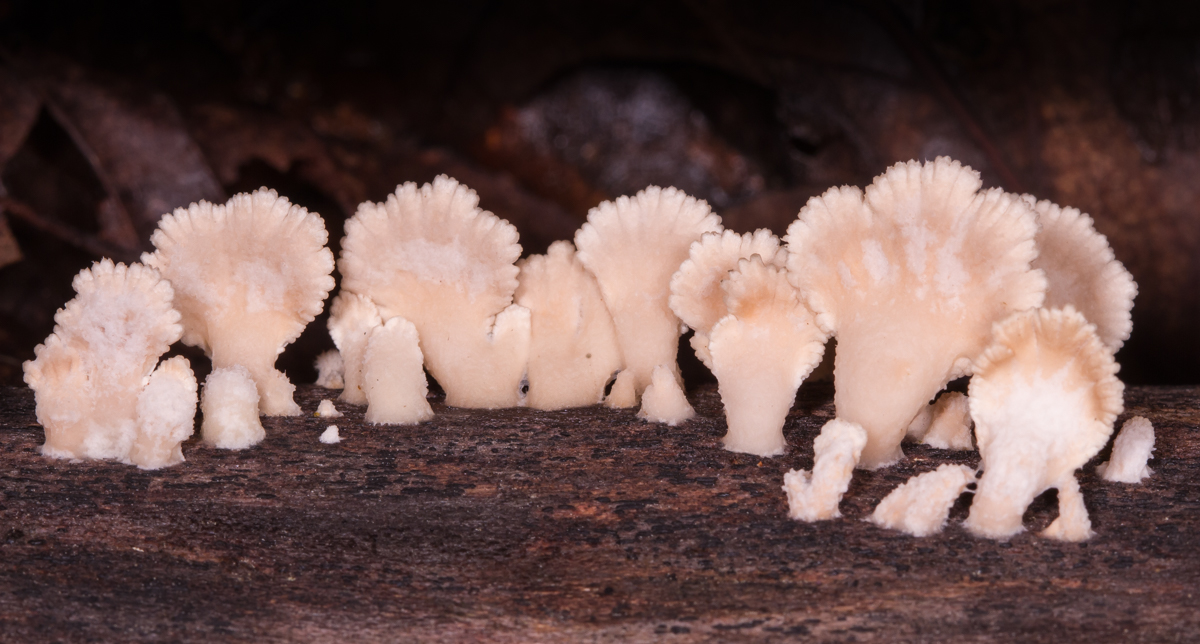
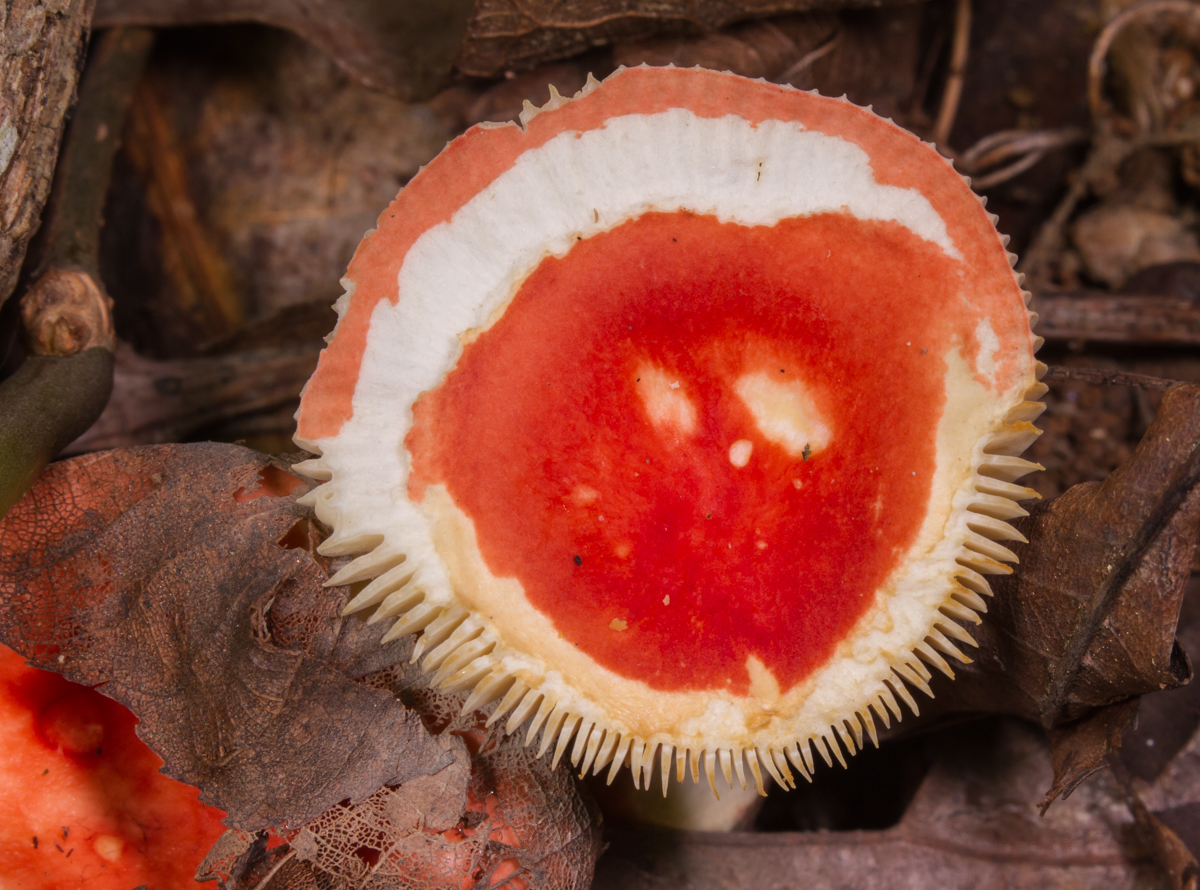
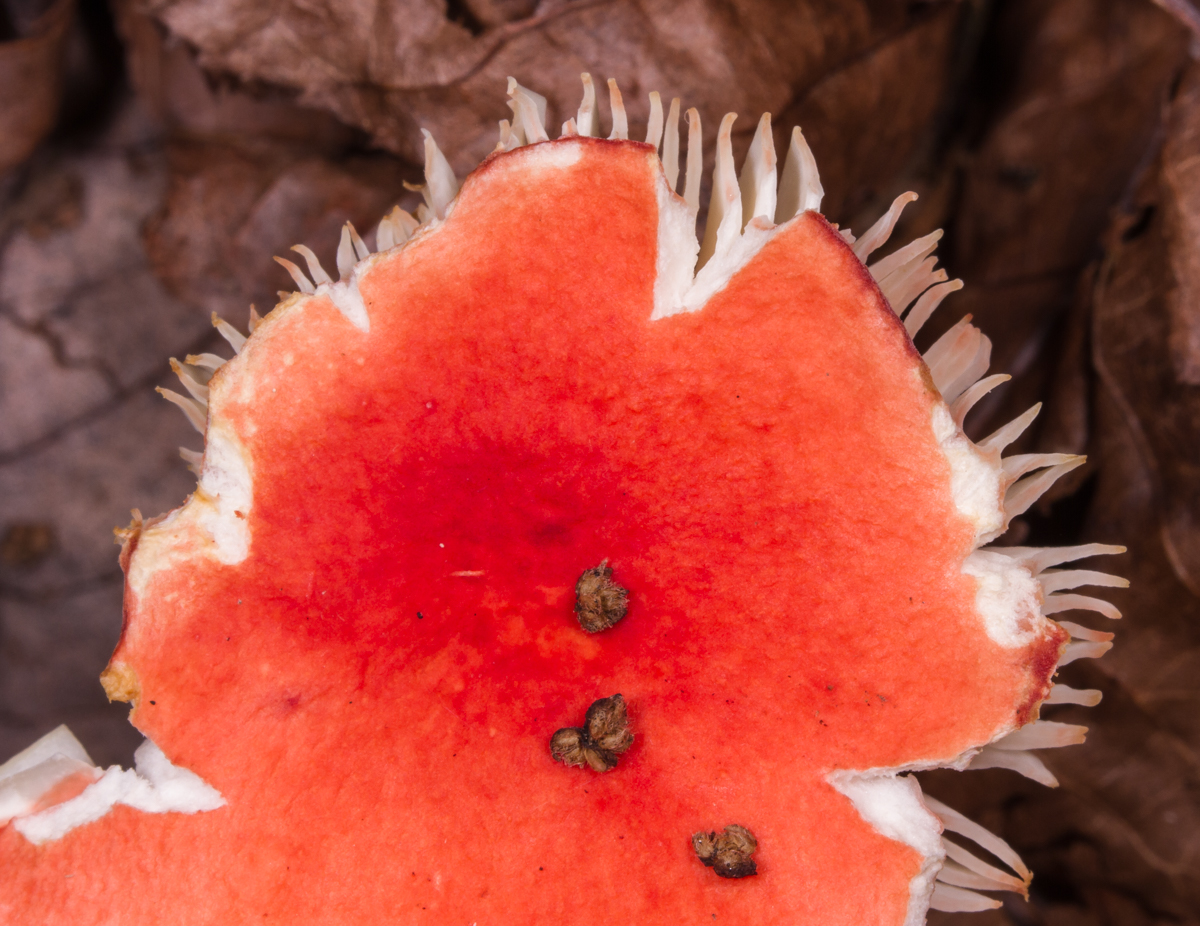
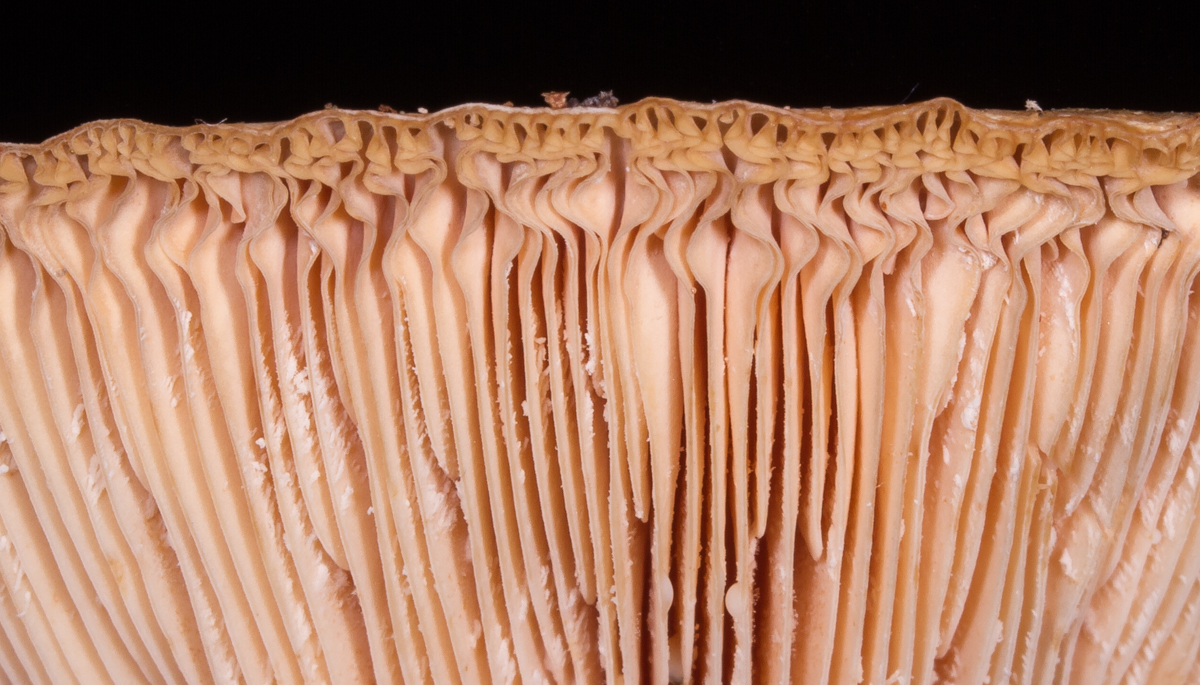
Mushrooms have mystified we humans for thousands of years. Such a strange entity that appears overnight and may disappear almost as quickly. Some may cause death or strange visions, while others are tasty and nutritious. But they are all beautiful, in their own way, if we pause and look. The recent rains have brought forth legions of these mystical beings in the woods below the house. Here are a few images of their artistry and designs…
You can look out your window and wonder at the wholeness of nature.
~Howard Parsons
It happened again. This moth-watching can be habit forming. While doing dishes the other night I noticed a couple of moths outside on the window screen above the sink. One was instantly recognizable, and a personal favorite. The other was something I have always really wanted to see, but never had, until that night. So I grabbed the camera and hurried outside.
Rosy Maple Moth (click photos to enlarge)
The first, a Rosy Maple Moth (Dryocampa rubicunda) is a beautiful and common moth in North Carolina. It may be second only to a Luna Moth in terms of the favorable responses it garners from folks encountering them for the first time.
The moth fluttered to the ground when I tried to pick it up from the window screen
They are one of the smaller members of the Silk Moth group, family Saturniidae. But they make up for their smallish size (wing span of up to 2 inches) with their brilliant pink and yellow coloration.
The moth began to flutter and climbed a nearby tree trunk before taking off
The caterpillars, known as Green-striped Mapleworms, feed in groups initially, and then separate and feed alone in their later instars. They feed on a variety of hardwood trees including maples and oaks. The adult moths do not feed (typical for this family), so they live only a couple of weeks.
The other moth was smaller, but equally beautiful. It is one I had seen in the guide books, but never in person. It is also strikingly colored with an unusual apple green thorax and wing patches.
Smaller Parasa Moth
I had a difficult time, at first, distinguishing between two closely related species, but I have settled on this one being a Smaller Parasa Moth, Parasa chloris. It is distinguished from its similar-looking relative, the Stinging Rose Caterpillar Moth, Parasa indetermina, by its less rounded wings and a broader band of brown on the trailing edge.
Turns out the caterpillar of this tiny moth is one of the so-called stinging caterpillars. It has urticating spines that contain a toxin and can irritate human skin if they come in contact with you.
The larva of a close cousin to the Smaller Parasa Moth – the Stinging Rose Caterpillar
I have seen the close cousin of this species, the Stinging Rose Caterpillar, and it is one of the strangest and most beautiful caterpillars I have found. But now I really want to find the larva of the Smaller Parasa, because it is really an odd-looking critter…check out these images of the Smaller Parasa Moth caterpillar from the North American Photographers Group web site. Apparently, the larva everts its stinging tufts of spines when disturbed.
Smaller Parasa Moth on tree trunk
After several minutes of admiring this green jewel, the moth fluttered away to a tree trunk, and finally flew off into the treetops. Such simple beauties at my windowsill…certainly a great way to enjoy nature here in the woods.
Green is the prime color of the world, and that from which its loveliness arises.
~Pedro Calderon de la Barca
Just finished a very wet weekend with a wonderful family from the Netherlands down at Pocosin Lakes and Alligator River National Wildlife refuges. Since it was raining most of Friday afternoon, I didn’t even take out the camera. But Saturday morning was a bit more cooperative. I challenged the group to find Green Treefrogs in the vegetation along the canoe launch at Milltail Creek, and when we started finding one every few feet, I couldn’t resist snapping a few images.
Juvenile Green Treefrog (click photos to enlarge)
As we looked, we found frogs of all sizes, from one inch long “juvies” to the mellow-looking adults. The smallest ones were recently transformed from the tadpole stage and showed the blunter nose of the juvenile frogs.
Young Green Treefrog in the classic “I’m about to jump” pose
I kneeled down to get closer views of several frogs – I never tire of looking at these guys. There is something about their form that is so very appealing to the eye.
Adult Green Treefrog
And when eyeball to eyeball, I really appreciate these green beauties.