Last weekend we took a long awaited canoe-camping trip to Shoshone Lake in the southern part of Yellowstone. It’s touted as the largest backcountry lake in the lower 48 states. It can only be reached by foot or non-motorized boat. We chose that route: a paddle across Lewis Lake then up the three mile long Lewis Channel. The final 3/4 mile or more of the channel is shallow and rocky, and we had to drag the canoe through that section, especially with the low water levels of late summer. Nonetheless, the entire paddle was beautiful, and the serenity of spending four nights far from cars, computers, and civilization gave us a chance to quietly reflect.
Mary Oliver writes in her poem Spring, “There is only one question: how to love this world.” She writes of a black bear sow, just emerged from her den, hungry. Perhaps it is a young female; otherwise she would likely have cubs with her. I can perfectly imagine her dark frame, like the bears we’ve watched in eastern North Carolina or here in Yellowstone. She is silent, the signs of her presence are “flicking the gravel,” claw marks on trees, the ripples her “tongue / like red fire” leave on the cold water. In her “wordlessness” is “her perfect love” for this world.
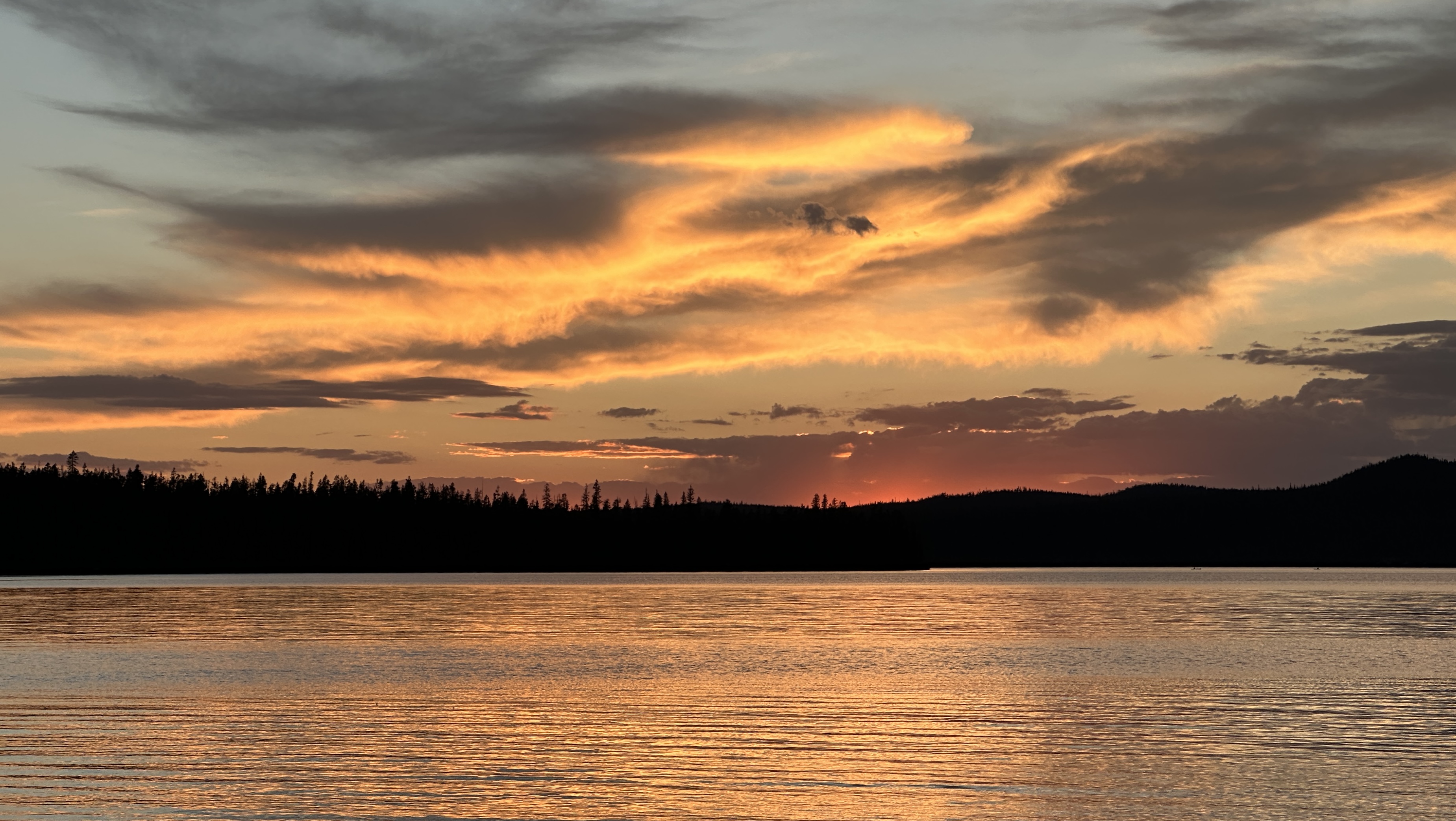
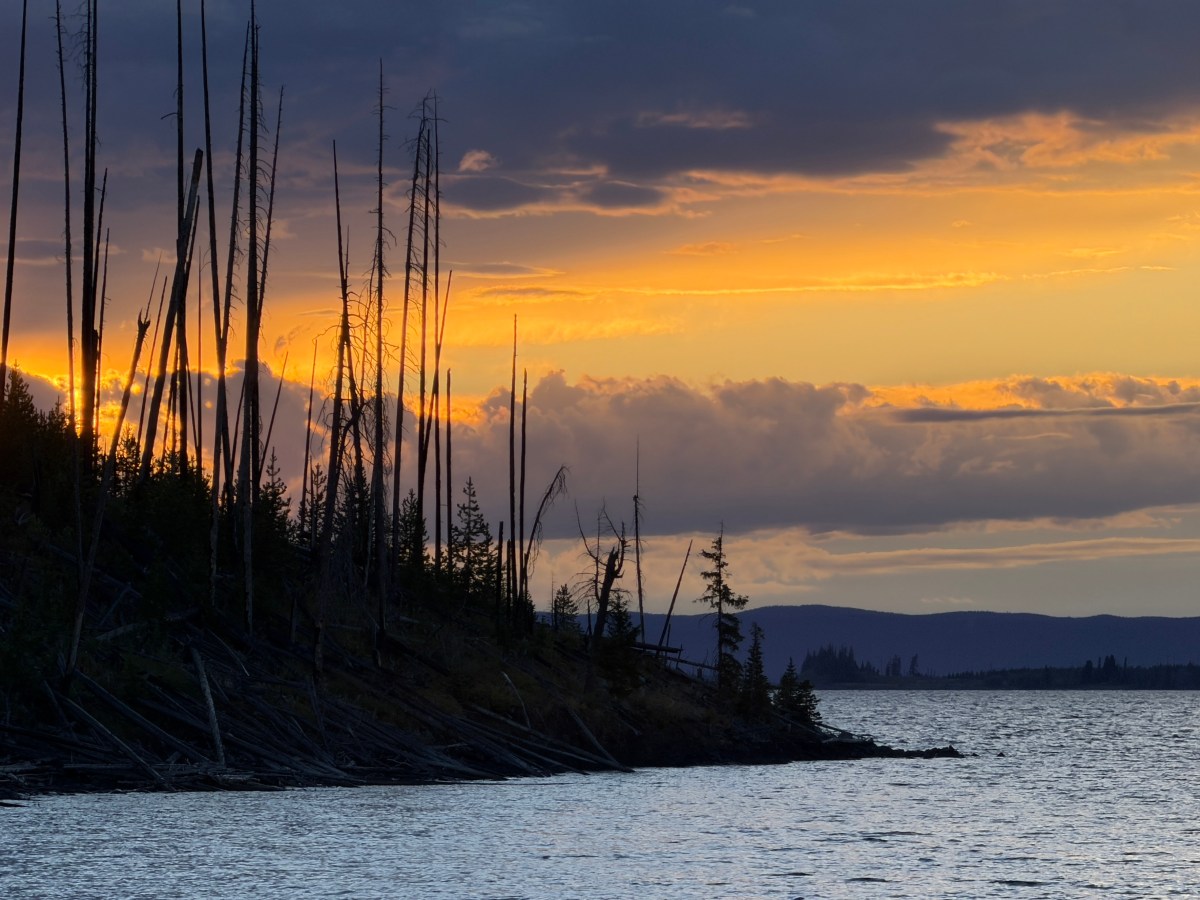
The fading sunlight glints on wind-stirred water, a beautiful first evening.
As we paddle across Lewis Lake just after daybreak, the winds begin to give rise to the day’s waves. The water is crystal clear, and the underwater world seems accessible in a way it’s not most of the time. I am mesmerized by the ribbons of light moving across the lake bottom — light from the rising sun shattered by the waves, reflecting on the sand and rock. The patterns dance as I expect the northern lights do, never repeating, but without any sharp angles. Sinuous and loose. Golden light on the sandy bottom is shaded green by the water above. The shadow of our boat and the rhythm of our strokes both obscure and shape the light.
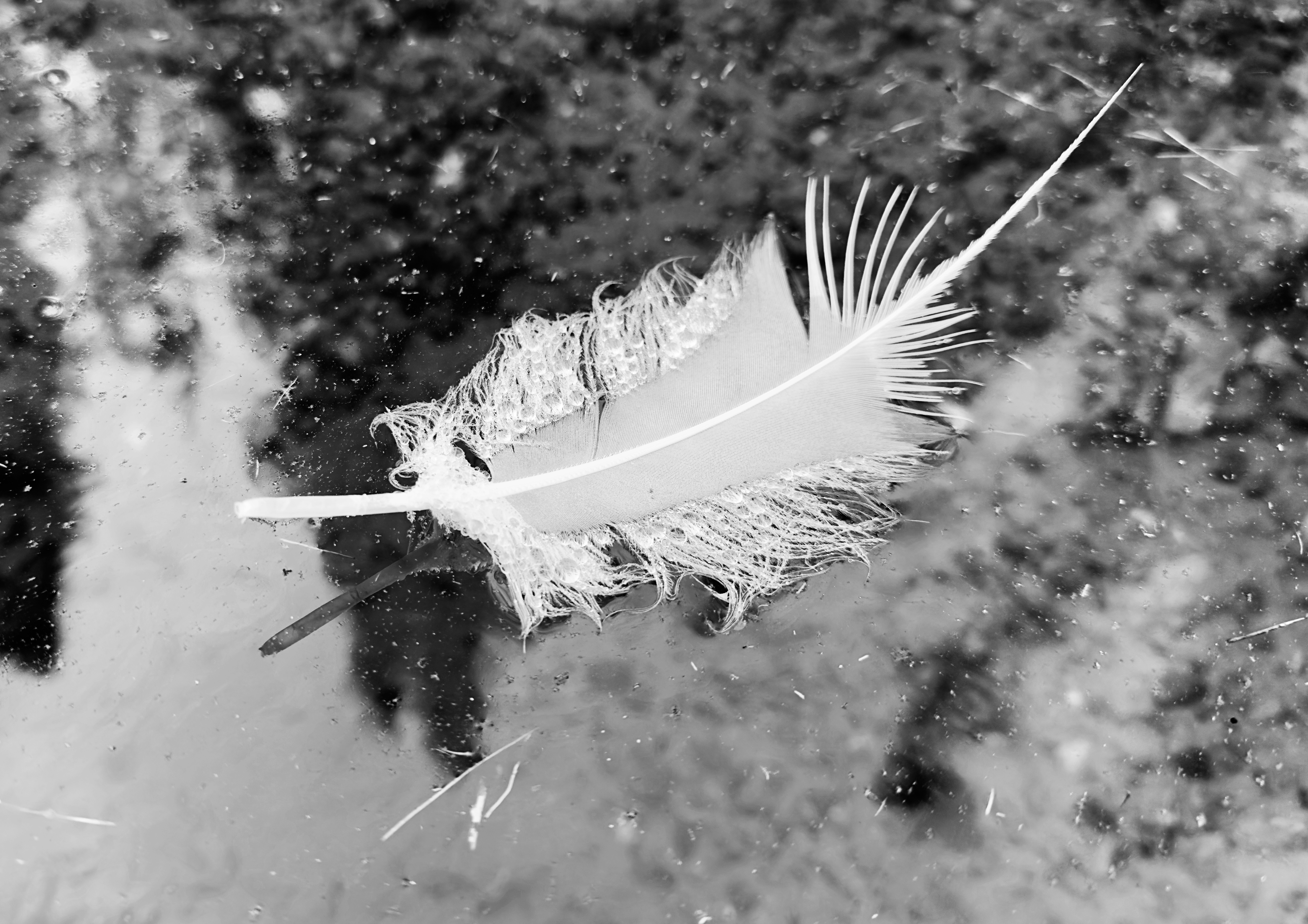
Droplets of water edge each barb of the swan’s feather.
In the Lewis Channel the air sits still. A single white feather slides across the glassy surface. Below, a black sandy bottom dotted with broken twigs. As we glide closer, a third view appears — the reflection of spruce and fir trees, dark angles cutting the glare of reflected sky. White feather, black sand, white sky, black trees. Around the corner, the trumpeter swan pair waits, still and elegant as we silently pass.
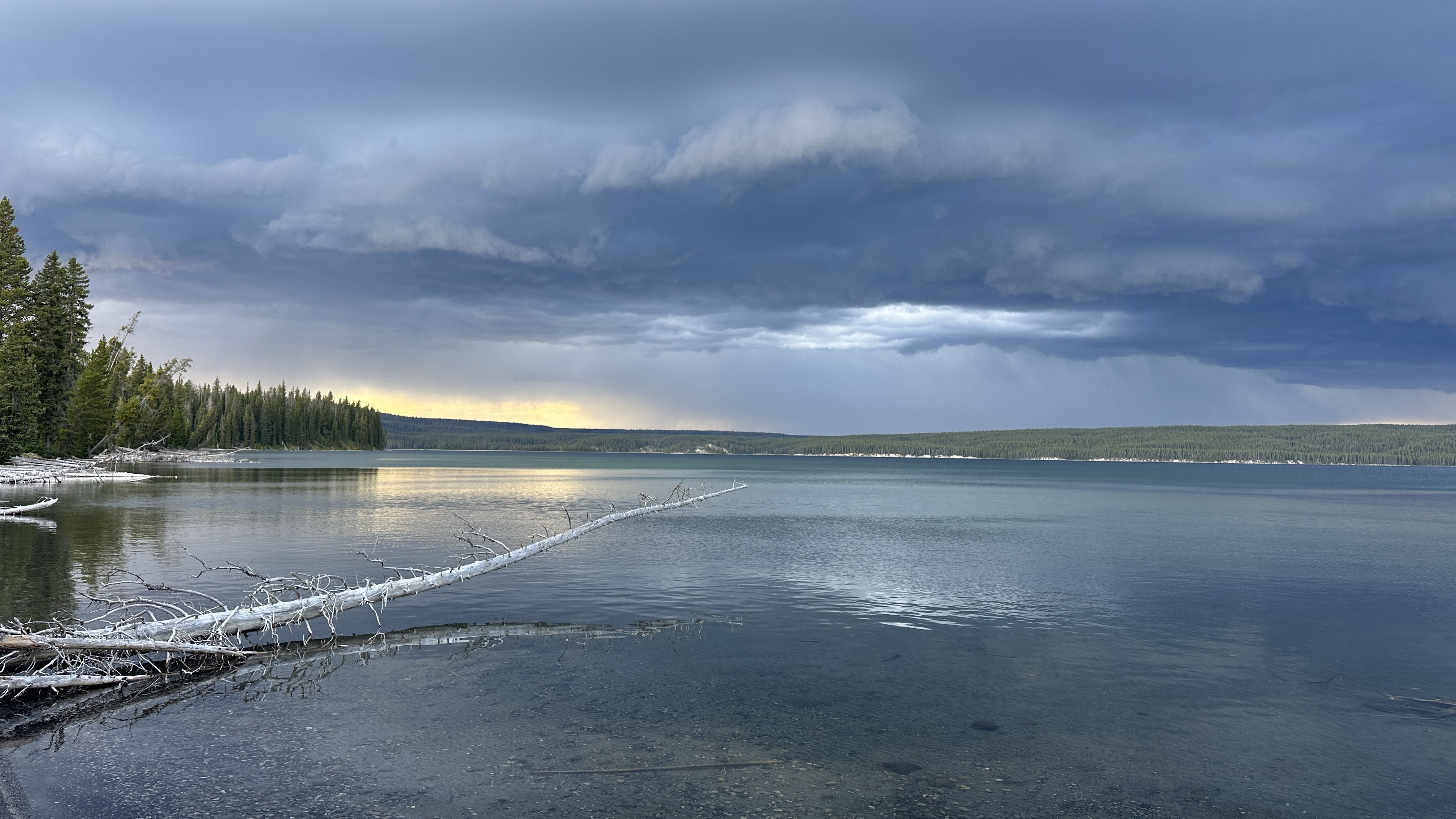
The rolling storm spreads over our campsite in the southwest corner of the lake.
Dark clouds from the southwest stretch across the lake. They curl toward the northern shore, sweeping the sky. Below, a glimmer of golden late day light casts a glow across the green trees, black sand, bleached wood of downed trees. Lightening flickers in the distance. In the center, a white glow, as if the storm has a heart of ice.
A family of mergansers swims toward our canoe in the Lewis Channel.
In the late afternoon light a merganser passes by, again and again. Its vivid orange legs, perfectly matched to its bill, push it confidently through the water in spite of our presence on the beach. Head down, bill in water, snorkeling for prey. Head up, catching breath. Light glints on the water droplets in its crazy headdress, a spike of rusty feathers. A dive, a wing flap, rising off the surface to show a brilliant white belly, a flash of white on moving wings. A deep cluck in its throat; just the one note, repeated.
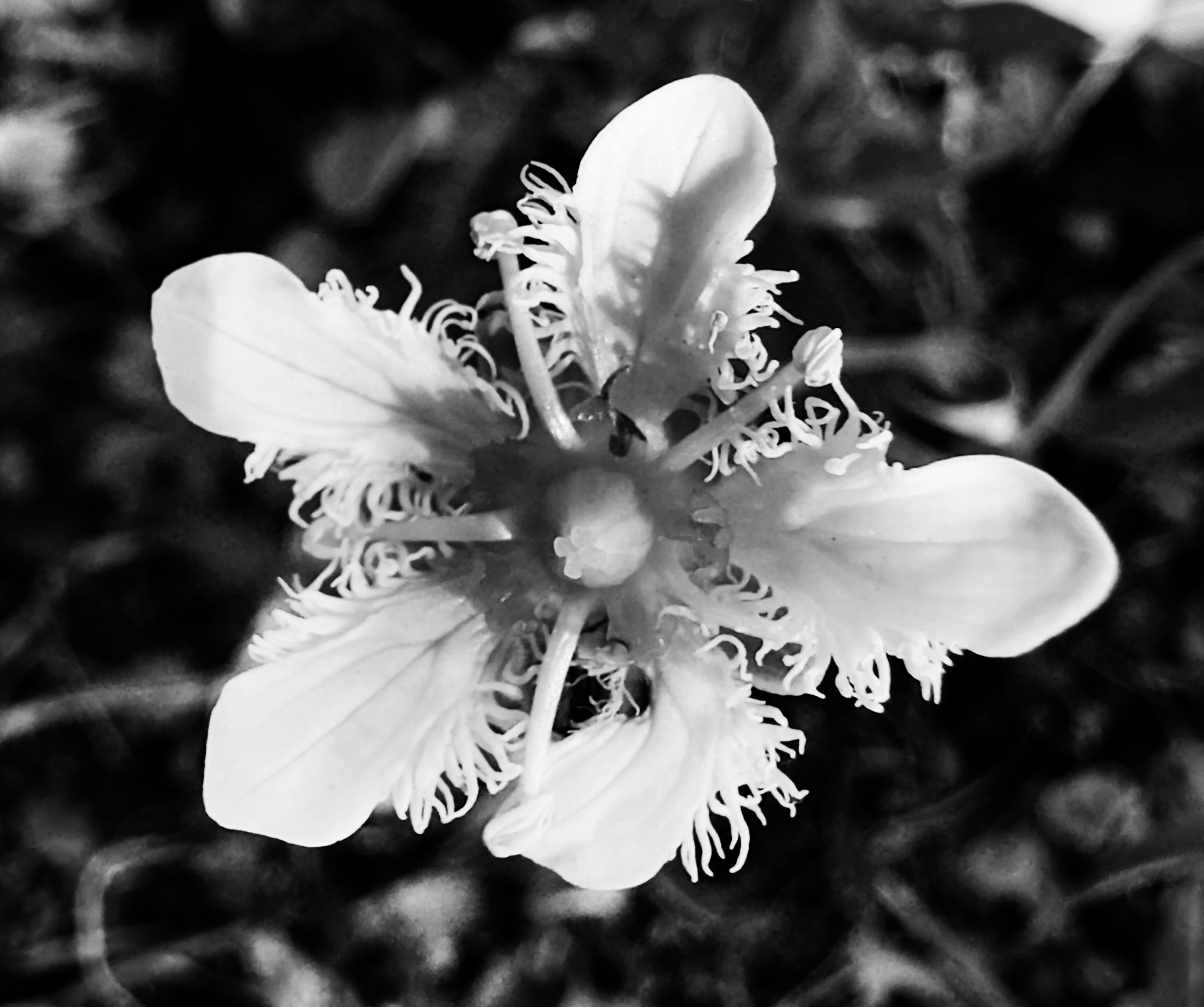
In the saturated banks of a spring-fed stream, just beyond the lake’s sandy beach, marsh grass-of-parnassus grows, relative to a favorite wildflower found in the mountains of North Carolina, but with delicate feathery edges its eastern cousin lacks. Nearby, an entirely unexpected discovery — sundews grow thick amidst vivid green moss and the boggy stream’s surface is covered in the thin tendril-like leaves and dark pockets of bladderwort. Carnivorous plants in Yellowstone!
There’s nothing quite like a dip in cold water after many days in the wilderness. The temperature is a shock, even mildly painful if its frigid enough, causing a sharp inhale of breath as my I submerge my head and shoulders. But almost the moment I emerge, sun on cold skin, there’s a sensation of comfortable, tingling warmth. It’s a freshness quite unlike anything else, and I am more at home in my own skin than at any other time.
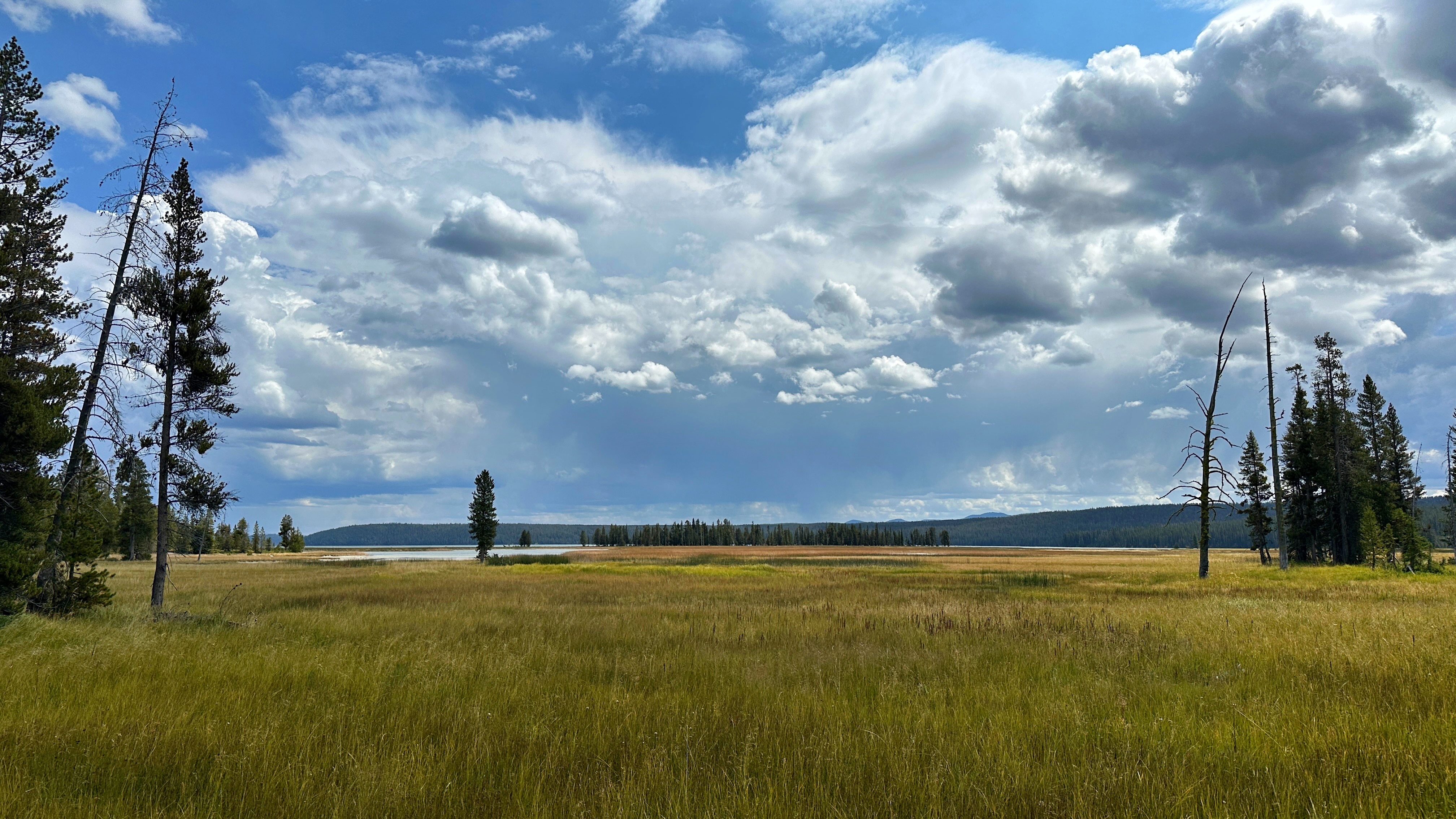
A lush march rims the western end of the lake
Midges floating above the still water look like diamond dust… but slightly more purposeful in their movement. Or like cottonwood seeds swirling in the breeze. The glassy lake surface is dotted with even more, like the first dusting of snow on frozen ground. Their tiny bodies are no larger than the tip of my pen, with just a hint of softness near the head: their feathery antennae. My mom wouldn’t tolerate their abundance well, and it is somewhat unsettling when one or two get a little to close to being inhaled. But their numbers are like a tiny miracle, a natural spectacle on a minute scale.
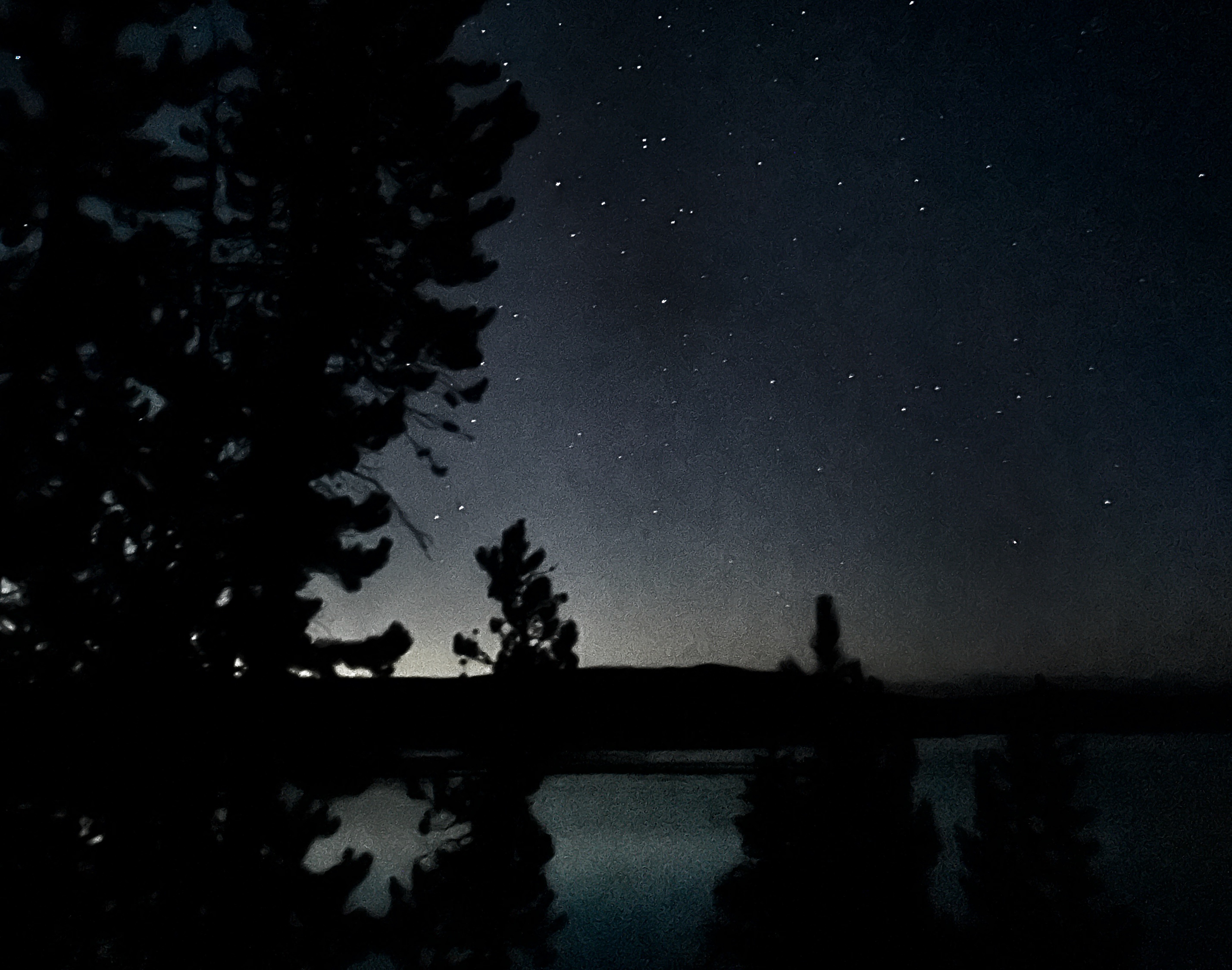
As darkness falls, the sky comes alive with the light of thousands of stars.
How do I love this world? I love this world most in places of solitude, quiet, beauty. When I am deep in it. When life is simplified to what fits in my boat or on my back. When I have time to sit in my hammock on a hillside, the sound of waves lapping a rocky beach, the sigh of the wind stirring lodgepole pine and subalpine fir needles, a view to distant hills above dark water when I lift my eyes from the page. And perhaps, somewhere nearby but out of sight, a silent black bear prepares herself for her winter slumber.
I’m going to try to catch up on some of the many cool things we have witnessed in recent weeks as we travel to learn about our new surroundings. Melissa’s parents visited back in July and one thing they wanted to see was a moose, arguably one of the more difficult creatures to find in Yellowstone. And, indeed, we did not find a moose here in spite of our travels up through the northeast entrance, usually the best place in Yellowstone to locate the largest member of the deer family. But, her parents also wanted to visit Grand Teton National Park during their stay, and that location offers you a much better chance of finding a moose. Yellowstone is estimated to have fewer than 200 moose whereas Grand Teton’s moose population is closer to 500 animals. And to further prove that areas’ moosiness, there is even an unincorporated community named Moose within the park.
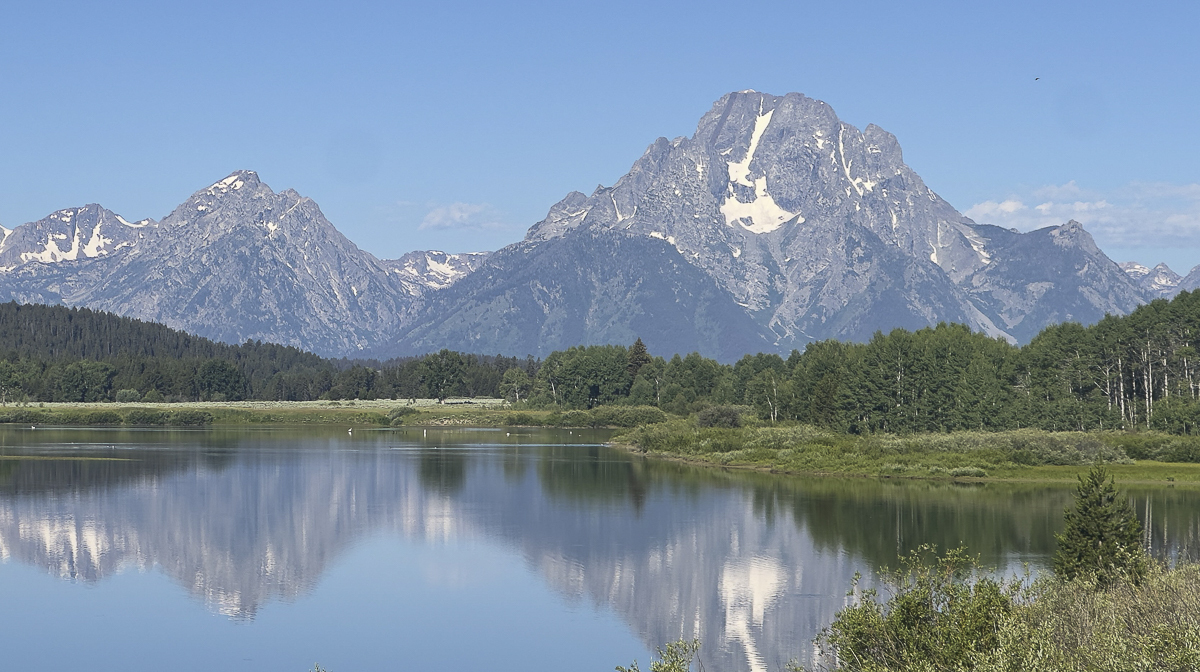
Oxbow Bend in Grand Teton National Park (a very moosey place) (click photos to enlarge)
So, off we went to the Tetons for a couple of days and, sure enough, we spotted a cow and calf moose high on a meadow from the road at a place called….Moose Junction. They were pretty far away but we got out and looked for a bit and then headed on, hoping to get a closer look at another moose and perhaps even a large bull. Driving the Moose-Wilson Road produced no results but in a discussion with another visitor we learned his family had seen a large bull moose on a campground road the evening before and it had supposedly been hanging out in that area for a few days. That set our agenda for the final day in the park. We drove to that area late in the day and soon spotted a few cars pulled off on the side along the river. And there it was, a moose, and a nice bull at that!
Our bull moose across the river in Grand Teton National Park. This is the view with my 500mm telephoto.
The moose’ antlers stood above the riparian shrubs, but the bulk of the animal was hidden as it browsed in the thick vegetation. It started moving and suddenly stepped out into the open.
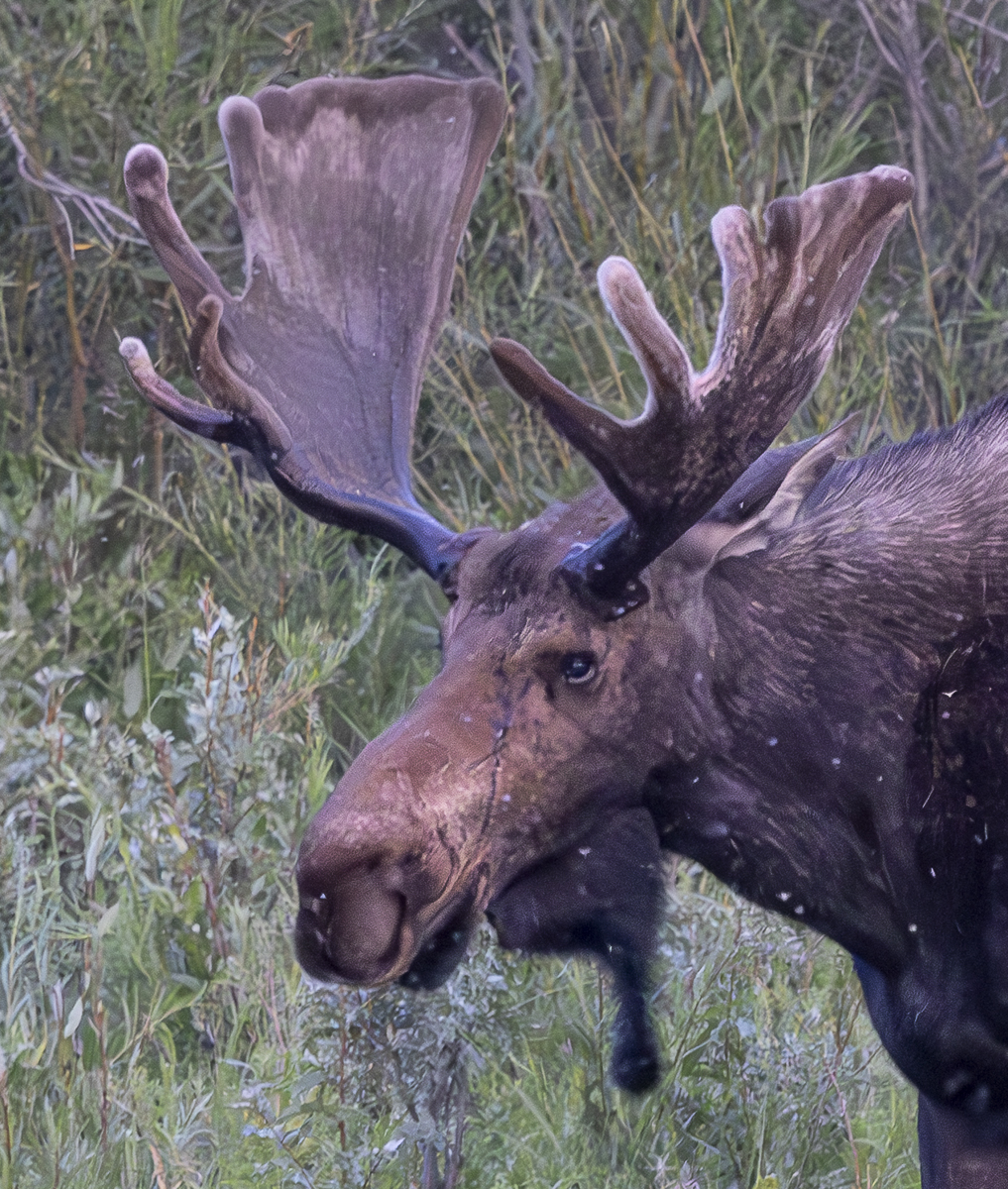
This large bull moose had an impressive set of antlers, still covered in velvet
We shared our scope with some bystanders and loved hearing the oohs and aahs as they got a closer look at this beautiful beast. Melissa had recently figured out a good solution for a phone adapter for her scope and started filming the moose as it fed. We switched to my phone so I could get a few clips and I was very impressed by the quality of the images, even in the low light of late evening.
By this time, we had a few mosquitoes making an appearance but when I looked at the footage later I could see a cloud of insects around the moose. Not sure if he was being sucked dry or whether there was some sort of hatch of aquatic insects happening.
The other thing I noticed was his impressive dewlap (also called a bell). Many animals from birds to lizards have this anatomical structure which is defined as “a fold of loose skin hanging from the neck or throat of an animal”. The purpose varies according to species. In Carolina anoles (I miss those little green lizards that frequented our yard in NC), the males have an impressive extendable pink dewlap that they show during courtship rituals and territorial disputes. In some birds, the dewlaps (often called wattles in birds) may help with thermoregulation and sexual displays.
The function of a dewlap in moose is uncertain, but it seems like a nice addition to the overall look of a beast that has an unusual appearance to begin with
Studies of the dewlap in moose have been inconclusive as to its exact function. Perhaps a dangling flap of skin may help in thermoregulation by dissipating heat from this extra surface area of vascularized skin. Or, it may serve some function in communication. Bull moose tend to rub their dewlap on females during courtship perhaps transferring scent to them. The size and shape of a dewlap may also indicate something of the health of a bull and give a cue to females of his worthiness and to rival males of his potential dominance. Then again, it may be some sort of vestigial anatomical feature that has lost all or most of its original function over evolutionary time. I suppose only the moose knows for sure. At the very least, it is a fun word to have around when discussing one of our most impressive large mammals.
I’ve been longing to get out camping since we arrived in Montana in early May. First, there was unpacking and house projects, then there were my teacher workshop and family visits, then some concerns about what seems to be a particularly explosive mosquito population this year… but finally, last week, we made it out to spend a couple nights camping in the Beartooth Mountains to the northeast of Yellowstone. We’ve visited the Beartooths many times before, typically in June with groups. At over 10,000 feet in elevation, spring comes late in the Beartooths. On previous June visits, we typically ran into tall walls of snow on the roadsides and muddy meadows just starting to sprout spring beauties. But come July, the harsh colors of June melt into vibrant greens dotted with a rainbow of wildflowers. As we roll into August, even the high elevations are starting to dry out, though more green remains in the Beartooths than at home in the Gardiner Basin, especially in wetland areas, which are numerous.
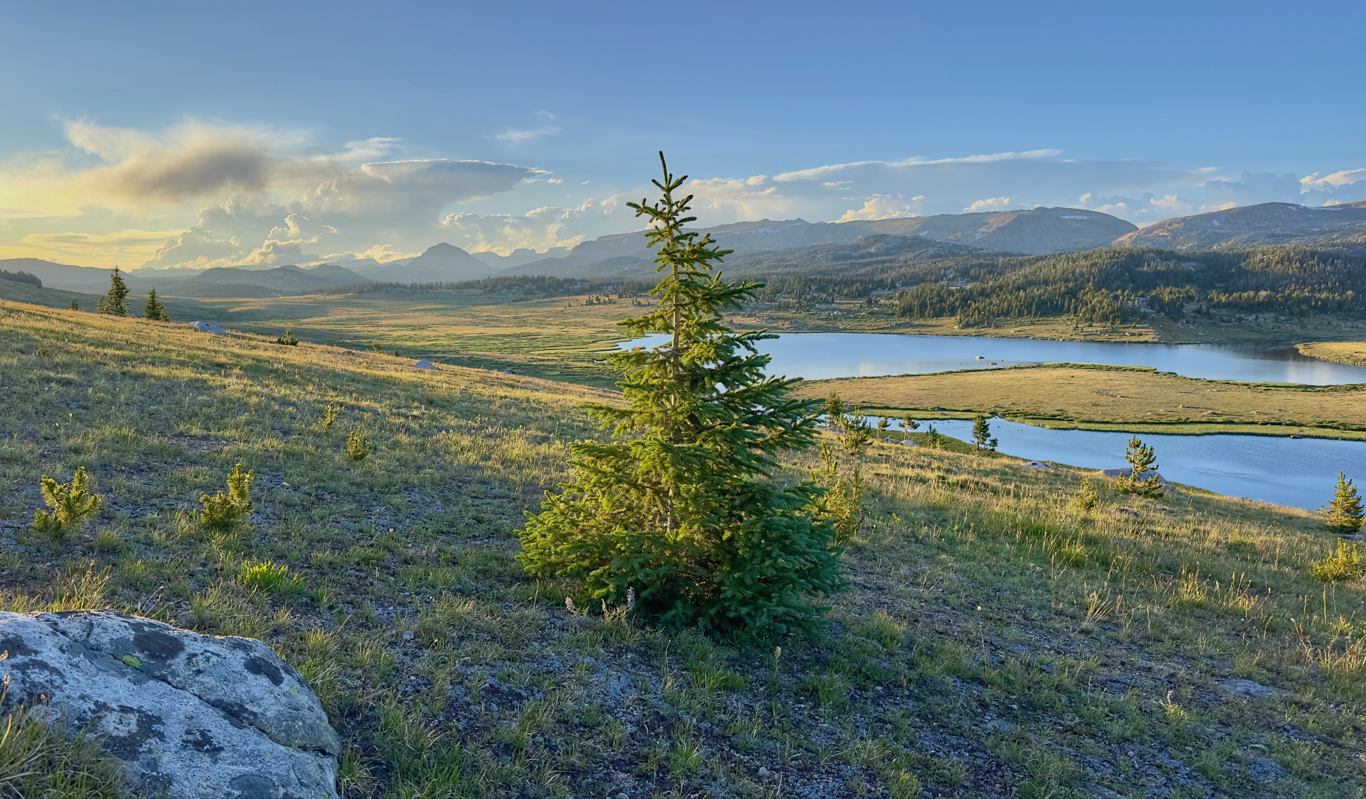
The view from our campsite across the Chain Lakes
On a visit to the area with a friend from Raleigh a week before our camping trip, we took a spin down a dirt road that I’d been eyeing for a while. I love exploring the back roads in our national forests, and this one did not disappoint. There were lots of excellent camping spots with stunning views of the plateau, dotted with lakes and granite outcroppings reminiscent of the Sierras. So, when we had a few empty days last week, we headed back.
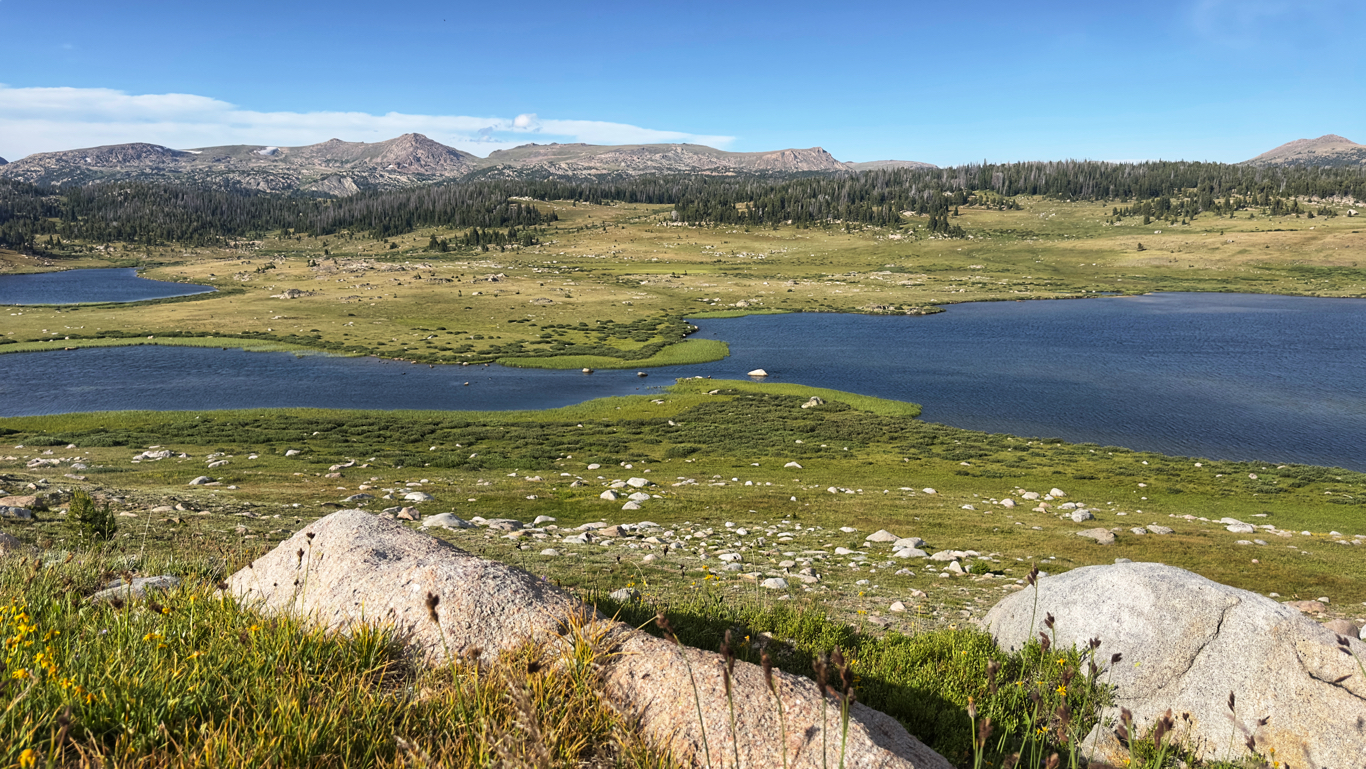
A different perspective from our campsite that shows the scattered granite boulders dropped by glaciers and the slopes of the high plateau in the background. The famous Beartooth highway climbs the hills in the left of the picture; we could hear the Harleys on the road when the wind quieted. Photo by Mike Dunn.
We spent most of our time enjoying our campsite and hiking through the adjoining meadows, learning new species of wildflowers and looking for wildlife. The most abundant critters were white-crowned sparrows and American pipits, the sparrows alighting on the small lodgepole and whitebark pine trees that crowned our hilltop, and the pipits favoring the ubiquitous boulders dotting the meadows. We spotted a marmot or two, unsurprising given their affinity for rocky burrows. And we saw quite a few insects, including a few more mosquitoes than we’d like, but also numerous bumblebees.
We recently took a workshop to learn how to contribute data to the Montana Bumblebee Atlas, so we were particularly drawn to observing these neighbors. Apparently, they do well in montane climates because, unlike most other insects, they can shiver to produce their own heat. We’re hoping to head back to the Beartooths tomorrow to do our first bumblebee survey!
A bumblebee gathering pollen on arnica. There are many bumblebee species in the area, many of which are very hard to distinguish, so Mike has signed us up for a bumblebee ID workshop later this week. This is what naturalists do for fun… Photo by Mike Dunn.
The wildlife highlights of our trip, however, happened after we packed up camp and headed out. We decided to head up towards the top of the Beartooth Pass before driving home in the hopes of catching sight of a mountain goat and with the intention of “sitting for pika” (an activity where you find a rock field, pick a boulder, and sit for a while, hoping you’ll catch a glimpse of a pika running between the rocks).
We were in luck! As we rounded one of the last switchbacks before the summit at a spot we’ve stopped many times before (folks who’ve been on a Yellowstone Institute trip with us will know the pullout!), Mike caught a quick glimpse of goats above the road. I swung the truck into the last bit of the pullout, and we grabbed our cameras and headed up the hill. The herd of goats were bedded down near the edge of a cliff. We approached slowly, not close enough to shift their behavior, and grabbed patches of scratchy mountain grass to sit on and watch them. The nearest goat in the group was a male (called a billy) with some nannies and kids (yup, that’s what they’re called!) below and behind his position.
Mountain goat male rubbing his face on a rock, taken with a telephone lens and cropped.
The billy was sprawled out in a particularly photogenic spot, chewing his cud with eyelids drooping. After a while, he perked up and started rubbing his face on the rock next to him. I couldn’t tell if he was scratching, licking for minerals or salt, or maybe eating lichen. After the goats had moved on, I walked over to his rock to see if there was any sign that would help me solve the mystery of his behavior. There was a bit of crustose lichen growing on it, but not enough that it seems like a food source, so I think it may just have been scratching.
One of the nannies heading up the hill as the billy stood watch.
After quite a while, the billy stretched out and got to his feet. He took a few steps in our direction before the rest of the herd arose and began moving uphill. About four or five adults and three kids moved past him and began scrambling up the rocks toward the summit. After they all passed, he took a moment seemingly to survey his mountain domain, then followed them. It was a magical moment!
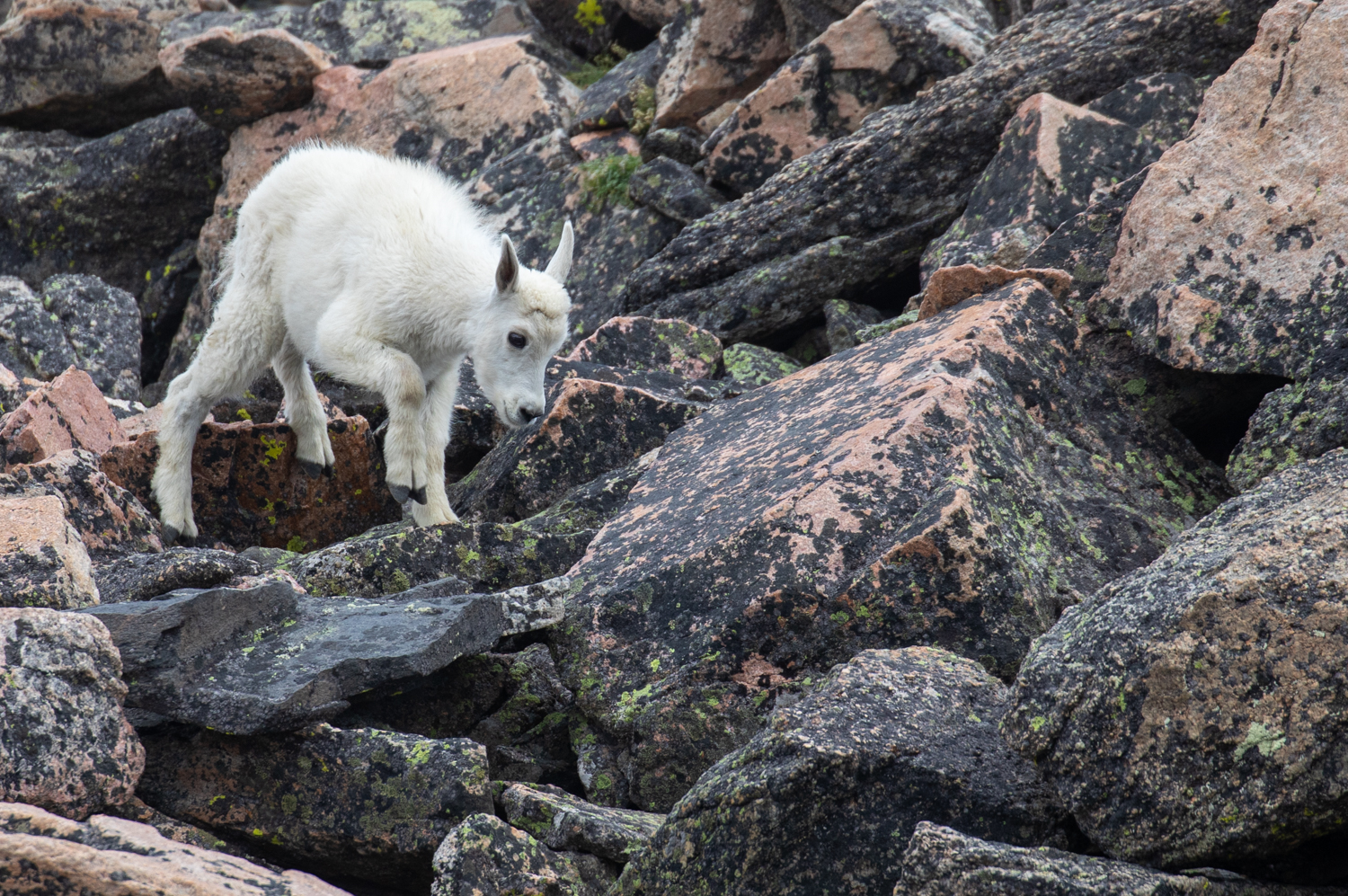
Mountain goat kid scales a talus slope
It’s amazing to watch mountain goats move with grace over talus slopes. Seeing them on cliffs from a distance has given me an appreciation for their ability to navigate impossible-looking terrain. But at close range, they seem to almost float across a landscape that makes me choose every step incredibly carefully and move slower than a caterpillar! The kids seemed to hesitate now and again, like the little guy pictured above. But their flexible and grippy two-toed hooves give them stability and allow them to make these mountains their home.
Rocky Mountain goats are actually an introduced species in the Greater Yellowstone Ecosystem. They are native to the Rocky Mountains in Canada and Alaska, ranging down to Washington, Oregon, and Idaho, and into western Montana, but not as far south and east at Yellowstone and the Beartooths. There are some concerns that they will take habitat niches used by bighorn sheep and that they may impact fragile alpine ecosystems in the area with their grazing.
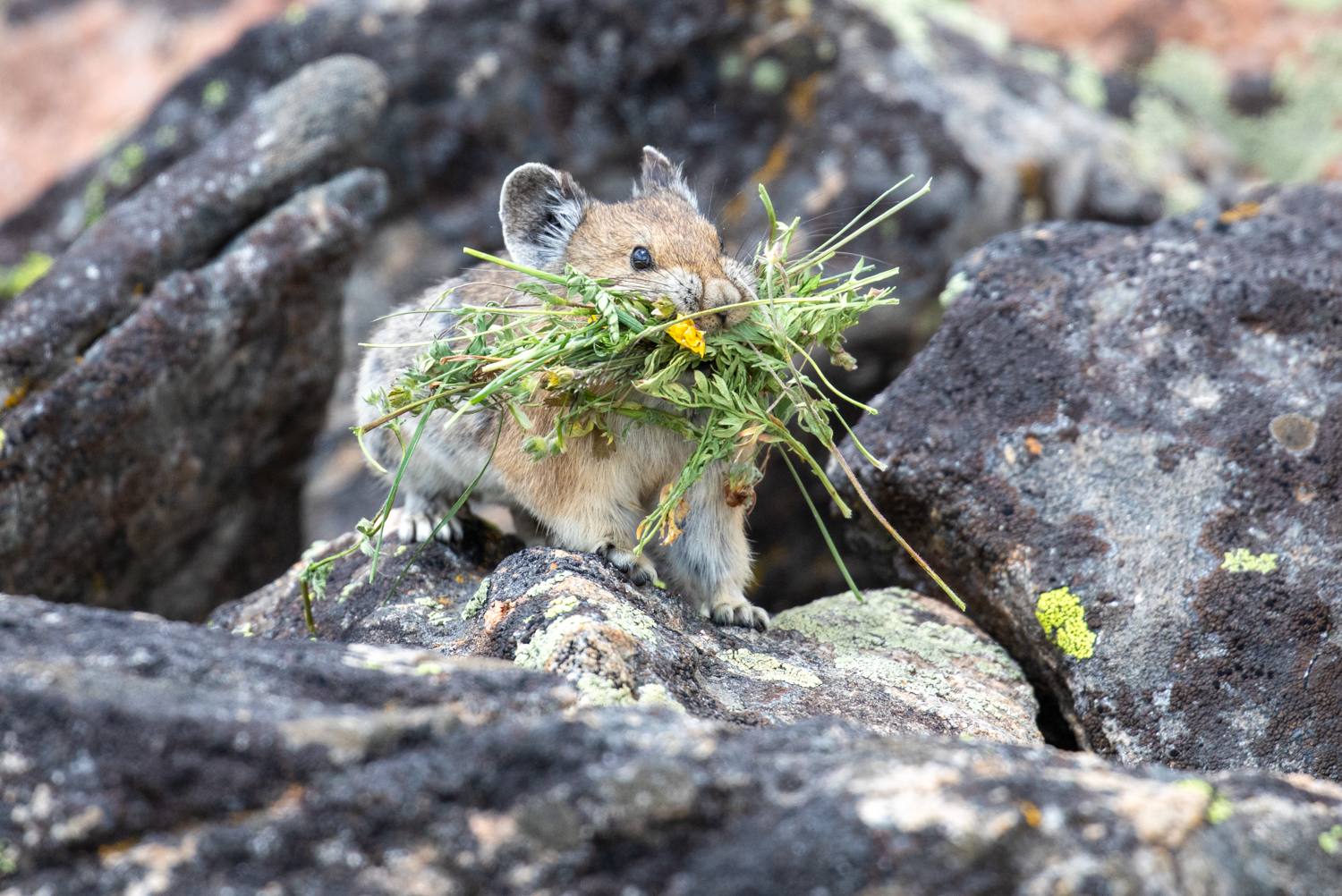
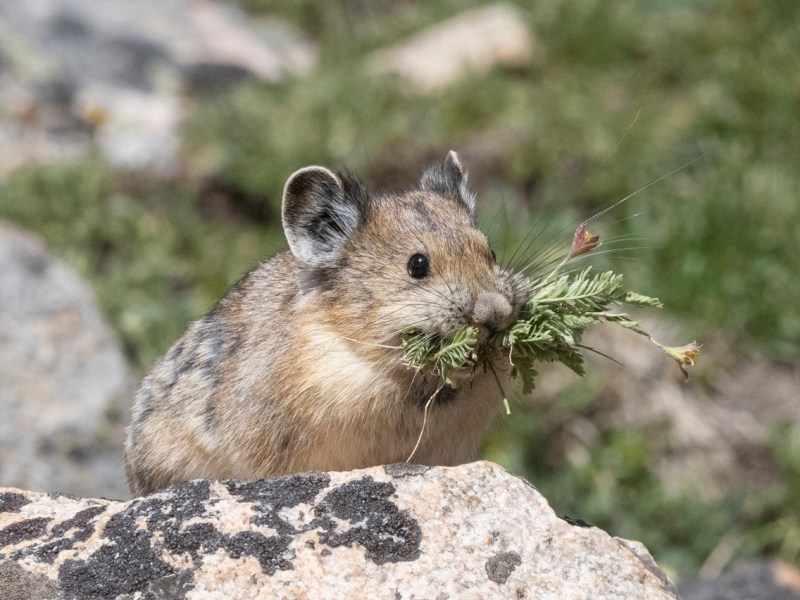
Once the goats disappeared over the mountainside, we turned our attention to pika. We’d heard a few of their “eeep” alarm calls as we watched the goats, so we knew they were in the area. I waded (much more slowly than a goat) out onto the talus and found a somewhat-comfortable rock to perch on. After a few minutes of quiet sitting, I saw my first pika! It had a mouthful of grass that it was carrying to its haystack. Pikas do not hibernate, so they busily spend the summer months collecting and stashing plants in piles tucked under and around rocks, where they dry into a food source to last through the long winter.
Pika with plants to add to its haystack for winter consumption
After watching a couple pikas with grasses head behind a notable pink boulder with plants and then depart empty-mouthed, I got up and slowly made my way in that direction. Soon enough, I spotted the pikas’ haystack in the rocks. It was a lot more extensive than I realized, extending under multiple boulders covering an area that was probably at least a square meter or two. I backed away to a spot where I wouldn’t disturb the busy critters and found another not-quite-comfortable rock to wait on.
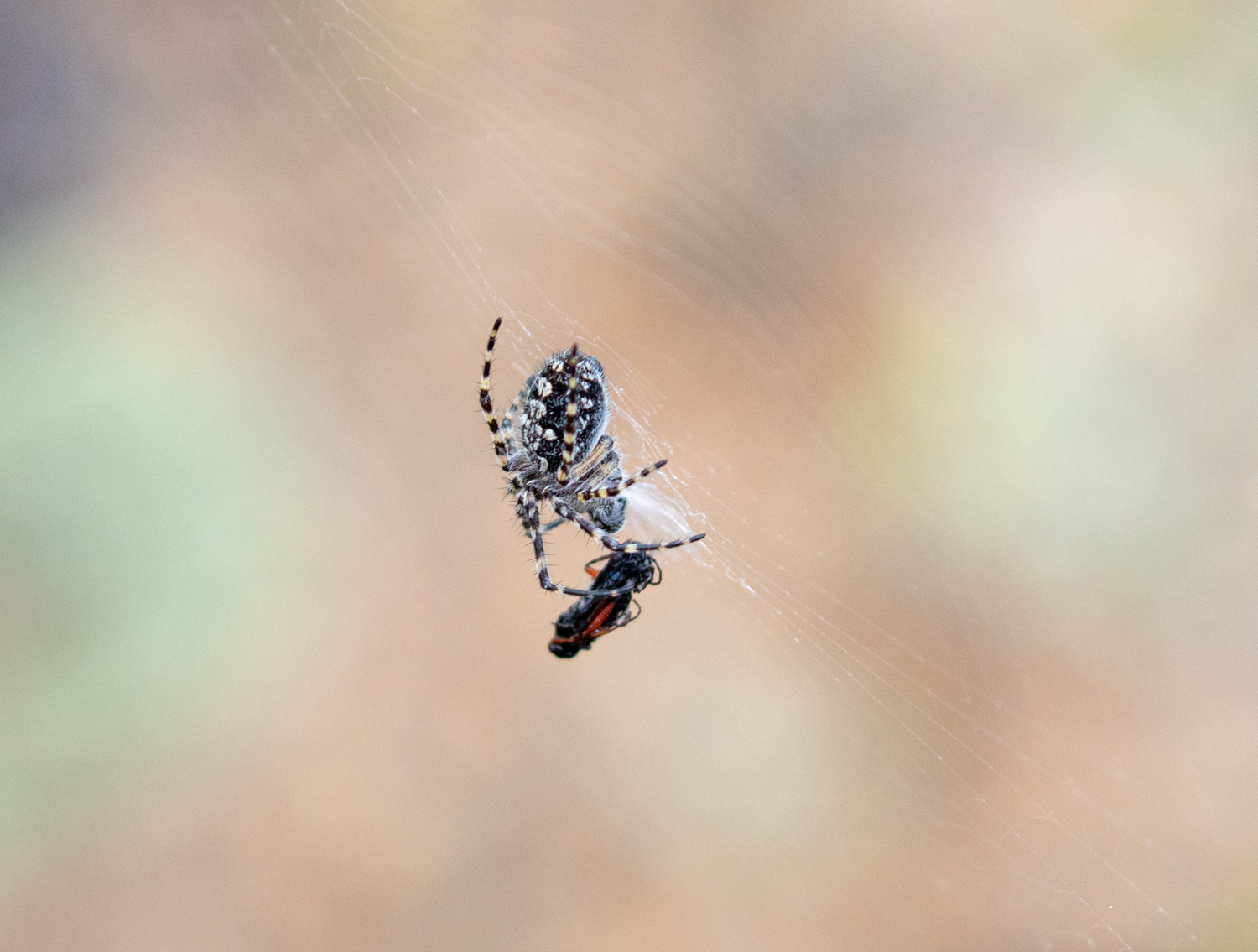
While waiting for the pikas to reappear, I got distracted by a different type of critter nearby. There were numerous orb-type spiderwebs strung around and between the rocks. At first, I thought the spiders were extra hairy and speculated that maybe that was an adaptation for the cold montane climate. But on closer inspection, I realized that their webs had additional silk in the center (where most of the spiders were sitting), somewhat similar to the stablimenta woven by Argiope garden spiders back east, though significantly smaller.
This lucky spider had caught a meal.
But back to the pikas… By softening your vision and not focusing on anything around you, your eye will catch movement in the environment; this is sometimes referred to as “splatter vision”. Using this technique, I was able to spot a pika out gathering grass and track its progress between rocks as it returned to add to the cache. After stashing its bounty, it headed back out for more.
Pika heading back out to the edge of the boulder field. Note a portion of the haystack in the rocks beneath it.
Though you might assume pikas are rodents given their size and behavior, they are actually relatives of rabbits. They cannot tolerate temperatures above the high 70s for extended periods of time, and they rely on snowpack in the winter for insulation since they remain active year round. Both of those factors have made them something of a poster child for climate change. As winter snowpack decreases, pika may struggle to survive winters. And if you live at the top of a mountain, you can’t go higher up to escape hotter summer weather. Perhaps even more of an issue is that populations will become more isolated as corridors where they might once have been able to move between high elevations become too hot for them to travel. Fortunately, these cuties in the Beartooths seem to be thriving for now.
It’s hard to believe we have been in our new home now almost three months. Though we have been busy with numerous home projects and family visits, we have managed to get out into the park a few times to enjoy seeing some of the amazing scenery and wildlife that Yellowstone offers. One of the big draws here for wildlife watchers is the presence of several packs of wolves with territories inside the park including a few in the northern range near where we live. Drive through the park on any day and you may see a group of cars lining the road (or, unfortunately, stopped in the middle of the road) and you are right to assume there is some sort of interesting wildlife that has been spotted off the road (or perhaps a bison or two just walking in the middle of the pavement). These congregations of wildlife watchers are known as “jams”.
Wolf jam in Hayden Valley (click photos to enlarge)
While we love seeing what has caused these jams, we really prefer to have solo experiences with wildlife so we can really observe the animal’s behavior without the noise and occasional chaos that often accompanies wildlife watching from a roadway. That is one reason we like to get out of the car and hike. You often don’t need to go far to escape the crowds and you never know what you might see. Such was the case a couple of days before the latest family visit when we took a short hike in the Pelican Creek area near Yellowstone Lake. The first part of the hike took us through a small lodgepole pine forest but we eventually reached the opening we were seeking – a wide view of the creek flowing through marshy meadows and rolling hills of sagebrush, grasses, and wildflowers. Earlier, we had passed another hiker heading back to the parking area and when I asked if he had seen anything, he replied “no, just a few bison”.
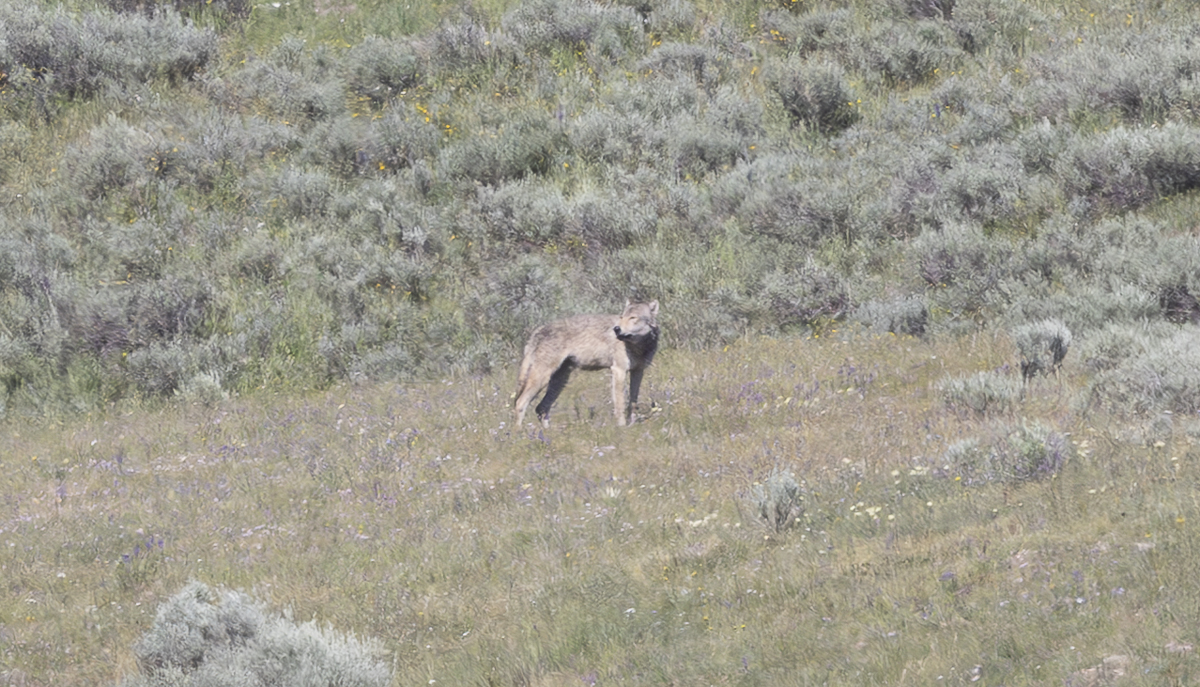
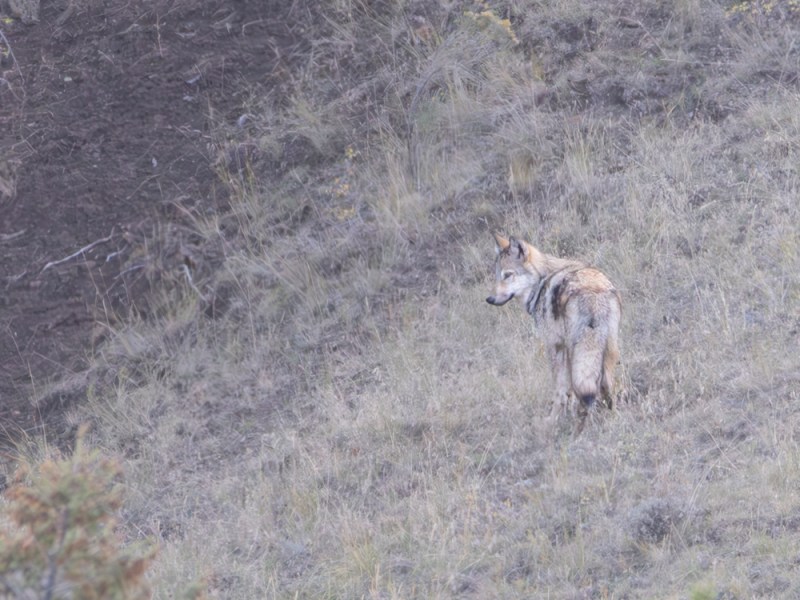
We moved to a high knoll with an expansive view of the valley before us. A few bison were scattered across the landscape and butterflies fitted around us as a gentle breeze was blowing. Suddenly, we both heard it – a faint sound, a wolf howl. Melissa quickly spotted something moving about 1/4 mile away down the valley. A wolf! There is special excitement when you see “your own” wolf…no crowds, no car noise, just you in a wild place with a wild being.
Lone wolf coming down the valley (can you see it above the bison?)
We watched as the wolf trotted along, occasionally stopping to look behind it. It let out a mournful howl a couple more times as it moved past us, crossed the creek, and eventually ended up bedding down on a hilltop farther up the creek valley.
Wolf crossing the creek in Pelican ValleyThe wolf looking back (this is a heavily cropped image from my telephoto lens)
As we started to get up to leave, Melissa saw a dark spot way down the valley. We put our binoculars on it and it was a large grizzly coming out into a meadow about a mile away. Sharing a few moments with a wolf and a grizzly was the perfect ending to a hike in Yellowstone.
Though we love seeing wolves, our enthusiasm and effort pales in comparison to a truly dedicated group of wolf watchers that go out daily to observe and record the behavior of the wolves. Some of that information is compiled into a daily summary called Yellowstone Reports. There is a nominal fee to subscribe to this overview of wolf activity and I read it every morning to learn what others have observed. Several of the reporters also highlight other interesting wildlife sightings each day giving us a quick overview of where certain wildlife activity is in the park. A couple of weeks ago one of the reports mentioned that there were three bison carcasses in Lamar Valley which is somewhat unusual. One had been taken down by the Junction Butte wolf pack but observers were uncertain what had killed the other two. When Melissa’s parents came to visit that week, we decided to head out to see if the carcasses might draw in other wildlife.
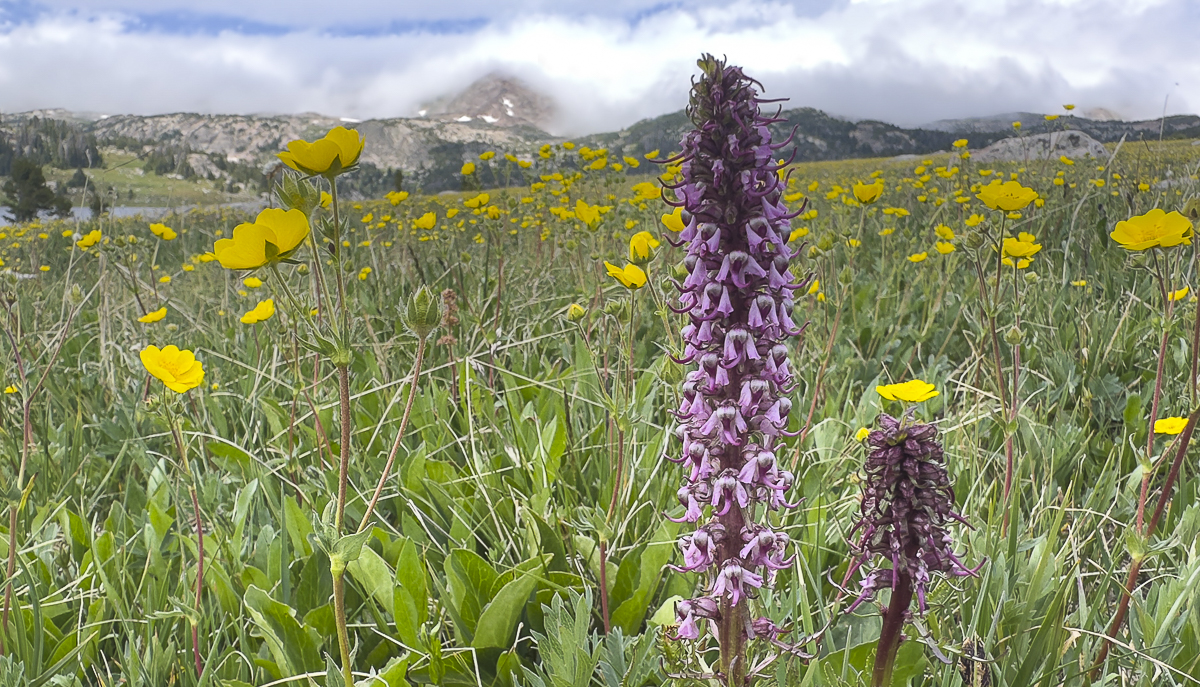
Entering Lamar the next morning, we came to a large wildlife jam that turned out to be a cinnamon-colored black bear feeding on one of the carcasses. Observers shared that several wolves had been on it earlier that morning. Dang it, you often learn the hard way of the benefits of foregoing sleep to get to Lamar at sunrise…oh well. We could see another bison carcass out near the river but visitors had said very little was feeding on this one. We didn’t see the reported third carcass as we went on through the valley and exited the northeast entrance. We continued on up the Beartooth Highway where the clouds, mountains, and flowers were glorious.
The unusual purplish flowers of elephant’s head stand out in a high meadow in the Beartooths
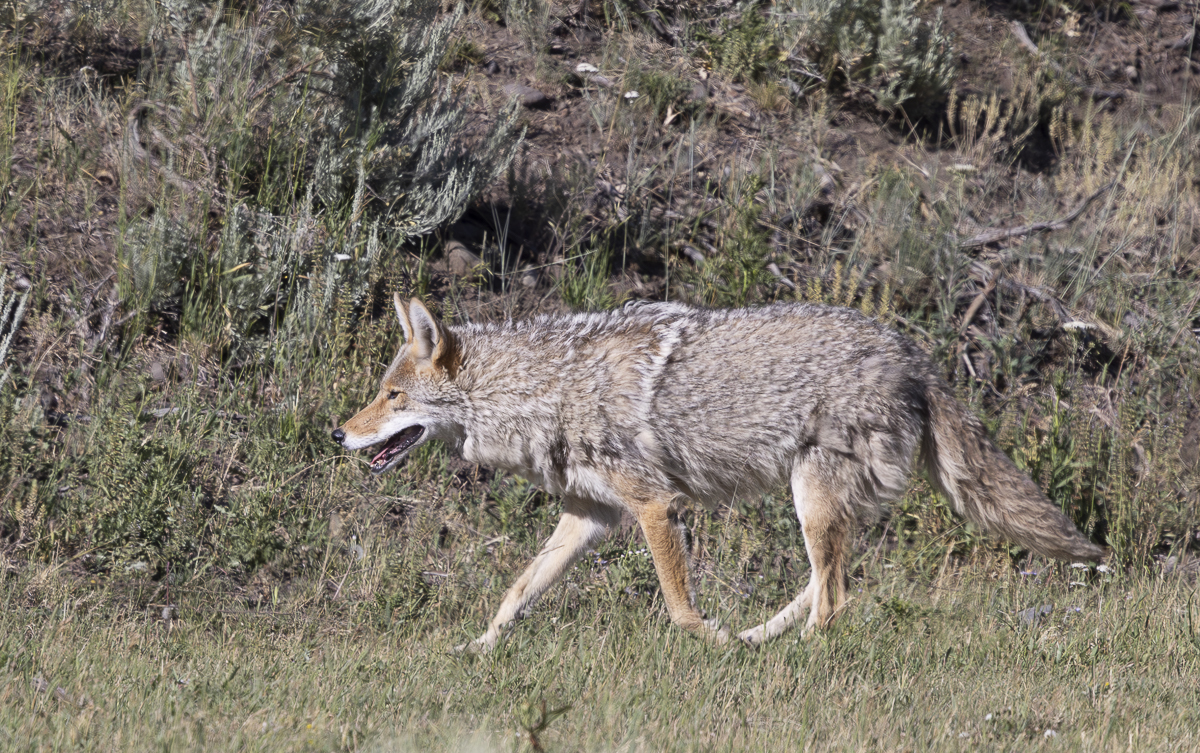
Later in the day we headed back to Lamar after a nice dinner in Cooke City. A red fox greeted us along the road soon after we entered the park. As we pulled into Lamar proper, a distinctive coyote was spotted right next to the road. It was the well-known coyote called limpy (some call it tripod) as it has an injured right hind leg. This coyote has been around for several years in this part of Lamar but seems to do very well in spite of its disability. We saw it give chase to something in the sagebrush but it came up short.
The coyote they call “limpy” in Lamar
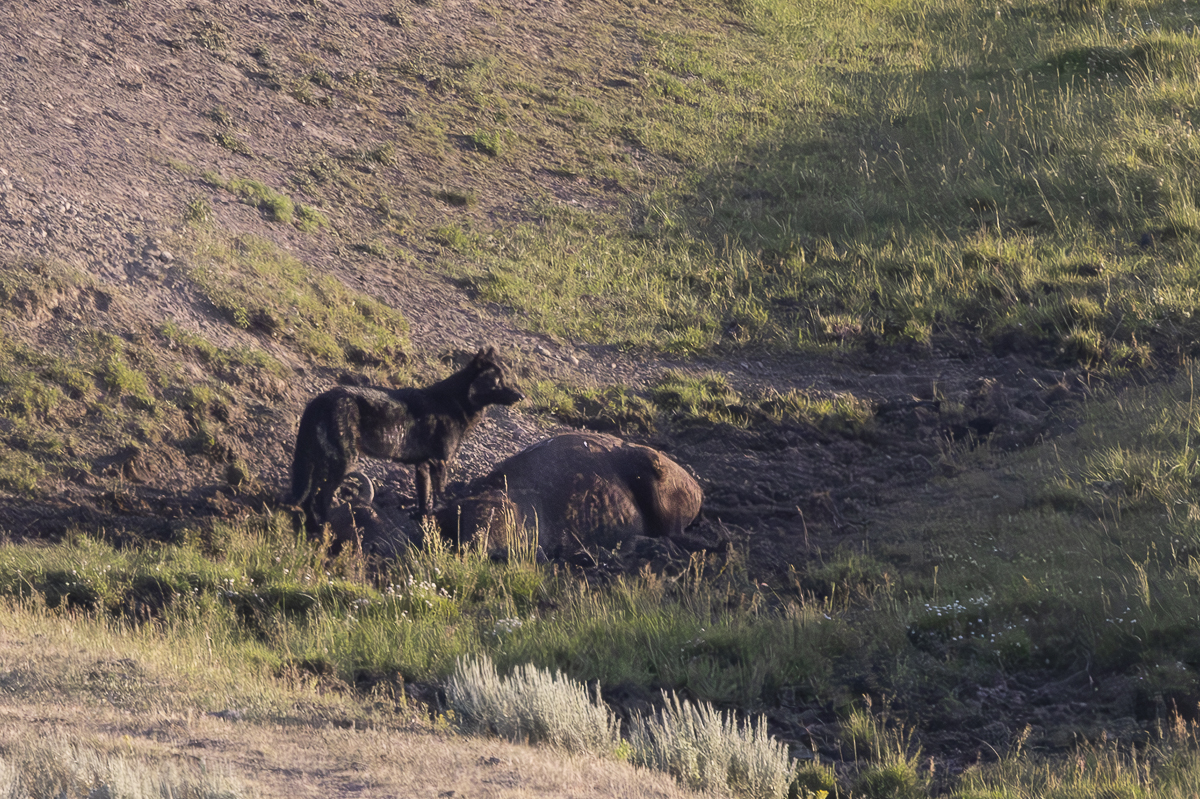
We soon arrived at another wildlife jam. As we slowly passed through the cars and people, someone told us there was a carcass just down over the hill, barely visible from the road and much closer than the other carcasses we had seen. This was the third carcass we had missed earlier in the day. As we continued on, Melissa spotted a black wolf down in the flats potentially headed toward that carcass. So, we turned around and miraculously found a parking space in what was soon to become a massive wolf jam.
A black wolf feeding at a bison carcass
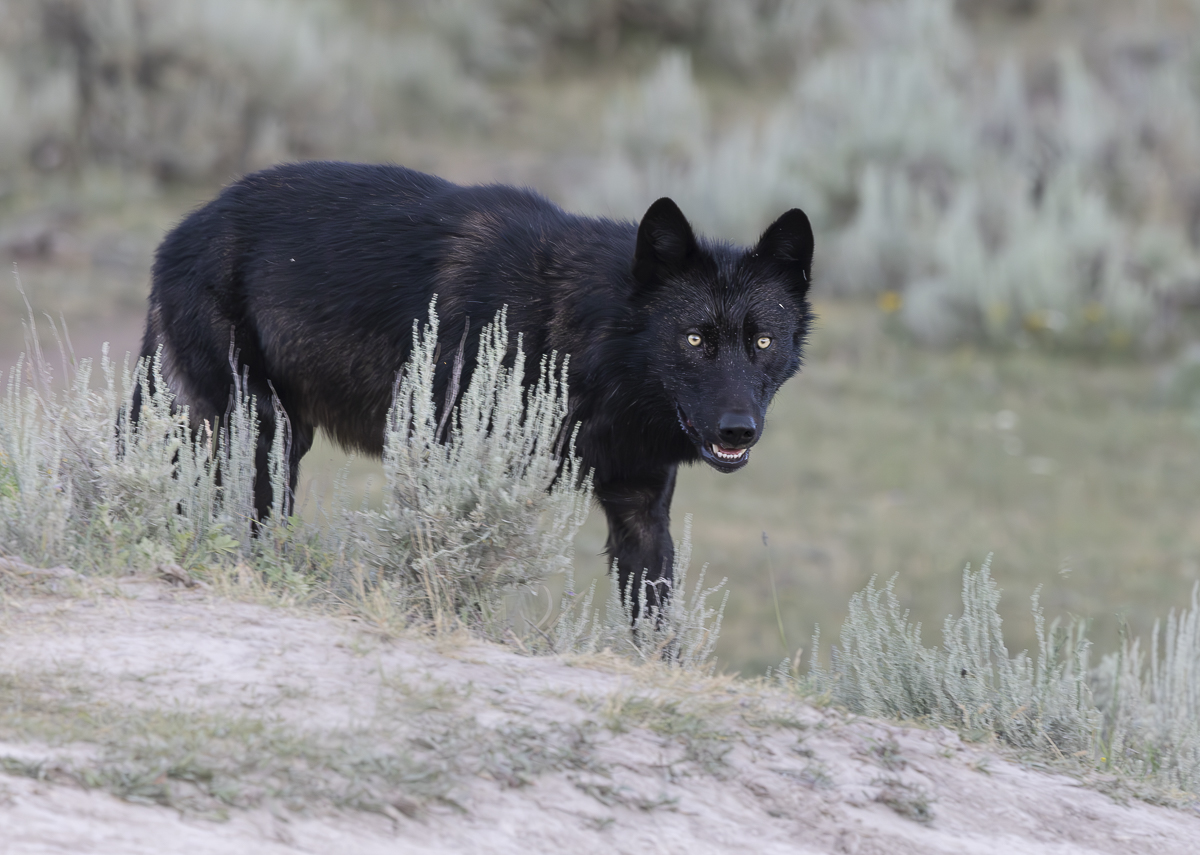
This uncollared black wolf fed at the carcass for several minutes. Through our scopes we could see it tearing chunks of meat and gulping them down. Soon, it stood up and trotted back the way it had come, disappearing behind the crest of the close hill. We figured it was going back to the den area and would stay hidden below the ridge line as long as it could so we drove down to the low pullout nearest the river. I was anticipating the wolf would come into view down by the river. There was a small small group of folks gathered at the pullout, many of whom had no idea a wold was heading our way. I got out of the car and was standing next to the log rail that forms a barrier for cars at this location. Suddenly, I saw the wolf trotting up over the hill just to the left of us. Instead of being down below us along the river, it was close and coming straight at us. I couldn’t believe what I was seeing as the wolf looked directly at me, its piercing golden eyes seemingly jumping from the surrounding black fur. The wolf stopped for a moment, perhaps assessing its situation, before just continuing on along its path at a trot right in front of us. I had stepped back from the railing but when it passed, it was probably no more than 30 feet away.
The gaze of a black wolf…
A little background here about wolf color – about half of the wolves in Yellowstone are black, the others gray to tan in color. The black color is believed to have originated from breeding with dogs thousands of years ago. This genetic variant also gives black wolves a slight advantage when it comes to surviving canine distemper virus outbreaks. Studies have shown there are more black wolves in areas that have more frequent outbreaks of this deadly canine disease. Scientists also found that gray-colored wolves tend to be more aggressive giving them a survival advantage in battles with other wolves and an overall more successful rate of reproduction. And other data shows there is a tendency for wolves of different colors to choose each other as mates which may help boost resistance of the pups to canine distemper virus and lead to more successful reproduction.
This male black wolf has a distinctive white blaze on its chest and is well-known among the wolf watchers
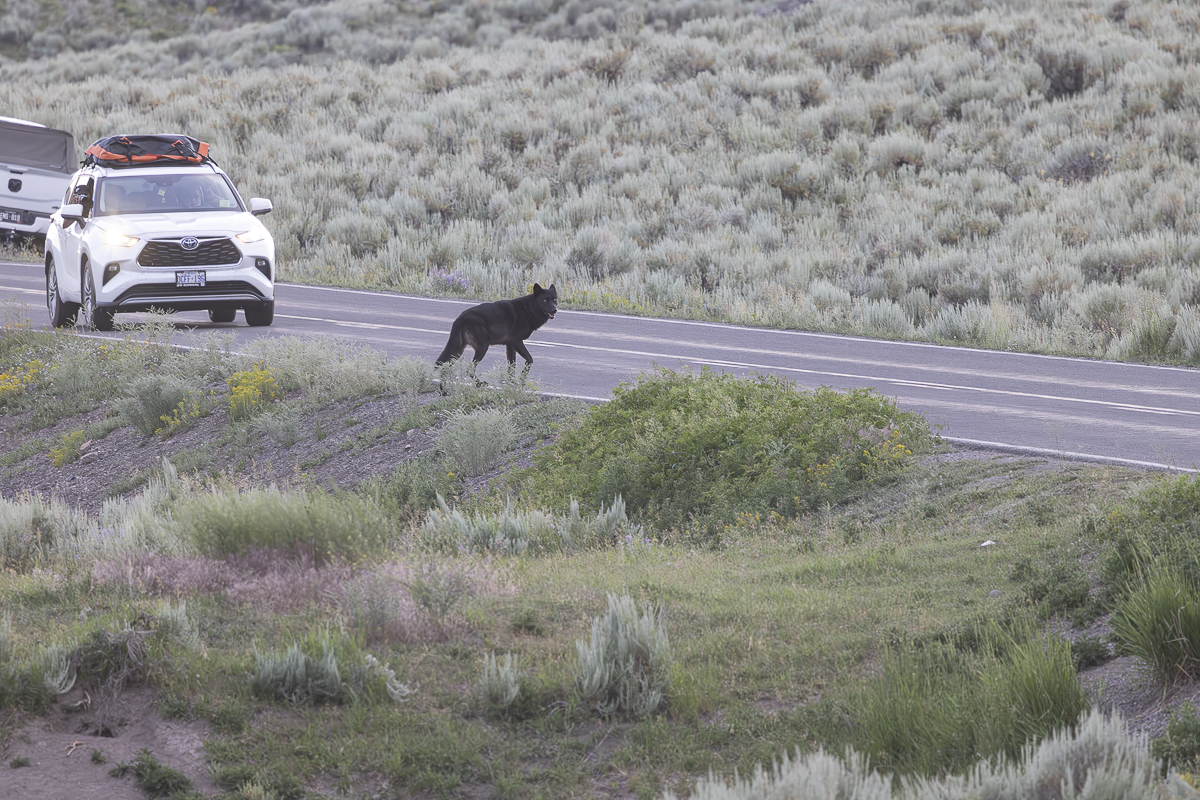
After going by our pullout, the wolf headed up towards the road and paused to look at the gathering crowd of cars and people. People were mostly respectful and only one car passed through and then stopped short when it must have seen the wolf right next to the road. After that car stopped, the wolf crossed in front of it and hurried up the hill towards where other wolves form its pack were no doubt waiting for some food.
The wolf navigated the crowds, crossed the road, and headed back to its pack
After the wolf disappeared, the group at the pullout was overjoyed and frankly stunned with what we had witnessed. I have never had an experience with wildlife to equal that. Looking into the eyes of a wild wolf is a powerful thing. It pulls at your soul and when it is over you feel privileged to have been a part of it. I wasn’t concerned for myself as the wolf trotted by but later felt a sadness for the wolf having to navigate the hoards of people (including us). I do worry that the wolf’s apparent lack of concern over the people being so close may lead to its demise if and when it leaves the safety of the park. So, in the end, it was an experience of mixed emotions – surprise, awe, and some sadness and worry for this majestic animal and its kind.
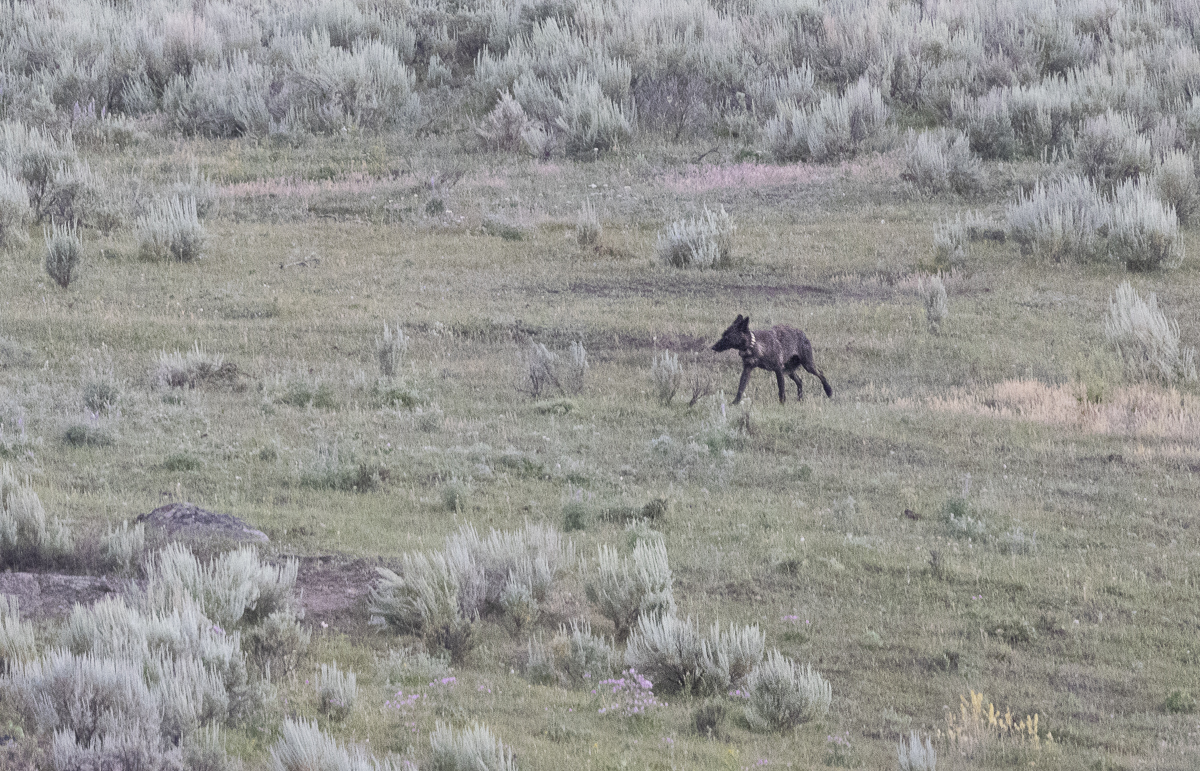
While we all talked and relived that magical moment, a young man from England alerted us to another wolf across the valley. This one was a collared wolf. I believe it was the female wolf known as 1479F. She trotted along a ridge line and then stopped, looked uphill for a few minutes and then laid down.
A collared wolf of the Junction Butte pack across the valley
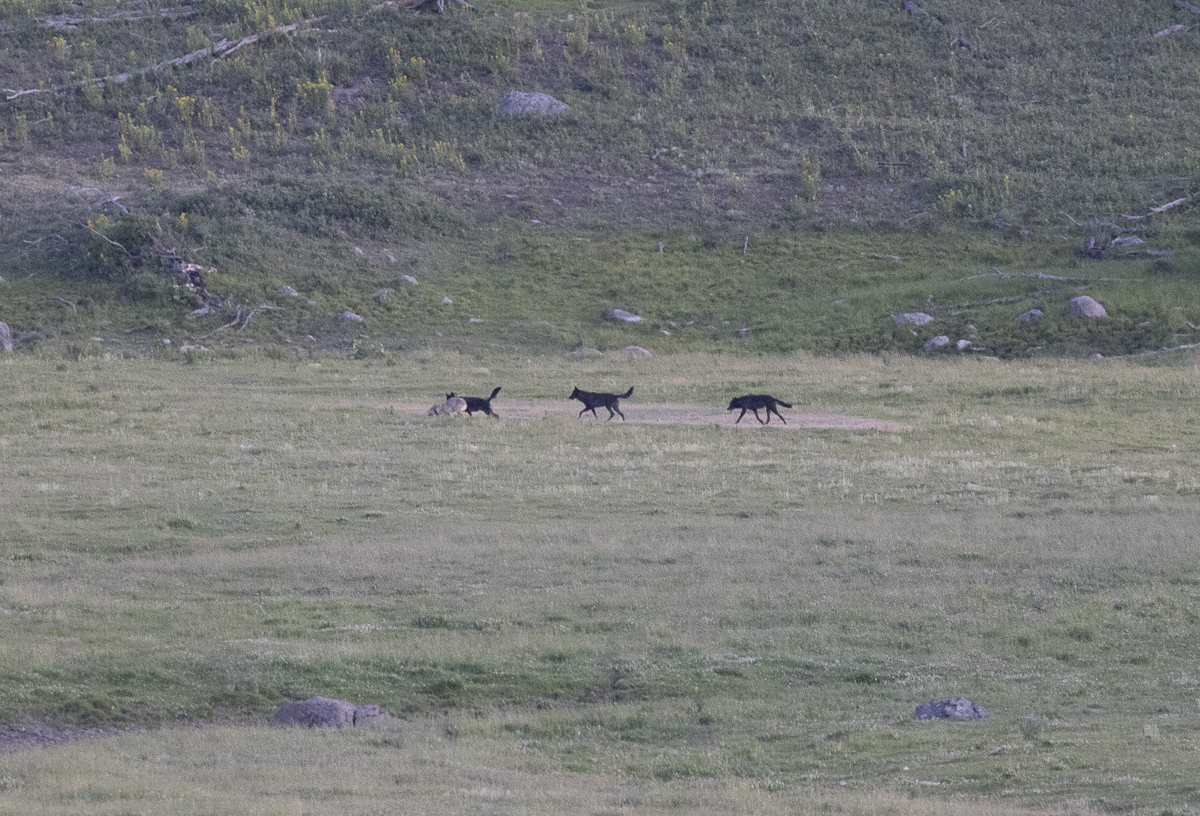
We soon saw the object of her attention – 4 other wolves coming down slope into the river valley. There were three black wolves and one gray trotting along interacting with one another.
More menbers of the Junction Butte pack head toward a bison carcass in the valley
After watching this show for several more minutes and sharing our scopes with various very excited people, we decided to head towards home as it was getting dark. On the drive back we all reflected on how lucky we were to have been in that spot at that time to experience such a moment. As the Barry Lopez quote above implies, the gaze of a wild wolf does change you by touching your soul and making you feel more connected to this vast wild landscape.
“A wild place isn’t one unchanged by humans. It’s a place that changes us.”
~Melissa L. Sevigny in Brave the Wild River
Leaves of a backlit aspen glimmer-flutter in low angle sunlight. A robin countersings to the crunch of tires in gravel. The sharp, shadowed edge of Electric Peak contrasts brilliant sky, even at 8 pm. The hummocks beneath Sepulcher multiply in the evening, as each small fold in the landscape casts its own shadow. The air cools quickly as the sun disappears behind the travertine cliff.
This, a moment from the couch on which I’ve spent too many hours the last three days, weathering a cold likely acquired in the overcrowded dining rooms at Old Faithful. Thankfully, it waited to show up until my group of twelve North Carolina educators departed for home.
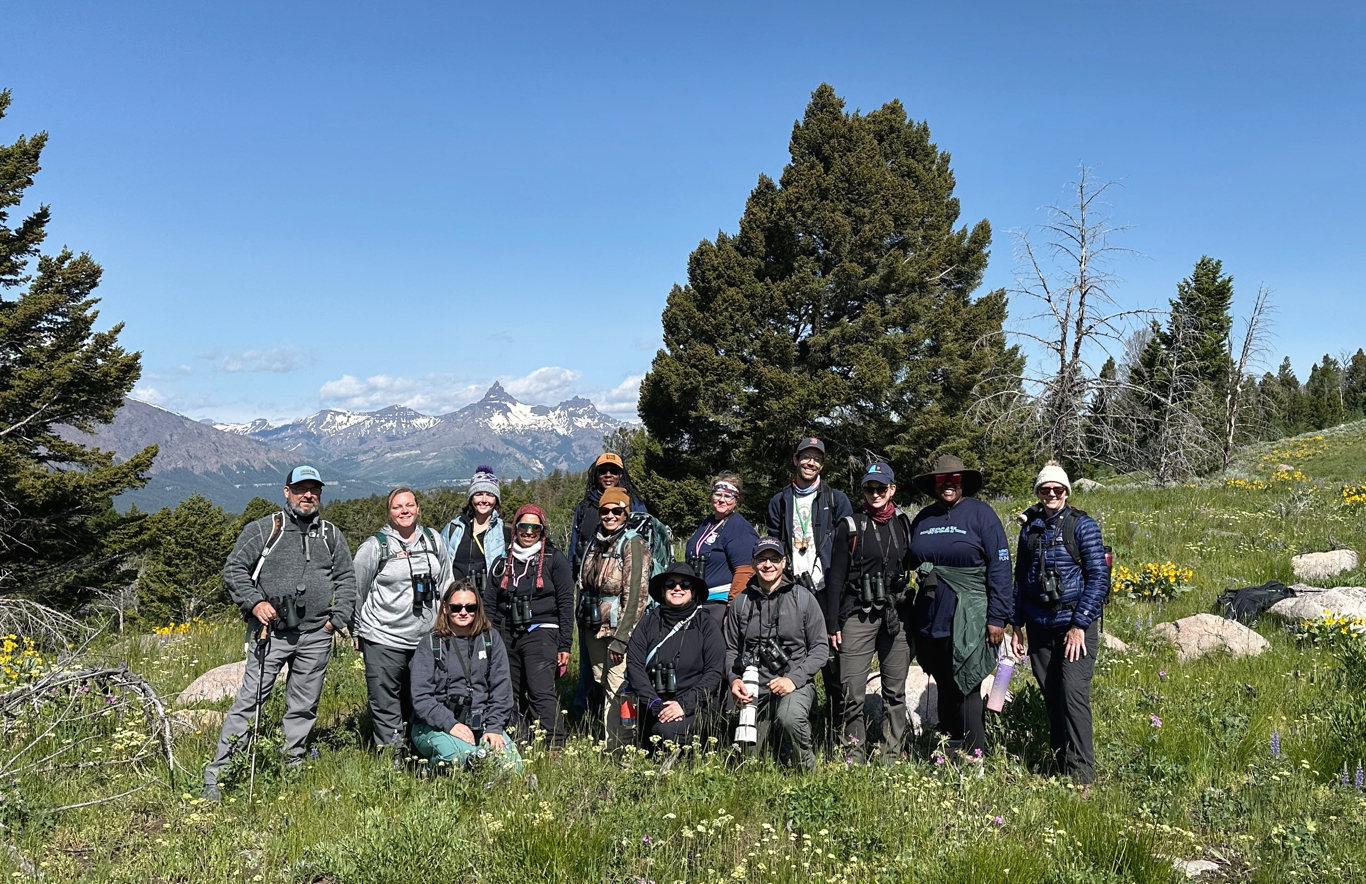
Twelve people who arrived as strangers and left as friends. Twelve people who put aside their individual desires and experienced the miracle of being in a wild place together. Twelve people who came to experience and learn; twelve people who left changed. And three staff, myself included, who did our best to take care of the details, who laughed and learned alongside the group, and who were changed, too. It is nearly impossible to experience a place like Yellowstone with a group of like-minded explorers, a group where each person has a goal beyond themselves, and not feel the impact. What a privilege it is… even if it ends with a miserably stuffy nose.
I usually have very little time to record the events of Museum trips that I lead, and this one was no different. Years ago I discovered the trick of writing short snippets to help me remember special moments. Of course, I didn’t take much time even for that on this trip. So bear with me as I think back on our nine days in Yellowstone and translate some small glimmers of highlights here…
The golden eagle nest on the rocks at Slough Creek has been there for many years. But I have never seen two adults coming and going multiple times in a row, carrying sticks and conifer branches and leaving them on the nest, the large white chick shuffling to the back to avoid being buried. Dan Hartman says they’re cleaning and fixing up the nest and that this isn’t uncommon. But what a sight to see them return over and over, to watch their golden feathered heads against the blue sky, to see their shadows fly across the rocks.
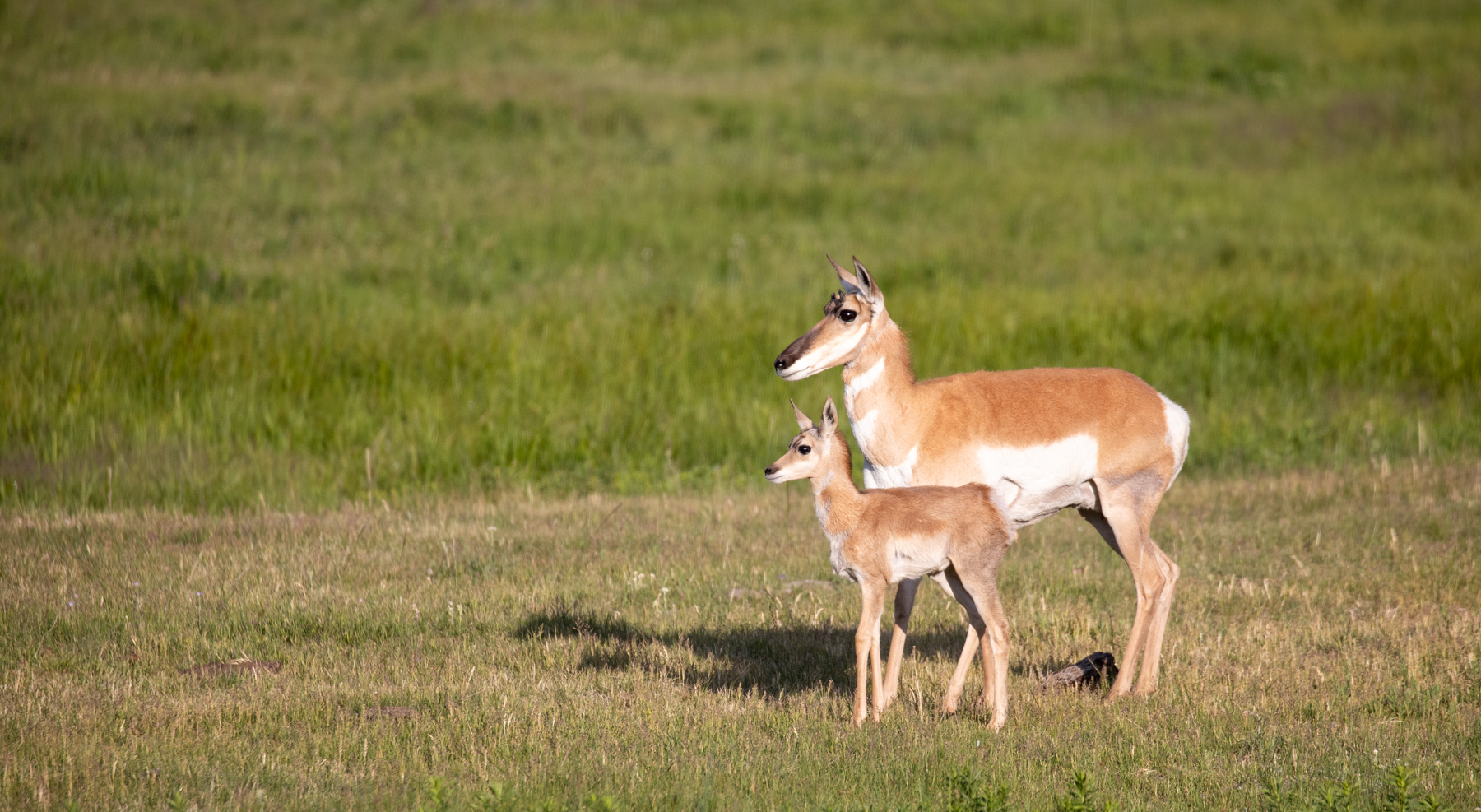
As one educator wraps up her expert topic about pronghorn, two dash away at full speed, faster than any predator that now lives in the Greater Yellowstone Ecosystem. Their speed is likely an adaptation for a long extinct danger, the American cheetah.
A black wolf runs across the vivid green along the Lamar River, where the valley is underlain by lake sediments that hold water, limiting the growth of trees and instead supporting lush meadows. A small creek hugs the raised terrace nearer to the road, far from the river. The dark coat of the wolf reflects in the glassy water as it jumps in and swims the short distance before disappearing behind a hill.
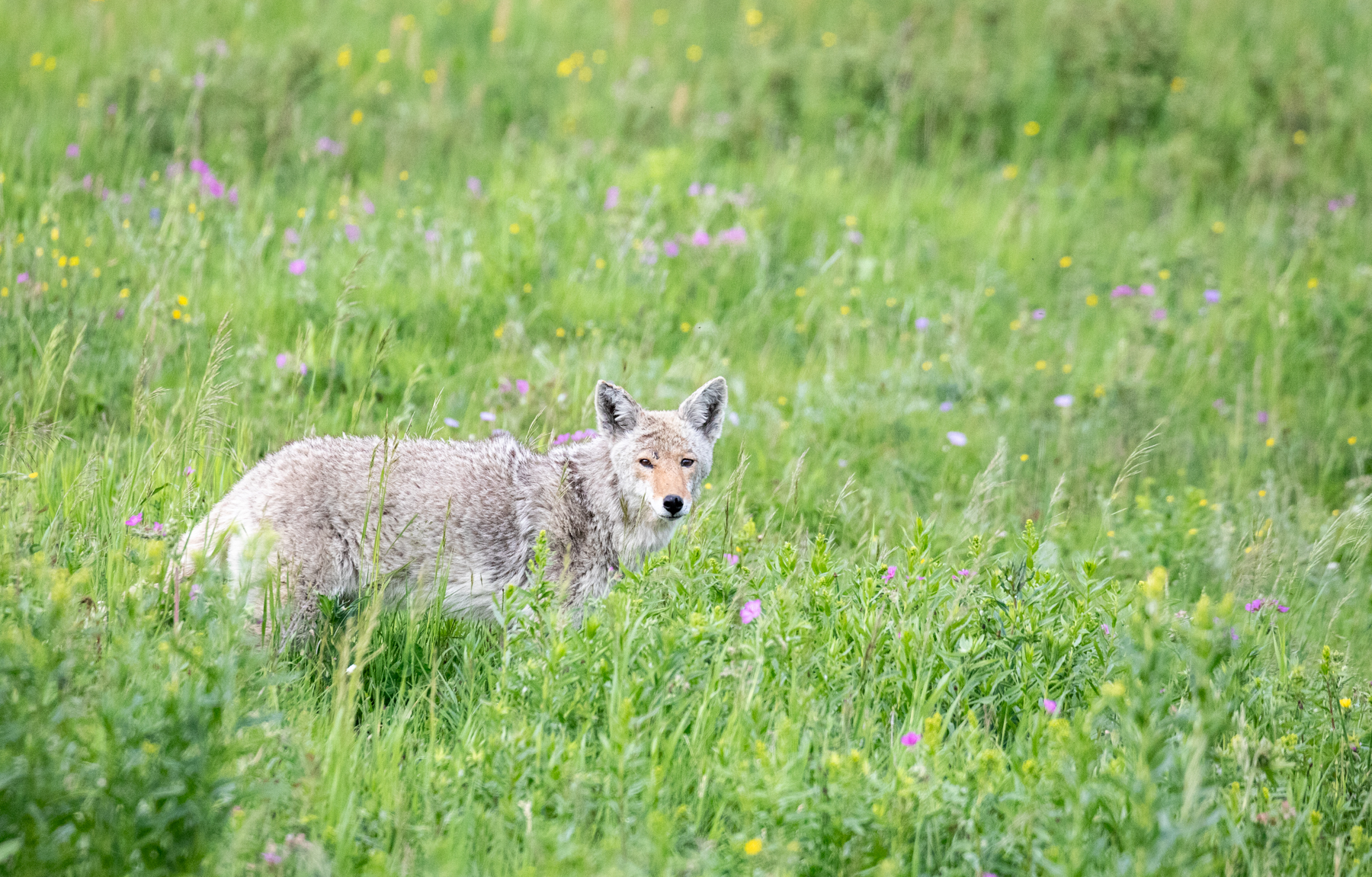
A coyote meets my camera’s eye for just a moment
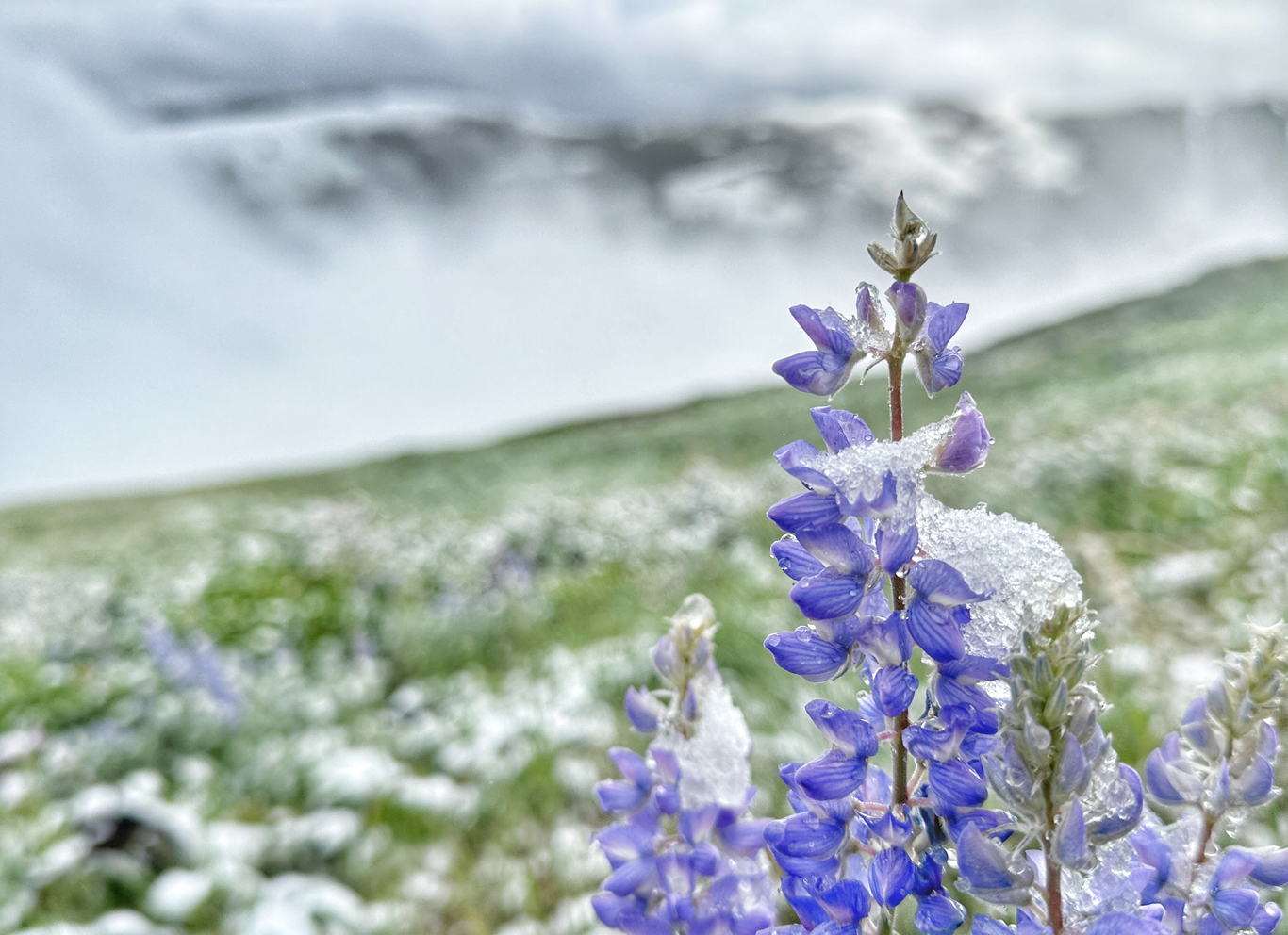
An overnight storm that carried snow to higher elevations leaves lingering low clouds hugging the slopes of Mount Washburn in the early morning. I’m thankful that the Park Service didn’t see the need to close the mountain pass, because this is the most beautiful I have ever seen it. Hints of pines and firs are dark enough to appear through the thin mist. Where cloud breaks, the fresh green meadows gleam. In the foreground, wet snow clings to the towers of silvery lupine blooms. Beyond, sun glints on the snow-covered slopes and disappears into the black volcanic rocks, a study in contrast. This snow is perfect packing snow, making excellent snowballs and tiny snowmen. It tastes fresh and crunchy, like childhood.
Clouds painting the slopes of Mount WashburnSnow-covered lupine blooms
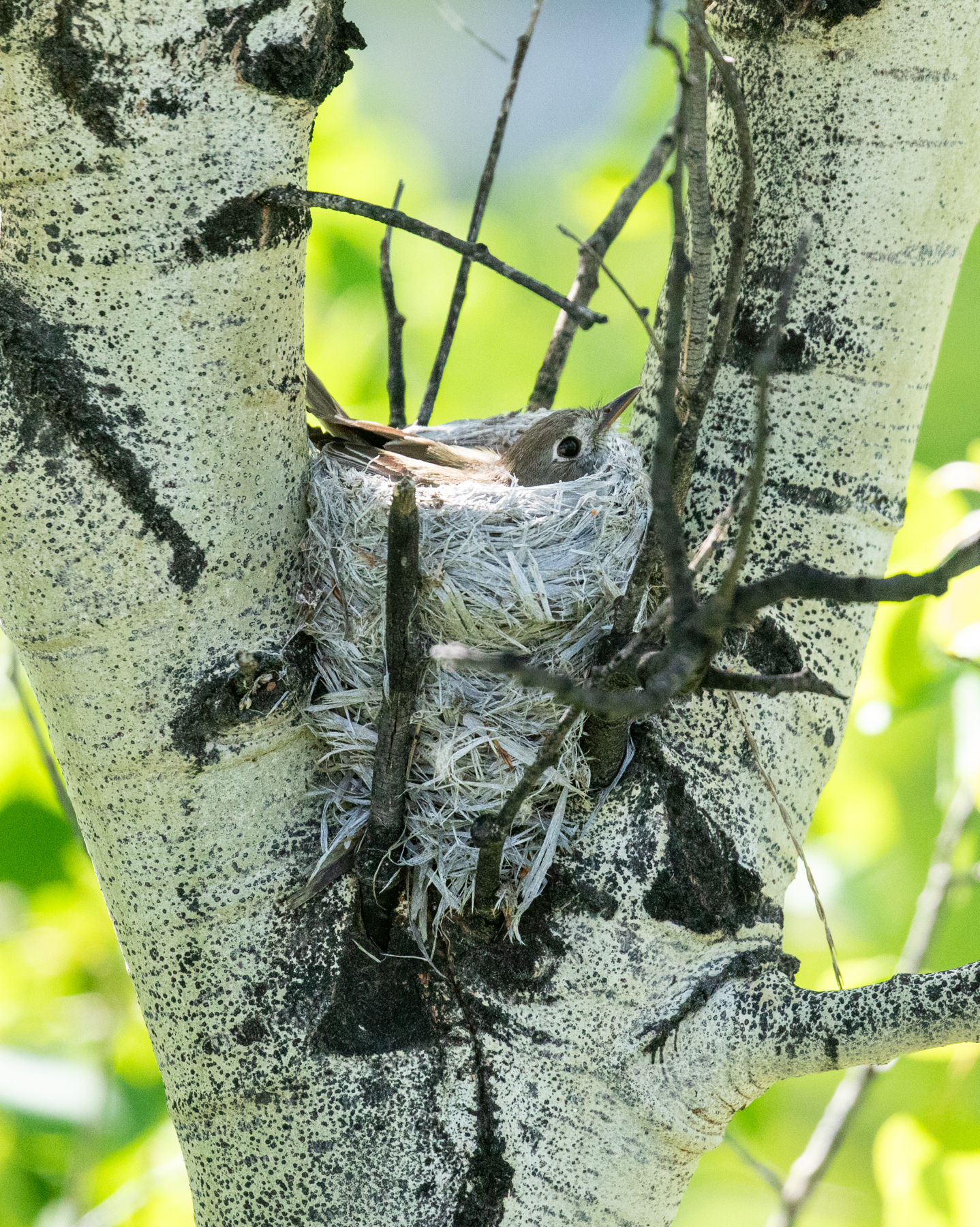
Dan Hartman takes us to his beloved aspen grove and teaches the group to wait and watch the nest cavity until the hairy woodpecker brings a mouthful of ants to the nest and the excited babies chorus inside. As we climb the hill beyond, for perhaps the first time (though I’ve tried many times before), I find a nest of my own, tucked in the crotch of an aspen tree. Days later and far from Dan’s grove, the group finds another hairy nest and stands by the trail waiting for a feeding, just as instructed.
The mother bird, tightly tucked in her woven nest
At West Thumb Geyser Basin, where hot spring runoff cascades under the boardwalk trail, we examine the temperature and color patterns with an infrared thermometer. In my minds eye, and perhaps in a future nature journal or activity, I create a graph that maps the relationship between the two. As orange shifts to yellow to cream, temperature rises from 70 degrees to 135. Of course, the 170+ degrees of the spring itself is not so close, but we measure it from a distance are share our amazement with nearby visitors.
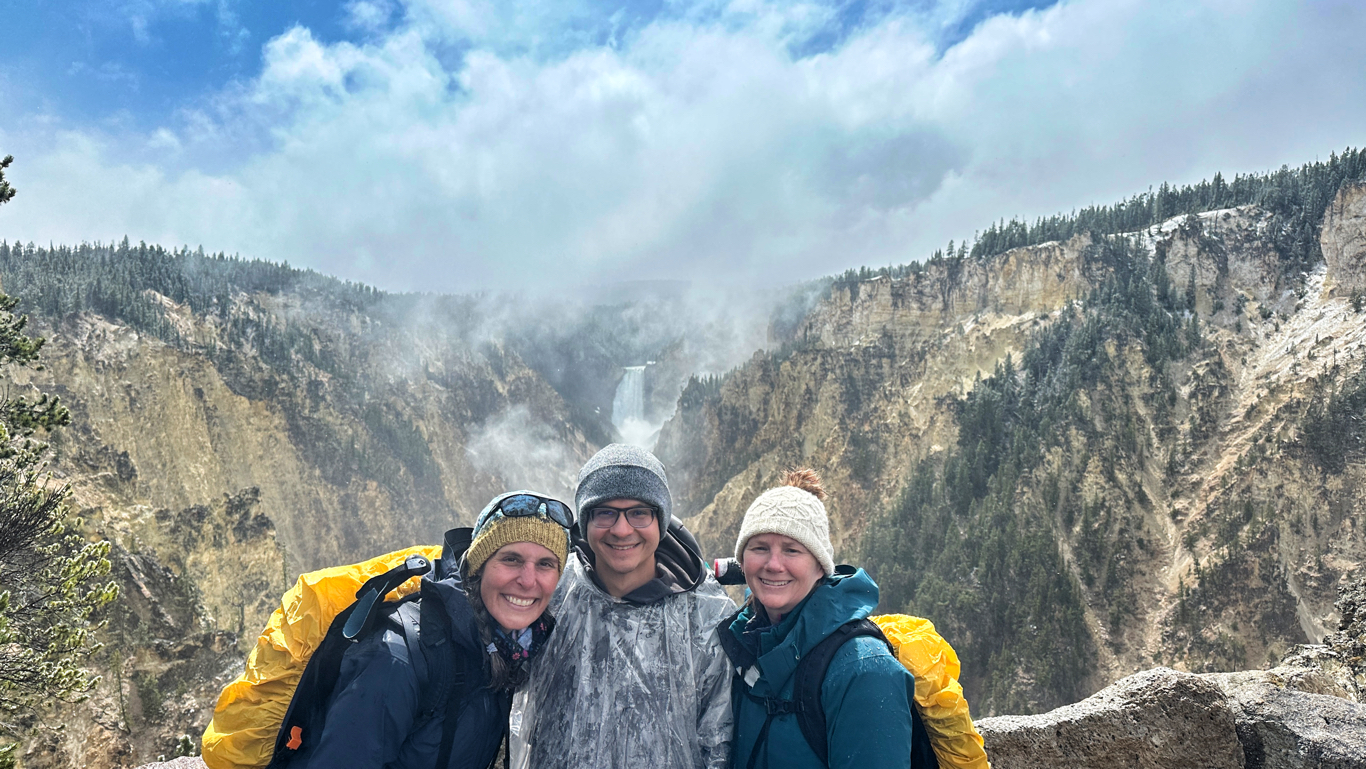
A “perfect” hike to the South Rim of the Grand Canyon, where snow hid the far rim for much of the hike. Clouds part as we arrive at Artist Point for a view of the Lower Falls, shared with excellent company, my friends and colleagues Greg and Danielle from the Museum.
Snow is falling in Hayden Valley and its freezing cold. Two while pelicans, perhaps juveniles, as they have some black on their heads, dip in unison as they sink their bills into the creek in search of food. They repeat this dance multiple times. It is entrancing. Entrancing enough, in fact, that I miss seeing a gray wolf cross the road in front of my van!
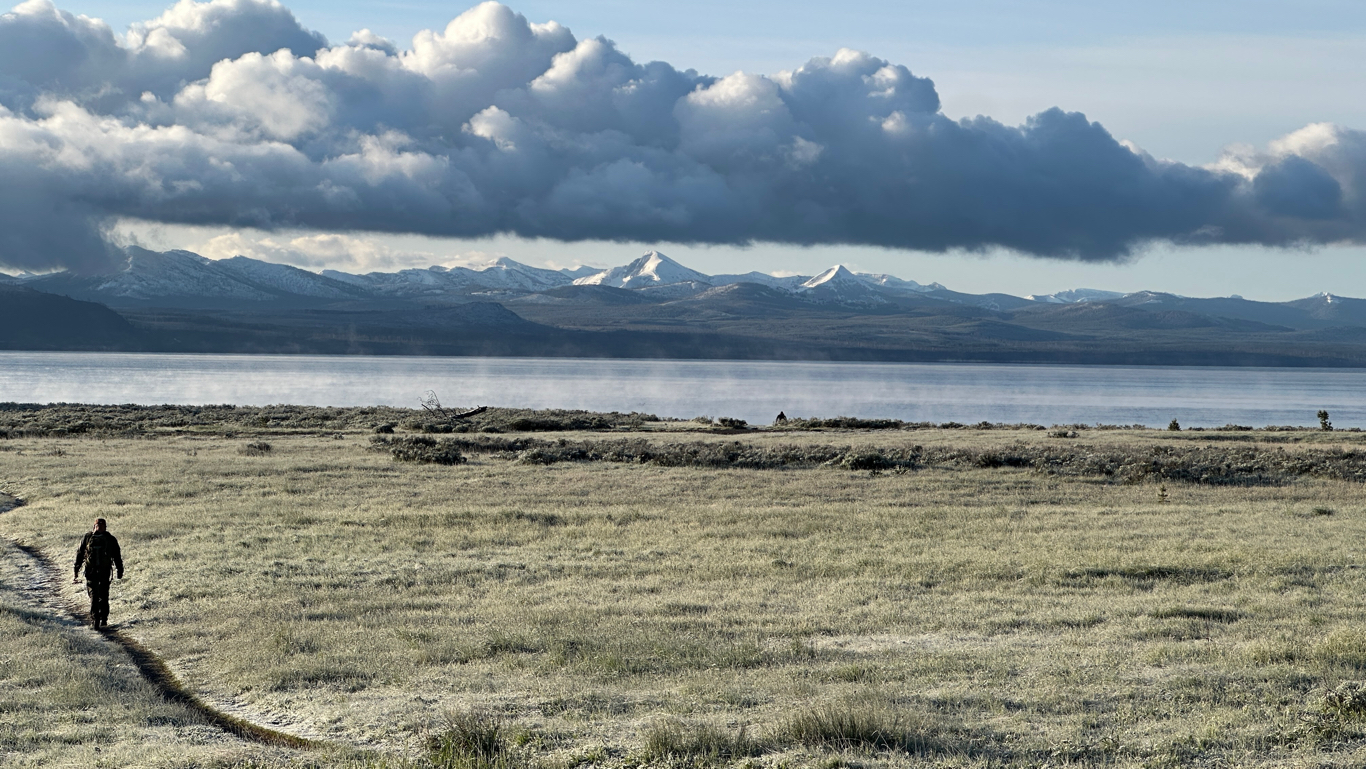
The morning after the snowfall, dawn comes with heavy frost as low clouds float about Yellowstone Lake and hug the distant Absaroka mountains.
I spot a black dot up the hill beyond a parking area where the Pebble Creek Campground used to be, before the 2022 floods. It’s so dark it must be a black bear. It moves into the trees as we walk up the old campground road. I don’t think we’ll see it again, but Greg persists and soon waves us toward him. From a new angle, we watch the bear feeding on lush grass while her two cubs, one black colored and one cinnamon, play in the tall grass. A multi-generational family of women joins us, the younger helping the elder cross the rocky ground. I help them with their scope, and they are thrilled to watch the bears.
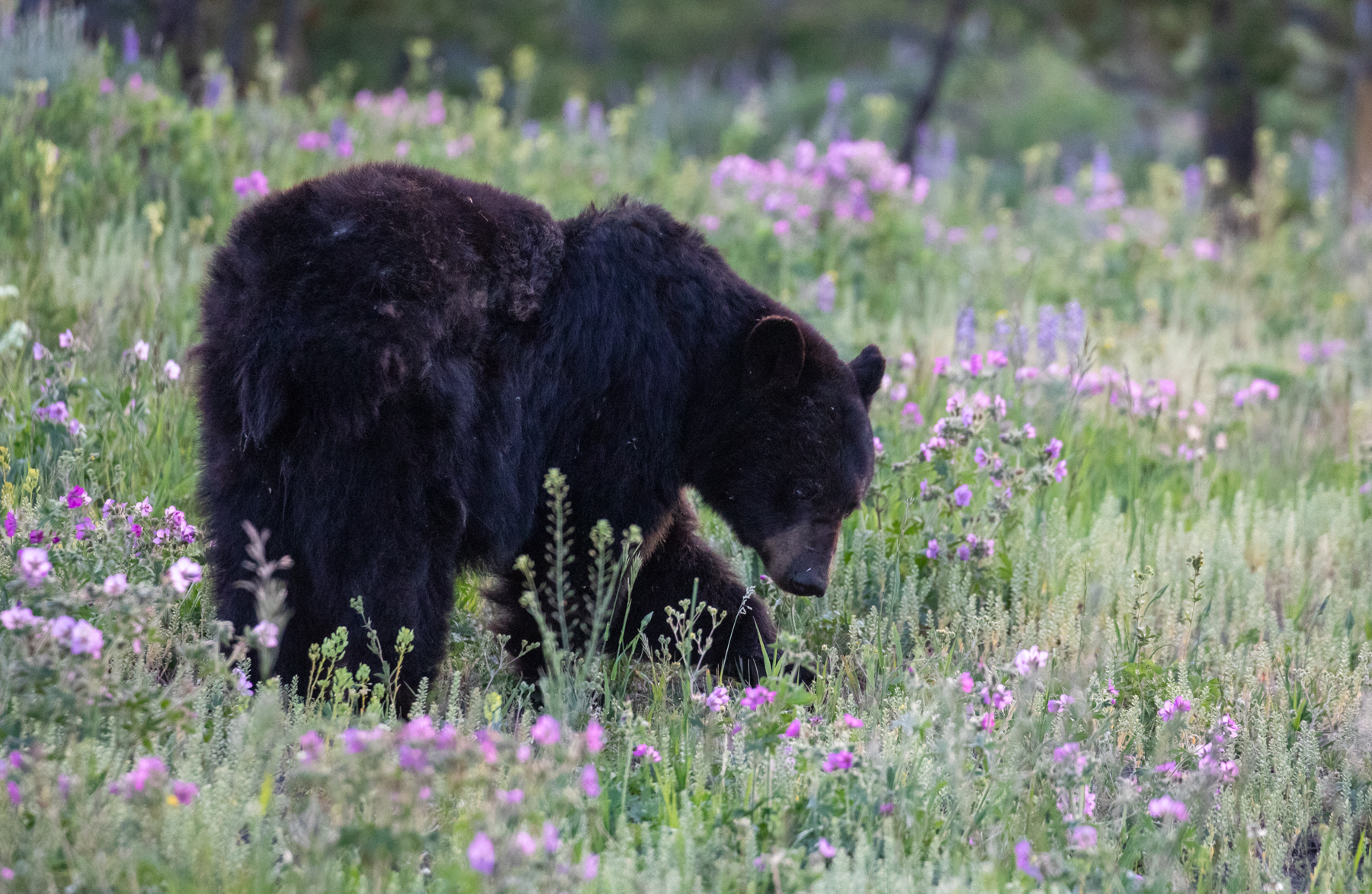
Another black bear on the roadside eats (and walks among) a perfect field of sticky geraniums
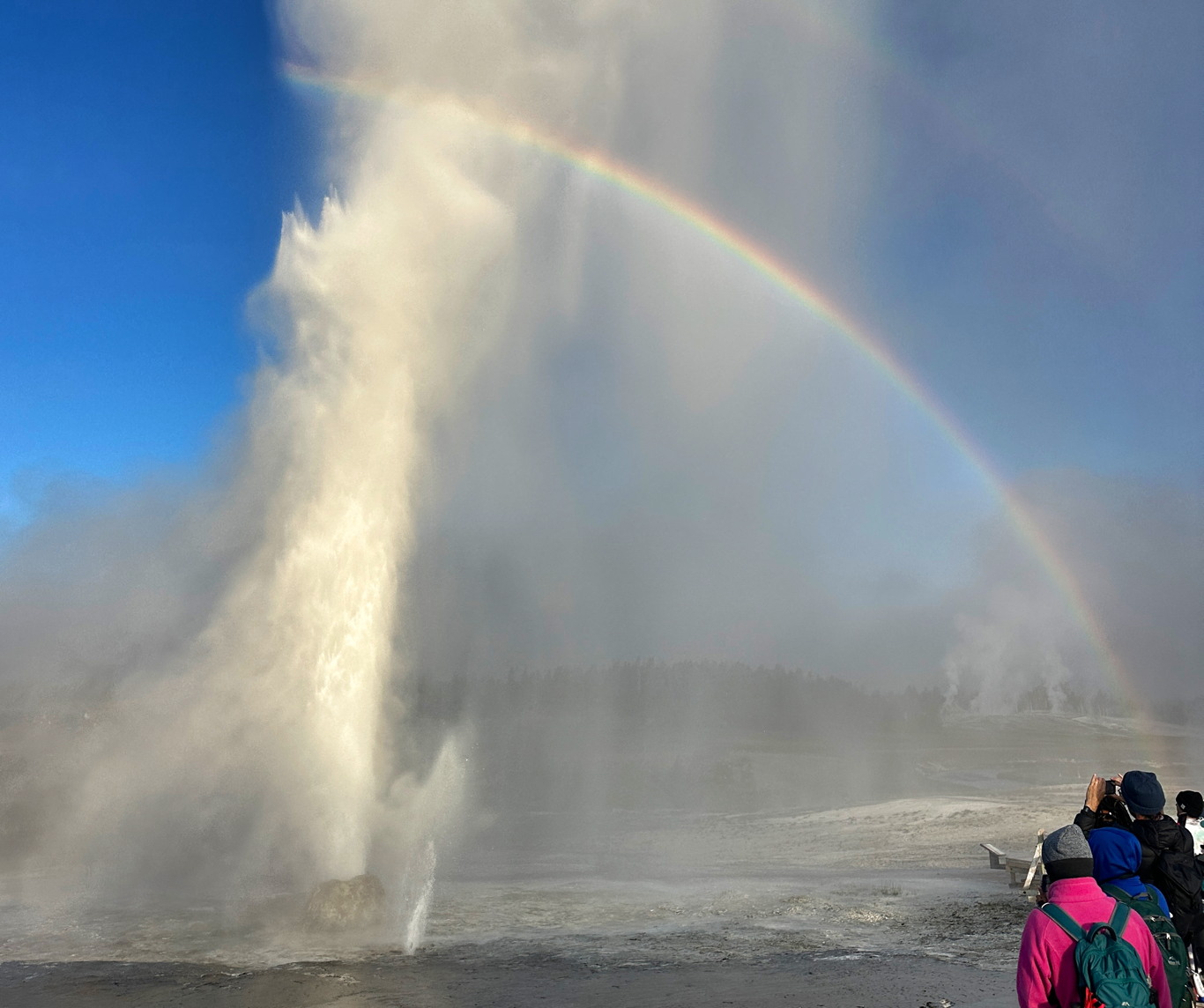
At dawn in the Upper Geyser Basin, I see four people standing in front of Beehive Geyser, my favorite. One wears a blanket wrapped around his shoulders. Another carries a stadium seat. All wear hats. This is a good sign. Beehive is not a “predictable” geyser, erupting once every 12 or 15 or 17 or 24 hours, depending on its mood (or the vagaries of the groundwater and heat beneath the surface). But the behavior of the people who love geysers, and who have studied long enough to see patterns where no one else does, is much more predictable. As we approach, water splashes out of Beehive’s cone to a height of maybe 10 feet. Another good sign. Sure enough, within another 5 minutes, a small crevice between the geyser cone and boardwalk fills with water and then erupts, spraying about 8 to 10 feet into the air, angled toward the boardwalk: Beehive’s Indicator. Twenty minutes later (hence the name “Indicator”), steam and water burst from Beehive Geyser to a height of 200 feet. The geyser is only about 30 feet from us. It is illuminated by the rising sun behind us and soon a double rainbow appears in the spray and steam. One of the Geyser Gazers says this is the most beautiful eruption of Beehive he has ever witnessed. It is likely he has witnessed many.
The magic of Beehive Geyser in the morning light
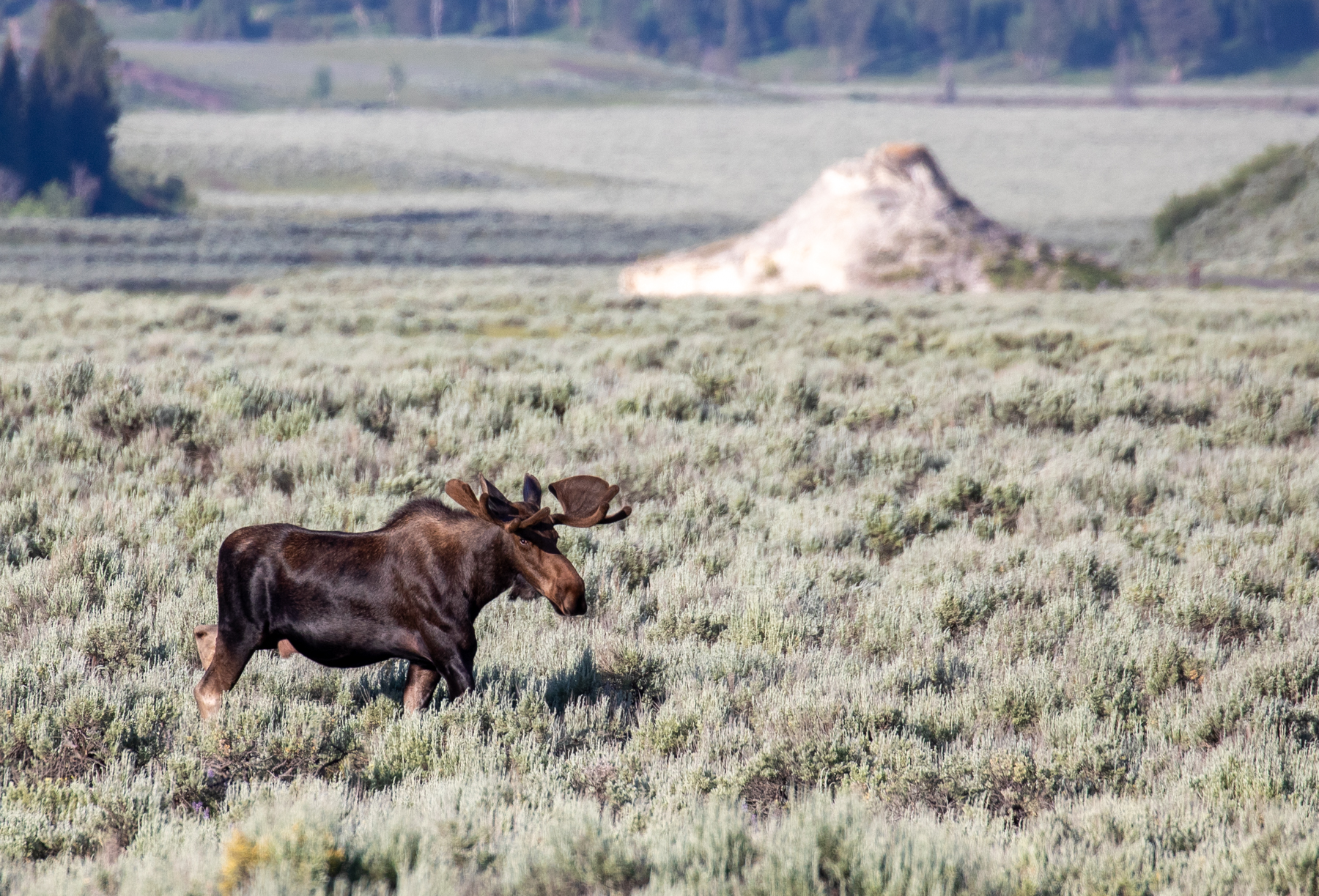
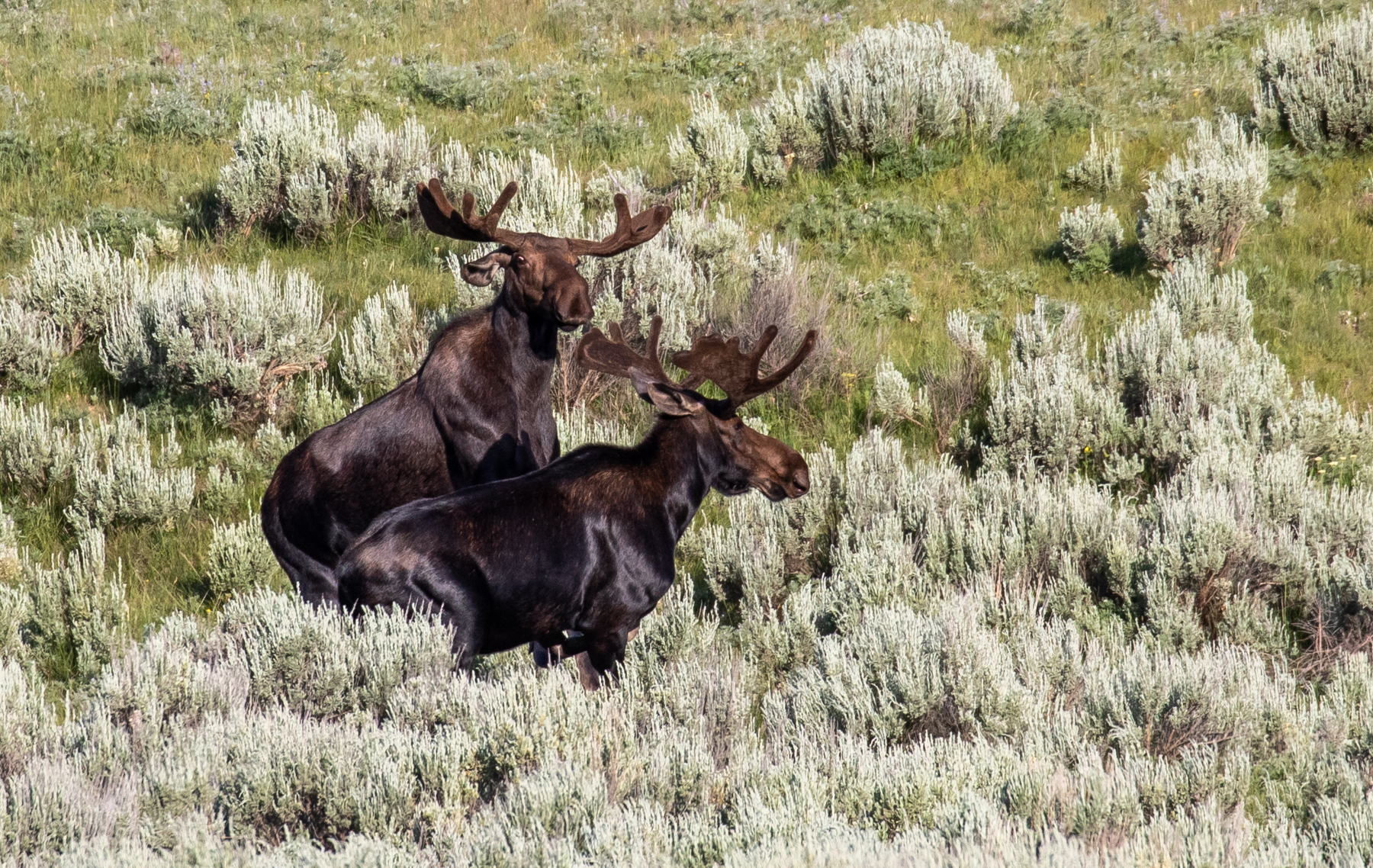
This group really loves moose. It seems they want to see a moose more than a wolf or a grizzly. Our first sighting is a bit disappointing: at a distance and brief. Our second is pretty stellar: a young bull is close in a creek feeding the Snake River, repeatedly blowing bubbles out of its nostrils as it dips its head into the shallow water to feed on vegetation. Our third… unexpected and stellar! Two large bull moose are along Soda Butte Creek. But rather than disappearing in the willows, they turn and move toward the road. An animal whose shoulder is at least 7 feet tall doesn’t get hidden in the sagebrush the way a coyote does! So we watch their progress across the valley with the iconic landmark of Soda Butte Cone in the background. They cross the road at a safe distance between our cars and others down the road; thankfully, no one sees the need to approach closer. But that’s not all! They turn and face each other, one rears on its hind legs, ears flat to its head; the other moves off more quickly. They turn and face again, looking like they might lock velvet-covered antlers, an unexpected behavior at this time of year. They move uphill into the trees and feed. What a sight!
Bull moose and Soda Butte ConeOut-of-season moose aggression
We spend quiet time at the Laurance S. Rockefeller Preserve in Grand Teton National Park. It is my favorite visitor center. It feels like a sacred space, set aside to celebrate the connection of humans to nature. Phrases of a poem by Terry Tempest Williams, commissioned specifically for this place, lead visitors through a multi-sensory exploration of the Tetons. A line catches my eye: “We recognize the soul of the land as our own.” In the quiet moments that follow, I take time with my journal to reflect on that theme. Here are my thoughts…
The soul of the land is wild. It is that which draws us into wilderness, and life. It is the harvester ants gathering honeydew from the dark green aphids on the stem of arrowleaf balsamroot. It is the joyful song of the yellow warbler in the willow thicket. It is the chatter of the creek of rounded riverrocks. The cirque scooped into stone by ice. The croak of the raven looking for a meal. It is the fragile bark of the aspen marked by a bear’s claw. It is the cloak of steam disguising the landscape at dawn. It is the bison herd moving as a river down the valley.
This land resonates within me. It compels me to stillness, to being. Also to movement, to wonder. It transforms complacency to curiosity, cynicism to joy. I am not the key. I am irrelevant. But I alone can build a connection. I alone can allow my soul to be animated by this land. I alone can permit my transformation. I alone can recognize the soul of the land as my own.
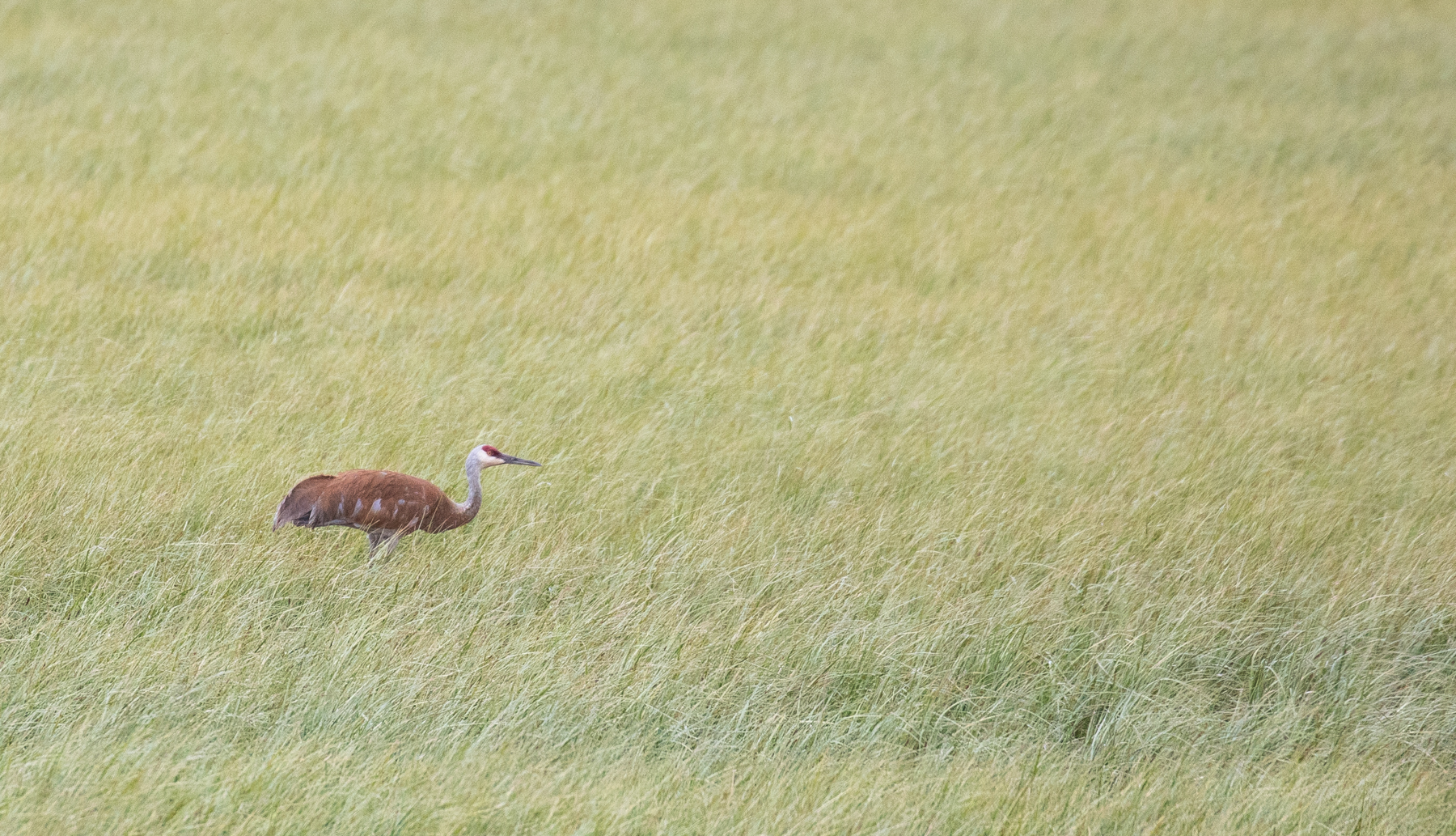
A sandhill crane stands out in the perfect repetition of meadow grasses at Swan Lake
We walk down a trail paralleling Glen Creek through an open sagebrush meadow rimmed with angular mountain peaks. As we lose sight of the road, we turn off behind a grove of lodgepole pine and Douglas fir. The hill flattens its slope before climbing further towards Terrace Mountain. We collapse in the grass and form a circle. I kick off my sandals, dusty from the well-worn stock trail, and feel the rough blades of grass beneath my feet. We talk about things that we will take home with us when we leave tomorrow. Not physical things, of course, as collecting anything in a national park is prohibited (with 5 million visitors, nothing would last, even rocks). Nonetheless, each of us will carry something. New knowledge and ideas. New stories to share with friends, family, and students. New intentions. Renewed passion. Perhaps what means the most to me is this: a new connection to this place and to each other. To hear those words spoken from the group, to see the nods of agreement, to feel their truth inside myself… this is why my work is a privilege. This is why it is important. I am grateful.
What must it be like to be a bison, to own nothing yet have everything.
~Donna Frider, N.C. teacher on one of the museum’s Yellowstone Institutes
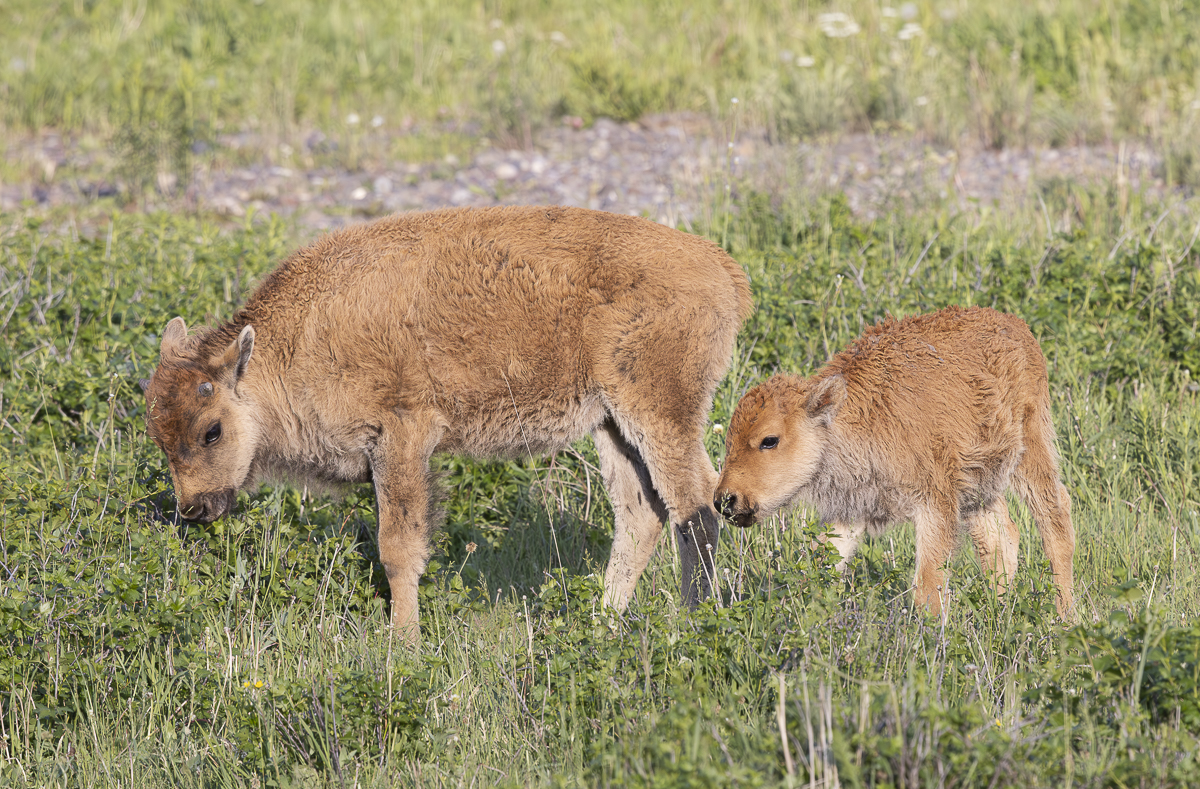
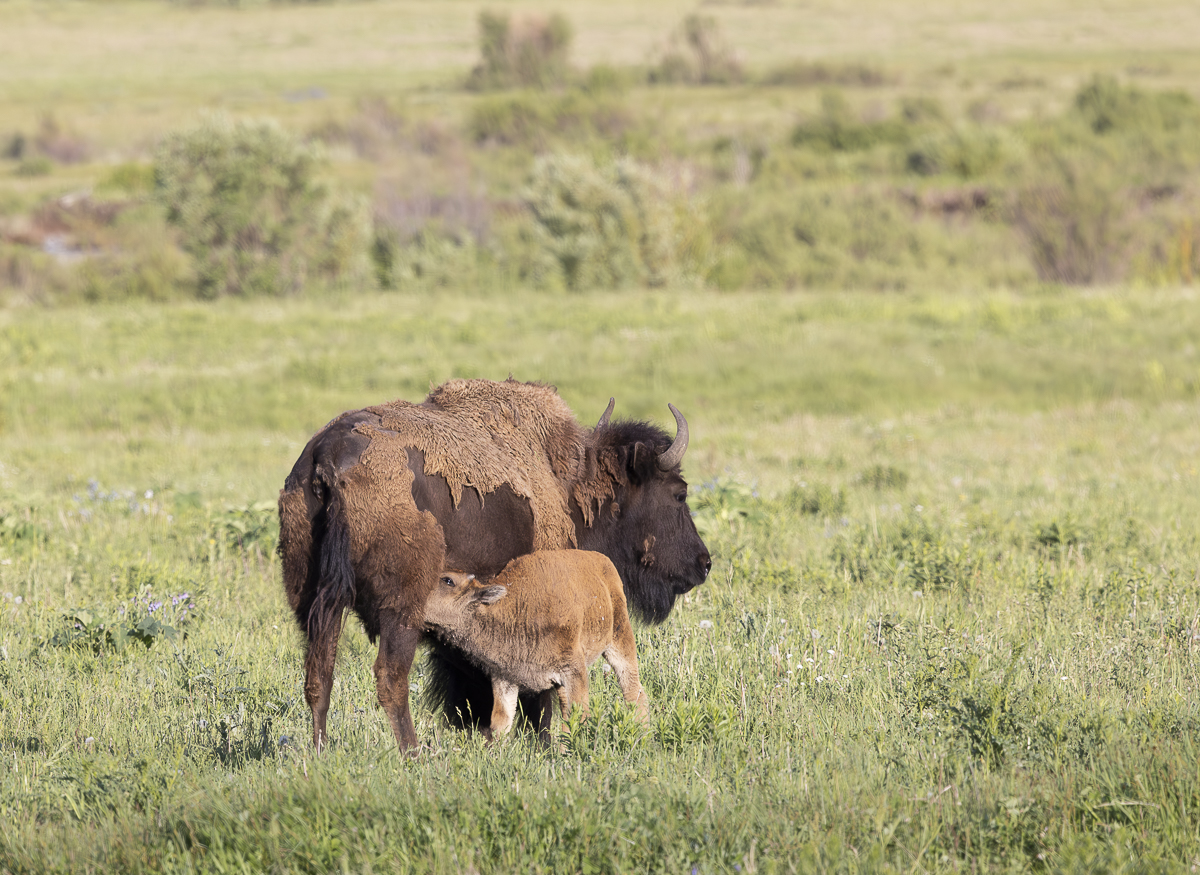
I’ve probably used this quote on a previous post, but it seems to capture my thoughts and emotions when it comes to these incredible, almost mystical animals. Last week while Melissa was leading her teacher workshop, I took a couple of opportunities to go out after an early dinner and enjoy the park. Two of the trips were highlighted by bison, one of my favorite animals in Yellowstone. They are such majestic beasts – huge bulls can weigh 2000 pounds but have an air of serenity and calmness most of the time (but don’t let that fool you, two people have already been gored by bison this season). Bison are impressive any time of year but spring is the time of the calves with their reddish-toned fur and playful attitudes. They seem to either be zonked out or running and kicking and playing with their herd mates.
Pair of bison calves in Round Prairie where a large herd of bison has been spending the past several days (click photos to enlarge)Bison calf nursing
I really enjoy just sitting and watching bison be bison. They can be playful, protective (especially when predators threaten the calves), surprisingly fast when they want to be (a bison can run up to 35 miles per hour), energetic and agile (a bison can jump 6 vertical feet from a standing position), and are a true symbol of the American West. Herds are generally led by an experienced cow (you see several older cows with tracking collars as scientists try to learn more about their movements). Bison behavior can be fascinating and puzzling – one minute peacefully grazing, the next, they take off at a full run for no apparent reason.
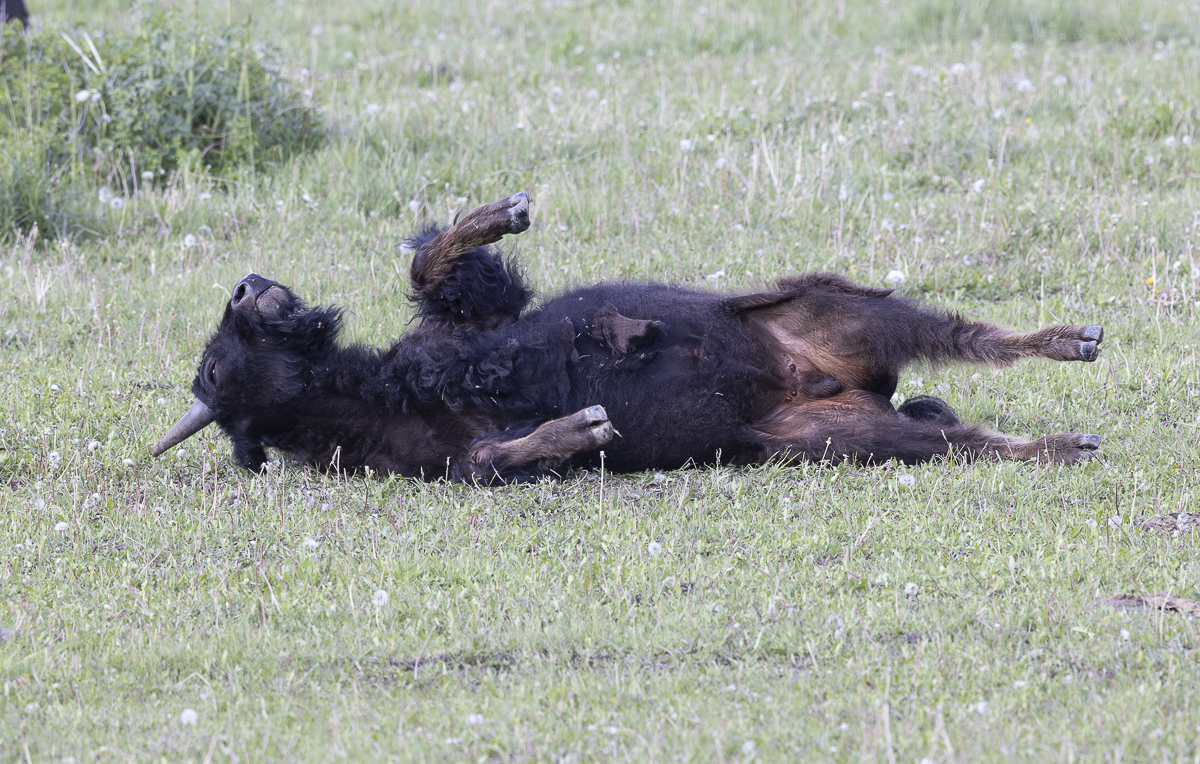
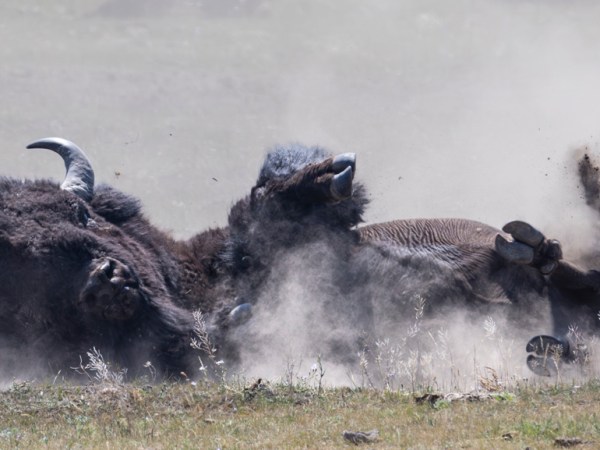
One of the fascinating things to observe is the behavior called wallowing where a bison lays on its side and rolls (but they are unable to roll over so must stand up and switch sides to get both sides done). This behavior may help rid them of shedding fur plus may help get rid of parasites and biting insects by coating their fur with a layer of dust or mud. You can see these shallow bowls of bare soil (called wallows) scattered across the landscape where bison frequently travel. And I admit to having demonstrated that behavior a time or two on workshops and one of our nephews did a very reasonable impression on their recent visit.
Bison rolling in a wallow
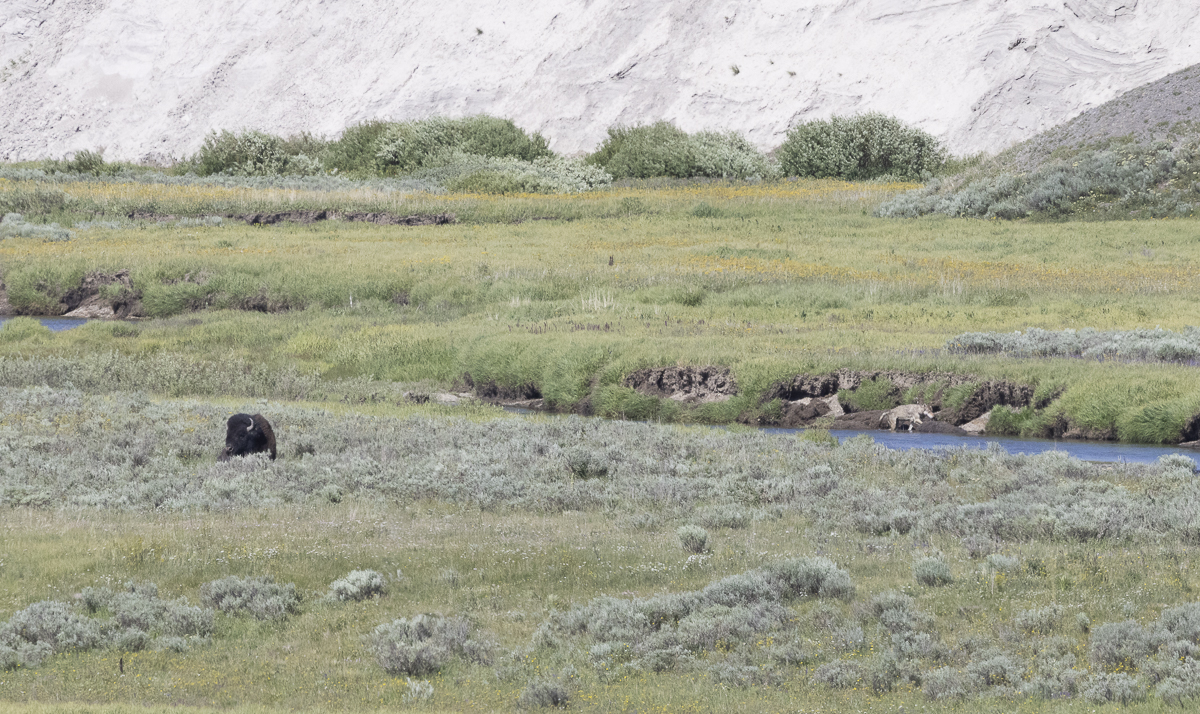
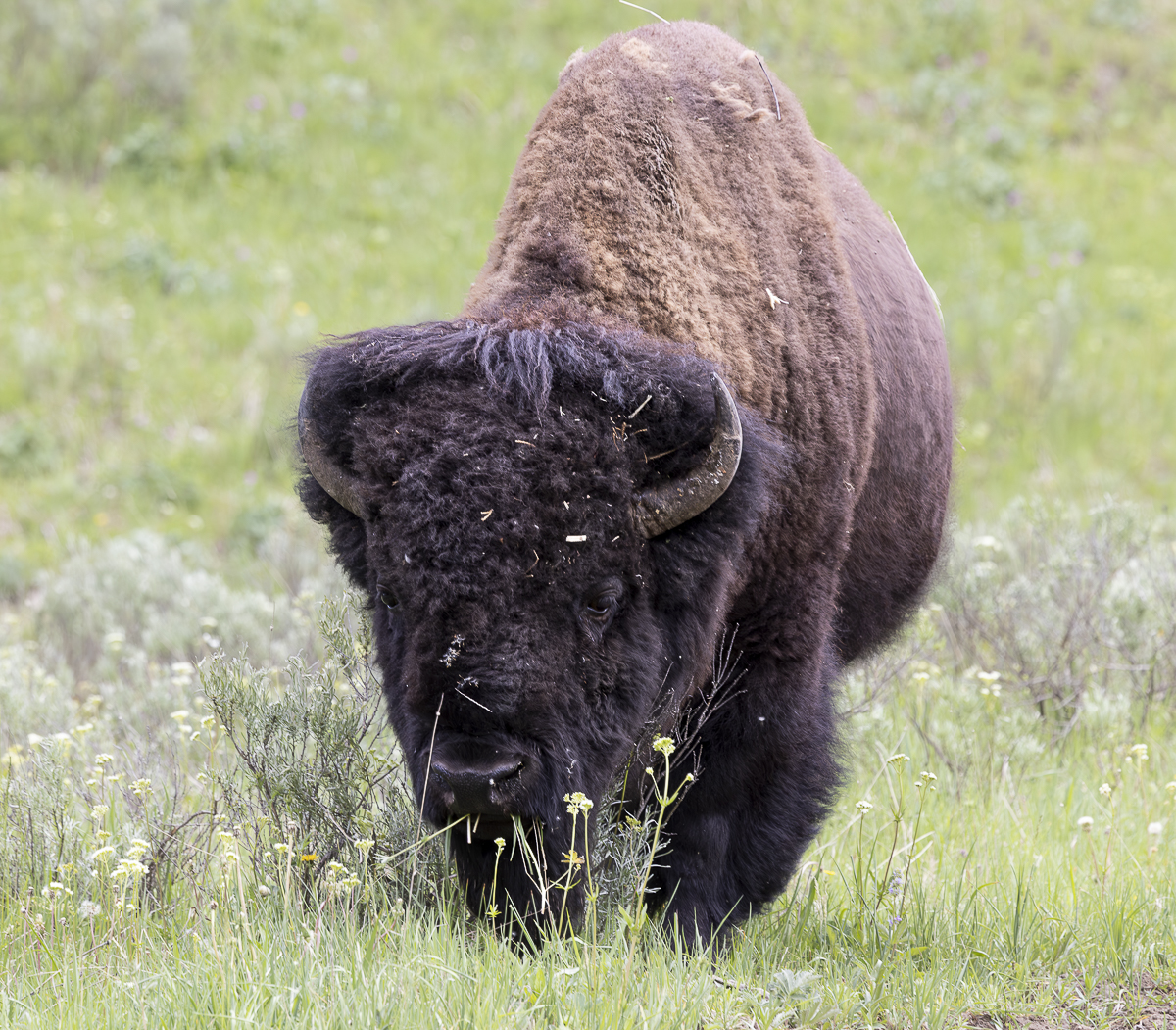
This time of year many of the old bulls are far from the large herds, often at higher elevations. Here they hang out with a few other elder statesmen, grazing unmolested until the start of the rut in July and August. Then things get testy and these titans put on some impressive shows of strength as they battle for mating rites. Last week I sat in my car with a couple of the behemoths in the northeastern section of the park and just watched and listened as they fed on the lush grasses and wildflowers.
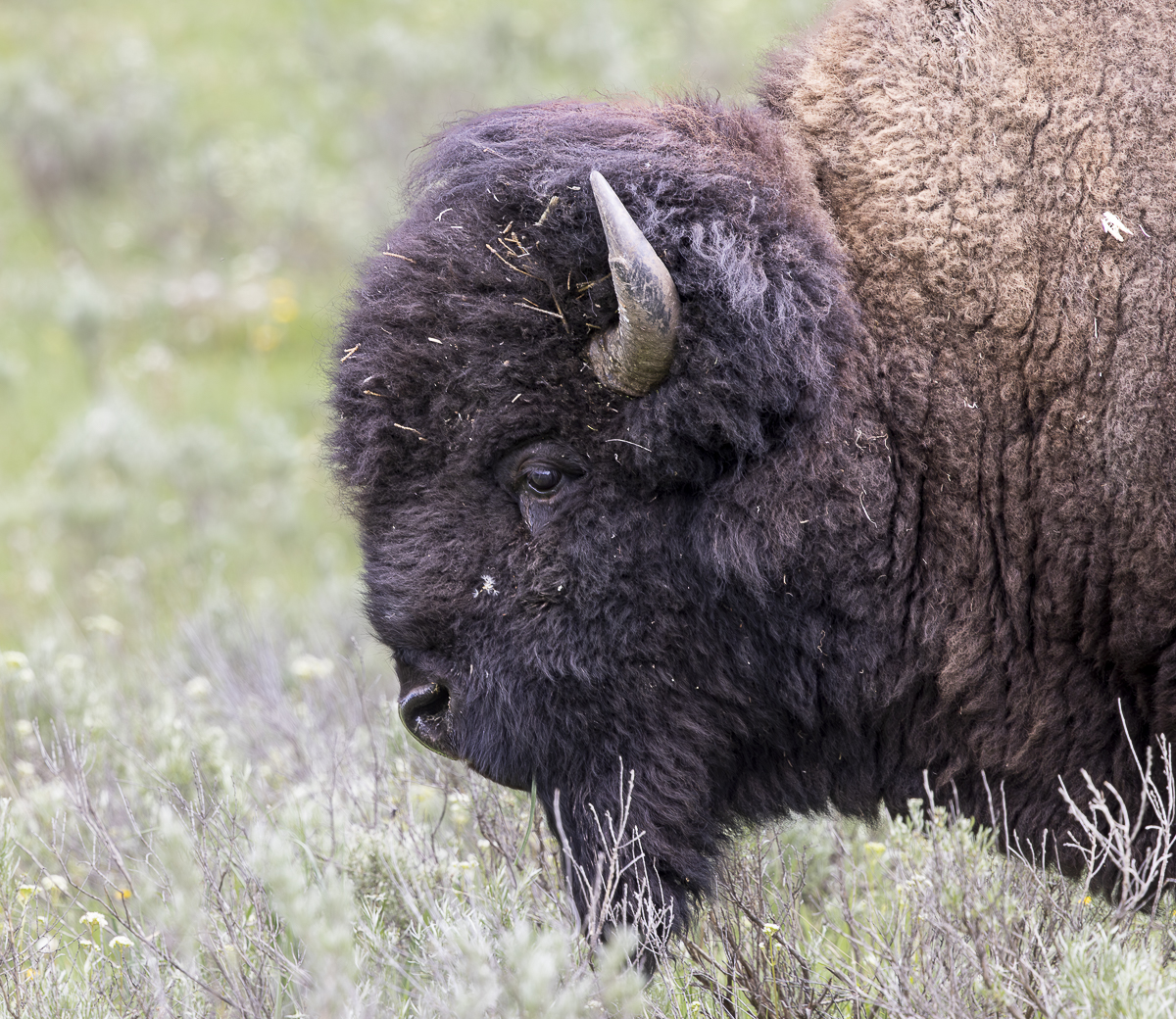
Massive bull bisonA mature bull may be 6 feet high at the hump and stretch out to a length of 10 or 11 feet
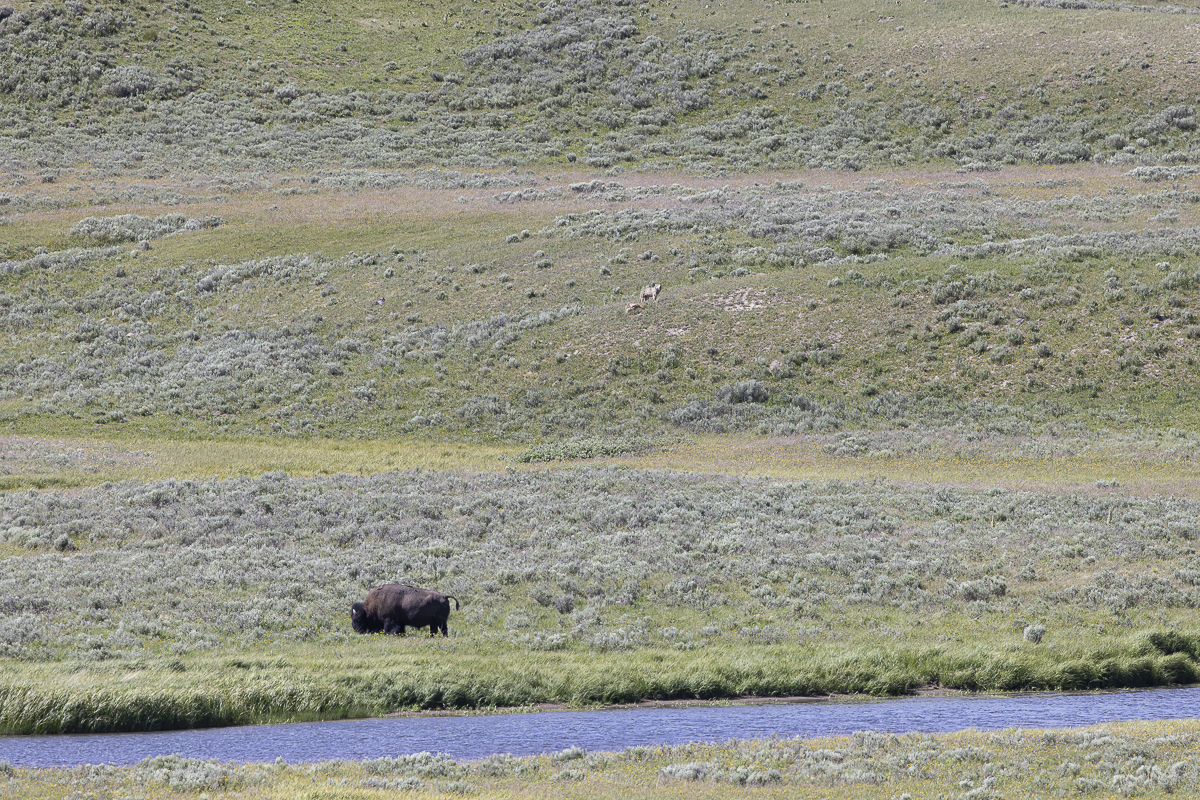
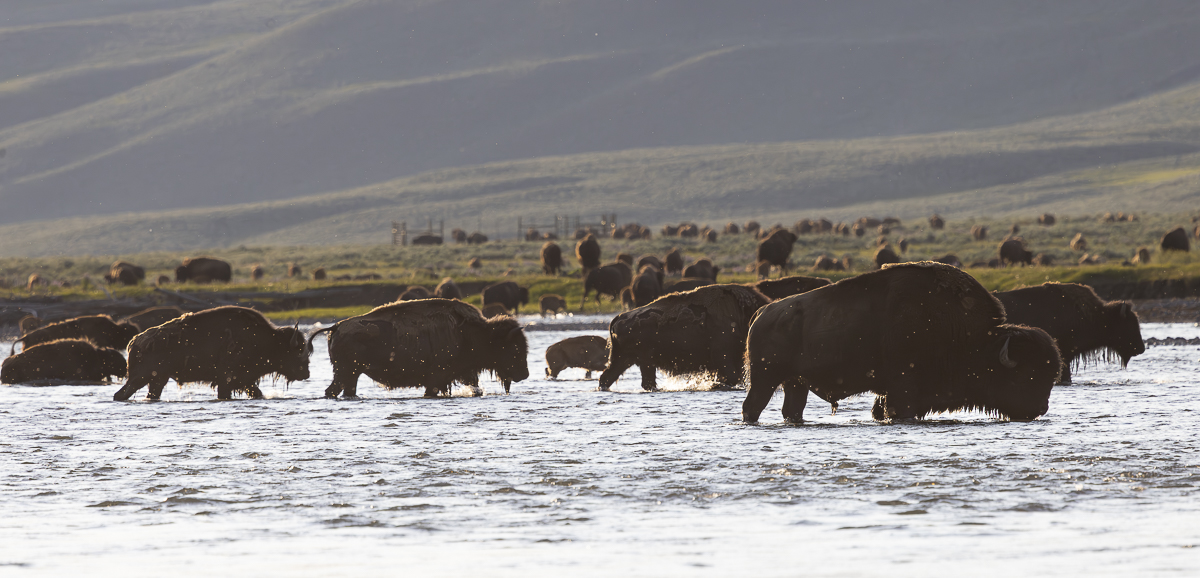
The herd on the northern range has been quite impressive in recent years with a population of around 4000 animals. They have been in large gatherings in Lamar Valley, Little America and Round Prairie this season giving a hint of what it might have been like before the campaign to eliminate them in the 1800’s. One evening I experienced one of the mot magical bison herds I have seen. It started in Lamar Valley with bison stretched out on the valley floor along the Lamar River. Many were in the large expanse of grasslands across from the Lamar Buffalo Ranch (where park staff actually ranched bison in the early years of the park in an attempt to increase their numbers). Another large herd was just east of there and across the river. I saw one large bull start to cross so I walked down to the river to watch. Soon, another bison waded the river and then the entire herd started to cross.
Bison herd crossing the Lamar River
As they started to spread out on my side of the river, I walked back to my car and drove up to a viewpoint to watch the hundreds of bison out in the valley. They soon all seemed to get the message to move westward and the entire herd started walking my way. This video clip captures just a moment and a small portion of this epic sight. It also captures one of the things that makes this place so incredibly special – a connection to the land and its wildlife and a glimpse into the history of this wild landscape.
Because in the end, you won’t remember the time you spent in the office or mowing your lawn.
~Jack Kerouac
Two years ago we started planning a summer vacation trip to Yellowstone with Melissa’s brother’s family. Melissa made reservations over a year ago and we planned on dong a trip itinerary similar to what we have done with educators for so many years. Then something changed…we bought a house in Gardiner and moved! The trip was still on but we decided to stay the first couple of nights in our home and then travel the park with them and stay in park lodging to get the full experience. So, a couple of weeks ago the family arrived, shopped for food on the way to Gardiner and we began the adventure. Here are some of the highlights of our family vacation.
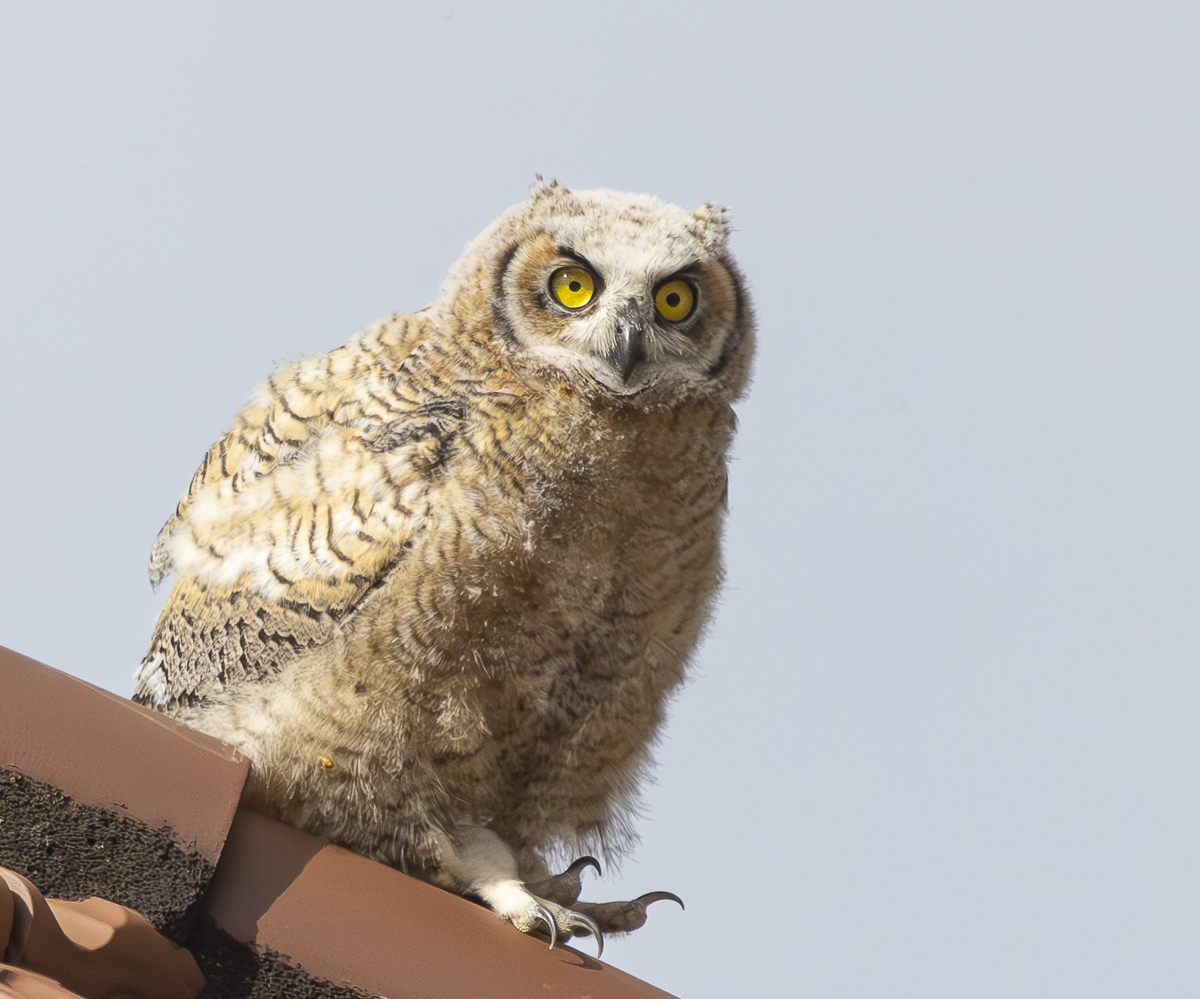
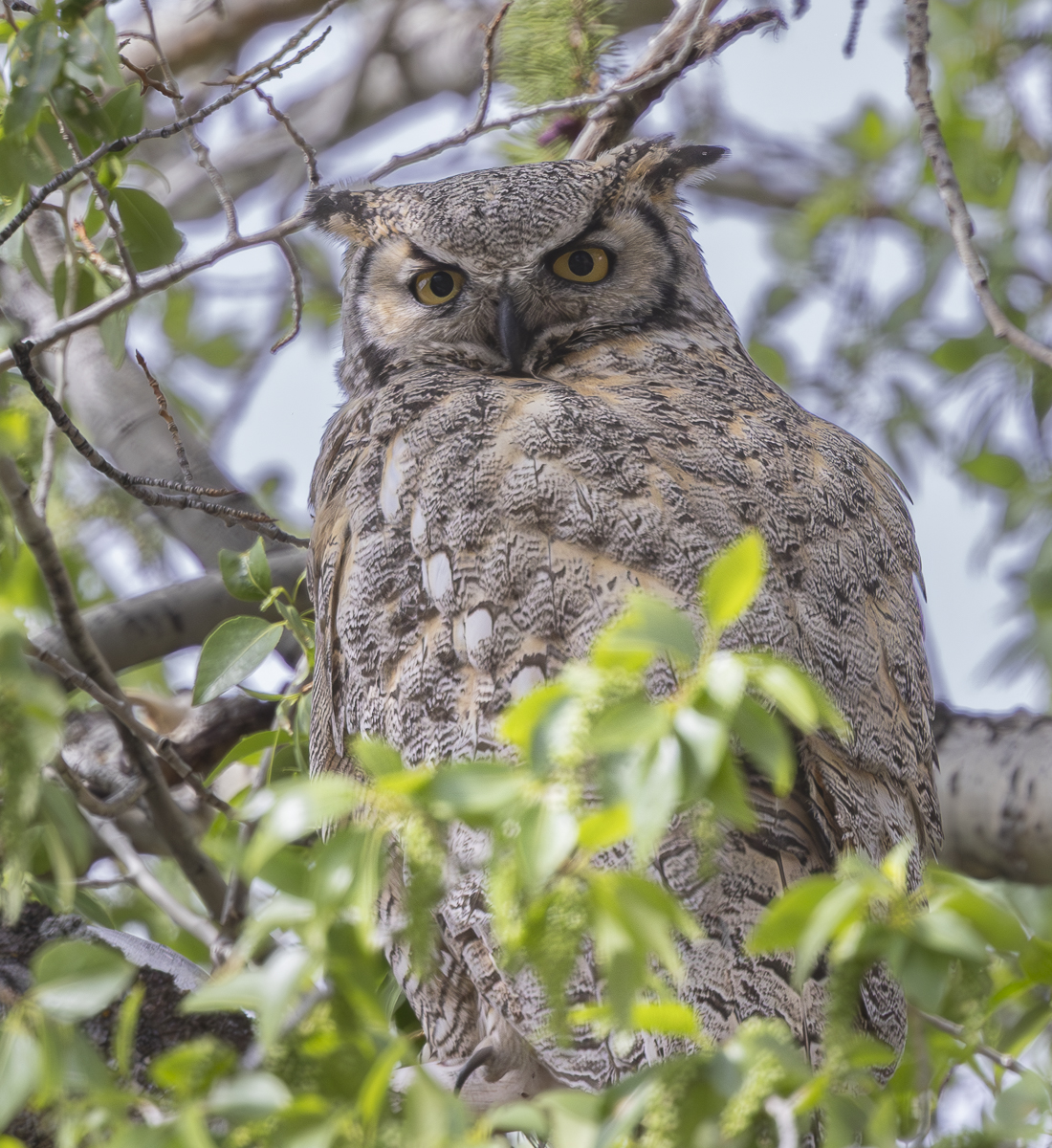
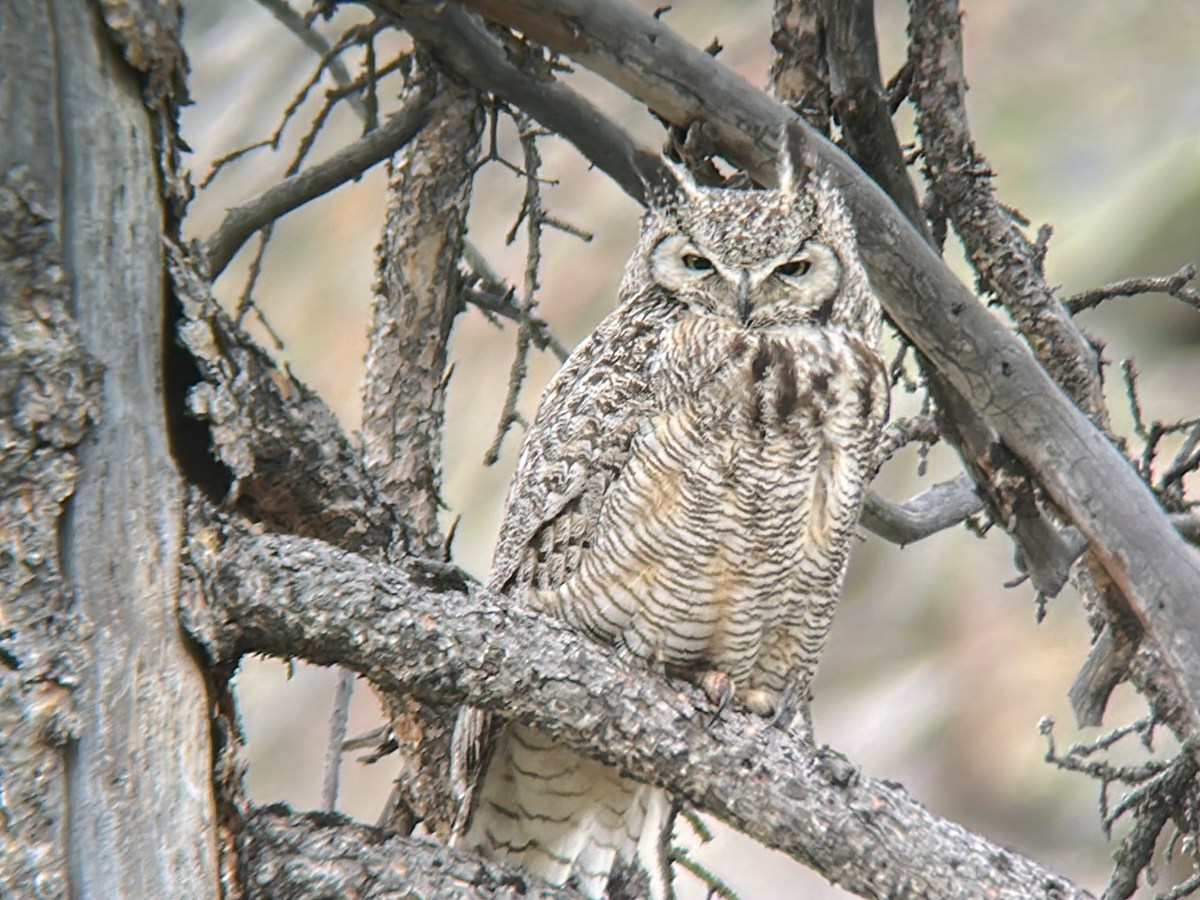
We started at the park headquarters in Mammoth where the nephews could pick up their junior ranger booklets and get a quick overview of the park at the visitor center. As has been the case for as long as I can remember, a pair of great horned owls was nesting in a tree next to one of the houses in historic Fort Yellowstone. A small crowd of onlookers cued us to the presence of one of the birds. It turned out to be one of two fledglings from the nest.
A great horned owl fledgling flew from a tree to the roof of one of the houses while we watched. Check out those talons! (click photos to enlarge)The squawking of a robin with a nest nearby gave away the presence of one of the adult owls in a nearby tree.
Melissa had planned a number of outings and the first couple of days were spent in the northern range looking for wildlife and doing a couple of hikes.
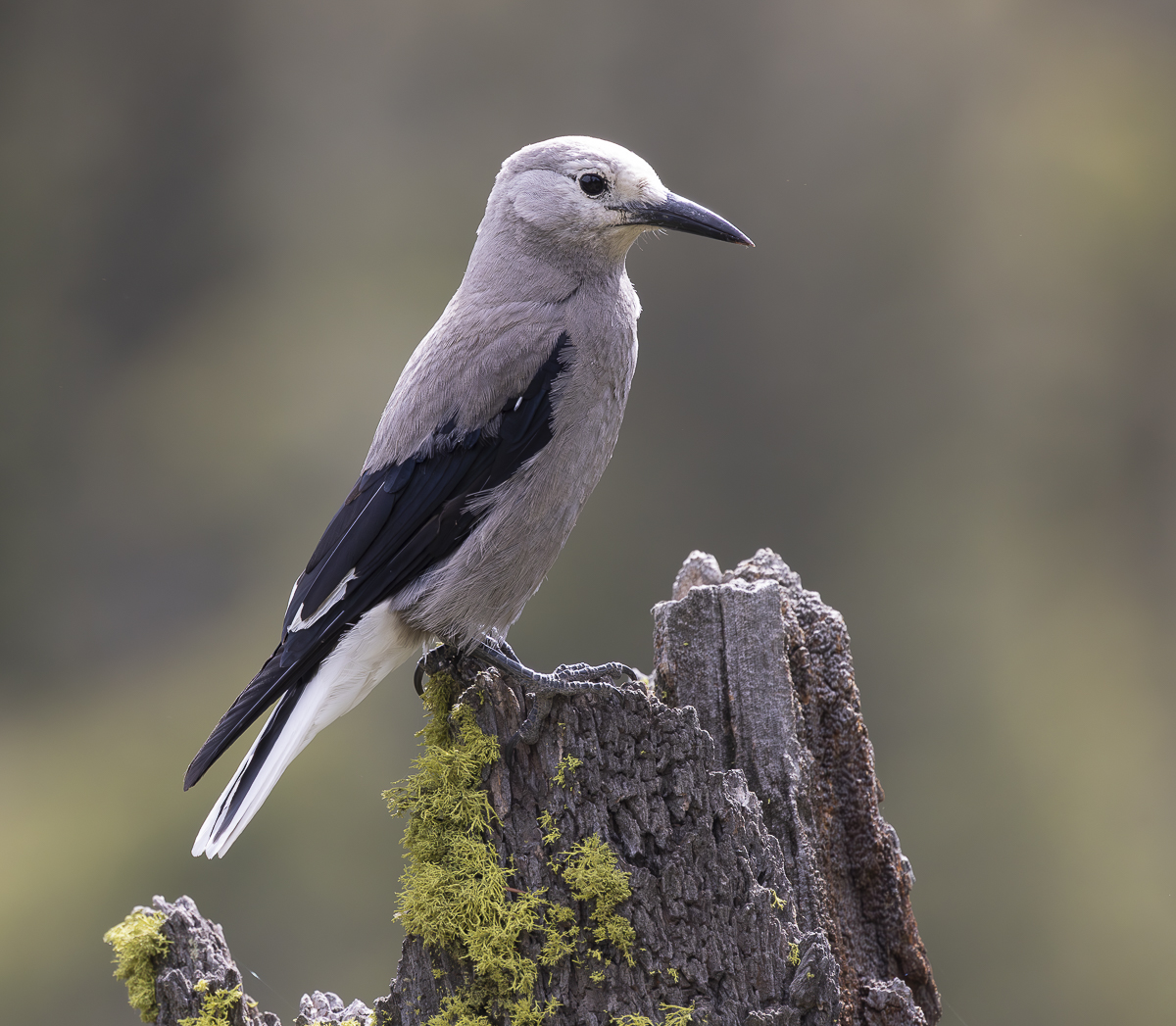
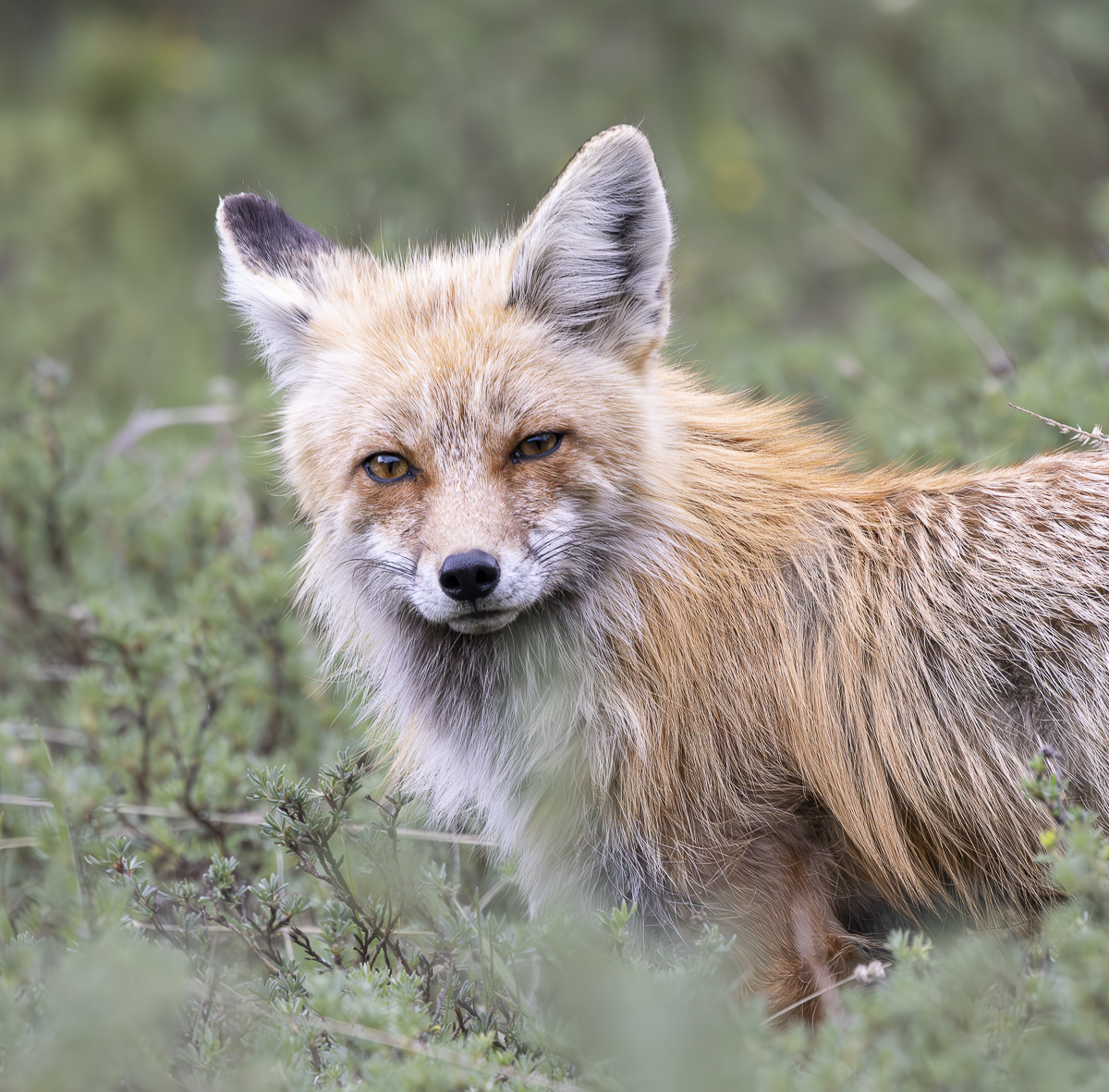
A Clark’s nutcracker gave us a nice pose at Undine Falls.We drove up to see our friends in Silver Gate and this red fox put on a nice show along the roadside (thankfully not begging for human food as many do these days due to careless human behavior).
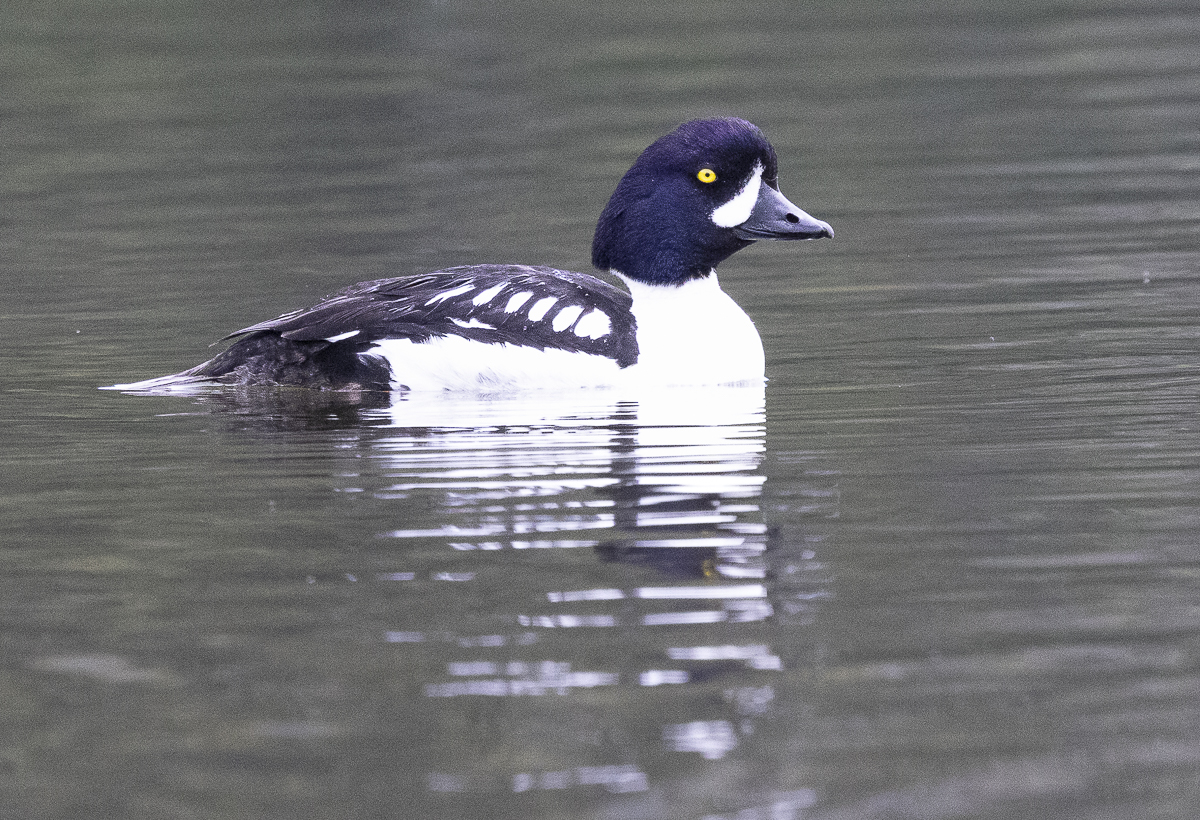
One of our favorite hikes (and apparently everyone else’s since it is now very tough to get a parking space at the trailhead) is Trout Lake. The short hike stars steep but then you reach the top and look out over an absolutely gorgeous scene of a lake surrounded by beautiful mountains. The cutthroat trout are beginning to spawn at the creek feeding the lake and several ducks were gracing the still waters with their beauty.
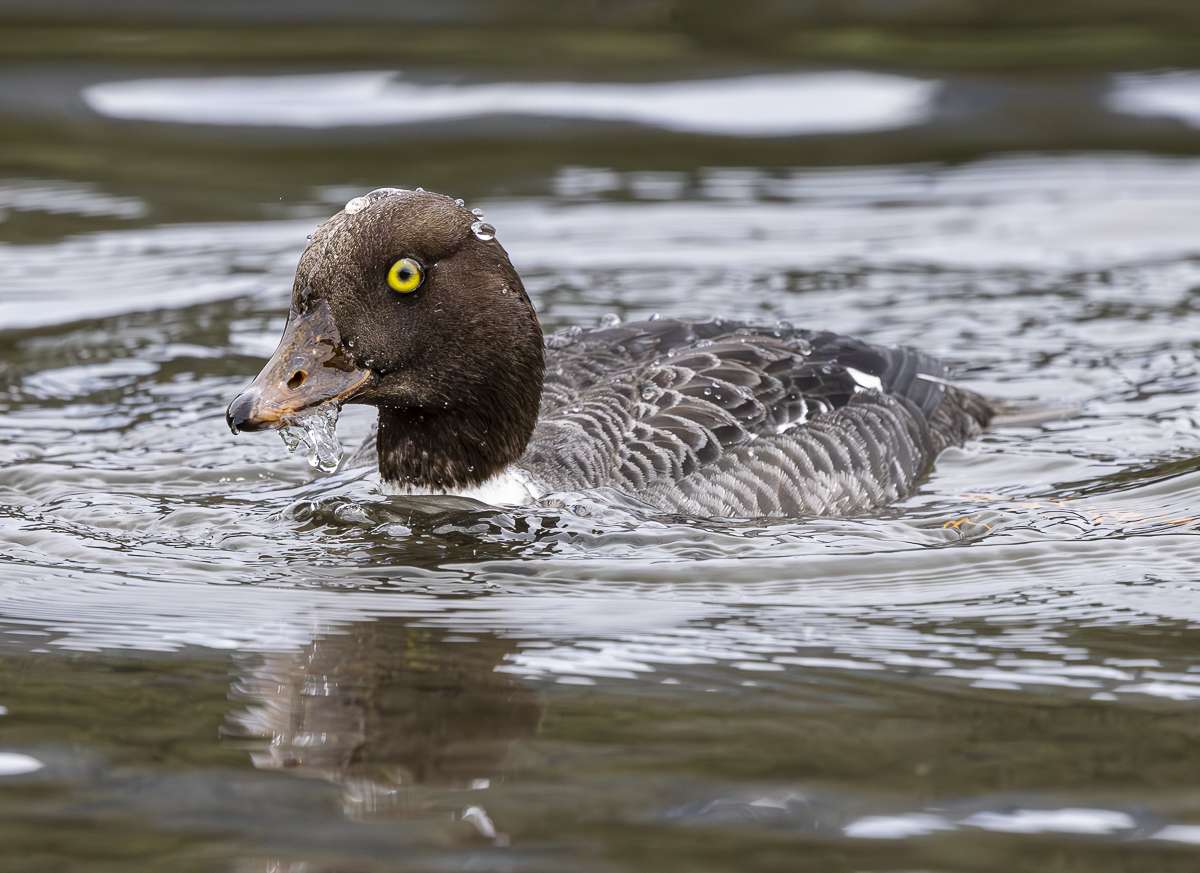
A drake Barrow’s goldeneye showing off his purple headThis female goldeneye seemed to have no fear and kept coming closer as I sat by the shore. She repeatedly dove and was obviously catching something in the shallows for a meal. This species feeds on a variety of aquatic invertebrates, crustaceans, and small amounts of seeds and other plant material. I am guessing she was feeding on caddisfly larvae and fairy shrimp, both of which occurred in large numbers in the lake.
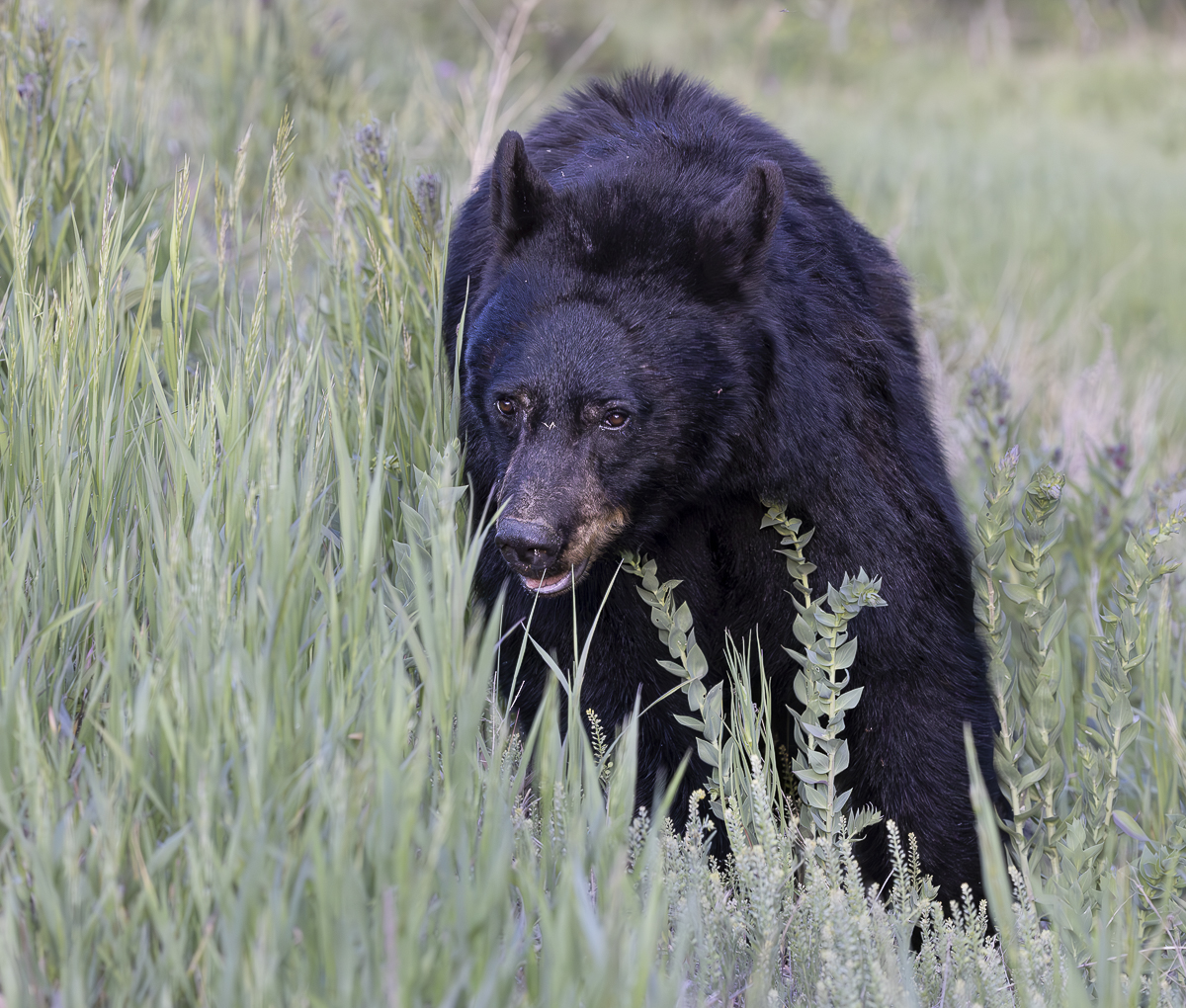
We stayed two nights at the aptly named Rough Rider cabins at Roosevelt (always an interesting experience). We had to run back to the house after our first night to get something and along the way we encountered several bear jams including a courting pair of black bears feeding along the roadside.
Female black bear of the courting pair. The male was a cinnamon colored bear.
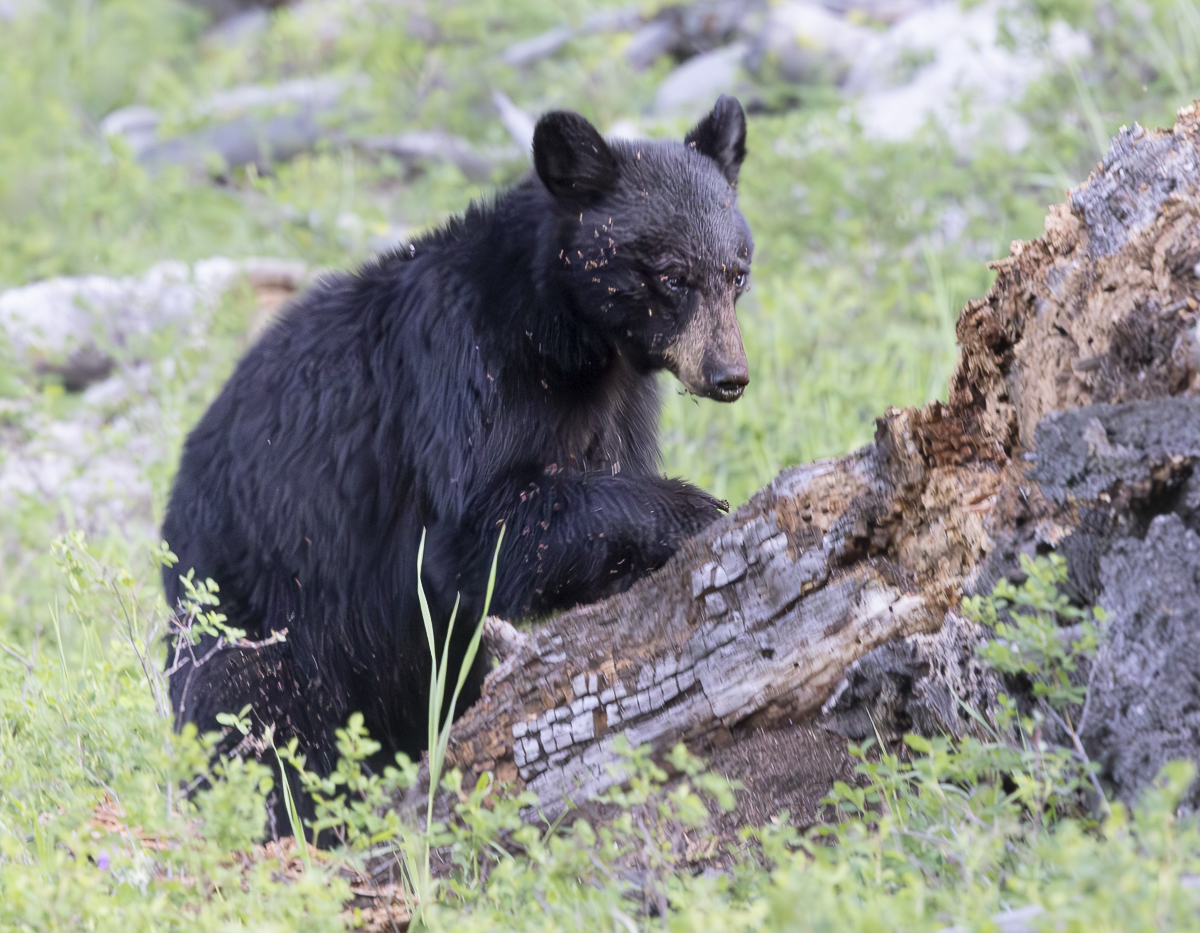
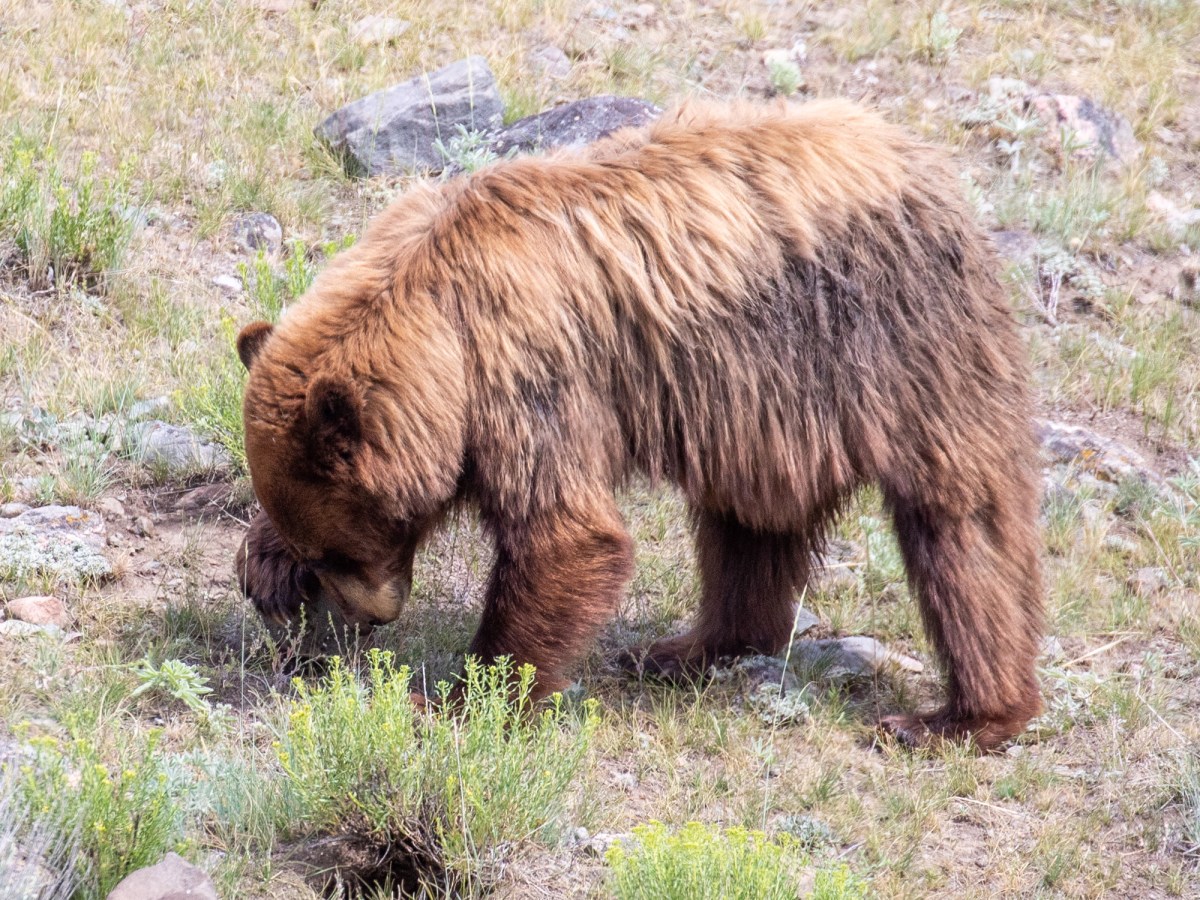
We saw another, smaller black bear start digging into a rotten log and it quickly was swarmed by angry ants. After swiping many of the ants off its face, the bear hurried off.
Young black bear with ants all over its head
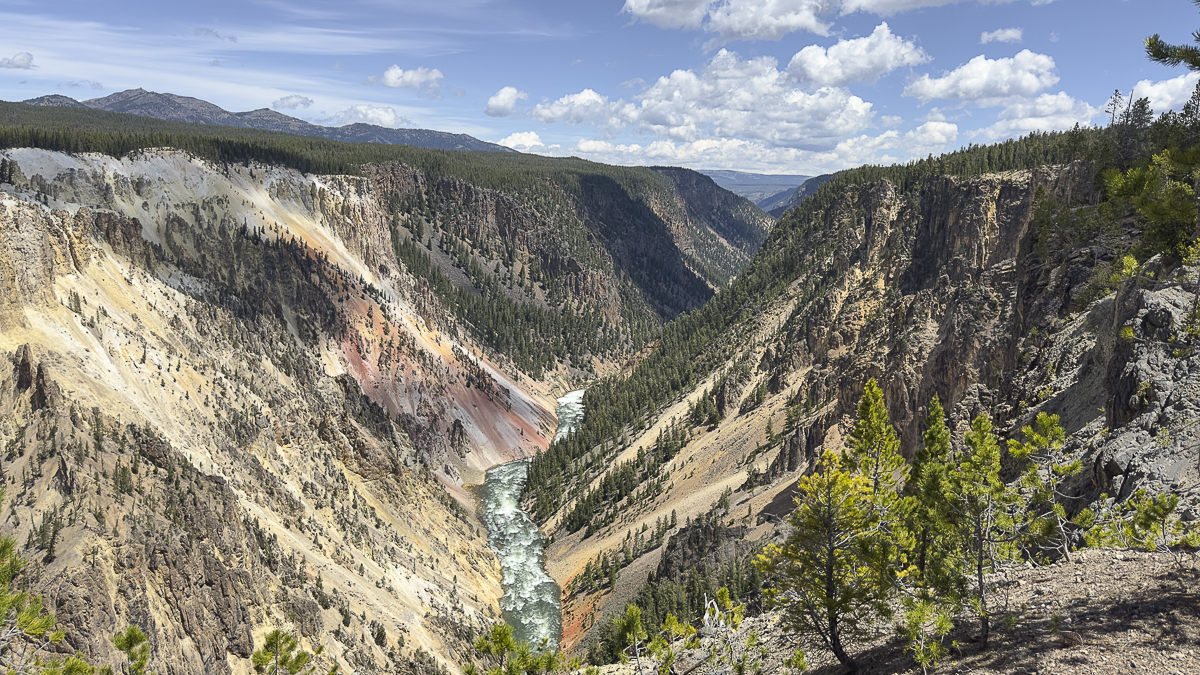
The next day we hiked a wonderful 4-mile trail at Canyon. The trail passes through varied habitats and gives you a much less crowded view of some of the spectacular scenery of the Grand Canyon of the Yellowstone.
View looking down the canyon below the Lower Falls
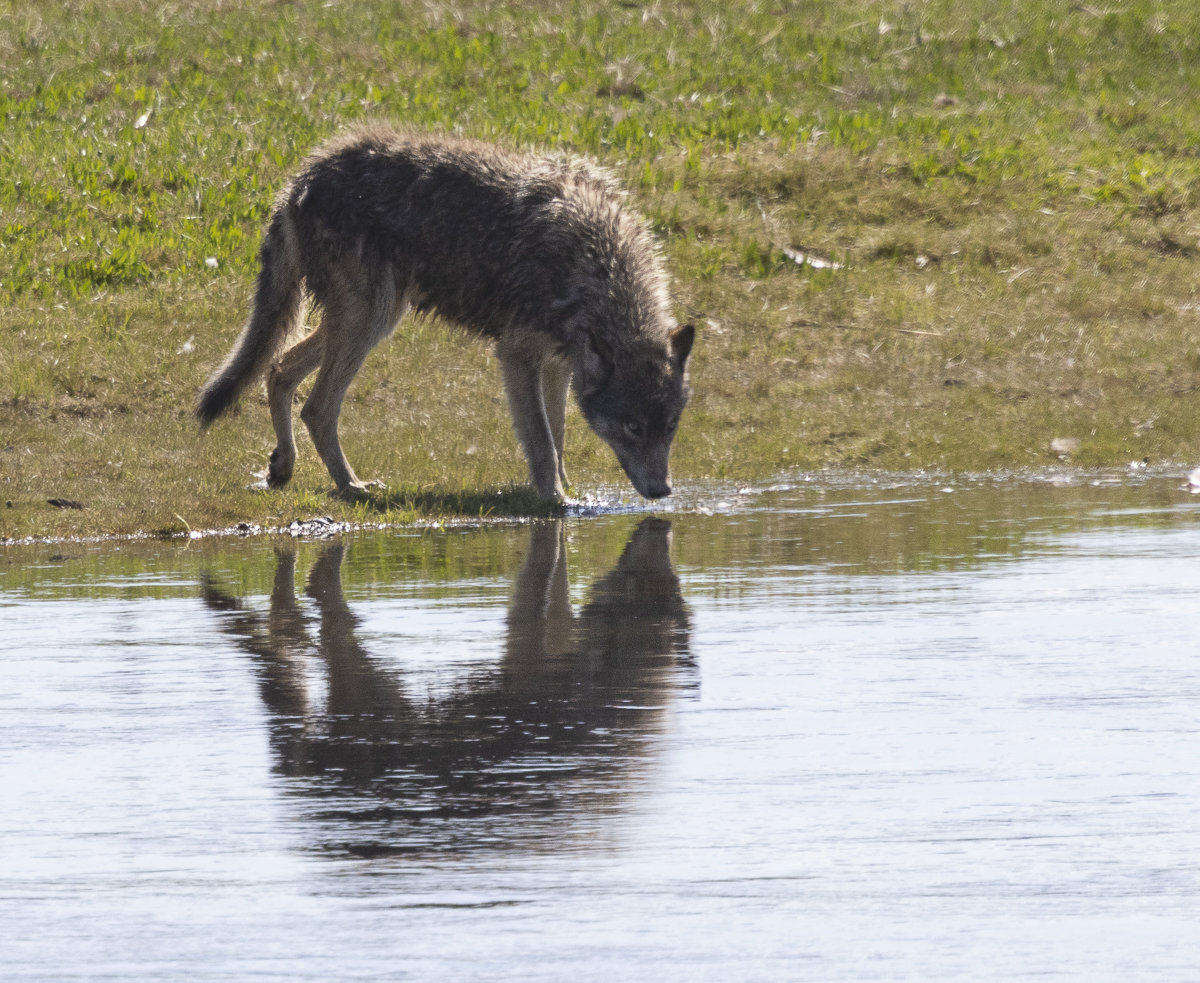
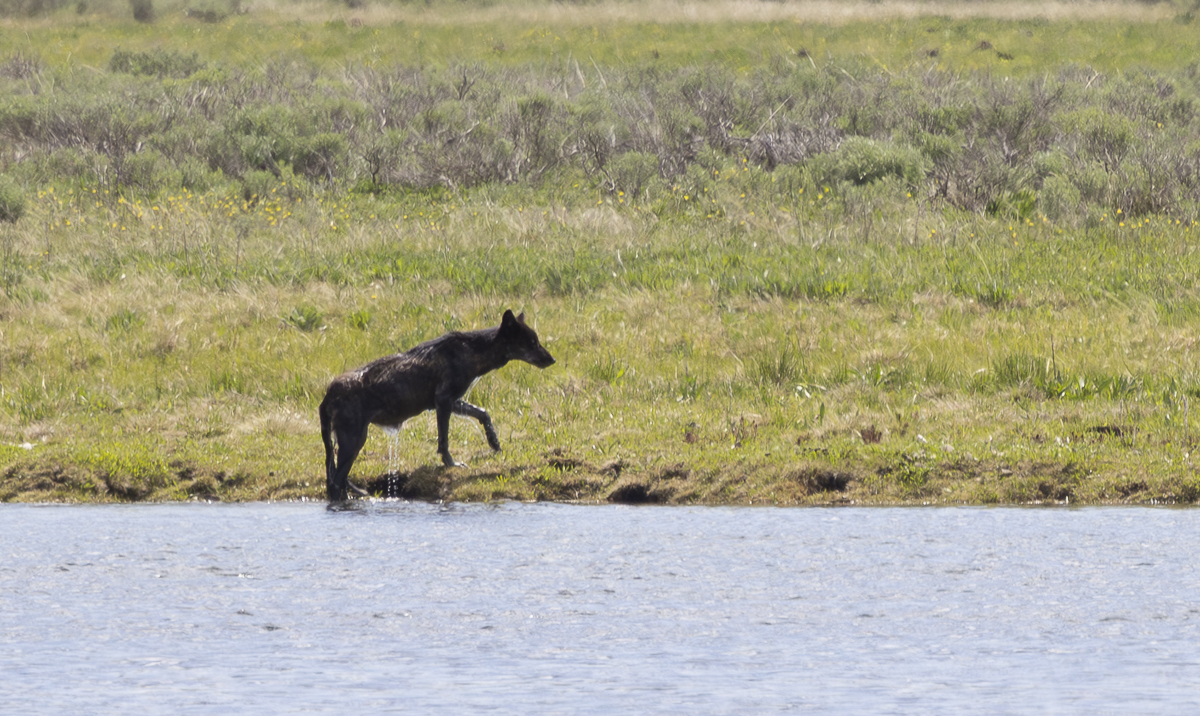
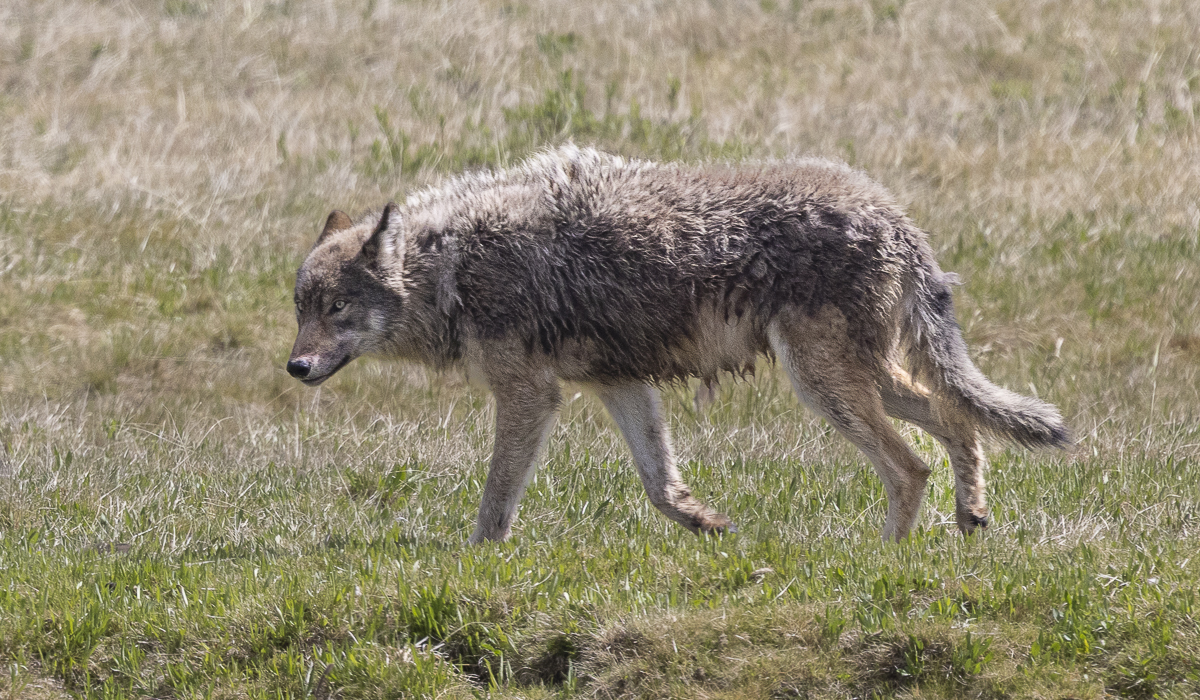
After our hike we headed toward Old Faithful, passing through Hayden Valley. I always like stopping at some of the creeks feeding into the river to look for waterfowl. Plus, this year, the Wapiti wolf pack has a den a couple of miles out from the road near Alum Creek. We had seen them a few days before the family arrived, but it is a long view and heat wave interference makes the viewing less than ideal,. But this trip proved much different as the wolves had made a kill just across the river from the road. None were visible when we first stopped, but one soon came out and thrilled the many onlookers. Though the lighting was harsh, it was a great opportunity for observing the wolves. As we watched, one wolf came down to the river for a drink, then walked back into the trees, then back out. It laid down for several minutes as a couple of other wolves appeared. One was a large collared wolf, perhaps one of the alphas. We stayed quite a while watching and enjoying this somewhat rare opportunity for close views.
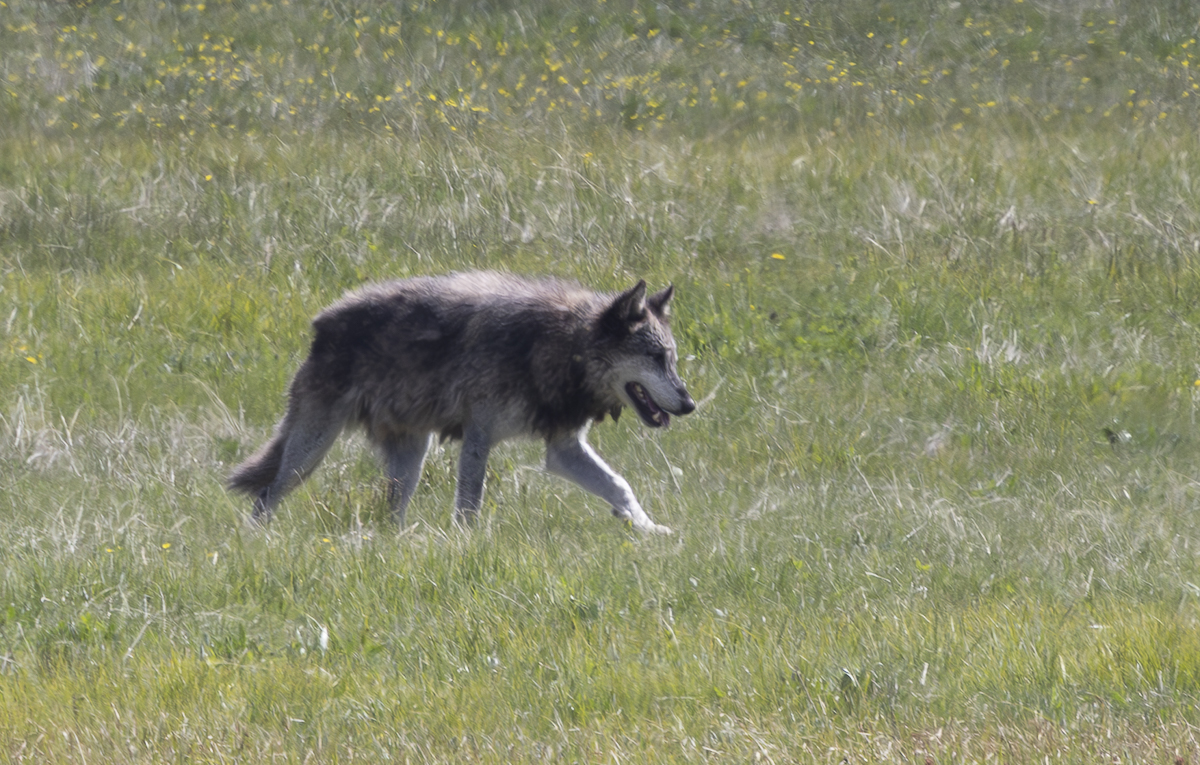
This wolf walked along the shore for several minutes and came to the river’s edge a couple of times for a drink. It also jumped in at one point either after some ducks or a fish (observers later reported online that one of the wolves caught a fish). This large collared wolf came in to the scene and briefly chased a brave coyote that sneaked in and found a scrap of meat out in the flats.This black wolf came into the trees and apparently fed for a bit, then swam the river and crossed the road, presumably heading back to the den a couple of miles away.This is the main wolf we observed and here it is walking along the shoreline and occasionally glancing over to keep an eye on the crowd gathered across the river.
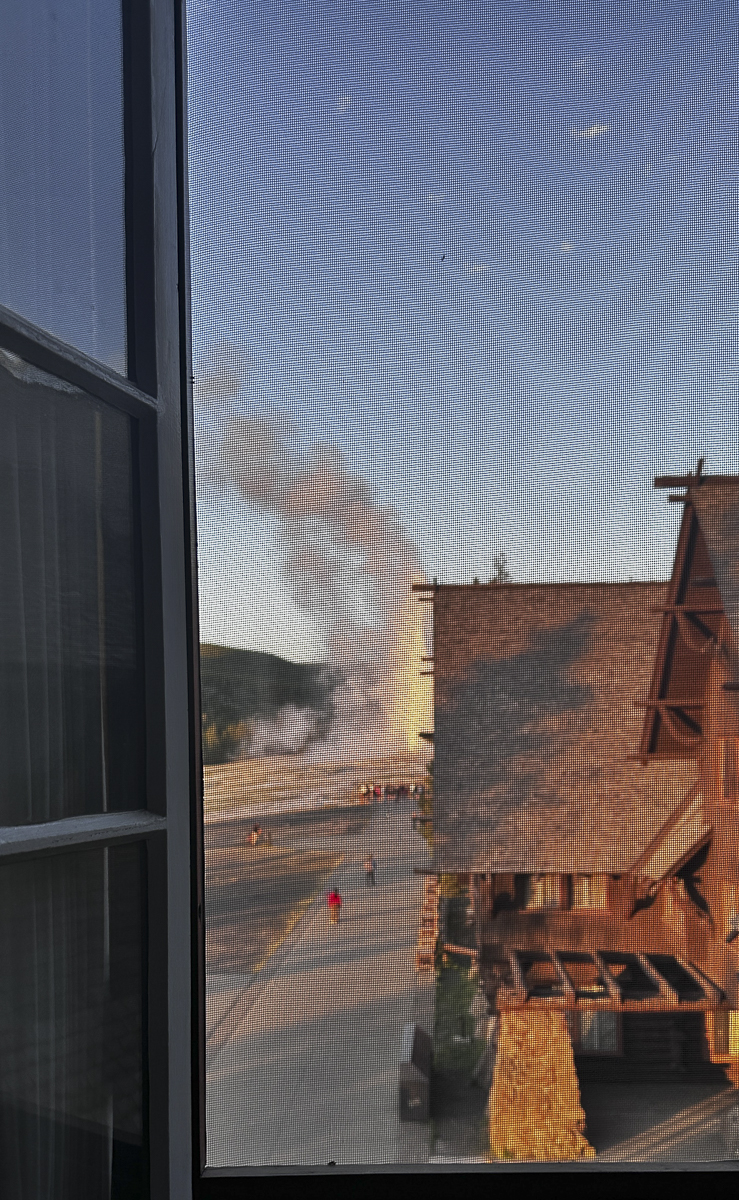
After the excellent wolf watching, we continued on to Old Faithful. As has happened so often in the past, Old Faithful erupted shortly after we arrived. I’ve been spoiled over the years by getting to view this iconic geyser early in the morning with relatively few other people around. That was not the case on this afternoon as the seats surrounding Old Faithful were full of hundreds of happy tourists. Melissa had managed to get our group a couple of rooms in the historic portion of the Inn (perhaps my all-time favorite building) and we were pleasantly surprised when we got our room assignments on the third floor. It turns out our room was a corner room with an extra special perk…we could sit in the room and view Old Faithful erupting! This may be the only room in the old portion of the Inn with this excellent view.
We had windows looking out at Old Faithful and another set looking down the Upper Geyser Basin. Melissa was in the rocking chair to my left had an even clearer view of the geyser.
I am not a fan of the huge crowds you typically encounter in the thermal basins, but that room added a really nice touch to this trip. One of my favorite thermal areas is Fountain Paint Pots. The short trail passes by all four types of thermal features – geysers, fumaroles (steam vents), hot springs, and mud pots. I have a weakness for the mud pots and cannot walk by them without stopping and trying to capture some of their interesting and often bizarre shapes with my camera.
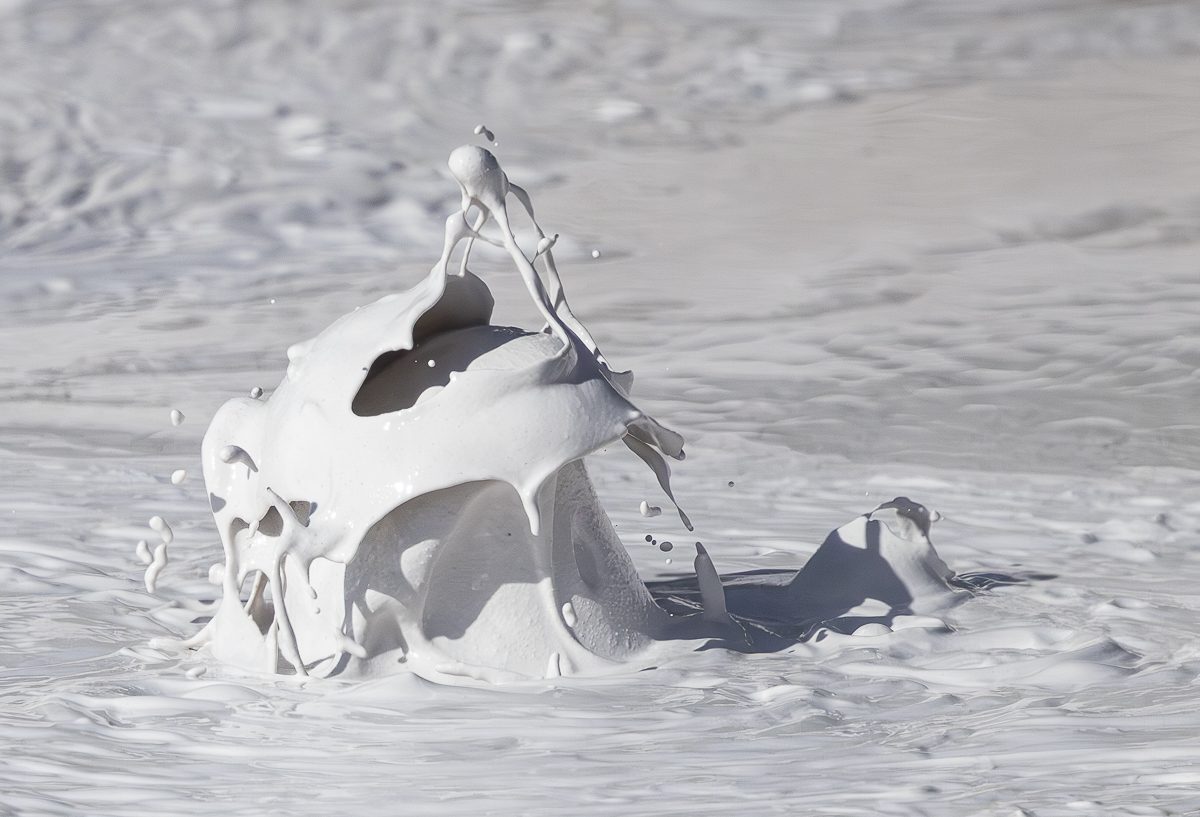
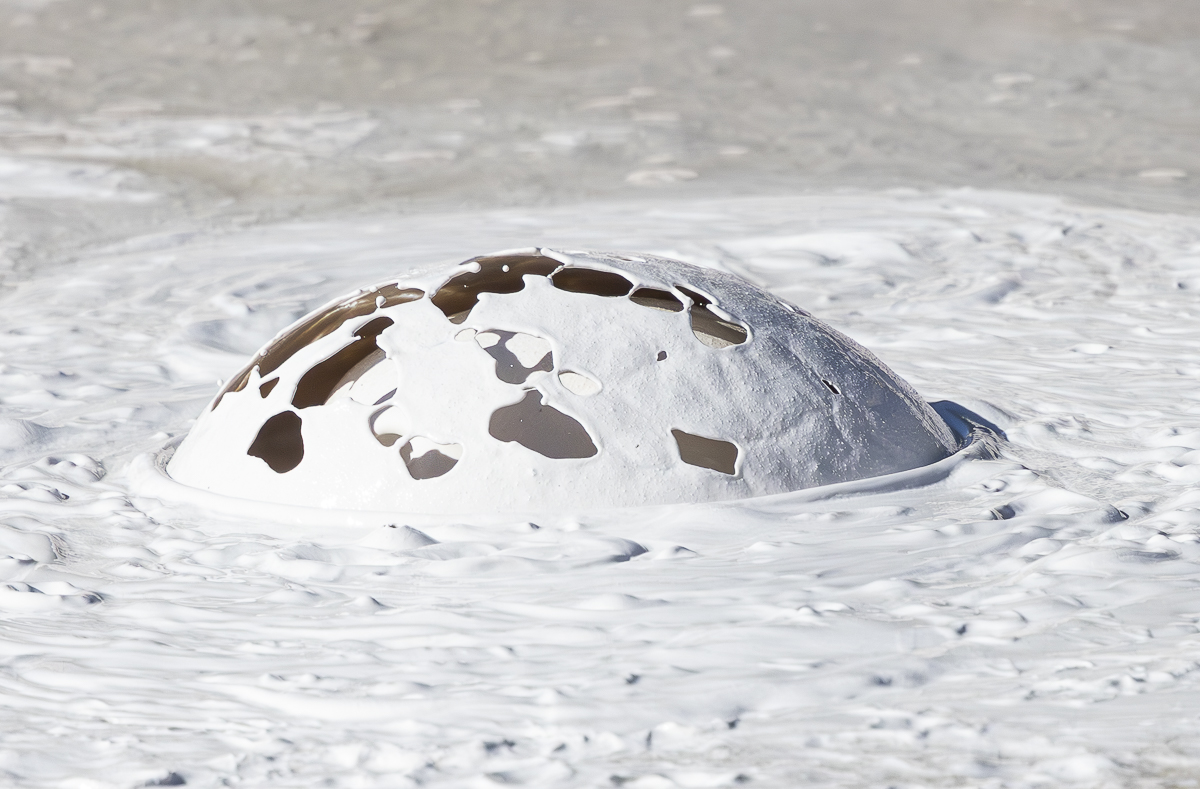
Mud pot bubble bursting“How the Earth was formed” mud pot bubble
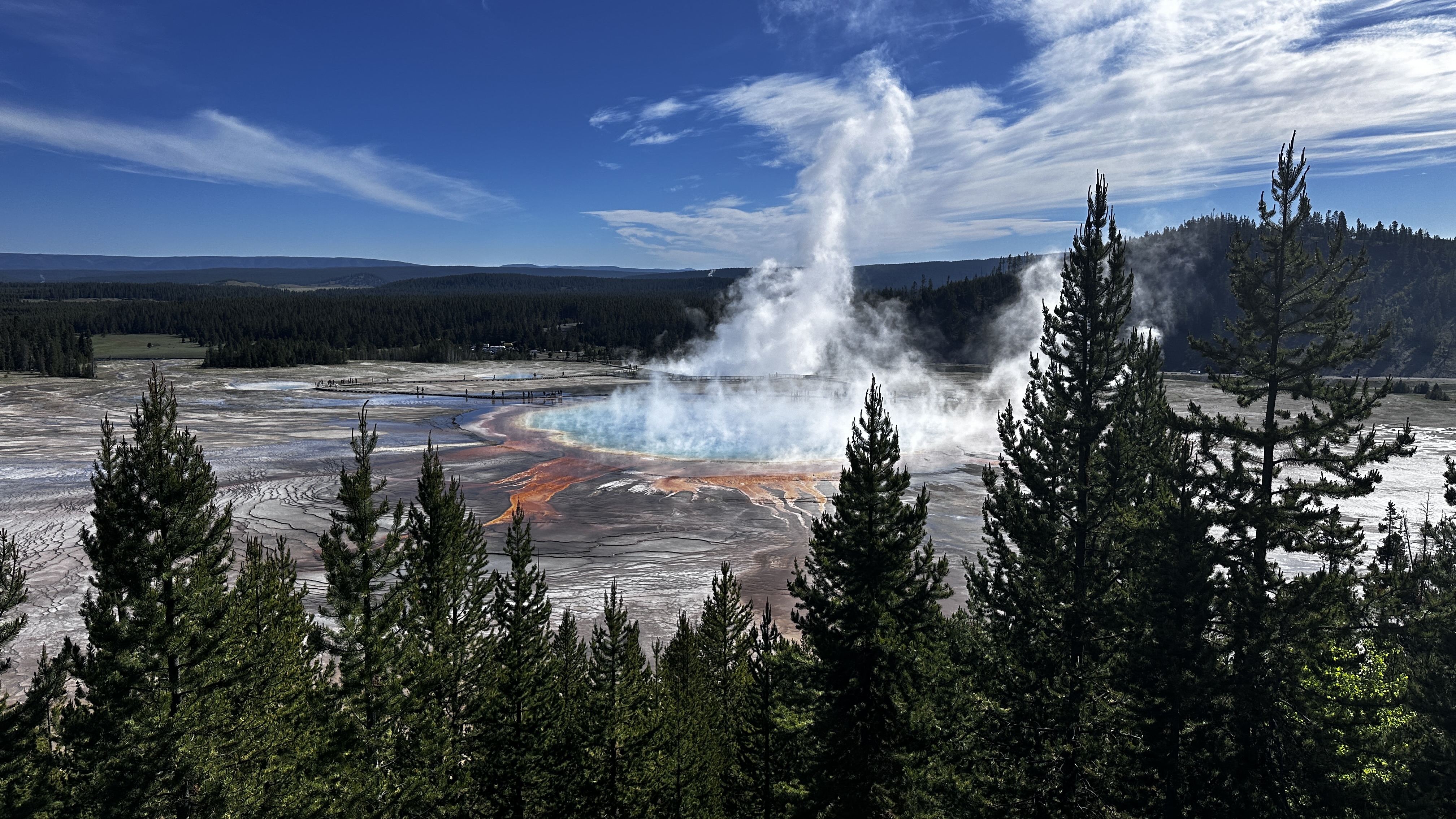
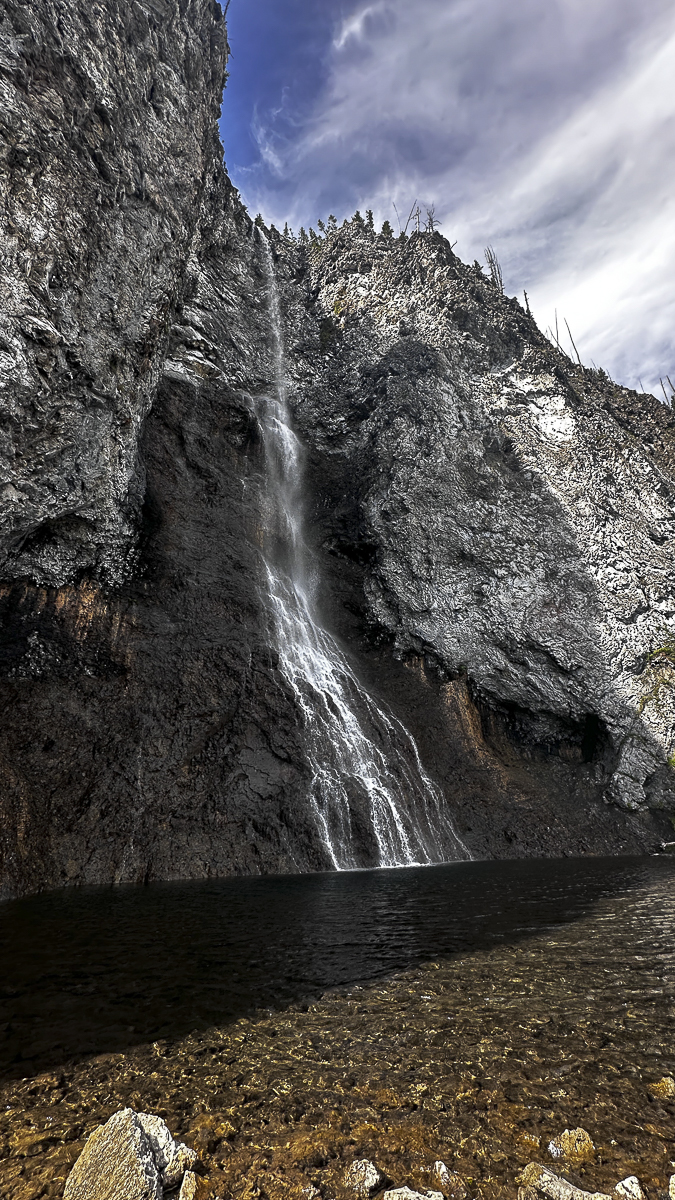
Melissa wanted to check out the Fairy Falls trail on this trip to see if it was worth taking her teacher group on the following week. It is about a 3 mile round trip to the 200 foot tall falls. You start on an old freight road that goes by the overlook for Grand Prismatic Spring, the largest hot spring in the park and third largest in the world. The overlook is worth the hike as it gives you a great perspective on the size (~370 feet in diameter and 121 feet deep) and colors of this incredible thermal feature. Our neighbor works for the park and he told us this week that recently a bison was walking along the edge of Grand Prismatic and broke through the crust and fell into the spring and died in the 160 degree water. This is a rare example of a misstep by an animal in a thermal area and a cautionary tale for everyone visiting the park.
View of Grad Prismatic from the overlook along the Fairy Falls Trail
After the overlook, much of the trail is through a young lodgepole pine forest without much to see and we had one particularly challenging issue in the forest – the mosquitoes were the worst I have ever encountered in Yellowstone. Once we reached the falls, the breeze kept the pesky biters at bay for the most part.
Fairy Falls is a spectacular waterfall near Grand Prismatic.
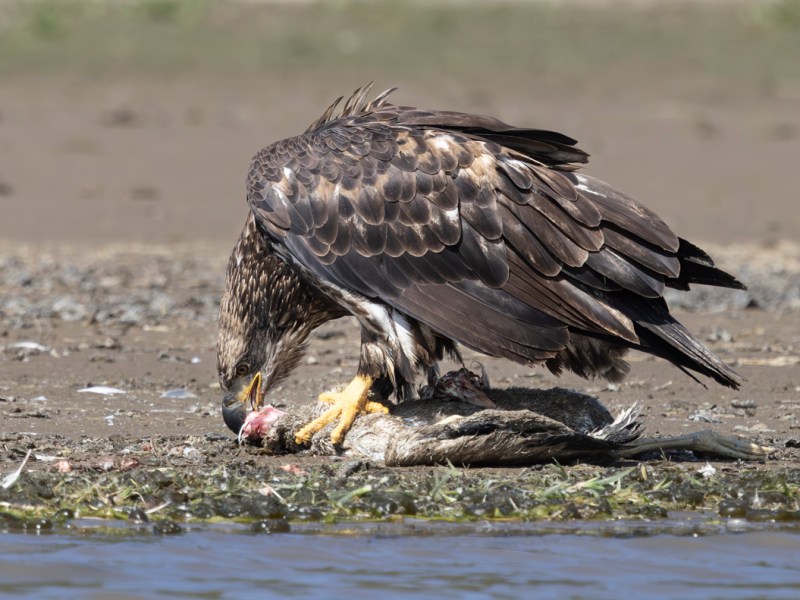
After a couple of nights at the Inn, we headed to our last stop, Colter Bay in Grand Teton National Park. The highlight for me was a 10-mile raft trip through the park on the Snake River. I had arranged a morning trip in hopes of seeing some moose but we missed out on the big ungulates. However, we did enjoy spotting some bald eagles and waterfowl, and plenty of incredible scenery.
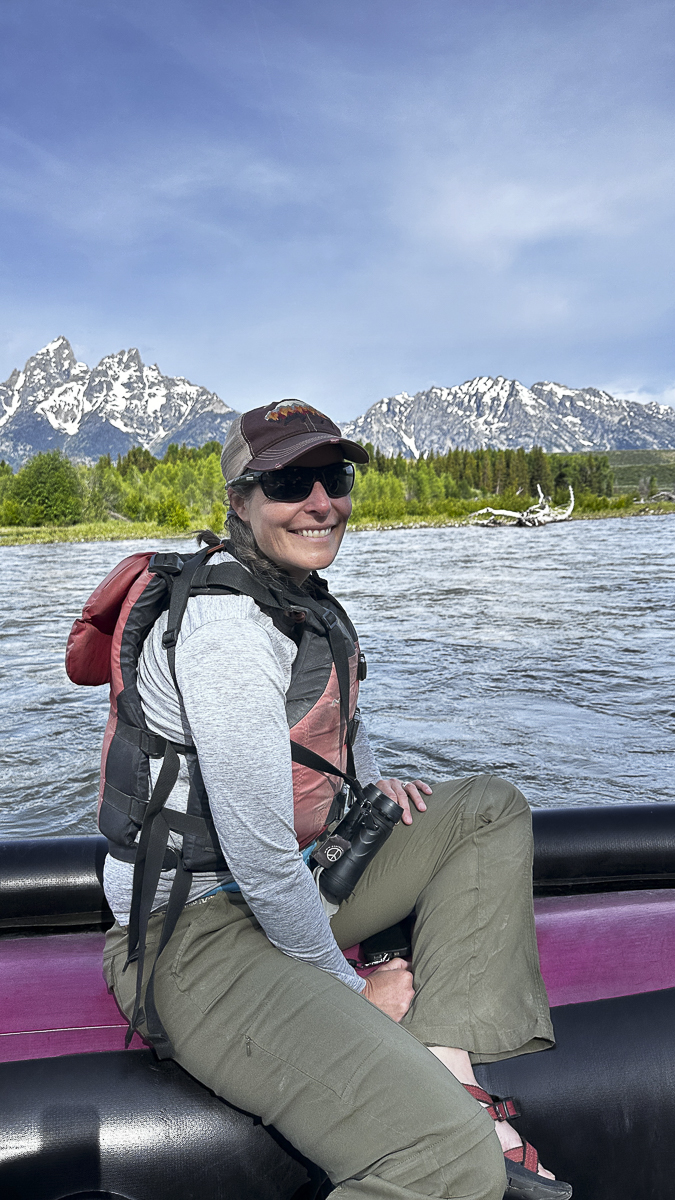
Melissa on the raft with the Tetons in the background
Her brother’s family stayed two nights at Colter Bay but we headed home after one night so Melissa could get ready for her teacher group arriving in two days. These photos are just a small sampling of what we experienced on our trip and I think everyone left loving this special place. When asked about their highlights, most thought the time spent with the wolves in Hayden was something extra special. The trip was a good reminder of the power and magic of Yellowstone and why we love sharing this place we are lucky enough to now call home.
Mike gets up much earlier than me, and that’s his blogging time. By the time I’m ready to face the world, he’s already shared our adventures! However, with a bit more time on my hands these days, I’m looking forward to contributing more to the blog. Here’s my take on some of our early adventures in Yellowstone…
On May 23, the Dunraven Pass opened, the final road in Yellowstone to open for the summer season. I was excited to check it out on opening day, so we took advantage of the opportunity to head deeper into the park. The pass at over 10,000 feet was still mostly snow-covered, but the browns of bare soil showed in exposed areas.
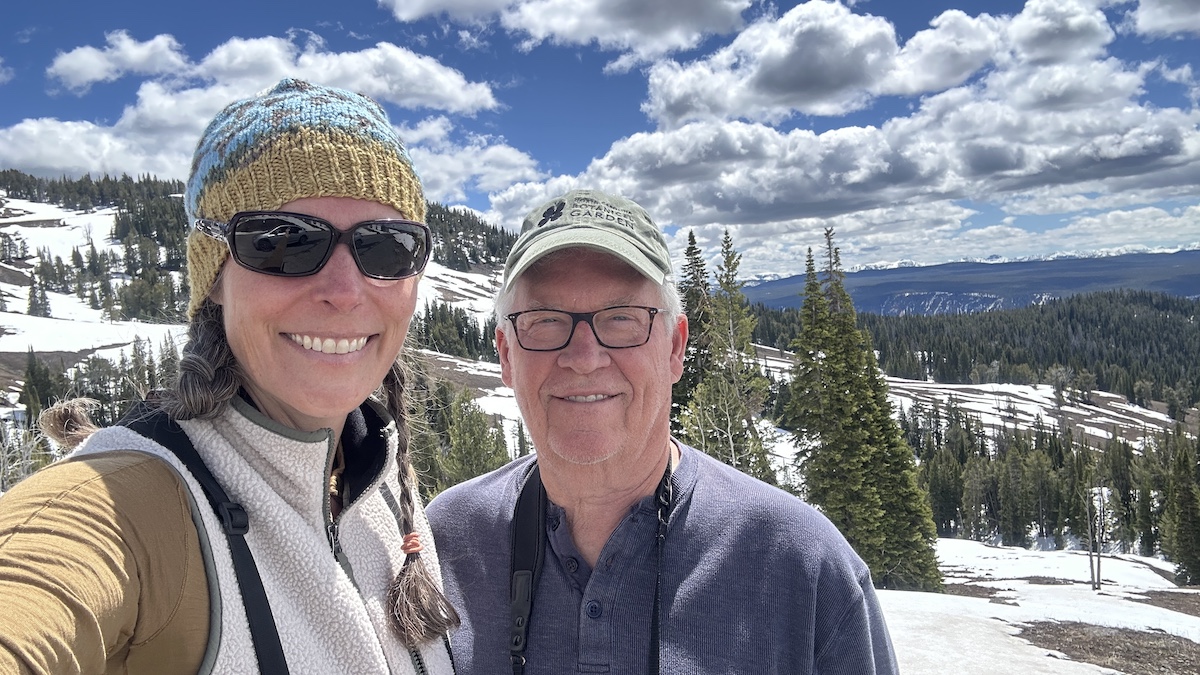
A selfie from the slopes of Mount Washburn
We paused at Canyon Village for our traditional ice cream stop. Then, since a close parking spot was available, we paid a quick visit to Artist Point. We continued on through Hayden Valley, which was just starting to green up for spring, and headed on to Lake. I was hoping Yellowstone Lake would still have ice, since some years it doesn’t break up until June, but our first view of the lake confirmed that this has been a warm spring — there was no ice left at all. We took a short walk out the Pelican Creek trail to a favorite spot where we’ve spent many hours in quiet reflection with groups of educators over the years. I shared a couple poems I’ve written there over the years with Mike, one that is particularly poignent given our move to Gardiner.
The Return
Knots in the thread of my life Tie me to this place— To the sandy lake’s shore, To the unmarked trail through a meadow of wildflowers, To the owl’s nest in a tall fir To the small rise where bison, wolves also tread.
Moments spent here— Moments of reflection— Moments shared— Accumulate to tell but also to shape my life’s tale.
I return here as often as I can To tie a new knot, to tie my spirit ever tighter To this place, And to myself.
Looks like there will be a few knots tied closer together in as we revisit the shore of the lake in the coming years.
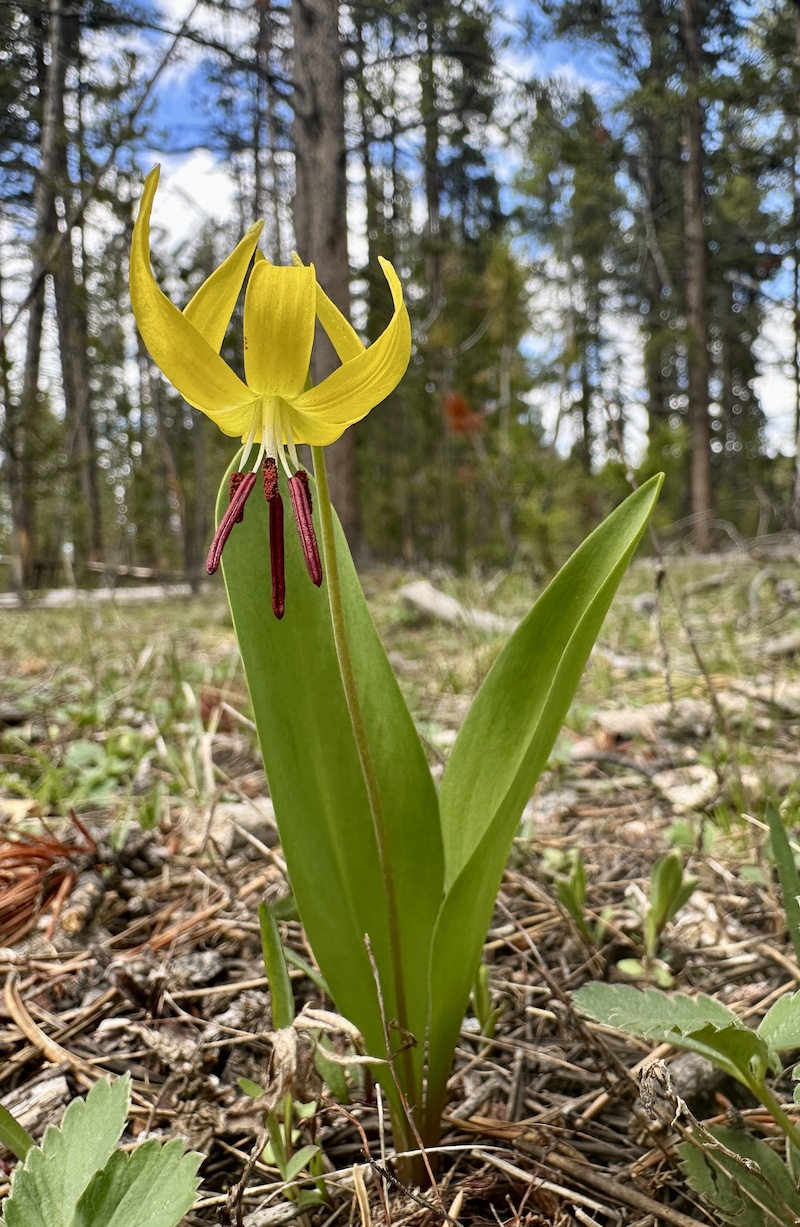
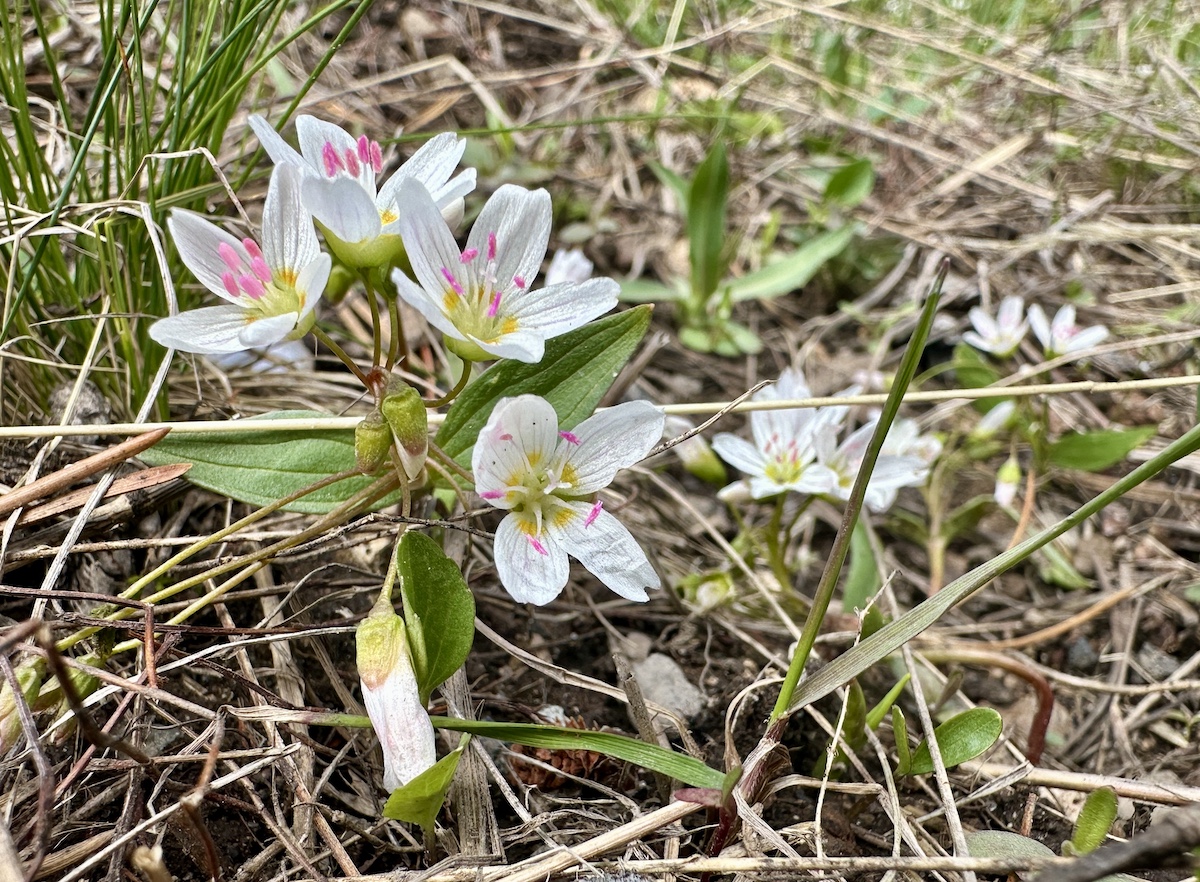
As we headed back home, we pulled over now and then for quick stops. At one, we were delighted to find the western analogs of some of the harbingers of spring we’ve always loved in North Carolina.
Glacier lily is in the same genus as our trout lilies back in North Carolina, Erythronium. It’s structure is very similar with six upcurved petals and sepals (three of each) and six drooping maroon stamens, though some of our eastern trout lilies have yellow stamens.Western spring beauty is in the genus Claytonia, the same as our eastern species. It even has the same bright pink pollen on its five stamens!
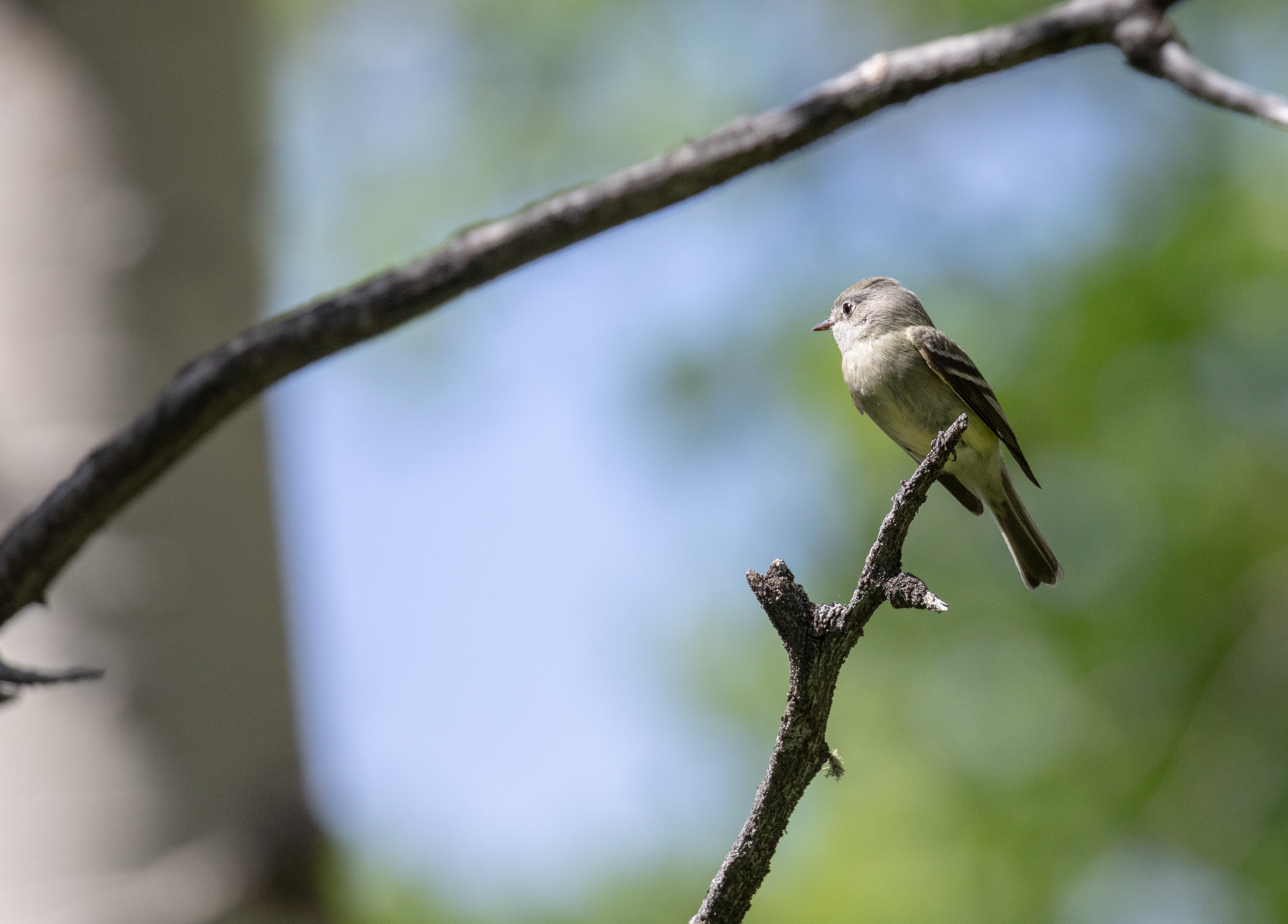
Mike’s most recent blog described our walk yesterday to an aspen grove above Mammoth. I’ll refer you to that for all of the details, but I wanted to add a couple pictures of mine from our quiet time sitting there. I had the Merlin bird app running off and on to try to work on my western bird calls, and after it told me a Hammond’s flycatcher was calling incessently, I was fortunate to spot one moving between perches.
Hammond’s flycatcher on a dead aspen branch.
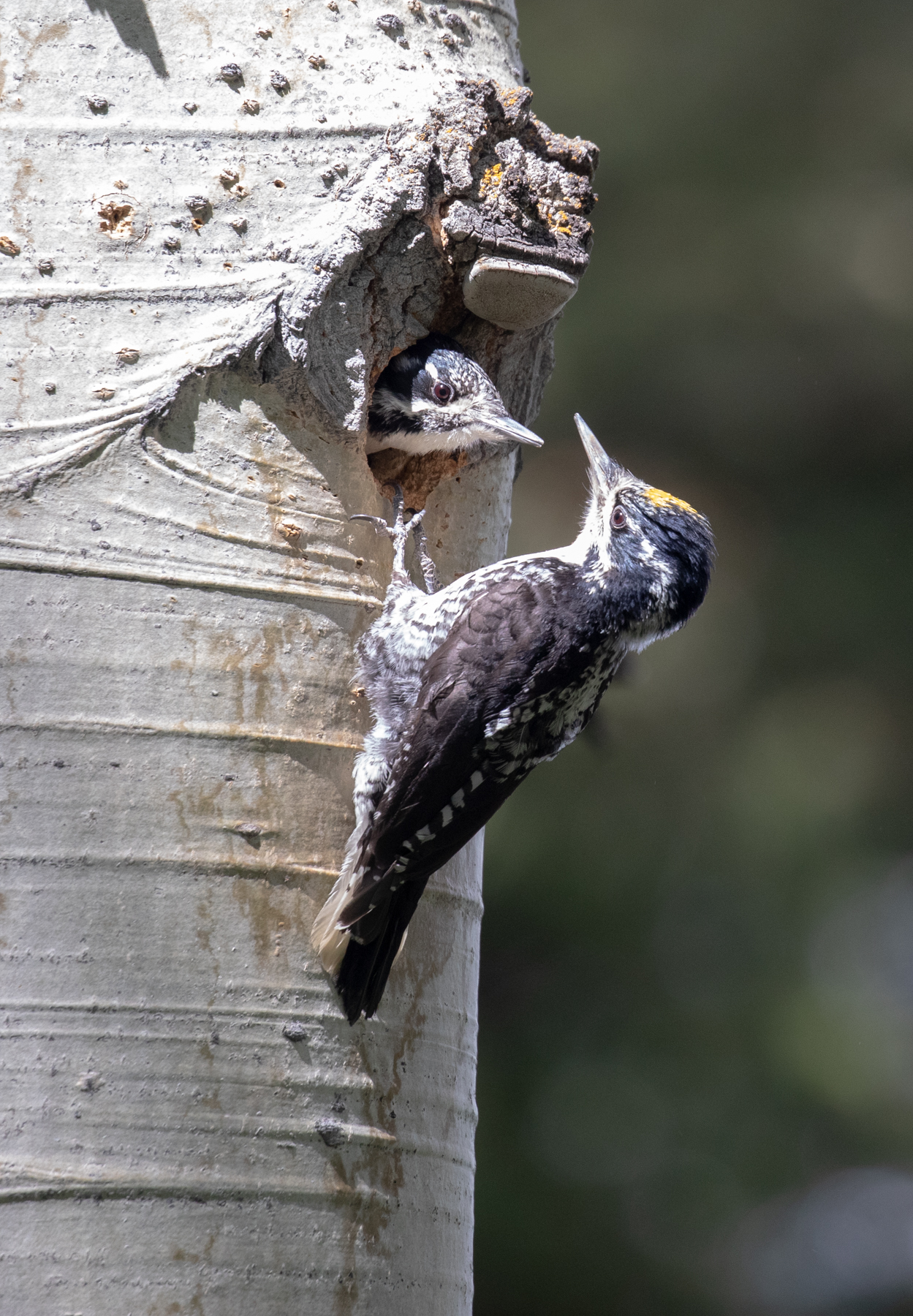
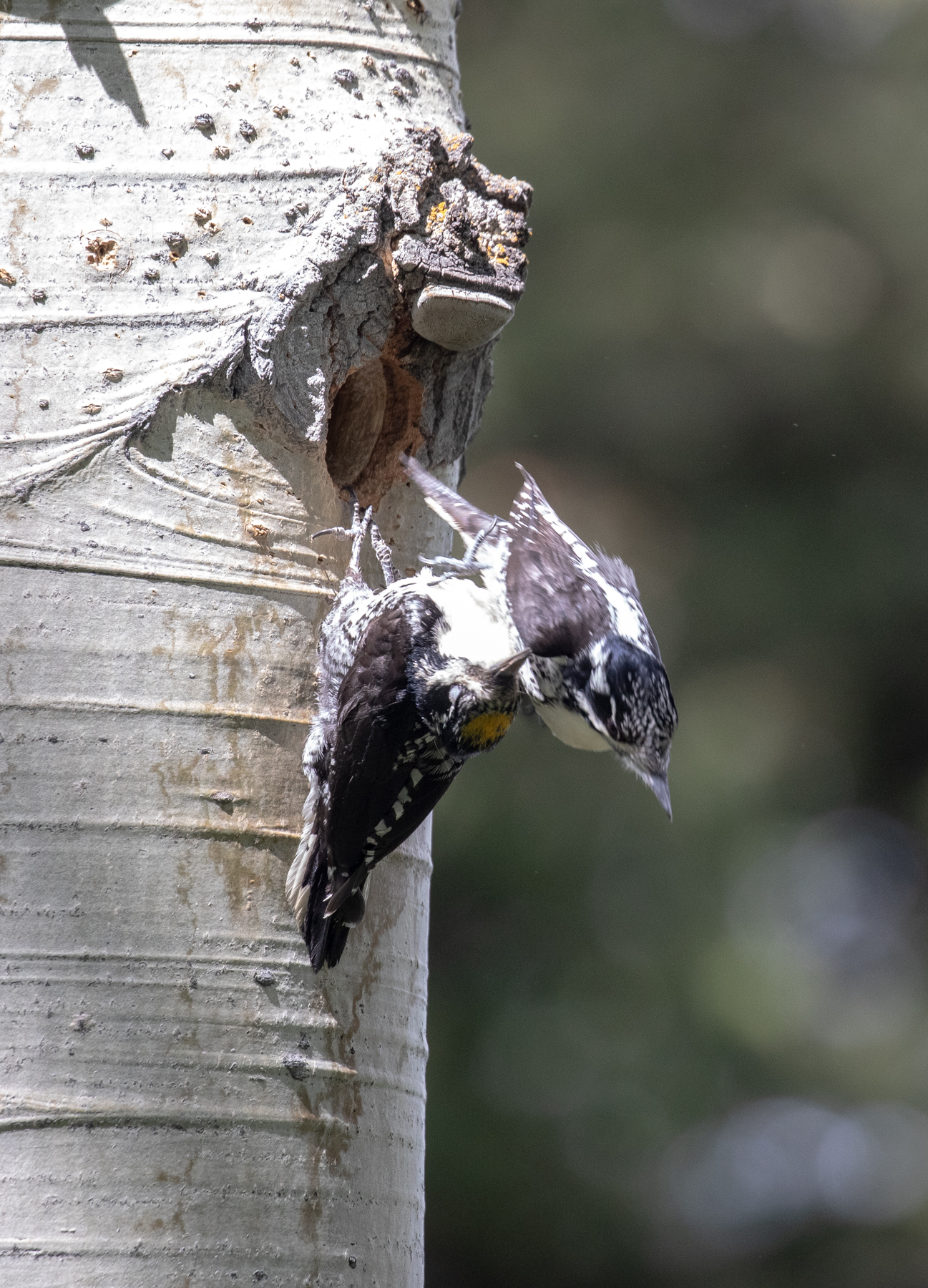
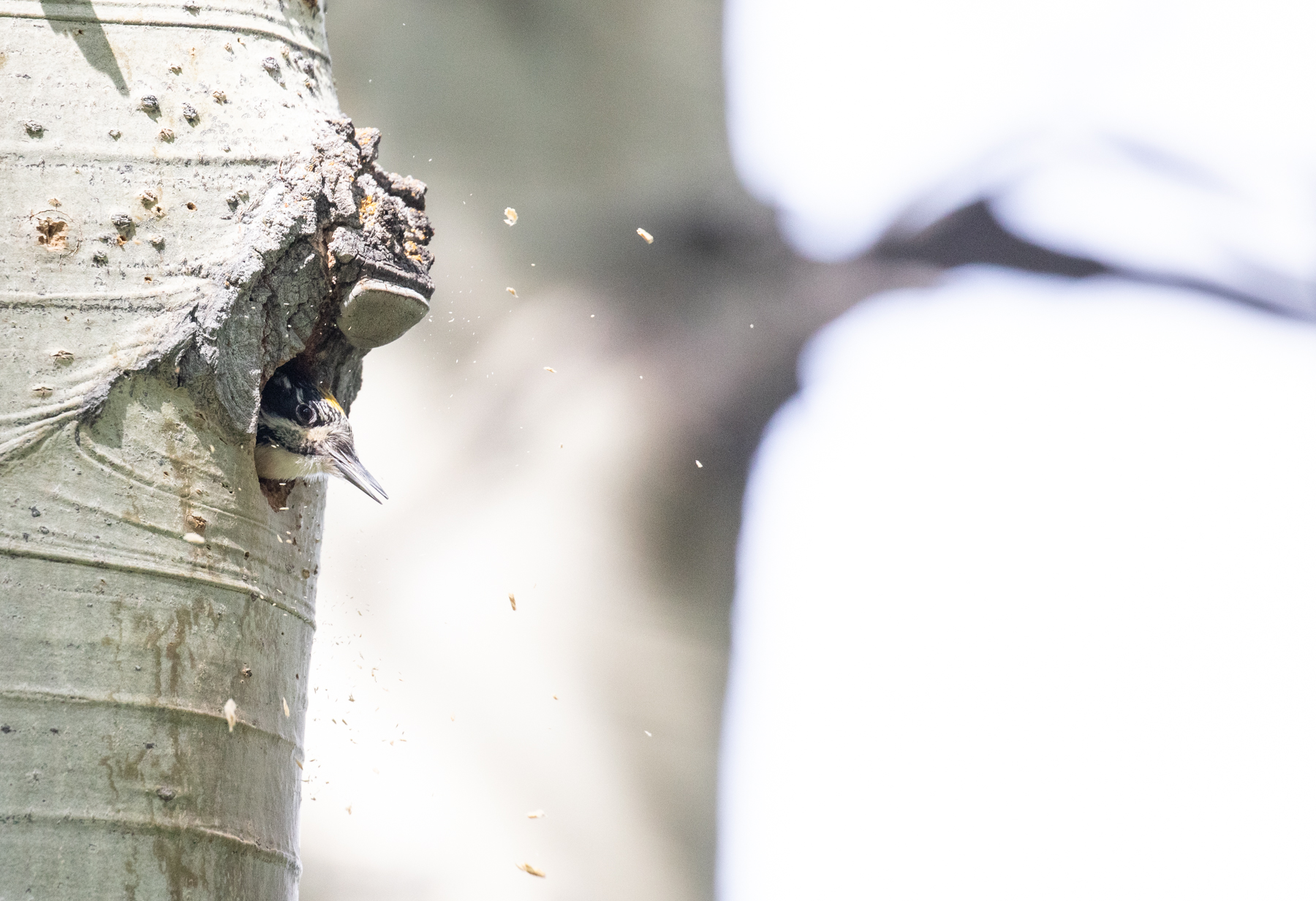
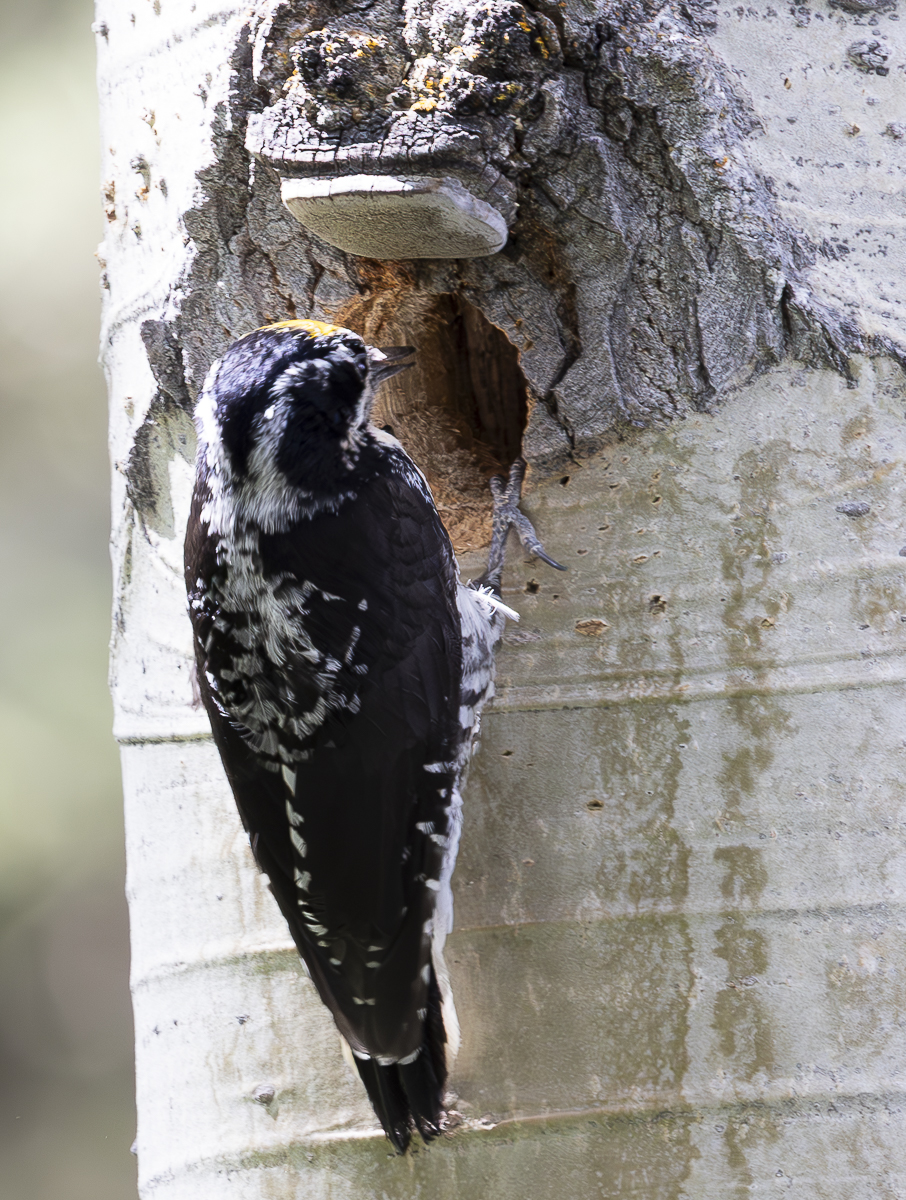
Mike also described how he discovered a three-toed woodpecker pair carving out a nest cavity. He had missed the exchange when the male flew up and took over for the female, so I’ll add it here:
“Who’s that coming to my hole?”“Excellent! Break time! I’m outta here…”In this one I just particularly like the symmetry of the aspen branch in the background and also the halo of wood chips around the woodpecker’s head!
Last night, we took an evening drive out into the park after dinner (a lovely thing to be able to do, and something we hope to continue to do regularly). It was a quiet night, with fewer visitors than we’ve experienced on most of our other trips. We had a lovely semi-private moment with a black bear munching on grass and watched a beautiful scene form as a few bison and calves crossed the river at the western end of Lamar Valley. But the highlight was a stop at a site where coyotes had denned in previous years when we saw a number of folks looking that way. The family is back, and we were fortunate to watch five pups and three adults playing, digging, wrestling, and feeding in the glow of the setting sun.
Interactions between 3 adults and 5 pups at the coyote den. The third adult had just arrived, and it looks like the pups with poking at its mouth hoping it would regurgitate a meal.
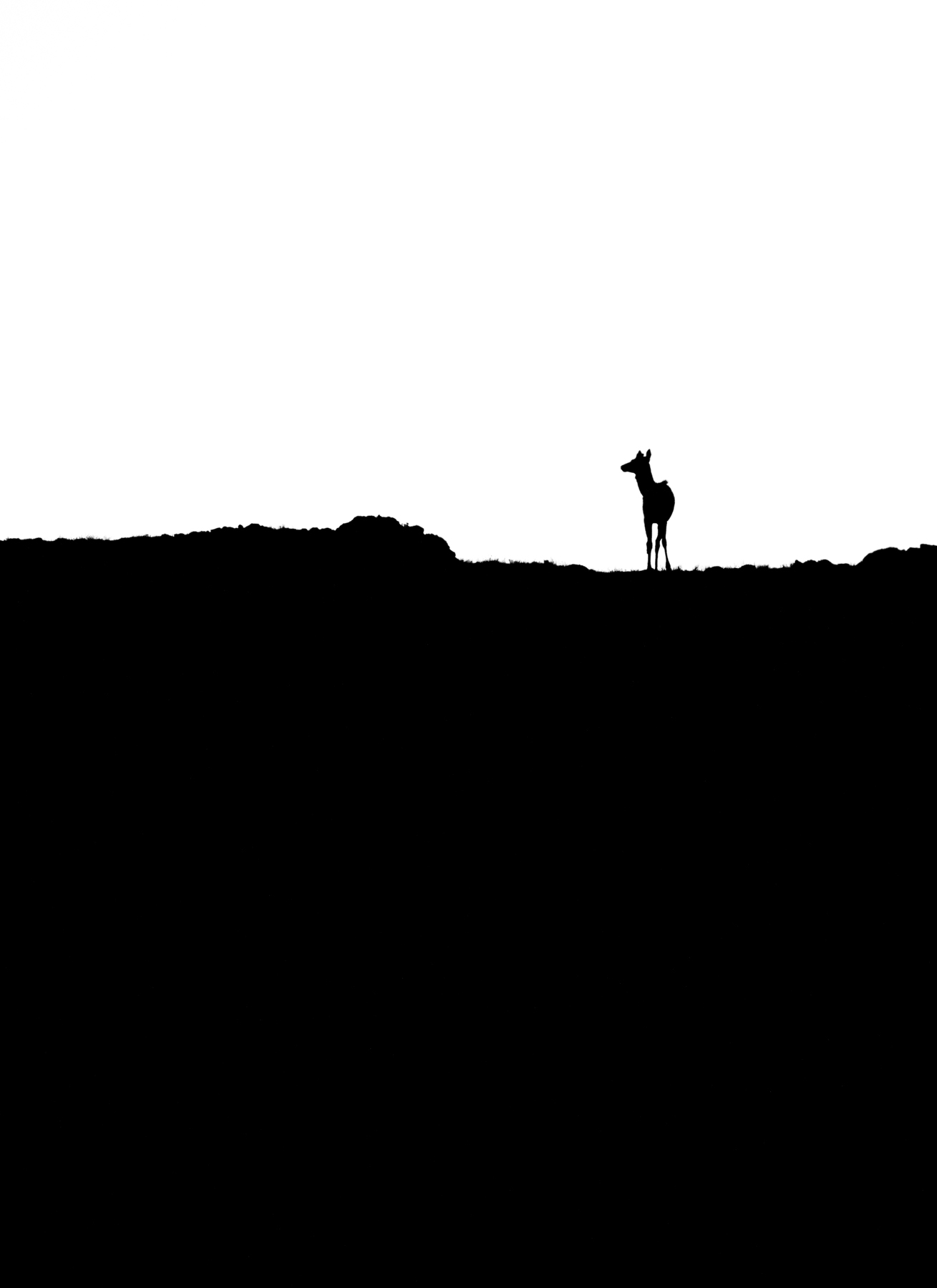
I’ll close with a promise to share more of our adventures and a favorite image from an earlier evening drive into the park of a cow elk silhouetted on a ridgeline.
Between every two pines there is a doorway to a new world.
~John Muir
A few days ago Melissa and I took our first long-ish hike in the park since we moved in. This is a follow-up to her earlier Facebook post about the hike. The original plan was to scope out an area for her upcoming educator trek that neither of us had hiked before. I was thinking maybe a mile or two to see how my back/knee issue would handle it after stressing all those parts during the move. We drove into the park a couple of miles and started at a trailhead above Mammoth.
The start of our hike through sagebrush flats with pockets of forest and a backdrop of mountains and a bull elk (click photos to enlarge)
Right away, Melissa spotted a few bull elk scattered on distant hillsides. I was busy keeping an eye out for interesting insects as we sauntered along taking it all in. The invertebrate photos were added to iNaturalist when I got home to start a record of what amazing small things can be found in this majestic landscape. Here are a few of my favorites (note – identifications on many species of plants and animals in the coming weeks/months may be tentative as we learn more about the diversity of our new surroundings).
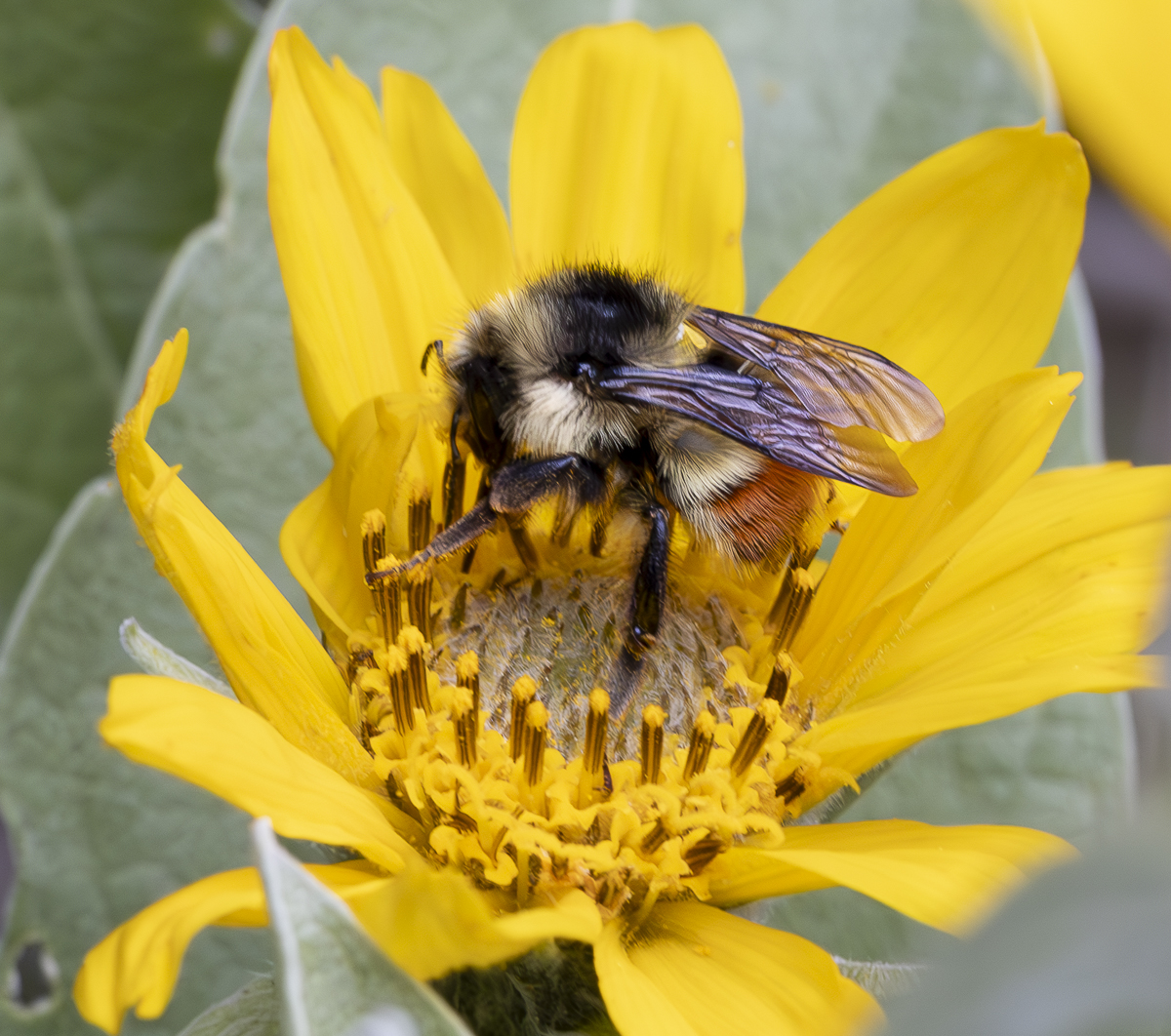
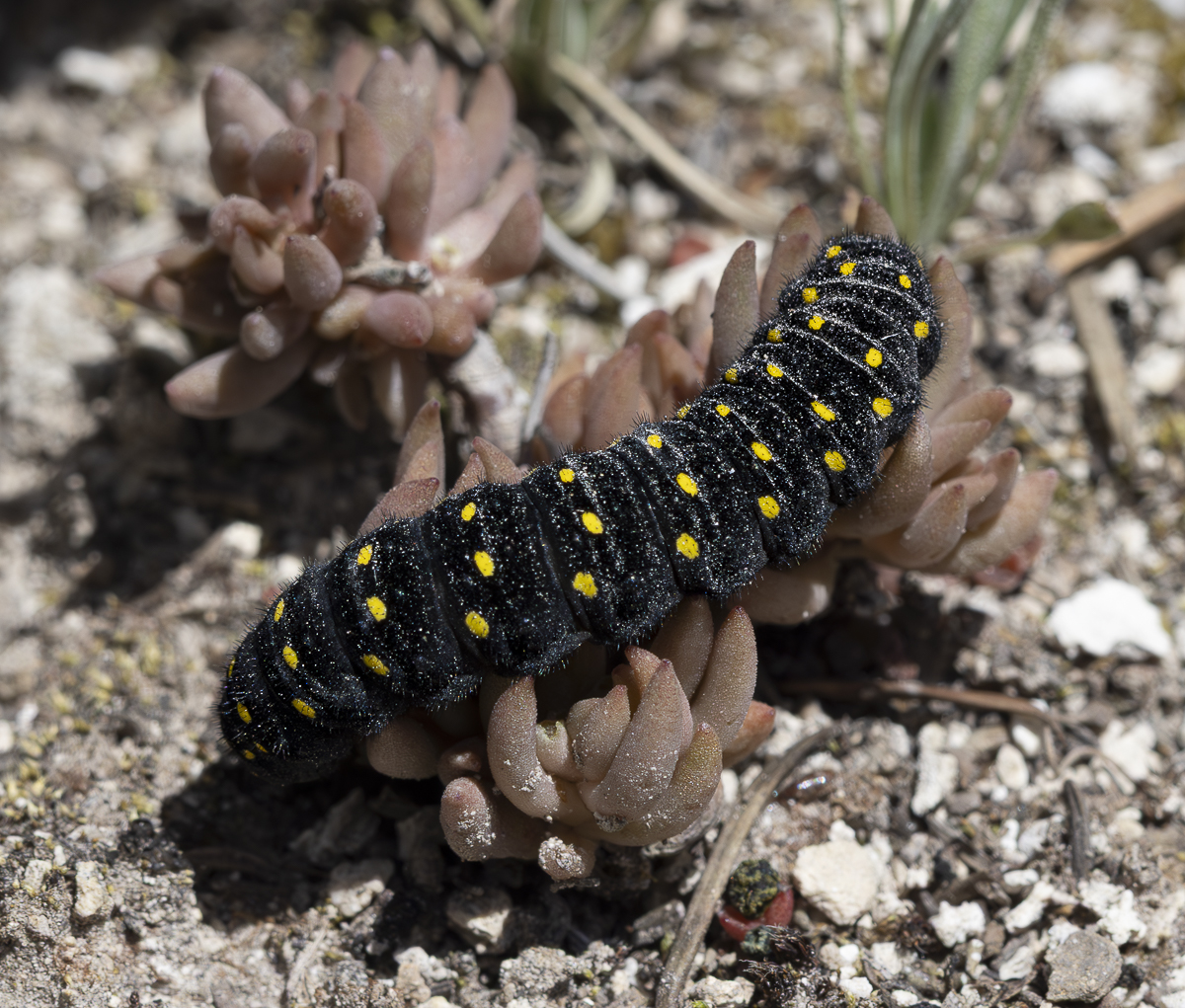
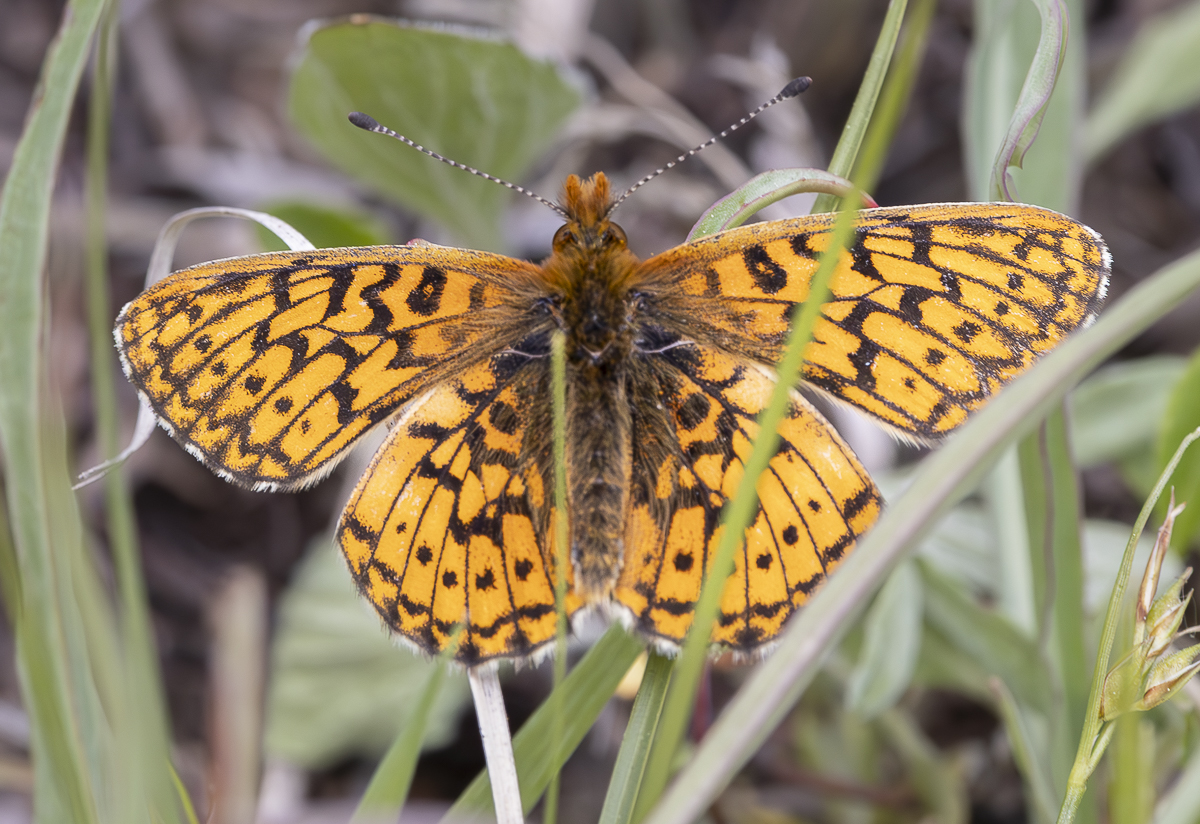
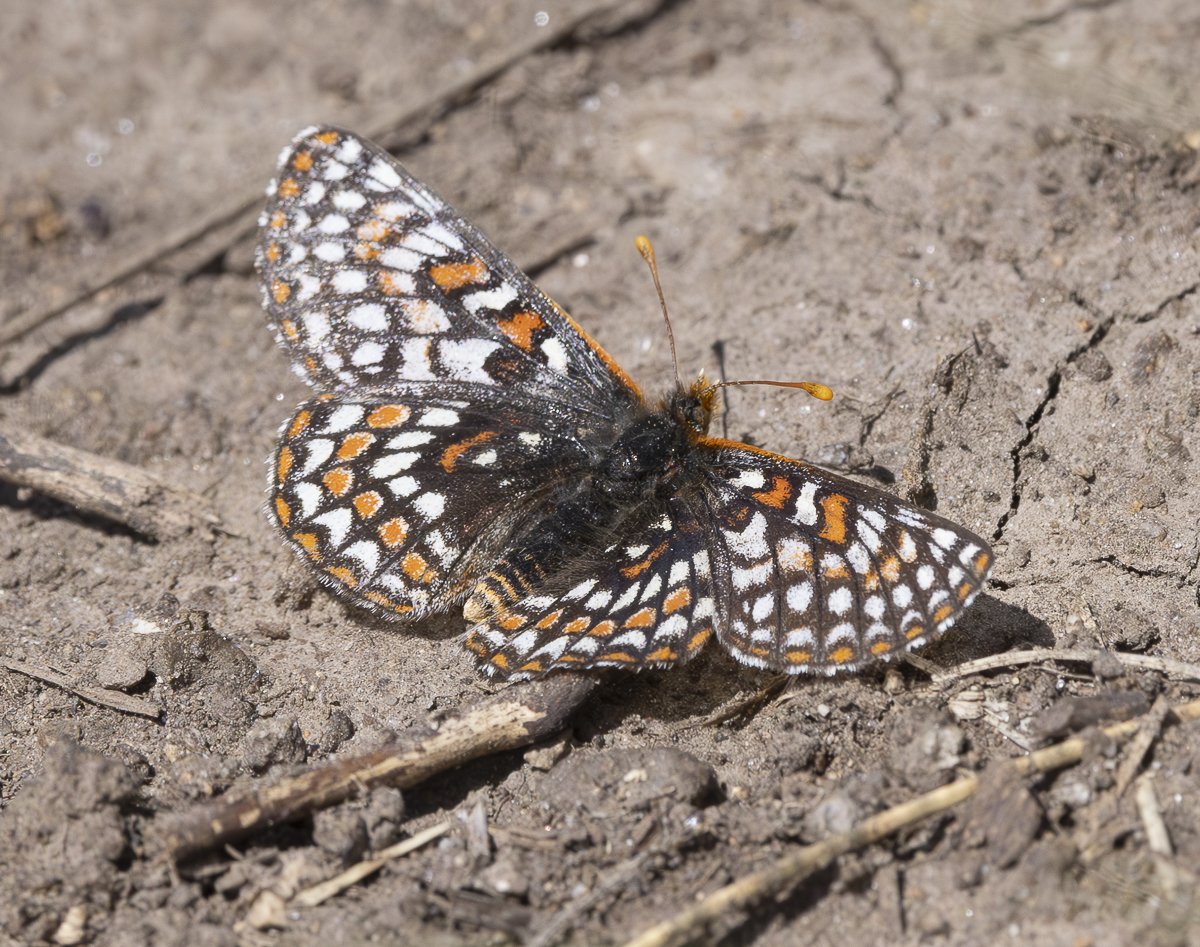
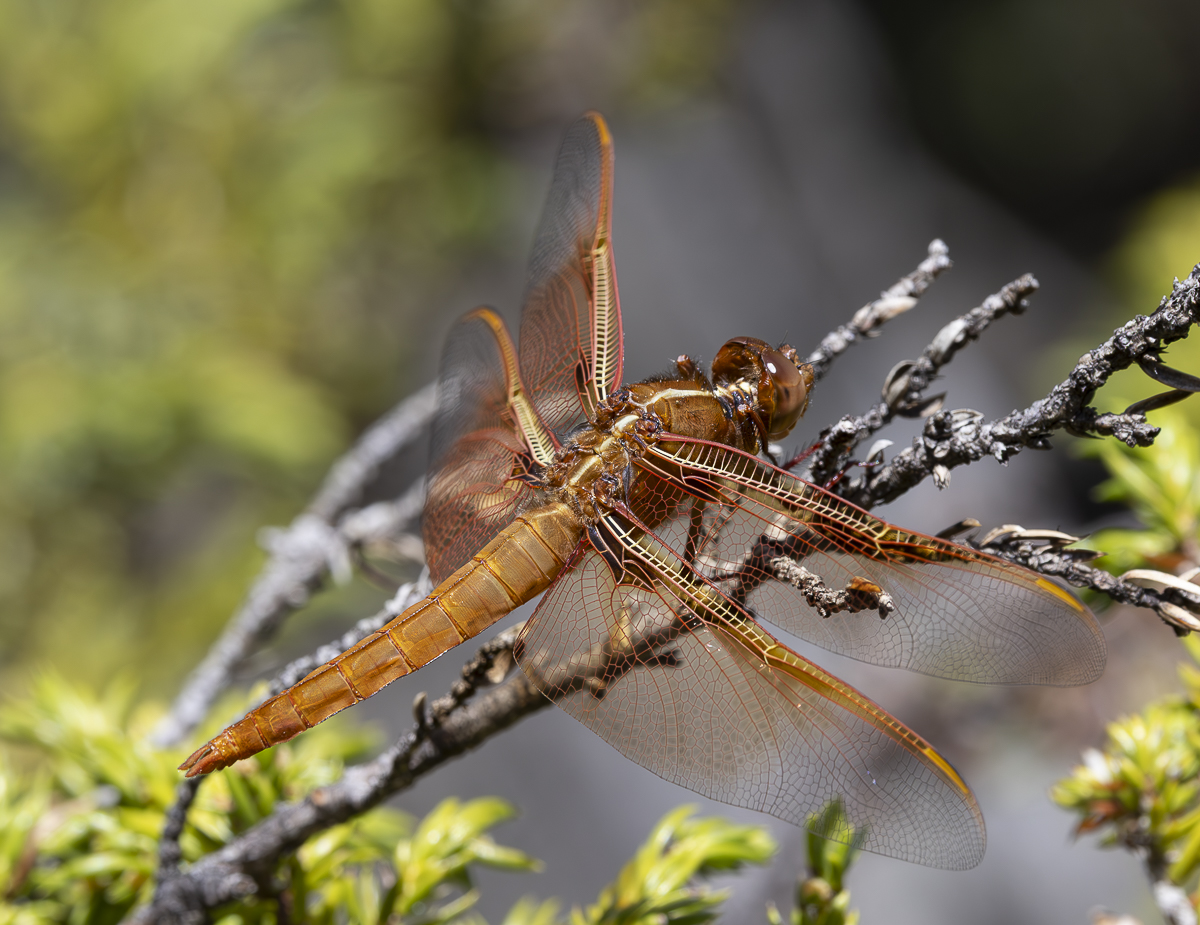
Yellow-fronted bumblebeeGoldenrod crab spider with bumblebee preyRocky Mountain Parnassian butterfly caterpillar on stonecropRelict frittilaryEdith’s checkerspotFlame skimmer
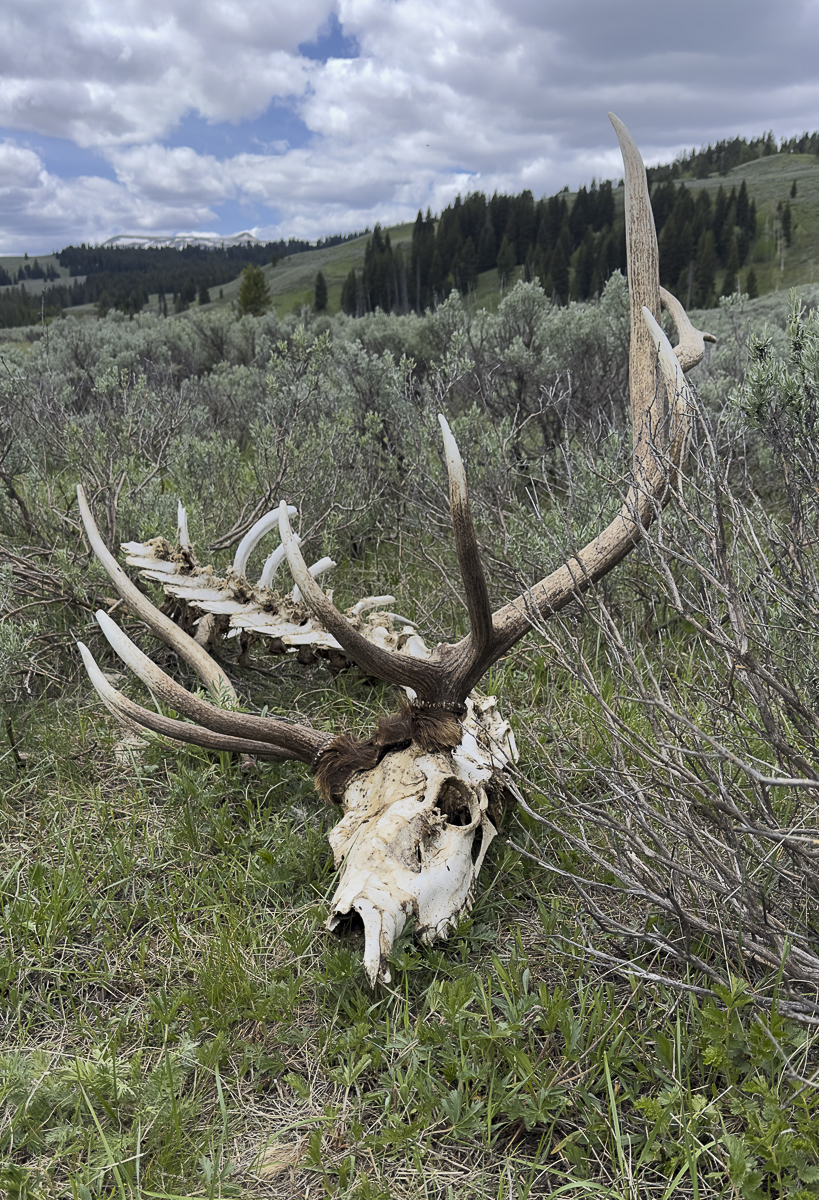
We encountered a few people not far into the trail including a couple of hikers and two groups of horseback riders with outfitters. But for the most part it was just us and the scenery. We did run across a bull elk carcass that looked as though it might have been from this past spring/winter (still hair on the carcass, the contents of the rumen was scattered nearby and there are still insect larvae on the skeleton). It was an impressive animal.
Carcass of a bull elk along the trail
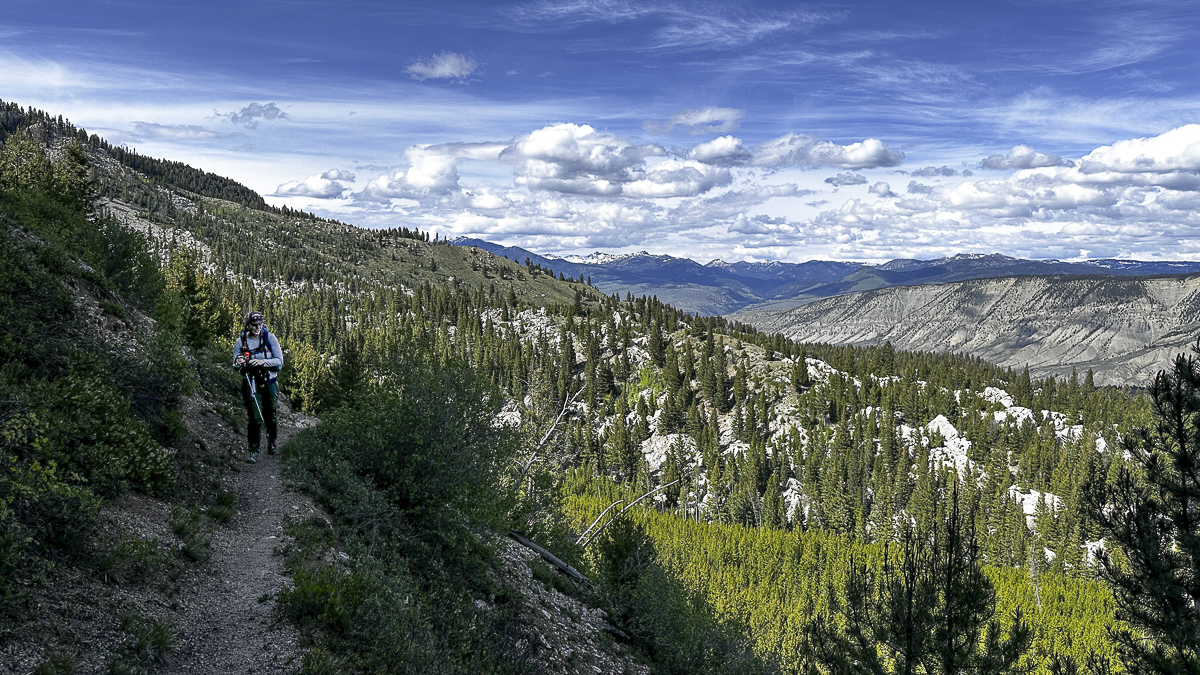
At this point, we wanted to creep up over the next hill for the view and so one thing led to another and we just kept going. We made it a loop hike of about 6 miles that took us most of the afternoon and it was glorious.
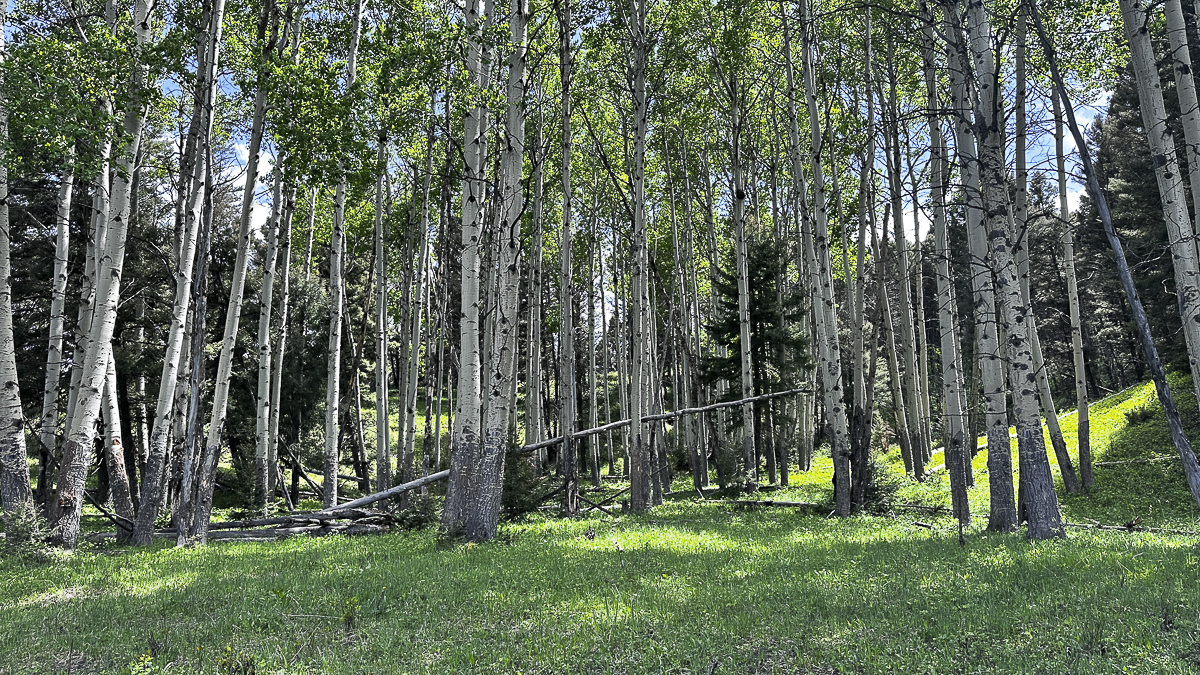
A view along our hikeA beautiful aspen grove
We both love aspen groves and so we were thrilled to come upon a small stand of tall aspens. Our friend, Dan, taught us long ago that aspens are hot spots for wildlife activity, especially cavity nesting birds. We did spot a woodpecker in the trees but weren’t sure which species. More on that later.
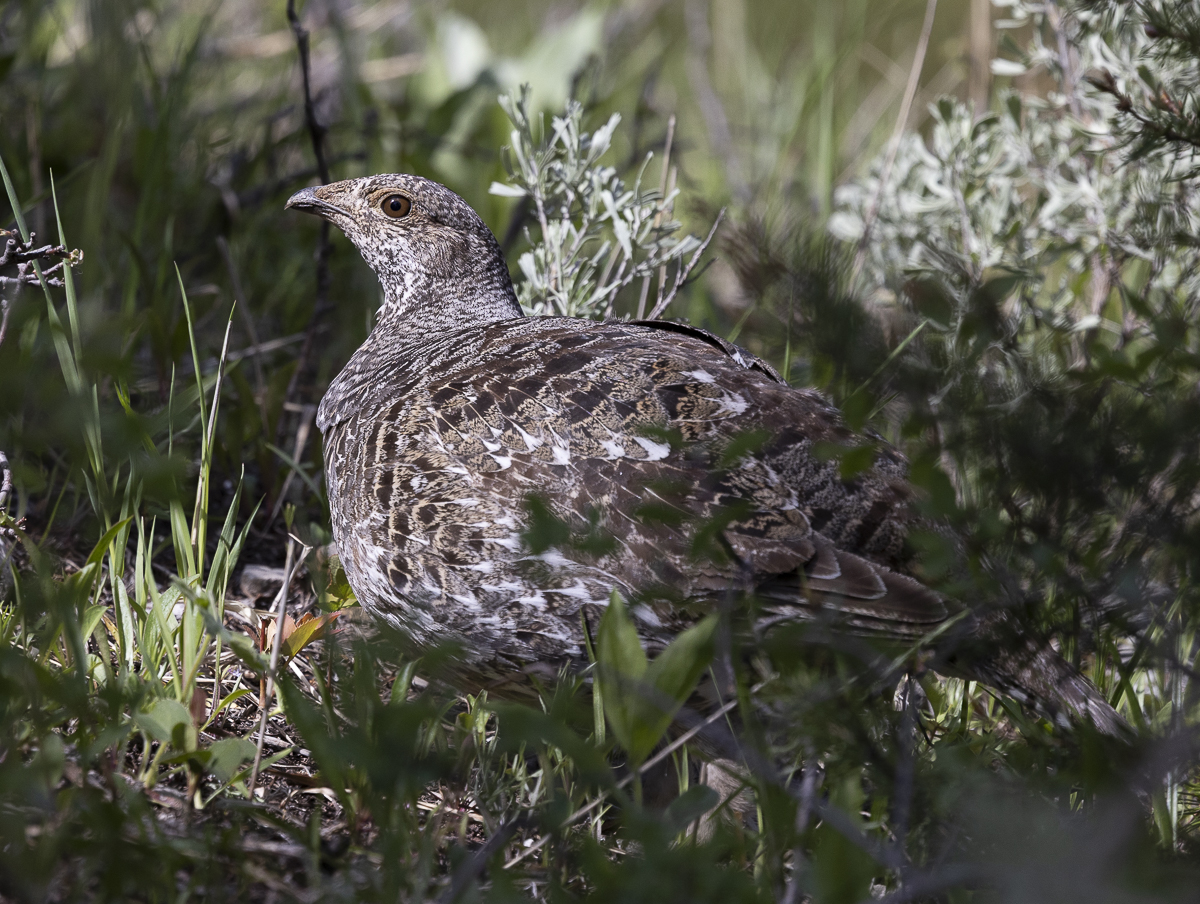
The trail passed through so many different habitat types and the cool shade of the trees was welcome as the afternoon wore on. As we walked along a sloping ridge dotted with Douglas fir and sagebrush, Melissa saw something move as I passed a shrub. We stopped and I spotted a dusky grouse!
Female dusky grouse
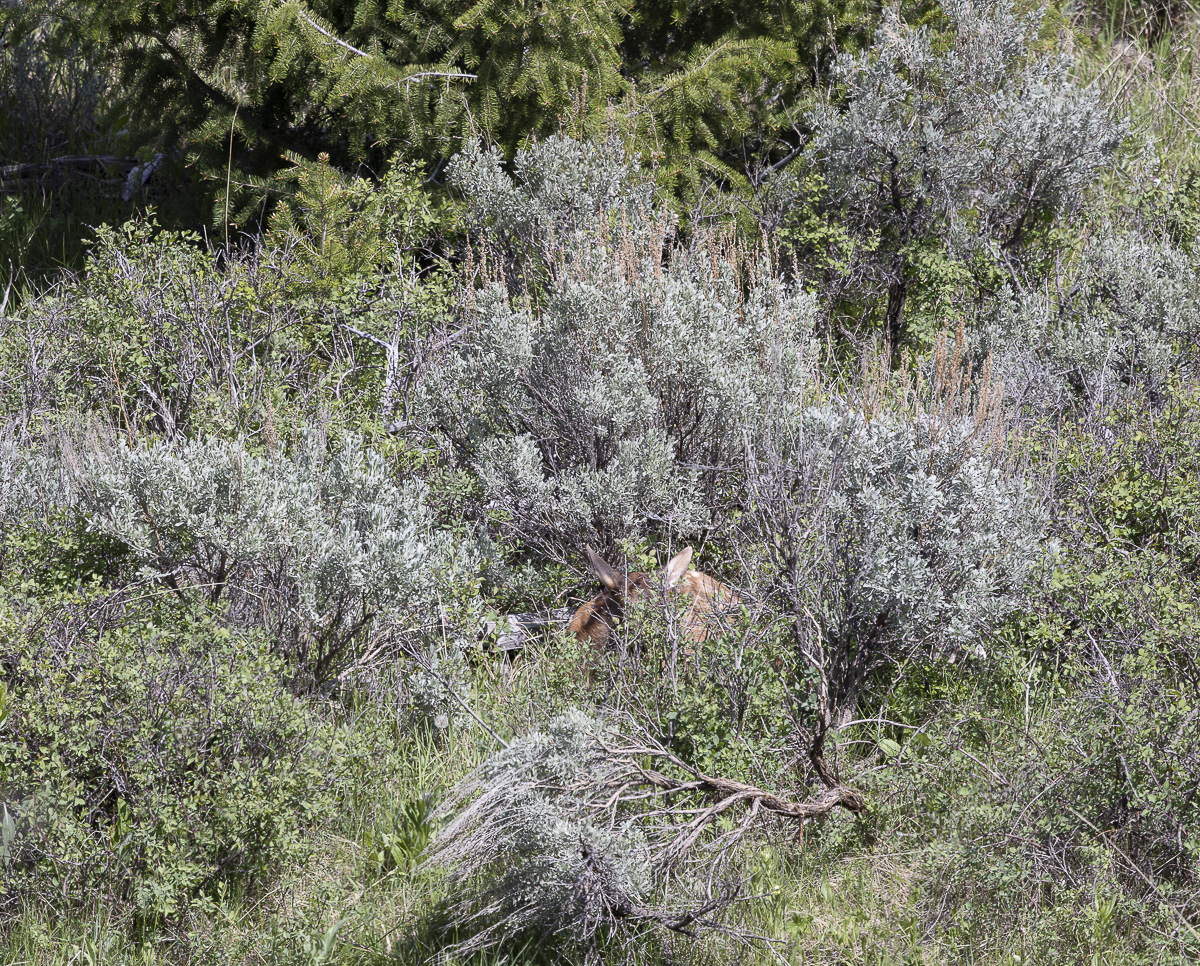
These birds are very tolerant of humans so I eased a bit closer to get a better view and just watched as she pecked at grass seeds and other bits of vegetation. Meanwhile, Melissa excitedly whispered that she had spotted our first elk calf of the season (this was the day before the one we saw behind our house from the last post). I looked and was once again amazed at her spotting ability. The calf had been hidden by her mamma in a tangle of shrubs while she went off to feed (elk calves stay hidden until their mother returns). But this little guy flicked its ears a couple of times and that gave its position away to eagle-eyed Melissa.
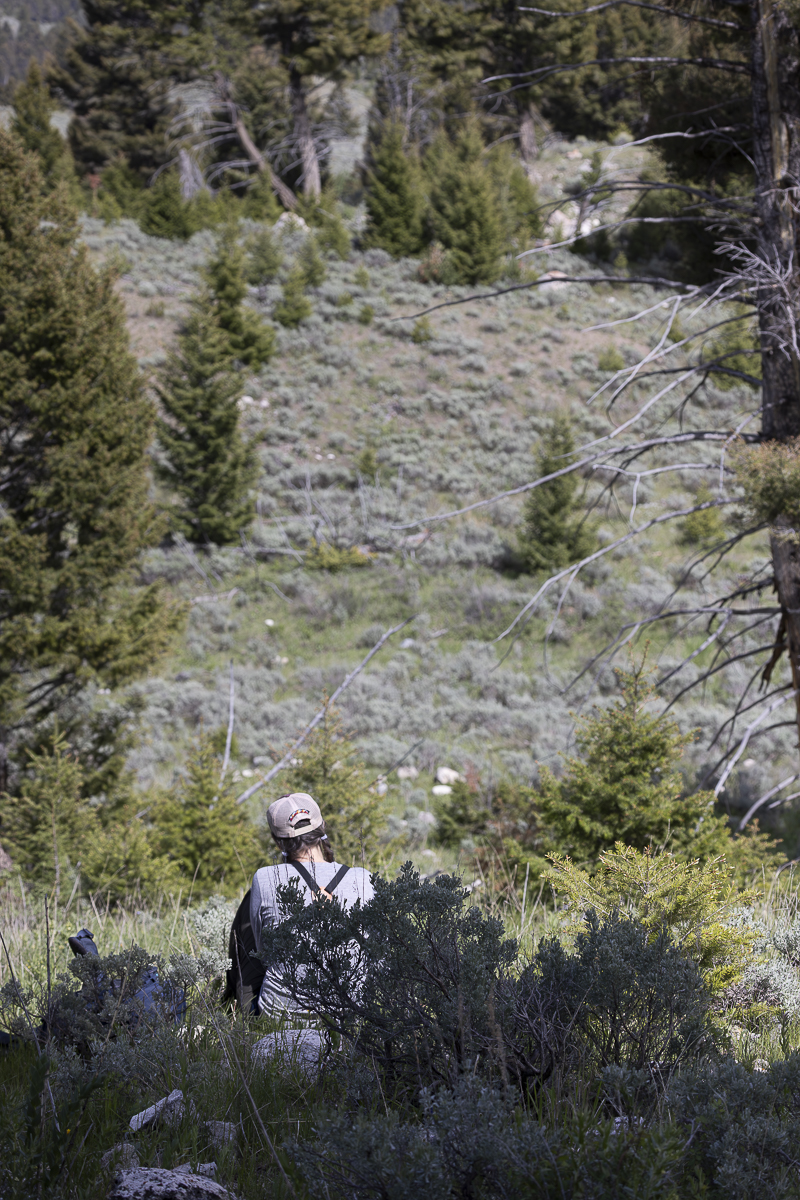
Melissa journaling about the elk calf she had spotted down near that isolated conifer sapling to the right of the center of this photoThe elk calf in a cropped image taken with my 500mm telephoto Hiking out of the Hoodoos
The last stretch of trail was along a ridge line with great views of the surrounding mountains. When we got back to the car, we took a moment to reflect on what a great hike we had just had only minutes from home and how lucky we are to be in our happy place. And it reminded us of how much we love to just walk in the woods (or fields or mountains…) and observe. If you get out of your car and take a stroll, you never know what you might see but we know you will feel the magic of this place.
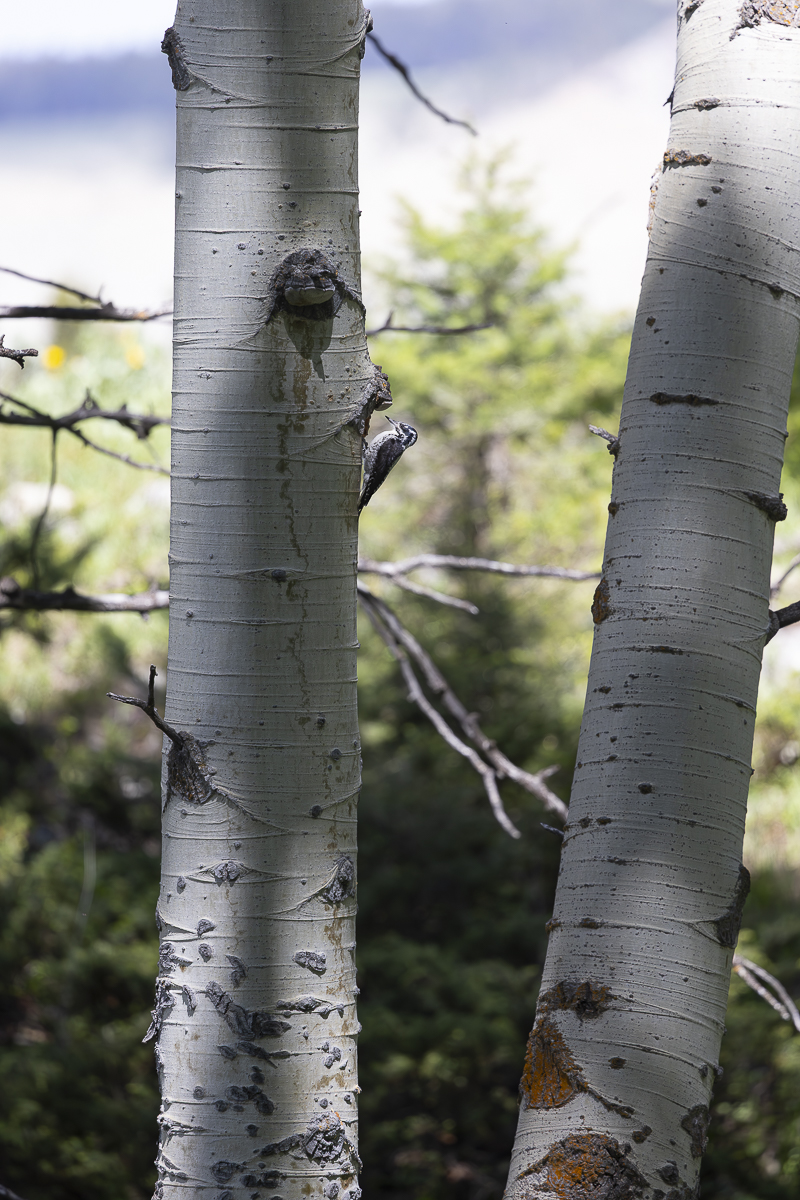
Two days later we decided to do a short hike and go back to the aspen grove via a shorter section of trail that came off the loop we had hiked earlier. We walked in and sat down amongst the towering white trunks and embraced the silence broken only occasionally by the wind rustling the leaves and the sounds of insects and birds. We heard house wrens, ruby-crowned kinglets, and a pair of Cooper’s hawks. I started hearing some faint tapping so i looked around for a woodpecker at the edge of the grove since it sounded somewhat distant. I saw no movement but kept hearing the occasional tapping. At one point we spotted a woodpecker on the side of a trunk and it seemed to disappear.
A woodpecker makes an appearance
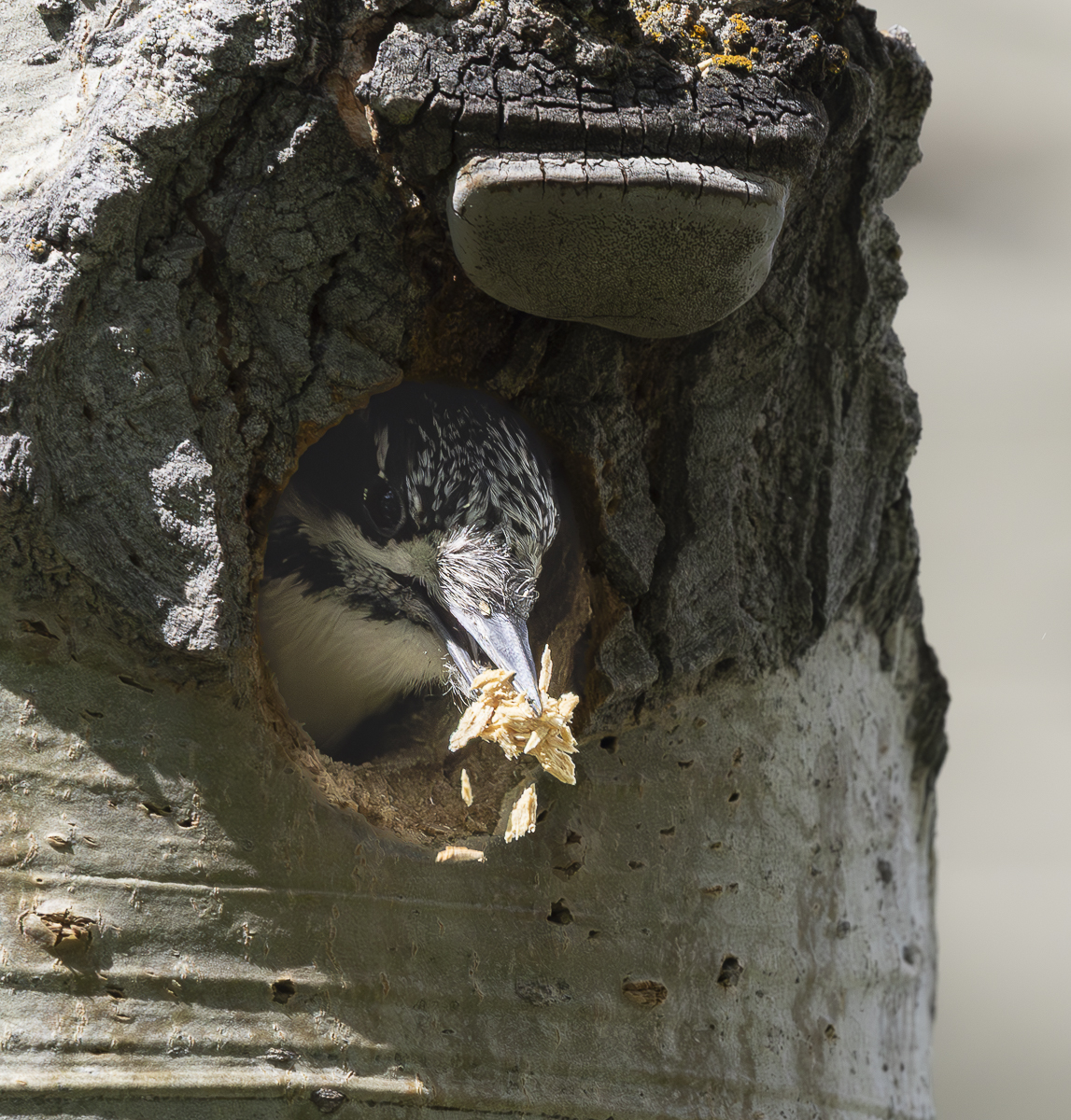
I eased closer and could hear tapping and realized it was coming from inside the tree! The woodpecker was hollowing out a nest cavity making it sound like it was farther away.
The woodpecker stopped tapping and started throwing out wood chips
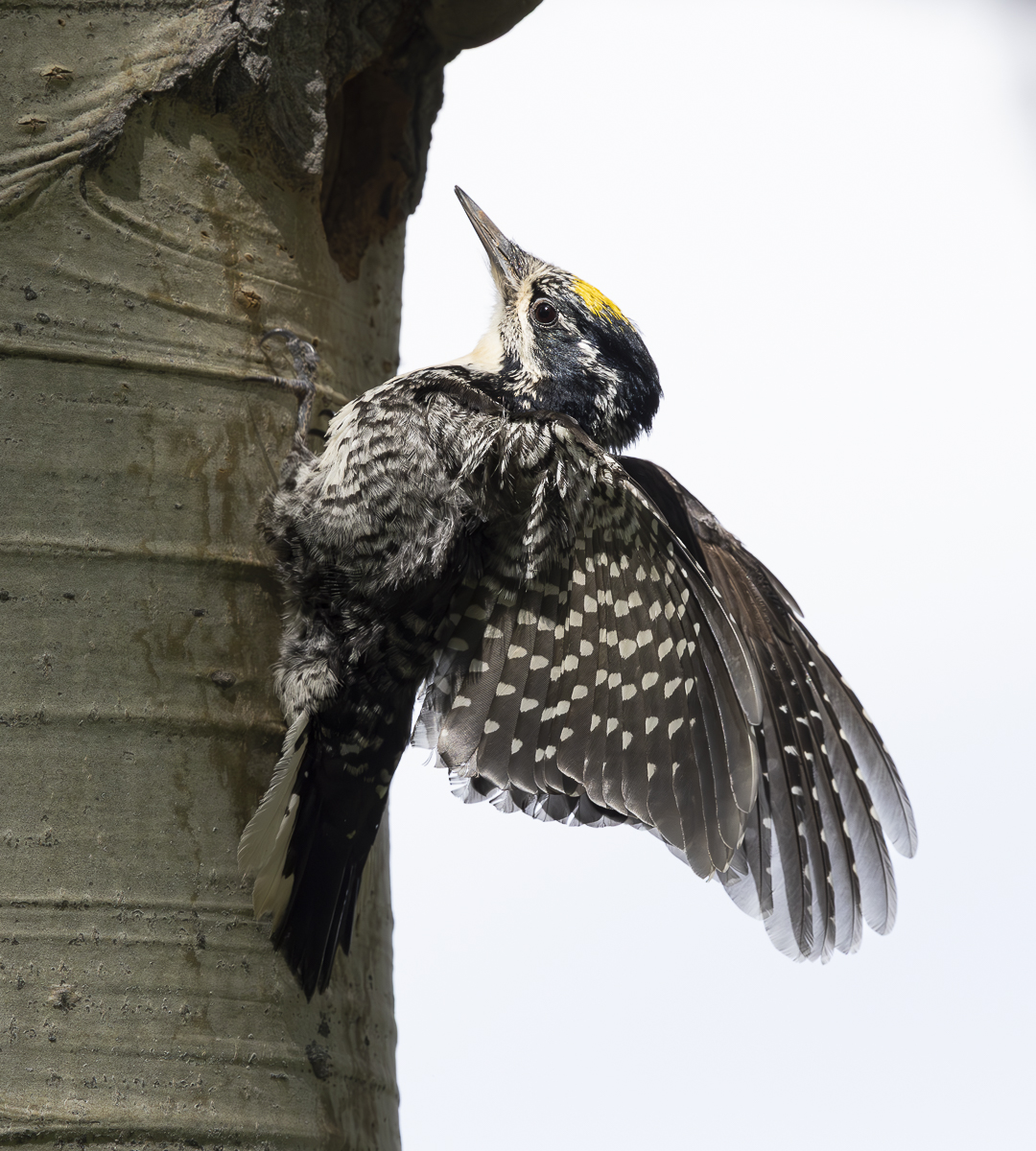
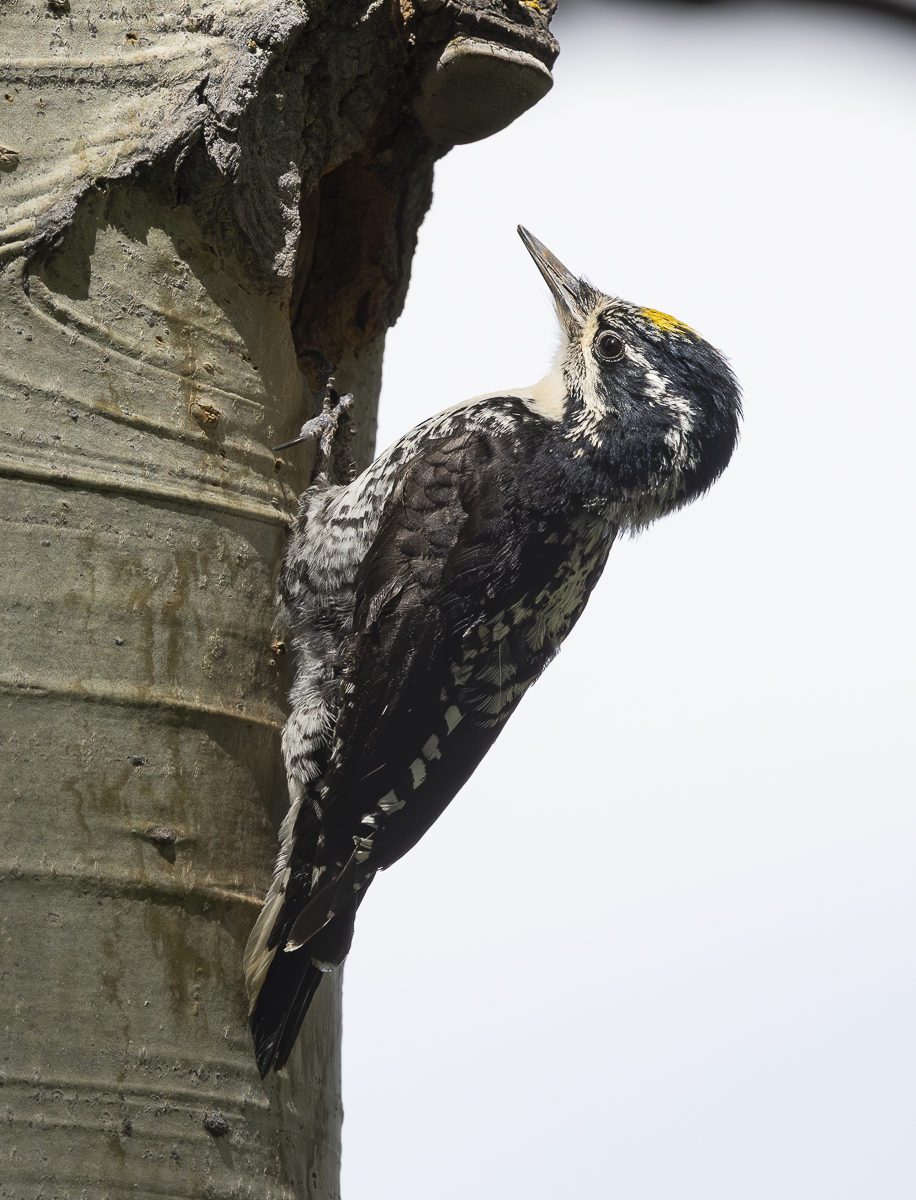
Another woodpecker soon came into view and there was a change of duties. The first bird flew out and the second, the male, went in to add to the house cleaning routine.
With one of the birds outside the cavity we identified them as American three-toed woodpeckers. This one is the male with the yellow cap on its head.Both the American three-toed and its close relative, the Black-backed woodpecker, have the unusual trait of having only three toes on each foot compared to four toes on all other woodpeckers in North America. It is believe this gives these birds extra force for drilling power by allowing them to position themselves slightly farther from the tree trunk when hammering. Zoom in and you can see the foot has only three toes
Before leaving, I took a few video clips of this woodpecker cleaning house. I look forward to returning in a couple of weeks to see what they feed their young.
It seems to me that the natural world is the greatest source of excitement…
~Sir David Attenborough
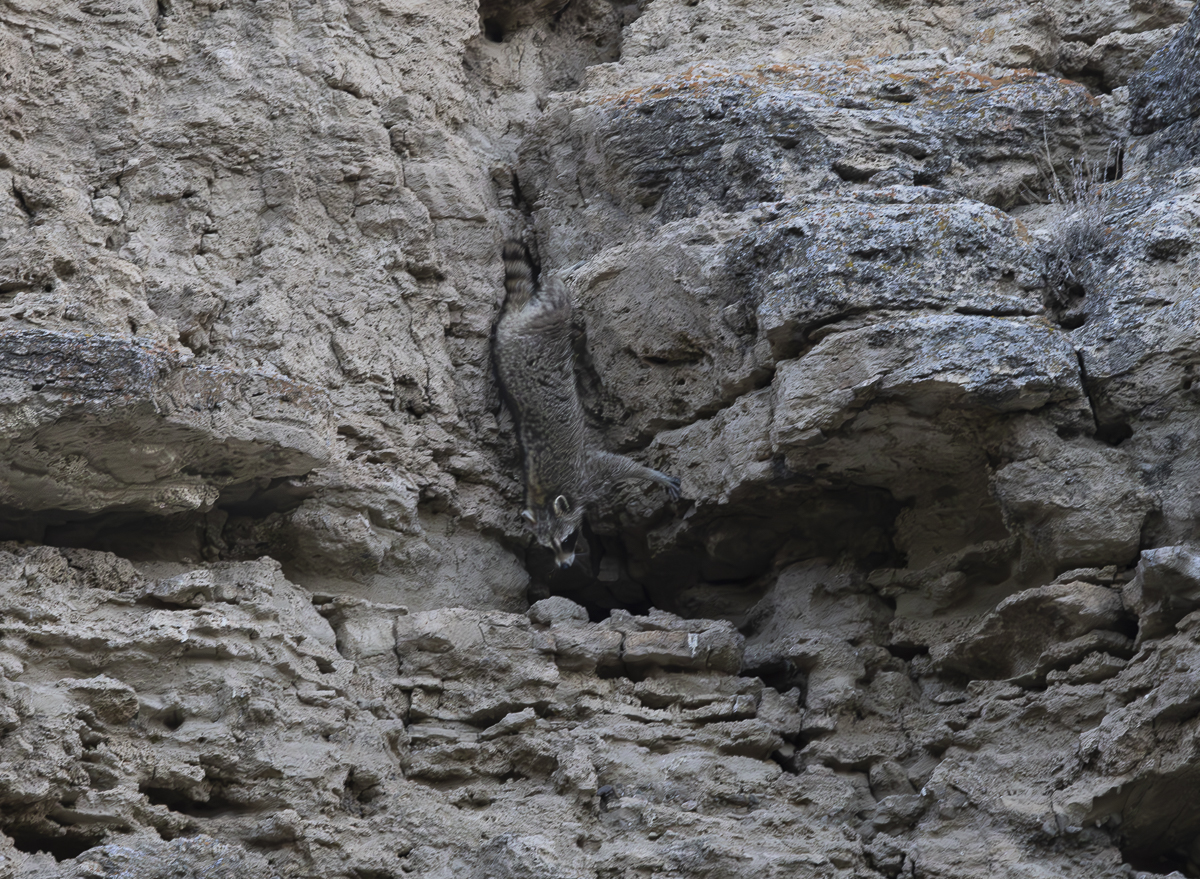
I was awakened this morning about 5:30 a.m. by an elk call that sounded close to the house. I said something and that woke up Melissa who looked out and spotted an alert elk at the base of the cliff behind our house. I walked into the bathroom and saw a gathering of black-billed magpies which is often a sign of a carcass. As I watched, magpies continued to fly in and perch at the top of the cliff. Melissa then spotted two mammals crawling along a ledge on the cliff face – raccoons! I have never seen a raccoon in the park but I had heard they are in town. Having seen many raccoons back east in the woods and along roadsides, it was indeed odd seeing them on the face of a cliff.
I went out on the deck, camera in hand and could only see one raccoon who quickly spotted me and started moving along the ledge. It then did an impressive scramble down the steep face and disappeared into a crevice in the cliff.
A raccoon climbing down the cliff face this morning (click photos to enlarge)
As for the magpies, they quickly dispersed. I suppose it was just them checking in on these two potential predators in their neighborhood. The magpie nest across the street has fledged its young (we counted 5 young the other day squawking noisily in the willows in front of the house).
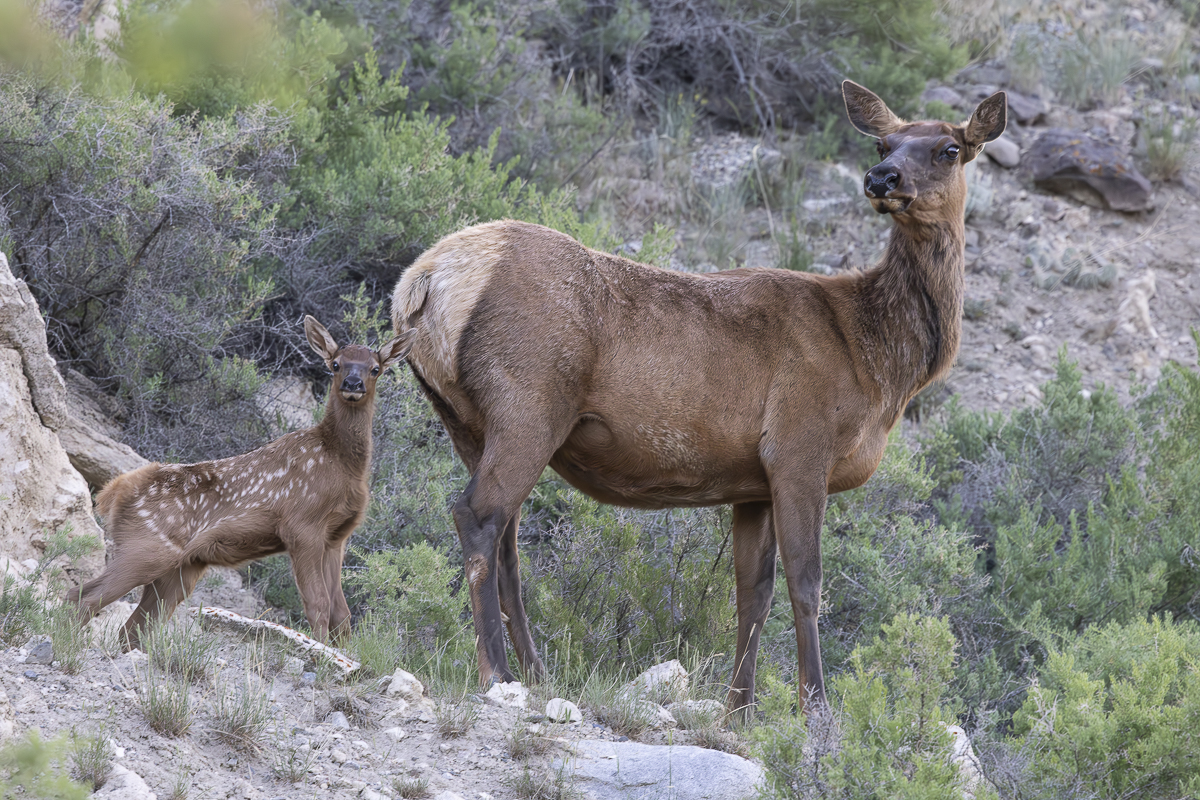
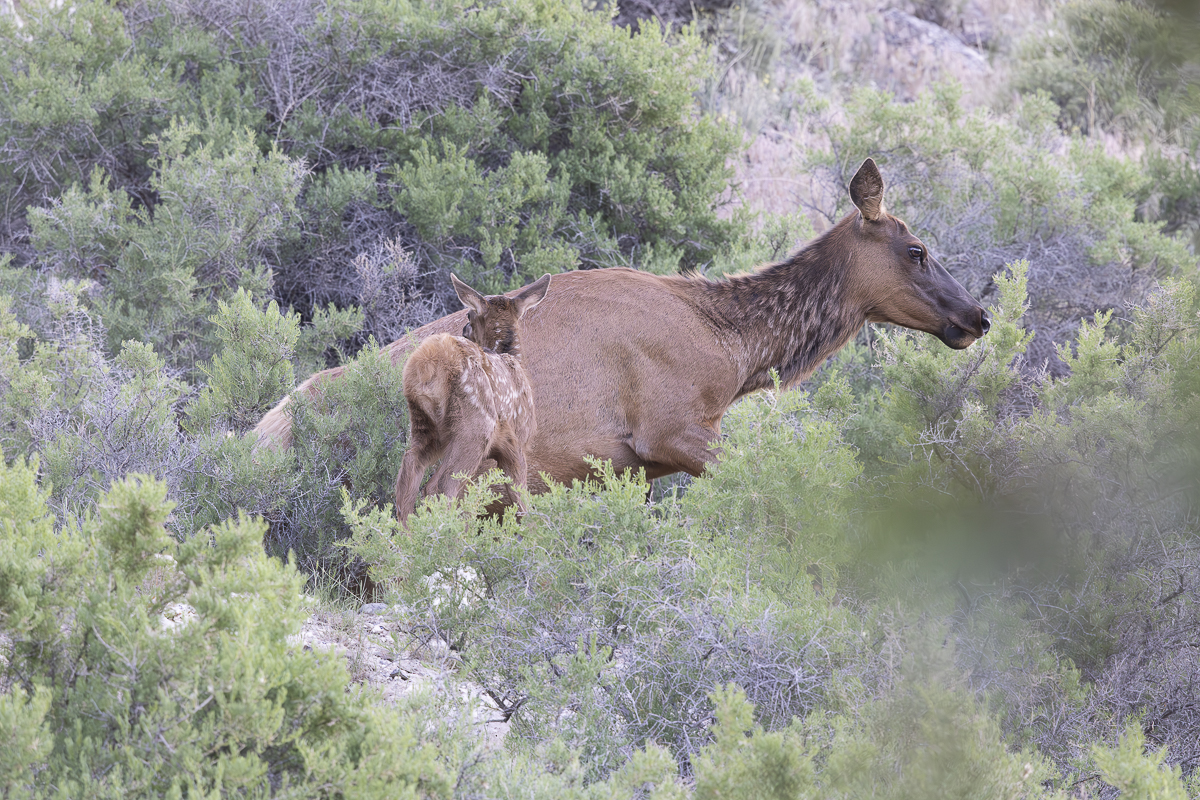
The cow elk had turned around, still looking up and around and suddenly we knew the reason why…her calf appeared! This is only the second elk calf we have seen this season (more on the first encounter in the next post) and by far the closest.
Cow and calf elk behind the house
You dare not get close to an elk calf as the mothers are very protective. Just last week we had hiked up that same path to the base of that cliff and put out two trail cameras. I think those will now remain unchecked for a couple more weeks. Mother elk stash their young in bushy areas or other hiding places where the calves remain until she comes back to nurse them. And you don’t want to be the thing that disturbs the calf if the cow is anywhere nearby.
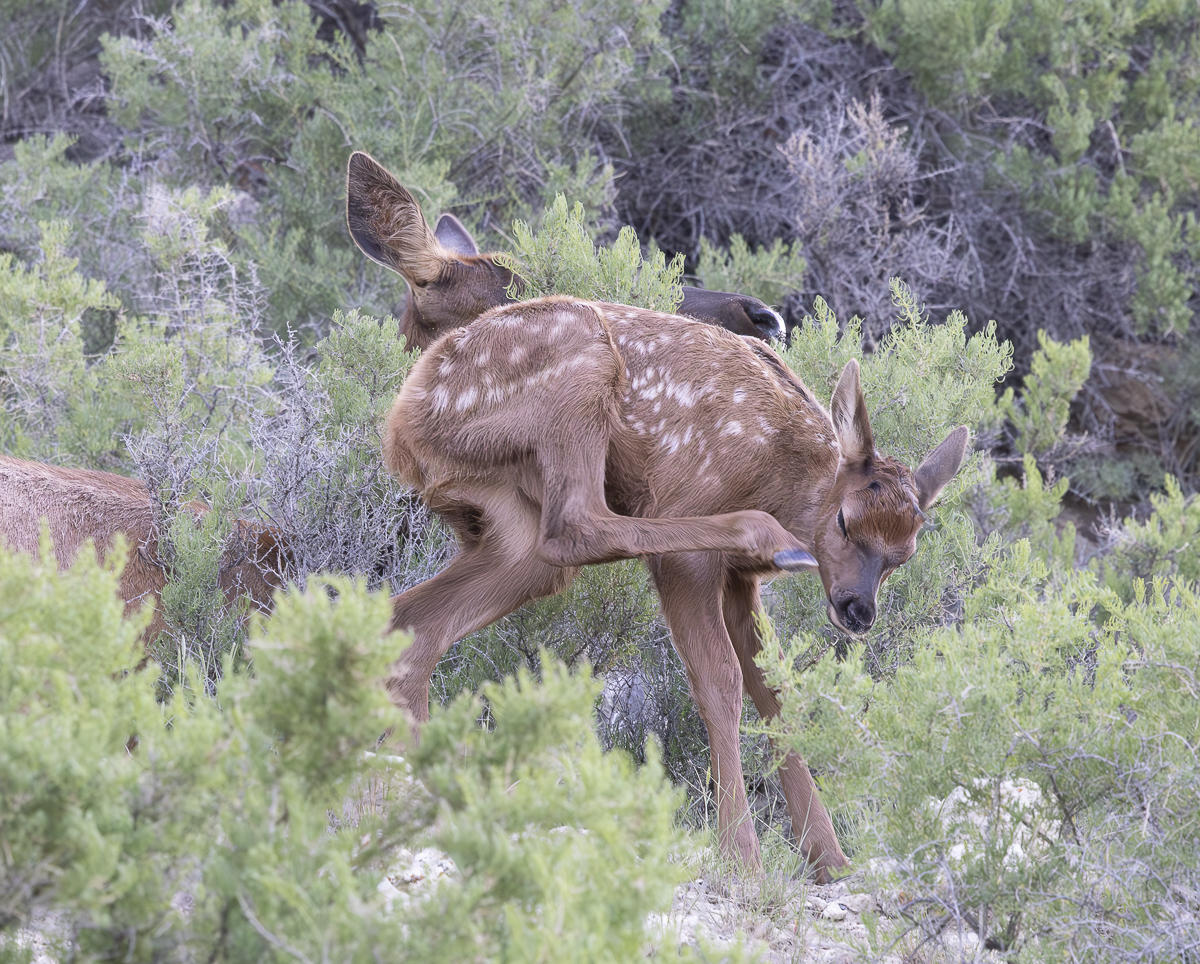
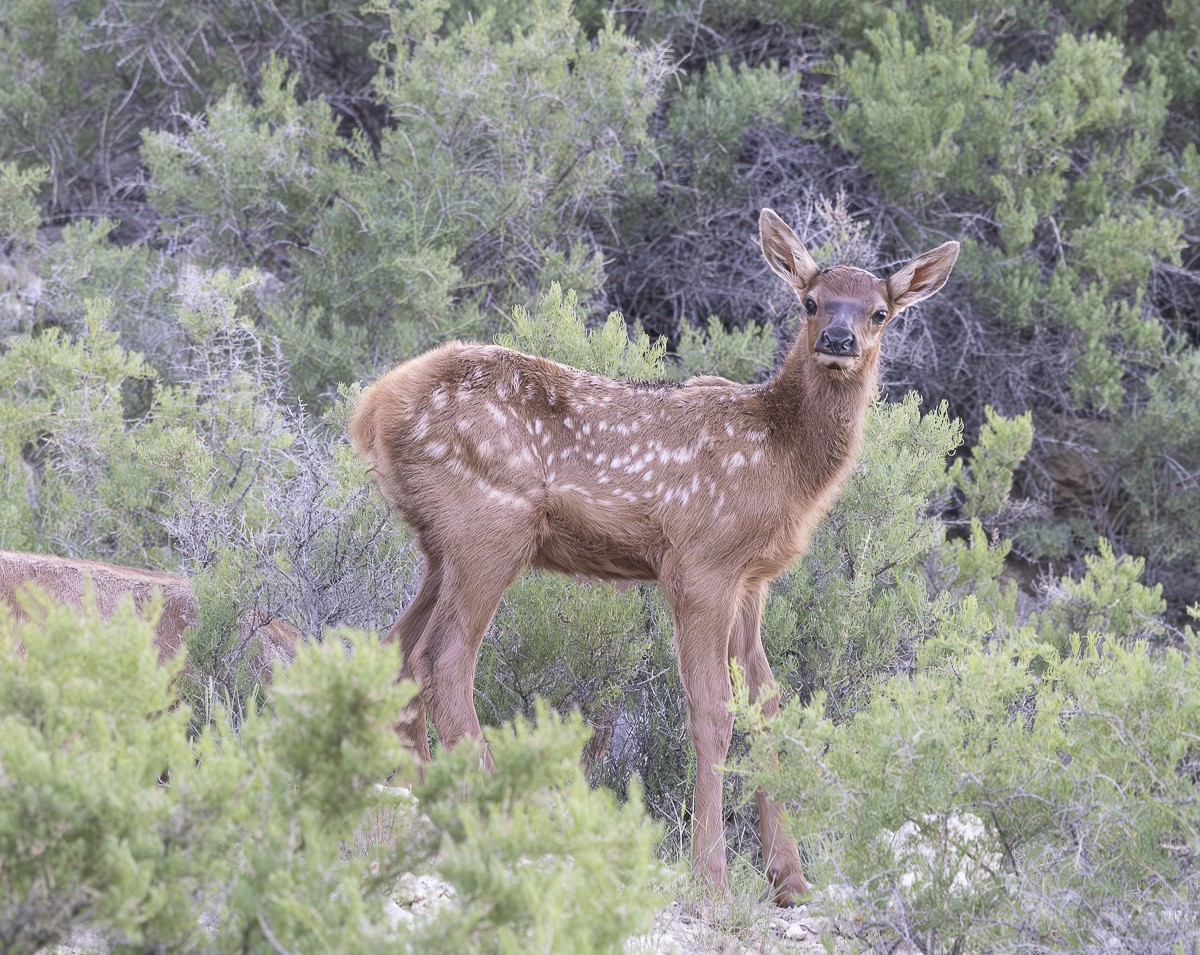
We watched this cutie for several minutes as it maneuvered on the slippery slope. The cow was down in a depression but the youngster came up on a small ridge and gave us some great views before they both headed off behind the neighbor’s houses. I’ll be sure to let our neighbors know to be on the lookout and a bit cautious for the next week or so.
Everyone needs a good scratch when you first wake upThe elk calf looking at me standing on my deck in my PJs thinking that guy is going to freeze out here…it’s only 35 degrees this morning!The cow and calf head down slope and soon disappear