I admire herons, herons of all sorts. They have a stately posture, epitomize patience, and have bright eyes that can stare down anyone. My recent trip to Florida had lots of heron highlights. Here I report on the long and short of it, Great Blue Herons and Green Herons.
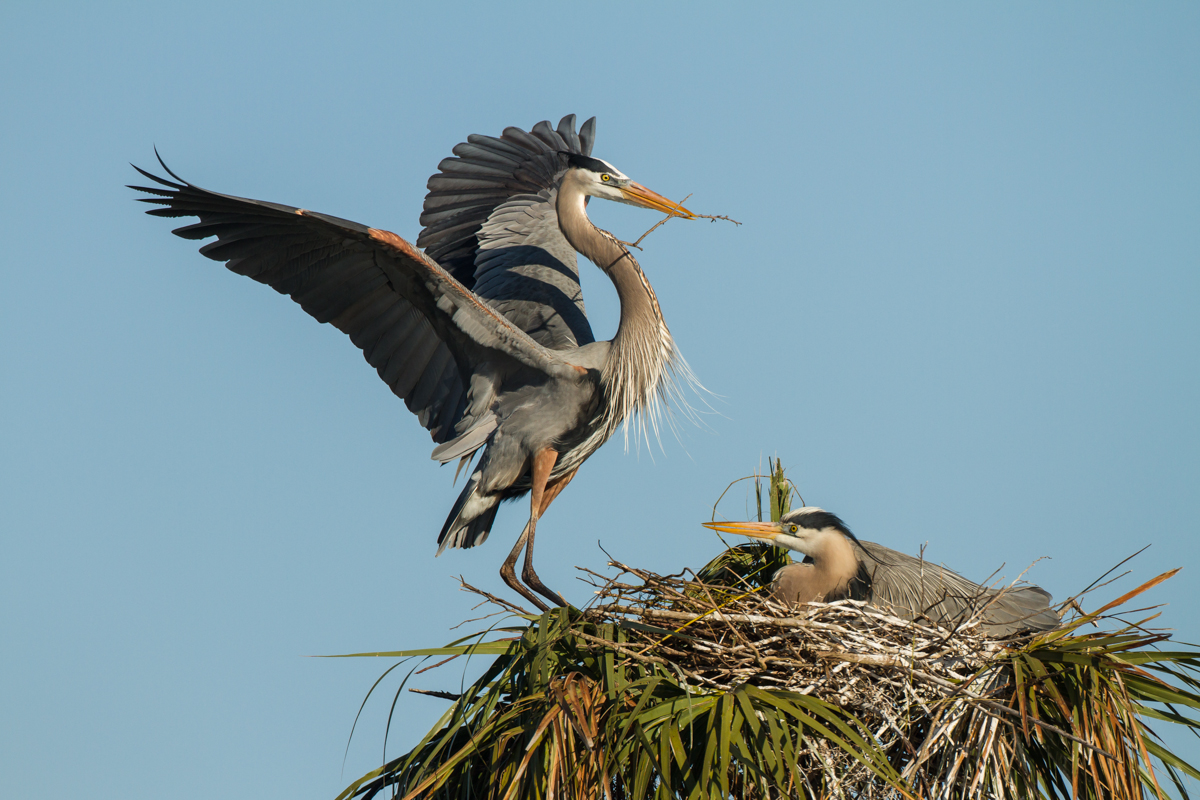
Standing four feet tall with a wing span of six feet, Great Blue Herons are among our largest birds, even though they weigh in at only 5 or 6 pounds. I was surprised to see them already nesting at Viera Wetlands. In fact, a volunteer said that they were re-nesting, as a recent storm had destroyed several nests that already had eggs. I have seen nesting colonies in NC that were in tall dead trees in swamps, but the ones at Viera were on top of palm trees out in the wetlands.
Great Blue Heron nesting pair at Viera Wetlands
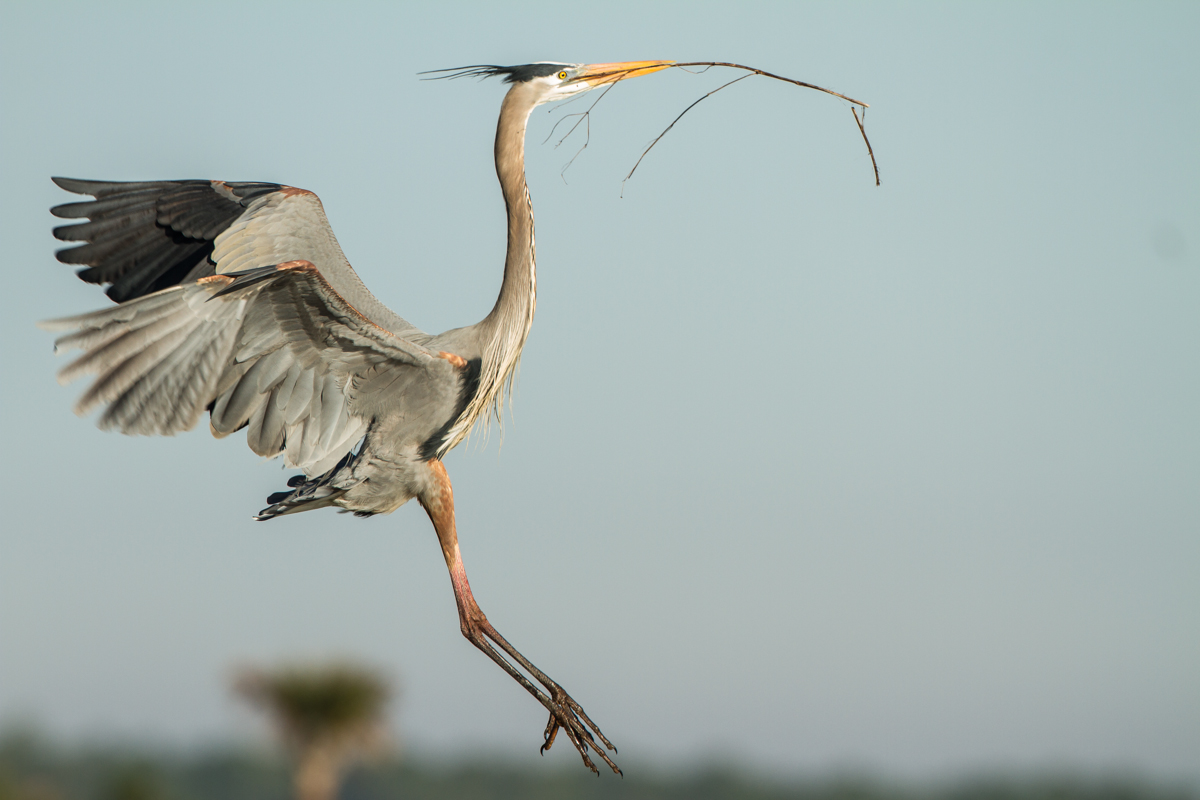
The herons were sitting quietly on their nests early in the day, but as the sun got higher, the male flew off and began collecting sticks. He would drop down to a broken branch laying on the ground and inspect it, before twisting off a section and flying back to the nest. Occasionally, a male would go to an unoccupied nest and steal a stick to take back to his mate.
Male Great Blue Heron flying into nest with a stick
Once he lands, he presents the stick to the female, and she accepts it (not sure what happens if she doesn’t like a stick).
Female heron inspects the stick brought to the nest by her mate
She occasionally simply plucked the stick from him without standing up and carefully placed it in the nest. He would then fly off for another. At other times, there was more ceremony involved, with both birds stretching and bill pointing before she accepted the stick. Must have been a really good stick!
A few times there was a wing stretch display involved in the stick transfer, and often there would be a prolonged period of neck stretching and bill pointing.
Wing stretch displayBill pointing and neck stretch display
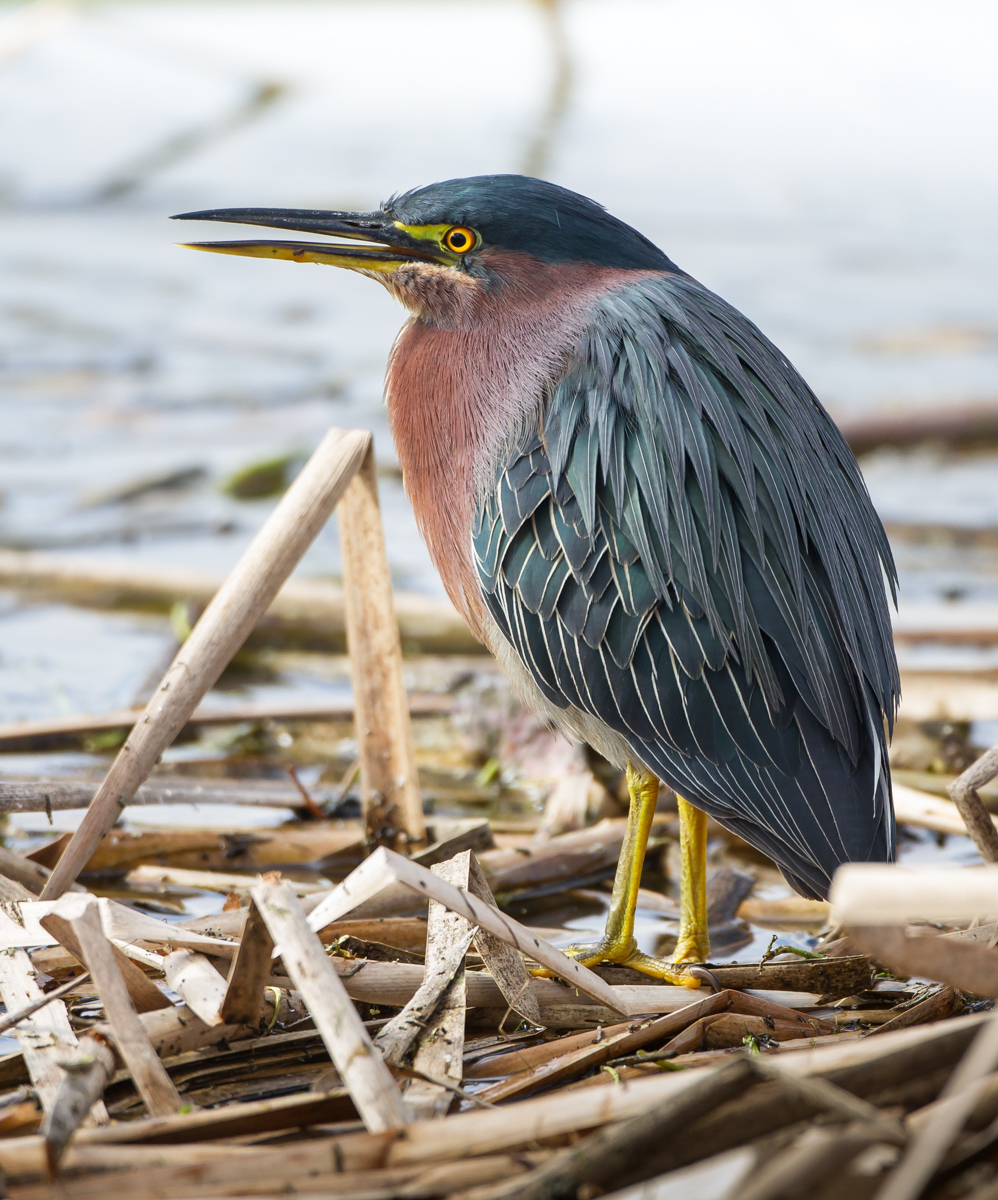
The stick ferry finally ended for the morning and I walked down the border of the wetland dike. Soon I found one of the many diminutive Green Herons I saw on the trip. Green Herons are one of our smallest herons, standing only 18 inches tall with neck outstretched, and have a wing span of 26 inches (about one third that of a Great Blue Heron). They are found in freshwater swamps and marshes throughout the eastern half of the U.S. and up the west coast. Green Herons are richly colored in shades of chestnut, dark glossy green, and streaks of beige and white.
Green Herons are richly colored when viewed up close
They have piercing eyes and are slow motion stalkers of fish and other aquatic organisms at the edge of marshy areas and open beds of wetland vegetation. Green Herons are one of the few birds known to use tools to hunt. They have been observed using twigs, feathers, and other objects to create “fishing lures”. They drop the object on the water surface, luring small fish to within striking distance.
Hunting in a stand of reedsGreen Heron hunting in bed of Marsh Pennywort
Often, as I prepared to get a shot of one that had momentarily stepped out in the open, it would raise its crest feathers and jump out in pursuit of a nearby Green Heron that had escaped my notice. I’m not sure if these were territorial interactions over food, breeding territory, or both.
Green Heron with raised crest
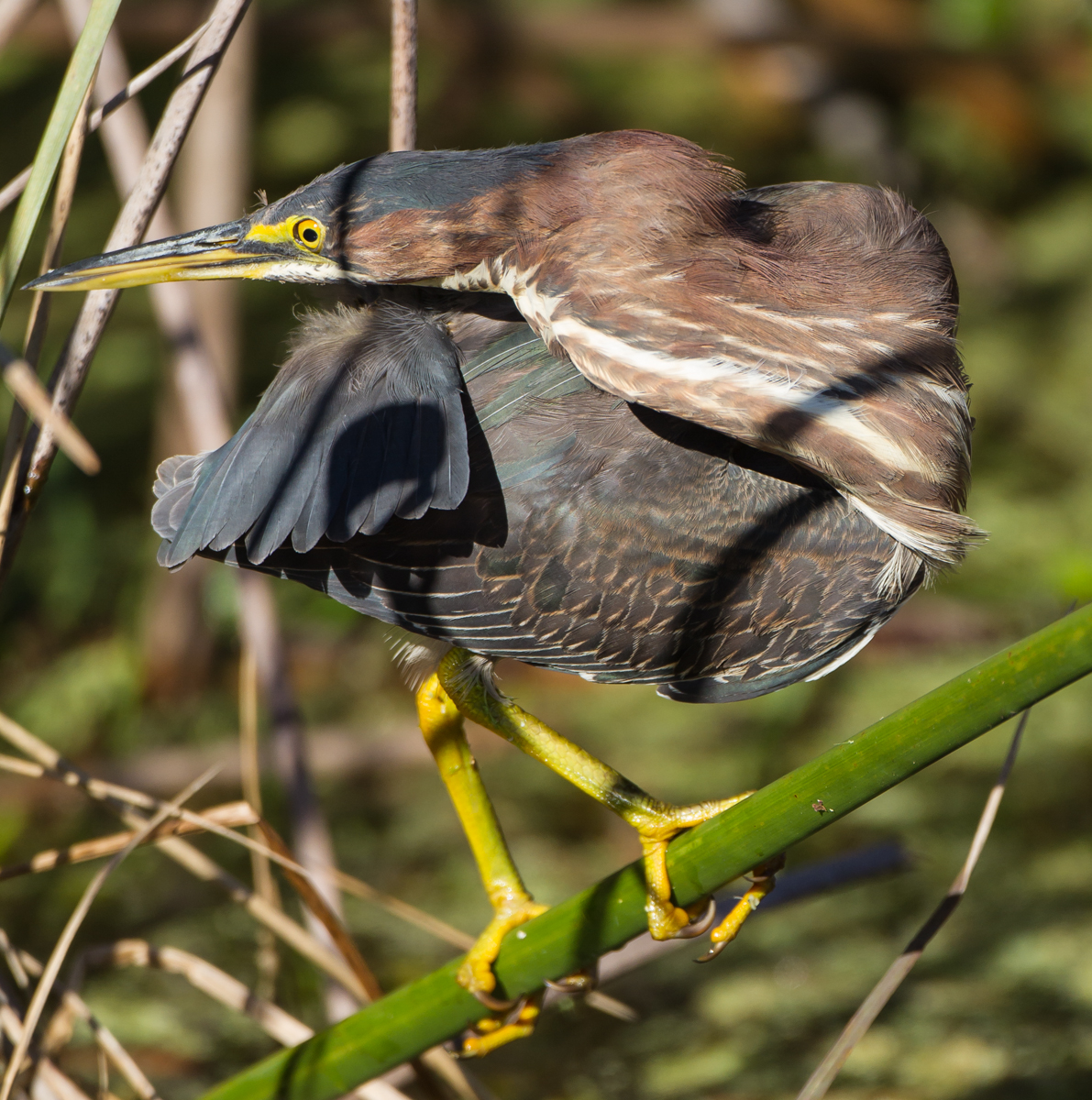
This display was usually accompanied by a neck stretch designed to make this tiny marsh hunter appear bigger.
Green Heron with neck stretched
Both species are a joy to watch, and I have decided that time spent with herons, short or tall, is time well spent.
A wonderful bird is the pelican, His bill will hold more than his belican, He can take in his beak Enough food for a week But I’m damned if I see how the helican!
~Dixon Lanier Merritt
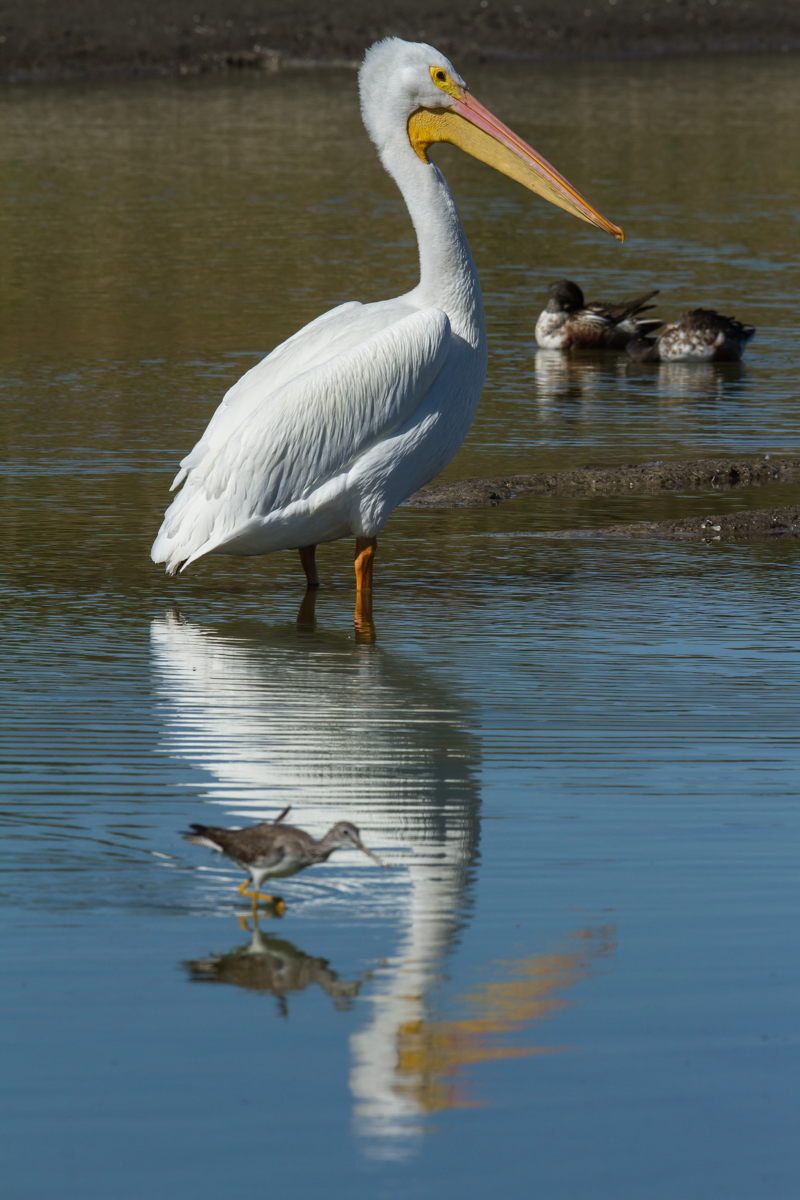
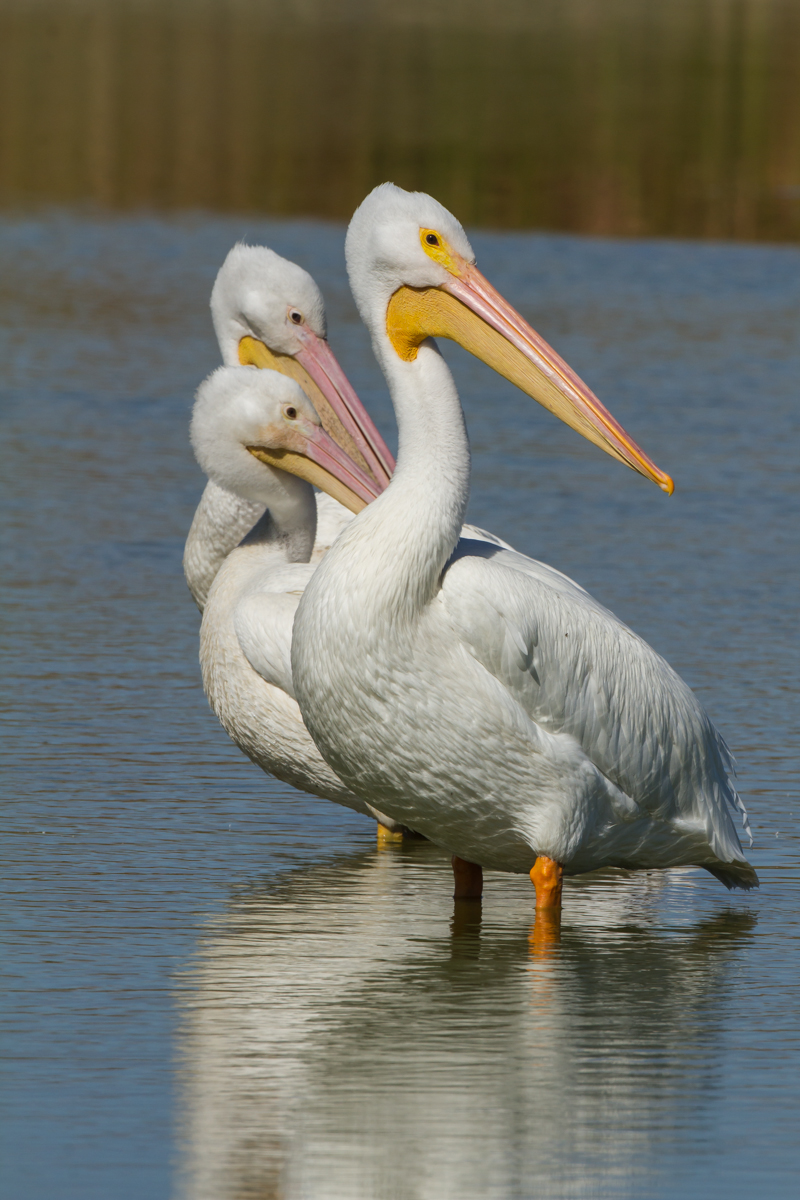
American White Pelican and friends at the Click Ponds (click photos to enlarge)
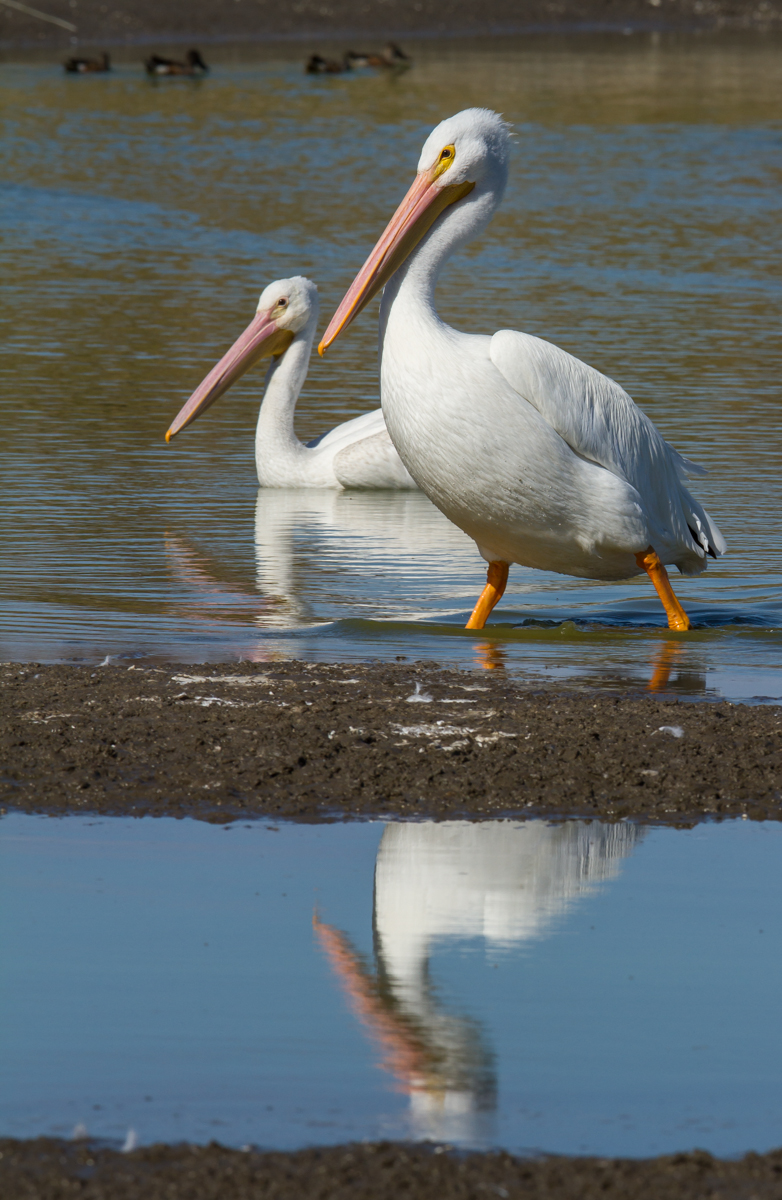
American White Pelicans (Pelecanus erythrorhynchos) are always a treat to see. When I first moved to North Carolina over 30 years ago, the only place I ever saw them was an occasional one out on the Outer Banks. In the past decade or so they have become more predictable in winter at places like Mattamuskeet National Wildlife Refuge. On my recent Florida trip, I had seen a few fly over at Merritt Island NWR but was pleased to find a large flock roosting and feeding on the Click Ponds, part of the water reclamation complex in Viera.
American White Pelicans
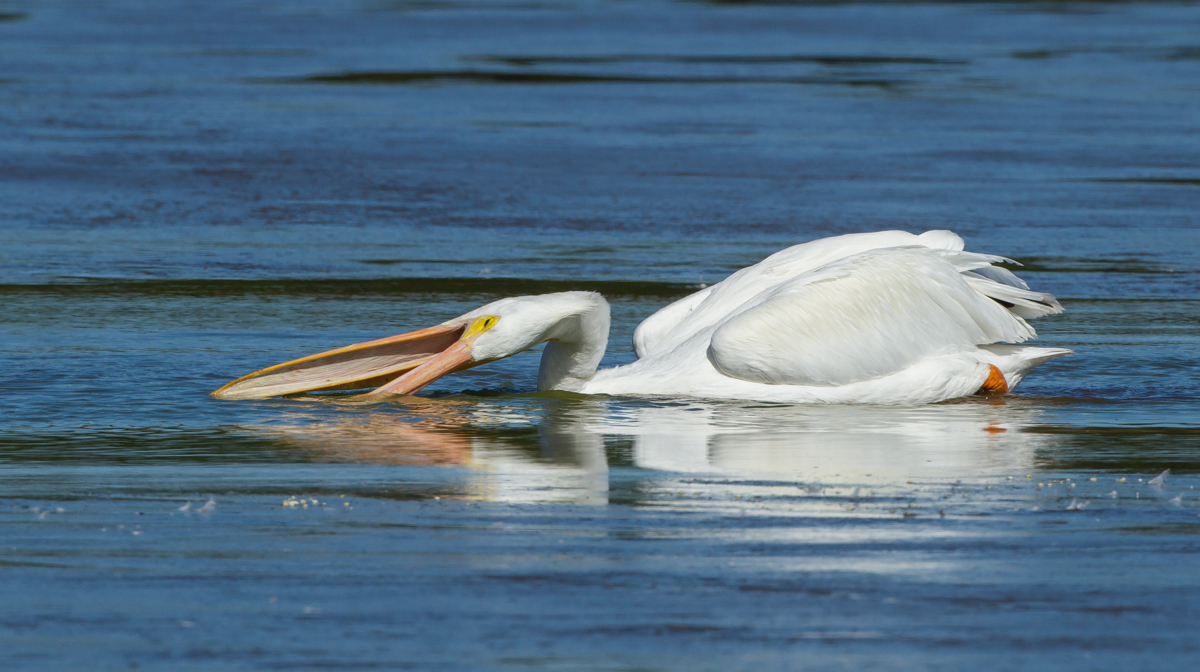
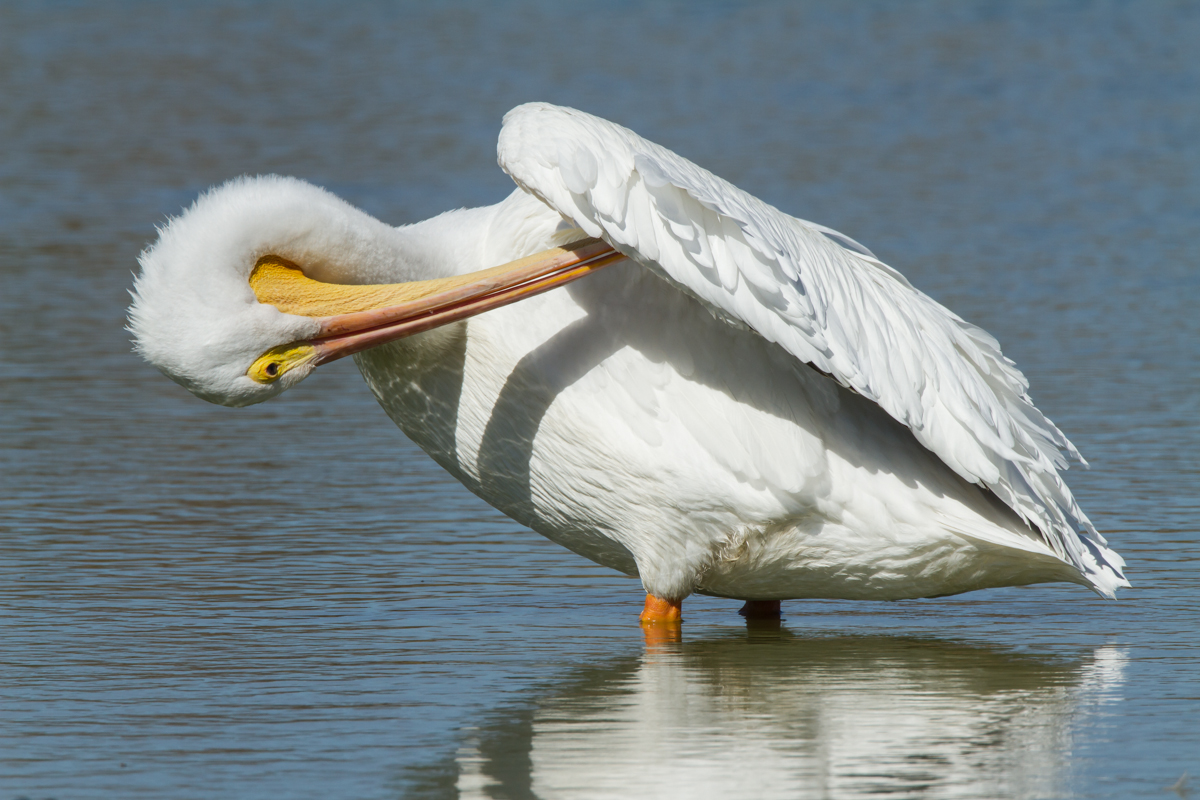
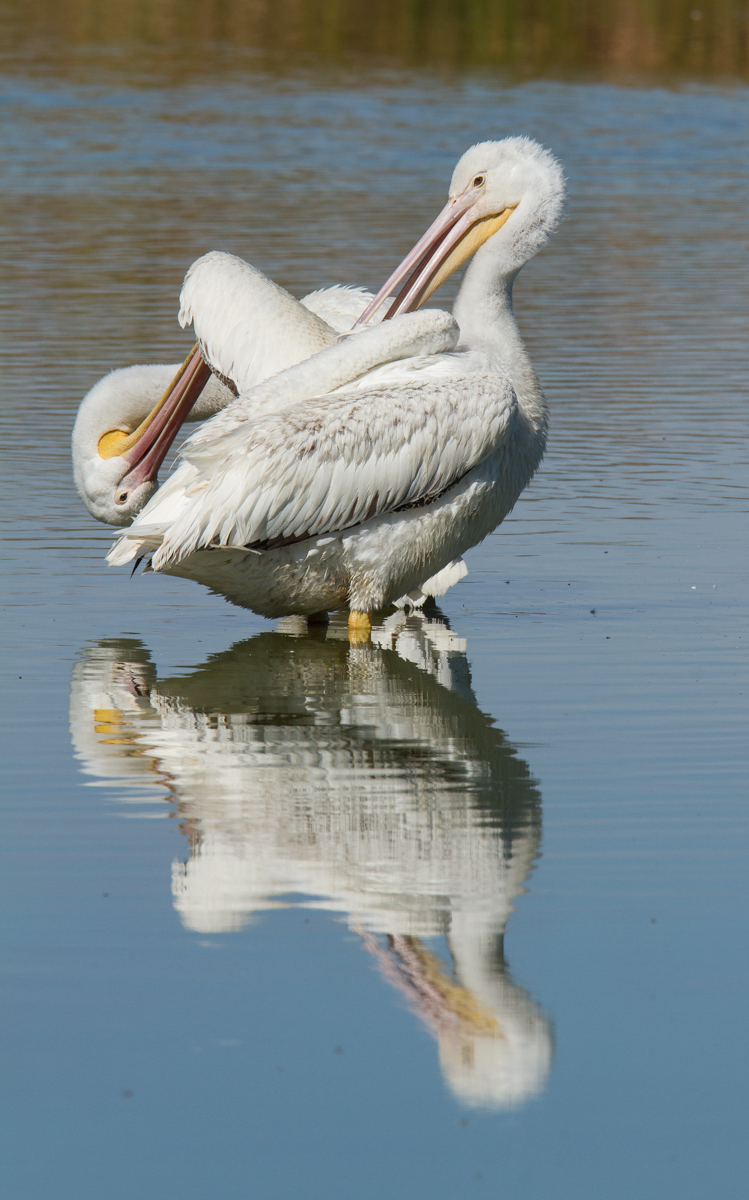
I spent a couple of hours one day watching them as they flew in and out of the pond, rested, preened, and gracefully fed in their unique fashion. Unlike our more familiar Brown Pelican, which plunges headfirst into waters to capture fish, this species uses a graceful, almost ballet-like motion, to scoop up fish in shallow water. In very shallow water, they turn their head sideways, stretch out their neck with mouth agape, and plunge their bill into the water.
American White Pelican feeding in shallow waterA pelican pulling its beak back before squeezing out the excess water and gulping any captured fish
Here is a very short video clip showing their unique feeding behavior. They will often work cooperatively to herd fish and then plunge their beaks into the water to scoop up a meal.
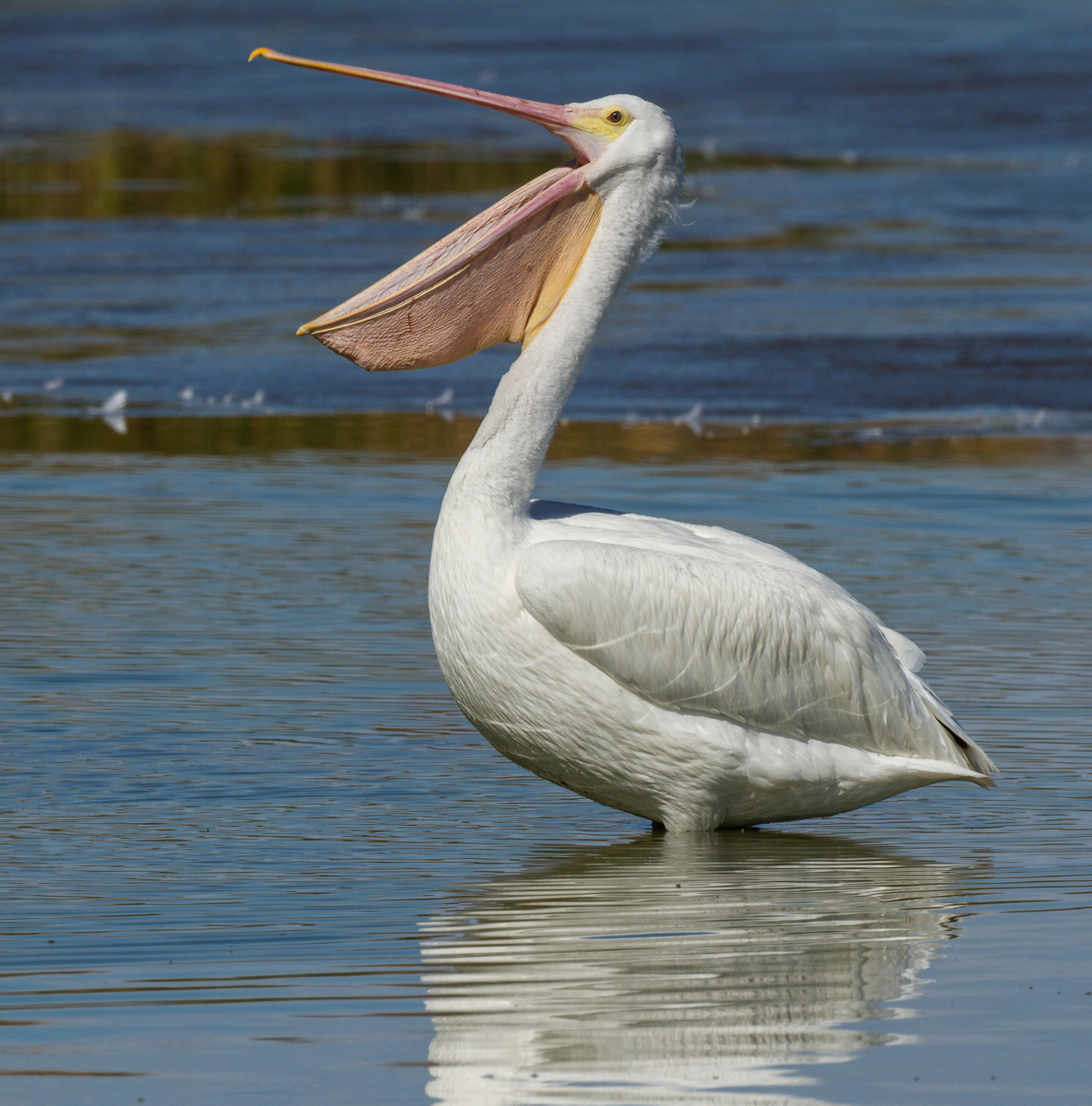
And, in fact, a pelican’s bill can hold more than its belly – their large bill pouch can hold about 3 gallons of water, and their stomach only about a gallon! Pelicans have a great deal of control over their pouch – a set of tongue muscles controls movement of the pouch skin, so they can tighten it and expel water after scooping up fish. They can also cool themselves off by gular fluttering, a strange-looking flapping of the pouch skin that functions much like a dog panting. I have seen this on the young of Brown Pelicans in NC on a hot summer day when I helped band them with the Audubon Society over 25 years ago.
Pelican pouch
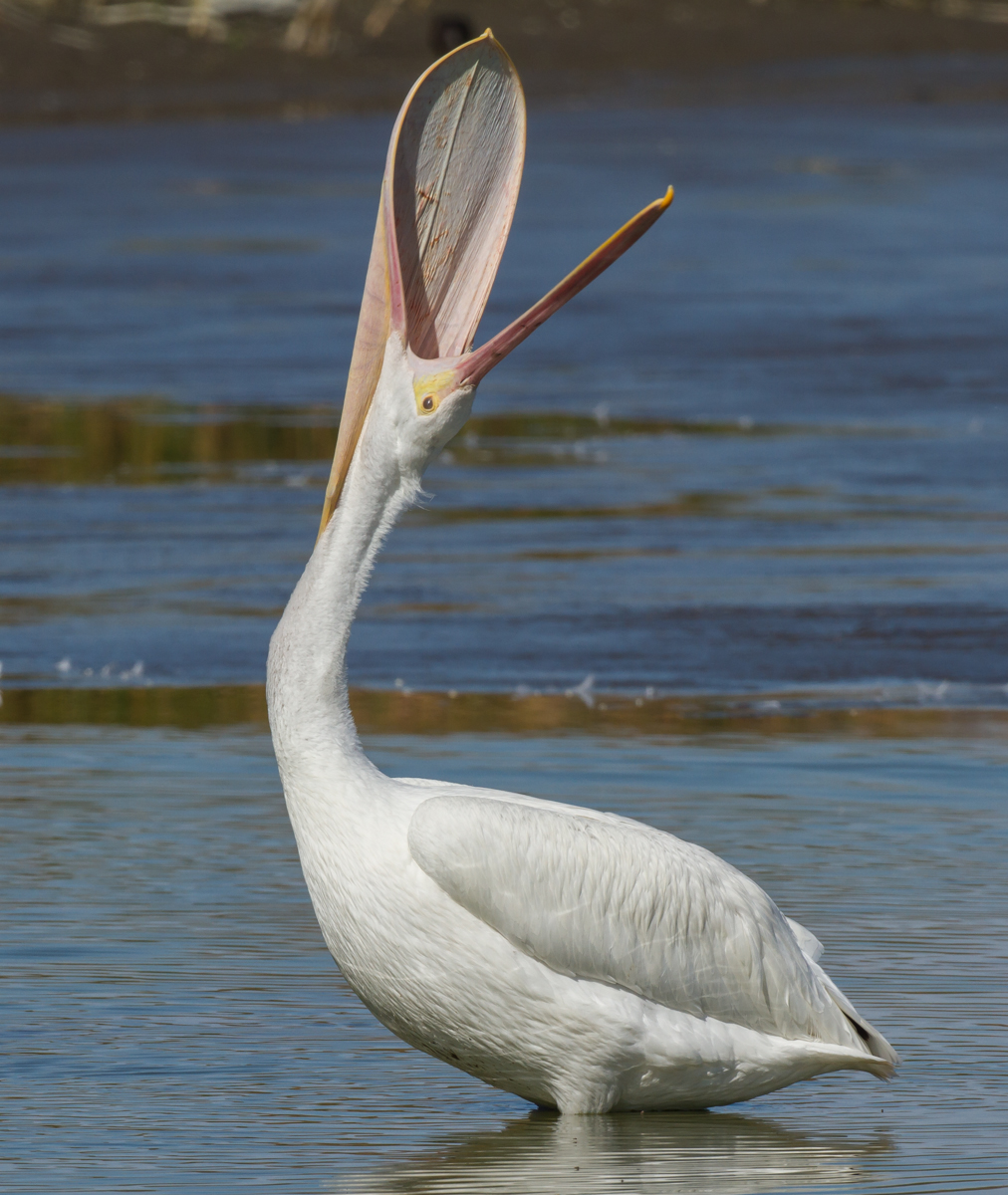
But the most amazing thing I saw these pelicans do with their pouch was what can only be described as pelican pouch yoga – a series of bizarre stretches and gapes. I saw several do this maneuver, one that they can do quickly, so I was only able to capture the sequence on one bird. They start by stretching the pouch over their breast, then stand up and point skyward and snap their bill while having the pouch wide open. Very strange indeed.
Pelican pouch stretchStretching the pouch over the breastThe final upward stretch with bill agape
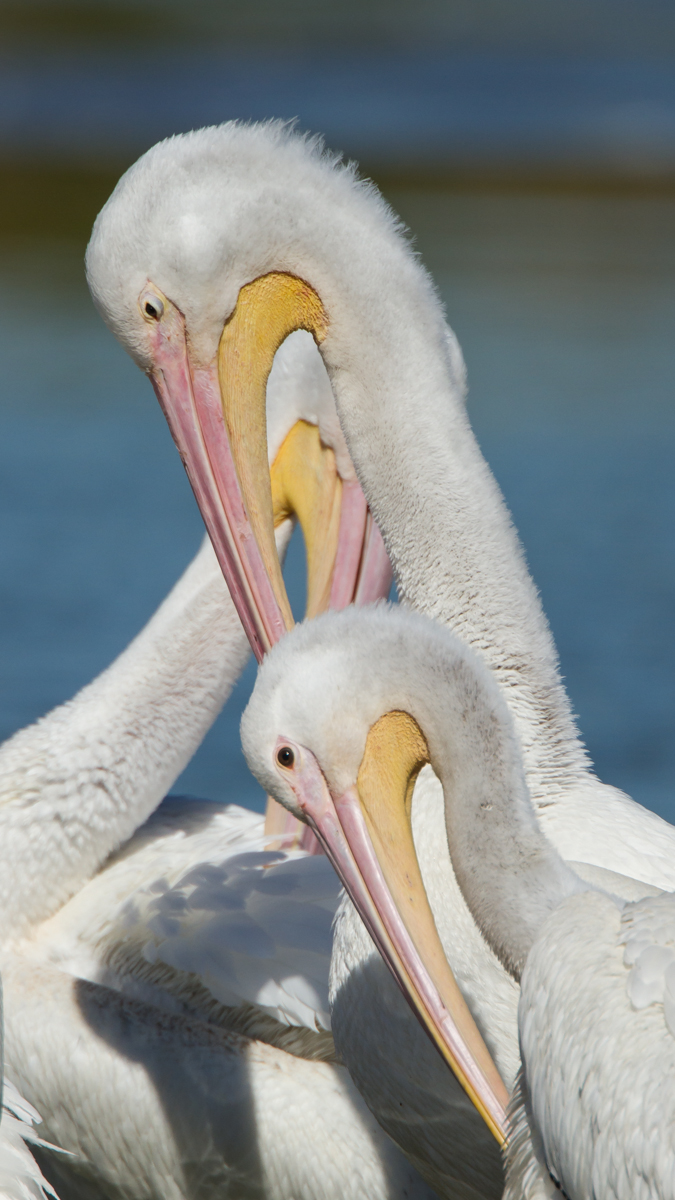
I guess this could be considered a part of their preening routine, something that these pelicans spent considerable time doing while I watched.
Preening under the wingTwisting and turning to preenA trio of preening pelicans
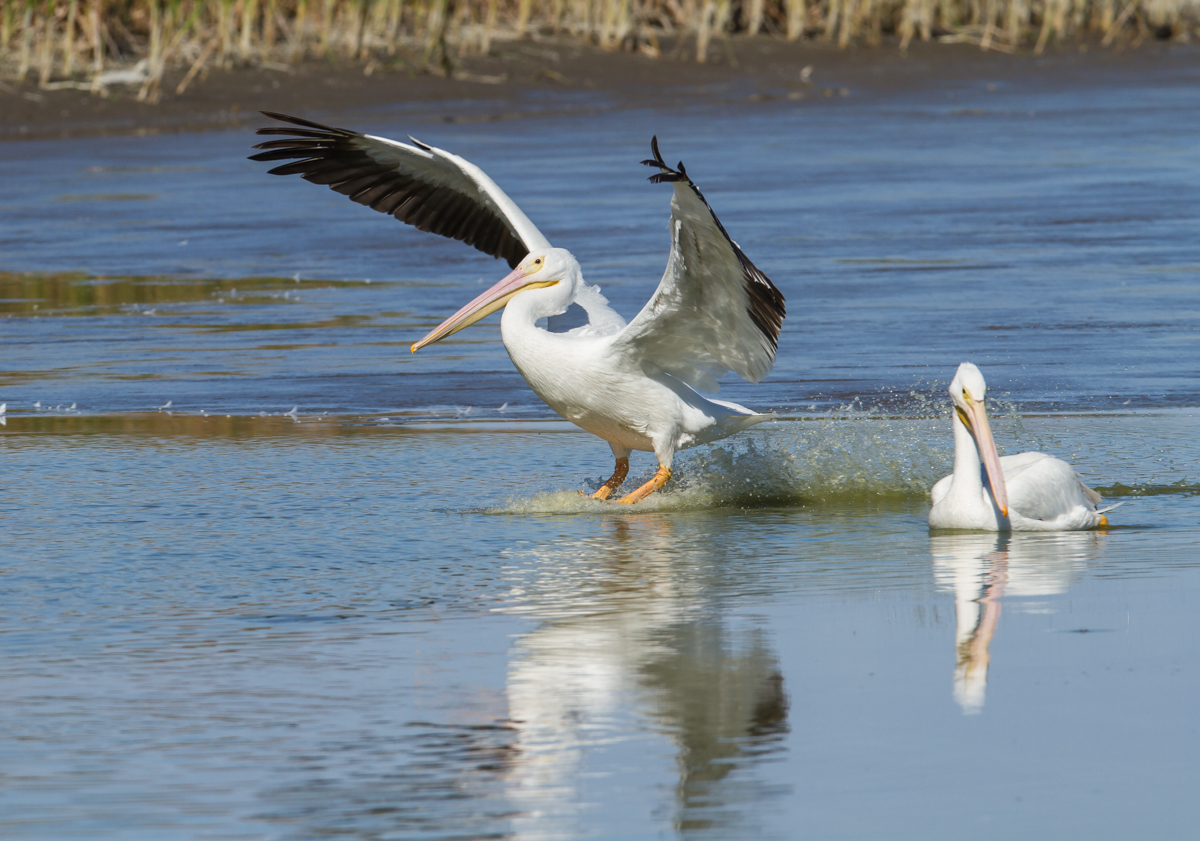
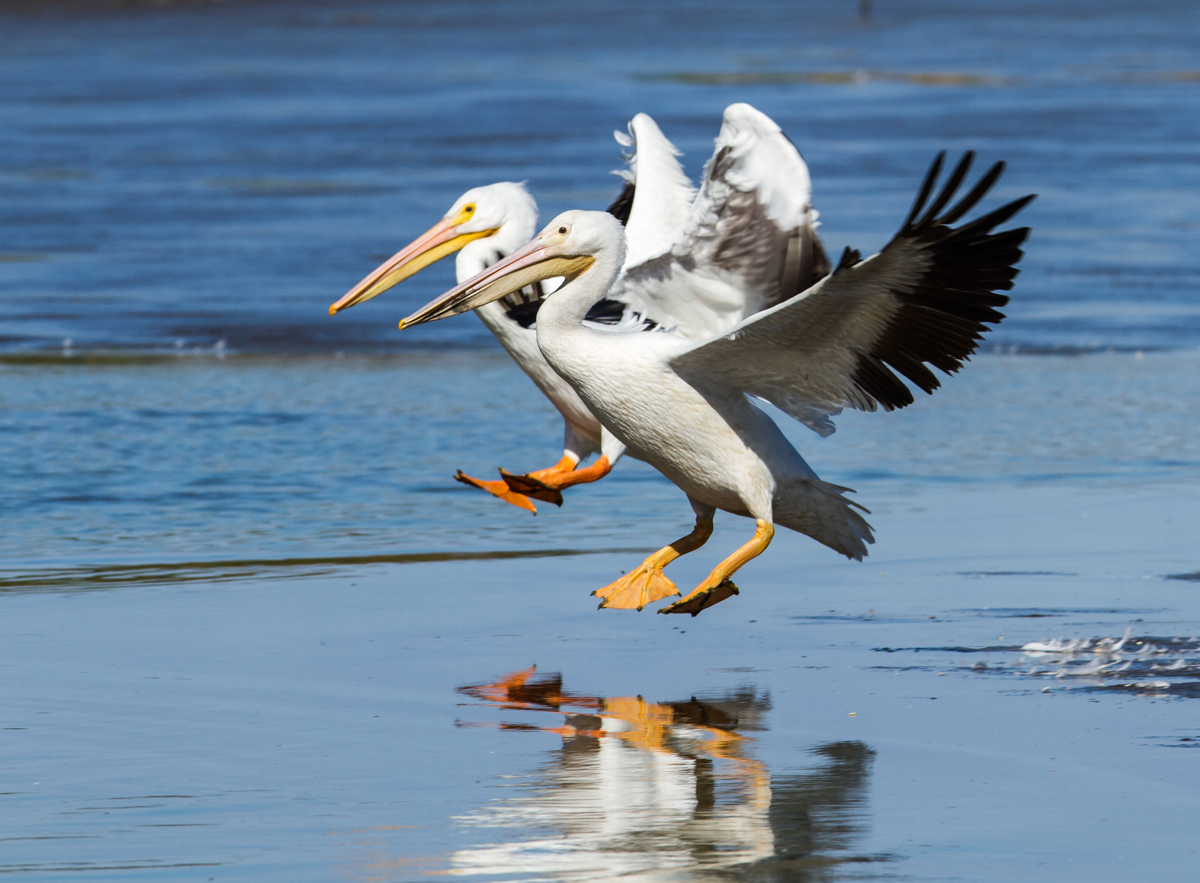
Pelicans kept flying in from a large group in the center of the pond to the group closer to the small area of open water near me, so I was able to watch their graceful wing beats and landing approach with feet down, skidding to a stop as they skated across the surface. With wing spans of 9 feet (second only to the California Condor amongst North American birds), they take up a lot of space as they glide in and take off.
Landing approach with feet downTouch down and skid to a stopA pair of pelicans as they land
Having watched these magnificent birds in Yellowstone, I was happy to have a chance to spend an afternoon in close proximity to appreciate their unique adaptations and interesting behaviors. I look forward to my next encounter.
American White Pelicans at the Click Ponds in Viera, FL
To me, the beautiful and ever-changing patterns formed in lake ice – and in snowflakes, the ice of the sky – are winter’s “bloom,” corresponding to the flowering plants of summer.
~Stephen Hatch
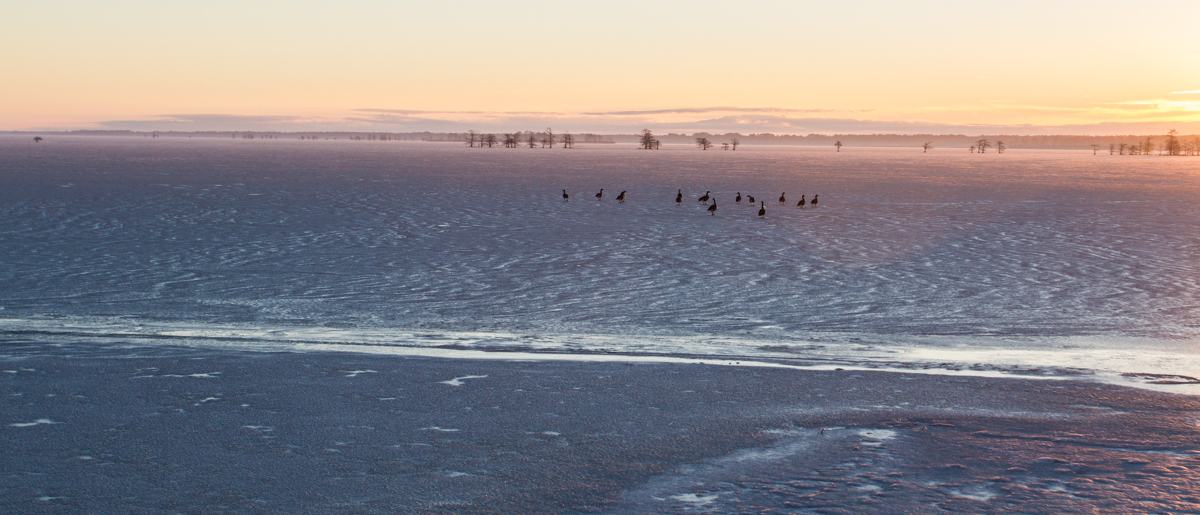
I had another trip to North Carolina’s winter wonderland this past weekend. And a wonderland it was…Lake Mattamuskeet was largely frozen, a most unusual sight. The last time this happened was 1986, and, ironically, I was there that winter as well. I met my group on the causeway at sunrise and we marveled at the expanse of grayness before us. A few cold Canada Geese walked on the ice, probably wondering what had happened to their once watery haven.
A frozen Lake Mattamuskeet at sunrise (click photos to enlarge)
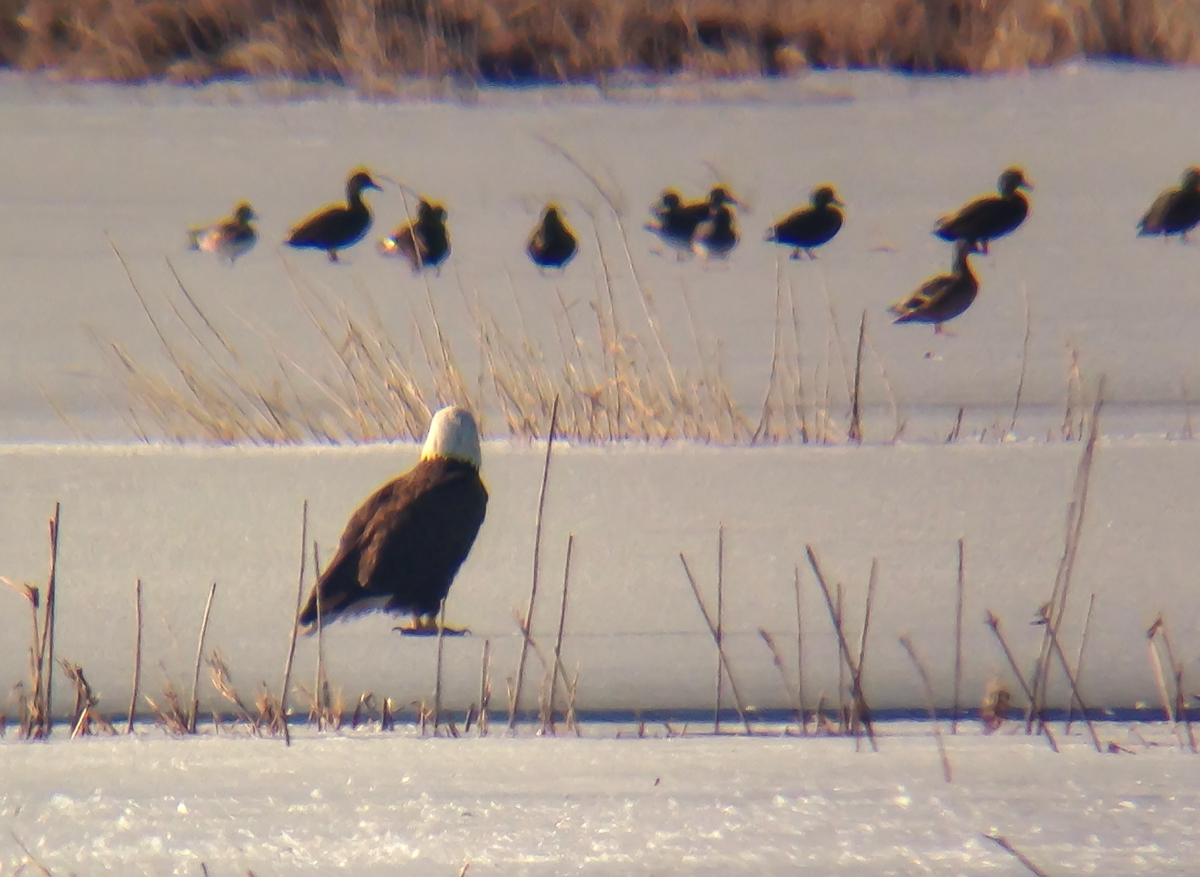
The marsh impoundments along Wildlife Drive were also frozen, but we soon spotted a Bald Eagle standing on the ice, surveying the scene for a weakened duck or goose that might make an easy kill. A few other eagles patrolled the area, sending hundred of ducks skyward with every pass. Small birds such as kinglets and Yellow-rumped Warblers were busy in the shrub thickets, and American Coot grazed on the vegetation along the banks of the road. But it was a much more quiet drive than normal, save for the loud crunching of my tires on the ice-covered road. Our wildlife highlight for the morning was an otter trying to move across some thin ice, but forced to do a combination of loping and swimming as it frequently broke through the ice on its way to the marsh.
Bald Eagle on ice
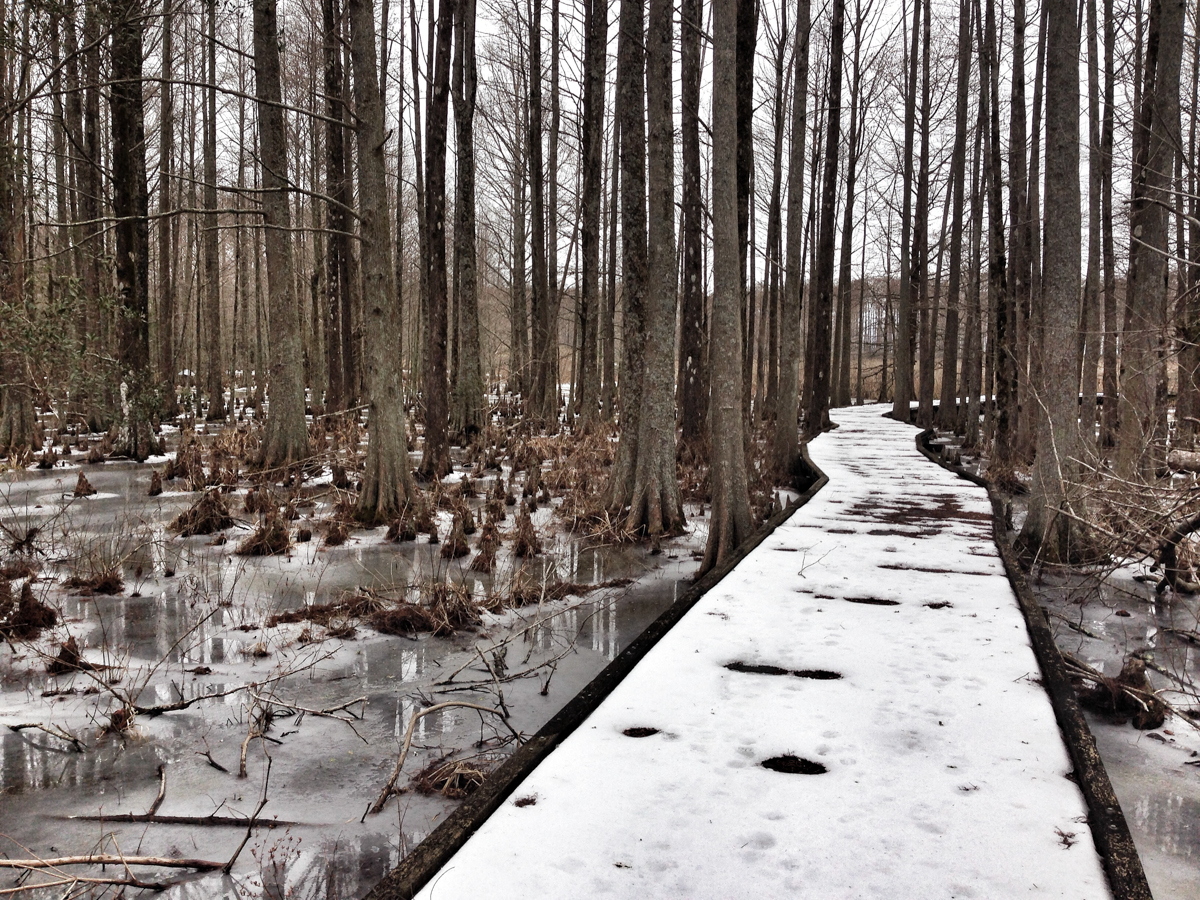
After lunch, we ventured out on the swamp boardwalk across the canal from the lodge. I always take folks on this walk as it is beautiful, quiet, and gives you a view of a habitat that is hidden from most people.
Swamp boardwalk
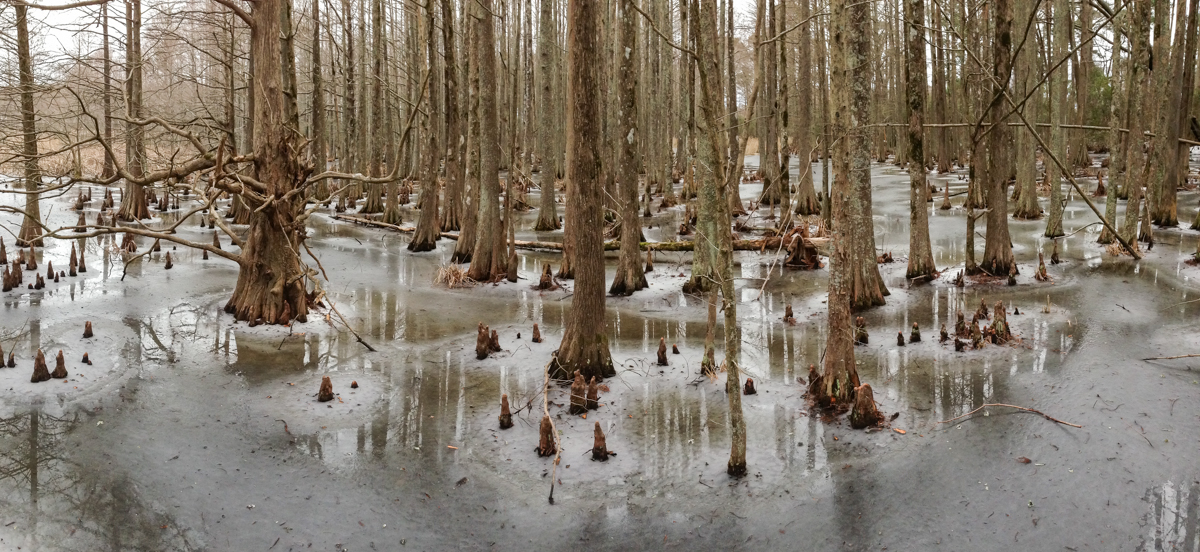
I have photographed this area many times and love the reflections you get in the dark waters beneath the cypress trees, but I have never seen it like this.
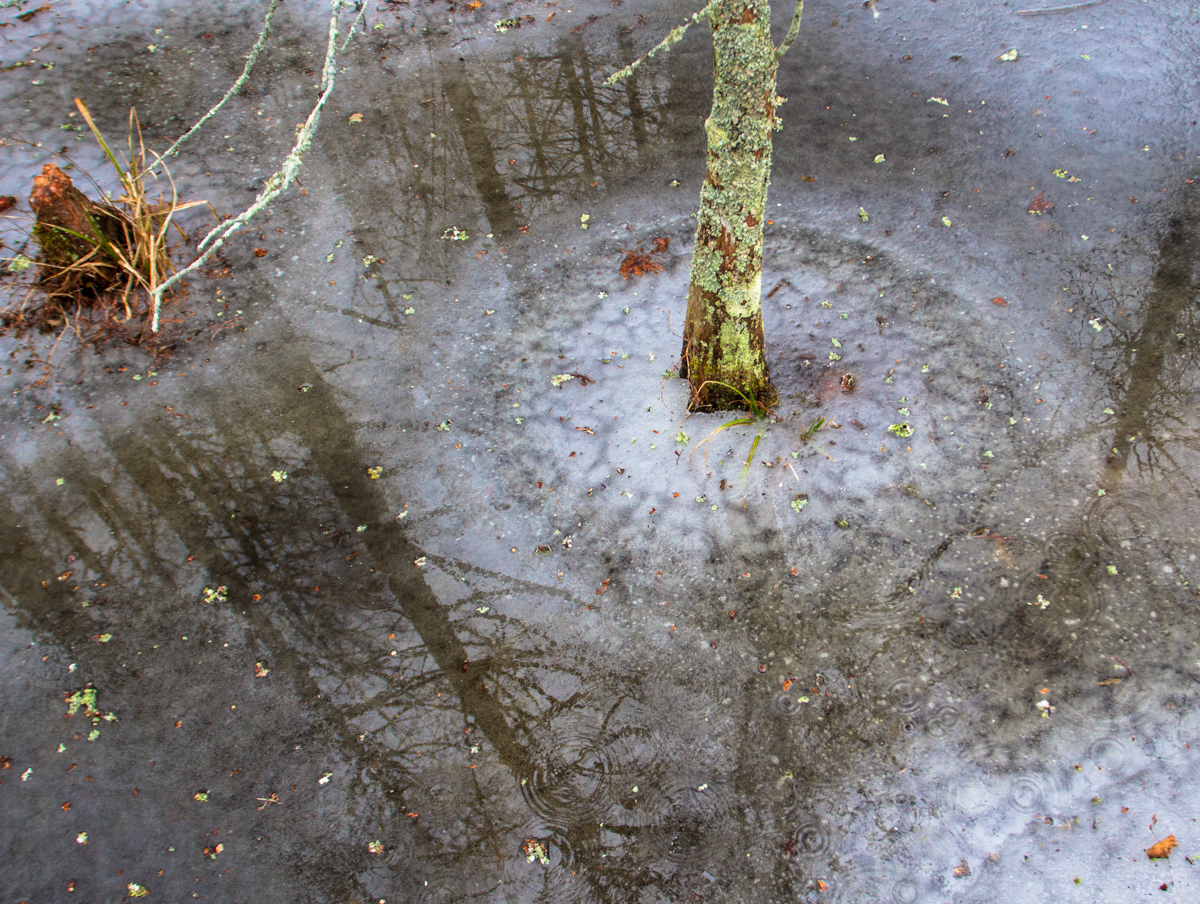
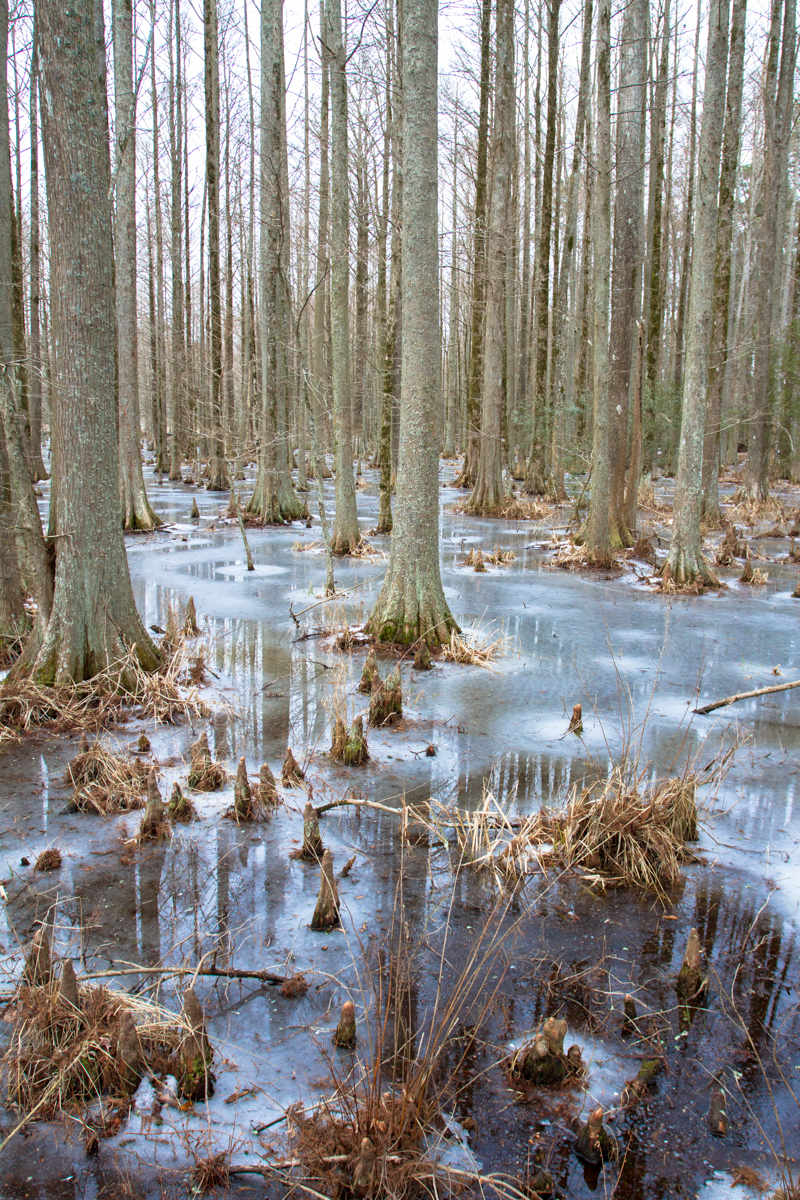
Panorama of frozen swampIce and reflections in cypress swampBald Cypress knees in the deep freeze along the boardwalkPatterns in ice create circles around each tree trunkBlue-gray cast to ice in swamp
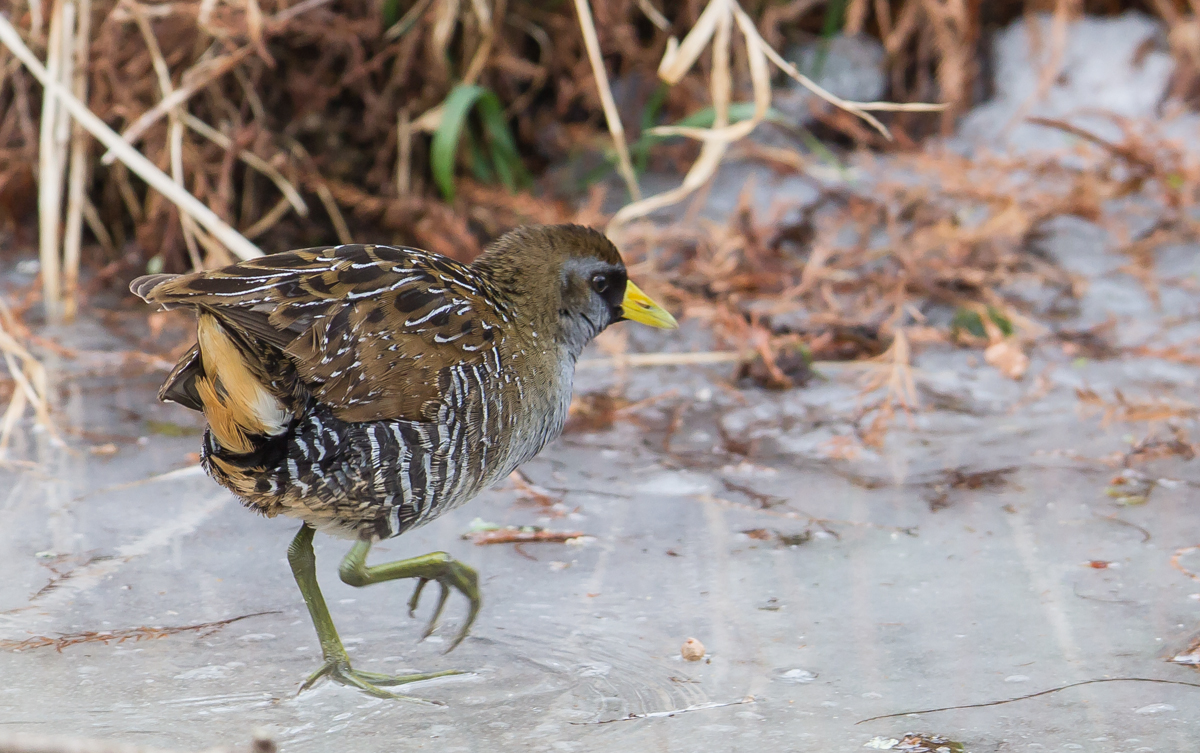
As we walked into the swamp, one of the participants excitedly asked about a bird she spotted. I looked out on the ice and was surprised when I saw movement just beneath my feet under the boardwalk. It was a Sora Rail, and only a few feet from us!
Sora Rail emerged from under the boardwalk and walked out onto the ice
The Sora is a quail-sized rail that is more often heard than seen due to its secretive habits. As the small bird strutted out on the ice, I was amazed at its huge feet. We watched it for a few minutes as it foraged amongst the debris surrounding tree trunks and cypress knees protruding from the ice.
Sora Rail on ice
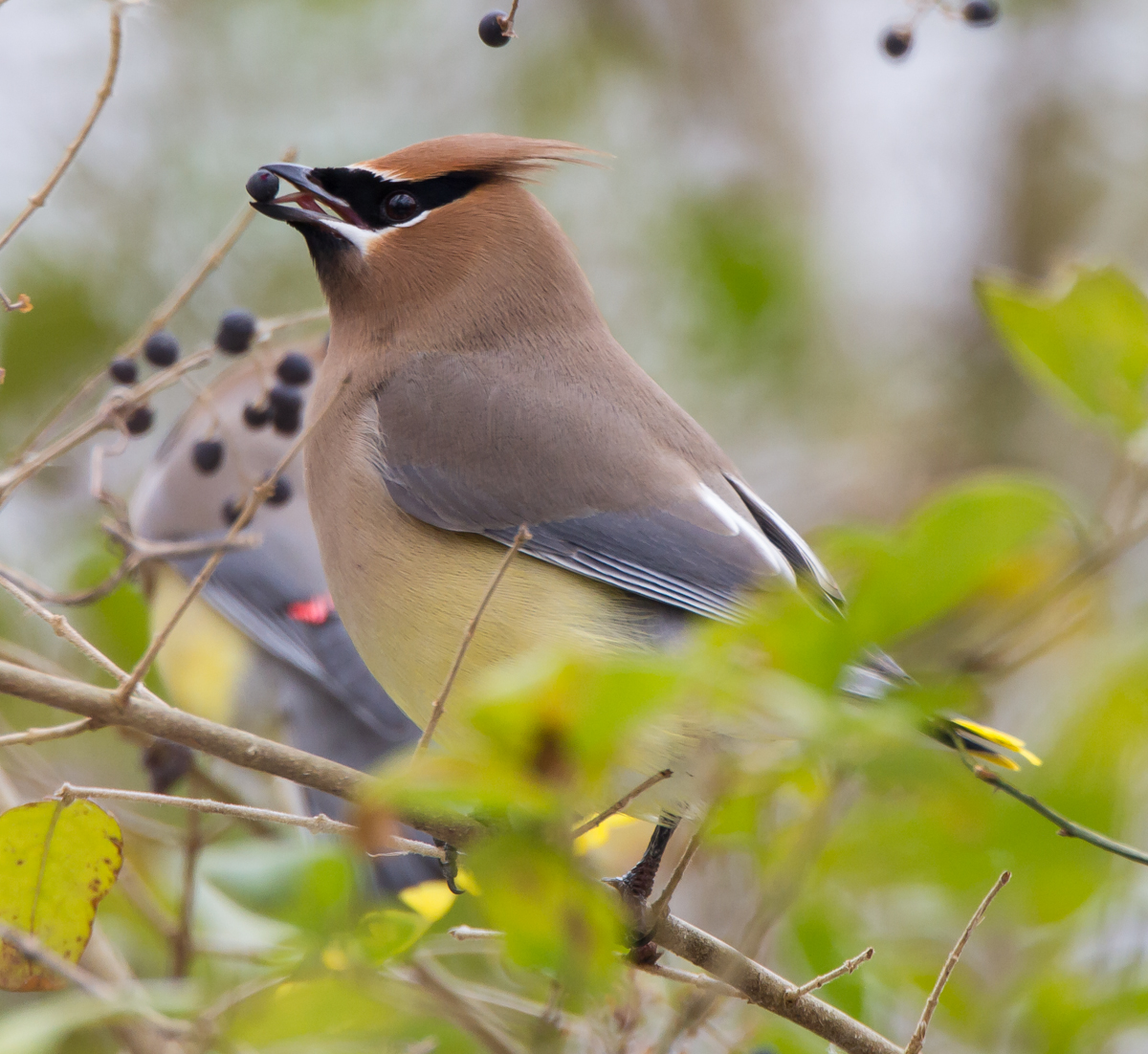
The weather started to take a downward turn with heavy clouds and periodic drizzle. Driving along Wildlife Drive, we came across a large flock of Cedar Waxwings feeding on the berries of the invasive Privet shrubs that unfortunately cover the roadsides and thickets on the refuge.
Cedar Waxwing eating Privet fruit
Waxwings are one of our most beautiful birds. They have an air-brushed, silky-smooth appearance, with a bold black mask and yellow (sometimes orange) tail tip. Adults have red, waxy-looking tips to the feathers on their wings.
Cedar Waxwings have a silky appearance
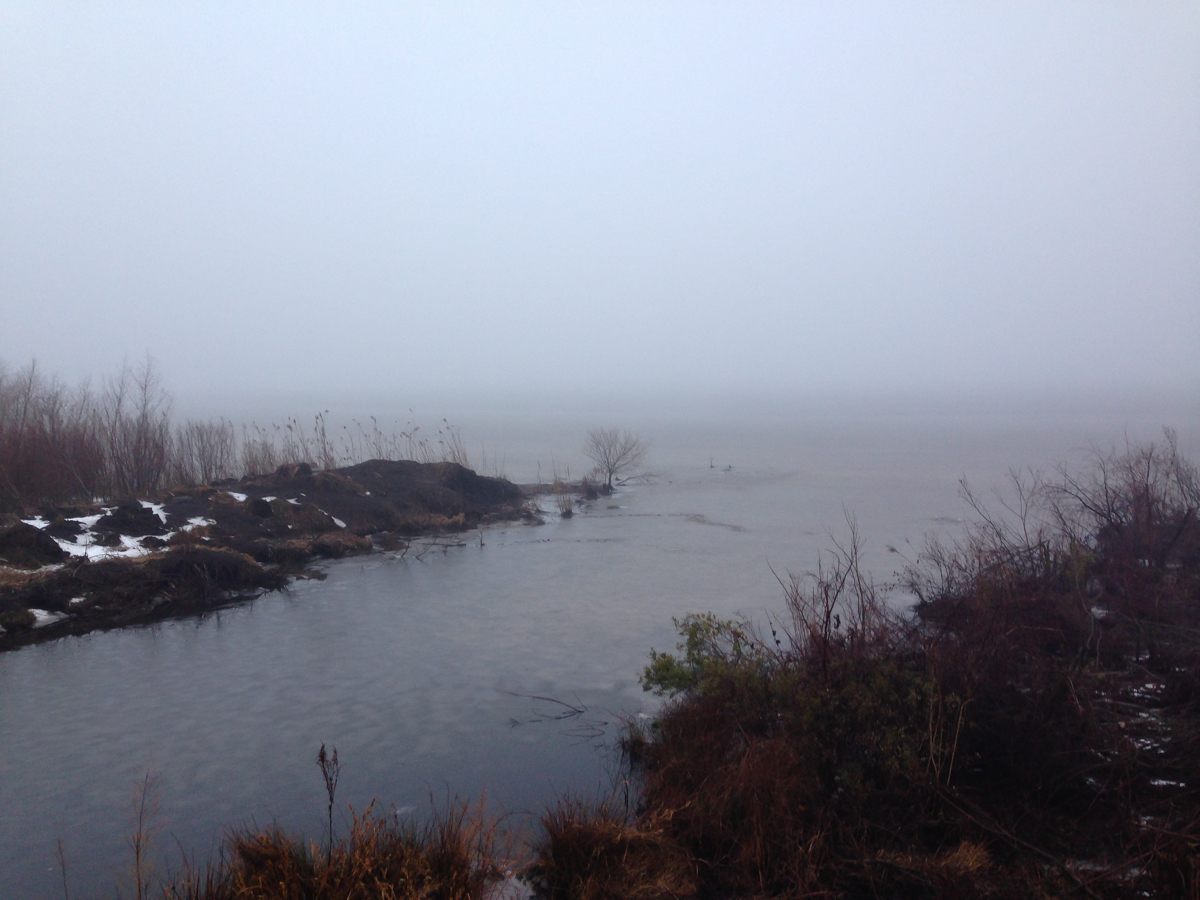
Weather conditions worsened and the drive back to the hotel was in dense fog. We were on the observation platform at Pungo Lake at “sunrise” the next morning, but it might as well have been a deck in the clouds. It was magical to hear the sounds of thousands of swans and Snow Geese on the lake while not being able to see a single one.
Dense fog at Pungo Lake
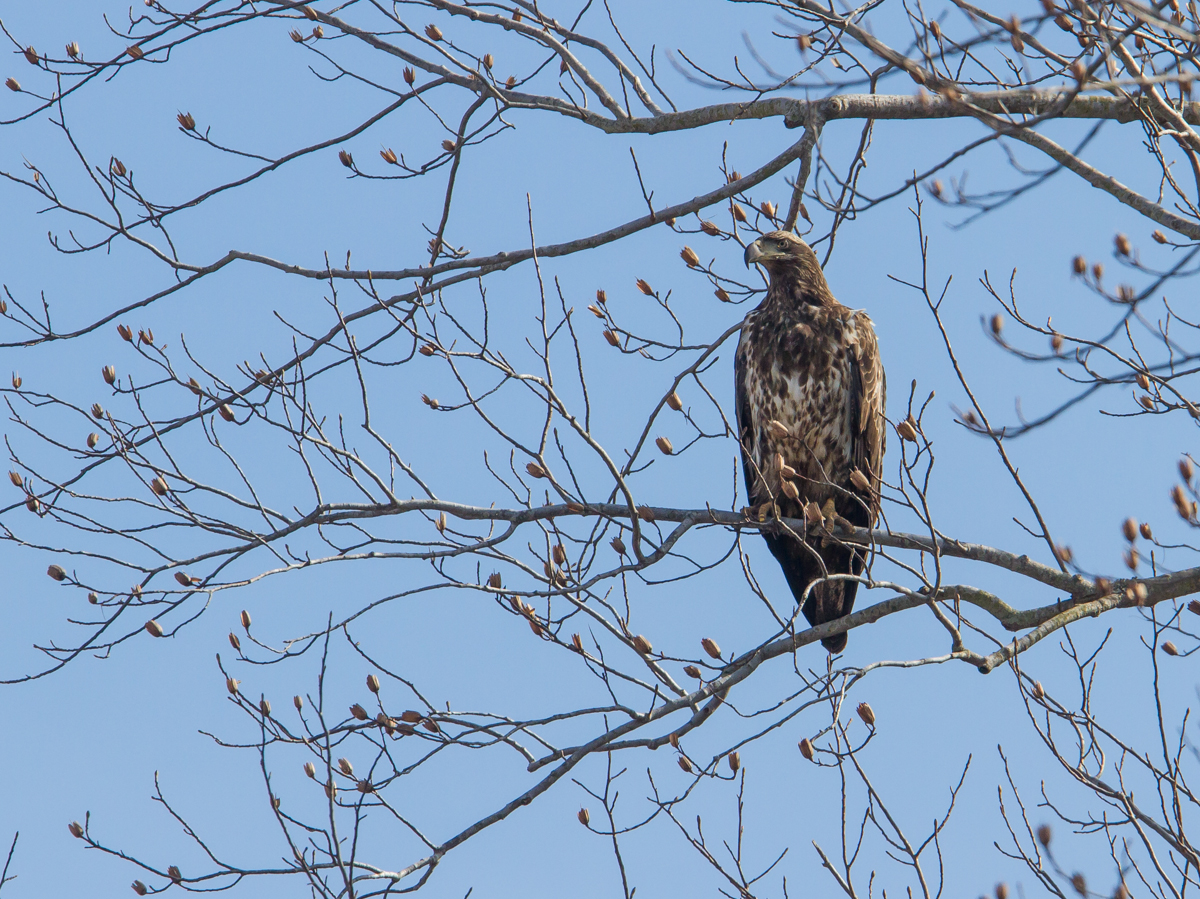
I was worried about road conditions at the Pungo Unit after the unusual heavy snow and it was a worry with merit. Thankfully, refuge staff had repaired two of the large holes in the road I had encountered on my last trip a couple of weeks ago, but the snow melt had worsened other portions of the roads, giving us a few anxious moments as we plowed through the mud and occasional deep ruts. As the fog started to lift, we could see swans flying out to the surrounding fields to feed. Anywhere the birds congregated, they did so under the watchful eyes of predators such as this immature Bald Eagle. We saw over 20 eagles, along with an assortment of other avian predators such as Northern Harriers, Red-tailed and Red-shouldered Hawks, and a Merlin that nabbed one of the thousands of Red-winged Blackbirds feeding in the cornfields.
Immature Bald Eagle watching swans feed in the field below
At one point, we were watching a flock of swans feeding while more swans continually landed to join the flock. We all heard a strange call, which reminded me of a specialty car horn on a clown car in a parade. I had never heard anything quite like it, but it seemed to come from a swan that was landing in the midst of the hundreds of others feeding on the corn. The only thing I could think of was it might have been the call of a Trumpeter Swan. After playing the calls on our phone birding apps that, indeed, was what it sounded like. Even though we desperately searched the flock, looking for the subtle differences in bill shape that distinguish the western species of swan from our Tundra Swan, I could not find it amongst the hundreds of feeding birds. I have written a few experts to see what they think, but it certainly seems we heard a North Carolina rarity. Listen to the call on the web site of The Trumpeter Swan Society here – http://www.trumpeterswansociety.org/swan-voice.html.
Mid-afternoon, we walked through the woods along my favorite spot for locating bears (“Bear Road”). While we saw plenty of bear sign, we did not see any bears, and, to my surprise, no fresh bear tracks in the muddy road. So, I altered my normal routine of ending the day in this usually productive section of the refuge, in favor of heading toward some recently cut over corn fields near the refuge maintenance area. When we arrived at the paved road, we could see thousands of Tundra Swans feeding in the fields. Suddenly, they started filling the skies, much like a slow-motion blast off of a dense flock of Snow Geese. I have never seen this many swans take off at once.
Tundra Swans taking off from field
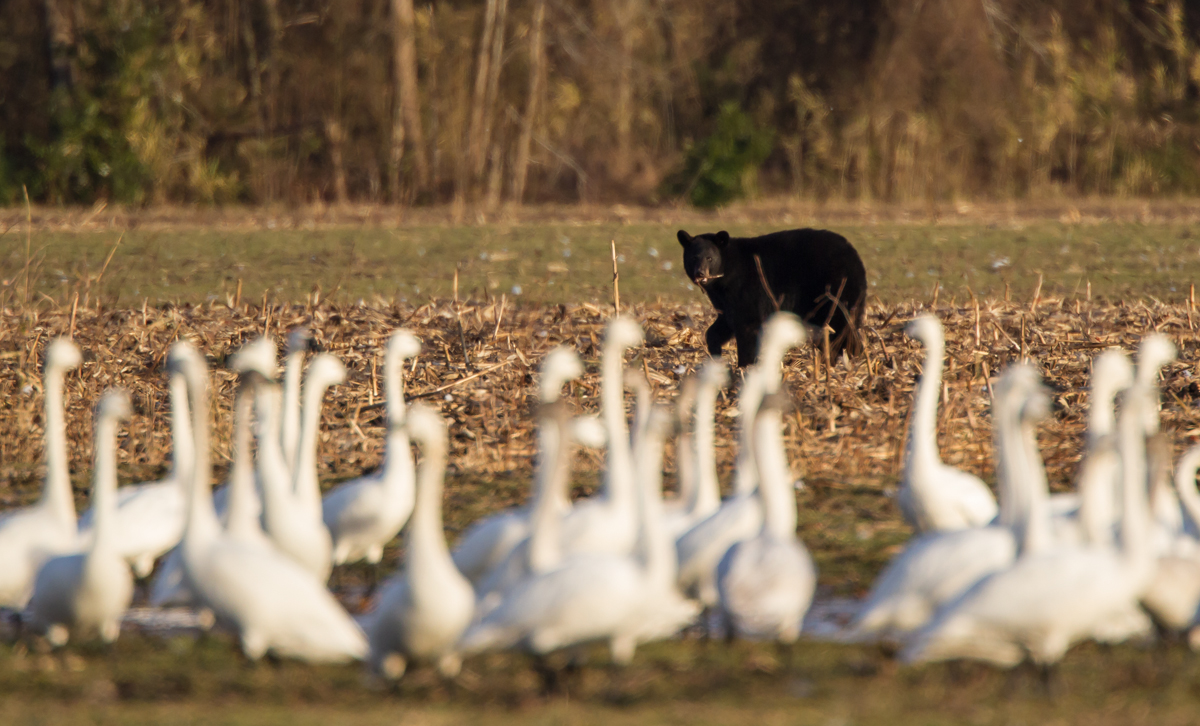
The sun popped out, flooding the field with light, and the source of the swan’s concern soon appeared…a large Black Bear coming into the field from the adjoining woods.
Black Bear moving into field and flushing thousands of swans
The bear moved quickly into the field, picked up what I thought was an ear of corn, and retreated back to the woods. A closer look at my images (the bear was over a hundred yards from us) showed that it had picked up either a leg bone or wing bone, probably from one of several swan carcasses in the fields.
Bear picks up a bone in the field and heads back to the woods
We saw seven other bears move into the edges of the field over the next thirty minutes as we watched this unbelievable scene of wildlife abundance unfold in the beautiful light of a gorgeous winter sky. Shortly after the large bear disappeared, I looked up and saw what must have been the entire Snow Goose population on the refuge headed our way.
Waves of Snow Geese arrive to join the Tundra Swans feeding in the cornfield
The light continued to get better, turning the geese into golden-winged fliers at times, then bright white ones as they banked. The sky in front of us was soon swirling with thousands of geese noisily making their approach.
A swirl of descending Snow Geese
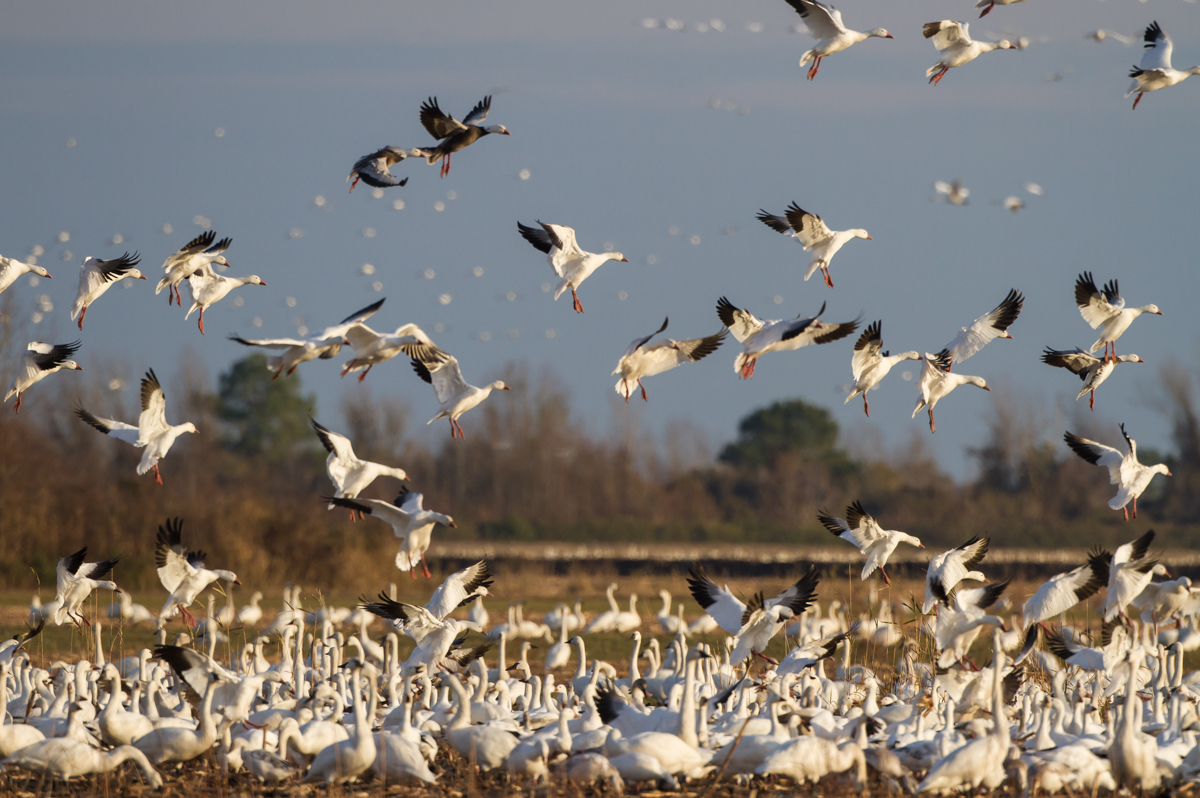
We watched as wave after wave started to land. How they manage to pick a spot amongst the hundreds of feeding and squawking geese on the ground is beyond me.
Snow Geese landing – note the blue color morphs that appear as darker geese
I always try to spot a few Ross’ Geese whenever there are this many Snow Geese close by. We had seen a couple at the edge of feeding flocks, but I enjoy the challenge of identifying them in the sky amongst thousands of their larger cousins.
Ross’ Goose landing – it is the smaller goose in the lower left – you can see the smaller size, more rounded head, and the lack of a black “lip line” on the bill (when zoomed in)
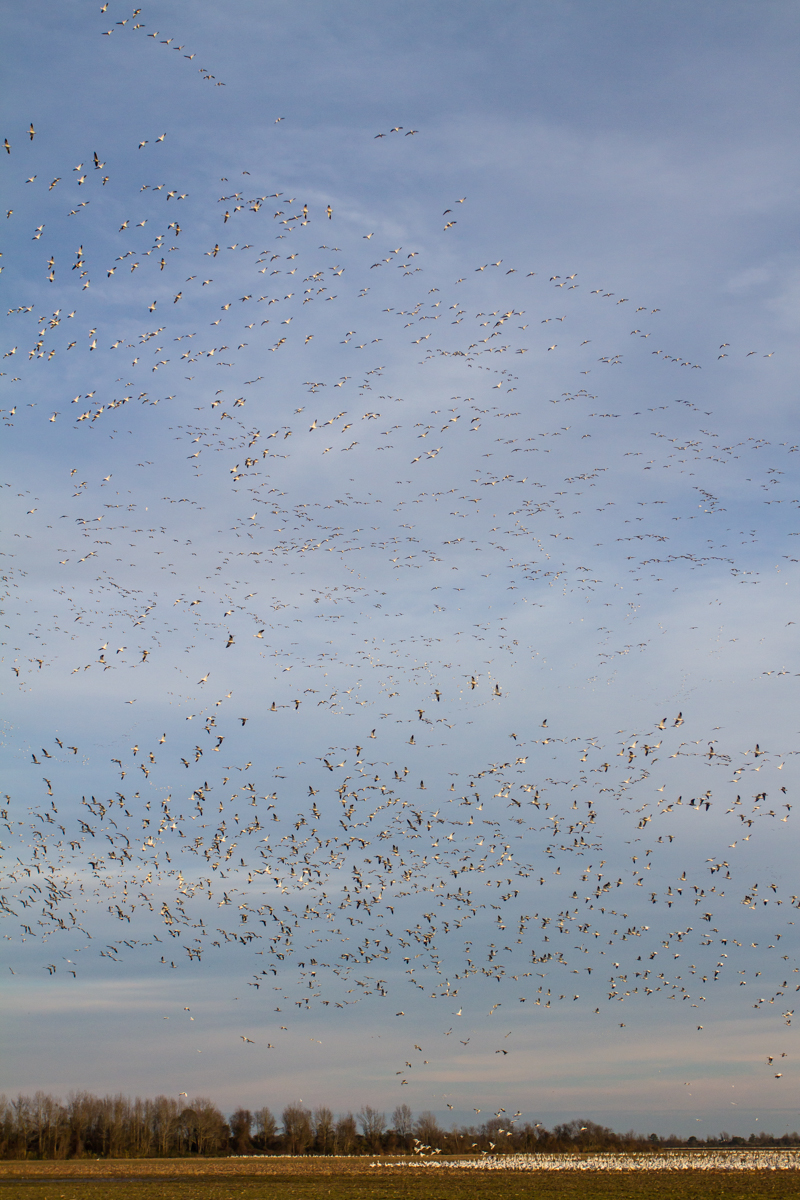
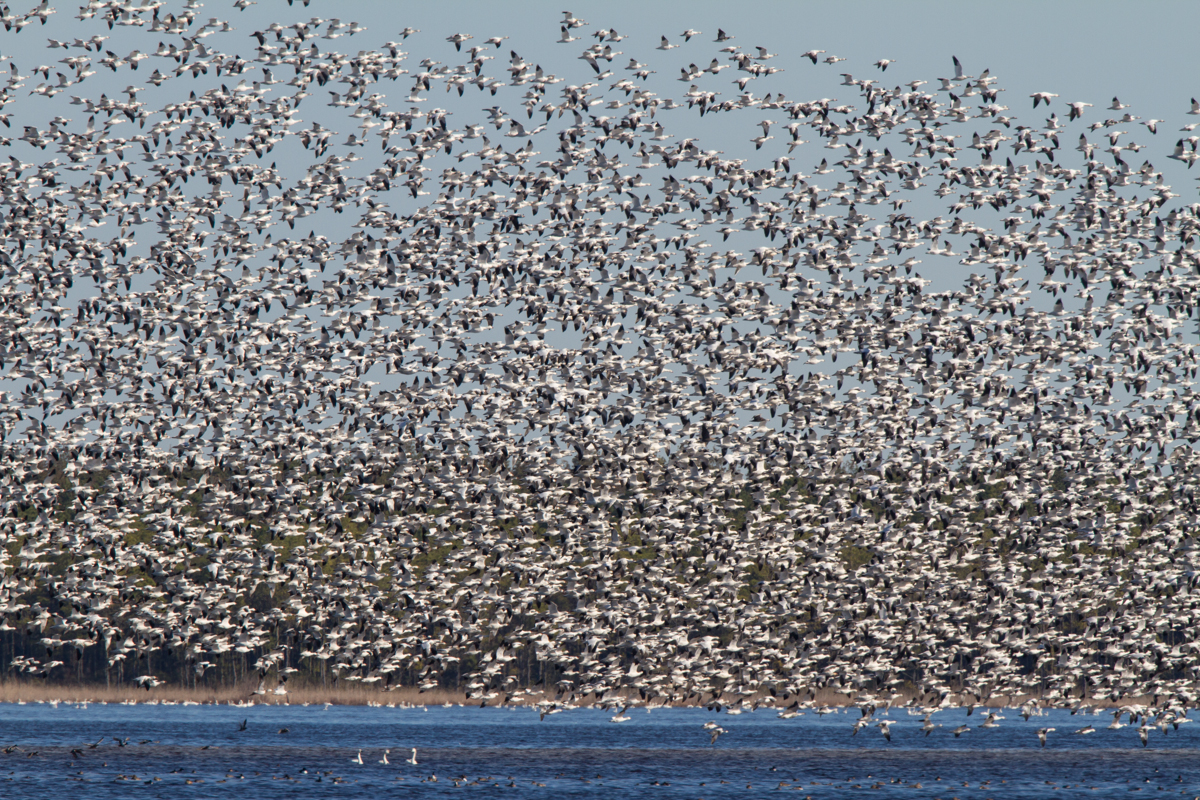
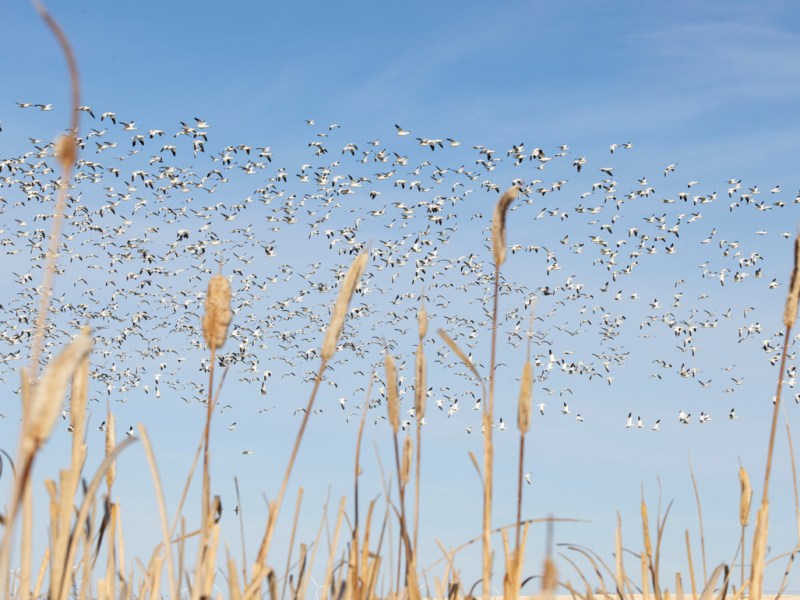
The grand finale of this unbelievable wildlife spectacle was when, on some unknown cue, the entire flock of 30,000+ Snow Geese lifted off in the classic blast off. The whoosh of their wings as their collectively rise from the fields or lake can be heard for over a mile.
Snow Geese blast off
The geese all headed back to the lake for the night, leaving the swans alone to feed (I always imagine they let out a swan sigh when their noisy neighbors depart). It had been an incredible finish to a great weekend, in spite of the challenging weather and roads. I was glad to have shared it with such great folks and happy to introduce the magic of Pungo to another group.
Without a doubt, the highlight of my trip to Florida to visit cool birding sites and see lots of birds…..was to a wastewater treatment “plant”. It seems as though it is common practice, at least in that part of Florida, to create wetlands as part of wastewater treatment for municipalities. The benefits to humans are obvious, but the resulting impoundments (they call them “cells”) and wetlands create incredible habitat for a huge variety of species. I read about a birding hot spot called the Viera Wetlands (now officially known as the Rich Grissom Memorial Wetlands, in honor of a long-time county employee) and decided to head down there after my first afternoon at Merritt Island.
Rich Grissom Memorial Wetlands habitat
This wildlife-rich habitat is part of Brevard County’s wastewater reuse system. According to the literature on the site, reclaimed water is “wastewater effluent that has been highly treated and filtered, resulting in a high quality water suitable for lawn irrigation and many other purposes”. It opened to the public in 2000 and has been a popular spot for photographers, bird watchers, and people that just like to hike or bike in a “natural” setting ever since (an estimated 60,000 visitors per year come to this site).
The area consists of 200 acres divided by berms into four cells (ponds) around a central lake. Dirt roads follow the berms around the wetlands and allow visitors to photograph from their cars or by hiking around the various ponds. I was told it takes about a year for the water to pass through the system. There are also two large ponds nearby, known as the Click Ponds, that are very productive. This is especially true when the water level is lowered, creating shallow pools and large mud flats that are attractive to many shorebirds, American White Pelicans, and Sandhill Cranes.
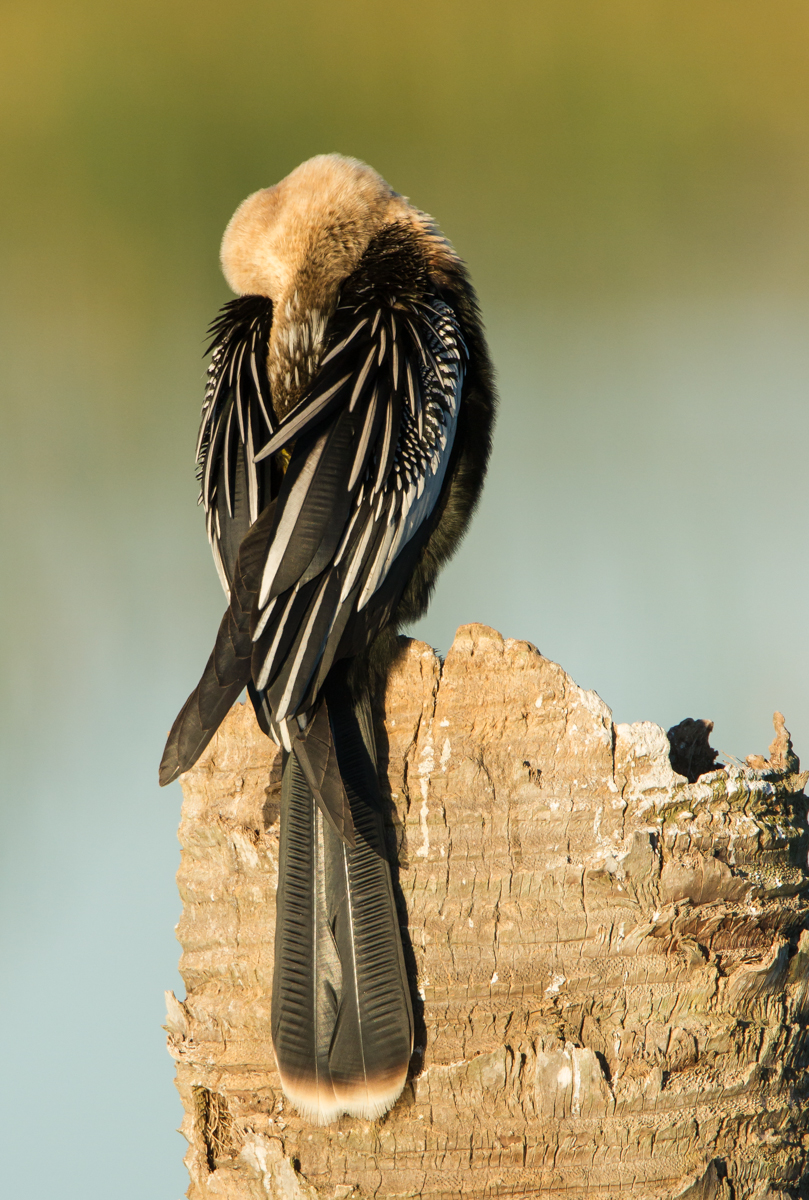
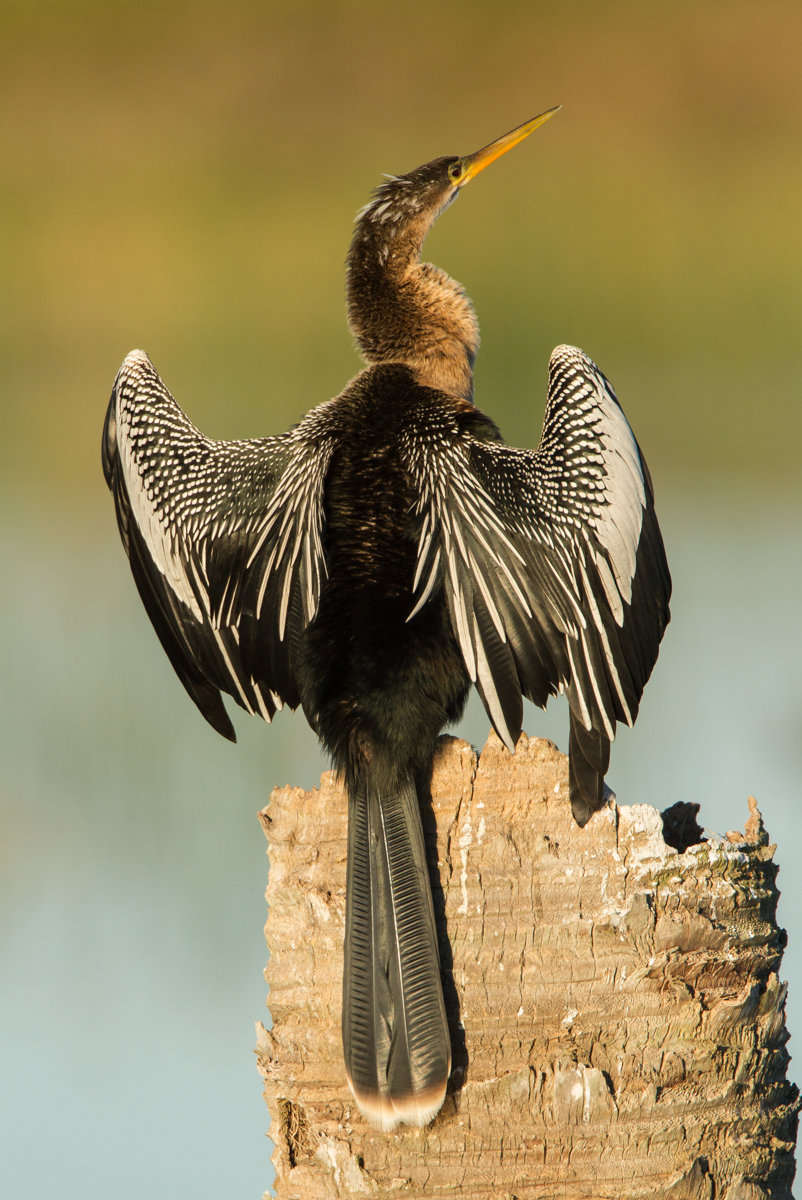
Anhinga on palm trunk (click on photos to enlarge)Anhinga soaking up the morning sun
The sun was clearing the horizon as I drove through the gate, and I could see several cars already driving along the berms. My first bird was a classic Florida species, an Anhinga. Also known as Water-Turkeys or Snake-birds, Anhingas dive into shallow water and spear fish with their insanely pointed bill. This one at first had its head tucked into its back feathers, but, as I watched, it raised its head and then spread those boldly-patterned wings and assumed that classic Anhinga pose. Welcome to Florida. The next day and a half produced many memorable moments and close up observations of a variety of birds and other wildlife. Below are some of my favorites…
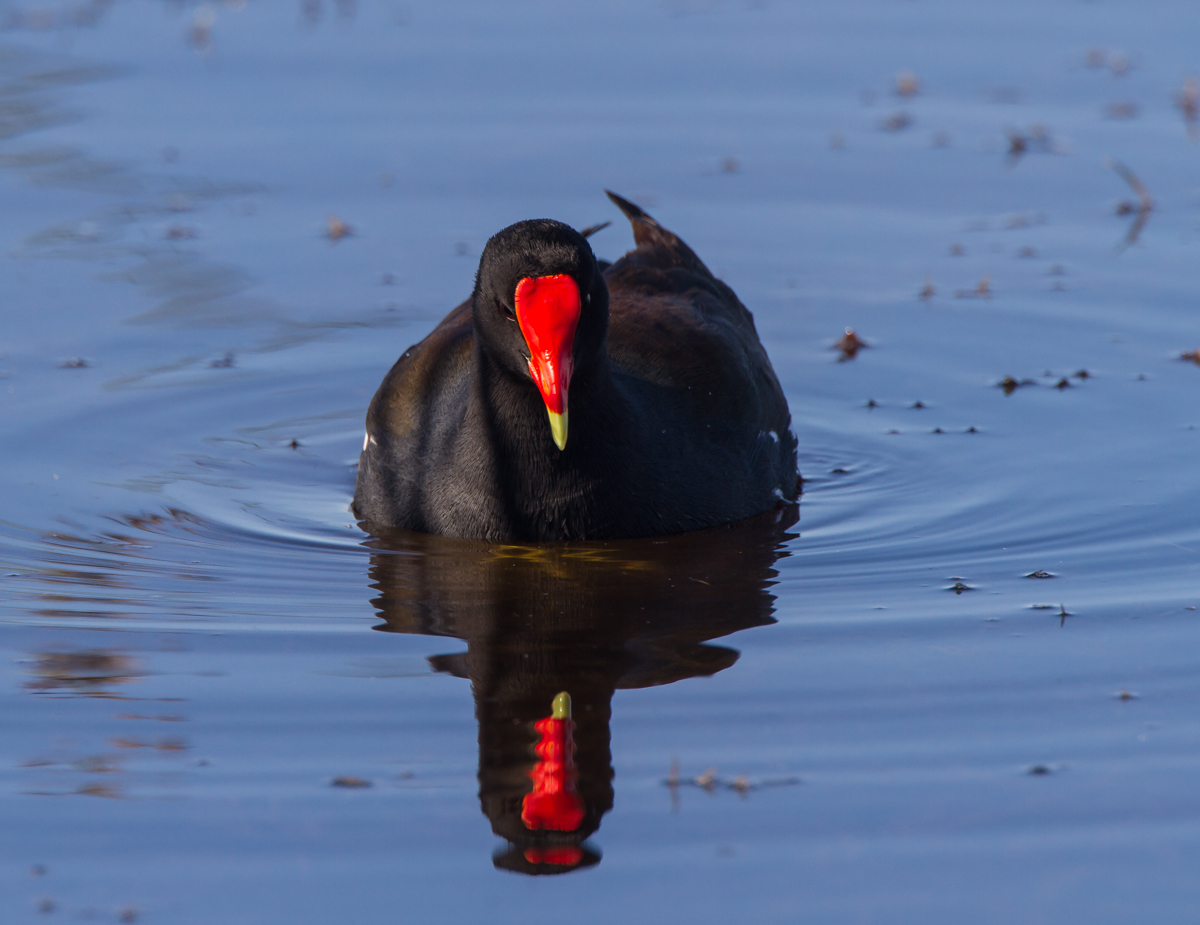
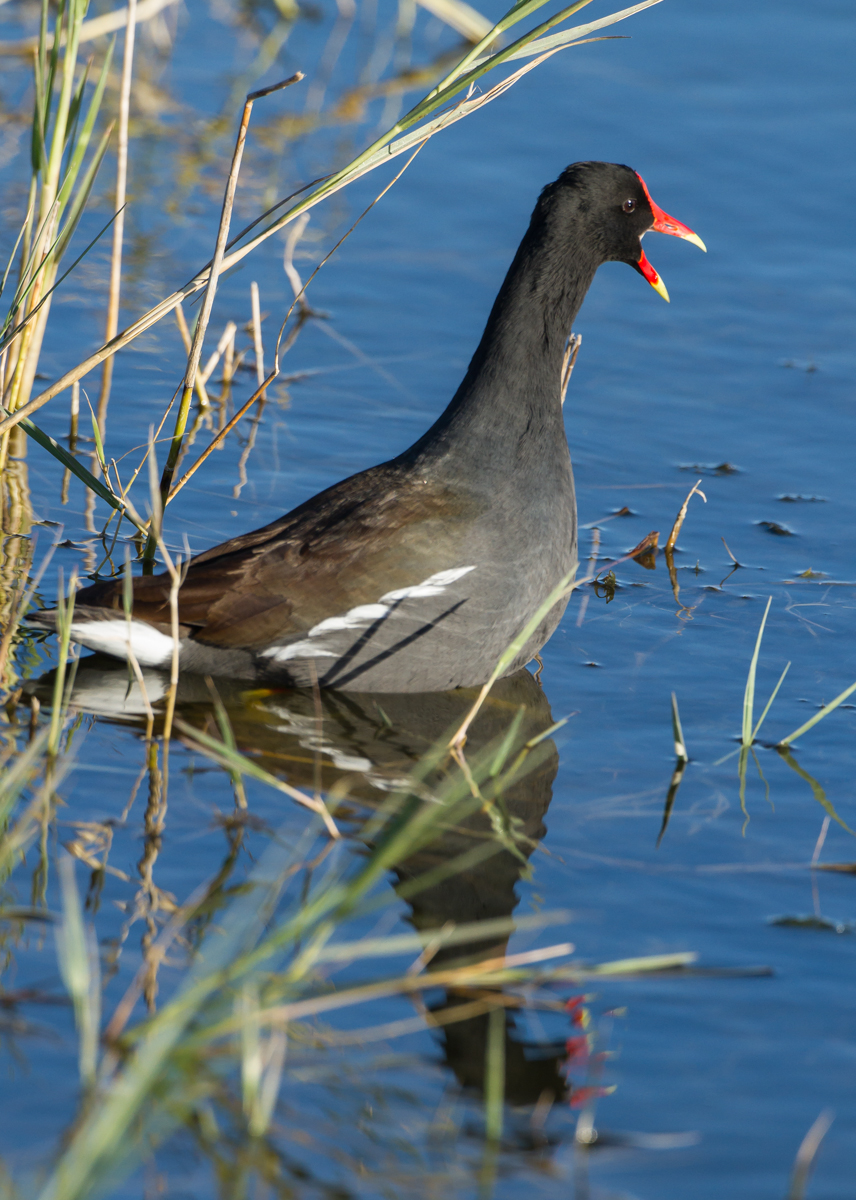
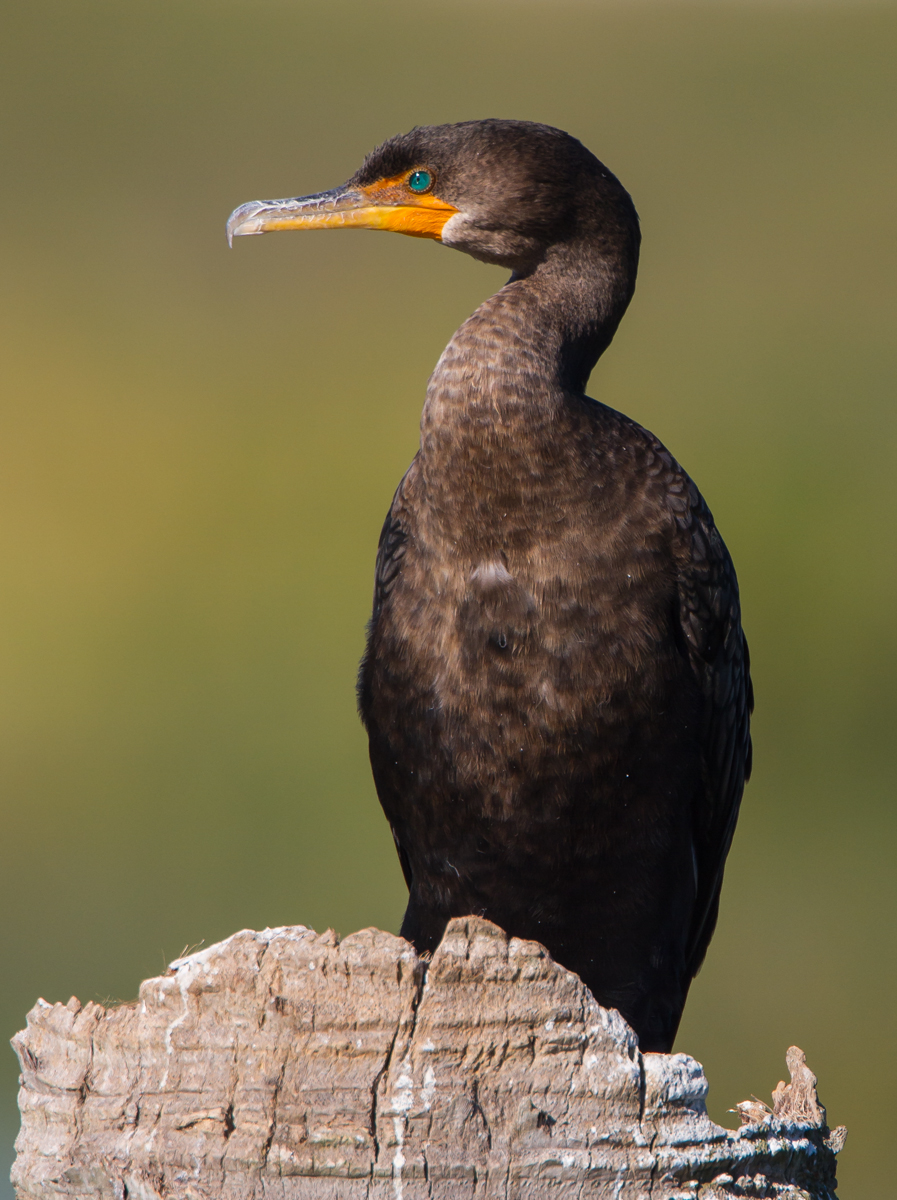
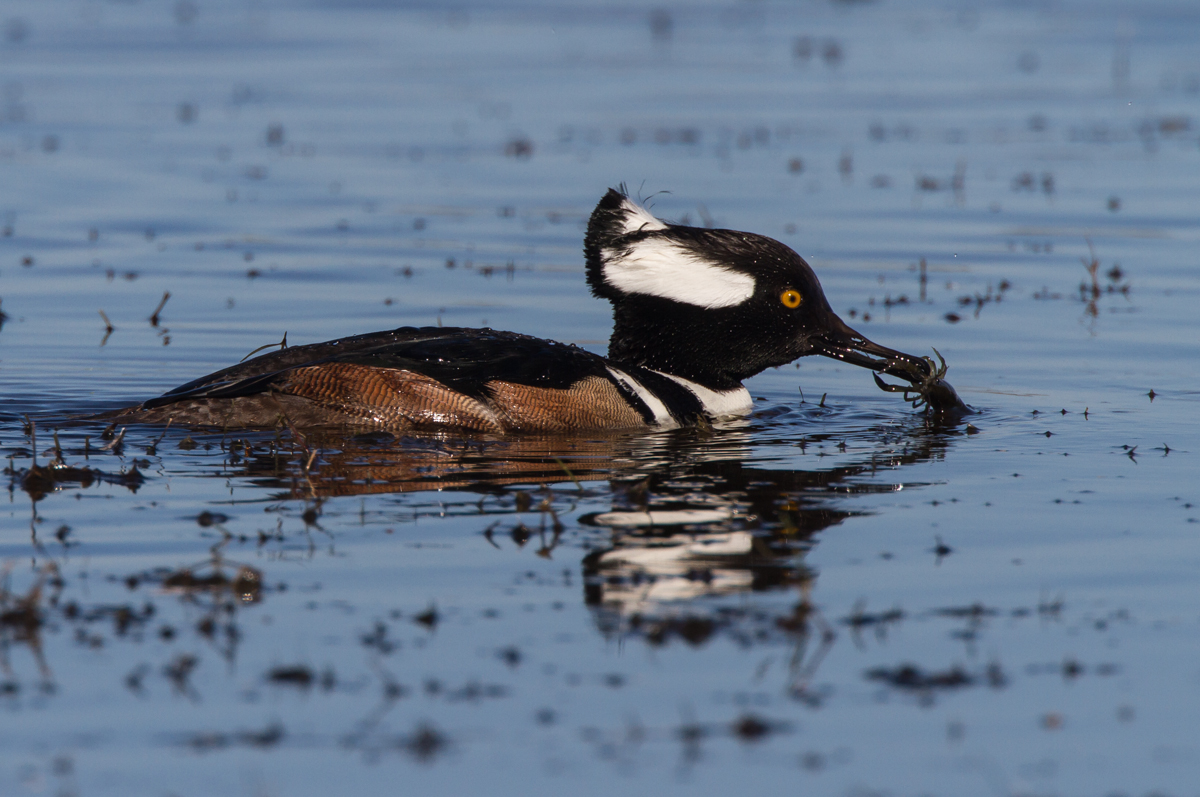
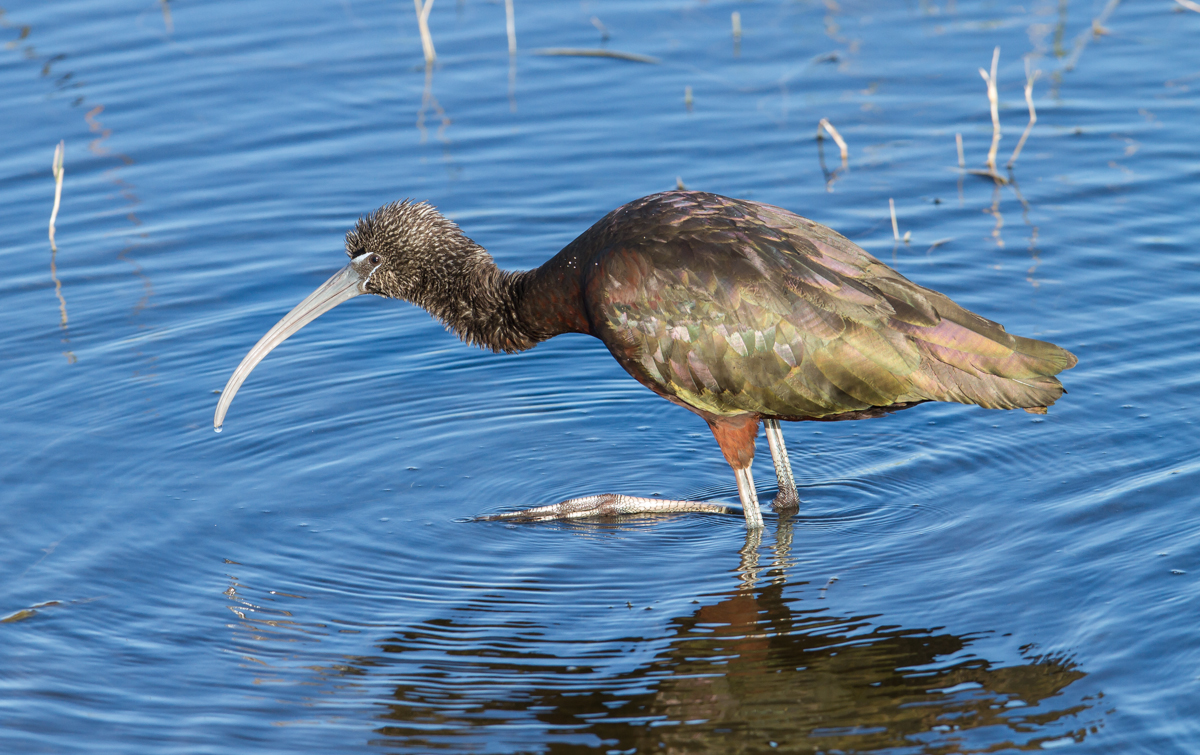
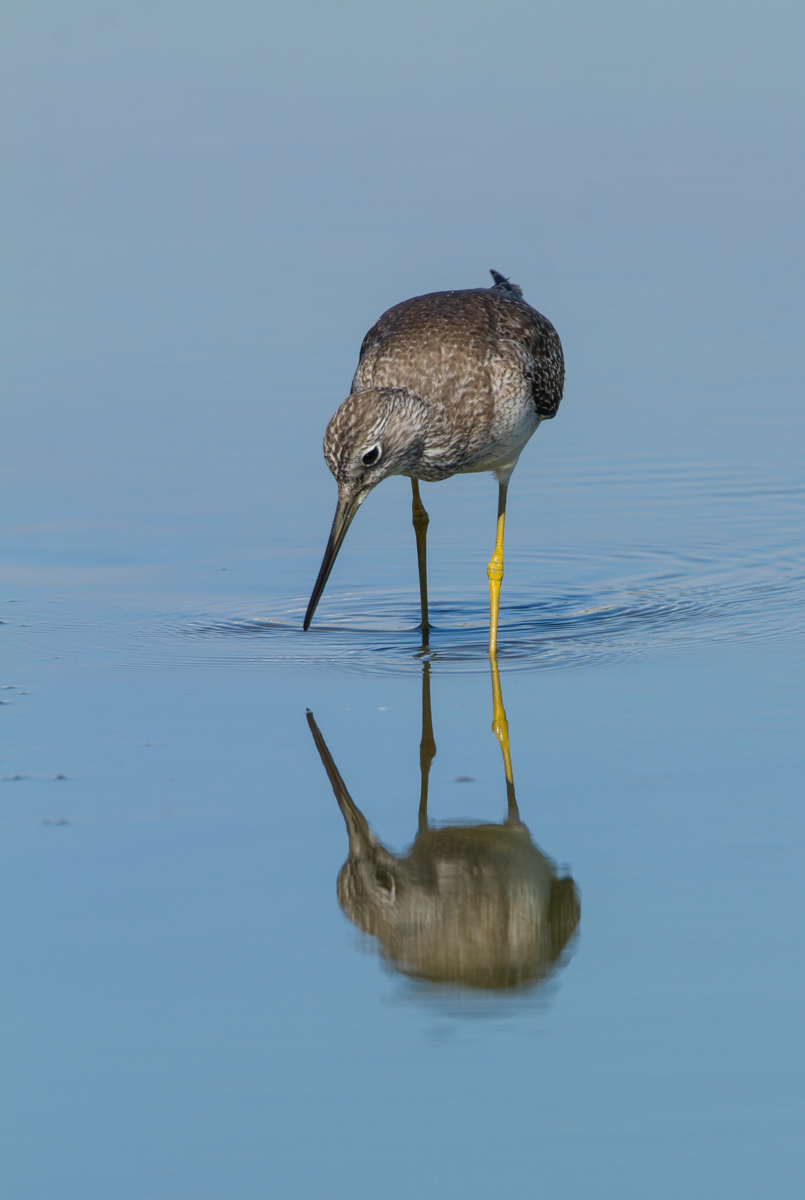
Common Gallinules are, indeed, common hereAnd they are very vocalA number of species of waterfowl winter here, including Blue-winged TealDouble-crested Cormorants have a similar look and lifestyle to Anhingas. Note the intense green eyes.Tricolored Heron and reflectionI overheard someone referring to the abundant White Ibis as “Florida chickens”Hen and drake Ring-necked Ducks. I was close enough to actually see the brownish ring on the neck, for which this bird is so poorly named. Many duck hunters call them Ring-Billed Ducks, a much better name, in my opinion.Hooded Merganser male with crayfishHooded Merganser femaleGlossy Ibis after a good neck scratchAmerican Bittern, blending in, as usualUnlike most other waders, Cattle Egrets tend to forage along the roadside edges of the marsh as opposed to the water edgesGreater Yellowlegs and reflection at the nearby Click Ponds
With all the open water and marsh edges, there are a lot of “water birds” to see. In addition to the abundance and variety of birds in Florida, I had heard that they tend to be much more approachable than what we typically find in my home state. And that was definitely the case at Viera Wetlands.
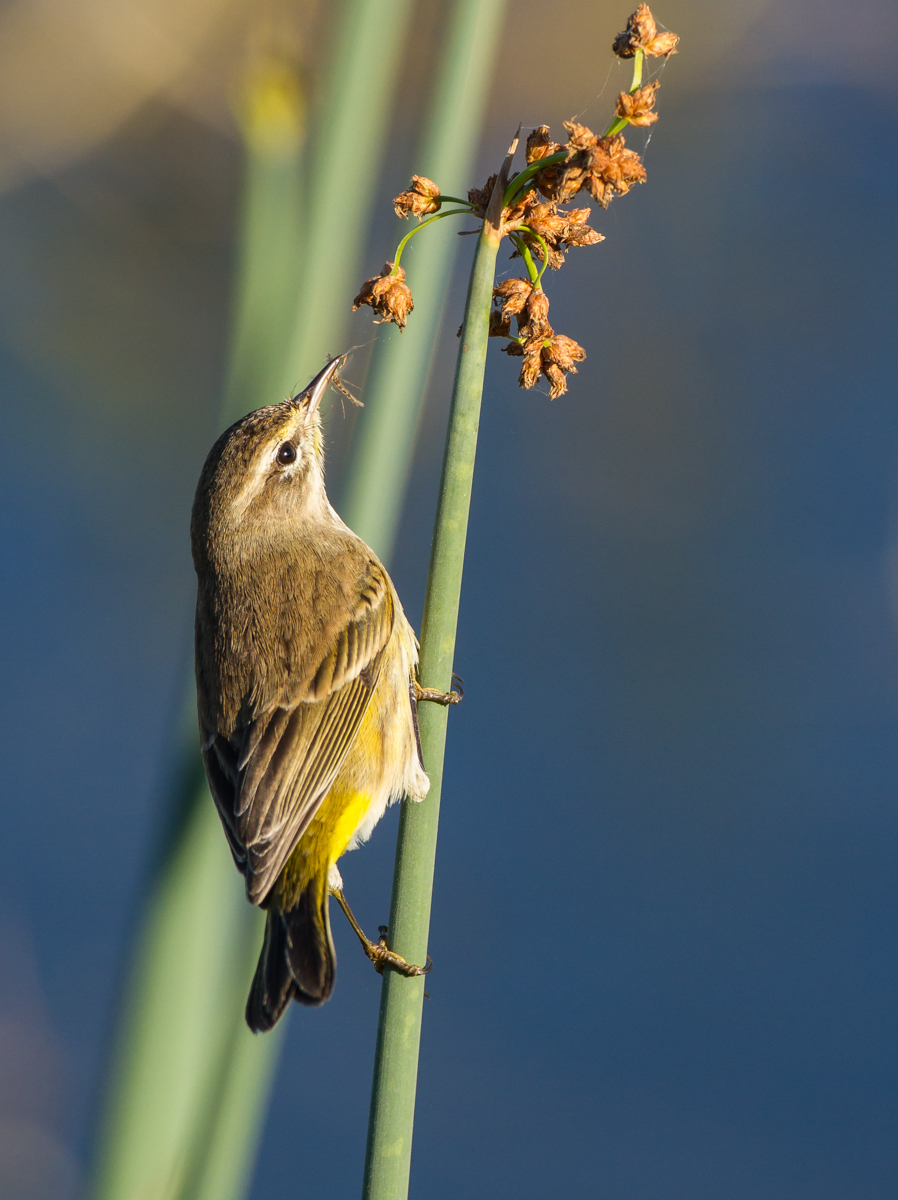
Palm Warblers were very commonRed-bellied Woodpecker male on palm trunk
There were many non-water birds as well. When the temperatures warmed a little one afternoon, I could see plenty of small insects on the move, providing ample tasty treats for the many Palm Warblers, Yellow-rumped Warblers, and Blue-gray Gnatcatchers that were flitting about.
Tree Swallows on island
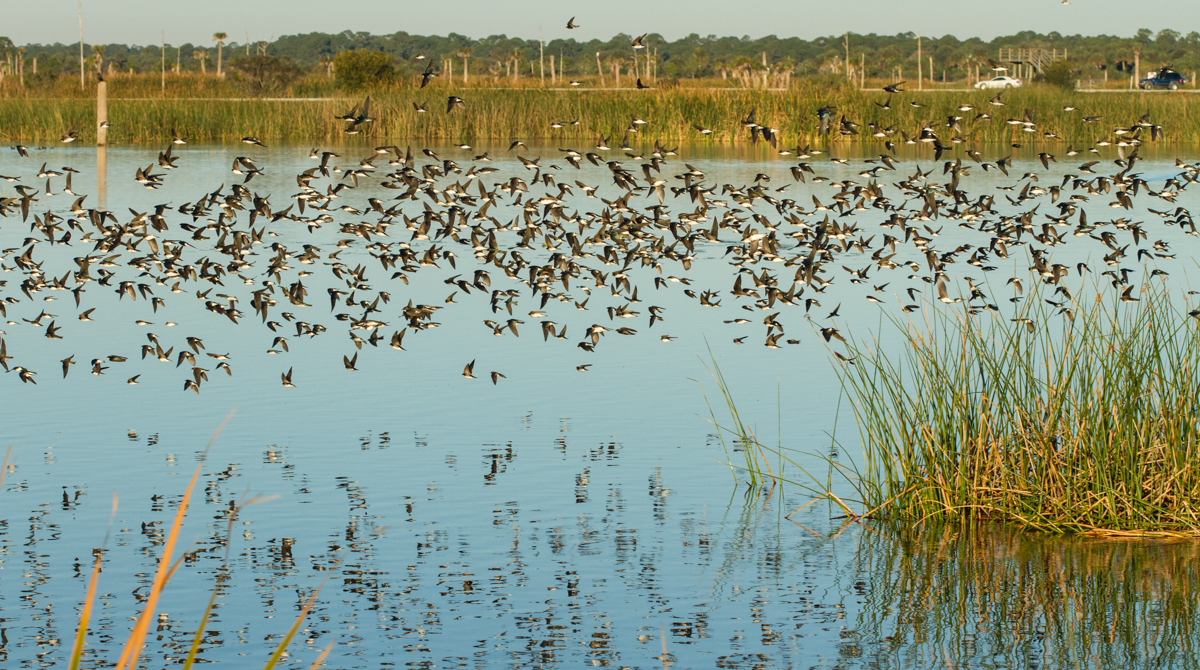
At one point I stopped to watch hundreds of Tree Swallows as they flapped restlessly on a marshy island.
Tree Swallows starting to moveTree Swallows taking off
Suddenly, the entire flock was swept away by some unseen cue, and they disappeared over adjoining forest. Hundreds would occasionally swoop and swerve over the wetlands and the open water at the Click Ponds, snagging thousands of flying insects as they went.
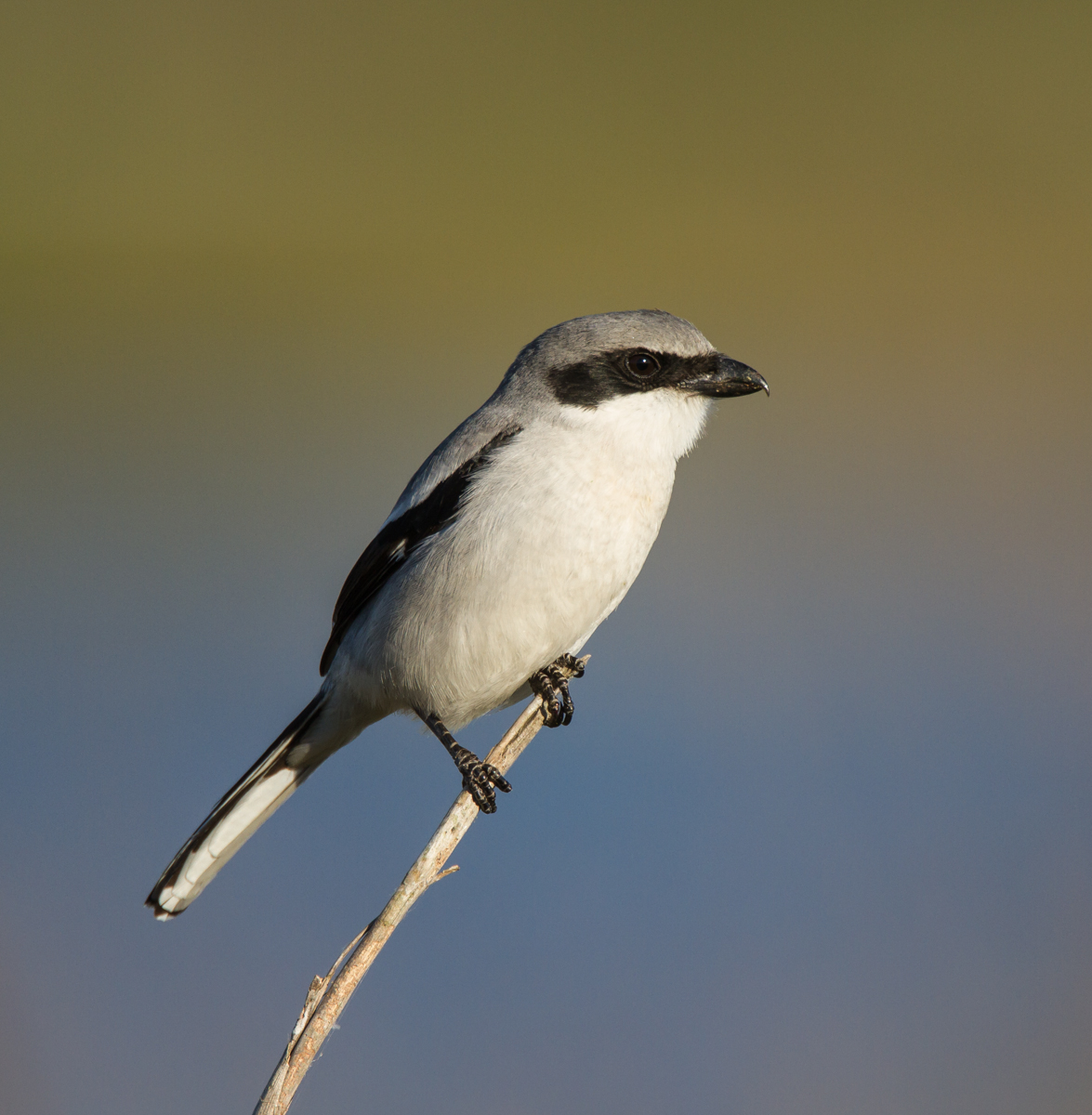
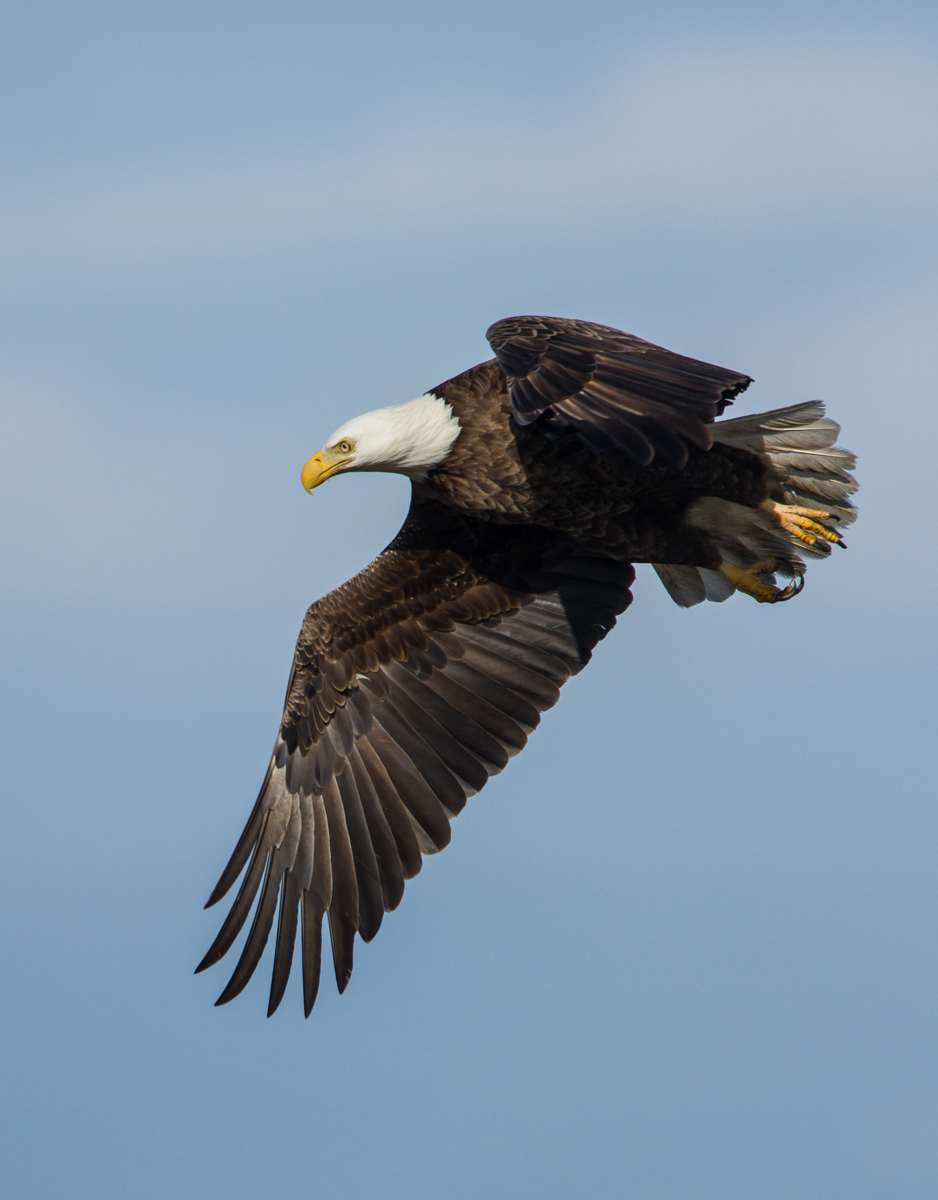
Loggerhead ShrikeRed-shouldered HawkBald Eagle callingBald Eagle in flight
With all the wildlife in the wetlands, there are naturally a number of predators patrolling the area in search of the unwary or weak. I saw quite a few Red-shouldered Hawks and Loggerhead Shrikes, and just missed one of the hawks flying off with a snake. A nearby Bald Eagle nest brought frequent fly-overs of the adult eagles, which always sent the waterfowl and shorebirds into a panic.
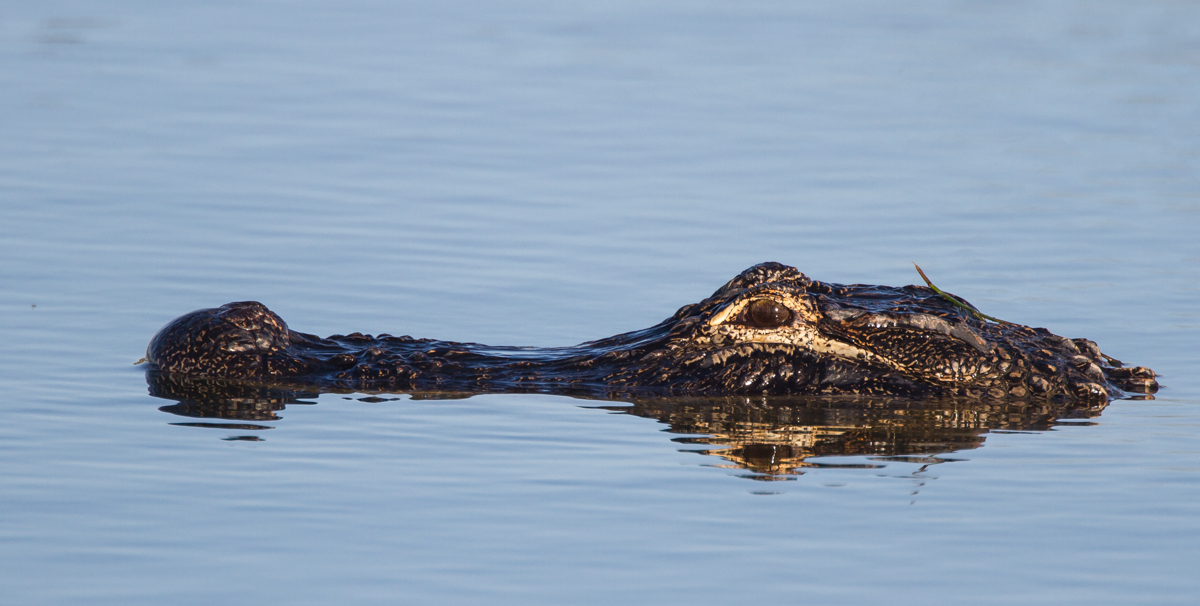
Alligator headRiver Otter napping on one of the berms
And non-avian predators are also abundant. The cold temperatures kept Alligators relatively hidden, but I did see a couple of small ones (the county has started trapping the larger Alligators for safety concerns with the huge increase in visitation and added presence of small children and dogs). One River Otter is so accustomed to people that it regularly naps in a dirt bowl it created alongside the road, always drawing a crowd of admirers.
Two days at a man-made wildlife paradise that also serves as a functioning water reclamation facility…who knew that could be so special. I will definitely be going back, perhaps later this spring, to see what this incredible place can share in a different season.
Sandhill Cranes calling as they fly over on my last dayIn a scene reminiscent of my trip to Bosque del Apache, Sandhill Cranes fly in at sunset at the Click PondsA beautiful sunset at the Click Ponds
Impoundment at Merritt Island National Wildlife Refuge (click photos to enlarge)
High on my list of places to visit on my trip to Florida was Merritt Island National Wildlife Refuge, adjacent to the Kennedy Space Center. The refuge is huge, over 140,000 acres, consisting of a variety of habitats – coastal dunes, saltwater estuaries and marshes, freshwater impoundments, scrub, pine flatwoods, and hardwood hammocks. Winter brings tens of thousands of migratory birds to the refuge to join the resident species making this a mecca for birders. One of the best places for viewing wildlife is the Black Point Wildlife Drive, a 7-mile, one-way gravel road on a dike around several large impoundments.
Northern Pintail drake
I arrived mid-afternoon, and after a quick stop at the Visitor Center, headed to Black Point Wildlife Drive. I must admit, my first reaction was disappointment. One impoundment had quite a few Northern Pintails and some shorebirds, but that was about it. Had I driven all this way for nothing? I continued on and finished the loop road and then decided to head back through one more time, hoping more activity would now be evident as sunset approached. I reminded myself that I have seen quite a few folks do the same thing at my favorite refuge back home (Pocosin Lakes) – drive through in the middle of the day and not see much and then head home wondering where all the birds they had heard about were hanging out. The following scenes took place on two afternoons at the refuge with most of the activity on the first day.
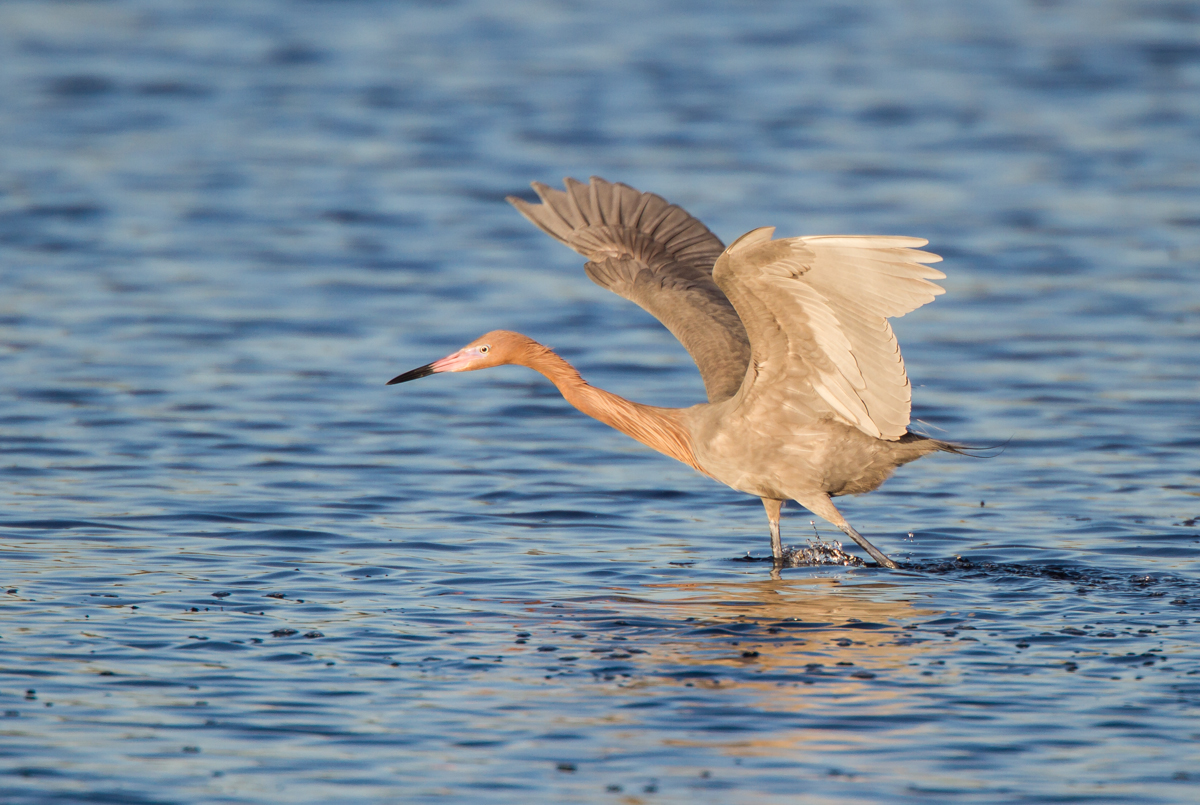
Reddish EgretReddish Egrets
Indeed, the second pass proved more fruitful. A pair of Reddish Egrets had flown in to one impoundment and were starting to forage. I have seen this species only a couple of times before, but remembered how energetic they can be as they scramble around the shallows looking for a meal.
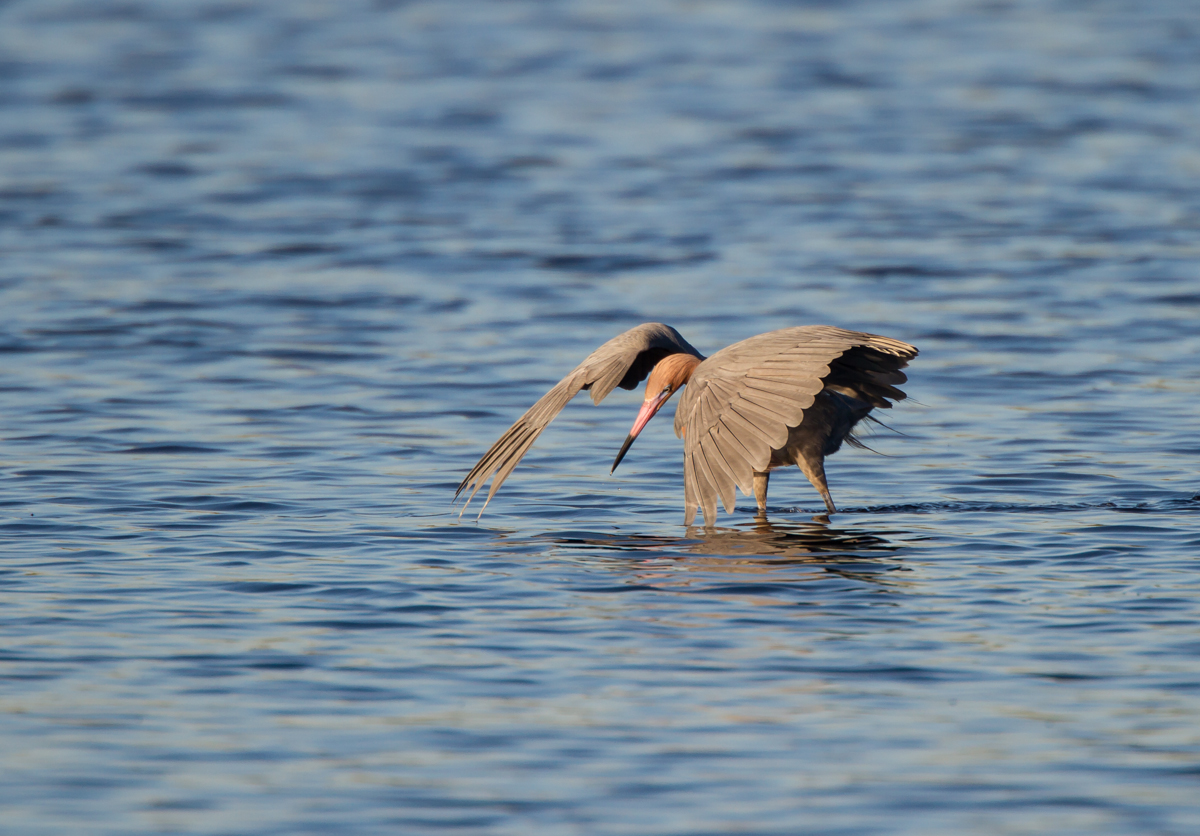
Reddish Egret foragingReddish Egret spreading its wings while hunting
In addition to mad dashes and sharp turns, Reddish Egrets also use a “canopy” technique, where they spread their wings and hold still for a few seconds, creating shade which can attract small fish within striking range.
Reddish Egret and reflection
After about 30 minutes watching these two run all over the shallows, they moved to the far side of the impoundment and I drove on.
Wood Stork
Another quintessential Florida species, a Wood Stork, greeted me at the next stop. These tall waders have a prehistoric look to them and are always a treat to see, especially in the soft light of late afternoon.
Willets
There were many shorebirds out in the impoundments, mostly Dunlin and small groups of Willets.
Northern Pintail flockShorebirds flushed by a passing Bald Eagle
A Bald Eagle flew over and both the ducks and the shorebirds erupted from the shallows in circling clouds of wings before settling back on the water.
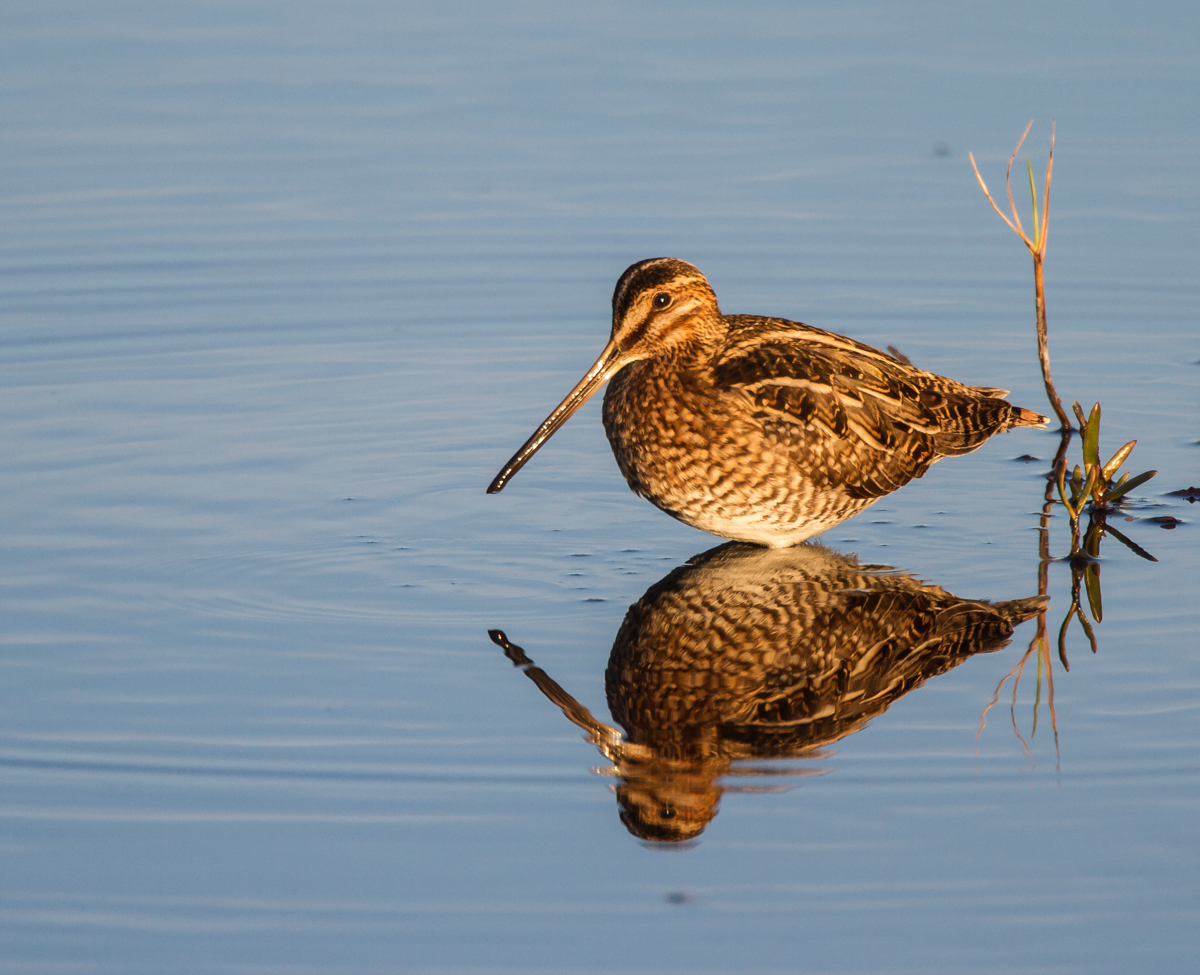
Wilson’s SnipeWilson’s Snipe at sunset
On my first pass on Wildlife Drive I was pleased to find a Wilson’s Snipe foraging along the edge of a small island adjacent to the road. On my next trip, the snipe was still near the island and was glowing in the low angle light. Usually, I see this camouflaged bird in grasses and marsh edges where a decent shot is tough to come by, but this one was more cooperative as it hunted for aquatic worms and other invertebrates in the shallows just off the edge of the island.
I returned to Merritt Island on my last afternoon in Florida. There were more visitors but fewer birds along Wildlife Drive. A local birder explained that the bays were much higher salinity than normal, perhaps due to a lack of any major tropical systems hitting this part of Florida the last few years. This has caused a reduction in the usual abundance of birds foraging in the shallow marsh impoundments. As the sun was setting, the dreaded no-see-ums (tiny biting flies) started to appear and most of the birders/photographers retreated to the safety of their cars and headed out, leaving me to look for a last few images by myself.
Great Egret at sunset
I stopped at the impoundment where I had seen all the ducks and found a lone Great Egret bathed in soft light.
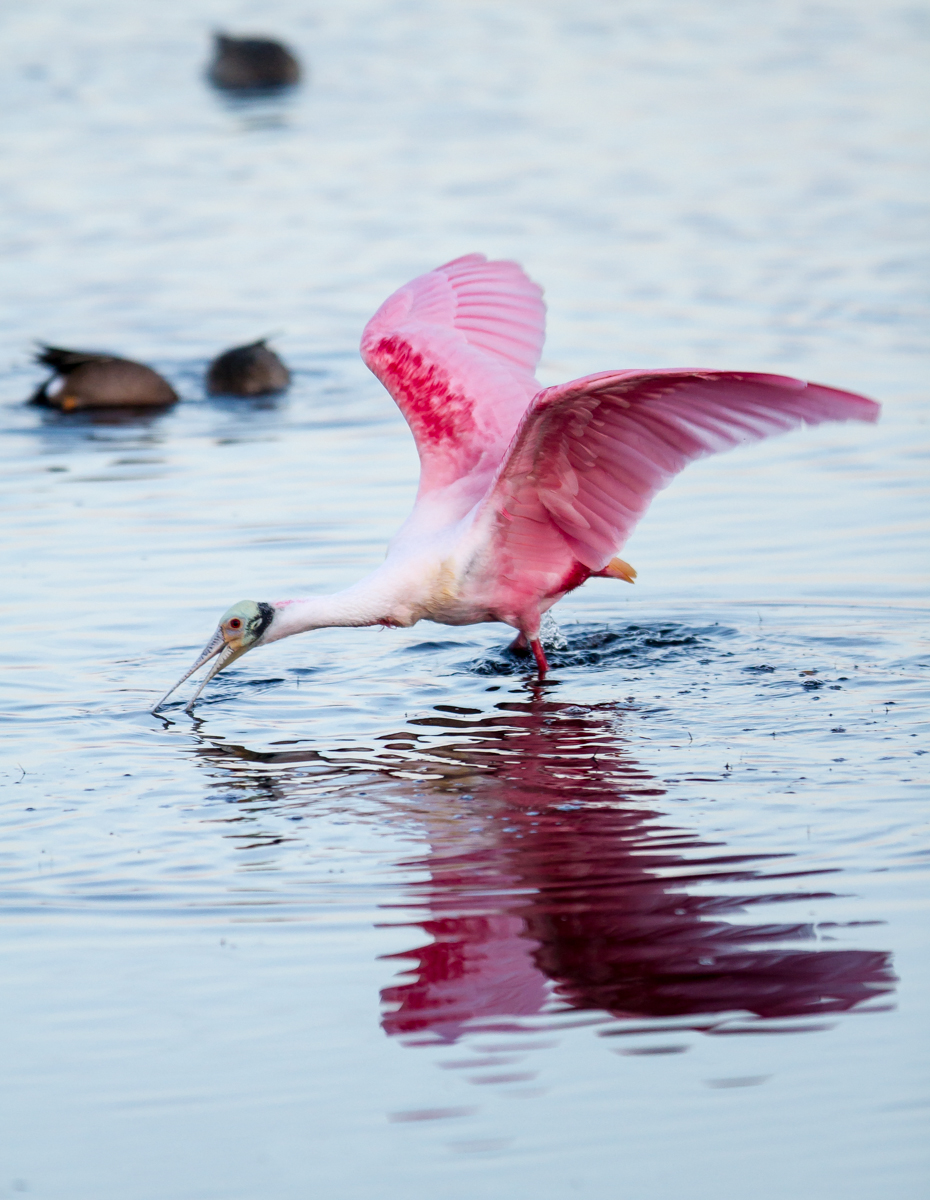
Roseate Spoonbill and Pintails
Clouds were moving in to the west so my time was getting short. I looked down the marsh and was stunned to see something I had hoped for, but had yet to see in Florida – a Roseate Spoonbill. I must have missed it flying in while I was focused on the egret. I glanced down the road, and to my amazement, there was no one else around. The spoonbill was in perfect light to highlight its gaudy pink colors and I was surprised at how small it looked relative to the ducks feeding around it. I grabbed my gear and ran down the road to get in position and got off just a couple of shots before the sun was swallowed by the cloud bank.
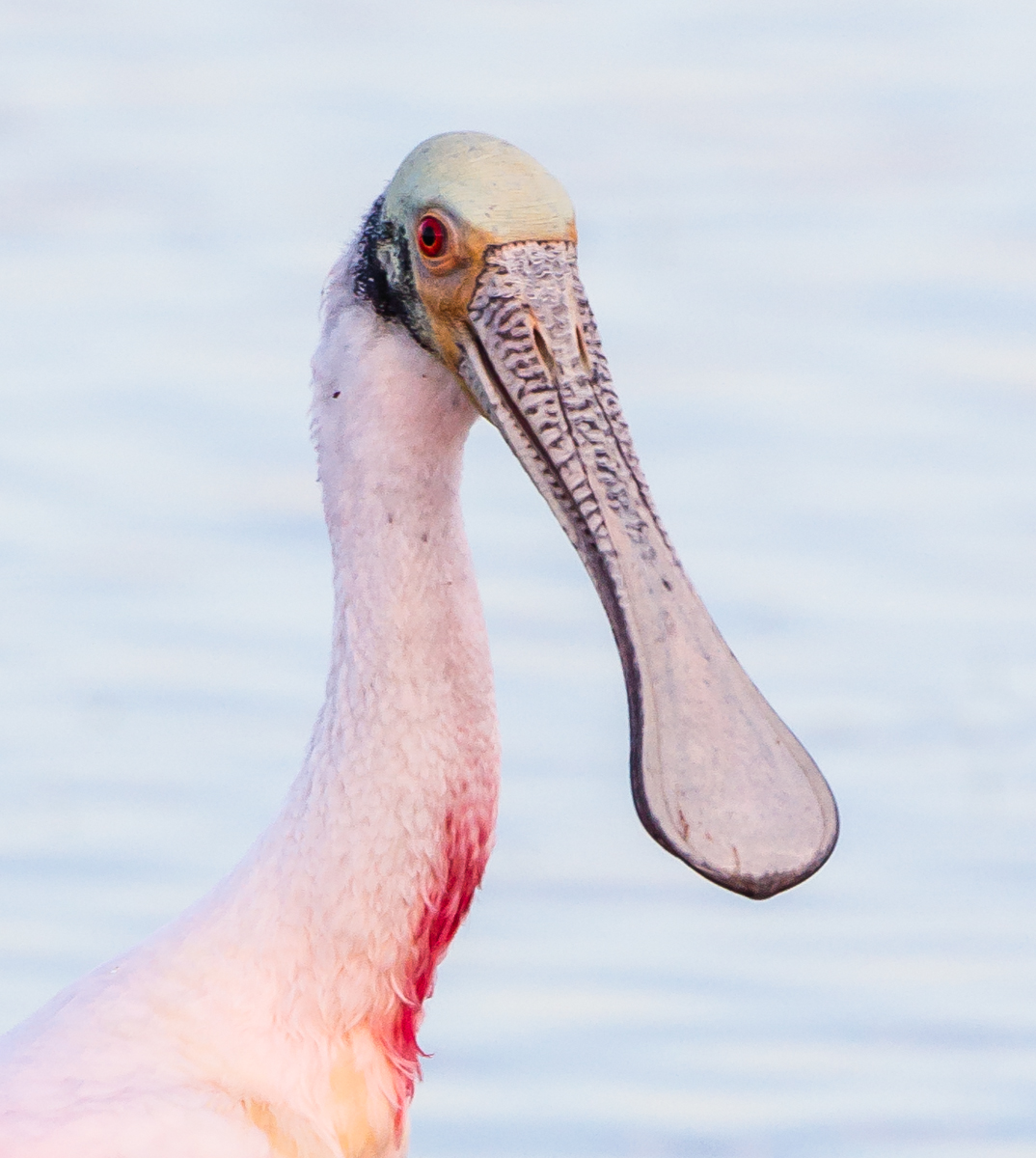
Roseate Spoonbill
So, my remaining shots were taken in darkening conditions, with the no-see-ums coming out in force (but it was worth it). Roseate Spoonbills are the most brightly-colored of six spoonbill species in the world, and are the only one found in North America, primarily along our Gulf Coast states. Their common name refers to two obvious physical traits: 1) their bright pink color, which is believed to be derived from eating crustaceans (like shrimp and crayfish) that have fed on red algae ; and 2) their unusual spoon-shaped bill.
One of the most distinctive bills of any North American bird
The odd-shaped bill is an adaptation for the bird’s tactile feeding style in shallow waters (which allows it to feed in murkier water than many other waders which rely more on sight to grab their prey).
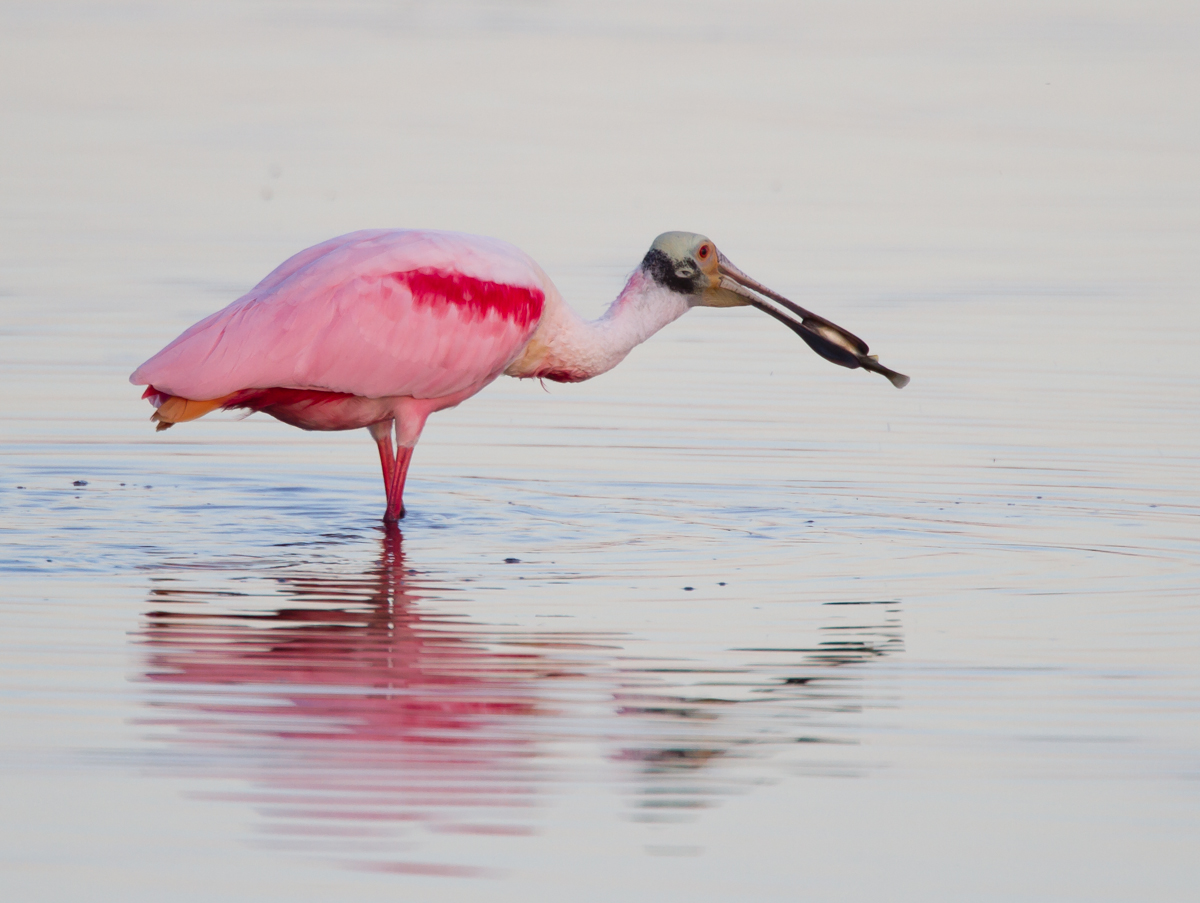
Roseate Spoonbill feeding
Spoonbills wade in shallow water with their bill down in the water, slightly agape. They feed by swinging their head back and forth and snapping the bill shut when their sensitive touch receptors located inside the bill detect prey. In clearer water, they may chase after fish they see by running and flapping (as was the case in the image above).
I stayed with this bird for about 30 minutes, watching it move hundreds of feet back and forth in the impoundment as it swung its bill in search of food. It caught several fish and some other prey too small for me to see. Roseate Spoonbill populations plummeted in the early 20th century due to hunting for the plume trade and habitat destruction. Their numbers were reduced to only a few dozen breeding pair in Florida, but with protection, they have recovered, much to the delight of nature enthusiasts and photographers.
Sunset at Merritt Island National Wildlife Refuge
I finally had to call it a day as the sky turned a beautiful pink and gray. Even though people said it was not as good as usual, my brief time at Merritt Island had proven it to be well worth it.
It is not only fine feathers that make fine birds.
~Aesop
Tricolored Heron head close up (click on photos to enlarge)
The eyes of birds are magical, so intense, so bright, so focused. One of the great things about my trip to Florida was being able to be close to a variety of birds, close enough to appreciate and capture their beauty, and close enough to look into their eyes (at least through a telephoto lens).
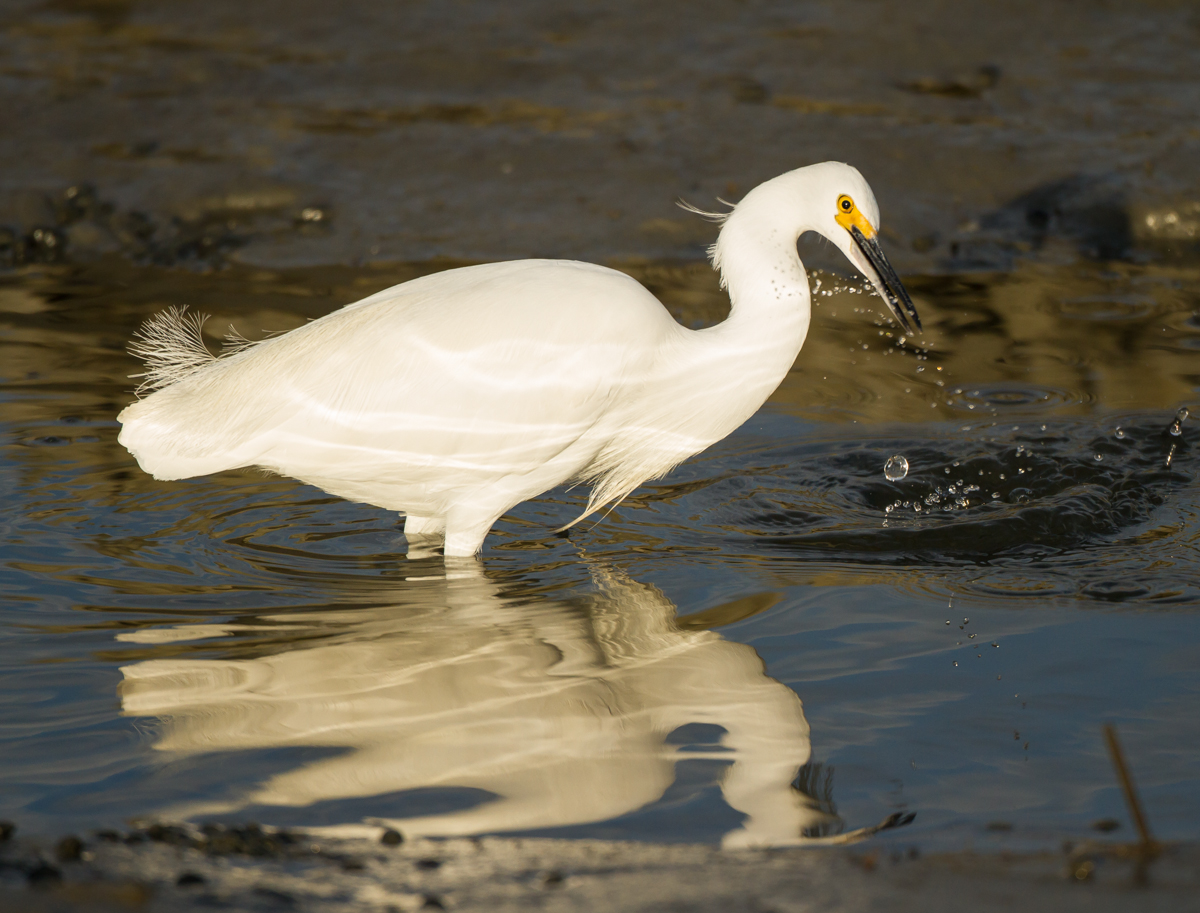
Snowy Egret swallowing goby
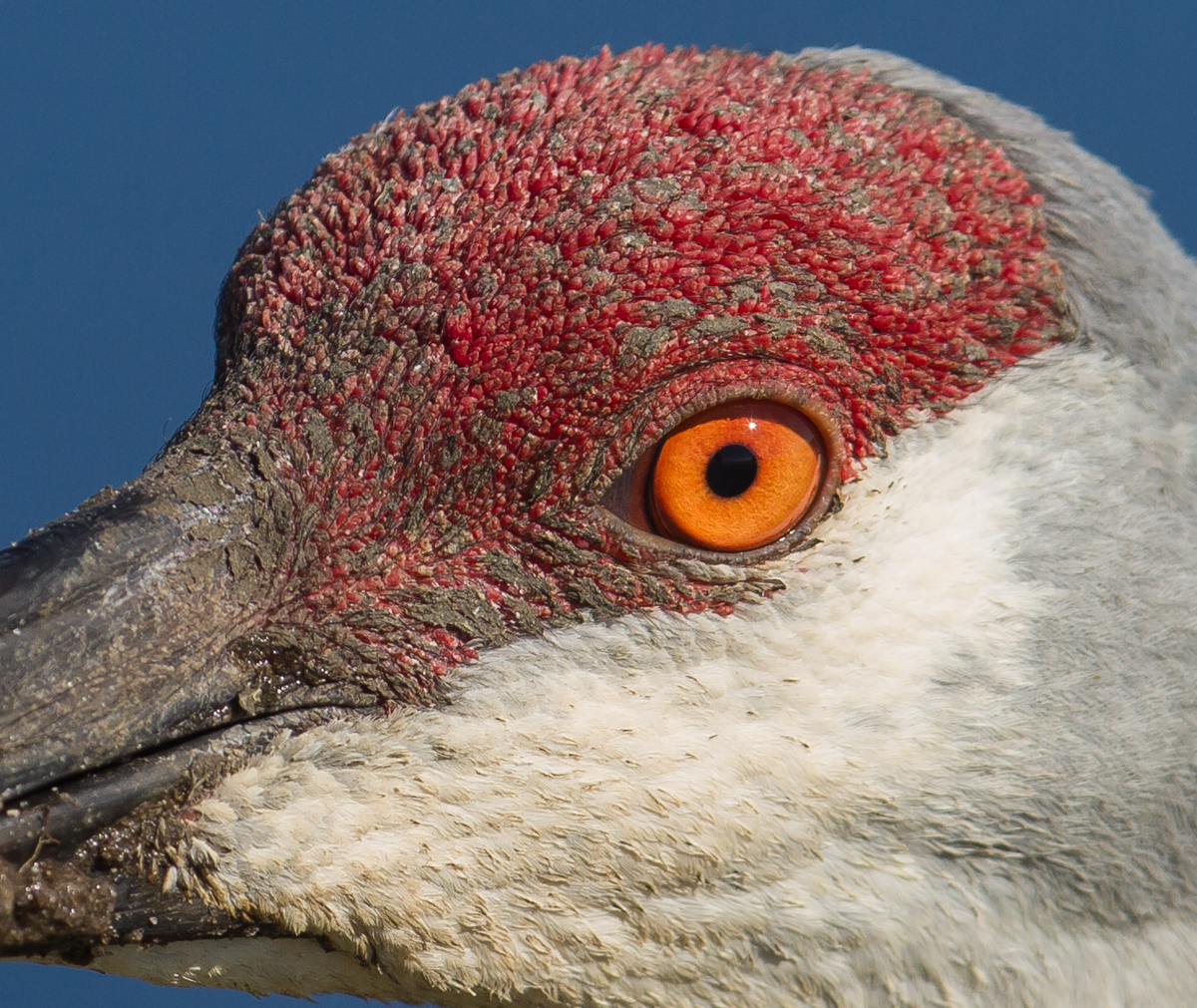
When I was looking at images for the last post on the birds of Huntington Beach State Park, I noticed the eye of the Snowy Egret. You can see the clear membrane covering about half of the bird’s eyeball. That is the nictitating membrane (from Latin nictare, to blink), a thin membrane that helps protect the eye of birds and a few other groups of animals. This so-called “third eyelid” is also found in various reptiles, mammals, and fishes. In all cases, the membrane serves as a protective adaptation when it is drawn across the eye.
Sandhill Crane eyeSandhill Crane with nictitating membrane pulled across eye
The membrane rests at the front edge of the eye and sweeps backward to clean and moisten the cornea. When pulled across the eyeball, the membrane still allows a bird to see due to its transparent (or at least translucent) nature, although it is apparently more opaque in certain species such as owls. And I learned that we, too, have a nictitating membrane in our eyes – it is that little crescent-shaped piece of pinkish skin in the corner of our eye nearest the nose. It is called the plica semilunarisours, but is vestigial and no longer functions as it does in birds.
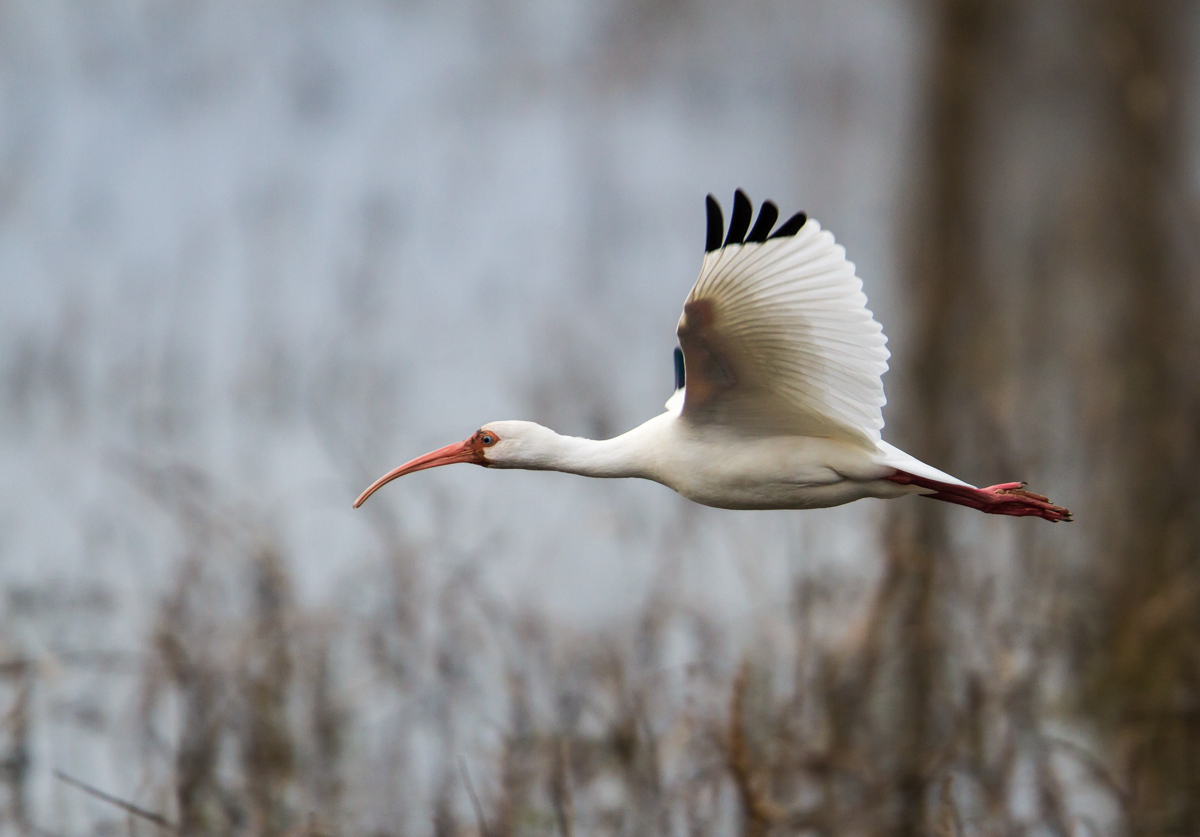
White Ibis eyeWhite Ibis eye showing nictitating membrane
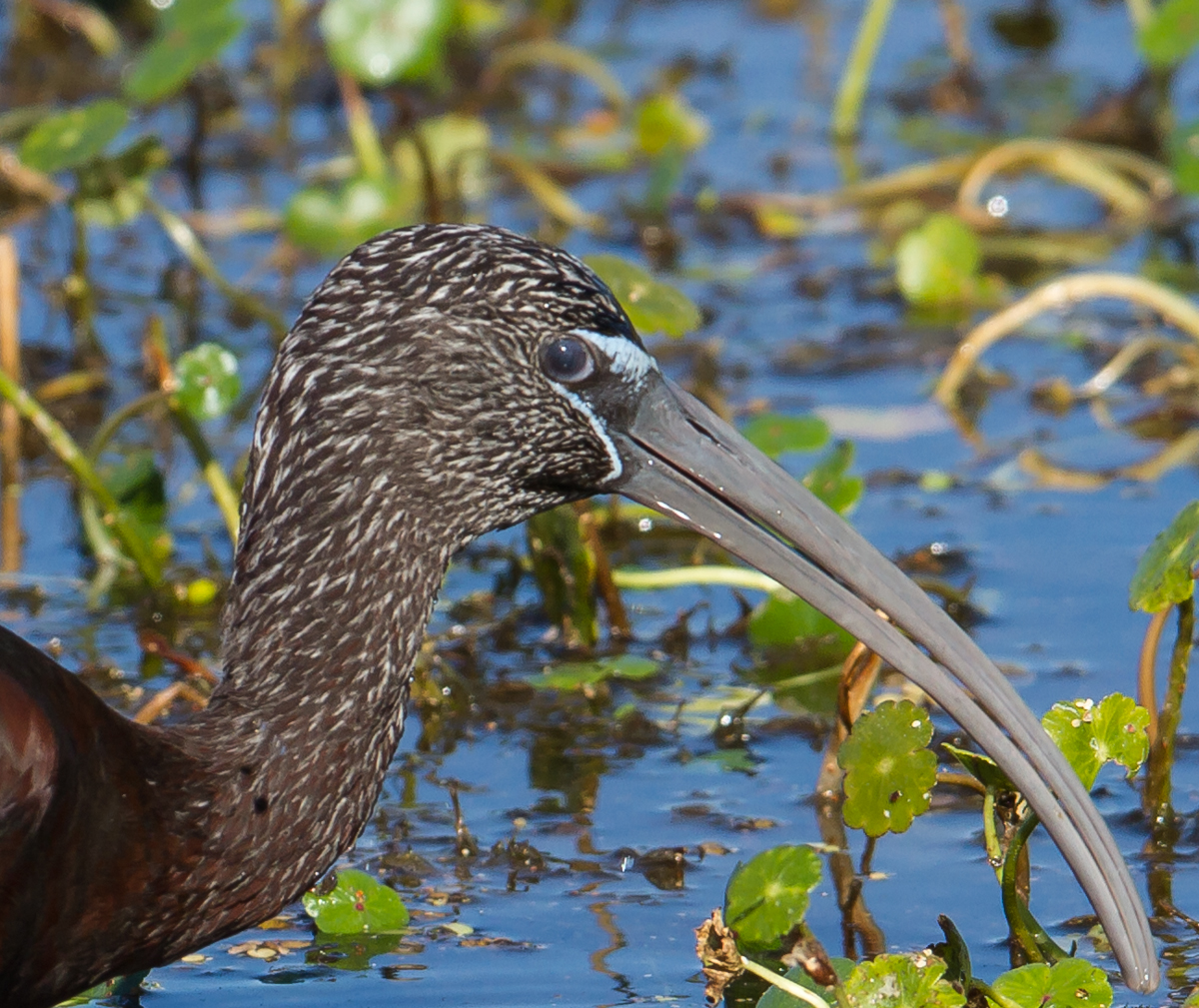
While the nictitating membrane is especially important in birds as they fly, dive underwater, or feed anxious chicks with sharp beaks, it is also used as their primary blinking mechanism. The lower eyelid closes when a bird sleeps, but they typically blink using this third eyelid. Being able to closely watch so many different types of birds while I was in Florida gave me ample opportunity to appreciate how frequently birds blink their incredible eyes.
Glossy Ibis with nictitating membrane over eyeGreen HeronLoggerhead ShrikeBald Eagle
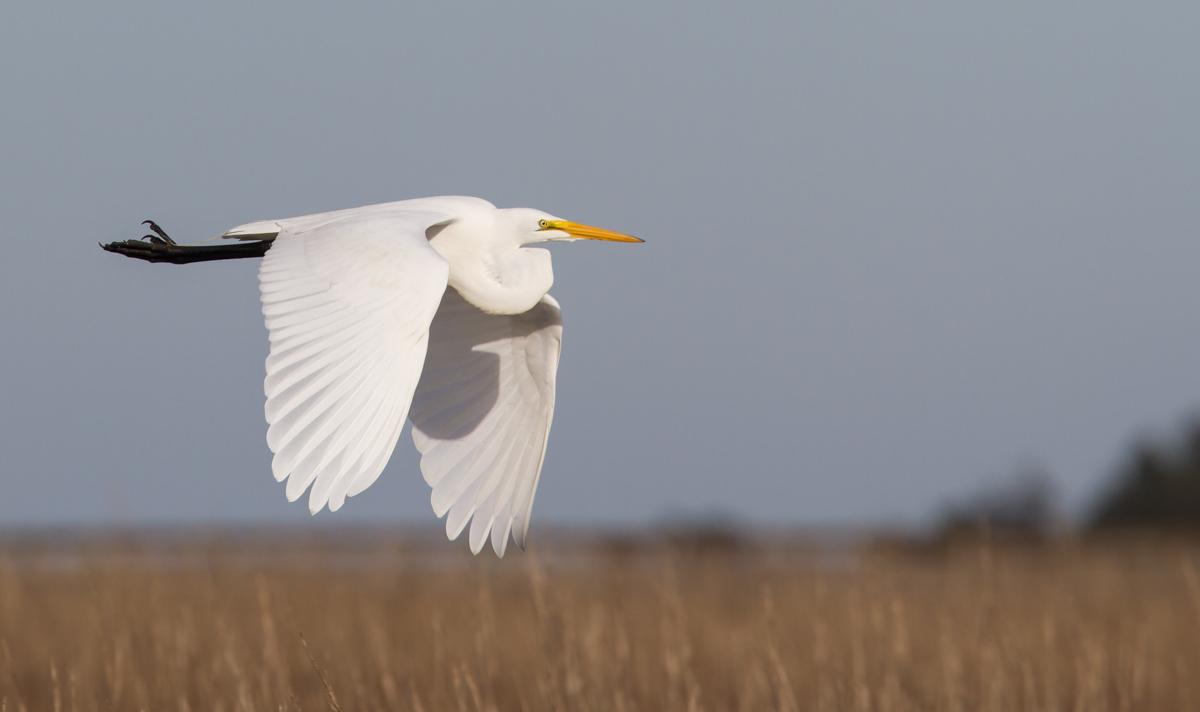
A Great Egret flies by on the marsh side of Huntington Beach State Park, SC (click photos to enlarge)
My first stop on my trip south was to one of my favorite photography destinations, Huntington Beach State Park in South Carolina. There always seems to be something to photograph there, especially along the causeway that separates the salt marsh from the freshwater pond. Two great habitats adjacent to one another provide plenty of opportunities for seeing all sorts of interesting critters. This is especially true if you time your trip to coincide with low tide on the marsh side occurring close to sunrise or sunset. Such was the case last week when I stopped in for the afternoon on my way south – the tide was falling and skies were partly cloudy. But, by Huntington Beach standards, things were pretty slow on this cold day.
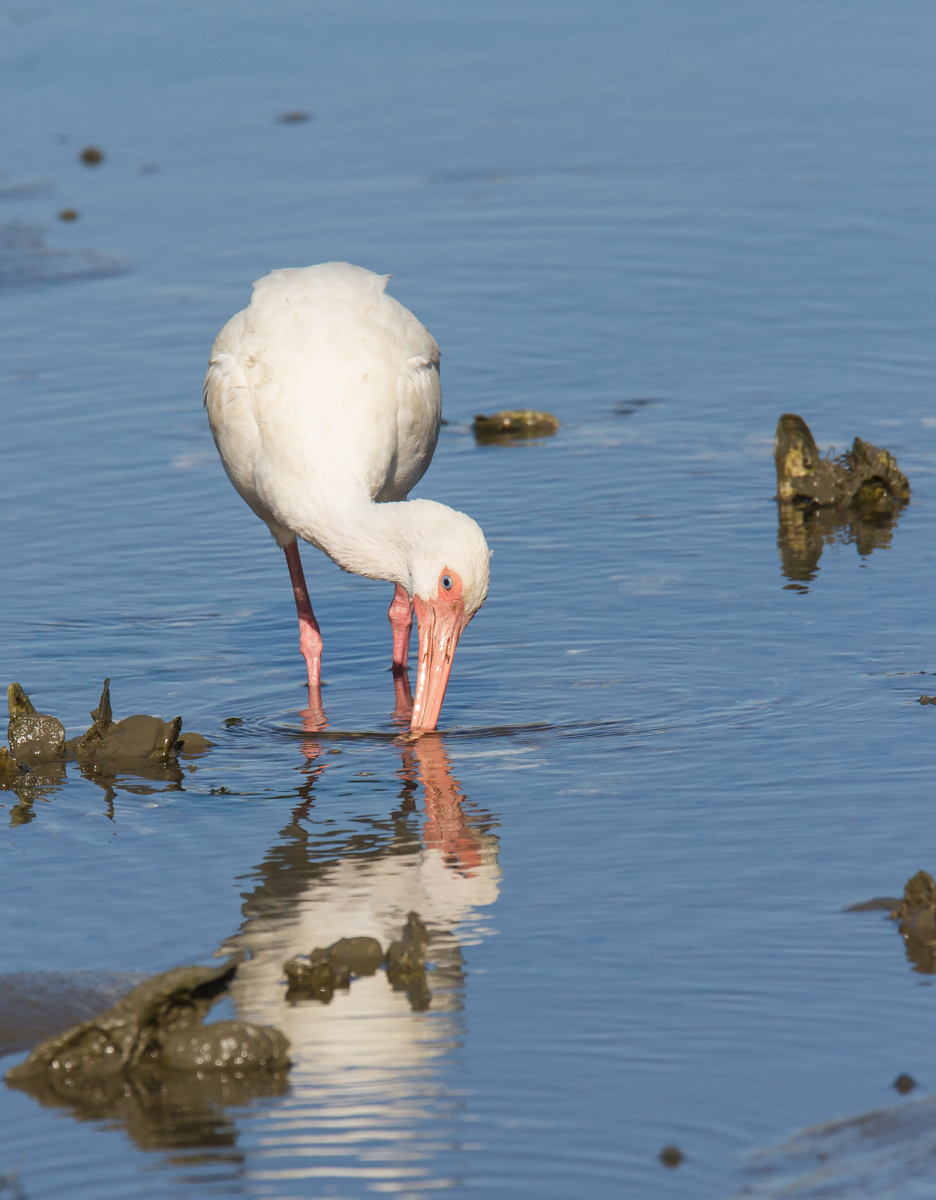
White Ibis probing for prey in an oyster bed
There were plenty of ducks on the pond side, but very little activity on the marsh side of the causeway (which is where the good light is in the afternoon). Finally, a couple of White Ibis landed and started feeding in a tidal channel amongst the exposed oysters. They probed and swung their head from side to side. Periodically, they would open their long bill, and with a snap of their head, gulp down some unseen prey.
White Ibis with what looks like a Grass Shrimp
When I examined the images later i saw what looked like small, clear shrimp as their primary taste treat, most likely a common species known as Grass Shrimp.
White Ibis captures a small fish, most likely a killifish
Every now and then an ibis would land a bigger meal, usually a small fish resembling a killifish of some sort.
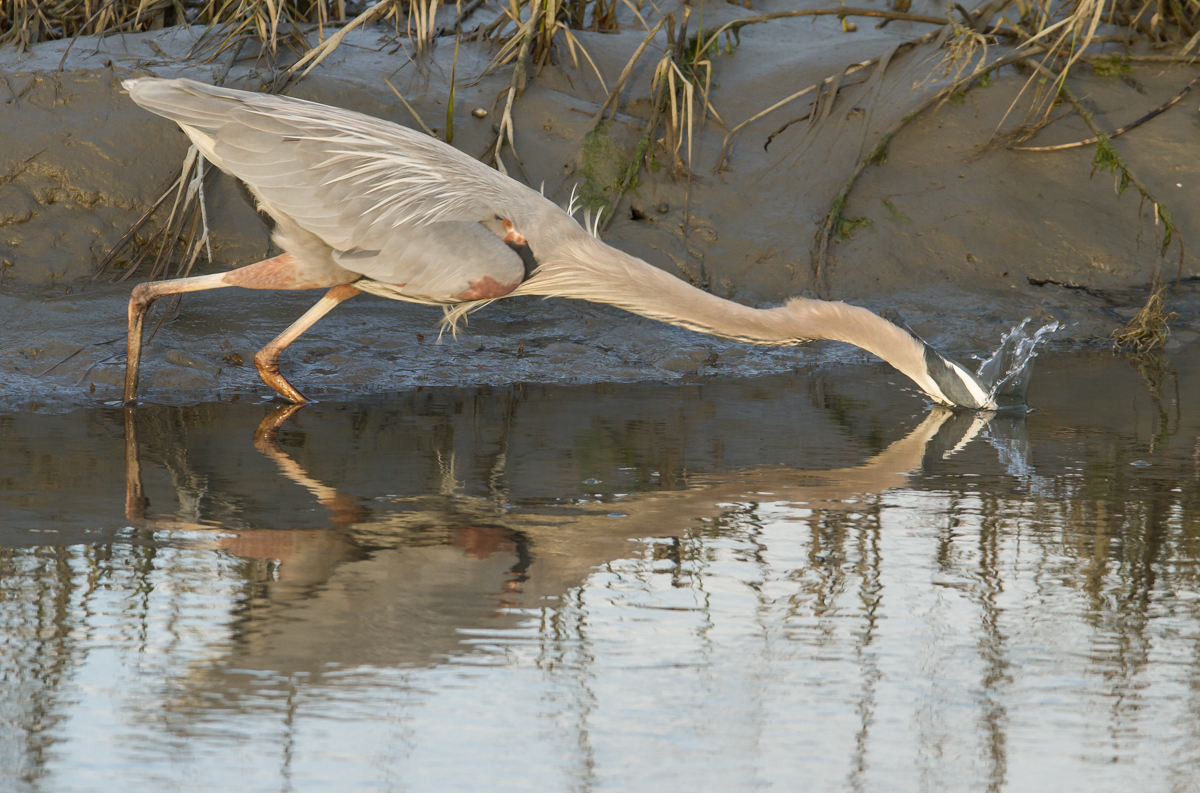
Great Blue Heron strike
Another wader joined the ranks of the ibis and began searching the retreating water for its dinner. Although I was hoping for a big fish capture (it missed on this strike), the Great Blue Heron seemed content to snack on the Grass Shrimp as well.
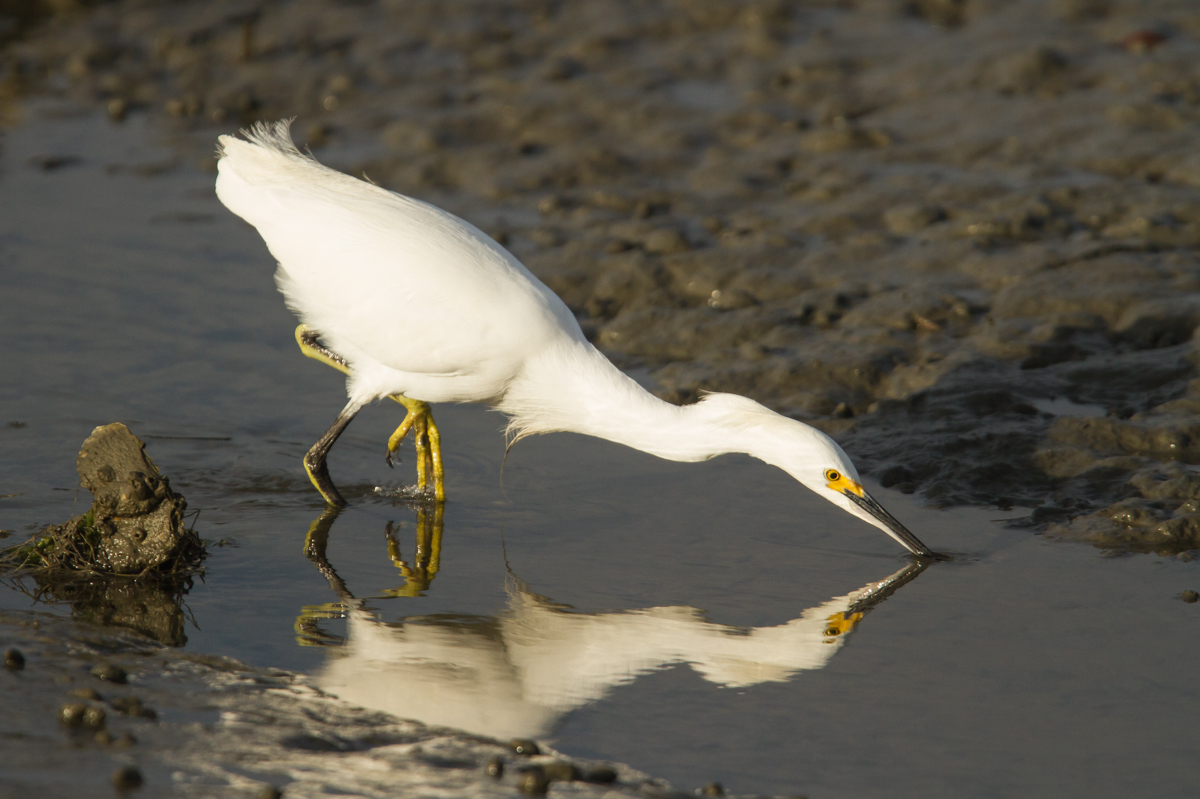
Snowy Egret hunting
The last wader to join the hunting party was a gorgeous Snowy Egret.
Snowy Egret uses a quick jab for small preySnowy Egret deftly grabs a Grass ShrimpSnowy Egret sideways head snap with Grass ShrimpSnowy Egret gulping Grass Shrimp
Snowy’s tend to be a little animated in their hunting style, with quick steps, jabs, and then, unlike the upward head snap of the ibis, a sideways head jerk followed by a gulping bill gape.
Snowy Egret strikes deeper for larger preySnowy Egret strike close upSnowy Egret snags a bigger meal
Suddenly, the Snowy Egret ran and plunged its stiletto bill deeper into the channel and emerged with a most unusual-looking prey.
Snowy Egret with goby
It had a long, skinny fish, with a pointed tail and odd dorsal and anal fins. After looking online, I think it must be a goby, perhaps a Sharp-tail (or Highfin) Goby, Gobionellus sp. These elongate bottom-dwellers inhabit estuarine mud flats in the southeast.
Snowy Egret gulping down goby
After carrying the fish around for a minute or two, the egret finally managed to gulp it down.
Snowy Egret swallowing goby
That seemed to satisfy the Snowy Egret and it flew off down into the main marsh.
Bald Eagle cruises over the marsh hunting for any easy prey
Right after that, one of the local Bald Eagles cruised overhead, scanning for any easy meal it could catch, or steal from another of the hunters found at Huntington Beach. I was getting hungry myself, and as a cloud bank started to move in, I headed south to Savannah for the next leg of the trip.
In nature, everything has a job. The job of the fog is to beautify further the existing beauties!
~Mehmet Murat ildan
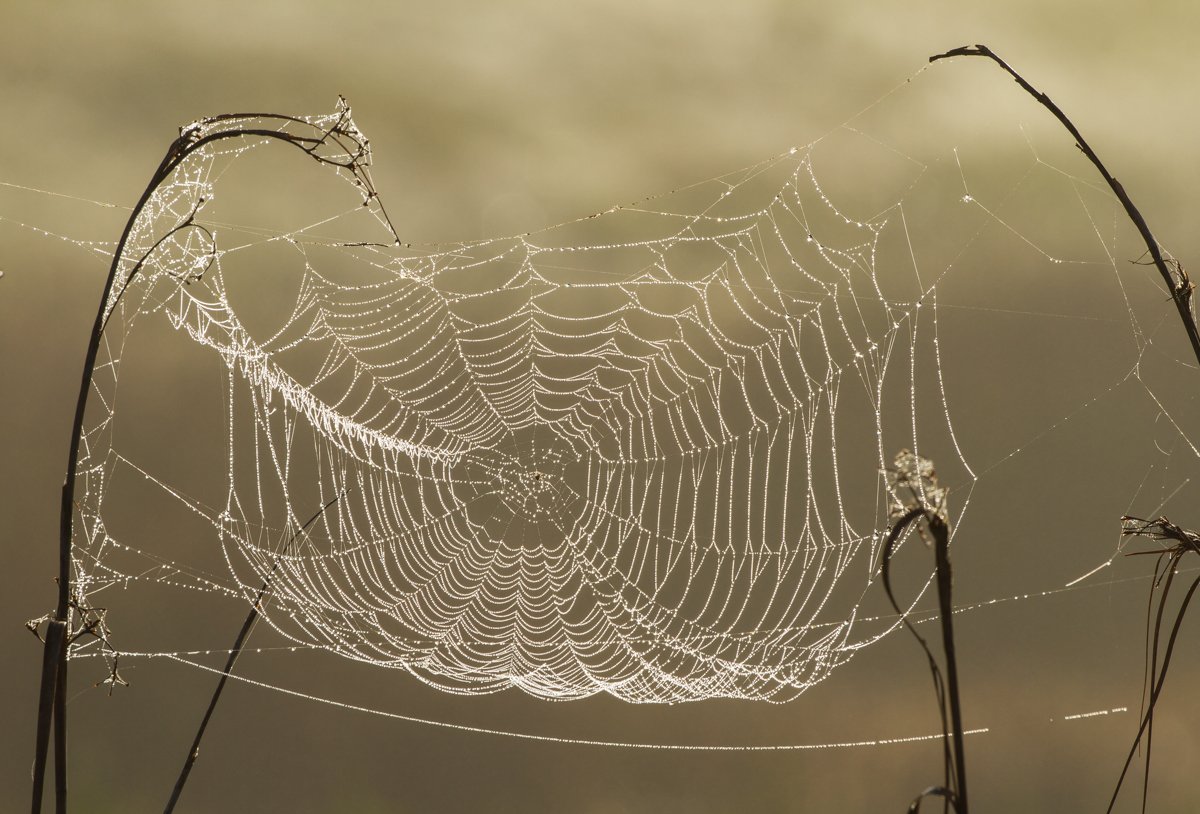
Spider web in lifting fog at Viera Wetlands (click photos to enlarge)
I just got back from a whirlwind trip south to the so-called Space Coast area of Florida. I have always wanted to visit Florida in winter to see the bird life and now finally have the time to do it, although I still only managed to visit a few key places. I will post a few blogs over the next week on what I found, but wanted to start with a short post on my last two mornings. I had watched the weather and picked a week when conditions looked good for photography, so you can imagine my initial disappointment when my last two mornings were heavily socked in by fog.
Sandhill Cranes in fog at one of the “Click Ponds”, Viera, FL
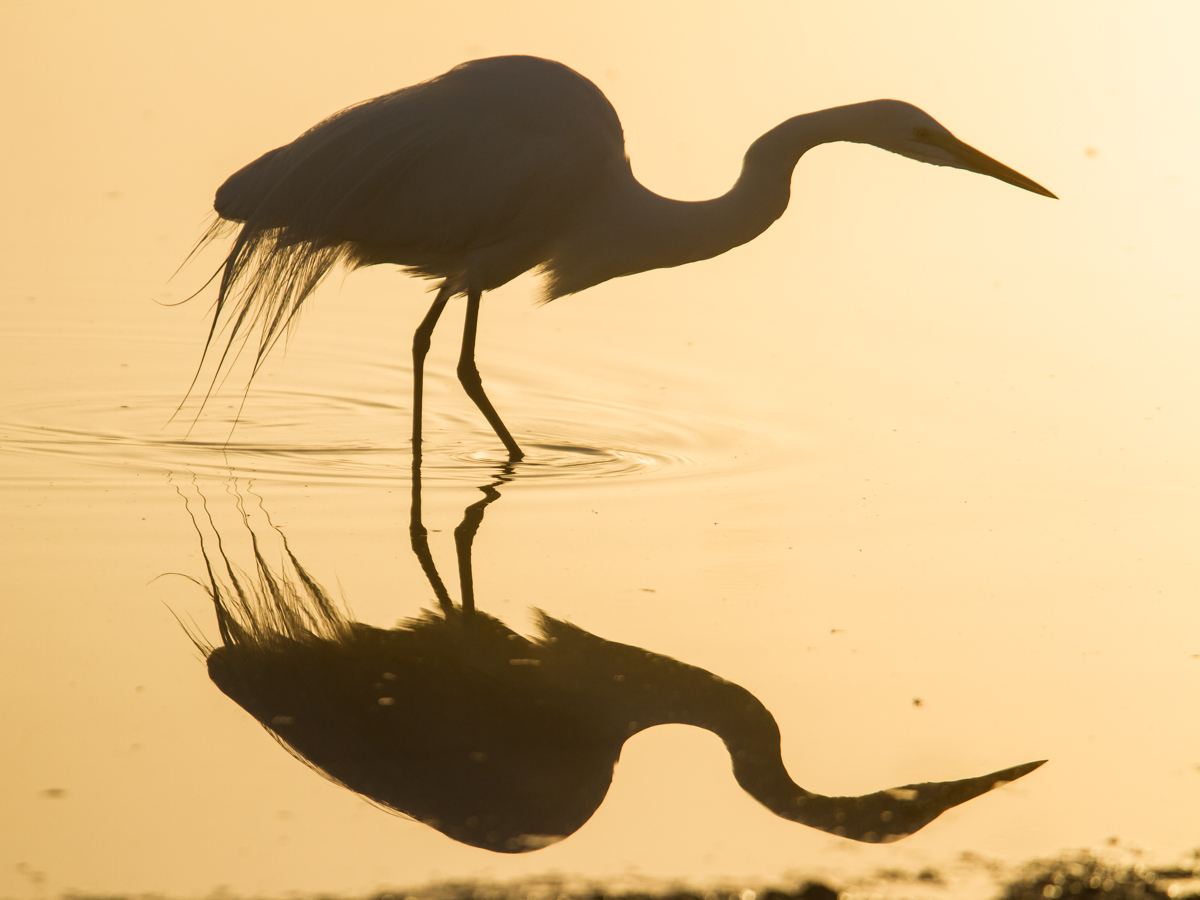
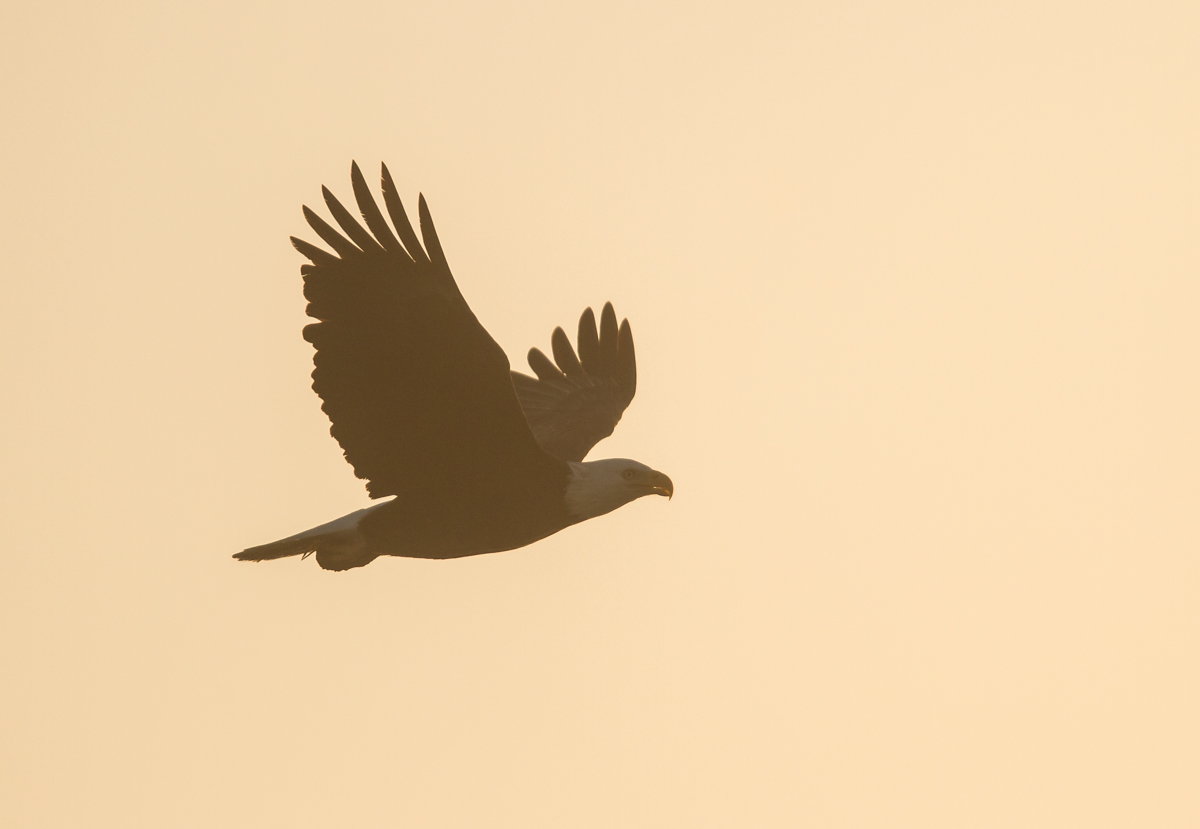
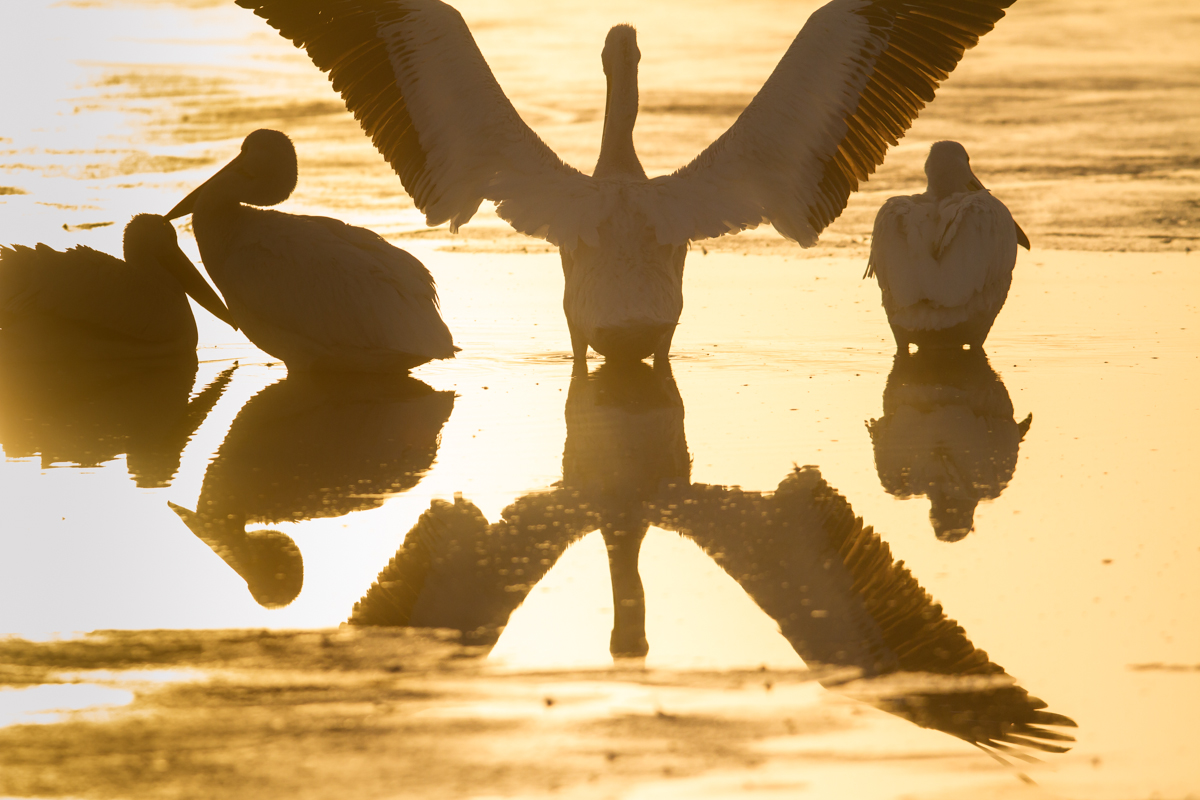
At first, I viewed the fog as a thief of the light, stealing the precious few hours of prime low-angle light that can make all the difference in a wildlife photo. The Sandhill Cranes I had hoped to photograph with the golden light of sunrise on their feathers were not much more than dark blobs in the mist. But, as I was in a place full of wildlife and I wanted to observe and photograph, I decided to move to the other side of the wetland pool and shoot into the sun that was struggling to make its presence known. Most of the cranes had already left by the time I got to the other side, but there were plenty of other subjects. So, here are some images of birds silhouetted by the rising sun as it tried to burn through the dense ground-hugging cloud. See if you can identify the birds by shape – there may be some repeats (answers are at the end of this post).
You have seen one of these already – what is the other species in this image?Nice comparison
Now that you have had some practice….
Okay, here are the answers to the quiz:
Great Egret
American White Pelicans
Anhinga
Bald Eagle
American White Pelicans with a flock of Tree Swallows
Great Egret with Snowy Egret
Tricolored Heron
Great Blue Heron, three Great Egrets, two Snowy Egrets, four Greater Yellowlegs, White Ibis
Here are a few more images from the hour or so the fog coated the landscape…
American White Pelican landingTricolored Heron preeningAmerican White Pelicans in fogGreat Egret and Greater YellowlegsAmerican White Pelicans as fog liftsGrass seed heads laden with moisture from lifting fog
I just returned from the second recent guided trip to these incredible wildlife refuges. My client was particularly interested in bird photography, so that was high on the agenda. But he made a point of saying he was open to anything, since he was fully aware of the vagaries of wildlife photography – sometimes wildlife cooperates, and sometimes, it doesn’t. Due to heavy rains the previous day, I decided to visit Matamuskeet first to hopefully give the roads at Pungo a chance to dry out at least a little. We left Raleigh a little before 6 a.m. and arrived at Mattamuskeet by about 9:30.
Black-crowned Night Heron adult (click photos to enlarge)
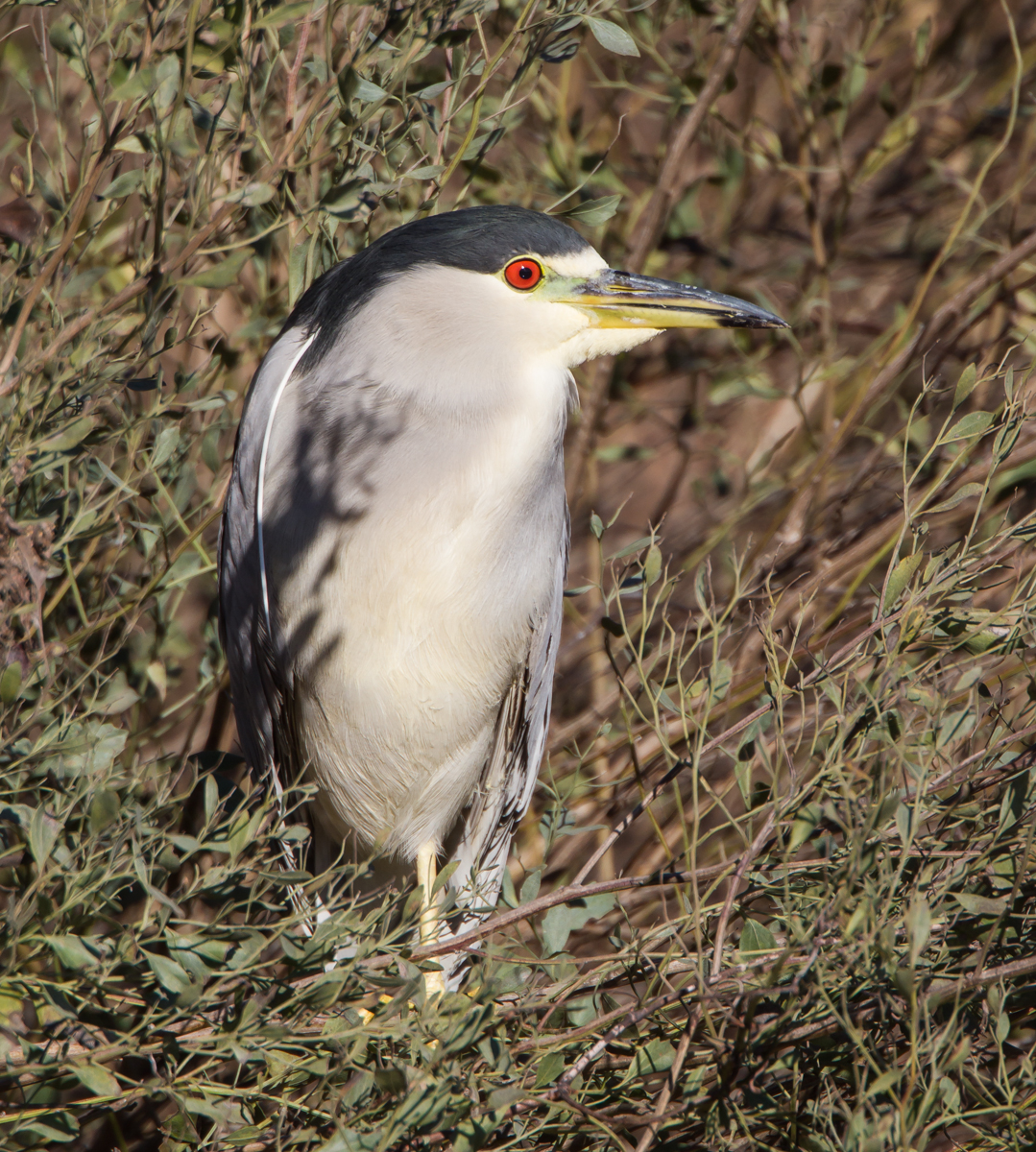
Just inside the entrance to Wildlife Drive, we were greeted by a stunning Black-crowned Night Heron adult. I usually see more of the immature night herons here (brown colors with light speckles in their plumage), with just an occasional adult. The most reliable place to see them is in a grove of trees across the canal from the lodge, often partially obscured by branches. But this one was in a much better spot for photographs, and its scarlet red eye seemed to glow in the morning light. As I walked a few steps off the road for a clear photo, I accidentally flushed the first of several bitterns we would see.
Great Blue Heron with one head feather amiss
The next open pool held the usual Great Blue Heron, along with a Great Egret. You can almost always count on one or both of these species in this spot.
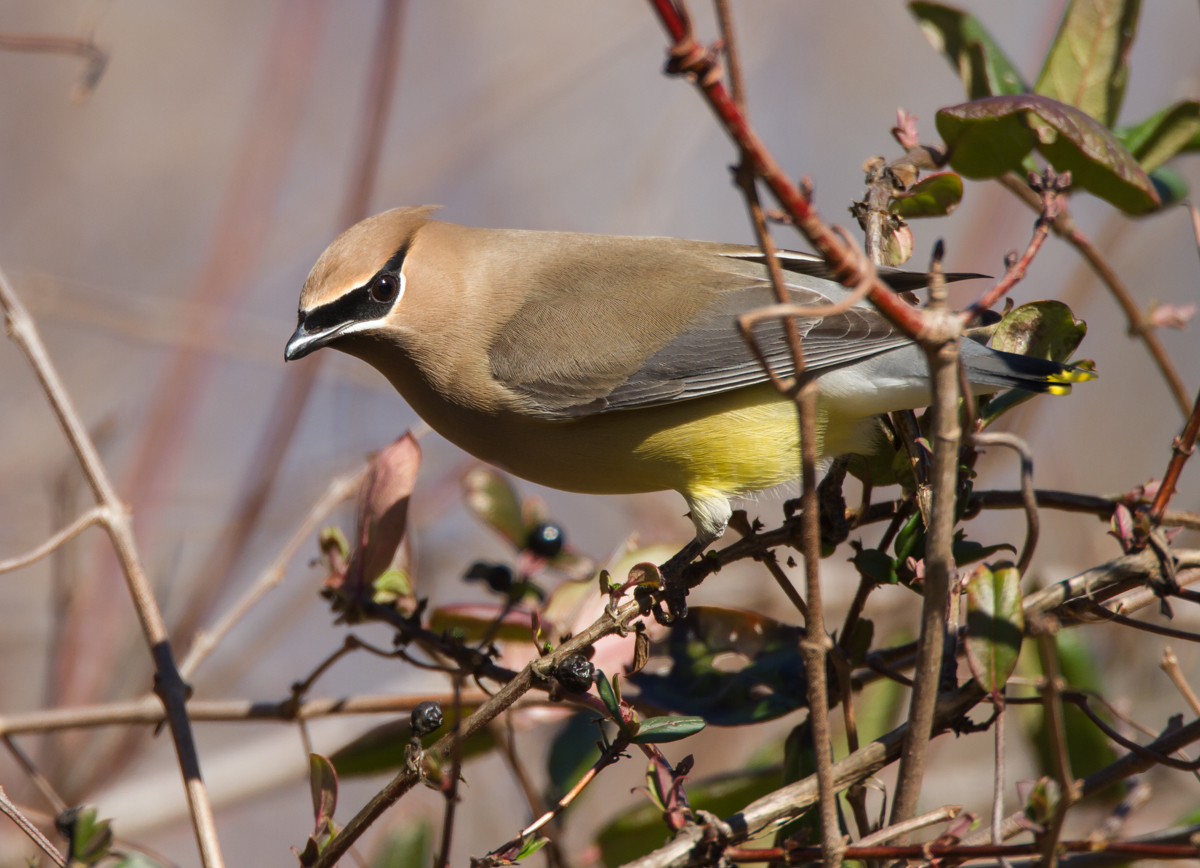
Cedar Waxwing feeding on Privet berries
As we watched the herons, small flocks of Cedar Waxwings flitted by in their usual jerky flight pattern. Later in the day, we finally tracked some down as they swarmed the all-too-numerous fruit of the invasive Privet shrubs that line sections of the refuge’s roads. Always one of my favorite songbirds to observe, waxwings are often tough to photograph without a mishmash of twigs in the background.
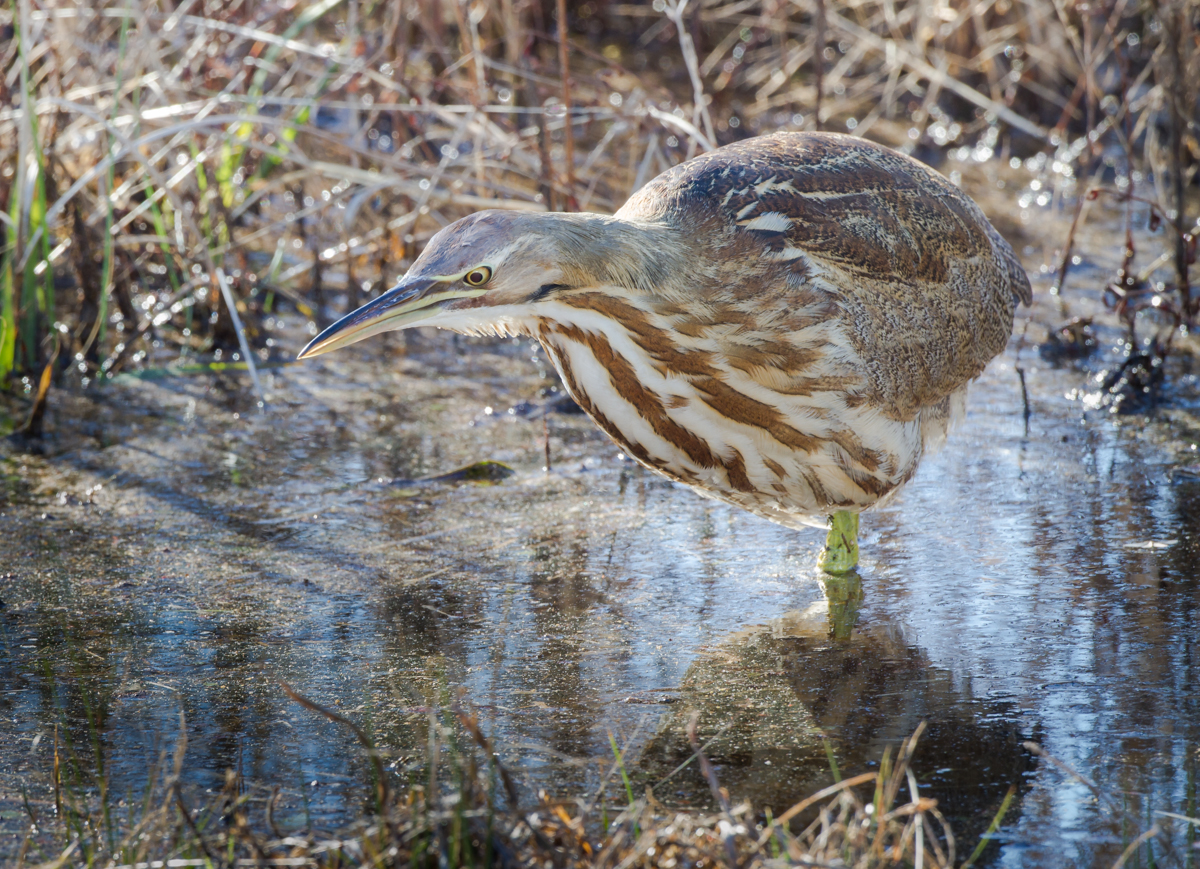
American Bittern
Another American Bittern soon revealed itself in a narrow strip of grasses along a canal and we used the car as a blind to photograph the bird for several minutes before it disappeared in a thick patch of vegetation. This year seems to be an especially good one for bitterns at Mattamuskeet.
Immature White Ibis
It is so interesting what a difference a couple of days makes in what you see in a location. Last week there had been about 50 adult White Ibis along with one immature (distinguished by its brown coloration) feeding in an impoudment along Wildlife Drive. Things were different today and on our second pass through the area, we finally saw our one and only ibis of the day, an immature. It was vigorously probing the mud with its unusual bill. Looking more closely at a few images last night I could finally see that it was primarily eating worms.
Adult Bald Eagle
We had seen several Bald Eagles at both Pocosin Lakes and Mattamuskeet, but failed to get close enough for any nice images. At the end of Wildlife Drive we saw a flash of white through the trees, which turned out to be the head and tail of an adult Bald Eagle landing in a large pine alongside a side road. I was able to position the car so that my participant could get some good shots with his 600mm lens (yes, I did have lens envy the entire trip). The eagle was surprisingly cooperative, so I was able to back out, turn the car around, and back in along the road so I could get a few shots as well. The eagle was still perched, surveying the scene, when we decided to move on.
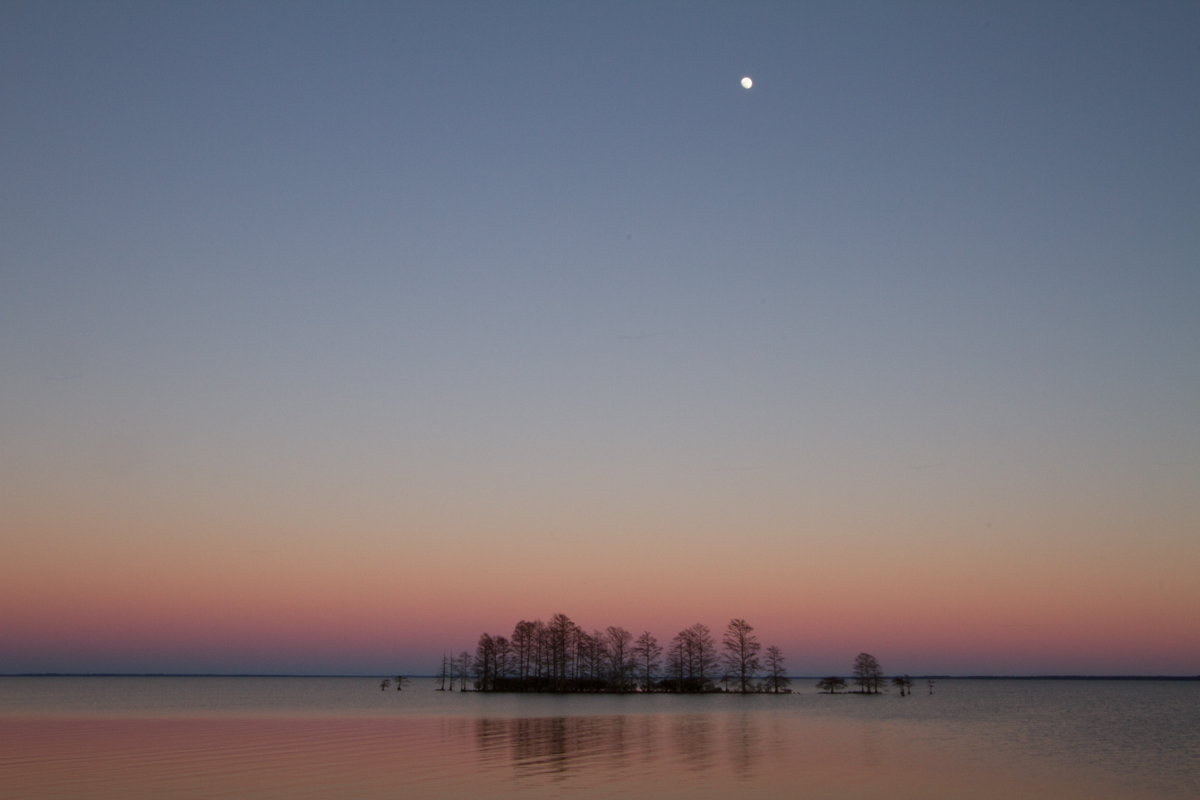
Moon above cypress island at sunset on Lake Mattamuskeet
As the light faded, we stopped at the observation platform along the road crossing the lake. I wanted to enjoy the scene in the fading light at what must be the most photographed island of trees in the state. I always try to stop and view the sunrise from here if I am in the area, but sunset is equally compelling. As we stood watching the sky turn shades of pink and purple, I reflected on how lucky I am to share this incredible place with people interested in the beauties of nature.
Sunrise the next morning found us on the platform on the south shore of Pungo Lake. The lake was full of swans and the air was sweet with their peaceful calls. But the pocosin shrubs near the platform were full of the harsher notes of another species – Red-winged Blackbirds. Their loud chatter began to increase with the approach of sunrise and then the first birds started flying up and heading west over the trees. Then more birds joined in from further east, and soon it was a continuous stream of blackbirds that flew by us for the next 10-15 minutes. On the recent Christmas Bird Count, we had a similar experience, and estimated that 160,000 blackbirds flew by us on that morning.
Mud hole in road at Pungo
My usual routine at Pungo is to watch sunrise at the platform and then cruise the refuge looking for wildlife until the Snow Geese fly off the lake and out to some nearby fields to feed. The Snow Geese were running late in their usual departure, so we decided to move on. Hopefully, we can find which fields they fly out to and spend some time observing the huge flock (they are less predictable this year for some reason). As we headed out, I could see the recent heavy rains had taken a toll on the often cantankerous roads on the refuge. The odd soil type makes road maintenance difficult, so visitors need to be cautious when the roads are muddy.
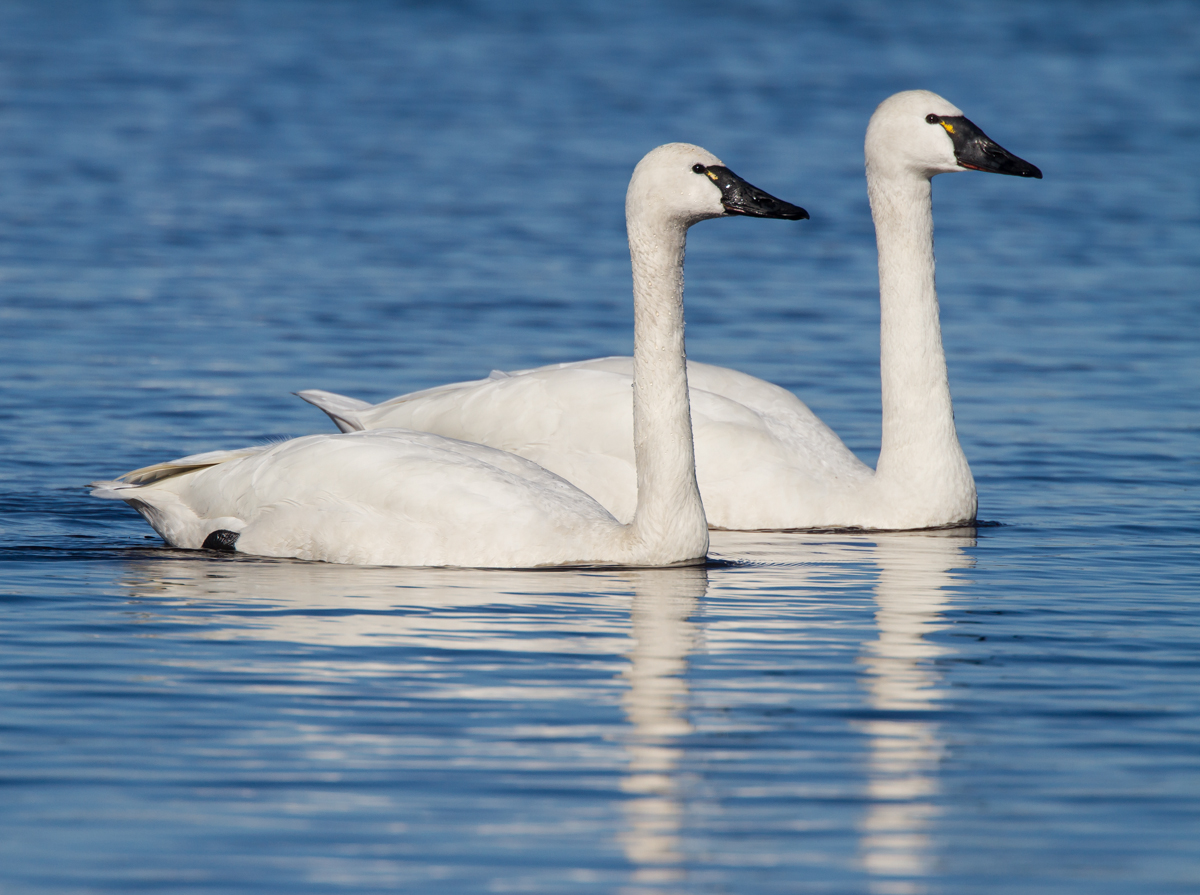
Tundra Swan pair from Duck Pen Observation BlindSwans feeding on Pungo LakeTundra Swan feeding in lake
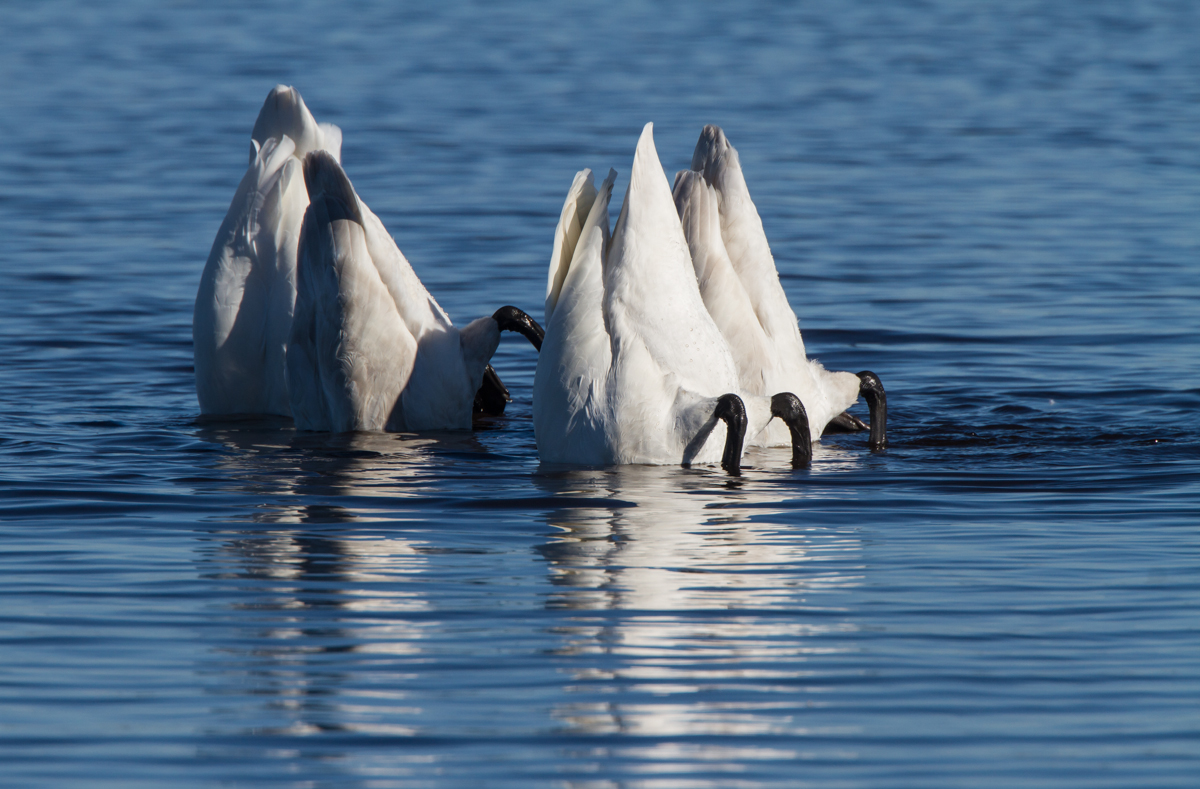
One of the newer visitor services additions on the refuge is the Duck Pen Observation Blind farther down the road on the south shore of Pungo Lake. A short hike from the parking area leads to a large wooden enclosure with a great view out on the lake (although I hope to volunteer once the waterfowl are gone to cut a few more observation ports and make some of the existing ones larger to accommodate telephoto lenses). Since the winds were out of the south, the waterfowl were in close to the south shore, making for some great views. Swans were feeding in the shallows, something I see all the time at Mattamuskeet with its abundant aquatic vegetation, but rarely here at Pungo Lake, due to the peat lake bottom and relative lack of plants and aquatic life.
Snow Geese blast off on Pungo Lake from Duck Pen Observation Blind
Far out on the lake was a huge raft of Snow Geese packed into a solid white line on the water. They blasted off two or three times while we were in the blind, but simply circled and settled noisily back on the lake, instead of flying out to feed. Mixed in with the swans and geese were hundreds of other waterfowl, mostly Green-winged Teal, Gadwall, American Wigeon, and Northern Pintails.
Tree trunk with bear claw marks
The middle of the day, as is often the case, was a bit slow for wildlife viewing. There were coots and some other waterfowl on various impoundments, a few eagles, and the ubiquitous flocks of Red-winged Blackbirds swirling in the corn stubble. Rather than continuing to cruise the muddy roads, we decided to walk through the woods looking for wildlife and hoping to see a bear. We spotted lots of bear sign, including one tree trunk that looked like the bear tic-tac-toe championship had been played on it, but no bears. We could hear the calls of thousands of swans on the lake and the thunderous whoosh every time the Snow Geese would blast off, but they never seemed to fly off to feed the entire day, which is a bit unusual. So, late in the afternoon, we headed to a spot where bear activity has been good and settled in to watch and wait, and wait some more.
Black Bear cub
As sunset approached I was afraid this might be the first tine this season I would be skunked in bear sightings, but, right as we started to head out, a sow and her two cubs materialized out of the woods. The adult and one cub headed out into the corn field, but the other cub seemed nervous, and stayed near the tree line. My goal was to not disturb the bears, so we remained still, hoping the cub would go on by us to feed in the corn. After pacing back and forth, sitting on its rear end, moaning and groaning a bit, and then laying down for a few minutes, the cautious cub finally did join the rest of the family. We then headed back to the car. Our two day excursion ended with a setting sun in an immense sky, punctuated by the melodious sounds of small flocks of swans flying overhead, accompanied by the hoots of the resident Great Horned Owls as they started their evening conversations. A great way to end it, indeed.
I am in the middle of leading two trips to my favorite places in NC – Pocosin Lakes and Mattamuskeet National Wildlife Refuges. This is a brief visual report on the first. Last week, I had four great folks from the Raleigh area join me for a wildlife viewing trip. We started at Pocosin Lakes last Thursday and spent some time with some of the stars of the refuge this time of year – Red-winged Blackbirds, Tundra Swans, and my perennial favorites, the Black Bears.
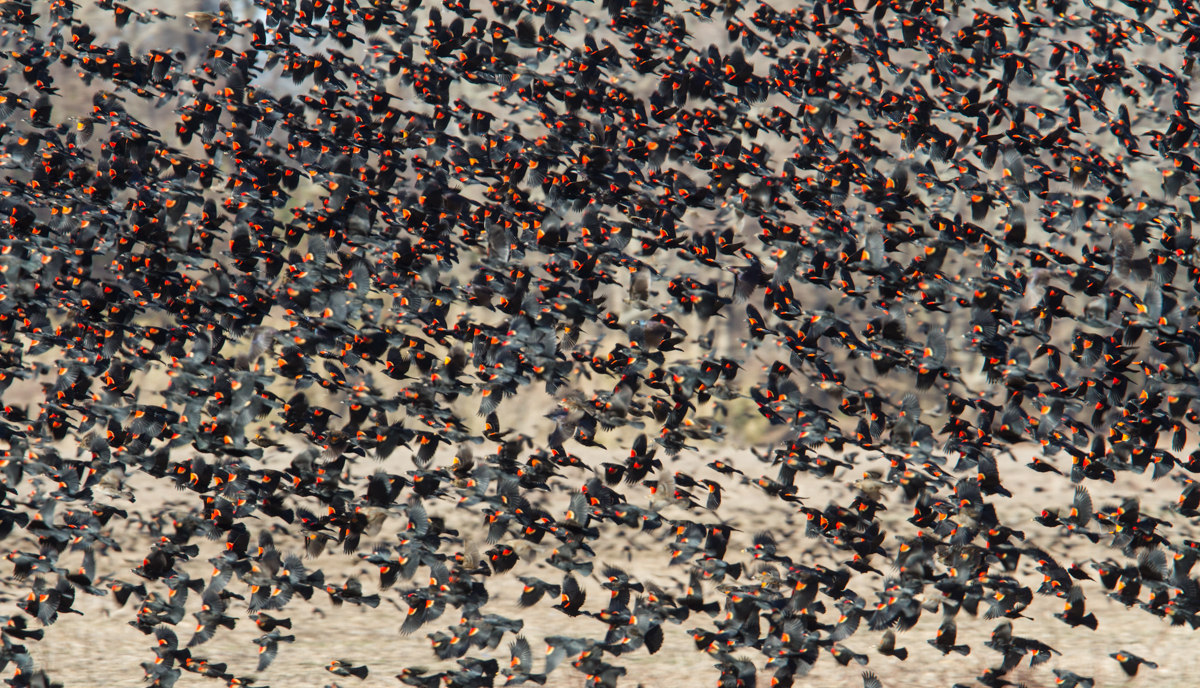
Red-winged Blackbird flock over field (click photos to enlarge)
We started and ended our day with Red-winged Backbirds. There are huge flocks of these beautiful birds at the refuge in winter which provide a visual and audible delight to observers (and meals to a variety of predators). They roll across the fields as dark clouds, often fashioned into swirls by the movements of raptors such as Northern Harriers.
Flashes of red from the shoulder patches of males in the Red-winged Blackbird flock
They change from twisting masses of dark feathers to spiraling flashes of red depending on the light and whether you have huge numbers of male Red-winged Blackbirds in the flock (the males have bright red shoulder patches that flash in the sunlight as they twist and turn in flight). The flocks also usually contain smaller numbers of other species of black-colored birds such as Common Grackles and Brown-headed Blackbirds.
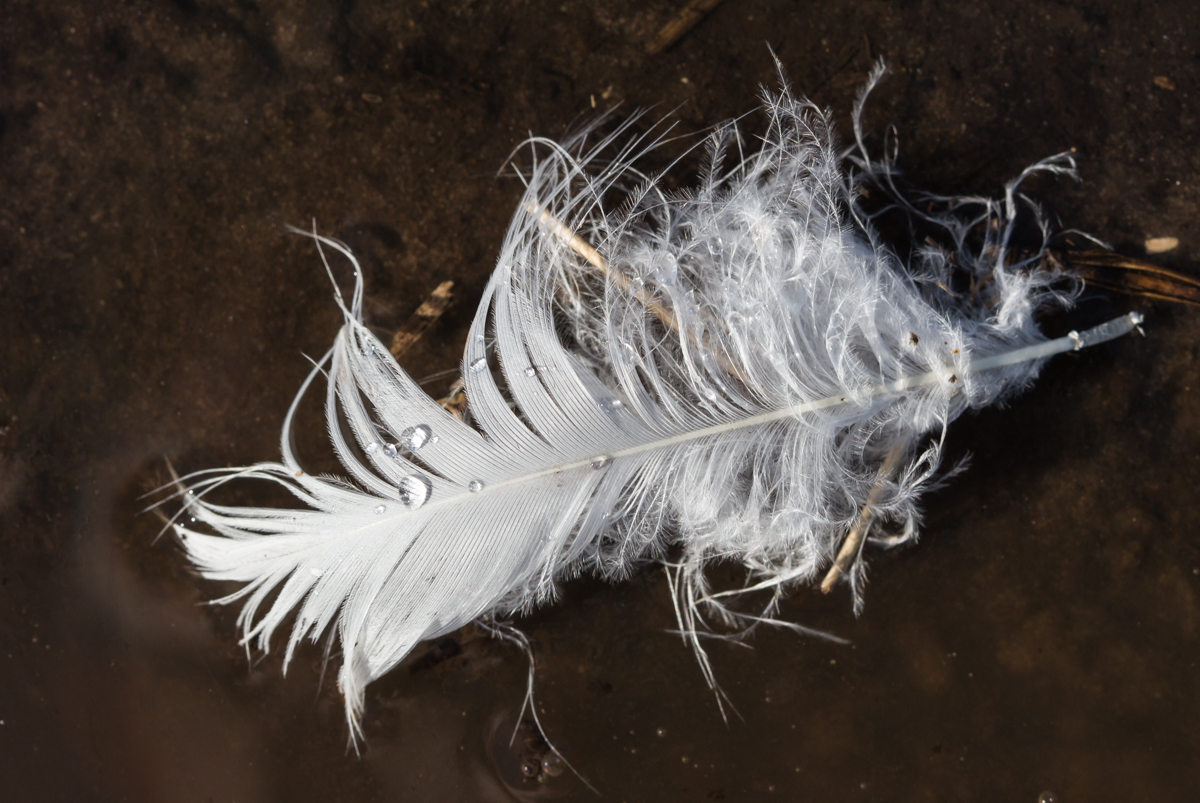
Swan featherSwan feather close up
We spent time photographing Tundra Swans flying out of Pungo Lake and watching Bald Eagles patrol the area for injured or weak waterfowl. But I am always looking for the small beauties on the landscape as well….a lone swan feather in a puddle caught my eye and deserved a closer look.
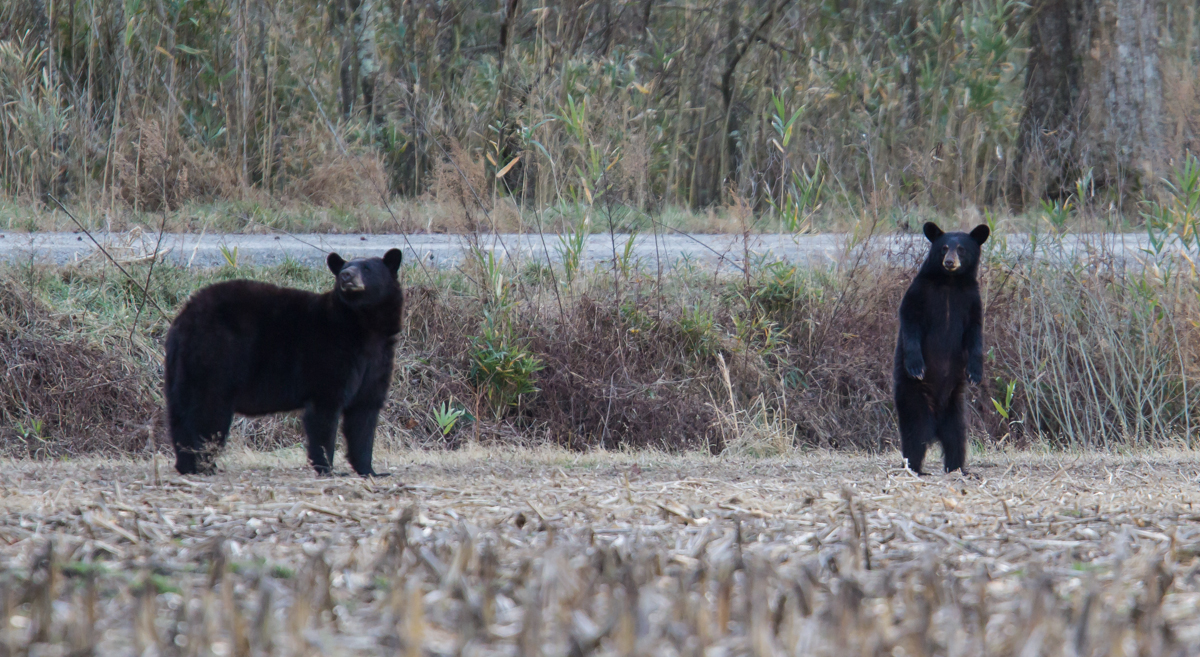
Black Bear sow and young
The day ended walking through the woods and listening to sounds of thousands of swans and Snow Geese on the lake. As we waited for the Snow Geese to hopefully come into the field (unfortunately, they only flew over) we were kept company by a few bears, coming out for their evening saunter.
Sunrise near Fairfield, NC
The next day was a full day spent at Mattamuskeet. Sunrise was over marshes near the Intracoastal Waterway on Hwy 94.
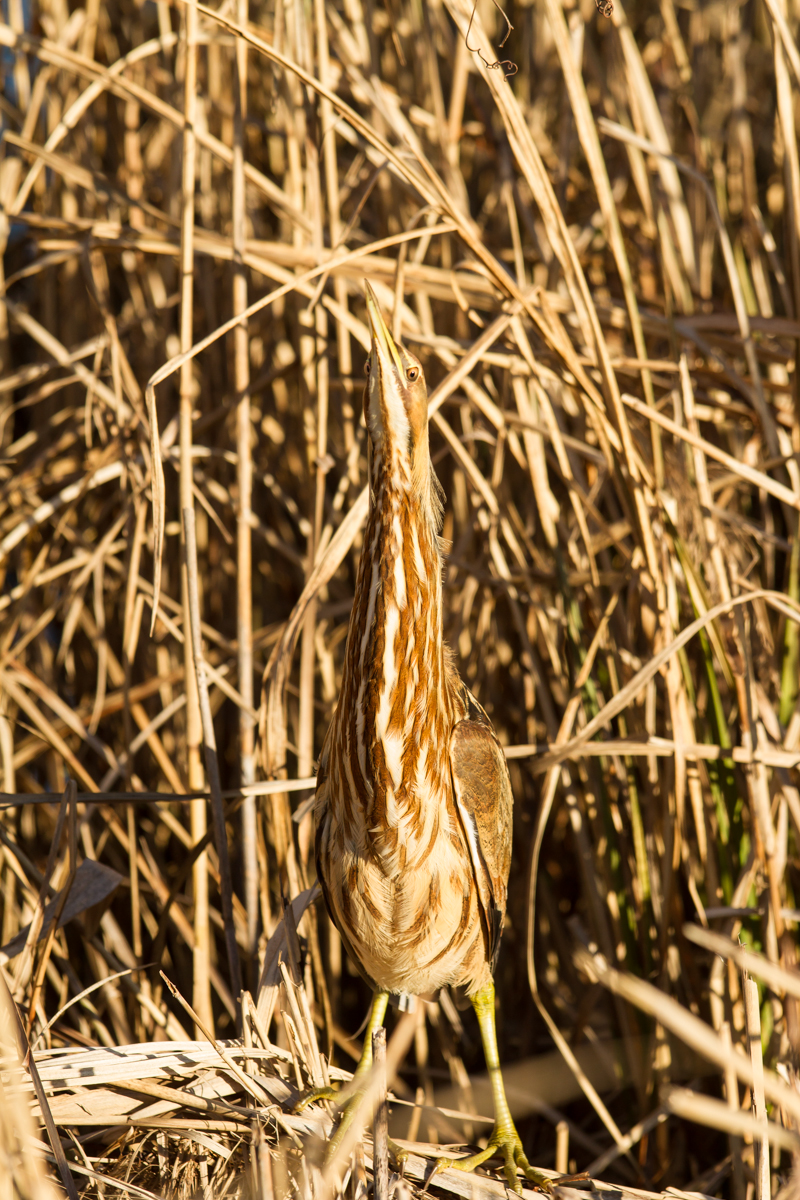
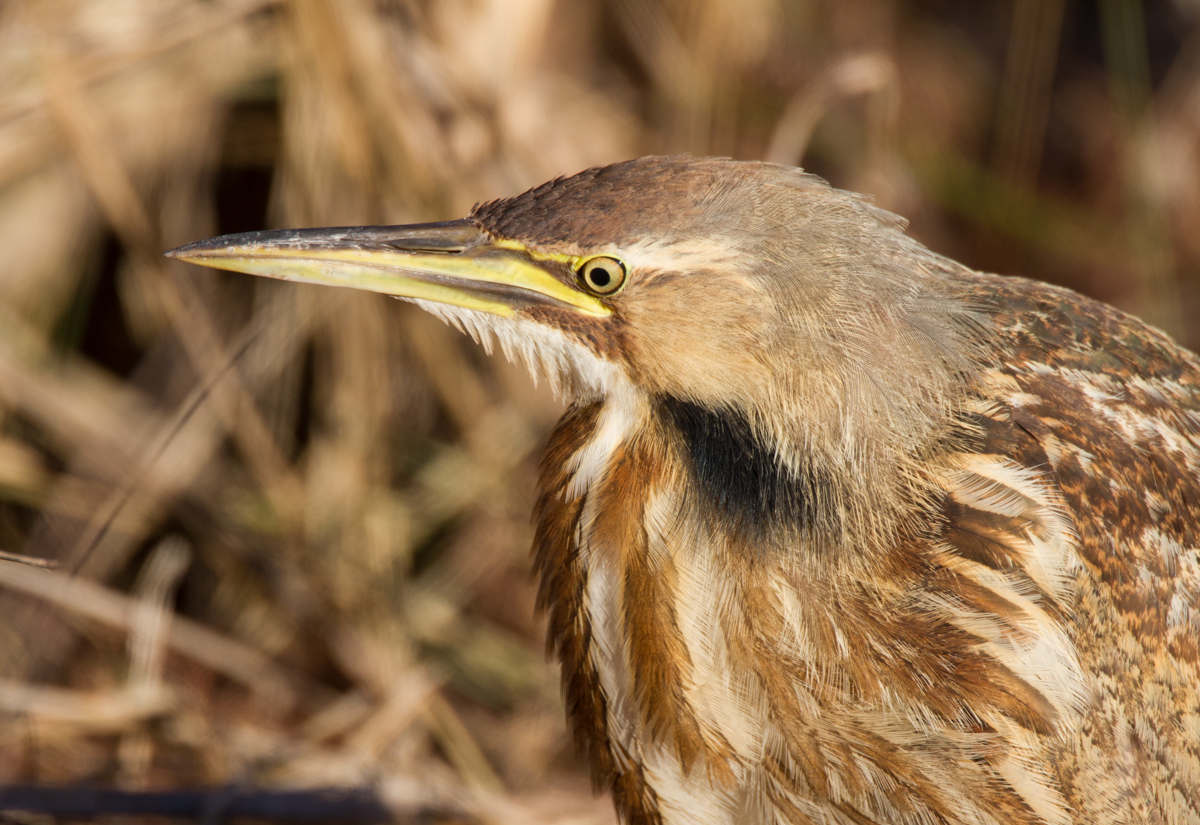
American Bittern in its element
We were greeted at the entrance to Wildlife Drive with an expert in camouflage, an American Bittern.
American Bittern close up
Then another allowed some close viewing a few minutes later. These birds are a delight to watch and this refuge is one of the best places I know to find them.
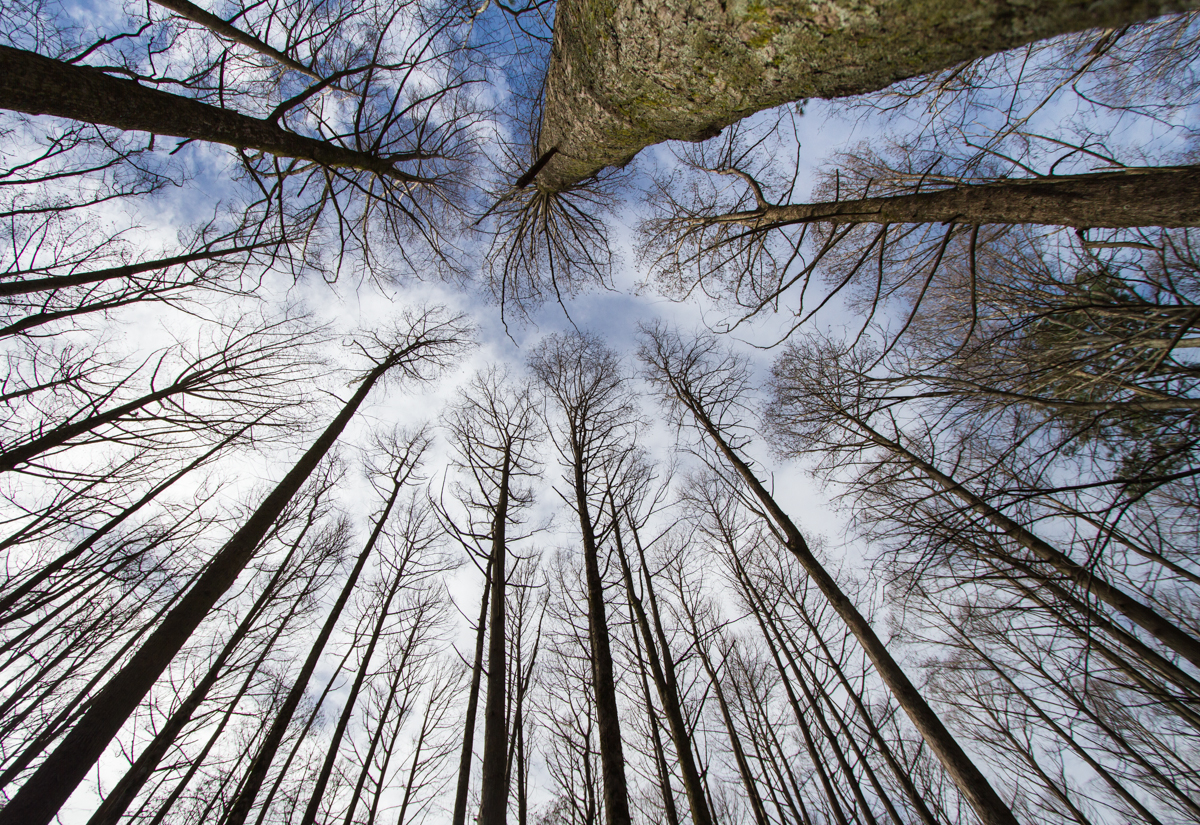
Looking up in a cypress swampLooking down in cypress swamp
Mattamuskeet provided great looks at a variety of waterfowl and scenery throughout the day. Clouds started to move in mid-day, providing a different perspective to the landscape.
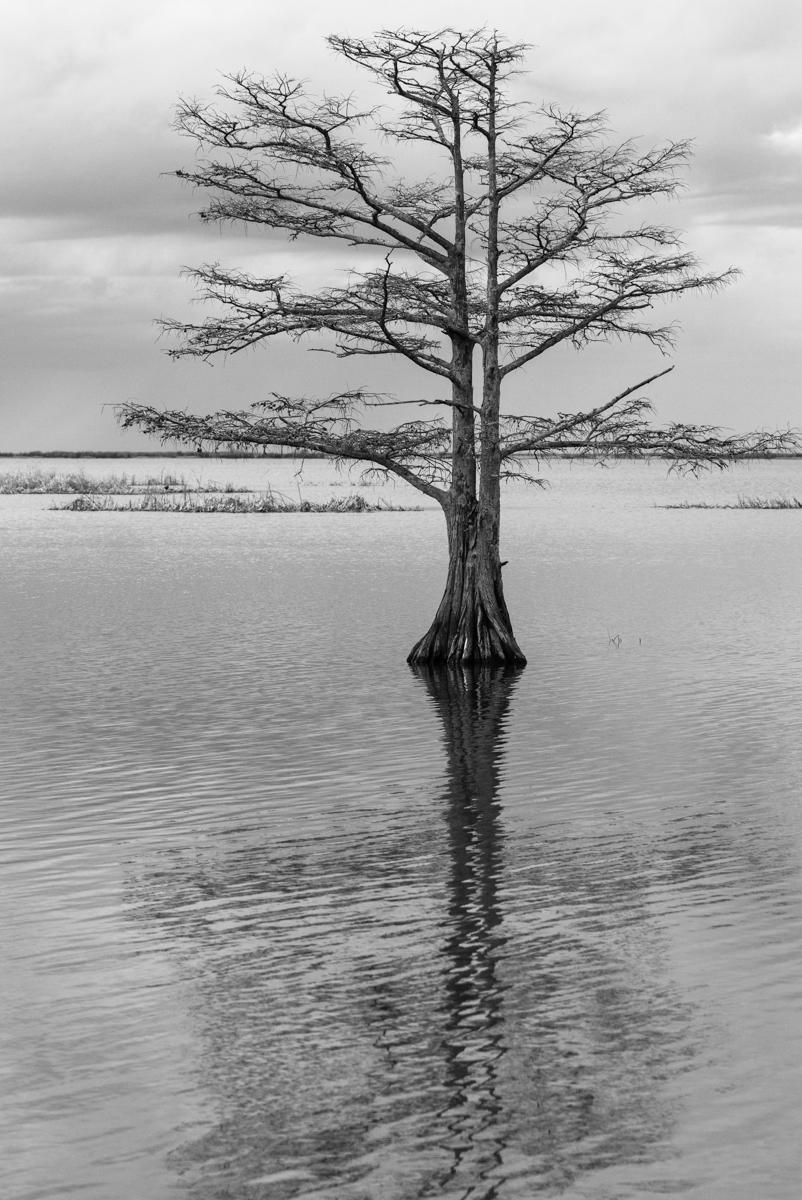
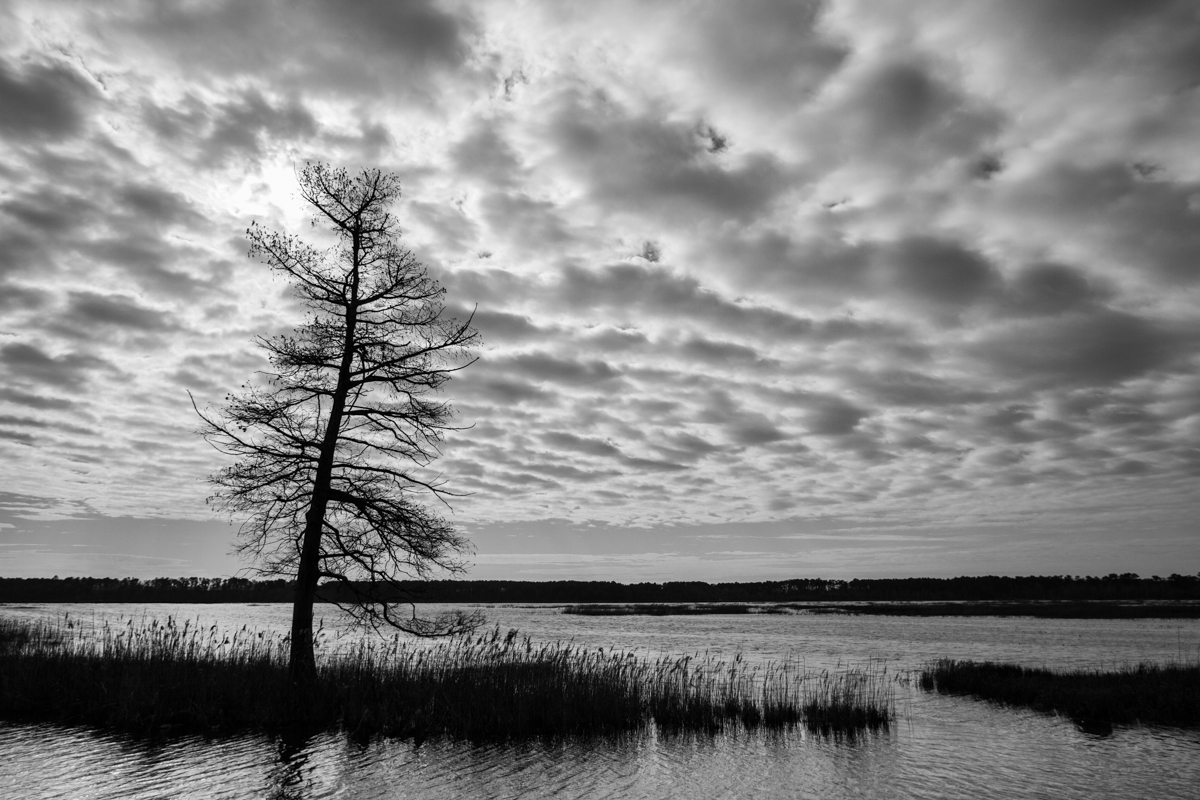
Bald Cypress in Lake MattamuskeetClouds moved in and provided some interesting highlights to the sceneryReed in ice along boardwalk
There was still a lot of ice in the canals and swamp even as the temperatures warmed throughout the day. As the skies darkened with the promise of an upcoming storm front, we drove through the refuge one last time.
White Ibis fly-by
A large group of White Ibis kept our attention until one participant spotted something moving on the ground.
Green Treefrog
An unexpected January amphibian, a Green treefrog! It must have looked odd to passing cars as a group of five people squatted on the ground intently taking pictures of an unseen subject, but it was a great way to finish our experience – from birds to bears to frogs, it had been a great trip.

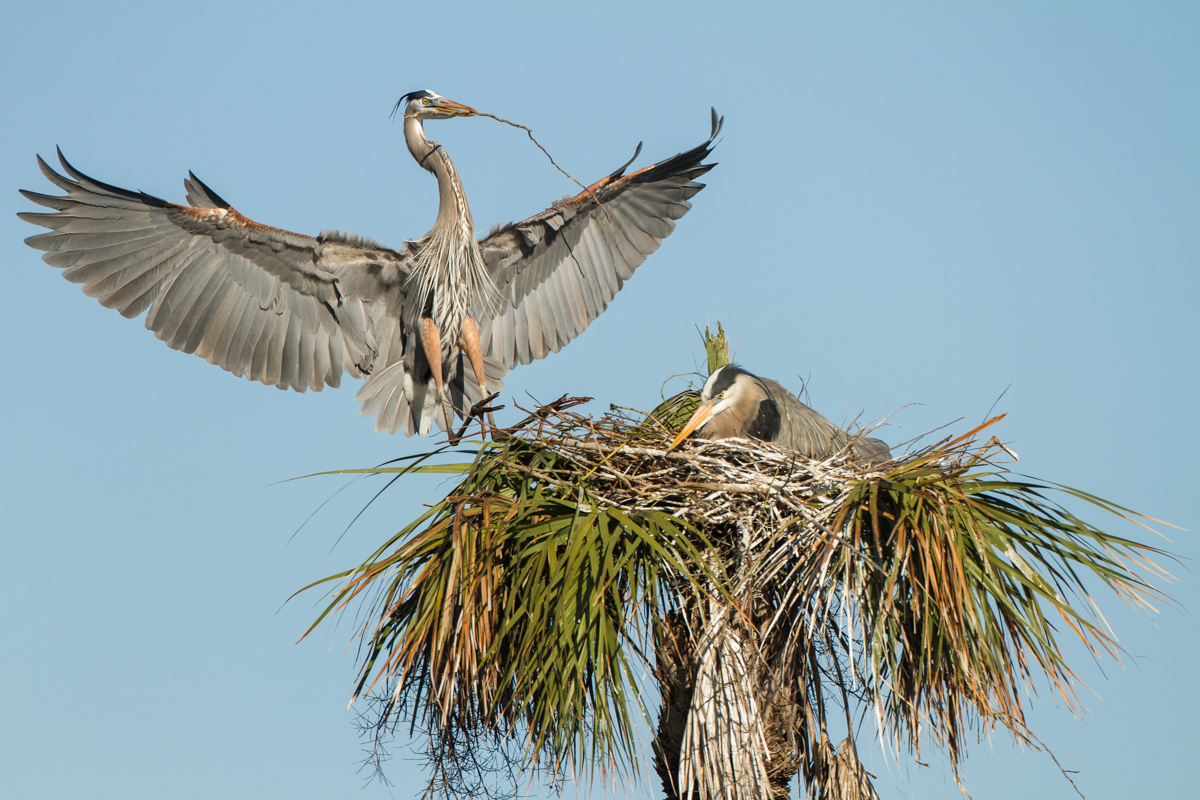
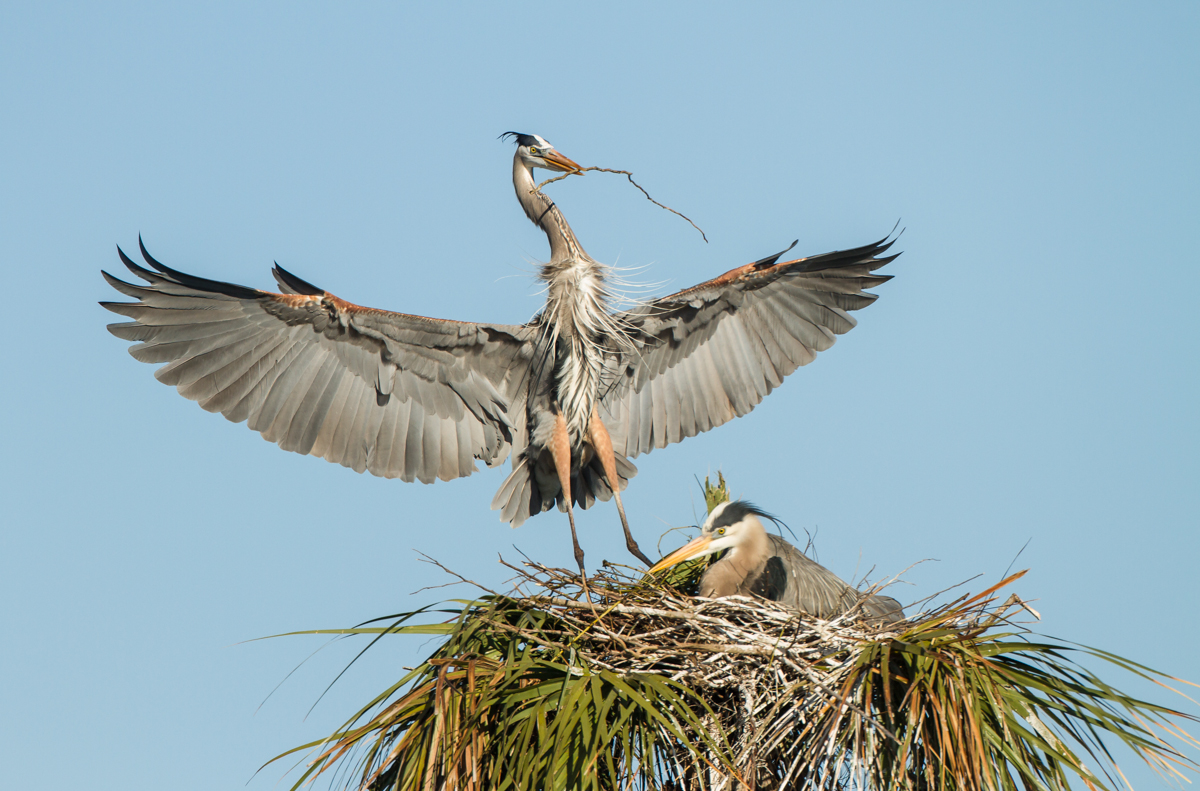


 A few times there was a wing stretch display involved in the stick transfer, and often there would be a prolonged period of neck stretching and bill pointing.






























































 Roads End Naturalist