The flowers of late winter and early spring occupy places in our hearts well out of proportion to their size.
~Gertrude S. Wister
Spring is a wonderful season for so many reasons, not the least of which is the explosion of wildflowers that spreads across our state beginning in February and lasting through May. One of the earliest of these beauties is Hepatica.
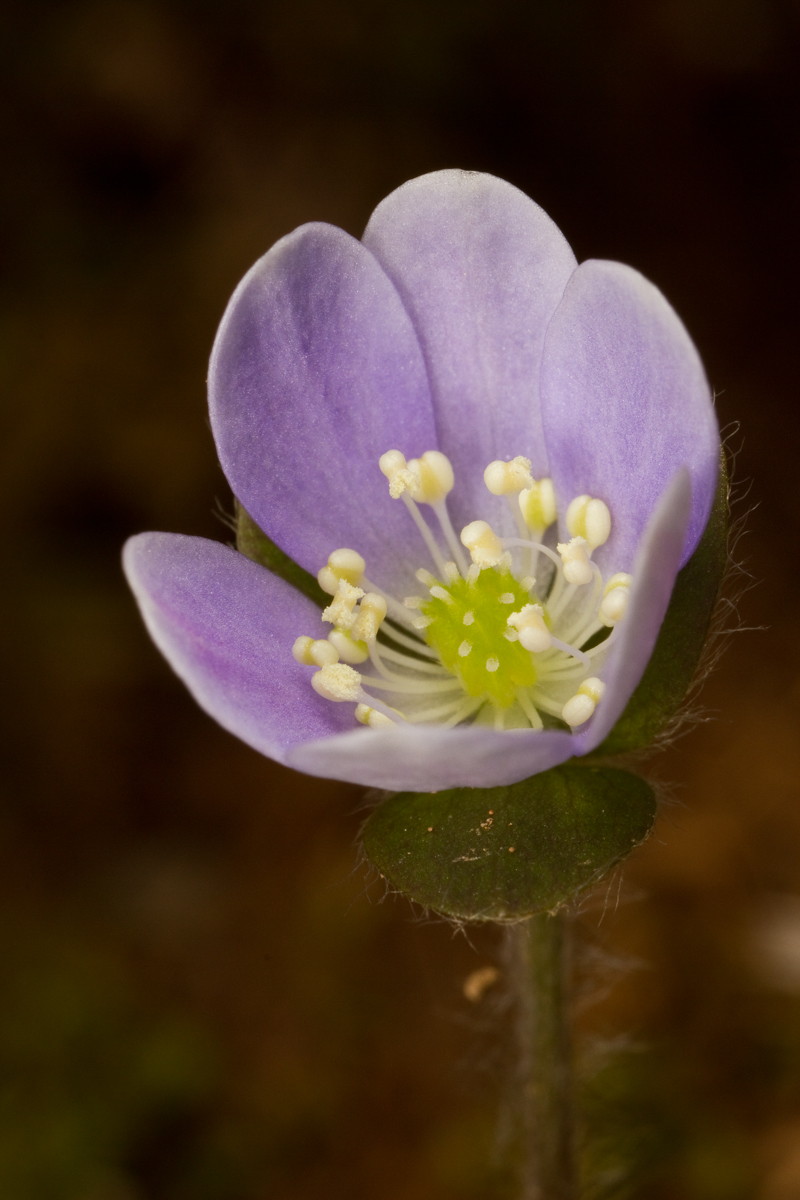
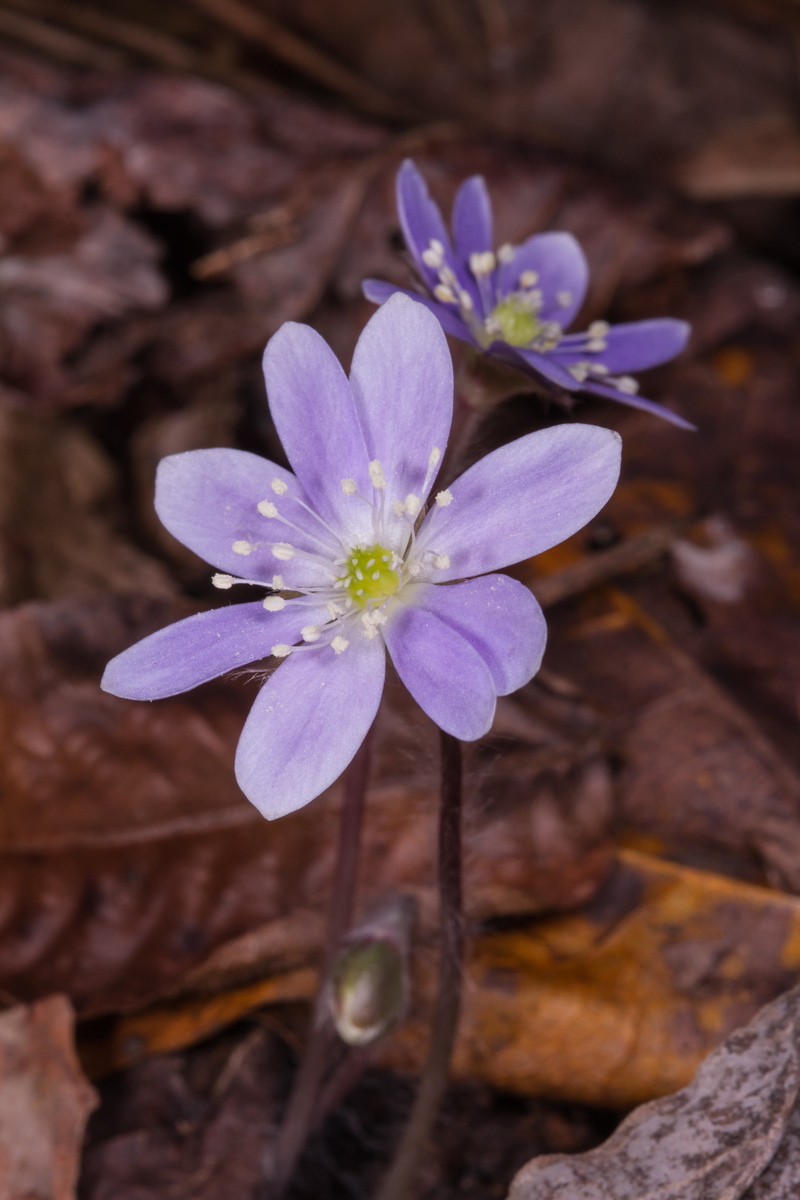
Hepatica flower just starting to open a couple of weeks ago here in the woods in Chatham County (click on photos to enlarge)
I saw my first Hepatica flower here in the woods near the house on March 11.
A patch of Round-lobed Hepatica at Pilot Mountain State Park
On my trip to Pilot Mountain State Park this past weekend, there were many patches of Hepatica just begining to bloom on steep slopes near the oxbow pool and along a small stream we explored. Spotting them peeking out of the leaf litter is one of the simple joys of a walk in the woods this time of year. The small flowers are easily overlooked if you walk too quickly, but once seen, they demand that you get down on the ground for a closer look. Combine that with the amphibian eggs and larvae we saw, and you have the perfect start to the season.
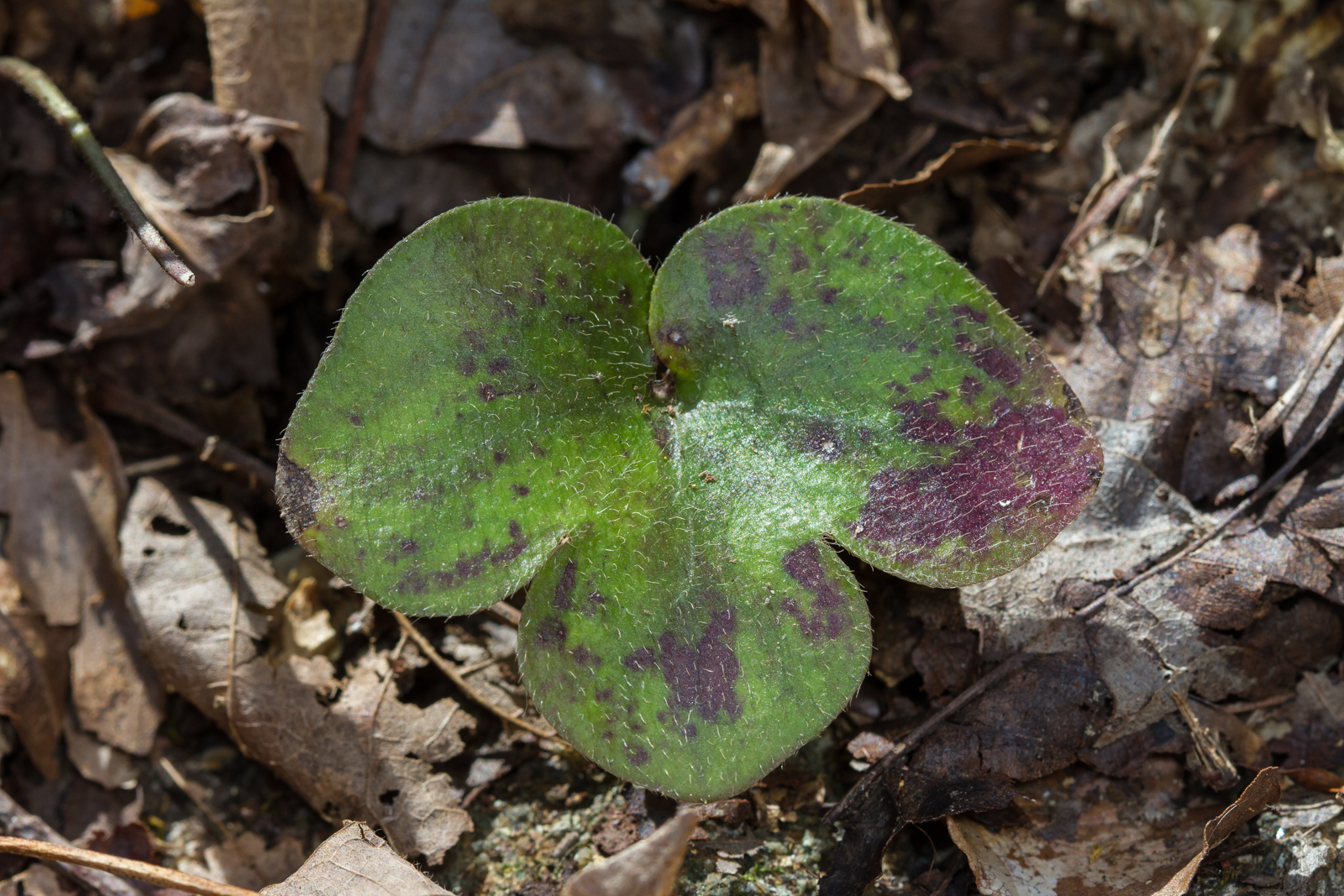
Hepatica leaf from last year. Older leaves have splotches of purple on them and are reddish-purple underneath.
The word hepatica comes from the Greek word hepar, meaning liver. The three lobes and the purplish color of older leaves do somewhat resemble a liver and this plant was once used to treat liver ailments. Herbalists once believed in the so-called Doctrine of Signatures, in which plants that had any resemblance to human body parts were thought to be useful in the treatment of ailments of that part of the human body.
Hepatica leaves are evergreen with the ones you see early this spring being last year’s leaves. They no doubt are able to photosynthesize on warm winter days and then go full tilt in early spring before many other woodland ephemerals are even out. This may give them a head start on many of the other spring wildflowers. The old leaves die back and new ones emerge following the flowering.
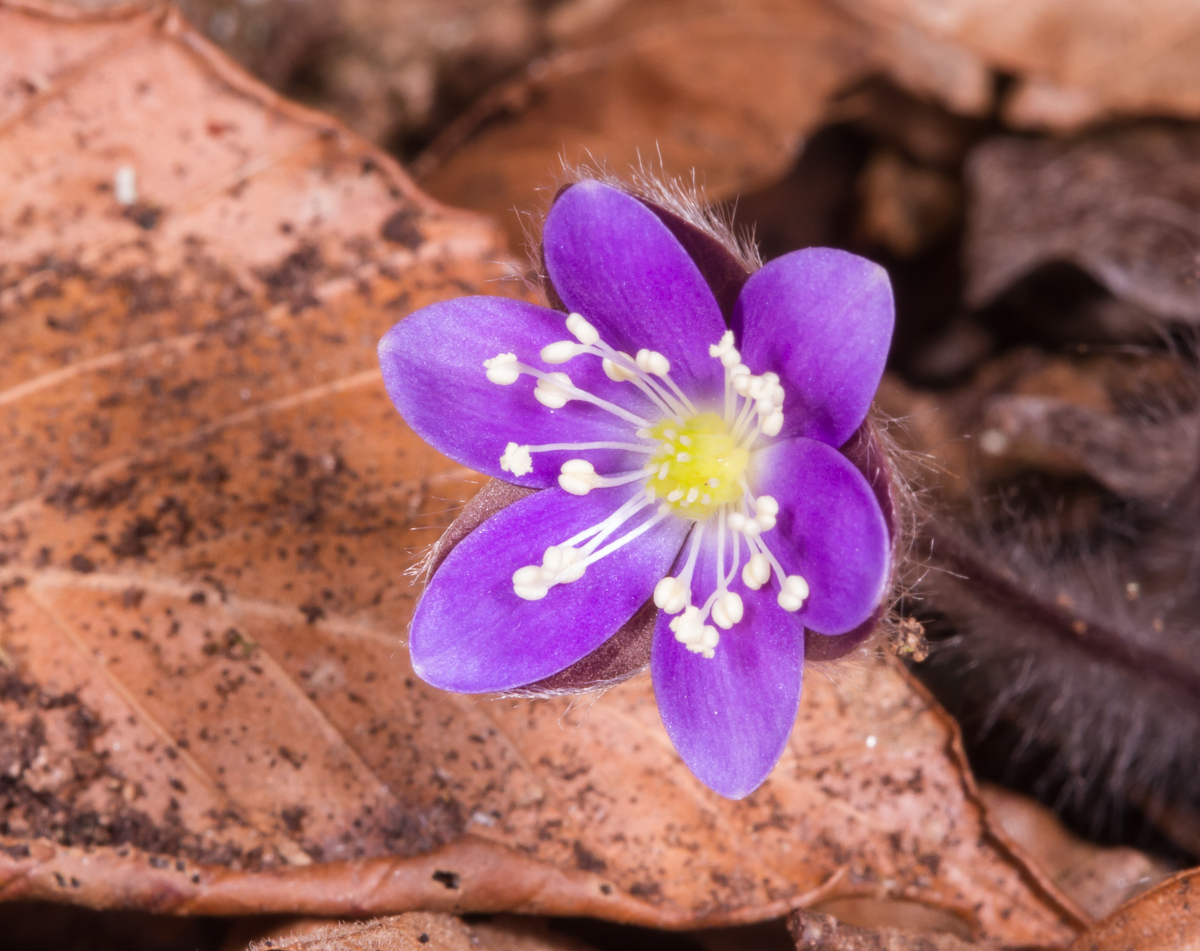
The small, delicate flowers of Hepatica are usually lavender to blue in color although I have found some that are pinkish or almost all white. They vary in number from 6 (the most common number) to 8 or more. And it turns out they are not what they appear to be – what look like petals are technically the sepals – Hepatica has no true petals. And the three fuzzy things beneath the flower that look like sepals are actually bracts, or specially modified leaves. But it really doesn’t matter to a pollinator or a woods-walker looking for signs of spring.
Hepatica flowers can vary in color and the number of petal-like sepals
Spring comes earliest to the bottoms of stagnant pools – there no cool winds blow – no hoar frosts penetrate – but they grow protected as under a glass. There are fewer disturbing influences to rob them of the full advantage of the sun’s increased altitude.
~Henry David Thoreau
Conservation groups, in partnership with Partners in Amphibian and Reptile Conservation, are designating 2014 as the Year of the Salamander (http://www.parcplace.org/news-a-events/2014-year-of-the-salamander.html). So, naturally, one of my naturalist friends has decided this is the year to see as many of North Carolina’s salamanders as possible. With that in mind, a few of us went to Pilot Mountain State Park this weekend in search of whatever amphibians we could find.
Big Pinnacle at Pilot Mountain State Park (click photos to enlarge)
While many visitors simply drive to the summit and gaze out across the valley, or enjoy the view of Big Pinnacle, we were looking for things in the low country, in the Yadkin River section of the park. I had been to this section only once, years ago, when working for the state park system as a naturalist, so it was a great chance to do some exploring.
Oxbow pool along Horne Creek
Walking along Horne Creek we came upon an oxbow that is now an isolated woodland pool, perfect for amphibians. An Upland Chorus Frog slowly called but soon fell silent as we approached…a good sign.
Pool reflection
These woodland pools, especially those devoid of fish, are incredible habitats for a wide variety of organisms from macro-invertebrates to frogs and salamanders, They are also beautiful woodland mirrors that reveal a multidimensional world as I stare into the surface, at first seeing only the trees above, and then the dark bottom, covered in leaves. As I walked along the pool edge, I could see a few Water Striders, but little else, until I got to an area where a cluster of sticks protruded from the pool’s surface – amphibian egg masses! At first glance I thought they were Spotted Salamander egg masses, but my friend, Megan, pointed out they were Wood Frog eggs.
Wood Frog egg mass
Compared to the egg masses of Spotted Salamanders, the Wood Frog egg masses tend to be more globular, somewhat larger, and lack the stiff outer gelatinous matrix of the salamander eggs. There were several blobs of eggs attached to the twigs, with some appearing recently laid, and others more developed. As they age, the eggs are colonized by a symbiotic algae, Oophila amblystomatis, which imparts a greenish color to the cluster. This same algae colonizes Spotted Salamander eggs and is believed to utilize some of the waste from the developing eggs while providing some oxygen for them.
Wood Frog egg mass colonized by algae
The Wood Frog egg masses also tend to flatten out at the surface of the pool as they age. While staring at one I noticed some movement – there were Marbled Salamander larvae resting on them. Marbled Salamanders lay their eggs in the fall as these pools fill with rainwater, and their larvae are well-developed predators by the time many of the other amphibian species start to hatch. Looking down I saw one of these tiny pool tigers swim up to an egg mass and position itself, just in case there was an early hatching by a tasty Wood Frog tadpole. The more mature green egg masses had many more Marbled Salamander larvae in attendance (look for the dark elongate shapes in the photo above).
Marbled Salamander larva on Wood Frog egg mass
Since the Wood Frog tadpoles tend to cling to their egg mass for a few days after hatching (to feed on the algae), it is a perfect place for the Marbled larvae to hang out. The hatching frog tadpoles are weak swimmers and easy prey.
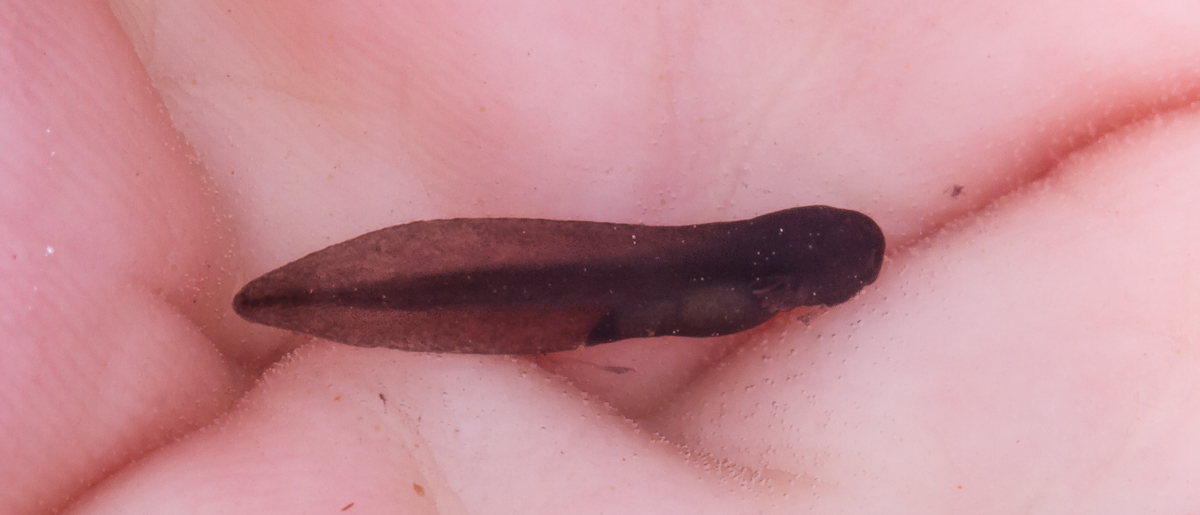
Wood Frog tadpole at hatching
I gently scooped up one recent hatchling for a quick photo. Luckily for the frogs, each egg mass contains a few hundred eggs, which should be enough to ensure survival of at least some of the tadpoles.
Woodland ephemeral pools are critical habitats
I love spending time near these pools, waiting, watching, listening – there is so much life to be found. Yet these are often some of the first habitats destroyed when we alter the landscape. I have witnessed once thriving amphibians pools destroyed by nearby earth moving which forever alters the drainage pattern or by intentional draining due to concerns about mosquitoes. In fact, the thriving community of predators in a typical woodland ephemeral pool usually means few or no mosquito larvae can survive. And without the woodland mirrors, both our forests and our natural heritage are diminished.
I encourage you to get out in the next few weeks and sit by the edge of a woodland pool and marvel at the life it contains. But, beware, anyone seeing you at such a pool may start to wonder, as did a neighbor of Thoreau’s back in 1858…
I learn that one farmer, seeing me standing a long time still in the midst of a pool (I was watching for frogs), said that it was his father, who had been drinking some of Pat Haggerty’s rum, and had lost his way home. So, setting out to lead him home, he discovered that it was I.
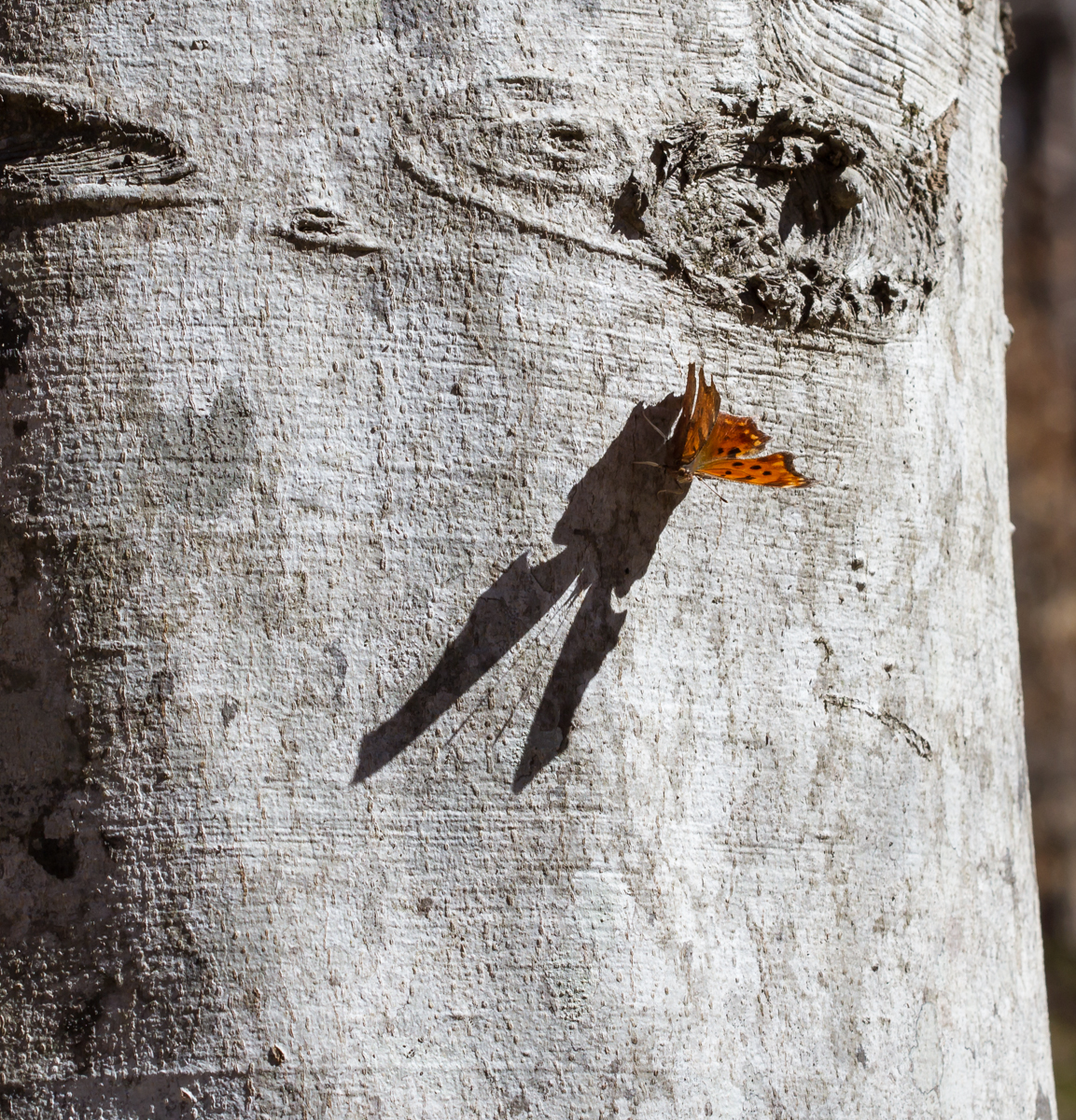
While out working in the yard yesterday I saw one of the early signs of a woodland spring, the first Falcate Orangetip butterfly. These dainty white butterflies flit through the woods for only a few weeks each year searching for mates and plants in the mustard family on which to lay their eggs. But it was almost two weeks ago I saw my first butterfly of the season. A Mourning Cloak danced silently through the naked trees and landed on a maple to feed on sap. It was late in the afternoon, one day after a brief snow. The birds were still crowding at the feeders, leaving thoughts of a new nesting season behind after yet another cold spell. And yet, here was a butterfly, probably one that had spent the winter huddling in darkness under some loose tree bark or even under a fallen log. Two days later, I added two more species to the early spring butterfly count – an Eastern Comma and a Question Mark. Both of these species, like the Mourning Cloak, are among the few that spend the winters here in NC as adults. They are often seen darting through the woods on warm days in late winter, searching for sustenance amongst the bare trees. This winter has been a cold one and the inaugural butterflies have been slow to awaken. But now, their silent wings are beating, carrying the warm days of spring a little closer.
Hold fast to dreams, for if dreams die, life is a broken winged bird that cannot fly.
~Langston Hughes
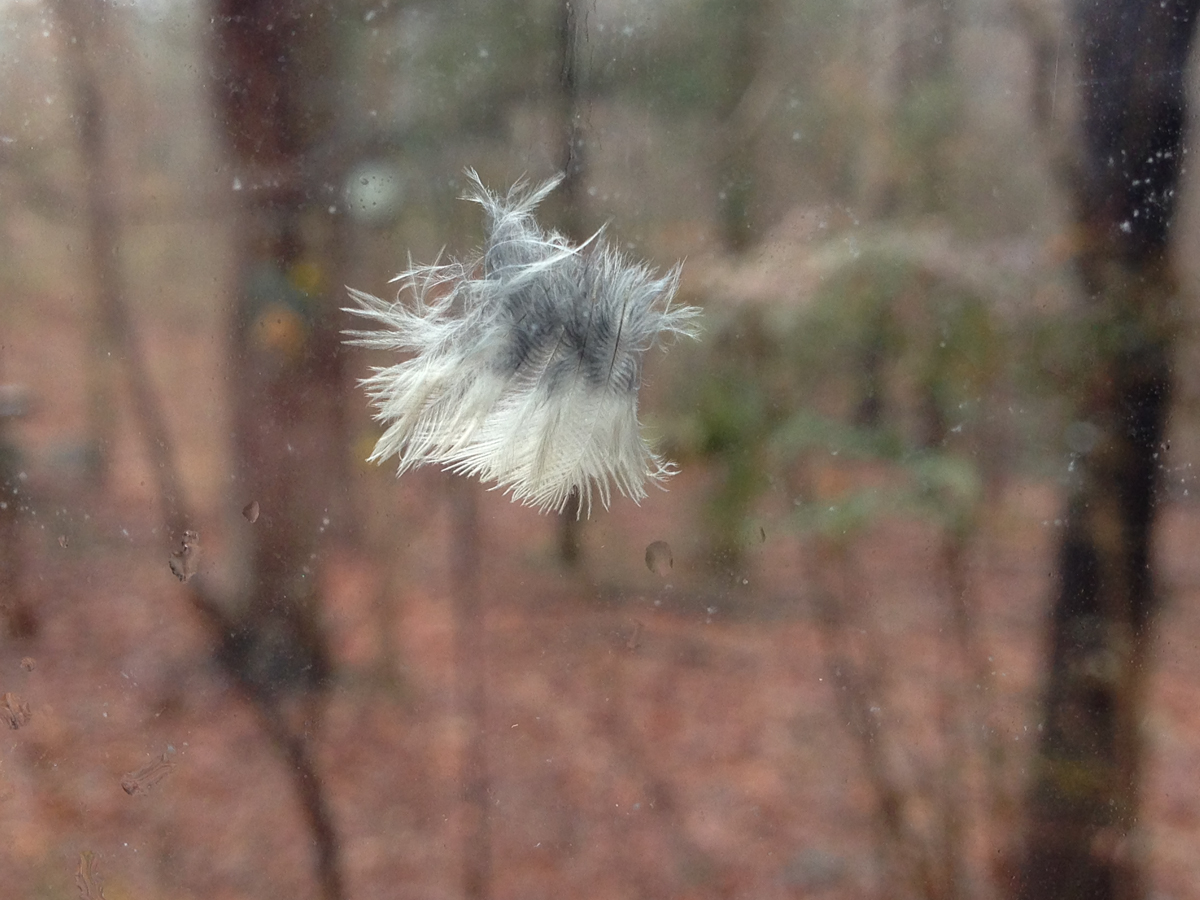
Several times this winter I have heard that familiar thud that means a winged beauty has collided with my window. A quick glance shows the track left behind by such a collision – a few feathers stuck on the glass.
Feathers on window pane (click photos to enlarge)
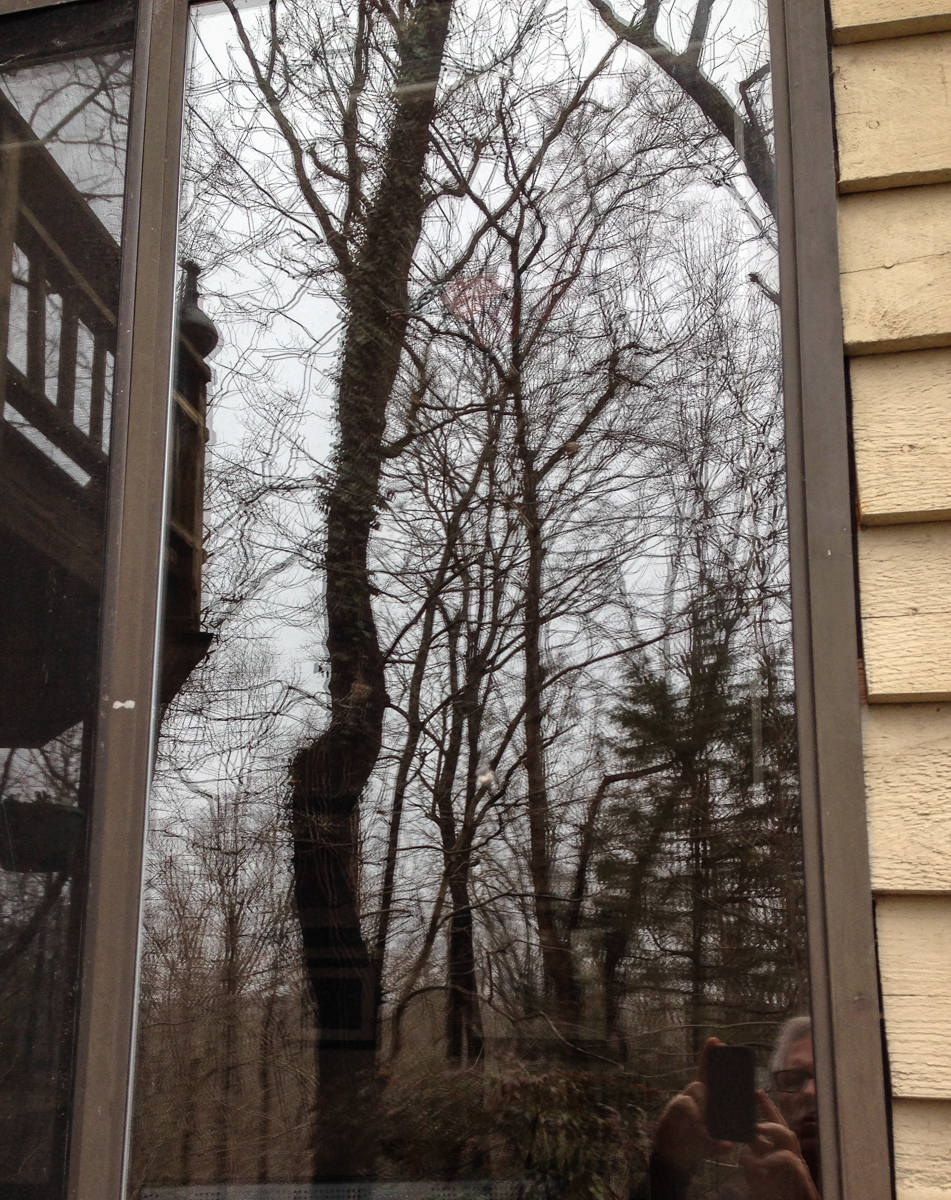
Luckily, at my windows, it is rarely anything more than an interruption in the bird’s burst of flight. But, nationwide, that is certainly not always the case. I was stunned when I saw a recent report providing evidence of the extent of bird mortality due to window kills. In a recent paper published in the journal The Condor, researchers estimated that between 365 and 988 million birds die from crashing into windows in the United States each year. While that is a large range, the point is that significant numbers of birds die each year by crashing into our structures, putting window collisions behind only cats as the largest source of human-related threats that kill birds. One interesting finding is that roughly 56% of mortality occurs on buildings that are 4 stories or less in height; 44% at residences, and less than1% at high-rise skyscrapers. The full report is at http://www.bioone.org/doi/abs/10.1650/CONDOR-13-09. It would be interesting to see if homes surrounded by trees have a higher incidence of bird collisions than those in open areas. Looking at a window from the outside, it is easy to see how a bird in flight, particularly one that has been startled at a feeder by a potential predator, could easily mistake the reflection in a window for safe passage through some branches.
Reflection of trees in my window
I always check to see if a bird has been stunned by a collision, and this week I did find one. So, I went outside to see if I could help. Years ago, my good friend, Paris Trail, shared a rehabilitation method he had used successfully on many birds that hit his woodland windows over the years. If the bird is alive (open eyes are a good sign of this), gently pick it up and bring it inside. It turns out that loss of body heat is a big killer of window-stunned birds, especially in cold weather. The American Goldfinch that hit my window was only slightly stunned, so I skipped one treatment I usually give to such birds – I turn on the faucet so just a trickle of water is coming out. Then I place the birds beak in the trickle for a quick sip (or splash).
This bird was stunned after hitting my window
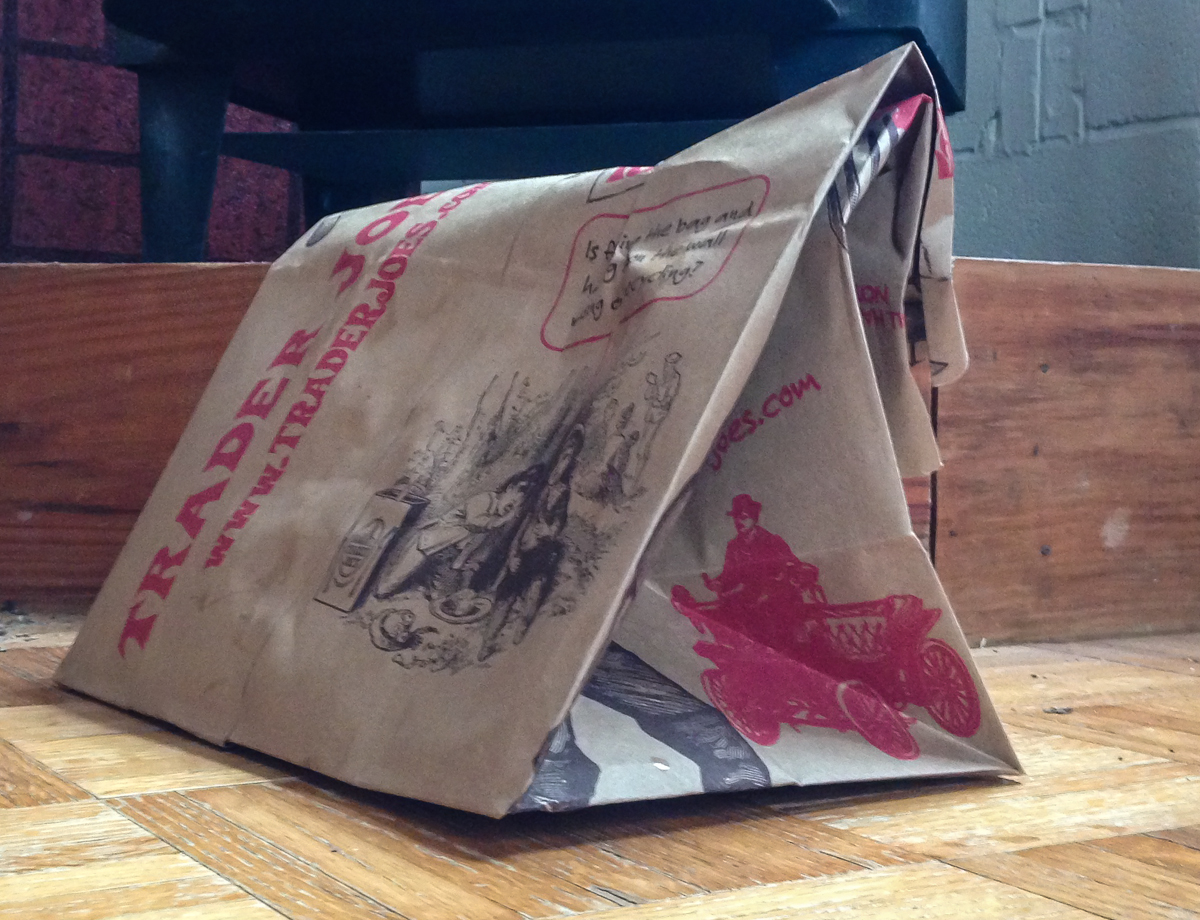
I then place the bird in a grocery bag and roll the top so it can’t escape.
Paper bag with stunned bird in it
The bag then goes in a quiet, preferably dark, place like a closet for several minutes. This helps the bird calm down a bit and rest. After 15 minutes or so, or until I hear the bird moving around in the bag, I pick up the bag and take it outside (you don’t want the bird escaping into your house). I open the bag, point it out toward the woods, and the bird usually flies out. I have found this method to be very successful in helping stunned birds survive their encounter with a deceptively solid piece of woodland scenery. For some tips on how you can make your windows more bird-safe, see http://www.humanesociety.org/animals/resources/tips/bird_safe_windows.html.
Some say the world will end in fire, some say in ice.
~Robert Frost
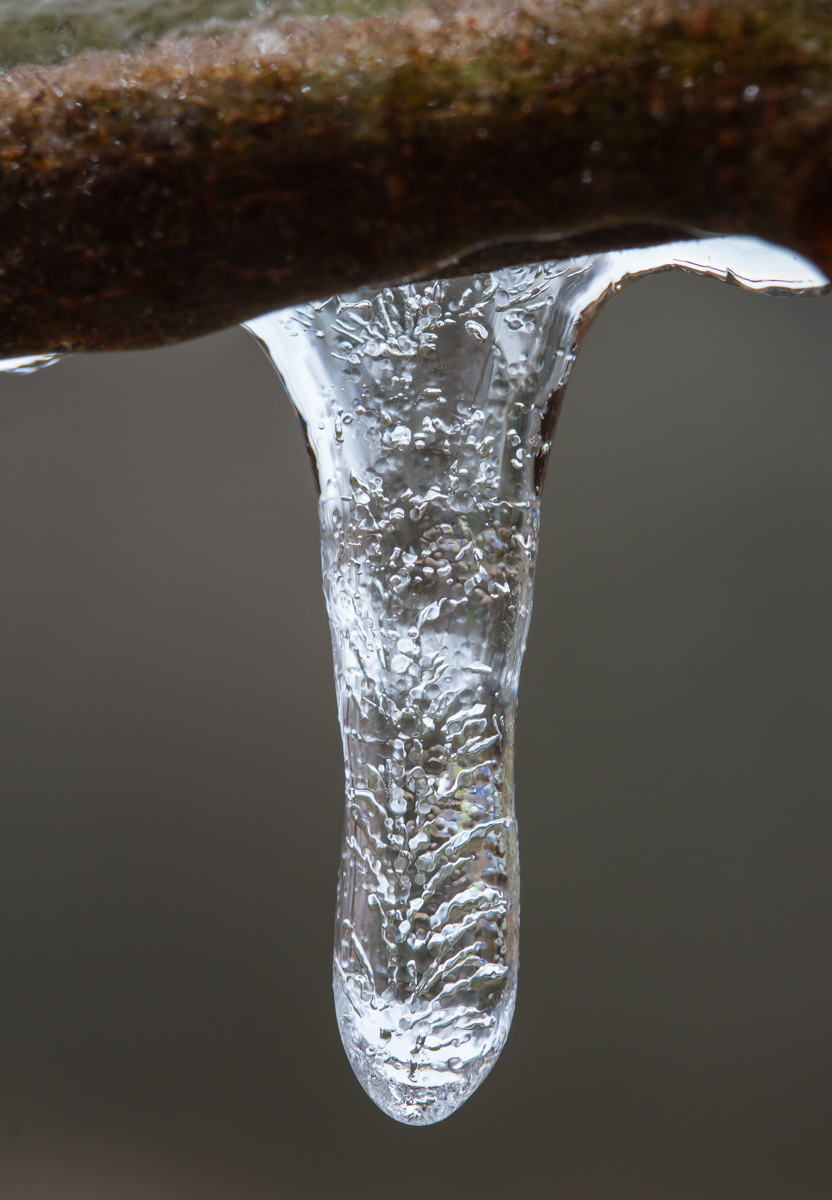
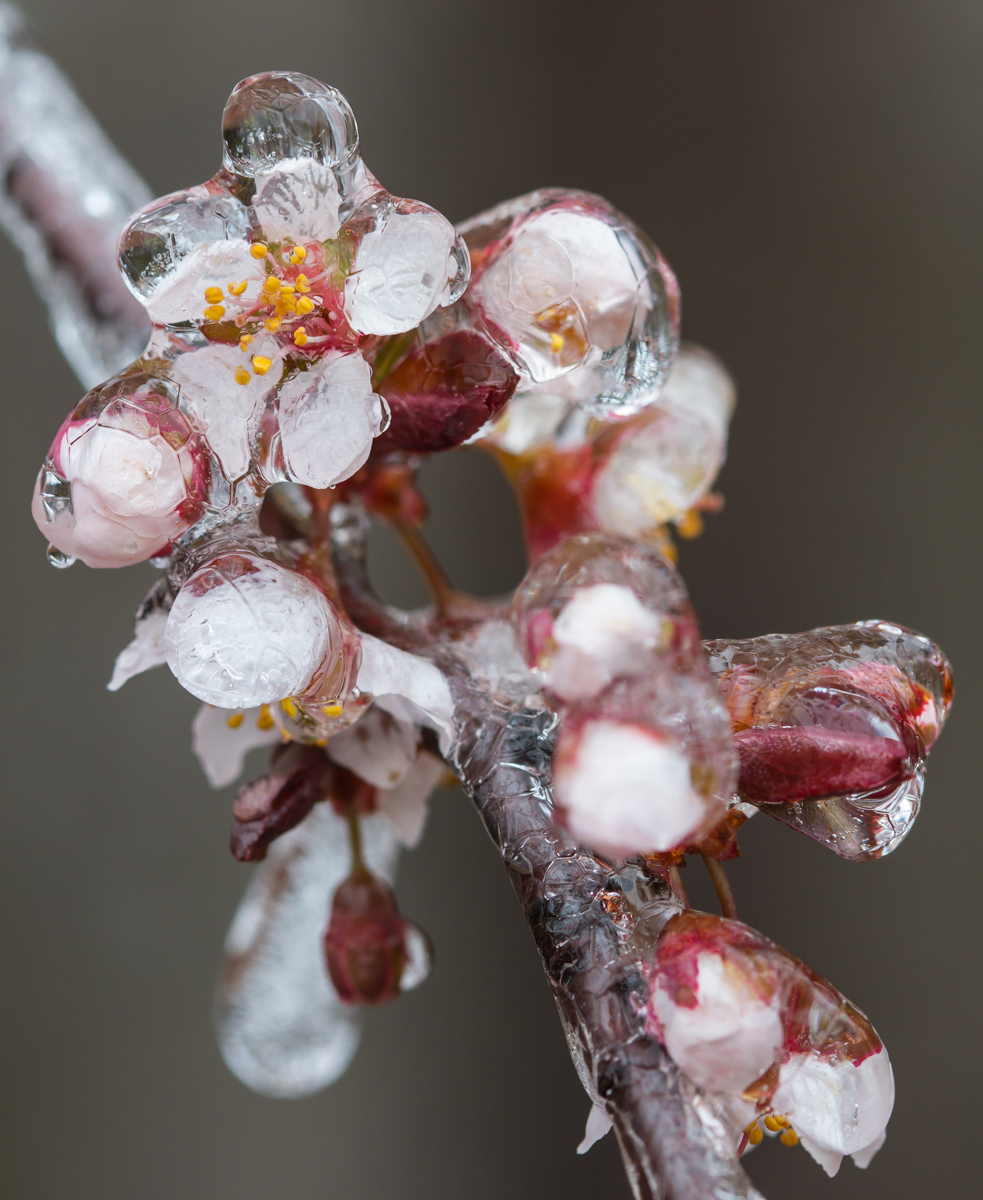
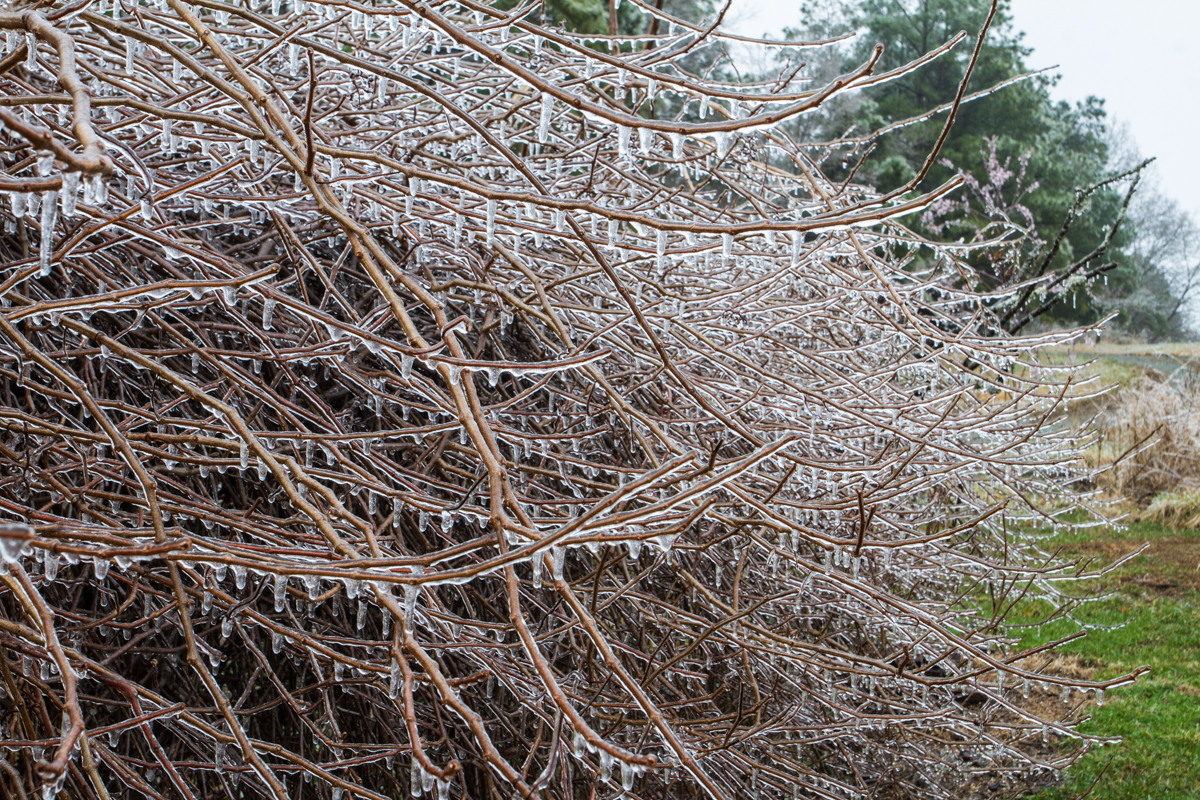
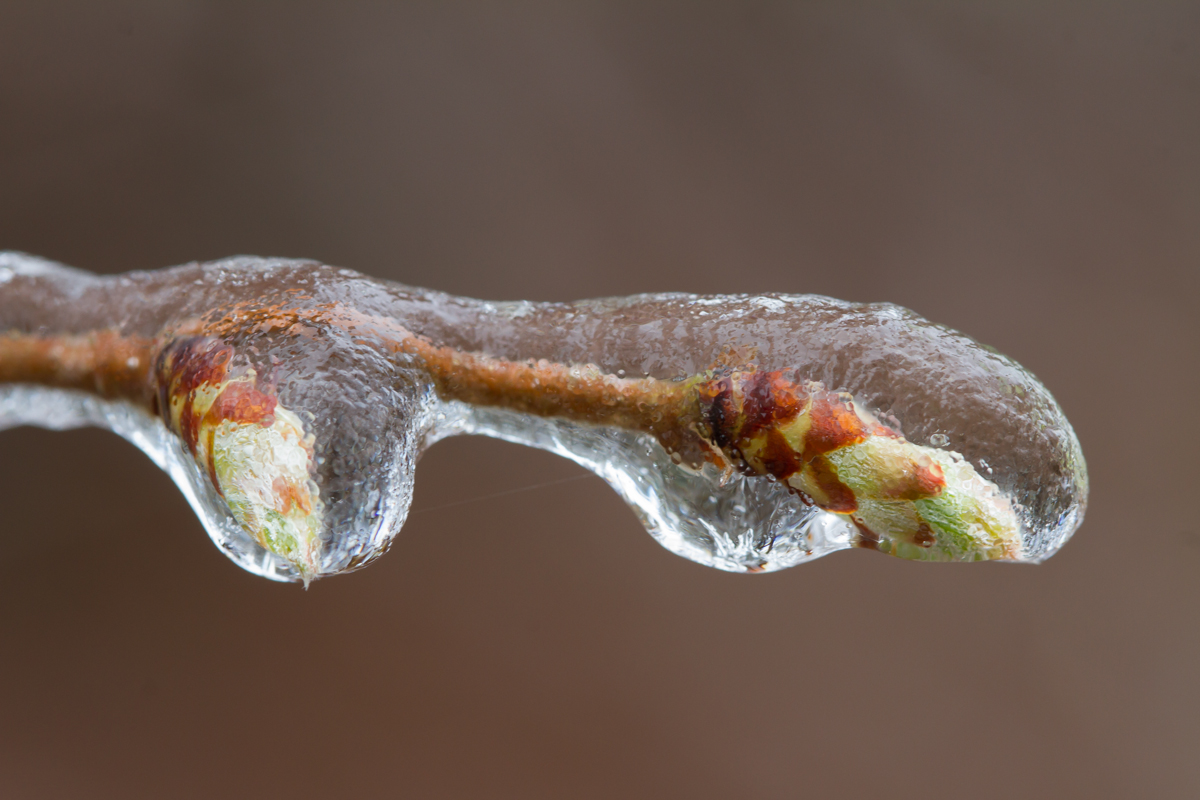
I went out before dawn this morning to get some firewood and skidded on a thin sheet of ice that had formed overnight on the deck. The dreaded freezing rain had bent over the shrubs near the deck as the thermometer hovered just below freezing at 31 degrees. I quickly started a pot of coffee because my place has a bad habit of losing power in heavy wind, snow, or ice. But, as the faint light of morning filtered through the forest, the power remained, and I could see a world transformed by the hand of a frozen sculptor. I wandered out to the garden to stock the feeders and was greeted by frozen plum flowers and tangles of icy grape vines.
Icicle hanging from a branch (click photos to enlarge)Plum blossoms in iceIce covering grape vine
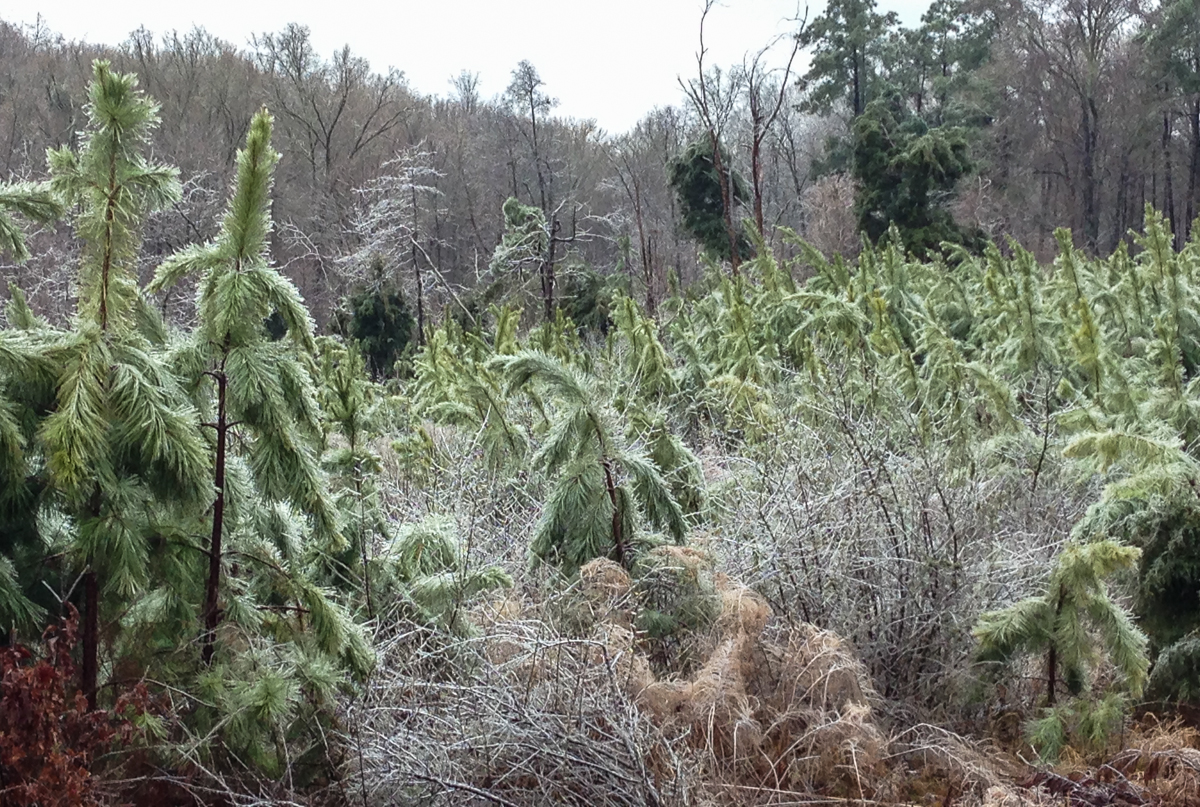
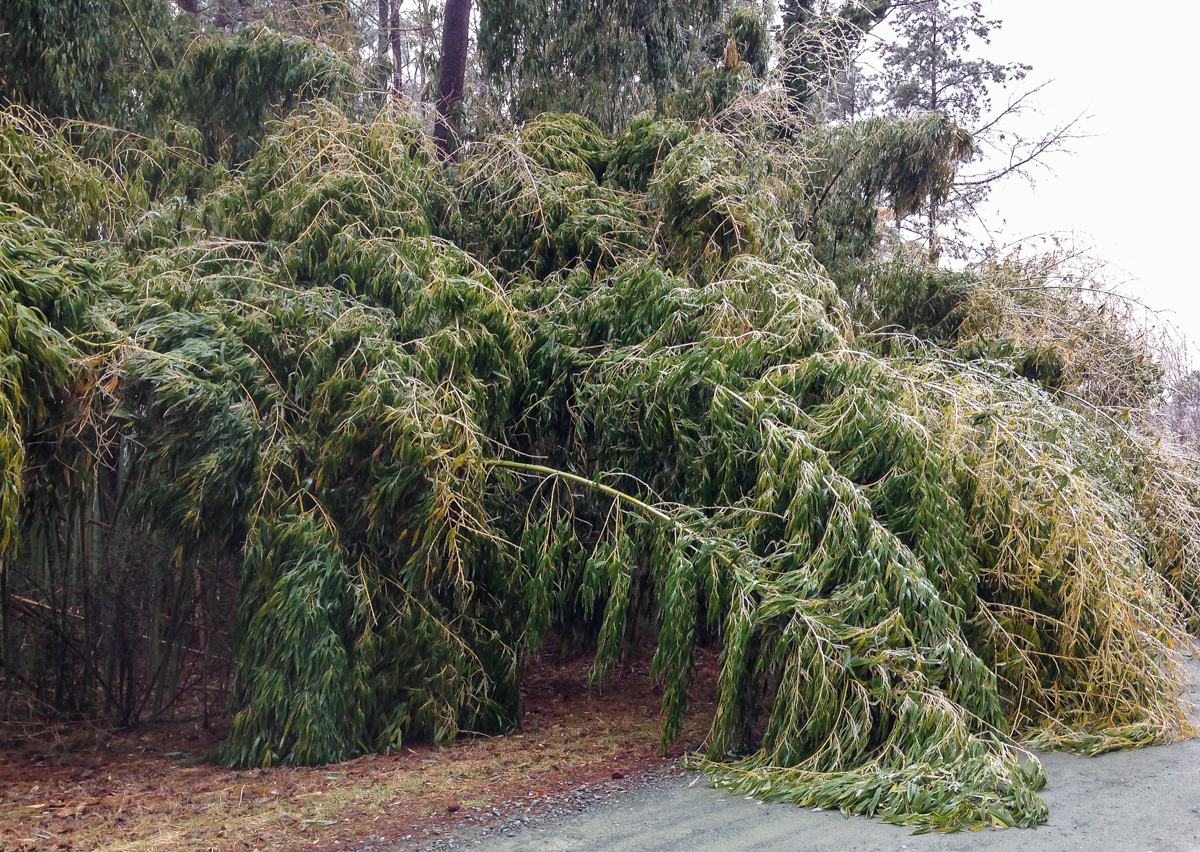
A walk down the road showed the pines were kneeling before the ice gods and the bamboo was all subservient to the power of the frozen rain.
Young pines bending under the weight of the iceBamboo bows to the power of the ice
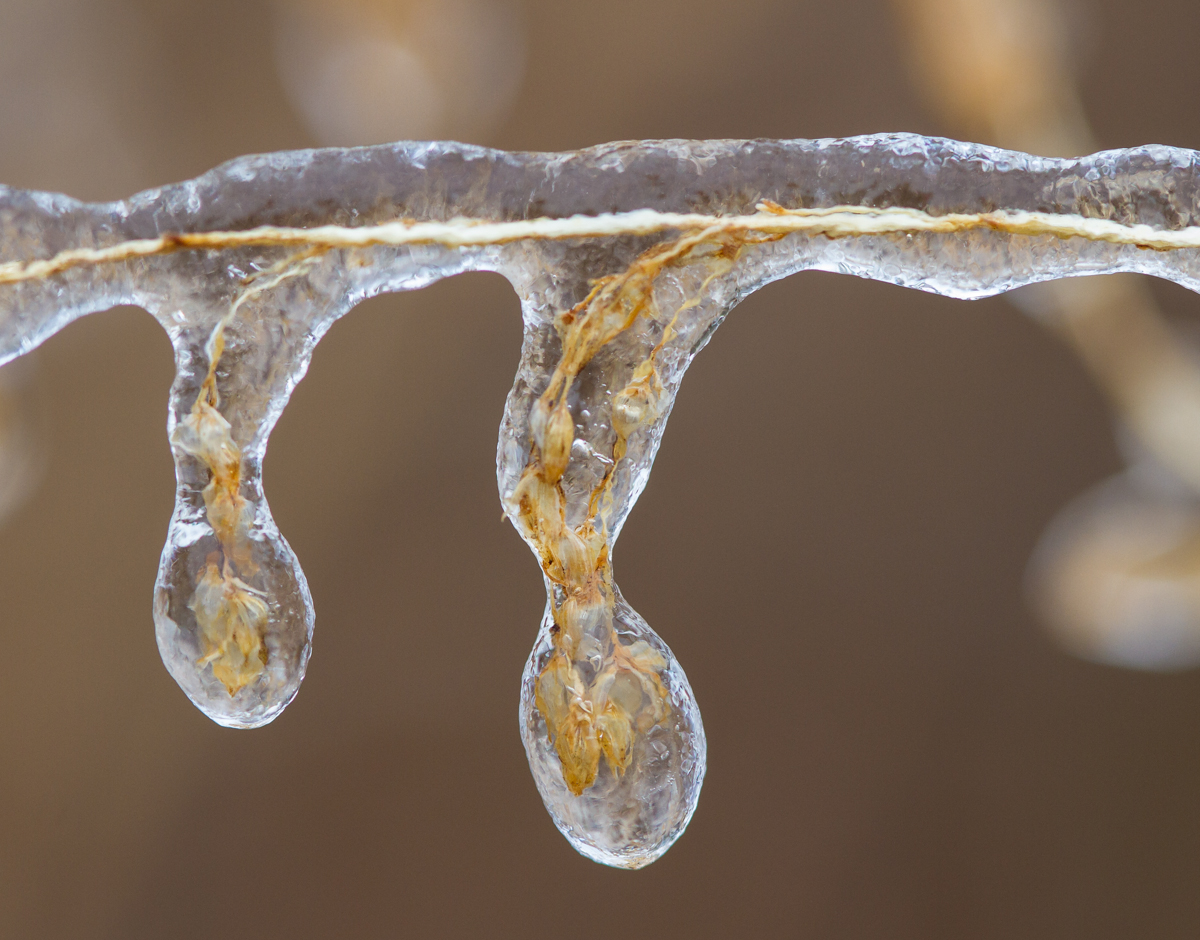
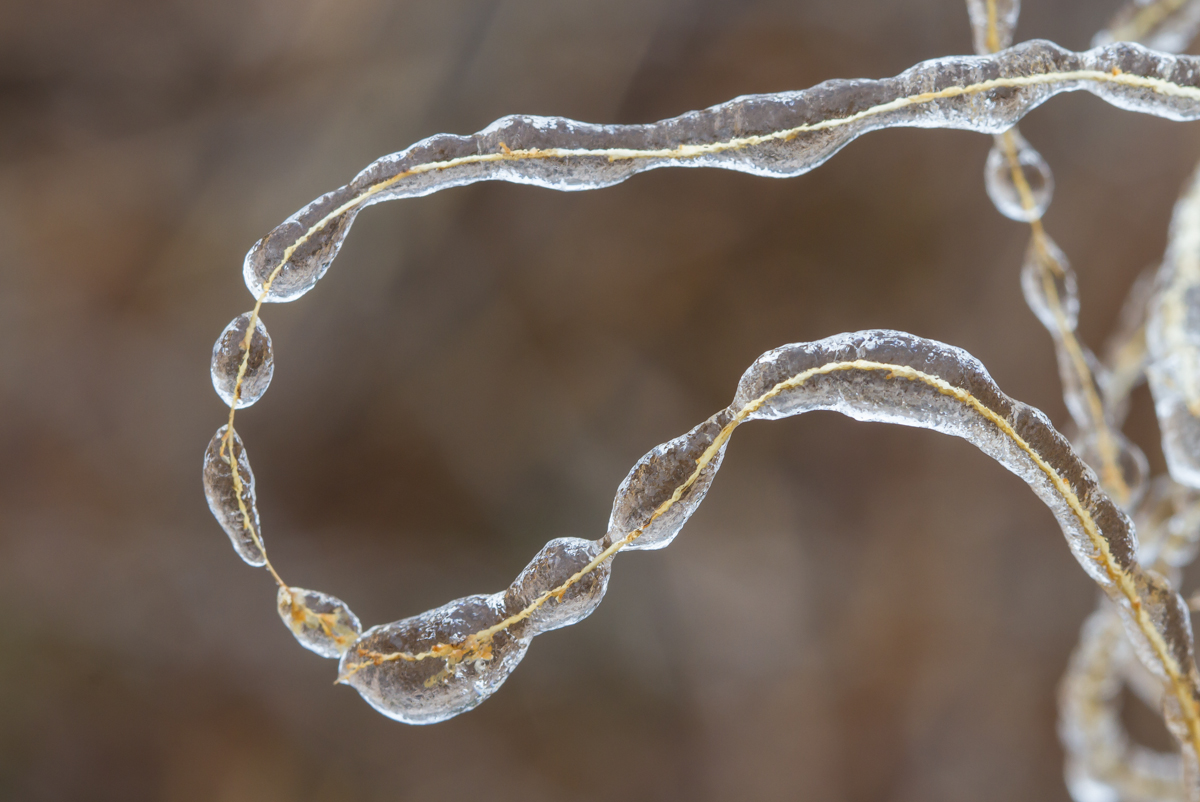
The meadow grasses under the power line were dazzling with diamond necklaces.
Grass seeds in iceGrass loop
On the way back home, I spotted some deer searching for a blackberry cane popsicle under the power line. They glanced my way and then faded into the frozen arches.
White-tailed Deer in icy meadow
And even in the midst of this cold and dreary morning, a closer look revealed the promise of spring, which is only a few days away. You gotta love North Carolina.
The first day of spring is one thing, and the first spring day is another. The difference between them is sometimes as great as a month.
~Henry Van Dyke
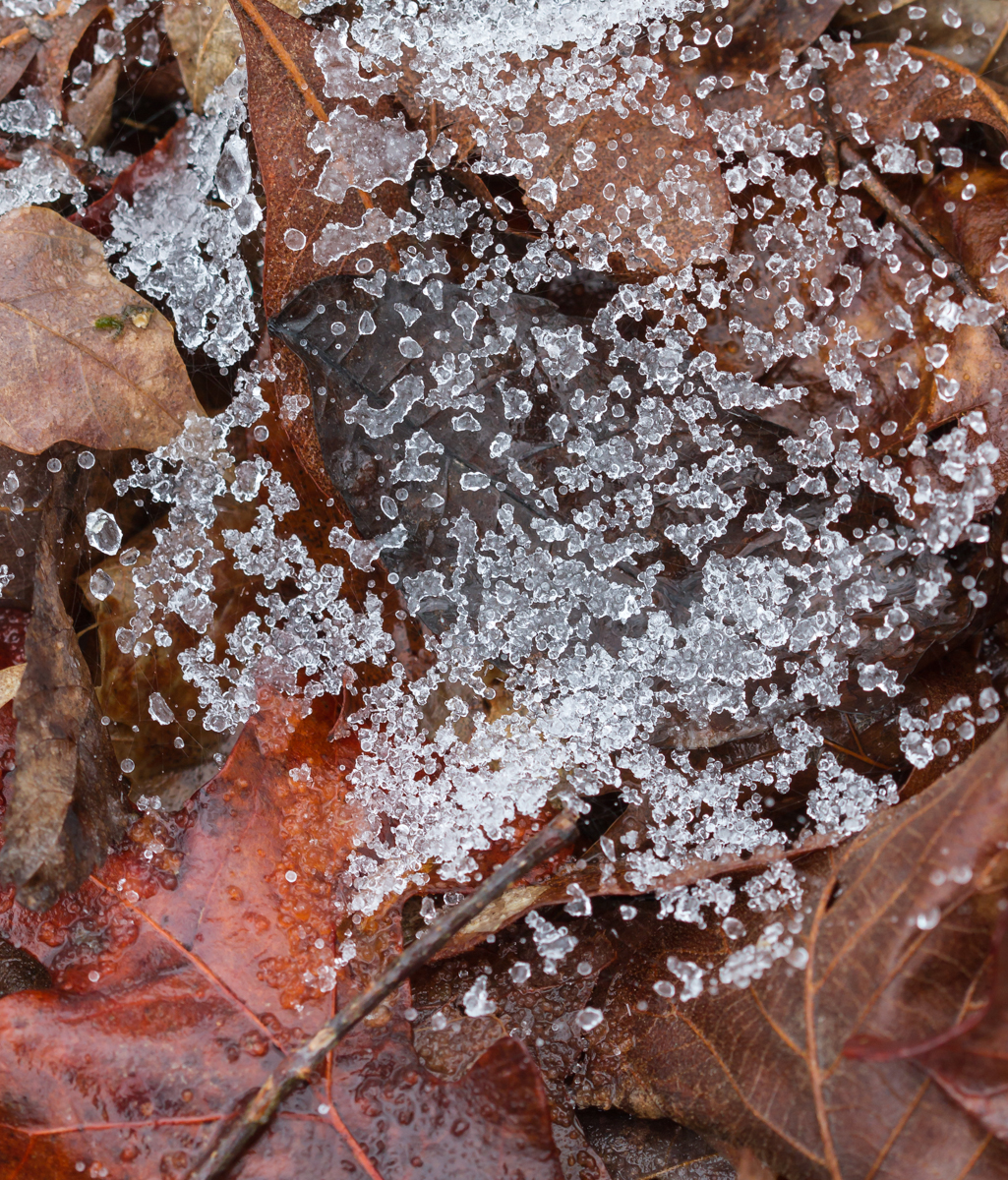
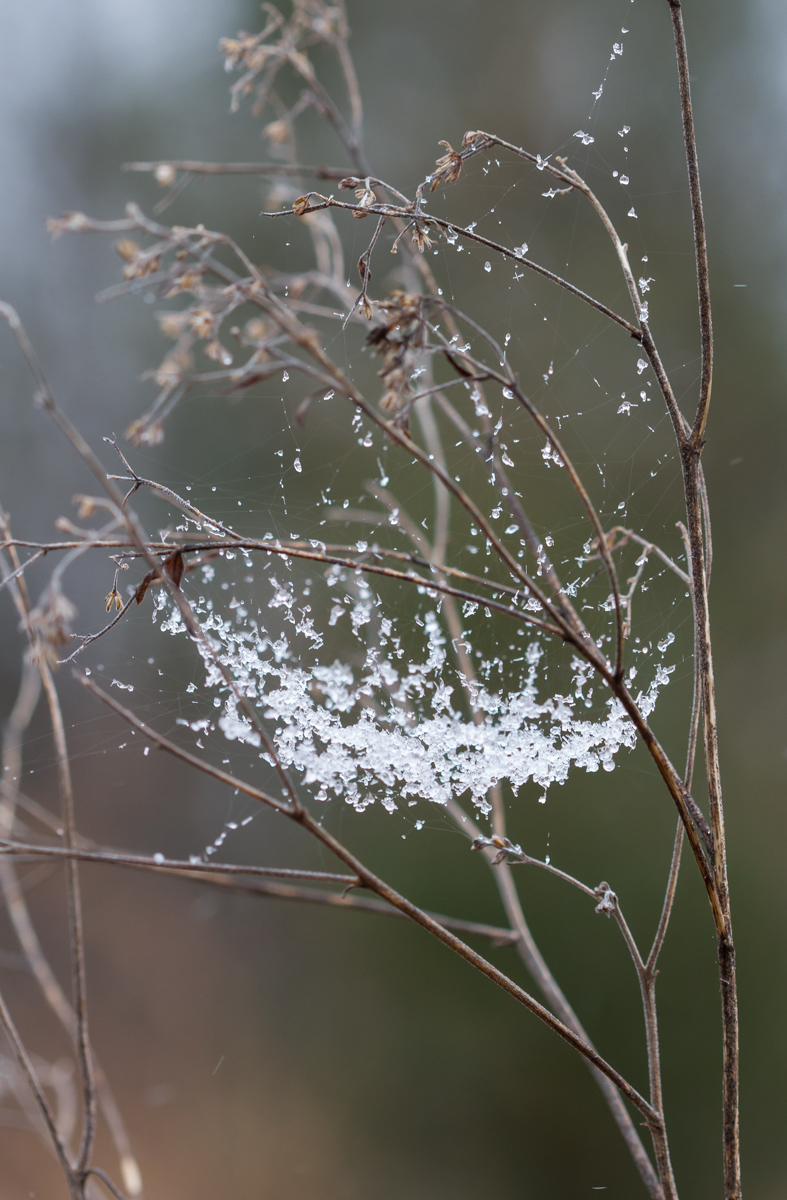
About two weeks ago, I blogged about what I thought would be my last snow of the season. The day I posted that topic, it snowed in the mountains of NC, and parts of the Piedmont were hit with a terrible ice storm that had thousands without power for several days. The next day, temperatures climbed to near 70 degrees and I saw my first butterfly of the season, a Mourning Cloak. After several days of about or slightly below normal temperatures, another twist in our weather took place today. It started snowing here at the house after a mix of freezing rain and drizzle most of the morning. The tiny spiders that have been out and about spinning their webs probably did not have ice crystals and snow on their capture list.
Spider web with ice pellets (click on photos to enlarge)An icy web stands out in the meadow
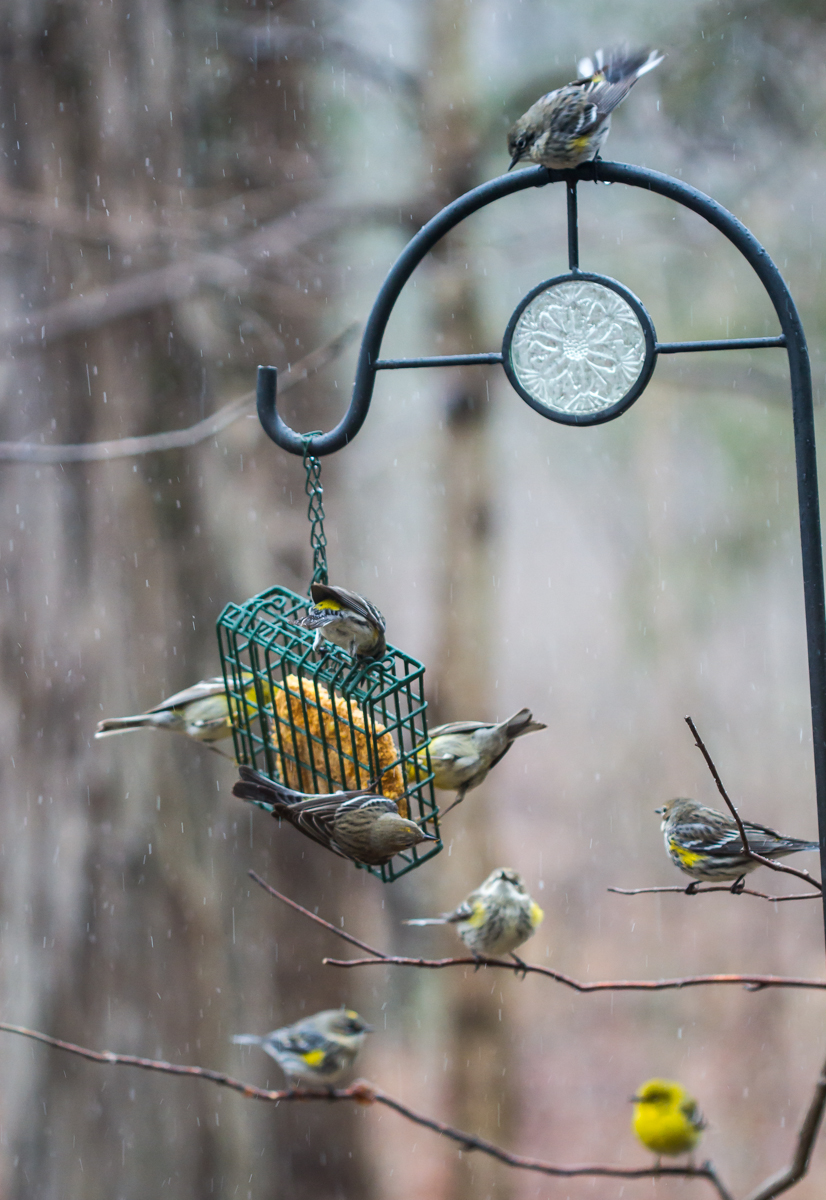
While the spiders may have been hiding, the birds were definitely not. The suet feeder was especially active as some of the early migrant warblers went about searching for food in the absence of insects and the scarcity of late winter berries. About a month ago, I participated in the Great Backyard Bird Count (http://gbbc.birdcount.org/), an annual citizen science program where you record the greatest number of individuals of each species you see at any one time while observing an area. Back then, I recorded a maximum of two Yellow-rumped Warblers while observing my feeders. In the bout of snow and sleet this morning, there were well over a dozen at my suet feeders, along with eight or nine Pine Warblers and individuals of a few other species.
Warblers at the suet feeder in late season snow and ice
And the Yellow-rumps are sporting more and brighter patches of yellow in preparation for their annual breeding season rituals. Maybe this really is the last snow and spring is just waiting around the corner. I guess March Madness doesn’t just refer to basketball in this part of the world.
A track is a window to the past of an animal. Look at the ground as if it were a manuscript of the animal’s life.
~Tom Brown
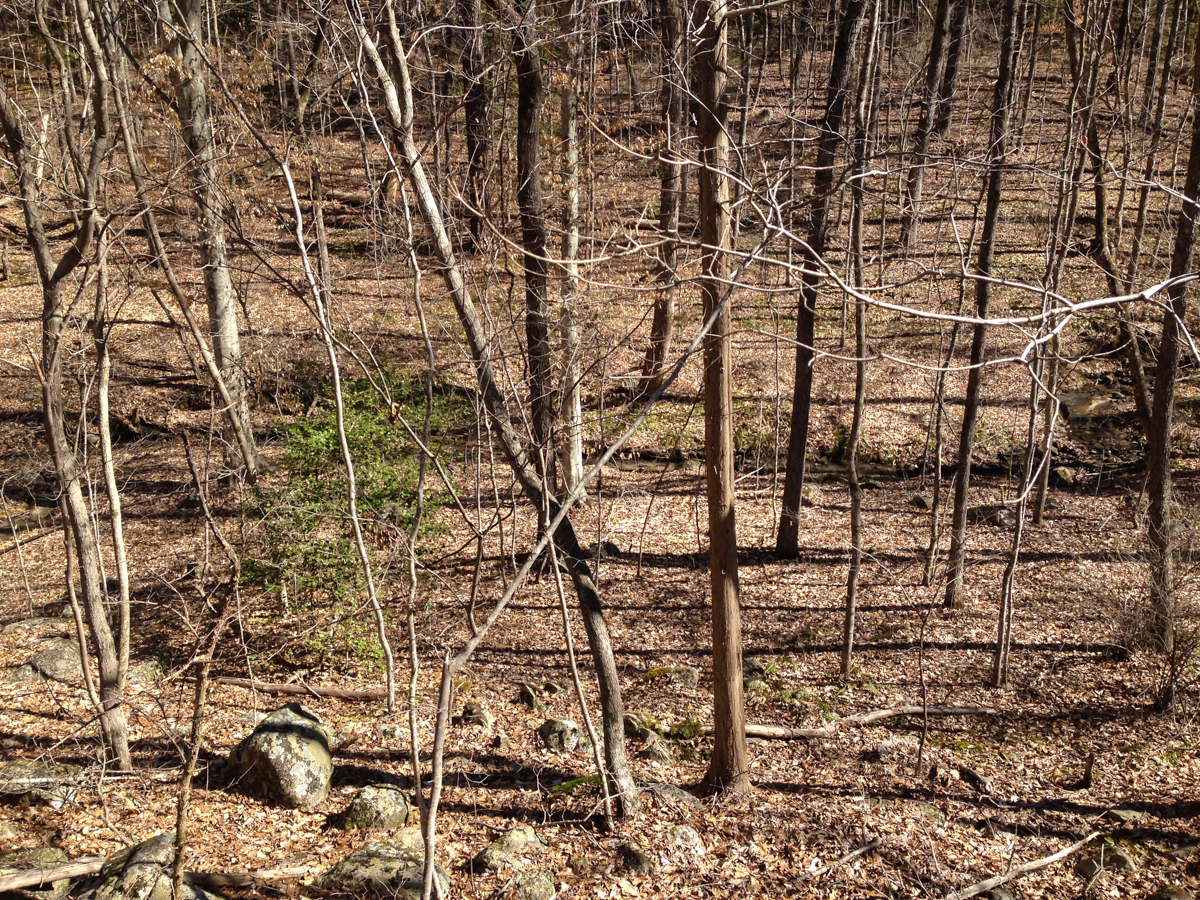
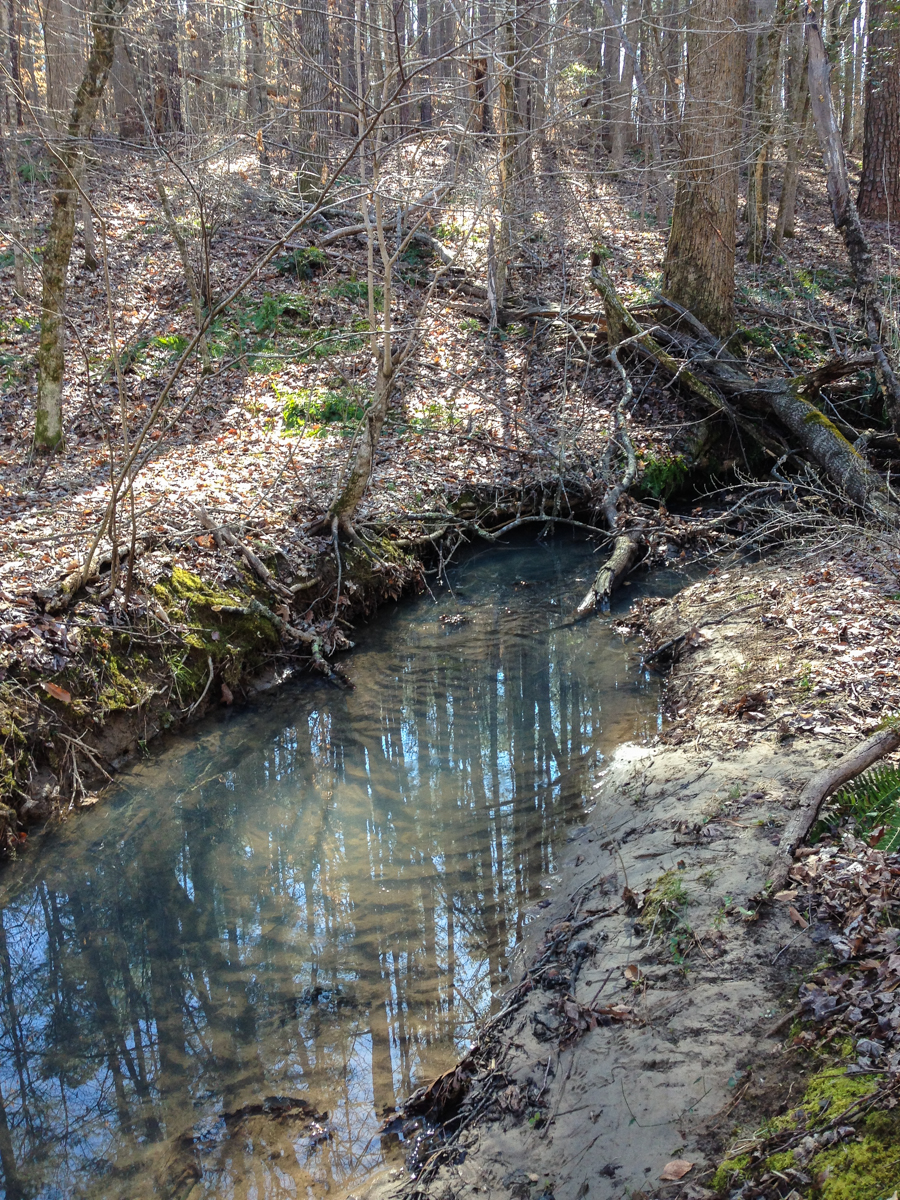
I took advantage of the warm weather yesterday and walked down the power line to a beautiful tract of woods I like to visit. It is a fairly open forest of many acres with rolling terrain, rocky outcrops, and two small streams that join near the edge of the power line. The diversity of plant life and the presence of the streams makes for good wildlife habitat.
Open woodlands about a mile from where I live (click to enlarge photos)One of two small streams in the open woods
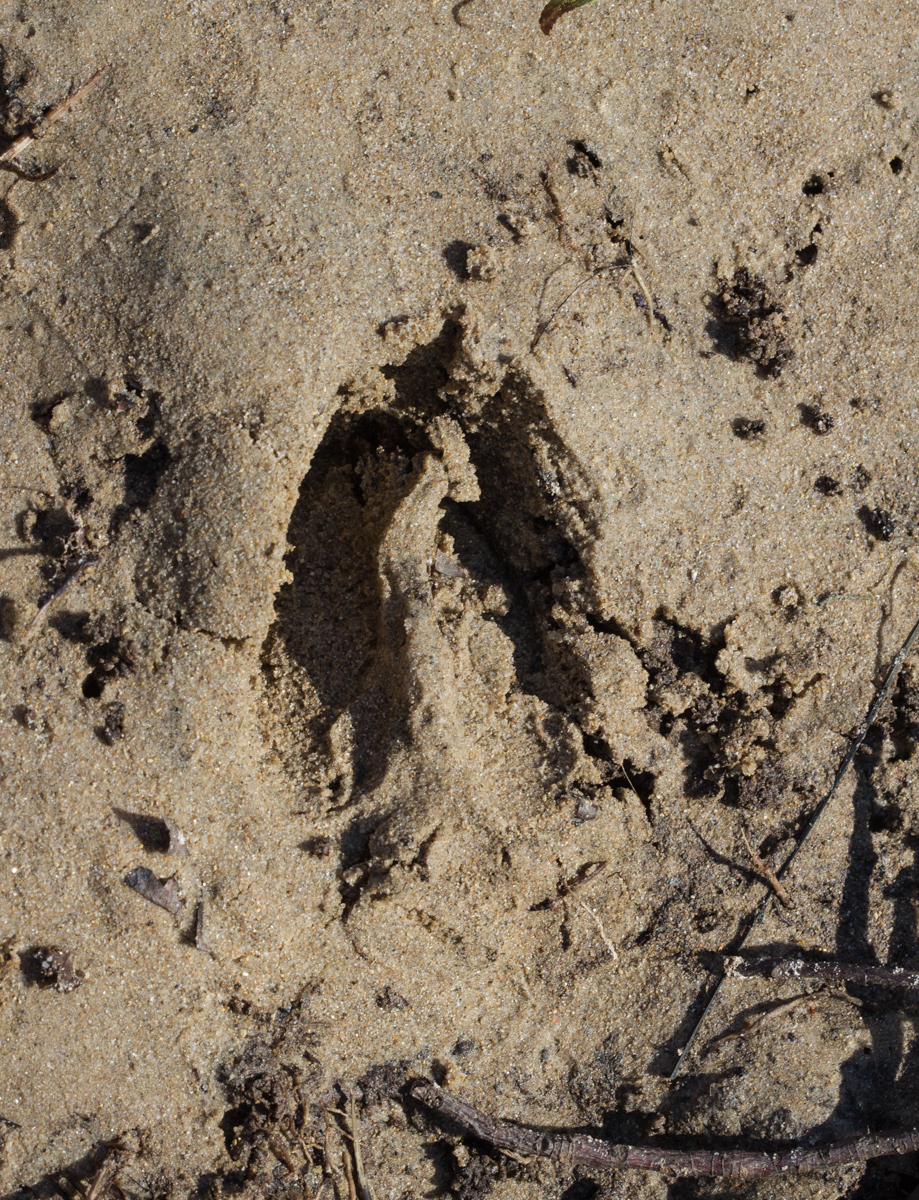
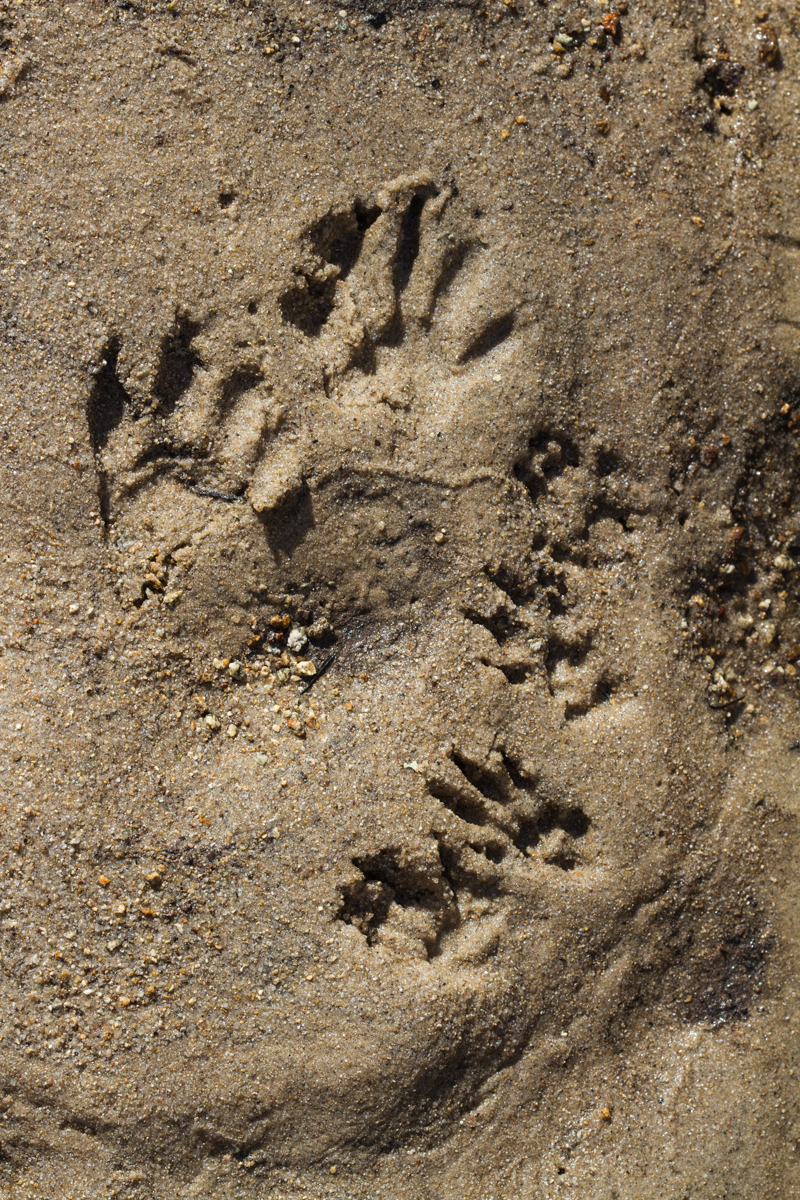
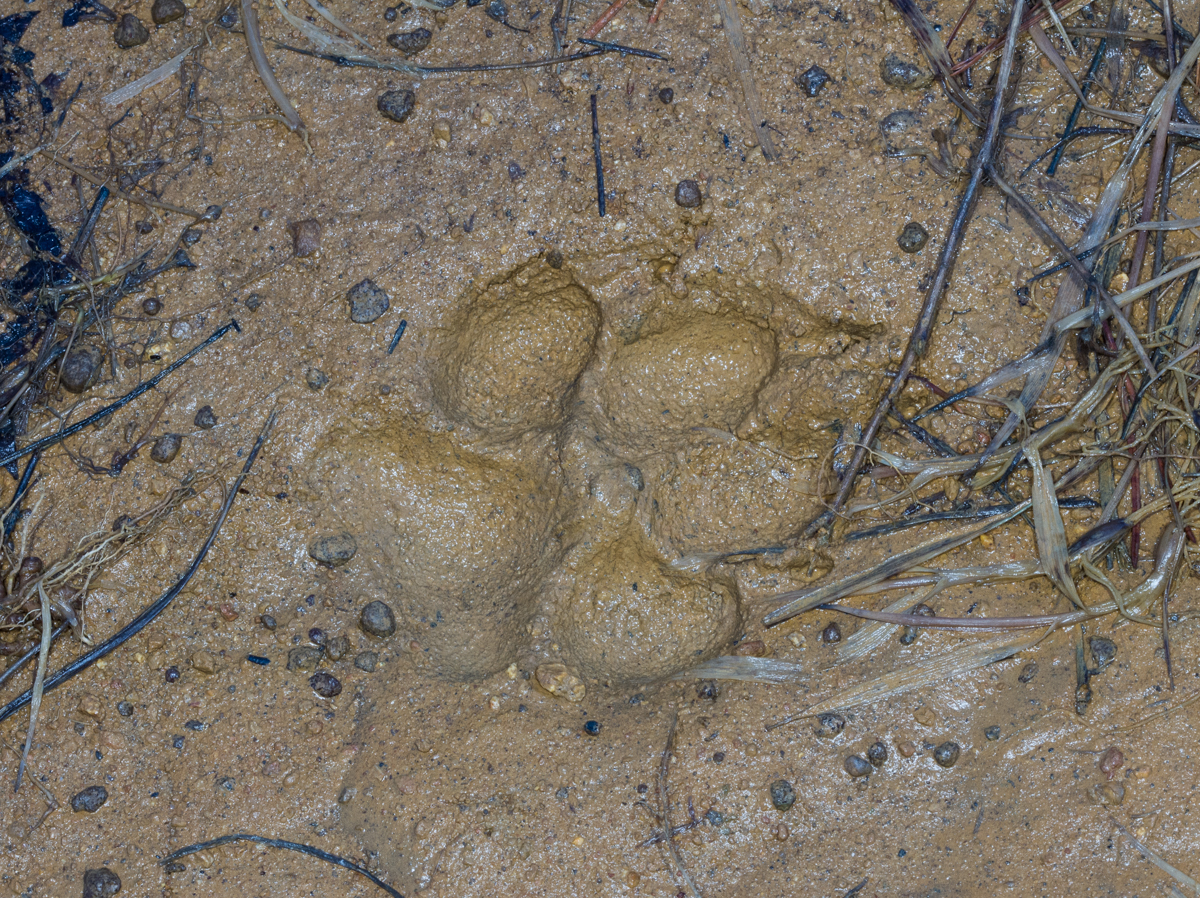
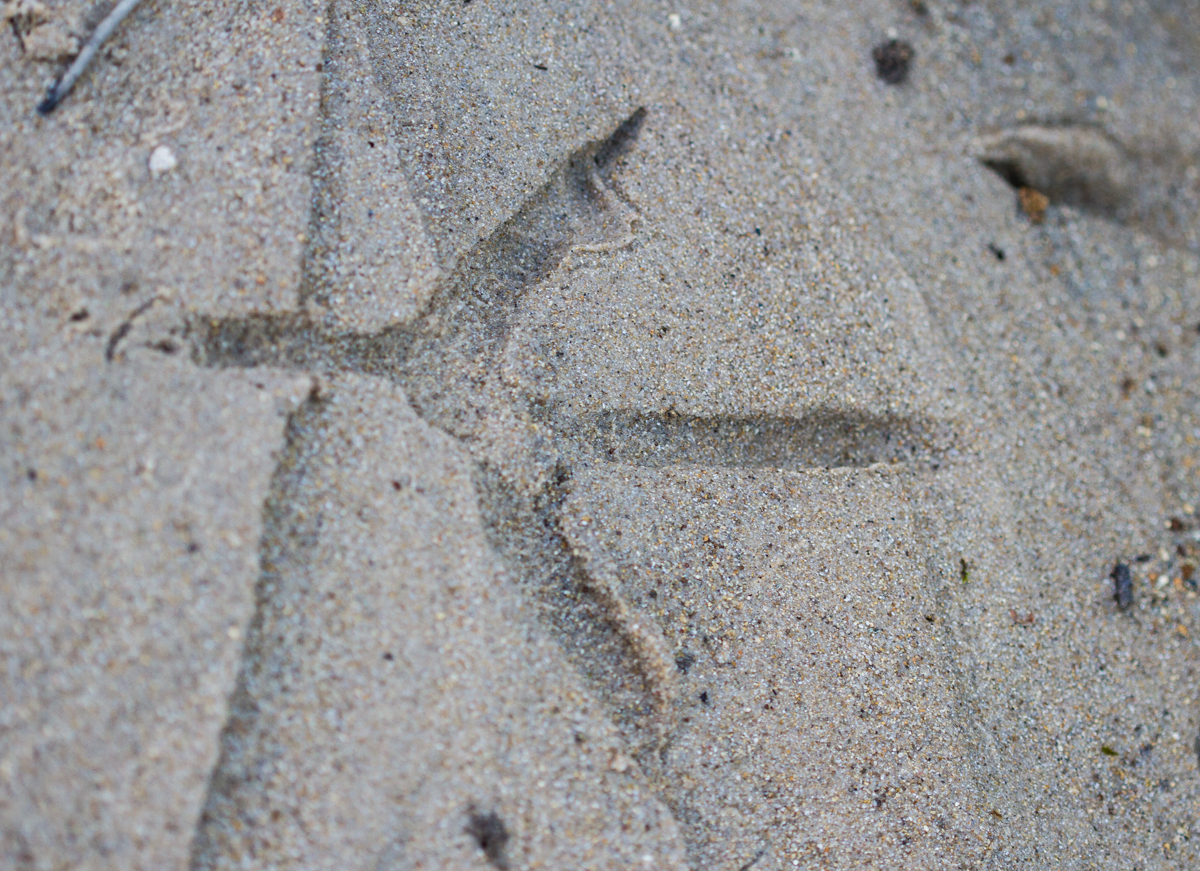
While I did flush a lone Woodcock along the stream above, I didn’t see a lot of wildlife on this particular walk. But there were plenty of signs of life. The larger stream has many small sand bars along its passage through the trees and these read like a guest book of who has recently passed this way. As I looked down, the tracks brought back memories of the times I had seen the authors of these pages in the book of the forest. And I wondered what they had been up to when they wrote these quotes in the sand.
White-tailed Deer trackRaccoon and Gray Squirrel tracksCoyote trackWild Turkey track
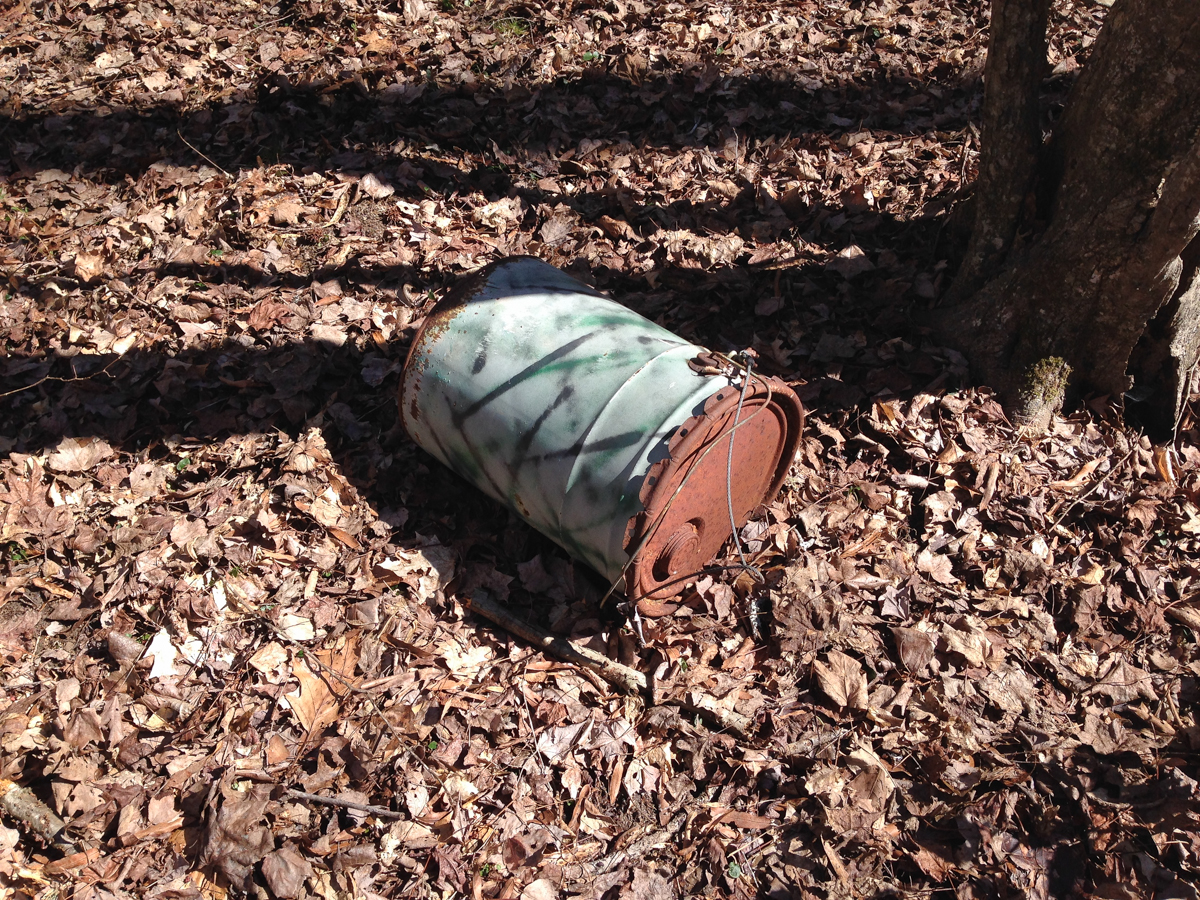
Even though I have never seen anyone else in these woods on my many visits, I’m afraid there are other signs that indicate both their presence and impact. They include thoughtless “nature vandalism”, like carving initials on the smooth bark of an American Beech tree, or leaving what I presume was a bait bucket from some deer hunters (don’t get me started on my opinion on the use of bait in hunting).
Tree graffiti – the all-too-common evidence left by thoughtless visitors to the forestI assume this was a bait bucket left behind by deer hunters that also have a tree stand in this patch of forest
Other signs of human activity may be a little harder for the casual visitor to see. There have been heavy rains these past few weeks and one of the streams has noticeable deposits of coarse sediment in the stream bottom and along its banks.
Sedimentation has impacted one of the small streams in the forest
While it provided fresh substrate for the writings of the wildlife that had walked this way, it also is indicative of human activity upstream (most likely some sort of disturbance to the soil and vegetation). Unfortunately, it is something that is not a good sign for life in this small stream in the long run. The sediment will eventually smother bottom-dwelling invertebrates and other stream life resulting in a loss of diversity in this otherwise relatively pristine habitat. I hope that in the future there will be more vegetated buffers along our waterways and increased vigilance on our part in making every effort to reduce sedimentation and other pollutants from entering our streams. When that happens, that will be a good sign for all concerned.
What good is the warmth of summer without the cold of winter to give it sweetness.
~John Steinbeck
Over the weekend I made a quick trip to my parents’ home in southwest Virginia . Like many regions in the East, their area has had a long cold winter. But, I am one of those strange few that likes cold weather. And this was the first year in several that I did not get my snow fix by spending time in Yellowstone, so I was happy to see a few flakes start to fall on Monday. This might be my last snow for this winter (although as I write this, I am hearing about chances for a wintry mix in portions of the state later tonight). It began slowly, about mid-day, then picked up in intensity.
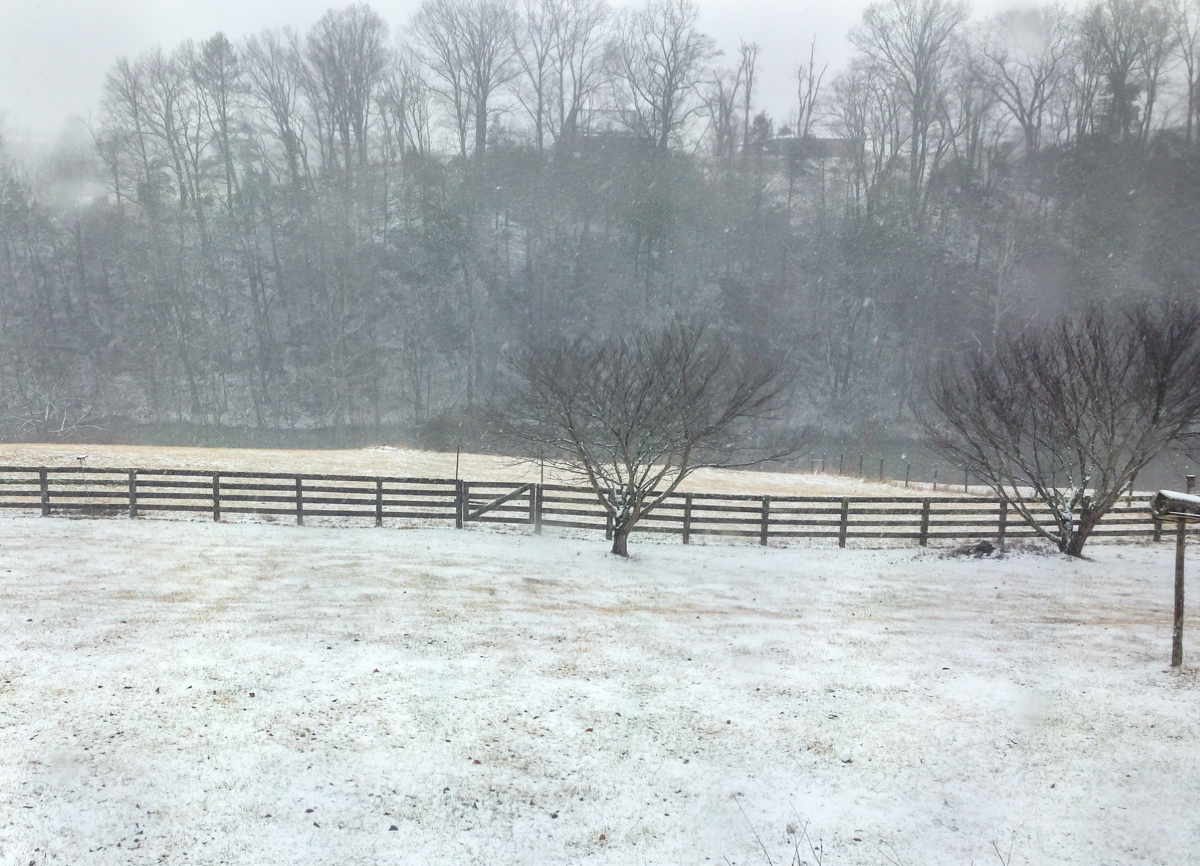
The snow starts to fall (click photos to enlarge)
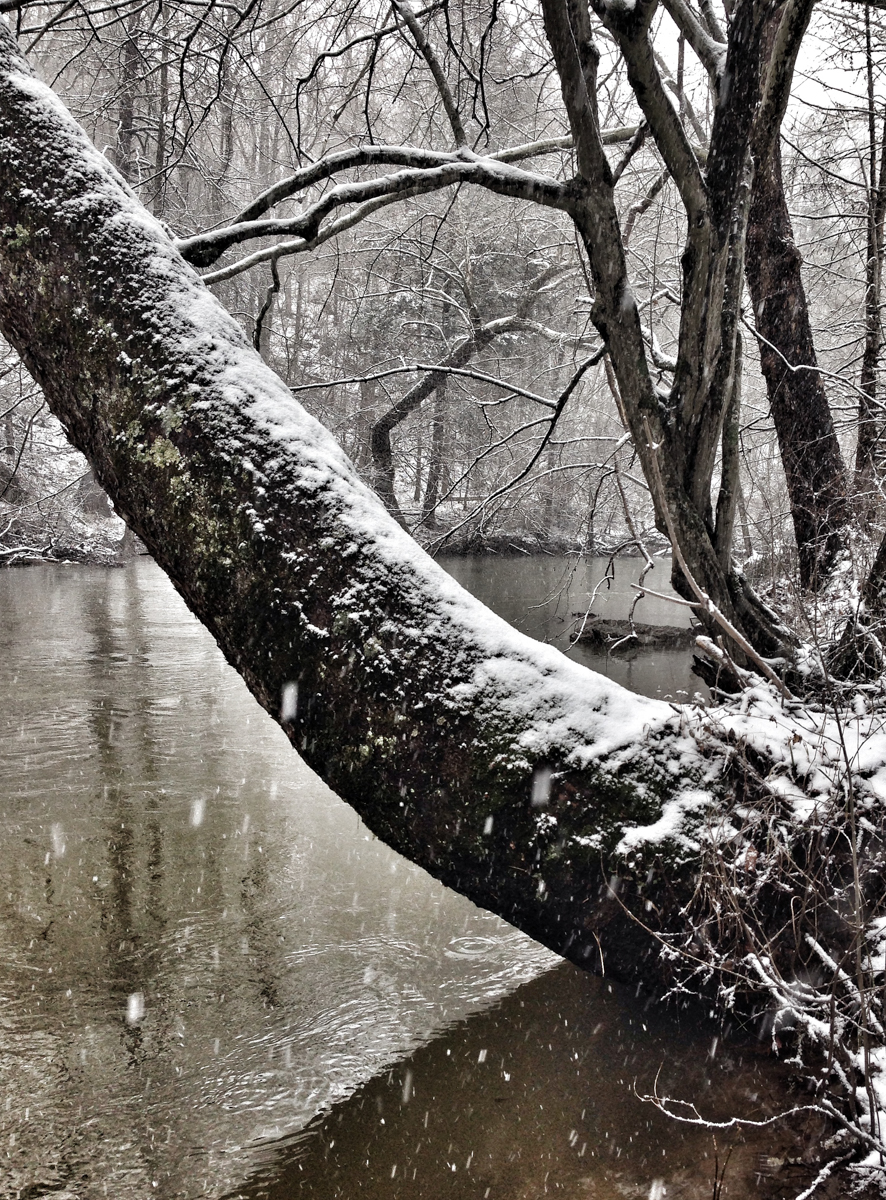
I did not have my camera on this trip so I grabbed my iPhone and walked down the hill toward the river below the house. This is the South Fork of the Holston River. One of three major branches of the Holston River, the South Fork flows over 100 miles through the hills and valleys of southwest Virginia before joining the North Fork near Kingsport, Tennessee. This serene waterway forms the back boundary of my parents’ property and provides a glimpse into the former wildness of these mountains amidst the current patchwork landscape of pastures and wood lots.
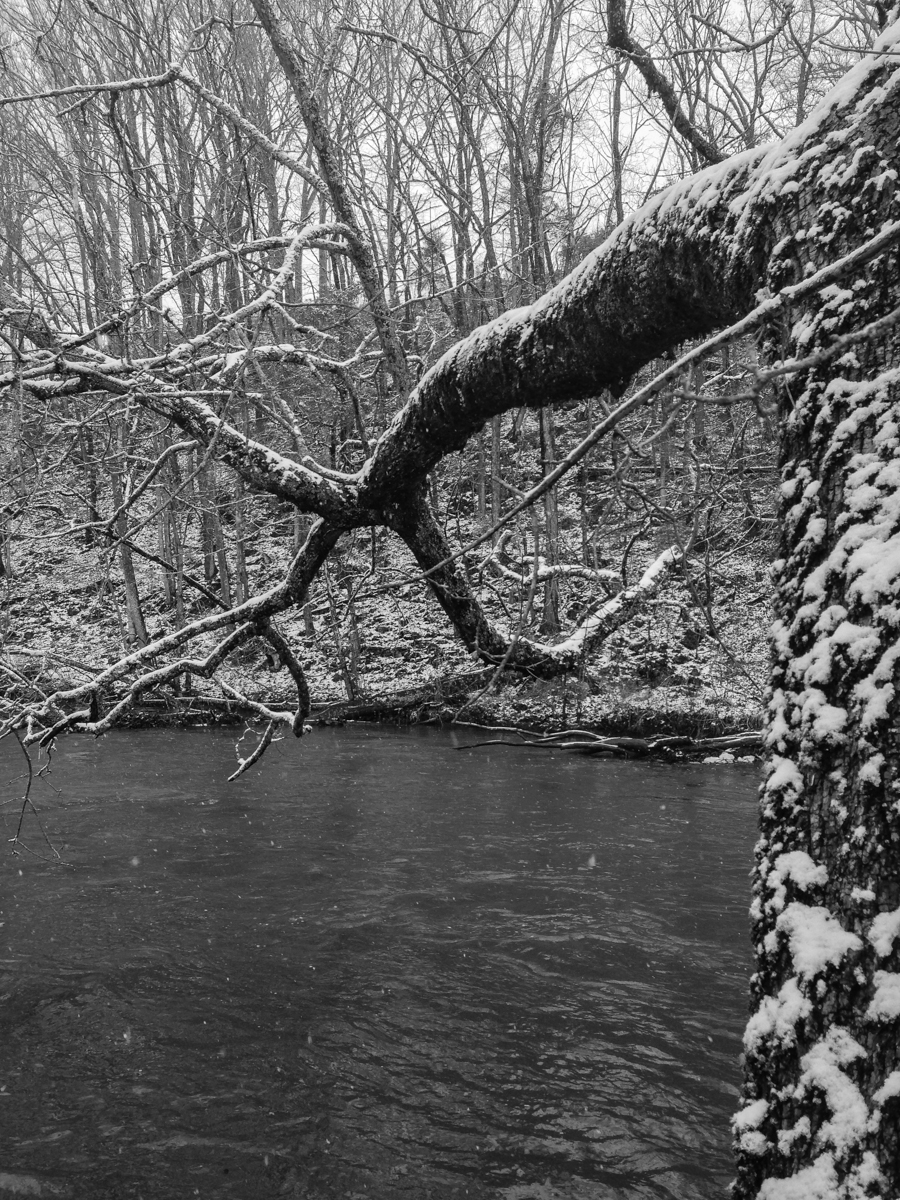
A large tree leaning out over the river
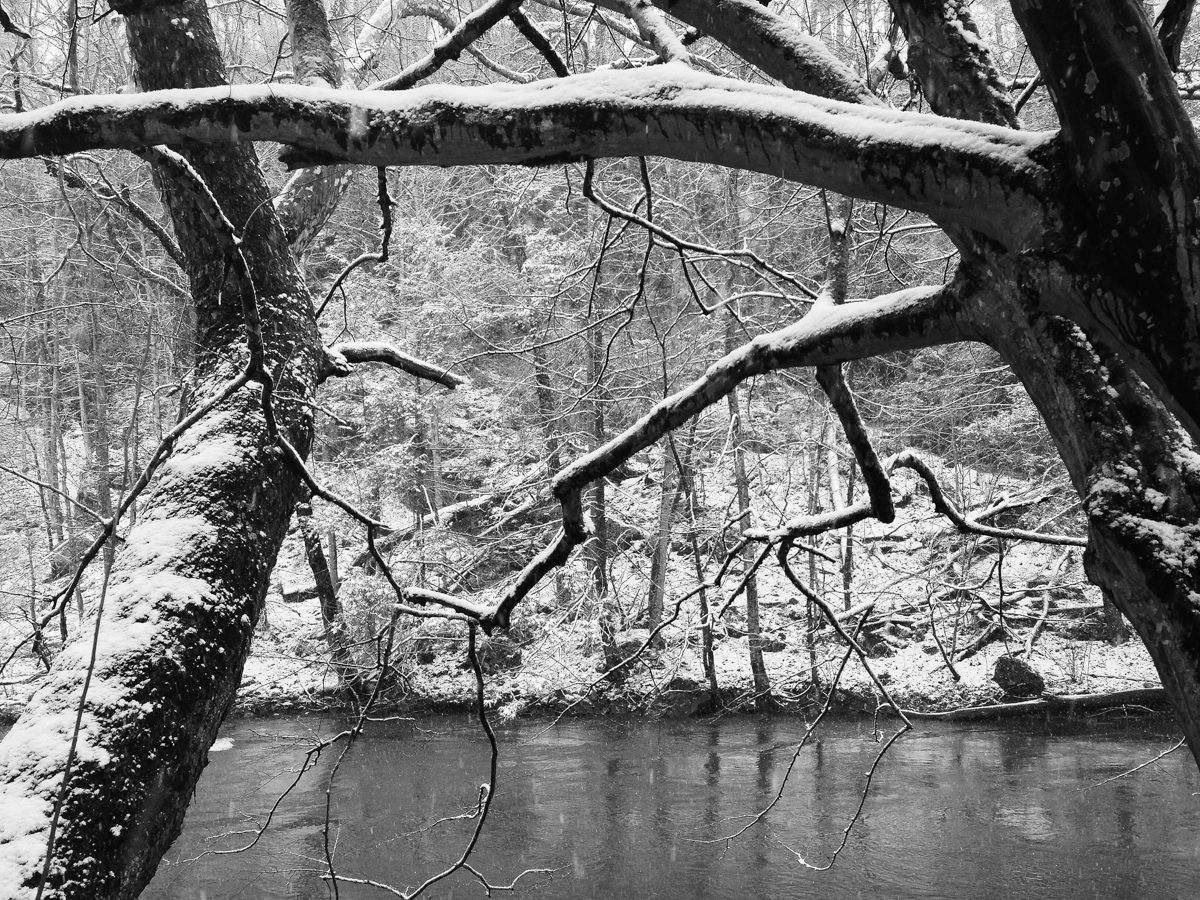
I love the quiet and the starkness of a snow, especially along a river. Black and white images appeal to me in these settings, helping to define the world into its basic shapes and patterns.
A closer view of that same treeGeometric shapes in the trees above the river
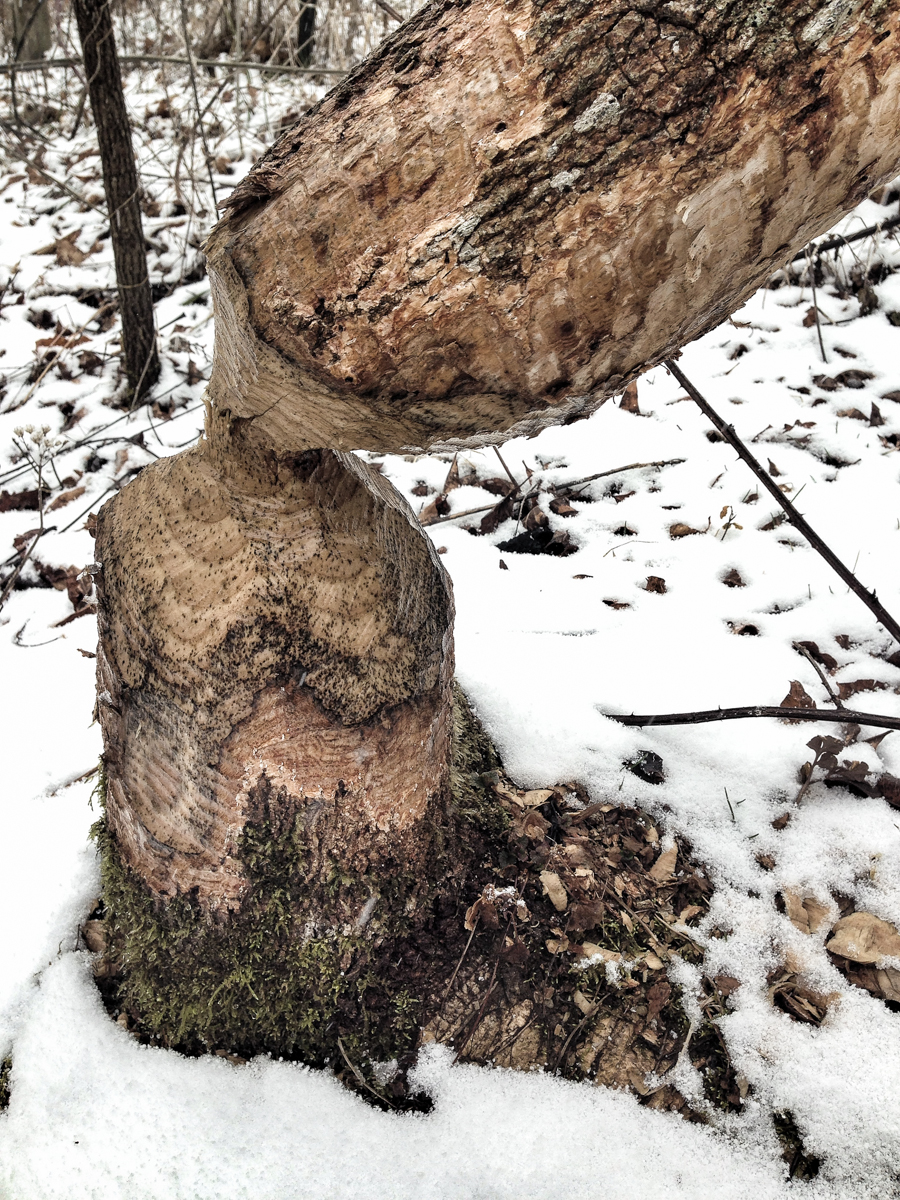
Snow also helps bring things into focus. A beaver-chewed tree trunk that might blend into the scene under normal conditions now jumps out of the landscape like a monument to the work of a master builder.
Tree cut by Beaver
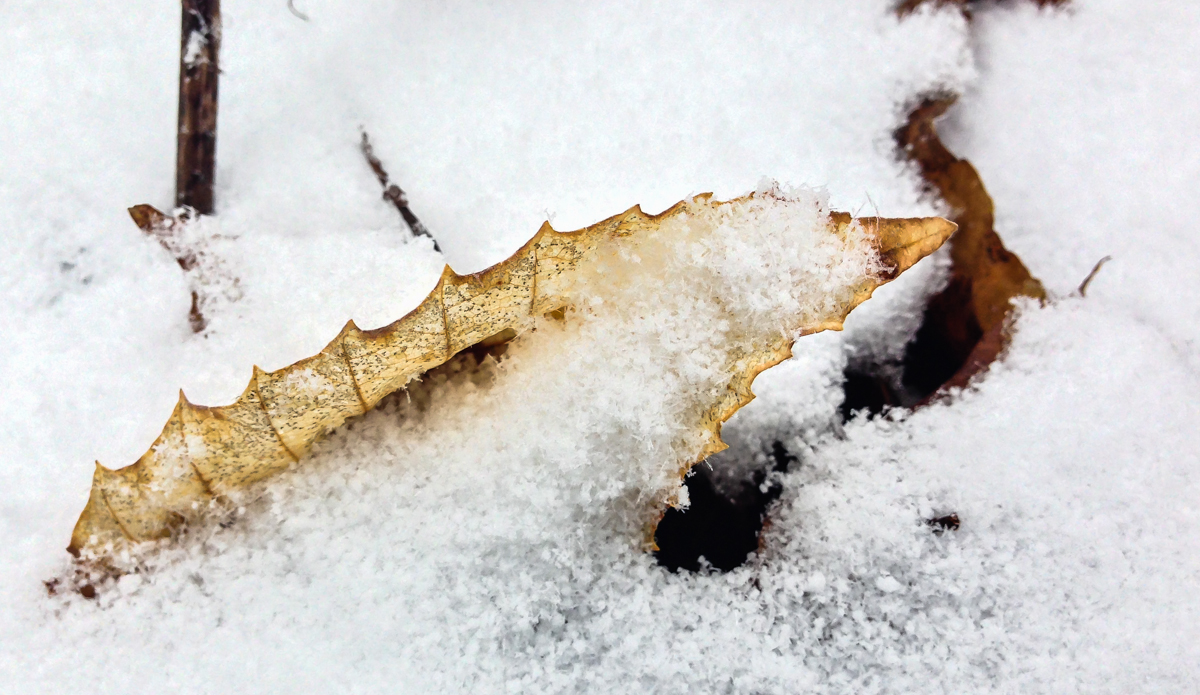
And the edges of a fallen leaf suddenly make your eyes notice the detail in their pattern.
A closer look reveals many beauties in the snow
Walking upriver beyond the riffles, the river gets quiet and silky. The snow is falling harder, a burst of larger flakes that are eaten by the river, but gather on the dark branches and the sleeve of my coat, causing me to pause and admire their delicate beauty.
The river is smooth and draped in trees above the riffle
I stood quietly on the bank of the river…It was so peaceful watching the snow fall as the river rushed toward a destination far beyond this tranquil scene. The early naturalist and writer, John Burroughs, described what it is like to have a small river flowing near where you live…One can make a companion of it; he can walk with it and sit with it, or lounge on its banks, and feel that it is all his own. This snowy river gave me a glimpse of that feeling, and it reminded me of the powerful connection we all have to water and the landscapes that embrace it.
Most gulls don’t bother to learn more than the simplest facts of flight how to get from shore to food and back again.
~Richard Bach
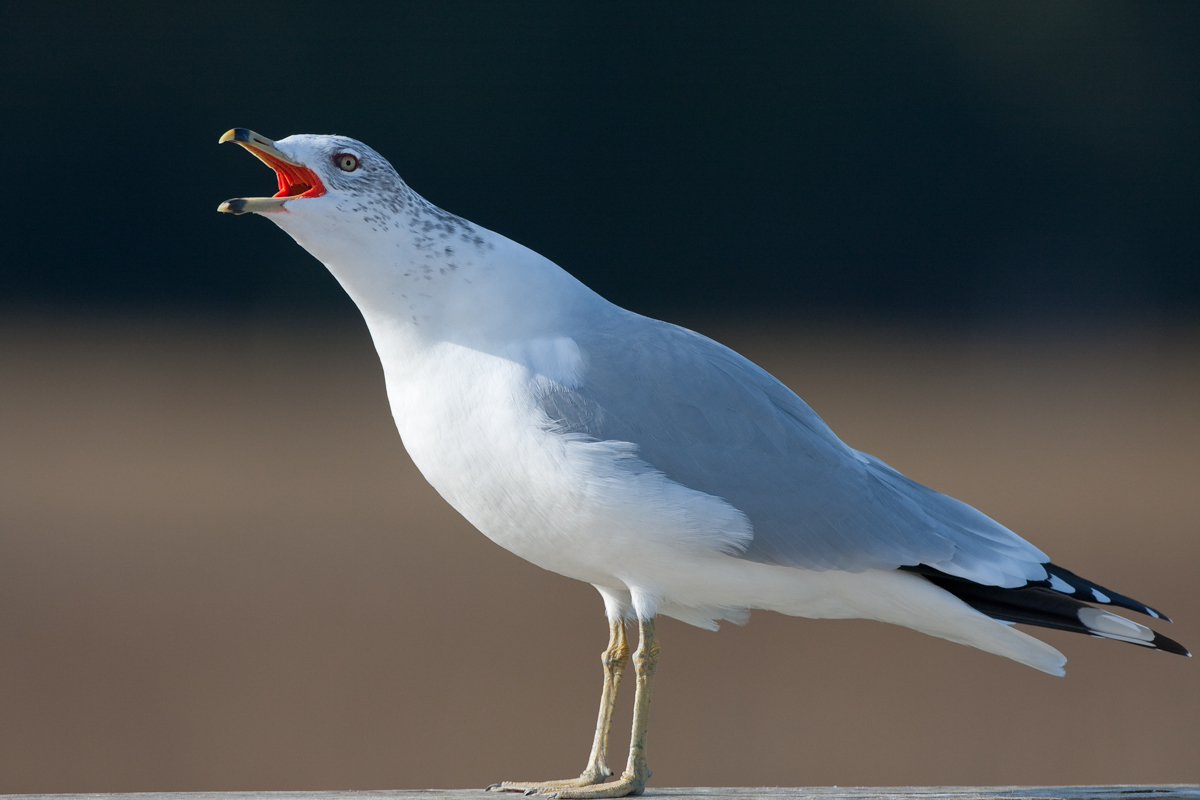
Ring-billed Gull calling
Ring-billed Gulls are very adaptable creatures. They are a common inhabitant of our inland reservoirs in winter where they often fly out each day to forage in landfills or other food rich habitats. They are also a frequent sight in large parking lots of big box stores or shopping malls. This often raises the question by shoppers – What are all these “sea gulls” doing here?
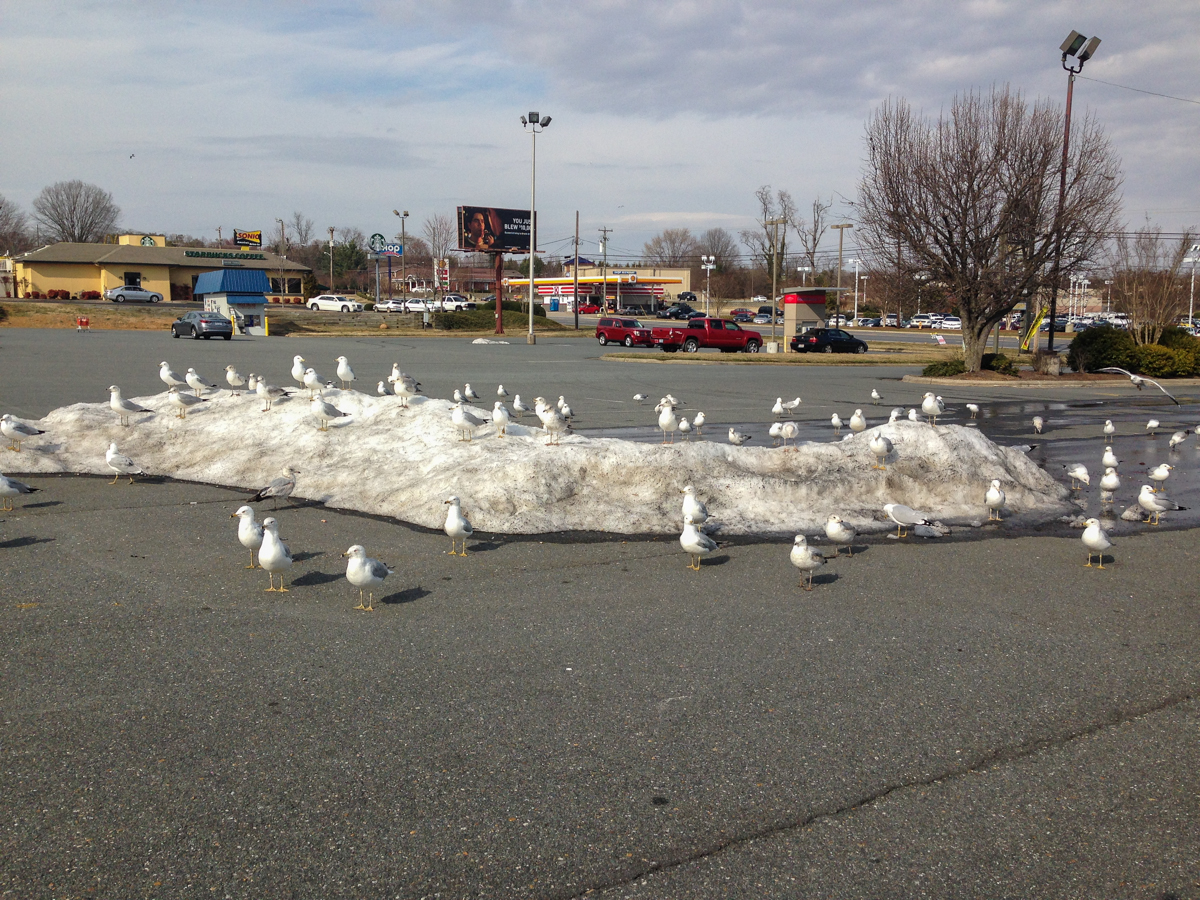
The usual theory is that these birds prefer to roost in open habitats where they can easily see the approach of potential predators. Before large parking lots were near landfill feeding buffets, Ring-billed Gulls probably roosted primarily on large open bodies of water or adjacent sand bars. Our modern-day parking lots offer that plus the opportunity to forage on the all-too-often-left-behind scraps of fast food or other human food garbage. While I am used to seeing gulls in parking lots, I was surprised on Sunday to see a group of large white birds claiming a remnant pile of snow in a parking lot as their domain. This was just north of Winston-Salem and there were scattered areas of snow where crews had cleared the parking lots and pushed it into huge piles that were still clinging to life in our recent cold weather.
Ring-billed Gulls claiming a parking lot snow pile as their domain
So, why claim the snow? Perhaps it is an area where the birds are assured of no cars driving through. Or maybe there is something cool about being “Gull of the Hill”. It looked like the highest density of gulls that were not actually standing on the snow pile was found down-slope from the pile where the melt water was flowing…so, are they using this as a water source? Who knows, but it made me drive through and grab a quick picture, and I saw a lot of other folks looking as if to say – What are all these “sea gulls” doing here?
I once had a sparrow alight upon my shoulder for a moment, while I was hoeing in a village garden, and I felt that I was more distinguished by that circumstance that I should have been by any epaulet I could have worn.
Henry David Thoreau
Sparrows….seems like people either love them or hate them. And most people tend to lump all of the three dozen or so North American species of sparrows together as if they were one. But that does not do them justice. Even though they can be difficult to distinguish in the field, they are a diverse and subtlety beautiful group of birds. One of my favorites is the tiny Chipping Sparrow, Spizella passerina.
Chipping Sparrow on garden fence
Chippies, as they are often called by birders, are a gregarious species, sometimes forming flocks of twenty or more birds that feed together in winter. These flocks are common right now out along the roadsides, the power line right of way, and at my feeding stations. When disturbed, they quickly fly to cover in shrubs and low branches. Adults can be distinguished by the lack of streaking on their breasts, the black line through their eye, and their rusty cap. Soon, I will hear the trill of chip notes of the male as they set up nesting territories. Chipping Sparrows build a flimsy nest placed low in a shrub or small tree, often an evergreen. The nest is made of grasses or root fibers woven into a small cup and is often lined with fine hair like horse or dog hair. With the approach of their breeding season, Chippies will take a back seat to many of the other common birds here in summer. But, with the approach of cold weather next year, they will once again flock together and be one of the more common birds I enjoy.