When we hear his call we hear no mere bird. We hear the trumpet in the orchestra of evolution. He is the symbol of our untamable past, of that incredible sweep of millennia which underlies and conditions the daily affairs of birds and men. Our ability to perceive quality in nature begins, as in art, with the pretty. It expands through successive stages of the beautiful to values as yet uncaptured by language. The quality of cranes lies, I think, in this higher gamut, as yet beyond the reach of words.
~Aldo Leopold
Sandhill Cranes landing at sunset in Crane Ponds at Bosque del Apache National Wildlife Refuge, NM (click photo to enlarge)
A short video clip with cranes calling at sunset at Bosque del Apache.
I just returned from a very special place – Bosque del Apache National Wildlife Refuge in New Mexico. I came away with several thousand images, mostly of Snow Geese and Sandhill Cranes, the “stars” of Bosque. But in the predawn light and in the twilight after sunset each day, I looked for something special in a certain area along the road. It was a silhouette, a powerful shadow of the night sky – a Great Horned Owl.
Great Horned Owl at sunrise (click photos to enlarge)
Over five days, I probably saw the owl five or six times, all within a quarter mile stretch of road inside the refuge. It was always perched on a prominent object, surveying its domain, looking and listening for a potential meal amongst the grasses and shrubs. There are relatively few trees here so I imagine the owl may have a nest site in one of the groves of Cottownwoods near the highway. The image above was taken on the first morning in the refuge, a good omen I thought.
Great Horned Owl by the light of a full moon
One of the many highlights of the trip was the full moon rising with cranes flying into one of the ponds along the road near the owl’s territory. As I drove out that night, there was the owl, sitting in the bare branches of a small tree along the railroad tracks. As I had stayed with the cranes until the moon was well up off the horizon, it was tough to get into position for a photo of the owl against the moon. I took a few images of it in the glow of the full moon before tying to get closer.
Great Horned Owl silhouette against full moon
I now know my body wasn’t designed to crouch so low while messing with a camera and tripod trying to frame an owl against a brightening moon. But, the owl did not seem to mind, and I managed a few shots before it glided down on some unsuspecting rodent and then disappeared into the trees.
A shadow can a powerful thing, and this one gave me an experience I will not forget.
…The “need to hold still” is a skill that both scientists and non-scientists need to cultivate, a vital way to pay attention to the world. Through observation, it is possible to develop a richness of texture and nuance, substance and form, in our understanding of the animate and inanimate residents of this world – and our place in it. It is how we become informed.
~Christopher Norment
I can hardly believe it, but this is my 100th post since I wrote the first blog back on March 22, a mere ten months ago. After officially being retired for three weeks, I posted that first report. I think I was hoping for a vehicle to continue my work as an educator and naturalist. Throughout my career, I was fortunate to have worked with a cadre of dedicated and inquisitive people that were constantly sharing new discoveries and challenging me with questions about nature. I now realize that the blog is a way for me to challenge myself and to continue learning about the natural world that I love.
I recently took a look back at the topics I have covered and realized it really has been quite an eventful ten months of retirement. I traveled to some of my favorite places and did some serious woods-watching here at home. So, in honor of the milestone of making it through one hundred of these monologues, I now revisit a few of my favorite memories of the past few months.
Large spider shed from the first blog post on March 22, 2013 (click photos to enlarge)
It all started with a trip out to my shed last March and the discovery of a different sort of shed – the cast skin of a huge spider. It turned out to be from one of our largest spiders, a Dark Fishing Spider, Dolomedes tenebrosus. The intricate details of the shed are incredible.
Dark Fishing Spider
Then, just a few weeks ago, I had an encounter with a live, albeit sluggish, Dolomedes spider. It was in a tree trunk I was cutting for firewood. After just missing the spiders’ hiding place with my chain saw, it slowly crawled out and allowed me some quality observation time.
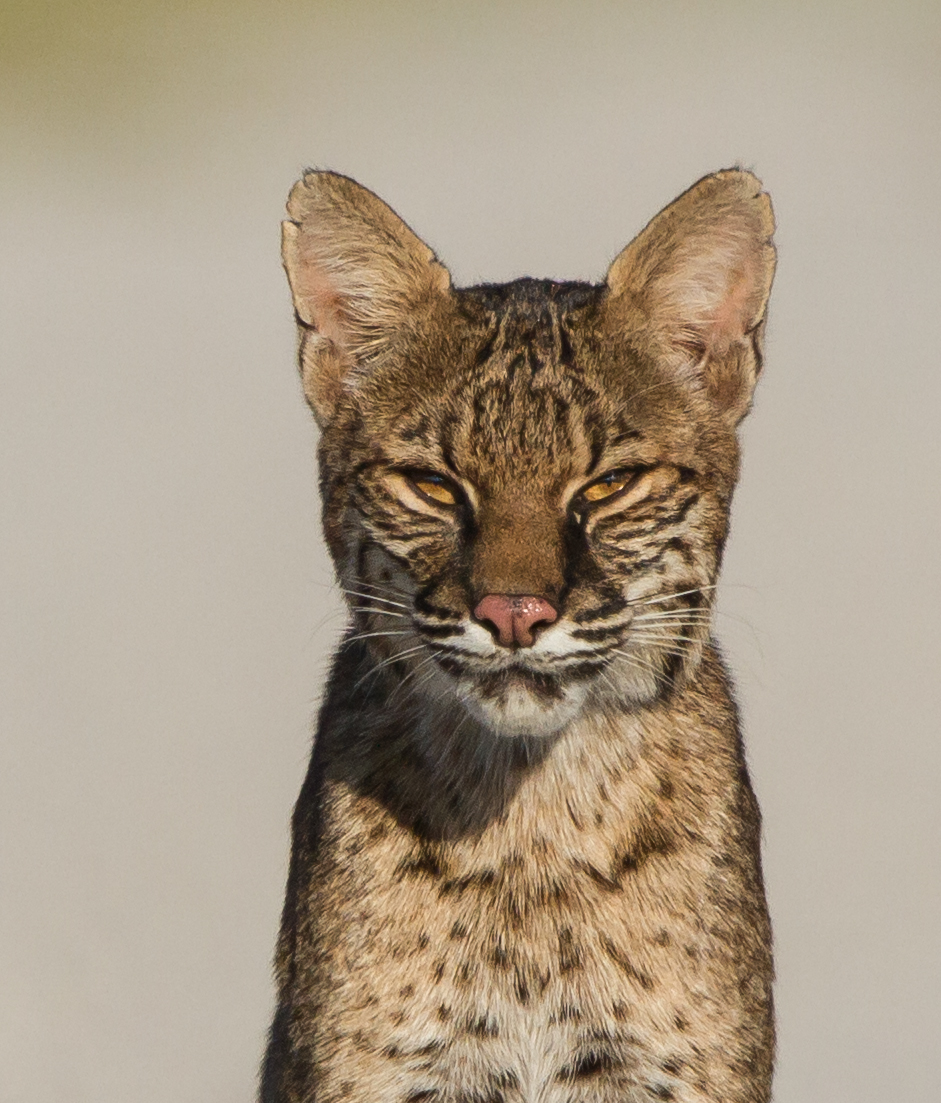
Bobcat at Pocosin Lakes
Speaking of encounters, one of the most amazing things I experienced these past few months (actually…ever) was a close encounter with one of our state’s most elusive animals, a Bobcat. After seeing one cross a dirt road at Pocosin Lakes National Wildlife Refuge, a friend and I parked the car in the only available shade and got out to wait. The next 20 minutes were some of the most exciting I have had with any wild creature. The majestic cat ended up strolling toward us and then just sitting and looking around for a couple of minutes, before vanishing into the brush.
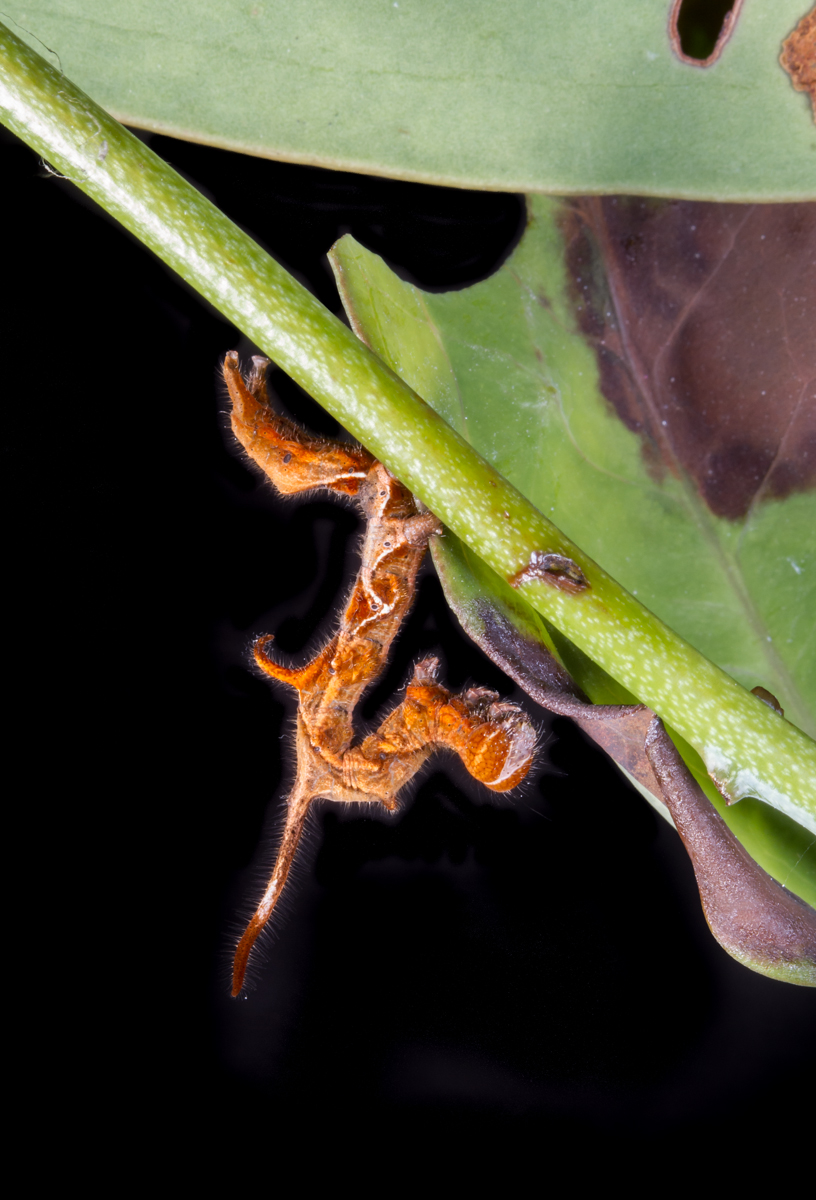
Curve-lined Owlet is a dead leaf mimic
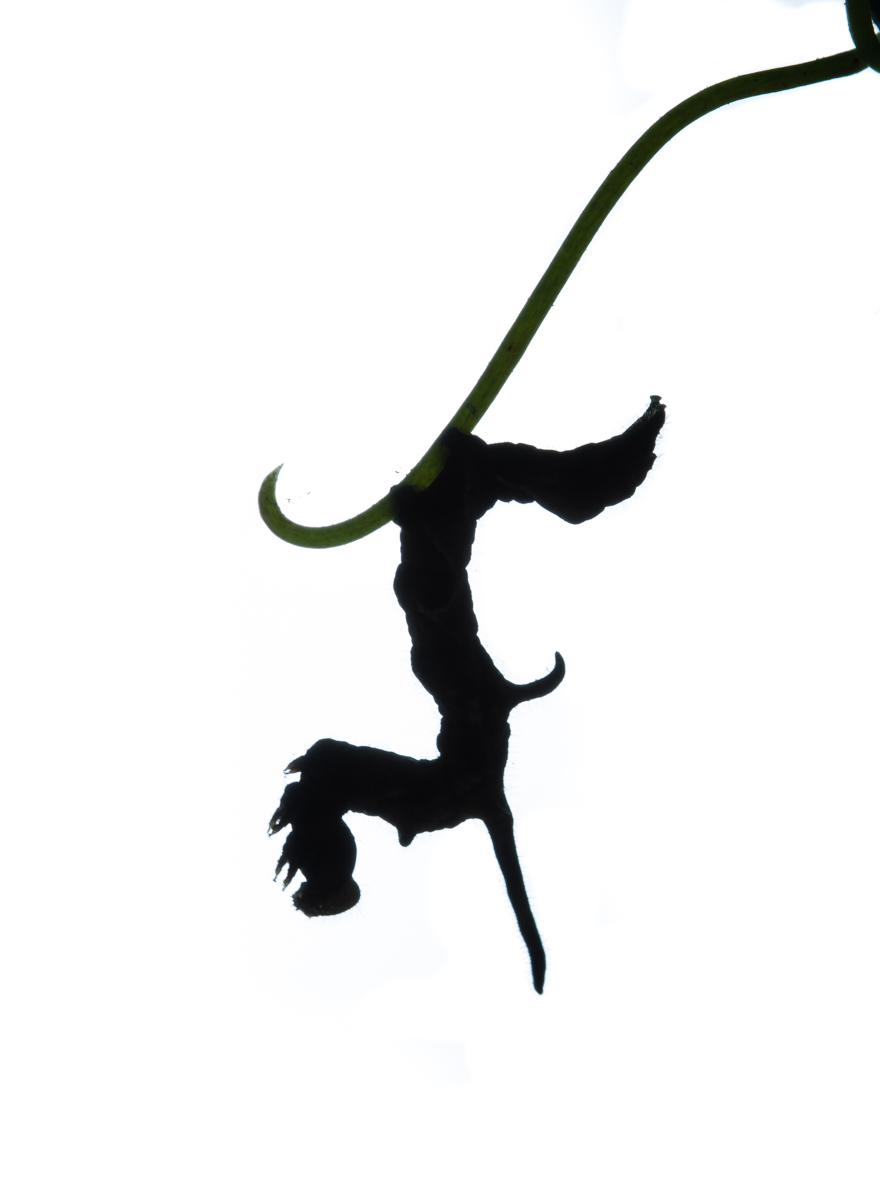
Pocosin Lakes also provided a glimpse at something I have always wanted to see – a Curve-lined Owlet caterpillar. This unusual larva feeds on Greenbriar and is considered a dead leaf mimic.
Curve-lined Owlet caterpillar silhouette
I consider it simply bizarre and beautiful.
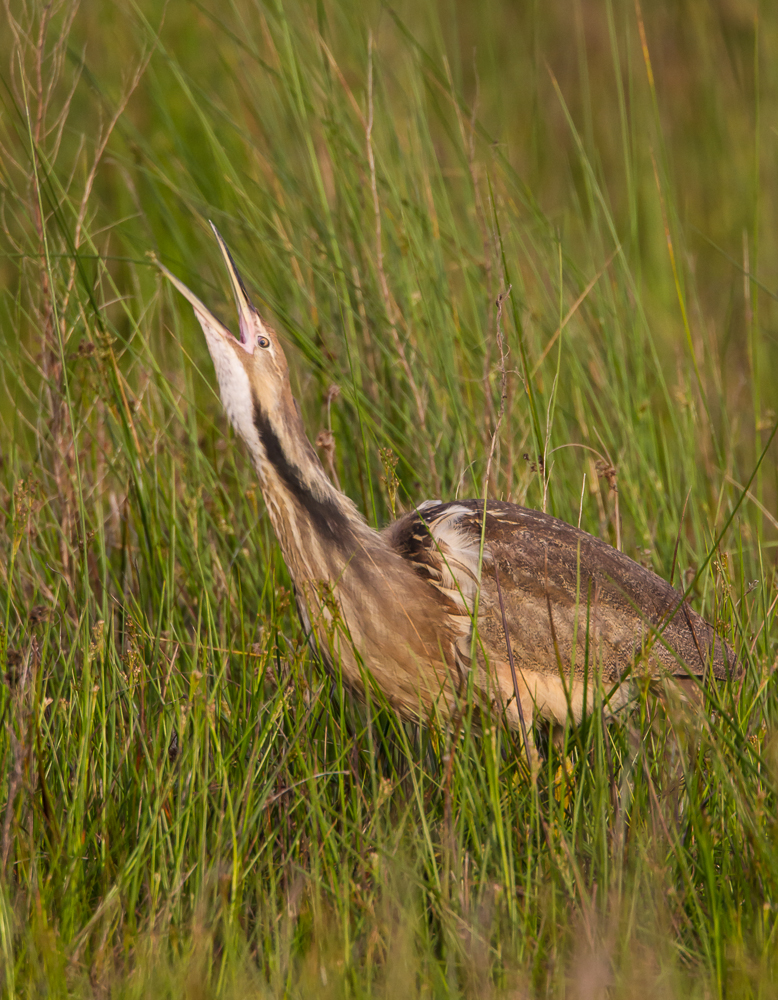
American Bittern calling
Another magical experience from Pocosin Lakes was last spring when I happened to stop at a marsh to scan for birds, and heard the unmistakable sound of an American Bittern. Their call is described by The Cornell Lab of Ornithology as a deep pumping oong-ka-choonk. Listen for yourself at http://www.allaboutbirds.org/guide/American_Bittern/sounds.
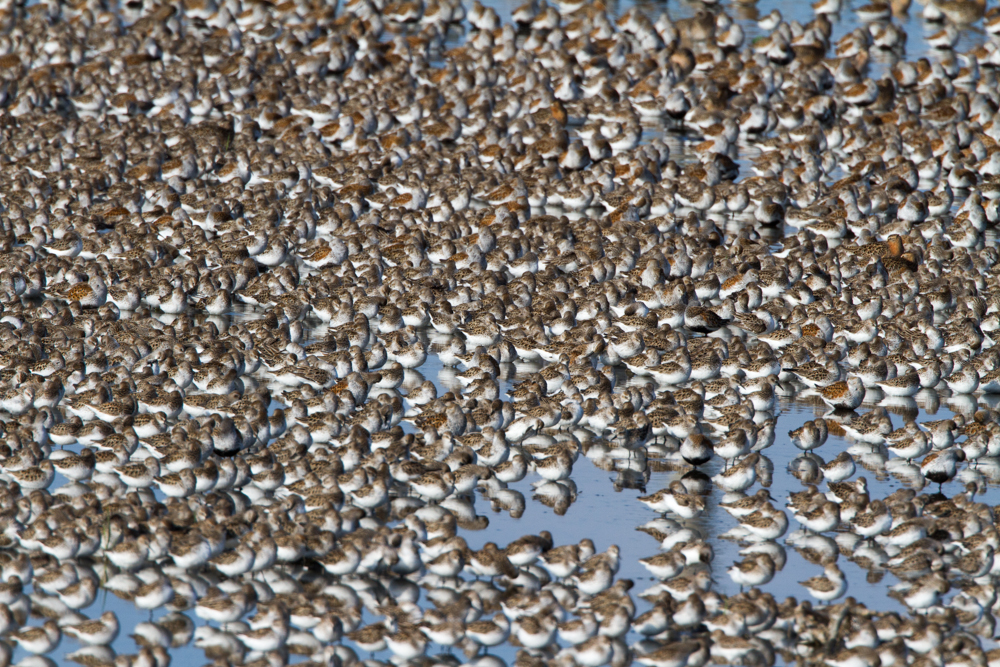
Horseshoe Crabs coming ashore to mateShorebirds in New Jersey
A trip to New Jersey and Delaware last spring provided an experience with one of the great wildlife spectacles on the East Coast – thousands of Horseshoe Crabs coming into the shallows to mate. Coinciding with this event is the arrival of tens of thousands of shorebirds that stop in the Delaware Bay region to take advantage of abundant food resources (including the Horseshoe Crab eggs) as they migrate north for the nesting season.
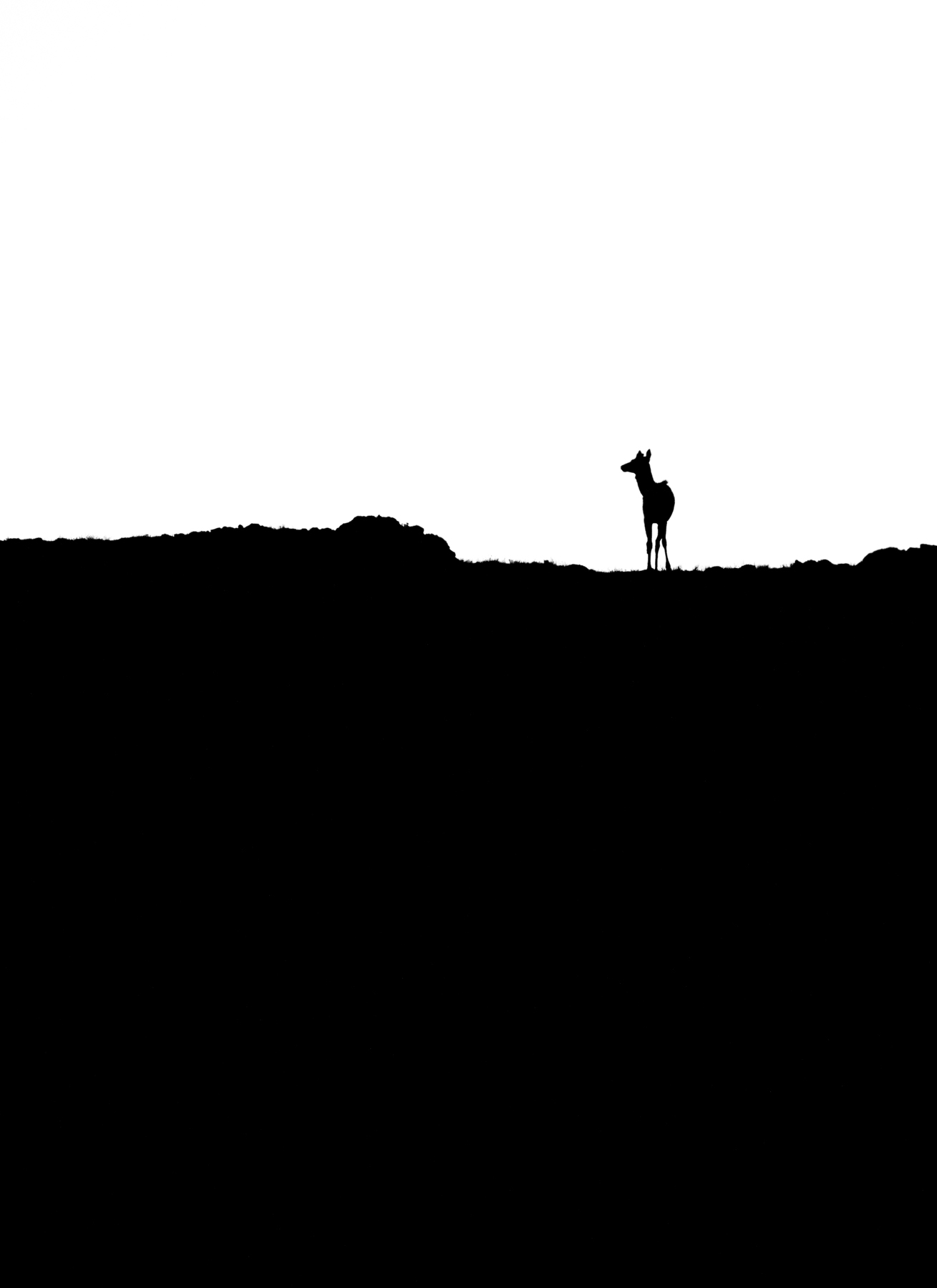
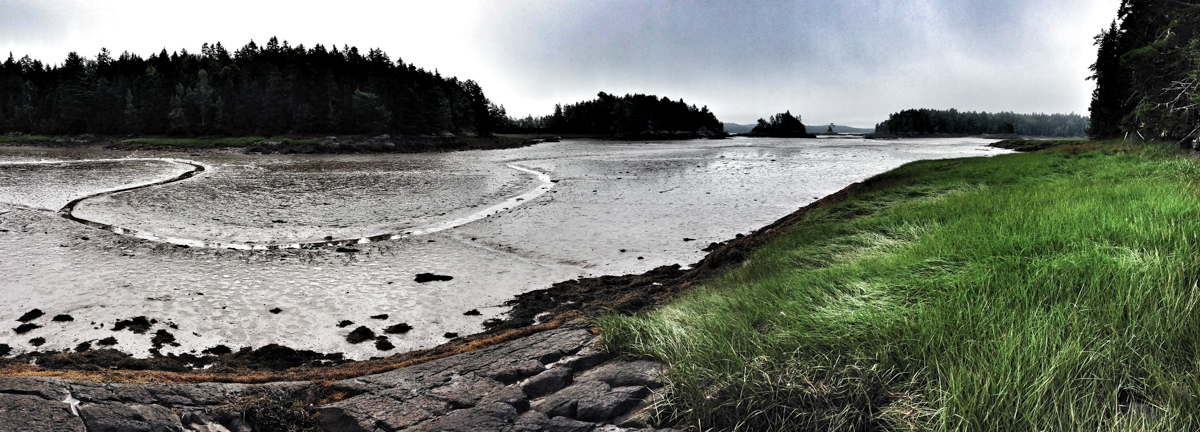
Bison silhouette in Lamar ValleyLow tide, Cobscook Bay, Maine – iPhone imageDolly Sods Wilderness, WV – iPhone image
Other adventures afield have taken me to Yellowstone (always a favorite), Maine, and the Dolly Sods Wilderness in the highlands of West Virgina. In each location, I am reminded how lucky we are to have these stunning landscapes preserved for the good of the ecological communities, and the human spirits, they sustain.
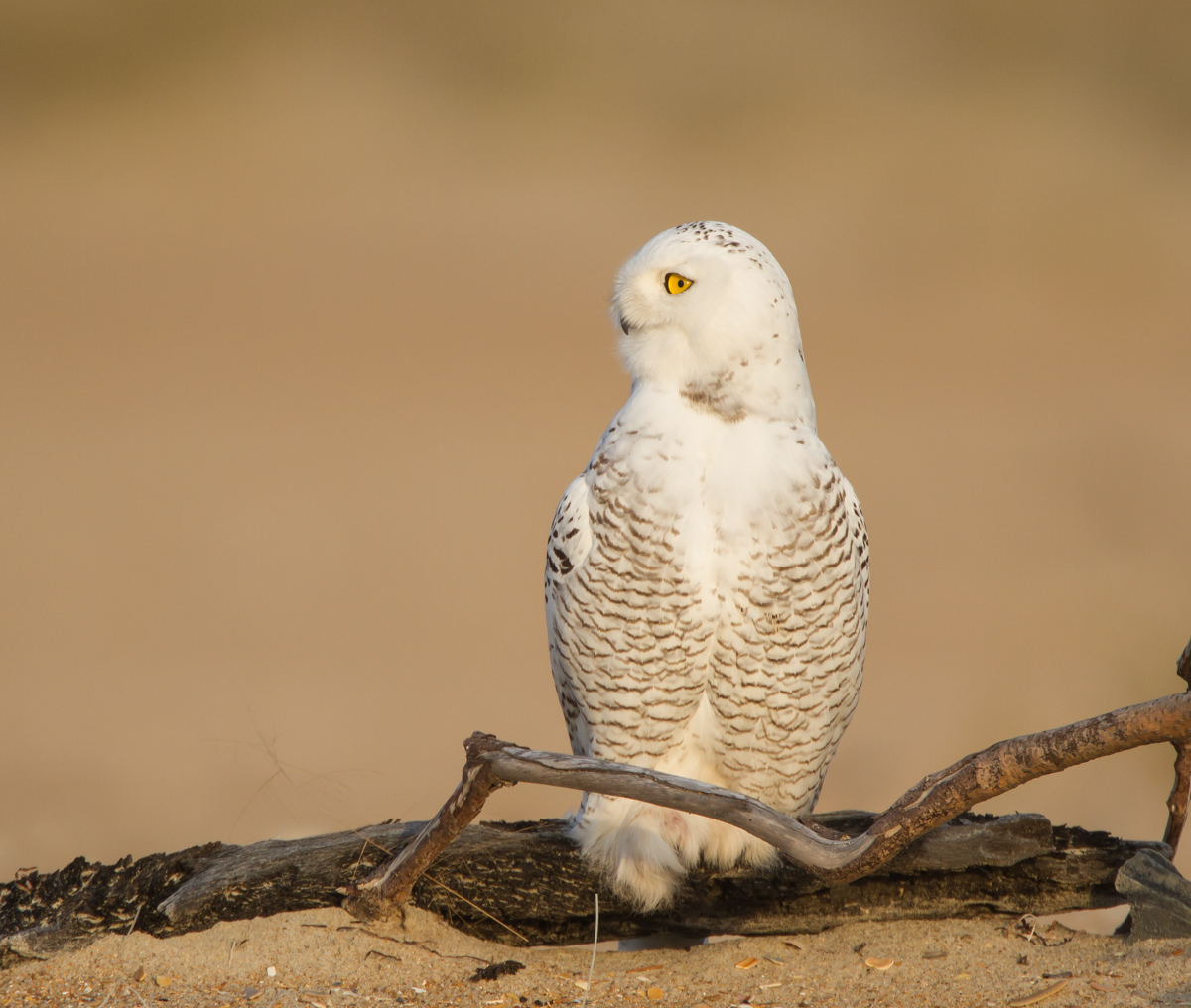
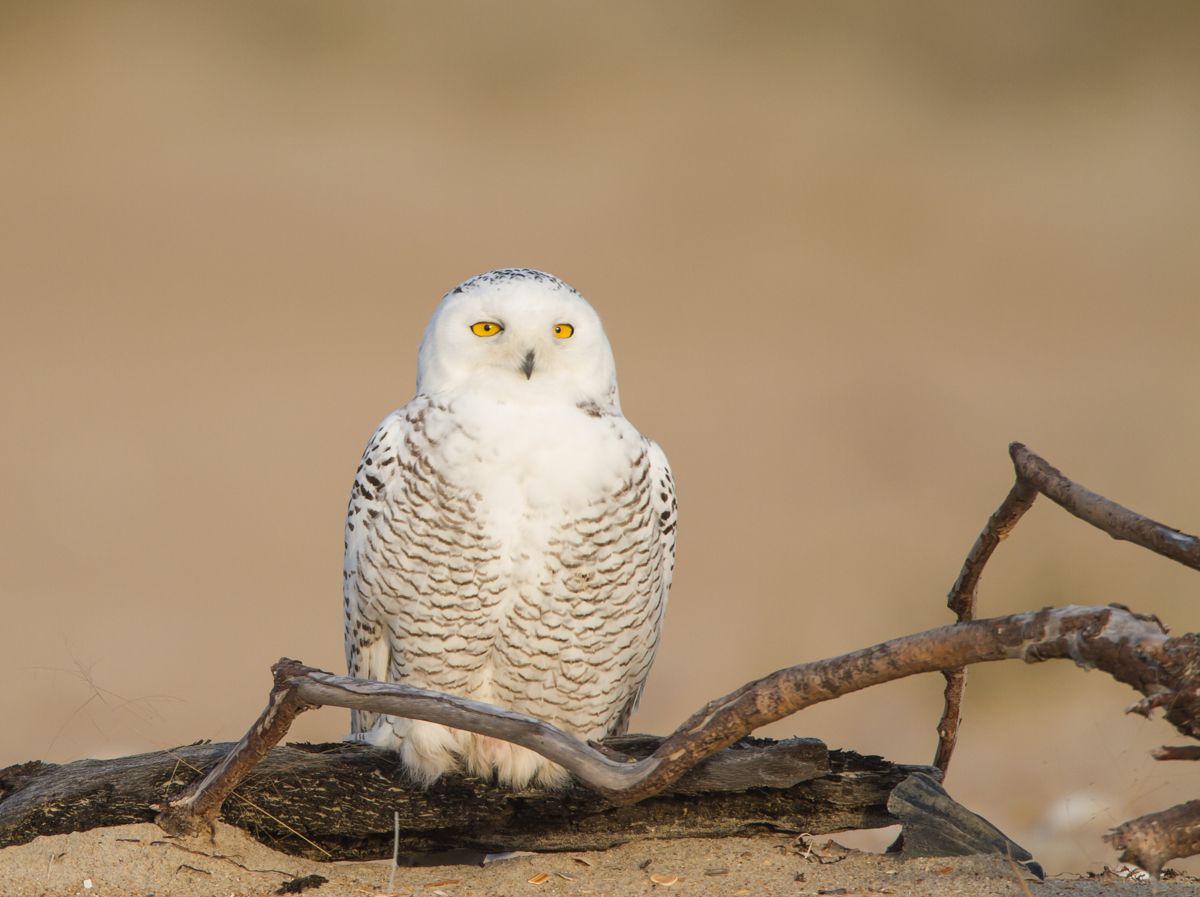
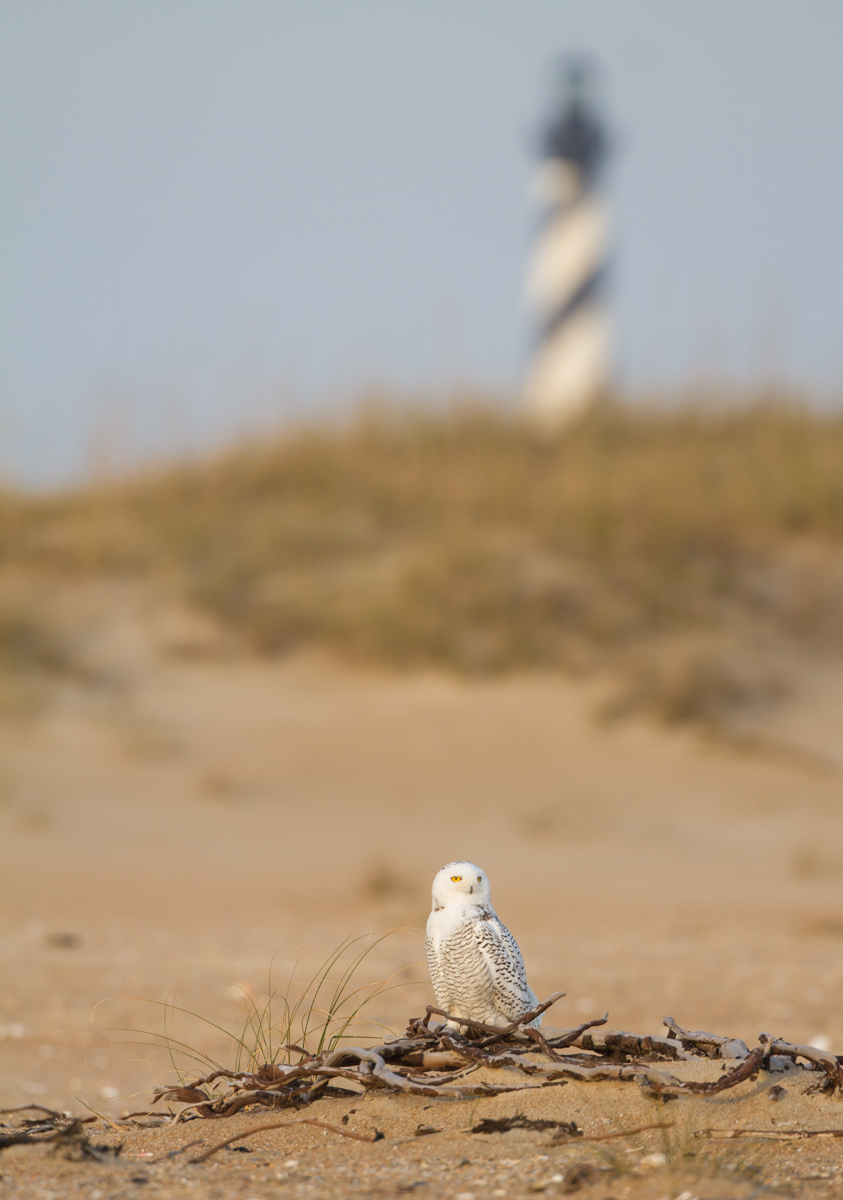
Snowy Owl at Cape Hatteras
A traveler from the far north visited my home state a few weeks ago, providing a rare opportunity to sit in awe in the presence of an almost mystical creature, a Snowy Owl. My time spent alone with this beautiful bird was certainly one of the highlights of the past year.
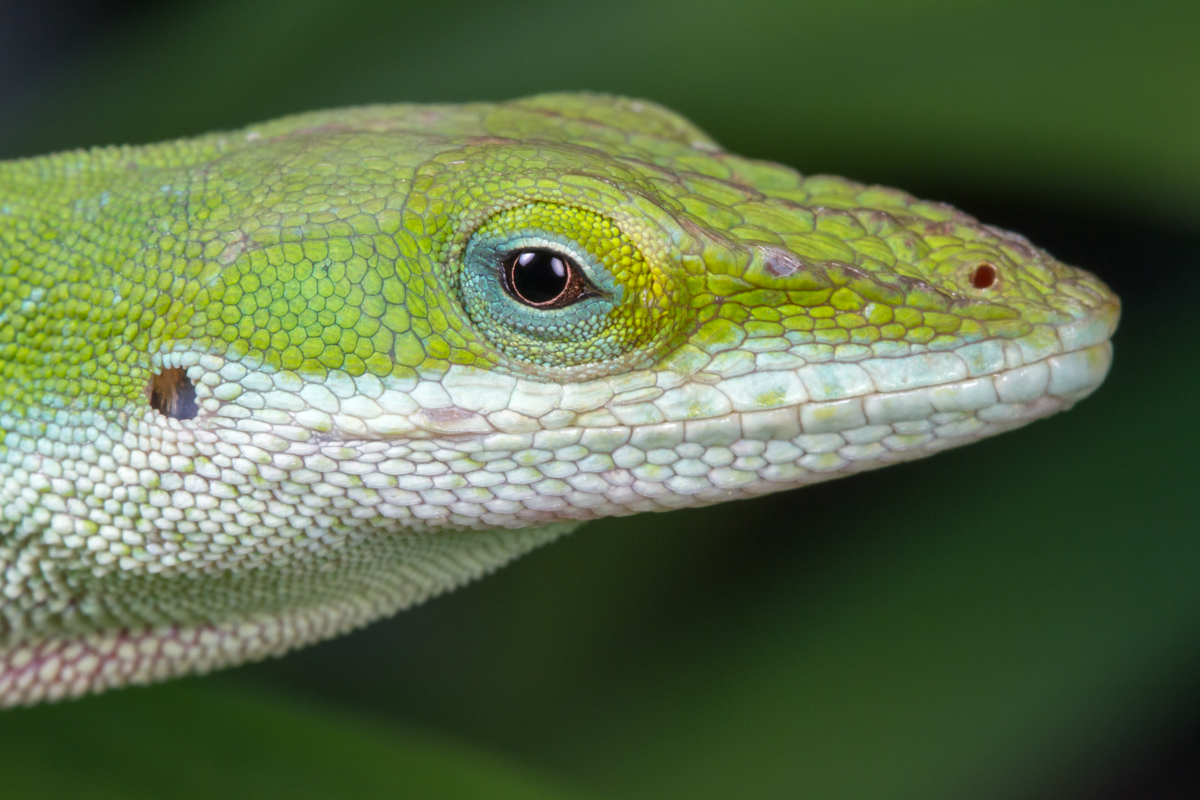
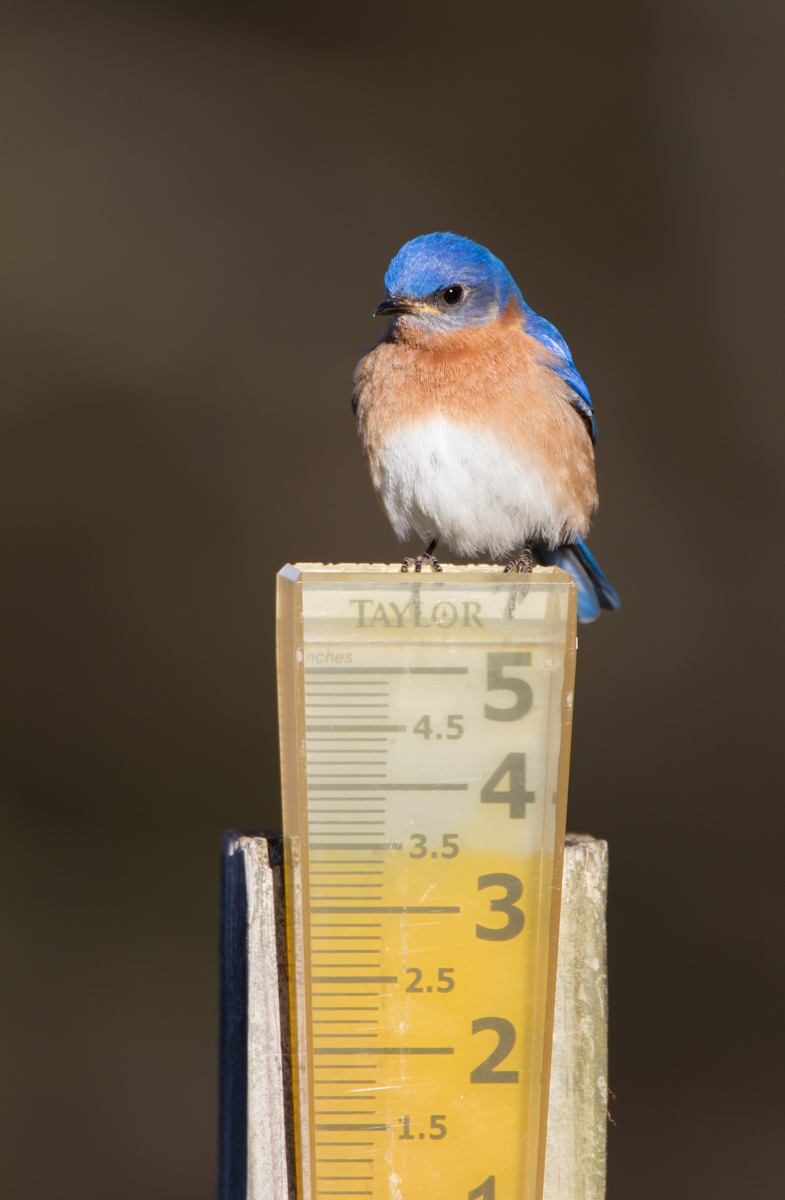
Parasitic wasp grub on spider hostBloodroot leaf backlit by morning sunCarolina Anole head close upEastern Bluebird male
I also was reminded how much there is to learn, and be amazed by, in our own backyards. From behavior-altering parasitic wasps, to the delicate beauty of native plants, to the fascinating behaviors of some of the local wildlife, there is always something to experience and appreciate. We need only to get outside, and have the patience to observe, and we will be rewarded with glimpses of beauty that can still help connect us to the natural world.
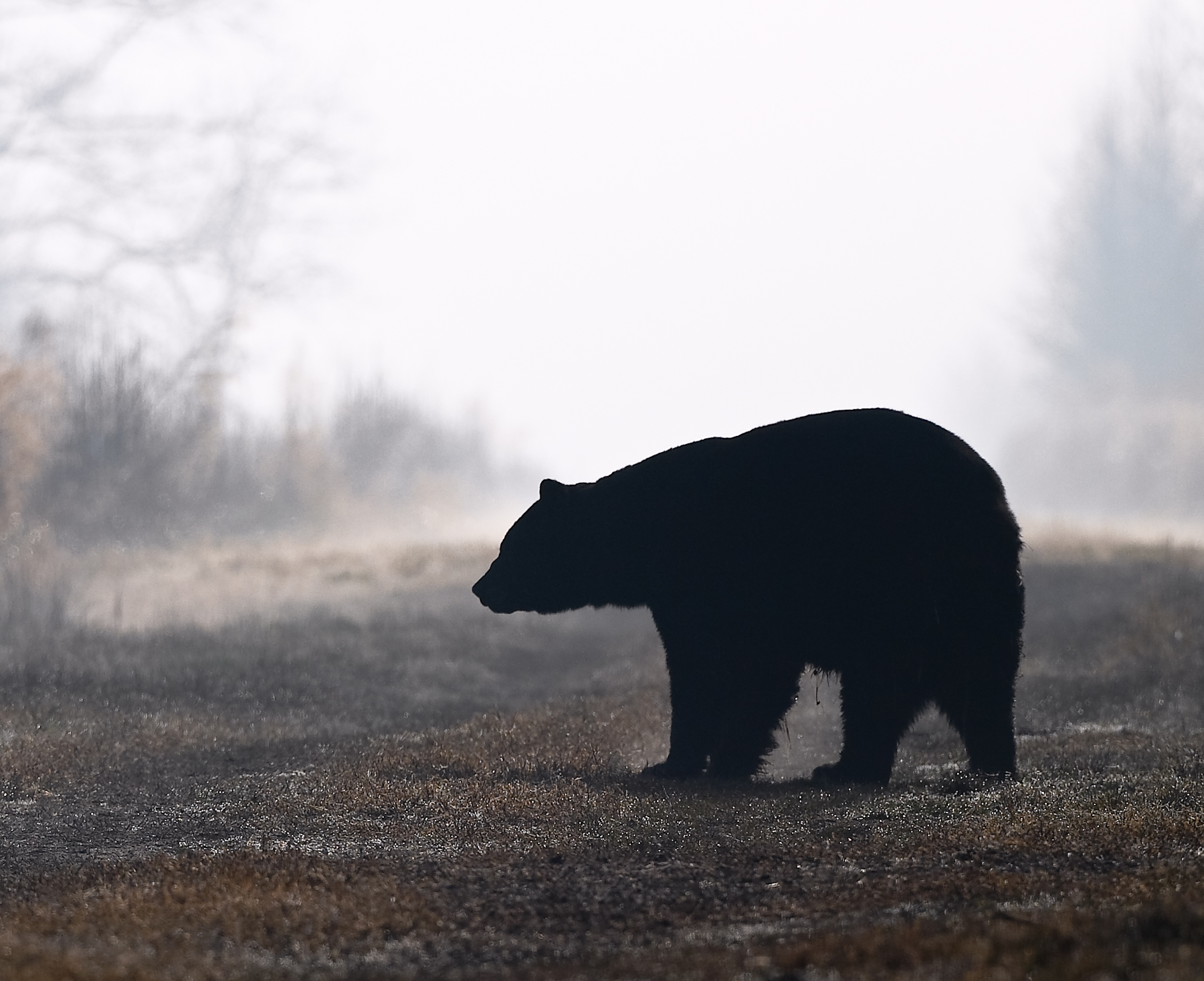
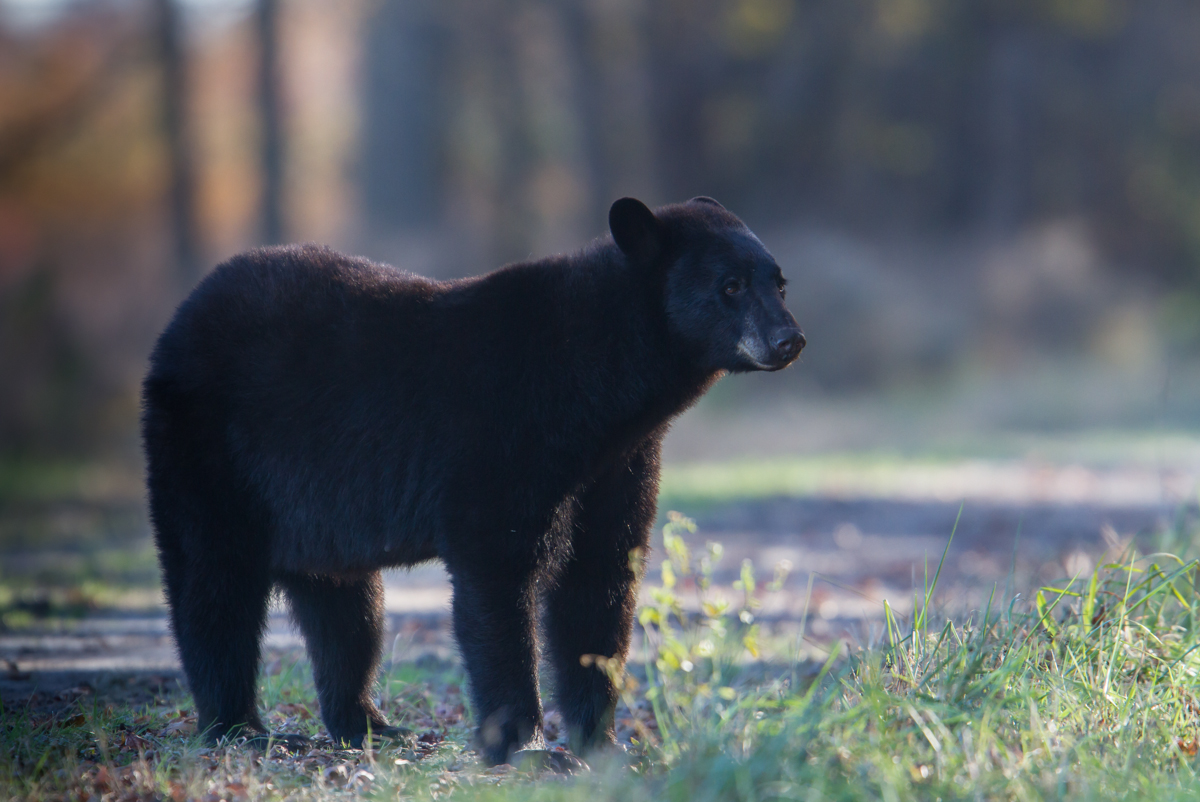
Black Bear at sunrise
All in all, it has been a “beary” good ten months of woods-watching and blogging. I hope the next one hundred posts are as much fun for me, and, hopefully, you. But after the first one hundred, I think I’ll take a few days off…
One who reviews pleasant experiences and puts them on record increases the value of them to himself; he gathers up his own feelings and reflections, and is thereby better able to understand and to measure the fullness of what he has enjoyed.
I like to remember that it is wild country that gives rise to wild animals; and that the marvelous specificity of wild animals reminds us to wake up, to let our senses be inflamed by every scent and sound and sight and taste and touch of the world. I like to remember that we are not here forever, and not here alone, and that the respect with which we behold the wild world matters, if anything does.
~Rick Bass
By the time I got over to the Pungo Unit of Pocosin Lakes, it was mid-afternoon. I did a quick drive through, checking an area where my museum friends said they saw a bobcat the day before. Unfortunately, no bobcat for me, so I drove on, looking for bears. I parked and walked down the gated dirt road to an area where bears have been active. With overcast skies and a long walk, I took only my tripod, 300mm lens, a 1.4x teleconverter, and my Kwik Camo photography blind. This is a handy camouflaged cover with slots for your hands, lens, and flash units. It comes in a camo fanny pack and is very light, so it is no problem on a long walk. I wanted to try standing for awhile along the tree line under the blind, just to see what I could see, even if there were no photo ops.
Kwik Camo blind selfie – in case you weren’t already worried about me:)… (click to enlarge photos)
I picked a spot near where bears were obviously crossing the dirt road from the woods to the bounty of the corn field.
Bear crossing
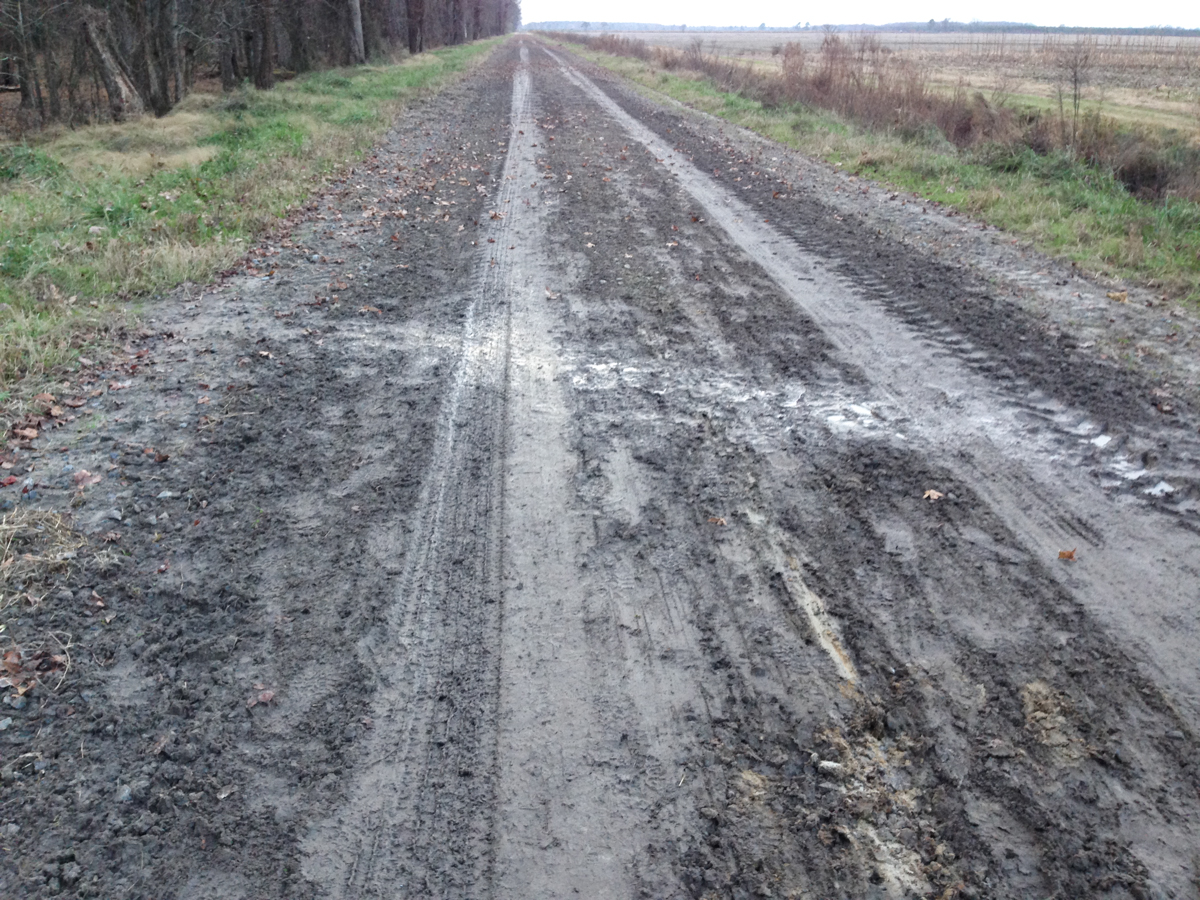
There were three such bear highways along the path – easily noticed by the trail of wet soil that could be seen from quite a distance.
Track highway…can you see tracks of at least three mammal species?
When I got to the last crossing, it looked as though every animal on the refuge had walked through the mud that day. I am always impressed by the amount of wildlife sign I see here…certainly one of the best places I have ever been to learn about wildlife tracks and signs. So, as if often the case on such outings, once I was situated, I waited. And waited. One thing about the use of the blind is that it is a little tough to see behind you, so I found myself turning my head frequently to scan for wildlife (something I do more often in bear country:)
Bears coming out of woods
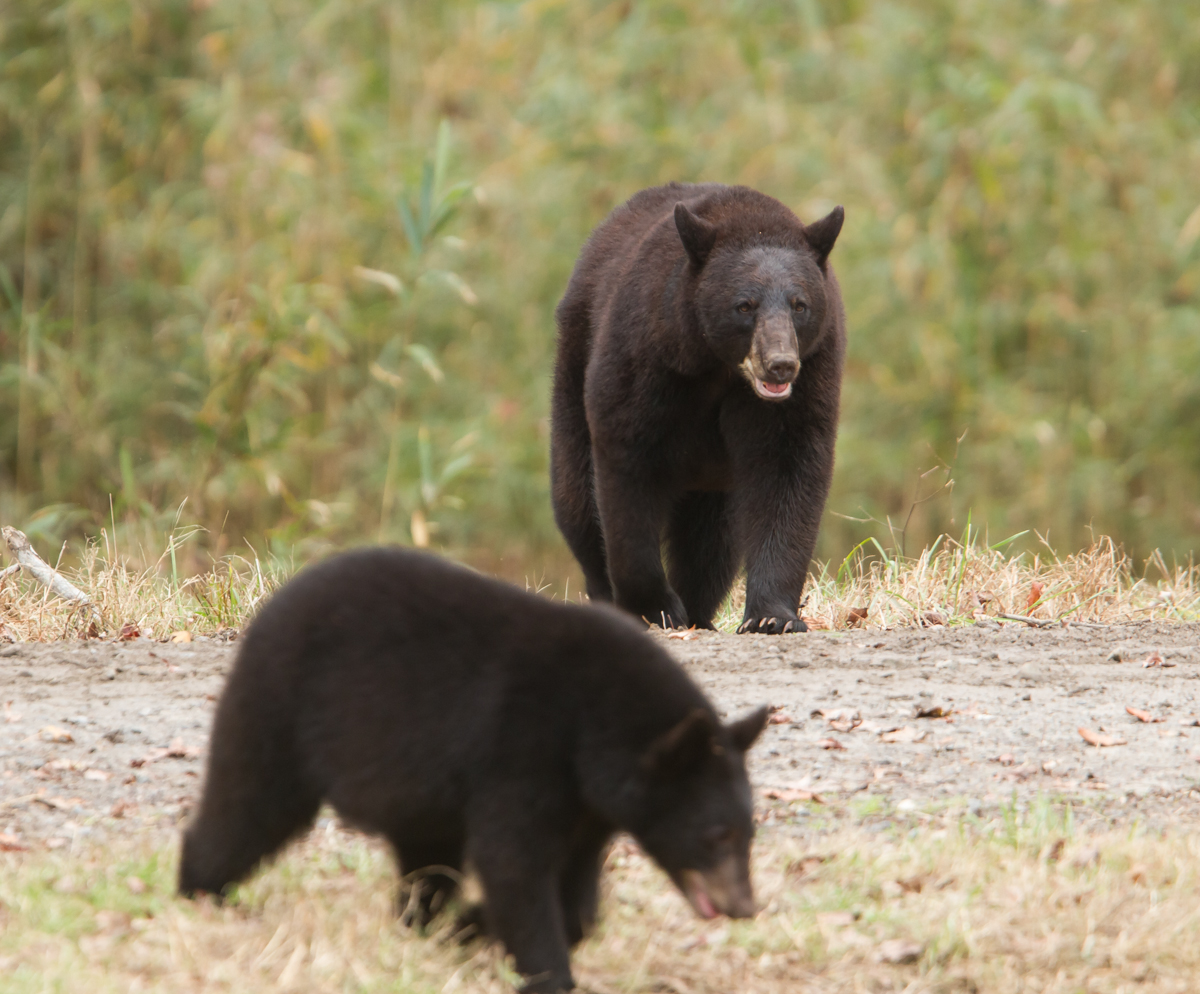
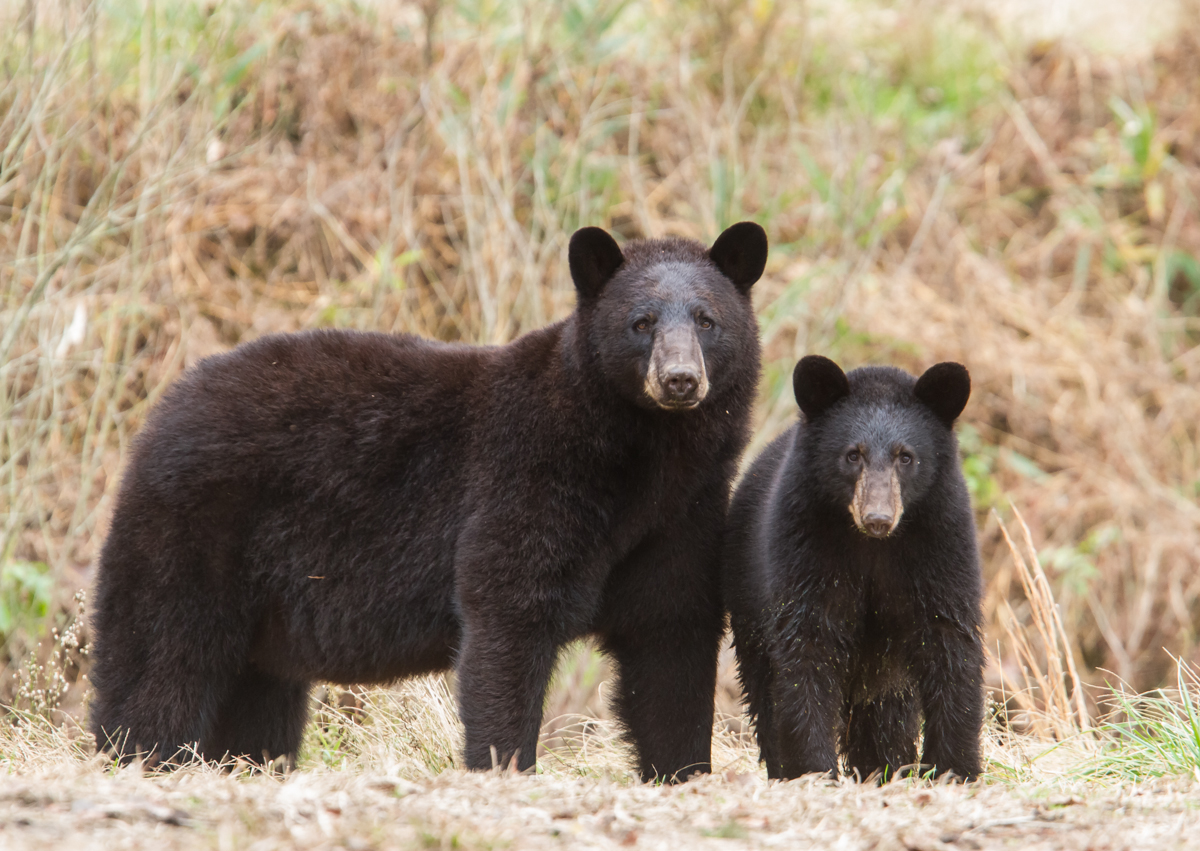
There is usually plenty to observe while waiting in a blind. To my right, I watched a hawk hunting over the field and when I turned back to my left, this is what I saw – an adult female and a young bear coming out of the woods, headed toward the field. There was almost no wind, so I don’t think she sensed me, as she cautiously came out and went down into the canal for a drink. I swung the lens around and pointed it toward where the pair had disappeared along the canal bank when a slight motion to my left caught my eye…another young bear was walking down the tree line I was in and suddenly realized that the bush next to the tree (that’s me) moved .
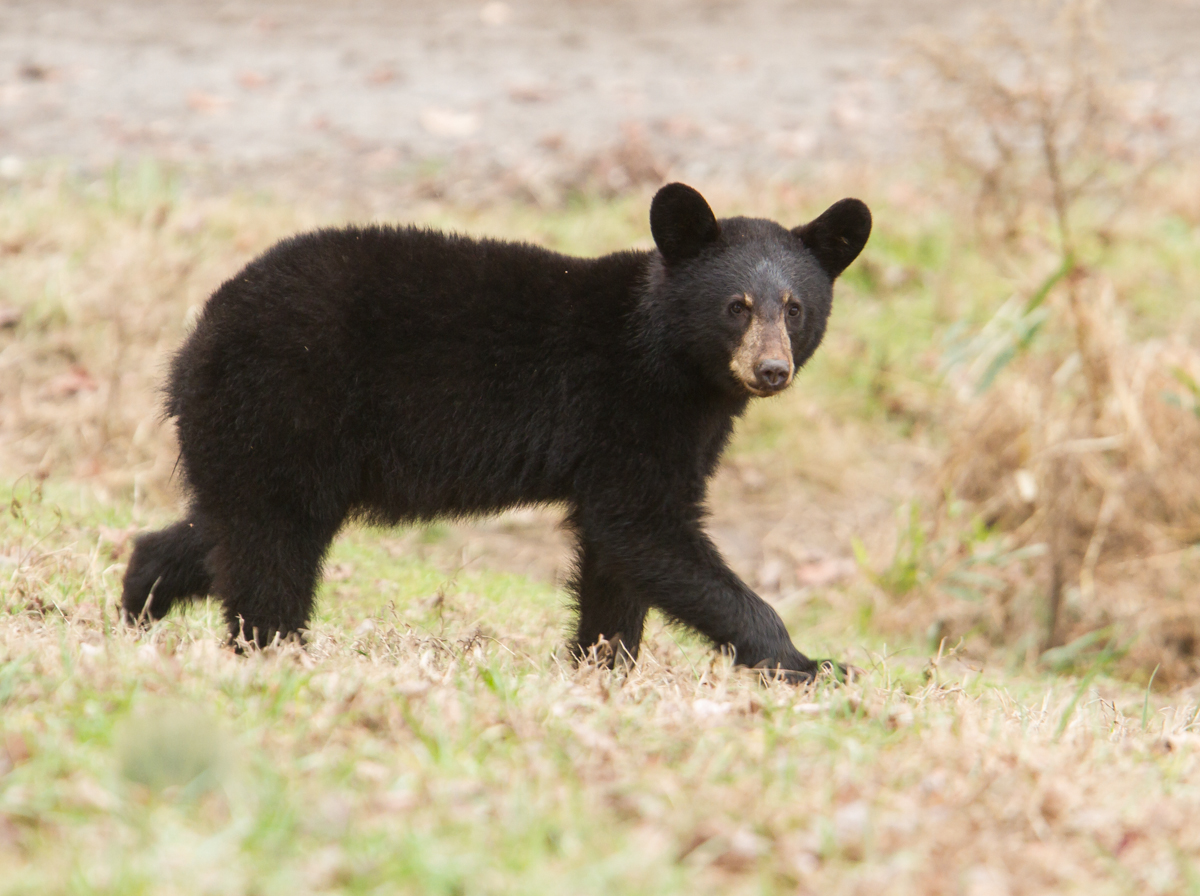
Young Black Bear keeping an eye on the moving bush (me)
It stared at me for a second and then ambled off toward its mother and sibling, glancing back from time to time to see if the bush moved again (I didn’t). I always try to not disturb the wildlife I am watching. But this young bear had seen me (and perhaps heard the camera shutter – boy, it seems so loud at times like this).
Mother and young bear
When the other two bears came up out of the ditch, the sibling ambled off toward the dinner table (corn field), while the mother looked at her other youngster staring at me and then looked around, before finally fixing her gaze in my direction. I shot two images and then remained silent. She continued to look around, sniffed a few times, and apparently did not sense anything to worry about, so they both headed off toward the corn. I watched them for another thirty minutes as they fed far down the field from me, and then I headed out toward the car about a mile away. It is always a special feeling when I am able to observe wildlife doing what they do without them becoming alarmed at my presence.
The day had been a great one, although strangely warm for early December. I saw two species of butterflies out earlier in the day, and as I walked back, a few bats came out for an early hunt. Five other bears came out of the woods as I walked, most a great distance from me. A Great Horned Owl started hooting as the sun was reaching the horizon. A Corn Snake crossed the road. And then I heard them coming…the birds returning to the lake for the evening. I paused as the first wave of Snow Geese flew overhead. Smaller groupings of Tundra Swans were flying in long V’s underneath. I was alone in this magical place and I felt incredibly lucky. I shot a short video with my phone hoping to capture a little of that magic. But, there is no substitute for being out there and taking it all in, realizing that these special places are essential for both the wildlife and the human spirit.
Listen for the differences in the calls of the returning flocks – the high-pitched, somewhat nasal quality of the Snow Geese honks, and the lower-pitched hooting of the Tundra Swans.
NOTE: I am offering trips in this extraordinary region the first two weekends in January and possibly another in February. Contact me at roadsendnaturalist@gmail.com for details.
After the incredible experience with the Snowy Owl at Hatteras last week, I waited in line for an hour and a half for the emergency ferry to get off the island. Bright and early the next day, I headed to Lake Mattamuskeet, always an incredible place to experience the first light of a new day. But this morning was going to prove difficult for a sun-over-the-lake image as the fog was as thick as the proverbial pea soup. I drove at a cautious pace on my way down from Columbia since this is prime deer and bear habitat, and I wanted neither to become acquainted with the front of my car. I decided to bypass the usual spot for greeting the morning sun on the causeway that stretches across the lake, and looked, instead, for something close to shore that I might actually be able to see in the fog.
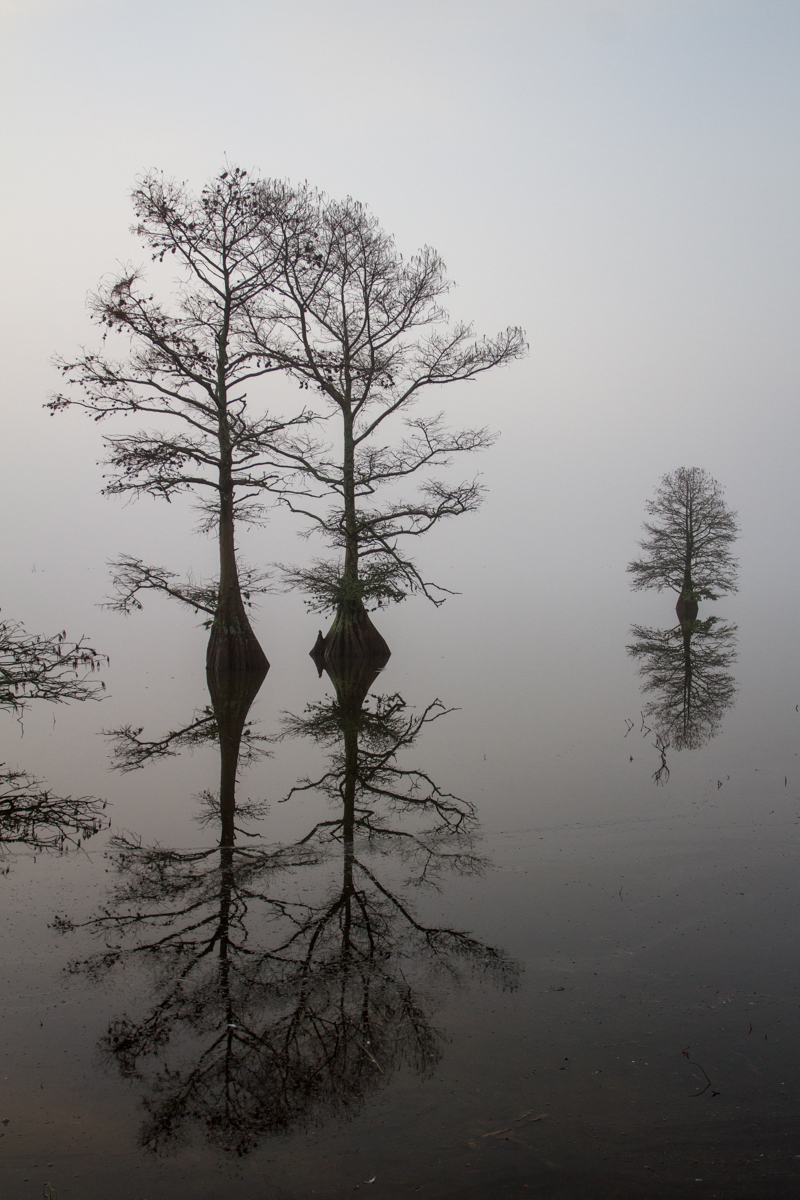
Foggy sunrise on Lake Mattamuskeet (click photos to enlarge)
What I found was a surreal scene as the pale light of the rising sun tried in vain to penetrate the gray curtain laying across the lake. A few skeletons of cypress trees in the foreground provided the only depth in the scene.
Great Blue Heron on cypress trunk
Then, a Great Blue Heron flew out of the mist and landed with a squawk, and became frozen in the gray painting.
Great Blue Heron in fog
I took several shots but I’m not sure which one I like the best – a tight view of the lone cypress and heron, or a wide view that includes some other tree silhouettes.
Tundra Swan in fog
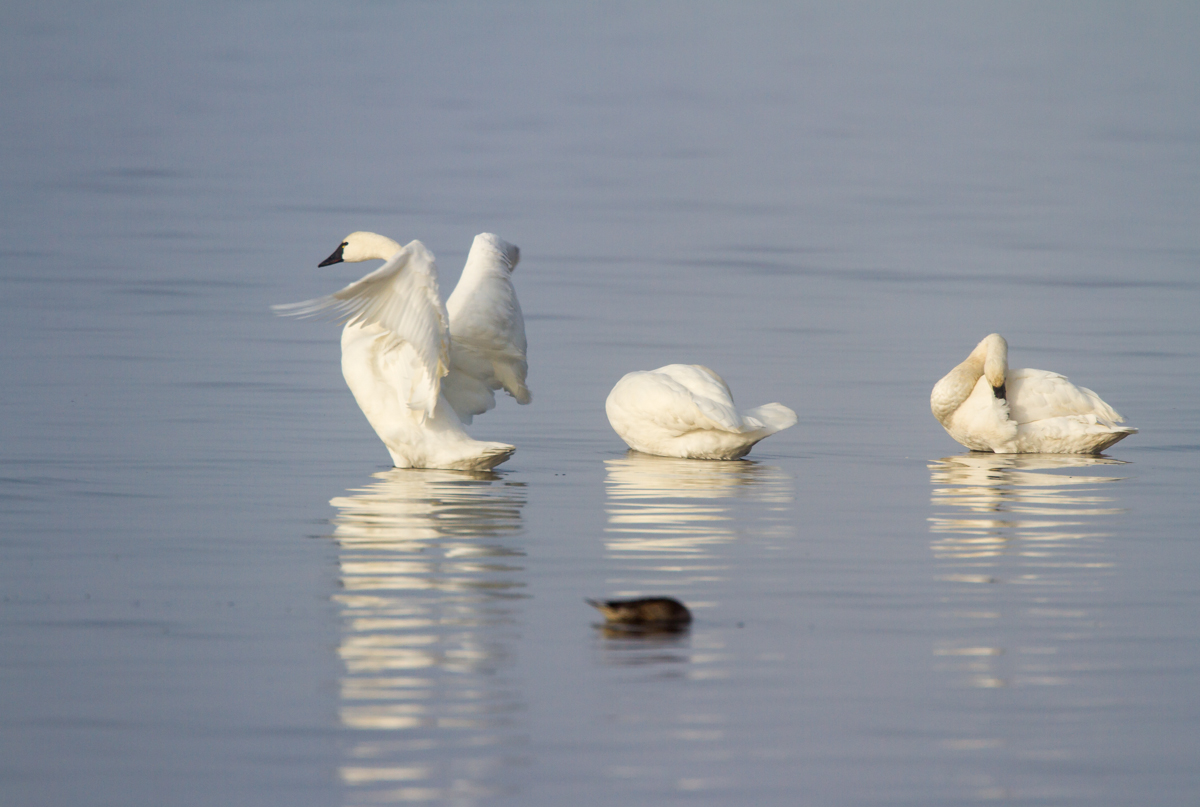
The sun was starting to win the battle as I drove across the lake. A few Tundra Swans fed silently near the road, making glints in the water as they probed the lake bottom for some breakfast of aquatic vegetation.
Swans in early morning light
A few minutes later, and the sun claimed victory as it glowed on a group of waterfowl farther down the road. This area is thick with Tundra Swans and Northern Pintails right now, with a variety of other waterfowl in smaller numbers (American Wigeon, Green and Blue-winged Teal, Northern Shovelers, Ruddy Ducks, Buffleheads, American Black Ducks, etc.). I shared some of these excellent views with some of my former co-workers from the Museum, who happened to be leading a group of folks that same morning. It was, indeed, a great day for sharing this incredible place with good people.
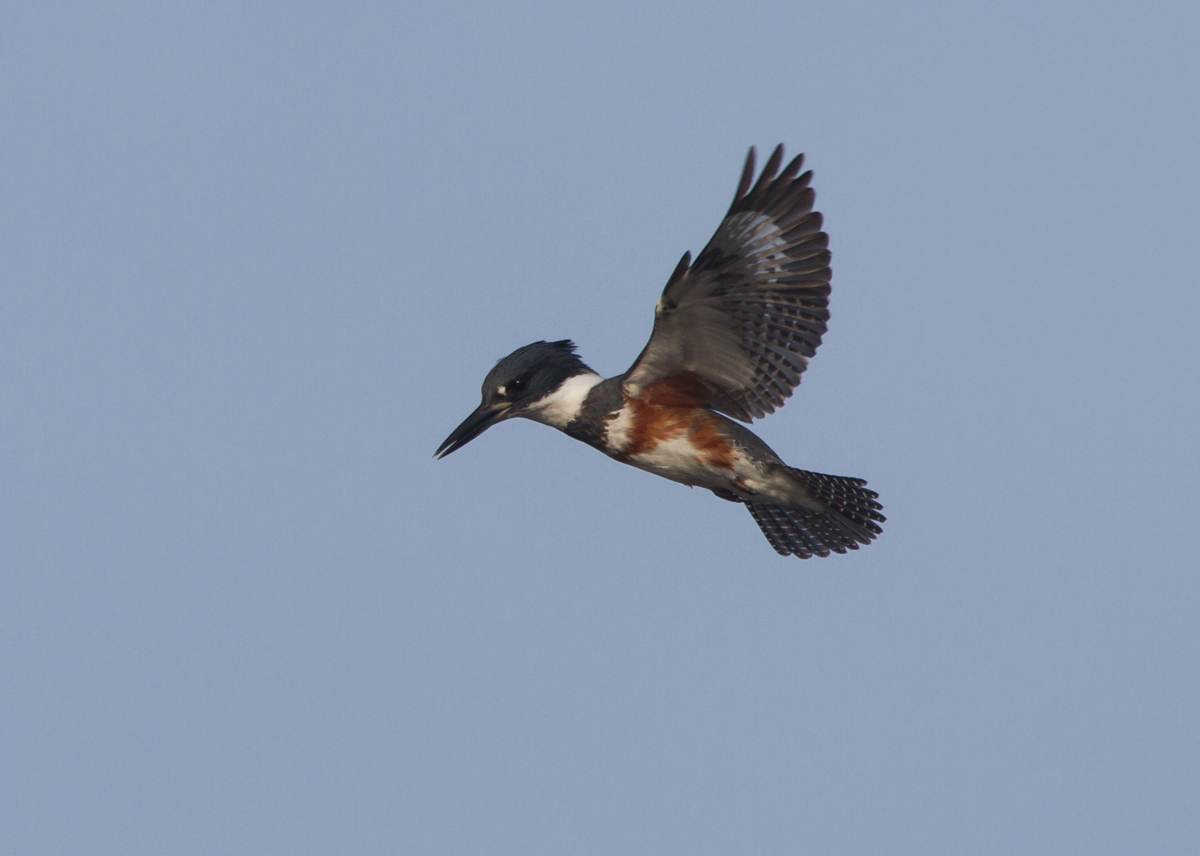
Belted Kingfisher hovering
While sitting alone with the swans, I was entertained by a couple of Belted Kingfishers as they hunted. They would swoop in, hover for a what seemed like a minute or two, and then either swoop to a new spot, or, if they spotted something, plunge headfirst into the water. After several failed attempts, I saw one finally catch a small fish and fly off to eat its meal in peace.
Double-crested Cormorant drying its wings
Along the canals on Wildlife Drive is always a good place to find water birds of various sorts. That morning had a crowd of Double-crested Cormorants perched on a fallen tree in the canal. Cormorants are relatively primitive birds, and, unlike most other waterfowl, their feathers are not water repellant. This necessitates their spread-wing poses throughout the day as they must dry their feathers after repeated dives in the water while searching for fish. The light-colored breast and neck indicate this is a first-year bird (adults have dark plumage throughout).
With some remnant patches of fog drifting along the canal, the short video below shows a “mistical” scene and allows you to hear a few of their grunts as they maneuver for position on the branches.
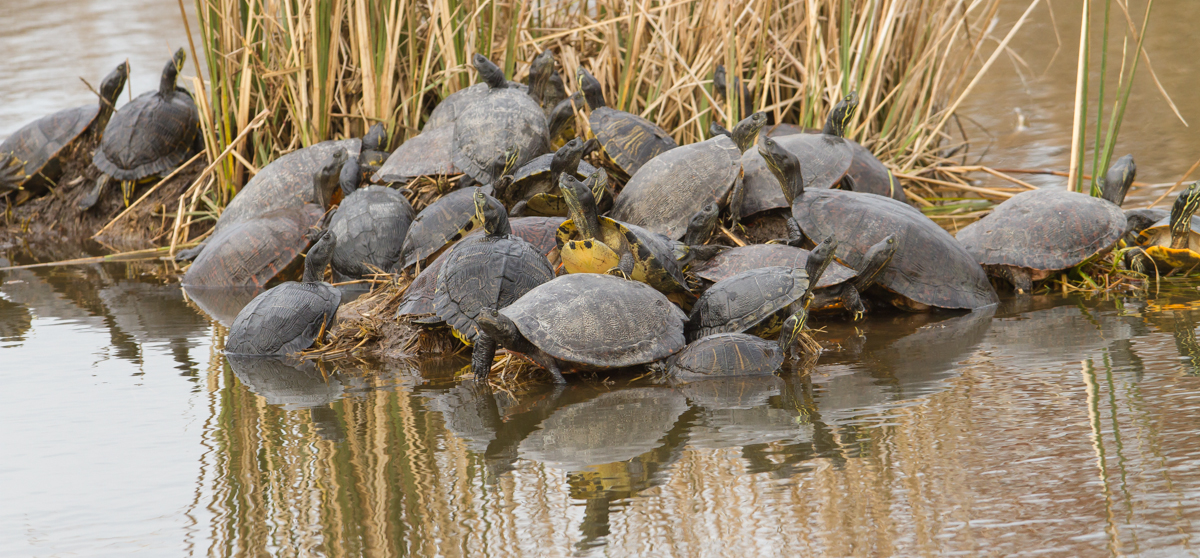
A herd of turtles
The foggy morning was warm enough for turtles to be out in force. For a reason known only to those with shells, one small island of grass in a canal seemed particularly appealing to a group of what appear to be Yellow-bellied Sliders. They had climbed over one another in a jumble, perhaps in hopes of being closer to the emerging sunlight.
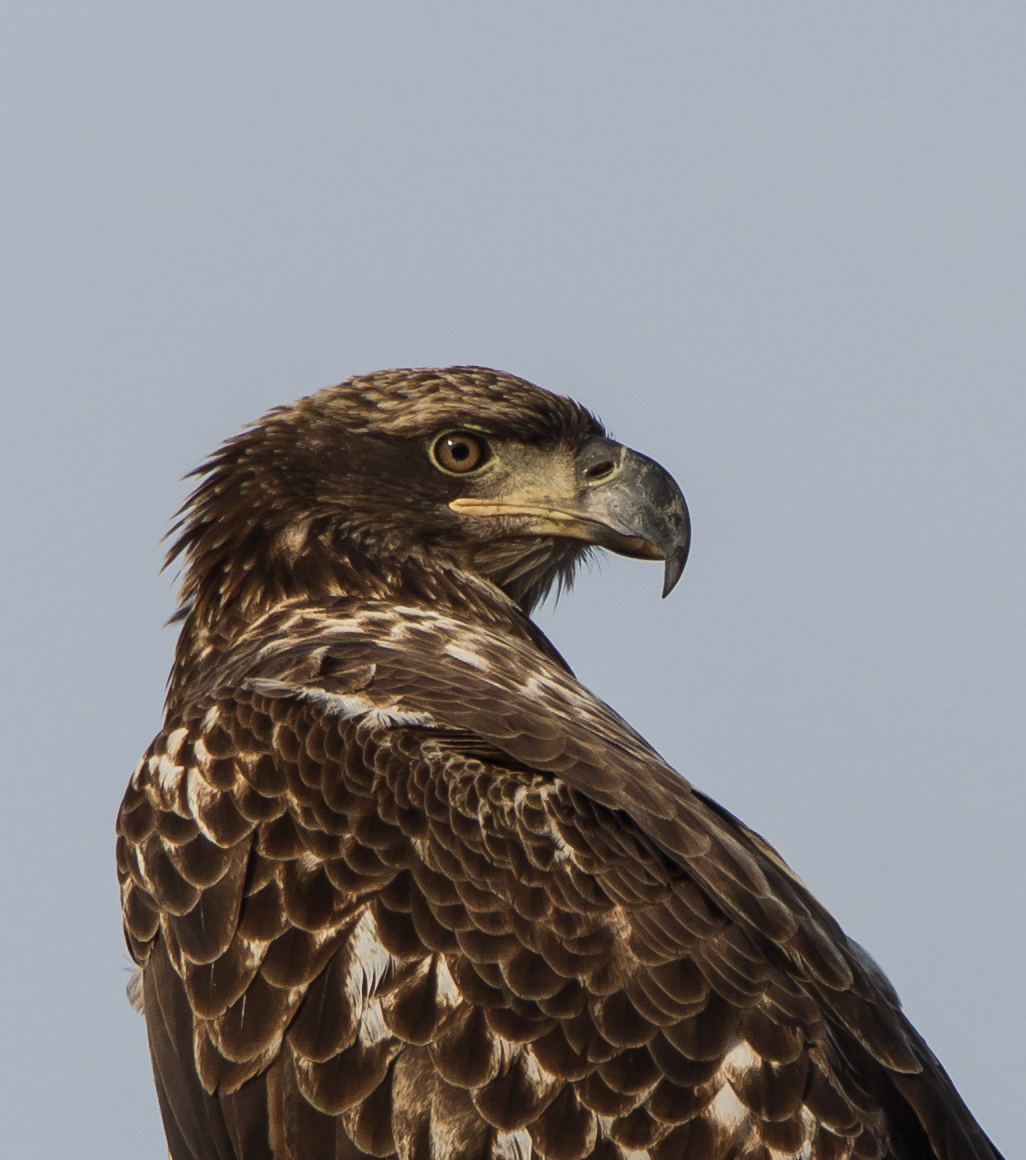
Immature Bald Eagle
Lake Mattamuskeet is one of the best places in NC to view Bald Eagles, especially in winter, when the large concentrations of waterfowl provide a reliable food source. Bald Eagles are particularly fond of American Coot, which tend to occur in higher numbers on the lake a little later in the winter. This immature (it usually takes 4 or 5 years for a Bald Eagle to acquire its fully white head and tail feathers) was very cooperative as it scanned the marshes from a high perch.
Immature Bald Eagle close up
I always marvel at the size of their beak and the intensity seen in their eyes. Based on what I have read online (a nice photographic summary of aging Bald Eagles is at http://www.featheredphotography.com/blog/2013/01/27/a-guide-to-aging-bald-eagles/), I am guessing this is a first year bird, due to the dark iris and fairly dark beak.
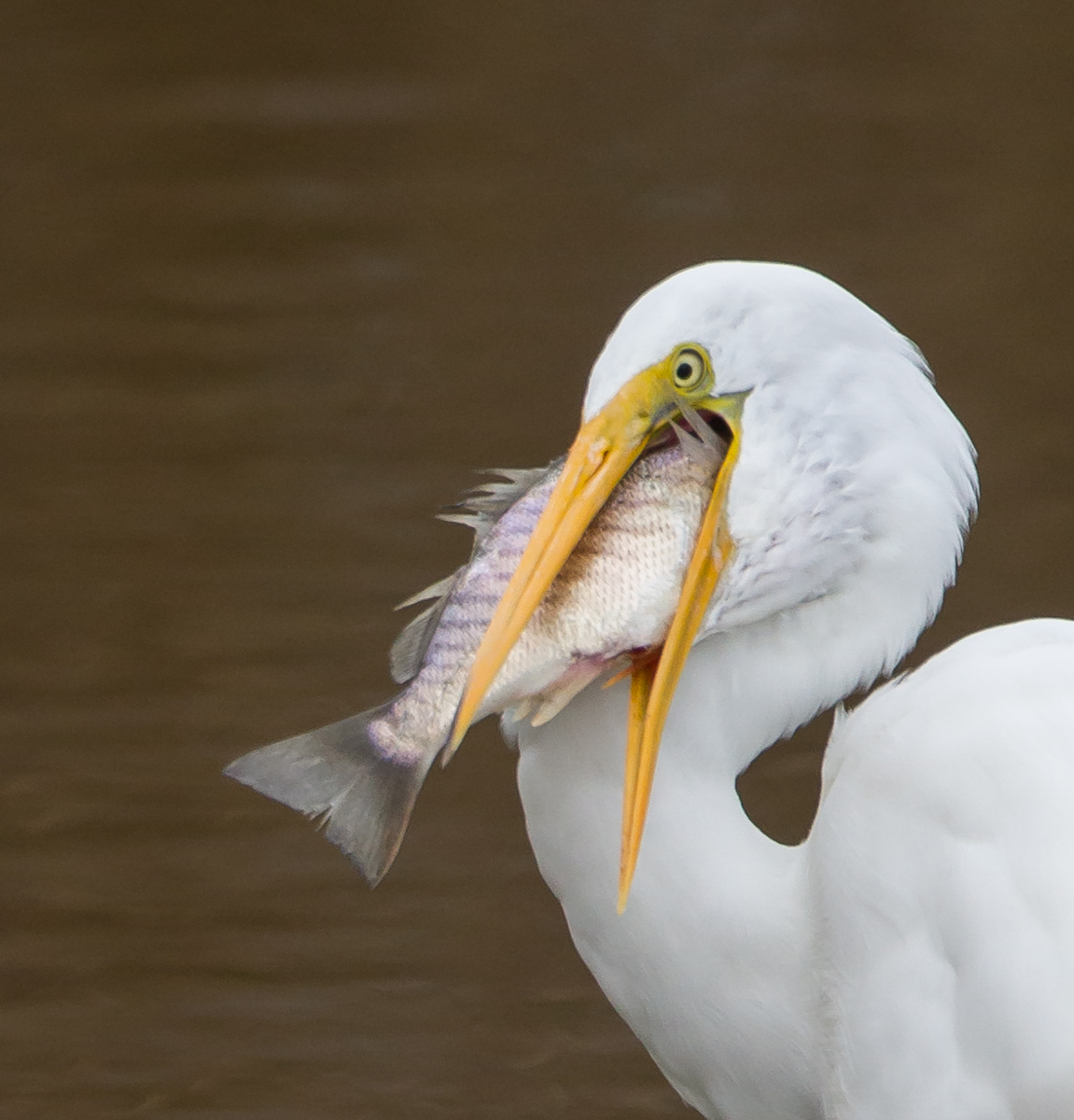
Great Egret with fish
As I drove out Wildlife Drive on my way over to Pocosin Lakes, I saw something I had always wanted to photograph. Great Egrets on this refuge generally eat small fish which are abundant in the shallow waters. But here was one with a beak full of fins! And it apparently did not want to risk losing its meal, as it started to walk away as soon as I slowed down for a look.
A big meal
I am not quite sure what species of fish this is, although it resembles a Spot…if you know, please comment on the blog. Luckily, the egret paused long enough for a few quick images before getting behind some brush on the shore of the canal. Although partially hidden, I could see the fish did finally get swallowed, appearing as a large, squirming lump as it passed down the long neck of the bird. Made my PB&J seem easy.
Tomorrow, I’ll post how my day ended when I made my way to Pocosin Lakes for the rest of the afternoon.
NOTE: I am offering weekend trips on the first and second weekend of January and another trip (exact date to be determined) in February. We will visit both Mattamuskeet and Pocosin Lakes National Wildlife Refuges. Contact me at roadsendnaturalist@gmail.com for details if interested.
The crow wished everything was black, the owl, that everything was white.
~William Blake
Those of you that know me probably know I had to look up the name of Harry Potter’s pet Snowy Owl, just to be sure I used it correctly in the title. Oh well, at least I am trying to fit in…
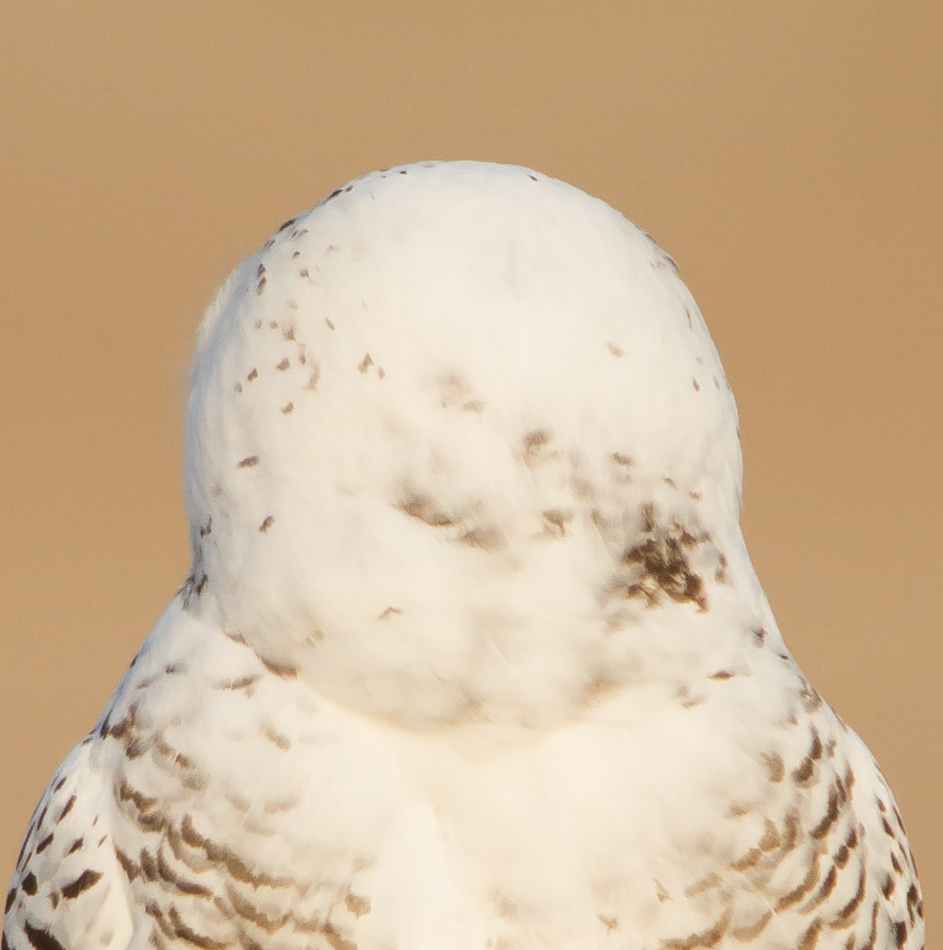
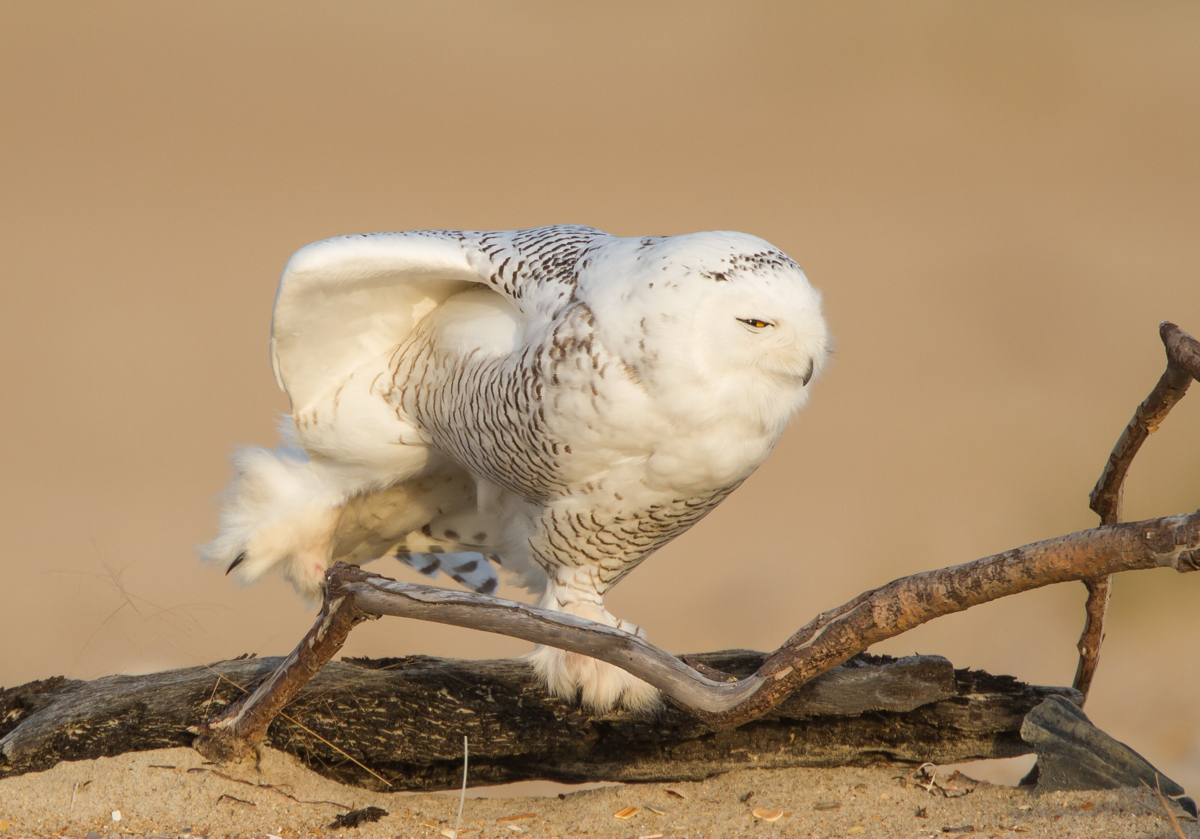
The following images are highly cropped ones from my 500mm lens and 1.4x teleconverter on my Canon 7D. So, just to be clear, I was not as close as these photos make it appear. As I said in yesterday’s post, I was lucky enough to spend well over an hour alone with a Snowy Owl at Cape Hatteras this week. A true privilege. Which face do you like best?
Sleepy eyes (click photos to enlarge)Doing owl yogaLook to the rightNow look to the leftWhat the heck is that?Those eyes…What eyes?Cleaning my feetYou would look this way too if you had to clean your feet with your mouth
I have never been one of “those” people…you know who I mean, the bird chasers. Don’t get me wrong, I enjoy birds, love to watch them, photograph them, and learn about them. But the idea of dropping everything and heading out to see a rare bird was not in my repertoire…until now. My young birder friend, Lucas Bobay, posted something on his blog last week about making a trip to the Outer Banks to see the newly arrived Snowy Owl. He and his friends were out there in what looked like miserable conditions of wind and rain, but they saw it. I could sense their excitement in his words. And, it is a bird I have always thought would be cool to see. So, I decided to head out Tuesday and see if I could find it. Turned out to be an adventure.
I got a late start and was driving down through Cape Hatteras National Seashore a little after lunch when I reached the Bonner Bridge over Oregon Inlet. Some portable stoplights and lots of yellow trucks emblazoned with the DOT insignia indicated some road work was going on. I’ve always enjoyed going over that iconic bridge because of the elevated view of the ocean and marshes bordering the inlet. As I sat at the stoplight near the far side of the bridge, I heard an announcement on NPR – “The NC DOT has declared a state of emergency and closed the Bonner Bridge over Oregon Inlet for safety reasons, effective immediately”. Say what? But I’m on the bridge! It is one of those things you aren’t quite sure you hear correctly and then it is gone. I looked around and everybody seemed to be doing normal things – no Gull Little running around yelling “the bridge is falling, the bridge is falling”. I switched stations hoping to hear the announcement again…nope, just some music and news. The light turns green…do I turn around?; did I hear what I thought I heard? I debated turning back at the far side of the bridge and trying to return to the mainland but decided, what the heck, I’m retired, and there’s a possibility of seeing a Snowy Owl. So, on I drove.
First sighting (click photos to enlarge)
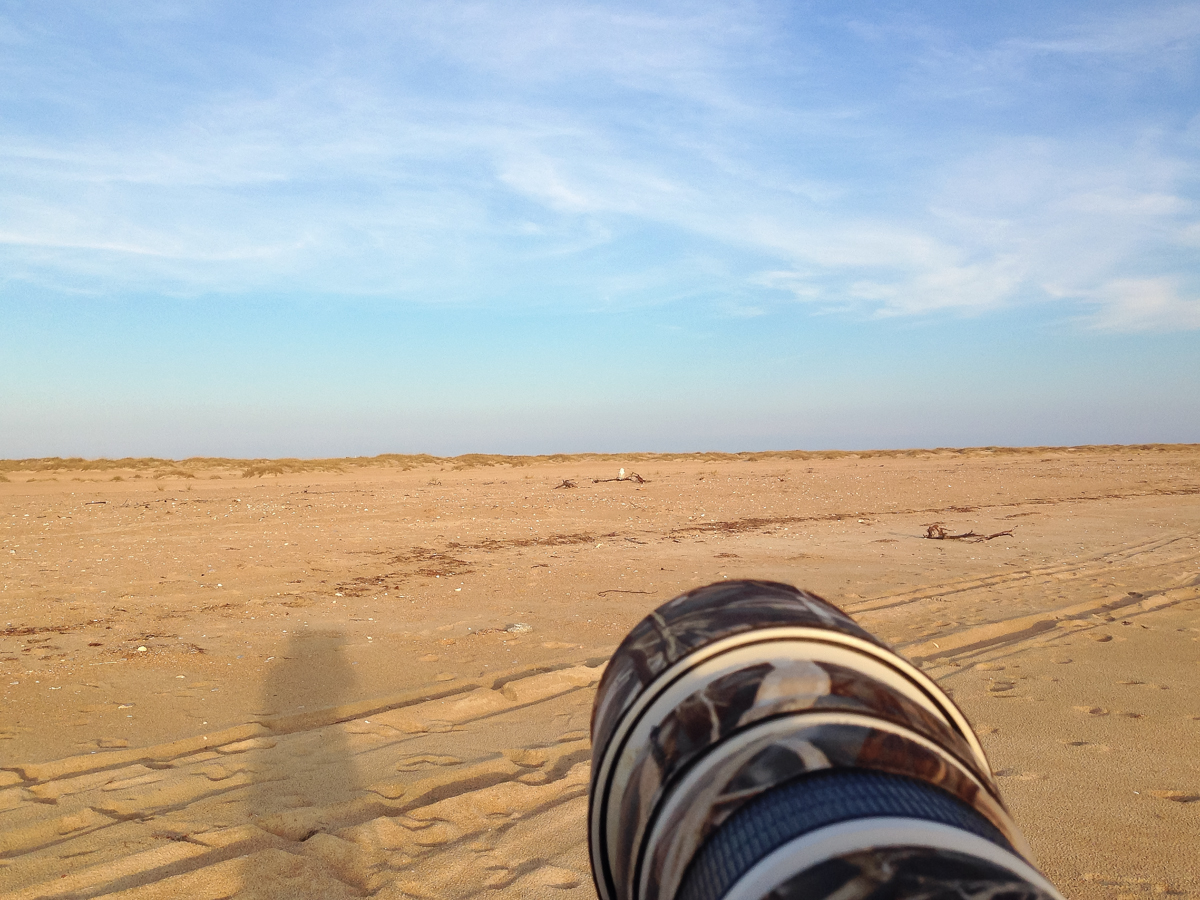
After finding the beach access ramp number I had read about online, I walked out toward the ocean with high hopes. No owl….I scanned to my left toward the Point…nothing. Looking down the beach to my right I saw three people walking several hundred yards away. I looked with the scope and saw a small white blob on the beach – my first Snowy Owl! I gathered my gear and starting walking when I saw the owl take flight and head my way. I stopped and it landed a few hundred yards away between me and the walkers. They continued…I stayed put. The owl flushed again and flew right past me and landed on a log on the beach. As I sat up the camera the walkers stopped higher up on the beach to view the owl through their binoculars. They then veered off to the parking area and I was alone with the bird. And what a magnificent bird!
Snowy Owl at Cape Hatteras (cropped image)
Snowy Owls are at home in the far north of the Arctic. In winter, most stay near their frozen homeland, with some migrating into southern Canada or occasionally the northern U.S. But once in a while, a Snowy Owl migrates farther south. The last time one was seen in North Carolina was 2001. And now, this one. The usual thought is that birds migrating this far out of their normal range are young ones that are seeking a winter food supply in years when their prey base in the Arctic (lemmings) is scarce. And this happens only once every few years. But this year seems to be different with Snowy Owls showing up all over the East Coast (and now at least three reported in NC). Kenn Kaufman has written on this year’s unusual migration in a nice article published this week in Audubon Magazine (http://mag.audubon.org/articles/birds/notes-snowy-owl-invasion).
Snowy Owl cleaning its feet
The owl landed about 50 yards from me. I took a few shots with the big lens and started to ease a little closer, taking a step, or at most, two, when it looked away. It was swinging its head around keeping an eye on every gull that called or flew anywhere near. Over a span of about 30 minutes I was able to creep a few yards closer. The owl finally looked straight at me and I decided that this was close enough. I did not want to spook it. Over the next hour or so, it began preening its gorgeous plumage, especially the feathers on its feet.
Snowy Owl stretch
It stretched a few times and turned its head frequently looking at all sorts of things seen and unseen to my meager human eyes.
Looking intently down the beach
At one point, the owl straightened up, opening its eyes wide and staring at something for several seconds before settling back to a more restful pose. I could not see what had caught its attention, although I had seen a Peregrine Falcon when I first walked out, so maybe that had flown by again.
Stretching a wing
I was glad the owl seemed to accept my presence. While I am sure it knew I was there (try as I might I could not make myself look like a seashell washed up on the beach), my lack of motion, plus the fact that there was just me, probably allowed it to go about its normal routine. I felt truly privileged to spend so much time alone with this bird in such a beautiful setting.
Close to sunset, a young man walked out onto the beach with his dog. The owl acted a little nervous and then flew a short distance with the lighthouse now in the background. I waved the young man away and he walked up to talk after seeing the owl. He didn’t know about it or how rare it is to see a Snowy Owl in these parts, but he seemed to appreciate it and thanked me before walking off down the beach.
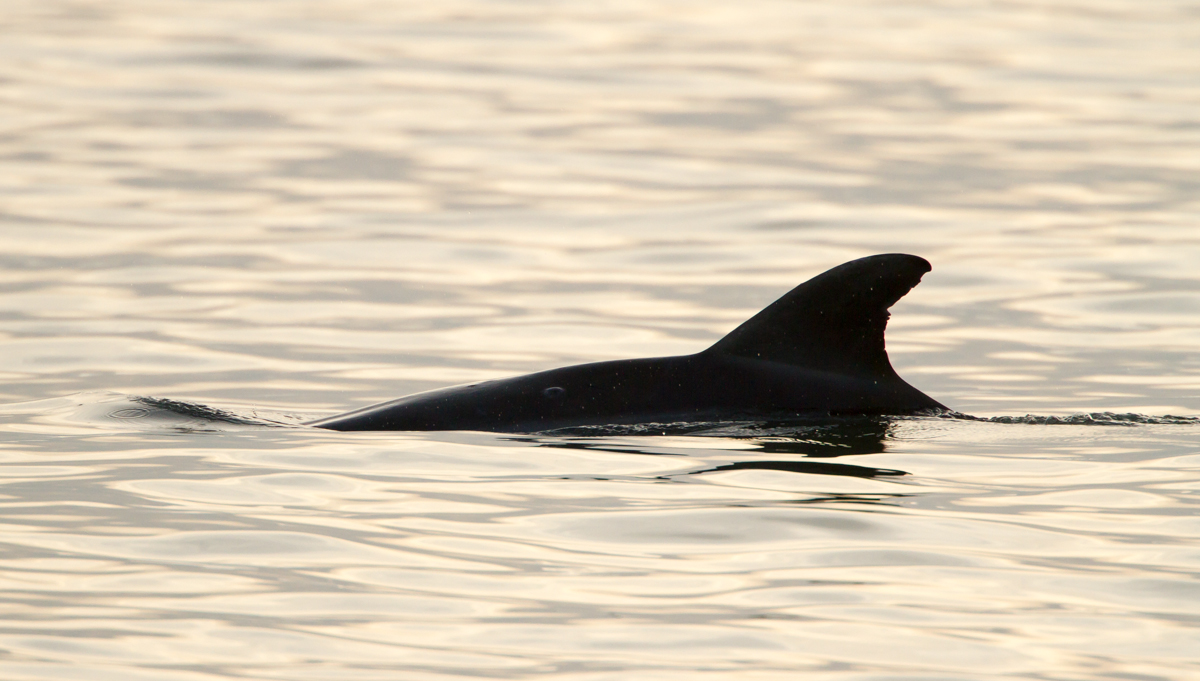
Dolphin bonus
When it was time to leave, I turned around and walked away from the bird towards the water. I wanted to walk way around the owl back toward my car so as to not disturb it. As if it had not been good enough just to be with the owl, a pod of dolphins swam by at that moment in the low angle light of the setting sun. A great day indeed.
The next morning was overcast and drizzly and I found the owl about 3/4 of a mile in the other direction down the beach. When I walked down, there was another birder. We were soon joined by two more folks interested in seeing this rare bird. The owl made few short flights, including two where it seemed to be chasing some grackles that were foraging on the beach. But there was no breakfast for the owl while we watched.
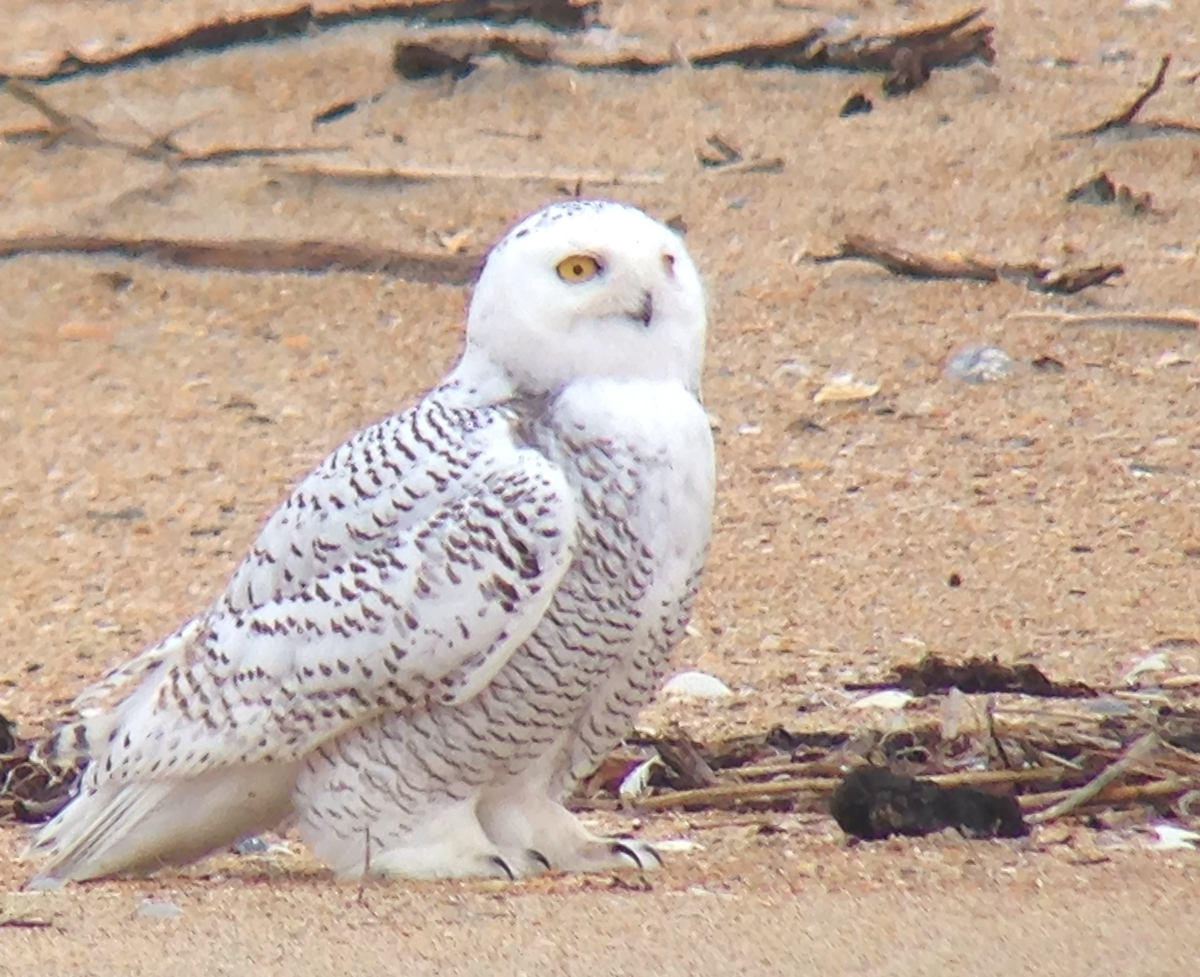
Photo taken with iPhone through spotting scope
I didn’t even take my camera out that morning due to the weather but had brought a spotting scope. I used an adapter purchased specifically for this scope and my iPhone and took a few shots. I still have a lot to learn about “digiscoping” apparently as most of the images turned out pretty “soft”. But it was still fun to try.
One person left and one of the remaining folks then walked out toward the owl and flushed it. I briefly discussed with her why it is important to try not to unduly disturb the bird: it is in unfamiliar territory; it may be a young, inexperienced animal; undue disturbance could cause it to use more of its energy reserves and disturb its hunting success, etc. She seemed to understand, but then walked back out towards it hoping to get a closer picture, and flushed it again. This is a common problem, one that I admit to being guilty of myself from time to time – trying to get just a little closer to an animal, and then spooking it. It helps to have a long lens, and it pays to closely observe the animal. My rule of thumb is that if I change the animal’s behavior, then I am too close. If that happens, I either back away or just stand still until the animal resumes whatever it was doing. This bird is such a rarity and is in a fairly accessible location (even with the bridge now closed) and word has spread rapidly about it via various list serves (and even through blogs like this). I worry a bit that the owl may be bothered to the point of it having some negative consequences. So, please try to respect this, and any other wildlife you encounter. It is best to view from a distance, using a scope, if possible, and as long a lens as possible for photography (borrow or rent one for special occasions like this). If you are lucky enough to go try to see the owl, don’t “rush and flush” it. Be patient, spend some quality time with it, observing it, and appreciating the beauty of this exquisite visitor from the far north.
Tomorrow, I will post a few more images. For now, I leave you with this short video of the owl doing what Snowy Owls do when they are taking in the view of their new terrain…
It is not only fine feathers that make fine birds.
Aesop
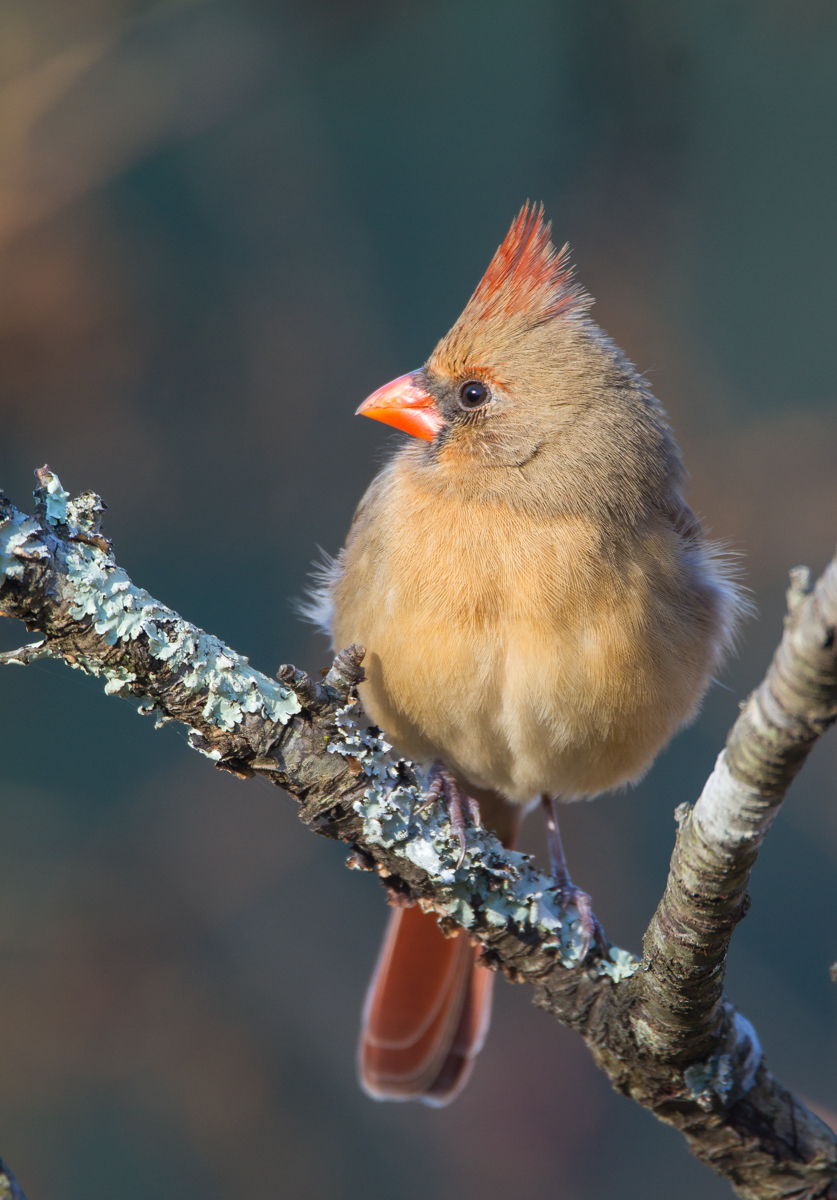
Female Northern Cardinal (click photos to enlarge)
Cardinal….Redbird…the names refer to one of our most beautiful backyard birds…and they refer to the male of the species, Cardinalis cardinalis. He is among our most strikingly colorful birds with his scarlet red plumage and crest. His mate is also a comely bird but with a more subtle grace. Adult females are a warm brownish color with reddish highlights in the tail, wings, and crest.
Female Northern Cardinal – a subtle beauty
I have been sitting out near the garden on several cold mornings recently observing the bird life as it comes and goes to the feeding station. Northern Cardinals are one of the more common visitors. They tend to cling to the feeder for a few moments, gobble a few sunflower seeds, and then flap over to the security of the tangle of grape vines on the fence. Males are more aggressive near the feeders this time of year, but will start feeding females in a couple of months as part of their courtship.
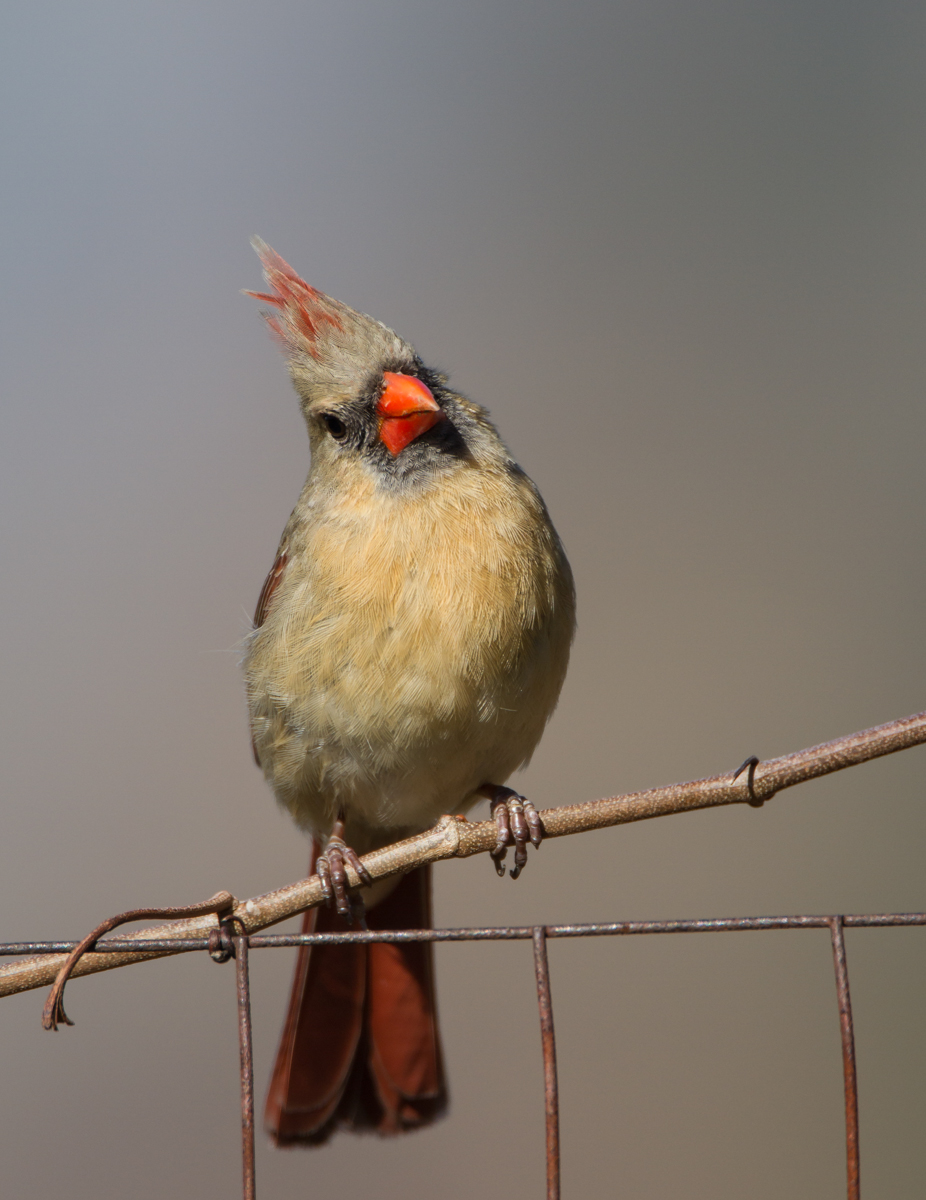
A Northern Cardinal beak is adapted for cracking seeds
Northern Cardinals were previously members of the finch family, Fringillidae. Recent DNA studies have caused scientists to reclassify cardinals into the family Cardinalidae that also includes some stout-billed familiar birds such as grosbeaks and buntings. Cardinals have strong beaks adapted for cracking seeds, a primary part of their diet. I am told by friends that regularly band birds that the beak is also adapted for giving a painful bite to careless handlers.
Immature or molting female Northern Cardinal
Immature Northern Cardinals are colored similar to females, but have darker beaks instead of bright orange beaks like the adult female. This bird was photographed in early June last year and appears to be an adult female that is molting. I have some other shots from that same time frame of male cardinals with dark beaks (indicating juvenile birds) and what look like molting male cardinals with orange beaks. References say that Northern Cardinals molt once a year in late summer to early fall so I will leave it to my bird nerd friends to tell me what is going on with this somewhat unkempt bird (is this what the rigors of nesting do to an adult female or is it an early molt?).
In addition to her beauty, female Northern Cardinals are special for another reason. Only a few female North American songbirds sing, but the female Northern Cardinal does. A mated pair shares song phrases, but the female may sing a longer and slightly more complex song than the male. This so-called countersinging may help to strengthen the bond between a courting pair. But rivals males also countersing, so without seeing the birds involved, it is tough for us to tell whether it is love or the urge to fight that is driving the melody.
Northern Cardinal perched on grape vine
Take a few moments this holiday season and appreciate the beauty of this often overlooked bird. It will be time well spent.
Yesterday I posted some of the details of my recent trip to Pettigrew State Park and the Pungo Unit of Pocosin Lakes National Wildlife Refuge. Here are a few more images from that experience:
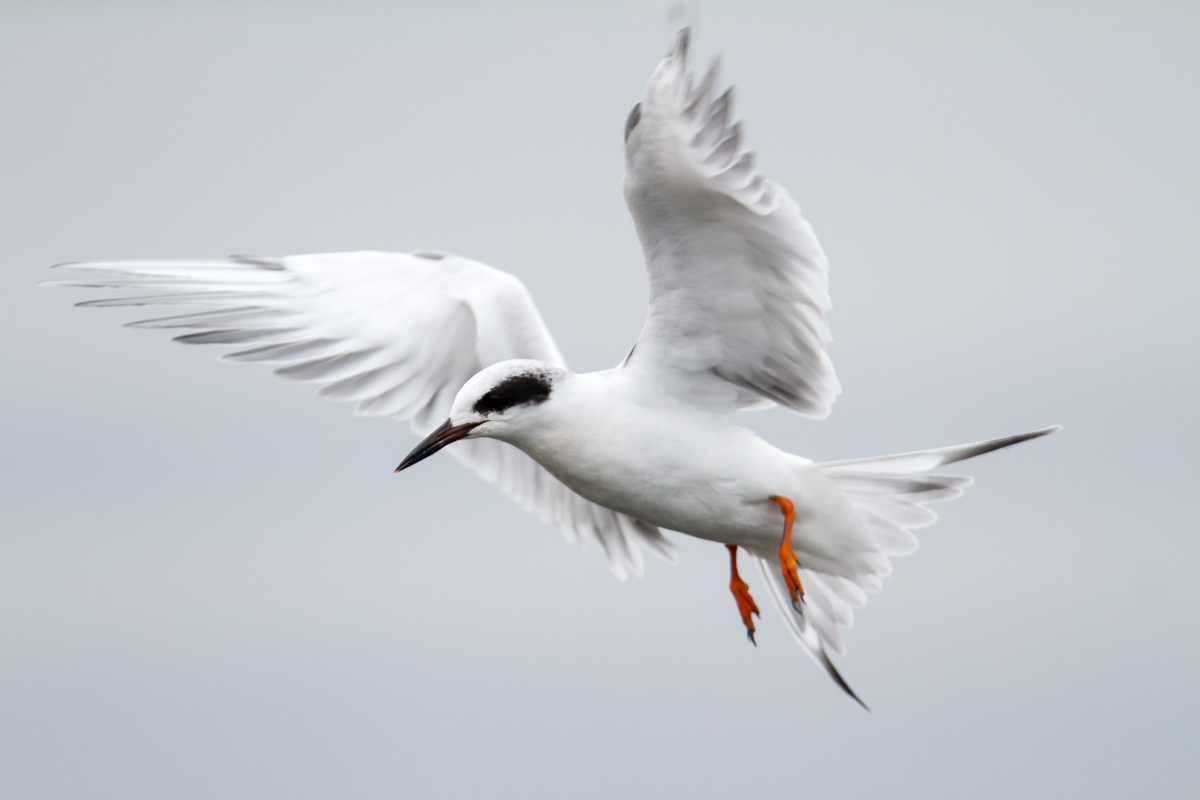
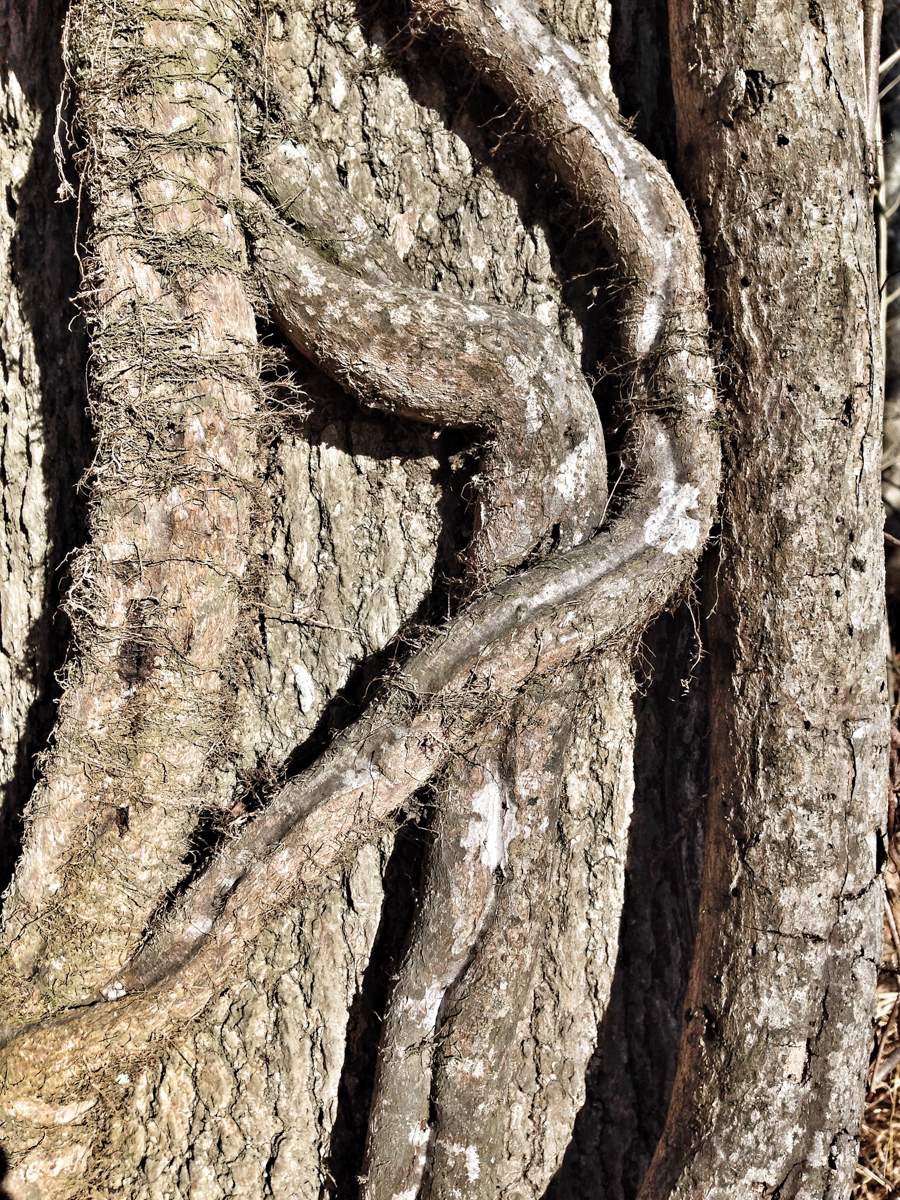
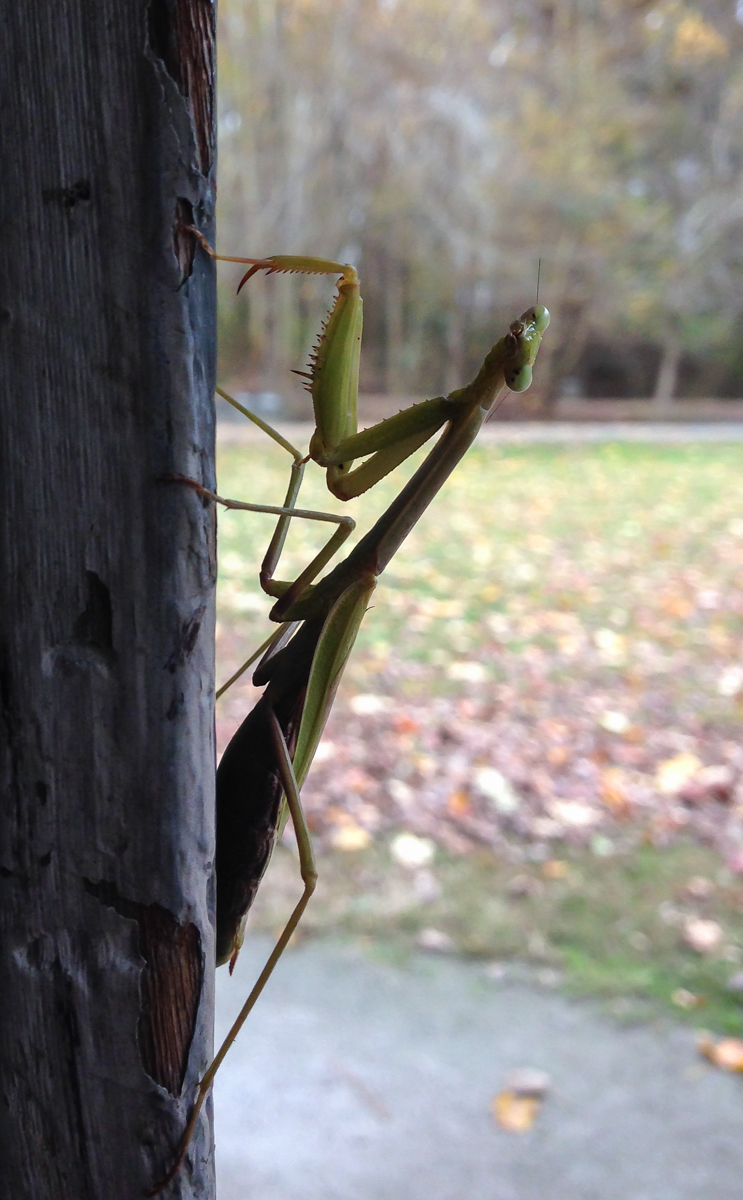
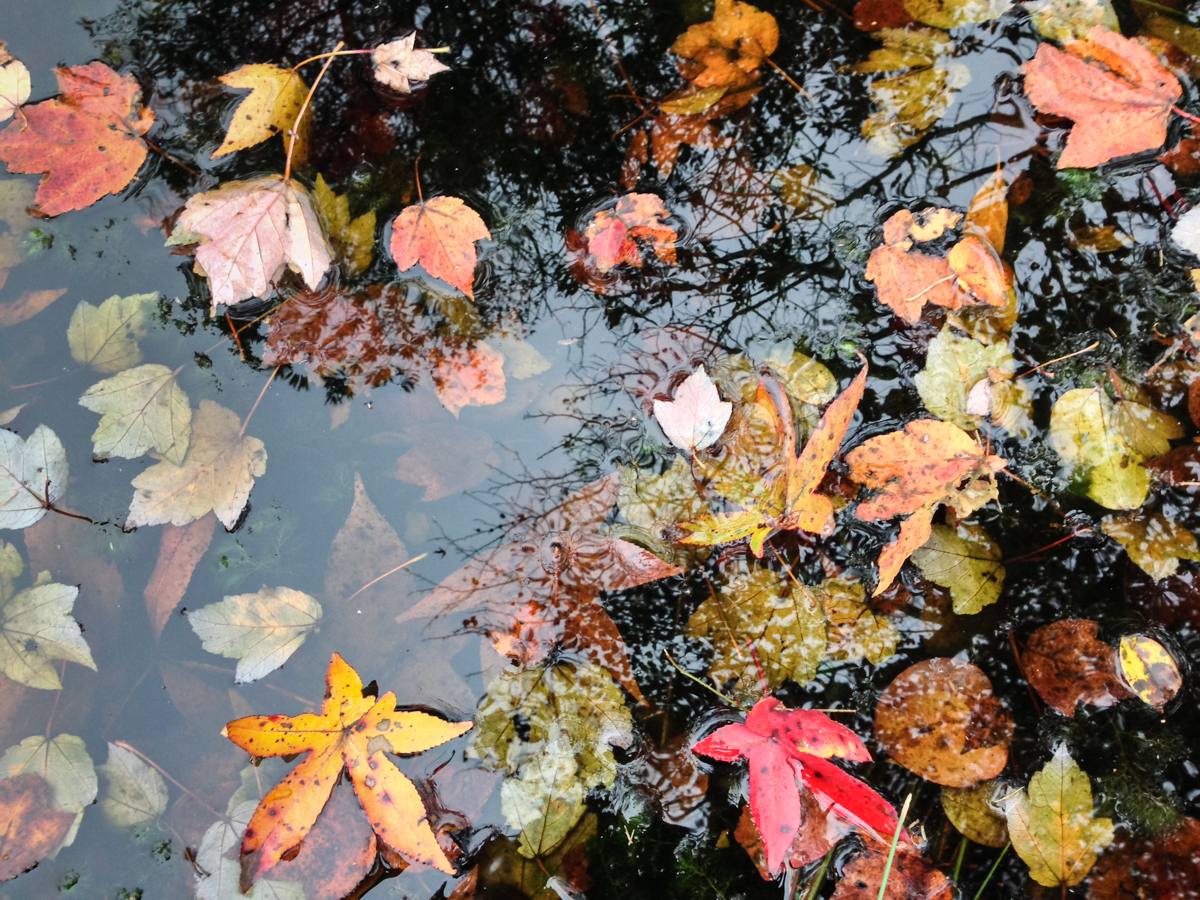
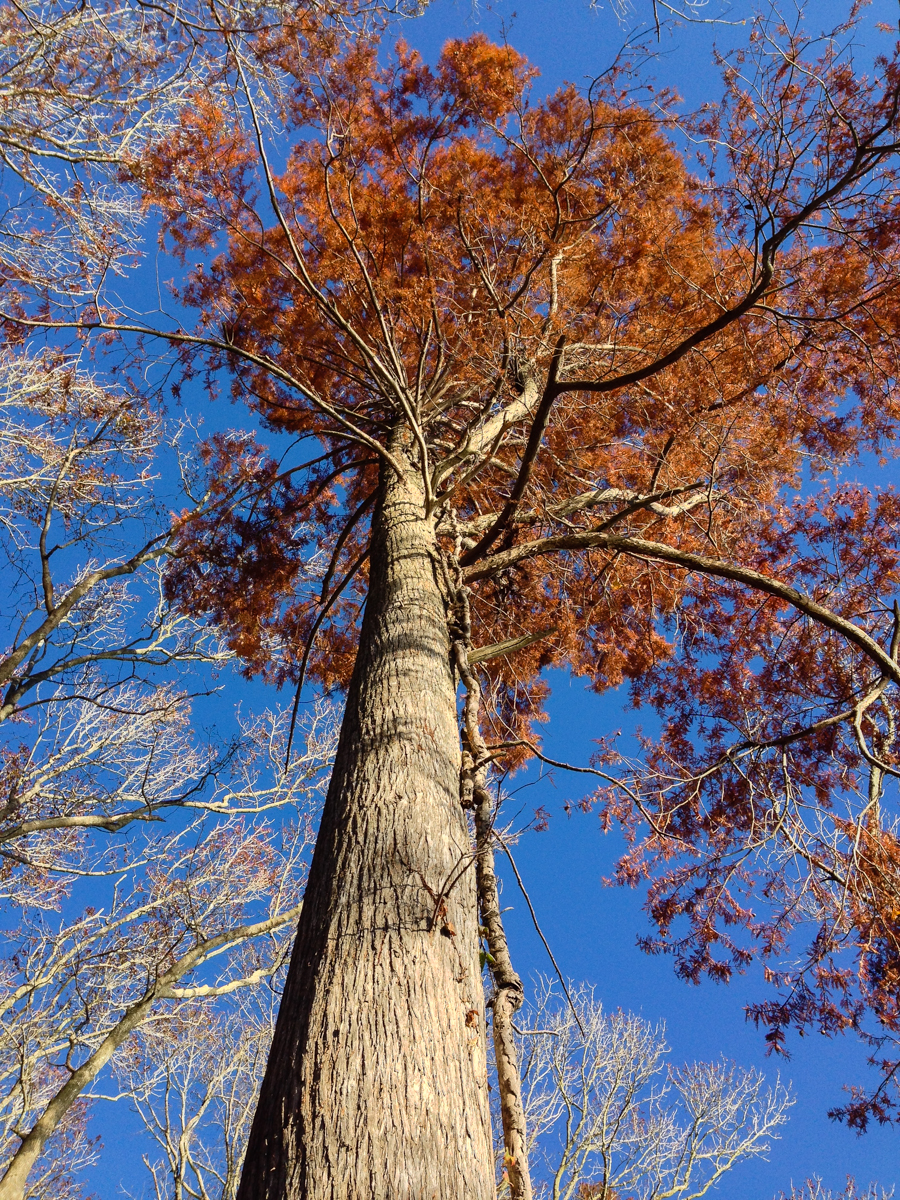
Forster’s Tern coming in for a landing (click photos to enlarge)Vines on tree trunkMantis on building before the deep freezeLarge Black Bear coming out of woodsAutumn leaves in roadside canalBald Cypress with fall color
And a short video of Tundra Swans resting on Pungo Lake…
I went camping last weekend with some friends at Pettigrew State Park and the weather decided to change dramatically during our stay. Saturday was relatively warm and overcast and we just missed the last of the rain when we arrived at the park around noon.
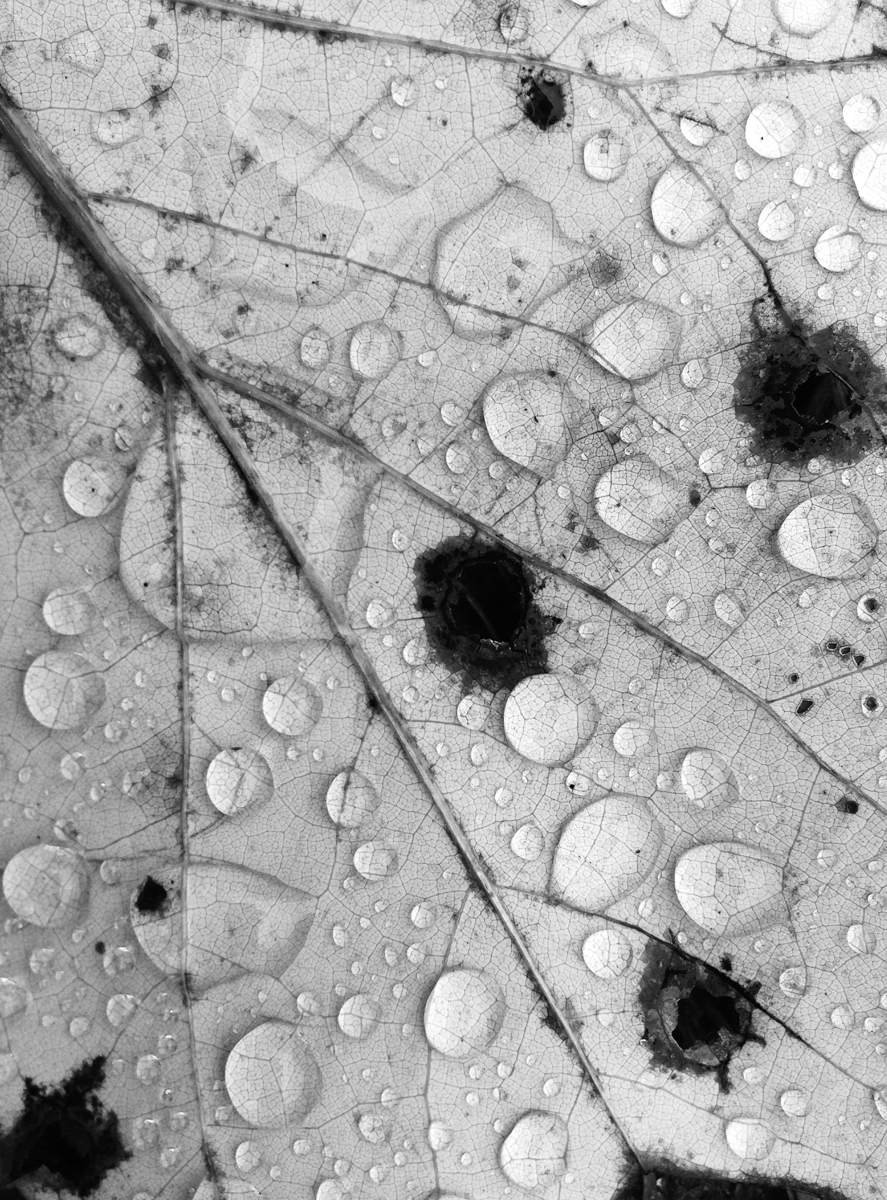
Water drops on fallen leaf (click photos to enlarge)
Everything was slightly wet as we set up camp, and there were insects and spiders moving about. That would all change by nightfall.
Gallery of gulls in winter attire – Laughing Gull, Forster’s Tern, Ring-billed Gull
After setting up tents we did a quick check of the boat ramp and found some Hooded Mergansers, Ring-necked and Ruddy Ducks out on Lake Phelps and a gallery of gulls hanging out on the railing. The rest of the afternoon was spent over at the Pungo Unit of Pocosin Lakes National Wildlife Refuge looking for anything that might be out and about. We spotted a few bears at a distance and then saw what at first looked like a sleeping bear near the refuge maintenance area.
Dead young bear
Unfortunately, it turned out to be a dead young bear and it had not been dead long.
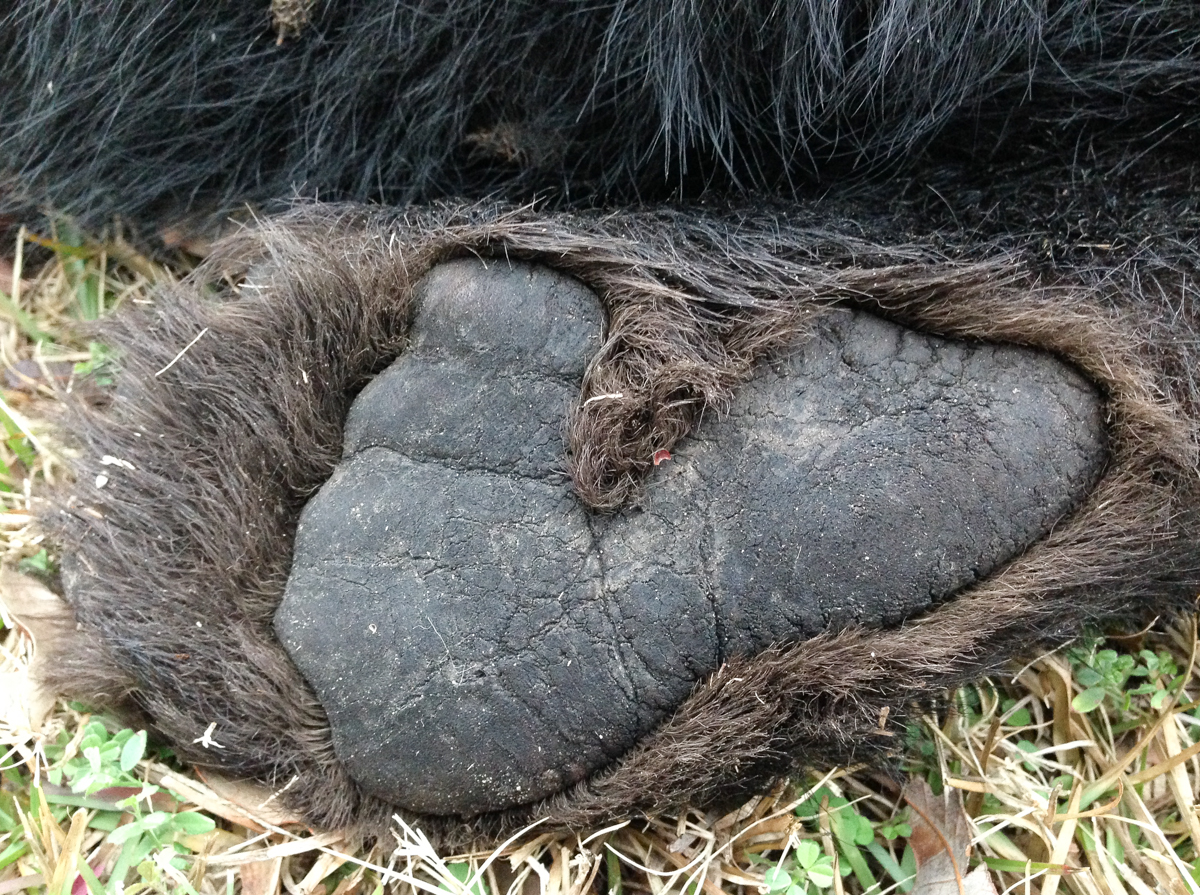
Hind foot of dead bear
While sad, it did offer a rare opportunity to closely observe a bear. It probably weighed about 75 pounds, meaning it was probably born a year ago. One foot was turned so we could examine the soft texture of the pad. We were puzzled by what might have happened, but after talking with refuge staff on my return, they thought it was probably hit by a car. Regrettably, we had seen another, much larger, roadkill bear on our way down alongside Hwy 64…a cautionary note for drivers in bear country, especially after dark, when a large black animal is very difficult to see.
As sunset approached we headed out and were greeted by a flyover of thousands of Tundra Swans and the first Snow Geese of the season. The arrival of the strong cold front may have been the push needed by the birds to complete their migration to their wintering grounds here in North Carolina. In one of the long V-shaped formations of swans, there was one lone Snow Goose flying in line along with his much larger cousins from the far north – the first time any of us had ever seen a mixture of these two birds in formation.
During the night, the wind picked up and the temperature dropped precipitously. By daybreak it was bone-chilling cold with a stiff persistent wind out of the northwest – the perfect Pungo wildlife day.
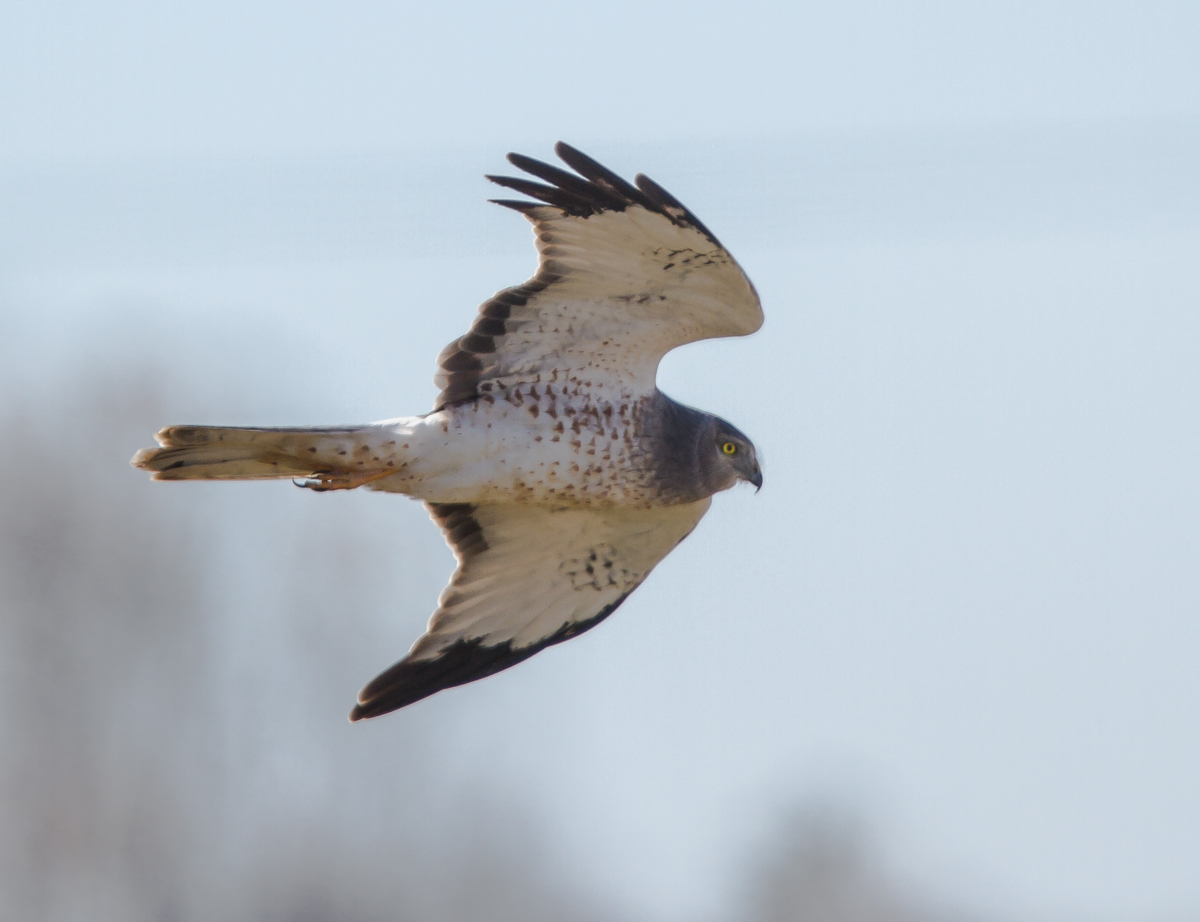
Male Northern Harrier hunting in a stiff wind
One advantage of a steady breeze is that it slows down the flight speed of many birds (at least those heading into the wind) and gives you a chance to watch and photograph them. Such was the case with a ghostly male Northern Harrier battling the stiff wind as he hunted the roadside ditches. If only another car had not come along, we might have stayed with this soaring hunter and grabbed some memorable images.
Bear tooth marks on Sweetgum
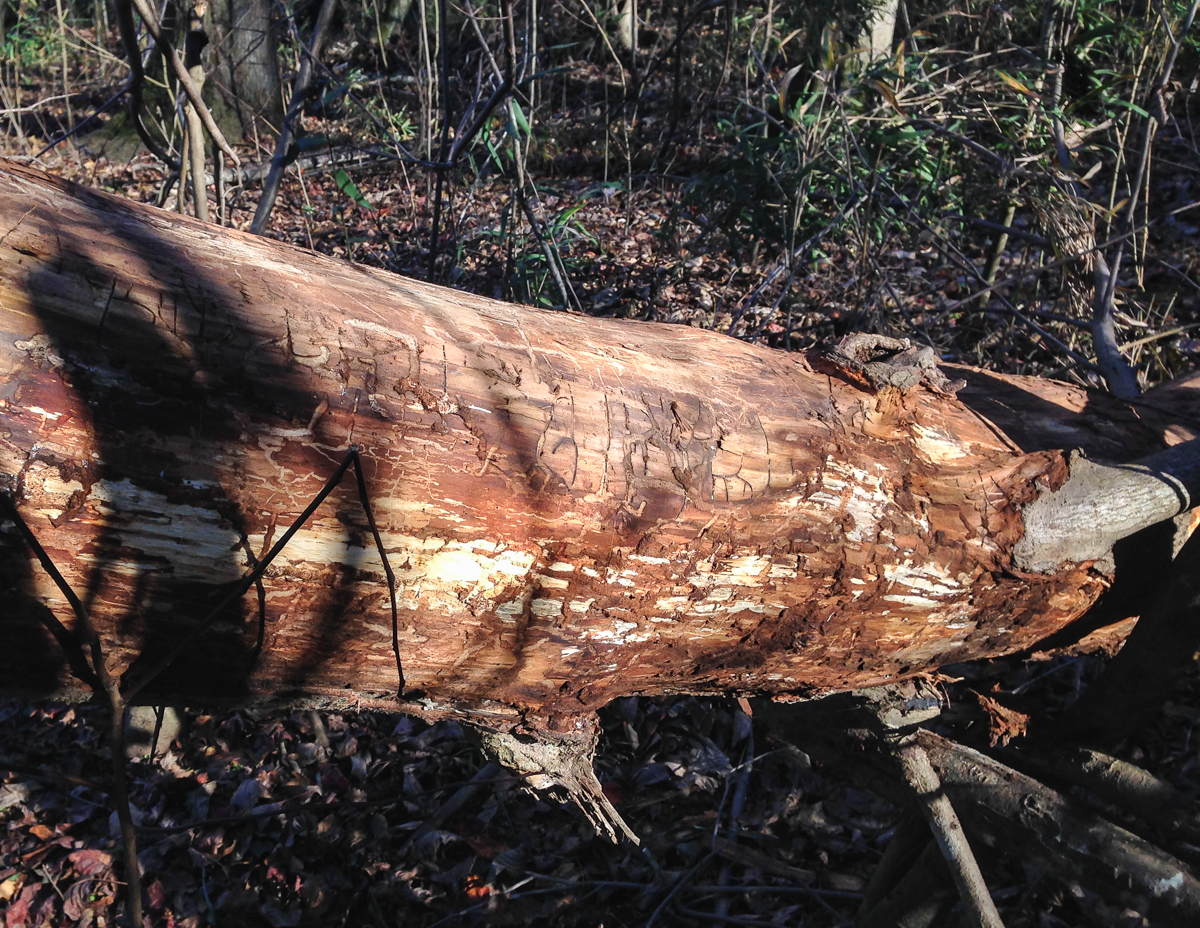
Hiking down one of the dirt roads on the refuge we began seeing lots of bear sign. Many of the trees in the area have claw marks from bears climbing them. But many of the larger Sweetgum trees have another distinctive mark – sections of bark ripped off near the base of the trunk with teeth marks left behind as the bears scrape away the sugar-rich cambium layer.
Fungus on bear scat
There was also an abundance of another bear sign – piles of scat. And much of the scat was odd-looking because of a hairy fungus growing on top. Although I have seen this before, I don’t remember seeing so many scat piles covered in the Chia Pet-type growth. A quick search on the web revealed the fungus is probably one in the genus Phycomyces. This fungus is related to bread mold and is one of the first to grow on substrates that are high in sugar. The hairs are the sporangiophores and each is tipped with a tiny sphere full of spores.
Female Black Bear on “bear road”
It wasn’t long until we encountered something with hair of a different color – a Black Bear. It was a medium-sized adult bear who came out of the woods between myself and my friends a hundred yards or so down the road. She came out cautiously, frequently glancing back in the woods. We all thought she was probably not alone, and, sure enough, a young bear soon followed. I thought they were going to cross over into the nearby corn field, but she slowly meandered my way.
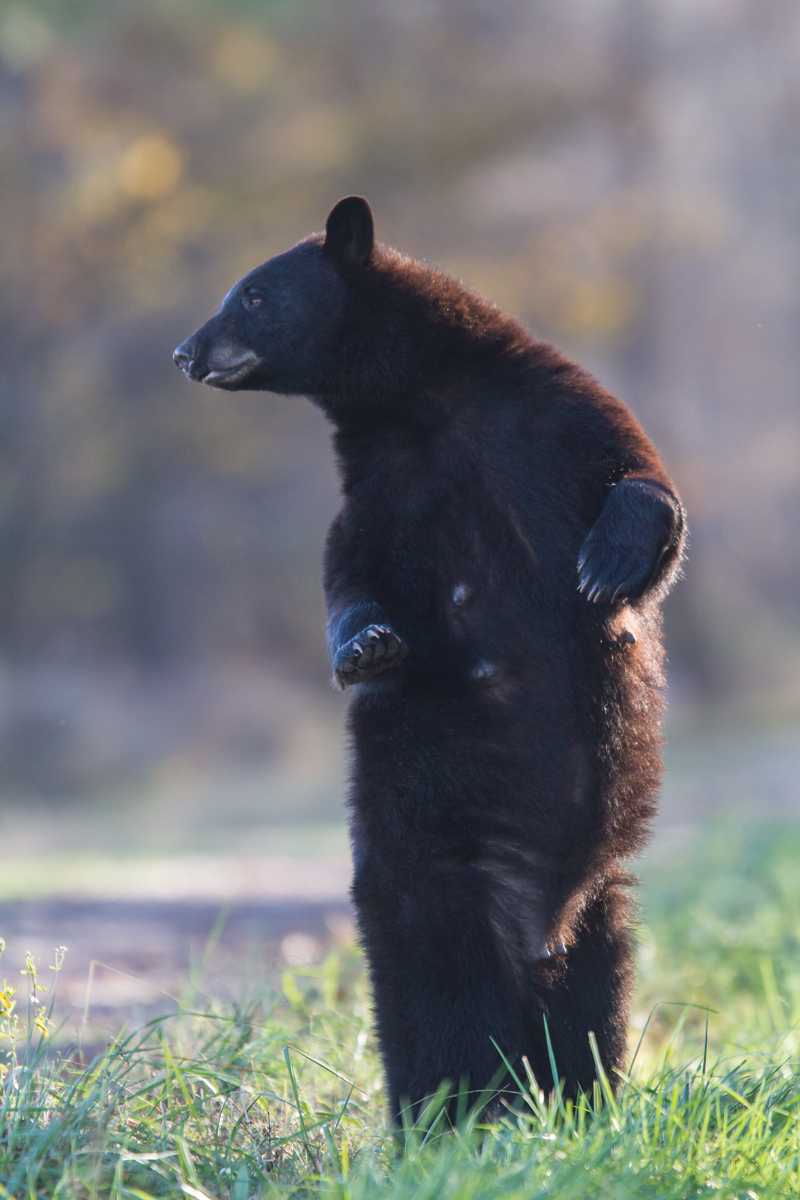
Female bear stands up to sniff and look around
The stiff wind may hamper a bear’s ability to use its keenest environmental sensor, its nose. The young bear disappeared back into the woods and the adult soon stood up to look around and probably try to ascertain if the coast was clear. She probably could sense us, but maybe could not get a direction on the scent. She soon dropped down and ambled off to join her young one.
This log had a bear on it stripping the bark
Cold, windy weather often offers good wildlife watching opportunities on the refuge as animals tend to get hungrier and more active during the day. After walking a few miles on various dirt roads, we encountered two bears off in the woods atop a leaning tree that had broken near the base. We sat and watched for about 20 minutes while the female gingerly pulled off chunks of bark and appeared to lick or bite at something underneath. After they ambled off into the thick undergrowth, we went over to check out the tree.
Beetle grubs under the bark
We quickly found what the large bear was so gently picking off the log – a variety of beetle grubs hidden under the bark. Grubs must be a bruin delicacy as evidenced by the amount of log rolling and stripping of bark that can be found on almost any downed tree in these woods.
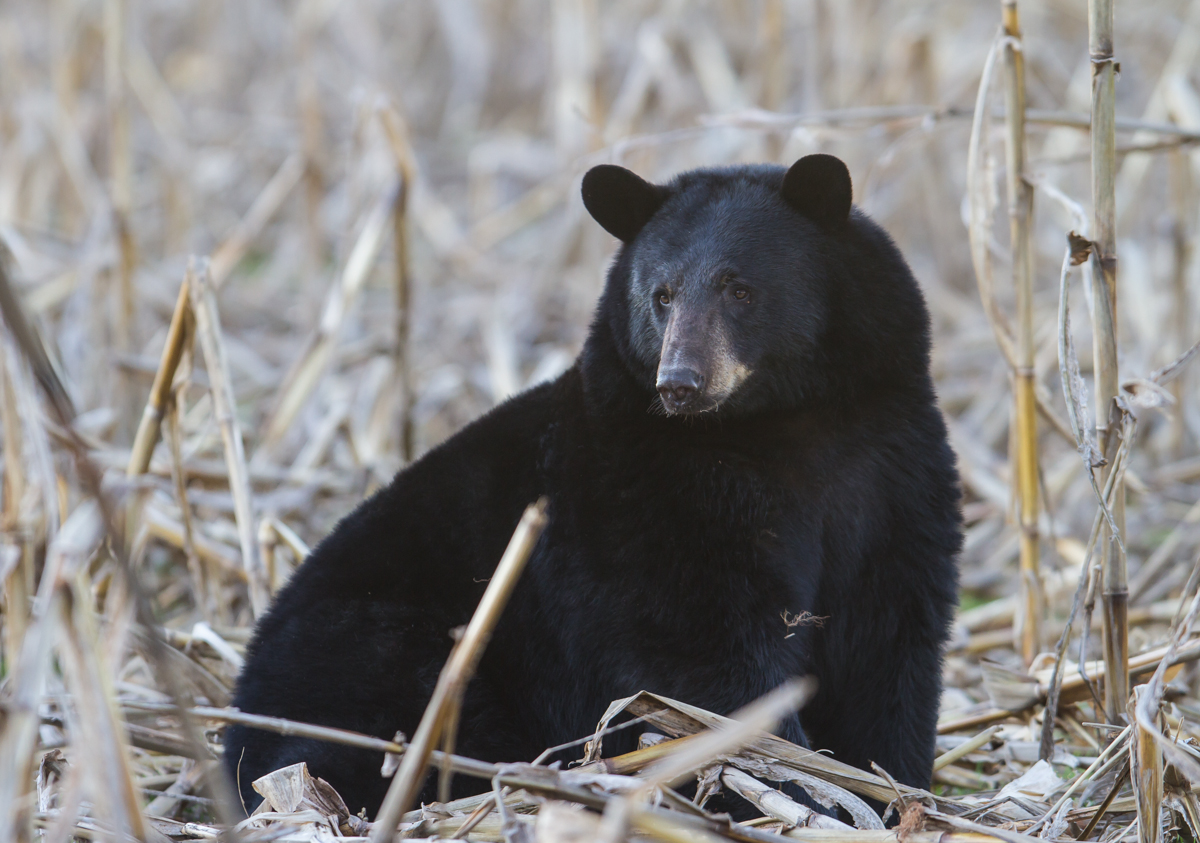
Large Black Bear feeding in corn field
After several more bear sightings we finished our beary good day with a large bear coming out of the woods and feeding in the corn field as we sat and watched nearby. It walked in and sat down, grabbing an ear of corn and feeding on it while sitting and looking around.
Bear carrying ear of corn
Occasionally, the bear would pick up an ear off the ground and carry it a ways before sitting and eating. We finally got up to leave and were greeted by another bear with two young, and then three more on the way back to the car. An amazing day in an amazing place. The final amazement came in the form of a beautiful sky with literally thousands of swans calling and filing by overhead as they made their way back to their critical resting spot on the lake. This short video gives you a sense of what it is like in this magical place.
I will be leading several trips this winter to this area both on weekends and during week days to observe wildlife and learn abut the importance of this and other refuges as critical wildlife habitat. If interested in attending one of these trips, please contact me at my roadsendnaturalist@gmail.com email address or via my Facebook page. While there are no guarantees on seeing so much wildlife, it is a place that never disappoints me.





























 Roads End Naturalist