National parks are the best idea we ever had. Absolutely American, absolutely democratic, they reflect us at our best rather than our worst.
~Wallace Stegner
Melissa had another of the museum ‘s amazing educator workshops to Yellowstone last month. This year, we decided to go out a week early to enjoy the park, hang out with friends, and scout areas for her workshop prior to the arrival of her participants and co-leaders. It was a week well-spent and included an awesome backpacking trip with friends to some backcountry patrol cabins.
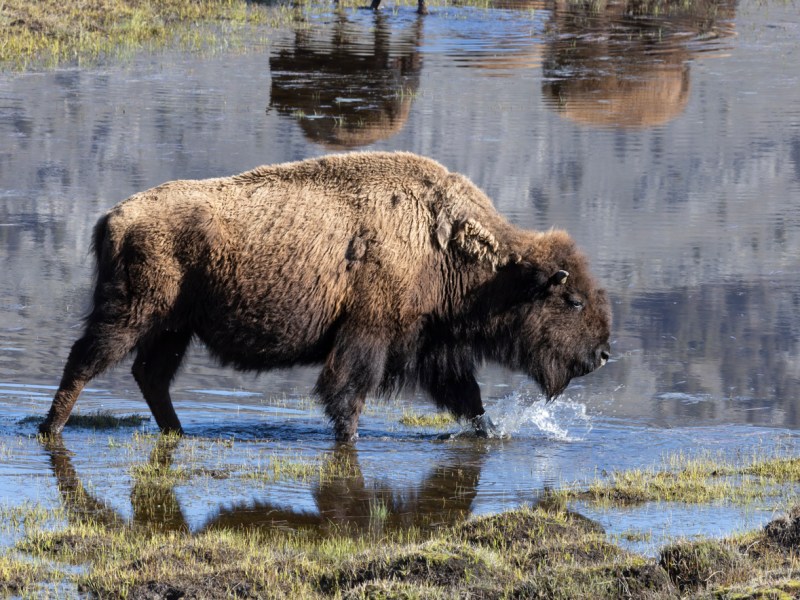
Bison were everywhere in Lamar Valley this spring
On our first night in the park, we went out for a few hours and soaked it all in and were amazed at the number of Bison in the green valley floor of Lamar Valley. The next day we met our friends (both NPS employees) and backpacked to the Lower Slough patrol cabin. Ivan is the backcountry office manager for the park and inspected all the backcountry campsites along our route. It was a fairy easy hike up the Slough Creek valley with little elevation gain (good for my bad back/legs). The weather was perfect and spring wildflowers were dotting the landscape in abundance.
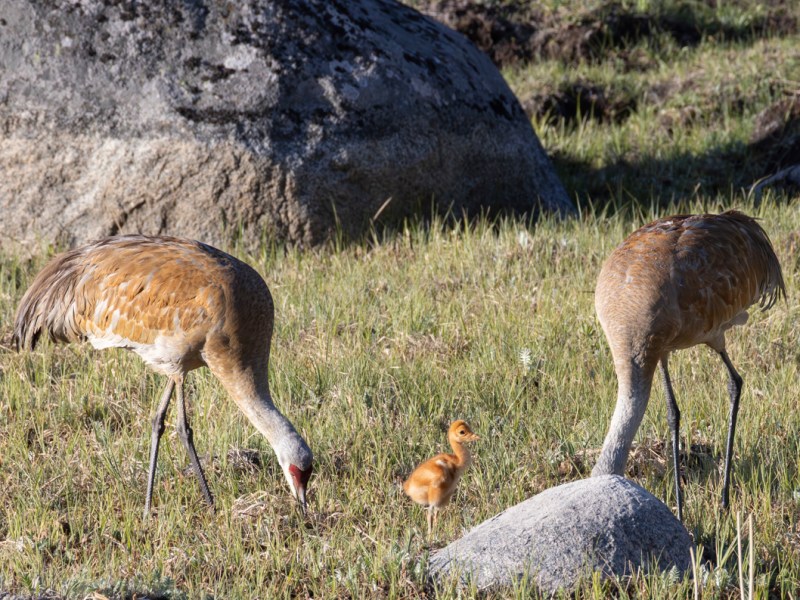
We were excited to find several patches of Fairy Slippers (Calypso bulbosa). This orchid goes by many other common names (Venus’ Slipper, Calypso Orchid, and Angel Slipper).The first cabin was log construction and built in 1916. Park staff using the cabins must restock any firewood used (we did not use any) and leave it in as good or better condition than they found it. We were impressed by its cleanliness and beautiful location.The view from the Lower Slough cabin porch. A marshy area with a few Bison, over 20 Sandhill Cranes, and a hunting Coyote. Oddly, a group of the cranes escorted the Coyote all over the area as it hunted.The sunset on our first night of the backpacking trip was quintessential YellowstoneWe hiked another 5 miles the next day to the next cabin, Elk Tongue. A more modern, but smaller, facility with another incredible view. Both cabins had outhouses, necessitating a flashlight when you visited after dark as this is prime grizzly country.Melissa cooking up some oatmael pancakes on the huge griddle at the cabin
We spent 3 nights in the backcountry with our friends and it was glorious. Wildlife sightings included a couple of Black Bears, some Moose, the cranes and Coyote, and a Peregrine Falcon. Melissa also got a quick glimpse of a wolf chasing a Moose. After that, we headed to our lodging in Gardiner for a couple of nights, venturing out into the park each day.
A couple of young bull Moose along Soda Butte Creek in the northeastern part of the park.This cow Moose and calf were seen several times during our stay, always within a few hundred yards of the Soda Butte picnic area.The epitome of gangly (and cute)
One of the best things about this time of year in Yellowstone is the abundance of baby animals. It is a tough place to be a baby with so many predators out and about searching for food, and different species have different strategies for protecting their young. The mama Moose keeps a keen eye out for any danger, and will not hesitate to attack a threat (a point I kept trying to make to people out of their cars and approaching her). On a drive down the road to the Slough Creek campground, Melissa spotted a Pronghorn doe with a youngster on a ridge away from the road. As we slowed, the baby dropped down behind a shrub. From our angle, we could no longer see it. This is typical behavior of these swiftest of mammals. Young will hide among vegetation while the mother wanders off to feed, returning every few hours to nurse them. The babies behavior and color allow them to blend into the landscape very well. Years ago, I almost stepped on one before seeing it. It remained motionless, flattened to the ground as I walked away. And, in a true act of love and protection, mother Pronghorns lick the droppings from their fawns’ rear end as a way to reduce scent that might attract predators.
We drove a small distance so we had a better angle and could see the baby Pronghorn’s head up behind the shrubMother Pronghorns can be quite protective of their young. This doe meandered closer to the road, munching away on vegetation. She ended up quite close to our car as if to say, “I am watching you…stay in your car and leave my baby alone”. She eventually went over the ridge leaving her baby until the next feeding
There have been a lot of Grizzly sightings reported this year so anytime we hiked, we carried bear spray and were paying attention to our surroundings. On one trail, we came across some fairly fresh Grizzly scat…that really makes you alert!
Grizzly scat
Driving into Lamar from the northeast one day, we saw a group of people at a pullout looking down toward Soda Butte Creek. They told us a Grizzly sow and cub (from the previous year) had just crossed the creek and had disappeared behind the ridge. We stopped at the next pullout and a group of people, chaperones and young students, were headed back to the parking lot saying “there are two Grizzlies headed this way”. I commend the leaders of this group for doing the right thing when they saw the bears – move everyone to safety and don’t try to get close for a photo!! In just a couple of minutes, the bears crossed the road.
The Grizzly sow had a cub from last year with her as she crossed the road and headed up through the sagebrush.I saw an opening in the sage as the bears climbed to the top of the ridge and focused my attention there hoping for a photo (these pics are shot with a 500 mm lens and teleconverter and are heavily cropped)The cub paused for a second, paw in the air, and glanced back down the ridge at the throng of viewers
As always in Lamar Valley, the Bison are the real stars of the megafauna, especially with so many “red dogs” (young calves) frolicking or sprawled out asleep in the grass. But we also witnessed a sad and yet fascinating Bison behavior – acknowledging the death of a member of the herd.
–A dead Bison laying next to the road (no doubt a roadkill from the night before) attracts a lot of attention from others in the herd. Rangers hauled the carcass off later that day to avoid chaos along the road due to the presence of scavengers and crowds of visitors
We saw several Pronghorn fawns during our first week in the park. Pronghorns frequently have twins, and these two were both curious and cautious, never getting far from each other or their mother.
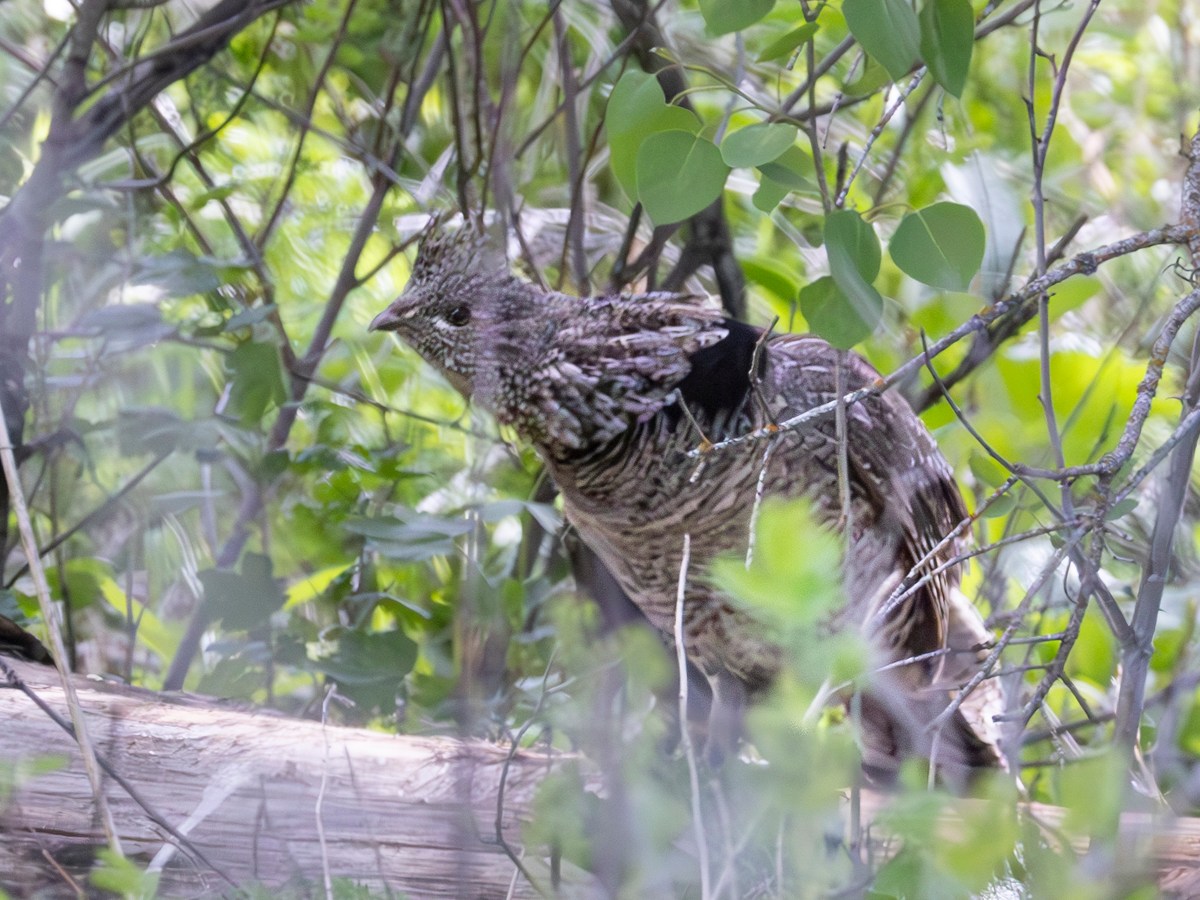
The most unusual wildlife encounter we had was with a bird, an “attack grouse”.
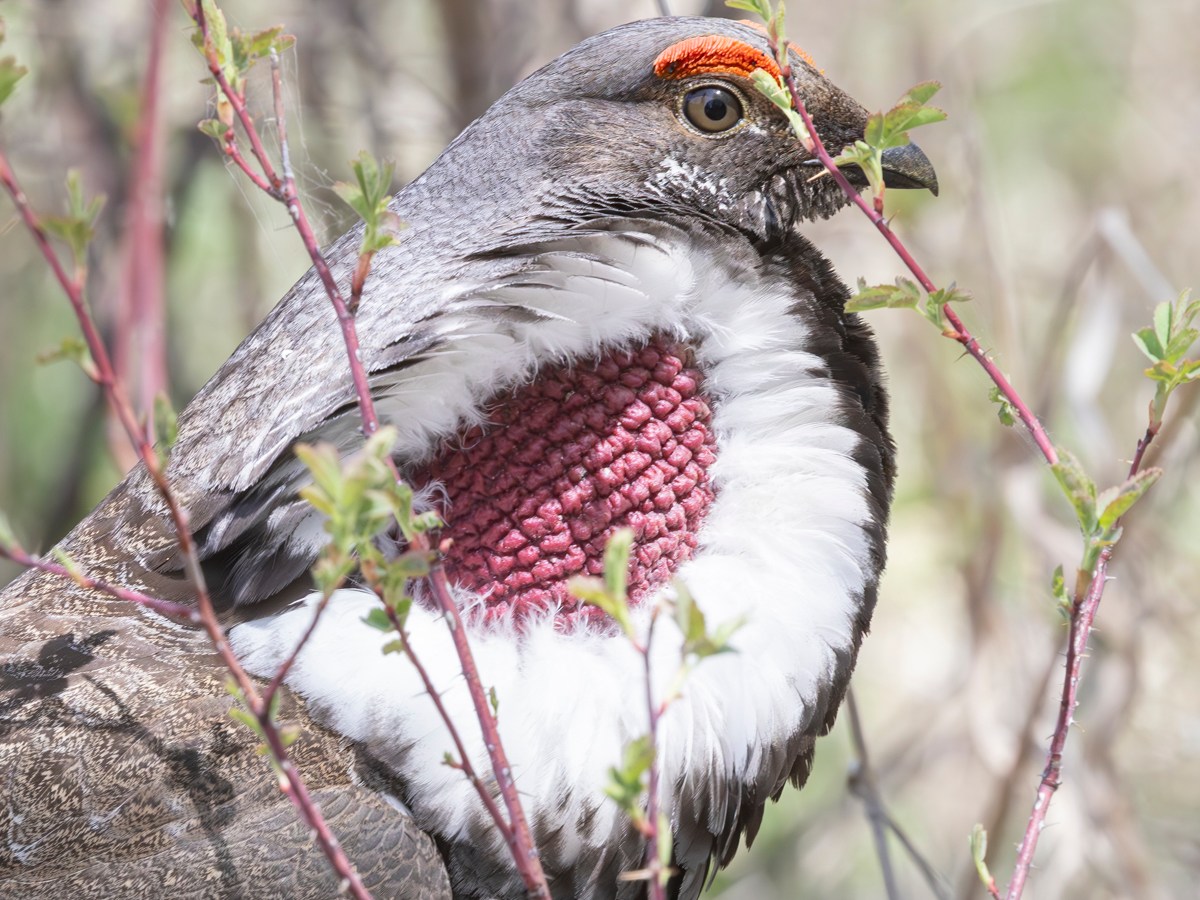
–This Dusky Grouse had an attitude and aggressively attacked people and cars that passed through its territory
On one trip down the Slough Creek dirt road, a car in front of us had its flashers on and was moving very slowly. We then saw a Dusky Grouse right next to the vehicle. These birds can be fairly tame so it wasn’t a huge surprise. But as we drove by, the grouse went under our car so I had to stop. Melissa got out to see if it came out and indeed it did, right at her. For the next few minutes she and the grouse did a dance with the grouse actually pecking at her a few times. Finally, she got away and back into the car. We saw this behavior a few other times as we drove down that road over the next day or two. Finally, someone wth the park put out two orange highway cones and a sign that read “Slow, congested area ahead”. Close enough, I guess:)
After several days, I drove Melissa to Bozeman to meet her teacher workshop group. I then headed back to the park for a few days on my own. My next post will provide some of those highlights.
Any glimpse into the life of an animal quickens our own and makes it so much the larger and better in every way.
~John Muir
While we were away (more on that in a future post), the trail cameras caught some interesting events in our woods. They also caught several deer inside our deer fence for several days due to a fallen tree splitting it (but I am trying to forget that event and its devastating impact on our yard’s wildflowers). Here are some of the highlights of what our wild neighbors were up to in our absence.
What I believe to be the same wobbly young fawn that I shared in my last post is now looking more agile as it follows its mom
There were a few captures of other birds in our absence: American Crows foraging in the leaves; a very short clip of an Eastern Screech Owl landing on a perch; and two quick clips showing a Red-tailed Hawk chasing a group of crows (payback, no doubt). Then there was this clip of a juvenile Red-shouldered Hawk catching something behind a log and then feeding on it, whatever it was.
I am always glad to see what the coyotes are up to and this time they gave us some nice glimpses. The female I call “one ear” (because of a deformed or mangled left ear) was seen on several days/nights. Here, she goes about her business, literally.
One ear gives us a longer view as she stops in front of the camera to scratch. Oh well, we’ll take it even though it is not the most exciting behavior she could share.
My favorite thing is just walking in the woods. I can do it for days on end without tiring of it.
~Jim Harrison
This may be why I can’t get to all the posts I need to write about prior adventures…interesting things keep happening here in our woods. We were gone for several days and I checked our trail cameras when we returned and found some special captures. This time of year it is usually a lot of deer and squirrels. I was hoping to see the first fawn of the year and, indeed, one walked feebly in front of a camera on June 1. I think it was born that day by the looks of its wobbly walk.
One camera caught a Red-tailed Hawk in roughly the same place on two different days. Both times were similar behaviors – landing, gobbling up something small, pausing, and then flying off.
I’m always hoping to see Coyotes on the cameras so this past week really came through in that department. Several single Coyotes trotting by a camera in the dim light of dawn or dusk, and then a couple of captures with two or more in daylight.
The biggest thrill came on one of my most active camera sites, where a ravine opens up onto the intermittent creek bed flood plain. It is a group of Coyotes, at least 8 including a number of pups. I think I see 3 adults (the lead is ol “one ear” and she was the lactating female seen on camera back in April) and 5 pups, but it could be 4 and 4 since we have recorded 4 adults on one camera in the past. I wish them well and good hunting…perhaps they can help keep the deer population in check a bit and help control the groundhogs which have recently entered our community (and are really tough to keep out of garden spaces).
You cannot leave Africa, Africa said. It is always with you, there inside your head.
~Bridget Dore
Well, I’m finally getting back to continue the story of our November trip to South Africa. In the first blog post, I covered our first few days after arriving in Johannesburg and traveling to Kruger National Park. This post covers our last couple of days in Kruger. I’ll try to wrap up the highlights of this amazing trip in the near future. We traveled with our friend and guide, Andrew Torlage, who is from South Africa and now lives in Hillsborough. I want to thank him again for arranging this incredible tour of his homeland and sharing its many wonders. Several of you asked about how to learn more about the trips Andrew offers. His website is now up (https://vakashaafrica.com/ ) and he is offering two other trips this coming year (you may recognize some of the people and wildlife in the pictures as many are from our inaugural trip last year). One trip is basically a repeat of our tour. The other is for the more adventure-minded traveler. That one will visit a few of the same places we saw but will include some camping and more walks in the bush with wildlife. It will also venture further afield to some other great locations. If the adventure package appeals to you (it looks fantastic), he is offering it at an introductory price below what is listed on the website, just $2799 per person. Contact Andrew for additional information. I highly recommend it.
Our lodging at Skakuza, the round huts called rondevals (click photos to enlarge)
Now, back to our trip. After two nights at Berg-en-Dal, we drove over an hour to our next lodging – Skakuza Rest Camp situated along the Sabie River. Our accommodations were in thatched-roof round huts called rondavels. We had an ambitious schedule with a night game drive our first night, followed by an early start for a guided bush walk the next morning. I had read about the possibility of seeing fruit bats roosting under the eaves of some of the buildings at this camp, so when we arrived, a few of us started looking and soon discovered a large bat hanging upside down on the edge of the roof of the restaurant.
Epauletted Fruit Bat
The night game drive was fascinating although I do believe we saw almost as much night life on the afternoon game drives as they usually ended after dark (except there were definitely more hippos out later as they leave the water to feed after sundown). The highlight for me on this drive was seeing a large owl, a Verreaux’s Eagle Owl, which can take prey as large as monkeys.
Verreaux’s Eagle Owl
The morning bush walk came a bit early (we met at 4:30 am) after the late night game drive, but we all were stoked about this walk into the bush with gun-toting rangers. There is a maximum limit of 8 tourists allowed on these hikes, so, our guide, Andrew, had to sit this one out.
On the drive to the bush walk site, we experienced the African equivalent to the many bison jams we have n Yellowstone, only bigger – an elephant jam. A small herd of elephants decided to come out next to and into the road and take their time meandering through the bush. One baby elephant was incredibly cute as it tossed and retrieved a stick as it walked.
When we finally reached our destination, we had two Kruger rangers with rifles as our leaders. Oddly, they both walked at the front of the single file line of us hikers. I was next to last and turned to the person behind me and said, “good luck”. We walked at a brisk pace but made frequent stops to hear about the plants and animals along the trail. Early into the hike, we encountered hyena tracks, and then lion tracks.
Following lion tracks on our walk
Shorty afterward, the lead guide spotted a male lion about 50 yards out, lying down and blending in to the bush very well. He whispered some information to us and then, to our surprise, said, “let’s get closer”. We walked about 5 yards and the lion stood up and ran off. We all (including the guides) were very excited with this encounter.
At a lunch break, a Black-backed Jackal trotted back and forth across an open grassy area, occasionally pausing to glance our way. It reminded me of the Coyotes I see in Yellowstone.
Black-backed Jackal
On our return to camp, we had a nice lunch at the cafe on the river. As is often the case in Kruger, our meal was interrupted several times by wildlife sightings (and wildlife thinking they might get some of our food).
A Vervet monkey with baby came close to our table and wondered about the special for the day.One of the more exotic birds we saw on our trip was this Saddle-billed Stork feeding in the river below the cafe.An impressive African or Cape Buffalo across the river. I believe this one is a male by the thickness of its horns and the fact the horns touch at the base. These animals are massive (almost 5 ft at the shoulder and males can weigh over 1700 lbs) and are temperamental, making them one of the most dangerous of African mammals.A beautiful Leopard Tortoise on our walk back to our rondeval. This, the most common tortoise in South Africa, can live up to 75 years.
That afternoon we headed to another hide for some wildlife watching. It was on a large pond full of hippos and birds.
Hippo conversations about loveA male Lesser Masked-Weaver gathering grass for nest building A colony of weaver finch nests across the water from the hide
The drive back to our lodging had plenty more wildlife sightings. Another elephant group near the road was among the many highlights.
A huge elephant walks through the grasses and shrubs along the roadA Blue Wildebeest grazing. A mother and young Burchell’s Zebra. This species is characterized by the “shadow stripes” between the black and white stripes on the rump. Each individual has a unique pattern of stripes A Helmeted GuineafowlA young Spotted Hyena near its apparent den under a rock pile right next to the road. Hyenas are arguably the most successful large predator in Africa. Their sloped body shape aids in their loping gait which is an efficient way to cover large distances while they hunt and scavenge. Their large head and neck are adapted for tearing their prey.and crushing bones.Male lion resting in the shade along the roadA nice yawn reveals some formidable teeth in the mouth of this lion
It had been a productive few days in Kruger National Park. But the next day we were to head out on a new adventure traveling across South Africa toward the coast. I’ll try to get some more posts on this amazing trip in the coming weeks.
I’ve been so busy that I am still playing catch up with blog about our past trips. This one has been on my bucket list for several years – a March trip to Nebraska to witness the spectacular spring migration of Sandhill Cranes. We occasionally see a few of these majestic birds in North Carolina in winter (we counted 24 on this past year’s Christmas Bird Count at Pocosin Lakes National Wildlife Refuge). But, along the Platte River in southern Nebraska, they often congregate in the hundreds of thousands during migration. We had planned this trip the spring after my retirement in 2020, but then the world hit pause for a couple of years and everything had to be rescheduled. But this spring, we made it.
Sandhill Cranes in a Nebraska cornfield (click photos to enlarge)
Sandhill Cranes are elegant gray-brown birds from 3 to 4 feet in height (depending on subspecies) with wingspans of up to 6 feet. They mate for life and travel in family groups (a group of Sandhill Cranes is called a sedge). In addition to their physical beauty, they have a distinctive call. The famed conservationist, Aldo Leopold, described the sounds of Sandhill Cranes as the “tinkling of little bells, the baying of some sweet-throated hound, and a pandemonium of trumpets, rattles, croaks, and cries.” To me, their loud rattling trumpeting is a symbol of the wild, since I first heard it years ago on my first trip to Yellowstone.
Sandhill Crane calling as it flies by
There are several subspecies of this crane, some of which are migratory and a few, especially the Greater and the Lesser Sandhill Cranes, that undertake long-distance migrations in North America between their breeding grounds in the far north and wintering grounds in the southern U.S. and Mexico. The Platte River in south central Nebraska is an ideal stopover on this long journey – plenty of cornfields with leftover grain, plus a braided river where they can roost at night in shallow water, safe from predators. They stay in the area for several weeks each spring, building up the energy reserves necessary to complete their migration and start breeding and raising young. Lucky for us, when we reached Nebraska in late March, we were there at the peak of the migration numbers, an estimated 486,000 Sandhill Cranes!
Sandhill Cranes returning to the river to roost for the night
Local groups like the Crane Trust and Audubon’s Rowe Sanctuary work with other conservation partners and local farmers to protect and manage the habitat the cranes prefer and need. There are opportunities to watch cranes come in to roost on the river in the evening from public viewing areas or through tours with the Crane Trust, Rowe Sanctuary, and some private businesses. We spent our first evening at a well-known viewing spot getting a feeling for the timing of the crane’s return from the fields. By 7:30 pm the orange sky was full of crane silhouettes and the sounds of thousands of cranes headed for their favorite roosting spots along the Platte River.
In addition to viewing the cranes from the usual spots, we paid for a special outing at the Rowe Sanctuary – sleeping in a small blind (about 6ft x 8ft) on the river next to where the cranes might roost for the evening. The blinds are fine if you are used to camping – small unheated wooden structures with viewing ports that open and close. Volunteers at Rowe Sanctuary drop you and your gear off at the blind in late afternoon. You are provided with a red flashlight (no white lights allowed as it might scare the cranes) and a bucket stocked with poo bags as your toilet (you’re not allowed to leave the blind at all). We brought sleeping bags and pads, plenty of warm clothes, camp chairs, some food and water, our camera gear and binoculars, and a sense of anticipation.
Melissa in our overnight blind
A few ducks and shorebirds were in front of the blind for the first couple of hours. As sunset approached, we saw small flocks of cranes flying over and landing about a half-mile upriver. This continued as they sun sank lower. I glanced at my watch thinking the birds should be here (it was 7:30 pm!). Flocks of cranes now filled the sky upriver but none were landing near us and I was trying not to show my disappointment. The time was now almost 8 pm and I was starting to feel very disappointed when four cranes suddenly landed about 50 yards upriver from us. Well, it was a start.
After another few anxious moments, a large flock of cranes flew overhead, then circled and landed near the first four. Within minutes, there were more flocks landing, some right in front of our blind! Soon, there were thousands of noisy cranes within a couple of hundred yards up and downriver of the blind. The dim light prevented me using my telephoto lens, but sitting there with the lingering color of sunset and the sounds of so many cranes was a spiritual moment.
After darkness settled in, we gently closed the windows and used the red flashlight to put away our chairs and lay out our sleeping bags, worried that each move we made was so noisy that the birds would spook and fly off. Before sunrise the next morning, we slowly put away our sleeping gear, unfolded our chairs, and gently opened the windows to an amazing sight. The river was covered in cranes as far as we could see in both directions. It was a glorious morning listening and watching the cranes. Small groups were flying to and from the sand bars providing us with plenty of opportunities for photos in the morning light.
Sandhill Cranes in front of our bind the next morning
Dancing is perhaps the most famous behavior associated with Sandhill Cranes. Maneuvers include bows, head thrusts, and vertical leaps with spread wings. A crane often grabs a stick or piece of vegetation and tosses it in the air as part of this eye-catching ritual.
An enthusiastic Sandhill Crane throws a stick while leaping in the air as part of its “dance”Landing gear down
More and more birds took off and we were finally left with just a few scattered individuals by mid-morning when we heard the ATV coming to retrieve us. We had reserved thae next night at the much more luxurious Crane Trust lodge with a nice catered dinner. But, we had several hours before we checked in there so we drove the back roads looking for more birds.
We spotted some Whooping Cranes feeding with some Sandhill Cranes far back in a cornfield. This clearly shows the difference in size between these species.
We got lucky and spotted a group of large white birds feeding in a field with some Sandhills. They were Whooping Cranes, the tallest North American bird at almost 5 feet and also one of the rarest. A major conservation effort brought the population back from only about 15 birds in the wild in the early 1940s to today’s population of over 500 migratory whoopers. The Platte River is an important stopover in their migration from Texas to Canada every year and we were fortunate to see 15 over a couple of days.
Some of the Whoopiig Cranes have color coded leg bands and a few had tracking devices on their legs so scientists can monitor their movements in hopes of better understanding what is needed for this species’ long-term survivalA group of Whooping Cranes flying off the field
Though crane-viewing was the primary goal of our trip, we also took advantage of two other Nebraska birding wonders – the breeding displays of Greater Prairie Chickens and Sharp-tailed Grouse. Both species congregate at specific locations (called leks) each spring where males have elaborate courtship displays that include rapid foot-stomping, feather and wing displays, colorful inflated air sacs, and unusual sounds. A few local guides operate blinds to view the leks at dawn, when the birds are most active. We booked mornings in two different blinds, one of which was a modified horse trailer, the other an old school bus. The low booming sound of the males is something you wouldn’t expect from a bird. It is amazing that this has happened in these same locations for generations of birds.
The birds continued displaying for a couple of hours after sunrise with occasional brief battles.

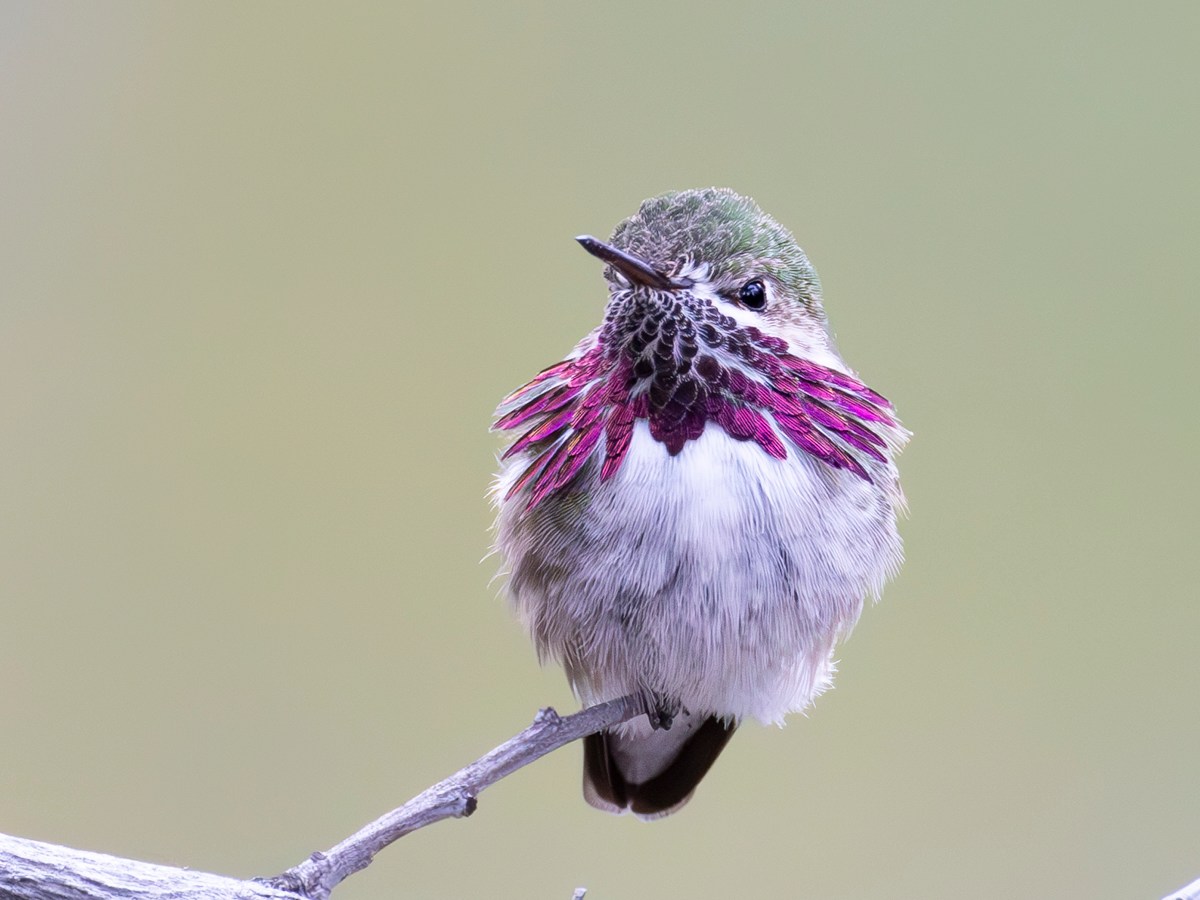
When displaying, males erect ear-like plumes and inflate orange-purple air sacs on their neckA Greater Prairie Chicken ruckus
All the birds took flight at one point when a raptor of some sort flew above our blind (someone saw its shadow). A while later a Cooper’s Hawk dove into the lek and hit one of the birds, but it and all the others took flight. Our guide (the farmer on whose land the lek was located) called it a day at that point figuring the “chickens” wouldn’t return (and that some of us might need a bathroom break and some coffee).
We had reserved a blind at a Sharp-tailed Grouse lek at Valentine NWR and had received informatin on another at a National Forest site we had camped in before. A winter storm blew through the area delaying our plans to head north for a day so we missed our reservation date for the first site. We finally departed, using the online snow plow cams and maps to see what roads were clear (a very nice feature of the Nebraska Dept. of Transportation). The snow and lek location made for a stark, but beautiful, landscape. It turned out to be a real highlight, especially for Melissa. She drove our 4WD truck through several inches of fresh snow and then out onto the refuge “road” (no tire tracks here and when not covered with snow it is just a sandy/grassy lane through the Sandhills) toward the grouse blind so we would be close for sunrise the next morning. It was a beautiful evening camping out in the middle of nowhere with 5 inches of fresh snow.
Our campsite for the Sharp-tailed Grouse lek experience (so glad we brought our new Solo Stove on this trip)
Whie traveling, we had checked the time for sunrise and set our phone alarms for 30 minutes before sunrise. There was close to a full moon that night so wen we got up the next morning it didn’t surprise us much that it was so light. But as we gathered our gear, the sun peeked up over the horizon…we were late (you are supposed to be in the blinds before sunrise so as to not disturb the birds). Worse yet, we could see with our binoculars that the birds were already on the lek. It turns out as we approached this site we had just barely crossed over the time zone line changing from the Mountain Time Zone to the Central Time Zone and it fooled us since we had no cell phone service out there. We went ahead and walked out and the birds did flush, but returned shortly after to start displaying again.
Sharp-tailed Grouse male displaying (you can see how they get their common name)
Though not as noisy as the prairie chicken display, seeing these birds dancing and sparring in the fresh snow at sunrise was phenomenal. This was early in the breeding season for this species and most of the birds weren’t quite up to the task to display and fight for very long and spent much of their time squared off against one another with rather brief bouts of displays.
Two males square off after a brief display, but then just sat there for several minutes
But when a female came in they all got a bit more energetic. Reminds me of my college days…
Male Sharp-tailed Grouse sparring on the lek
Though it may not sound like it at first, a trip to Nebraska in mid-late March is certainly worth it. If roughing it in a small blind is not your thing, both Audubon’s Rowe Sanctuary and the Crane Trust have wonderful viewing blinds and a variety of program offerings. Your visit will support conservation efforts to help maintain one of North America’s greatest wildlife spectacles, the migration of thousands of Sandhill Cranes. And since you are there, check out the lek activities if you get a chance – well worth it.
Wherever we go on land, these small creatures are within a few inches of our feet—often disregarded. We would do very well to remember them.
~Sir David Attenborough
The sound of periodical cicadas continues to dominate the air here in our woods, but I see more and more of their lifeless bodies scattered about as I walk around the yard. Their short time amongst us as winged adults is probably about half over and, soon, they will be just a memory.
Periodical Cicada (click photos to enlarge)
Since much of their daily life now happens high in the trees, I am starting to look for some of my other tiny wild neighbors. Here are a few I’ve encountered the past couple of days while working/walking in the yard…
A new species for the yard, a Redbud Borer beetle, Ptosima gibbicollis
I’m always on the lookout for new species to add to my iNaturalist list of invertebrates for the property and before the drenching rains, I spotted a small beetle with unusual markings. I took a quick phone photo for ID purposes and went inside to get my camera. Of course, it was gone when I got back so the slightly out-of-focus phone pic will have to do. This small metallic wood-boring beetle is found on its namesake tree, Eastern Redbud. Larvae live and feed in the wood. This one was on a leaf of another species underneath a Redbud tree.
The gaudy nymphs of the Two-striped Planthopper, Acanalonia bivittata
One of the more common insects in our yard is the Two-striped Planthopper. I came across a band of nymphs on a Cross Vine. Their bizarre butt tufts are waxy filaments that are supposedly water repellant. The poofy fibers are created by glands in the abdomen and may serve to help disguise the nymphs and may dissuade predators from dining on this particular type of string cheese.
A second instar larva of an Eastern Tiger Swallowtail butterfly
I’ve seen a few Eastern Tiger Swallowtail caterpillars around the yard, most in their bird poop mimic phase of life. The disguise must work as they tend to be on the top of the leaves, fully exposed to the eyes o hungry birds. Most are on their favored host plant on our property, the abundant Tulip Poplars. But this one was a rarity here as it was sitting on a Wild Cherry leaf.
Later instar of an Eastern Tiger Swallowtail caterpillar
The first tiger swallowtail caterpillar I found was a first instar one on a Tulip Poplar saping at the edge of our garden. I often leave the saplings of potential host plants in the yard and just keep cutting them back each year so they don’t shade out our garden plants or wildflowers. This particular sapling has been a good site for finding caterpillars over the years so I keep it about 4 feet tall to make it easier to see the larvae. After its second molt, the caterpillar vanished so I assumed one of the patrolling wasps or a foraging wren had found it. But, as often happens with this species, it reappeared as the hard-to-see green caterpillar perched on its silken platform a few days ago. I think they must crawl to a hidden spot to molt since that is such a vulnerable time in their larval life.
Male Sylvan Jumping Spider, Colonus sylvanus
As I looked at one of the wildflowers I recently planted, I noticed some movement. It was a small dark jumping spider. As I moved in closer, it did what many jumpers do, it oriented towards me, staring up at me with its eight eyes (well, at least the two big ones on the front of its “face”). If I continue to move the camera closer, they often jump onto the lens, making photography a bit more challenging. Another pic of the dorsal side of this spider allowed me to ID this little guy as a Sylvan Jumping Spider, a species I had catalogued last year on iNaturalist. Males of this species look quite different than the females.
Female Sylvan Jumping Spider with prey
Females are tan with some stripes on the abdomen and white and red or orange between the eyes. I spotted this female a few feet from the male in the previous pic. She was less interested in jumping at my camera and was more concerned with keeping me from stealing her meal.
Jumping spider with a tasty morsel of unidentified fly
She stared and dared me to try to take it, and then scurried under the leaf, safe from the giant two-eyed monster (my macro lens has two large white diffusers on the twin flashes).
The cicadas have occupied much of my (our?) attention these past few weeks, but their time in the sun may be fading soon, so it is good to remind ourselves that there is so much more out there beneath our feet. But, I must admit, I will miss the red-eyed masses when they are gone.
Yesterday’s blog on Brood XIX was a brief summary of what I have been doing the past several evenings as I marvel at this occurrence. There are two things I had hoped to find in this year’s emergence after reading more about these amazing insects – a blue-eyed adult (a rare genetic oddity) and one with a fungus-infected rear end. I still haven’t seen a baby blue-eyed bug, but I have found one with a white butt. Oddly, I carried something from the front porch inside and when I walked back into the foyer, there was a cicada crawling on the floor (a hitch hiker on that package I carried in I suppose). I picked it up and was going to release it outside when I saw its rear was white. The fungus!
Periodical cicada infected with the fungus, Massospora cicadina
A stage 1 infection of this fungus on a cicada shows up as a whitish coating on the lower third of its abdomen. This fungus has a bizarre life history, matching that of its “prey”, the periodical cicadas (the fungus is known to infect both 13-year and 17-year periodical cicadas). I found a transcript online of an interview with Dr. Matt Kasson, an associate professor of forest pathology and mycology at West Virginia University. He has been studying this unique fungus for a number of years and described some of its unusual characteristics. Unlike other types of so-called zombie fungi (they alter the behavior of their host to create conditions better for spore dispersal) in which the death of the host is the usual means of better spore dispersal, this fungus exhibits active-host transmission. It keeps the host alive in order to better spread the spores. It does this by altering the cicadas behavior. He called the behavior hypersexualization. Male cicadas with the fungus will try to mate with females but will also exhibit the female behavior of wing flicking which creates an audible snapping sound. Uninfected males do not wing flick. Females do this in response to the male calls. This causes other male cicadas to try to mate with the infected males, enhancing the chances for fungal dispersal. One paper suggested this is a type of STD for cicadas!
Later in the emergence, cicadas infected with the Stage 1 phase of the fungus begin producing resting spores as part of the Stage 2 phase of the infection. These resting spores spread onto to the ground and will infect the next generation of cicadas that will emerge from the soil 13 or 17 years later. Scientists aren’t sure whether the hatching larvae pick up the resting spores as they burrow into the soil to feed on tree roots or whether the next generation of nymphs picks them up when they tunnel to the surface to emerge (or whether both occur).
One result of the fungus is that portions of the abdomen fall off of infected individuals. I have noticed a few cicadas with half their abdomen missing and initially thought this was from predation. After learning more about the infection, I picked one up and looked closely and saw white coloration inside the remaining body cavity. Is this the fungus? This morning, I sent photos of both cicadas to Dr. Kasson for his assessment of whether these are infected individuals. He quickly responded and confirmed the one in the first photo at the top of this page is indeed an infected cicada and he would like the sample. The other one is too damaged to determine from the photos. If you have any Brood XIX cicadas you suspect of being infected, you can contact him at mtkasson@mail.wvu.edu.
Cicada with half of its abdomen missingIs this the fungus inside the body cavity of that cicada?
The more I learn about fungi, the more I think that they truly are the life form in control of this planet. Or is it just that they want me to think that?
Nothing in the cry of cicadas suggests that they are about to die.
~Matsuo Basho
I imagine you are deluged with social media posts and news reports about the spectacle that those of us in this area are living with right now – the emergence of Brood XIX of periodical cicadas. I hesitated adding one more blog about this phenomenon, but, let’s face it, it is pretty astonishing. And, perhaps it will help one of the many people I read about on social media every day that are wondering what that strange whining sound is all about. So, let’s start with that sound (recorded yesterday in front of our house; yu will also hear one of the many Wood Thrush that sing in our woods)…(turn sound up)
I photographed members of this brood the last time they were above ground in this area back in 2011. My article in this months’ issue of Walter magazine is about the current emergence but has photos from 2011 (due to publication schedules, the current brood had not emerged by my deadline date). The dates of those 2011 photos correspond closely (within a week, with this year being a bit earlier) with this year’s emergence. That is pretty remarkable given the 13-year time difference. Note – we also have a few species of so-called annual cicadas in our area but they are generally larger, green in color, and emerge later in the summer.
Here’s a quick summary of this marvelous event and the life cycle of these amazing creatures. Nymphs spend 13 years underground sucking on nutrients in tree roots. They may be able to tell the passage of time by the seasonality of the trees in terms of sap flow and nutrient differences between winter and summer tree seasons. When the time is right, they dig their way to the surface, often leaving a prepared exit hole and waiting until soil temperatures reach about 64 degrees. They tend to emerge at night and then crawl up a vertical surface to transform into the adult cicada. That process involves splitting the back of the nymphal skin, pulling out and then clinging to something (usually the excuviae they just shed) and pumping fluid into their wings to expand them. This process takes an hour or more. Adults begin to fly the next day (they aren’t great at it) and males start singing in a few days when enough have emerged to “chorus”. Chorusing is usually done high in the trees. This attracts females and mating takes place. She then uses her knife-like ovipositor to slice into twigs and lay her eggs. This causes flagging of the branches, often pruning the tips. Nymphs hatch in about 6 weeks, drop to the ground, dig a couple of feet into the soil and start the cycle all over again.
-Periodical cicada holes showing the high concentration. This photo is of the space between stepping stones in a walkway in downtown Pittsboro. I have seen estimates as high as one million cicadas per a acre during this emergence (click photos to enlarge)
There are seven species of periodical cicadas (all are found only in the Midwest or Eastern North America) – four have 13-year cycles and three have 17-year life cycles. We are pretty sure we have three species of the Brood XIX 13-year cicadas emerging on our property (a brood is an assemblage of periodical cicadas with synchronized emergence over a geographic area) . Our largest is Magicicada tredecim (with an orange abdomen). The two smaller species are similar in size to each other but differ in color – M. tredecassini (small and no orange) and M. tredecula (small with narrow orange stripes). The large species seemed to be the dominant one the first day or two of the emergence. The past couple of days has had a lot more of the two smaller species. Emergence seems to have occurred in patches on our property, with some high concentrations in select areas in the yard one evening and another location the next night. It looks as though they aren’t climbing much higher than 10 or 15 feet into the trees to transform with many at the tips of low branches.
Birds are feasting on them and I have seen Carolina Chickadees, Eastern Bluebirds, and Summer Tanagers all grabbing them. I imagine squirrels, mice, and maybe even deer are dining on these tiny “shellfish wannabes” as well. Nearby friends have posted photos of lizards and snakes with very full bellies so I think the cicadas are on the menu of many local species. I’m still trying to decide if I want to try one (the nymphs supposedly taste nutty when cooked). I’ll let you know if I do.
Here are a few of the highlights from my cicada wanderings in our yard:
Periodical cicada nymph crawling along a twigNymph just starting to split out of its shell
Something you may notice on the exuviae (shed “skins”) of the nymphs are small white “strings”. These are the tracheal tubes, the “pipes” of the respiratory system of the insect. They run throughout the nymphs’ body and are connected to the outside via the spiracles (respiratory openings on the thorax and abdomen of insects). When the nymphs shed their exoskeleton, the tracheal linings are also shed.
Nymph as it emerges showing tracheal tube connectionsA close up of the tracheal tubes in an emerging cicada.A mass of periodical cicadas that emerged last weekendEmerged cicadas in two stages of wing expansion
According to one resource I read, the two large black spots you see in freshly emerged periodical cicadas contain pigment that will gradually spread throughout the cicada’s body as it hardens, transforming it from this ghostly white color to the final black form. Some have also speculated that the large spots may deter predators since they resemble large eyes, giving the impression of a much larger creature.
Another grouping showing fully emerged cicadas
It takes an hour or so for the wings to fully expand. The cicadas will go through a color transformation as well.
Adult transforming to final colorAdult periodical cicadas that have fully transformed into their final darker color
Looking at the timing in my photos from 2011, mating should be occurring this week with egg-laying by the week after. They will start dying shortly after that and hatchlings should drop out of the trees by late June. We will then need to be patient, as we won’t see them again until 2037! Hope i’m still around to enjoy the spectacle.
Coyotes have the gift of seldom being seen; they keep to the edge of vision and beyond…
~N. Scott Momaday
As you may have noticed in recent months, I have not written as many blogs as in the past. I will try to do better since there is a lot to share. I’m going to start with a quick recent event and then go back to follow up on some great experiences over the past few months including finishing up our trip to South Africa last November, a fantastic trip to Nebraska last month for birding adventures, a wonderful canoe camping trip on the Cashie River in eastern North Carolina, and some of the natural happenings here in our woods.
In all my years here in Chatham County, I have only seen one coyote on this property and that was many years ago, But our trail cameras pick them up frequently, though their appearances often come in spurts with a spate of regular captures and then nothing for weeks at a time. Information presented here on the biology of coyotes is from a summary of coyote management in our state from the NC Wildlife Resources Commission. Coyotes typically mate for life and breed from January to early March. Litters of 4 to 6 are born from March through May. Coyotes tend to be more active in these months.
I have shared several video clips of coyotes in past blogs. Most often, they are seen trotting along with a seeming purpose or destination in mind. Occasionally, we have seen one carrying something, but could not discern what it was, though we assume it was a food item or prey of some sort. Coyotes are omnivores, adapting their diets to local food availability. Diet studies show a range of food choices from deer (mostly fawns or scavenged carcasses), small rodents, rabbits and other mammals, birds, insects and vegetation. The will also take advantage of human-related food sources like pet food left outside, garbage, etc.
Though most video clips captured by the trail cameras show only a few seconds of a coyote(s) trotting through the scene, we occasionally get one that lingers. This recent coyote checks out something in the leaf litter, I can’t tell whether it got a small snack or just a sniff.
Most of the time, we see a single coyote or a pair. A few times we have seen three coyotes on a video clip. The clips are either 30 seconds for daytime videos or 20 seconds for nighttime (that is the maximum length for night recordings with these cameras). So, give the tendency of coyotes to trot through a scene and for them to be strung out in a line, we may miss some if they are traveling together. Coyotes will form packs, but they are usually made up of related individuals. A breeding pair of adults plus one or more juveniles from the previous year that have not dispersed. This past week, one camera caught 4 coyotes walking by, the first time that has been recorded here. Look closely at the first coyote, especially the first few frames of the clip. It is a lactating female…she has pups!
As I was looking closely at this clip to confirm she was a mother coyote, I noticed she has a deformed or mangled left ear. I have seen that same coyote on several other clips. It is clear to see her distinctive ear in this clip from last month.
I remembered seeing this coyote on a clip from May of last year and when I looked closely at that clip, she was lactating back then as well. It is much tougher to see in this clip, but a close examination shows she has teats distending from her belly.
Though I see frequent posts on local neighborhood list serves expressing fear and concern over the presence of coyotes, I am happy to have them as neighbors. I only hope they can help control the population of deer that have changed the forest structure here and in so many other locations. Plus, I hope it gives cat owners another reason to keep their cats indoors since outdoor cats are a major threat to bird populations (as well as all sorts of other living creatures). I wish ol’ one ear another successful breeding season.
You can’t imagine anything like nature as we know it without predators.
~Dale Jamieson
I’ve been out in the yard a lot these past couple of weeks doing the spring chores of removing the dead stalks from last year’s wildflowers, adding some mulch to walkways, etc. The spring wildflowers are showing themselves as are the usual array of winter and year-round yard birds, the first frogs of the season, and the first notable insects (this month has seen the first Bumblebee and Carpenter Bee, and the first Eastern Tiger Swallowtail, Zebra Swallowtail, Spring Azure, and Falcate Orange-tip). Spring wildflowers bring out the pollinators and the abundance of animal life brings out the predators.
This week I was cleaning out some debris next to the house and uncovered a pair of Brown Snakes (Storeria dekayi). The common name is descriptive (they are indeed, brown) but this is the reason I try to capitalize common names so there is less confusion about just a description of an animal versus its name.
-A pair of Brown Snakes along a runoff area near the house (click photos to enlarge)
-Close up view of a Brown Snake
Brown Snakes are very common here and throughout most of North Carolina. They are certainly one of the most frequently encountered snakes in our area and are often found in mulch beds and under leaves and logs where they search for earthworms, slugs, snails, and other invertebrates that make up most of their diet. These cute little snakes (10 – 20 inches in length) are harmless and are one of the first snakes I see every spring.
Another predator that frequents our yard is one whose presence is usually announced by motionless birds at our feeders. If I glance at the feeders and see a bird sitting perfectly still (often in odd-looking poses), I start looking in the nearby trees for the cause, and this winter it almost always has been a Cooper’s Hawk. In our area, we have two of the “bird hawks”, the Accipiters – the Cooper’s Hawk and the Sharp-shinned Hawk (“Sharpie”). They can be difficult to tell apart because the adults look almost identical save for a couple of diagnostic features that are not always easy to discern in the field. Cooper’s Hawks are the larger of the two, looking about the size of a crow. Sharp-shinned Hawks are smaller, more like the size of a Blue Jay. Of course, like most raptors, there is a size difference between males and females, with females generally being larger. This creates a close overlap sometimes between a large female Sharpie and a small male Cooper’s. Another feature that can help is shape of the base of the tail – Cooper’s tend to have a more rounded tail tip whereas Sharpies have a squared off tail. This can be a tricky one though. In this case, I think this is a male Cooper’s Hawk as it is smaller than one I have occasionally seen, but look at that tail!.
-A male Cooper’s Hawk Sitting above one of our feeder stations. Down below are a couple of small birds frozen in place at the feeders
-I watched this guy for about 20 minutes as he surveyed the scene. The bird frequently pulled its left foot up under it breast feathers and posed
Cooper’s Hawks make frequent trips to our feeders and cause quite a stir every time. The female caught a dove a few weeks ago and plucked and ate it against our deer fence out back. I often see some small birds perched near the hawk in the cover of a holly tree. It seems the hawk is wary of attempting to catch them and the prey seem to know they are safer surrounded by all those spiky leaves.
Earlier this week, while sitting on the screen porch, I heard the swoosh of wings as the hawk dive-bombed the area. I caught a glimpse of it as it streaked across the back fence and then made a right angle turn and flew off into the woods. I thought whatever it had chased had made its escape. But, when I walked out back, I found this pile of dove feathers so it seems dove was on its menu again.
-A pile of Mourning Dove feathers indicates the Cooper’s may have made another kill
I think it must be tough to be one of the larger birds at the feeders, especially a dove. They tend to be slower at taking flight when the hawk streaks onto the scene. Two days ago, a Red-bellied Woodpecker hit the back window very hard in an attempt to escape (it unfortunately died). I decided to not feed in that area any more this season as it is too close to the house to allow consistent escape routes from the aerial terror. I also caught the Cooper’s Hawk on one of the trail cameras this month, perched on a log frequented by squirrels. Now, if only they would start dining on that menu item (I have only seen it once, when a female Cooper’s caught a young squirrel out back).
Another raptor species has also been making itself known these past few weeks. It is breeding season for Red-shouldered Hawks and they often soar above our ridge (hence our apt road name, Buteo Ridge). One day last week, I heard some screaming and saw one land in a tree out back. Meanwhile, another smaller one (male?) soared nearby, also calling. Then, a third one appeared and there was some slight interactions and the larger one kept changing position in different trees while the two smaller ones continued to soar overhead. This went on for about 15 minutes. Have a listen (sound up)…
Our largest predators, the Coyotes, continue to baffle me in their activity patterns. Last month, I rarely saw them on the trail cameras. Then, for a span of a couple of weeks, they were seen day and night for many days in a row. This past week, nothing.
Finally, something that most of us don’t usually think of as a predator. The wildlife ponds have attracted a lot of action this spring. They are full of Spotted Salamander eggs (another predator) and lately, they are the source of the sounds of spring. First there were a few Upland Chorus Frogs calling. Now, it is the Spring Peepers. And they can be deafening! But what a treat (unless you are a small insect). And to quote a famous “philosopher”, Here it is, your moment of Zen…(sound up)