
To pay attention, this is our endless and proper work.
~Mary Oliver

I imagine many of you already suspect me to be, shall we say, a nature nerd. This post probably will prove that beyond a shadow of a doubt. You may recall a post a few weeks back where I photographed a pair of one of my favorite spring butterflies, the Falcate Orangetip, doing some courtship flights, and, later, finding where a female had laid eggs.

I mentioned I have always wanted to find and photograph one of their unusual chrsyalids, but, in spite of searching for them near some of their host plants (the wild version is Cutleaf Toothwort) on our property most springs, I had yet to succeed. So, when I found a female laying eggs back in March, I dutifully collected a couple of their weedy version of host plant (Hairy Bittercress) containing eggs, potted up the plants, and brought them inside to observe. Finally, on March 30, the first of what I thought were two collected eggs, hatched. Here is that post. What I learned over the next few weeks is that these guys are very slow eaters, and that the bittercress starts to dry up in the pots and yard before the caterpillars seemingly have time to complete their cycle.
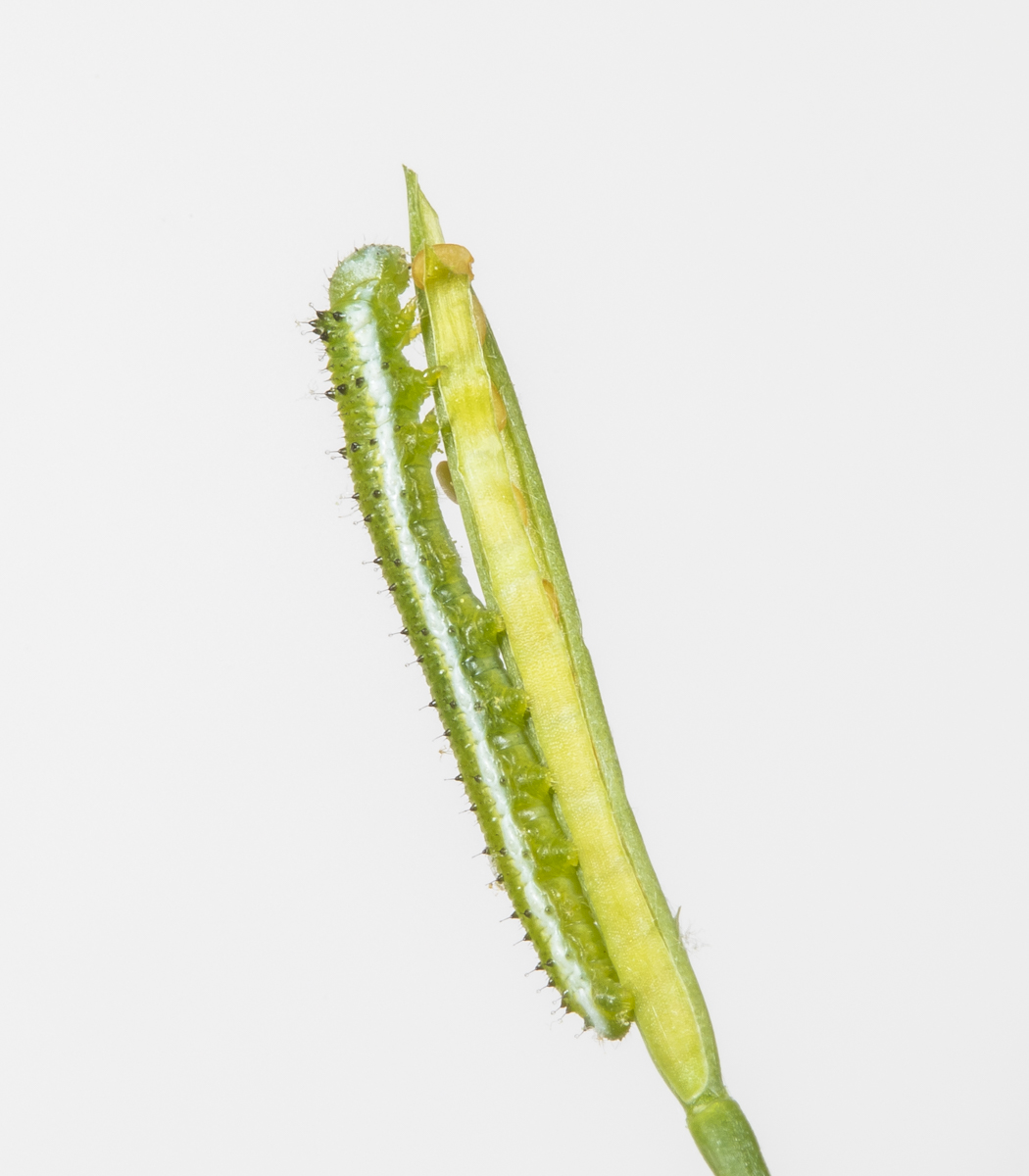
So, I started collecting bittercress plants from the yard and putting them in floral tubes with water as a food source for what I soon discovered were five larvae. The two eggs I had originally collected hatched first, but there were some unseen eggs that hatched later, perhaps on plants I brought in as food.

The two large larvae kept feeding and growing and I was worried I would run out of decent bittercress plants as a food source. Then, on April 29, I checked the plants and found one of the large larvae had formed a prepupa (the stage between a caterpillar and a chrysalis). It was in a pose similar to a swallowtail prepupa, with the rear attached to a silk pad, the front of the caterpillar passing through another silk loop, and the whole body curled in a C-shape (or maybe more like an apostrophe)..
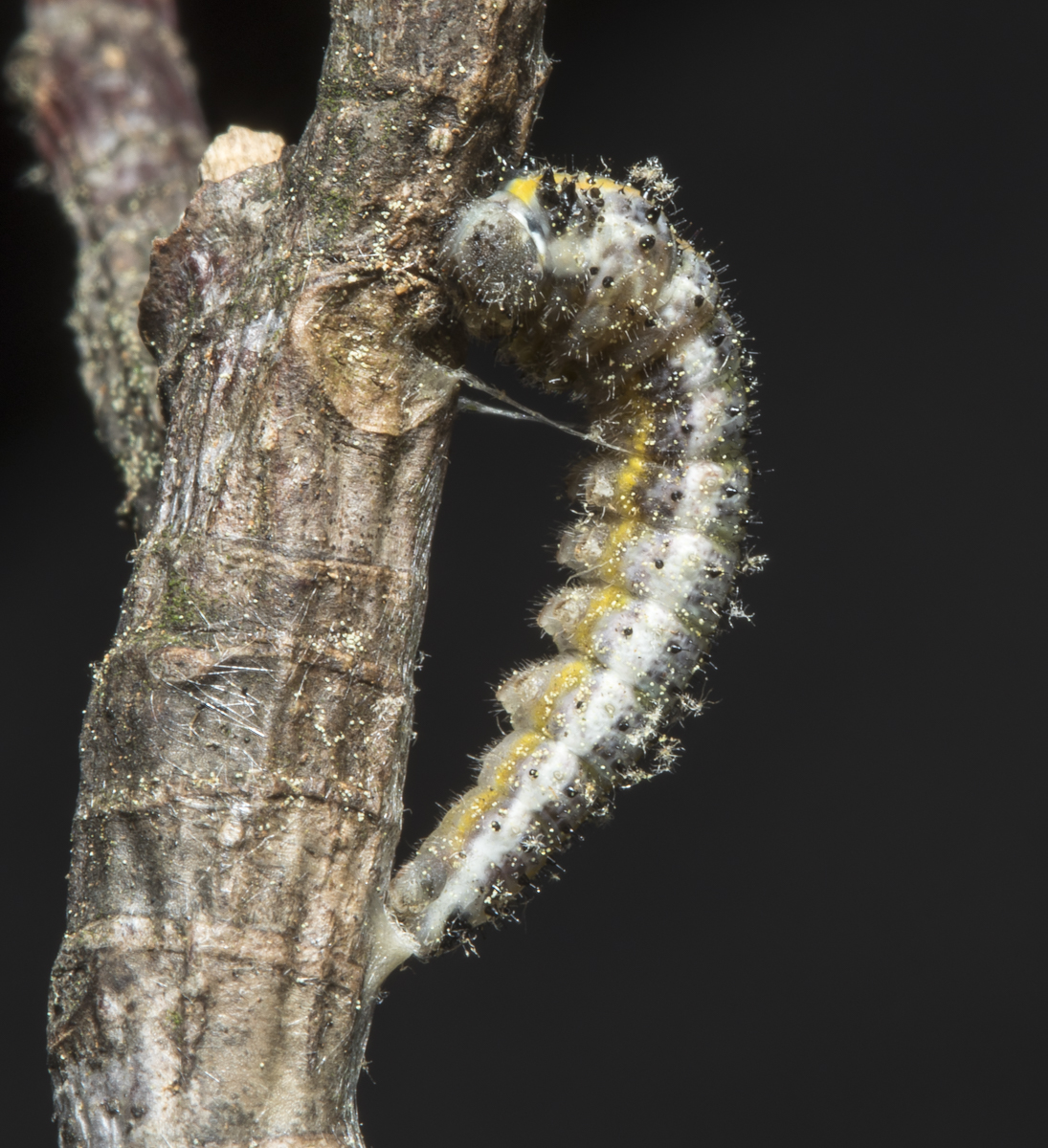
Over my years of raising caterpillars for programs, I have witnessed many prepupa transform to the chrysalis (it is really magical to watch). The prepupa stage usually lasts about 24 hours, so I Imagined it would transform overnight or early the next morning. I photographed it and left it sitting out on our dining room table/macro studio, hoping to catch it in the act of transforming. I checked on it once in the middle of the night, but it was still in the same position. Close to the time they shed the last caterpillar skin to reveal the newly formed chrysalis underneath, the prepupa starts to shudder and then straighten out. Then it happens quickly, usually within a matter of minutes. As it turned out, this prepupa decided to complete its performance sometime in the wee hours of the morning, so when I awoke and checked on it about 7 a.m., the chrysalis was already there.
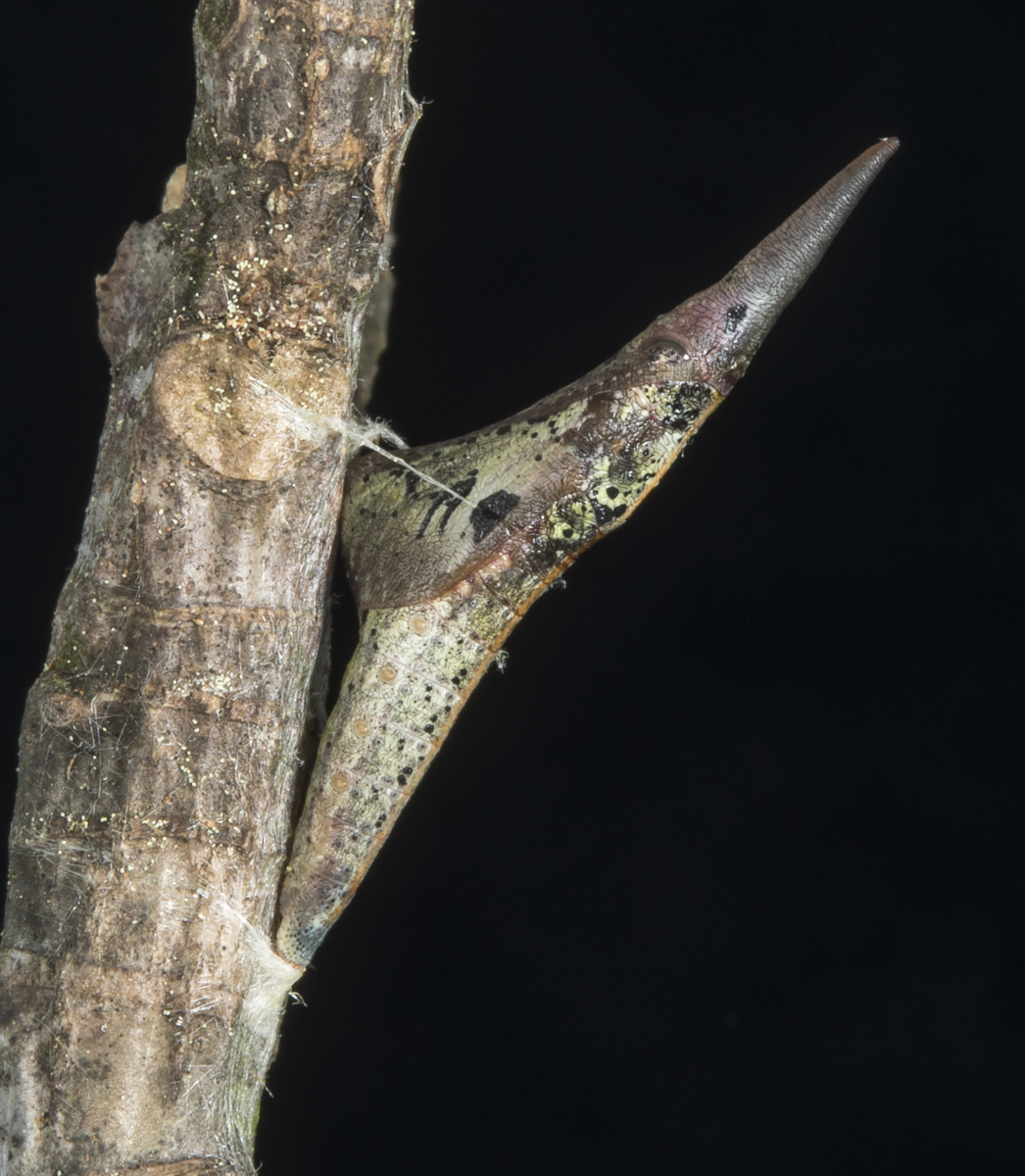
But, I had finally succeeded in seeing one of their strange thorn-mimic chrysalids. No wonder I have never found one. Look at the first photo in this blog again and you can see how well this chrysalis blends in to a tree trunk or twig, the usual places in the forest where it is formed.
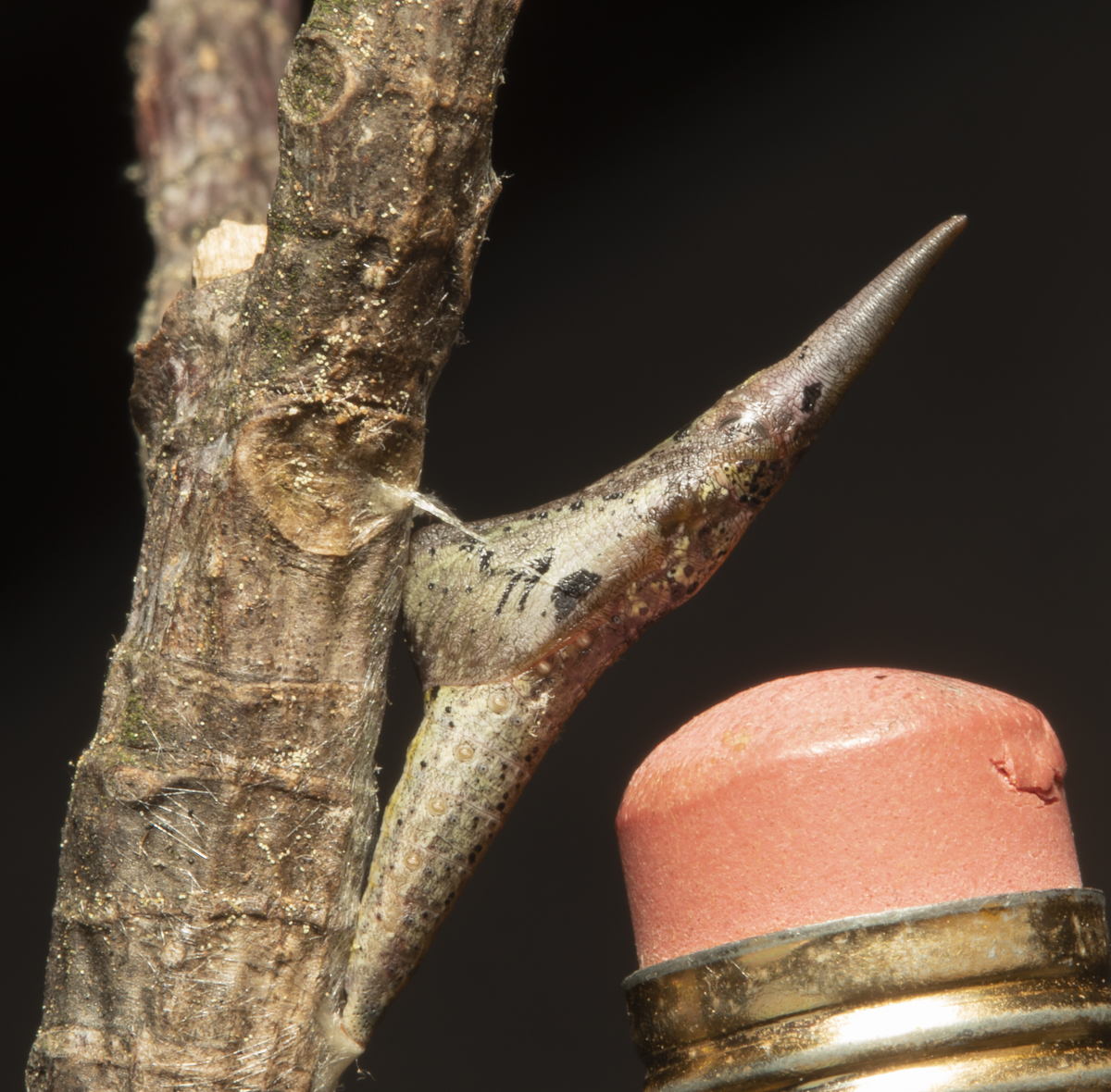
Plus, it is a pretty small, cryptically-colored chrysalis, making it even more challenging. Needless to say, I was geeking out when Melissa came into the dining room (the things she puts up with…although she thought it was pretty cool as well). With a few larvae still feeding, I might have a shot at witnessing the transformation, I’ll keep checking and building my nerd street cred.


Leave a reply to Transformation | Roads End Naturalist Cancel reply