
“All animals are born with innocence, curiosity and love.”
~Anthony D. Williams
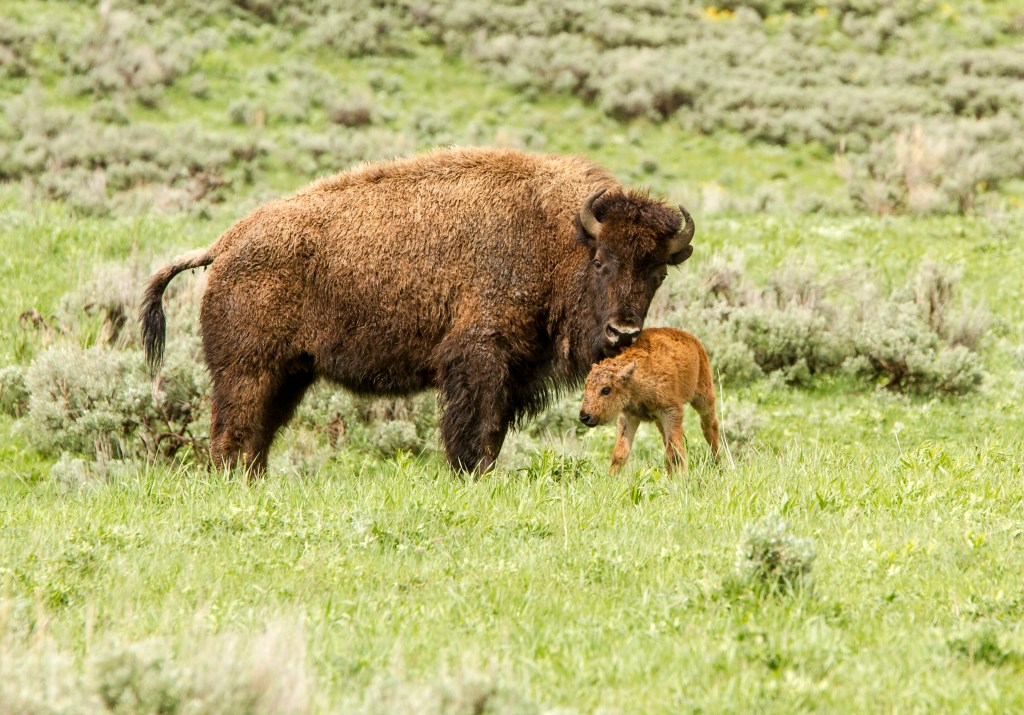
Springtime in baby season in Yellowstone. The bison start first, dropping their fluffy orange calves starting in mid to late April. This spring, every time we went out in the park and spotted a bison cow with her tail up, I took a second look. Of course, bison raise their tails frequently… you may have heard that a tail up means one or two things: charge or discharge. It can be sign of agitation… or, the obvious. But in spring, a tail held straight up for a longer time on a female bison can signify something else — that it’s time for a calf to arrive.
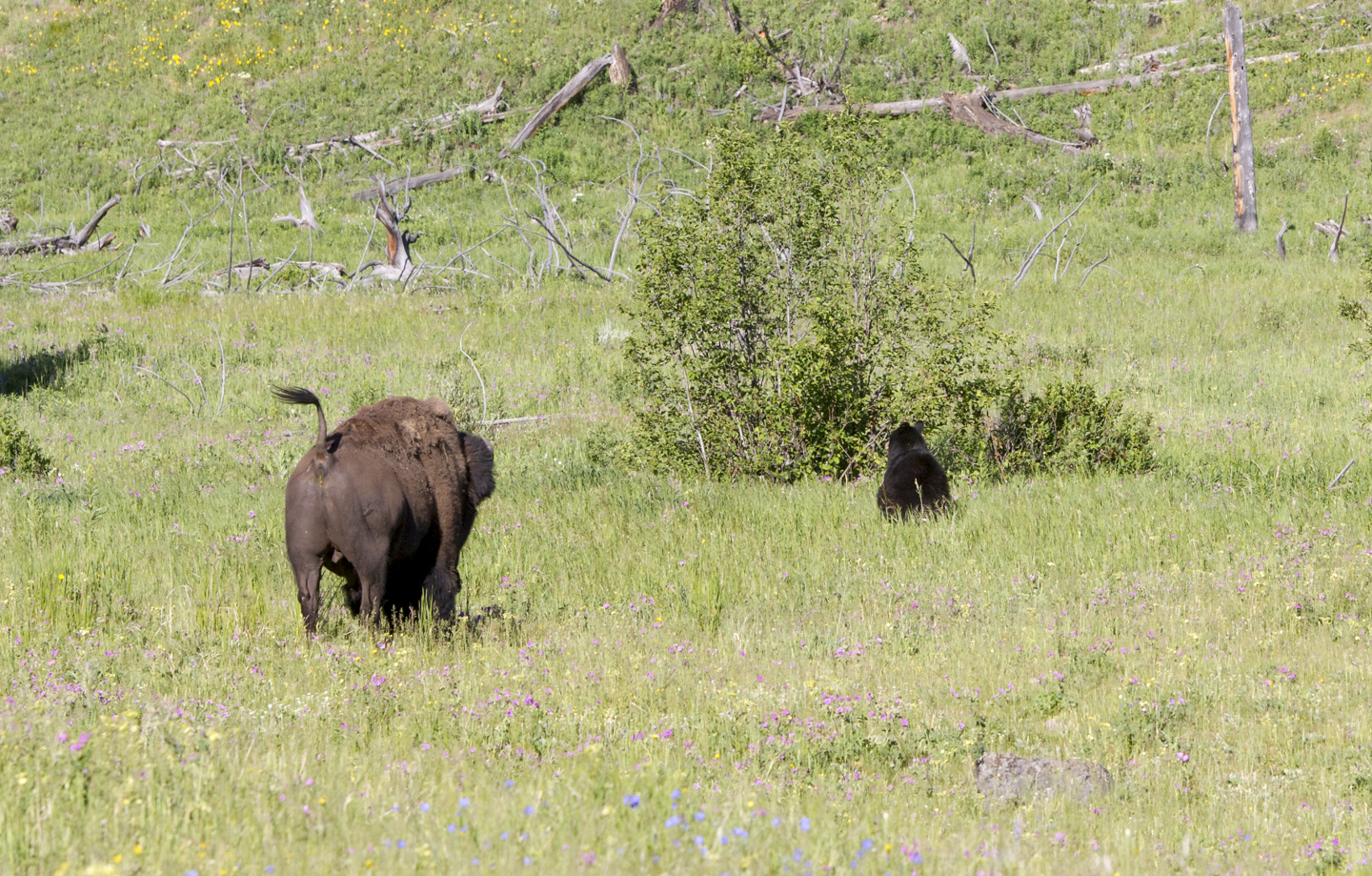
Despite our efforts, we didn’t catch a bison birth this spring. While there’s still a chance for a late birth — there always seems to be a calf or two that arrives late and holds its orange color later into the year than others in its cohort — it’s a lot less likely. Now, the big herds dotting Lamar Valley or wandering the high slopes seem to have an almost even number of dark brown cows and orange calves.
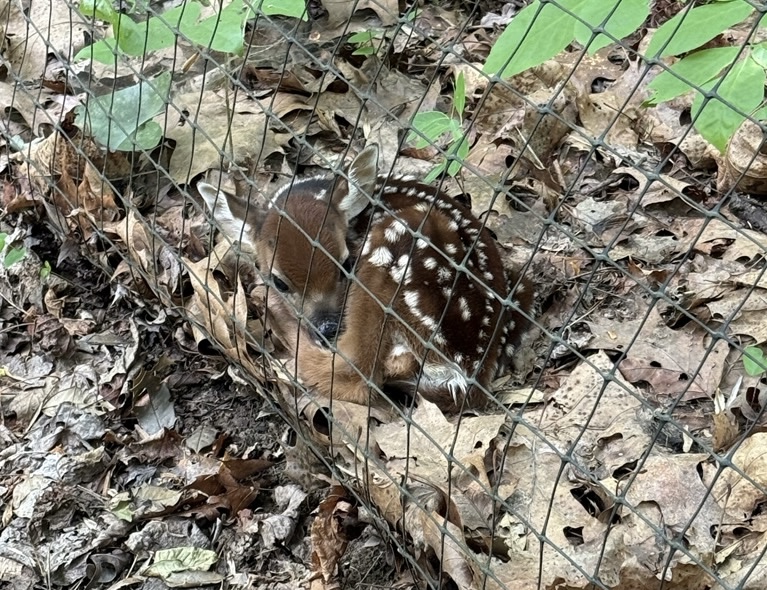
So now, our baby search has shifted to moose, elk, pronghorn, and deer. Just a few days ago, we got a message from our friend Andrew that is living in our house in Pittsboro that he had seen a deer inside the deer fence. A couple days later, after another sighting in spite of a fence repair, he walked the fence again and discovered the source of her persistence: a fawn stashed just inside the fence! Deer (and elk and pronghorn) leave their scentless babies hidden while they go out to feed, returning a couple times a day to nurse and clean the baby. Staying hidden keeps the baby safe until it is able to keep up with the herd.
Here in Yellowstone, we’d heard that folks were starting to see elk calves, and there was a report of a pronghorn giving birth near the entrance station. I was jealous. Well, after a day in the park with our friends Deb and Keith, who were visiting from North Carolina, we arrived back into cell service to a text message from our next door neighbor, Trudy, that an elk was in labor in the backyard between our two houses! It had started about two hours prior, and I was so disappointed that we had missed it. But apparently elk labor can last up to 3 hours. I checked in with Trudy, and the elk was still there and still in labor. Trudy had seen the calf’s feet emerge from the birth canal briefly, but they had pulled back in.
We hurried home. We quietly snuck up to the downstairs window where we could see her. She was only about 15 feet away, and we worried we were too visible and would make her uncomfortable, something we definitely did not want to do. So we went upstairs and piled on our bed to look out the second story window. For about an hour, kneeling in a somewhat uncomfortable position to look out over the head board of the bed, we watched.
The elk was laying on her side with her legs out straight. We could tell when she had a contraction as her body tensed and her eyes bulged. Sometimes, she’d kick one of her legs out straighter. A few times she stood up slowly and shifted position, seemingly trying to get comfortable. Finally we saw hints of the feet of the baby. The hooves were bright white while the legs were dark, almost black. Eventually, after much pushing and shifting and what looked like a lot of discomfort, the head of the baby elk appeared. We could sort of make out one eye through the sac encasing the baby. It seemed to take a long time, but finally with much pushing and eye bulging and effort, the baby emerged, except for its back legs. For a moment, it didn’t move… but soon it uncurled its head and kicked its legs. The mother stood up and the back legs dropped out. She immediately turned around to eat the birth sac off the calf and lick it clean.
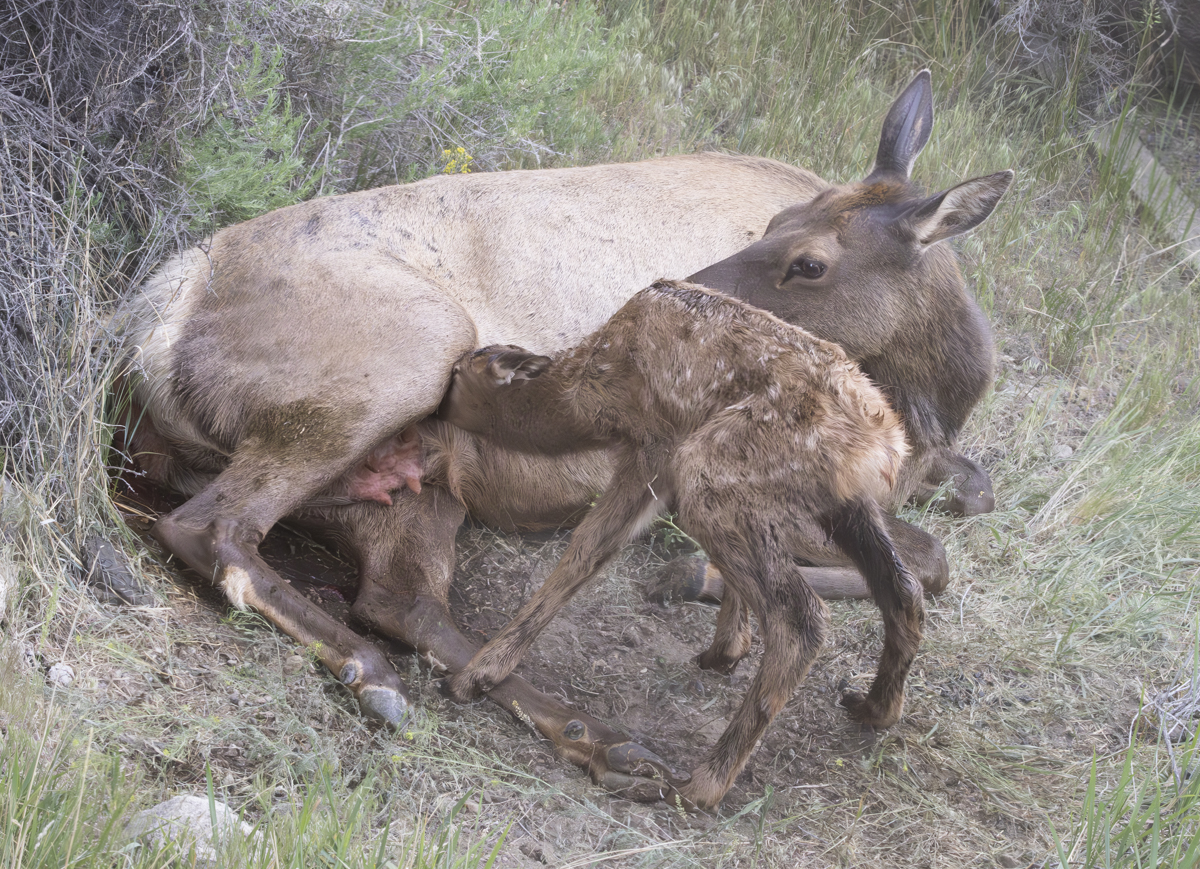
The calf was small and very dark colored. As the mother cleaned and licked the baby, its fur fluffed up, and before long it had a more typical brown color with hints of the white spots that help it stay camouflaged. As the baby elk flailed around, trying to stand up, the mother delivered the afterbirth and began to eat that as well. Apparently, it is typical in the animal world for a mother to eat the birth material. It provides much-needed nutrients, and it helps remove an attractant for predators and scavengers from the site of the birth.
As the calf tried to stand, it would straighten its back legs and push its butt into the air. Its front legs, folded underneath it, proved tricky to straighten. Multiple times it tried and fell back to the ground. Finally, it managed to get all but its hooves straight; they were still tucked back and under. But soon it gained its feet and wobbled around next to its mother. It nuzzled up to her, likely looking for her udders. It kept trying her neck… but finally found the right spot between her back legs and managed to get its first meal.
All in all, her labor ended up taking about three hours, and it look about 30 more minutes for the calf to be able to stand. That evening. she took the calf across the street away from any remaining scent of the birth and into a thicker area of vegetation. We haven’t seen our little friend again yet, but that’s probably because his mom is hiding him in a safe place.
Here’s a video of the entire process. I tried to cut it down to a reasonable length, so it has some cuts when the process took time. Note that it includes the sight of blood and birth materials… so you may not want to watch it if that makes you squeamish.
We couldn’t believe our luck to get to witness such a miraculous event… but turns out, it wasn’t our only birth for the season! The following week, we took a camping trip to an area west of the park. As we were out exploring some dirt roads in sagebrush country, we came around a curve. I noticed a pronghorn out in the sage. Something about her posture struck me, and I told Mike to stop. Sure enough, the first of her twins wobbled beneath her legs as the head of its sibling, encased in a bluish membrane, emerged from her birth canal. She saw or heard us and somehow managed to pause the birth as she watched us with her wide, dark eyes. When she didn’t avert her attention after a few minutes, we backed the truck back around the curve. Out of sight, we climbed a nearby hill. Through the trees we could watch and not disturb. I actually think she could still sense us even there, but we were still and she eventually got back to work.
Her labor continued and shortly, we saw the second fawn flop to the ground. Even before its back legs emerged, I could see it moving its head and front legs. Our view of her and the twins came and went as they moved in the sagebrush. The twins were dark, the second darker than the first. And though both quickly gained their feet, the wobbles in their skinny legs were adorable. Their heads were only about half the size of their mother’s, but perfect mimics with the same dark eyes and curious, tall ears. The afterbirth came all of a sudden as the mother rose again to her feet, tail end in the air. We watched the tiny fawns stumble around their mother for a while, then we left the new family to itself and drove away, thoroughly amazed.
I shot this video of the newborn baby pronghorns with their mom through our spotting scope.
We’ve been keeping an eye out for babies on our recent visits to the park, too. Recently, we got to watch the joyful clambering of baby mountain goats high on a cliff. It’s amazing how quickly they gain the dexterity to climb and not fall.
This video is of some distant goats taken with my iPhone through the scope.
And just a couple days ago, while guiding some guests for Yellowstone Wild, I spotted a pronghorn fawn with its mother. This one was a good bit older than the newborns we saw last week, and it looked like maybe it had reached the stage where it would travel with the herd.
Spring is an amazing time of year in Yellowstone!


Leave a Reply