Welcome to our new website! We hope you like it. Please let us know if you notice something missing or that needs a correction. ~Mike & Melissa

  • Searching for Snows

    Don’t refuse to go on an occasional wild goose chase – that’s what wild geese are for.

    ~Henry J. Haskins

    I am lucky in retirement to have more time to seek out places that provide a wildlife spectacle. There is something transformative about witnessing masses of animals in a wild place. This time of year, one of the true spectacles at many of our wildlife refuges in the East, is the concentration of waterfowl of various species on their wintering grounds. One of my favorite sights and sounds of winter is a huge flock of Snow Geese flying overhead. So, about a week ago, I went north to Chincoteague looking for waterfowl. It snowed on my second day, and the next morning I went out one last time looking for large flocks, hoping the cold and wind might concentrate them.

    Snow Geese hunkered down in cold
    Snow Geese hunkered down against the cold and wind (click photos to enlarge)

    The flock was there but easy to miss as they were hunkered down on an over-wash fan on the sound side of the beach parking area. There were maybe a little more than a hundred Snow Geese in this group. I pulled up to watch and not a goose moved for several minutes. With temperatures in the teens and a strong wind, I didn’t blame them.

    snow geese on sound beach
    Snow Geese on edge of marsh at Tom’s Cove in Chincoteague NWR

    Finally, a few got up and walked toward the marsh to feed when another hundred or so flew in.

    snow goose carrying gass clump
    Snow Goose juvenile with a high fiber snack

    In areas with extensive marshes, Snow Geese tend to grub up the marsh grasses, consuming almost any part of the plant from roots to stems, to leaves.

    snow goose rusty head
    Many of the Snow Geese at Chincoteague have rust-colored heads

    This grubbing behavior often leads to the white head, neck, and breast feathers having a rust-colored stained appearance due to the mineral content of the mud. I rarely see this on the Snow Geese at Pungo, as they tend to feed more on waste grain in agricultural fields.

    snow goose bloody
    Bloodied Snow Goose

    Before leaving, I did see a goose with a different color – blood red. This goose had been injured (shot perhaps?) and had been bleeding somewhere on the head or neck. After watching the bird for several minutes, it seemed to be doing well, moving normally and feeding with the others in the marsh.

    With relatively few birds at Chincoteague, and one more day to look for large flocks, I headed back to my favorite place, the Pungo Unit of Pocosin Lakes National Wildlife Refuge, to spend my last day on the road searching for snows.

    Tundra Swans in field
    Tundra Swans crowd a recently cut corn field at Pungo

    I arrived at Pungo late in the afternoon. The light was gorgeous coming into a recently cut corn field adjacent to one of the main roads on the refuge. There were a few thousand Tundra Swans feeding on the corn and many more flying in. This was a good sign, as large flocks of swans often attract the Snow Geese as they search for a late day feeding. I pulled off the road, along with a couple of other cars, to take it all in. I didn’t have to wait long. At first, about 50 Snow Geese flew in, circled, and landed among their taller cousins. Then I saw them coming, a huge flock flying in from the lake. I jumped out and quickly put the camera on a tripod and started recording…

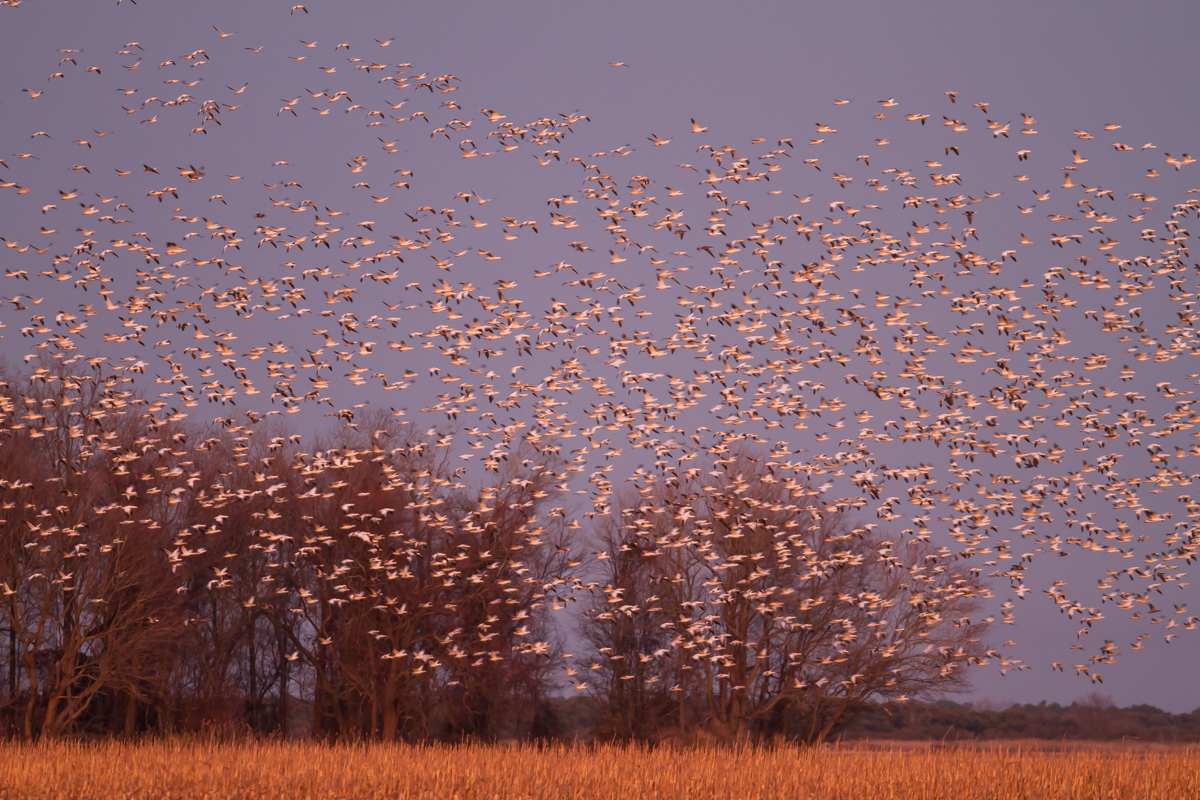
    The flock did its usual thing, noisily circling the field, breaking up into a couple of white clouds, and started landing. A lot of the swans decided it was time to head back to the lake with all the commotion starting, so the scene was chaotic with birds circling, others leaving, and everyone making a lot of noise. It is tough to take it all in. I certainly can see how flocks can confuse predators, as I found myself not knowing which way to look or point the camera, since there was something happening in all directions. This was all repeated the next evening, so these photos are from two afternoon shows.

    snow geese and moon 1
    A beautiful moon added to the scene

    This is what I wanted to see, the large swirls of birds in the sky, the late afternoon light tinging their bodies and wings with hints of gold. An almost full moon overhead added a touch of elegance to the scene, as did the graceful swans.

    snow goose landing in crowd 2
    A Snow Goose hangs in the air looking for room to land

    Both evenings, the sea of white moved closer to the edge of the road where I stood, getting access to the corn that remained uneaten. The geese kept coming in, streaming down among the swans, who seemed disturbed by the interlopers in their field.

    Snow geese landing 1
    A blue morph Snow Goose landing with white morphs

    Noticeable among the white birds are several of the darker color morphs. Long believed to be a separate species, the Blue Goose, these are now known to be a color morph of the race of Lesser Snow Geese. This color variation is controlled by a single gene. The two color morphs can mate with each other and produce young of either or both colors.

    Ross' Goose
    A Ross’s Goose feeds at the edge of the flock

    Near the edge of the churning flock, I spot a diminutive Ross’s Goose. roughly half the size of a Snow Goose, but otherwise very similar. Their bill is shorter and lacks the black “grin line” of a Snow Goose, but that feature is not always easy to discern as their heads bob up and down while feeding.

    blast off
    A blast off of white and black

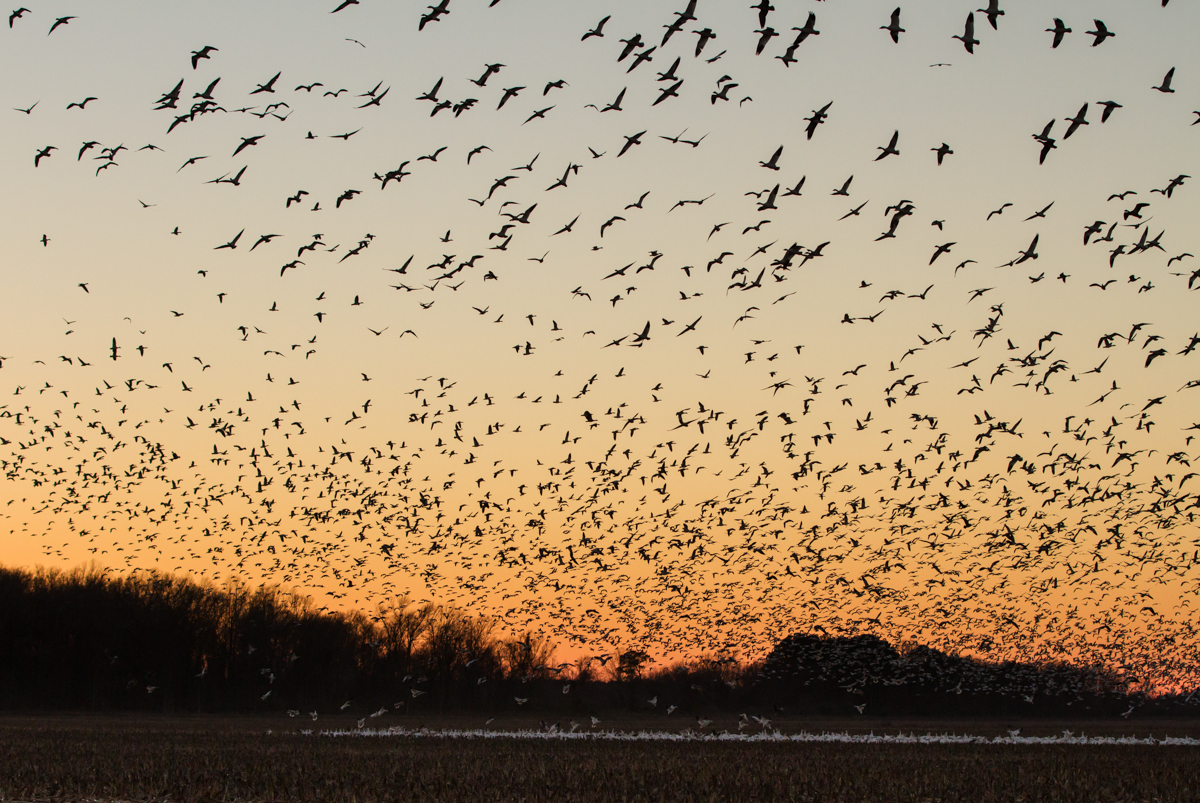
    A car pulls up, and people jump out, and the birds close to them blast off with a deafening sound of squawks and wings. With a telephoto lens, I just capture a tiny window of the scene….imagine it one thousand fold for a sense of the immensity of the upward moving snow storm. They circle and land again. The wind is coming from my back, as is the sun, causing the beautifully lit birds to land facing my camera, just what you want for capturing images of winged snowflakes.

    snow goose pair landing
    A pair of Snow Geese early in the afternoon, before the “golden hour”
    snow geese banking
    A slight turn as it lands reveals the entire underside of this bird
    snow goose landing 4
    Some birds looks like they are thinking ahead about foot placement
    snow goose landing in crowd 2
    It must be tough to find the right spot
    blue geese landing
    A trio of blue morphs landing
    collared snow goose
    I caught this collared Snow Goose as it came in to the field
    best snow goose landing
    I love it when the shadow of the head can be seen on the wings
    snow goose landing 1
    The light turns golden in the last part of the day
    Snow geese landing
    The two color morphs together

    Populations of Snow Geese have increased dramatically since the early 1900’s, when hunting was stopped due to low numbers. It resumed again in 1975 after populations had recovered. The numbers have continued to grow, causing some scientists and managers to think that the tundra nesting habitat of Snow Geese is beginning to suffer from such high concentrations of feeding birds in summer. They are now probably one of the most abundant waterfowl species in North America, and concentrate in huge flocks during migration. A friend recently told me that our refuges can’t justify planting corn for Snow Geese because their numbers are so high. But, we both agreed, from a refuge visitor standpoint, the Snow Geese offer a spectacle that few other species of wildlife can match.

    snow geese and moon crop
    Snow Geese against a rising moon
  • Chilly Chincoteague

    The time will come when winter will ask what you were doing all summer.

    ~Henry Clay

    I had some time to explore over the recent holiday weekend, but decided that my favorite place, Pungo, would probably be too crowded so I thought I should try someplace else. My original plan was to head to Florida, but, with some chores that needed attention on Friday, and uncertain weather forecasts, I opted for a closer destination. I headed north on Saturday to Chincoteague National Wildlife Refuge on the Eastern Shore of Virginia. Established in 1943, the refuge totals over 14,000 acres of ocean-side habitats including beach, dune fields, marsh, and maritime forest.

    Wildlife Loop sunset and clouds
    A beautiful afternoon sky greeted me along the Wildlife Loop at Chincoteague (click photos to enlarge)

    I arrived just in time to drive out onto the Wildlife Loop (it opens at 3 pm to cars; you can hike or bicycle earlier in the day), which has produced some nice sightings on previous trips. The trail was packed with people, but relatively few birds.

    Great Egret along marsh
    Great Egret hunting along the marsh

    I saw a handful of ducks, an eagle, and a couple of herons and egrets. The sky and afternoon light were beautiful, but clouds were quickly moving in, and the forecast had changed to an increased chance of precipitation overnight and the next day.

    Sunset over bay
    Sunset over the marsh at Tom’s Cove

    The cloud cover thickened as I drove out toward the beach hoping to see some shorebirds or gulls. Along the way, a striking sunset began to color the sky, so I stopped to watch it progress. I spotted something out on a sliver of land (to the right of the duck blind in the photo) and when I glassed it, saw that there was a small herd of the famous Chincoteague wild ponies grazing in the marsh. I must admit, I usually don’t take many photos of wild horses, but I couldn’t help myself as the sunset grew in intensity.

    Ponies at sunset

    I got out the 500mm with a teleconverter and took a series of shots as the horizon burst into flames of orange and red. Anytime there is a pony within sight on the refuge, crowds begin to gather, and the road was soon lined with cars enjoying a spectacular end to the day.

    snowing
    Wet snow the next morning

    The next morning was just gray and cold. So much for the old “red sky at night, sailor’s delight” theory. By 9 a.m. a very wet snow was falling. The changed forecast called for snow all day and then bitter cold and strong winds. Florida was looking like a better choice, perhaps. But, I decided to make the best of it.

    Delmarva Fox Squirrel and pine cone
    Delmarva Fox Squirrel with a pine cone

    I geared up and hiked the 1.6 mile Woodland Trail, hoping to find a Screech Owl or some other wildlife holed up in one of the many cavities in the dead pines (a pine beetle outbreak has killed large numbers of pines on the refuge). Since the snow had intensified, I just carried my point-and-shoot and binoculars. Of course, with my good camera in the car, I came across a very cooperative (and wet) Delmarva Fox Squirrel chewing on a pine cone. These beautiful squirrels have just recently been taken off the Endangered Species List. They are huge, weighing up to 3 pounds, making them roughly three times the size of your typical backyard Gray Squirrel. I soon started feeling about as wet as the squirrel, so I headed back to the hotel to dry out and do a little writing. The snow continued all day, but eased up late in the afternoon. I soon headed back to the Wildlife Loop, hoping the bad weather might have created some wildlife opportunities.

    merlin
    Merlin on a snowy perch

    There were few birds (and now almost no people) until I got almost all the way around the 3.5 mile loop. A lone snag at the edge of the marsh had a nice surprise perched up on a high branch – a Merlin. This has been a good winter for Merlin sightings and this pugnacious little falcon was very cooperative. I sat with it for 15 minutes until another person came along and spooked it. But it gave me a lot of poses as it apparently was stretching and trying to dry out its feathers.

    Merlin with fanned tail
    Merlin fanning its tail in an attempt to dry out
    merlin stretching
    Merlin yoga

    Darkness came quickly with light snow still falling. The next morning was clearing, but bitterly cold, with temperatures in the teens and a strong northerly wind.

    snow the next morning
    Snow plastered on one side of tree trunks

    The winds had painted one side of the trees white with the remaining snowfall overnight, but few people were out to enjoy the scene as I patrolled the refuge roads.

    ponies and lighthouse
    Horses in the marsh in front of the lighthouse

    I was the only one seeing the horses as they now grazed the marsh near the historic Assateague Lighthouse, completed in 1867. It seemed as though all the wildlife was hungry and active in the cold.

    Great blue heron strike
    Great Blue Heron strikes the water and grabs a killifish for a morning snack
    mallards dabbling
    Mallards dabbling for breakfast
    bald eagle cruising
    Bald Eagle cruising for a meal

    The overnight drop in temperatures froze some of the shallow pools and brought birds to the deeper channels close to the road, providing me with a better look than the previous two days.

    mallard drake
    Brilliant green head of a male Mallard
    bufflehead
    Female Bufflehead
    gadwall drake
    Male Gadwall showing his diagnostic black tail

    The morning turned out to be productive, in terms of good bird sightings, and the light was just right to highlight some of the details of the ducks. I still had another day to search for critters. Bombay Hook perhaps? While there were reportedly some good numbers of Snow Geese up there, it was another 3 hours north.

    great blue heron posing
    Standing watch and giving me direction

    But then I saw this guardian of the marsh, and he seemed to be giving me a clue. His bill pointed back toward the south. Finally, I understood, and I convinced myself to go where I knew there would be birds…back home to North Carolina. Pungo was only a little over three hours away and I could make it in time for the evening show…


  • Viewfinder

    The camera is an instrument that teaches people how to see without a camera.

    ~ Dorothea Lange

    One of my groups a week ago were all members of a photography club. I generally don’t do the classic photography workshop type of program. I am usually more interested in helping people see the natural world with a new set of eyes, learn about an area and its wildlife, and begin to see how they can improve their photography by becoming more observant. This group turned out to be interested in photographing a wide variety of subjects, not just the wildlife I am found for them, but so much more. With the weather being less than ideal, I decided to visit some areas that might offer a diversity of photographic topics given the conditions of overcast skies, occasional drizzling rain and mist. It seems they were up to the challenge of the weather and, from what I have seen online, they produced some beautiful images. And, as usual, I always learn something by being around photographers. I normally don’t take many photos when I am leading a trip, but I found that once I got this group to a location, they were very content to wander and look for subjects, with occasional help and interpretation from me. So, here are some images of things we saw, other than wildlife, on a couple of misty, gray days. Thanks to my group for giving me reason to pause, stretch myself, and appreciate some of the other beauties in our world.

    marsh B&W
    Marsh scene (click photos to enlarge)
    Crab pots
    Crab pots
    Abandoned boat at Swan Qtr 2
    Abandoned boat in Swan Quarter
    boardwalk at Pettigrew
    Scene along the boardwalk at Pettigrew State Park
    Lake Phelps in fog
    Lake Phelps in fog
    cypress silhouettes
    Bald cypress silhouettes at Lake Phelps
    oxalis B&W
    Wood Sorrel leaves
    cypress tree in lake mattamuskeet B&W
    Cypress tree in Lake Mattamuskeet
    reflections along boardwalk
    Reflections along boardwalk
    reflections along boardwalk with wave
    Those same reflections when you make a wave in the water
    Pungo sunset
    Pungo sunset
    Marbled Salamander
    Marbled Salamander under a log (okay, I can’t help but look for wildlife, I admit). I am not sure what is wrong with its hind leg, it looks very swollen.


  • Birds Galore

    It is a wholesome and necessary thing for us to turn again to the earth and in the contemplation of her beauties to know of wonder and humility.

    ~Rachel Carson

    I had two groups scheduled for trips over the last week, one a group of photographers, and one some friends from my museum world. The weather for the first group did not look great, but they all decided to roll the dice and give it a try.  And I am glad they did, as there were some beautiful photographs taken and some wild scenes observed. The second group had much better weather, but it turned windy and much colder, which is often a good thing in terms of wildlife activity. Birds were abundant, with an estimated 40,000+ Snow Geese now on the Pungo Unit of Pocosin Lakes NWR.

    snow geese overhead 2
    Snow Geese against a gray sky (click on photos to enlarge)

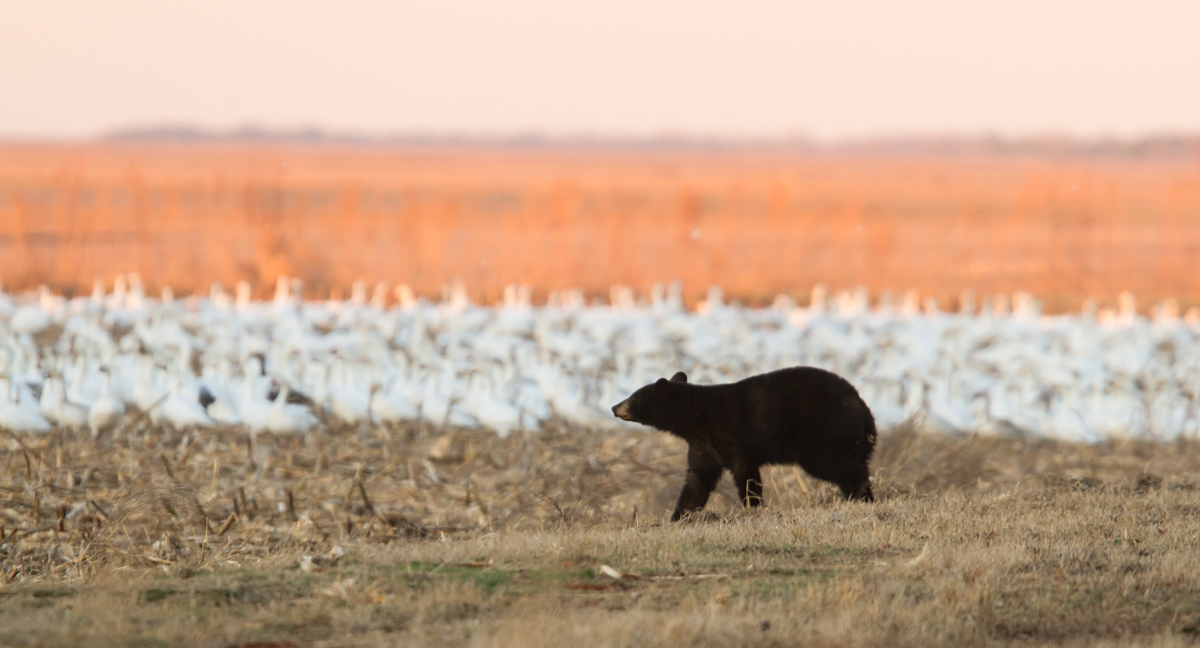
    The flocks are still being a little antsy, with the main flock circling the fields for quite some time before settling, and various groups breaking up and peeling off from the main aggregation. When they do swarm as a flock, they are truly magnificent to see, and hear. On the first morning with a group, we were treated to a bear wandering through the flock of Snow Geese in the field, causing a commotion as the birds parted to allow the bruin to pass (unfortunately, I had not carried my camera due to impending rain). I answered  a question from one of the group about where these birds had migrated from by showing them an image on my phone of a certificate I just received from my report of a Snow Goose collar (as related in an earlier post). The two collared birds both had been caught and tagged in Nunavut, Canada, above the Arctic Circle. That is almost due north of their wintering grounds at Pungo Lake, and a distance of about 2600 miles.
    certificate for collar
    Certificate from collared Snow Goose report

    One thing that really surprised me was the age of one of the birds (MXO7) who was at least 11 years old. Assuming this Snow Goose has made this same trip, back and forth each year, it has flown at least 52,000 miles in its 11 years…that’s a lot of wing beats.

    snow geese over field
    Snow Geese circling over corn field in early morning light

    Over the next few days, we saw the flocks in the same fields, coming out in the morning early, feeding for a couple of hours, returning to the lake to rest, and repeating the pattern late in the afternoon.

    snow geese over field 2
    Snow Geese just after blast off

    As we walked along the path, the entire flock would occasionally blast off with a loud cacophony of calls and circle noisily before returning to feed.

    Immature Bald Eagle
    A Bald Eagle fly-by will almost always cause the flock to blast off

    If you look closely, the usual cause for these nervous lift-offs is a passing Bald Eagle, like the immature eagle in the photo above.. I imagine the eagles are testing the flock as they cruise over, looking for weak birds, or something that might cue them in on an easy meal.

    snow and ross' goose
    Snow Goose (left) and Ross’s Goose, flying next to each other

    My new game when the birds fly over is to try to pick out a smaller Ross’s Goose out of the flock of Snow Geese as they pass overhead. It is obviously much easier once the flock has stretched out in lines, rather than when they are tightly packed together.

    The spectacle of the Snow Geese flying overhead is one of the reasons I love this place. While my groups were able to experience it in various ways, I had an absolutely amazing experience Sunday evening between leading trips. It was a beautiful evening and I was walking back toward the gate. My friend, Rick, was at the gate, along with a first-time visitor to Pungo, Sydney. The birds came into the field as I walked, so I stopped, then turned and walked back some distance to where I thought they might fly over on their way back to the lake. And I waited…

    They did as I had hoped, taking off in one giant swoop, and spreading out over the pink-tinged sky, making an incredible sound as they winged their way to the safety of the dark waters just beyond the trees. Sydney had walked out toward me just before the bird’s departure. It was an a truly spectacular introduction to the wonders of Pungo on her first visit.

    There were many other bird highlights in my 6 days at the two refuges, many not recorded by my camera, but indelibly etched in my memory. Of the latter, there was a Peregrine Falcon streaking by the corn field; a Merlin accelerating across s the tops of the corn resulting in an explosion of Red-winged Blackbirds, but no kill this time; and the high-pitched shriek of a Wood Duck as it dipped and ripped through the treetops with a raptor of some sort (probably a Peregrine or a Cooper’s Hawk) in hot pursuit.

    Trumpeter Swan close up
    Trumpeter Swan at Mattamuskeet
    Tundra Swan close up
    Tundra Swan head for comparison

    At Mattamuskeet, there have been reports of a few Trumpeter Swans hanging out along Wildlife Drive. On my scouting trip the first day, I came across a group that I think were the Trumpeters – slightly larger, no yellow on the bill (although that can vary on Tundra Swans), and a longer, and more sloping bill. They also apparently curl their necks into more of an S-shape and rest it on their body when in a sitting or resting position.

    Swan juvenile
    Juvenile swan

    There were a couple of juvenile swans nearby that I think were also Trumpeters as they had darker heads than most of the immature Tundra Swans I see.

    A few other highlights of a great trip to two of my favorite places…I can’t wait to go back.

    bears in rod
    A good way to end a trip – 5 Black Bears between you and your car
    Cattle Egret
    Cattle Egret along the causeway at Mattamuskeet
    bald eagle with rabbit
    Bald Eagle flying across a roadside field with a small rabbit
    Forster's Tern
    Forster’s Tern at Mattamuskeet
    Pungo sunset 3
    Beautiful sunset at Pungo
  • Snakes on a Plain (Coastal Plain, that is)

    For hibernating rodent and hidden turtle, what dreams, I wonder, come on such a day of spring in January?

    ~Edwin Way Teale

    I just returned from several days down at Pocosin Lakes and Mattamuskeet National Wildlife Refuges. The weather started off beautiful, then wet and warm, then cold and windy – quite a variety of conditions in a 6-day span. The trend thus far this winter has been for unusually warm conditions which has lead to some strange wildlife sightings. I reported in an earlier blog on the butterflies we saw on the Christmas Bird Count, and the still active mosquitoes and biting flies. This past Sunday set a new personal record for strange winter wildlife sightings in North Carolina – a 4 species-of-snake-day in January. I have seen a few snakes out in December and January over the years (mostly Rough Green Snakes at Pungo), but never 4 species in one day.

    Snakes generally seek sheltered locations when cold weather strikes, but can be seen out, even in winter, when temperatures warm to around 60 degrees Fahrenheit, or more. Last week had a string of warm days, with daytime highs reaching the mid-60’s on Saturday and Sunday. I had a group of photographers and we heard a few frogs calling as we walked around on Saturday, which was rainy and mild. Melissa was down at Pungo with a group of teachers and texted me about an amazing observation. She had walked up to a tree with a hollow base to investigate what looked like some digging at the entrance to the hole. When she looked inside, she saw what appeared to be a large snake, perhaps a Canebrake Rattlesnake, Crotalus horridus. I called her that evening and quizzed her on its location. The next day, I walked my group down the trail to where Melissa had described the tree. As I approached what I thought was the tree, I was at first disappointed, as I did not see a snake.

    Canebrake Rattlesnake on tree trunk
    Canebrake Rattlesnake on tree trunk (click photos to enlarge)

    But, then, I noticed something on the side of the trunk – a snake’s tail! I glanced around the trunk and there it was, a huge, beautiful rattlesnake, wedged between some vines about two feet off the ground. Needless to say, I was excited, and members of my group that had stayed on that morning were provided with a rare opportunity to photograph a winter snake. Little did I realize then that the day held many more reptile surprises.

    Banded Watersnake?
    Water Snake along the boardwalk at Goose Creek

    After our walk at Pungo, we headed over to Goose Creek State Park for our final outing of the weekend. As we walked the long boardwalk behind the Visitor Center, one of the folks in the group called out…”snake”. Lying on a clump at the base of a larger tree was a water snake. At first glance, I thought it might be a Red-bellied Water Snake, Nerodia erythrogaster, due to the colors on its head and general lack of dorsal markings.

    Banded Water Snake close up
    Water Snake close up

    The more I looked, I thought maybe it was a Banded Water Snake, Nerodia fasciata, which can be rather dark on its dorsal surface, but can retain faint bands, like this one appeared to have. They usually have a diagnostic dark stripe from the eye to the back of the jaw line, and this one might have that, although it is hard to see. So, not quite sure, but snake species #2 for the day, nonetheless.

    Spotted Turtle
    Someone spotted a Spotted Turtle

    A few feet beyond the snake, someone glimpsed a Spotted Turtle, Clemmys guttata, basking on a log. These beautiful turtles are more active in the spring, although it is not uncommon to see them on warm winter days.

    The wind started picking up and the temperature seemed to be dropping as we drove out of the park.Not far beyond the park entrance, I saw a car stopped in the oncoming lane, flashers on. The driver was out of the car and I noticed a large, orange-ish snake right in front of the stopped vehicle. It was a Corn Snake, Elaphe guttata. The driver picked up a flat piece of wood along the road and was undoubtedly headed back to shoo the snake out of harm’s way. A good deed, indeed. But for the Sheriff’s car behind us, I would have stopped for a closer look and a photo. Species #3!

    After everyone headed for home, I went back over to the Pungo Unit in hopes of getting some better photos of the rattlesnake, and seeing the Snow Geese in sunlight instead of gray skies like the previous couple of days. When I reached the tree with the hollow base, the snake was nowhere to be seen. That causes you to be extra cautious I might add….where did it go?

    Rough Green Snake on tree trunk
    Rough Green Snake climbing a tree

    I walked a little farther, and saw a slight movement – snake species #4 for the day, a Rough Green Snake, Opheodrys aestivus. It was on the ground when I first saw it, but quickly moved to a tree trunk and began to climb.

    Rough Green Snake
    Rough Green Snake, flicking its tongue

    I soon walked on, carefully scanning the dried leaves ahead of me for signs of a snake, while still trying to look ahead for wildlife, such as bears, and overhead for eagles and other birds. It was, needless to say, a slow pace. I found myself shining my small flashlight (I always carry one) into every tree hollow and open base, looking for more snakes.

    Raccoon in hollow tree
    I woke this little guy up from his nap

    One of the last trees I checked had a narrow opening just above the ground. When I leaned over and turned on my light, I was surprised (as was he) to see a sleepy Racoon roll over and look up at me. I guess I’ll be checking more hollow trees in the future. I’ll share more of what happened later that afternoon in another post (it was spectacular).
    The next morning I returned to Pungo while waiting on my next group to arrive from Raleigh. Overnight temperatures had dropped to 30 degrees Fahrenheit, much colder than the previous couple of days. I walked down and entered the woods again, hoping to see bears or other animals that might be active on a chilly morning. As I walked by the rattlesnake tree, I couldn’t help but check it one last time…

    Canebrake Rattlesnake in tree trunk
    Canebrake Rattlesnake curled up deep in tree trunk

    First glance, nothing. But shining my light into the back of the recess, I saw the snake curled up, probably close to where Melissa had first seen it two days before. Amazing! I figured it would stay put since it was so cold, so I brought my group back several hours later. After having built up the fact that we would see an amazing winter surprise, I was, indeed, surprised when I looked back into the hollow – no snake. Lesson learned…you can’t get cocky when dealing with nature’s critters and their behavior. They are on their own schedule, and do things that constantly mystify and amaze me. Where had it gone? I thought I could see most of the area inside the hollow, but maybe there is a hole in there that the snake crawls into, which would be a much better insulator that lying up on the ground. Maybe that is where it had gone the afternoon before when I came back looking for it and couldn’t find it. But, whatever the case, the entire experience was incredible, and I am happy I could share at least parts of it with others. Pungo never disappoints.


  • Falcon

    What appeals to us most in this daring little falcon is its lightness and quickness.

    ~Winsor Marrett Tyler

    A friend told me about a pair of American Kestrels hanging out in a particular field in Raleigh. I had to run into town for an errand the other day and decided to run by the field to see if I could spot one or both. It was late in the afternoon so I only had a short while before I needed to head back to beat the “big city” traffic that I now try to avoid whenever I can.

    American Kestrel on wire 2
    An American Kestrel poised on a wire, a favorite perch (click photos to enlarge)

    I didn’t see it at first, but then there it was, off on a wire (one of their favorite places to perch) that stretched out across a field. Luckily, there was a dirt road that roughly paralleled the wire, so I drove down for a better look.

    American Kestrel on wire
    An intense eye and a tightly hooked beak make for a formidable predator of small prey

    This appeared to be a female American Kestrel, since it lacked the slate-blue wings of an adult male. These fierce little falcons (our smallest falcon), are more abundant in the Piedmont of North Carolina in the winter, where they hunt for small prey such as large insects, and small birds and mammals.

    American Kestrel on wire 1
    Kestrels seem to be always on alert, looking below for anything edible

    A couple of quick shots was all I could manage before the tiny fighter jet lifted off and flew down over the field as if it had spotted something tasty. An abrupt turn and she flew back up to the wire, but farther out in the field. Just like the bird, my view was light and quick. But I will be back soon, I hope.

  • Celebrating Parks – January

    The creation of a park establishes that sense of a special place. When you enter a park – you think differently. You pause and it takes you a little bit out of the rush of time and I think that is why so many families take their kids back and why those kids will take their kids back because it encapsulates an imperishable moment that you experience as a child.

    ~Dayton Duncan, writer and co-producer of The National Parks: America’s Best Idea documentary

    sunset at Roosevelt Arch
    Sunset at Roosevelt Arch, north entrance, Yellowstone National Park (click photos to enlarge)

    For the past couple of years, Melissa and I have used some of our images to create nature-themed calendars as gifts for family and friends. We also included quotes collected from a variety of sources that we feel match the imagery. This year, we decided to do a calendar celebrating the centennial of the birth of both the National Park System and the North Carolina State Parks System. These organizations, and the lands they protect, have had a profound influence on us. They are among our favorite places to visit and to take others to learn about the natural world. It occurred to me that the calendar pages might make a good monthly installment on this blog and highlight why parks are so important to all of us. So, here is the first installment, along with a little background on the history of our National Park System. More on the North Carolina’s State Parks story in the February posting.

    Yellowstone, the world’s first national park, was established by an act of Congress on March 1, 1872, as a public park or pleasuring-ground for the benefit and enjoyment of the people.

    In the years following the establishment of Yellowstone, additional parks were created, some managed by the Secretary of the Interior, some by the War Department, and others by the Forest Service. It became obvious that there needed to be a more unified management approach to these federal park lands. And so, on August 25, 1916, President Woodrow Wilson signed legislation creating the National Park Service under the Department of the Interior.

    This so-called Organic Act states that the Service thus established shall promote and regulate the use of the Federal areas known as national parks, monuments and reservations…by such means and measures as conform to the fundamental purpose of the said parks, monuments and reservations, which purpose is to conserve the scenery and the natural and historic objects and the wild life therein and to provide for the enjoyment of the same in such manner and by such means as will leave them unimpaired for the enjoyment of future generations.

    And so it began, the creation of a unit of government whose mission was to protect and interpret our nation’s most outstanding natural and historical resources for this and future generations. One hundred years later, we have 409 units in our National Park System. This year, take the opportunity to learn more about your National (and State) Parks, and be sure to give yourself the gift of visiting one (or more) to help celebrate the birth of this incredible idea.

    Here is our January calendar photo and quote…

    Hayden Valley
    Yellowstone’s Hayden Valley in winter (photo by Melissa Dowland)

    At its best, the National Park idea connects us to something larger than ourselves.

    ~Dayton Duncan

  • One Wet Bird, Two Wet Birds…Four Wet Birders

    The best thing one can do when it is raining is to let it rain.

    ~Henry Wadsworth Longfellow

    Unlike most years, I was dreading this year’s annual Christmas Bird Count. The weather forecast had been calling for more rain, 80% most of the day. We have already had so much rain and I anticipated the roads at Pungo would be nasty. And to make matters worse, it was forecast to be incredibly warm, way too warm for a Christmas Bird Count…almost 75 degrees! But, I suppose there is no such thing as a bad day at Pungo, so off we went. We arrived at the platform about 6:30 a.m. to a very gray landscape. The swans were scattered across the surface of Pungo Lake and were calling softly (a sound I never tire of hearing)…but, it wasn’t raining.

    sunrise pungo lake
    Surprise sunrise at Pungo Lake (click photos to enlarge)

    The eastern sky showed signs of a gray beginning, but soon surprised us with yet another beautiful sunrise.

    misty sunrise pungo lake
    Mist hanging above the pocosin at sunrise

    A thin layer of mist hung above the pocosin surrounding us. Our fellow bird counters arrived (making a total of 4 of us for this portion of the 15-mile diameter circle we have counted every year since 1985). As we surveyed the lake estimating the number of Tundra Swans, Lucas spied something unusual – a White-tailed Deer was swimming out in the middle of the 2700-acre lake (unfortunately, way too far out for a photo in the dawn light). As we watched (and wondered what the heck this deer was doing out there so far from shore) the doe was seemingly being escorted by a squadron of swimming swans. She finally turned and headed north toward the closest shoreline. We became distracted by some flying birds (after all, it is a bird count) and we assume the deer made it safely to shore….but, this is a first in my thirty years of visiting this refuge. Lots of birds, a swimming deer, and a beautiful sunrise – maybe this wasn’t going to be such a bad day after all.

    birds in winter wheat
    White birds in green wheat on a gray day

    The Pungo weather machine had a different idea. It soon turned totally overcast and the sky took on a lead gray appearance. By 9:30 a.m. it was raining, softy at first, and then much harder.

    muddy pungo road
    Muddy Pungo road

    The legendary Pungo roads, which had been quite manageable at first, soon became waterlogged. Luckily, they were still largely passable, with a solid base hiding beneath the ominous-looking standing water, and only a few deep ruts to give you pause. But, if this wet weather continues much longer, the roads could face some issues with flooding as the water in the canals and adjacent swamps is only inches away in places.

    snow geese near car
    Snow Geese feeding in cornfield near our car

    That is how the day progressed – rain, not rain, more rain, brief break, more rain. We managed to get out and walk down “Bear Road” a little ways and pick up some woodland birds and sparrows (and see three bears), but we also spent more time watching birds from the car than usual. After lunch we were treated to a close view of a flock of Snow Geese in a field next to the paved road.

    Collared Snow Goose 1
    Snow Goose with neck collar
    Collared Snow Goose
    Another neck collar in the flock

    We parked and they noisily munched their way right up next to the car, making it easier to find the few Ross’s Geese in the flock, and a couple of collared Snow Geese.

    lone tundra swan
    Lone Tundra Swan on the impoundment

    After a particularly hard rain, we drove down along the south shore of Pungo Lake to where the road is closed due to flooding. There we spotted a very wet Wild Turkey far down the road. On the way back, we passed a lone Tundra Swan that slowly swam away from the edge of the road. Probably not a good sign – a swan by itself, and unwilling (or unable) to fly away usually means an illness or injury, and that usually means a short life in this predator-rich environment.

    rainy day at pungo
    Heavy rains late in the day had us heading out

    By late afternoon, the cycle of rain and clearing skies gave way to just rain….heavy rain. No traditional late afternoon walk down Bear Road, no sunset with swans flying overhead, no listening for owls as we walked toward the car, and no watching Woodcock zip by into the fields for their nightly feeding forays (luckily we got both of these crepuscular species at sunrise). In spite of the warm temperatures and wet conditions, it had been a surprisingly good day with some good birders. The overall numbers (over 60,000 individuals) for our section of the count are down from previous years (especially for Snow Geese), but we did okay in terms of species (73), thanks, in part, to Lucas’ keen birding ears. The crazy temperatures also gave us 6 species of butterflies, 3 species of frogs calling, and numerous biting flies (and even a few mosquitoes)! Certainly not your typical Christmas Bird Count in North Carolina. I look forward to seeing what other surprises the refuge has for me in the next few weeks as I lead some trips to observe winter wildlife. If interested in scheduling a trip, please email me.

    Results for the Pungo Unit of the Pettigrew 2015 Audubon Christmas Bird Count:
    Snow Goose  9250
    Ross’s Goose  6
    Canada Goose  40
    Tundra Swan  33060
    Wood Duck  5
    Gadwall  80
    American Wigeon  2300
    American Black Duck  18
    Mallard  6
    Northern Shoveler  60
    Northern Pintail  190
    Green-winged Teal  750
    Ring-necked Duck  68
    Ruddy Duck  13
    Wild Turkey  1
    Pied-billed Grebe  2
    Double-crested Cormorant  3
    Great Blue Heron  6
    Turkey Vulture  14
    Northern Harrier  15
    Sharp-shinned Hawk  2
    Cooper’s Hawk  3
    Bald Eagle  8
    Red-shouldered Hawk  2
    Red-tailed Hawk   4
    American Coot  107
    Laughing Gull  2
    Ring-billed Gull  298
    Herring Gull  1
    Mourning Dove   73
    Great Horned Owl  1
    Belted Kingfisher  2
    Red-bellied Woodpecker  7
    Yellow-bellied Sapsucker  1
    Downy Woodpecker  8
    Hairy Woodpecker  1
    Northern Flicker   5
    Pileated Woodpecker  2
    American Kestrel  3
    Merlin  1
    Eastern Phoebe  8
    Blue Jay   3
    American Crow  2
    Fish Crow  98
    Horned Lark  4
    Carolina Chickadee  10
    Tufted Titmouse  1
    Marsh Wren  3
    Carolina Wren  17
    Golden-crowned Kinglet  2
    Ruby-crowned Kinglet   6
    American Robin  259
    Gray Catbird  2
    Northern Mockingbird   4
    European Starling  8
    American Pipit  9
    Cedar Waxwing  27
    Pine Warbler  2
    Yellow-rumped Warbler   83
    Chipping Sparrow  6
    Field Sparrow  2
    Fox Sparrow  1
    White-throated Sparrow  40
    Savannah Sparrow  8
    Song Sparrow  32
    Swamp Sparrow  14
    Eastern Towhee  10
    Northern Cardinal  19
    Red-winged Blackbird  13400
    Eastern Meadowlark  15
    Common Grackle  10
    American Goldfinch  12
    Non-bird species:
    Mammals:
    Black Bear  3
    River Otter   2
    White-tailed Deer  1
    Gray Squirrel   2
    Reptiles:
    Yellow-bellied Slider  ~15
    Eastern Musk Turtle   1
    Amphibians:
    Carpenter Frog (calling)
    Southern Leopard Frog (calling)
    Spring Peeper (calling)
    Unidentified toad species in road after dark
    Butterflies:
    Palomedes Swallowtail
    Buckeye
    Cloudless Sulphur
    Unidentified Sulphur
    Unidentified Blue
    Unidentified small brown skipper


  • Yellowstone this Summer

    …you will remember these fine, wild views, and look back with joy to your wanderings in the blessed old Yellowstone Wonderland.

    ~John Muir, 1898

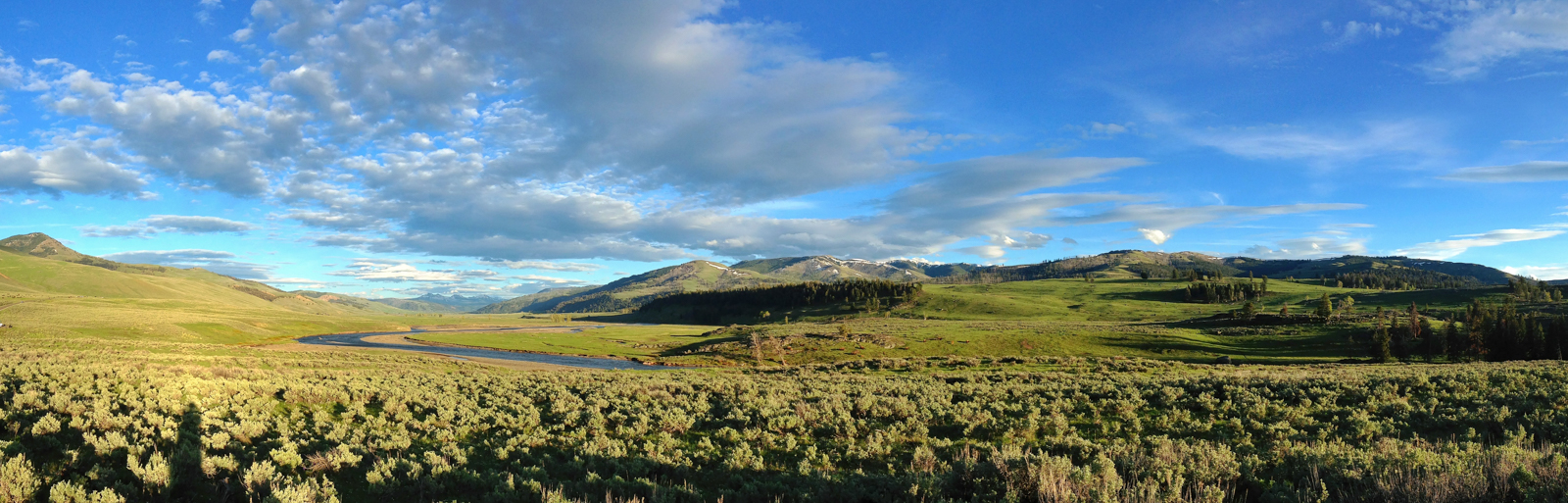
    Reflections in Lamar
    The landscapes and wildlife of Yellowstone are spectacular (click photos to enlarge)

    Join me, June 2-9, 2016, for an unforgettable experience in the world’s first national park, Yellowstone! Next summer will mark 100 years since the creation of the National Park Service, and there is no better way to celebrate than by visiting Yellowstone. We will spend our days exploring Yellowstone’s unique thermal areas, beautiful landscapes, and wildlife-rich valleys. I offer small group (4 to 6 participants) field experiences that take you beyond the typical roadside views of this incredible park. Visit my Trips page for more information and to request a registration form. Space is limited. Previous blogs from Yellowstone trips can give you an idea of the wonder and beauty you will experience.

    Bull bison chewing cud 1
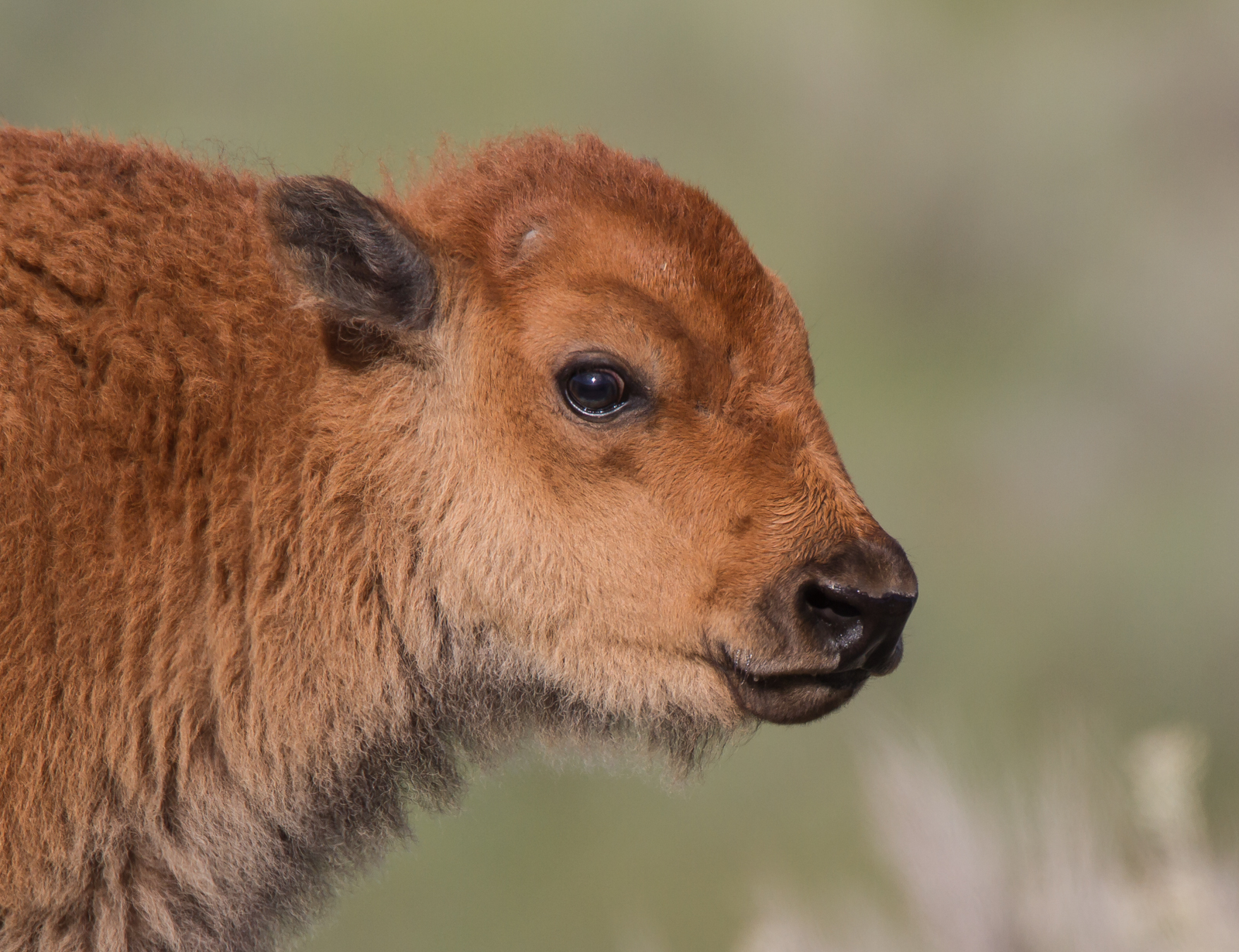
    Bull Bison, the iconic symbol of Yellowstone

    Did you get a new camera or binoculars for a gift? Yellowstone is the perfect place to learn how to use them!

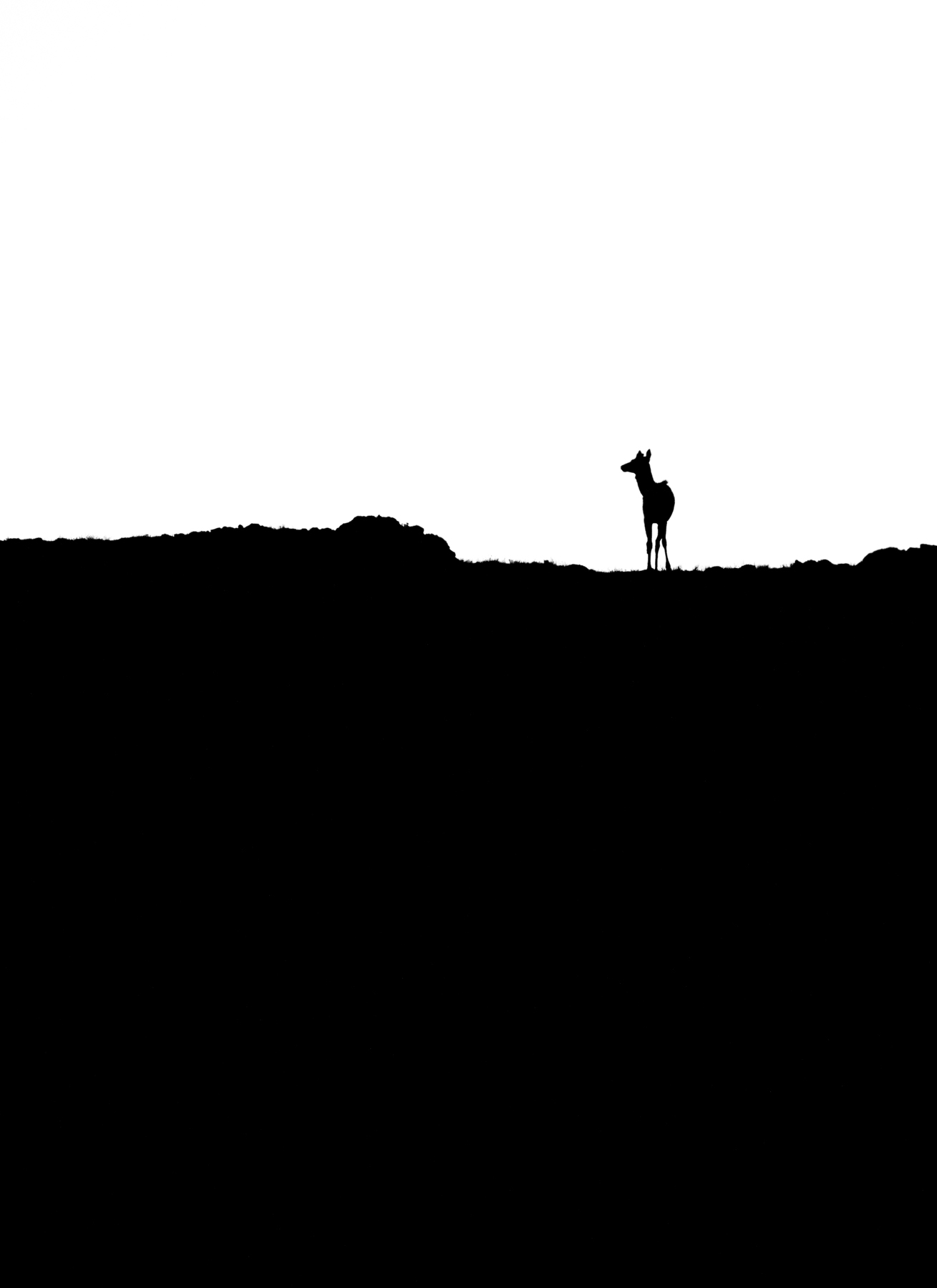
    elk cow silhouette
    Cow Elk silhouette on a ridge near Mammoth
    Bison calf 1
    Early June is prime time for observing Bison babies
    Shooting stars 1
    The meadows will be blooming with Shooting Stars and other wildflowers
    Great Gray Owl in top of pineg
    We will be on the lookout for birds such as the elusive Great Gray Owl
    Pronghorn bucks on ridge
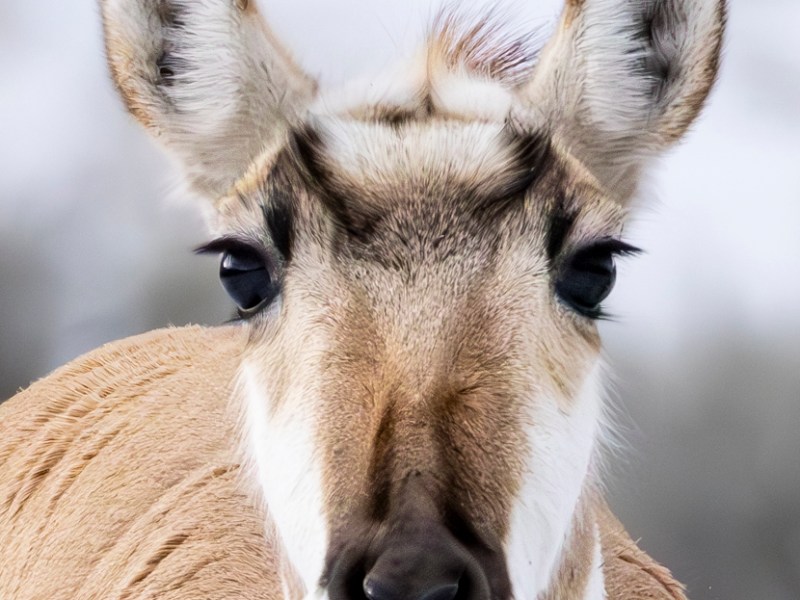
    Early morning is a great time to observe wildlife such as this band of Pronghorn bucks
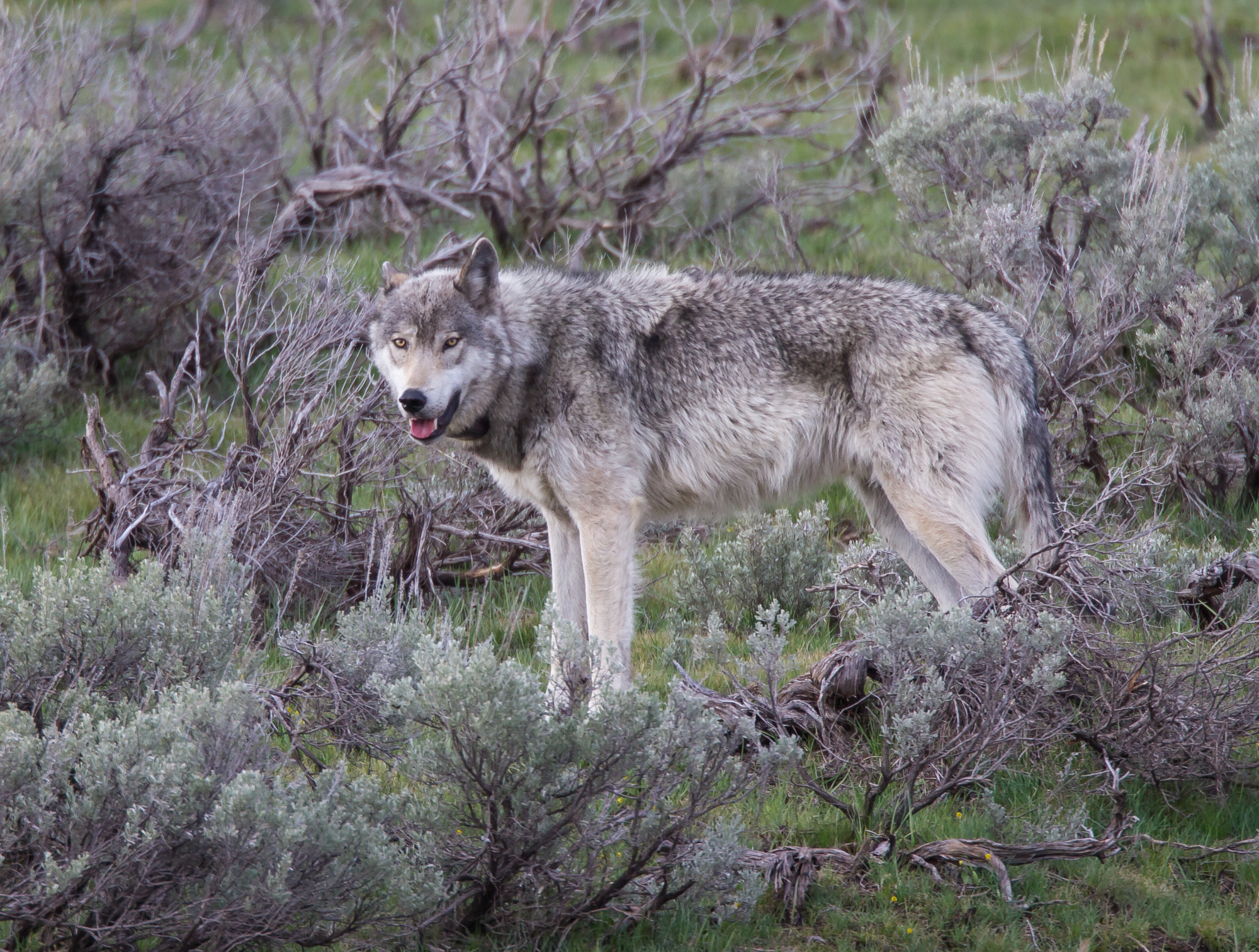
    wolf at Soda Butte Creek 1
    We hope to see Gray Wolves in Lamar Valley
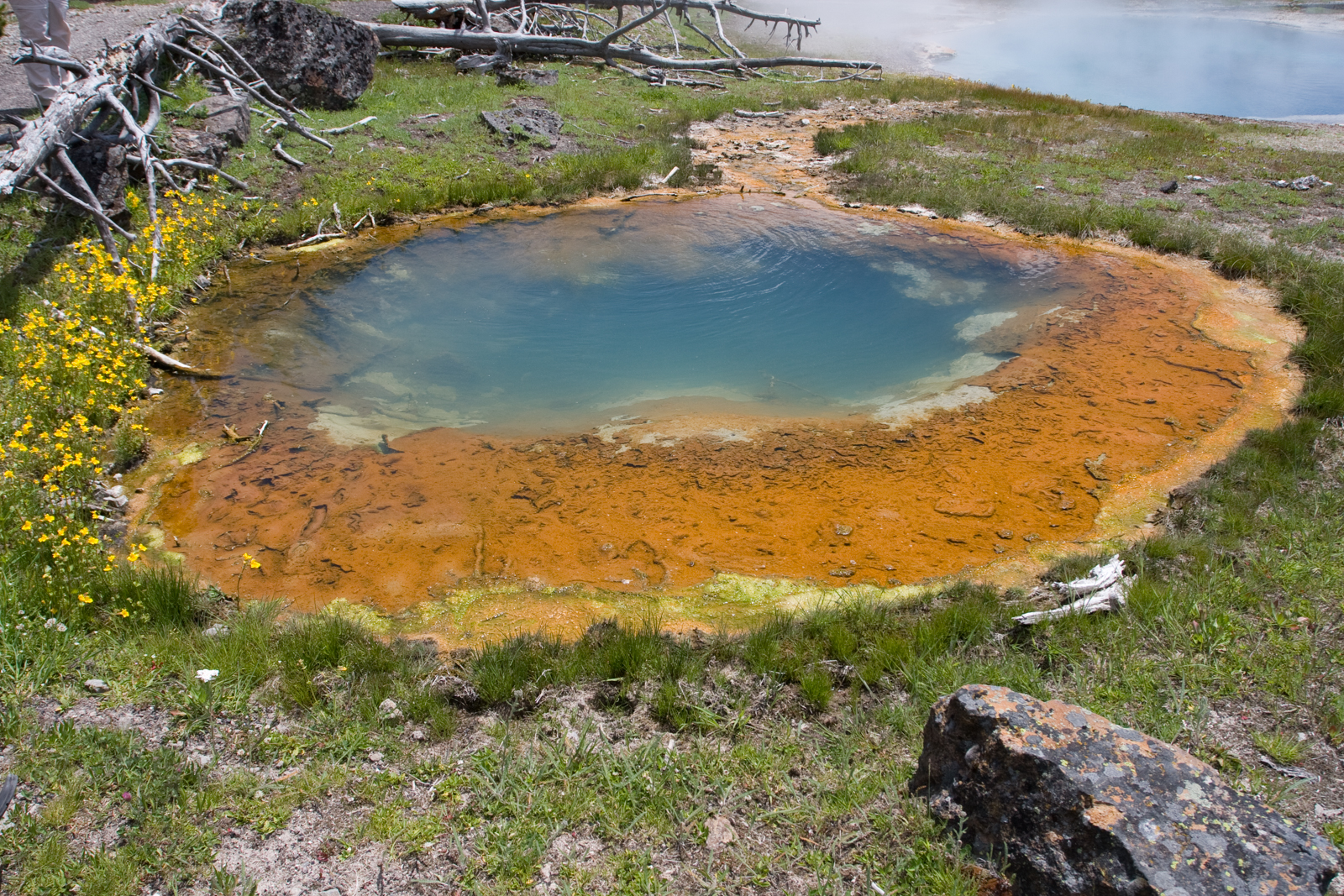
    pattern in mud pot
    We will visit many of the park’s unusual thermal features such as these mud pots
    sunset in Lamar after storm
    Join me for an unforgettable experience in the wilds of Yellowstone
  • Appreciating a Place

    Sense of place…it is a combination of characteristics that makes a place special and unique.

    ~the Art of Geography

    I am lucky. I have several wild places that give me that feeling of a sense of place, of completeness, of peace. I think almost any location can become such a place given time to experience its moods and inhabitants. As readers of this blog know, one of the places I turn to for this feeling, time and again, is Pocosin Lakes National Wildlife Refuge (PLNWR) in Eastern North Carolina. I am particularly fond of the Pungo Unit of the refuge, as I have been enjoying this area since that unit was the only part of the refuge, then known as Pungo National Wildlife Refuge. In the early 1990’s, an almost additional 100,000 acres were added and the combined lands renamed Pocosin Lakes NWR. The winter waterfowl still concentrate in the original refuge area surrounding Pungo Lake, and that is where I find myself 20 or more times each year, especially in winter.

    sunrise Pungo at platform
    Sunrise from the observation platform on Pungo Lake (click photos to enlarge)

    The sky in Eastren North Carolina is special, it reminds me of the big sky of another place I love, Yellowstone. In fact, I have often referred to Pocosin Lakes as the Yellowstone of the East. But, the reason has more to do with the feeling of being connected to a place than specific physical similarities of the landscape. Perhaps it is the abundance of wildlife, the silence when I am there alone, the joy in sharing it with others, or the feeling of spaciousness created by the incredible sunrises and sunsets. Maybe it has something to do with the type of wildlife and the spectacle they create. Thousands of birds flying around you or the glimpse of a family of Black Bears help me realize things about scale and about my place in the world.

    black bear track and hand for scale
    Large bear track at PLNWR

    Walking in the footsteps of animals larger than us puts some things in perspective.

    Bear trail through the woods
    Bear trail through the woods

    Seeing well worn wildlife trails helps me appreciate the lives of other creatures and somehow makes their lives seem more like ours. They have routines like us, they care for their young like we do, they are seeking many of the things we seek – food, comfort, safety, and, who knows, maybe even some sense of happiness. It is hard to watch bear cubs playing or otters doing anything, and not think they are having some fun.

    bear family in field
    I watched a large bear start across the field, and she was soon joined by two yearling cubs.

    On my last trip, watching a bear across the field, I saw her pause and lay down for a few minutes before heading to a corner of the field where I have seen many bears over the years. She kept glancing back towards the woods, and was soon joined by one, then another, of her one year old cubs. As I continued walking down the road, they noticed me, and would stop and look, perhaps gauging the level of threat I might pose.

    bear family
    The bears and I met at a juncture of field and forest

    They continued to walk, as did I, and we converged near a juncture of field and woods, a place I have had many encounters with bears in years past, a small patch of the planet where the bears and I can coexist. My group had departed earlier that day so it was just me and a family of bears sharing a moment. The mother bear soon led her young into the safety of the woods, a prudent decision when faced with the unknown creature watching them. And that is as it should be, both if us tolerating the presence of another species, both wary and respectful.

    bears between cars and meAn hour or so later, as I walked the mile back toward my car, a family of bears came out into the road, and eventually crossed over into the adjacent corn field for a meal. It was probably the same family as before. Once again, they were tolerant, and I was respectful of their space, a situation that I realize is a necessity for us to be together in this place.

    Tundra Swan family
    Tundra Swan family – two adults, two juveniles (on either end)

    When I have time to observe the wildlife at Pungo, I marvel at the struggles that some species endure. I see a family of Tundra Swans – two white adults and their two gray-headed young, and wonder what it must be like to fly over 3000 miles from their nesting grounds above the Arctic Circle to their winter resting and feeding grounds here in North Carolina.

    Family squabble
    A Tundra Swan bites another for reasons only they know

    And while they are elegant birds with a peaceful air about them, you can see squabbles and hear quarrels aplenty if you pay attention. What does it all mean?

    Tundra Swan lift off
    Tundra Swan lifting off

    One of the best things about being with the swans is the sounds they add to the landscape – their soft ou call, the whirring of the wind through their wing feathers when they fly low overhead, and the slapping of the feet against the water as they take to the air.  I wonder about the meanings of their calls and I strain to hear differences between individual birds. They are all magical sounds I never tire of hearing.

    Mute Swan
    Mute Swan hanging out with Tundra Swan flock. Mute Swans have a knobbed, pinkish bill, thicker neck, and are larger than Tundra Swans.

    Occasionally you see something different among the giant flocks of swans. I found a Mute Swan last week hanging out with the Tundra Swans on one of the refuge impoundmemts. There was one there last year as well. Is it the same bird? Did it migrate the entire distance with the flock, or did it join them at some point along the way? Hybridization, although quite rare, apparently can occur, but this bird seems to stay slightly apart from its smaller cousins. What types of interactions does it have with the rest of the flock? I will also be looking and listening for some Trumpeter Swans again this winter. I have seen this somewhat rare species many times in Yellowstone over the years and am now starting to find a few mixed in each winter with the thousands of Tundra Swans on the refuge. My friend, Keith, at Mattamuskeet, photographed one at his refuge this past week. I’ll keep looking.

    Bufflehead drake
    Bufflehead male swimming in a refuge canal

    After my group departed I spent a few hours on the refuge and a little more time behind the camera. I find the camera often causes me to stop and watch things more closely, hoping to capture some behavior. I notice little details I might otherwise miss…how long a Bufflehead stays underwater as it feeds, how the water droplets bead up on its back when it resurfaces, and how slight changes in position cause the purple and green hues on its head to appear and disappear.

    Bald Eagle immature taking off
    Immature Bald Eagle taking off

    Near sunset, I watched a Bald Eagle, perched on a snag, surveying some flooded woodlands for an easy meal. When nothing seemed to satisfy it, it lifted off with a few strong wing beats and cruised toward the lake, where perhaps the hunting would be more productive.

    Tundra Swans
    Tundra Swans add beauty and serenity to any scene

    As the day came to a close, I was surrounded by the sights and sounds of this place I love. There really is something special about certain places in our lives, places we can recall in detail even when we are far away. This sense of place is a true gift. I hope you all find such a gift in your lives this holiday season.


Search the Archives

Due to our site update, photos on older posts may not display correctly. Sorry for any inconvenience.


Recent Posts