He prefers solitude, and leads the eccentric life of a recluse, “forgetting the world, and by the world forgot.” To see him at his ordinary occupation, one might fancy him shouldering some heavy responsibility, oppressed with a secret, or laboring in the solution of a problem of vital consequence. He stands motionless, with his head drawn in upon his shoulders, and half-closed eyes, in profound meditation, or steps about in a devious way,
~Elliott Coues, describing an American Bittern,1874
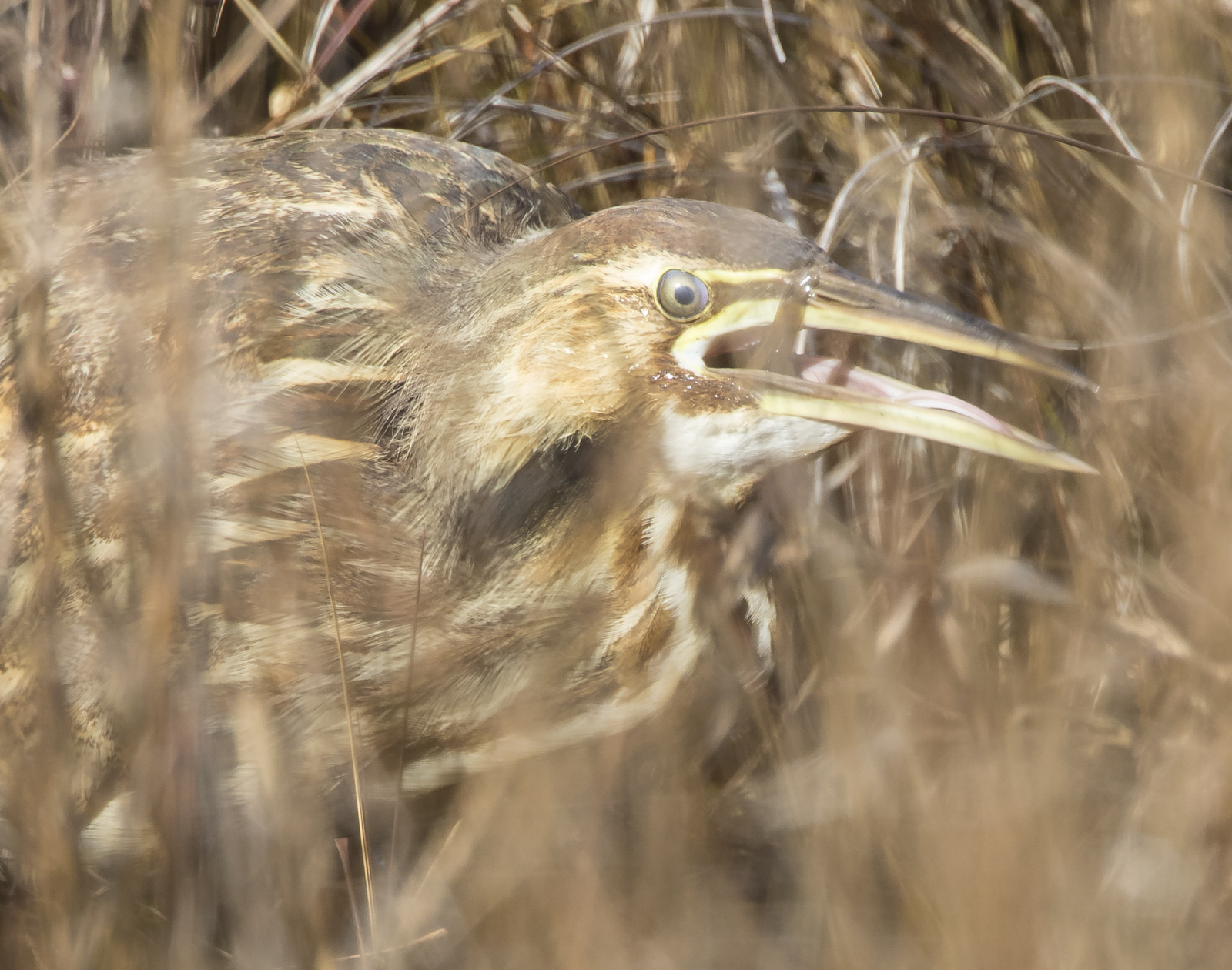
One of my highlights of any winter trip to Mattamuskeet NWR is the sighting of a most unusual denizen of the marsh, the American bittern, Botaurus lentiginosus. This is a bird ideally adapted to its surroundings.
American bittern out in the open at Mattamuskeet (click photos to enlarge)
They can be fairly reliable at the refuge this time of year if you look long enough in the right places. This past trip we managed to see at least 5 individuals, including a couple that flushed from grasses along a canal at Pungo, where they are generally much harder to locate. They are easiest to see when they are feeding right along the edge of the marsh next to the road. I think most people are looking farther out at the numerous waterfowl in the impoundment, and manage to drive by the secretive bitterns without ever seeing one.
Grass with eyes and a beak
I usually coach my participants to look for a clump of grass with eyes and a beak – that’s your bittern. On my last trip, while driving along the road that skirts the northwest shore of Lake Mattamuskeet, I spotted a dark shape in marsh grass next to the road. I shouted, “bittern”, to my group, brought the car to a stop, looked for traffic in my rear view mirror, and then backed up about fifty feet, hoping I was right. I pulled up next to the bird, and I noticed no one said anything, so I said, “right there, next to the car”. Indeed, it was a bittern, and not a bittern-shaped log. Everyone but me ( I was watching for cars) got some great shots, as the light was perfect, and the bittern assumed its upright posture that makes it blend so well with the surrounding grasses. Driving on, we found another near the refuge entrance kiosk. I saw in the wildlife observation notebook at the Visitor Center that someone had spotted the much less common least bittern in this same area the week before. We continued along Wildlife Drive and spotted another American bittern in thick grasses next to the road. This one allowed us to exit the vehicle and watch it for about thirty minutes, as it skulked along, appearing and disappearing among the waves of wind-flattened grasses.
They stalk with a deliberate, creeping motion
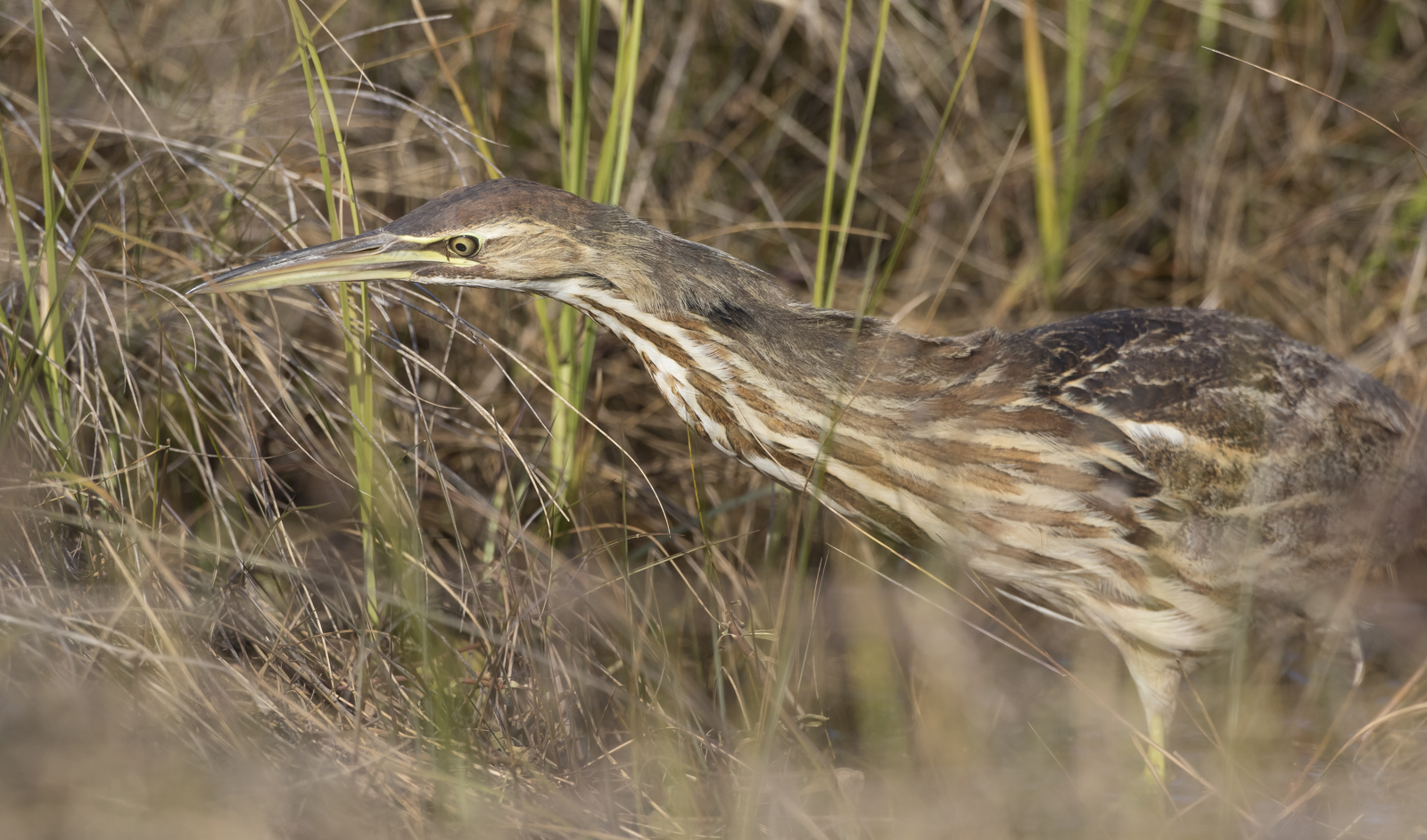
They are very deliberate mash stalkers, slowly, yet smoothly, gliding through grasses looking for their favorite prey.
A bittern gulps down a killifish snack
I have seen them eat a variety of food from small fish to tadpoles, large aquatic insects, and even a baby painted turtle.
Finally out in the open
They can be a tough subject to photograph, as they usually are found in, or quickly retreat to, thick vegetation. A quick look at their feathers and you can see why – they blend very well with grass stalks in a marsh.
The bittern stare
When they think they have been discovered by a photographer (or potential predator), they often assume an upright stance, pointing their bill skyward. This behavior has given rise to a few of their other common names such as sky-gazer, look-up, and stake-bird. To complete the disguise, if a light breeze blows through the grasses, a bittern will gently sway back and forth, imitating the movement of its surroundings.
A male American bittern calling (photo taken in April, 2013)
A couple of years ago, I reported about finally hearing the strange mating call that has given this unusual bird a host of other odd-sounding names like thunder pumper, water-belcher, and stake-driver. The sound reminds me of the noise the bubbles make when someone draws a glass of water from from the office water cooler. This is accompanied by an impressive visual display that includes lots of head bobbing, neck puffing, and beak thrusting. All in all, the American bittern is a treat anytime you encounter one. Just keep looking at those marsh grasses until you see a clump staring back at you.
Watching the animals come and go, and feeling the land swell up to meet them and then feeling it grow still at their departure, I came to think of the migrations as breath, as the land breathing.
~Barry Lopez
What a difference a week makes. Less than seven days had passed between my last two groups, but things have dramatically changed at Pocosin Lakes NWR. The snow geese had arrived later than normal this year, and now have left earlier than usual. Where there had been 40,000+, we saw one. And, it seems, the tundra swans may be departing the refuge a little early as well. There still seem to be a few thousand, but their numbers are way down from what we saw back in late December, and almost none are feeding on refuge lands. The warm weather, and what appears to be less corn and winter wheat on the refuge, may be to blame. Or maybe, as Barry Lopez so eloquently puts it, the land is simply breathing and exhaling the geese northward. But, there are still things to discover and enjoy, if you look closely.
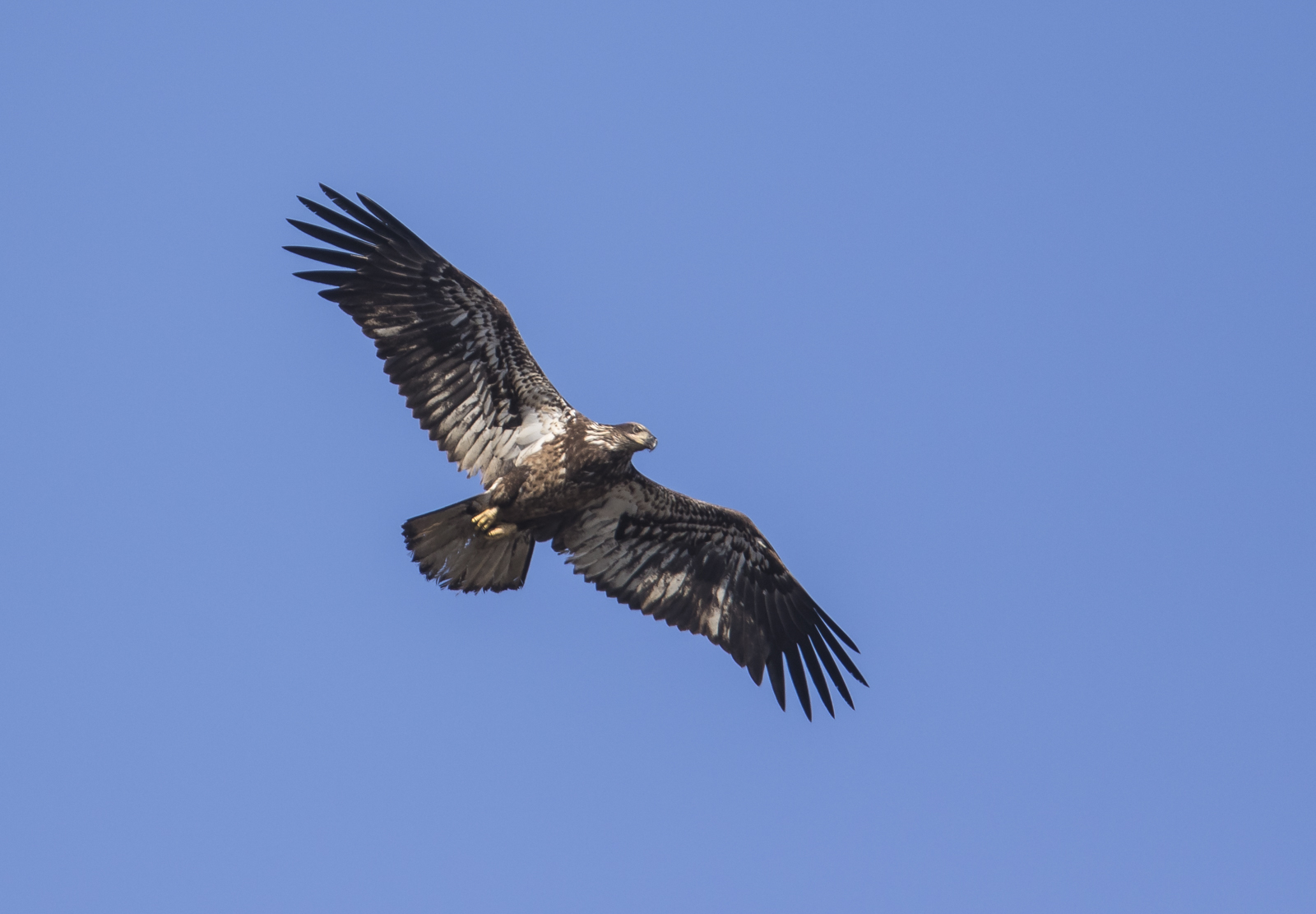
Juvenile bald eagle overhead at Pungo (click photos to enlarge)
I arrived early the day of my tour, in hopes of finding some interesting things to share later with my group. With the snow geese gone, the eagles are not as numerous as in recent trips. But, a young bald eagle (looks like a first year bird based on the plumage) still gave me a nice fly over shortly after my arrival.
Large black bear sow
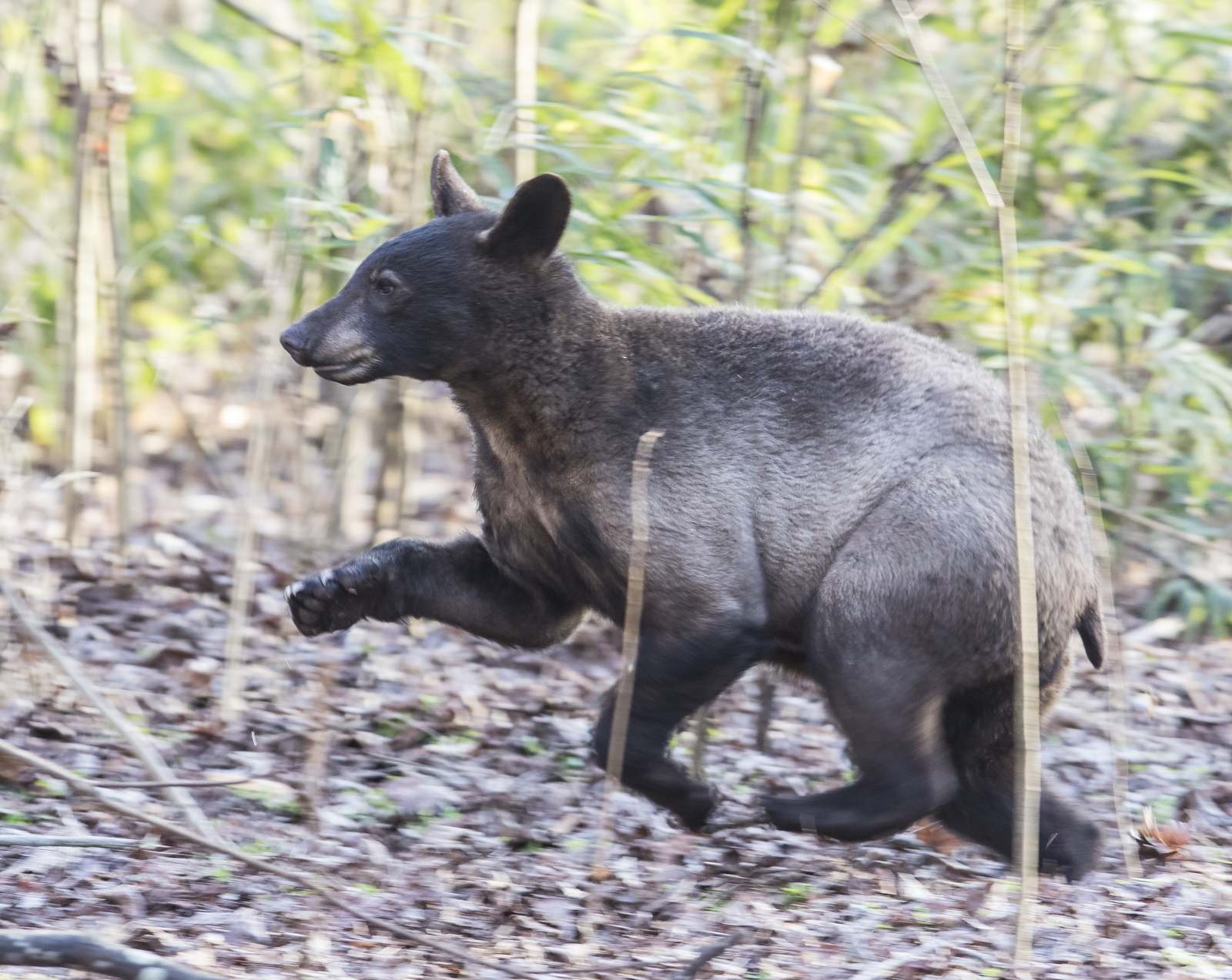
I took a short walk into the forest and was rewarded with a couple of black bears, including one large sow. I took a few photos but quickly left, after requesting that she and her two youngsters hang around for another few hours.
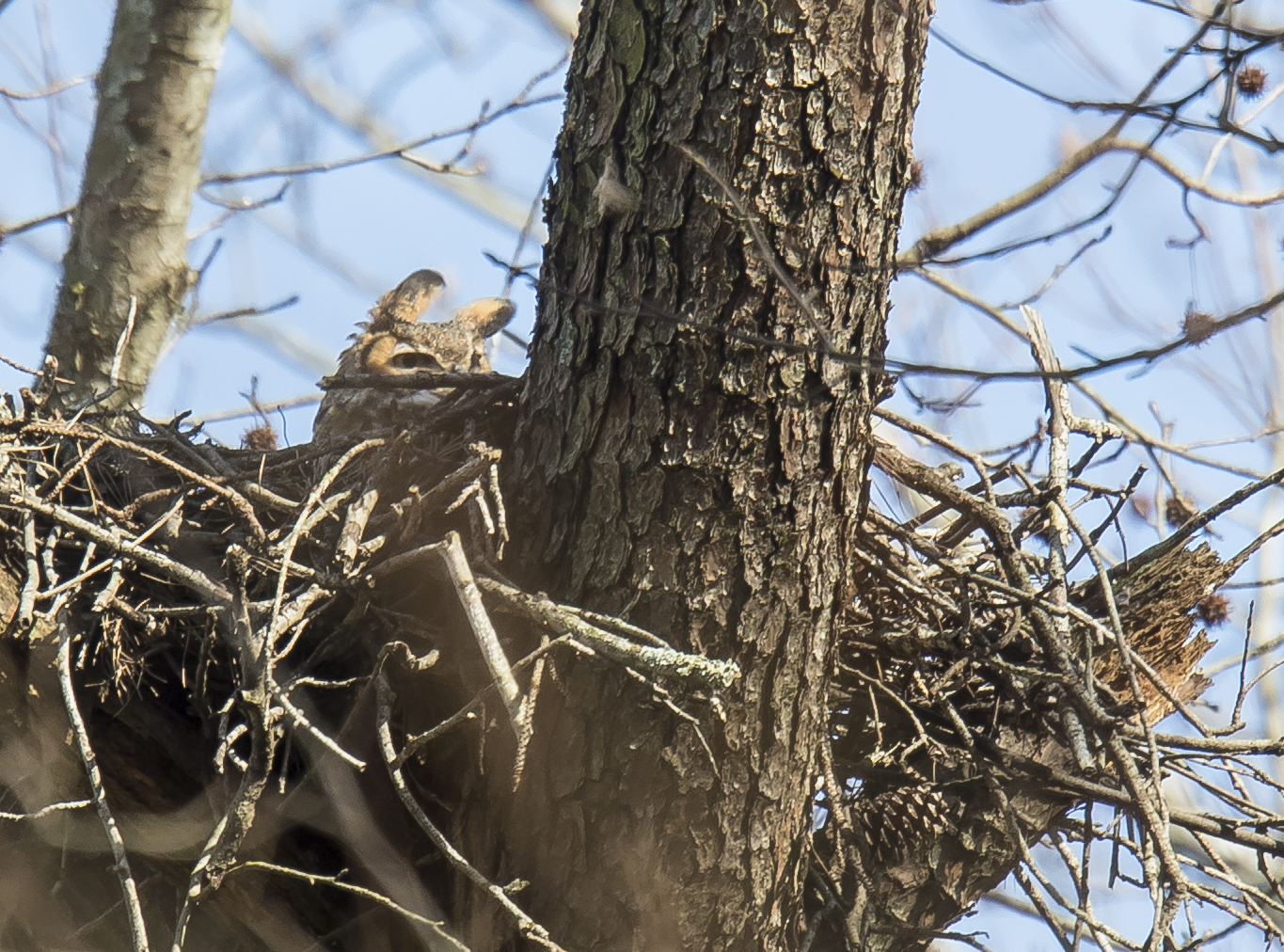
Finally, I find the great horned owl nest
I have been hearing the great horned owls calling in a patch of woods on previous trips so I was went looking for any sign of a nest. I have found two other nests on the refuge over the years. One was in a pine in what was probably an old red-tailed hawk nest; the other atop a snag with a platform of poison ivy vines spreading out from the top. I finally spotted a large stick nest in the fork of a lone pine tree. I didn’t see anything at first, but then noticed a feather on the side of the nest blowing in the wind. When I put the spotting scope on it, it looked like an owl feather. I moved around for a different view and saw what looked like ears sticking up above the nest.
Great horned owl sitting on eggs or young (heavily cropped photo)
The scope revealed it to be the ear tufts of a great horned owl, most likely sitting on her eggs, as this species is probably the earliest breeder in our state. I stayed well away from the nest so as to not disturb her. I can check on the nest on future trips with the spotting scope without getting close. This is a good time to remind readers that almost all of the photos of wildlife in this blog are taken with a large telephoto lens, and are cropped in processing, so the animals are not as close as they sometimes appear.
Young black bear rushes across trail to cover
When my group arrived, we headed back to check on the bears and the owl nest. It seemed as though the bear had heeded my wishes and was walking toward us as we headed down the path. We stopped and she wandered off, followed by two young, both sporting a distinctive grayish coat. Then, another bear crossed the path, followed by three more bears! Quite a start to our trip.
Black bear sow and young
At least some of these same bears hung around that general area for the next day as well. We saw another group on our hike the next morning. I always try to give the bears plenty of room. We are quiet and try to stand still when we see one, and I like to let the bears take whatever path they want. I have seen people try to cut them off in order to get a closer look or a better picture, but it is best to respect their wildness, and let them be. Enjoy the experience, but keep the bears unstressed and wild.
Excellent camouflage makes these snakes difficult to see on the forest floor
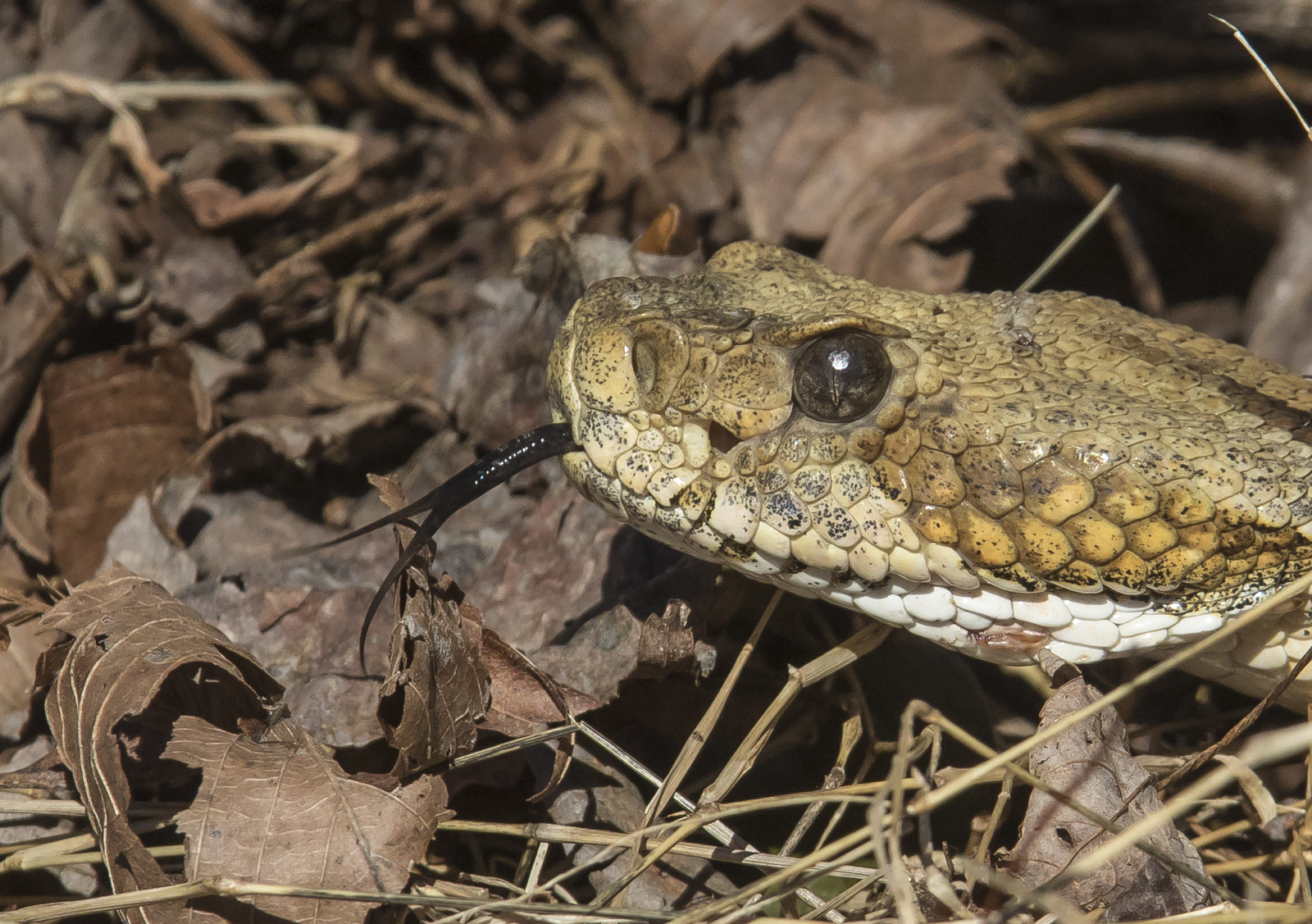
The other thing I wanted to check on was the tree where I had seen the rattlesnake two weeks earlier. I carefully checked the area around the tree as I approached, knelt down and shined a light inside the base – no snake. Not too surprising as it had been a cold night and there was even ice in tire ruts on the road when we walked in. So, with all the bears in the area, I started to walk down the path, looking ahead for any signs of bears through the trees. The next thing I know, I had what can only be described as a too-close-of-an-encounter with that snake, who was luckily quite docile in the chilly air.
Rattlesnake stretched out in morning sun
We took a bunch of photos and then left the snake alone. We checked on it the next day, after seeing even more bears, and found it a little more active in the warming weather. It was slowly crawling in roughly the same area where we had seen it the day before.
A close look (and a telephoto lens) shows the beauty of this snake
This is a beautiful specimen, and apparently a tough one, as it doesn’t seem to mind being out in some pretty cool weather. Today, it chose to lie in a sunny spot, soaking in the morning warmth.
The rattler was more active than the past couple of sightings, and even flicked its tongue a few timesClose up of rattle
We took some more pictures and then left it alone. I can’t help but wonder how it will fare if a bear encounters it in this cool weather. I also can’t believe I may now need to look at the ground more carefully as I walk these winter woods, instead of constantly scanning the skies for waterfowl and other birds as I have done for over thirty five years. Strange times indeed.
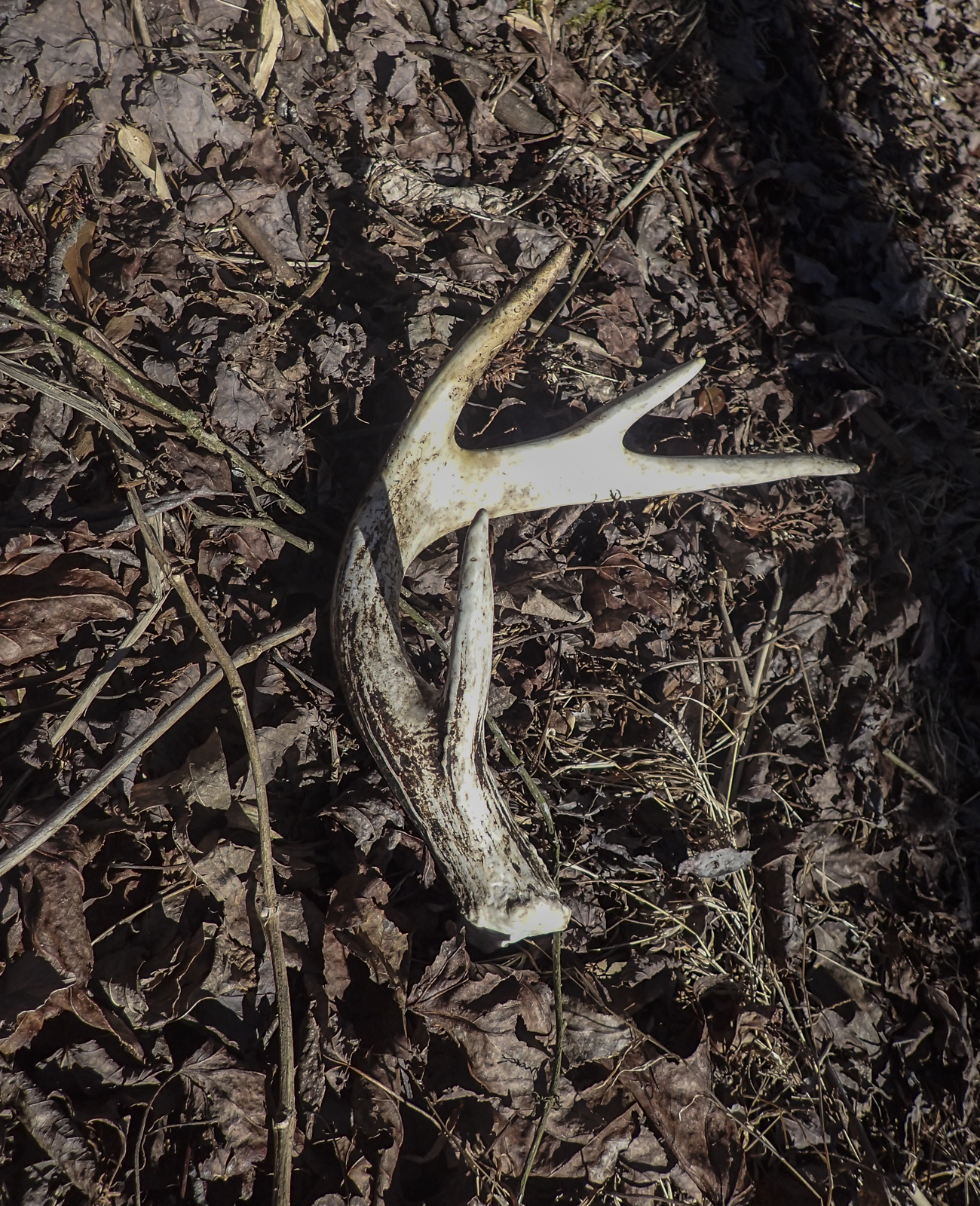
We found two shed deer antlers
My first morning at Pungo I saw a buck white-tailed deer, with only one antler, running through a field. It is that time of year when male deer are dropping their antlers in preparation for starting the new growth later this spring. As it turned out, we found two different shed antlers as we walked. You are most likely to find them shortly after they are dropped and before squirrels, mice, and other animals start chewing them up to get the calcium.
Great blue heron with a nice catfish for breakfast
While watching the swans one morning, someone in the group spotted a great blue heron with something in its beak. It turned out to be a large catfish. We watched as the heron repeatedly tried to swallow the large meal. We think it finally gulped down its meal before flying off to hunt again.
Tundra swan fly over
Tundra swans flew back and forth overhead as the day progressed so we had plenty of good looks and photo opportunities.
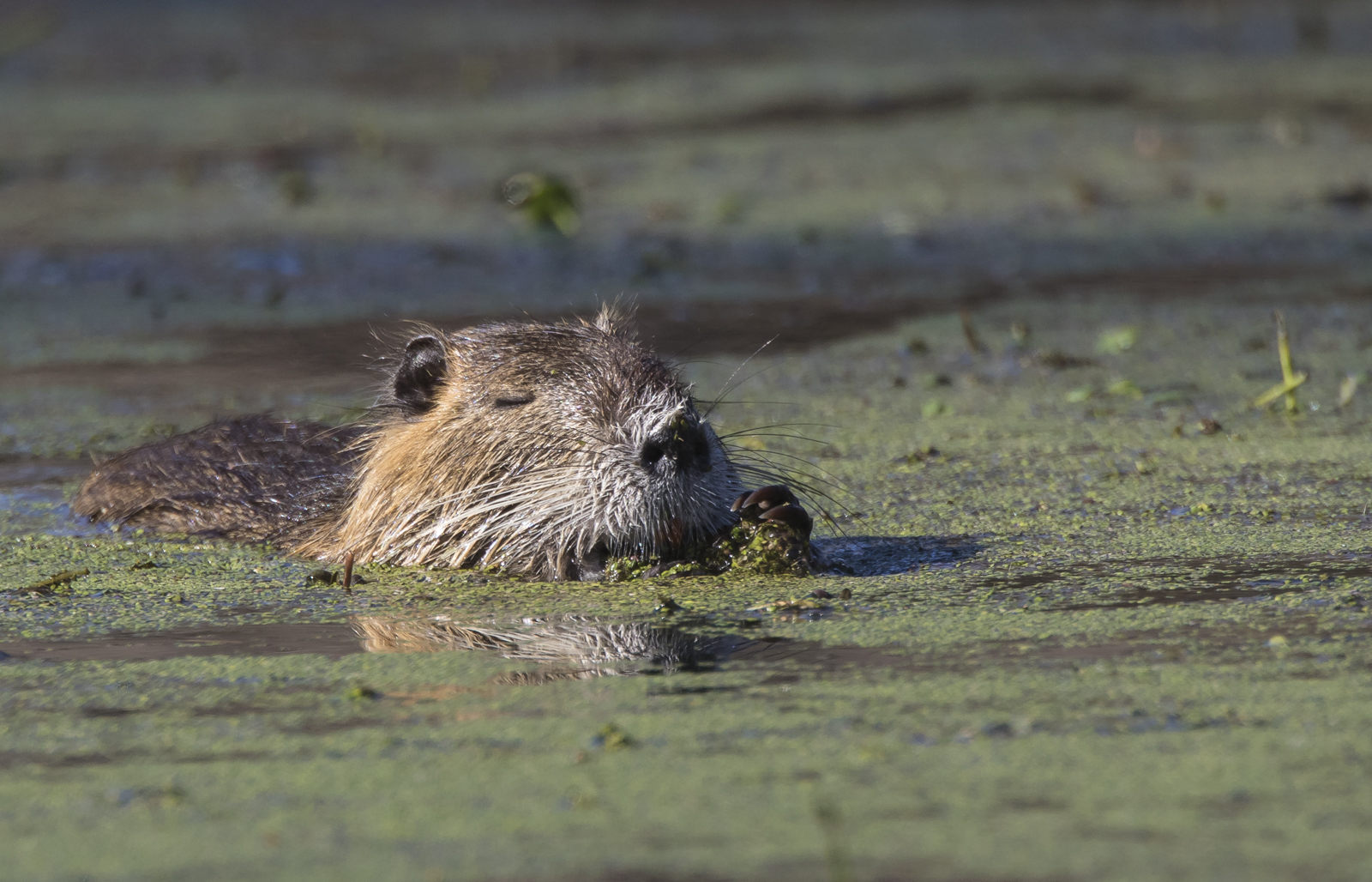
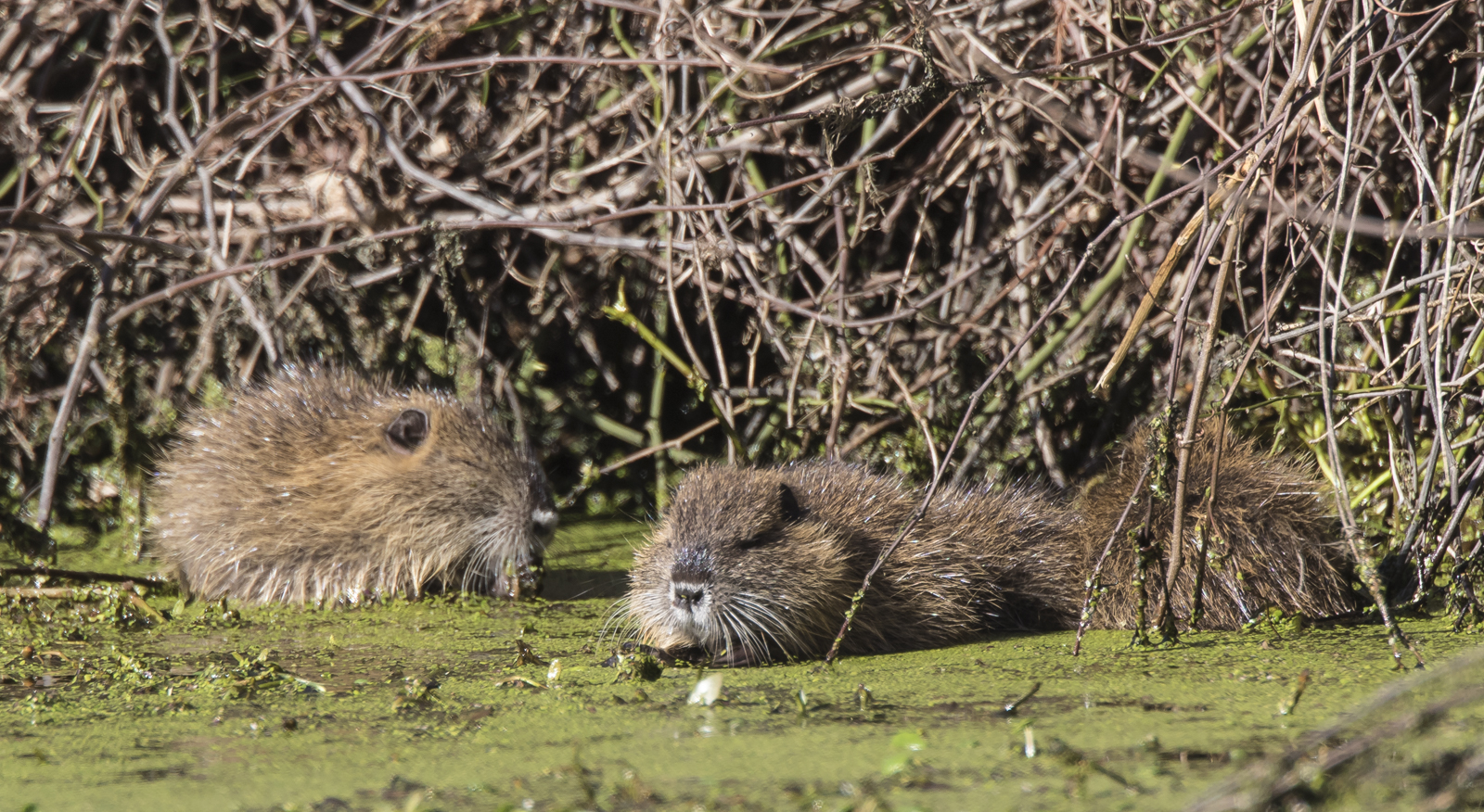
Nutria feeding on duckweedA trio of young nutria
We split our time between the Pungo Unit of Pocosin Lakes NWR and Mattamuskeet. As the weather warmed over the weekend, we saw a lot of nutria out feeding.
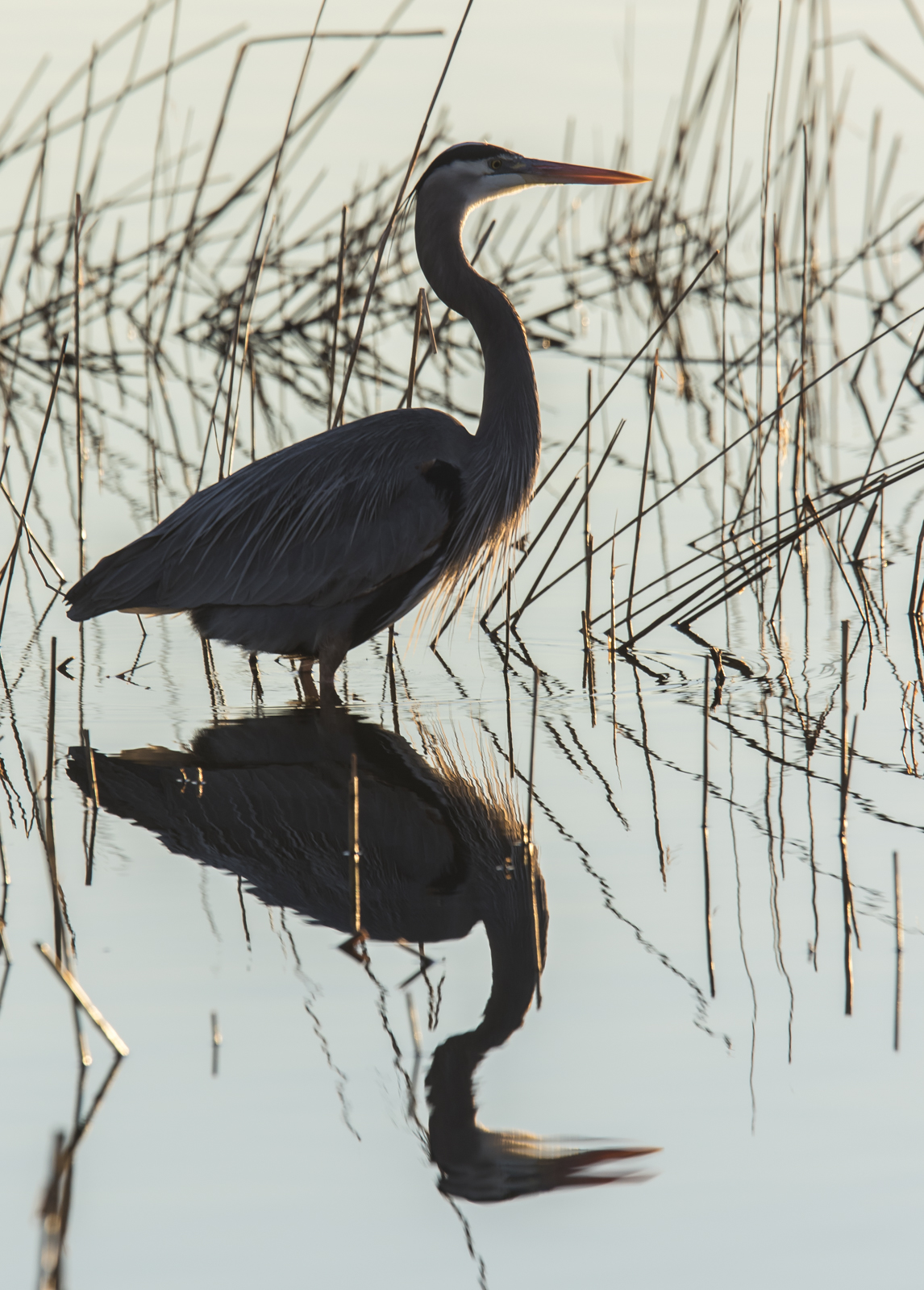
Great blue heron at sunrise at Lake MattamuskeetNorthern pintails in marshGreat blue heron resting in a pineWhite ibis feeding in impoundment along Wildlife Drive
Driving along Wildlife Drive, we saw hundreds of ducks and swans, along with a variety of other birds.
Silhouette of turkey vulture (lower left) compared to black vulture (upper right)
Late Saturday afternoon we enjoyed seeing vultures come into roost in trees near the lodge. At one point I grabbed a photo of a turkey vulture alongside its smaller cousin, a black vulture. The latter looks as though someone had trimmed its tail feathers (relative to a turkey vulture). Black vultures are also smaller and tend to flap their wings more than a turkey vulture.
Great egret landing in tree top
The late hour also brought in several great egrets, white ibis, and some cattle egrets to roost in the trees across the canal from the lodge. This spot has traditionally been a roost for black-crowned night herons, but I have seen none of them in these trees this winter.
Alligator in canal at Gull Rock Game LandsClose up of smiling gator
One of the biggest eye-openers of the trip came on our last afternoon as we explored some new territory down toward Gull Rock Game Lands. In a canal bordering a wetland containing ibis, a grebe, and a double-crested cormorant, we discovered another surprising January reptile – an American alligator. It was about a 6-footer, basking in the sun, and seemingly unconcerned about the three cameras being pointed at it.
And so this month of wildlife wonders has come to a close. A strange month indeed, but an exciting one. One other critter worth mentioning that we saw on the last day of January – an orange and black butterfly near the lodge at Mattamuskeet. It was flying away from me when I spotted it out about 75 feet, but through the binoculars it looked like a monarch, not a viceroy. Either one is a big surprise for a winter day in North Carolina. It seems the land is breathing a bit oddly this season. I wonder what the coming spring will hold?
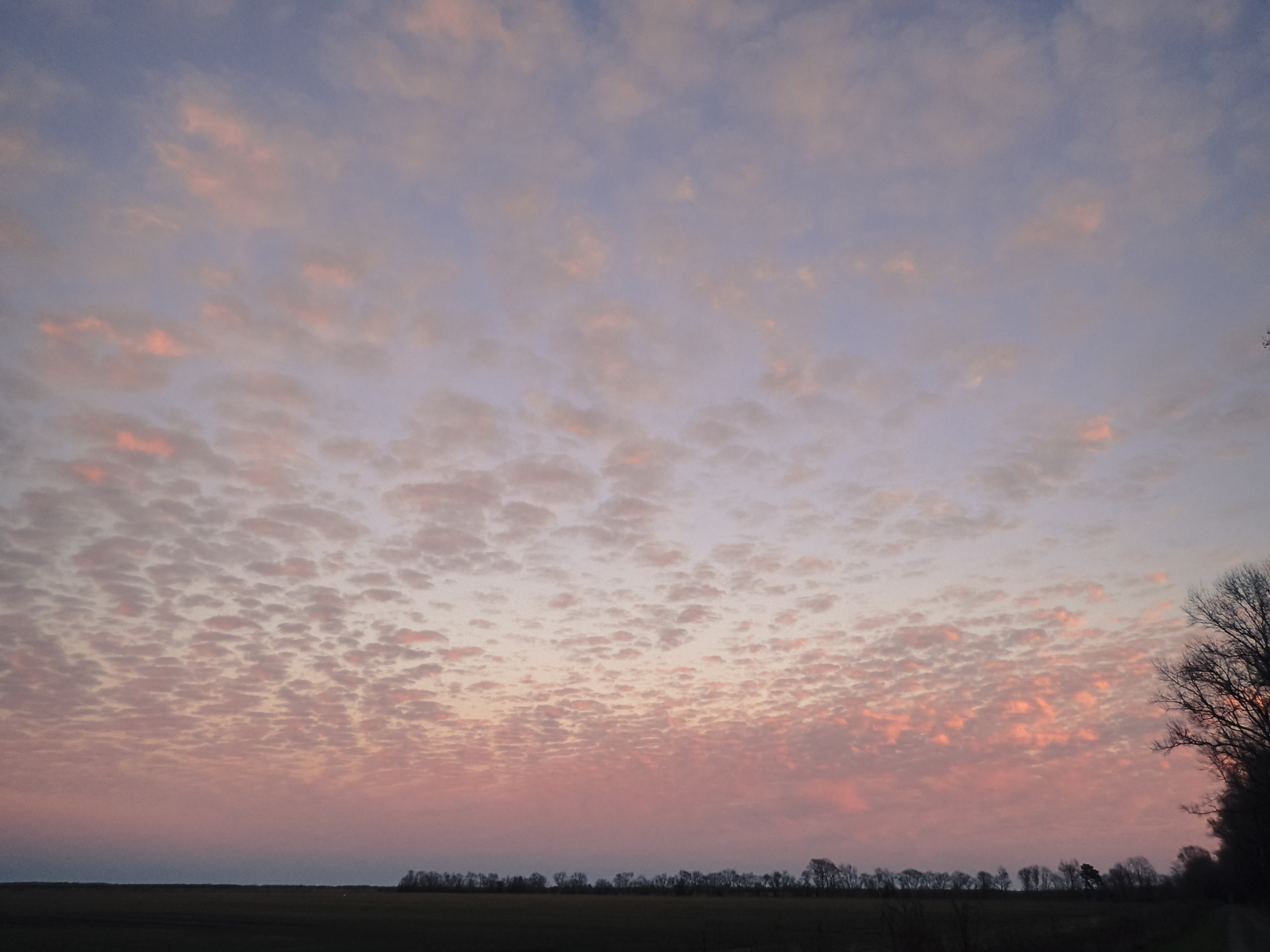
The older I get, the more I find beauty in the dazzling displays of light and clouds that form the sunrises and sunsets of my life. They remind me of the passing of time, of things seen and to be seen. They can form the book ends of a memorable experience in a wild place, or in a day simply looking out the window here in the woods. And, true to form for me, I prefer the skies (and temperatures) of winter to those of summer. This past weekend, I had a group of photographers with me on a trip to Pungo and Mattamuskeet, and we were keenly aware of the majesty in the skies as we chased the light each morning and evening, and enjoyed the subtleties of color that paint our surroundings and the life that calls this big sky country home. Later this week I will post about some of the extraordinary wildlife we observed, but, today, I just want to share some of the simple artistry we experienced at sunrise and sunset, surely the best times of day.
Sunset Friday night at Pungo…
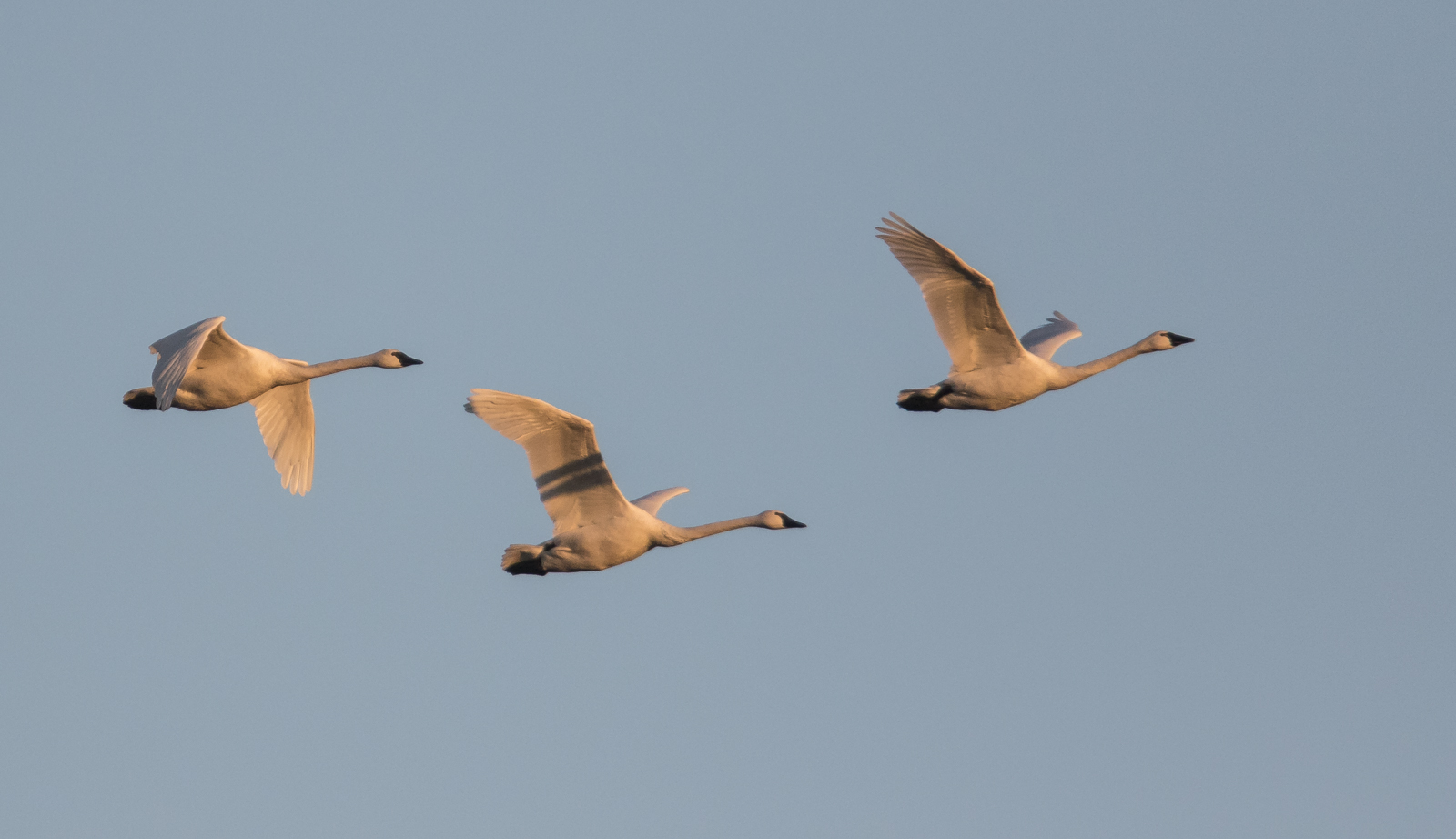
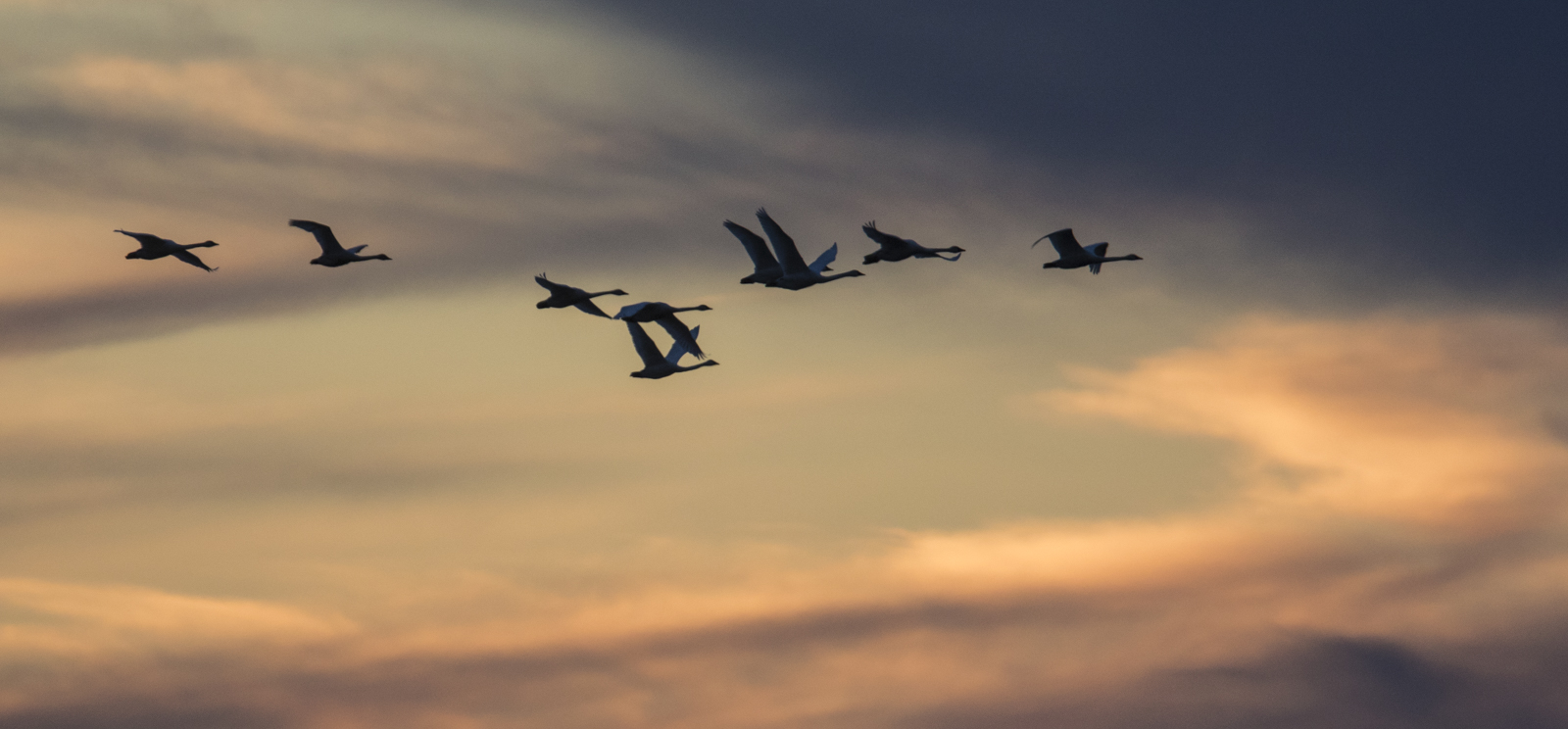
Tundra swans flying back to the refuge at sunset (click photos to enlarge)
Sunrise Saturday at Pungo…
Canal reflections at sunriseMorning light tinting the feathers of flying swans
Sunset Saturday at Mattamuskeet…
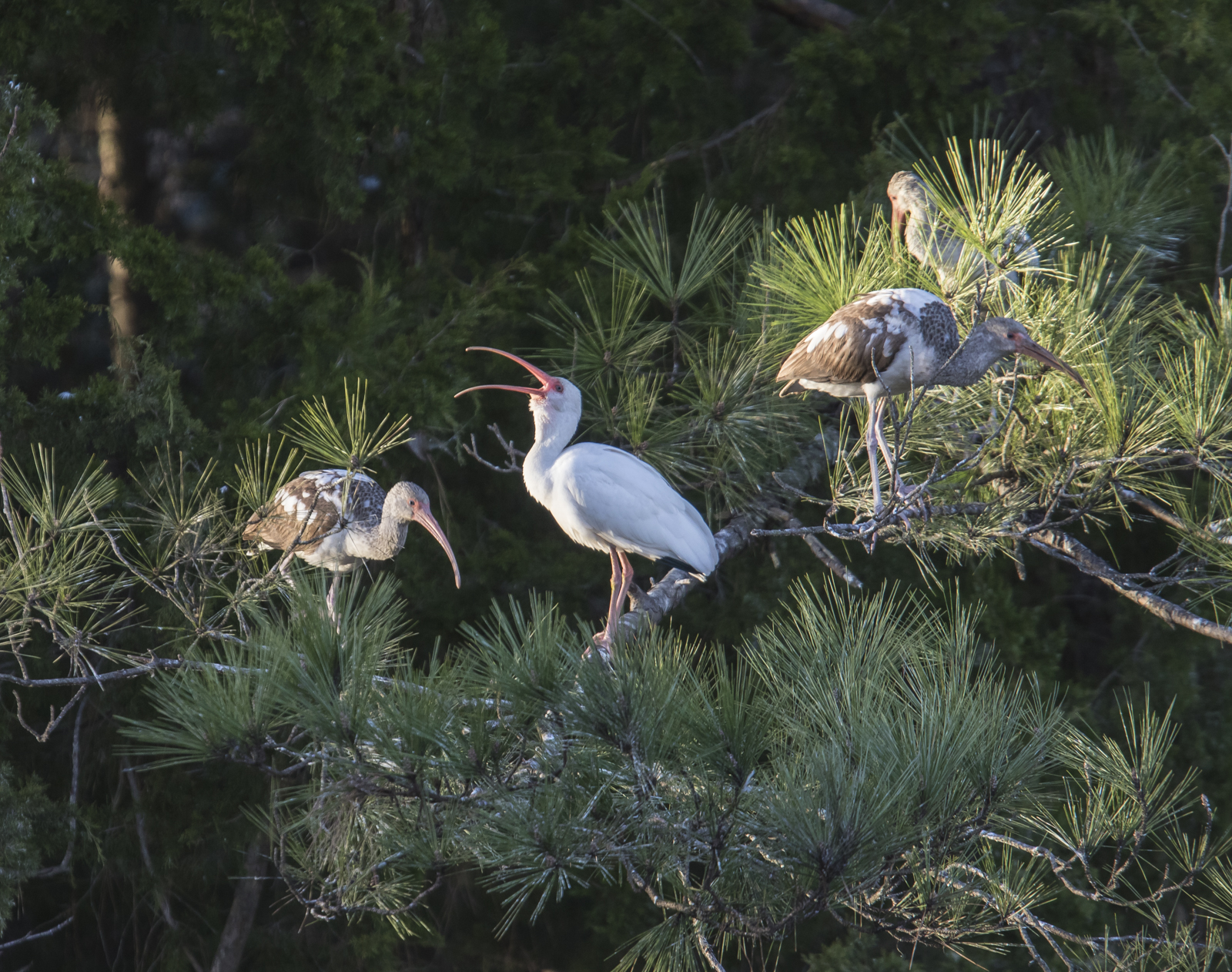
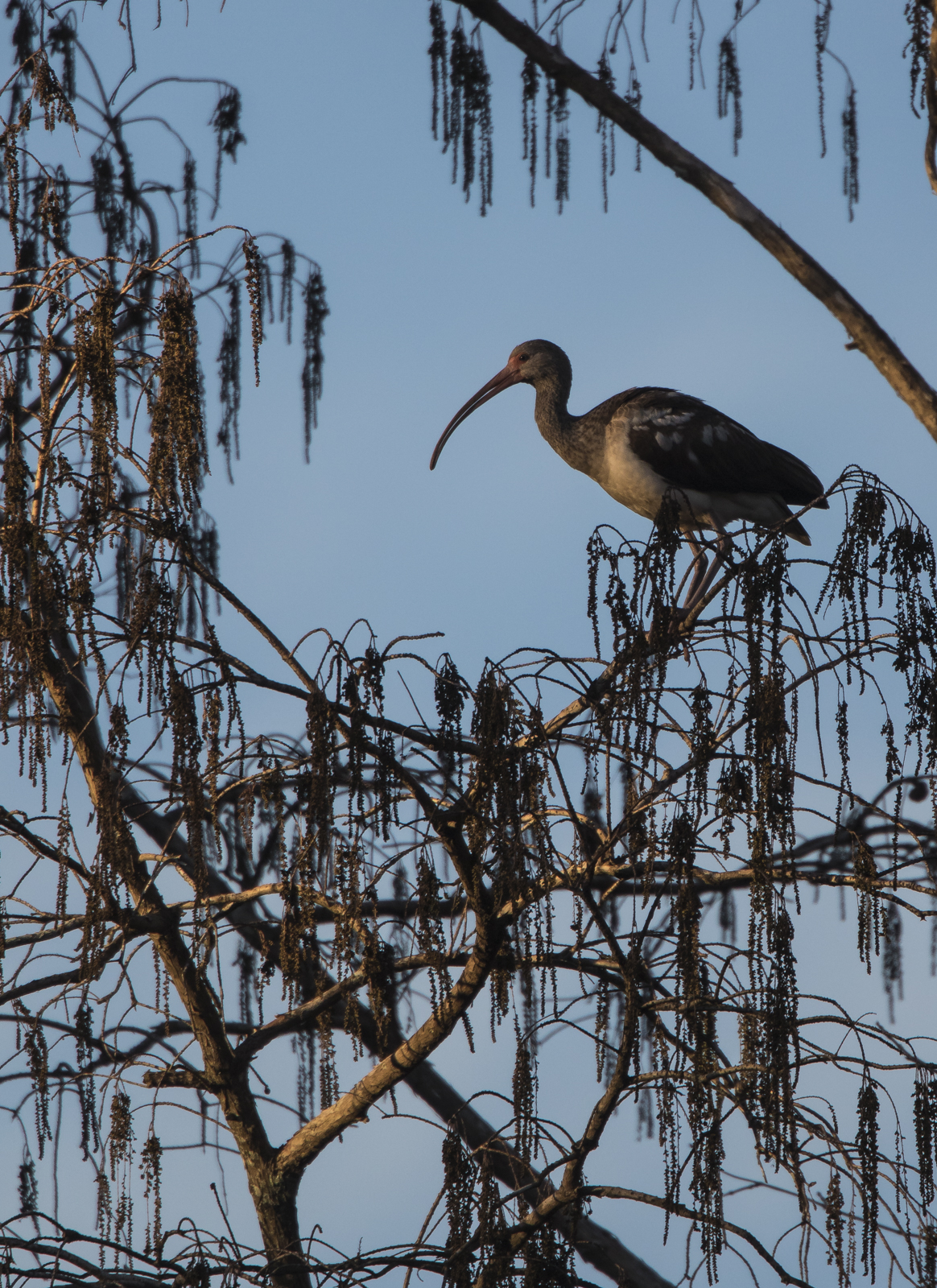
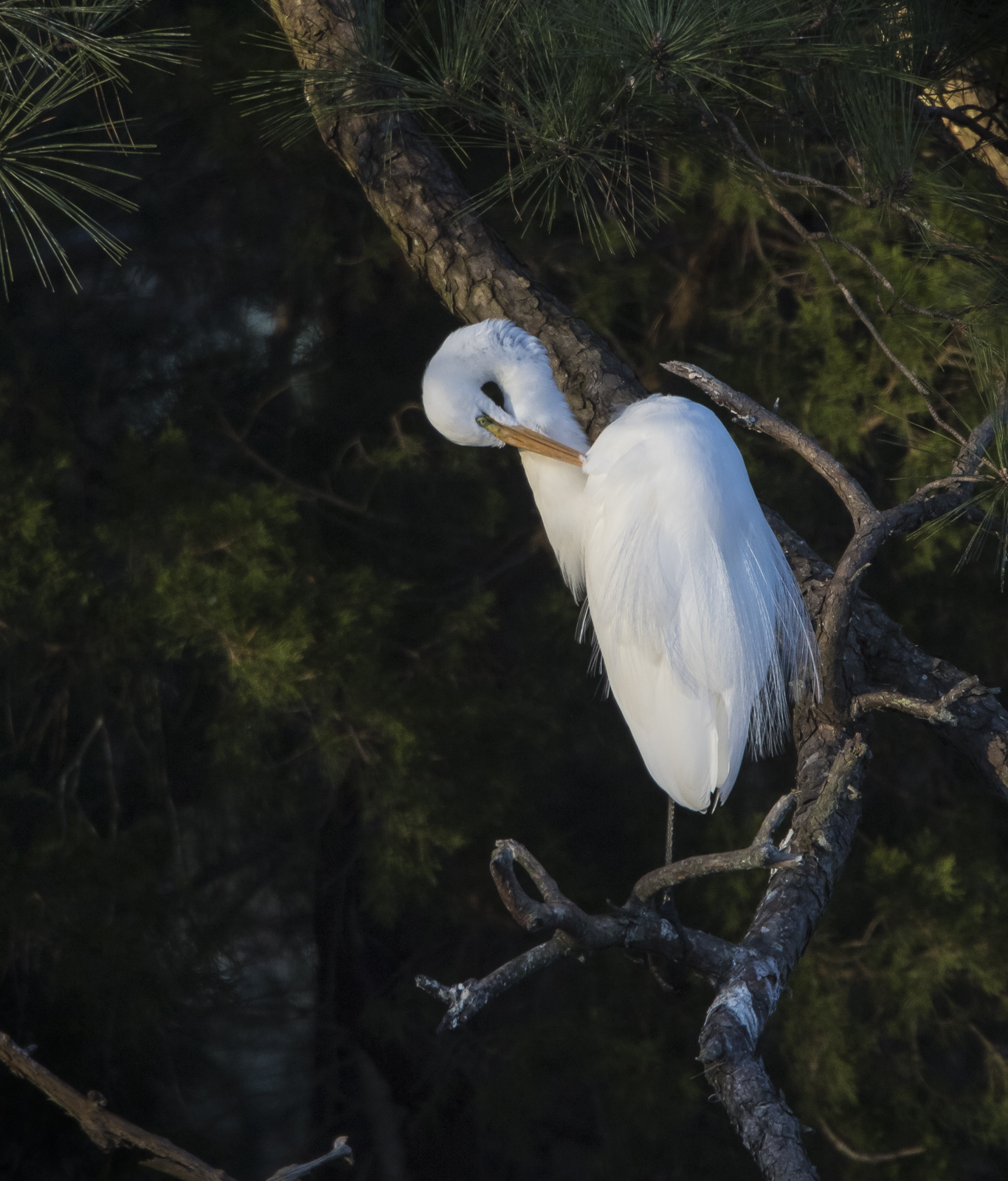
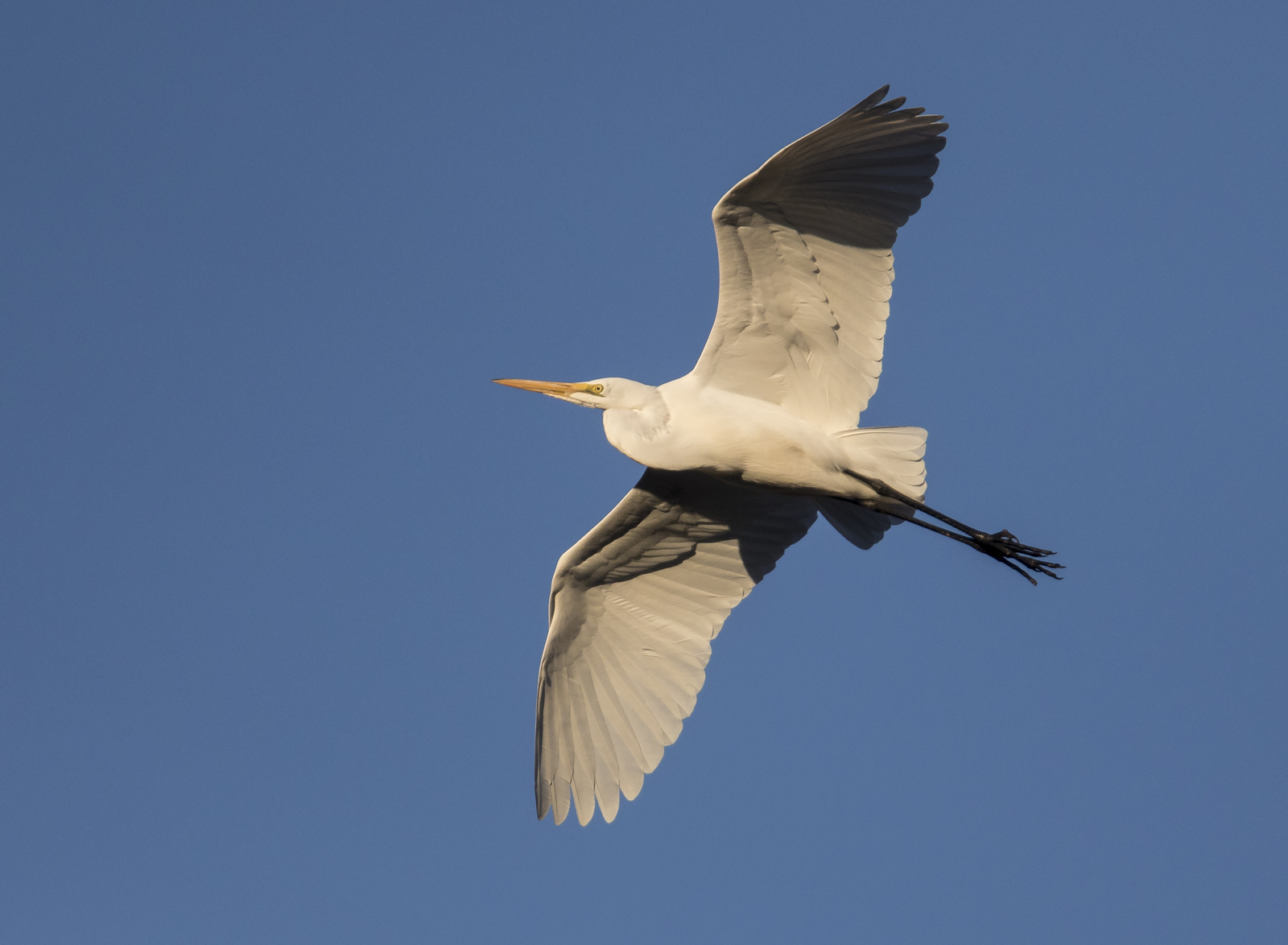
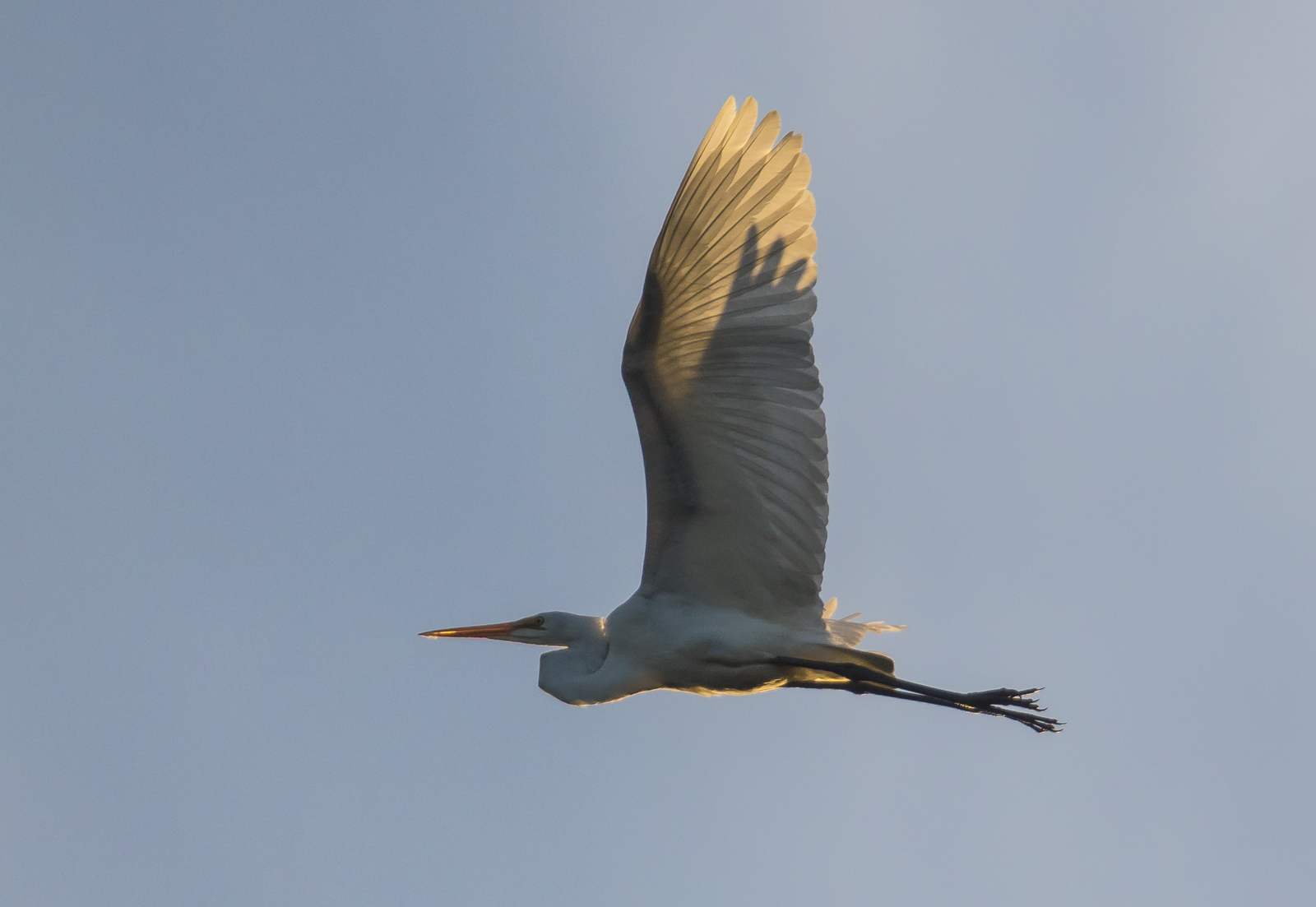
A golden hour spotlight falls on roosting white ibisJuvenile white ibis in bald cypress treeGreat egret preening at last lightSunlight bathes the underside of a great egret coming to roost
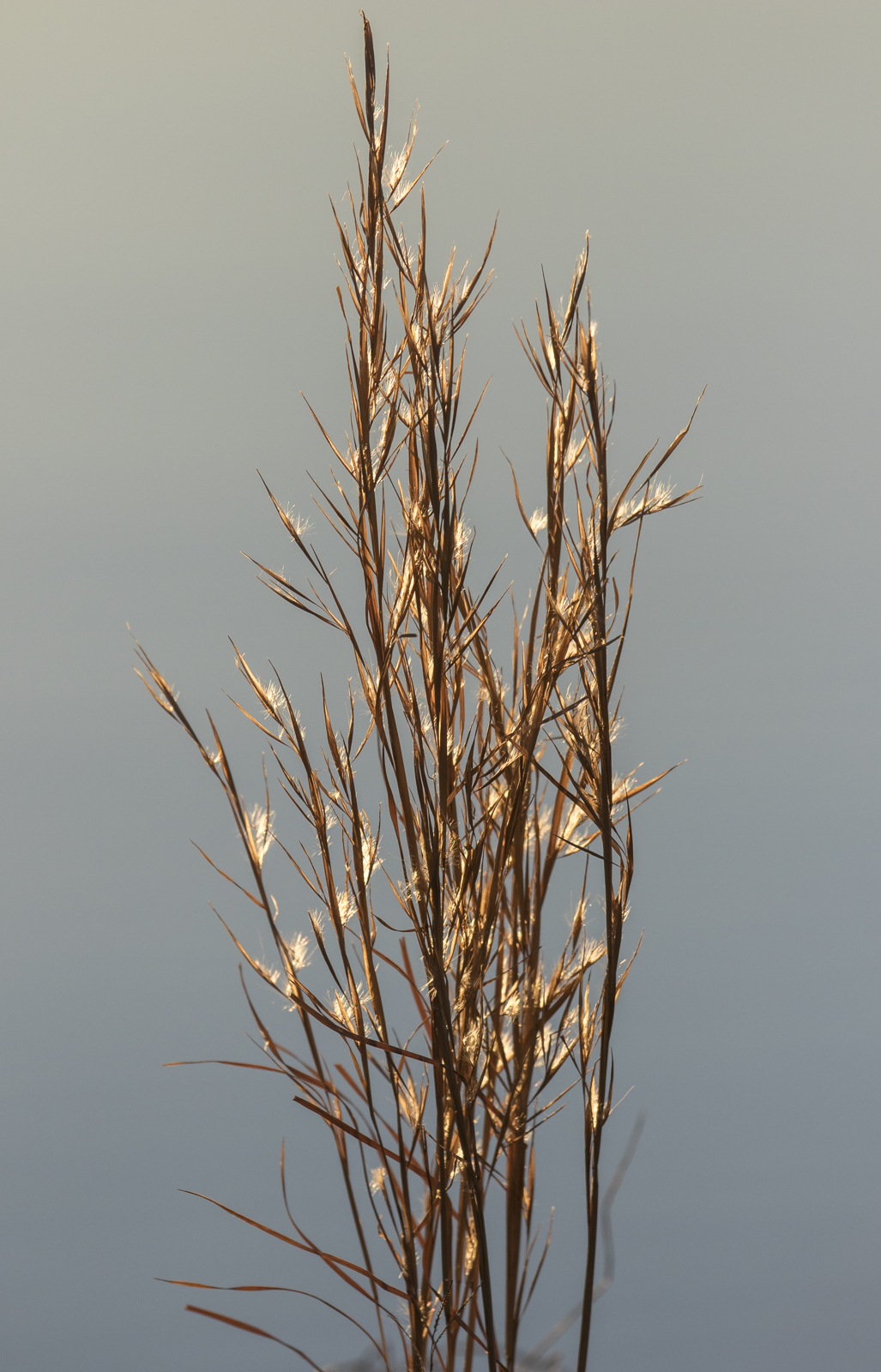
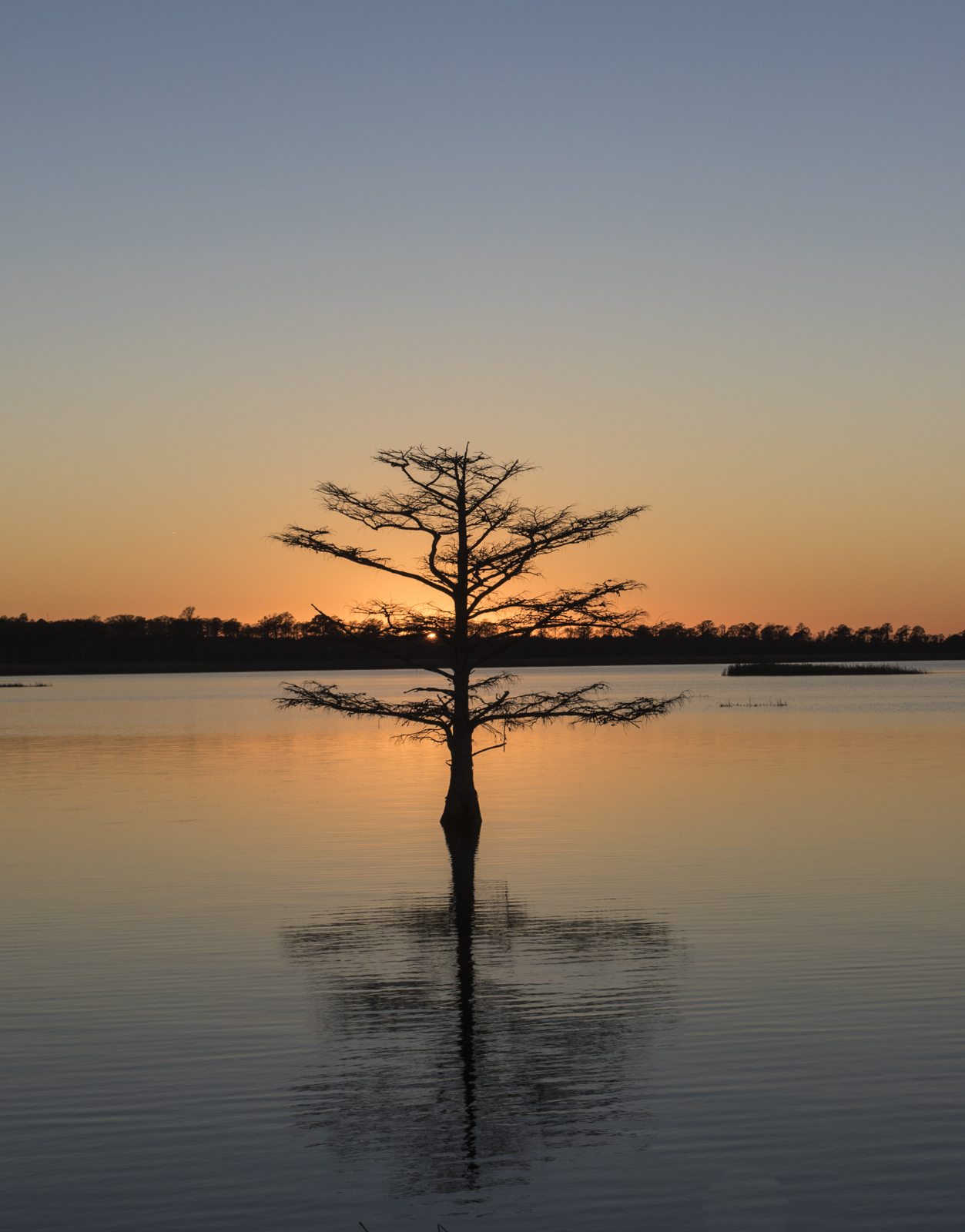
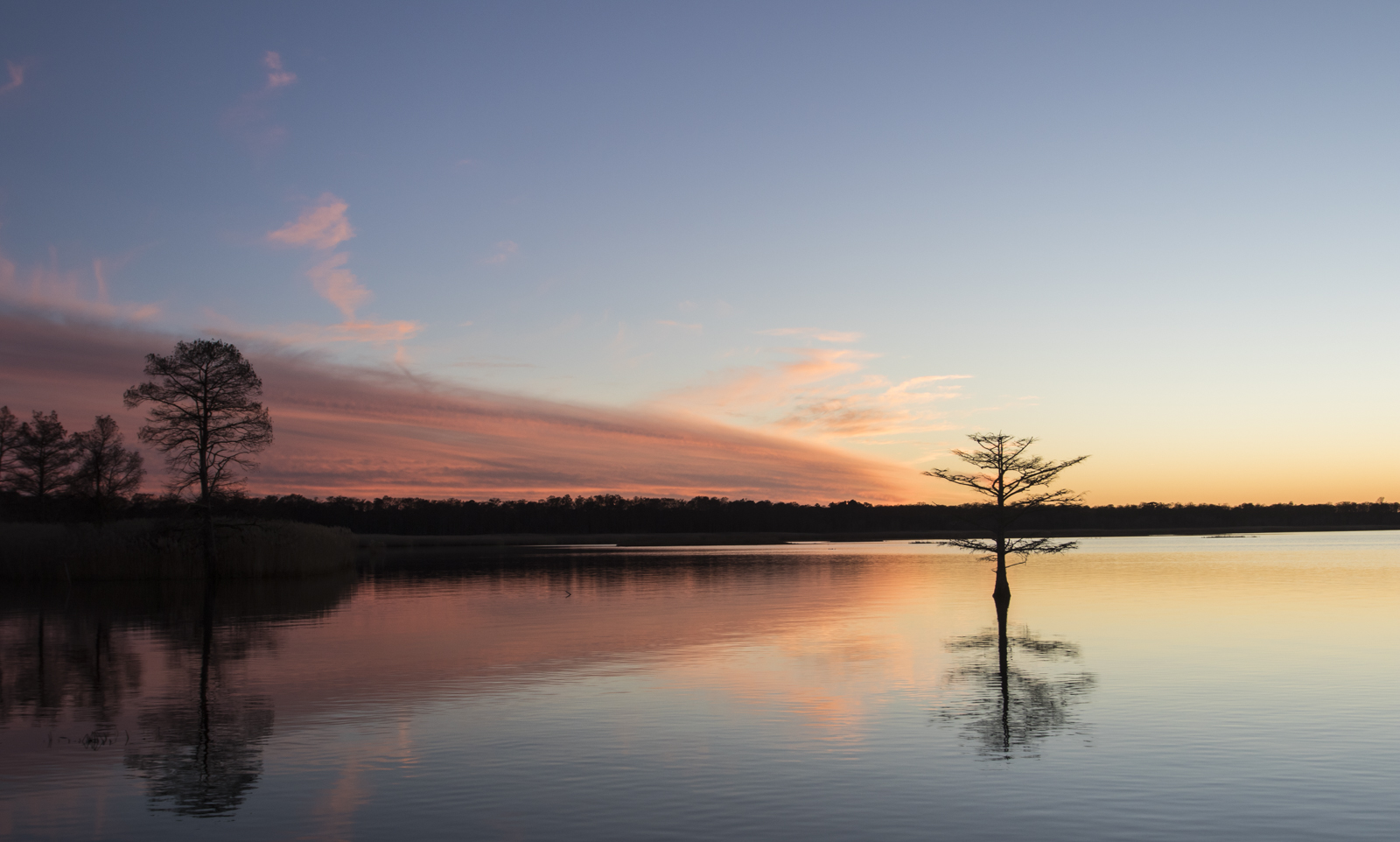
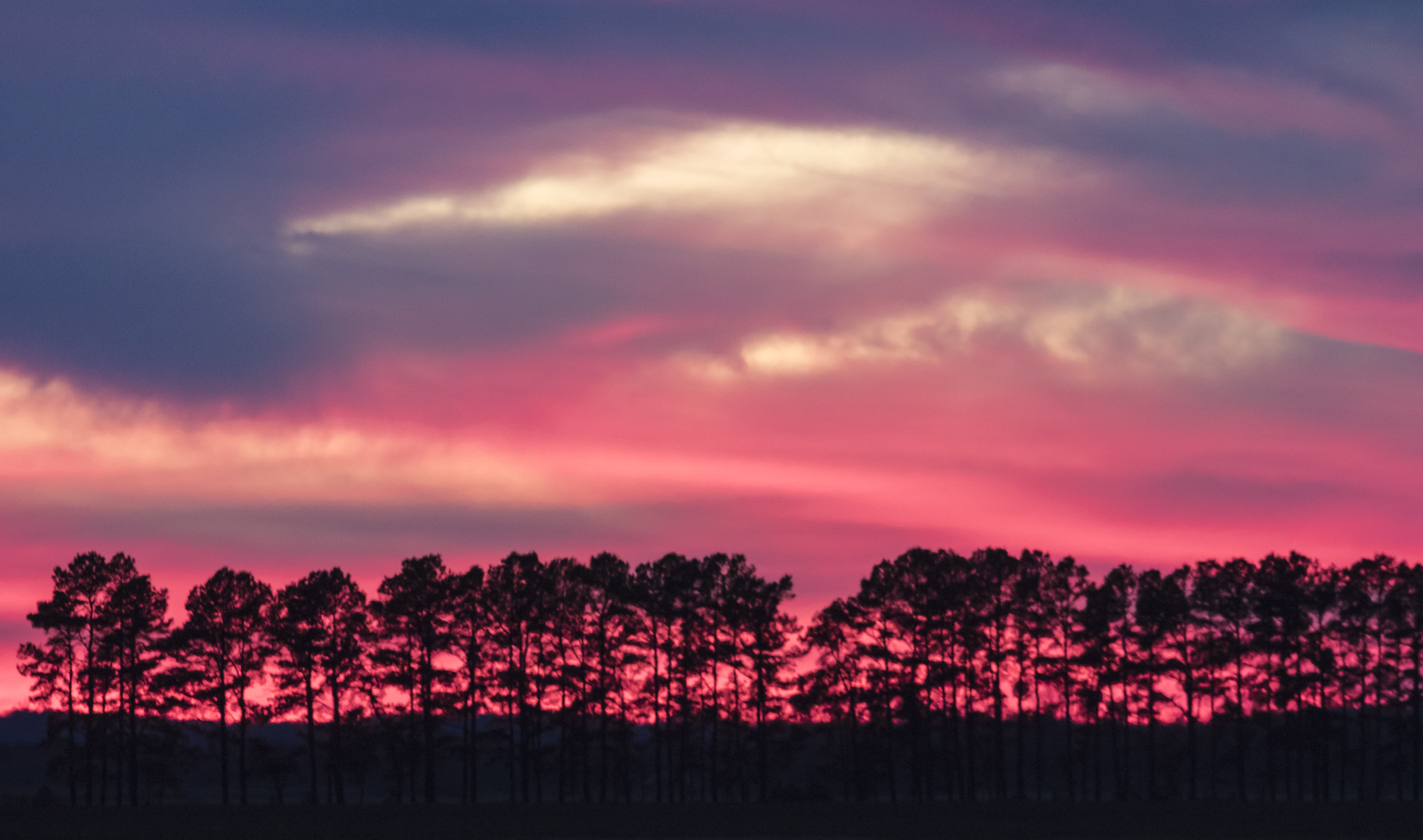
A different angle to the sun creates very different lighting on another egretBroomsedge seeds glow in the setting sun“The tree” at sunset at Lake MattamuskeetPink clouds and tree silhouettes
Sunrise Sunday at Lake Mattamuskeet…
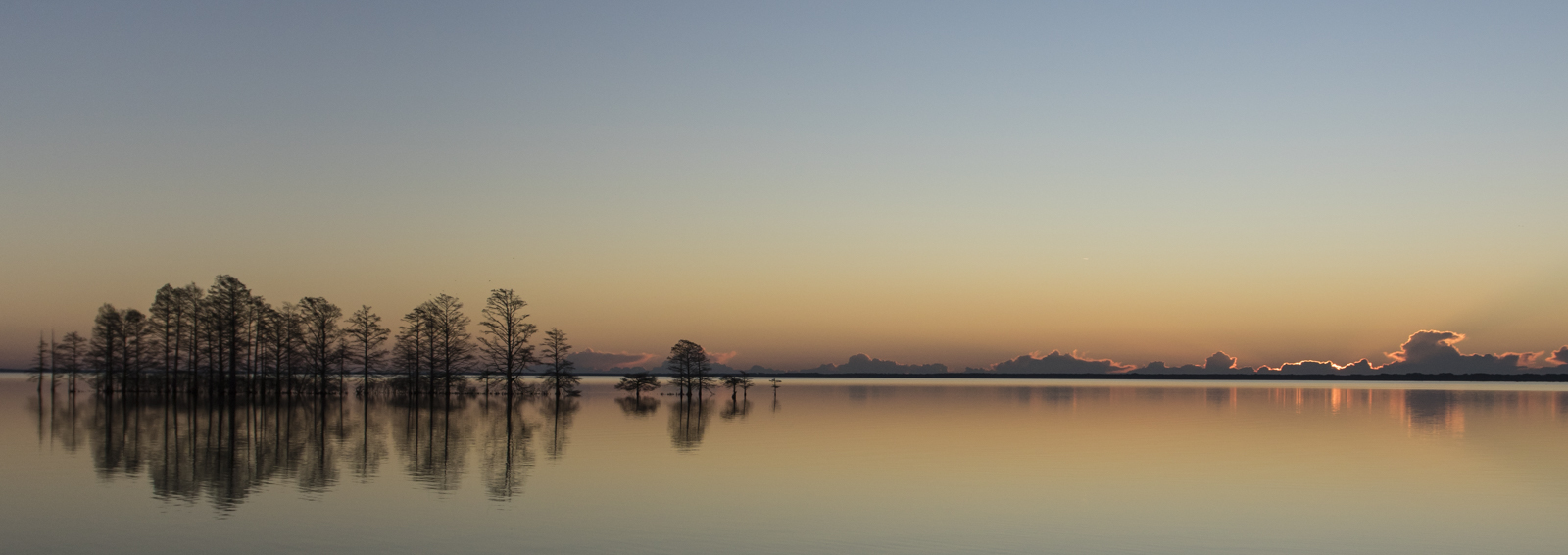
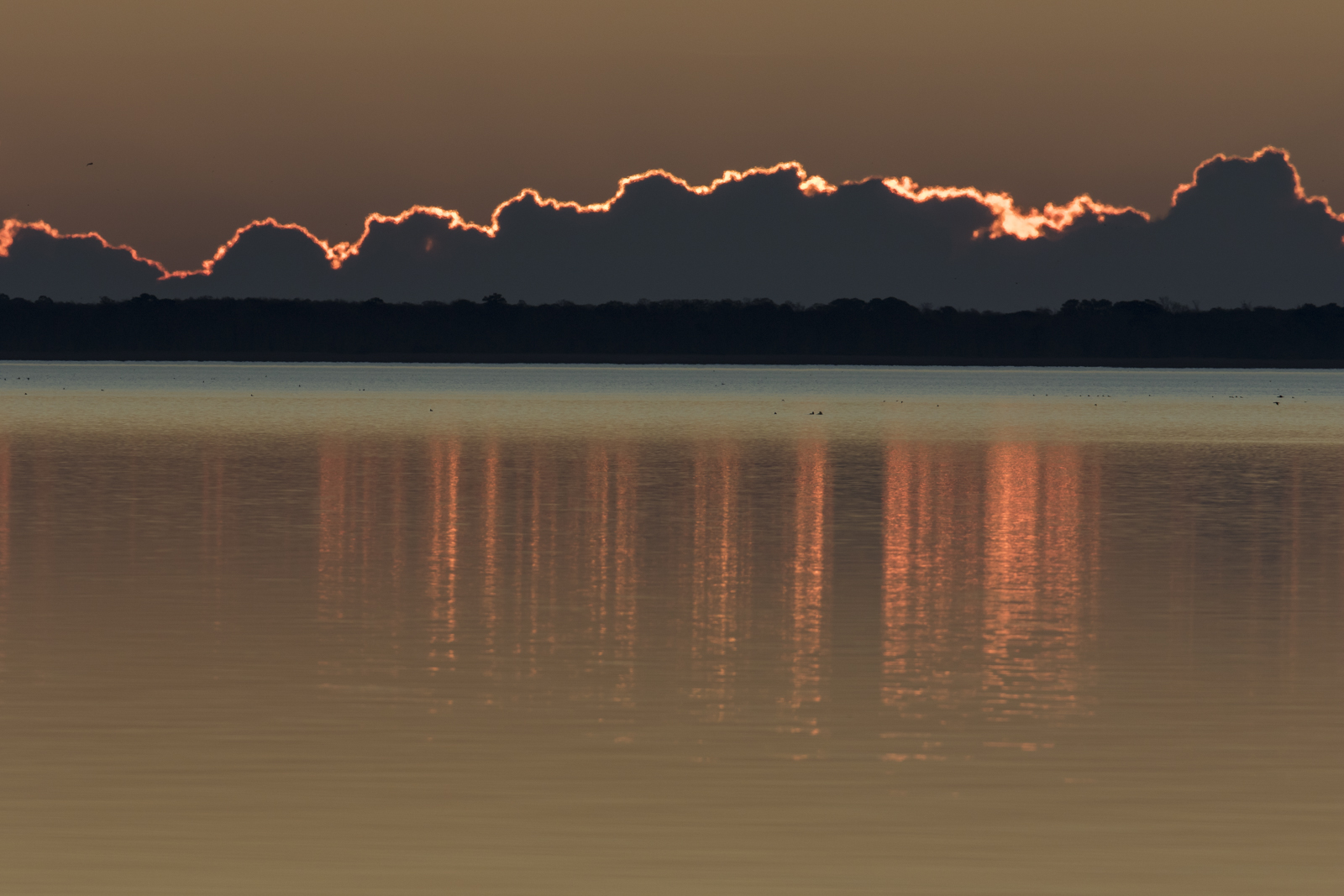
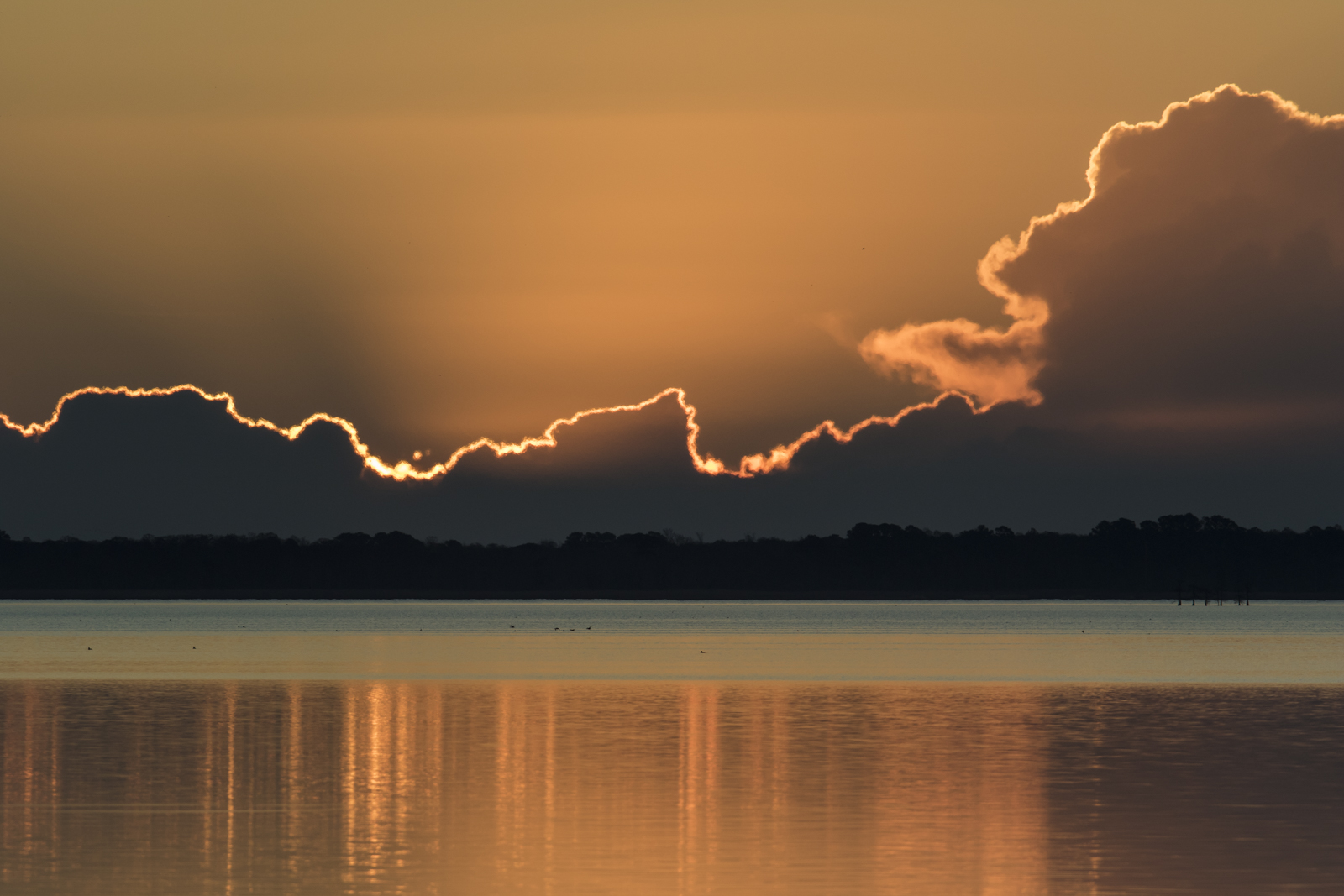
Sunrise at the cypress island at Lake MattamuskeetTelephoto shot of clouds on the horizonGolden lining to clouds at sunrise
Sunset Sunday at Pungo…
Swans flying in against a thickening cloud coverA surprise fiery sky as we drove back to Plymouth
These ephemeral glimpses of beauty help remind us what an amazing world we live in and how we should pause to enjoy it, to make it what we do, and to live in the moment.
Here is a moment of extravagant beauty: I drink it liquid from the shells of my hands and almost all of it runs sparkling through my fingers: but beauty is like that, it is a fraction of a second, quickness of a flash and then immediately it escapes.
I had a one day refuge tour with a wonderful couple on Monday. I went down Sunday evening, just to make sure I could get down there, given the wild weather we had over the weekend. Turns out, once I got out of the neighborhood, the roads were fine. I arrived at Pungo just in time for sunset.
White-tailed deer in fields (click photos to enlarge)
A large flock of swans was feeding close to the road. I drove by to turn around so I could have my side of the car close to the flock. When I stopped to turn, I noticed a large number of deer out in the corn stubble. When I scanned the field, I counted twenty four deer. As the evening progressed, I saw the most deer in one spot that I have seen in a number of years, upward of fifty.
Tundra swans feeding in field next to road
As I pulled up next to the flock, the swans scurried several feet away from the road, necks outstretched in their typical alert pose. It only took a couple of minute for the swans to return to the edge of the field where the last of the corn was most abundant. The late afternoon light was beautiful on their white feathers, giving them a golden cast.
Tundra swan with hints of gold from the setting sun
The light quickly faded to grays and birds began to fly back toward the lake, singly, and in small groups.
A few thousand swans feeding in a field
The flock was in constant motion and the sounds were mesmerizing. I was the only person watching and it was magical. But, something was missing…the loud sounds of tens of thousands of snow geese. They had been here the previous week, feeding with the swans. Tonight, there were only a handful.
Sunrise from the observation platform
The next morning we were at the platform for sunrise. Pungo Lake was partially frozen and the birds were far off on the north side. Snow geese lifted off, circled, and resettled onto the lake surface. There were only a few thousand, not the 40,000+ of a week ago. Are they already departing?
Heavy frost decorated every fallen leaf……and even a fallen feather
The cold morning air had left the leaf litter and standing weed stalks heavy with frost, a beautiful coating of crystals on everything near the ground.
Ruddy duck and reflection
The impoundment was partially frozen and we watched swans trying to push their way through the skim of ice as we slowly drove past. A cooperative ruddy duck allowed us to get out of the car and create portraits with detailed reflections. Continuing down the road we started seeing lots of ducks – gadwall, northern shovelers, mallards, and wood ducks – flush out of the swamp along the roadside canal. Suddenly, something streaked across the road in pursuit of one of the ducks. It was a Cooper’s Hawk, tying to catch a northern shoveler hen. The pair bobbed and weaved in the air down the canal and then the duck dove into the water with a huge splash in a last ditch effort to escape. The hawk swooped up to an overhanging limb. The duck surfaced and swam around nervously. We drove slowly toward them and the hawk flew back across the road. More ducks flushed out ahead of us and the hawk swooped back, and the whole scene was repeated again, and again a duck (this time a wood duck) barely escaped. Finally, the hawk gave up and moved elsewhere to find a meal. It is always amazing to witness such an event.
Northern shoveler male
Not far down the canal, we encountered another pair of northern shovelers. The stunning drake swam out into the open and the morning light made his colors pop in intensity. And that eye…that striking yellow eye.
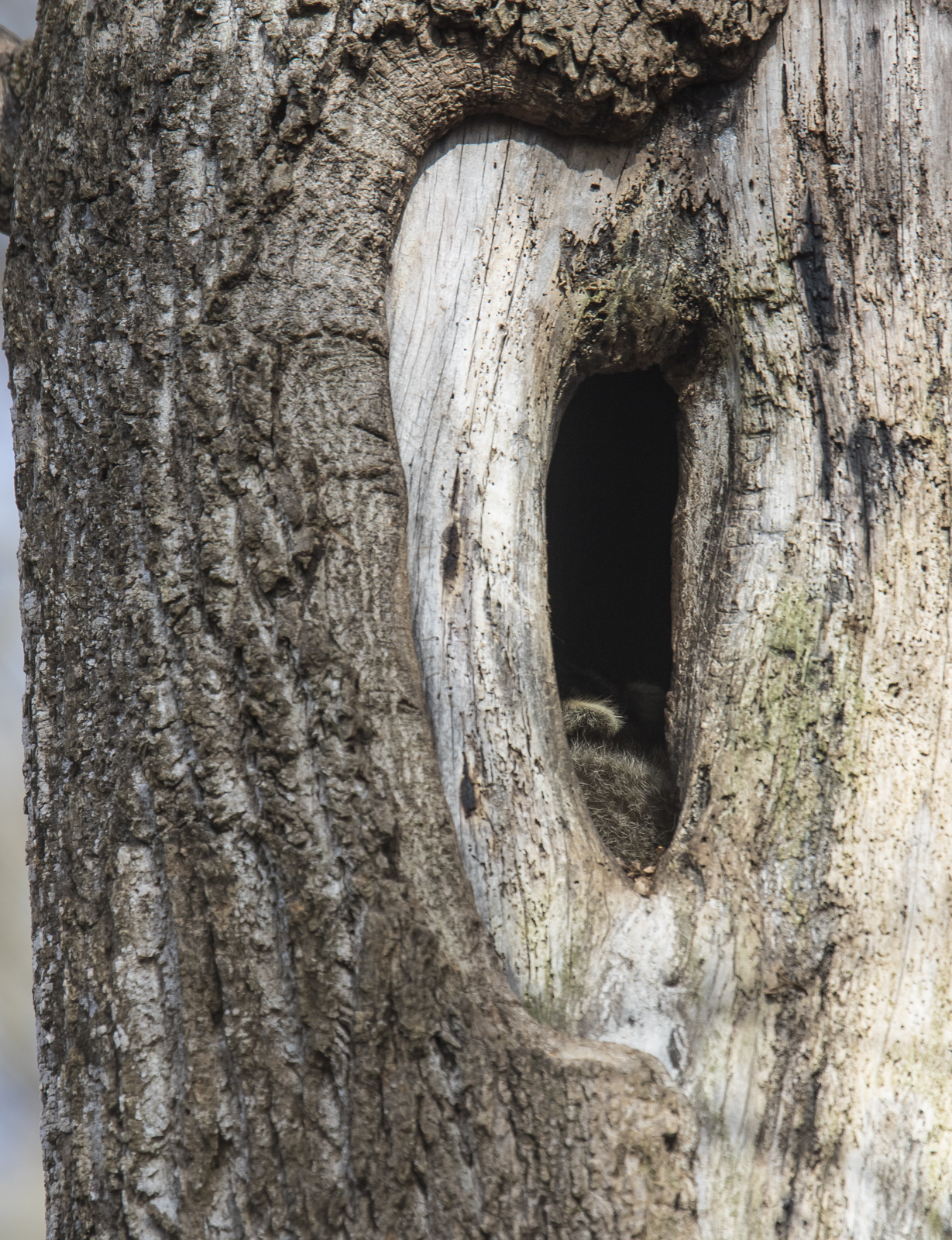
Fur ball in a hollow tree
We continued on, hoping for snow geese. They flew out of the lake but headed beyond the refuge. Instead of waiting for the missing geese to come into the fields, I opted for a leisurely stroll through the woods. Flocks of red-winged blackbirds danced over the corn, flying back and forth to the safety of the tree tops as we headed down the edge of the field. Tiny helicopters, pine seeds, rained down on us as the hungry birds picked at pine cones high over our heads. Temperatures were warming, it was sunny, a perfect day for finding a bear napping against a tree trunk or a sleeping raccoon in a tree. A pair of pileated woodpeckers sounded the alarm as we entered the forest. Flocks of American robins were feeding on the ground in openings in the trees, probably finding worms forced to the surface by the wet conditions. I am always scanning the trees looking for anything out of place – a lump on a limb, a pair of eyes peering out of a knot hole, or a patch of fur in a hollow trunk. And then, there it was, a blob of gray fur barely visible in an open hollow in a tree trunk.
A sleepy raccoon gives us the eye
We walked closer, briefly waking the raccoon. It gave us a couple of glances like the ones you get when you awaken a sleeping spouse or child. You know, the “hey, can’t you see I’m sleeping here” sort of look, half disgust, half “I’m just too tired to do anything about it”. We apologized and walked on.
Another ball of fur
Before heading back to the car, I wanted to check the hollow tree where I had found a sleeping raccoon on a previous trip. There was no raccoon in the tree trunk this time, but it was obvious that a bear had clawed at the opening since my last visit. I suppose the raccoon had to find another bedroom after that. But, it looks like it might not have moved very far. I looked up at a hole in a nearby tree and there was another ball of raccoon fur. This time, the raccoon barely moved as we walked by. At least we weren’t scratching at his door.
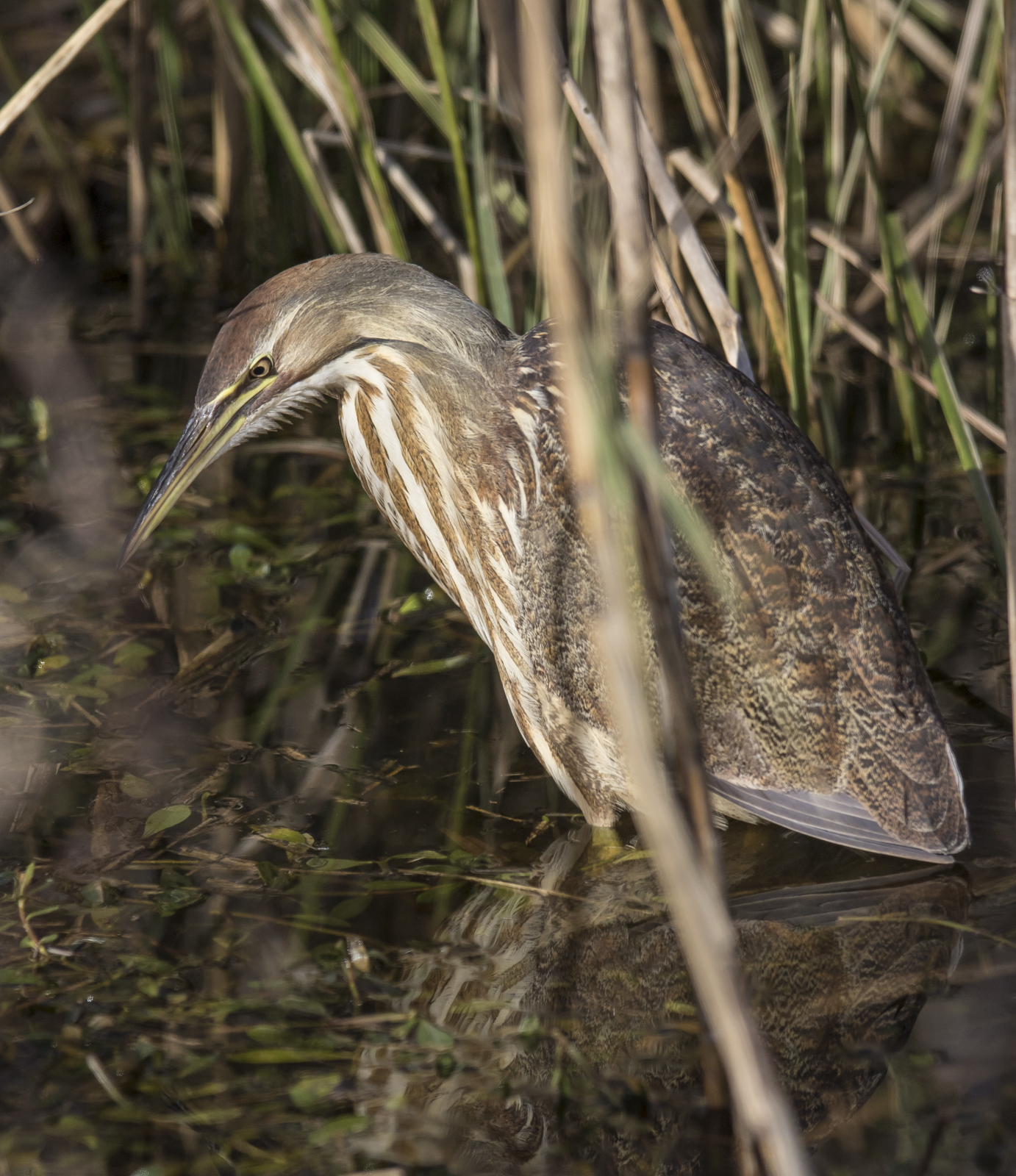
American bittern
We spent the afternoon at Lake Mattamuskeet, getting great looks at a variety of waterfowl and waders. Large flocks of northern pintails jumped into the sky along Wildlife Drive anytime an eagle flew across the wetlands. And we managed to find a cooperative bittern snagging small fish along the edge of the marsh (if only they would come out into the open for their picture).
Deer were common at Mattamuskeet as well
We ended the day back at Pungo, hoping to see a show of snow geese, but they were nowhere to be found. Even the swans had largely moved onto private lands as corn supplies have apparently been picked over in most of the refuge fields. The evening ended with a spectacular sunset (and me with no camera) as we walked along a quiet roadside, soaking it all in. Great horned owls were calling. A few American woodcock zigzagged out of the swamps into the fields to feed. Then we heard something that I have never heard here – first, one howl, then another. And they were close to us, just out of sight in a thicket of river cane in the woods. The sky was on fire with a pink and red sunset, and here we are listening to two animals welcoming the approaching darkness. I must admit, the sound sent chills through me. The howls continued for a minute or so. We walked back to the car, admiring the spectacular show in the sky and wondering what we had just heard. Listening to some audio files online when I got home that night, I guess they could have been red wolves. I like to think so. Even in a place where you have intimate knowledge of its beauties, there are always new mysteries to be solved. I can’t wait to see what we find on my next trip.
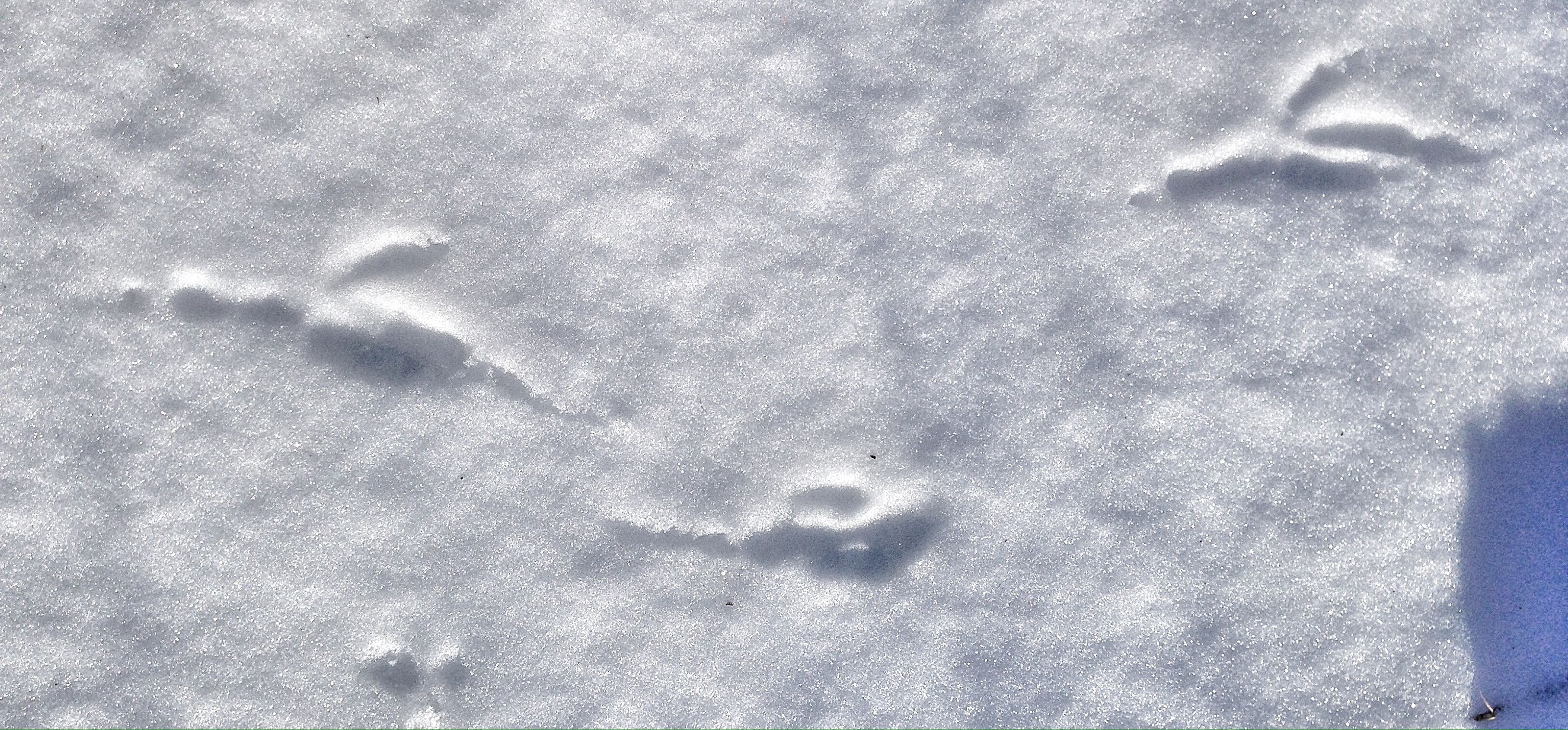
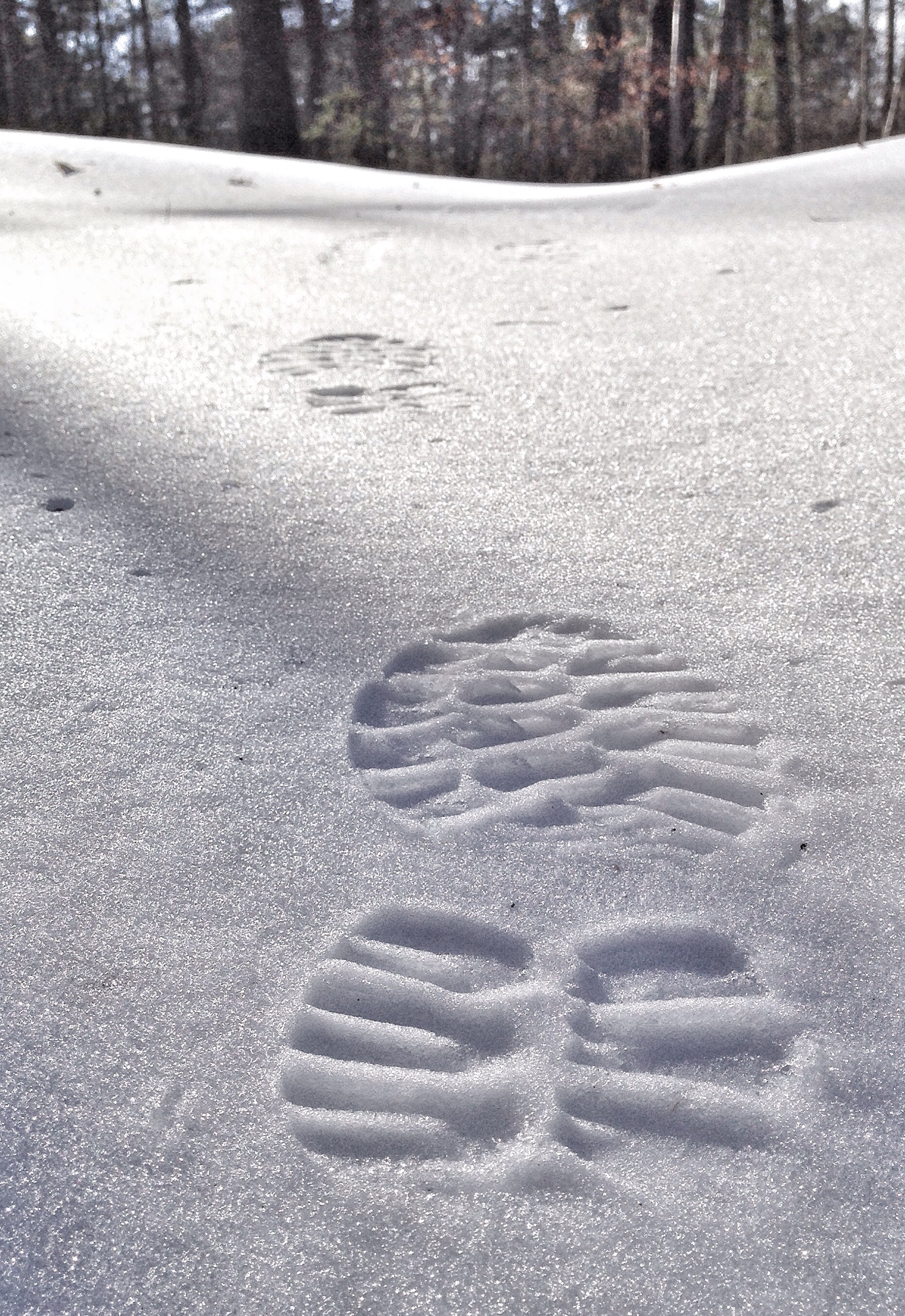
I was able to get out of the neighborhood to head to Pungo for a tour tomorrow. The roads are still icy, but the 4wd had no problem. Melissa wandered the yard after I left and sent a poem she wrote after seeing so many tracks. It makes a nice addition to the blog. I hope you enjoy it.
I walk across the white landscape
as though on pavement,
or the hardwood floor in the living room.
The ice is dusted with snow
so that the each toe of each foot
is perfectly marked.
Only the sharp hooves of the deer
cut through the ice-pavement.
I can see where the squirrel ran
from tree to tree,
and where the rabbit huddled
next to the hollow maple.
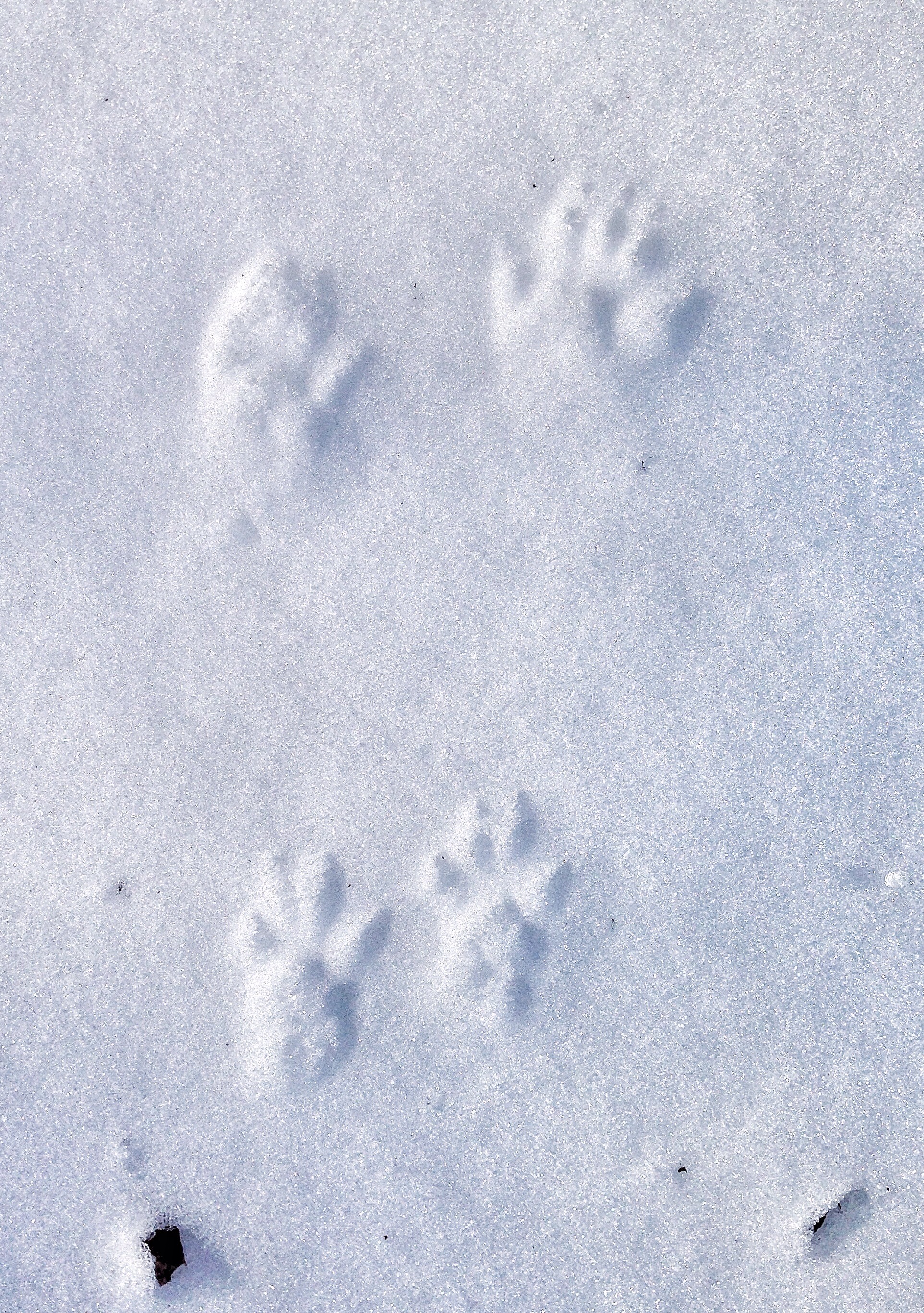
Gray squirrel tracks
I can mark the path of the neighbors cat–
visiting each site where you
so carefully laid out seed for the birds.
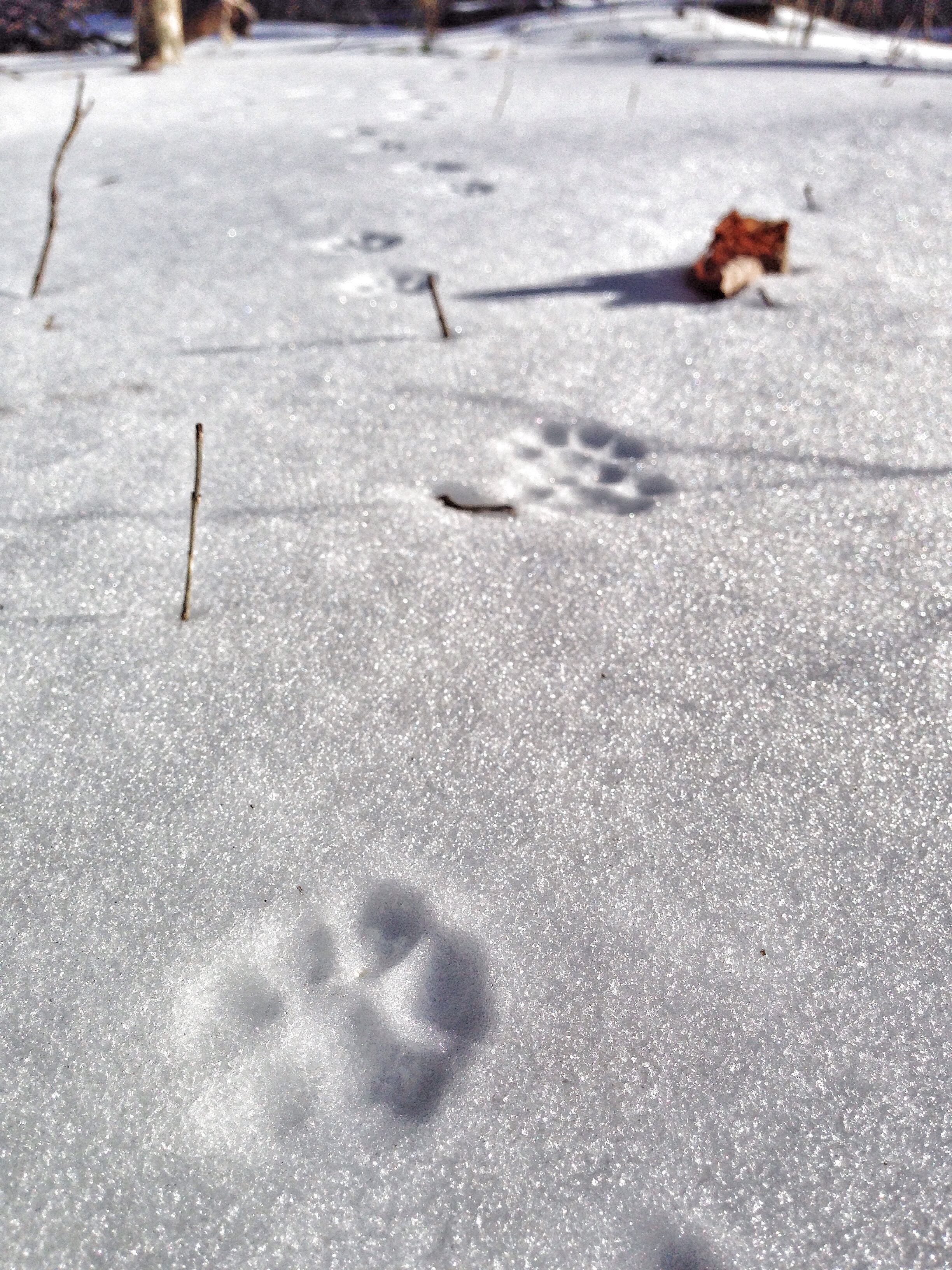
Domestic cat tracks
And there’s the distinctive trail of the lame crow–
dragging its right leg,
toes curled down and under.
Crow tracks – right leg is lame
I guess, if we look closely,
and see clearly,
we are able to find
the path that we have followed;
we can trace our footsteps back
to the seed-pile
or the hollow tree.
But it’s the unmarked snow ahead
that both beckons and halts us…
I’ve always loved the thrill of breaking trail–
making the first path
through a sea of white.
I would build roads through the yard as a child,
to the fence-line, and beyond.
But those childhood paths always circled
back to home
and hot chocolate.
The real courage, it seems, comes
when you don’t know what lies ahead;
when the path is hidden,
and home is out of sight.
Where is the joy, then?
Why do I not remember the siren call
of the snowy yard
when life’s choices loom large?
I guess, in the end,
though I wish it was,
life isn’t quite like
playing in the snow.
Nature has not only given us life, but can also give us reasons for living positively: Curiosity, wonderment, imagination, and knowledge are just a few of the ways Nature can beckon us.
~Mike McDowell
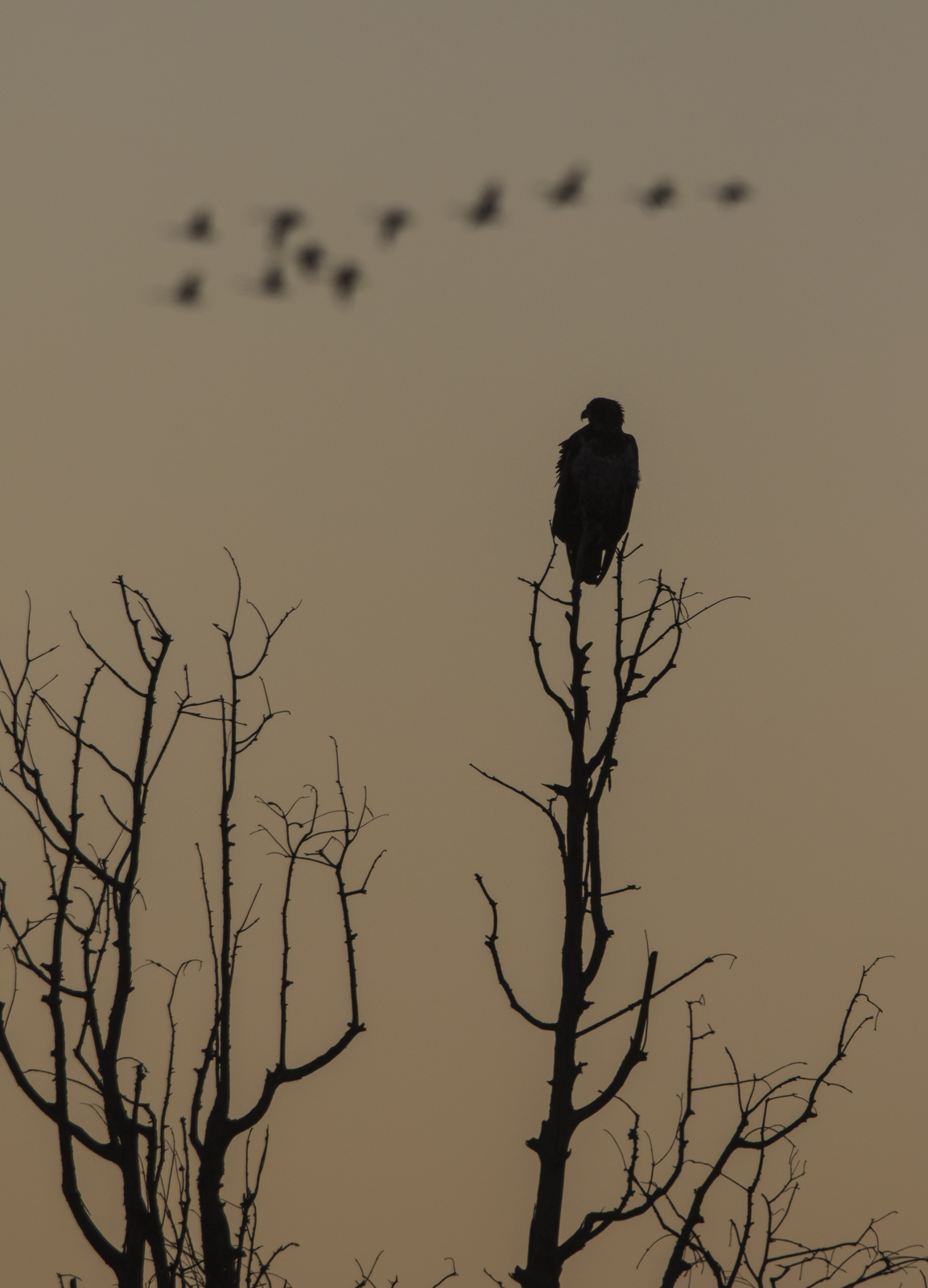
Between the phenomenal evening shows of snow geese last week, I had a quiet sunrise at Pungo, mostly to myself. It was a cold morning and overnight a skim of ice had formed in the waters of the managed impoundment, and in the nearby swamps. I headed for a place I knew I could see swans in the early morning light. As I neared the water, I saw first one, then two, and finally, four bald eagle silhouettes patrolling the flooded area, no doubt looking for a carcass or a weak swan.
A bald eagle surveys the marsh before dawn while a group of swans flies in the distance (click photos to enlarge)
The huge birds seemed to prefer a couple of snags along the canals as their morning perch, so I positioned my car where I had a good look at them as the sun began to creep above the horizon. Many of the trees along the canals have been pushed over by heavy equipment in recent years, perhaps due to the potential for trees along ditch banks to weaken the canal edges if they fall. But, the raptorss certainly like to use them for perches to survey their surroundings.
Snow Geese began flying off Pungo Lake just after sunrise
As daylight increased, so did the activity in the air, with swans, ducks, and snow geese beginning their morning departures. The snow geese came off in smaller groups than usual, but still flying in their characteristic wavy lines.
An eagle takes flight at first light
The eagles continued to make short flights out over the impoundment, but I didn’t see any attacks or dropping down to a possible carcass. As the sun rose above the treeline, all the eagles flew off in search of better hunting. Later that morning, I did see four bald eagles on a fresh swan carcass in a field just beyond the refuge boundary. It is that time of year when birds weaken and die or are wounded by hunters on nearby private lands. The abundance of carcasses provides a bounty for eagles, vultures, and a host of other scavengers.
Tundra swans, tinged in pinkish morning light, waking up at dawn to a frozen world
The swans in the nearby marshy area were waking up to changes in their world – parts of it had frozen overnight. I always enjoy seeing these huge birds standing on the ice. There was one small group surrounding a small open pool. The swans kept splashing and dunking their bodies in the cold water, and then would get out, preen, and flap their wings to greet the new day. I watched them for several minutes and then headed off to explore other parts of the refuge as the daylight intensified.
Double-crested cormorant perched on a post in the impoundment
I had not gone far when I spied a double-crested cormorant perched on a post out in the water. These are not common birds at Pungo, as there are not many fish here except in the canals and perhaps the impoundment. Pungo Lake, unlike nearby Lake Phelps and Mattamuskeet, is peat-based, and, therefore, too acidic and turbid to support much aquatic vegetation of fish life.
The eye of a cormorant is a beautiful green
I particularly admire the eyes of these primitive birds – a striking green under the right conditions of sunlight. This one never turned just right to have the eye color pop, but you can see hints of it here.
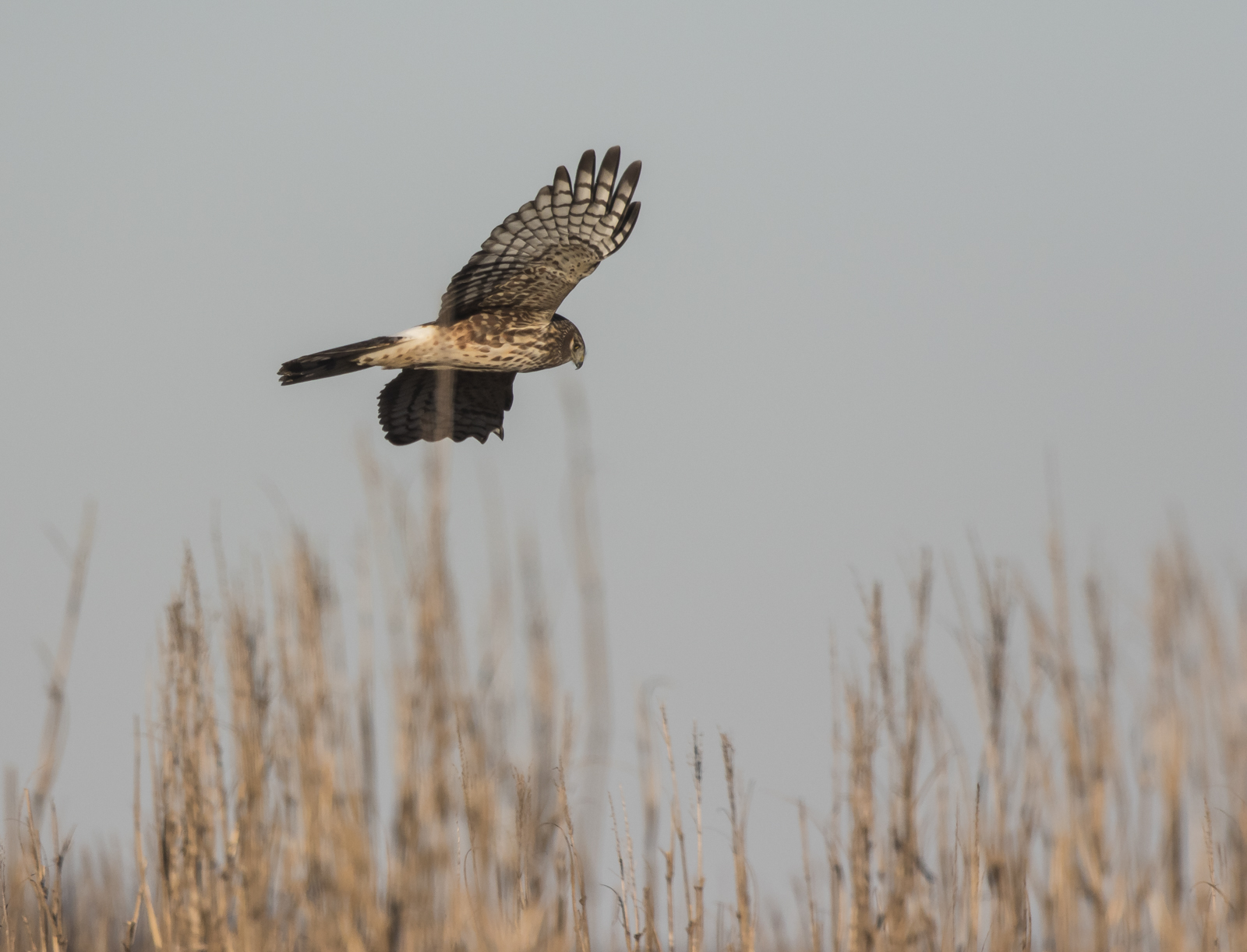
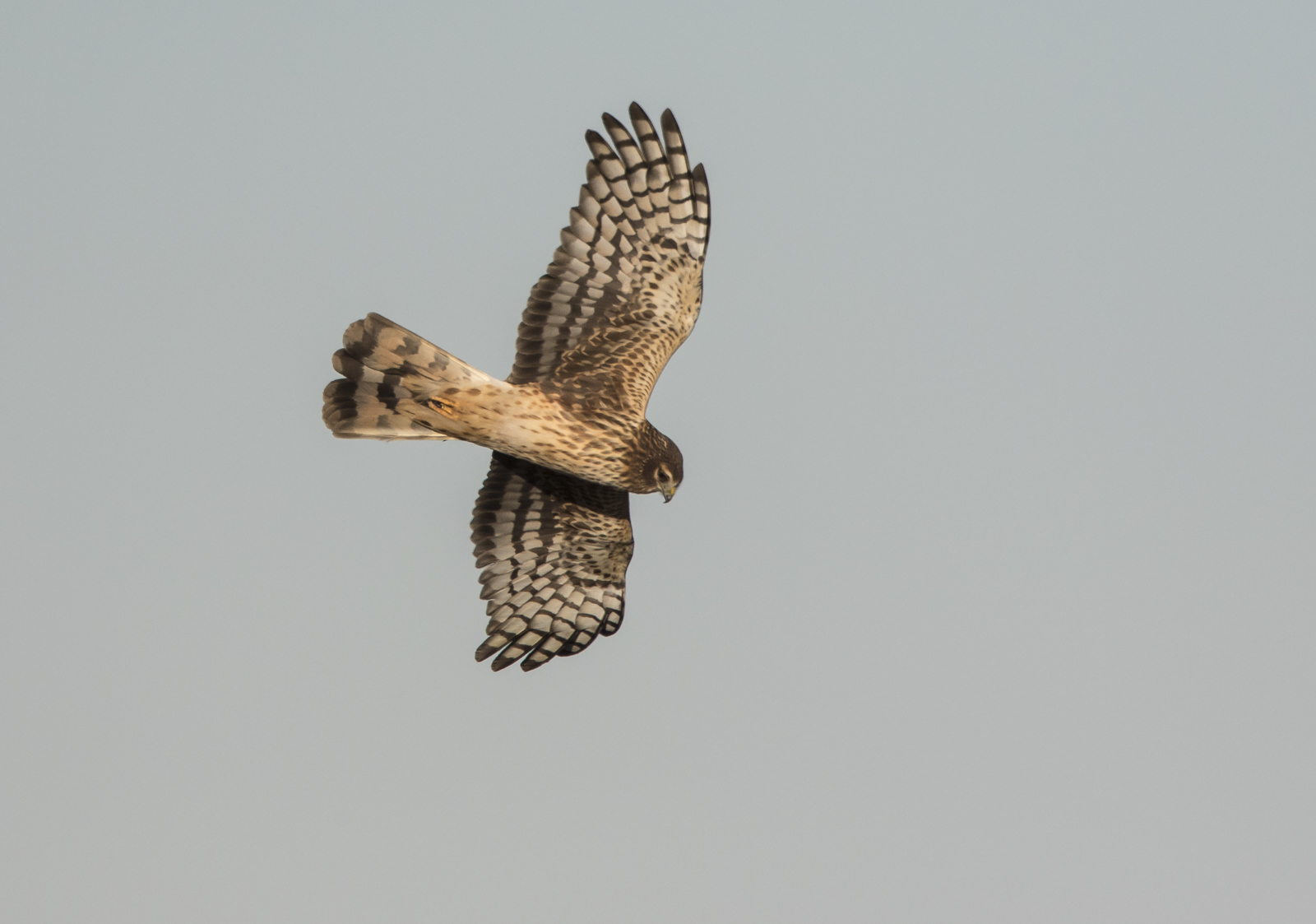
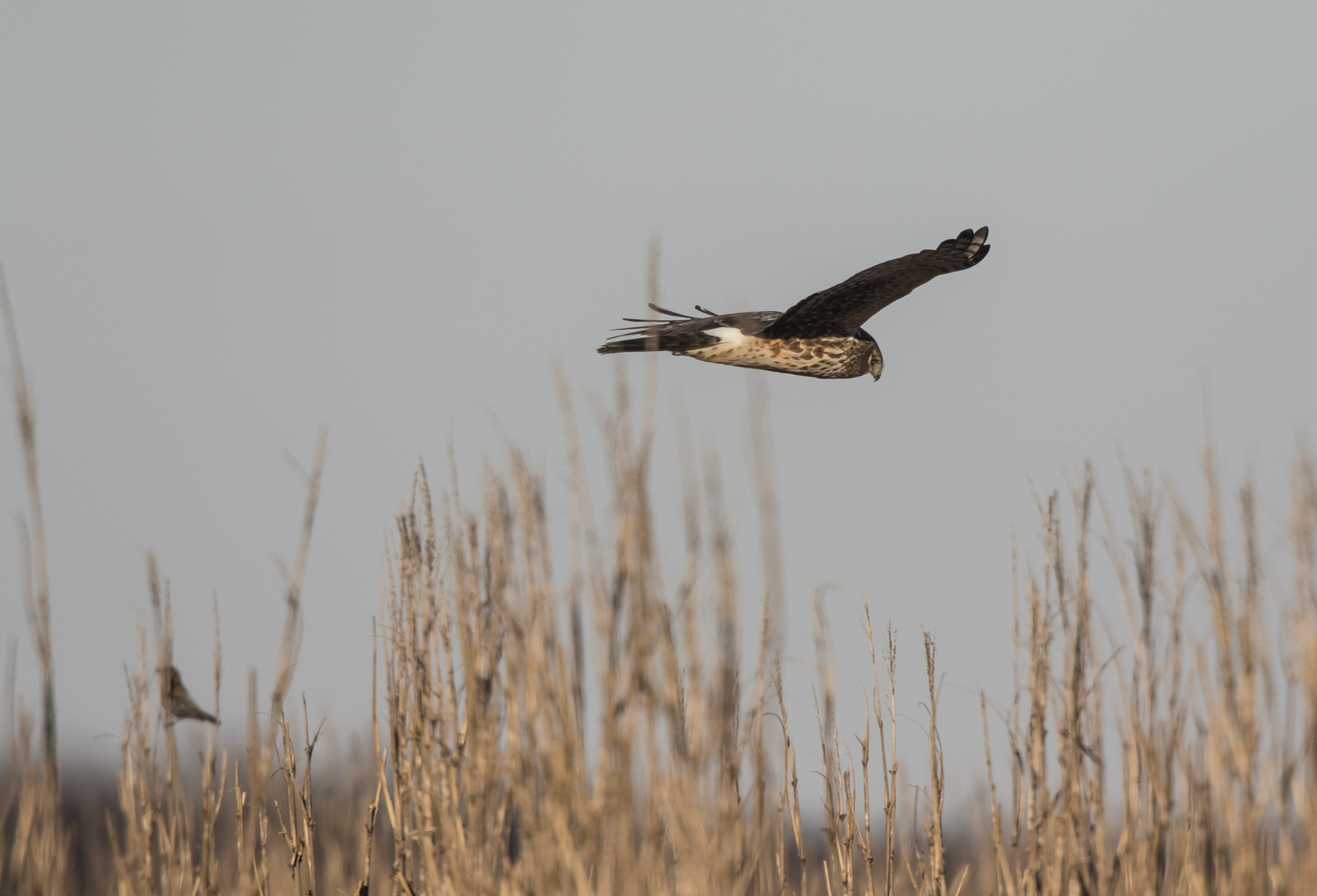
Northern harrier cruising the corn, looking for a meal
Driving along D-Canal Road, I saw four northern harriers buzzing a stand of flooded corn just across the canal on private land. This standing corn is a duck hunting area and is very effective in attracting ducks and other wildlife. The harriers were cruising back and forth repeatedly, so I pulled over and attempted a few passing shots with my 500 mm lens. Northern harriers are efficient fliers, using a slight dihedral wing pattern (much like a turkey vulture’s wing profile while soaring) that helps keep them aloft with little flapping of their long wings. They fly low, moving back and forth over fields, looking for small birds and mammals.
Northern harriers that are brown in color are either adult females or immature birds
Three of the four were either adult female or immature harriers. Immatures and adult females are brown, with varying degrees of brown streaks on their breast. I think this might be an adult female since the breast is primarily white with heavy streaking.
Northern harrier adult male
Adult males are ghostly in appearance – a light belly, gray upper parts with black wing tips, and the characteristic white rump patch found in all ages and sexes of harriers.
A small bird pops up in the corn after a harrier passes
I watched the hawks for about 20 minutes, constantly working the patch of corn, trying to stir up some prey. A female harrier did hover once, then dropped down into the corn, but I did not see whether it caught anything or not. My favorite moment came when a small bird popped up right after a harrier passed overhead, looked at the hawk, and flew off in the opposite direction. Such are the priceless moments of nature you can witness at a place like Pungo…reason enough to visit time and again.
Don’t refuse to go on an occasional wild goose chase – that’s what wild geese are for.
~Henry J. Haskins
I am lucky in retirement to have more time to seek out places that provide a wildlife spectacle. There is something transformative about witnessing masses of animals in a wild place. This time of year, one of the true spectacles at many of our wildlife refuges in the East, is the concentration of waterfowl of various species on their wintering grounds. One of my favorite sights and sounds of winter is a huge flock of Snow Geese flying overhead. So, about a week ago, I went north to Chincoteague looking for waterfowl. It snowed on my second day, and the next morning I went out one last time looking for large flocks, hoping the cold and wind might concentrate them.
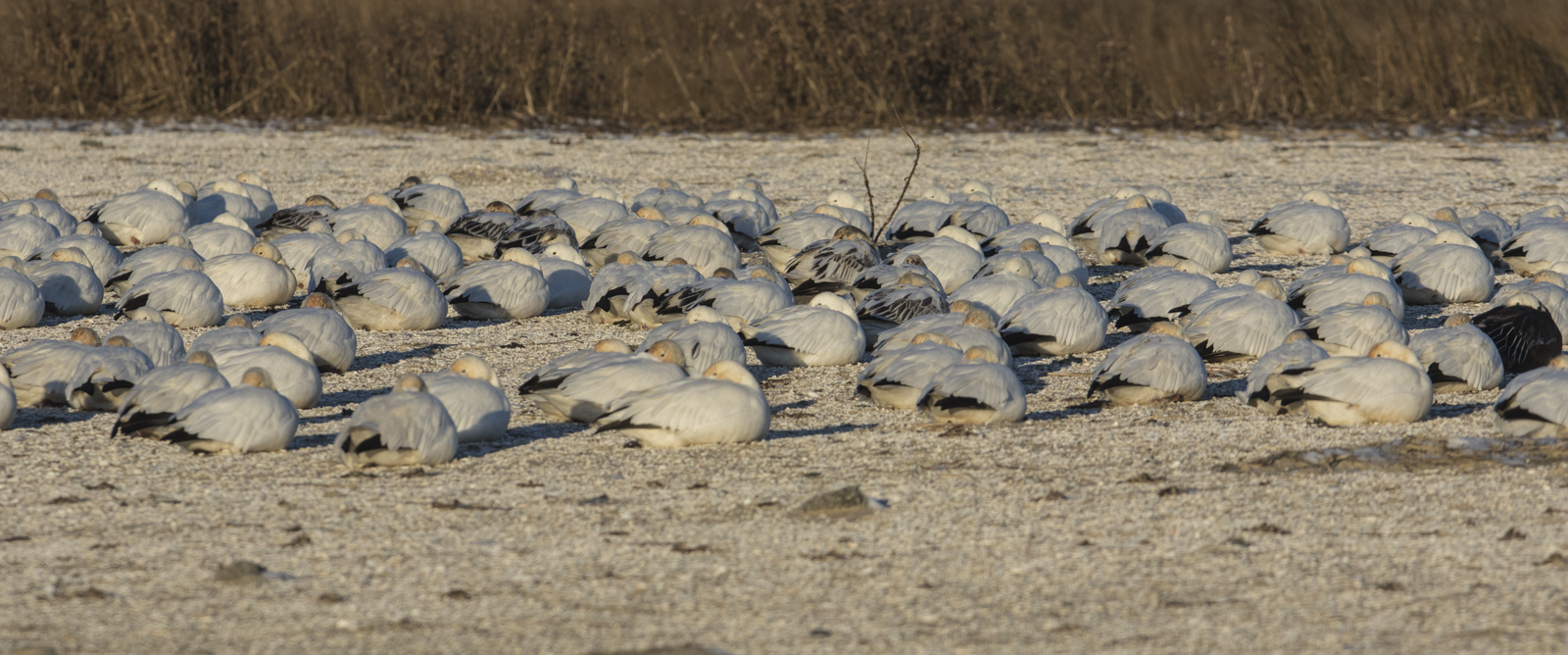
Snow Geese hunkered down against the cold and wind (click photos to enlarge)
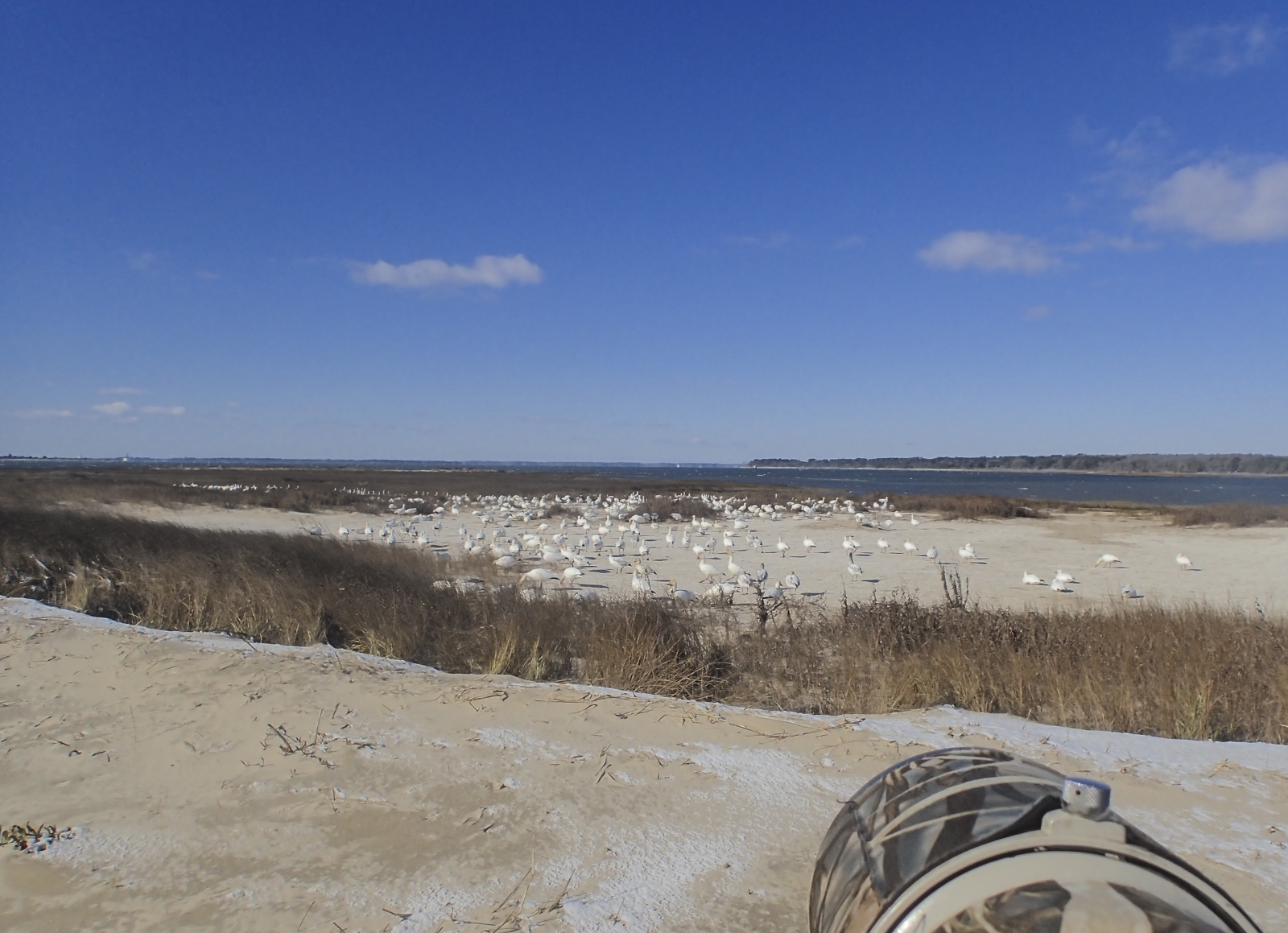
The flock was there but easy to miss as they were hunkered down on an over-wash fan on the sound side of the beach parking area. There were maybe a little more than a hundred Snow Geese in this group. I pulled up to watch and not a goose moved for several minutes. With temperatures in the teens and a strong wind, I didn’t blame them.
Snow Geese on edge of marsh at Tom’s Cove in Chincoteague NWR
Finally, a few got up and walked toward the marsh to feed when another hundred or so flew in.
Snow Goose juvenile with a high fiber snack
In areas with extensive marshes, Snow Geese tend to grub up the marsh grasses, consuming almost any part of the plant from roots to stems, to leaves.
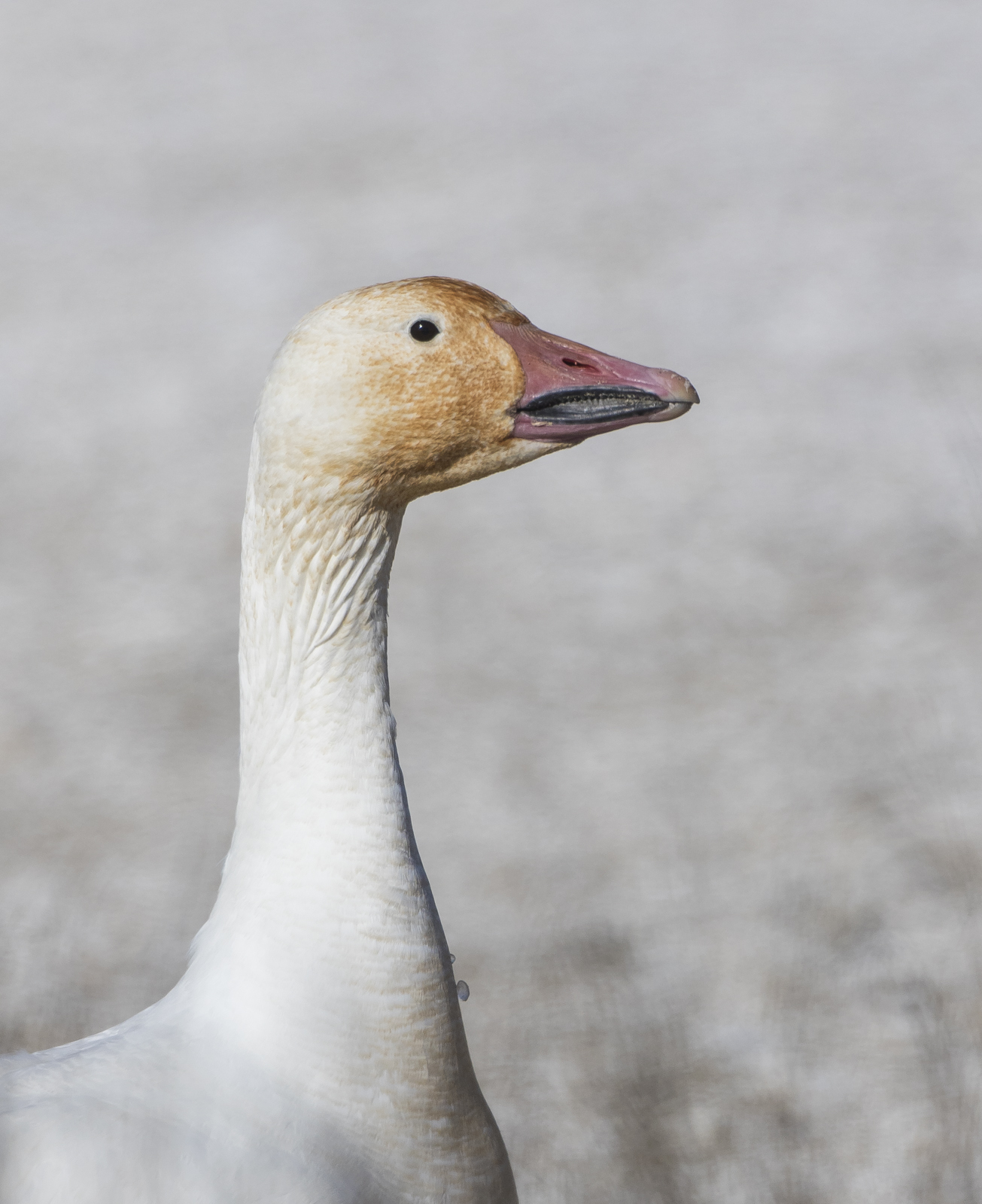
Many of the Snow Geese at Chincoteague have rust-colored heads
This grubbing behavior often leads to the white head, neck, and breast feathers having a rust-colored stained appearance due to the mineral content of the mud. I rarely see this on the Snow Geese at Pungo, as they tend to feed more on waste grain in agricultural fields.
Bloodied Snow Goose
Before leaving, I did see a goose with a different color – blood red. This goose had been injured (shot perhaps?) and had been bleeding somewhere on the head or neck. After watching the bird for several minutes, it seemed to be doing well, moving normally and feeding with the others in the marsh.
With relatively few birds at Chincoteague, and one more day to look for large flocks, I headed back to my favorite place, the Pungo Unit of Pocosin Lakes National Wildlife Refuge, to spend my last day on the road searching for snows.
Tundra Swans crowd a recently cut corn field at Pungo
I arrived at Pungo late in the afternoon. The light was gorgeous coming into a recently cut corn field adjacent to one of the main roads on the refuge. There were a few thousand Tundra Swans feeding on the corn and many more flying in. This was a good sign, as large flocks of swans often attract the Snow Geese as they search for a late day feeding. I pulled off the road, along with a couple of other cars, to take it all in. I didn’t have to wait long. At first, about 50 Snow Geese flew in, circled, and landed among their taller cousins. Then I saw them coming, a huge flock flying in from the lake. I jumped out and quickly put the camera on a tripod and started recording…
The flock did its usual thing, noisily circling the field, breaking up into a couple of white clouds, and started landing. A lot of the swans decided it was time to head back to the lake with all the commotion starting, so the scene was chaotic with birds circling, others leaving, and everyone making a lot of noise. It is tough to take it all in. I certainly can see how flocks can confuse predators, as I found myself not knowing which way to look or point the camera, since there was something happening in all directions. This was all repeated the next evening, so these photos are from two afternoon shows.
A beautiful moon added to the scene
This is what I wanted to see, the large swirls of birds in the sky, the late afternoon light tinging their bodies and wings with hints of gold. An almost full moon overhead added a touch of elegance to the scene, as did the graceful swans.
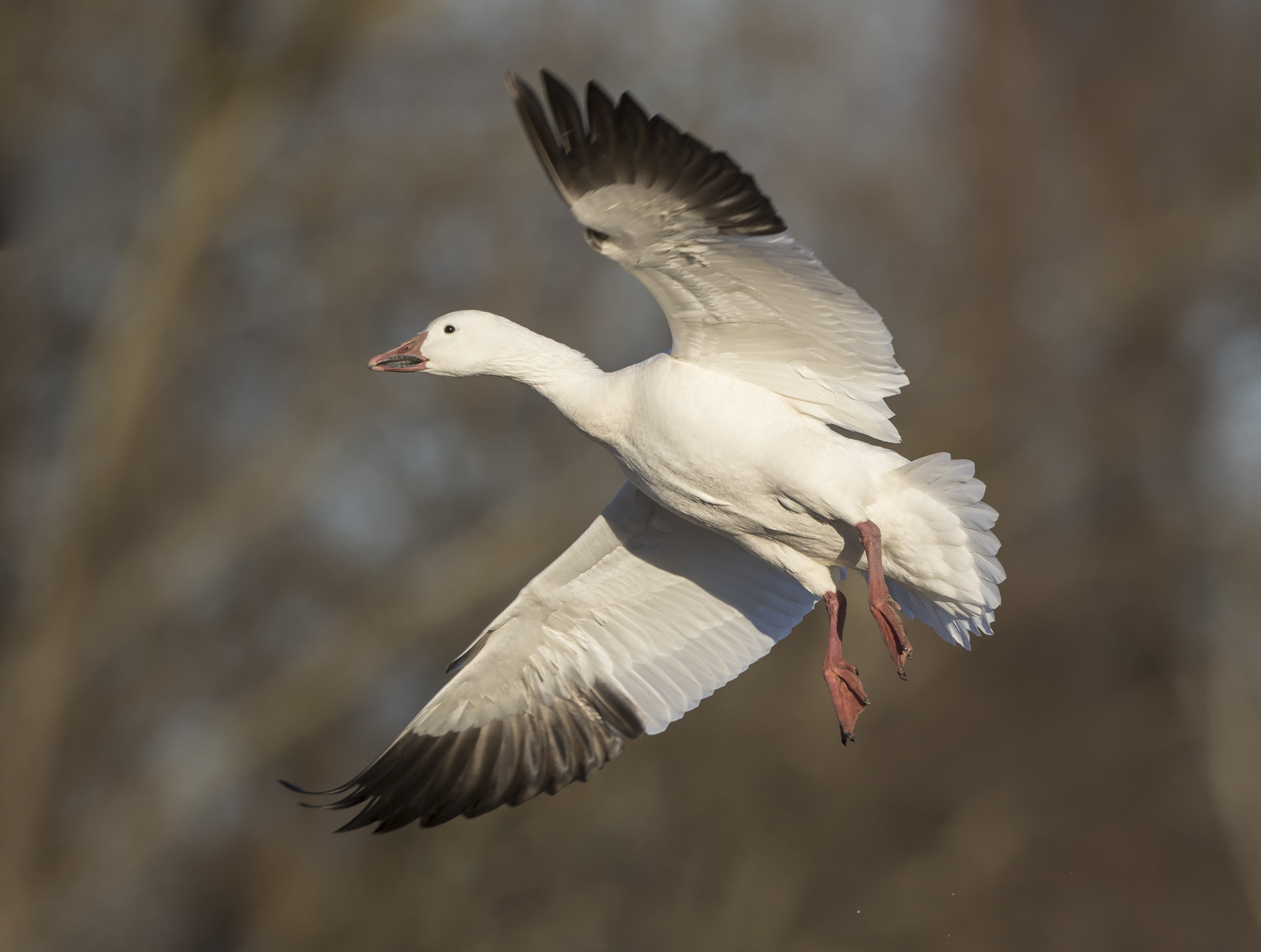
A Snow Goose hangs in the air looking for room to land
Both evenings, the sea of white moved closer to the edge of the road where I stood, getting access to the corn that remained uneaten. The geese kept coming in, streaming down among the swans, who seemed disturbed by the interlopers in their field.
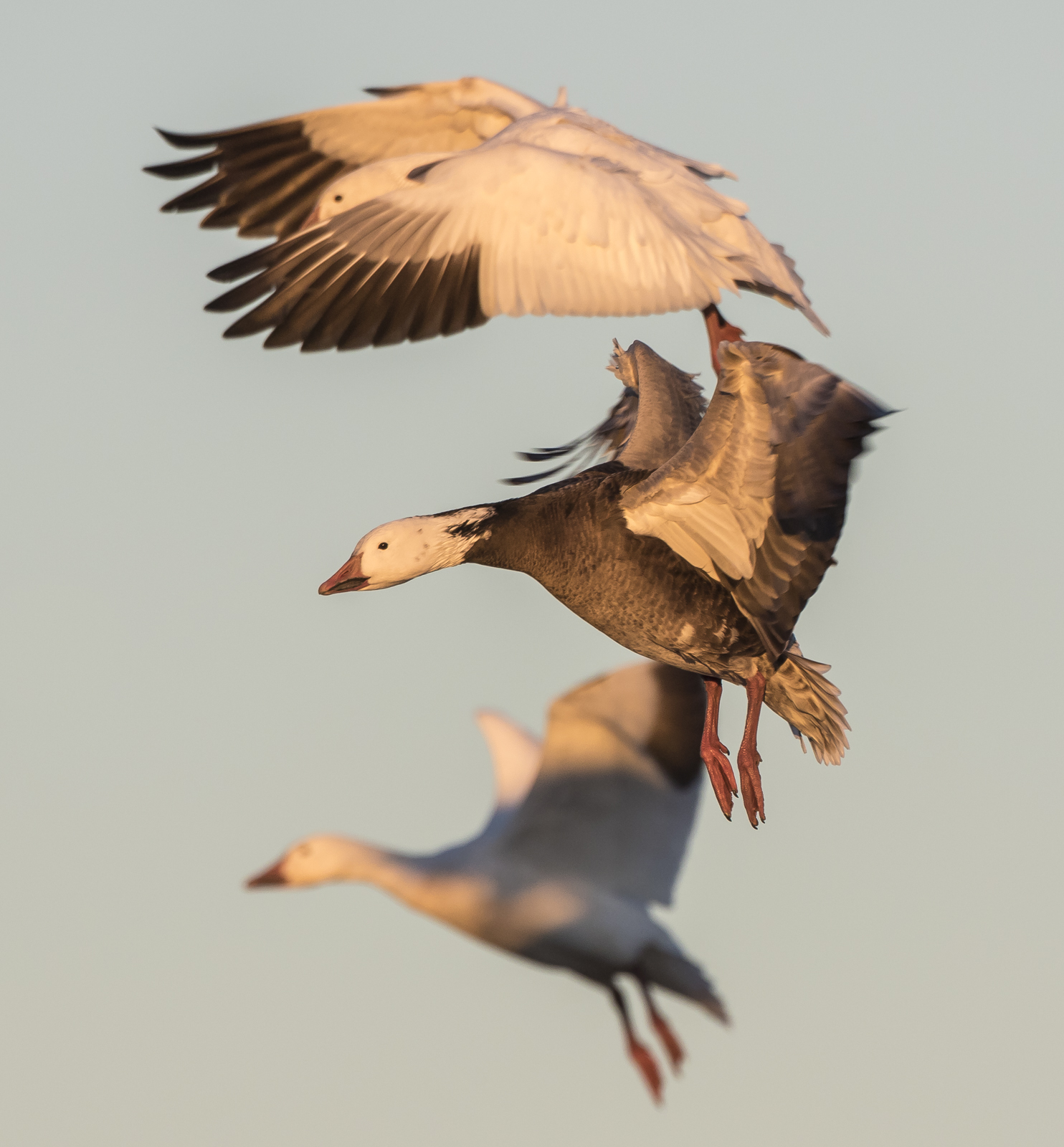
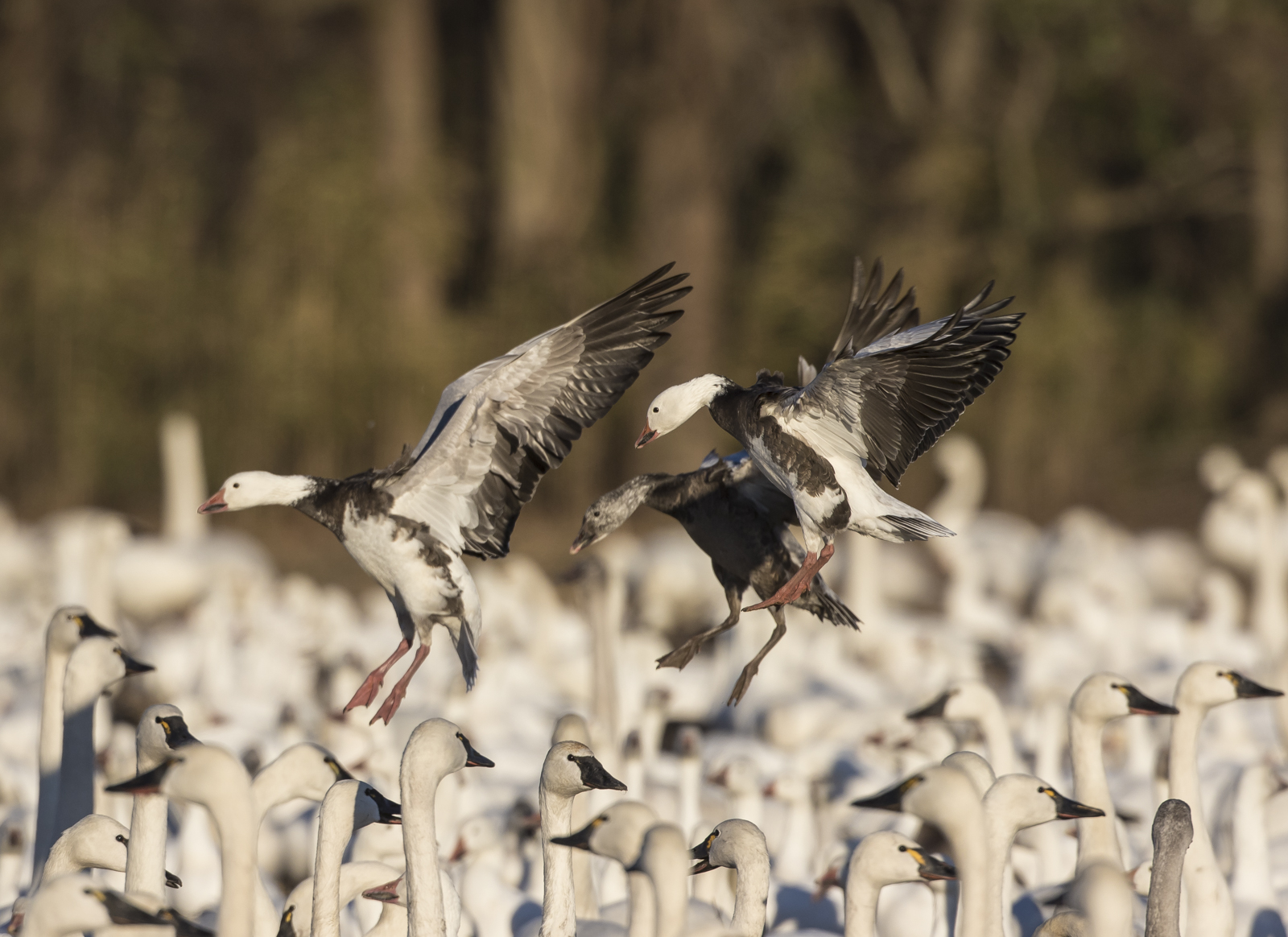
A blue morph Snow Goose landing with white morphs
Noticeable among the white birds are several of the darker color morphs. Long believed to be a separate species, the Blue Goose, these are now known to be a color morph of the race of Lesser Snow Geese. This color variation is controlled by a single gene. The two color morphs can mate with each other and produce young of either or both colors.
A Ross’s Goose feeds at the edge of the flock
Near the edge of the churning flock, I spot a diminutive Ross’s Goose. roughly half the size of a Snow Goose, but otherwise very similar. Their bill is shorter and lacks the black “grin line” of a Snow Goose, but that feature is not always easy to discern as their heads bob up and down while feeding.
A blast off of white and black
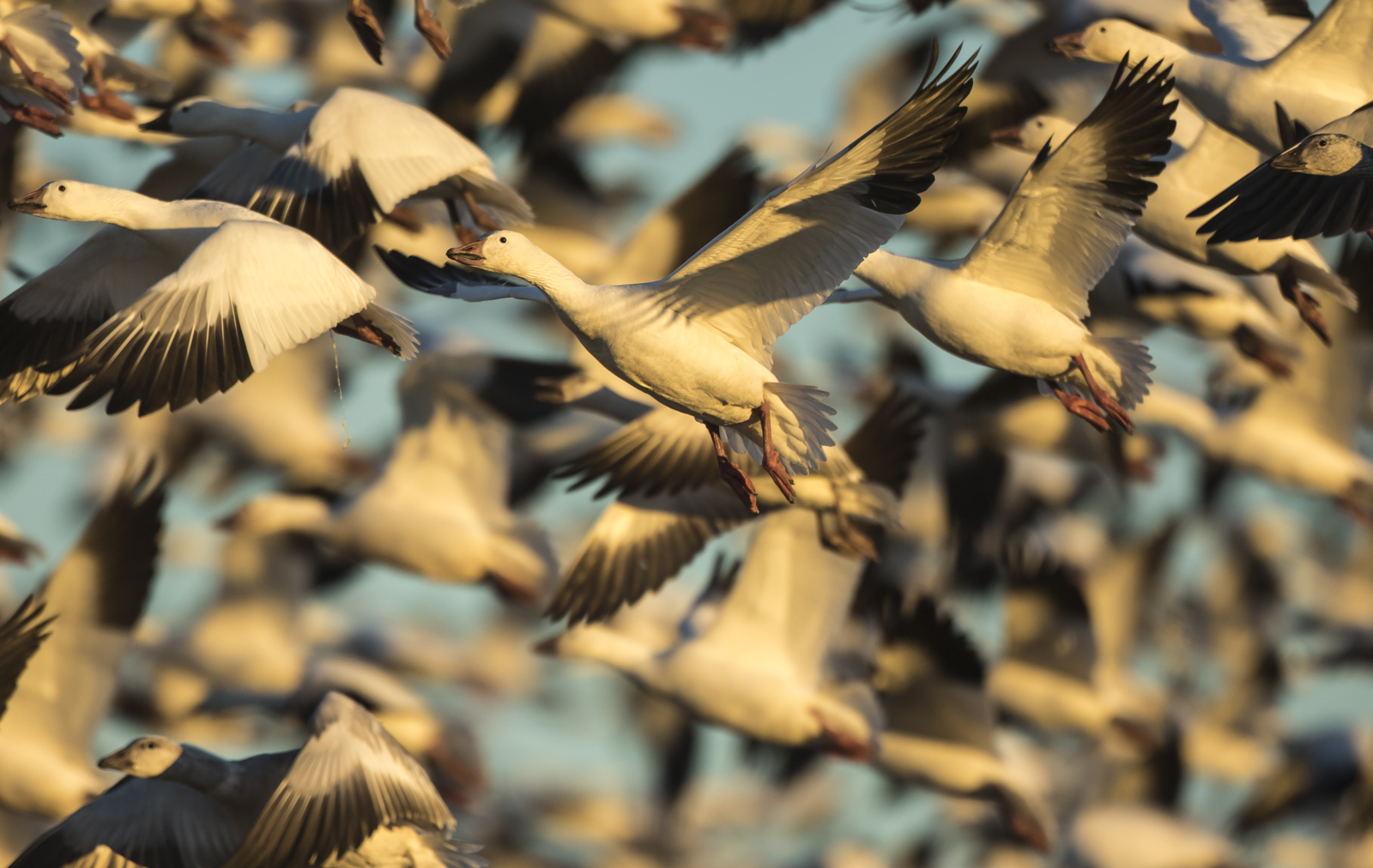
A car pulls up, and people jump out, and the birds close to them blast off with a deafening sound of squawks and wings. With a telephoto lens, I just capture a tiny window of the scene….imagine it one thousand fold for a sense of the immensity of the upward moving snow storm. They circle and land again. The wind is coming from my back, as is the sun, causing the beautifully lit birds to land facing my camera, just what you want for capturing images of winged snowflakes.
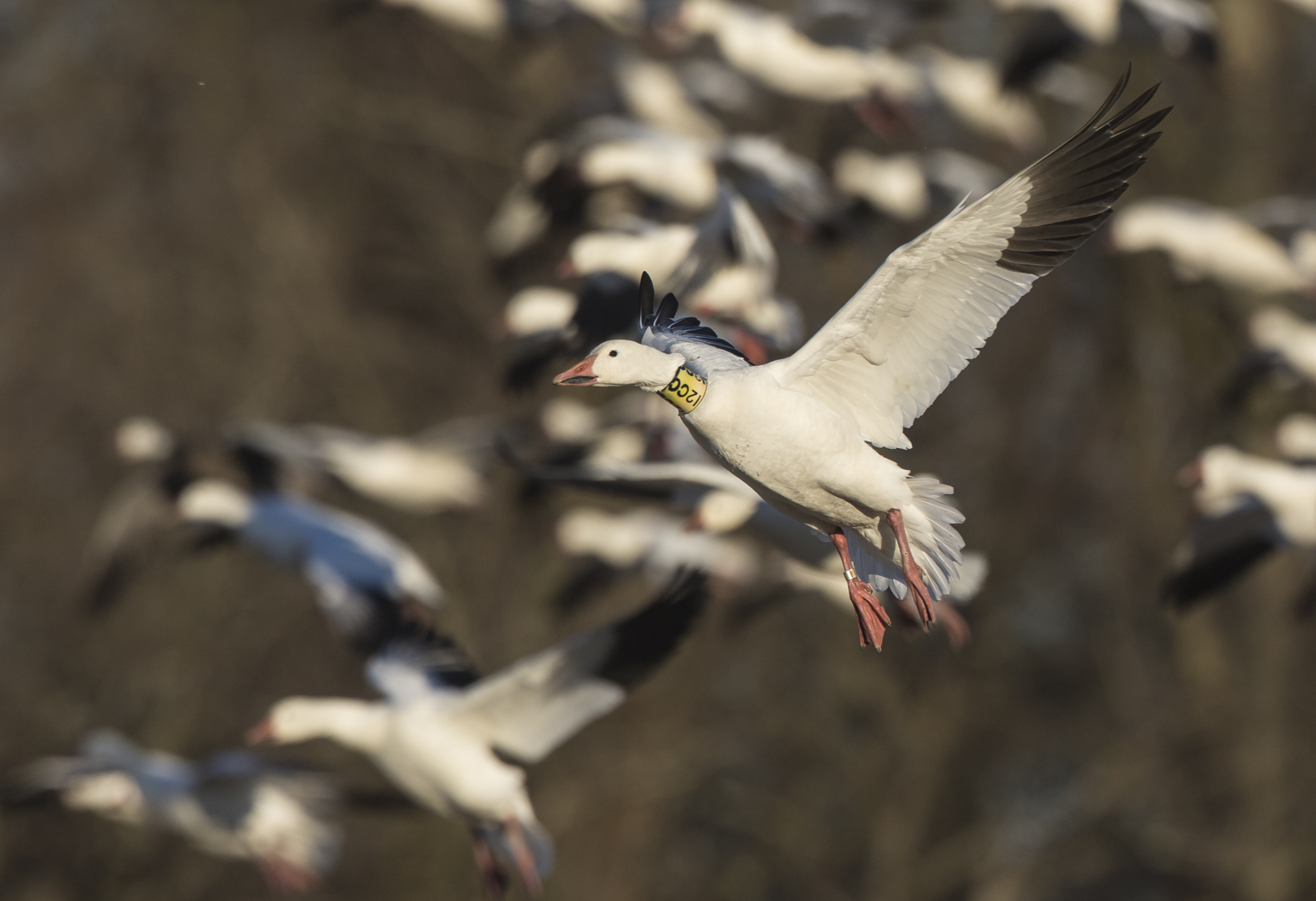
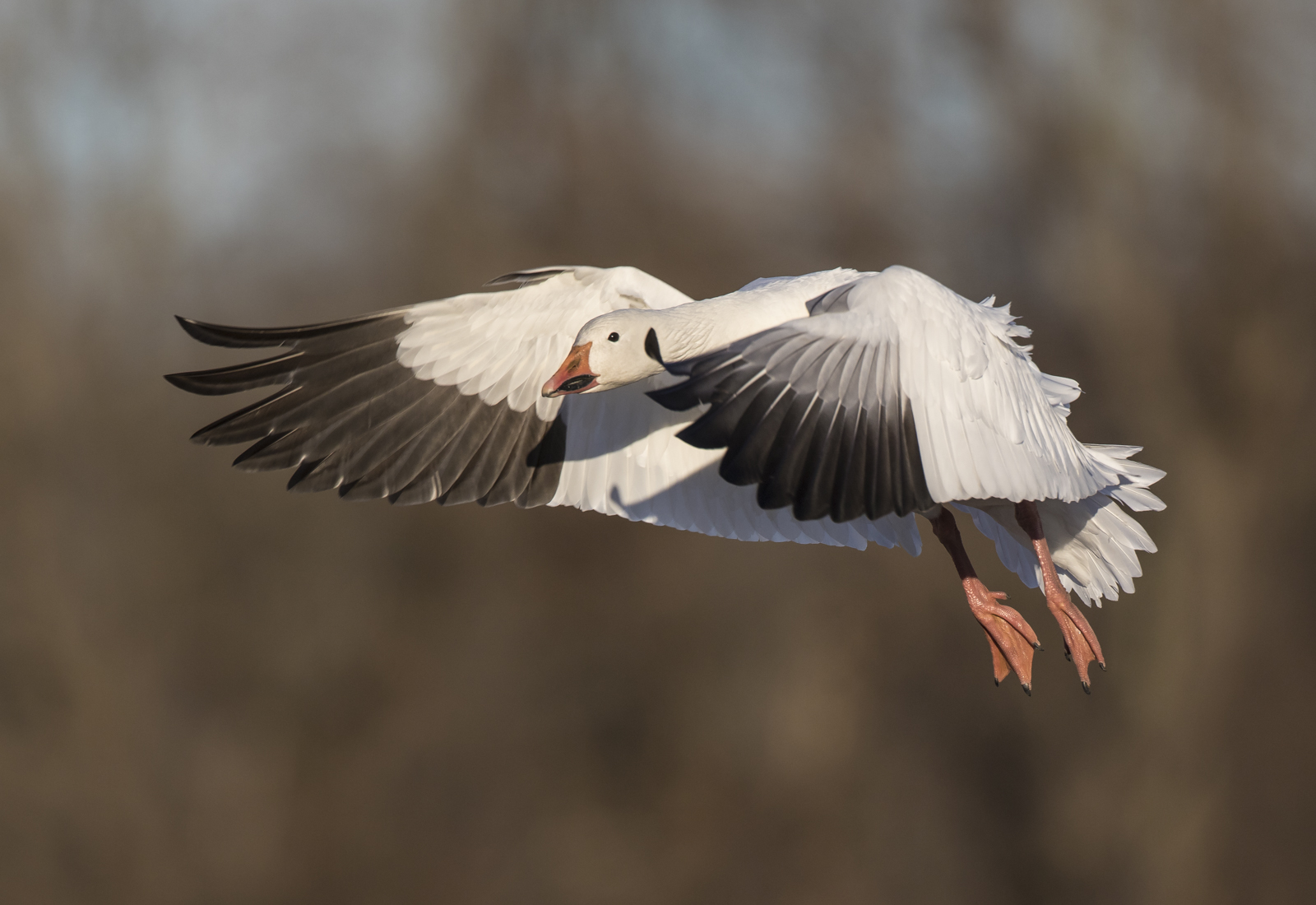
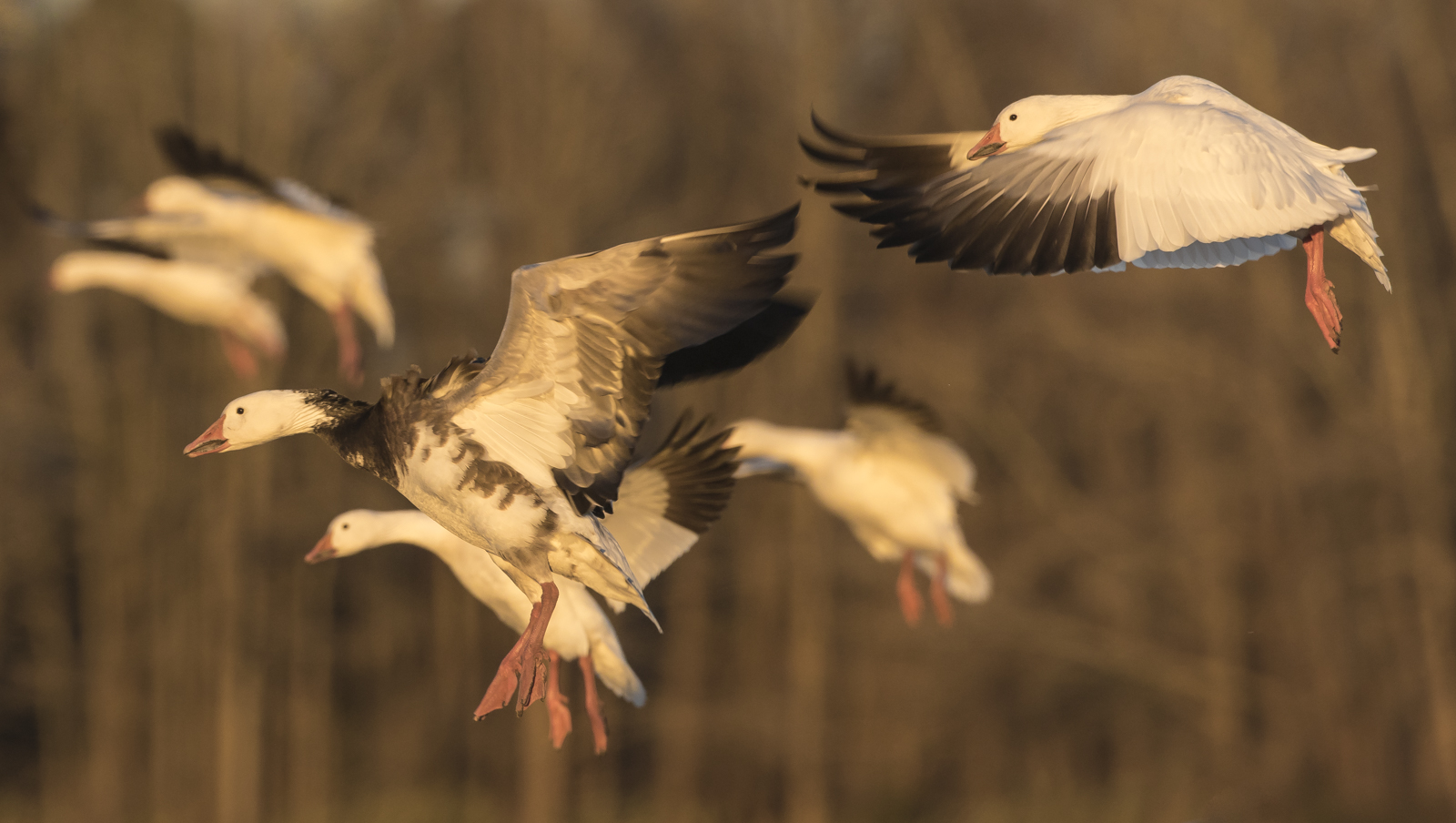
A pair of Snow Geese early in the afternoon, before the “golden hour”A slight turn as it lands reveals the entire underside of this birdSome birds looks like they are thinking ahead about foot placementIt must be tough to find the right spotA trio of blue morphs landingI caught this collared Snow Goose as it came in to the fieldI love it when the shadow of the head can be seen on the wingsThe light turns golden in the last part of the dayThe two color morphs together
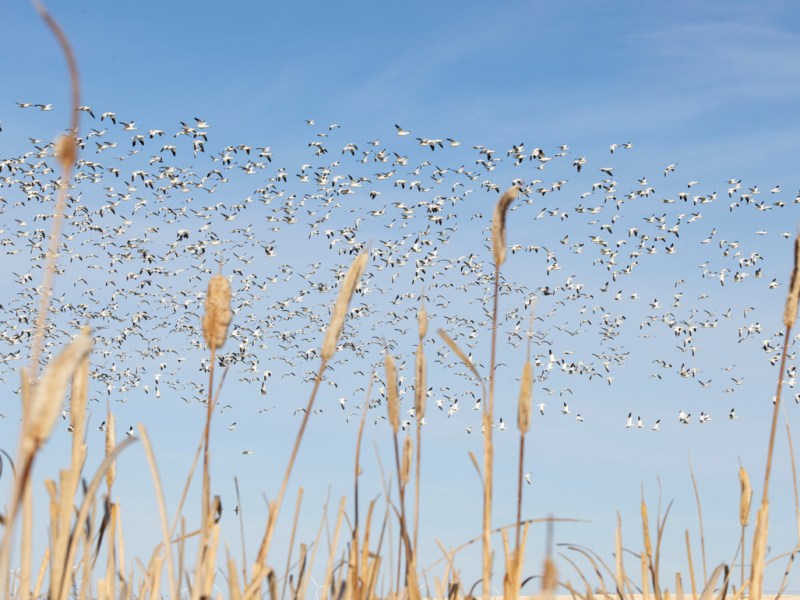
Populations of Snow Geese have increased dramatically since the early 1900’s, when hunting was stopped due to low numbers. It resumed again in 1975 after populations had recovered. The numbers have continued to grow, causing some scientists and managers to think that the tundra nesting habitat of Snow Geese is beginning to suffer from such high concentrations of feeding birds in summer. They are now probably one of the most abundant waterfowl species in North America, and concentrate in huge flocks during migration. A friend recently told me that our refuges can’t justify planting corn for Snow Geese because their numbers are so high. But, we both agreed, from a refuge visitor standpoint, the Snow Geese offer a spectacle that few other species of wildlife can match.
The time will come when winter will ask what you were doing all summer.
~Henry Clay
I had some time to explore over the recent holiday weekend, but decided that my favorite place, Pungo, would probably be too crowded so I thought I should try someplace else. My original plan was to head to Florida, but, with some chores that needed attention on Friday, and uncertain weather forecasts, I opted for a closer destination. I headed north on Saturday to Chincoteague National Wildlife Refuge on the Eastern Shore of Virginia. Established in 1943, the refuge totals over 14,000 acres of ocean-side habitats including beach, dune fields, marsh, and maritime forest.
A beautiful afternoon sky greeted me along the Wildlife Loop at Chincoteague (click photos to enlarge)
I arrived just in time to drive out onto the Wildlife Loop (it opens at 3 pm to cars; you can hike or bicycle earlier in the day), which has produced some nice sightings on previous trips. The trail was packed with people, but relatively few birds.
Great Egret hunting along the marsh
I saw a handful of ducks, an eagle, and a couple of herons and egrets. The sky and afternoon light were beautiful, but clouds were quickly moving in, and the forecast had changed to an increased chance of precipitation overnight and the next day.
Sunset over the marsh at Tom’s Cove
The cloud cover thickened as I drove out toward the beach hoping to see some shorebirds or gulls. Along the way, a striking sunset began to color the sky, so I stopped to watch it progress. I spotted something out on a sliver of land (to the right of the duck blind in the photo) and when I glassed it, saw that there was a small herd of the famous Chincoteague wild ponies grazing in the marsh. I must admit, I usually don’t take many photos of wild horses, but I couldn’t help myself as the sunset grew in intensity.
I got out the 500mm with a teleconverter and took a series of shots as the horizon burst into flames of orange and red. Anytime there is a pony within sight on the refuge, crowds begin to gather, and the road was soon lined with cars enjoying a spectacular end to the day.
Wet snow the next morning
The next morning was just gray and cold. So much for the old “red sky at night, sailor’s delight” theory. By 9 a.m. a very wet snow was falling. The changed forecast called for snow all day and then bitter cold and strong winds. Florida was looking like a better choice, perhaps. But, I decided to make the best of it.
Delmarva Fox Squirrel with a pine cone
I geared up and hiked the 1.6 mile Woodland Trail, hoping to find a Screech Owl or some other wildlife holed up in one of the many cavities in the dead pines (a pine beetle outbreak has killed large numbers of pines on the refuge). Since the snow had intensified, I just carried my point-and-shoot and binoculars. Of course, with my good camera in the car, I came across a very cooperative (and wet) Delmarva Fox Squirrel chewing on a pine cone. These beautiful squirrels have just recently been taken off the Endangered Species List. They are huge, weighing up to 3 pounds, making them roughly three times the size of your typical backyard Gray Squirrel. I soon started feeling about as wet as the squirrel, so I headed back to the hotel to dry out and do a little writing. The snow continued all day, but eased up late in the afternoon. I soon headed back to the Wildlife Loop, hoping the bad weather might have created some wildlife opportunities.
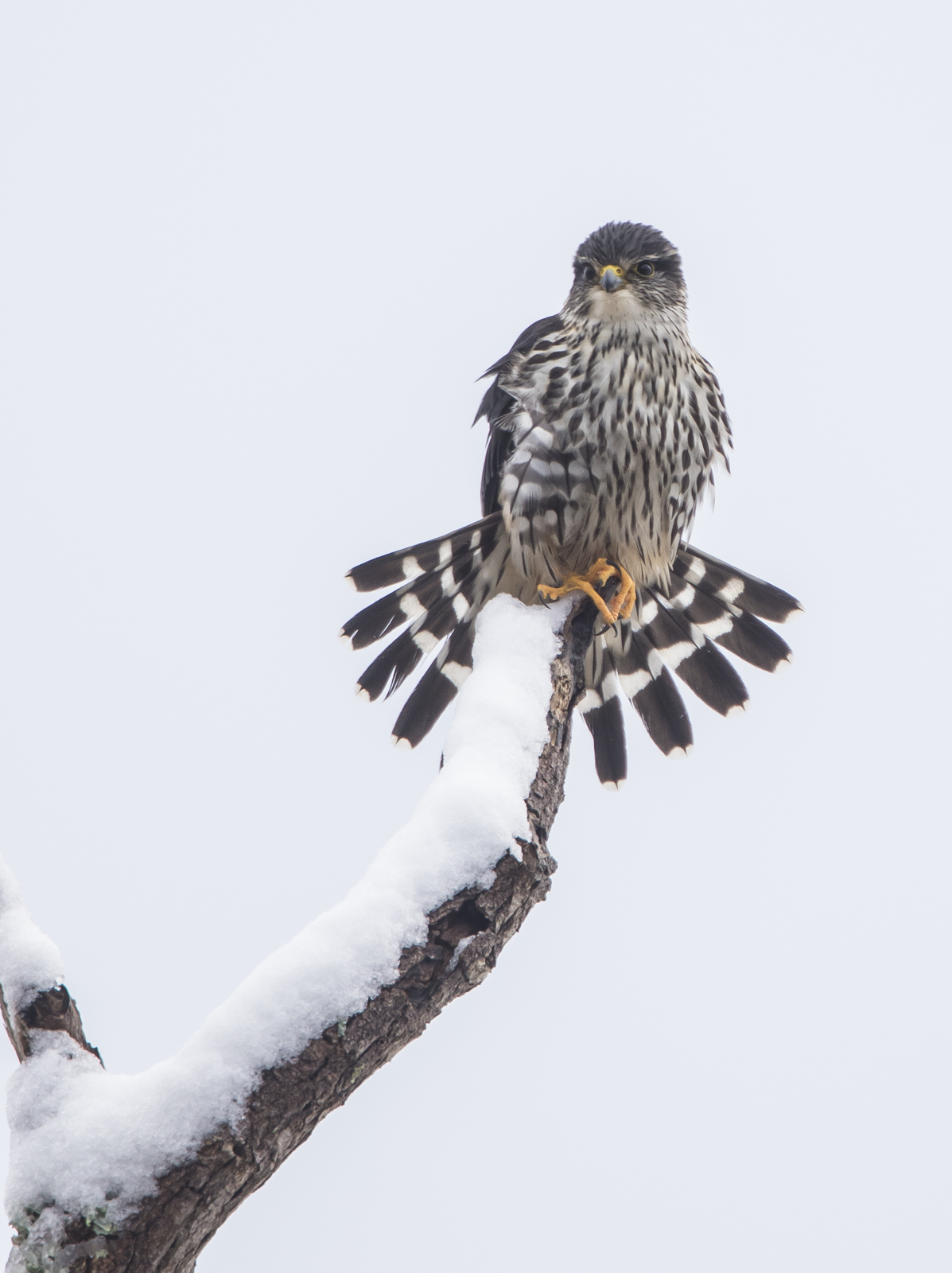
Merlin on a snowy perch
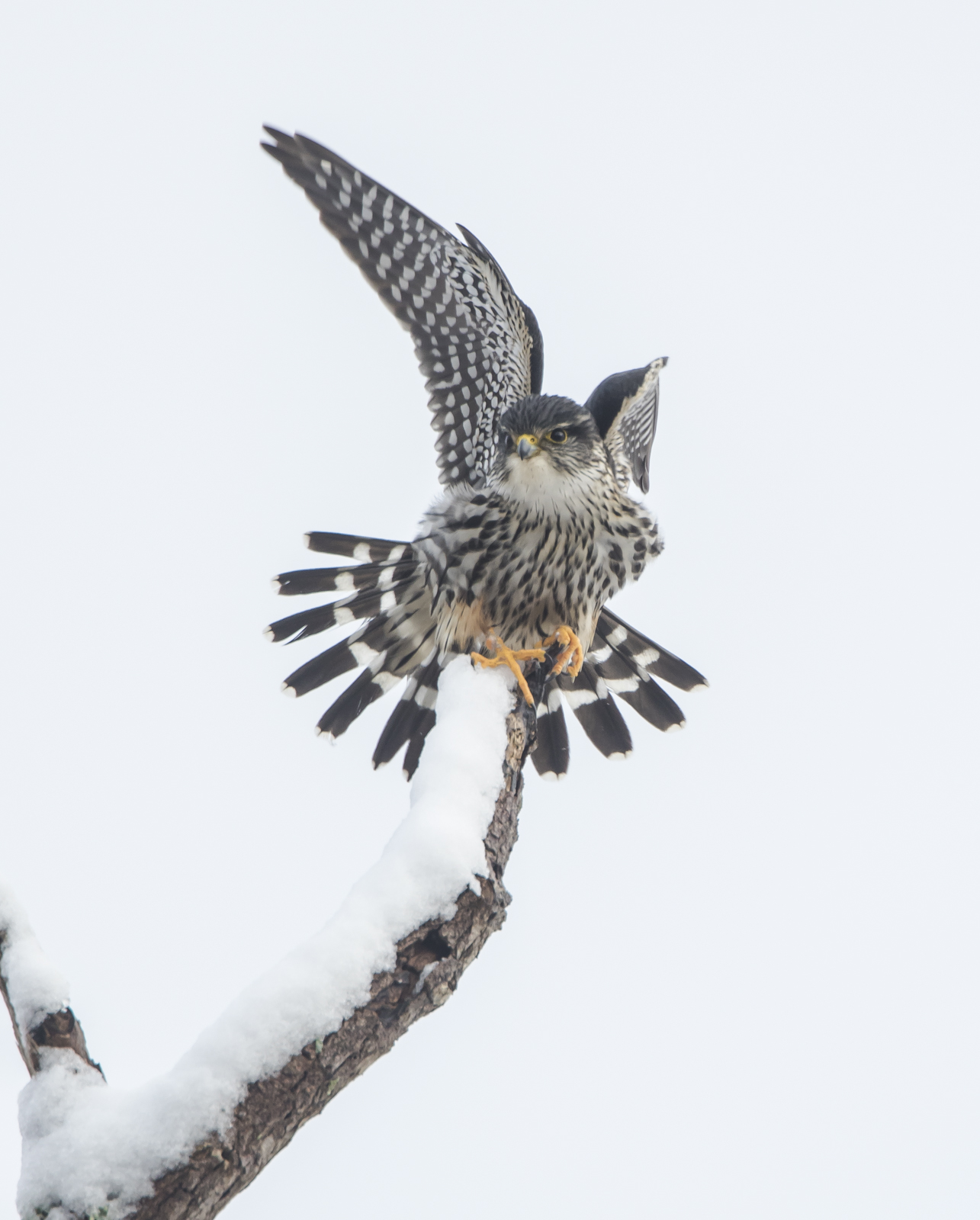
There were few birds (and now almost no people) until I got almost all the way around the 3.5 mile loop. A lone snag at the edge of the marsh had a nice surprise perched up on a high branch – a Merlin. This has been a good winter for Merlin sightings and this pugnacious little falcon was very cooperative. I sat with it for 15 minutes until another person came along and spooked it. But it gave me a lot of poses as it apparently was stretching and trying to dry out its feathers.
Merlin fanning its tail in an attempt to dry outMerlin yoga
Darkness came quickly with light snow still falling. The next morning was clearing, but bitterly cold, with temperatures in the teens and a strong northerly wind.
Snow plastered on one side of tree trunks
The winds had painted one side of the trees white with the remaining snowfall overnight, but few people were out to enjoy the scene as I patrolled the refuge roads.
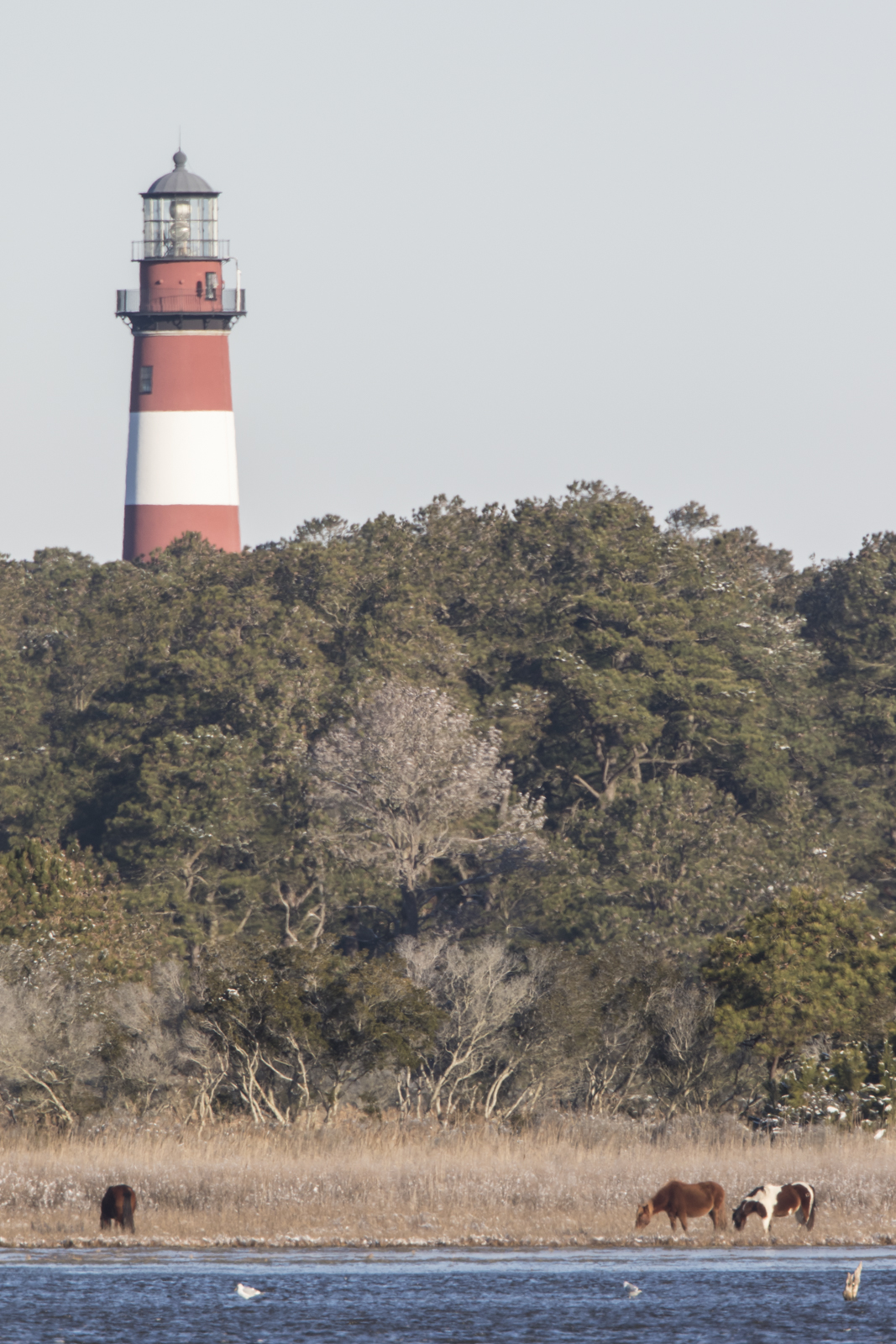
Horses in the marsh in front of the lighthouse
I was the only one seeing the horses as they now grazed the marsh near the historic Assateague Lighthouse, completed in 1867. It seemed as though all the wildlife was hungry and active in the cold.
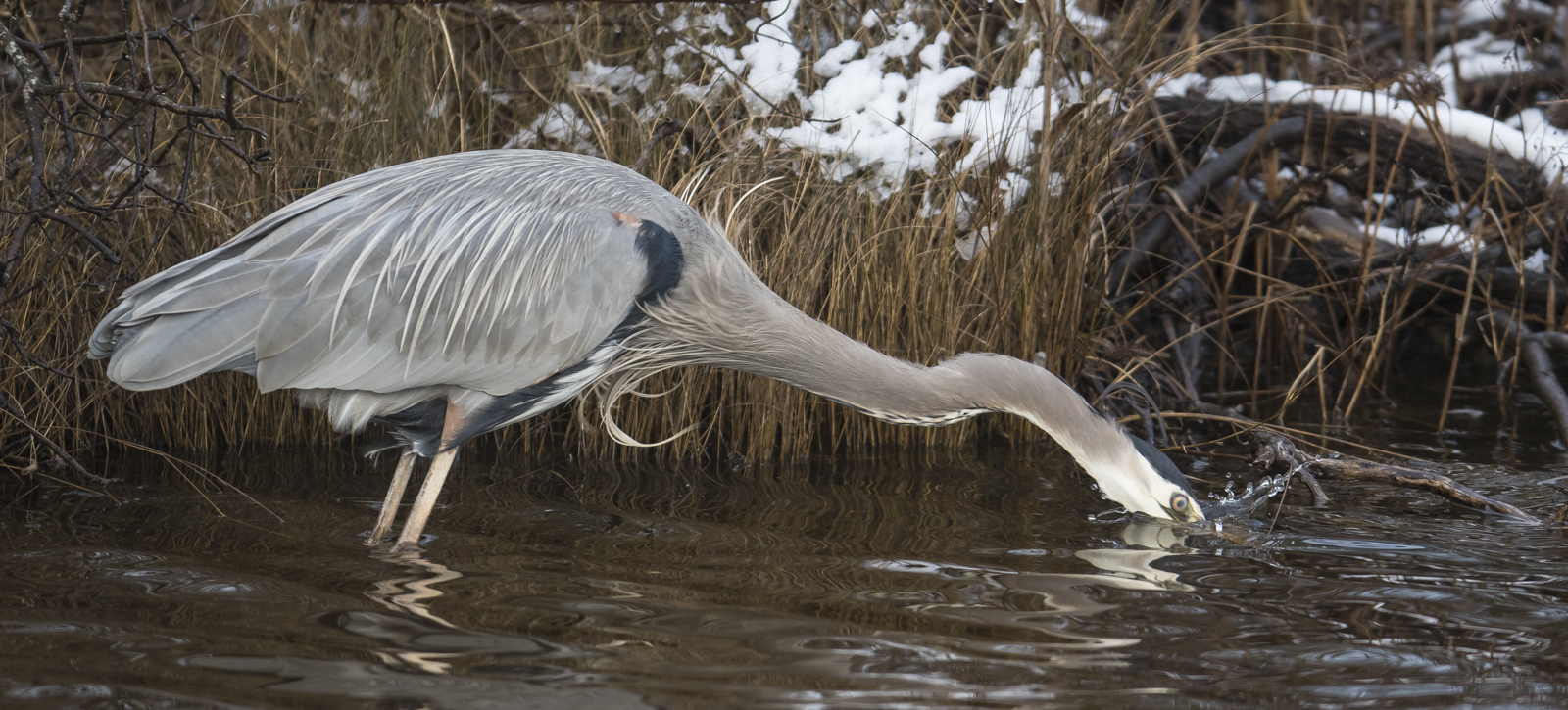
Great Blue Heron strikes the water and grabs a killifish for a morning snackMallards dabbling for breakfastBald Eagle cruising for a meal
The overnight drop in temperatures froze some of the shallow pools and brought birds to the deeper channels close to the road, providing me with a better look than the previous two days.
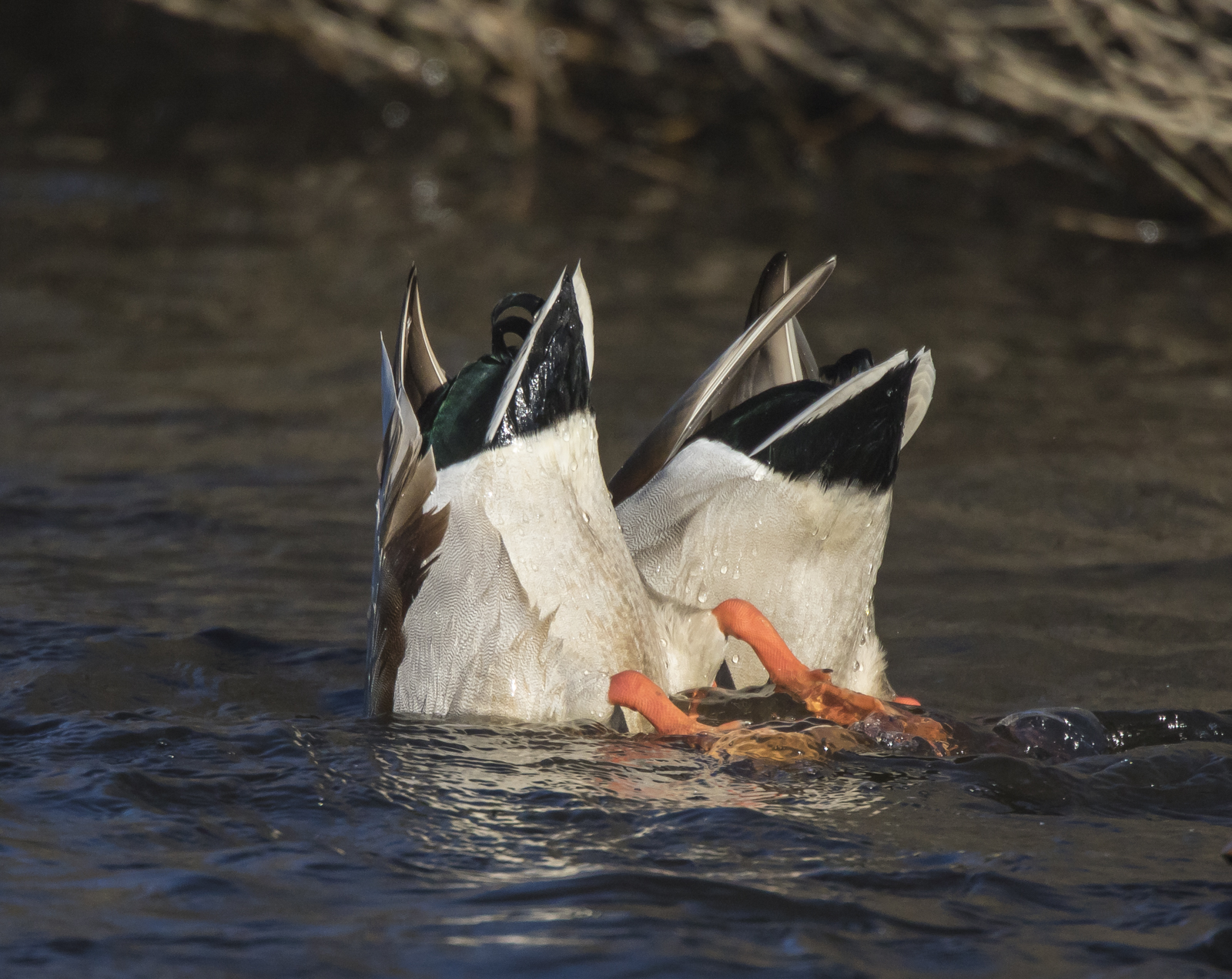
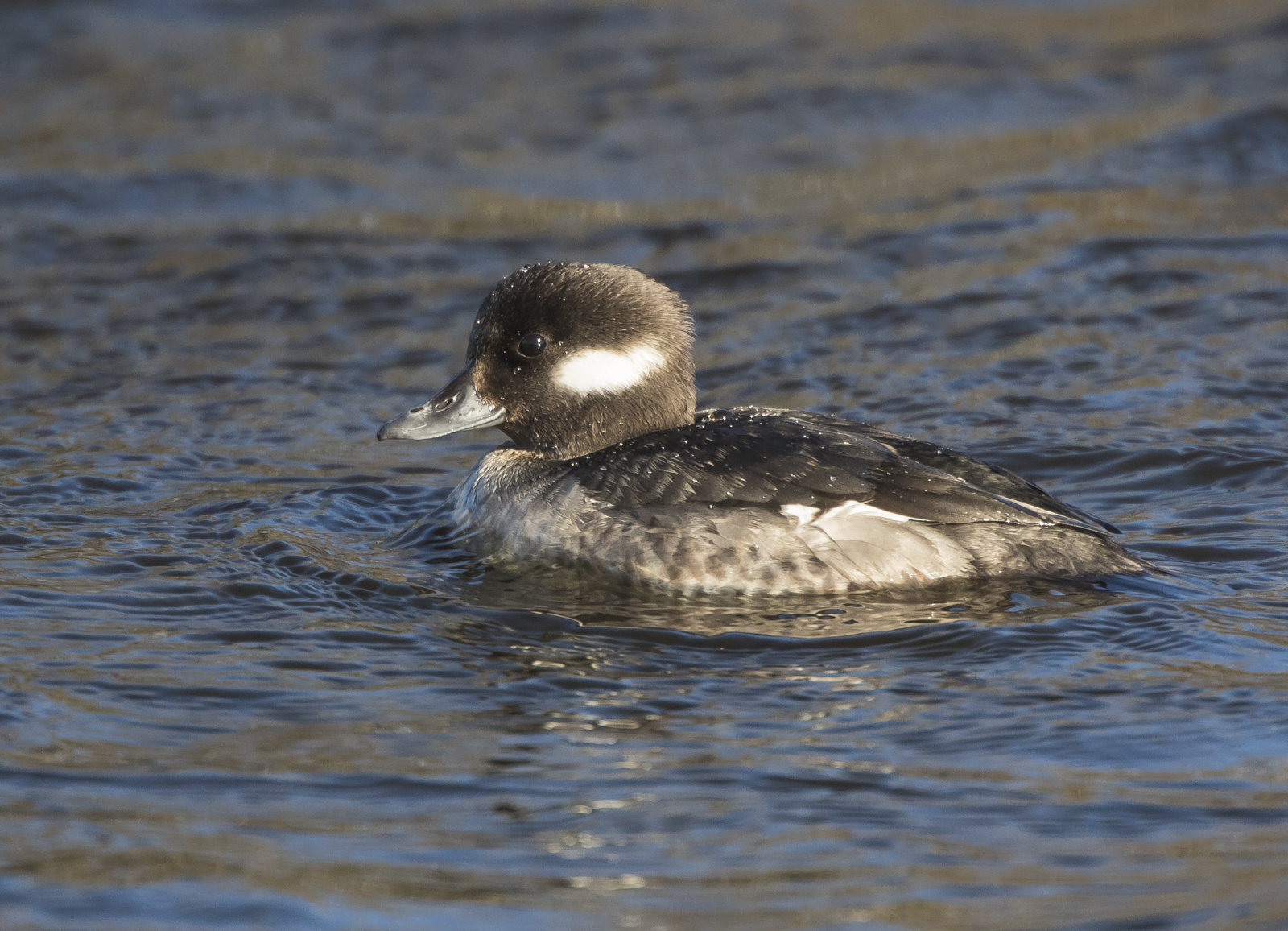
Brilliant green head of a male MallardFemale BuffleheadMale Gadwall showing his diagnostic black tail
The morning turned out to be productive, in terms of good bird sightings, and the light was just right to highlight some of the details of the ducks. I still had another day to search for critters. Bombay Hook perhaps? While there were reportedly some good numbers of Snow Geese up there, it was another 3 hours north.
Standing watch and giving me direction
But then I saw this guardian of the marsh, and he seemed to be giving me a clue. His bill pointed back toward the south. Finally, I understood, and I convinced myself to go where I knew there would be birds…back home to North Carolina. Pungo was only a little over three hours away and I could make it in time for the evening show…
The camera is an instrument that teaches people how to see without a camera.
~ Dorothea Lange
One of my groups a week ago were all members of a photography club. I generally don’t do the classic photography workshop type of program. I am usually more interested in helping people see the natural world with a new set of eyes, learn about an area and its wildlife, and begin to see how they can improve their photography by becoming more observant. This group turned out to be interested in photographing a wide variety of subjects, not just the wildlife I am found for them, but so much more. With the weather being less than ideal, I decided to visit some areas that might offer a diversity of photographic topics given the conditions of overcast skies, occasional drizzling rain and mist. It seems they were up to the challenge of the weather and, from what I have seen online, they produced some beautiful images. And, as usual, I always learn something by being around photographers. I normally don’t take many photos when I am leading a trip, but I found that once I got this group to a location, they were very content to wander and look for subjects, with occasional help and interpretation from me. So, here are some images of things we saw, other than wildlife, on a couple of misty, gray days. Thanks to my group for giving me reason to pause, stretch myself, and appreciate some of the other beauties in our world.
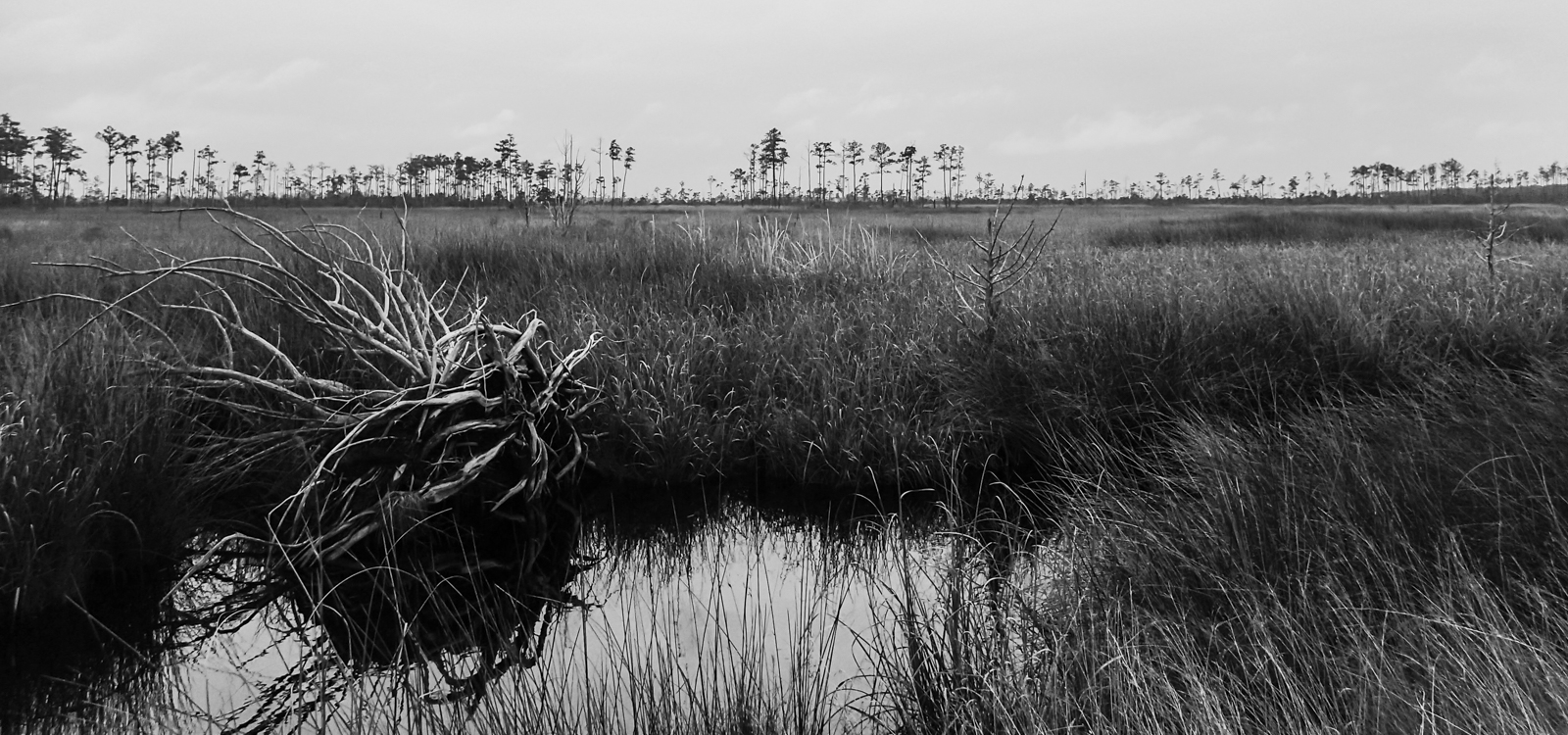
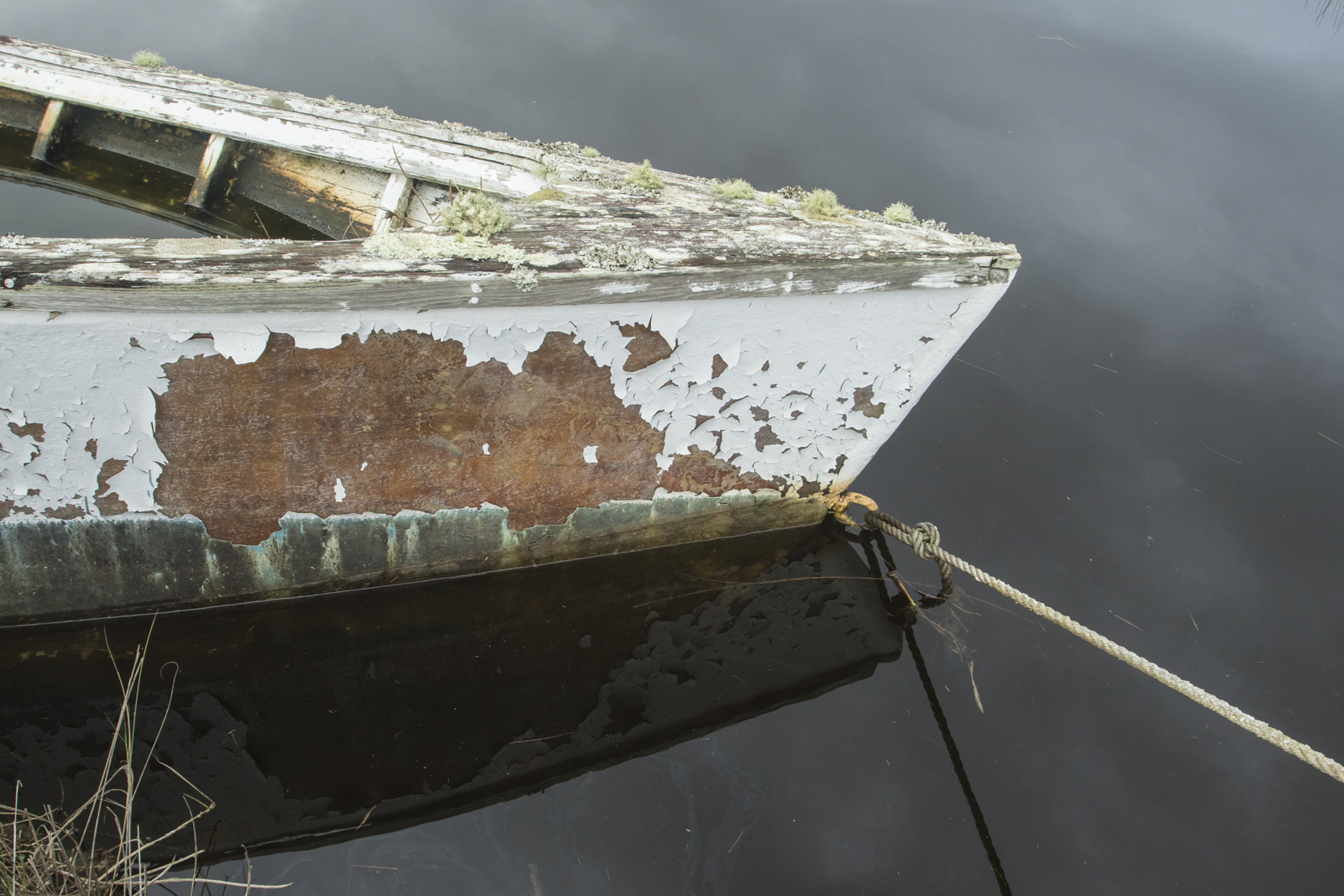
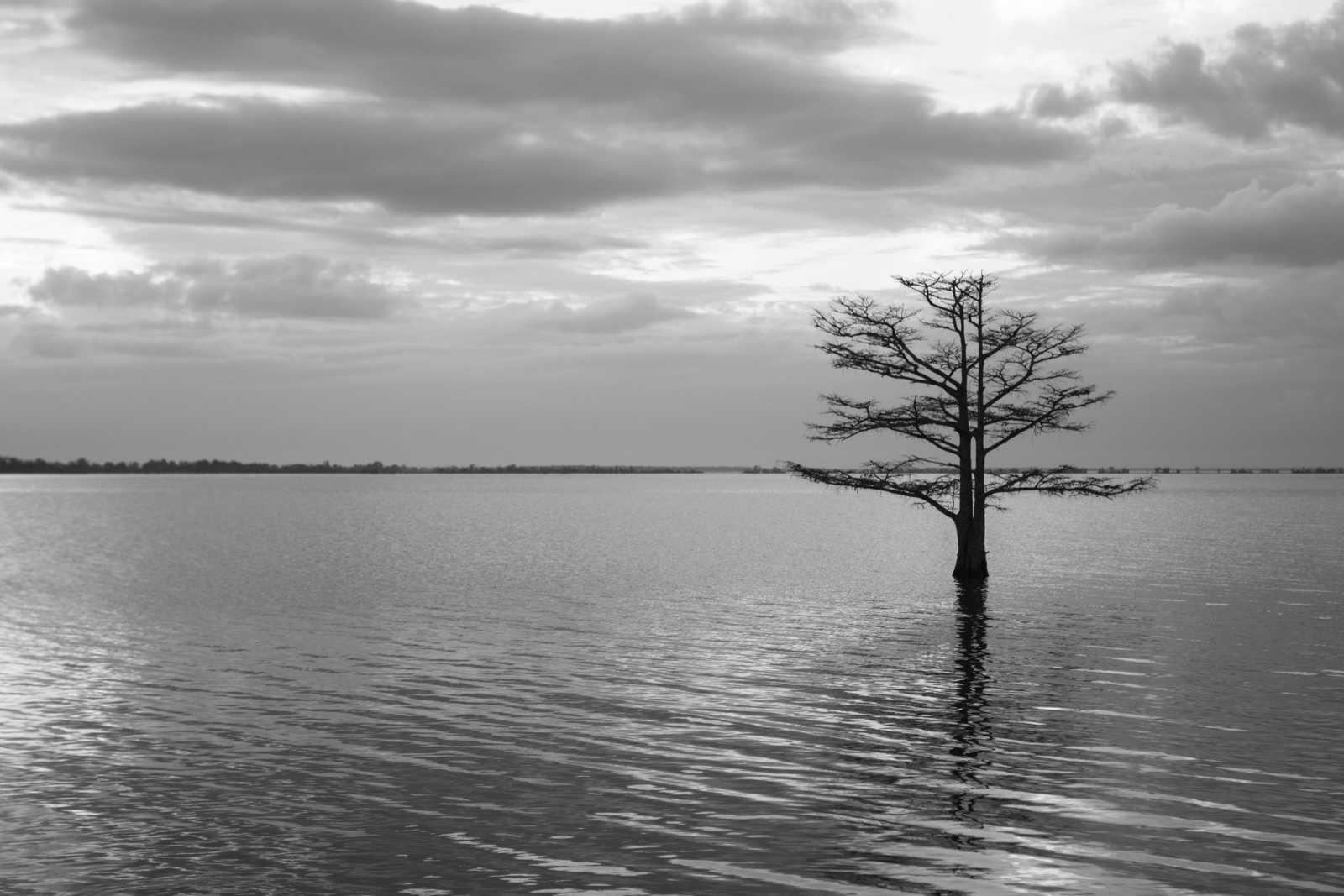
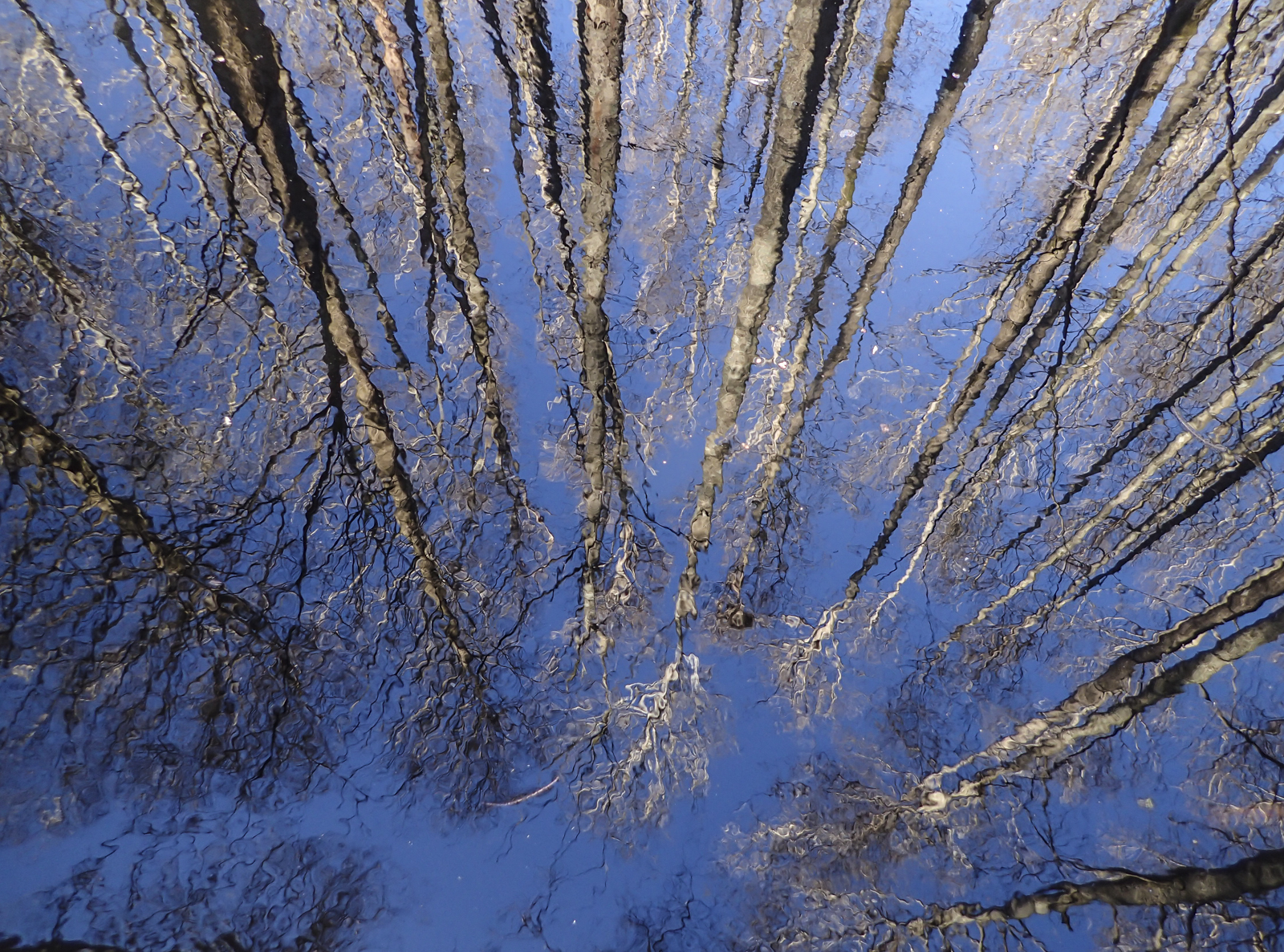
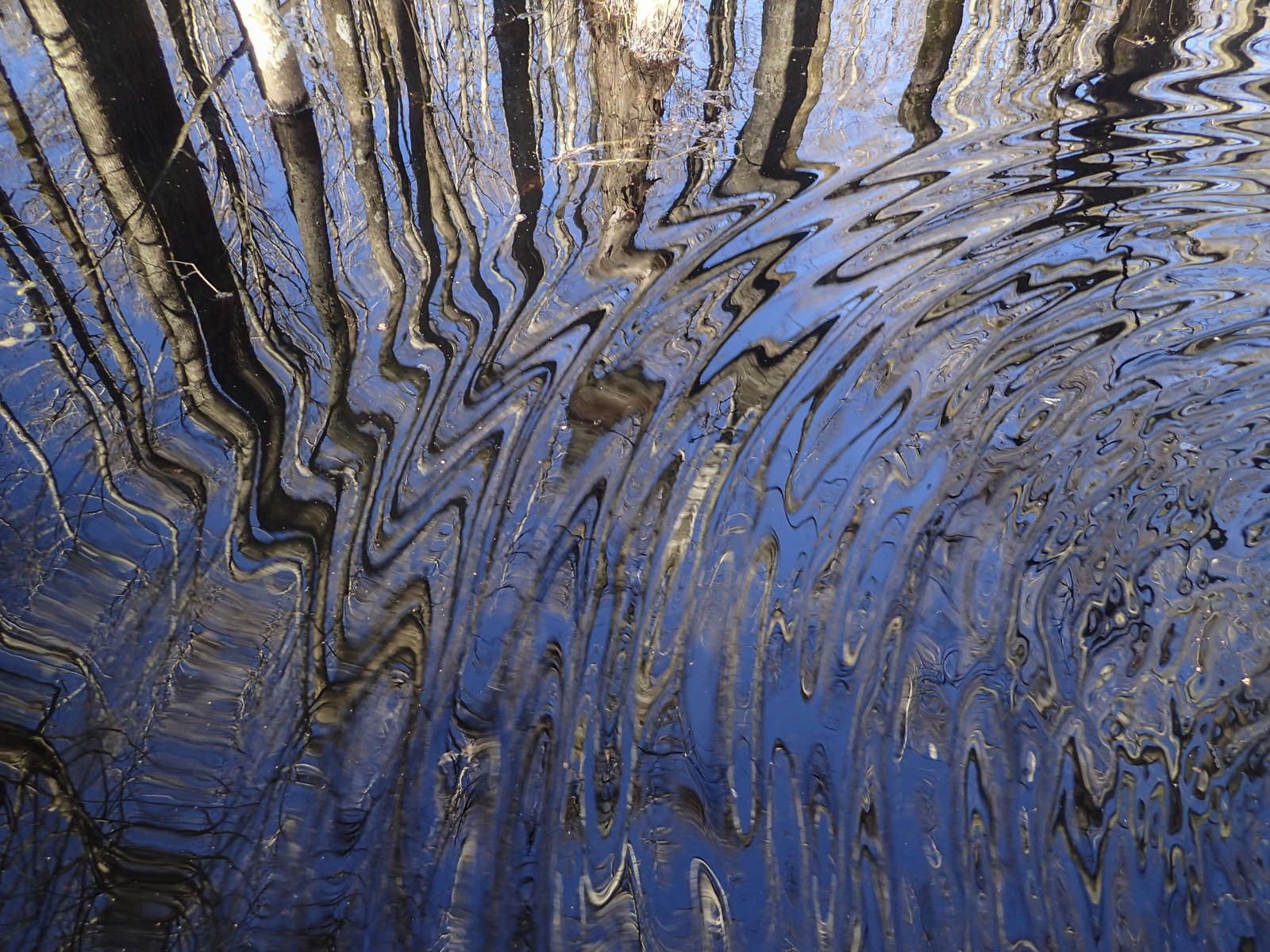
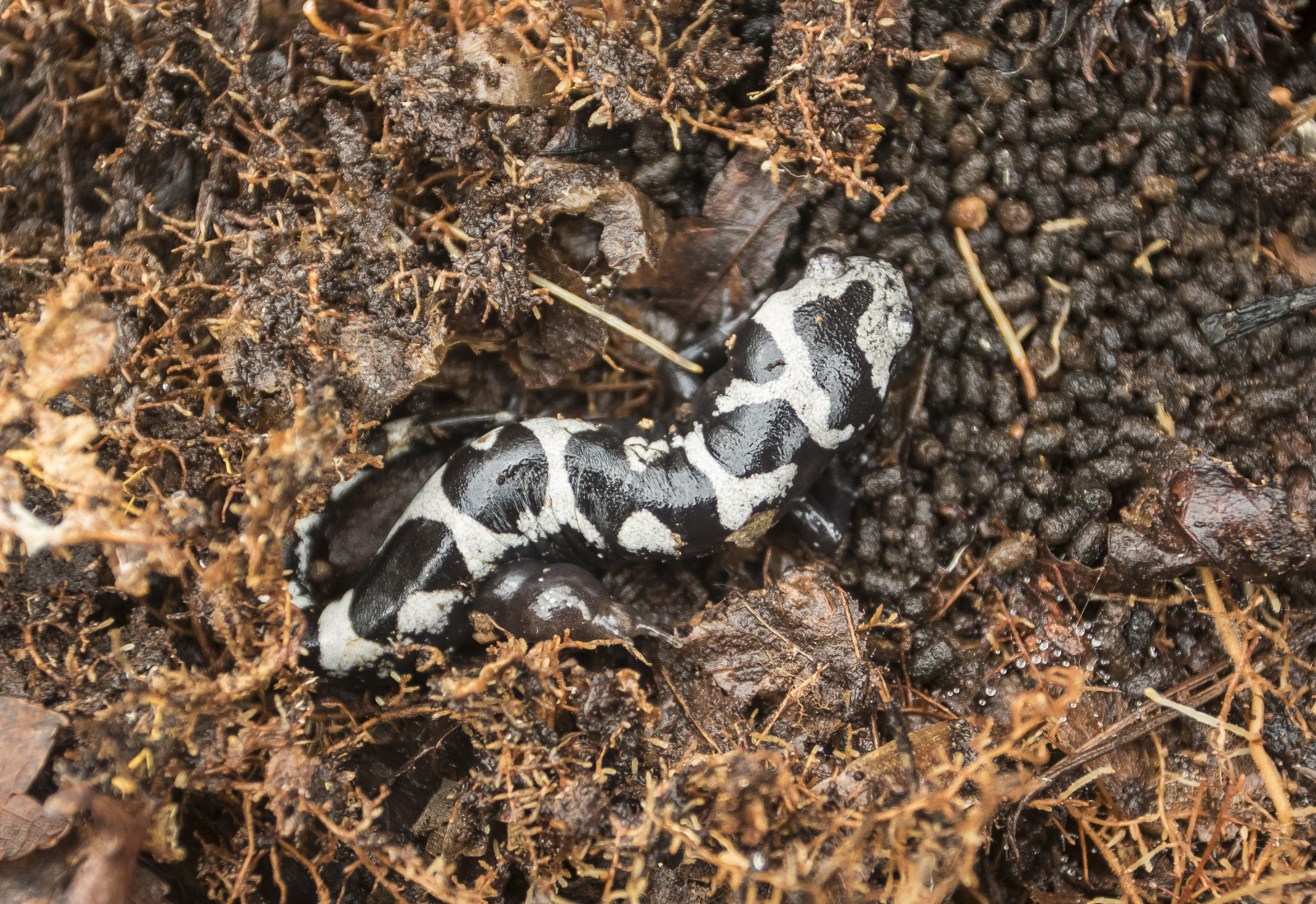
Marsh scene (click photos to enlarge)Crab potsAbandoned boat in Swan QuarterScene along the boardwalk at Pettigrew State ParkLake Phelps in fogBald cypress silhouettes at Lake PhelpsWood Sorrel leavesCypress tree in Lake MattamuskeetReflections along boardwalkThose same reflections when you make a wave in the waterPungo sunsetMarbled Salamander under a log (okay, I can’t help but look for wildlife, I admit). I am not sure what is wrong with its hind leg, it looks very swollen.
It is a wholesome and necessary thing for us to turn again to the earth and in the contemplation of her beauties to know of wonder and humility.
~Rachel Carson
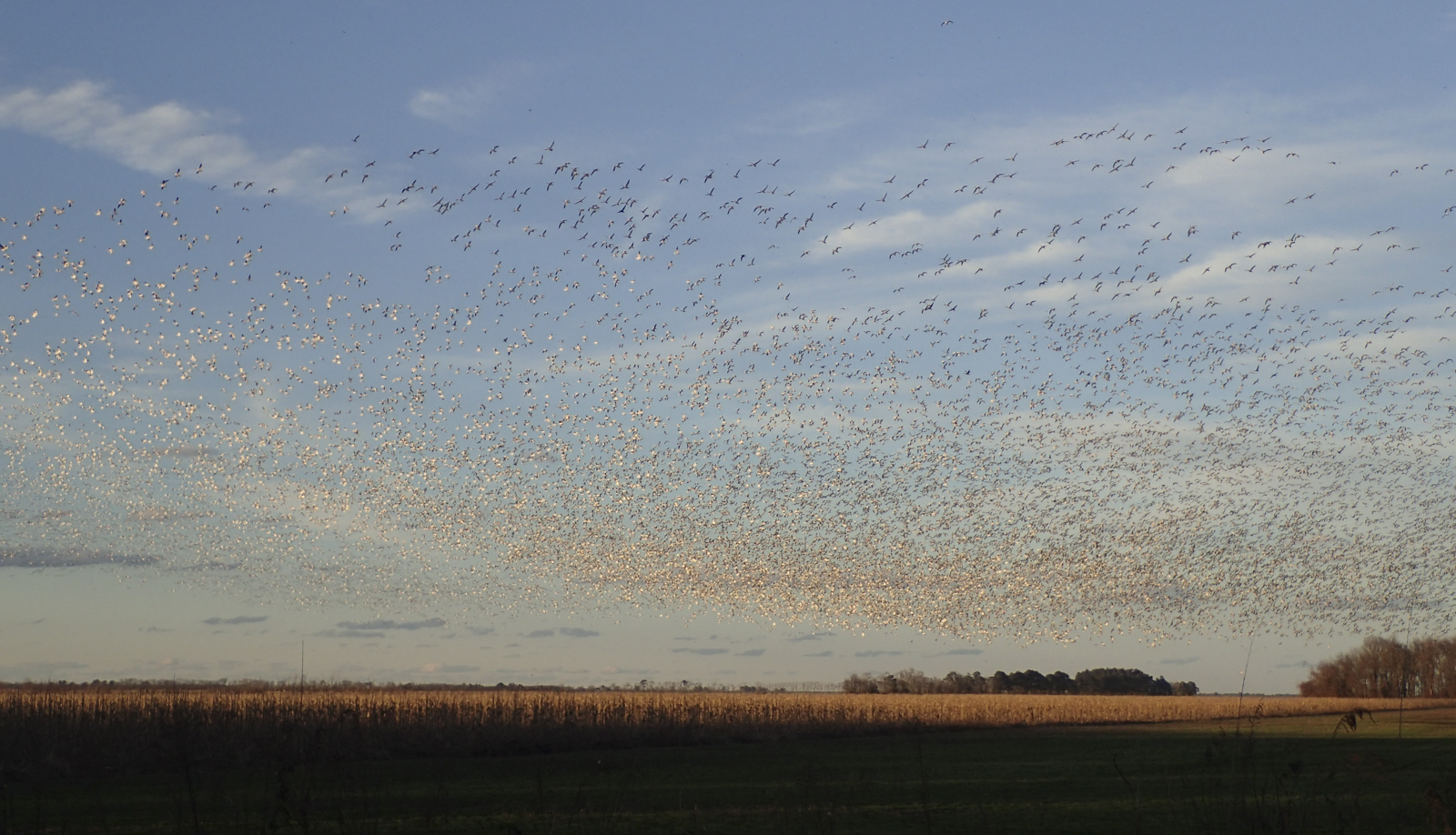
I had two groups scheduled for trips over the last week, one a group of photographers, and one some friends from my museum world. The weather for the first group did not look great, but they all decided to roll the dice and give it a try. And I am glad they did, as there were some beautiful photographs taken and some wild scenes observed. The second group had much better weather, but it turned windy and much colder, which is often a good thing in terms of wildlife activity. Birds were abundant, with an estimated 40,000+ Snow Geese now on the Pungo Unit of Pocosin Lakes NWR.
Snow Geese against a gray sky (click on photos to enlarge)
The flocks are still being a little antsy, with the main flock circling the fields for quite some time before settling, and various groups breaking up and peeling off from the main aggregation. When they do swarm as a flock, they are truly magnificent to see, and hear. On the first morning with a group, we were treated to a bear wandering through the flock of Snow Geese in the field, causing a commotion as the birds parted to allow the bruin to pass (unfortunately, I had not carried my camera due to impending rain). I answered a question from one of the group about where these birds had migrated from by showing them an image on my phone of a certificate I just received from my report of a Snow Goose collar (as related in an earlier post). The two collared birds both had been caught and tagged in Nunavut, Canada, above the Arctic Circle. That is almost due north of their wintering grounds at Pungo Lake, and a distance of about 2600 miles.
Certificate from collared Snow Goose report
One thing that really surprised me was the age of one of the birds (MXO7) who was at least 11 years old. Assuming this Snow Goose has made this same trip, back and forth each year, it has flown at least 52,000 miles in its 11 years…that’s a lot of wing beats.
Snow Geese circling over corn field in early morning light
Over the next few days, we saw the flocks in the same fields, coming out in the morning early, feeding for a couple of hours, returning to the lake to rest, and repeating the pattern late in the afternoon.
Snow Geese just after blast off
As we walked along the path, the entire flock would occasionally blast off with a loud cacophony of calls and circle noisily before returning to feed.
A Bald Eagle fly-by will almost always cause the flock to blast off
If you look closely, the usual cause for these nervous lift-offs is a passing Bald Eagle, like the immature eagle in the photo above.. I imagine the eagles are testing the flock as they cruise over, looking for weak birds, or something that might cue them in on an easy meal.
Snow Goose (left) and Ross’s Goose, flying next to each other
My new game when the birds fly over is to try to pick out a smaller Ross’s Goose out of the flock of Snow Geese as they pass overhead. It is obviously much easier once the flock has stretched out in lines, rather than when they are tightly packed together.
The spectacle of the Snow Geese flying overhead is one of the reasons I love this place. While my groups were able to experience it in various ways, I had an absolutely amazing experience Sunday evening between leading trips. It was a beautiful evening and I was walking back toward the gate. My friend, Rick, was at the gate, along with a first-time visitor to Pungo, Sydney. The birds came into the field as I walked, so I stopped, then turned and walked back some distance to where I thought they might fly over on their way back to the lake. And I waited…
They did as I had hoped, taking off in one giant swoop, and spreading out over the pink-tinged sky, making an incredible sound as they winged their way to the safety of the dark waters just beyond the trees. Sydney had walked out toward me just before the bird’s departure. It was an a truly spectacular introduction to the wonders of Pungo on her first visit.
There were many other bird highlights in my 6 days at the two refuges, many not recorded by my camera, but indelibly etched in my memory. Of the latter, there was a Peregrine Falcon streaking by the corn field; a Merlin accelerating across s the tops of the corn resulting in an explosion of Red-winged Blackbirds, but no kill this time; and the high-pitched shriek of a Wood Duck as it dipped and ripped through the treetops with a raptor of some sort (probably a Peregrine or a Cooper’s Hawk) in hot pursuit.
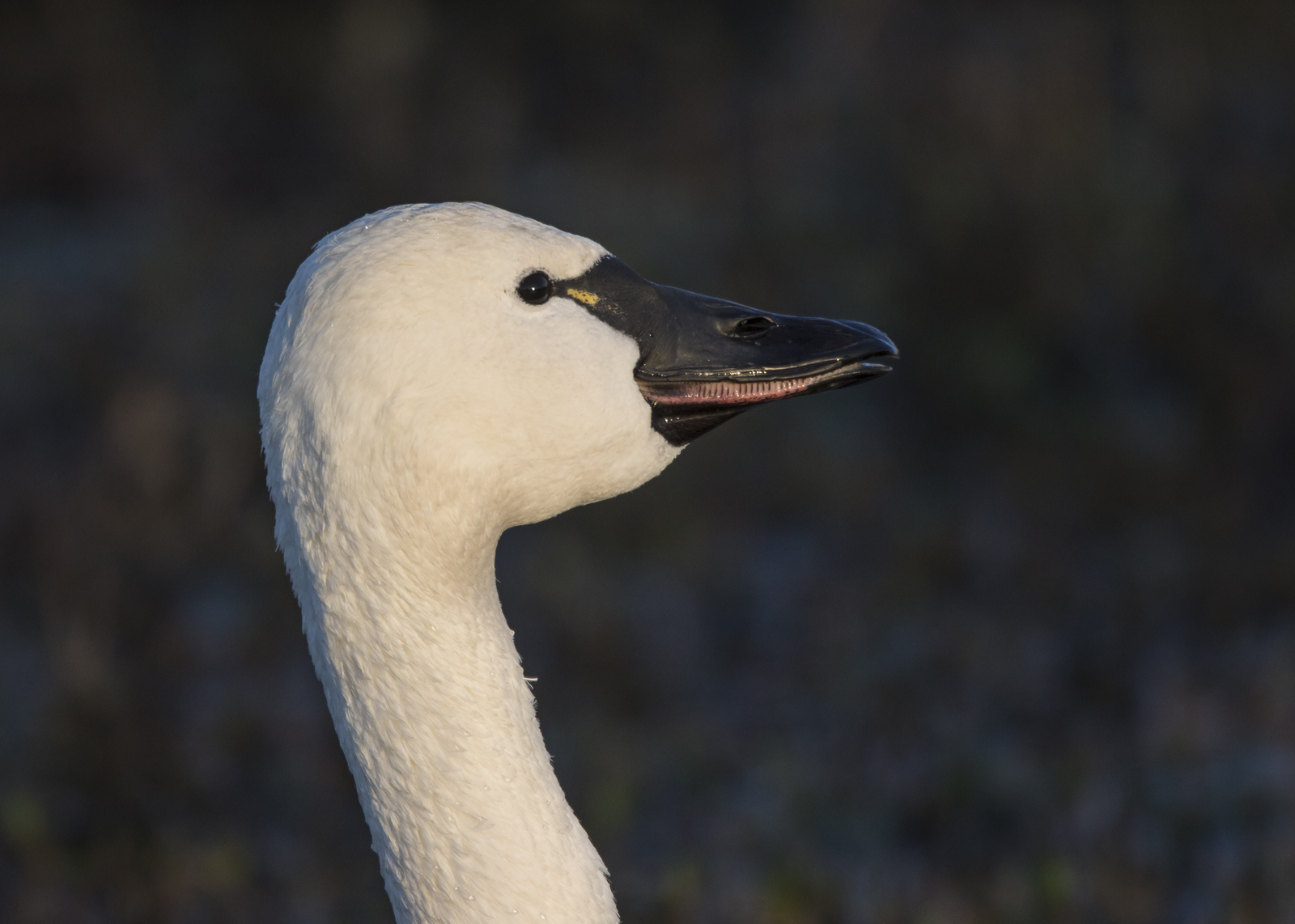
Trumpeter Swan at MattamuskeetTundra Swan head for comparison
At Mattamuskeet, there have been reports of a few Trumpeter Swans hanging out along Wildlife Drive. On my scouting trip the first day, I came across a group that I think were the Trumpeters – slightly larger, no yellow on the bill (although that can vary on Tundra Swans), and a longer, and more sloping bill. They also apparently curl their necks into more of an S-shape and rest it on their body when in a sitting or resting position.
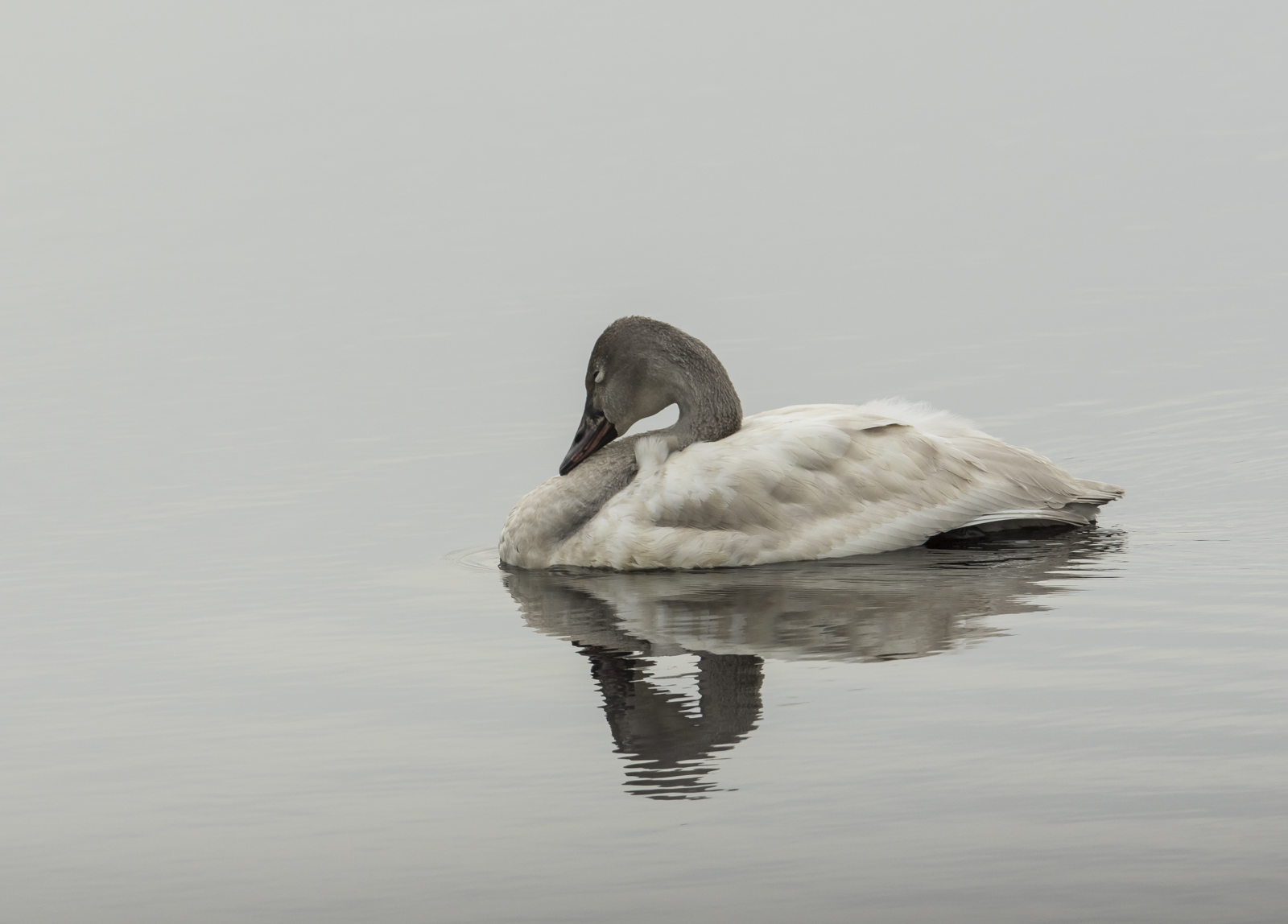
Juvenile swan
There were a couple of juvenile swans nearby that I think were also Trumpeters as they had darker heads than most of the immature Tundra Swans I see.
A few other highlights of a great trip to two of my favorite places…I can’t wait to go back.
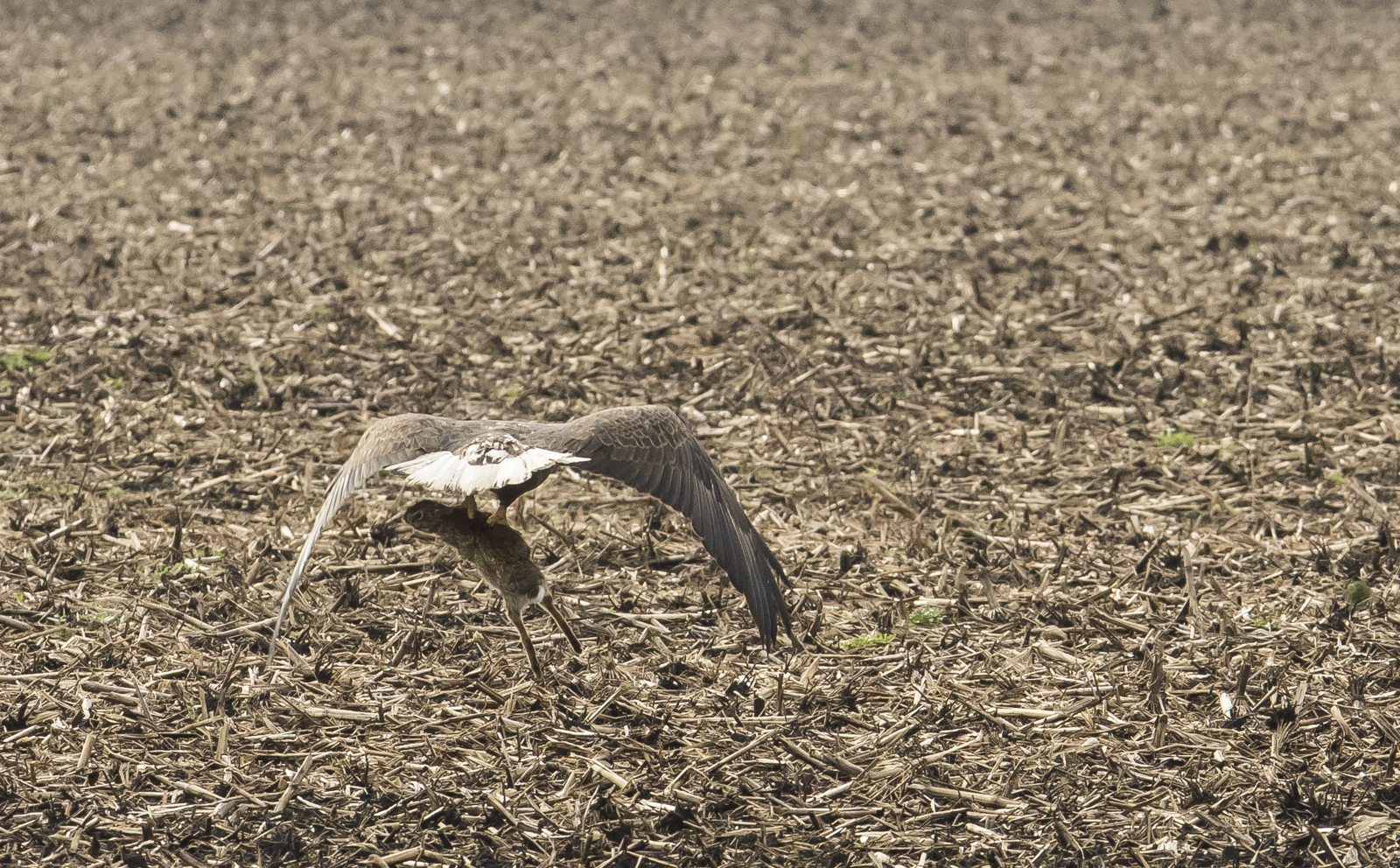
A good way to end a trip – 5 Black Bears between you and your carCattle Egret along the causeway at MattamuskeetBald Eagle flying across a roadside field with a small rabbitForster’s Tern at MattamuskeetBeautiful sunset at Pungo

















































 Roads End Naturalist