Welcome to our new website! We hope you like it. Please let us know if you notice something missing or that needs a correction. ~Mike & Melissa

  • Babes in Paradise

    This may not be what you expected if this came up in a Google search. My last post was about being back in Yellowstone… my paradise. It being early June, the park is full of babes… of the wildlife kind. I have seen many in my first couple of days, many too far away to get a photograph, but cool to see nonetheless. Of those eluding a portrait there have been Rocky Mountain Goats on high cliffs, Ravens that apparently fell out of the nest, a Chipping Sparrow nest with hungry babies, and Rocky Mountain Bighorn Sheep sleeping on what looked like a vertical wall of rock.

    Thus far, three species have allowed me to grab some baby pictures.


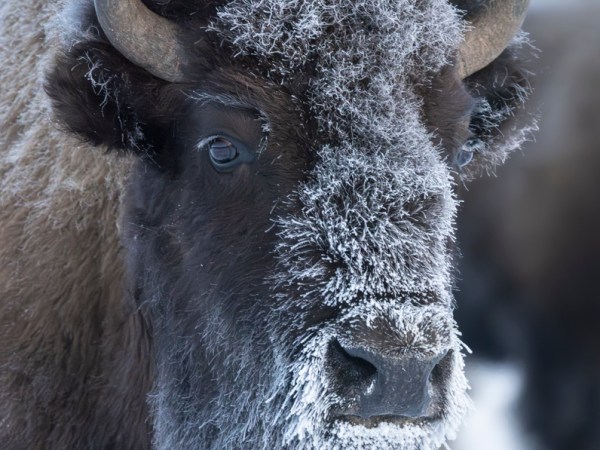
    The orange – red baby Bison are common in Lamar Valley (click photos to enlarge)

    Baby bison are everywhere in Lamar Valley. They spend much of the day sleeping, and then have bursts of energy and playfulness. I can sit and watch them for hours.


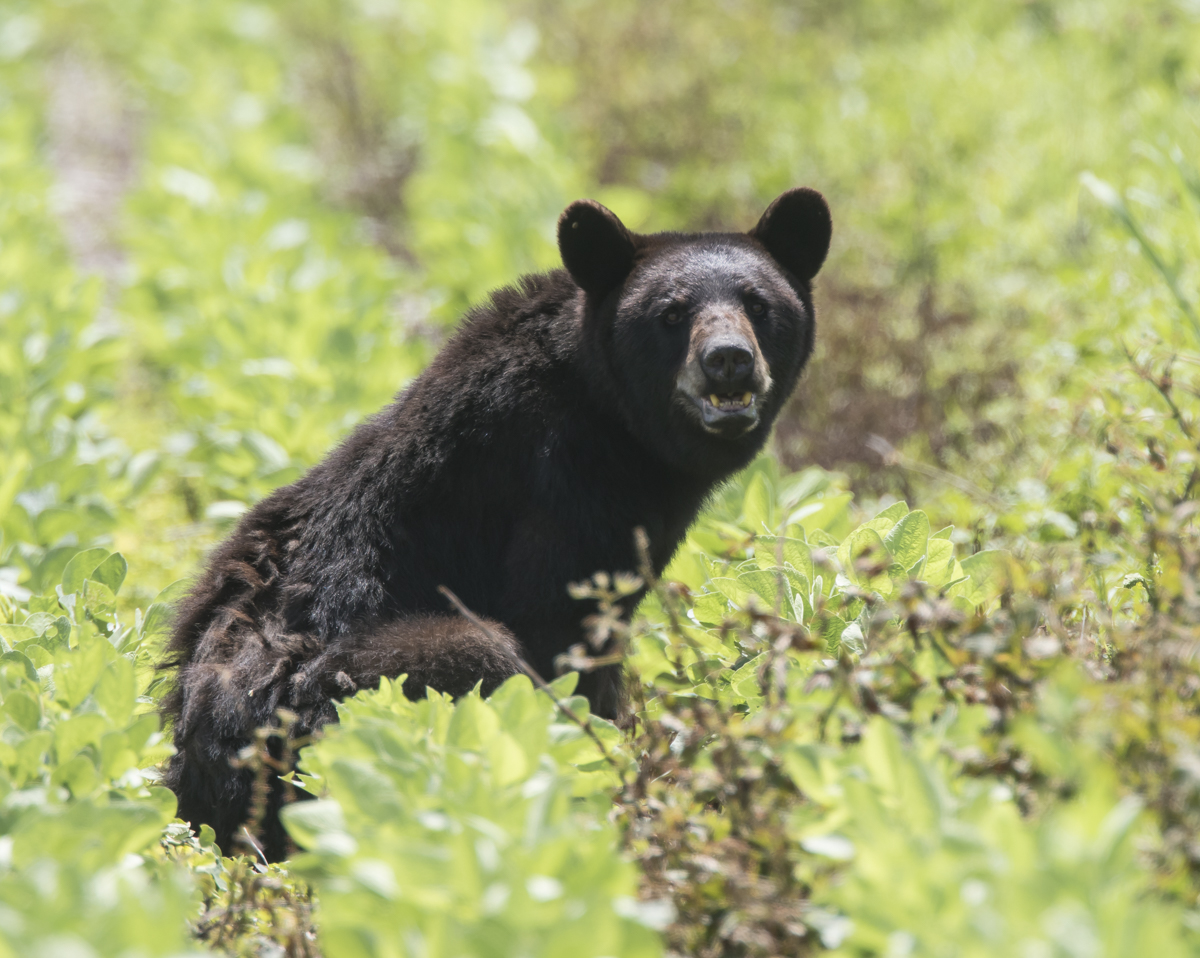
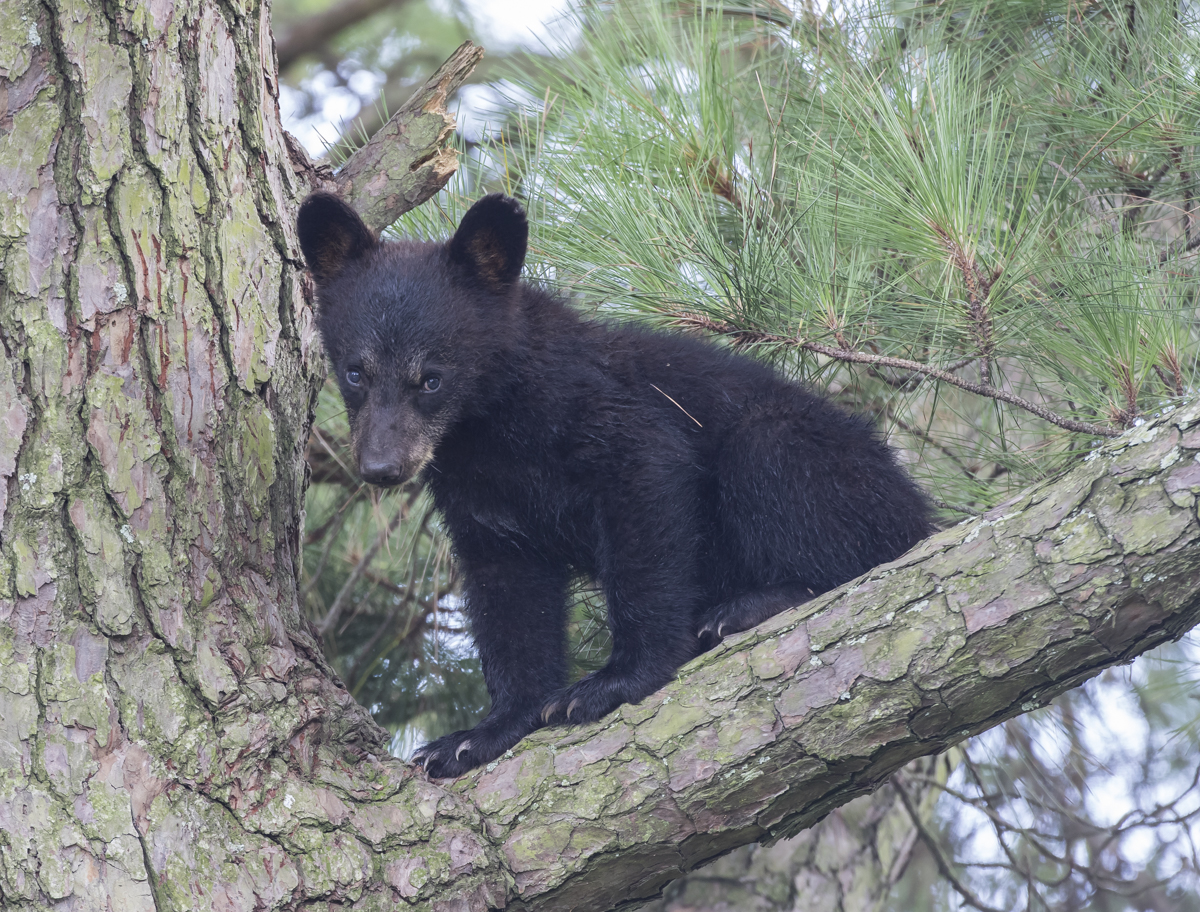
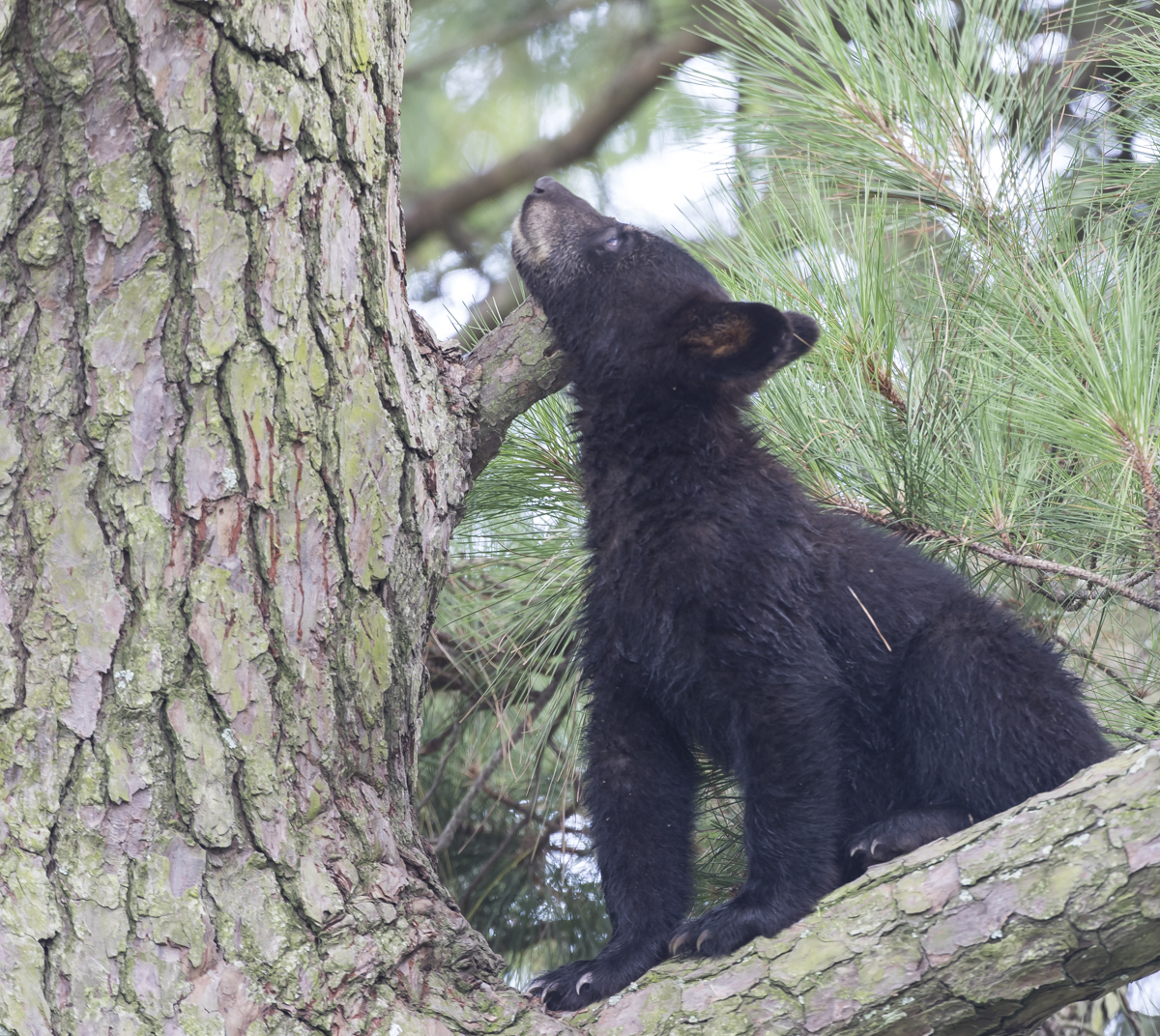
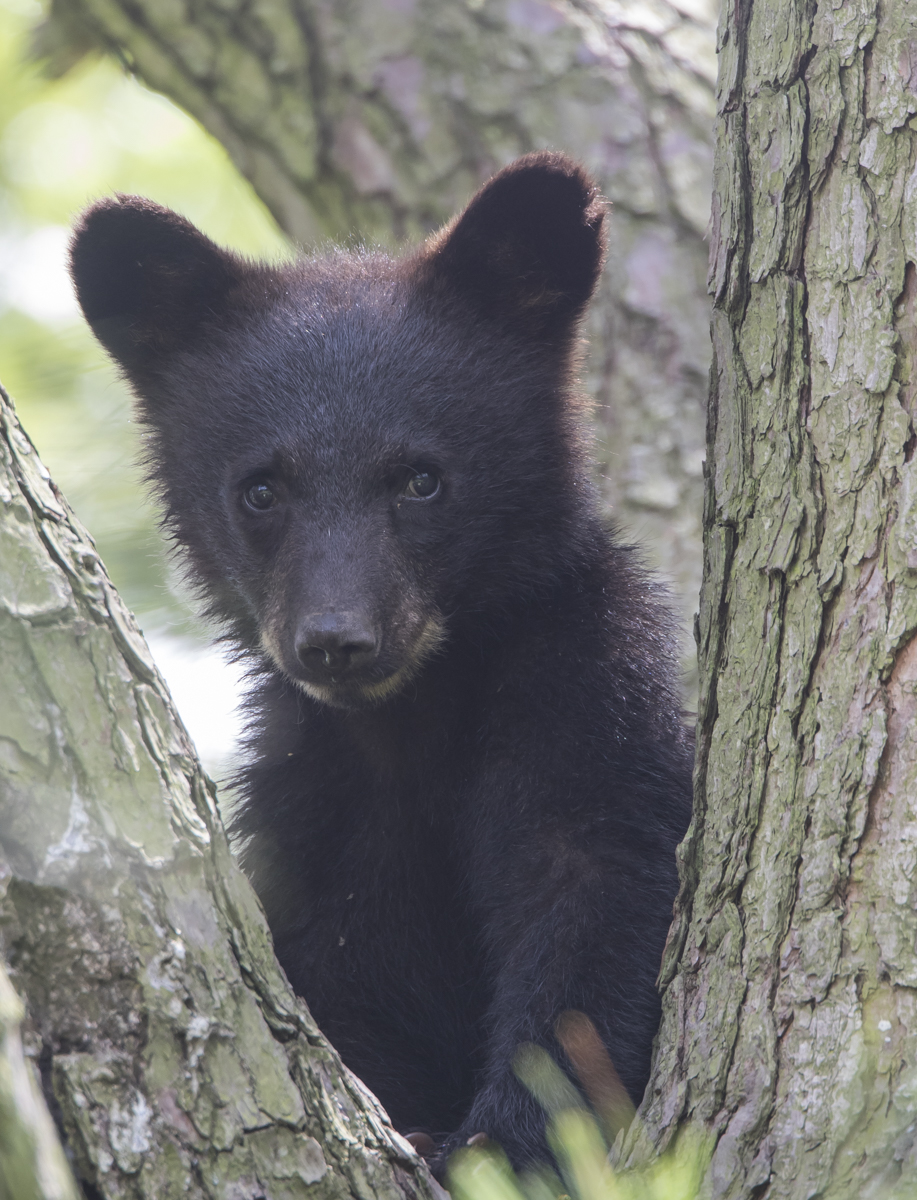
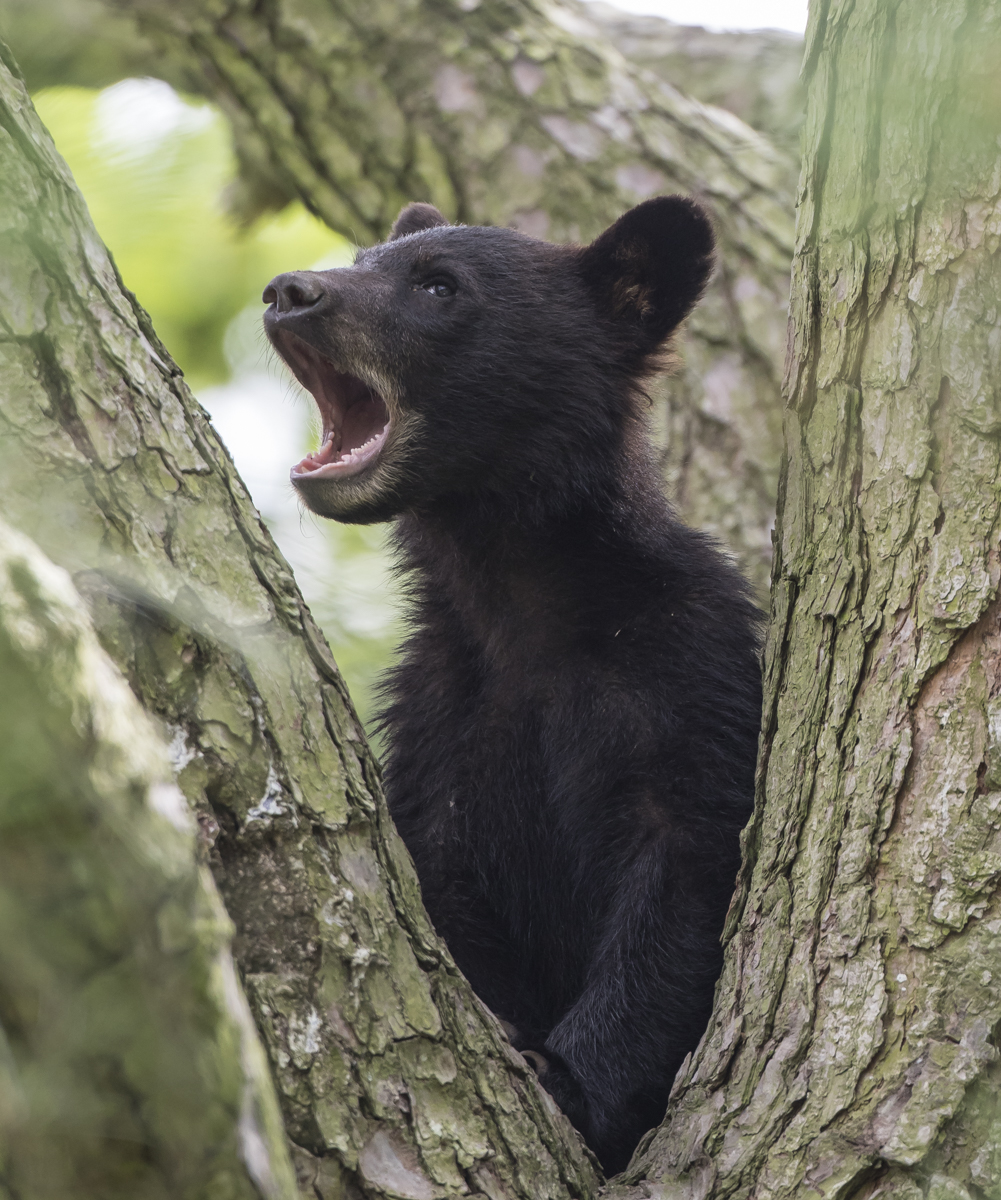
    These three yearling Black Bear cubs and their mother are causing a lot of traffic jams near Tower
     
    One set of siblings of a famous bear family provided some great viewing, but not so great photographs. Driving south, there was a huge bear jam near Tower, and when I saw that there were three 1-year-old cubs, I knew it was the same group I had seen last summer as cubs of the year. Their mother seems to have a preference for meadows close to the road and probably enjoys the huge backups of cars she causes. I drove through and parked in a pull out some distance away and then walked back toward the group of bears. I stopped well ahead of the 100 yard minimum distance required for bears and wolves and set up my tripod in the shade of a tree. Rangers were already on the scene directing traffic and trying to manage the crowds. There was a lot of contrast between the shady areas in the bright sunlight grasses so the photographs were not all that great, plus I was pretty far away. 


    Bear cubs playing in a tree
     
    At one point all three cubs climbed a small tree and begin playing in it… the tree was shaking back-and-forth, but I have a feeling most of the people in cars that went by never even saw them. Finally, mom climbed a short distance up the tree and must have scolded them, as all three came down and followed her up the slope (to take a nap no doubt).  The bear jam began to break up, and the ranger closest to me walked straight towards me. I was wondering what I had done when suddenly he spoke up and thanked me for obeying the rules and being a respectful photographer. He said it isn’t often that he doesn’t have to tell someone to get back. I appreciated his comments and thanked him for what he does.


    Pronghorn mothers typically have twins

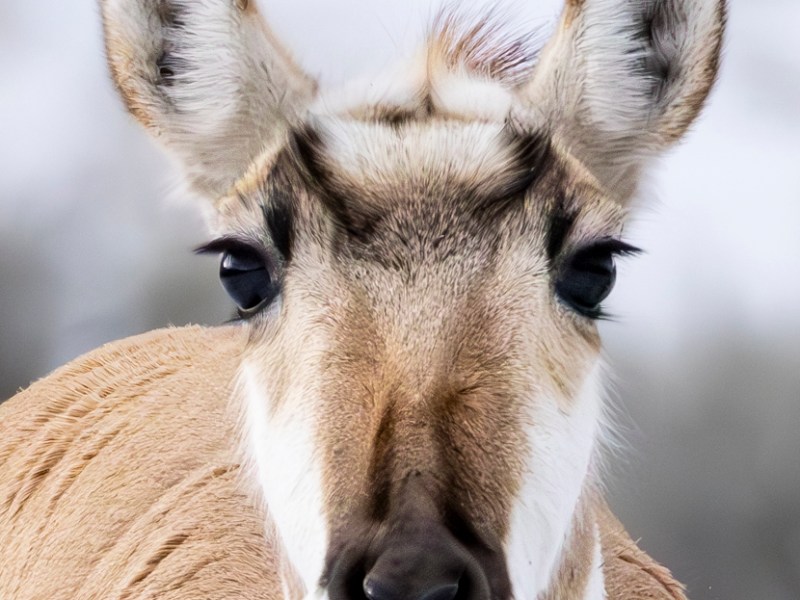
    My favorite baby animal thus far has been the Pronghorn Antelope. Yesterday, one mother had twins following her through the sagebrush flats. Twins are actually normal for Pronghorn, but there is a high mortality rate to predators. The youngsters were so cute as they followed along in their mom’s footsteps. 


    A mothers’ work is never done
     
    Mother Pronghorns clean the droppings from their fawns’ rear end as a way to reduce scent that might attract predators.  Being a mother is never easy.


    Thanks, mom
     
    The mother often leaves the babies hidden in some sagebrush for long periods of time as she wanders off to feed. 

    This morning I saw a female with only one fawn. The baby laid down next to some sagebrush and the female and another doe crossed the road and started feeding several hundred yards away. It is amazing that they can relocate their baby in this landscape that looks so similar to our eyes. 

    Baby Pronghorns in Little America

    I am looking forward to seeing what other new life greets me in the coming days.


  • Back in Paradise


    Sunrise
     
    A quick post from my favorite place. Arrived yesterday in Yellowstone. Surprisingly hot for this time of year here… 87° in Bozeman. But, the park continues to amaze.


    Bison calf from the car window in a bison jam.

    Relatively little wildlife on my way in yesterday save for the usual bear jams near Roosevelt. But then late in the day… two wolves in Lamar Valley.  Too far for an image, but beautiful light. Bison everywhere in Lamar. Lots of road blocks, of the Yellowstone kind. 


    Yellow-headed Blackbird perched on Big Sagebrush.

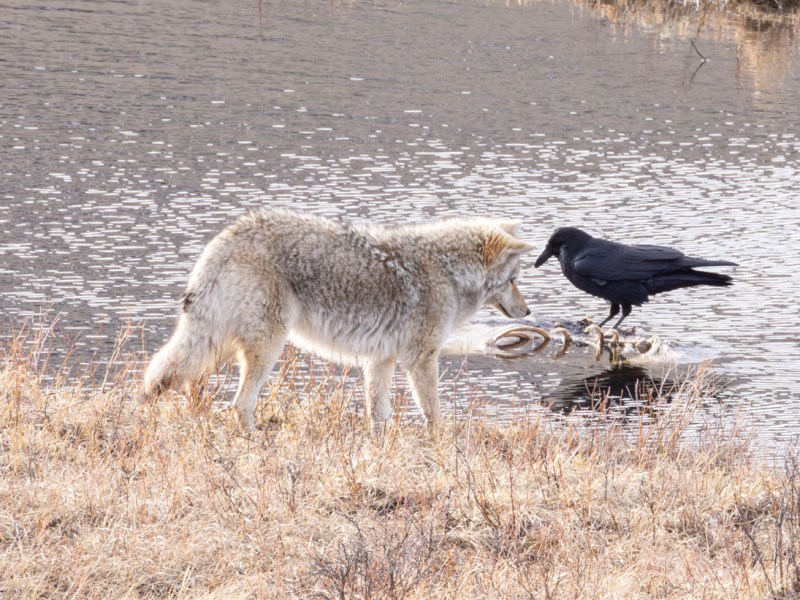
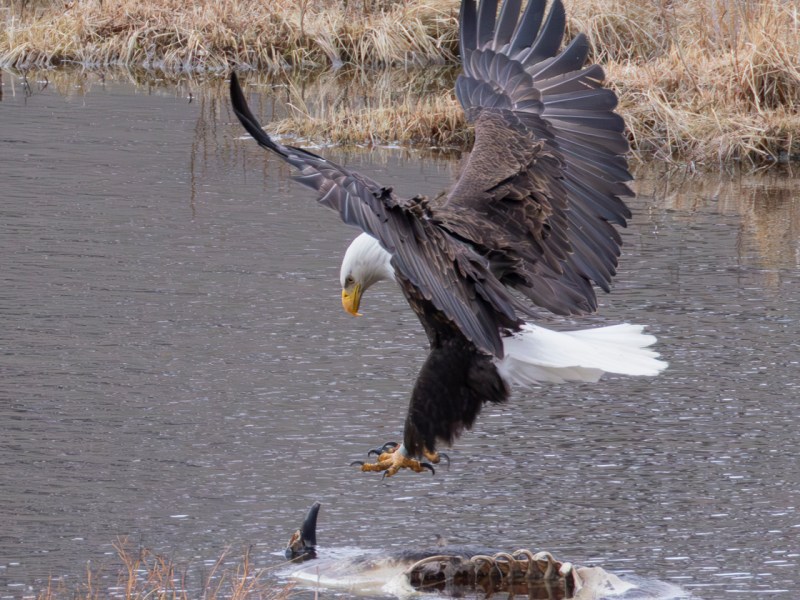
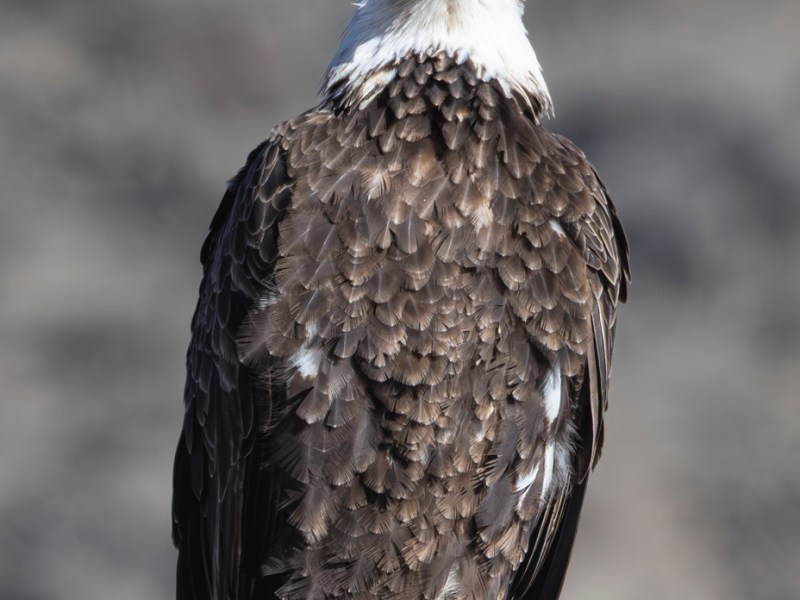
    This morning there was a coyote feeding on a Bison calf carcass down by the river. A Bald Eagle and a few Ravens waited their turn for breakfast. Standing alone on Slough Creek watching Pronghorn… Just another morning in paradise.

  • Lethal Beauty

    The moment one gives close attention to anything, even a blade of grass, it becomes a mysterious, awesome, incredibly magnificent world in itself.

    – Henry Miller

    Something caught my eye yesterday as I walked toward the house along the stone steps. It was on the tip of a leaf of one of the wildflowers yet to bloom.


    A tiny hunter positioned on the tip of a leaf, waiting for what may come its way (click photos to enlarge)

    I believe it was a juvenile Assasin Bug of some sort, most likely the Wheel Bug, Arilus cristatus.


    Adult Wheel Bugs have what looks like half of a toothed gear (or wheel) attached to their back.

    The nymphs of Wheel Bugs lack the unusual wheel or crest that gives the adult its common name. From what I have read, no one is quite sure of the purpose of this unusual anatomical feature.


    The nymph does show the characteristic piercing – sucking mouthpart of Wheel Bugs.

    Though lacking the namesake wheel, the nymph does share the diagnostic mouthparts of the adult Wheel Bug. All True Bugs (family Hemiptera) share these elongate, beak-like mouthparts.  Wheel Bugs are voracious predators, taking all types of insects and other invertebrates, large and small. When they encounter a potential prey, they grab it with their front legs and stick their hypodermic-like beak into the organism, injecting it with saliva. This juice contains a toxic, paralytic substance that immobilizes and kills the prey within 30 seconds.  The saliva also contains enzymes which help dissolve the insides of the victim . After that, the predator sucks out the body fluids of its quarry.

    And the defensive bite of an adult Wheel Bug can be quite painful for humans as well. They are not aggressive but will bite in self-defense if accidentally grabbed or pushed against. It feels like a really bad bee sting.


    The tiny warrior reacts when I get close with the macro lens.

    When I brought the macro lens close for a shot, the little guy was defiant, or curious, not sure which.  Either way, it was fascinating to look closely at this creature. Wheel Bugs supposedly have only one generation per year (the picture of the adult was taken in September a couple of years ago). The eggs overwinter and hatch in spring.  I will keep an eye out for them as they molt and mature the next few months.  If any reach that “armored vehicle” stage of adulthood (and they are large as adults, over one inch in length) I will try to share some close-ups of this fascinating garden neighbor.

  • A Fiery Combination

    Nature feeds her children chiefly with color.

    ~Henry David Thoreau

    My wildflower garden is between seasons right now, so color is hard to come by. The whites, light blues, and pinkish-reds of spring’s onslaught of ephemerals and early bloomers has passed, and the bright yellows, oranges, and kaleidoscope of colors of summer flowers has not quite exploded onto the scene. This is especially true in my largely shaded yard. There are few openings in the canopy and the understory is in its jungle-takeover phase, especially with the recent rains. So, green is the dominant color out my windows right now, lots of it. But, if you look around some of the edges, where there is some dappled sunlight filtering in at least part of the day, you will see a hint of color.

    Spigelia offers a dash of color this time of year
    Spigelia offers a dash of color in the shade garden this time of year (click photos to enlarge)

    As you get closer, the faint glimmer transforms into a fiery combination of scarlet and yellow.

    Spigelia
    Spigelia marilandica flowers

    These are the flowers of an uncommon wildflower, Spigelia marilandica. It goes by many common names – Indian Pink, Woodland Pink Root, Worm Grass, most of which refer to its use by Native Americans as an effective treatment for intestinal worms. All parts of the plant contain a poisonous alkaloid, spigeleine (a compound related to strychnine), which gives the plant its medicinal properties and makes it toxic if too much is consumed.

    Spigelia flower buds
    Spigelia flower buds in late afternoon light

    The flowers are arranged in an unusual manner on an arched, one-sided spike at the top of the plant. There is a swelling a little over midway on the flower, and then the tip splits into five bright yellow petals when it opens. One field guide described the flower buds as resembling bowling pins sharpened to a point.

    Spigelia from above
    The color combination of scarlet and yellow is eye-catching

    Flowers can be self-pollinating, but Ruby-throated Hummingbirds are known to pollinate these plants. In fact, it is listed as one of the top ten native plants for hummingbirds by Operation Ruby Throat in South Carolina. Spigelia is apparently more common in that state. The only place I have seen this delicate flower in the wild is in Great Smoky Mountains National Park. The plants in the yard were obtained from the NC Botanical Garden in Chapel Hill, a great place to learn about and purchase native plants.

    Spigelia blossom 1
    Spigelia blossoms close up

    I read that the seed capsules swell and then split open, shooting the seeds away from the plant. This gives me another reason to appreciate this fiery beauty, and something to look for later this summer. It is becoming increasingly apparent that I could never leave the yard and still have so much to see and learn from nature.

  • The Struggles of Forest Birds

    How completely the life of a bird revolves about its nest, its home! In the case of the wood thrush, its life and joy seem to mount higher and higher as the nest prospers.

    ~John Burroughs, essay on Wood Thrush, 1871

    On a walk in the woods last week, I spotted a small bird that I didn’t recognize. It was brownish in color and perched on a log. When I got the binoculars on it, I recognized that big-eyed, spiky-feathered look of a young bird…a fledgling of some sort. My first thought was Ovenbird, and within a couple of seconds, an adult Ovenbird flew in, confirming it. Turns out there were at least two young, and they both flew off with the adult soon after. Earlier this spring, I had heard a male Ovenbird singing frequently in this same area, so it seems a pair had built a nest and successfully fledged some young. I smiled, as it is never easy for birds to successfully rear young with so many things that can go wrong. What had started us on this path through the trees was seeing a Wood Thrush flying by with a beak full of worms. No doubt headed to a nest to feed some hungry babies. The Ovenbirds had distracted us, but we continued on in the direction where we had lost sight of the Wood Thrush.

    The nest
    The nest (click photos to enlarge)

    Suddenly, there it was, less than twenty feet away, a Wood Thrush nest with an adult bird sitting on the edge. We gave it a wide berth as we walked out to the nearby gravel road and the adult stayed with the nest, watching us. The nest was about 7 feet off the ground in a fork of a small Ironwood (Hornbeam) tree. I was surprised at how visible it was – good for photography, but bad for protection from predators.

    Adult feeding nestlings
    Adult feeding nestlings

    Over the next two days, I sat in a camouflage blind and observed the comings and goings of the two parents as they brought beak-fulls of food (mainly earthworms) to the four nestlings.

    Four nestlings
    Four nestlings raising their beaks in anticipation as an adult bird lands on a nearby twig

    Based on what I could see of the young through my telephoto lens, I am guessing they were three or four days old.

    Although I could not tell the difference between the sexes of the adults by their feather pattern, I could differentiate them by their behavior. The female would often fluff out her belly feathers and sit on the nestlings as if brooding. The male never did this, and frequently left the nest well before the female returned with a beak full of food. To my surprise, on a couple of occasions, he even sang quietly while at the nest, perhaps in response to other males singing loudly nearby.

    Most of the time I observed the nest, one of the adults was sitting nearby. This seemed like a good strategy given the number of potential threats in these woods – American Crows, Blue Jays, Black Rat Snakes, Raccoons, Gray Squirrels, feral or neighborhood cats…the list was pretty long. I did see one of the adult Wood Thrush harassing a Blue Jay that approached within about twenty feet of the nest. When it finally left, the Wood Thrush pair stayed off the nest for several minutes and then came back, checked on things, and resumed their feeding. The typical pattern was for one of the birds to be on or next to the nest until the other adult was in view with more food, then it would fly off to forage while the other bird fed the young.

    This clip shows an example of the typical feeding sequence. The female is the one initially at the nest. She leaves when she spots the male coming in. He brings in the food and proceeds to stuff morsels into the open beaks before him. Notice the spider that has apparently escaped from the beak in transit and is clinging to the breast of the adult male. Then watch what happens with the spider after the initial feeding sequence.

    After doling out the food, the adult bird waits until one of the young birds presents a fecal sac, then it grabs it, and eats it. Only once did I see the adult take the fecal sac and fly off with it as I have seen with many other species. Some references imply that the adult Wood Thrush do this for the first few days of the nestlings life, and then presumably fly off with it to discard it away from the nest. All of this is to keep the nest area clean and to avoid providing clues to predators as to the nest location.

    I was gone for three days, and was looking forward to seeing how much the young birds had grown on my return. The next morning when I went out, I could see from the road that something was wrong.

    Wood Thrush nest after predation
    Wood Thrush nest after predation

    The nest was slightly skewed in position, and there were no tiny heads poking up above the rim. Dang it…something had found the nest. I knew it would be empty, but I checked anyway. Sure enough, the babies were gone. Looking around I didn’t see any feathers or other signs left by the predator. I assume the adult birds escaped harm. The nest was only slightly messed up, one side showing a little disturbance. My best guess is an aerial predator – either American Crows or Blue Jays. Both birds are active in this area every day, both are extremely intelligent and sharp-eyed. I worried that my photography of the nest (from a camouflage blind that I removed after each session) might put it in danger, and now I feel sick about that. But, I will never know.

    It turns out, Wood Thrush may be particularly susceptible to nest predation and that is one reason given for their decline in numbers in recent decades. Fragmented forests (tracts that have portions cleared for some purpose) tend to allow more predators (and nest parasites such as Brown-headed Cowbirds), access to forest-dwelling species such as Wood Thrush. And, since Wood Thrush tend to build their nests in fairly visible locations, they often suffer nest predation. I found several studies that showed a nesting success rate for Wood Thrush of between 26-30%. One study, in Great Smoky Mountains National Park, placed small cameras at Wood Thrush nests and documented the variety of dangers over the nesting cycle. It seems there are many more hazards when the nest contains just eggs. Egg predators included White-footed Mice, Blue Jays, American Crows, Gray Squirrels, Eastern Chipmunks, Black Rat Snakes, and Black Bears. Once the eggs hatched, the number of documented predators dwindled to three – American Crows, Black Bears, and an Eastern Screech Owl.

    Interestingly, it is not just an issue of modern times. While reading John Burroughs’ essay on Wood Thrush from the late 1800’s, I found this quote…

    There is no nest-builder that suffers more from crows and squirrels and other enemies than the wood thrush. It builds as openly and unsuspiciously as if it thought all the world as honest as itself. Its favorite place is the fork of a sapling, eight or ten feet from the ground, where it falls an easy prey to every nest-robber that comes prowling through the woods and groves.

    I imagine his world was one of a patchwork of forest and cleared farmland, perhaps similar to the fragmented forests and developments of today. All of this points to the fact that it is a tough world out there for our song birds. This spring, I have seen evidence of successful fledging of Carolina Chickadees, Carolina Wrens, Eastern Bluebirds, Ovenbirds, and Downy Woodpeckers near the house. I have also observed nest failures of this Wood Thrush and a Northern Cardinal nest. There are obviously many hazards that birds face and we should make every effort to minimize those that we can, such as window kills, outdoor cats, the overuse of pesticides, and the destruction of habitat. Planting native plants is certainly a way to encourage birds and provide more food. I have a small amount of grassy lawn and I never saw the Wood Thrush foraging in it (like we see with American Robins searching in lawns). Instead, they were always in the leaf litter in the natural areas of the yard or beyond, flipping leaves in search of prey that included earthworms, caterpillars, a moth, and spiders. A diverse habitat can support a diversity of invertebrates and therefore a diversity of birds and other wildlife – it is as simple as that. I still hear numerous male Wood Thrush singing all around the property. I imagine the pair I observed will attempt a second brood. Nature is persistent, and, if given a chance, will persevere. Let’s all do what we can to give it that chance.

  • Roaming the River of Life

    A river is the most human and companionable of all inanimate things. It has a life, a character, a voice of its own, and is as full of good fellowship as a sugar maple is of sap. It can talk in various tones, loud or low, and of many subjects grave and gay…For real company and friendship, there is nothing outside of the animal kingdom that is comparable to a river.

    ~Henry Van Dyke

    Roanoke scene
    Scene along the lower Roanoke River (click photos to enlarge)

    After spending some time camping and hiking in the mountains, it seemed appropriate to have a totally different type of experience by paddling a few days on one of my favorite rivers, the Roanoke. The Roanoke is a mighty river, meandering over 400 miles from the mountains of southwest Virginia to Albemarle Sound in North Carolina. In places, the flood plain is immense and provides habitat for countless animals and plants, and solace for any who paddle though it. The Nature Conservancy has helped protect over 90,000 acres along the Roanoke and calls this area the largest and least disturbed bottomland hardwood forest ecosystem on the East Coast.

    Tent on platform
    Tent on the camping platform at Three Sisters

    One of the things that makes this river so special for paddlers is its series of camping platforms. Roanoke River Partners coordinates a reservation system on over 20 camping platforms along the lower Roanoke and its tributaries. On this trip, we were going to paddle about 28 miles over three days, staying at two platforms – Three Sisters on Broad Creek on the Roanoke, and Otter One, on a different Broad Creek off the Cashie River.

    Roanoke Outdoor Adventures
    Captain Heber of Roanoke Outdoor Adventures

    A trip like this would normally require a couple of cars, one at the starting point and one at the take out. But, we decided to opt for a local outfitter, Roanoke Outdoor Adventures, run by Captain Heber Coltrain. Heber is a local guide that rents canoes and kayaks, can help you plan a trip through the area, and provide shuttle service. He is knowledgeable about the region and its history and I can recommend his services to anyone planning a trip in this region.

    Roanoke shoreline showing defoliated trees
    Roanoke shoreline showing defoliated trees

    Putting in at the NC Wildlife boat ramp near Jamesville, one of the first things you notice is a lack of leaves on many of the trees along the shoreline. At first glance, it looks as though the Tupelo Gum just haven’t leafed out yet this spring. A closer look shows they have, but the leaves have all been consumed, almost every leaf gone!

    Forest Tent Caterpillars
    Forest Tent Caterpillars resting in a characteristic patch on a tree trunk

    The culprit? A huge outbreak of Forest Tent Caterpillars Malacosoma disstria. Unlike the more familiar Easter Tent Caterpillars, these munchers do not build the communal silk shelter we commonly see in the forks of certain tree branches in early spring. Instead, they create a silk pad on the branches or trunk of a tree and congregate on it when at rest or molting. Early stages are almost all black with conspicuous hairs. As they mature, they acquire blue sides and footprint-shaped white marks on a dark background along their dorsal surface. Their primary host along the Roanoke seems to be Tupelo Gum, although we saw other species, such as Sweet Gum, that had been stripped. These outbreaks can occur over many years (this is at least the second year for this area) and must have a huge impact on tree growth and survival as well as impacts all along the food chain. Tree flower and nectar production are almost nil and the resulting lack of fruit can impact many mammals and birds.

    Forest Tent Caterpillar folding leaf
    Forest Tent Caterpillar folding a leaf

    There is one generation per year and we were there as the caterpillars were starting to pupate. They fold a leaf by stringing silk across the edges. The silk strands contract as they dry, pulling the leaf sides together.

    Forest tent caterpillar making retreat
    One night’s work by a caterpillar

    Overnight, we saw one leaf shelter almost completed in a Smilax vine along the platform. Once the shelter is complete, the caterpillar pupates inside. Adult moths emerge in a couple of weeks and lay eggs in the tree canopy. The eggs hatch next spring as the tree leaves begin to unfurl. There are some species that probably benefit from this seemingly endless abundance of larval lunch meat – most notably various parasites and predators. Yellow-billed Cuckoos are caterpillar specialists, and probably have good years during the outbreaks, and we saw and heard plenty. We also saw several of the ubiquitous swamp canaries, the Prothonotary Warblers, beating the two-inch larvae on tree limbs before gulping them down.

    Prothonotary Warbler bringing moss to nest cavity 1
    Prothonotary Warbler male bringing moss to a potential nest cavity

    As we unloaded our gear the first afternoon, a bright yellow male serenaded us in his attempt to lure a lady to a nest cavity he was actively preparing.

    Prothonotary Warbler stuffing moss into nest cavity
    Prothonotary Warbler stuffing moss into nest cavity
    Prothonotary Warbler singing at nest cavity
    Prothonotary Warbler singing at nest cavity

    As he sang, he gathered dry moss from a nearby log. With a beak full of moss, he flew up to a hollow snag, and stuffed the moss into the future bedroom and nursery. In between, he frequently battled another male from across the creek, defending what he hoped would be an attractive spot for a future mate. His is a busy life in the swamp.

    Ours was a relaxed life. We swam frequently to cool off, and enjoyed the peace and quiet as we paddled toward our take-out miles away. We crossed through to the Cashie River at one point and paddled thorough part of the vast Roanoke River National Wildlife Refuge. All along our journey were sights and sounds that make me want to return to what was originally called the River of Death, for its frequent huge floods. But, to me, the vast wilderness along this stretch of river, and the large acreage under protection by various public land agencies and conservation groups, makes this a River of Life. Time spent paddling on the Roanoke is truly a retreat from a bustling modern world, and a means to glimpse the beauty and mystery of the many secrets of a swamp.

    Moutain Laurel and lily pads along the Roanoke
    The contrast of Mountain Laurel and lily pads on a north slope along the Roanoke River below Jamesville
    Large cypress nect to platform
    Huge Bald Cypress tree next to camping platform
    Wasp milking aphids
    Wasp milking aphids for honeydew on a Tag Alder in the swamp
    Lily pads and tree reflection
    View of the swamp from one of the camping platforms
    Prothonotary Warbler in threat display to other male
    Male Prothonotary Warbler in threat display to another male
    Cashie scene
    Cashie River scene
  • Bristly Night Crawler

    Be not preoccupied with looking. Go not to the object; let it come to you.

    ~Henry David Thoreau

    Giant Leopard Moth caterpillar 1
    Large caterpillar on the stone path at night (click on photos to enlarge)

    The other night, the object of interest and I met on the walkway, me barely avoiding stepping on it as I carried in some stuff from my car after dark. Luckily, the light of the walkway lights illuminated this very large caterpillar so I was able to step over it.

    Giant Leopard Moth caterpillar
    Giant Leopard Moth caterpillar with quarter for scale

    Although it superficially resembles the familiar Woolly Worm caterpillar of purported weather forecasting fame, I recognized this one as the larva of the Giant Leopard Moth, Hypercompe scribonia, from its large size, abundant black bristles, and red bands between the body segments. They really are big caterpillars, this one being about 3 inches long. They spend the day in leaf litter or under debris and come out at night to feed on a variety of plant materials. This guy was chewing on an old Tulip Poplar flower petal laying on the stone. Although appearing formidable and potentially hazardous to handle, they are harmless.

    Giant Leopard Moth caterpillar defensive posture
    Defensive posture

    When I gently touched it, the caterpillar curled into its distinctive defensive posture, which really reveals the bright red colors between segments. Given that the adult moths secrete defensive chemicals, it is safe to assume this warning coloration in the larva also signals some bad taste to any that might want to dine on this bristly night crawler. Caterpillars can be found almost any time of year as they probably have a couple of generations in this portion of their range, and they overwinter as larvae. The adults are large, gorgeous moths. Here is a link to some images from the Moth Photographers Group. Hopefully, I will have my own images before the summer is over.

  • The Bobbing Rock

    You only need to sit still long enough in some attractive spot in the woods that all its inhabitants may exhibit themselves to you by turns.

    ~Henry David Thoreau

    Campsite
    Campsite at Elk Knob State Park (click photos to enlarge)

    In my last post I mentioned the incredible bird life at Elk Knob State Park seen in a recent backpacking trip. The gurgling stream next to camp drowned out many of the bird songs we heard along the trail as we hiked. But, after setting up camp, we were sitting and enjoying the scenery when we saw a flash of wings zipping by upstream. In a few seconds we saw the source – a Louisiana Waterthrush.

    Mountain stream
    Mountain stream next to camp provides excellent Louisiana Waterthrush habitat

    Although referring to its close cousin, the Northern Waterthrush, a description by ornithologist E.H. Forbush is very applicable to this species as well – It is a large wood warbler disguised as a thrush and exhibiting an extreme fondness for water.  That pretty much sums it up. It is hard to believe this is a warbler. Instead of the bright spring colors of many wood warblers, the Louisiana Waterhrush is dull brown and streaky, blending in very well with the leaf litter and exposed rocks along the mountain streams they call home. And unlike the warbler neck pains you typically get from staring up in treetops trying to identify most spring warblers from below, you can sit quietly and watch this species walking on the ground and hopping from rock to rock as it forages along a babbling brook.

    Since I rarely carry telephoto lenses while backpacking, I can’t show you close up images of this bird, so I refer you to the Cornell Laboratory of Ornithology website for some basic information on Louisiana Waterthrushes and how to distinguish them from Northern Waterthrushes. What I can tell you is these birds are fascinating to watch. One of the distinctive behaviors of waterthrushes is their tail bobbing as they walk. A few other species do this, most notably some other birds frequenting the shores of waterways – Spotted Sandpipers and American Dippers. I have yet to find a really good explanation for this behavior. Quite honestly, if these birds did not constantly bob as they walk, it would be much more difficult to spot them along the rocky stream banks. I hope there is some benefit to the bird for this bizarre behavior, because it seems to me it makes them much more susceptible to potential predation.

    After watching the first bird for a couple of minutes, it became clear that there was probably a nest nearby. The waterthrush was gathering food, lots of food, in the form of various insects along the stream, and then started bobbing its way toward us. As we watched, it bobbed on a rock right across the creek from our tent, then flow up under the overhanging bank and disappeared – a nest! In a few seconds, it dropped down next to the creek, and quickly walked off downstream. We sat and watched this routine for several minutes. The adult birds came to the nest every 5 to 10 minutes with a beak full of bugs, bobbed on some rocks below the nest, and then flew up to feed the young. In between one of the feedings, we hopped across the stream to take a closer look.

    Nest site
    Nest site under overhanging stream bank

    The nest was tucked up under an overhang, surrounded by some dangling tree roots. It is along the inside of the upper left side of the “X” formed by the gray roots in this photo…see it? Look a little above the center of the photo, just to the right of the left branch of the X.

    Louisiana Waterthrush nestlings
    Louisiana Waterthrush nestlings

    Here it is up close. We didn’t want to disturb the birds, so we took a quick picture or two and then retreated back to the other side of the creek. We watched the adults as they continued to bring what looked like super-sized meals to their tiny babies. But, notice how big the beaks of the young are…I guess they can handle the large prey being brought to the nest by their busy parents. Although it was difficult to identify a lot of the food items through binoculars (especially since the adults are constantly bobbing up and down ad side to side), we did see the what looked like damselflies, dragonflies, mayflies, stoneflies, cranefly larvae, and many other large insects filling the beaks of the adults.

    You can imagine how I was wishing for a telephoto lens to capture some images of these busy adult birds and all that food in their beaks. I did have my 17-40mm wide angle. So, I decided to try something. The adults did not seem bothered by our presence and continued to feed their young even when we were moving about camp, so I walked across the stream when they had gone out to forage and set up my camera to do some remote video.

    Nest site and camera
    Nest site and camera

    The birds seemed to always stop in one general location and bob repeatedly before jumping up to the nest. I set the camera on some rocks, covered it with my green raincoat, and then laid some more rocks and leaves on top to help it blend a little better with the irregular patterns along the stream bank. The adults didn’t even seem to notice after their initial visit back to the nest. It took several takes, but I finally captured a couple of clips to share.

    This is a typical sequence where an adult bird comes up to the main “bobbing rock” for a few seconds and then steps away.

    A few seconds later, the adult comes back, begins to bob vigorously while looking up toward the nest, and then suddenly flies up to feed. The usual routine was to then drop back down and scurry off a few feet before flying away to forage some more. We did see one adult pause for several minutes and take a splash bath in the water and then preen.

    Fecal sac dropped in stream
    Fecal sac dropped in stream

    Every three of four feeding trips ended with an adult bird bringing out a fecal sac produced by one of the young birds. In most species I have observed, adult birds fly off with the fecal sac and drop it many yards from the nest. This makes sense in terms of reducing the chances that potential predators can cue in on a nest location from the droppings of the nestlings. But these adults always carried the fecal sac to the edge of the stream and dropped it in the water, where it was usually quickly carried off downstream.

    Watching the feeding activities of this pair of adult birds was amazing. It isn’t often you are in a situation to observe this sort of behavior for an extended period of time. As we broke camp on the second morning, I watched them bring a beak full of wings and abdomens one last time, dance on the bobbing rock, and disappear into the nest. I wished them well and thanked them for a rare glimpse into the private life of a special species that some have called, the “feathered trout”.

  • A New Favorite

    Our minds, as well as our bodies, have need of the out-of-doors.  Our spirits, too, need simple things, elemental things, the sun and the wind and the rain, moonlight and starlight, sunrise and mist and mossy forest trails, the perfumes of dawn and the smell of fresh-turned earth and the ancient music of wind among the trees.

    ~ Edwin Way Teale

    As you may remember, I started my career with the North Carolina State Parks System. I really love our state parks and what they represent – the best of what this beautiful state has to offer. When I left the Division in 1989 to go to the NC Museum of Natural Sciences, I believe there were 29 state parks (plus some state recreation areas and state natural areas). Now, there are 34 state parks. With the 100th anniversary of the state park system approaching in 2016, I want to make sure I have visited all of our them. One park caught my eye on a very short trip a couple of years ago and, last week, I finally managed a more extensive visit to Elk Knob State Park.

    Unusuual understory at Elk Knob
    Open understory at Elk Knob State Park (click photos to enlarge)

    Once in danger of becoming a housing development, Elk Knob was purchased through the concerted efforts of concerned local citizens, local landowners, and The Nature Conservancy. The land was deeded to the state in 2003 under the Division of Parks and Recreation and is now one of our newest state parks. It is one of a series of amphibolite mountains in the southern Appalachians, and its unusual geology and less acidic soils support a variety of ecological communities that are very different from most mountain habitats. The grasses and sedges seen in the understory give areas around the park office and along some of the trails a very distinctive look.

    Large Flowered Trillium
    Large-flowered Trillium, Trillium grandiflorum
    Large Flowered Trillium 1
    The white blossoms of the Large-flowered Trillium fade to pink with age
    Mayapple flower
    Mayapple flower, Podophyllum peltatum
    Witch Hobble
    Witch Hobble, Viburnum lantanoides

    Everywhere you walk you see a tremendous variety of wildflowers – trilliums, Mayapple, cohosh species, violets, Solomon’s Seal, Bloodroot, Giant Chickweed, and many, many more. Having just been to the wildflower wonderland of Elk Garden in Virginia, I can truly say the trails at Elk Knob may be the second most impressive wildflower display area I have seen in many years.

    Campsite
    Backpack campsite at Elk Knob State Park

    The park is still under development and has picnic areas, trails, a new (and beautiful) outdoor amphitheater, park office, and primitive camping. We hiked a little over a mile down to one of the backpack sites and set up camp, the only campers in the park for those two nights.

    Spring green
    Trees were just beginning to leaf out at this elevation

    Our campsite was next to a beautiful stream and set in a forest just leafing out in brilliant spring greens. I rarely carry any telephoto lenses with me when backpacking, but I regret it on this trip as the bird life was as spectacular as the wildflower display. I posted a few weeks ago about the Rose-breasted Grosbeaks passing through the Piedmont in migration. I think I now know where most of them went – pairs of these beautiful songsters were constant companions on the 9+ miles we hiked on park trails. We saw a lot of other species of neotropical migrants including Scarlet Tanager, Black-and-white Warbler, Canada Warbler, Least Flycatcher, Veery, Ovenbird, Black-throated Green Warbler, Black-throated Blue Warbler, Chestnut-sided Warbler, and a cooperative nesting pair of Louisiana Waterthrush (more on these in my next post). In addition, there were some resident species such as Common Raven, Blue Jay, and Barred Owl that were common during our visit.

    View from the summit
    View from the summit

    We hiked the moderately strenuous 1.9 mile trail to the summit, where the advertised stunning views lived up to the hype. At an elevation of 5,520 feet, Elk Knob is one of the tallest peaks in the region, and looking north, we could see Mt. Rogers and Whitetop Mountain in Virginia, an area we had hiked in just a few days before.

    Trail near the summit
    Trail near the summit

    But, for me, the vegetation, bird life, and beautiful rock outcrops along the trail are equally impressive. As you near the summit, the northern hardwood forest, dominated by Yellow Birch, Northern Red Oak and American Beech, becomes a gnarled and stunted forest due to the harsh conditions of winter winds and cold. And all along the trail, there are simple beauties to behold (especially if you stop frequently to catch your breath). I love the patterns, the lines and colors, of nature up close when you take the time to stop and look. And this park is one you will want to take in, a little at a time, until it fills you with its beauty and, both literally and figuratively, takes your breath away. Here are a few of my favorite breathless moments…

    Violet
    Woolly Blue Violet, Viola sororia
    Brown Spiketail
    Brown Spiketail, Cordulegaster bilineata
    Fern and shadow
    Fern and shadow
    Clinging to a boulder
    Clinging to a boulder
    The Neighbor Moth caterpillar
    Caterpillar of The Neighbor Moth, Haploa contigua
    Lousewort
    Early Wood Lousewort, Pedicularis canadensis
    Witch Hobble leaf
    Witch Hobble leaf
    Trees along the trail
    Trees along the Summit Trail

    Walking in this incredible landscape I was struck by the dedication of the staff that have created the beautiful trail system and help protect this special place. They deserve our support. Learn how you can help your local public land agency managers and see if there are non-profit support groups (such as Friends of State Parks) that assist them with much needed financial and other help. I also give thanks to conservation organizations such as The Nature Conservancy and local land trusts and conservancy organizations throughout our state that lead the way in surveying and protecting critical habitats for the future. Purchasing and managing lands for the public and our native ecosystems is one of the most important conservation efforts we can support and I encourage everyone to do what they can for this cause. I am glad Elk Knob has been set aside for us and all the spectacular plants and animals that call it home. And I am thrilled to have discovered a new favorite to visit whenever I am in the Watauga County region.

  • Destination Damascus

    The longer I live the more my mind dwells upon the beauty and the wonder of the world… I have loved the feel of the grass under my feet, and the sound of the running streams by my side.  The hum of the wind in the treetops has always been good music to me…

    ~John Burroughs

    Last week, I went to visit my parents in Damascus, VA, to celebrate Mother’s Day and my Dad’s 84th birthday. In what has become somewhat of an annual tradition, we went up to see the wildflower display at Elk Garden, part of the Mount Rogers National Recreation Area. It did not disappoint, and the array of blooming flowers was spectacular. Here are just a few of the stars of the trail…

    Fringed Phacelia
    Fringed Phacelia (click photos to enlarge)
    Twisted Stalk
    Twisted Stalk
    Umbrella Leaf
    Umbrella Leaf
     Violet
    Canada Violet
    Wake Robin pair 1
    Wake Robin Trillium
    Beech leaf out
    American Beech leaves bursting out

    While we were up the trail gawking at flowers, my folks stayed at the parking lot and talked with the many hikers heading north on the Appalachian Trail (AT). The wildflower display is on part of the AT. Damascus, known as the Friendliest Town on the AT, is hosting its annual Trail Days on May 15-17, where thousands of people join hundreds of hikers to celebrate all things AT, so traffic on the trail tends to increase this time of year.

    Packages waiting for hikers at Mount Rogers Outfitters
    Packages waiting for hikers at Mount Rogers Outfitters

    Another sign of trail traffic is the large number of packages waiting to be picked up by through-hikers at the Damascus Post Office and trail-friendly vendors in town like Mount Rogers Outfitters.

    There is another famous trail that passes through this little mountain community, and one that, In spite of having spent a lot of time in Damascus over the years, I had not made the time to properly visit. I am speaking of the famous Virginia Creeper Trail.

    Creeper Trail
    The Virginia Creeper Trail

    The Virginia Creeper Trail is a 34-mile rail-to-recreation trail that runs from Abingdon, VA, through Damascus, and up to Whitetop Station near the VA-NC border. The last train to run this route was in 1977. The conversion to a trail was completed in 1984. Over 100,000 people now ride the trail each year, bringing tens of thousands of dollars into the local communities. There are at least five bike rental shops in Damascus alone. The sight of multiple vans hauling trailer loads of bikes on almost any warm weekend is one of the reasons I probably have put off doing this trail (crowds not being my thing). It has also probably been twenty years since I have been on a bicycle, so that may have entered into the equation as well. But, being there on a weekday, early in the season, I thought it was finally time. As it turned out, there were very few people on the trail that morning, other than the family of 6 that rode the thirty minutes up to Whitetop Station in our van. After traveling only a few hundred yards down the trail, my first thoughts were you really do never forget how to ride a bike, and why had I waited so long to experience this – it is beautiful!

    Trestle
    One of the 47 trestles on the Virginia Creeper Trail

    Even though the trail is at times a fairly narrow path through private lands, it is full of pastoral scenes, lush forests, and abundant wildlife. A favorite part of the trail for me was passing over the numerous trestles that bridge ravines or the many creeks along the way.

    Snake and millipede on trestle
    Some elongate visitors on one of the trestles

    On one of the higher trestles, I stopped to take some photos and was surprised to see two linear sightseers seemingly enjoying the view down into the ravine – a Black Rat Snake and one of my favorite millipedes, Narceus americanus. These large millipedes (they can attain lengths of over 4 inches) are common in eastern forests, especially in the mountains. By the way, notice the milky eye color on the snake – this is a sign it is getting ready to shed its skin.

    Scene along Creeper Trail
    Farmland scene along the trail
    Fire Pink
    Fire Pink flowers on a moss-covered cliff

    We stopped in Taylor’s Valley for a leisurely lunch at the Cafe, a welcoming destination for hungry and thirsty cyclists.

    Taylor's Valley
    Creeper Trail Cafe in Taylor’s Valley
    William Lane Dunn bridge
    William Lane Dunn bridge in Taylor’s Valley

    Before leaving, I had to pose for a photo at the bridge in Taylor’s Valley, named in honor of my Dad’s Uncle Bill. William Dunn was an important member of the community, and loved to fish from that bridge, so the townsfolk had the new bridge named in his honor when it was rebuilt.

    Laurel Creek
    Laurel Creek, one of the waterways along the Virginia Creeper Trail
    Laurel Creek
    Inviting mountain streams wander along much of the route

    Laurel Creek, Straight Branch, and a host of small mountain streams are your company along much of the trail, providing a beautiful backdrop to the experience. We biked the 17 miles from Whitetop Station to Damascus in a little less than four hours, stopping frequently along the way to bird watch, look at plants, enjoy the scenery, and have lunch. The ride was magical, and, as the proprietor of the bike rental shop told us, once you go, you will come back. I think he is right. Spring is great on the trail (lots of migratory birds to enjoy), but I bet autumn would be spectacular as well, with the areas’ renowned fall colors. I almost forgot to mention one of the primary reasons this bike trail is so popular with everyone…the entire 17 miles we rode is downhill or flat, making it a very easy trip, even for beginners.

    If you are in southwest Virginia, I encourage you to consider exploring the region around Damascus – Mt. Rogers National Recreation Area, Grayson Highlands State Park, the Virginia Creeper Trail, and so much more. And, if you need a cozy place to stay while in the area (Warning – shameless family promotion about to occur), I can highly recommend a rental property run by a very nice couple (Mom and Dad). Check out the Country Cottage, and tell them you know me:)

Search the Archives

Due to our site update, photos on older posts may not display correctly. Sorry for any inconvenience.


Recent Posts