Autumn is a second spring where every leaf is a flower.
~Albert Camus
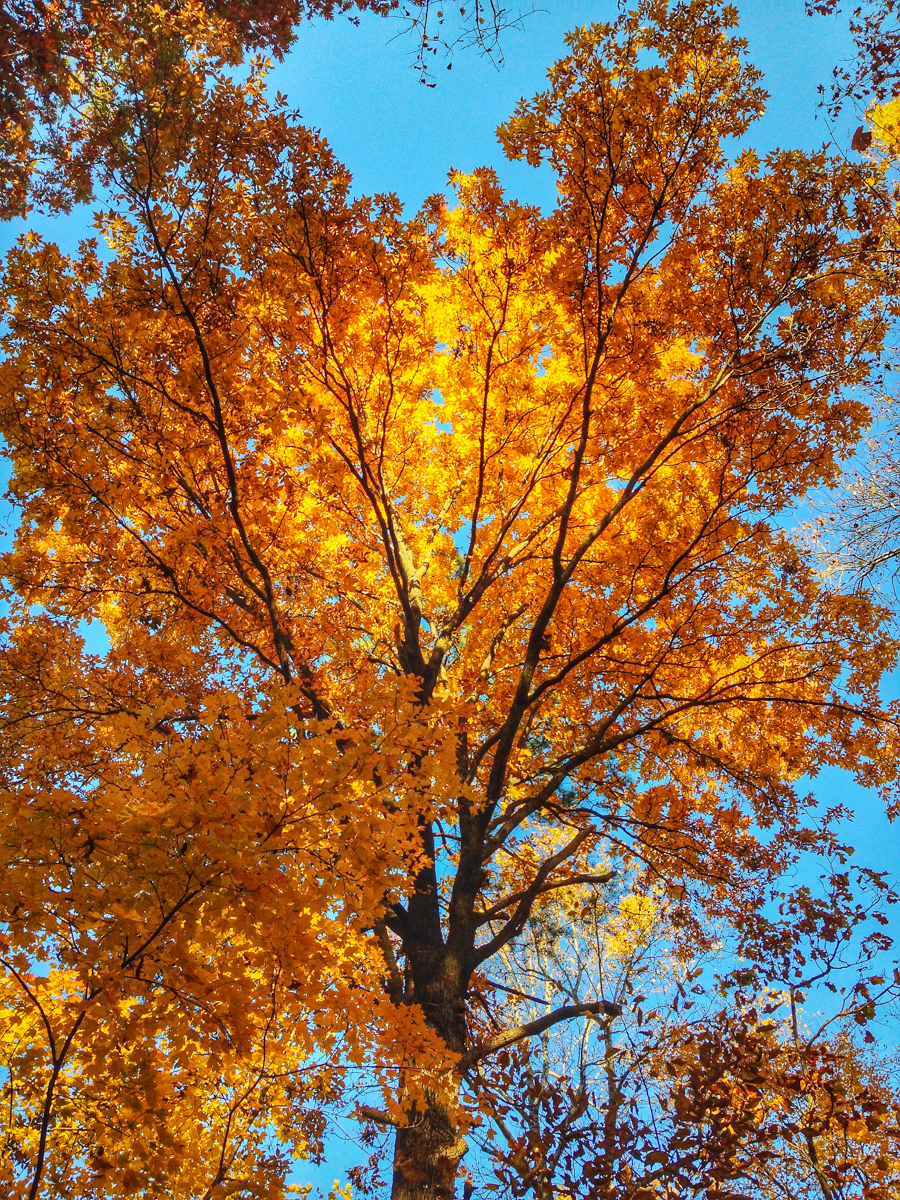
Hickory tree canopy highlighted by late afternoon sun (click photos to enlarge)
Years ago I had a school grounds workshop scheduled for a week day in October near Asheville. I didn’t get a hotel room ahead of time since I figured it would not be a problem during the week. After checking various places with no vacancy, one clerk told me I would probably need to drive 30 minutes or more east before I could find a room…“After all, hon, it is leaf season”. Leaf season, of course. The annual display of leaf colors in autumn is one of the most magical aspects of living in a region dominated by temperate deciduous forests. While our mountains are highlighted as the place to see the most dramatic colors, I find beautiful hues across much of our state, and I love to take in the show, especially late in the day when the low angle of the sun makes the colors even more vibrant.
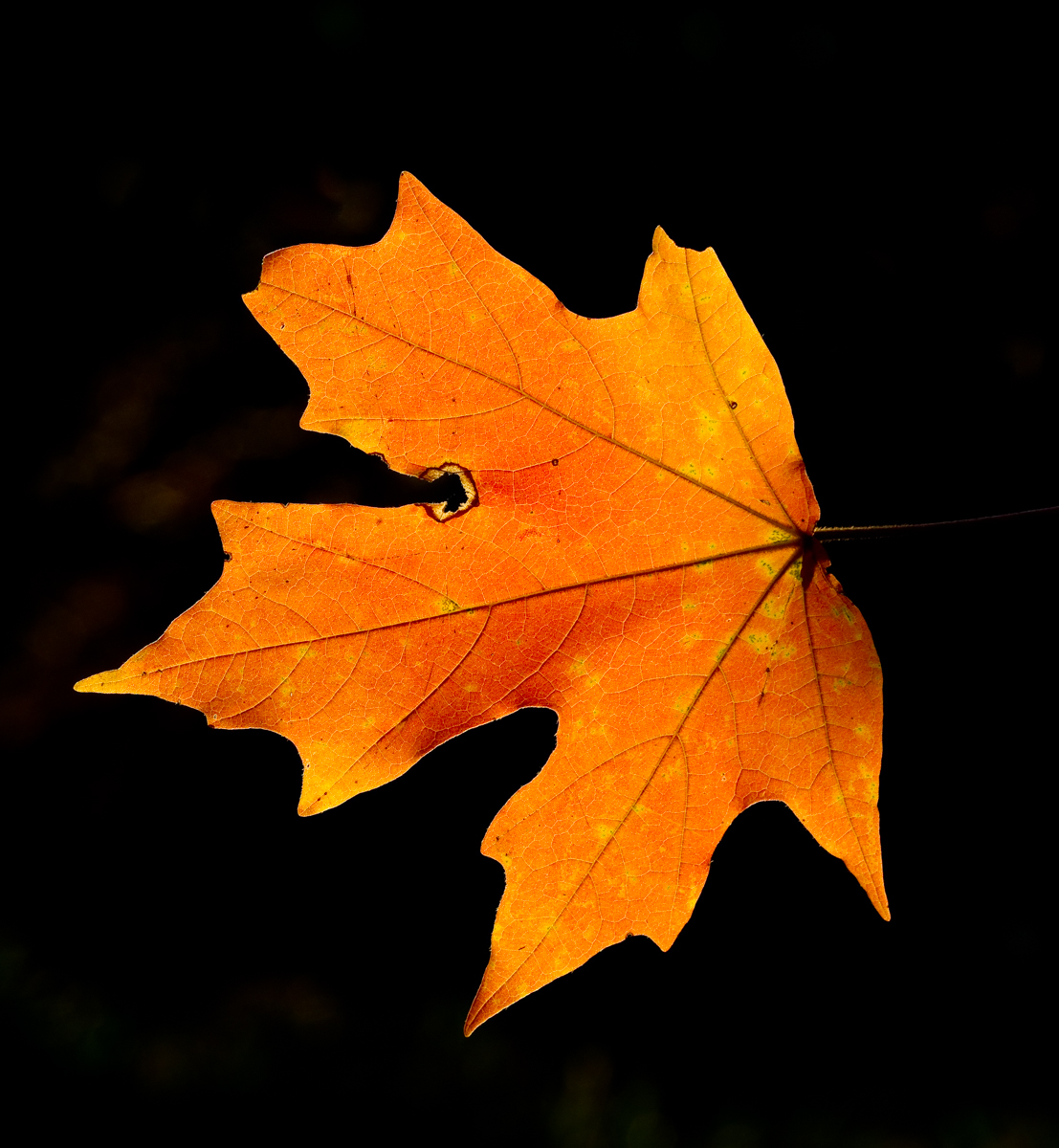
Chalk Maple leaf
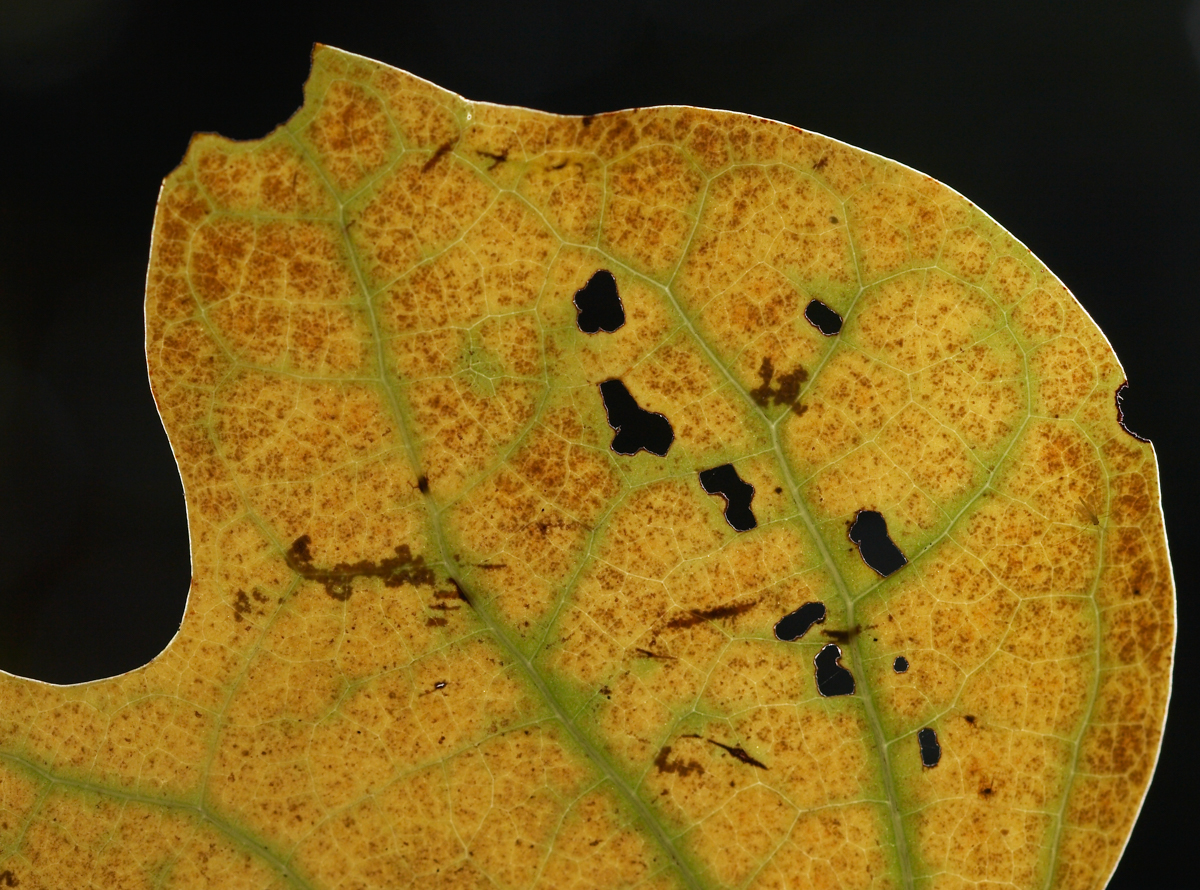
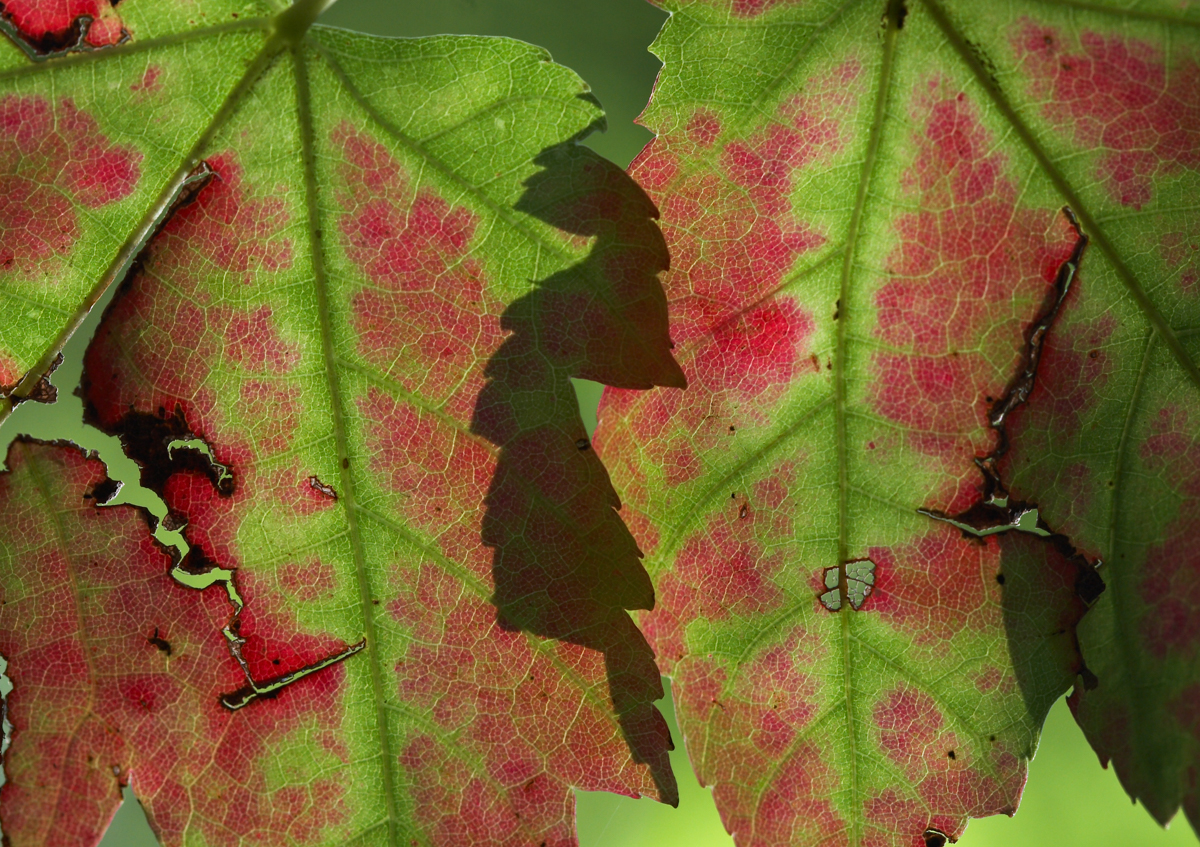
These past few weeks when the colors have peaked in this area I have been very busy, and have not been out as much as I would have liked to capture the beauty. So, I went back in time to the files of previous Fall photos to bring out a few taken in the woods of Chatham County. Most are taken late in the afternoon on windless days. I especially like to shoot leaves that are back lit by the setting sun, as it really highlights their textures and imperfections. I only wish the show lasted a little longer…the strong winds and rain coming in the next few days will surely cause the few remaining colorful leaves to drop, leaving only the reddish browns of the oaks out front to hang on into winter. And we will all have to wait until the next leaf season to marvel at the dazzling beauty in the trees around us.
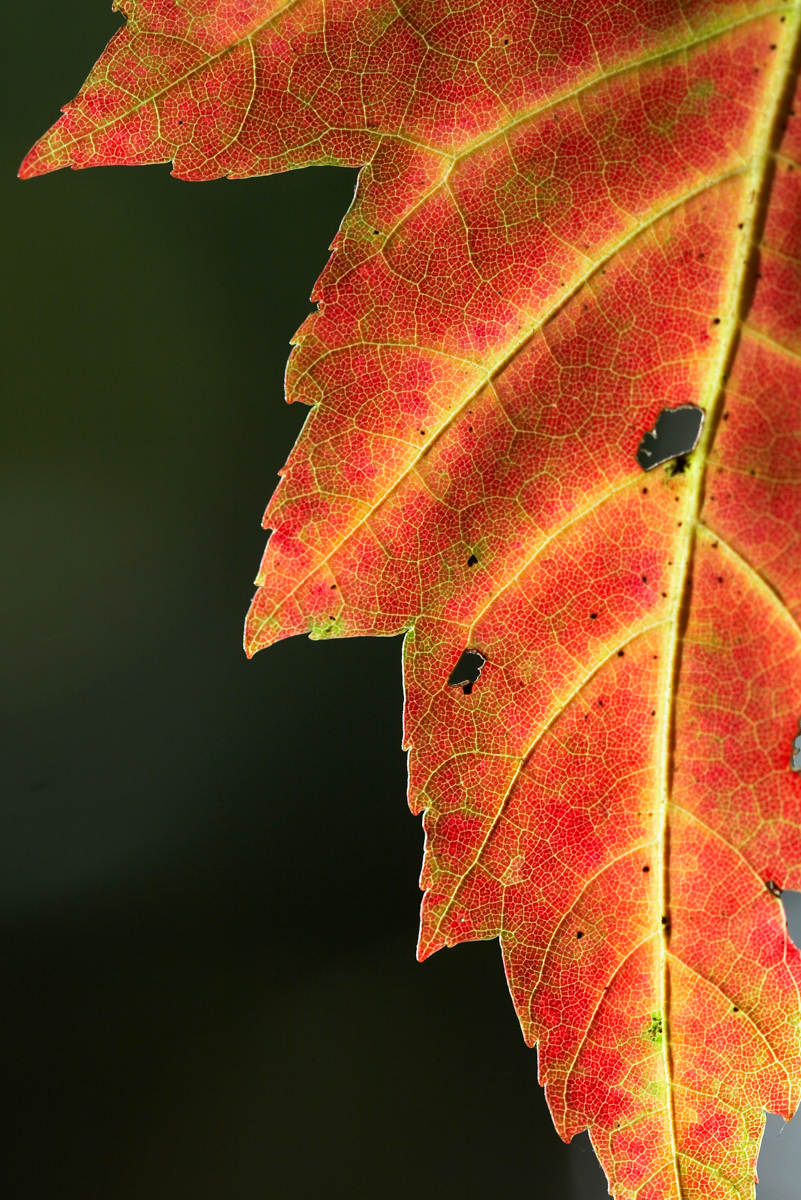
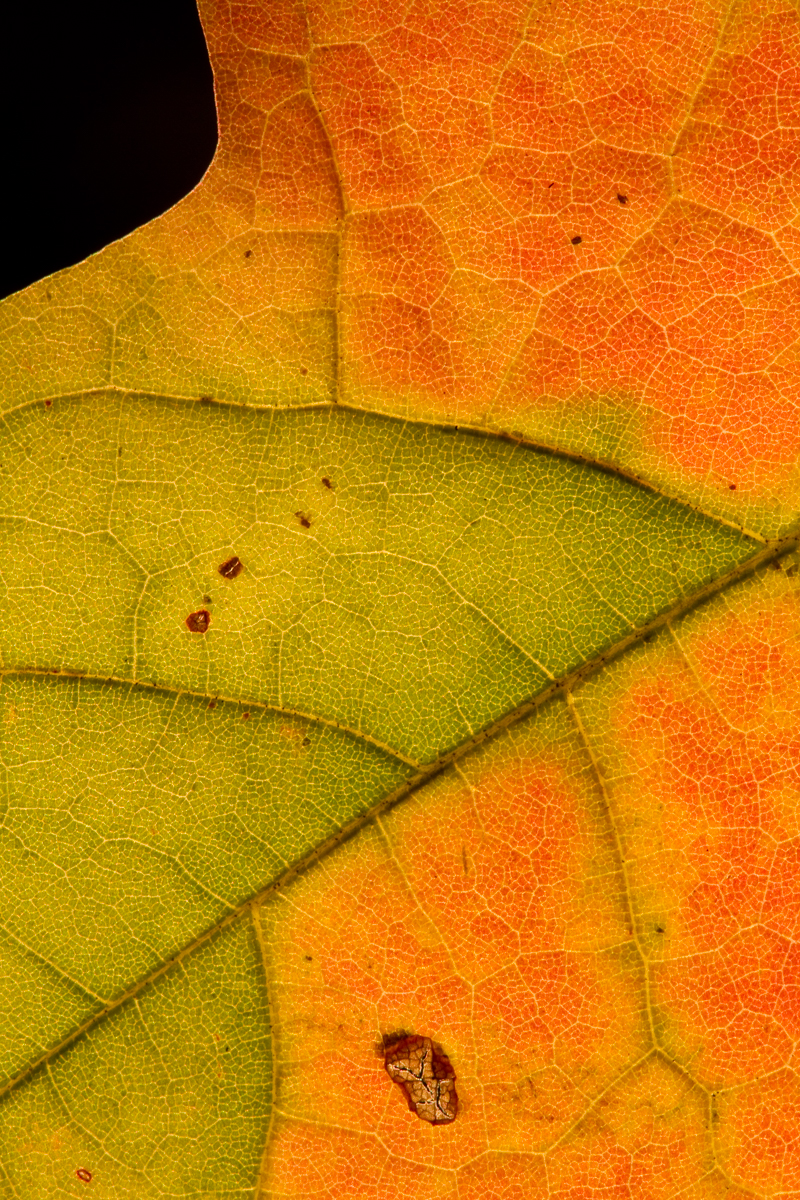
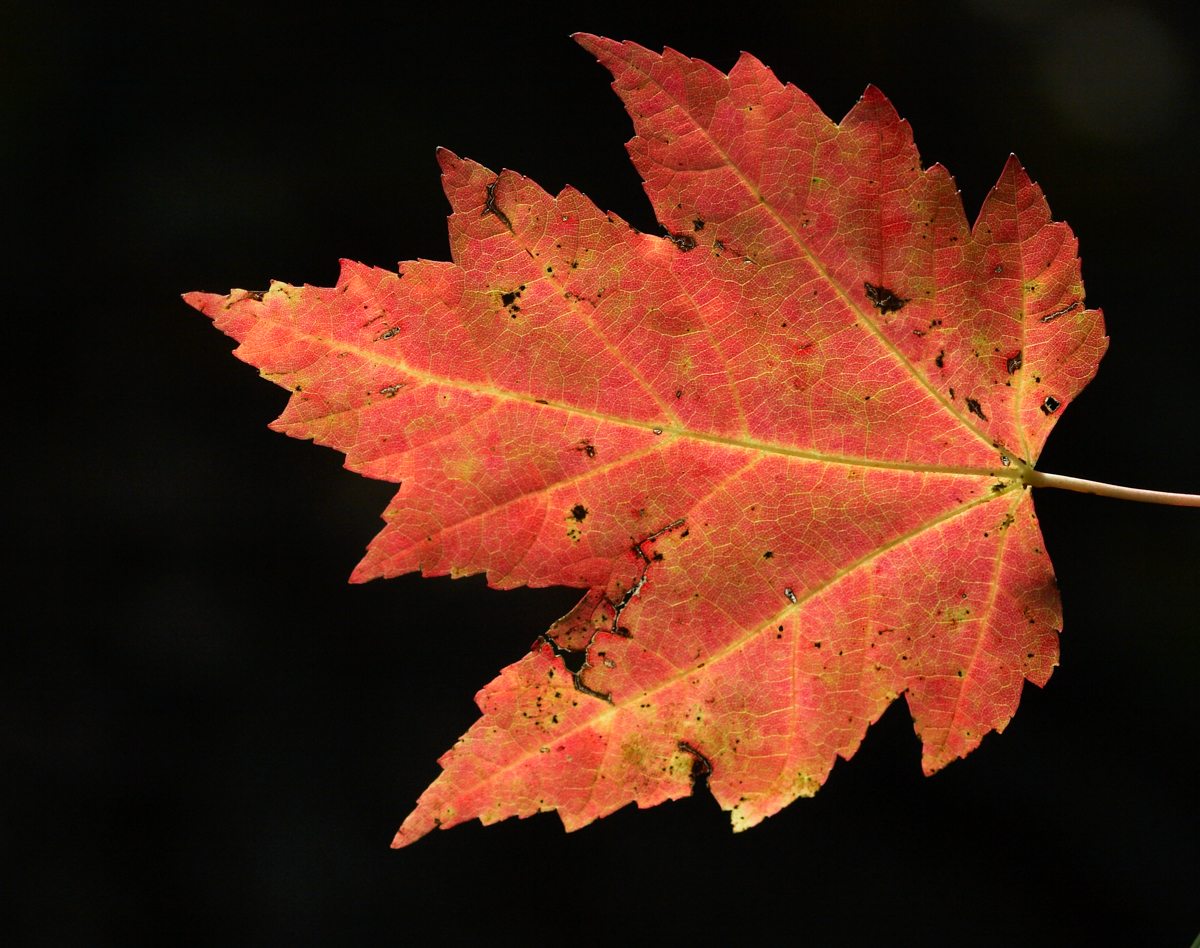
Tulip Poplar leafRed Maple leavesHickory leafRed Maple leavesRed Maple leaf edgeChalk Maple leaf
Discovering this idyllic place, we find ourselves filled with a yearning to linger here, where time stands still and beauty overwhelms.
~Anonymous
Salt marsh at sunset (click photos to enlarge)
Another report on my recent trip to the South Carolina Lowcountry…after looking for dolphins on the boat charter and enjoying some of the fine dining to be found in Charleston, it was off to Edisto Beach State Park for a couple of days of exploring and relaxing.
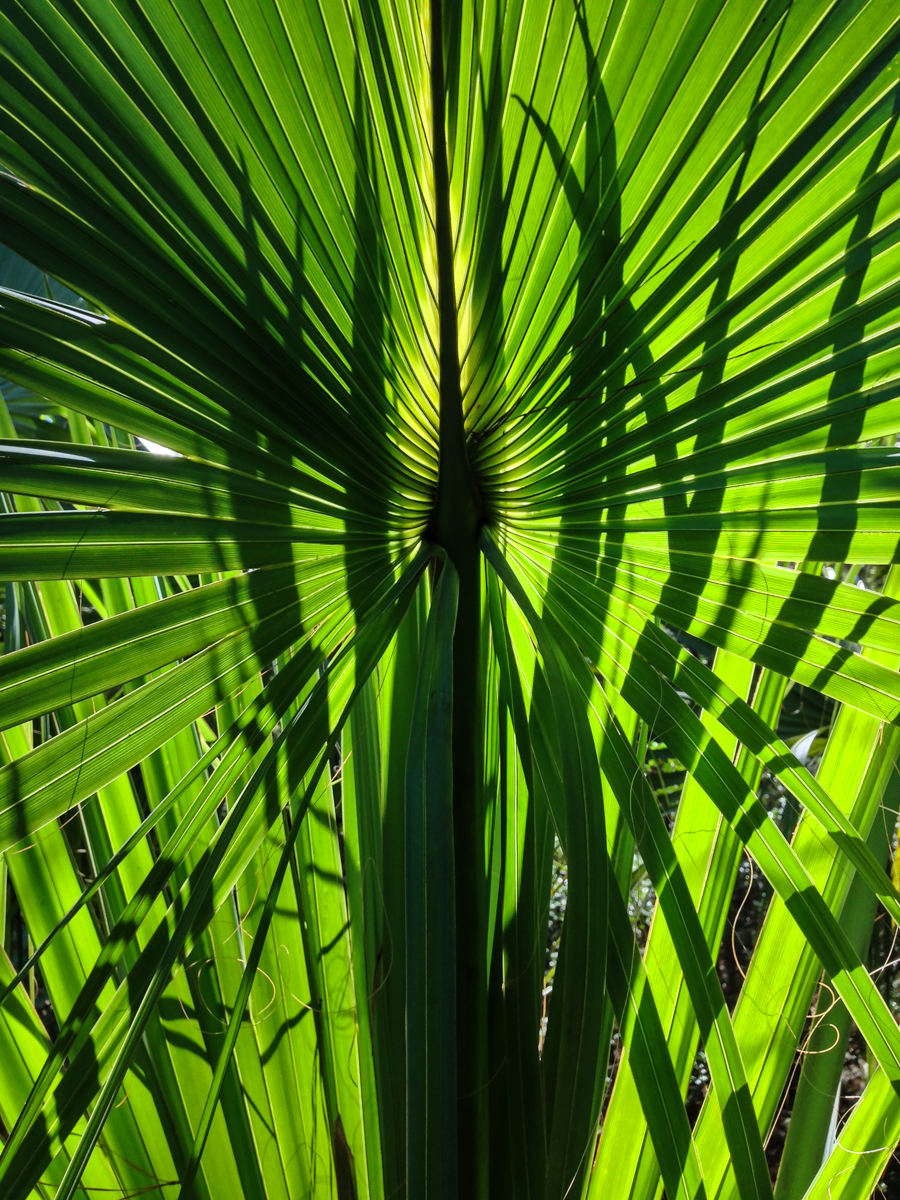
Cabbage Palmetto leaves make interesting patterns as the sun sets
Edisto Beach State Park has a great interpretive center and nice hiking trails. The campground and cabin area are located adjacent to a salt marsh with beautiful woods along the shoreline. Sitting on the screen porch and watching the sun slowly sink over the marsh was a great way to relax. Two Great Horned Owls called in the distance.
Cabbage Palm leaf patterns
The low angle golden light cast beams and shadows on the vegetation making the woods seem like a gallery showcasing an artist that specialized in abstracts of green stained glass.
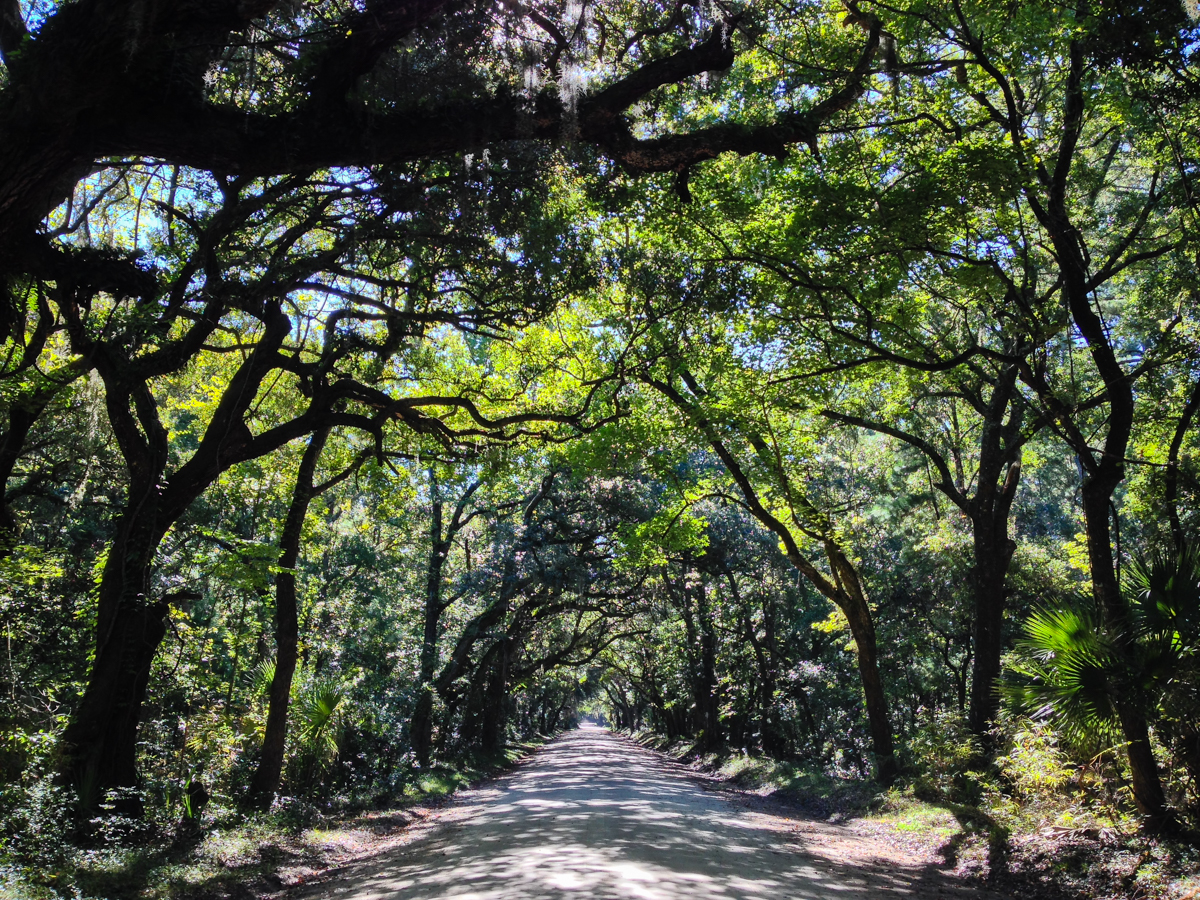
The tree-lined road into Botany Bay
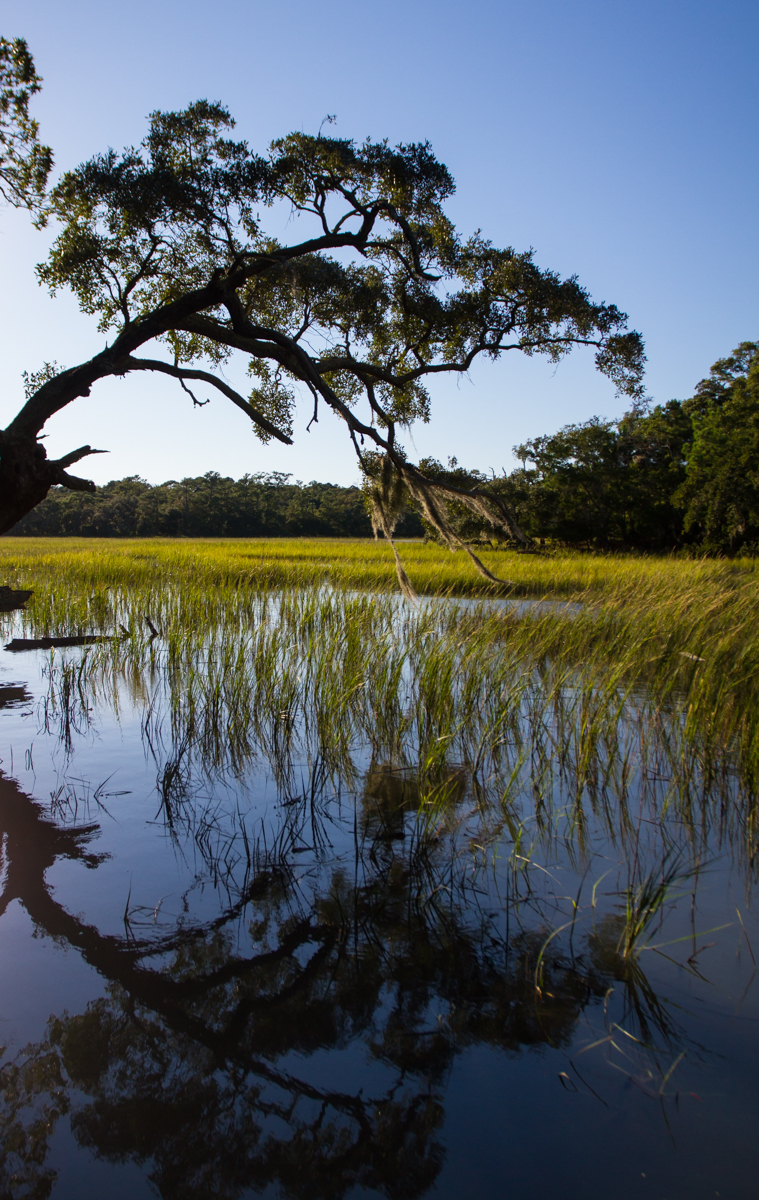
One of the places I wanted to visit was one friends simply called Botany Bay. I had thought it was part of Edisto Beach Sate Park. But, it turns out its more official name is Botany Bay Plantation Heritage Preserve/Wildlife Management Area and it lies a few miles down the road from the state park. And, as I found out, you need to do a little homework before visiting as it is regularly closed to the public on many days in the Fall for scheduled gun deer hunts. Luckily, one of the days I was in the area was a Sunday, and there are no hunts scheduled for Sundays. The two mile dirt road into Botany Bay is gorgeous, with huge Live Oaks draped with Spanish Moss forming a sun-dappled tunnel.
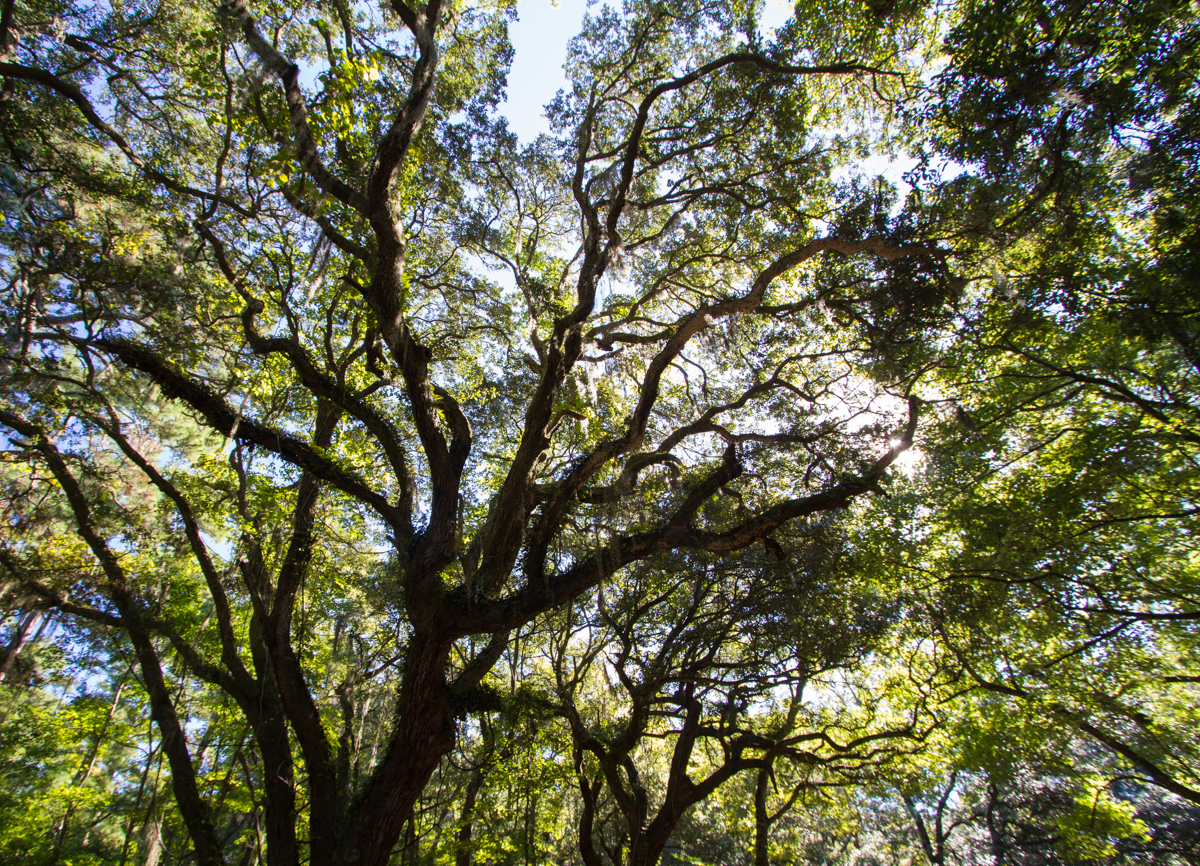
Live Oak festooned with Spanish MossThe trees are so beautiful you want to stop and just stare up toward the sky
I found myself driving very slow and stopping periodically just to look up and try to take it all in. This is quintessential Lowcountry – dark twisting branches of Live Oaks, some heavily cloaked with the gray clumps of Spanish Moss. Volunteers greet you on busy days and provide a map to the self-guided auto tour route. But I headed straight for a place I had heard about that can be a photographers delight, under the right conditions – the beach at Botany Bay.
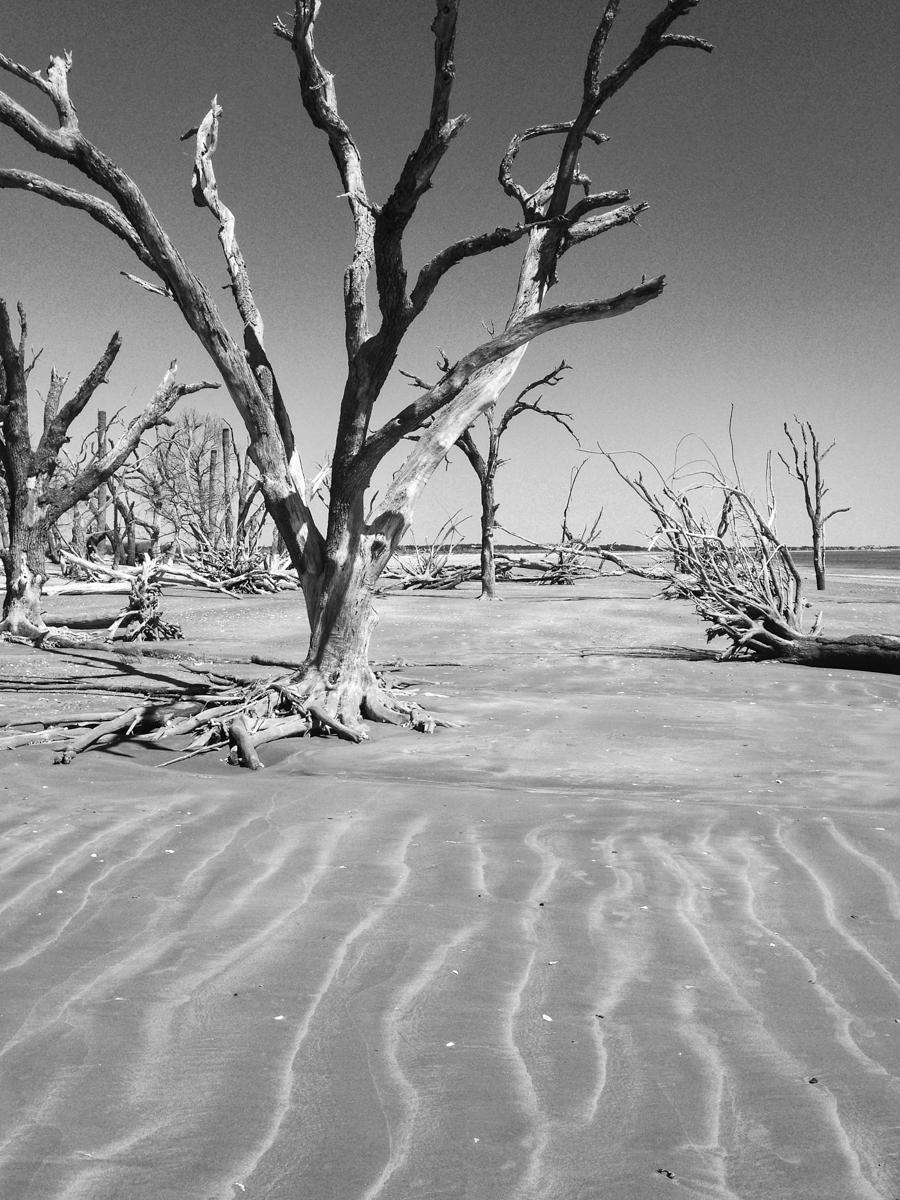
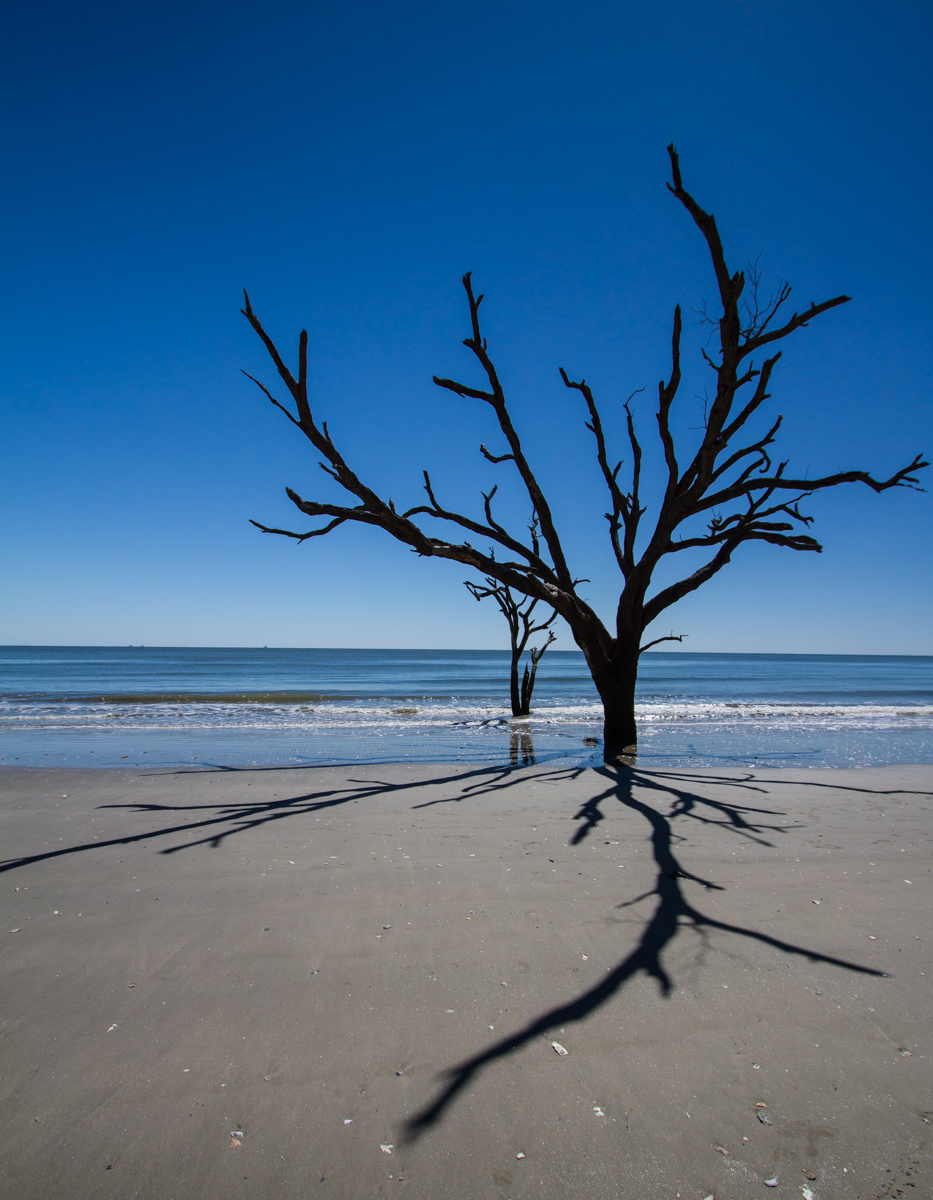
Dead trees provide stark subjects for photography along the beach at Botany Bay
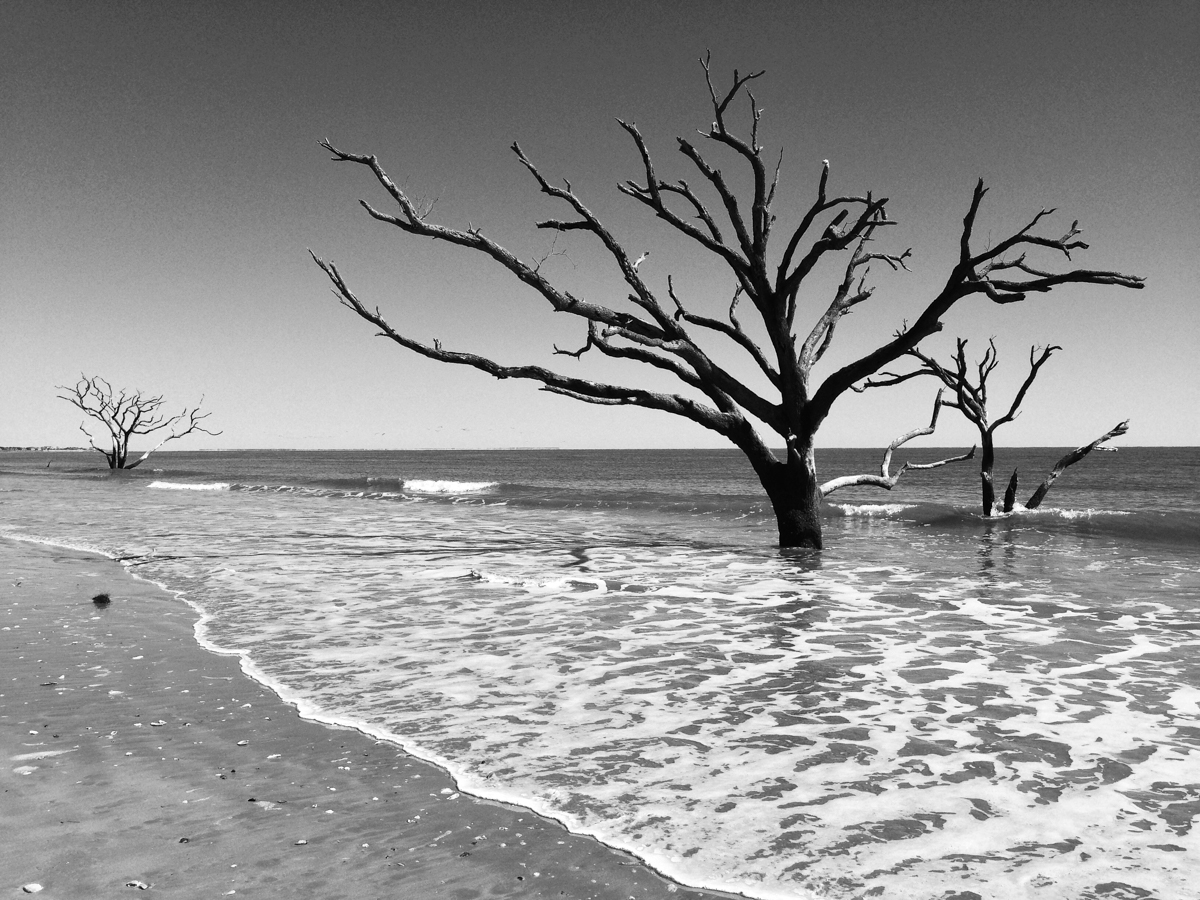
I have seen images from many wonderful photographers taken along the so-called Boneyard Beach of Botany Bay at sunrise. Unfortunately, the tide gods did not cooperate on this, my first visit to this area, as it was a time of extremely high tides at, you guessed it, sunrise. Park staff had said it was unlikely that the beach would even exist at high tide, and, from the looks of things, they had been right. So, waiting for the tide to start dropping also meant the sun was rising higher in the sky, making for some harsh lighting.
Dead trees reach to the ocean at Botany BayBoneyard Beach as the tide is dropping
I will definitely make a return trip to this unique beach for a sunrise visit at mid-tide, hopefully with a few clouds to liven things up.
A butterfly caught my eye walking back through the salt marsh at Botany Bay
The trail out to the beach passes through a salt marsh and some maritime forest and can be a great place to see birds, reptiles, crabs, and other coastal critters. I had hoped to see migrating Monarch Butterflies, as this is usually a great time of year to see them along the North Carolina coast. But, nary a Monarch in sight, although some other butterflies did their best to make up for that.
Buckeye basking on a marsh grass stem
What looked like a freshly emerged Buckeye caught my eye as it rested on a swaying Spartina stem along the path. It finally opened its wings to catch some of the warm sun, displaying its boldly patterned wings for a quick image.
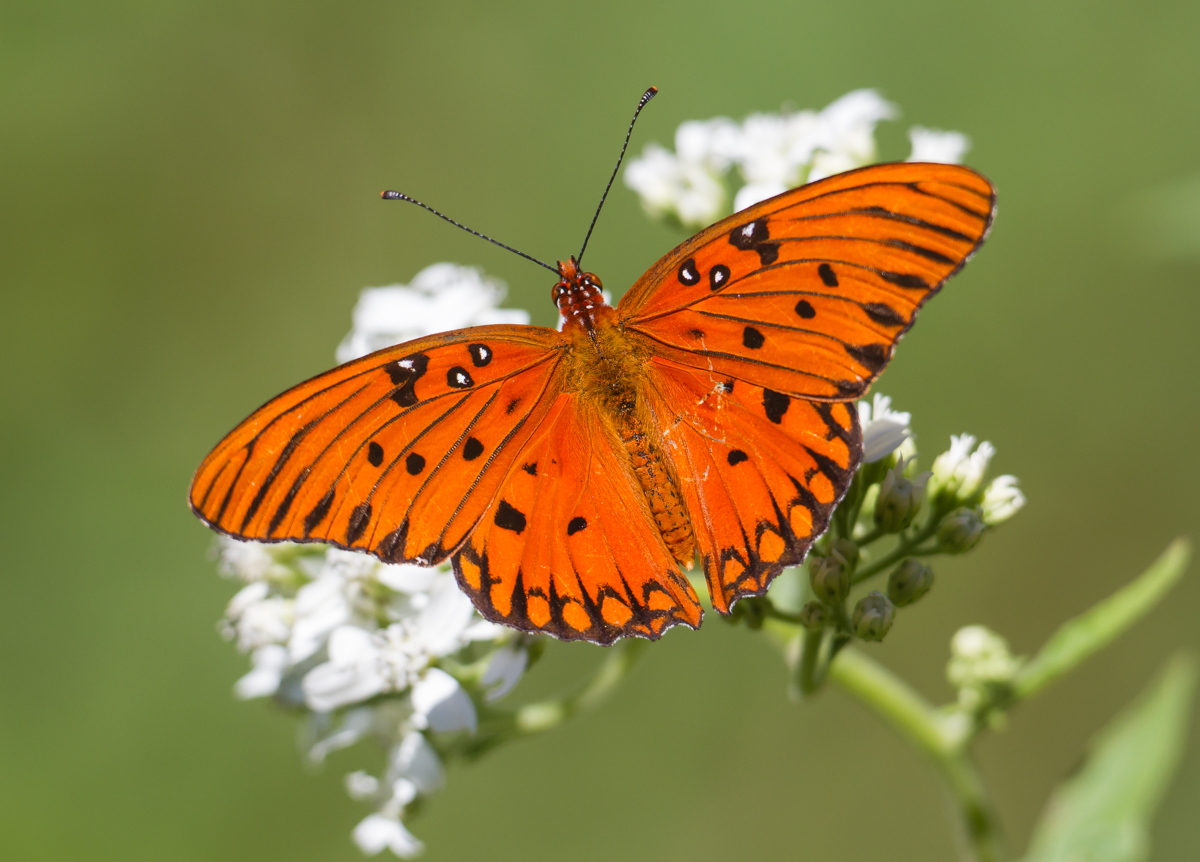
Gulf Frittilary
But the star of the insect world on this trip were hundreds, or perhaps thousands, of Gulf Frittilary butterflies flying everywhere along the coast.
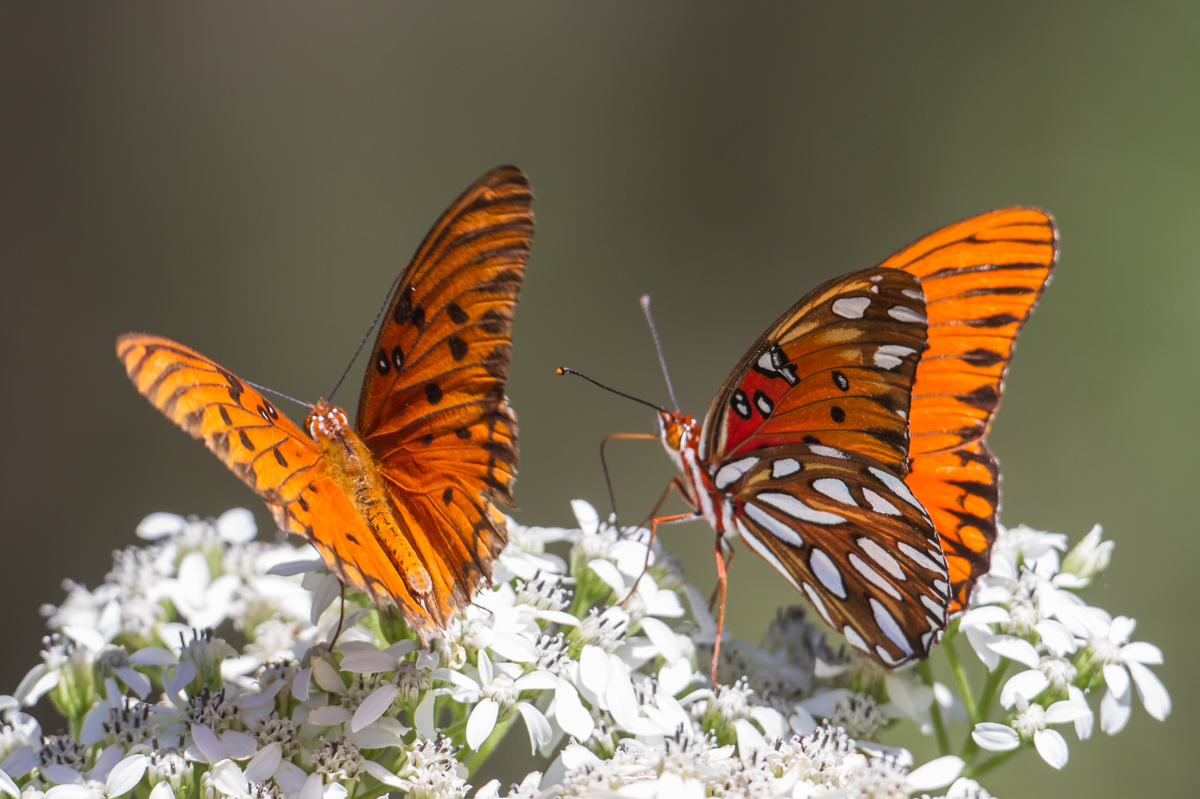
The undersides of the wings are covered in silvery spots
I think some people may mistake these orange and black beauties for Monarch Butterflies in the fall, as they, too, undergo mass migrations, especially on the coast. But Gulf Frittilaries are a bit more elongate in their wing shape, and have distinctive silvery spots on the underside of their wings. In North Carolina, this species is resident mainly along the southeastern coast, and then exhibits some inland and southward migration in late summer. Larval food plants are various species of Passionflowers. This must have been a very good year for this species as everywhere I went along the coast, they were abundant.
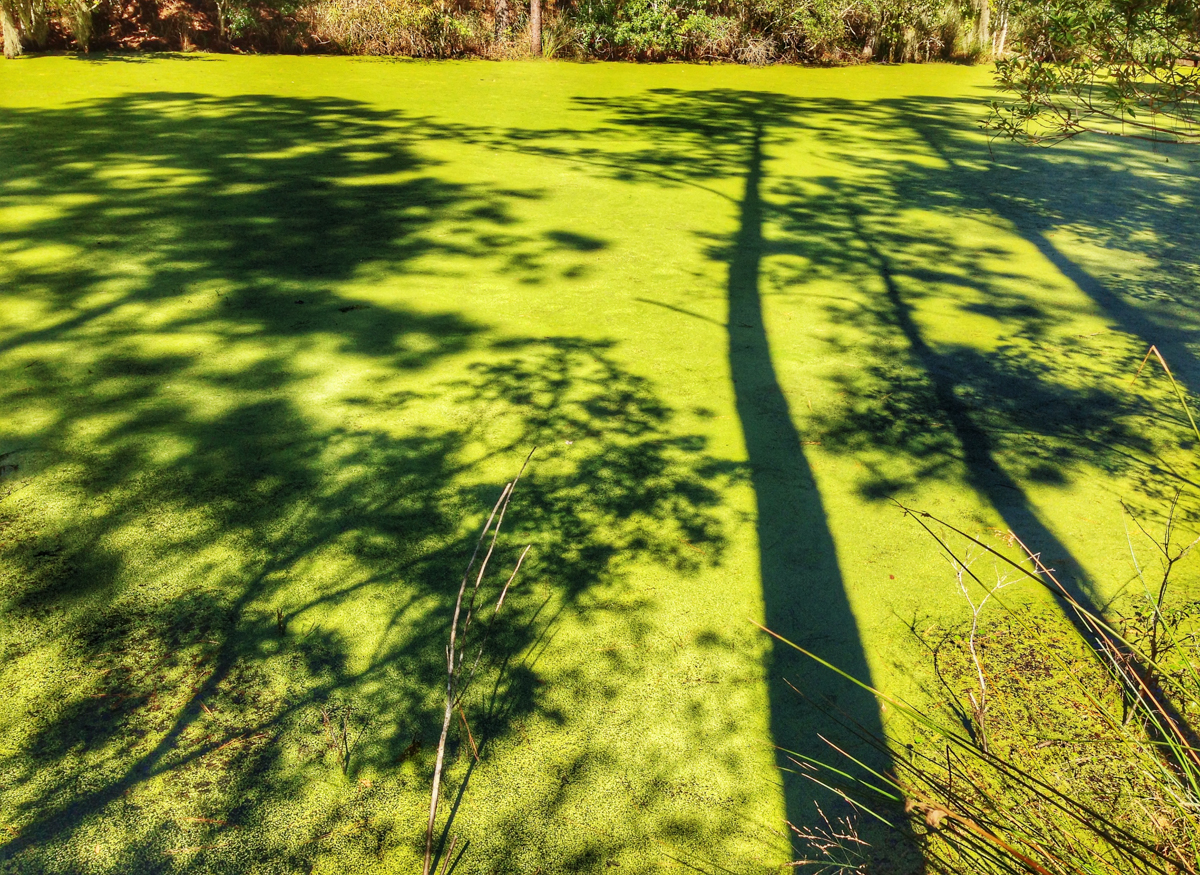
Shadows on duckweed-filled pond
Those few days spent in the Lowcountry will be remembered for the slow pace, the wildlife, and the play of light on the water and through the vegetation…there is a serenity to the place, something that will call me back.
Yellowstone in the summer changed my life. Revisiting in the winter was like going back to an old friend’s house when all the guests have gone home and you get to sit in the den and have long quiet conversations with the residents.
~Mike Leonard, a teacher that experienced Yellowstone in both summer and winter
Hayden Valley in winter (click photos to enlarge)
Join me from January 15-21, 2015, for an unforgettable trip to Yellowstone National Park. Winter is my favorite season in the park – the snow-draped landscape is gorgeous, the wildlife is abundant and easier to see than in summer, and with fewer visitors, it is like having your on personal park. Don’t let the thought of the cold temperatures and snow deter you – participants will get detailed information on what to bring, and it really isn’t anything that special, just layers of what you might wear outdoors in winter in North Carolina. Time is short and space is limited. More details can be found on the trip page.
If you have any questions, please contact me at roadsendnaturalist@gmail.com.
Here are a few images from previous winter trips.
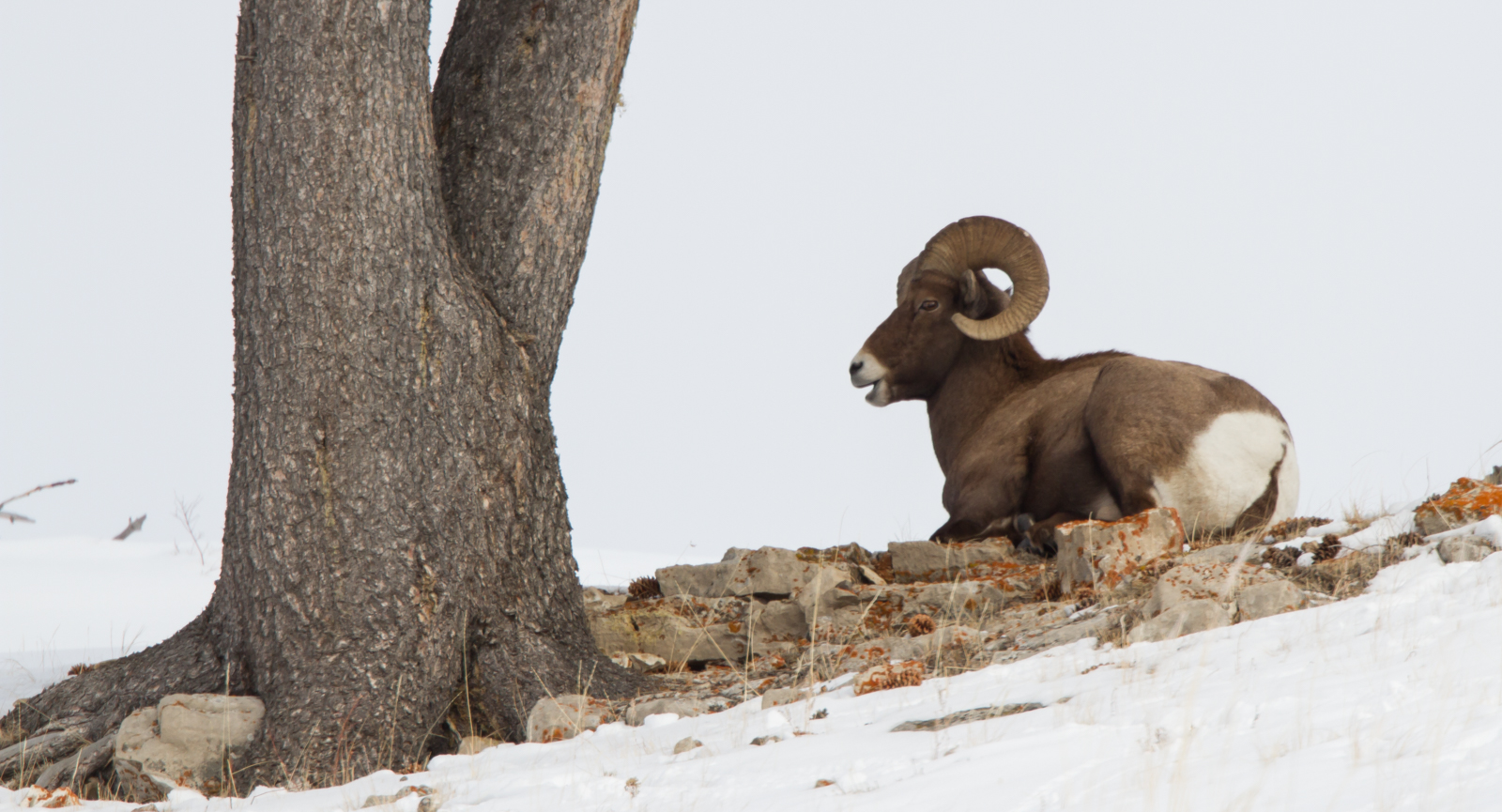
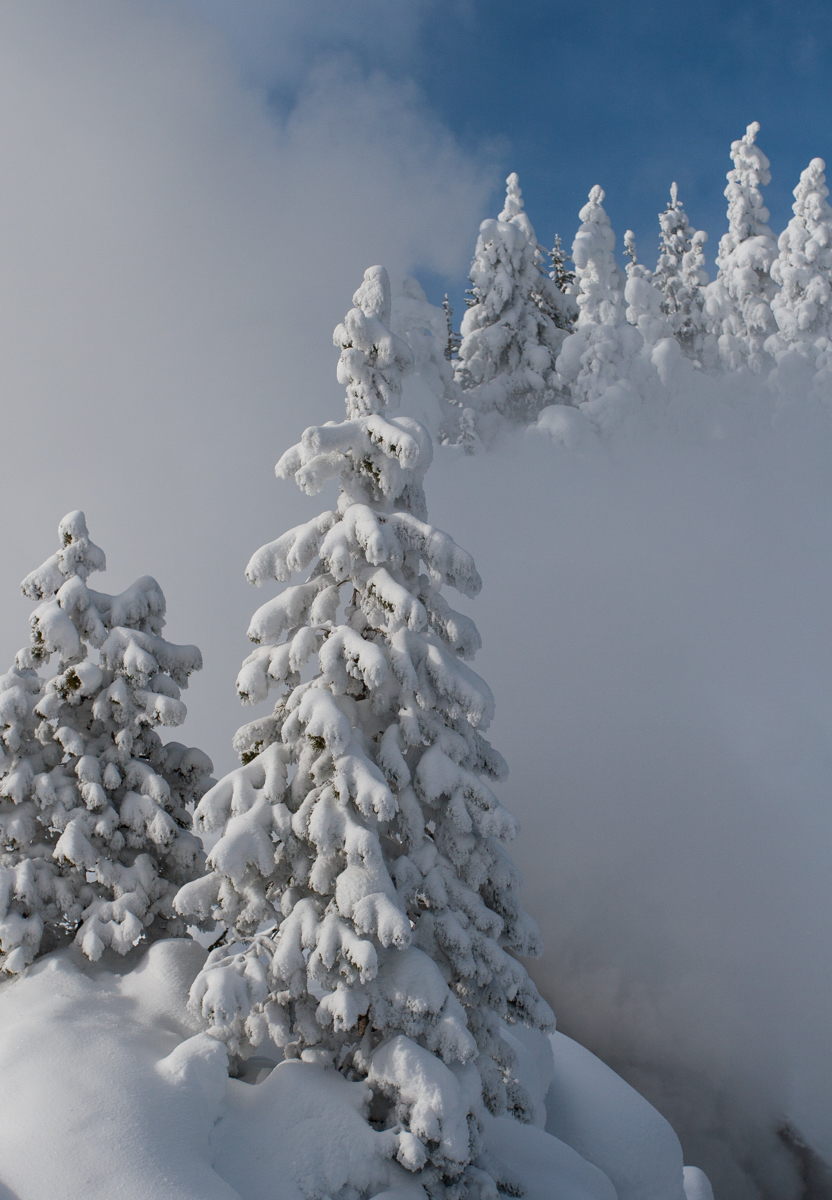
Bison after plowing in snow for grassesFirehole River remains ice free all winter due to thermal runoffCoyote along Madison RiverHikers in a geyser basinWolf pack in snow in Lamar ValleyMist in Lamar Valley on an icy morningMoose valleyRocky Mountain Bighorn Sheep ramIcy trees at Mud Volcano
I have heard it said that an inoculation to the sights and smells of the Carolina lowcountry is an almost irreversible antidote to the charms of other landscapes.
~Pat Conroy
I recently made a leisurely trip to the Lowcountry of South Carolina. Lowcountry generally refers to the lands along the coast from Charleston to the Georgia line, and is both a geographic and cultural designation. The impetus was to try to see the phenomenon known as strand feeding where dolphins run fish up on a muddy bank at low tide, coming up on the bank themselves as they grab the struggling fish. This behavior is primarily found in dolphins inhabiting the marshes south of Charleston.
Brown Pelican flyover on the boat trip through the marsh (click photos to enlarge)
After looking online, I booked a morning charter near Charleston with a boat captain that would take you out to look for dolphins. The day was beautiful with sunshine and a light breeze and the charter was timed with low tide to increase the chances of seeing strand feeding. Just after leaving the dock we began seeing a lot of bird activity. First, a pair of Brown Pelicans glided overhead, staring down at us.
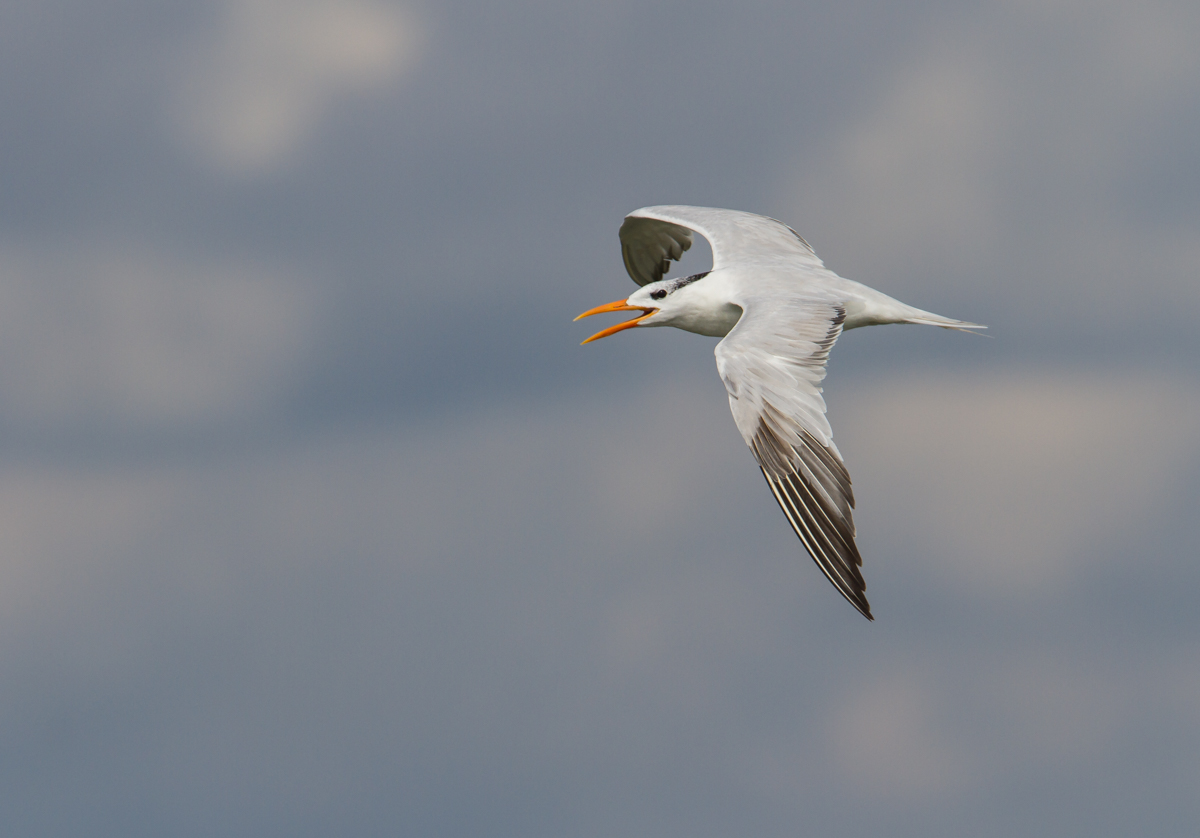
Royal Tern in flight
Then a pair of Royal Terns zigged and zagged across the creek, one bird chasing another that had a fish, until the latter gulped it down. On the way out, our captain passed by a couple of fishing boats at a dock. One boat was a commercial shark-fishing boat, and as we passed by, that captain held up a Loggerhead Sea Turtle that he had just found inside the belly of an 8-foot Tiger Shark.
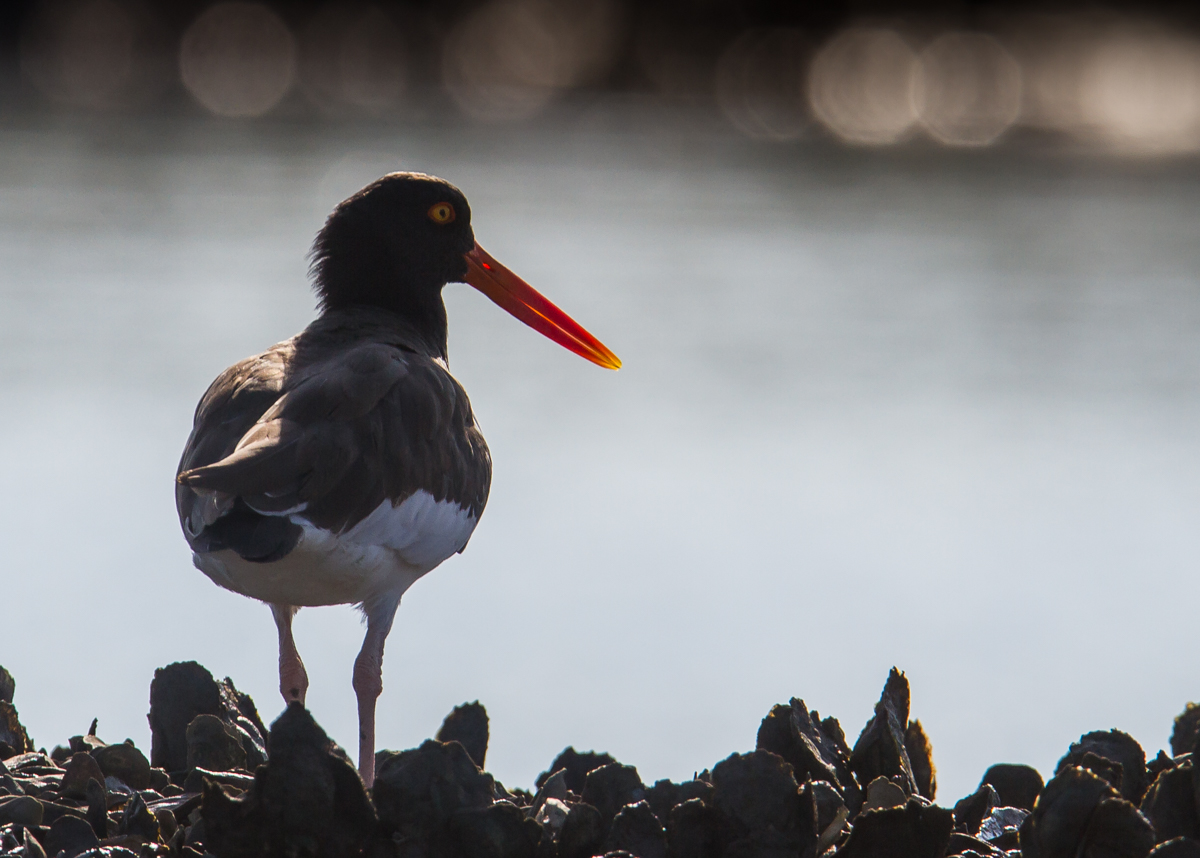
American Oystercatcher on oyster reef
Cruising past the docks, the marsh creek narrowed, and we could see the plentiful oysters exposed by the low tide. And where there are oysters, there are American Oystercatchers. These large shorebirds have a unique feeding style. Their stout red bills are long, straight, an laterally flattened. The birds use them to pry or hammer open bivalve shells and to occasionally catch other small prey such as worms and crabs. Individual birds tend to differ in their feeding style with some being primarily “stabbers” (prying open shells), and others being mainly “hammerers” (breaking open shells by pounding on them). The back lighting on this bird highlighted some of the beauty of its unusual bill.
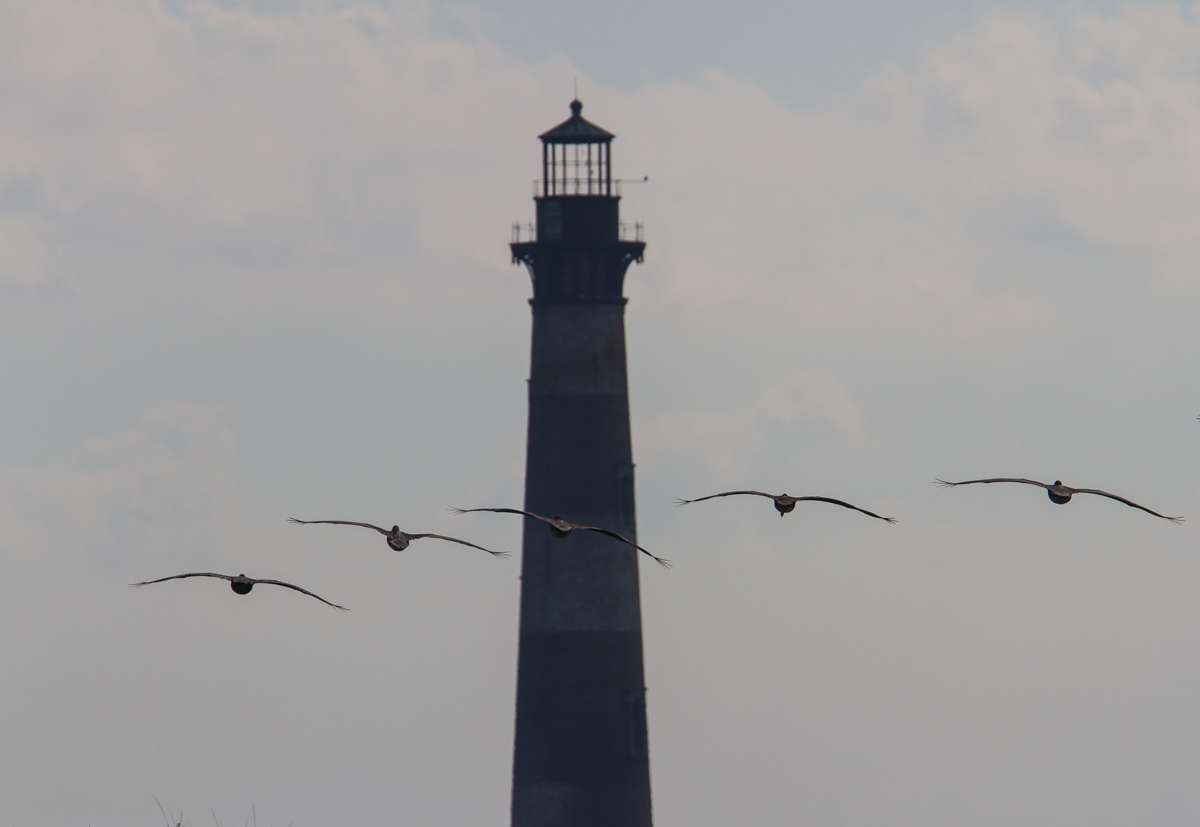
Morris Island Light with Brown Pelicans in foreground
There were a few other people on the boat and we were all soon dropped off near Morris Island Light for some beach time. The lighthouse was once the primary safety beacon for Charleston Harbor.
Morris Island Light has been decommissioned and today stands far offshore
But the construction of long jetties to protect the main channel into the harbor in the late 1800’s greatly altered the sand transport patterns. In 1880, the lighthouse stood about 2700 feet inland. By 1938, it was at the water’s edge, and today, the lighthouse is on its own tiny island, roughly 1600 feet from shore.
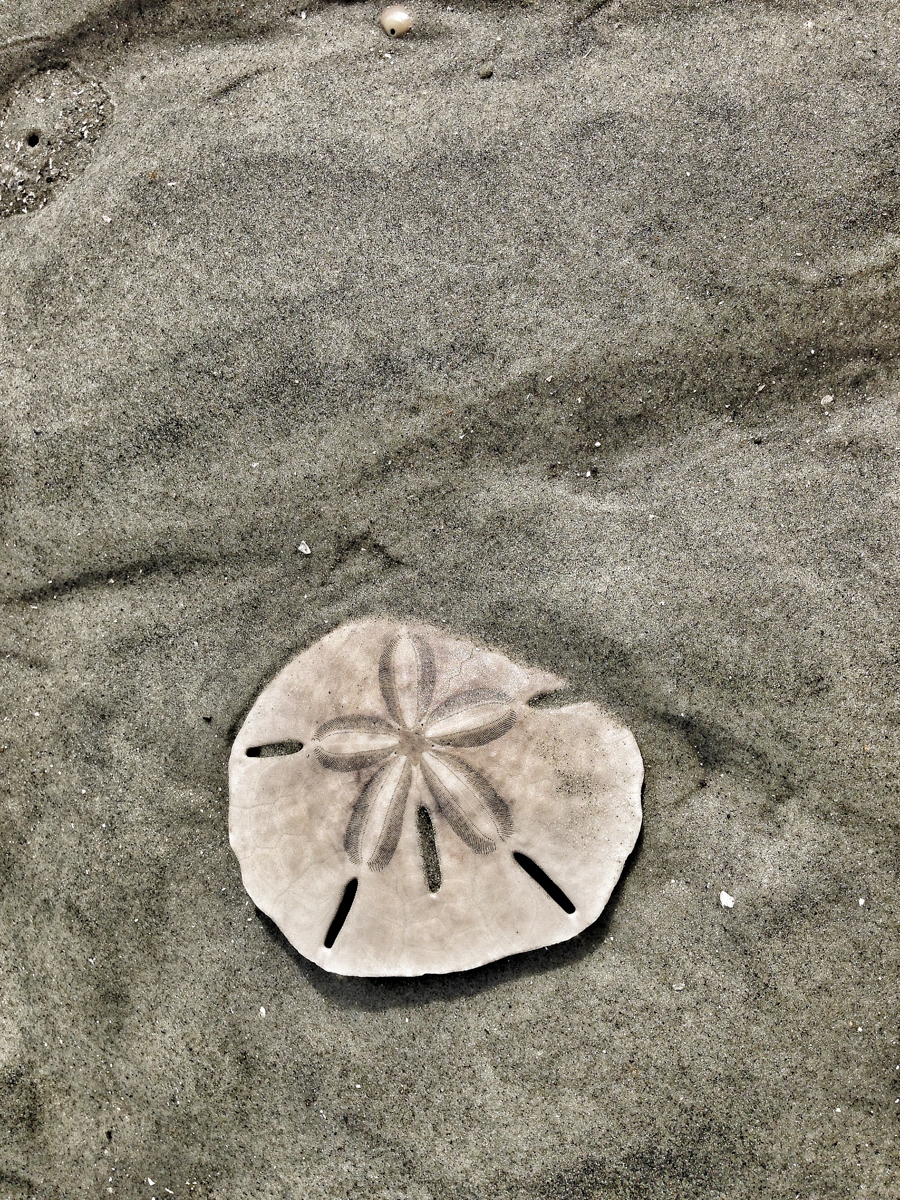
Sand Dollars and Hermit Crabs were common along the shore
The shoreline was sculpted by wave action and provided beachcombers with an array of shells and Sand Dollars. Finding an intact Sand Dollar is still one of life’s simple pleasures.
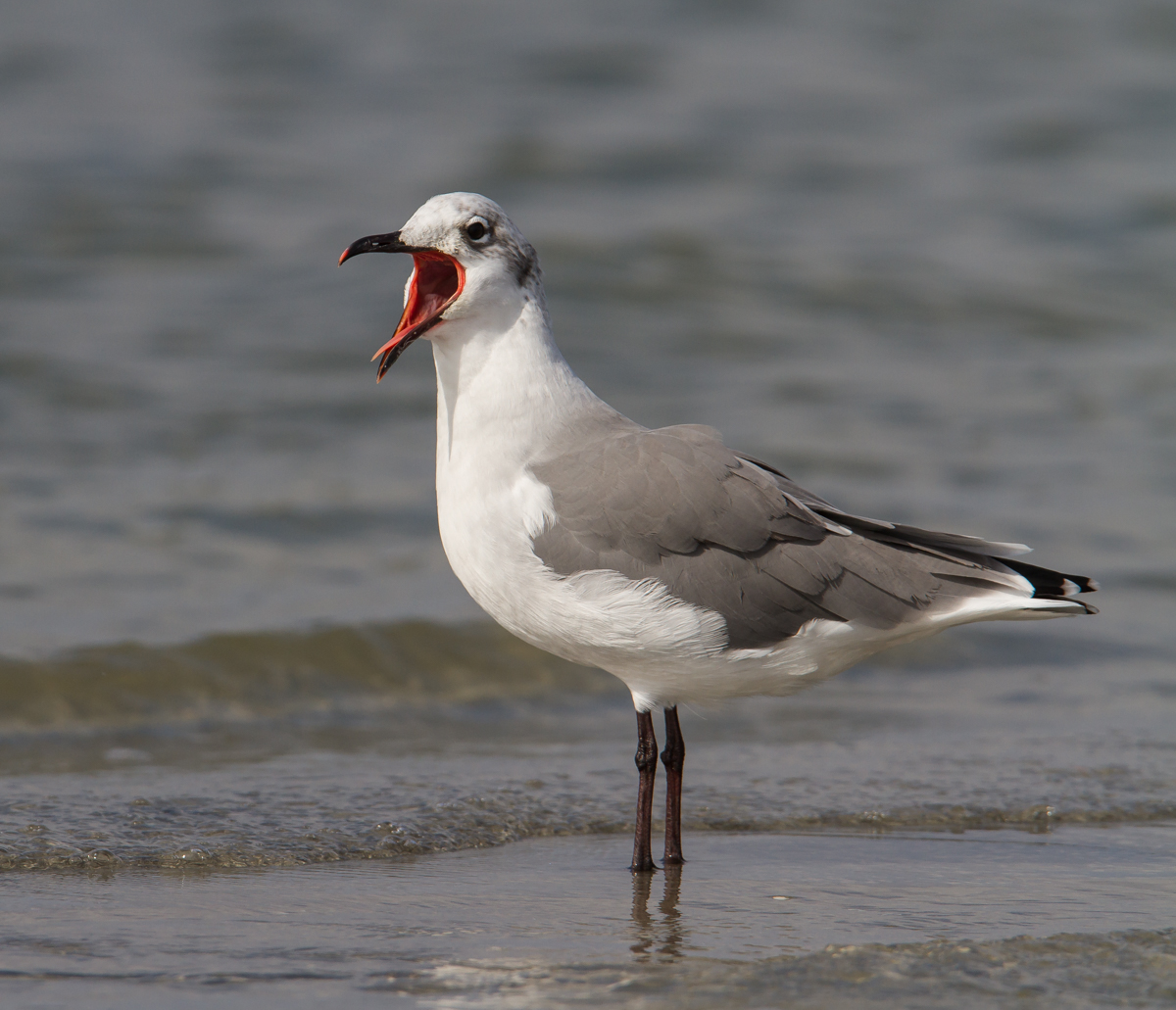
Laughing Gull in adult non-breeding plumage looks like it has something to say……but remained quiet.
A lone Laughing Gull was standing at the water’s edge and I noticed it gaping its bill every now and then. I sat down and watched and the gull would stand still for a minute, then turn its head and gape. I expected a sound, but nothing. The bird kept it up the entire time I watched. Gulls will often do gape displays when threatening other birds but it usually involves a head thrust and often a long call, so I still don’t know what this guy was up to.
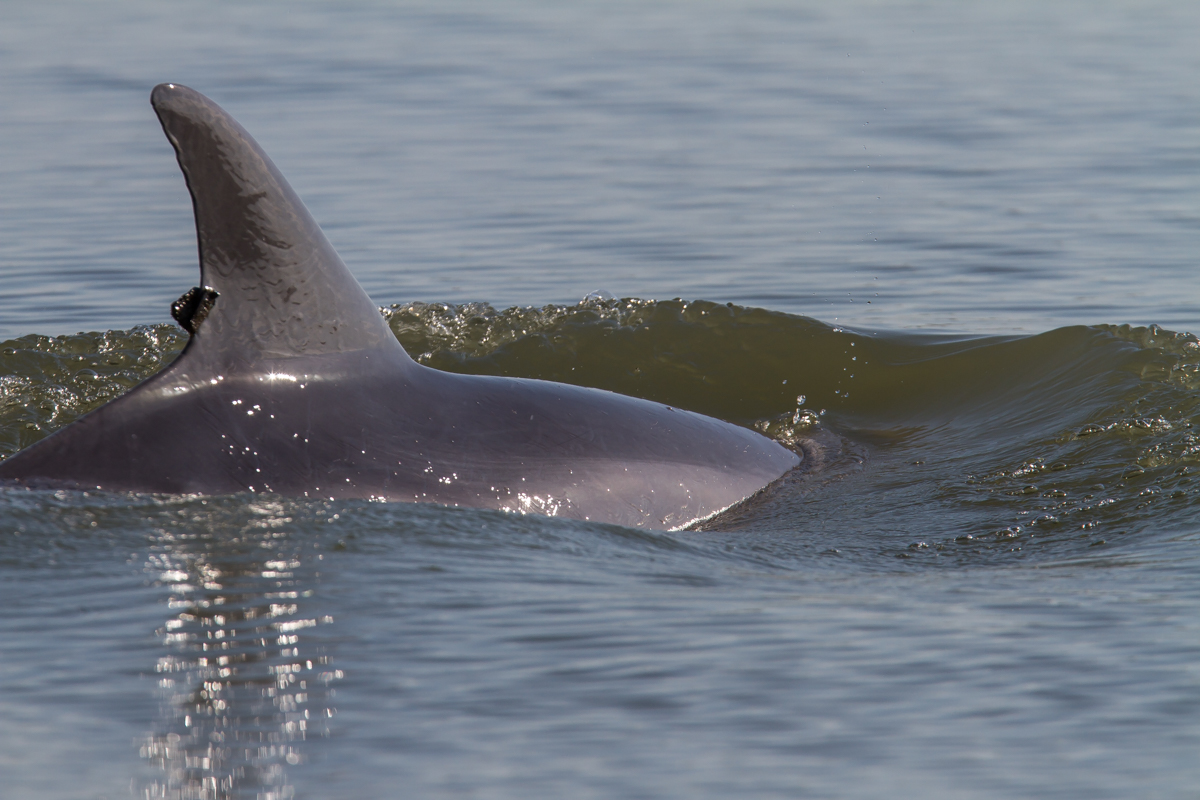
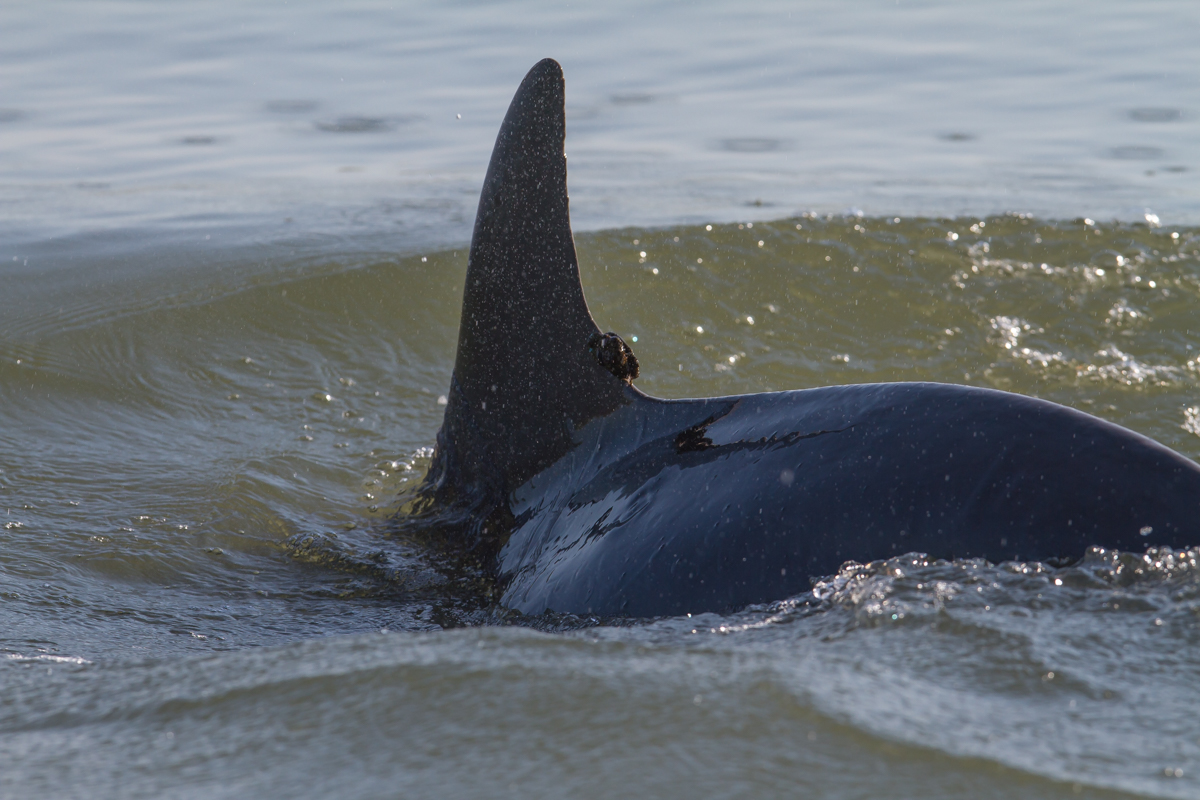
Bottlenose Dolphin
Throughout the boat trip, we saw Bottlenose Dolphins swimming and feeding in the marsh creeks, but no strand feeding. One dolphin continued to come up close to our boat and the captain said it had been tagged for studies of their movements. It certainly was an odd-looking tag – a blob that appeared to somehow be attached to the back of the dorsal fin.
Bottlenose Dolphin cruising next to the boat while we drifted
The dolphins were so close that we could hear them breathe each time they surfaced. The sky was bright blue, the temperature very comfortable, the birds and dolphins feeding throughout the marsh creeks – all in all, a great way to spend a morning in the Lowcountry.
All walking is discovery. On foot we take the time to see things whole.
~Hal Borland
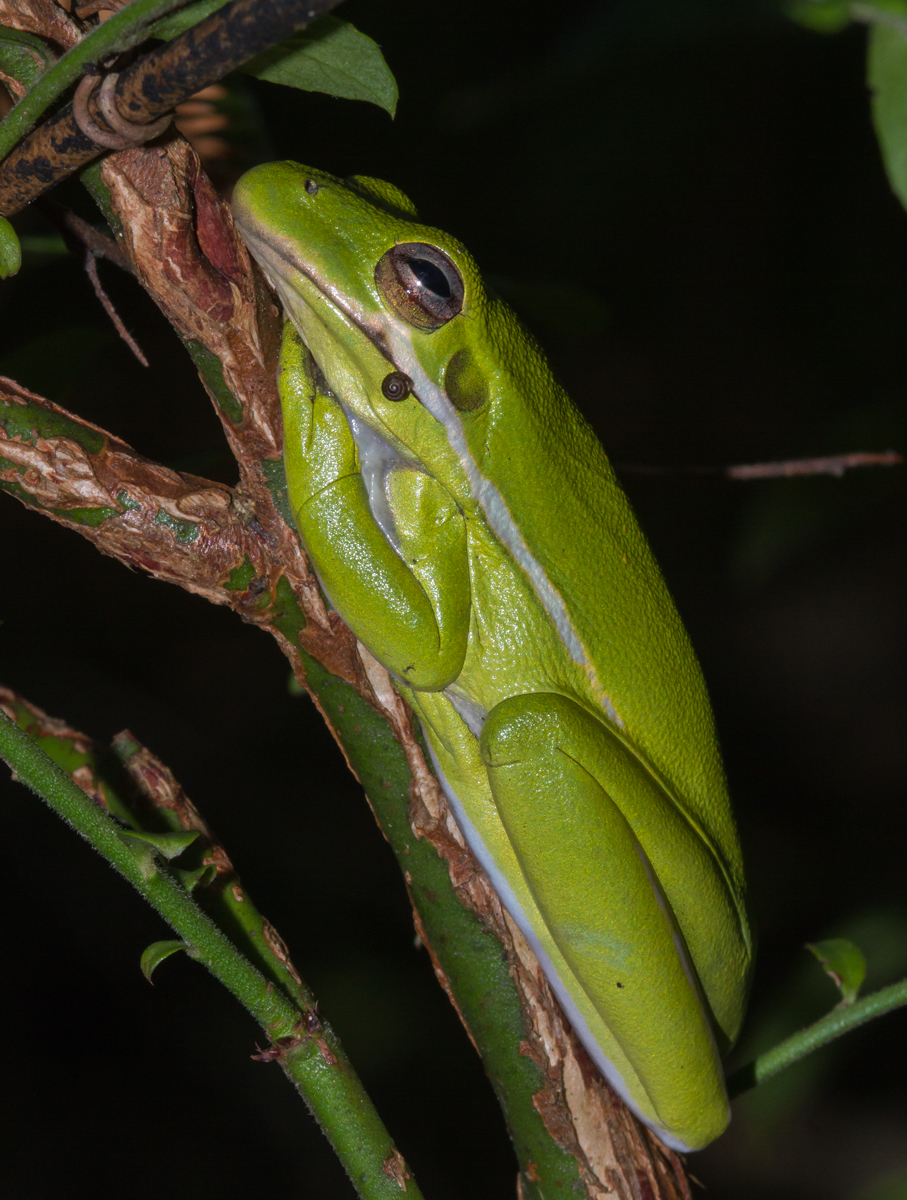
Green Treefrog clinging to a shrub (click photos to enlarge)
On a recent walk in the South Carolina Low Country, I spied a bright patch of color clinging to a limb on a blueberry bush – a Green Treefrog. I love the way these guys clutch vegetation during the day – in a tucked in position with a satisfied look in their intricately patterned eyes. I always stop and take a look whenever I see one, and usually grab a photo. I was lacking my usual macro set up so I just took one shot and was about to move on when I took a closer look.
Tiny snail clinging to the frog’s skin
What at first had looked like a piece of dead leaf on the side of the head turned out to be a very tiny snail hitching a ride, or at least hanging out, on the frog. I have seen some nice earrings with natural history themes, but this is one of the best.
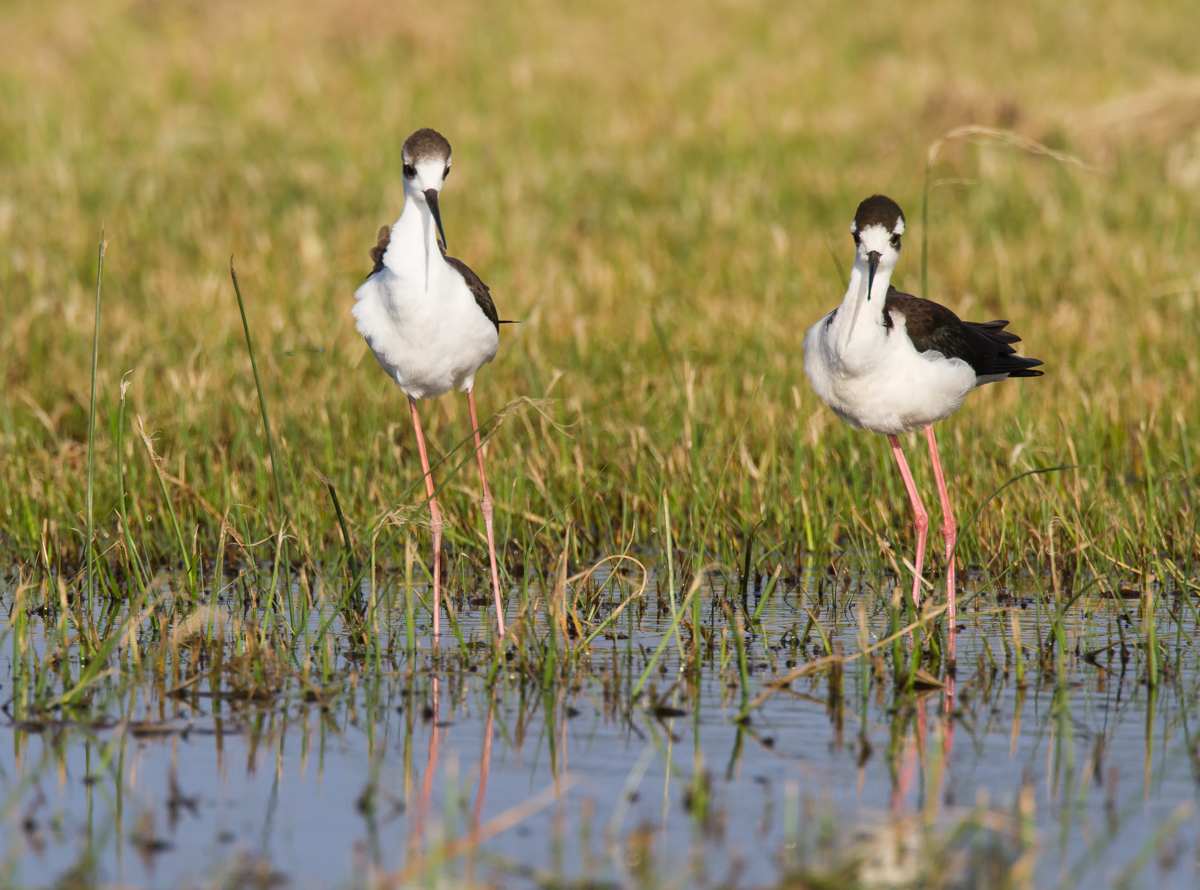
I have seen these long-legged shorebirds on several occasions, but was delighted when driving down a beach road recently to spot their distinctive silhouettes right next to a pullout along the road.
Two Black-necked Stilts in a flooded field (click photos to enlarge)
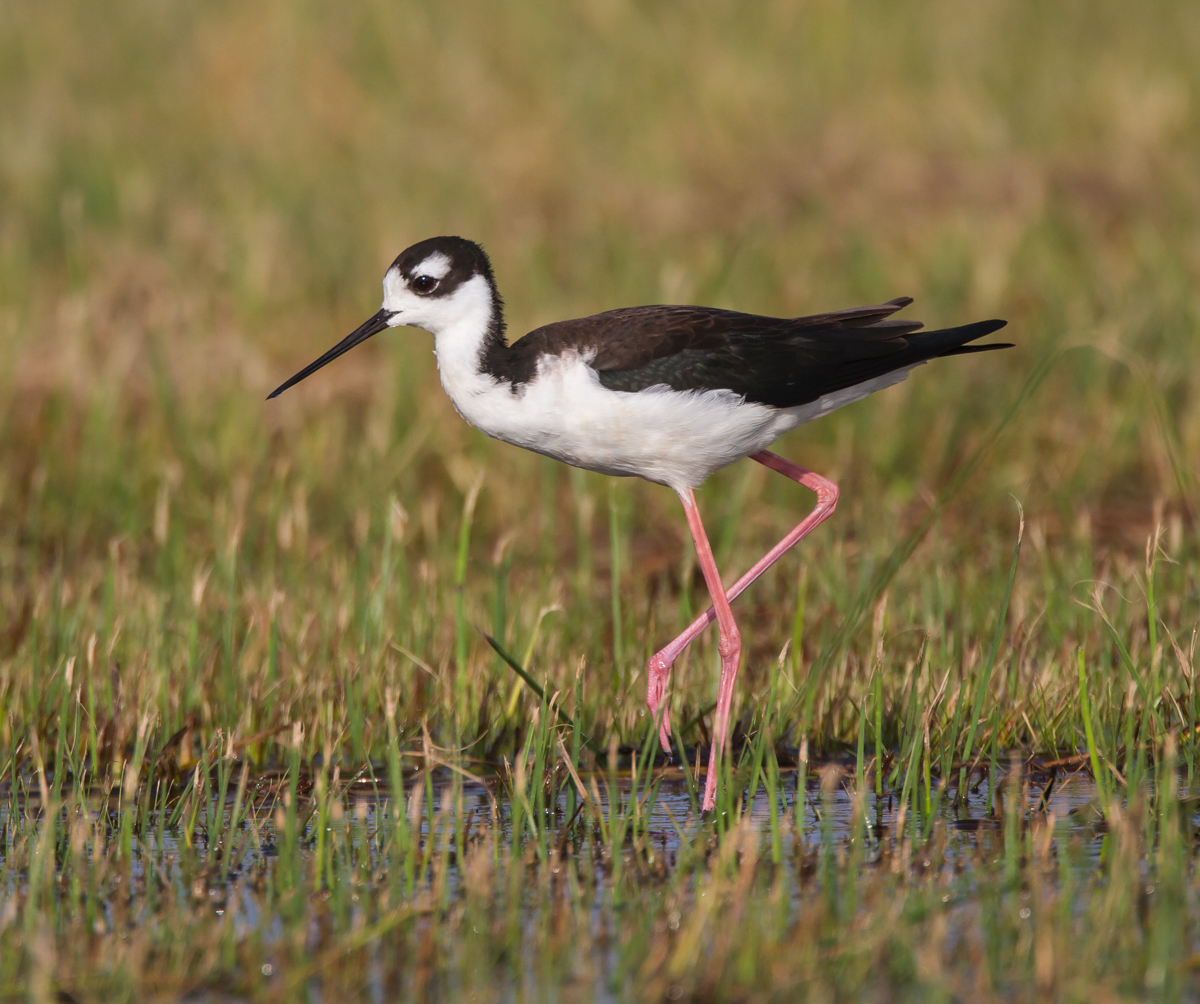
Black-necked Stilts are a medium-sized shorebird with anything but medium-sized legs. In fact, they supposedly have the second longest legs in proportion to body size of any bird, with only Flamingos beating them out. And to make sure you notice those lovely limbs, they come in bright pink, a nice contrast to the bold black and white of their bodies.
Adults have darker plumage than juvenile birds
I think this pair included an adult (black plumage) and an immature bird (duskier gray plumage). References also state that the females have slightly less black plumage than the males, so I suppose the lighter one could also be an adult female.
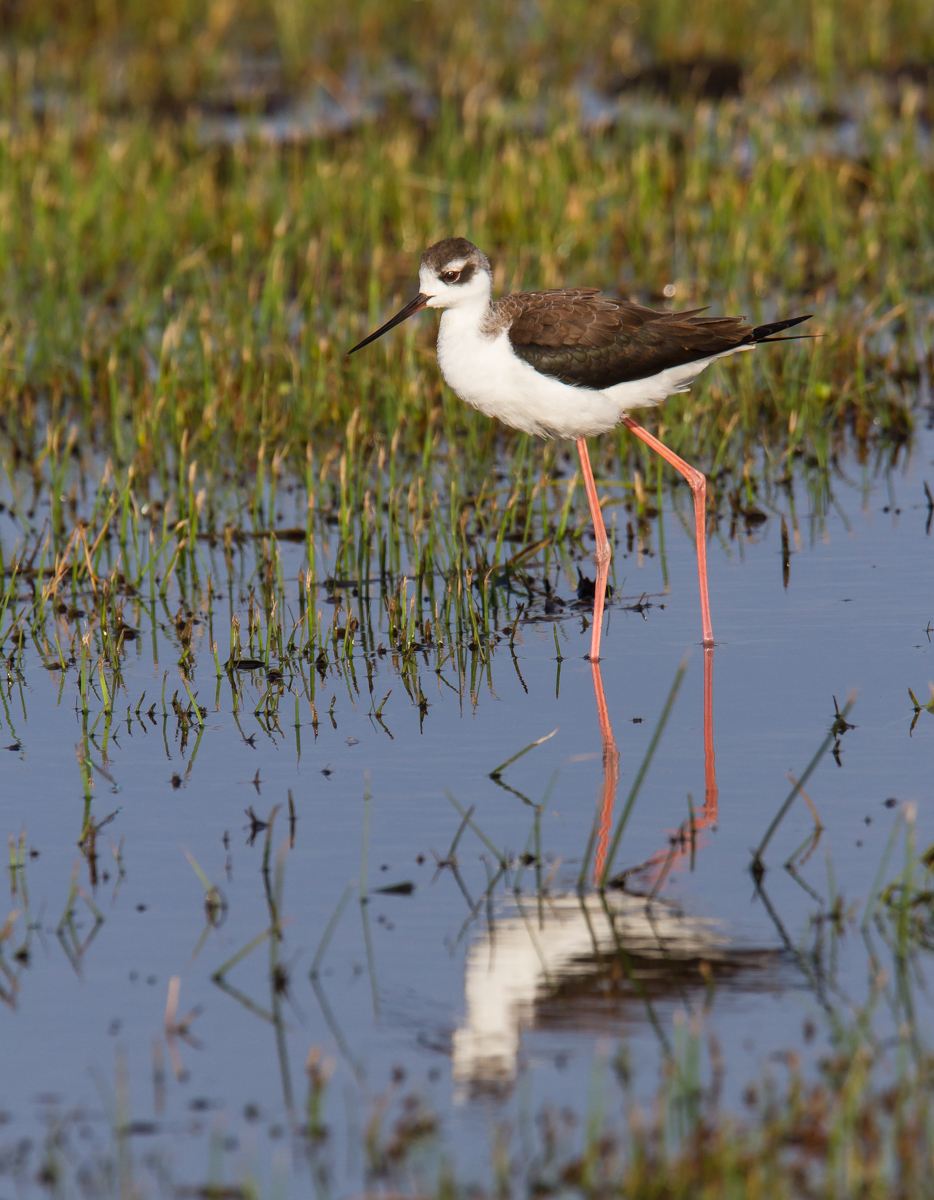
Some say Black-necked Stilts walk like a model on a runway
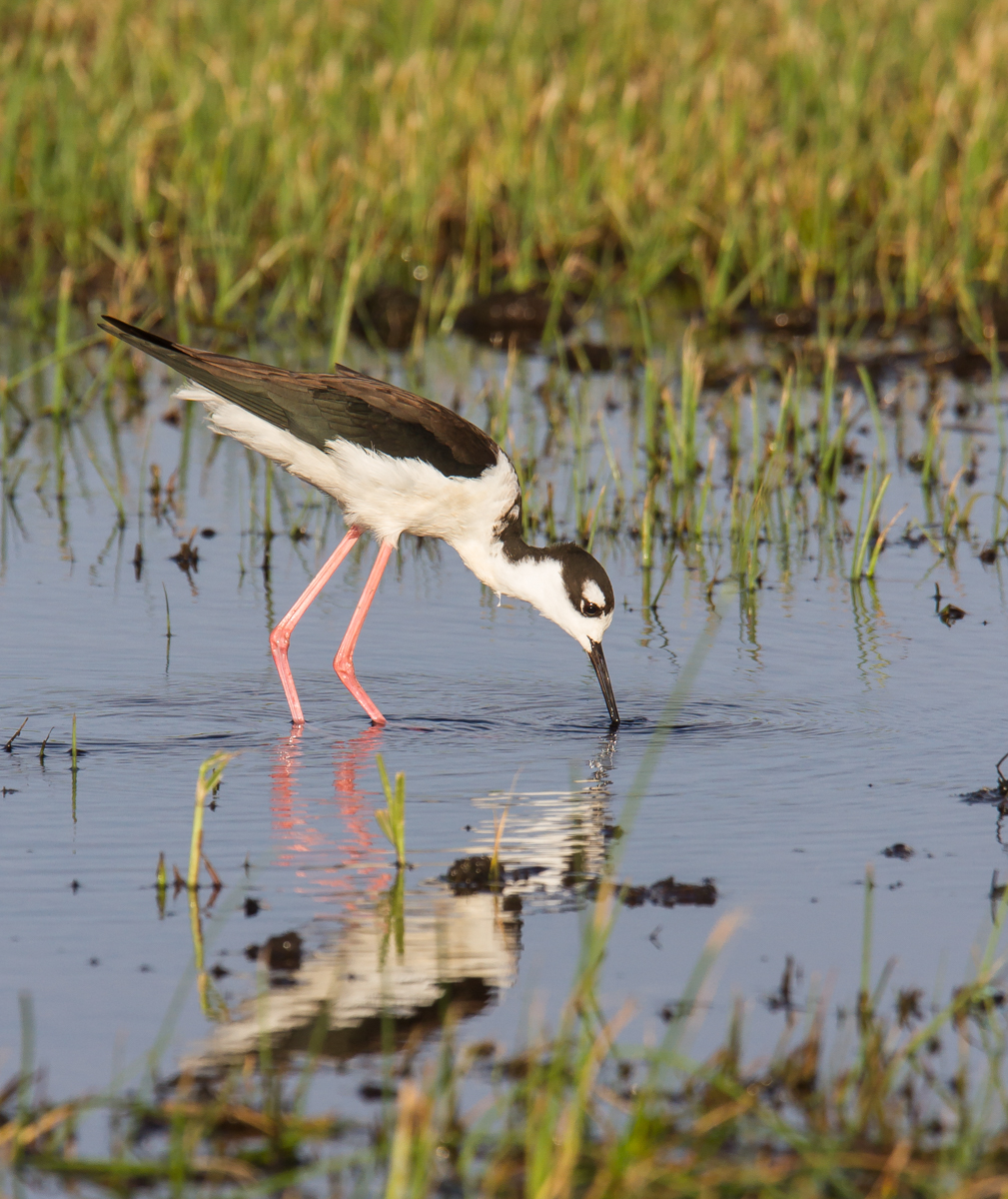
To compliment their legginess, they also have a stiletto black bill. They use that sharp bill to feed on a variety of aquatic invertebrates, small fish, tadpoles, and other small animals, with an occasional seed thrown in.
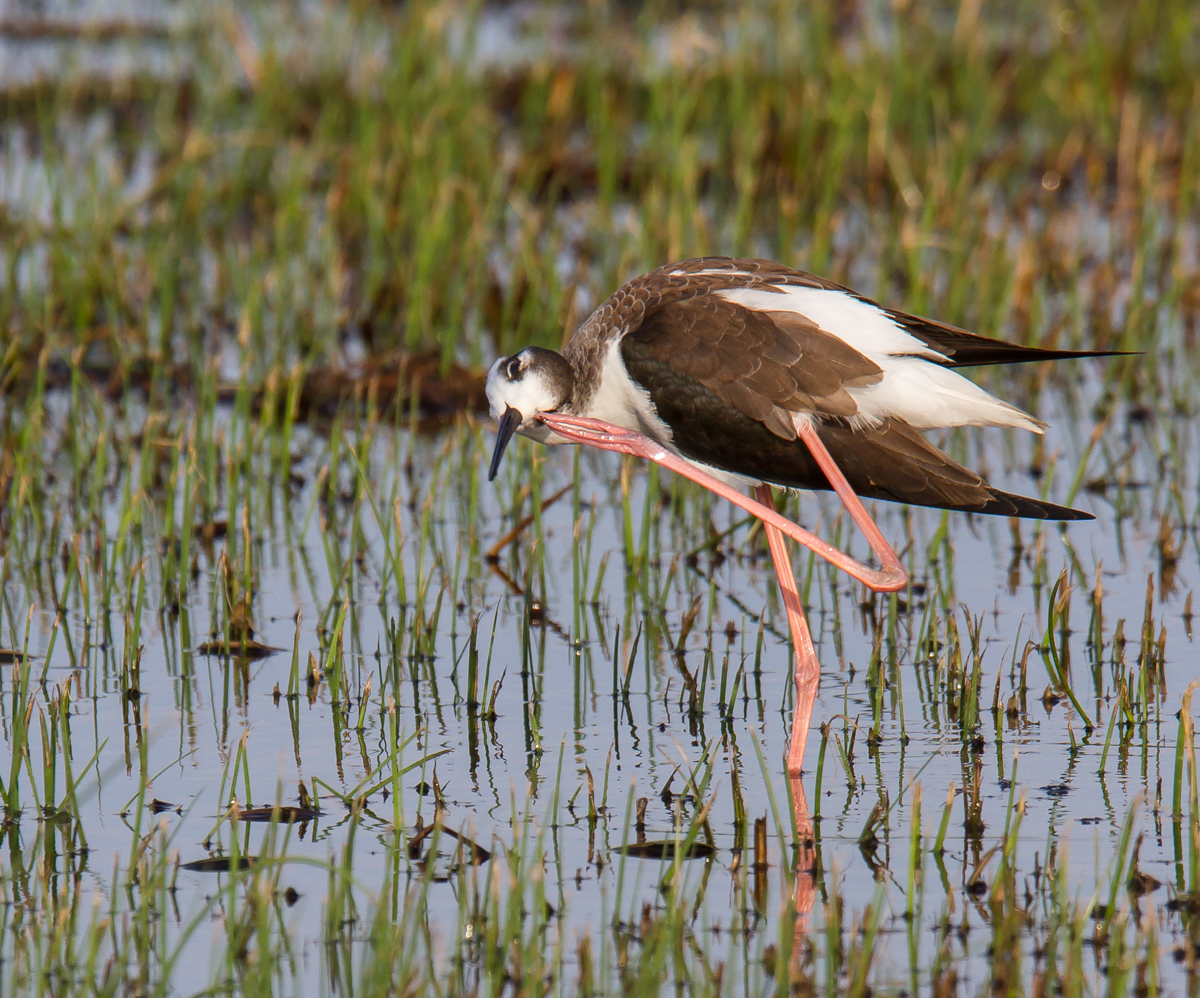
Black-necked Stilt feeding
I watched this pair probing in the shallow waters of a flooded roadside field. More typical habitats include mud flats and marshes. I have seen them mainly in coastal areas, but in some parts of their range they do occur in inland habitats, although rarely in North Carolina.
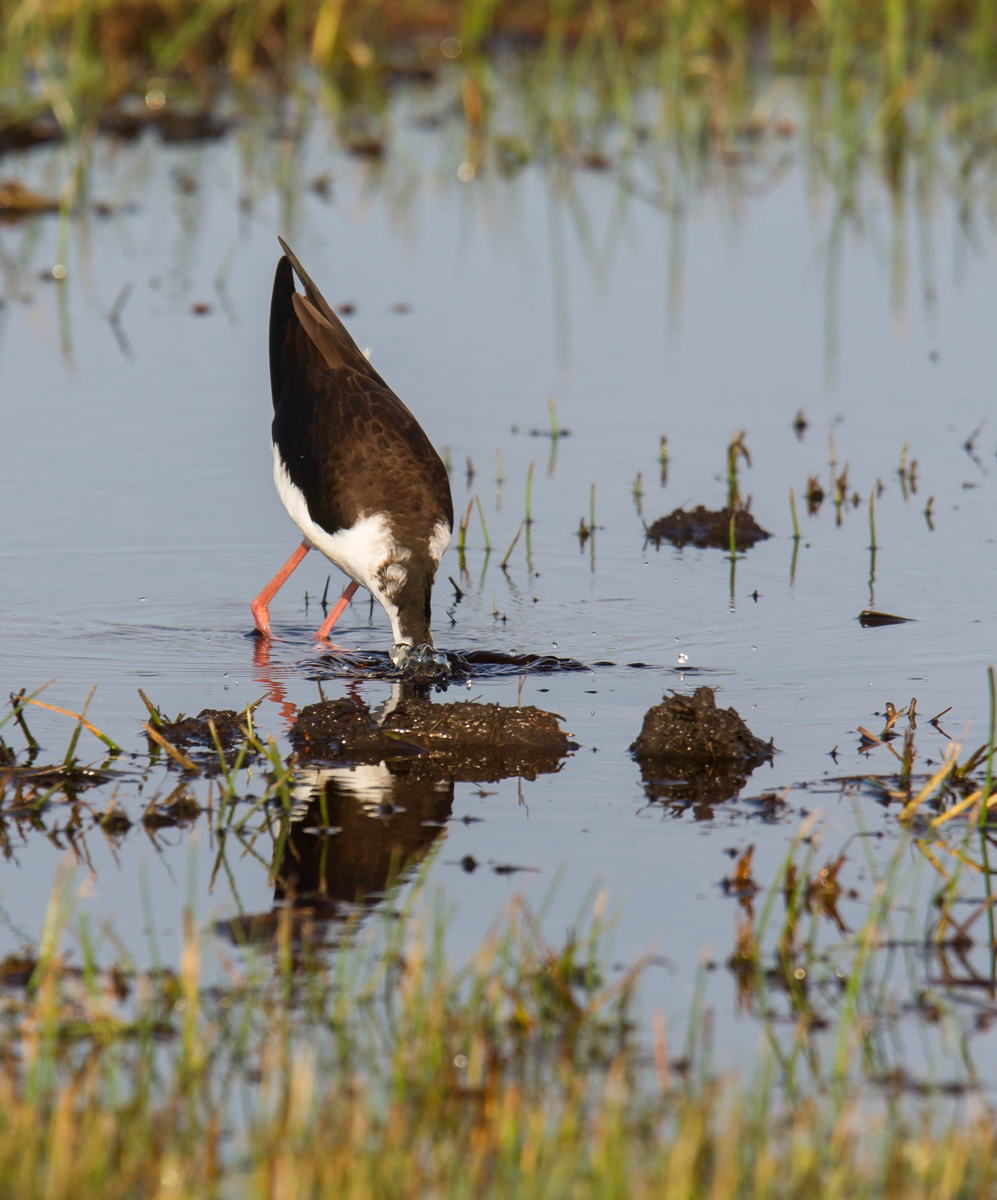
Feeding behavior included an occasional lunge into the waterStilt head dunk
Most of the time I watched, they seemed to be picking small items off the water surface. But, they occasionally plunged their head into the water for what I assumed was bigger prey. The one large item I saw one catch looked like a large beetle, or perhaps an aquatic snail (it was black and appeared shiny).
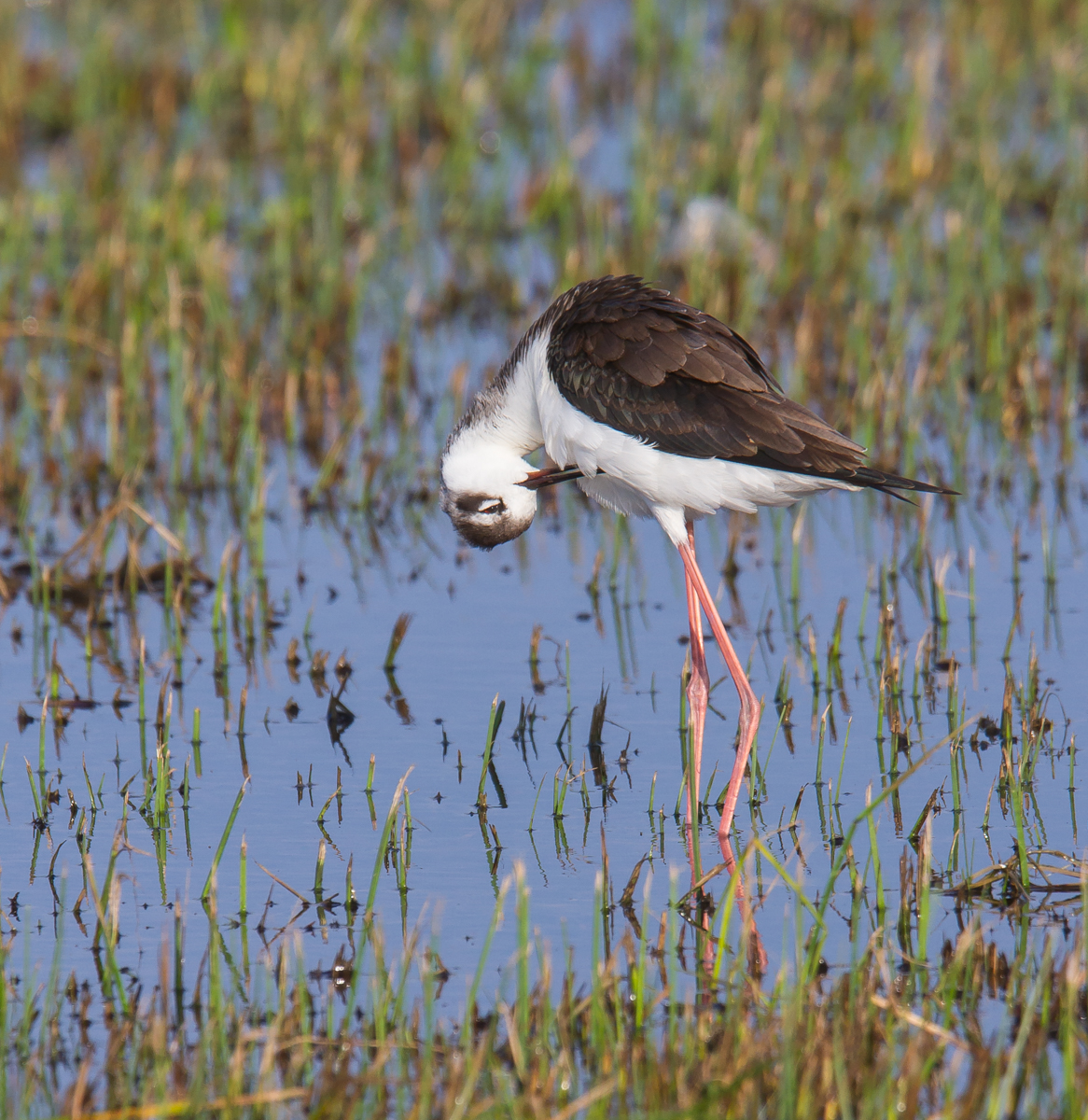
Preening
One bird paused in its quest for a snack and started to preen.
Scratching an itch
After watching this bird scratching I couldn’t decide whether it was an advantage or not to have such long limbs. I tried to imagine reaching an itch on my head with tennis rackets strapped to my wrist – precise control is probably a necessity.
Black-necked Stilt and reflection
My time with the birds was brief, perhaps fifteen minutes, but I can think of no better way to spend that time than with one of our most distinctive, and beautiful, shorebirds.
Our job is to record, each in his own way, this world of light and shadow and time that will never come again exactly as it is today.
~ Edward Abbey
Once again, I find it hard to believe I have reached another milestone, post #200 on this blog. I’m not sure what, if anything, is important about 100 posts, other than it being a way to mark time. Those of us that enjoy nature are, perhaps, more aware of time. We notice the subtleties in the passage of seasons and the changes in the presence or absence and the activities of our natural neighbors. There is something comforting about the passage of time in nature, and in its cycles, in knowing that spring will come again after a long winter. Being aware of time also helps me put perspective on things, much like standing in awe at a sunset in Lamar Valley does. We are all but tiny portions of a much grander scheme, one that started long before us, and will continue long after we are gone. Without a connection to the natural world, I think it easier to rush through life as if what is happening to you is all that is really going on in the world, all that is important. I think recording what has passed over time helps me see the bigger picture, that there is a world out there that is making the best of every moment, and that we should do the same.
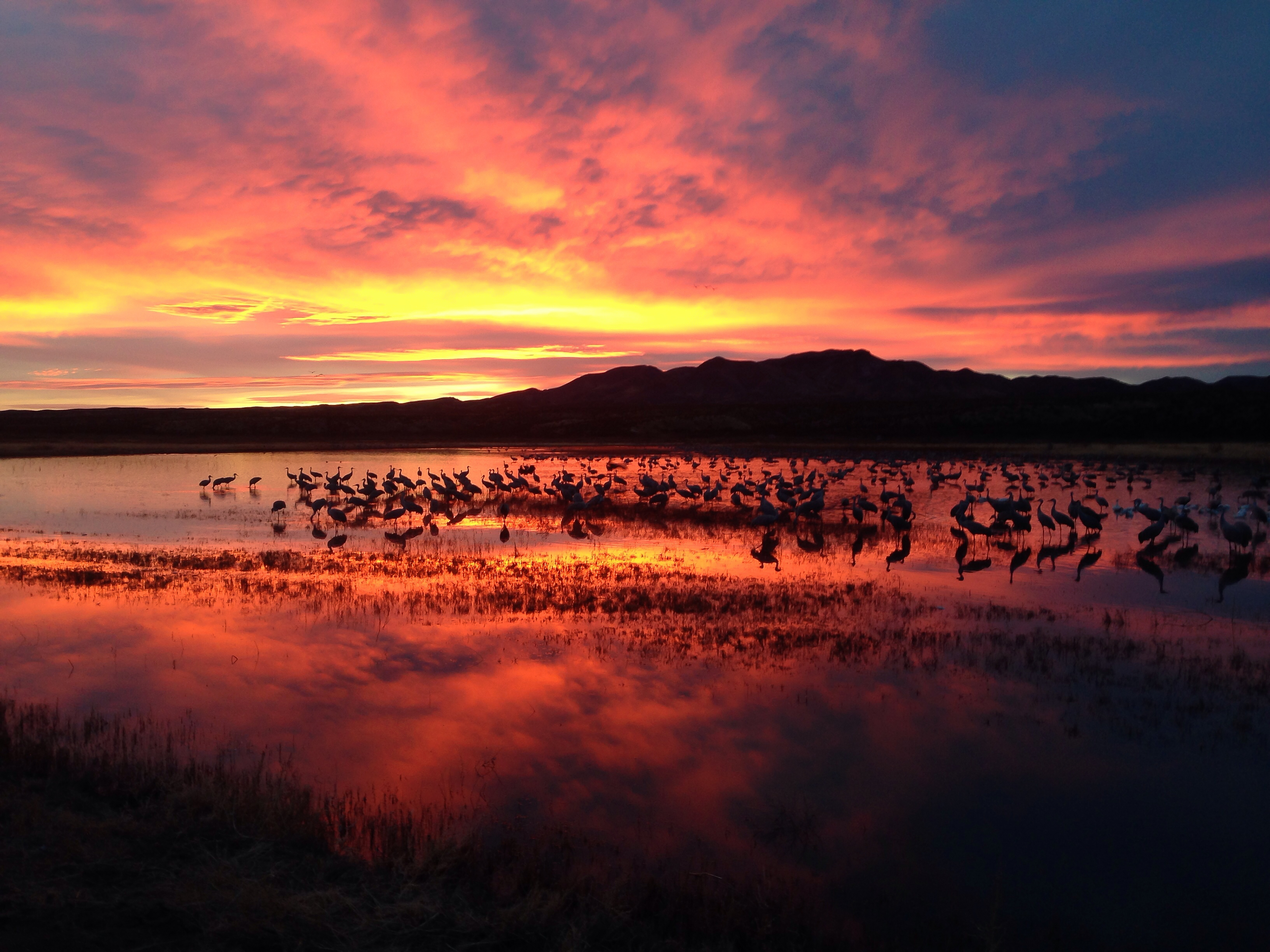
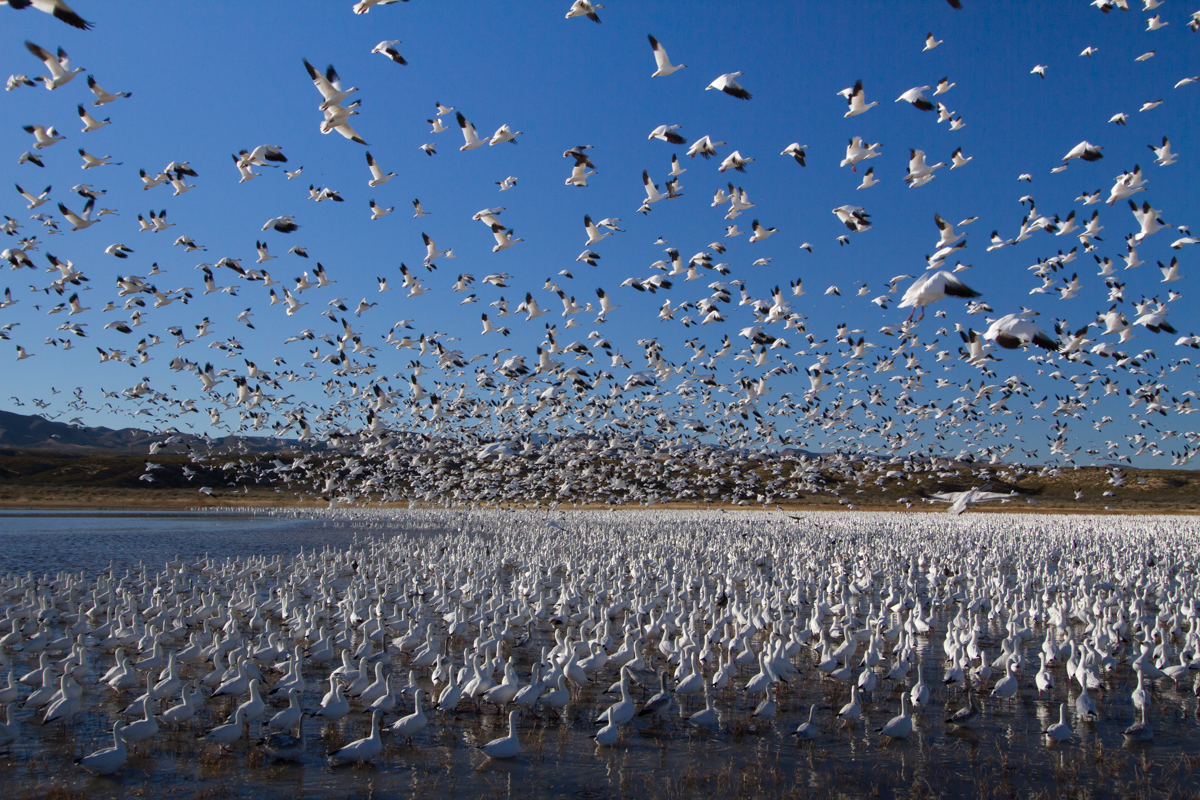
Crane Ponds at sunset, Bosque del Apache National Wildlife Refuge (click photos to enlarge)Snow Geese at Bosque del Apache
Ten months have passed since blog #100. The next 100 started off with one of my bucket list sites – Bosque del Apache National Wildlife Refuge in New Mexico. Bosque is about birds and sky, light and sound. It is a place where you are constantly amazed at the sheer numbers of birds and their ever present calls.
Great Horned Owl at sunrise
It is also a place of intimate moments with individual birds set in incredible light.
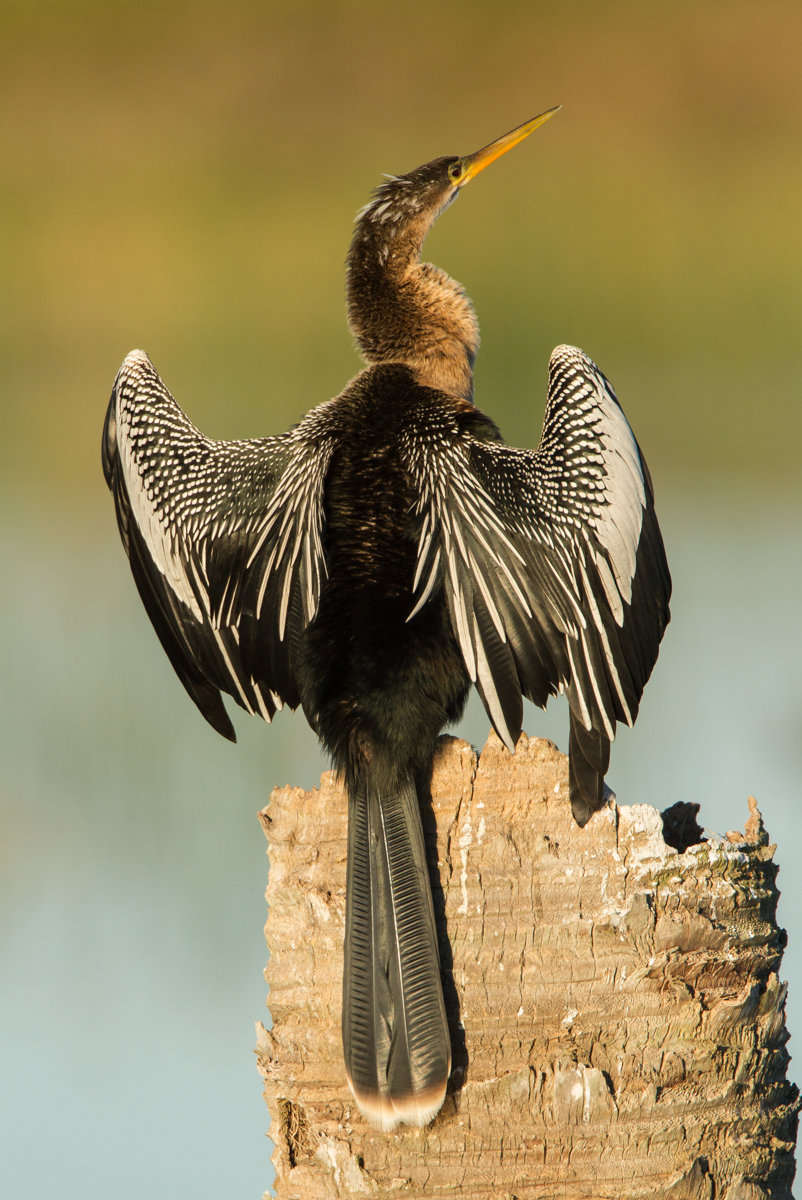
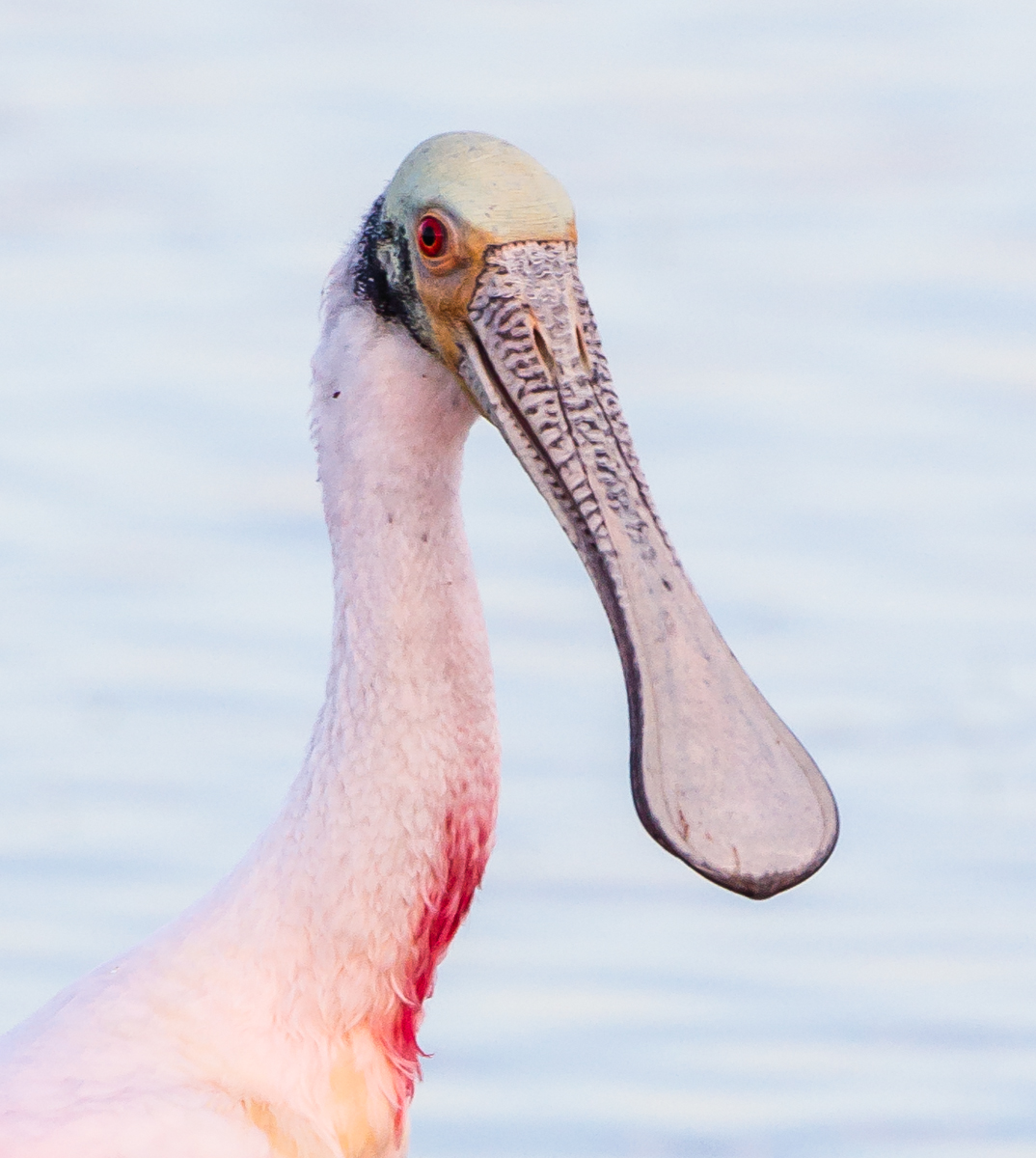
Anhinga, Viera Wetlands, FloridaRoseate Spoonbill, Merritt Island NWRAmerican White Pelican, Viera Wetlands
Florida, in winter, was another highlight in this group of blogs, another place of birds where it is easy to see their amazing diversity.
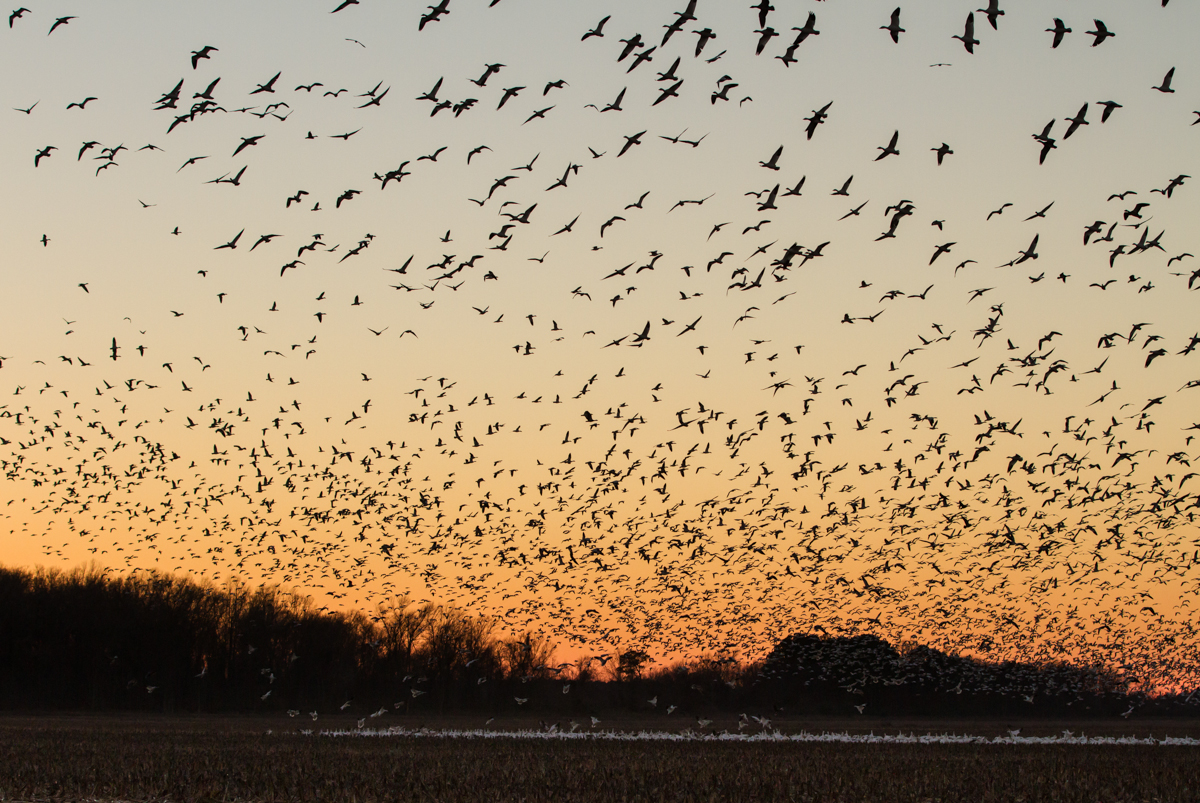
Snow Geese at sunset, Pocosin Lakes NWRBlack Bear looking at Snow Geese coming into corn fieldBobcat
It was a good winter for leading trips, especially to my favorite refuge, Pocosin Lakes. As always, it provided amazing encounters, spectacles, and special moments with a host of species.
Grizzly in Hayden ValleyGrizzly standing
Yellowstone, as always, provided special memories. This year was certainly the year of the Grizzly, perhaps because it was earlier in the season than usual, and snow still covered much of the high country.
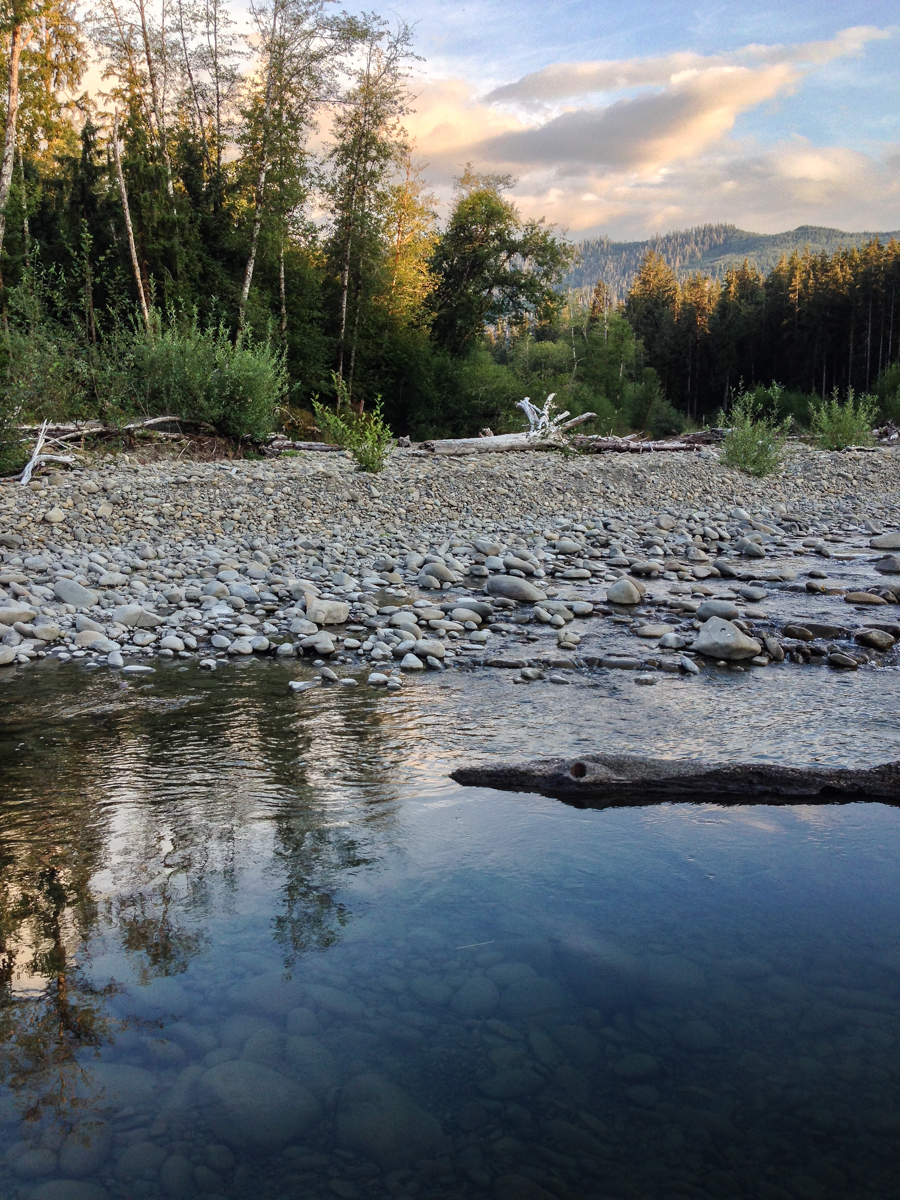
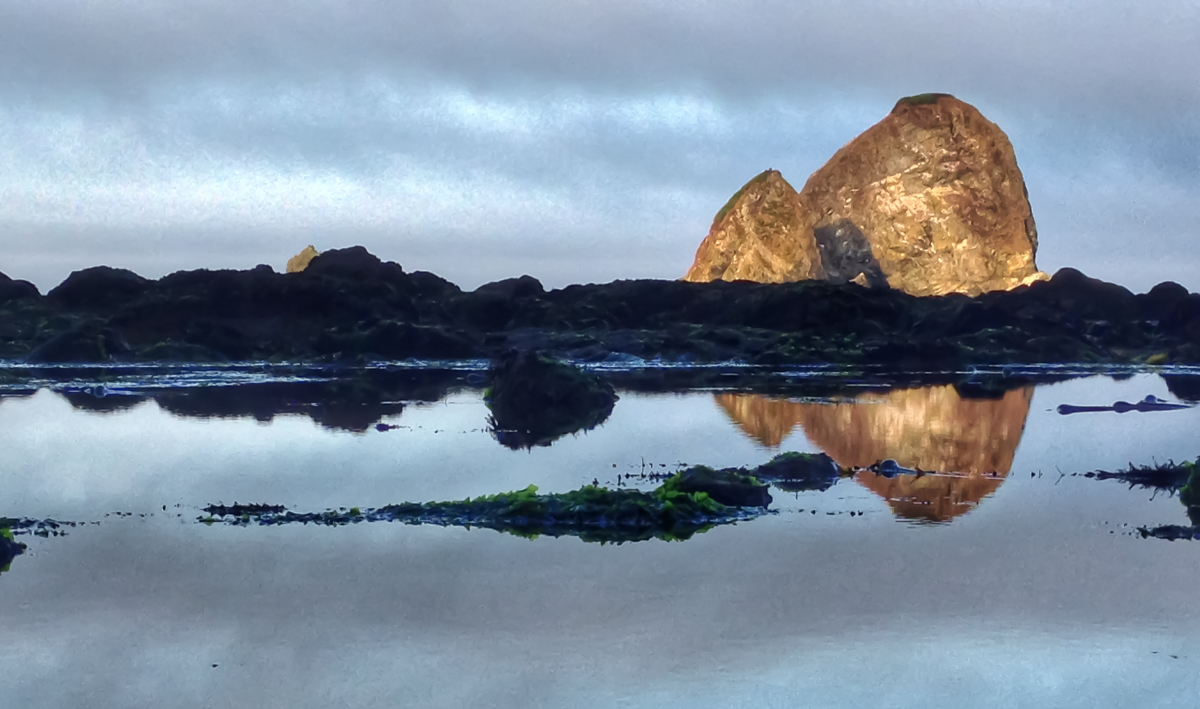
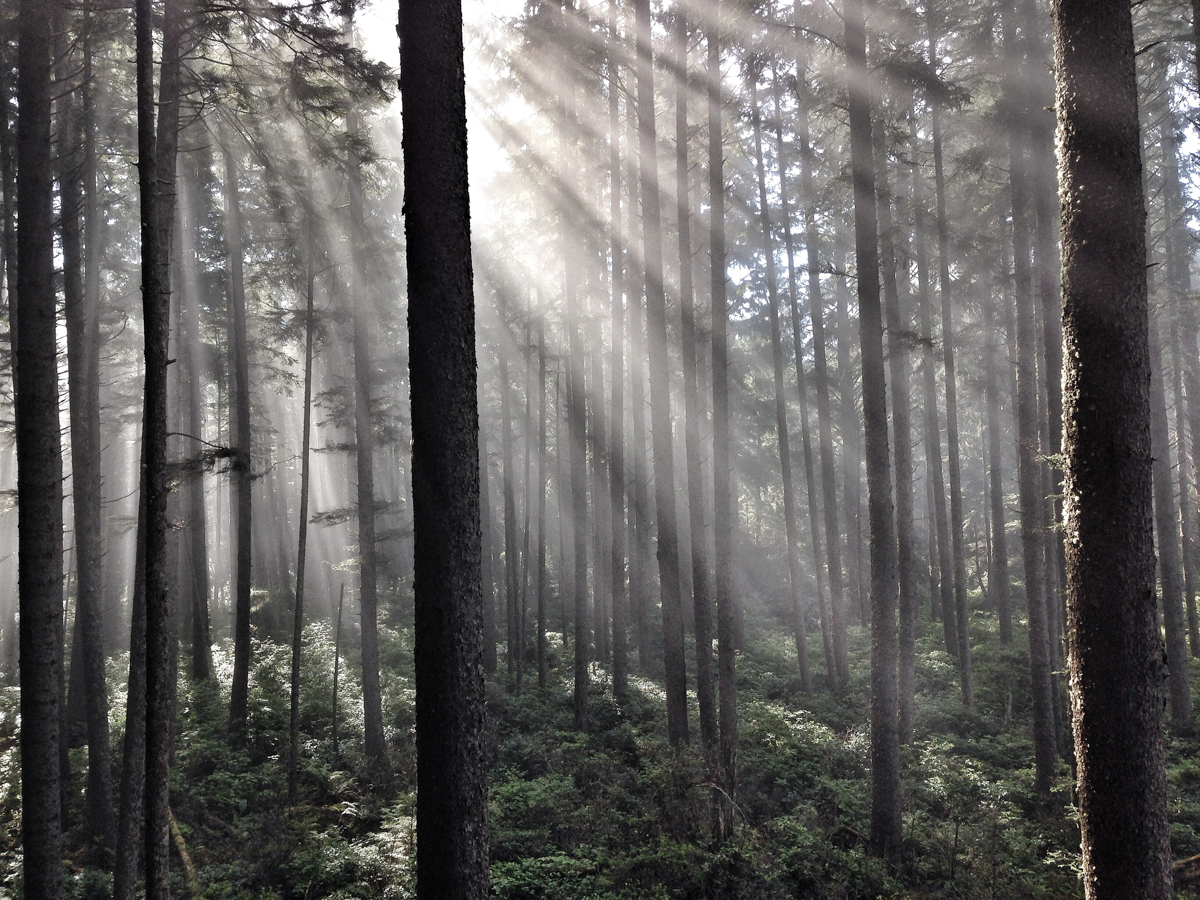
Queets River, Olympic National ParkSea stacks at sunrise, Washington coastSunrise through the trees at Olympic National Park
Within the past month, I reported on the amazing landscapes that make up Olympic National Park – mountains, rocky coasts, and forests of giant trees. Once again, I am reminded of the importance of people in a previous time, that made decisions to set aside special places for all time so we could all benefit from them and enjoy their wildness.
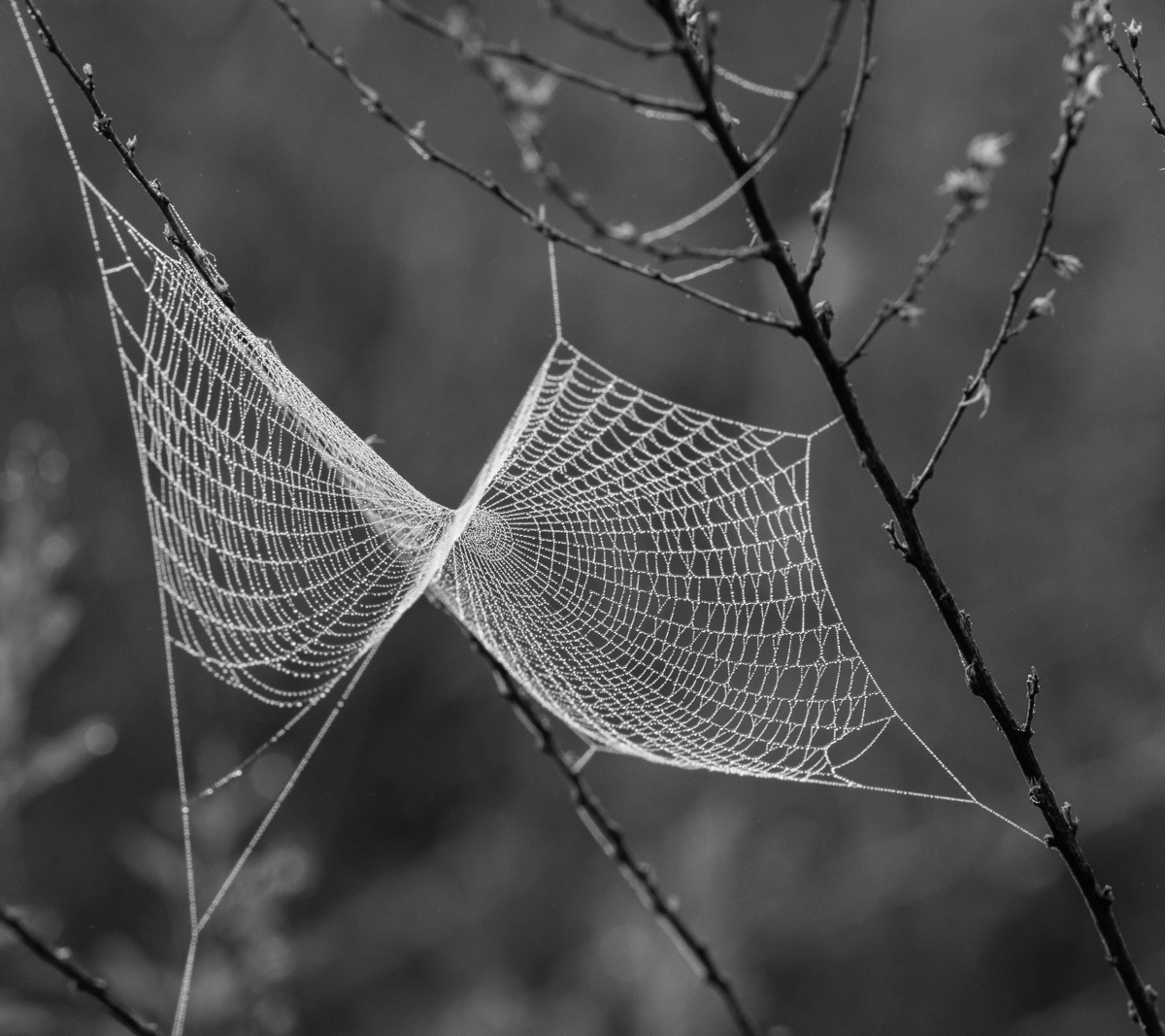
But, as is usually the case, most of my time has been spent close to the wildness of home. I am fortunate to live in a place that still retains some of its cast of characters that help make the passage of time outside my windows so fascinating.
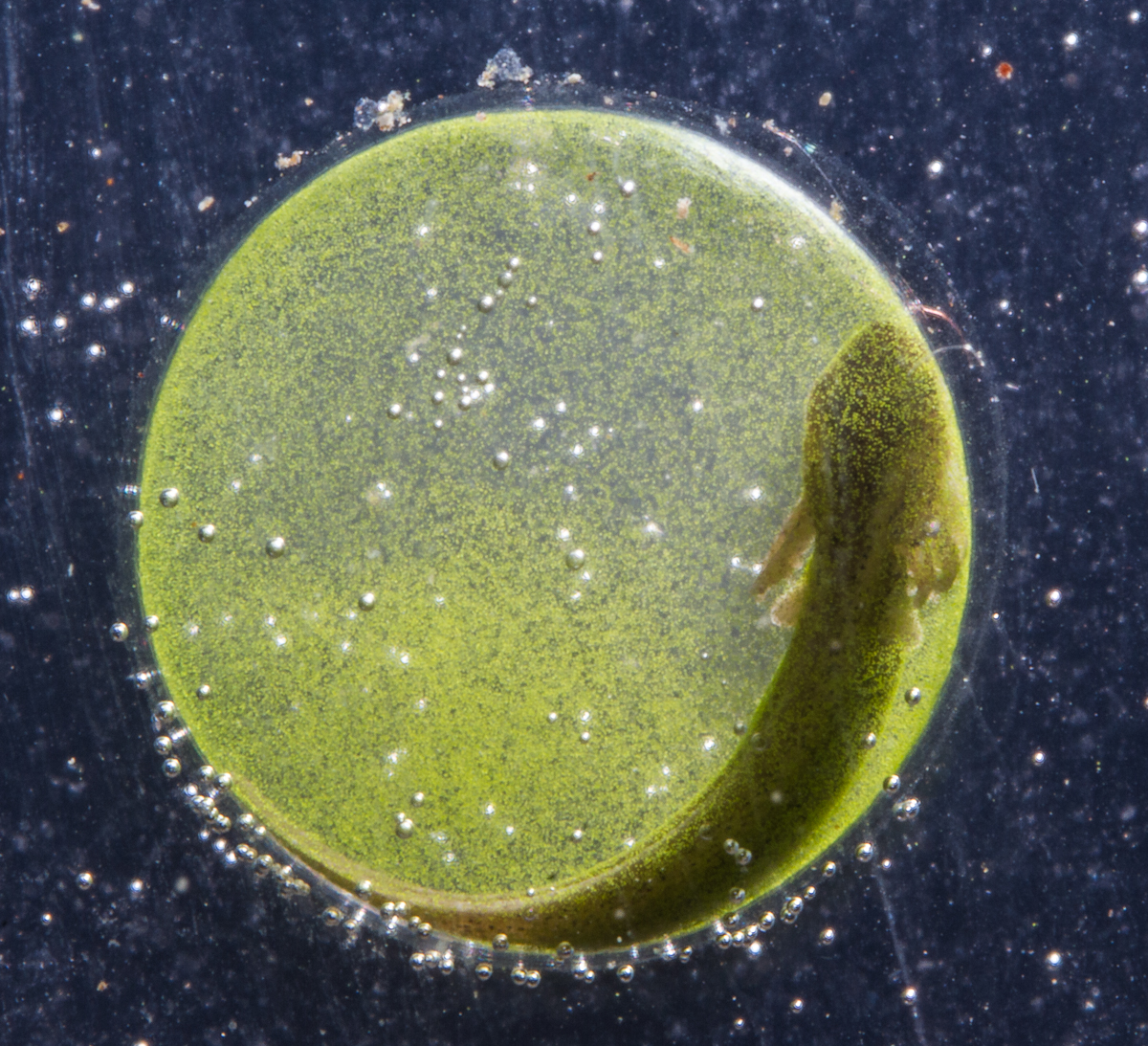
Eastern Bluebird bringing food to nestSpider web in morning fog along power lineDogwood Borer Moth attracted to porch lightSpotted Salamander larva just prior to hatching from egg
I am thankful for the chance to observe them and learn something about them. It inspires me to want to record what I observe and share some of their amazing stories in the hopes that we will all start to appreciate and conserve the special places that surround us, while there is still time.
Our ideals, laws and customs should be based on the proposition that each generation, in turn, becomes the custodian rather than the absolute owner of our resources and each generation has the obligation to pass this inheritance on to the future.
It is important to share the shore with shorebirds and respect their needs. Their lives depend on it.
~Walker Golder
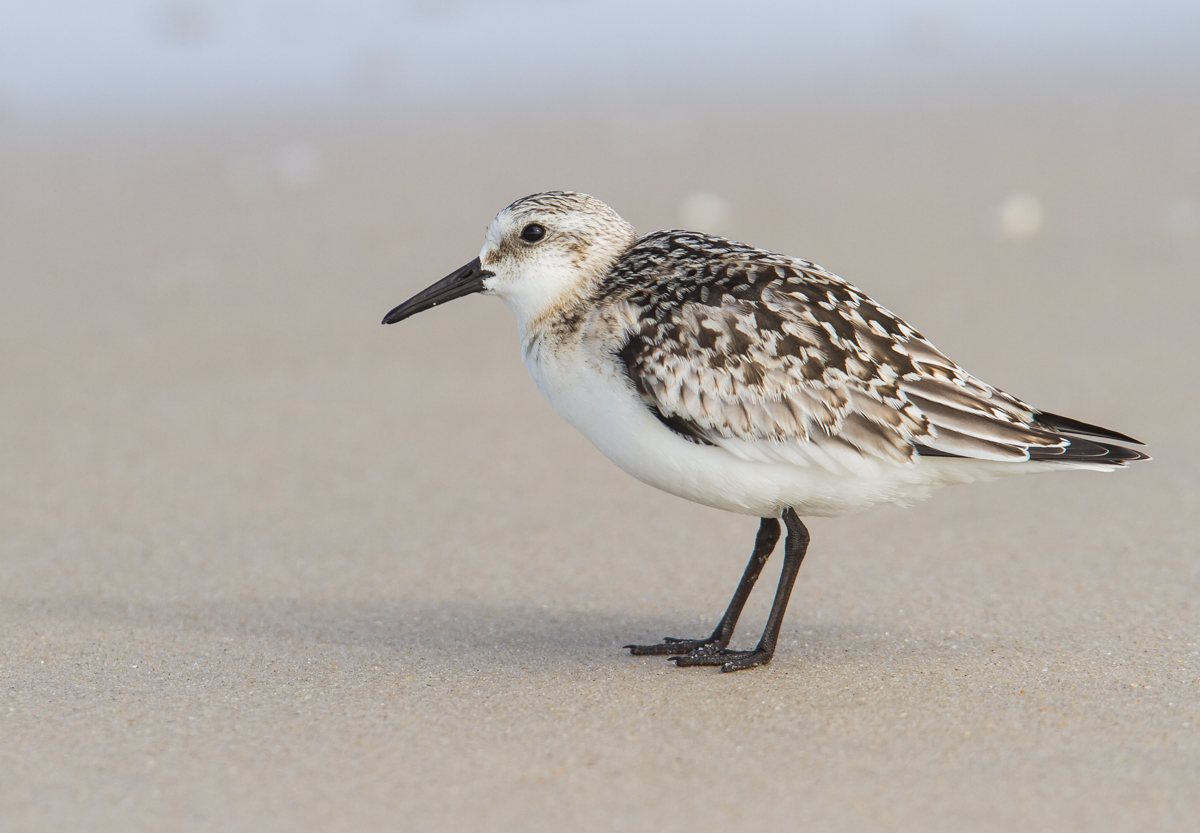
This time of year, the beaches of North Carolina are breathing a sigh of relief as the huge tourist crowds of summer are starting to thin. They are also seeing lots of activity from wildlife, both on land and in the surf. The characters are changing daily as migrating birds, butterflies, fish, and other coastal creatures make their way to their winter destinations. But, on almost any beach in autumn, you are likely to see a couple of standard shorebirds – Sanderlings and Willets.
A Sanderling in a rare restful pose (click photos to enlarge)
The former are the wind-up toys of the shorebird world, rapidly running to and fro along the surf line in search of morsels exposed in each wave, and squabbling over the right to do so.
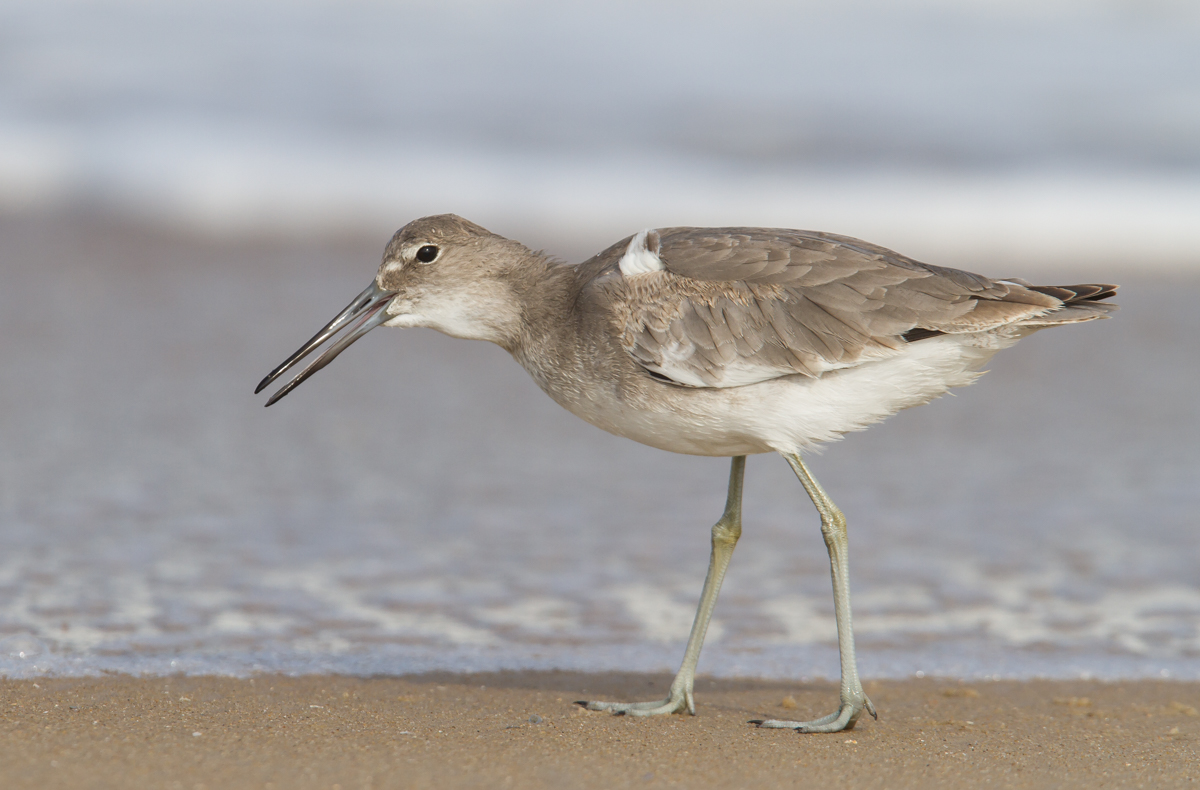
Willet striding on the beach
The more stately of these two shorebirds, and one of our larger species, is the Willet. They are already in their winter plumage of drab gray above and a white belly (they are more brown during the breeding season). Since this one did not fly while I sat with it, I did not get to photograph their diagnostic bold black and white wing patterns, nor did I hear its piercing pill-will-willet call that is often given when they are in flight.
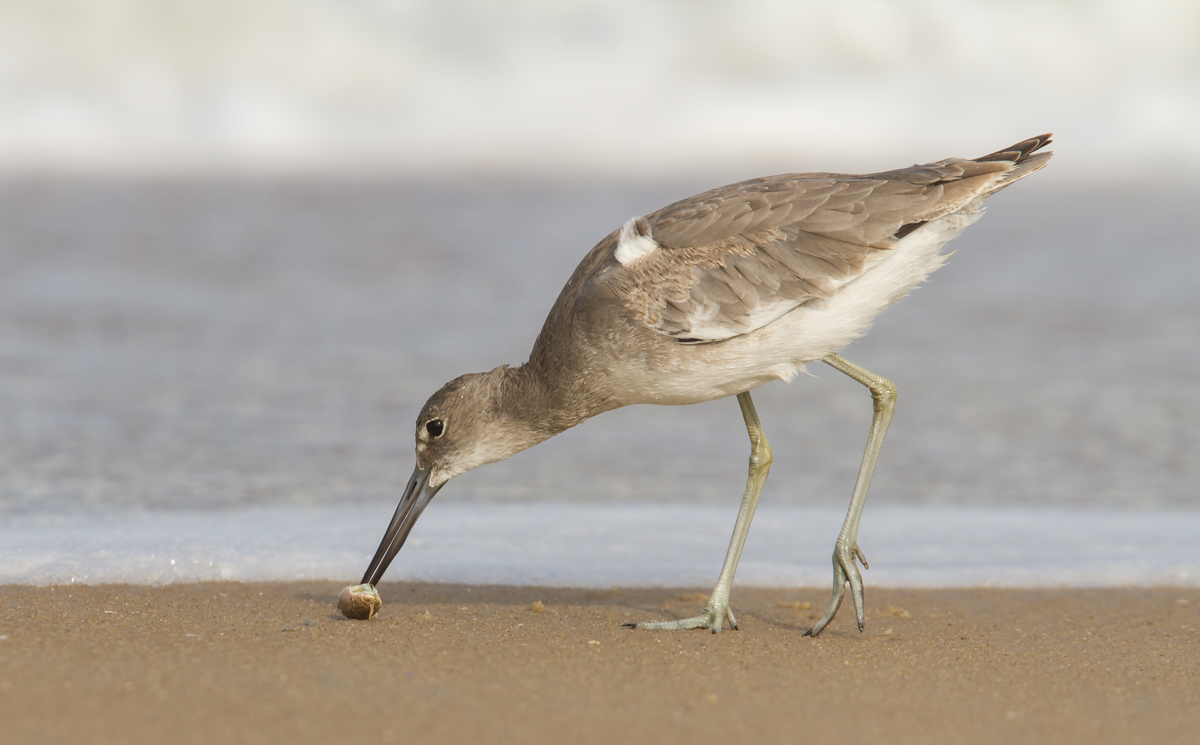
Willet probing the sand
Willet, and many other shorebirds, were once rare north of Virginia due to market hunting. The Migratory Bird Treaty Act of 1918 banned this large scale hunting for food, and helped start a comeback for this now common species. New threats include habitat destruction and rising sea levels, and this combination may greatly restrict their access to suitable foraging and nesting areas in the future.
Searching the waves for a meal
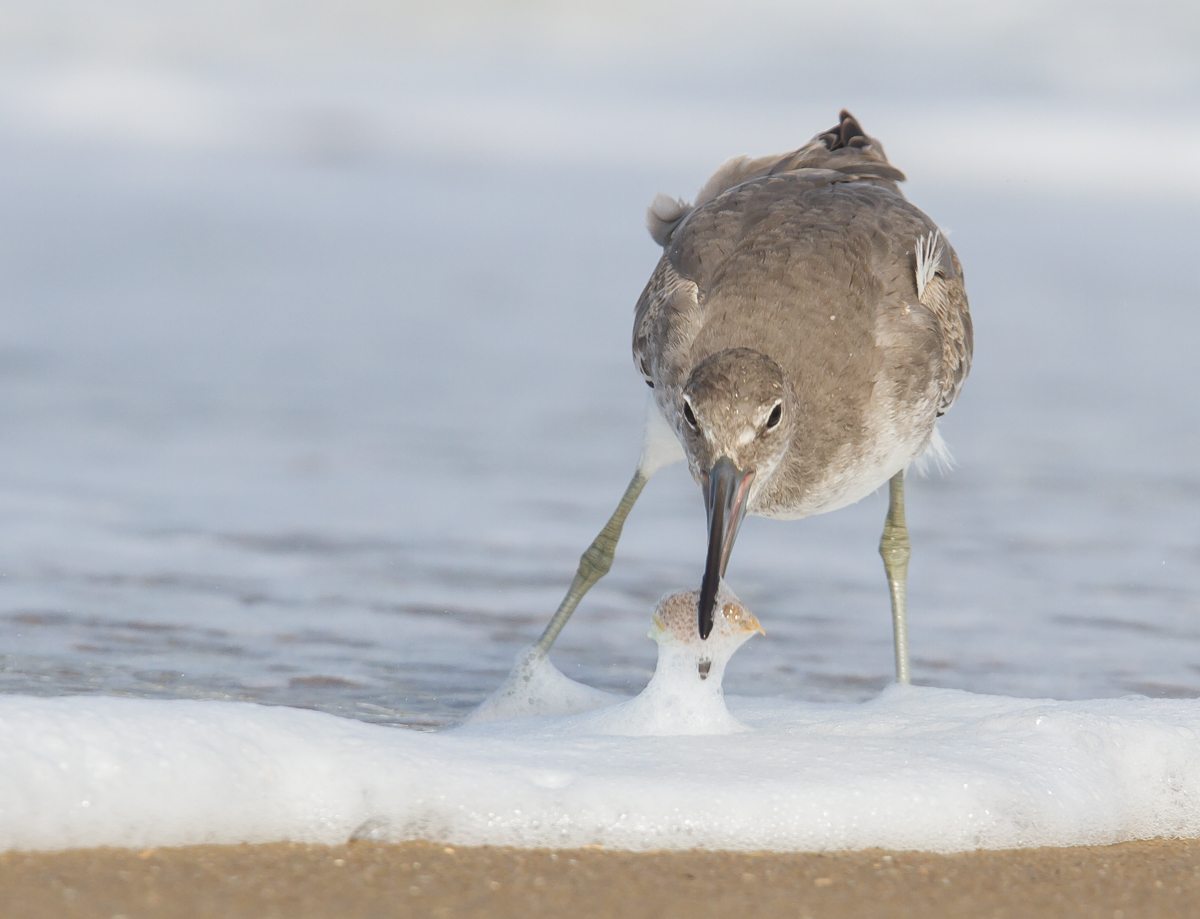
Willets use their long gray legs to stride up and down the beach in search of food. Their stout bill is used to probe the sand (or mud when feeding in marsh edges and mudflats). The sensitive bill tip can detect prey which is then quickly grabbed. This also allows Willets to feed at night, when many other shorebirds, which rely solely on eyesight, cannot.
Snapping up a small Mole Crab
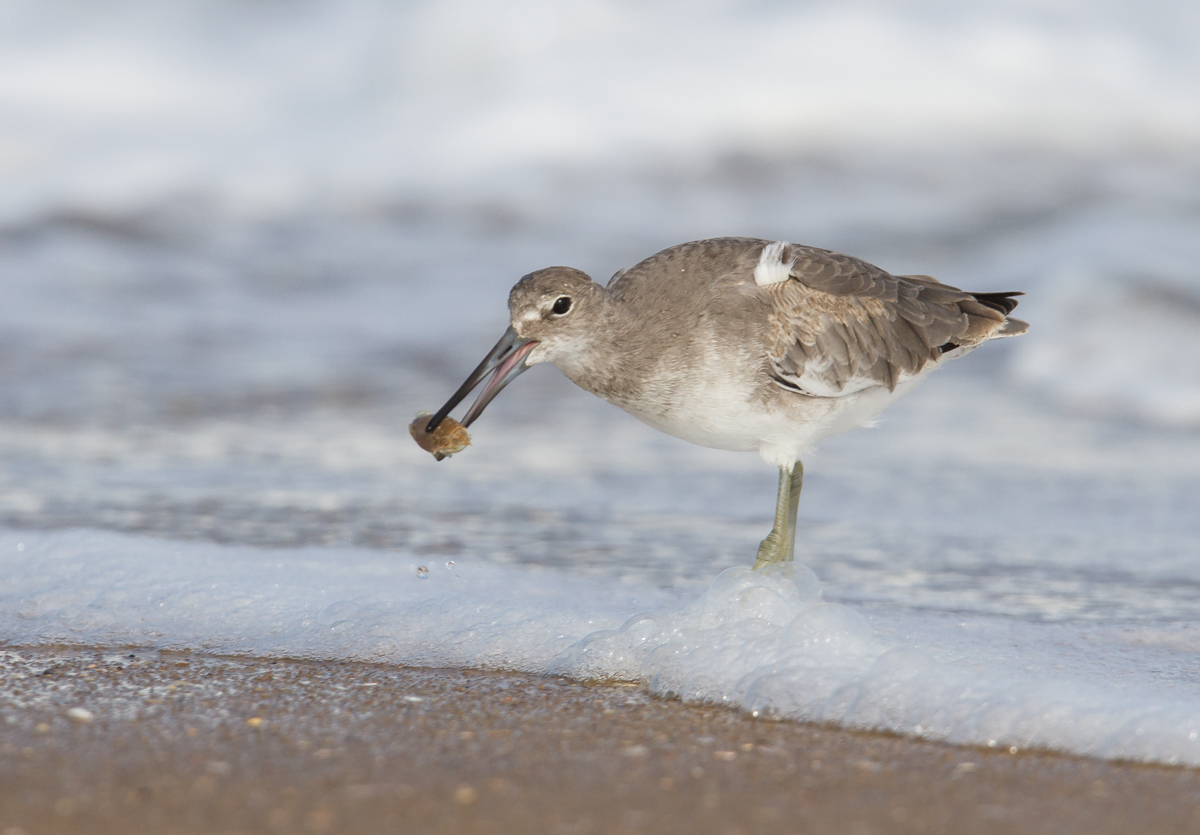
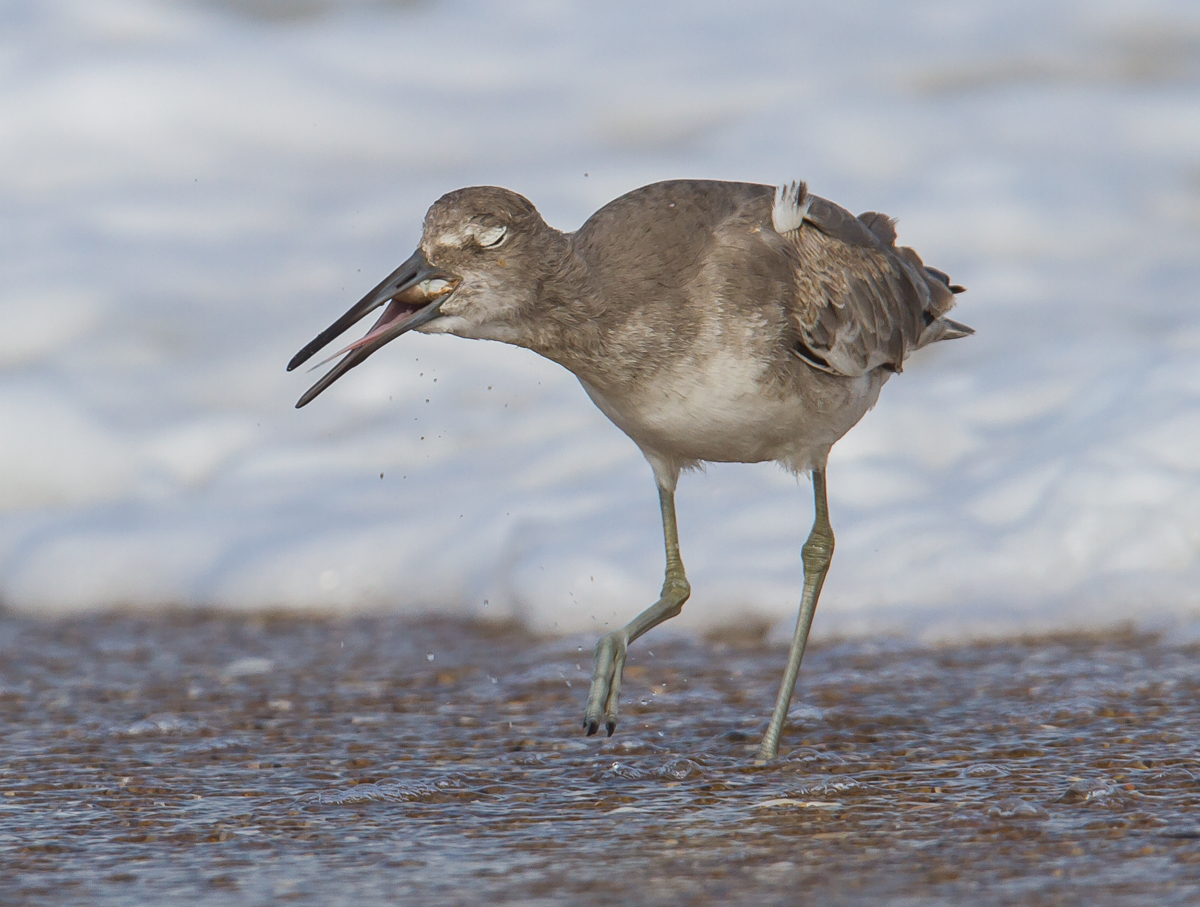
Favorite prey items include small fish, worms, mollusks, and crabs. On this afternoon, Mole Crabs were the main course. A tiny Mole Crab was snapped up and gulped all in one motion while I watched.
Larger Mole Crabs require a little more workFirst, you need to carry them above the surf line
This particular Willet was quite adept at finding and catching the Mole Crabs as they surfaced to ride the wash from the surf back down the beach.
Then drop them on the sand
When it caught a large crab, the Willet would run back up above surf and drop it on the sand.
Maybe poke your food a little and get it in the right position
It seemed to poke at the crab a couple of times with its bill…
Then pick it back up before the wave washes it away
and then would grab the crab just before the incoming wave might give it a chance at escape…
And gulp
and then the crab was picked it up and quickly swallowed head first.
It does finally go down
Seems akin to me swallowing a whole zucchini squash or half a loaf of bread all at once as it did take some doing, but, the lump soon disappeared and those long legs carried the hunter back into the foam for another try. Each time this Willet rushed toward the water, I wondered, “will it catch something?”…in the 10 or 15 minutes I watched, it caught three large Mole Crabs and one appetizer-sized one, not a bad percentage at all. Come to think of it, I could use a crab cake about now…
Every September, for as long as I can remember (or at least well more than a decade), I have been collecting caterpillars in preparation for the annual BugFest event at the North Carolina Museum of Natural Sciences. It is always great fun to share these larval lovelies with the thousands of visitors that make the pilgrimage to this super annual event. But, there is a price to pay – the care and feeding, and eventual release, of all the stars. And so it was, again this year. Given the timing of the event in mid to late September, it is always touch and go as to whether we will find enough caterpillars or if the ones we do find will actually make it to the big day without pupating. So, here are a few brief stories of some of this year’s stars, or almost stars, as the case may be.
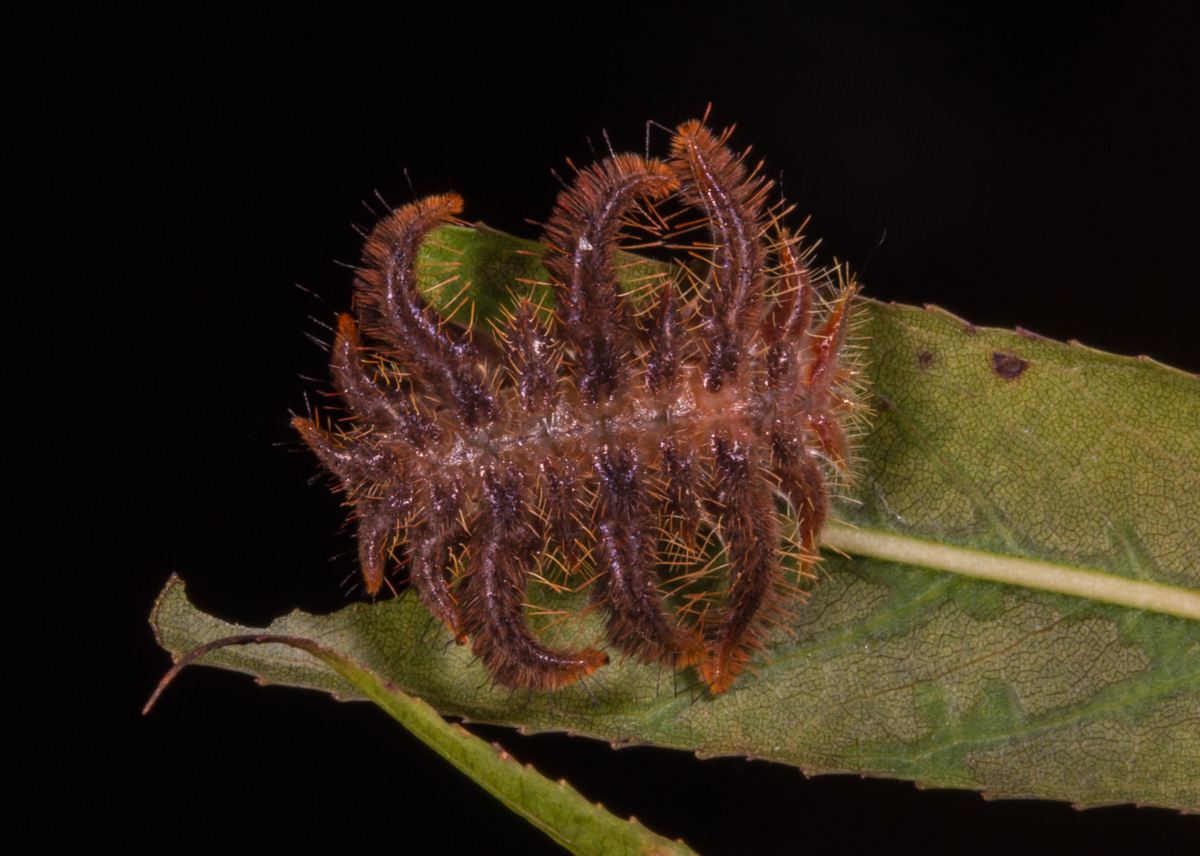
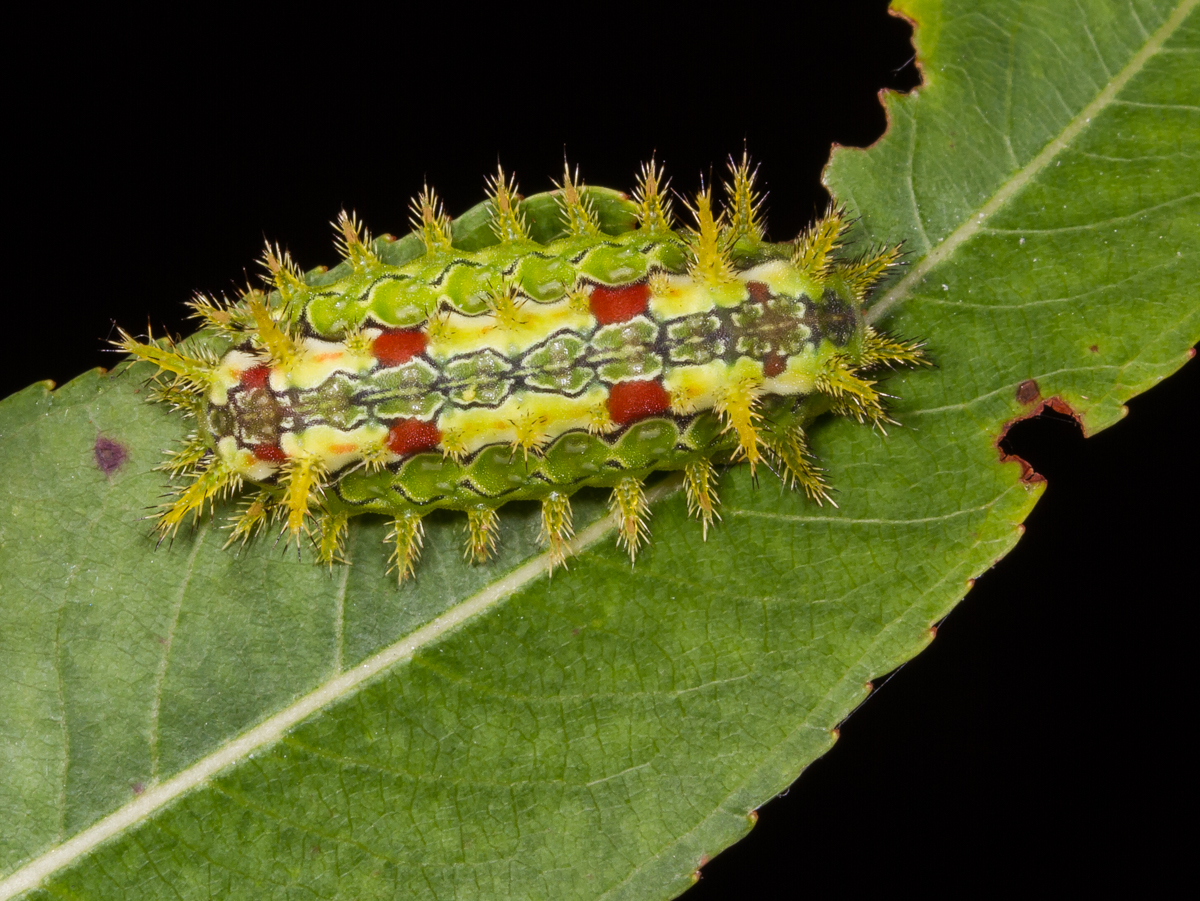
Stinging Rose Caterpillar (click photos to enlarge)
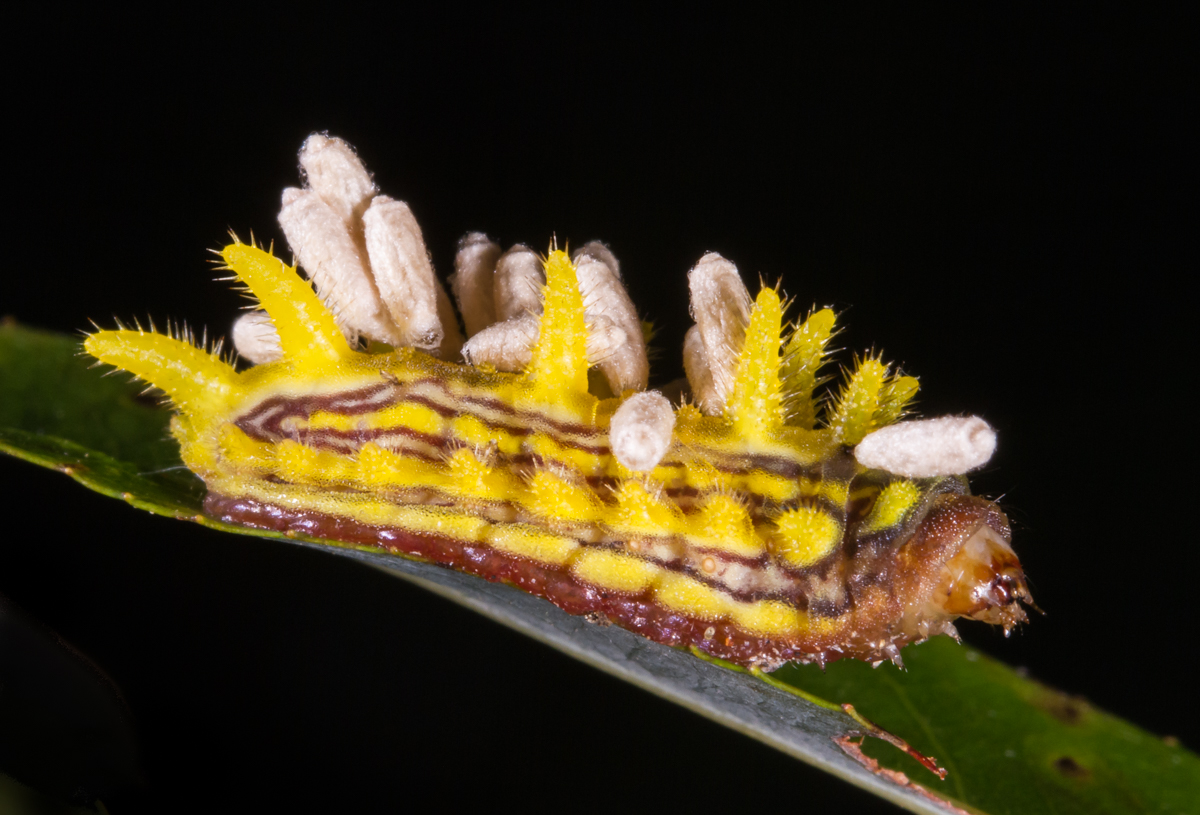
I was very happy when I found this unusual beauty, a Stinging Rose Caterpillar (Parasa indetermina) on a willow, the week before BugFest. These odd-shaped and brightly colored larvae are one of the stinging caterpillars, and this one was sure to be a crowd-pleaser. But, as is often the case when dealing with nature, it was not to be.
Parasitic wasp cocoons on the Stinging Rose Caterpillar
A few days before the big event, it succumbed to a common caterpillar threat, the emergence of parasitic wasp larvae that quickly spun cocoons, coating the caterpillar’s body with what look like tiny cotton swab tips. I was going to take it anyway, to share that unusual aspect of the ecology of life as a larva, but, the day before the event, the caterpillar shriveled up to nothing, cutting short this one’s chance at fame. These parasites are fairly common and I always find a few caterpillars that already have the cocoons present when I am out collecting. But it is particularly disappointing when you collect something unique, only to find out later that the parasitic larvae were already at work, but you just could not tell until they popped out in a moment reminiscent of the classic scene from the movie Alien.
Spiny Oakworm shedding its skin
In what looks like another scene from a space aliens movie, I was witness to one of the miracles of the caterpillar world when one of my captives managed to molt under my care. This one, a Spiny Oakworm (Anisota stigma), was still for almost two days and I suspected it was undergoing changes related to either molting or pupation. Right before packing up for the event, I saw this change-of-clothes act. Note the dramatic difference in color between the freshly molted larva and its cast skin. The caterpillar gradually darkened just in time to share its new look with the crowds.
Underside of Puss Caterpillar
I already posted on my experience with one of the most notorious of the stinging caterpillars, the Puss Caterpillar. When I was transporting it for release (my goal is to release these critters back into the general area where they were collected each year) I placed it in a plastic container like the ones you buy fresh salad in at the grocery store. When the larva crawled around the clear sides it provided me with a great view of the underside of this furry beast, something you don’t normally get to see.
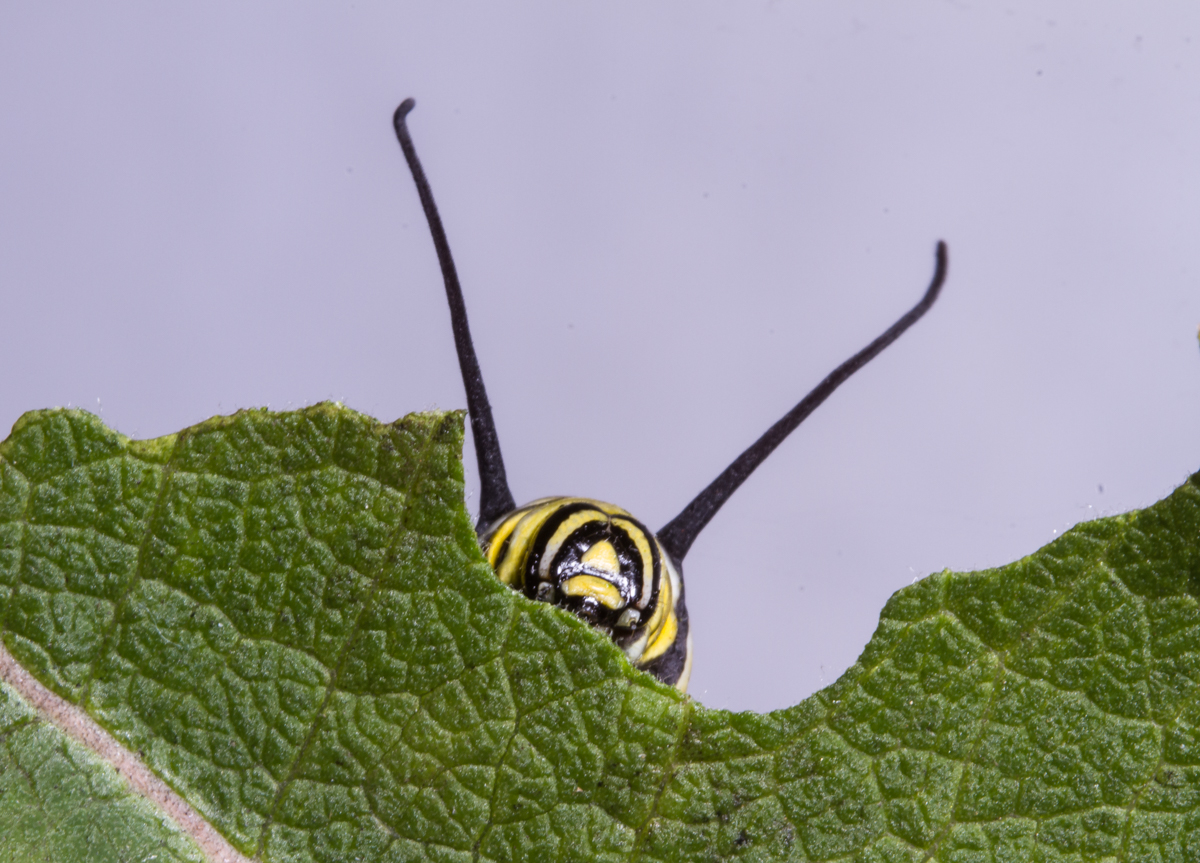
Monarch caterpillar chewing milkweed leaf
A friend loaned me a couple of large Monarch Butterfly larvae, and this one was busy all during the event chewing the edges of a Common Milkweed leaf. I grabbed a moment during the busy day to get a portrait of the feeder in action.
Spiny Oak-Slug during the event
Several of the stars started to wander off their food plants during the event. This is usually a sign that their time as a caterpillar is coming to an end and a pupa is on the way. Most larvae go through what I call a “walk-about” stage for several hours before starting to pupate. If they are not contained, they will wander off to some suitable spot and undergo yet another miraculous change in their extraordinary life cycle. And so it was with one of the small beauties of this year’s event, a Spiny Oak-Slug.
Spiny Oak-Slug cocoon
But, at least it waited until after the event to complete the change from dazzling caterpillar to drab cocoon. It should overwinter in this state and emerge next spring.
Luna Moth caterpillar
I found several large Luna Moth caterpillars the week of the event, and, as usual, a few pupated before the big day. And a couple decided to start the big change during the event itself and had to be confined to caterpillar detention (aka the pupation cage).
Luna Moth larva changing color prior to pupating
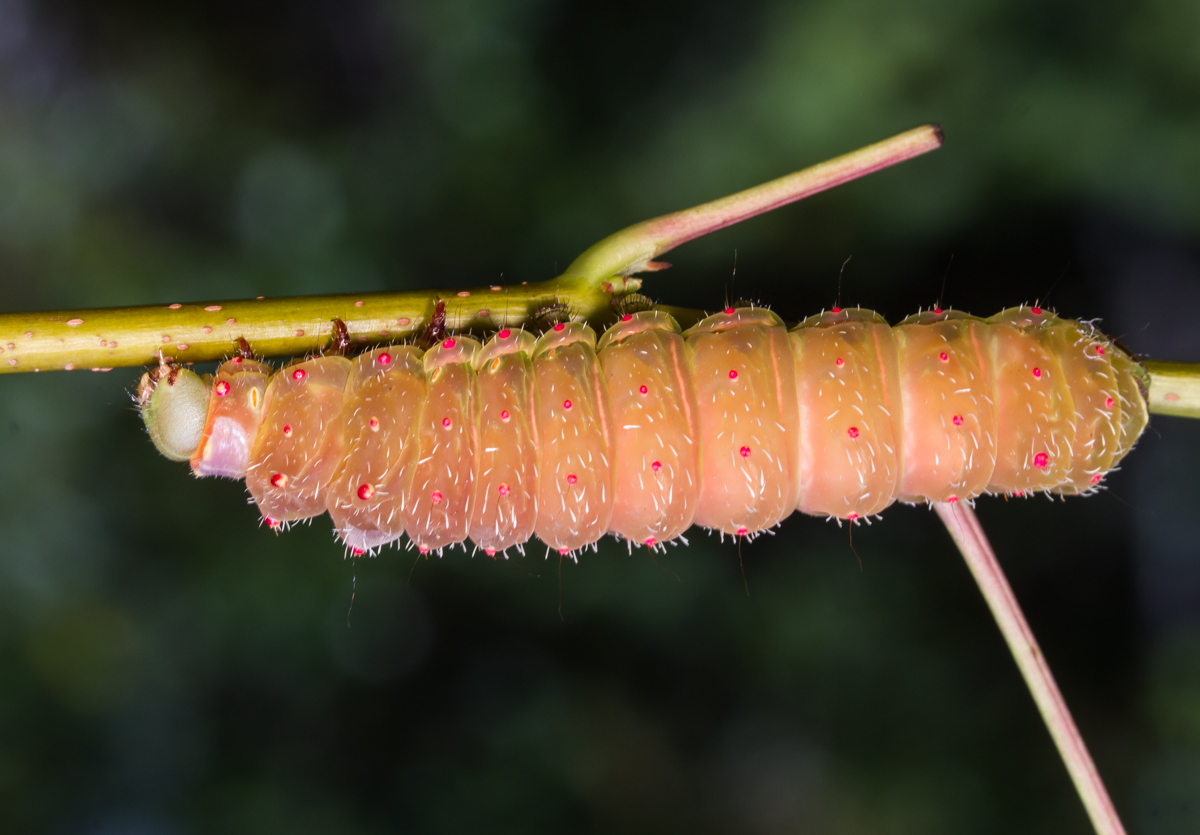
Like many species, Luna larvae undergo a noticeable color change right before they start spinning a cocoon, in this case, changing from brilliant green to a pinkish-brown color.
Spicebush Swallowtail in walk-about phase
Another color changer is one of my favorite caterpillars, the Spicebush Swalllowtail. They, too, are bright green, along with their uncanny false eye-spots and other markings. When they start the walk-about phase, they gradually change to a more yellow-orange base color.
Spicebush Swallowtai
You can see why these guys are one of my favorites.
Spicebush Swallowtail prepupa
Once they find a suitable site, they begin laying down their two silk attachment points to form a prepupa. That usually lasts about a day, and then they shed their skin one last time, and, voila, a chrysalis appears.
It is always a bittersweet time when BugFest is over and I release all my specimens. I know the chills of winter will soon be upon us and it will be several months before I can once again observe and photograph one of nature’s most amazing life forms.
The most beautiful thing we can experience is the mysterious. It is the source of all true art and science.
~Albert Einstein
There are some creatures that are so bizarre that they leave me baffled as to why they are the way they are. This is one of them.
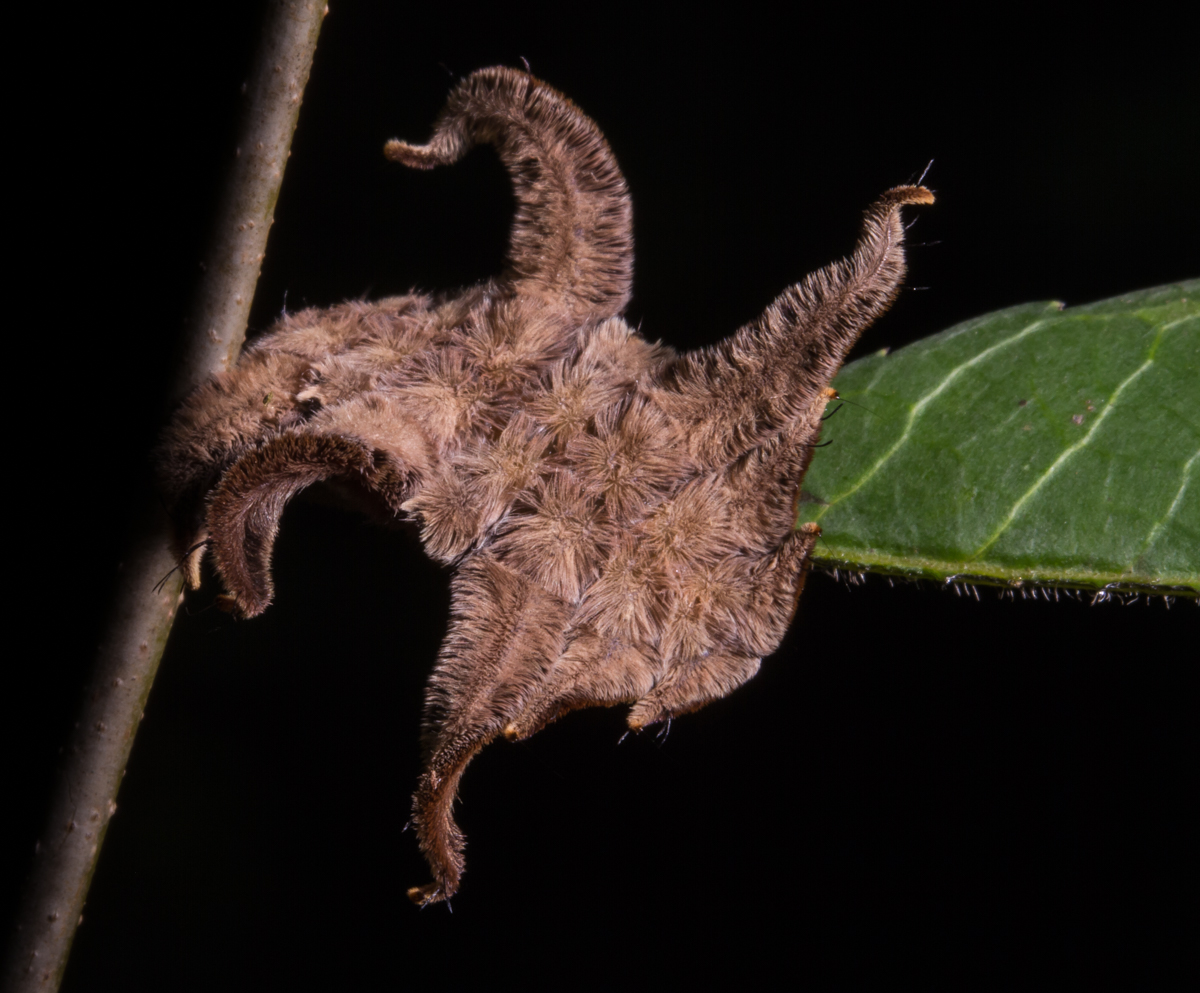
Monkey Slug, caterpillar of the Hag Moth (click photos to enlarge)
Even the name is a mystery – Monkey Slug. I suppose if you squint and look at it, you could imagine a very hairy cartoon-like monkey with a few extra arms. One reference said it resembled a terrestrial octopus. That I can see. And the Hag Moth part probably comes from the likeness of the hairy arms to an old witch’s disheveled hair. But, no matter how you look at it, you probably would not guess this strange-looking bug is a caterpillar.
Back lit Monkey Slug (early instar)
It belongs to the slug caterpillar family, Limacodidae, many of whom are so-called stinging caterpillars, due to the presence of urticating spines. There is disagreement in the references on this species’ stinging ability, with the guru of caterpillars, David Wagner (author of Caterpillars of Eastern North America), stating that he has been unable to get this species to “sting” even by rubbing it on his arm. Others say that people vary in their susceptibility, so I will let it go untested. They certainly look like they could hurt you, with a dense coating of short hairs and long spines, especially in the earlier stages (instars).
Later instar (perhaps the last) of a Monkey Slug
As they grow and molt, they take on a more carpeted appearance, with short, stiff, brush-like hairs, densely covering their dorsal surface. Monkey Slugs are characterized by six pairs of arms (some short, some long) that are deciduous and can break off without any apparent harm to the critter.
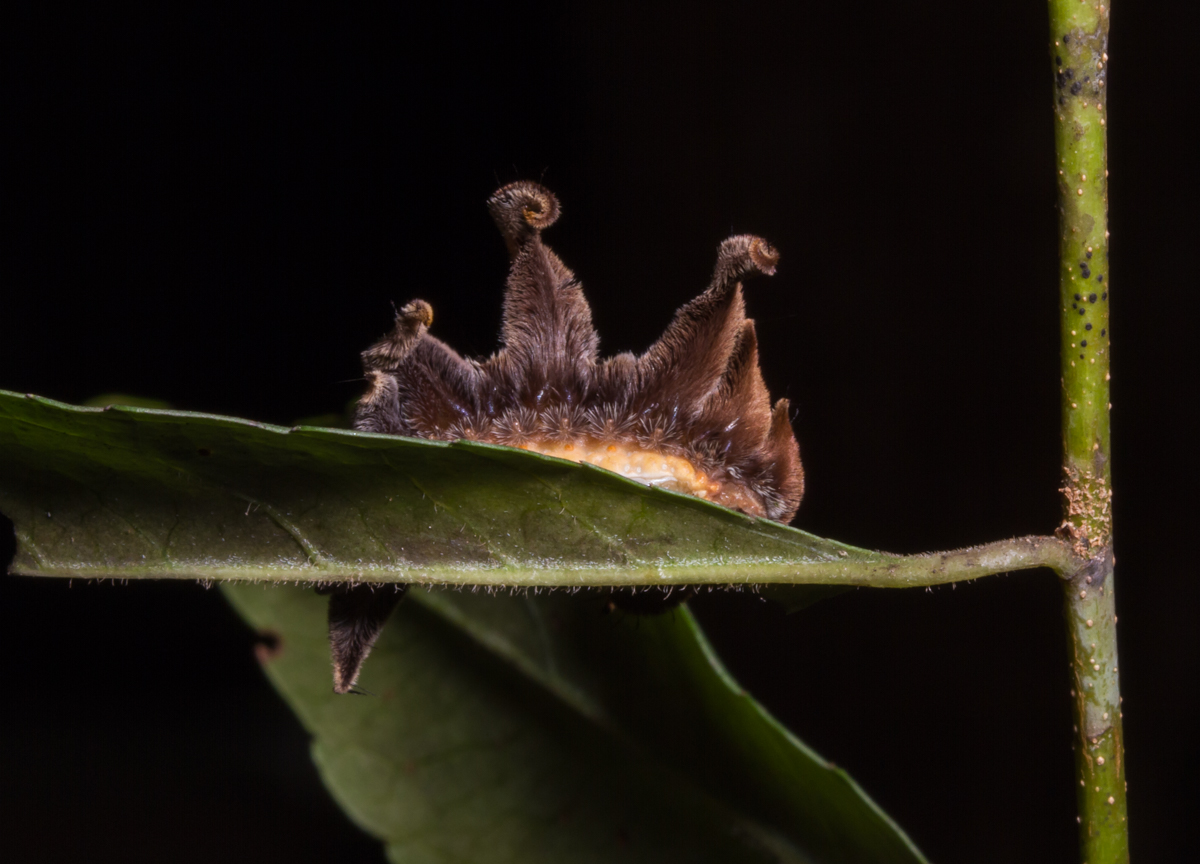
Monkey Slug showing curled tips to the arms
To my eye, a Monkey Slug (especially the last instar) resembles a dead leaf with curled edges. Some researchers have speculated that it looks like a tarantula shed, which also has urticating hairs. Many of our insect eating birds migrate to the tropics and thus might encounter these distasteful objects in the forest, which would then give a tarantula shed mimic some advantage, but who knows. I have never found an adult, but they, too, are mimics – the male looks like a wasp, and the female has the likeness of a bee, complete with faux pollen sacs on her legs.
From the side it looks like a crown
I have only seen a few of these caterpillars over the years, but two of my former colleagues at the Museum each found one and brought them to BugFest last week, where they drew lots of curious looks and questions from the hundreds of visitors wandering by our booth. Monkey Slugs can be found on a wide range of shrubs and trees but may be relatively scarce, or just darned hard to spot in vegetation.
Monkey Slug gliding along a twig
I’m just glad they found these two and I had a chance to reacquaint myself with one of the more outlandish denizens of our forests. May there always be mysteries…


































 Roads End Naturalist