While we have been busy on the road and having all sorts of appointments, the creatures of our woods continue with their busy lives. The trail cameras have recorded a lot of the usual suspects – deer, squirrels, and coyotes. But it is always fascinating to see what these denizens of our forest are up to. Turn your sound up and view at full size.
I currently have 7 trail cameras out on the landscape, All are Browning cameras. I have 4 different models out there as I purchased them at different times as new models wth features I wanted became available. I think I have had 4 cameras die on me, but one of my originals (now about 4 years old) is still going strong. It has somewhat lower resolution video and has one distracting feature, at least from the perspective of certain animals…it has a tiny blinking red light when it is on. Most species either ignore this or quickly get used to it. But many carnivores like coyotes, bobcats, and foxes, are quite wary of this light as seen in their behavior when they get near one.
I have all my cameras set up to record a maximum of 30 seconds of video and then they shut off. If the animal is still there and moving, the camera starts recording after 5 seconds and that cycle repeats until there is no longer any movement. Night recordings are only 20 seconds in length by design. This coyote did something that doesn’t happen very often in front of a camera – it stopped and stood there for a long time. After a few minutes it jumped off the log and trotted off.
That log has been a hot spot of coyote activity these past two weeks. Here is one of the few clips where three coyotes pass through, seemingly on a mission (as they most always seem to be)
Here’s a question for everyone. A couple of posts back I had a clip of probably this same fox. I called it a gray fox in that post because I didn’t see the typical white tail tip of a red fox. But now I’m just not sure. The dark front legs and the seemingly uniform color of the main body makes me think it may be a red fox with almost no white on its tail tip. Gray foxes usually have a dark tail tip which I also don’t see. The night time videos don’t relay colors so I have to use other clues. Please put any thoughts you may have in the comments.
A camera on a tree along the creek bed keeps track of another favorite pathway for wildlife.
As I mentioned, there is a new coyote crew in our woods. They appeared a few months ago. One-ear and her mate had been the dominant crew here for a couple of years. We went about 5 weeks through December and early January without any sign of One-ear and I was beginning to think she had either moved on or died (coyotes can live 10-14 years in the wild, but I have no idea how old she was when I first recorded her on camera). And then this happened one night…
After rains (or melting snow), this section of the creek forms a large pool because of the log jam below.That attracts all sorts of critters from raccoons to bathing crows to deer. Here, two nice bucks walk through the pool.
Just downstream from that camera is another place where our intermittent stream tends to hold a nice pool of water after rains. This is a frequent site visited by our deer herd, whether to get a drink or just have fun.
This last clip is not from one of the game cameras,. I recorded this with my new mirrorless camera and lens this week while changing out the game camera cards. As I was walking, a female pileated woodpecker (she lacks the red streak on the cheek) took off from a log nearby and flew a short distance. I stopped and stood next to a tree and the bird started to come back in my direction, hopping from one log to another searching for insects.
In this season of cold and stress for wildlife, our woods are still alive with critters trying to survive. Mating season for coyotes is upon us and that may explain the substantial number of hits on my game cameras the past couple of weeks. We’ll see what this next week of extreme cold will bring.
I was back in my favorite spot in North Carolina this past week – Pocosin Lakes NWR. A lot has changed on the refuge since my first visit back in the early 1980’s. Back then, you could walk almost anywhere this time of year and get great views of the thousands of waterfowl that spend the winter in the area. And if I saw a couple of cars, it was a very busy day. Now, lots of people have discovered the magic of this place and, unfortunately, some people have created issues that caused the refuge to restrict access in order to protect the wildlife from undue disturbance. But, it is still a place where you can be awed at the spectacle of thousands of birds on the waterways and in the sky and where the only sounds you typically hear are those of wild things and the wind, the perfect soundscape.
This past week I was happy to join my friend, Parks, as he explored the refuges of Eastern NC with a group from Mitchell Community College. He went with us years ago on a Yellowstone trip and has been taking students and community members there every year since. He is looking to add another experiential learning opportunity closer to home and what better place than what I have often called the “Yellowstone of the East”. There is no greater place in this part of the world to experience so much wildlife as our Eastern NC national wildlife refuges. We spent three and half days at the Pungo Unit of Pocosin Lakes, Alligator River, and Mattamuskeet National Wildlife Refuges with a side trip to Pettigrew State Park. The weather started out rainy and then progressed to sunny with bitter cold and ended with strong winds, but we saw much of what the region has to offer. Here are some of our highlights. Several of these photos were taken after the group left but represent things we saw.
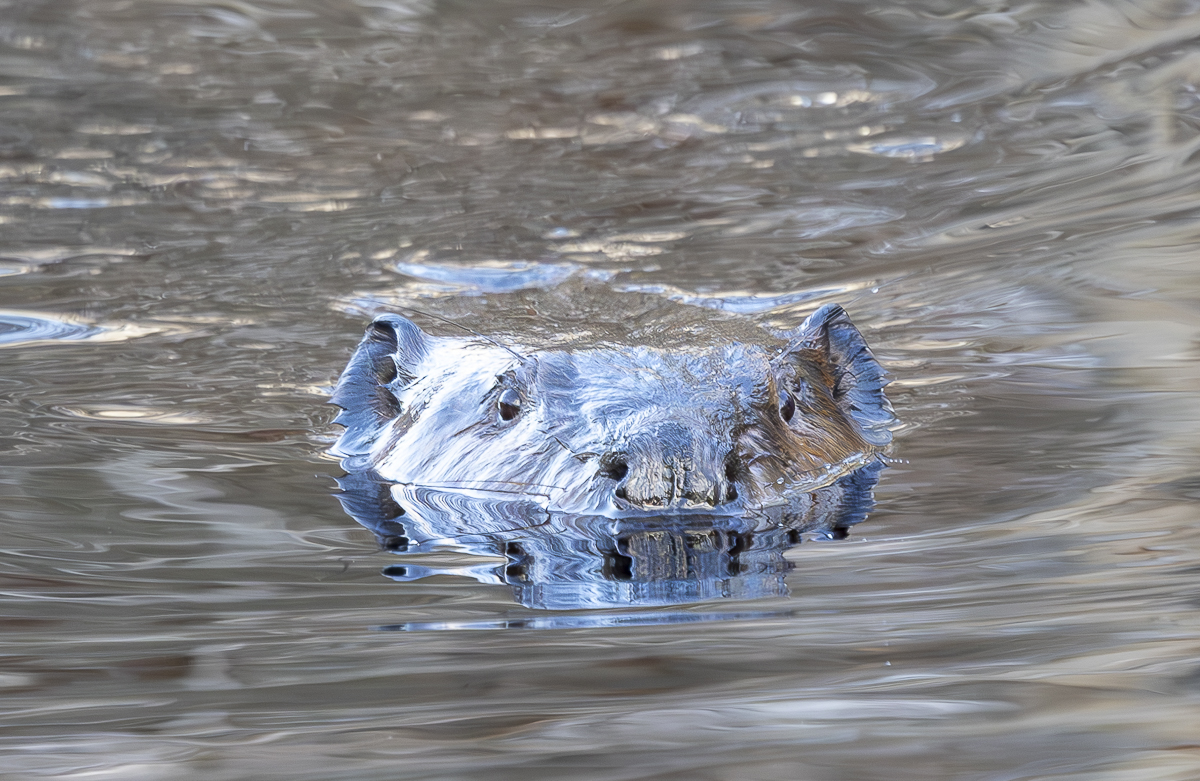
After a hard rain on Monday, we decided to alter plans to be at Pungo the next morning. Instead, we headed to Alligator River NWR. We were skunked on bears and Red Wolves, but did see a lot of great wildlife like an early morning Beaver and several great birds.
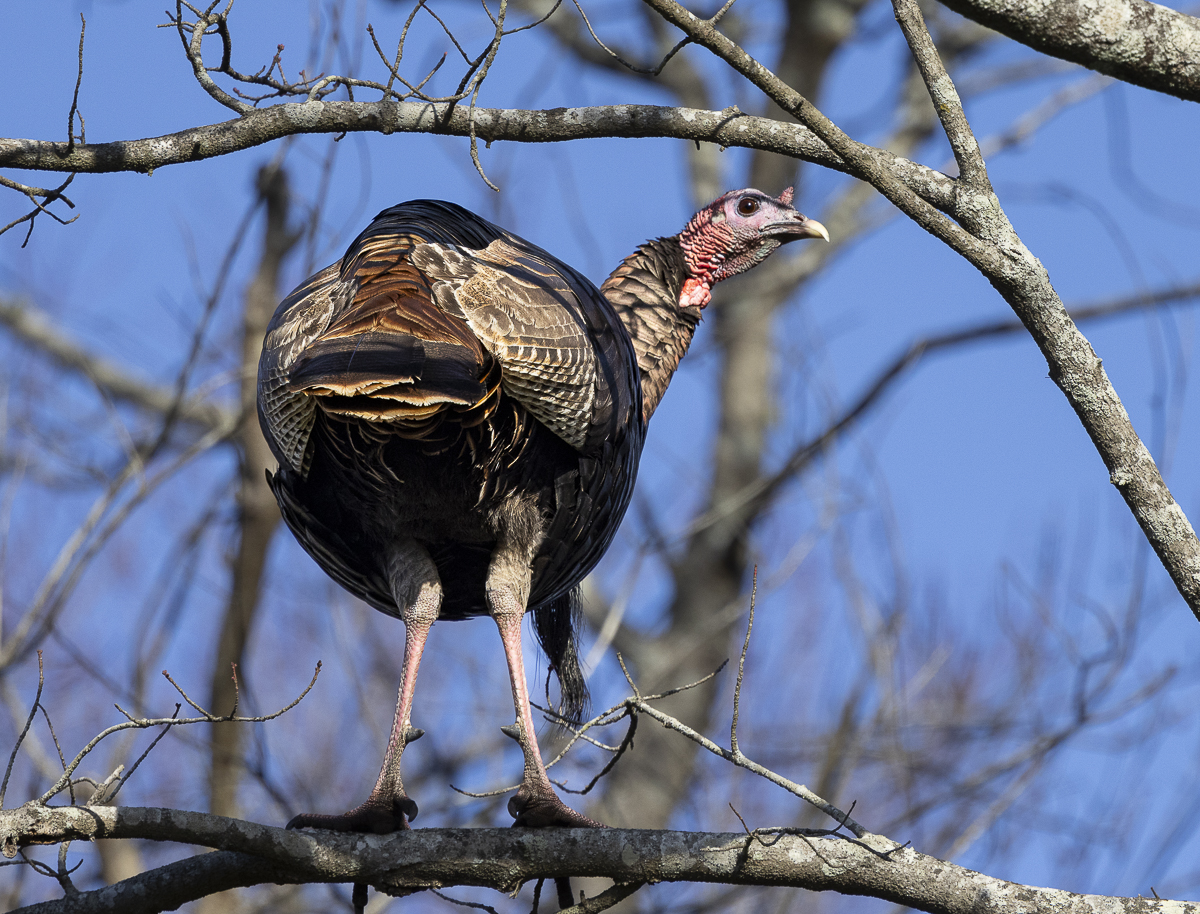
A Beaver slowly swimming in one of the roadside canals gives us a look before diving and moving beyond our vehicle (click photos to enlarge) At one point we had to stop for three gobblers walking in the road. They thought about flying across the canal but opted to fly up into some trees alongside the road instead
Another highlight (with no pics rom me unfortunately) was an American Woodcock strutting across the road in front of us. It rocked its body forward and back as it slowly walked seemingly slow dancing its way as it moved in front of our vehicle. One theory on this strange behavior is they may be exerting pressure on the soil as they walk which may cause their favorite prey, earthworms, to move, making it easier to sense them. But I think they just know they are cool and want everyone else to know that as well. Later, I saw a Wilson’s Snipe doing a slow walk with some body bobbing but not nearly as much cool foot action (see the video clip later in this blog).
We headed to Mattamuskeet and spotted several good birds right at the entrance including a Black-crowned Night Heron and a Least Bittern (sorry, no pics). An American Bittern and several species of waterfowl rounded out our species list at that refuge.
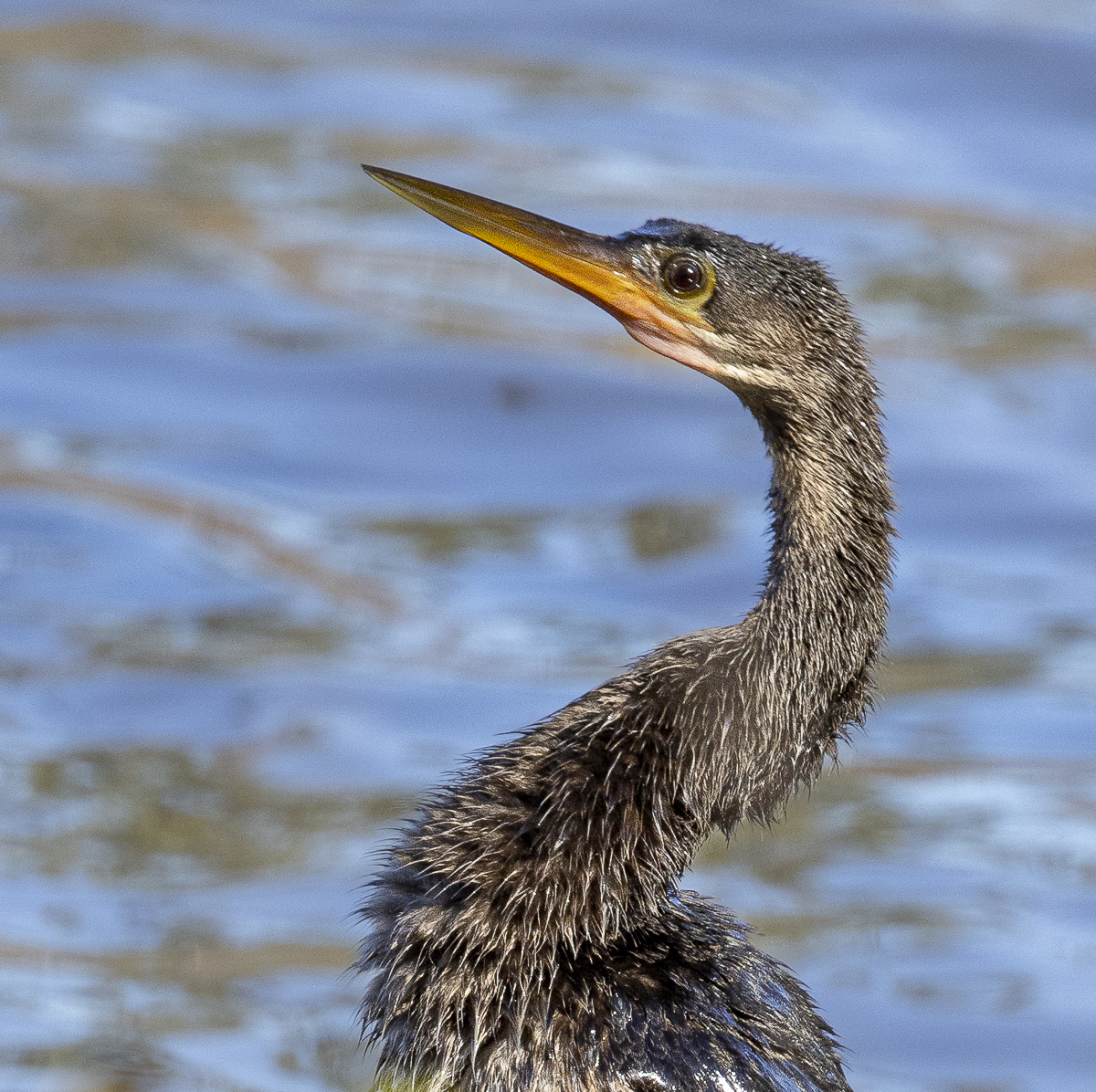
An Anhinga greeted us along Wildlife Drive at Mattamuskeet NWR
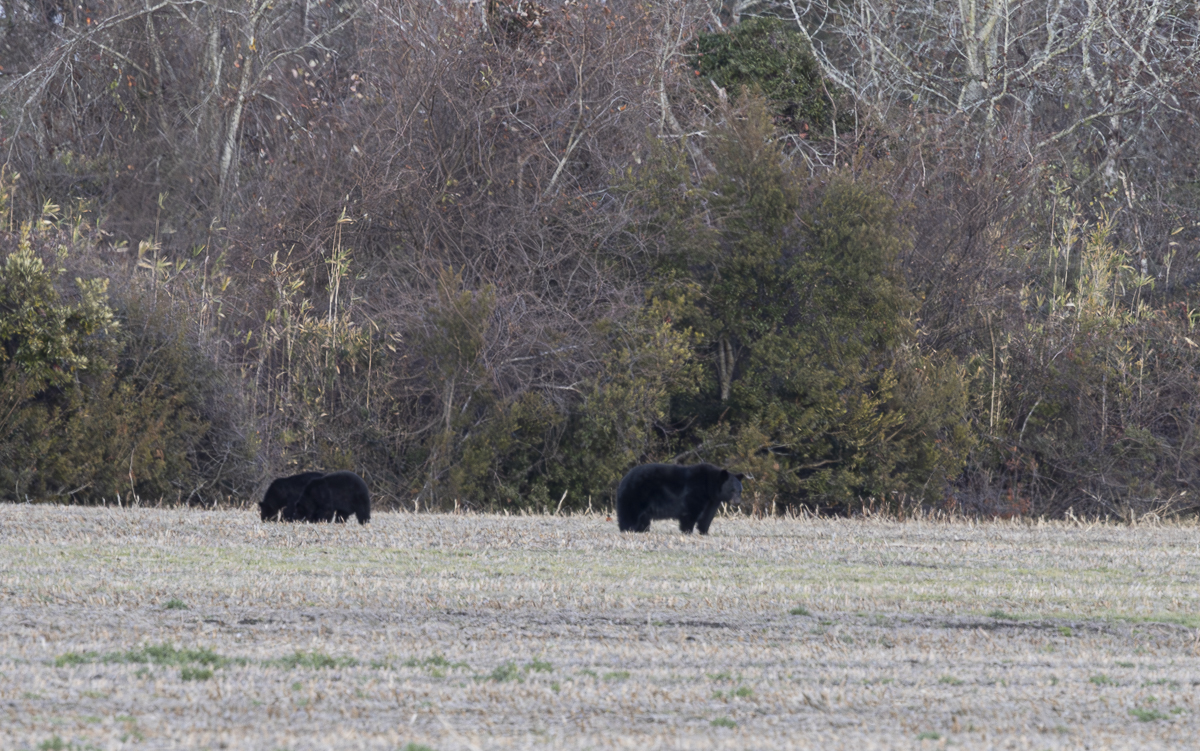
Sunset at the Pungo Unit did not disappoint. In addition to the Snow Geese and swans in the fields, we spotted three Black Bears coming out to feed.
A large sow and two young of the year cubs coming out at dusk to feed
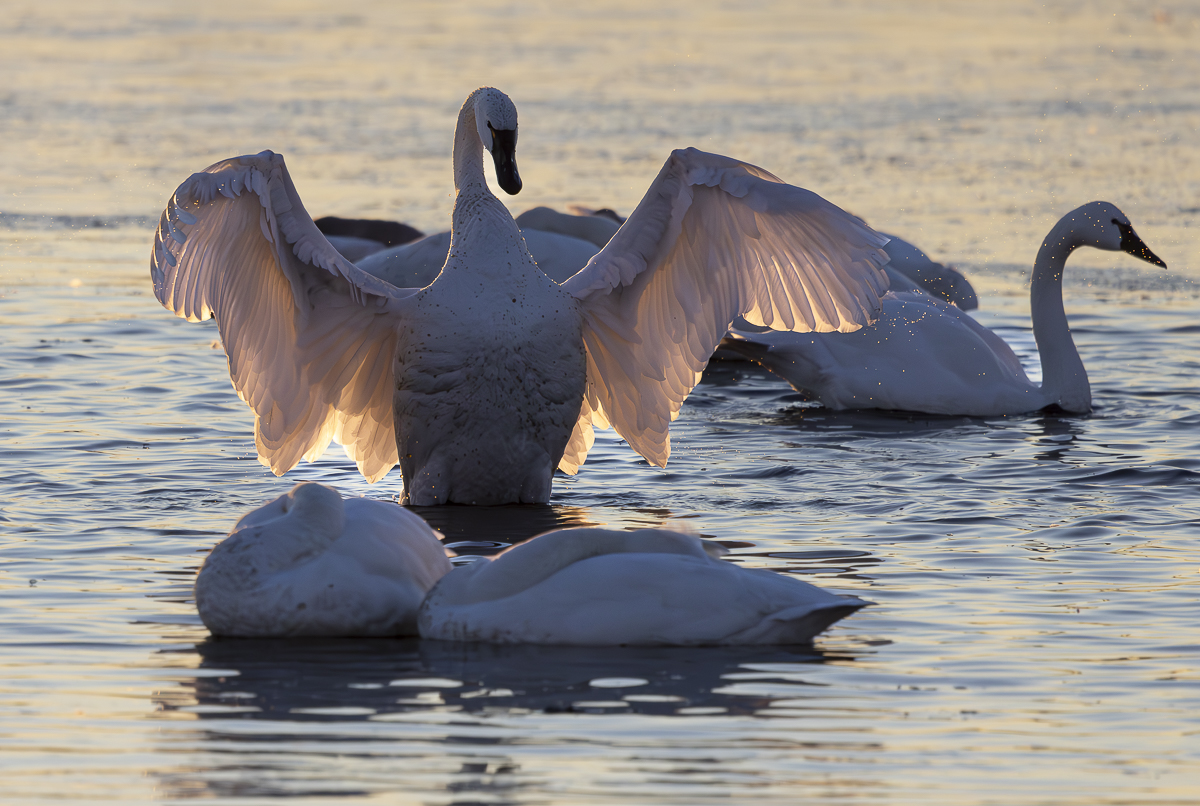
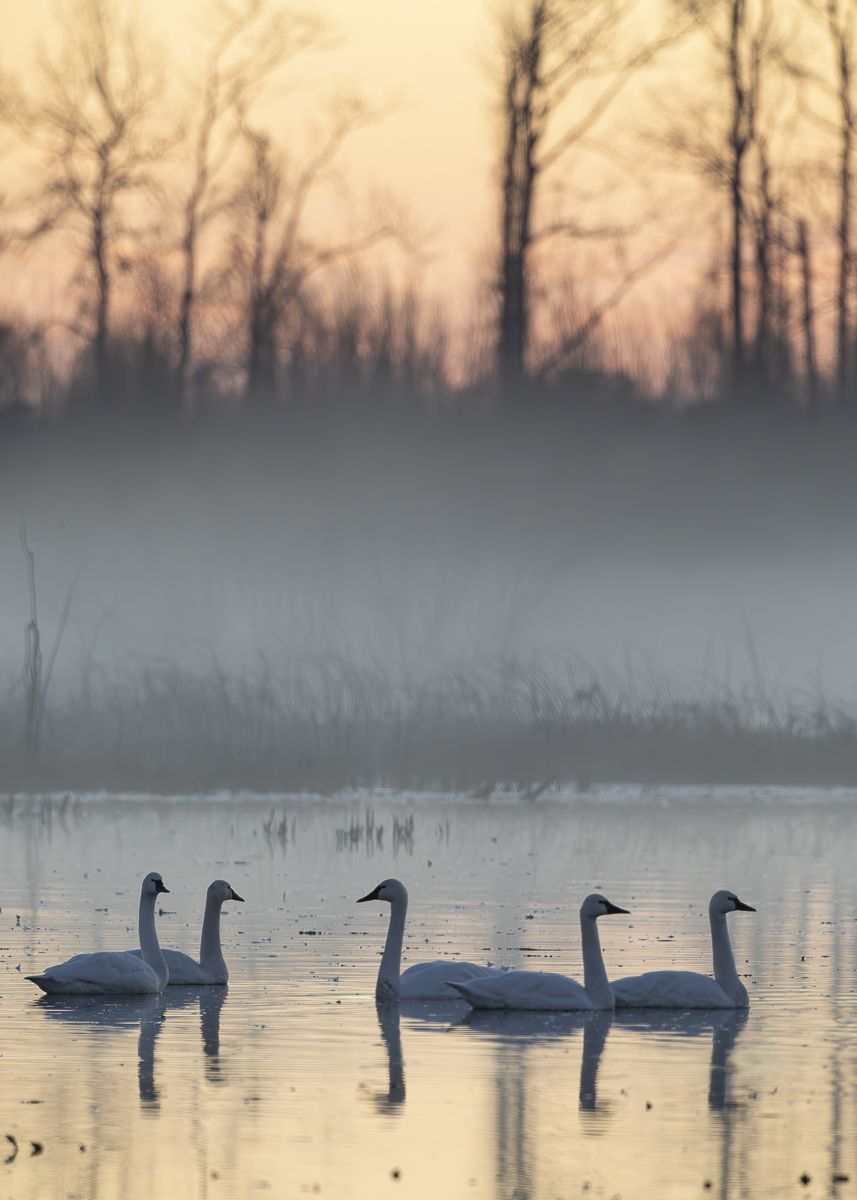
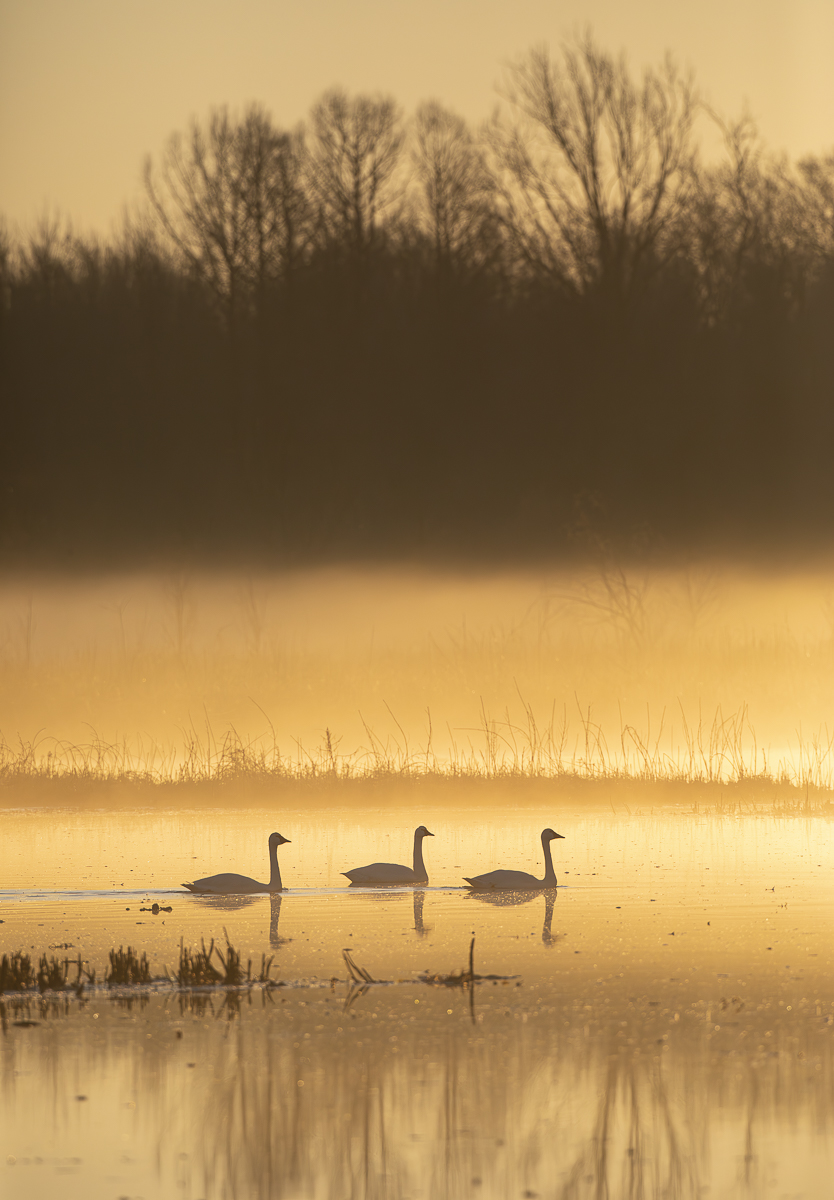
The next day was a Pungo day from sunrise to sunset. The soft sounds of swans as the pink and orange light of morning tints the sky is something I will always cherish about this place.
Soft light highlighting the wings of a swan at sunrise
There were a lot of other critters to observe besides the waterfowl and we spent the day looking at everything we could find while trying to stay warm in the van.
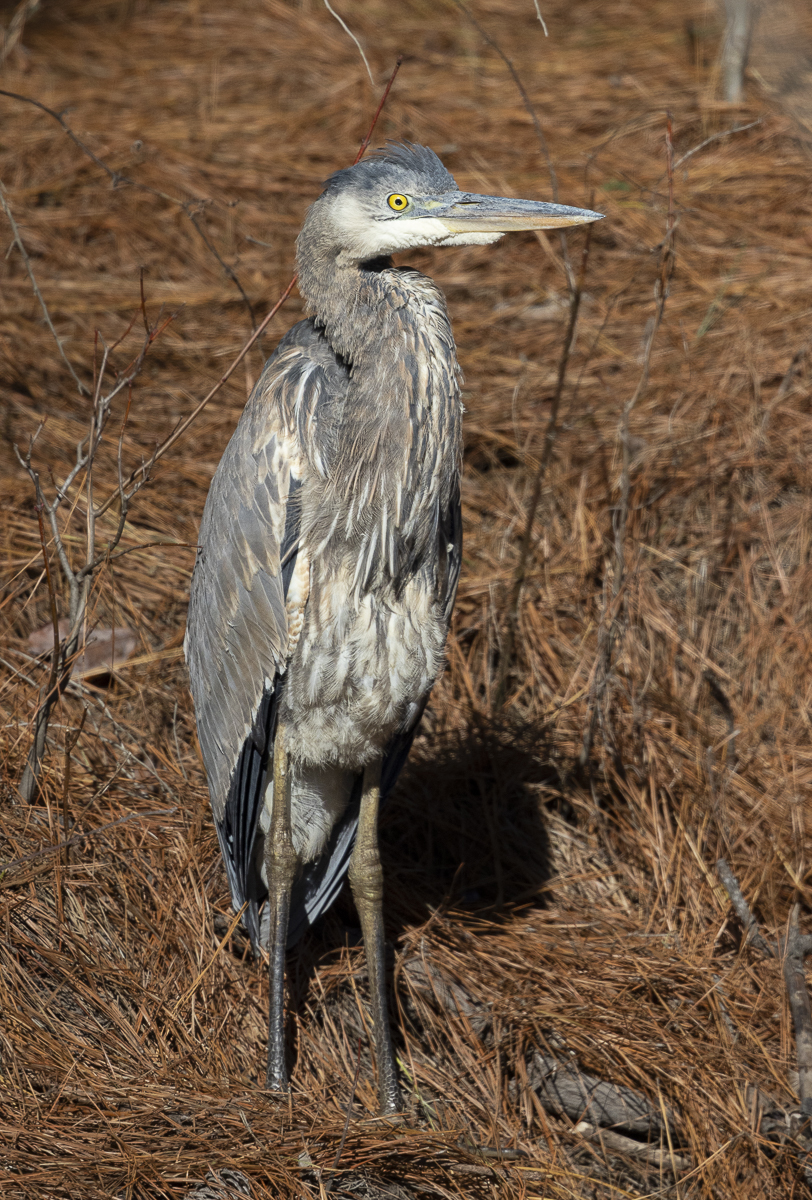
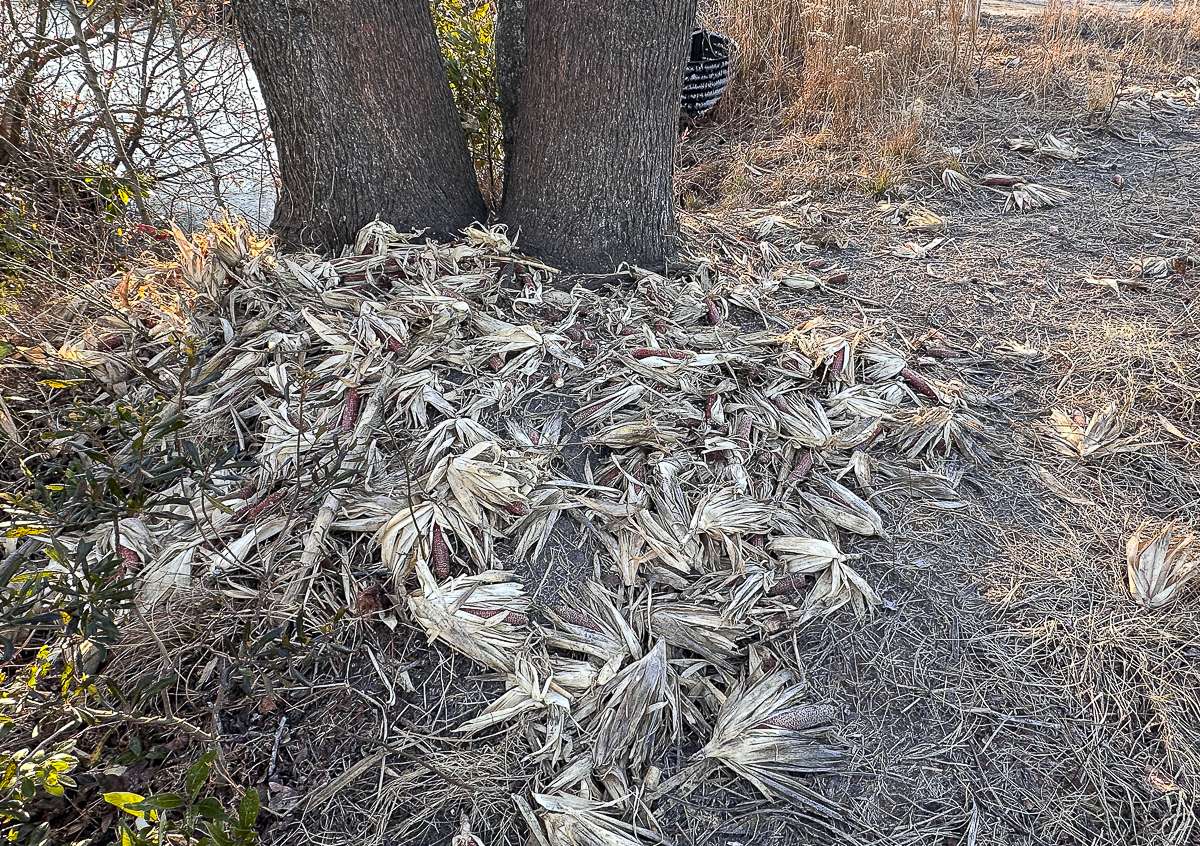
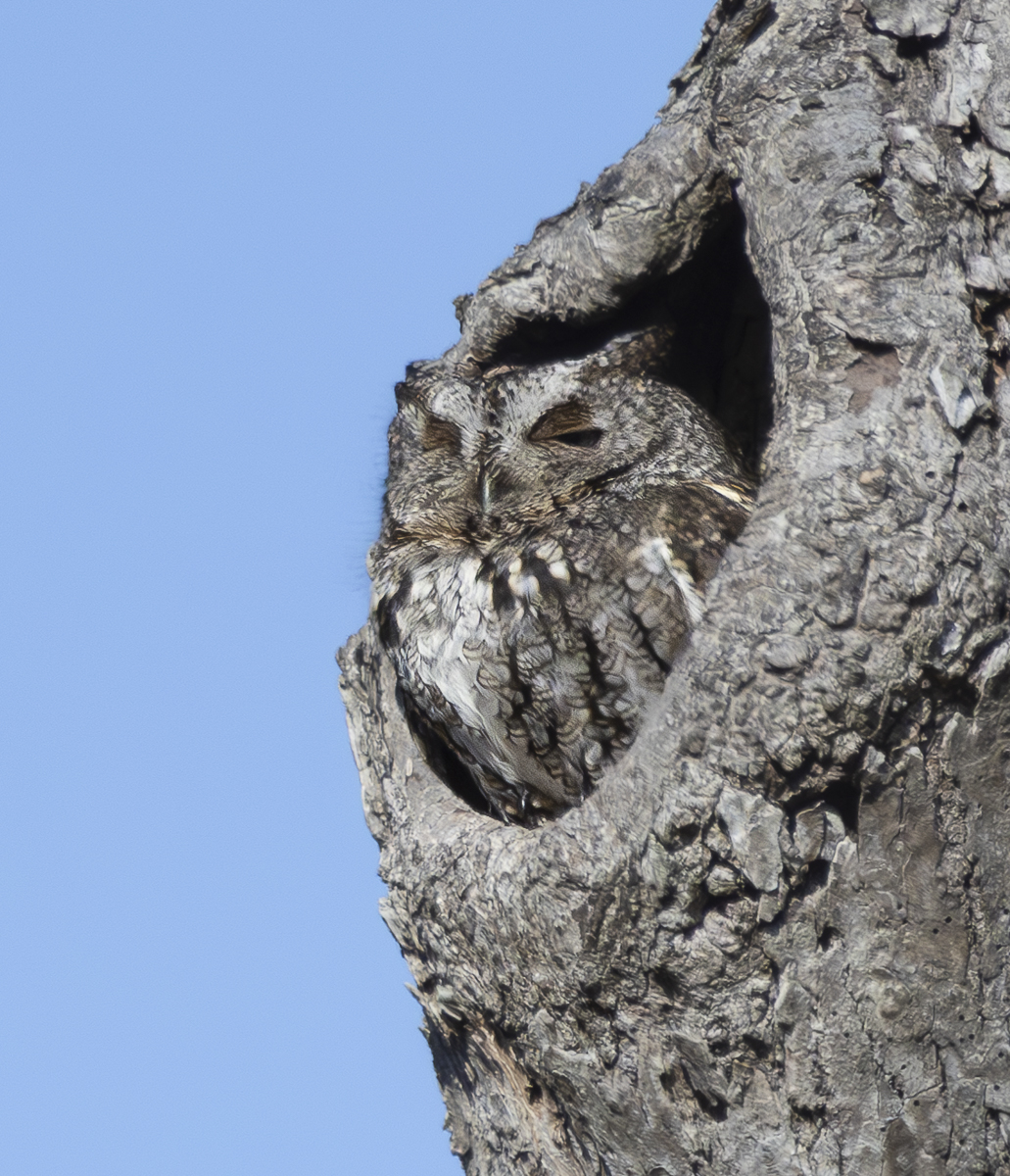
Juvenile Great Blue Heron soaking up some sun on a cold dayNear one of the refuge crop fields we discovered a bear dining hall. It looks like a bear (or bears) walked into the adjacent corn field and brought back ears of corn and even whole stalks to this one spot to dine. I have seen them do this before and a big bear will often lean against a tree trunk as it strips the kernels off the corn cob. We estimated there were at lest 90 ears of corn in this pile.The Eastern Screech Owl we saw on the Christmas count is still hanging out in its roost tree but gave us a little more of an appearance this time.
A highlight for everyone but me was a brief sighting of a canid while we were out walking. I was turned talking to someone and he pointed at something across the canal behind me. When I turned, I could hear it running away and all I saw was the River Cane swaying as the animal passed through. Everyone said it was a Red Wolf, though no one clearly saw the bright orange collar that almost all of the wolves now wear. Needless to say, I was bummed that I missed it.
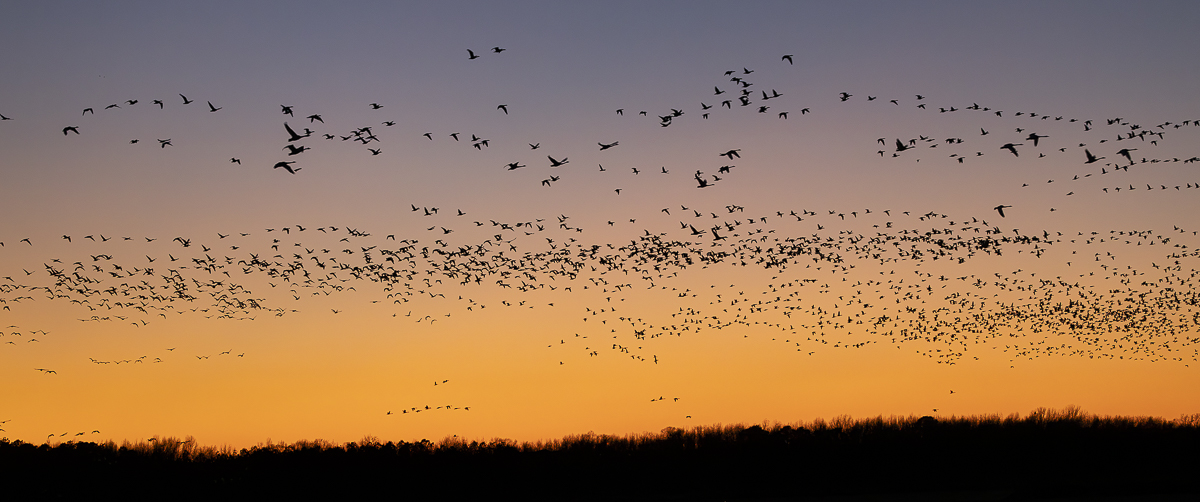
Sunset brought another grand display of birds in the sky above the fields.Tundra Swans flying back to the lake at sunset
On their finl day, with a very cold wind blowing, the group headed home a little early, leaving me to explore the refuge on my own. I slowly drove along the roads looking for any movement in the canals or adjacent trees.
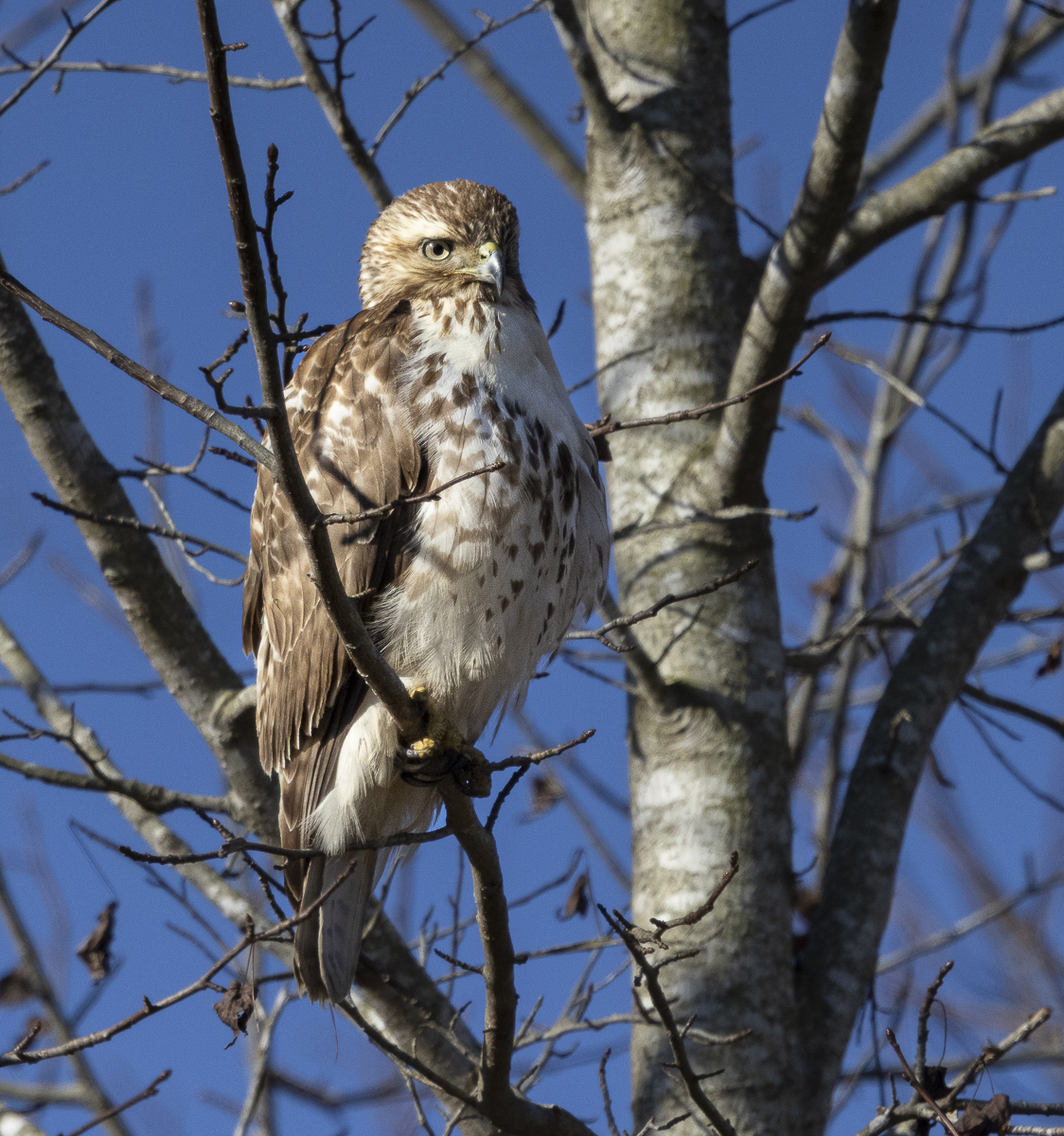
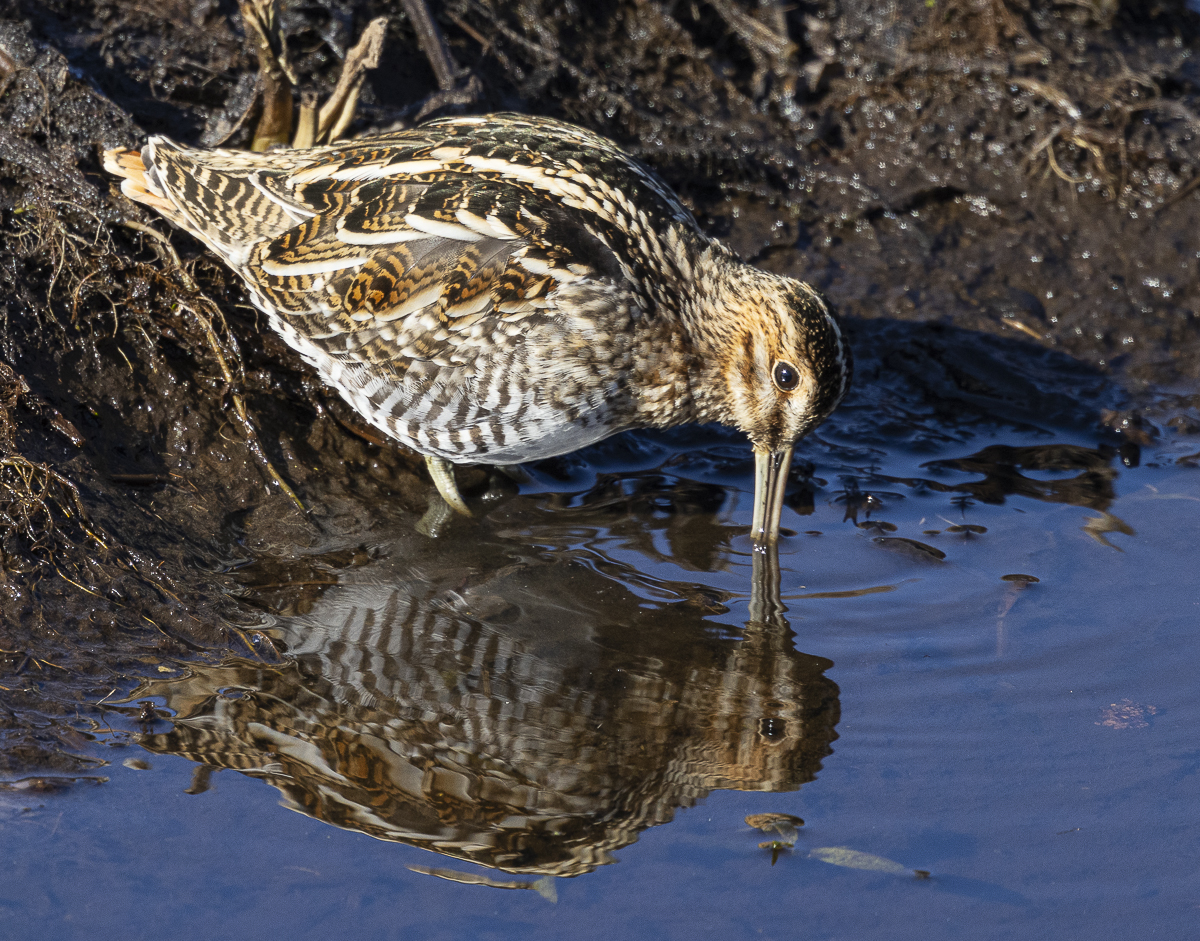
It started with a juvenile Red-tailed Hawk that was uncharacteristically cooperative. But why is it that most cooperative birds are always sitting in the “branchiest” shrub or tree in the area?A Wilson’s Snipe probing the mud along D-canal, searching for food.
I spent several minutes with this snipe, watching as it poked its long bill into the mud along the canal edge. As it moved from spot to spot, it often bobbed its body as it walked. Again, the most often stated reason why several species of birds do this bob and walk is to disturb their prey organisms underground, causing them to move and become easier targets to find and grab. But, whatever the evolutionary answer, it is fun to watch.
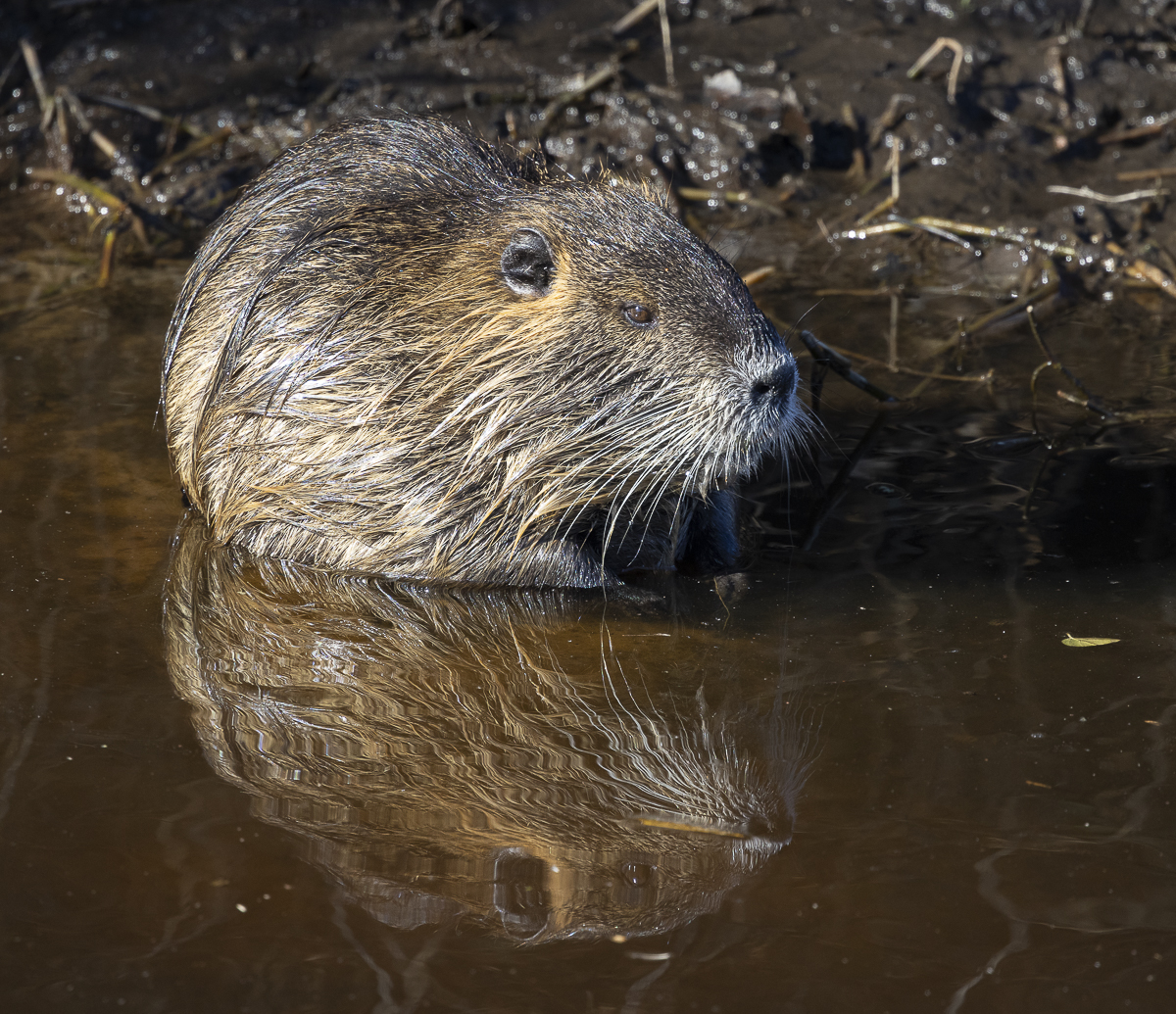
A Nutria (an introduced rodent from South America) lounges in the sun along the canal edge. People often mistake them for muskrats, beavers or otters. They swim much like a beaver, but have white whiskers and a rat-like tail. Though similar in general appearance, they are much larger than muskrats, and, again, the white whiskers distinguish them,. And otters are much more agile in the water, frequently diving and resurfacing as they swim.
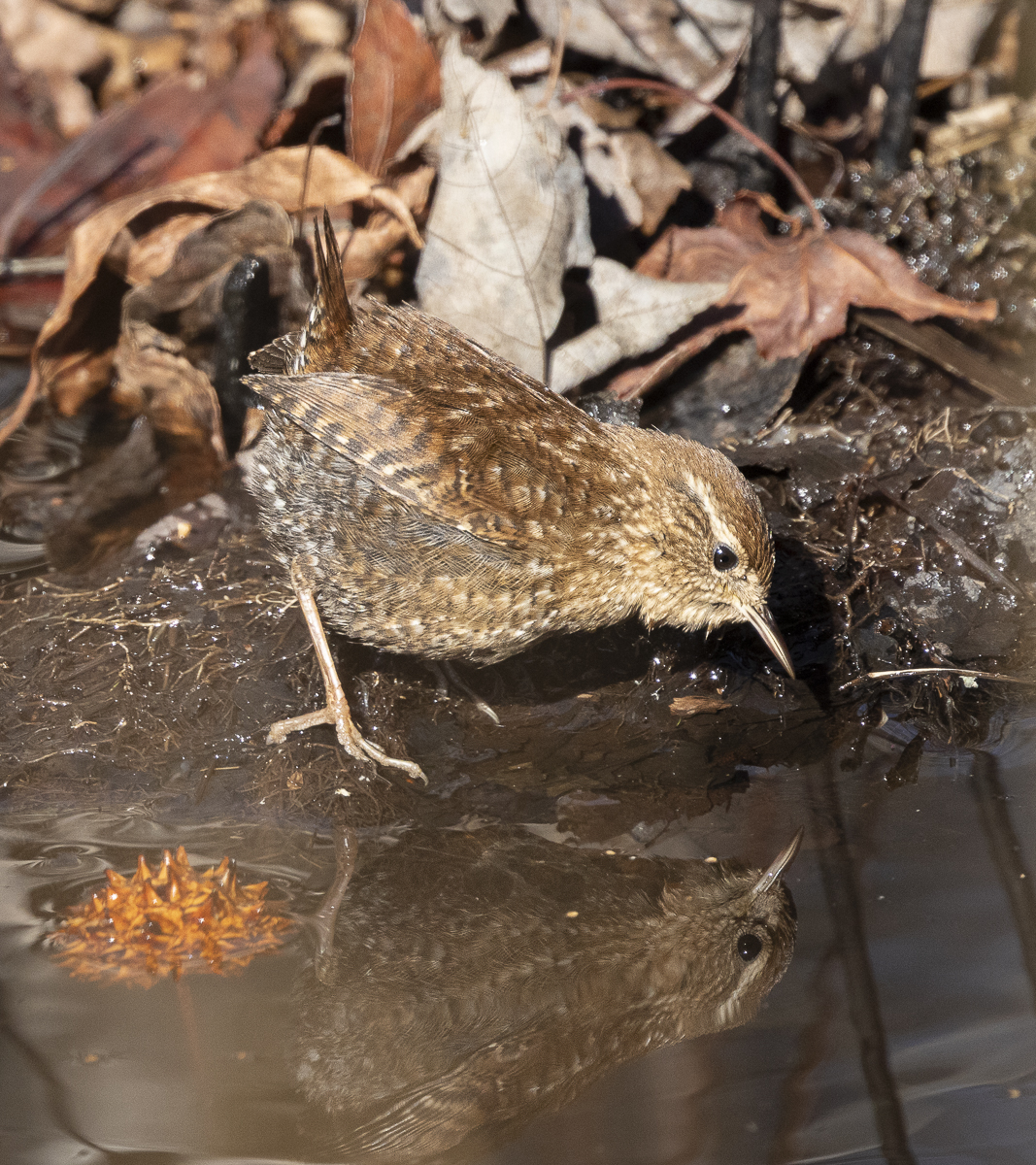
I stopped at a pullout for a lunch break and noticed some movement along a fallen tree next to the canal. It was a tiny bird playing hide and seek with me. Finally, I spotted it out in the open and grabbed a few images of the diminutive Winter Wren, our smallest wren.
A Winter Wren taking a break from foraging to admire its reflection
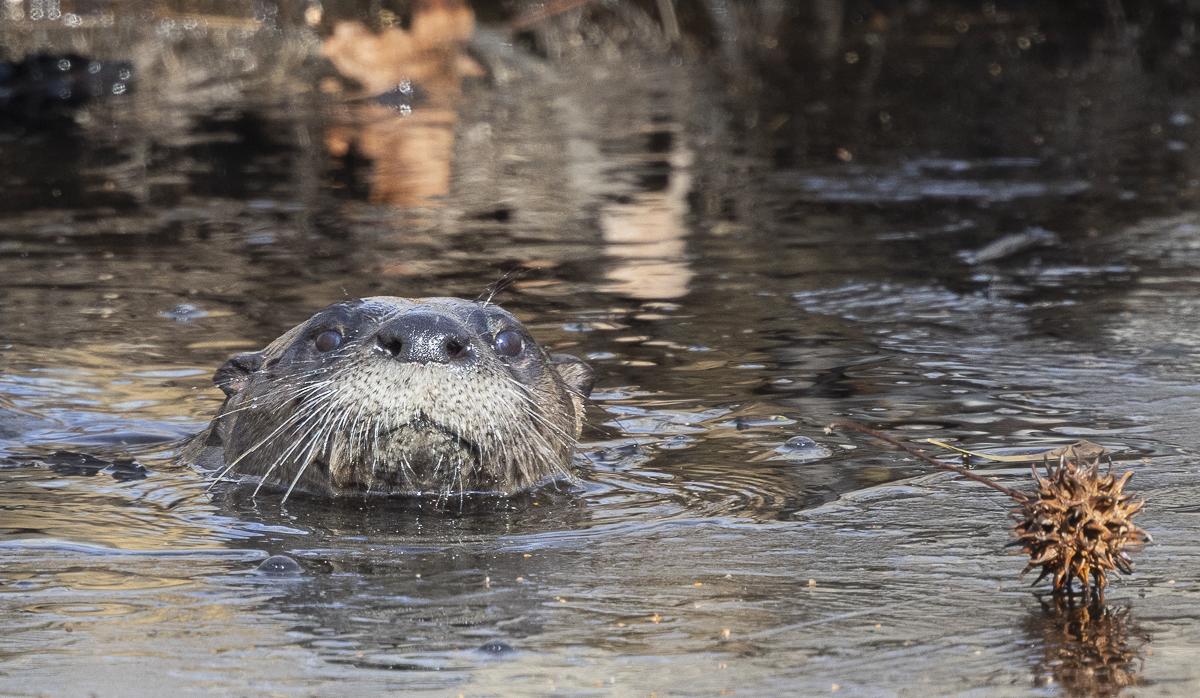
I got back in the car and started to eat my apple and peanut butter, making a mess on my hands as I crunched away. Naturally, since I had sticky peanut butter on my fingertips, I glance out the window and see two River Otters barely 15 feet from my car. I quickly wiped off my hands so I wouldn’t get goo on my new camera and carefully opened the car door. The otters responded by rising up, snorting and disappearing up the canal. The really cool thing was there was a thin skim of ice on the canal surface away from the sunny opening at the road so I could hear a sound like the crinkling of newspaper every time an otter surfaced. I walked along the trail, listening for the crinkle sound, and finally saw one of the otters hiding in a small patch of open water. I took a few photos and left them to continue their way up the canal.
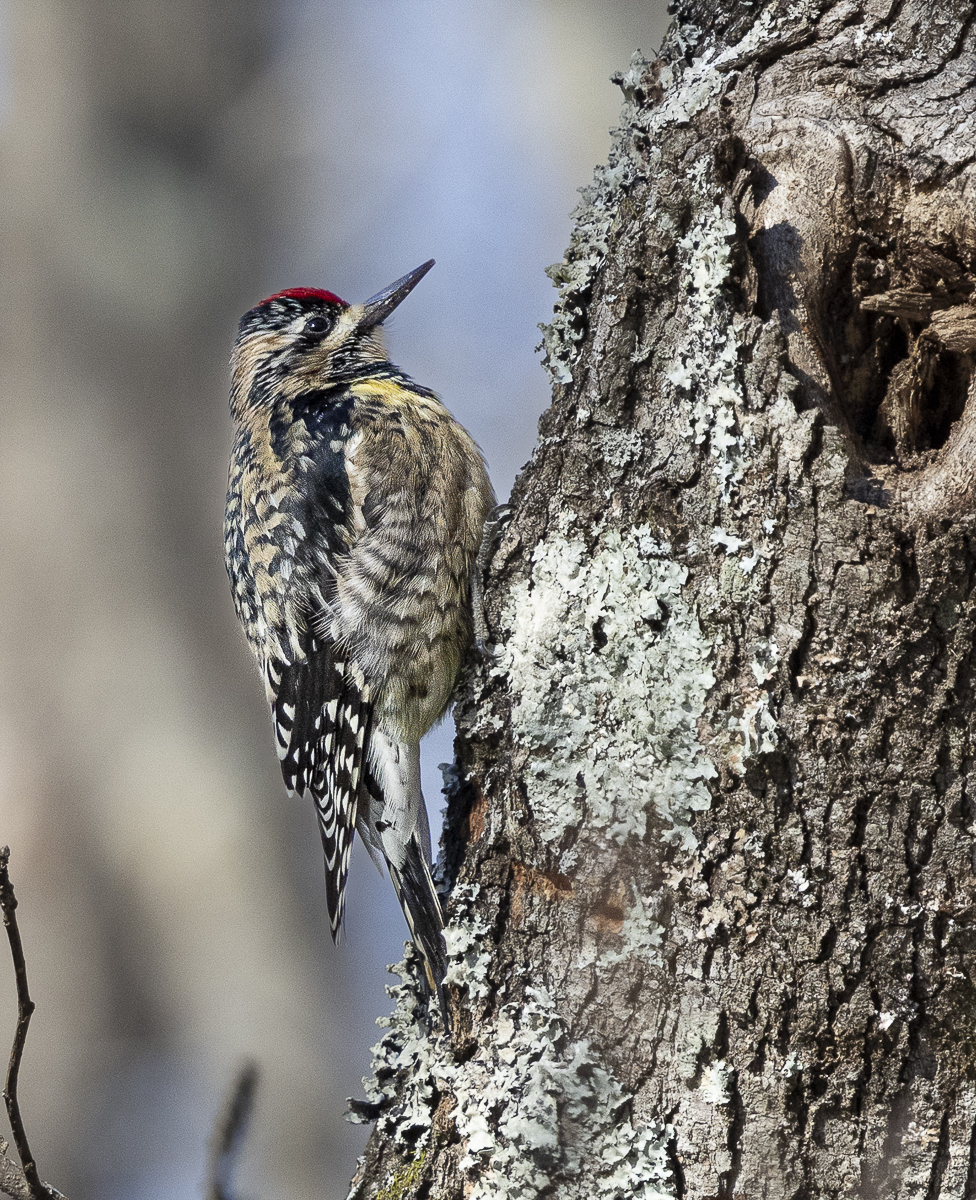
An otter keeping an eye on me from an opening it created in the skim of ice on the canalA mewing call alerted me to this Yellow-bellied Sapsucker working on a tree (note the sap wells it had drilled just to the right of its tail).
Late in the day I took a walk along West Lake Road (the section that has been closed to vehicles). I had seen some snipe and yellowlegs fly down into the grasses at the far end of Marsh A and wanted to check it out.
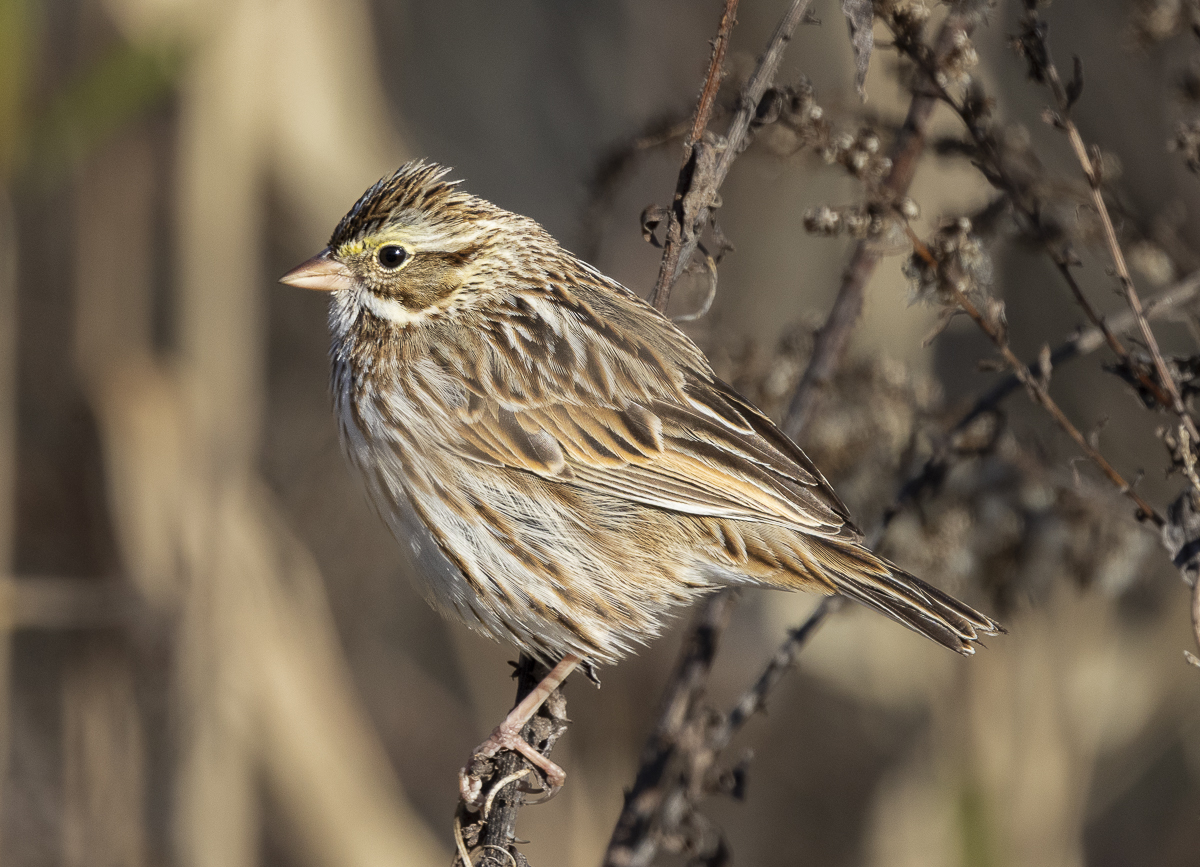
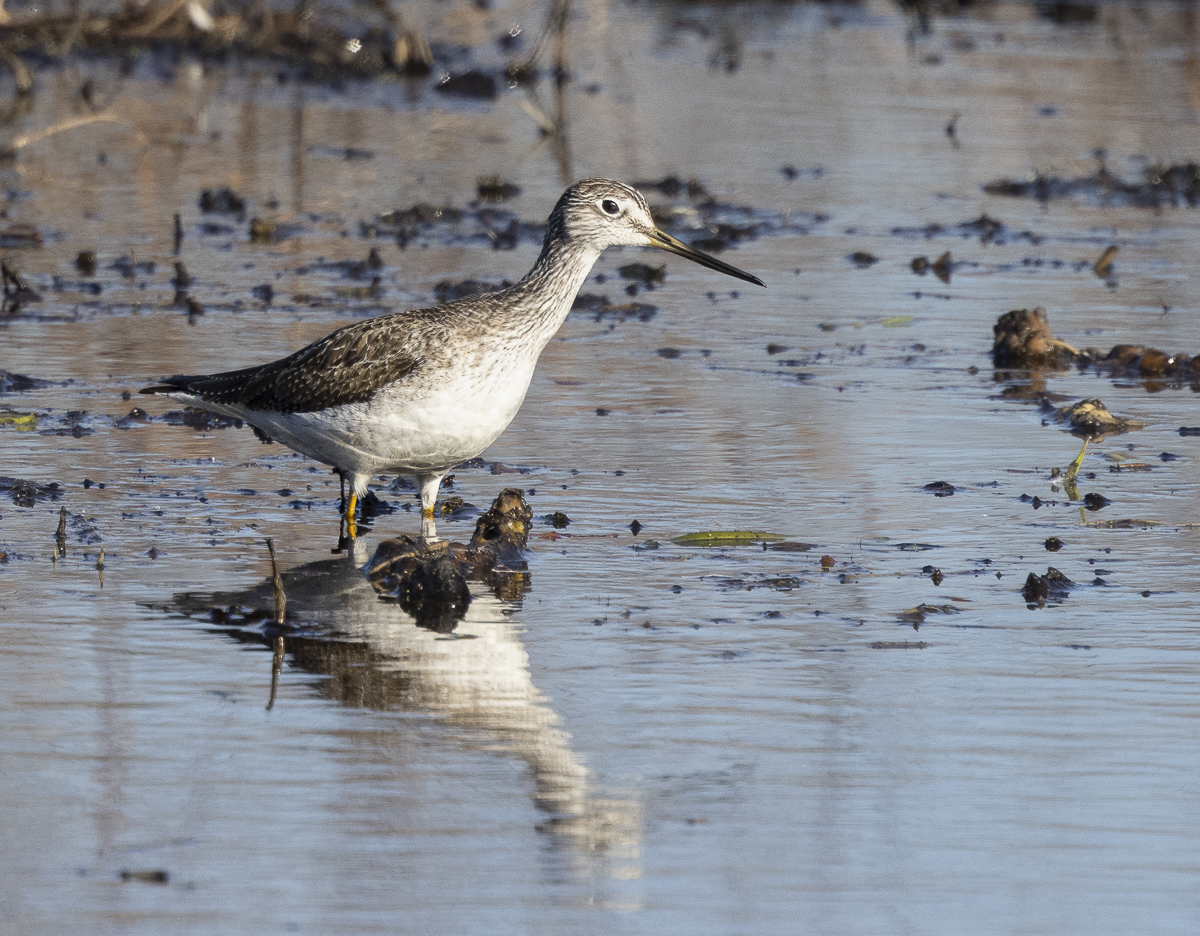
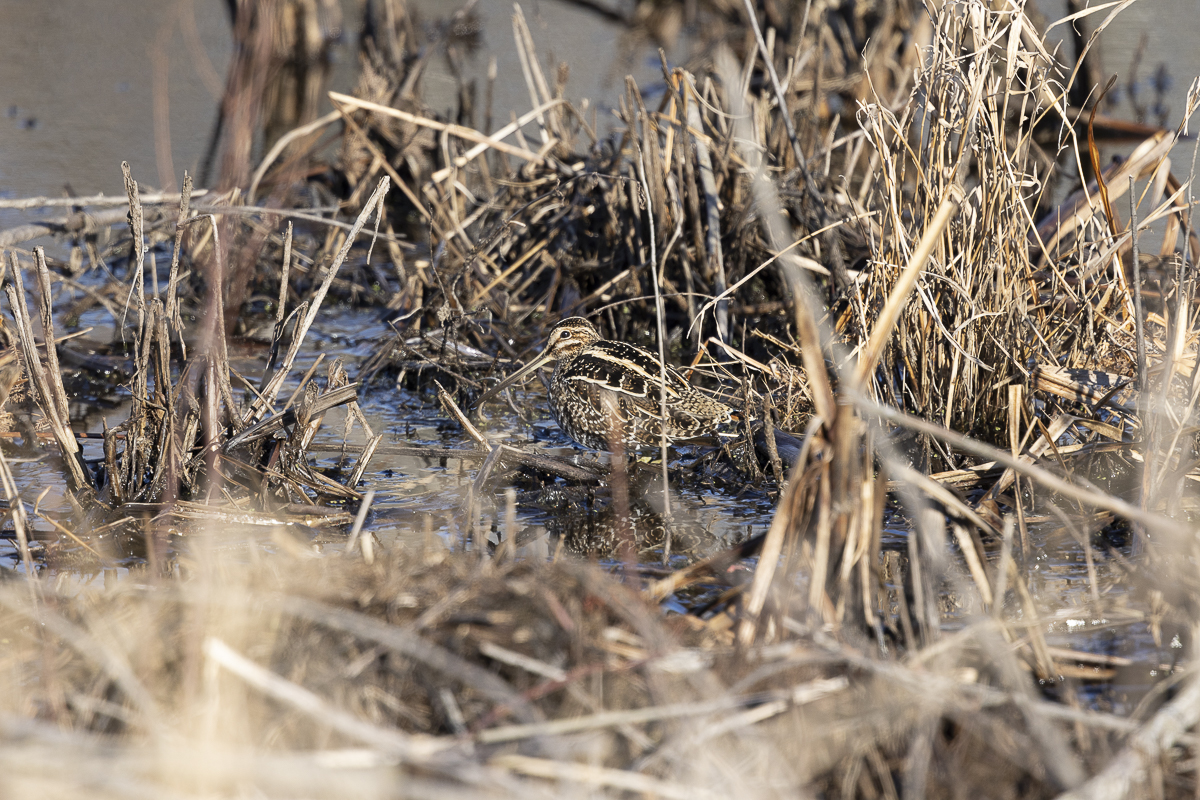
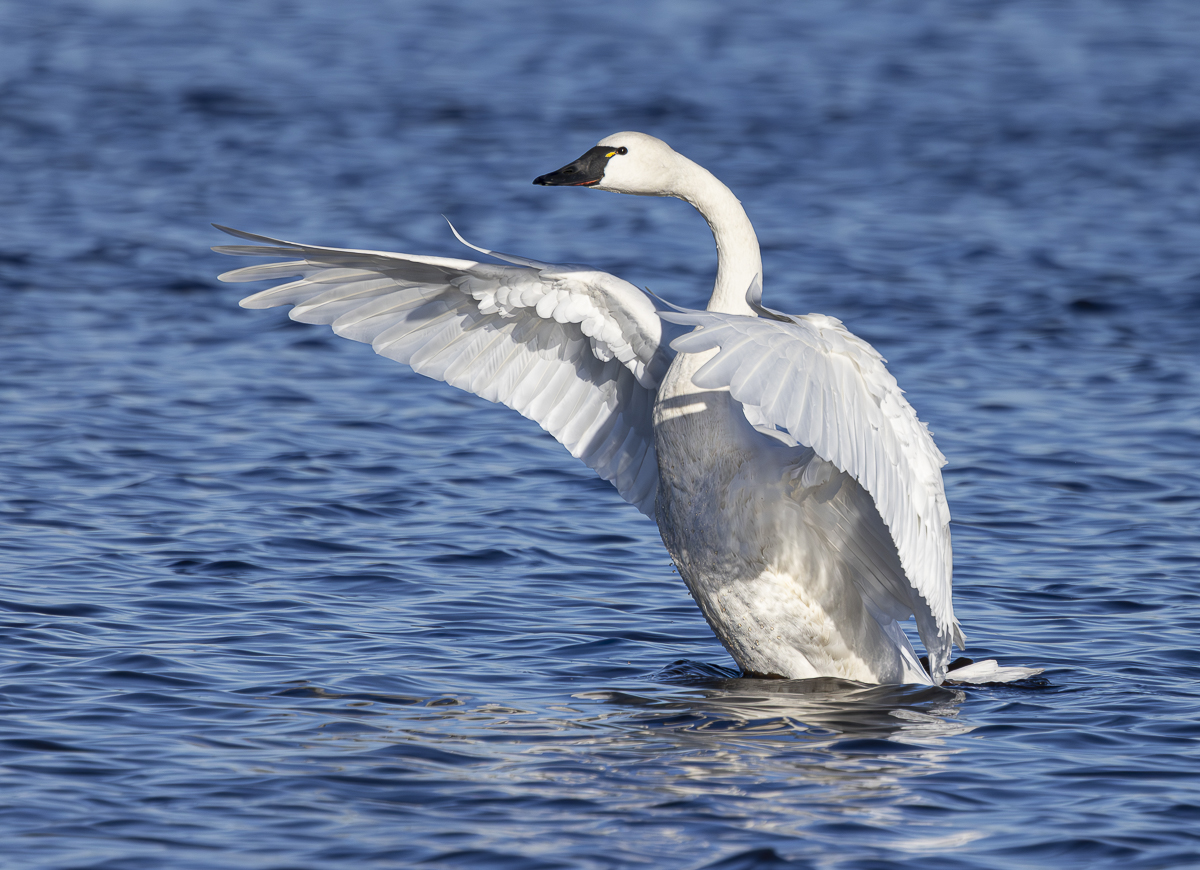
Several Savannah Sparrows jumped up from the short grass along the road as I walked A Greater Yellowlegs feeding in the shallows. I usually rely on their 3-note calls to distinguish them from Lesser Yellowlegs (they have a 2-note call)A pic showing how well snipe blend into the marsh grassesI can’t resist taking pics of swans doing the wing flap
As sunset approached, I headed up to the front fields hoping the Snow Geese would fly in and put on one last show for me. When I arrived, I was amazed at how many Tundra Swans were out in the fields, the most I have seen this winter. That was a good sign as it seems the Snow Geese like to land in the same fields where the swans are feeding. It wasn’t long until I saw the waves of birds on the horizon, headed my way.
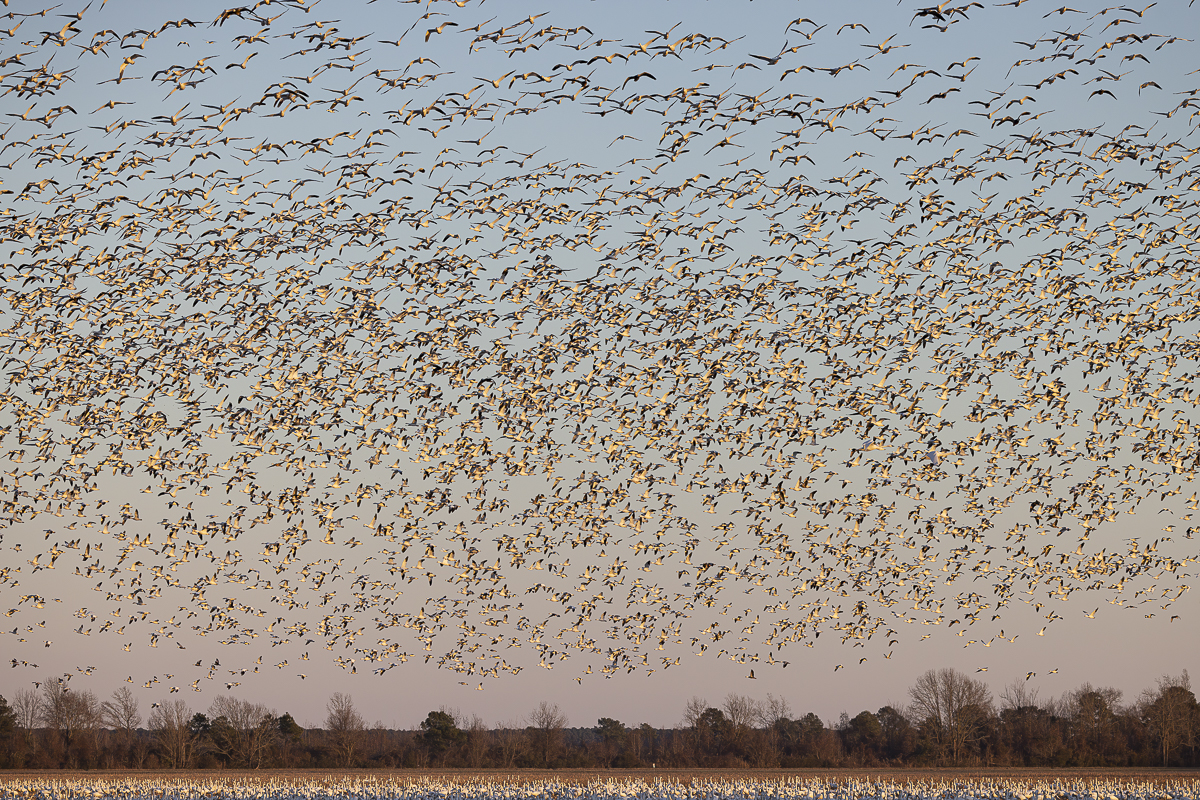
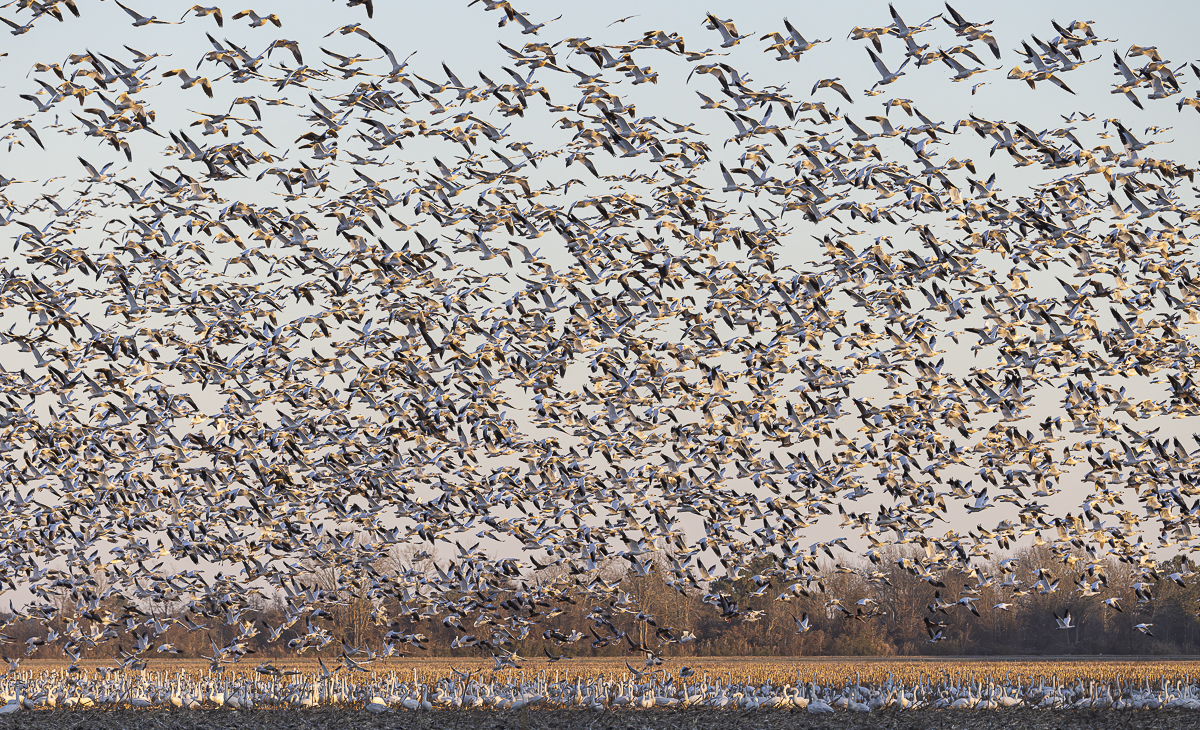
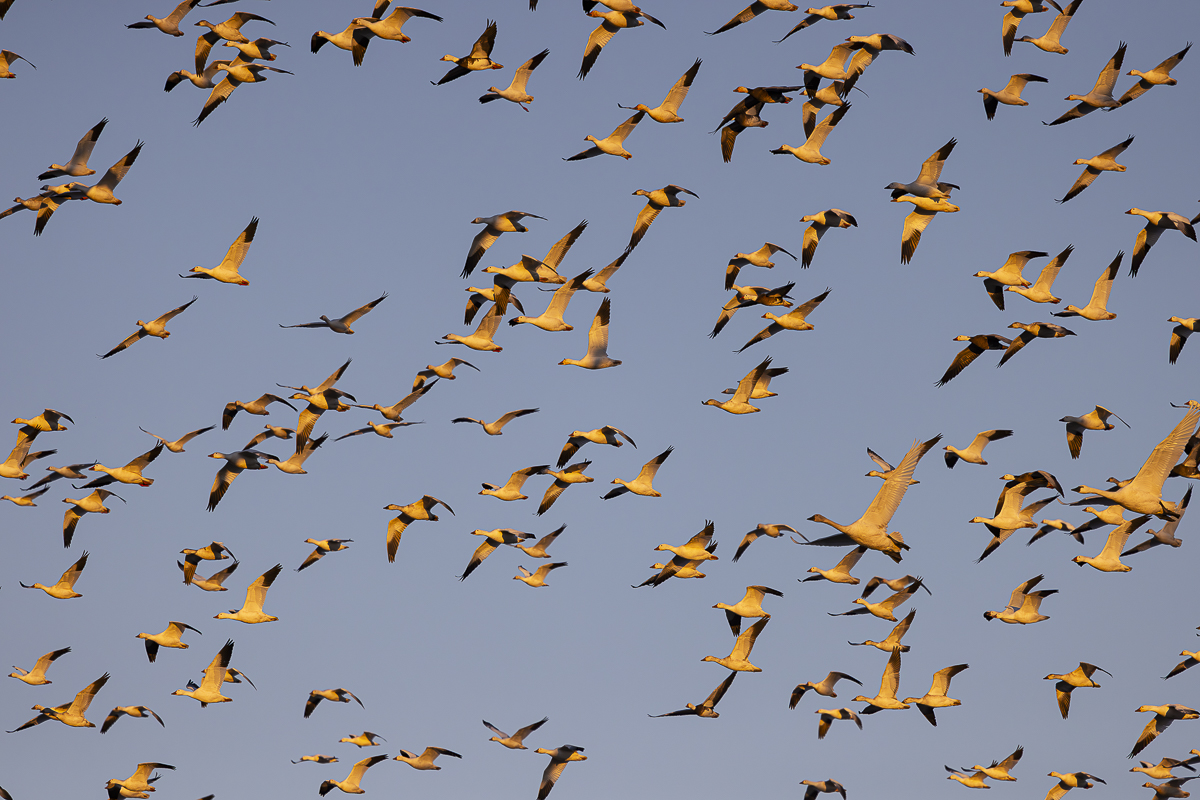
Snow Geese circling the field several times before starting to landOne of several blast-offs by the Snow Geese for unknown reasons. If a Bald Eagle flies over, the flock will blast off, but I saw nothing this afternoon that could have spooked them. I just don’t understand the energetics of this species.The low angle light added a golden tone to the birds as they flew over.
The huge flock of Snow Geese finally takes off and heads for the lake, the end of an amazing day of sights and sounds on the Pungo Unit.
I’m afraid this is a longer than usual post but it is also one of the last times I may spend time in what has been an amazing place for me over the past 45 years. I have had countless encounters with the wildlife of this region from Bobcats and Bears to huge flocks of Tundra Swans and Snow Geese. I have had the privilege of sharing the magic of our wildlife refuges with literally thousands of people over that time. And I have had special solo moments of just myself and the landscape and the animals that call it home. The natural soundscapes will always be one of my most powerful memories of this region, especially of Pungo. What helps me through this loss of place is that we will be living in another land of wildlife and natural sounds. It is the only place that rivals my love of these North Carolina sacred lands – it is Yellowstone. I hope you all find your special places and visit them often to renew your spirit and your soul. It is a gift we all need to give to ourselves and to those we love. A huge thank you to those that created and those that manage and protect our public lands.
The last time you’re doing something – knowing you’re doing it for the last – makes it even more alive than the first.
~Gloria Naylor
This week we headed down to the Pungo Unit of Pocosin Lakes NWR for our annual Christmas Bird Count (CBC). As best as I can remember, I have been doing this count since its start in about 1985 when my good friend, Paris Trail, and I teamed up with then Pettgrew State Park superintendent, Sid Shearin, to create an Audubon Christmas Bird Count circle centered on the park. The 15-mile diameter circle extends into the Pungo Unit and I was given that as my part of the circle to cover for the count. I have been there for almost every one of the counts since in all kinds of weather and with the help of a variety of friends over the years. This year, Melissa and I were joined by a cadre of 4 friends, all excellent birders, so we anticipated a great count total. We rented a local Airbnb adjacent to the refuge for two nights to make things easier. And the weather cooperated in spectacular fashion with sunny skies and pleasant temperatures. Here are some of our highlights…
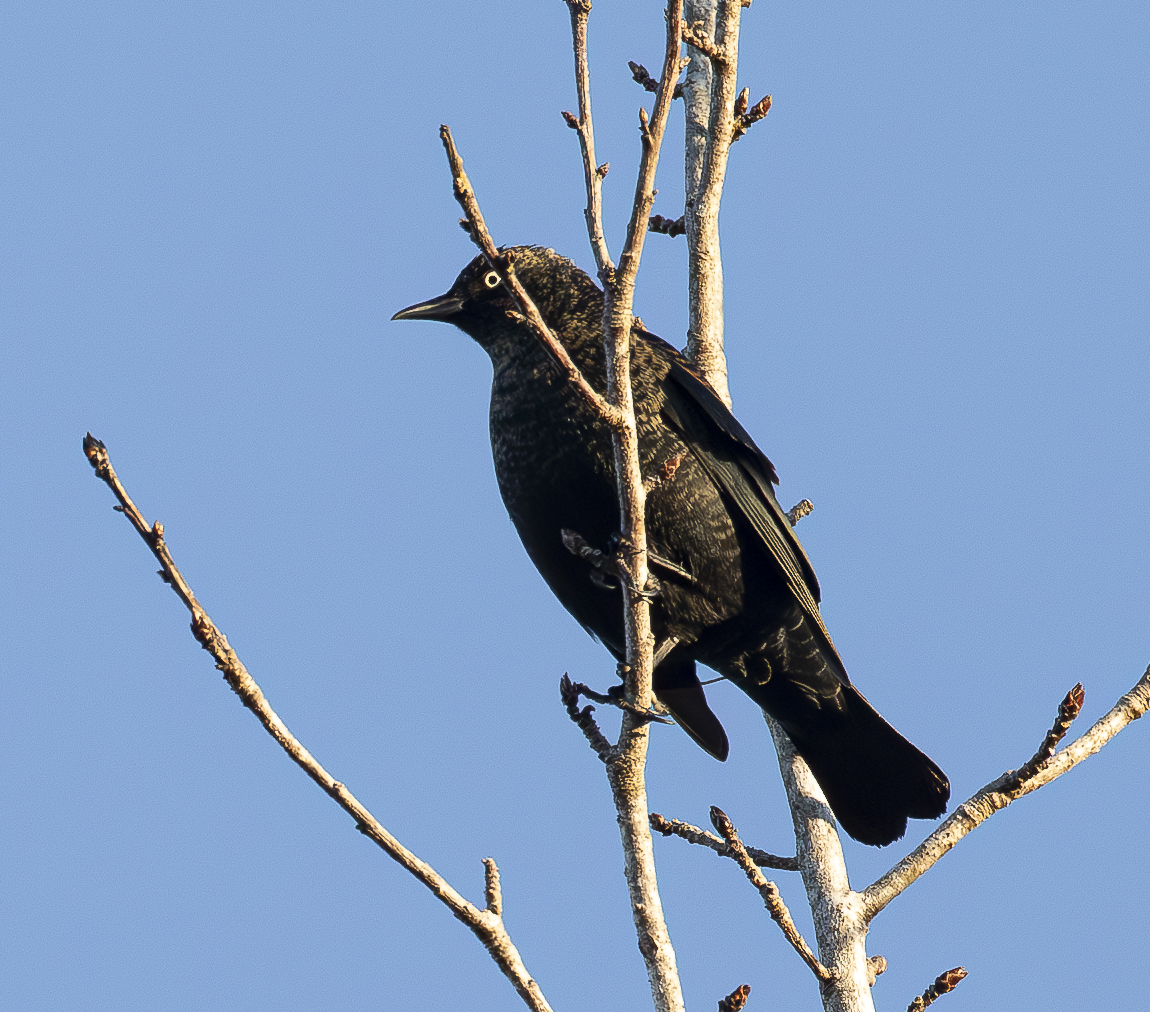
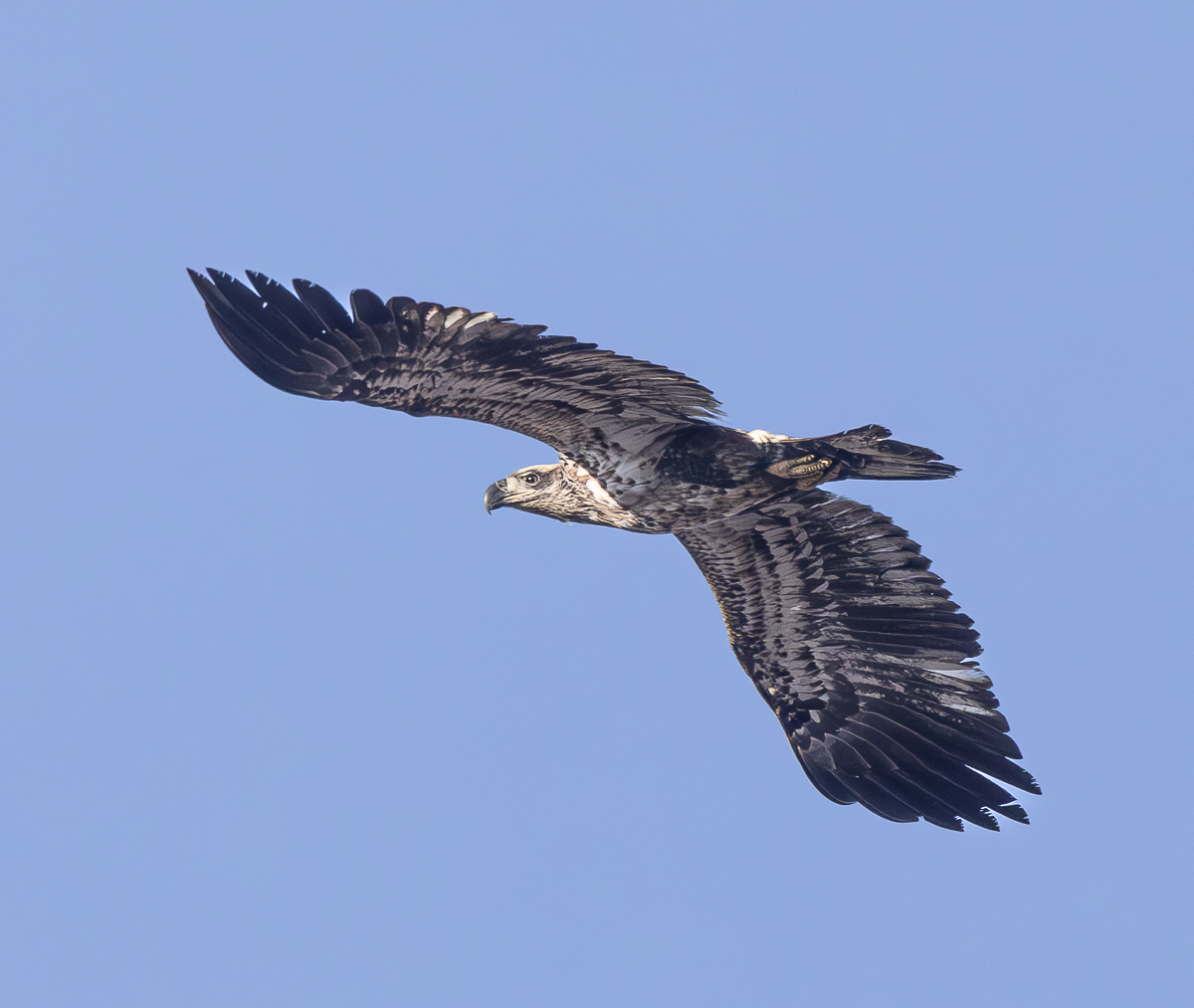
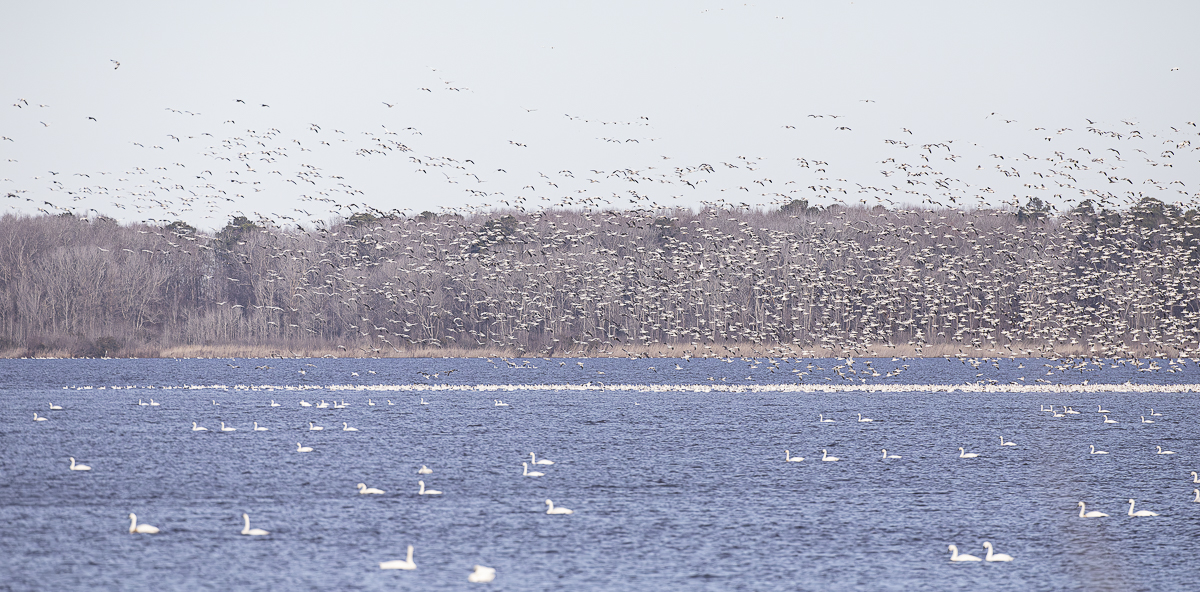
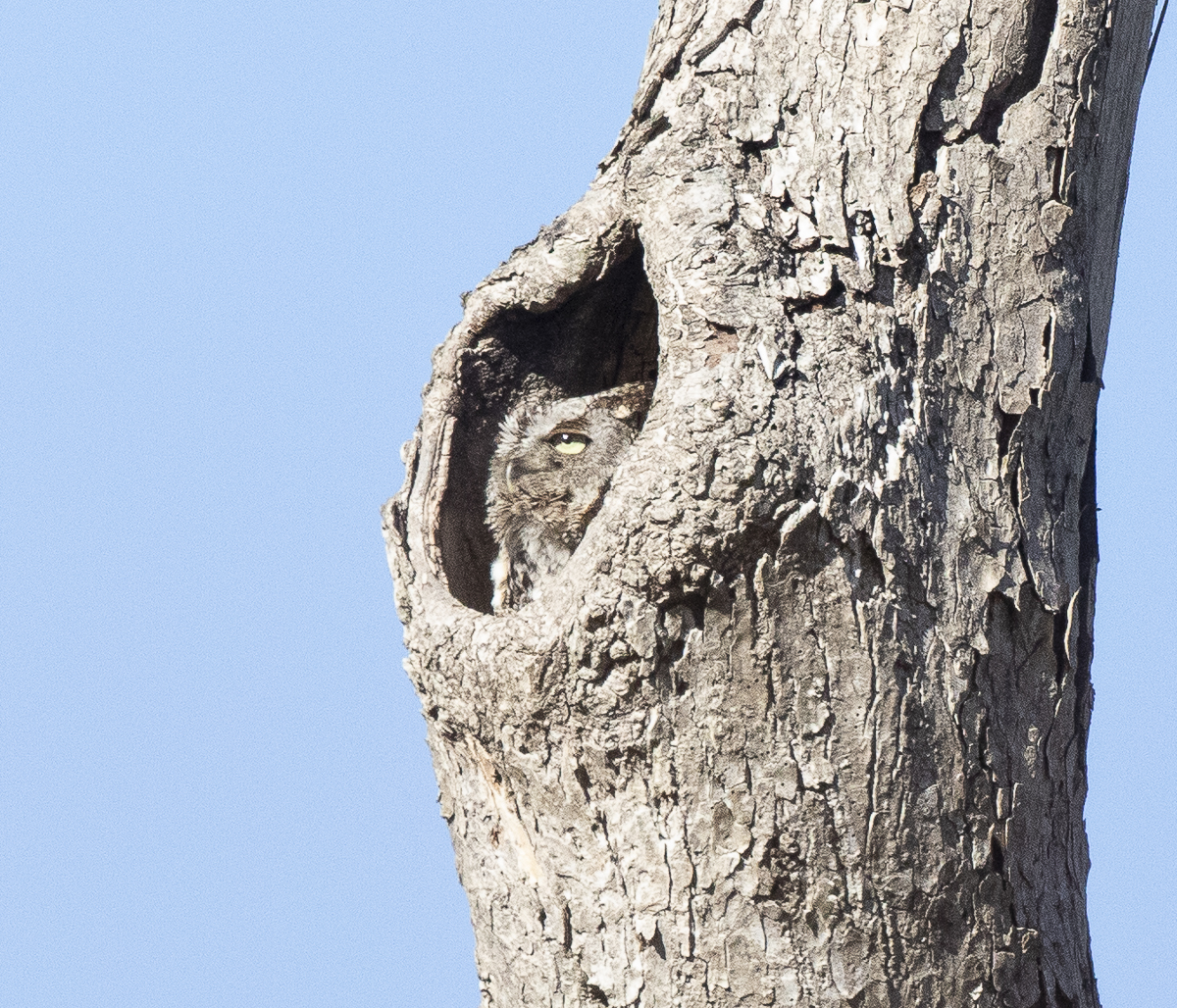
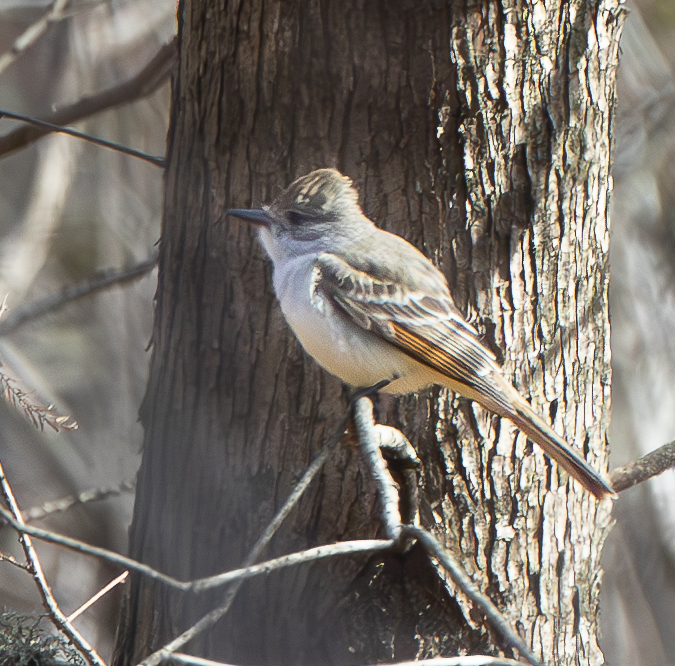
One of over a hundred Rusty Blackbirds we saw on the CBC this year (click photos to enlarge)It was a good year for spotting Bald Eagles like this juvenile flying by and giving us the eyeThe calm winds meant waterfowl was spread out across Pungo Lake. The Snow Geese were uncharacteristically close to the middle of the lake making viewing a blast off much betterAfter flying around a few times, the Snow Geese started to settle back into their dense line of white on the lakeWe had three screech owls calling but only this little guy was seenThe rare bird of the day was this Ash-throated Flycatcher, one of 5 seen in the count circle. This is a western species, breeding from Washington to Texas and they usually migrate in winter to Mexico with occasional strays in the east. Prior to 2005, they were viewed as accidental in NC. Since then, they have been seen almost annually, mainly near the coast at places like Alligator River and Pocosin Lakes NWR.
The day after the count we traveled at a more relaxed pace, enjoying the beauty and serenity of a Pungo sunrise with the swansThe shift to colder temperatures caused a nice layer of mist at sunrise
This is the 125th year of the Audubon Christmas Bird Counts, the oldest citizen science program in the world. Data from these counts has proven valuable to scientists studying all sorts of issues related to bird abundance and distribution. It has been a privilege to be a small part of such a wonderful program. With our upcoming move to Gardiner, Montana, I don’t know if this will be our last CBC here or not . Melissa’s family is in VA so there is always a chance we could come down for a count day, but who knows. I will look into joining the Yellowstone CBC based in Gardiner, but holiday travel to the east coast may prohibit that (last year that count recorded 23 species – quite a difference!). If this is my last one at Pungo, it will be remembered as a great day spent with a group of excellent birders and friends in a place we all love.
Species observed in our section of the Pettigrew CBC
Snow Goose (8000); Ross’s Goose (9); Tundra Swan (9000); Gadwall (1000); American Wigeon (800); American Black Duck (120); Northern Pintail (630); Green-winged Teal (2000); Ring-necked Duck (300); Canada Goose (300); Wood Duck (1); Blue-winged Teal (4); Northern Shoveler (30); Mallard (90); Hooded Merganser (7); Ruddy Duck (1); Sandhill Crane (22); Great Blue Heron (8); Wilson’s Snipe (150); Killdeer (126); American Woodcock (4); Greater Yellowlegs (6); Ring-billed Gull (250); Mourning Dove (148); Black Vulture (5); Turkey Vulture (27); Sharp-shinned Hawk (2); Northern Harrier (5); Bald Eagle (14); Red-shouldered Hawk (1); Red-tailed Hawk (4); American Kestrel (4); Eastern Screech Owl (3); Great Horned Owl (2); Belted Kingfisher (4); Yellow-bellied Sapsucker (9); Red-bellied Woodpecker (13); Downy Woodpecker (14); Hairy Woodpecker (1); Pileated Woodpecker (4); Northern Flicker (18); Ash-throated Flycatcher (1); Chipping Sparrow (1); White-throated Sparrow (70); Savannah Sparrow (35); Song Sparrow (40); Swamp Sparrow (30); Eastern Towhee (6); Eastern Meadowlark (17); Red-winged Blackbird (4000); Brown-headed Cowbird (1); Rusty Blackbird (102); Common Grackle (35); Northern Cardinal (12); European Starling (3); Eastern Phoebe (25); Blue-headed Vireo (1); Blue Jay (10); American Crow (9); Carolina Chickadee (50); Tufted Titmouse (1); Horned Lark (12); Tree Swallow (100); Ruby-crowned Kinglet (13); Golden-crowned Kinglet (5); Brown-headed Nuthatch (4); Blue-gray Gnatcatcher (1); Northern House Wren (1); Carolina Wren (15); Gray Catbird (9); Brown Thrasher (1); Northern Mockingbird (4); Eastern Bluebird (5); Hermit Thrush (7); American Robin (200); Cedar Waxwing (20); House Finch (2); Purple Finch (2); American Goldfinch (12); Orange-crowned Warbler (1); Palm Warbler (25); Yellow-rumped Warbler (60)
While we were in Montana for a couple of weeks last month, our wild neighbors were quite active. The trail cameras recorded lots of interesting snippets of what happens in our woods that we would otherwise not see. Here are a few of the highlights…(enlarge to full screen for best viewing).
It always amazes me what goes on in our woods that we never personally witness, but that happens day and night, often within sight of the house. Though the Montana move will give us a whole new suite of nearby wild residents, I am going to miss these regulars in our nature neighborhood.
Any glimpse into the life of an animal quickens our own and makes it so much the larger and better in every way.
~John Muir
I keep telling myself I’ll do a blog about something other than our trail camera findings, but then I check the cameras and see more cool stuff. So, here’s another one with some quick glimpses into the lives of the critters in our woods.
Many species are attracted to the creek after heavy rains. This pool is a gathering spot for Raccoons, Coyotes, and White-tailed Deer. But here is a reason for not drinking creek water…
There were also the usual quick glimpses of our Coyote clan plus these two uncommon visitors which I have slowed down so you can see them a bit better. The cameras have a slight delay from the time movement triggers them to when they start recording so they often capture something that is already almost out of the field of view.
Our desire to document is bringing us closer to nature and to animals.
~Ruxandra Guidi
It seems as though the cameras are catching more clips of extended behavior than in the past with our woodland neighbors pausing or maximizing their routes by the cameras so we catch just a little more of how they behave.
In my last post, we saw lots of deer behavior. I thought I was finished sharing that for a bit, but this week, two nice bucks decided to spar right in front of a camera. This behavior is common right now and I have many clips showing bucks of different sizes testing each other. When it is a mismatch in antlers, it is usually a brief match. These two went after each other a while longer but moved away from the camera in many of their bouts.
The cameras continue to catch our Coyotes going to and fro and I have often wondered whether some of the scenes of deer running or Coyotes seemingly chasing something were interactions between these two species. One camera finally caught a brief scene that gives an interesting insight into what may happen when they meet.
Studies have shown no significant impact on deer populations in areas colonized by Coyotes. Coyotes probably do have an impact on fawn recruitment, but are not big predators on adult deer. However, the presence of Coyotes may alter the behavior and foraging patterns of deer and keep deer moving more within their home range, which could have a positive impact on the plant community and other groups of organisms that depend on these habitats.
We caught the adult female Coyote I call One-ear doing something you probably have seen a dog do – scraping the ground vigorously after urinating. This is called “scrape behavior” and is believed to help mark a Coyote’s territory by spreading the urine scent. Canids also have scent glands in their paws which most likely adds additional scent to the scraped area. The scraped area may also be a visual sign to indicate a Coyote’s presence on the landscape.
Several clips showed one or two of the pups in One-ear’s clan. They still look scrawny with their thin summer coats on though that should start to change this month as their longer winter fur comes in.
Always glad to see an opossum on the trail cameras. I think the Coyotes may be having an impact on the ‘possum population as I am not seeing quite as many as in the past. This one is preparing a den by carrying leaves (and perhaps an unintentional stick) with its tail. This camera is near the large Tulip Poplar that houses some Raccoons and Gray Squirrels, so this Virginia Opossum may be moving into that productive wildlife condo.
Our intermittent stream has been flowing more this month with all the heavy rains. I shared a clip last time of a deer playing in a pool and it seems the local Raccoons also enjoy a playful dip.
It looks like a stretch of nice weather is finally headed our way over the next week or so. Looking forward to seeing what the cameras catch next time.
Now and then we hear the wilder voices of the wilderness, from animals that in the hours of darkness do not fear the neighborhood of man: the coyotes wail like dismal ventriloquists, or the silence may be broken by the snorting and stamping of a deer.
~Theodore Roosevelt
Signs of the approach of Fall ar now in full swing here in the woods in spite of the still warm temperatures. Yellowed Tulip Poplar leaves are drifting down on our walkway and the sound of this year’s abundant acorn crop thumping on our roof and deck are increasing. The trail cameras are also showing changes, especially in the resident deer herd.
With the Fall molt, their color changes from the reddish brown fur of summer to the gray brown of winter. The summer coat has no underfur and only thin, short, and solid guard hairs. In winter, the guard hairs are almost twice as long, thicker, and are also hollow. There is also a thick underfur. The trapped air provides excellent insulation. The darker color absorbs more solar energy and makes them much harder to see in the drab colors of the winter woods.
Another noticeable change occurs in the male deer. Bucks have been regrowing their antlers all spring and summer when they were covered in a soft velvet. The velvet allows oxygen-rich blood to reach the growing antlers, which, in white-tails, can grow as much as 1/4 inch or more per day. With changing day-length that growth stops and the velvet begins to peel off and get rubbed off in September. Bucks can usually rid their antlers of velvet in a day or two. When this big guy walked by a camera, I felt lucky to have captured that look..
Bucks rub their antlers on trees and shrubs to remove the velvet and mark their territory. Scent glands on their head deposit oils that help claim their turf and dominance.
Another sign of Fall is the change in diet for our local deer. The White Oaks and hickories produced an abundant crop of nuts this year and the deer, squirrels, chipmunks, and other wildlife are cashing in on this nutrient-rich food source. For deer, it is a noisy meal.
This has been a very wet September with heavy rainfalls on several days. One thing I love about the trail cameras is they catch moments of just deer (and other animals) doing what they do that we normally miss seeing.
Coyotes have the gift of seldom being seen; they keep to the edge of vision and beyond…
~N. Scott Momaday
On our last round of trail camera videos, we caught members of the local coyote clan in several places, often alone, and on a few occasions, as a group
This clip shows two adult Coyotes (based on their fur quality compared to that of the pups I have seen recently). Neither is the one called One-ear. This footage was captured at about 3 a.m. on September 8.
Two minutes after this action, a lone Coyote pup runs through in the same direction. Two more minutes lapse and then three pups go through on the same path.
So, what just happened? Over the last few weeks, the cameras have caught One-ear’s clan of her, her mate, and 4 pups. But, unless one of the Coyotes doubled back, the chase and follow ups show a total of 7 Coyotes (the 3 in the chase scene, the one trailing pup I mentioned, and the 3 trailing pups from the video). What were they chasing? I assume that, if it was prey, they did not catch it. My guess is they might have been chasing the two adults shown in the earlier night-time video. And perhaps the Coyote seen running in the background of the initial chase scene is not a member of One-ear’s pack, but is, instead, one of the interlopers.
Let me know if you have any other thoughts. It is always interesting to see what the trail cameras observe.
Life starts all over again when it gets crisp in the fall.
~F. Scott Fitzgerald
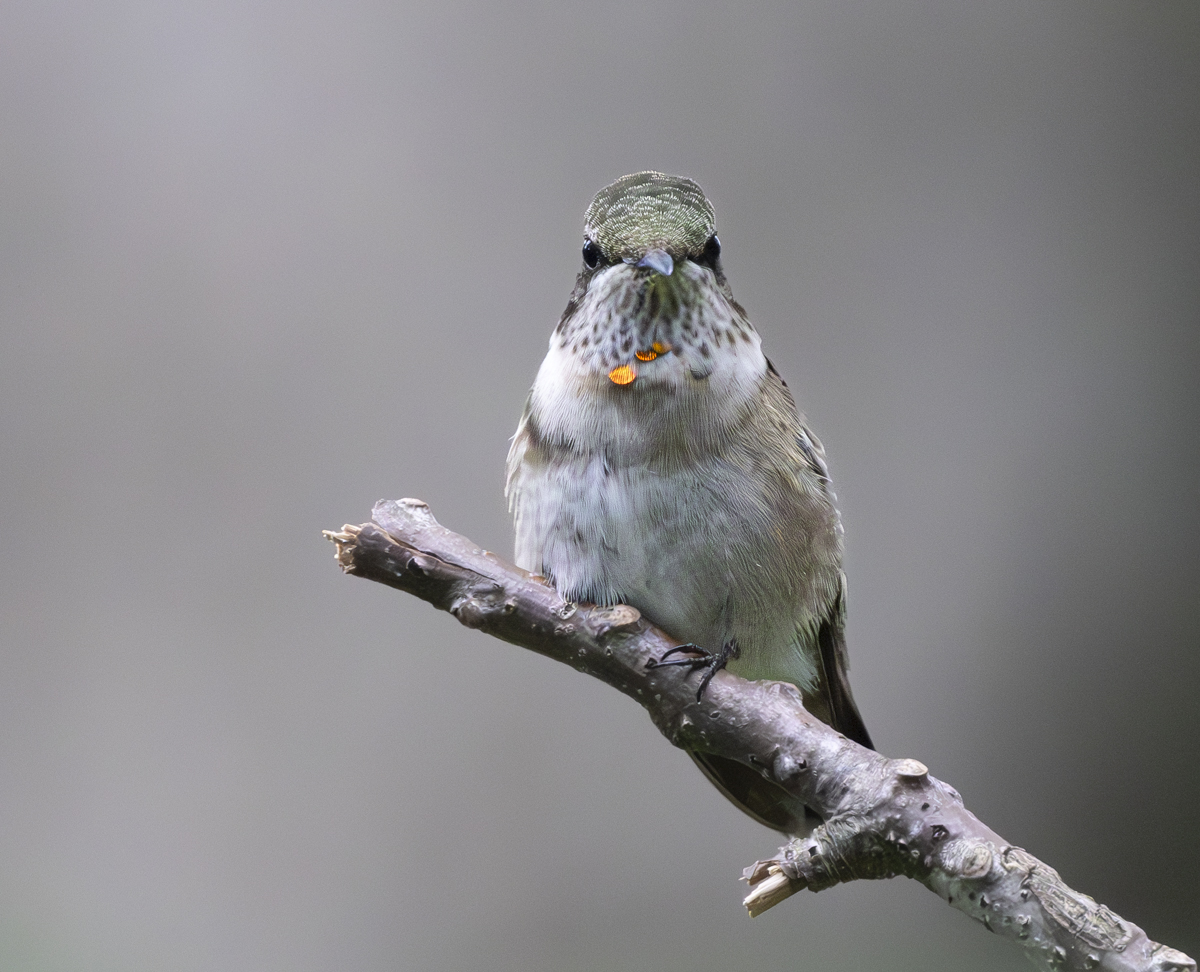
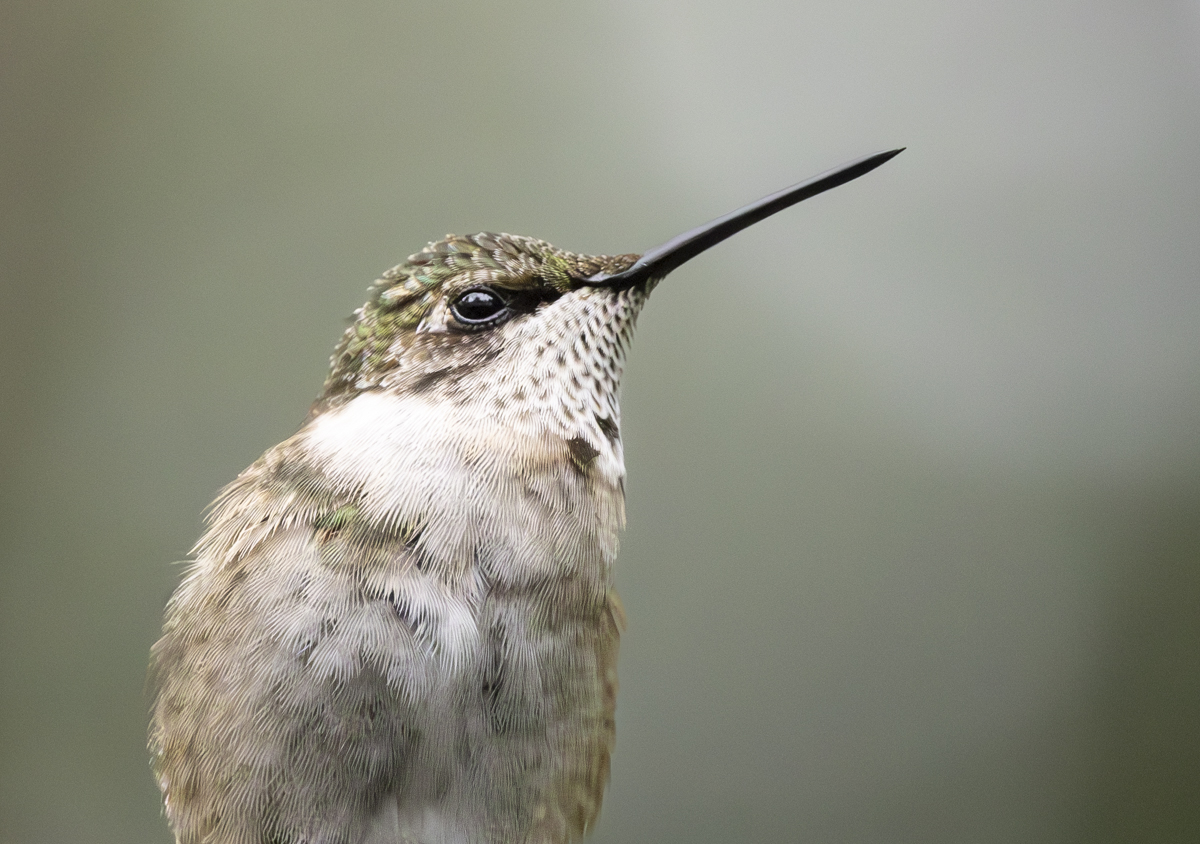
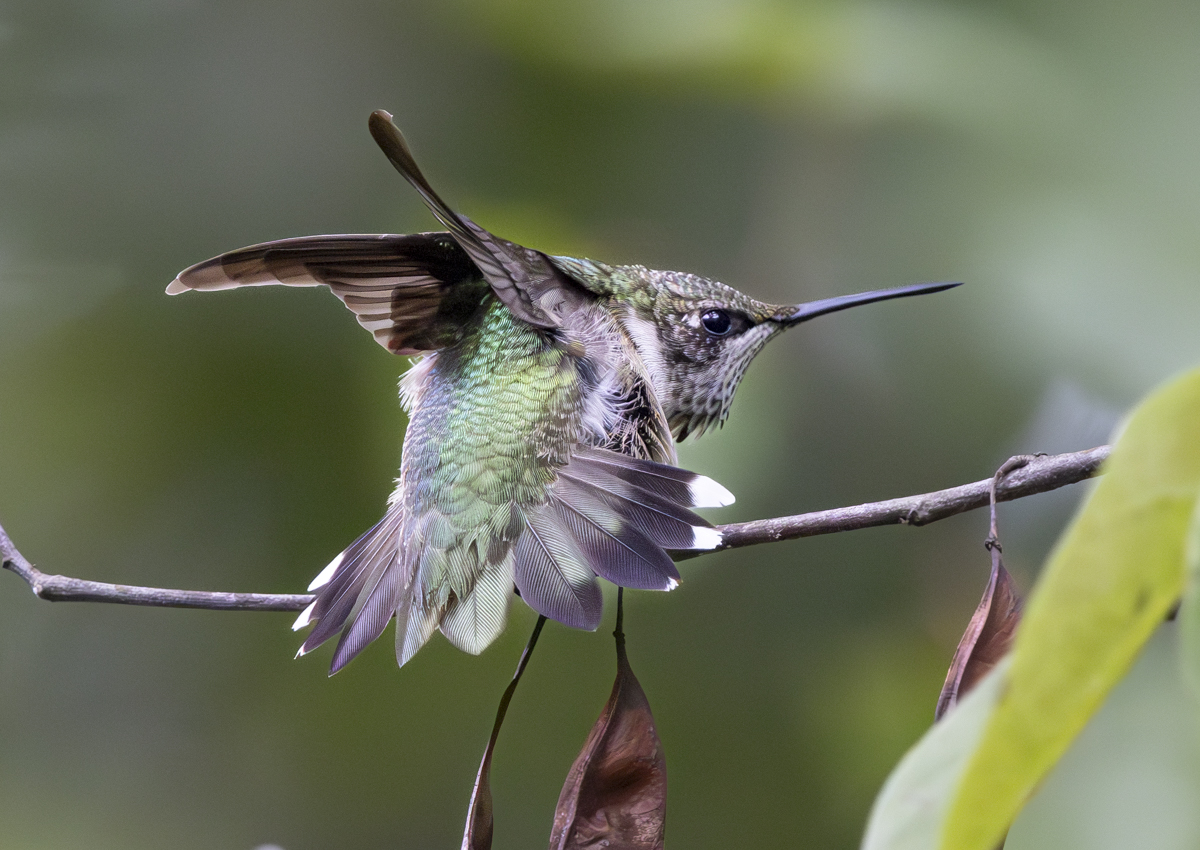
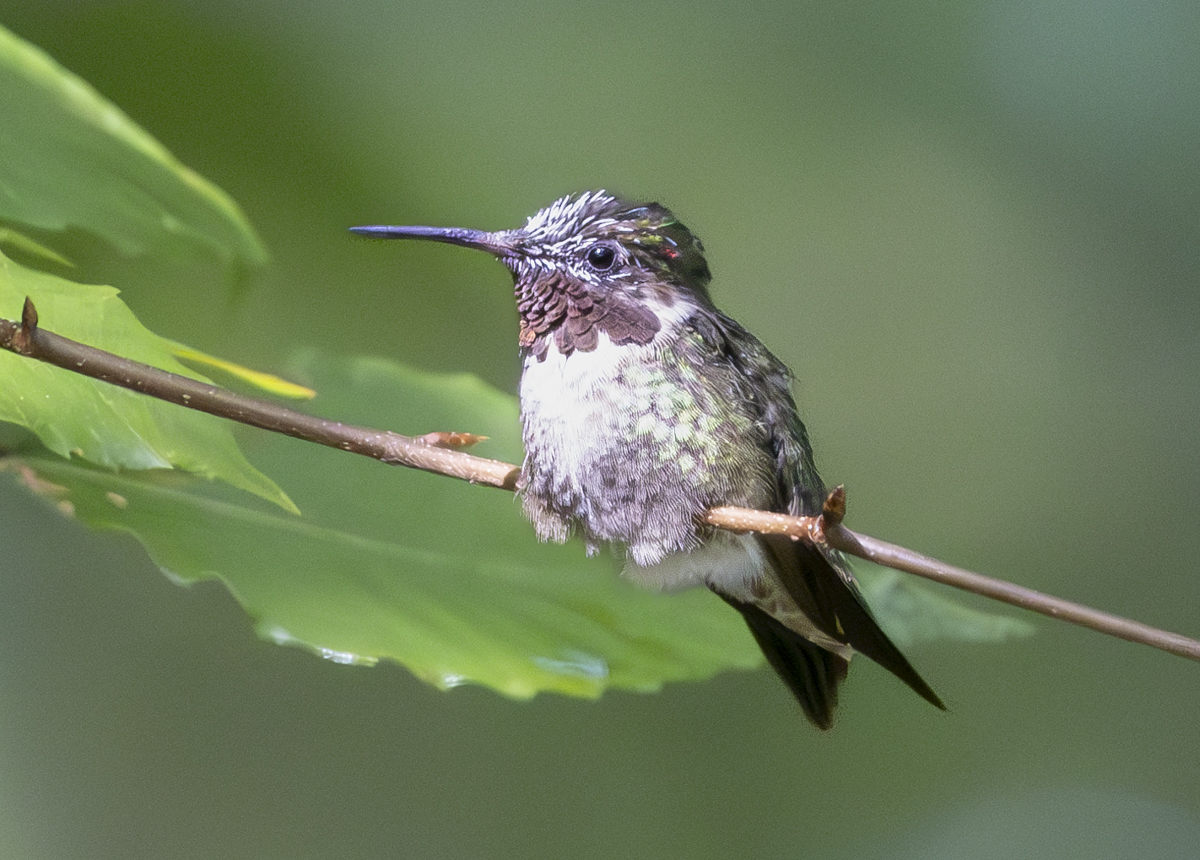
The change is happening…we have longed for it, and it is starting to tease us with the possibility of cooler nights and sunny, comfortable days. I see it in our woods as well in the plants and critters. New activity as the hummingbirds prepare to depart. More birds at the feeders on the cool mornings. Hints of the future arboreal hues as yellow Tulip Poplar and bright red Black Gum leaves create a pop of color against a sea of green. And in me having a renewed desire to get outside with a camera to see what I can find. My good friend, Art, has loaned me his mirrorless camera and lens as I try to figure out if that’s the way I want to go (it sure s light weight compared to my big old lenses). I practiced with it a bit this week on a juvenile male Ruby-throated Hummingbird that dominates the feeder out back (we have three hummingbird feeders out now that there are more of the tiny fighter jets out and about). A cloudy day gave me a chance to test the low light limits of this camera and lens combo.
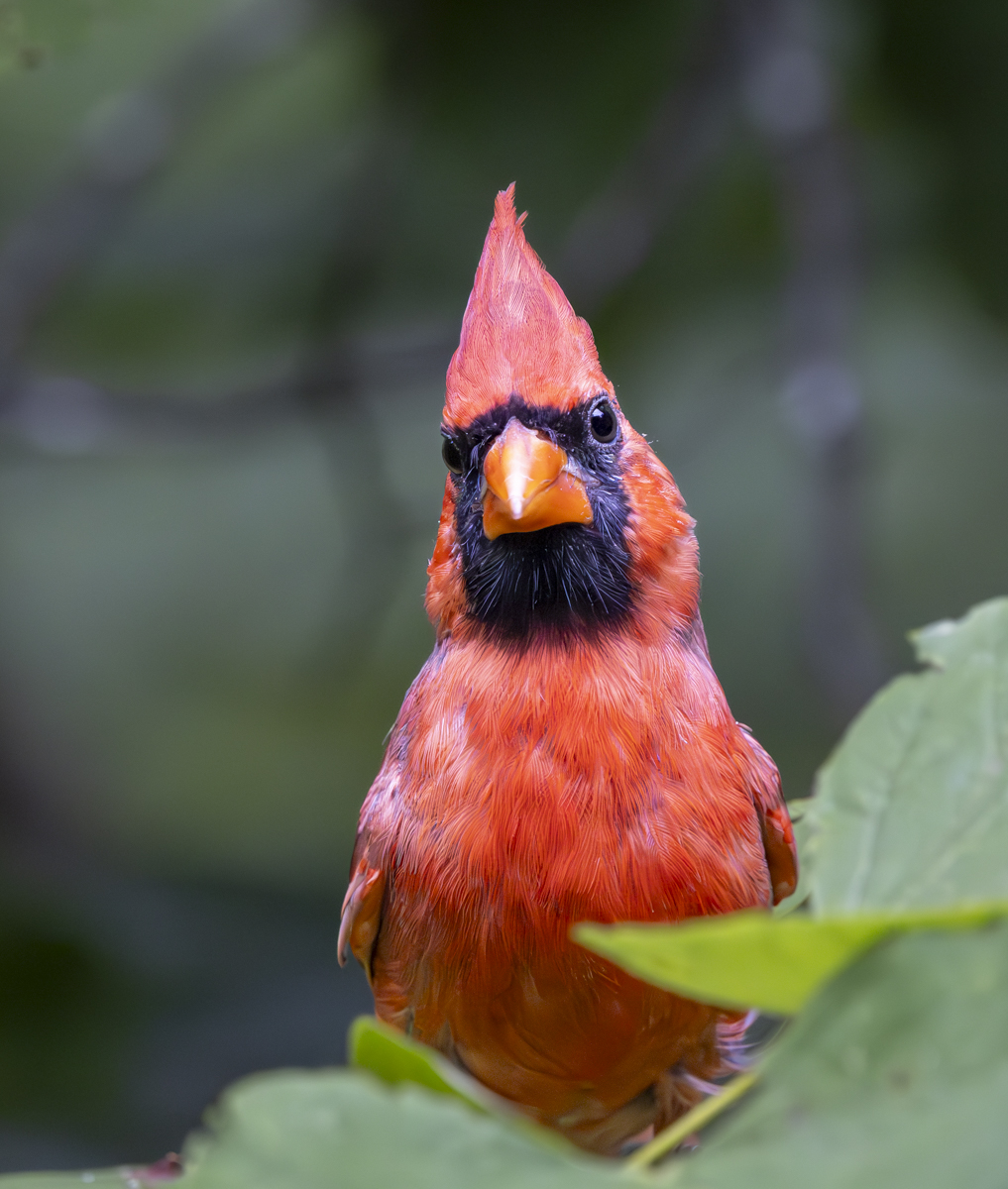
A juvenile male hummingbird with a couple of his gorget feathers in place. He will get his full red gorget this winter. (click photos to enlarge)Young males also typically have heavy streaking of dark patches on their throatsAfter defending his feeder all day, the young male needed a few stretches to loosen upMeanwhile, a male Northern Cardinal is wondering, “hey, what about me?”
Out in the woods, the trail cameras are catching the usual suspects – lots of deer (with this year’s fawns starting to lose their spots); squirrels busy with the heavy acorn and hickory nut crop; and the resident coyote clan making their rounds.
Now came the dog days – day after day of hot, still summer, when for hours at a time light seemed the only thing that moved…
~Richard Adams
The last week has provided a nice break from the typical heat and humidity of this time of year, the so-called dog days of August. Historically, the term was associated with the rising of the star system, Sirius (known as the Dog Star), in late July. It is traditionally one of the hottest parts of the summer and nature seems to heed the call and move at a slower pace (as do we all). But, if you look closely, there is still magic to be found. Here are a few of the high points of these past few weeks here in our woods that the cameras captured.
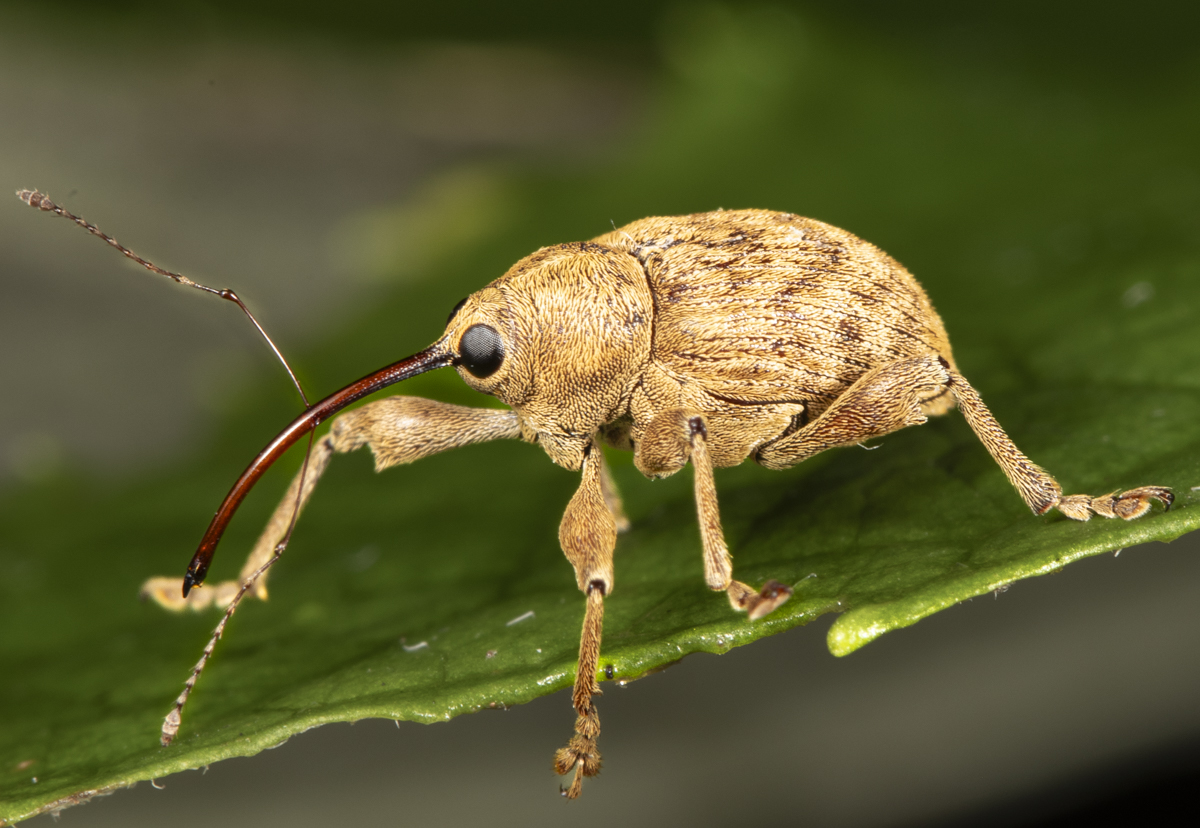
One of my favorite insects, the odd-looking Acorn Weevil. Females lay eggs in developing acorns where the larvae feed on the nut meat and then gnaw their way out of the acorn when it falls. They pupate underground (click photos to enlarge)
My good friend, Art, has loaned me his mirrorless camera for a few weeks while he is at sea so I am shooting some things using that and the amazing Canon 100-500mm telephoto. Here are some of the first images.
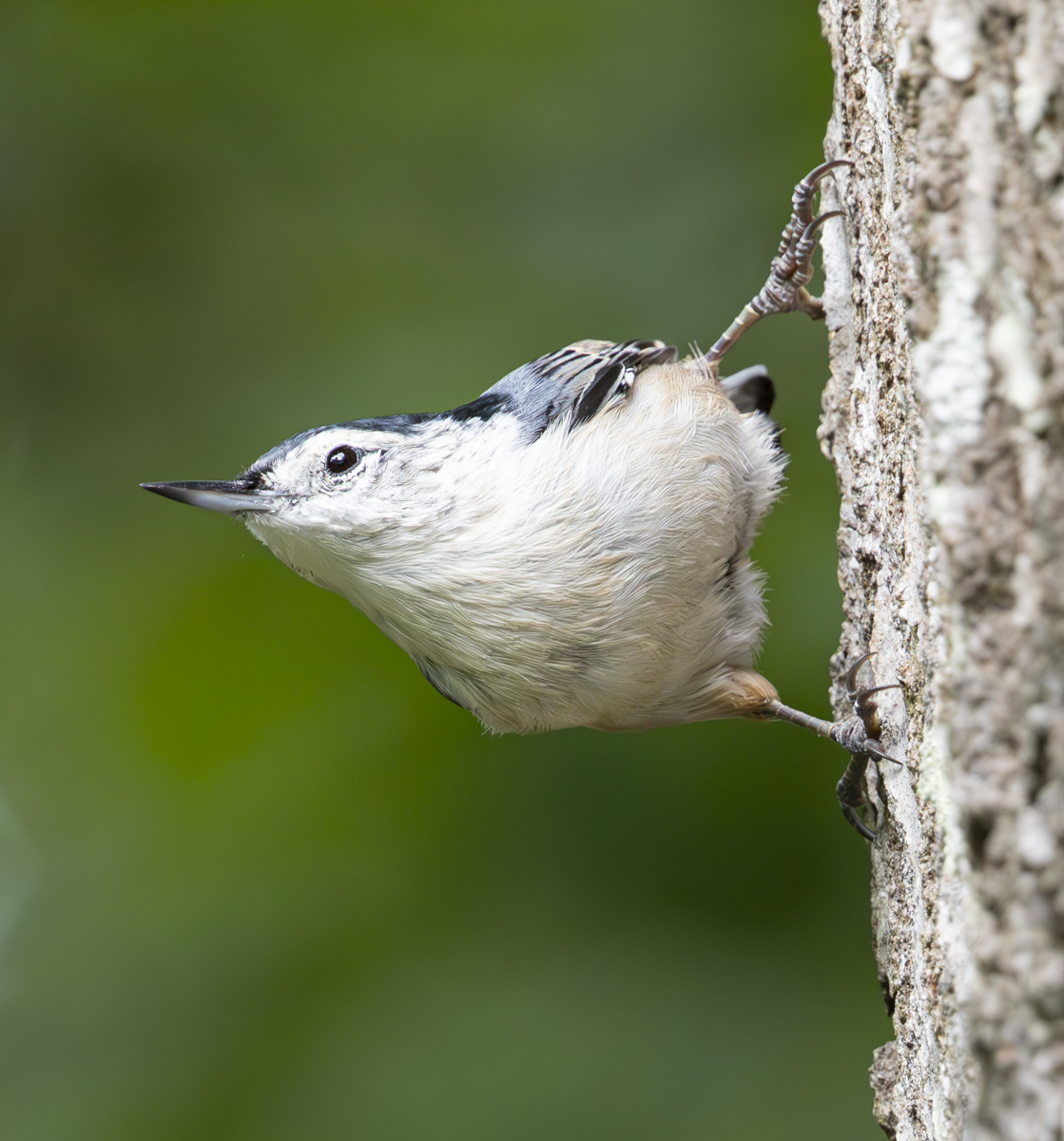
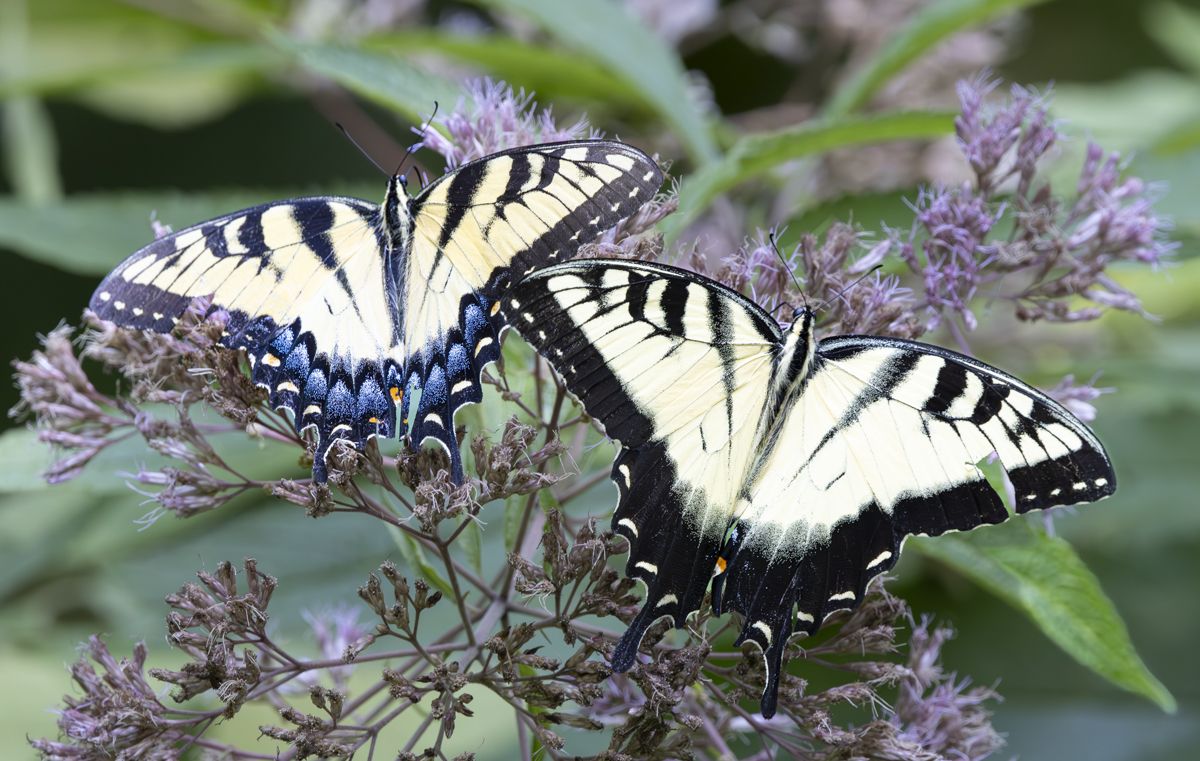
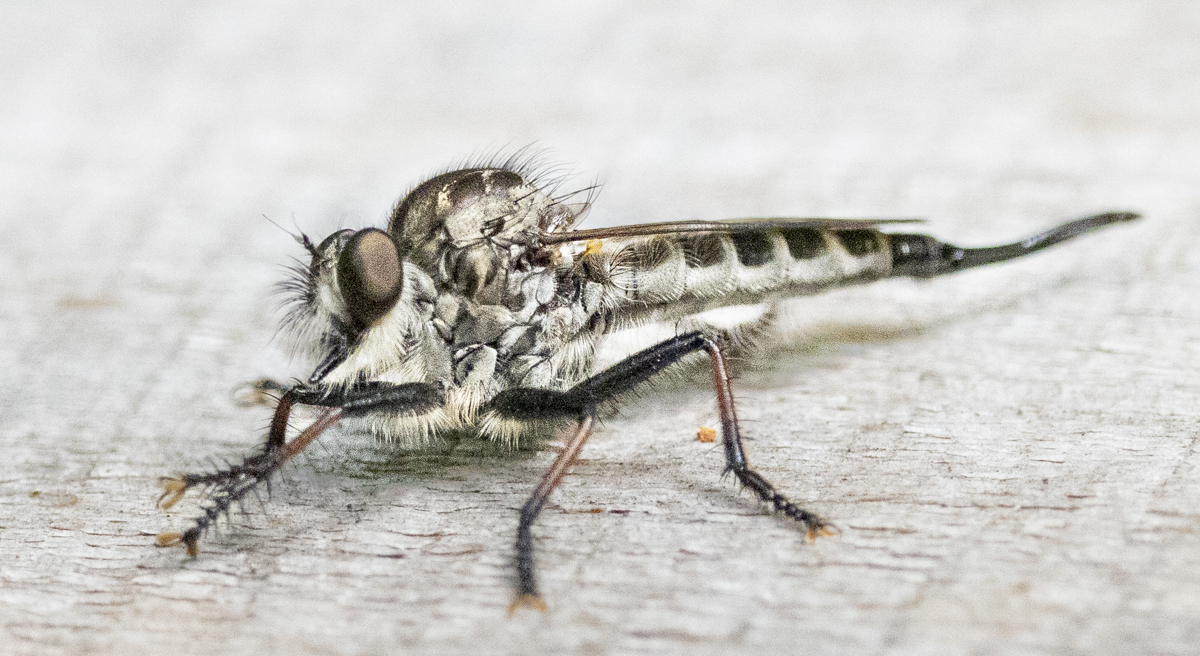
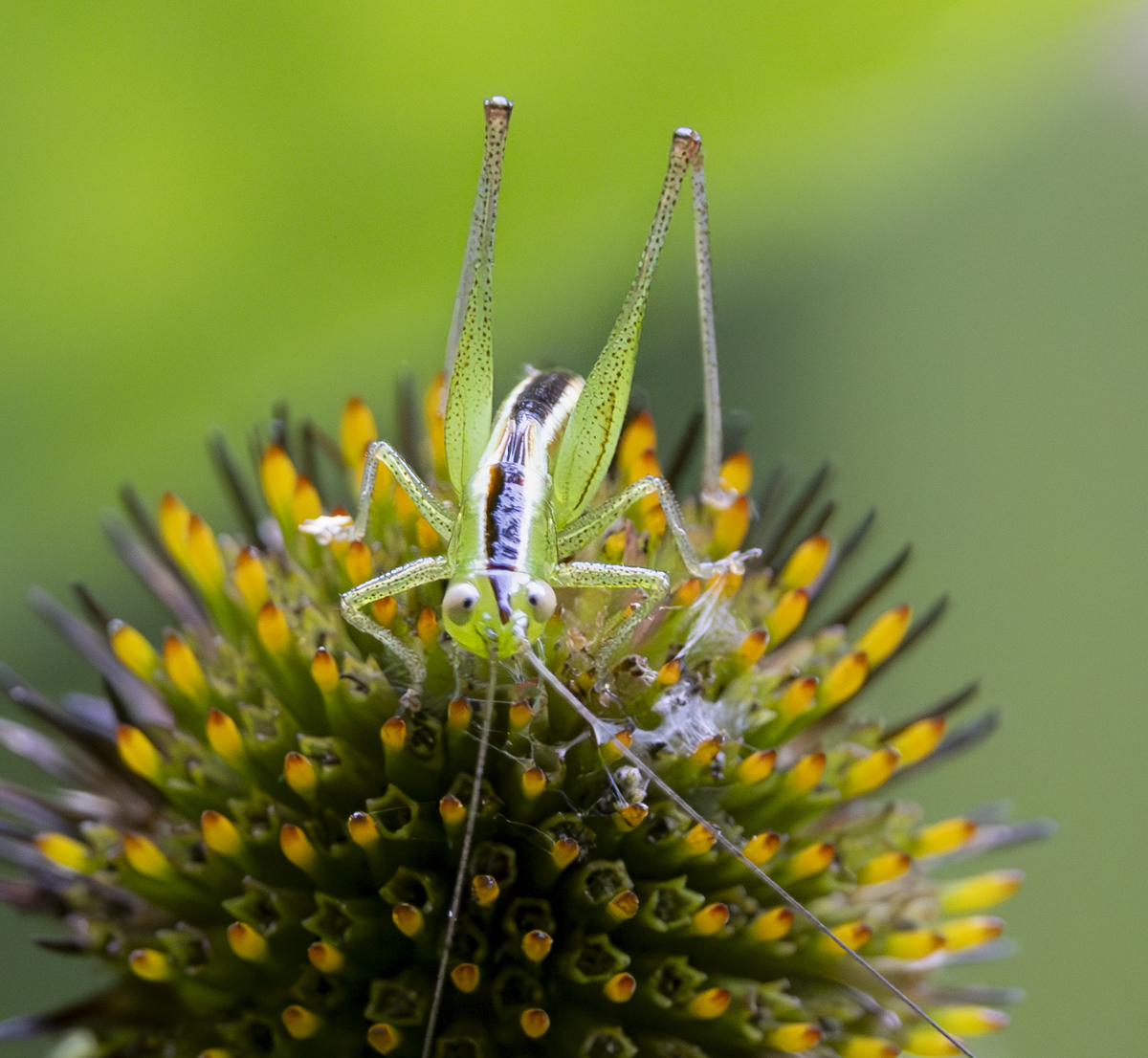
A male Ruby-throated Hummingbird in summer moltA White-breasted Nuthatch checking me out as it approaches the feederAfter a breach in the fence allowed the deer to eat most of our wildflowers, it has been slim pickings for our usual cast of pollinators. The butterflies were glad to see the Joe Pye weed start to bloom this month. Here are a female (left) and male (right) Eastern Tiger Swallowtail on a flower head.A large Robber Fly ready to strike terror into any careless passing insectThis Straight-lanced Meadow Katydid is eyeing me as I approach
The trail cameras also captured some dog day activity, but we’ll start with some cat capers.
The resident Coyotes made several appearances. Most are just brief glimpses as they trot through the field of view at a brisk pace, but sometimes they linger.



 Roads End Naturalist