• You’re So Sensitive

    Sensitive Briar wide view
    Sensitive Briar

    While mowing a path through the meadow this week I noticed a bright pinkish-purple flower in the grasses. I remember seeing the unusual flowers of Eastern Sensitive Briar a few years ago in the Sandhills habitat at the North Carolina Botanical Garden in Chapel Hill. And now I am thrilled to discover it here, growing in several patches under the power line. This native species, Mimosa microphylla, grows throughout the southeast in sandy or gravelly soil in open woods, fields, and disturbed habitats like roadsides and power lines. And yes, this is related to the non-native invasive tree we call Mimosa, and both are members of the pea family.

    Sensitive Briar flowers and leaves
    Sensitive Briar flowers and leaves

    Unlike its invasive tree cousin, Sensitive Briar is a semi-woody plant that spreads in a vine-like manner among other vegetation. Stems are 3 to 4 feet long. The delicate-looking leaves are bipinnately compound, meaning that each leaf is divided into leaflets, which further are divided into leaflets, giving the plant a somewhat airy or lacy appearance.

    Sensitive Briar flowers
    Sensitive Briar flowers

    Initially, the flower is the most noticeable part of the plant. The round flower head is pinkish to purplish and about the diameter of a nickel. The flowers consist of clusters of individual tube-shaped flowers. Long, brightly-colored stamens tipped with yellow pollen protrude from these flowers, giving them a puff-ball appearance. Unopened flowers look like an unripe blackberry.

    Sensitive Briar stem
    Sensitive Briar stem

    Another common name for the plant is “Cat’s Claw”. A close look at the re-curved spines that cover the stems, leaf petioles, and even the seed pods, and you can see how it got that name. These tiny thorns may also play a role in how this plant got its other common name, Sensitive Briar.

    Sensitive Briar leaf open
    Sensitive Briar leaf open
    Sensitive Briar leaf closed
    Sensitive Briar leaf closed


    The reason for this plants’ name is because the leaves curl closed when touched. The left photo above shows the typical leaf position – the right shows that same leaf after it has been lightly touched. This is a prime example of what is called rapid plant movement. This movement of the leaf is caused by the rapid movement of water in the cells of the leaf. When touched, the affected leaflets quickly lose water pressure (osmotic cell pressure or turgor) and the leaflets collapse or seemingly wilt. So why would the plant bother to do this? One theory relates to the re-curved spines. As soon as a plant-eater trying to make a meal of the Sensitive Briar touches it, the leaflet collapses out of the way, exposing the sharp prickles to the would-be diner, making the plant much less appealing. The closure takes only a second or so. Collapsed leaflets will regain their position within a few minutes if left alone.

    Bush Katydid nymph 1
    Bush Katydid nymph on Sensitive Briar

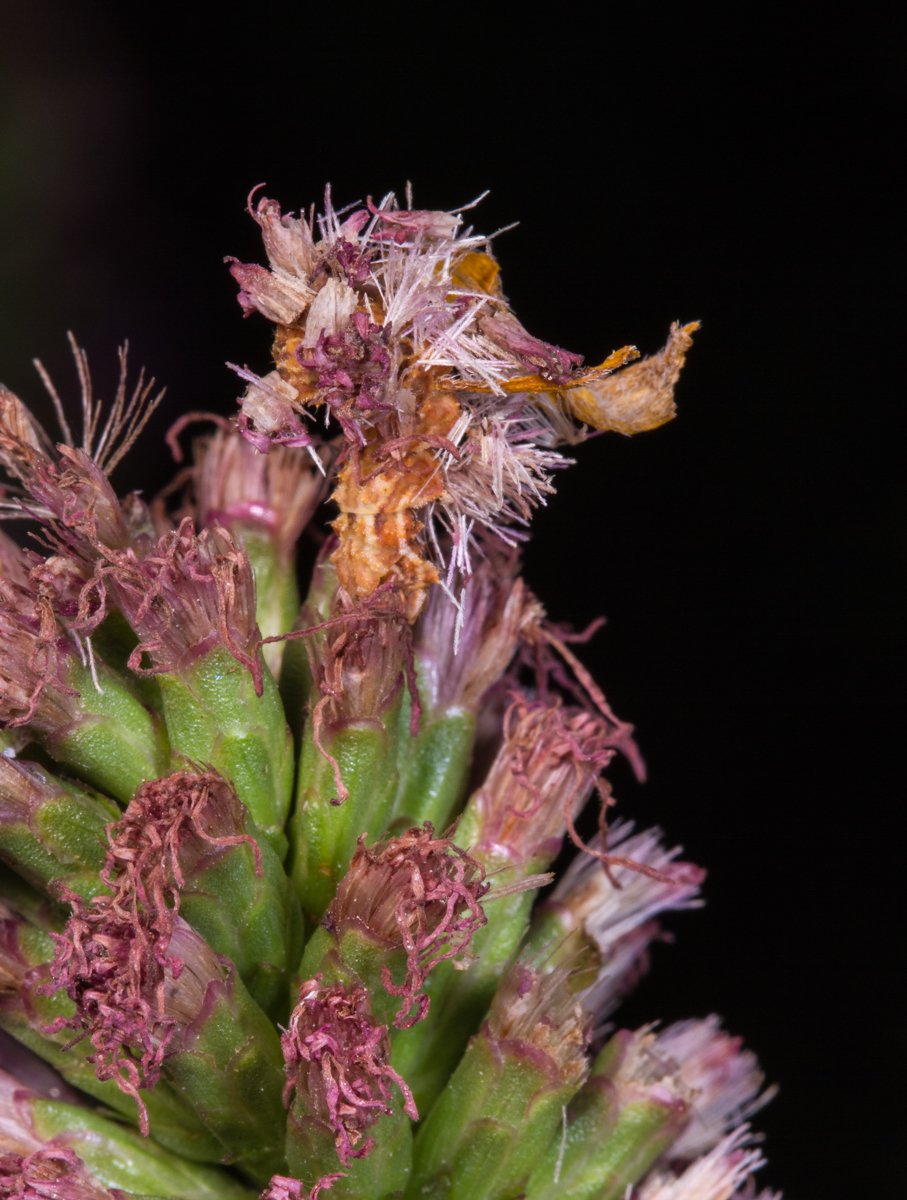
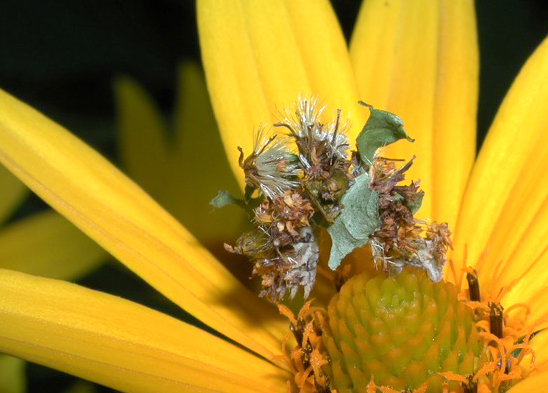
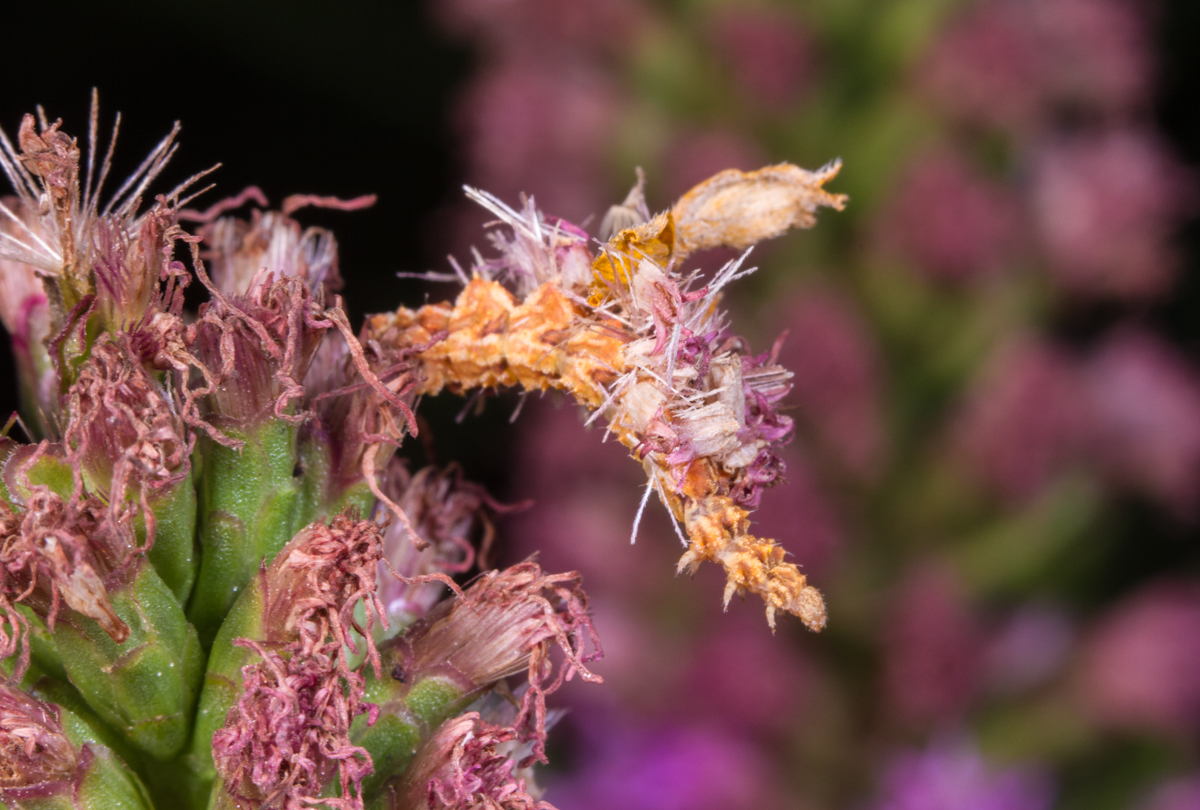
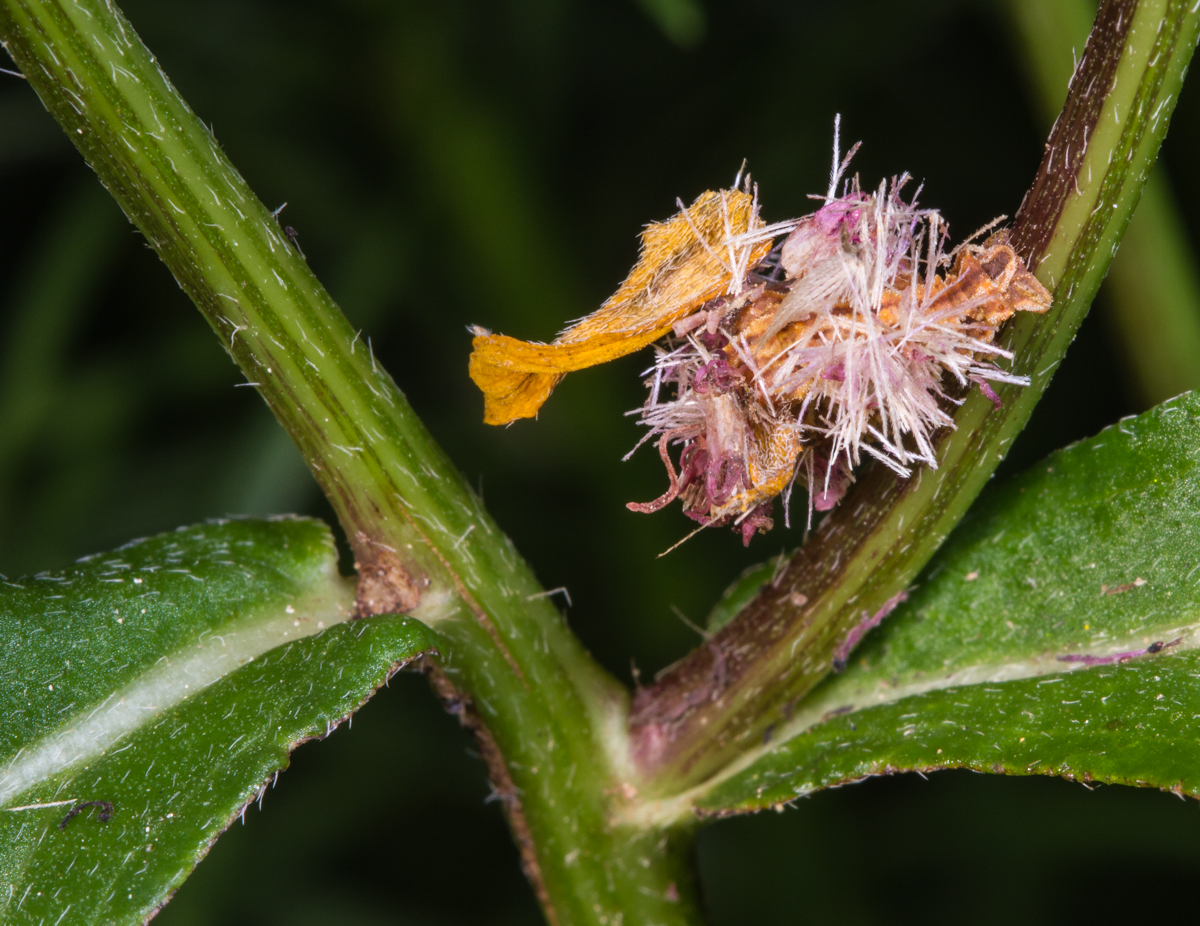
    While I was photographing the plant, I noticed several insects on the flowers – a hover fly, a tiny grasshopper, and a brightly colored nymph with black and white bands on its antennae. A quick search on Bug Guide ( a great web site for insect identification) leads me to believe this is the nymph of a Bush Katydid. The unusual flowers of this plant made a perfect back drop for this tiny bug – both look like they are dressed for a festive occasion.

    Spending some time with this unusual plant and the associated fauna made for a pleasant hour on an otherwise hot and humid morning. I’ll be checking the plant in a few weeks for the seed pods in the hopes of getting some Eastern Sensitive Briar started near my garden.

  • Green-eyed Monsters

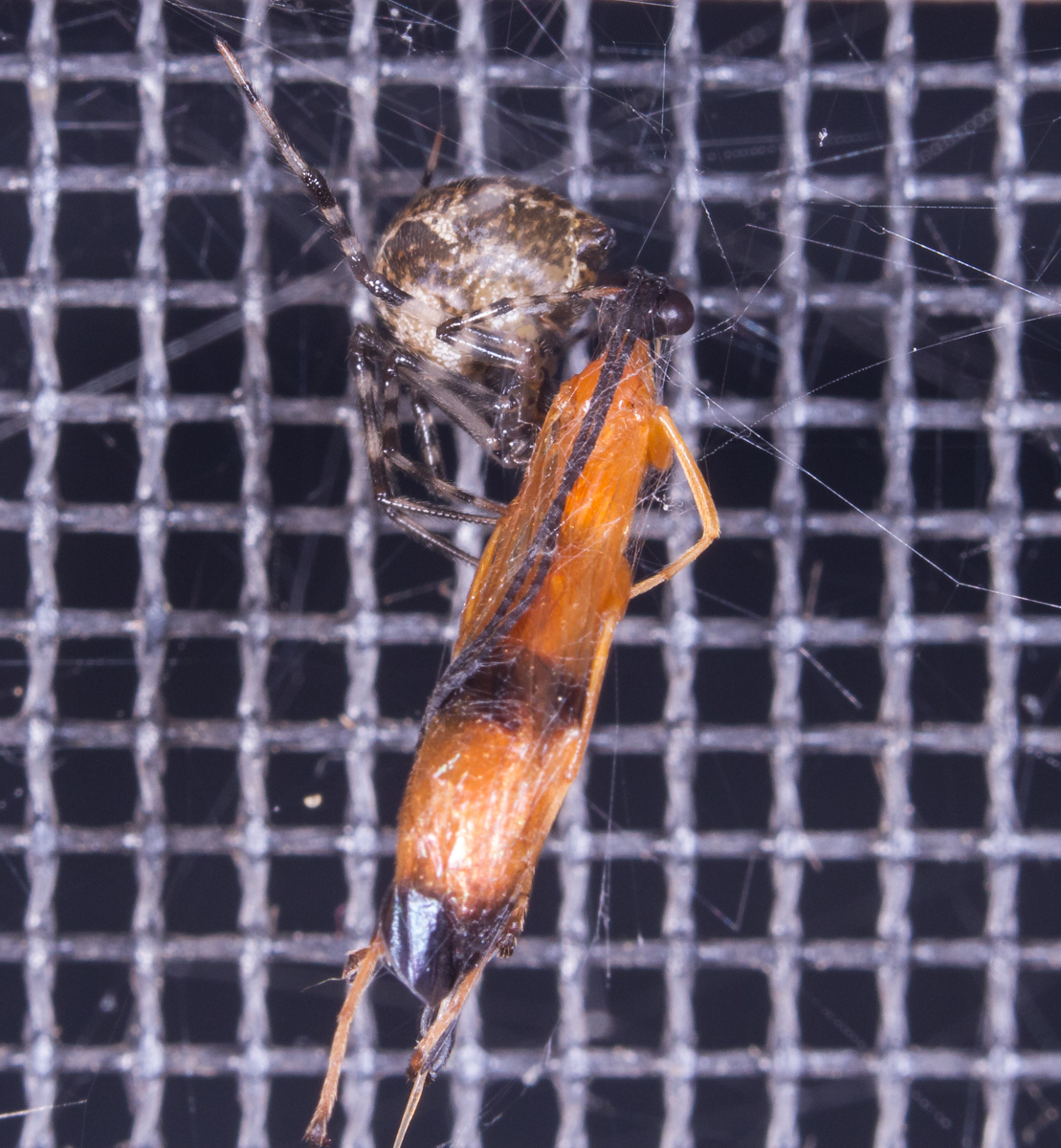
    Green Head Horsefly on screen
    Female Horsefly on screen

    Okay, monster is a bit too strong a term for this beauty, until you have been bitten by one, that is. Luckily, most horseflies are merely bothersome to me relative to the many other types of flying biting things that attack us here in the southeast – mosquitoes and deer flies being much more aggravating in my opinion. The reason being that most horseflies are both noisy fliers and are relatively slow to react, so you can hear them coming and swat them. They also tend to come at you in smaller numbers than the squadrons of deer flies and swarms of mosquitoes that occasionally partake of my blood. This is all true unless you happen to have both hands occupied when they attack. Such was the case last week when I was working to replace the worn out screening on the porch. Two hands and my mind occupied with holding and stapling equals horsefly advantage. That moment when the painful bite hits you is when they become a monster.

    Horsefly mouthparts
    Horsefly mouth-parts – the serrated edges are along the long center column

    Male horseflies are nectar feeders and are incapable of biting, as they lack the modifications of the mouth-parts found in females. But a female horsefly has a Swiss Army knife of adaptations for slicing into your flesh. One writer said the mouth-parts of the female are modified into the equivalent of miniature scalpels or steak knives ideal for cutting the skin. That pretty much sums up the strategy – rip open the flesh and then lap up the blood of the victim. This is why a horsefly bite is so much more painful than that of a mosquito – the mouth-parts are for tearing and lapping, not piercing.

    Greenhead Horsefly 1
    Horsefly showing mouth-parts

    As in many other blood-sucking insects, the female’s saliva contains anticoagulants which help the victim’s blood flow so she can secure enough nourishment for egg laying. In spite of the impressive “jaws” of horseflies, what I notice about this particular species (I think this is probably Tabanus fuvulus) are its eyes – incredibly complex and beautiful green eyes.

    Greenhead Horsefly
    Green eyes of Horsefly

    While trying to find some information on the unusual stripes in their eyes, I came across some interesting research on the vision of horseflies. In a paper published in March 2012 in the Journal of Experimental Biology, researchers investigating the evolution of the striped patterns of Zebras made a fascinating discovery. Horseflies use polarized light hitting water as a guide to places to mate and lay eggs. They also use such light hitting dark mammal hides as a way to find a blood meal. By setting up models of varying colors and stripe patterns, the researchers demonstrated that a zebra-striped horse model attracts far fewer horseflies than either black, brown, grey or white equivalents. Because the coat reflects light in alternately polarized and non-polarized patterns, the Zebra “is more difficult to single out relative to the surroundings.” It is, in effect, camouflaged to flies as well as to lions.

    I know what I am wearing the next time I screen a porch.

  • A Plant that Hops

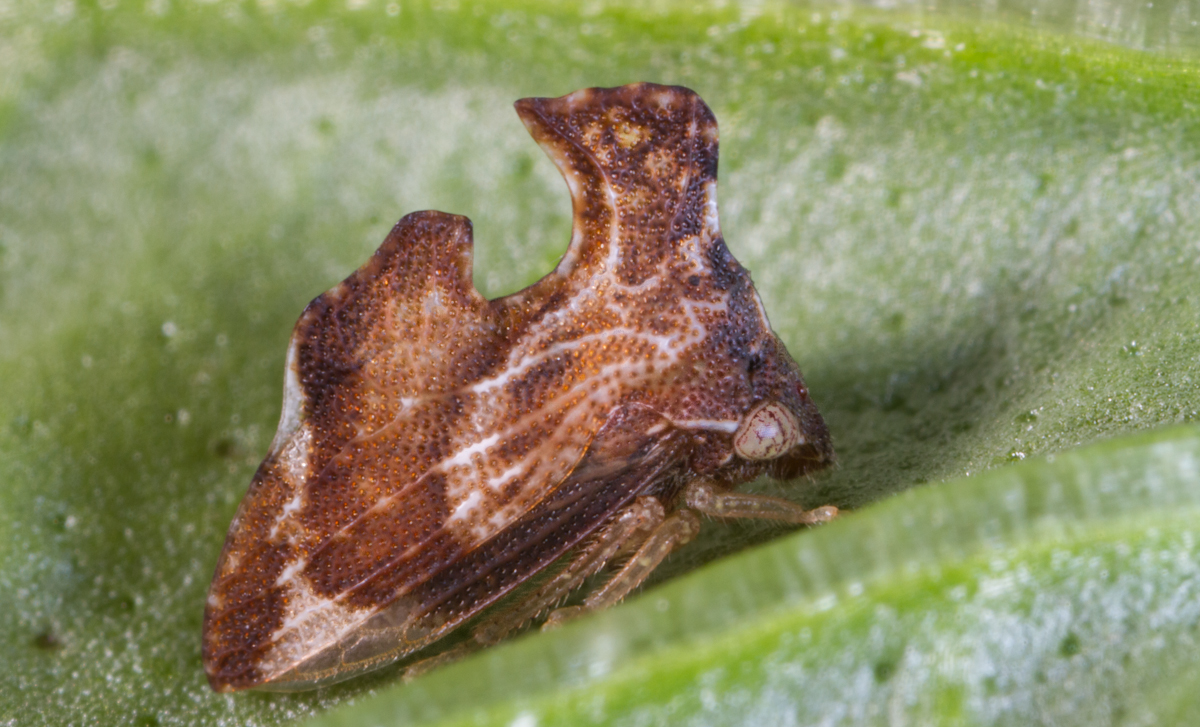
    Green Coneheaded Planthopper
    Green Cone-headed Planthopper

    During a brief respite from one of the downpours this past week I went out to the garden to see what was out and about. I noticed some movement on a flower stem and a close look revealed this well-camouflaged insect, a planthopper. Planthoppers appear to be less common than the generally smaller leafhoppers in my garden and meadow. And though they can hop to escape, they often walk with a slight waddle along their plant stem or remain motionless to hide. I coaxed this specimen onto my finger and brought it inside for some pictures.

    Planthopper 1
    Green Cone-headed Planthopper

    This particular species appears to be the Green Cone-headed Planthopper, Acanalonia conica. They feed on a variety of plants by piercing them with their mouth-parts and ingesting the plant nutrients. Females lay eggs in the stems of various plants in late summer.

    Planthopper
    Green Cone-headed Planthopper

    It is amazing how well the intricate wing patterns resemble the venation in a leaf. By setting the camera on a tripod I was able to move the lights around to better highlight the textures. This little guy was a cooperative subject and stayed on the stem all afternoon, probably thankful to be out of the monsoon that was happening out in the garden. I returned it at days end to continue its plant hopping ways.

  • Hovercraft in the Garden

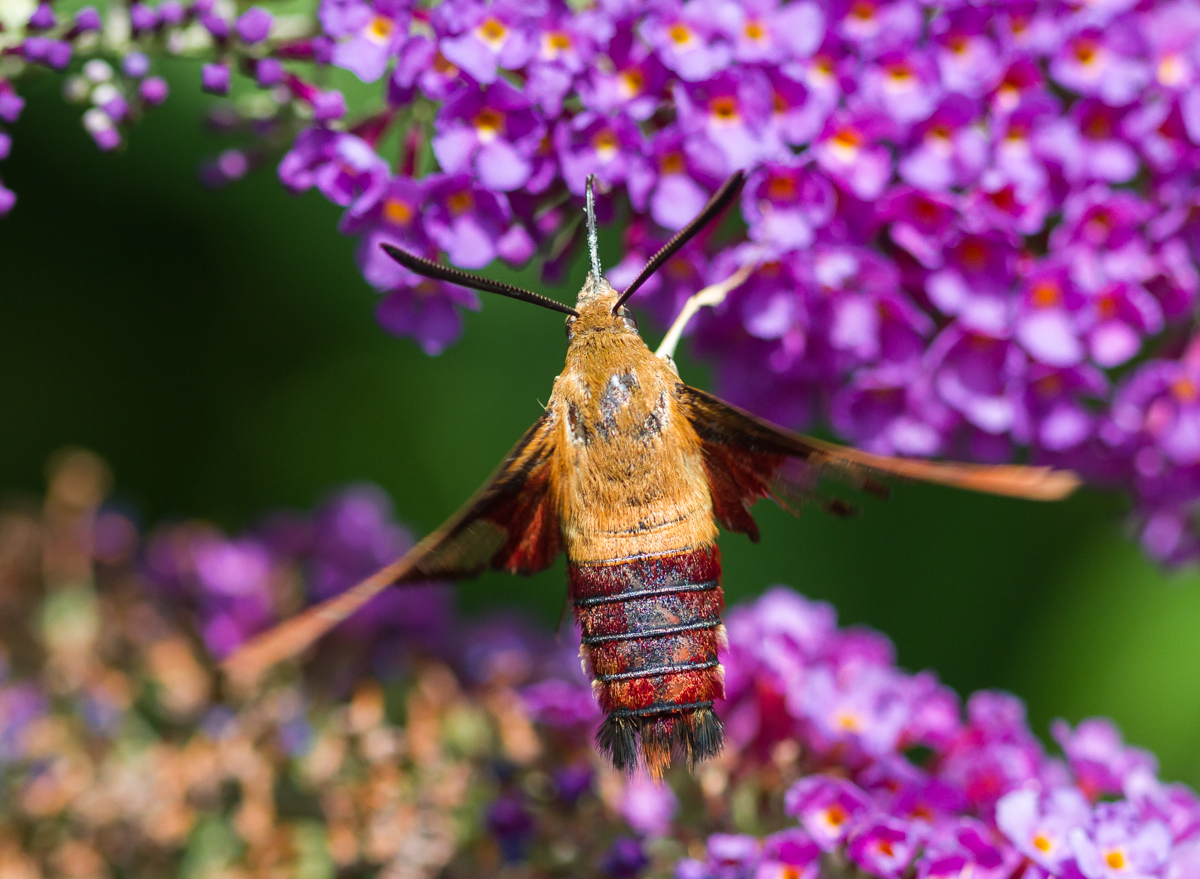
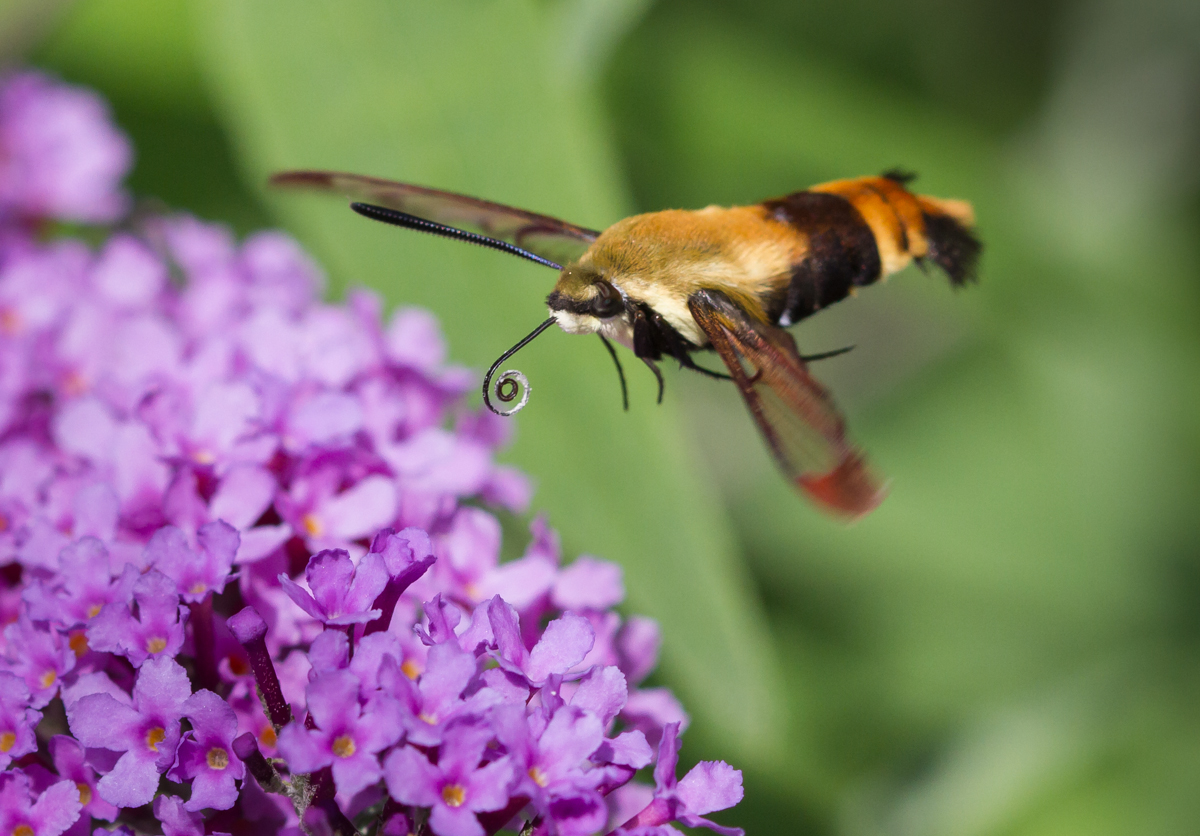
    Flower Fly hovering
    Flower Fly hovering

    They look like tiny bees or wasps zipping around the garden flowers, but they are Flower Flies. They are also known as Hover Flies for their ability to hover and even fly backwards, a feat that few other insects can match. Their resemblance to insects that sting most likely affords them some protection as they go about their business…and their business is quite useful in the garden and elsewhere.

    Flower Fly showing halteres_
    Flower Fly showing halteres

    By the way, you can distinguish these flies from their look-alike bees by their wings – Flower Flies have two wings (as do all flies) and bees have four. If you look closely, you can even see the halteres, the highly modified hind wings of flies (consisting of a stalk and knob at the end) which vibrate up and down in time with the wings and act as gyroscopes in flight.

    Flower Fly on Beardtongue
    Flower Fly on Beardtongue flower

    As a group, Flower Flies are considered important pollinators for a variety of flowers, both in our gardens and in the natural landscapes around us.

    Green Lynx with Flower Fly
    Immature Green Lynx Spider with Flower Fly prey

    Adults feed on nectar from a variety of flowers and often fall victim to sit-and-wait predators like Ambush Bugs, Crab Spiders, and other spiders. Earlier this week, in a rare moment of sunshine, the garden was alive with insects visiting the various wildflowers. I found three immature Green Lynx Spiders lurking in the blossoms – two had captured Flower Flies and one a small bee.

    Flower Fly
    Flower Fly looking for nectar

    The larvae of many species of Flower Fly are major predators of aphids and thus perform valuable pest control services on many species of our ornamental and crop plants. Pollination services, pest control, superb flying ability, mimicry, beauty, variety…the next time you are out among your wildflowers take a few moments to look for, and appreciate, these tiny beneficial insect hovercraft.

  • That is One Giant Mosquito!

    Elephant Mosquito
    Elephant Mosquito on Purple Coneflower

    I remember the first time I noticed one of these a few years ago…my reaction probably included a statement or two like Holy $%*^!! Look at the size of that thing! I had heard a few people make remarks like this about Crane Flies, which are not mosquitoes, but are sometimes mistaken for giant blood-suckers. But this really was a mosquito, and a really big one at that. The other thing I noticed that day was how beautiful it was – the very long legs, long proboscis, and the iridescent colors and stripes combined to make an elegant insect.

    elephant Mosquito male
    Elephant Mosquito male on Buttonbush

    My giant bug turned out to be the aptly named Elephant Mosquito, Toxorhynchites rutilus. It is our largest species of mosquito, with a wingspan reaching almost 1/2 inch. Unlike most mosquitoes, both male AND female adults feed on nectar, not blood, as most female mosquitoes of other species do. Male Elephant Mosquitoes, like the one pictured above, have very feathery antennae which they use to track the females.

    Elephant Mosquito
    Elephant Mosquito on flower

    Elephant Mosquitoes lay their eggs in small bodies of water like knot holes in trees (hence their other common name, Treehole Mosquito), bird baths, and other man-made containers. Unlike other mosquito species, the larvae of Elephant Mosquitoes are predators on other aquatic insects, especially the larvae of other species of mosquitoes. A single Toxorhynchites larva is said to be able to consume up to 400 larvae of other mosquitoes so they even have been reared and released as biological controls in some areas.

    So, before you swat, take a moment and see if that giant mosquito is iridescent blue and is sipping nectar…if so, leave it alone, it is your friend.

  • Meadow power

    power line
    View down my power line

    Despite the heat and humidity, I decided to take a stroll down the mowed path underneath the high voltage transmission line that borders the property where I live. This area has an interesting mix of grasses, shrubs, and small trees and contains a diversity of animals and plants not usually found in my woods. This diversity intrigues me and has made me realize the importance of power line right-of-ways as habitat. These areas stretch for miles across our state, are a minimum of 200 feet wide and have limits on what can be done in them in terms of buildings. My conservative estimate is that there are at least a couple hundred thousand acres of transmission line right-of-ways in NC which makes their area as large as that protected in the entire NC State Park System (currently about 218,000 acres when you add the acreage in all state parks, recreation areas, natural areas, state rivers and state lakes). That is a lot of early successional habitat! I decided to let the area near me grow up this year and keep a mowed path through it to reduce the tick and chigger quotient when taking a walk. Here are a few of the things happening now…

    Butterflyweed closeup
    Butterflyweed

    The Butterflyweed, Asclepias tuberosa, is in bloom. The flowers of the wild plants here are tinged with more red color than the ones I have in my garden, which are more pure orange.

    Horse Nettle flower
    Horsenettle

    Horsenettle is in bloom in both my garden and the meadow. This thorny, weedy relative of tomatoes and potatoes is toxic and produces an orange-yellow fruit later in the season.

    Eastern Tailed Blue
    Eastern Tailed-blue

    This dainty little butterfly is fairly common throughout much of the state. The larvae feed on various members of the legume family and secrete a substance favored by ants, which in turn provide some protection for the larvae from potential invertebrate predators.

    Metallic Wood Borer, most likely Acmaeodera pulchella
    Metallic Wood Borer beetles

    These Metallic Wood Borers are feeding on the flowers of Black-eyed Susans. Larvae tunnel through wood of various tree species.

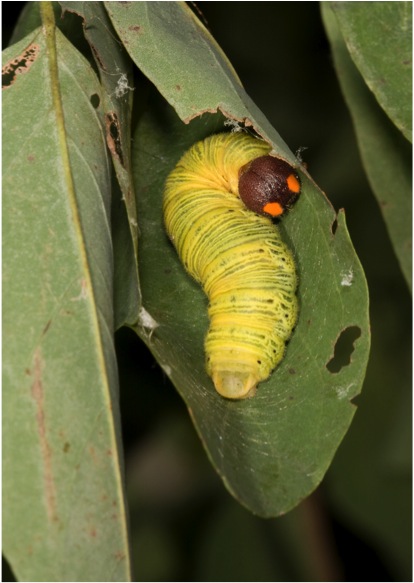
    Yellow Bear caterpillar
    Yellow Bear caterpillar?

    This looks like an early instar of a the variable Yellow Bear caterpillar.

    Female Blue Dasher dragonfly
    Female Blue Dasher dragonfly

    A common dragonfly in our area, Blue Dashers can be seen perched on the tips of twigs and vegetation near any type of water. They often perch with their wings cocked forward like this female.

    Green Lynx Spider immature
    Immature Green Lynx spider

    One of my favorite spiders, this small Green Lynx will grow to be a large, efficient predator by the end of the summer. These spiders do not build webs to catch prey but rather stalk and pounce like their namesake big cat. They are frequent predators of bumblebees and wasps when they are mature.

    Sharpshooter 1
    Leafhopper

    This colorful Leafhopper is one commonly referred to as a Sharpshooter. The name has many possible explanations – their piercing-sucking mouth parts leave tiny holes in vegetation like miniature bullets; these insects produce droplets of liquid as they feed which they rapidly and forcibly expel; their rapid hiding behavior when approached is similar to a sharpshooter in the military hiding behind tree trunks and other obstacles when approached by the enemy.

    Sharpshooter  nymph
    Leafhopper nymph

    A tiny nymph of a Leafhopper (probably a Sharpshooter).

    Look for future posts on the diverse flora and fauna of the meadow beneath the lines.

  • This Magical Place

    To be whole. To be complete. Wildness reminds us what it means to be human, what we are connected to rather than what we are separate from.

    Terry Tempest Williams

    Bison silhouette
    Bison silhouette in Lamar Valley

    I could blog for another week or two on the beauty and majesty of my recent trip to Yellowstone. But, I will be back, with more experiences and more stories, and so I post this one last blog from the trip with a few of my favorite images.

    Mule Deer
    Mule Deer in marshy area in Lamar Valley
    aspen grove
    Aspen grove in Beartooths
    Black Bear in creek
    Black Bear in creek near Roosevelt
    Yellow-headed Blackbird
    Yellow-headed Blackbird male at Floating Island Lake
    Bighorn Sheep lamb on cliff
    Bighorn Sheep lamb on cliff in Gardiner Canyon
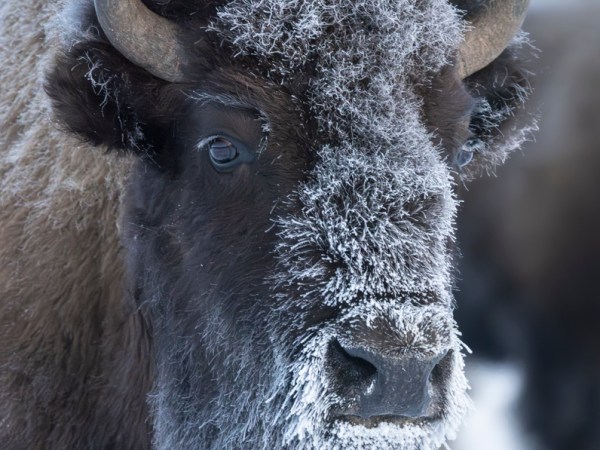
    Bison swimming Lamar River
    Bison swimming Lamar River near the Confluence
    elk skull and antlers
    Elk skull and antlers in Little America
    Gray Wolf at Soda Butte Creek
    Gray Wolf at Soda Butte Creek
    Bison calf resting
    Bison calf resting
    Bison at pool in Little America
    Bison at pool in Little America
    Mountain Bluebird at nest cavity
    Mountain Bluebird at nest cavity in Little America

    But if one steps off the road, even a few hundred feet, and listens, there is a calm to the land, a certain wild rhythm, that is closer to the surface than in most places.

    Renee Askins

  • Sagebrush Speedsters

    Pronghorn bucks on ridge
    Pronghorn bucks on ridge

    One of the changes I’ve noticed in the 25+ years I’ve been going to Yellowstone is an increasing number of Pronghorn in recent years. It used to be that you saw them mainly around the Gardiner area, but now they have greatly increased in numbers across the northern range, especially in Lamar Valley and Little America. Although the genus name, Antilocapra, means antelope and goat, Pronghorns are neither. They’re the only surviving member of a North American ungulate (hoofed mammal) family.

    Pronghorn buck
    Pronghorn buck

    These graceful animals get their name from their unusual horns. Both male and female Pronghorns have horns, but only the males have the distinctive prong the juts forward halfway up from the base. Males can also be distinguished by their black cheek patches, absent in females. The horns consist of a bony interior attached to the skull covered by a black keratinous sheath.  The sheath is shed annually like antlers. Male Pronghorns use their horns in competitions during the rut and may deliver serious piercing stabs to their opponents.

    Pronghorn buck 5
    Pronghorn running

    Pronghorns are well-known as the fastest mammal in North America, able to reach speeds of over 60 mph and sustained speeds of up to 40 mph.  They are also one of the fastest mammals on Earth – one reference said a Cheetah could outrun a Pronghorn in a short sprint but a Pronghorn would quickly pull ahead as the Cheetah tired. Pronghorns may have evolved this running ability to escape the now extinct American Cheetah, and adults can easily outrun any of the modern-day predators they encounter. They can run across a football field with as few as 10-12 bounds in as little as 3 seconds. Pronghorns have several adaptations that allow them this speed. Their heart, lungs and trachea  are several times larger than similar sized ungulates; their blood is rich in hemoglobin; and their long legs have light-weight, yet strong, leg bones.

    Pronghorn rump with hairs raised
    Pronghorn with rump hairs raised

    They have several other adaptations that enhance their survival in open country. The hairs on their light-colored fur are hollow, and can be controlled to lie flat and provide a protective shield against wind and water, or selectively raised to allow heat to escape. The bright white hairs on the rump can be raised and serve as an alarm signal that can be seen from great distances, much like the warning flag tail on our White-tailed Deer.

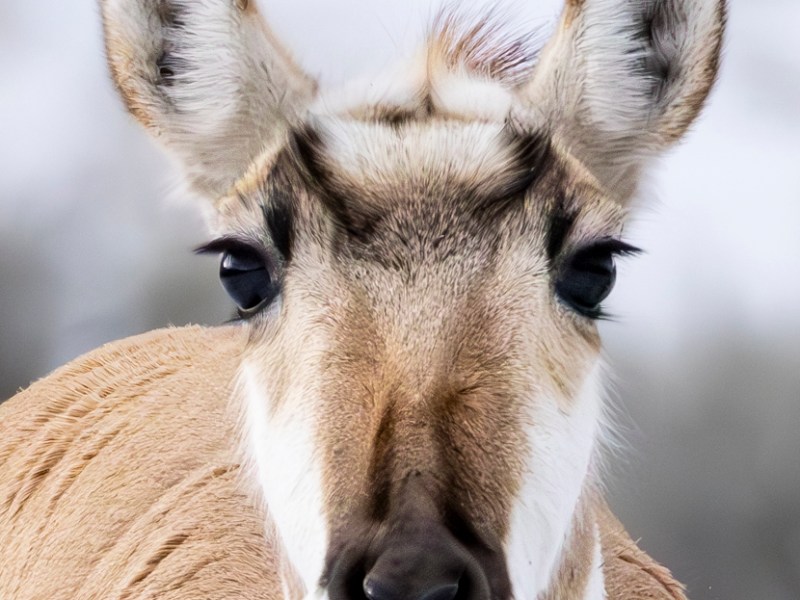
    Pronghorn eye
    Pronghorns have large eyes and long eyelashes

    A Pronghorn feature that is quite noticeable are their large dark eyes with what seem like very long eyelashes. It turns out the long eyelashes help protect their eyes from the intense sun in their open habitat. When a pronghorn looks at you you really notice their large bulging eyes on the sides of their head.

    Pronghorn face
    Pronghorn face showing placement and size of eye

    They have the largest sized eye of any North American ungulate in relation to their size with each eyeball measuring about 1 1/2 inches in diameter (about the size of the eye of a horse). The size and placement of their eyes gives them over a 300-degree arc of vision without moving their head, a useful trait for detecting potential predators at great distances. One reference said a Pronghorns’ vision is equivalent to that of a Peregrine Falcon and they may be able to detect movement up to 4 miles away.

    Pronghorn doe and fawn

    Pronghorns may once have been almost as numerous as Bison on the Great Plains. Their numbers were greatly reduced by over-hunting and by fences placed throughout their range, blocking their migration routes. While numbers in the West have increased through conservation efforts, there is still concern over the relatively small population of a few hundred Pronghorns in Yellowstone. Hopefully, ways can be found to protect the  Pronghorn migration routes to their wintering grounds outside the park so that future visitors can enjoy these incredible icons of the northern range.

    Pronghorn boys club
    Pronghorn bucks looking over a ridge
  • A Bevy of Badgers

    Badger – to bother, harass, or annoy…persistently; on and on; without stop; relentlessly; over and over; endlessly.

    Badger habitat

    Wonder where that verb comes from? Whatever its origin, this is the summer of the Badger in Yellowstone. The animal, that is…a persistent, relentless digger that roams the sagebrush flats in search of prey. This year I saw the most American Badgers I have ever seen in my 25+ years of visiting the park. They live in habitats similar to this in the area called Little America in Yellowstone’s northern range,.

    Uinta Ground Squirrel near Badger den
    Uinta Ground Squirrel near Badger den

    The usual prey here is the omnipresent Uinta Ground Squirrel, itself a proficient burrower. Last year our teacher workshop encountered a Badger in this same area so I brought my group there this year in hopes of seeing another. As we approached, I spotted an adult Badger waddling across the trail carrying a ground squirrel.

    Badger head peeking out of sagebrush

    It quickly vanished in a large hole at the base of a boulder, only to reappear a few seconds later to peer through the sagebrush at us. It disappeared back into the burrow, only to come out again and move to another hole nearby.

    badger digging
    Badger digging

    There it quickly began throwing dirt as it dug and soon disappeared into that hole. Badgers are well adapted to their digging life style: they have nicitating membranes on their eyes to protect them from dirt and debris; they have small ear canals; their body is flattened and their neck muscular, which helps in the digging process; they have long, sharp claws and their toes are partially webbed; and the loose skin may help them turn in tight tunnels. And burrow they do – they rarely use the same burrow for sleeping or resting more than a few times (except for burrows with young) and they are constantly digging for prey so a single Badger is estimated to dig well over a thousand burrows in a year.

    And for some reason, Badgers are super abundant this year in Yellowstone, including a well-photographed den near the road in Little America. The female must have moved her young into that den after I arrived because the second time I went through the area ( a week after the first) the park had placed signs and cones along the road to help keep people a reasonable distance from the den. And every day for the next several there was a “badger jam” at that site with lots of long lenses waiting for some action.

    Badgers at den 3
    Badger adult and young at den along road

    I joined in the jam for a few minutes to snap some shots and let my group do the same, and then we moved on, as I prefer to be away from the crowds to watch wildlife whenever possible.

    Badgers at den 1
    Badger baby nipping at adult at den site

    Badgers have been widely watched this spring in the park with two well known incidents happening in front of visitors. In two dramatic cases, a Badger had raided a den site and fought, evicted, and killed the young of a Coyote and of a Red Fox. I had seen images of one incident on a web site I follow and wolf watchers told me about the the other they had witnessed at a Coyote den in Lamar Valley. Coyotes are supposedly one of the major predators on Badgers, especially the young, but here was a case of the reverse. And Badger numbers may be up, in part at least, due to the decline of Coyotes on the northern range after the reintroduction of wolves.

    Badger burrow
    Badger burrow

    I returned to the secluded Badger burrow we had found earlier only to find no badger so I waited. I finally walked away from the hole a hundred feet or so just checking the area when I spotted the familiar black and white pattern of a Badger face in the sagebrush. The Badger had apparently moved the young to another burrow near the original one. This time I was able to get quick shots of both an adult and a young gazing out at their world through the vegetation.

    Badger adult
    Badger adult
    Badger baby
    Badger juvenile

    Their is a certain satisfaction in observing wildlife with no one else or just your group around. I visited this “private” badger group a couple of times and was rewarded with a close encounter with this family of weasel relatives as they shuffled around their den site, grunting ad snorting as they went about their daily lives. I enjoy this type of wildlife encounter the most – one where you really get the feel of an animal as it behaves the way it normally does without interference from crowds of people. On your next wildlife watching outing, I hope you are as fortunate.

  • Canid Chaos

    I am back home in NC now after a great two weeks in Yellowstone. I will post a few more blogs about my trip in the coming days but wanted to start with what I witnessed on my last morning through the park.

    sunrise
    Sunrise on my last morning in the park

    The day started with an expletive when I realized at 4:30 a.m. that the power was off in Silver Gate. I had enjoyed my stay at the Log Cabin Cafe cabins but was bummed that I would need to finish packing by headlamp and, worse yet, might have no shower for my long day of plane rides home. But, there was enough hot water to get the shower, and as I got into the car, I was greeted by a spectacular sunrise. It was going to be a great morning after all.

    Bull Moose browsing on aspen saplings
    Bull Moose browsing on aspen saplings

    As I approached Round Prairie I could see a car pulled off the road so I slowed and saw a beautiful bull Moose browsing on some aspen saplings. The visitor had been watching the bull feed for about 30 minutes (and it was only 5:30 a.m. when I arrived). I got out and watched for a few minutes as the bull slowly worked its way into some thick tree cover and disappeared from sight. Such are the vagaries of wildlife watching – one minute a great view and the next an animal as large as a horse can vanish for hours by moving only a few feet. Luck was with me this morning.

    The clouds thickened as I headed into Lamar Valley. About a mile down the road I could see a gathering of cars on a hill so I stopped to glass the valley to see what was happening. I quickly noticed some ravens and magpies far out across the Lamar River and when I stepped out of the car I heard the alarm barks of a coyote. That probably meant wolves were nearby. After looking near the raven activity I finally saw canids including the unmistakable black color of a wolf. It appeared that the wolves were digging and that was probably bad news for the coyotes. I drove on and found out that the three wolves were digging out a coyote den. As there was no place to pull over I kept driving with plans to check on several things I wanted to see in the area known as Little America before heading for the airport.

    Black Wolf out in valley
    Black wolf out in valley

    The dark skies were not great for photography, so, after spending some time watching a bison herd, I decided to drive back to Lamar one last time to check on the wolf-coyote saga. From the highest pullout I could see a black wolf a mile or more away headed down the valley. A half mile beyond me were about 50 people out watching. I drove beyond the crowd hoping the wolf would continue down the valley toward the den site a couple of miles beyond. When I stopped I could see the wolf was carrying something – a coyote pup. I later found out that this black wolf is a two year old female and is a persistent animal – she did the bulk of the digging at the coyote den (for over 45 minutes) while the other two wolves stood guard. She killed this pup and was carrying it back toward the wolf den with pups a few miles away.

    Wolf running close to us
    Wolf running by me as I wait for black wolf

    I, along with two other people, had positioned myself down the road ahead of the crowd in an area where I anticipated the black wolf heading. While I was setting up my camera, I saw a blur out of the corner of my eye – it was a wolf running full speed between me and the river! The black wolf was far across the river so we were all startled by this close animal – and this wolf was being pursued by two coyotes.

    Coyote chasing wolf 2
    Coyote chasing wolf

    I quickly spun the camera and fired a few shots and managed to capture a couple of somewhat blurry images before they were all out of sight. The three of us looked at each other and appeared stunned at what had just happened. I am guessing this wolf was being chased by the coyote pair that had just lost their den in a somewhat unusual turnabout of roles with the coyotes being the pursuers instead of the pursued. The images here of the other wolves are heavily cropped – these of the running wolf and coyote are not cropped at all, showing how close they were. Apparently the wolf had crossed the river far downstream beyond our view and was being chased along our side of the river when she blew by us.

    Black wolf with Coyote pup 3
    Black wolf with Coyote pup

    After catching my breath I turned my attention back to the black wolf who was approaching on the far side of the river carrying her prey. She moved quickly down the valley and then dropped the pup, looked back, and began wagging her tail.

    Black Wolf and Big Gray 1
    Two wolves across Lamar River

    I looked up from the viewfinder and saw a big gray wolf approaching ( I think this is the male of the group). After a brief greeting, the black wolf picked the pup up again and they moved on down the valley. The male turned and headed over a knoll and the black female continued on toward the river in the direction of the den.

    Black wolf with Coyote pup crossing river
    Black wolf with Coyote pup getting ready to cross river

    From my vantage point I saw the wolf approach the river and come out on the other side. By this time, many of the cars from down the valley had come down to try to see the wolf so there were people and cars on both sides of one of the mile-long no stopping zones that the park created along the road to allow the wolves to safely travel to and from their den site. When the black wolf finally crossed it did not have the pup carcass. I imagine it  cached it somewhere amongst the willow flats along the river to be retrieved at a later time. I saw this same pack do that earlier in the week with a Pronghorn fawn they killed – the gray female carried the fawn’s body several hundred yards and buried it in an aspen grove.

    Such is the cycle of life in Yellowstone. I heard people commenting on what we all just witnessed – most felt some sorrow for the coyote pup but were still thrilled at what we saw. This is part of the drama that is played out every day in this incredible place and awaits you if you simply take the time to observe. It is hard to put into words how it makes you feel – a mix of emotions and awe. But the drama of nature happens all around us every day if we only stop and look. As I am writing this, there is a Gray Squirrel out my window, perched precariously on a thin branch and reaching up and grabbing some Viburnum berries to eat. Granted, it is not a wolf with prey, but it is special nonetheless. One thing I have noticed over the years is that trips to places like Yellowstone, where we can more easily witness the behavior of wild creatures, helps us to better observe and appreciate the small wonders of nature back home. And that may be the most important lesson we can learn from this magical place.

Search the Archives

Due to our site update, photos on older posts may not display correctly. Sorry for any inconvenience.


Recent Posts