The night still twinkles with fireflies but the day’s heat lingers and the air has a dusty August scent, the smell of languid Summer.
~Hal Borland
We are definitely in the Dog Days of Summer, the heat and humidity making me rethink my desire to be out and about in the afternoon. But, it only takes a short walk to find beauty and mystery surviving, no, thriving, in the heat. Below are some scenes from the summer here in the woods.
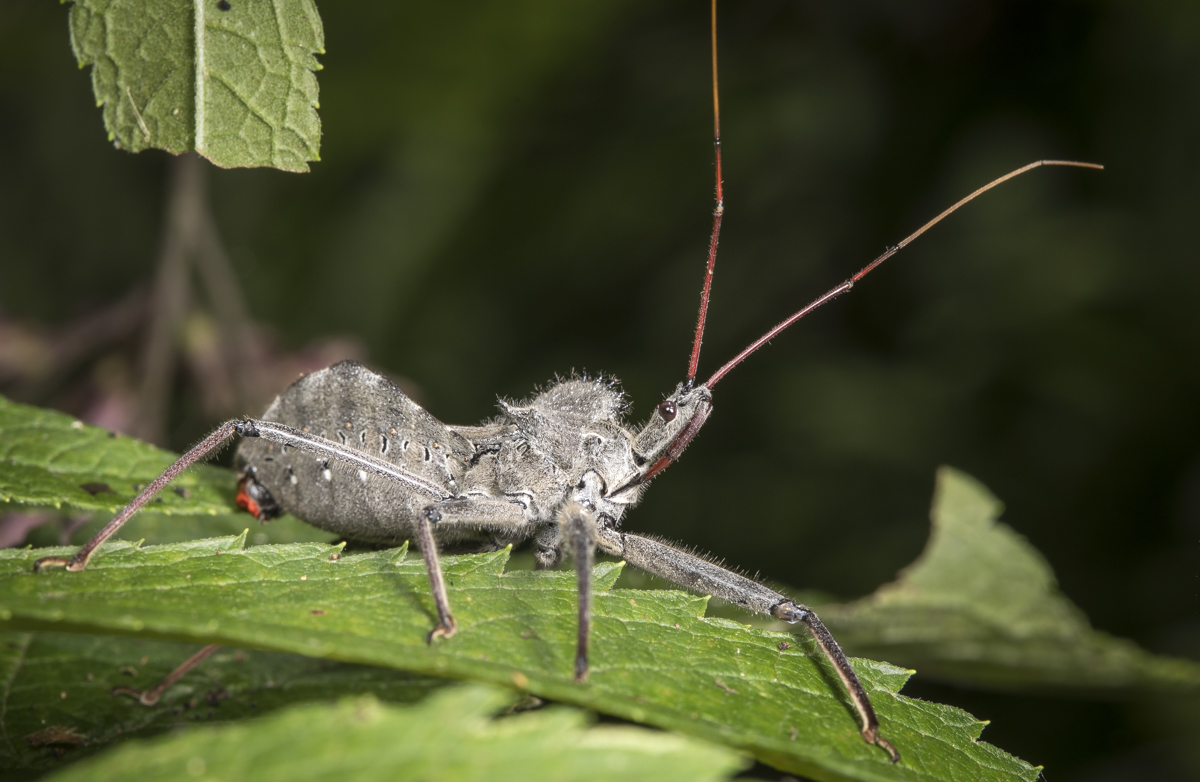
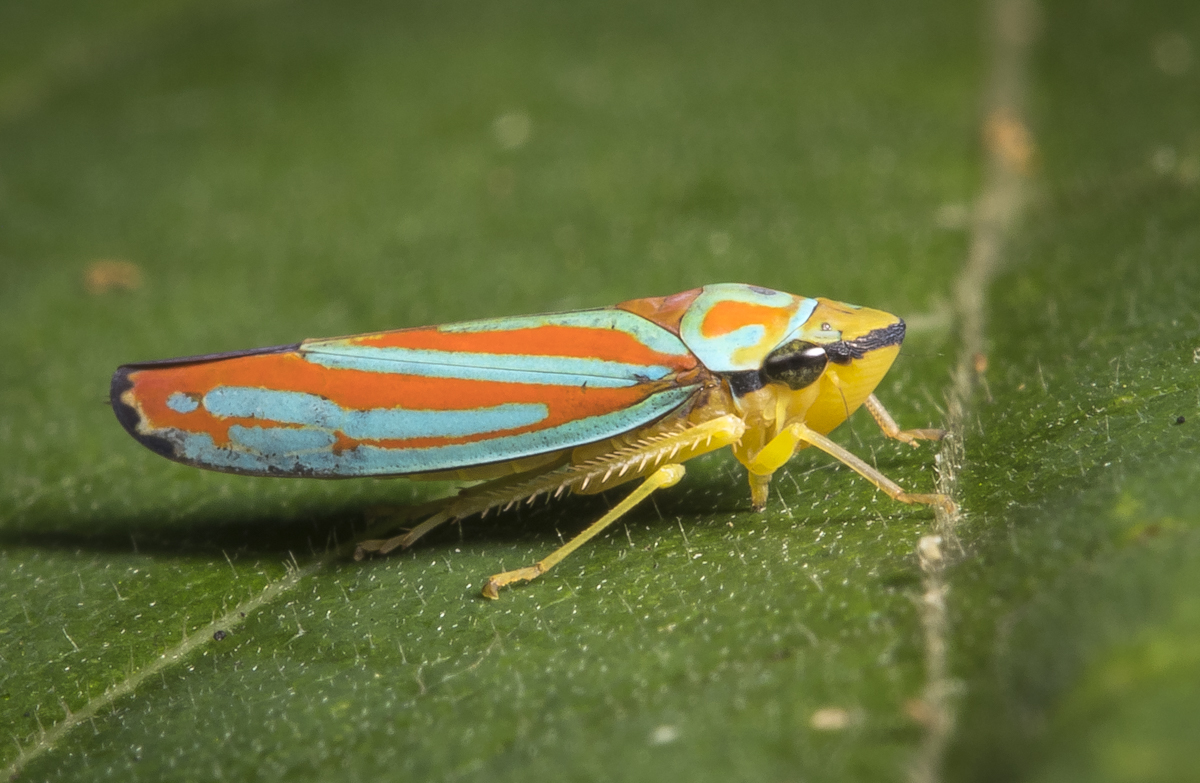
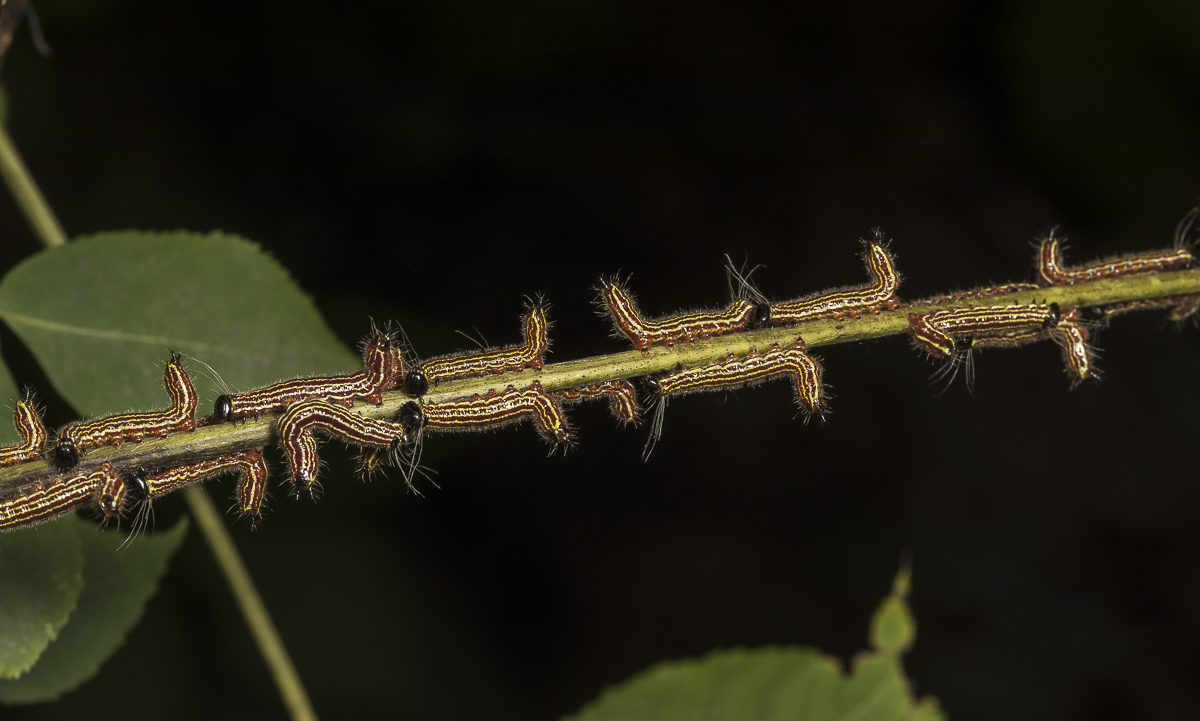
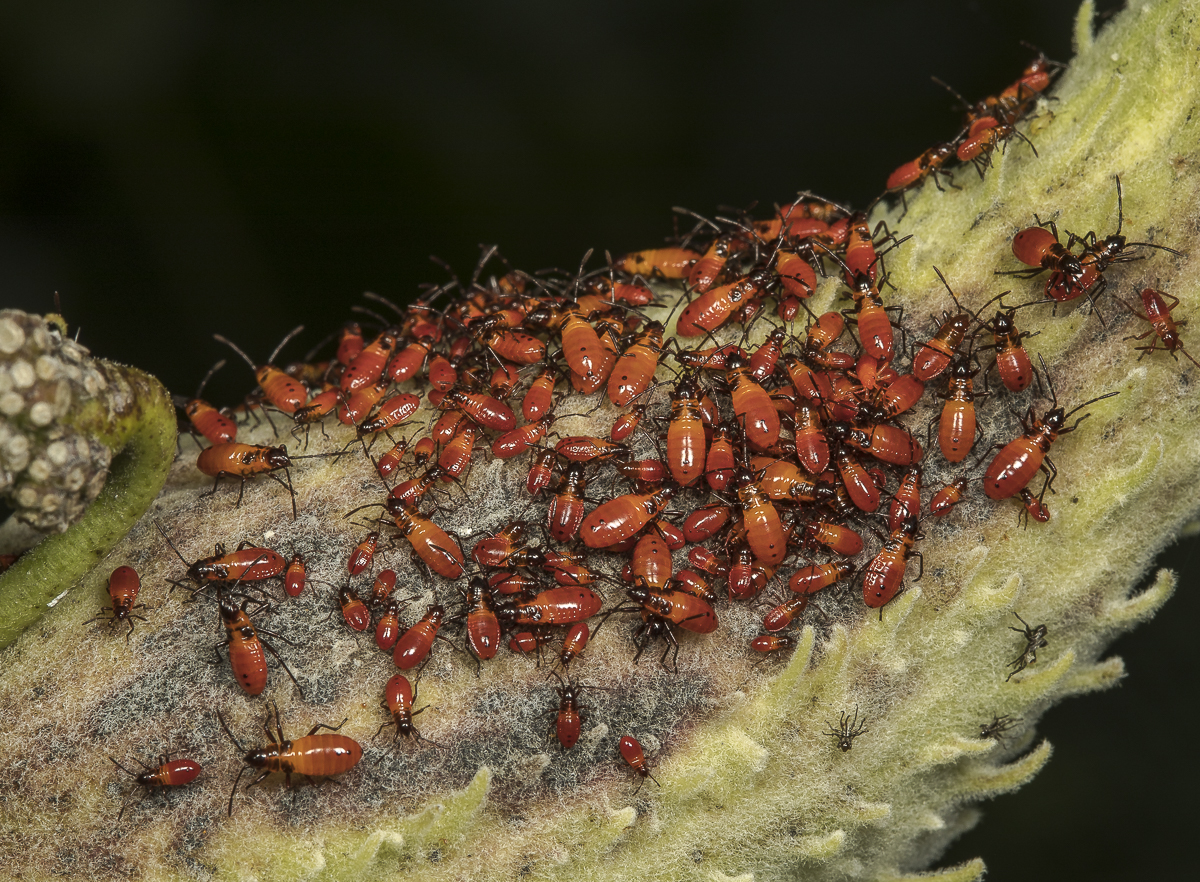
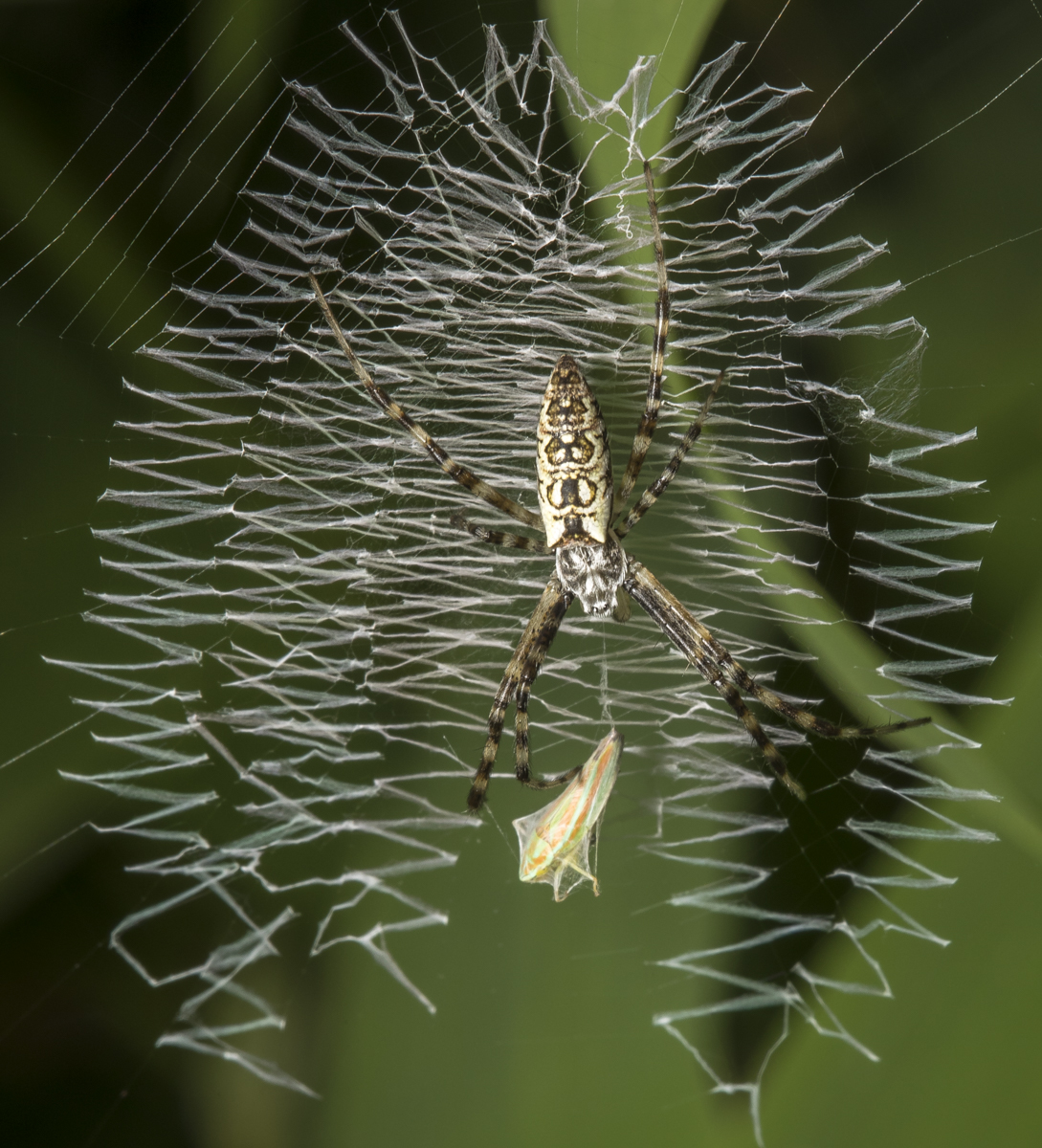
Virginia Creeper Sphinx (aka Hog Sphinx), Darapsa myron (click photos to enlarge)I captured, transported, and released this sphinx moth here in the woods after finding it at our bank in Pittsboro, lured under the walkway by the lights at night. Urban (really, any) lights are a common cause for the demise of many a moth.A formidable-looking Wheel Bug, Arilus cristatus. This is a large member of the group of insects called Assassin Bugs, due to their predatory behavior. They grab prey (other insects) with their raptorial front legs, pierce them with that large rostrum (reddish beak under the head), inject a toxin with digestive enzymes, and then ingest the contents.Red-banded Leafhopper, Graphocephala coccinea.These tiny (~7mm) insects feed on the sap of leaves and can spread a bacterium that causes leaf scorch disease (Pierce’s disease) on some species of plants. They are excellent hoppers, with some believed to jump up to 40x their body length (a 6 ft human of equal ability could jump 240 feet!).A dark morph female Eastern Tiger Swallowtail, Papilio glaucus. Females of this species can be either black or yellow.A male Eastern Tiger Swallowtail. Note that females (see picture above) are more colorful than males, having more blue along the hind wings.A group of Datana sp. caterpillars in their defensive posture (they exude distasteful chemicals from both ends)Datana sp. larvae typically are gregarious through most of their life stages. I guess if one tastes bad, a whole bunch must be a better deterrent.Another bad-tasting bunch-o’-bugs – nymphs of Large Milkweed Bugs, Oncopeltus fasciatus. I photographed a mating pair of adults on this milkweed plant on July 22 and this photo was taken on August 7. This species feeds on milkweed seeds by injecting saliva into the seed using their long rostrum, which predigests the seed so they can suck the contents back up. Female Yellow Garden Spider, Argiope aurantia. She has grown considerably since I last photographed her on July 22.And she has acquired a suitor. This male Yellow Garden Spider is in a web right behind that of the much larger female (you can see the tips of her legs on the left side of the photo)One of our more unusual-looking spiders, the bizarre Spined Micrathena, Micrathena gracilis. Females have a large bulbous abdomen adorned with spines. They are quite common in our woods in late summer.Another armored spider, the Spiny Orbweaver, Gasteracantha cancriformis. Females have a rotund body that is white to yellow in color. The abdomen is surrounded by six stout spines that can be red or black. Their webs have tufts of silk along some strands, supposedly making them visible to birds which will avoid flying through them (and me, to avoid getting them on my face with all the other spider webs along our trails).
…the light of July and August is the day’s dazzle, hot light, with the season’s dust slowly accumulating and making the sky we see a giant silvered reflector.
~Hal Borland
Last Friday was probably the hottest day of this summer thus far. So, naturally, I decided to head to the Pungo Unit of Pocosin Lakes NWR in search of bears, butterflies, and anything else I could find. Back in the old days, extreme heat would keep most people indoors, but things are different now, and as I drove into the refuge, I encountered a couple of cars already scoping things out. I also saw a turkey and a bear within my first 5 minutes on the refuge, so I figured it was going to be a good day.
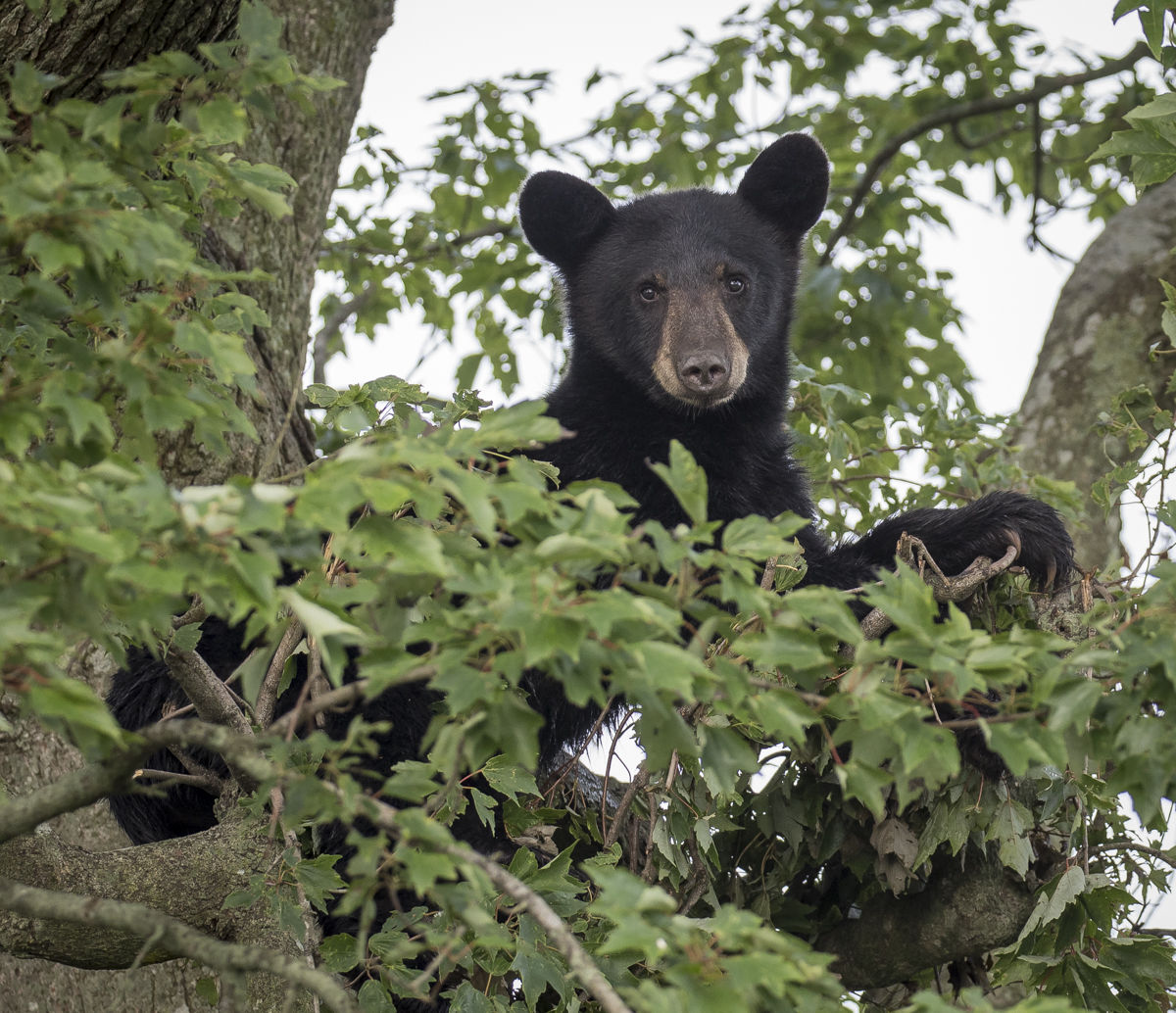
Ten minutes later, I spotted a young bear in a tree where I have seen bears twice before, I stopped and stuck a camera out the window and he raised his head to check me out.
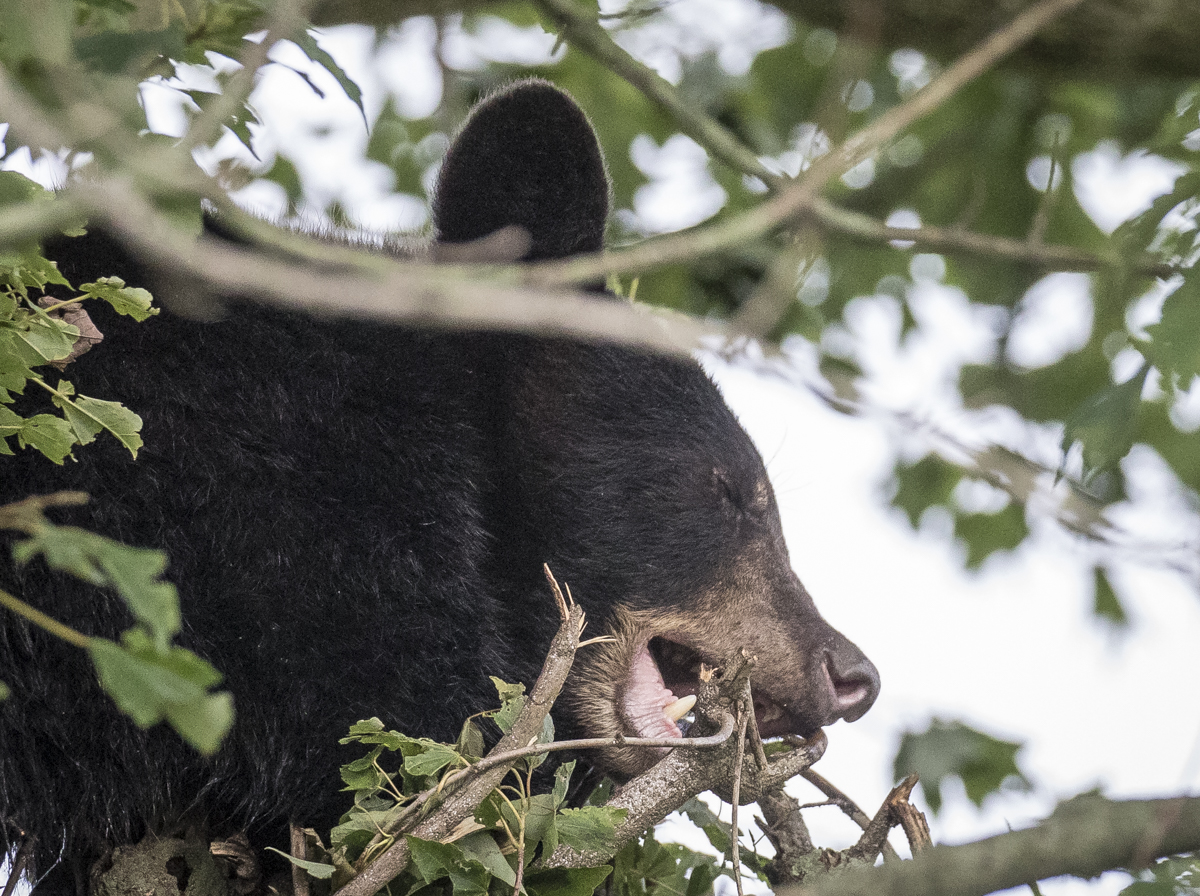
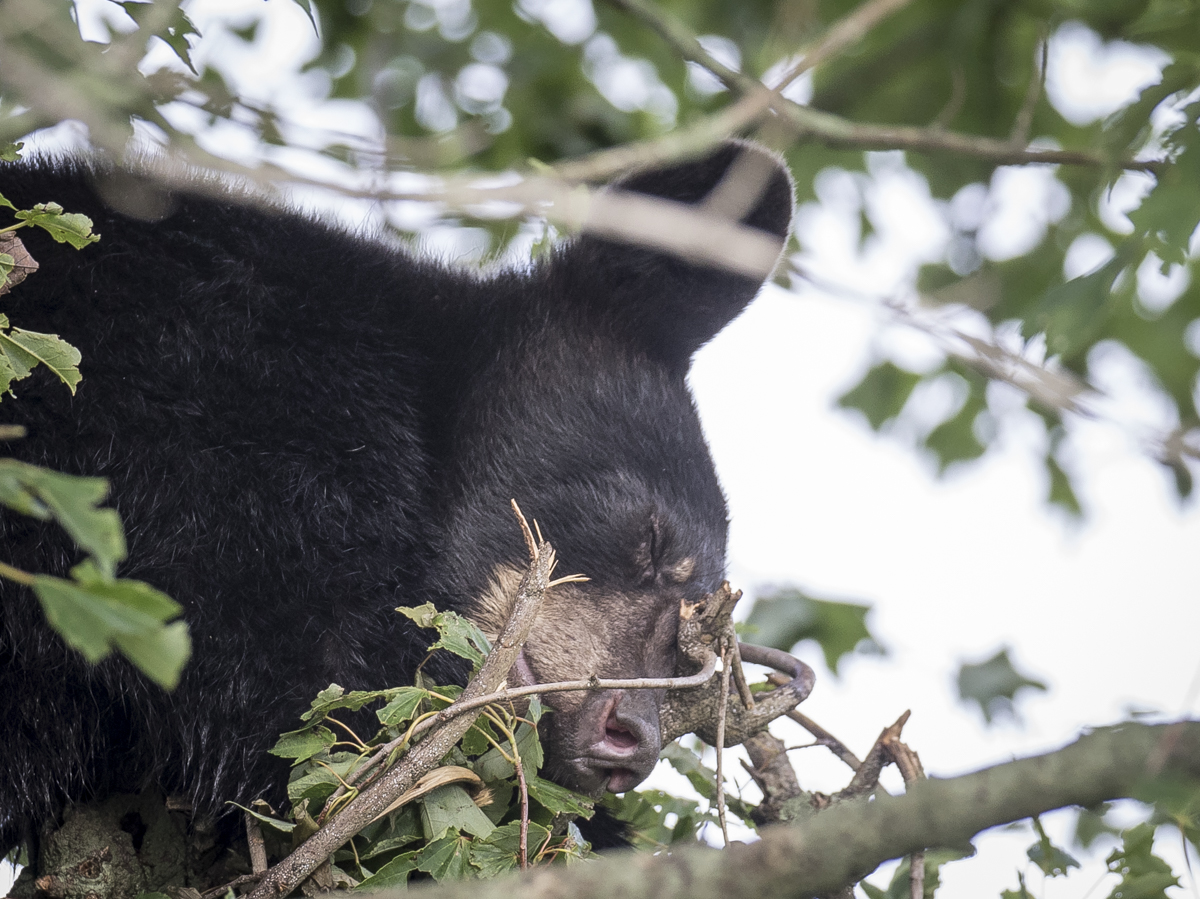
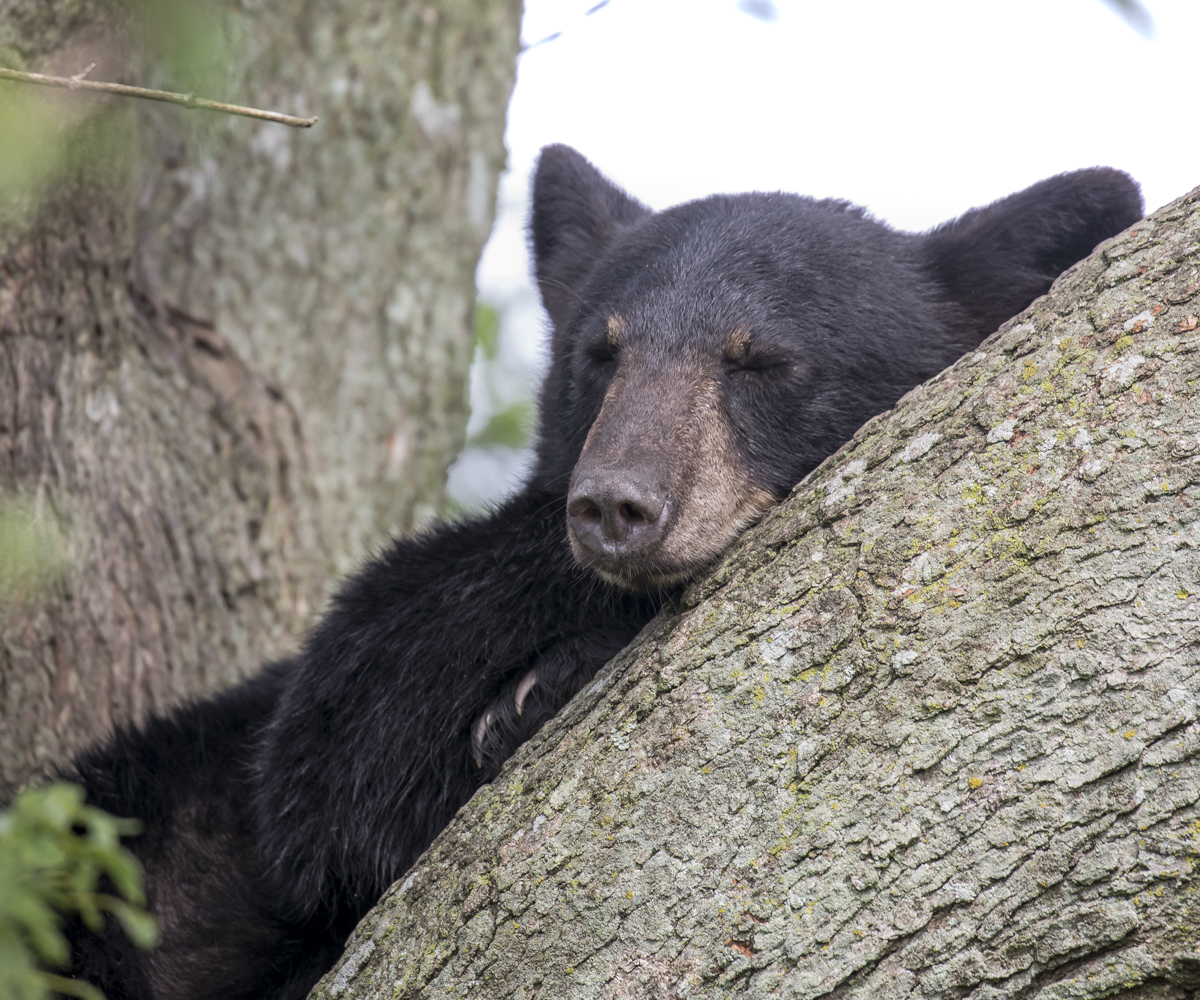
The second bear of the morning was lounging in a tree along one of the refuge roads. It raised its head to glance my way when the truck stopped (click photos to enlarge)As I watched, he settled down and started chewing on some small branches and breaking them…This must be how a bear “fluffs its pillow” in the tree branches. It put its head down in the space where the branches were removed and seemed to take a nap.
I spent about 15 minutes with this tolerant bear and then moved on so as not to attract a crowd. The bear was sleeping peacefully when I left.
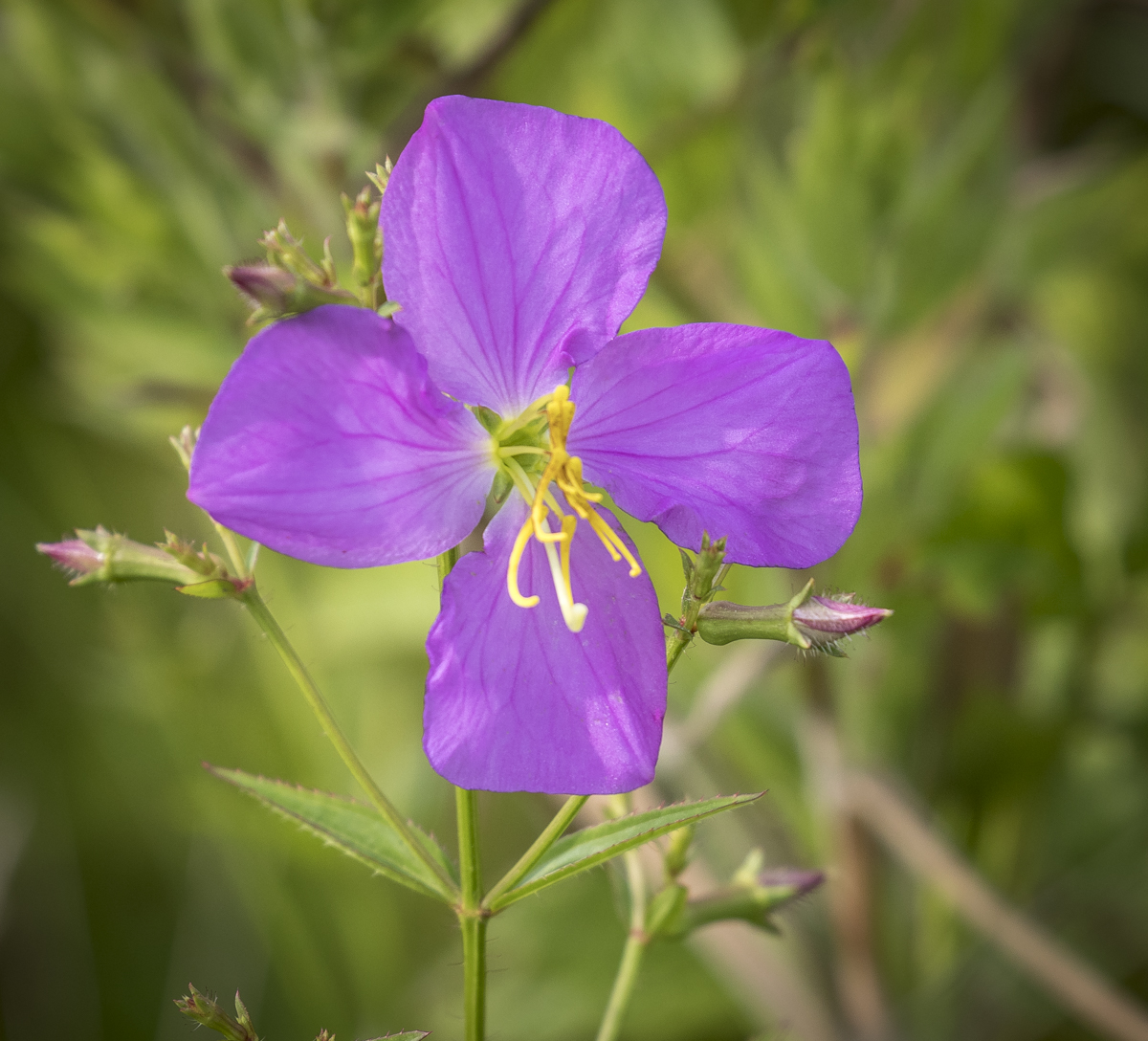
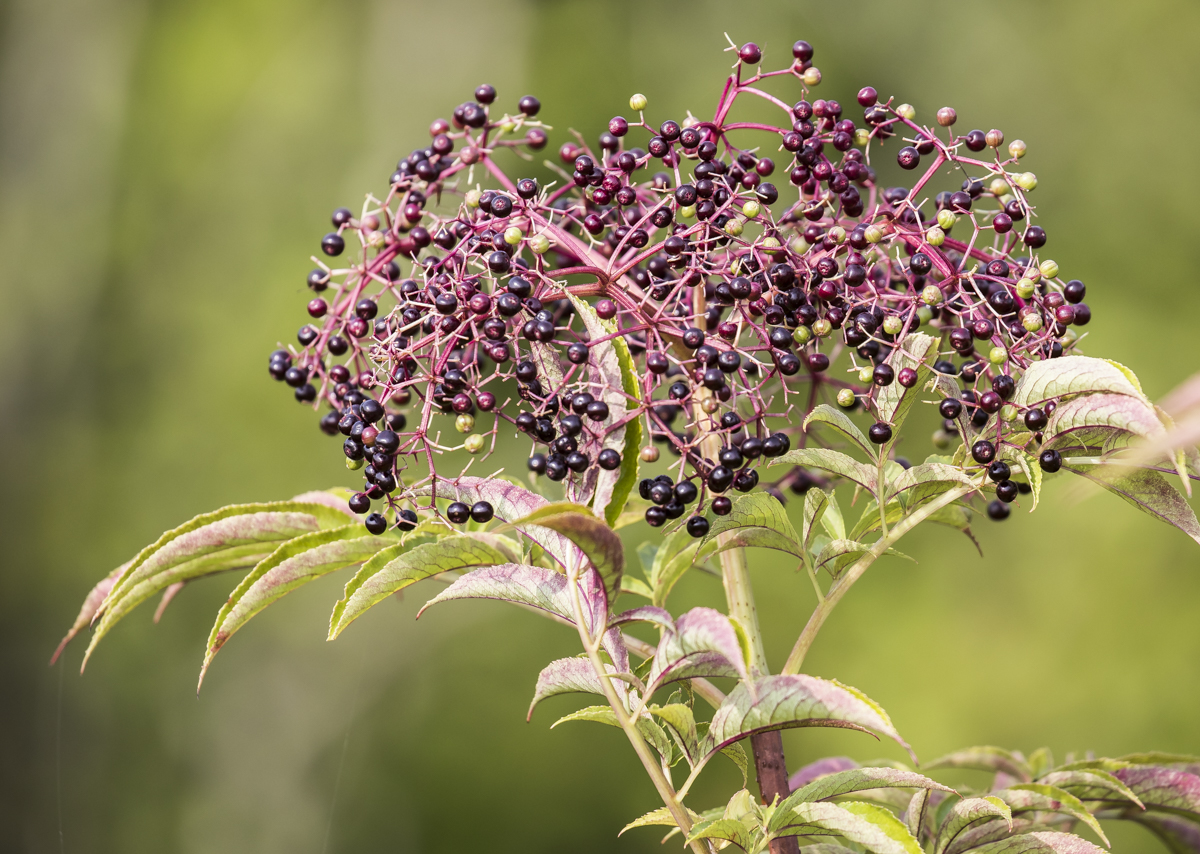
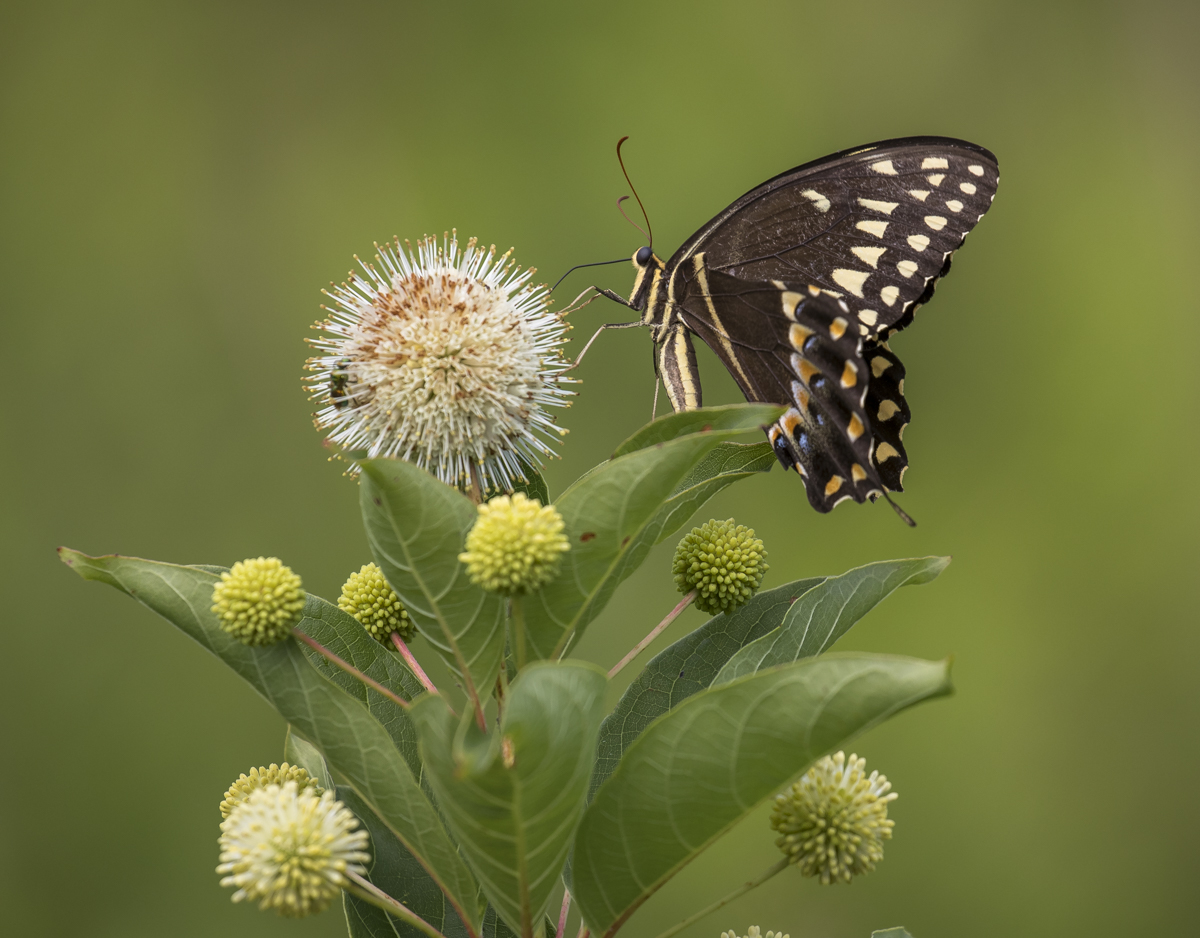
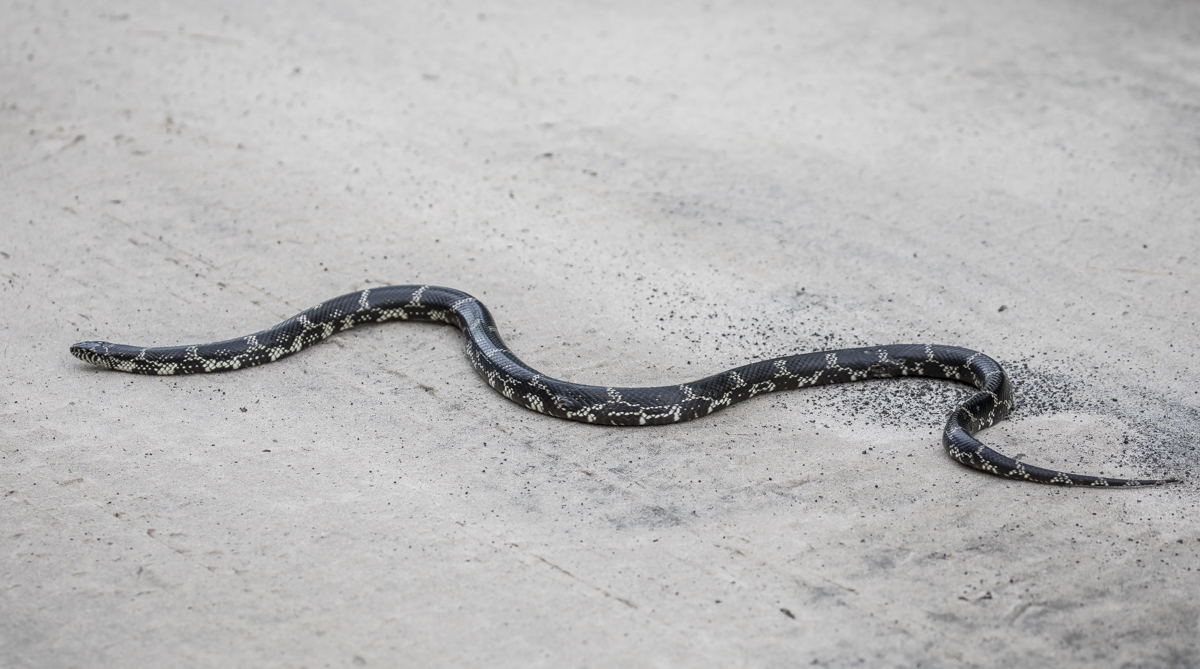
Meadow Beauty (Rhexia sp.) was an abundant bloom along the roadsidesElderberry (Sambucus canadensis) was also very common along the canals and roads. The Buttonbush flowers (Cephalanthus occidentalis) attract numerous pollinators, including this Palamedes Swallowtail and what I think is a Cuckoo Wasp of some sort.This beautiful Eastern Kingsnake started slithering away as I approached (another reason to drive slow on refuge roads).Eastern Kingsnakes feed on a variety of prey including lizards, frogs, rodents, birds, and other snakes. They are resistant to pit viper venom and readily eat cottonmouths, copperheads, and rattlesnakes.
I spent most of the morning slowly cruising the refuge roads. In addition to the kingsnake, I saw a Black Racer and what i am pretty sure was a Canebrake Rattlesnake. It got into the thick brush before I was close enough to be sure, but when something looks like a thick branch crawling across the road from a distance, it’s most likely a rattlesnake. Unfortunately, South Lake Road remains closed (it has been that way all year I think), so one of my favorite areas remains inaccessible by vehicle.
I drove back around to the bear tree over an hour after my first encounter and the sleepy bruin had moved down the branch a bit with its rear end braced against the trunk and was looking pretty relaxed. Once again, I didn’t stay long so as not to disturb.
The bear seemed pleased with this perch
As I often do on these day trips, I headed over to Mattamuskeet NWR mid-day to see if anything was going on there. To be honest, there wasn’t much happening. I saw a few songbirds, a couple of waders, and lots of invertebrates. I got out and walked two short trails and was rewarded with some beautiful spiders.
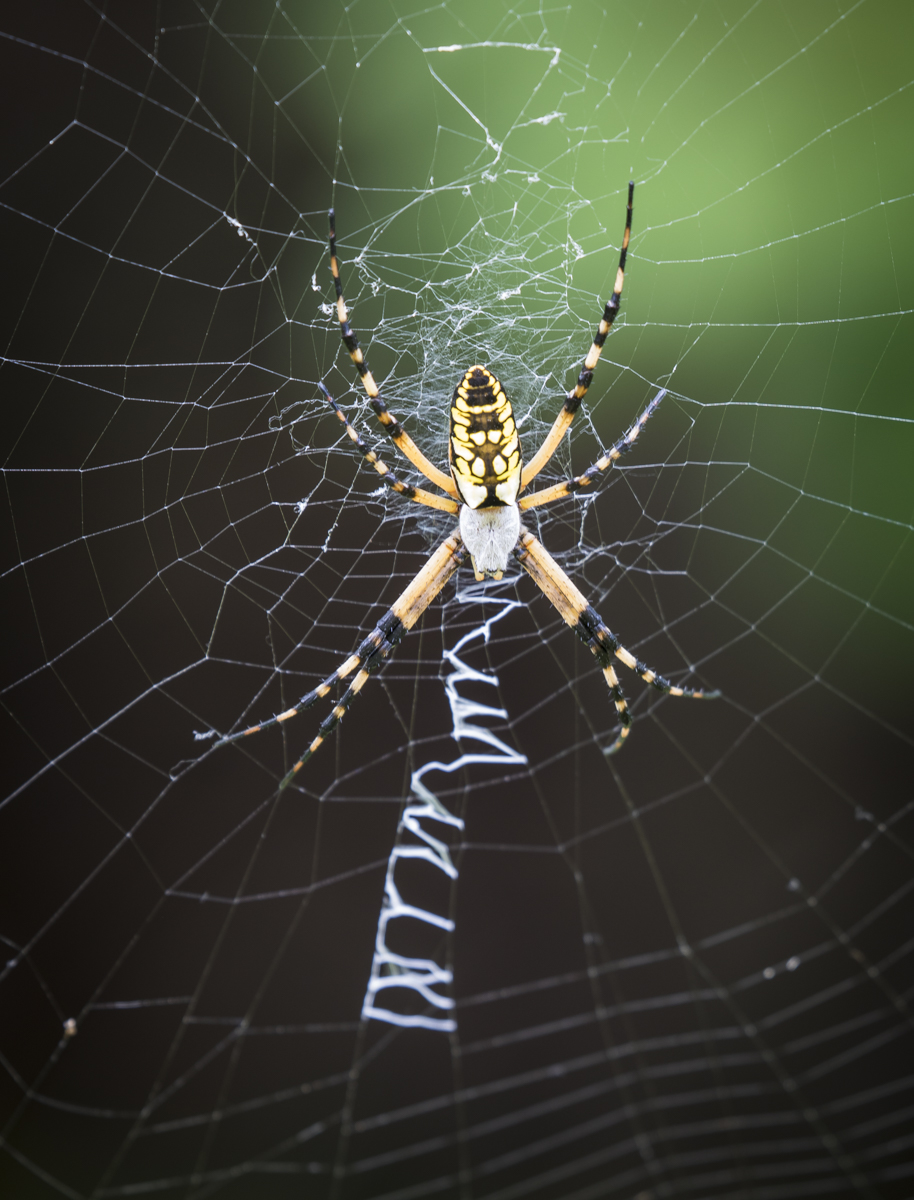
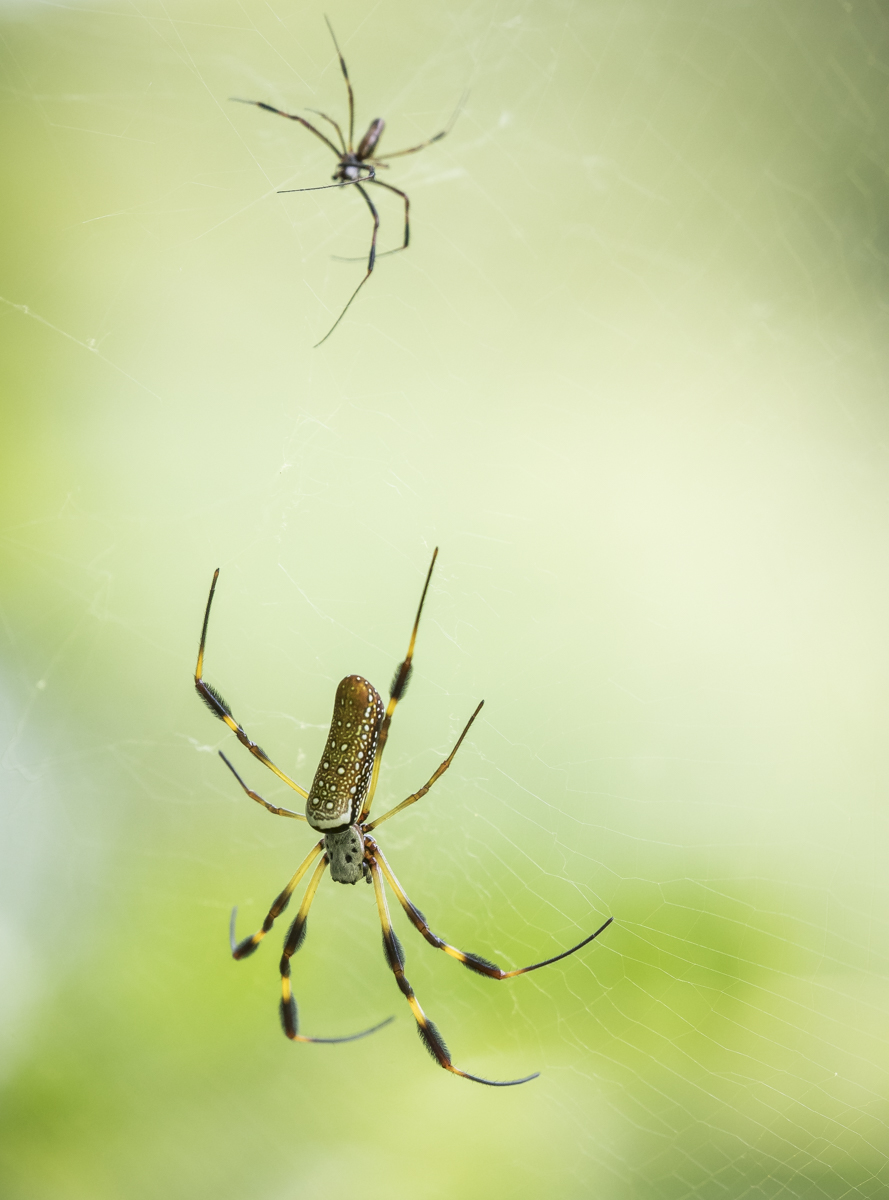
I saw several Black and Yellow Argiope spiders (aka Yellow Garden Spiders, Argiope aurantia) sitting upside down in their distinctive websTwo magnificent Golden Orb Weaver spiders in a web stretched across a six-foot pathway. The smaller one is the male, and he must be very careful when approaching the much larger female for a chance at an arachnid date. These huge spiders have expanded their range northward and are now quite common at Lake Mattamuskeet.
I drove back via the long series of gravel roads that pass through the part of Pocosin Lakes NWR that stretches from Hwy 94 to the south shore of Lake Phelps. You never know what you might encounter. Today’s finds included a couple of bears, some turkeys, and an abundance of dragonflies along the miles of canals that line the roads.
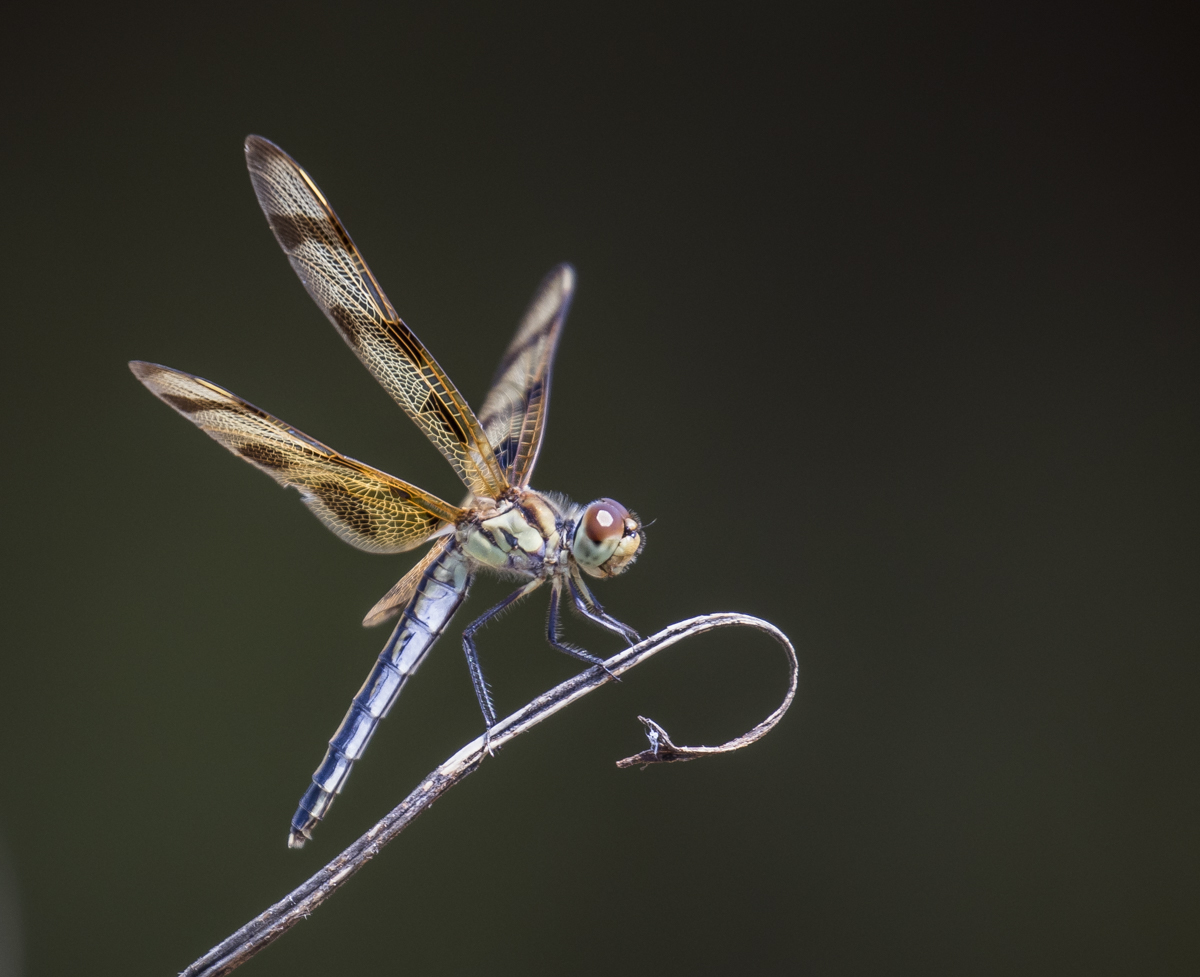
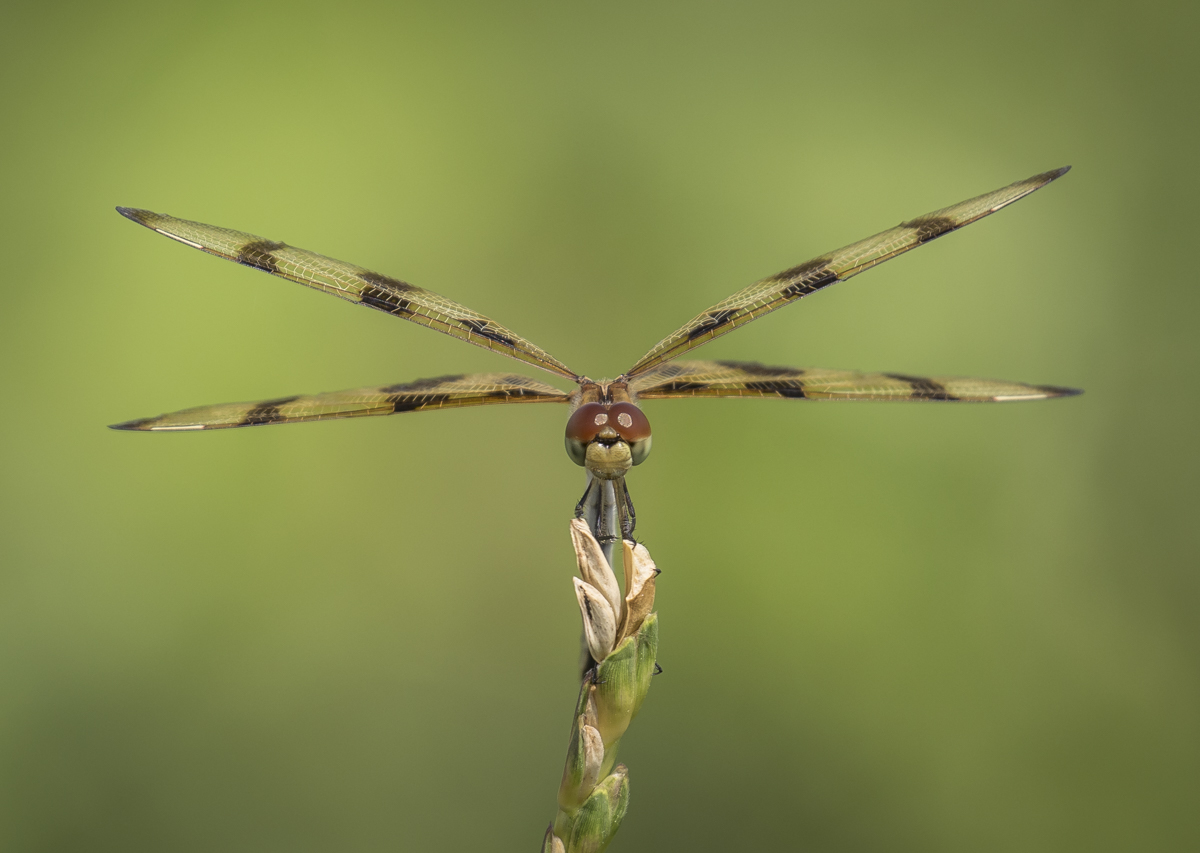
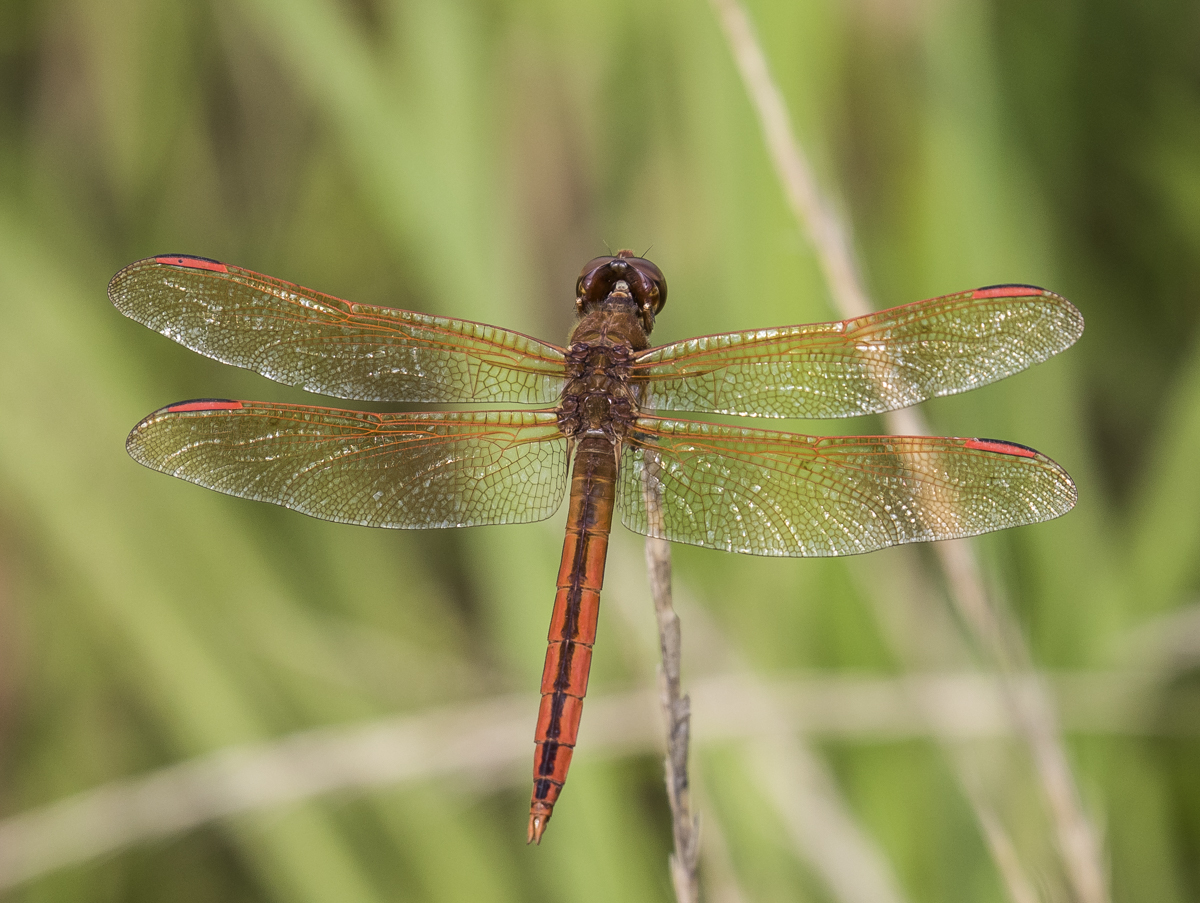
This Halloween Pennant dragonfly had a heck of a time holding on to this dried grass tip in the gusty windsAnother dragonfly, in a moment of calm air, spread its wings and looked ready to pounce on any passing winged insectsThis Golden-winged Skimmer always managed to land in a spot with a busy background of jumbled grasses
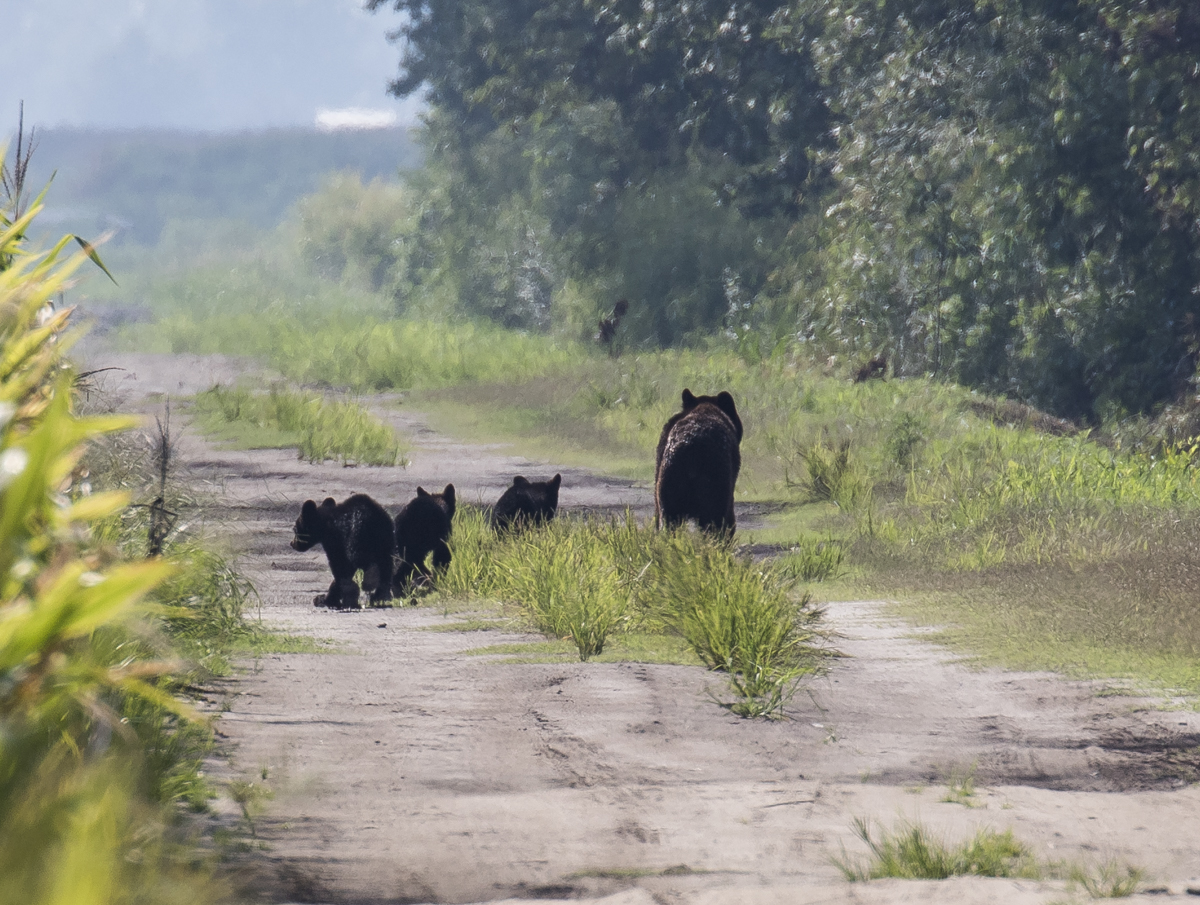
By mid-afternoon I was back on the Pungo Unit and spotted a mother bear with three cubs of the year ambling down a side road. As much as I love seeing the new cubs, I decided to let her and her youngsters have some quiet time without a human pursuing them, so I just took a couple of long distance photos and watched as they finally turned into the woods.
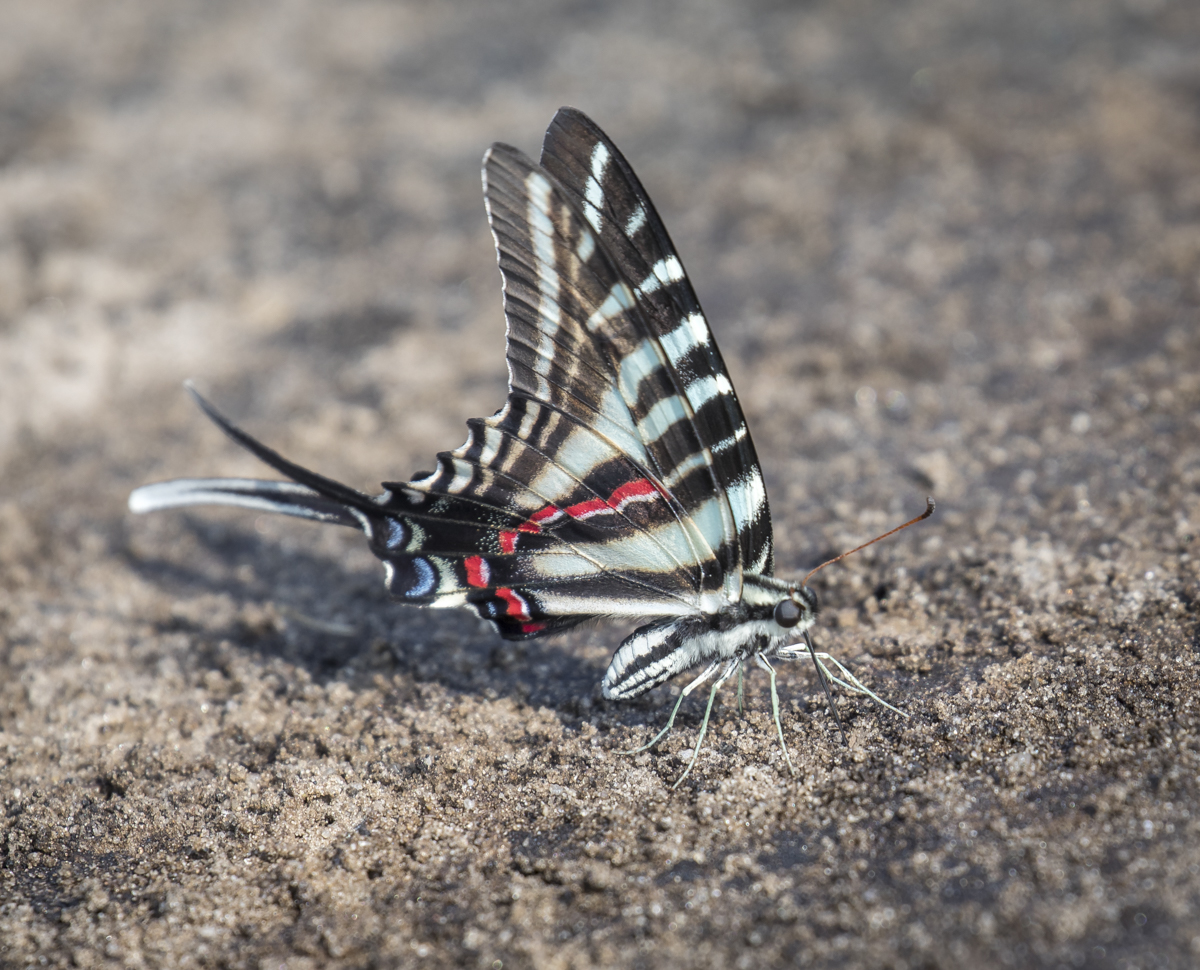
A sow and her young cubs strolling along a road in 92 degree heatA young (probably 2 or 3 year old) bear out in a soybean field on the refugeWhile watching a bear out in a field, I was distracted by this striking Zebra Swallowtail that landed next to me
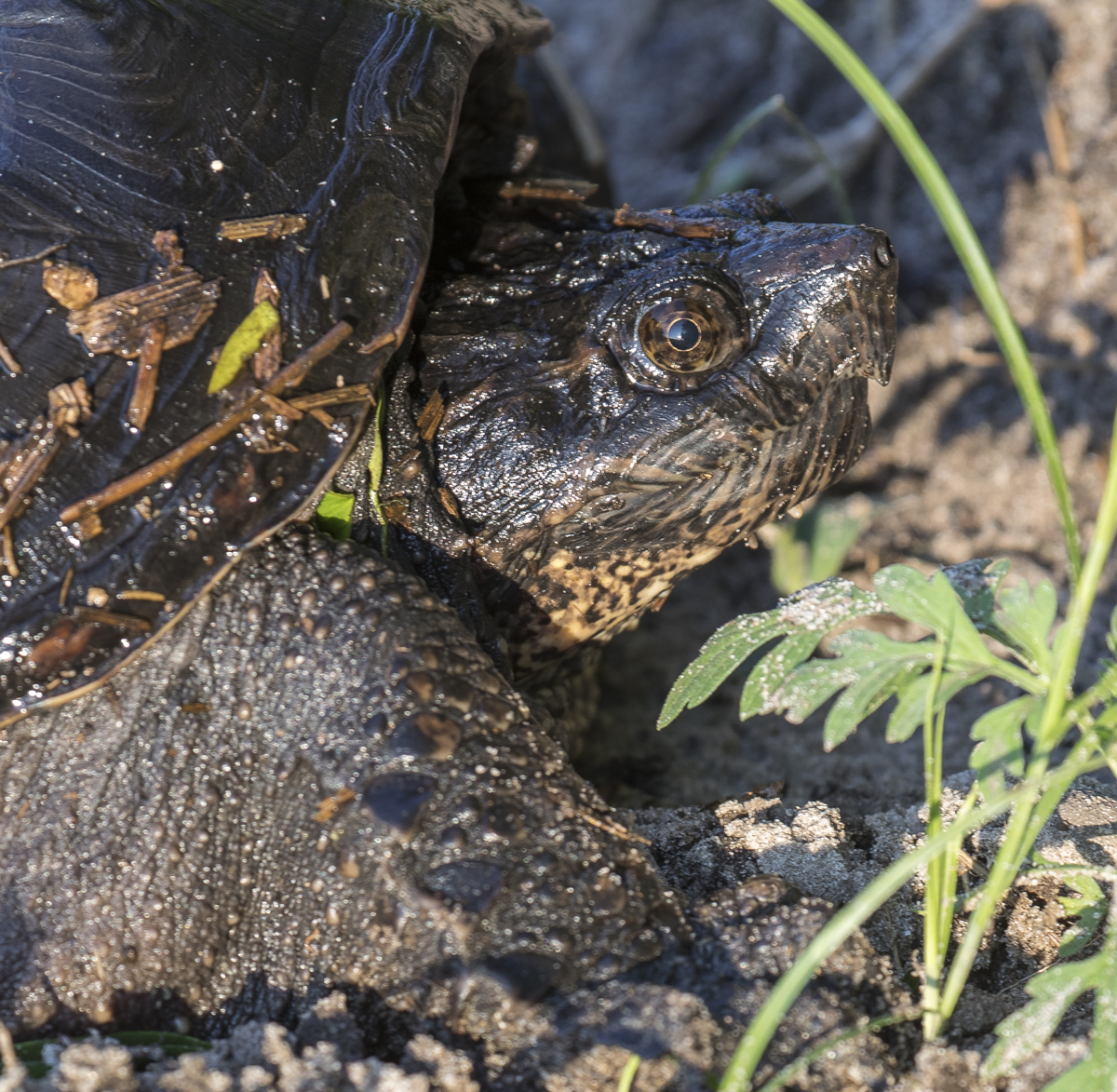
There were still cars and people on “Bear Road”, so I headed over to what I call “New Bear Road” for a little solitary saunter. I saw my first bear of the day on this road and it is usually good for a sighting or two. I walked down the road a ways and spotted a mid-sized Snapping Turtle crawling from the canal into the woods. They are so prehistoric-looking, and this one expressed its displeasure at my presence by raising up the hind part of its body in a defensive posture and looking at me in a less than welcoming manner as I waked past.
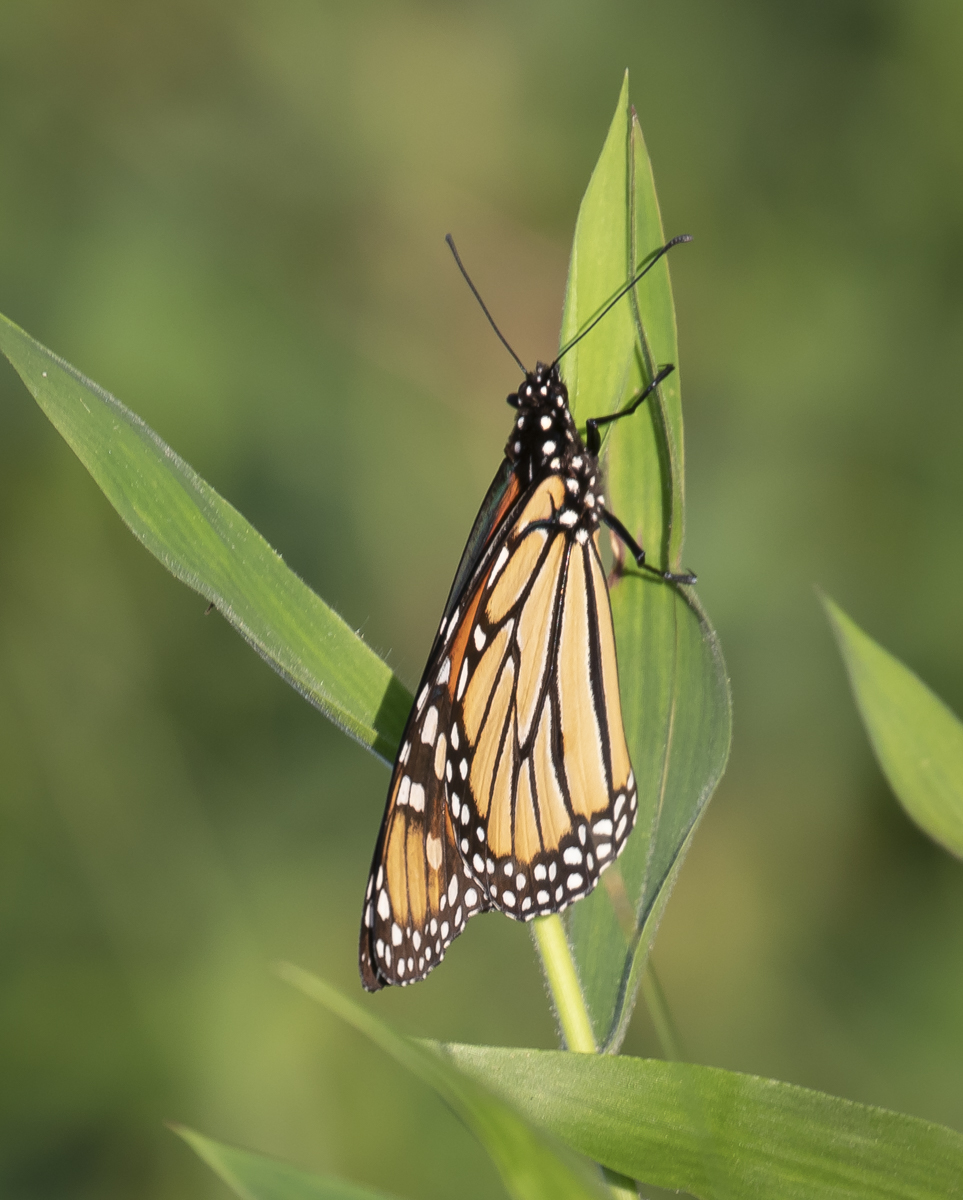
Such a sweet face… I saw my first Monarch Butterfly of the fall season along the edge of the road
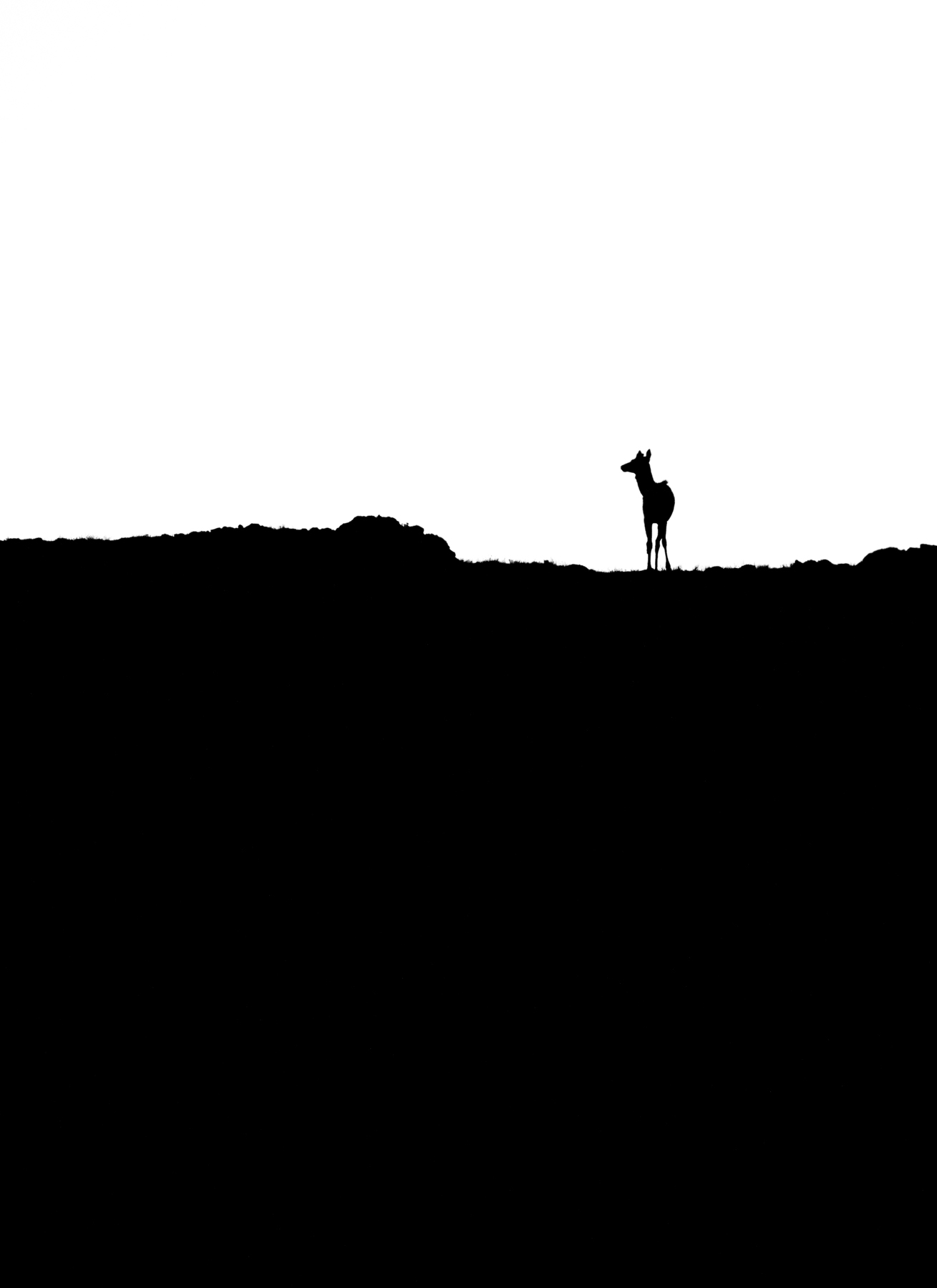
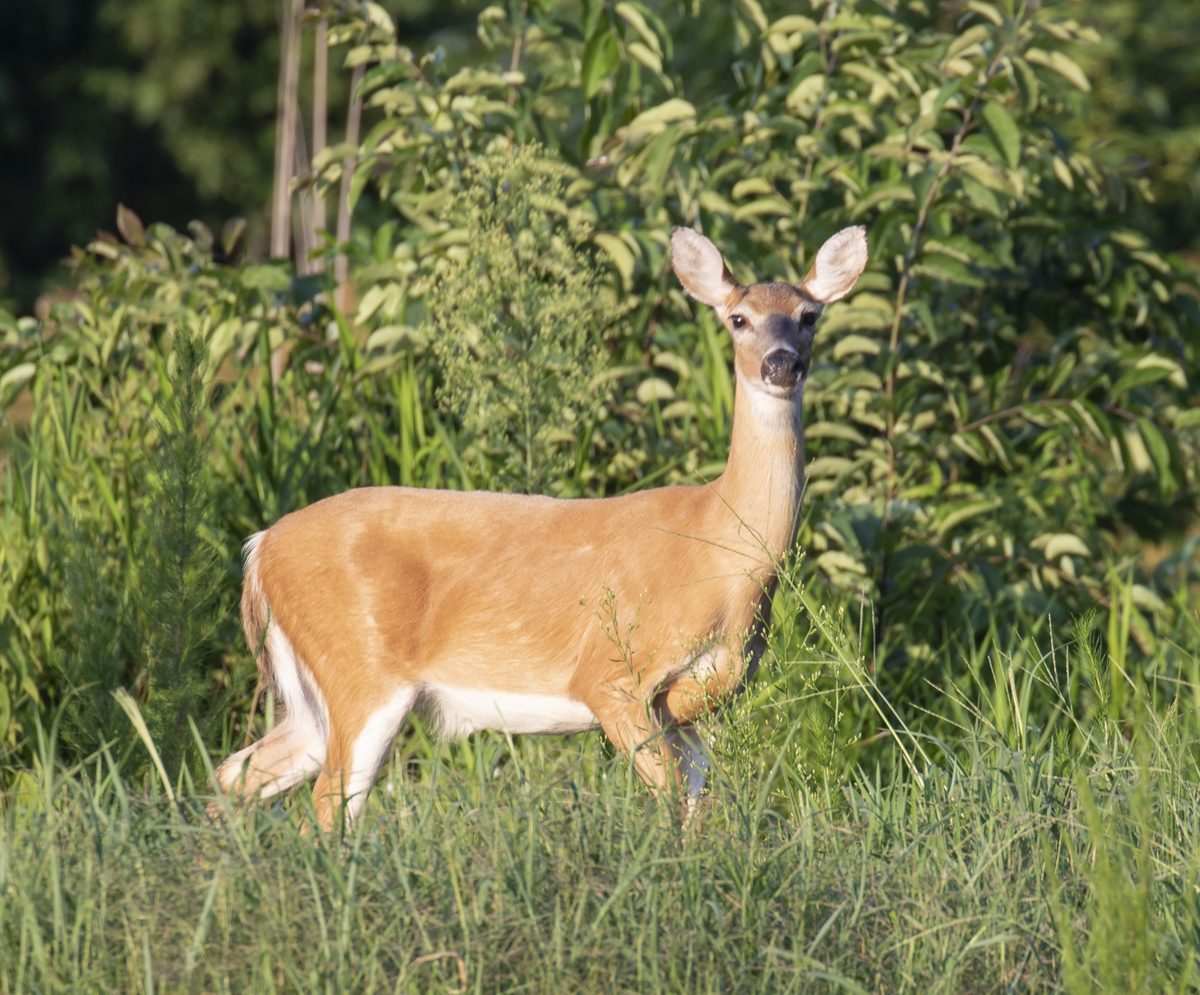
I walked down close to where another road joins and sat down along the edge of the woods, hoping something might travel this juncture. It was hot, very hot, and I sat there with sweat dripping off my forehead and listening to the chorus of insects buzzing all around me. Soon, a bear crossed far down the road and into the woods. Then, a deer came walking down the other road and paused to look at that strange blob sitting at the edge of the trees. It gave a few cautious stiff-legged steps, and stopped to make sure I hadn’t moved. It finally made its way into the woods, no doubt satisfied I was just some slow, ugly bear.
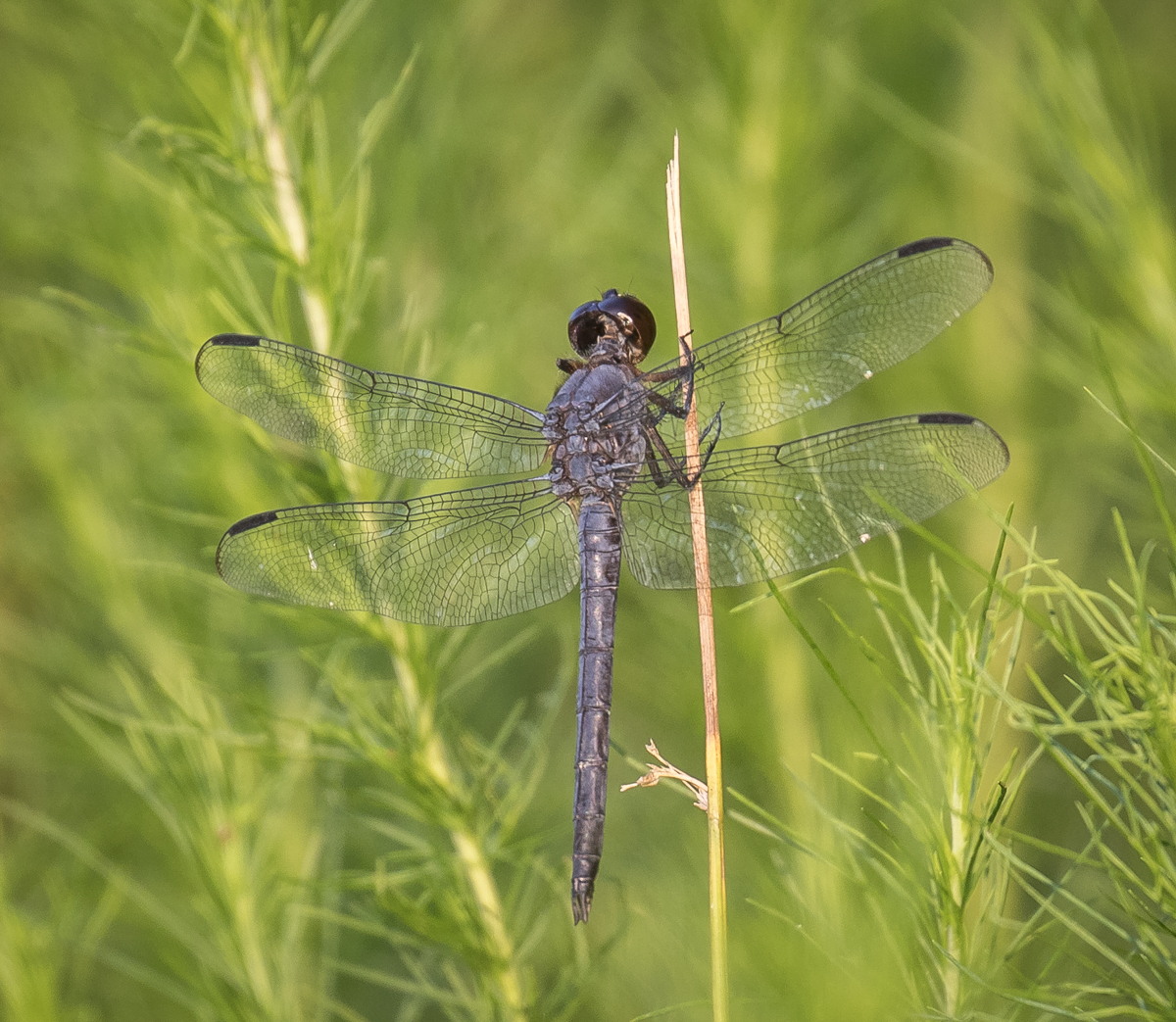
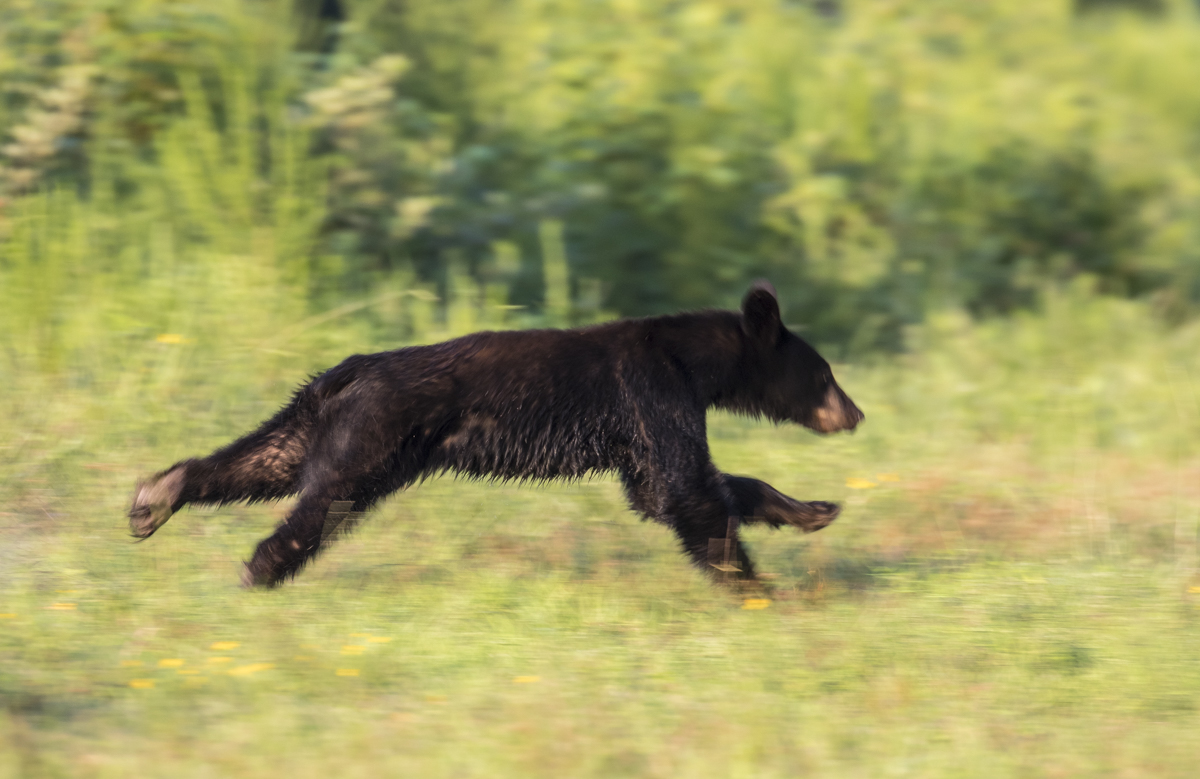
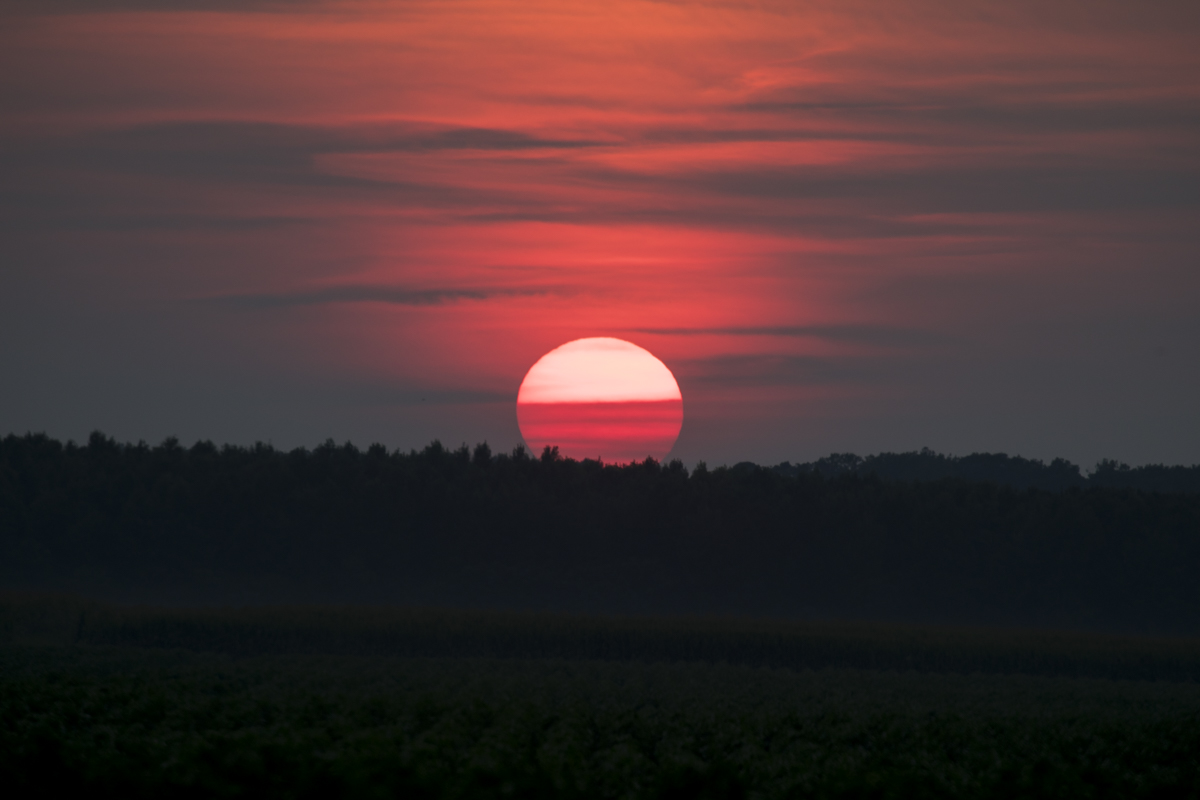
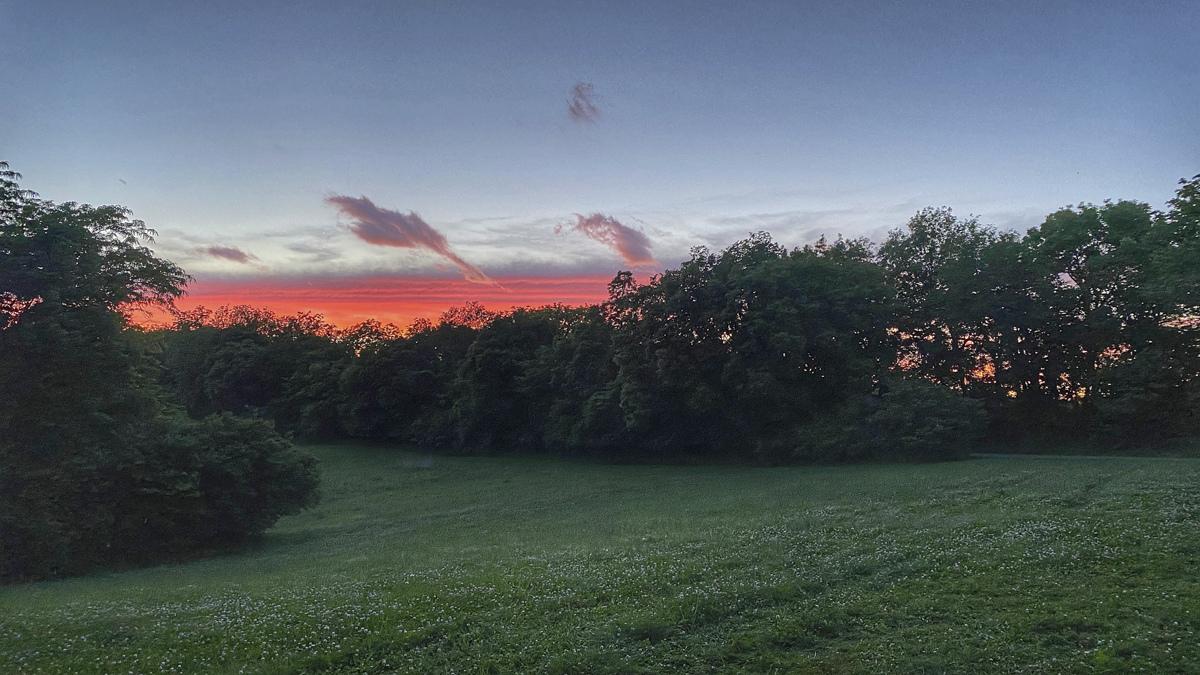
A White-tailed deer on alert when it spotted me sitting at the edge of the woodsA Slaty Skimmer kept me company while I waited, flitting all around me, but returning to the same dried stem to perchMy last bear of the day was this one that ran across at the juncture of the two grassy roads, I think it had been spooked by someone on an electric bicycle (one of several I have seen on the refuge this past year) far down the road that joined New Bear RoadA hazy, big sky sunset was a great way to end a good day
It had been a hot day, but a good one. I ended up driving more than I had intended, but my favorite times were those just sitting and watching the wildlife, from bears (my count for the day was 18) to dragonflies. As always, I left feeling grateful for our public lands and all that they provide to the wildlife, plants, and all of the human visitors that need that connection to the wild.
Surprise is the greatest gift which life can grant us.
~Boris Pasternak
The heat of summer seems to have slowed the activity around the trail cameras in our woods, but sometimes, amid all the images of squirrels, raccoons, and wind blown leafy branches, there is is a jewel that really makes me appreciate the 24-hour a day presence of those eyes on the trees.
This first one is from a while back and is a very quick clip showing one of the opossums that uses the root ball den site carrying some leaves back to the ‘possum hole with its tail. Who among us couldn’t use an extra hand now and then?
A Virginia Opossum carrying leaves in its tightly curled tail
One of the things I have been surprised by recently is the lack of trail camera images of deer fawns. I have been seeing them along the roads here in the neighborhood for a few months, but they have not been recorded on a trail camera until this week.
Doe and fawn mosey by the Raccoon den tree
This next one is the video that I have been waiting for…a Bobcat in our woods! The video is cropped a little so it is not as sharp as some, but this is a clip of a nice-sized Bobcat walking down the now dry stream bed in our woods. I have long hoped to see one here in the neighborhood. We have plenty of woods and potential prey, and being near the Haw River corridor, there is ample habitat for these majestic animals.
Bobcat walking down the creek bottom one morning last week
I have admired the mystique of these secretive wild cats for many years. My first sighting was probably back when I worked for NC State Parks and I spotted a Bobcat and her kittens walking down the road at Goose Creek State Park. Since then, I have seen them mainly at wildlife refuges in our Coastal Plain – Alligator River, Mattamuskeet, and at Pocosin Lakes NWR. Most have been quick glimpses of one as it slinked off into the vegetation. Only a few have been recorded with a camera. Here is a brief list of some of those photographed encounters…
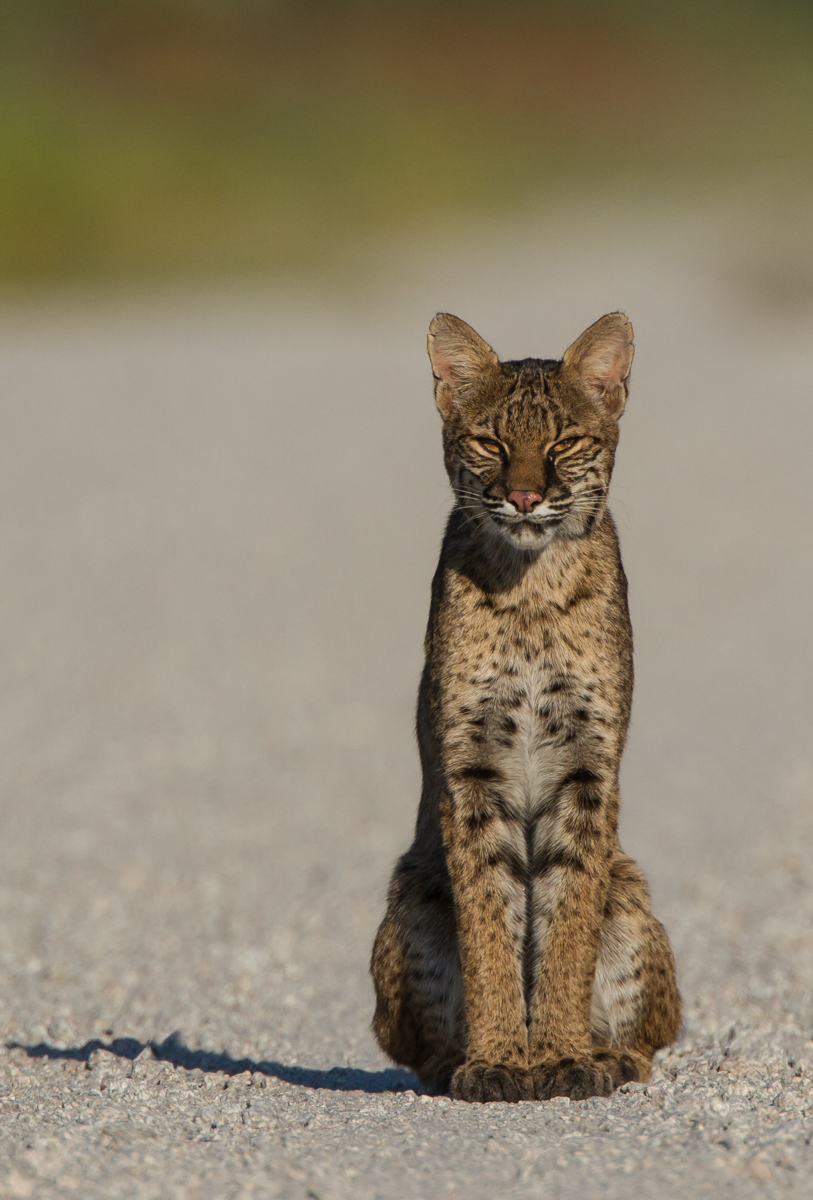
A distant view of a Red Wolf (right) tucking its tail and scurrying by a Bobcat at Pocosin Lakes NWR. The wolf was trotting down the road when it encountered the Bobcat in the brush, which assumed the typical cat pose of arched back. The wolf moved to the other side of the road, keeping an eye on the feline as it went past, and then hurried on down the road.A pre-dawn encounter on a Christmas Bird Count at Pocosin Lakes…a Bobcat carrying a Snow Goose. When we stopped the car, the Bobcat dropped to the ground and crawled across the field to a wind row of trees and disappeared.I went to the other end of the windrow, assuming the Bobcat would go down and cross onto the woods. As I stood there, some birds flushed out of the trees in the wind row, and then I saw it, sitting there in the thick brush staring at me. I’m not sure how long it had been there, and just as quickly, it disappeared.I had just photographed a bear across a canal at Pocosin Lakes and was going to do a three-point turn and go the opposite way on the road. When I looked in my rear view mirror, a Bobcat was in the road behind me! I spent several minutes watching this beautiful animal as it eased on down the road and into the woods. More photos on this sighting can be seen here.
Note the white patches on the back of the ear in the photo above. Look at the video clip again and you can clearly see these distinctive white marks on the back of the ears. My only other Bobcat sighting in the Piedmont was one at Mason Farm Biological Reserve in Chapel Hill many years ago. When I returned to the parking lot I saw what looked like a large cat sitting in the adjacent field. It was looking away from me and I saw those white patches and it was then that I knew it was a Bobcat!
My most memorable encounter was when Melissa and I spotted a Bobcat walking down a road at Pocosin Lakes one hot September afternoon. It went into the brush when we drove toward it. We went a little farther, parked, and got out and sat behind the car and waited. The Bobcat finally came back out and walked up, sat down, and looked at us for a bit before walking off into the thick pocosin vegetation…magical! More on this encounter in a previous post.
Though I have been lucky to witness Bobcats in the wild several times, there is something extra special about knowing there was one in our woods. I just hope one day I will be lucky enough to see one for myself in our personal refuge.
If you take care of the small things, the big things take care of themselves.
~Emily Dickinson
I’ve been wandering around the yard again, camera in hand, looking for the little things that might be living alongside us. The heat of summer tends to make a lot of the big things (like me) a bit less energetic. But this is the time for the smaller life forms to excel, to achieve their life purpose, before the cold weather returns. There are a lot of familiar neighbors out there, and always something new to see as well, be it a different species, a different life stage, or some interesting behavior. All it takes is a little time and a slow meander through the greenery. Here are a few of the latest little things that make life in the woods so interesting…
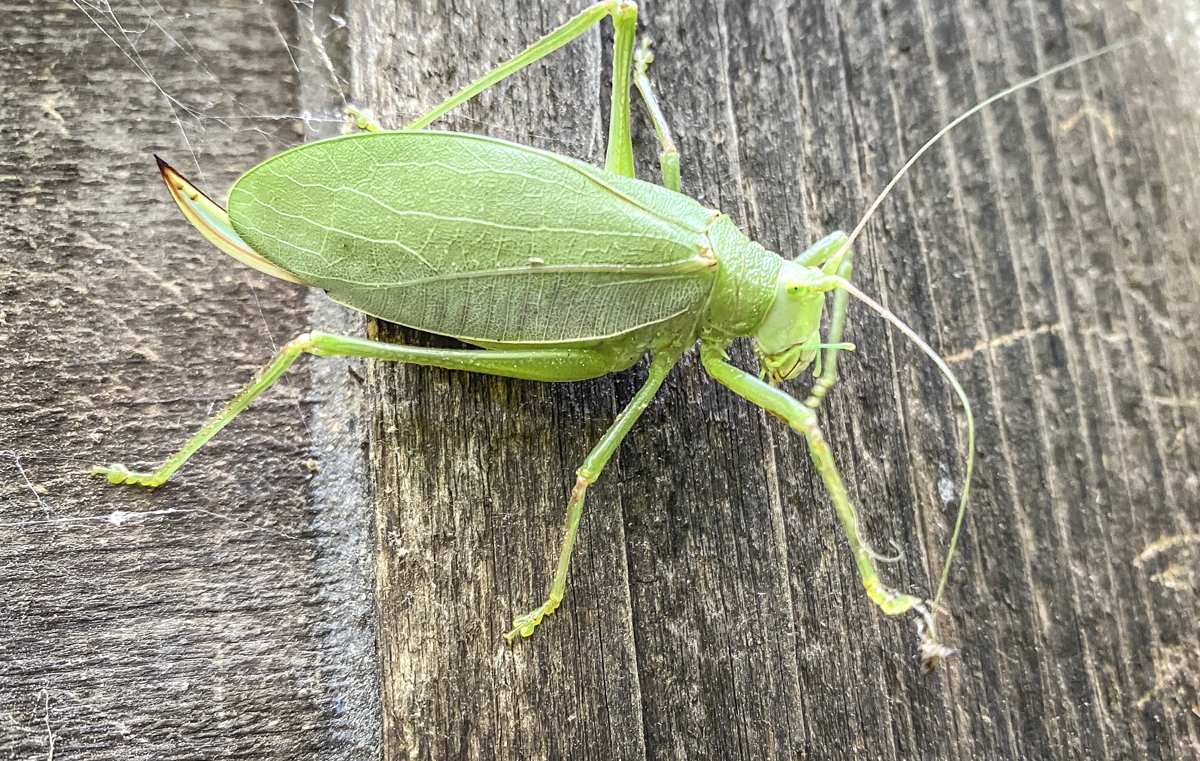
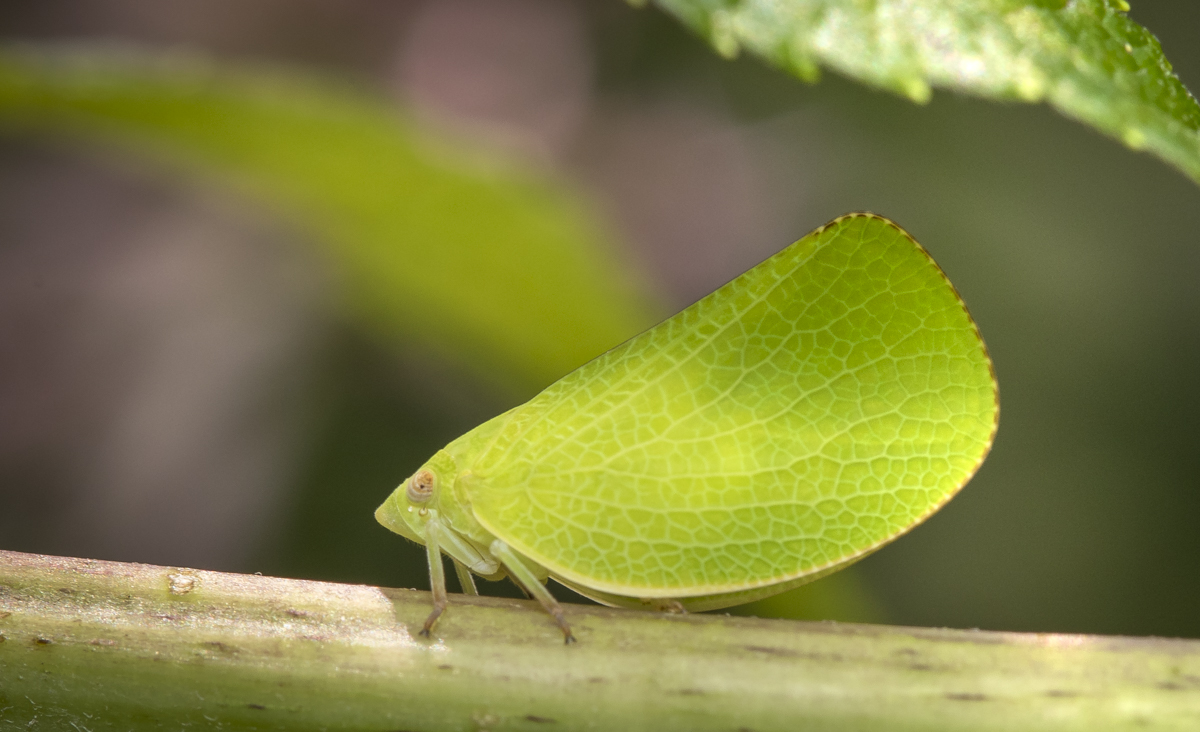
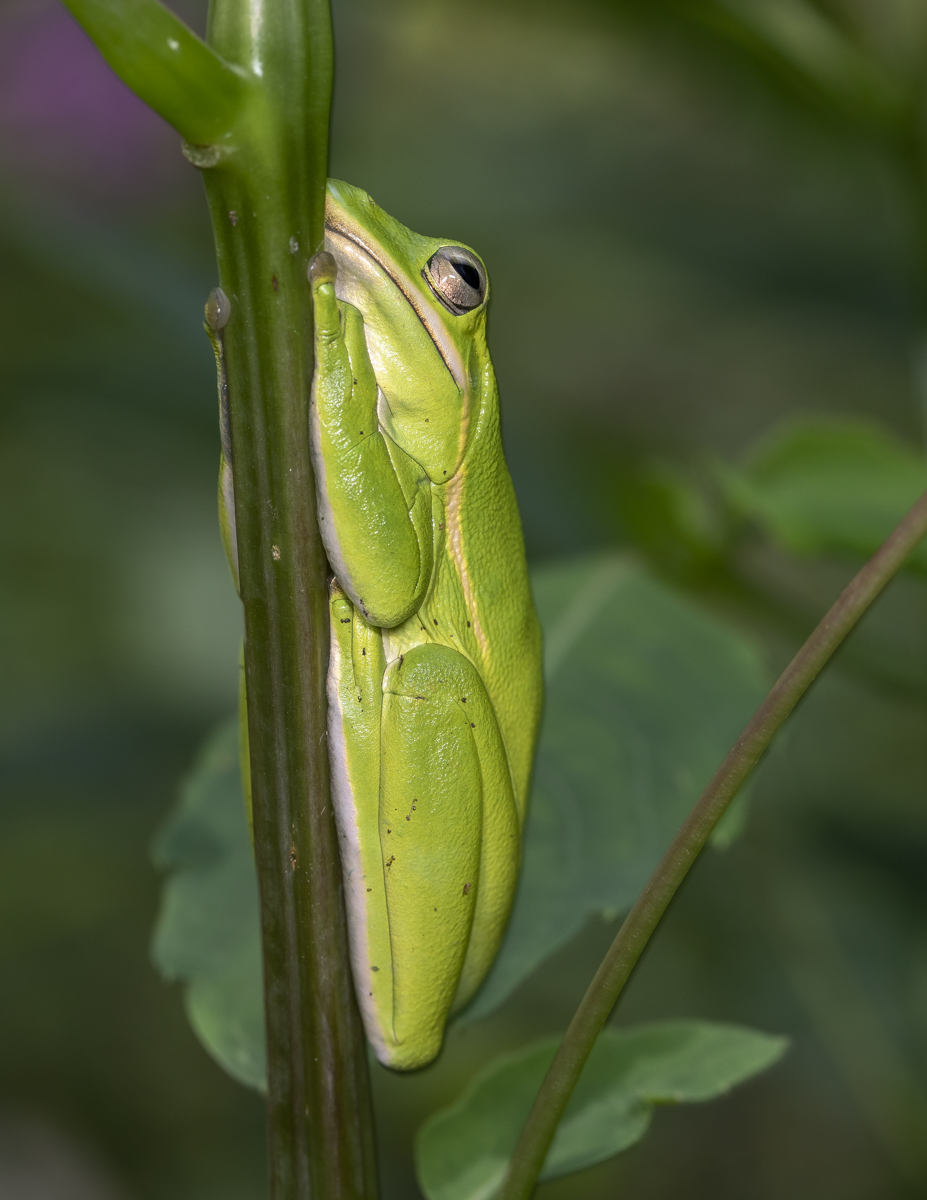
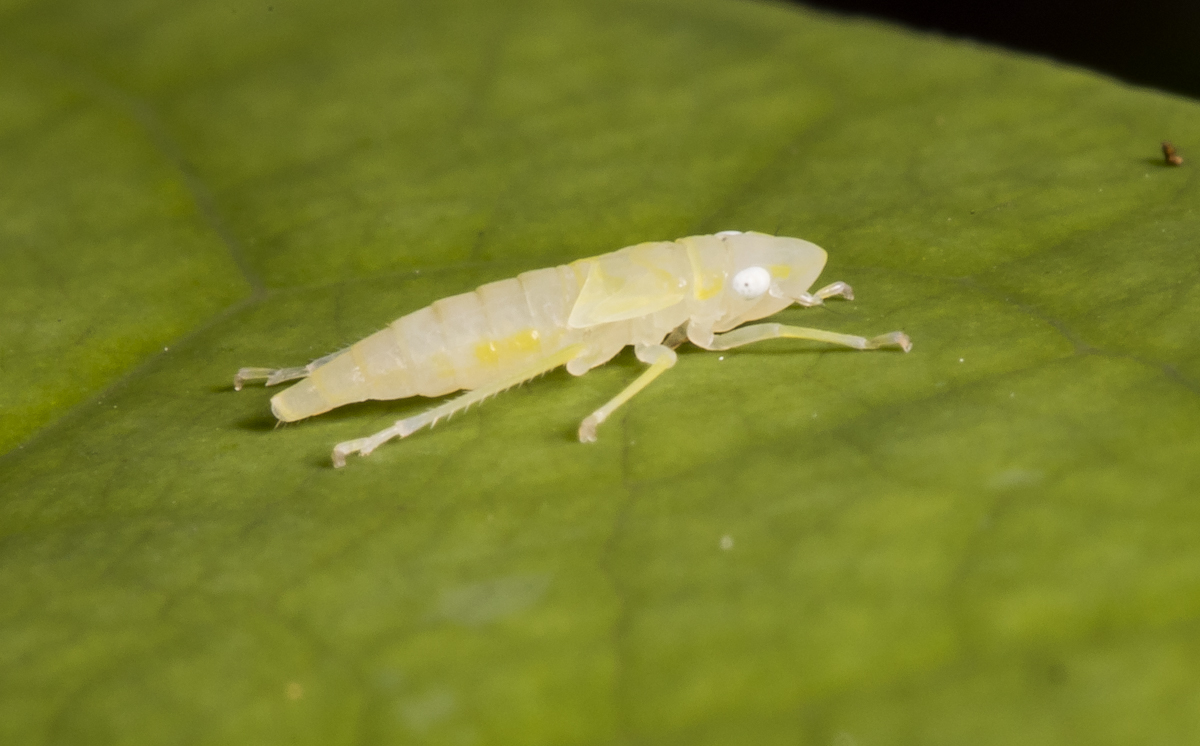
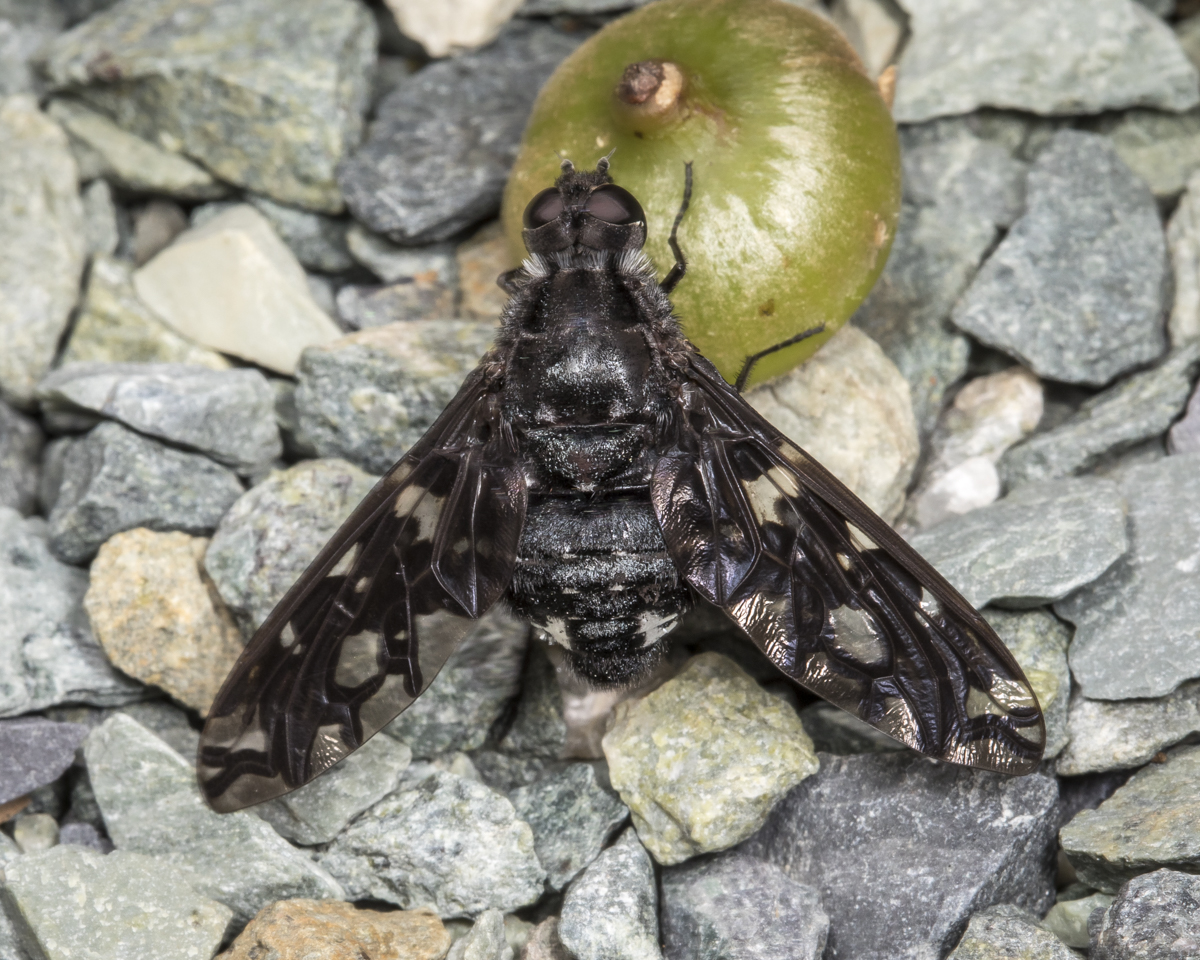
Common True Katydid, Pterophylla camellifolia (iPhone photo). The raspy calls of these leaf mimics are heard from now until autumn in our treetops. Both males and females stridulate. Females (like this one) will use their sword-like ovipositer to insert eggs into the loose bark of trees where the eggs will overwinter and hatch next spring to start the cycle anew. (click photos to enlarge)Green Cone-headed Planthopper, Acanalonia conica. I wrote about these tiny leaf mimics a few years ago in another blog post.This relatively large green guy is always a delight to find – a Green Treefrog, Hyla cinerea. It seems we find one of these in the yard every summer, often clinging onto the stem of a Jewelweed.A mating pair of Large Milkweed Bugs, Oncopeltus fasciatus. They feed on the seeds and sap of milkweed plants in all stages of their life cycle, acquiring the toxins of the plant and making them unpalatable to most predators (hence the bright orange and black warning coloration). Females can lay up to 2000 eggs in their one month life span, so our milkweed plants will soon be covered in the bright orange nymphs.A ghostly nymph of some sort of planthopper (perhaps after a fresh molt)A spiky larva of the Banded Tussock Moth, Halysidota tessellaris (iPhone photo). Varying in color from yellow-orange to gray, these caterpillars feed on a variety of trees and shrubs. They are often found on the tops of leaves out in the open, indicating their potential distastefulness to many predators (due to a combination of the stiff hairs and some chemicals acquired from their host plants).A species of Rose Chafer Beetle, Macrodactylus sp. Whenever I got close with the camera, it raised its long hind legs in what might be some sort of defensive posture.A Tiger Bee Fly (Xenox tigrinus) sitting on a green acorn cap. I’m always glad to see these around our wood-siding house as they are parasites on Carpenter Bees, which love to drill into our fascia boards. Adult Tiger Bee Flies feed on nectar and females seek out Carpenter Bee nest cavities and lay eggs in them where her young hatch and feed on the bee larvae.False Bee-killer, Promachus bastardii (iPhone photo). This large robber fly can be seen (and heard) buzzing around the yard waiting for a chance to pounce on unsuspecting flying insects (often some type of bee) which it then sucks dry.Underside of a female Arrow-shaped Micrathena, Micrathena sagittata, showing the prominent spines on her abdomen (males are tiny, seldom seen, and, well, spineless). Juvenile Black-and-yellow Garden Spider, Argiope aurantia, with a planthopper prey. I think this is a male Bronze Jumping Spider, Eris militaris. It was crawling around on an ironweed next to our kitchen door. It allowed me to get several portrait shots as it scrutinized my big white flash diffuser moving in on it as I tried to focus on those magnificent eyes.
Between every two pines is a doorway to a new world.
~John Muir
There is so much we see when we spend time in nature, but having a few trail cameras set out shows how much we miss. Here are a few of the wildlife happenings our three cameras caught over the past couple of months, vignettes of the life in our woods when we are not there to witness.
A juvenile Red-tailed Hawk sets off a chipmunk alarm call (turn up volume to hear the clucking sound). Chipmunks have different alarms for aerial versus ground predators. I wonder which one it uses for a hawk sitting on the ground?
A pair of Opossums running along the den log. Not sure what is happening here – courtship?; territorial dispute?; practicing crossing a road?
Maybe it is a courtship thing after all, and one party is not thrilled with the idea…
A mother Raccoon teaching her three young about the ways of the woods
Back at the den tree, there may only be two young Raccoons now (not sure)
A young deer escaping the heat with a dash in our wet weather stream after a heavy rain
A Coyote searching for breakfast
Two times last month, the camera caught a quick glimpse of a Coyote carrying something (presumably back to a den). I can’t quite tell what it is (this is the best of the two clips). Can you? A rabbit perhaps?
Nothing is more humbling than to look with a strong magnifying glass at an insect so tiny that the naked eye sees only the barest speck and to discover that nevertheless it is sculpted and articulated and striped with the same care and imagination.
~Rudolf Arnheim
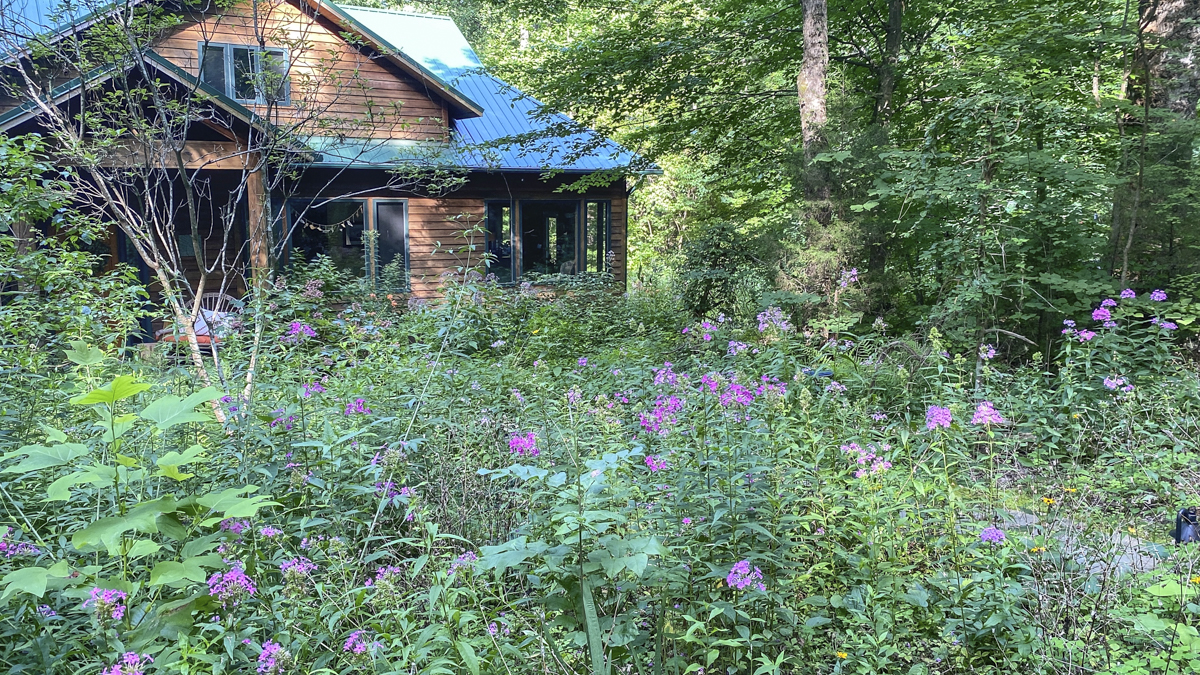
A view of the the native plant jungle that is our yard…there really is a walkway to the door, I promise (click photos to enlarge)
I’m blaming it on our month-long trip out West back in May. At least that’s what I will tell anyone that wonders why our yard is so, well, jungle-like. Over the years, I’ve kind of let plants do what they wanted to do, in violation of most standard gardening practices. There are tall Joe-Pye-Weeds in front of shorter plants, a couple of species of ferns have run amok and taken over large portions of beds, and the tree canopy has grown so much that most wildflowers are abnormally tall and leggy and therefore often fall over without adding plant supports. But, it helps keep the invasives, especially Microstegium, at bay (a little). And then there are the rabbits that like to munch on the species I truly prize (like Cardinal Flower and Rosinweed), so the garden definitely has a mind of its own in terms of species make-up and arrangement. But, it provides food and shelter for a pretty amazing array of creatures, big and small, that keep me company when I wander with my camera. The past few days, I have not had much energy for yard chores due to the heat (another reason it looks this way) but I have managed to stroll through the jungle, looking for some of our tiniest of neighbors.
On of the reasons we have so many insect and spider neighbors is the abundance of native plants like this Buttonbush (Cephalanthus occidentalis), a favorite of both day and night-time pollinators.
Below are some of the small things we see on our meanders through the greenery…
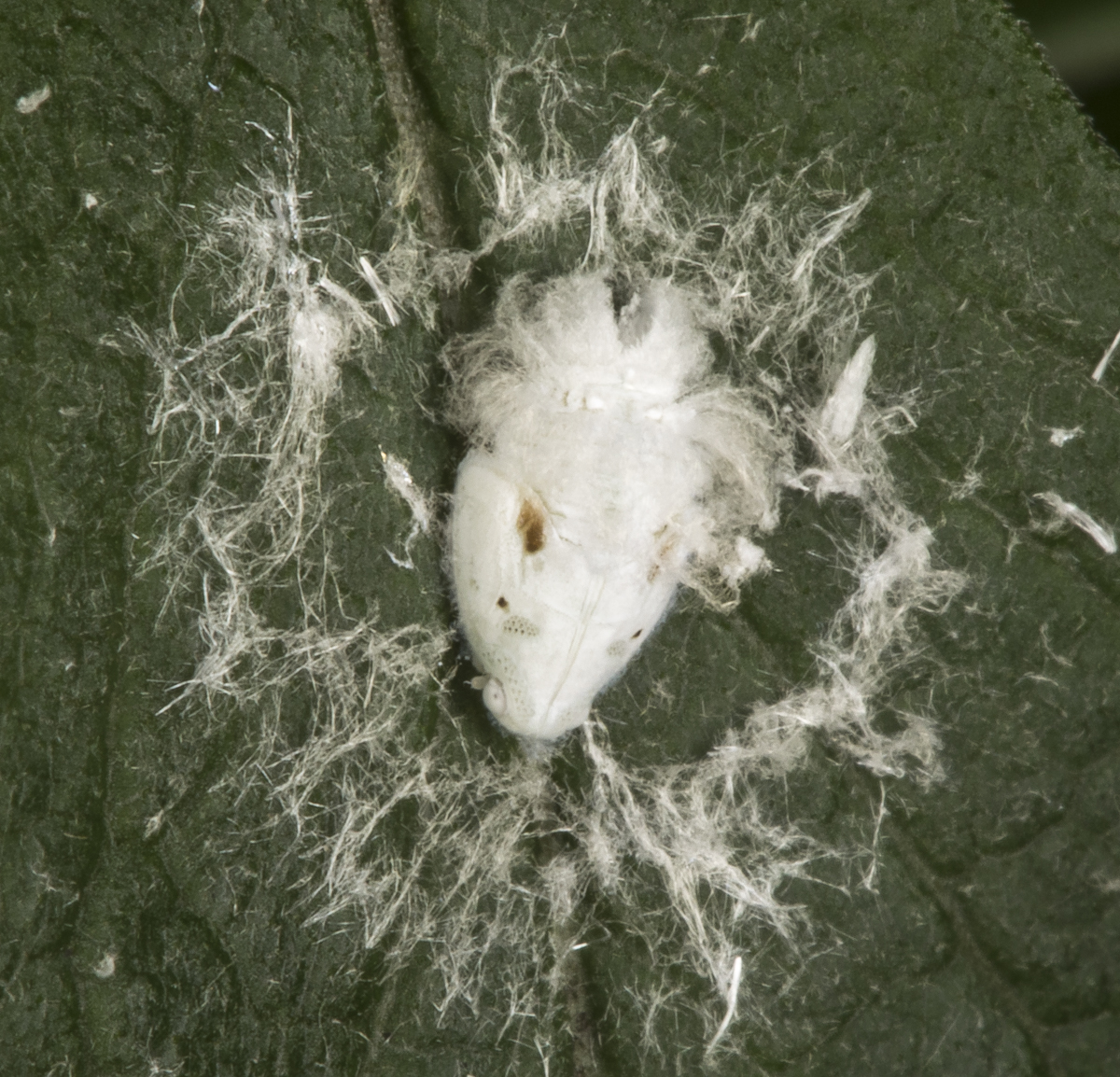
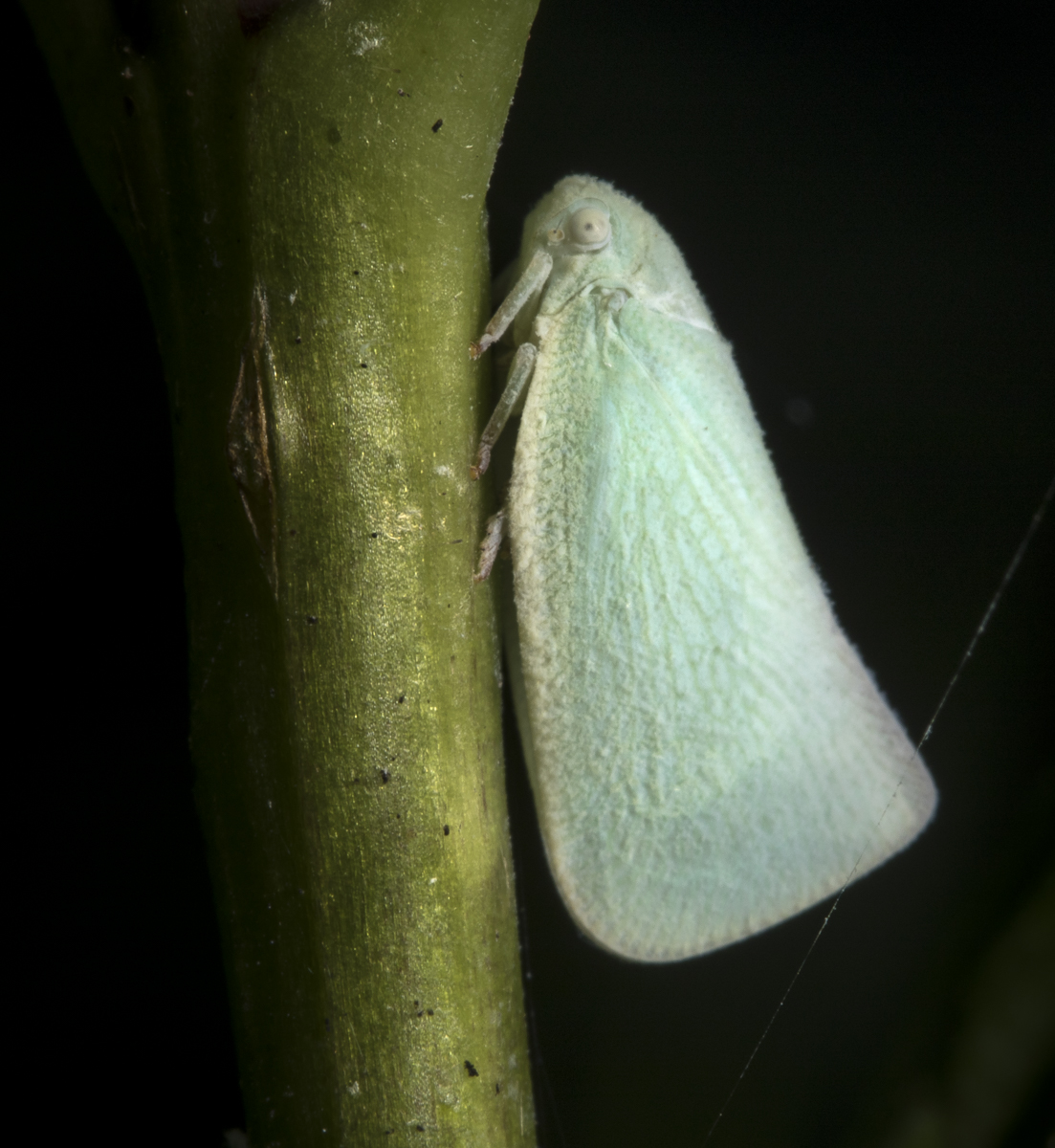
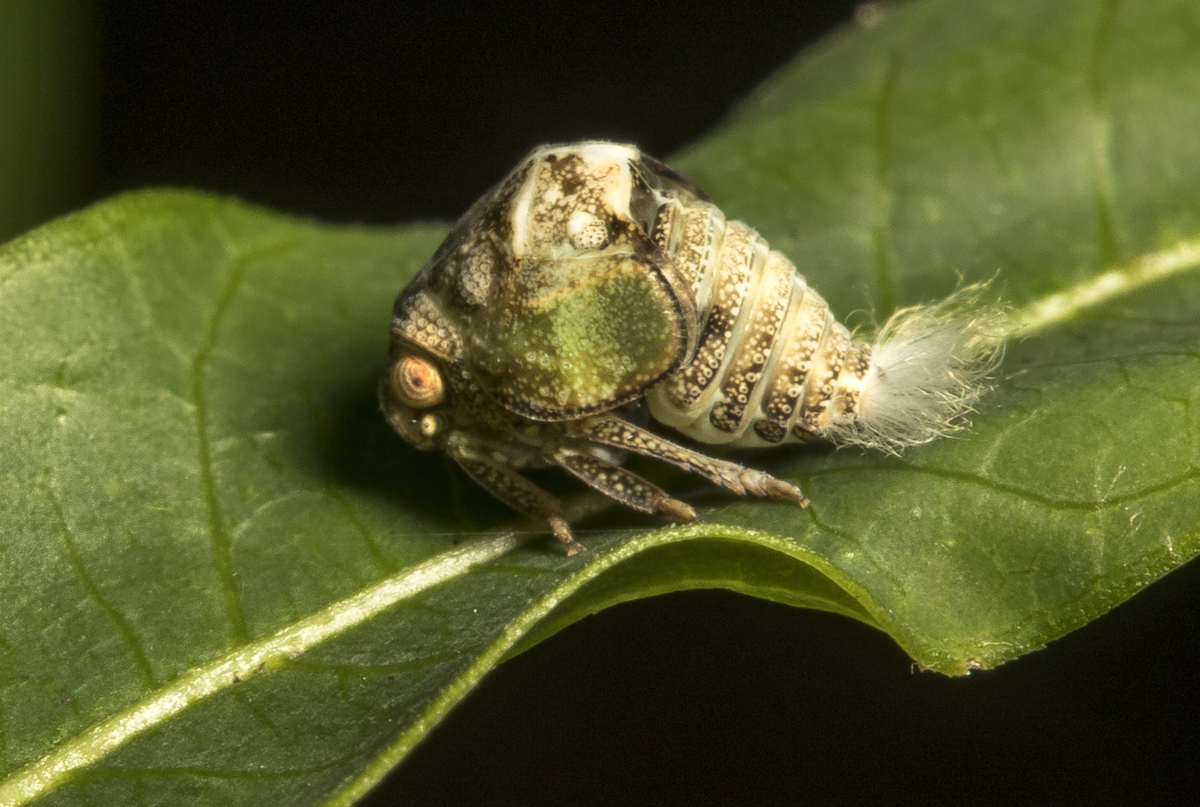
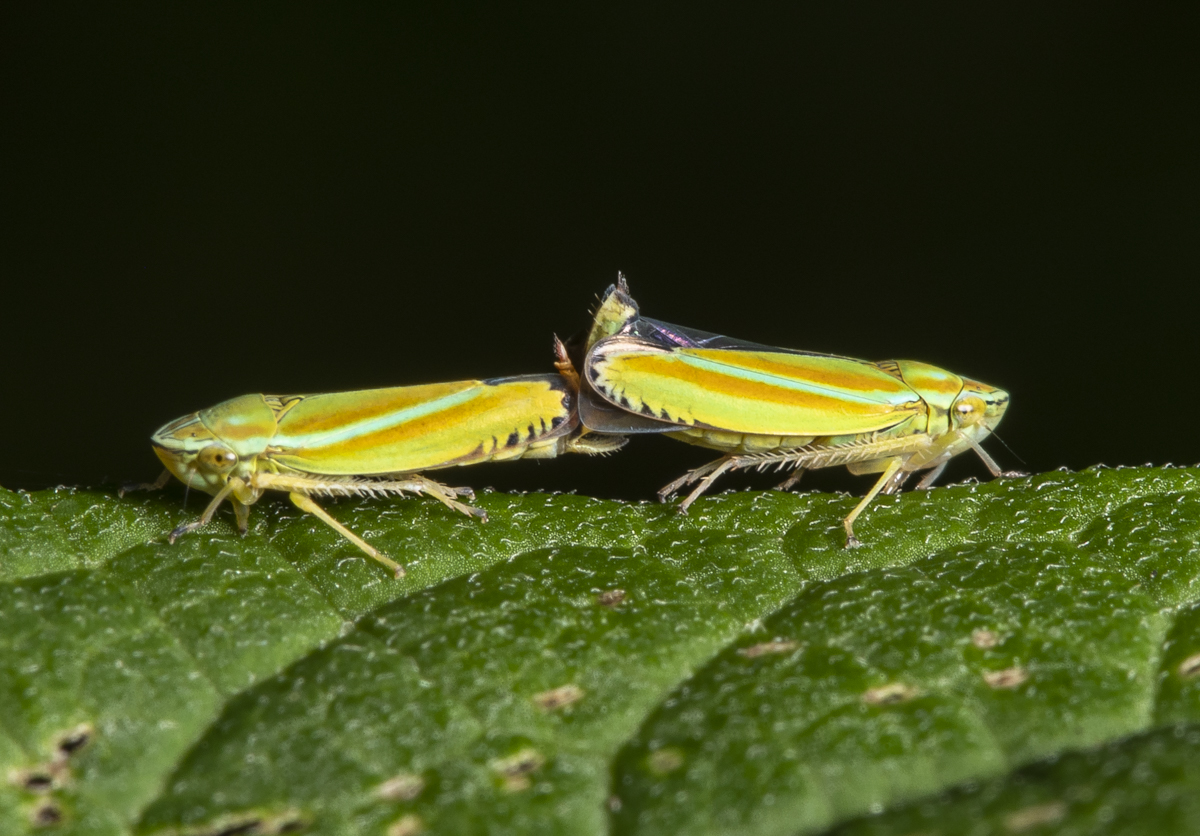
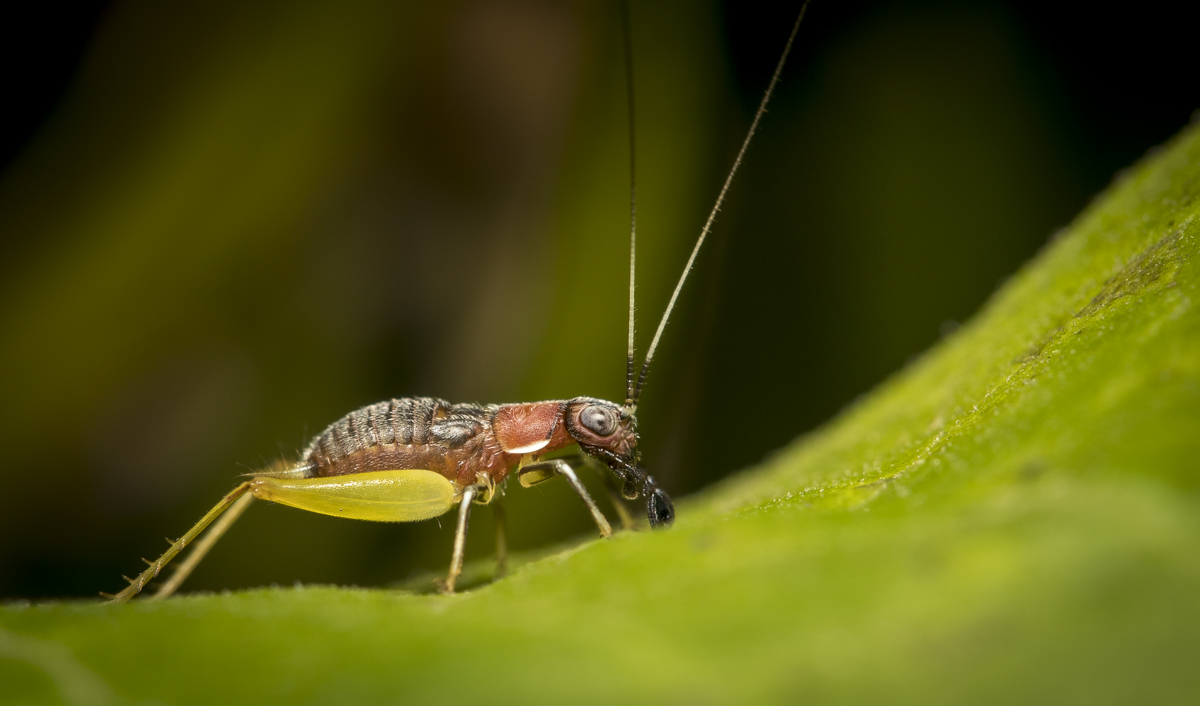
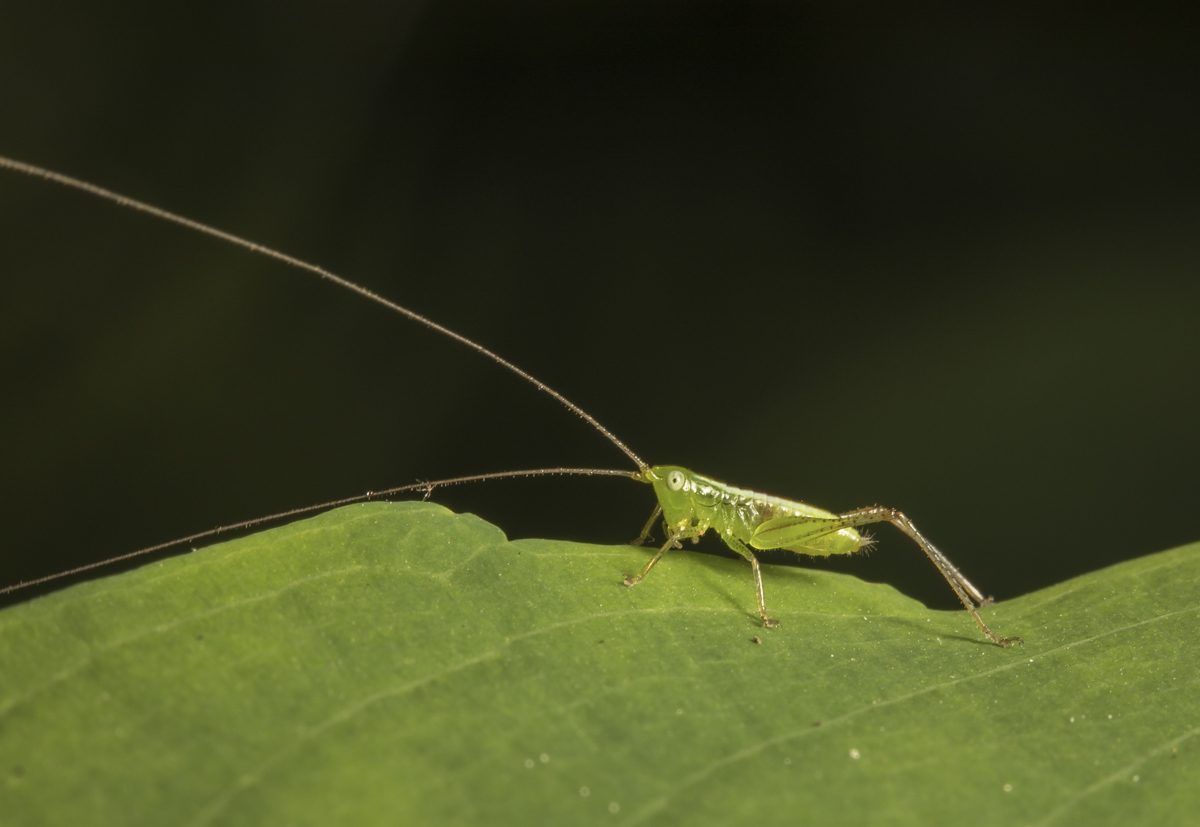
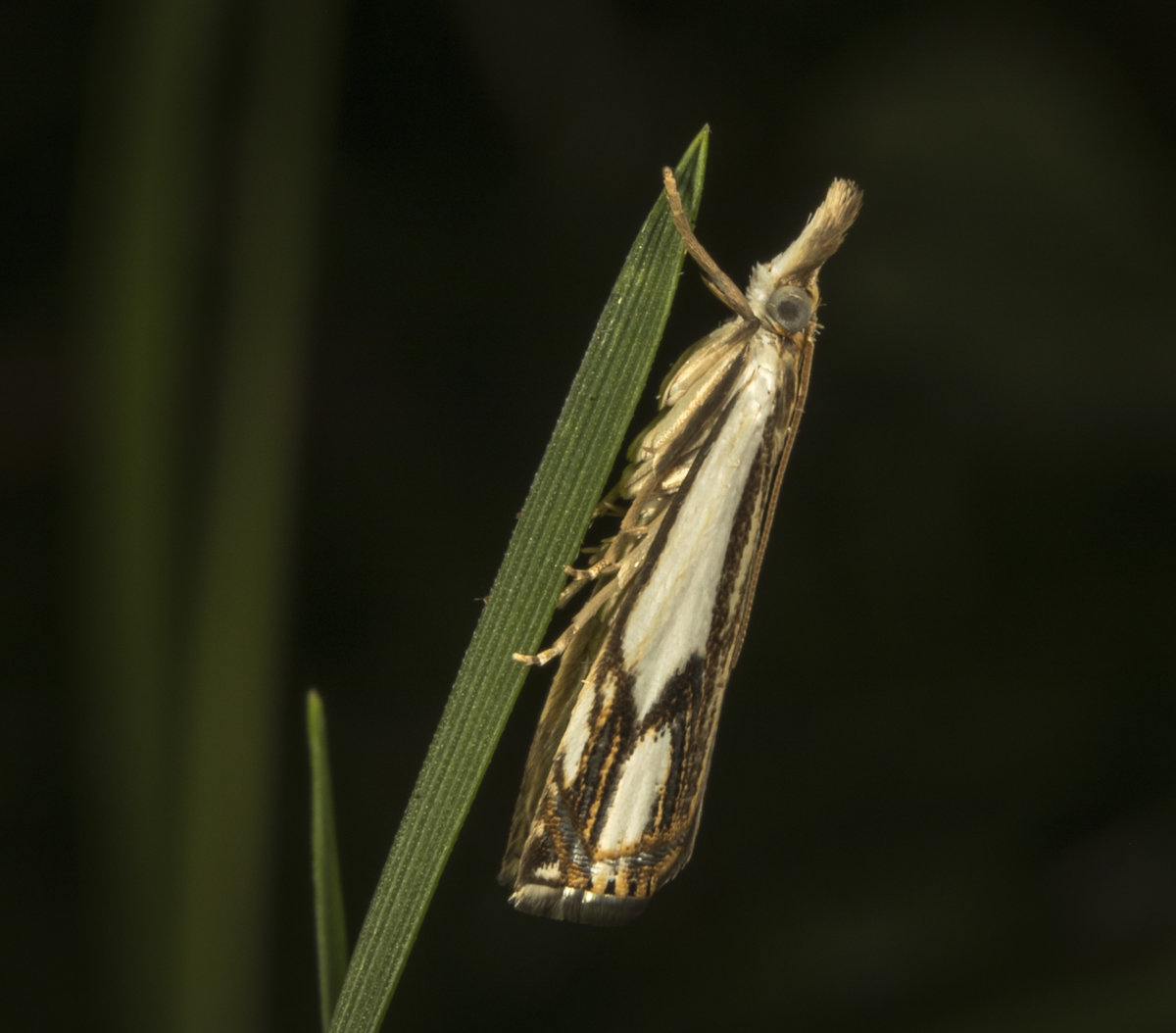
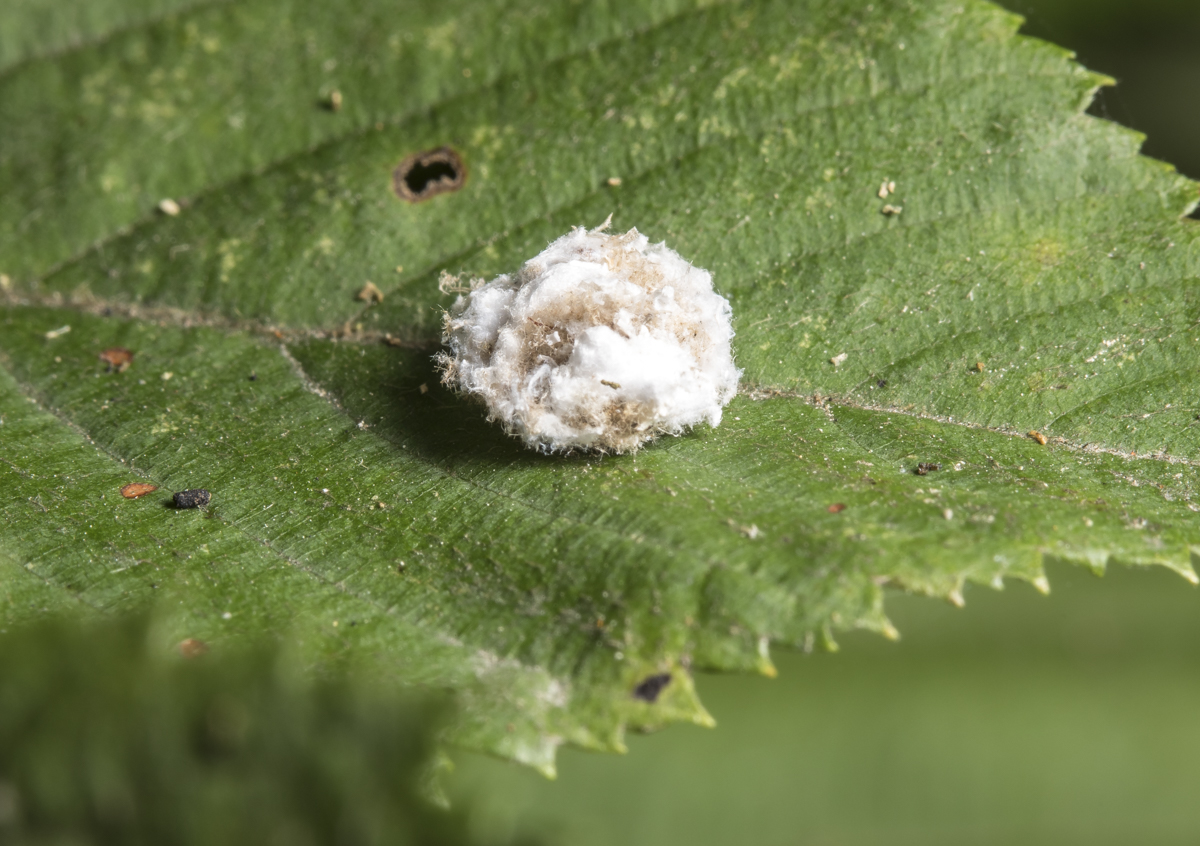
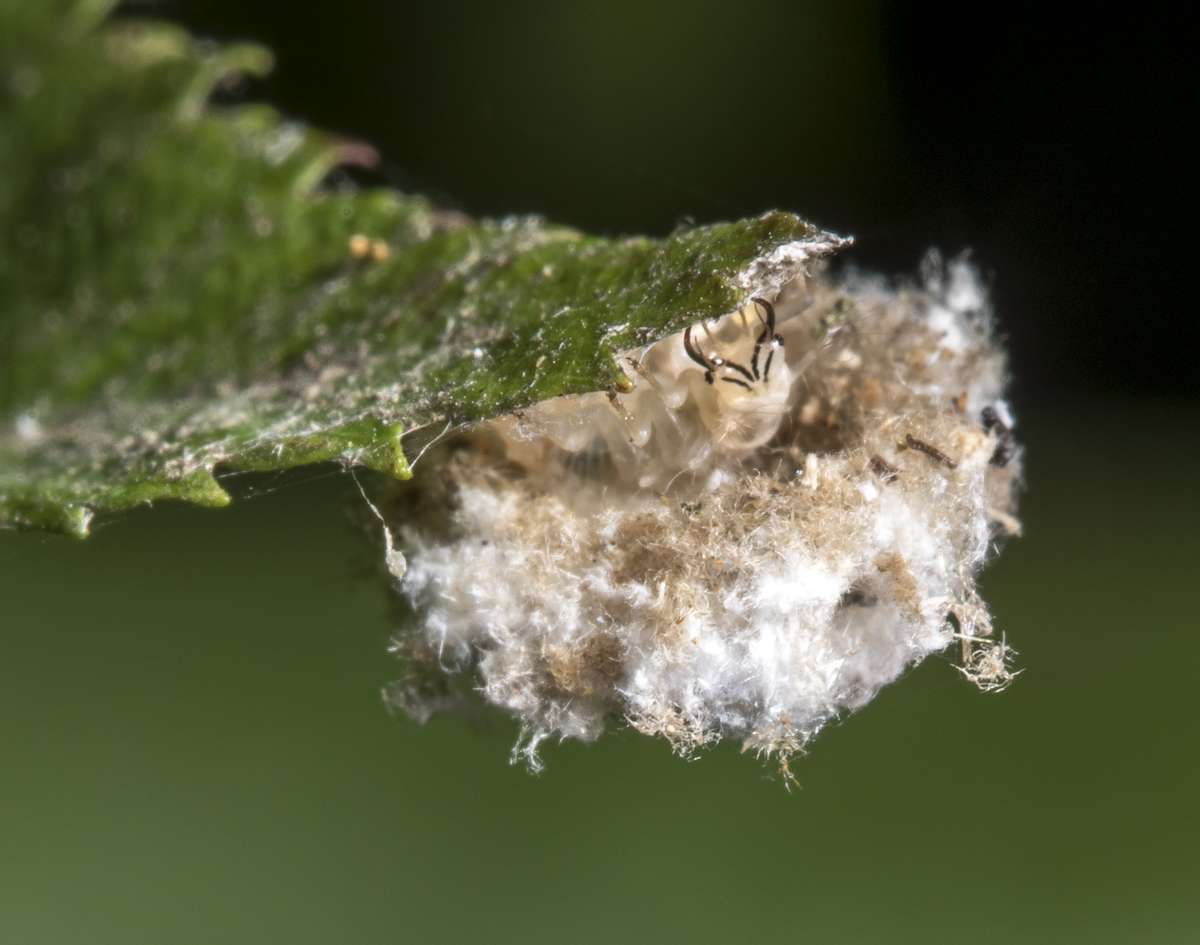
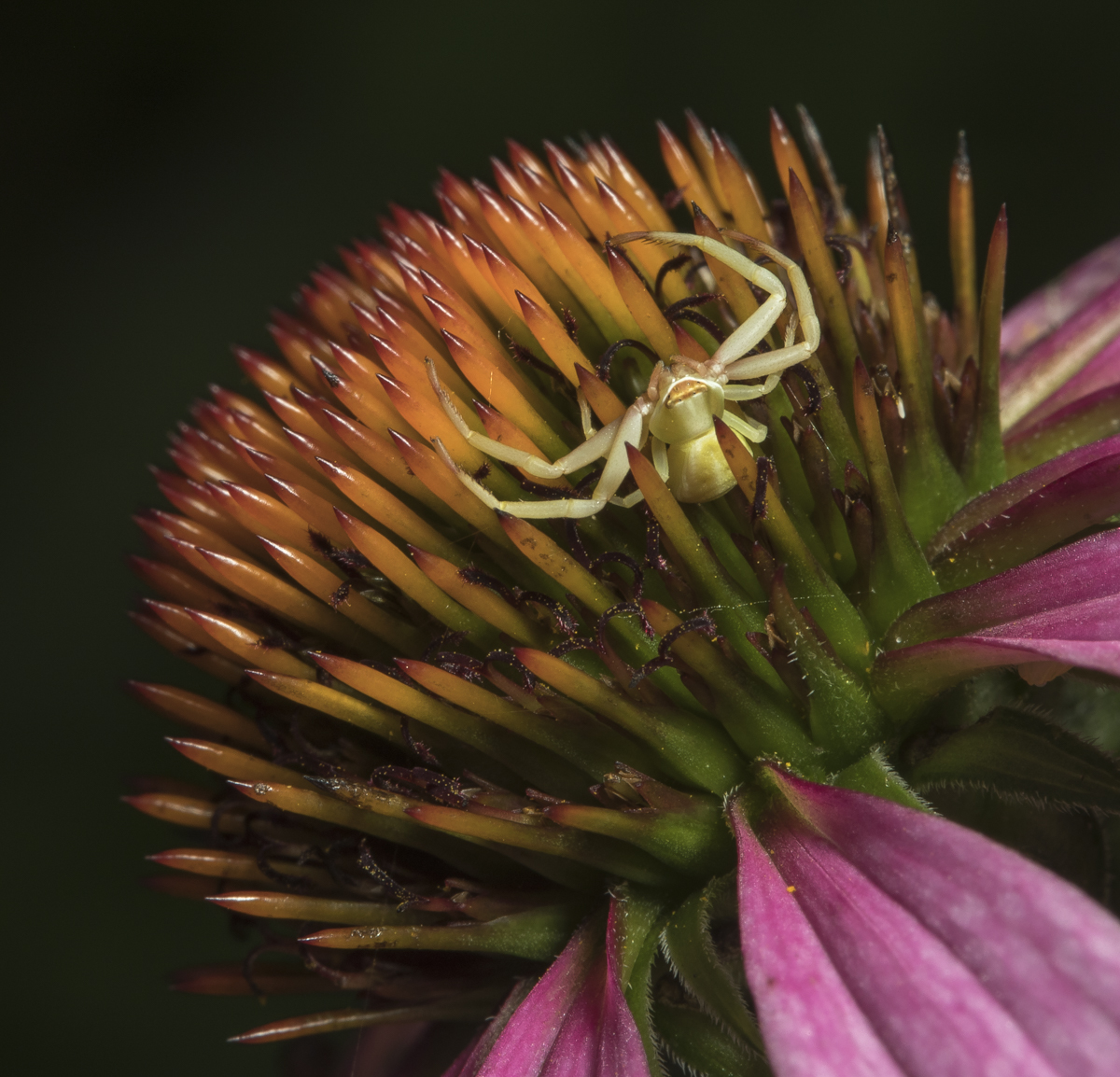
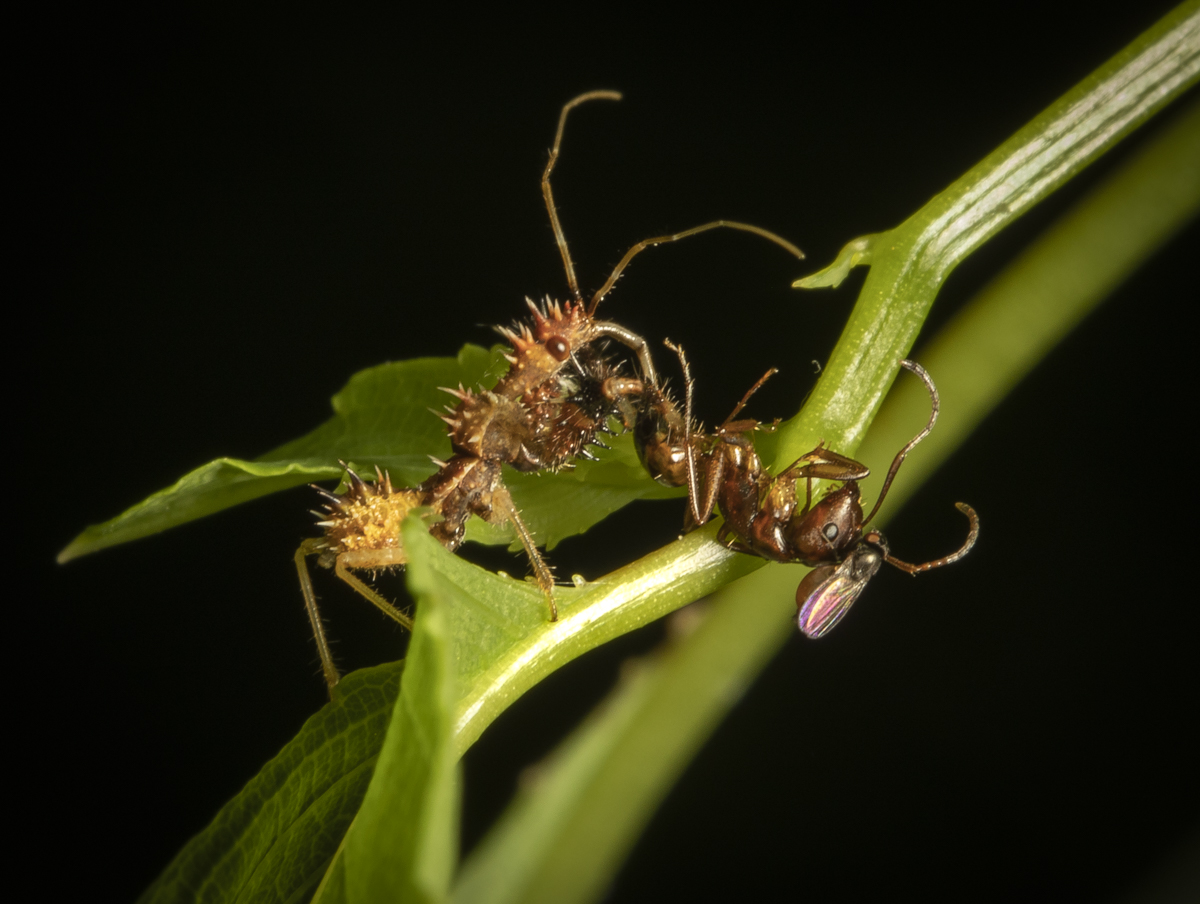
One of the most abundant group of insects right now are the planthoppers. I believe this is a nymph of a Northern Flatid Planthopper, Flatormenis proxima. The waxy filaments may serve a protective function.An adult Northern Flatid Planthopper. Most planthoppers (and other members of the Hemipiteran suborder Auchenorrhyncha) have piercing-sucking mouthparts for feeding on plant sap. They also have powerful legs for jumping, making some rather difficult to photograph.Another common planthopper species in our yard, the Citrus Flatid Planthopper (the adult in lower right of image). The nymph above it may be a Two-striped Planthopper.The SEEK app identifies this as a Two-striped Planthopper nymph, Acanalonia bivittata. It looks to me like some sort of armored creature from a Star Wars movie.A very tiny insect that SEEK identifies as a Coppery Leafhopper, Jikradia olitoria. I tried to confirm these ID’s using online resources like Bug Guide and the Hoppers of North Carolina, but if anyone knows what they are for sure, please let me know.A very persistent mating pair of Versute Sharpshooters, Graphocephala versuta.A beautiful Broad-headed Sharpshooter, Oncometopia orbona. Sharpshooters filter huge amounts of liquid from plants through their digestive system in order to obtain nutrients. They frequently must forcibly eject the excess water in a fine stream, hence their unusual common name.One of my favorite insects to photograph, a wandering Red-headed Bush Cricket (aka Handsome Trig) nymph, Phyllopalpus pulchellus. A tiny nymph of one of the Lesser Meadow Katydids (Conocephalus sp) sprouts an impressive pair of antenna.One of the bigger challenges for a macro photograph, a species of quick-on-its-feet-and-wings Long-legged Fly. These come in a variety of metallic colors and often jump out of the frame when the flash goes off and then return to the leaf. I discovered this when I kept getting blank photos but they were still on the leaf when I looked after taking the picture.A common small moth that I frequently scare up when walking through the yard, a Double-banded Grass Veneer, Crambus agitatellus.These little dots of debris are very common right now. They slowly waddle along the vegetation, and cause you to do a double-take when you see that lichen or that tuft of fuzz move..Beneath all that debris is a voracious predator of small insects, especially aphids and planthoppers, a larval form of one of the species of Green Lacewing. They have spines on their back that they attach material like lichens or the waxy remains of their victims (like planthopper nymphs) to as camouflage. Check out those mandibles on this one!A tiny Crab Spider (perhaps a White-banded Crab Spider) awaits its next meal on the head of a Purple ConeflowerAnother tiny predator is fairly abundant this week, a Spined Assassin Bug, Sinea sp. This aptly named little terror is covered with stout spines and has huge raptorial front legs it uses to grasp prey.Once it catches an insect (in this case a hapless ant), it pierces it with its needle-like proboscis, injects a toxin and a digestive enzyme, and then sucks out the nutrients. This one also had a Freeloader Fly (tiny winged insect on the ant’s head) along to lap up any spilled juices.
We should come home from adventures, and perils and discoveries every day with new experience and character.
~Henry David Thoreau
NOTE – This is the final post from our 7200 mile truck camping trip in May.
Leaving Yellowstone was the start of our long journey home. Time on the road passes so quickly and we tend to not think of home much until we turn the truck toward the East. Then, we realize the adventure must soon come to an end and we (or at least I) start to wonder how things have fared while we were away or what tasks lie ahead. My thoughts are soon bought back to the immediate as we drive through the beautiful and varied landscapes of Wyoming. You go from snow-capped mountains one minute to desert or vast areas of sagebrush and grasslands the next. Along much of our drive we saw the brilliant red “flowers” of Indian Paintbrush. The tips of the plant look like they have been dipped in red paint. The bright red is not really the flower parts, but rather flower-like bracts (a modified leaf or scale on a plant). It is a semi-parasitic plant, its roots penetrating other nearby plants to rob some of their nutrients and water.
Indian Paintbrush, also called Prairie-fire, is Wyoming’s state flower (photo by Melissa Dowland) (click photos to enlarge)
I steered toward one of our favorite national forests in the Bighorn Mountains. We camped there on our last two trips and have been very pleased with the number and variety of camping options. We hoped to camp in a site from our first extended truck camping trip last year, one along a small stream on a rocky outcrop in a high meadow. As we drove through, we soon realized things were a bit different now as snow still covered much of the slopes at this elevation. Indeed, the road to that campsite was closed due to deep snow, so we proceeded down in elevation looking for drier ground.
Another outstanding campsite in the Bighorns…what a view
After driving a couple of roads that didn’t quite satisfy us, Melissa found a route with open meadows, streams, some ponds, and potential views of high mountains in the distance. When we pulled into the area, we knew this was it. We passed only a few RVs on a long stretch of dirt road with patches of conifers, open grasslands, and plenty of beaver ponds and creeks. With a strong wind blowing, we pulled into the lee side of a forest grove to set up camp. The meadow was covered in wildflowers and we soon found ourselves on the ground taking a closer look.
Pasqueflower, also known as Prairie Crocus (and you can see why)Shooting Stars, one of my favorite western wildflowers. The flowers on these 4-inch tall plants are bell-shaped when they first open, but the petals then reflex backwards, giving them the appearance of a shooting star
Before starting the campfire, we hiked down to a pond about a half mile across the meadows. With our faces close to the water, we could see numerous water beetles and fairy shrimp, those upside-down one-inch long lobster relatives that are often found in ephemeral pools.
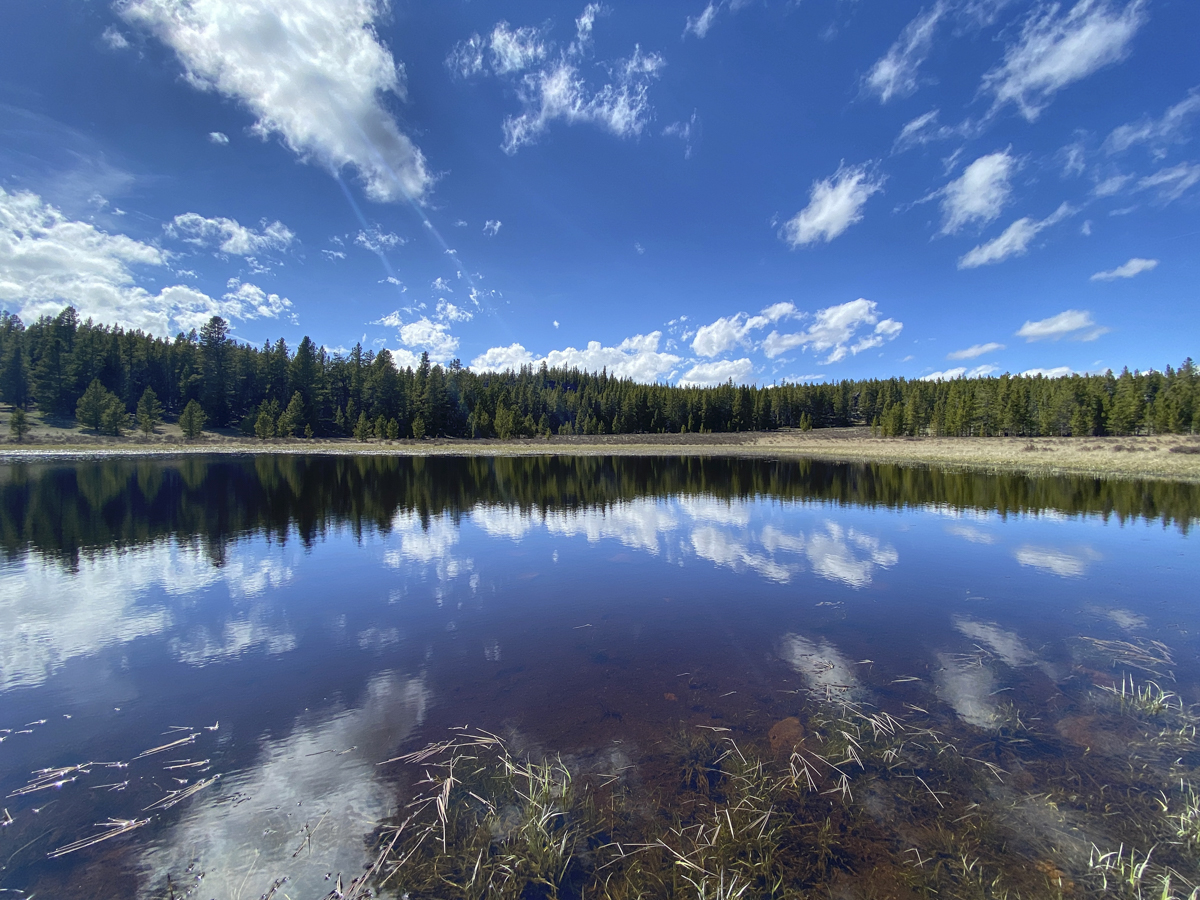
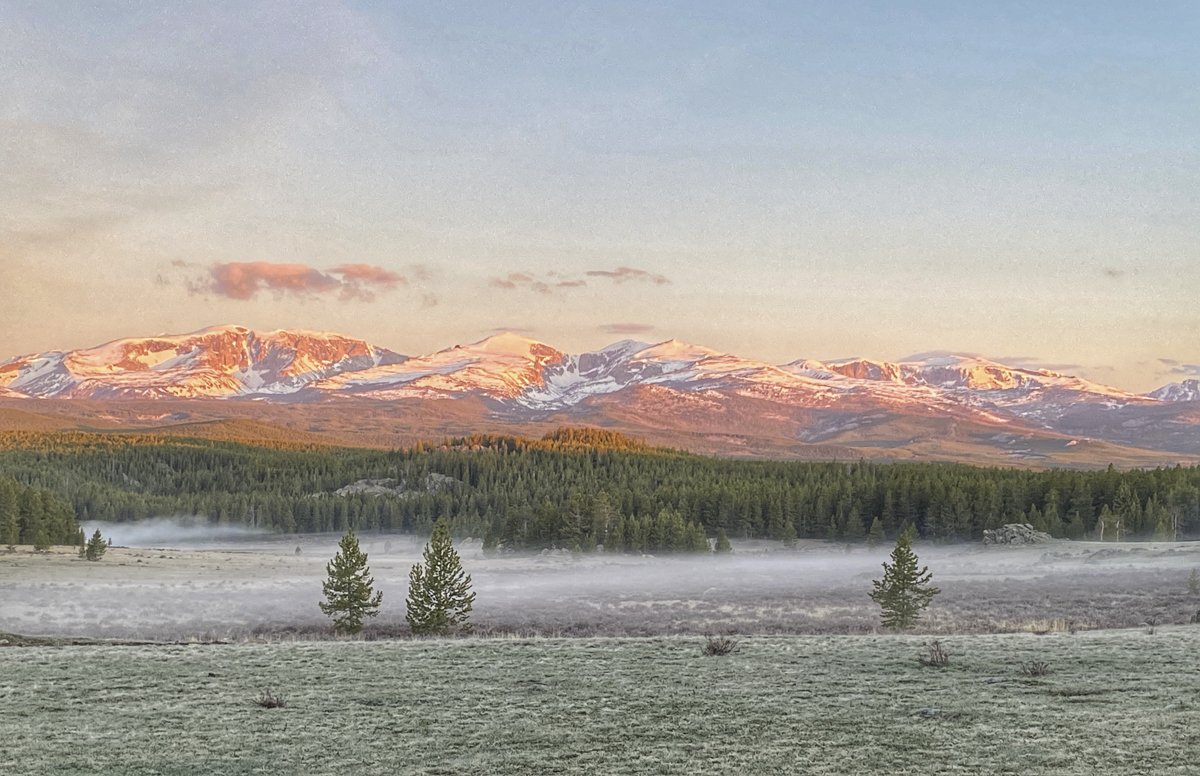
Large, shallow pool at the far end of the meadowOur sunrise view from the truck with temperatures hovering around 32 degrees FPasqueflowers close at night and in inclement weather
Our next days’ drive went from long stretches on Interstate 90 to some scenic country roads that took us through part of Badlands National Park and the adjacent Pine Ridge Reservation and eventually into the Sandhills of northern Nebraska. On the back roads, we saw some familiar wildlife like Pronghorn and vast prairie dog towns, along with two new species, both of which I had on my radar as something I really wanted to see.
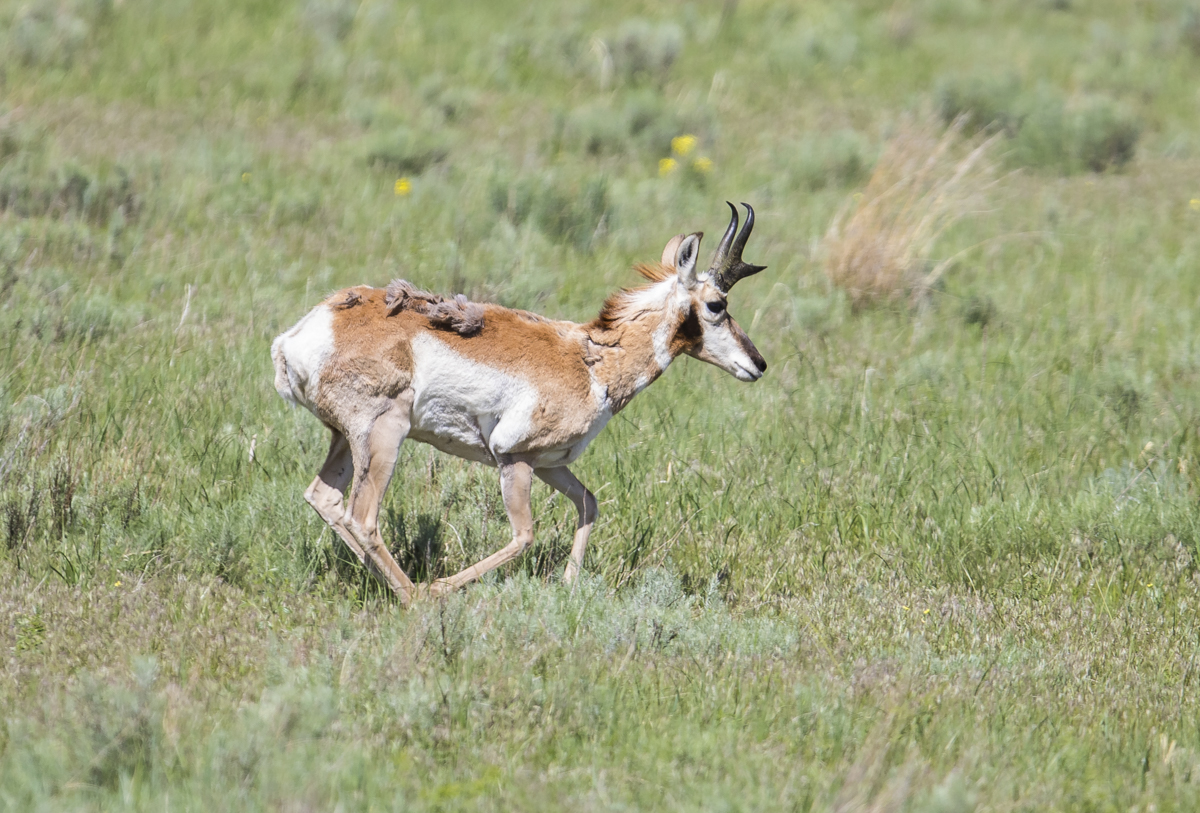
Pronghorn buck running across grasslands near the road
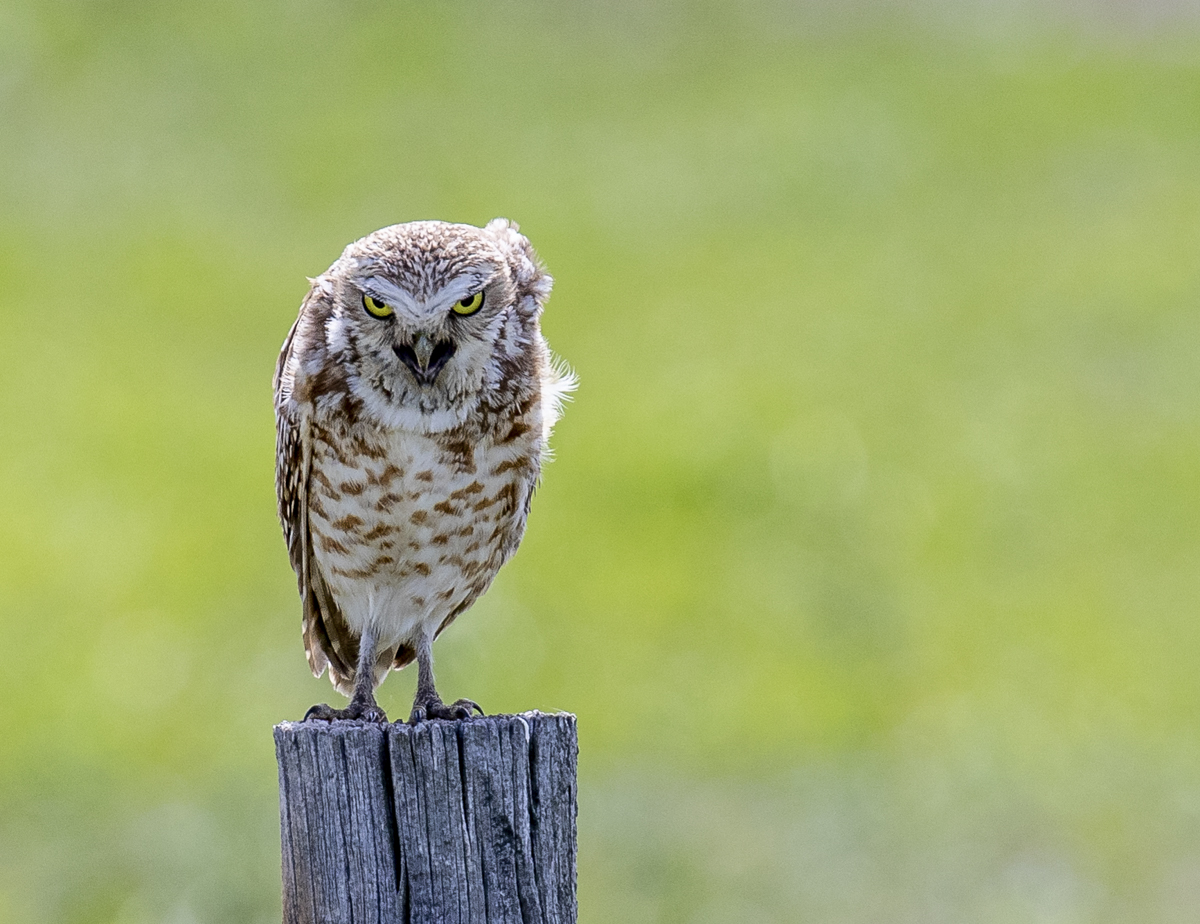
There were so many prairie dog towns along this route and some were huge with what looked like hundreds of mounds. We had discussed looking for Burrowing Owls when we saw prairie dog habitat as these diminutive birds frequently use abandoned prairie dog burrows as roost and nest sites. Burrowing Owls range from Canada to Mexico and parts of Central and South America. There are populations in Florida and some islands in the Caribbean as well. Throughout much of their range, their numbers are declining due to habitat loss and decline in the populations of burrowing mammals. We kept scanning as we drove, but I finally pulled over at a large roadside prairie dog town and told Melissa to find me an owl. Lo and behold, after only a couple of minutes, she spotted one. It was way back away from the road sitting on a mound.
Suddenly, another one flew toward the road and landed on a fence post a few hundred yards from us. We jumped in the truck and slowly approached. It was on my side so I stopped and took a few pictures from across two lanes and then had to drive on as a car was coming up behind us. We turned and drove back and pulled as best we could off the side of the road.
A long sought after species for me – the curious Burrowing Owl
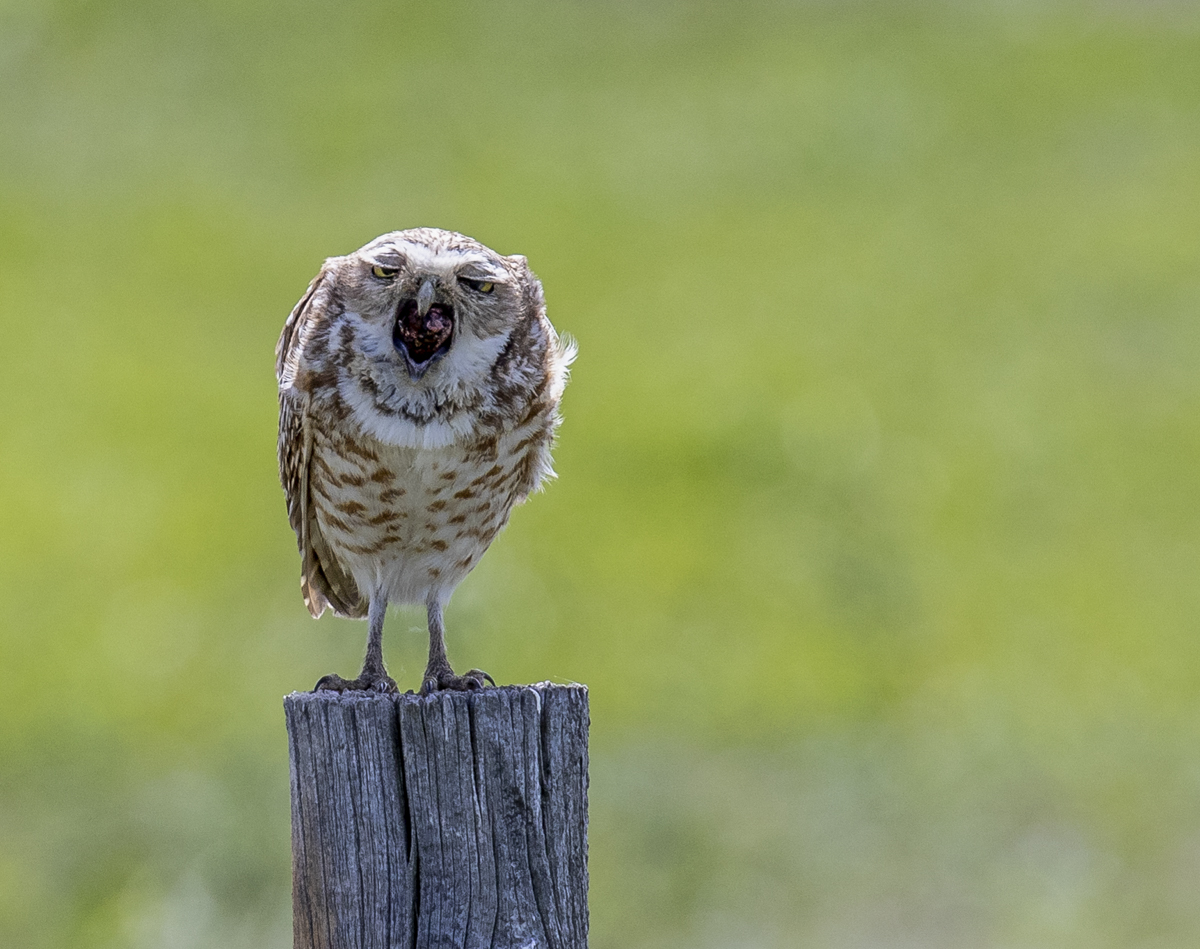
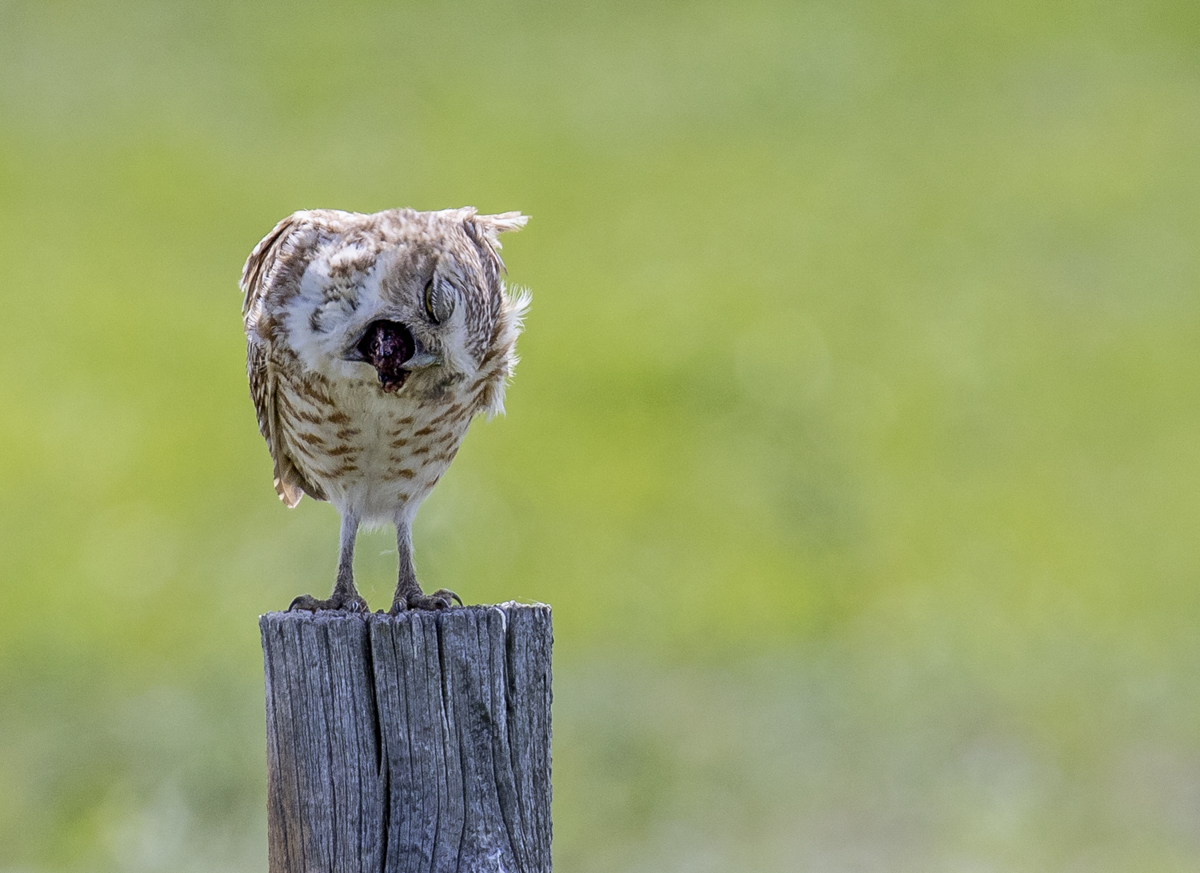
Now the owl was much closer and on Melissa’s side. She started taking pics as the bird looked our way. I was trying to hold my telephoto and shoot past her head, but it was tough. Luckily, she caught an amazing sequence of what the owl did next. It leaned forward and looked like it was gagging and then up came a pellet!
The owl leans forward and looks like it wants to do something… (this photo sequence by Melissa Dowland)The beak opens wide…It looks like a lot of effort…Out comes the pellet!Whew, that was tough
Owls and other raptors must regularly cough up pellets consisting of indigestible parts of their diet such as feathers, fur, bones, and insect exoskeletons. It is rare to witness this behavior, yet alone photograph it! I was very happy she got this sequence (and a little jealous, I must admit:) Finally, the bird flew off and landed on the ground quite some distance from us.
Melissa then suggested we should go look for the pellet (this is how truly nerdy we are, in case you didn’t know). We found a couple of pellets at this post indicating it is an often used perch. Their diet is mainly made up of insects (it looked like a lot of beetles), and small vertebrates like lizards and mice.
Two owl pellets beneath a fence post
Driving through this habitat for the next hour or so, we saw many Burrowing Owls associated with various prairie dog towns with several sitting on fence posts (the only high points in the landscape). I would love to go back and just hang out for a few days watching these comical and endearing birds.
We stopped and helped this gorgeous Ornate Box Turtle (another new species for us) across the road
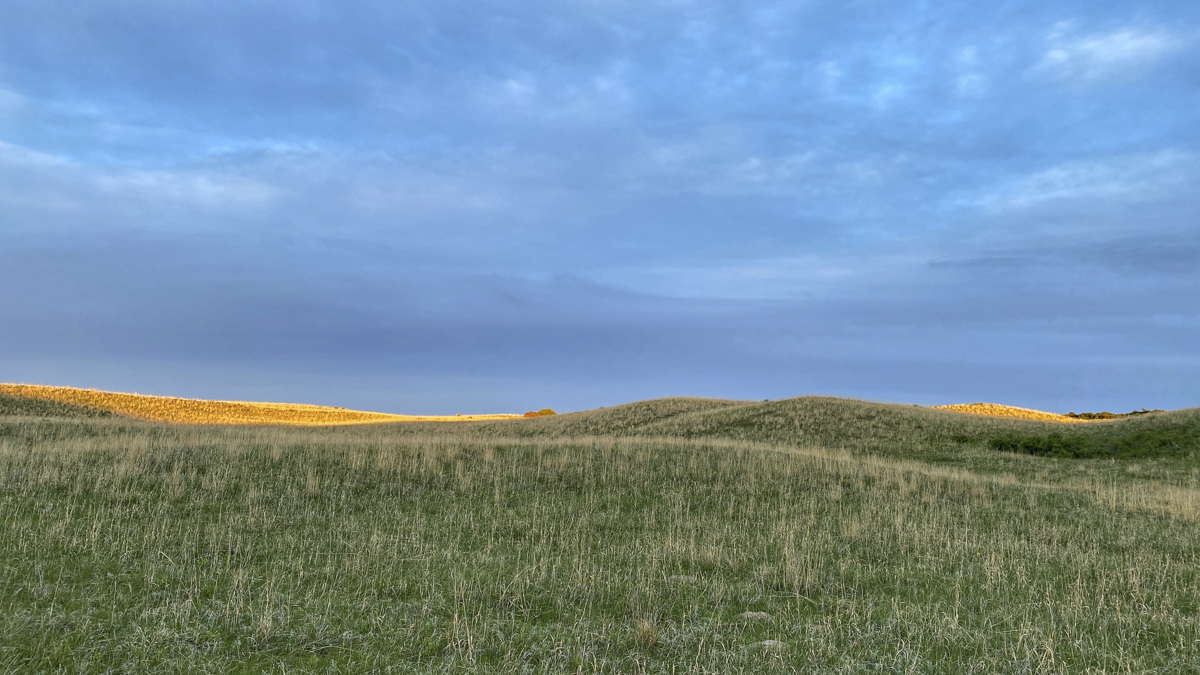
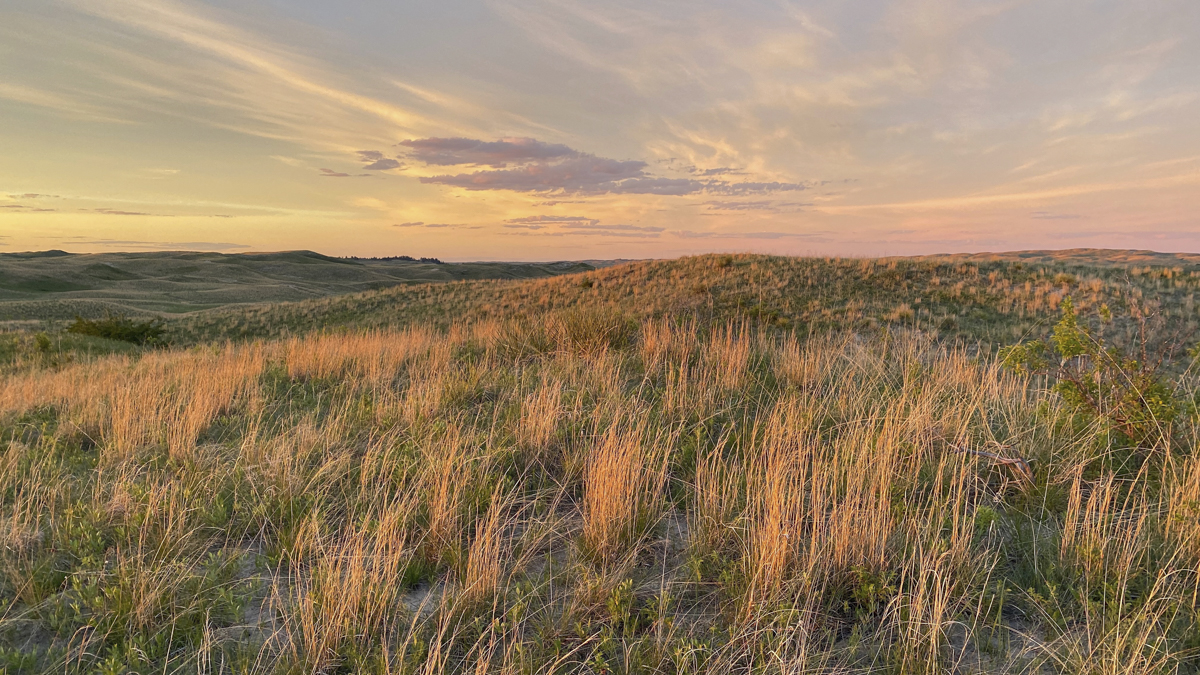
Melissa guided us to Samuel R. McKelvie National Forest in the north-central Sandhills region of Nebraska. There really aren’t that many “forests” here (except for a Ponderosa Pine forest planted many years ago) but plenty of expansive rolling grasslands and an amazing abundance of ponds and lakes. In fact, there were temporary signs all along the route indicating high water may be on the road. That had us a little worried about mosquitoes, but we found the non-biting midges to be the dominant insect as we looked for a non-flooded refuge road to take for a campsite. We finally found one late in the day and set up camp in a small gap between high grass-covered dunes. Once again, we found the Sandhills are apparently maintained by grazing cattle and our site had plenty of evidence that cows had frequented the area (luckily, there were none anywhere nearby at that time). But there were plenty of wildflowers and a surprising amount of poison ivy scattered about, so we took our time walking up the hill above camp. Once on top, a fantastic vista unfolded of seemingly endless rolling grasslands bathed in the golden fading daylight.
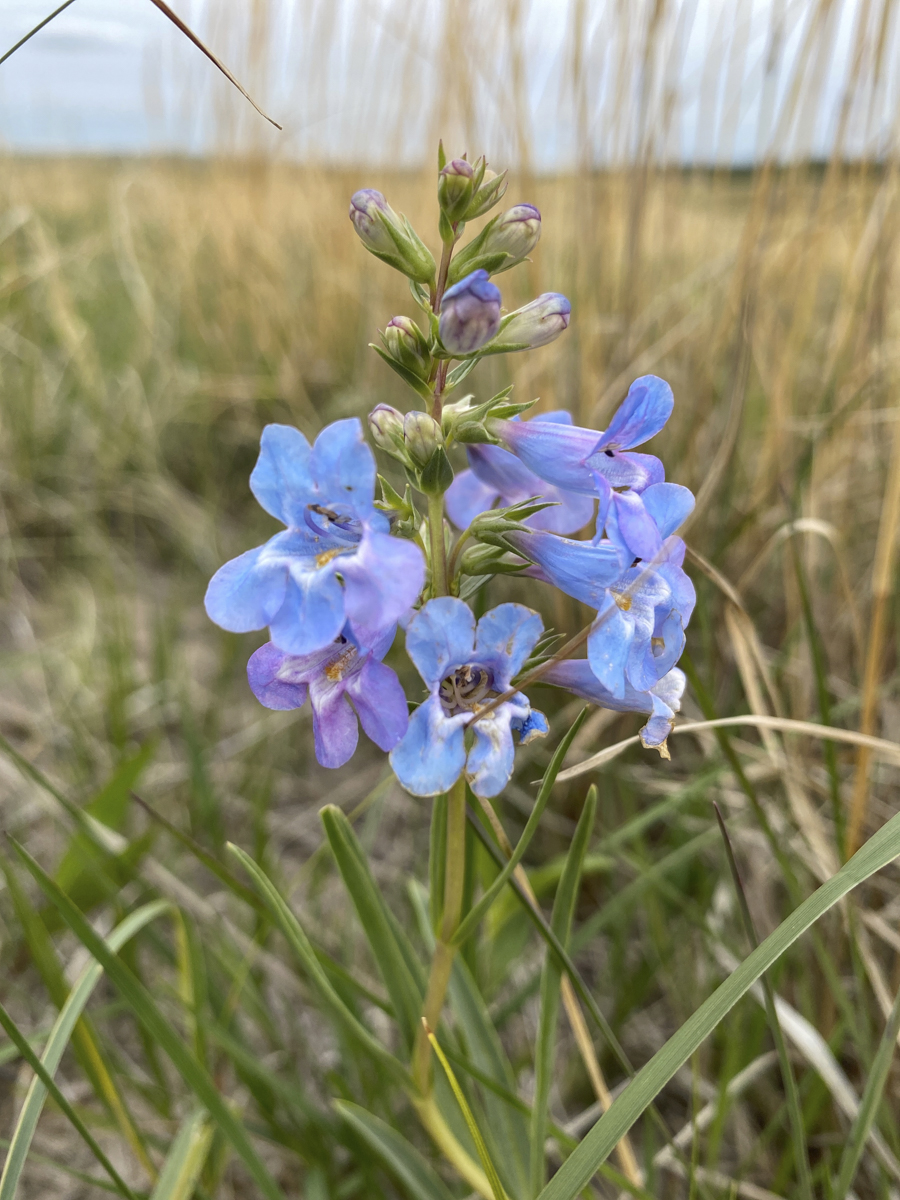
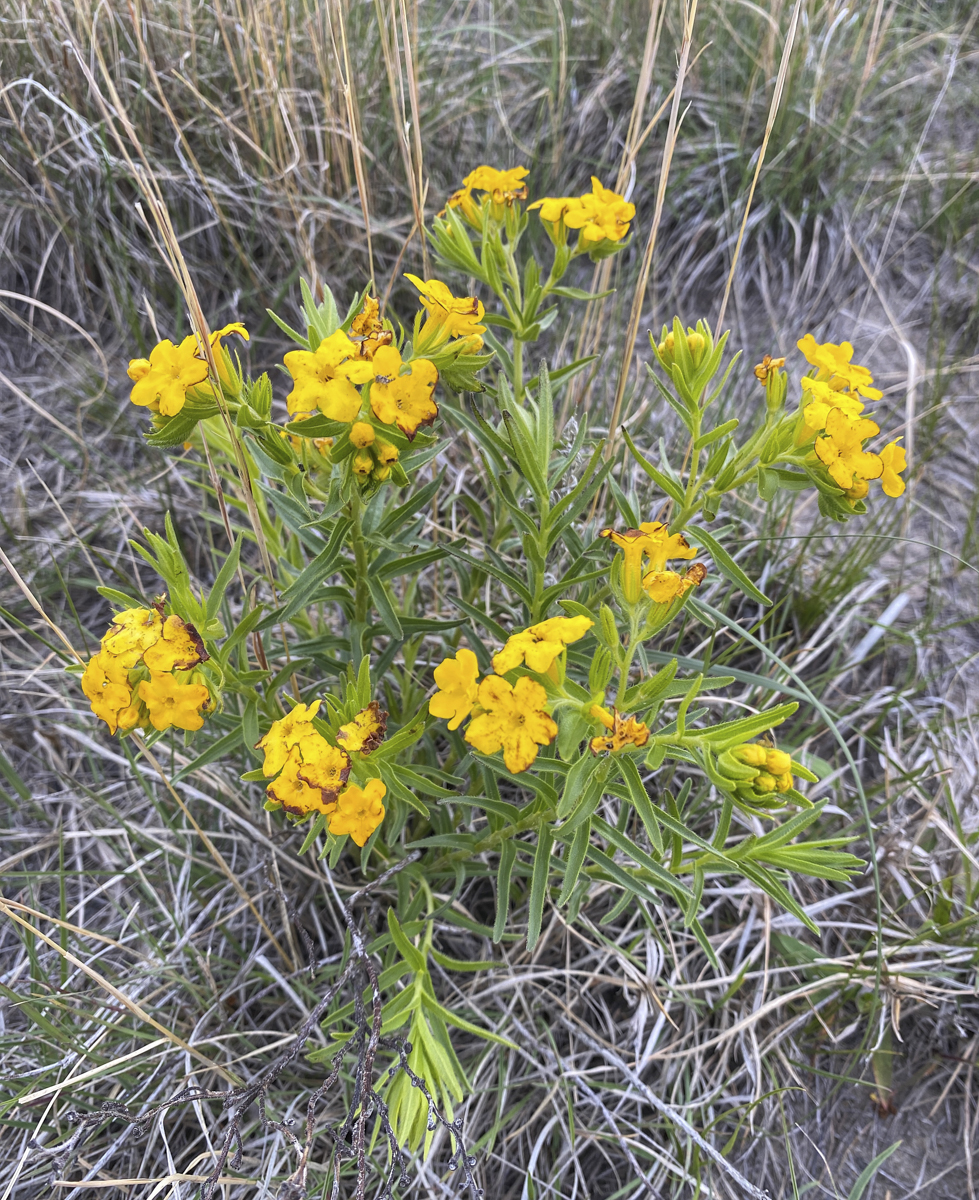
Late afternoon sunlight highlights some distant ridges in the SandhillsA beautiful beardtongue in flowerHairy Puccoon (one of the puccoon species at least) – hairy because of the “hairs” present on the leaves and stem; puccoon is an American Indian word for plants that produce a dye. Various parts of the puccoons produce a red, yellow, or purple dyeThe prairie grasses take on a golden hue in the late day sunMelissa enjoys a spectacular sunset over the Sandhills
Our next stop was originally going to be a familiar one, Brickyard Hills Conservation Area in Missouri. But I really wanted to revisit Loess Bluffs National Wildlife Refuge (where we saw all the Monarch butterflies last Fall) and that was a full 30 minutes or so past Brickyard Hills. We didn’t want to backtrack so we settled on another conservation area near the refuge in order to drive the auto tour late in the day before heading to our last campsite. The iffy weather (cloudy and windy) made for less than ideal conditions, but we did see a few straggler Snow Geese, some American White Pelicans, a Coyote, some Muskrats, and lots of Dicksissels and Red-winged Blackbirds.
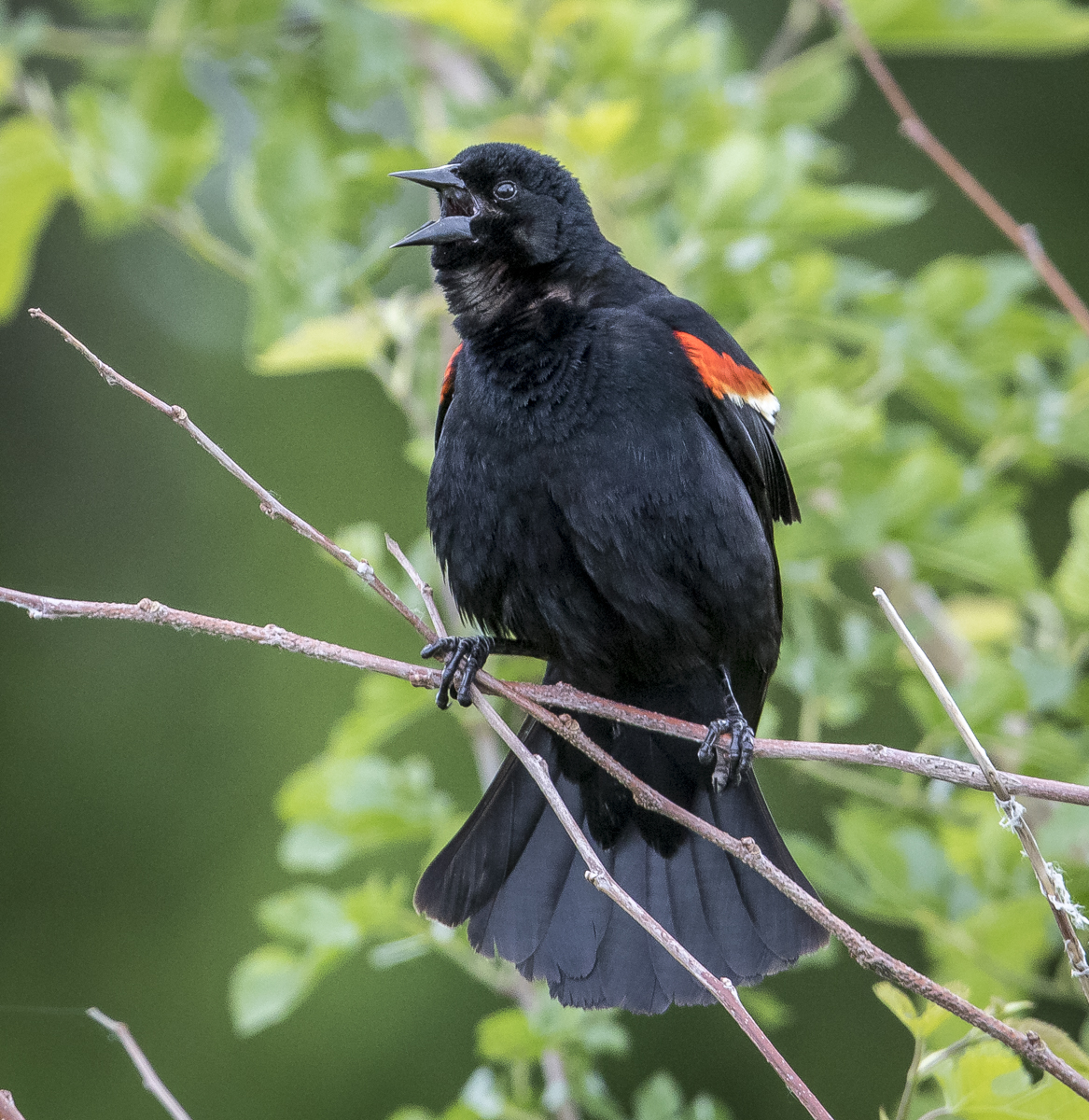
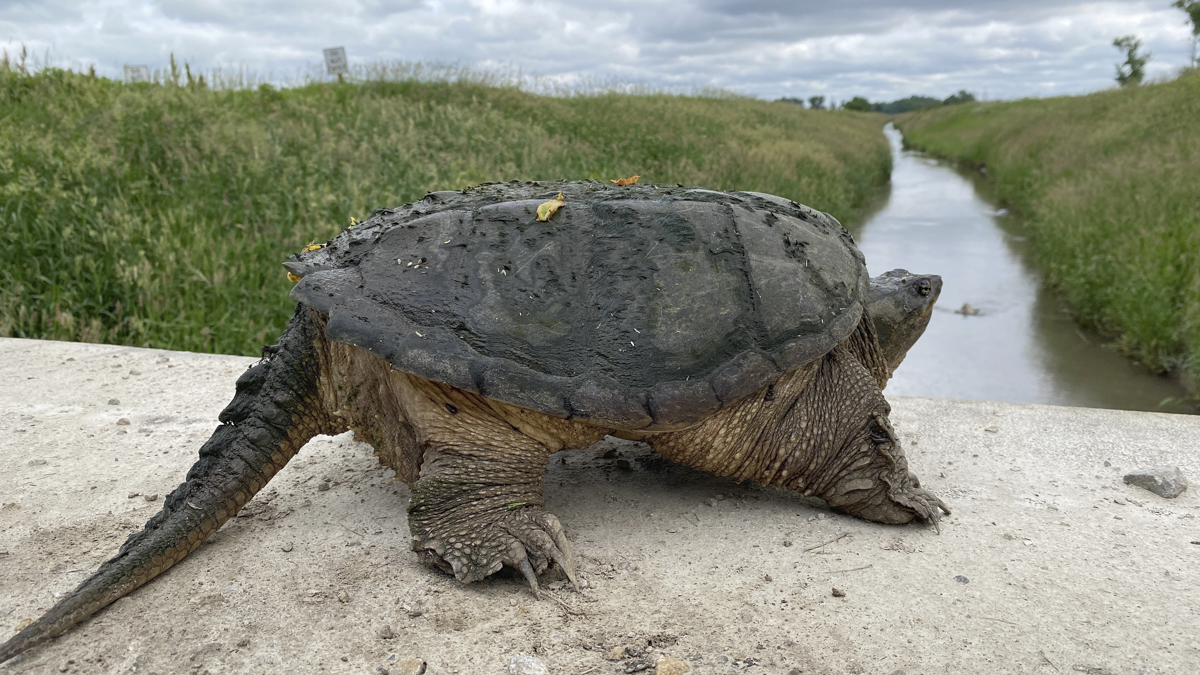
One of many male Red-winged Blackbirds belting out their konk-a-ree call along the refuge roadsA huge Snapping Turtle was out on a short bridge across a canal. I got out and took one photo, then turned to get back in the truck when I heard a huge splash. Though it remained motionless when I approached for the photo, Melissa said it pushed itself off the bridge and fell the 10+ feet to the water when I turned around
Leaving the refuge and looking at the weather forecast, we decided to make this conservation area our last camping spot to avoid predicted heavy rains the next night. That meant a marathon last day drive of about 18 hours from Missouri to home. A beautiful sunset and some deer, Coyote calls, and the distant hoots of a Barred Owl were a good way to spend our last night on this epic road trip. The next day we crossed portion of four more states and finally rolled into our home woods at about 2:30 a.m., a bit tired, but glad to be home. Now, where to next?
To those who know it and love it, Yellowstone is not so much a place as it is a concept—it is a bastion of wilderness and a beautiful,… reminder of all that once was pristine, bold, and untamed.
~Bob Sihler
This is the next to last in the series of reports on our truck camping trip in the month of May. No surprise to those that know us, we ended up heading toward Yellowstone by way of Grand Teton National Park, staying with friends that have recently moved to Jackson. Sam and Bright are wildlife watchers and photographers extraordinaire so it was great hearing about their plans and the many incredible things they have observed after moving west this spring. Unfortunately, the weather was not cooperating as we headed out the next morning in conditions of gray skies, occasional rain and snow flurries, and lots of visitors on the park roads.
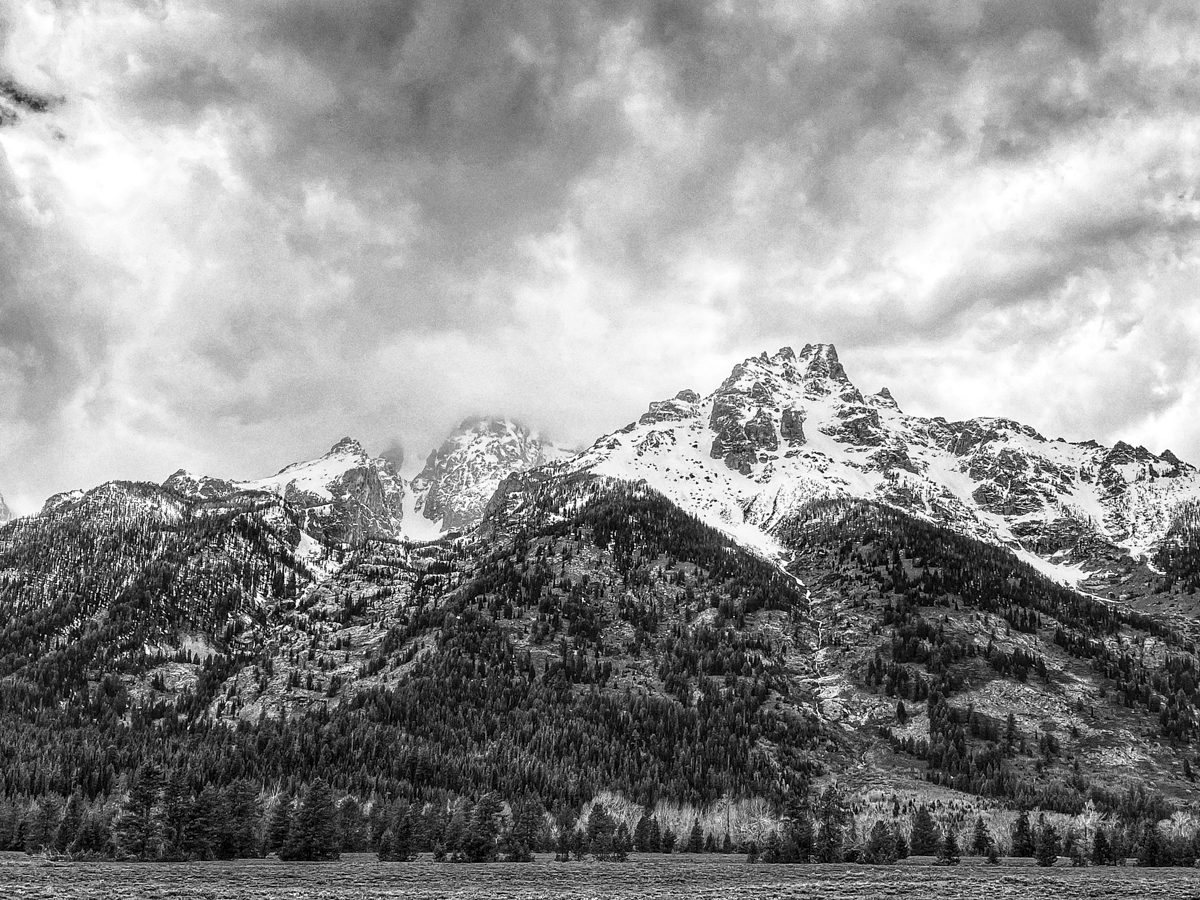
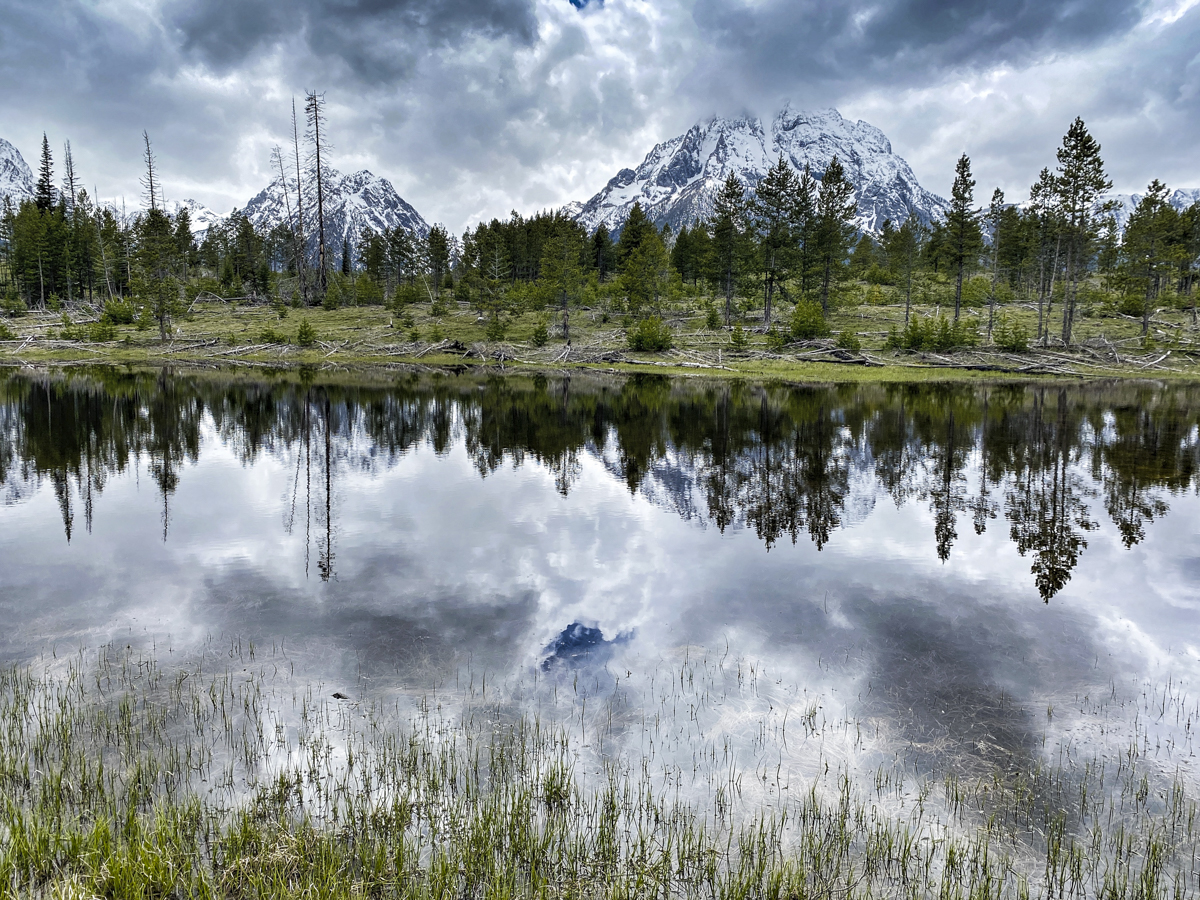
The Tetons are majestic even in gray skies (black and white photo) – click photos to enlarge
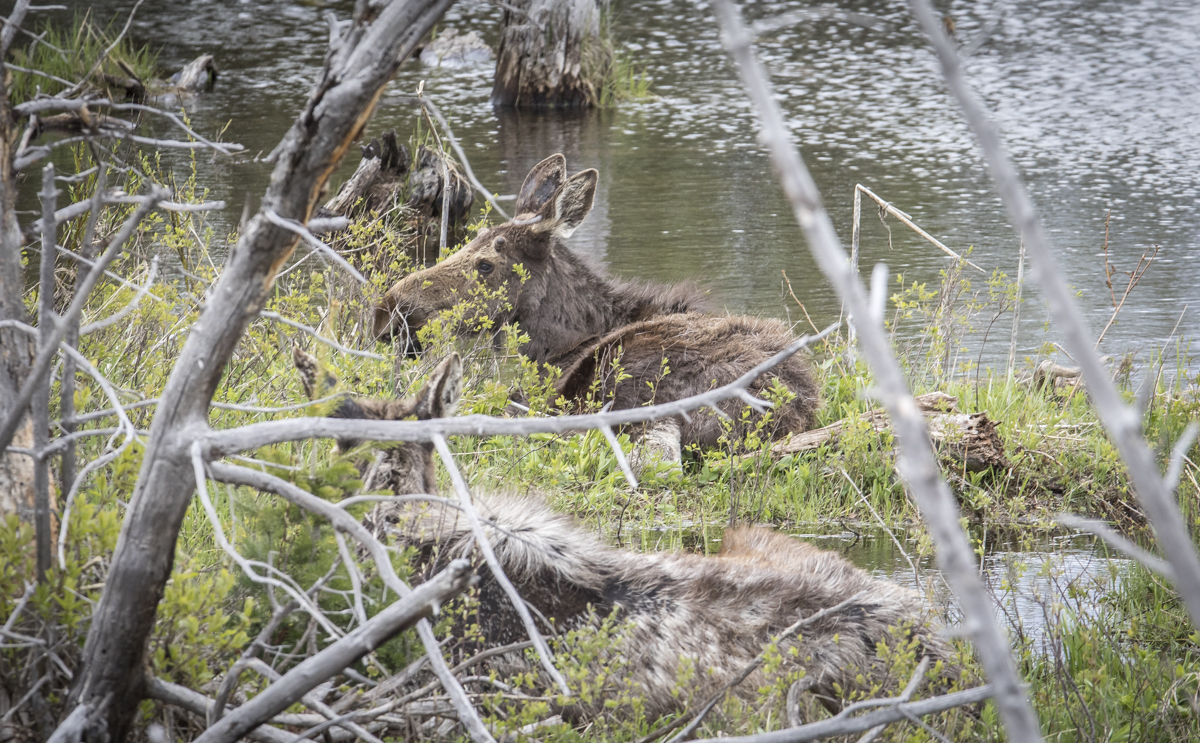
We spent the one full day in the Tetons going down some familiar roads looking for wildlife and then exploring a few dirt roads we had never traveled. A pair of Moose were being watched by 50+ people near Taggart Lake, so we stopped to take a look.
Moose yearling and mother resting in the vegetation
This is the type of image you get when you don’t have time to wait an hour or more for the critters to stand up and move around after a big breakfast, but we needed to move on. One of our highlights was a drive down a bumpy gravel road to Spalding Bay on Jackson Lake. Near the end of that road was a sharp curve with a pullout. A path up a swale seemed to lead to a potential nice view of the mountains so off we went. Elk scat was abundant and we soon found ourselves going to that next hill top to take a look. There, we saw a small pond and heard calling Boreal Chorus Frogs, so, naturally, we had to walk a bit further.
View from a small pond on our short hike near Spalding Bay
Later that evening, we had dinner with a former college classmate of Melissa’s that has lived in Jackson for many years. Our discussions included some of the realities of living in such an idyllic and desirable setting as Jackson – extremely high real estate prices and very long winters are a couple of the less pleasant things you have to deal with if you want to live in this paradise.
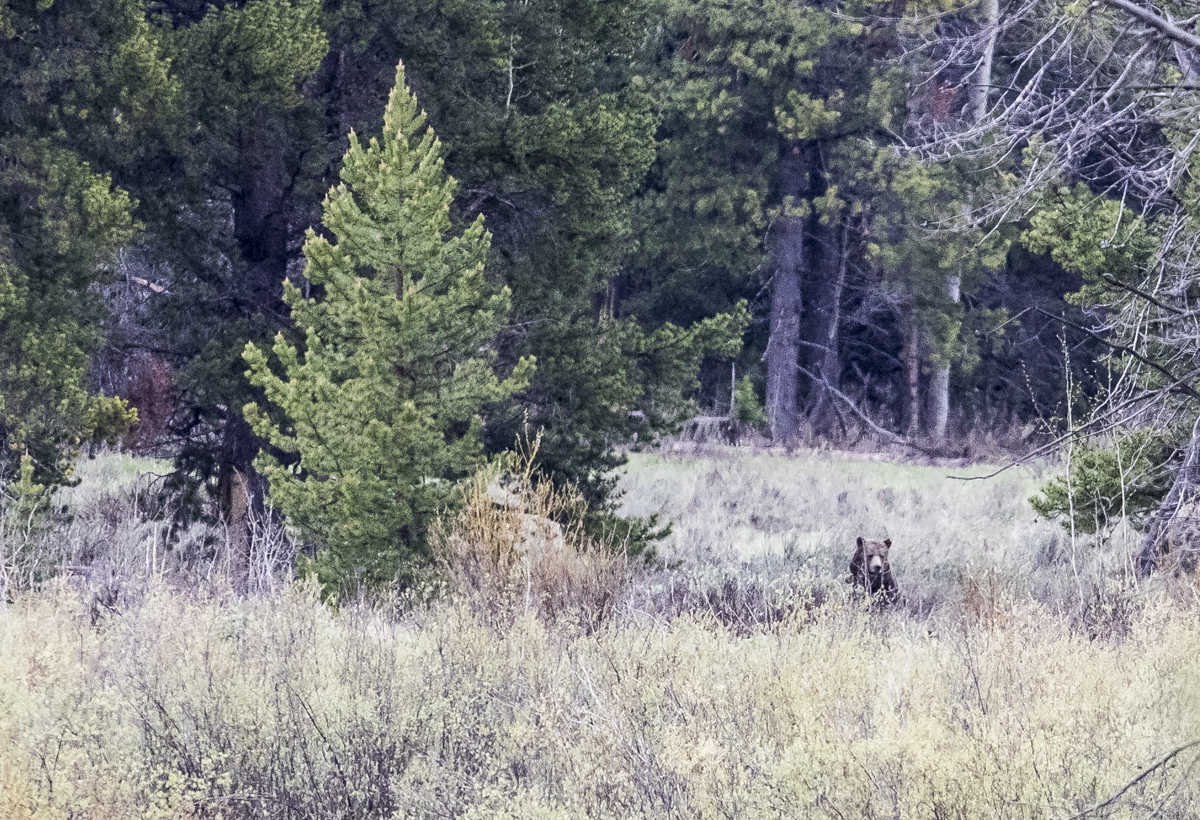
We bid our friends farewell the next morning and headed north to that place we think of as our second home, Yellowstone. While the previous day produced very few wildlife sightings, the drive out of Grand Teton National Park gave us two separate Grizzly Bear sightings and one of a family of Black Bears.
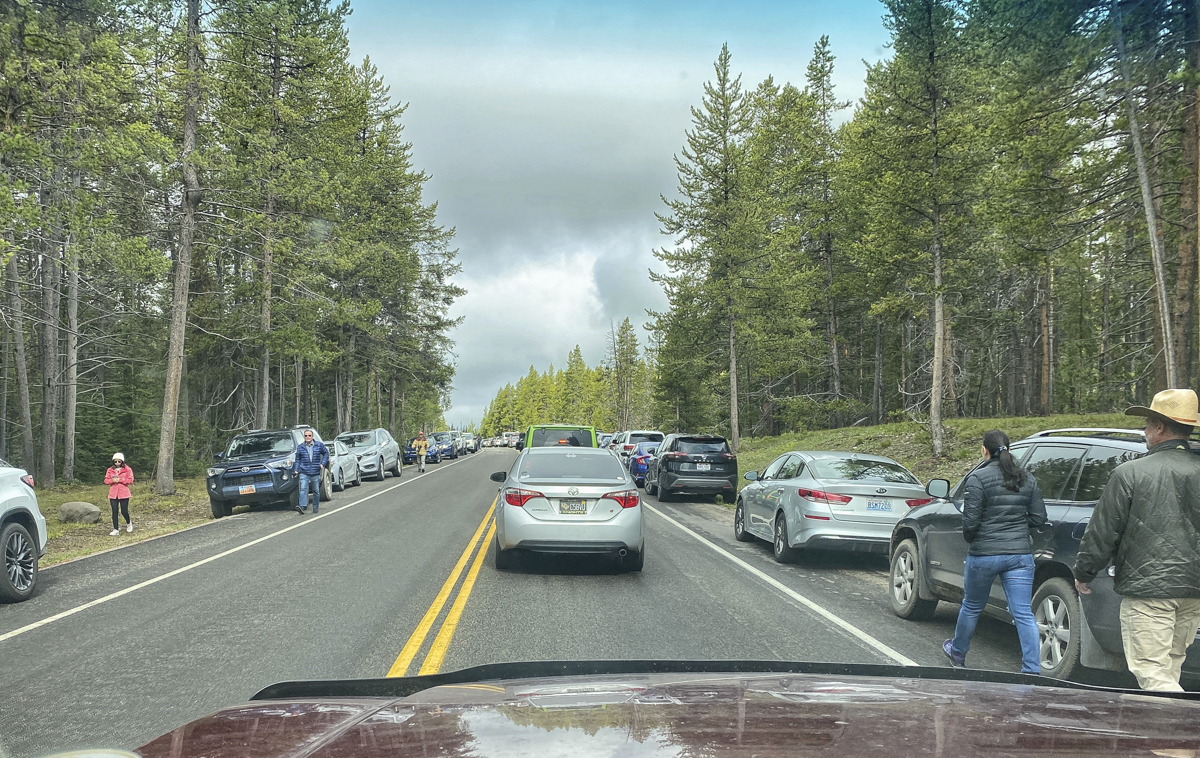
One of two grizzlies foraging across the Snake River at the famous Oxbow Bend turnout A bear jam
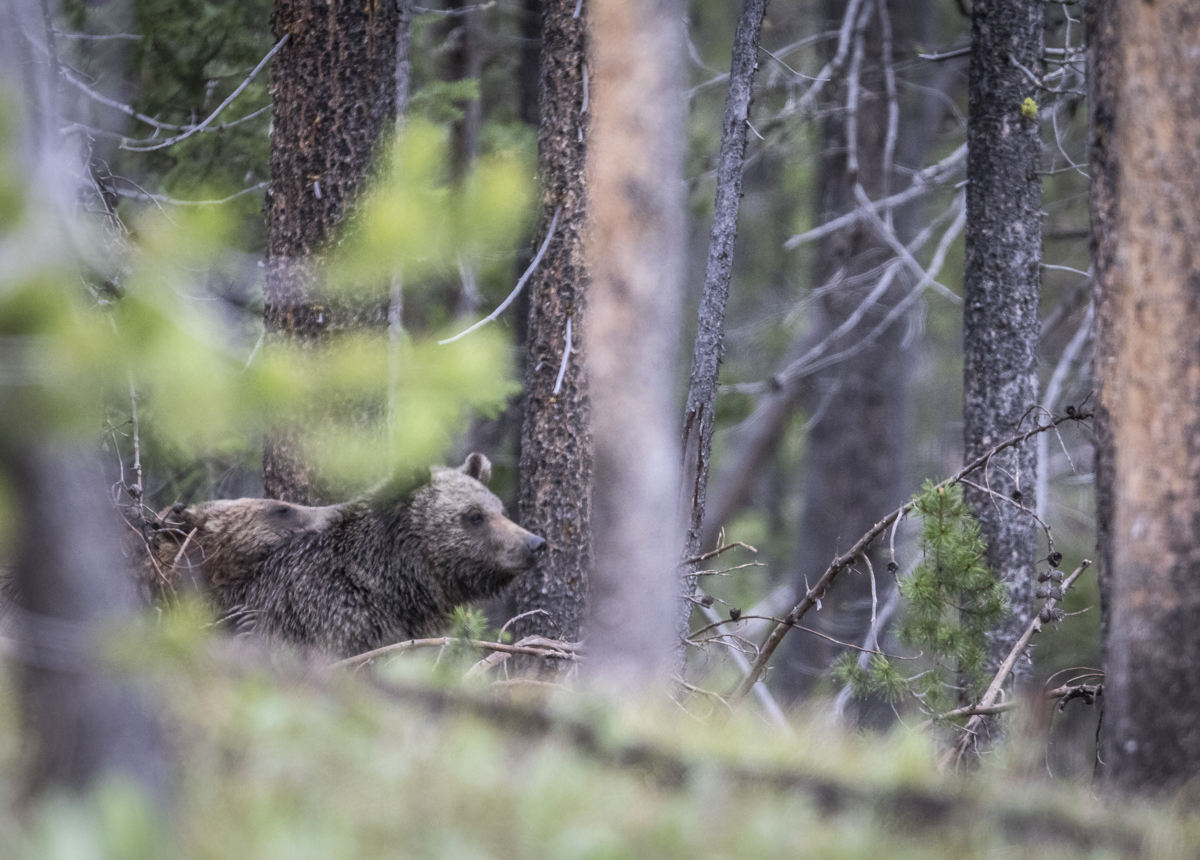
When you see this many cars (the line of parked cars stretched over a quarter of a mile), it is generally for a bear, and this time of year in the Tetons, generally a grizzly. Traffic had come to a stop, so Melissa got out and walked ahead to see if she could see anything. She finally was able to look ahead and saw two sub-adult grizzlies out along the road edge with a crowd of people waaaay too close to them. At that point, a ranger vehicle arrived, turned on its siren while driving toward the bears, and hazed them back into the woods. Rangers then started to attempt to control the crowd (it is often easier to control the bear than the people). I picked up Melissa while our truck crawled through the cars and people. She managed to snap a quick pic of one of the bears (which had walked back out closer to the road) as we drove by under the watchful eyes of two rangers.
One of the grizzlies that was the focus of the bear jam
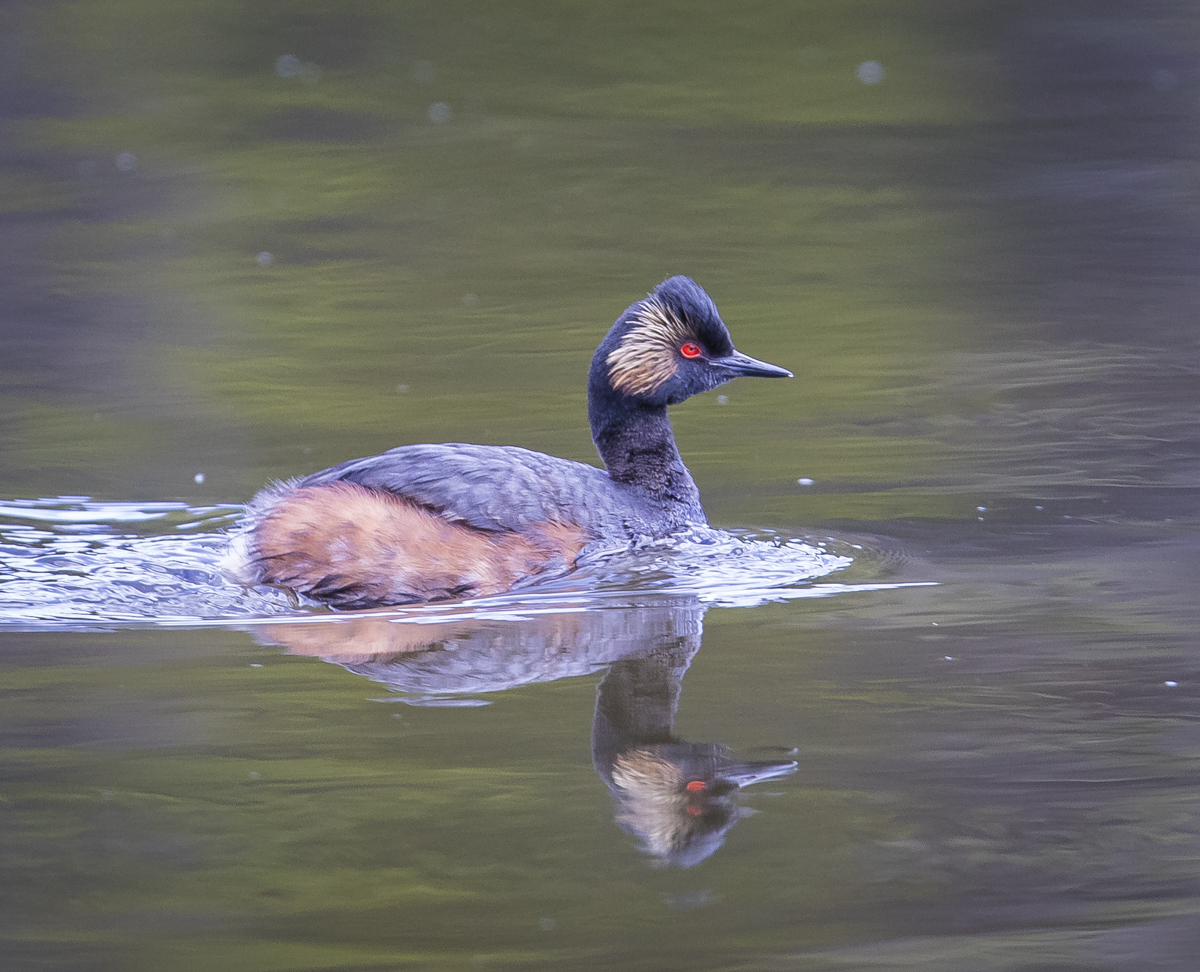
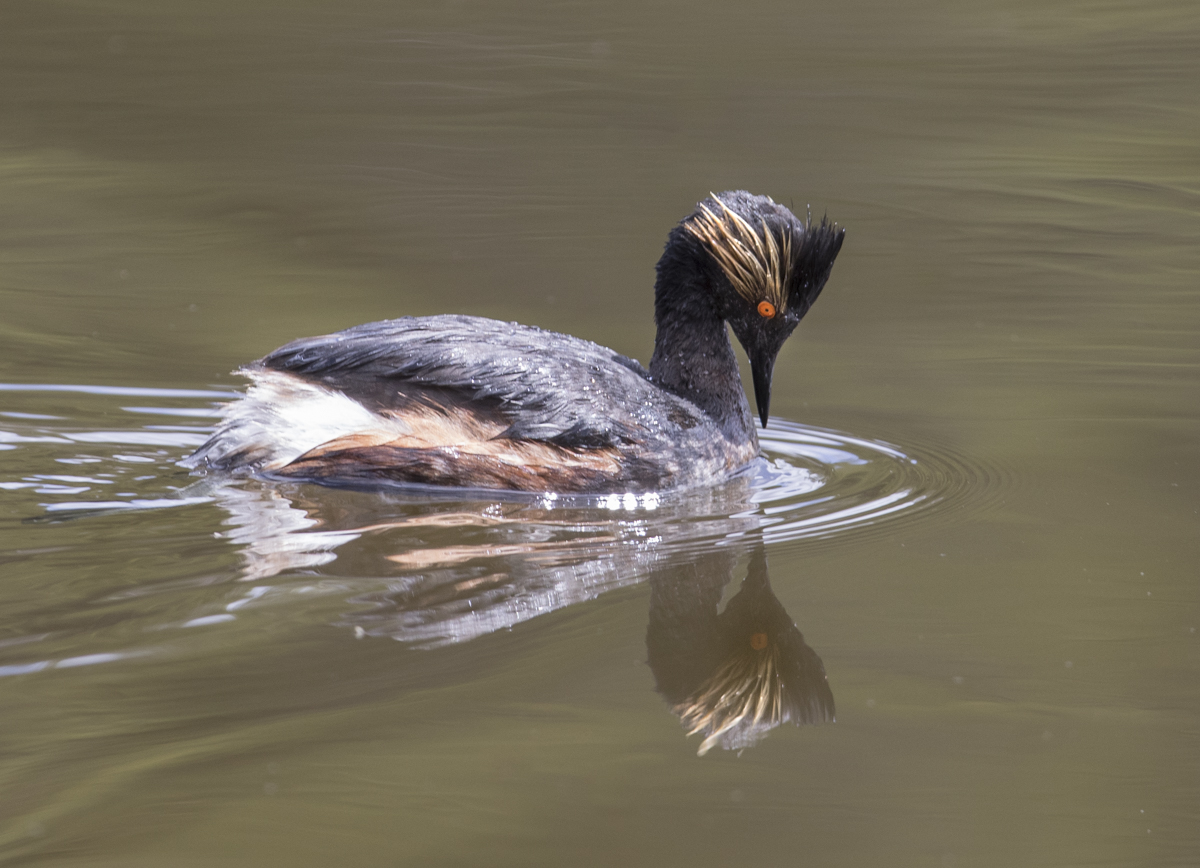
So, that was our experience in the Tetons, bad weather, beautiful scenery, and hordes of visitors. We anticipated even larger crowds at Yellowstone, but were pleasantly surprised. After a few stops to take in some scenic views, we pulled over along the Yellowstone River to try to photograph one of my favorite birds in the park, Eared Grebes. A stunning bird, with their dark plumage, golden ear swag, and scarlet red eyes, Eared Grebes are known nesters in the park. This was a group of a dozen or so swimming upstream in the river. Most of them had their heads tucked and their rump feathers raised (which is one way they increase their body temperature, allowing sunlight to reach their dark skin beneath the feathers). Below the waterline, their legs were paddling away to help maintain their position or move them slightly upstream over time. We sat down on a boulder upstream of the birds and waited, taking way too many photos as they gradually swam past us.
Eared Grebe on the Yellowstone RiverWhy, yes, I do look good
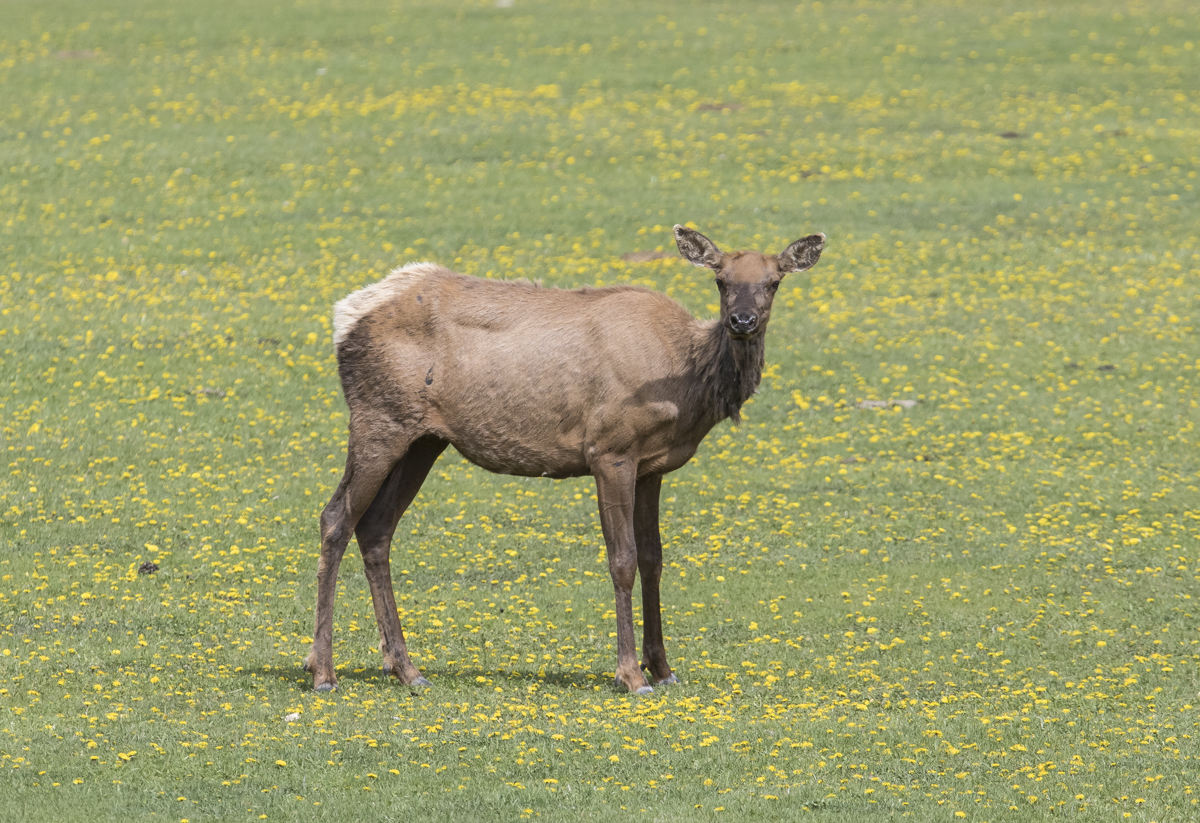
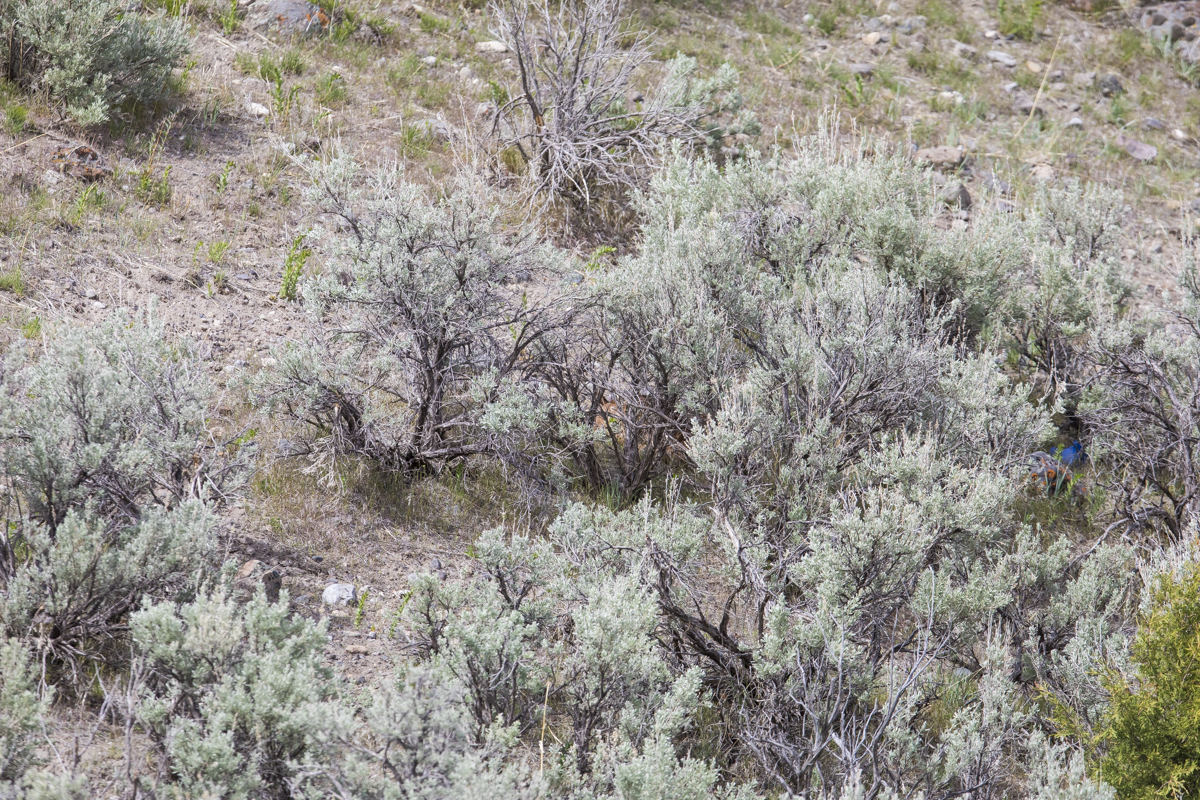
We called our friend, Beth, an education ranger in the park, to try to arrange a short visit. We met her at the old schoolhouse in Mammoth Hot Springs where she was wrapping up a meeting. A few cow Elk were grazing in the lawn (Mammoth is one of the best places in the park to see Elk). Beth had seen a calf with one of the cows before we arrived, but when we went around to the back of the building, it was nowhere to be found, no doubt hidden in the sparse sagebrush on the hill. When we rounded the corner, one cow raised her head and stared at us and then glanced up the hill, probably in the direction of her hidden calf. We stood and talked for several minutes and the cow resumed grazing, occasionally looking our way and back up the hill. I kept scanning the slope and finally found the calf, given away only by a flick of its ear.
A cow Elk watches us to make sure we don’t move any closer to her calfThe hidden Elk calf..can you see it?
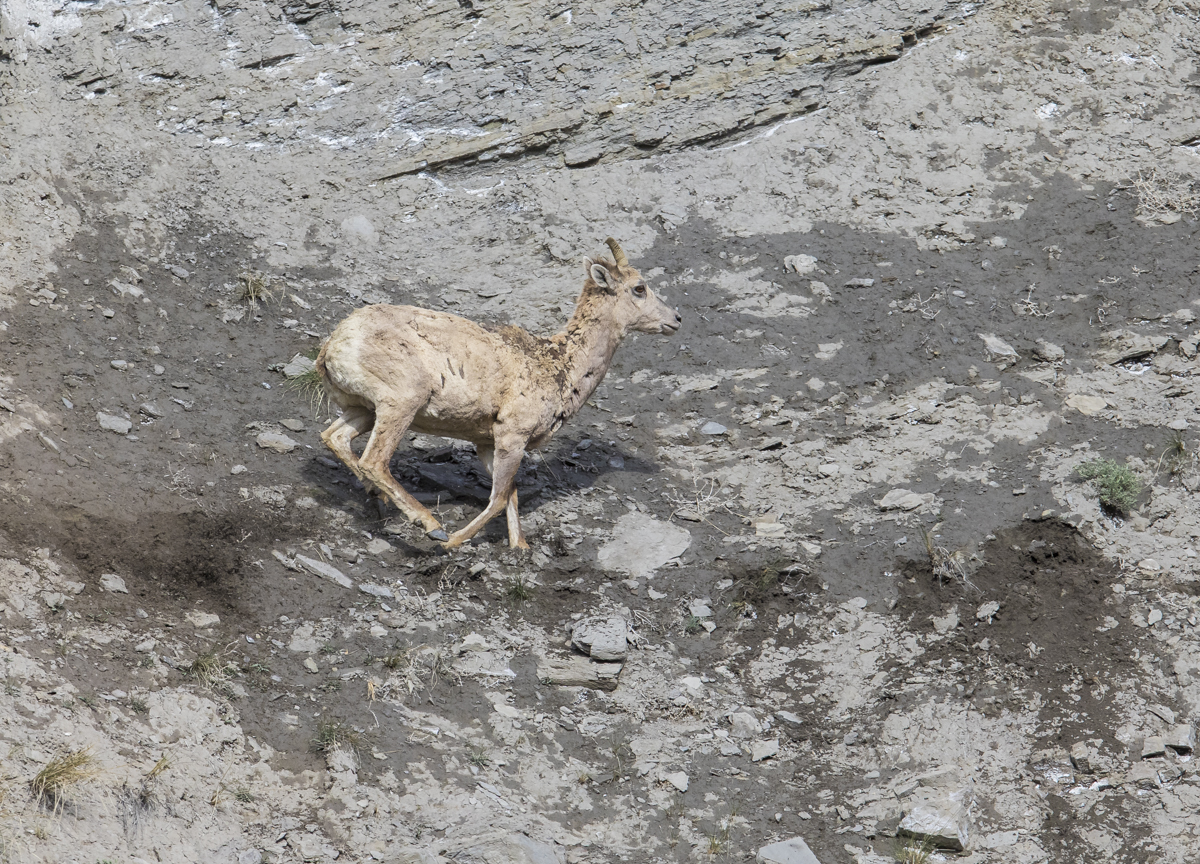
We ended up going into the gateway community of Gardiner to visit with Beth and her family for a little while and to dream of some day living here. On our return to the park, we spotted a group of young bighorn sheep in Gardiner Canyon (a fairly predictable place to see them). A few of the younger sheep started playing and ran across the steep slope, causing dirt and rocks to tumble down. It always amazes me what these gravity-defying mammals can do on these cliffs.
Young Rocky Mountain Bighorn Sheep running across a cliff face, causing loose rock and dirt to break free
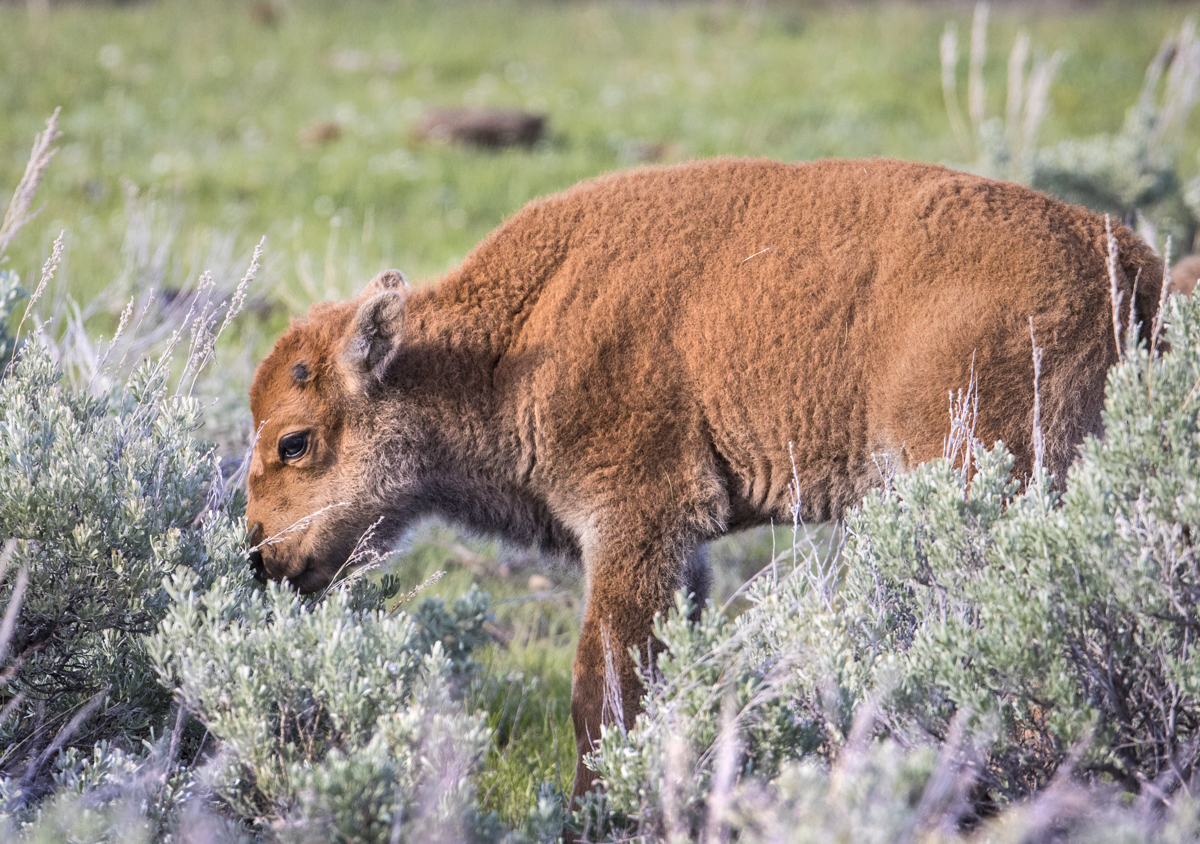
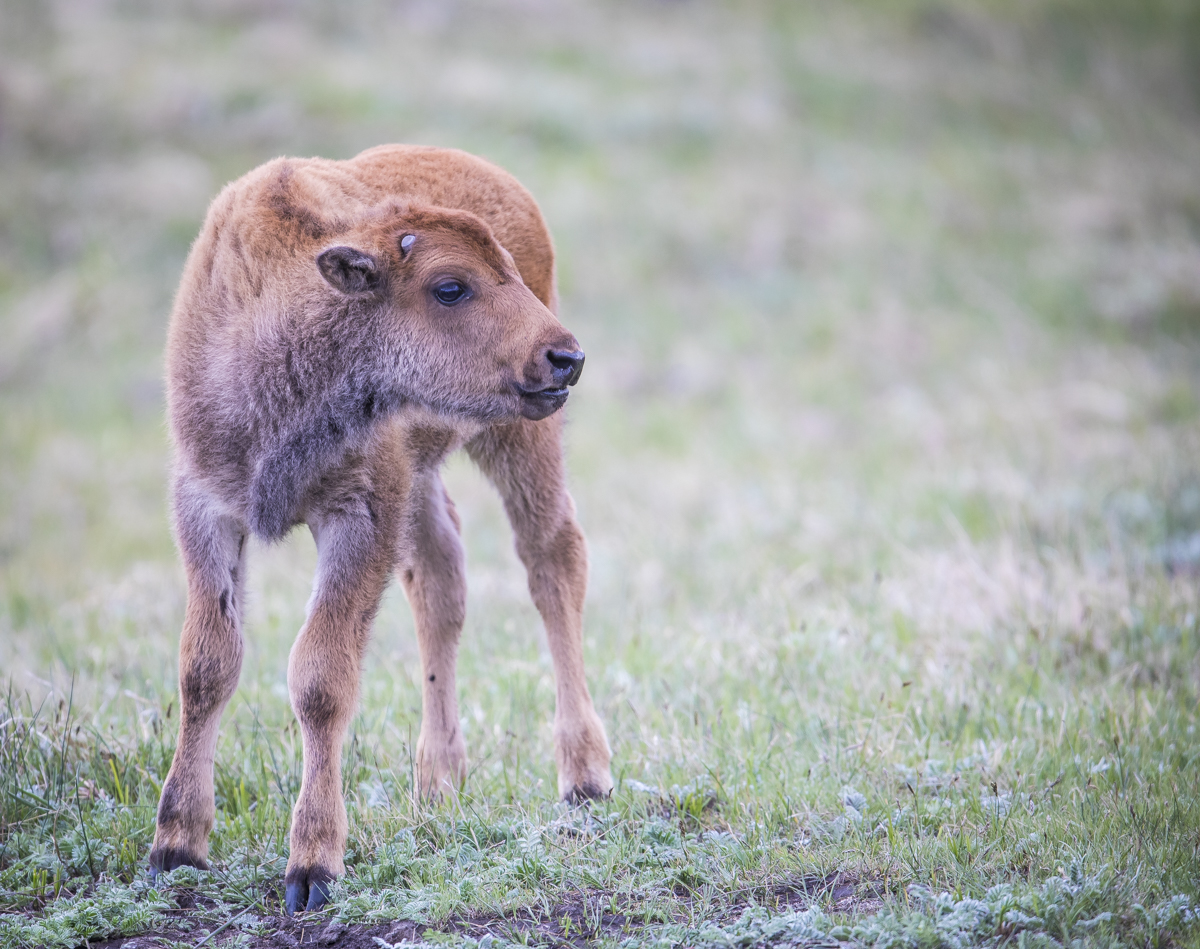
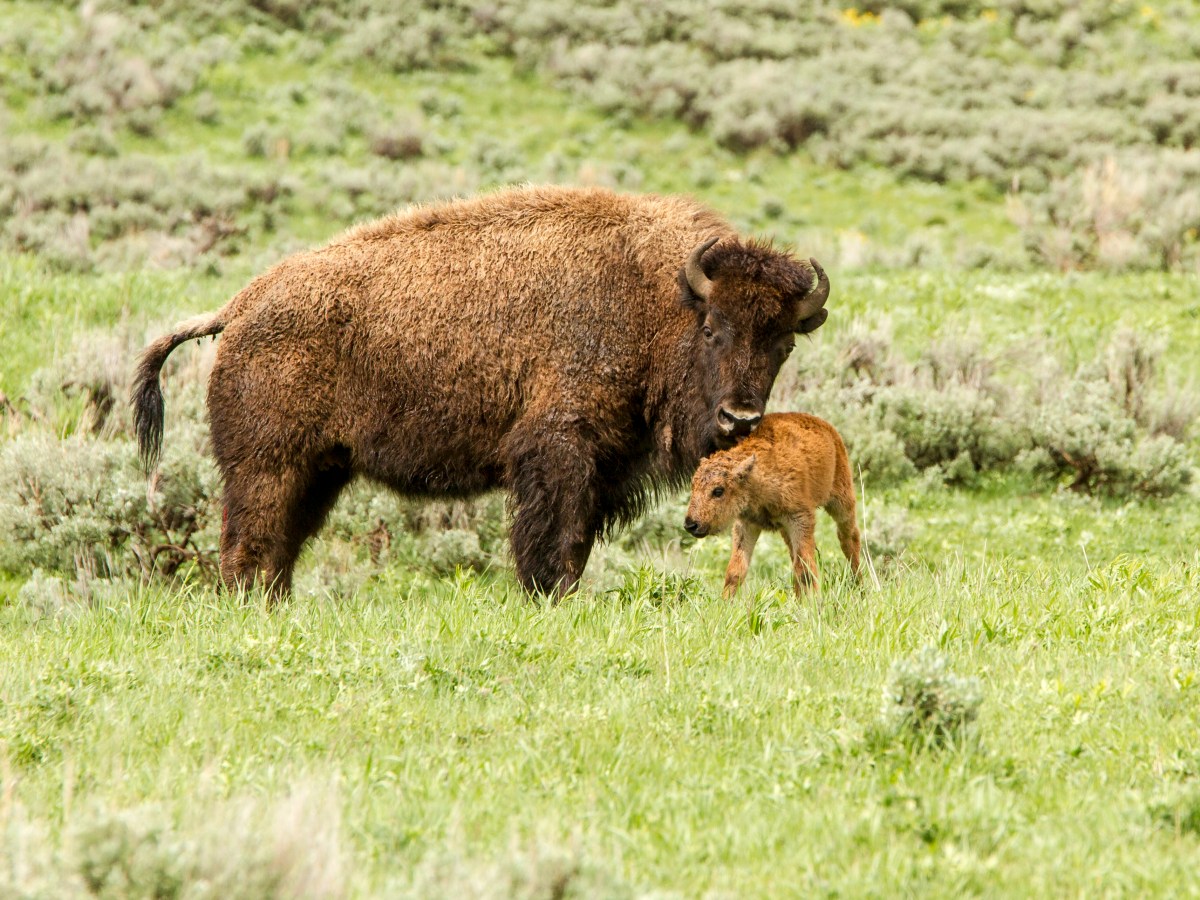
Being a holiday weekend, we had made lodging arrangements in Silver Gate, outside the northeast entrance, as we figured the few Forest Service dispersed camping areas near the park would be crowded. We spent the late afternoon driving through my favorite part of Yellowstone and seeing many of the park’s iconic wildlife. One of the highlights of this time of year is the abundance of baby animals, especially the baby bison, or “red dogs”.
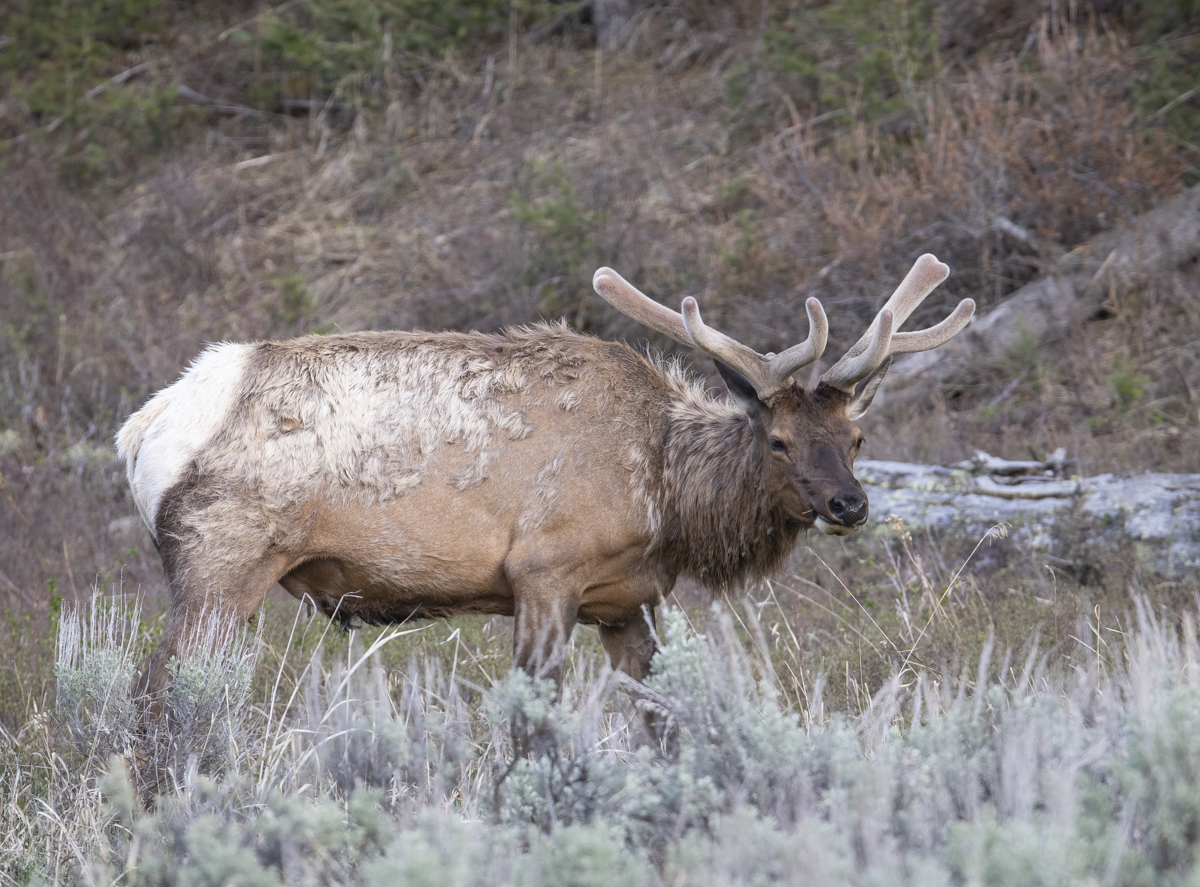
Baby bison are orange-red in color for the first few months of their livesThey are either up and running and playing, pestering mom, or flat out on the ground asleepA bull Elk in velvet
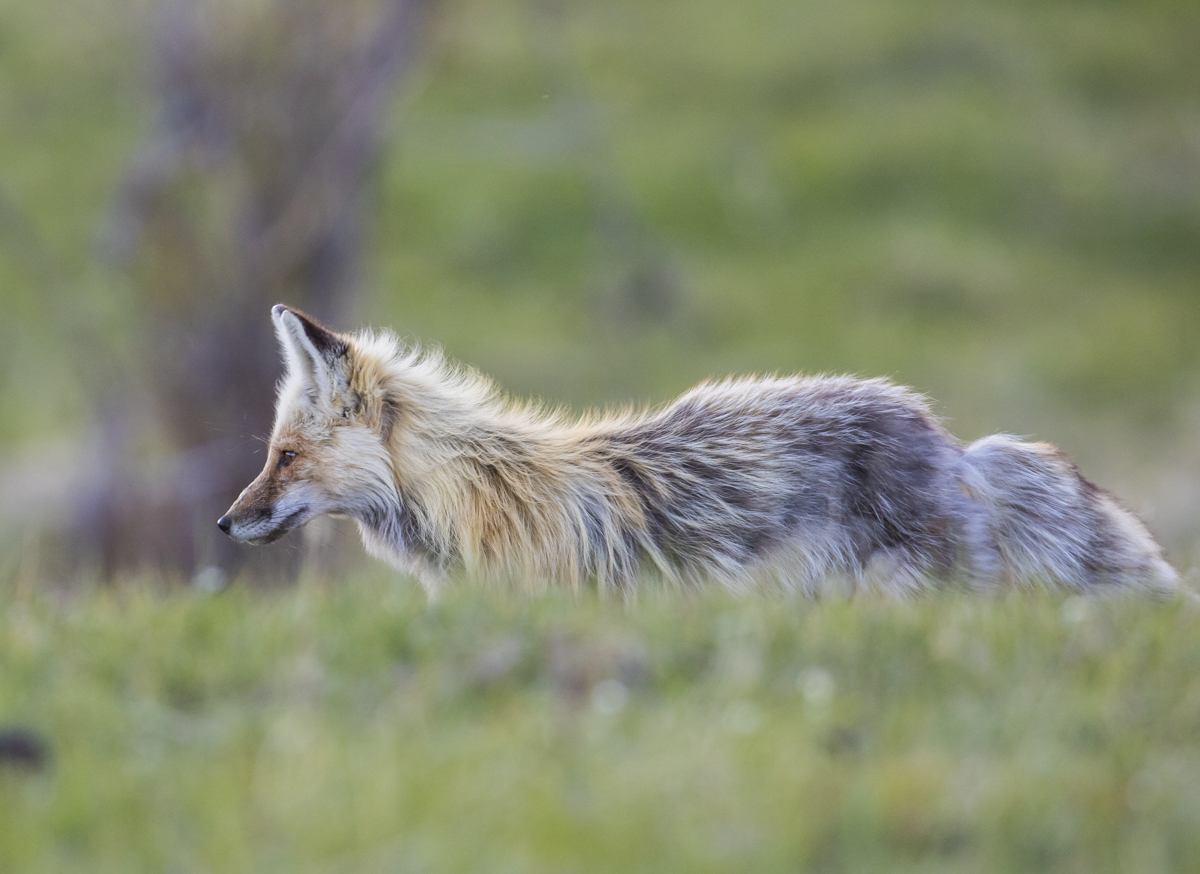
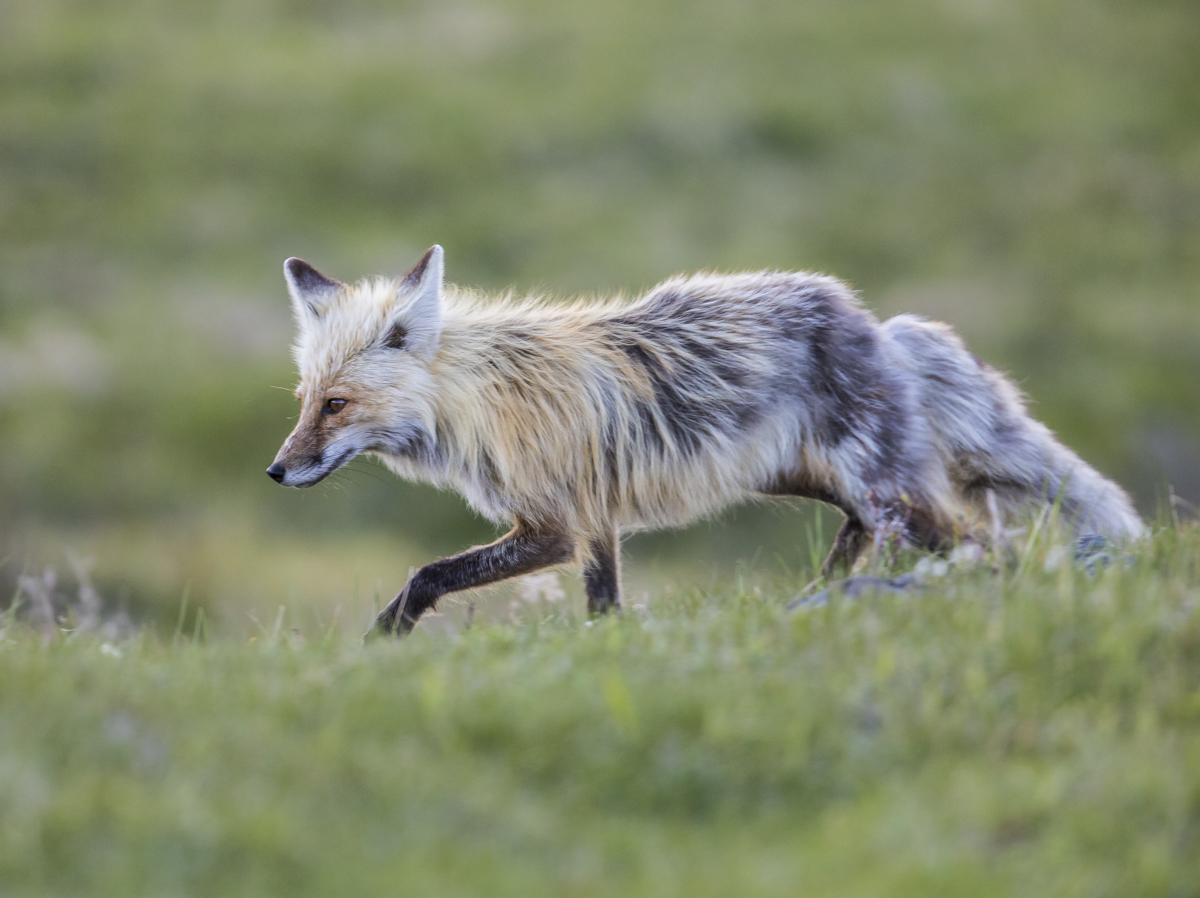
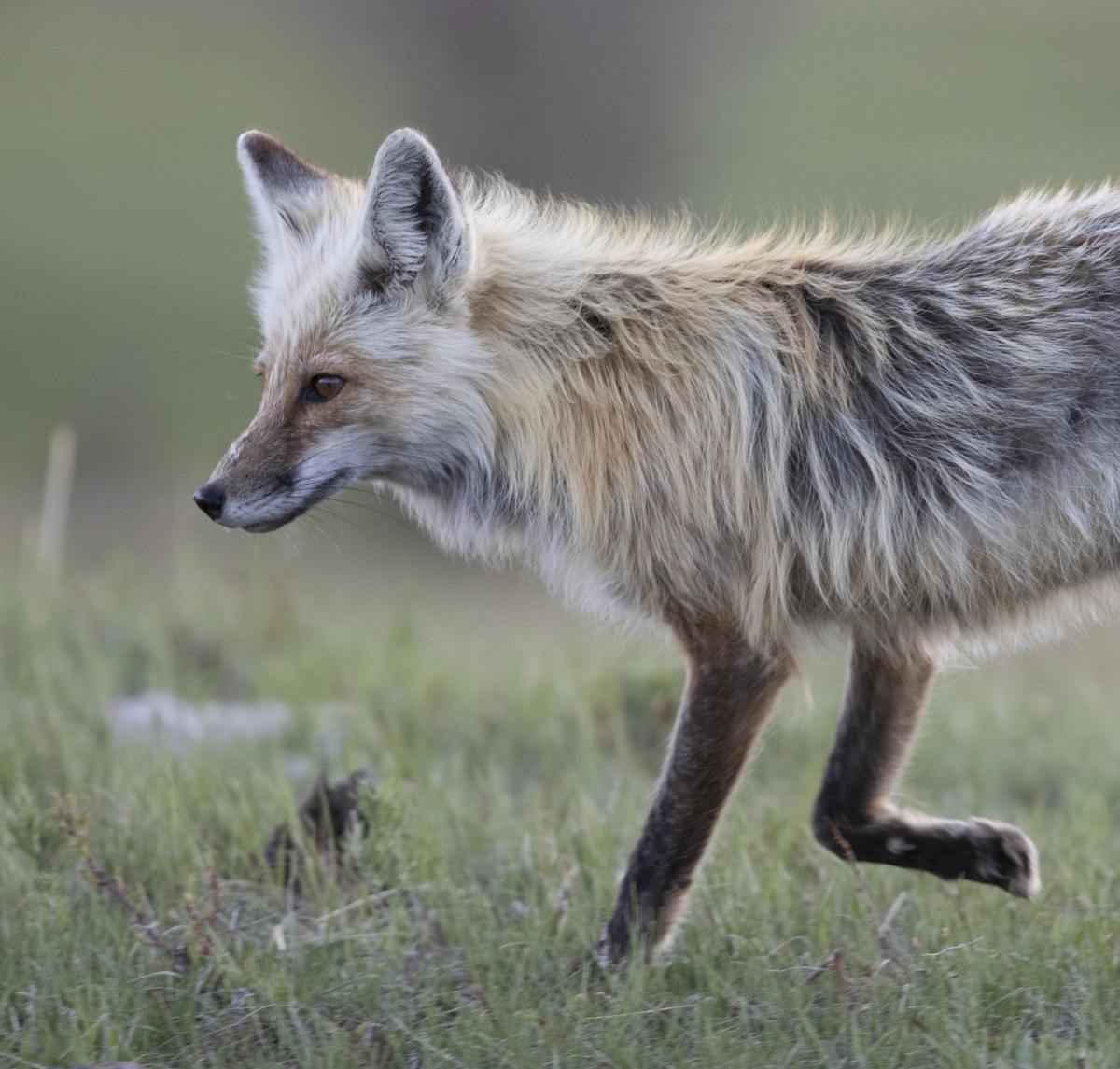
Passing through Little America and into Lamar Valley feels like being home. We had been in the park for only a few hours and already seen Coyotes, Wolves, Elk, Bison, Grizzly Bears, Black Bears, Pronghorn, Mule Deer, Rocky Mountain Bighorn Sheep, Rocky Mountain Goats, and lots of birds from Ravens to Bald Eagles. And, to our surprise, there were no crowds! As we drove through the upper end of Lamar Valley, a car going in our direction in front of us was driving slowly on the opposite side of the road. It was following what I at first thought was a Coyote off the side of road, down a slight incline. As we got closer, I realized it was a pale-colored Red Fox (giving us a “3 Dog Day” – seeing all three of Yellowstone’s canid species in one day). I attempted a pic as we drove by, but didn’t want to stop in the middle of the road with other cars nearby. We continued down the road about a half mile and pulled out at a parking area. We got out and walked over to a low ridge overlooking a small stream. We were still within sight of the road, should the fox continue along that route. The fox was trotting along at a good pace and then crossed to our side of the road and took a path along the stream. It stopped and caught a small mammal of some sort and ate it, and I figured it would continue along the waterway, looking for more furry snacks. But, it crossed over and disappeared beneath the crest of the ridge we were on. Suddenly, it popped up just below us. It paused, glanced our way, and then continued along the ridge line, passing within about 20 feet of us, seemingly unconcerned.
The fox came up the ridge and then trotted by us, giving us the highlight of our wildlife encounters for the tripAfter a brief pause, the fox continued on its way, passing very close to us as we watched What a beautiful animal!After passing us, the fox stopped, looked around, and then continued on across the valley
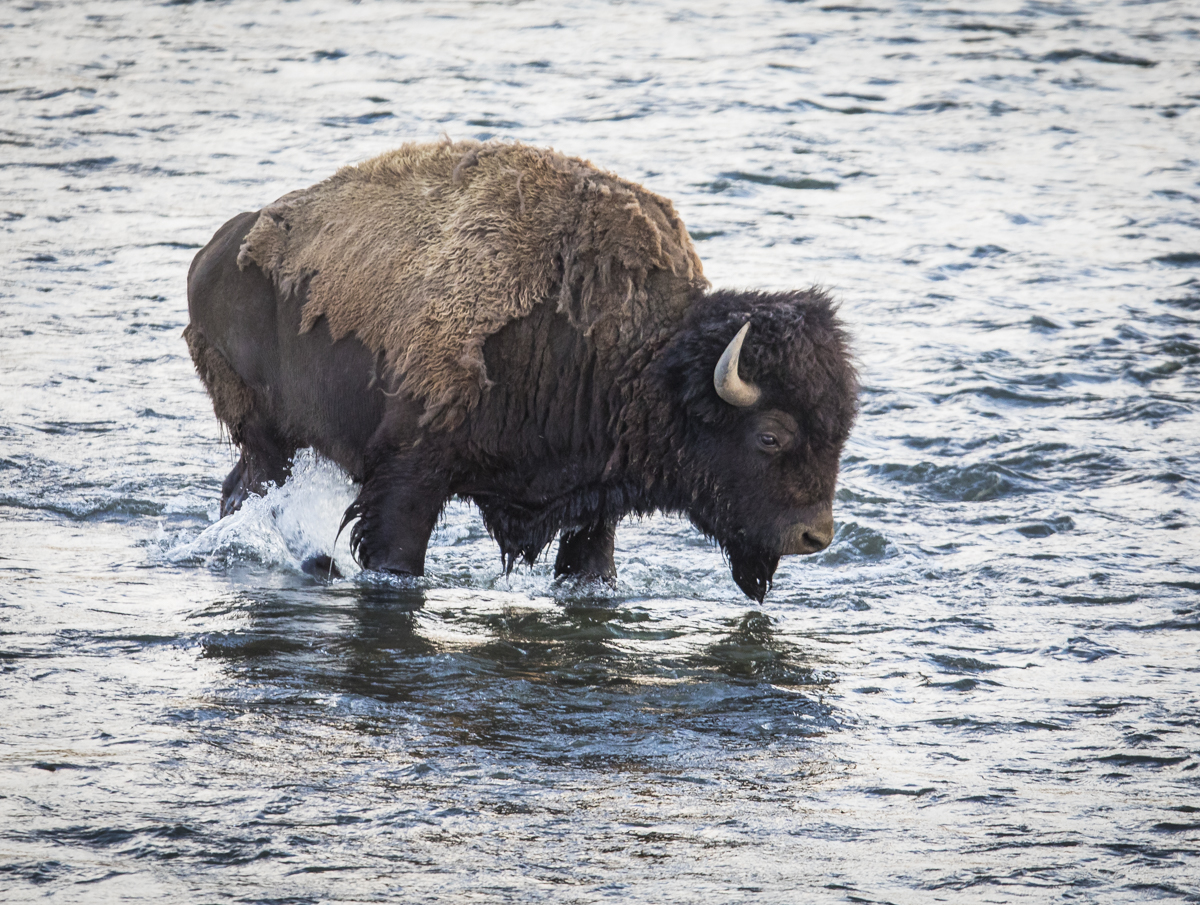
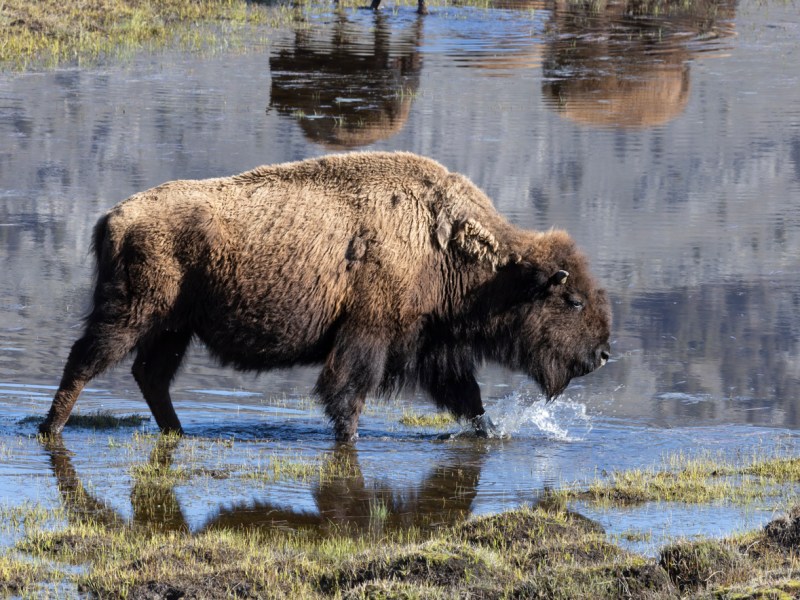
That was a magical moment, just us and the fox out in our favorite place on Earth, with no one else around. A short distance up the road, we watched as a small herd of Bison waded across the creek. I always stop and watch whenever I see these magnificent beasts crossing waterways. This was an easy place to wade across, but there have been times when we have seen them struggle against the swift current of a snow-melt swollen river.
Bison crossing Soda Butte Creek
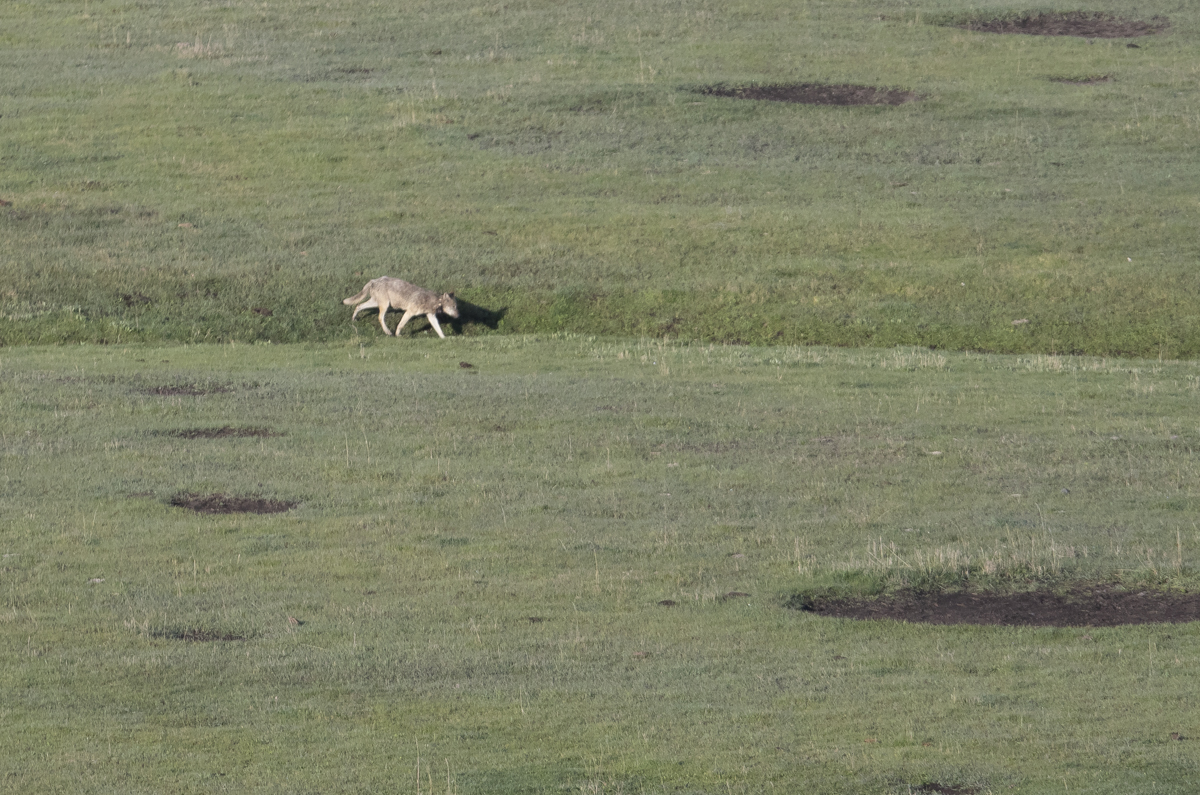
The next morning, as we drove through Lamar, we could not believe how few cars we saw. This was Saturday of Memorial Day weekend in one of the most popular parks in the nation, and the pullouts in Lamar Valley were virtually empty! We stopped and enjoyed watching a sow Grizzly and two cubs of the year playing and rolling on a snow bank on a high ridge across the valley (spotting scopes are a must in Lamar). Someone else with a scope mentioned seeing a Gray Wolf on the shoreline of the river across the valley. We scanned, and sure enough, a collared wolf was tugging at a carcass (probably a bison). For the next 15 minutes or so the wolf pulled off chunks of meat with a squadron of Ravens overseeing the operation. When she was done, she began to trot across the valley in our direction, and toward where we knew the wolf den at Slough Creek was located, about 3 miles behind us. Based on online images of collared wolves of the Junction Butte Pack, we think this was the female wolf called 907F. Once the alpha female, she has been replaced in that pack position by another wolf.
Collared wolf heading back across Lamar Valley with a full belly
Somehow, the wolf managed to cross the road without anyone near us seeing it (a local guide drove down and said he saw it from another pullout as it crossed the road just beyond us). We turned, and there she was, headed up the steep slope and over the ridge. We drove over to the Slough Creek den site and pulled into a location away from the groups of wolf watchers, hoping to see her come across the road and swim the creek to head up to the den. The den is easily visible through spotting scopes, about a mile away from where you park along the Slough Creek dirt road. While we waited, we observed several pups playing with a few of the adult wolves around the den. I noticed some people just down the road looking back behind us toward a low area hidden from our view by a small hill. I thought the wolf might appear, but she did not. We later learned that those people had indeed seen the wolf come down that gap. She must have seen the people on the road and turned around. The next thing we know she is magically across Slough Creek and regurgitating a meal for the excited pups! I spoke to several of the wolf watchers and they did not see her cross the road or the creek. These wolves are very good at avoiding people. We stayed a while longer enjoying the view of the wolves, and then headed back toward Lamar Valley.
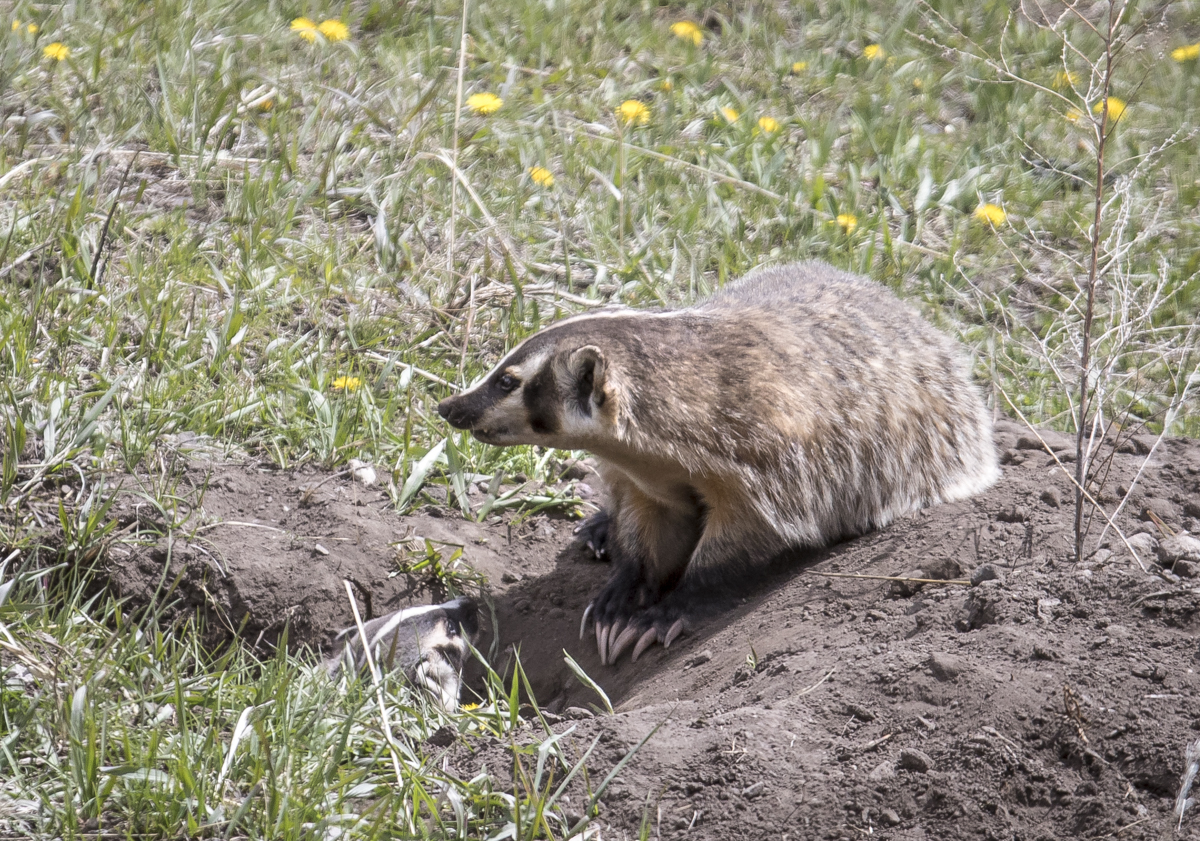
On our trip through the valley that morning we saw a small group of people sitting along the road with cameras pointing down-slope toward a large burrow. We paused and asked and they said it was a badger den. On our way back, a larger crowd had gathered and we could see the badger was out. Since there was no place to stop, we just drove by slowly and Melissa took several photos out her window. The one below is my favorite as it shows one of the cubs looking up at the adult.
Badger den in Lamar Valley – just look at those claws on the adult! (photo by Melissa Dowland)
Though it was very windy, we did a couple of short walks to get away from the road and were, as is almost always the case, totally alone in our favorite place.
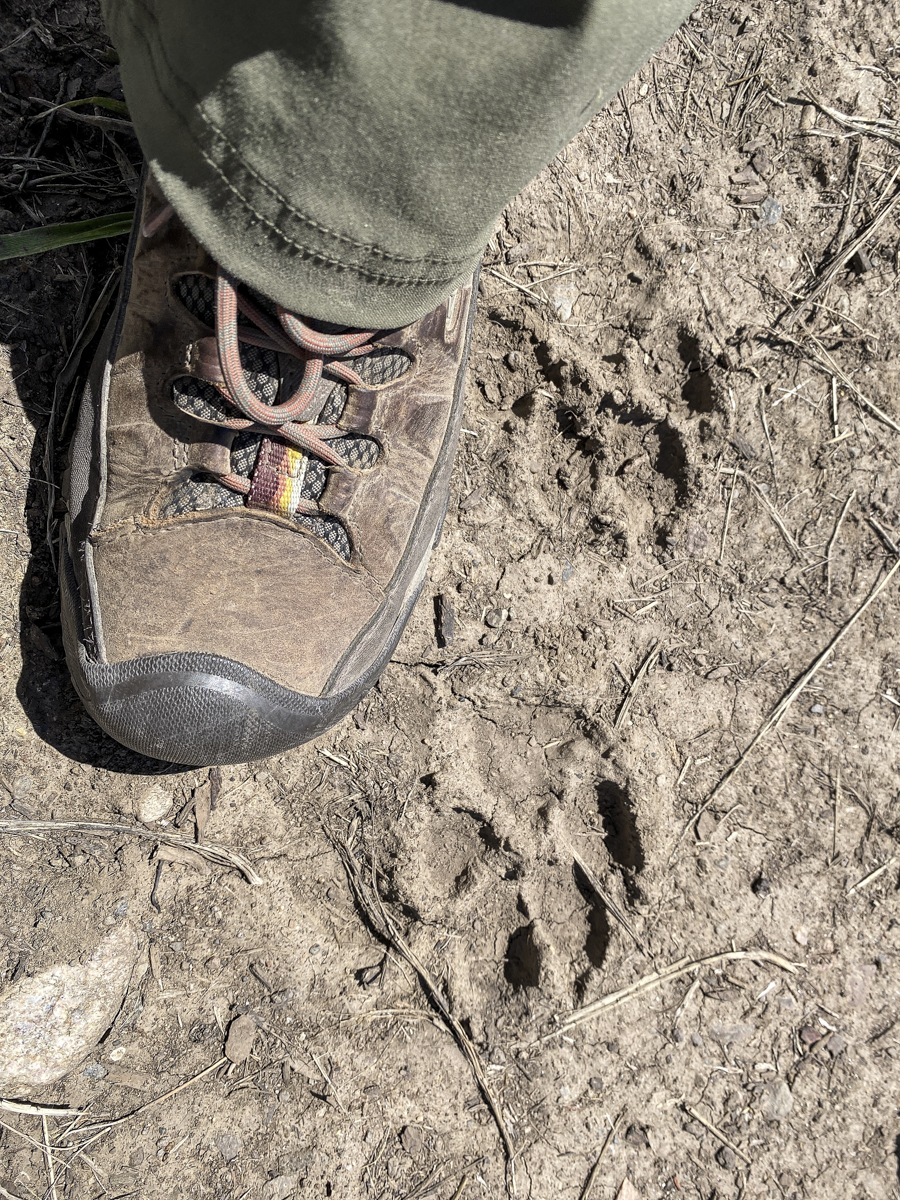
Wolf tracks in the sagebrush flatsUinta Ground Squirrel giving us the side eye as we walk by its burrow
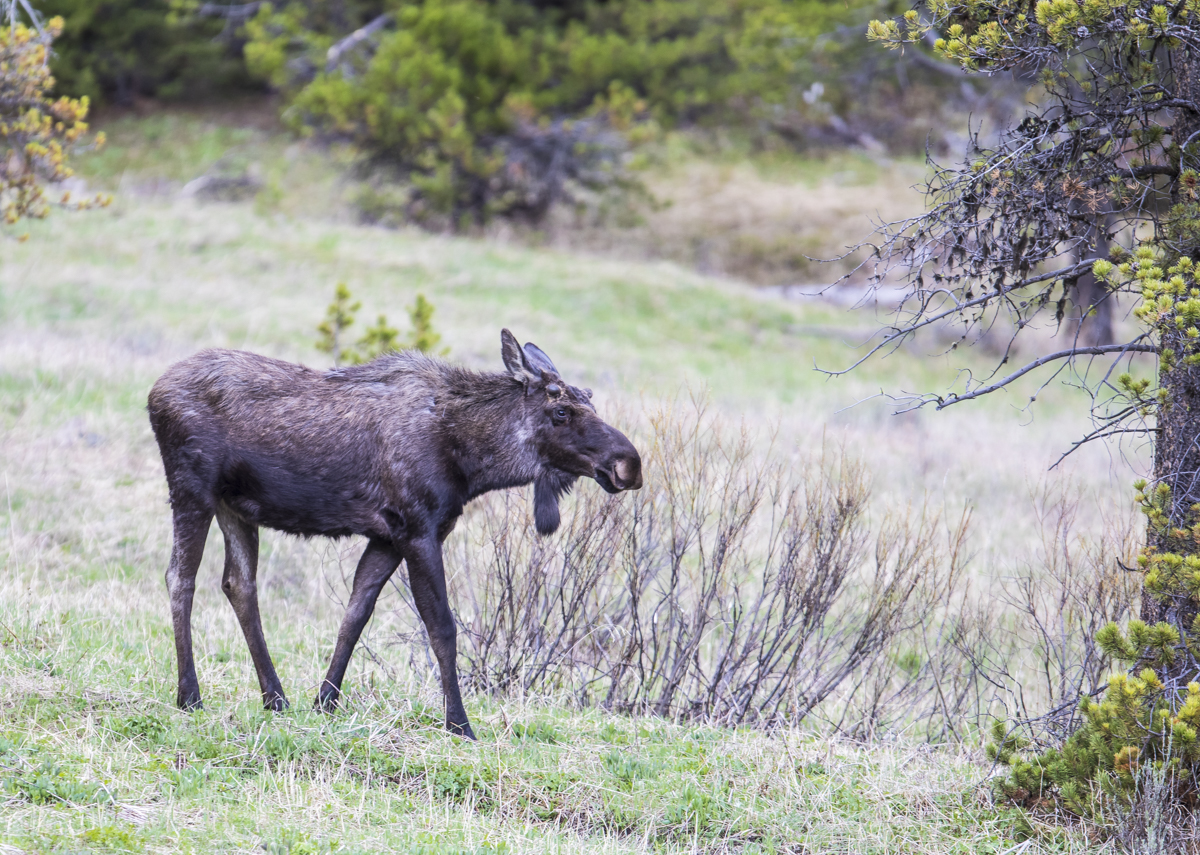
After dinner in Silver Gate, we came back into the park and saw a couple of cars pulled over at a bridge across Soda Butte Creek. A young bull Moose was the attraction. We go out and spent a few minutes admiring it from the bridge until one person decided to walk towards it and spooked it.
Young bull Moose in the northeast portion of the park, the best area to see these magnificent animals
Our one full day in Yellowstone had been full of wildlife sightings. We even had an elusive “octo-ungulate” day, seeing all eight of the ungulate (hoofed mammal) species in the park – Bison, Elk, Moose, Mule Deer, White-tailed Deer, Rocky Mountain Bighorn Sheep, Rocky Mountain Goat, and Pronghorn (Moose, and especially White-tailed Deer, are the toughest to see). In less than 24-hours, we watched wolves at their den, enjoyed seeing baby bison frolic in the sagebrush, had an amazing encounter with a fox, and saw almost every other type of wildlife the park offers. We wanted to make this day stretch on as long as possible as we knew we were headed East the next morning. As has happened so many times in the past, Lamar Valley put on a stunning show for us as the daylight waned. I always like to think the park is somehow thanking us for the visit and reminding us to return. And we can’t wait until we do…
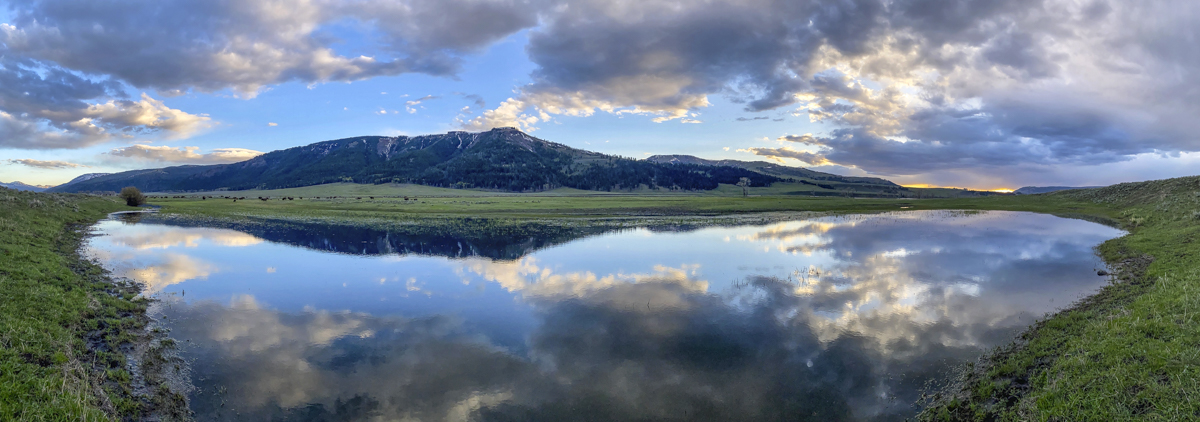
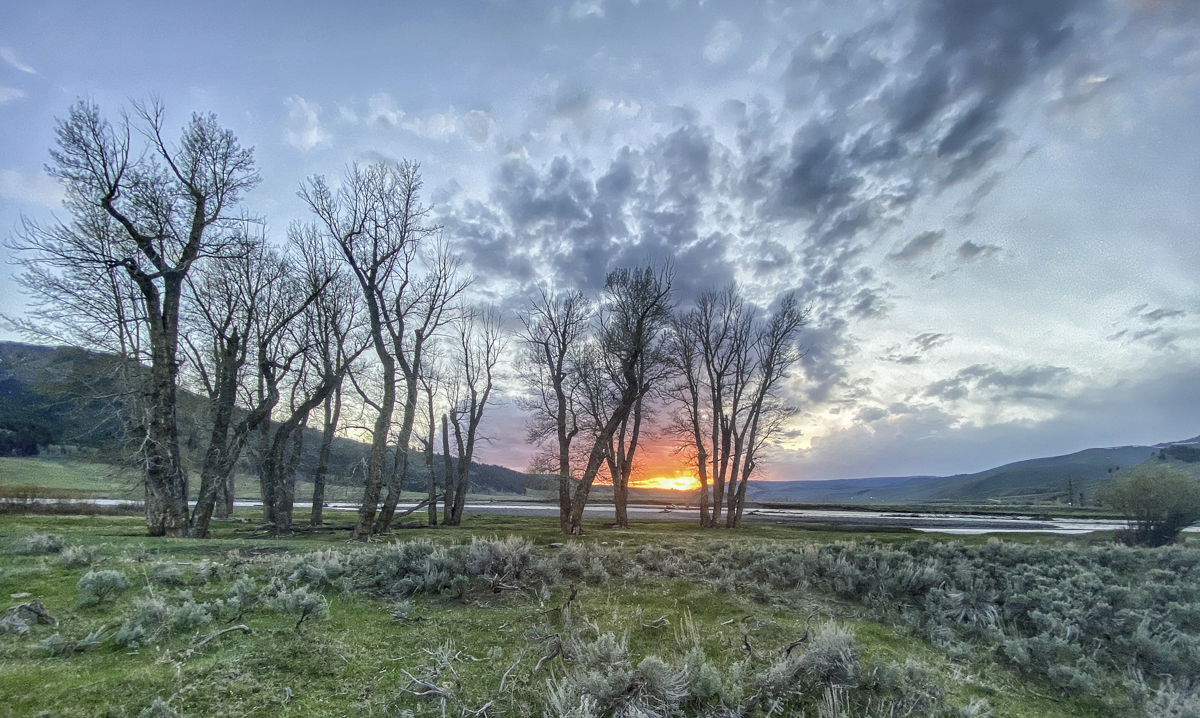
Reflections of Lamar in a roadside poolSunset over the Lamar River
For me, it always come back to the land, respecting the land, the wildlife, the plants, the rivers, mountains, and deserts, the absolute essential bedrock of our lives. This is the source of where my power lies, the source of where all our power lies.
~Terry Tempest Williams
It was hard to leave Boulder Mountain, but the road beckoned. Weather patterns were holding us back from heading to Jackson, WY, to see friends as a large rain and snow system seemed to be sitting on the Teton-Yellowstone area. We considered a trip farther west to a very under-utilized national park, Great Basin, in Nevada. But the lack of very many camping options deterred us, so we opted instead for a complete turn-around and got an Airbnb in Springville, UT (we agreed we finally needed a night in a place with a nice shower). We were very impressed by the mountainous areas of Utah as we drove through and we will certainly be back.
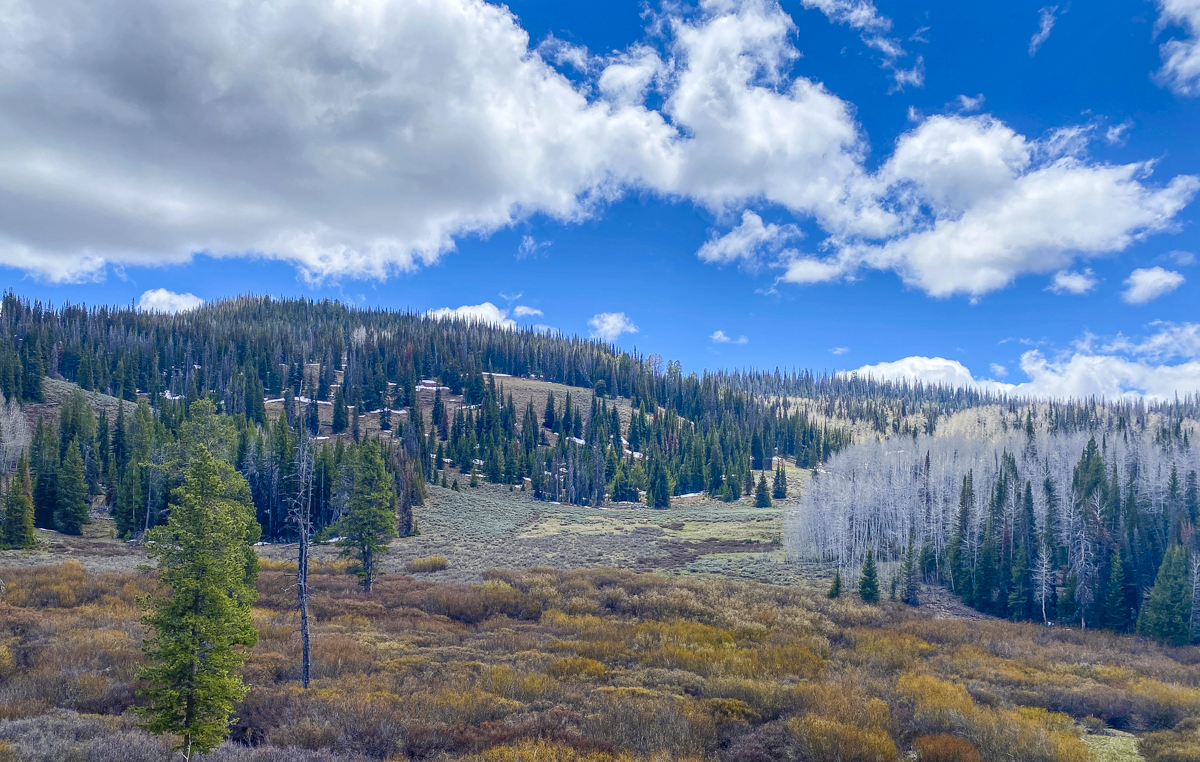
The high meadows, aspens, and conifers of the Uinta-Wasatch-Cache National Forest (click photos to enlarge)
Melissa found some good-looking areas in the nearby Uinta-Wasatch-Cache National Forest, so we headed there the next morning, exploring some high elevation meadows with somewhat muddy roads and scattered pockets of snow, before settling on a lower elevation campsite.
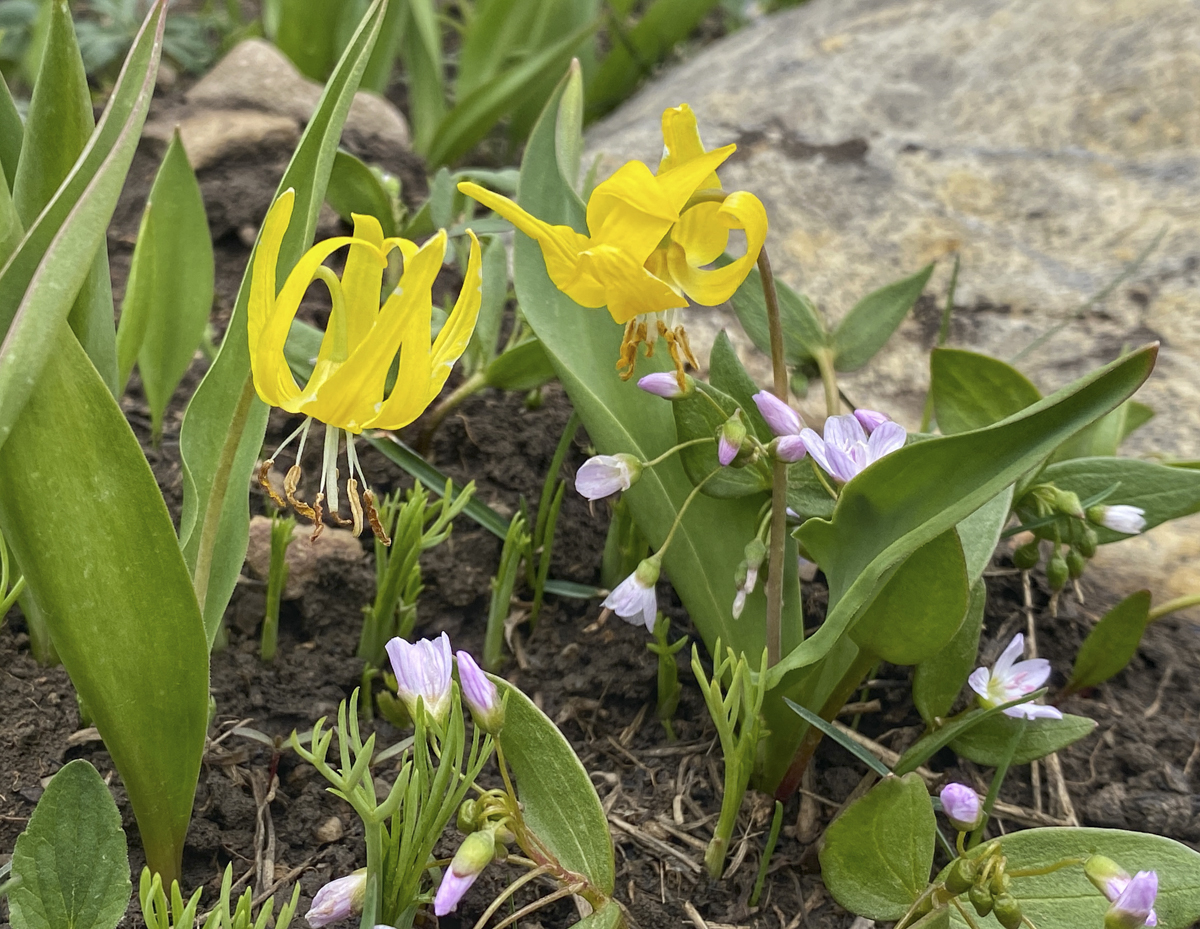
Glacier Lilies and Spring Beauties in a high meadowFields of Glacier Lilies at an elevation of about 9000 ft in the Uinta MountainsOur beautiful campsite at about 7800 ft off the Mirror Lake Highway
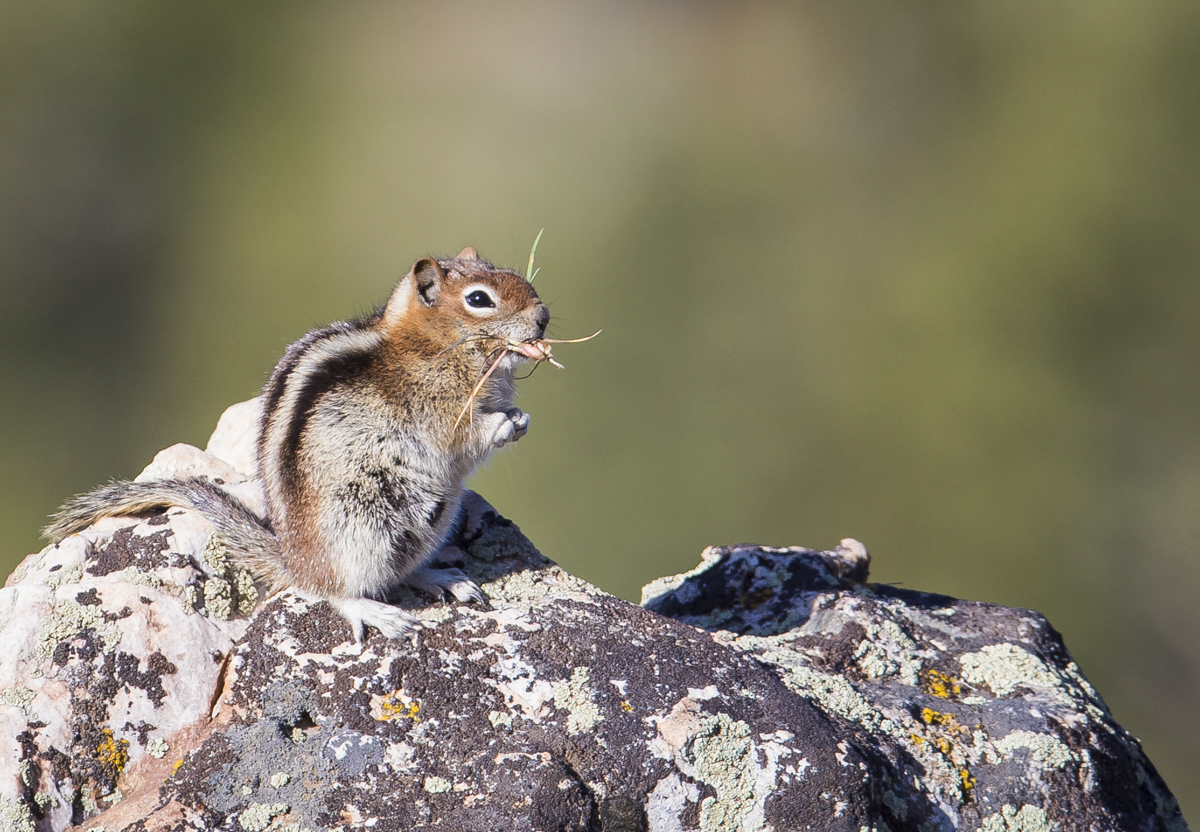
We checked a couple of spots off the Mirror Lake Hwy before picking a relatively open site at the edge of a small drop-off with distant views of mountains. The rocky ledge was home to a few ground squirrels and I managed to convince them I was harmless by sitting still for many minutes.
A Golden-mantled Ground Squirrel having a morning snack
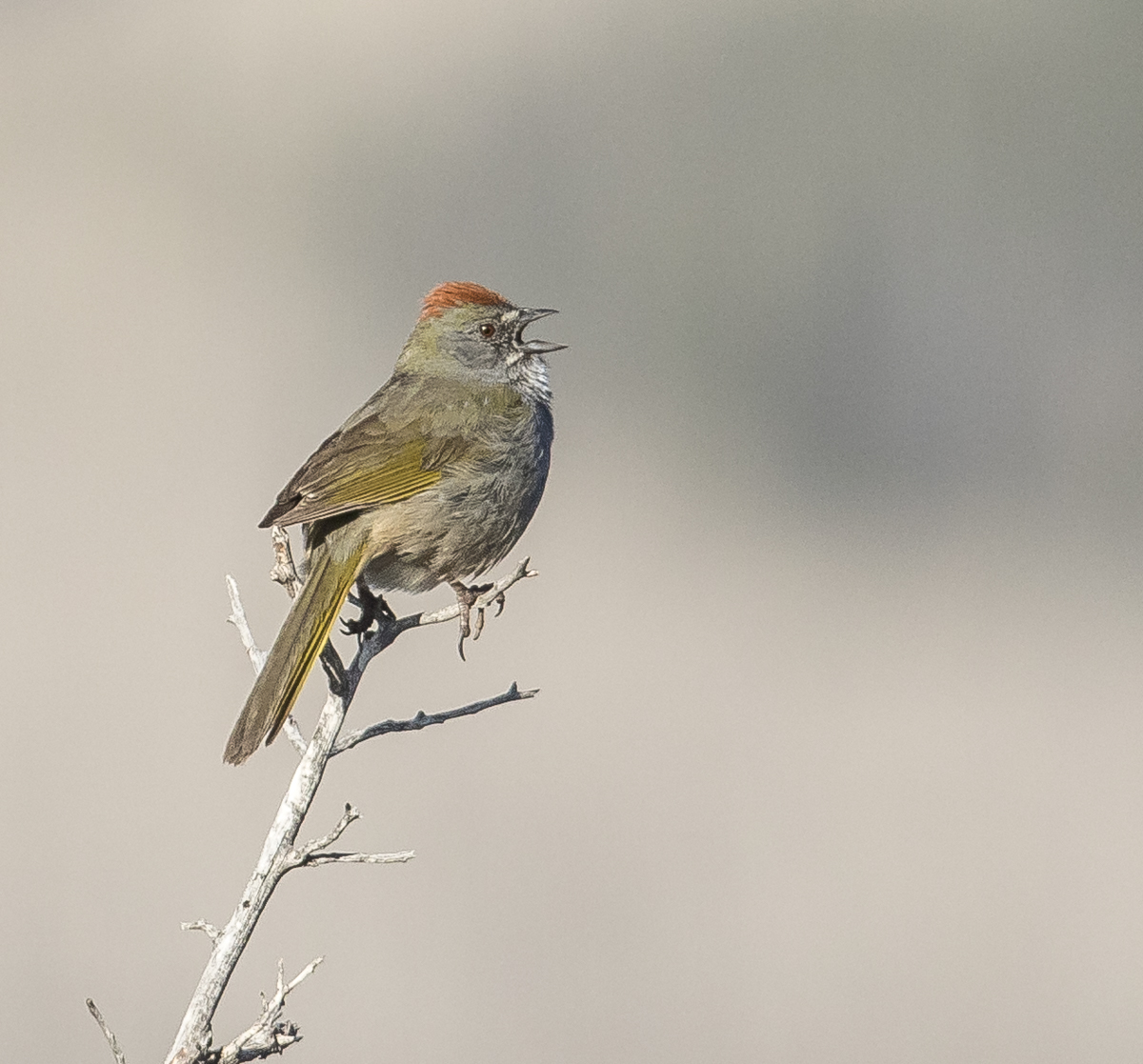
A less cooperative resident was a new species for me, a Green-tailed Towhee, that was singing from s small shrub snag until I would try to approach for a photo. We noticed a pattern in its behavior – shortly after I would retreat, the bird would return to the same snag and start singing again. So, I finally just sat down at a distance and heavily cropped the image you see below.
I looked at the field guide description online and was impressed that the author must have known this particular bird as they said “one of the best ways to find them is to visit a shrubby mountainside or sage flat during spring or early summer. Males will spend long periods perched at the tops of shrubs and singing.”
A Green-tailed Towhee laying claim to the mountain
The next day we headed to a destination I was eager to visit – Bear River Migratory Bird Refuge near Salt Lake City. This is a large wetlands complex that is home to huge numbers of waterfowl during migration as well as a variety of other birds throughout the year.
Bear River Migratory Bird Refuge is a sea of wetlands with a beautiful snow-capped mountain backdrop
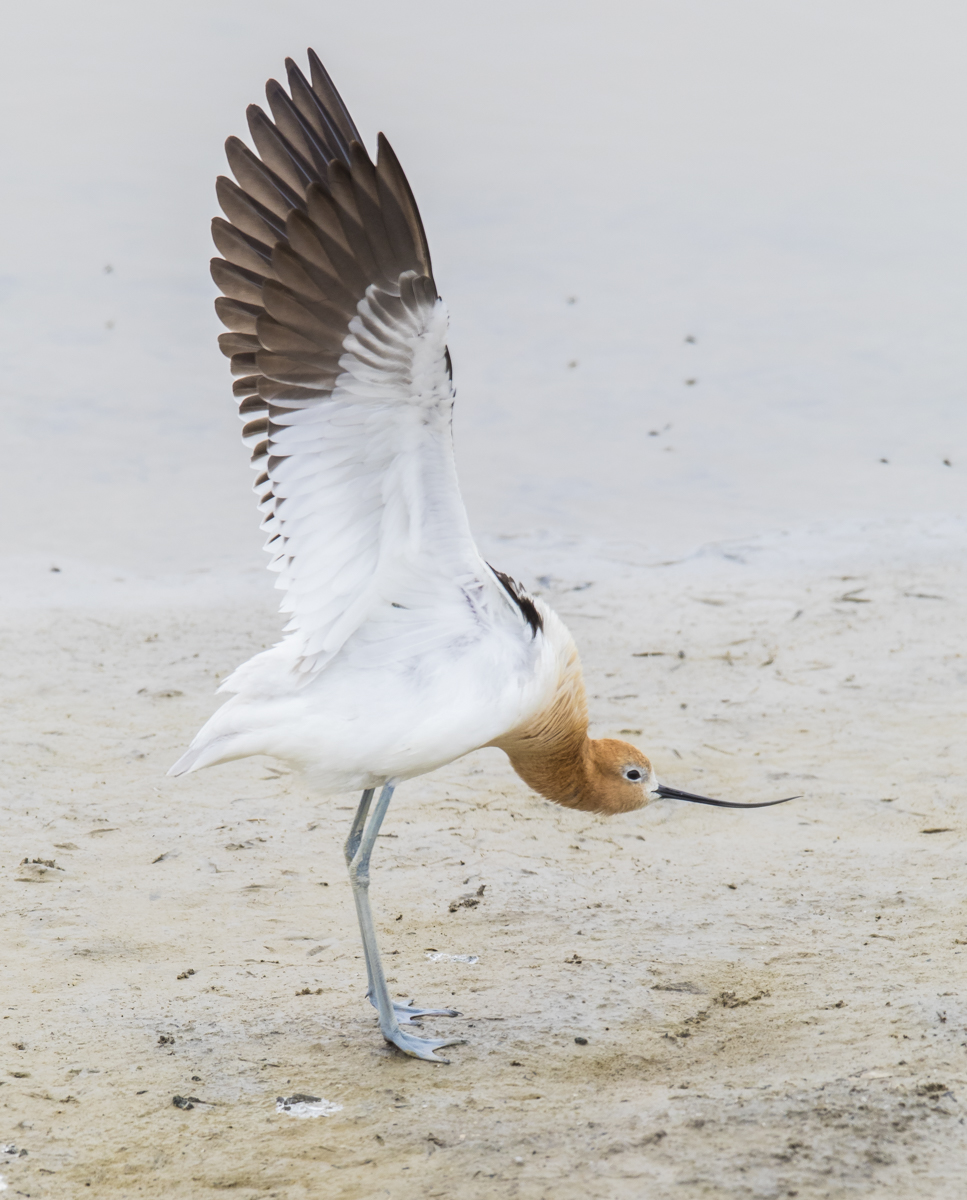
Two species I particularly hoped to see were American Avocets and Black-necked Stilts, both of which nest on the refuge. At the refuge entrance, an American Avocet obliged and was feeding right next to the road at a boat ramp. Birds of the World Online discusses the meanings of the names for this beauty – the generic name, Recurvirostra, comes from the Avocet’s long recurved, or up-turned bill. The name Avocet is from the Italian avosetta, which means ‘graceful bird’.
The American Avocets are in their breeding plumage now, with a nice cinnamon hue to their head and neck.
We spent the next couple of hours slowly driving the 10-mile auto tour and taking in the thousands of birds scattered throughout the varied wetlands that comprise this impressive refuge. Here are some of the highlights…
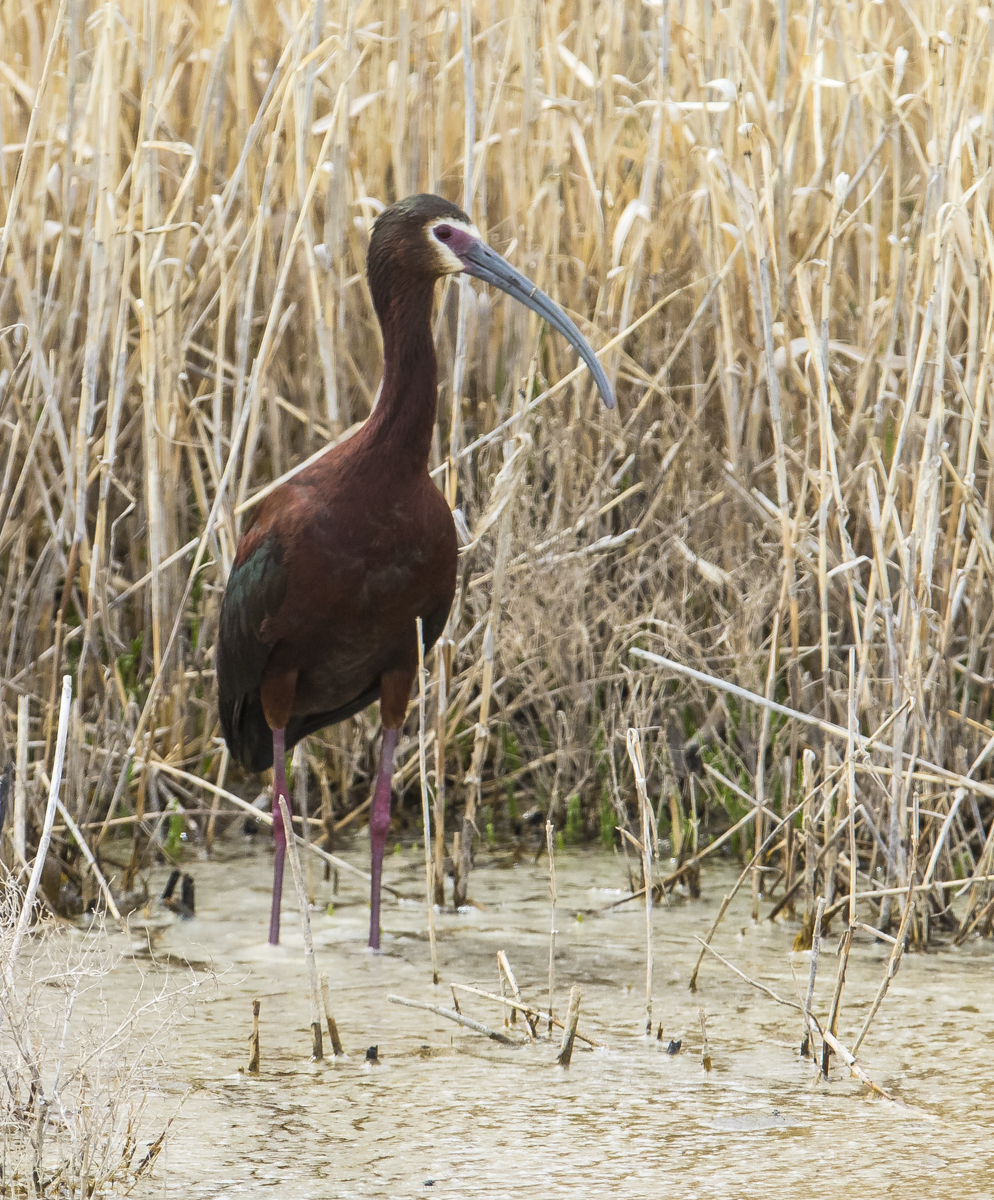
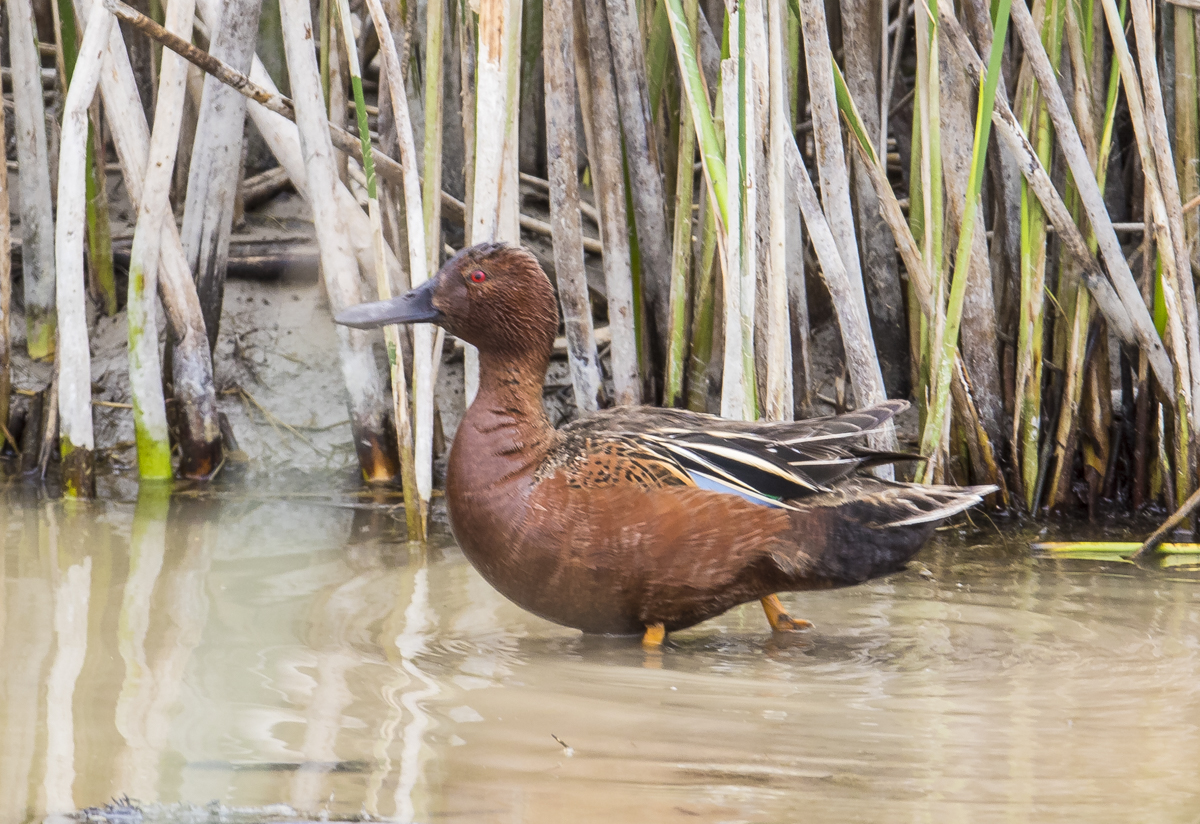
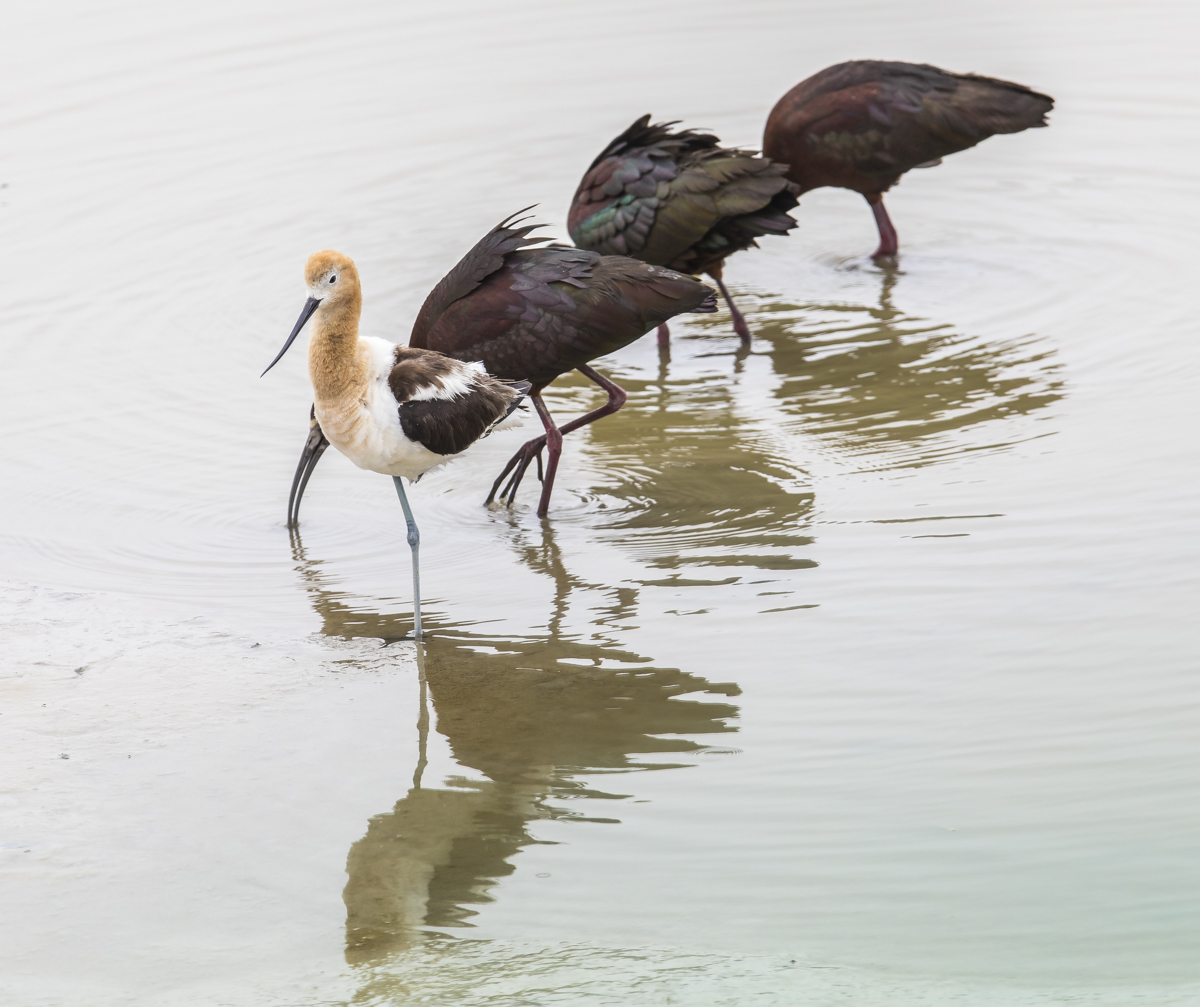
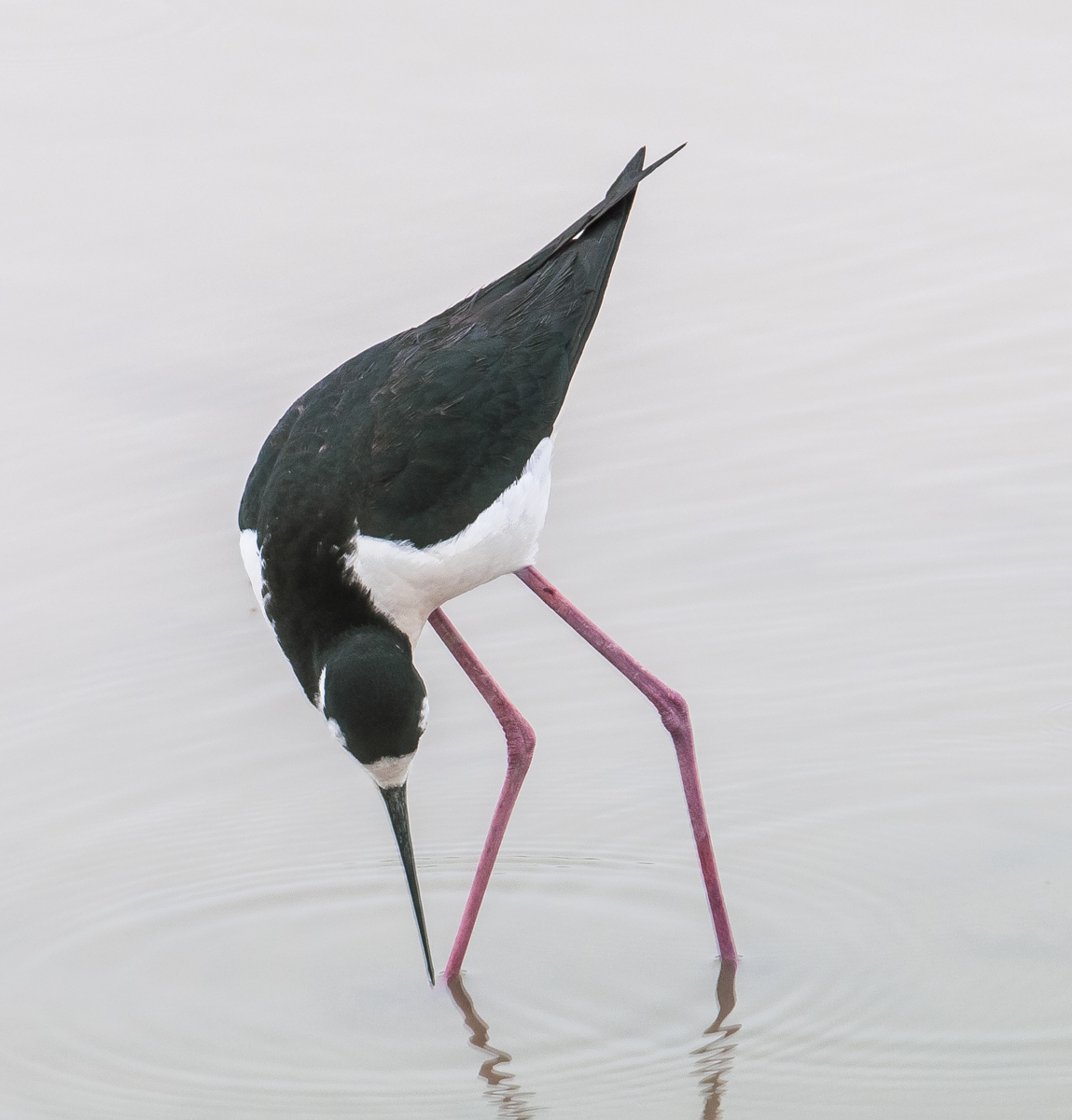
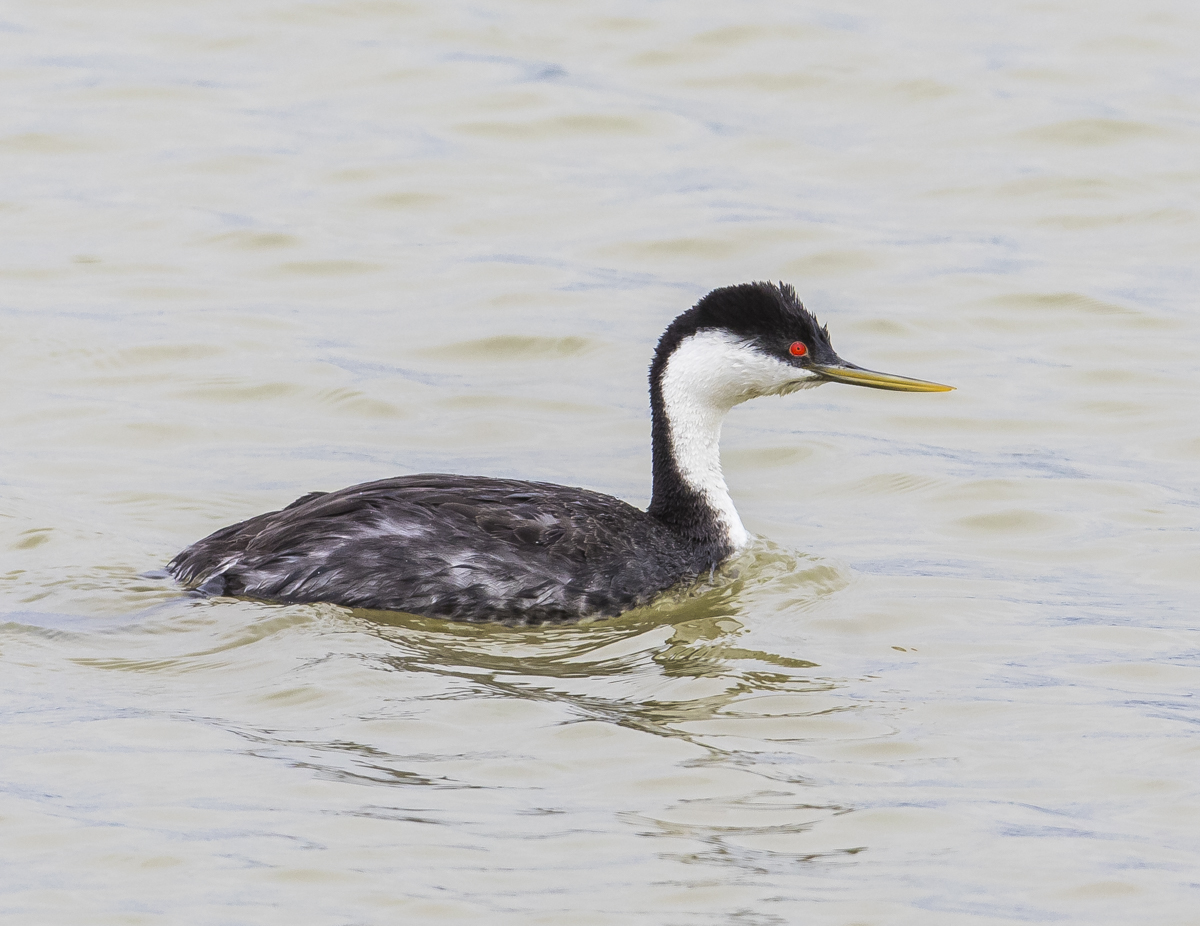
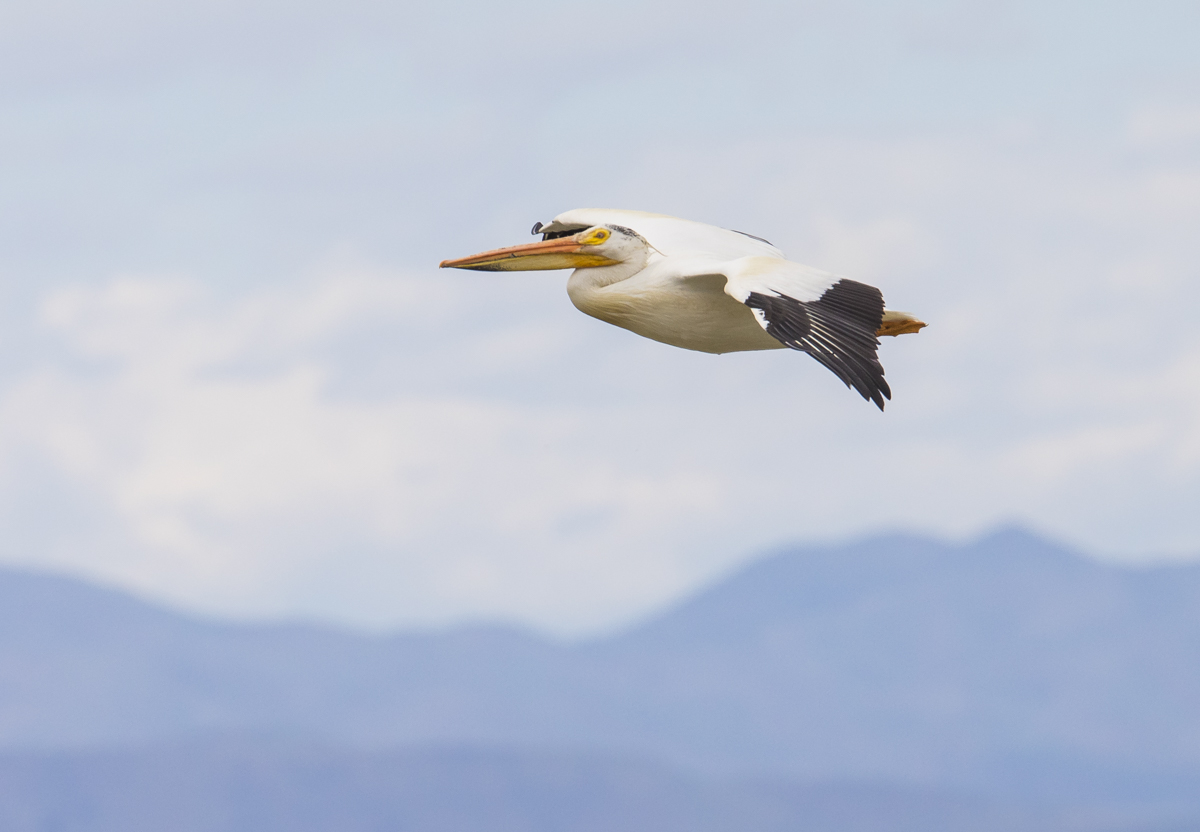
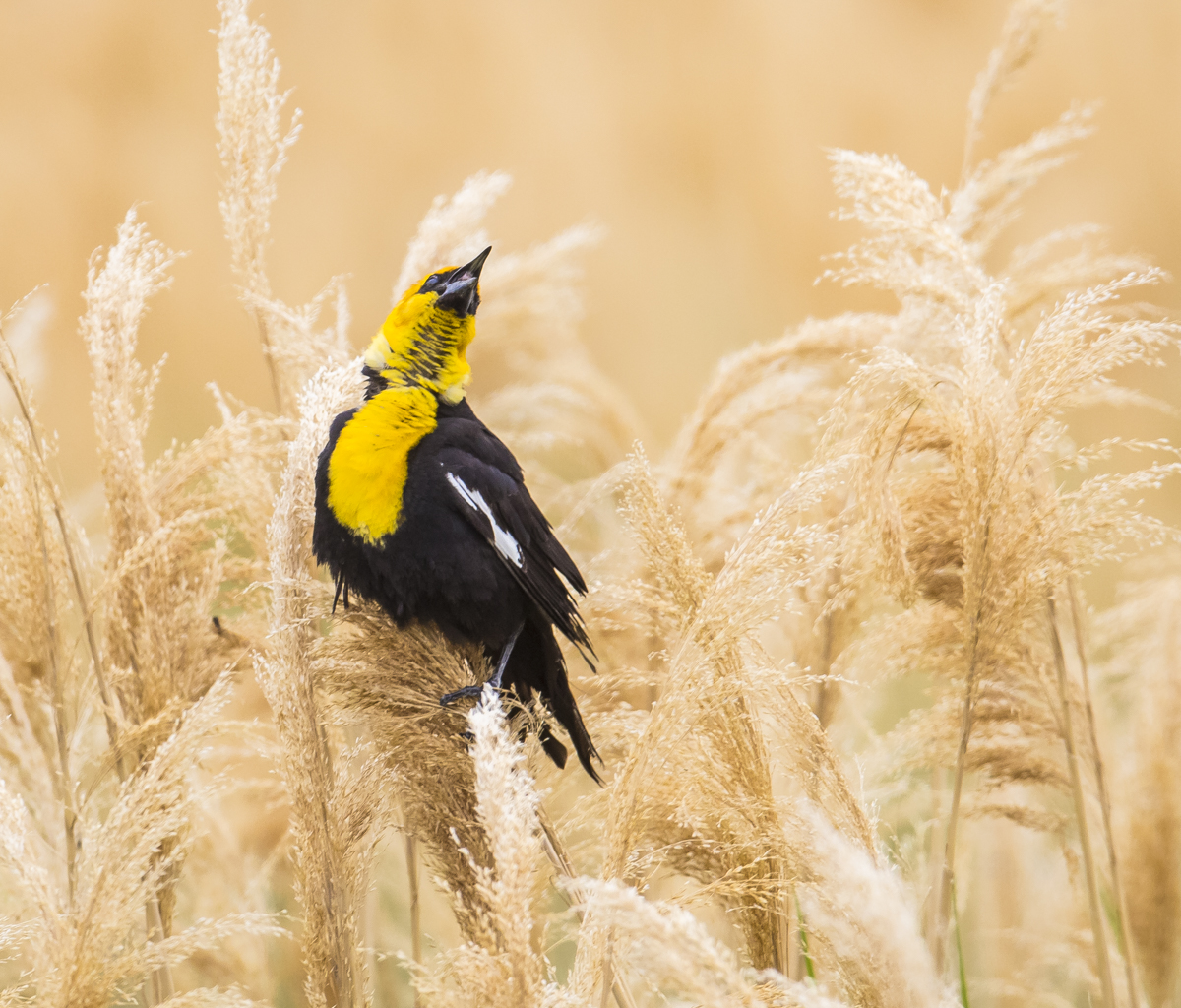
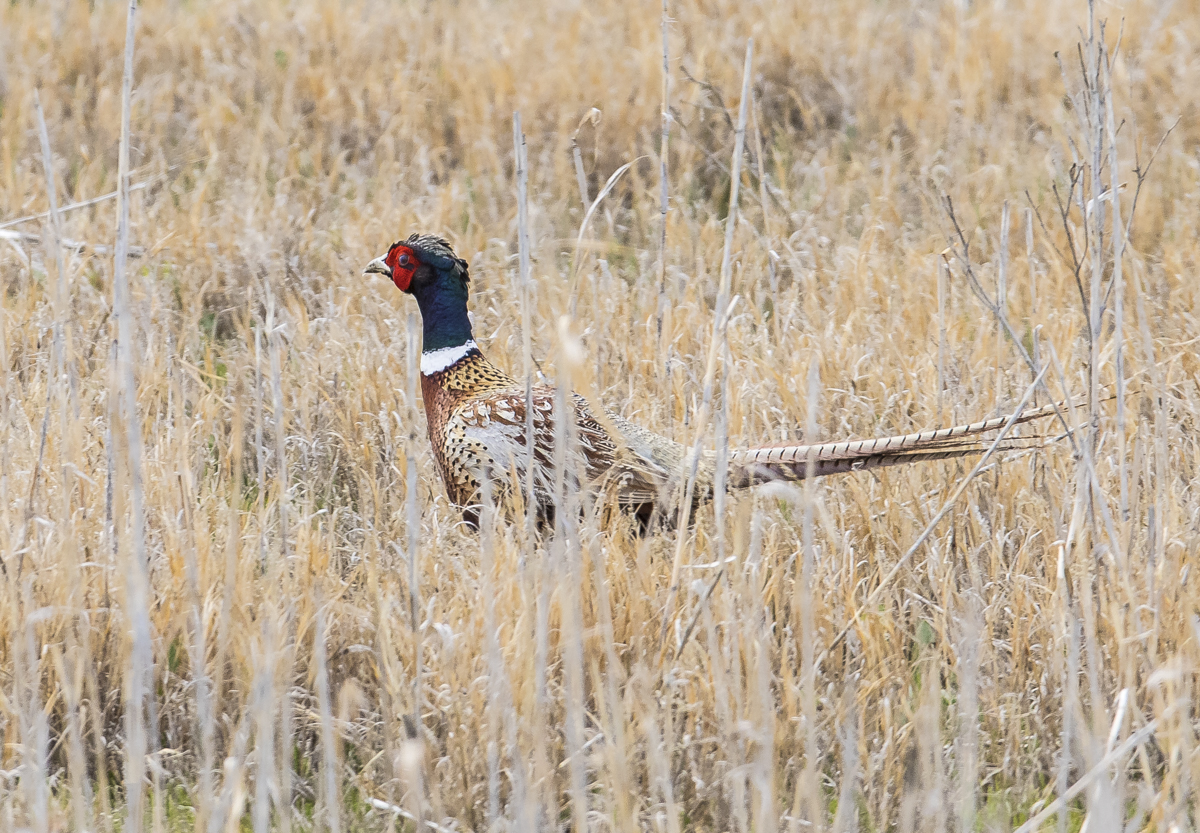
The refuge web site states that it is home to the largest White-faced Ibis colony in North America (and I can believe it as we saw so many of these birds feeding in the shallows).This time of year, the waterfowl are not the stars of the refuge, but we did see a few species such as this Gadwall, plus Blue-winged Teal (probably the most numerous duck we saw), Mallards, and…Always a delight to see Cinnamon Teal. Northern Utah’s wetlands provide habitat for over 50% of the breeding population of this beautiful birdWe were thrilled to see our first Long-billed Curlew in the short grasslands on the refuge. The generic name, Numenius, is from the Greek noumenios meaning “of the new moon”, since their 8-inch long curved bill is reminiscent of the crescent new moon.We watched avocets at every stop, sometimes not living up to their “graceful bird” monikerAvocet yogaAn American Avocet with a trio of White-faced IbisAnother stunning long-legged wader, the Black-necked Stilt. The refuge hosts about 3% of the breeding population of these beautiful birds, but an estimated 80% of their migratory population passes through the refuge and surrounding wetlands each yearWe see these birds on our Outer Banks, but seeing so many and being able to spend so much time observing them was a real treatThey look like a child was given a black and white sock and some pink pipe cleaners and black wire and told to assemble a birdWestern Grebes were feeding along many of the roadside ponds and canals. They can be recognized by their red eye being surrounded by dark feathers, a thicker dark line down their neck, and a somewhat dark yellow bill Similar in appearance to the Western Grebe, but the red eye of this Clark’s Grebe is surrounded by white feathers, the dark line down the neck is quite thin, and the bill is bright yellowBlack-crowned Night Herons were quite common on the refuge and were out feeding along the marsh edgesSmall flocks of American White Pelicans were seen all along the auto tour roadA male Yellow-headed Blackbird belting out his “song” among a picturesque (but hugely problematic) stand of Phragmites grassOur last bird on the refuge was a surprise, a male Ring-necked Pheasant. This species, originally from Asia, has been successfully introduced to many parts of the word as a game bird, including the U.S., where it is common in the Midwest
As is usual, we spent more time than we planned on the refuge, enjoying the continuous display of bird behaviors. It was a windy, gray day, which gave me reason to want to come back on a sunny day and spend an early morning and late afternoon photographing the amazing variety of birds in this special place. Plus, I would love to be here when many of these species have their young. And then there are the thousands of waterfowl in migration…so many birds, so little time.
If future generations are to remember us with gratitude rather than contempt, we must leave them something more than the miracles of technology. We must leave them a glimpse of the world as it was in the beginning, not just after we got through with it.
~President Lyndon B. Johnson
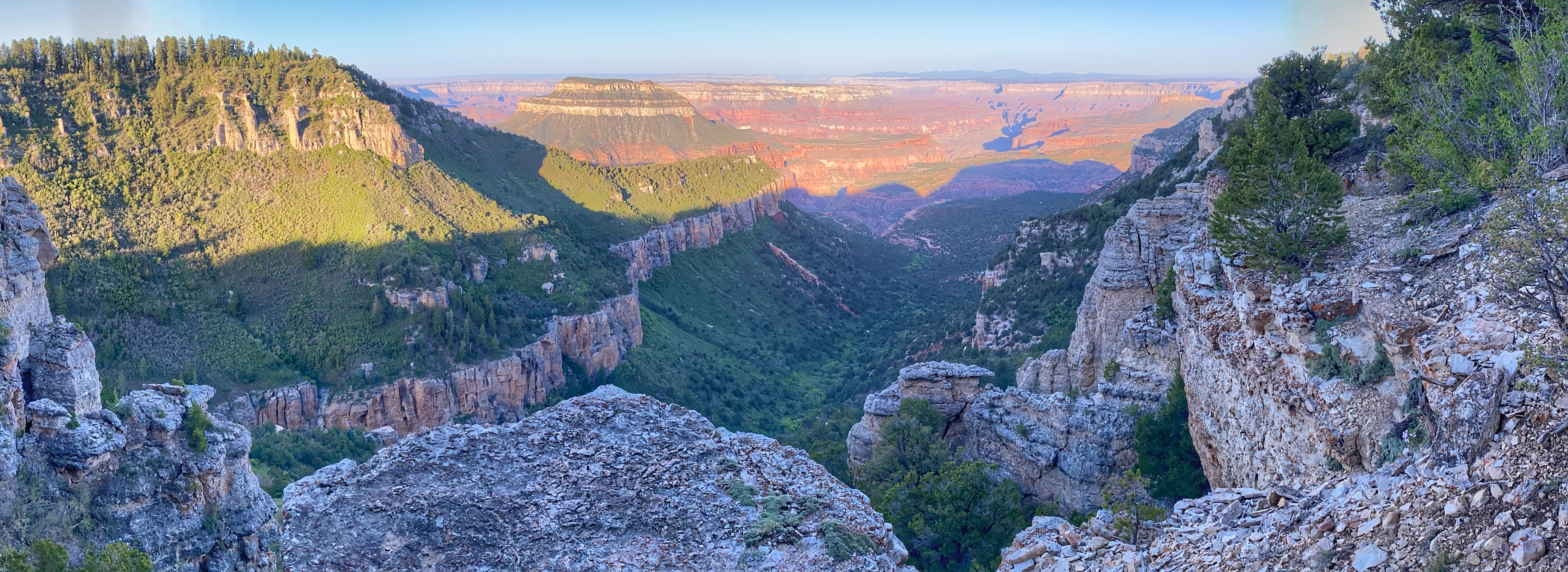
Just a reminder, these latest posts (and the next few) are about our truck camping adventure this past May, a month-long wandering across some of the beautiful public lands of our country, taking in what we could as we traveled. The last post highlighted one of our best hikes of our entire trip, Buckskin Gulch in Utah. It was a bonus hike in that it was high on Melissa’s bucket list and it happened on our anniversary (due, in part, to a one day delay for minor truck repairs). We ended our anniversary day on another high note with a perfect campsite on the north rim of Grand Canyon!
Our phenomenal campsite along the North Rim of the Grand Canyon in Kaibab National Forest (click photos to enlarge)
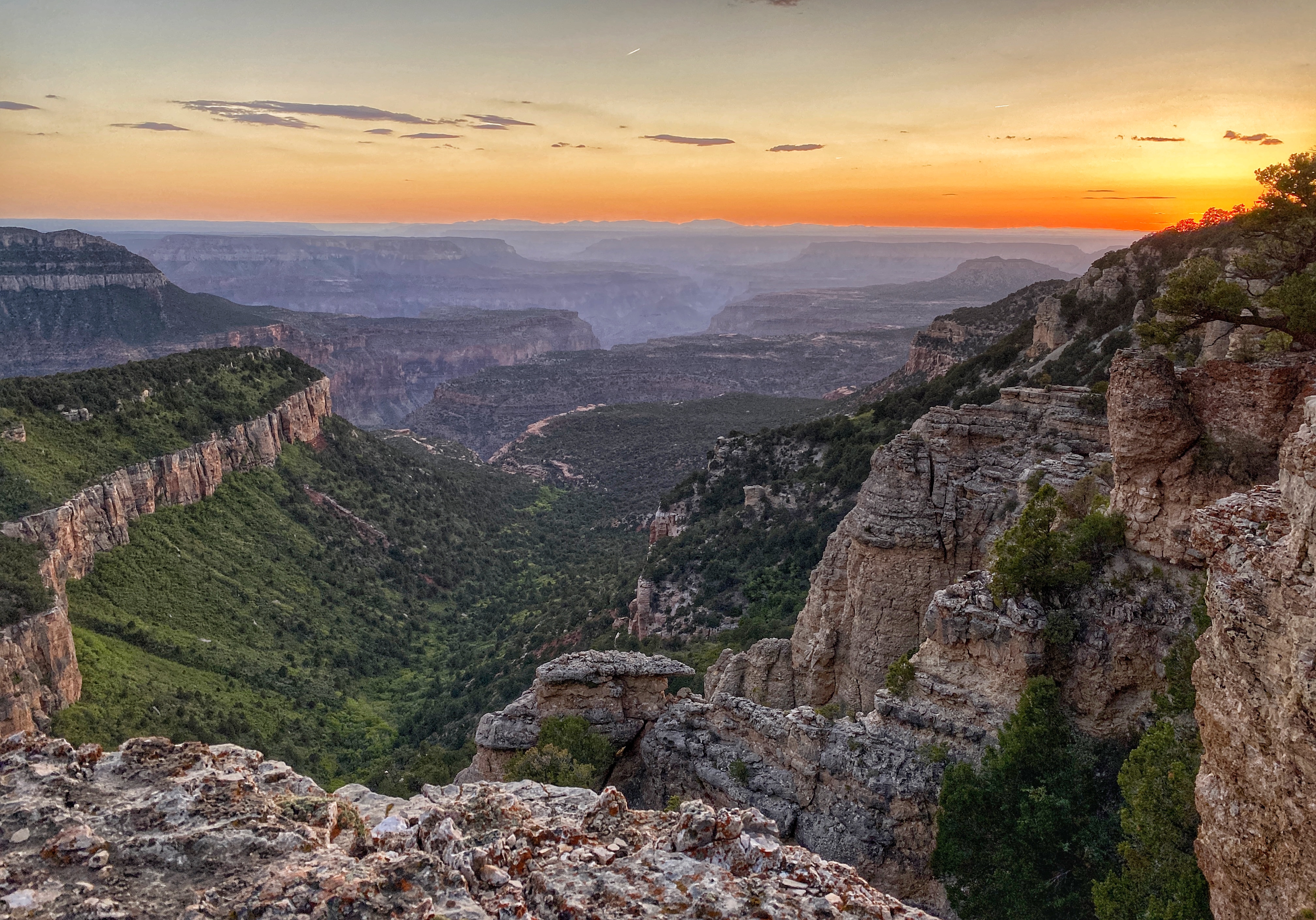
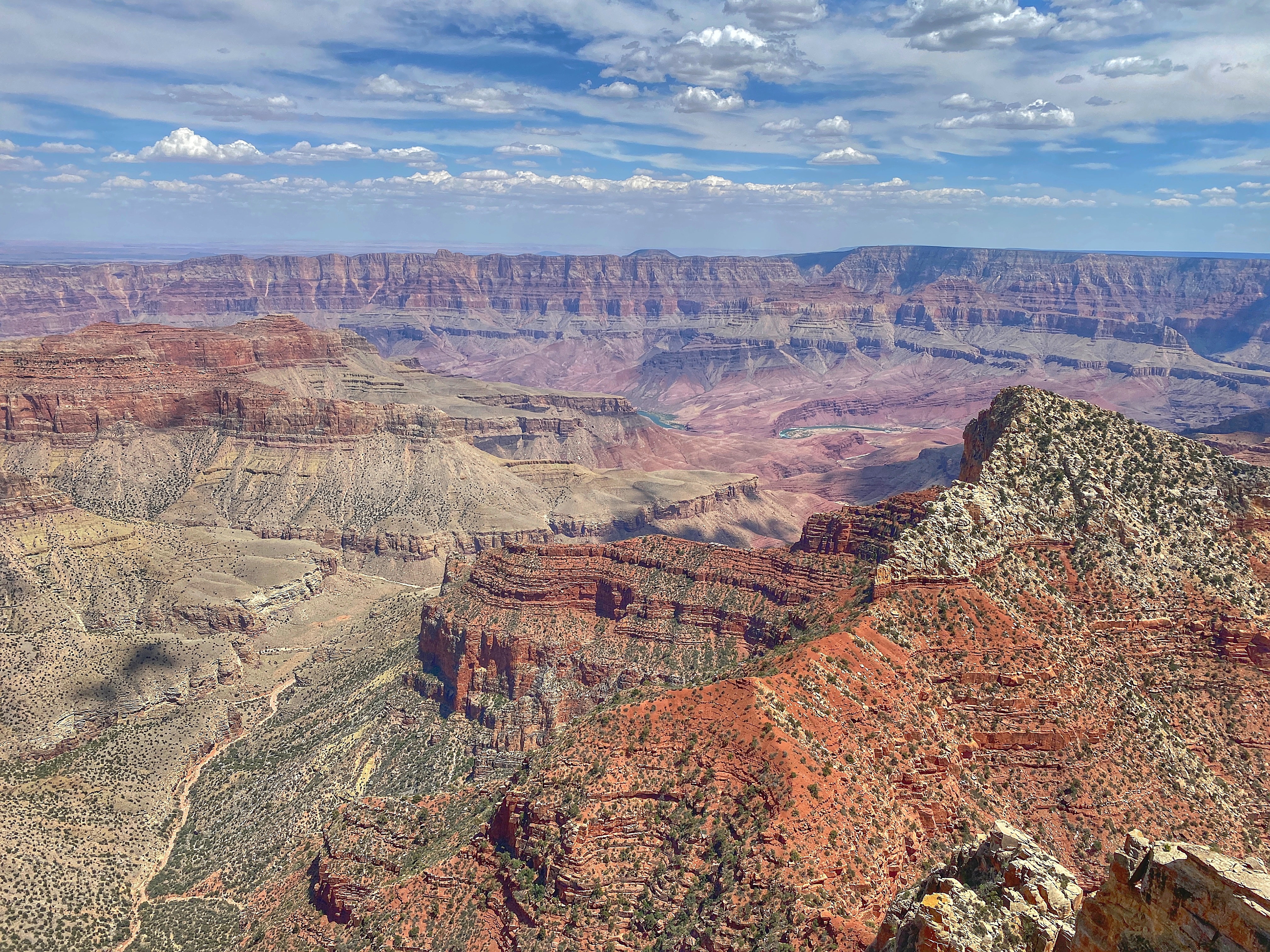
This iconic national park was not on our original itinerary, but when we found ourselves only an hour and a half from the north rim, we decided to go since I had never been to the park and Melissa had only been to the “Disneyland-esque” south rim. So, once we got cell service, she started googling national forest roads in Kaibab National Forest. She found what looked liked dispersed camping opportunities right on the north rim if you were wiling to drive 20+ miles of dirt roads off the main entrance road to the park. We always take a deep breath when heading out on unknown roads, especially long stretches, but they turned out to be fine. There were a few choices for turns that looked like they got close to the rim, so she picked one, and we found ourselves parked about 50 feet from the edge of an incredible view point. Not a bad way to end an already spectacular day. Once again, we were relatively isolated with only one tent camper within hearing distance (we could not see him, but we heard him occasionally close his car door). Farther down the road was the main view point with a few other campers, but we basically had this incredible vista of the Grand Canyon to ourselves! We admired a wonderful sunset and sunrise from our camp chairs on the rim, marveling at the vast story laid bare in the rocky landscape that stretched before us to the far horizon.
Sunset over the Grand Canyon from our campsiteSunrise the next morningMountain Phlox on the rim
The north rim receives only about 10% of the approximately 6 million visitors the park receives each year (last year was about half that due to the pandemic) so we were pleased to have relatively small crowds at the lookouts we visited the next morning.
The layers of rock represent millions of years of change from tropical seas to sand dunes to mud flats, all recorded in the stories told by their structure and the fossils and minerals they contain.A quote on an exhibit panel from John Strong Newberry – a physician, geologist and paleontologist that explored this region in the 1800’s – Nowhere on the Earth’s surface…are the secrets of its structure so revealed as here.
Visiting the Grand Canyon and gazing out upon its vastness, and realizing the millions of years of Earth’s history that it represents, is a humbling experience. And to do it in a place that was relatively uncrowded and to spend the night on its rim is something that will stick with us for a long time and that will no doubt beckon us to explore this grand landscape further in the future.
That afternoon, we debated returning to our rim campsite, but, with no guarantee it would still be available, and wanting to get an early start the next day (which meant not driving the entire 22 miles of dirt road) back to the paved highway we settled for a closer campsite in the national forest in a large meadow surrounded by conifers and aspens.
Aspen trunks distorted by snow in Kaibab NF
In talking with a woman in an outdoor store in Kanab, AZ, Melissa was torn between her desire to visit Zion National Park (it was so close) and this woman’s suggestion to skip it because it was so crowded. In the end, we opted to bypass the crowds and go directly to Bryce Canyon, another park that would be new for both of us. The drive there is incredible with beautiful vistas all along the way, including a stop at the wonderful Red Canyon Visitor Center in Dixie National Forest, not far from the entrance too Bryce Canyon. This area looks like another place we will need to explore more in future visits.
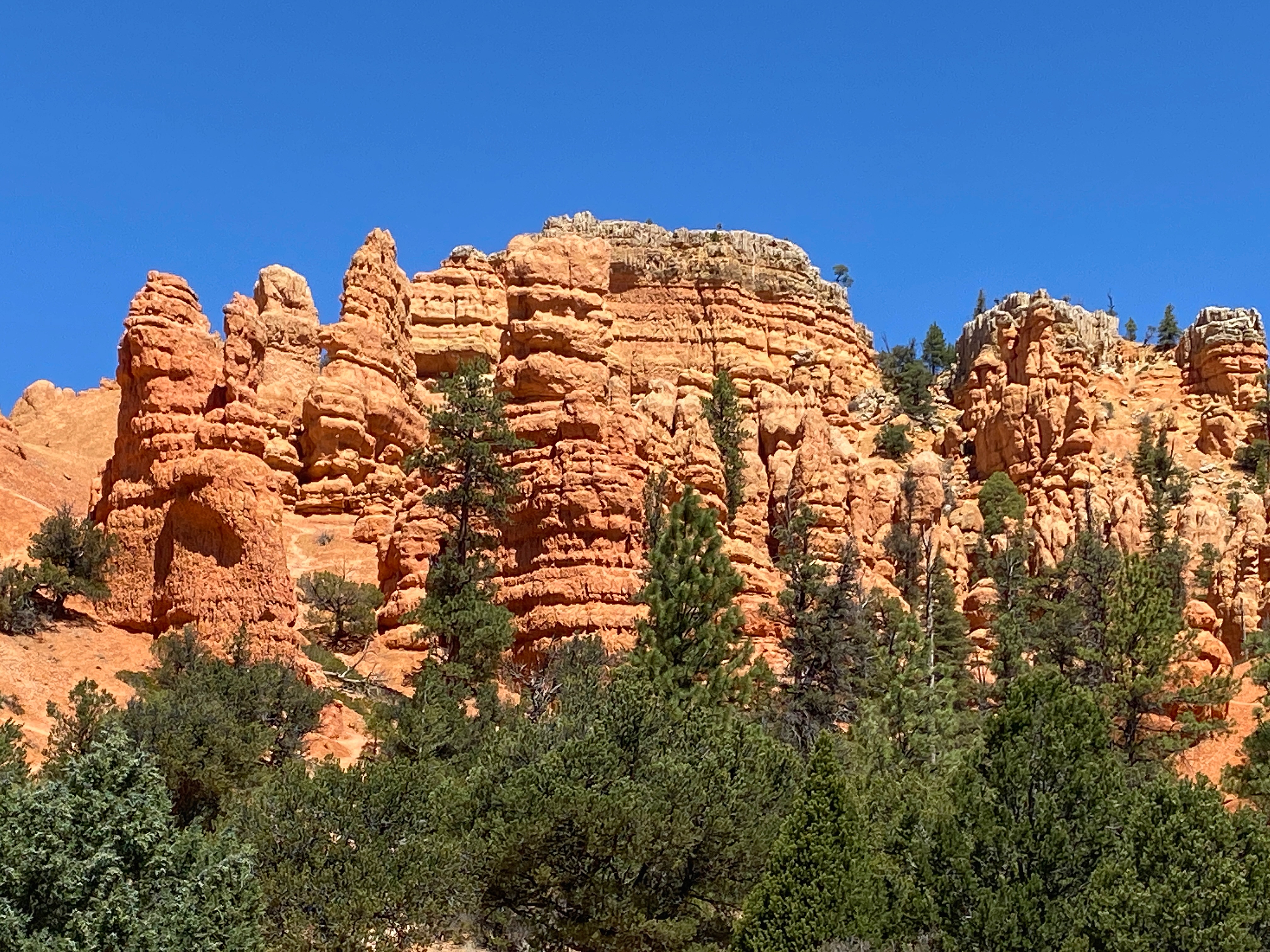
Red Canyon spires
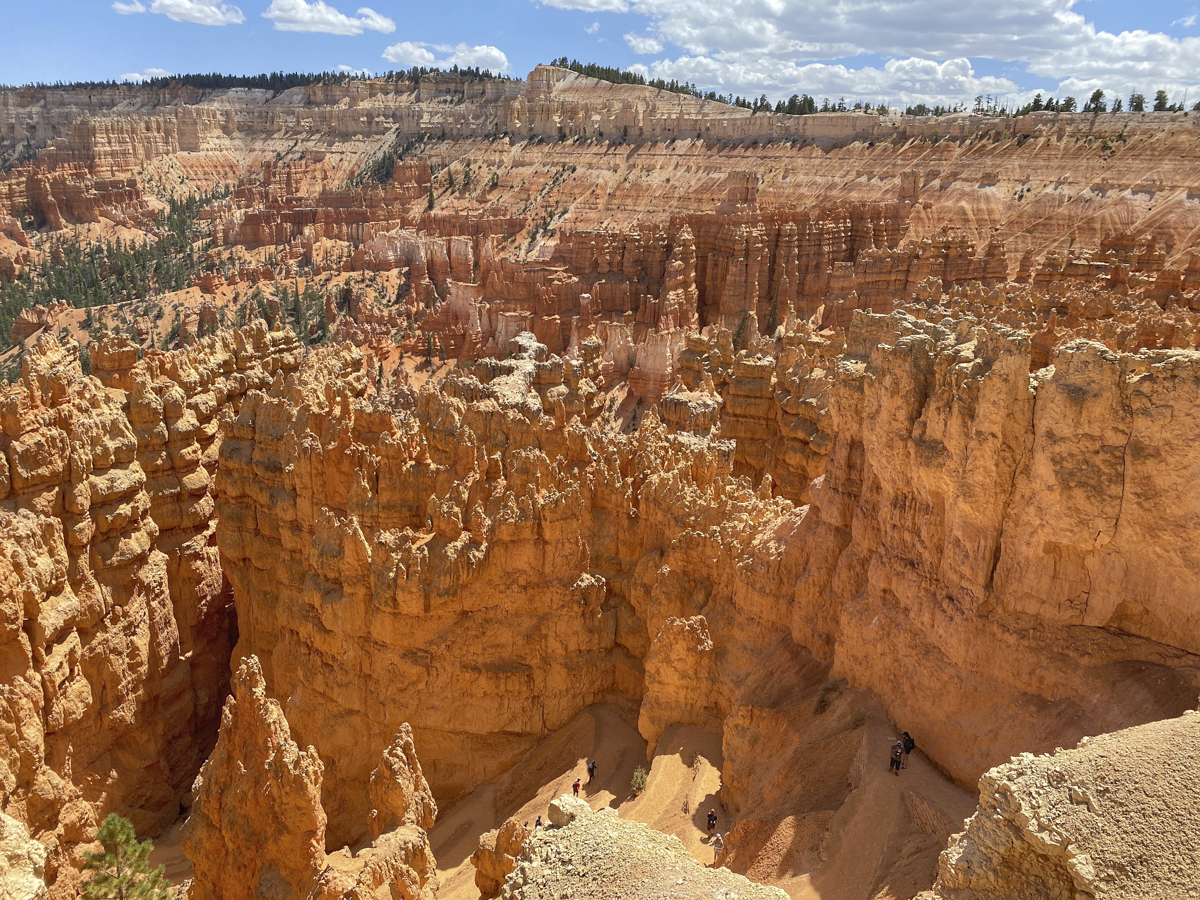
As we entered Bryce Canyon we felt the pressure of crowds at every turn, long lines at the shuttle tops, and road access to two of the major view points closed due to lack of parking (we were glad we skipped the more popular Zion, if these were the crowds here). We drove through the park on the 18-mile primary road route, stopping to take in the strange geology that has made this park so famous.
In the 1870’s, a geologist (Clarence Dutton) first came up with the idea that the geology of this vast region resembled a staircase, going from the ancient rocks at the bottom of the Grand Canyon, and proceeding through Zion and into Grand Staircase-Escalante and Bryce Canyon with a series of cliff formations (the steps) of younger and younger rocks. Bryce Canyon is the top step of that sedimentary staircase and its famed hoodoos have been created by a variety of erosional forces from the edges of the high plateau in a series of processes that proceeds from plateau edge to wall to window (or arch) to hoodoo.
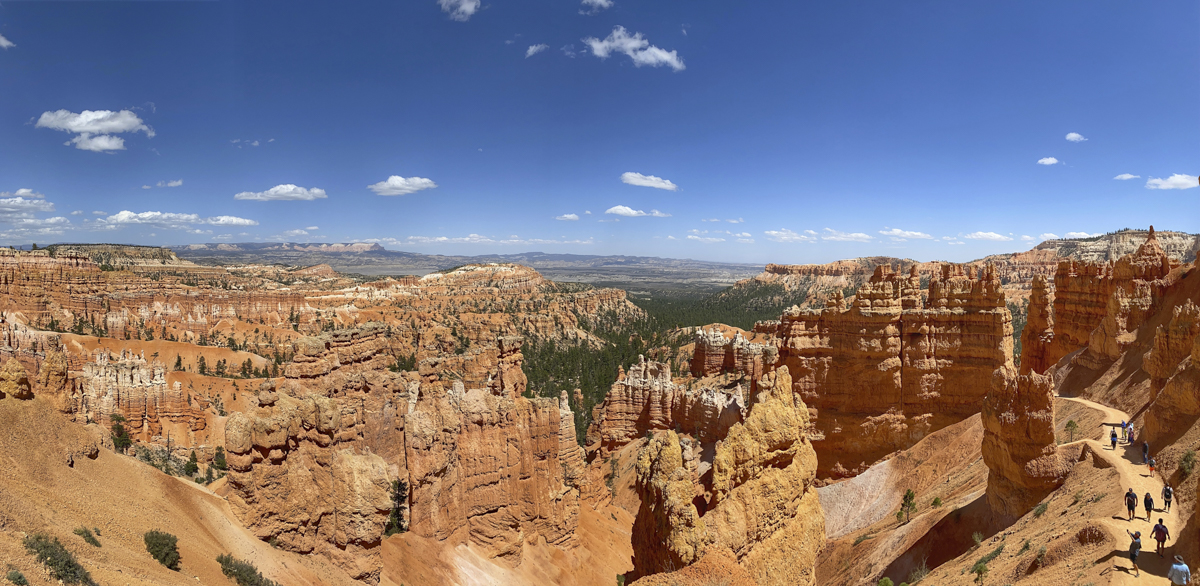
Bryce Canyon is actually a series of amphitheaters (not a canyon) eroded from the edge of a high plateau
A hoodoo is a tall, thin spire of rock formed by natural weathering forces (in Bryce Canyon it is mainly ice and rain). The area experiences over 200 days a year where temperatures average above freezing in the day and below freezing at night, leading to a large potential for so-called ice wedging, where water seeps into cracks in the rock and then freezes (and expands), putting tremendous pressure on the rocks and causing them to split apart. As a result of this weathering and the geology of the rocks here, Bryce Canyon has the largest concentration of hoodoos in the world.
Hoodoos in Bryce Canyon NPNatural Bridge, Bryce Canyon NPPonderosa Canyon, Bryce Canyon NPNear Sunset Point, Bryce Canyon NP
Parking areas for the popular view points were still closed when we came back down the main road but we drove up to the lodge and parked which gave us access to some of the more scenic vistas (they always put lodges close to the most iconic areas in the park). It was another very windy day, but we managed a short hike down into some of the hoodoos for a different perspective of this unusual landscape.
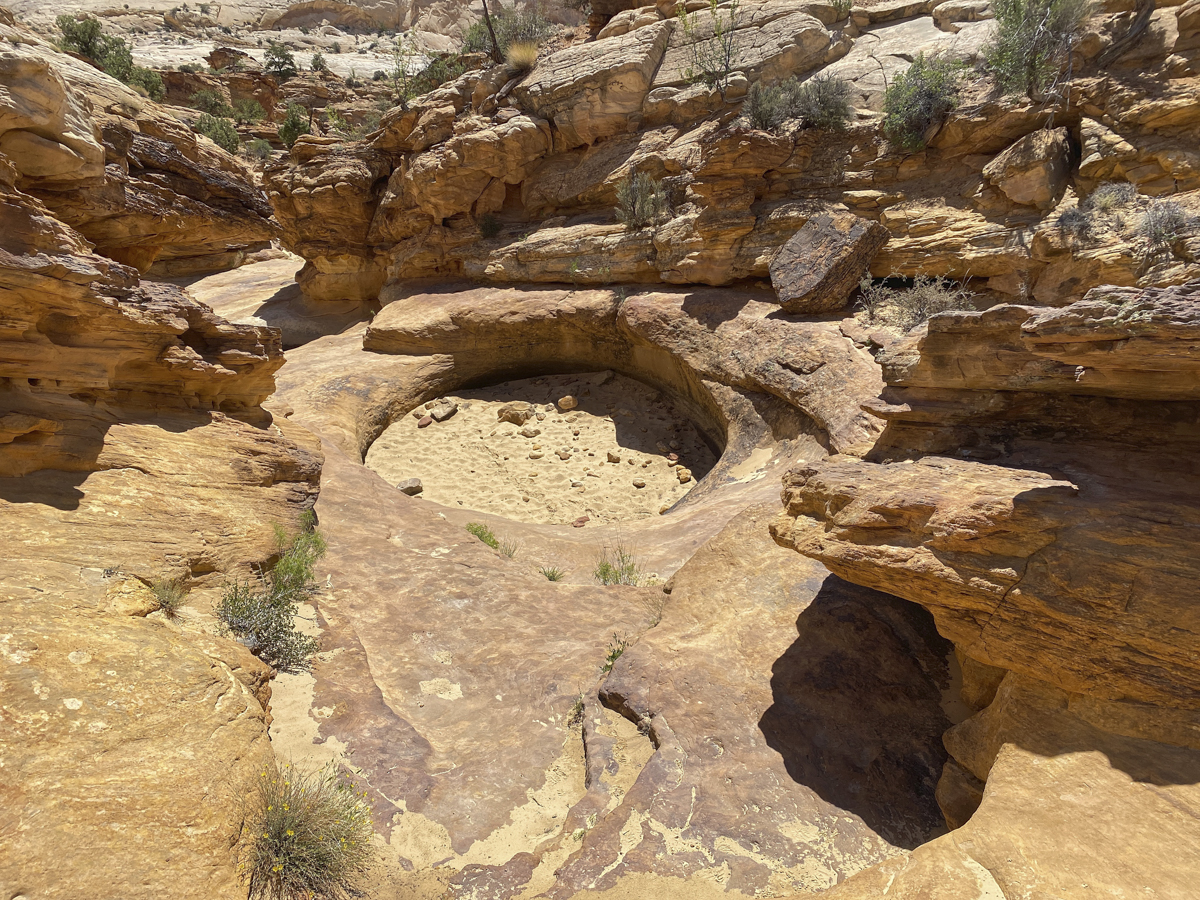
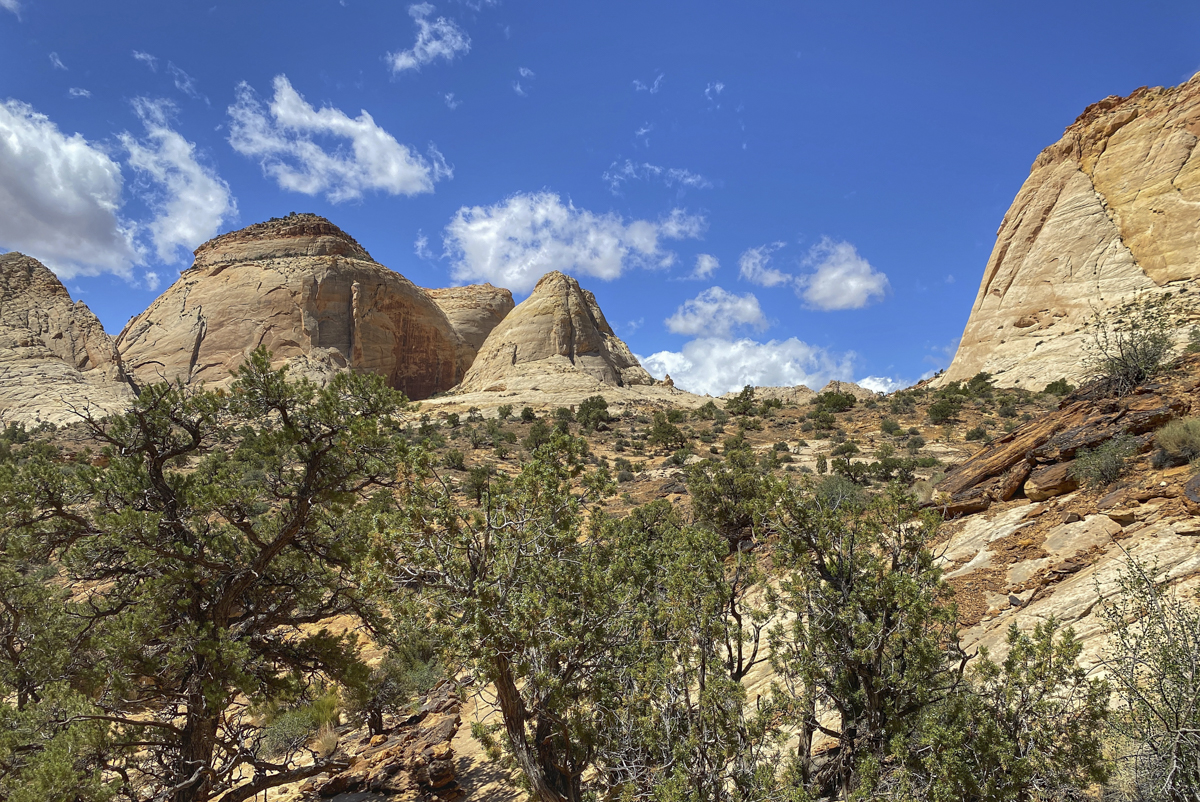
That night, we went to a place recommended by that same woman in the outdoor store for a take-out dinner – Hell’s Backbone Grill, a James Beard-recognized restaurant in Boulder, Utah, a town of 236 people. It was delicious and we highly recommend it, as well as the quirky, artistic Burr Trail Grill and Outpost next door. We dined in our truck (due to the wind) and camped on a desert road off the incredibly scenic nearby Burr Trail Road. The next morning, we headed for Capitol Reef National Park (another new one for us) and spent the day stopping at various view points and hiking the 2-mile round trip down the Capitol Gorge Trail to a unique geologic formation called The Tanks.
The Fluted Wall, Capitol Reef NPTree man along the trail, Capitol Reef NP
The Tanks are potholes formed by scouring action of rocks and water (they contain water most of the year I have read) in a narrow drainage down into Capitol Gorge, When they contain water they house a unique ecosystem of tadpoles, fairy shrimp, and algae.
The Tanks, Capitol Reef NPCapitol Gorge Trail, Capitol Reef NP
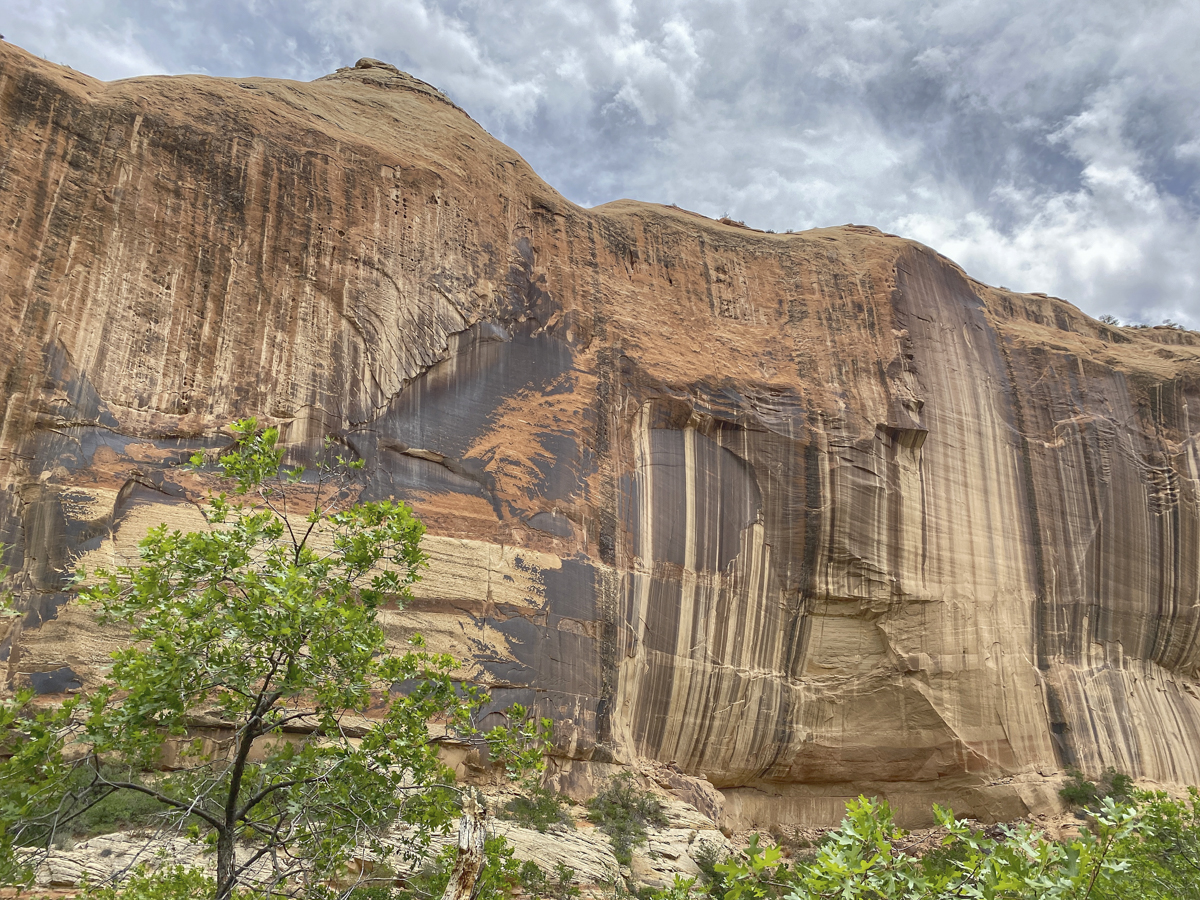
That night we drove up onto a rocky forest service road on Boulder Mountain and found a great campsite in the aspens with a creek and meadow in view. The next morning we headed for another spot recommended by that chance acquaintance in the outdoor store, the Lower Calf Creek Falls Trail. This is a well-known easy to moderate hike (6-miles round trip) to a beautiful waterfall. You are walking along a somewhat rare perennial water source, Calf Creek, along the way. The trail starts at the far end of a beautiful (but full when we were there) campground along the creek.
The dark streaks on the canyon walls are so-called desert varnish, formed when wind blown dust and rain leave behind trace amounts of iron and manganese. The resulting oxides created by rainwater and bacterial action harden to form thick layers of dark color.
The water leads to a diverse riparian habitat in the desert with beaver ponds, sizeable trout, and a host of wildflowers and bird life along the trail. We saw another new species for us, Black-headed Grosbeaks, flitting in and out of the shrub thickets as well as Yellow warblers and Spotted Towhees.
Beaver ponds and lush greenery along Calf Creek
Finally, you hear the waterfall and squeals of delight as the braver hikers venture into the cold pool at its base. This stunning waterfall is 126 high and drops down through a slit in a semi-circular canyon wall, forming a true desert oasis.
Lower Calf Creek Falls, part of Grand Staircase-Escalante National Monument
After soaking in the cool spray, we headed back along the same trail, taking in the diversity of life along the creek. I need to brush up on my desert/riparian plants before our next trip as there was quite a variety in bloom as we headed back to the car. By the way, the parking lot here (and at many of the popular spots we stopped) is quite small, so we ended up parking a 1/2 mile or so above the trailhead on the main road. Best advice is to plan ahead and get there as early as you can.
Cactus flowers along the trailA Globemallow of some sort (perhaps Smallflower Globemallow?)A delicate wildflower along the trail (perhaps an aster or fleabane)
We returned to our campsite in the aspens (we had left a chair and table there to claim it) and relaxed the rest of the afternoon and thought about where our destination might be as we head out the next morning…
Note – Now that we are back and hearing the news of the extreme heat, drought conditions, and huge crowds of tourists descending on our Western parks and public lands, we feel extremely fortunate to have had the wonderful experiences we did back in May. It looks like another tough summer in many Western states for abnormally high temperatures (though this may become the new norm due to climate change) and wild fires. I just saw a news release stating that the entirety of Kaibab National Forest is closed to the public effective today due to drought conditions and fire danger. The Forest Service is evacuating campers and closing all roads for the foreseeable future. Here’s hoping for better conditions soon.





















































 Roads End Naturalist