To climb a tree is for a child to discover a new world.
~Friedrich Frobel, 1826
It has been a very busy couple of weeks so you may have noticed my posts have been a bit slow in coming. Last weekend we finished celebrating our birthdays with a different sort of birthday surprise…a private tree climb with Patrick of Piedmont Tree Climbing.
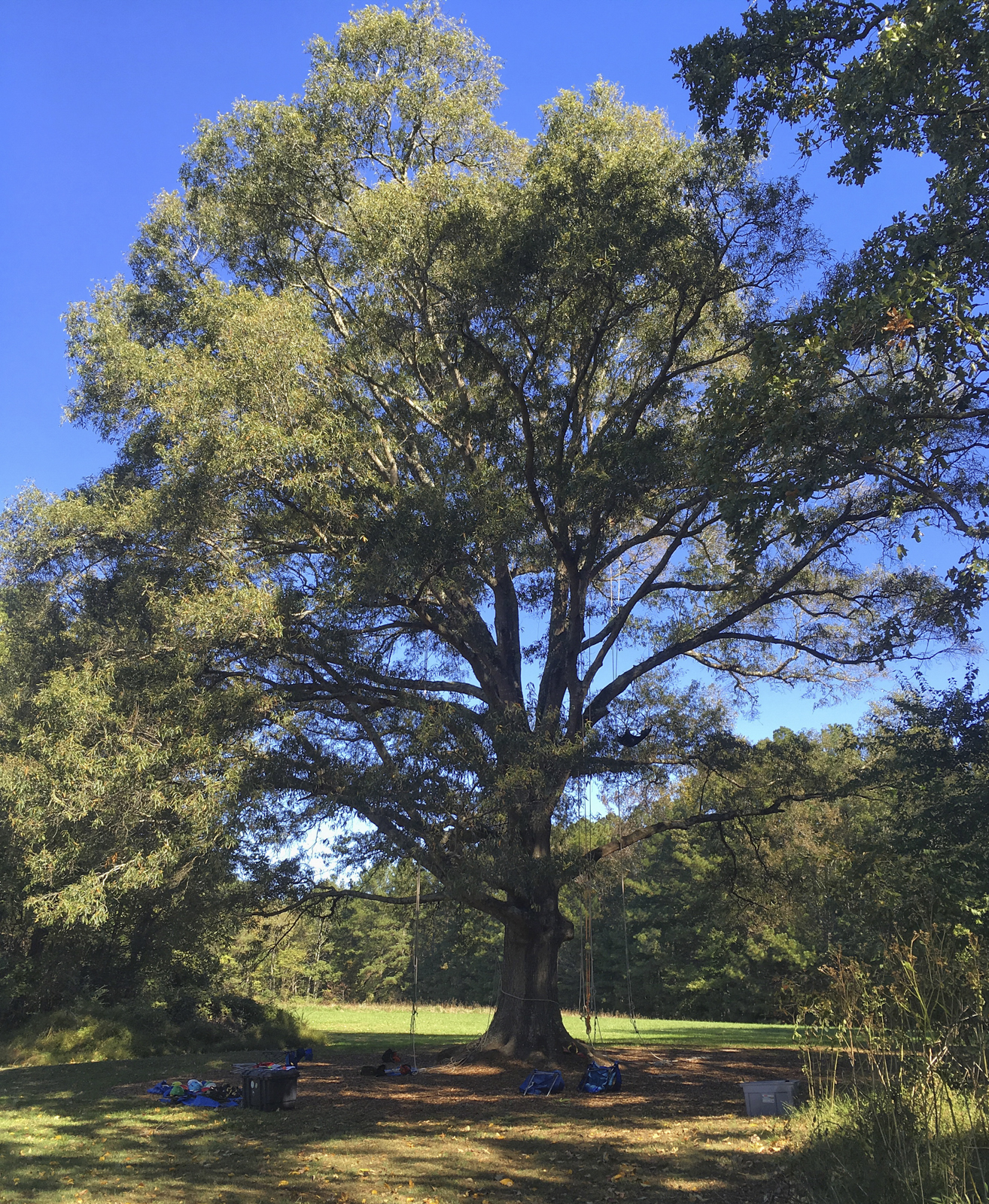
Our tree, Willie, at Blackwood Farm Park in Orange County (click photos to enlarge)
I had wanted to do this a few months ago at a public tree climbing he hosted at the NC Botanical Garden, but it quickly filled up before I could get us registered, so I have had it in the back of my mind as a different type of gift ever since. Melissa loves tree houses and other things “tree”, so I thought this would be fun. The day was beautiful and we headed over to Blackwood Farm Park to climb a huge willow oak known as Willie. According to Patrick’s web site, Willie is estimated to be over 100 years old with a height of 85 feet and a crown spread of about 82 feet. The trunk is massive with a circumference of a little over 11 feet. Willie’s huge branches reach out across a clearing near an old homestead surrounded by forests and fields.
Getting ready
Patrick is an easy-going instructor and quickly helped us get geared up and ready to climb.
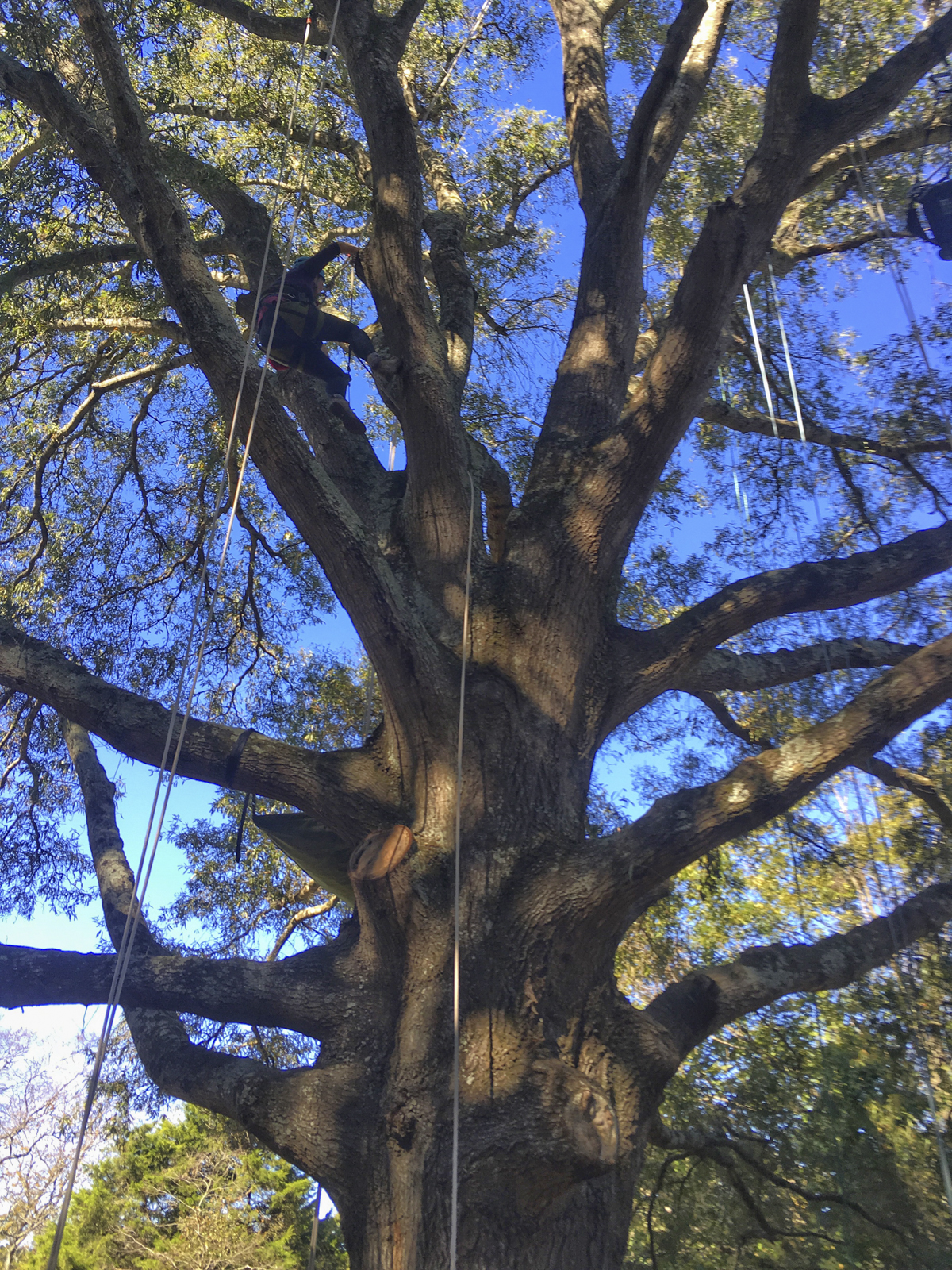
Melissa zooming up into the canopy
Moving up the tree is relatively easy thanks to some “magic” knots, a somewhat comfortable harness, and your own leg power. There are several ropes to climb that take you into different parts of the tree and provide some different challenges. I admit to it taking me a few times before I figured out how to best grasp the rope to avoid knocking my knuckles every time on the knots, but it really is pretty straightforward.
Part of the fun for Melissa was walking in Willie’s “arms”
You can go at your own pace, rest, hang out or walk out on a limb, or head over to one of two resting spots…
The air chair (upper left) and hammock (lower right)
After climbing the rope to the highest part of the tree, I came down and went over to the rope to the hammock and chilled for a bit. The views are beautiful, and it certainly is a different perspective on the outdoor world.
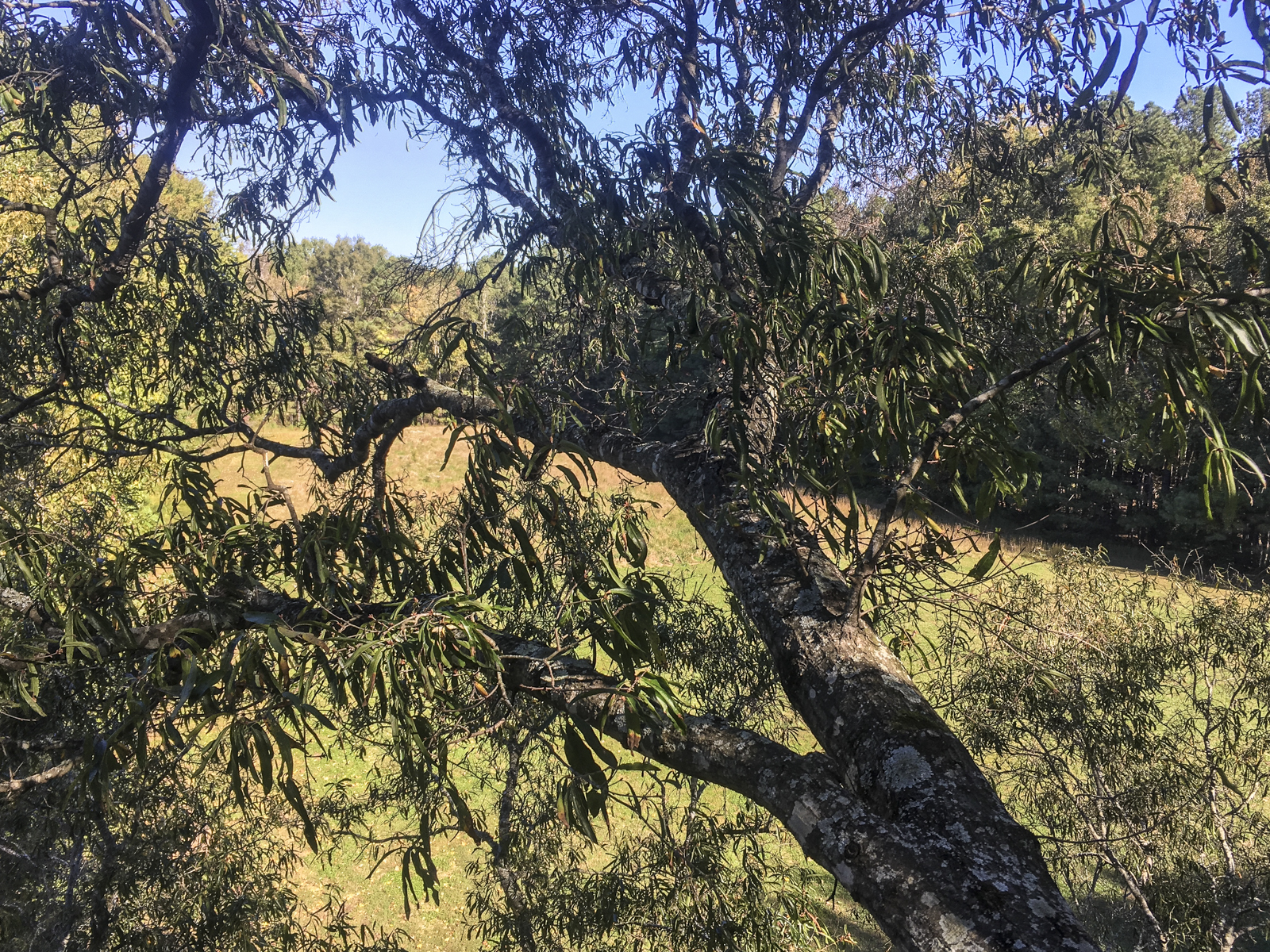
View from the canopy
While up there I took some time looking at lichens, leaves, and some of the numerous ants crawling on the branches more than 60 feet up in the air. It really makes me want to know more about the life in the treetops, especially in the huge woods back home.
As we wrapped up the session, I asked Patrick about the next group I saw gathering, a children’s birthday party. He said children are great climbers, are fearless, and they have so much less wight to have to pull up…I’m sure he didn’t mean anything by that. No matter, I look forward to another outing in the trees and can definitely recommend it as a way to gain some new appreciation for the sentinels of our forests.
There is magic in the feel of a paddle and the movement of a canoe, a magic compounded of distance, adventure, solitude, and peace. The way of a canoe is the way of the wilderness and of a freedom almost forgotten. It is an antidote to insecurity, the open door to waterways of ages past and a way of life with profound and abiding satisfactions. When a man is part of his canoe, he is part of all that canoes have ever known.
~Sigurd F. Olson
It has become a tradition of ours to go out into the wilds on our birthdays, and this year was one of the best. Several friends had talked about their trips to the Boundary Waters Canoe Area (BWCA) of Minnesota and whetted our appetite for such an adventure. We contacted Ely Outfitting Company and discussed options (I would recommend them). After a lot of planning and packing (thank you, Melissa, for all that hard work) the morning of my birthday found us eating breakfast at a wonderful little restaurant in downtown Ely, anxious to hit the water.
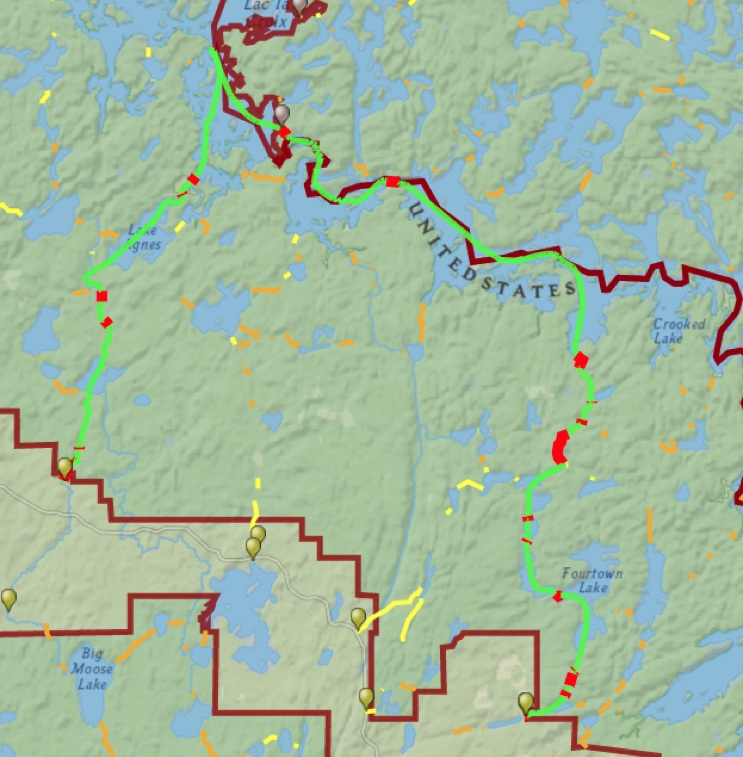
Our route in the BWCA Wilderness (click photos to enlarge)
We chose the Moose River North to Mudro Lake route based on conversations with the outfitters and research online. It was deemed a bit more difficult, but is purportedly one the guide’s favorite routes due to the remoteness and diversity of habitats traversed. We would end up paddling about 40 miles and portaging 20 times for a distance of over 4 miles, with one portage being a little over a mile in length (something to look forward to…not). The outfitters provide a shuttle service so we left a car at the take-out and rode to the put-in with the shuttle driver. I admit to being surprised at the number of vehicles in both parking lots on a Thursday morning, but the BWCA is a very big place (over a million acres of designated wilderness) with over 1200 miles of canoe routes. We started with a half-mile portage from the road before we could drop the canoe in the water.
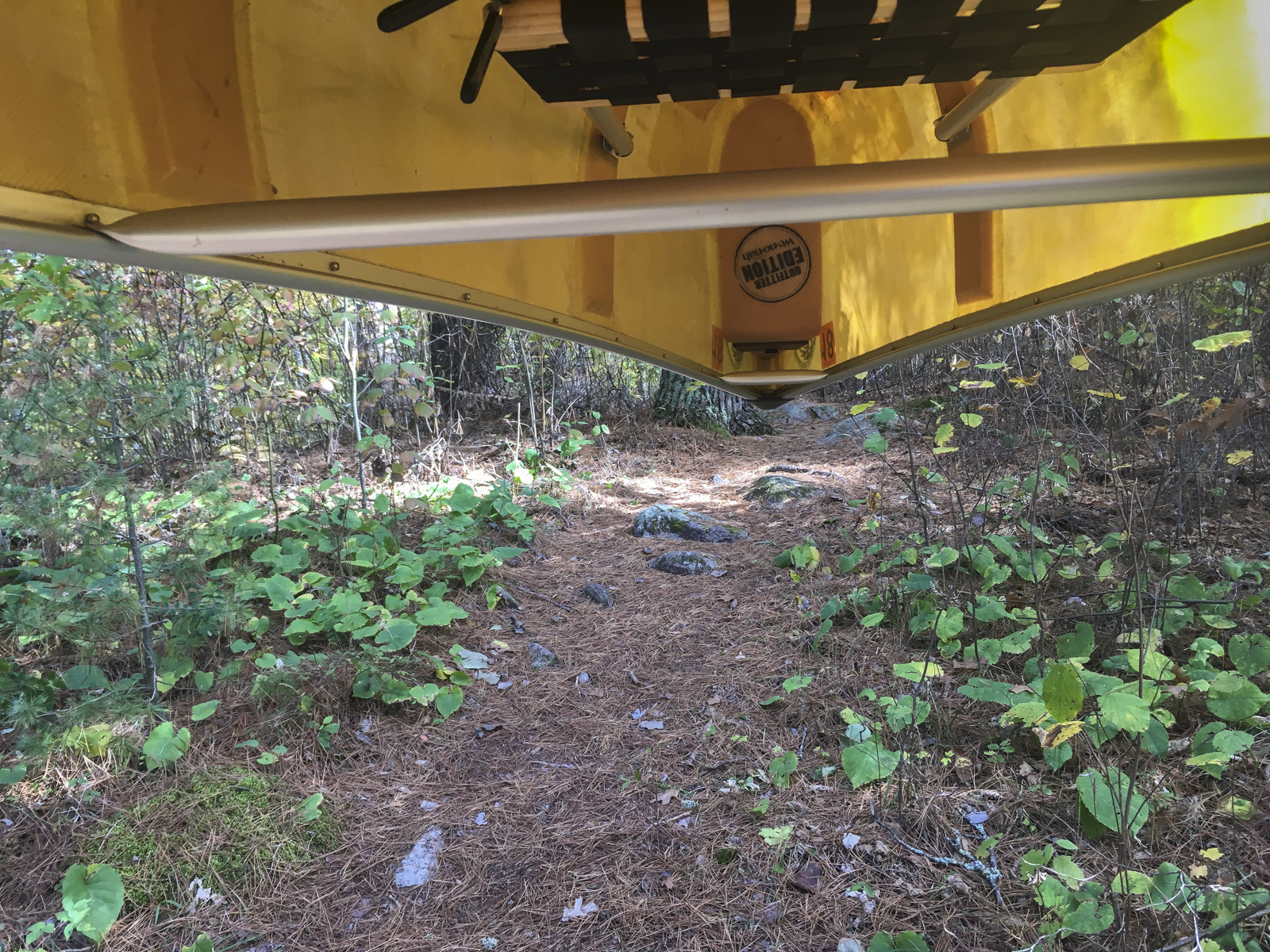
Carrying the canoe was the best job on any portage
Our canoe was a Wenonah 18-footer made of Kevlar and weighing in at about 46 pounds (probably half the weight of my old 16-ft canoe at home). We packed our gear in two dry bag packs (each probably weighing 40+ pounds at our start), plus two smaller dry bags with essential items that we might need access to while paddling – rain gear, gloves, maps, binoculars, camera, snacks, water bottle, etc. After our first portage where we carried it all in one trip, we decided to use a shuttle system when portaging – one person takes the canoe, the other carries half the remaining gear about half-way and drops it. That person then returns to the start for the remainder of the gear. The canoe person drops the canoe at the other end and then comes back for the first load of gear that has been dropped halfway. That minimizes the amount of walking that we both had to do on each portage. Luckily, many portages are relatively short, but many are either rocky, steep, muddy, or some combination. But, once you do it a few times, it just becomes routine and is a chance to stretch your legs. Plus, it seemed each portage took us into a totally different habitat.
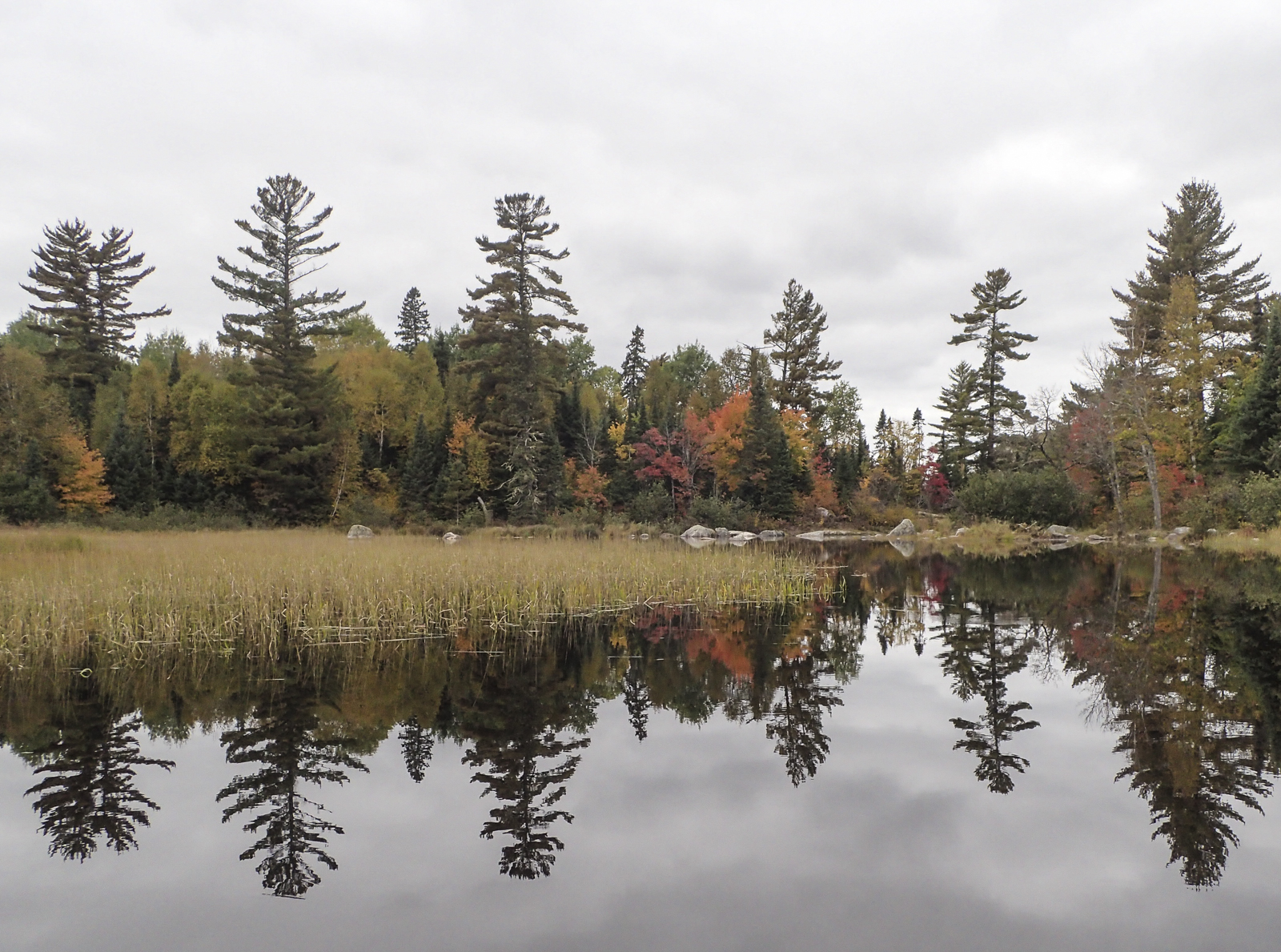
Our first day had gray skies, calm winds, and hints of fall color
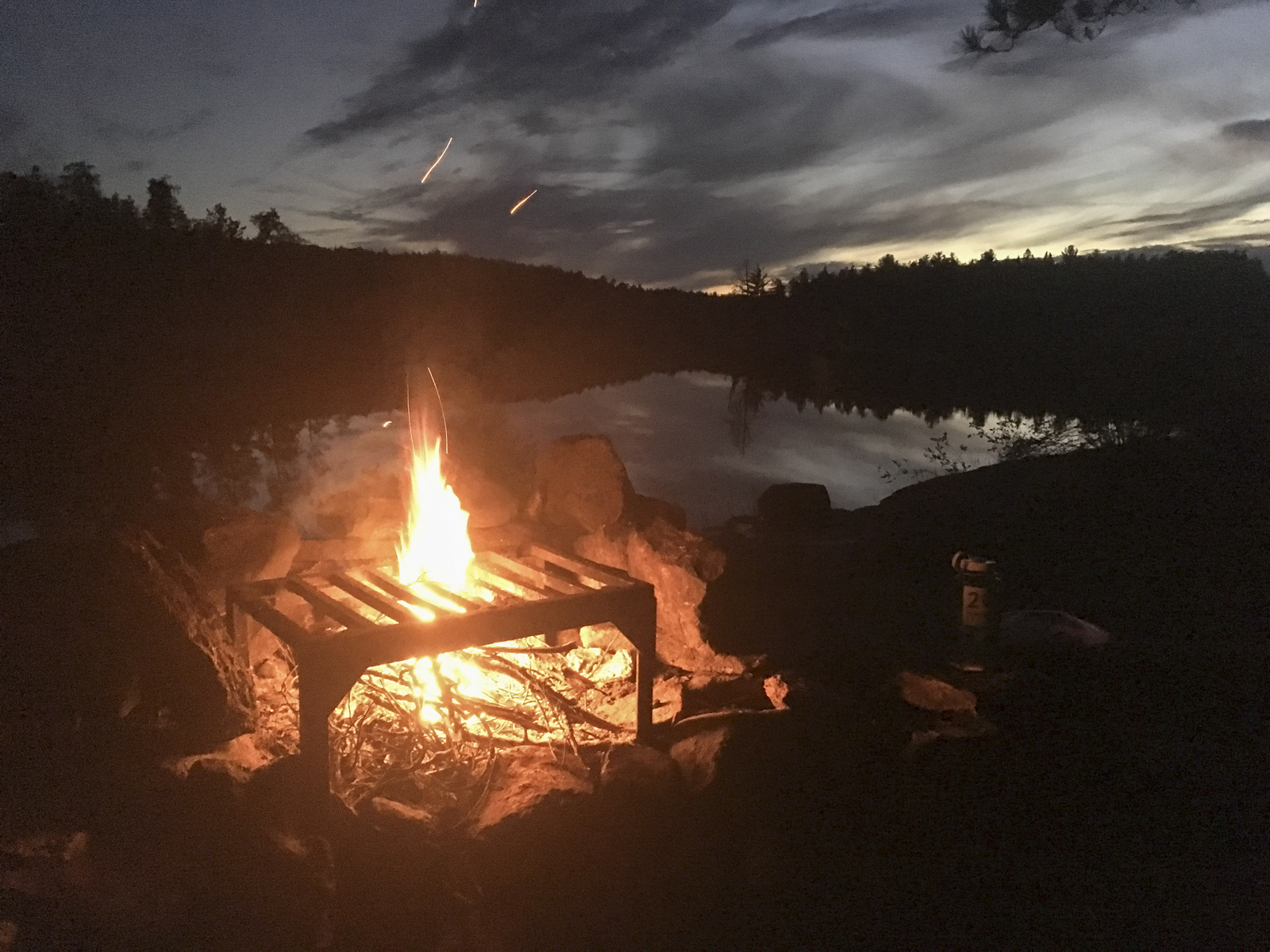
The outfitter had recommended campsites along the route but we were free to choose our own (you cannot reserve campsites, even though a permit system exists for entry into BWCA to limit the number of people in any one area). Each lake we traversed had one, or often, many more campsites, each with a US Forest Service installed fire grate and portable toilet.
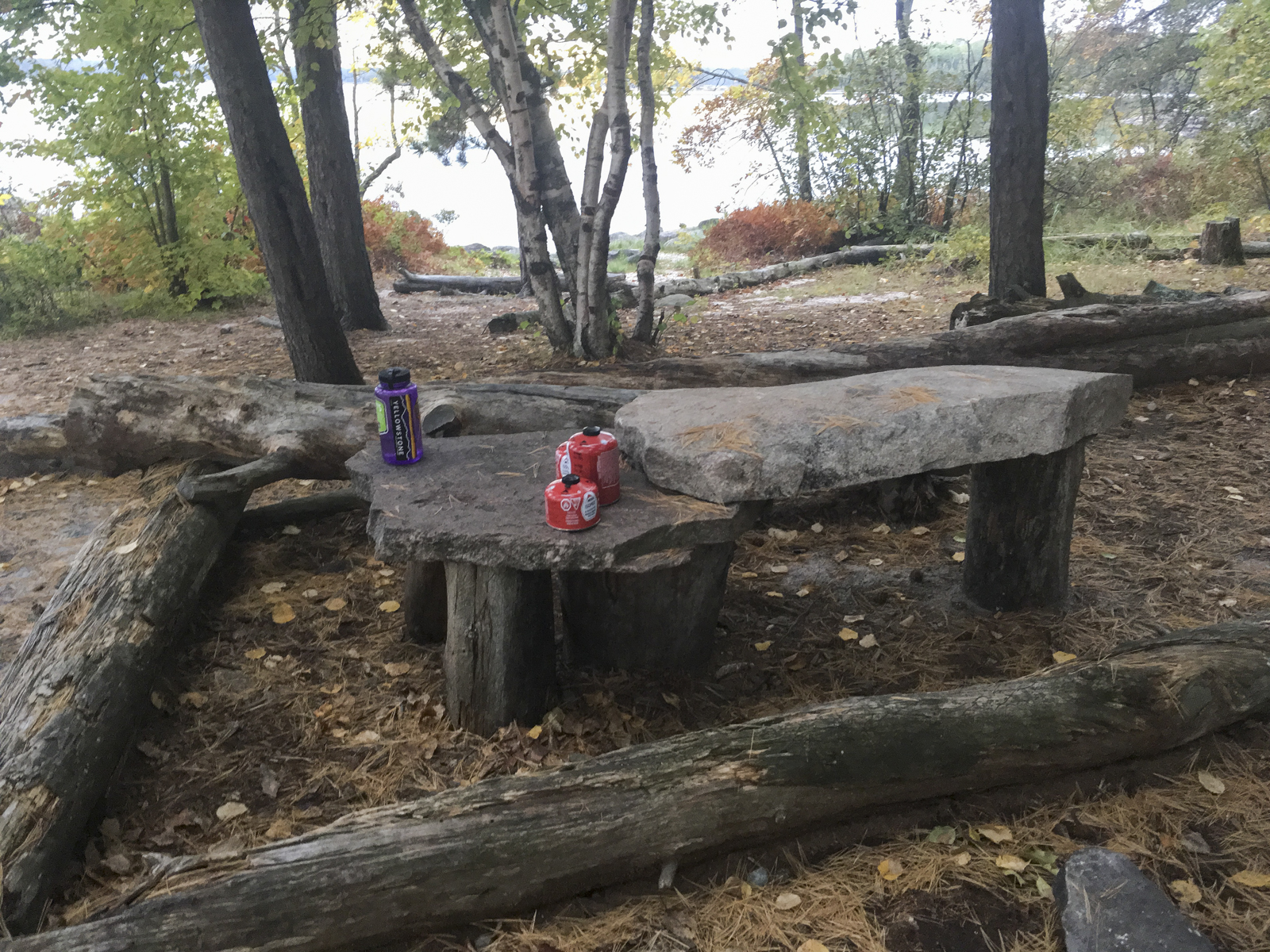
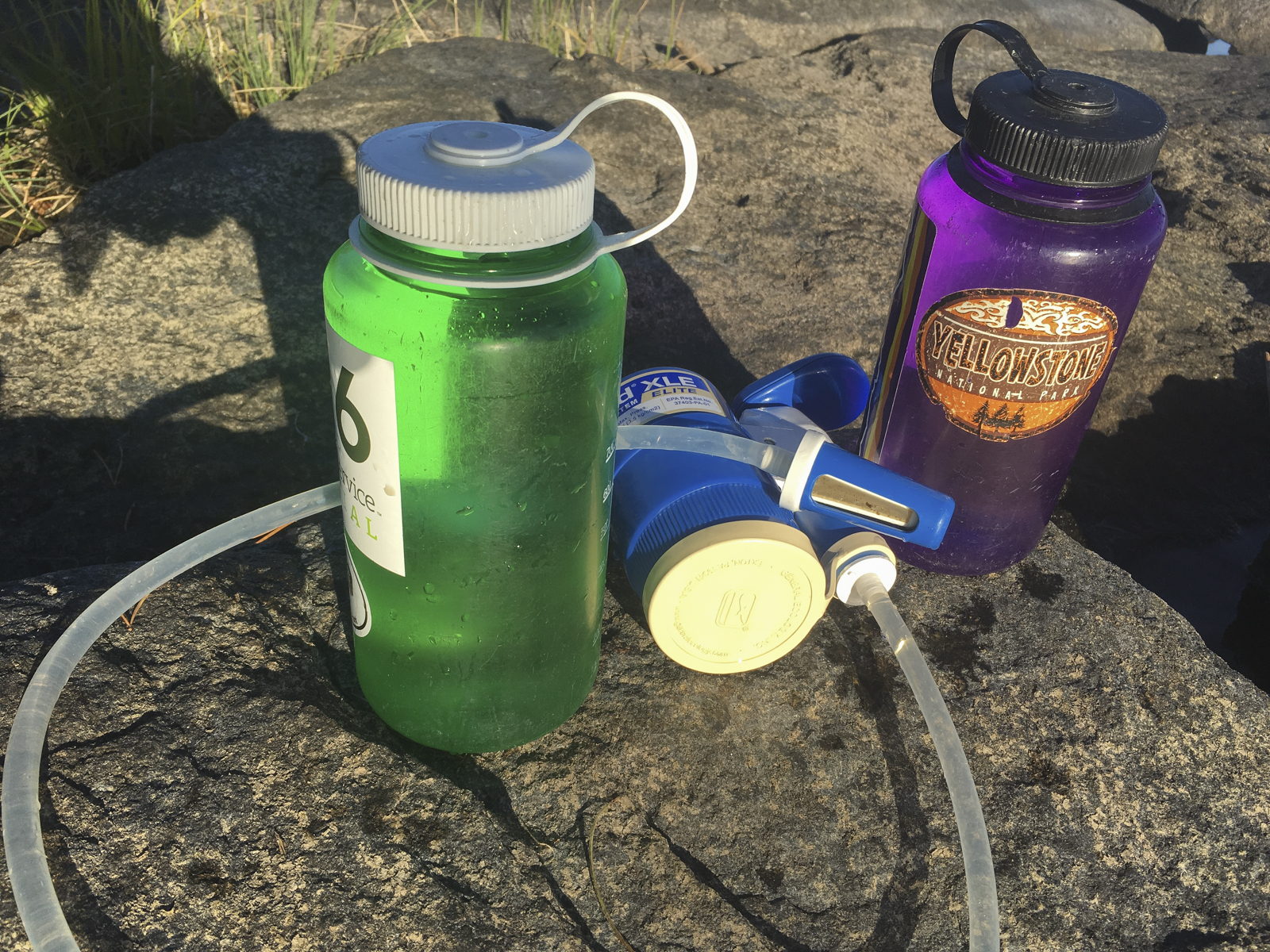
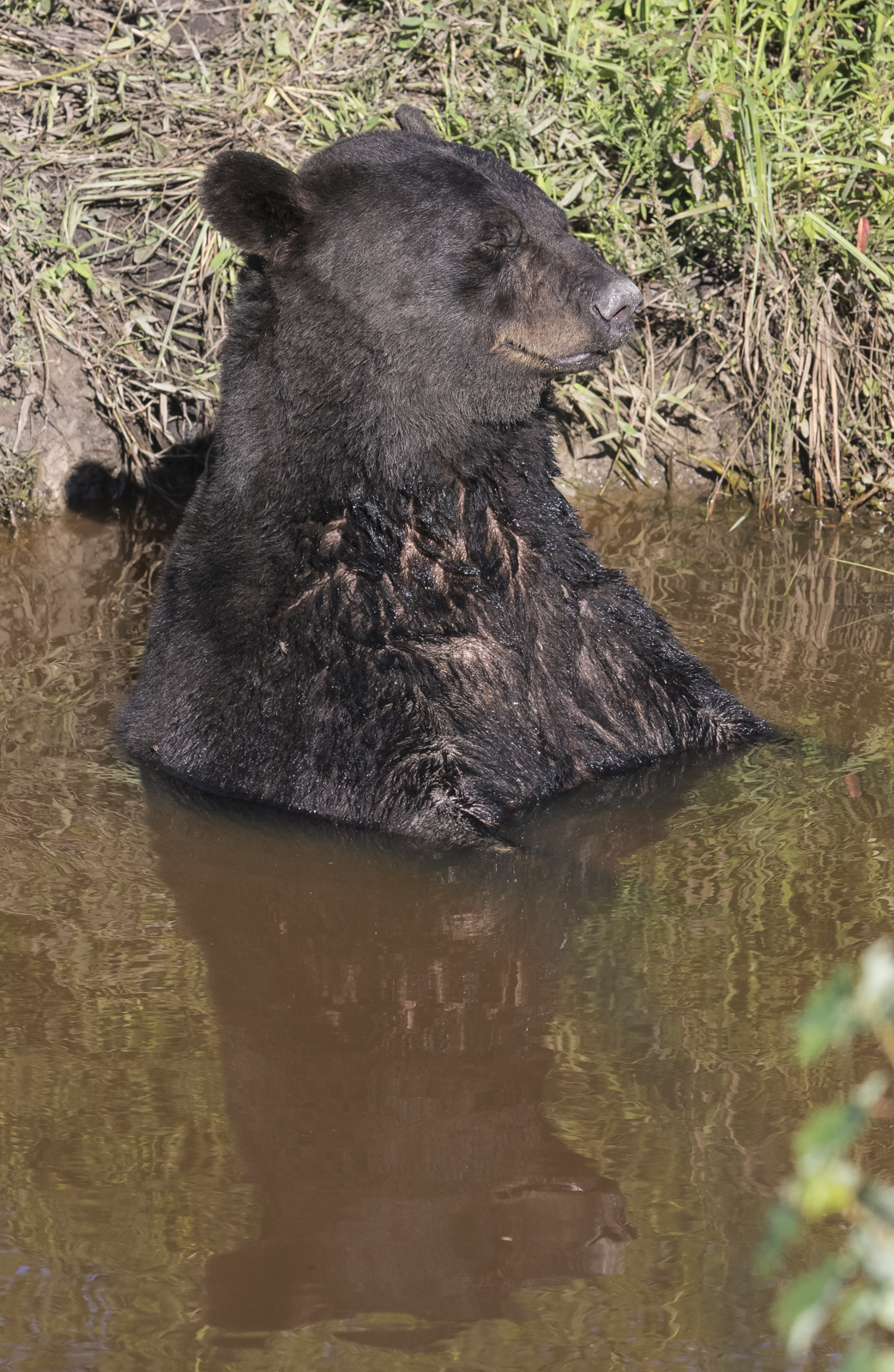
We had incredible views at our campsitesCampsite amenities varied but this stone table was the highlightOur twice daily ritual of filtering water (usually 4 water bottles each time)The woodland throne, a room with a viewWe hung a bear/mouse bag each night and stored all our food in bear canistersA surprise camp visitor on our first morning at Lake Agnes
Our main camp critter turned out to be a species of woodland mouse at almost every campsite (7:30 p.m. was reliably “mouse thirty” as they all seemed to come out about then each evening). We ended up hanging all of our gear in a bear bag each night to prevent any mischievous rodent chewing. Once you have a mouse or two run across the top of your tent at night, you become keenly aware of their potential. On our first morning we had a surprise visitor, a handsome black bear. I was digging in my bag for something when I heard Melissa say, “Oh my God, there is a bear”. Looking up, indeed, there was a healthy adult bear ambling into camp, nose in the air. The photo above was one of two I took with my iPhone before we yelled at the bear to move on, which it obligingly did. Other than that, camp life was very quiet. We soon got into our 8-day routine of paddling, portaging, setting up camp, eating some very good meals, and enjoying the incredible night sky.
Steep granite cliffs provided the canvas for early Native artisans
One of our destinations was to some rock cliffs just across the border in Canada on Lac La Croix. This is one of many places in this wilderness adorned with rock paintings. These pictographs are believed to be several hundred years old, created by local native tribes paddling these waters in birch bark canoes.
Hand printsFaint bull moose silhouetteAnother moose outline
Most of the paintings are reddish in color and lie beneath cliff overhangs, affording them some protection from the elements. Seeing these helped us realize the importance of these waters as a hunting, fishing, and trading route for many peoples over the past centuries, and made us even more appreciative to paddle in their long-gone wakes.
Another perfect view from a campsite rock
Our weather was extraordinary for this time of year with temperatures ranging from the 60’s each day to the 40’s at night (a bit colder the last two days with a strong wind). We had only one evening and morning with rain, so consider ourselves lucky. We saw at least one canoe every day but one, and had a lake to ourselves for two of the camps. Most campsites are incredibly beautiful with direct views onto the water and usually a large rock outcrop access for easy swimming (short, chilly swims this time of year). There is plenty of downed wood for small fires each night (and birch bark from downed trees is one of the best fire-starters imaginable). Plus, if you are so inclined, many of the lakes offer excellent fishing for walleye and pike. This really is a paddlers’ paradise.
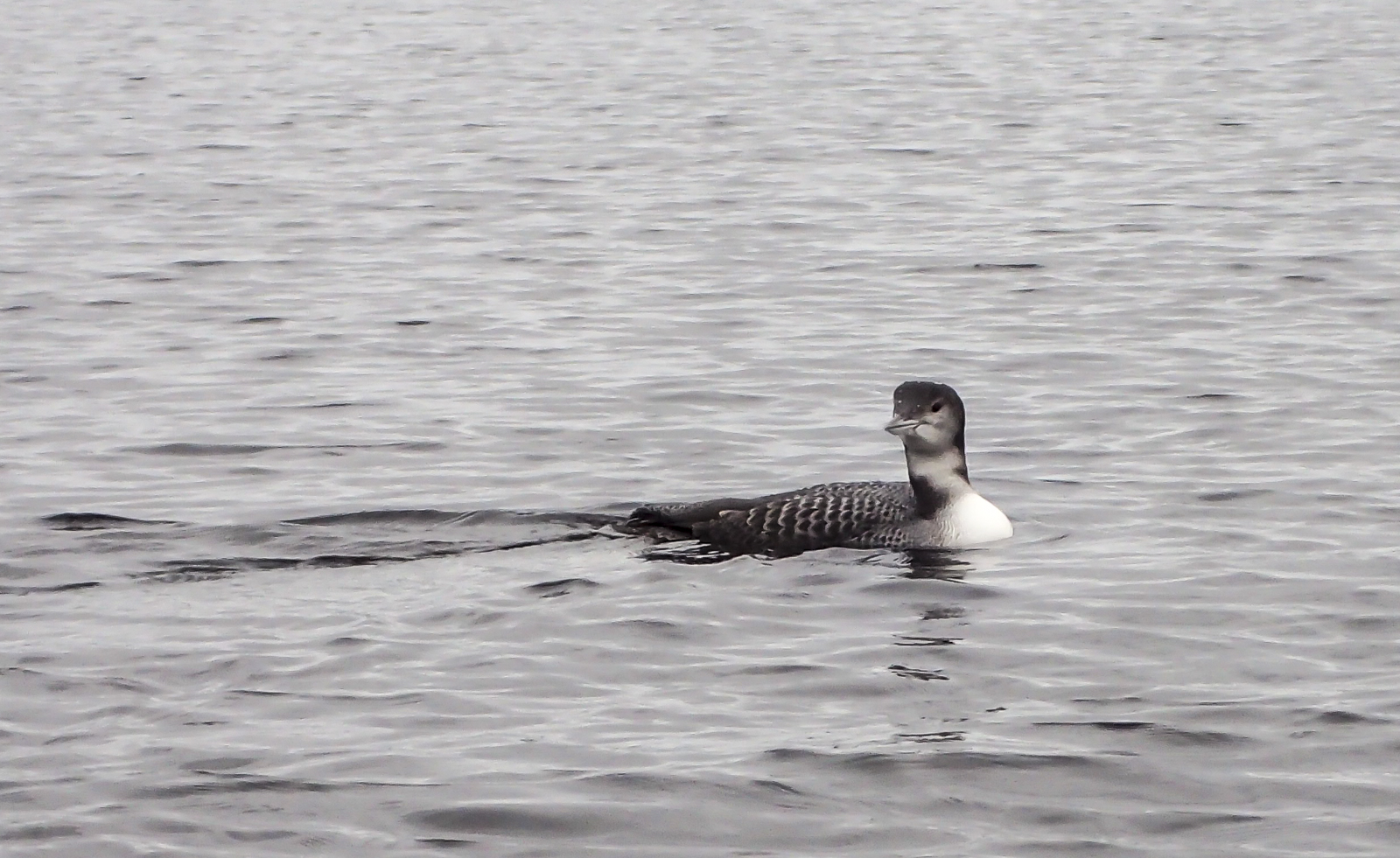
Loons were a common sight along the route
The thing that really struck me was the quiet and feeling of solitude of the Northwoods. Of course we did hear the melancholy calls of loons on several lakes, but that is a soft, singular sound that seems to drift across the lake like an early morning fog. It is as much a part of this wilderness as are the clear cold waters or the pointed tops of the conifers. Once the call passes, the world seems to fall silent again. At each landing, we usually heard what must be considered the signature chatter of the Northwoods, the chirping of a red squirrel. They quickly moved on to gathering cones and mushrooms and the forest became quiet again. There was also the occasional call of a pileated woodpecker, the croak of a raven, or the tweet of some small song bird, but not the usual background noise of birds and insects I am accustomed to back home. Perhaps that is what makes the call of the loon all the more significant. And after dark, if the wind was not rustling (or blowing the last two nights) through the trees, there was virtually no sound (except for the one night a beaver decided to slap its tail in protest of our campfire on its shoreline).
I imagined that there must have been writers and naturalists inspired by this silence in such a vast expanse of wildness. Once I returned, I found the works of Sigurd F. Olson, an author, environmentalist, and long-time advocate for the protection of wilderness. He was a guide in what would become the BWCA and was instrumental in drafting the Wilderness Act of 1964. I found one of his quotes that spoke to the solitude and quiet of this magical place…
At times on quiet waters one does not speak aloud but only in whispers, for then all noise is sacrilege.
I leave you with a few other images from the trip. Because of portaging, I left most of my camera gear at home, so these are all taken with either an iPhone or an Olympus Tough point-and-shoot.
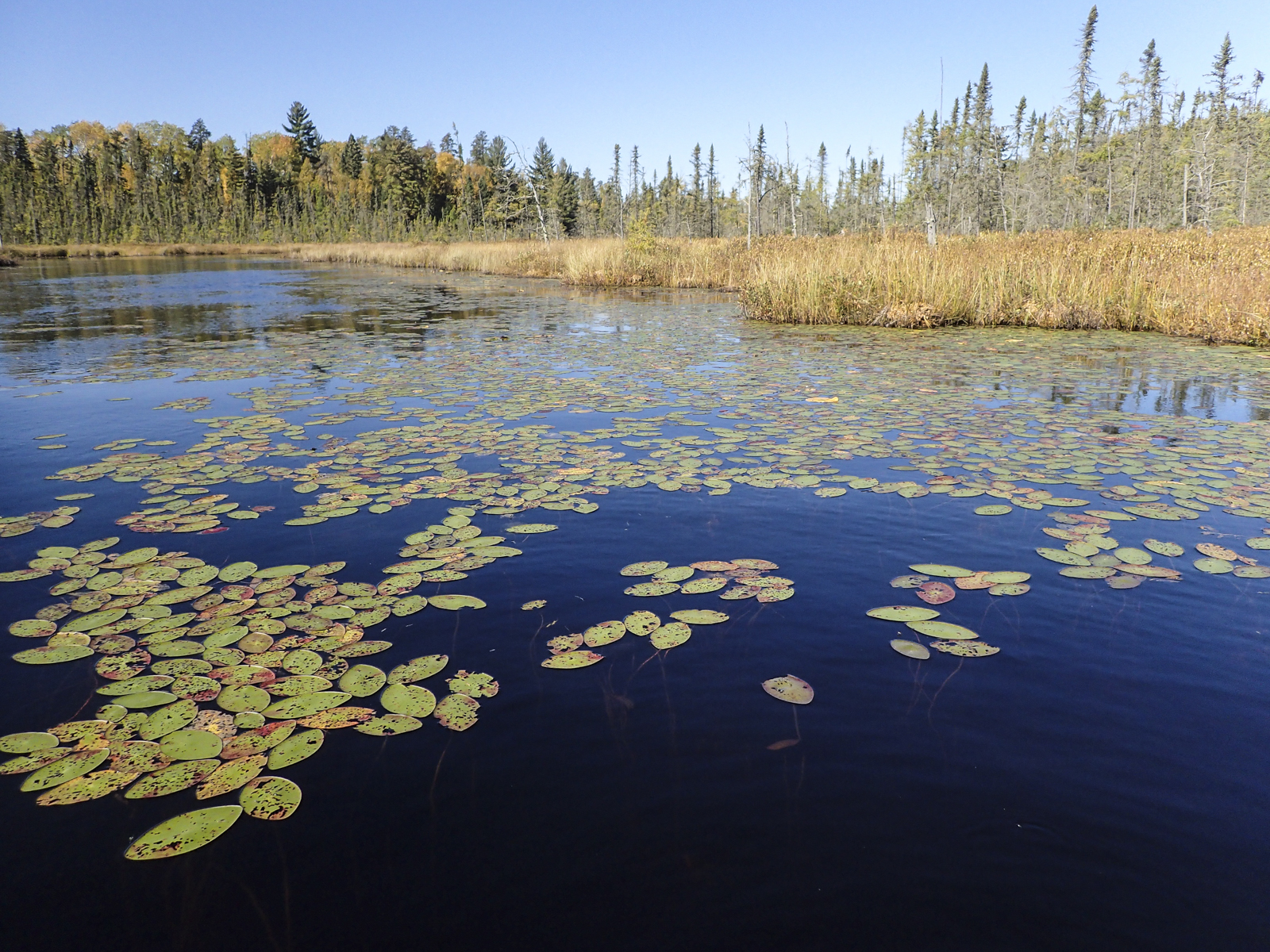
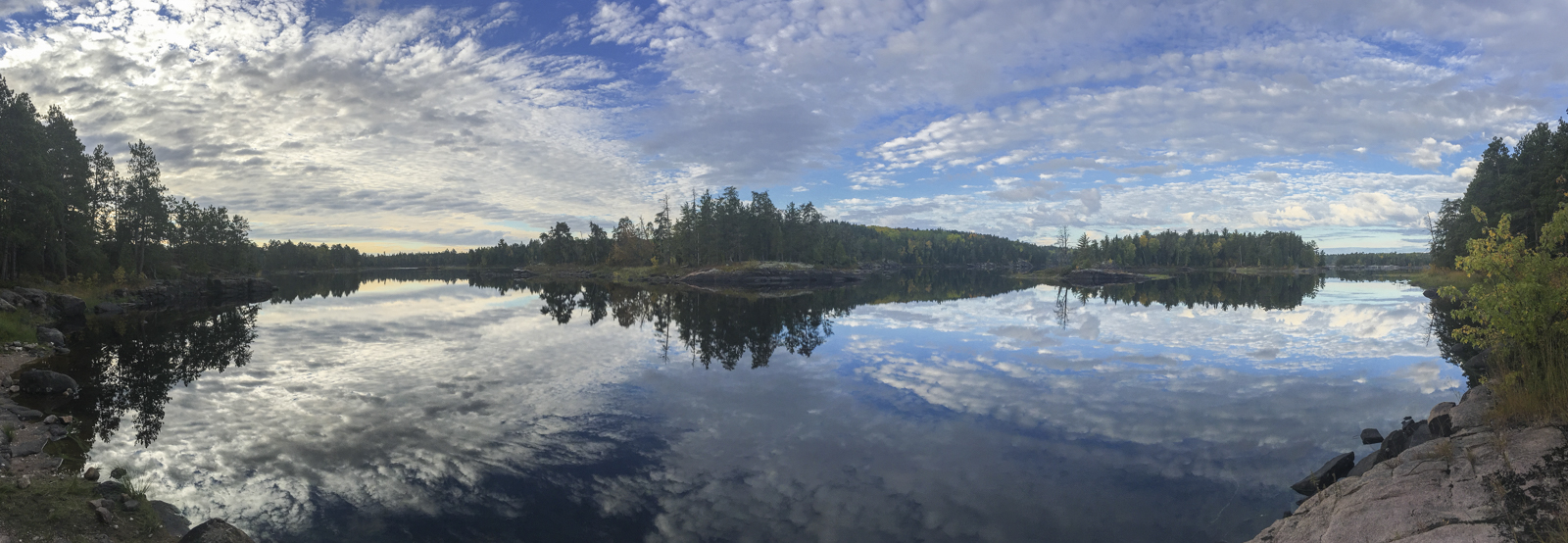
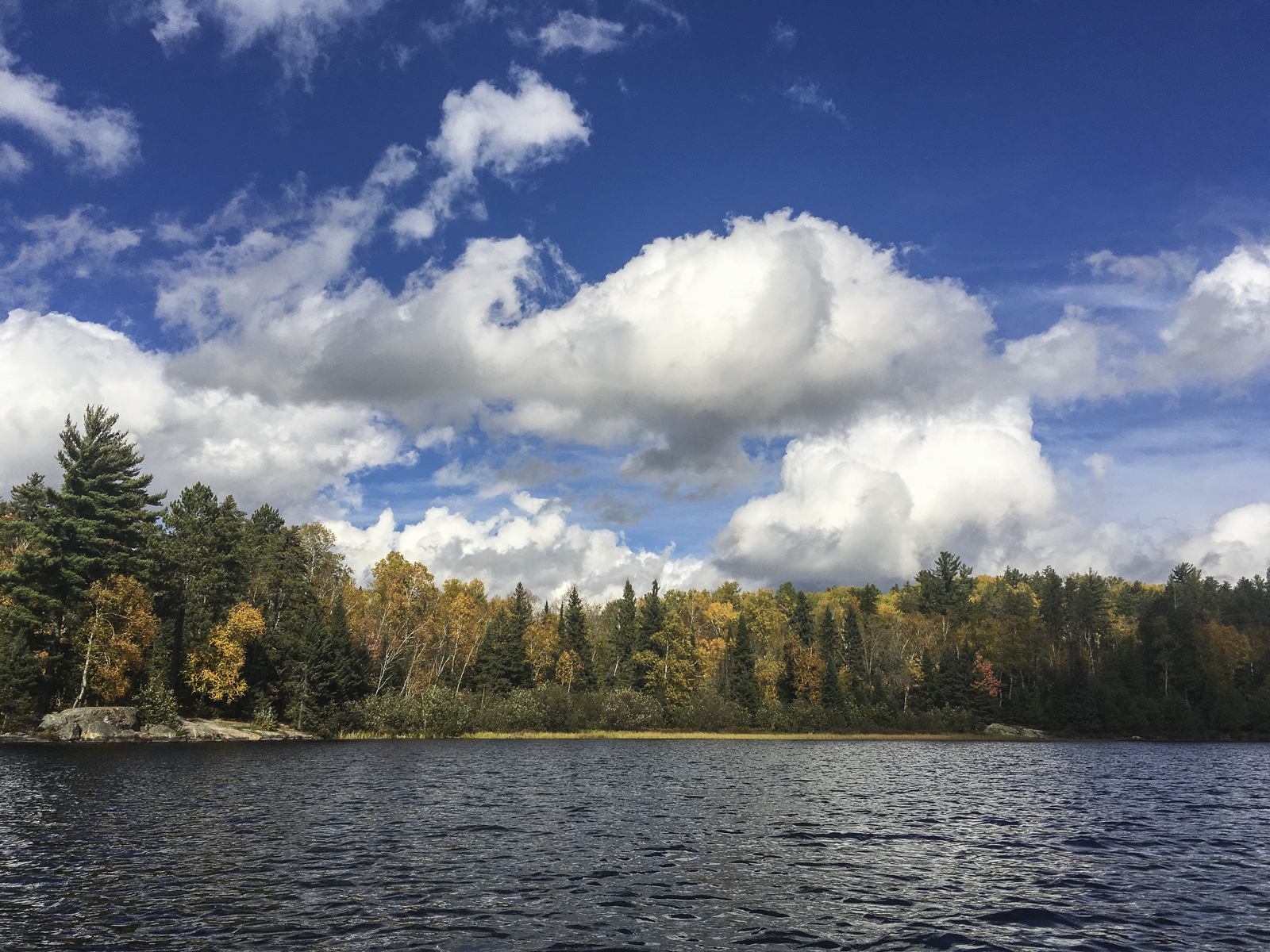
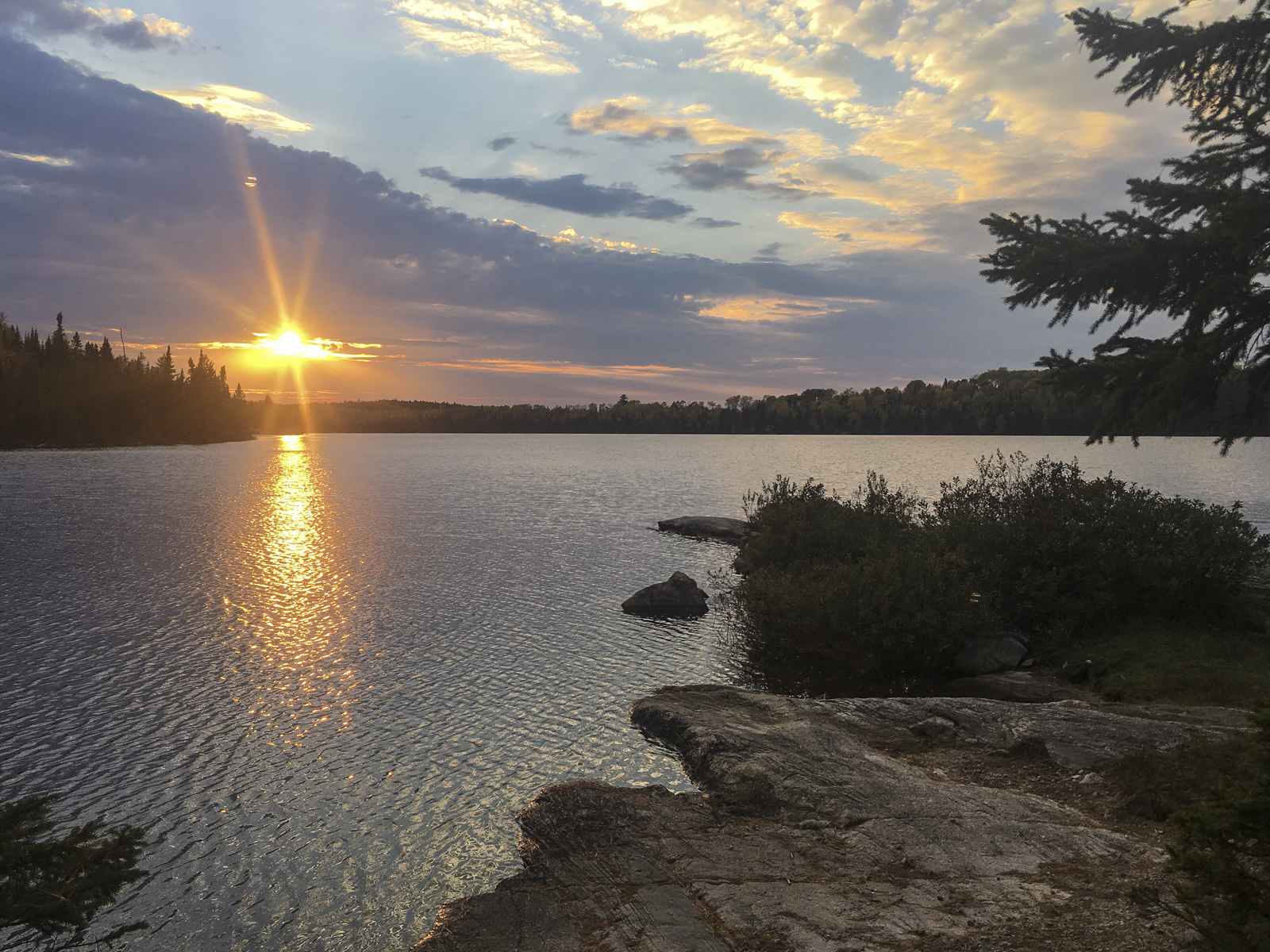
Our two days on the largest lakes were mercifully, and magically, as calm as any I have ever seen on the waterThe northern version of “the wall” – international boundary marker in BWCA (I thought the first one I saw was some sort of can left behind by someone)One of our more magical campsites, complete with large rock outcrops and a sandy beachThe quaking bog areas were among my favorite locations – if you venture out of your canoe, you literally can walk on trembling earthThe bogs were adorned with pitcher plants and sundewsCurtain Falls, one of the areas requiring a portage. We heard this falls from about a mile away on a calm day on the water.Another beautiful campsiteOur view for over 4 miles of the journeyReflections on a calm dayColors and patterns of water shield and lily padsClouds and reflections on a perfectly calm dayAutumn meadowhawk dragonflyPurple sunset one eveningWe enjoyed the peak of fall colors during our final days on the waterBlue skies all but two daysEvery sunset was spectacularOur final landing at Mudro Lake
Life is good to those who know how to live. I do not ever hope to accumulate great funds of worldly wealth, but I shall accumulate something far more valuable, a store of wonderful memories. When I reach the twilight of life I shall look back and say I’m glad I lived as I did, life has been good to me.
~Sigurd F. Olson
Species seen or heard on trip:
Birds – Bald eagle (they welcomed us at every campsite); Red-tailed hawk, American kestrel, Merlin, Common Raven, American crow, Gray jay, Black-backed woodpecker (a new species for me); Northern flicker, Pileated woodpecker; Red-breasted nuthatch; Ruby-crowned kinglet; Black-capped chickadee; White-throated sparrow; Yellow-rumped warbler; Tennessee warbler; Belted kingfisher; Pied-billed grebe; Horned grebe; Common loon; Wood duck; Lesser scaup; Red-breasted merganser; Hooded merganser; Trumpeter swan; Canada goose; Ruffed grouse; American Golden Plover (a new species for us)
Mammals – River otter; Beaver; Black bear; Red squirrel; Chipmunk; Mouse (Deer or white-footed); Muskrat; Moose tracks
Reptiles and amphibians – Painted turtle; American toad; Bullfrog; Spring peeper; Garter snake
I cannot persuade myself that a beneficent and omnipotent God would have designedly created the Ichneumonidae with the express intention of their feeding within the living bodies of caterpillars…
~Charles Darwin, 1860
So strange are the habits of certain groups of wasps that they have caused many a person to look upon them in disbelief (and perhaps a little sense of dread or disgust). But, we owe them a great deal in terms of their ability to provide some biological control on many species of insects, including some that can damage our garden plants. Here are a couple of examples from recent weeks.
Stink bug eggs at the NC Botanical Garden (click photos to enlarge)
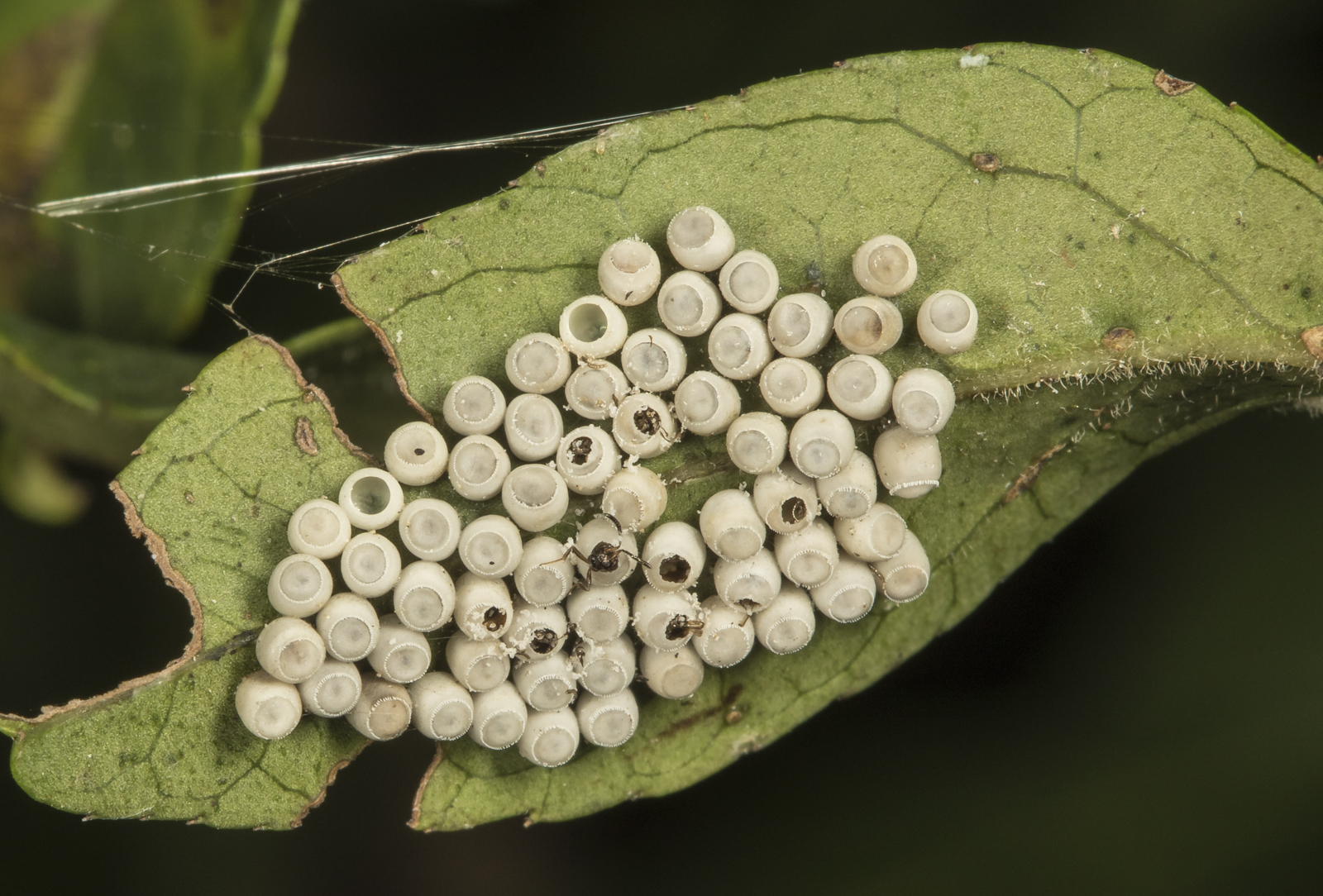
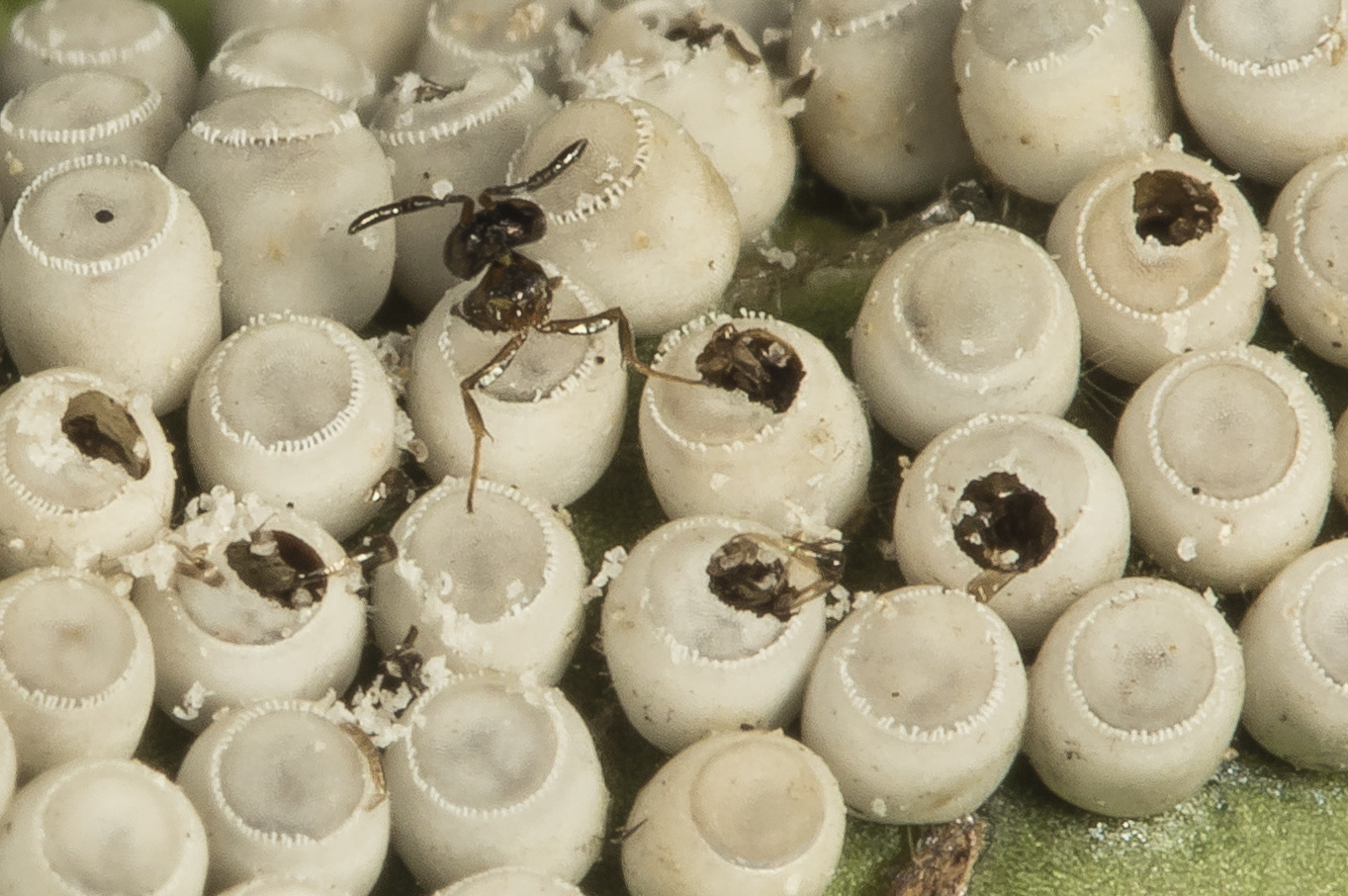
While walking around the NC Botanical Garden one day last week, I spotted this egg mass on a leaf. The general shape (like small barrels) and arrangement made me think some sort of true bug (Order Hemiptera), most likely a stink bug of some sort.
Parasitoid wasps emerging from eggs
When I got in close with my macro, something seemed odd. I can usually tell when these eggs hatch because the top of the “barrel” pops open like a lid. But these eggs had irregular holes with something coming out. As I zoomed in on my image, the creature emerging from the egg did not look much like a stink bug to me. At home, I referred to one of my go-to references, Tracks and Signs of Insects and Other Invertebrates, by Charley Eiseman & Noah Charney. Sure enough, I found this quote…”An irregular hole chewed in the top indicates the emergence of a chalcid or platygastrid wasp parasitoid”. In looking at more images online, it looks similar to some of the species in the genus Trissolcus, but I would need to collect some of them and send them off to an expert to be sure.
Pawpaw sphinx on deciduous holly
The reason I saw the stink bug eggs was that I saw a pawpaw sphinx on a nearby branch and stopped to photograph it. I had permission to collect a few caterpillars, share them with Garden staff for their programs, use them at BugFest, and then return them.
Parasitoid wasp on pawpaw sphinx larva
It wasn’t until I got home and looked at my image that I saw the caterpillar had company – a parasitic wasp was on its side, most likely laying eggs.The following tidbits are from a great article on one type of parasitoid wasp that attacks sphinx moth larvae. Female wasps are believed to locate their hosts via chemical cues released by the plant when its leaves are being chewed by the caterpillars. When she lays her eggs inside the caterpillar, the wasp also injects a venom and a symbiotic virus. The virus prevents the caterpillar’s immune system from attacking and killing the wasp eggs. Special hormones are released that also inhibit the development of the larval host.
Wasp larvae emerging from doomed caterpillar
I was surprised to see wasp larvae emerging only two days after I took the photo above as I had always assumed the larvae fed inside the caterpillar for many days before exiting their host. Indeed, the article mentioned above stated that the usual time from egg-laying to emergence from the host cuticle is 12-16 days. I suppose the wasp in the photo is laying additional eggs…I doubt her offspring will have much to feed on when the time comes.
Watching wasp larvae spin cocoons
Looking at the emerging wasp larvae, I could see them already beginning to spin their silken cocoons. I, unfortunately, had to be get back out in the field, so missed an opportunity to sit and watch (and perhaps video) this amazing, albeit somewhat gruesome, process.
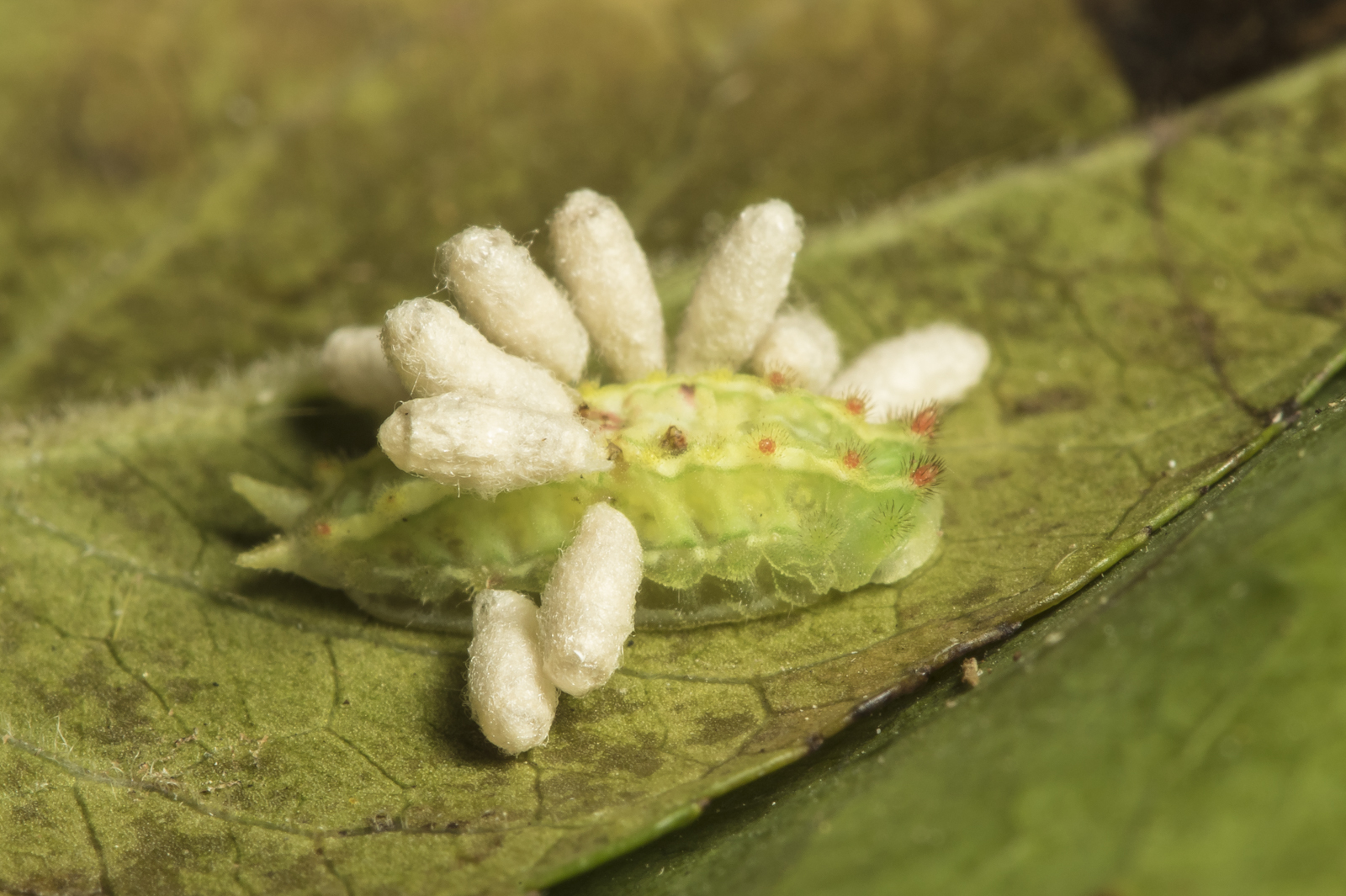
Early instar of Nason’s slug caterpillar with braconid wasp cocoons
On the day of BugFest, we had another caterpillar with dorsal decorations. This species is so small that it can carry only a few parasitoid larvae. I include this image just to show what the completed cocoons look like. When the wasps emerge from the cocoons, usually in 3 to 8 days, it looks as though a lid has popped open at the end of the cocoon. It is, obviously, tough being a caterpillar (or a stink bug egg) when there are so many tiny wasps lurking out there, waiting to provide you with an alien surprise. And yet, they carry on, adapted to survive this and the many other hazards they encounter in their short, amazing lives.
Their twittering notes and whizzing wings create a musical, but wild, continued roar. The twittering, whizzing roar continues to increase; the revolving circle fast assumes a funnel shape, moving downward until the point reaches the hollow in the stub, pouring its living mass therein until the last bird dropped out of sight.
~Chief Pokagon, of Potawatomi tribe, 1897
People have long been fascinated by the gatherings of migrating chimney swifts, Chaetura pelagica. Each autumn, they gather in large flocks and seek out large chimneys in which to roost for the night. Of course, as my friend and chimney swift advocate, John Connors, says, they probably would have gone by another name a few hundred years ago, before chimneys became such a common sight on the landscape. Perhaps hollow tree swift? I personally like a phrase many people use to describe the way they look…flying cigars.
Chimney swifts starting to gather near sunset in Chapel Hill (click photo to enlarge)
The NC Botanical Garden recently had a lecture and a field program on chimney swifts, led by John, as part of their Saving Our Birds initiative. To prepare for the field portion, Melissa and I helped out by looking for a suitable roost site in Chapel Hill. Local birders suggested the chimney at the downtown post office had been used in the past, but when we arrived, it looked to be capped, preventing the birds from using it. We scanned the sky at sunset, looking for the tell-tale rapid wing beats of swifts. They tend to arrive as the sun is setting, a few at first, flying in wide circles high in the sky. Over the next half hour or so, the flock adds members and they tend to fly a bit lower. The birds were flying near us, but we could see several chimneys that might be suitable so we split up, looking for the swirl of birds that signifies the roost location. Finally, we both spotted the swifts beginning to circle in a location across Franklin Street from where we were. We rushed over and found them swirling around a small chimney on the back side of a row of businesses along the busy main drag of Chapel Hill. They started dropping in as darkness neared, even though this particular chimney provided some challenges to an easy entry. It had an arch over the opening and was topped by a large antenna. What amazed me was how few people in the crowds on the street seemed to notice this twittering tornado of a few hundred birds just above their heads.
We gather to learn from John as the swifts begin to gather
On the night of the program, a group of 40 or so birding enthusiasts gathered on a plaza with a good view of the sky and listened as John explained some of the marvels of these masters of flight. Here are just a few of the fascinating facts he shared about these winged wonders:
Among the most aerial of birds, chimney swifts fly almost constantly, except when roosting for the night or nesting. They feed, bathe, and may even nap on the wing.
Instead of perching on branches like most birds, they use their long claws (and brace their bodies with their stiff tail feathers) to cling to vertical surfaces like the walls of chimneys or the insides of hollow trees.
They use a glue-like saliva to cement their twig nest to the chimney wall.
We hurried across the street as storm clouds gathered and were rewarded with the sights and sounds of a few hundred swifts doing what others of their kind were doing all over our state at that same moment – making a living swirl of feathered creatures seemingly being sucked into a chimney for the night. I went back a few nights later to record a few moments of this phenomenon…
As the sky darkened, they started to maneuver into the narrow opening by dipping and dodging downward into their roost for the night.
John told our group that this species, one that has adapted so well to the presence of humans, is now facing threats. Nesting chimneys are rapidly disappearing as construction techniques have changed and people tend to cap their chimneys. Plus, the phenomenon of roost chimneys is also in rapid decline as more and more of the large old chimneys are torn down or capped. This is such a shame, as it is one of the few spectacles of nature that is often readily available to urban dwellers. John wrote a recent op-ed piece on this dilemma in Raleigh’s News and Observer that provides a great overview of the issues surrounding this species.
Awareness and concern about the plight of this species helped it become NC Audubon’s 2016 Bird of the Year. Check out that link to learn more about what we all can do to help this amazing bird.
And, you may want to check out this chimney swift live cam from a large roost in an old industrial smokestack in Detroit. Look in the evening over the next couple of weeks. I watched it last night and saw the first swift enter about 7:40 p.m. By about 8 p.m. they were all in for the night. Be sure to check them out in the morning as well as it takes some of them awhile to leave. Soon, the large flocks will move on toward their South American winter home. Before they return next spring and begin to search for suitable nest sites (only one pair nests per chimney), find out how you can help these remarkable flying cigars maintain their centuries old relationship with our species.
During all these years there existed within me a tendency to follow Nature in her walks.
~John James Audubon
Per my habit of posting such milestones, it is time to recognize another one hundred posts gone by. This makes 400 posts since this blog was born shortly into my retirement. Like the others before it, this last 100 has covered a lot of ground, and remembering it helps me appreciate how fortunate I am to experience the things I write about. Here are just a few of the highlights from this past 100…
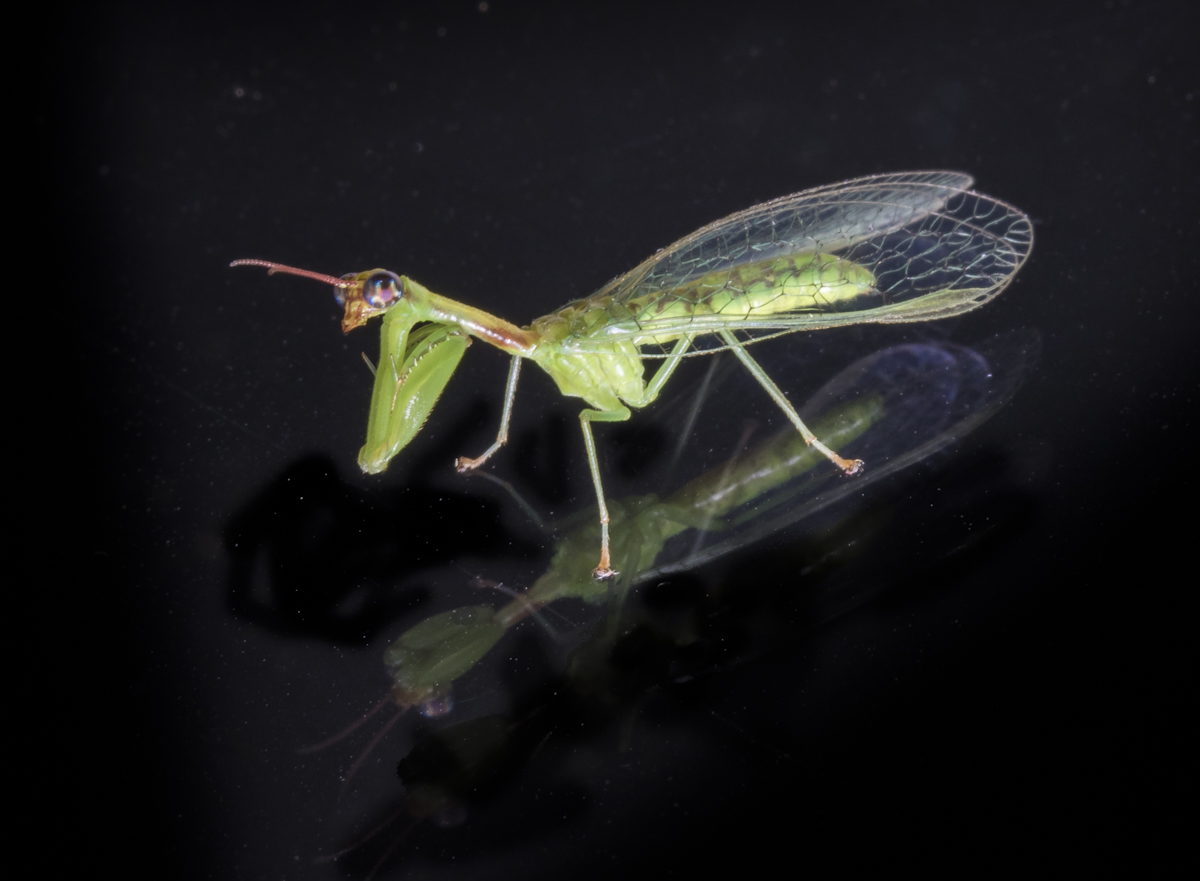
Green mantisfly found on my back door window (click photos to enlarge)
As usual, a lot of my posts concerned things observed right here in the yard and woods of Chatham County. Sometimes the most beautiful and unusual are right outside (or on) your door.
Monkey slug caterpillar
I continue with my obsession of all things caterpillar (hope you don’t mind).
A Carolina leaf-roller cricket that has been manipulated and killed by a “zombie fungus”
Zombie-making fungi and mind-controlling larval parasitoids played a role in several of my posts…what strange phenomena!
It was a long hot summer
It was another hot summer, so it was tough to be outdoors for a few months. I did learn one way to stay cool while visiting Alligator River National Wildlife Refuge…
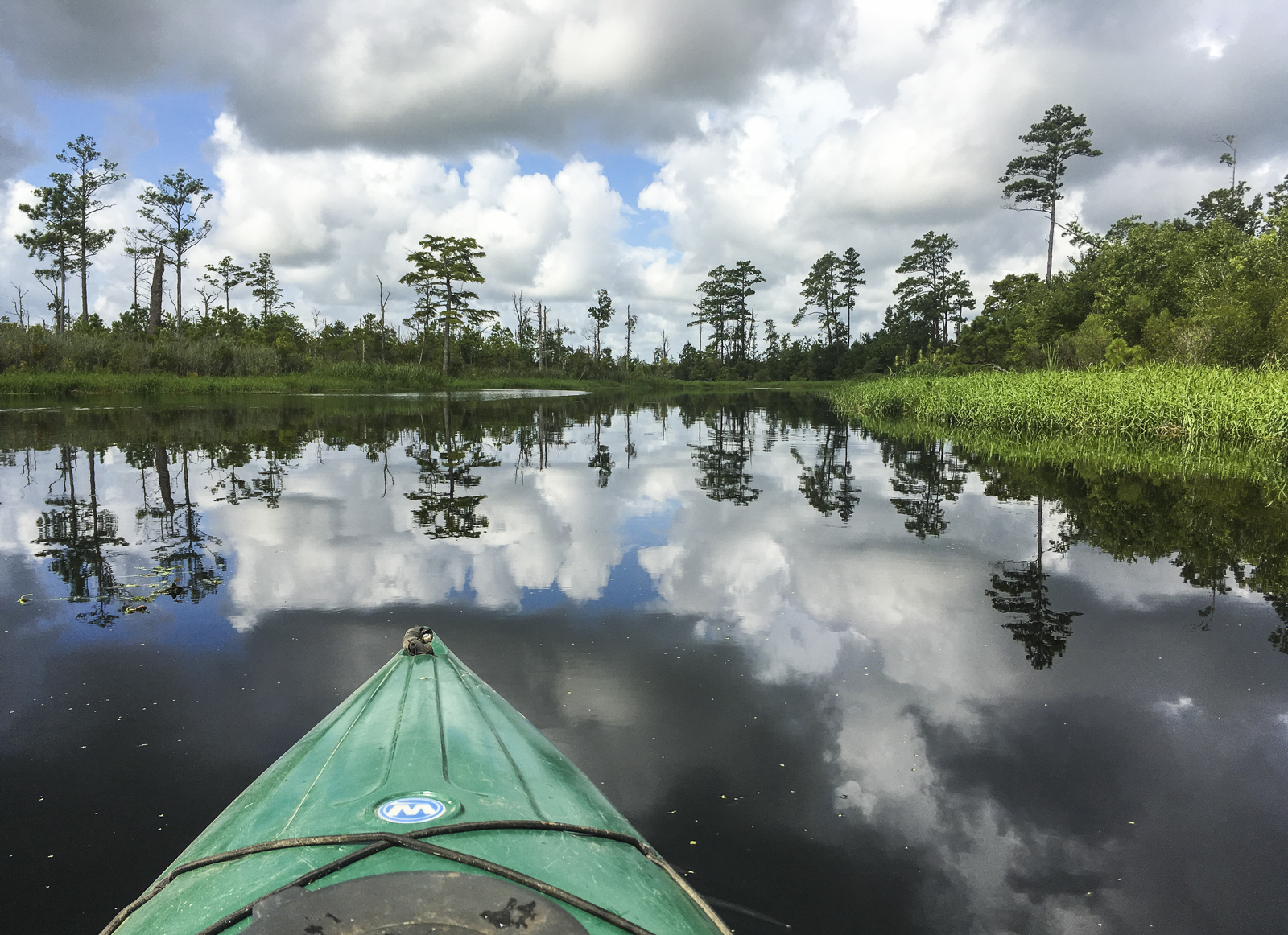
Paddling near Columbia, NC
I was fortunate to spend some quality time in the wilds around Columbia, NC, working on a project with NCLOW to encourage ecotourism to this beautiful, and wild, part of our state.
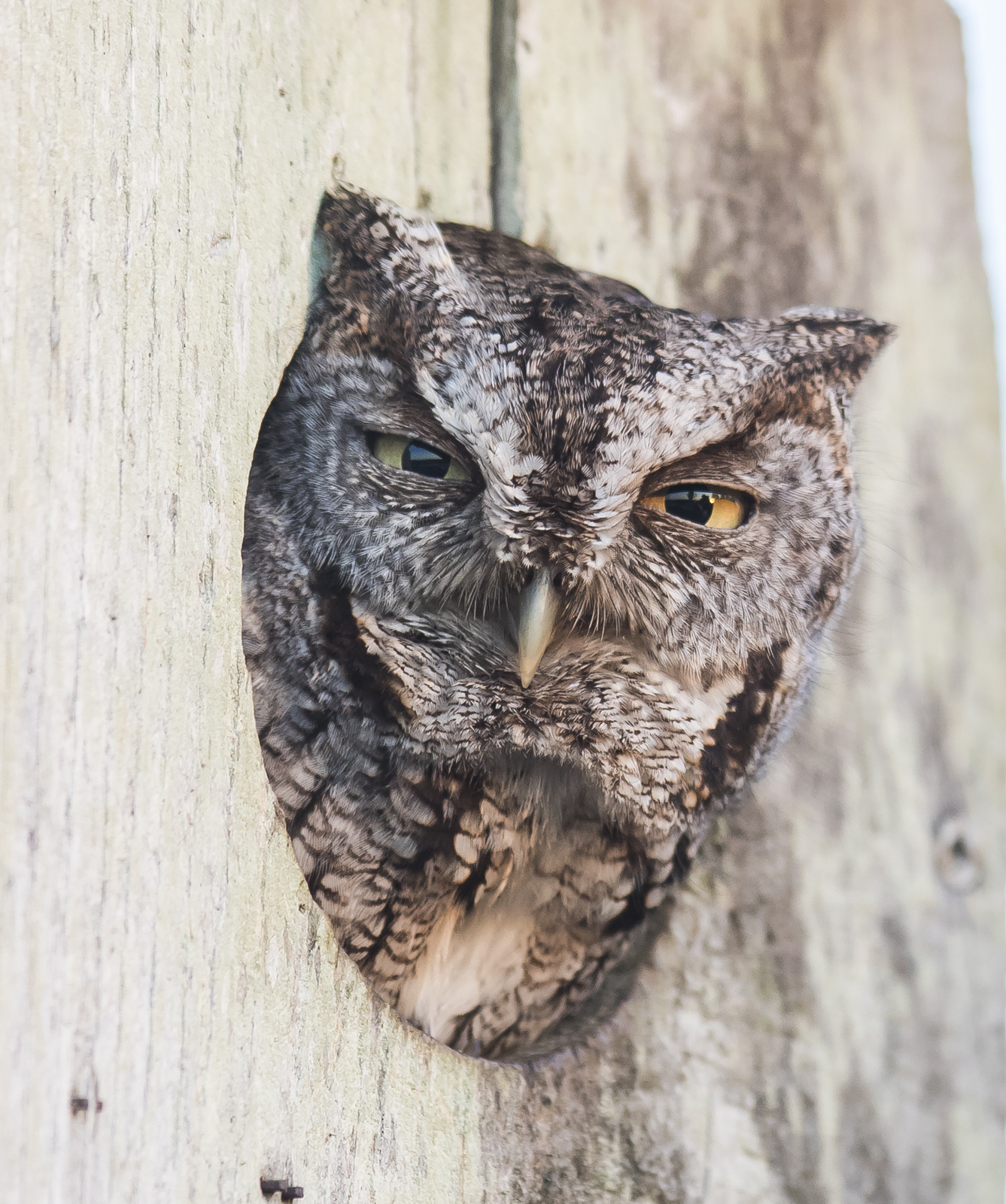
Screech owl peering (or is it glaring) at me as I drive by the nest box
There were many close observations of wildlife over the past several months. I always enjoy spending time with them in their haunts.
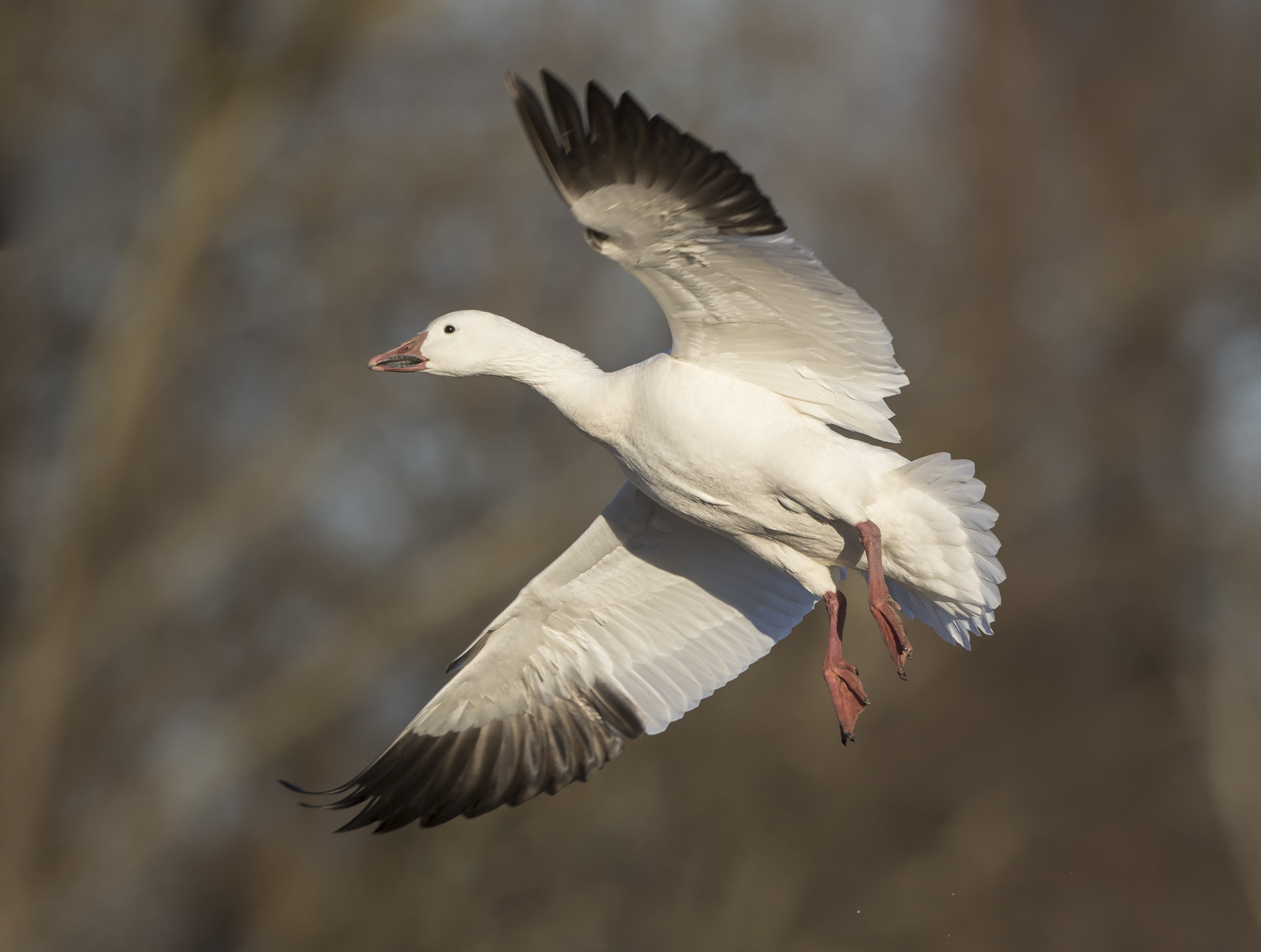
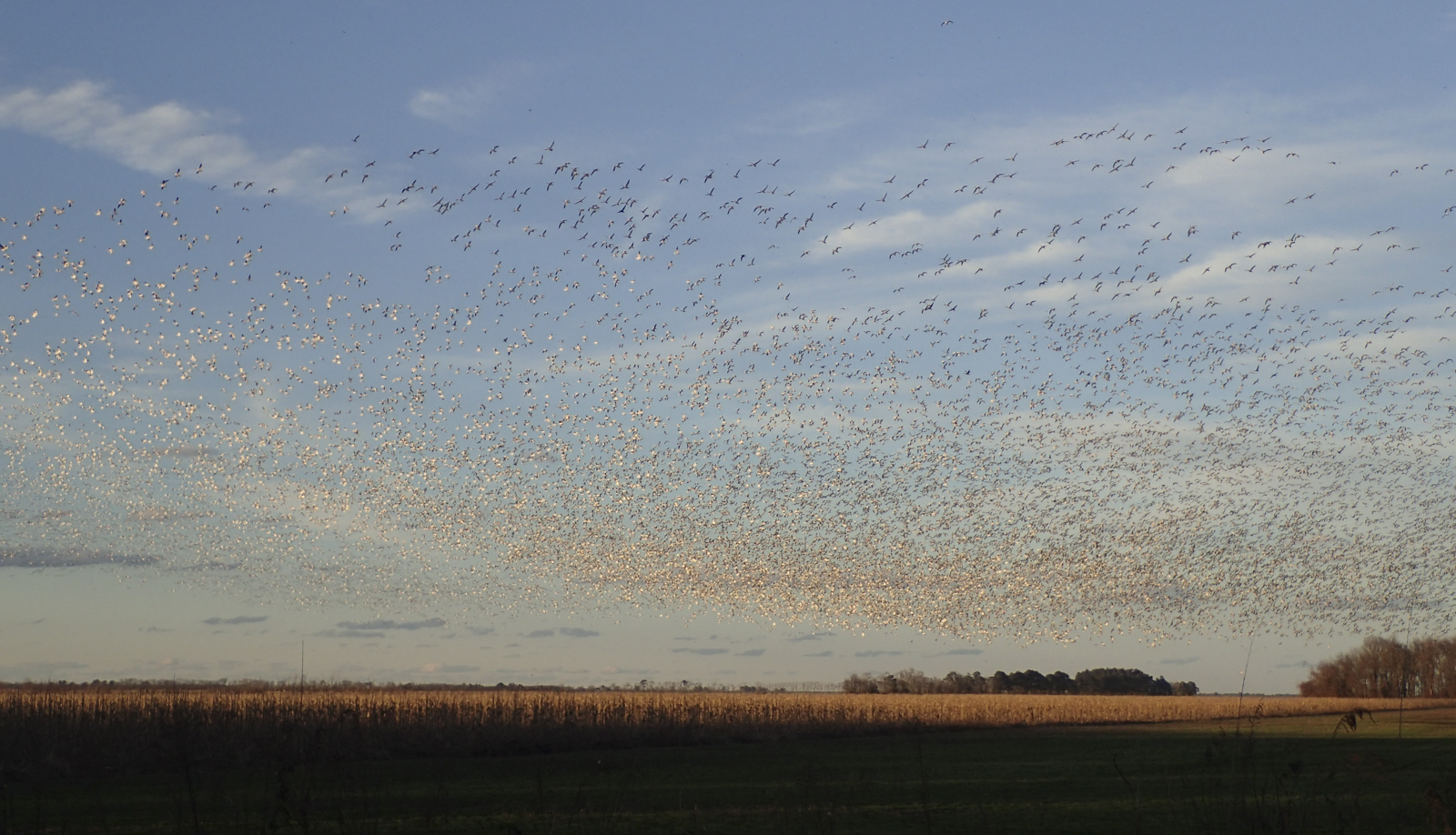
Snow goose landing in a corn fieldSnow geese circling a field at sunset
Spending time at my favorite refuge, Pocosin Lakes National Wildlife Refuge, is always a highlight, and this winter was no different.
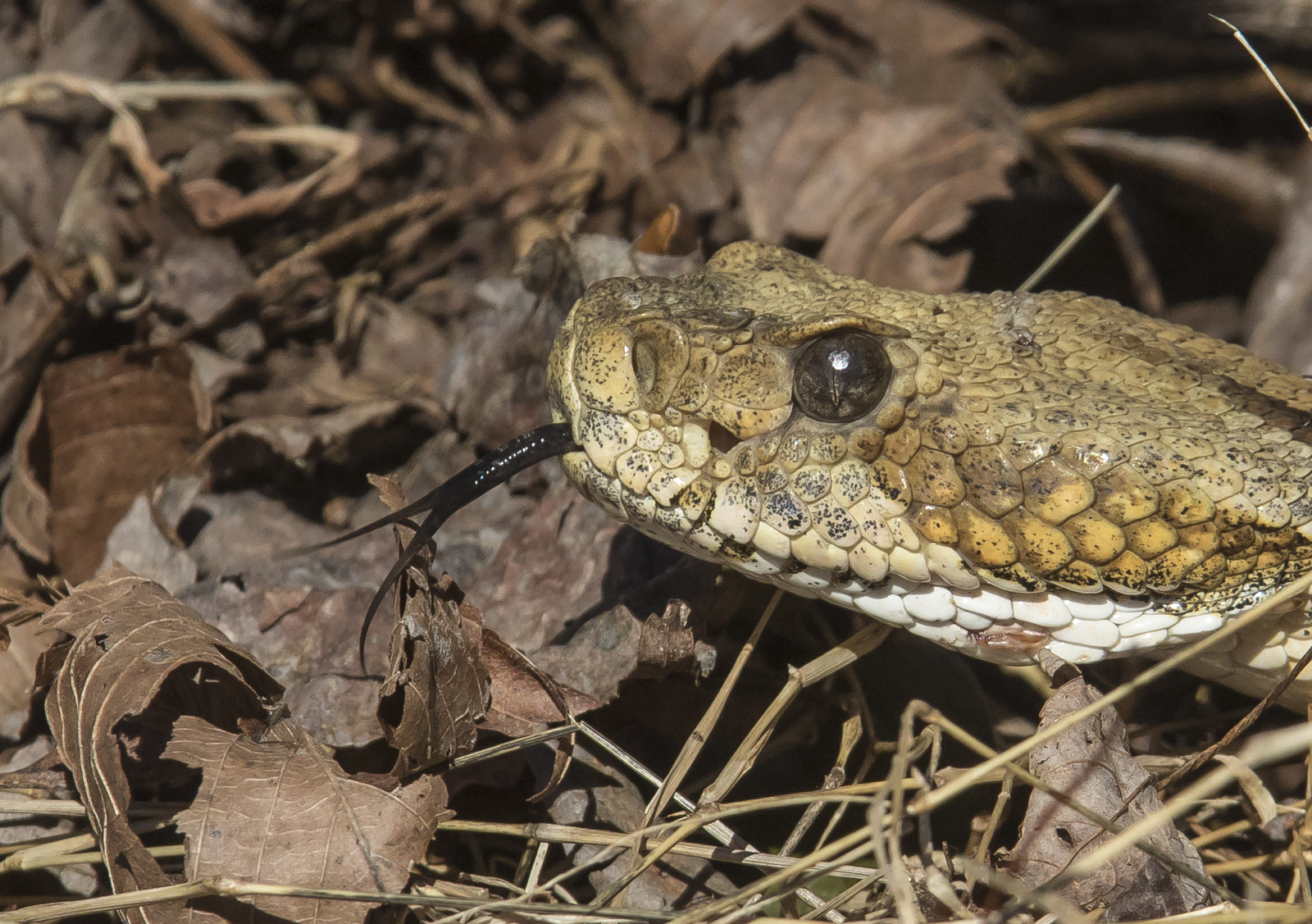
An unusual wintertime rattlesnake
I had several encounters with beautiful rattlesnakes this year, including this one, which was out and about for a few weeks in January at Pocosin Lakes NWR.
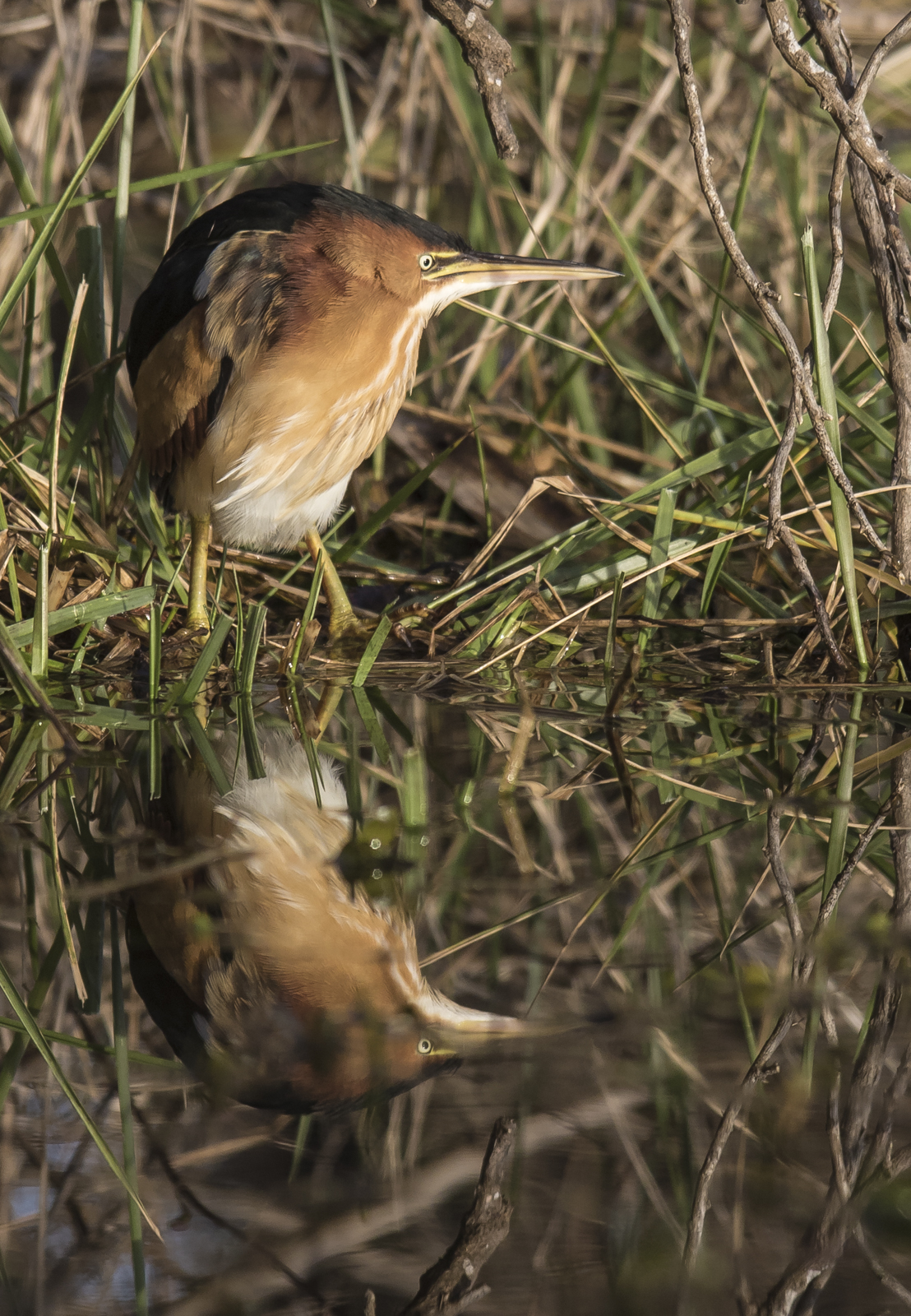
Least bittern
There was a rare treat of seeing a least bittern at another of my favorite haunts, Mattamuskeet National Wildlife Refuge (thanks, Keith!).
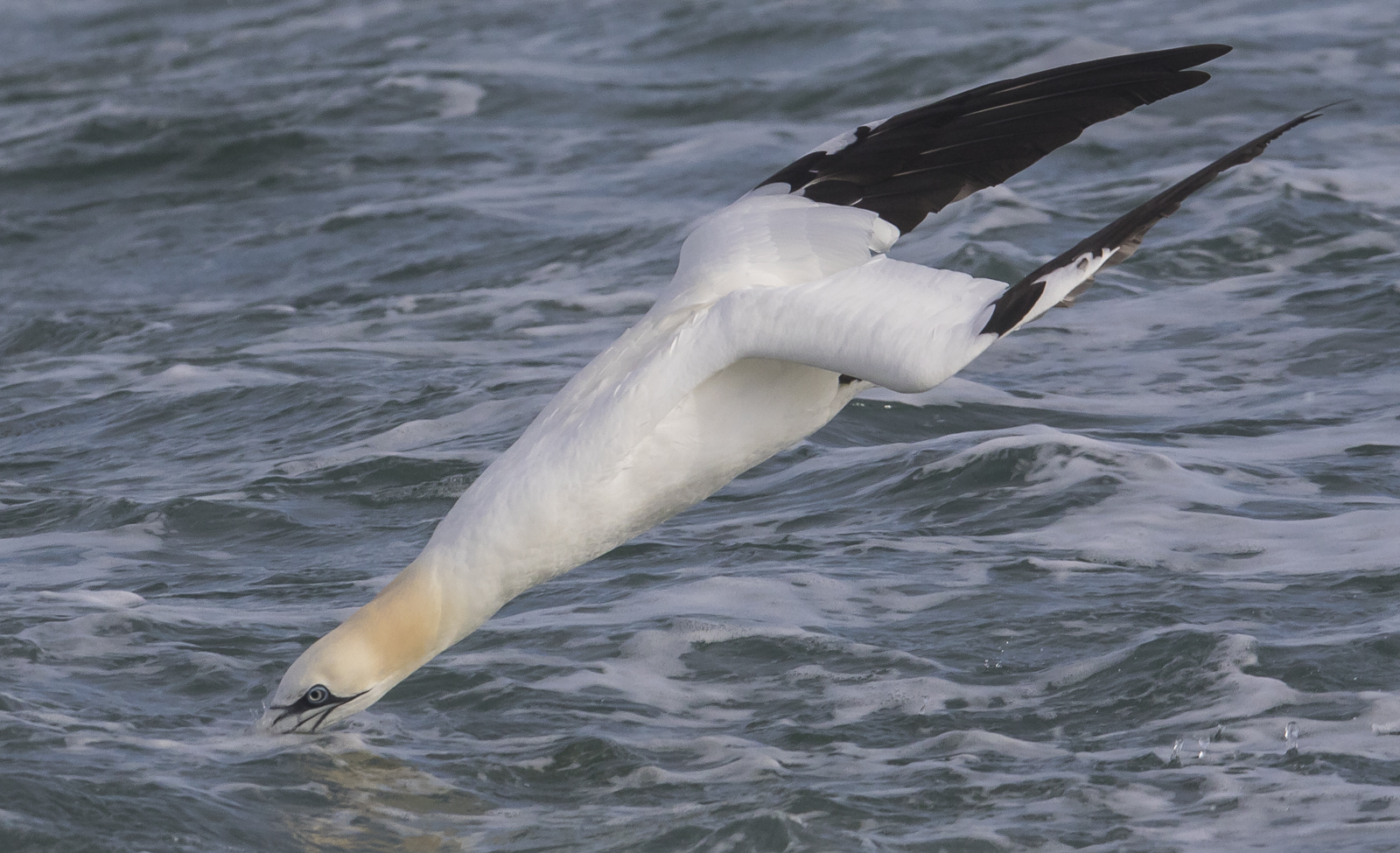
Northern gannet just as it hits the water while diving for fish
I joined a museum trip for an unforgettable cruise off our coast in February. The rapid-fire diving of large numbers of northern gannets was a photographic challenge, and a highlight.
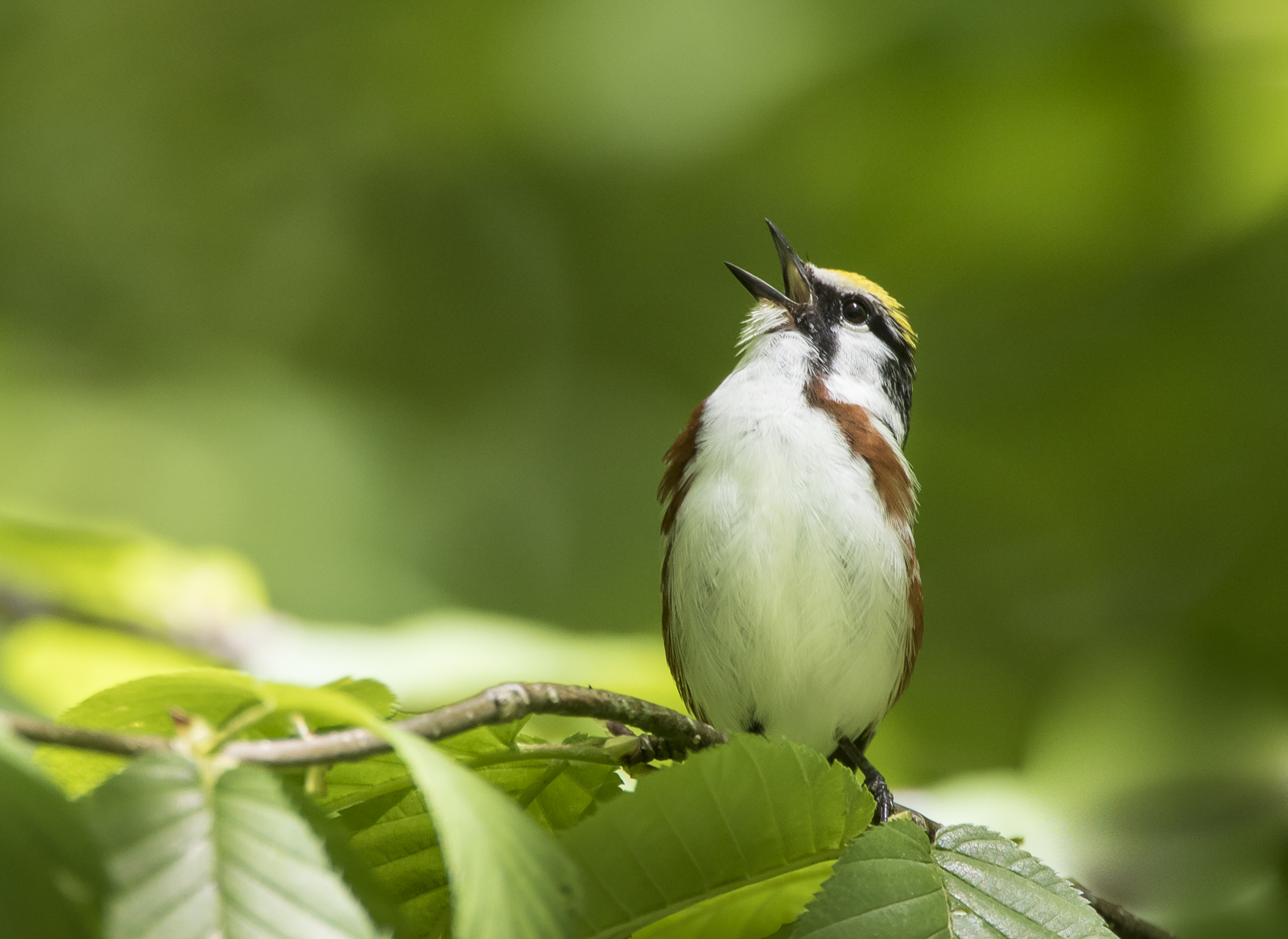
Chestnut-sided warbler belting it out
Another wonderful museum trip was to the opposite end of our beautiful state in search of mountain birds, like this chestnut-sided warbler.
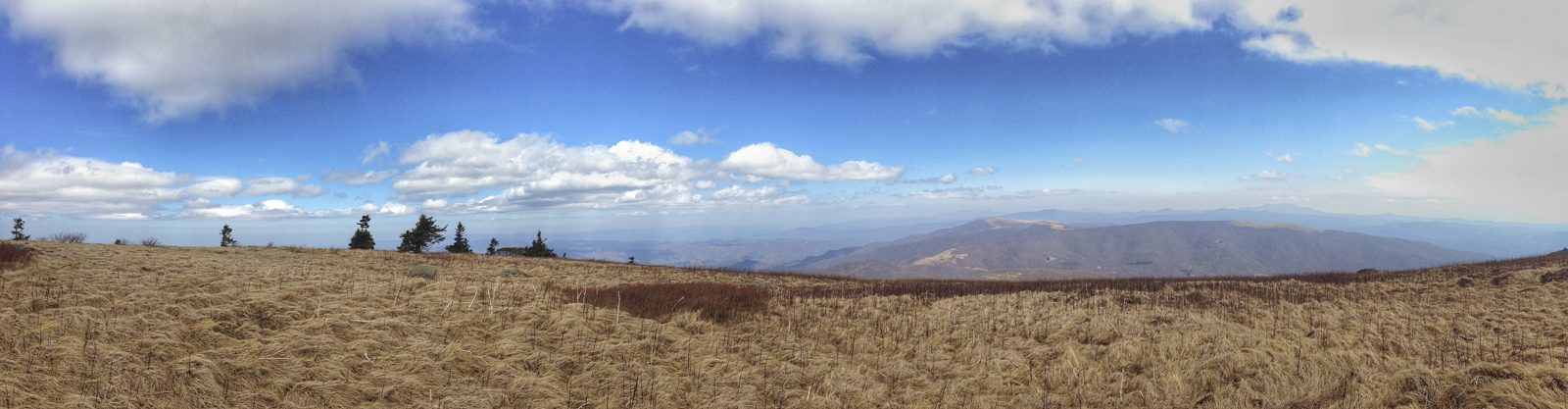
Roan Mountain highlands
Melissa and I hiked part of the Roan Mountain highlands, along with a large group of other visitors…but spectacular nonetheless.
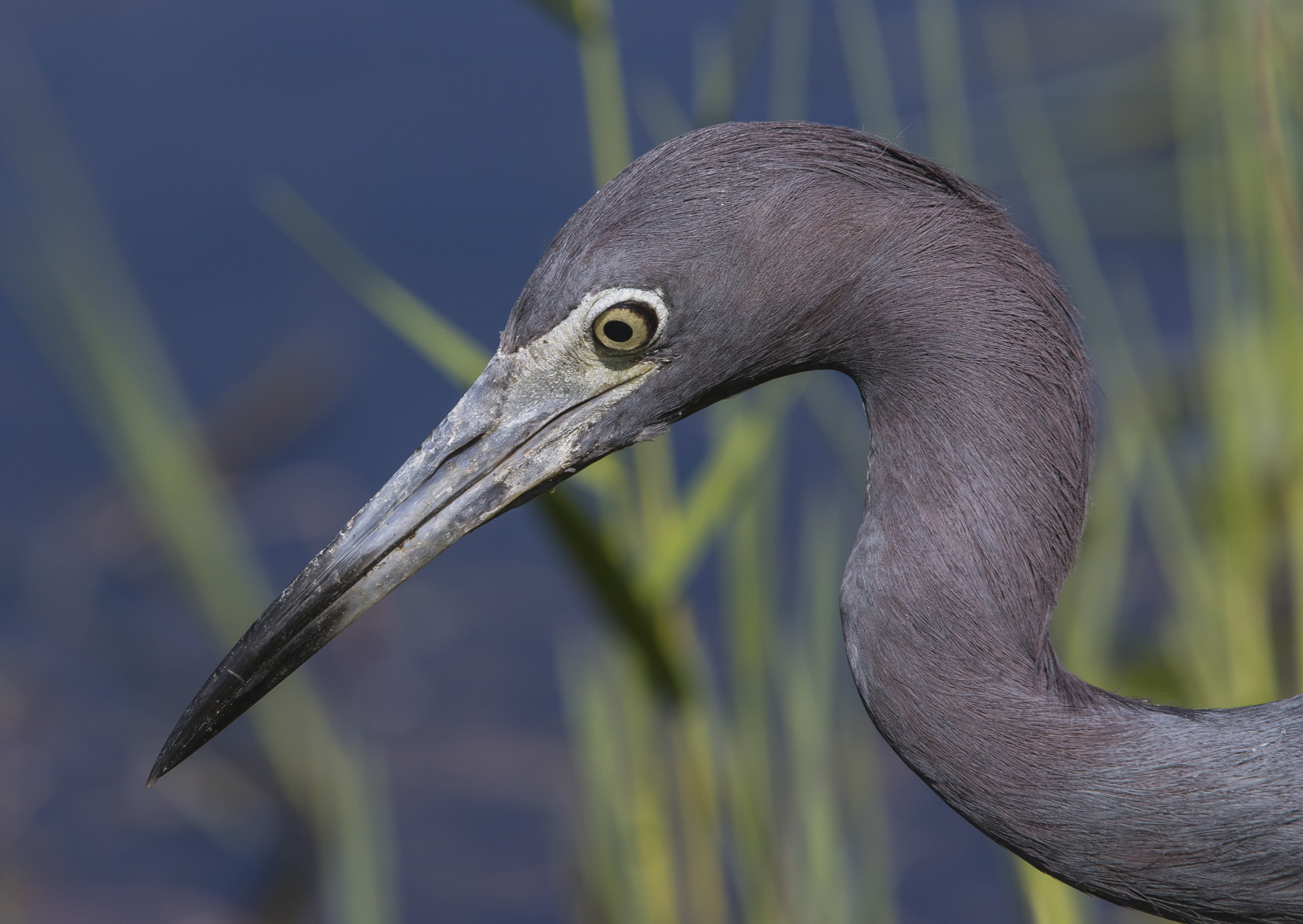
An alligator basking in the sun in Everglades National ParkLittle blue heron next to the trail
I was lucky to lead a trip with friends to Everglades National Park in early spring. Gators and birds were everywhere!
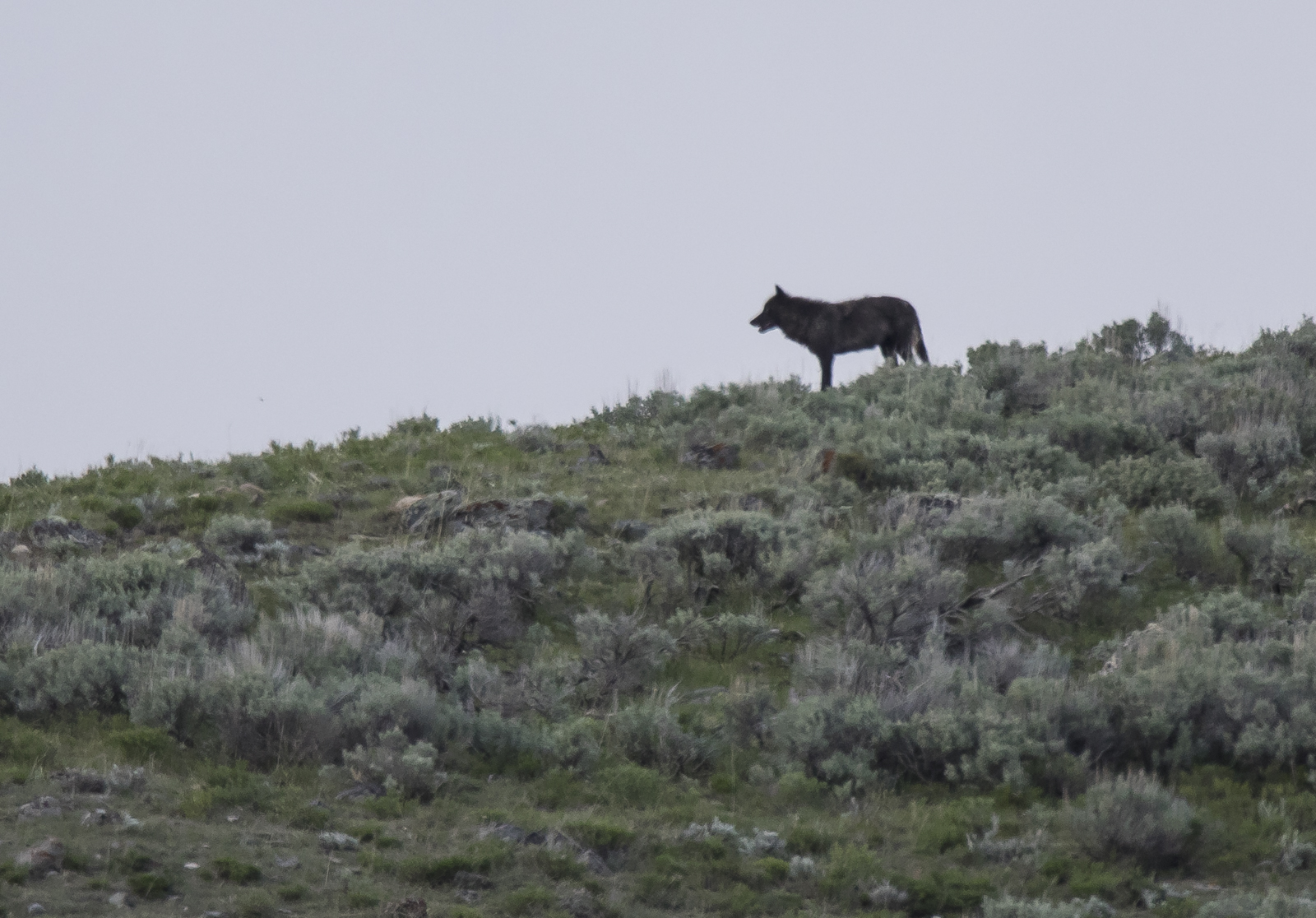
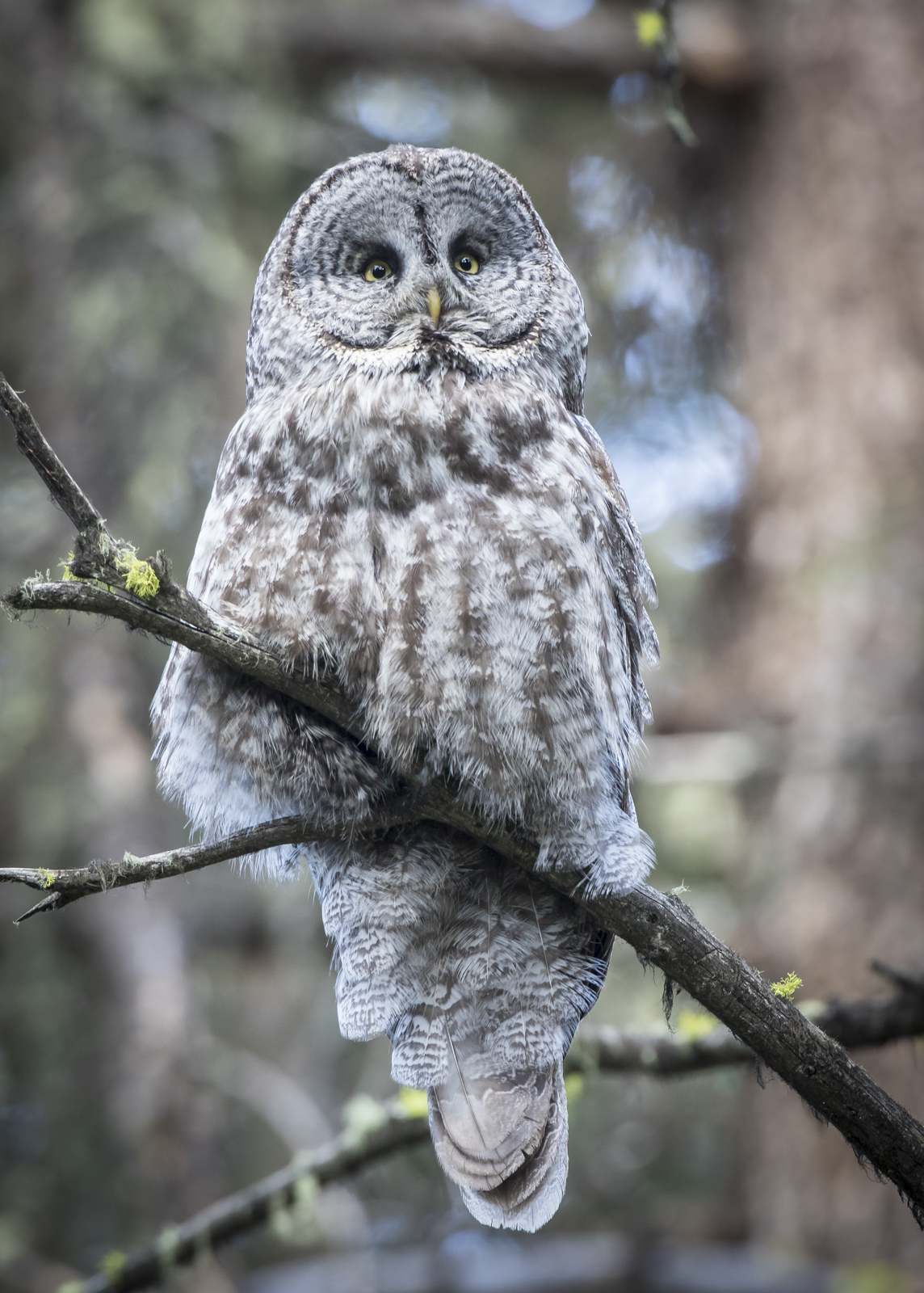
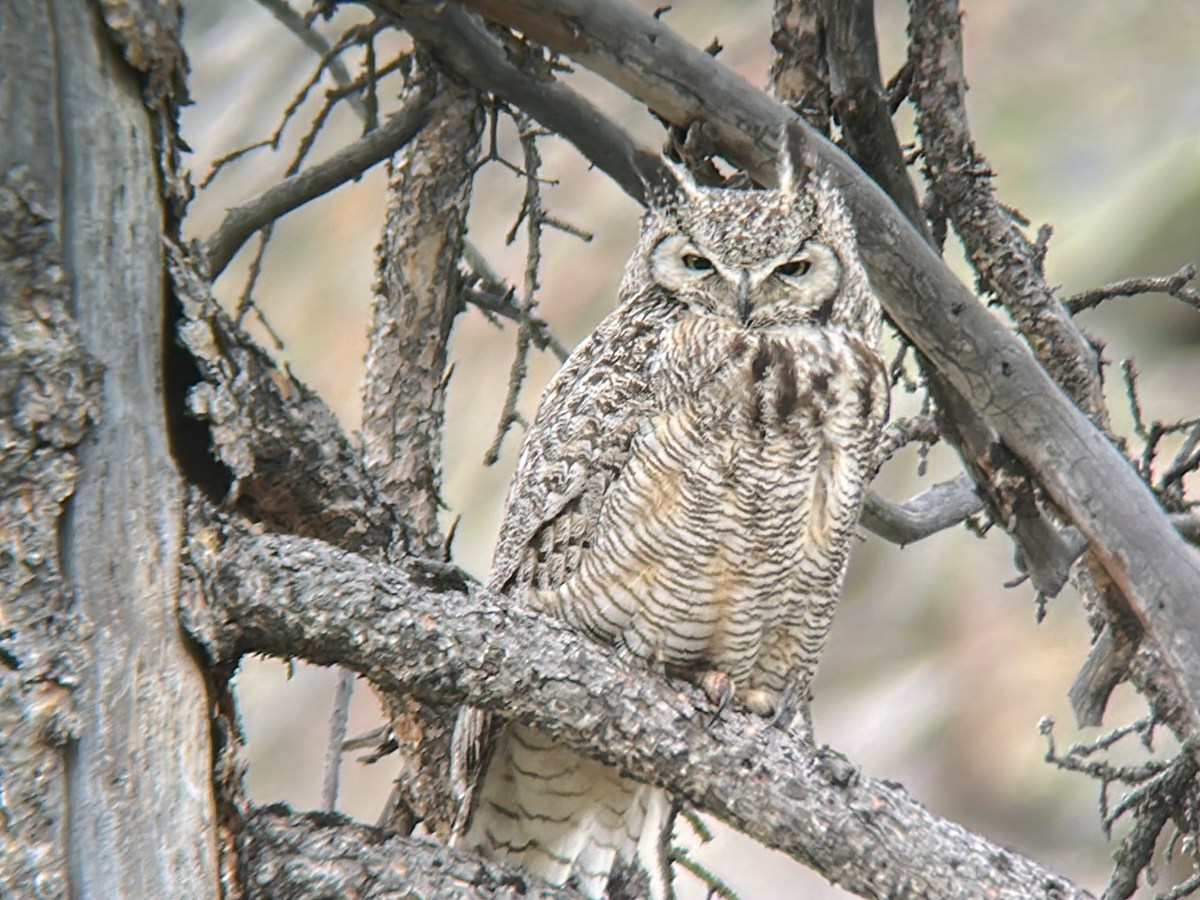
A quiet moment watching a wolf before my group arrivedGreat gray owl just outside the park
Yellowstone is always a highlight in my year. I had a great couple of folks with me, and we had a wonderful time hiking and observing wildlife.
Sunset along the Lost Coast
We backpacked for a few days along the Lost Coast Trail in California when fires and smoke altered our earlier plans for Yosemite.
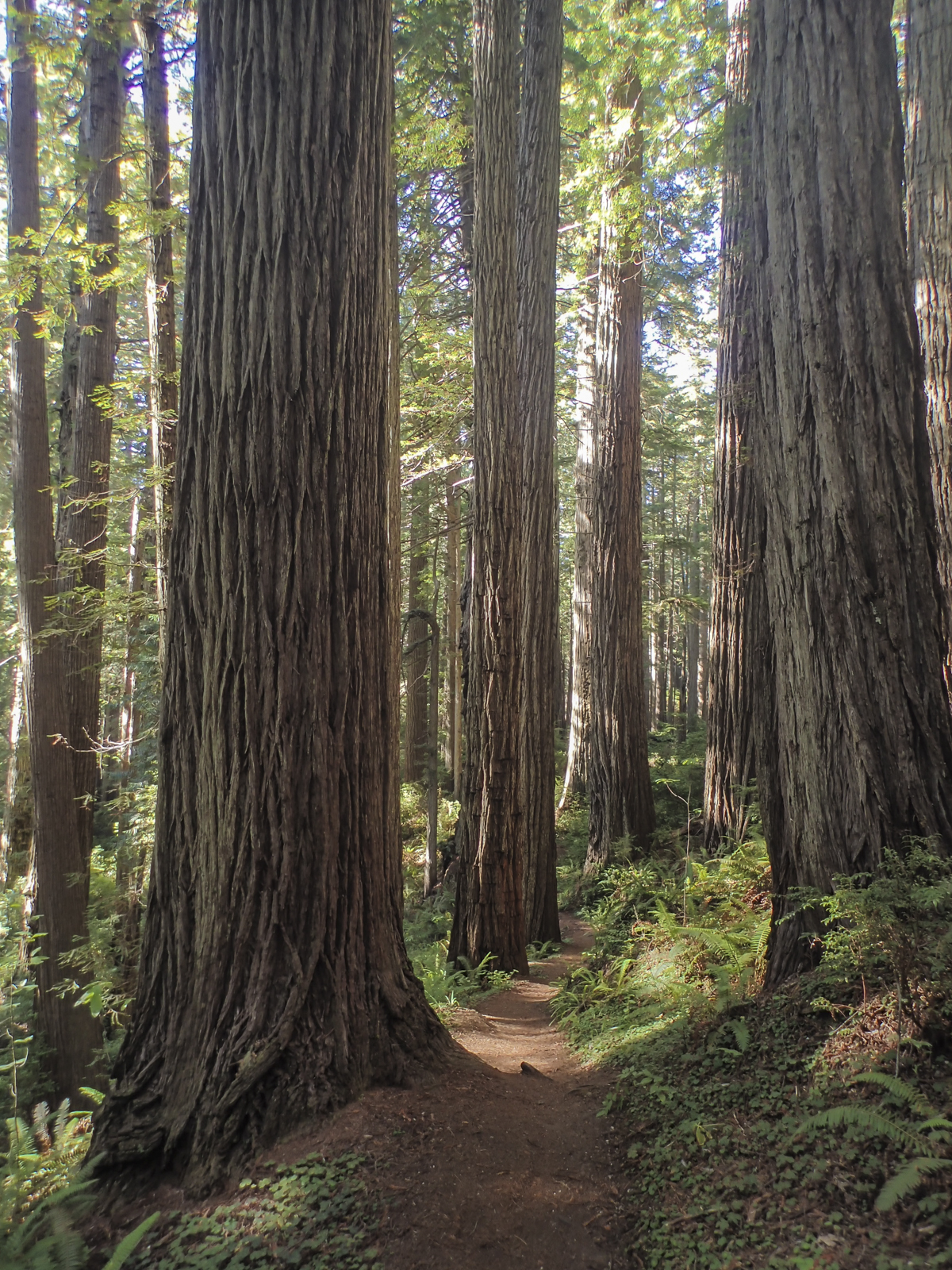
A trail through the redwoods
Hiking among the giant redwoods is a humbling and peaceful experience, something we can all use when times get difficult.
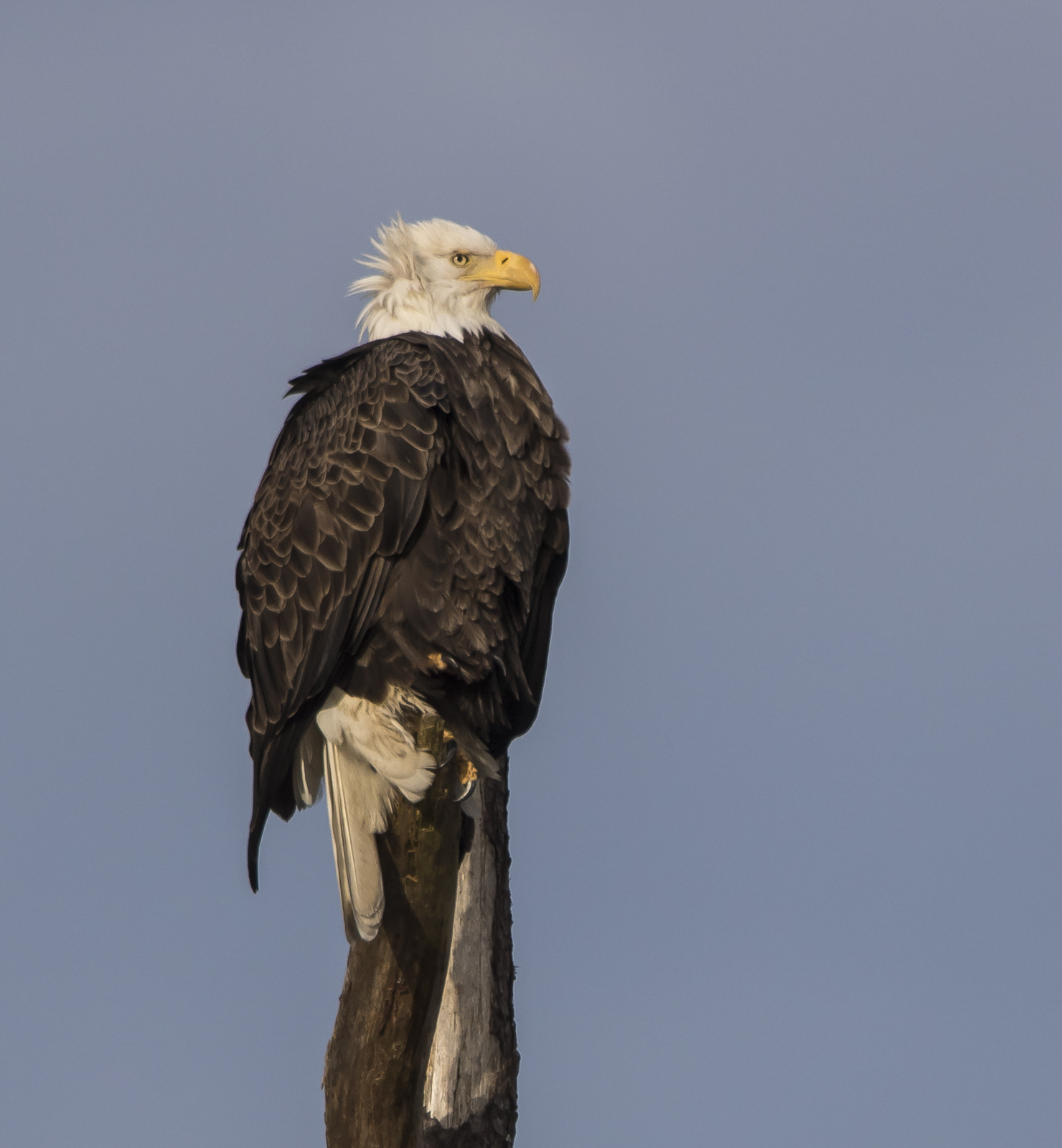
Bald eagle at Chincoteague National Wildlife Refuge
I made a swing north looking for snow geese last November. Not too many of the target species, but plenty of cool sights.
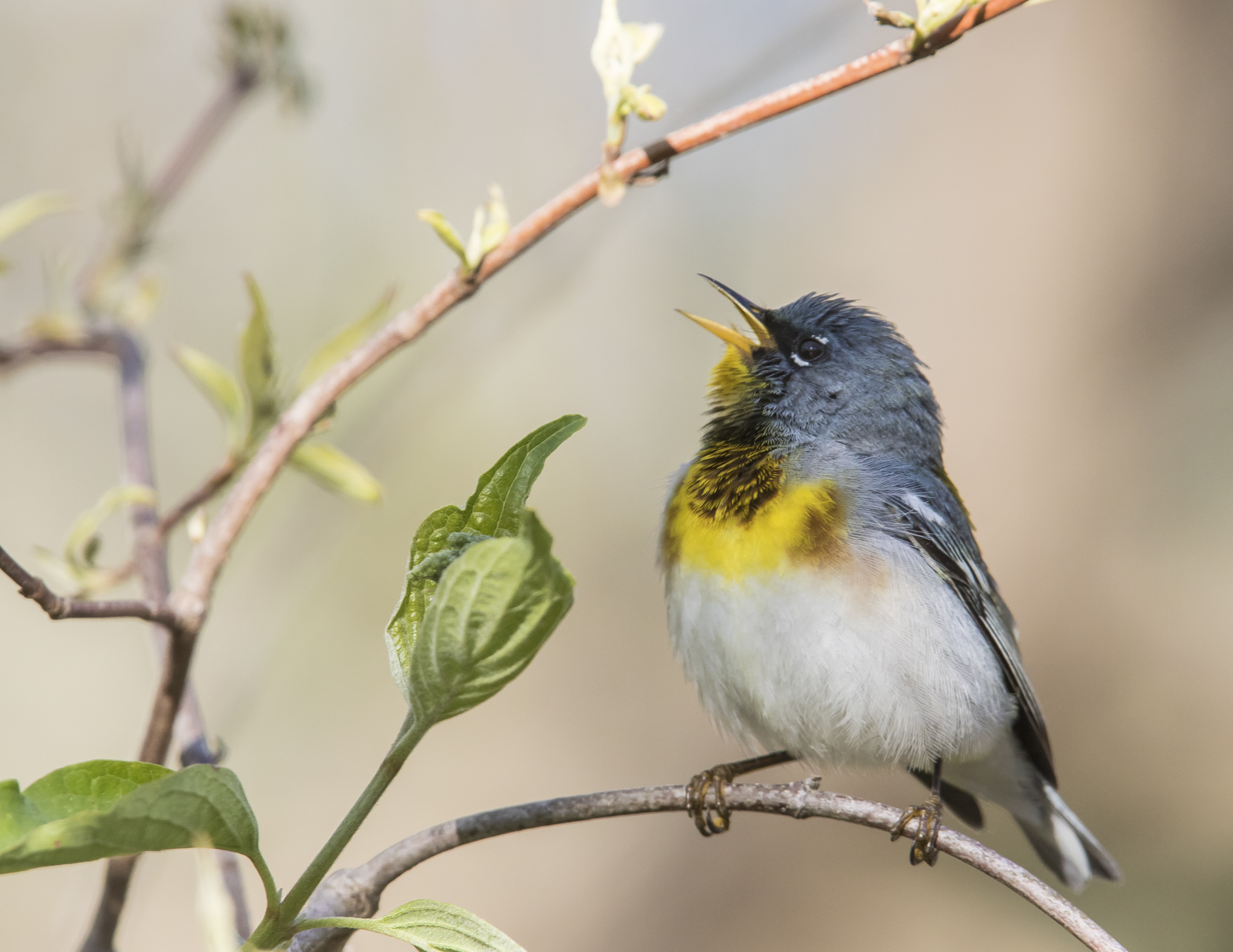
Yellow warbler nest along the boardwalkA northern parula warbler singing
One of the highlights of the year was a trip to famed Magee Marsh along the south shore of Lake Erie in Ohio, perhaps the warbler capitol of the world in spring. Definitely worth the trek.
So, another 100 events and observations of the incredible beauty all around us. I am fortunate to live in an area where there are many wonders just steps outside the door. Many are small wonders, there for the observing and enjoying, if only we take the time. Others were found on a variety of public lands across our state and beyond. It is fitting that this past Saturday was National Public Lands Day, the nation’s largest single-day volunteer effort for pubic lands. Public lands are critical as habitat and for our recreation, education, and health. We owe them our support and our votes in this election season.
Our public lands – whether a national park or monument, wildlife refuge, forest or prairie – make each one of us land-rich. It is our inheritance as citizens of a country called America.
~Terry Tempest Williams, The Hour of the Land: A Personal Topography of America’s National Parks
Nature, in her blind search for life, has filled every possible cranny of the earth with some sort of fantastic creature.
~Joseph Wood Krutch
Here are a few more of the fantastical critters from our scouring of the woods and fields for BugFest…
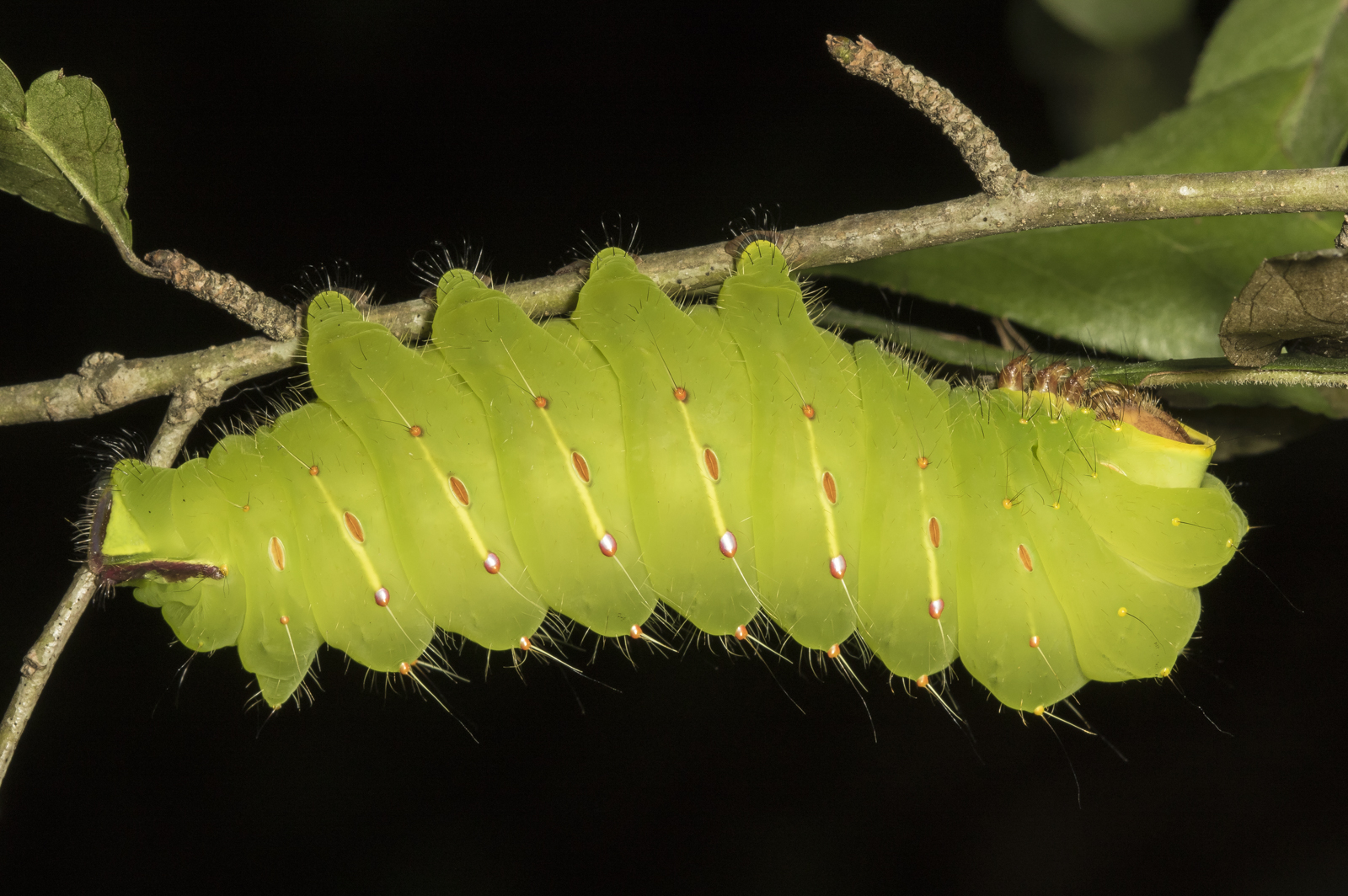
Polyphemus moth caterpillar (click photos to enlarge)
The stars of this year’s caterpillar table were several huge polyphemus moth larvae. We found them on oak, river birch, and red maple this year, and found several on trees at a Chatham County wholesale native plant nursery, Mellow Marsh Farm.
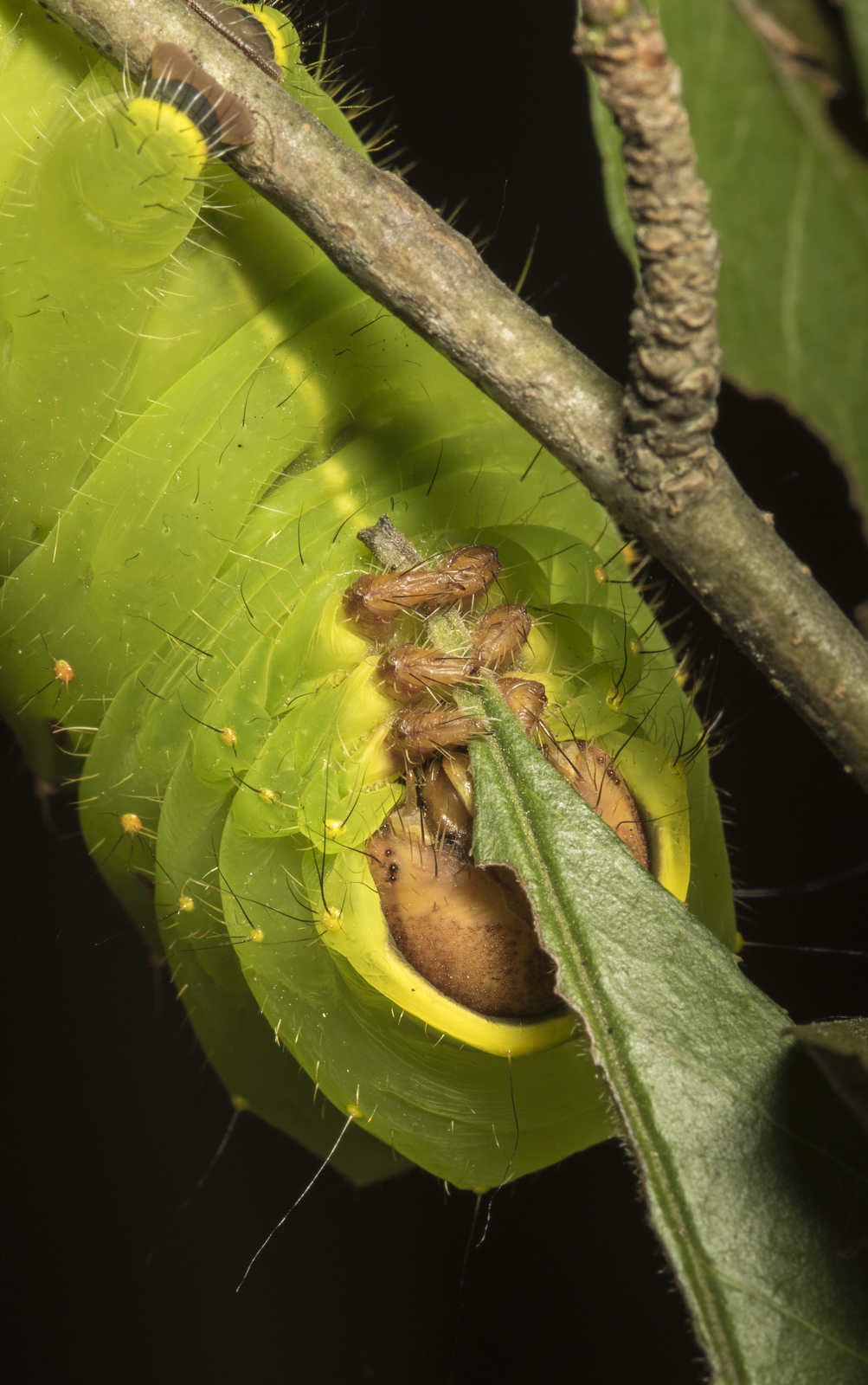
These large larvae are eating machines
I was happy that only one of these eating machines began to pupate before the big day, since it is always a treat to share some of our larger species with the crowds.
Smartweed caterpillar
One of the more striking species we usually find is the smartweed caterpillar. And this year, we actually found it on smartweed (although I think it crawled off to something else when I took this photo), instead of the usual cattail.
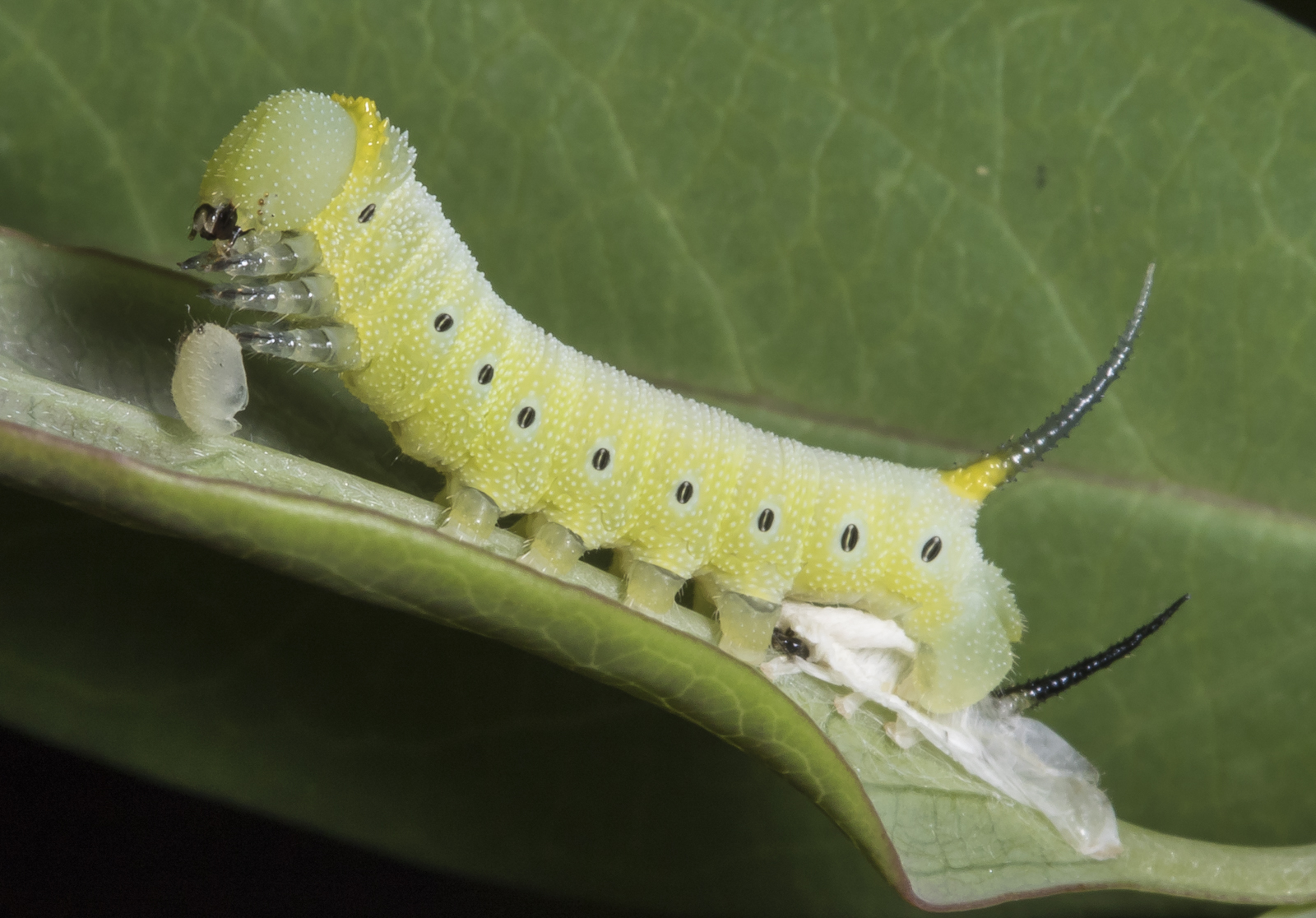
Snowberry clearwing
We borrowed a coral honeysuckle plant from a nearby native plant nursery, Cure Nursery, because it was loaded with feeding snowberry clearwing larvae (these become bumblebee mimic day-flying moths). I caught this one right after it shed (you can see the head capsule just under its legs, and the old tail spike lying with the whitish shed skin behind the caterpillar).
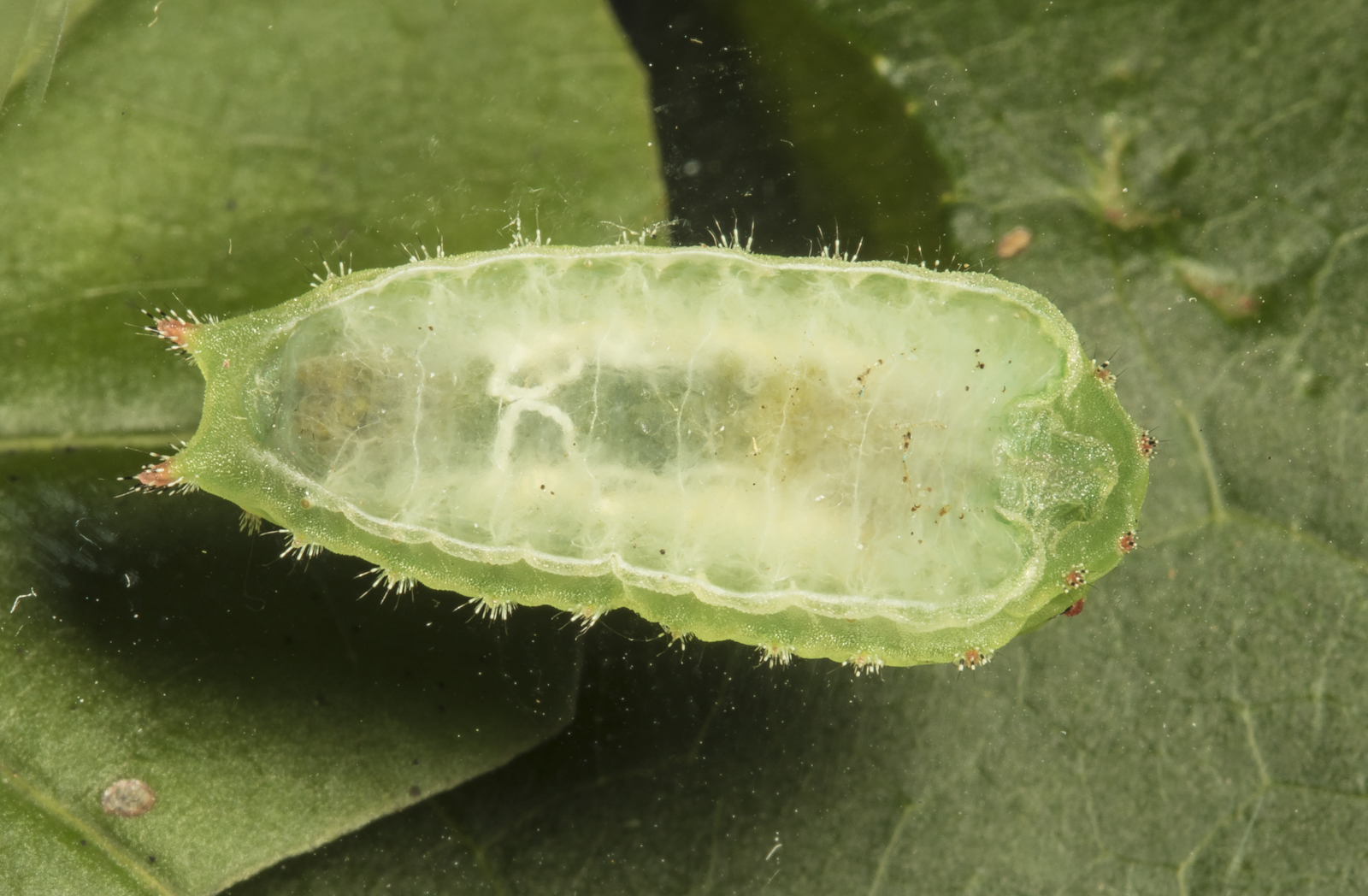
Underside of Nason’s slug caterpillar
The slug caterpillar group is one of my favorites because of their bizarre shapes and colors. We had a Nason’s slug in a petri dish and it obliged by sitting upside down all day so people could see why it is called a slug caterpillar (they lack paired abdominal prolegs that other caterpillars have; they glide rather than crawl).
Crowned slug
One of the more fantastical of the group, the crowned slug, is ringed by what look like feathered tentacles armed with stinging spines. These are always a treat to find and share.
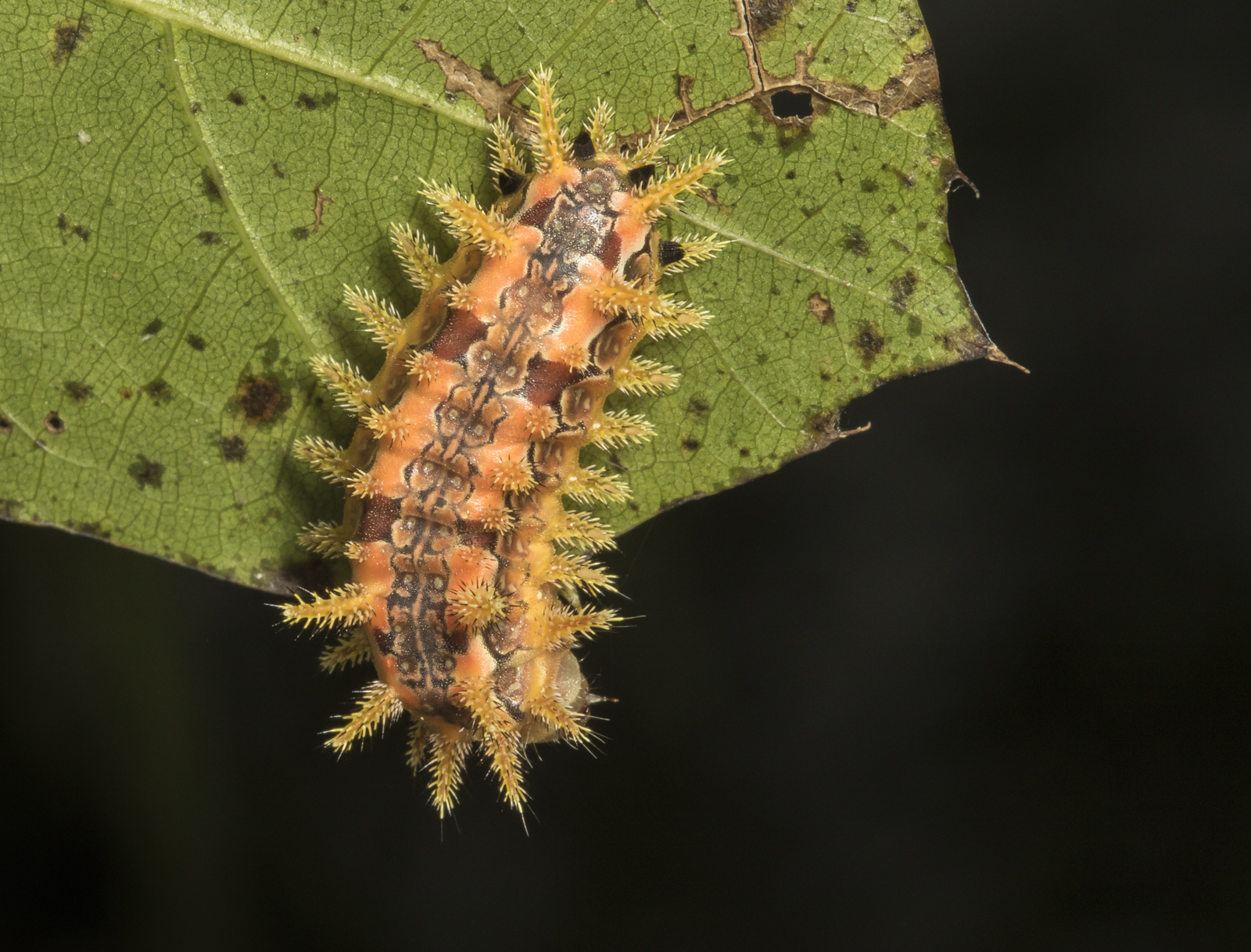
Spiny oak slug
One of the most striking in terms of color from this year was this spiny oak slug. It is a species that can be quite variable in color, but all are beautiful.
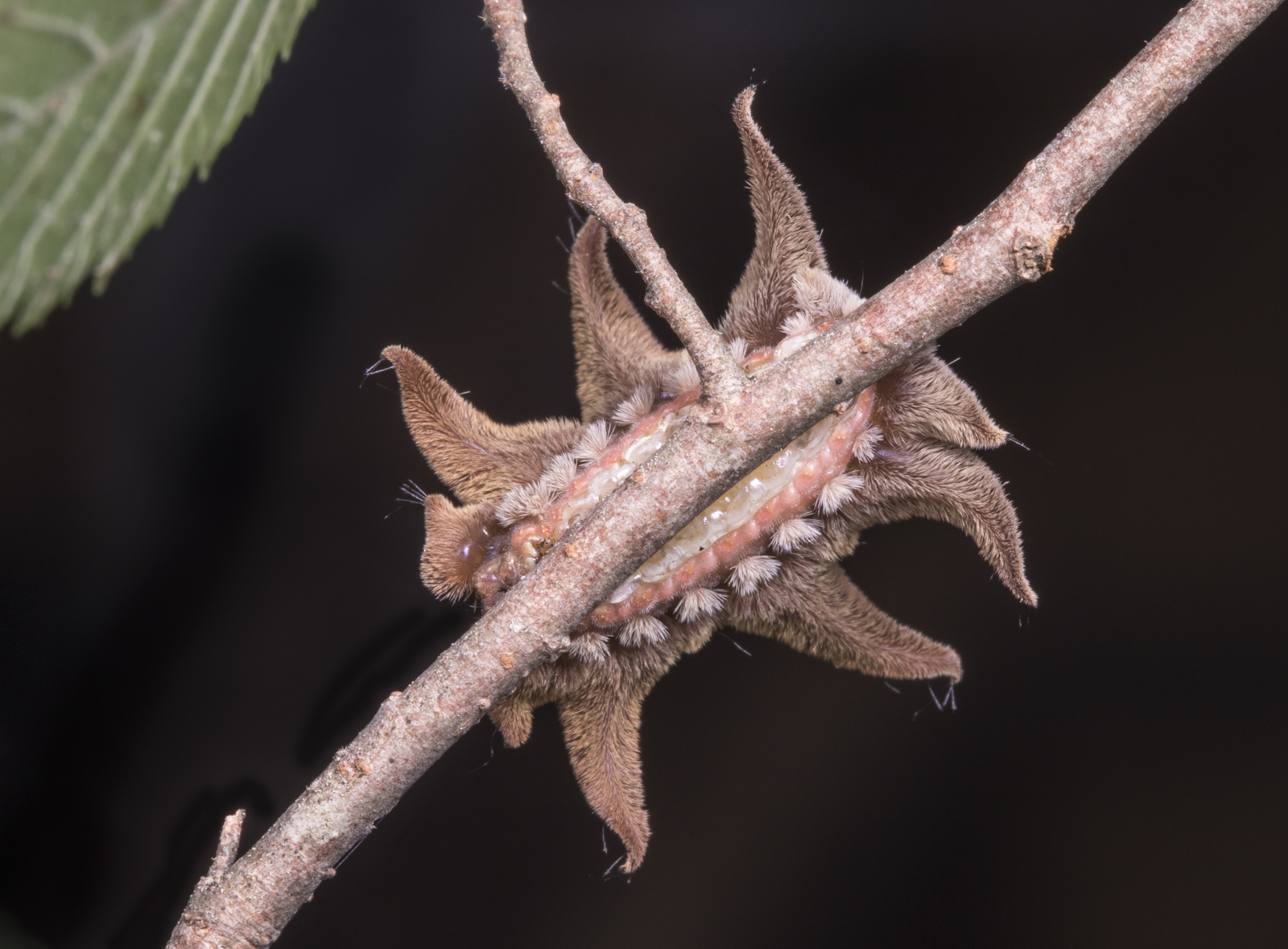
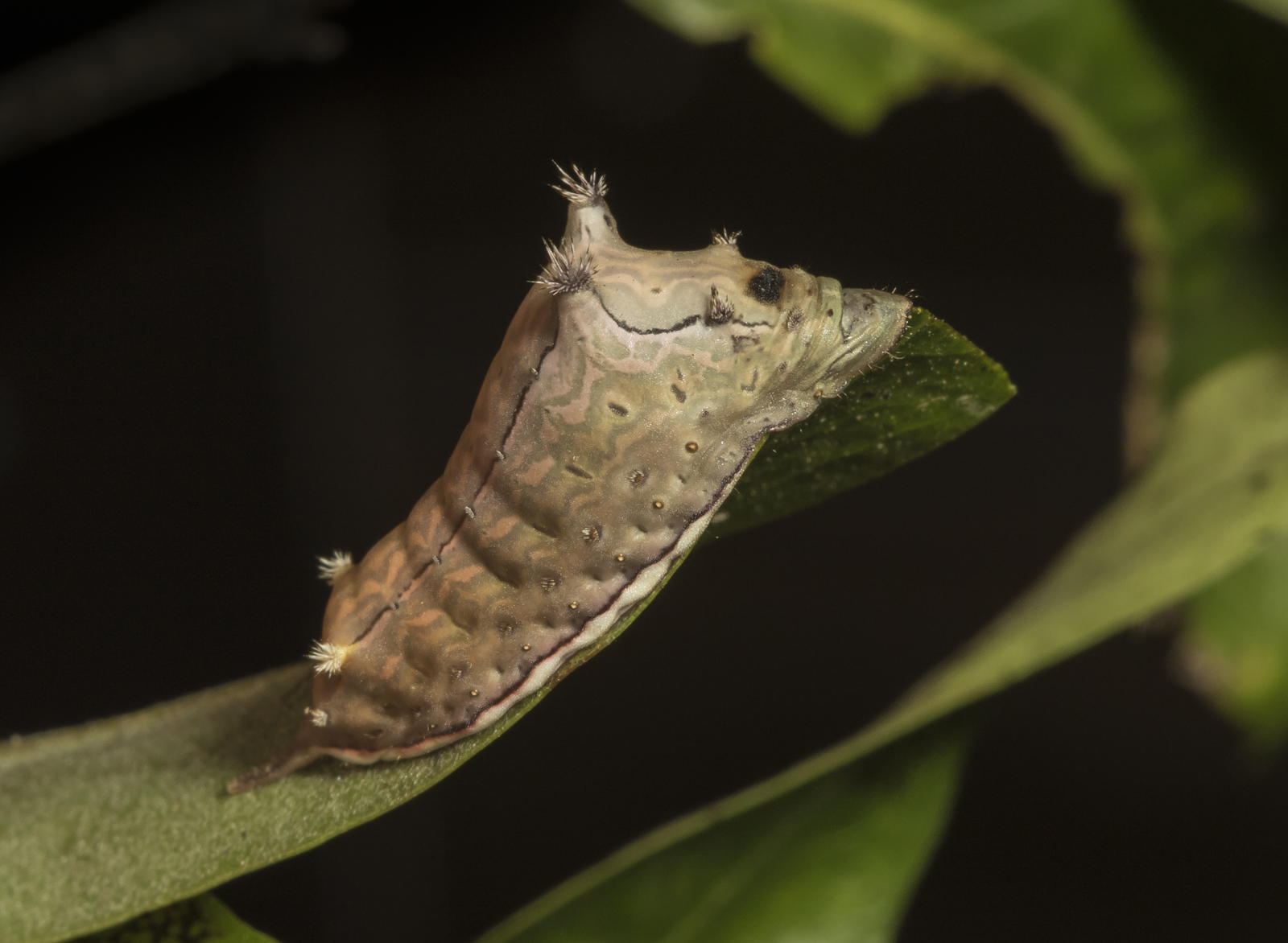
Smaller parasa
My favorite find was one that didn’t last long enough for other people to enjoy it (it pupated the morning of BugFest). But, to be honest, it probably meant more to me than it would have to a lot of other people. Melissa spotted this (somehow) above our heads on a back lit leaf. When we pulled the branch down to see if it was even a caterpillar she had seen, I knew immediately what it was. I had seen it in the field guide a couple of years ago and had wanted to find one ever since (yup, I am a caterpillar nerd for sure).
Smaller parasa moth from two years ago
That page in the book caught my attention when a small beautiful moth came to my window one night a couple of years ago. The gorgeous green helped me identify it as a smaller parasa moth. But when I saw the caterpillar, I really wanted to find one. Well, two years later…
If you have a chance to play in nature, if you are sprayed by a beetle, if the color of a butterfly’s wing comes off on your fingers, if you watch a caterpillar spin its cocoon– you come away with a sense of mystery and uncertainty.
~Michael Crichton
BugFest, the NC Museum of Natural Sciences’ premier special event, is over. Somewhere around 29,000 people visited this year, and, as always, we talked to a lot of them about the caterpillars we collected in the days leading up to the event. A lot of effort goes into preparing for the event, by everyone involved. For us caterpillar wranglers, it means finding and caring for a variety of fascinating critters, and then releasing them all back into the wild. Every year we have specimens that never make it to the big day because they either pupate or have been parasitized and die. So, there are many things that our visitors miss seeing. Here is something that only a few us were privileged to witness this year.
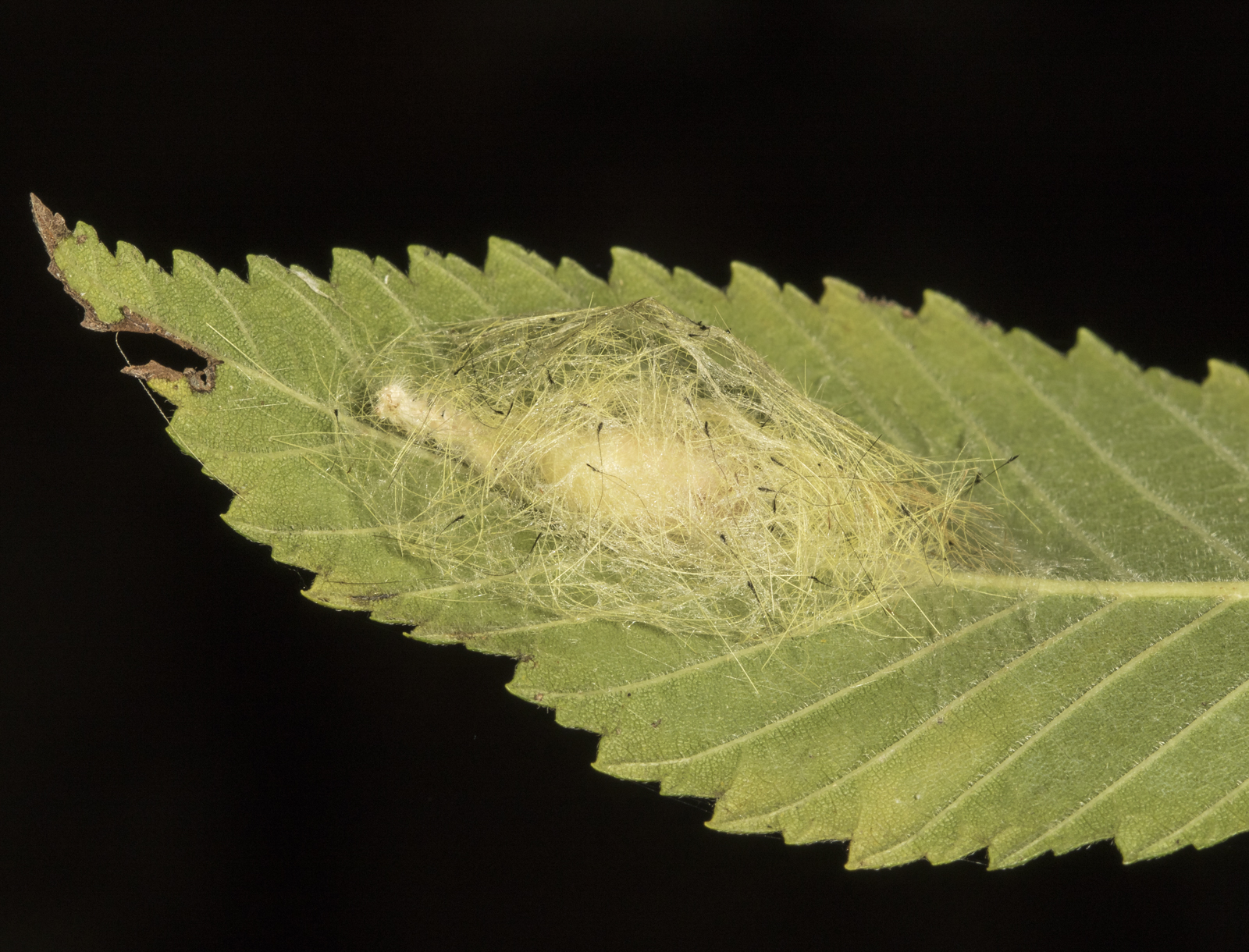
Mystery cocoon (click photos to enlarge)
Let’s start with a mystery. I found this cocoon on a leaf in one of the cages with multiple species of larvae we collected right before BugFest. It reminded me of a tussock moth cocoon of some sort since it appears some of the “hairs” from the caterpillar have been incorporated into the cocoon covering. I didn’t have time to do much with it until after the event. I looked at it more closely, and then remembered we had collected a very nice spotted apatelodes (Apatelodes torrefacta) caterpillar who had started to shed its setae the day before BugFest.
Spotted apatelodes caterpillar
I was disappointed at the time, because these large larvae are certainly in the cute category of caterpillars, especially if you manage to get a look at their undersides…
This caterpillar looks like it is wearing red socks
They are one of the only larvae I know that dress like a friend of mine from my museum days (you know who you are) and wear outlandishly bright “socks” (in this case, red, instead of the purple ones my friend still wears). When I realized I had not seen the pupa of this particular specimen, I googled it, and there it was, mystery solved – it is a spotted apatelodes cocoon.
I’ll share a few more of the leftovers from our caterpillar collecting efforts in the next post.
The insect world is nature`s most astonishing phenomenon. Nothing is impossible to it; the most improbable things occur there.
~Rachel Carson
Last week we were looking for caterpillars for this past weekends’ BugFest event, and ended up making a couple of nocturnal excursions (it is often easier to see cryptic caterpillars at night by the light of a flashlight or UV flashlight). One location had a mix of meadows and forest along a gravel road. As I scanned the edge, a bright spot caught my eye.
Cloudless sulfur butterfly resting under a leaf after dark (click photos to enlarge)
It was a cloudless sulfur butterfly perched under a sweet gum leaf for the night. I don’t often get a chance to see roosting butterflies, so this was a treat. The flash didn’t seem to bother it, but it did illuminate something else just to the side of the sleeping sulfur.
From this angle, it was hard to tell what it was (can you?)…
At first glance, all I could tell was that some insect was molting, but it was very odd-looking from the ventral side.
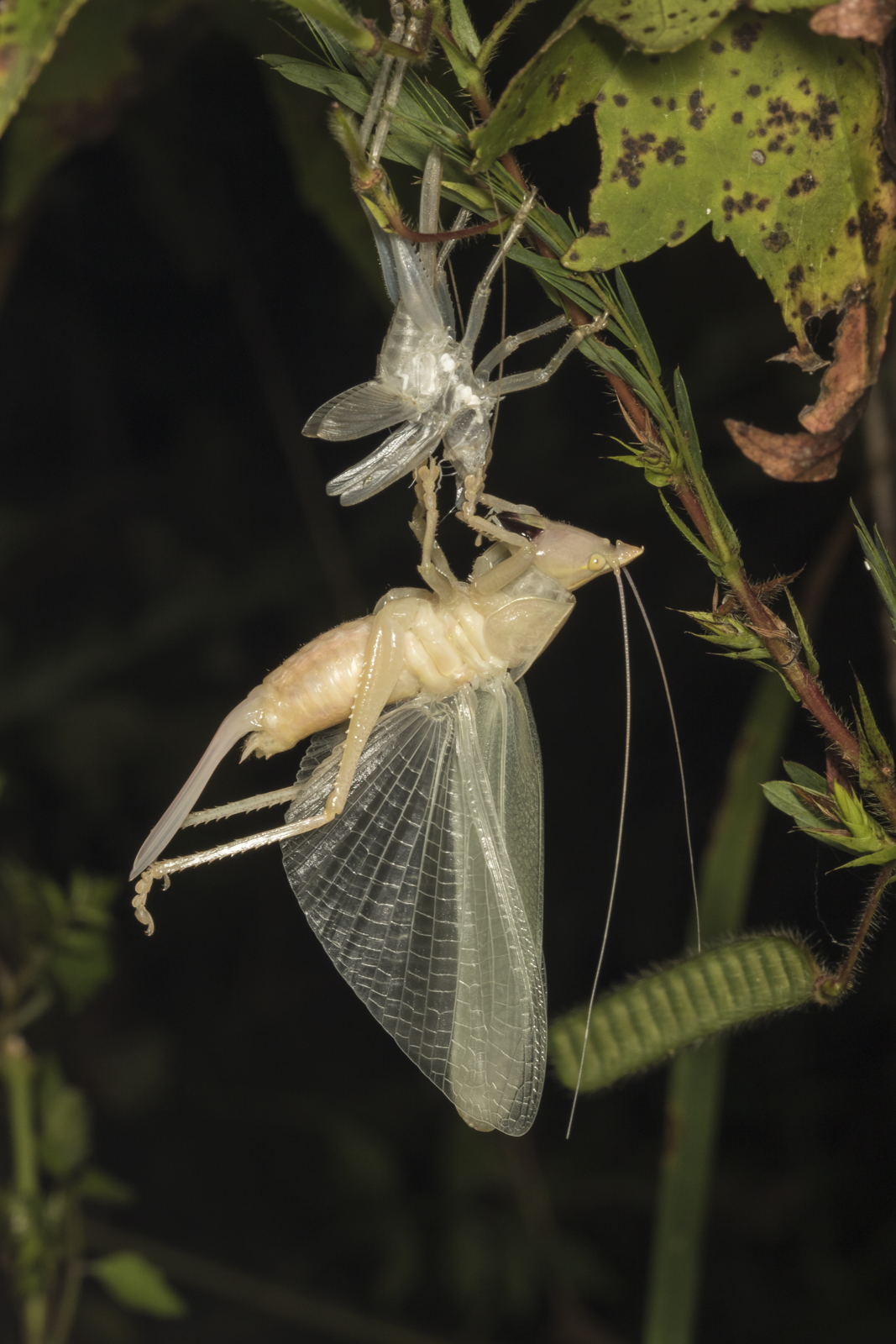
Another view and it looked like some sort of katydid in the process of shedding
I moved to get a better view of the side of the insect and guessed it to be some sort of katydid caught in the act of shedding its exoskeleton. Arthropods must shed their hardened exterior “skin” in order to grow, a process we call molting, or ecdysis. The process is initiated by hormones and involves growing a new cuticle under the old one, then increasing the internal pressure, so that the outer skin splits. The katydid then pulls itself out head first, and hangs underneath until the new skin hardens. These insects undergo what is known as incomplete metamorphosis that progresses from egg to nymph to adult. The young stages resemble the adults, but usually have incomplete wings, and often disproportionate body parts relative to the final stage. Butterflies, in contrast, undergo complete metamorphosis with 4 stages – egg, larva, pupa, adult. Molting is both a necessary and a hazardous process – necessary in order to grow and mature; hazardous in that things can go wrong. Molting takes time, and the insect is very vulnerable during this process due to its inactivity and softened cuticle. This is why many insects tend to molt at night or early in the morning, when there is less chance of being seen by potential predators. I stumbled upon this one shedding at about 8:51 p.m. I took a couple of images and continued on our caterpillar quest. I returned via the same path and stopped to check on the katydids’ progress.
It had pulled all the way out of the old skin by 9:32 p.m.
About 40 minutes had passed, and the katydid was all the way out of its old skin, but still had a ways to go to harden its new exoskeleton and change into its adult color. I did see that is is a female with a long sword-like egg-laying appendage (ovipositor) protruding out its back end. This looks like the final molt based on the ovipositor and the size of the new wings. By the looks of it, I am guessing this whole procedure may take a few hours before the katydid is ready to resume normal activities. I wished her well, and we headed back to the car, a few caterpillars in hand, and a memory of another astonishing phenomenon of the insect world.
One minute poised in midair, apparently motionless before a flower while draining the nectar from its deep cup—though the humming of its wings tells that it is suspended there by no magic—the next instant it has flashed out of sight as if a fairy’s wand had made it suddenly invisible.
~Neltje Blanchan, 1923
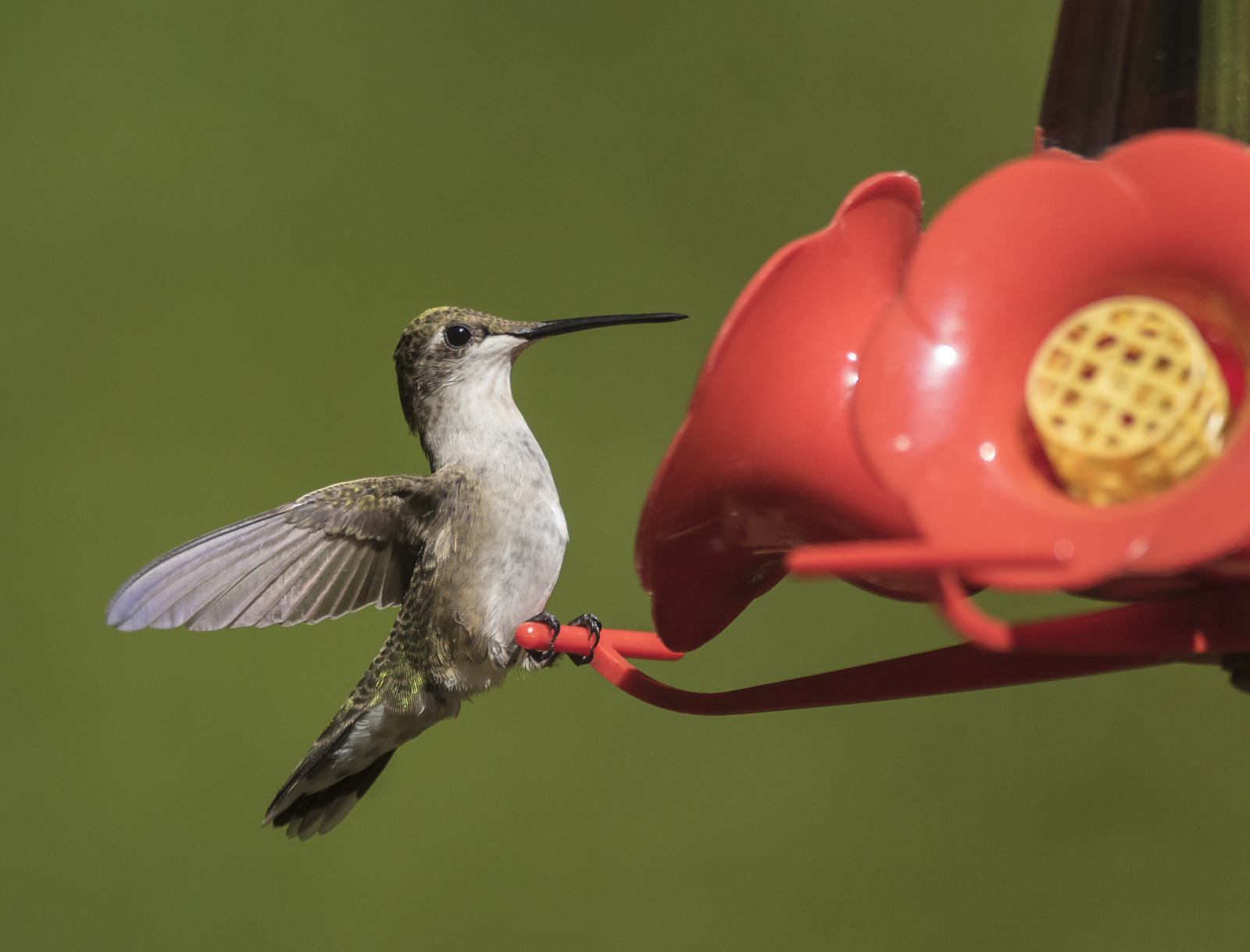
Hummingbird on a feeder (click photos to enlarge)
It seems the hummingbirds have been zipping about the yard with added intensity these past couple of weeks. Maybe they are like me and it is the heat that is making them grumpy. Or maybe they know the season is about to change, and that they will soon need to move on, so they had better stock up for the long flight. Whatever the reason, it has been quite a show at the feeders and flowers scattered around the yard. I typically see 4 or 5 of the tiny jet fighters at once, meaning there are probably 4 or 5 times that many around the yard. Our place is so shaded that it is hard to find a good sunny spot to photograph them other than in the morning, when the sun highlights the pathway to one of the feeders on the front porch. The past few days have found me standing out in the yard, watching their comings and goings, and trying to capture a few moments of their hectic lives.
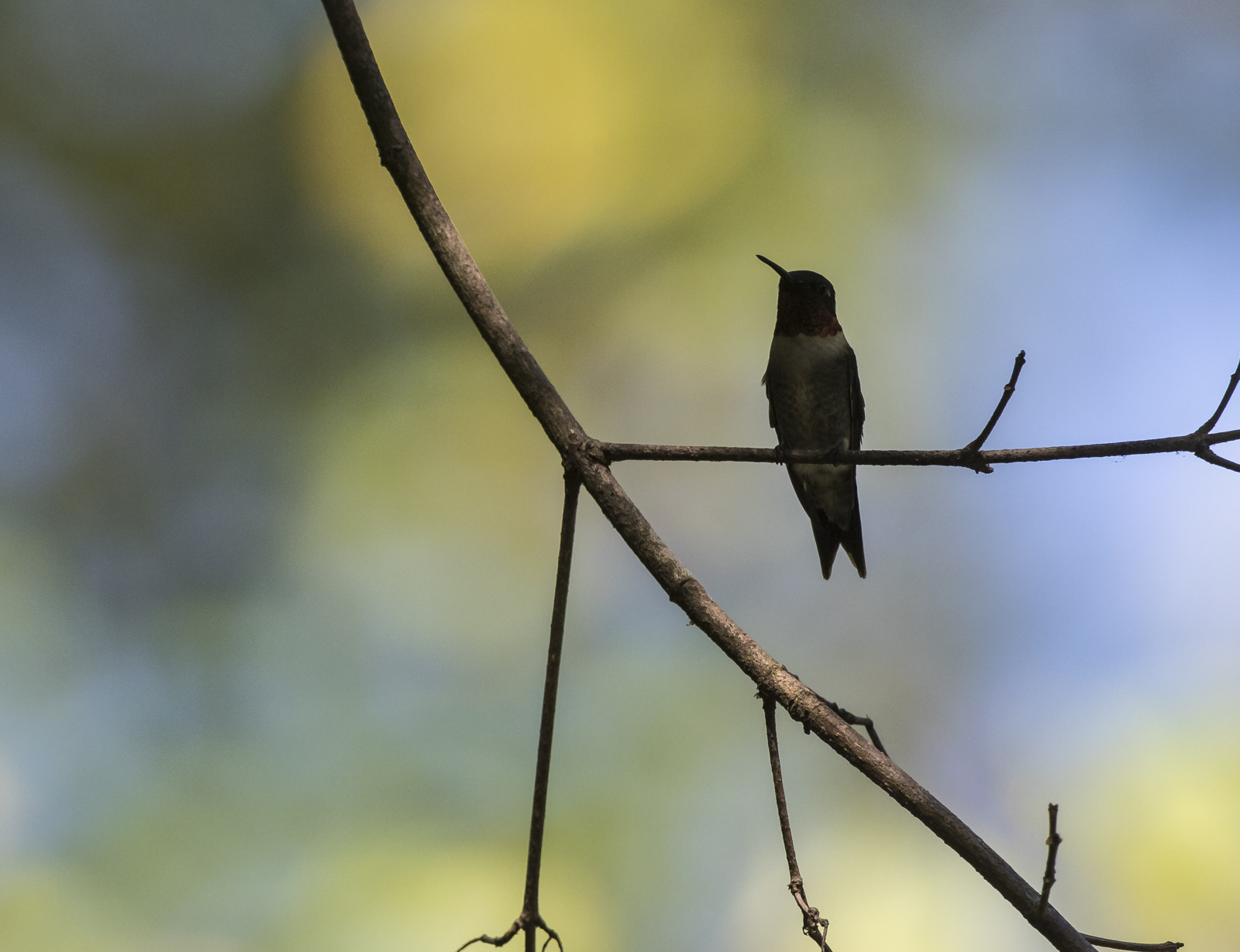
Hummingbird surveying his domain
Hummingbirds tend to perch near their favorite feeders/flowers, guarding them against interlopers that might get some of “their” nectar. One bird likes a particular dead branch hanging out over the front walkway.
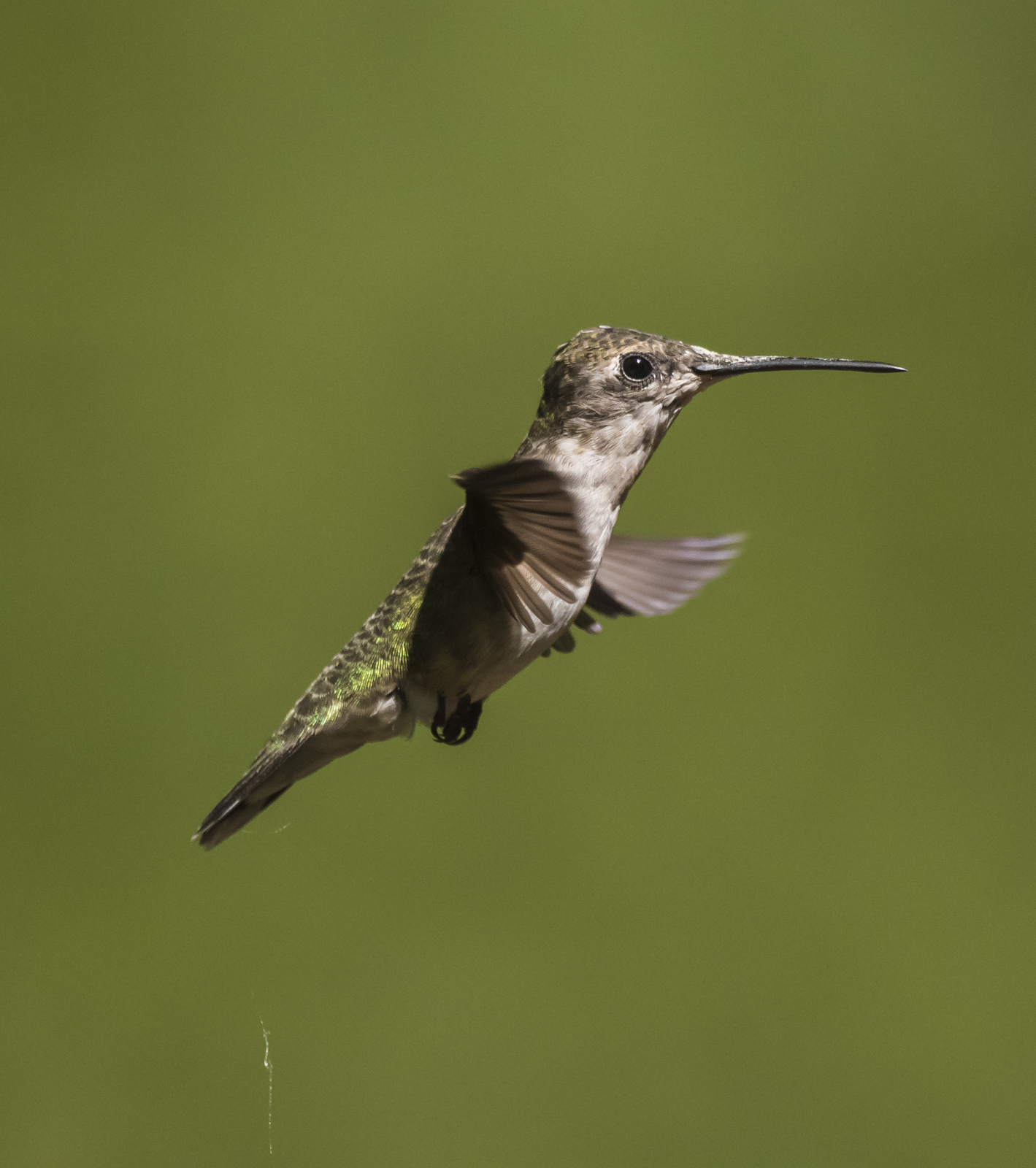
Hummingbird in mid-air (note – it is excreting as it hovers)
While things at the feeder can be frenetic, I spent a lot of time standing and waiting. Studies have shown that hummingbirds feed, on average, 5-8 times per hour, but only for 30 – 60 seconds at each feeding.
This one has kicked it in to overdrive as it approaches a feeder
But when they do move in, they do it with gusto. There is nothing subtle about their flight. They are pure aerial acrobats, and a joy to watch. Here are some incredible facts about hummingbirds from two sources: The Hummingbird Book, by Donald and Lillian Stokes; and Operation RubyThroat: The Hummingbird Project.
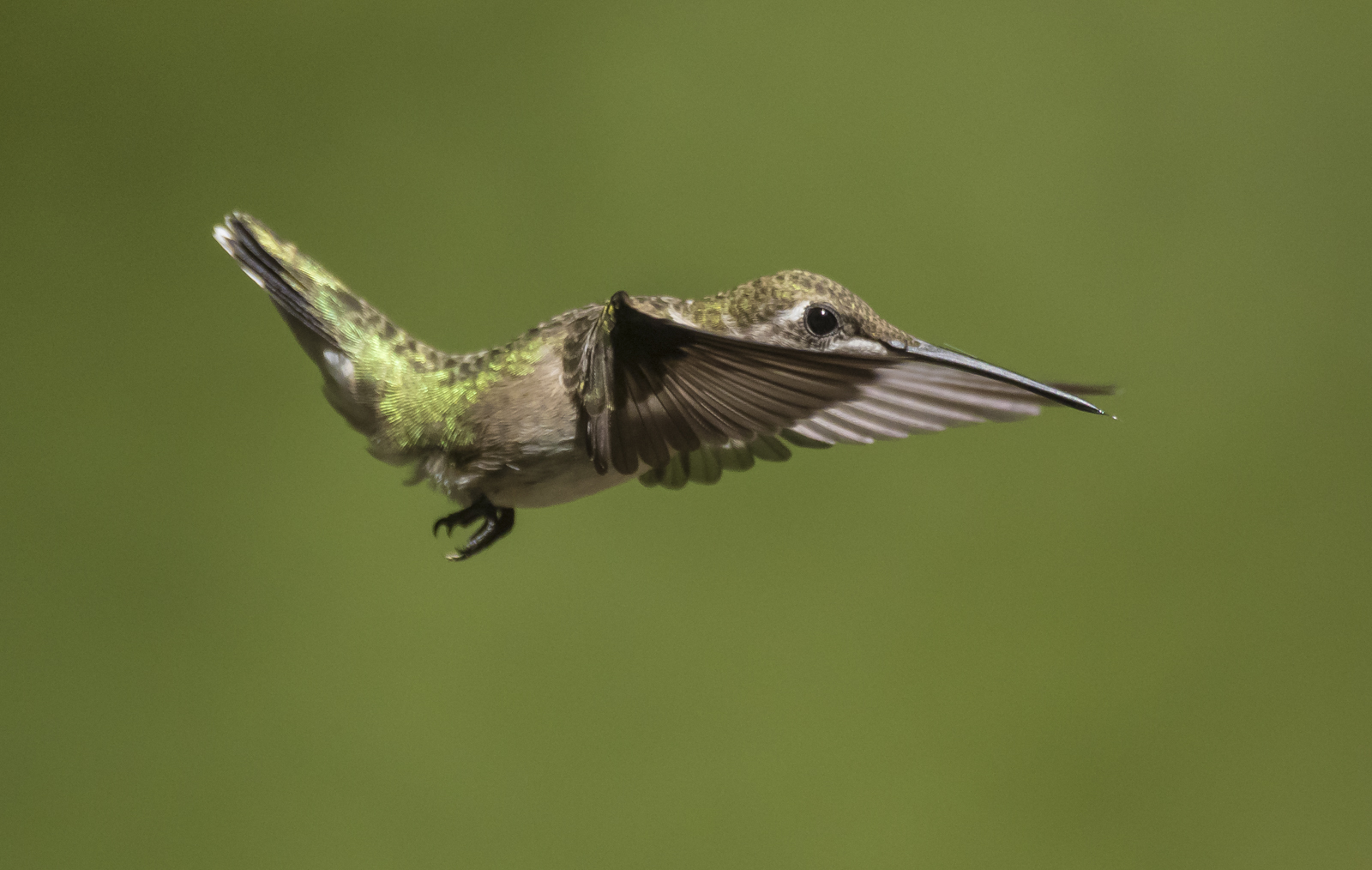
A hummingbird hovering
Hummingbirds have the amazing ability to fly forward at speeds up to 50 miles per hour, can hover, fly backward, and even upside down briefly. The number of wing beats is also impressive – 60 times per second in normal flight; up to 200 times per second in courtship flight dives.
Hummingbirds hover better than other birds
Their unusual wing structure allows hummingbirds to hover better than most other species. Unlike other birds, the bones in the wing of a hummingbird are fixed, except at the shoulder joint, which can move in all directions.
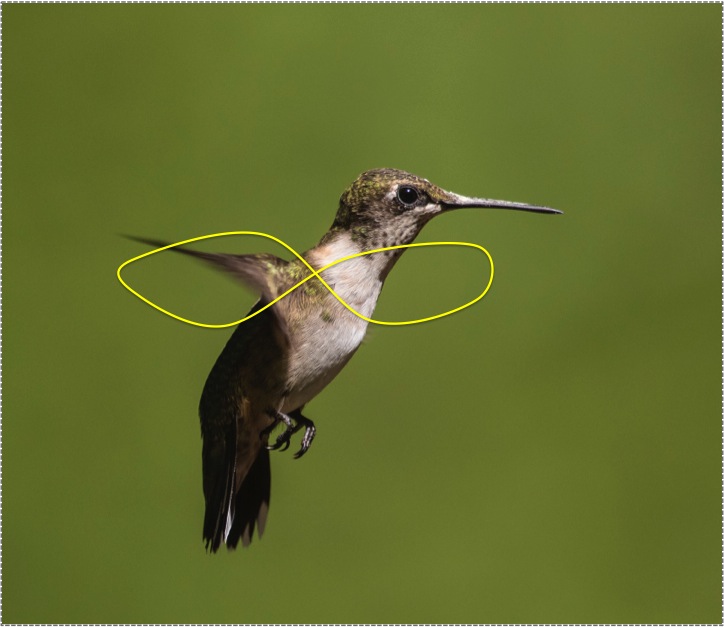
Wing motion of a hovering hummingbird
While hovering, a hummingbird’s wing moves forward and then the leading edge rotates almost 180 degrees, and moves back. As this motion is repeated, the tips of the wings trace a horizontal figure eight in the air.
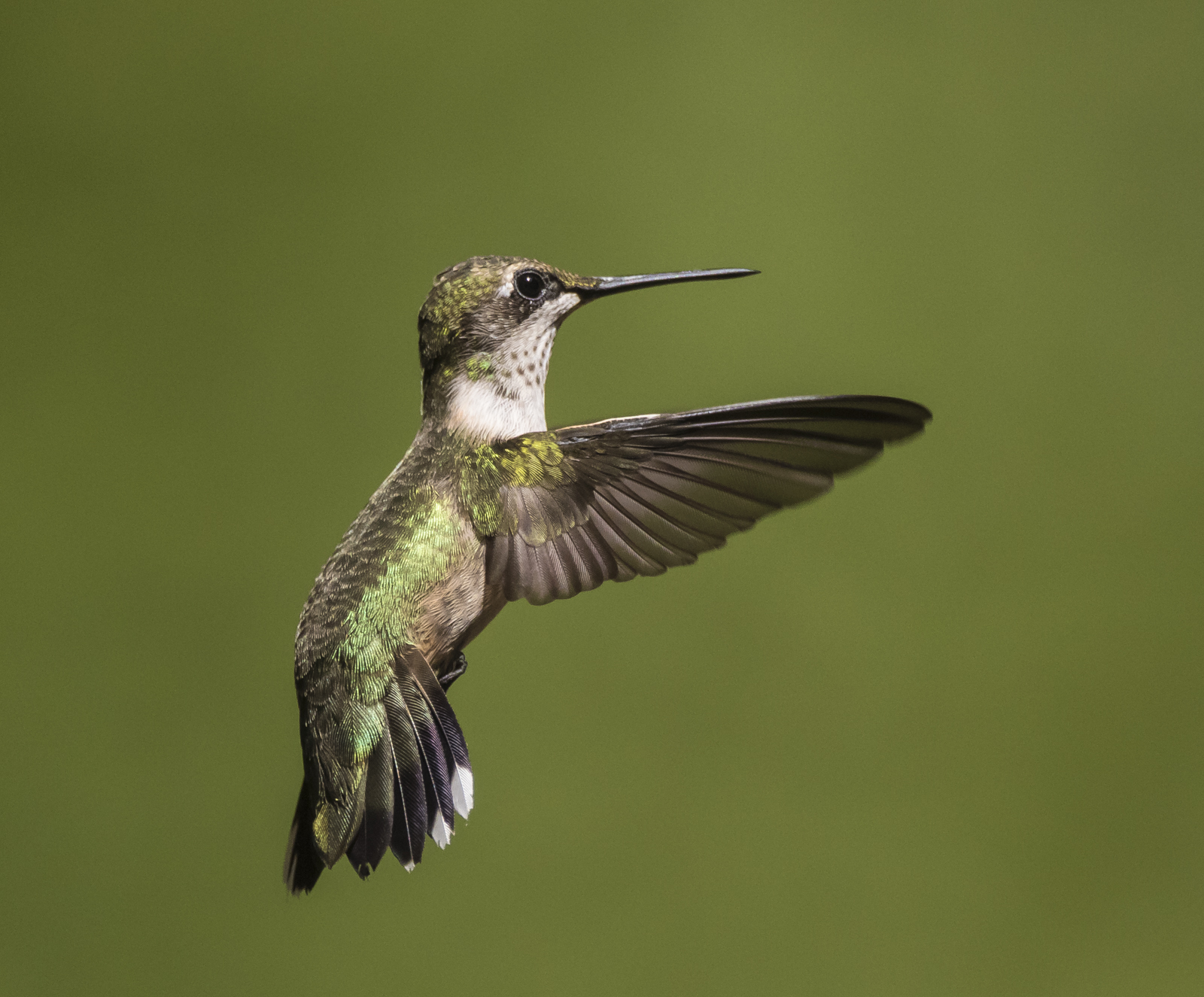
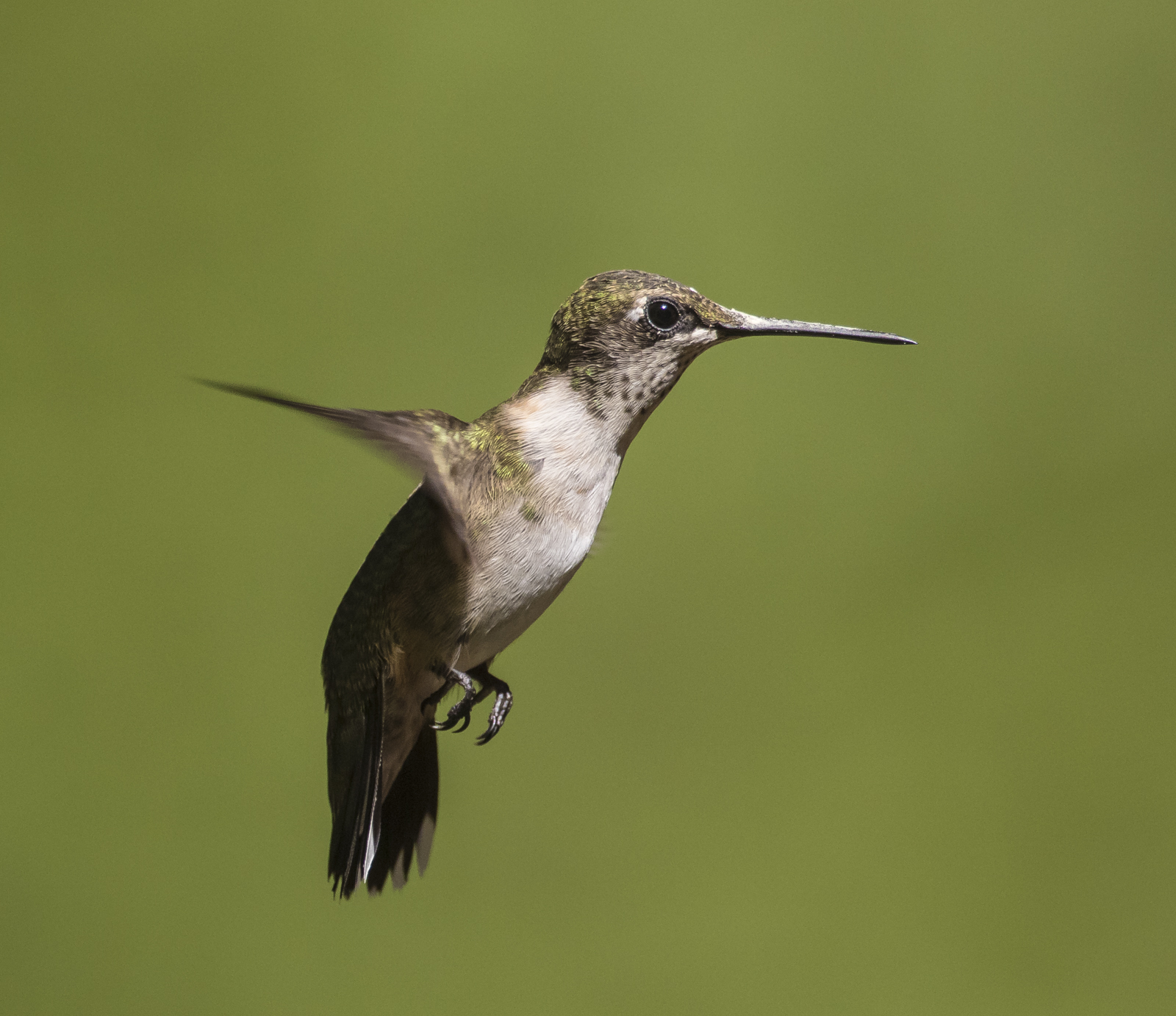
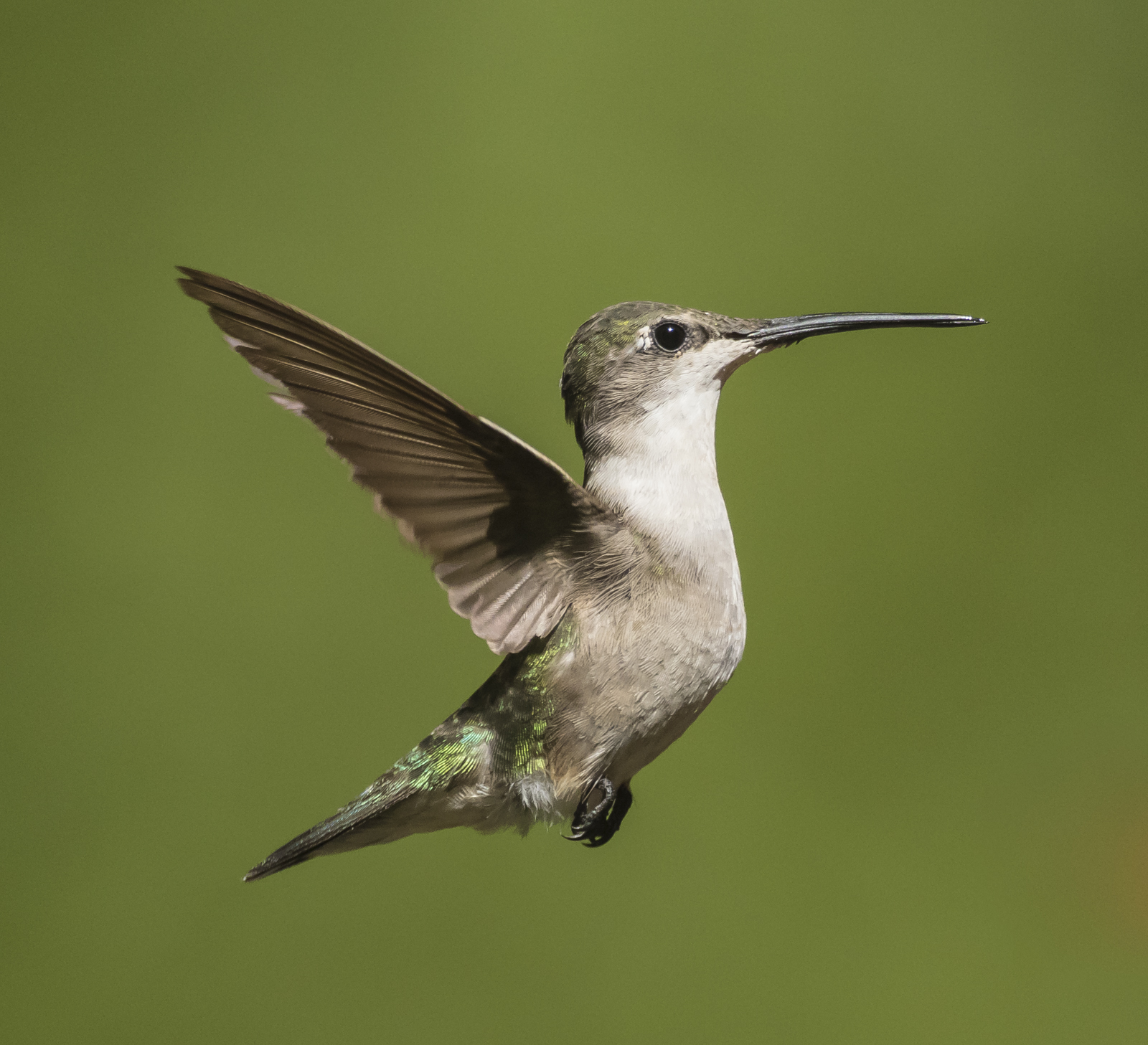
Female ruby-throats generally have white bellies and throats, and are slightly larger than males
Female ruby-throats are often more aggressive at feeders than males, since they are usually slightly larger. The average male weighs about 3 grams, or about the same as a penny. The average female is slightly larger, weighing in at about 3.5 grams. But both sexes can put on considerable weight this time of year in preparation for the migration south (often almost doubling their mass prior to flying south).
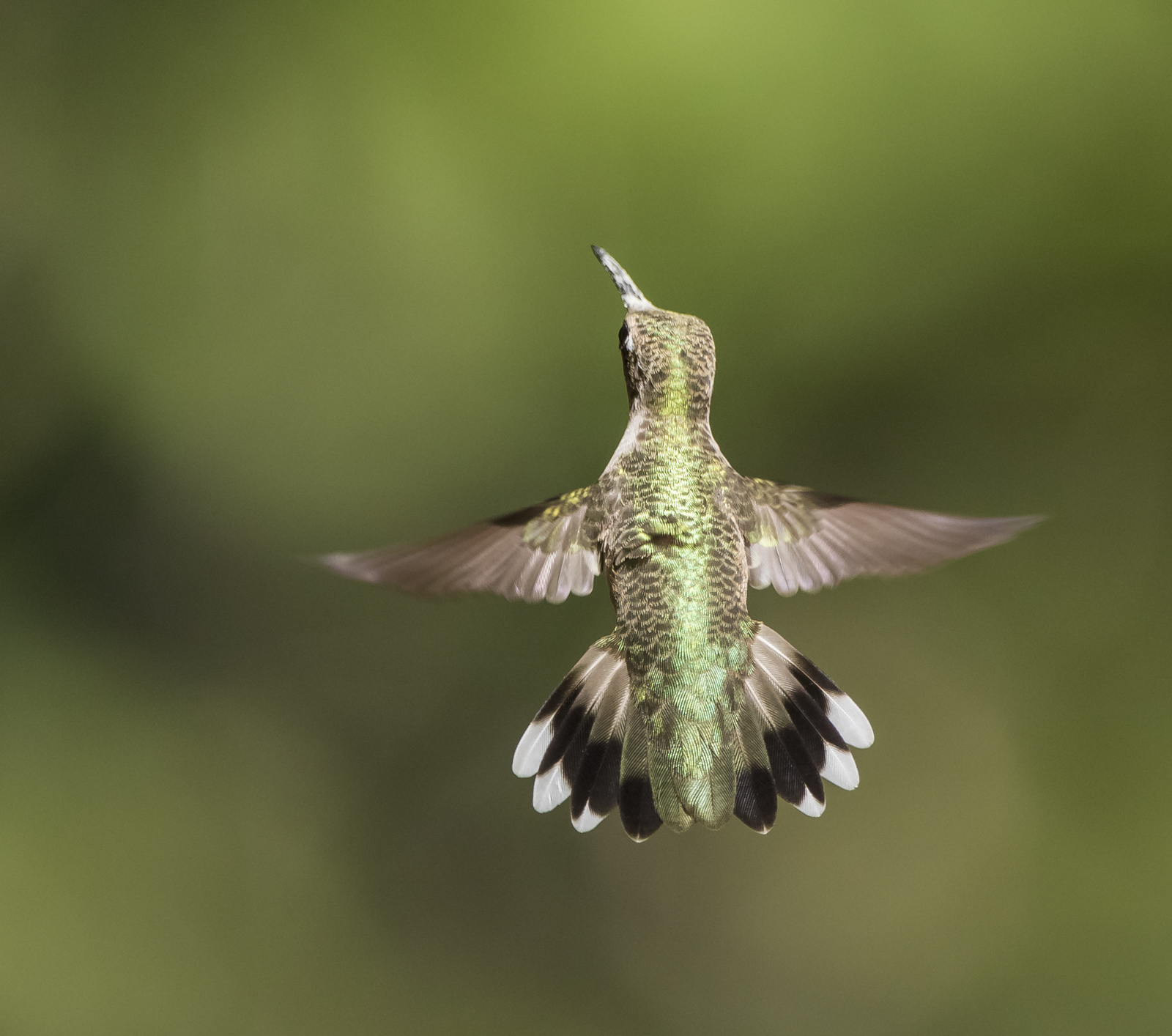
White-tipped, rounded tail feathers, belong to female or immature male ruby-throated hummingbirdsAdult males have pointed, dark-tipped tail feathers
Male ruby-throated hummingbirds are the first to arrive on the breeding grounds in spring, and the first to leave to return to their winter homes in late summer. Many of the adult males have already headed south, so, at first glance, it may look like a bunch of females in your yard. But, a closer look may give you some insights. While the tail feathers of adult males are dark-tipped and pointed, those of young males resemble the female, being rounded and white-tipped.
Young males often have streaked throats and just a few feathers showing red color
A better way to distinguish the sexes is to look at their throats. First-year males often have streaked throats (some females can as well), and frequently will have a few red feathers in their throat patch (or gorget) by this time of year.
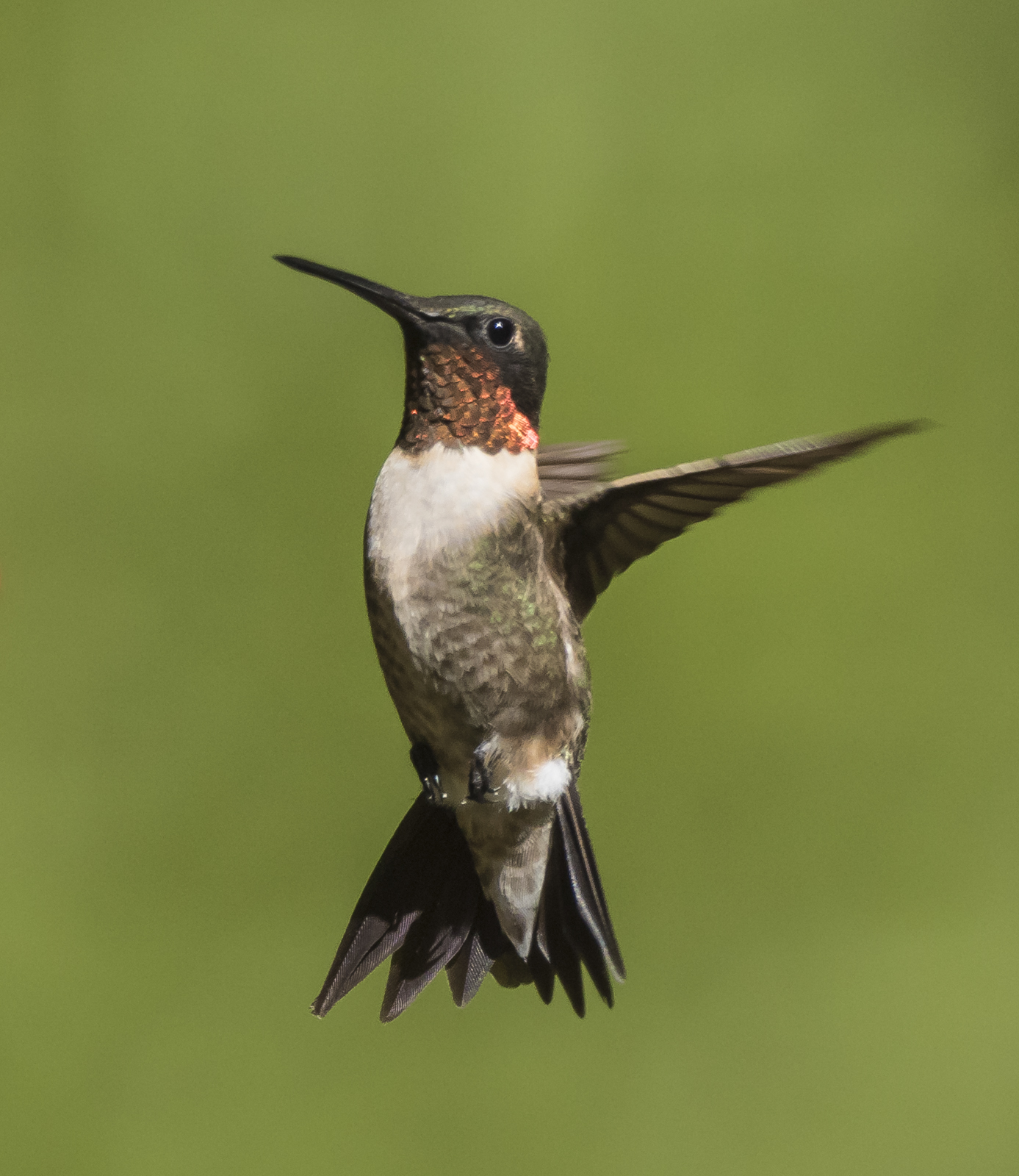
Adult male ruby-throats have a brilliant red gorget, that can vary in intensity according to the light
Adult male ruby-throats have about 200 specialized feathers on their throat patch, which is called the gorget. The outer third of these feathers are iridescent. They have microscopic grooves and air bubbles that scatter and refract incoming light to make the feathers appear red. But, the iridescent part of the gorget feathers are flat, and only reflect light in one direction.
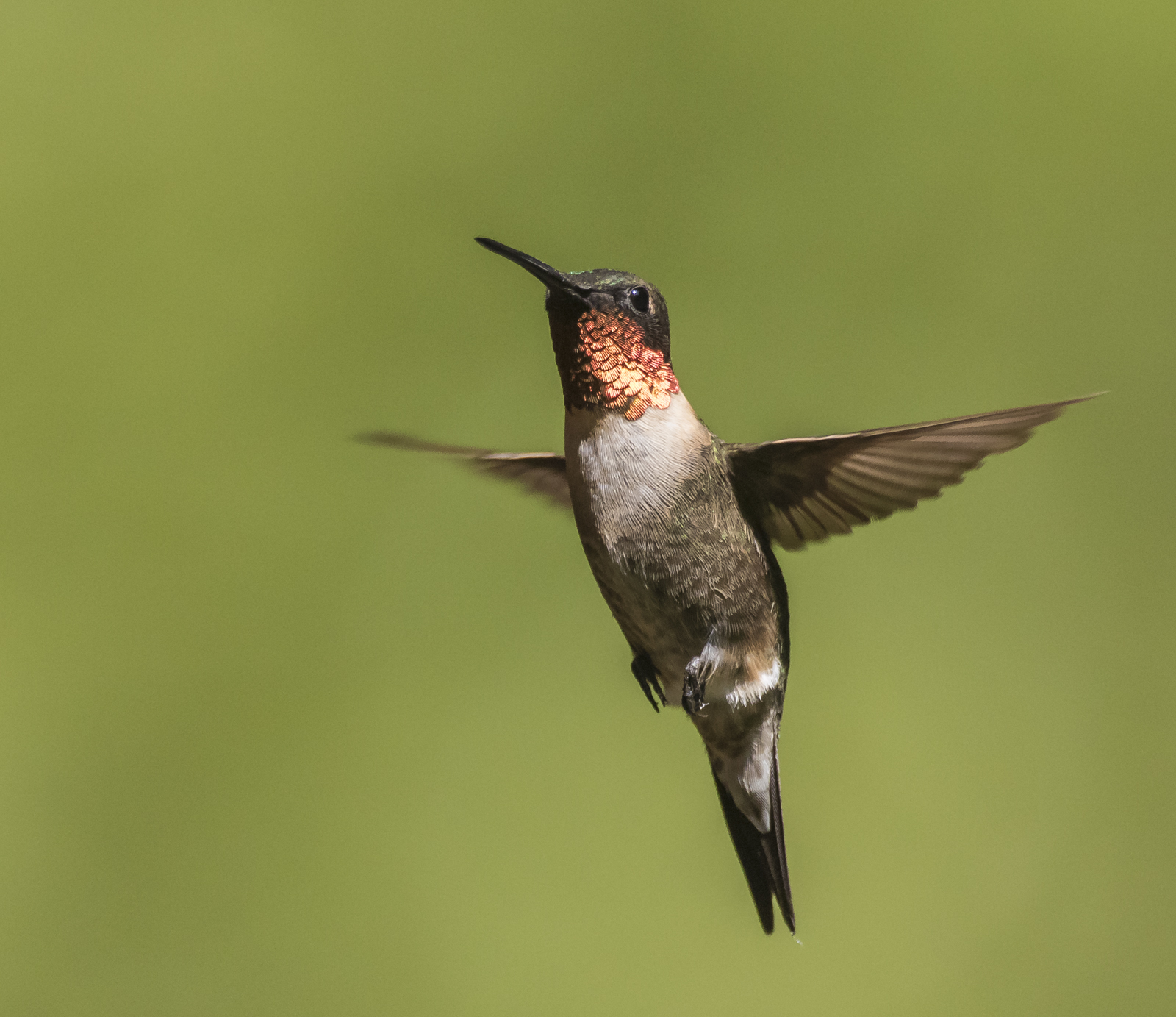
Adult males have dark throats (color varies according to how the light hits the feathers)
You have to be looking at the feathers from the right direction in order to see the flash of iridescent red. From other viewing angles, the feathers appear dark, or even black.
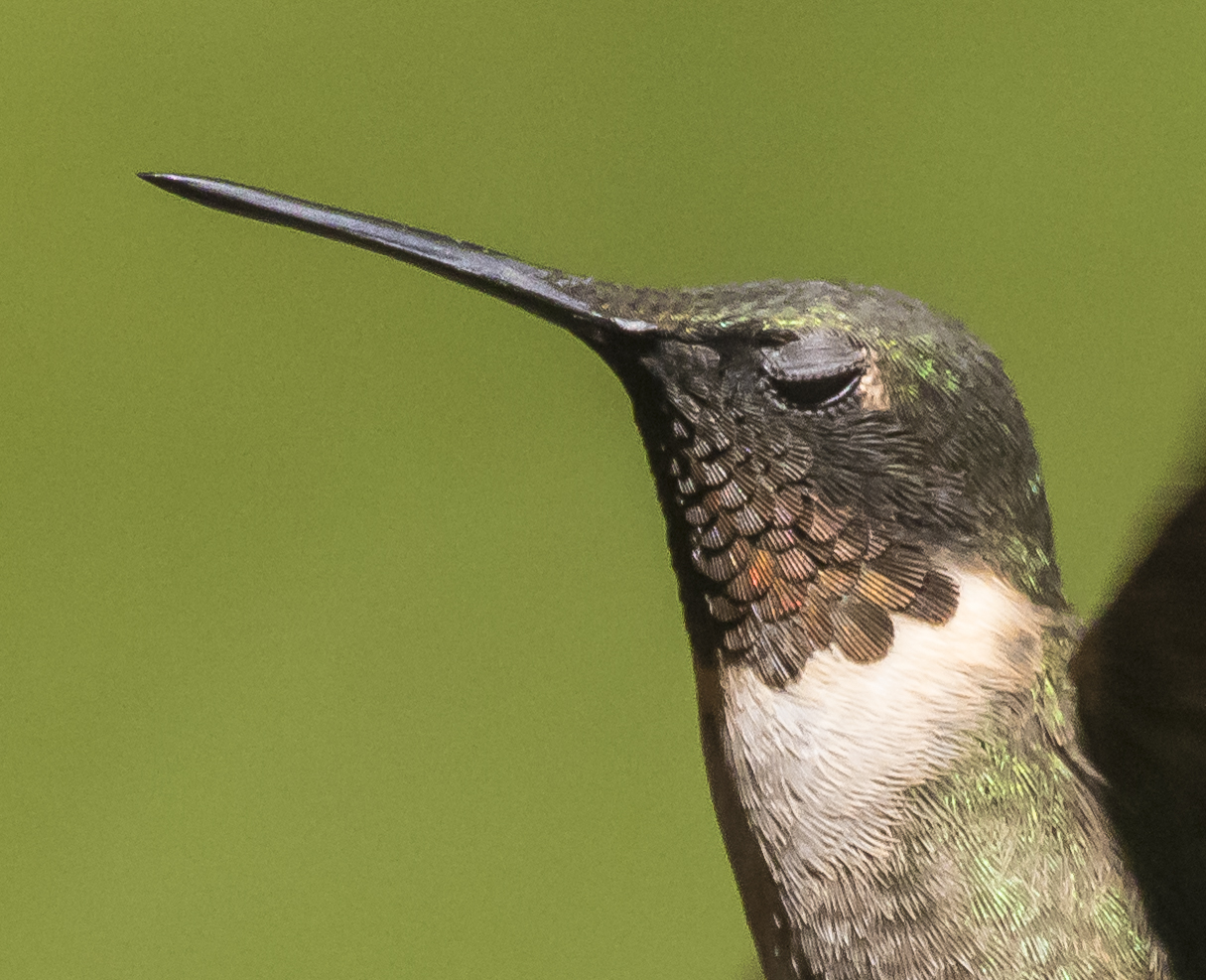
Hummingbirds have “eyelashes”
In looking at my images, I found several where the hummingbird was blinking. It almost looked like they had eyelashes. Well, in a way, they do. They have short bristle-like feathers along the edge of their eyelids. They probably function similar to our own by helping keep objects out of the bird’s eyes.
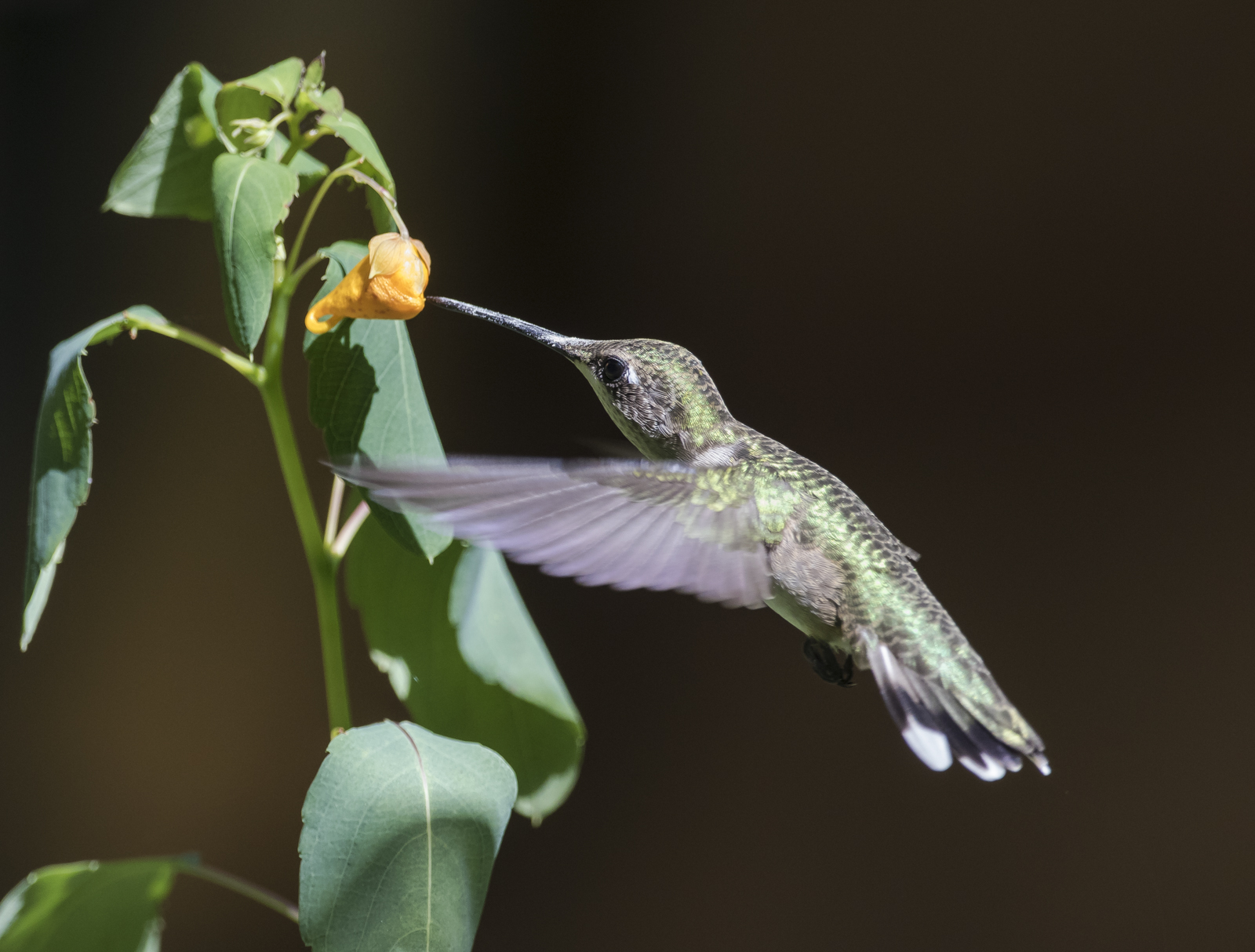
Hummingbirds in my yard feed from a variety of wildflowers, in addition to the sugar water feeders
Ruby-throated hummingbirds are believed to ingest at least half their weight in sugars each day. If you watch them closely, you can see they also feed on small insects and spiders, often snatching tiny flying insects out of the air.
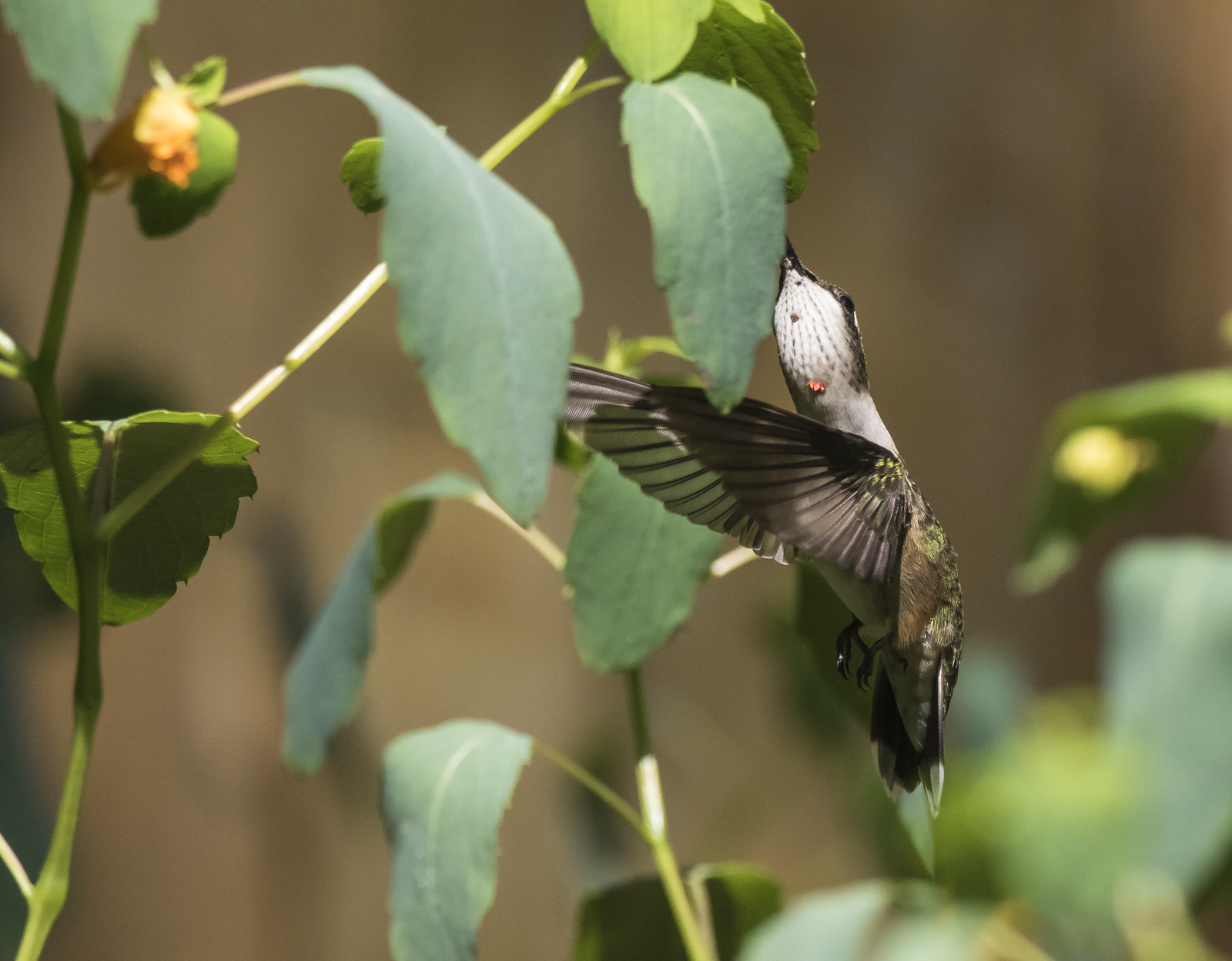
Young male hummingbird hovering and feeding below a jewelweed flower
Dining on the wing as they do, hummingbirds have significant flight muscles, which account for about 25% of their body weight. Compare that to the analogous pectoral muscles of a human which make up a mere 5% of most humans.
Even at rest, they are humming along at a fast pace
A hummingbird is fast-paced even at rest – their heart rate is about 1250 beats per minutes and they breathe about 250 times per minute while perched. And what about that tongue! They can extend it a distance about equal to the length of their bill. And when lapping up nectar or sugar water at your feeder, their tongue flicks in and out about 13 times per second. They are truly remarkable birds, the flying jewels of our gardens. Enjoy them while they are still here, humming along at the flowers and feeders wherever you live.
~Quote attributed to a student in an introductory entomology course
We discovered a small caterpillar last week that was adorned with some unusual accessories, and that usually isn’t a good thing if you are a caterpillar. I think it was either a variable oakleaf, or a double-lined prominent caterpillar. Both are common species that feed on a wide variety of trees and shrubs.
Caterpillar adorned with green accessories (click photos to enlarge)
I have seen these bright green baubles attached to a few other caterpillars over the years, and it never ends up well.
Not the type of fashion accessory you want if you are a caterpillar
They really are beautiful in shape and color when you take a closer look. The first time I saw a caterpillar with these green blobs on its side was a few years ago. I thought they might be some sort of strange cocoon of a parasitic wasp. I was close…they are actually the larvae of a tiny parasitoid wasp in the family Eulophidae.
Eulophid wasp pupae next to the dead host caterpillar
After watching the caterpillar for a few days, I came back to find a strange array of tiny black blobs near the shriveled caterpillar carcass.
The small piles of yellow “stones” near the pupae are actually waste products
When I looked at my macro images, the small black blobs looked like some sort of macabre lawn recliner, with a tiny pile of rocks at the base. The black blobs turned out to be wasp pupae lying on their backs, and the piles of rocks are the waste products excreted by the wasp larvae prior to pupating. These are parasitoid wasps in the genus Eulophis. They feed inside their caterpillar host, mature, and then pupate in a group near the carcass of their victim. The excellent reference by Eiseman and Charney, Tracks and Signs of Insects and Other Invertebrates, refers to these bizarre creatures as “tombstone pupae”. I find a lot of these clusters of Eulophis pupae on the undersides of sycamore leaves this time of year.
Another strange way to go
A few days ago I found another caterpillar that had met what seemed like an unusual death.
At first, I thought a fungus had attacked this caterpillar
The fuzzy texture initially caused me to think some sort of fungus had killed it.
And what are these tiny black pellets?
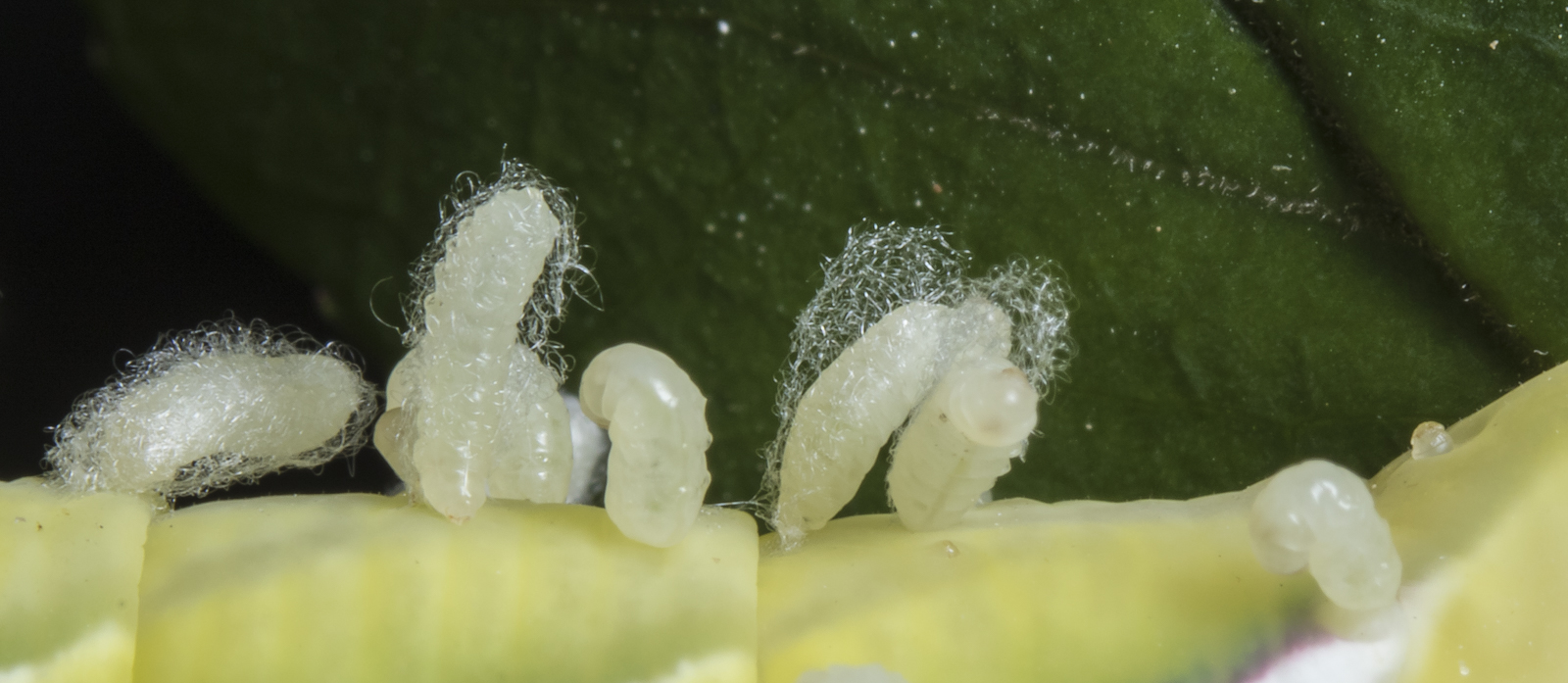
But when I knelt down and took a closer look, I could see what looked like pupae inside the fuzz, as well as some tiny black pellets or balls stuck to the threads. What the heck is this? Going back to my reference book (mentioned above) for all things strange in the invertebrate world, I found a plausible answer. This caterpillar had been killed by another type of parasitoid wasp in that same family, but most likely in a different genus, Euplectrus. These larvae tend to form a cluster on the dorsal surface of the living caterpillar. When they finish feeding, they move to the underside of their deflated host, and arrange themselves in a row, and prepare to pupate. They create a gauzy, web-like cocoon, which attaches the caterpillar remains to the plant and provides a protective covering. The black pellets are the meconium, or waste products, cast out by the prepupa. It looks as though there wasn’t quite enough room under the carcass for all the wasp larvae to pupate, so some had to be elsewhere in the fuzzy covering.
How bizarre…and it is all happening just outside my door!






































 Roads End Naturalist