April prepares her green traffic light and the world thinks Go.
~Christopher Morley
It happens every year. Things start changing so fast in the spring woods that I can’t quite keep up. There are also the chores associated with spring – fixing up stuff around the house, getting the garden prepped and planted, and so many others we all make for ourselves, too numerous to mention. But, it is what is speeding by outside my window that keeps me wanting to stop what I am doing and take note….spring is whooshing by and will soon be over and I will have missed something for gosh sakes. And that is probably the origin of the yard tour. I’m guessing it started one spring when I just felt it was all whizzing by without notice. So now, as often as possible, I take the camera or a notebook and slowly walk around the yard, observing what is occurring, taking note of what is blooming, stopping to watch something unusual and ponder. It is a good tradition, I think I’ll keep it. So, this is simply a yard tour post…things that I noticed this weekend, things whooshing by, but appreciated by a simple slow walk around the yard.
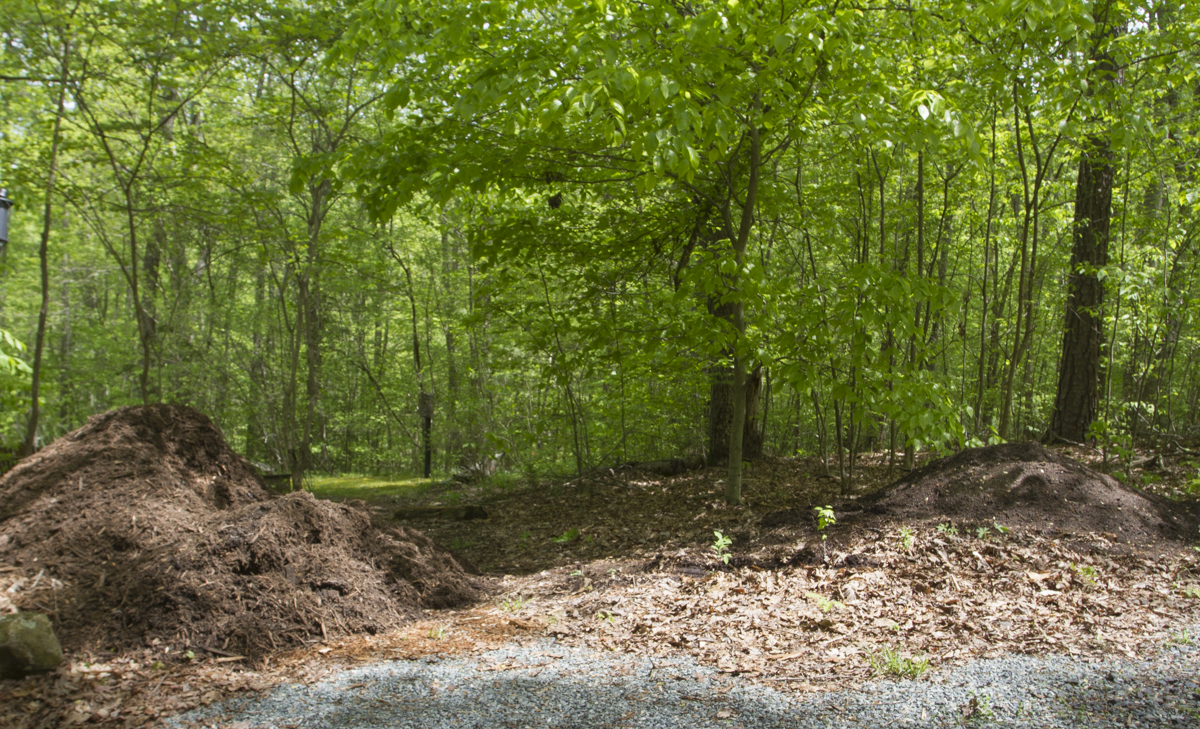
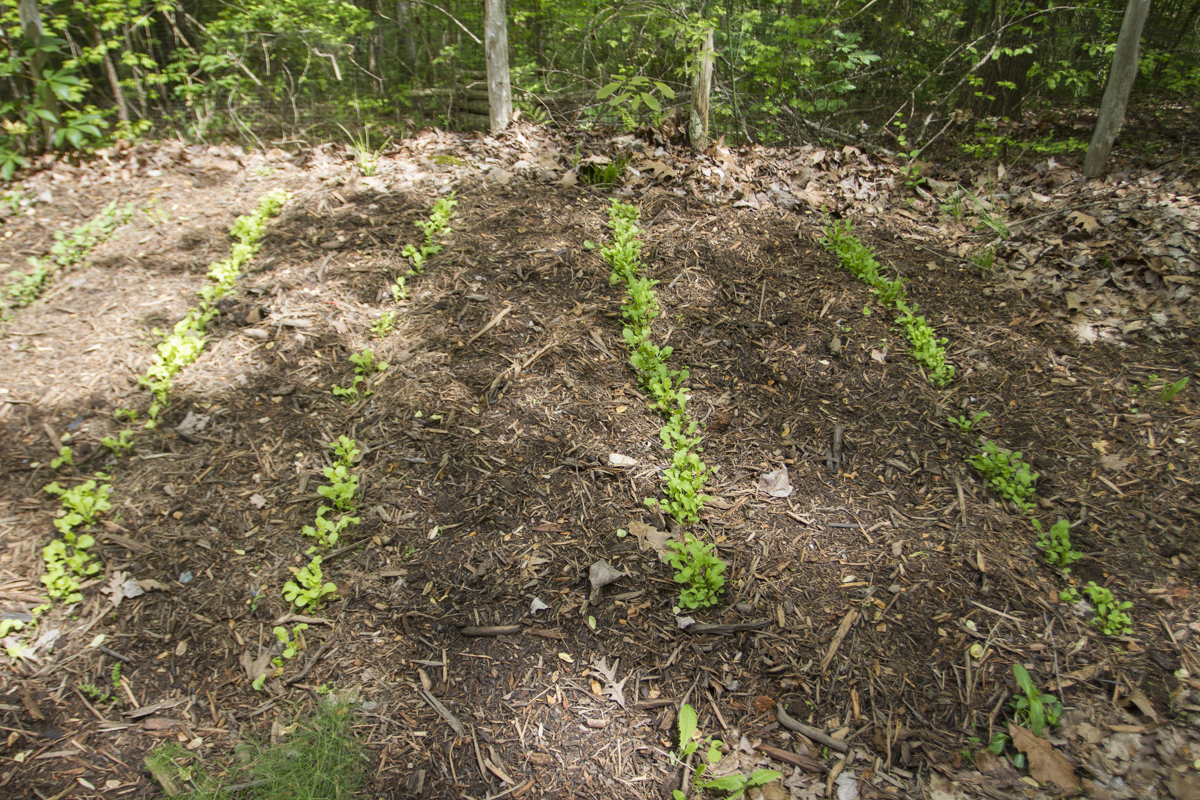
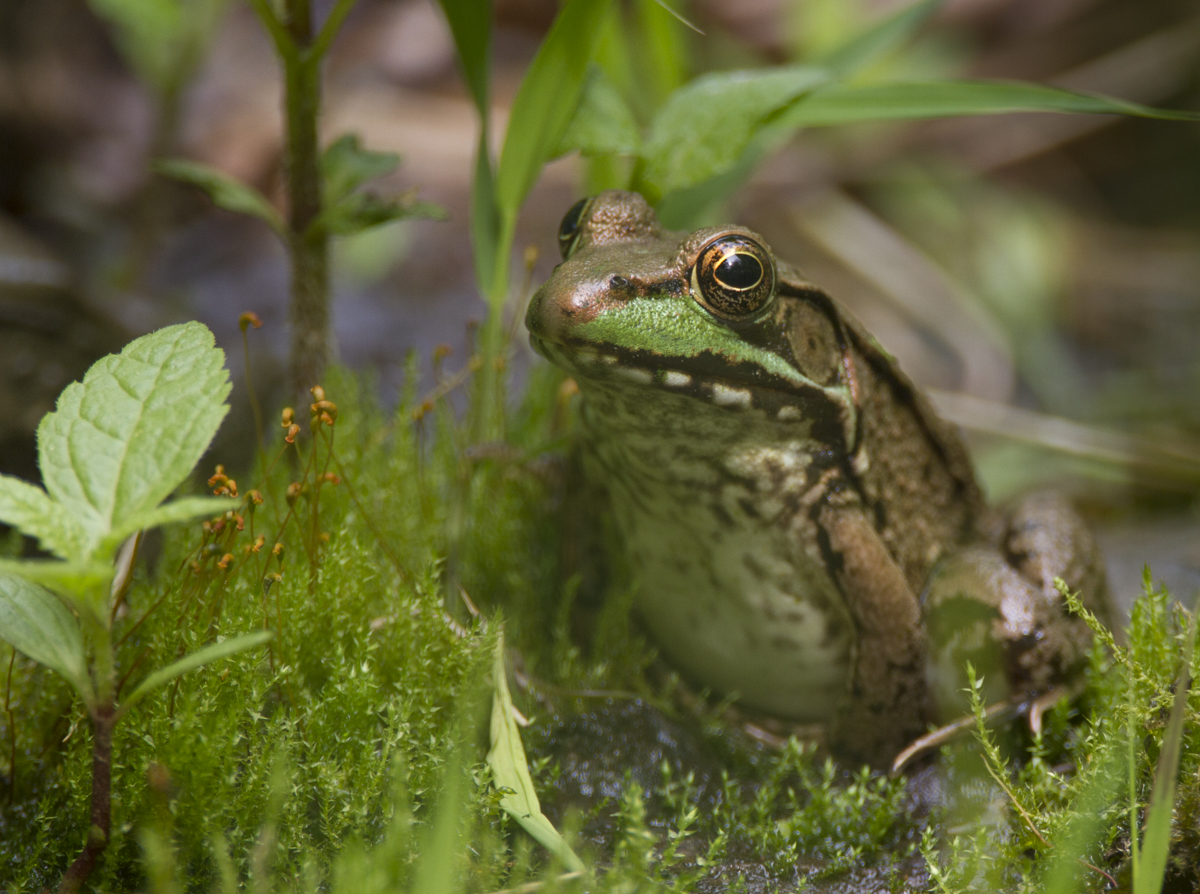
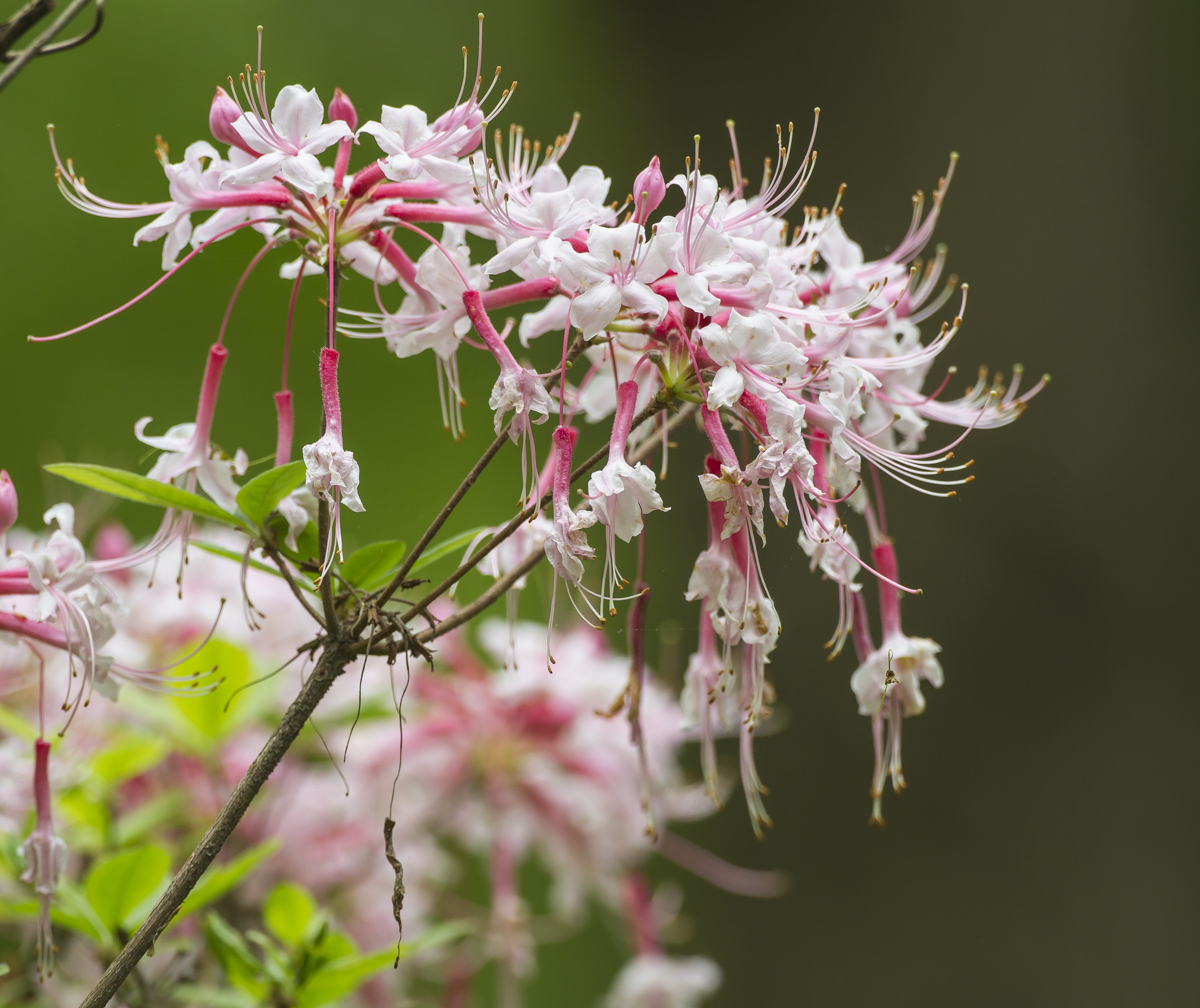
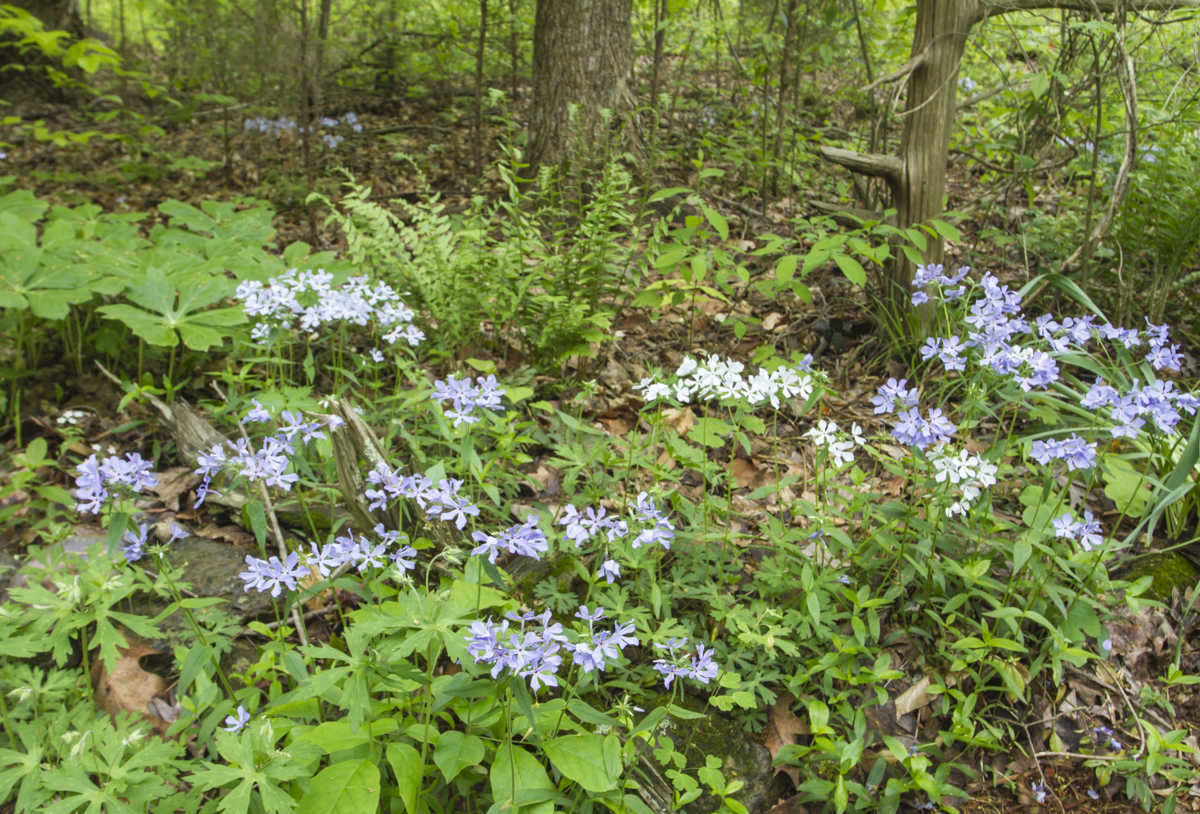
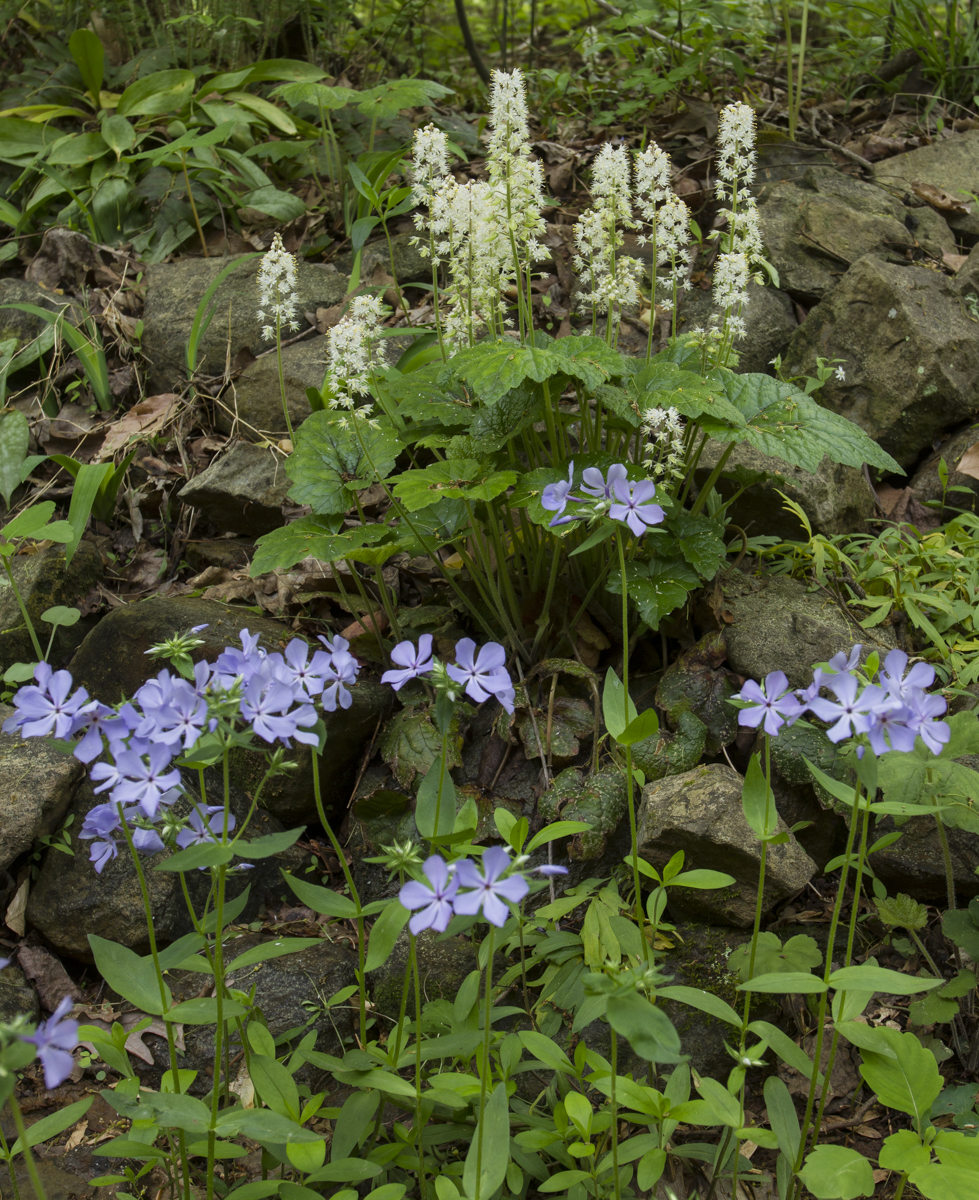
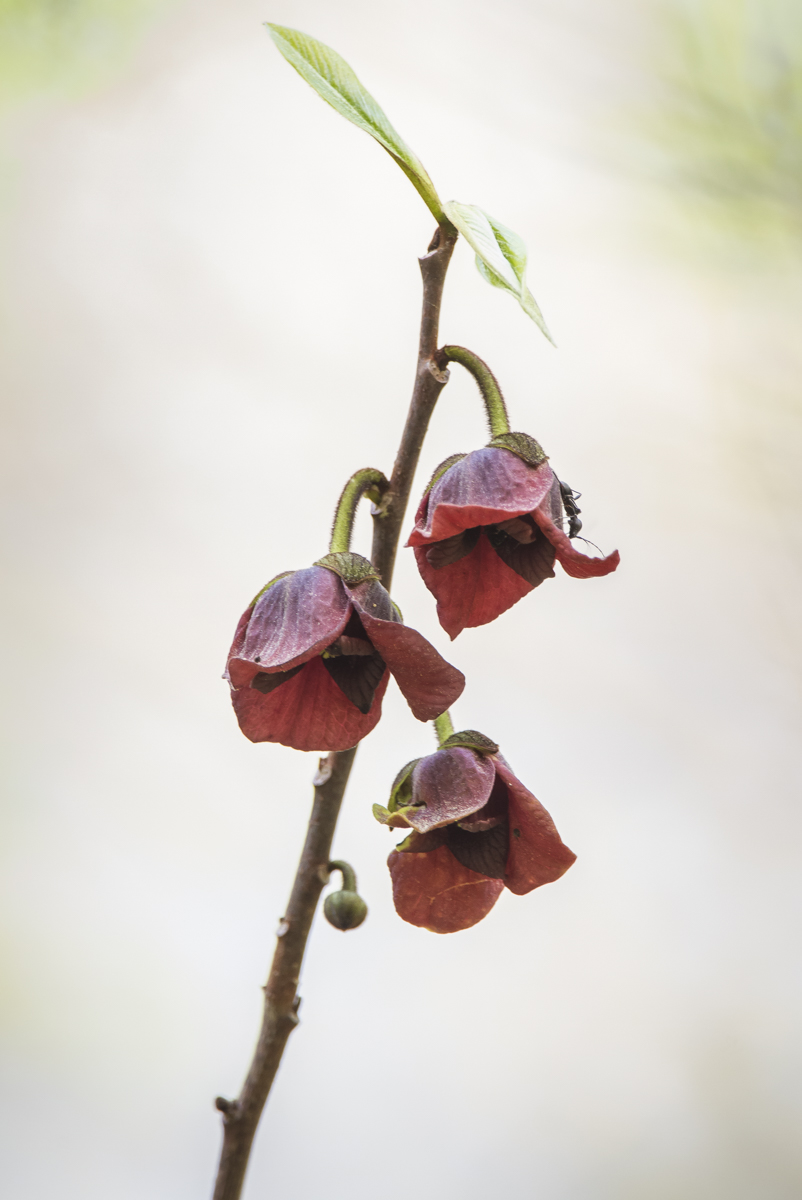
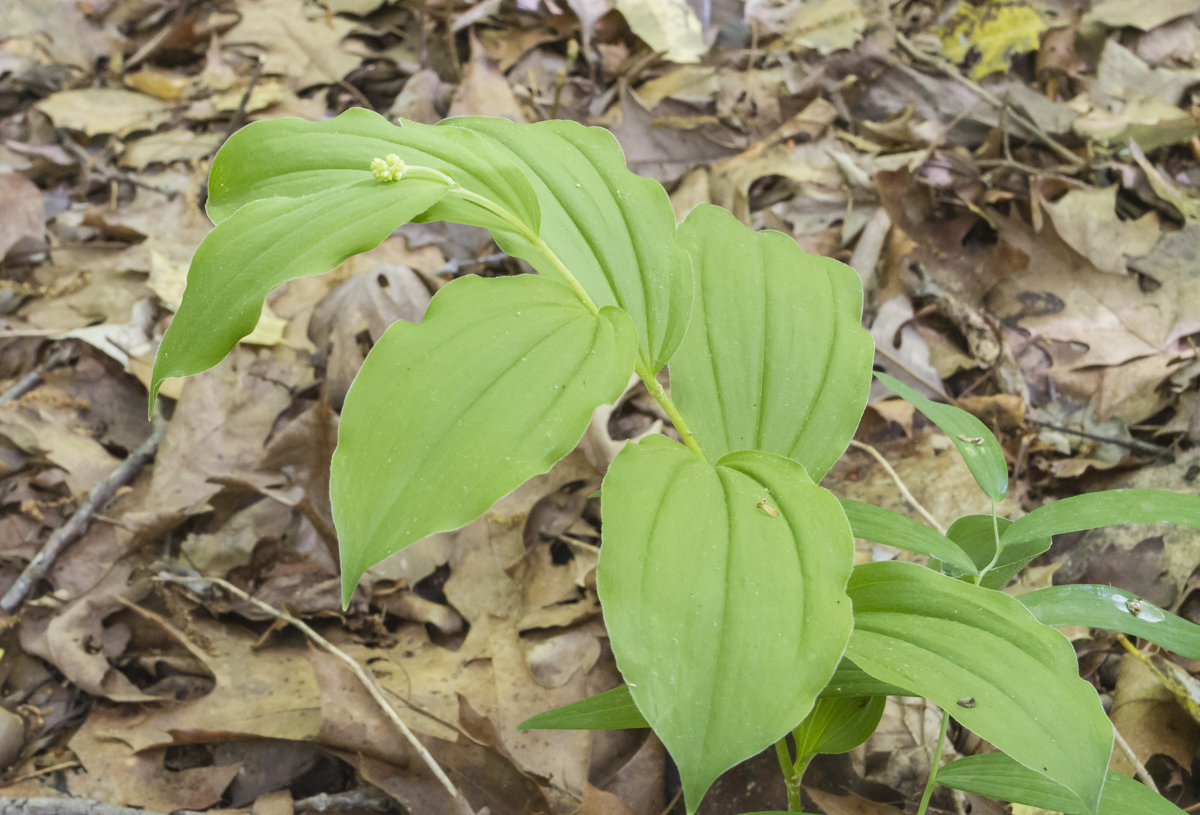
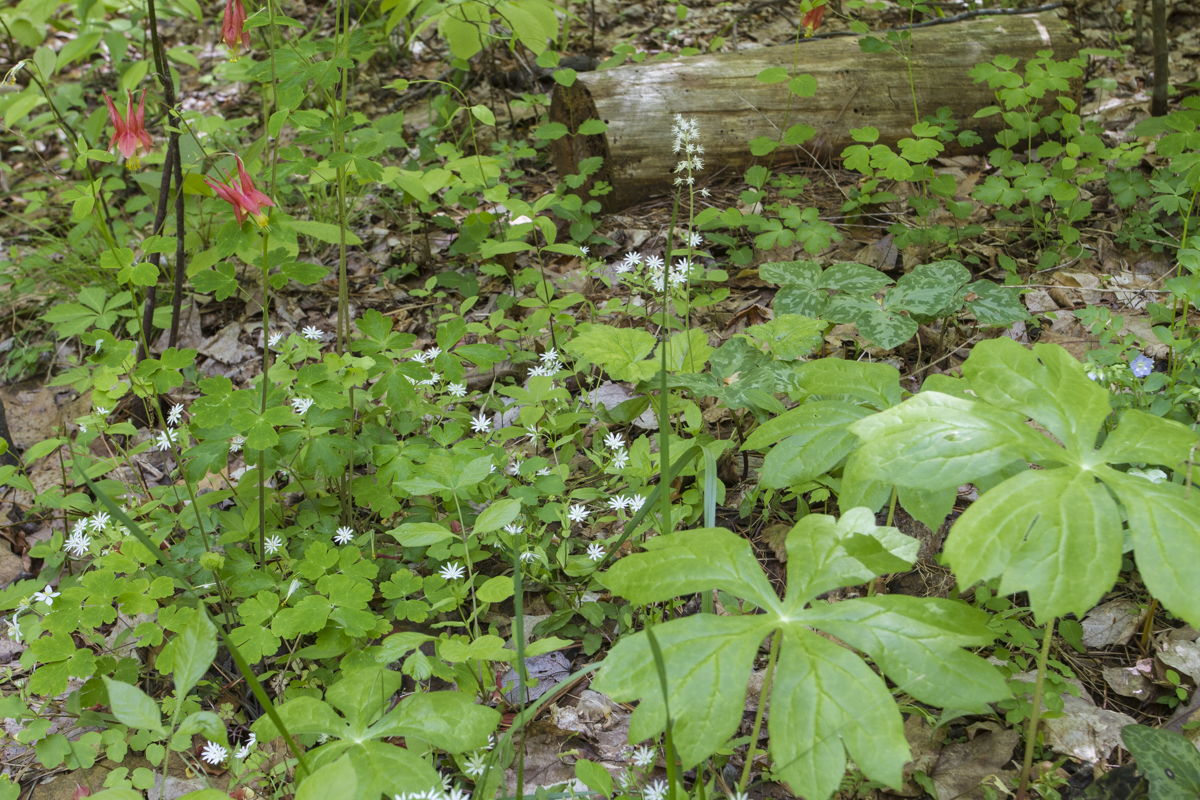
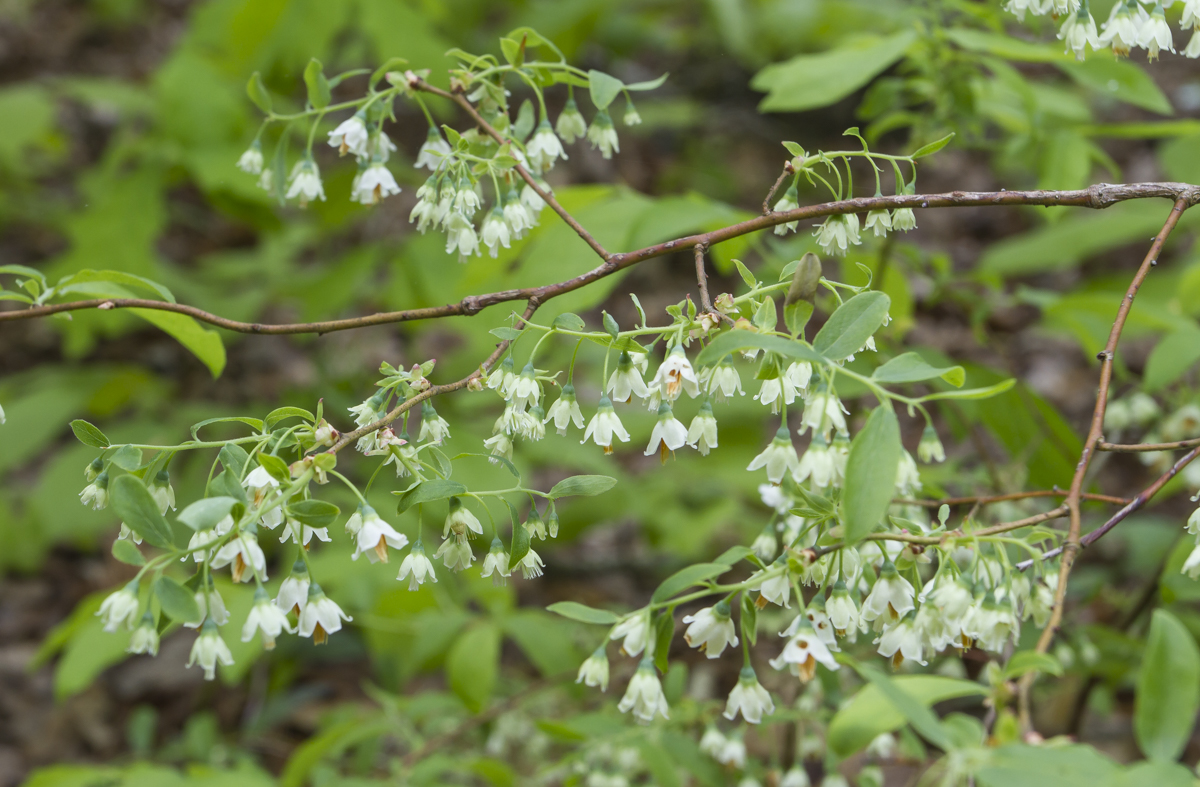
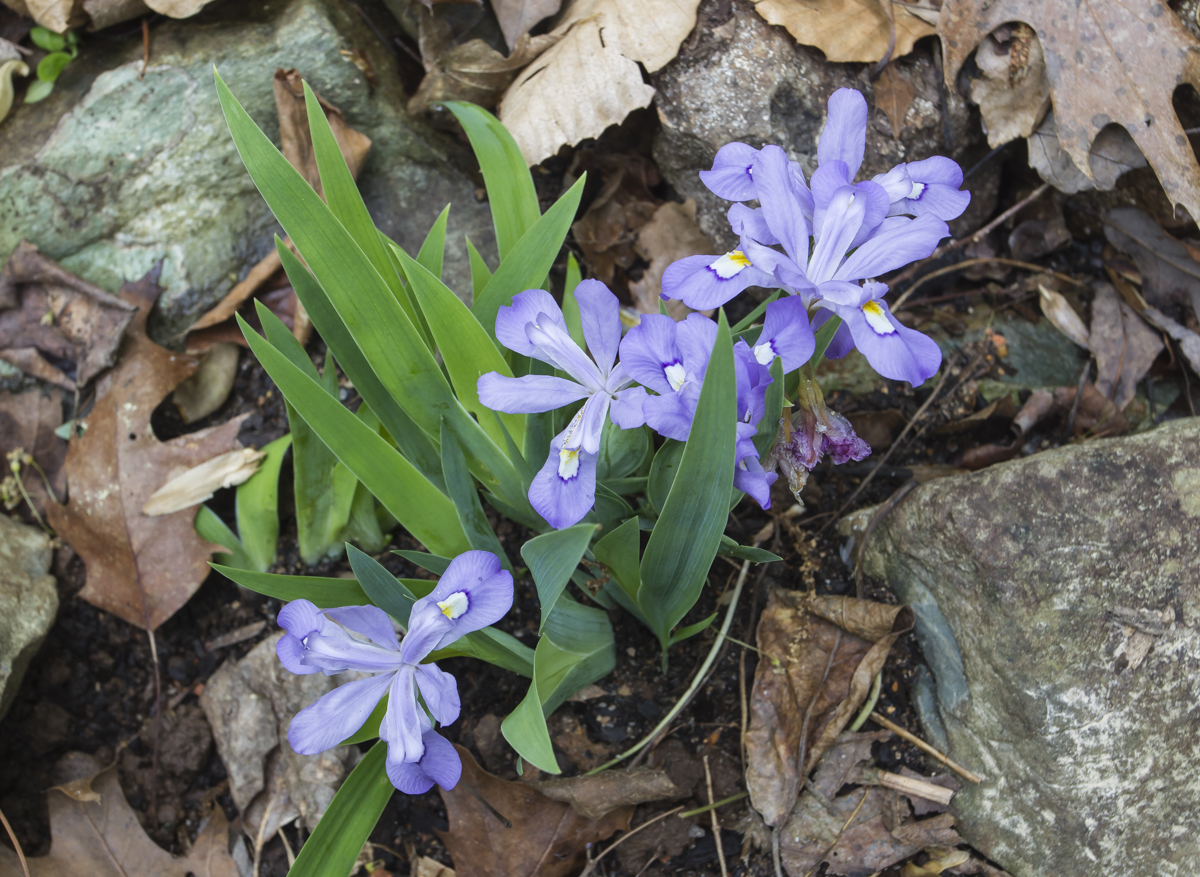
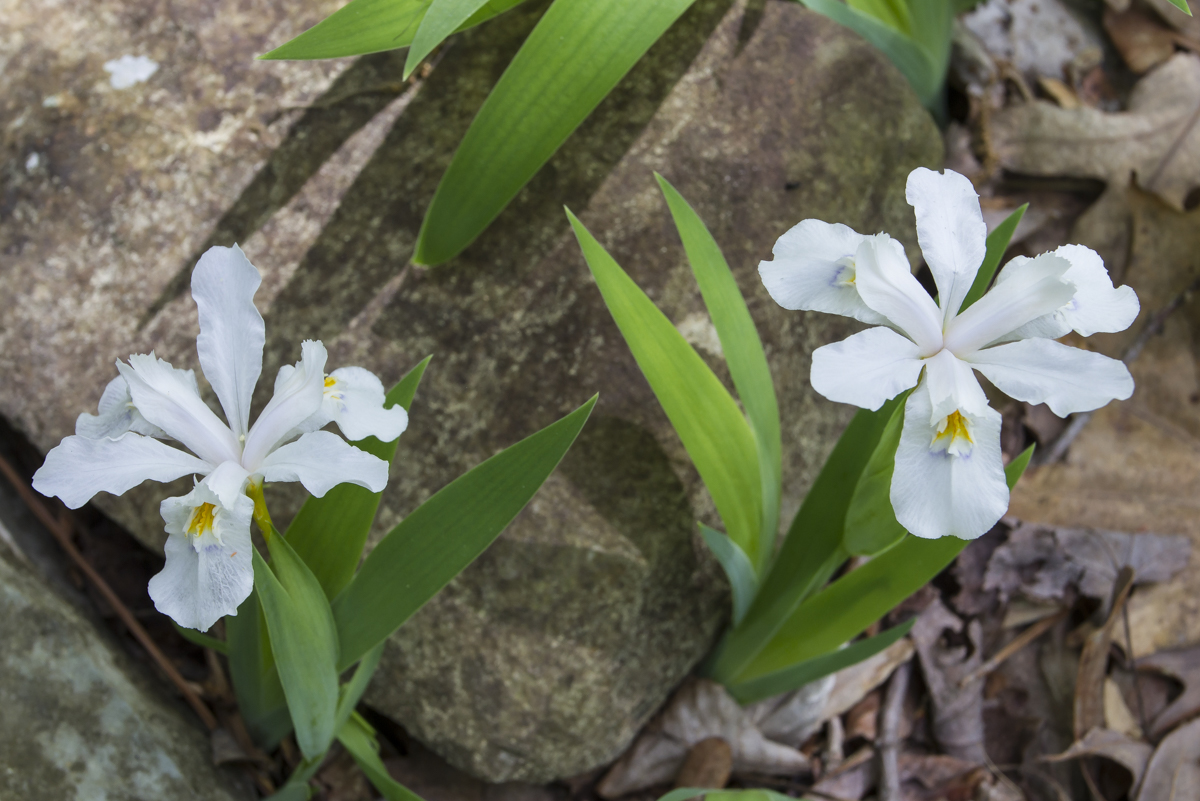
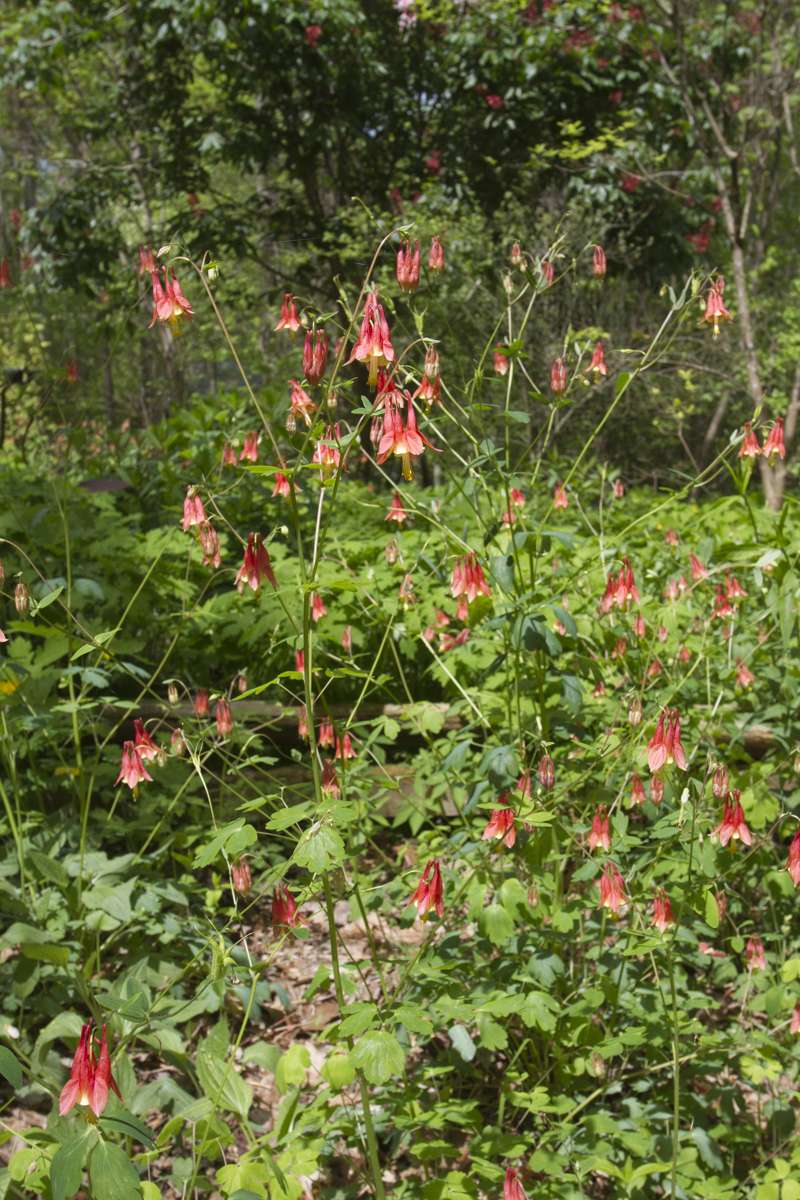
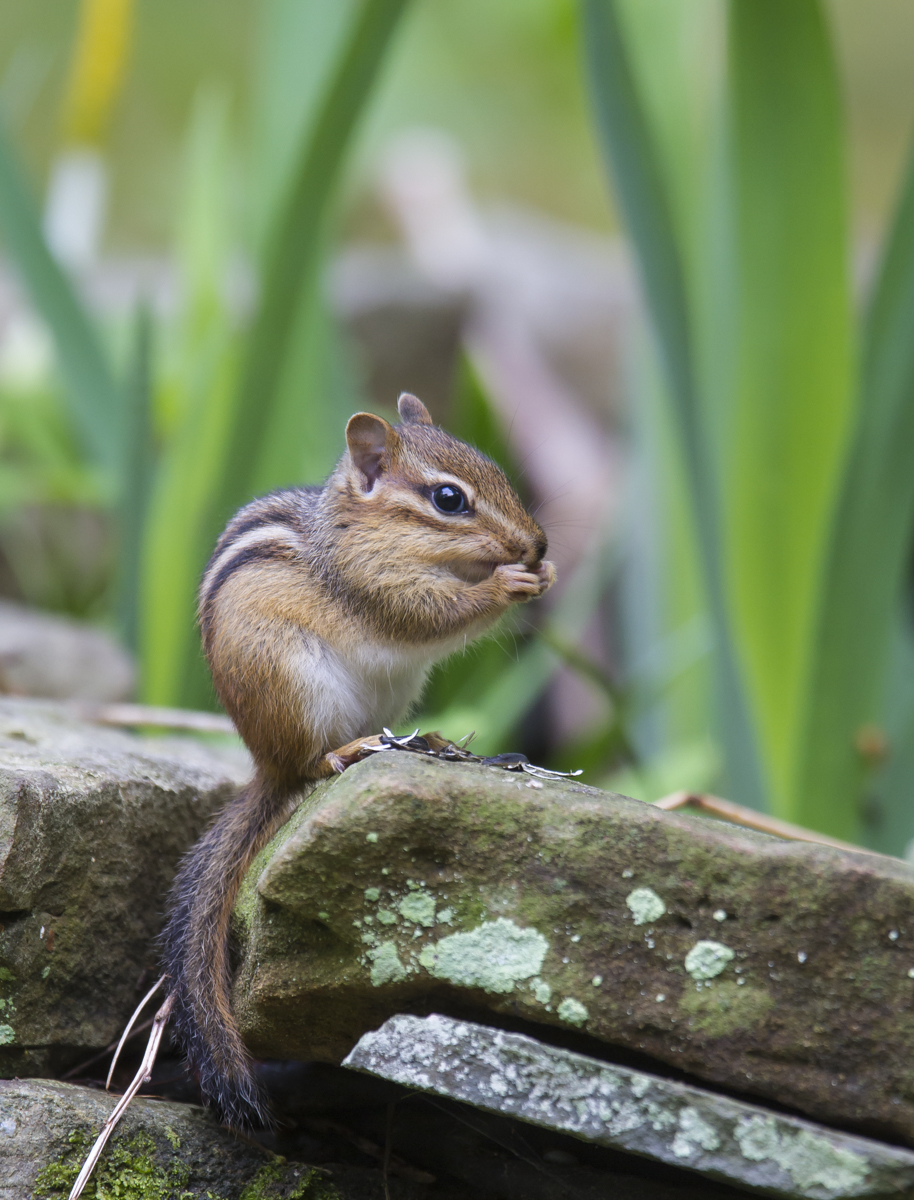
Things that keep me busy – moving topsoil and mulch (click photos to enlarge)The vegetable garden is starting to take shapeThe garden pool with blossoms from the nearby Red Buckeye tree scattered on the surface…the Spotted Salamander eggs have recently hatchedGreen Frog claiming a spot at the poolPinxter Azalea in bloom – these grow scattered in the woods and along the banks of the nearby Haw RiverPinxter Azalea close upWild Blue PhloxWild Blue Phlox and FoamflowerPawpaw from earlier last weekFringe Tree flowers, one of my favorite native treesFalse Solomon’s Seal is abundant inside the deer fence, absent outside of itThe same goes for Solomon’s SealDowny Arrowwood is bloomingOne of the shade gardens with Wild Columbine, Mayapple, Giant Chickweed, and Foamflower, Toadshade Trillium, and Jacob’s LadderDeerberry, a wild blueberryDwarf Crested Iris, blue formDwarf Crested Iris, white formCoral Honeysuckle, a hummingbird favoriteWild Columbine, another great hummingbird plantEastern Chipmunk
When we see leaf-eating insects green, and bark-feeders mottled grey, the alpine ptarmigan white in winter, the red-grouse the colour of heather, and the black-grouse that of peaty earth, we must believe that these tints are of service to these birds and insects in preserving them from danger.
~Charles Darwin
Yesterday, while working in the yard, I stumbled across an unusual caterpillar just beneath the surface of my mulch pile. Two things about it jumped out at me – first, it was pretty large compared to most caterpillars so early in the year, and second, its colors were so striking. And then, to add another, when I picked it up, it jumped and thrashed from side to side.
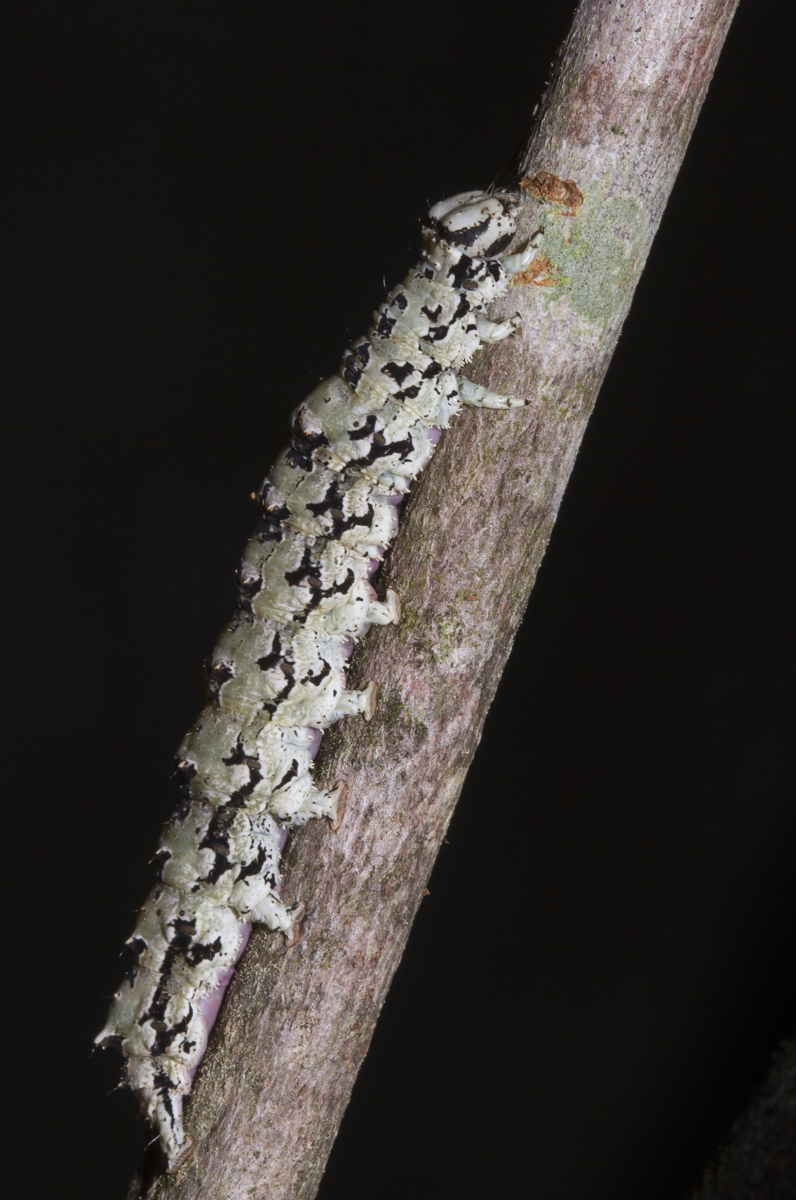
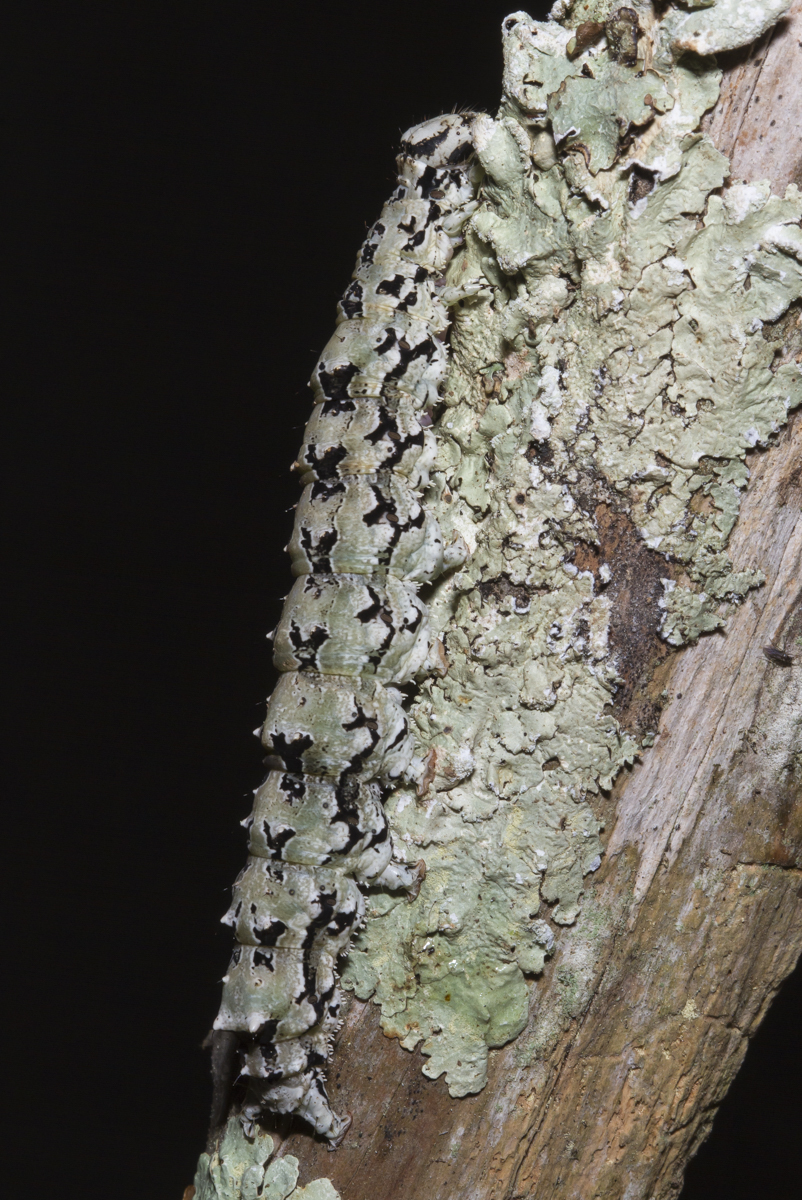
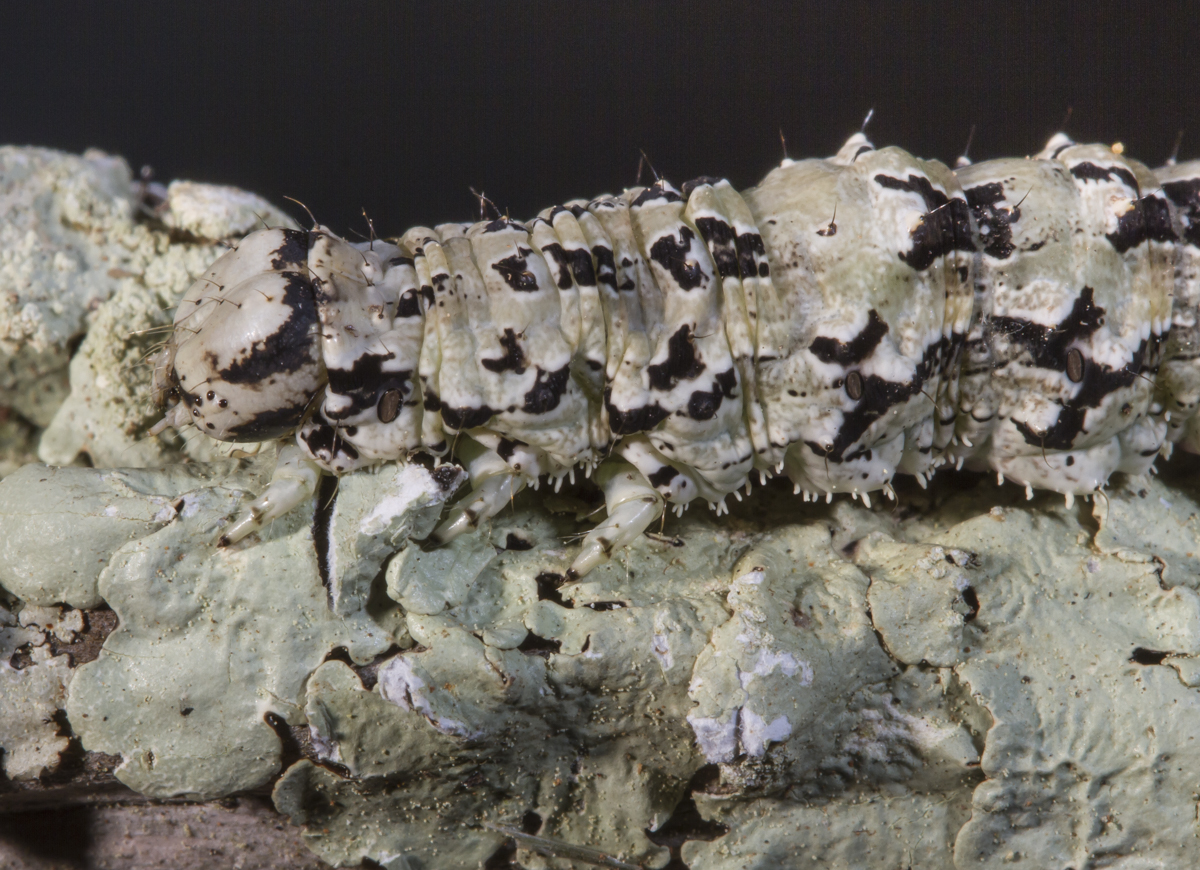
Ilia Underwing larva (click photos to enlarge)
I remember seeing a picture of this species in my caterpillar bible (Caterpillars of Eastern North America, by David L. Wagner) but this was the first one I have encountered. After identifying it as an Ilia Underwing, Catocala ilia, I discovered it is actually one of the most common of the underwing moth species in the East. How have I missed seeing one all these years? Then I read that there is only one generation per year and mature caterpillars are most often seen in early spring. To be honest, over the years I admit to doing more of my caterpillar searches later in the season, when some of our more showy species reach their full size. Look what I have been missing! Sources say that the eggs are laid in the fall and hatch in early spring. The larvae feed primarily on oak leaves. Perhaps my find was burying down into the mulch getting ready to pupate.
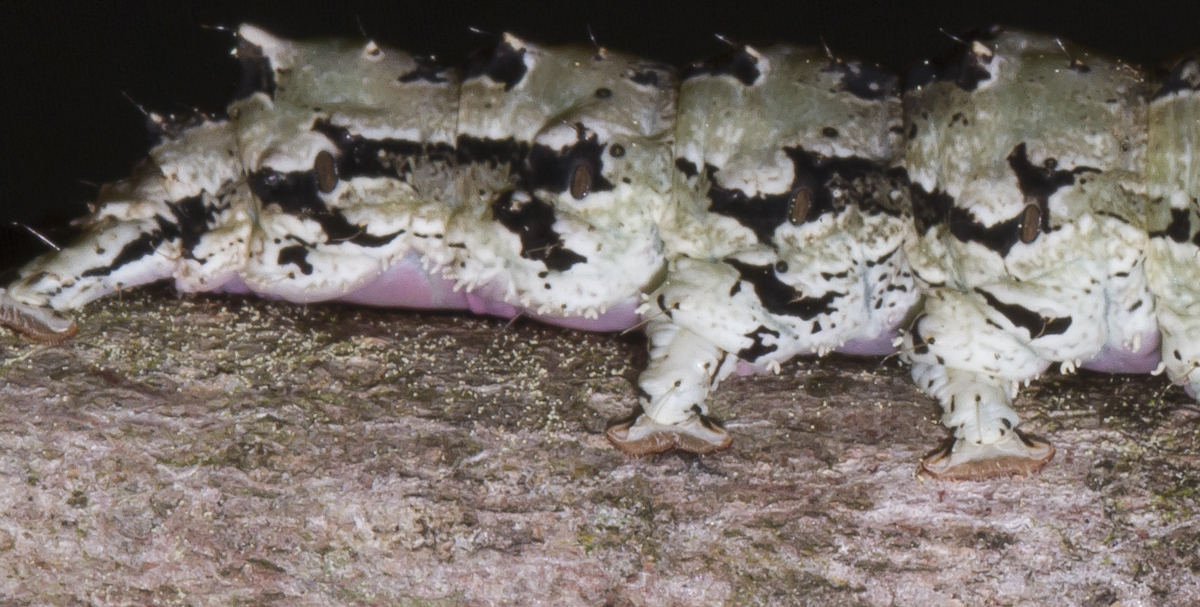
Ilia Underwing larva showing a glimpse of the rosy underside
The dorsal surface can be gray or brown, or, as in this case, a mottled color that is a great mimic of a lichen-covered twig. One thing they have in common is a noticeable rosy color to their ventral surface (this guy did not like to be handled so here is just a glimpse of its rosy underside).
Ilia Underwing larva blending with a lichen-covered branch
I brought the larva inside with a couple oi twigs I found laying nearby and photographed it. When I nudged it onto a twig, it would thrash, and then crawl a short distance and assume the position. When on a bare twig, it clings tightly but is visible (perhaps the gray or brownish larva blend in better on bare twigs). But when it crawled onto the lichen-covered branch, I could see how this caterpillar can literally disappear before your eyes (or perhaps those of a hungry bird).
The color patterns and textures of this larva are a great lichen mimic
It is always a treat to discover something new and learn how it lives its life just outside my window…all I need to do is get outside and look to once again be in awe.
Faith is the bird that feels the light and sings when the dawn is still dark.
~Rabindranath Tagore
One of the things I love about early mornings here in the woods is the sound of sunrise. Much of the usual background noise of distant traffic and barking dogs has not yet started, so what you hear is the music of the awakening woods, the forest starting a new day. And this time of year the sounds are many, especially the so-called dawn chorus of birds. This chorus is most pronounced in spring and is believed to be related to male songbirds defending territories and finding a mate. Other recent research has suggested that these intense bouts of song may help male birds exchange information about their social standing. Another discussion speculated that birds sing more in the morning because that is the most likely time of the day when they have some spare energy (saved up overnight from the previous days’ feeding) to dedicate to belting out a lot of song. Whatever the cause, it gives me one more reason to appreciate getting up early. Here is a brief sampler from Sunday morning’s dawn chorus.
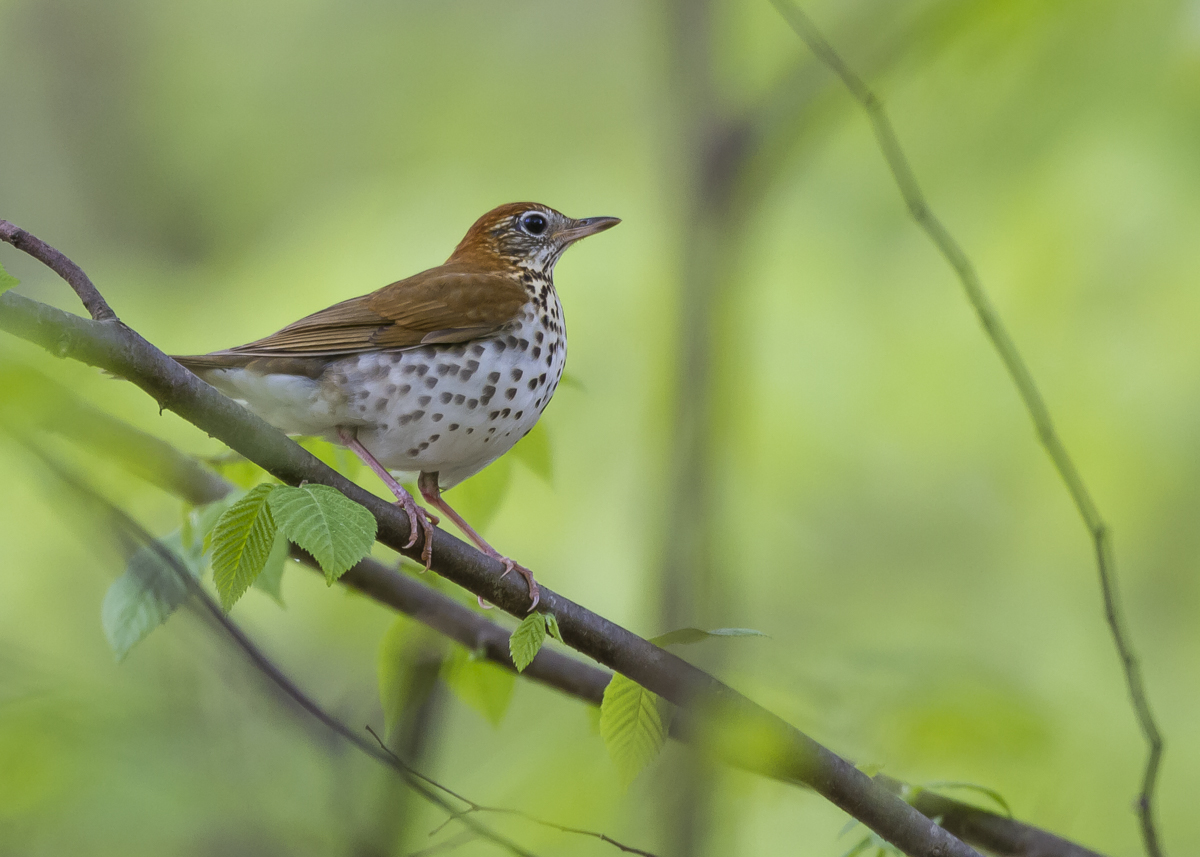
The dominant song in this clip is that of the melodious Wood Thrush. Henry David Thoreau said of this bird’s music… It lifts and exhilarates me. It is inspiring. It changes all hours to an eternal morning. It is certainly one of my favorite woodland sounds as well, so clear and flute-like. After listening to the chorus for several mornings, I think something must have happened this past Sunday to concentrate these songsters in the trees around here. They seemed to be singing from every direction and I observed several down in the yard feeding as they flipped over leaves looking for worms or other invertebrate treats. I even saw a pair in a squabble as they flapped in a ball of brown and white feathers through the greenery for a few seconds. I finally grabbed the camera and went out in the dim light to see if I could capture something.
Wood Thrush (click photo to enlarge)
After watching for several minutes, one Wood Thrush came down from the higher branches and grabbed a few morsels from the leaf litter. It then flew up to a small sapling, flitted its wings and bounced while looking around for a few seconds, and then returned to a high limb overhead. I’ll be content with that one image for a day or two, but would love to capture one singing. This morning’s chorus seems to have extended beyond the usual time they sing (things have calmed down by about 7:30 a.m. or so on most recent mornings). I wonder if cloudy weather influences the duration? So many questions, so little time. I look forward to hearing the new arrivals join in the chorus these next few weeks (my first Summer Tanager was Sunday, the first Hooded Warbler was this morning). I also hope you have an opportunity to appreciate the magic of the dawn chorus in some woodlands near you. By the way, I discovered that there is even an International Dawn Chorus Day (this year on May 3). It is primarily observed in the United Kingdom….but, hey, why not get out and celebrate it by listening to the sounds of sunrise near you.
A river seems a magic thing. A magic, moving, living part of the very earth itself.
~Laura Gilpin
I spent this past weekend in a magical place, a place I have been many times, but that still draws me back – the Roanoke River. The Roanoke is a major river that flows over 400 miles from its headwaters in the mountains of Virginia to where it meets Albemarle Sound in North Carolina. A wonderful non-profit group, the Roanoke River Partners, gave life to a series of camping platforms along the Roanoke that serve over 1200 campers annually (reservations required). Camping on these platforms is a truly unique experience and one that I have been lucky enough to do a number of times in several locations. This trip was to two platforms that I had never visited – The Bluff and Royal Fern.
Camping platform along the Roanoke – the Bluff (click photos to enlarge)
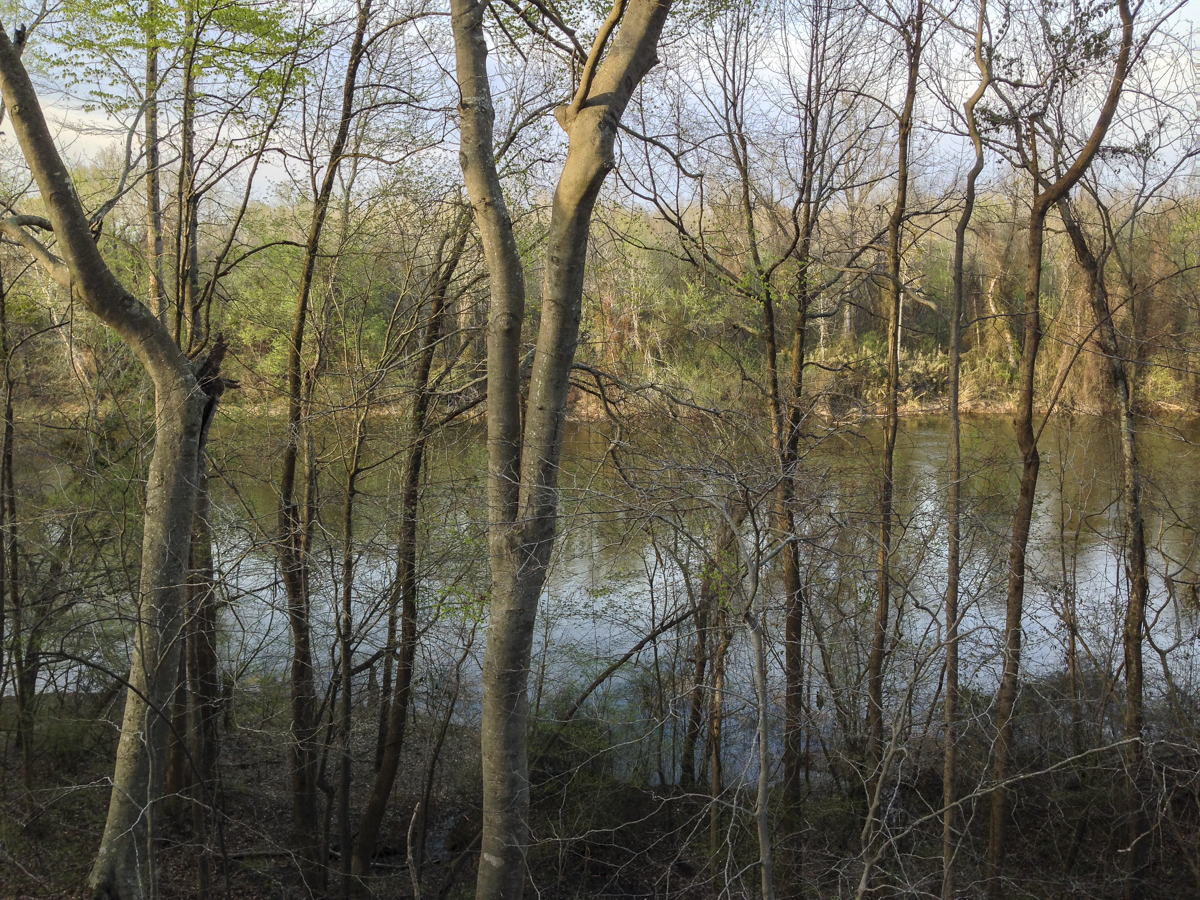
The first night was spent in one of the more terrestrial of the platforms – The Bluff. It is one of the few with a screened in area and a pit toilet (platforms in the swamp require that you bring your own latrine). It is, indeed, on a buff overlooking the river. That first afternoon, we saw some of the first hints of Spring in the swamp – Northern Parula and Yellow-throated Warblers searching for insects in the treetops, flower buds on Dwarf Pawpaw trees, and my first snakes of the season – a large Black Rat Snake, and a true denizen of the swamp, a Cottonmouth.
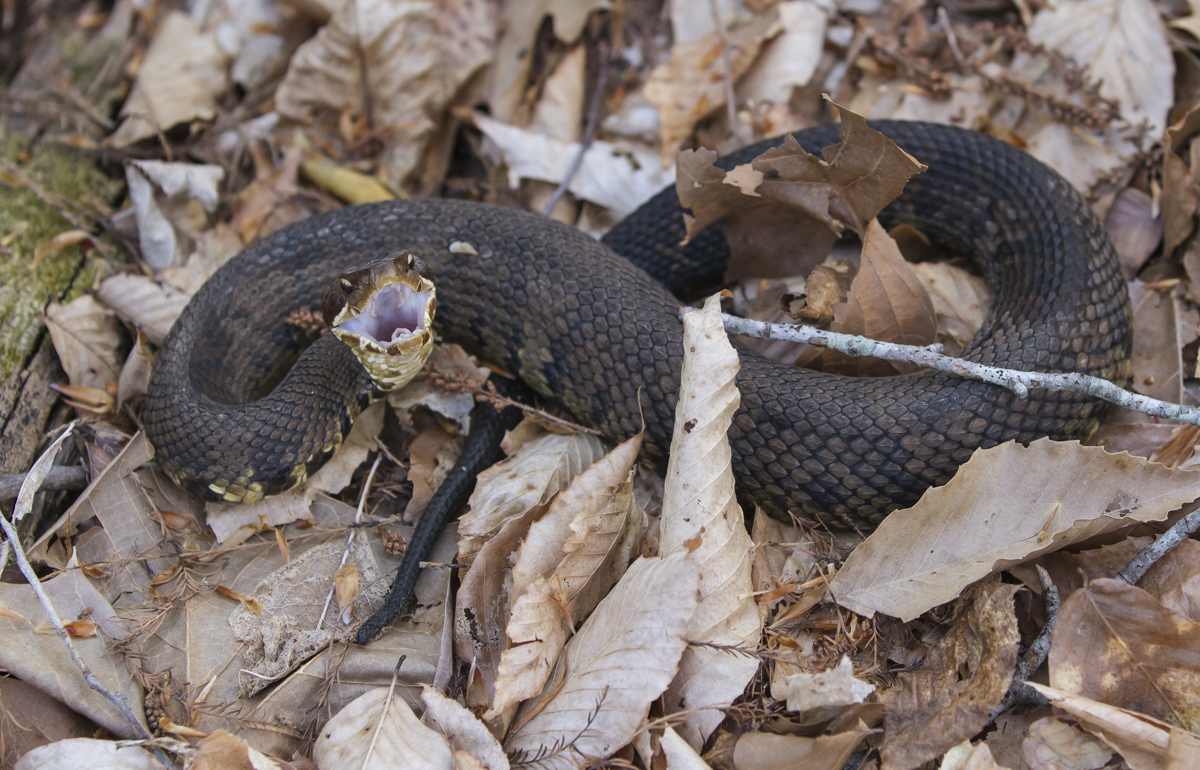
Cottonmouth showing why it is so named
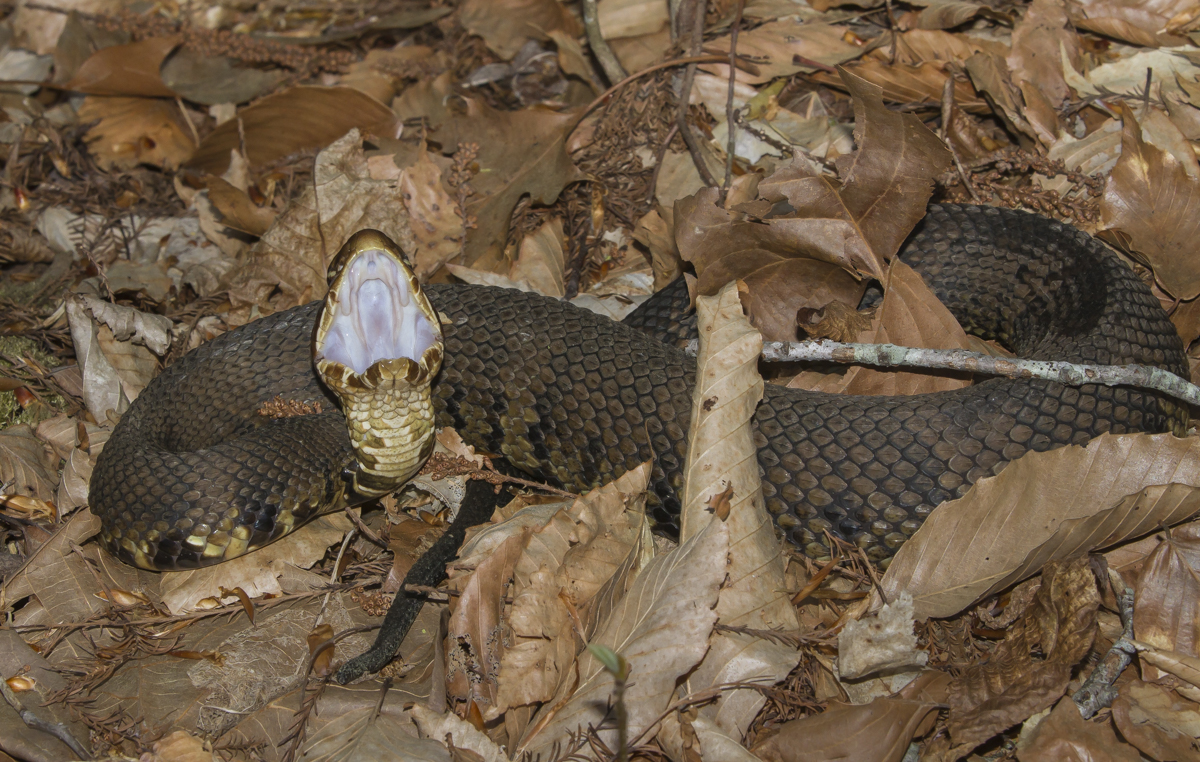
We encountered the Cottonmouth while walking over to get a closer view of an Eastern Screech Owl in a cavity in one of the large American Beech trees that dotted the slopes along the river. Cottonmouths typically display a threat posture of raising their head and gaping their mouth, showing the white insides, a very effective means of letting you know that they are there, and to not bother them.
How a Cottonmouth poses for its picture
Since I did not have any of my telephoto lenses on this trip, a picture of the owl or warblers was out of the question, but the snake was more than cooperative for a few snapshots.
Sunset along the Roanoke
It turned out to be a beautiful afternoon and a great place to relax and listen to the sounds of the river forest. Other wildlife sightings included a pair of Wood Ducks, undoubtedly nesting in one of the abundant tree cavities, another red phase Eastern Screech Owl the next morning (two were visible in separate tree cavities), a Wild Turkey, and several Pileated Woodpeckers drumming and investigating possible nest or roost sites.
The next day we made a special trip to Creswell to dine at one of my favorite local restaurants, the Main Street Eatery, for the last time. My friend, Sharon Maitland, reluctantly closed the doors to this jewel of a place this weekend. She and her staff have been an oasis of good food and warm smiles for me and my clients these past two years and will be sorely missed. I was happy to get the chance to dine there one last time and thank her for providing a touch of class for my winter outings to the nearby refuges.
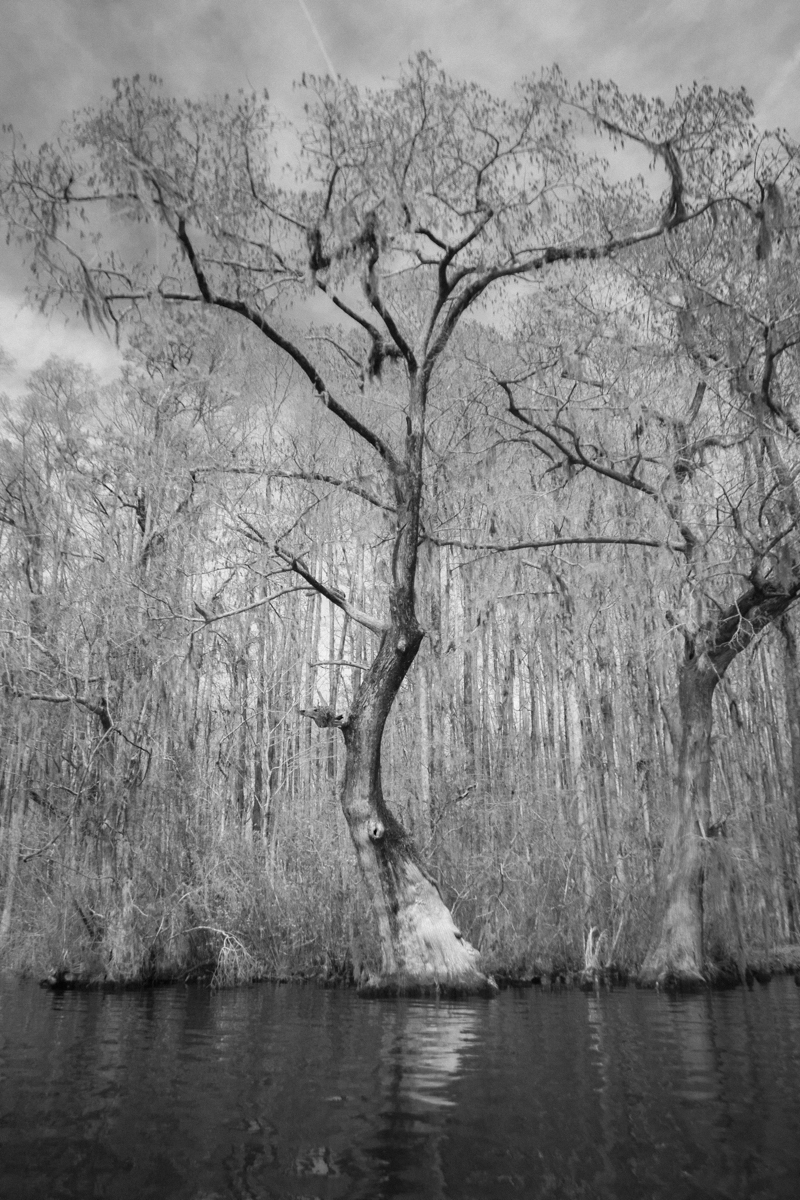
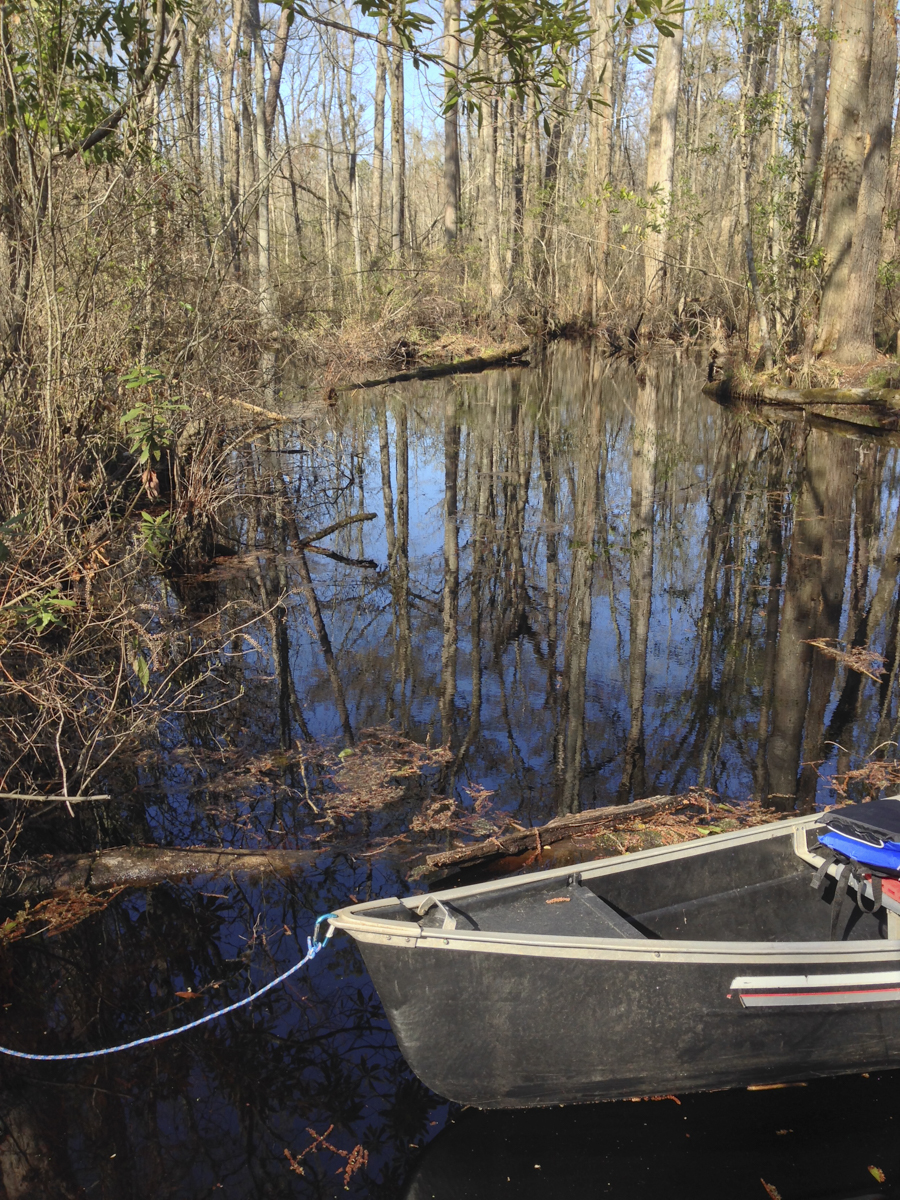
Bald Cypress along Conaby Creek
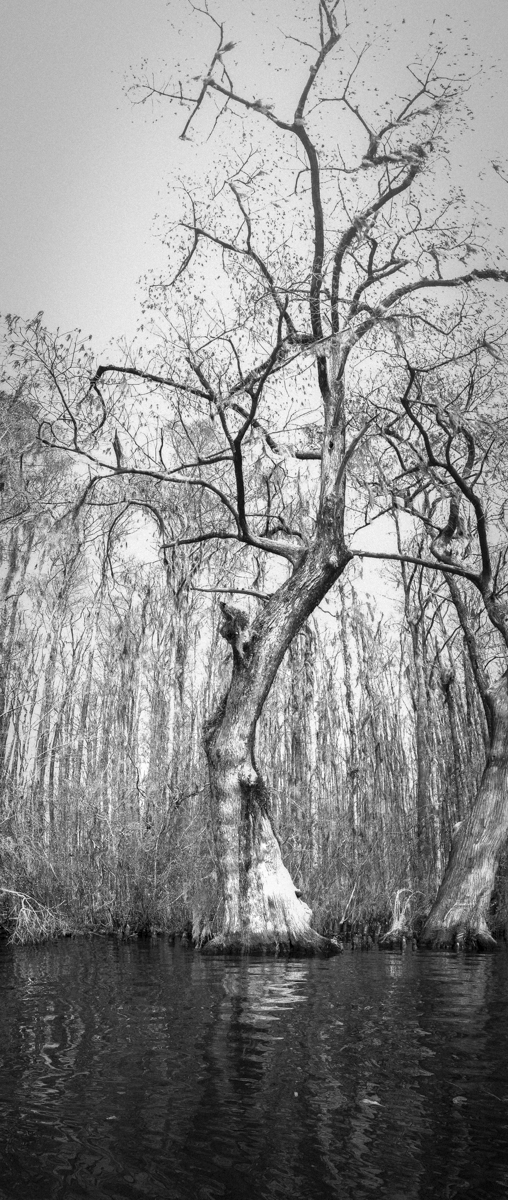
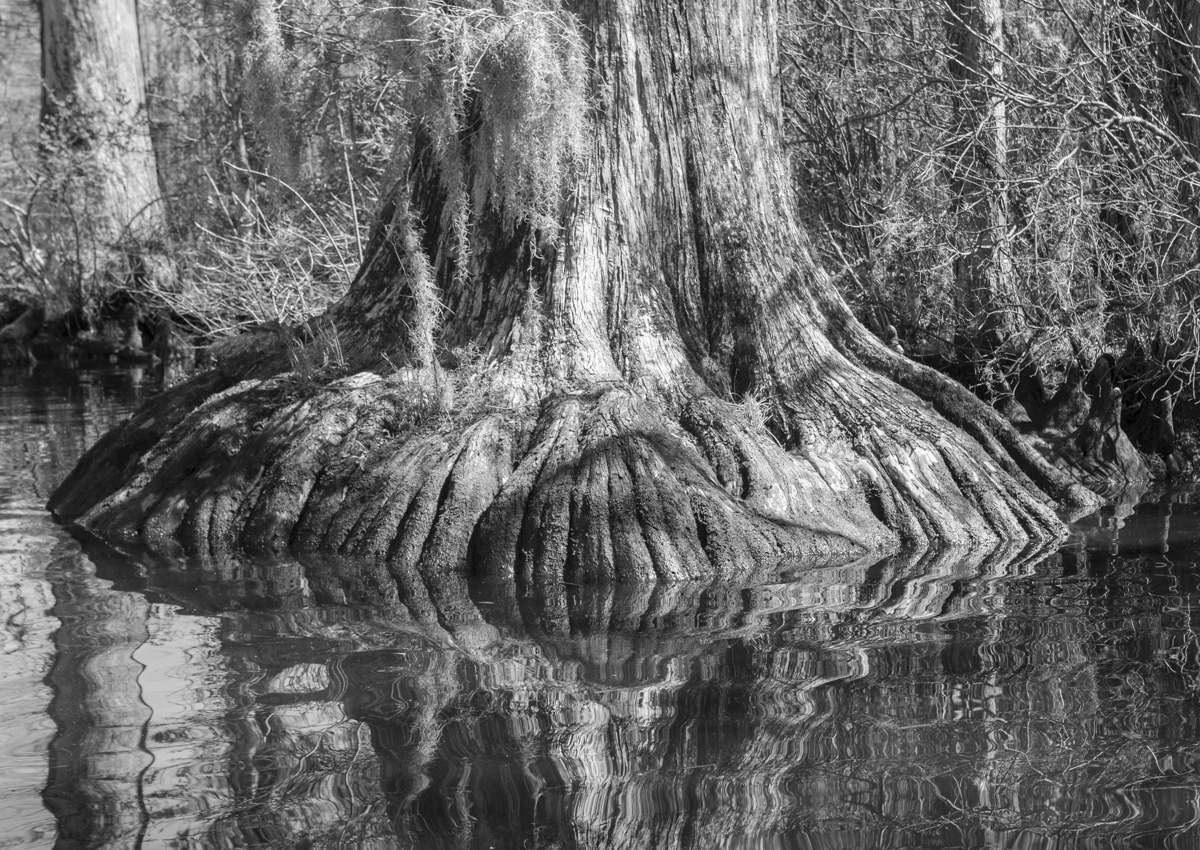
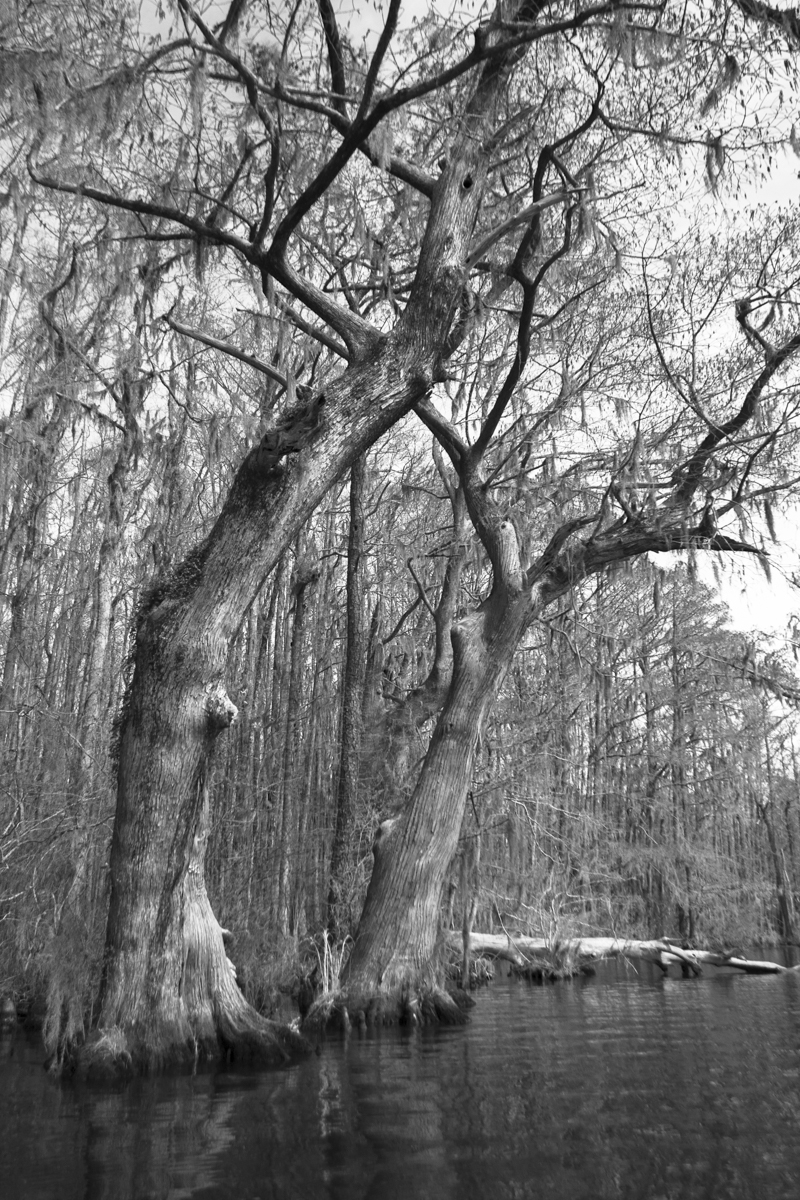
After lunch, we put in at Conaby Creek ,just north of Plymouth, and began the short paddle out to the next platform. While most of the swamp was timbered decades ago, there are remnant Bald Cypress trees along the banks that give you a glimpse of what it must have been like two hundred years ago. The huge trunks reach skyward, many draped in Spanish Moss, some with giant branches covered in Resurrection Fern. Looking at them in black and white seems a fitting way to honor their presence as guardians of the swamp over the centuries.
Bald Cypress trunks may appear as delicate brush strokes in the swamp scene……reaching above the surrounding trees……or as massive anchors, holding the swamp in place.They seem to embrace the swamp and invite you in…
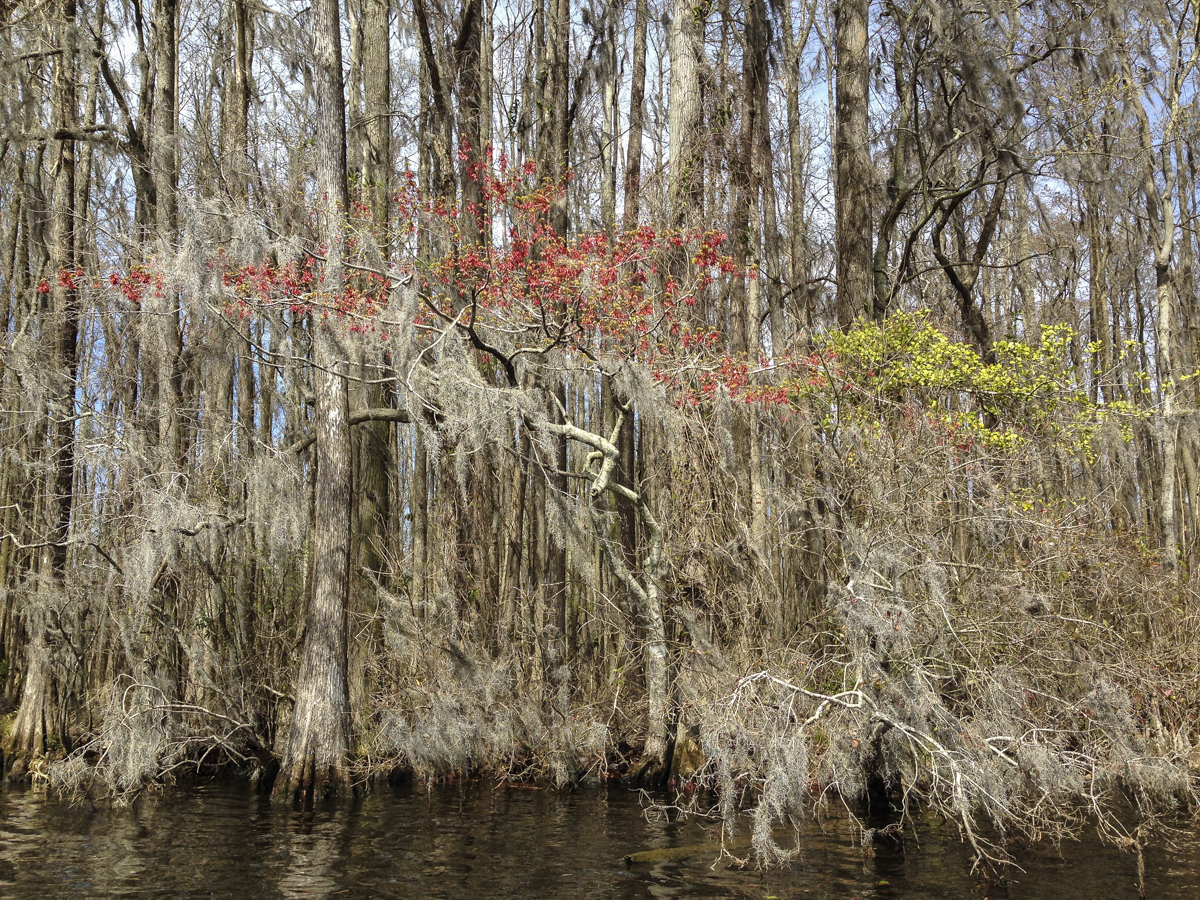
While the ancient trees speak to us in neutral tones, the swamp itself is coming alive with color.
Spring colors in the swamp
When we arrived at the platform, I took a few moments to appreciate the colors and patterns of the awakening plants…
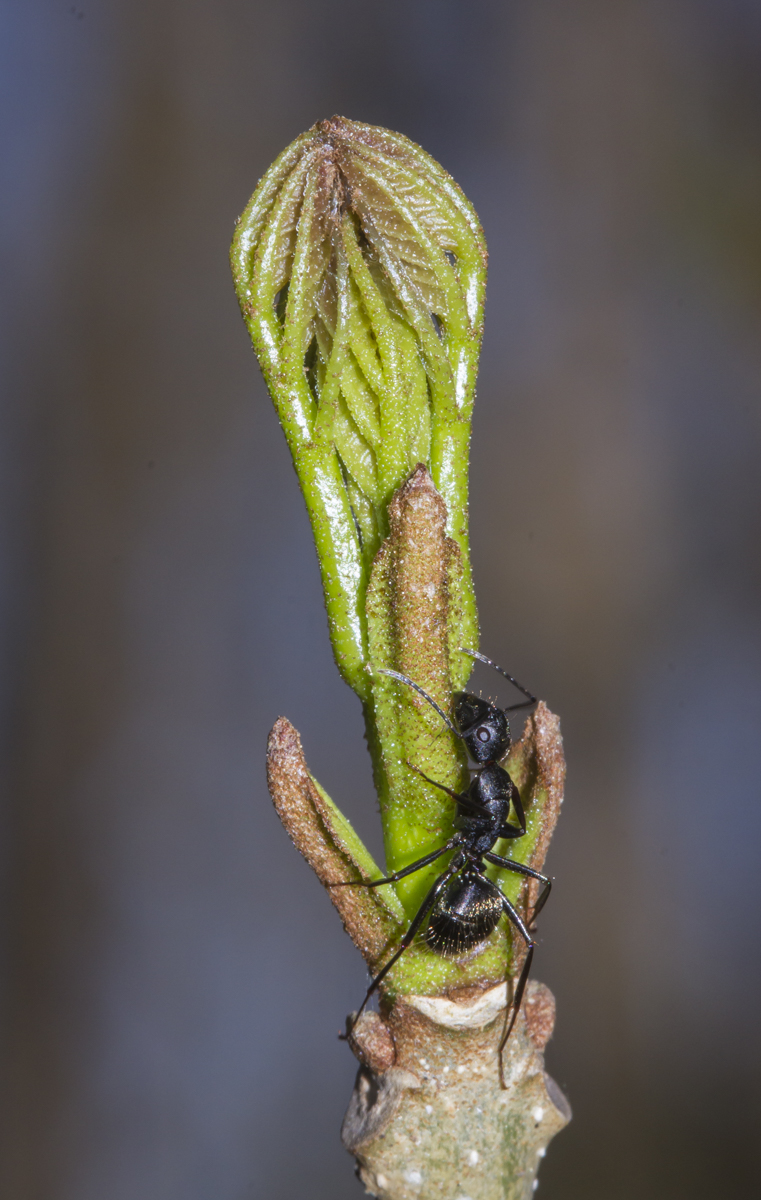
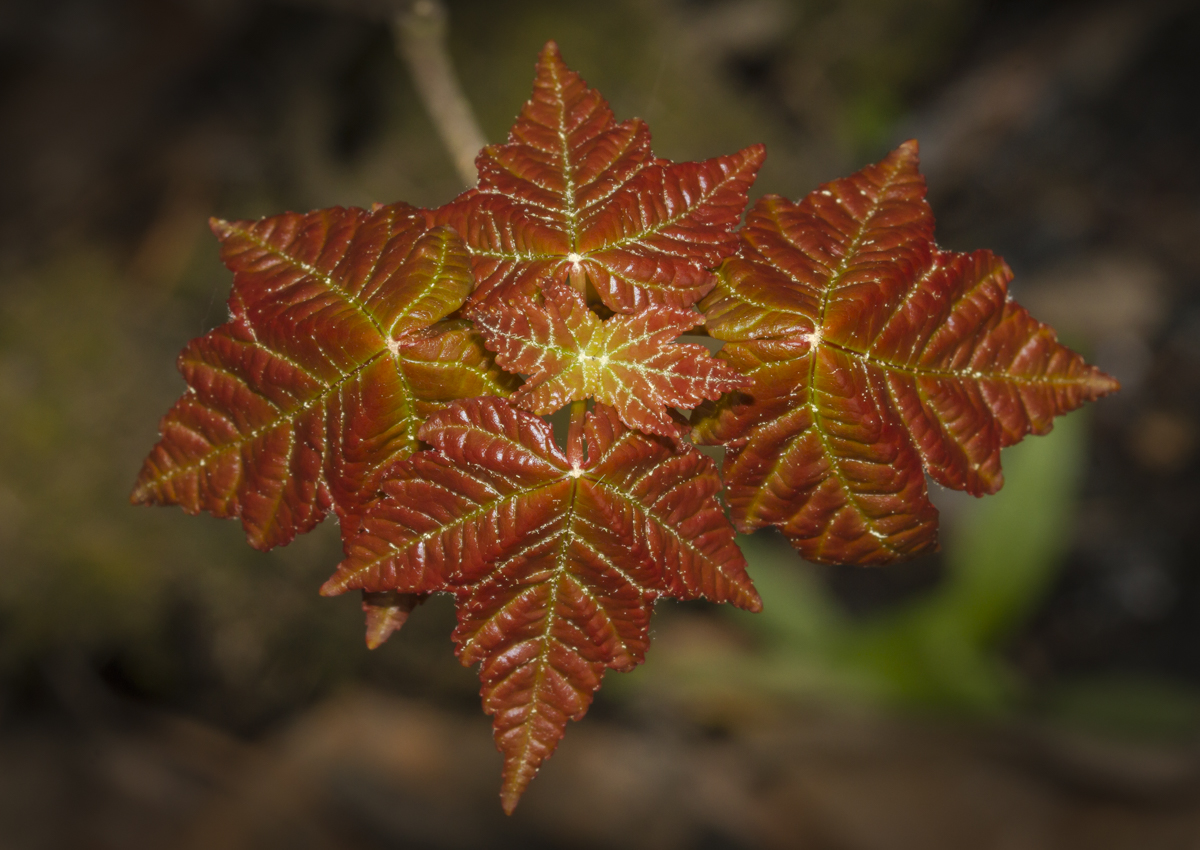
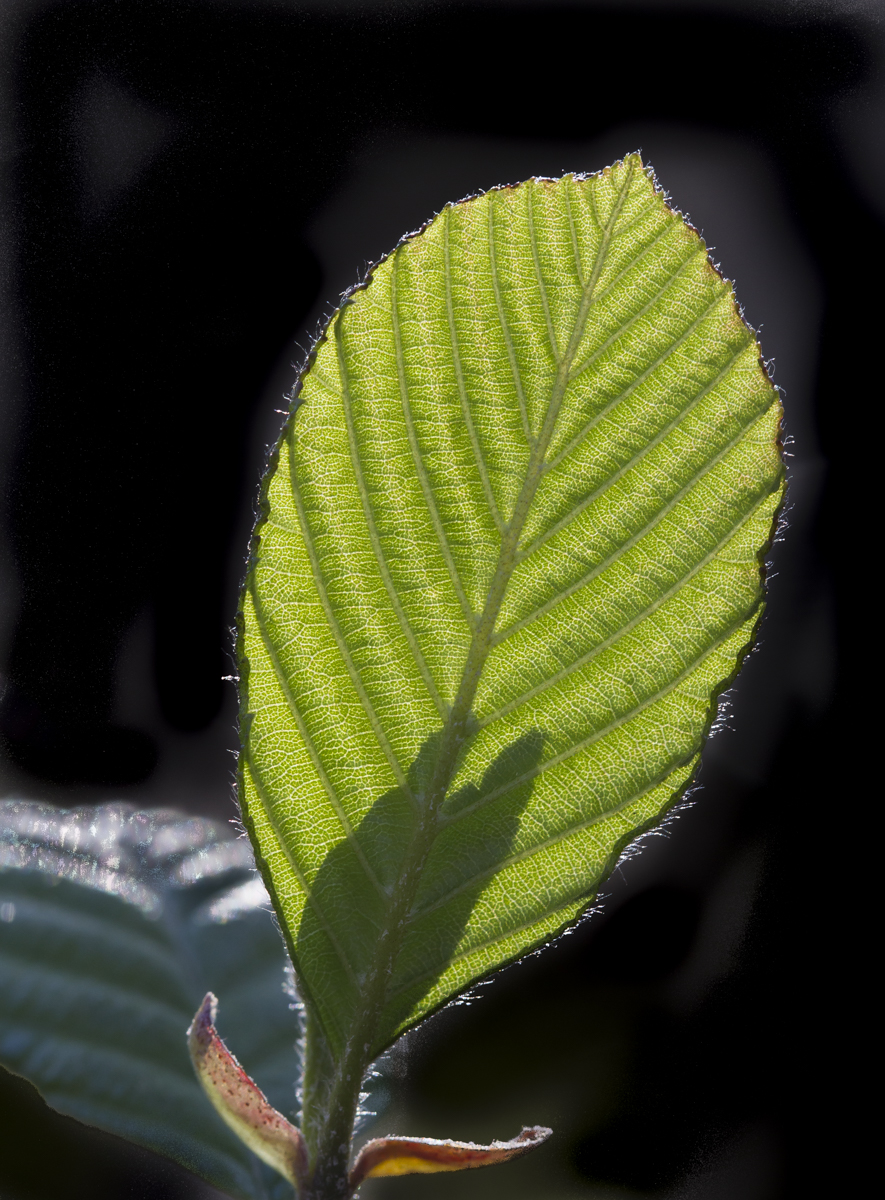
Ash bud beginning to open accompanied by a Carpenter Ant seeking foodMaple leaves openingTag Alder leaf backlit in the setting sun
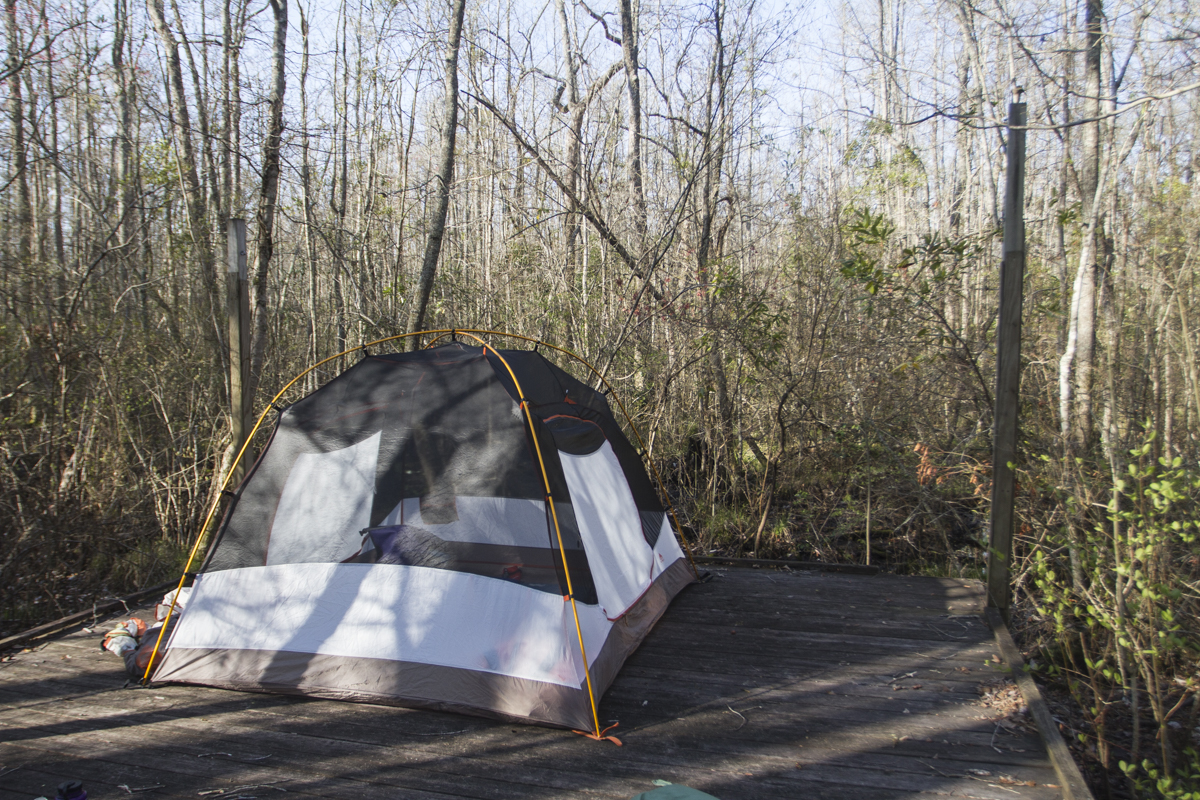
When we arrived at the platform, one thing became very apparent – the website had meant what it said…Black Bears are known to visit this platform/area often. Campers should be prepared for a potential bear encounter. All of the posts on the platform had been chewed by bears, and a couple of nearby Sweet Gum trees had the bark ripped off by bears seeking the sweet sap as I have so often seen in the woods of Pungo.
Royal Fern camping platform
Now, readers of this blog know that I like bears, but the amount of bear sign here was a little disconcerting to be honest. But, we did what you do in bear country and put our food and toiletries in bags strung in the trees, and I had brought bear spray, just in case.
Serenity in the swamp
It turned out to be a spectacular afternoon and night in the swamp with no bear encounters. There is a Bald Eagle nest a couple of hundred yards away from the platform, and we saw and heard a couple flying above the towering Bald Cypress trees that surrounded us. As a brilliant moon rose, we were serenaded by a chorus of snoring Pickerel Frogs and all three of our common owls (Great Horned, Barred, and Eastern Screech). The next morning, a trio of Red-shouldered Hawks put on an impressive display of aerial acrobatics, while warblers (including my first Prothonotary of the season) moved through the cypress branches overhead.
I know many of you are probably stuck on the image of the Cottonmouth and the possibility of bears in the swamp and are thinking, no way… but I have not seen that many Cottonmouths and no bears on my years of paddling the Roanoke. And, trust me, there is nothing like camping on these platforms to really get away from your usual hectic lifestyle. I have camped out there many times and have always come away wanting to spend more time in these magical places. It is well worth the trip.
It’s not enough to be busy, so are the ants. The question is, what are we busy about?
~Henry David Thoreau
I think we all fall into that trap sometimes, perhaps too often – just being busy for the sake of being busy. It was probably more true for me when given some seemingly meaningless paperwork task during my work years rather than now in my retirement (and, thankfully, that did not happen all that often in my career). And it is true that ants are busy creatures, all too busy for us if they manage to find ways into our houses. I do know one thing that ants are very busy about this time of year – and that is plants. Certain species of tropical leaf cutter ants are well known for their leaf collecting and fungus farming. It turns out our local ants do a lot of interesting things as well. They can serve as pollinators for some species of plants and nectar thieves for others. In fact, many plants have evolved clever ways to hinder access to their flowers by ground-dwelling insects like ants, presumably because these crawlers often raid the nectar without performing the efficient pollination of aerial insects. Hairy stems and sticky solutions from glands are but two of the mechanisms used to deter these raiders. But, in our spring woodlands, ants play another, often overlooked function. But you have to look closely to learn more…
Bloodroot seed pod as it starts to form (click photos to enlarge)
Yesterday, I shared some images of the Bloodroot flowers blooming in the yard. The petals on many of the plants are now gone, barely visible in the leaf litter. The stalk that once held the brilliant white flower is now topped with a slender green capsule.
Mature Bloodroot seed pod showing how it splits to release seeds
To tell the rest of the Bloodroot story, I’ll need to borrow some images from the archives. These Boodroot seed photos were taken on a trip to the Smokies a couple of years ago in early May, a time equivalent to perhaps mid-April in these parts. I stopped to photograph some wildflowers and noticed the distinctive leaves and seed pods of a clump of Bloodroot. I could see one of the pods had split open and there were only a couple of seeds visible inside the pod, so I looked on the ground below.
Bloodroot seed on the ground beneath an open pod
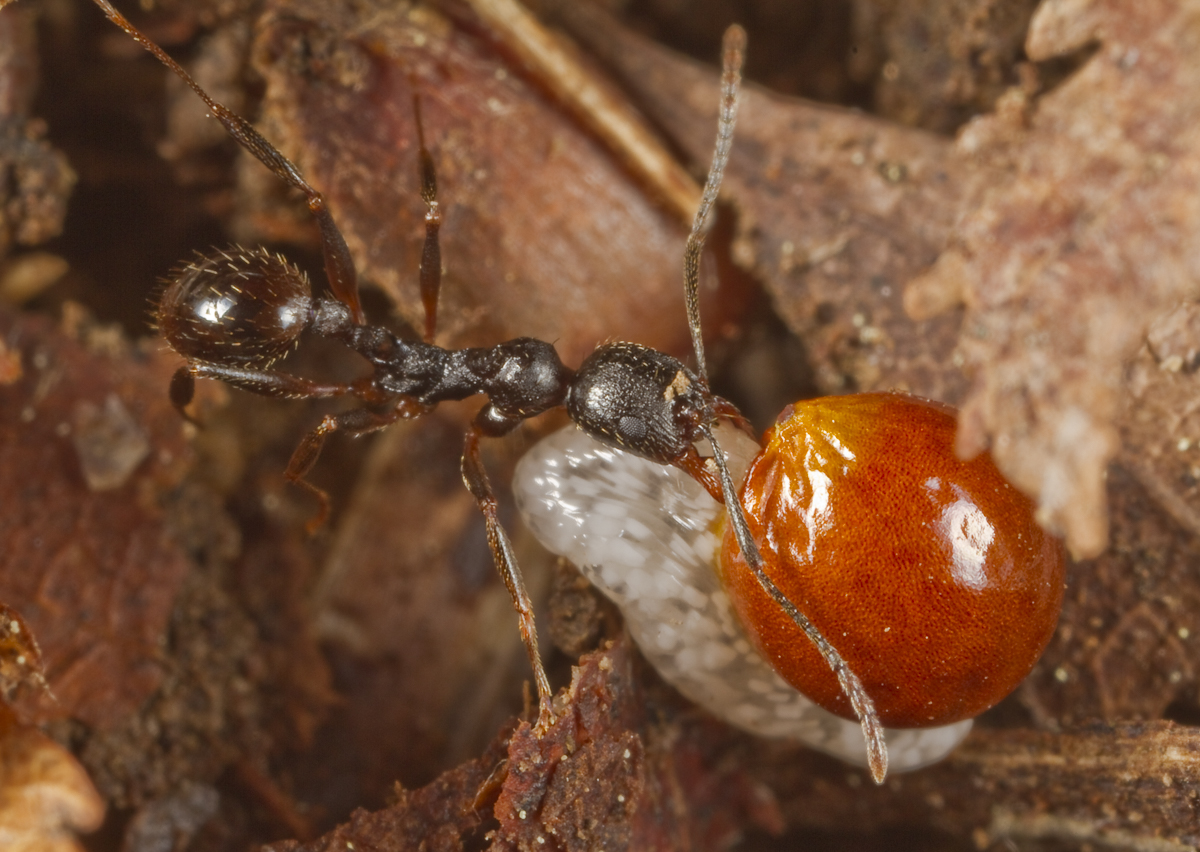
Bloodroot seeds fall to the ground beneath the parent plant, a situation that is usually not ideal for a plant, due to potential limits of space, sunlight, nutrients, etc. This is why plants have evolved so many interesting means of seed dispersal using wind, water, and animals to help move their seeds to more favorable areas for successful germination. In the case of Bloodroot, and many of our other spring woodland flowers, that seed dispersal mechanism is directly related to ants. And the ants are not doing it out of the goodness of their tiny hearts, but rather for a self-serving reason related to that great motivator, food. You may notice the Bloodroot seed looks a bit odd, not much like the seeds you buy to plant in your yard. This seed looks like it has a polka-dot slug riding on it, or perhaps it has a plant version of a punk hairdo. What it really has is a lipid-rich appendage called an elaiosome (Greek élaion “oil” and sóma “body”).
Ant picking up a Bloodroot seed
These lipid and protein-rich bodies are very attractive to ants and a variety of species of ants somehow manage to find these seeds soon after they fall to the ground. After reading about this phenomenon, I had tried to photograph it in my yard in Raleigh, where I had Trout Lilies planted in a natural area. I collected some seeds and laid them out on a piece of paper, hoping to see some ants come and collect them. I went inside to get my camera, and stayed in for a little too long it seems, because when I returned a short while later, all the seeds were gone. On this day in the mountains, I started looking around the plants and found several ants crawling about. I waited only a few minutes before an ant found one of the seeds ( I had brushed aside some leaf litter to make it easier to photograph the scene).
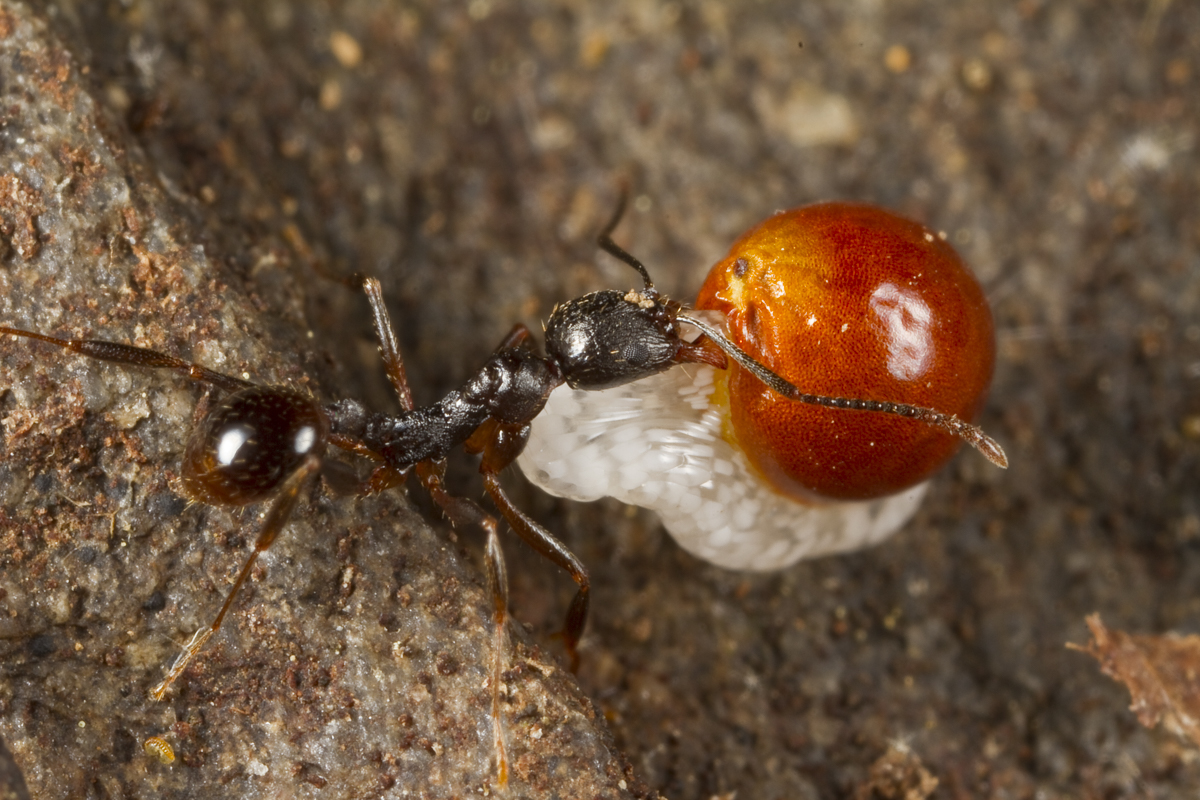
Ant carrying Bloodroot seed
The ant quickly picked up the seed and struggled to carry it off, presumably to its nest. Ants eat the elaiosome (some say they also feed it to their larvae), and discard the seed. The seed has thus been transported away from the parent plant at least some distance, and often deposited underground in an ant nest trash pile, usually a great spot for germination and protection from potential seed predators like Deer Mice. One research paper I saw stated that the elaiosome itself may also provide some chemical deterrent to certain mammalian seed predators. This fascinating process of seed dispersal by ants has an equally fascinating name – myrmecochory. Some researchers say as many as 40% of the herbaceous species in some temperate woodlands like we have here in North Carolina rely on ants for their seed dispersal.
Bloodroot seed pod in early stage of development
So, when you are in the woods these next few weeks, take a moment to ponder the miracles happening beneath your feet, and take a closer look to see if you, too, have ants in your plants. I know I’ll be looking, camera in hand.
One of the most attractive things about the flowers is their beautiful reserve.
~ Henry David Thoreau
Emerging Bloodroot flower wrapped in its leaf (click photos to enlarge)
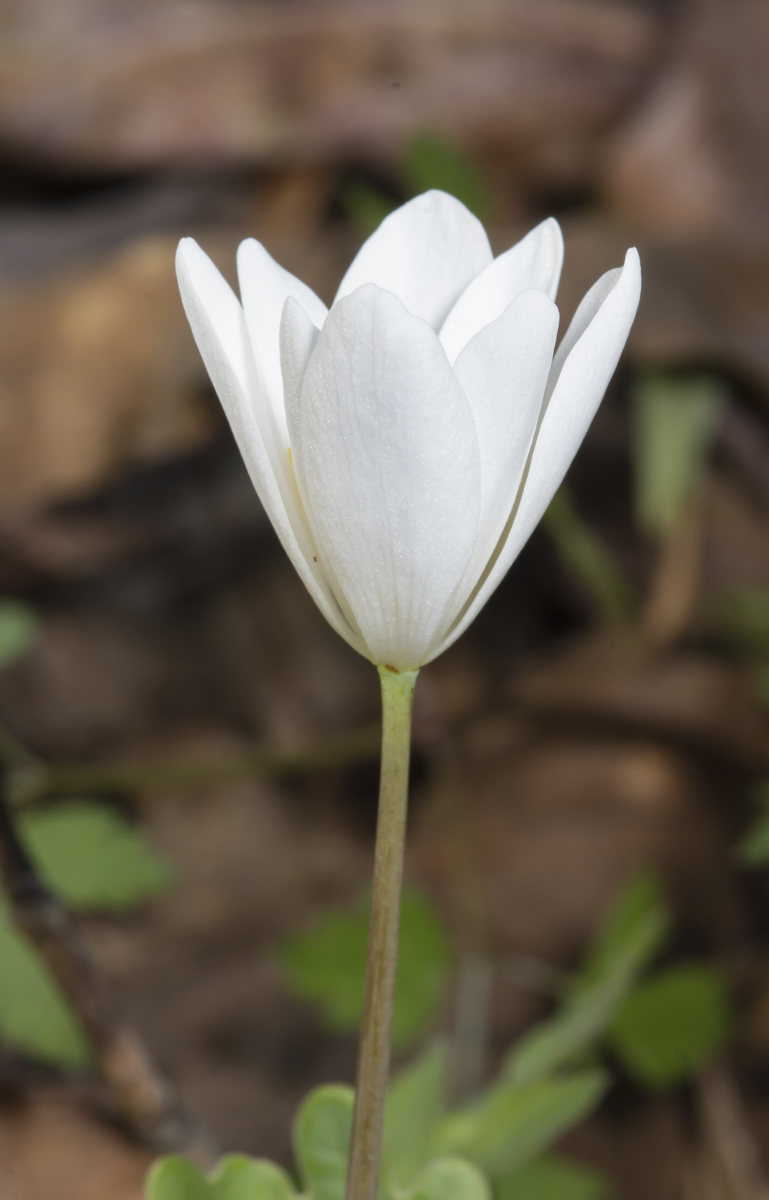
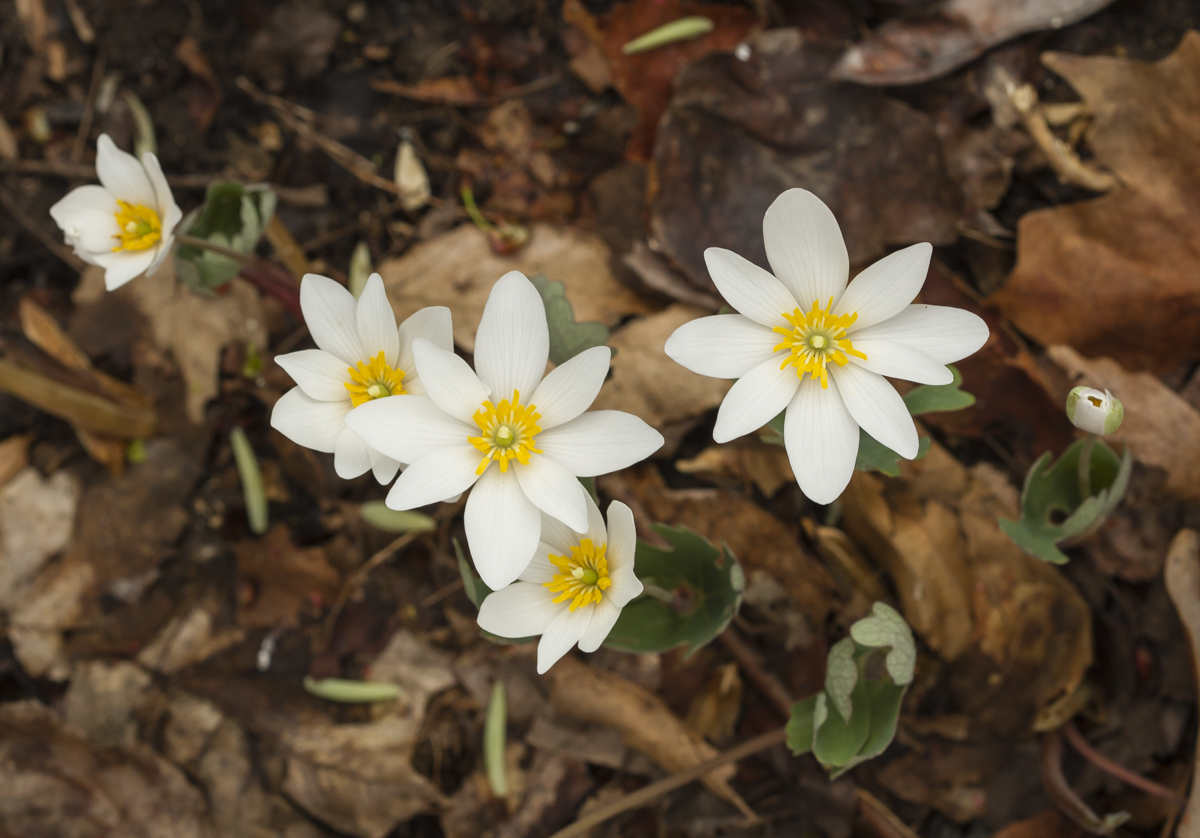
The beautiful, pure white petals of Bloodroot, Sanguinaria canadensis, are almost finished now. Their time is brief, only a few days for each flower. They emerge in early Spring, each flower bud wrapped in the protection of a single leaf.
Bloodroot flower partially open
On a very cloudy or rainy day, or during a late cold snap like we had last week, the flowers remain closed.
Fully open flower
But let the sun shine and temperatures warm, and they open to reveal their intense white, complimented by the bright yellow of the stamens and pollen. The flowers produce no nectar, but are occasionally visited by pollen gathering bees, or by other insects fooled by the showy display in an otherwise often flower-poor landscape this time of year. If the flowers are not pollinated in a couple of days, the anthers bend towards the stigma, ensuring self pollination, probably a good hedge for a plant that blooms early in the year when insect pollinators may be hard to come by.
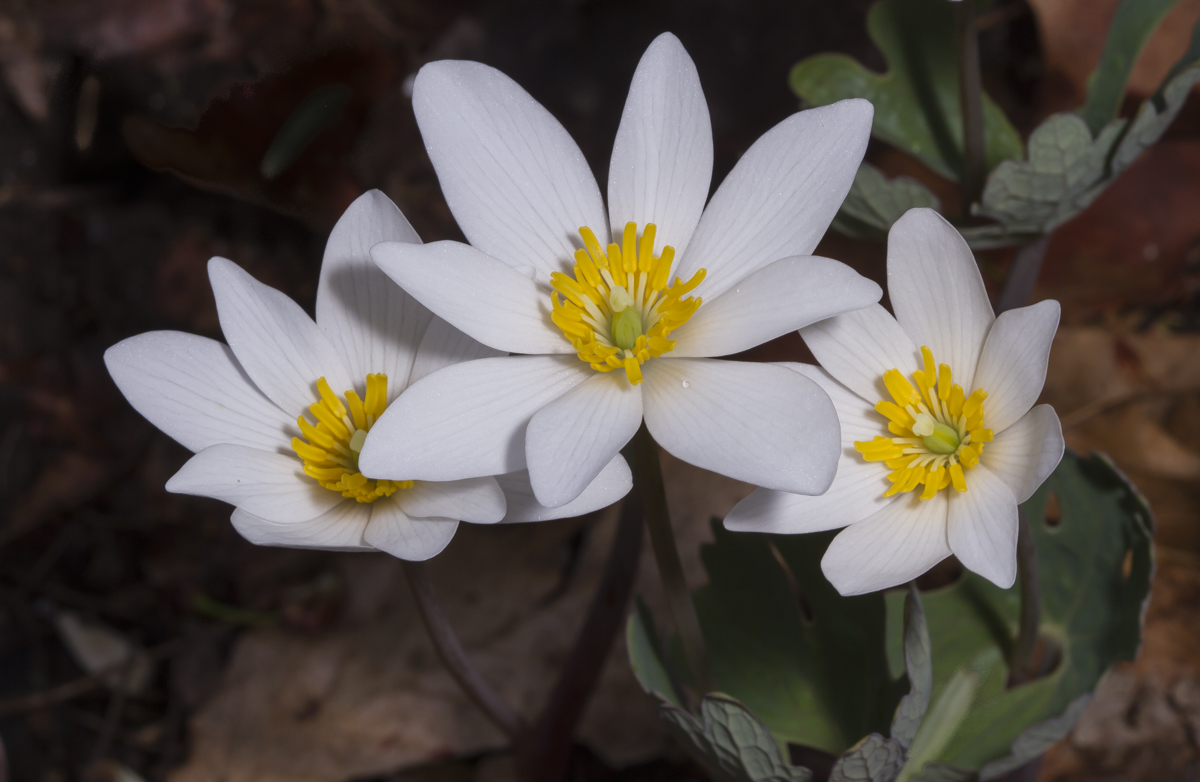
Clump of Bloodroot flowers
Several stems may arise from a single rhizome, leading to small clumps of the brilliant white flowers.
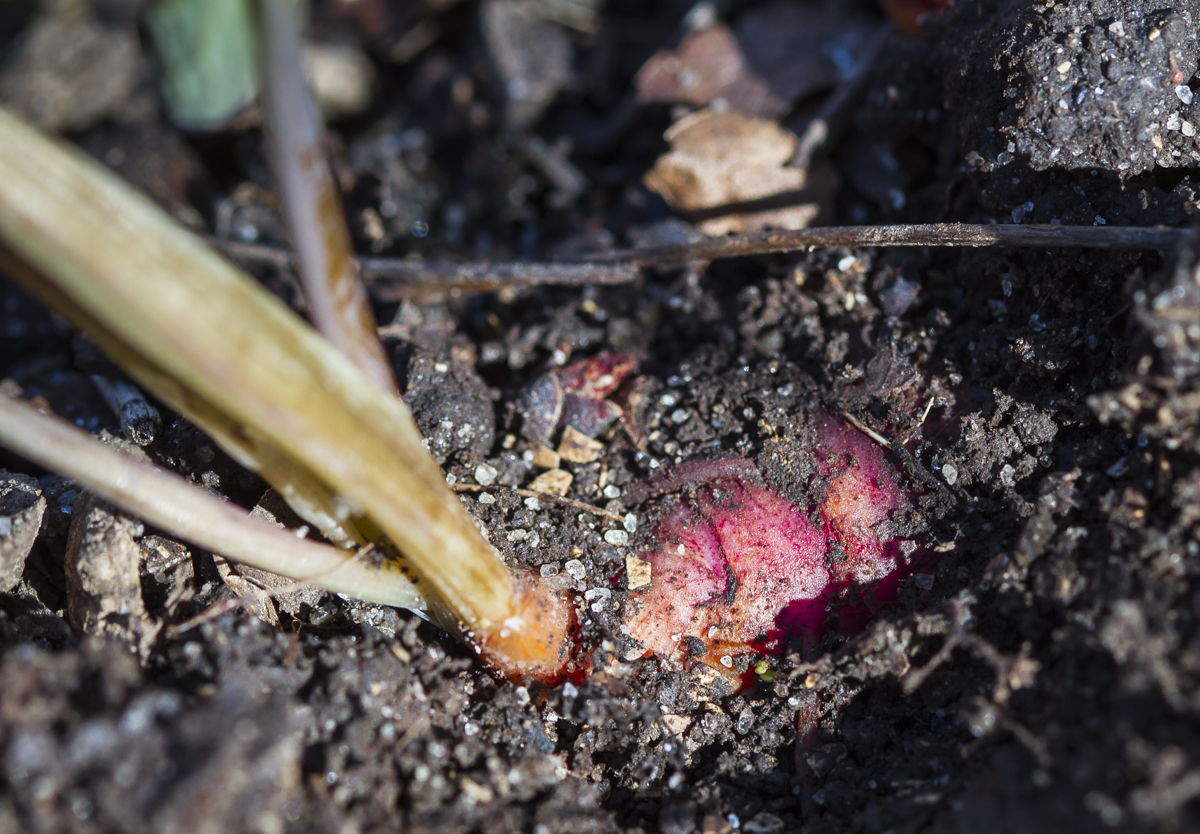
Red root of Bloodroot
And it is the rhizome that gives this plant its unusual name, Bloodroot. This is the only species in the genus, Sanguinaria, and it is a member of the poppy family of plants. The word originates form the Latin, sanguis, which means blood. If you dig down to find one of the roots, you can see why the plant is so named, the roots are indeed a blood red in appearance.
A cut in the root causes it to “bleed”
Cut into the root and it bleeds a red fluid. The red juice was used by many tribes of Native Americans as a red dye and body paint. It has also been used for various medicinal purposes from a cough suppressant to a treatment for skin ailments. If I am not mistaken, I remember my grandmother used a poultice that contained Bloodroot, for a skin lesion on her leg. The active ingredient, sanguinarine, is a toxic alkaloid that can kill animal cells. It is being studied for potential cancer treatment, although it can also induce oral cancers if taken internally. Ironically, it is used commercially in low doses as a dental hygiene additive for fighting bacteria and plaque.
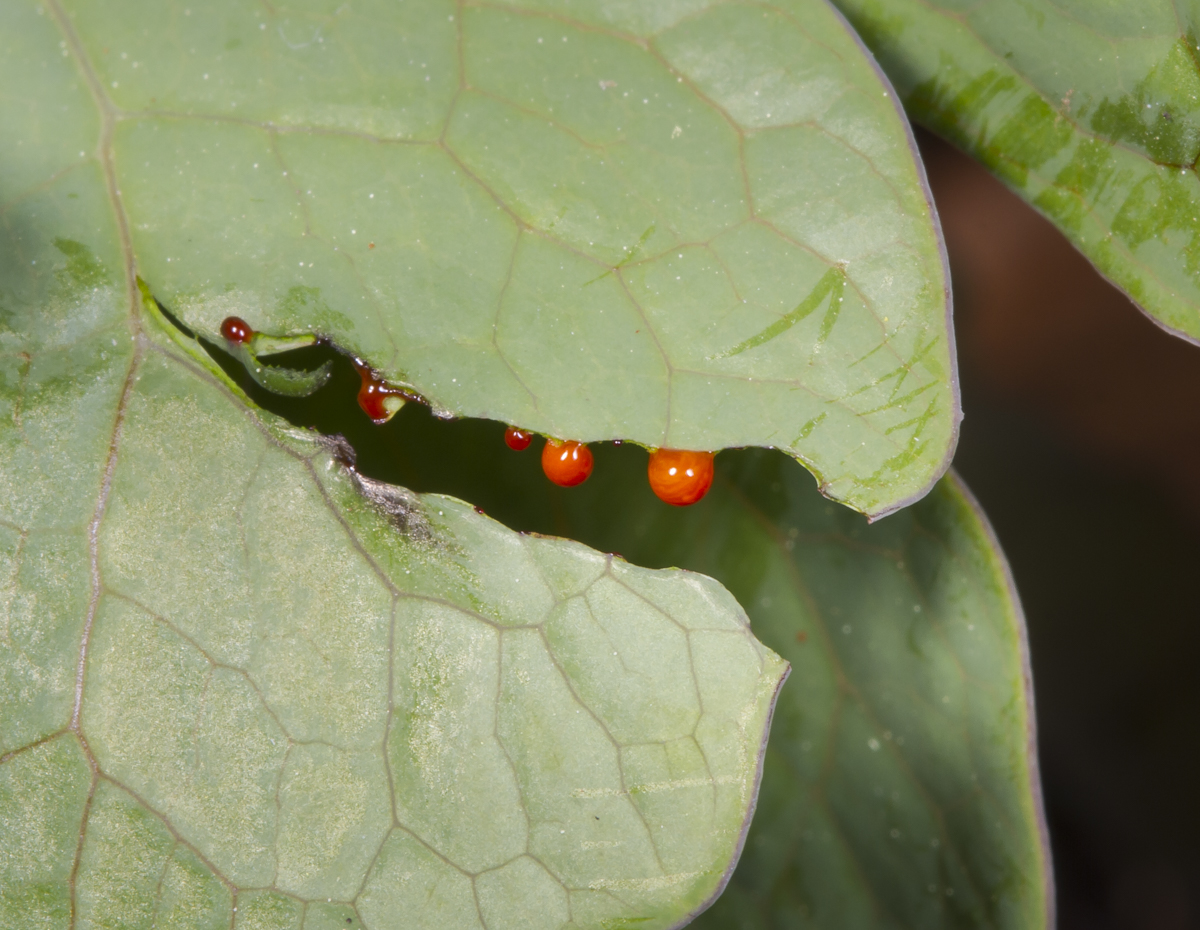
Bloodroot leaf cut to show red droplets
All parts of the plant contain these compounds and if you gently cut a leaf, it appears to bleed an orange-red blood form the severed veins. While it seems this might protect the plant from being eaten, I cannot find any of these beautiful flowers outside my deer fence.
Group of open Bloodroot flowers
But here in the yard, there are several small clumps thriving, pushing up through the leaf litter, even when it is still too cold for most plants, sharing their dazzling petals, if only for a few days. Perhaps that is why the word sanguine means confidently optimistic and cheerful. More on the ecology of this wonderful wildflower tomorrow.
In nature, light creates the color. In the picture, color creates the light.
~Hans Hofmann
This past weekend was beautiful…cold, but beautiful. I had planned a trip south for some bird photography, but came down with a lousy cold, so I decided to stay home. At least I could gaze out the windows at the awakening landscape. Spring is pouring over the woods here in central North Carolina and everywhere I look there are changes.
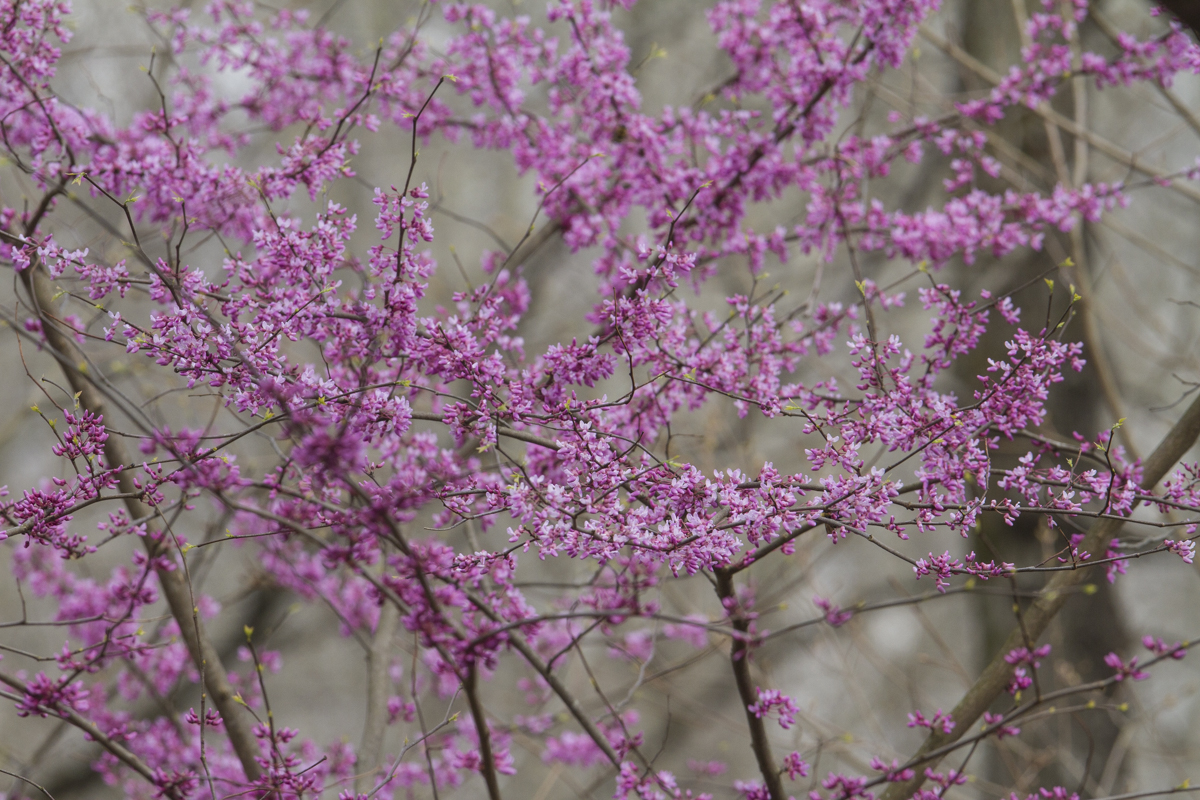
Redbud in bloom (click photos to enlarge)
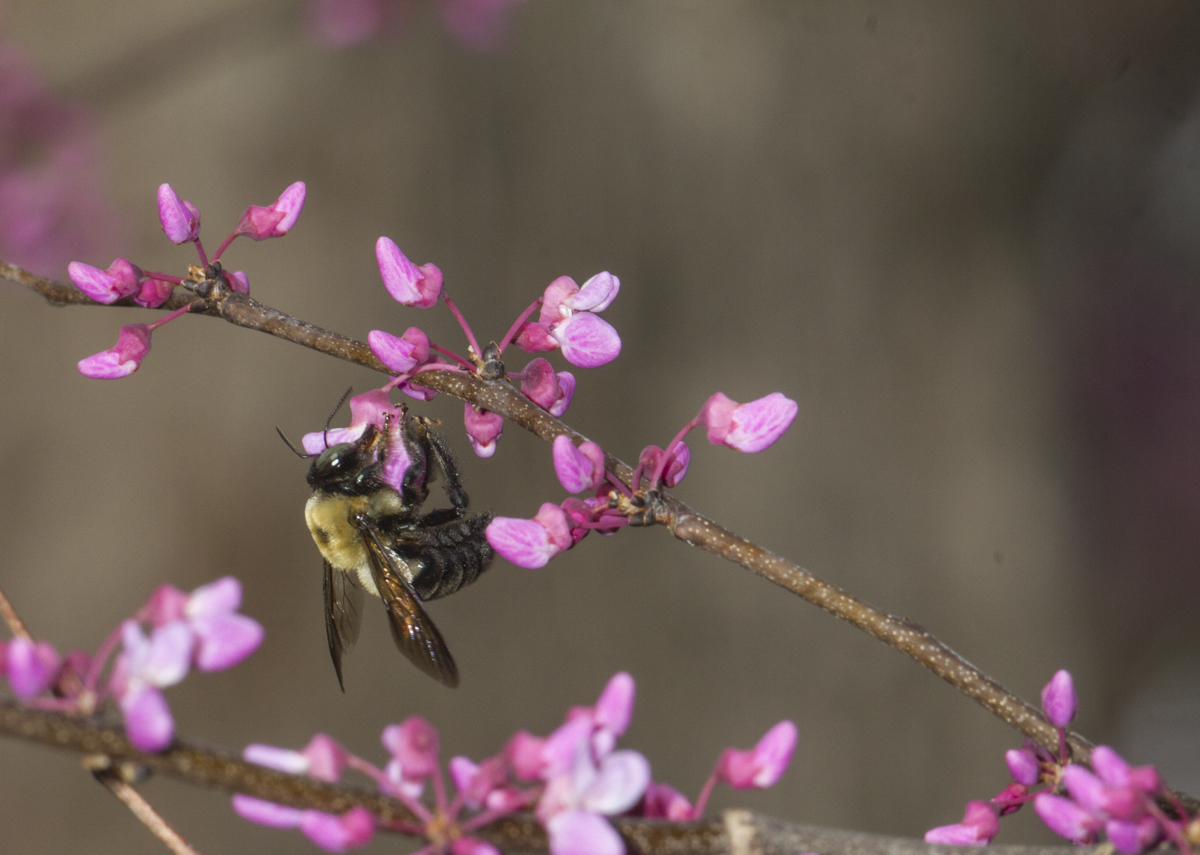
One of the most noticeable this past week is the reddish-pink blush of the Redbud trees in bloom in the understory. The warm days late last week seemed to have encouraged the flowers and I couldn’t help but notice the buzzing of so many bees and other insects visiting these early blooming trees when I went out on the deck a few days ago.
Carpenter Bee on Redbud
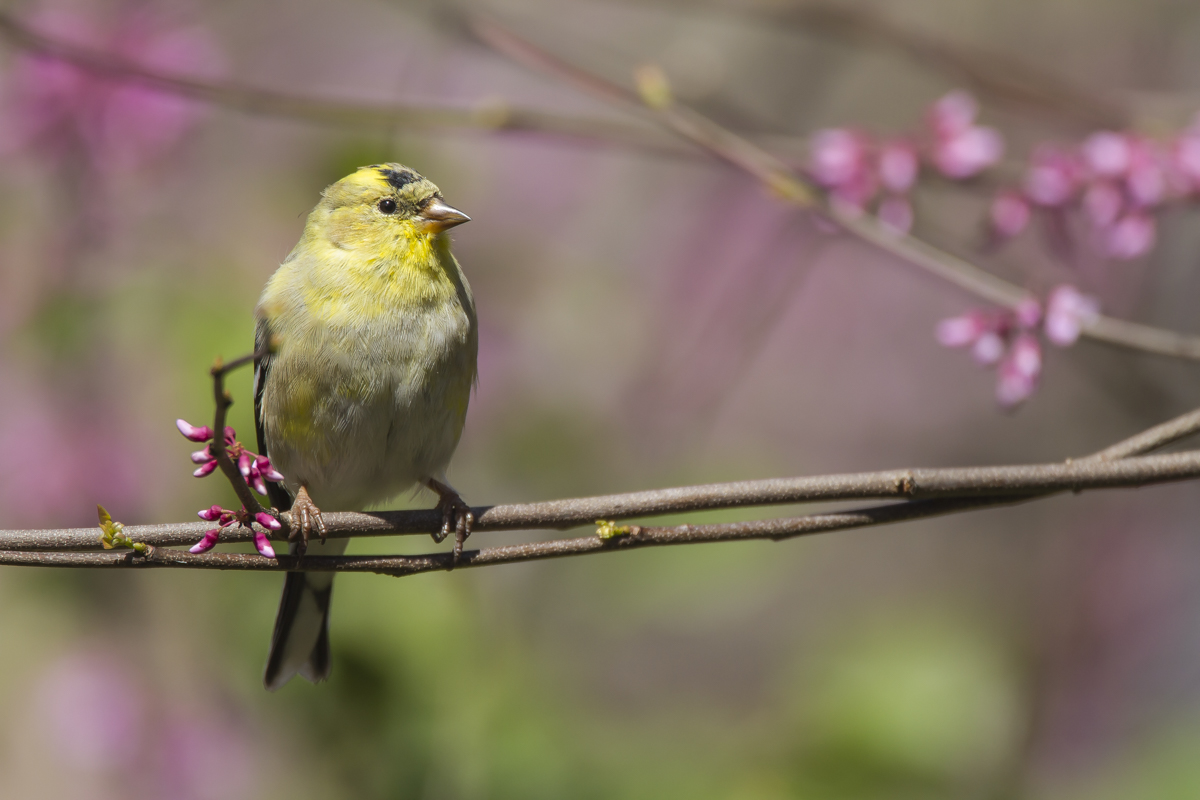
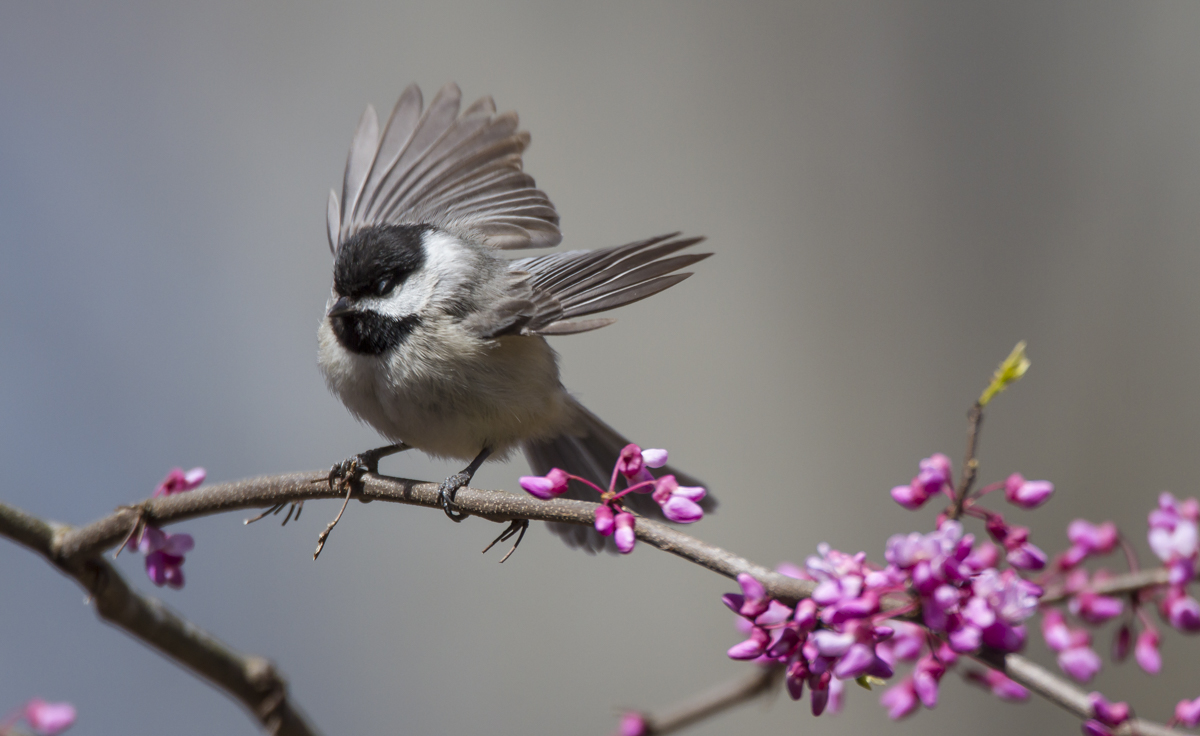
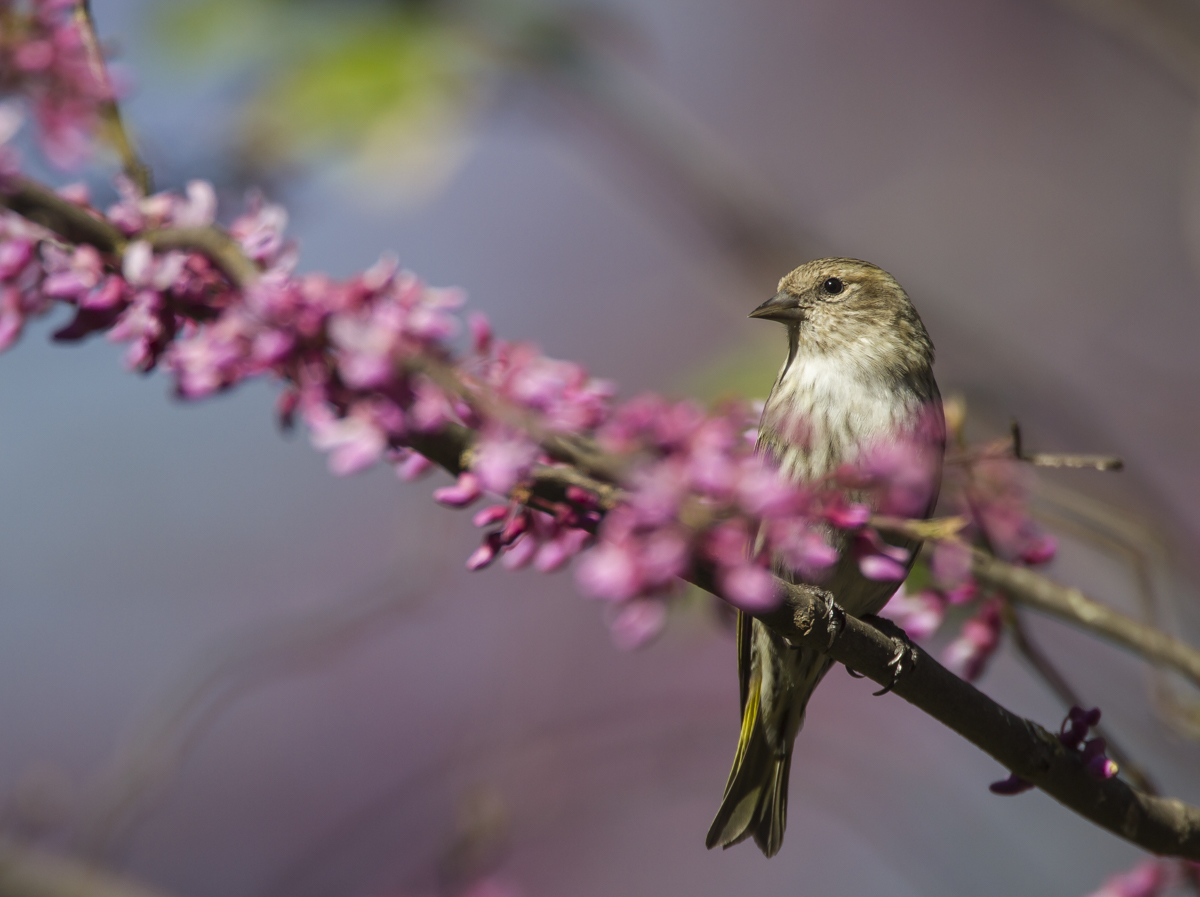
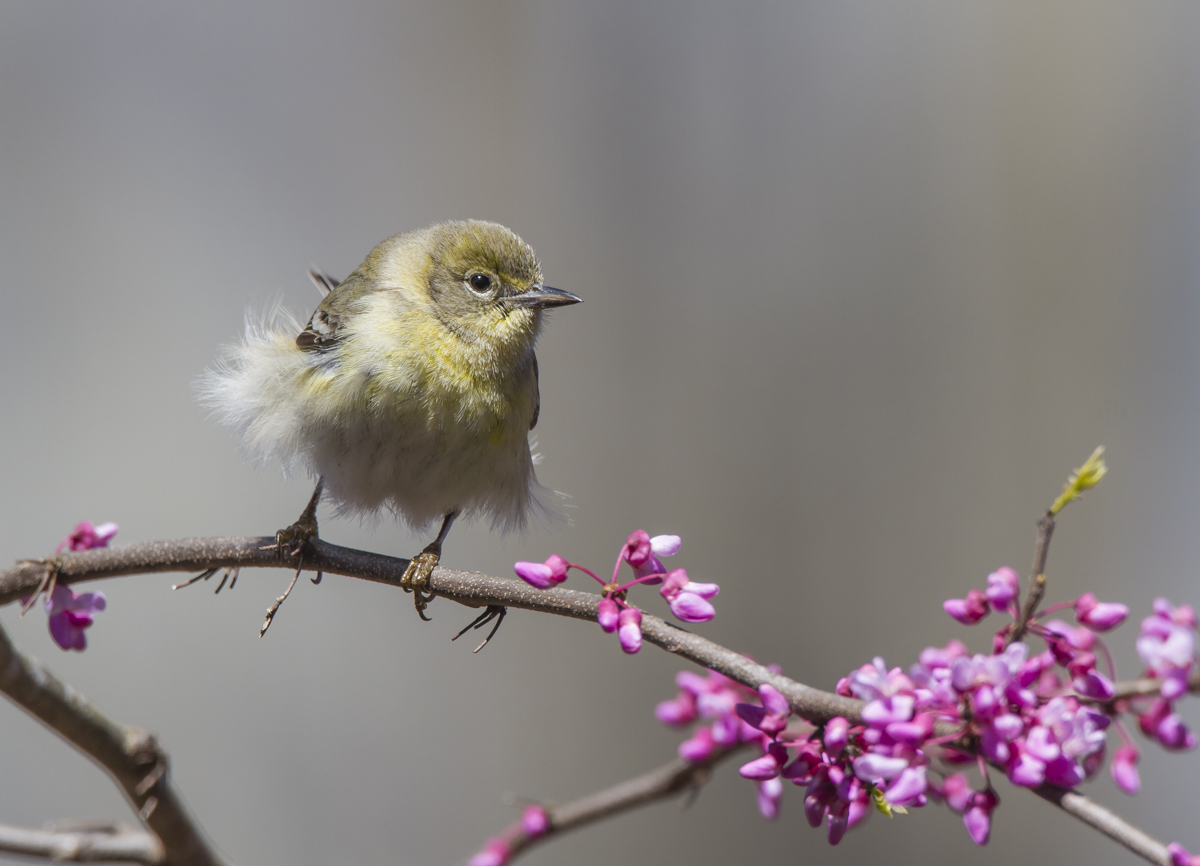
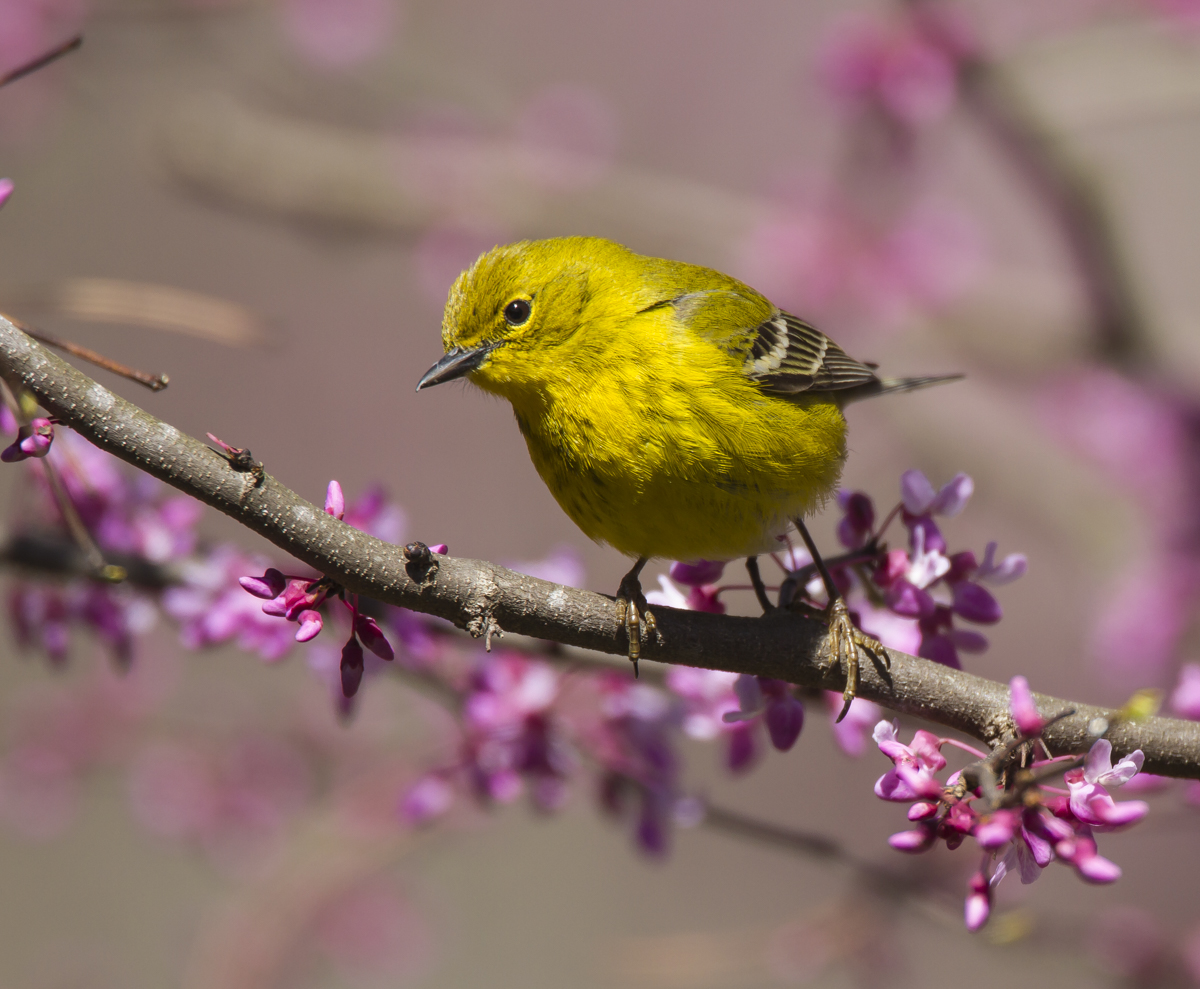
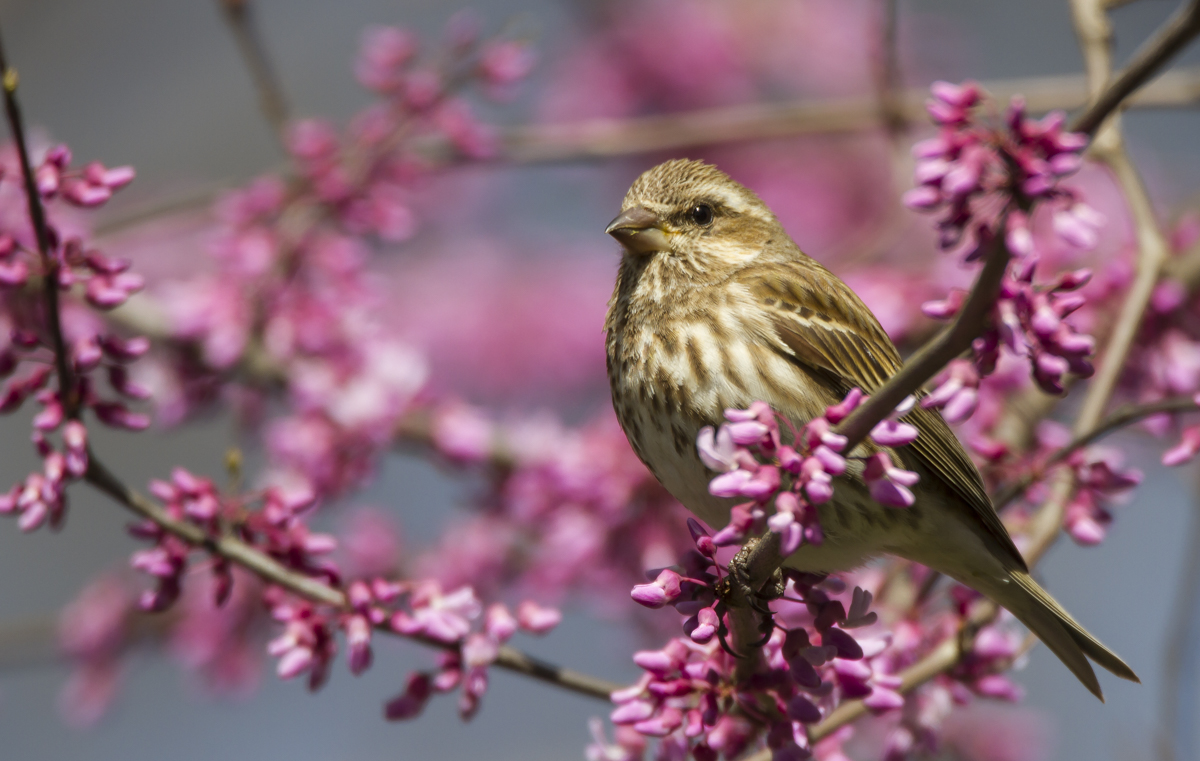
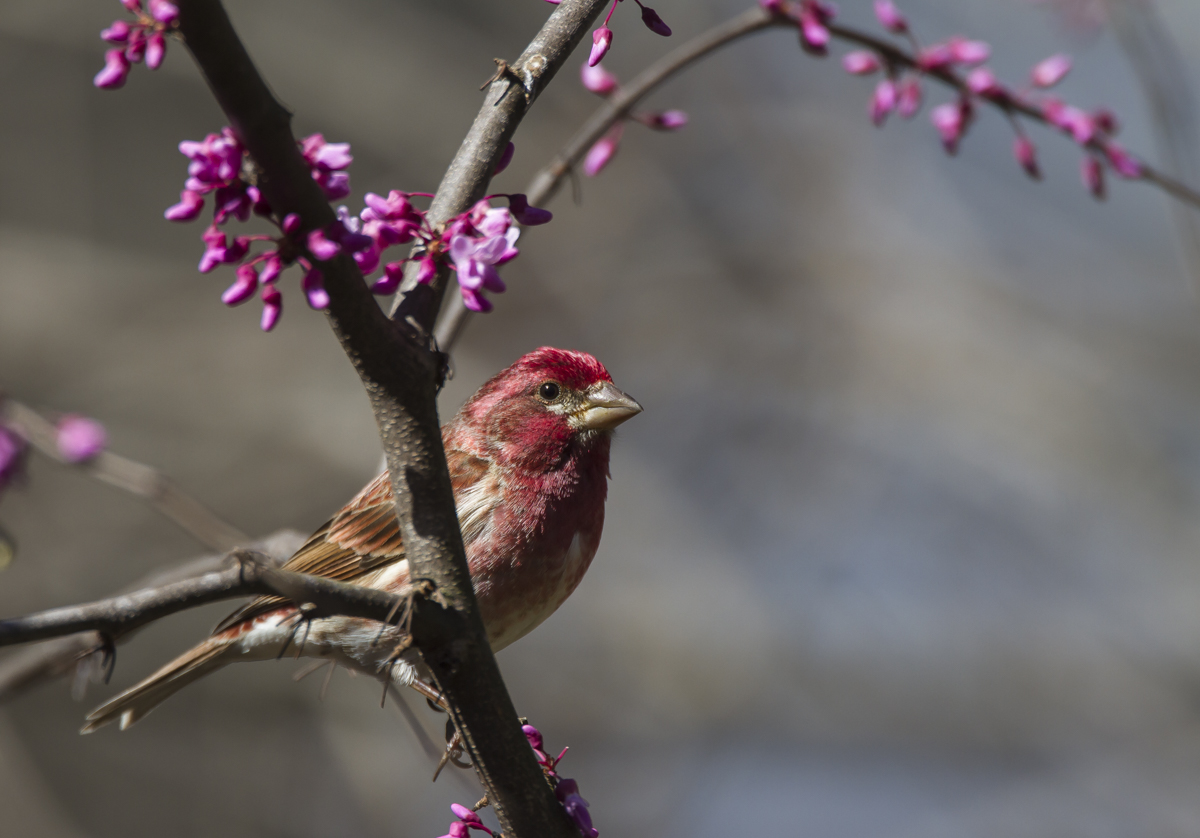
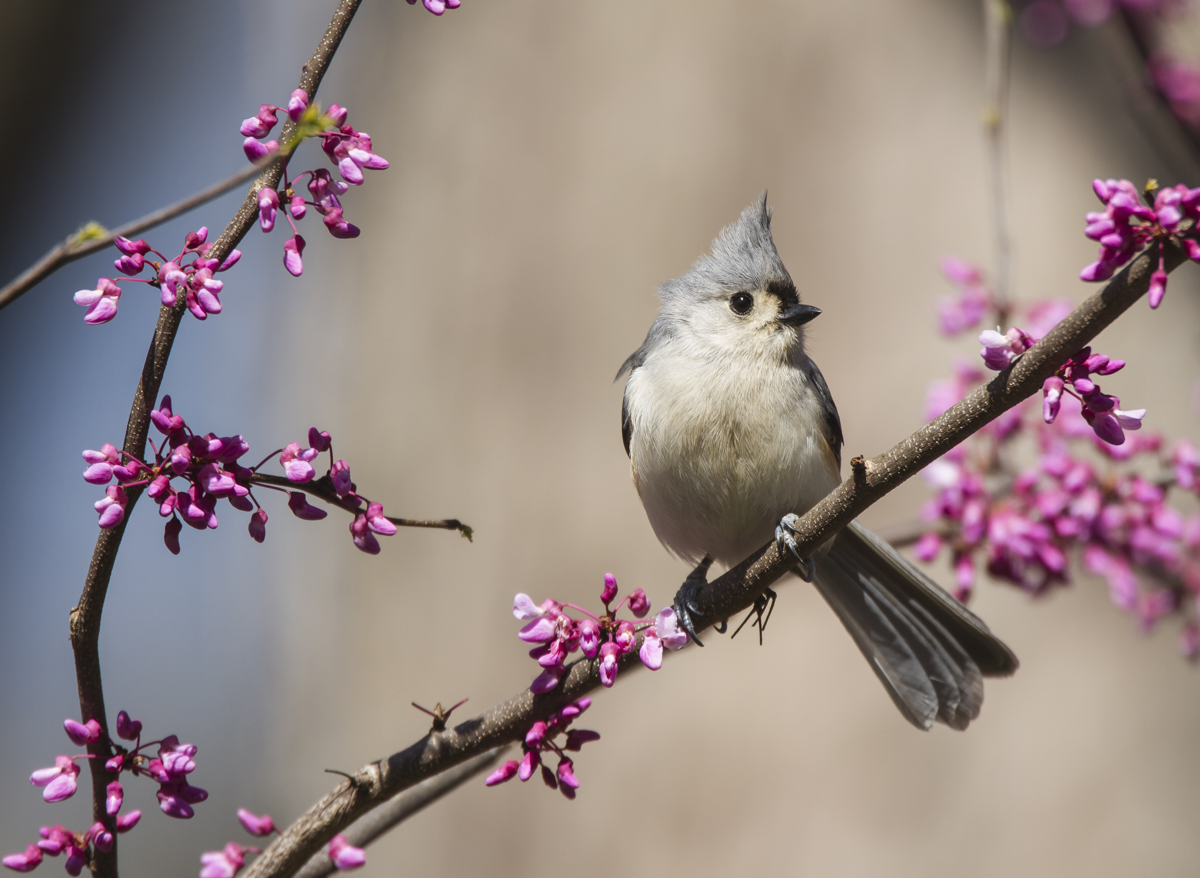
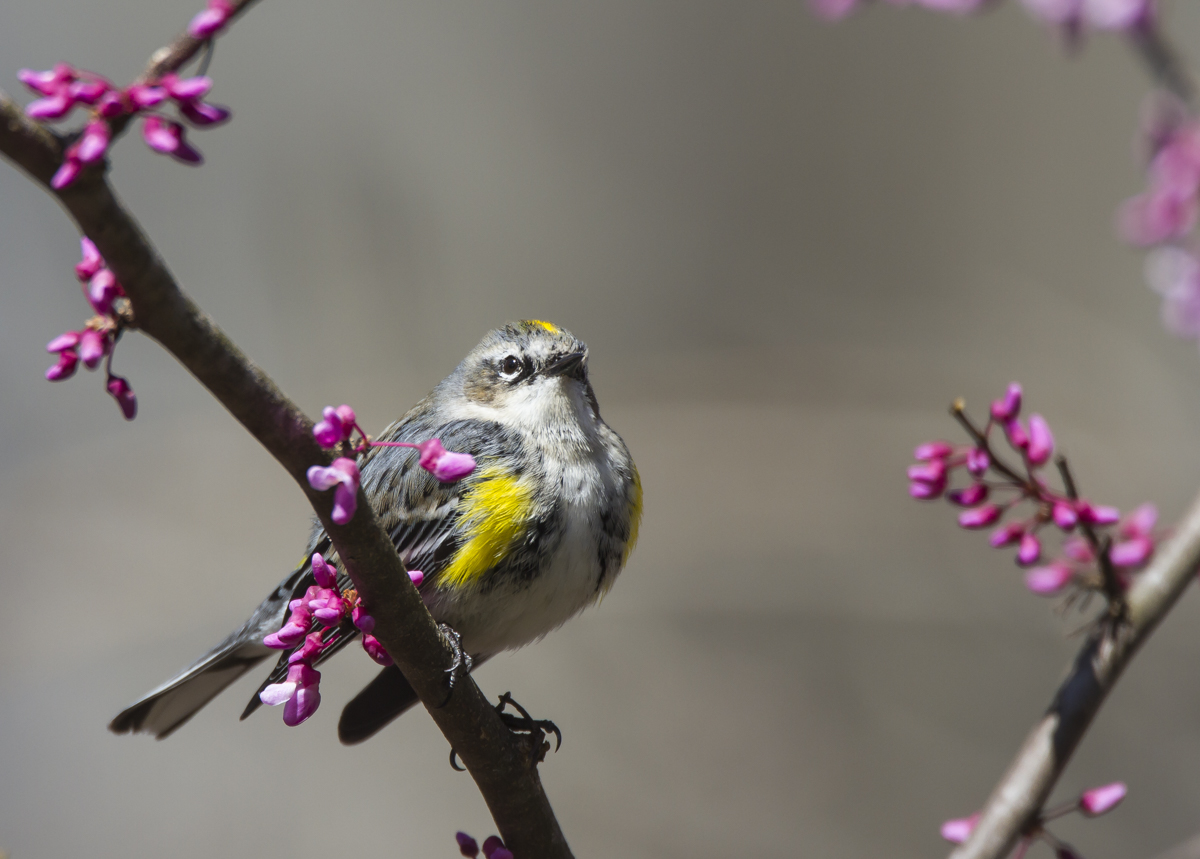
Redbud flowers are amongst the earliest abundant sources of nectar and pollen in these woods and are therefore a critically important part of the landscape. But, with temperatures dropping into the mid-20’s over the weekend, the insects were silenced. They were replaced by a variety of birds visiting the branches of this tree as they waited their turn at one of the feeders hanging off the deck. After watching all this activity, I couldn’t help but do what any nature nerd with a camera so often does – I grabbed the telephoto lens and sat at the screen door to the deck under my Kwik-camo blind to try to get some portraits of the birds amongst the flowers (isn’t that what most of you do when nursing a spring-time cold?). So, over a period of two days, I sat out for a total of a couple of hours, watching the parade of birds. It dawned on me that I was witnessing a transition of seasons – the juxtaposition of several of our winter bird species with the arrival of our woodland spring. In a week or two, over half of the bird species I saw this weekend will be gone, migrating north, some as far as the boreal forests of Canada, to begin their breeding season. But for now, they all looked pretty in pink, surrounded buy a sure-fire indicator of change in their winter home, the blooming of the Redbud trees. Here are a few of their portraits…
American Goldfinch male early spring color (resident species)Carolina Chickadee landing on a twig (resident species, and already starting to nest in nest boxes in the yard)Pine Siskin (migrant, soon to head north)Pine warbler female (resident species)Pine Warbler male (resident species)Purple Finch female (migrant, soon to head north)Purple Finch male (migrant, coon to head north)Tufted Titmouse (resident species)Yellow-rumped Warbler male (migrant, soon to head north)
As so often happens when sitting quietly in a blind, I saw many things happen that I did not capture with the camera. The highlight occurred while I was pulling off the camouflage drape to head in for the afternoon – a Cooper’s Hawk flashed onto the scene, scattering all the other birds. I froze, waiting to see what it might do. It eyed me suspiciously and then flew into another Redbud tree that I could see through the screens of the porch. After a minute or two of surveying the now-empty landscape, the hawk swooped off through the trees. A remarkable scene, even if it isn’t recorded on anything but my brain.
I think I may have used this quote before, but it is just perfect for my experience last night. It just so happens, I do like college basketball, but when I discovered I would not be able to watch the UNC game on TV (my local station aired Notre Dame and Wichita State instead), I decided to head outside for a little quiet time by the frog pond. A few days ago I posted a single image of a Spring Peeper from earlier in the week, but I was hoping the warm night would bring about more activity. I walked out to the stone bench and sat, waiting for the action to begin. And I waited some more. Seems like my peeps (finally, a good use for that term) were not in the mood. There was an occasional squeak, but nothing worthy of such a warm and humid night. I remembered another of Thoreau’s thoughts…The naturalist accomplishes a great deal by patience, more perhaps than by activity. He must take his position, and then wait and watch. And so I did. I noticed there were a lot of Green Frogs around the pond edge and out in the wildflowers. Perhaps that was deterring the much smaller peepers from expressing their lustiness.
At last, a mini chorus erupted. I scanned around with my light, looking for the sources. I spotted one calling from a thick clump of emerging Phlox leaves…too dense for a photograph. I walked around the edge of the bed, looking in the shrubs. There was another minstrel, again partially hidden by branches. Then I saw one that was more out in the open.
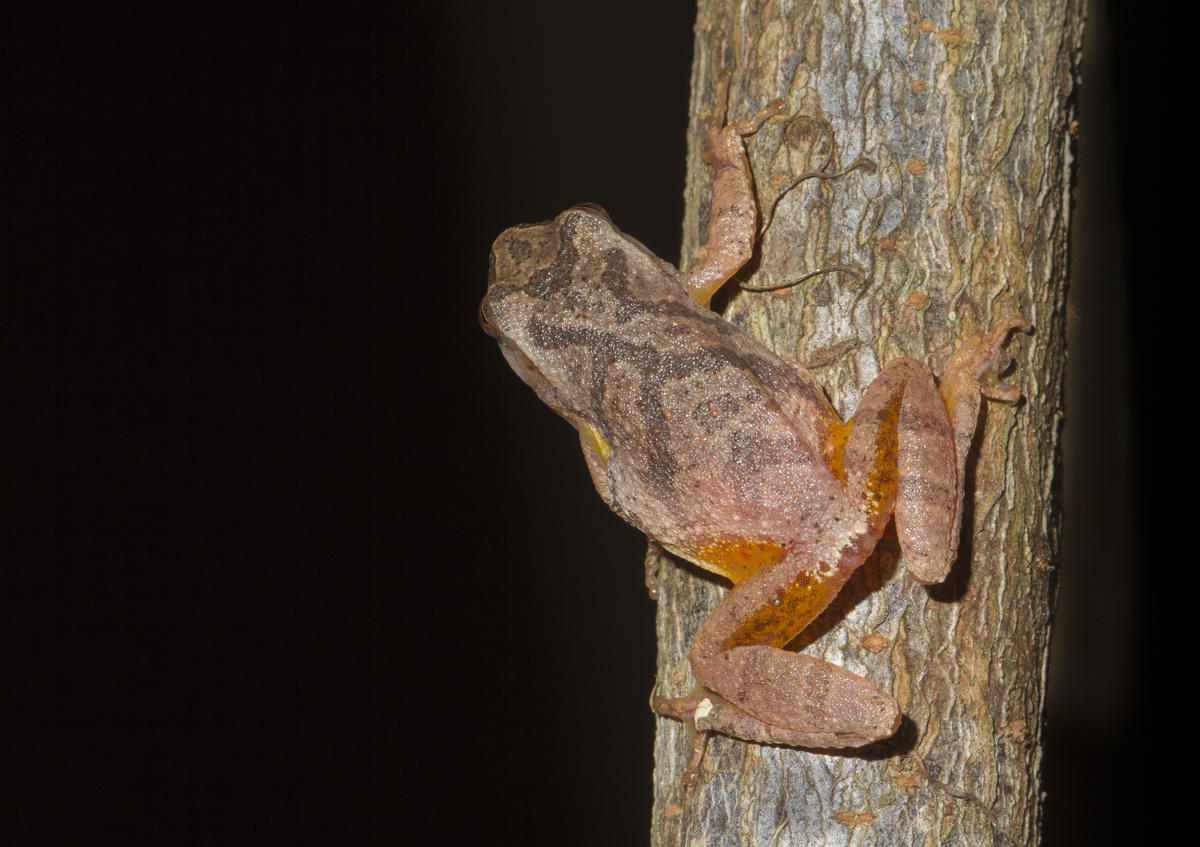
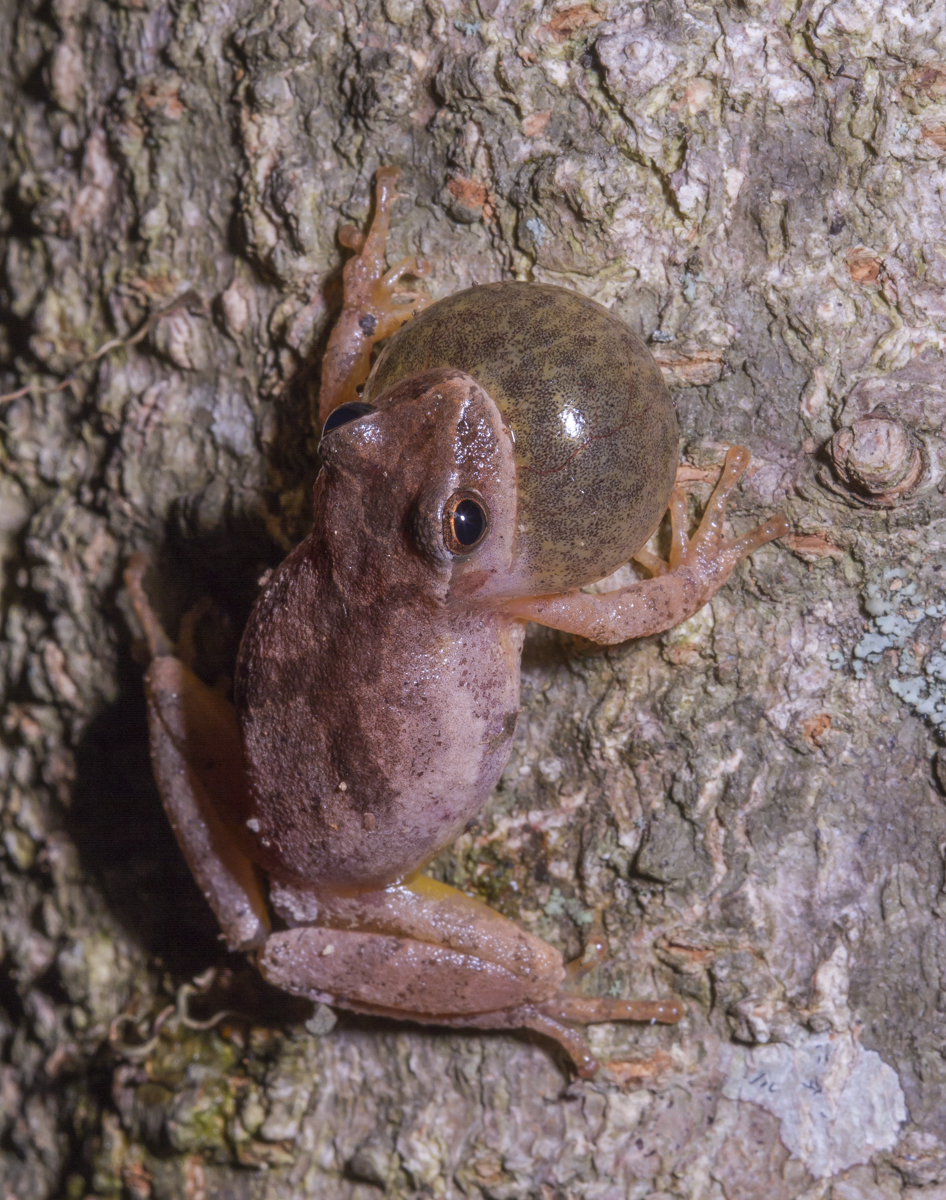
Spring Peeper preparing to call from a shrub perch (click photos to enlarge)
He was perched about three feet off the ground, clinging to the side of a Viburnum trunk. I say he because only the male Spring Peepers call. The high-pitched peep is an advertisement call to attract a mate and a territorial call to dissuade rival males from claiming a preferred spot near a breeding pool. Males also give a so-called aggression call which is more of a trill. This is supposedly given to persuade another male that is close to leave the area. It also may be a precursor to physical interaction between two males.
I slowly moved over and took a quick photograph, then sat and waited. After several minutes, the first one I had spotted starting peeping, then another, then my guy. He had moved to a better side angle and I turned on my lights to capture a little video. That silenced him for a second, but he could not resist the urge as the others kept calling.
It only lasted a few seconds, and then, they all fell silent. I watched them call again off and on for several minutes. When they are really cranking, peepers can call more than once per second and a single male has been known to call 4,500 times in a one night. After watching how my frog’s sides heaved with each call, I realized it must be exhausting to do that all night long. It certainly seems energetically costly, and I would assume dangerous, in terms of announcing your presence to potential predators. But, presumably, the male that calls the loudest and most frequently is the one that is most fit, and, therefore, most attractive to any nearby female.
I sat with this Spring Peeper for over thirty minutes and he never made a peep…
During the chorus I had spotted another frog on a nearby bush in a great location for an image. I walked over, got everything set up, turned on the lights and waited. This guy was posed with his vocal sac partially inflated, and looking a little worn out. I sat for another thirty minutes with this little fella, and even though his competitors chimed in on many occasions during that time, he sat silent. Too pooped to peep, or just weary from being wary? I’ll never know as I finally decided to call it a night and headed in. This morning, it is raining hard outside, but the temperature is dropping. I’m afraid the cold weather will put a damper on the ribbit romance for a few days. I’ll check back on the status of the amphibian liaisons next week when warm temperatures return. I wonder how that basketball game turned out…
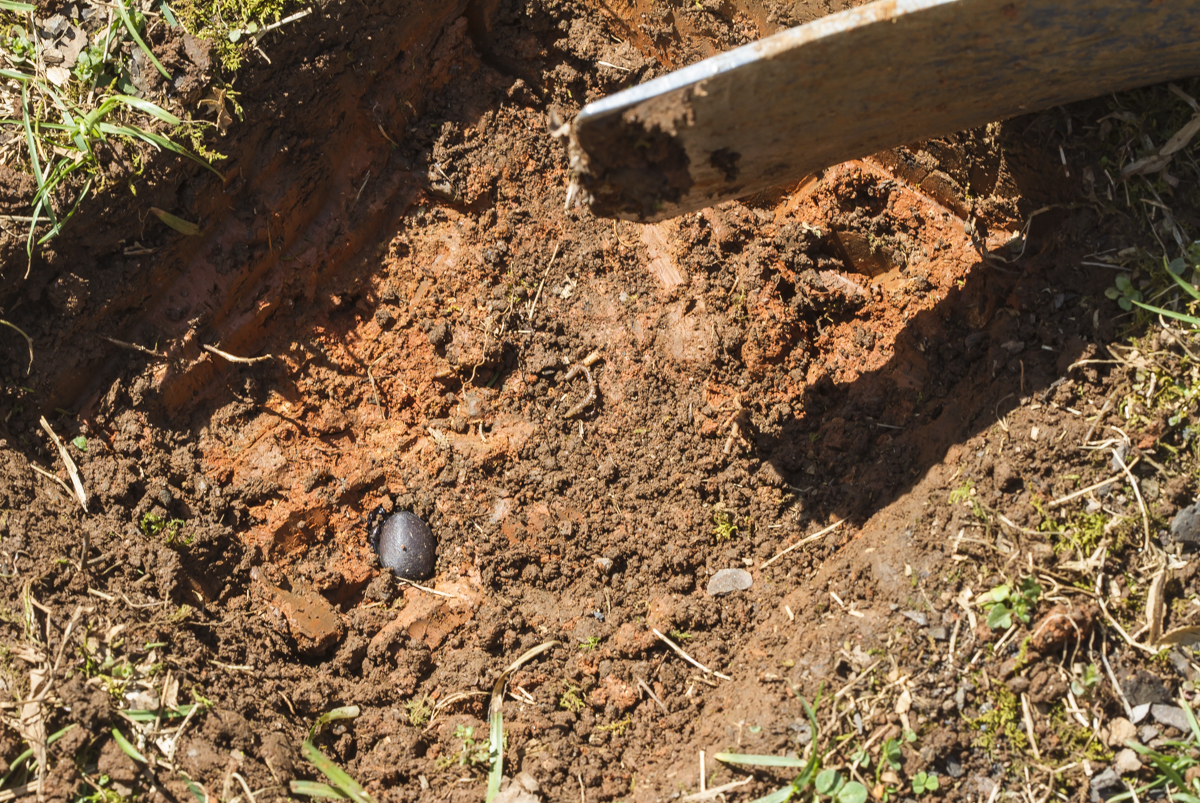
One of the pleasures of retirement is having the time to do things, to see things, and to take advantage of the situation when the unexpected occurs. The other day I was working on a project in the yard and was using a mattock to dig in the clay-based swale running next to the house. I was creating a small depression for a stone that will serve as a pad for one end of a foot bridge across the drainage area. A mattock is a very efficient tool for cutting through the earth, but since I only needed a shallow depression, I was making small cuts with it. After slicing away a sliver of clay, I saw something in the depression and laid down the mattock.
I noticed something in the bottom of the shallow hole I was digging (click photos to enlarge)
The object was dark and somewhat bulbous. I stooped for a closer look.
What is it?
I suddenly realized it had legs protruding from the sides of what must be a large abdomen. It was a spider!
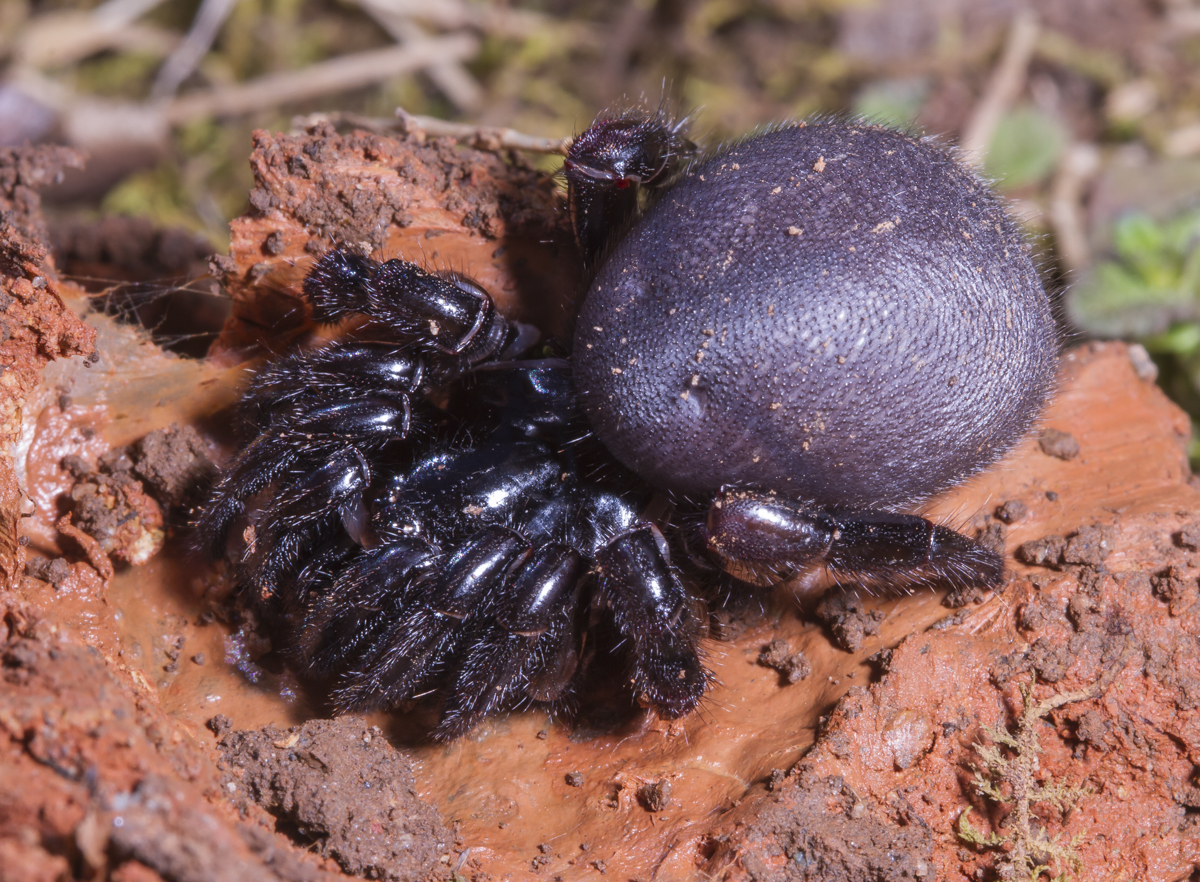
Trapdoor Spider uncovered
I ran and got a hand trowel to attempt to expose the rest of the spider, not knowing whether I had accidentally gashed it while wielding the mattock. I have seen spiders like this a couple of times in the past, so I thought it might be one of the Trapdoor Spiders (most likely Ummidia sp.). The spider appeared undamaged, although certainly not pleased at its current situation. I touched it and it moved slightly…alive, but probably not happy, and maybe in some sort of state of torpor.
The large size of this Trapdoor Spider indicates it is a female
This spider is large, a little over an inch in length, indicating is is a female (males average half that length). Though one of our largest spiders, Trapdoor Spiders are rarely seen, since they spend most of their time in burrows. The few specimens of this spider I have seen in the past were probably males wandering about in late summer looking for mates. This genus digs fairly shallow burrows that are silk-lined and covered by a well-camouflaged hinged lid, or trapdoor, up to one inch in diameter. The spider was nestled in a smooth cavity in the clay about three inches below the surface. A close look at the photos showed a fine silk lining to the cavity. I had not noticed a lid as I was digging, but my spider field guide let me off the hook by saying… the superbly camouflaged trapdoor can be easily overlooked even by the trained eye. Trapdoor Spiders capture prey by hiding in their burrow and pouncing on passers-by (luckily mainly insects and other spiders).
I reburied the spider after taking a few pictures
After a few photos of the sluggish subject, I decided to rebury her in a large flower pot in the garden, hoping she will survive fluctuating temperatures and rainfall. I could not find much on the life history of these interesting creatures online, so I will be checking on her when it warms up, but hoping she moves elsewhere and digs a new burrow. This species is in the mygalomorph group of spiders, which also contains the tarantulas, and most are believed to be long-lived (up to several years). I hope she lives a long and happy life, and that I encounter her or her kind again soon. These moments of discovery are one of the things I treasure about living in the woods and having the time to pay attention, to see new things. But no matter where you live, be sure to make some time for uncovering the beauties of the natural world around you.
…on the first warm night I stepped out to the back porch and heard in the distance a wonderfully high, thin sound, as clear as the first stars over the bare black trees.
~Kathleen Kilgore
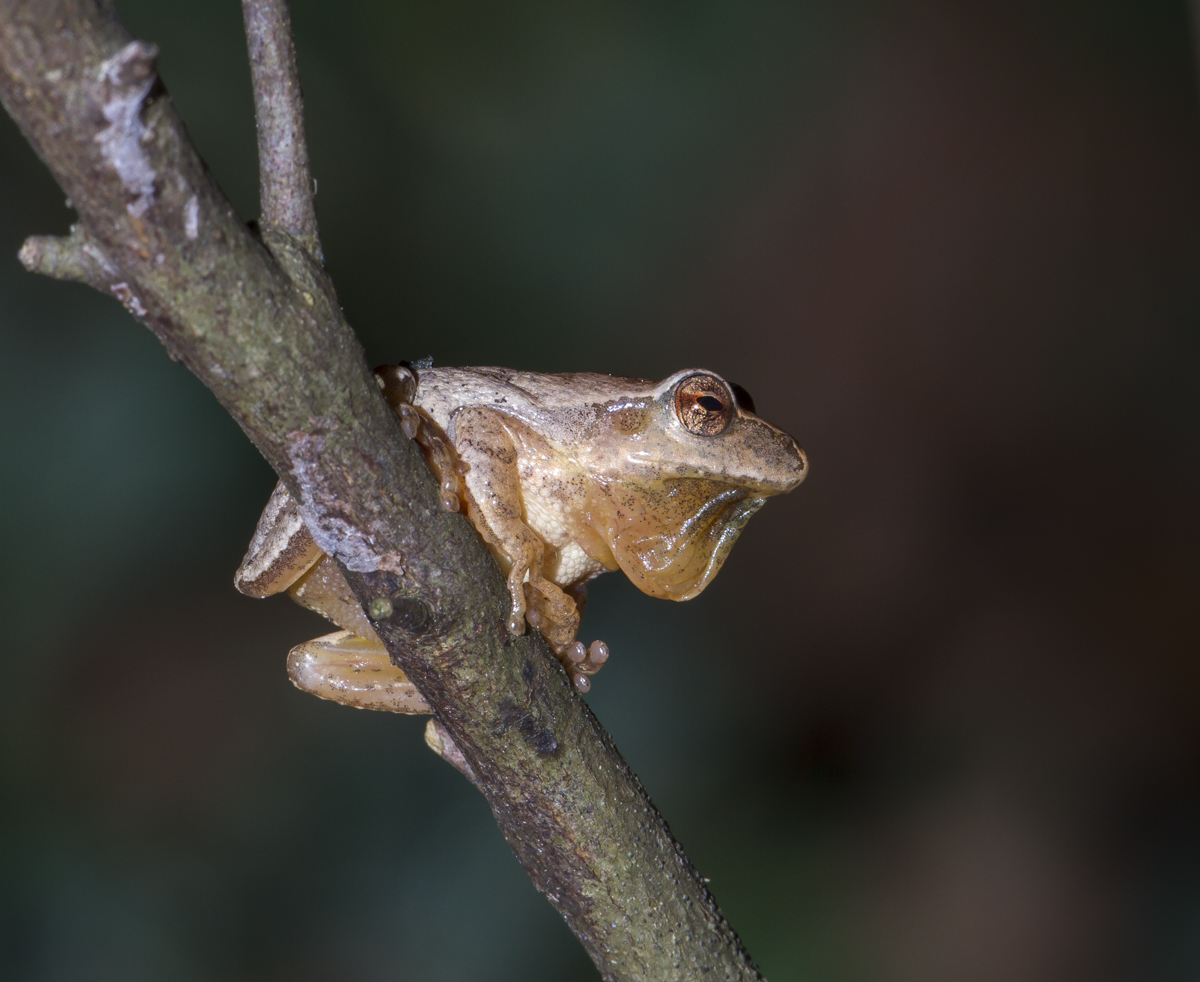
They have been calling off and on for awhile now. That distinctive, high-pitched, clear call that means the end of Winter is near. It had been a single peep out front, maybe two at most, until Sunday night. Something was different, maybe warm weather really is here at last. I could hear them from the living room, from the kitchen, from anywhere in the house, and there was an urgency in their calls. So, I tried sneaking out the front door, only to cause a sudden silence. I walked over to the edge of the small pool in the yard and sat, and waited. Only a few seconds passed before the calls started again, first one somewhere in front of me, then one to the left, then another behind. Urgent indeed. I picked out the sounds of about four or five different male callers, but, try as I might, I could not find a single one in my flashlight beam. I have often been frustrated in this quest. I swear they can throw their shrill voices, making it difficult to locate their tiny, camouflaged bodies.
Spring Peeper calling (click photo to enlarge)
Spring Peepers (Pseudacris crucifer) are diminutive members of the treefrog family, with males averaging only about 3/4 of an inch in length. Most are marked with a distinctive X pattern on their light brown back. They often call from branches of vegetation a few feet off the ground, so I started looking in the shrubs and small trees surrounding the pool. The sweep of the flashlight beam silenced them for a few seconds, and then they started up again. I stood and moved a few feet to look around, and, finally, there was one of the songsters. He was calling from the back side of the trunk of a Red Buckeye tree about four feet from the pool. As I moved closer, he stopped. I made what seemed to me a poor imitation whistle of a peep, and they all started up again. Really urgent it seems. I took a few quick images and then went inside, leaving them to their compelling task of finding a female. I had planned to go back out last night, but the drop in temperatures seems to have put a temporary halt to the calling…maybe Spring really isn’t here quite yet.

















 Roads End Naturalist