You need to let the little things that would ordinarily bore you suddenly thrill you.
~ Andy Warhol
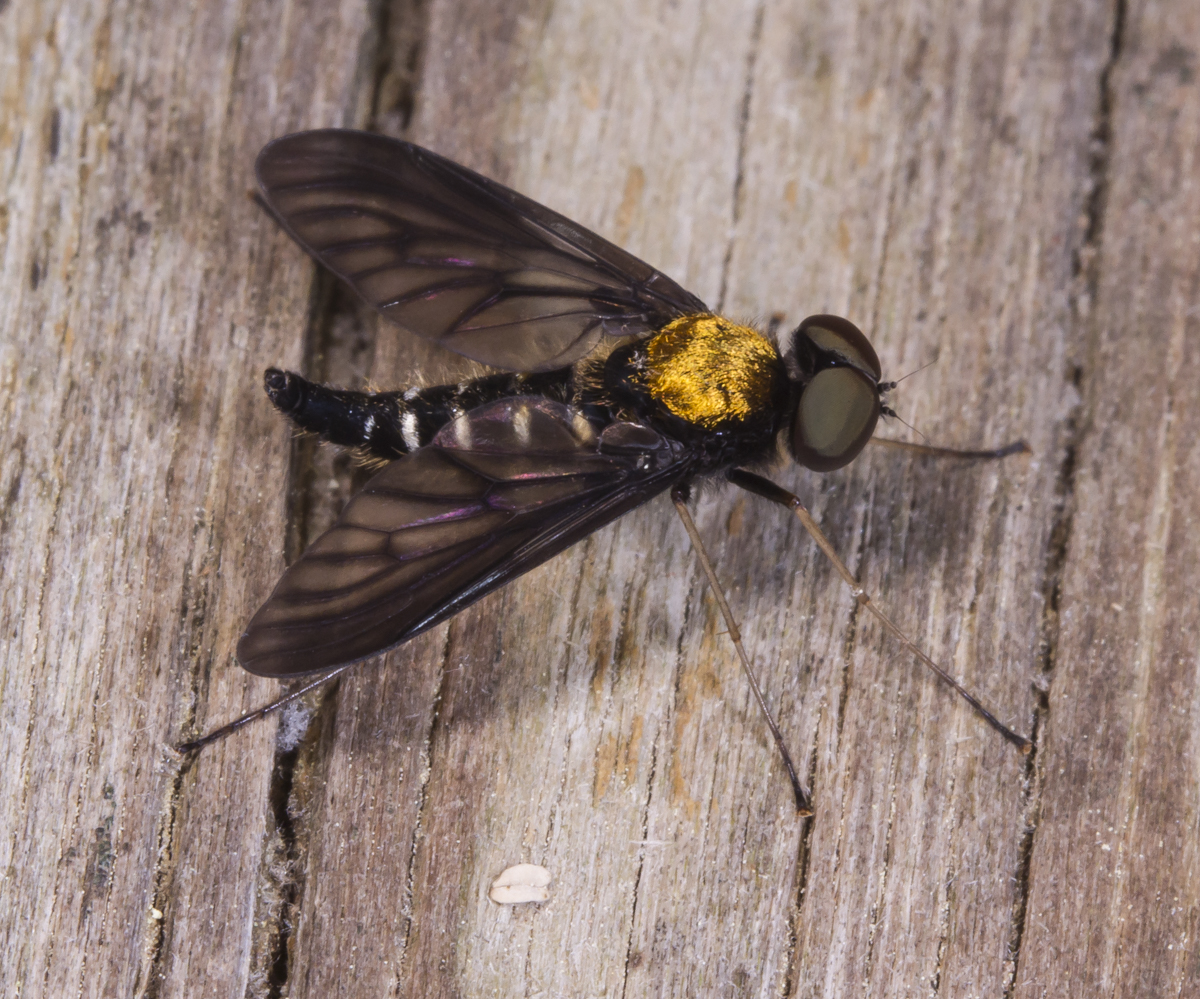
Walking out the door yesterday, I looked down and saw a speck of gold. Funny thing was, it was on the back of an odd-looking fly. I stooped to take a closer look, fully expecting it to disappear, but it stayed put. Yep, a fly, with a hairy, gold back….odd indeed.
A speck of gold on the walkway (click photos to enlarge)
I grabbed a few photos and then went inside to see if I could identify this rather distinctive insect. My usual go-to source for insect identification is the web site, BugGuide. But since there are perhaps 20,000 species of flies in North America, searching that site might take some time, so I thought I would try one of my favorite field guides first, the Kaufman Field Guide to Insects of North America. I hoped the unique appearance of this little guy would make it easy to find in the merely 45 pages devoted to true flies.
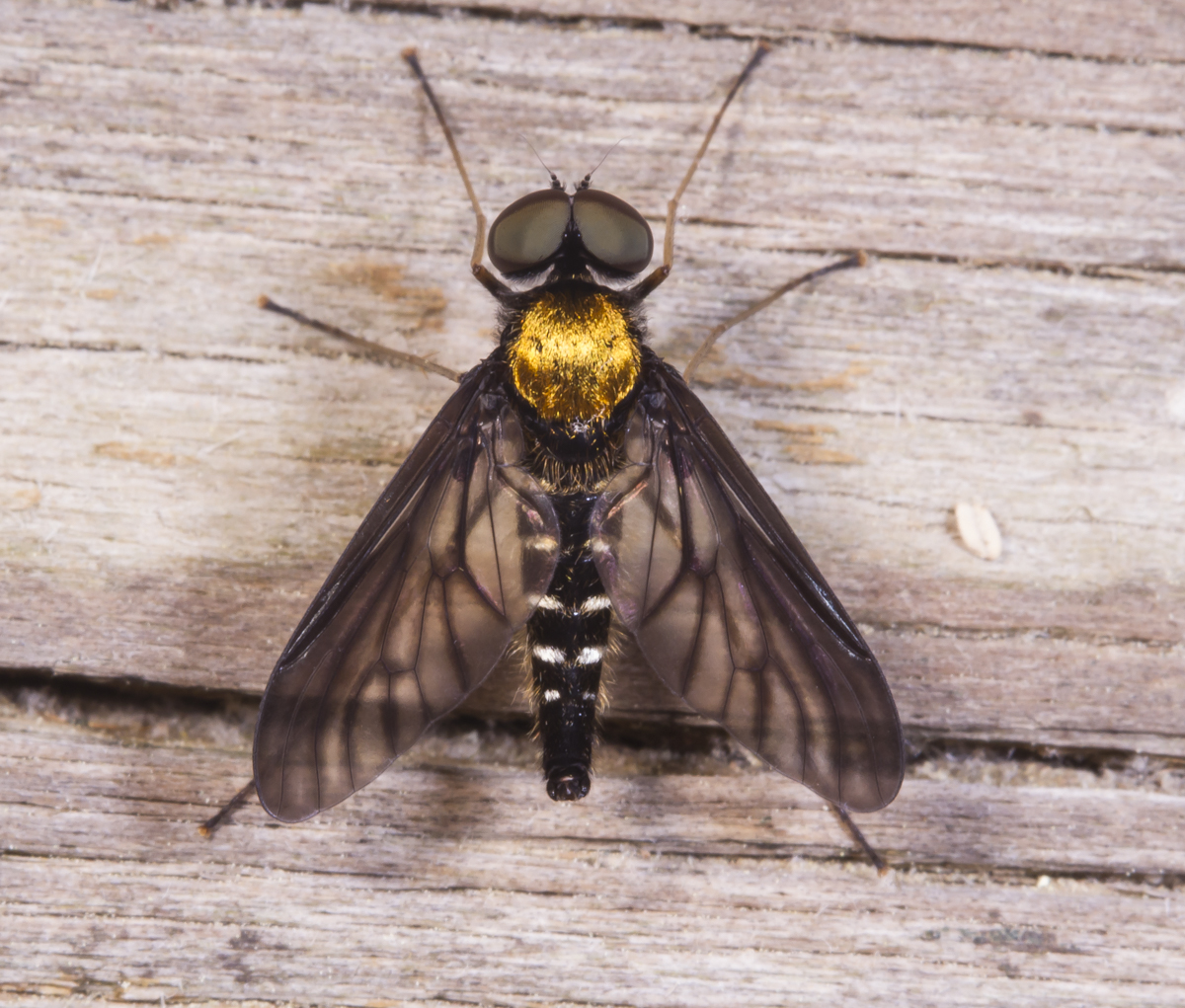
Golden-backed Snipe Fly
Sure enough, after flipping through a few pages I came across my gold speck – the aptly-named Golden Backed Snipe Fly, Chrysopilus thoracicus. Well, at least the first half of the name is appropriate (I am still not sure where the snipe portion of the name comes from). Turns out these flies are fairly common in spring in eastern forests, but not much is known about their life history. Other members of this family of flies (Snipe Flies, Rhagionidae) are known to be predators of other insects as both adults and larvae. Larvae live in moist soil or rotting wood. Adults of a few western species may bite humans, but not this one. The fuzzy gold patch, the striped abdomen, and the overall shape of this fly combine to make it one of the bee and wasp mimics. Many species of insects, especially flies, supposedly gain some degree of protection by looking like stinging insects. But this half-inch little jewel is harmless.
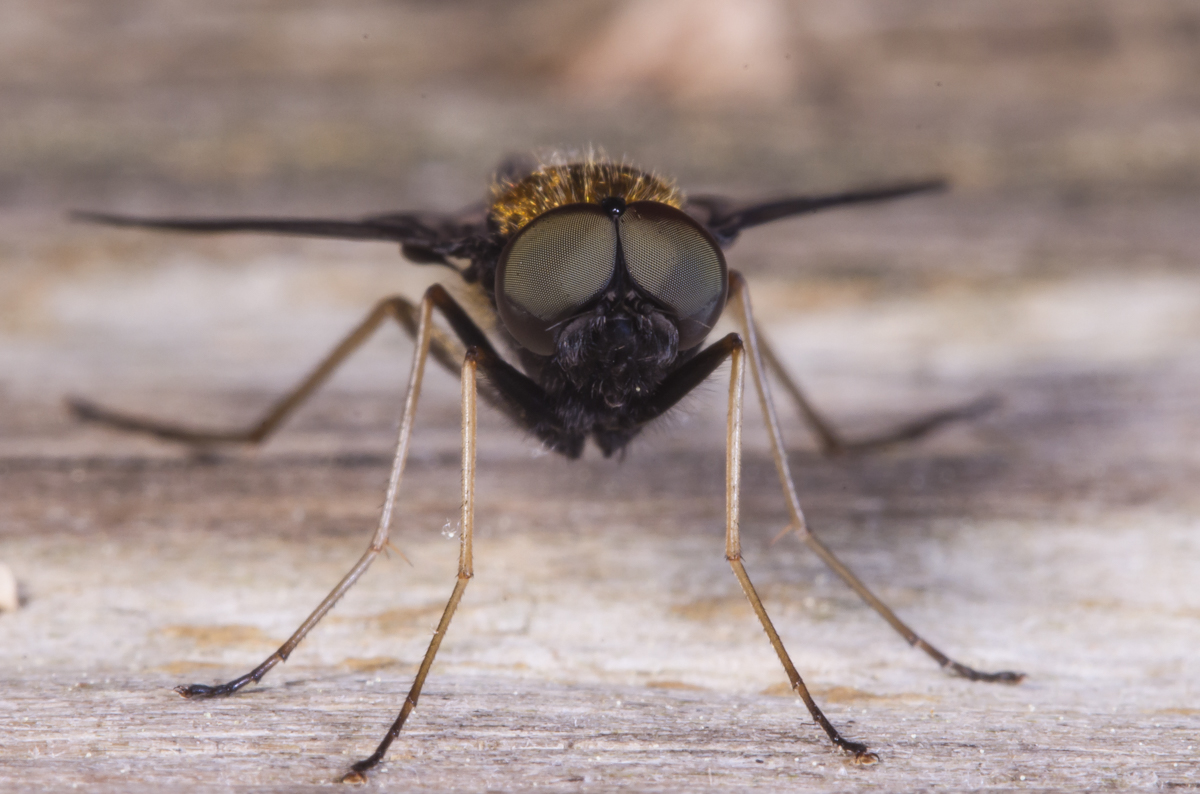
Male Golden-backed Snipe Fly
One thing I did learn about my gilded guest is that it is a male fly. Females are more robust than males and have eyes that are farther apart. The eyes of males of this species touch each other. So there you have it…a male bee mimic that we really don’t know much about. But it was the first thing I saw walking out the door yesterday, and it helped make it a special day. You have to appreciate the small wonders…
What strong colored fellows, black, white, and fiery rose-red breasts!
~Henry David Thoreau
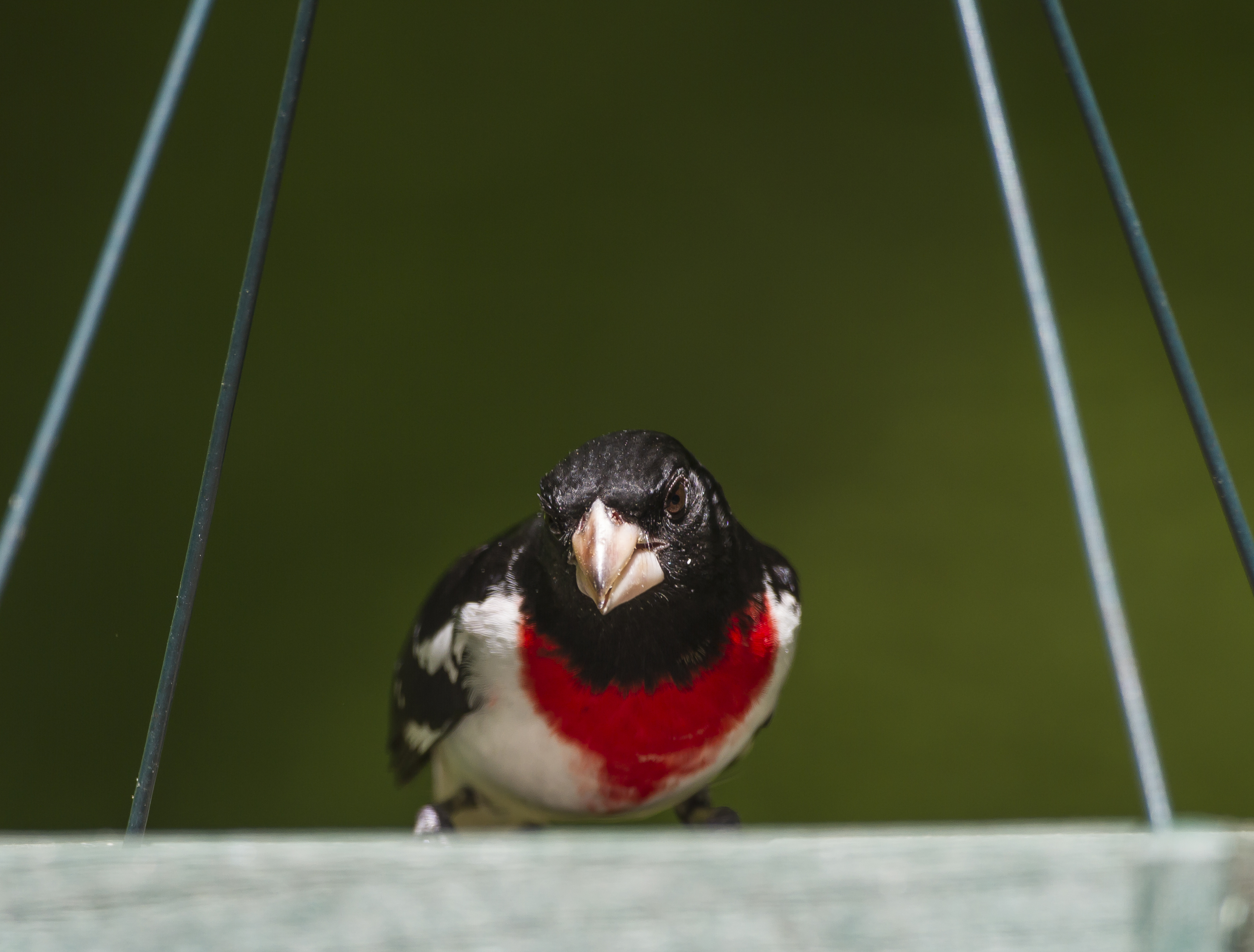
They’re back…it will only be for a couple of weeks, but I will enjoy every minute of it. Saturday morning, I saw my first Rose-breasted Grosbeak of the season. Uncharacteristically, it was a female (males usually arrive first in their travels north in spring). Sunday was the first male, and every day this week there have been several (mostly males) stopping at the platform feeders to snarf sunflower seeds.
Rose-breasted Grosbeak, male (click photos to enlarge)
The males are certainly one of our most glorious birds, both in song and color. Thoreau believed that Rose-breasted Grosbeaks were our richest singer, perhaps, after the wood thrush. They sound like a melodious robin in song. But, to me, it is their bold, contrasting color pattern that make them such a joy to observe as they pass through on migration every spring. Mature males are vividly marked with black and white, offset by a bright rose-colored breast patch. That patch can be quite variable from one male to the next, and can be used to identify individuals coming to your feeder. Females are brown and streaky with a bold white eye-stripe.
Males have a bright, v-shaped patch of rose coloration on their breast
They tend to be wary at the feeders here and have been difficult to photograph except through the living room window, which is how all of these images were taken (except the last one from last spring). They arrive between 6:30 and 7 every morning, eat for a few minutes, then fly off, remaining in the treetops much of the day, with only occasional stops back at the feeders. Their large beak is ideal for quickly making short work of the husks of sunflower seeds (and many other types). A quick video shows how efficient they can be at seed-eating…
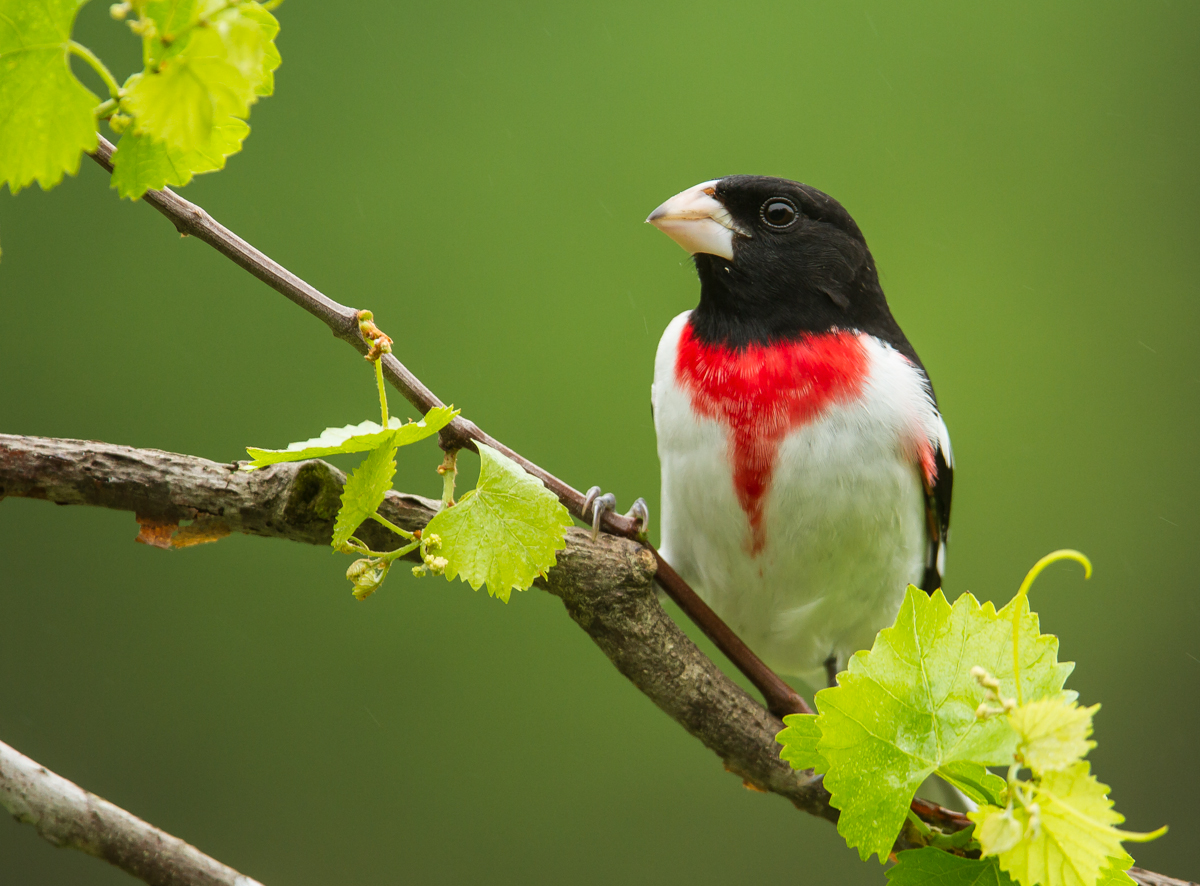
They should be around for a few weeks, before continuing on to their breeding grounds further north and in our mountains. They winter in Central and South America, feeding in small flocks on fruit and insects. It always amazes me how they seem to migrate in a wave, with records of first sightings popping up on the internet all over the North Carolina last week. Last spring, I enjoyed some great photo opportunities (see Garden Birds – Rose-breasted Grosbeak) as a few males were feeding at a suet feeder out on the power line, which provided much better lighting conditions than the shade around the house now. Here is a photo from the archives under those conditions.
Rose-breasted Grosbeak on grape vine from last spring
Many other species are also passing through or setting up territories in my woods right now. In addition to the usual suspects like woodpeckers, doves, chickadees, cardinals, and titmice, these past few mornings we have seen or heard the following: Northern Parula Warbler, Black-throated Blue Warbler, Worm-eating Warbler, Black-and-white Warbler, Hooded Warbler, Yellow-throated Warbler, Yellow-throated Vireo, Red-eyed Vireo, Blue-headed Vireo, Summer Tanager, Scarlet Tanager, Acadian Flycatcher, Ovenbird, Wood Thrush, and a Veery. It is certainly a great time to get outside and look up.
For myself I hold no preferences among flowers, so long as they are wild, free, spontaneous.
~Edward Abbey
A neighbor sent me a plant ID request a week or so ago asking if I knew the name of a wildflower she had seen on her property. The picture she sent showed some large basal leaves and a central flower stalk with small pale flowers. I remember struggling to identify this plant years ago when I encountered my first one in the woods. Turns out that in the fifteen or so wildflower ID guides on my shelf, it is mentioned in only two.
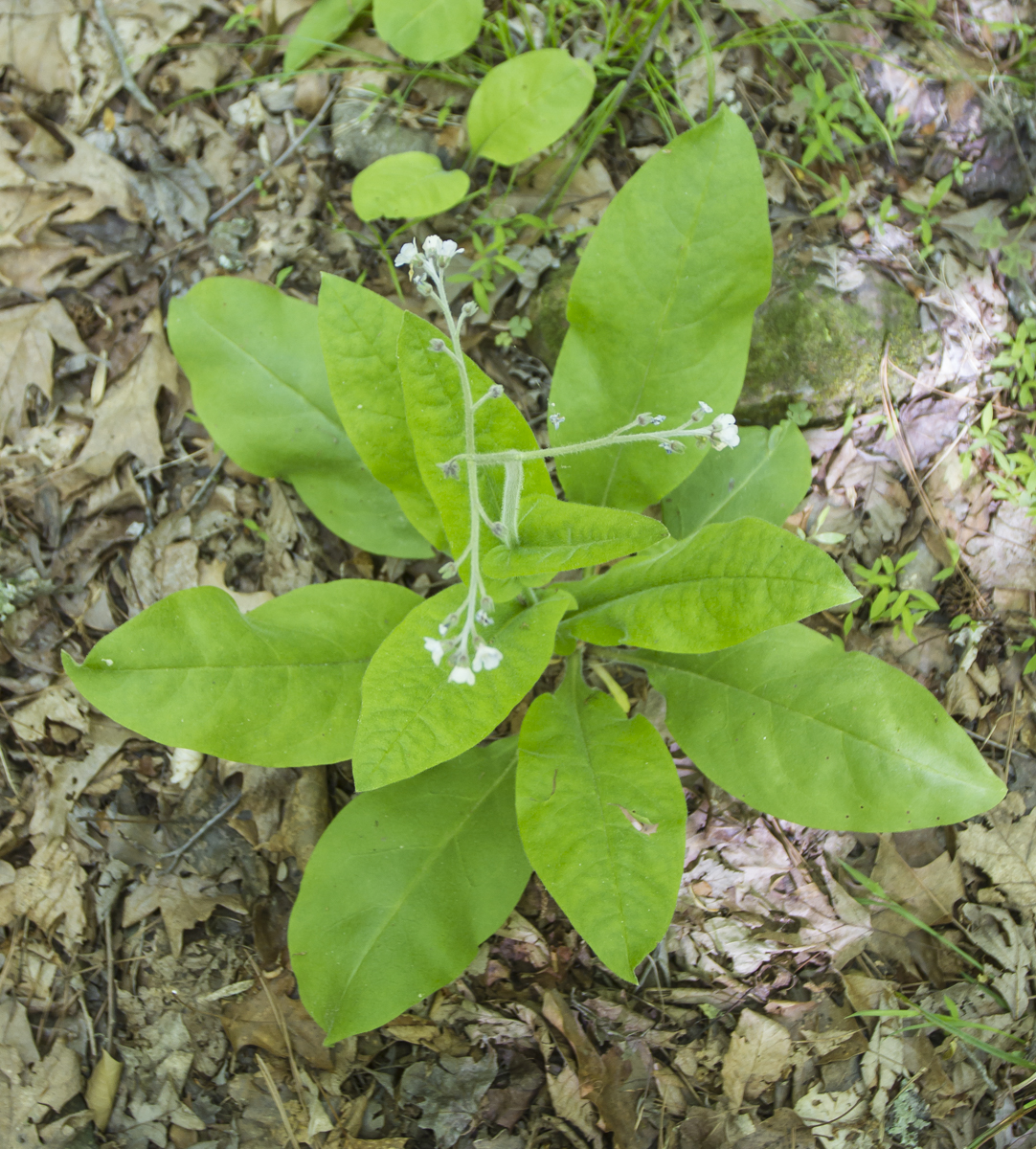
Wild Comfrey in bloom (click photos to enlarge)
It is Wild Comfrey, Cynoglossum virginianum. Another common name comes from the Greek origin of the genus name, which literally translates to Dog’s Tongue. This species is sometimes called Blue Dog’s Tongue, for the pale blue color of its flowers.
Wild Comfrey seems out of place in these woods
Both in name and appearance, this plant appears contradictory. I keep wanting to make the common name Wild Comfey (omitting the “r”). And to be walking in these woods, where most herbs are only an inch or two high before being snarfed down by the hungry deer, and suddenly see this large-leaved almost 2 foot tall plant, seems strange. It looks more like a summer weed that should grow at the edge of your garden, than a forest-loving spring wildflower. And it must be deer resistant to survive so well here.
Wild Comfrey flowersThe flower stalk is easily recognized by the way it spreads out above the plant
The plant is a member of the borage family, Boraginaceae, and is related to Forget-Me-Nots, a more common and widely recognized wildflower.
Wild Comfrey leaf arrangement
Besides its distinctive flower stalk and overall plant size, this flower can be recognized by its distinctive leaves. The basal leaves can be almost a foot long, and the stem leaves clasp the stem with a heart-shaped base.
Wild Comfrey has clasping stem leaves
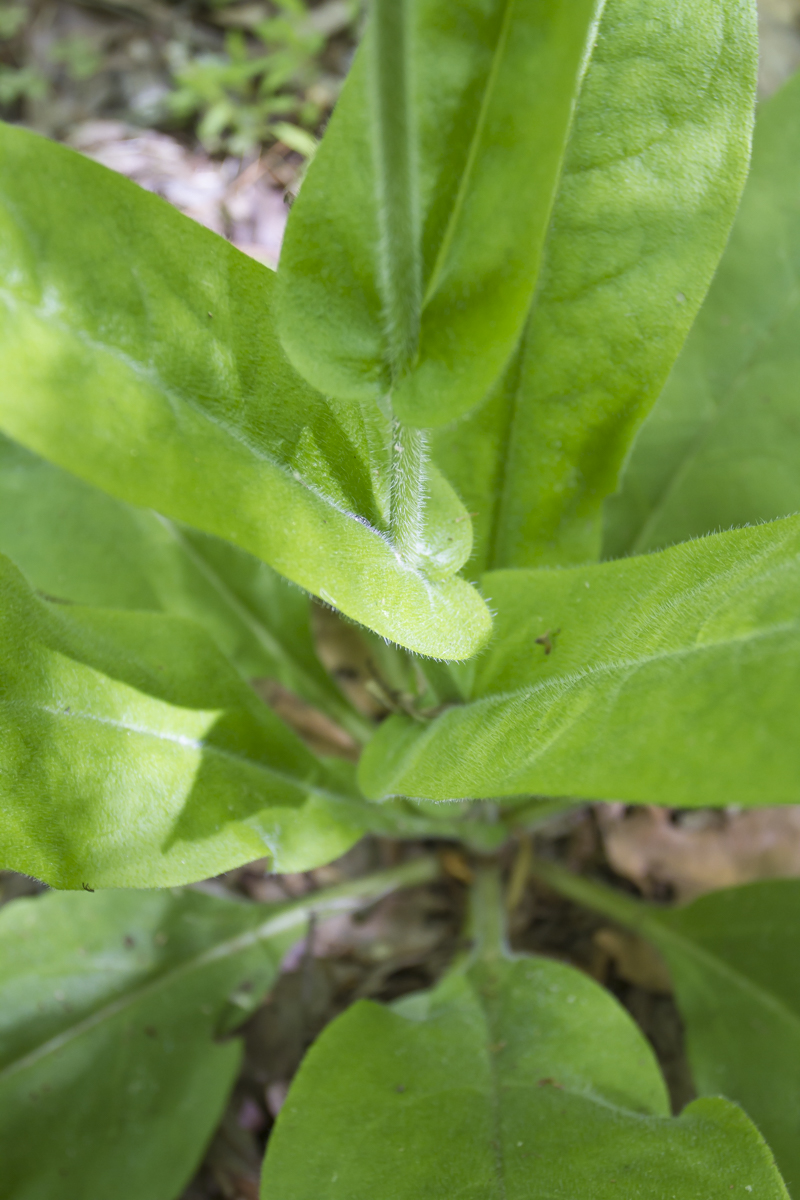
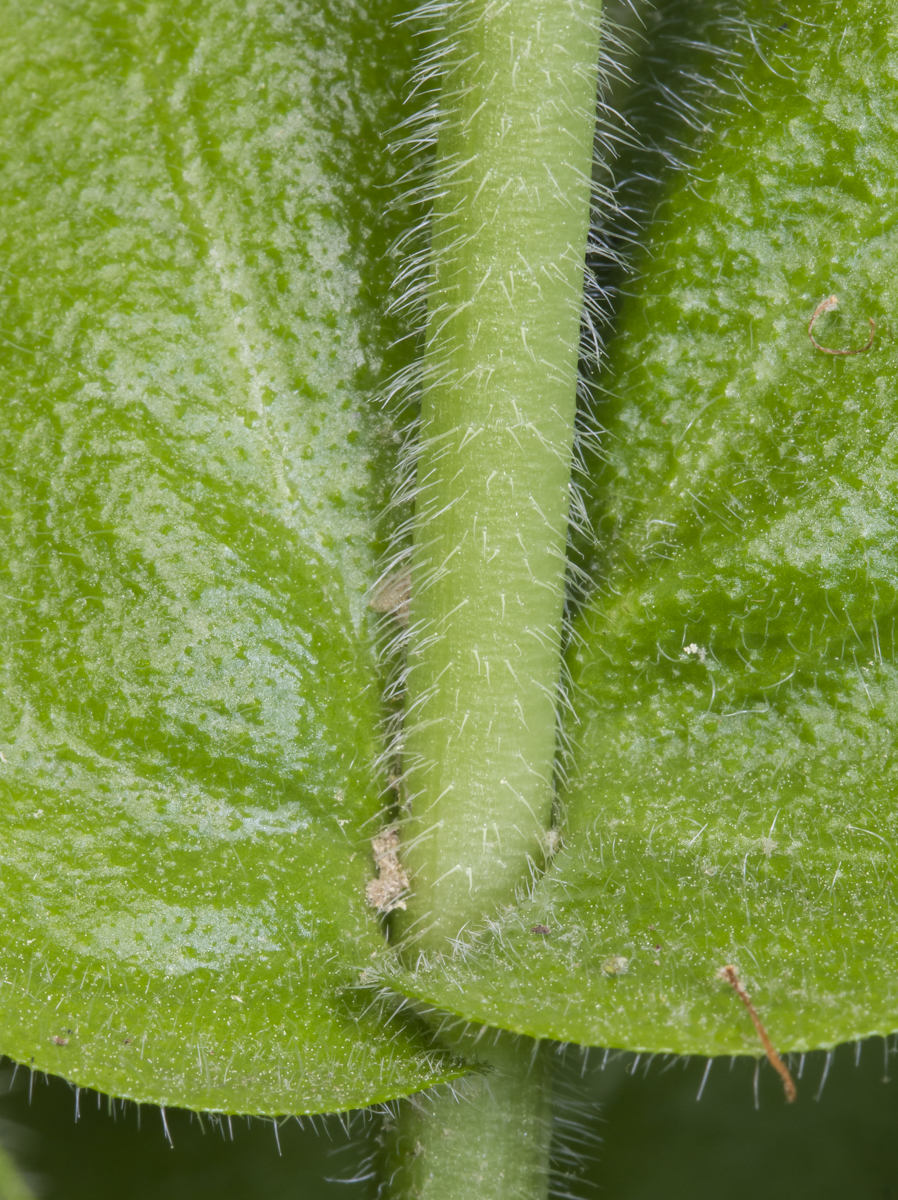
And all parts of this plant are hairy, very hairy. Plant people call this condition, hirsute.
Wild Comfrey has very hairy leaves
But one of the few references I found on this plant described it like this – both leaf surfaces are hairy and rough to the touch, like a man’s day-old stubble.
This wildflower has been used for many purposes
Cherokee used this plant to treat a variety of ailments from cough to cancer. Nineteenth century physicians used it as a substitute for the widely-used European plant known as Comfrey, but there is not much evidence it has similar medicinal properties. I did find a couple of interesting uses in some old references. In one, a poultice was made from the large leaves to relieve insect bites. And a couple of other unusual uses may relate to the other common name, Blue Hound’s Tongue. It was once believed that leaves beaten into small pieces and added to swine grease could heal dog bites. And my favorite…some people would supposedly put leaves under their feet to keep dogs from barking at them. I now have a new appreciation for this oddly-named wildflower.
The frog says, times fun when you’re having flies!
~David Bankson
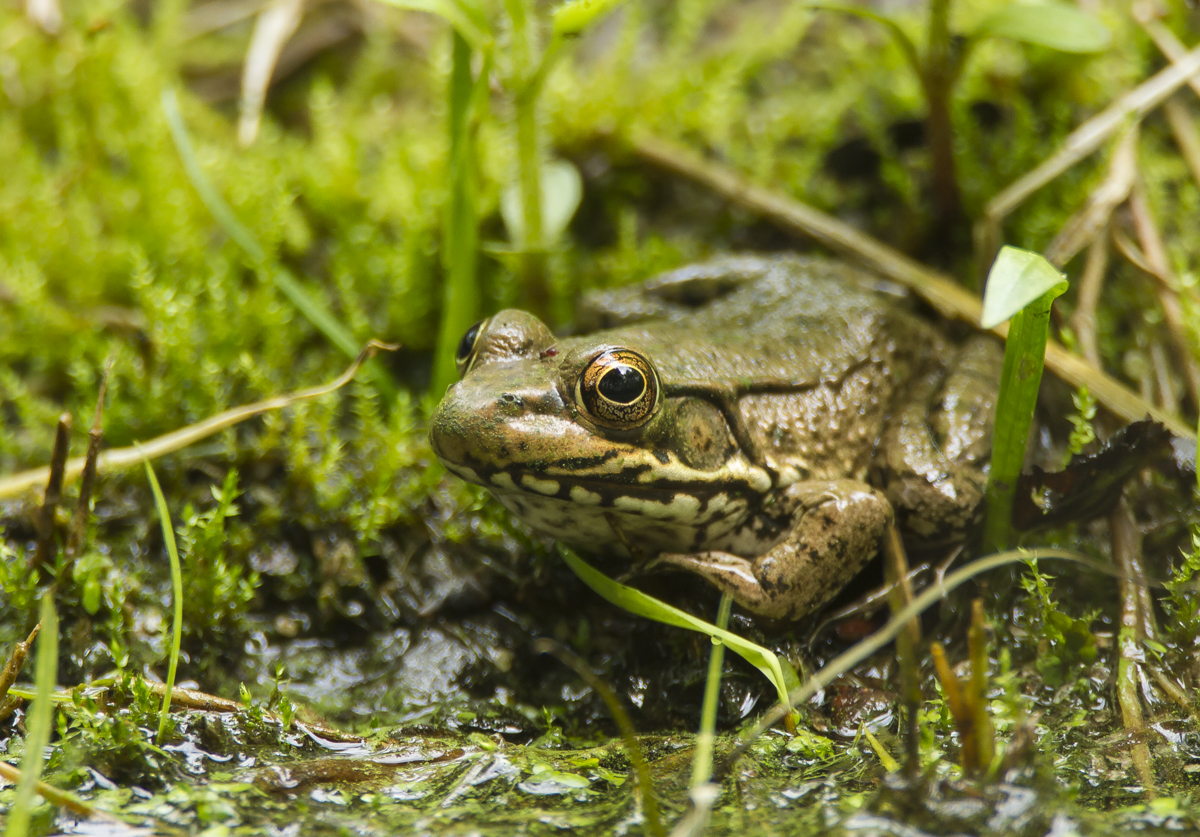
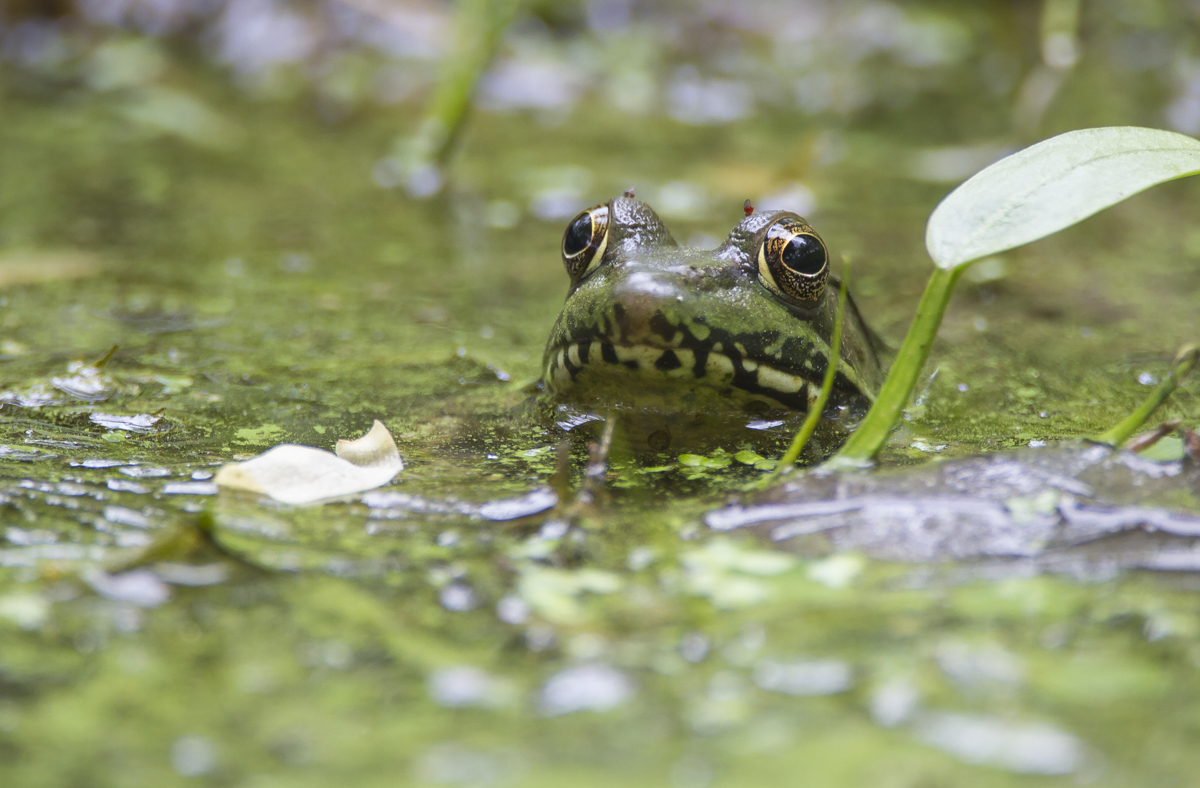
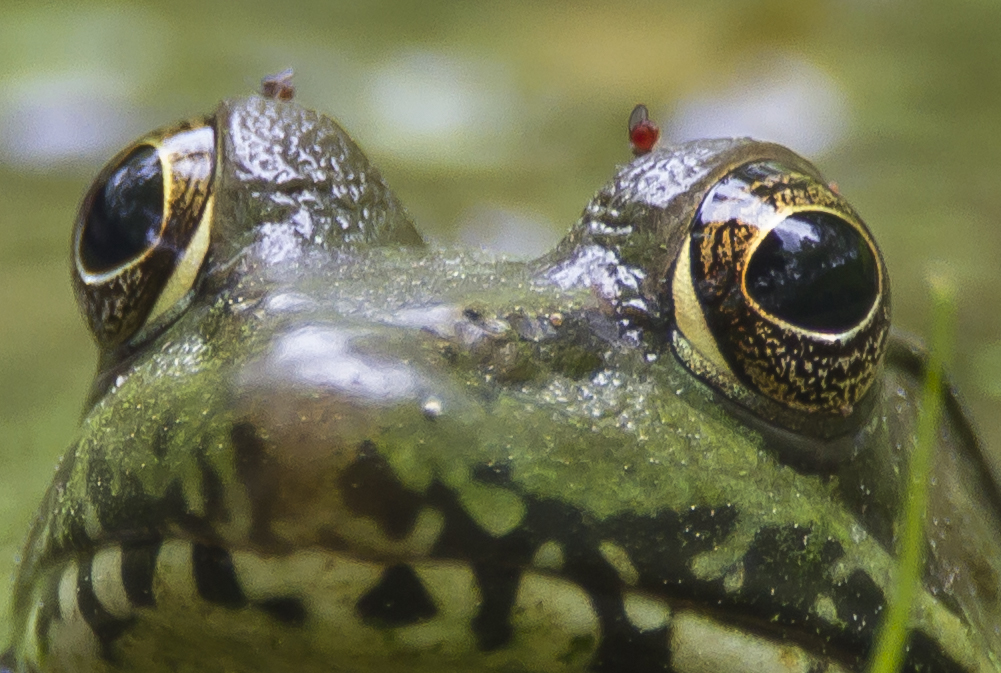
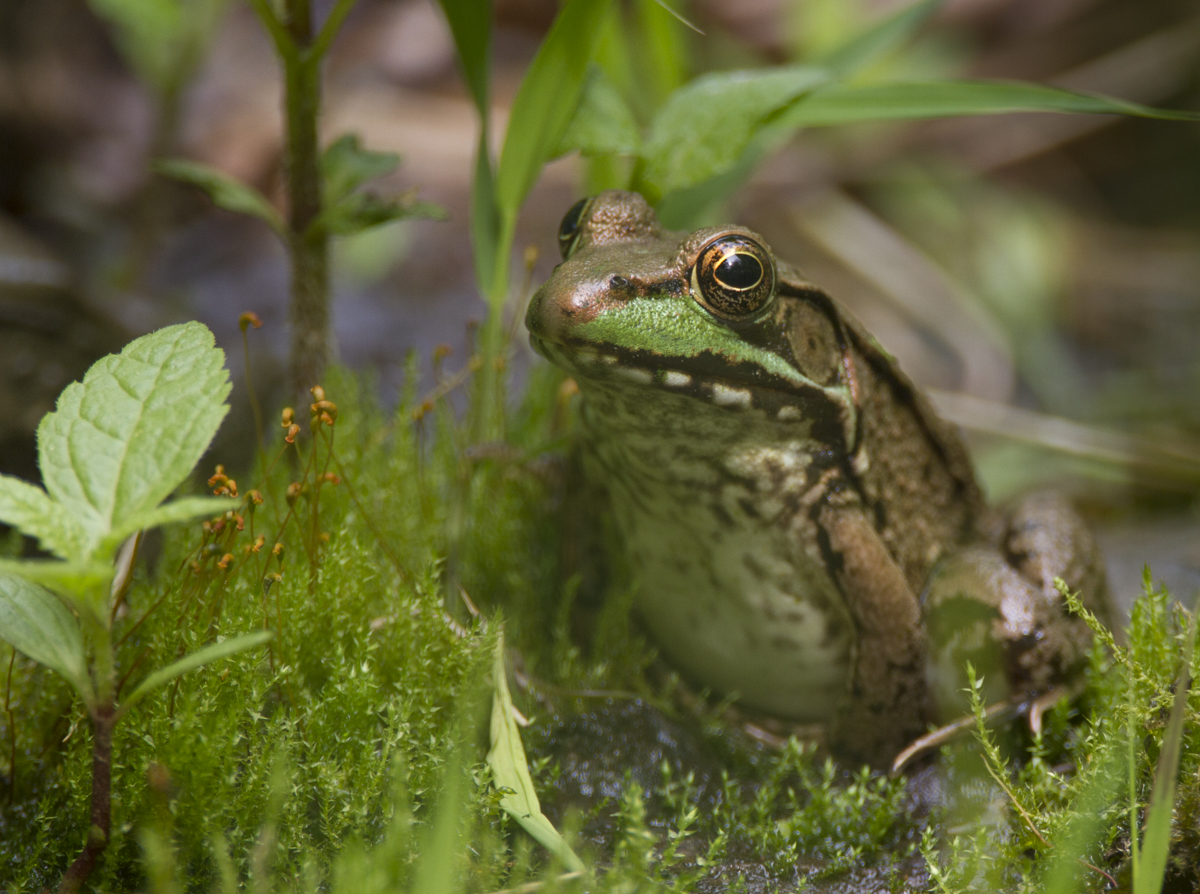
Earlier in the week I was walking around the yard doing a little filming to help with a project on the importance of native plants (see Hometown Habitat). I was using the 500mm telephoto and a 1.4 teleconverter in hopes of getting some birds, but I soon sat near the garden pool and grabbed a few frames of the not-so-active Green Frogs in residence.
Green Frog at edge of pool (click photos to enlarge)Green Frog doing what frogs do
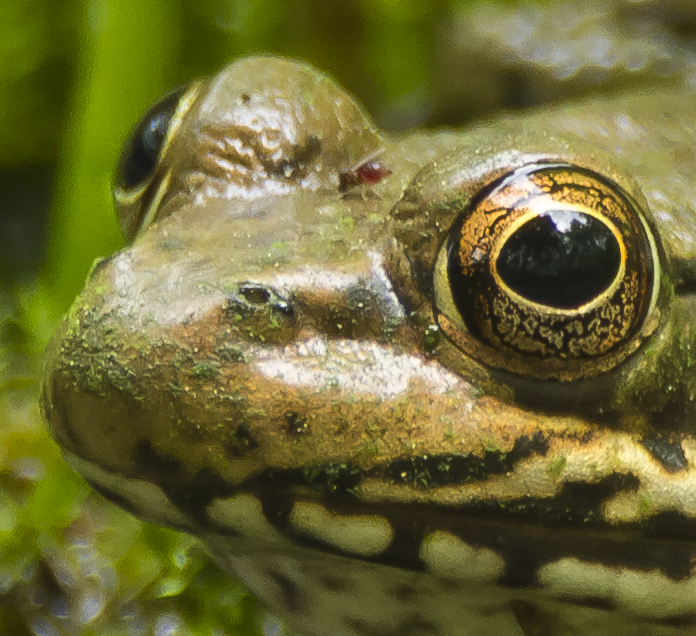
I wanted to get a few images of the frogs croaking, but they clammed up as I approached. With that lens set up I was able to stay some distance from them so I was hoping they would resume their discussions, but they outlasted me. I grabbed a few stills, nothing special, and went inside. As I was reviewing images that evening, I was going through and dumping most of the frog shots when I noticed something. I usually enlarge images as I process them, and I noticed something on one of the frogs….a tiny red dot.
I noticed a tiny red spot on the frog’s head as I was reviewing the images
I zoomed in for a closer look. It was an insect, a blood-sucking insect!
Green Frog with a pair of biting midges on its head
I looked at the image of another frog, and this one had two of the miniscule vampires. That can’t be much fun. I sent an image to a friend and he suggested they may be members of the family, Ceratopogonidae, the biting midges. We humans know them by various names such as no-see-ums, and others I can’t print here in my blog. In looking online I discovered there is also apparently a family of flies that are called the Frog-biting Midges (Corethrellidae), but these guys don’t look much like the few posted on Bug Guide. Now that I have seen them, I may go out and try to get some better images from a much closer distance. Every time I look, I see something new. Fascinating, unless perhaps you are the frog with itchy eyeballs.
What a clean, pert, dapper, nervous little fellow he is! How fast his heart beats, as he stands up on the wall by the roadside, and, with hands spread out upon his breast, regards you intently!
~John Burroughs in his essay entitled, The Chipmunk, 1900
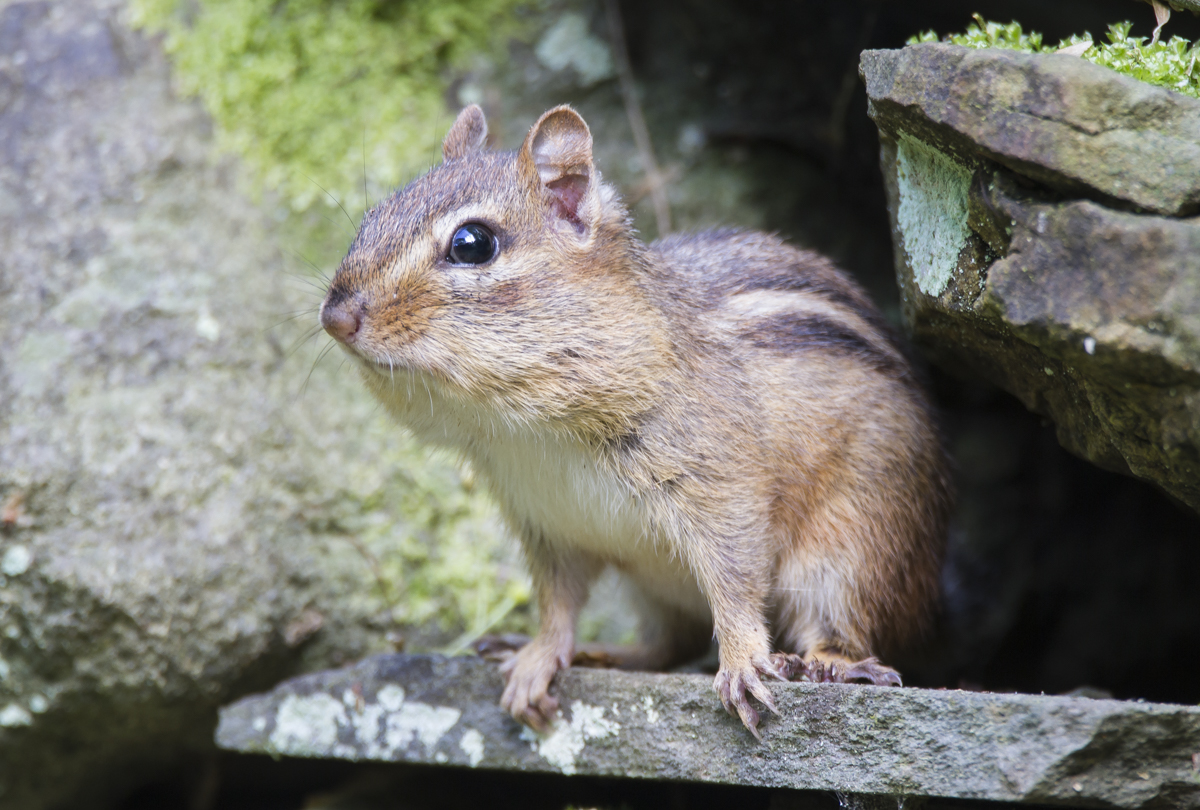
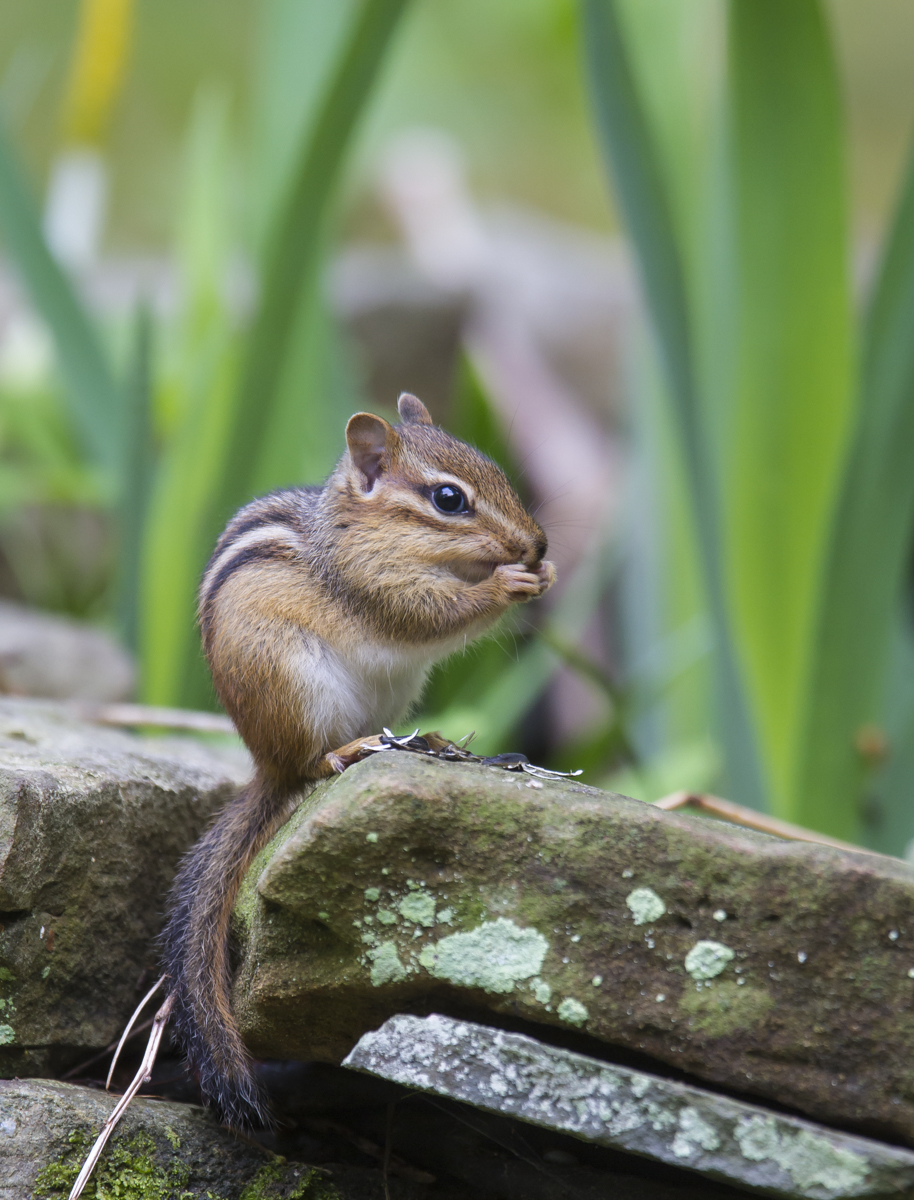
Eastern Chipmunk climbing rock wall (click photos to enlarge)
Okay, I may be biased, but Eastern Chipmunks have got to be one of the cutest of all our native wildlife. So, I was delighted to discover there are several here in the vicinity of the yard. I have been seeing them off and on since March, sometimes a couple chasing each other, sometimes just one. I have often gone days without spotting any and am delighted when I see one return. I am a little embarrassed to admit I have even been known to exclaim, Chippie!, in a not so manly voice, when I see one darting about the yard.
Back in late March and early April, there was a dry spell of chippie sightings. It had been cold, so that could explain it, but I also worried that one of the many potential predators here in the area (snakes, hawks, foxes, and a free-roaming neighbor’s cat) might have taken a toll. On April 13, there was finally a sighting, and it was duly recorded in my journal. Then on April 14, this entry – This morning there were at least three young chipmunks out in the yard. They were wrestling and chasing each other. One has the tip of its tail missing. They are about 2/3 the size of the adult with them….so cute and curious about everything.
Amazing…baby chipmunks! Most references say there are two broods each year, one in the spring, one in late summer, with 3 or 4 babies in each. The young leave the burrow at about 6 weeks and then must find their own place within just a couple of weeks. This is my first experience with baby chipmunks, and I’m afraid it’s addicting.
Juvenile Eastern Chipmunk with acorn
They are most active early in the morning, with another peak in late afternoon. I see them forage all across the yard and nearby woods, but they are particularly fond of the areas around the bird feeders and the rock walls around the pools.
Eastern Chipmunk pausing to check on me
Chipmunks are cautious, very cautious, and freeze at the slightest hint of danger to survey the scene.
Chipmunk responds to a nearby alarm call
When alarmed, they emit a high-pitched note (resembling a bird chirp). When one calls, the others in the area either scurry or become very vigilant. Here, one stands up and looks around for whatever it is that the other chipmunk is concerned about. And they can disappear in a hurry, scampering to cover, tail held high.
I will undoubtedly be posting more on these cute little critters, so I’ll save some of the fascinating facts for a later post. For now, here’s a sample of why I can’t help but look out the window every morning and exclaim, Chippies!
April prepares her green traffic light and the world thinks Go.
~Christopher Morley
It happens every year. Things start changing so fast in the spring woods that I can’t quite keep up. There are also the chores associated with spring – fixing up stuff around the house, getting the garden prepped and planted, and so many others we all make for ourselves, too numerous to mention. But, it is what is speeding by outside my window that keeps me wanting to stop what I am doing and take note….spring is whooshing by and will soon be over and I will have missed something for gosh sakes. And that is probably the origin of the yard tour. I’m guessing it started one spring when I just felt it was all whizzing by without notice. So now, as often as possible, I take the camera or a notebook and slowly walk around the yard, observing what is occurring, taking note of what is blooming, stopping to watch something unusual and ponder. It is a good tradition, I think I’ll keep it. So, this is simply a yard tour post…things that I noticed this weekend, things whooshing by, but appreciated by a simple slow walk around the yard.
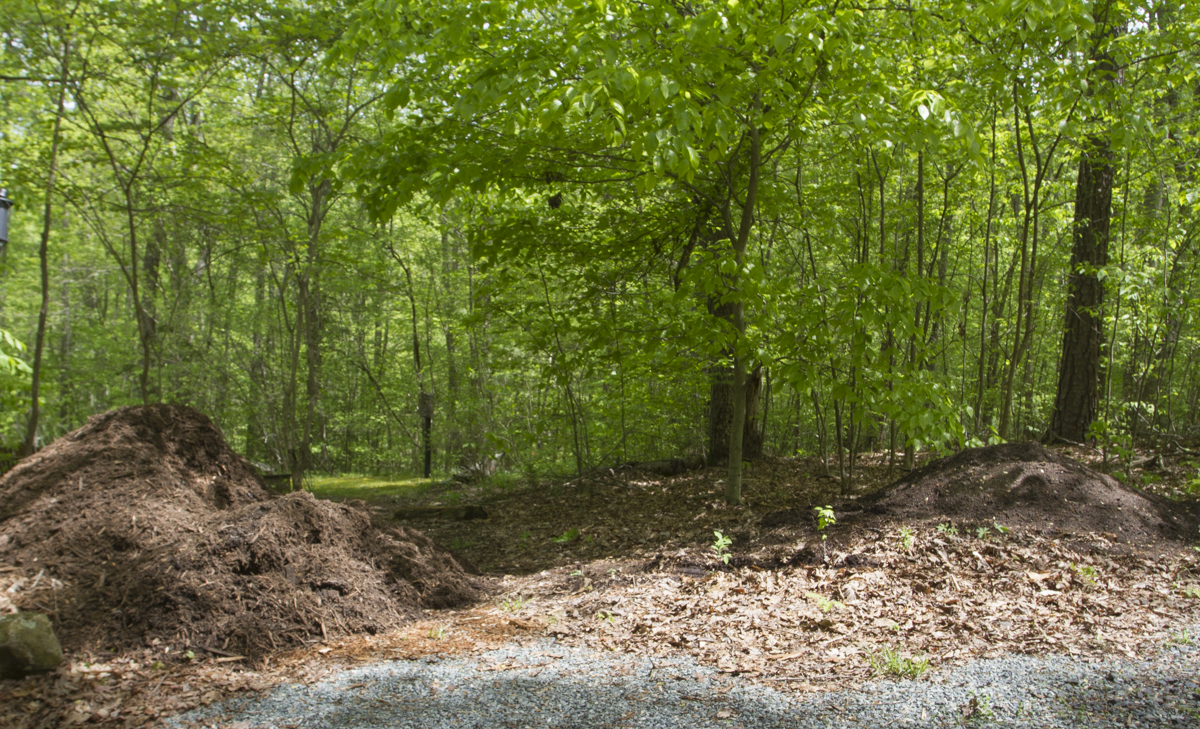
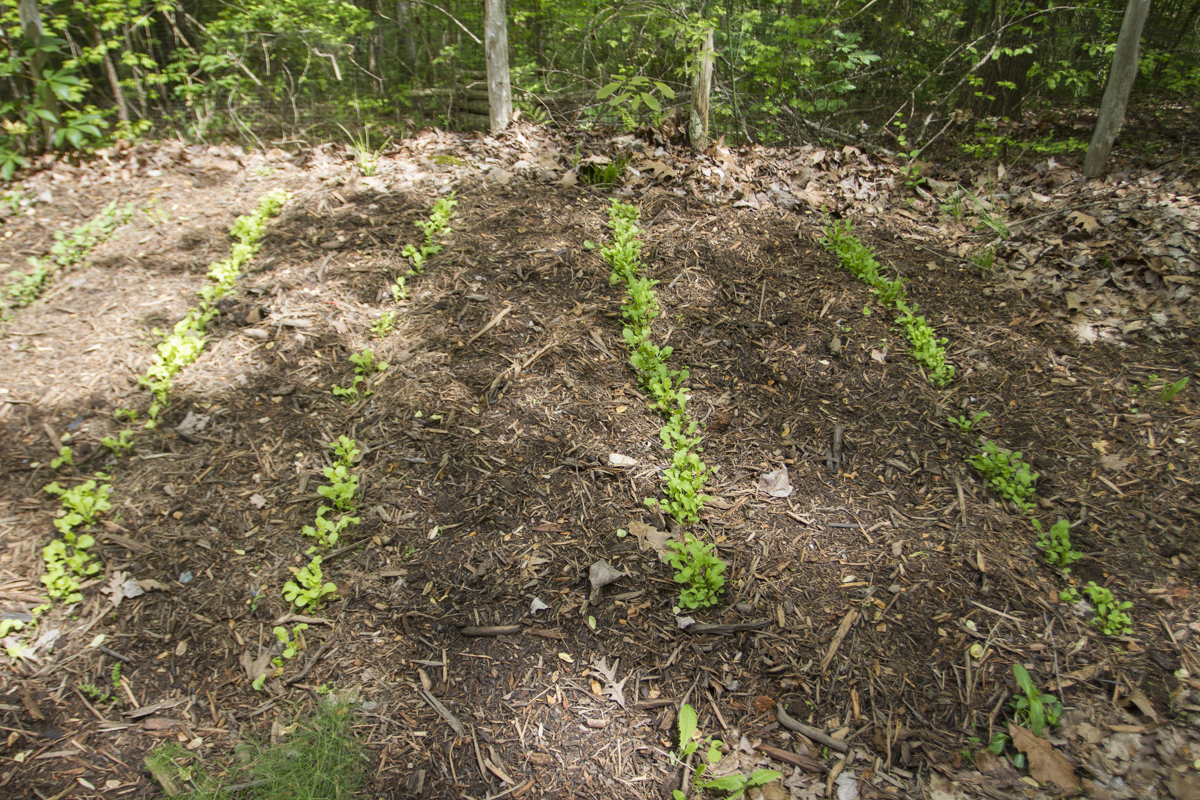
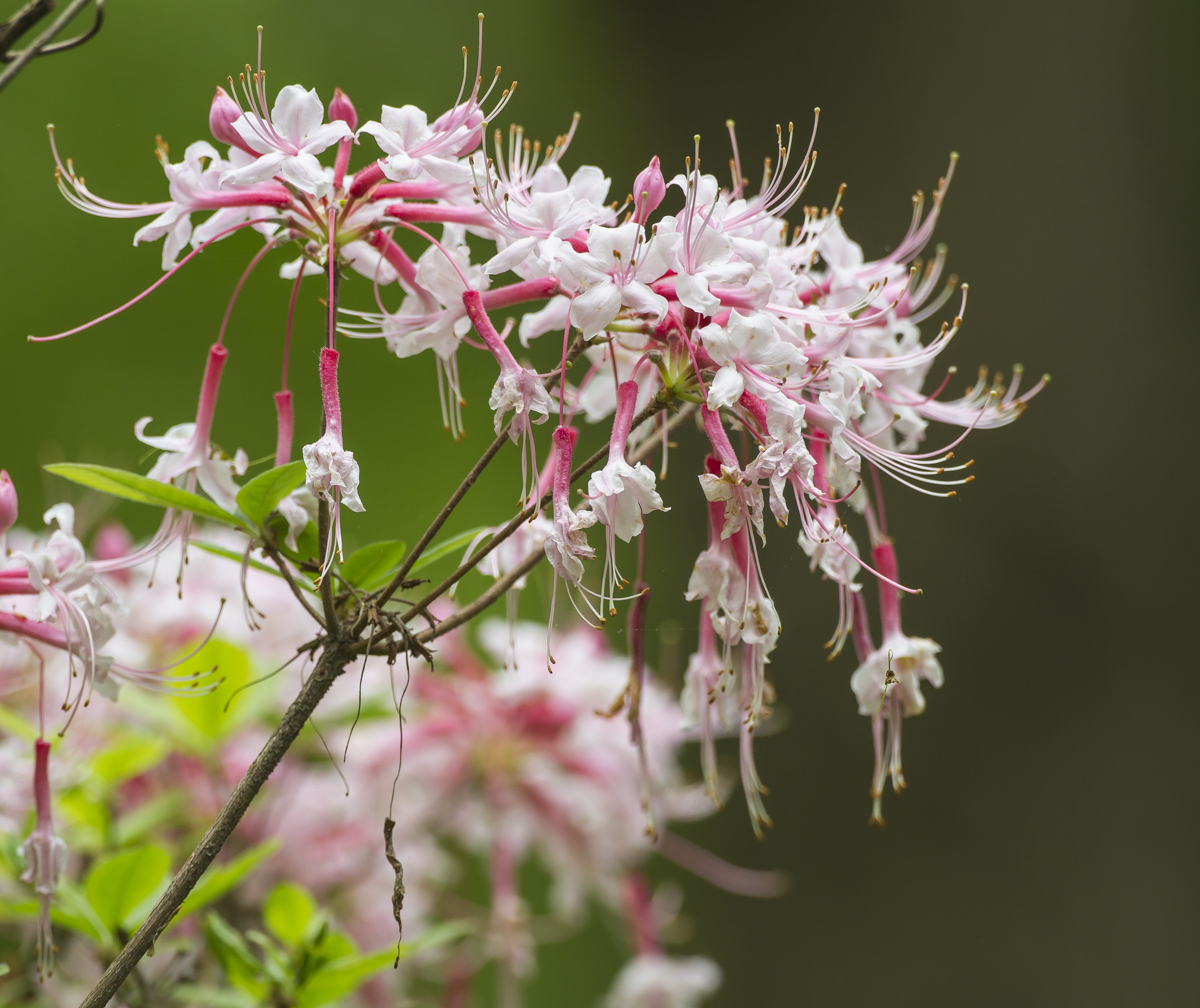
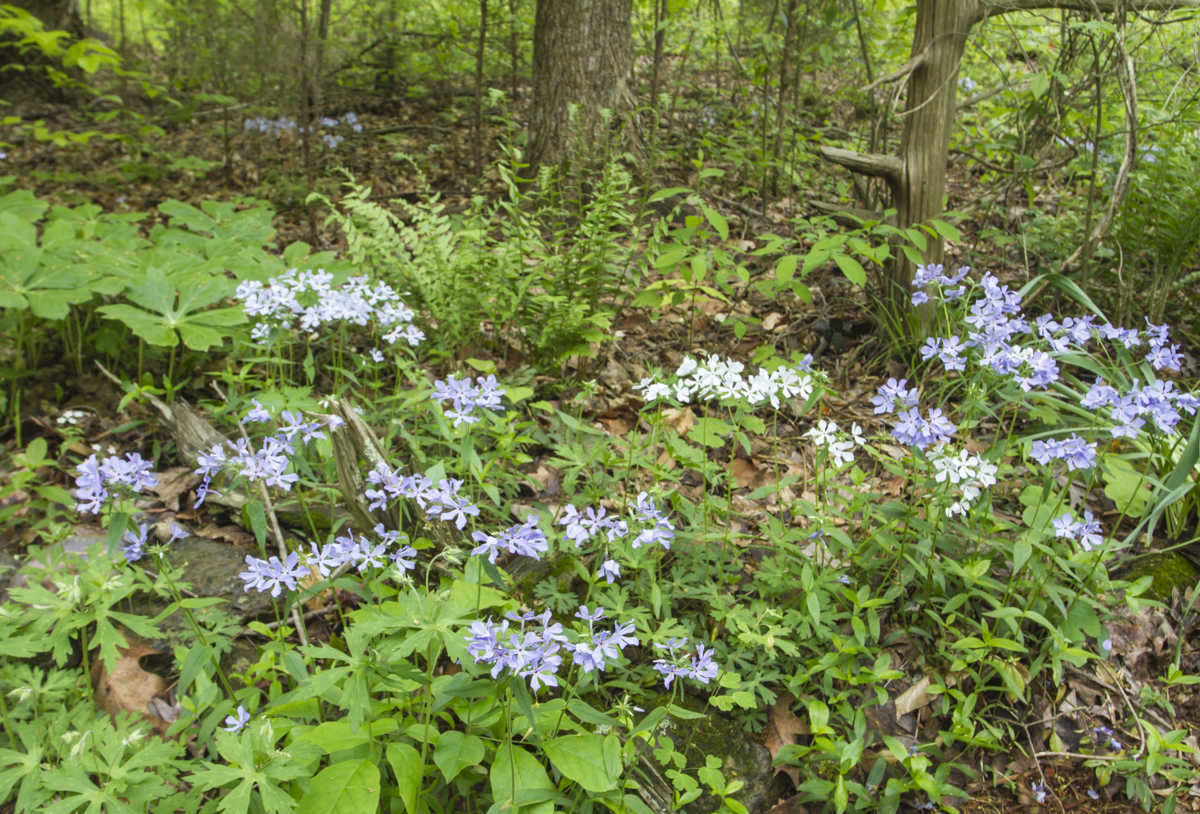
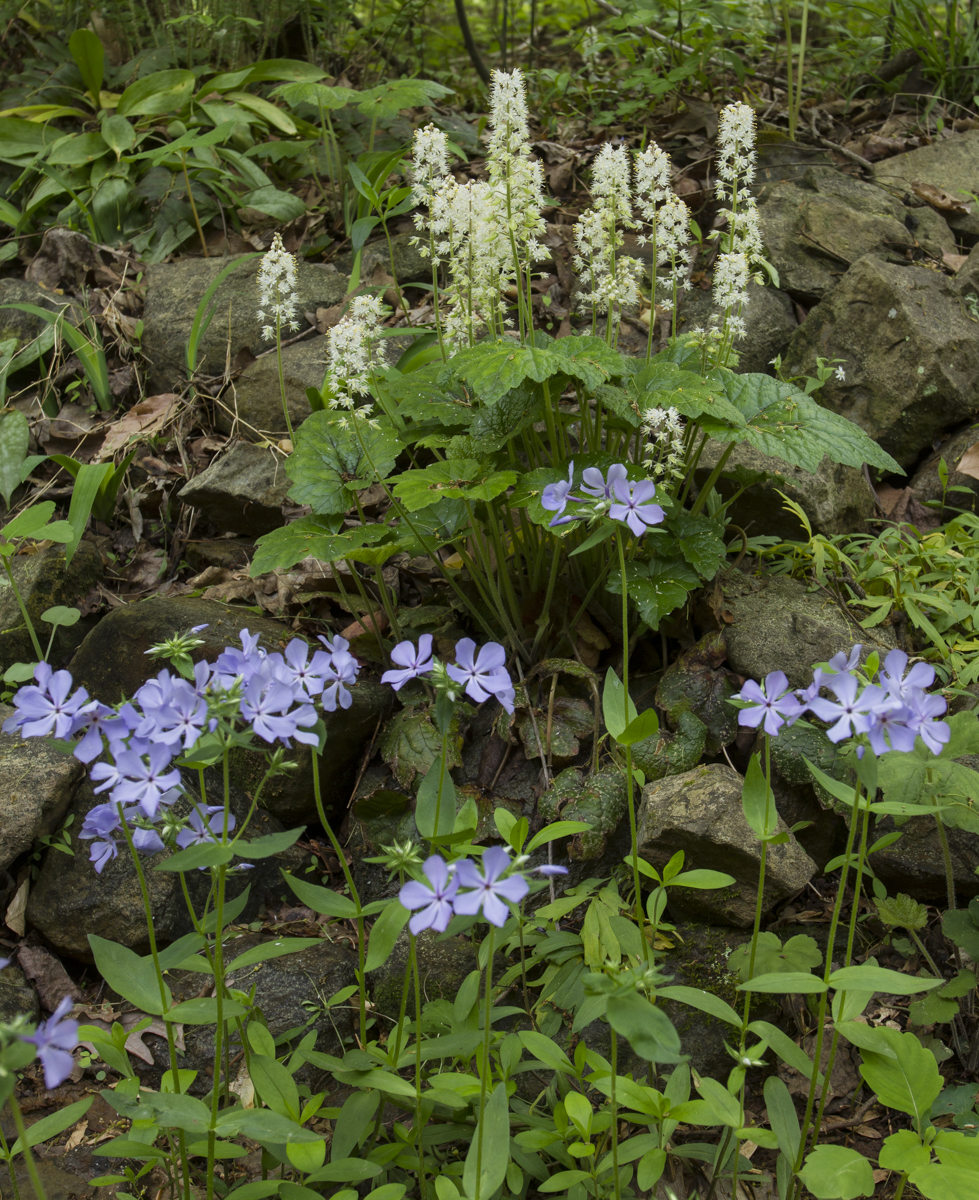
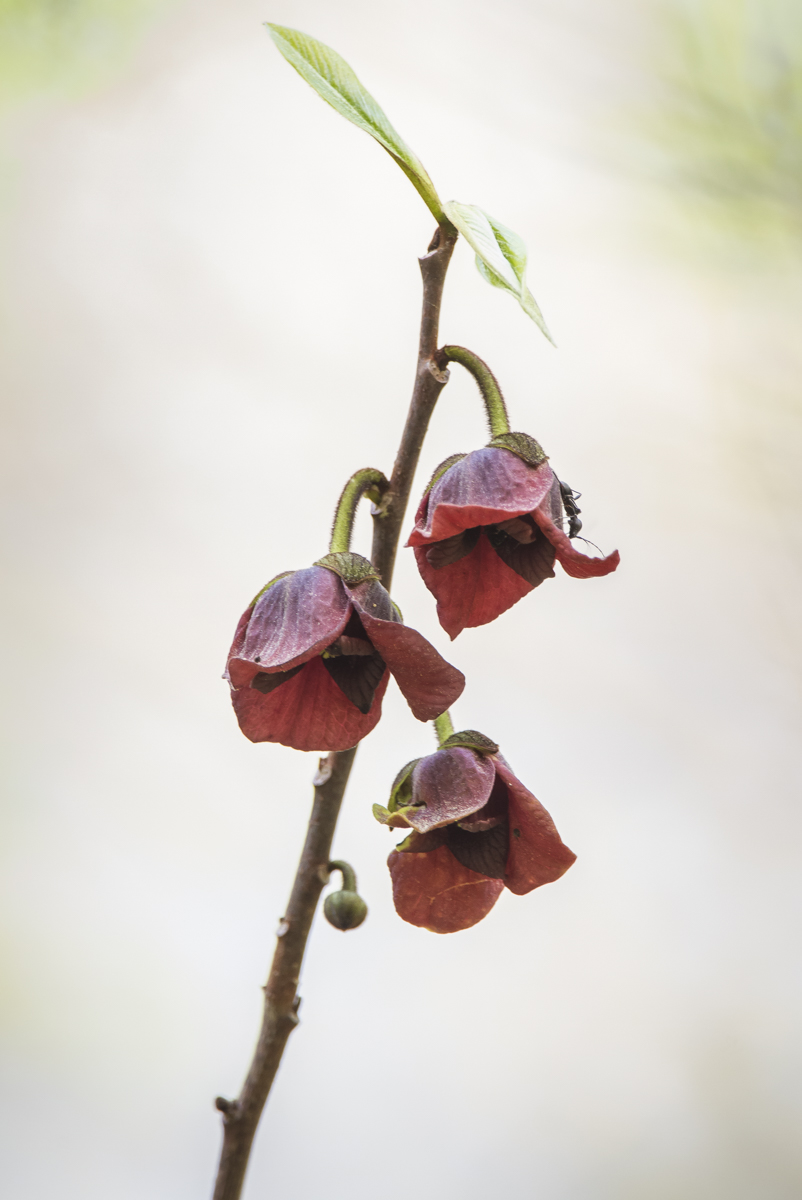
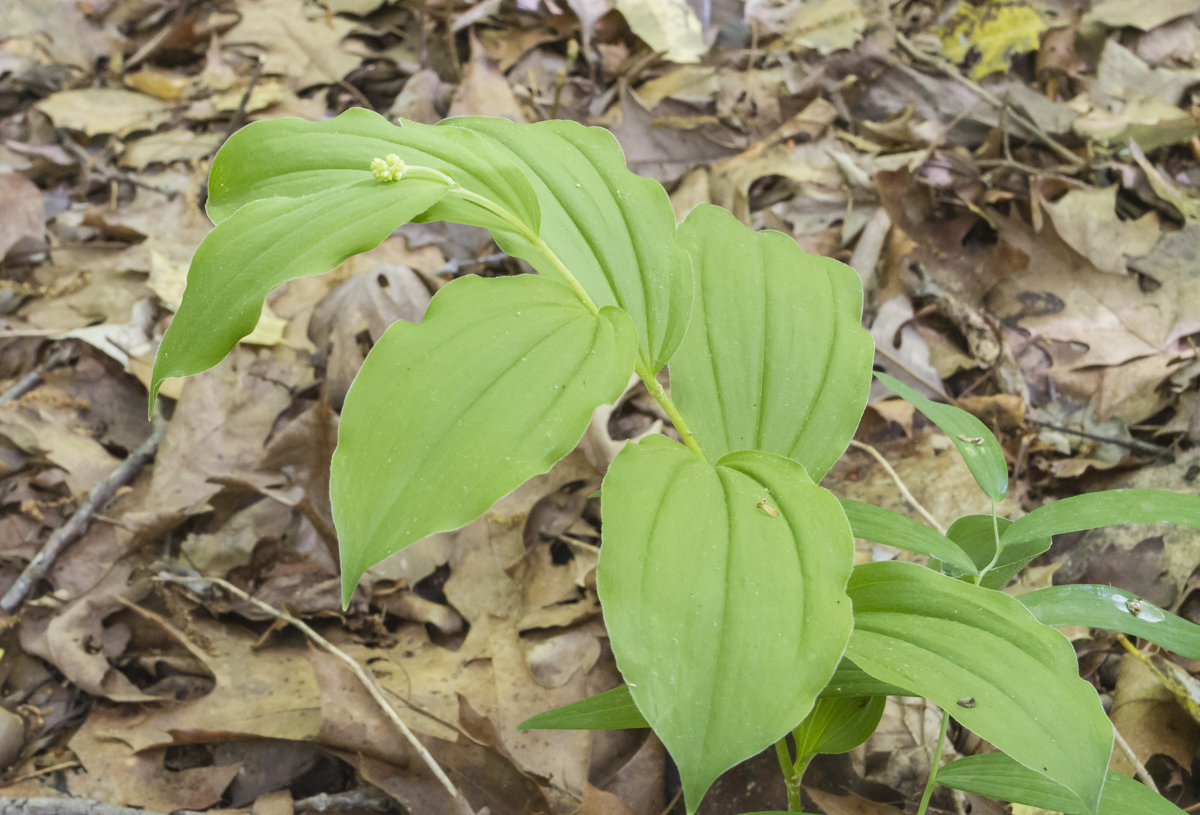
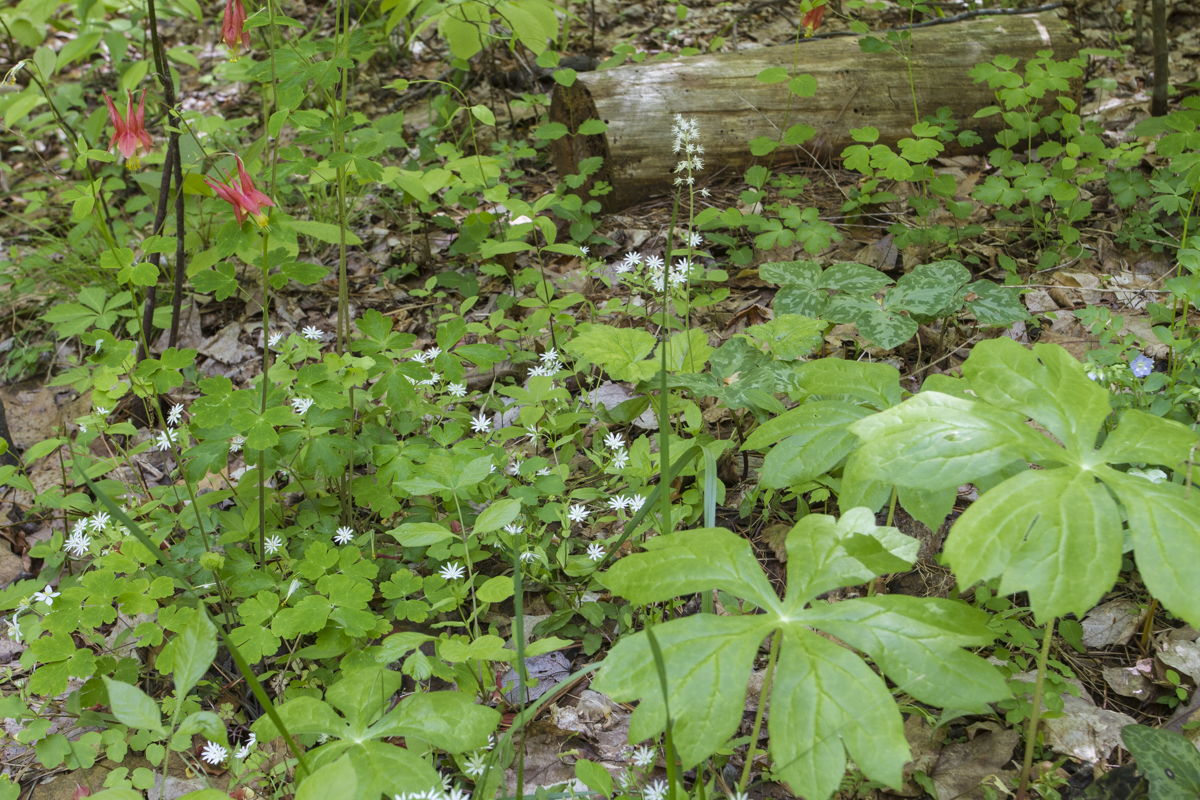
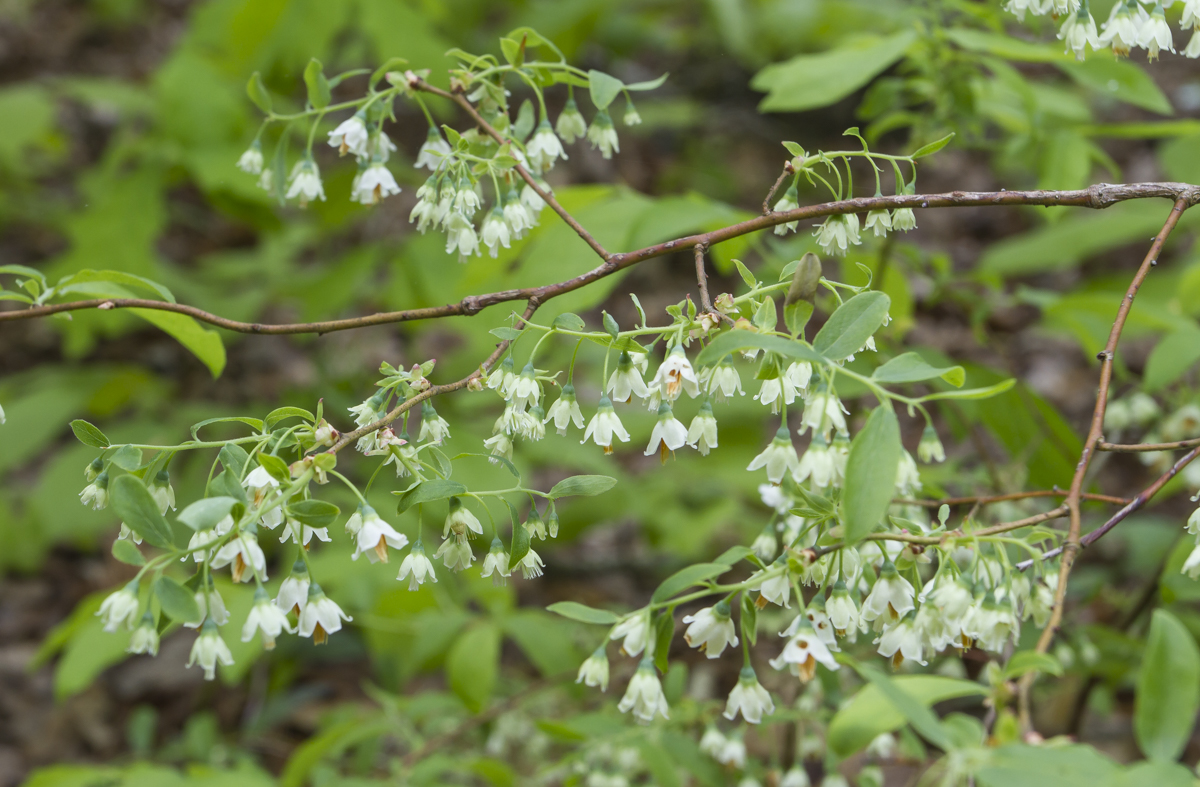
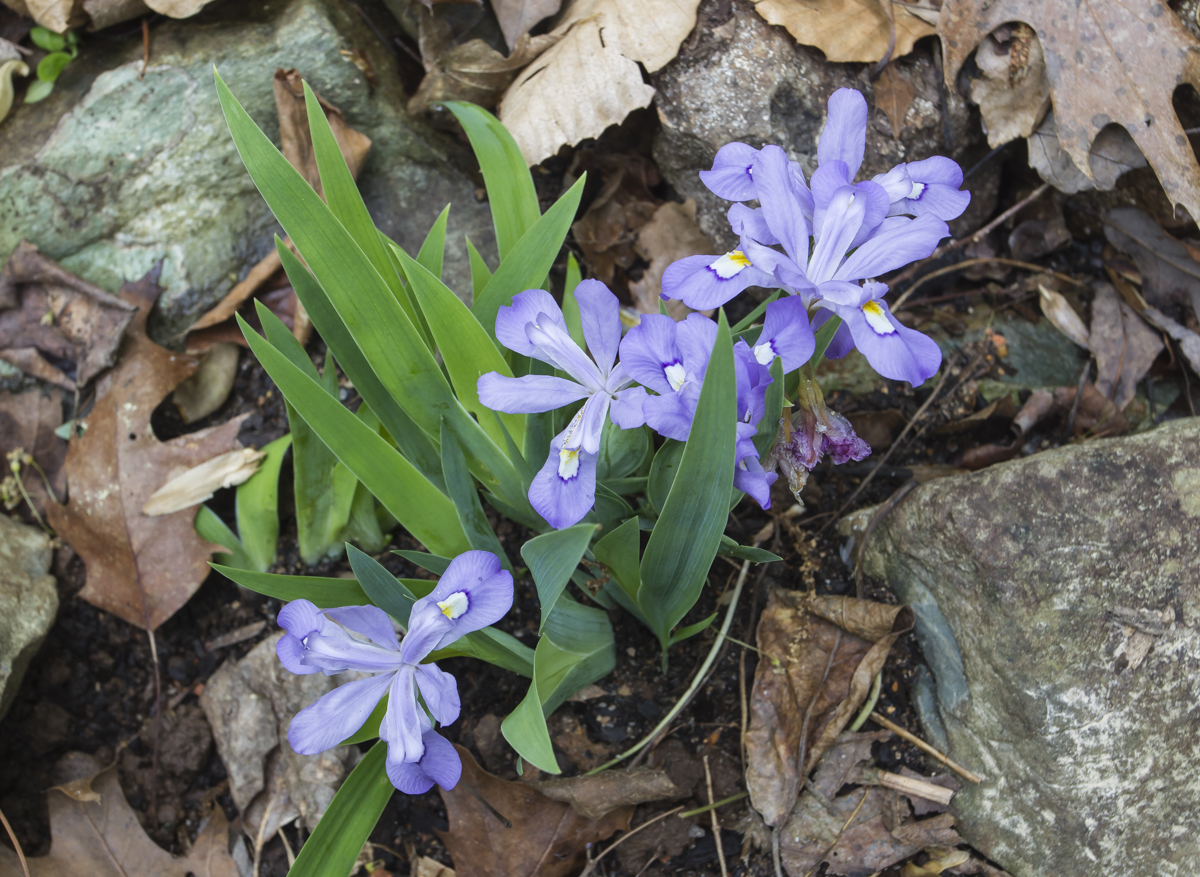
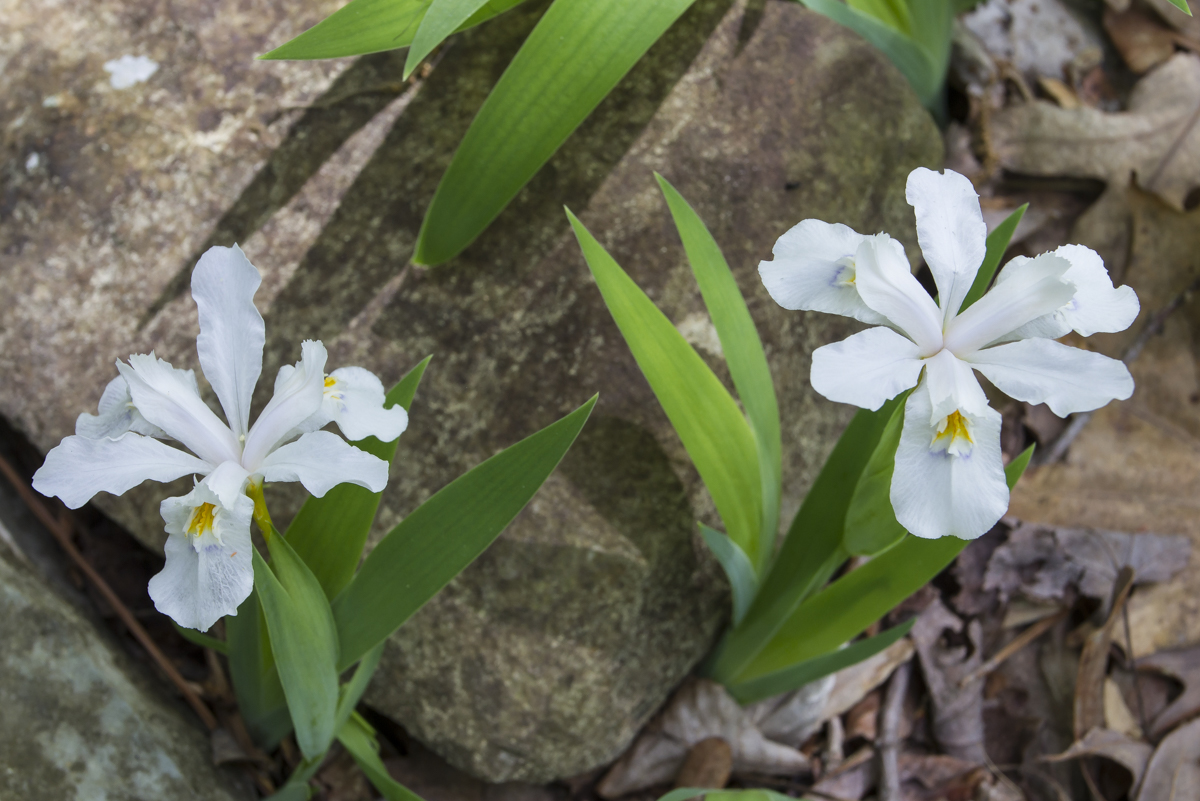
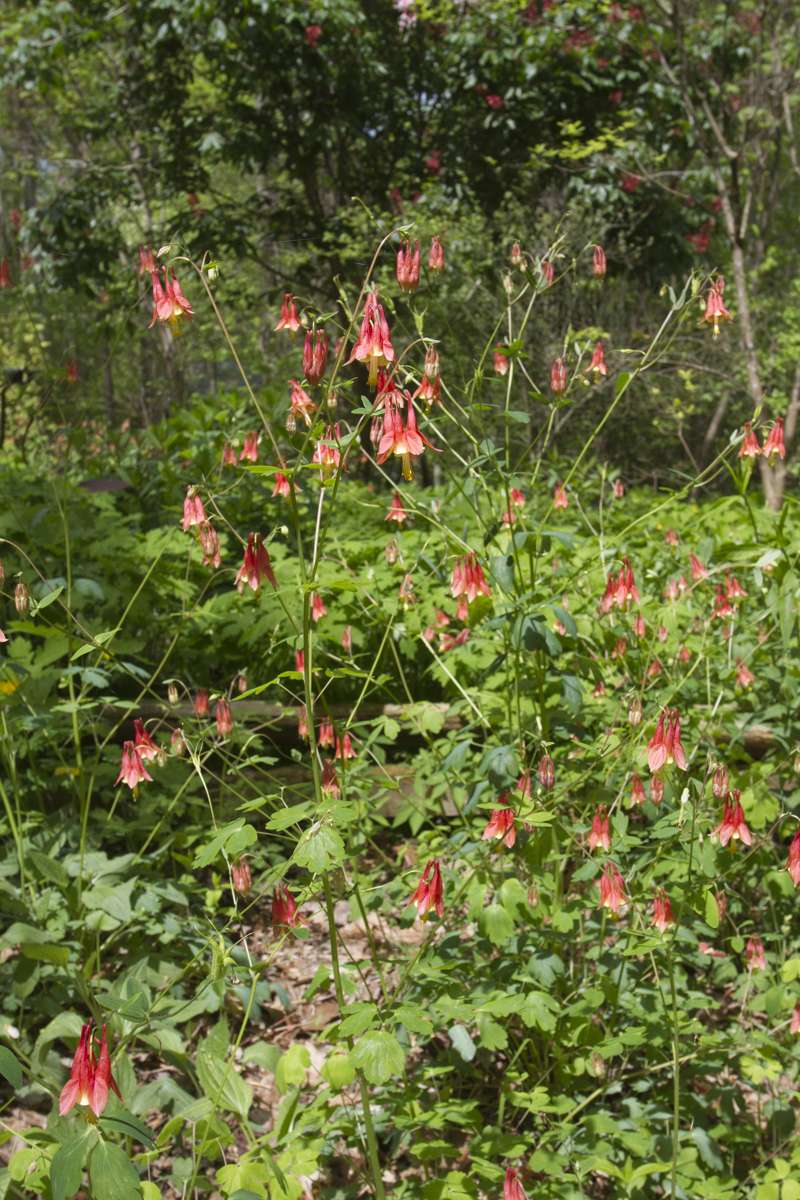
Things that keep me busy – moving topsoil and mulch (click photos to enlarge)The vegetable garden is starting to take shapeThe garden pool with blossoms from the nearby Red Buckeye tree scattered on the surface…the Spotted Salamander eggs have recently hatchedGreen Frog claiming a spot at the poolPinxter Azalea in bloom – these grow scattered in the woods and along the banks of the nearby Haw RiverPinxter Azalea close upWild Blue PhloxWild Blue Phlox and FoamflowerPawpaw from earlier last weekFringe Tree flowers, one of my favorite native treesFalse Solomon’s Seal is abundant inside the deer fence, absent outside of itThe same goes for Solomon’s SealDowny Arrowwood is bloomingOne of the shade gardens with Wild Columbine, Mayapple, Giant Chickweed, and Foamflower, Toadshade Trillium, and Jacob’s LadderDeerberry, a wild blueberryDwarf Crested Iris, blue formDwarf Crested Iris, white formCoral Honeysuckle, a hummingbird favoriteWild Columbine, another great hummingbird plantEastern Chipmunk
When we see leaf-eating insects green, and bark-feeders mottled grey, the alpine ptarmigan white in winter, the red-grouse the colour of heather, and the black-grouse that of peaty earth, we must believe that these tints are of service to these birds and insects in preserving them from danger.
~Charles Darwin
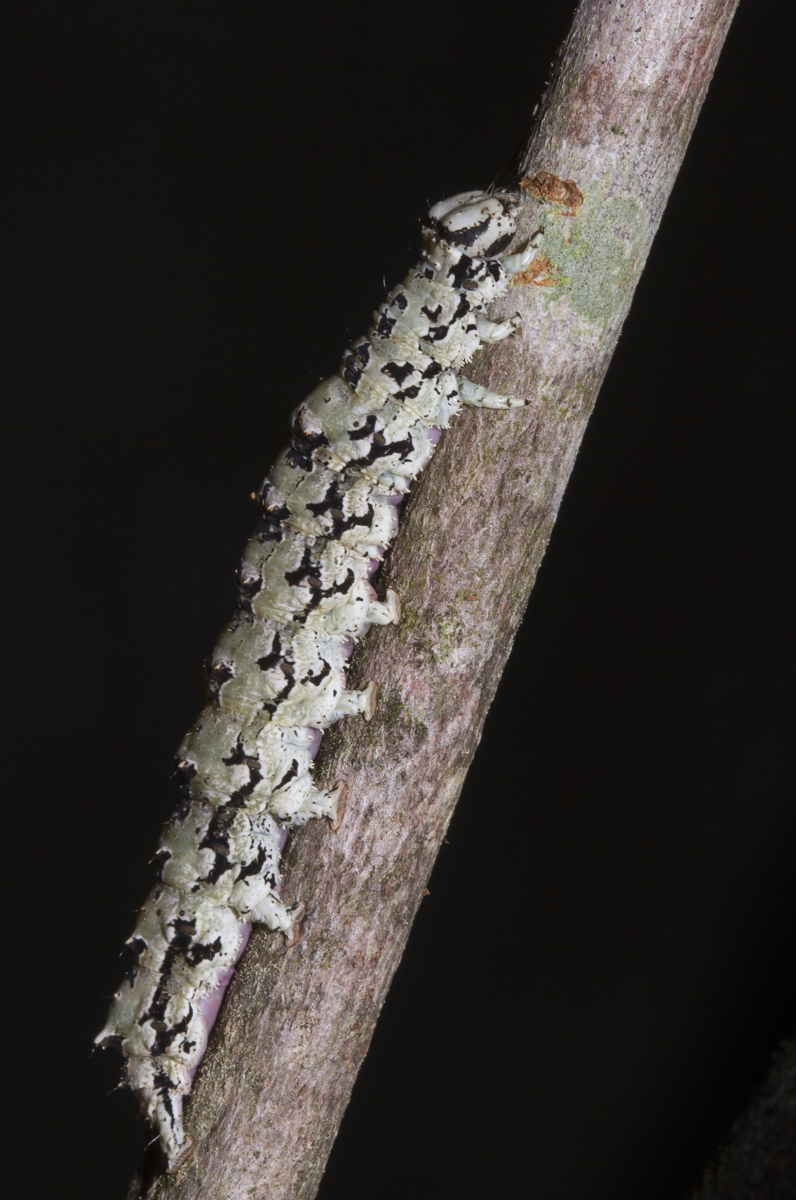
Yesterday, while working in the yard, I stumbled across an unusual caterpillar just beneath the surface of my mulch pile. Two things about it jumped out at me – first, it was pretty large compared to most caterpillars so early in the year, and second, its colors were so striking. And then, to add another, when I picked it up, it jumped and thrashed from side to side.
Ilia Underwing larva (click photos to enlarge)
I remember seeing a picture of this species in my caterpillar bible (Caterpillars of Eastern North America, by David L. Wagner) but this was the first one I have encountered. After identifying it as an Ilia Underwing, Catocala ilia, I discovered it is actually one of the most common of the underwing moth species in the East. How have I missed seeing one all these years? Then I read that there is only one generation per year and mature caterpillars are most often seen in early spring. To be honest, over the years I admit to doing more of my caterpillar searches later in the season, when some of our more showy species reach their full size. Look what I have been missing! Sources say that the eggs are laid in the fall and hatch in early spring. The larvae feed primarily on oak leaves. Perhaps my find was burying down into the mulch getting ready to pupate.
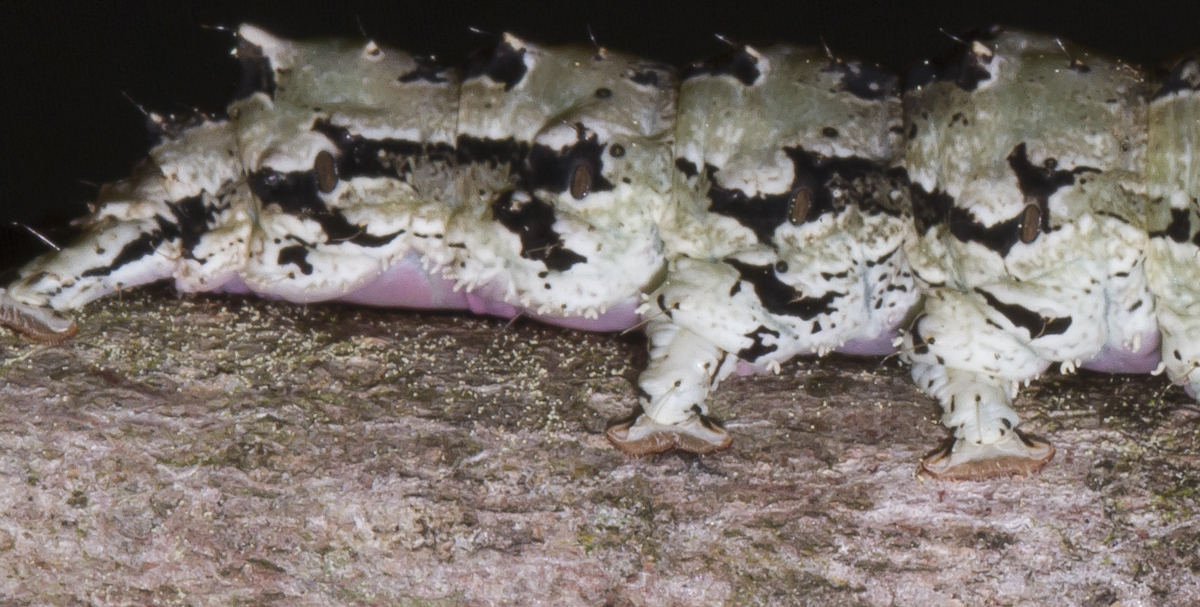
Ilia Underwing larva showing a glimpse of the rosy underside
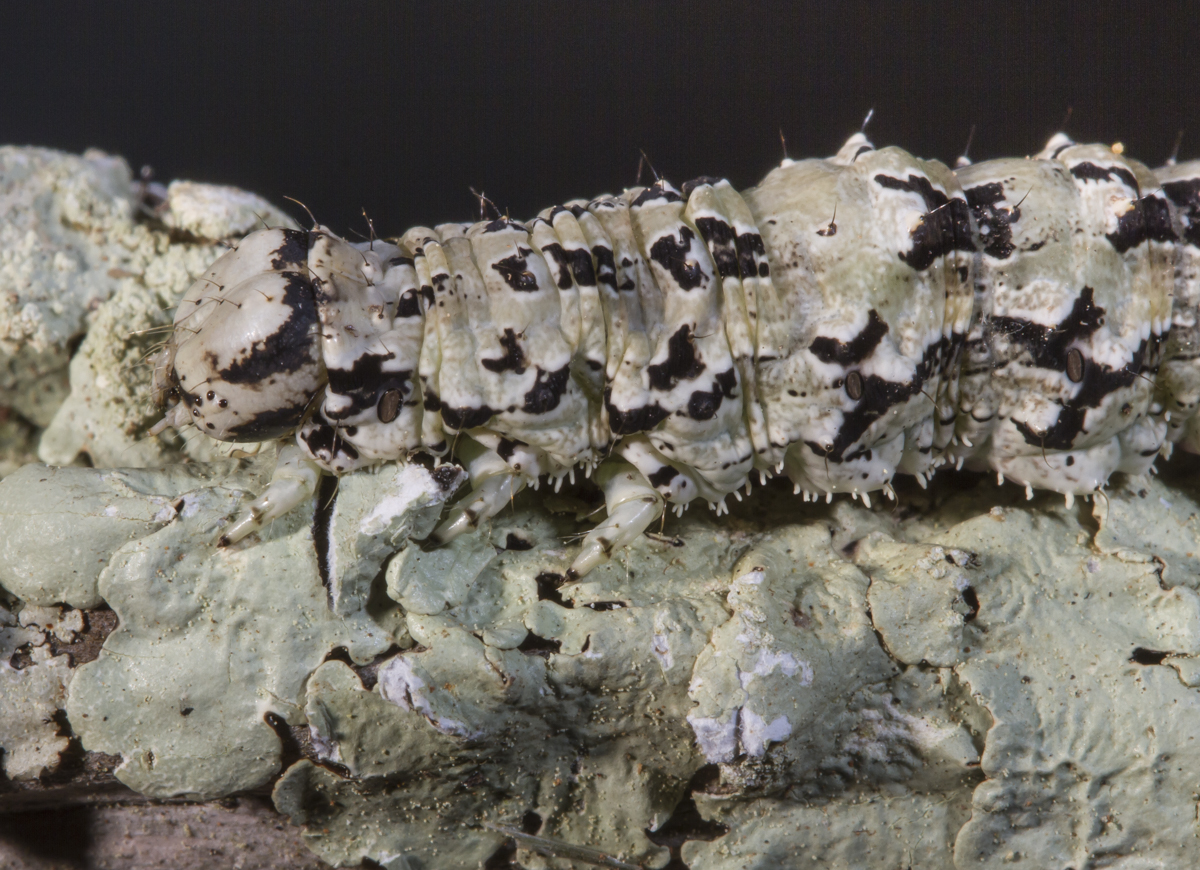
The dorsal surface can be gray or brown, or, as in this case, a mottled color that is a great mimic of a lichen-covered twig. One thing they have in common is a noticeable rosy color to their ventral surface (this guy did not like to be handled so here is just a glimpse of its rosy underside).
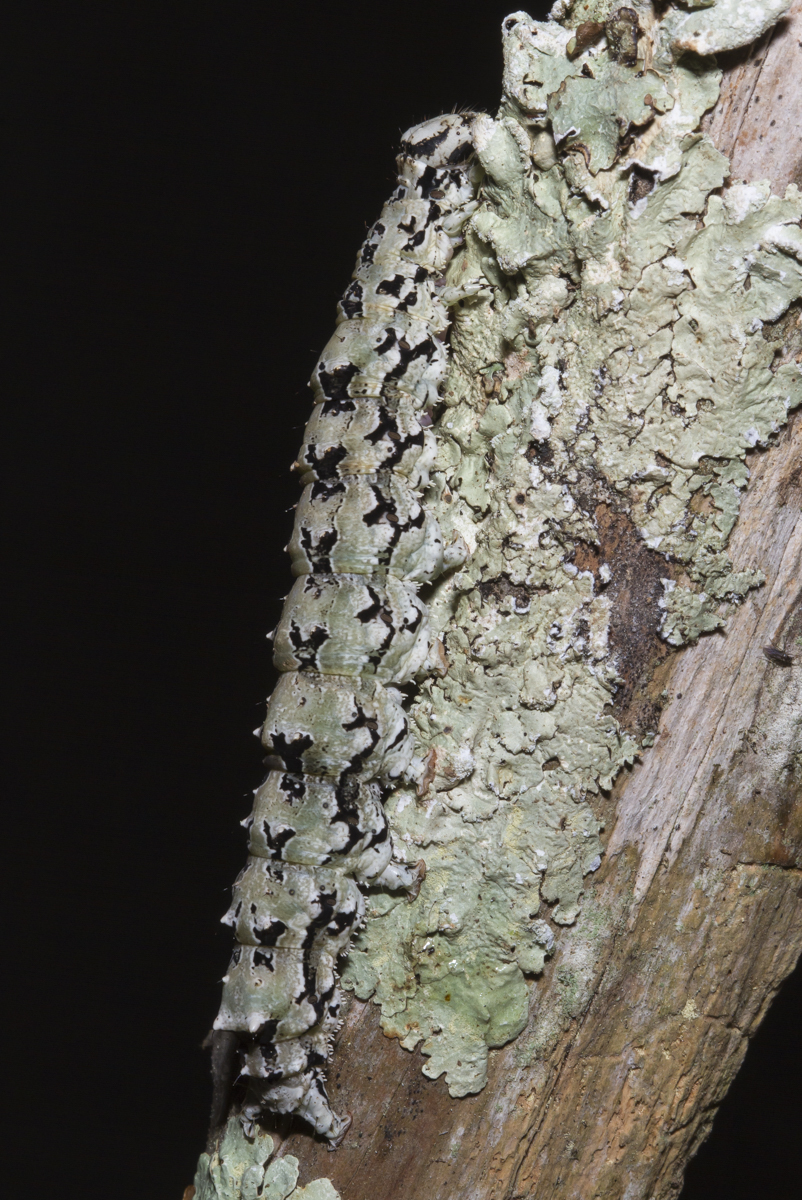
Ilia Underwing larva blending with a lichen-covered branch
I brought the larva inside with a couple oi twigs I found laying nearby and photographed it. When I nudged it onto a twig, it would thrash, and then crawl a short distance and assume the position. When on a bare twig, it clings tightly but is visible (perhaps the gray or brownish larva blend in better on bare twigs). But when it crawled onto the lichen-covered branch, I could see how this caterpillar can literally disappear before your eyes (or perhaps those of a hungry bird).
The color patterns and textures of this larva are a great lichen mimic
It is always a treat to discover something new and learn how it lives its life just outside my window…all I need to do is get outside and look to once again be in awe.
Faith is the bird that feels the light and sings when the dawn is still dark.
~Rabindranath Tagore
One of the things I love about early mornings here in the woods is the sound of sunrise. Much of the usual background noise of distant traffic and barking dogs has not yet started, so what you hear is the music of the awakening woods, the forest starting a new day. And this time of year the sounds are many, especially the so-called dawn chorus of birds. This chorus is most pronounced in spring and is believed to be related to male songbirds defending territories and finding a mate. Other recent research has suggested that these intense bouts of song may help male birds exchange information about their social standing. Another discussion speculated that birds sing more in the morning because that is the most likely time of the day when they have some spare energy (saved up overnight from the previous days’ feeding) to dedicate to belting out a lot of song. Whatever the cause, it gives me one more reason to appreciate getting up early. Here is a brief sampler from Sunday morning’s dawn chorus.
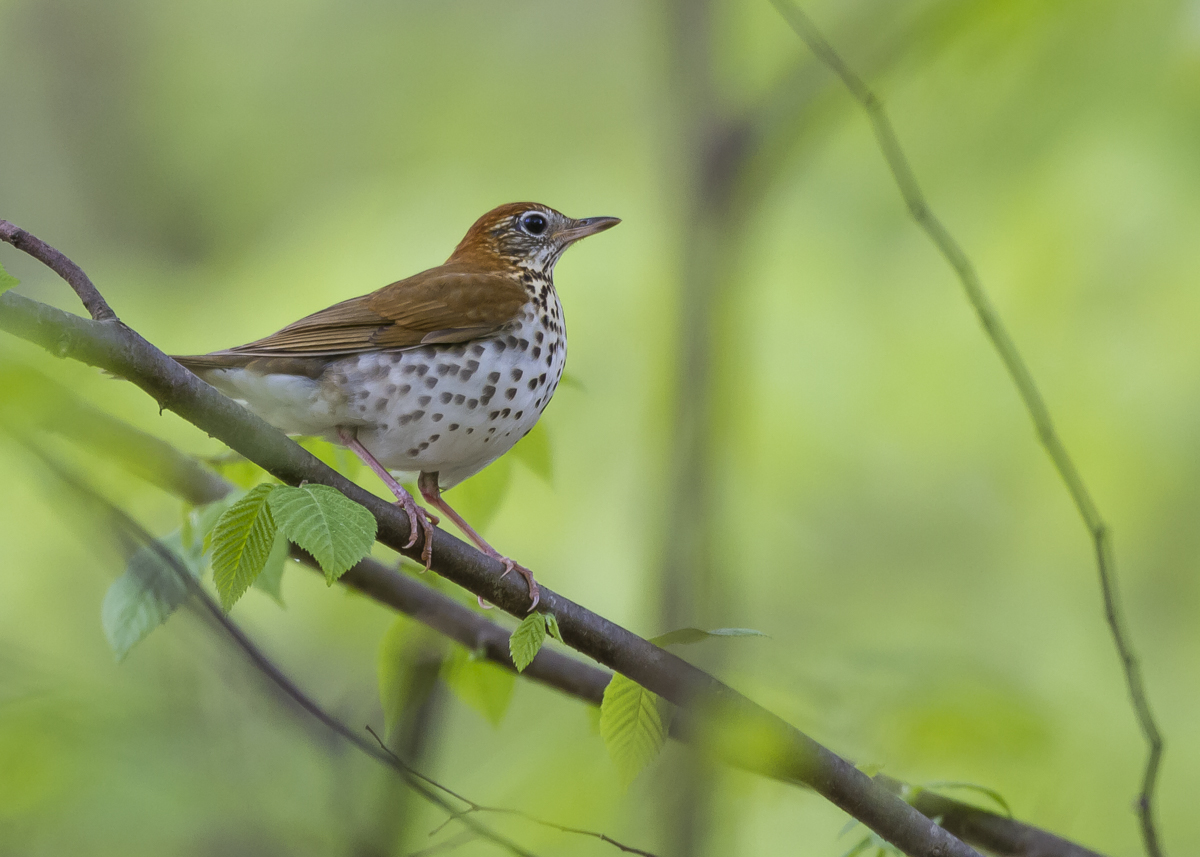
The dominant song in this clip is that of the melodious Wood Thrush. Henry David Thoreau said of this bird’s music… It lifts and exhilarates me. It is inspiring. It changes all hours to an eternal morning. It is certainly one of my favorite woodland sounds as well, so clear and flute-like. After listening to the chorus for several mornings, I think something must have happened this past Sunday to concentrate these songsters in the trees around here. They seemed to be singing from every direction and I observed several down in the yard feeding as they flipped over leaves looking for worms or other invertebrate treats. I even saw a pair in a squabble as they flapped in a ball of brown and white feathers through the greenery for a few seconds. I finally grabbed the camera and went out in the dim light to see if I could capture something.
Wood Thrush (click photo to enlarge)
After watching for several minutes, one Wood Thrush came down from the higher branches and grabbed a few morsels from the leaf litter. It then flew up to a small sapling, flitted its wings and bounced while looking around for a few seconds, and then returned to a high limb overhead. I’ll be content with that one image for a day or two, but would love to capture one singing. This morning’s chorus seems to have extended beyond the usual time they sing (things have calmed down by about 7:30 a.m. or so on most recent mornings). I wonder if cloudy weather influences the duration? So many questions, so little time. I look forward to hearing the new arrivals join in the chorus these next few weeks (my first Summer Tanager was Sunday, the first Hooded Warbler was this morning). I also hope you have an opportunity to appreciate the magic of the dawn chorus in some woodlands near you. By the way, I discovered that there is even an International Dawn Chorus Day (this year on May 3). It is primarily observed in the United Kingdom….but, hey, why not get out and celebrate it by listening to the sounds of sunrise near you.
One who reviews pleasant experiences and puts them on record increases the value of them to himself; he gathers up his own feelings and reflections, and is thereby better able to understand and to measure the fullness of what he has enjoyed.
~Edward Grey
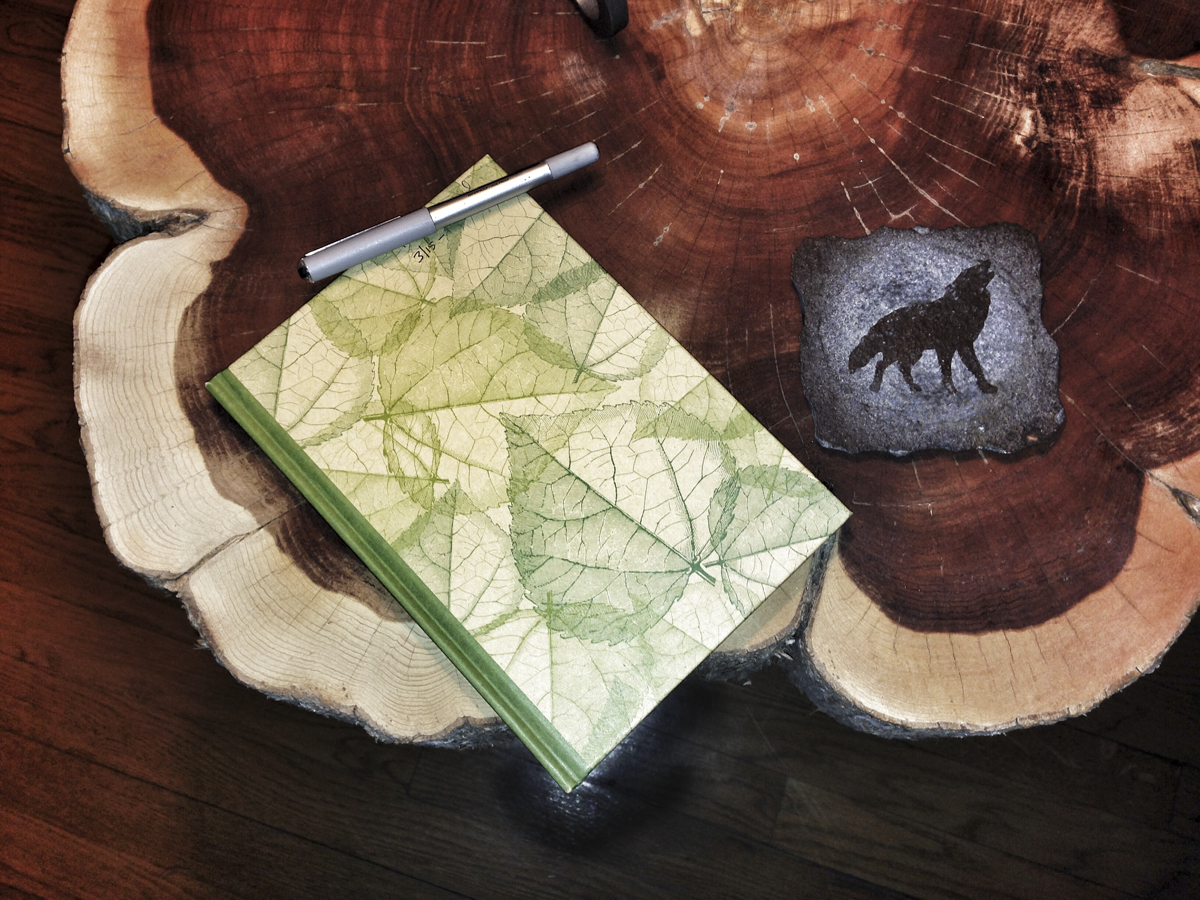
My journal staring up at me from its place near the window (click photos to enlarge)
I have recorded my observations of nature on and off for almost thirty years (unfortunately, more often off than on in recent years). I too often rely on the camera lens to be the documentarian of the world around me rather than the pen, but I have decided to start recording again. The new journal lies on a cedar slab table next to the window, pen at the ready, hoping I will pick it up and jot something in it…anything. And this time of year there is a lot to jot down…there are so many changes out that window. During the move, I rediscovered some journals of the past, some going back to my days in State Parks. But a lot had to do with things I saw out out the windows of places I lived in the Piedmont. And many were records of what some of my friends call FOY’s, the First Of Year sightings of something in spring. A couple of state park colleagues and a current biologist with state parks have been sharing their FOY’s on Facebook in recent weeks and that made me realize that I also tend to anticipate the arrival of this glorious season by looking for changes around me – the first sighting of a specific migratory bird, or the first flower of a particular species to bloom.
The FOY Tulip Poplar leaves unfurled last weekendThere must be something reassuring in this cycle, something that tells the many who are winter-weary that renewal is on its way. In looking at some previous journal entries I also realized that there is much less mention of LOY’s (the last sighting of something in a given year). That makes sense I suppose. We tend to notice the first Flowering Dogwood tree that blooms, but it is much less likely that your brain will precisely record the last time a Ruby-throated Hummingbird is at your feeder in September. More likely, one day you realize that the sugar water doesn’t need to be replaced anymore….huh, they must be gone. In looking for LOY’s, I found entries such as the one I made yesterday – only one Dark-eyed Junco at feeder today. And many more were like this..Fewer Purple Finches seen in the yard, or some such vague recording.
I observed the first Giant Chickweed flowers on April 6
But the last weeks of March and early April are full of the word first. In looking at my sporadic journal entries on FOY’s from 1998 to present, it is remarkable how consistent the arrival of spring can be from year to year. I also noticed my bias toward recording the FOY of animals more so than the blooming of plants. I guess that makes sense in that the FOY of a butterfly or bird is an absolute – either I saw it or I didn’t. But the first bloom of a plant…well that’s a little more open to discussion. When is a flower truly open? Some plants take days for their flowers to open, so I noticed my records usually say something like – In Bloom:, and then a list of plants. A cursory review of my notes from years past makes it look as though flowering times can be greatly influenced by weather patterns such as rainy periods or late cold snaps. This year seems to be a little later than some in the blooming of plants, perhaps due to our prolonged period of cold weather in March.
As I am sitting here on the porch this morning writing this, I am reminded of the thing that started all of this reflection on journal entries. It is one of the most magical signs of spring here in the woods – the first melodious song of a Wood Thrush (listen here for a recording from the Cornell Laboratory of Ornithology), a bird more often heard than seen (hence the lack of a photo), and a true harbinger of spring. We heard the first one this year on April 7. In looking through old journals going back to 1998, I found five other entries for my FOY Wood Thrush in this region – 4/19/98, 4/9/01, 4/15/02, 4/14/03, and 4/14/06. Of course, I would expect some variation depending on my effort (I noticed a couple of years where there was as much as a 7-day gap in records in spring – perhaps out of town for work, or just long days in Raleigh leaving little time to record? Another thing I noticed was the remarkable consistency of relative FOY’s. In other words, for each year I recorded an FOY Wood Thrush, I also recorded an FOY Ovenbird, and in every instance, the Ovenbird arrived a few days before the first Wood Thrush. This year, my first Ovenbird was April 3. For the same years as the Wood Thrush above, the dates for the Ovenbird were as follows: 4/1/98, 4/5/01, 4/11/02, 4/7/03, and 4/8/06. Makes me think I just missed the FOY Wood Thrush by a few days back in 1998.
Male Ruby-throated Hummingbirds arrive on the breeding grounds ahead of the females (photo from the archives)
One of the FOY’s that many people seem to notice is the return of hummingbirds to their yards. I usually put out my feeders the last week in March. The few records I could find indicate I am a bit early in my predictions. Here in the woods, the first male Ruby-throated Hummingbird zipped away from my feeder when I opened the front door on April 8. This is several days after many of my friends reported their first hummingbird elsewhere in this region (not that it is a competition:). Most of them live in more suburban environments so maybe hummers show up in more civilized places first?
If you would like to make observations and help scientists record data about our changing environments, you can log into several types of citizen science programs that involve phenology (the study of nature’s calendar). There is a recent upsurge in the interest in this type of data since observations of plant and animal phenology are useful for tracking the biological responses to climate change. Plant observations can be recorded with programs such as Project Budburst and Nature’s Notebook. A wonderful long-standing program on the northward migration of spring can be found at Journey North. The USA National Phenology Network is another great place to look for all aspects of the fascinating science of tracking nature’s annual cycles. But whether you do it for science, or for fun, I encourage you to take time to observe and record what is happening outside your window. I certainly hope to pay more attention to these comings and goings in the future. After all, that journal still has a lot of blank pages and seems to be staring at me.
A river seems a magic thing. A magic, moving, living part of the very earth itself.
~Laura Gilpin
I spent this past weekend in a magical place, a place I have been many times, but that still draws me back – the Roanoke River. The Roanoke is a major river that flows over 400 miles from its headwaters in the mountains of Virginia to where it meets Albemarle Sound in North Carolina. A wonderful non-profit group, the Roanoke River Partners, gave life to a series of camping platforms along the Roanoke that serve over 1200 campers annually (reservations required). Camping on these platforms is a truly unique experience and one that I have been lucky enough to do a number of times in several locations. This trip was to two platforms that I had never visited – The Bluff and Royal Fern.
Camping platform along the Roanoke – the Bluff (click photos to enlarge)
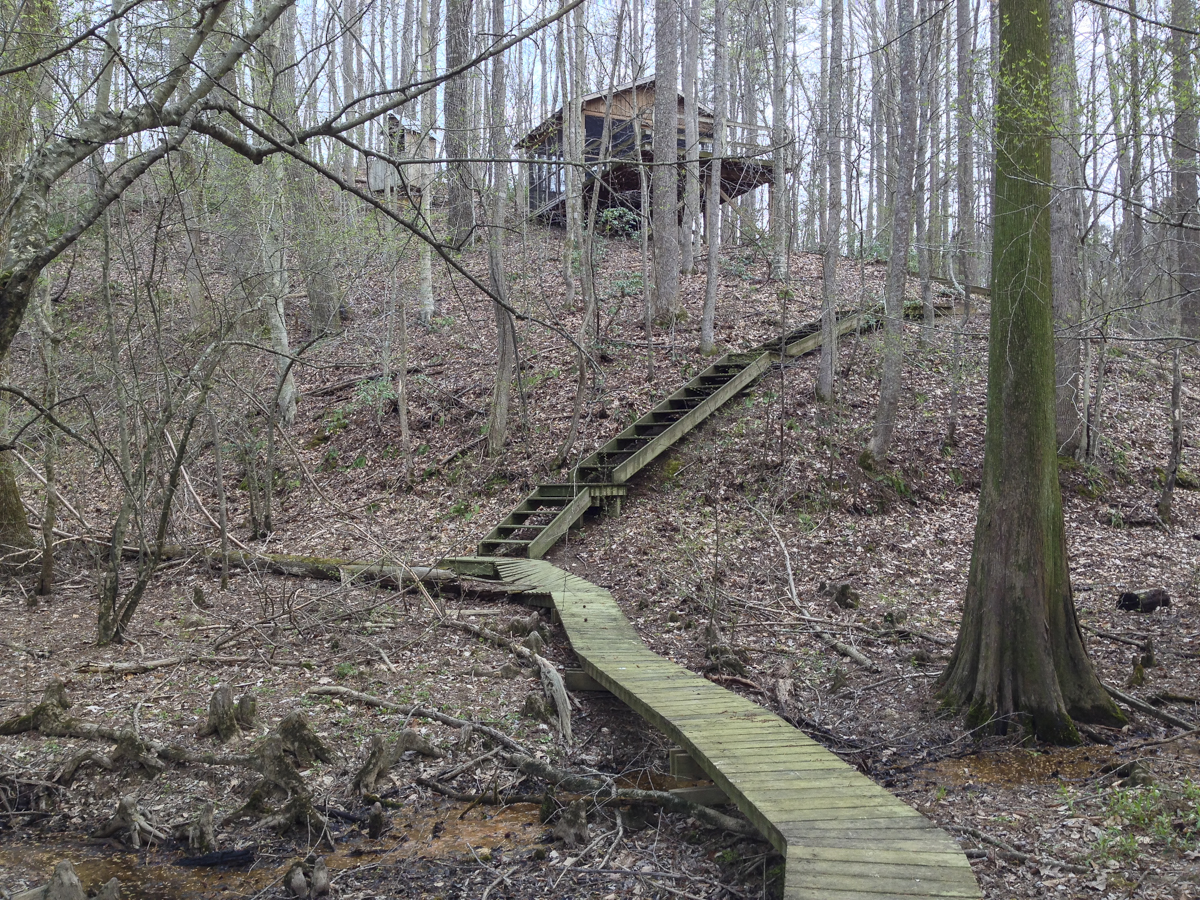
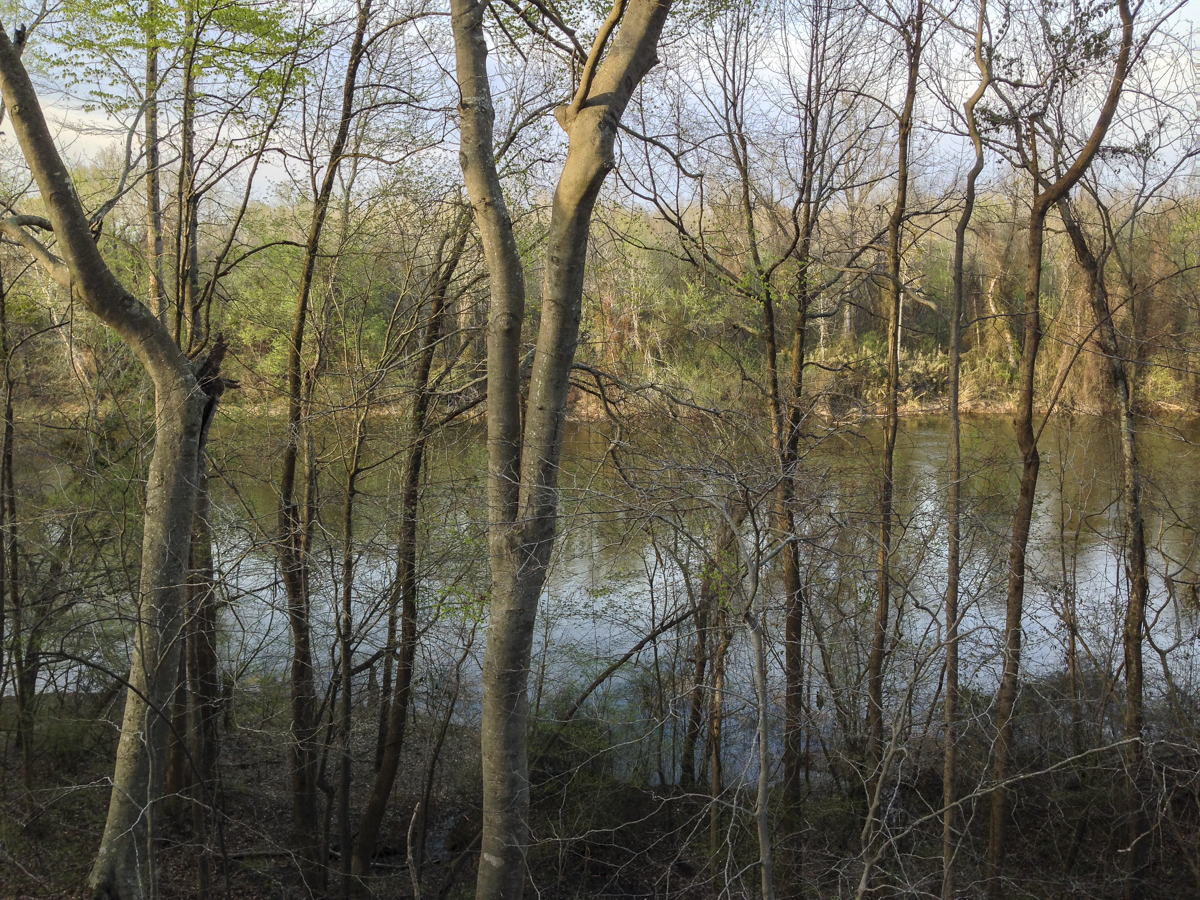
The first night was spent in one of the more terrestrial of the platforms – The Bluff. It is one of the few with a screened in area and a pit toilet (platforms in the swamp require that you bring your own latrine). It is, indeed, on a buff overlooking the river. That first afternoon, we saw some of the first hints of Spring in the swamp – Northern Parula and Yellow-throated Warblers searching for insects in the treetops, flower buds on Dwarf Pawpaw trees, and my first snakes of the season – a large Black Rat Snake, and a true denizen of the swamp, a Cottonmouth.
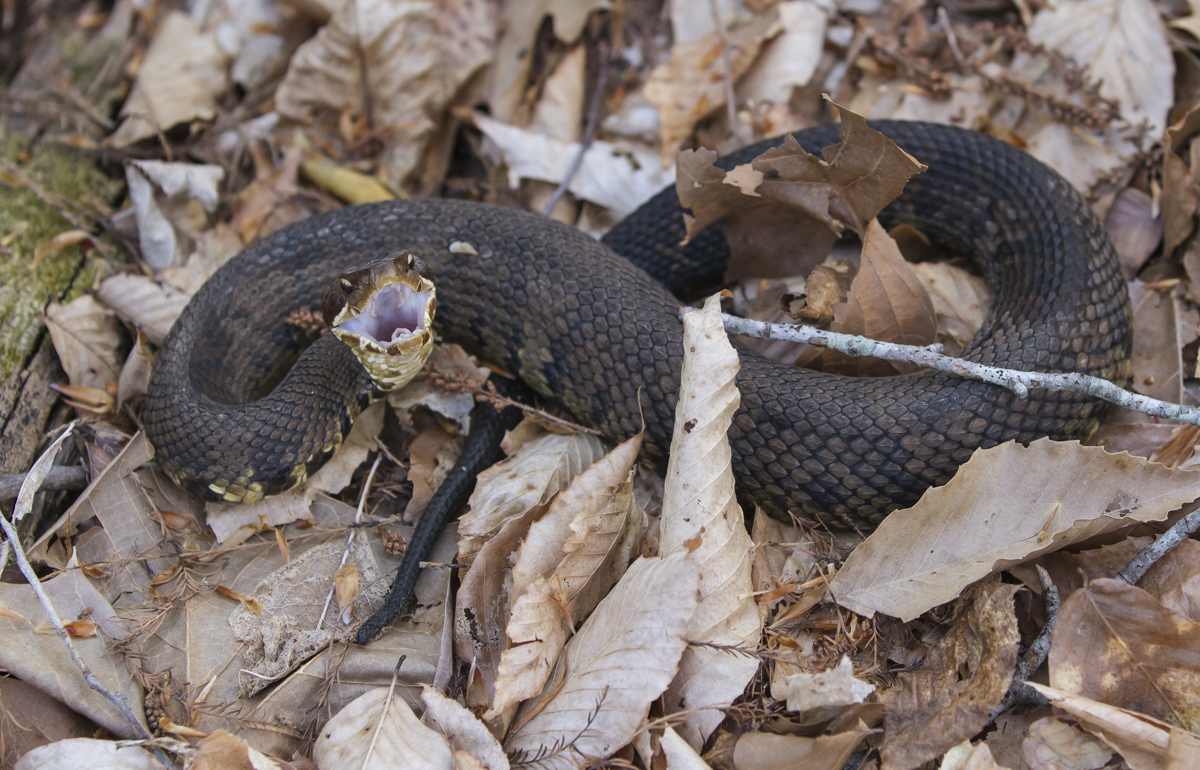
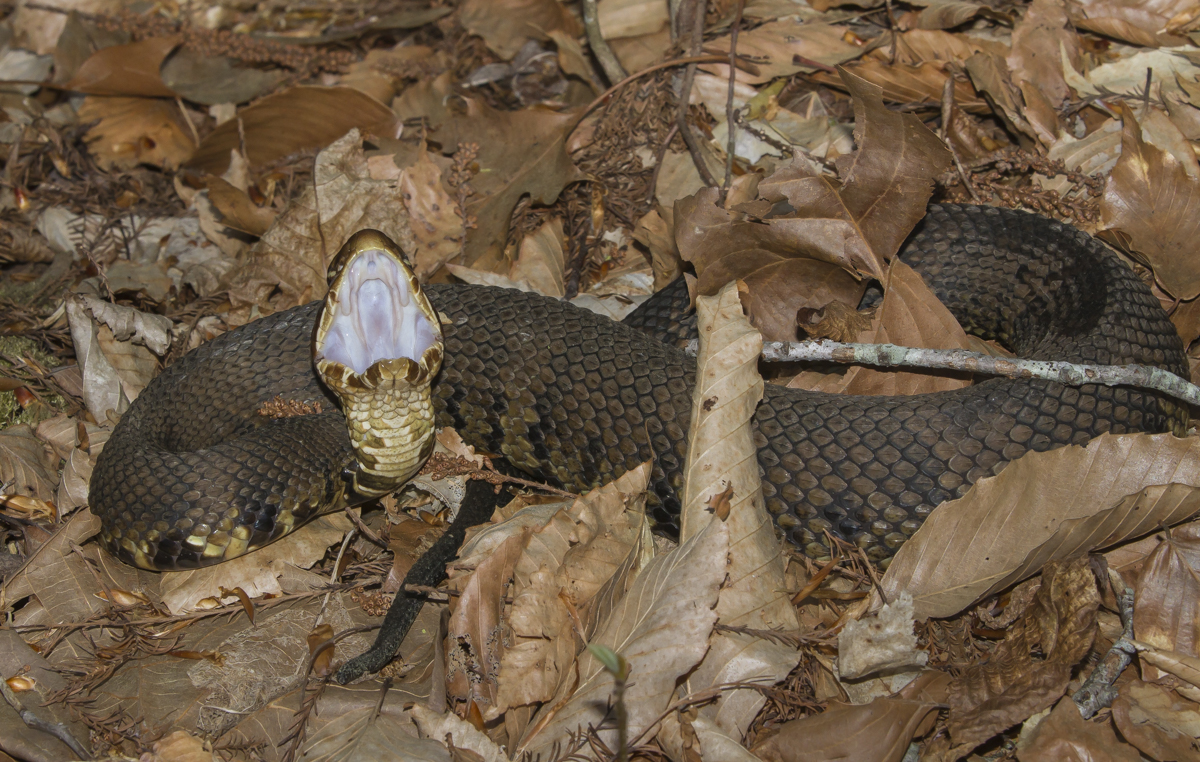
Cottonmouth showing why it is so named
We encountered the Cottonmouth while walking over to get a closer view of an Eastern Screech Owl in a cavity in one of the large American Beech trees that dotted the slopes along the river. Cottonmouths typically display a threat posture of raising their head and gaping their mouth, showing the white insides, a very effective means of letting you know that they are there, and to not bother them.
How a Cottonmouth poses for its picture
Since I did not have any of my telephoto lenses on this trip, a picture of the owl or warblers was out of the question, but the snake was more than cooperative for a few snapshots.
Sunset along the Roanoke
It turned out to be a beautiful afternoon and a great place to relax and listen to the sounds of the river forest. Other wildlife sightings included a pair of Wood Ducks, undoubtedly nesting in one of the abundant tree cavities, another red phase Eastern Screech Owl the next morning (two were visible in separate tree cavities), a Wild Turkey, and several Pileated Woodpeckers drumming and investigating possible nest or roost sites.
The next day we made a special trip to Creswell to dine at one of my favorite local restaurants, the Main Street Eatery, for the last time. My friend, Sharon Maitland, reluctantly closed the doors to this jewel of a place this weekend. She and her staff have been an oasis of good food and warm smiles for me and my clients these past two years and will be sorely missed. I was happy to get the chance to dine there one last time and thank her for providing a touch of class for my winter outings to the nearby refuges.
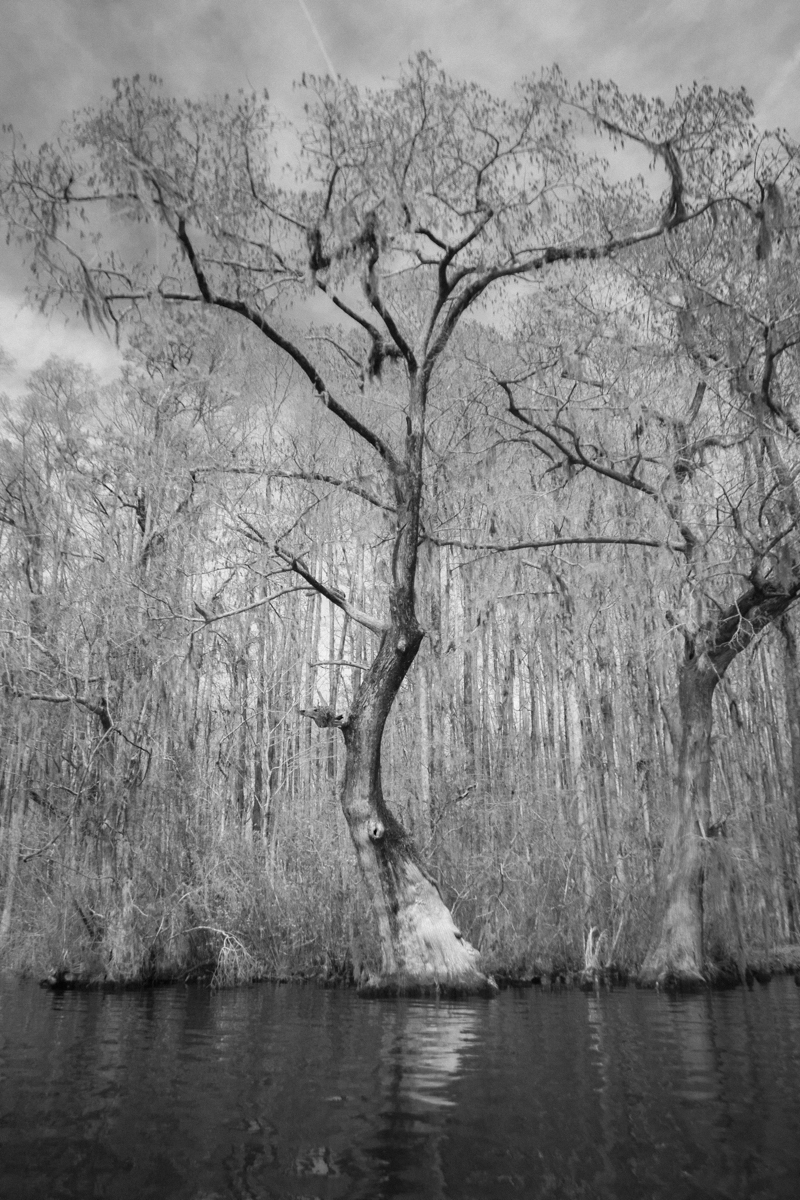
Bald Cypress along Conaby Creek
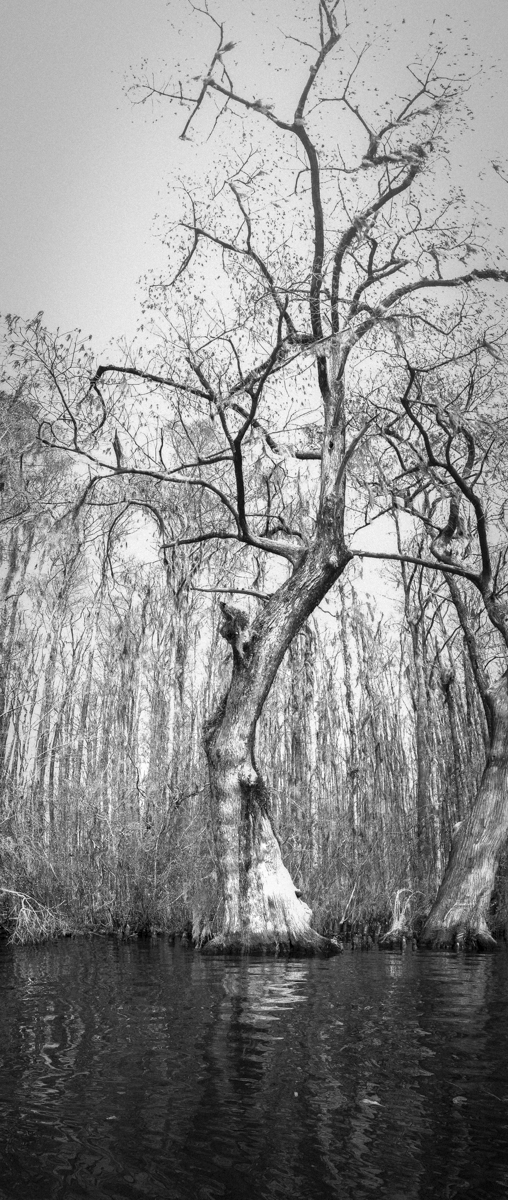
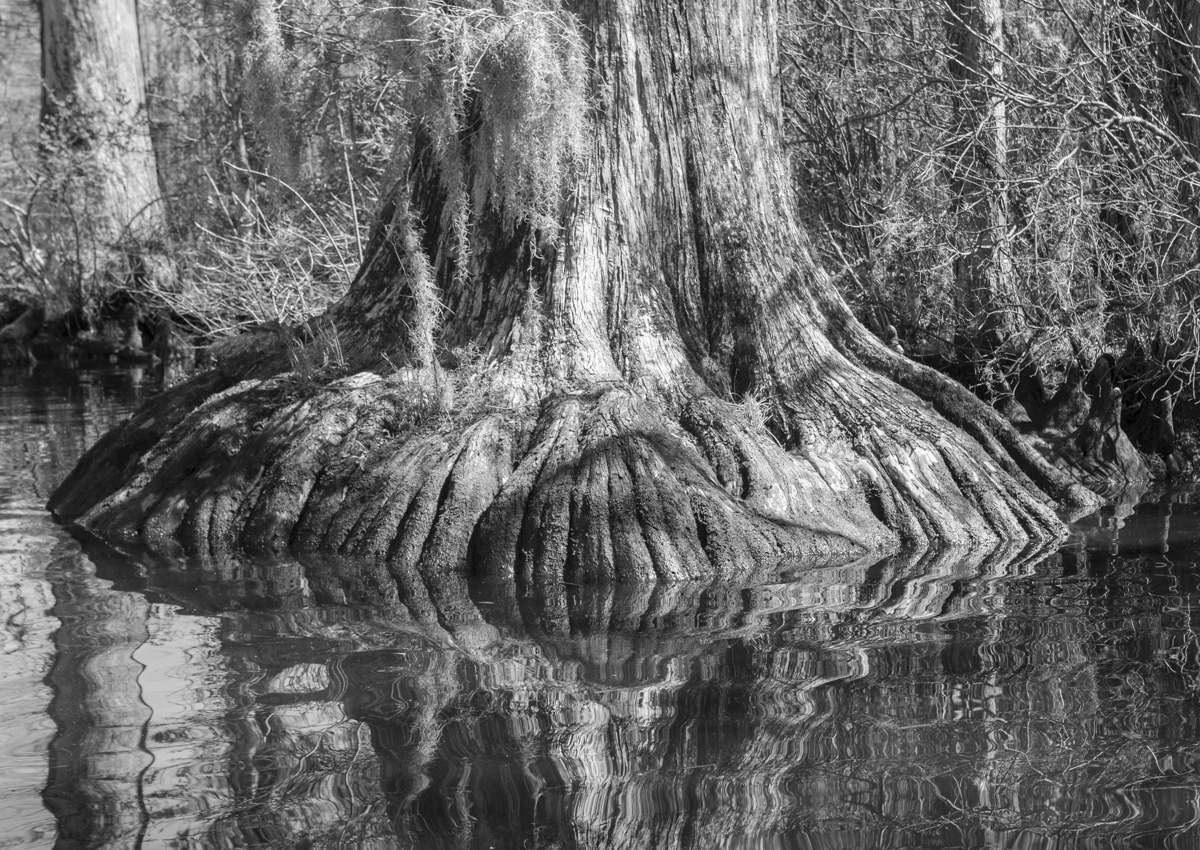
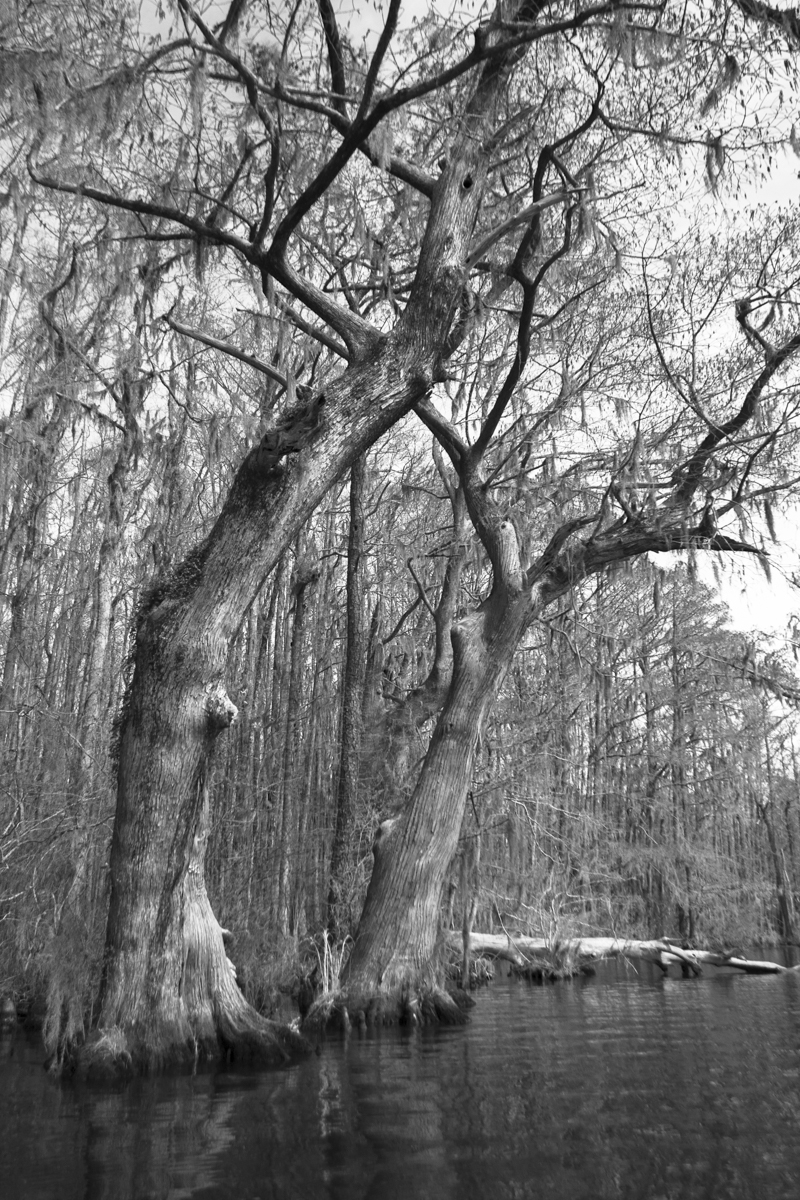
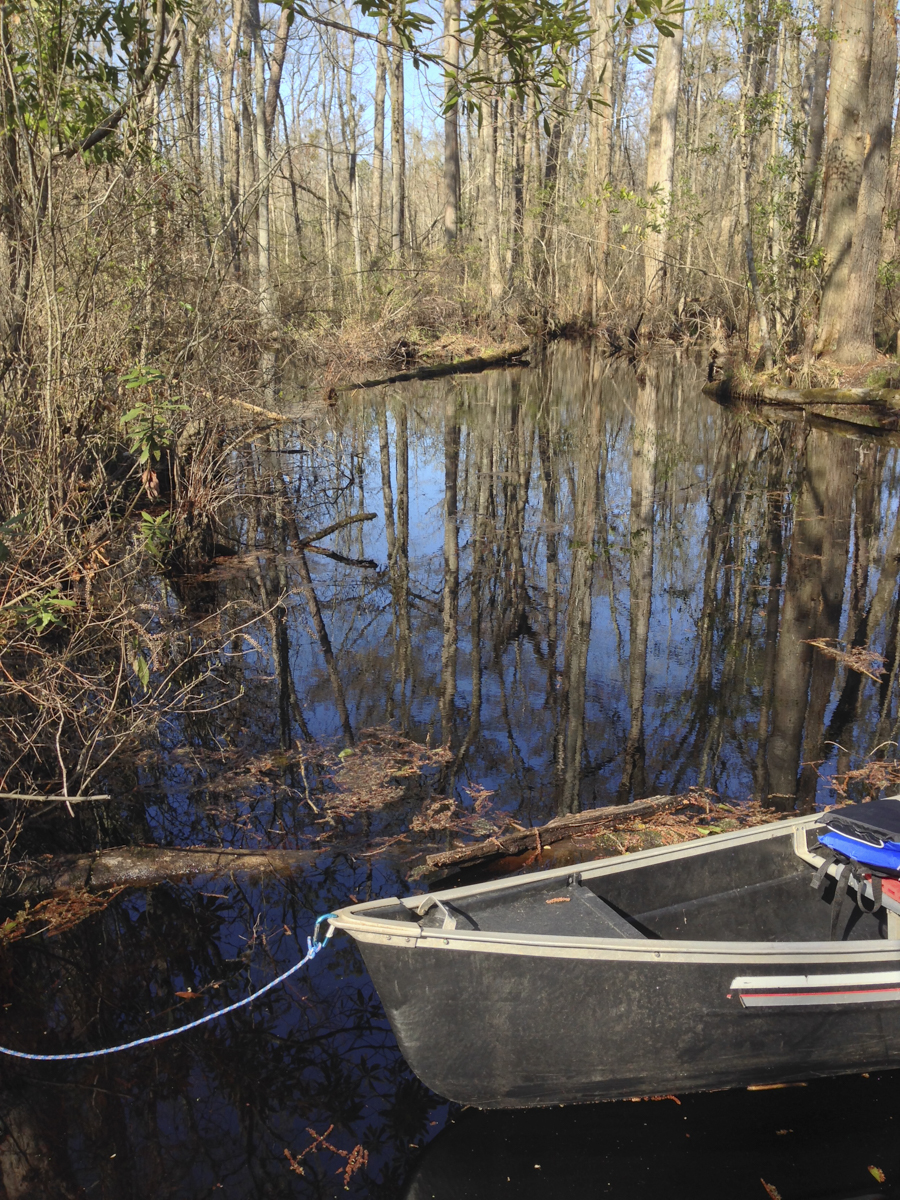
After lunch, we put in at Conaby Creek ,just north of Plymouth, and began the short paddle out to the next platform. While most of the swamp was timbered decades ago, there are remnant Bald Cypress trees along the banks that give you a glimpse of what it must have been like two hundred years ago. The huge trunks reach skyward, many draped in Spanish Moss, some with giant branches covered in Resurrection Fern. Looking at them in black and white seems a fitting way to honor their presence as guardians of the swamp over the centuries.
Bald Cypress trunks may appear as delicate brush strokes in the swamp scene……reaching above the surrounding trees……or as massive anchors, holding the swamp in place.They seem to embrace the swamp and invite you in…
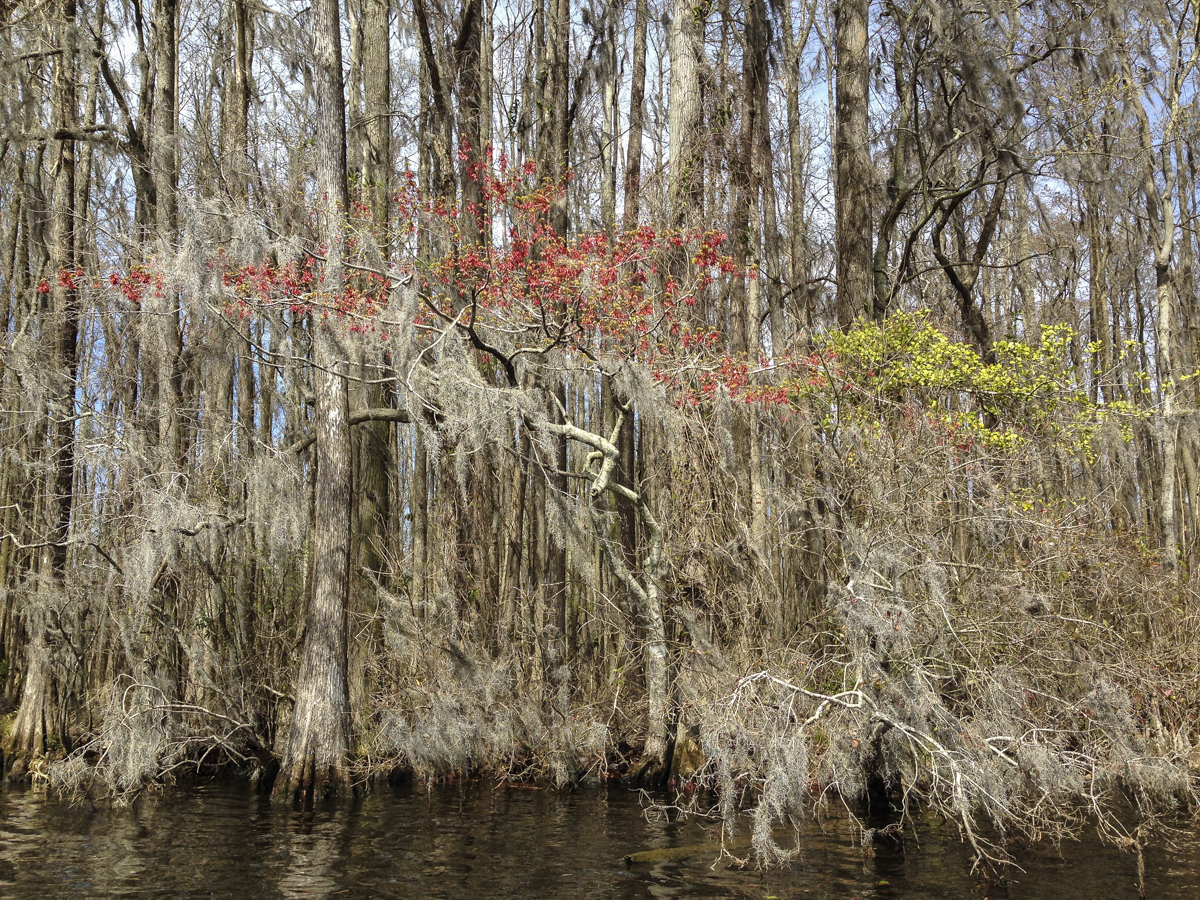
While the ancient trees speak to us in neutral tones, the swamp itself is coming alive with color.
Spring colors in the swamp
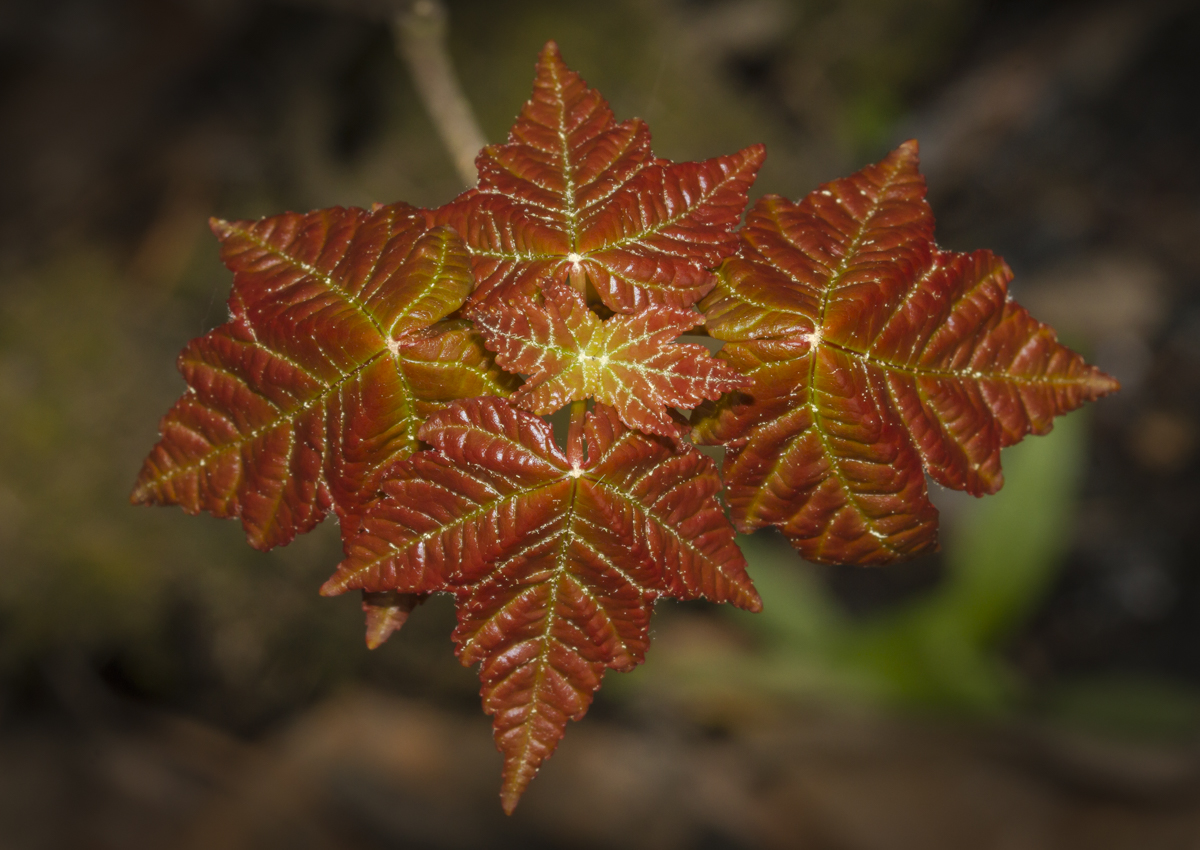
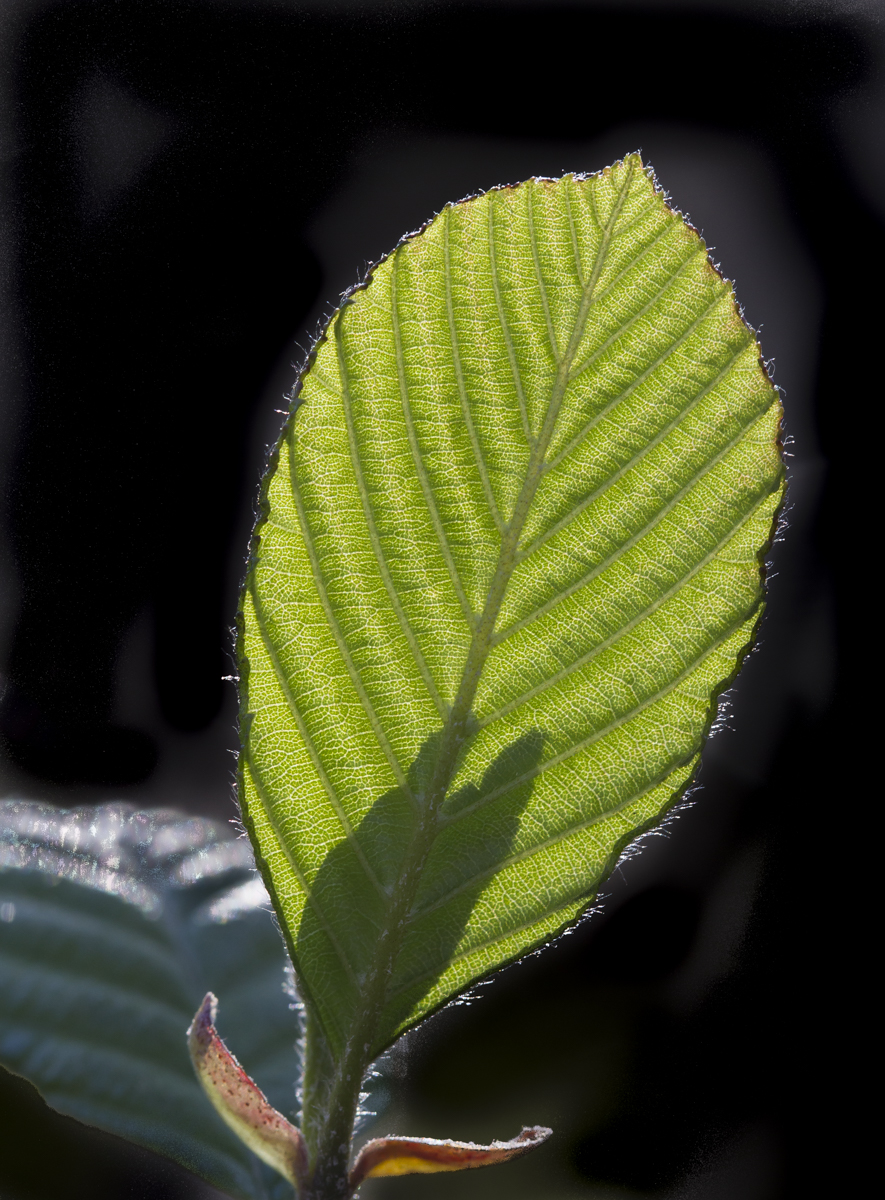
When we arrived at the platform, I took a few moments to appreciate the colors and patterns of the awakening plants…
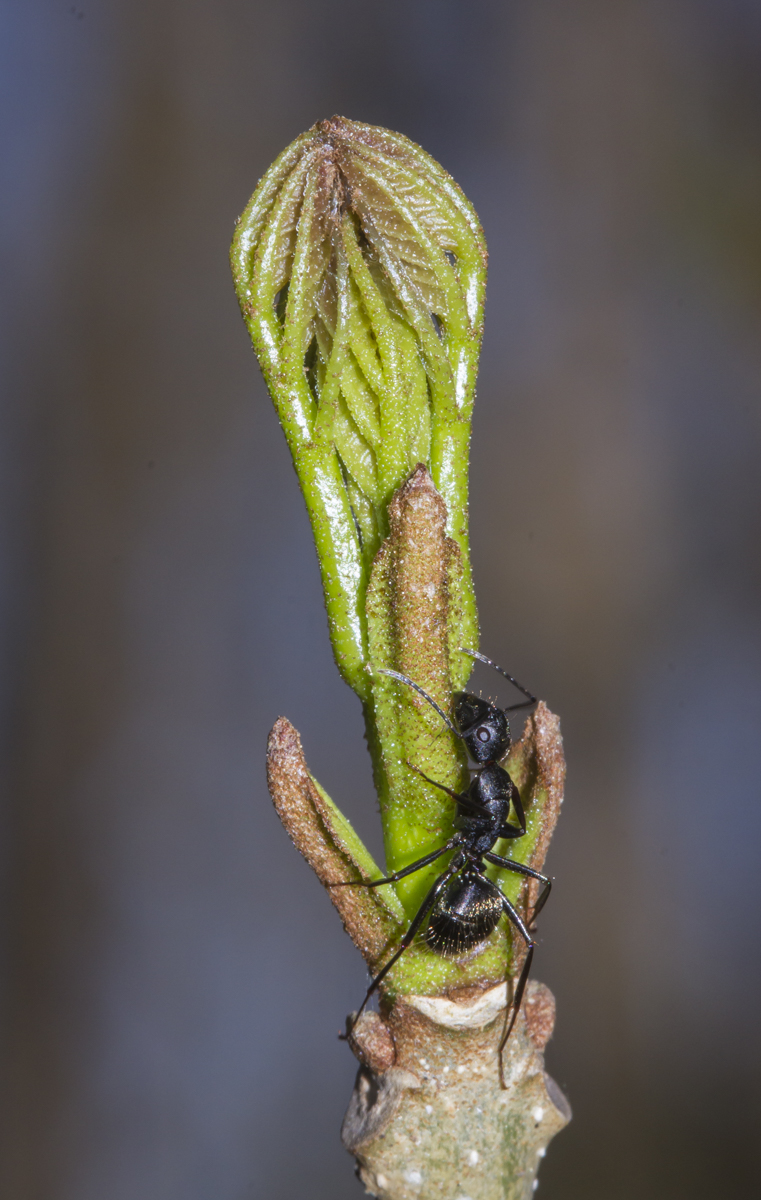
Ash bud beginning to open accompanied by a Carpenter Ant seeking foodMaple leaves openingTag Alder leaf backlit in the setting sun
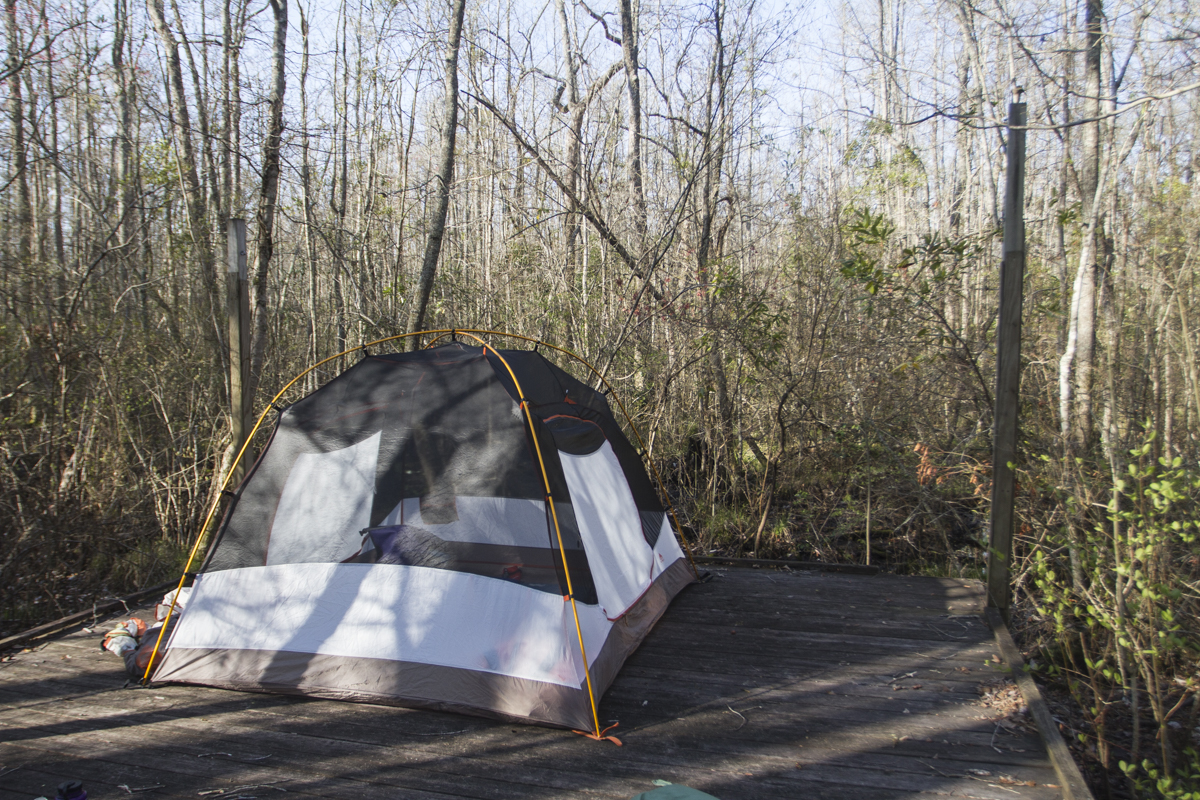
When we arrived at the platform, one thing became very apparent – the website had meant what it said…Black Bears are known to visit this platform/area often. Campers should be prepared for a potential bear encounter. All of the posts on the platform had been chewed by bears, and a couple of nearby Sweet Gum trees had the bark ripped off by bears seeking the sweet sap as I have so often seen in the woods of Pungo.
Royal Fern camping platform
Now, readers of this blog know that I like bears, but the amount of bear sign here was a little disconcerting to be honest. But, we did what you do in bear country and put our food and toiletries in bags strung in the trees, and I had brought bear spray, just in case.
Serenity in the swamp
It turned out to be a spectacular afternoon and night in the swamp with no bear encounters. There is a Bald Eagle nest a couple of hundred yards away from the platform, and we saw and heard a couple flying above the towering Bald Cypress trees that surrounded us. As a brilliant moon rose, we were serenaded by a chorus of snoring Pickerel Frogs and all three of our common owls (Great Horned, Barred, and Eastern Screech). The next morning, a trio of Red-shouldered Hawks put on an impressive display of aerial acrobatics, while warblers (including my first Prothonotary of the season) moved through the cypress branches overhead.
I know many of you are probably stuck on the image of the Cottonmouth and the possibility of bears in the swamp and are thinking, no way… but I have not seen that many Cottonmouths and no bears on my years of paddling the Roanoke. And, trust me, there is nothing like camping on these platforms to really get away from your usual hectic lifestyle. I have camped out there many times and have always come away wanting to spend more time in these magical places. It is well worth the trip.