• Everglades

    Posted by

    There are no other Everglades in the world. They are, they have always been, one of the unique regions of the earth, remote, never wholly known.

    ~Marjory Stoneman Douglas, author of The Everglades: River of Grass, 1947

    Sitting by the fire yesterday afternoon, I can hardly believe I spent last week in the Florida heat and humidity, in one of the most extensive wild places I have ever been – Everglades National Park. Years ago, I drove across the state on I-75 (aka Alligator Alley) going from Miami to Tampa Bay, but I had never been in the park. So, it didn’t take much convincing when a group of friends asked if I wanted to join them on a trip. After flying into Miami (and getting a bit lost trying to get out of the city), it is a relatively quick drive through extensive farm fields, of every imaginable type of crop, to the sudden transition to the park.

    anhinga trail
    The Anhinga Trail can be crowded, but still has great wildlife (click photos to enlarge)

    Our first must-see stop was the famed Anhinga Trail, on the east side of the park. It is not far from the entrance and is said to be one of the best places to see some of the park’s iconic wildlife up close and personal. And even though it was crowded with visitors (and, I am happy to report, several school groups), it did not disappoint.
    double-crested cormorant head
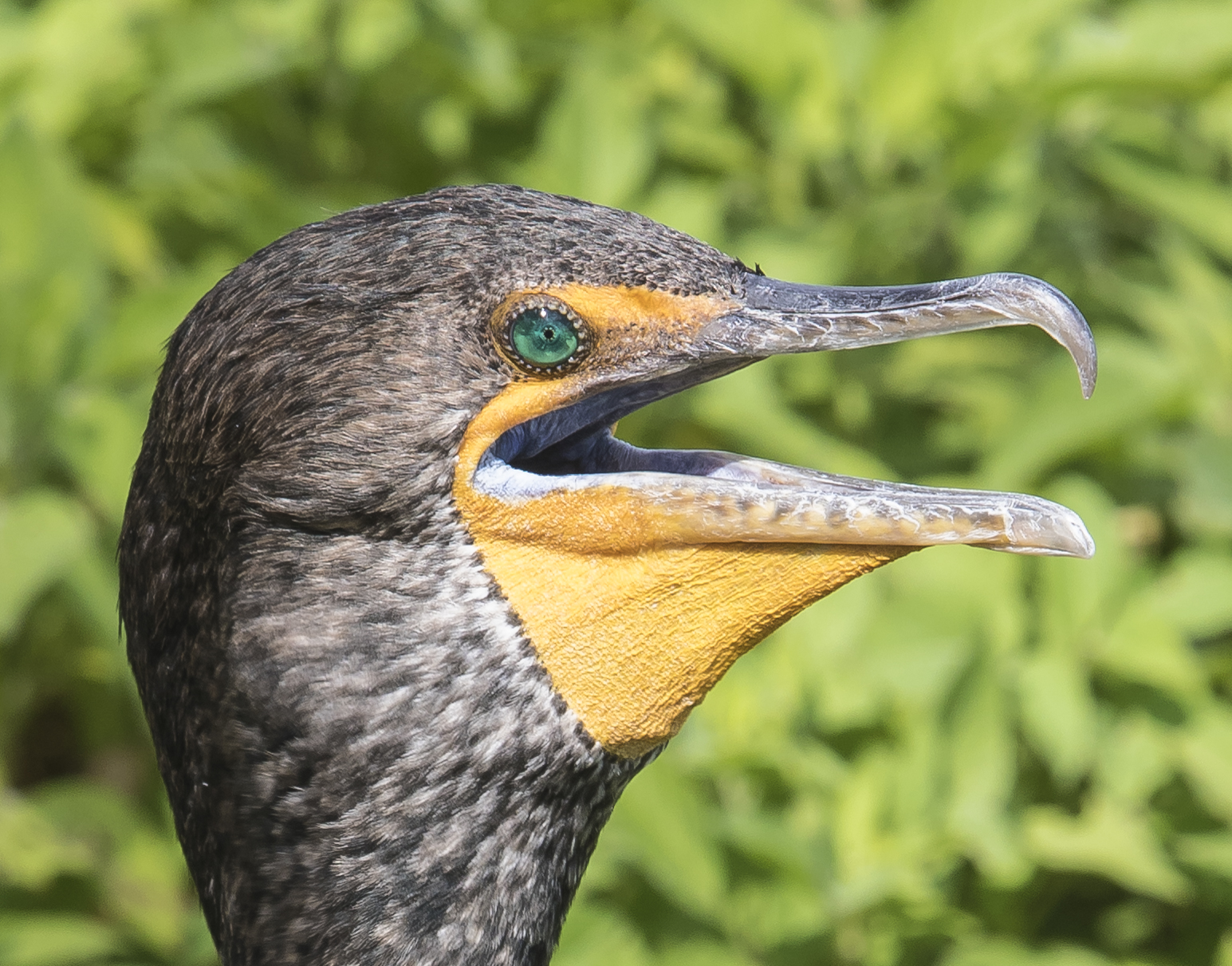
    Double-crested cormorant along the trail

    After spotting an alligator near the trail head, we walked by a double-crested cormorant, standing right next to the paved trail, and panting in the 80+ degree heat. I shot several close-up photos before moving on. I must admit, I always love seeing their emerald green eyes.
    double-crested cormorant feathers
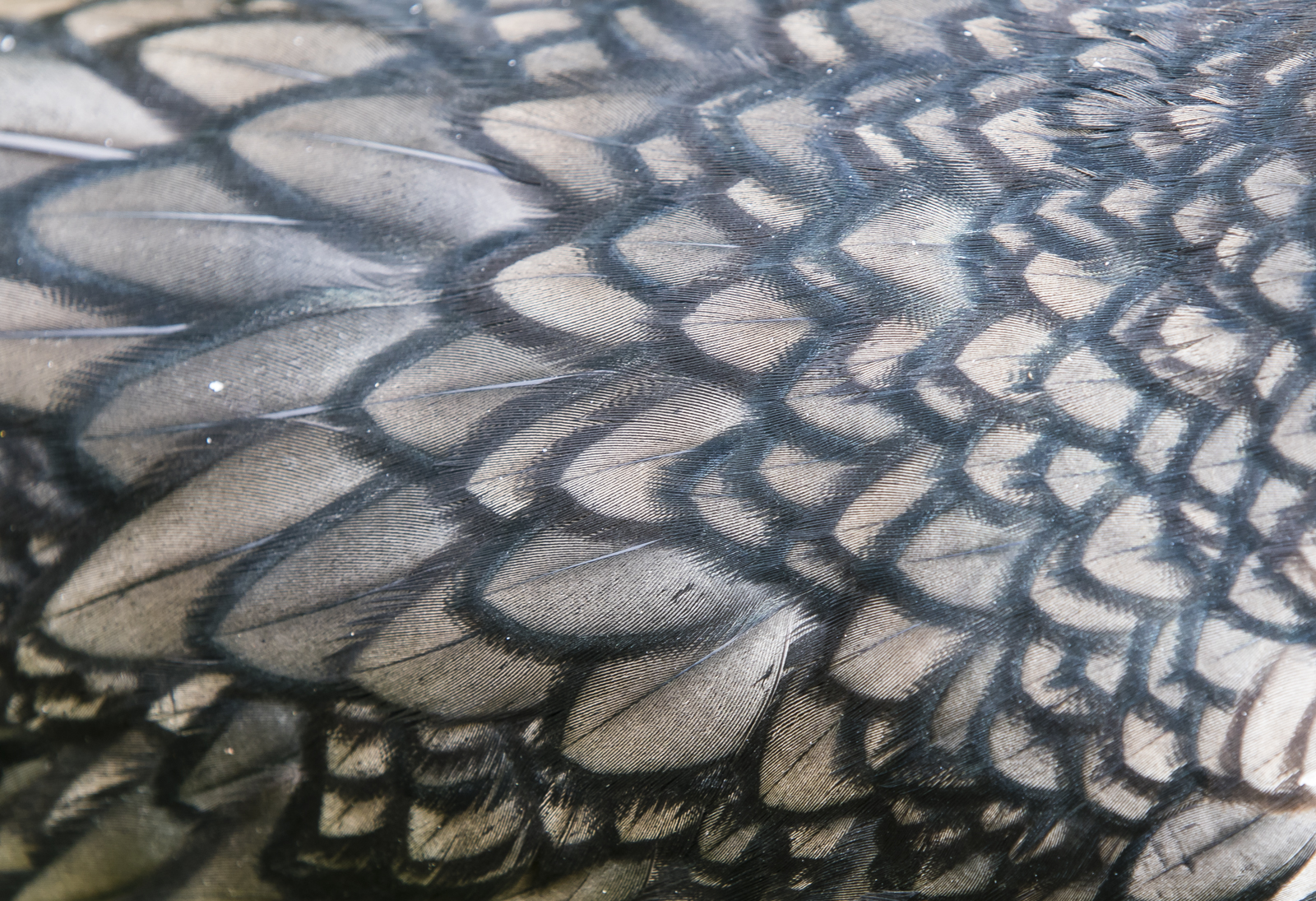
    Feather pattern on the cormorant

    This bird was so close to the trail, and seemingly so unafraid, that it also allowed me to appreciate the delicate feather pattern on its back.
    great egret head
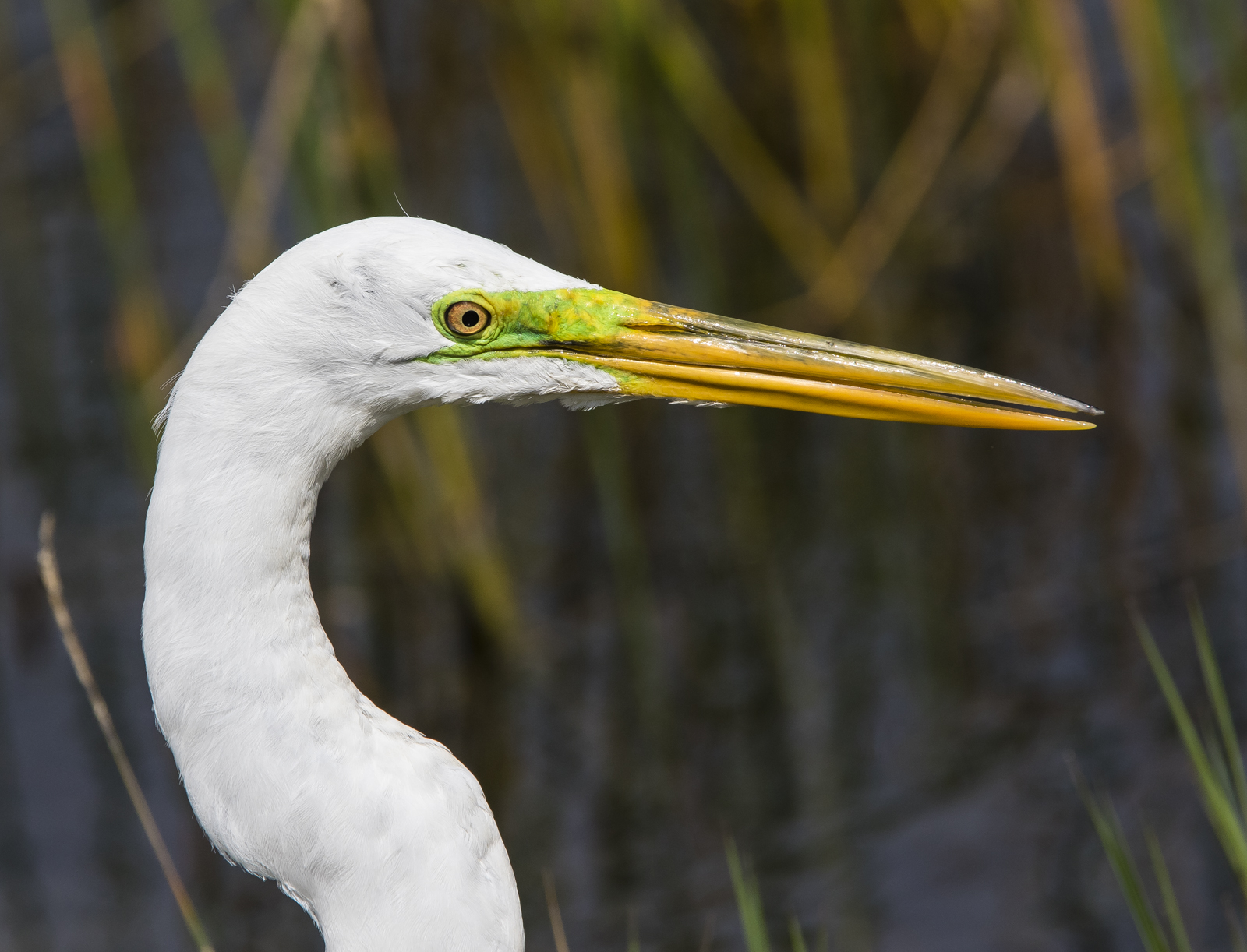
    Great egret hunting next to trail

    A few feet further along, a very tame great egret was  hunting in a culvert that passed under the paved trail and spearing small fish. This time of year is the start of their breeding season and these elegant birds undergo a dramatic color change on their face – the lores (the skin between the eye and bill) turns from the usual yellow to a chartreuse green, and the bill changes from yellow to blackish-orange. They also develop long nuptial plumes, called aigrettes. These elegant feathers almost led to the extinction of egrets by plume-hunting in the early 20th century, when the feathers were used to adorn ladies’ hats. Luckily, conservation efforts helped stop the demand and the birds have recovered over much of their range.
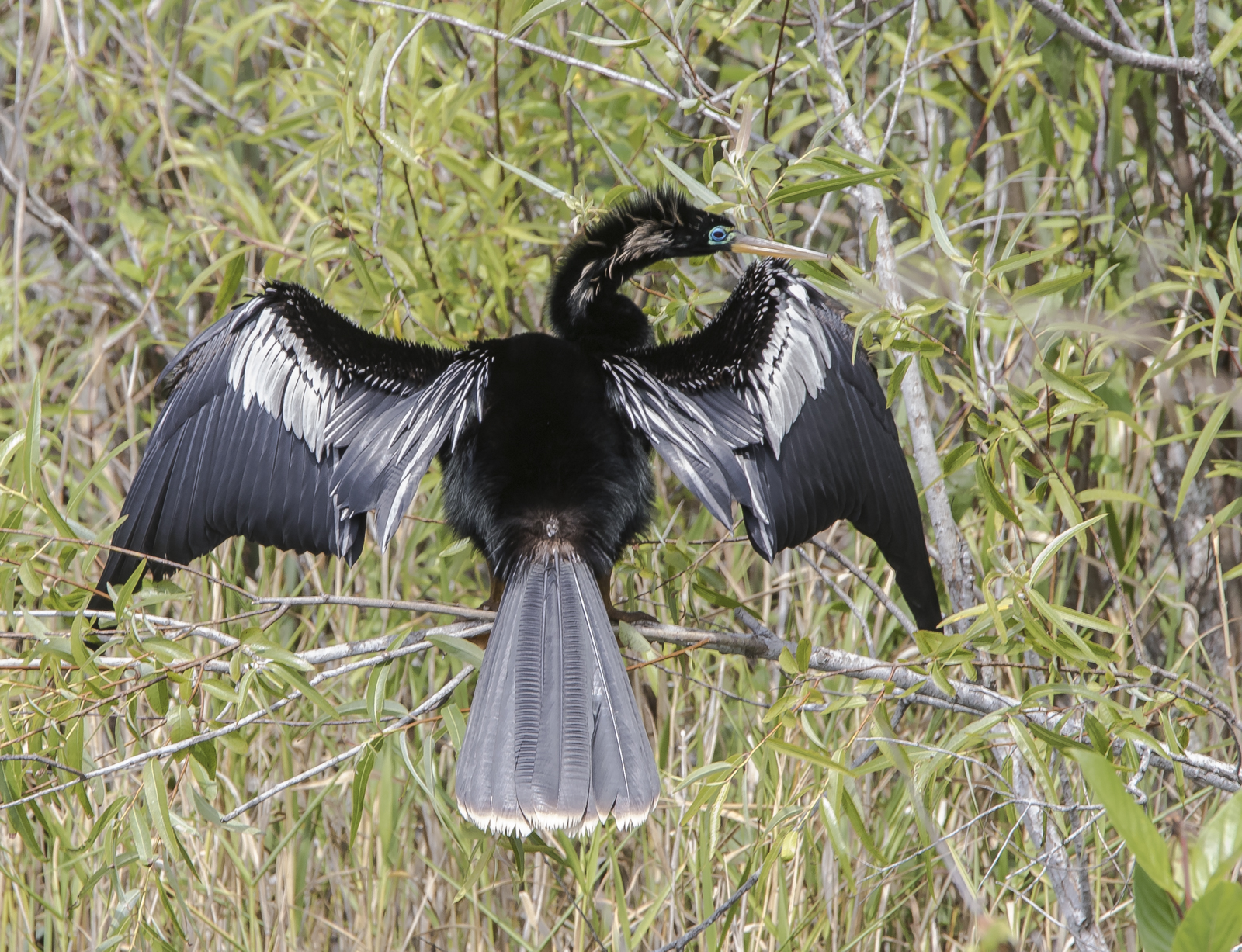
    anhinga with wings spread
    An anhinga, with wings spread, along the boardwalk

    Walking out on one of the boardwalk sections, we spied numerous green herons, some more alligators, and the trail’s namesake, an anhinga.  Anhingas are oddly beautiful birds that go by other names such as water turkey (their tail does resemble that of a wild turkey) and snake bird (for their habit of swimming with just their neck and head above water). This wing spreading behavior is to allow them to dry their feathers after swimming for their favorite prey, fish. Anhingas and cormorants are primitive birds that lack the oil glands to waterproof their feathers that other water-loving birds possess. During the breeding season, the skin around their eyes turns a bright blue.

    halloween pennant
    Halloween pennant

    Probably the most common flier we saw was not a bird, but a species of dragonfly, the Halloween pennant. It is easily recognized by its distinctive wing colors – orange with dark splotches and bands. It is often seen perched atop vegetation, swaying in the wind.
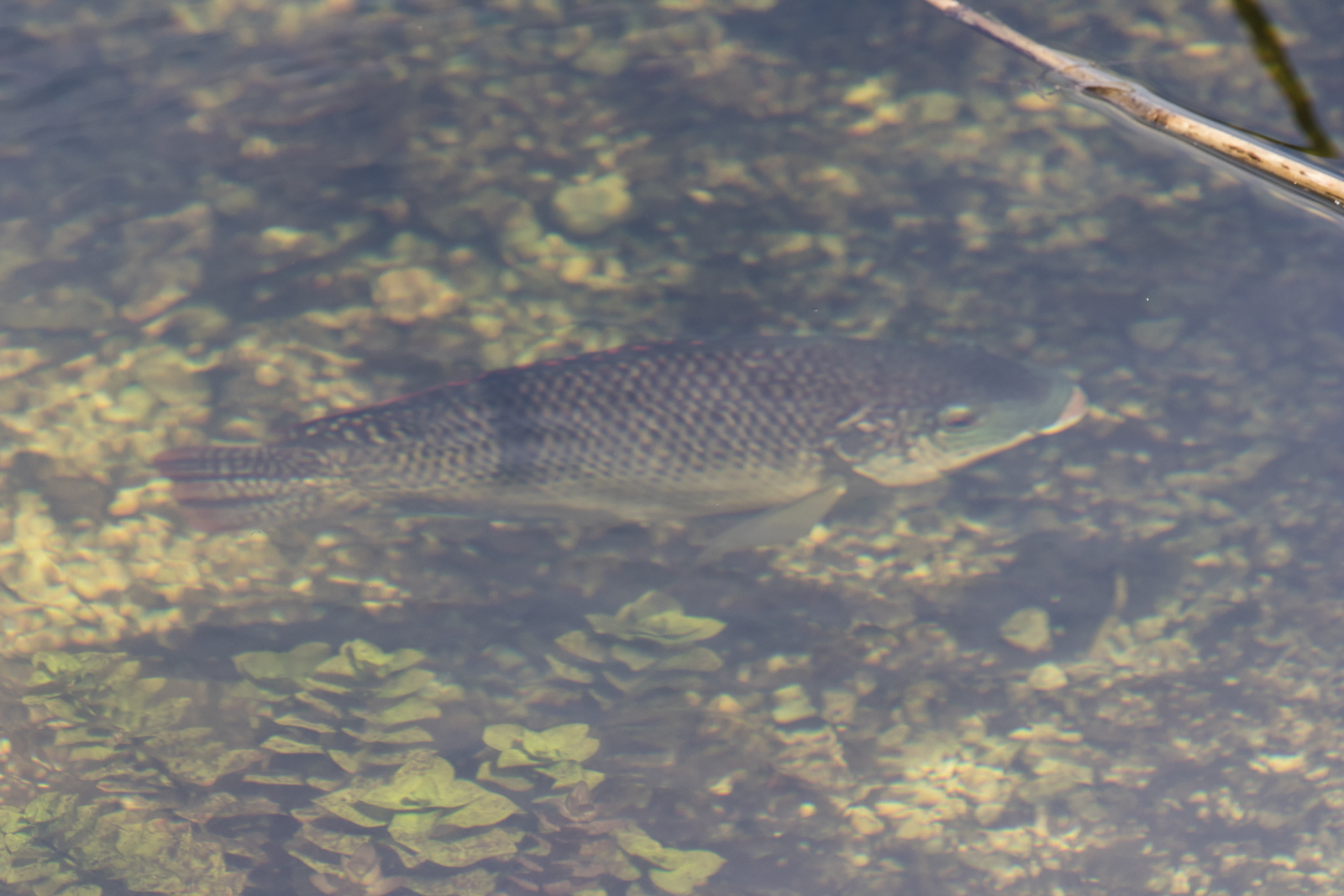
    blue tilapia
    Blue tilapia

    The clear water allowed us to see many species of fish along the canals and pools throughout the park. At the Anhinga Trail, one of the most common was baffling at first. It turned out to be an introduced exotic, the blue tilapia, native to Africa and the Middle East. These fish were everywhere in the canals and their large excavated nests were clearly visible in the dark water. South Florida is, unfortunately,  a haven for all sorts of exotic plant and animal species. A few native fish species are also very abundant and easily observed including largemouth bass, various species of sunfish, and Florida gar.

    strangler fig
    Strangler fig

    While many of the birds and other wildlife are species that I found familiar, many of the plant species in this portion of the park are more tropical in origin, but were vaguely familiar from my museum trips to Belize years ago. One we saw throughout our travels is the bizarre strangler fig, Ficus aurea. The life cycle starts when a bird or other animal eats the fig fruit and deposits the sticky seed on the trunk of another tree. The fig often begins as an epiphyte, but soon sends roots twining down the trunk of its host to reach the soil. It then grows to the top of the host, sends down aerial roots, and leafs out in the crown of the tree, shading out the leaves of the host plant. The fig continues to develop its crown and root system, often completely enveloping, and eventually killing, the host tree.
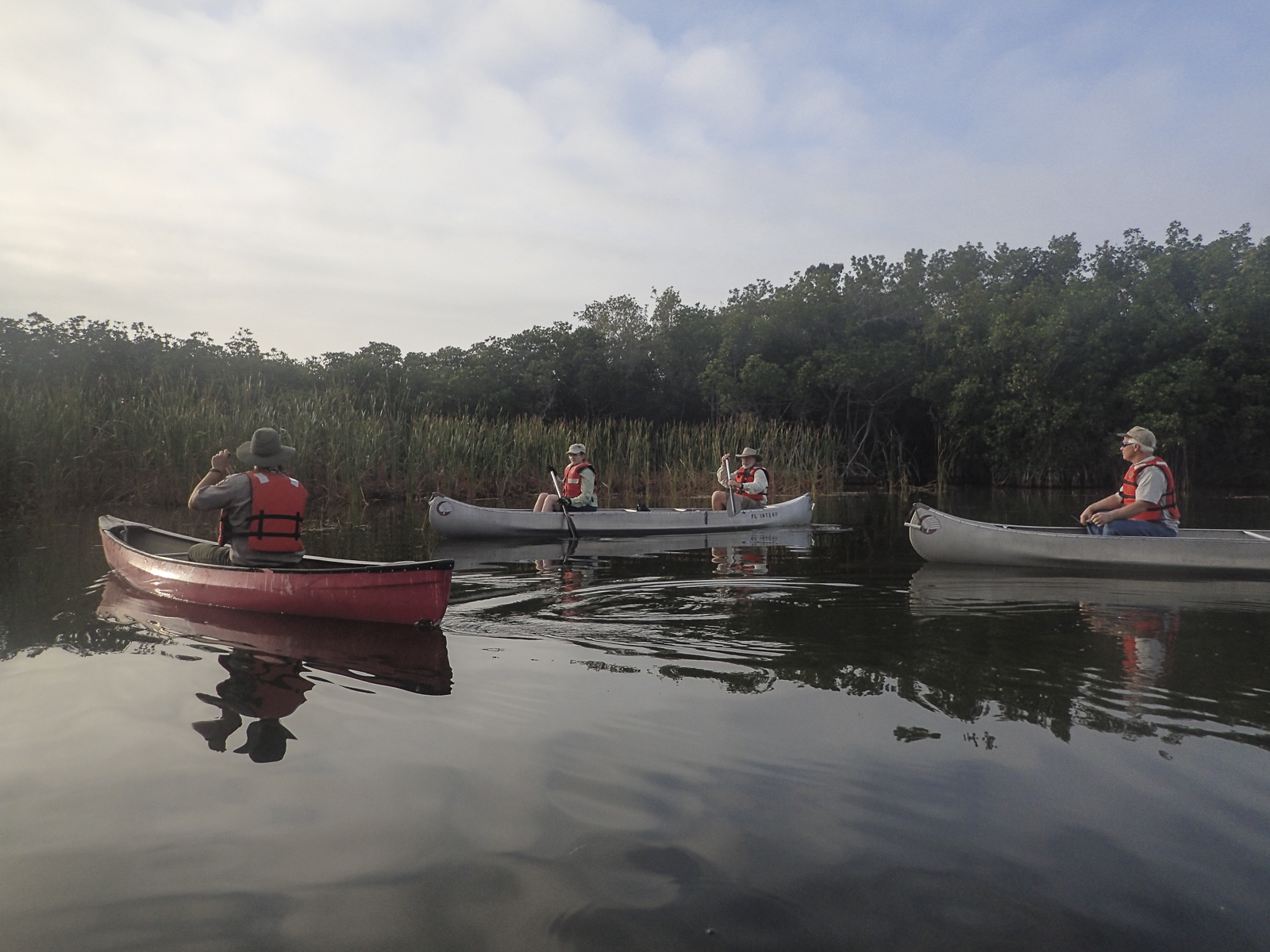
    morning canoe trip

    On our second morning, I had arranged a ranger-led canoe trip at Nine Mile Pond. We had 6 canoes, plus the ranger, on a 4 hour paddle through mangrove tunnels and marshes.

    nine mile pond 2
    Mangroves and marshes along the paddle trail

    We started with a fantastic sunrise and enjoyed numerous alligator sightings, a gentle breeze that helped with the rising heat, and blue skies punctuated by white puffy clouds.

    nine mile pond alligator
    Another alligator gives us the eye

    The highlight for me was some serious alligator bellowing at one of our stopping points. It is the start of the gator breeding season and the big bulls bellow to attract a mate. It is one of the most impressive wild sounds in the southeast, reminding me of a roar of a lion or a bison bull.
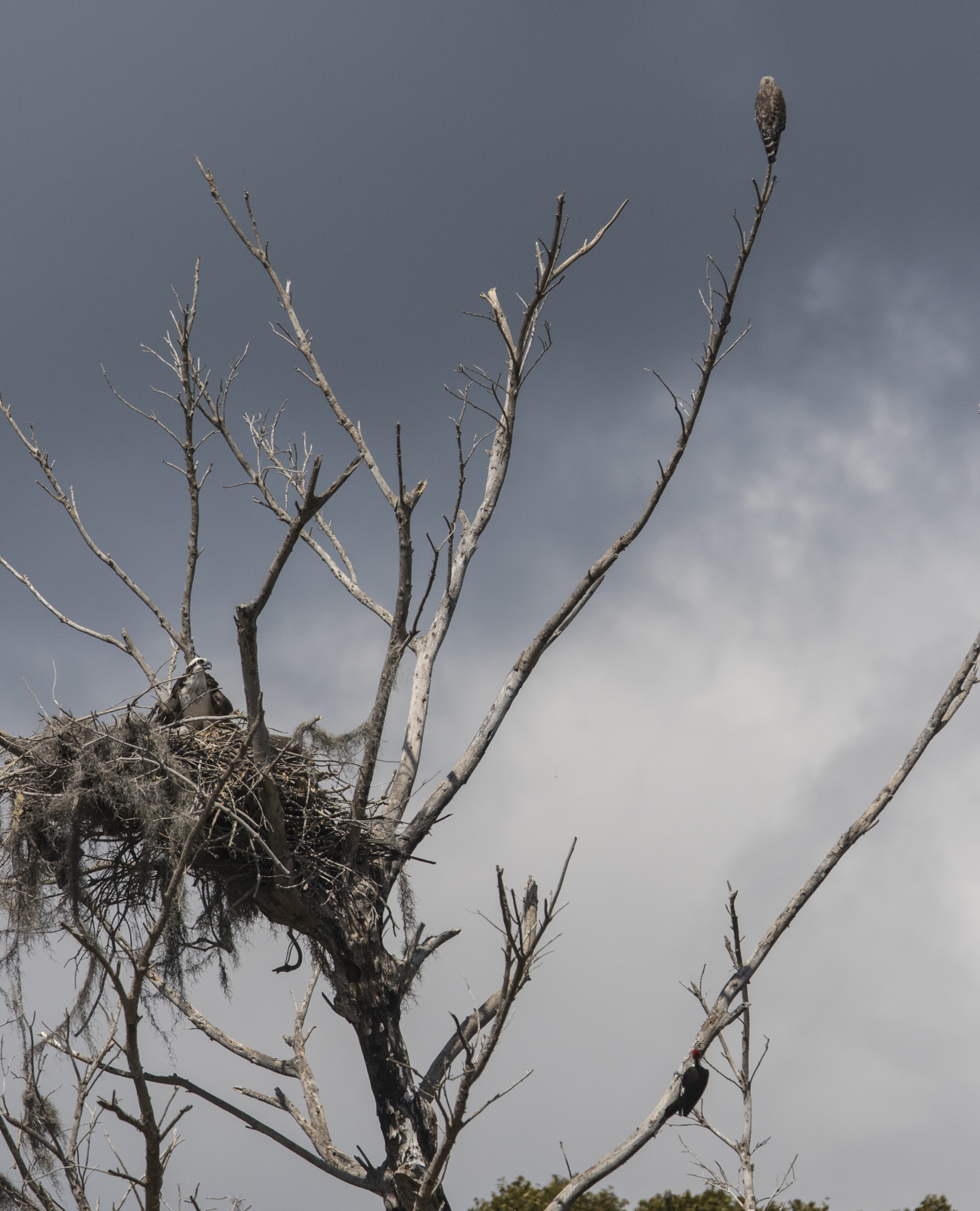
    birds at Flamingo
    Can you find and identify the three bird species in this tree?

    The road through this section of the park ends at Flamingo, a small enclave along Florida Bay with a marina, visitor center, and cafe. We spent time here on both of our first two days, enjoying the breeze and the abundant bird life.  Osprey nests dotted the trees, mangrove islands, and man-made towers. At one point there were three great bird species in a tree near the parking lot – an osprey in its nest, a red-shouldered hawk, and a pileated woodpecker.  Out in the Bay, we spotted American white pelicans, white ibis, brown pelicans, black skimmers, and numerous gulls, terns, and shorebirds. And, on a stroll to the marina (without my camera, unfortunately), we had great views of a huge American crocodile (this is the best place in the park to see this rare reptile) and four manatees. Needless to say, Flamingo is well worth the drive.
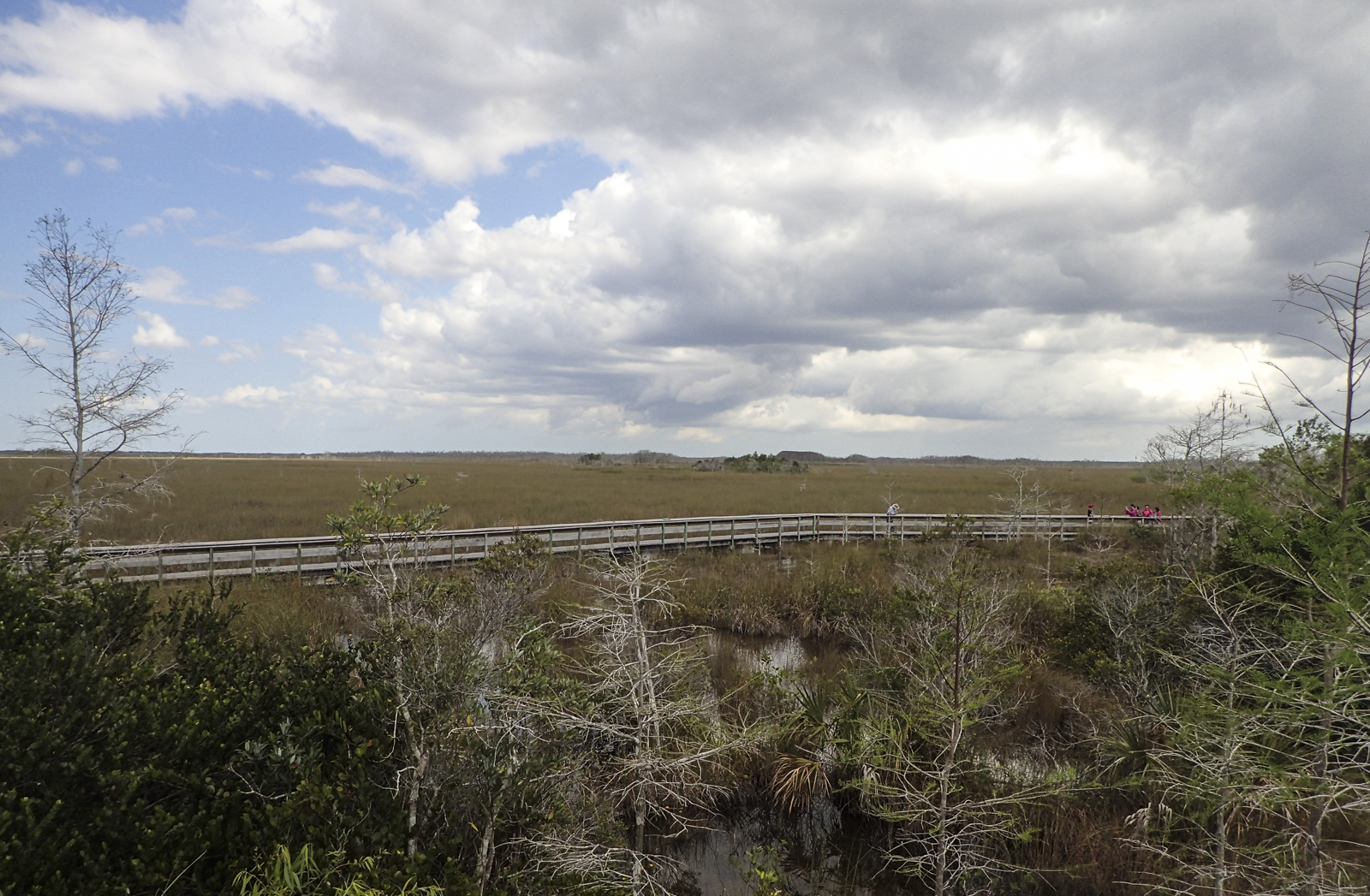
    boardwalk at Pa-hay-okee
    Vast saw grass prairie at Pa-Hay-Okee boardwalk

    When I started planning the trip, I bought a copy of Exploring Everglades National Park and the Surrounding Area (A Falcon Guide), and it proved a valuable asset in choosing which of the many trails and boardwalks to visit in our brief stay. One of the highly recommended stops is the Pa-Hay-Okee Trail. The name is derived from a Seminole word meaning “much grass in water”, a reference to the vast saw grass prairies that make up much of this region. There is an elevated section to the boardwalk which gives an incredible view of the “river of grass” that is the lifeblood of the Everglades.
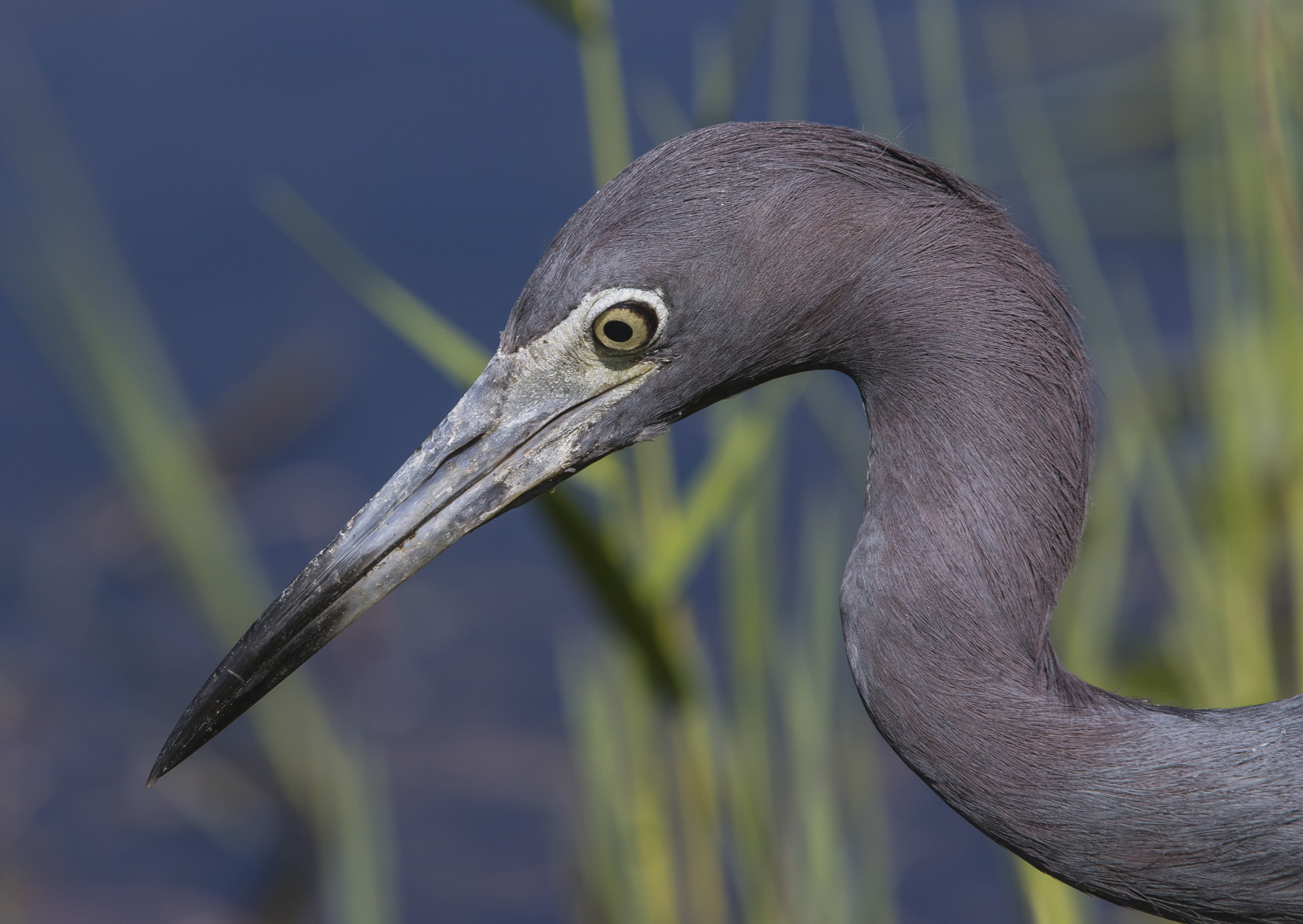
    little blue heron head
    Little blue heron up close

    Another must-see stop is Shark Valley. We arrived mid-morning and drove right in (there can be considerable wait times to get in on busy days – but you can drop your riders off and park along the main road outside the entrance and walk back in). There is a small visitor center, restrooms, a few picnic tables and a 15-mile paved trail  (accessible by walking, bicycling, or taking a concession-operated tram tour) through the saw grass prairie. Along the trail is a canal that retains water even in the dry season, concentrating wildlife such as alligators and wading birds, for easy viewing.  Even though this winter has been an unusually wet one, which has caused much of the wildlife to remain dispersed throughout the vast wetlands, there were still plenty of things to see as we walked a short distance along this easy path.  A little blue heron hunted patiently within a few feet of the walkway, periodically snapping up tiny fish and gulping them down. Several species of warblers and other songbirds were seen and heard in the thickets along the canal (especially the ubiquitous white-eyed vireo).

    Purple gallinule
    Purple gallinule

    And we finally caught a glimpse of one of the “specialty birds” of this trail, a purple gallinule. These brightly-colored members of the rail family feed on a variety of plant material and invertebrates. Their enormous feet are useful for clinging to shrubbery and walking on floating vegetation such as lily pads.
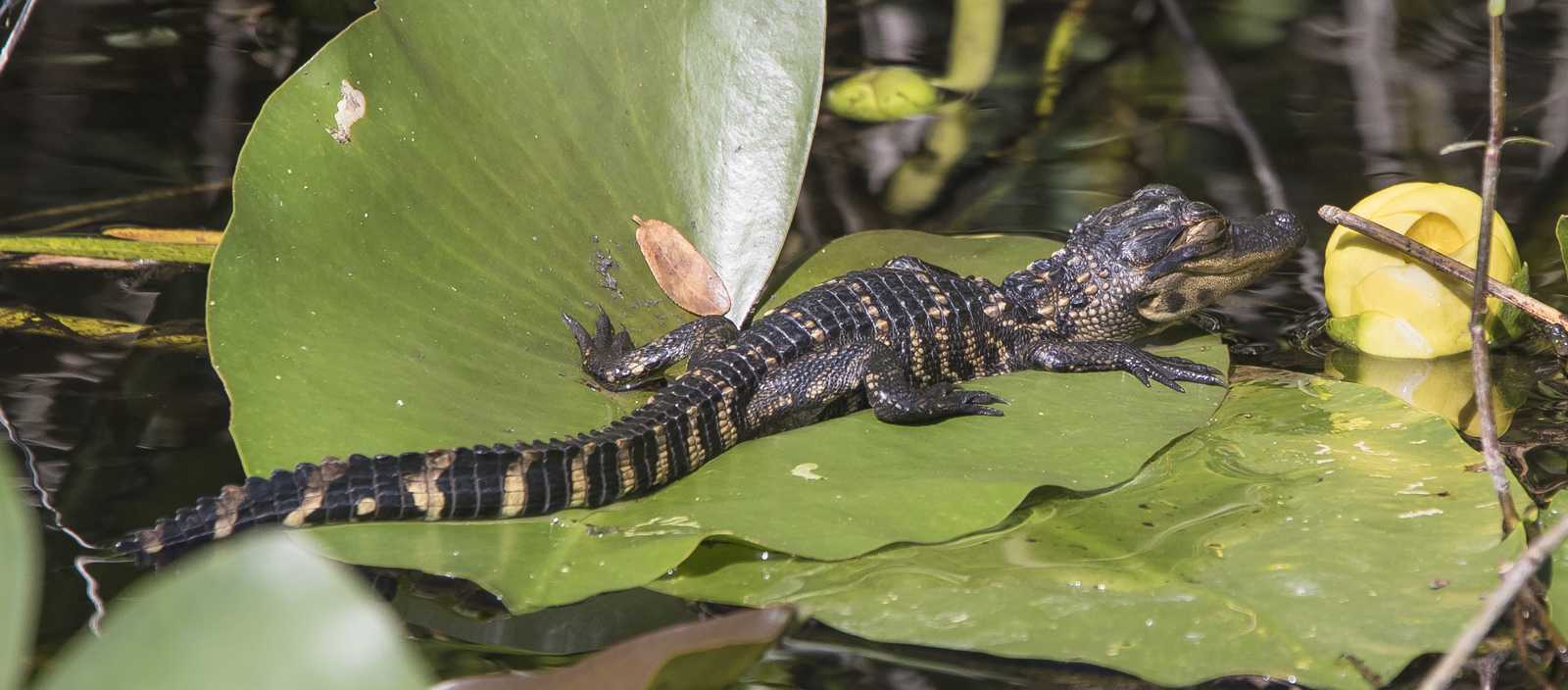
    baby alligator
    The first of many baby alligators we saw

    Alligators were all along the canal, and we even had several baby alligators sunning themselves on lily pads. One walked across the pavement, as people stopped and wondered where the usually protective mother gator might be hiding and watching her brood. After a brief stay at Shark Valley, we headed out of the park and to our next destination, Big Cypress National Preserve. I feel like I only scratched the surface of the Everglades experience. It is the third largest national park in the continental United States at 1.5 million acres and is one that lies just outside the major metropolitan areas of Miami and South Florida, and the huge agricultural lands that provide food for countless Americans. Even though the park represents a large portion of land, the ecosystem is highly altered from its original condition. Roads and drainage canals have greatly reduced the flow of water from lands north to Lake Okeechobee, and agricultural chemicals are impacting the water quality. But, the Everglades still present a wild side of Florida that people need to experience. A visit to this park helps you understand why we must all continue to work together to protect out public lands and the incredible diversity of life that call them home.

  • Color Me Cryptic

    Posted by

    Theories pass. The frog remains.

    ~Jean Rostand, French biologist and philosopher

    While walking down by the intermittent stream in the woods this week, I caught a flash of movement out of the corner of my eye. I turned, but didn’t see anything at first. When I stepped in the direction of the flash, it happened again. This time I saw it – it was the quick escape leap of a tiny northern cricket frog, Acris crepitans.

    Northern cricket frog reddish brown
    Northern cricket frog (click photos to enlarge)

    They are among our smallest vertebrates, with adults barely reaching 1.5 inches in body length. But they are great leapers for their size, jumping up to three feet when startled.

    cricket frog (brown) side view
    Cricket frogs blend in very well with their surroundings

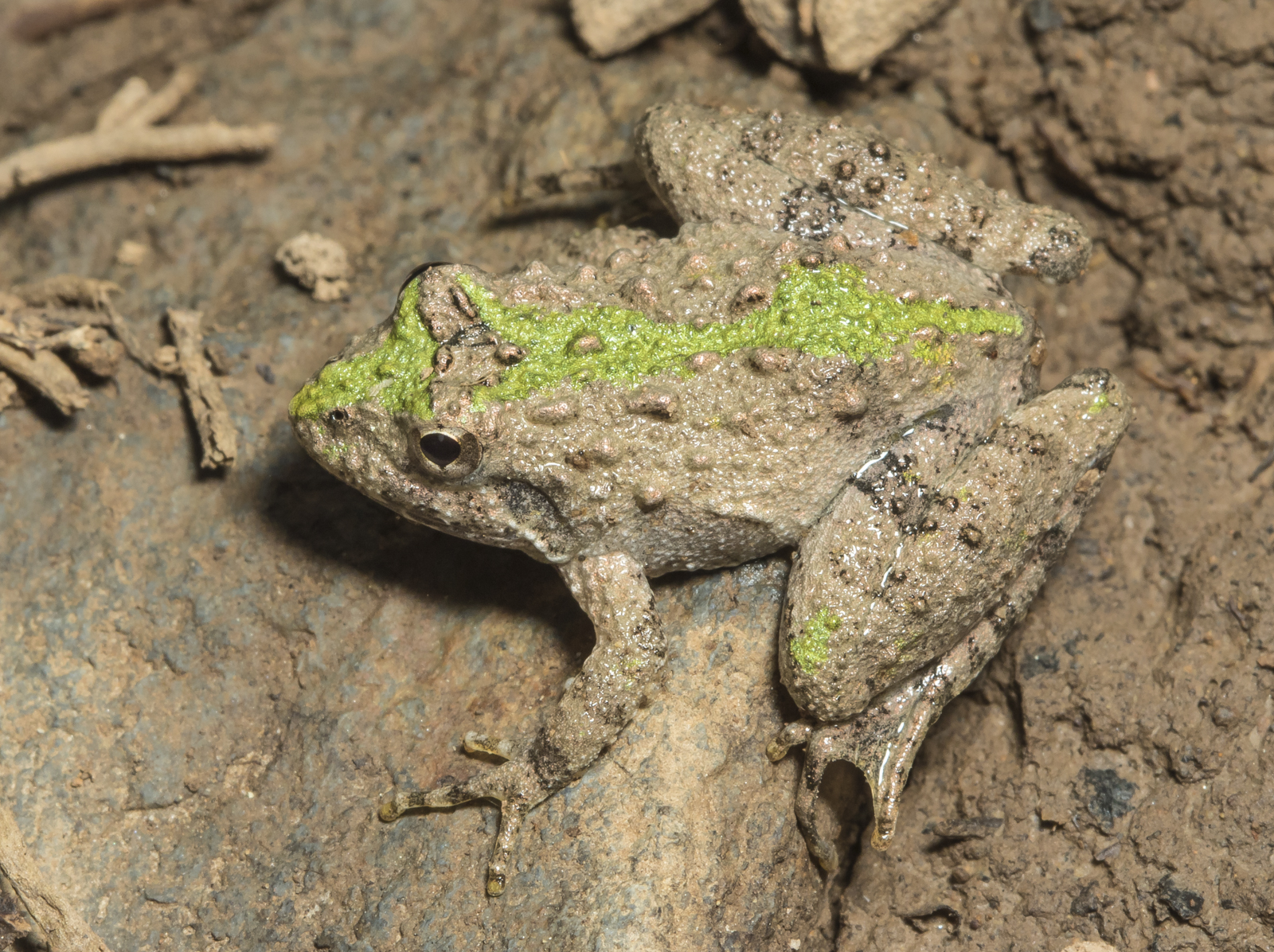
    Northern cricket frogs are widespread in the Eastern U.S., ranging from northeastern Mexico, up to Wisconsin, and east to the Atlantic states. There are actually two species of cricket frogs in North Carolina – the northern, which is mainly in the Piedmont, and the southern, more typically found in the Coastal counties. They are similar in appearance, both being small, cryptically colored frogs, with long, slender hind legs, and a warty appearance. Most have a distinctive darkened triangle pattern between the eyes, and a Y-shaped line extending down the back. Throughput their range, northern cricket frogs exhibit variation in color, with the dorsal stripe being either primarily gray, brown, reddish-brown, or green. The one above seems to be primarily brown with some hints of reddish-brown in some of the warts.

    cricket frog (green)
    Another frog in these woods with a green color pattern

    A few yards away, I came upon another cricket frog, this one with a noticeable green coloration in the dorsal Y-pattern. I looked up the topic of their color variation and stumbled on a host of scientific papers dealing with this phenomenon in cricket frogs, known as color polymorphism. Various theories have been proposed and tested throughout the range of this species. And they have come up with various reasons for the color differences: visual selection by predators directly determines color proportions (the theory being that those that blend in better with the local surroundings are better concealed and therefore survive better); another thought some color morphs correlated better with local substrate color but are more resistant to desiccation in certain habitat types; and yet another study disagreed and suggested natural selection may favor some behavioral characteristics associated with a particular morph.

    Cricket frog (green) side view
    Whatever the reason for their color, they are fun to watch

    I finally found one Illinois study that did some comparisons with other data and concluded that different factors must operate throughout the species range to maintain this color polymorphism. The author states that chance may be a major factor in determining color morph proportions in localized populations. Perhaps the frogs know something about color variation that we just have not yet discovered. Whatever the reason, I always enjoy seeing one of these cryptic creatures leap and disappear into the background. And, I look forward to the start of their breeding season, accompanied by their clicking calls, in a few weeks.

  • Yellowstone in June!

    Posted by

    I believe the world is incomprehensibly beautiful — an endless prospect of magic and wonder.

    ~Ansel Adams

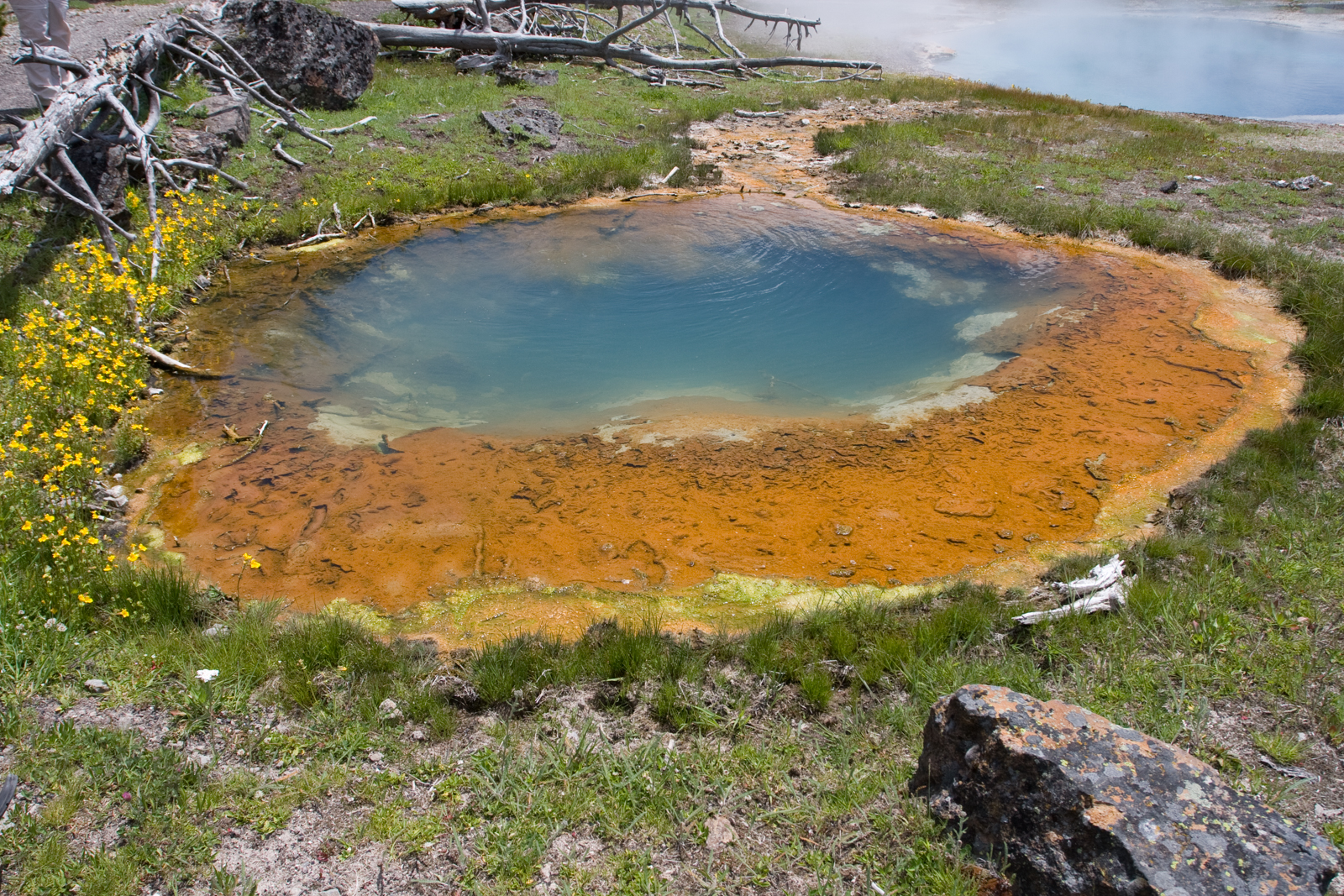
    Join me, June 2-9, 2016, for an unforgettable experience in an incomprehensibly beautiful place – the world’s first national park, Yellowstone! This year marks 100 years since the creation of the National Park Service, and there is no better way to celebrate than by visiting Yellowstone. We will spend our days exploring Yellowstone’s unique thermal areas, beautiful landscapes, and wildlife-rich valleys. I offer small group (4 to 6 participants) field experiences that take you beyond the typical roadside views of this incredible park. Visit my Trips page for more information and to request a registration form. Space is limited. Previous blogs from Yellowstone trips can give you an idea of the wonder and beauty you will experience.

    Here are a few images from past trips to entice you.

    steam at Grand Geyser
    Steam at Grand Geyser (click photos to enlarge)
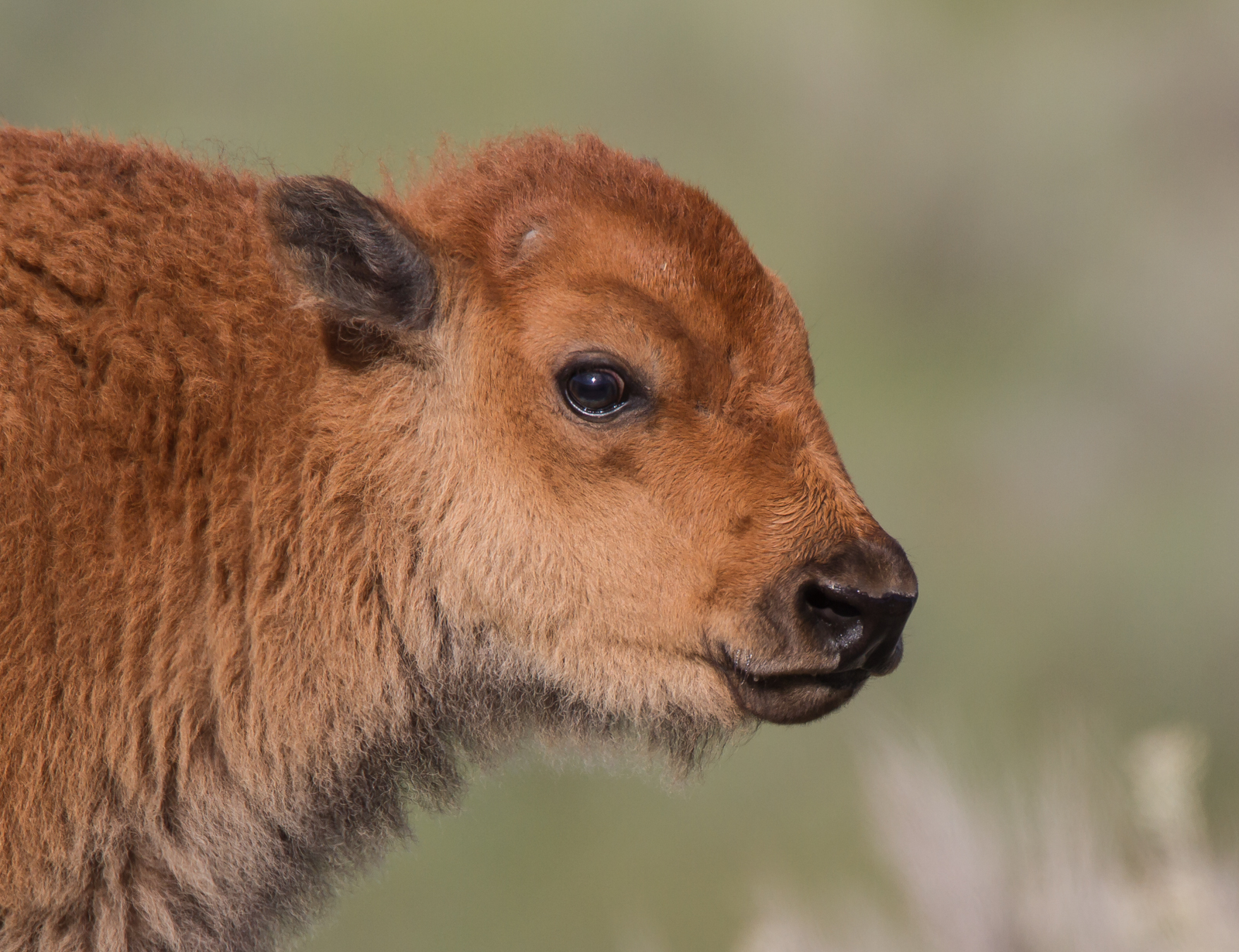
    Calf head
    Baby bison will be abundant in early June
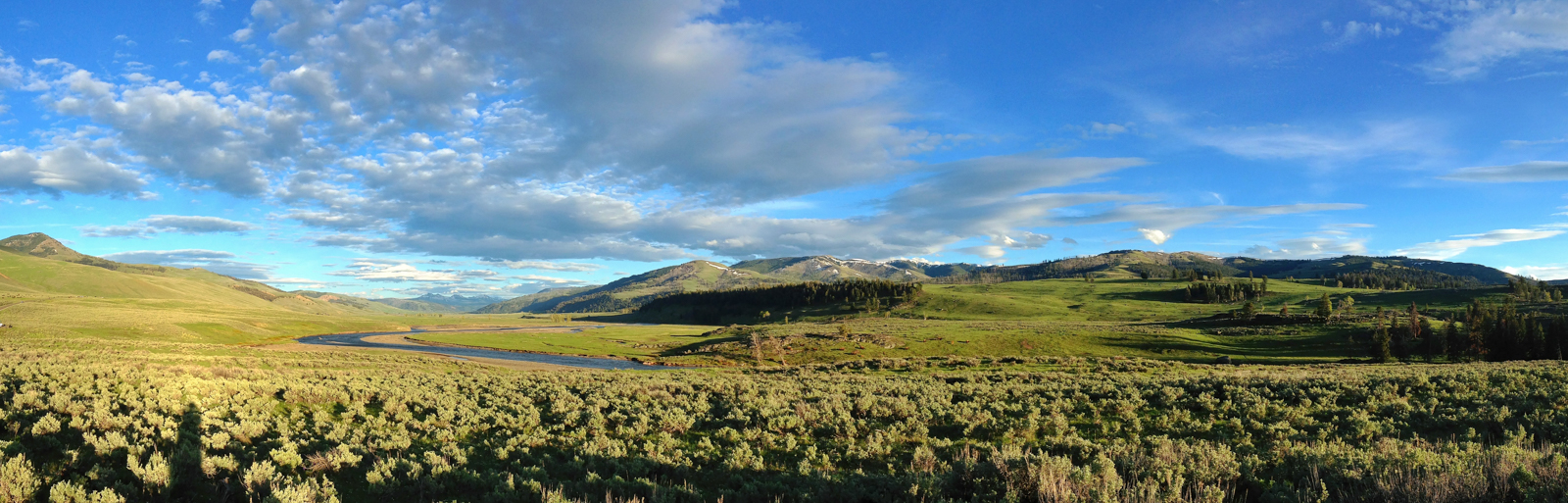
    _-12
    The beautiful Lamar Valley
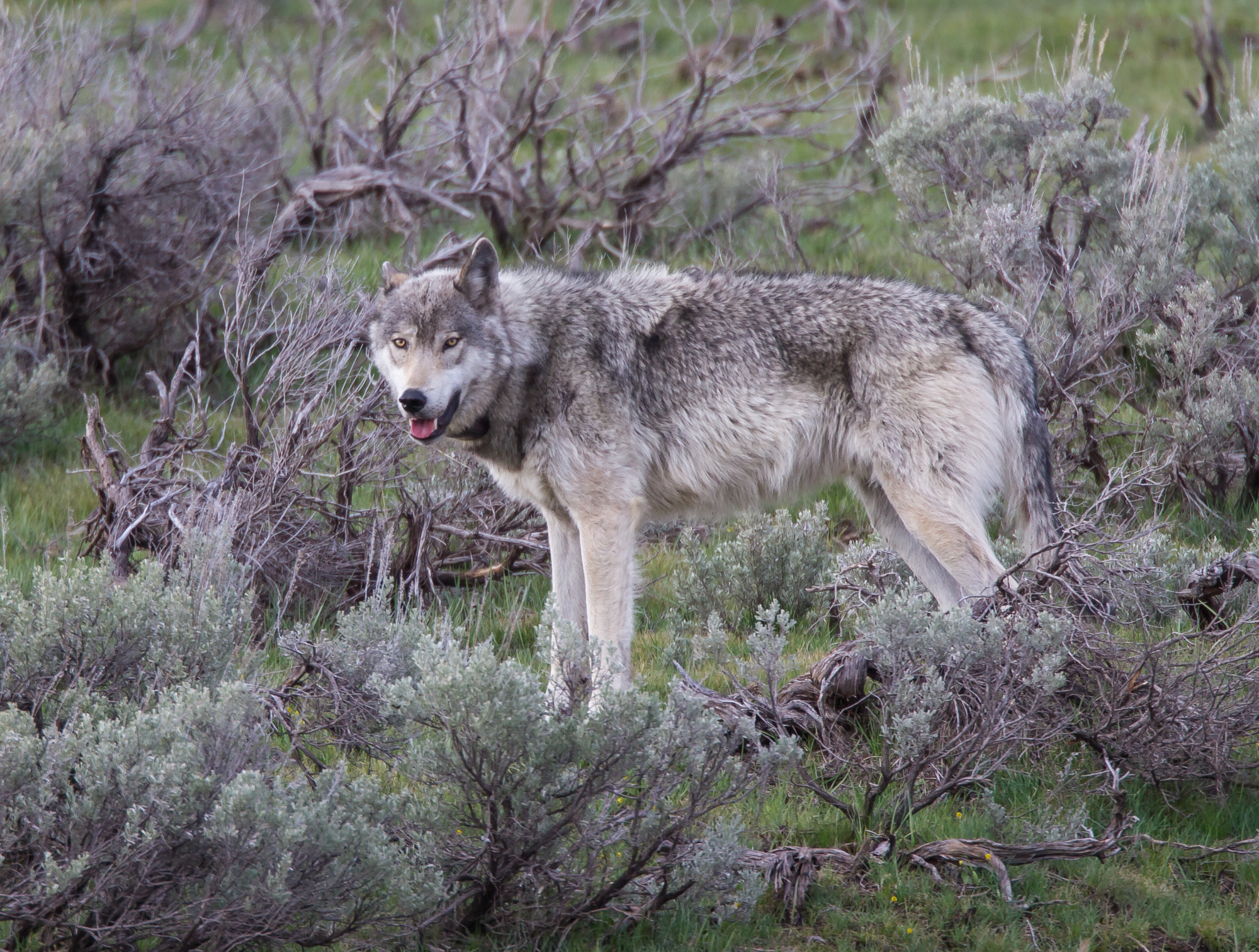
    gray wolf male 2
    Gray wolf in Lamar Valley
    Mountain Bluebird male
    Mountain bluebird
    _-31
    Hot spring


  • Following the Nuthatch

    Posted by

    I recently had a discussion with someone about sitting quietly in nature and just observing your surroundings as a way to relax, increase your observation skills, and just get in tune with a natural place. It reminded me of a project I had heard about several years ago called The Sit Spot. There are various iterations of the idea, but, basically you just go outside some place that is close enough to visit frequently, and you sit. That’s right, sit, for 15 – 30 minutes, or however long you can. It is a place to commune with your surroundings, ideally with no distractions (no phones or cameras, although I do take binoculars). And you observe, listen, think about what you are seeing. When you sit quietly, the world starts to come alive around you. So, Melissa and I have been trying to go out whenever we can and sit in the woods and watch. On a recent weekend, when I was leading a tour down east, she sat and observed some of the goings-on of some of the birds that call these woods home. She later wrote a poem about what she saw. Here it is, with some photos of the birds taken at other times and in other places.

    Following the Nuthatch

    by Melissa Dowland

    When searching for a bird of prey
    On a fall or winter’s day
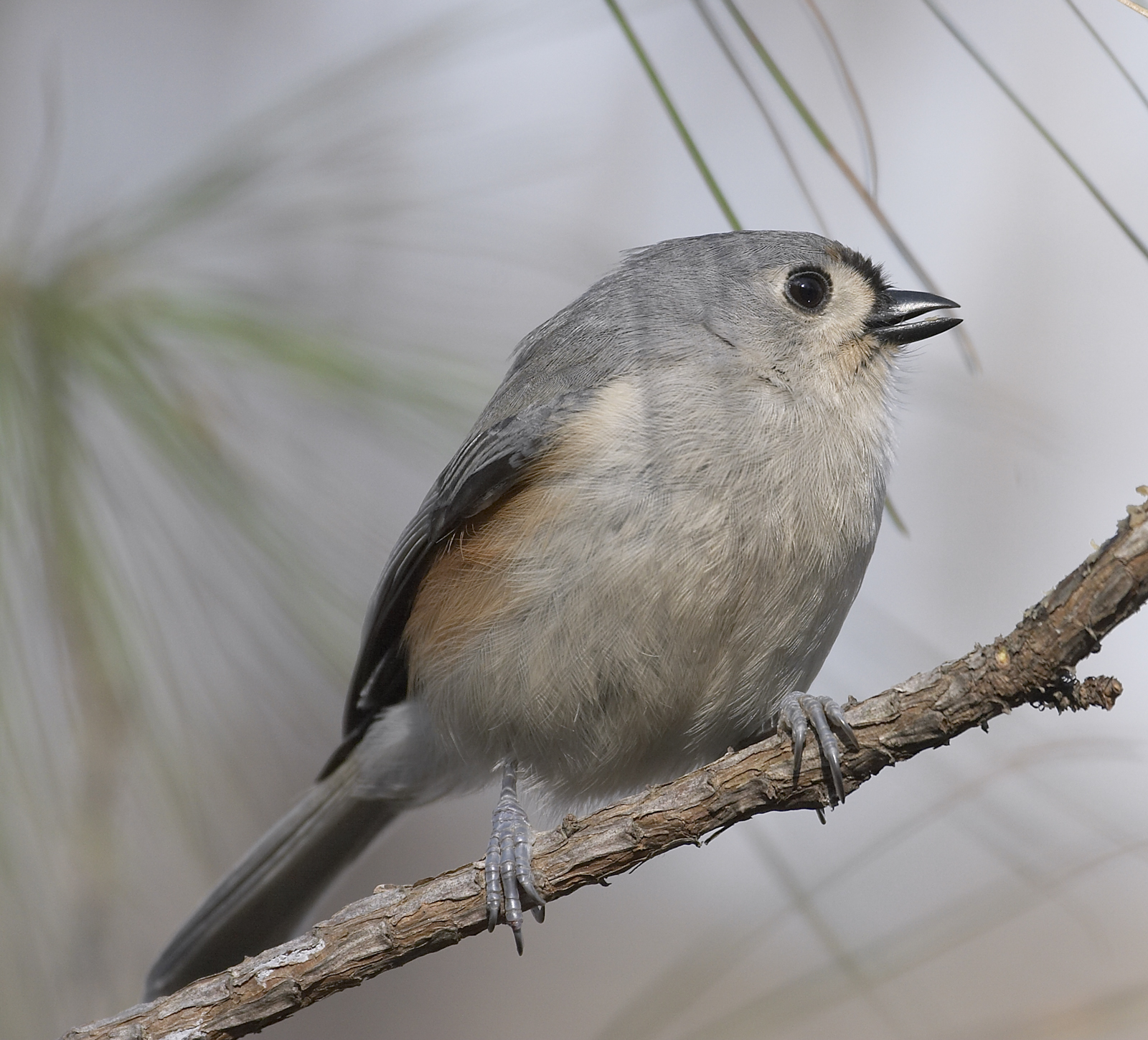
    Never trust the noisy titmice
    Only the nuthatch will suffice.

    The titmouse is a busy soul
    Forever making a dreadful scold.
    He flits about the whole day long,
    Rarely pausing in singing his song.

    Tufted Titmouse 3
    Tufted titmouse

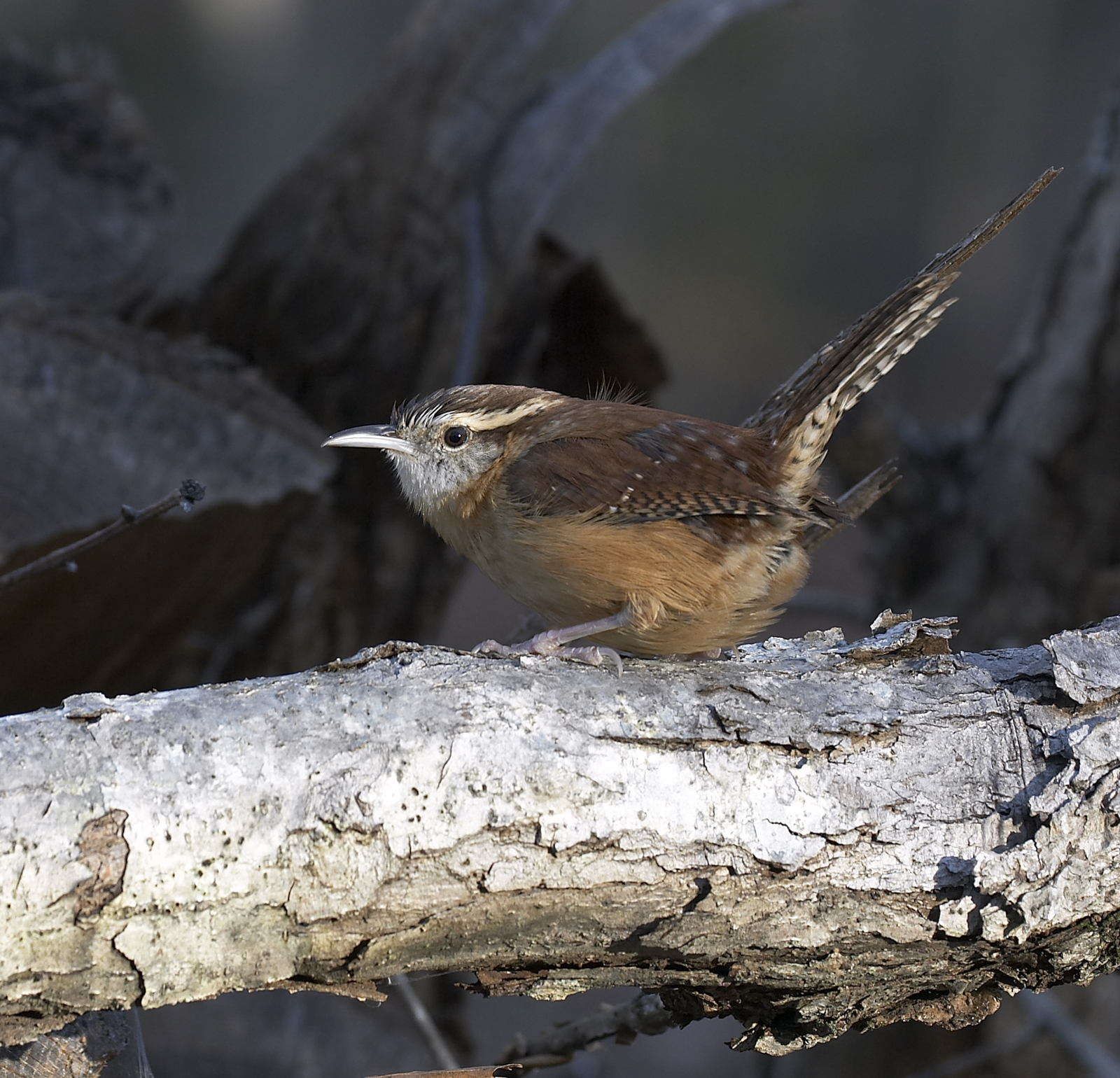
    The busy wren, he too will cry
    So loud, he calls, though small in size.
    But he is easily distracted by
    The lonely squirrel who wanders by.

    Carolina wren
    Carolina wren

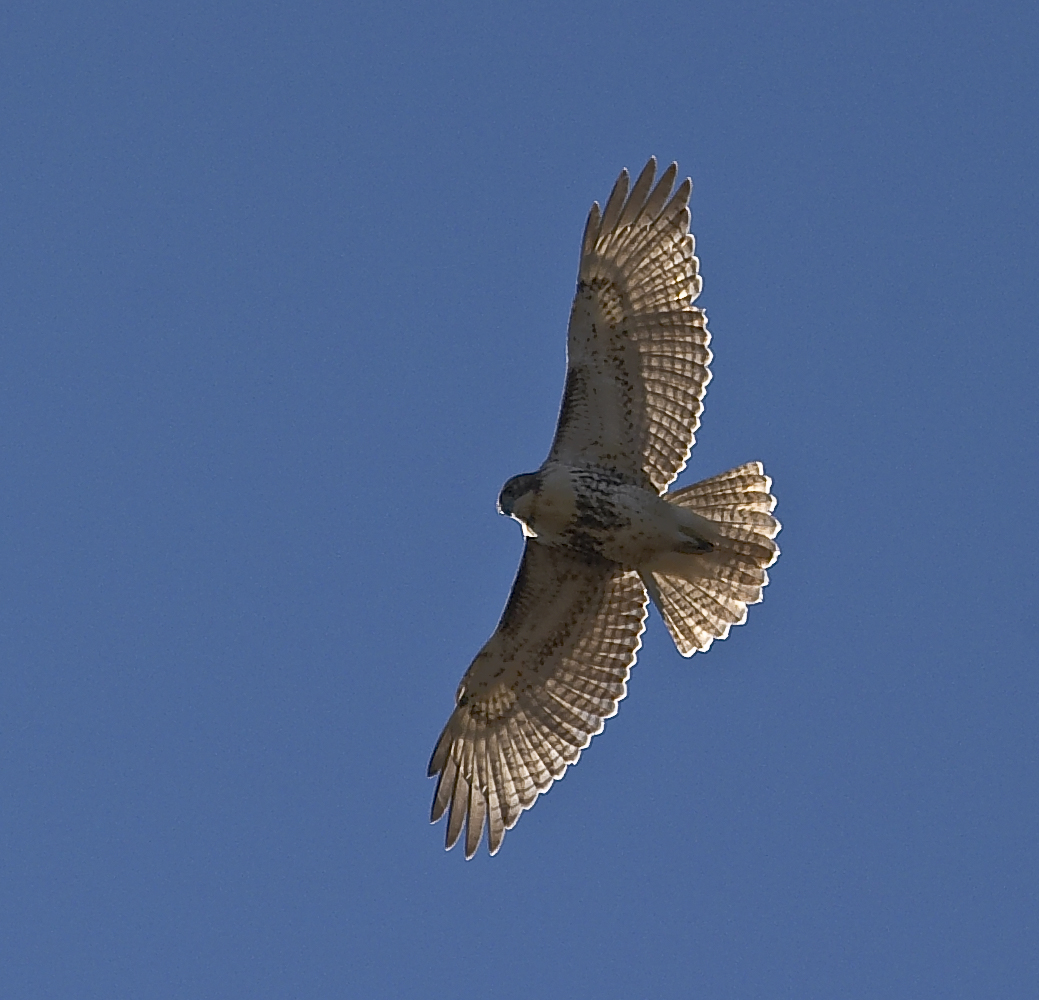
    So would you like to spot a hawk
    On your winter hike or walk?
    Then heed the nuthatch’s nasal cry.
    For when the hawk his eye does spy

    Out rolls his nasal, cranky ‘yank’
    Heard over hill and down the bank.
    The nuthatch is a wise old bird
    So listen closely to his words.

    “There goes the hawk, warn one and all!
    Oh forest, listen to our call!”

    White-breasted nuthatch on tree trunk
    White-breasted nuthatch

    So look, oh wanderer, for the source of that sound
    Up in the trees and on the ground.
    If you’re lucky you might be blessed
    If the nuthatch and hawk make you their guest.

    Red-tailed hawk
    Juvenile Red-tailed hawk
  • Bitternsweet Memories

    Posted by

    Life wants you to have gratitude for the gift of living.  Treasure every second.

    ~ Bryant McGill

    The season is about over. It is hard to believe I just finished what is probably my last tour for this winter season at Mattamuskeet and Pocosin Lakes. But, if it is to be the last, at least it was a spectacular one. I was with a wonderful couple from Raleigh that were excited to see everything and learn about the incredible diversity of wildlife in the area. And we got great looks at a lot of species, including a couple of rarities.

    Ice on reeds at Lake Mattamuskeet
    Ice on reeds at Lake Mattamuskeet (click photos to enlarge)

    We moved up our scheduled time one day to Sunday morning, due to the predicted wintry weather moving into the state on Monday. To be honest, it was wintry already, with low temperatures in the  20’s when we arrived at Mattamuskeet National Wildlife Refuge. And that means ice. It also means active birds, so we were in for a treat.

    American bittern
    American bittern in its usual spot

    As has been the case most of the winter, there were few birds were along the causeway, probably due to the extremely high water making it too deep for effective feeding by most waterfowl. As we turned into the refuge, things picked up. Right away, I spotted the faithful American bittern hunting in its usual spot next to Wildlife Drive.

    American bittern and reflection
    Admiring his reflection?

    With the high water, the bittern was a bit more exposed as it fed along the edge of the water. That gave us a chance to really admire this beauty.

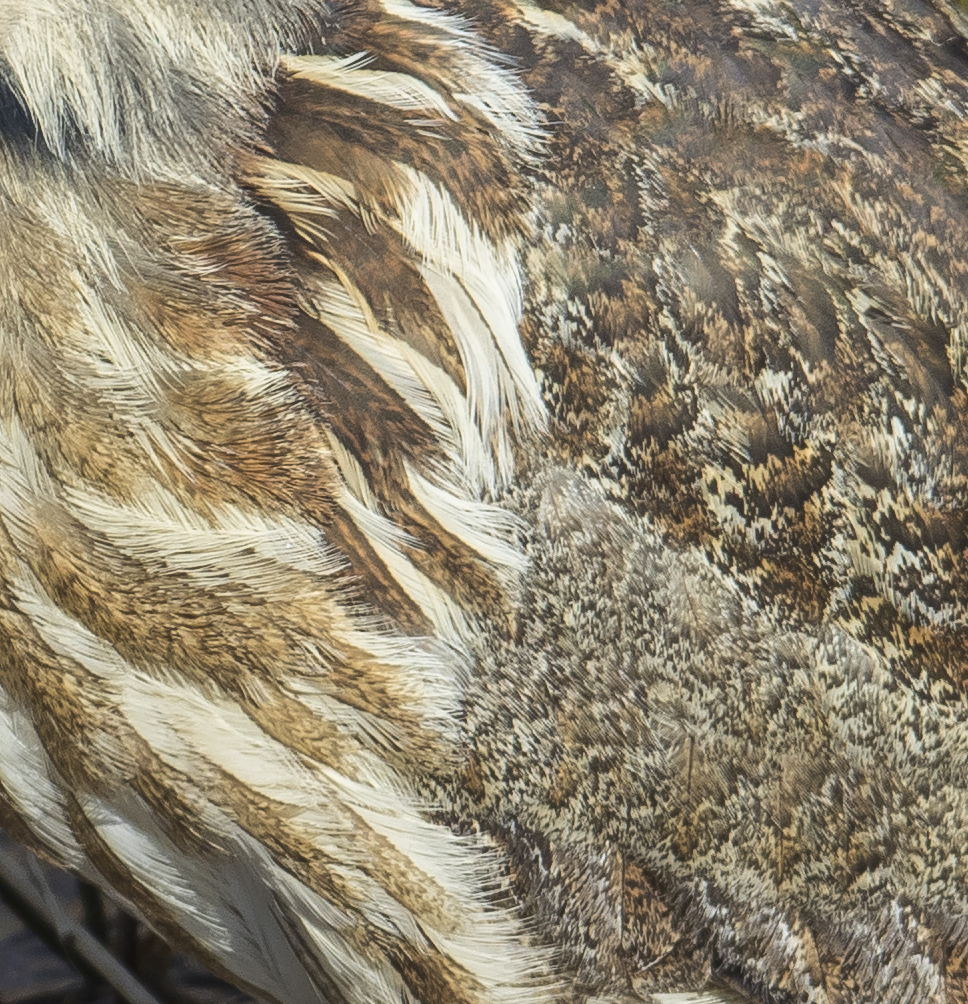
    American bittern feathers
    The bittern’s streaked plumage helps it blend in with its surroundings

    I put the scope on it to really be able to see the subtle colors, piercing eye, and greenish-yellow legs of this usually incredibly well-camouflaged marsh inhabitant.

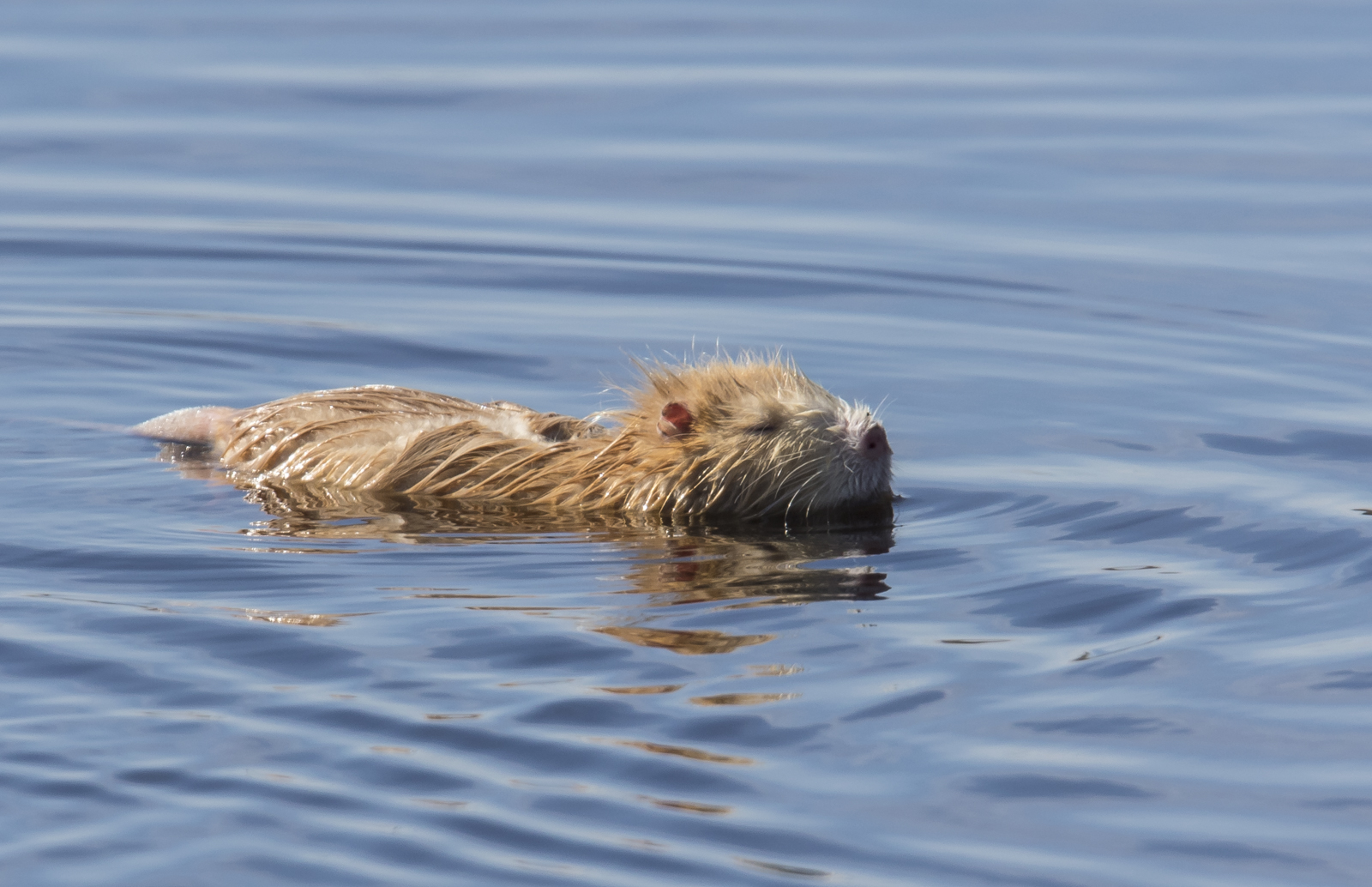
    blonde nutria
    Blonde nutria

    A little farther down the road we spied an unusual-looking mammal, a very light-colored nutria. A few other, darker nutria, had greeted us when we first arrived, looking somewhat stunned in the cold weather (these South American imports don’t seem to do well when ice appears). But this little blonde guy had been feeding on the bank in the sunlight, and seemed now to be waiting for us to move on so he could get back to his lunch break. This is the first nutria I have seen with this coat color.

    coot on ice
    American coot skating on the marsh

    Flocks of American coot dotted the canal banks and patches of open water, while others skated on the skim of ice out in the impoundment. You can really appreciate their lobed toes when you see them up on ice.

    common gallinule
    Common gallinule

    A common gallinule was mixed in with the coot near the observation platform. These relatives of rails look similar to coots (especially this juvenile) but can be distinguished by the white stripe along each side, their habit of flicking their tail, and the lack of lobes on their especially long toes. Known to breed in isolated locations in our state, the common gallinule is fairly rare in winter, and this is the first I have seen at Mattamuskeet this year.

    Great egret with plumes 1
    Great egret showing off its plumes
    doe face
    White-tailed deer were out browsing along the edge of the road

    The high water had closed the far end of Wildlife Drive, but we got great views of a showy great egret and several deer before turning back.

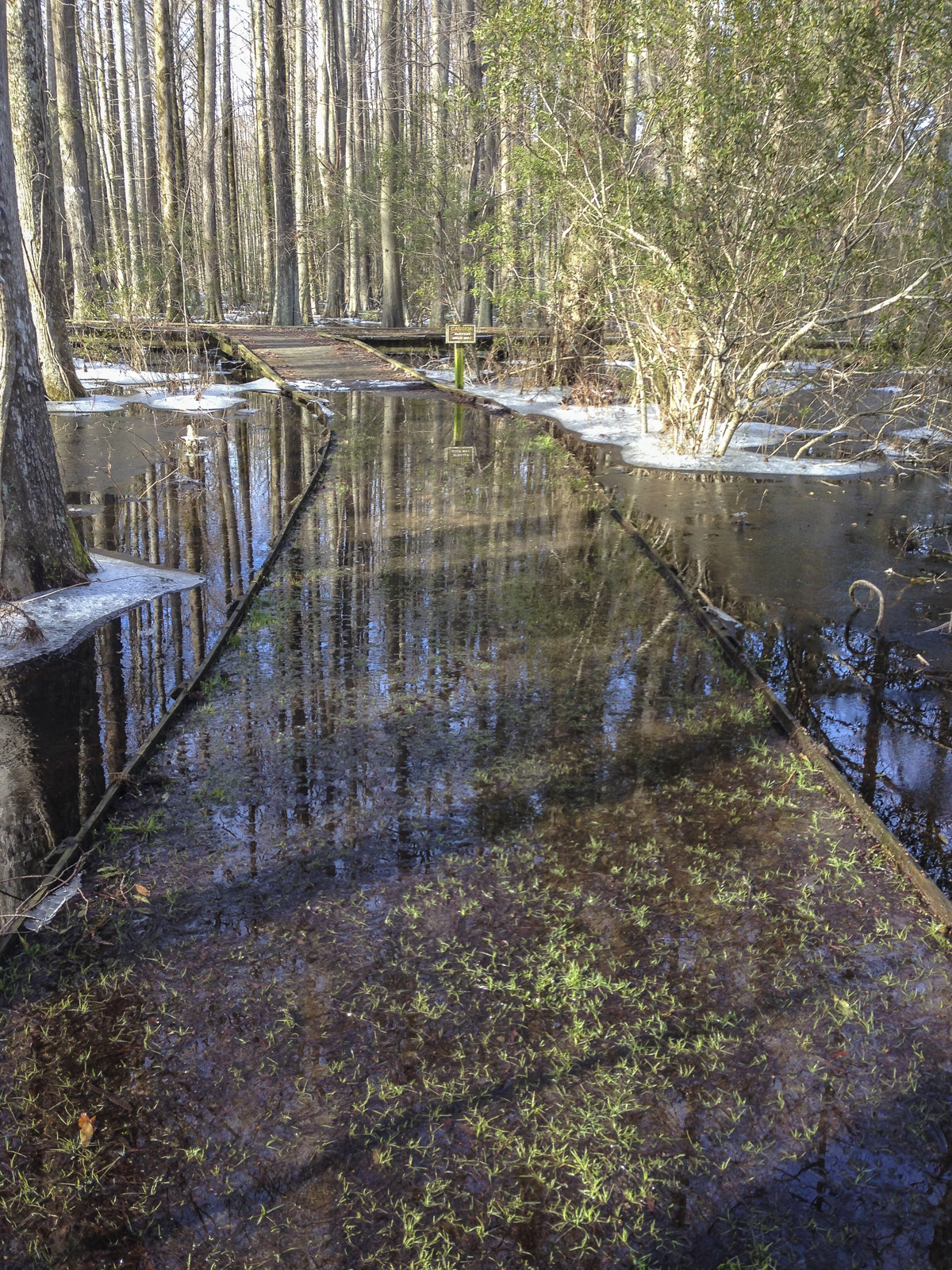
    New Holland Trail under water
    New Holland Trail partially submerged due to high water
    ice in swamp 1
    Skim of ice in the swamp along New Holland Trail

    We stopped for a short hike along New Holland Trail, one of my favorite spots at Mattamuskeet. Extremely high water and a skim of ice gave the swamp a very different look from my last visit a week ago. I love it when there is ice down here…a different world with new artistry everywhere you look.

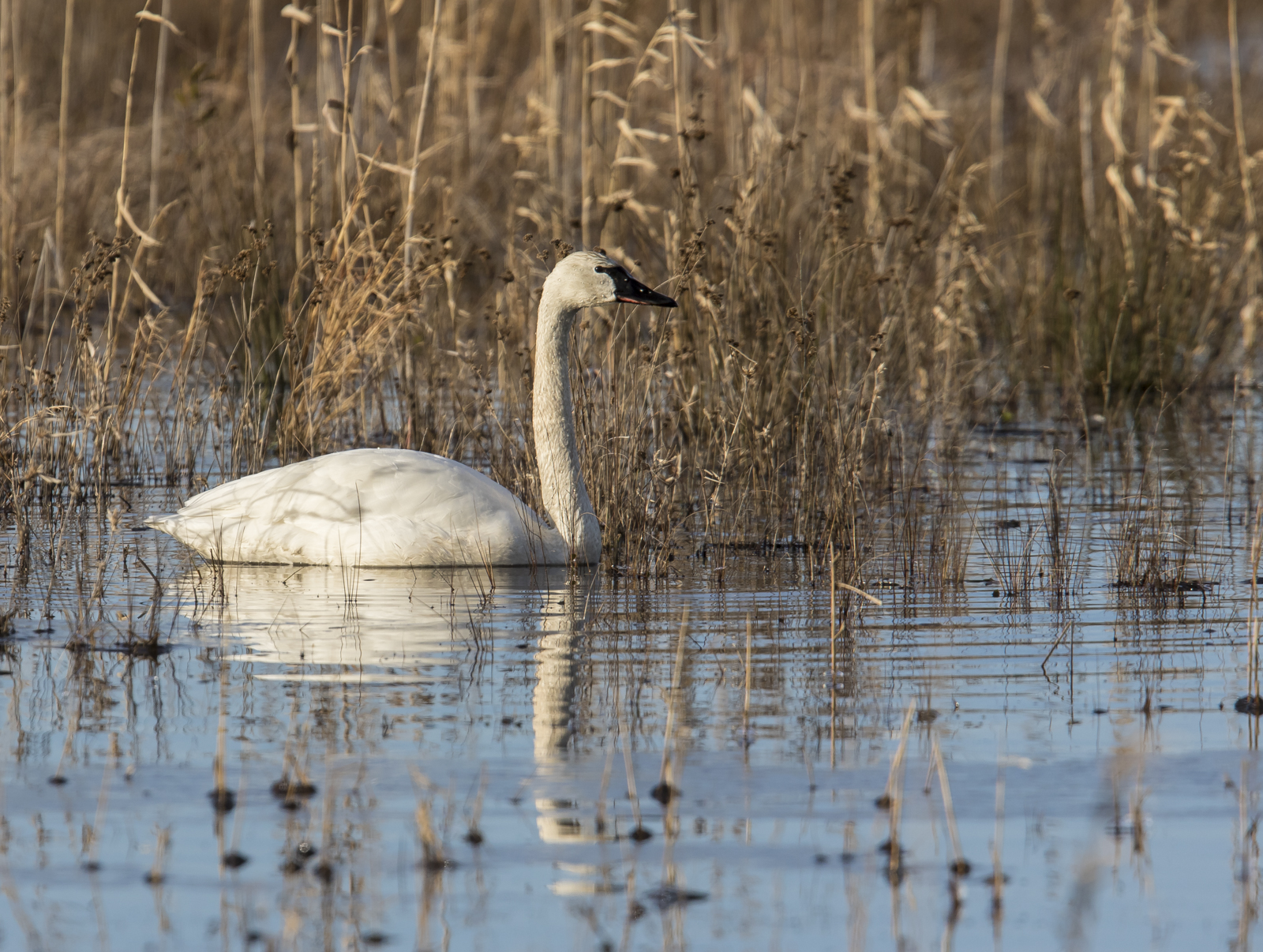
    tundra swan in impoundment
    Tundra swan lounging in the impoundment

    Driving along the back side of the impoundment we watched thousands of ducks lift off when an eagle flew overhead. Another American bittern was standing along the edge of the marsh, and swans, coot, and ducks were feeding in the shallows as the sun started to dip toward the horizon. Then my phone chirped that sound it makes when I get a text message. I glanced at it…a local number, but I didn’t know who…it read least bittern on entrance road!! Whoa, I said, let’s go….but there were cars in front of us, stopping to look at swans and ducks…we waited…another text…where are you? Our volunteers told me you were around. Now I knew, it was my friend, Keith, who works at the refuge. One of the volunteers from the office had apparently spotted the bird, told Keith, and then mentioned that I was at the refuge (we spoke at the visitor center earlier in the day). Keith knew I would be interested in this bird because we had talked about it when someone saw one a few weeks ago. So, thankfully, he texted me with this news while he was photographing it on the other side of Wildlife Drive. A least bittern is not something I see very often. In fact, I have only seen two in all my years of wildlife watching.

    least bittern
    Least bittern stands like a statue along the water’s edge

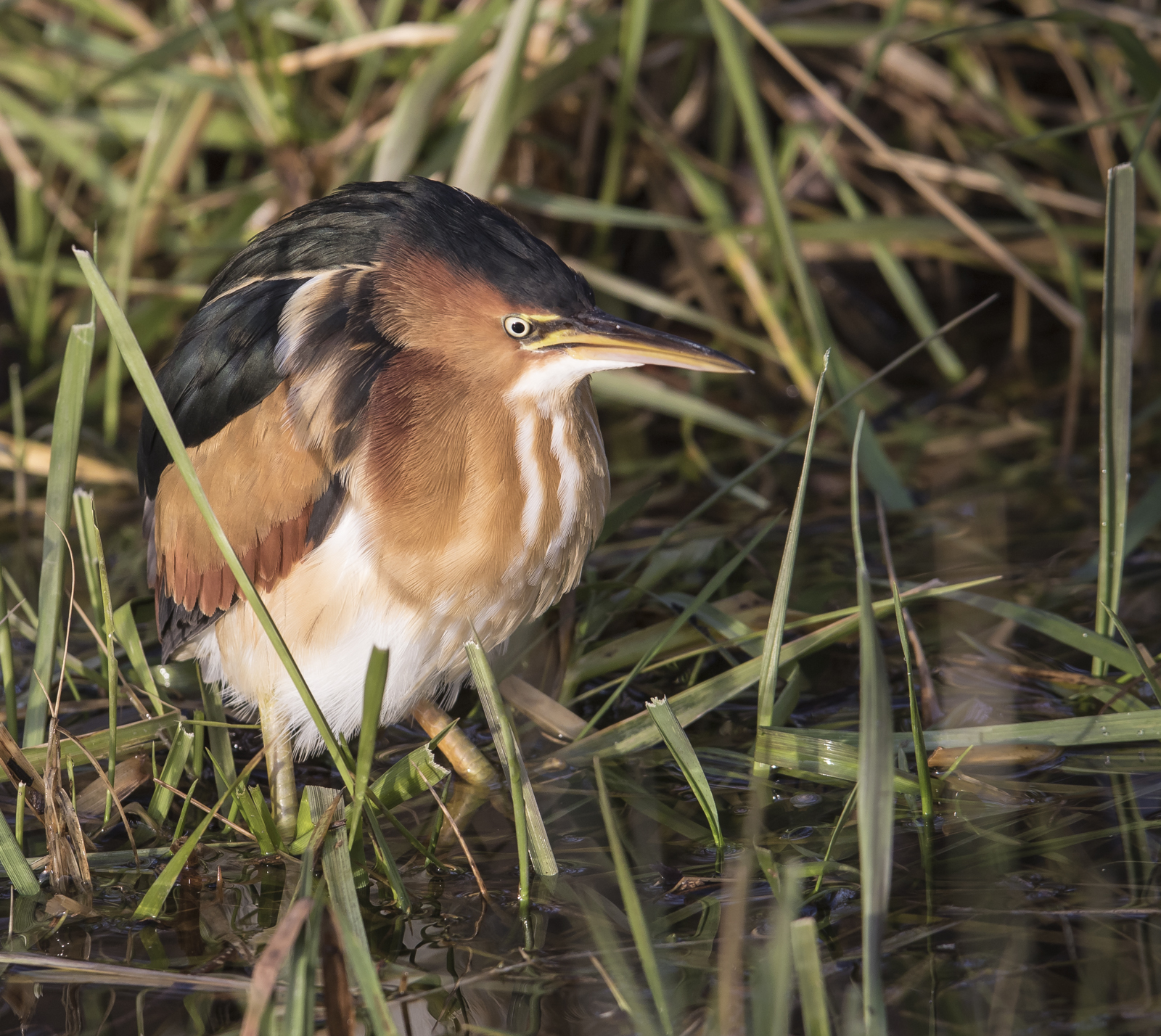
    When we finally got over there, I saw Keith out with his camera. We got out, and there it was, in perfect light, standing right next to the road, motionless, like a piece of yard art. What a beautiful bird! I am guessing this is a male because of the dark head and back.

    least bittern 1
    Like their larger cousins, least bitterns have an intense, piercing gaze

    Least bitterns are one of the smallest herons in the world, standing only a little over 12 inches tall when stretched out, much smaller than its bulky cousin, the American bittern. The least bittern is usually more difficult to see, because of its small size and its preference for thick vegetation. These diminutive herons often walk through thick marsh vegetation (like cattails), not by wading, but by grasping the grasses with their long toes and striding through the narrow openings between the upright blades, literally sneaking through the grass above the water. This little guy was not bothering with stilt-walking, but was instead on the ground next to some standing water.

    least bittern with fish
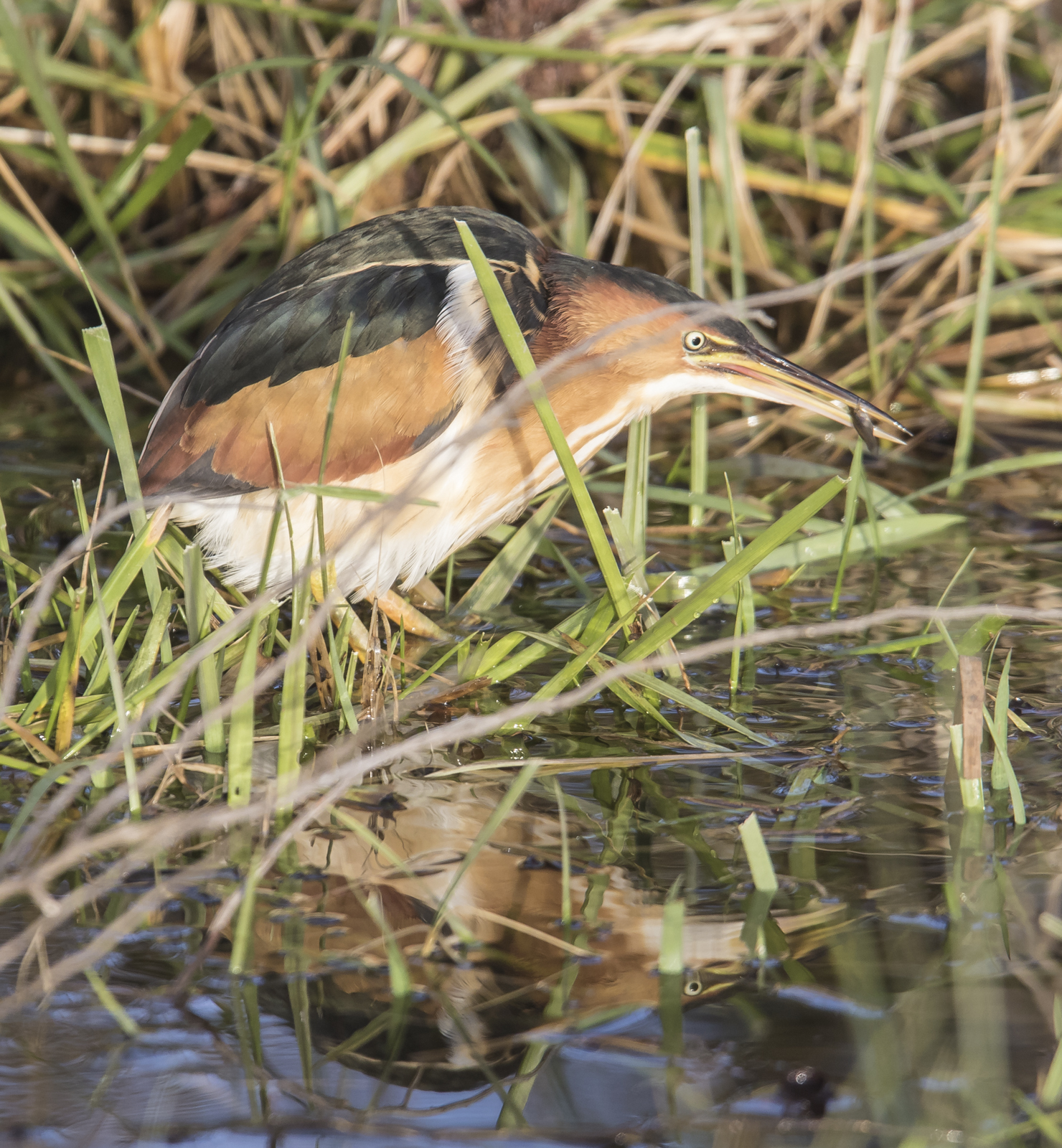
    It grabs a small killifish

    Keith and I crawled around on the edge of the road trying to get a good angle for some photos, while the bittern stood still. It finally moved its head, then went into classic bittern feeding mode. Within a minute of staring at the water, and slowly stretching out and downward, it struck and grabbed a small fish, gulping it down with a quick snap of its beak.

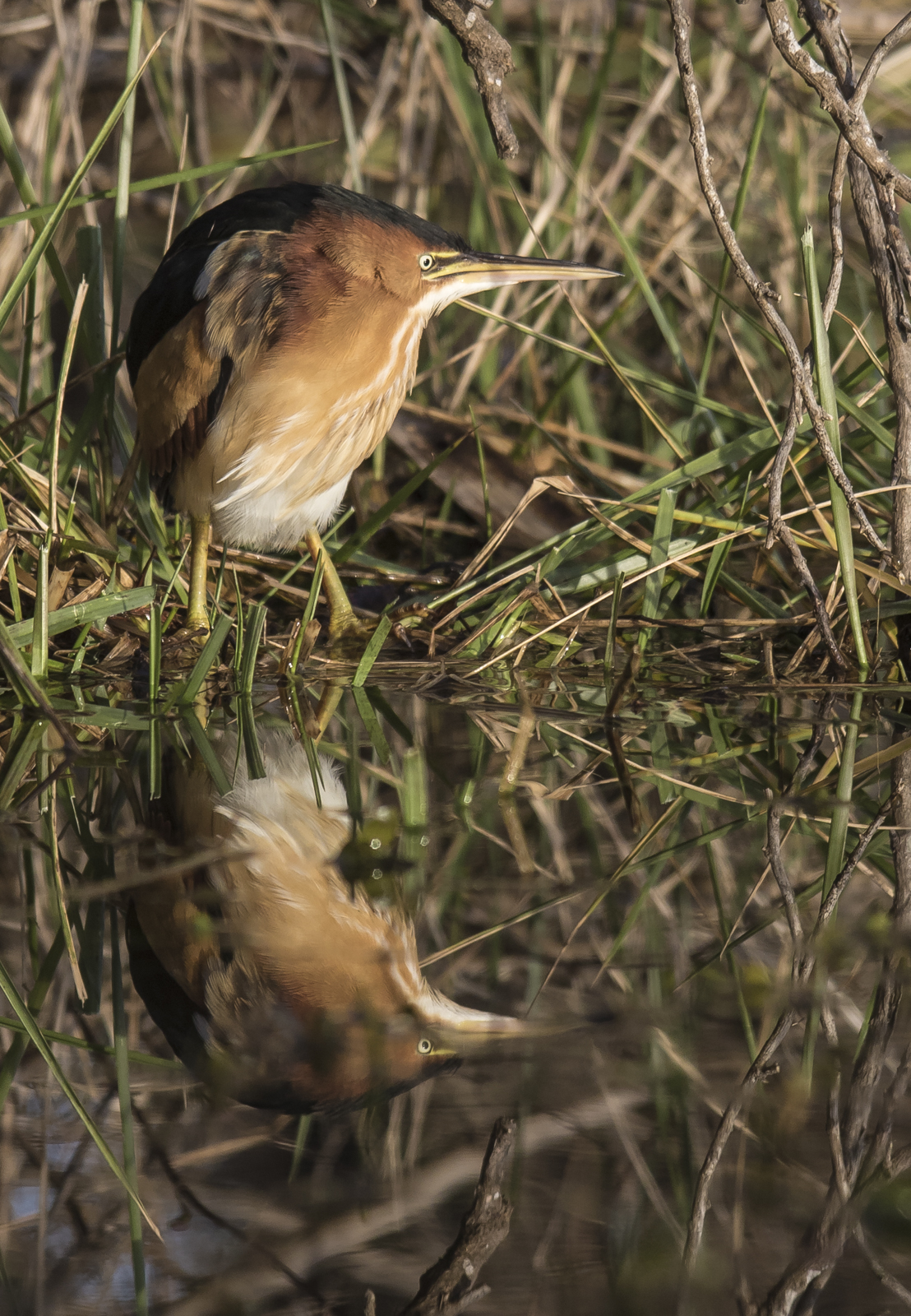
    least bittern and reflection 1
    A fine way to wrap up a winter season

    I would love it of this bird decides to stick around and nest somewhere in the vicinity. The young bitterns, like many young herons, are fine examples of punk feather-do birds, and I would enjoy a chance to photograph them. Odds are slim though, as they usually hide their nests fairly well in thick marsh vegetation.

    The trip ended the next day with icy conditions, muddy roads at Pungo (including a large section closed due to flooding), and relatively few sightings at Pungo (although we did manage some species we did not see at Mattamuskeet –  wild turkeys, a snipe, two cooper’s hawks, a sharp-shinned hawk, and a great horned owl).

    It has been another very good winter season. While I am sorry to see the swans and snow geese starting to depart, I have many memories to fall back on. And the shifting season means new life just around the corner…spring wildflowers, calling frogs, migrating warblers, and so much more. I can’t wait…and I will back to the wildlife refuges to see what they offer this spring and summer, so, if you are interested in a trip, just contact me.

  • Arrows of the Sea

    Posted by

    Over the unlucky school of fish is a bewildering maze of soaring, circling birds, pouring down out of the sky in rapid succession, plunging into the water like so many projectiles and sending columns of water and spray many feet into the air like the spouting of a school of whales.

    ~Arthur Cleveland Bent, 1922, describing a flock of northern gannets feeding on a school of herring

    Last Saturday was one of those days when it all seems to come together. I had a chance to really observe a species that I have wanted to see up close for a long time. What made it all possible was a pelagic birding trip aboard the Stormy Petrel II out of Hatteras. One of my goals for the trip was to observe northern gannets (Morus bassanus) up close and personal. For decades, I have seen them flying and diving off the beach. Over 30 years ago, while working as the East District Naturalist for NC State Parks, I found one dead on Hammocks Beach. I remember being stunned by the beauty and size of the bird I had previously only seen through binoculars. I have since watched them plunge-diving by the hundreds from places like Bald Head Island, and seen some flying nearby while offshore on various boats. But here was a chance, from what I had heard, to spend several hours watching them close to a boat while trying to photograph their flight and dives. I was not disappointed!

    Northern gannet at sunrise
    Northern gannet at sunrise (click photos to enlarge)

    It didn’t take long for a couple of northern gannets to start following our boat as we passed through the inlet just after sunrise. As always, I was struck by their graceful, strong flight, and their striking head colors.

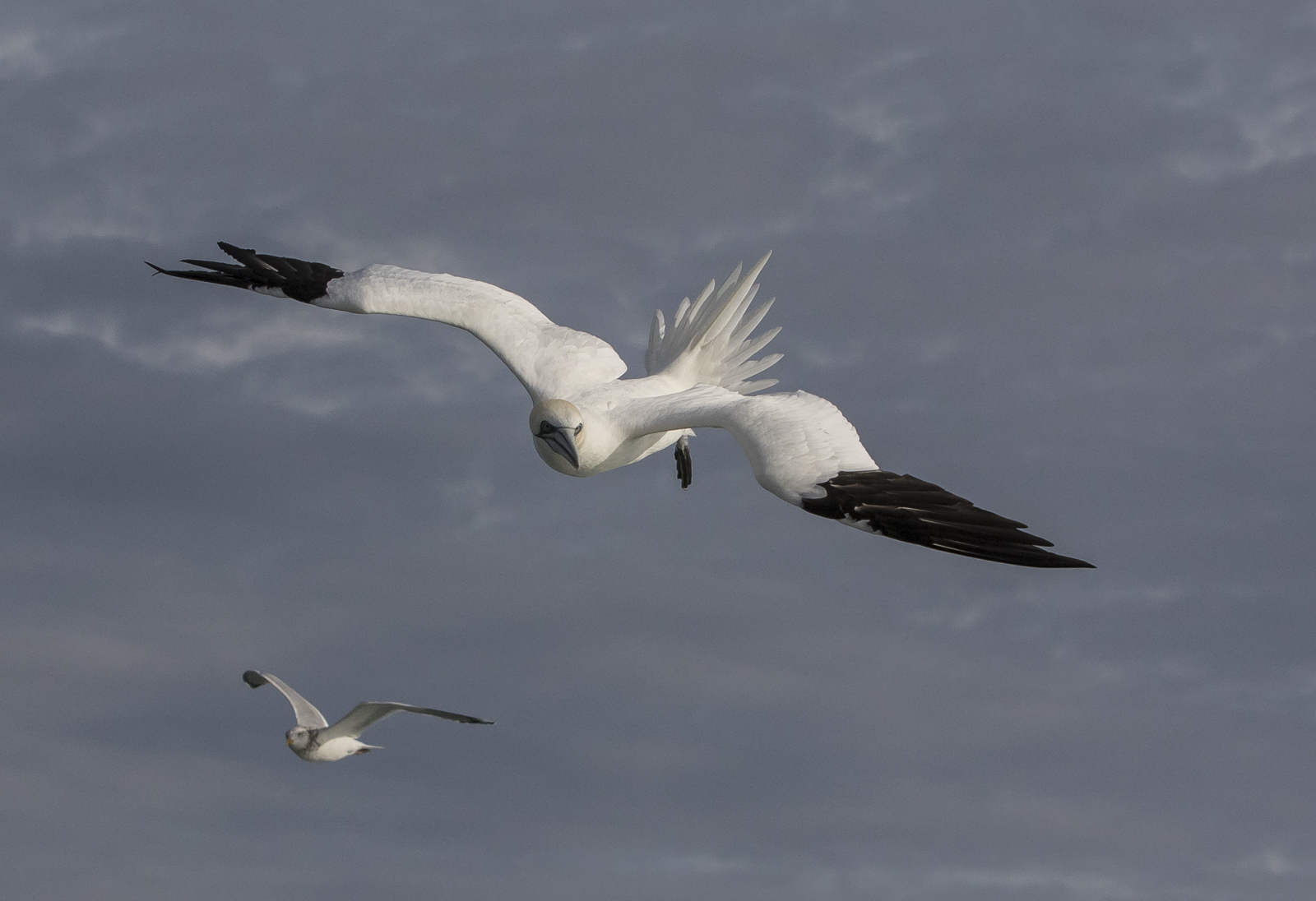
    Northern Gannet  with sky, ocean, and clouds
    Northern gannets have a distinctive shape and can be identified at great distances

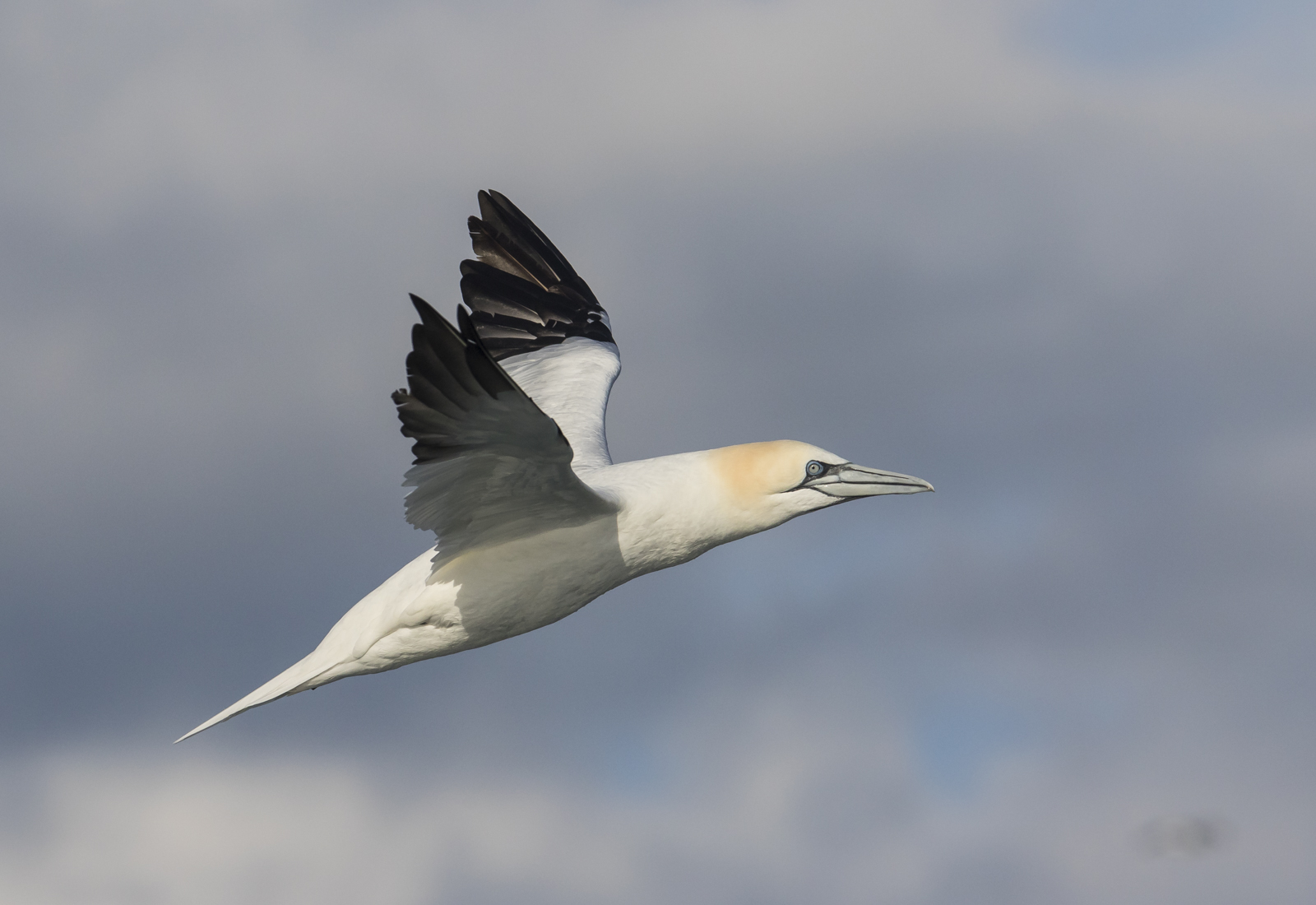
    When you see a northern gannet adult from afar, you see a white cross with black wing tips. It is a distinctive shape – pointed at both ends with long, narrow wings. The Peterson Guide to Seawatching pointed out something that surprised me – northern gannets have a wingspan slightly shorter than that of a brown pelican, but longer than a tundra swan! That makes them the largest bird, other than a pelican, you are likely to see off our coast.

    Immature northern gannet
    Immatures are varying shades of dark brown with lighter splotches and speckling

    Of the hundreds of gannets seen, we only had two sightings of the darker-colored immature birds during the trip. Once they leave the nest, these young gannets are believed to stay at sea for at least 3 years before returning to land.

    Pair of northern gannets
    Almost all of the northern gannets off our coast in winter are adult males

    One interesting factoid that came up was that field studies the past couple of decades (largely by the late Dave Lee at the NC Museum of Natural Sciences, as reported in his book, Gulf Stream Chronicles) have revealed that almost all of the northern gannets wintering off the Carolina coast are adult males. This was determined by collecting and examining specimens, since the adult plumage of both sexes is basically identical. This has huge implications for conservation and management of this species. Since northern gannets off the Outer Banks in winter can number in the thousands, any ecological disaster in the area, such as an oil spill, could impact a disproportionately large percentage of the breeding population of this species. This is especially true since this species takes 4 to 6 years before reaching breeding age, and they typically lay only one egg per year.

    Northern Gannet head close up
    You can only appreciate the blues on their face when you see one up close

    One of the great highlights of the trip for me was being able to observe the gannets up close. It is only then that you can clearly see and appreciate the subtle colors of the adult bird’s head. The piercing eyes are lined with a light blue. The large, pointed bill is a blueish-gray color with black lines that outline it, the eye, and extend beyond the gape of the bill onto the neck. The head is tinged in a buff or gold color that varies among individual birds. Gannets have no external nostrils. Close inspection shows a slit-like opening near the base of the bill covered by a flap, which is forced shut over the opening when the bird plunges into the water.

    binocular vision
    Eye placement presumably gives them binocular vision

    The eyes look forward, presumably giving them good binocular vision, an important aid in accurately determining distances when diving after their prey.

    Northern gannet at sunrise with bill open
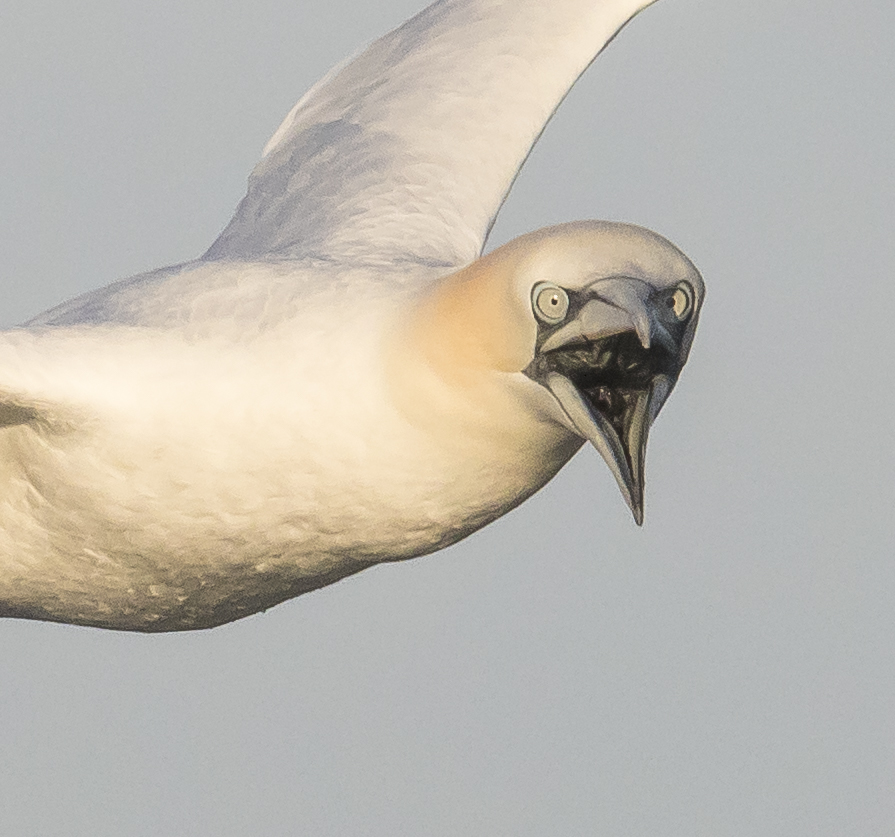
    Gannet croaking as it flies behind the boat at sunrise

    Although believed to be generally silent at sea, many of the birds coming into the chum gave a grating, guttural croak as they maneuvered for position among the other birds.

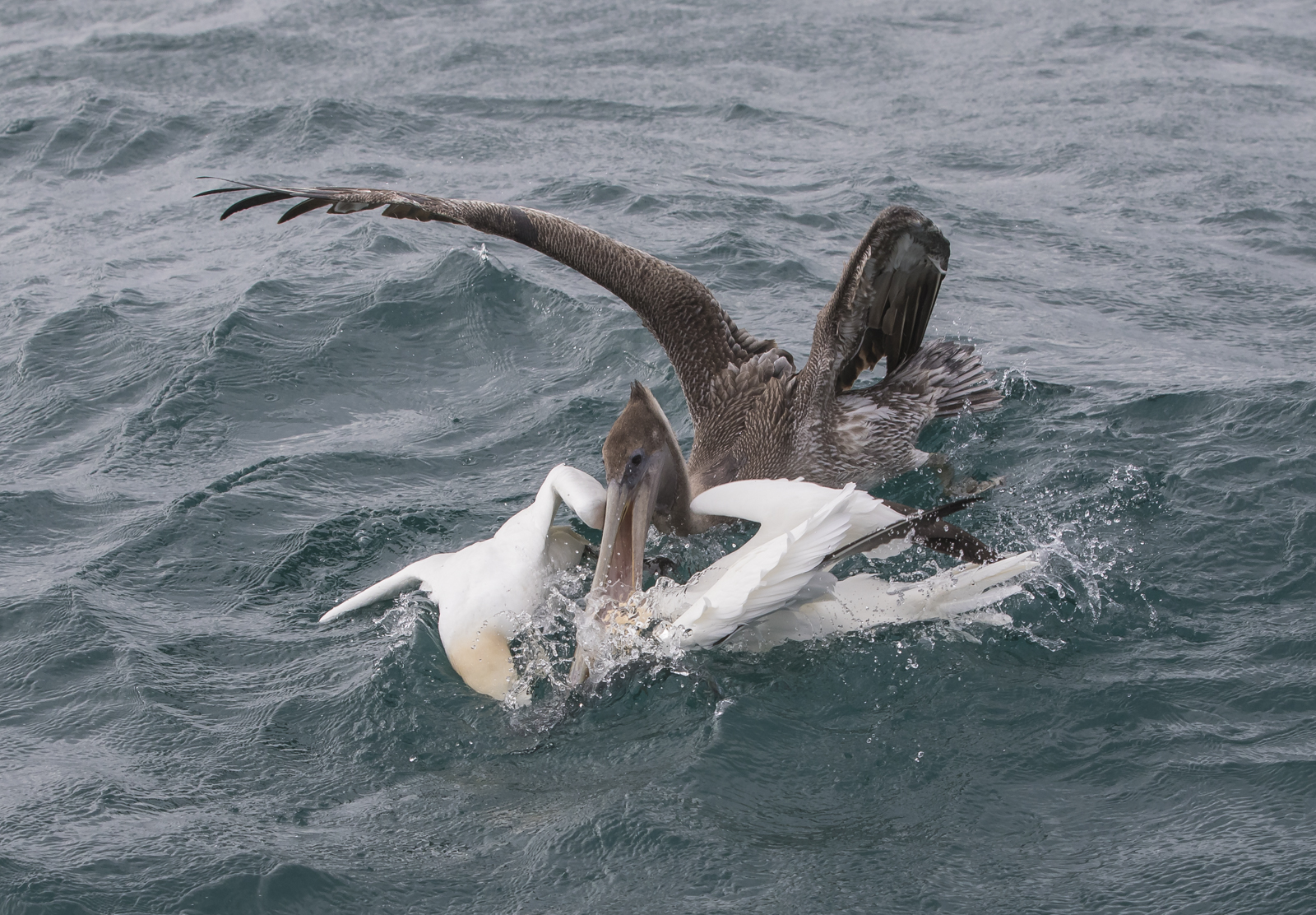
    Gannet fight over fish
    Two gannets with heads underwater attract a curious pelican

    Most of the gannets we observed were diving after the chum being tossed off the stern of the boat, but we did witness them feeding on something different at one point. We passed by two gannets huddled together, heads underwater. They were soon joined by a pelican, who soon stuck his beak into the action.

    Gannet fight over fish with pelican joining in
    The pelican joins the fray

    I couldn’t quite tell what was going on until one gannet gave up, and the other emerged victorious.

    Gannet fight over fish 1
    One gannet pulls away with the prize

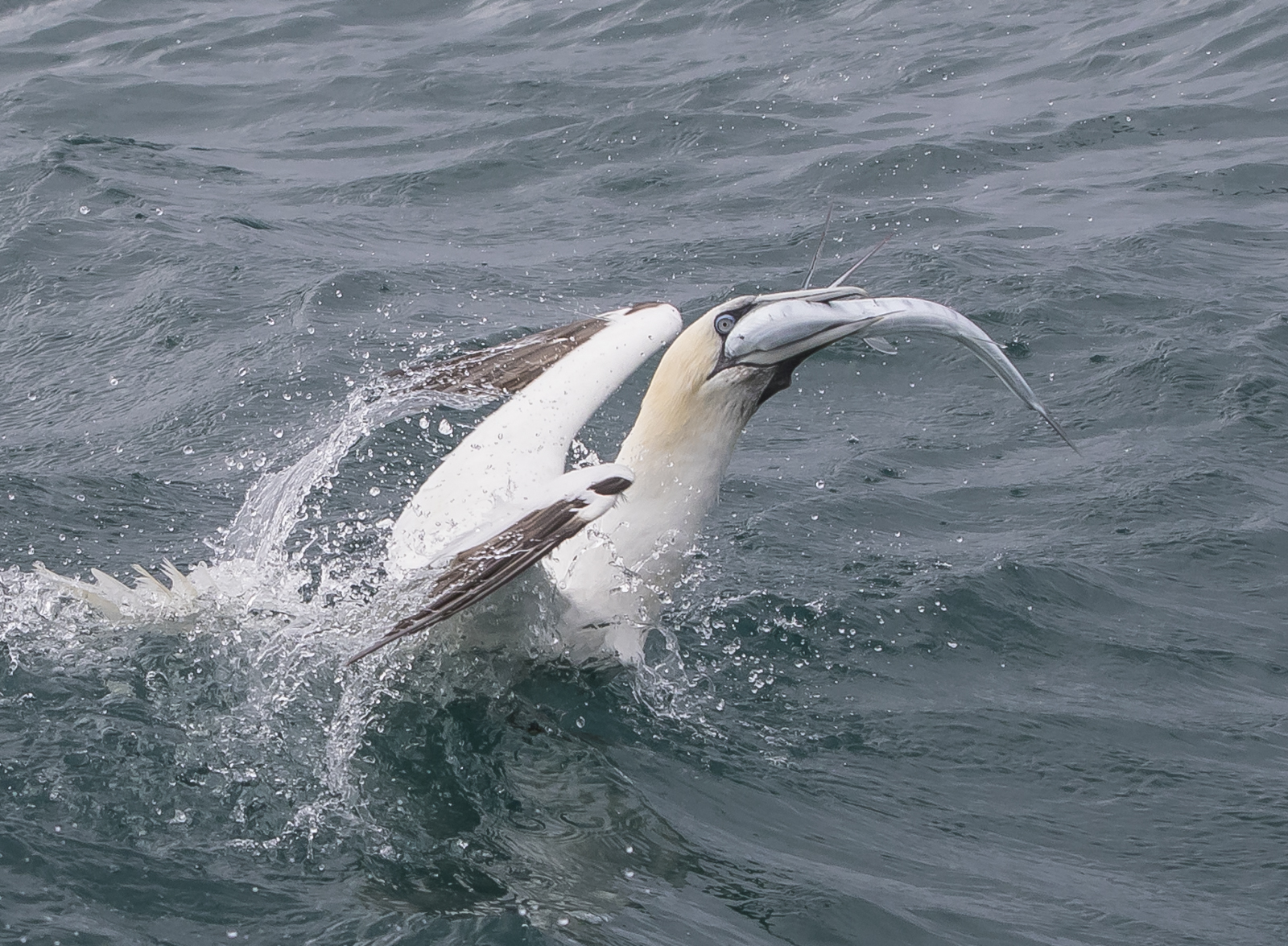
    It turned out one of the gannets had caught a houndfish, a long, skinny member of the needlefish family.

    Northern Gannet with fish
    Going…
    Northern Gannet with fish 1
    going…
    Northern Gannet swallowing fish
    gone!

    The bird finally won the struggle with its writhing prey and gulped it down.

    Northern Gannet dive 14
    Northern gannet plunge-diving

    To catch their prey, northern gannets perform extraordinary plunge-dives from heights of as much as 100 feet above the ocean. From the shore, I have seen large flocks pelleting the ocean surface after fish in what one person has described as birds machine-gunning into the sea. These birds have special air sacs just under their skin, which one reference likened to bubble wrap under their feathers. This supposedly helps cushion the impact of the striking dives.

    Northern Gannet with sky and clouds 2
    Cruising, scanning the water below for prey
    Northern Gannet turning toward water
    If something is spotted, sharp turns or other maneuvers, using the tail and wings, may be necessary
    Northern Gannet looking to dive 1
    Zeroing in on the target at speeds that can approach 54 miles per hour
    Northern Gannet looking to dive 2
    Wings folded back against body as the bird hits the water like a feathered spear thrown by the clouds

    The anatomy of a typical low altitude dive is presented in the 4 photos above.

    I mentioned in my last post that I took more photos on this trip than I ever have in any one day. Part of the reason is the fast frame rate of my camera (10 frames per second) coupled with my desire to capture a sequence of images of a northern gannet plunge dive. So, I took hundreds of images of these birds torpedoing into the water around the boat. Here are just a few more…

    Northern Gannet at moment of imact

    Northern Gannet dive 4Northern Gannet looking to dive 2bNorthern Gannet dive 11Northern Gannet vertical diveNorthern Gannet just at impact with oceanI think my favorite is this last one, just before the moment of impact. I observed that many of the divers entered the water at a slight angle, rather than straight down, probably due to the low altitude from which they were spotting the chum, and the abundance of other birds in the air directly above the food. Northern gannets usually dive to relatively shallow depths (10 feet), but can, if needed, dive much deeper (75 feet or so).

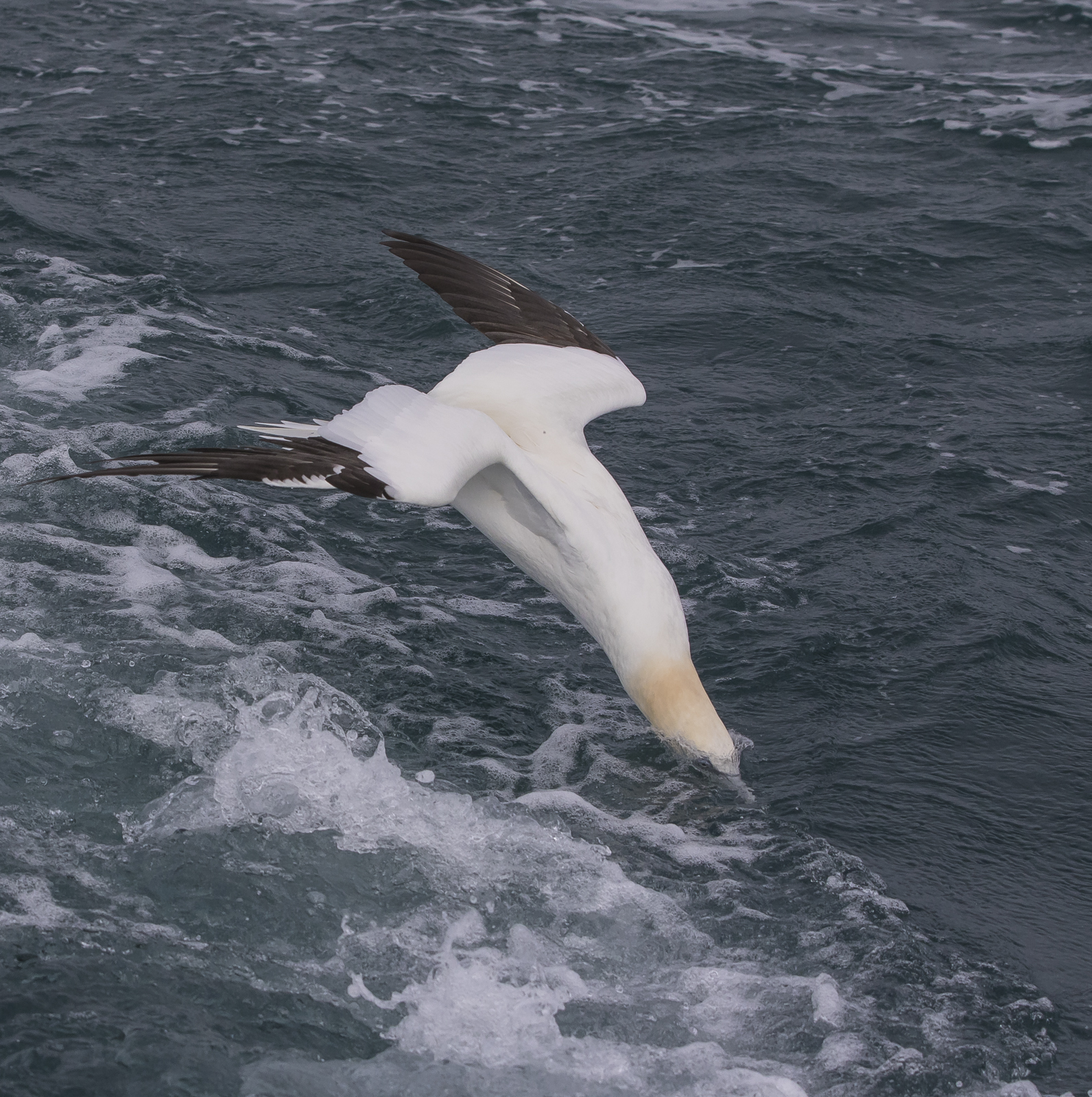
    Northern Gannet landing on water
    Gannet landing on the ocean surface

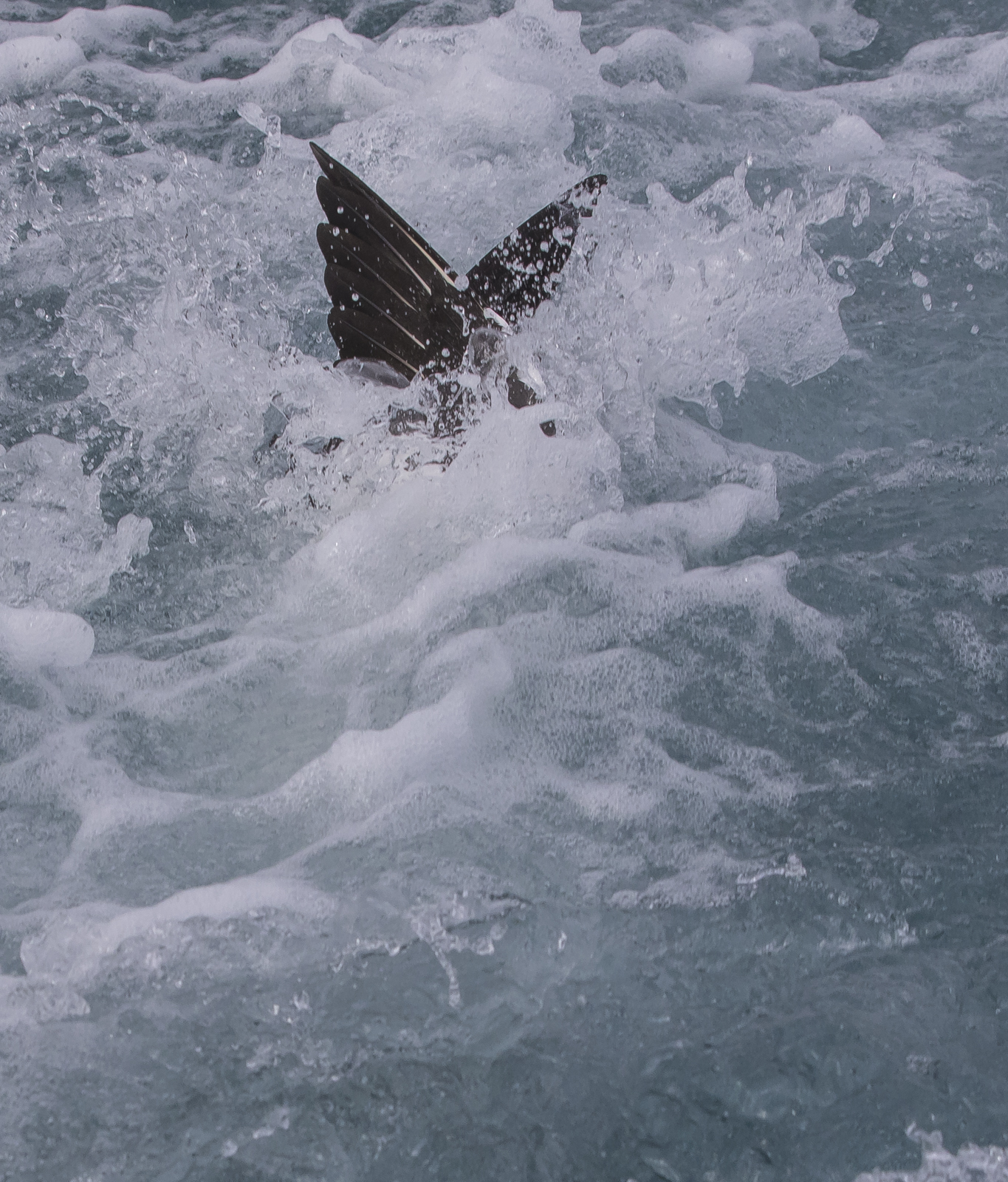
    When not plunging down like arrows shot into the water, the gannets often employed another type of shallow dive. They hover just above the water surface, touch down, and then stick their head and neck underwater.

    Northern Gannet landing on water 1
    Gannet doing a shallow dive while landing on the water

    Maybe they can’t help themselves and they just have to at least take a look underwater when they land on it.

    Northern Gannet sitting on water
    The gannets took turns diving, then briefly resting on the surface
    Northern Gannet swallowing lifting off water
    Their lift-off is rather clumsy

    As the afternoon continued, the gannets began to alternate between bouts of diving and brief spells of landing on the water. This is how they also often behave during migrations, slowly making their way from the breeding grounds in the far north to feeding areas along the east coast. Now that I have spent a day with the divers, I really want to travel north to see their breeding colonies. There are an estimated 60,000 breeding pairs on Bonaventure Island in Canada, one of the six main breeding sites for North Atlantic northern gannets. What a sight that must be! Until then, I will seek out time with these amazing arrows of the sea anytime I can get it.

    Northern Gannet turning to dive 1
    An extraordinary bird, indeed.


  • Pelagic Birding

    Posted by

    You may know the true observer, not by the big things he sees, but by the little things; and then not by the things he sees with effort and premeditation, but by his effortless, unpremeditated seeing—the quick, spontaneous action of his mind in the presence of natural objects.

    John Burroughs, 1905

    I had the good fortune to do something this past weekend that I have never done – go on a pelagic birding trip off the coast of North Carolina. I went with a group organized by the North Carolina Museum of Natural Sciences that included some museum staff, educators, and some members of the public interested in birds. The trip was aboard the Stormy Petrel II, a 61 foot charter boat run by Brian Patteson of Seabirding. Though I have been to sea several times on a variety of vessels, this is the first time I have gone off the Outer Banks, and the first time with the primary purpose of seeing birds and other marine life.

    Sunrise
    A beautiful sunrise to start the day (click photos to enlarge)

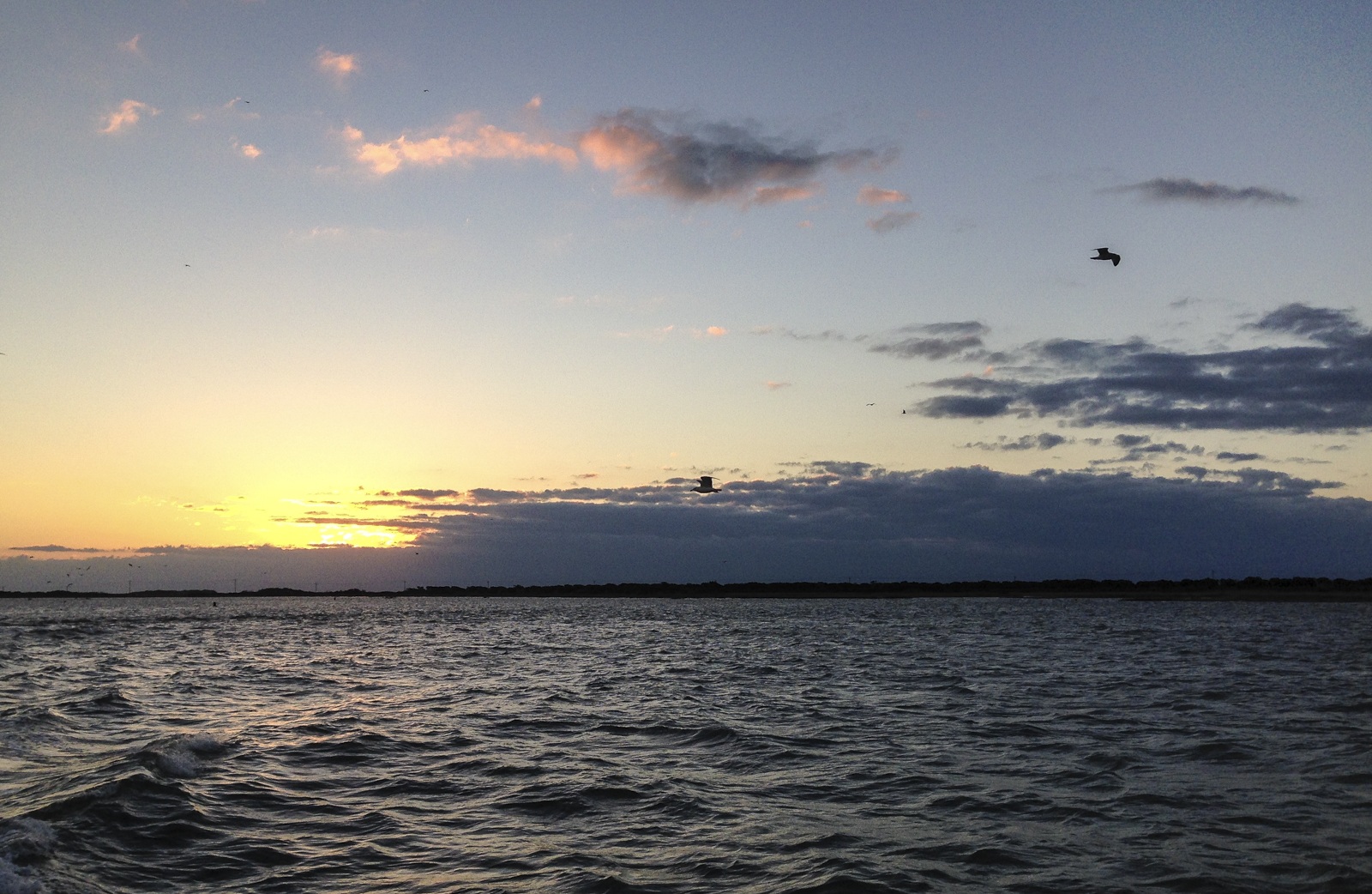
    The day started early with a gorgeous sunrise, which is a good sign if you are heading offshore in winter. It was cold, and I had put on everything I brought with me, just in case.

    Cormorant flock leaving the roost
    Large numbers of double-crested cormorants were starting their day as we headed out

    Birds made their presence known even before we left the dock with a sharp-shinned hawk gliding over us as we listened to our orientation for the charter. I was reminded of the incredible abundance of life on our coast as huge numbers (many thousands) of double-crested cormorants began leaving their evening roosts as we departed the dock.

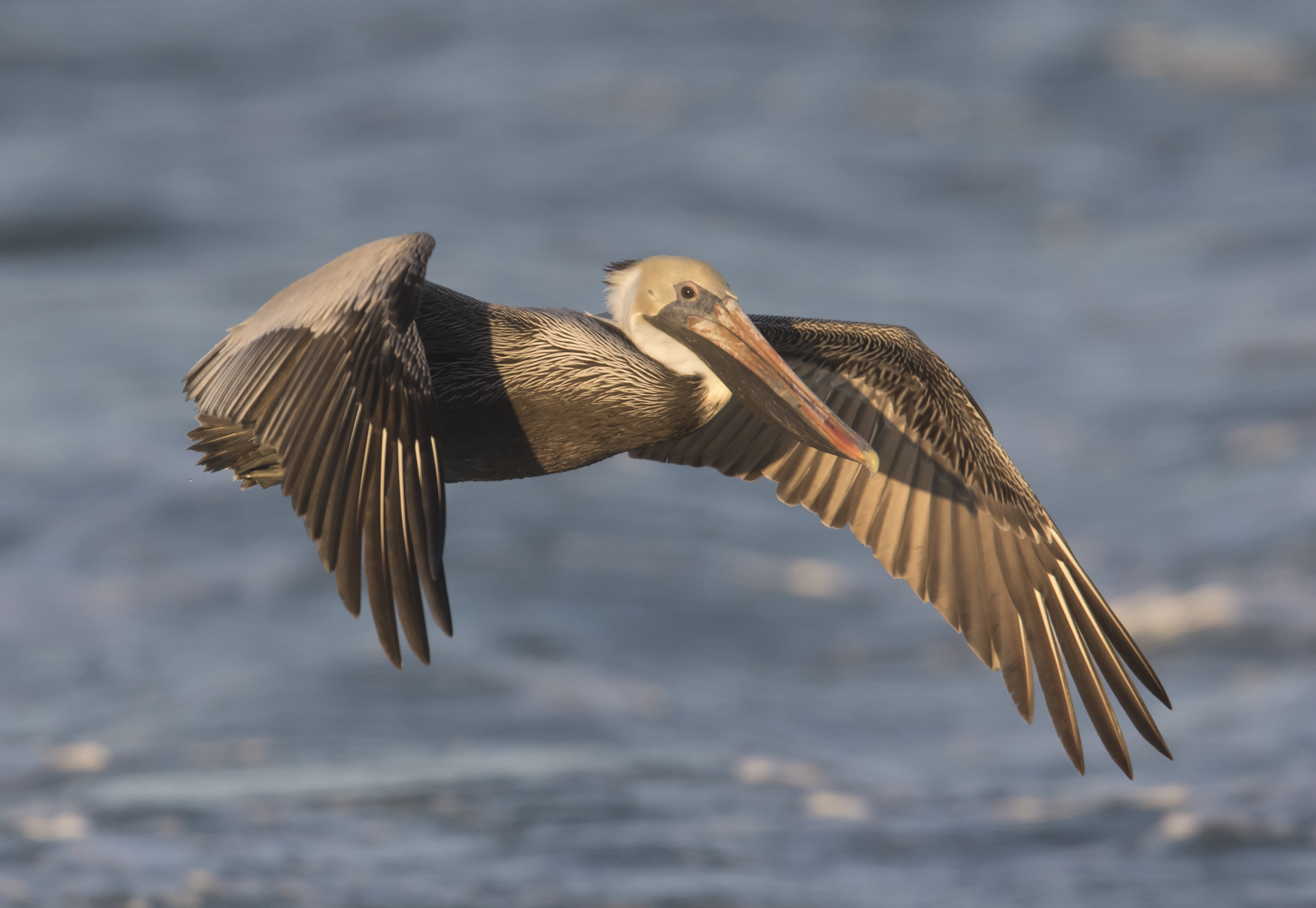
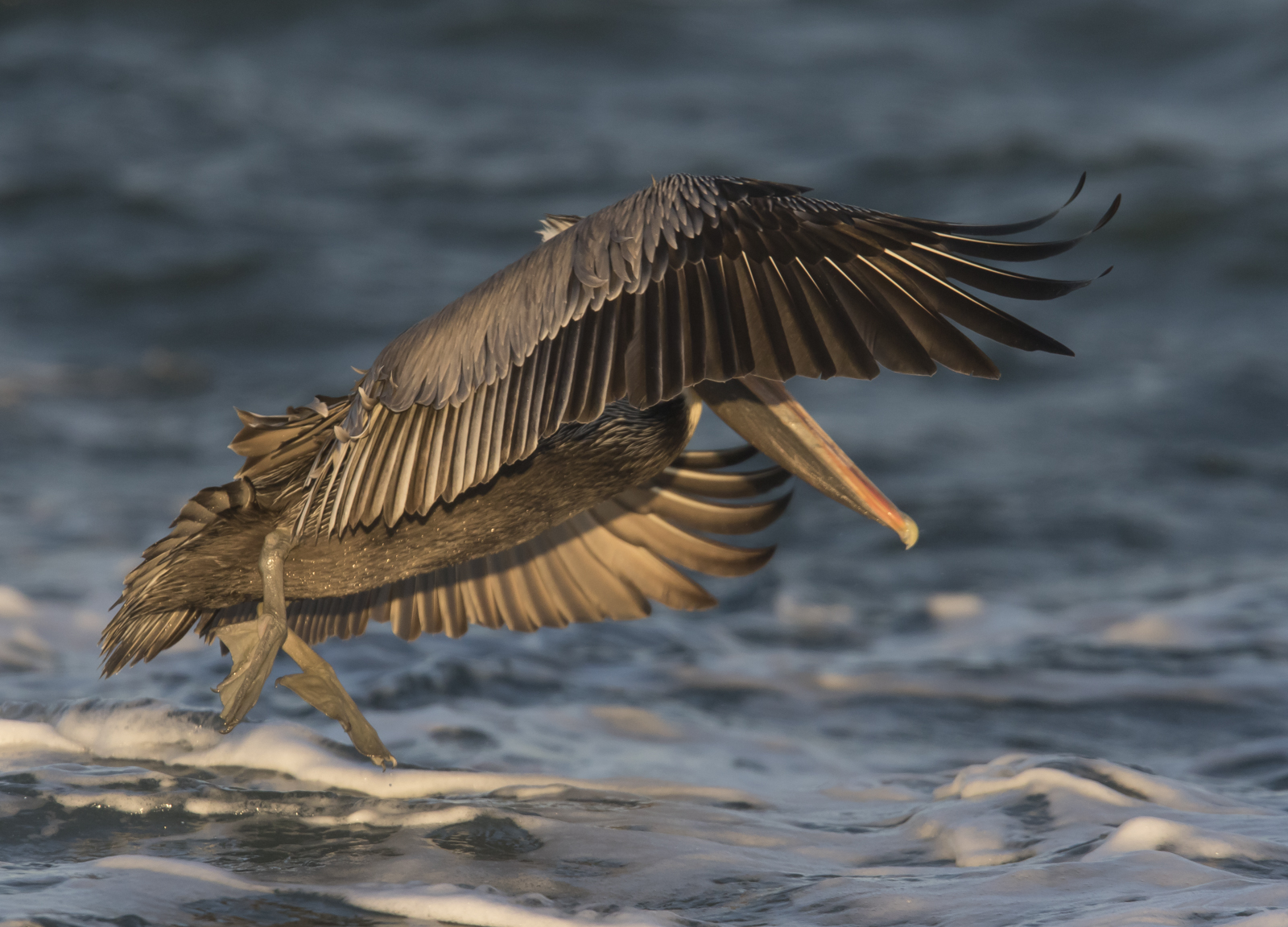
    Brown pelican adult
    Adult brown pelican in early morning light

    A beautiful golden light flooded the scene when the sun cleared the low clouds, making everything glow. Brown pelicans were among the first birds to accompany us as we headed through Hatteras Inlet.

    Kate
    First mate, and birder extraordinaire, Kate, throwing out some chum behind the boat

    It didn’t take long to realize that the excellent reputation I had heard for the birding (and other) knowledge of Brian and his crew are well deserved. Brian and his first mate, Kate, both have extensive knowledge of the area and its abundant wildlife. They quickly picked out rarities among the hundreds of birds surrounding us and could do so at incredible distances (on a boat that was rocking fairly significantly at times). The John Burroughs quote above is for the museum staff, and some of the birders aboard, but especially for Brian and Kate. It is always a joy to be out in the field with people that are both knowledgeable about the area, and passionate about what they do.

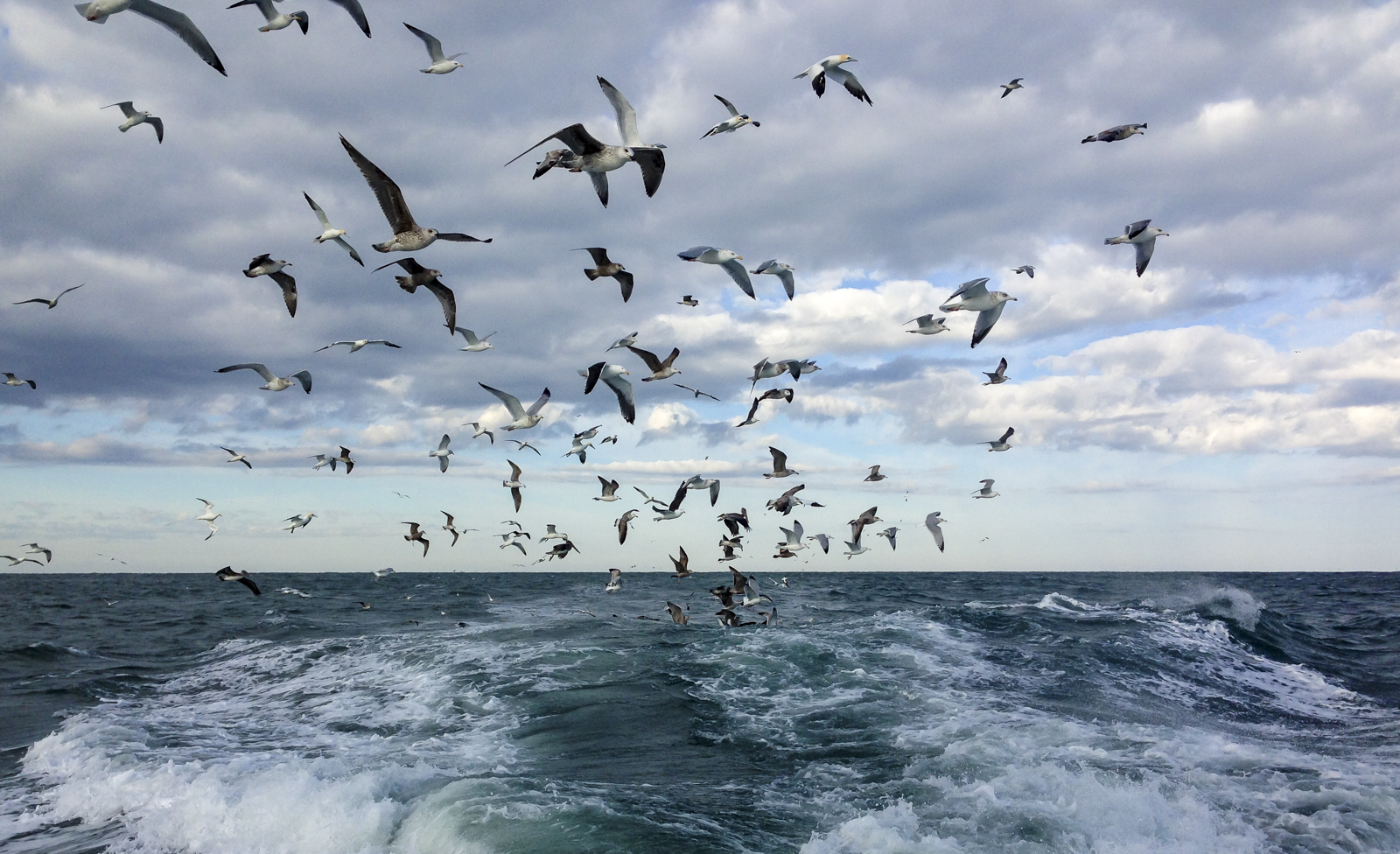
    Birds following the boat
    Birds following the boat

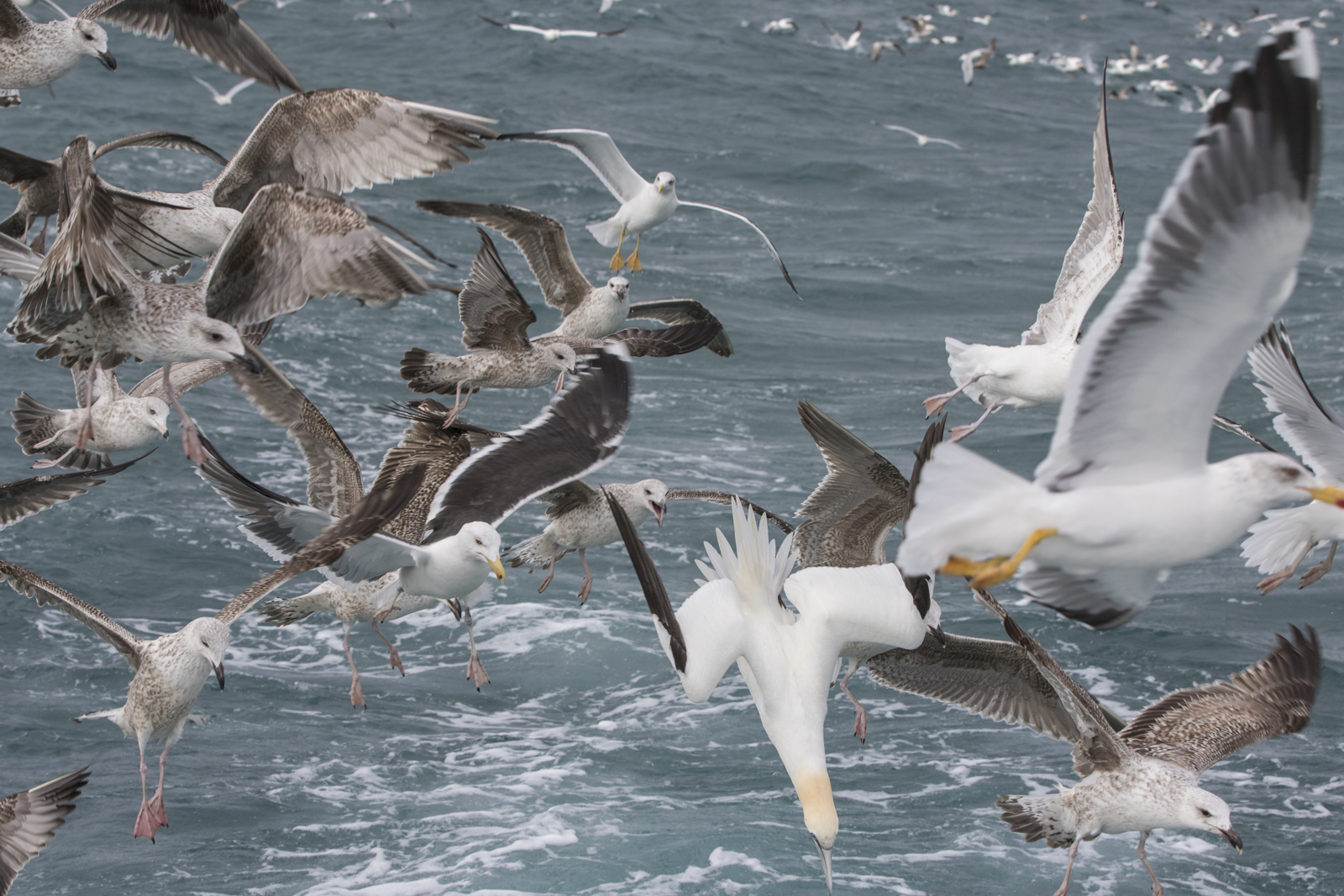
    As we got offshore and began to throw chum off the stern, the bird assemblage grew in numbers and diversity. At first it was mainly several species of common gulls, some pelicans, and northern gannets, then some rarities, that are seldom seen from shore, started to accompany us.

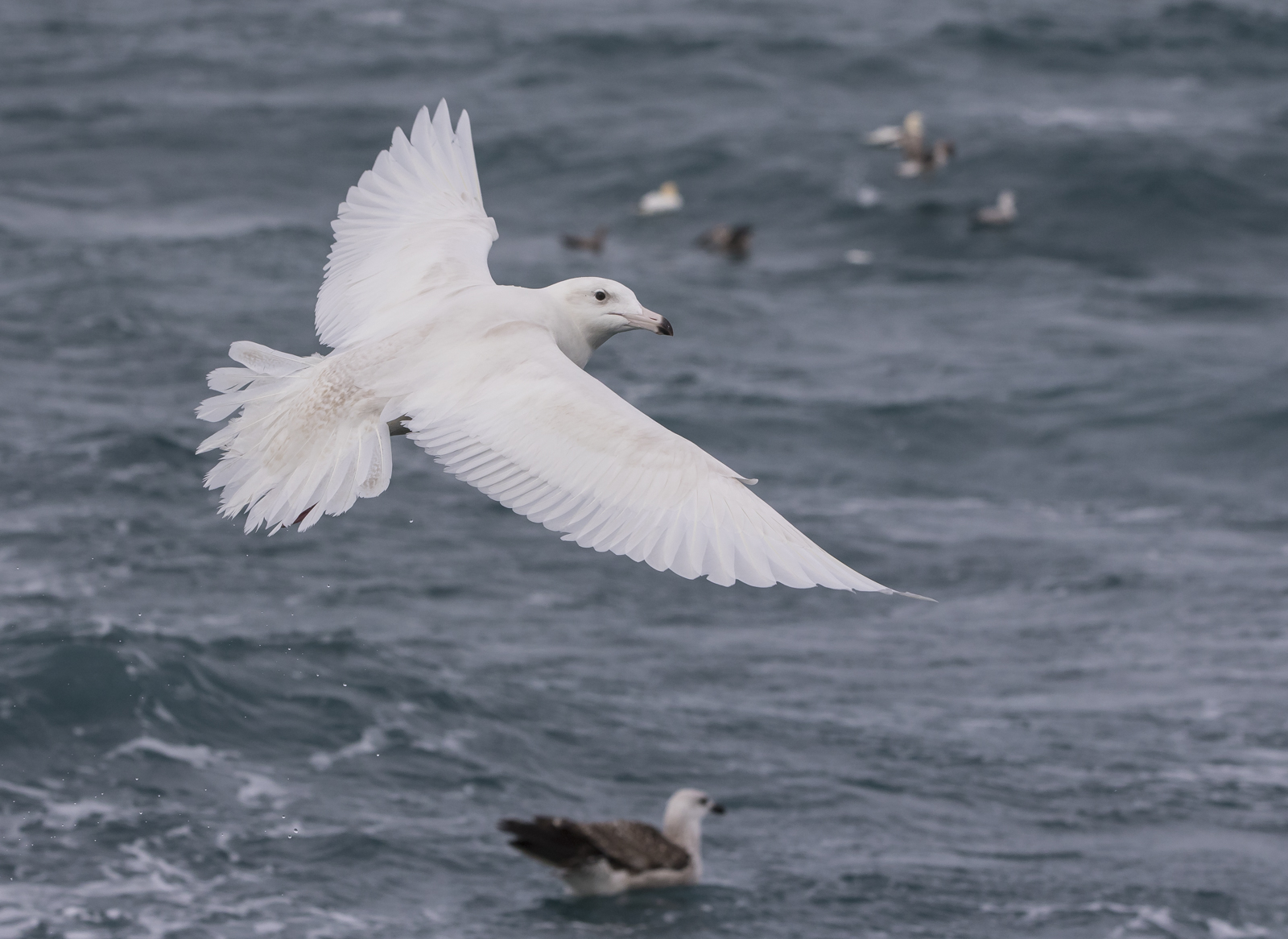
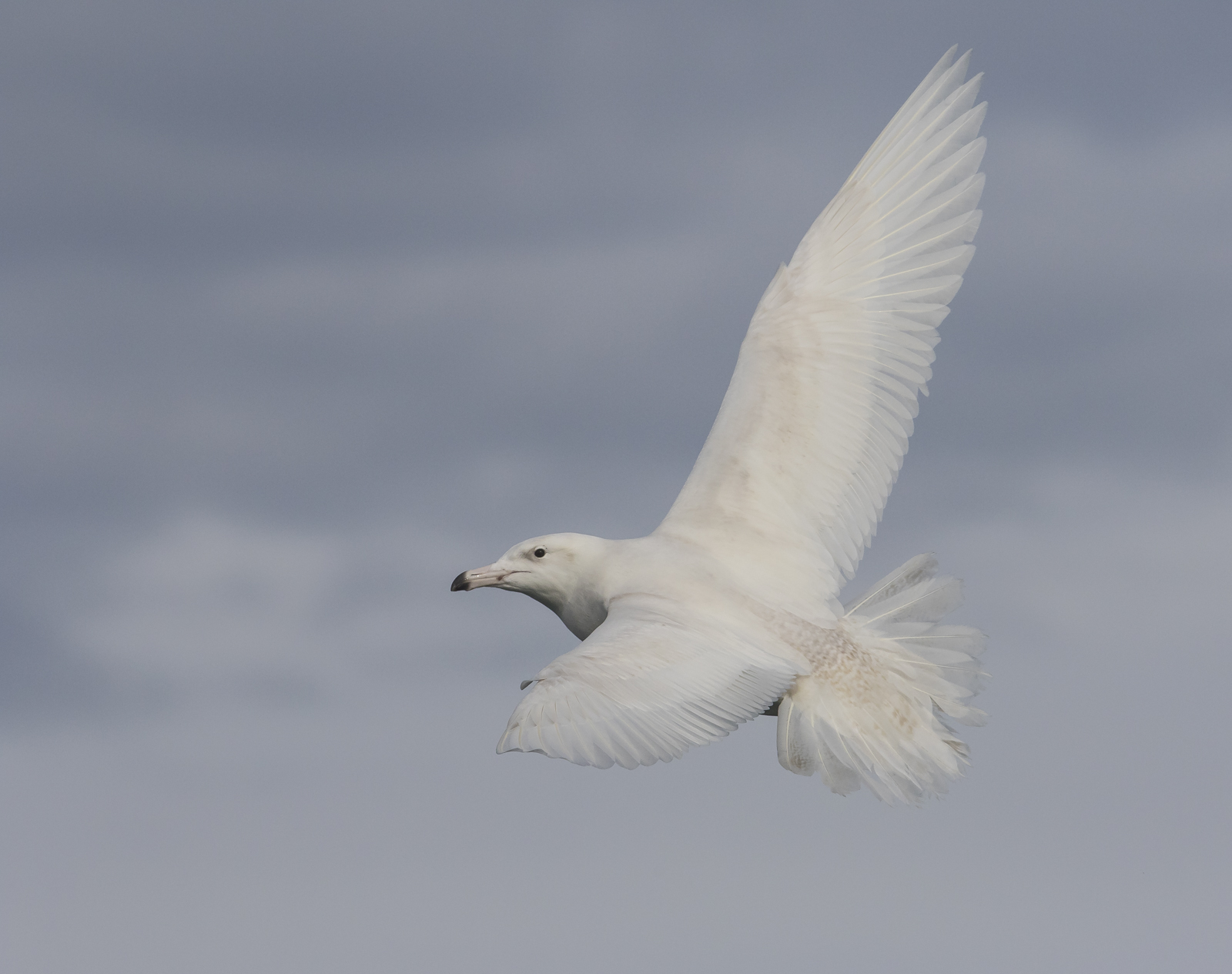
    glaucous gull 1
    Glaucous gull is a new species for me

    One of the first was a new species for me, an incredibly beautiful glaucous gull. This large white gull is an immature bird with some faint mottling and a black-tipped bill.


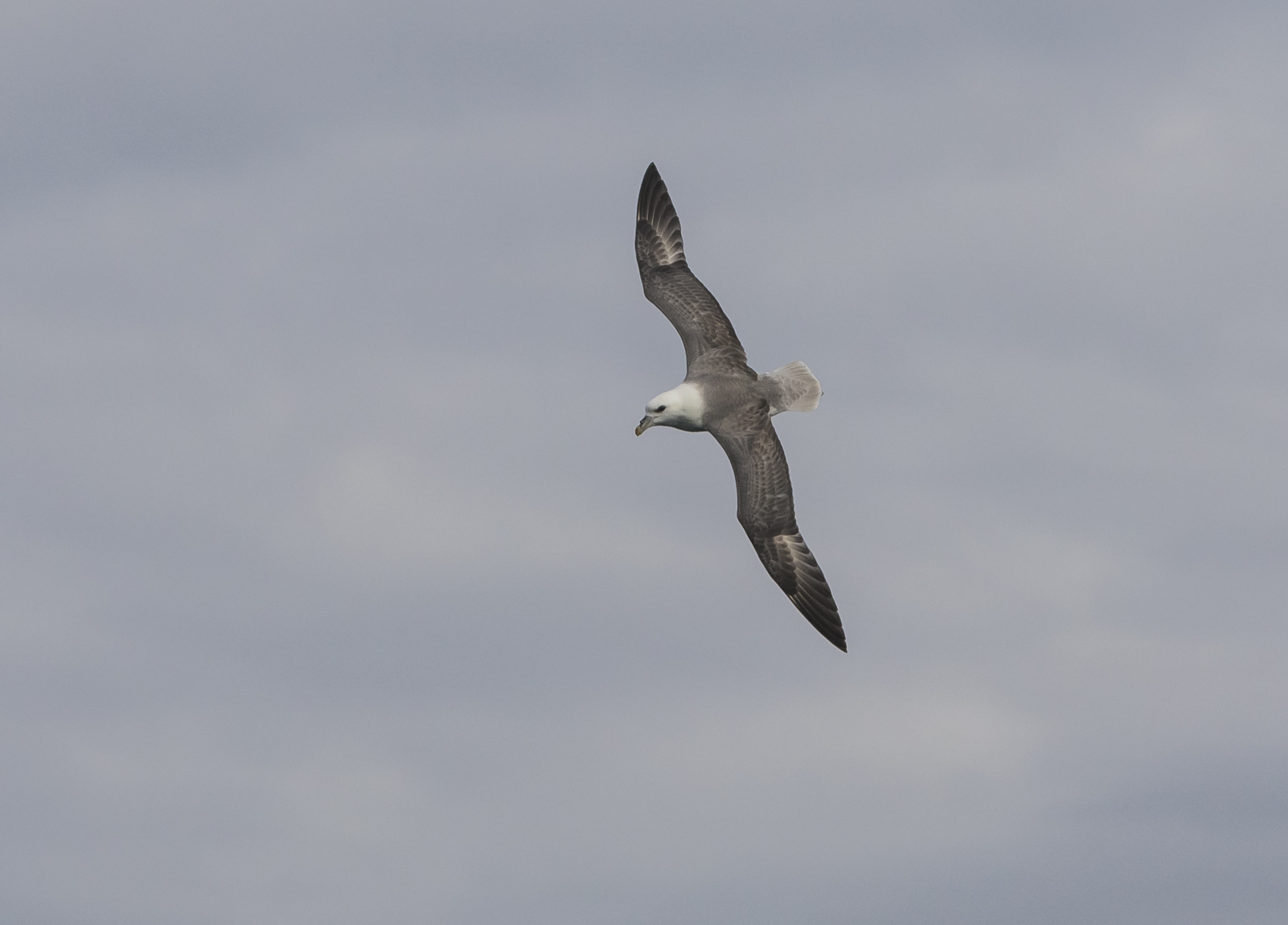
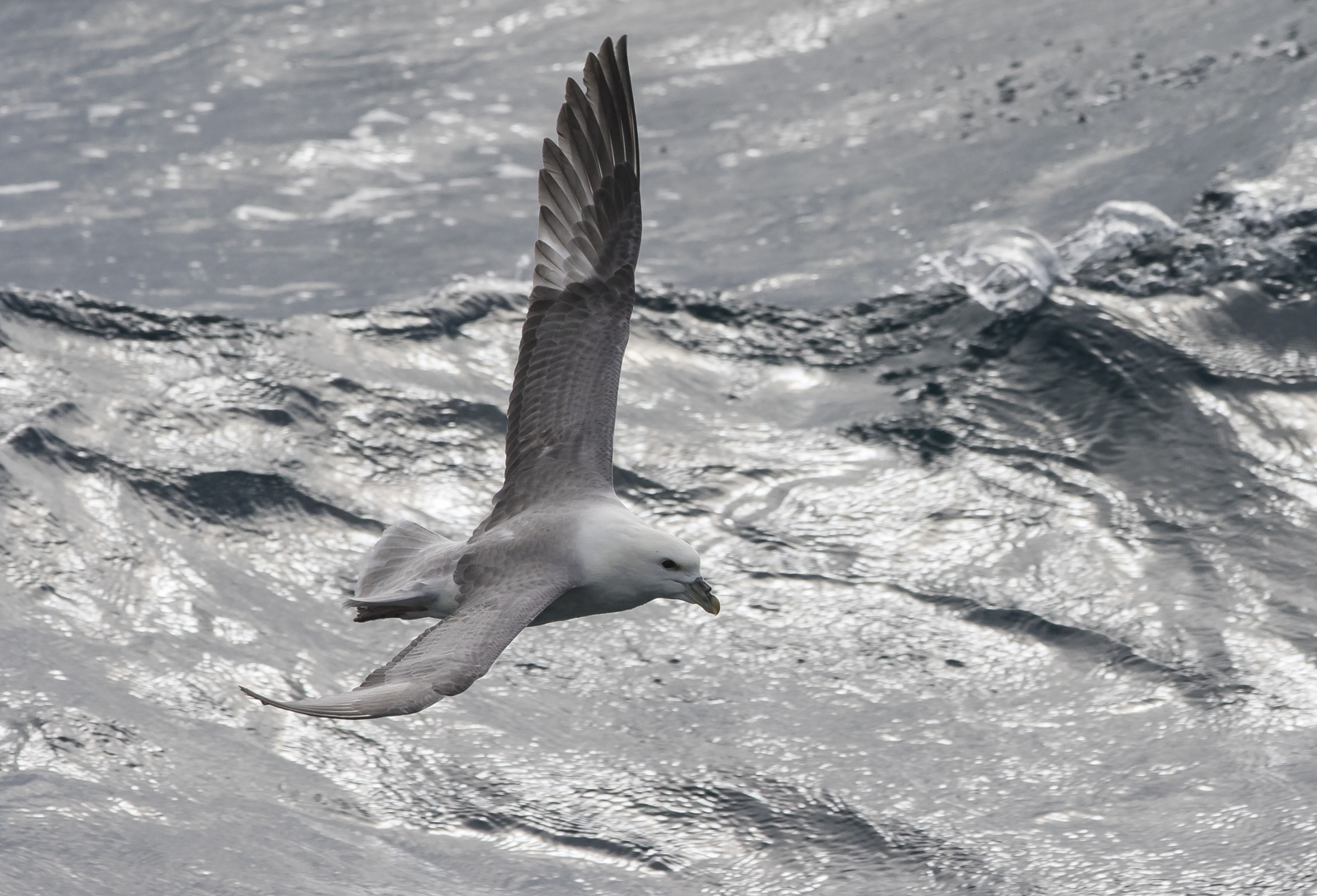
    northern fulmar 1
    Northern fulmar rocketing by the boat on outstretched wings

    Next was a species I had seen a decade ago when I was lucky enough to spend time in the Arctic aboard a Russian icebreaker on a climate research and education mission. Northern fulmars are somewhat gull-like in appearance. They have thicker necks and can be recognized at great distances because of their flight pattern – rapid, stiff wing beats, or long periods of soaring, often in an undulating pattern above the waves, with stiff wings, and often turning with wings held perpendicular to the ocean. They are fast, efficient fliers, built for taking advantage of the uplift from ocean waves. They can be variable in color, but we mainly observed the lighter color form.

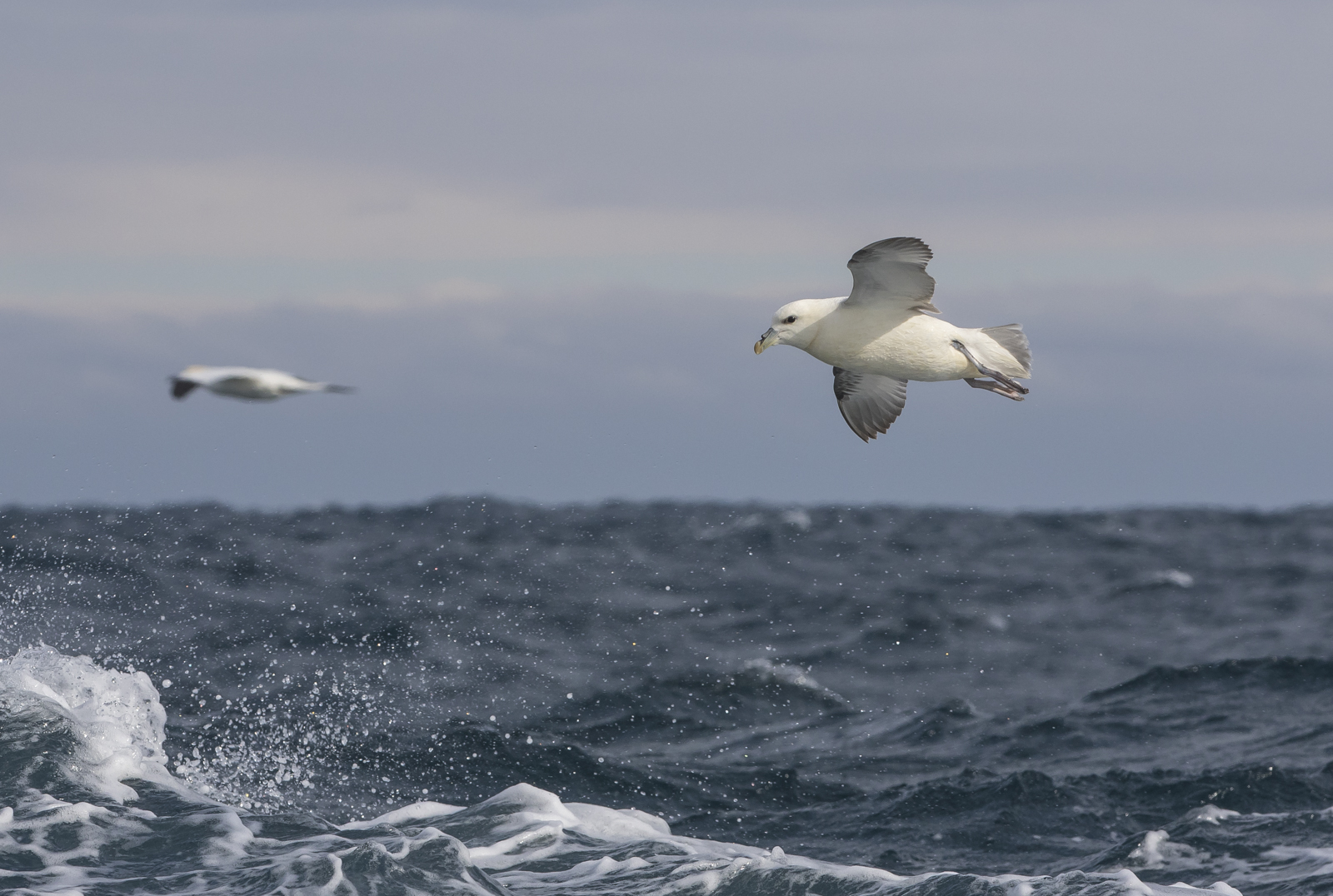
    northern fulmar 3
    Fulmars are one of the tubenoses, recognized by a hollow ridge on top of their bill

    Fulmars belong to a group known as tubenoses along with albatrosses, petrels, and storm-petrels. These pelagic species must drink sea water, and therefore are adapted to rid themselves of excess salt via active salt glands. The tubular structures on top of the bill are thought to help direct the excretions from the salt glands away from the eyes. The tubes also play a role in the well-developed sense of smell that these birds use to find food in their vast ocean habitat. A keen olfactory sense is rare among birds, but tubenoses use both sight and smell to locate food. They are known to fly back and forth into the wind tracing the source of a food smell.

    northern fulmar 2
    Northern fulmars are a long-lived species

    Many pelagic species are long-lived and take years to reach breeding age. Northern fulmars may be one of the champions in this regard. They generally do not breed until they are 8-10 years old, and may live 40 or more years. One reason they may live so long is that both chicks and adults have what seems like a very effective deterrent to predators – they can eject a foul-smelling stomach oil up to several feet. This can be particularly effective against avian predators as the oil can mat the feathers together, causing the death of the predatory birds.

    the change
    At “the change”, where warm waters (bottom) meet colder waters

    Not far offshore we reached what the captain called, “the change”, a zone where two water bodies of different temperatures converge. It was immediately noticeable by a distinct line between water of two colors – a brownish tint to the colder inshore waters of about 50+ degrees F, and the clear, blueish-green waters with temperatures around 70 degrees F. This zone creates a concentration of sea life and sea birds.

    razorbill flock
    A flock of razorbills

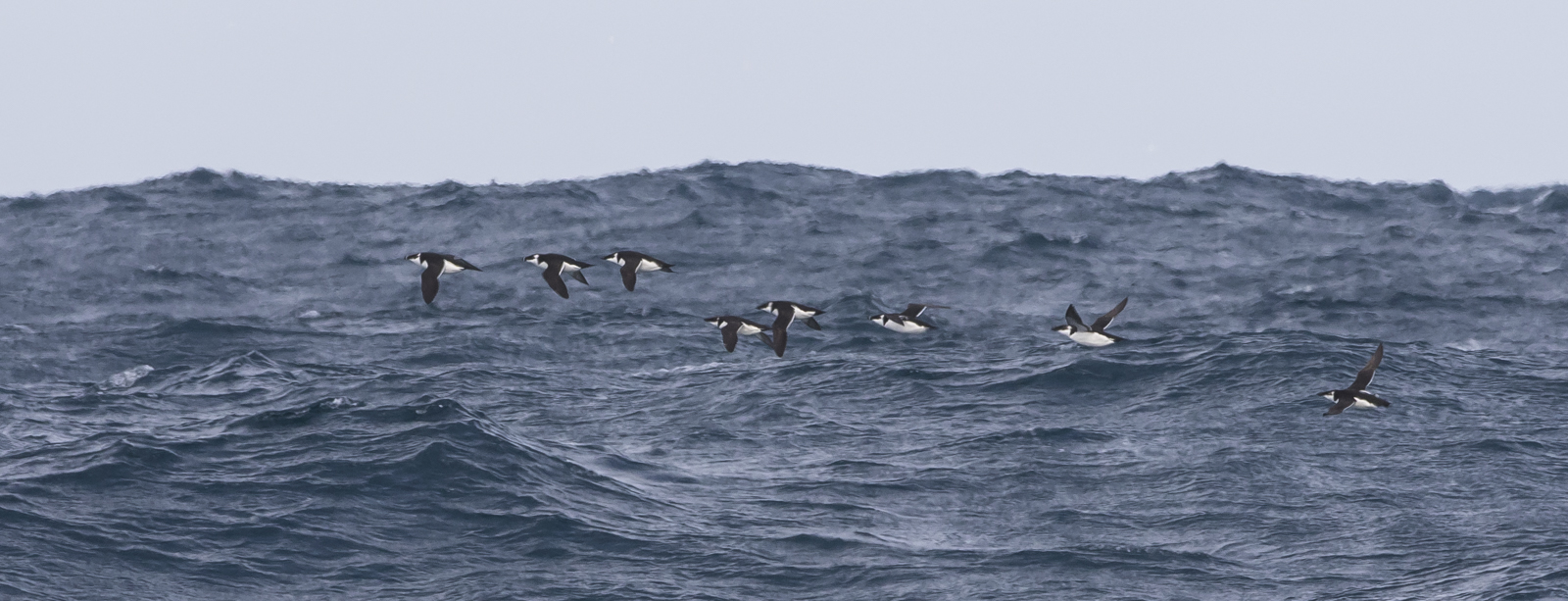
    In addition to the fulmars, we started seeing scattered small flocks of razorbills streaking just above the waves. Razorbills are in the group known as alcids that also includes Atlantic species such as puffins, murres, and dovekies. This group, also known as the auks, all have short, somewhat stiff wings that they use in pursuit diving for their oceanic prey of small fish and marine invertebrates. They tend to fly low over the water with rapid wing beats.

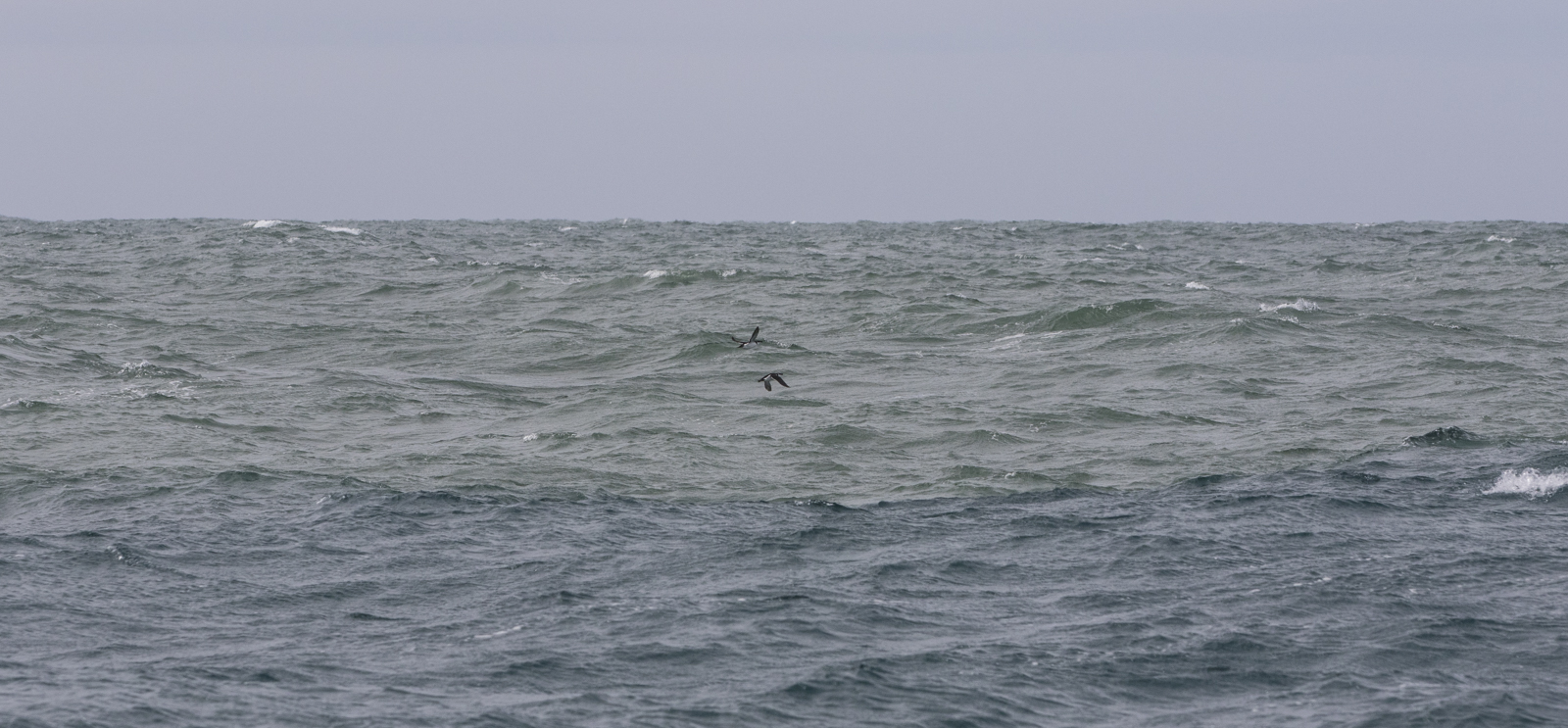
    Atlantic puffin taking off
    An Atlantic puffin

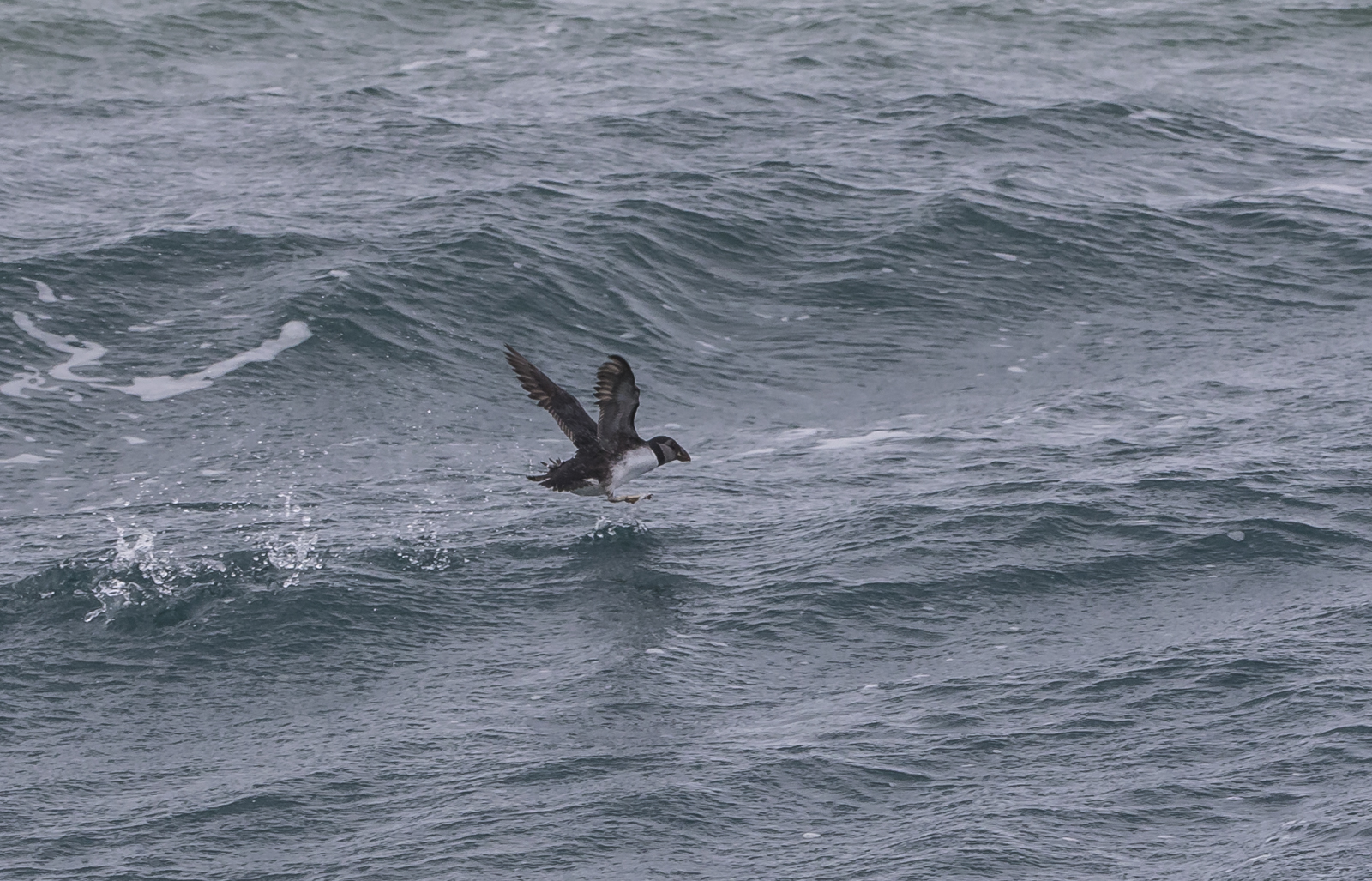
    We did see a few Atlantic puffins, although most at a bit of a distance. A few kept leaping out of the water, flying low for a short distance, and then plunging back into the waves. The abundance of gulls, especially larger predatory species such as great black-backed gulls, was apparently enough to make these small birds very nervous about being exposed on the surface.

    black-capped petrel 1
    Black-capped petrel

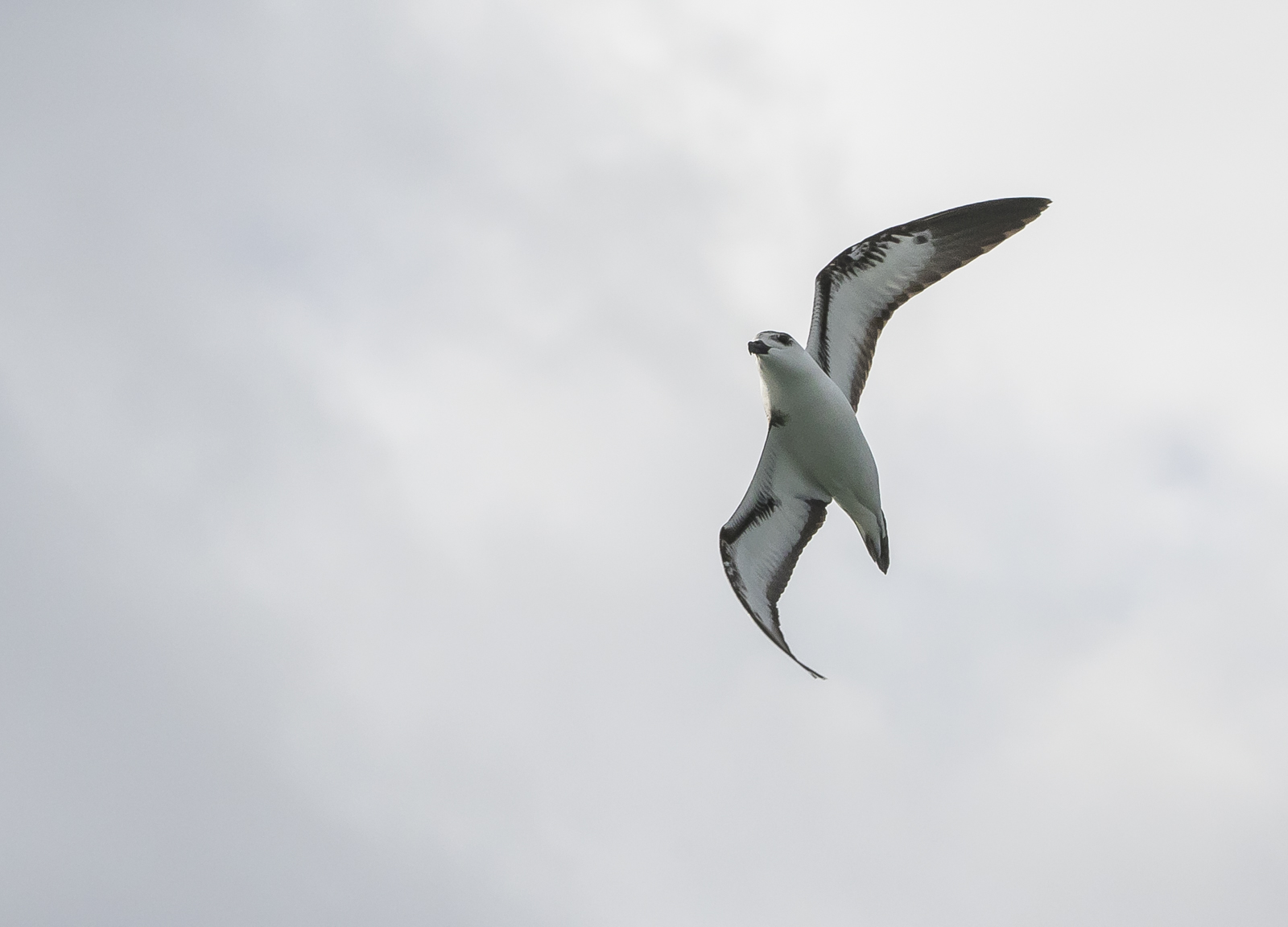
    At one point a shout went out from the bridge – “black-capped petrel off starboard”. This is a species not often seen this close to shore, so it was a great find on our cruise.

    sooty shearwater
    Sooty shearwater

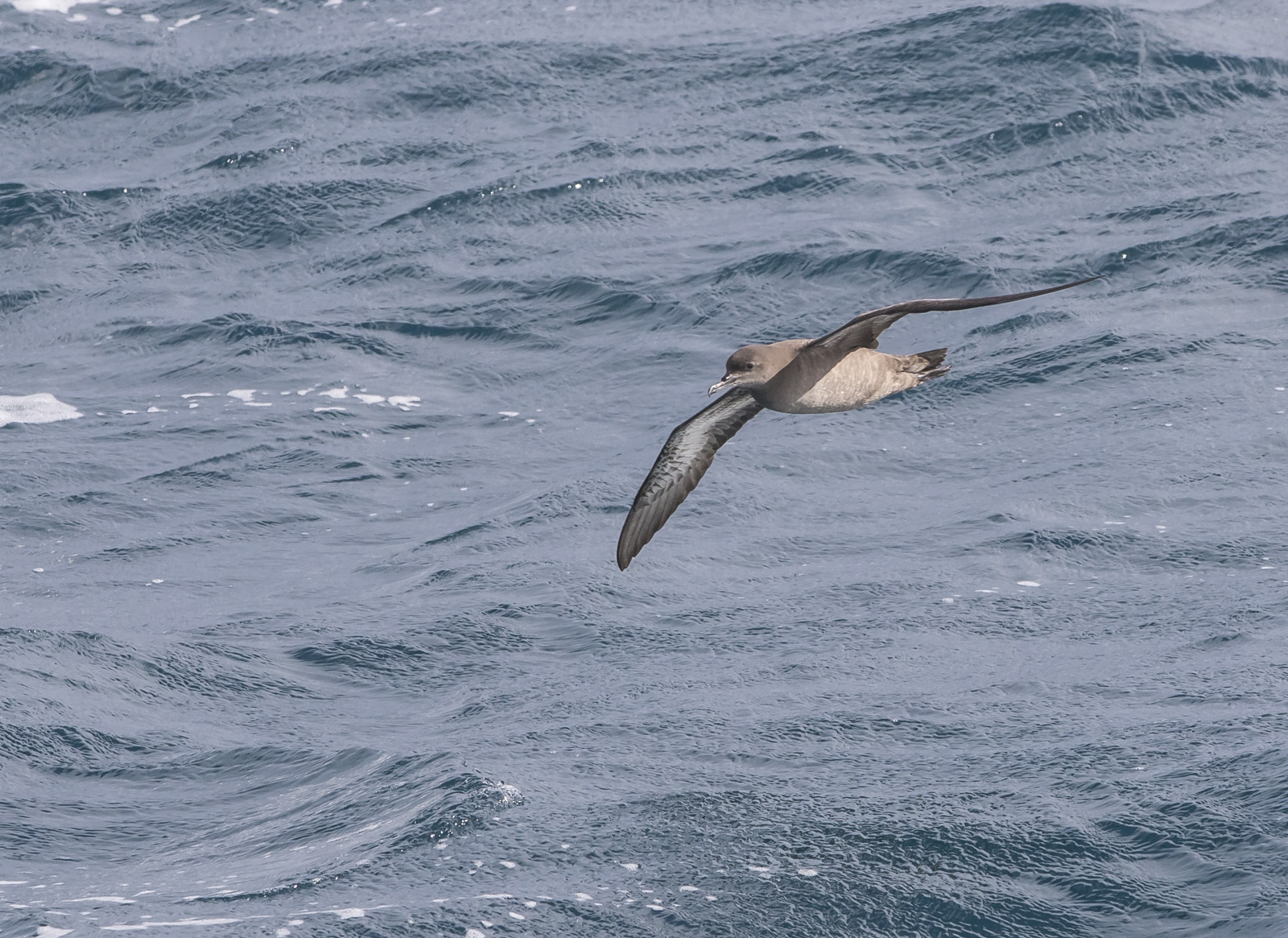
    We also saw a couple of shearwaters, another type of tubenose. A manx shearwater made a quick pass and a sooty shearwater stayed with us for several minutes, joining the feeding flock behind the boat. They exhibit what is called dynamic soaring, alternating between arcing above the water and dipping and soaring just above the wave tops (“shearing” off the top of the water).

    loggerhead sea turtle
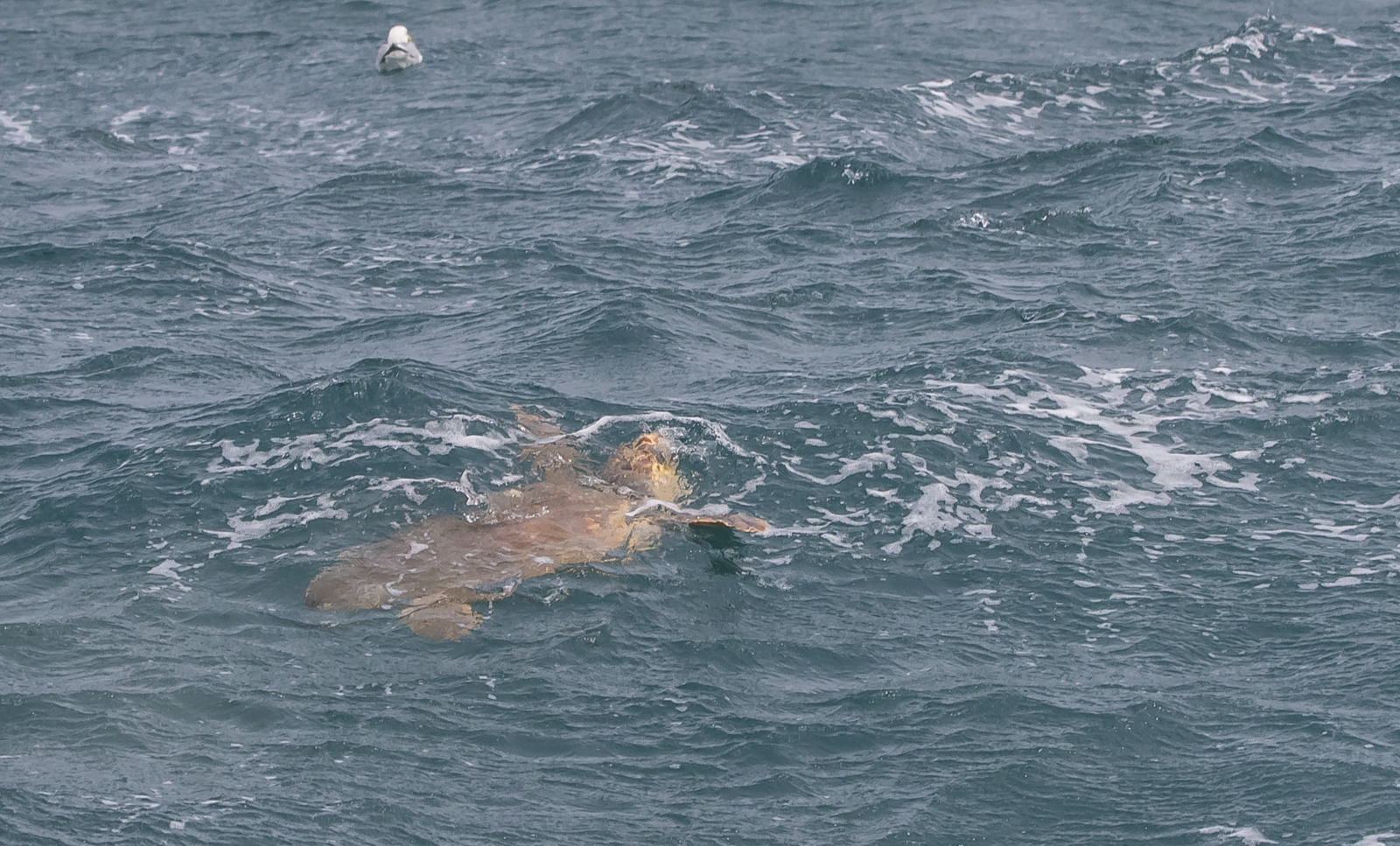
    One of several loggerhead sea turtles we saw

    The abundance of life in this zone included many species other than birds. We saw several sharks, including a couple of very large hammerheads, plus a number of sea turtles.

    mola mola
    Ocean sunfish fin sticking out of the water

    A highlight for many was the appearance of a huge ocean sunfish, Mola mola. These bizarre-looking fish are the largest of bony fishes in the sea, reaching up to ten feet in length and 5000 pounds.

    spotted dolphin underwater next to bow
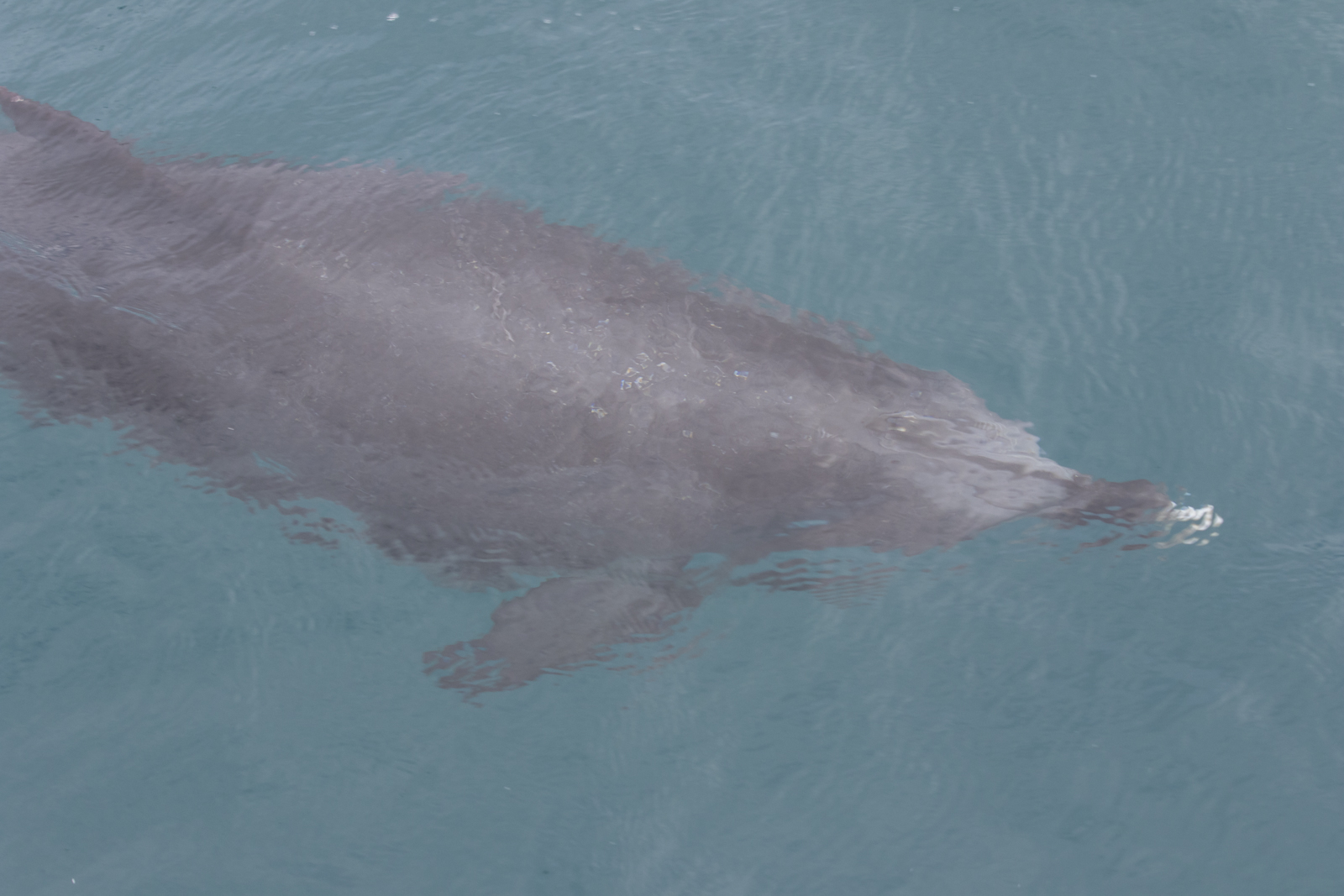
    Atlantic spotted dolphin next to the boat
    spotted dolphin leaping back into water
    The dolphins enjoyed riding the bow wave

    While cruising back and forth within sight of the Diamond Shoals Light, we were entertained by a pod of Atlantic spotted dolphins, Stenella frontalis. These beautiful creatures of the Gulf Stream frolicked next to the boat for many minutes, riding the bow wave and occasionally leaping out of the water to the excited shouts of everyone (even those that were experiencing the scourge of rough waters, seasickness).

    Pelican guest
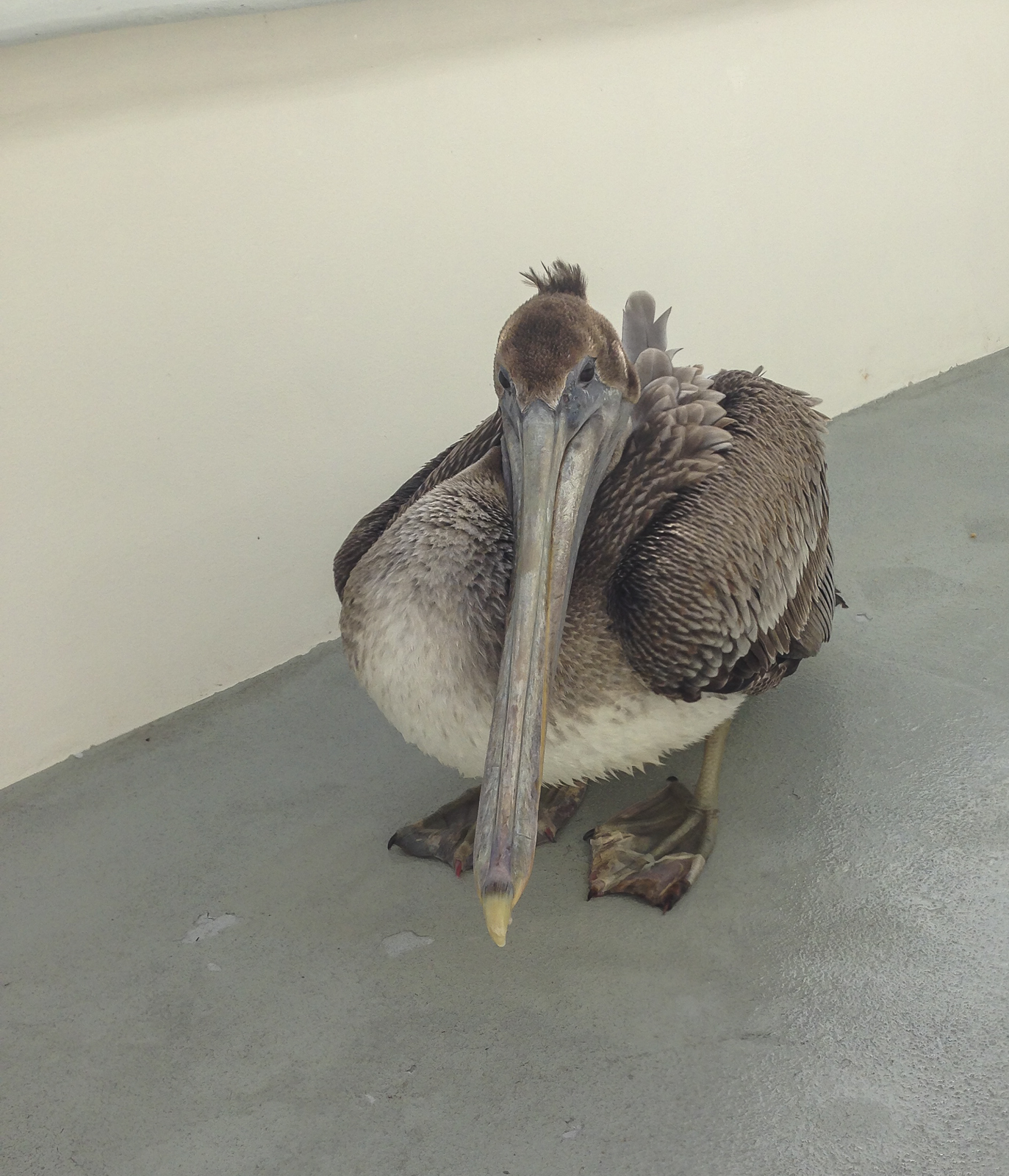
    Look who is coming aboard!

    We also had a close encounter of the pouched kind…a juvenile brown pelican landed on the top deck of the boat and sat up there for quite some time before flopping down on the head of someone trying to recover from her queasiness on the rocking boat.

    Pelican guest 1
    This pelican hitched  ride with us for a couple of hours

    Kate helped the bird off the boat not once, but twice before it got the message that this cruise was for paying passengers only. It was an incredible adventure for everyone. The museum staff had prepared everyone well for the journey with information on hat to bring and how to best avoid seasickness. They also had given great information on some of the species we might expect to see. I ended up taking more photographs than I ever have in one day, many taken while trying to capture the amazing dives of the elegant northern gannets that accompanied us all day (more on that in the next post). For more information on the trip, including a species list, you can visit Brian’s blog. For a good overview of the importance of this area to marine life, I highly recommend the book, Gulf Stream Chronicles, by the late Dave Lee, an ornithologist at the NC Museum of Natural Sciences. Dave worked for years helping to document the bird life and other marine species found off the Outer Banks and helping reveal how rich this ecosystem is in ocean life. Below are just a few more images from an amazing day in the critically important waters off our coast.

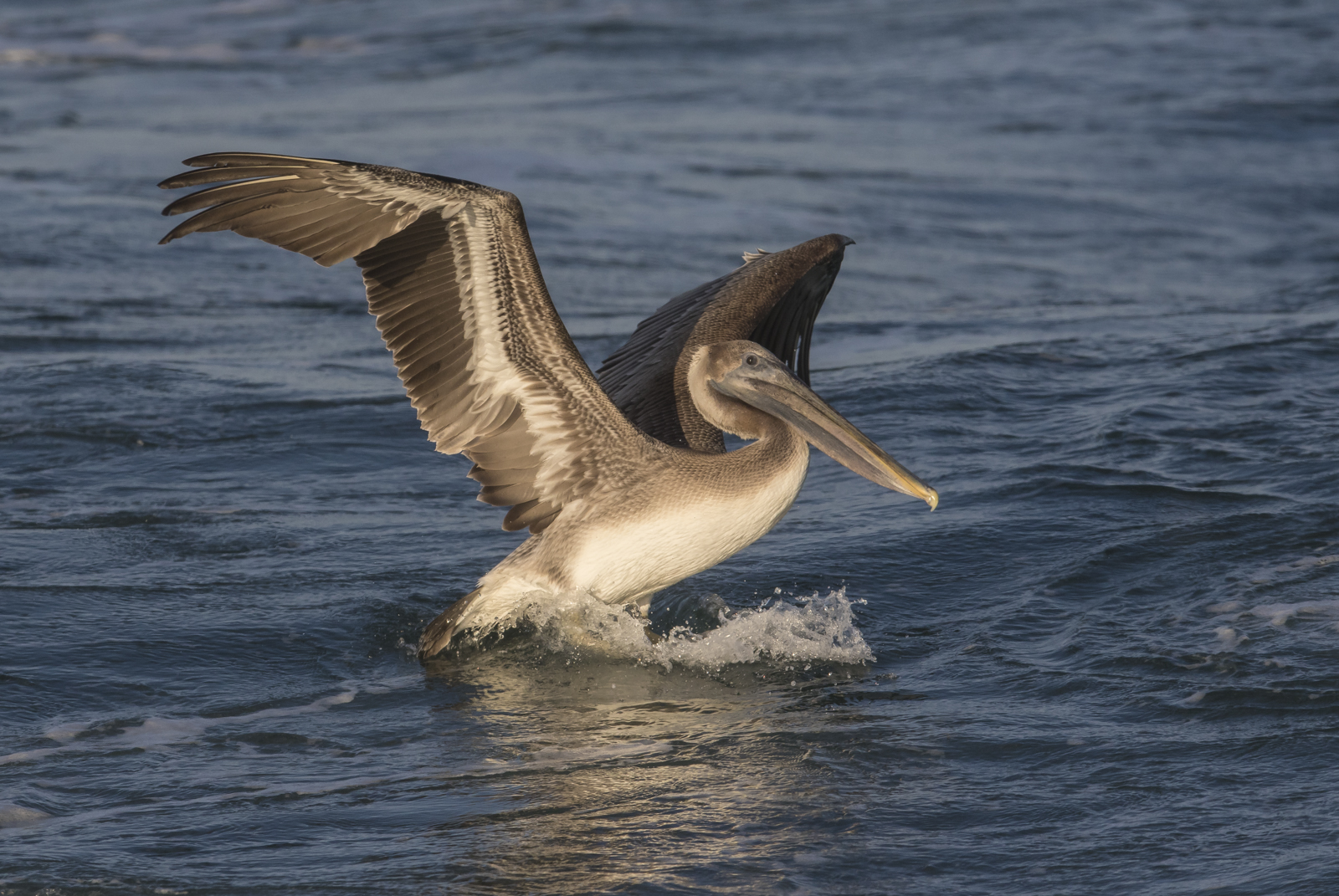
    Juvenile brown pelican landing in water
    Juvenile brown pelican landing behind boat
    brown pelican adult at sunrise
    Brown pelican in the golden glow of sunrise
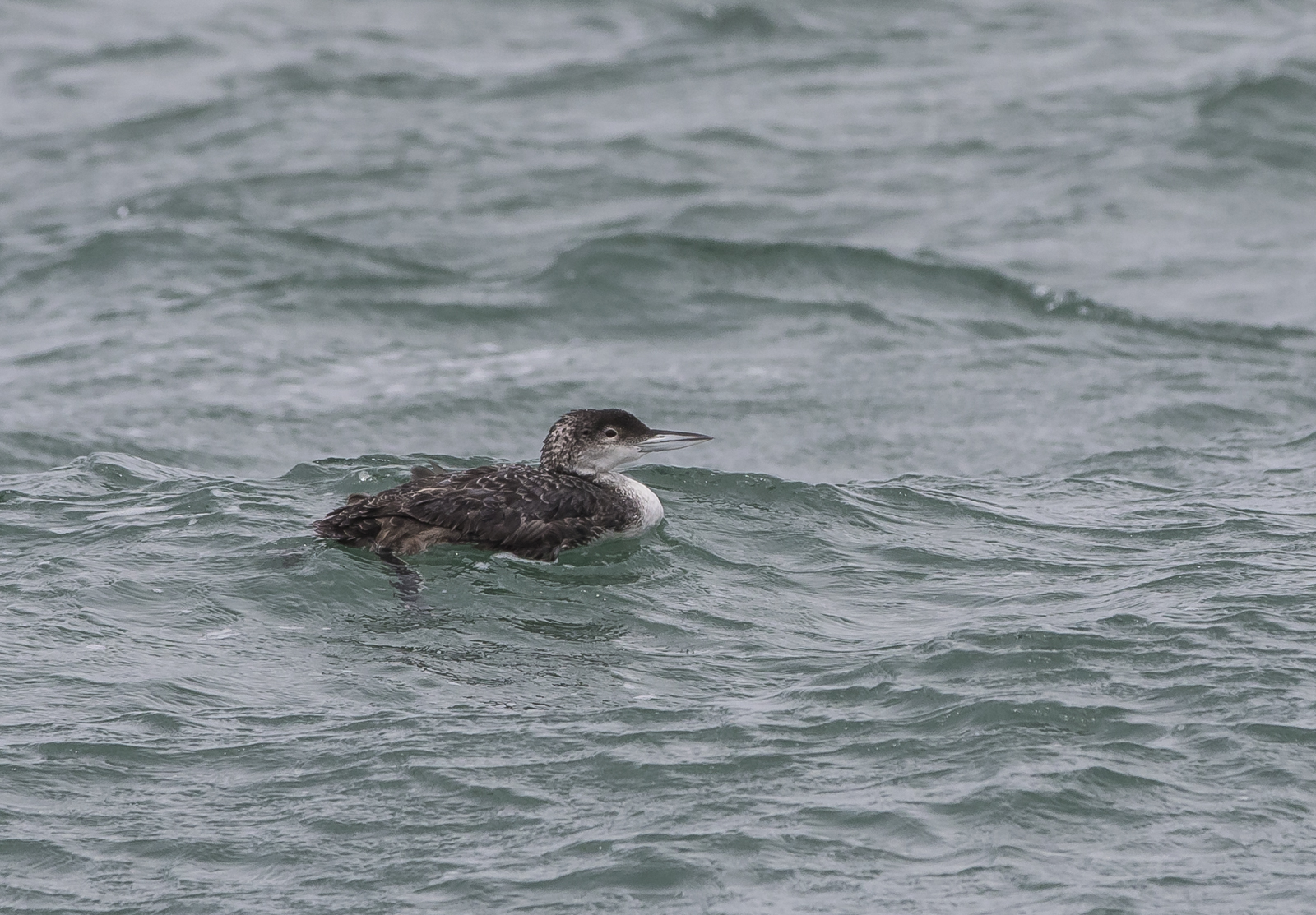
    common loon
    Common loon
    spotted dolphin wave riding
    A dolphin surfaces next to the boat
    glaucous gull 2
    This glaucous gull followed us most of the day
    northern fulmar
    Northern fulmar riding the wind above the waves
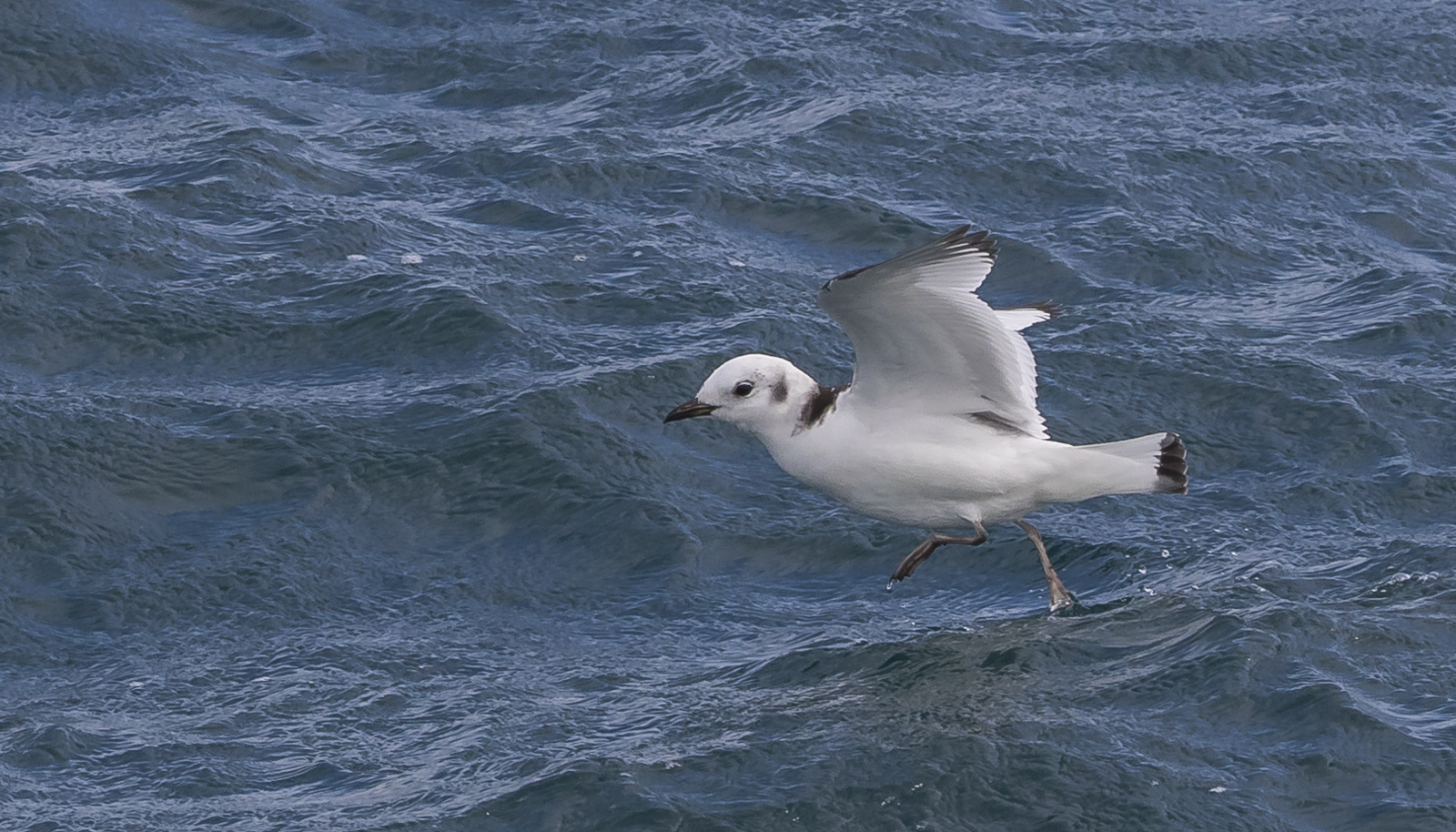
    Black-legged kittiwake
    Black-legged kittiwake
    Mass of birds behind the boat
    Mass of birds feeding on chum behind the boat
    northern gannet
    Northern gannet (more on this species in my next post)


  • Grass with Eyes

    Posted by

    He prefers solitude, and leads the eccentric life of a recluse, “forgetting the world, and by the world forgot.” To see him at his ordinary occupation, one might fancy him shouldering some heavy responsibility, oppressed with a secret, or laboring in the solution of a problem of vital consequence. He stands motionless, with his head drawn in upon his shoulders, and half-closed eyes, in profound meditation, or steps about in a devious way,

    ~Elliott Coues, describing an American Bittern,1874

    One of my highlights of any winter trip to Mattamuskeet NWR is the sighting of a most unusual denizen of the marsh, the American bittern, Botaurus lentiginosus. This is a bird ideally adapted to its surroundings.

    American bittern 1
    American bittern out in the open at Mattamuskeet (click photos to enlarge)

    They can be fairly reliable at the refuge this time of year if you look long enough in the right places. This past trip we managed to see at least 5 individuals, including a couple that flushed from grasses along a canal at Pungo, where they are generally much harder to locate. They are easiest to see when they are feeding right along the edge of the marsh next to the road. I think most people are looking farther out at the numerous waterfowl in the impoundment, and manage to drive by the secretive bitterns without ever seeing one.

    American bittern 3
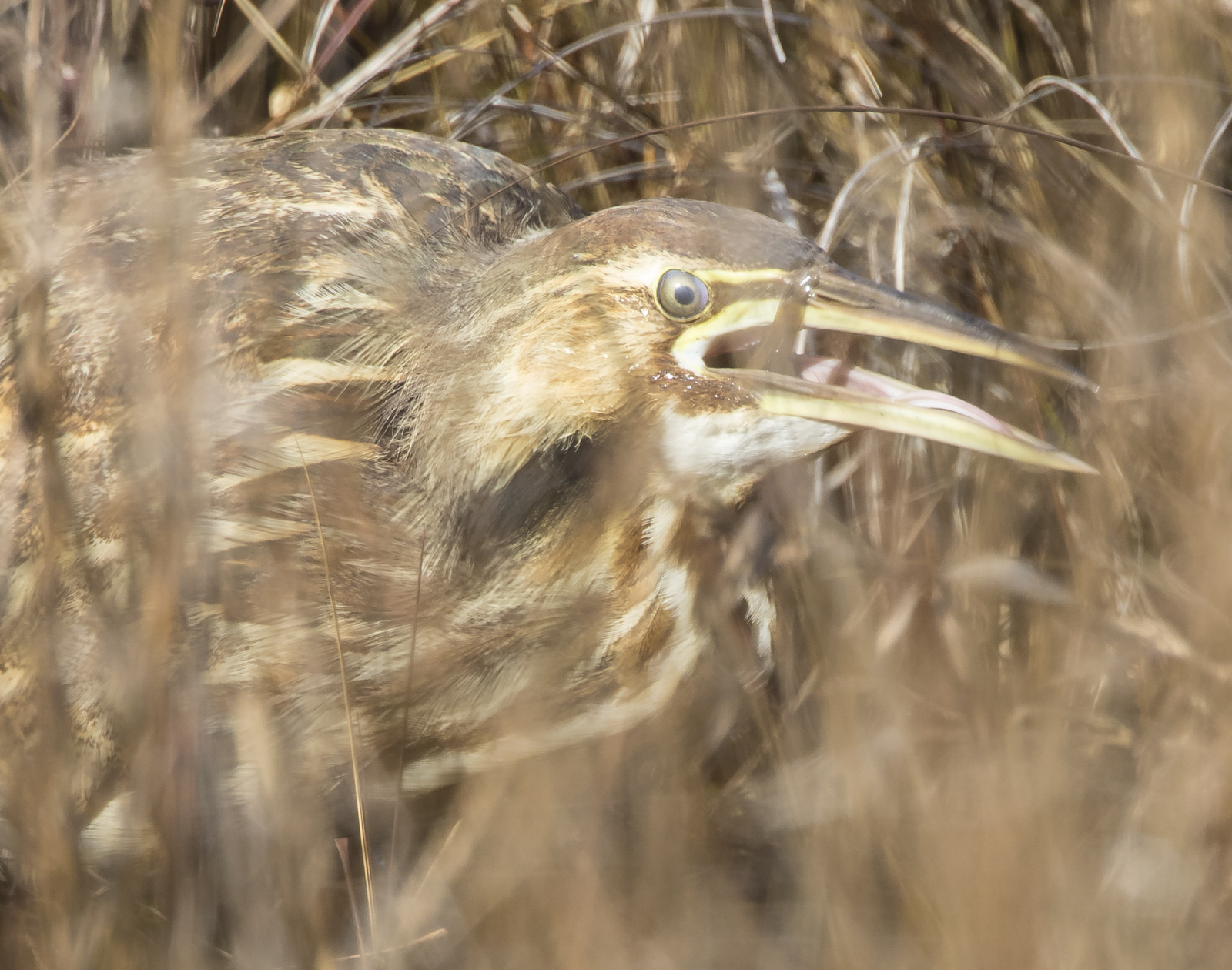
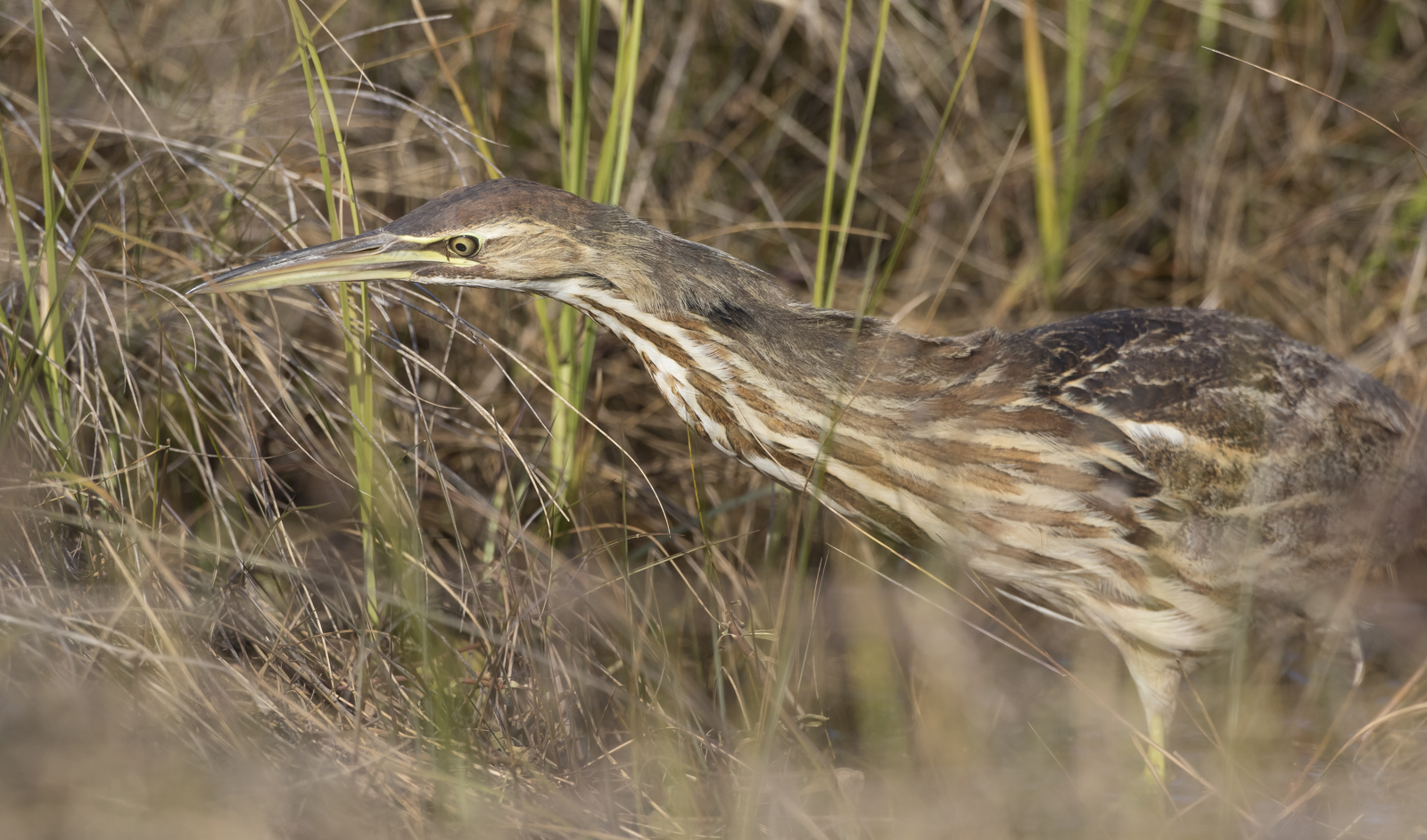
    Grass with eyes and a beak

    I usually coach my participants to look for a clump of grass with eyes and a beak – that’s your bittern. On my last trip, while driving along the road that skirts the northwest shore of Lake Mattamuskeet, I spotted a dark shape in marsh grass next to the road. I shouted, “bittern”, to my group, brought the car to a stop, looked for traffic in my rear view mirror, and then backed up about fifty feet, hoping I was right. I pulled up next to the bird, and I noticed no one said anything, so I said, “right there, next to the car”. Indeed, it was a bittern, and not a bittern-shaped log. Everyone but me ( I was watching for cars) got some great shots, as the light was perfect, and the bittern assumed its upright posture that makes it blend so well with the surrounding grasses. Driving on, we found another near the refuge entrance kiosk. I saw in the wildlife observation notebook at the Visitor Center that someone had spotted the much less common least bittern in this same area the week before. We continued along Wildlife Drive and spotted another American bittern in thick grasses next to the road. This one allowed us to exit the vehicle and watch it for about thirty minutes, as it skulked along, appearing and disappearing among the waves of wind-flattened grasses.

    American bittern 2
    They stalk with a deliberate, creeping motion

    They are very deliberate mash stalkers, slowly, yet smoothly, gliding through grasses looking for their favorite prey.

    bittern eating killifish 2
    A bittern gulps down a killifish snack

    I have seen them eat a variety of food from small fish to tadpoles, large aquatic insects, and even a baby painted turtle.

    American bittern
    Finally out in the open

    They can be a tough subject to photograph, as they usually are found in, or quickly retreat to, thick vegetation. A quick look at their feathers and you can see why – they blend very well with grass stalks in a marsh.

    American bittern eyes 2
    The bittern stare

    When they think they have been discovered by a photographer (or potential predator), they often assume an upright stance, pointing their bill skyward. This behavior has given rise to a few of their other common names such as sky-gazer, look-up, and stake-bird. To complete the disguise, if a light breeze blows through the grasses, a bittern will gently sway back and forth, imitating the movement of its surroundings.

    American Bittern calling
    A male American bittern calling (photo taken in April, 2013)

    A couple of years ago, I reported about finally hearing the strange mating call that has given this unusual bird a host of other odd-sounding names like thunder pumper, water-belcher, and stake-driver. The sound reminds me of the noise the bubbles make when someone draws a glass of water from from the office water cooler. This is accompanied by an impressive visual display that includes lots of head bobbing, neck puffing, and beak thrusting. All in all, the American bittern is a treat anytime you encounter one. Just keep looking at those marsh grasses until you see a clump staring back at you.


  • When the Geese are Gone

    Posted by

    Watching the animals come and go, and feeling the land swell up to meet them and then feeling it grow still at their departure, I came to think of the migrations as breath, as the land breathing.

    ~Barry Lopez

    What a difference a week makes. Less than seven days had passed between my last two groups, but things have dramatically changed at Pocosin Lakes NWR. The snow geese had arrived later than normal this year, and now have left earlier than usual. Where there had been 40,000+, we saw one. And, it seems, the tundra swans may be departing the refuge a little early as well. There still seem to be a few thousand, but their numbers are way down from what we saw back in late December, and almost none are feeding on refuge lands. The warm weather, and what appears to be less corn and winter wheat on the refuge, may be to blame. Or maybe, as Barry Lopez so eloquently puts it, the land is simply breathing and exhaling the geese northward. But, there are still things to discover and enjoy, if you look closely.

    Immature bald eagle
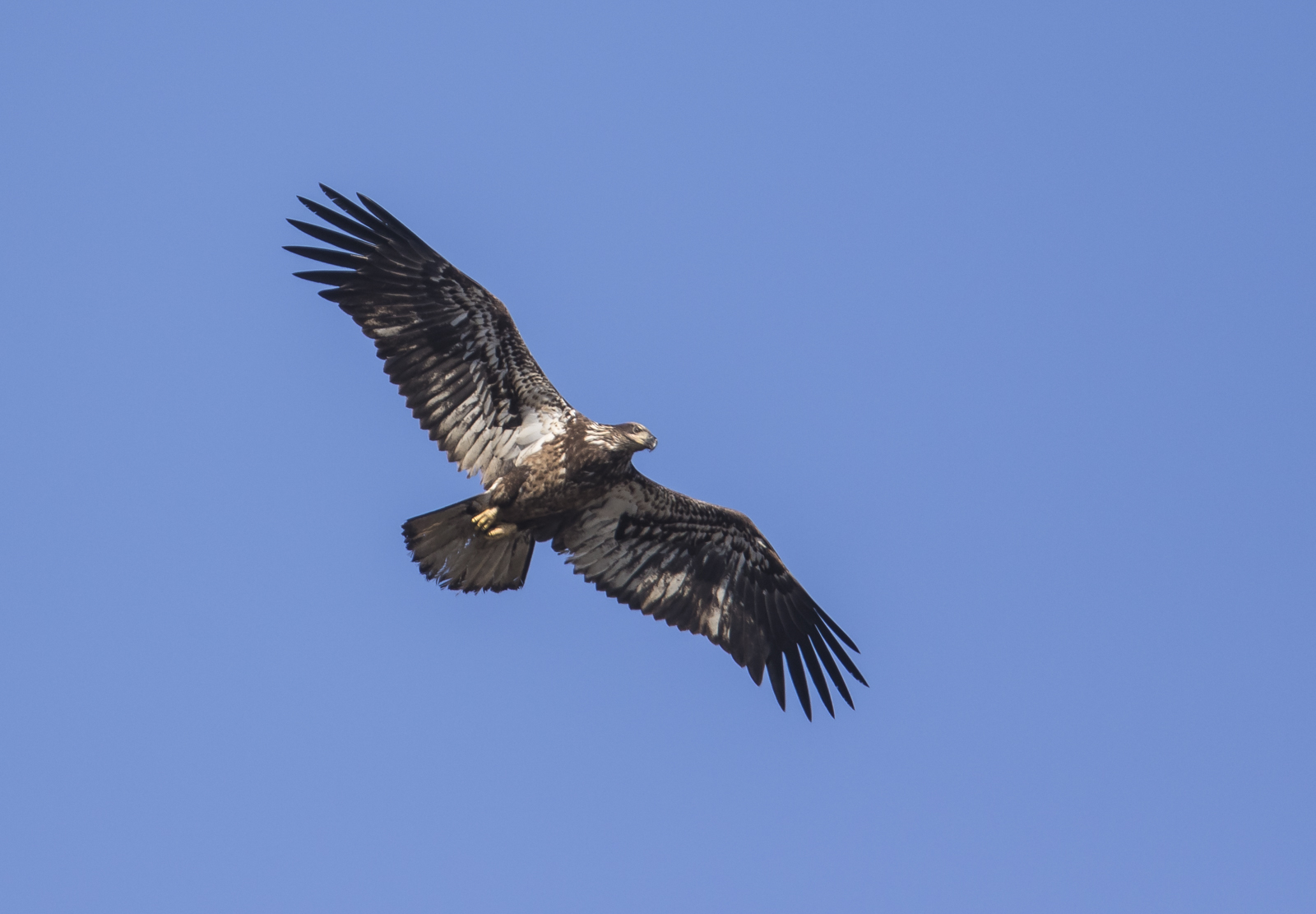
    Juvenile bald eagle overhead at Pungo (click photos to enlarge)

    I arrived early the day of my tour, in hopes of finding some interesting things to share later with my group. With the snow geese gone, the eagles are not as numerous as in recent trips. But, a young bald eagle (looks like a first year bird based on the plumage) still gave me a nice fly over shortly after my arrival.

    black bear in woods
    Large black bear sow

    I took a short walk into the forest and was rewarded with a couple of black bears, including one large sow. I took a few photos but quickly left, after requesting that she and her two youngsters hang around for another few hours.

    great horned owl nest
    Finally, I find the great horned owl nest

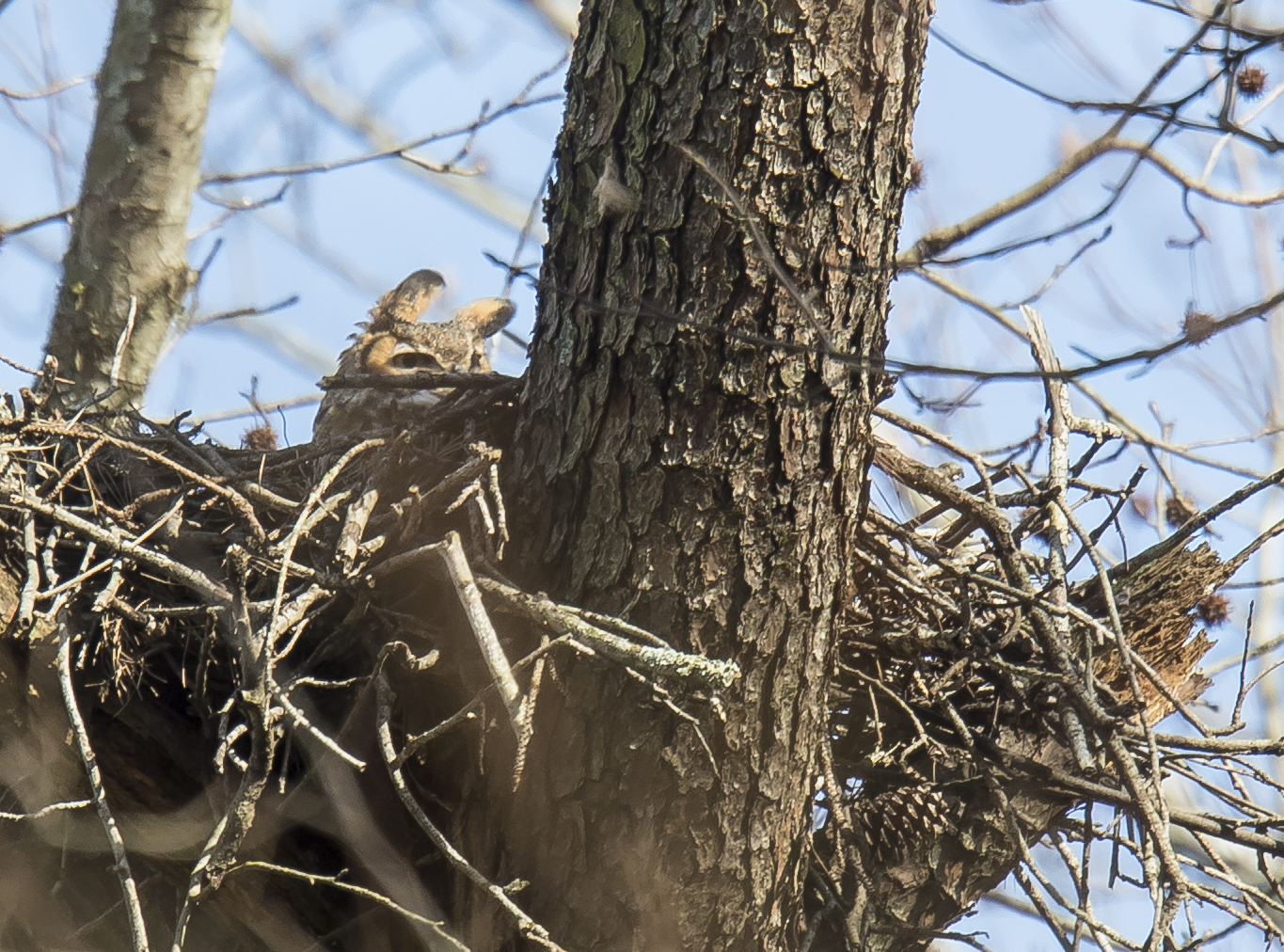
    I have been hearing the great horned owls calling in a patch of woods on previous trips so I was went looking for any sign of a nest. I have found two other nests on the refuge over the years. One was in a pine in what was probably an old red-tailed hawk nest; the other atop a snag with a platform of poison ivy vines spreading out from the top. I finally spotted a large stick nest in the fork of a lone pine tree. I didn’t see anything at first, but then noticed a feather on the side of the nest blowing in the wind. When I put the spotting scope on it, it looked like an owl feather. I moved around for a different view and saw what looked like ears sticking up above the nest.

    great horned owl nest close up
    Great horned owl sitting on eggs or young (heavily cropped photo)

    The scope revealed it to be the ear tufts of a great horned owl, most likely sitting on her eggs, as this species is probably the earliest breeder in our state. I stayed well away from the nest so as to not disturb her. I can check on the nest on future trips with the spotting scope without getting close. This is a good time to remind readers that almost all of the photos of wildlife in this blog are taken with a large telephoto lens, and are cropped in processing, so the animals are not as close as they sometimes appear.

    bear cub in woods 1
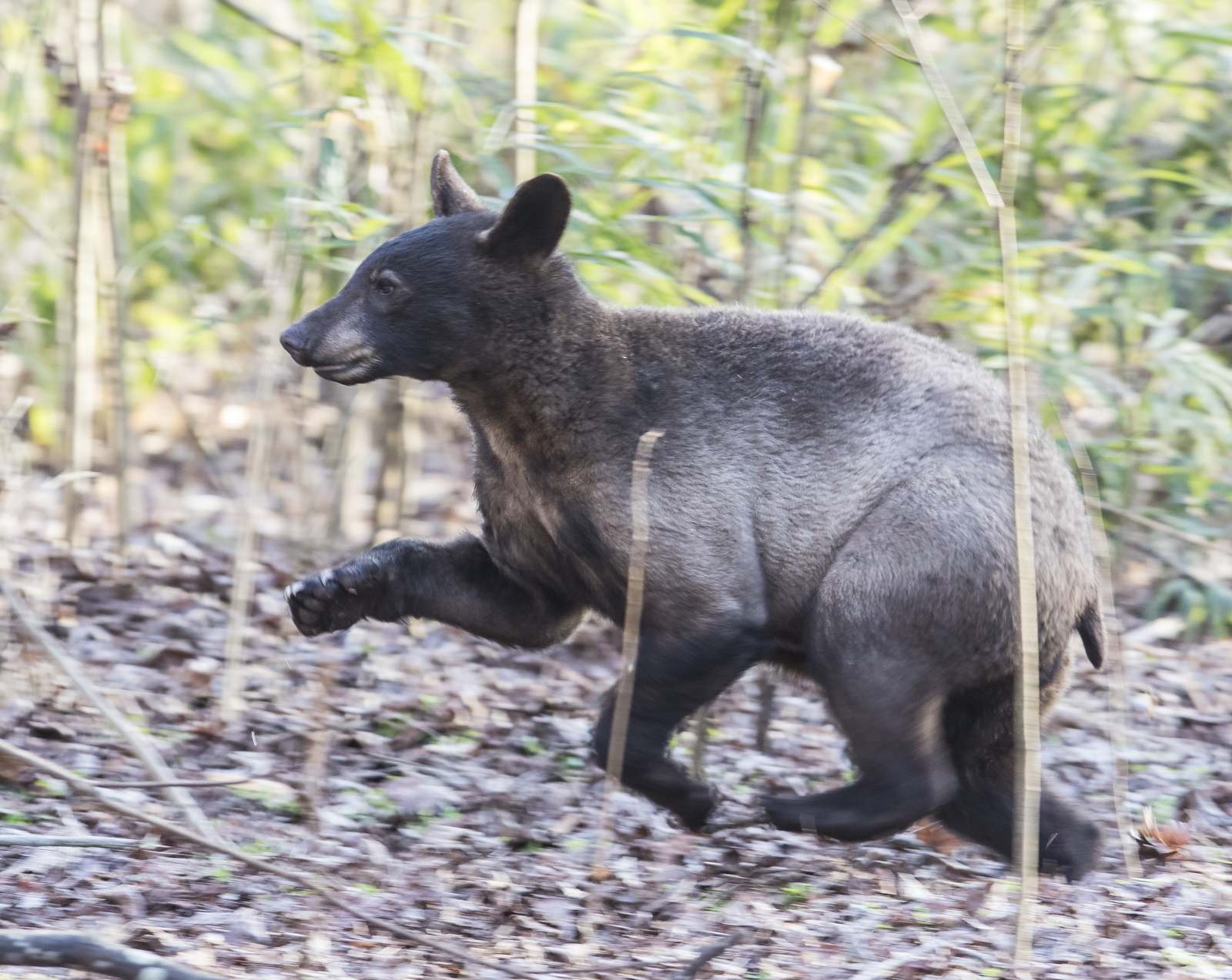
    Young black bear rushes across trail to cover

    When my group arrived, we headed back to check on the bears and the owl nest. It seemed as though the bear had heeded my wishes and was walking toward us as we headed down the path. We stopped and she wandered off, followed by two young, both sporting a distinctive grayish coat. Then, another bear crossed the path, followed by three more bears! Quite a start to our trip.

    bears in woods
    Black bear sow and young

    At least some of these same bears hung around that general area for the next day as well. We saw another group on our hike the next morning. I always try to give the bears plenty of room. We are quiet and try to stand still when we see one, and I like to let the bears take whatever path they want. I have seen people try to cut them off in order to get a closer look or a better picture, but it is best to respect their wildness, and let them be. Enjoy the experience, but keep the bears unstressed and wild.

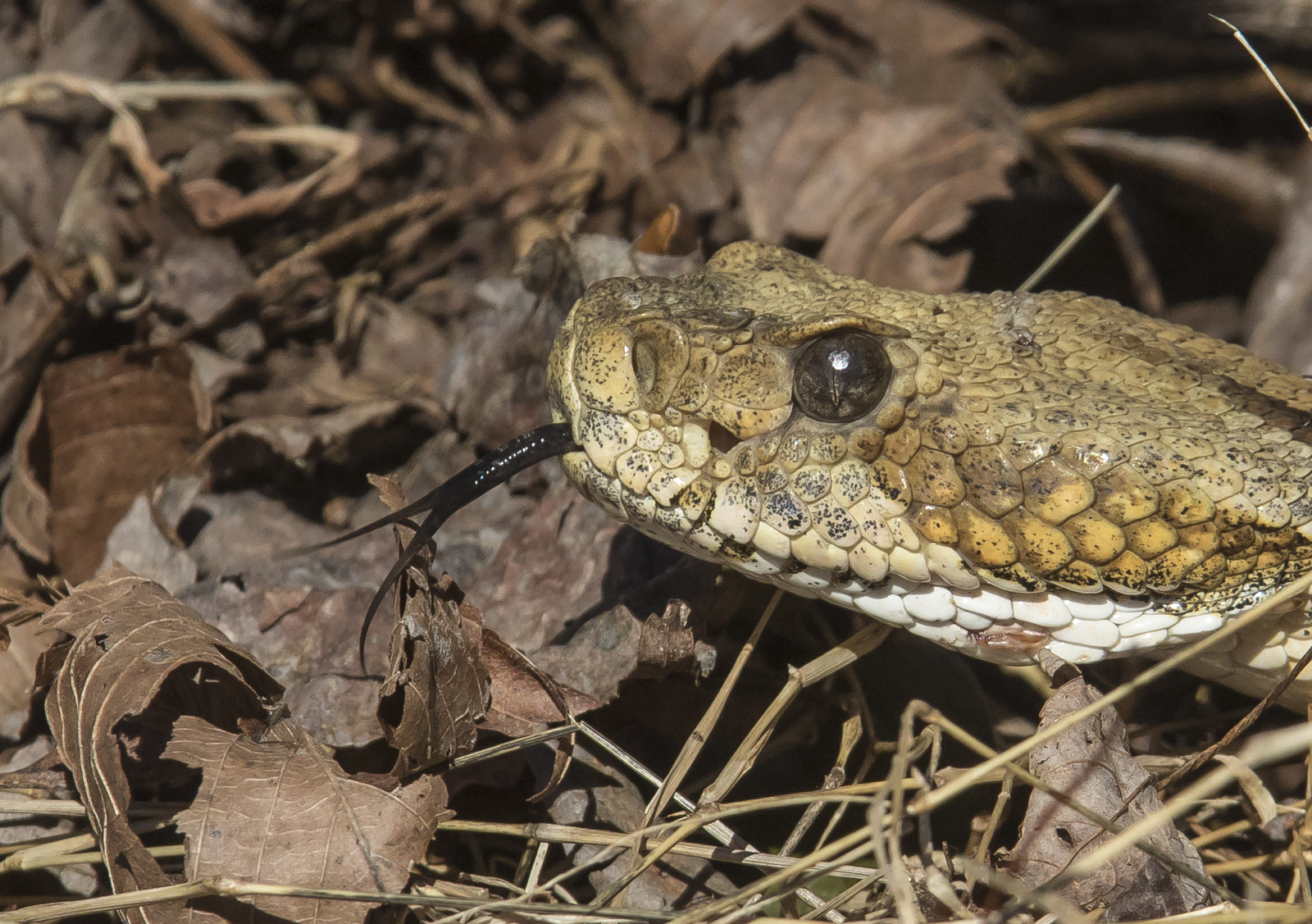
    find the rattlesnake
    Excellent camouflage makes these snakes difficult to see on the forest floor

    The other thing I wanted to check on was the tree where I had seen the rattlesnake two weeks earlier. I carefully checked the area around the tree as I approached, knelt down and shined a light inside the base – no snake. Not too surprising as it had been a cold night and there was even ice in tire ruts on the road when we walked in. So, with all the bears in the area, I started to walk down the path, looking ahead for any signs of bears through the trees. The next thing I know, I had what can only be described as a too-close-of-an-encounter with that snake, who was luckily quite docile in the chilly air.

    Canebrake rattlesnake strecthed out
    Rattlesnake stretched out in morning sun

    We took a bunch of photos and then left the snake alone. We checked on it the next day, after seeing even more bears, and found it a little more active in the warming weather. It was slowly crawling in roughly the same area where we had seen it the day before.

    canebrake rattlesnake
    A close look (and a telephoto lens) shows the beauty of this snake

    This is a beautiful specimen, and apparently a tough one, as it doesn’t seem to mind being out in some pretty cool weather. Today, it chose to lie in a sunny spot, soaking in the morning warmth.

    canebrake rattlesnake head
    The rattler was more active than the past couple of sightings, and even flicked its tongue a few times
    canebrake rattlesnake tail
    Close up of rattle

    We took some more pictures and then left it alone. I can’t help but wonder how it will fare if a bear encounters it in this cool weather. I also can’t believe I may now need to look at the ground more carefully as I walk these winter woods, instead of constantly scanning the skies for waterfowl and other birds as I have done for over thirty five years. Strange times indeed.

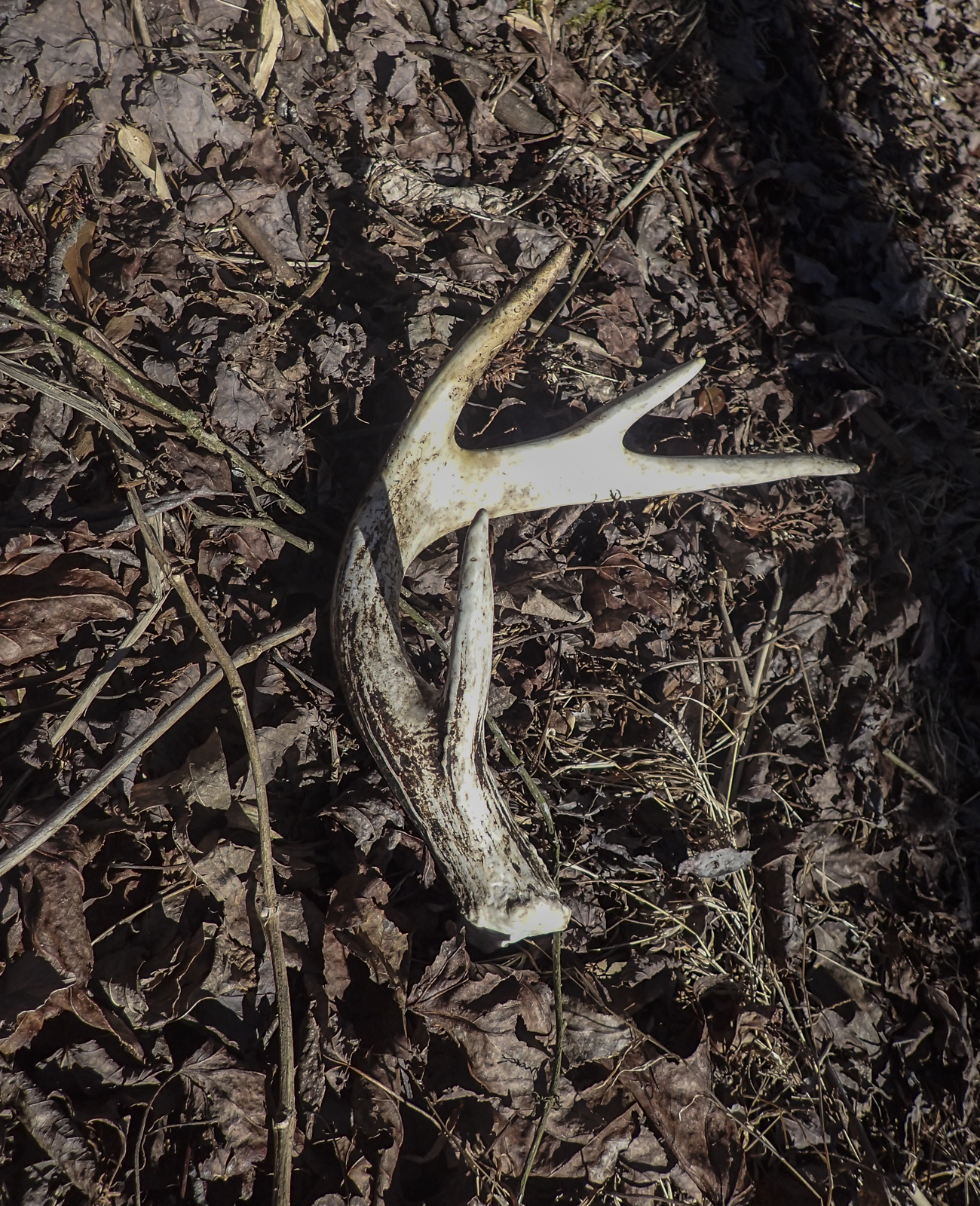
    shed antler
    We found two shed deer antlers

    My first morning at Pungo I saw a buck white-tailed deer, with only one antler, running through a field. It is that time of year when male deer are dropping their antlers in preparation for starting the new growth later this spring. As it turned out, we found two different shed antlers as we walked. You are most likely to find them shortly after they are dropped and before squirrels, mice, and other animals start chewing them up to get the calcium.

    Great blue heron with catfish
    Great blue heron with a nice catfish for breakfast

    While watching the swans one morning, someone in the group spotted a great blue heron with something in its beak. It turned out to be a large catfish. We watched as the heron repeatedly tried to swallow the large meal. We think it finally gulped down its meal before flying off to hunt again.

    tundra swans in morning light
    Tundra swan fly over

    Tundra swans flew back and forth overhead as the day progressed so we had plenty of good looks and photo opportunities.

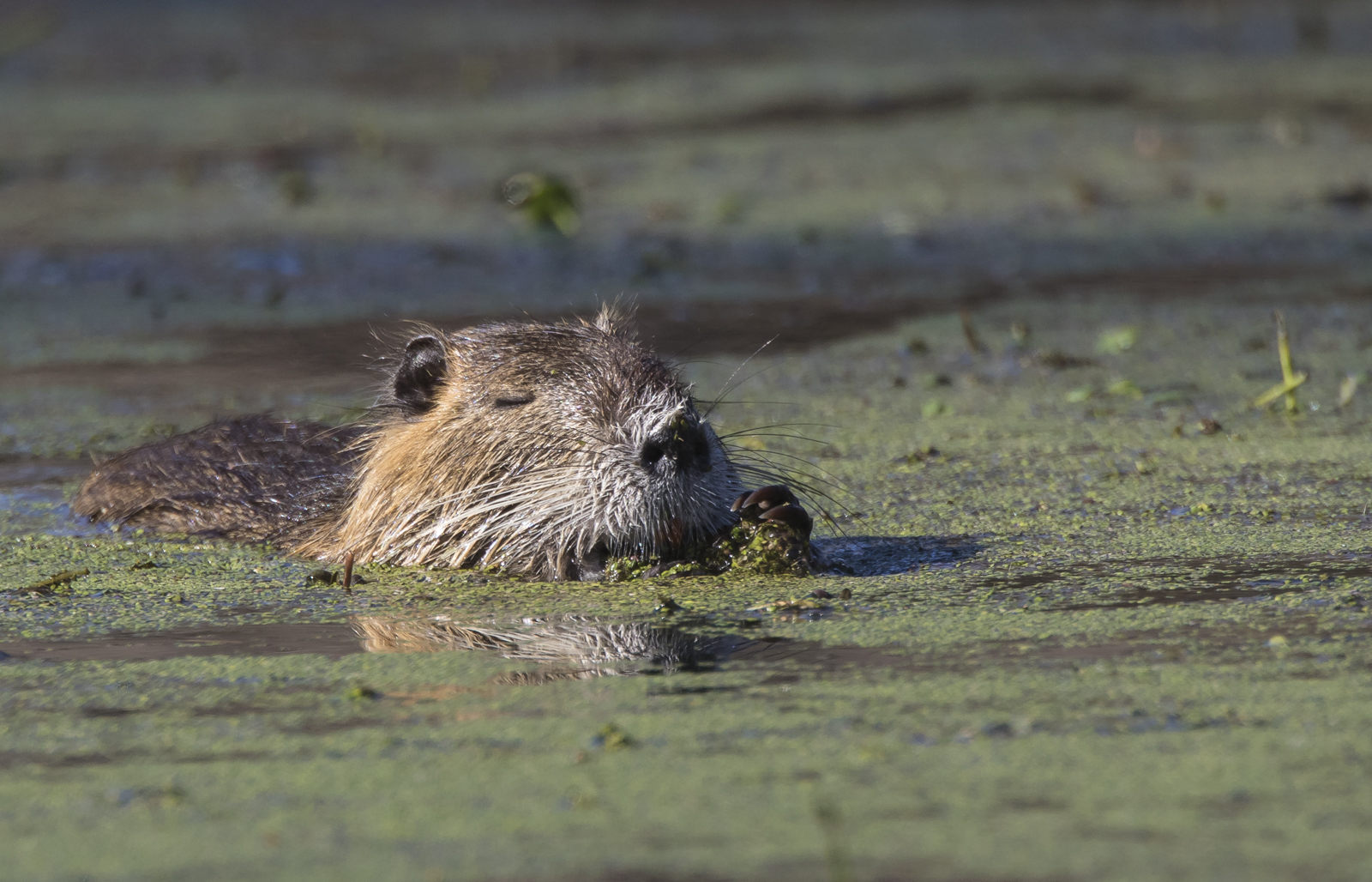
    nutria feeding in canal
    Nutria feeding on duckweed
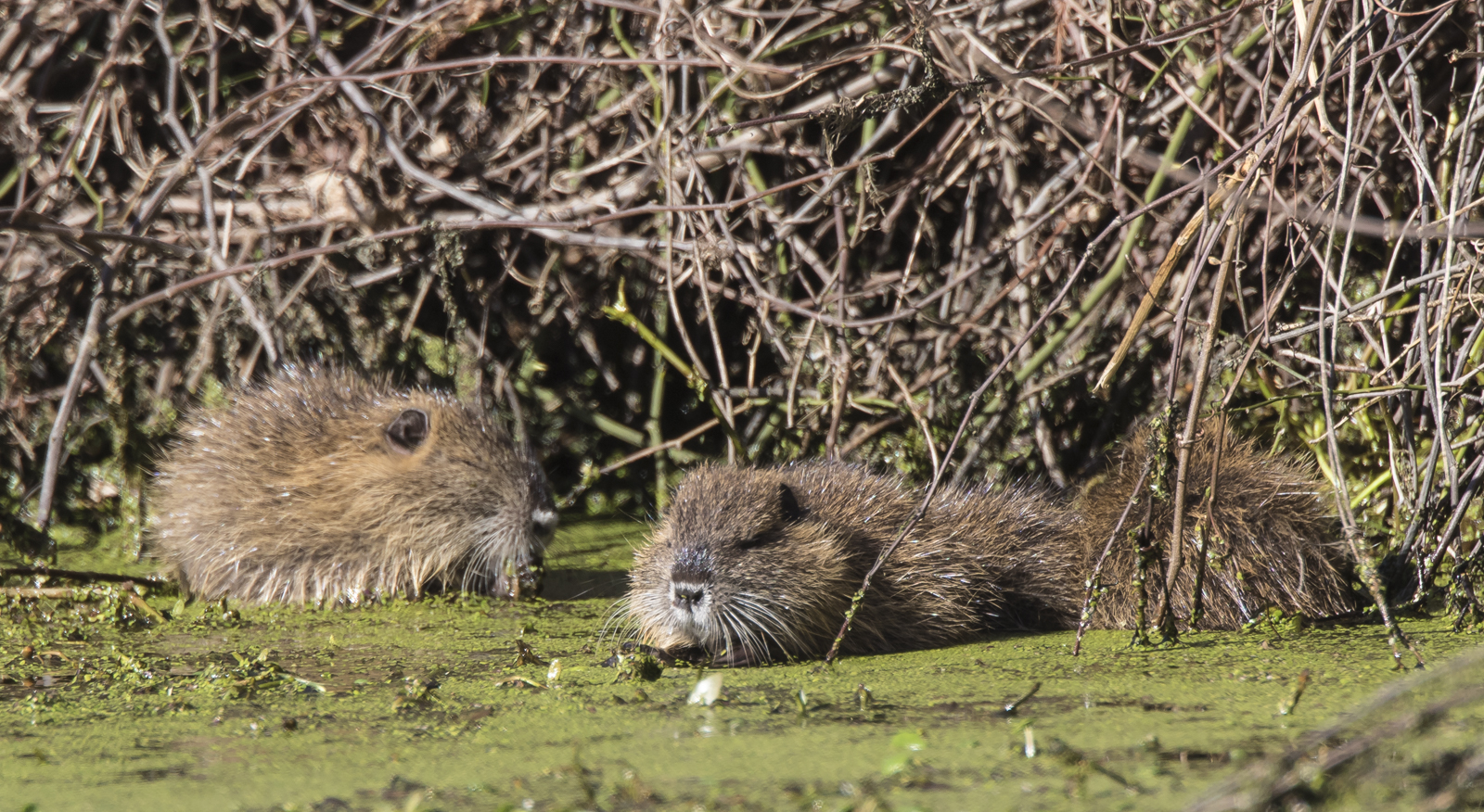
    Trio of young nutria
    A trio of young nutria

    We split our time between the Pungo Unit of Pocosin Lakes NWR and Mattamuskeet. As the weather warmed over the weekend, we saw a lot of nutria out feeding.

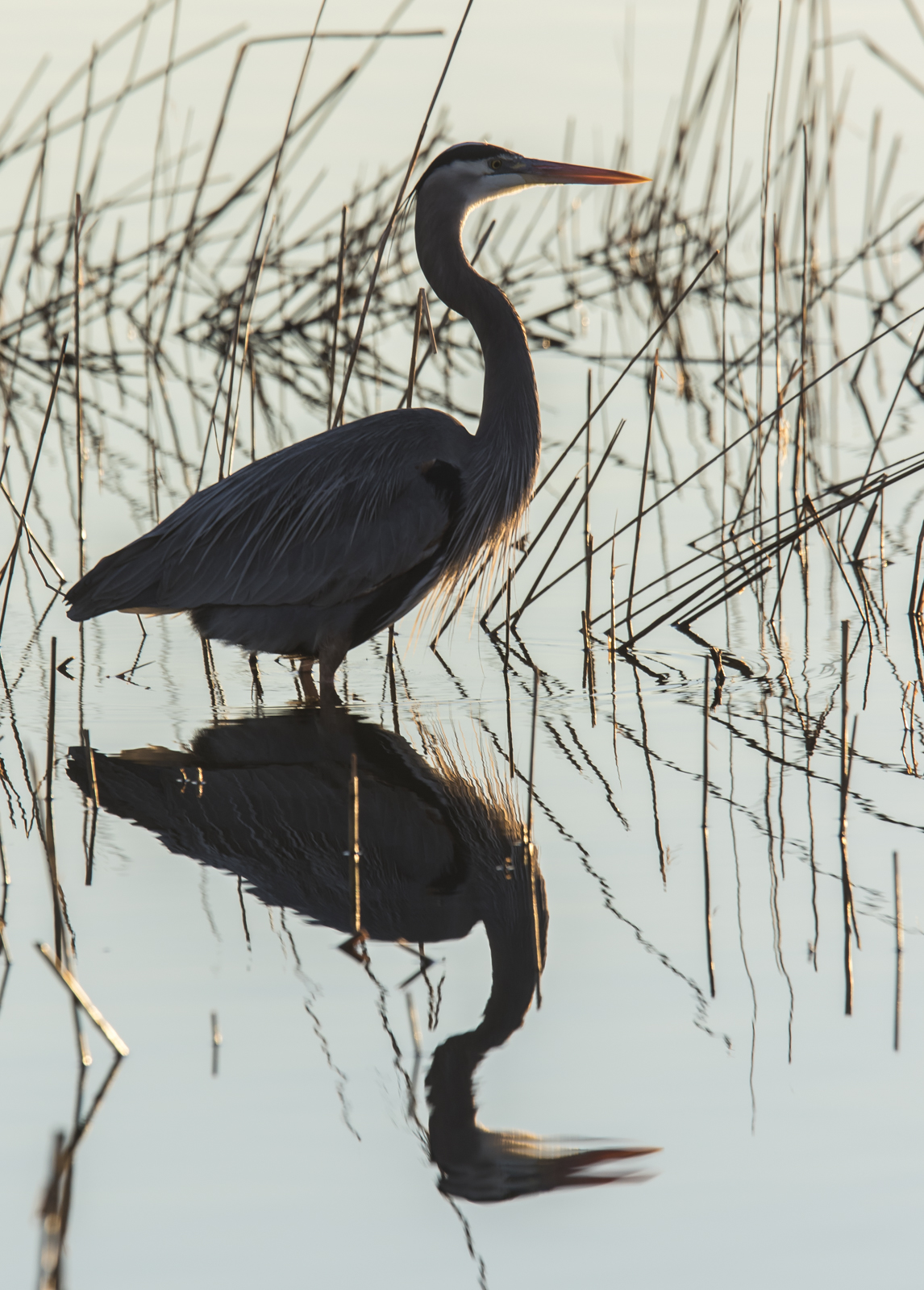
    great blue heron silhouette
    Great blue heron at sunrise at Lake Mattamuskeet
    Northern Pintails in marsh
    Northern pintails in marsh
    great blue heron in tree
    Great blue heron resting in a pine
    white ibis feeding 1
    White ibis feeding in impoundment along Wildlife Drive

    Driving along Wildlife Drive, we saw hundreds of ducks and swans, along with a variety of other birds.

    vulture comparison
    Silhouette of turkey vulture (lower left) compared to black vulture (upper right)

    Late Saturday afternoon we enjoyed seeing vultures come into roost in trees near the lodge. At one point I grabbed a photo of a turkey vulture alongside its smaller cousin, a black vulture. The latter looks as though someone had trimmed its tail feathers (relative to a turkey vulture). Black vultures are also smaller and tend to flap their wings more than a turkey vulture.

    Great egret landing in top of pine
    Great egret landing in tree top

    The late hour also brought in several great egrets, white ibis, and some cattle egrets to roost in the trees across the canal from the lodge. This spot has traditionally been a roost for black-crowned night herons, but I have seen none of them in these trees this winter.

    alligator
    Alligator in canal at Gull Rock Game Lands
    alligator head
    Close up of smiling gator

    One of the biggest eye-openers of the trip came on our last afternoon as we explored some new territory down toward Gull Rock Game Lands. In a canal bordering a wetland containing ibis, a grebe, and a double-crested cormorant, we discovered another surprising January reptile – an American alligator. It was about a 6-footer, basking in the sun, and seemingly unconcerned about the three cameras being pointed at it.

    And so this month of wildlife wonders has come to a close. A strange month indeed, but an exciting one. One other critter worth mentioning that we saw on the last day of January – an orange and black butterfly near the lodge at Mattamuskeet. It was flying away from me when I spotted it out about 75 feet, but through the binoculars it looked like a monarch, not a viceroy. Either one is a big surprise for a winter day in North Carolina. It seems the land is breathing a bit oddly this season. I wonder what the coming spring will hold?

  • Sunrise, Sunset

    Posted by

    Let the beauty we love be what we do.

    ~Rumi

    The older I get, the more I find beauty in the dazzling displays of light and clouds that form the sunrises and sunsets of my life. They remind me of the passing of time, of things seen and to be seen. They can form the book ends of a memorable experience in a wild place, or in a day simply looking out the window here in the woods. And, true to form for me, I prefer the skies (and temperatures) of winter to those of summer. This past weekend, I had a group of photographers with me on a trip to Pungo and Mattamuskeet, and we were keenly aware of the majesty in the skies as we chased the light each morning and evening, and enjoyed the subtleties of color that paint our surroundings and the life that calls this big sky country home. Later this week I will post about some of the extraordinary wildlife we observed, but, today, I just want to share some of the simple artistry we experienced at sunrise and sunset, surely the best times of day.

    Sunset Friday night at Pungo…

    Swans at sunset 1
    Tundra swans flying back to the refuge at sunset (click photos to enlarge)

    Sunrise Saturday at Pungo…

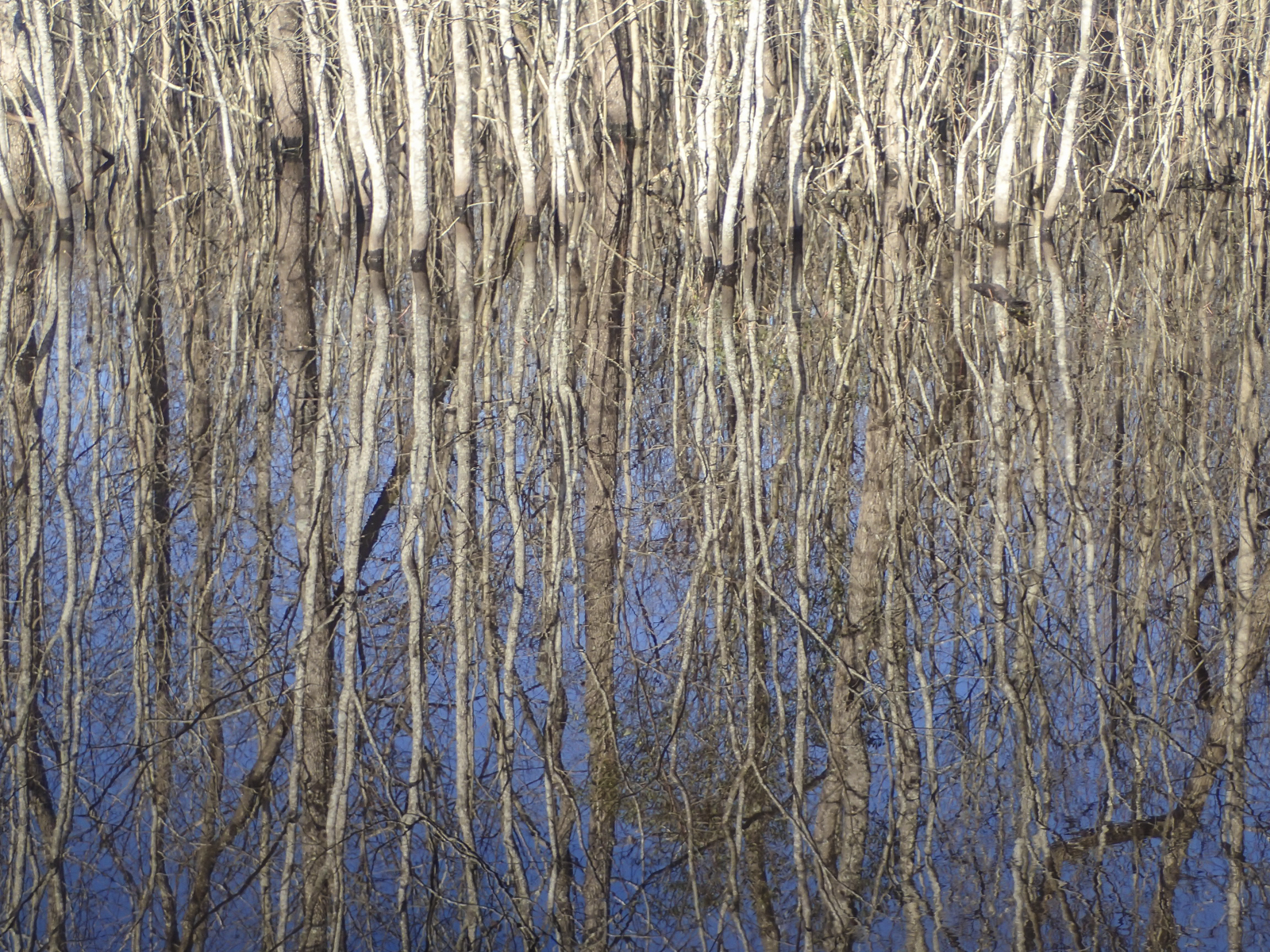
    canal reflections
    Canal reflections at sunrise
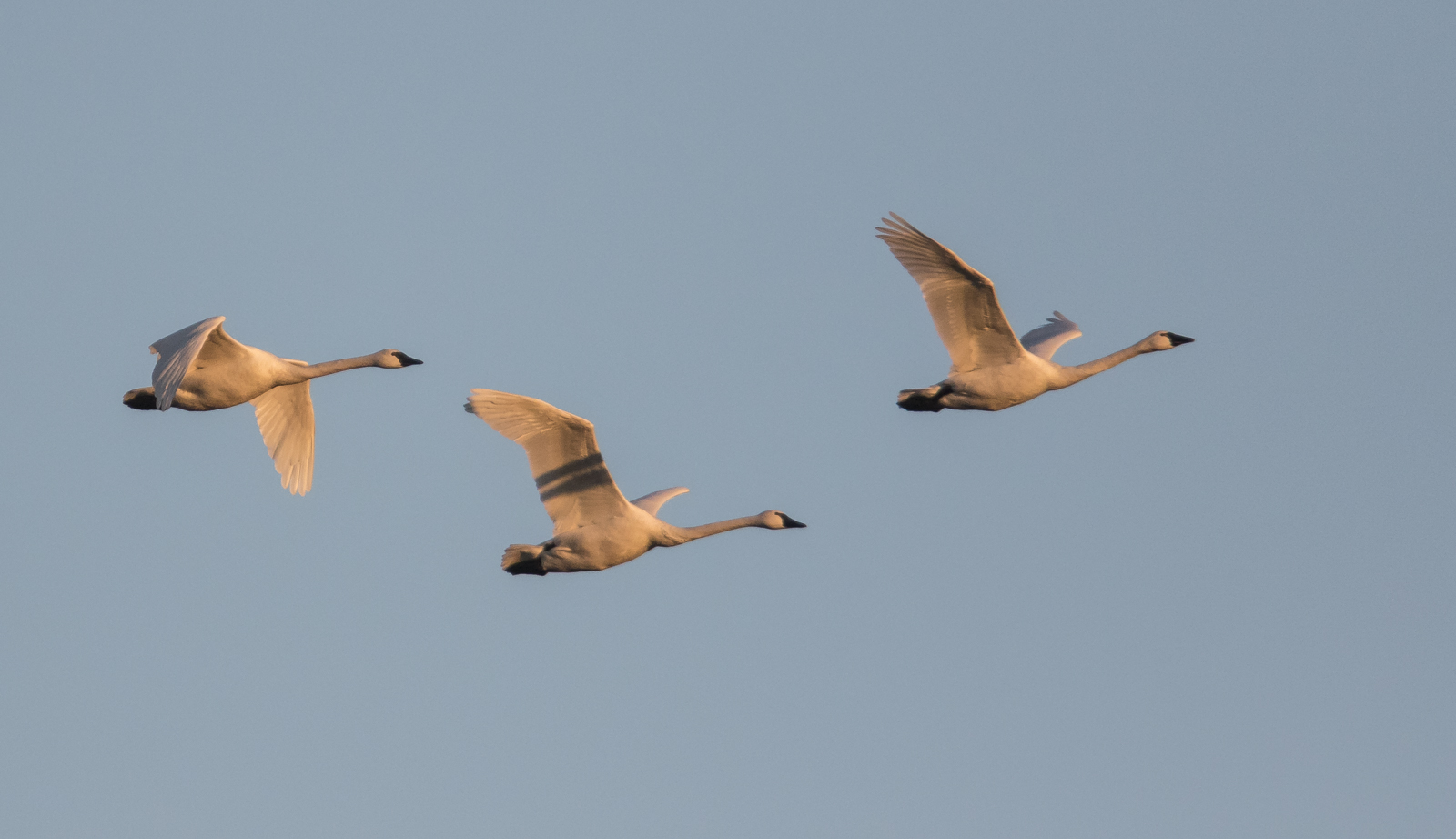
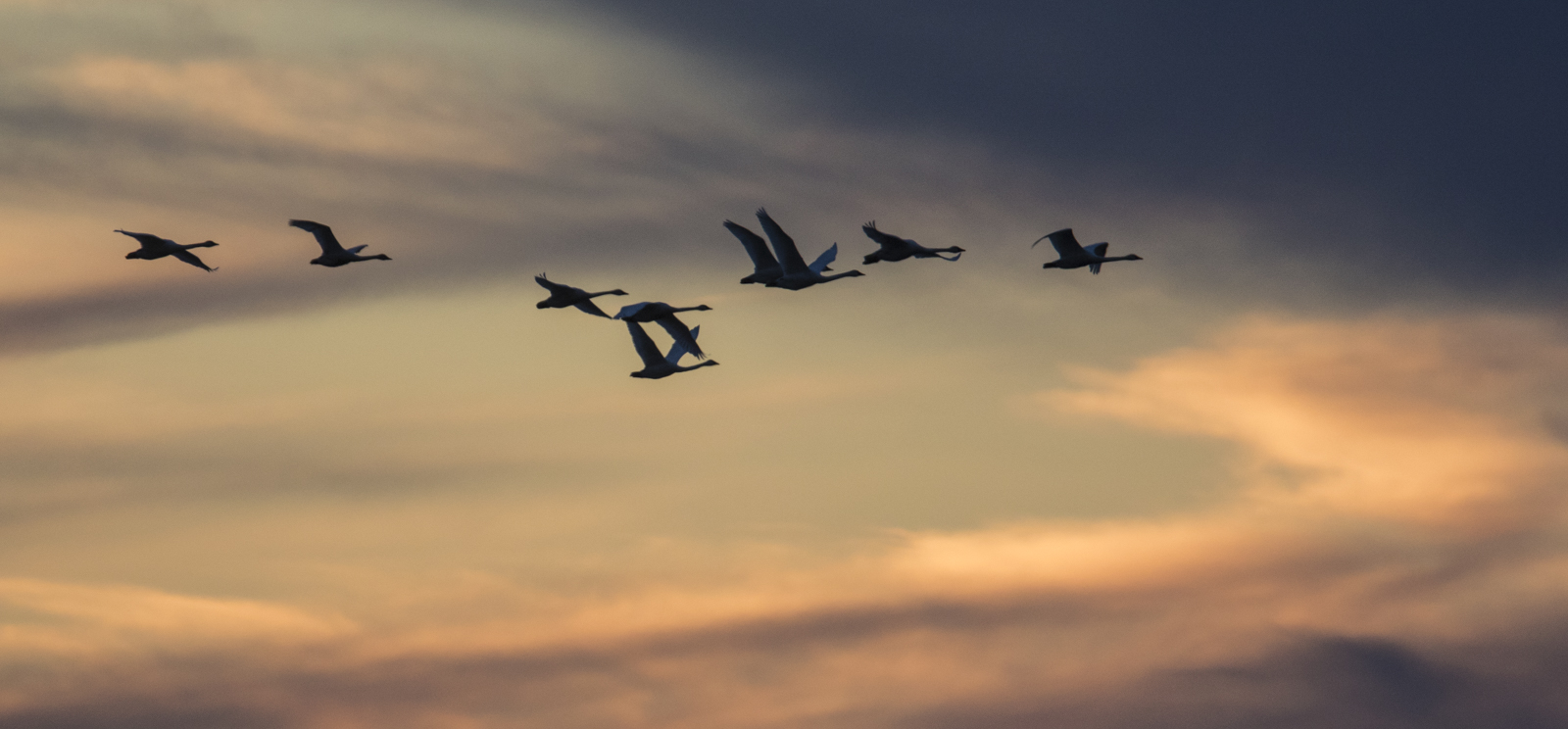
    Swans at sunrise
    Morning light tinting the feathers of flying swans

    Sunset Saturday at Mattamuskeet…

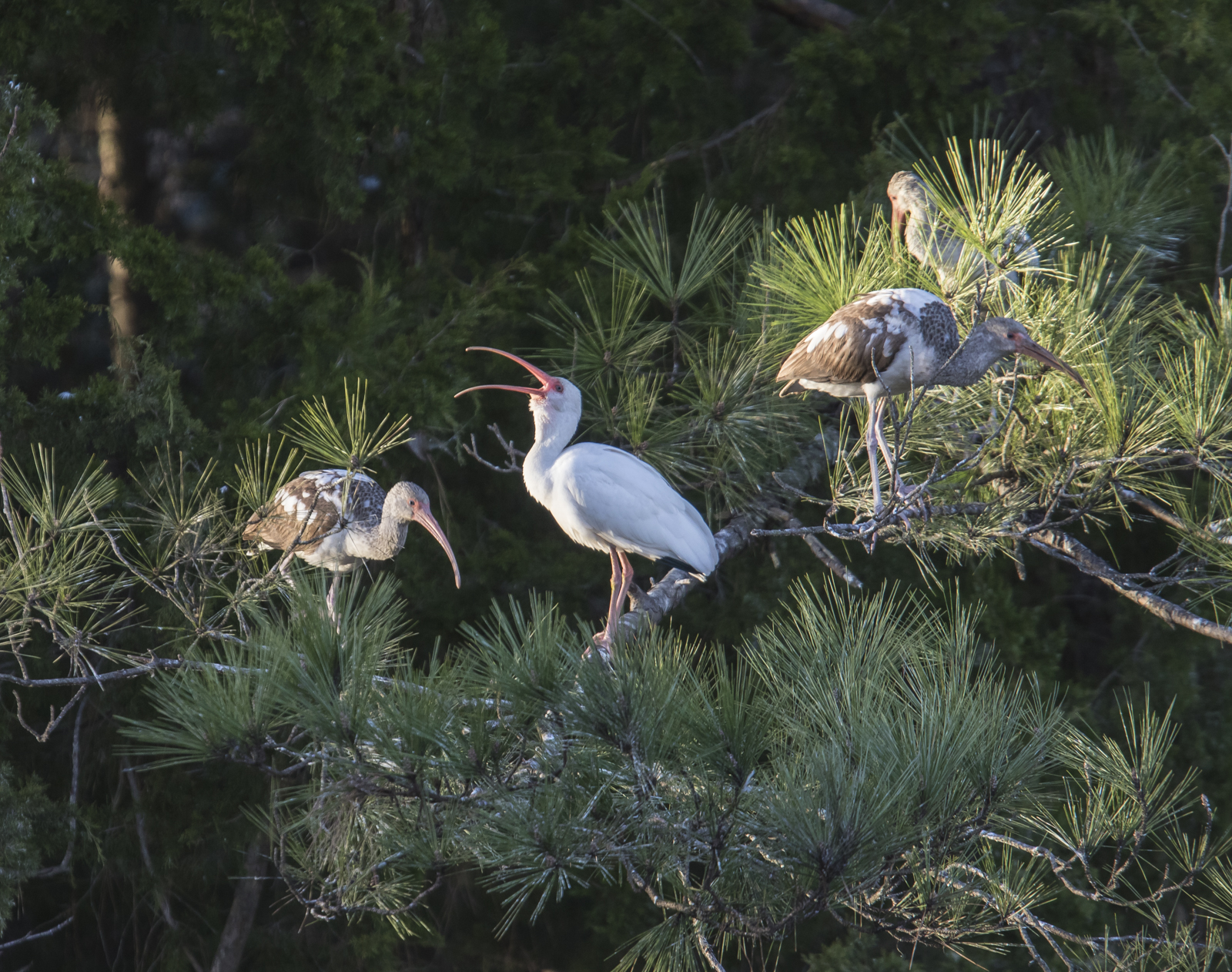
    Ibis in golden light
    A golden hour spotlight falls on roosting white ibis
    ibis silhouette at sunset
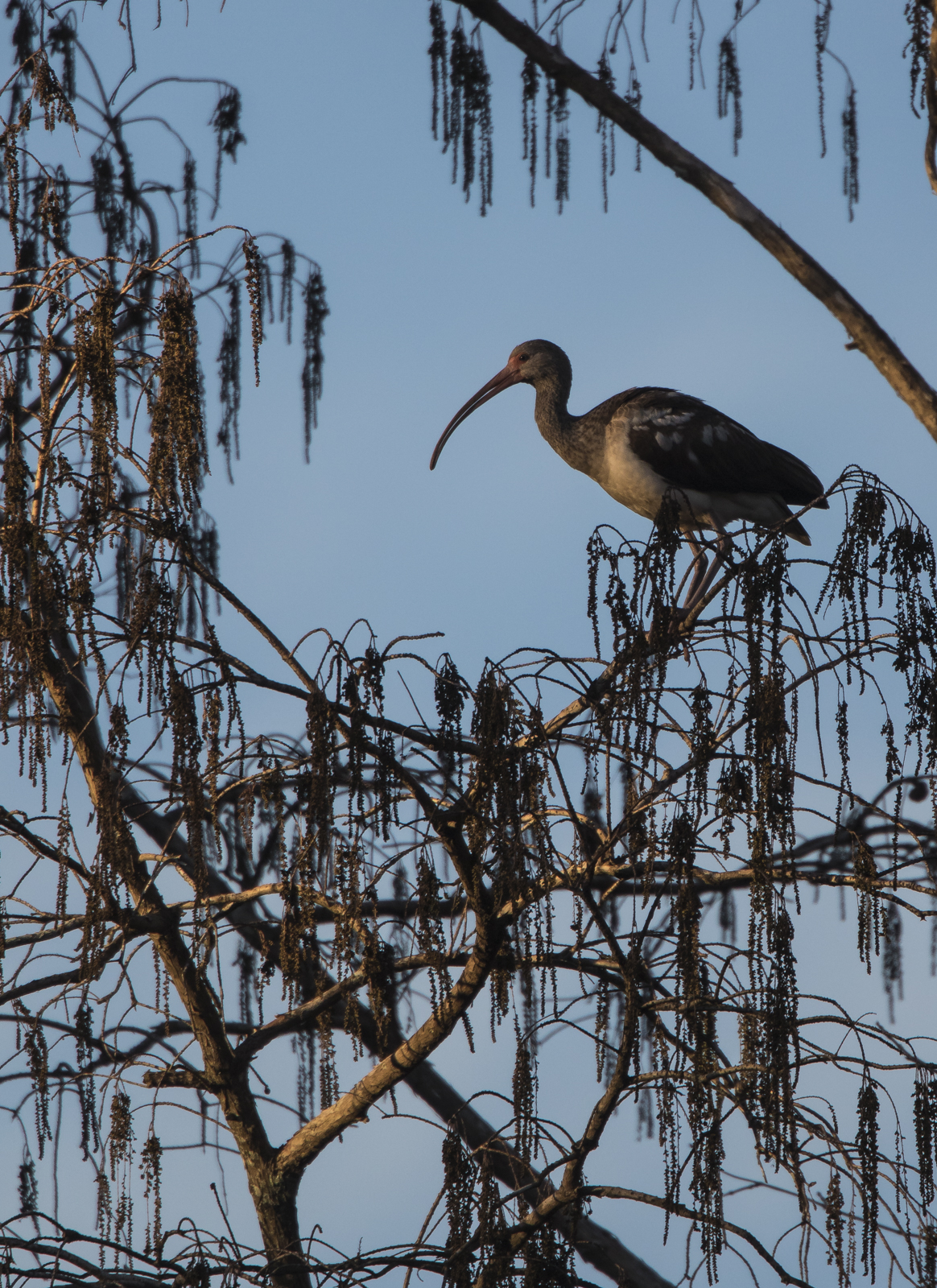
    Juvenile white ibis in bald cypress tree
    Great egret preening in golden light
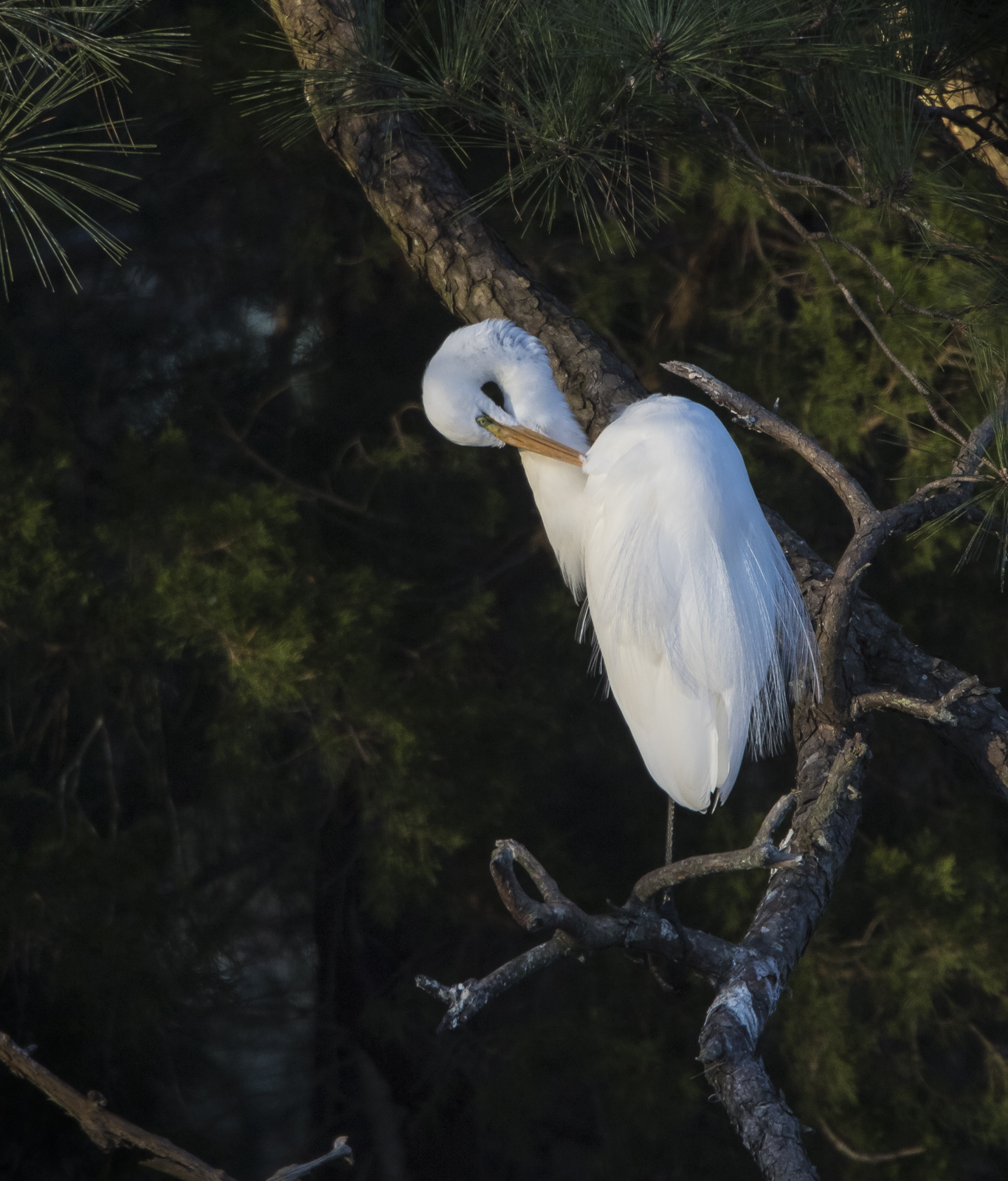
    Great egret preening at last light
    Great egret flying at sunset 2
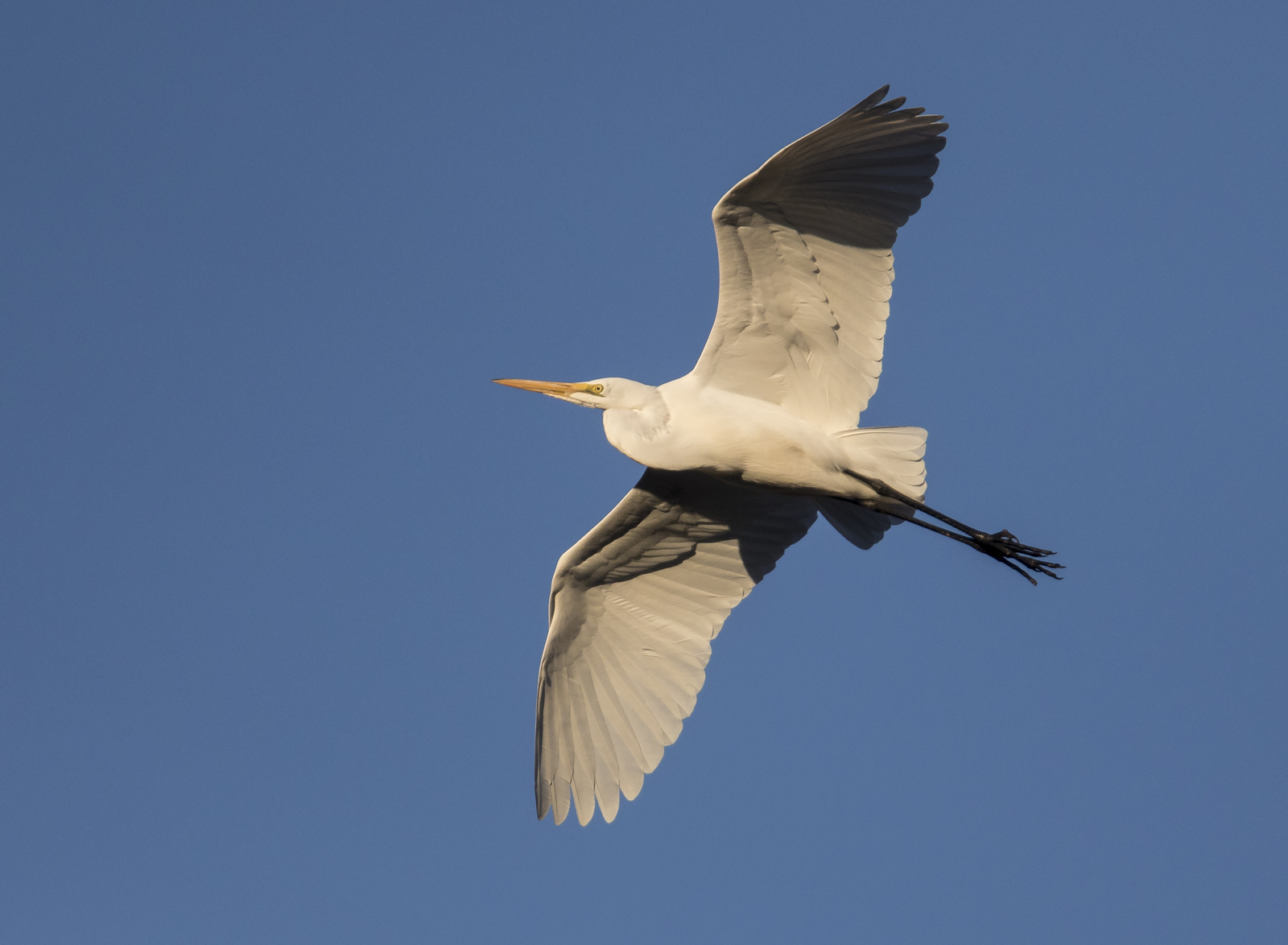
    Sunlight bathes the underside of a great egret coming to roost


    Great egret flying at sunset 1
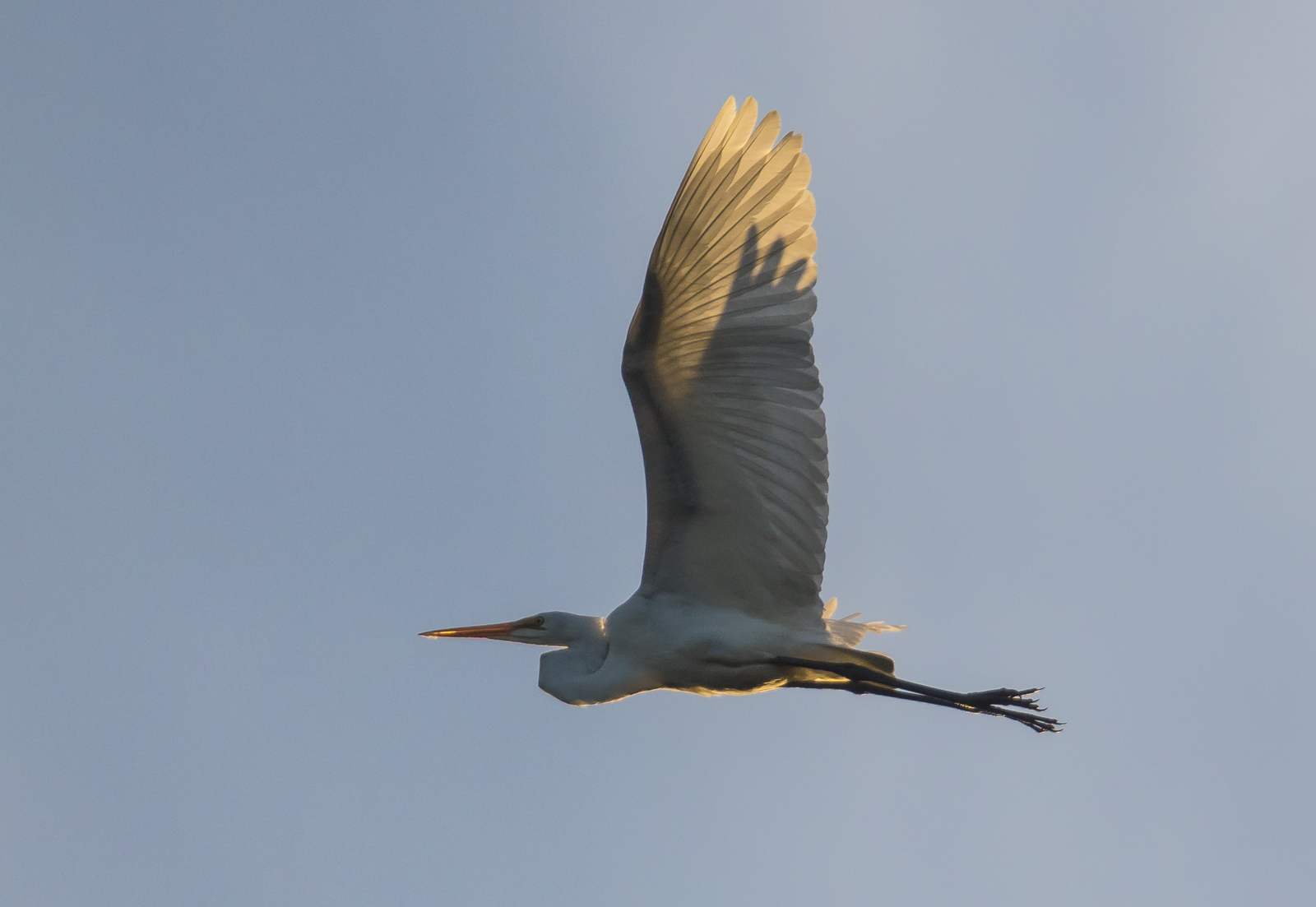
    A different angle to the sun creates very different lighting on another egret
    broomsedge highlighted by setting sun
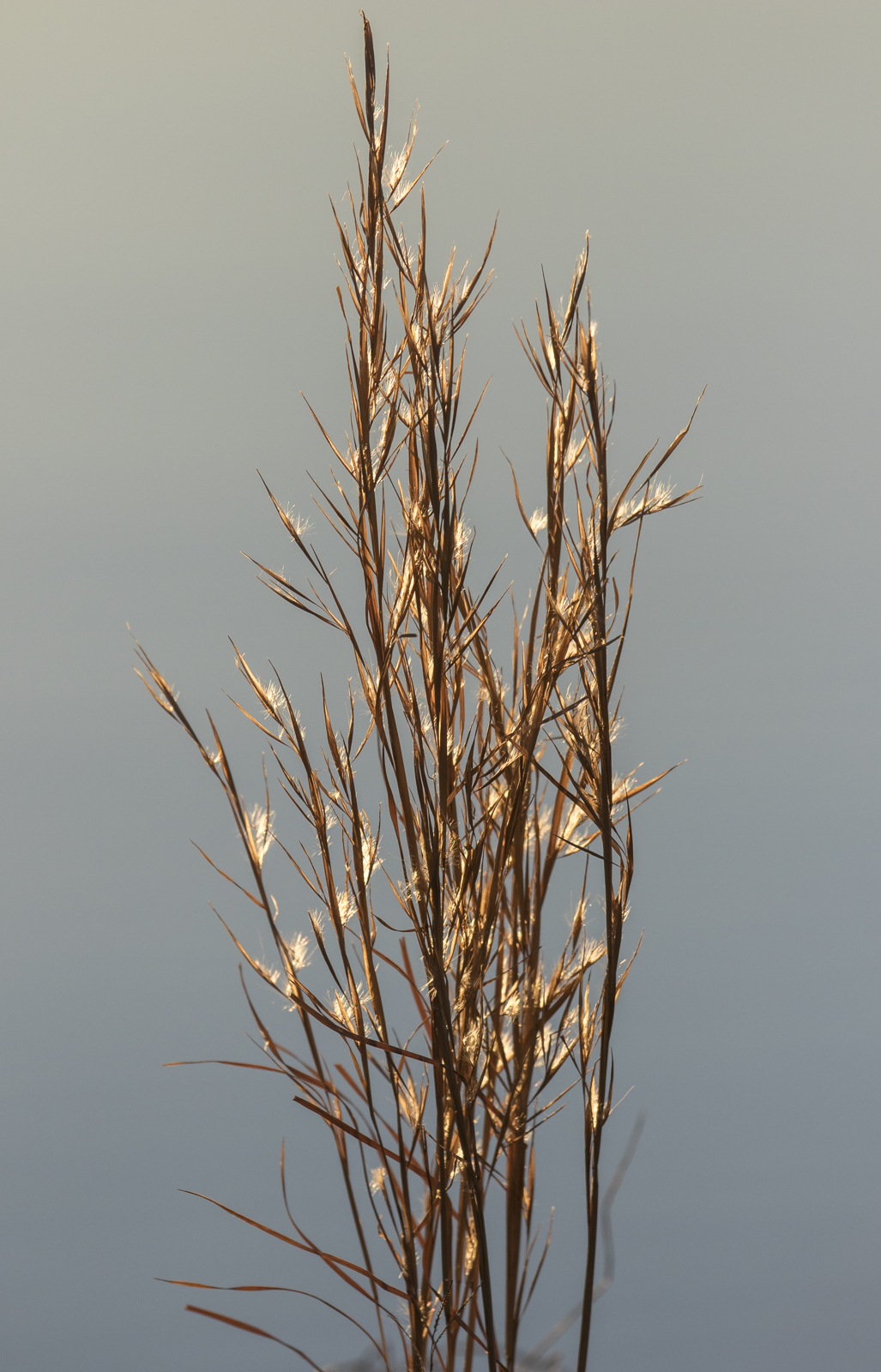
    Broomsedge seeds glow in the setting sun
    Cypress tree at Lake Mattamuskeet 1
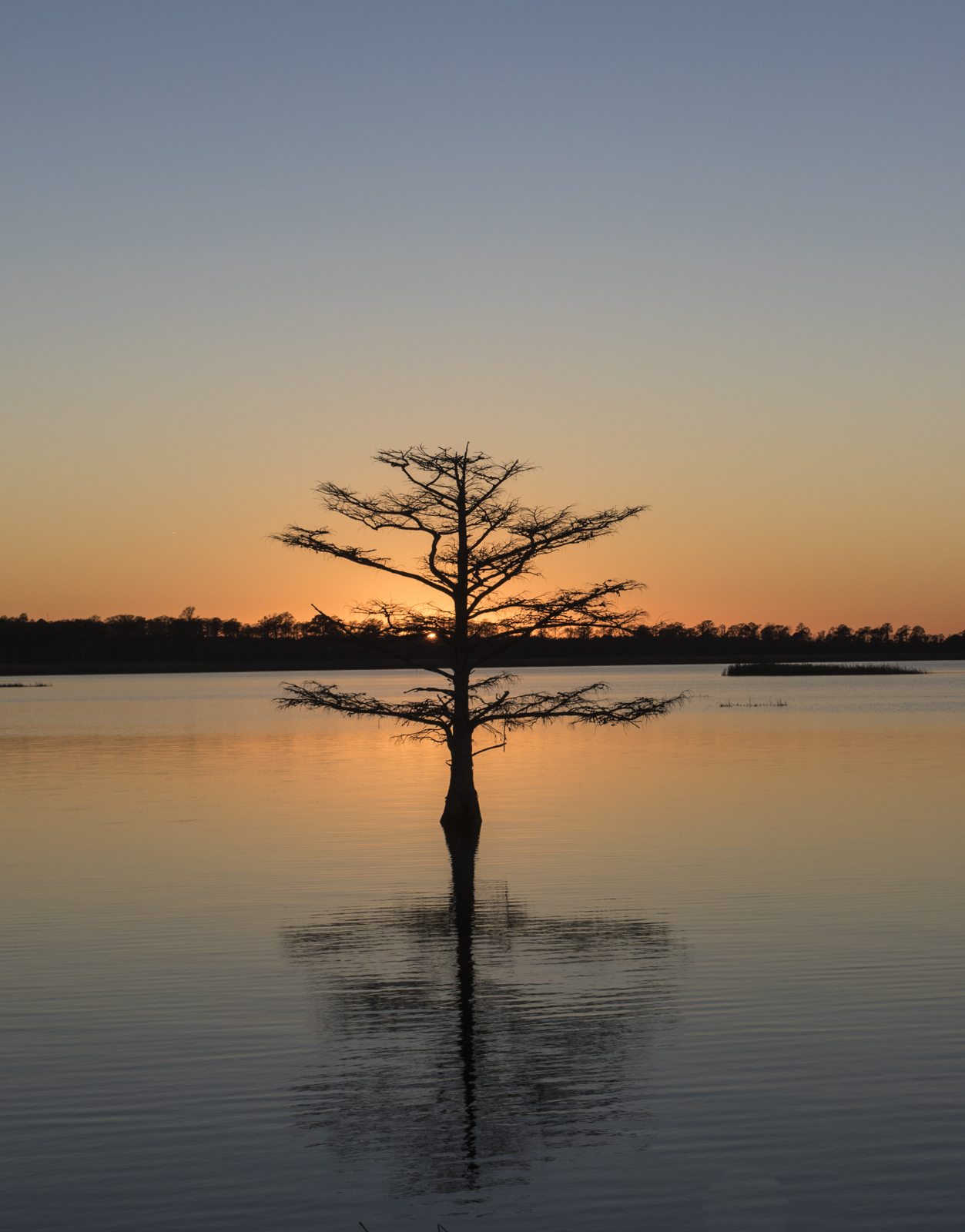
    “The tree” at sunset at Lake Mattamuskeet
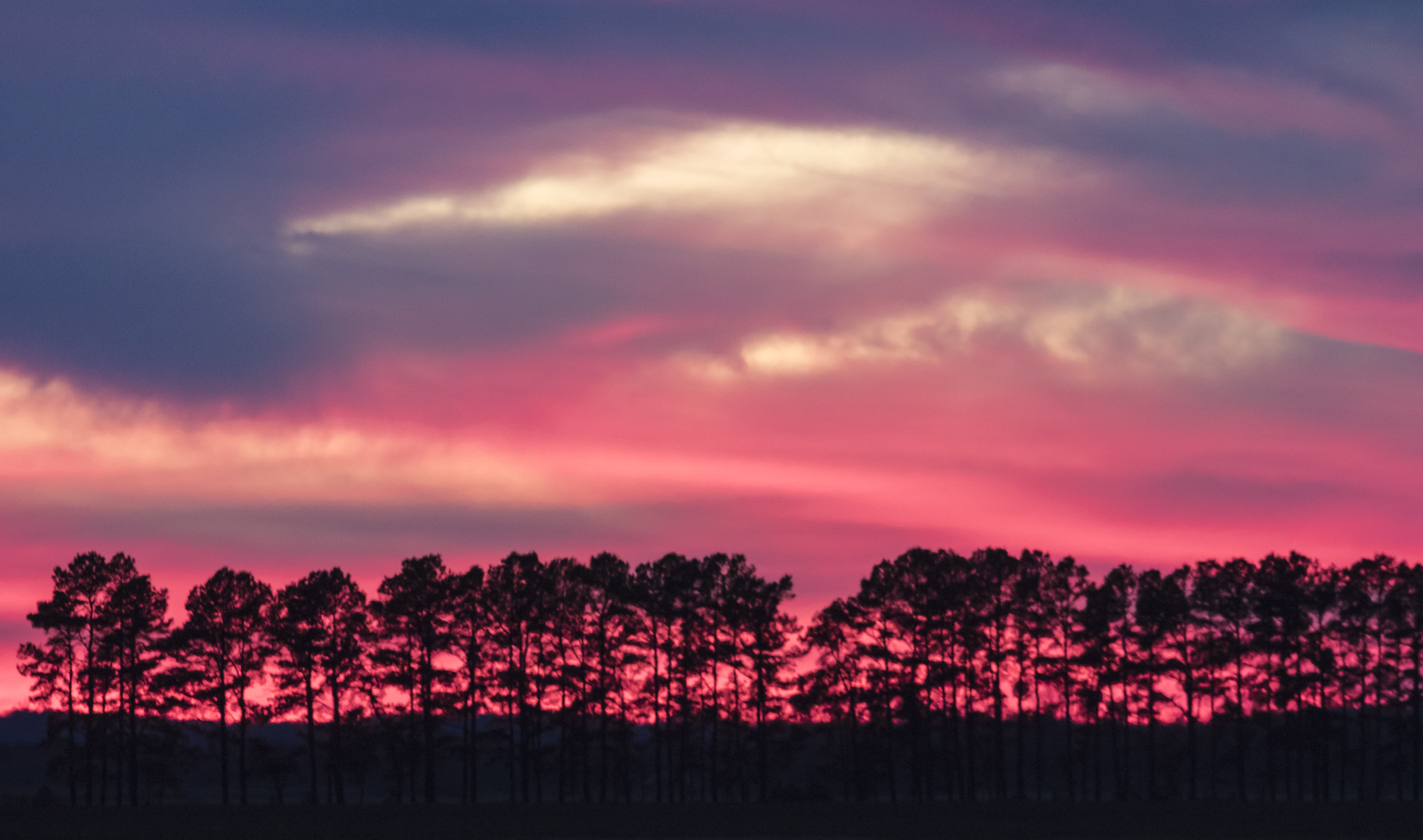
    pink cloud at sunset
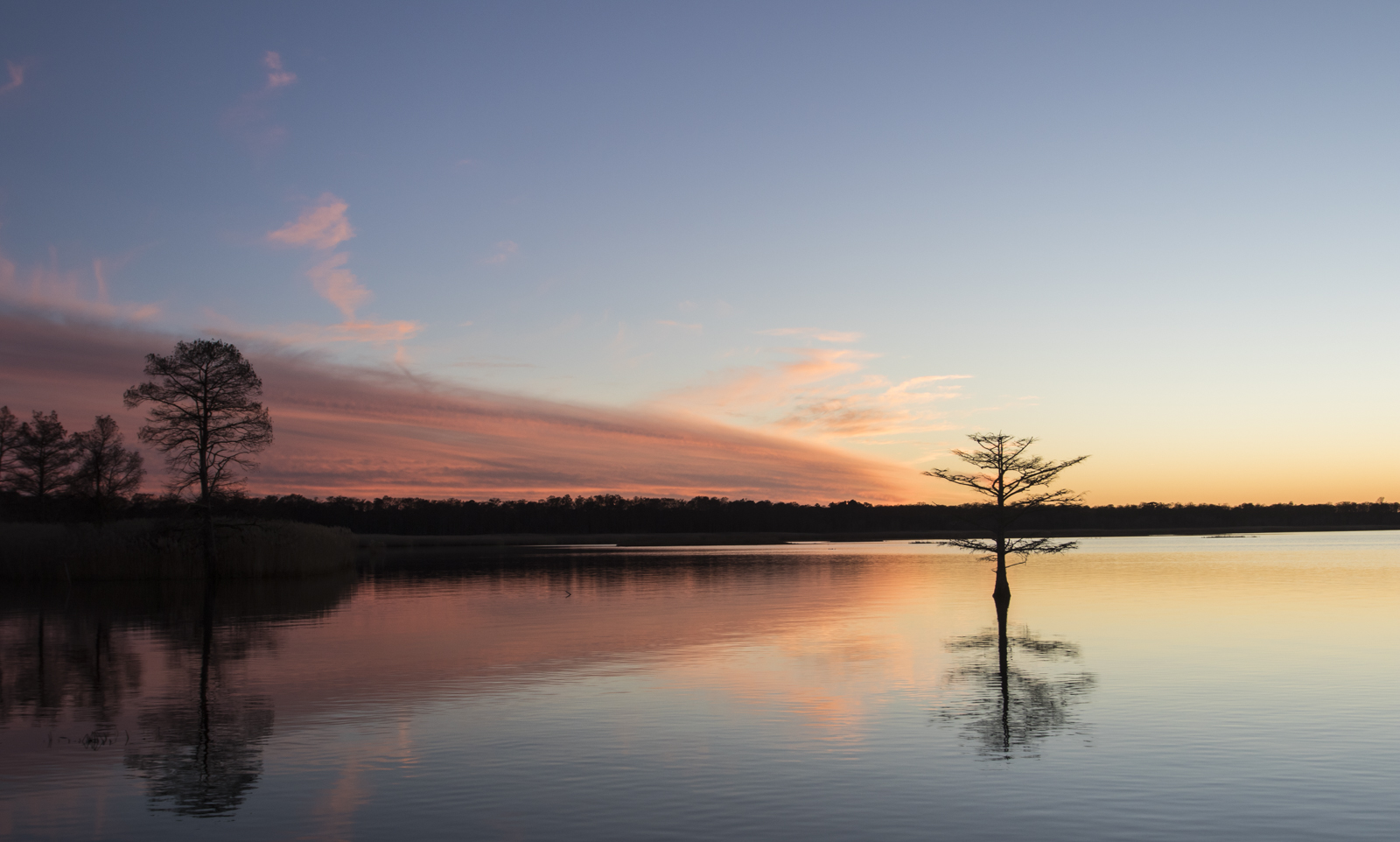
    Pink clouds and tree silhouettes

    Sunrise Sunday at Lake Mattamuskeet…


    cypress island at sunrise
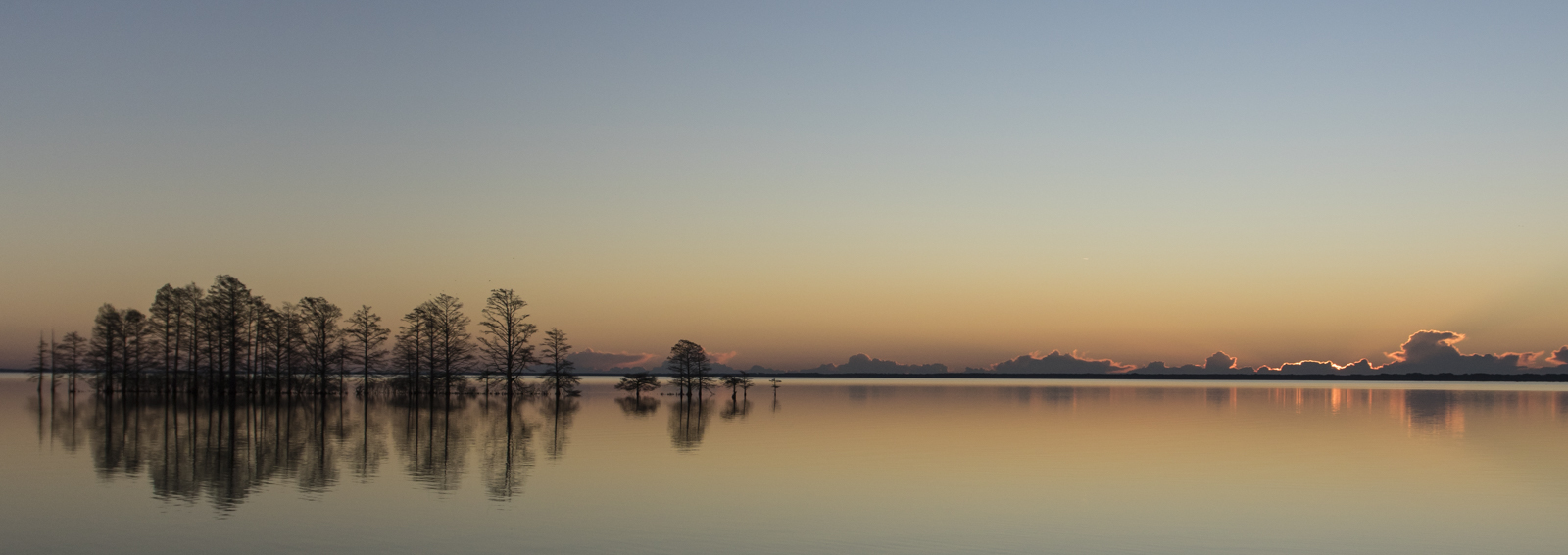
    Sunrise at the cypress island at Lake Mattamuskeet
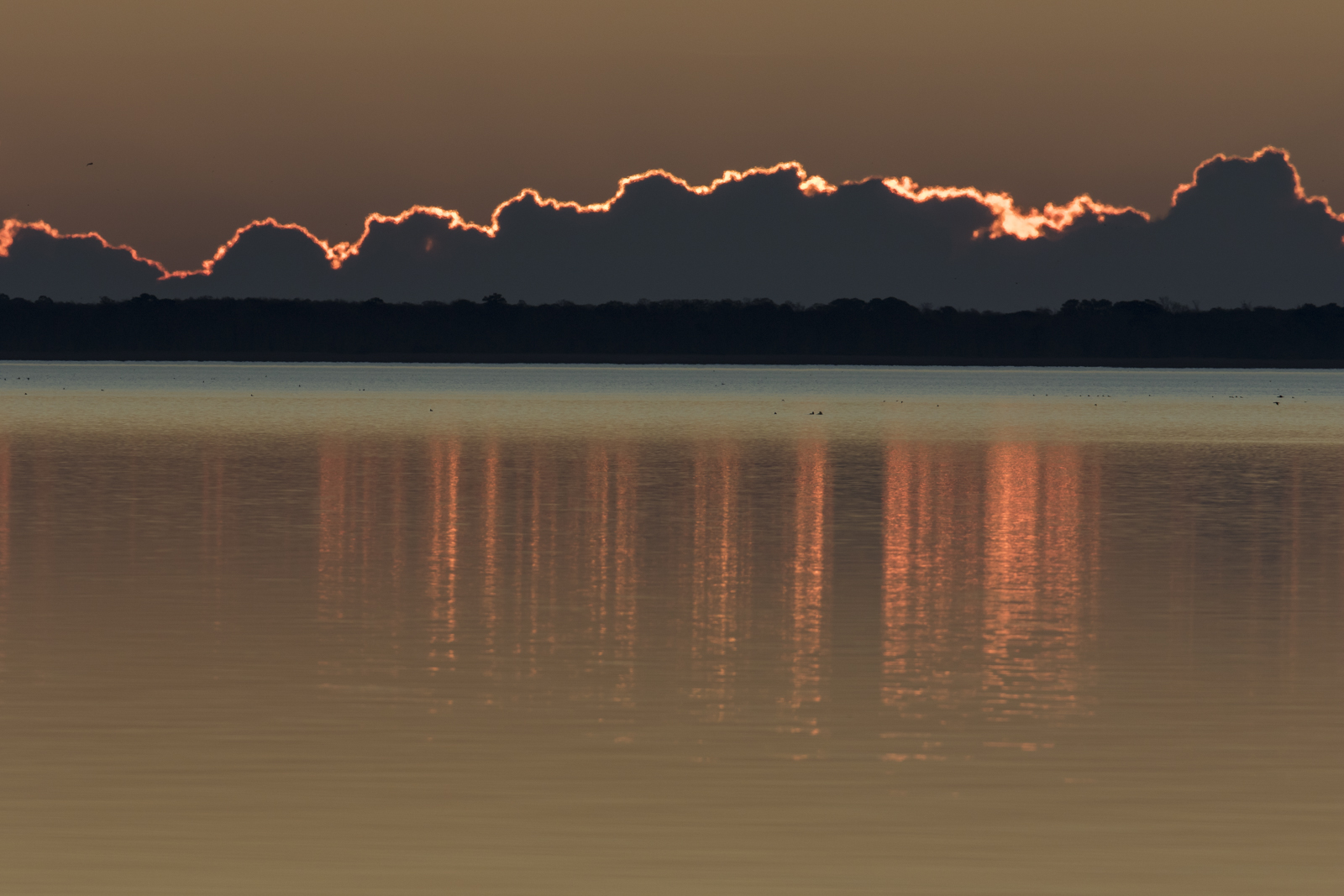
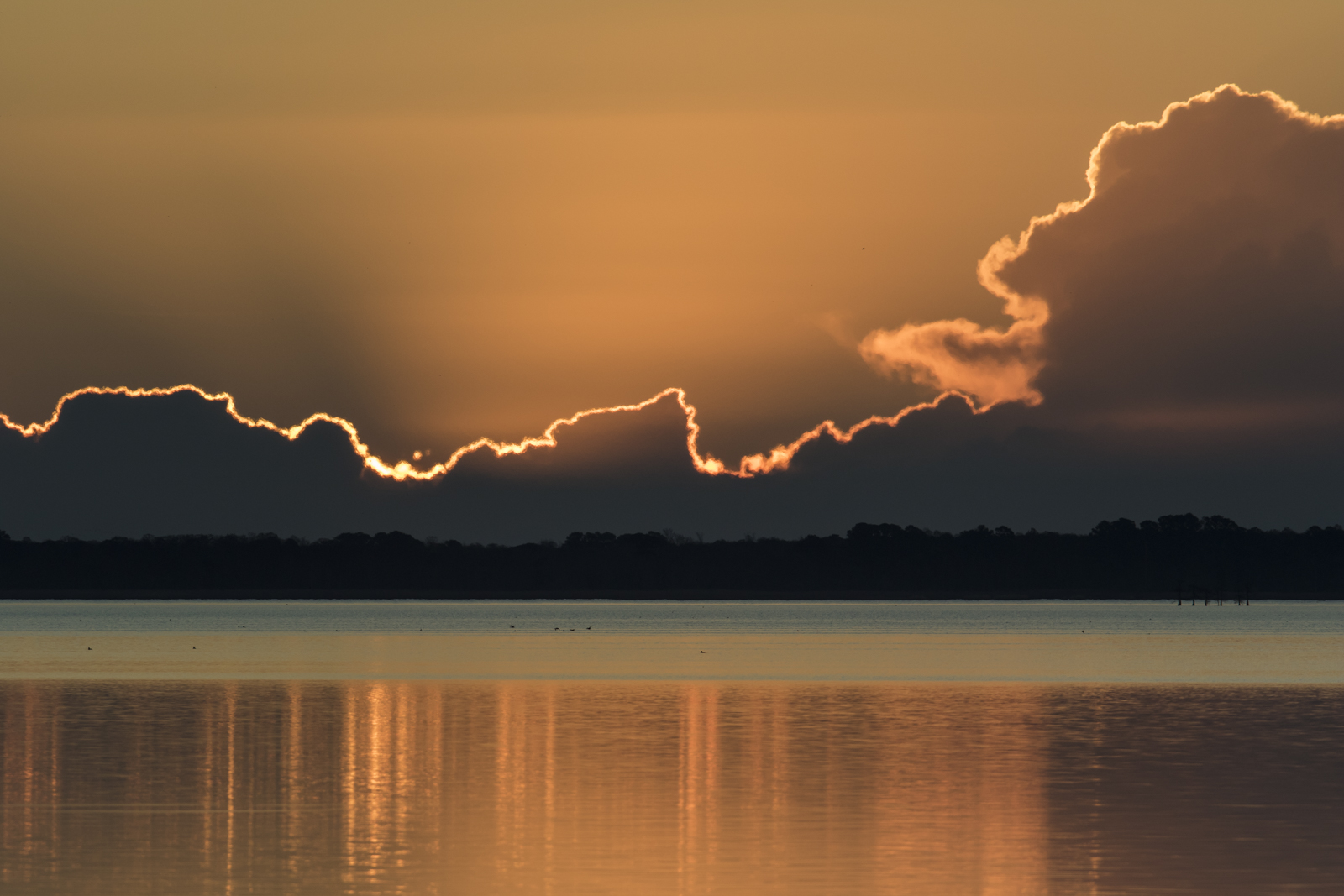
    Golden lining to clouds at sunrise
    Telephoto shot of clouds on the horizon
    Golden lining to clouds at sunrise 1
    Golden lining to clouds at sunrise

    Sunset Sunday at Pungo…

    swans at sunset
    Swans flying in against a thickening cloud cover
    Fiery sunset
    A surprise fiery sky as we drove back to Plymouth

    These ephemeral glimpses of beauty help remind us what an amazing world we live in and how we should pause to enjoy it, to make it what we do, and to live in the moment.

    Here is a moment of extravagant beauty: I drink it liquid from the shells of my hands and almost all of it runs sparkling through my fingers: but beauty is like that, it is a fraction of a second, quickness of a flash and then immediately it escapes.

    ~ Clarice Lispector

Search the Archives

Due to our site update, photos on older posts may not display correctly. Sorry for any inconvenience.


Recent Posts