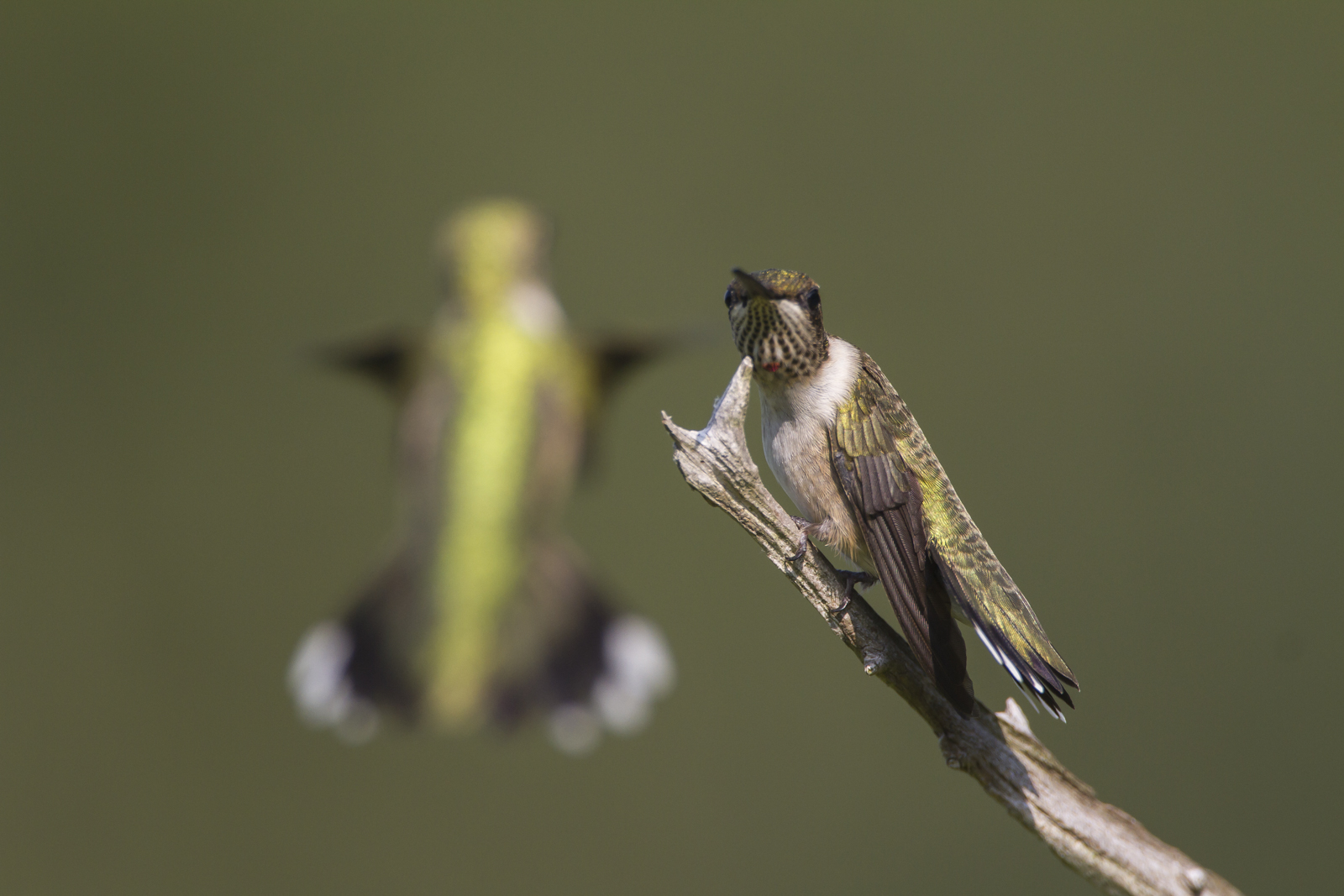
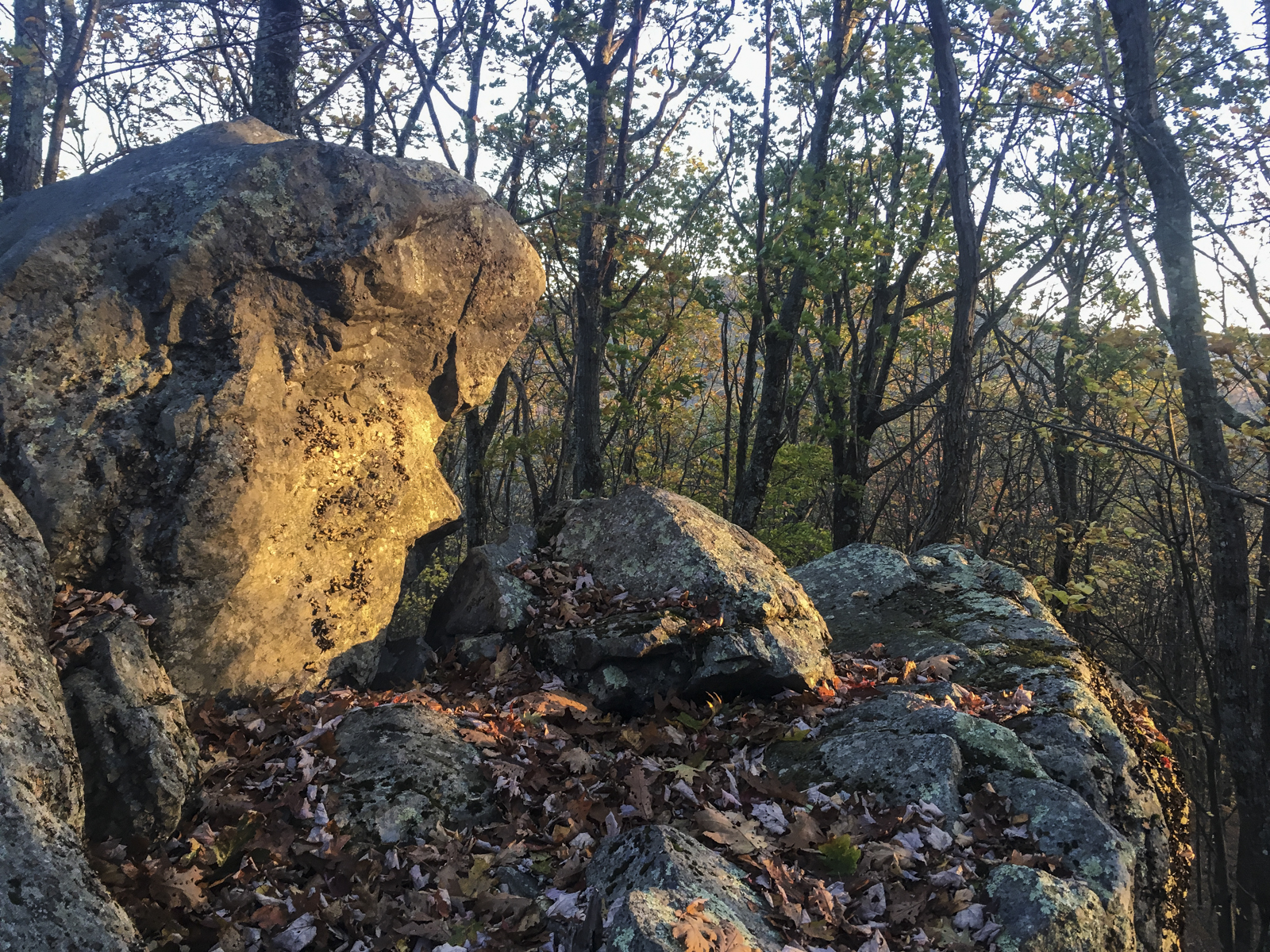
I talk to trees and animals. We have interesting conversations about food, weather, and love. They sometimes can predict the future.
~Shan Sa, author
There is perhaps some truth in that sentiment, at least as far as the weather goes. Or so it seems based on the many tales and proverbs about how to predict the future weather based on some natural phenomenon.
Red sky at night near Pocosin Lakes NWR on 1-31-16 (click photos to enlarge)
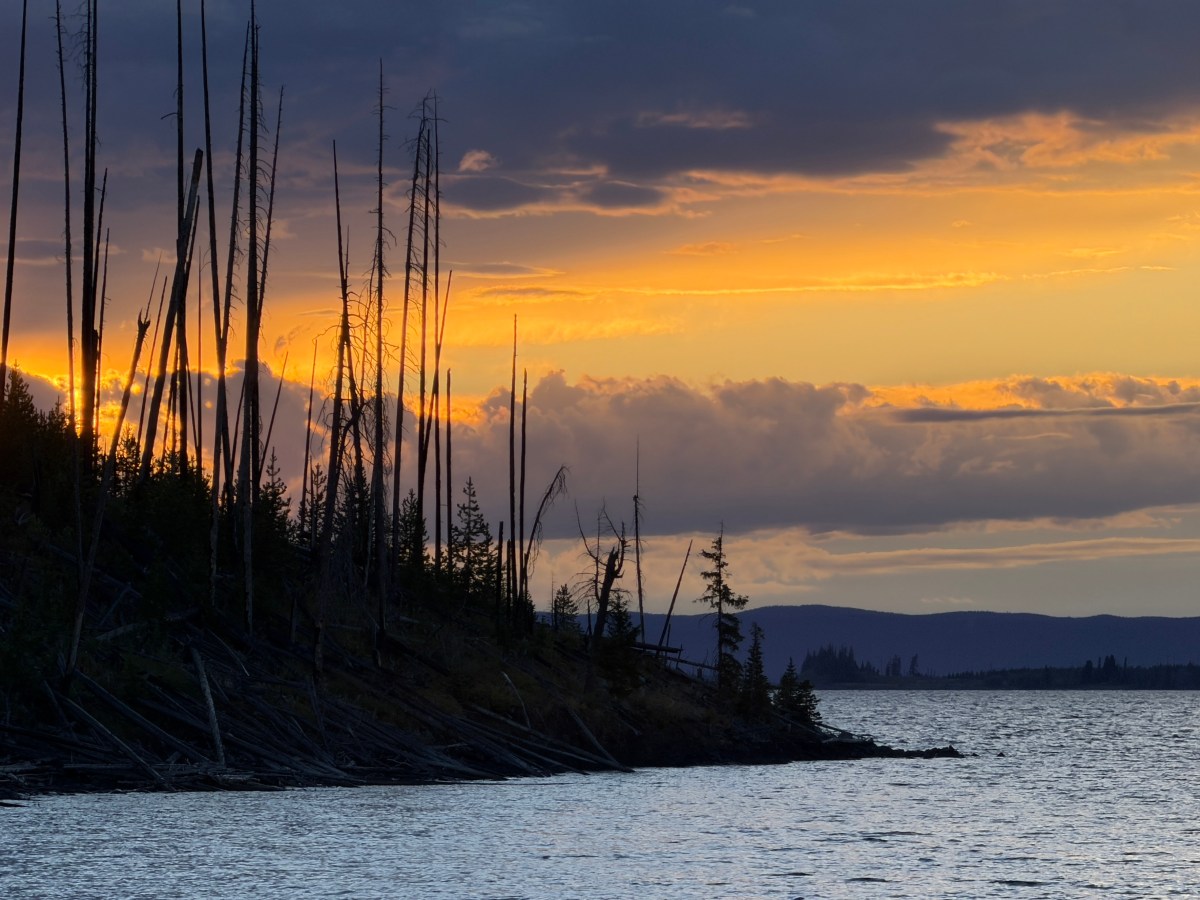
Most of us have heard the saying, “Red sky at night sailor’s delight, red sky in morning, sailor’s warning”. Well, there does seem to be a scientific basis behind that particular weather lore. In the mid-latitudes, weather systems generally move from west to east. High pressure systems (good weather) tend to produce an atmosphere near the surface that is cloud-free, but that contains a lot of dust and other particles. As low-angle (dawn or dusk) sunlight passes through that type of air, it tends to scatter the longer wavelengths (the red colors) more efficiently, meaning we see reddish colors. If that happens at sunset (looking west toward incoming atmospheric conditions), that generally means a high pressure system is headed our way, bringing good weather. If we see it looking east at sunrise, it means the high pressure has passed and a low pressure system (bringing not-so-good weather) may be approaching. Above is a sunset image from earlier this year, an especially fiery red sky in Eastern North Carolina. I checked the weather history for that location and it was clear the next day, as you might expect from that “red sky at night”.
Ripe persimmon fruit
But what about other, perhaps less scientifically rigorous, folklore? I stumbled on an interesting one this year that I had not heard before – using split open persimmon seeds (Diospyros virginiana) to predict winter weather.
Persimmon seeds in coyote scat at Mason Farm
It all started with a walk at Mason Farm Biological Reserve a few weeks ago. I found some coyote scat containing numerous persimmon seeds. Over the years, I have seen evidence of many species of mammals that seem to really like persimmons (raccoon, opossum, foxes, and beer drinkers at Fullsteam brewery in Durham – their First Frost persimmon beer is quite tasty). It started me wondering about whether, like in some other types of seed, it is beneficial from the plant’s point of view for a critter to ingest the fruit, pass the seeds through its gut, and then deposit them in its scat. It certainly is in terms of seed dispersal, but what about germination success? For certain types of seeds with extremely hard coverings, it helps them germinate if they first pass through the physical abrasion in the crop of a bird, or the acidic intestines of a bird or mammal digestive system. I turned to Google and found a research paper stating that persimmon seeds do have enhanced germination rates when a raccoon eats them, but not-so-much when they are eaten by a coyote. Different degrees of acidity I suppose.
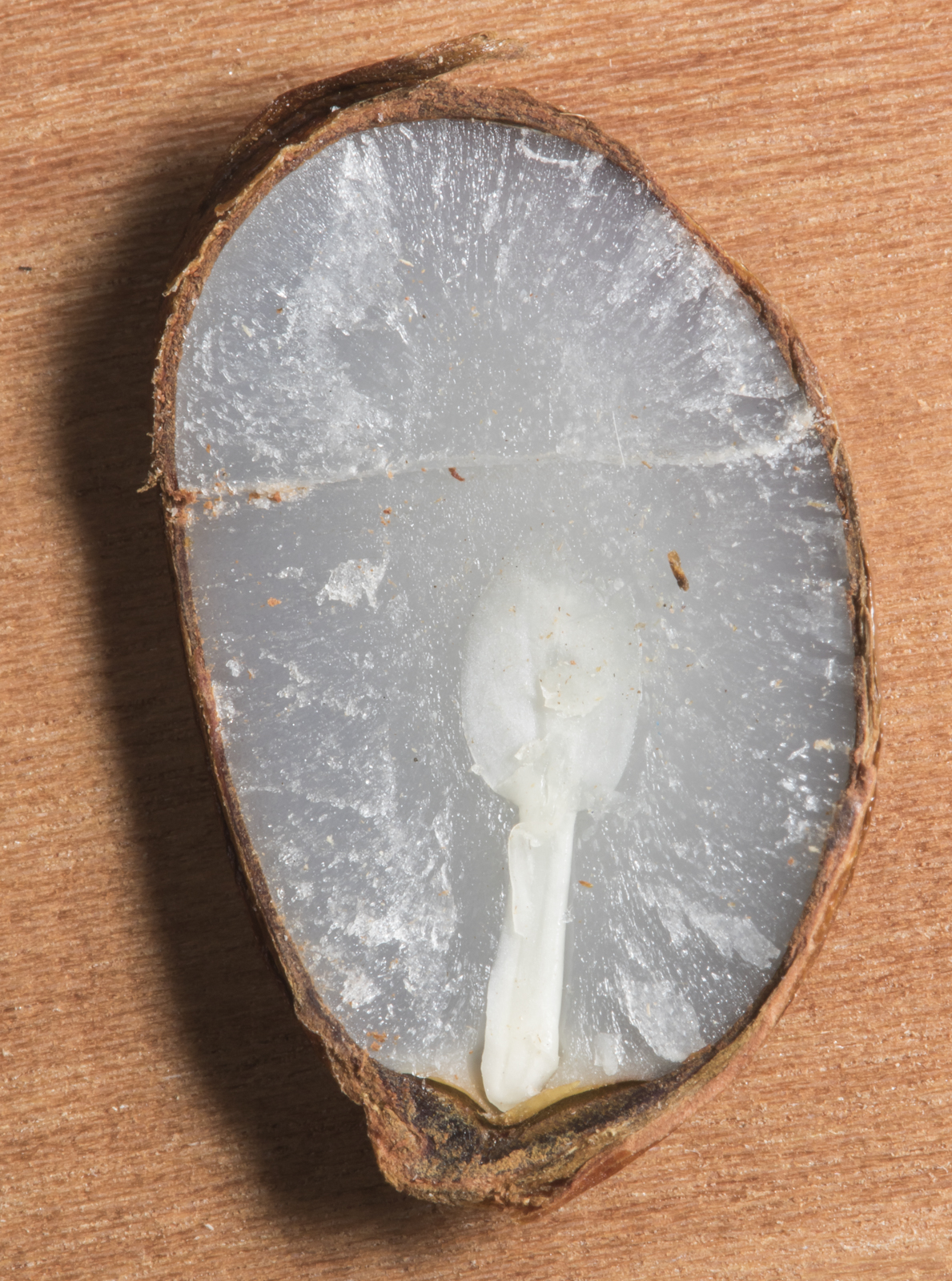
Shapes inside split persimmon seeds (left to right – spoon, spoon, knife, spoon, knife?)
But while looking that up, I also found a link about persimmon seeds and the weather, then another, and then even more. I was surprised how often this popped up as a topic. The lore states that if you split open the seeds from a ripe persimmon fruit (usually they ripen after cold weather starts in late October) you will see different shapes resembling our meal-time utensils – a knife, a fork, or a spoon. I collected a couple of persimmons still hanging on a tree and decided to check it out. First of all, it isn’t easy to split open a persimmon seed…you have to get the gooey (but tasty) pulp off or they are simply too slippery to hold. After finally splitting a few and looking at the shapes, it appears that my seeds contained either spoons or knives. Various references interpret these shapes as having a meaning for the upcoming winter season: a knife signifies the winter will be bitterly cold, with winter winds cutting through you like a knife; a fork means a winter with milder conditions, and snow will likely be light and fluffy; a spoon means cold, wet and heavy snow that requires shoveling. After splitting several seeds, I discovered it isn’t always that easy to tell which utensil is represented. And, unfortunately, there isn’t much data to suggest this type of prediction is particularly reliable anyway. But it is still fun. You also have to remember that before sophisticated computer models of weather patterns, and the other technology we now have at our disposal, people relied on things they could readily observe and interpret to try to predict important natural events like the severity of an upcoming winter.
A spoon inside a persimmon seed supposedly signifies a cold winter with some heavy snow
While searching online, I did find a local (NC) source for some of these predictions, a woman known as the Persimmon Lady (gotta love that moniker). She is all about appreciating persimmons in folklore (and in recipes) and she makes annual predictions (including predictions for the Farmer’s Almanac) on the winter weather based on persimmon seed cutlery. Based on seeds collected in Eastern and Central NC thus far this season, she predicts the following for the winter of 2016-2017:
“Eastern appears to be in for a nice mild winter (indicated by the forks) with a little bit of precipitation towards the end, however, Central is looking at a wet cold and snowy/icy winter (indicated by the knife and spoons)”.
So, there you have it…look what finding some poop on the trail can lead to…let the cold and snow begin!
Natural, ambient sounds give us a picture over time and define place…every landscape has a rhythm to it.
~Dr. Bryan C. Pijanowski
There is, indeed, a rhythm to paddling in a swamp, and the sounds help define it. Putting our canoes in at Gardner Creek a couple of weeks ago, we could hear the sounds of traffic on Hwy 64, the tones of people talking, the harshness of barking dogs and a lawn mower – all human sounds, or perhaps I should call them noises. But as we paddled, those noises started to fade and we soon had a rhythm of the place in our ears – water dripping from our paddles, the twitters of a mixed-species feeding flock moving through the trees, or the kerplunk of a turtle dropping off a log. We even heard the truncated calls of a few Southern leopard frogs, since the air was a bit warmer than the calendar date indicated. But, the true sounds of the swamp on this trip came in feathered form, one during the day, and one day and night (although certainly more forcefully after darkness enveloped our campsites on the platforms). Listen to the two audio segments below (recorded on my phone) and see if you recognize the makers of this music of the swamp (answers are below, play at full volume and don’t cheat)…
The first sound is one heard on several occasions as we paddled the waterways in this region, usually heard several times before we would catch a glimpse of the source, if at all.
This call-maker is one I will always associate with this place, and almost any swamp I have visited. These hunters call day or night, and have an amazing repertoire of vocalizations. This is a variation of their best known call.
Now, here are the sound-makers…
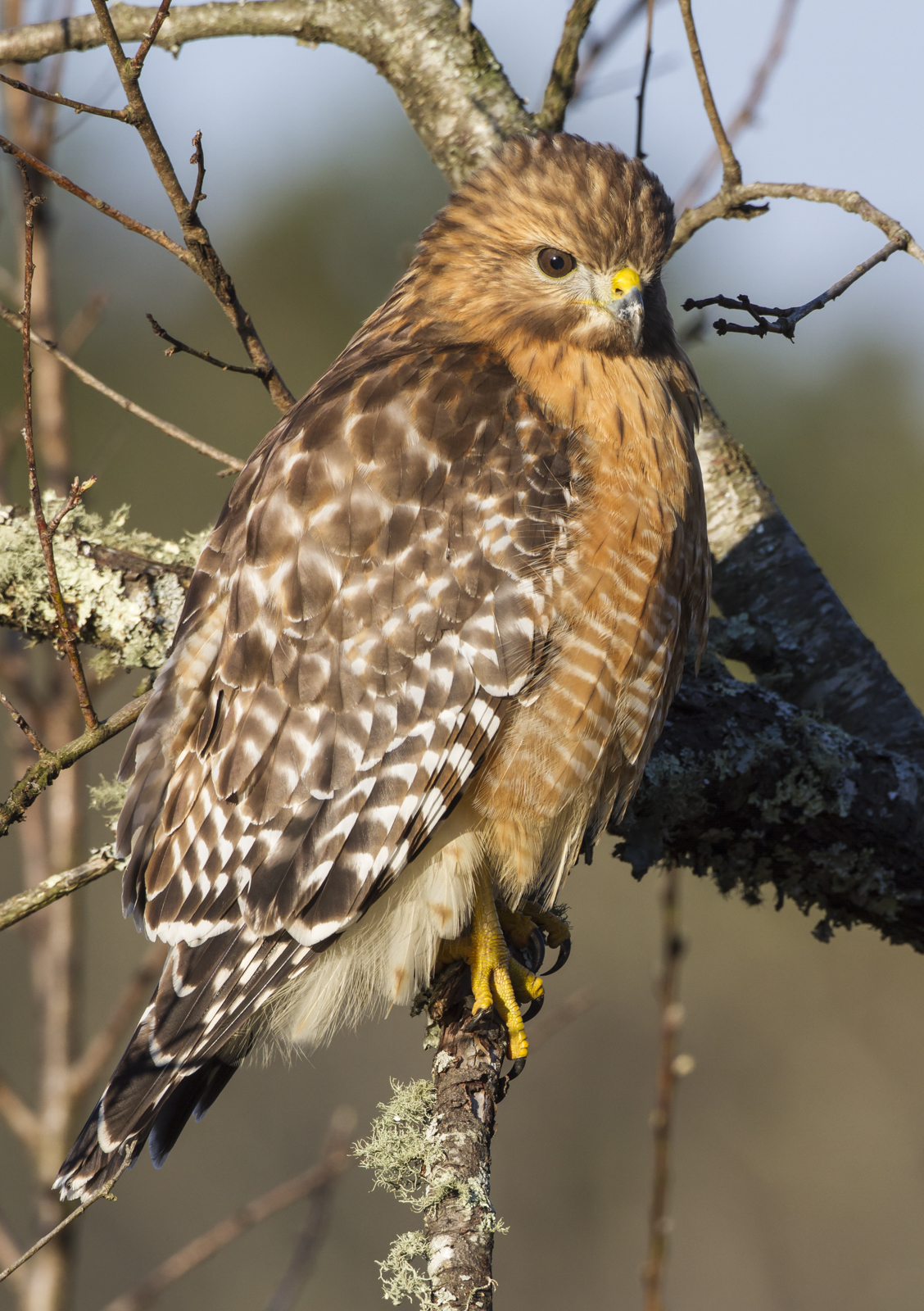
Red-shouldered hawk (click photos to enlarge)
A characteristic daytime call of the swamp is the harsh, Kee-aah, Kee-aah, made by the red-shouldered hawk, Buteo lineatus. The call is accented on the first syllable with a drawn-out second syllable having a downward inflection. It is considered a territorial call in the breeding season, and is also an alarm call. We generally heard it when one of these common swamp hawks took flight as we paddled nearby.
You can see the rusty red patches on the shoulder of this adult bird
Red-shouldered hawks are smaller than red-tailed hawks and tend to favor forested tracts, especially along streams and rivers. They are sit-and-wait hunters, whose diet includes many reptiles, amphibians, small mammals, and invertebrates such as earthworms.
Barred owl surveying for prey from a large wild grape vine perch
The barred owl, Strix varia, is the monarch of the swamp. Their best known call is often described as sounding like “Who cooks for you, who cooks for you all”. The call presented here is a variation and is described as an Ascending Hoot. The audio has the back and forth calls of two owls on our first night in the swamp (at the aptly named Barred Owl Roost camping platform). One is right above our campsite, the other maybe 100 feet away in the darkness of the swamp.
Barred owls hunt, and call, day and night
This back and forth calling likely is between a mated pair. We also heard some of their other calls that night, including the Single Hoot (a throaty descending hoot), and the cacophony of sounds that is often described as a Raucous Hoot and Caterwauling. The latter calls can vary from a high-pitched scream to monkey-like sounds, and can carry on for a minute or two. Unfortunately, the owls engaging in the raucous calls that night were too far away to be picked up by the mic on my iPhone.
The soundscape of a wild place is something we often overlook, but it is one of the things that can really make an outdoor experience memorable. I am grateful for these swamps and the opportunities for the unique camping provided by the Roanoke River Partners. And I am thankful for the sounds that seem to stay with you after any time spent in these special habitats. Be sure to listen for the iconic sounds of your favorite places on your next outings.
Here’s another of Melissa’s poems that she read at the recent Poetry with Wings event at the NC Botanical Garden (paired with some of my images from our trips on the Roanoke River) …
Swamp’s Sentinels by Melissa Dowland
In the blackwater swamp The creeks are lined With cypress-sentinels Left whole by the loggers— Because they were too hard to reach? Or perhaps, intentionally left, with great foresight to remind us of what once was? The swollen bases are buttressed and surrounded by their subjects— Knees, barely poking above the dark surface.
These trees have seen decades, centuries— Wild times, when they were left alone They’ve seen the river become a highway They’ve seen bulldozers pavers fishermen and me, in my canoe.
They are not tall— Their crowns flattened by the wind of innumerable hurricanes. Their sprawling branches covered in resurrection fern— they who need no resurrection to live for centuries.
And everywhere— Holes. Cavities. Hollows. Crevices.
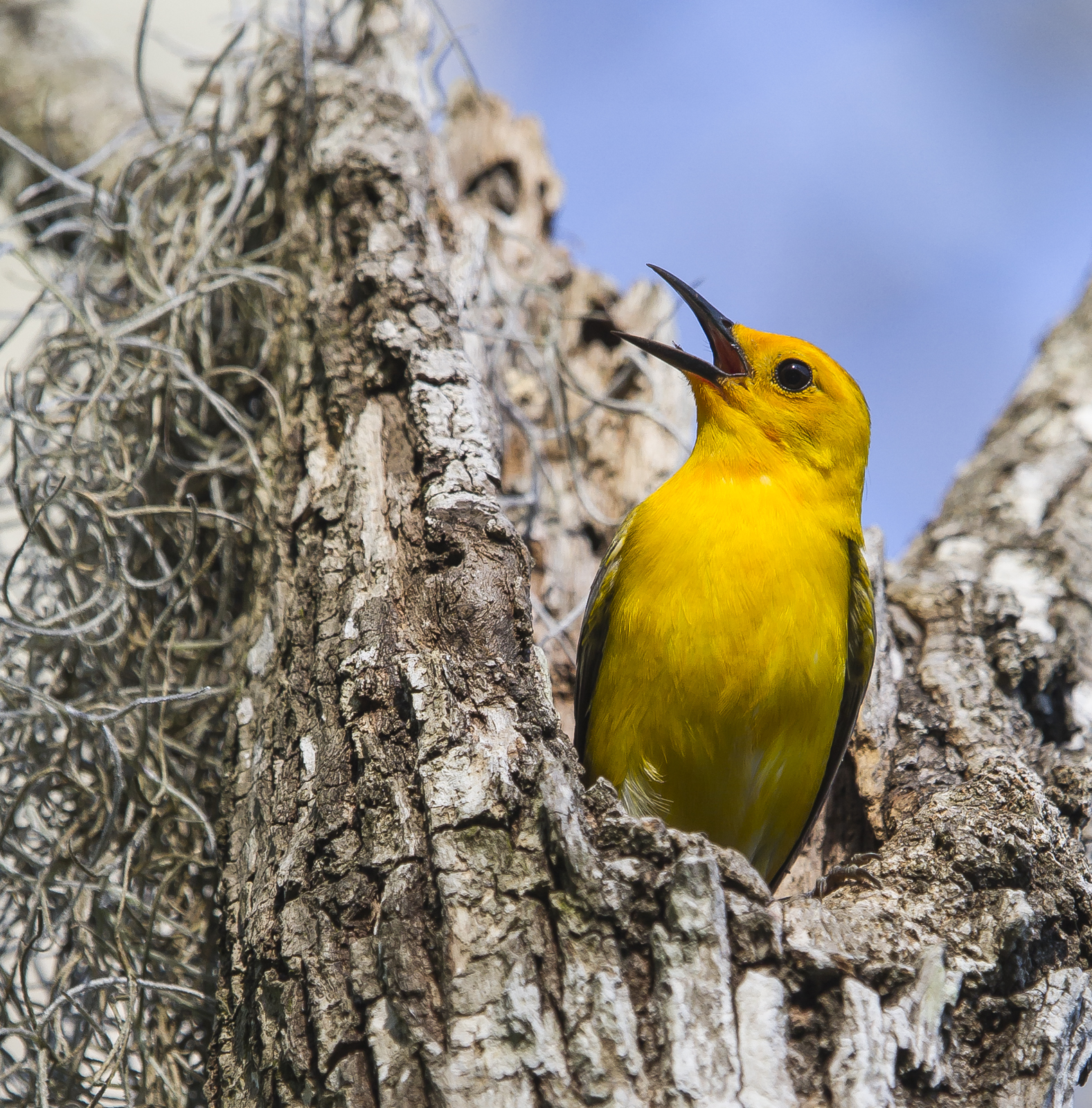
Some so large I could crawl inside Some just right for a chickadee, or a prothonotary warbler who brings such song to these solemn swamps!
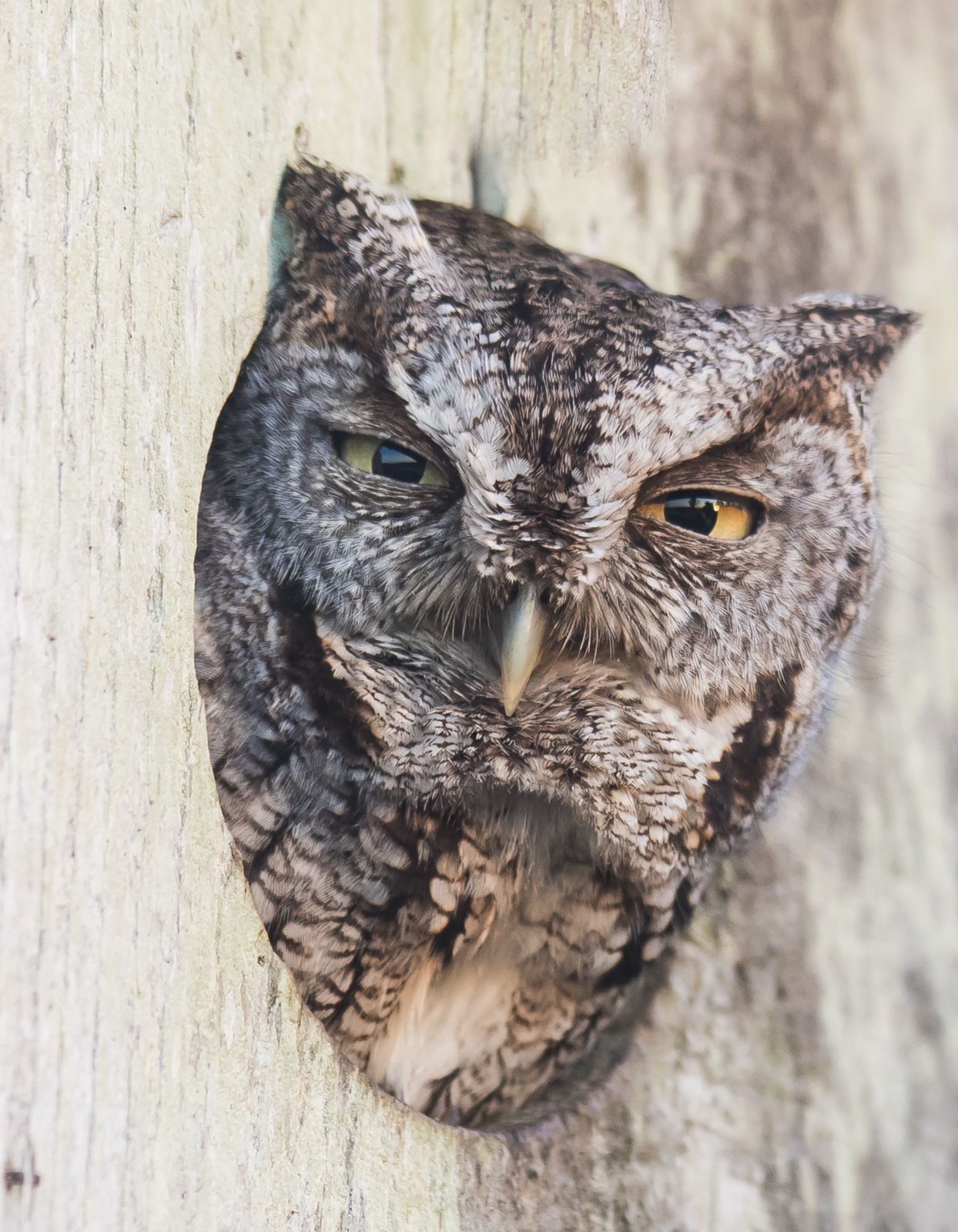
What lurks inside these hollow Monarchs of the Swamp? Were I to knock, what might I see? The dark fur of the bear who could smell me from a mile away? The sharp face of the screech owl, ready to pull back and hide in a second? The secreted nest of the prothonotary, cloaking her bright yellow in the cavity’s darkness?
Or are these holes Simply the eyes of the trees? Windows into their ancient souls? Tired eyes that have gazed down the years, Longing to be left at peace for yet another hundred years?
…when life looks sandy and barren, is reduced to its lowest terms, we have no appetite, and it has no flavour, then let me visit such a swamp as this, deep and impenetrable, where the earth quakes for a rod around you at every step, with its open water where swallows skim and twitter…
~Henry David Thoreau, 1852
The words above were written over 150 years ago, but are still relevant to our times. For many people, the term swamp conjures up fearful images, or at least a place of snakes and mosquitoes, a place to avoid. For us, a swamp is a place of refuge, a place to quietly paddle with our thoughts, and to create a feeling of being connected to something wild and free. With all the difficult news these past few weeks, it seemed a great place to visit to recharge our tired batteries. We had three days with beautiful weather last week, so we headed to the Roanoke River for one of our favorite swamp outings – camping on the platforms run by the Roanoke River Partners.
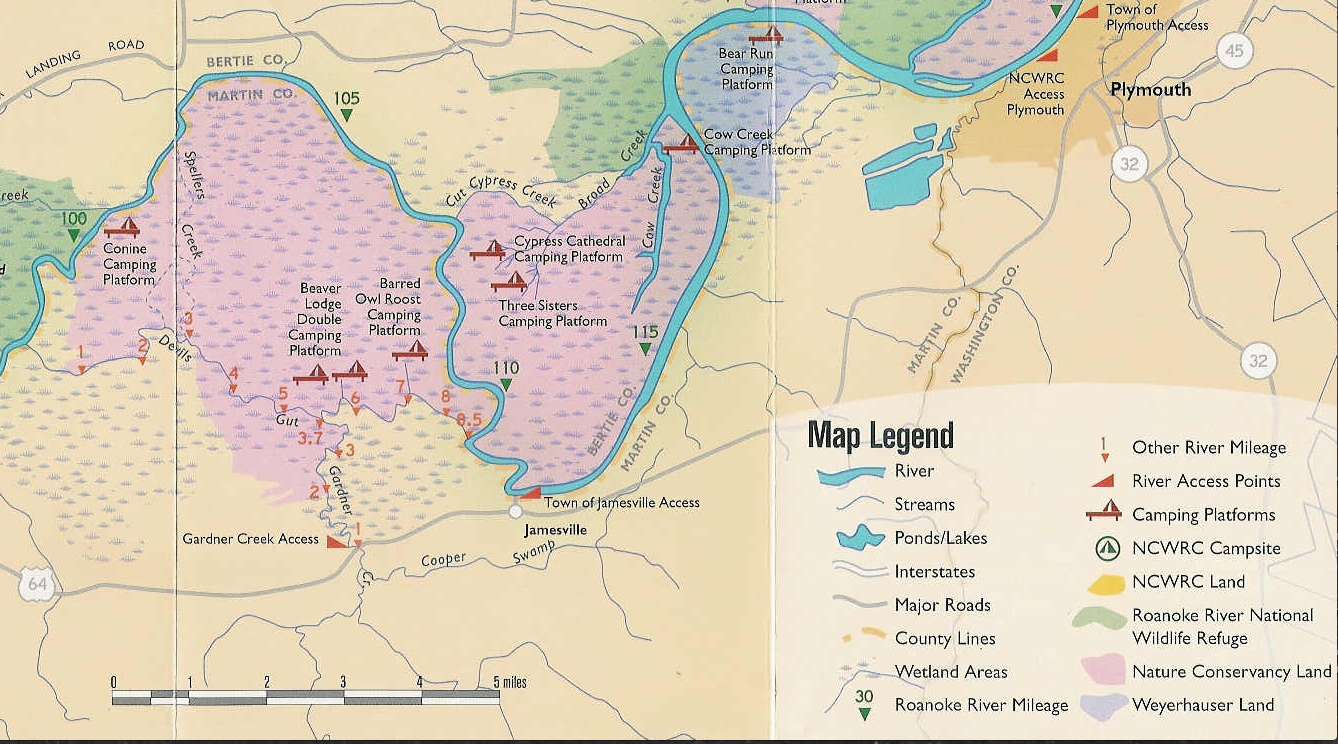
Our route covered about 30 miles and two camping platforms (click photos to enlarge)
We decided on an ambitious circular route that traversed about 30 miles of creeks and the river, with our longest paddle on the last day.
The launch site on Gardner Creek
We launched around 1:30 pm at one of our favorite spots, Gardner Creek. Our route included two camping platforms, both of which we have used on previous trips – Barred Owl Roost and Three Sisters.
Red maples add a fiery splash of color to the grays of the autumn swampThe calm water and blue sky added to the serenity of the swamp along Gardner Creek
The paddle out was gorgeous, with fall colors scattered among the grays of the trunks and exposed bottomland muds. Along the way, we started seeing and hearing a number of the wildlife species that would be our companions for the next three days – anhingas, wood ducks, Eastern bluebirds, and the ubiquitous barred owls.
Barred Owl Roost camping platform, one of our favorites
We covered the 6 miles or so to the camping platform in about 3 hours and had camp set up by 4:30 pm, just in time for the evening serenade of barred owls to begin. Their hooting calls mixed with the squawks and grunts of a nearby roosting colony of great blue herons that were coming in for the night. The Barred Owl Roost platform never fails to produce a cacophony of swamp sounds, especially from its namesake rulers of the night.
Our solar-powered camp light casts a veil of light over our campsite
Darkness comes quickly this time of year, but the swamp at night is a magical place. We sat and listened to the many sounds as the day shift took refuge and the night shift came on duty. I walked out on along the tiny boardwalk and saw 5 crayfish in my flashlight beam, scurrying about in the clear water looking for something to eat, while no doubt hoping to avoid the talons of a hungry barred owl or the jaws of a cruising swamp fish.
Sunrise in the swampTwisted base of a tree near the platform
Owls called off and on all night and into the morning. Sunrise was chilly, and damp, with a heavy dew settling on our rain fly and anything else exposed on the platform or in the canoe. After a hearty breakfast, we loaded up and headed out for a long day of paddling.
Early morning light in Upper Deadwater Creek near the Barred Owl Roost platform
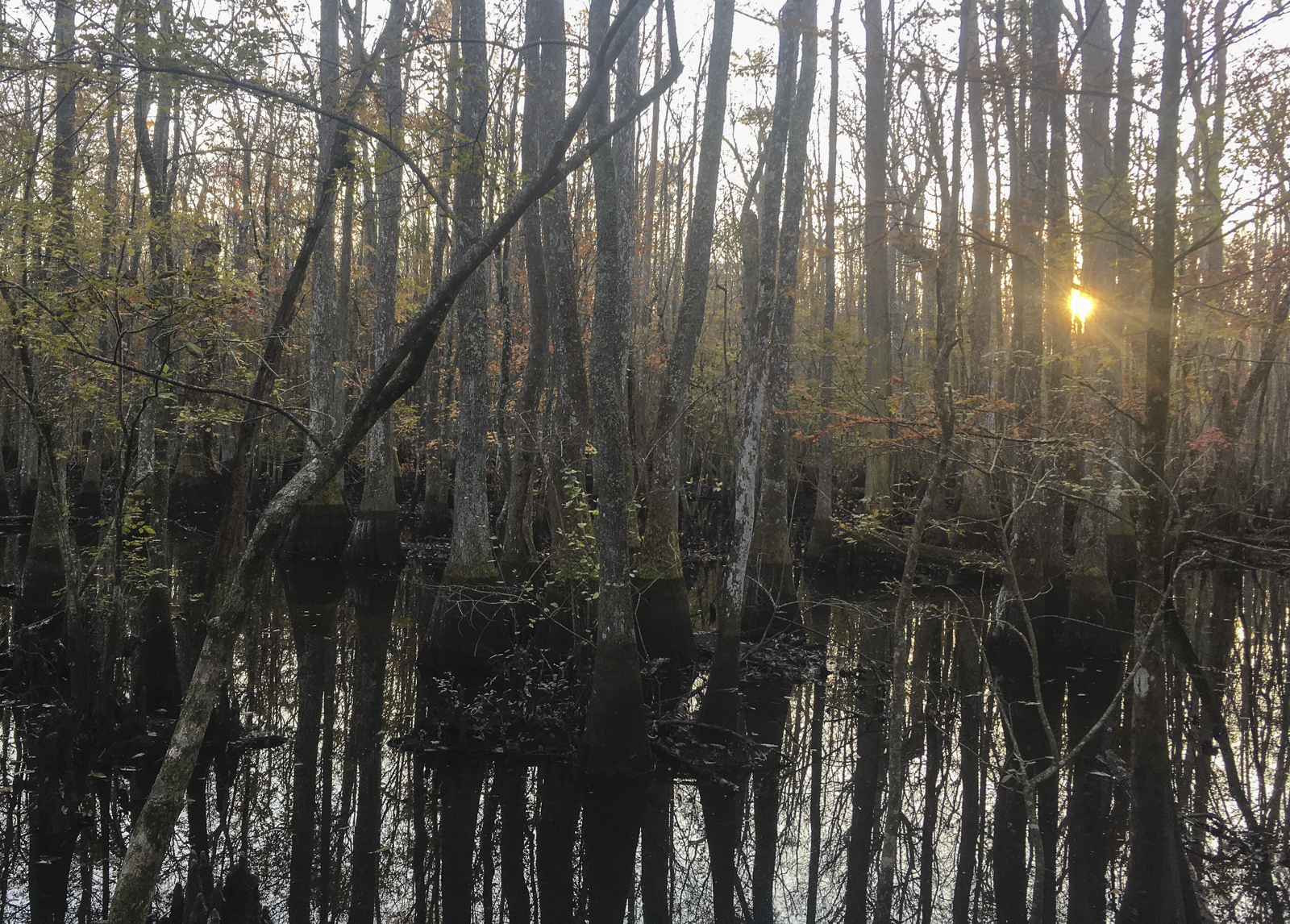
Once again, the soft light was beautiful as it eased through the gray pillars of tupelo gum and cypress trees. Patches of back lit colors pulled our eyes toward them as we paddled out toward the wider stretches of Devil’s Gut.
Devil’s Gut meets the Roanoke
When you reach the Roanoke, it appears so vast, with the trees seeming to relinquish their hold on your attention, giving away that power to the brown waters and blue sky. The slight current helps your arm muscles and we proceeded to make good time as we headed down river about seven miles to the creek that would take us to the next platform.
Riverine swamp along the Roanoke River
The river’s waters are much browner than Gardner Creek or some of the other tributaries to Devil’s Gut. It is wide with low flooded swamps on the north side and a variety of shorelines on the south, from high bluffs to flooded bottomland. All along our paddle you could see the high water mark left from the recent rains of Hurricane Matthew.
Melissa paddling on the Roanoke River east of Jamesville (our rain fly drying in the sun in foreground)
Once we passed the scattered riverside homes and businesses of Jamesville, we saw few other signs of human presence for several miles. I like to paddle close to one of the shorelines in hopes of seeing wildlife, and to avoid any fishing boats that might be zipping up and down the river. But, there are places where your canoe may suddenly drag bottom in shallow mud flats that can extend far out into the river. The shallows often have dense growths of lily pads or other aquatic vegetation which attract fish, turtles, and other critters.
Muskrat feeding in a water lily bed in the river (photo by Melissa Dowland)
At one such place, we spied something at the surface up ahead. It looked like a small mammal but seemed a bit odd in that its tail stuck out of the water at an angle. It dove, then resurfaced, tail again pointing skyward. It was a muskrat, apparently feeding on something in the shallows. It kept diving and coming back up in about the same place and didn’t seem to notice our canoe as we glided toward it. Melissa grabbed a few photos as I steered the boat. The muskrat finally saw us and disappeared with a quick splash.
Huge osprey nest in bald cypress near the Three Sisters platform
When we turned up Broad Creek, we left the expanse of the river behind and, once more, the swamp seemed to reach out to our canoe and embrace us. The creeks are full of fish, both large and small (some very large ones startled us a time or two as they swirled and splashed right next to boat). We saw a few boats with fishermen, and most had multiple lines reaching for the depths. I asked one man what he was catching, “a few striped perch”, he replied. I was not familiar with that species, so he explained that is the local name for crappie. Missing from our swamp scene this time of year is another type of “fisherman”, the osprey. They have retreated south for the winter, but will return next March to show us humans how it is really done.
Sunset from our platform
The Three Sisters platform is situated along the edge of a creek instead of being nestled back in a swamp like Barred Owl Roost. There is a massive bald cypress next to the platform and a thicket of vines and shrubs along the creek edge that is apparently a preferred roosting spot for several of the local song birds, many of whom scolded us as we sipped a hot drink on the dock. The loud kerplunk of a beaver tail slap signaled this was also their territory, and at least one of them kept us on notice that he was watching us by continuing those warning slaps off and on throughout the night.
The intimate beauty of Cypress Creek
The next morning we headed over to Cypress Creek, a narrow, winding cut-through that connects Broad Creek back to the Roanoke River, and makes this such a great circular route. I was a little worried there might be downed trees blocking the path after the recent storm, but, it appears enough boaters use this cut that people tend to clear out any obstructions. You are paddling against the current here, but it was negligible on this outing (I have paddled it in high water when it was an exhausting challenge). All along the mud banks we could see tracks of animals such as deer, beaver, and raccoon.
Young raccoon on tree (photo by Melissa Dowland)
And suddenly, there was one of the track-makers, a young raccoon scrambling along a low branch out over the water. It quickly reached the trunk, climbed a bit and then stared back at us. After a couple of photos, we paddled on, hoping its next encounter with humans will be as peaceful.
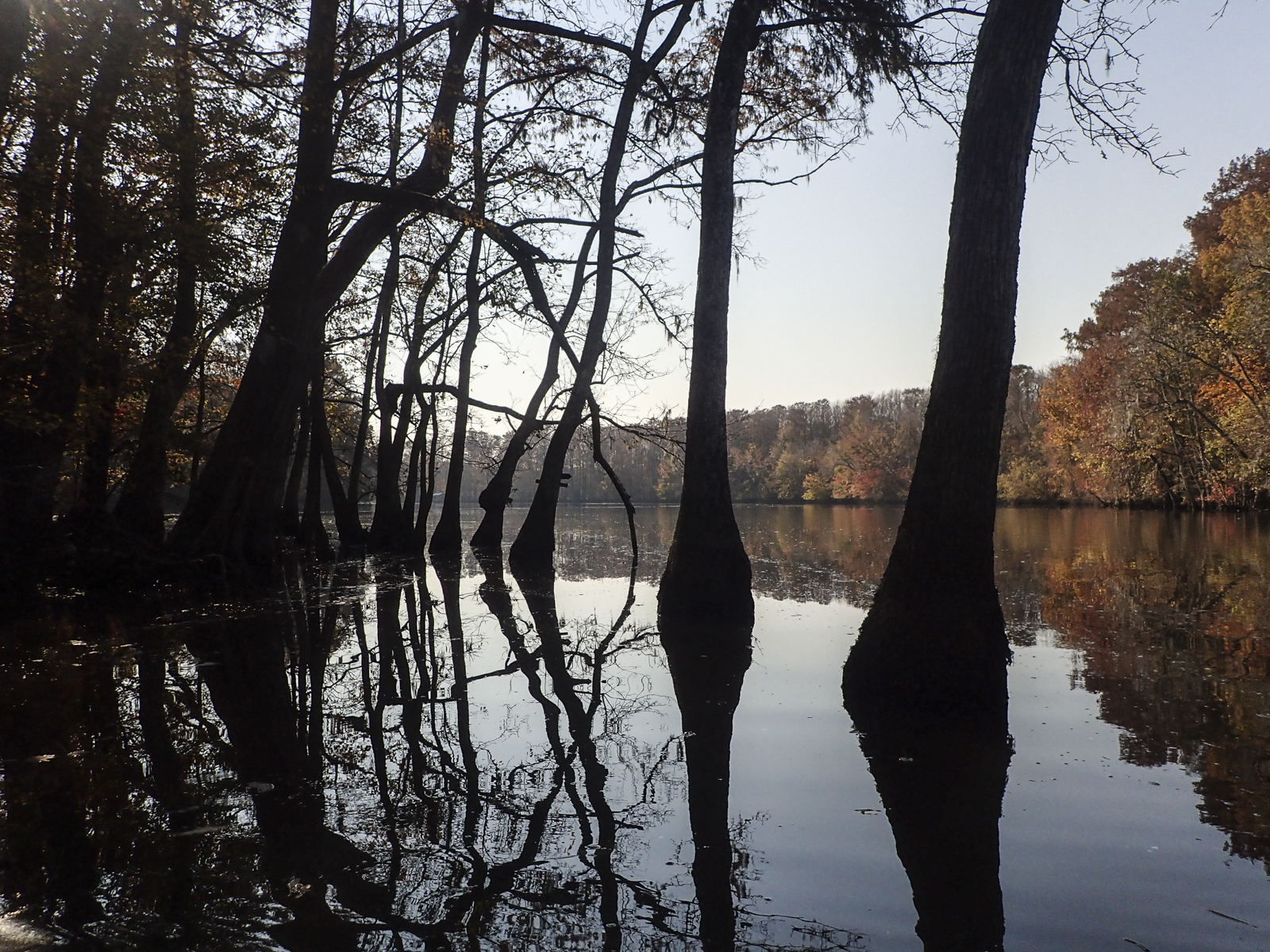
Swamp reflections
It is strange how we both are so quiet while paddling, often going 20 or 30 minutes without saying a word.I suppose it is part of the process of clearing your head and being connected to the place. It allows us to focus on our surroundings, to listen, and to see things we might otherwise miss. Perhaps there is something about the reflections of the forest in the dark waters that commands our silence and respect.
The swamp surrounds you in stillness and beauty
We finished our journey with a long paddle back up Devil’s Gut and Gardner Creek. Belted kingfishers rattled their disapproval and shared their acrobatic flying skills all along the way. More herons, more anhinga, a stunning bald eagle, another raccoon, and a surprise mink rounded out our wildlife sightings. We soon heard the road noise of Hwy 64, telling us we were back to civilization. But, for 3 days, our stresses and worries had been set aside by the silence and beauty of a sanctuary in a swamp. We will no doubt need to return in the near future for another dose of tranquility.
Species checklist:
Birds – Pied-billed grebe, anhinga, great blue heron, Canada goose, wood duck, mallard, bufflehead, hooded merganser, black vulture, turkey vulture, bald eagle, sharp-shinned hawk, red-shouldered hawk, red-tailed hawk, merlin, laughing gull, ring-billed gull, barred owl, belted kingfisher, red-bellied woodpecker, yellow-bellied sapsucker, downy woodpecker, Northern flicker, pileated woodpecker, Eastern phoebe, tree swallow, American crow, Carolina chickadee, tufted titmouse, white-breasted nuthatch, Carolina wren, golden-crowned kinglet, ruby-crowned kinglet, American robin, Eastern bluebird, Northern mockingbird, blue-headed vireo, Northern cardinal, red-winged blackbird, common grackle
…more different species of animals have been recorded at the Reserve than in any other comparably-sized area in the entire Piedmont.
~NC Botanical Garden web site regarding Mason Farm Biological Reserve
It is an idyllic place in an otherwise rapidly developing region of our state…it is Mason Farm Biological Reserve. Mason Farm is about 367 acres of forest, fields, and wetlands that is administered by the North Carolina Botanical Garden as both a natural area and biological field station. Visit the web site to learn about access and the history of the site, as well as details on visitation, current management, and the flora and fauna that call this place home.
Trail at Mason Farm Biological Reserve (click photos to enlarge)
I have been visiting for a number of years and almost always find something interesting to observe in addition to the beautiful setting, nice trail, and peace and quiet. My last visit was no different. A little over a week ago. I went over one afternoon to walk the two mile loop and see what I could see. It was cool and sunny, and for most of the walk, I was alone on the trail.
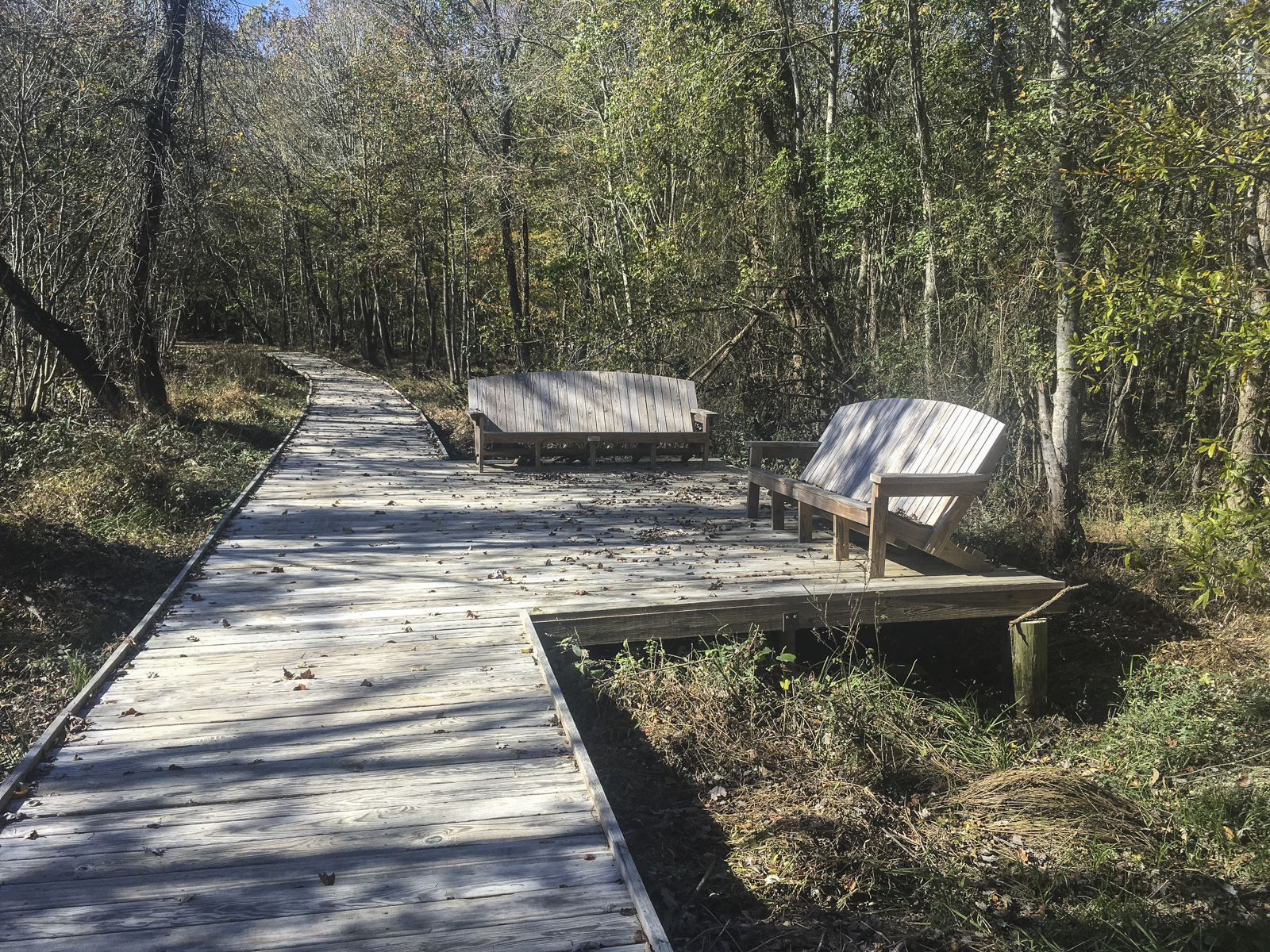
Boardwalk and benches along the trail
I sat on one of the benches for awhile, enjoying the movement of small birds (including a winter wren) and the call of one of the local barred owls back in the woods. As I continued along the trail, I decided to gently roll a log to see if anybody was home.
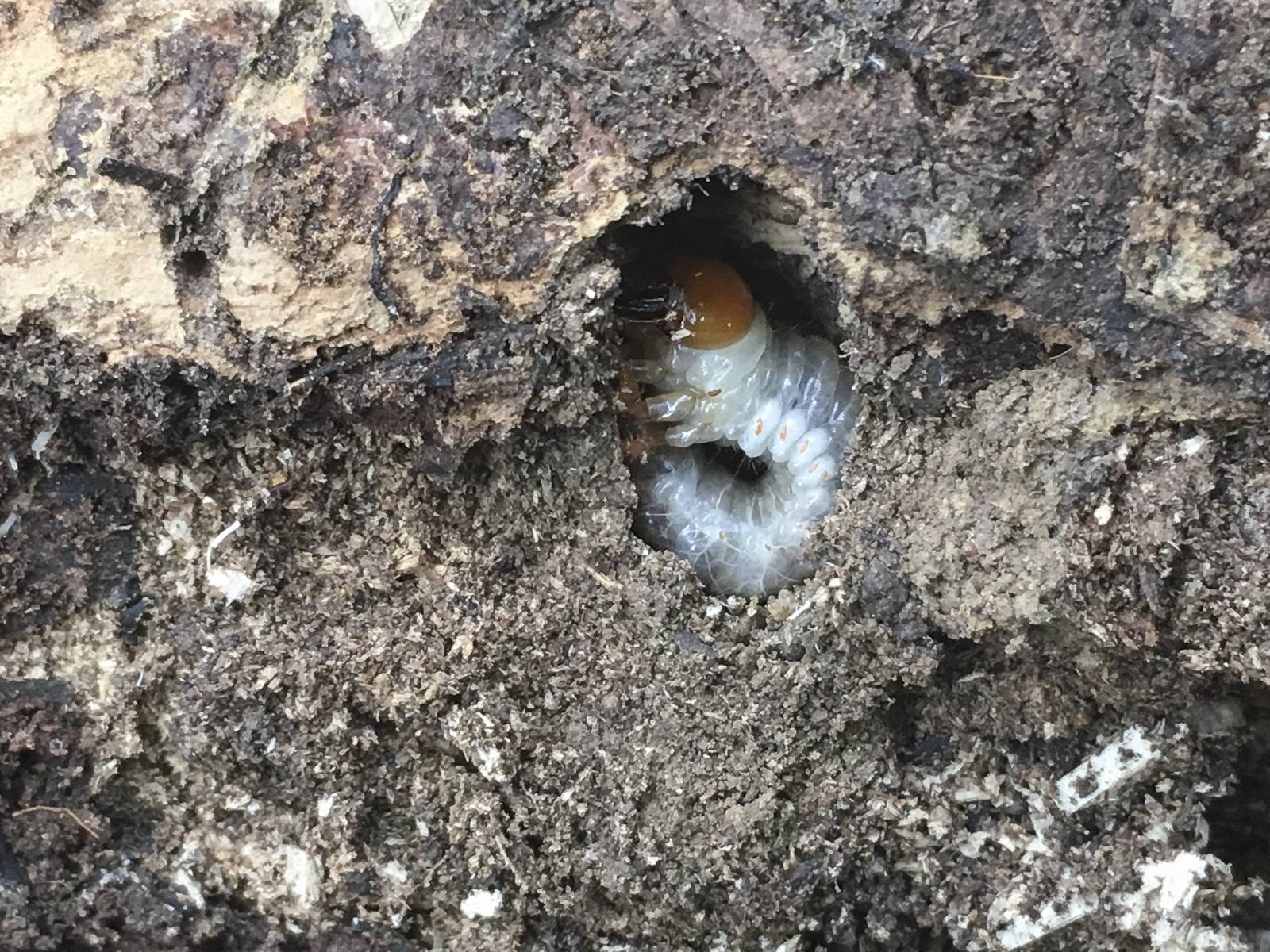
Beetle larvae are common under logs in these woods
My first find was a large beetle grub. There was a Bess beetle adult under that same log, so I am guessing that is what this one is (plus, when I examined the photo, it looks like one of the pair of legs is reduced in size, which is a hallmark of the larvae of Bess beetles).
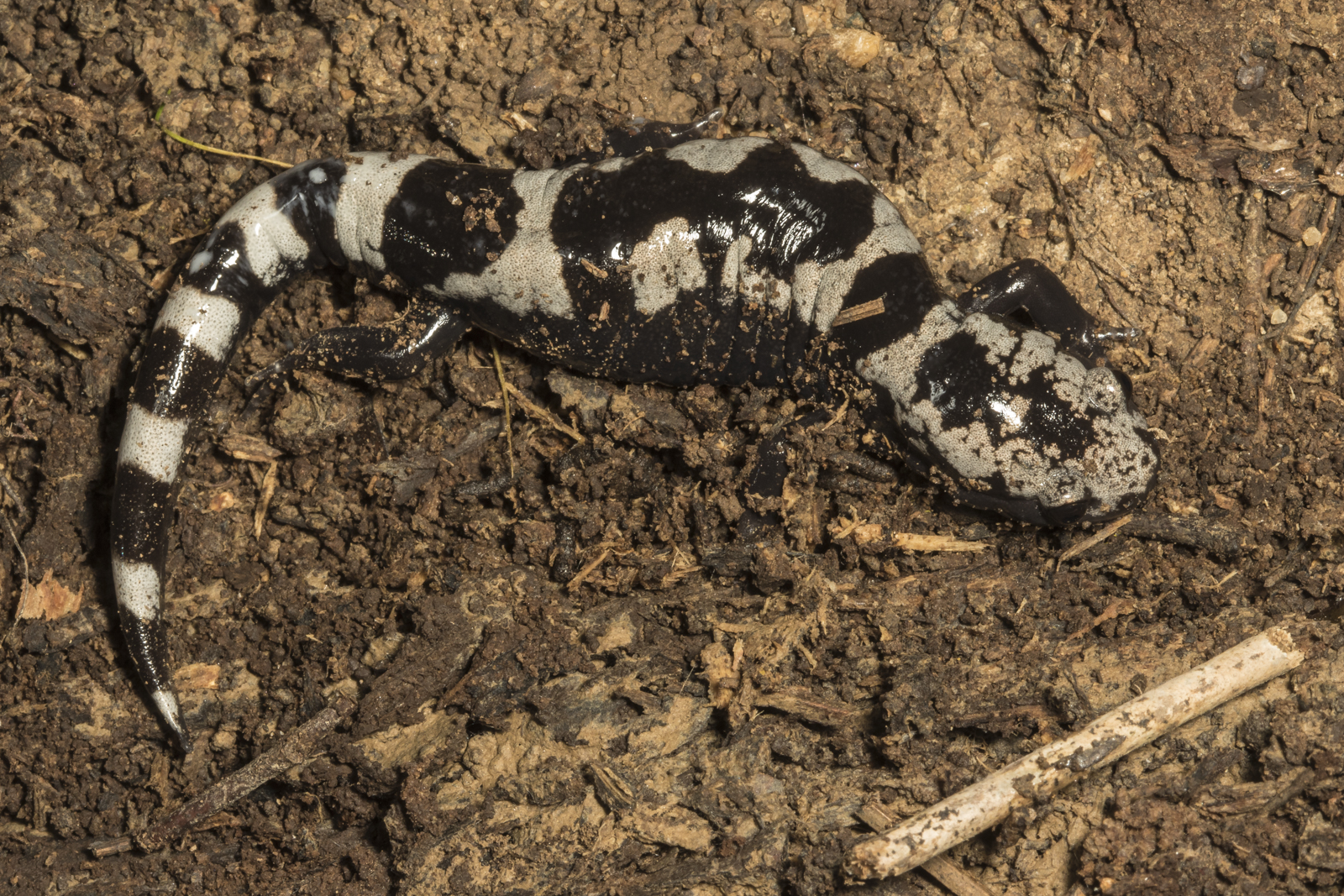
Marbled salamander under a log
The next log had another treasure – a marbled salamander. This is one of the so-called mole salamanders, and they are frequently found in tunnels under logs in forested habitats. This one was about 4 inches in length and is probably a female, based on the silvery gray crossbands (males tend to have bright white crossbands).
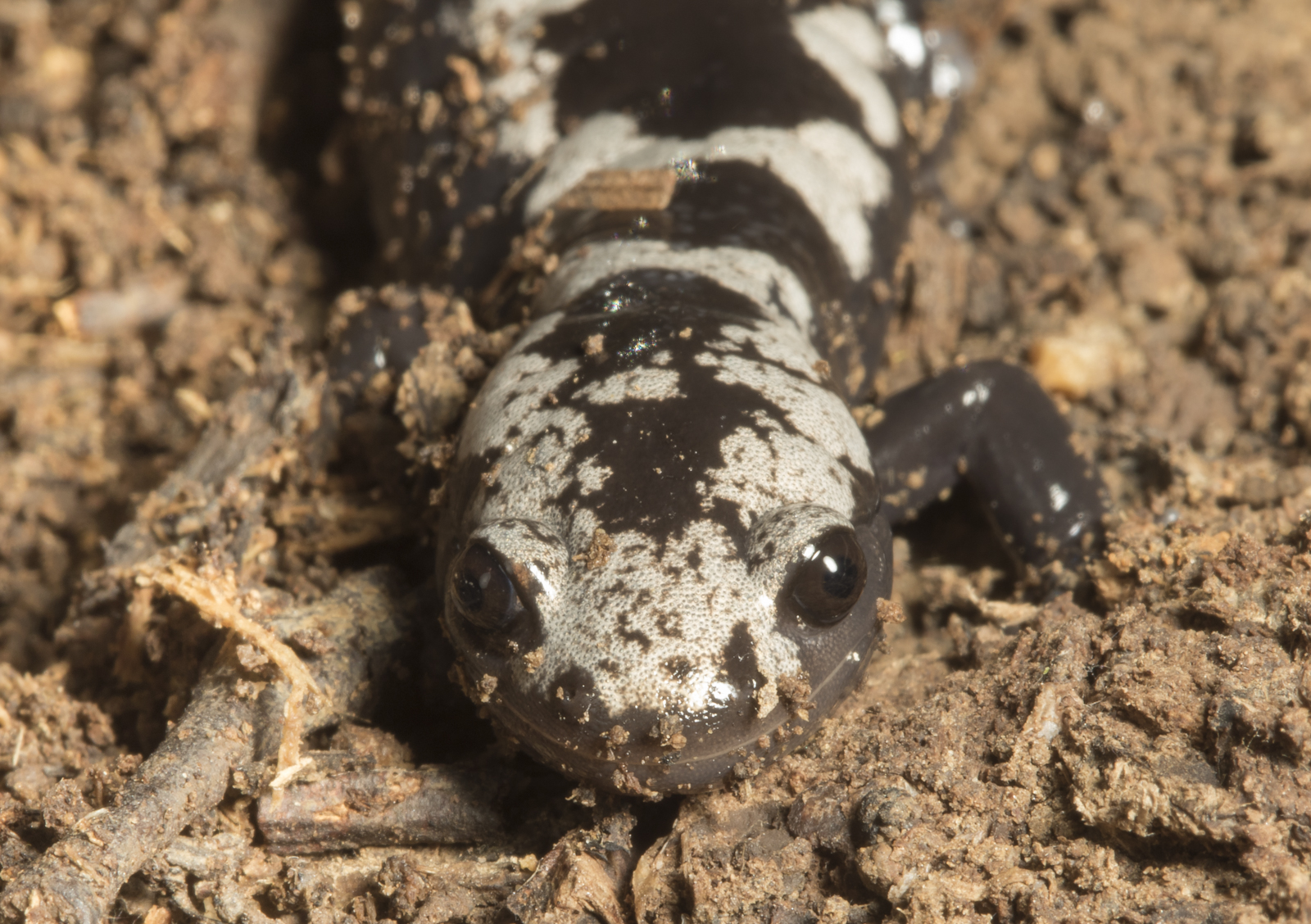
Salamanders have such likeable faces
There is something very appealing about the mole salamander group (and, really, salamanders in general). I think it is their large eyes and a mouth that makes them look like they are perpetually smiling. I took a couple of quick photos and gently rolled the log back in place after the salamander disappeared down into a burrow.
This mud salamander was under the same log as two weeks ago
A couple of weeks ago, on another hike at Mason Farm, a group of us had found a mud salamander under a log in this same area. I wondered if it might still be around, so I walked over and rolled the log, and, to my surprise, it was still there.
Mud salamander looking at the camera
Mud salamanders are a species I don’t find very often so I definitely wanted a few pictures. These large reddish salamanders (this one was about 5 inches) have black spots scattered along the colorful body. Their dark eyes help distinguish them from the similar-looking red salamander, which has yellow irises. They feed on worms, small invertebrates, and, occasionally, smaller salamanders. After observing this beautiful creature for a couple of minutes, I rolled the log back, and tucked the salamander up against it so it could crawl back under to safety.
Cope’s gray treefrog showing bright yellow color on inside of hind legs
Satisfied at my two amphibian finds in such a small area, I continued walking. I soon spotted a splash of red against a sea of brown trunks and fallen leaves. It was a Virginia creeper vine on a tree trunk highlighted by the afternoon sun. I walked over for a closer look and as I approached the tree, I saw movement…a Cope’s gray treefrog clambered around the trunk trying to hide.
The perfect perch on an autumn day
I followed it around and as I moved in for another photo, the frog jumped, landing on the red leaves that had brought me over in the first place. Well done!
Last outing before winter?
I grabbed a few more images and left the frog in peace to enjoy the warmth of the sun. This may be the last chance at sunbathing this November amphibian will get for a few months. And I headed home, satisfied by another rewarding afternoon of woods-watching at Mason Farm.
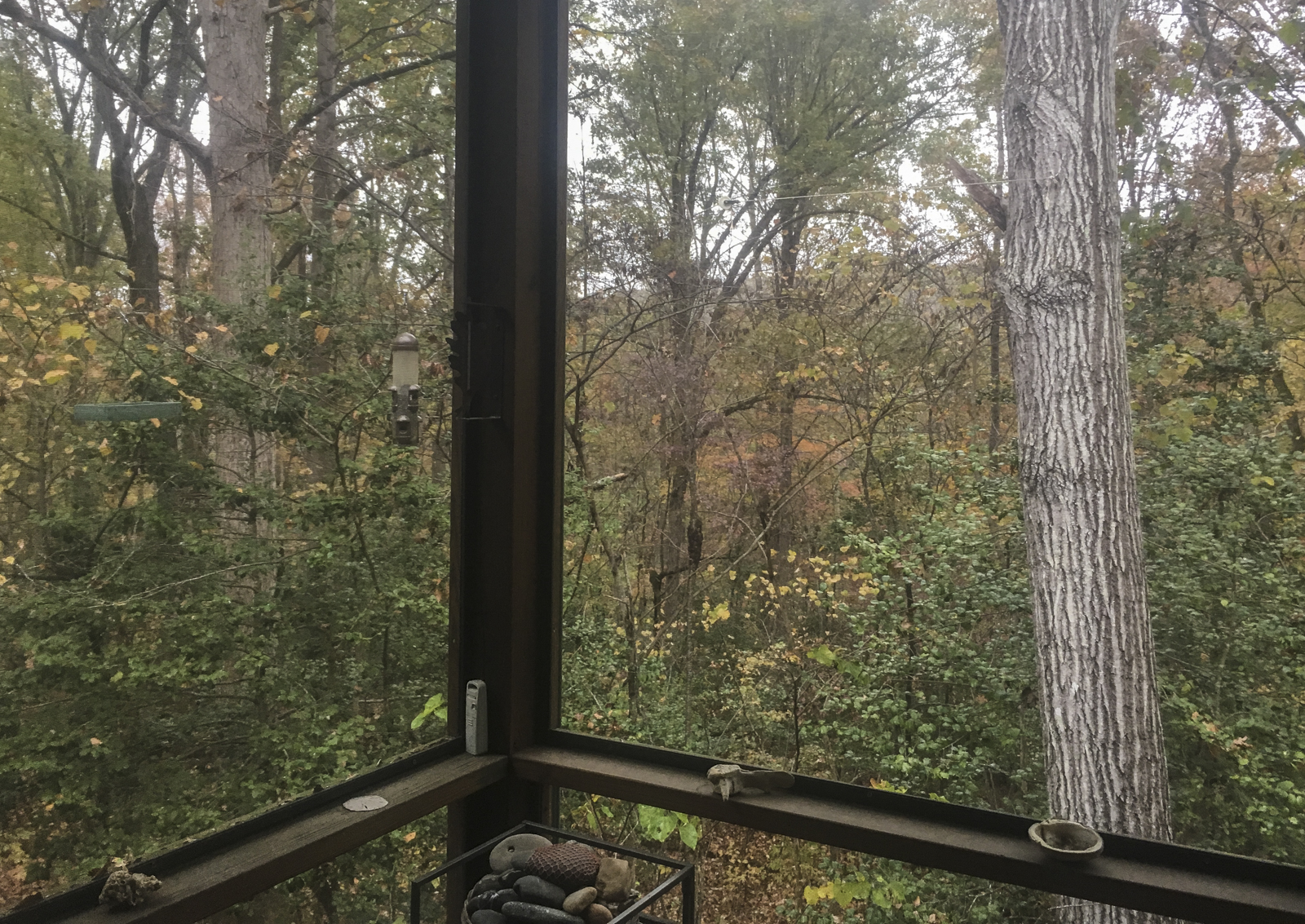
There was a poetry reading yesterday at the North Carolina Botanical Garden in Chapel Hill entitled Poetry with Wings. As part of the Garden’s Saving Our Birds programming initiative this Fall, five local poets were invited to read poems that touch on birds in some way It was a wonderful event with a wide range of poetry and presentation. Melissa was one of the poets and presented ten of her works. From time to time, I will share one of her poems, along with some accompanying photos. Here is one of my favorites from yesterday’s reading…
The View From My Porch
by Melissa Dowland
When did we forget how to be kind to other another?
When did we stop listening
to all but our own voices
and those shouting the same things?
When did we start judging others so closely
that we forgot that we all learn
by making mistakes?
When did we allow fear to become the driving force
behind our decisions
as individuals, and as a culture?
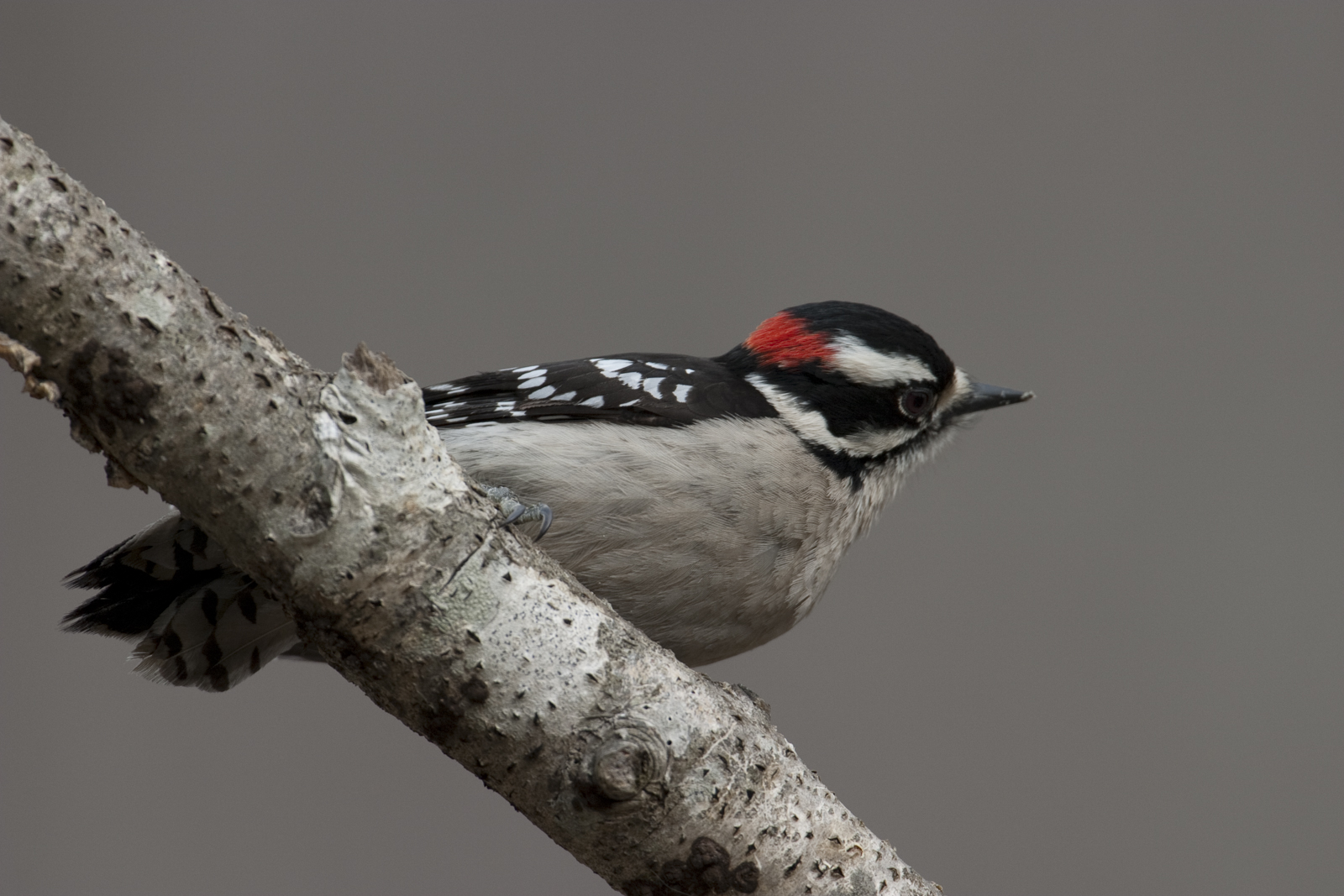
The male woodpecker
just fluffed his black-and-white feathers
and, head down,
drove the female
from her perch.
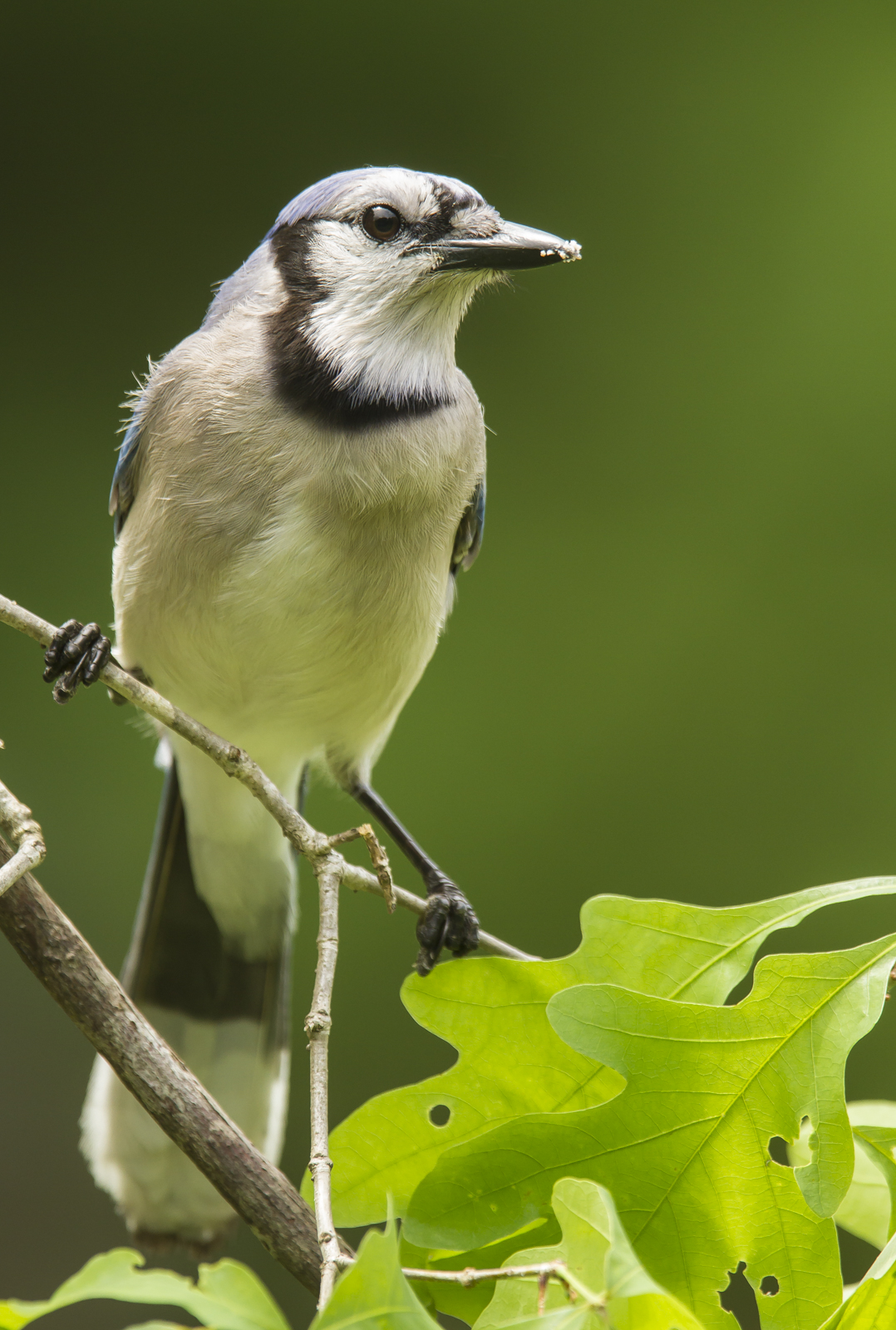
Then the blue jay swooped in,
loud and raucous
with his threatening hawk-mimic call
and drove even the bossy woodpecker
away.
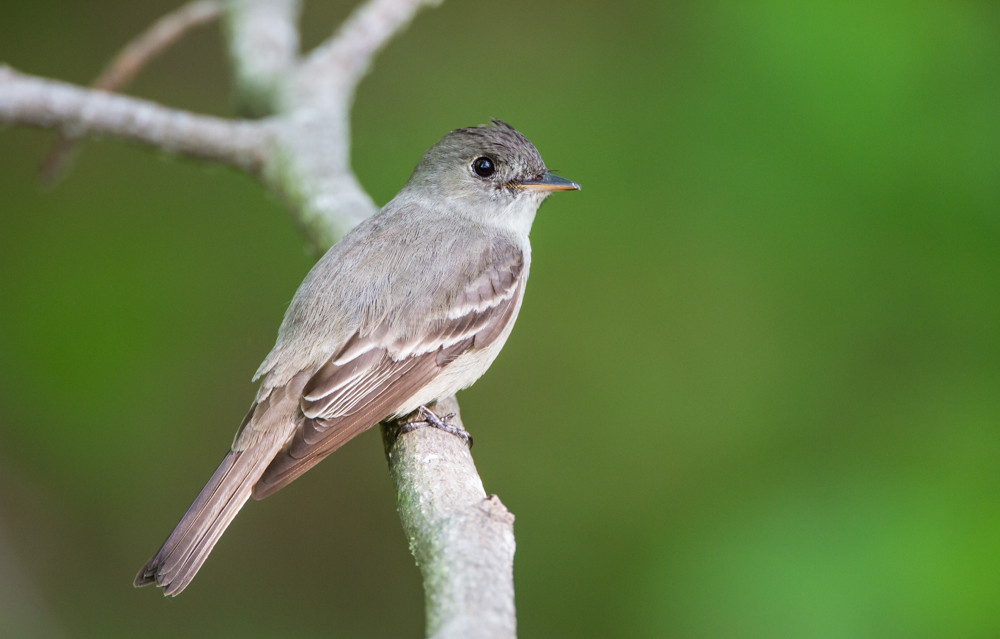
The wood-pewee sits still on a branch,
watching and waiting.
Then dashes to a flower
and seizes a brilliant yellow
butterfly
that was, a moment ago,
floating on a slow current of air.
With a quick shake and gulp
the butterfly is gone.
Four hummingbirds zip about
in constant motion, wings an emerald blur.
With a clatter, two collide,
then zoom apart, unhurt.
They are so keen on protecting
their spot at the feeder
that none can stop to drink.
A box turtle slowly moves
through the strawberry patch,
her nails shuffling the soil,
the soft leather of her legs and neck
contracting with each movement
her head outstretched,
seemingly unafraid
though the cleft in her shell,
just above the neck,
should give her cause to behave otherwise.
I often write about my deep desire
to step away from my humanity
and connect with the natural rhythms,
to live in tune with the natural world.
But maybe, it is our humanity
that we truly need.
Maybe our humanity allows us
to experience the joy
of watching a box turtle
and see the harsh beauty
in the instinctual behavior of a bird.
Maybe our humanity is what allows us to be kind.
Each year insects heavily attack northern red oak acorns and destroy a large percentage of them, greatly reducing the number of acorns available to produce seedlings and feed wildlife.
~Lester P. Gibson
No, this isn’t what you think…it really is a post about acorns (I need a break from the other nuttiness). It is a quick follow-up to my recent post on acorn weevils. I became fascinated with the goings-on inside acorns after seeing the weevil larva pull itself out of the nut and wanted to learn more.
It is a very good year for acorns (click photos to enlarge)
I collected 100 acorns and did the float test I mentioned in that first post (I used only white oak acorns for this test although the photo above shows both white and northern red oak acorns). An astonishing 45 out of 100 acorns were floaters, indicating they were “unsound”, which means they possibly had acorn weevil larvae or some other insect inside. I separated those out and placed them in a plastic tub and have been collecting the larvae that emerge. In the last week, 13 insect larvae were found crawling around in the tub. Most were the large chubby weevil grubs I found before, but a few were different.
Acorn insect larvae
The photo above shows samples of the three types of larvae that have emerged…the large weevil grub on the right; a much smaller weevil grub in the middle; and a moth larva on the left.
Acorn weevil larvae – big and little
A few of the grubs were small versions of the chubby acorn weevil larvae. These may be from a different species of weevil rather than simply smaller versions of the dominant larvae I have seen. Online resources state there is another acorn weevil with a short (less than half its body length) rostrum that lays its eggs in acorns that are on the ground (the species I showed in the last post, with the long rostrum, lays eggs in developing acorns on the tree). And it appears there may be more than one species of weevil that lays eggs in developing acorns, so the small larva shown in the middle above could certainly be that of a different species.
Acorn moth larva (left) and acorn weevil larva (right)
There was also one caterpillar that crawled out of an acorn this week. From what I can decipher from scattered references, there may be a couple of species of small moths that lay eggs in acorns. The information I found suggests they lay eggs into existing cracks or openings in acorns (including the exit holes of acorn weevil larvae), although one reference also stated at least one species of moth caterpillar can chew through the shell of an acorn.
Acorn moth larva
The moth caterpillars are easily distinguished from the weevil larvae by their more elongate shape, and the presence of three pair of legs just behind the head capsule (the weevil larvae lack legs). I placed several of the insect larvae in small containers with potting soil and hope to rear them to see what emerges next spring (or whenever since some may take more than one year). The literature indicates a wide range in the percent of any years’ acorn crop that is infected with insect larvae, depending on location and oak species. The study cited in the opening quote found an average of 52% of the northern red oak acorns at a site in Ohio were damaged by insects of various sorts. My very limited “study” indicates 45% are unsound.
Hickory nuts with exit holes
And it’s not just in acorns. It is also a good year for the hickory nuts in our woods, and, much to my surprise, I am finding a small percentage that have very neat exit holes in them. These nuts have much harder and thicker shells than acorns, so it will be interesting to see what is making them (I am assuming a weevil larva of some sort). Seems like there are some pretty amazing things going on out there in the forest.
I am looking for acorns these days, to sow on the Walden lot, but can find very few sound ones…I found by trial that the last or apparently sound acorns would always sink in water, while the rotten ones would float, and I have accordingly offered five cents a quart for such as will sink.
~Henry David Thoreau, 1859
In spite of this fact being around for over one hundred years (at least), I found out about it only after I started working at the museum 20+ years ago. But, first, let me explain my introduction to the creature that is often the cause of this phenomenon of the floating acorn. I was preparing a lesson for a class years ago and decided to do something on acorns (it was a very good mast year that year). I collected a batch of acorns from a couple of different oak species and was going to have students observe and sketch them. I placed the nuts in a pan and after a couple of days, I noticed some movement in my acorn stash…small, chubby little grubs. There were a lot of them…what the heck were these things?
Beetle grub from an acorn (click photos to enlarge)
I quickly learned they were the larvae of the acorn weevil, Curculiosp.
Acorn weevil adult
Weevils are one of the largest families of insects, with over 2500 species thought to inhabit North America (that’s over three times as many weevils as there are species of birds that breed on North America).
I photographed this adult, the only one I have ever found, in late August a few years ago
True weevils are generally small beetles (less than 1/4 inch) with a long snout (rostrum) that remind some of the trunk of an elephant. Their antennae are bent in the middle (geniculate) and are located about half-way down the rostrum. The basal portion fits into a groove in their snout when they are feeding. Their mouth parts are located at the tip of that long snout and are used to chew holes in plant material and, in the case of acorn weevils, through the shell of developing acorns. Females do this in summer and create chambers in the nut meat and then lays eggs into them. Eggs hatch in a few days and the larvae begin feeding on the acorn meat. From what I could decipher in various reports, it looks like larvae feed for a couple of weeks before emerging. I have found as many as three of the larvae in one acorn, although studies suggest those sharing an acorn may develop more slowly. The grubs usually emerge within a few days after the acorn drops to the ground.
Acorn weevil larva emerging from a nut
While on our recent camping trip at Grayson Highlands, we were lucky enough to witness one emerging. Melissa looked down and noticed something white on the side of an acorn. When we realized what it was, I ran and grabbed my camera.
Almost out
Luckily, it is not an easy process, so I was able to get back in time to grab a few images as it struggled out. The larva chews a small hole that looks just large enough for its head capsule. It then must squeeze its chubby little body through this tiny hole by means of a series of gyrations and contractions.
Amazing that this grub can fit through so small a hole
The grub finally pulled free and dropped to the ground. It immediately started crawling about, probing into the soil.
Acorn weevil larva digging into soil
I lingered and watched, hoping to see it disappear into the soil. But, it just couldn’t seem to make up its little grub mind as it would crawl, dig, crawl, and dig some more. I finally gave up and left it to its decision-making. I have since watched one dig rapidly into loose soil in a container I placed it in, so this burrowing behavior is likely influenced by soil characteristics. Online resources differ somewhat as to what happens next in the weevil’s life cycle. This may be because there are several species of weevil that lay eggs in the acorns of several different oak species, and they all may have somewhat different life cycle details. The grubs dig down into the ground and create an earthen chamber around them. They overwinter like this, pupate, and emerge the following summer, or, according to some sources, up to three years later. However long it may take this little guy to transform, we feel lucky to have witnessed this brief portion of an amazing creature’s life.
Floaters and sinkers
Now, back to Thoreau’s observations…gather some acorns and drop them in water, and you will find there are, indeed, floaters and sinkers. Turns out there are several things that can cause an acorn to float – a cracked shell, fungi that has spread through the meat of the nut, or one or more species of insects that feed on acorn meat. All probably introduce air pockets into the nut and make it less dense. This also leads to another, albeit not quite as clear, indicator of soundness in acorns. Good ones (the sinkers) bounce when dropped on a hard surface like a floor; those with weevils or other “impurities” (floaters) drop with a thud and hardly bounce at all.
A “good” acorn
“Sound” acorns contain dense white meat when opened.
Open up a floater and you may see thisLarvae usually make a quick get-away when exposed
The “unsound” acorns usually contain some dark areas in their meat (or may be totally dark). The two above show weevil larvae and their feeding tunnels, along with frass and some debris from feeding activity.
In researching for this post, I came across a recent blog on acorn weevils by Charley Eiseman, one of the authors of the excellent reference, Tracks and Signs of Insects and Other Invertebrates. This guy does some great work and he includes a wonderful video clip of a larva chewing its way out of an acorn…guess there is still more acorn watching in my future (and, I hope, in yours).
There was no variation in his manner of proceeding all the time I observed him. He was alert, cautious, and exceedingly methodical.
~John Burroughs, on observing a chipmunk, 1894
On our recent mountain trip, we camped at Hickory Ridge Campground at Grayson Highlands State Park. In addition to several maple, birch and (appropriately) hickory trees, there were a lot of northern red oaks.
The forest provided a good mast year and plenty of places to feed and hide (click photos to enlarge)
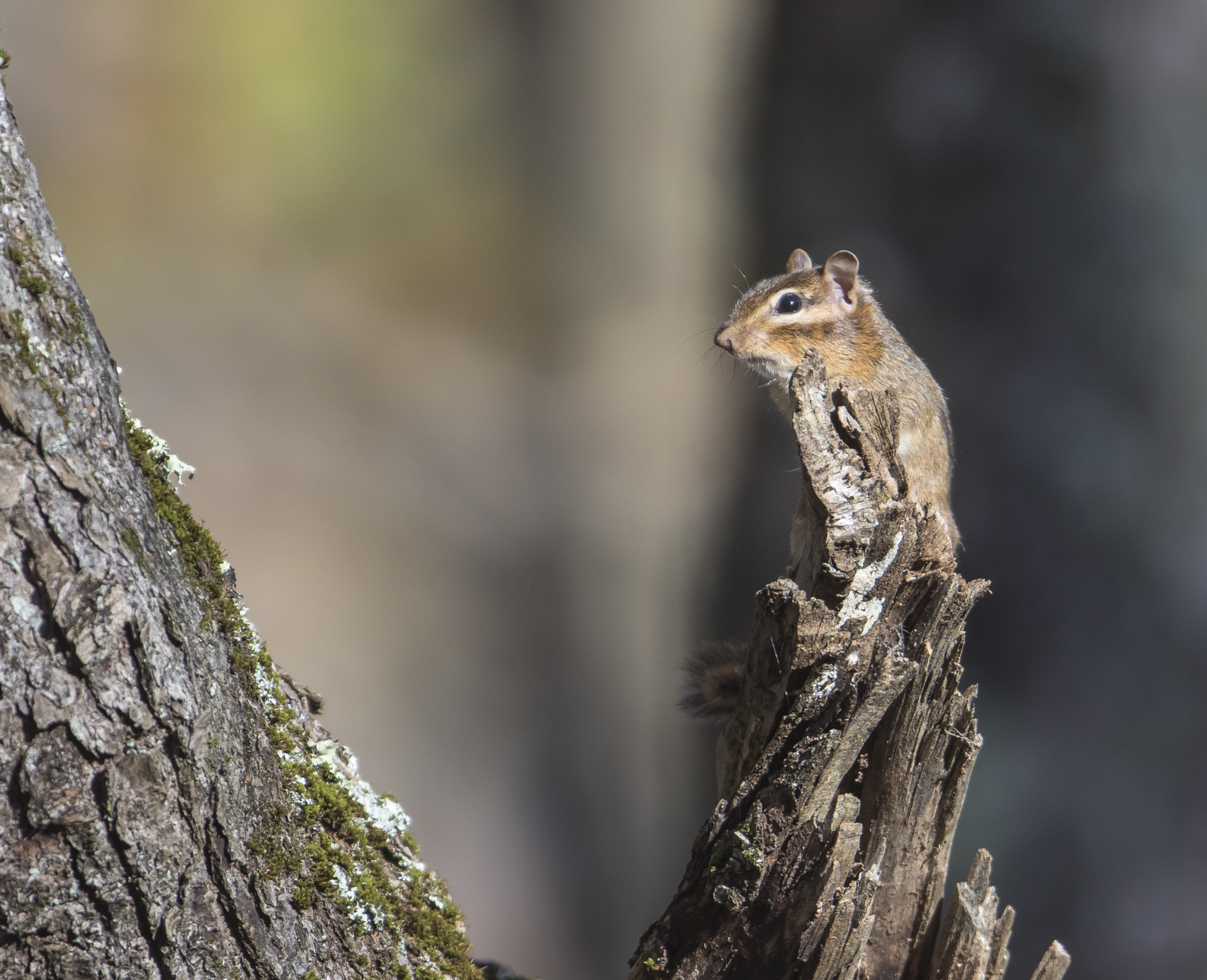
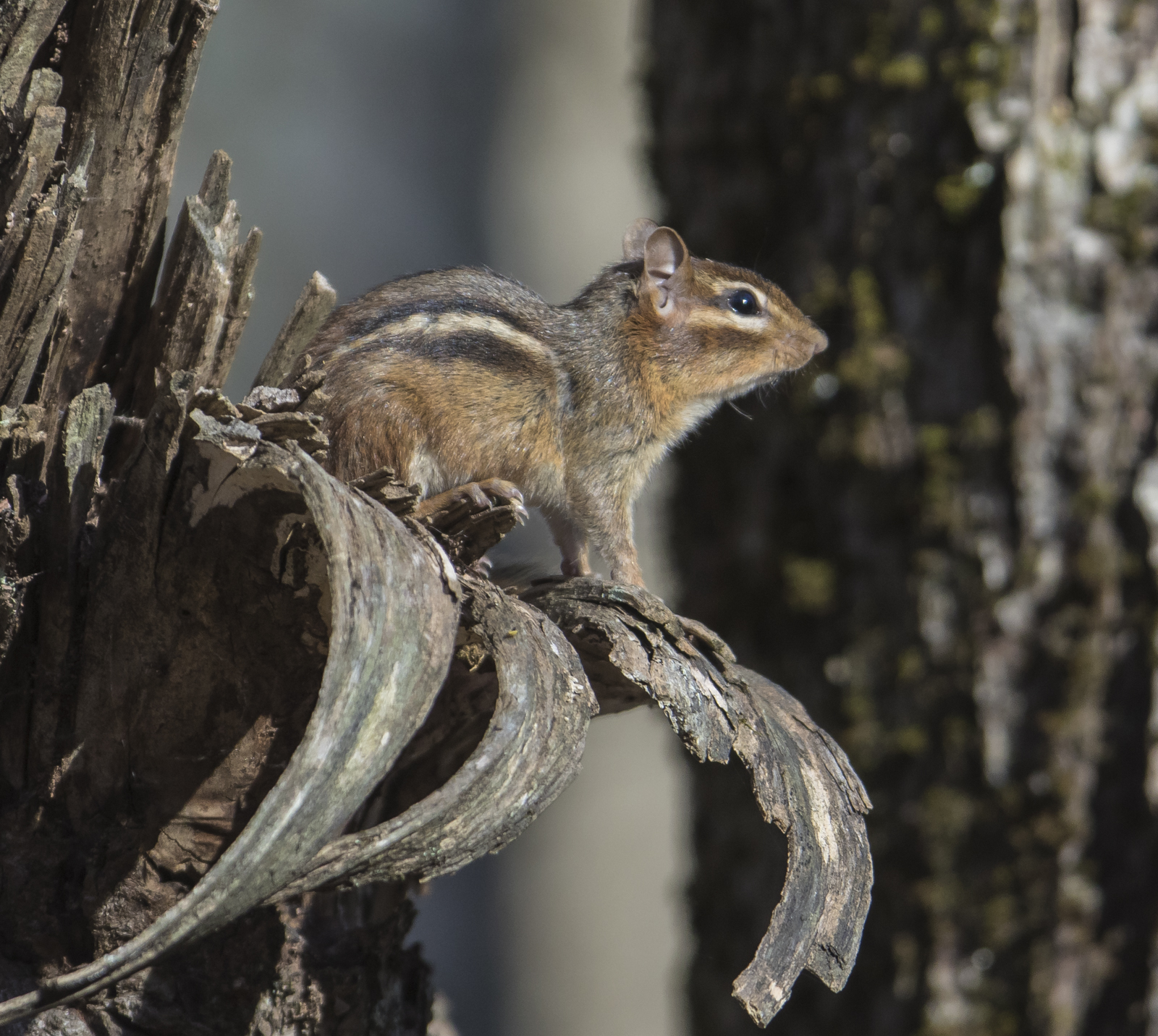
Like back home, it appears to be a good mast (the nuts of forest trees) year at the park. And that means lots of activity by the forest dwellers to gather, eat, and store these nuts. We saw several gray squirrels working in the trees and underneath, but, the dominant forest floor activity, by far, was the busy to-and-fro movements of Eastern chipmunks, Tamias striatus. Both mornings in camp, while sipping our morning coffee and tea, we enjoyed watching them going about their busy lives. They had definite paths from one tree trunk to another, often ending atop a boulder where they were feeding. But, the second morning, I saw one do something you don’t think of a ground squirrel doing…
This chipmunk was a real tree climber
…climb a tree. I remember the first time I saw that years ago was when one of my dogs startled a chipmunk out in the yard. The little chippie ran straight up a tree trunk to a height of about 20 feet, then turned and scolded us both. Turns out, many Eastern chipmunks are regular tree climbers, either to escape danger or to collect nuts like acorns and hickory nuts.
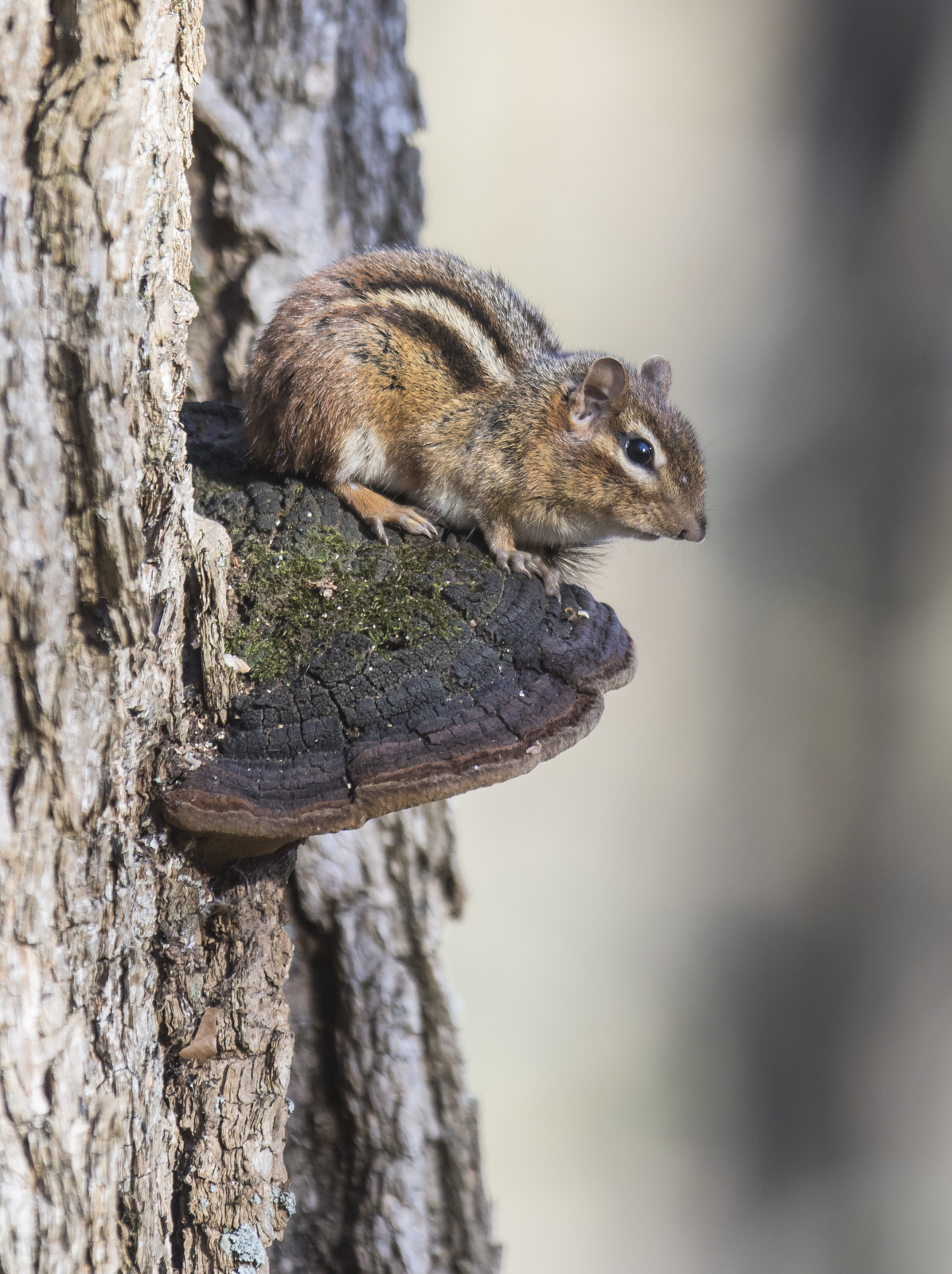
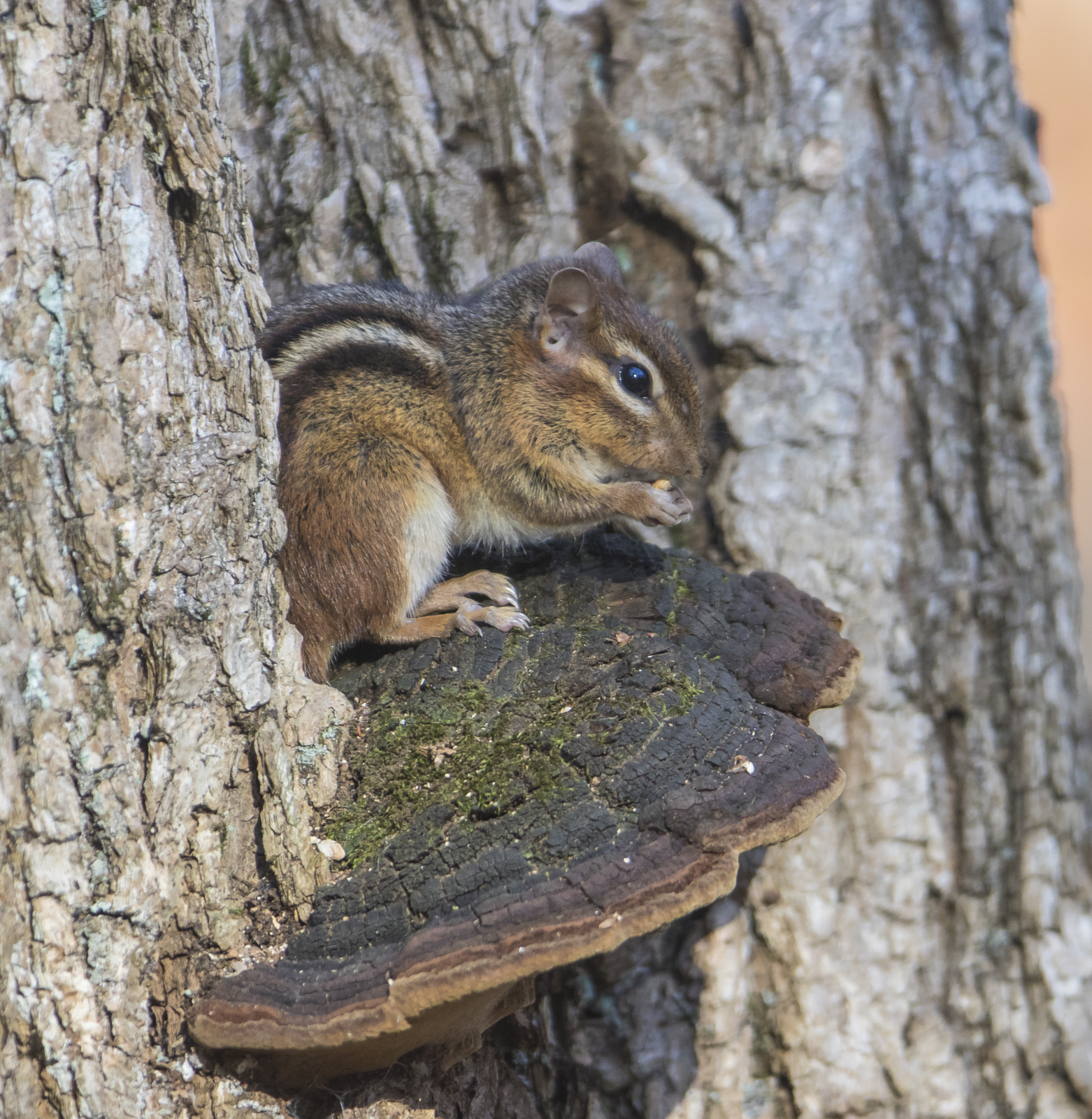
Eastern chipmunk eating something on its shelf fungus perch
This particular chipmunk had a routine that took it from foraging on the ground under some scattered trees, up the back side of a black locust tree near our campsite, and then out to a shelf fungus projecting off the tree just beneath a fork in the trunk. The first time I saw it, the fungus was in the shade, and the chippie dropped down onto the ground right as the rising sun was about to illuminate its perch. But, being creatures of habit, it soon returned and proceeded to feed on some small morsel it had scavenged on the ground.
This chippie had two trees it liked to climb
On its next trip to the ground, it scurried through the leaf litter about 75 feet and climbed a different tree and soon perched in a prominent spot atop a broken limb.
Always on the alert for danger
This tree had a large cavity in deep shade near this broken limb, and the chipmunk visited that area a couple of times as if storing some food from its cheek pouches. But it would always pause on the broken limb and look around for potential danger (and to see where that guy with the camera had moved to).
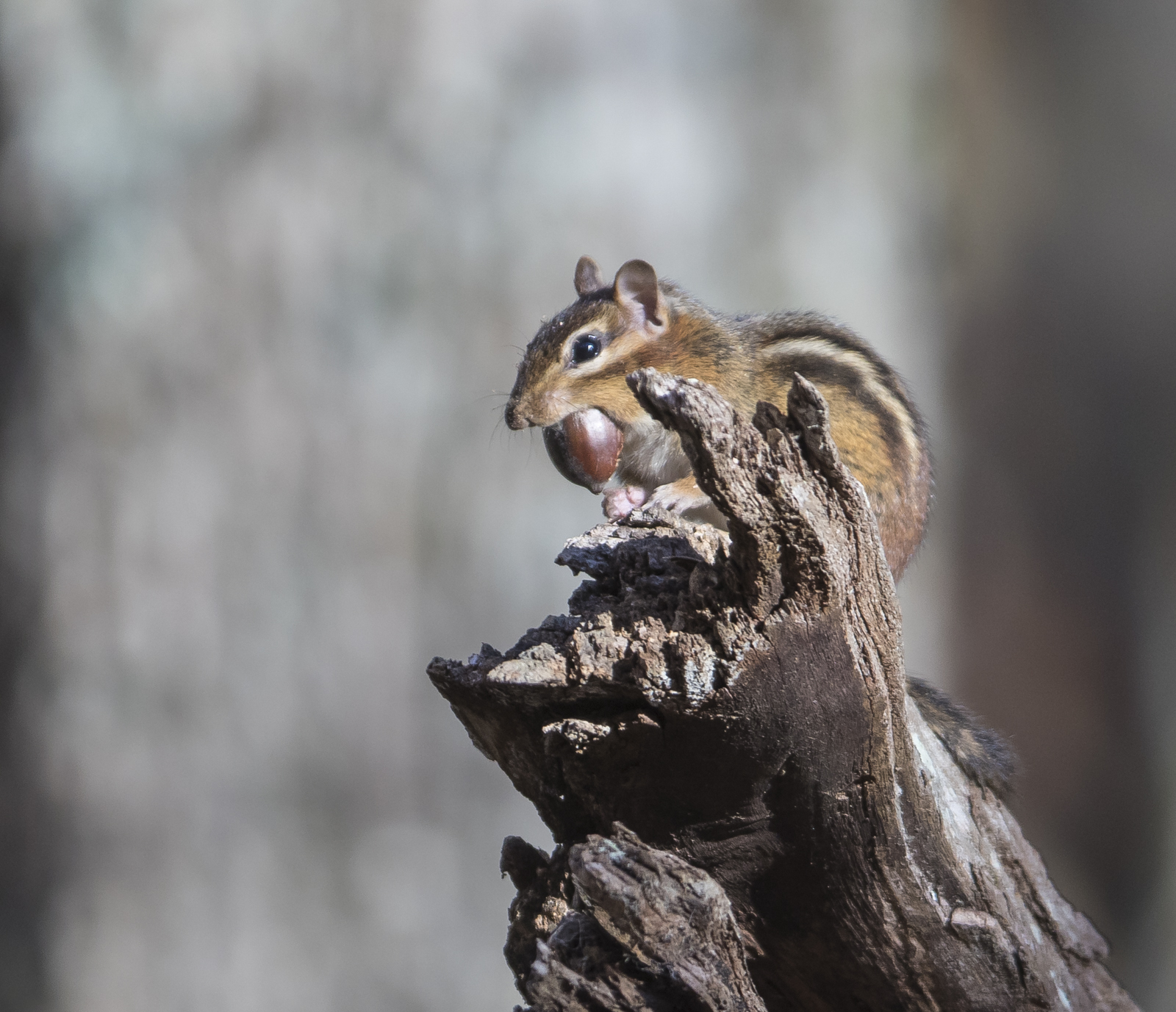
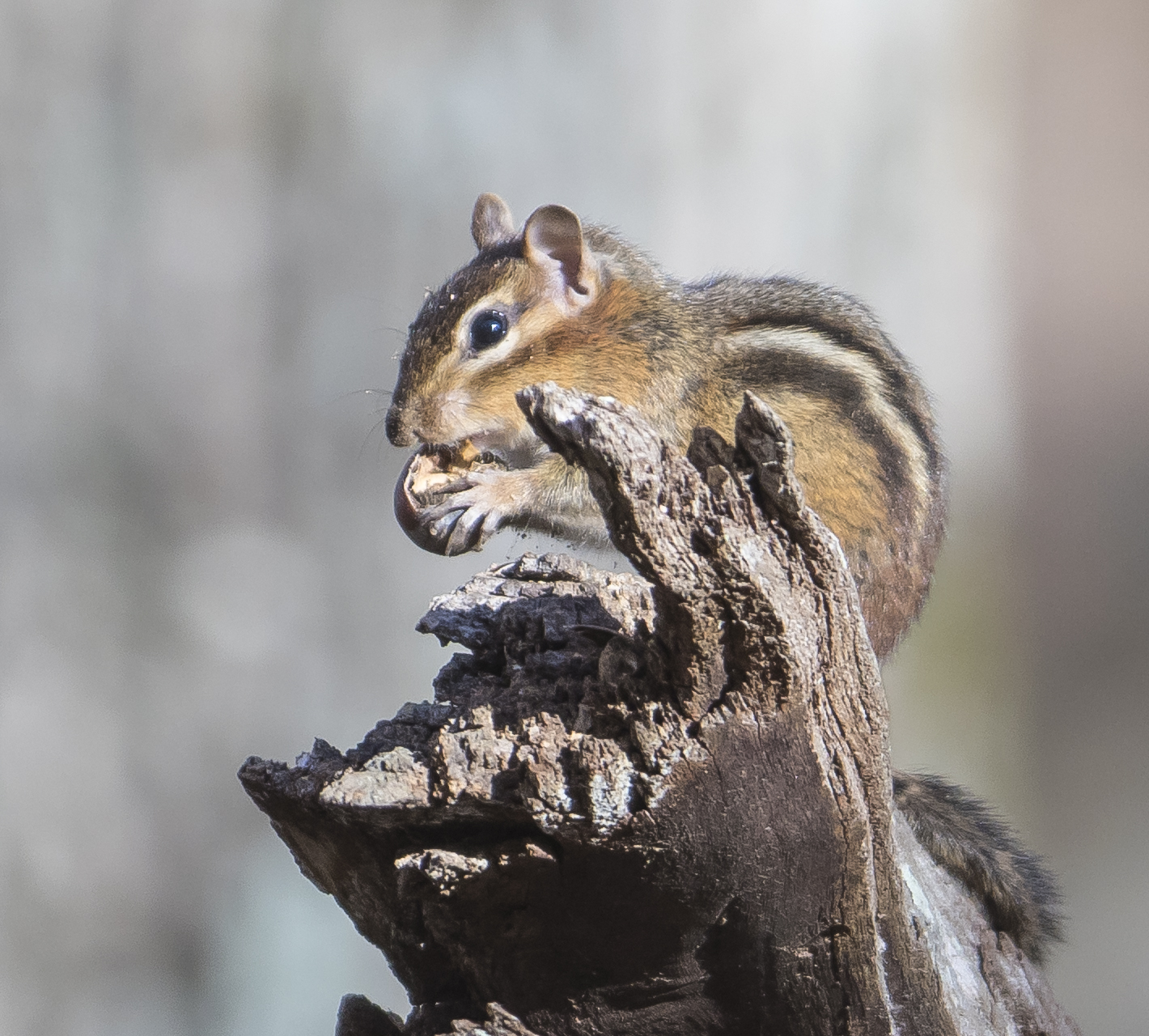
Chipmunk with acorn
Chowing down on an acorn
After one foraging foray, the chipmunk returned to its perch with an acorn. Naturalists have observed that Eastern chipmunks are capable of carrying as many as 6 acorns at once in their cheek pouches and mouth, but this little guy seemed content with just one at at time. After chewing on it for a minute or so, the acorn fell to the ground. I’m not sure whether the drop was by choice or by accident, but the chipmunk didn’t run off to retrieve it. Instead, it began what some say is its second favorite activity…
When not foraging or on alert, chipmunks are often grooming
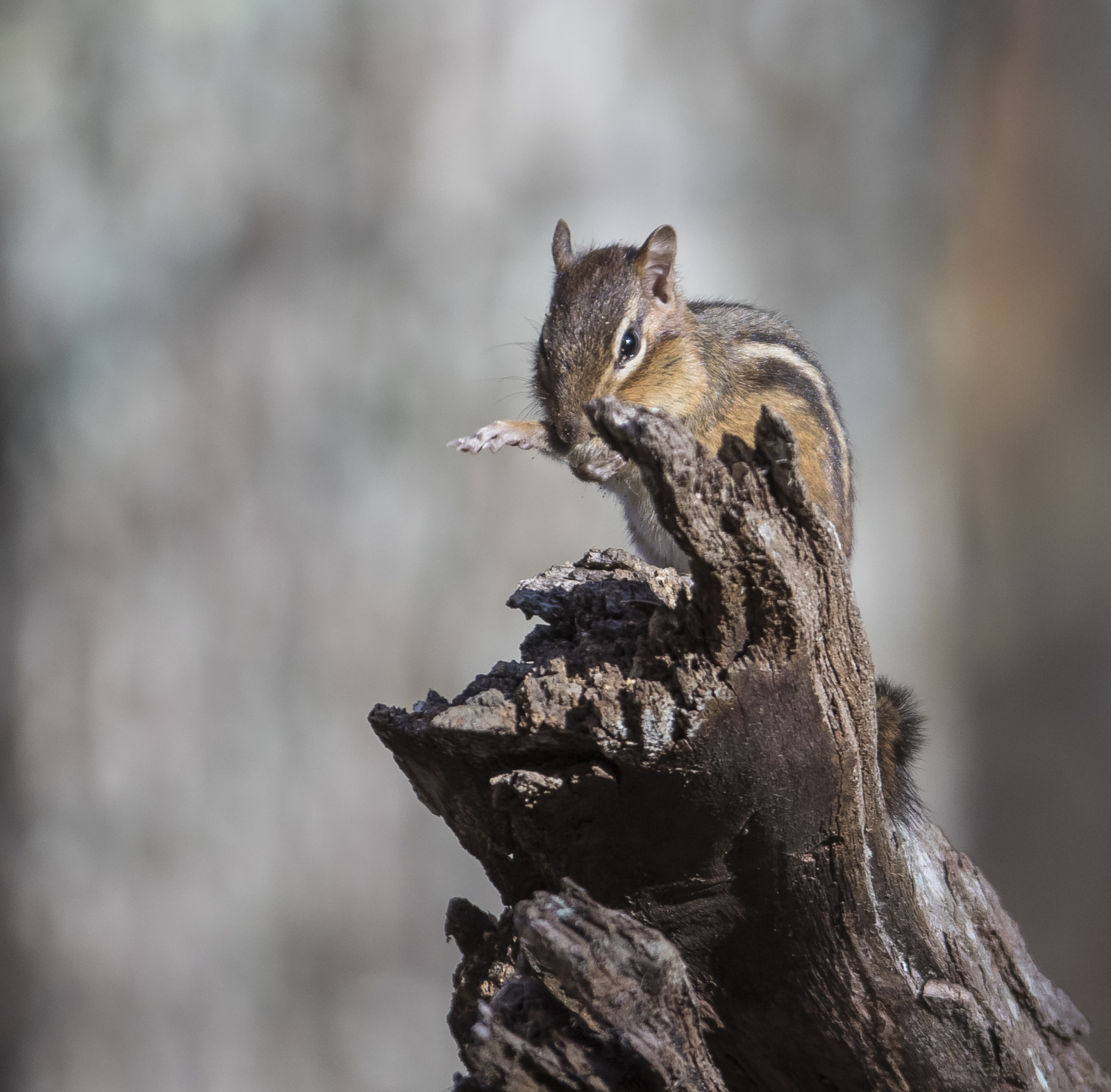
…a bout of grooming. This chipmunk did a lot of grooming on both of its tree perches, but the motion is so fast that my image was usually blurred in the low morning light. After taking way too many photos of our cute little friend, I finally had to put away the camera and finish packing up the gear. All the while, the little striped ground squirrel kept up its busy pace of feeding, grooming, and looking for danger. Indeed, as Thoreau observed one autumn (in 1858) at Walden Pond, What a busy and important season to the striped squirrel! [He] is already laying up his winter store.
Post script – Ironically, as I finished writing this, I heard both a gray squirrel and a chipmunk giving alarm notes out back. I went outside expecting to see either a hawk, snake, or cat, but found no sign of a predator still around. The low-pitched clucking note of chipmunks is a woodland sound that fooled me years ago when I first heard it, thinking it was some sort of bird. Listen here for the various chipmunk alarm calls. The note I just heard occurs after the high-pitched chipping alarm on this audio file. Research shows a tendency for the high-pitched notes to be given when a terrestrial predator is spotted, and the low-pitched notes when an aerial predator is nearby.